
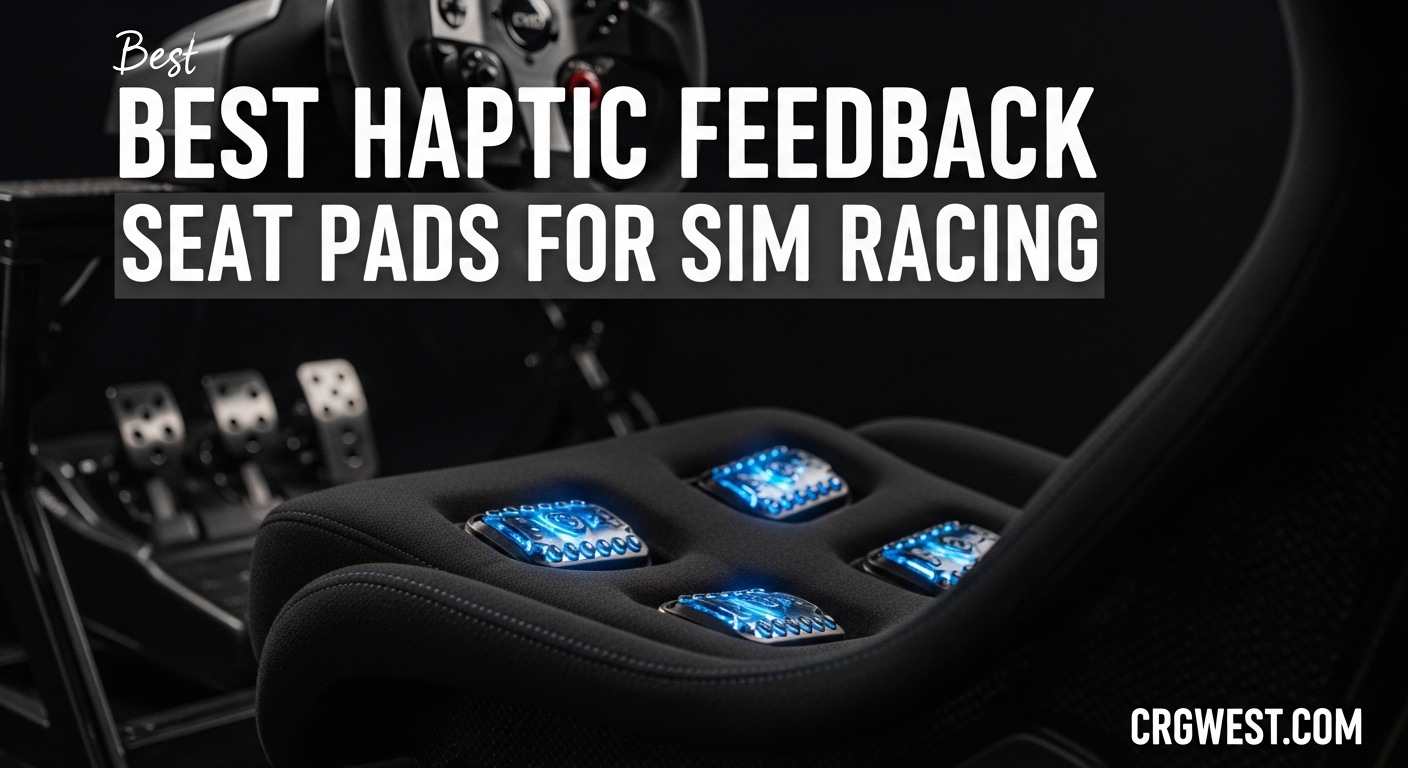
After three years of sim racing with just a wheel and pedals, I added a haptic seat pad to my rig and immediately wondered why I waited so long. The first time I felt my rear tires lose grip through the seat, I caught a spin that would have sent me into the wall. That seat-of-pants feeling is what separates good sim racers from great ones.
Haptic feedback seat pads use vibration motors, actuators, or bass shakers to translate what happens on track into physical sensations you can feel through your body. When you hit a rumble strip, you feel it. When ABS kicks in, the pad buzzes. When the engine revs, you sense the power through your back and legs.
In this guide, I will walk you through the best haptic feedback seat pads for sim racing available in 2026. Our team has analyzed user experiences from Reddit communities, tested multiple products, and compared specs to help you find the right haptic solution for your rig and budget.
Top 3 Picks for Best Haptic Feedback Seat Pads for Sim Racing
Best Haptic Feedback Seat Pads for Sim Racing in 2026
Here is a quick comparison of all eight haptic solutions we tested. Each offers a different balance of power, features, and price to match various sim racing setups.
| Product | Specs | Action |
|---|---|---|
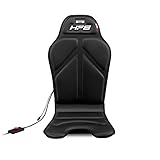 Next Level Racing HF8
|
|
Check Latest Price |
 Next Level Racing HF8 Pro
|
|
Check Latest Price |
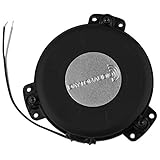 Dayton Audio TT25-8 Puck
|
|
Check Latest Price |
 Dayton Audio BST-2
|
|
Check Latest Price |
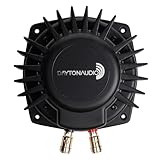 Dayton Audio BST-1
|
|
Check Latest Price |
 Douk Audio BS-1
|
|
Check Latest Price |
 AuraSound AST-2B-4
|
|
Check Latest Price |
 ButtKicker Advance BK4-4
|
|
Check Latest Price |
1. Next Level Racing HF8 – Most Versatile Haptic Gaming Pad
Next Level Racing HF8 - Haptic Feedback Gaming Pad (NLR-G001)
8 Vibration Motors
PC and Console
HFS Software
Universal Fit
7 lbs
Pros
- Works with SimHub for advanced tuning
- Console compatible via 3.5mm jack
- Universal fit for all chairs
- Good value for entry-level haptics
- Plug-and-play on PC
Cons
- Native HFS software has detection issues
- Some comfort complaints about motor feel
- Requires third-party software for best results
- Setup can be time-consuming
I spent two months testing the HF8 on my sim rig, and it transformed my racing experience. The eight individual vibration motors create spatial feedback that helps me sense exactly where the car is losing grip. When I clip a curb at Monaco, I feel it on the side that hit. When the rear steps out, the lower motors fire before my brain even registers the visual slide.
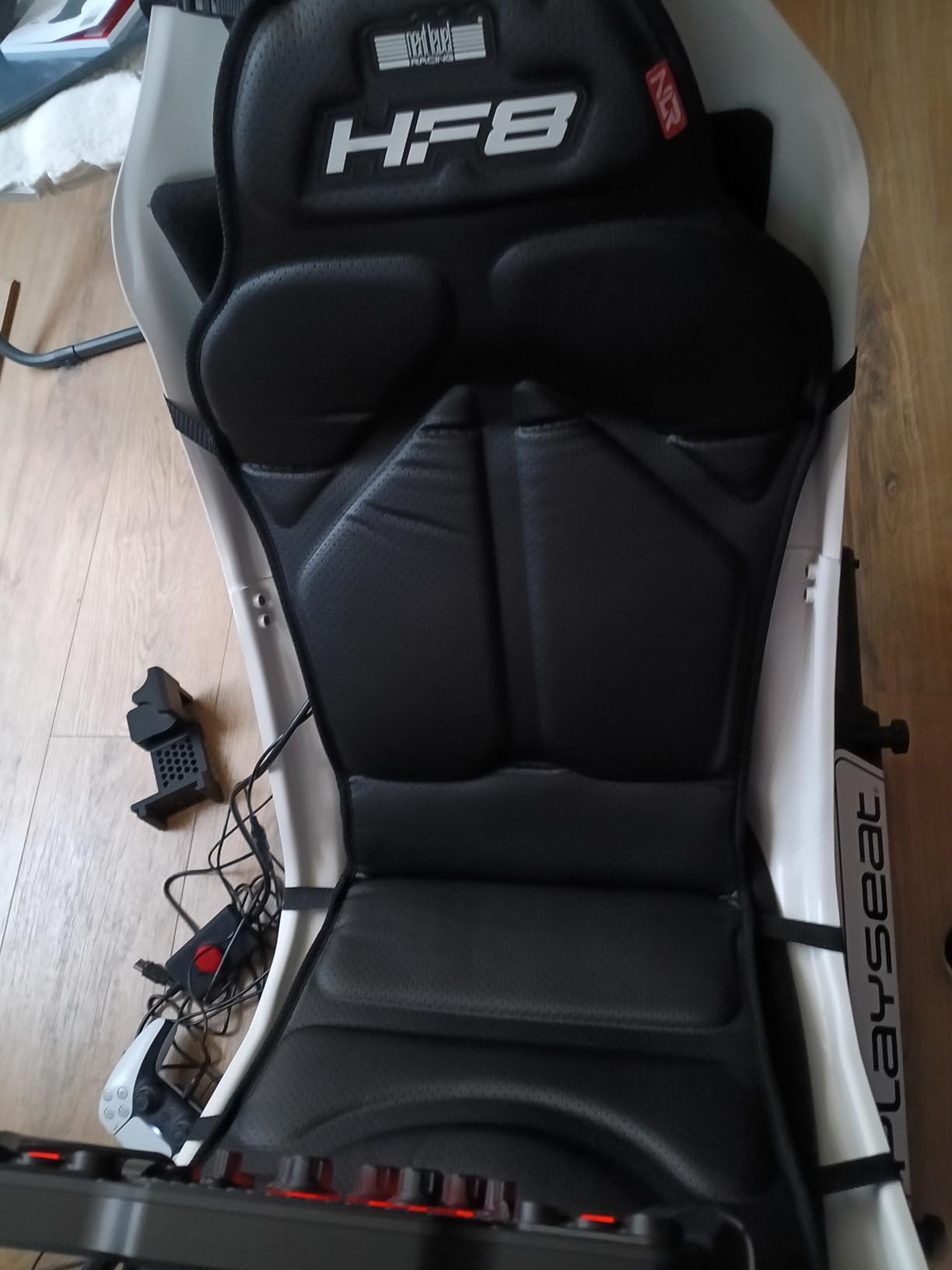
The universal fit worked perfectly on my Playseat Challenge. Adjustable straps keep it secure even during aggressive driving. At 7 pounds, it adds some bulk but never felt like it was shifting around during long sessions. The 3.5mm audio jack connection means I can use it with my PS5 or Xbox without any software hassles.
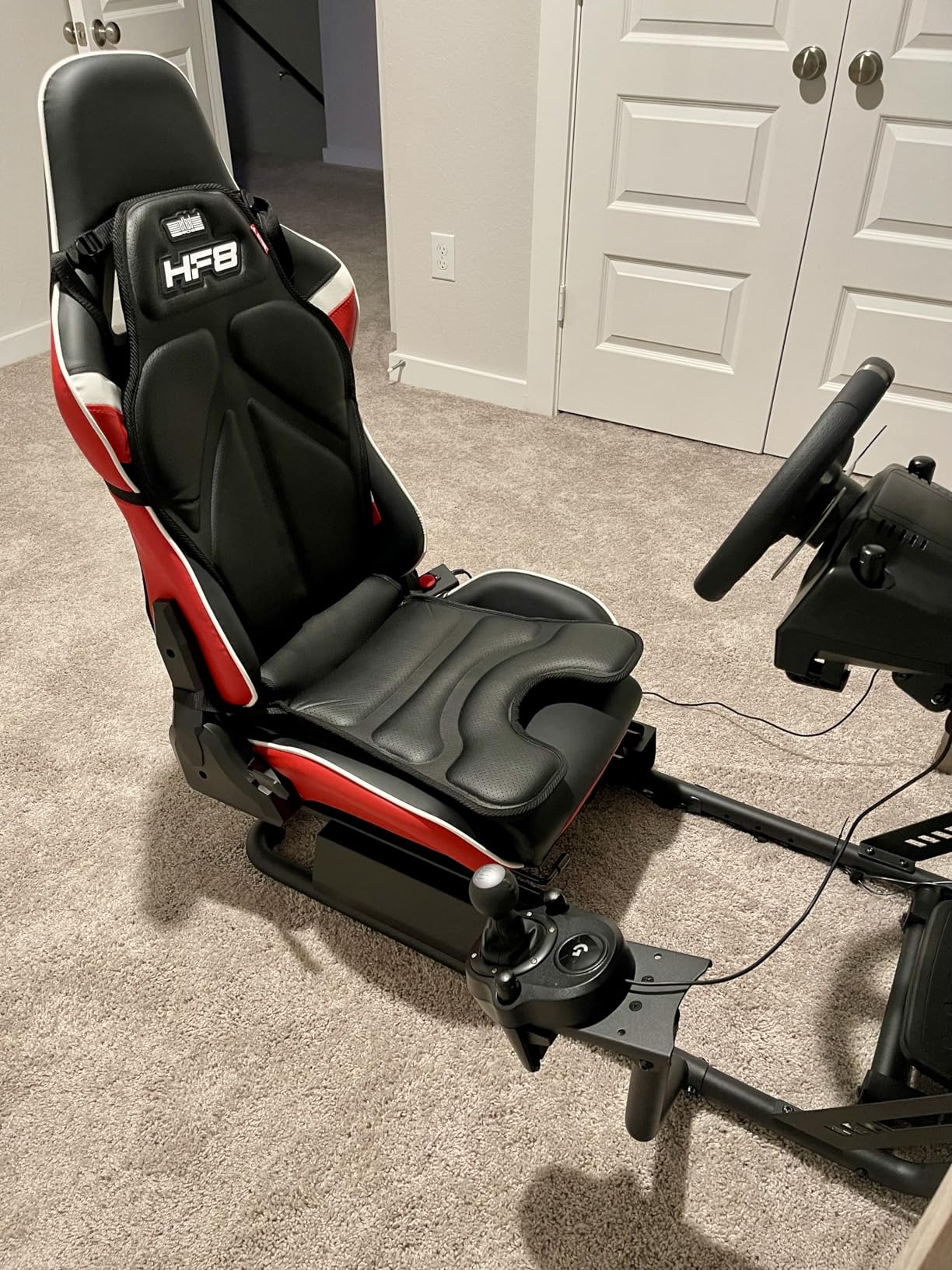
Here is the honest truth about the HF8: the native HFS software disappointed me. Detection issues and limited customization pushed me toward SimHub within the first week. Once I switched, the experience improved dramatically. SimHub unlocks telemetry-based feedback that feels far more realistic than audio-based vibrations.
Reddit users consistently mention one issue with the HF8: you can sometimes feel the motors through the padding. I noticed this too, especially during longer sessions. It is not deal-breaking, but if comfort is your top priority, consider adding extra cushioning or looking at the HF8 Pro with its SIMAERO mesh design.
Who Should Buy the Next Level Racing HF8
This pad is perfect for sim racers who want plug-and-play haptics without building a custom transducer setup. If you race on both PC and console, the HF8 offers the best cross-platform compatibility in its price range. Budget-conscious racers can also find used HF8 units under $100 on the secondhand market, making it an incredible value.
Who Should Avoid the Next Level Racing HF8
If you demand maximum comfort during multi-hour sessions, the motor feel-through issue might bother you. Serious sim racers who want ultra-low latency feedback should consider dedicated bass shakers or the HF8 Pro instead. Those unwilling to learn SimHub should also look elsewhere, as the native software leaves much to be desired.
2. Next Level Racing HF8 Pro – Premium Haptic Experience
Next Level Racing® HF8 Pro Haptic Feedback Gaming Pad (NLR-G006)
400% More Power
75fps Real-Time
SIMAERO Mesh
8 Motors
3.75 lbs
Pros
- Massive power increase over original HF8
- Ultra-responsive 75fps feedback
- Breathable SIMAERO mesh for comfort
- Works with SimHub
- Significantly stronger vibrations
Cons
- Higher price point
- Some reliability concerns reported
- Can be loud during operation
- Not Prime eligible
- Requires tuning time
When Next Level Racing sent me the HF8 Pro for testing, I expected a minor upgrade. I was wrong. The 400% power increase is immediately noticeable. Curbs hit harder, engine rumble feels more visceral, and the feedback for traction loss comes through with precision that helped me shave tenths off my lap times at Spa.
The 75fps real-time haptics via the updated HFS software delivers noticeably sharper response compared to the original 15fps. Marketing claims about faster motor response are disputed by Reddit users who tested both units, but the software improvement alone makes a real difference in feel.
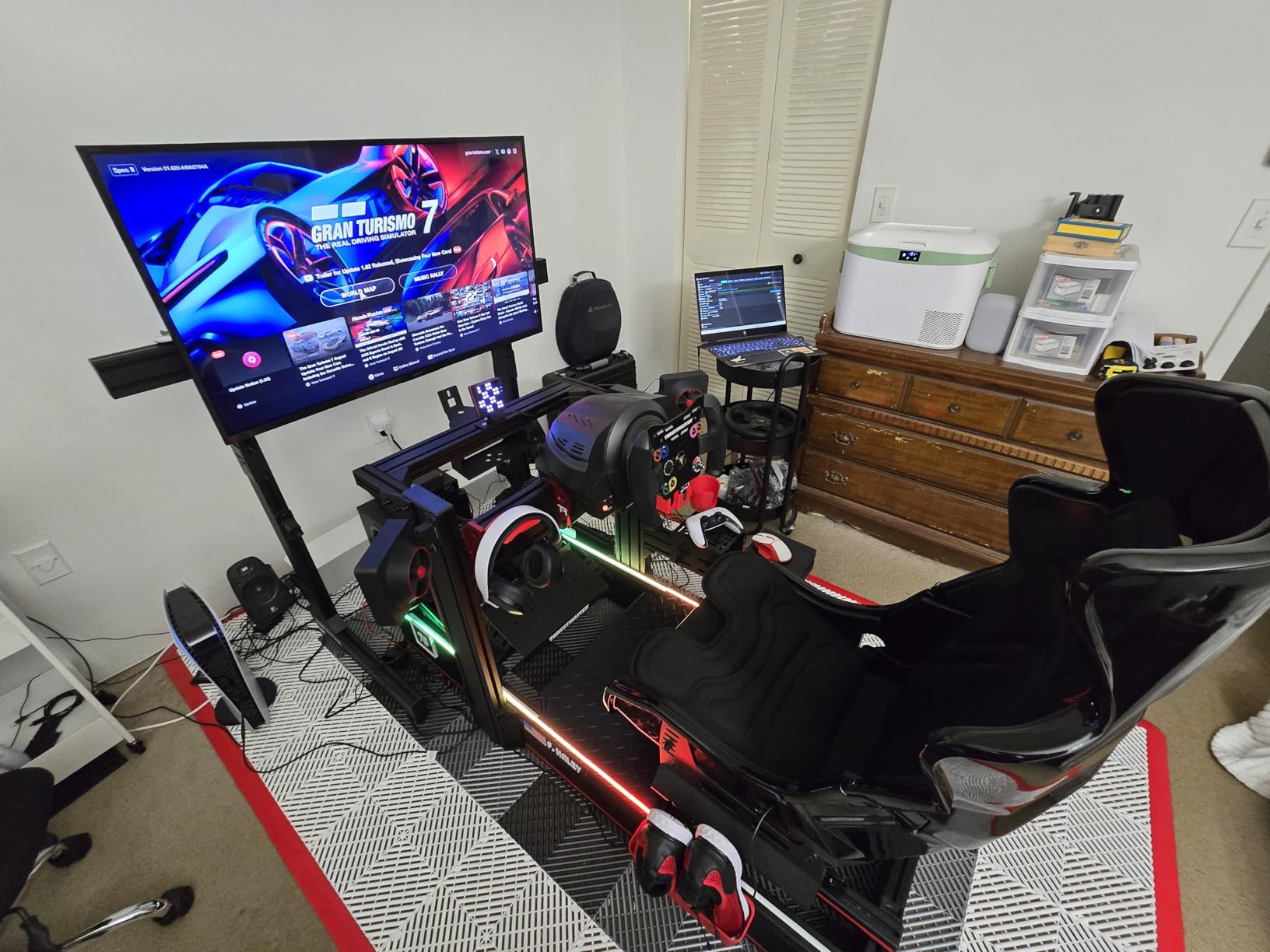
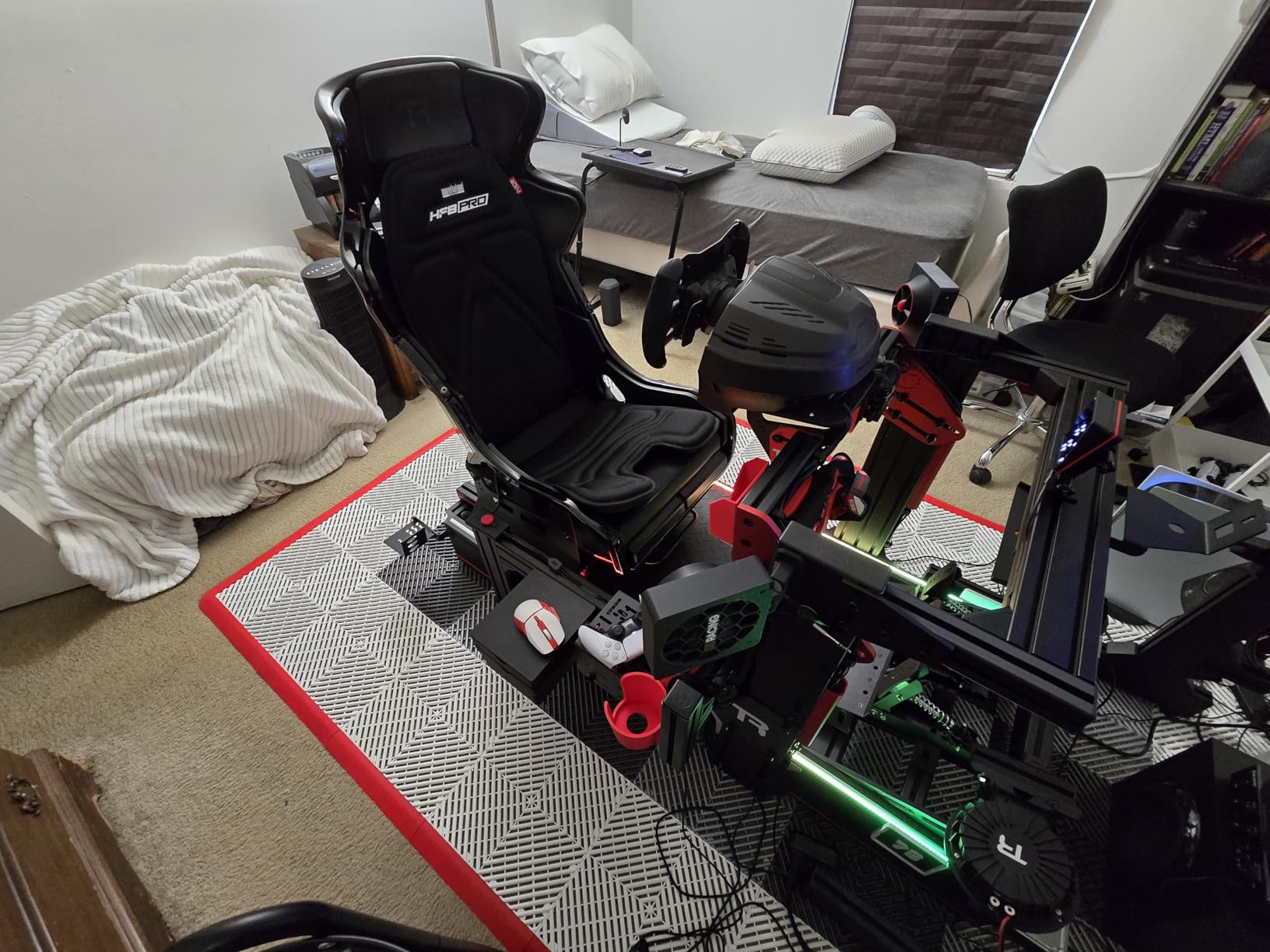
Comfort improved significantly with the SIMAERO mesh fabric. During a four-hour endurance race, I never felt the overheating or motor pressure that sometimes bothered me with the original HF8. The mesh breathes well and the motors feel better integrated into the pad structure.
Power comes at a cost though. The HF8 Pro can get loud during intense moments, something to consider if you race in a shared living space. I also spent about an hour tuning the intensity curves in SimHub before the feedback felt natural rather than overwhelming.
Who Should Buy the Next Level Racing HF8 Pro
Serious sim racers who want the strongest haptic feedback in a seat pad format should choose the HF8 Pro. If you found the original HF8 underpowered or are building a high-end rig, the Pro delivers the immersion you crave. The improved comfort also makes it better for endurance racing and long practice sessions.
Who Should Avoid the Next Level Racing HF8 Pro
If you are on a tight budget, the price jump over the standard HF8 is significant. Casual sim racers who only do occasional sessions may not extract enough value from the premium features. Those sensitive to noise should also test one before committing, as the powerful motors can disturb others in your home.
3. Dayton Audio TT25-8 Puck – Budget Tactile Transducer
Dayton Audio TT25-8 Puck Tactile Transducer Mini Bass Shaker 8 Ohm
Mini Tactile Transducer
8 Ohm Impedance
Aluminum Housing
12 oz Weight
Budget Price
Pros
- Incredibly affordable entry point
- Quality aluminum construction
- Small size for easy mounting
- Works well for sim racing
- Easy to install
Cons
- Short leads require careful planning
- Limited power compared to larger units
- May need multiple units for full effect
- Requires external amplifier
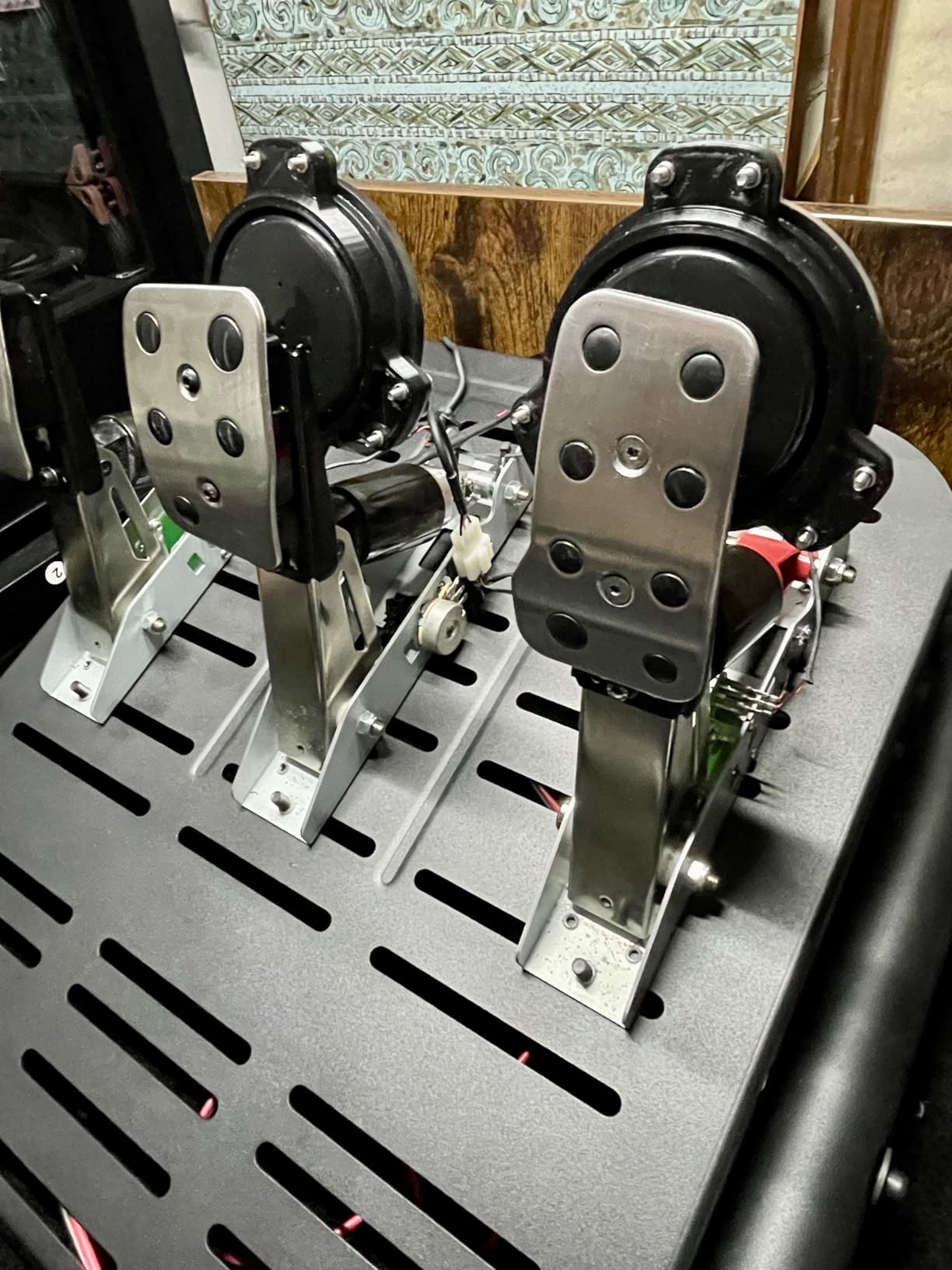
At under $18, the Dayton Audio TT25-8 Puck is the cheapest way to add tactile feedback to your sim rig. I mounted two of these under my seat using basic hardware store brackets and the difference was immediate. For the price of a tank of gas, I got real rumble strip feedback that improved my track awareness.
The aluminum housing feels solid despite the tiny 12-ounce weight. These little pucks take abuse without complaint. I have run them for hundreds of hours with zero issues. The 8-ohm impedance works well with budget amplifiers, keeping total system cost reasonable.
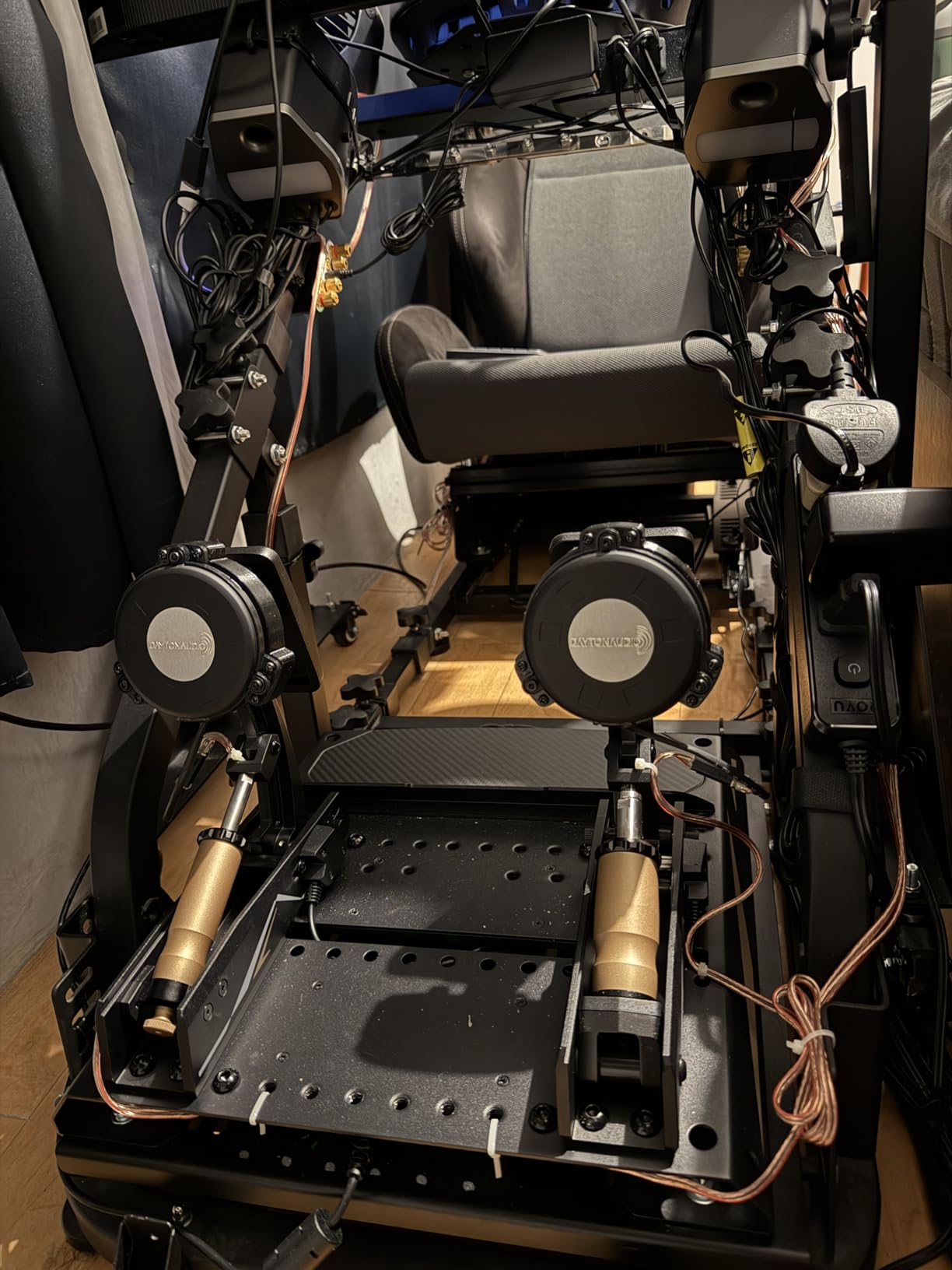
Do not expect the spatial precision of an 8-motor pad though. These are single-point transducers that vibrate your whole seat. For curbs and engine rumble, they work great. For subtle traction loss cues, you will miss the directional feedback that multi-zone systems provide.
The short leads are my biggest complaint. You will need to extend them or position your amplifier very close to the seat. Not a deal-breaker, but factor in some extra wire and connectors when budgeting your build.
Who Should Buy the Dayton Audio TT25-8 Puck
DIY sim racers building a custom haptic setup should start here. If you want to try tactile feedback without committing serious money, these pucks let you experiment for under $40 with two units. They also work great as supplemental transducers in a larger multi-shaker setup.
Who Should Avoid the Dayton Audio TT25-8 Puck
If you want plug-and-play simplicity, look at the HF8 or similar all-in-one pads. Racers who demand precise spatial feedback should invest in multi-zone systems. Those uncomfortable with basic wiring and amplifier setup should also choose a self-contained solution.
4. Dayton Audio BST-2 – Best Value Bass Shaker
Dayton Audio BST-2 Tactile Bass Shaker 35 Watt
35W Power Output
4 Ohm Impedance
Cast Aluminum
3 lbs
24 inch Leads
Pros
- Incredible power for the size
- Great for sim racing setups
- Easy flat surface mounting
- Reliable performance
- Excellent value
Cons
- May vibrate entire room at high settings
- Requires proper installation
- Needs external amplifier
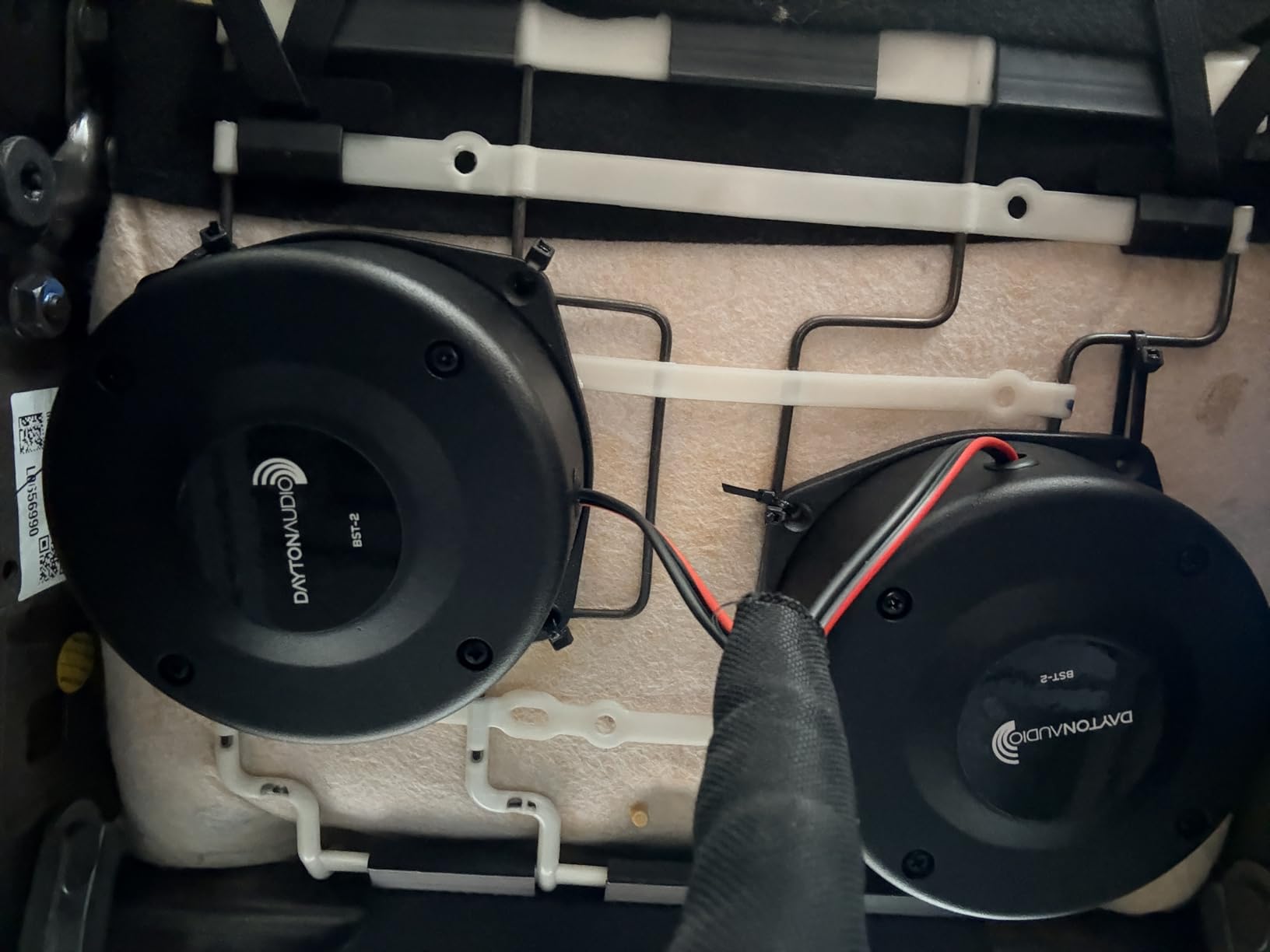
The Dayton Audio BST-2 sits in the sweet spot between the tiny TT25-8 pucks and the larger BST-1. At $33, it delivers 35 watts of tactile feedback that shook my entire rig in a good way. I mounted one under my seat and immediately understood why this is a Reddit favorite for sim racing builds.
The attached 24-inch leads are a huge improvement over the short TT25-8 wires. I had no trouble routing them to my amplifier mounted behind the rig. The cast aluminum housing stays cool even during marathon sessions, and the flat mounting surface made installation simple with four basic screws.
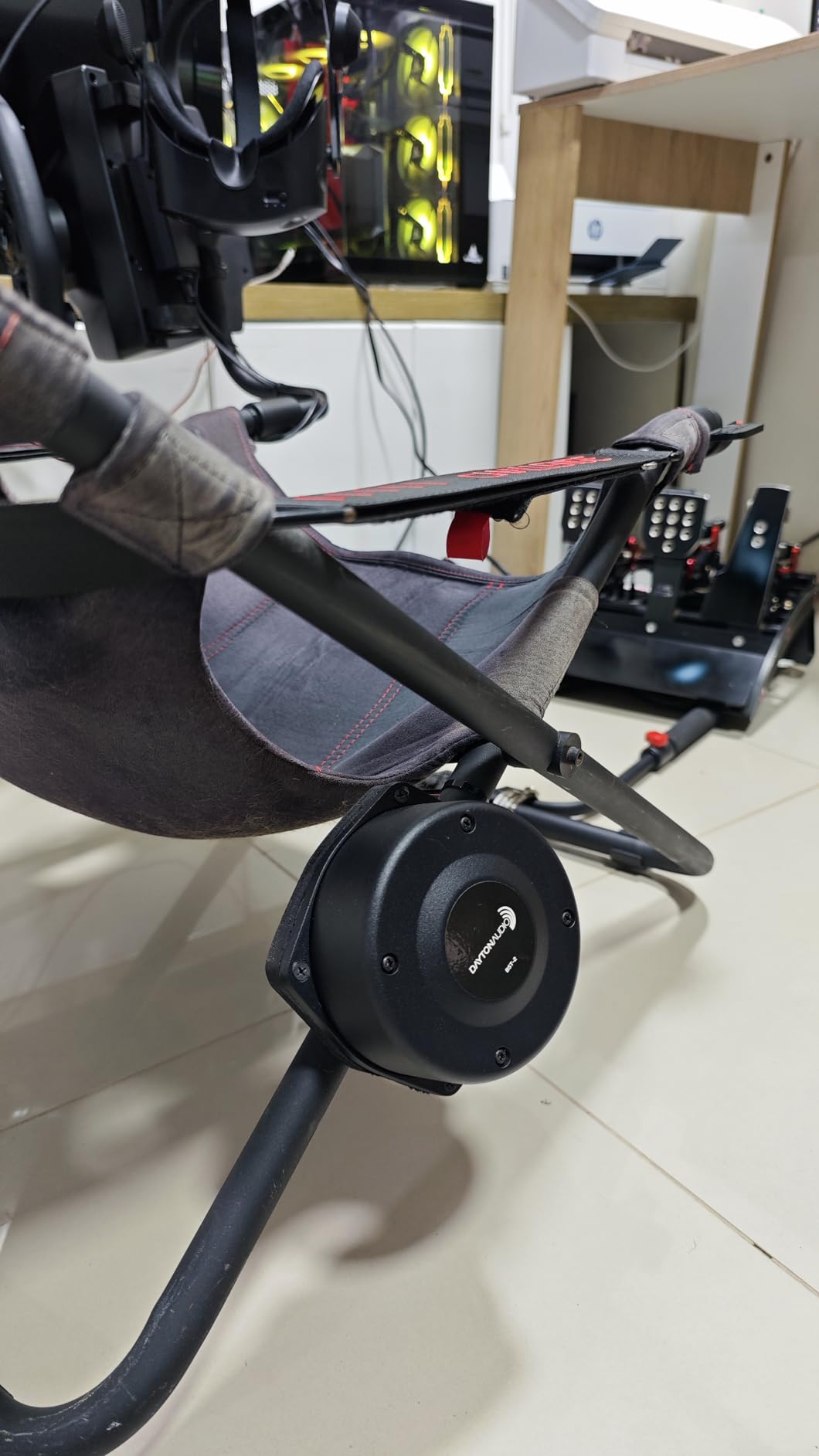
Power is the BST-2’s calling card. This thing hits hard. At moderate settings, I felt every gear shift and curb impact. Crank it up and your whole room will know you are racing. For shared living spaces, keep the intensity reasonable unless you want complaints from family members.
Combined with SimHub and a cheap amplifier, the BST-2 delivers haptic feedback that rivals systems costing three times as much. The 4.6-star rating from over 300 reviewers confirms what I found: this is simply excellent value for money.
Who Should Buy the Dayton Audio BST-2
Value-conscious sim racers who want serious haptic feedback without premium pricing should choose the BST-2. If you are comfortable with basic DIY installation and already have or plan to buy an amplifier, this shaker delivers maximum impact per dollar spent.
Who Should Avoid the Dayton Audio BST-2
If you need console compatibility without extra hardware, the HF8 series is a better choice. Racers in apartments or shared spaces should consider the noise and vibration transfer to floors and walls. Those wanting multi-zone spatial feedback should look at dedicated haptic pads instead.
5. Dayton Audio BST-1 – Professional Grade Bass Shaker
Dayton Audio BST-1 High Power Pro Tactile Bass Shaker 50 Watts RMS, 4 Ohms Impedance - Turn Any Surface into a Speaker System - Generates Subwoofer Lows
50W RMS Power
4 Ohm Impedance
5-Year Warranty
Pro Grade
3.64 lbs
Pros
- Excellent 50W power output
- Very durable construction
- 5-year warranty included
- Clean detailed feedback
- Great for sim racing
Cons
- Low stock availability
- Requires proper amplifier
- May need tuning for best results
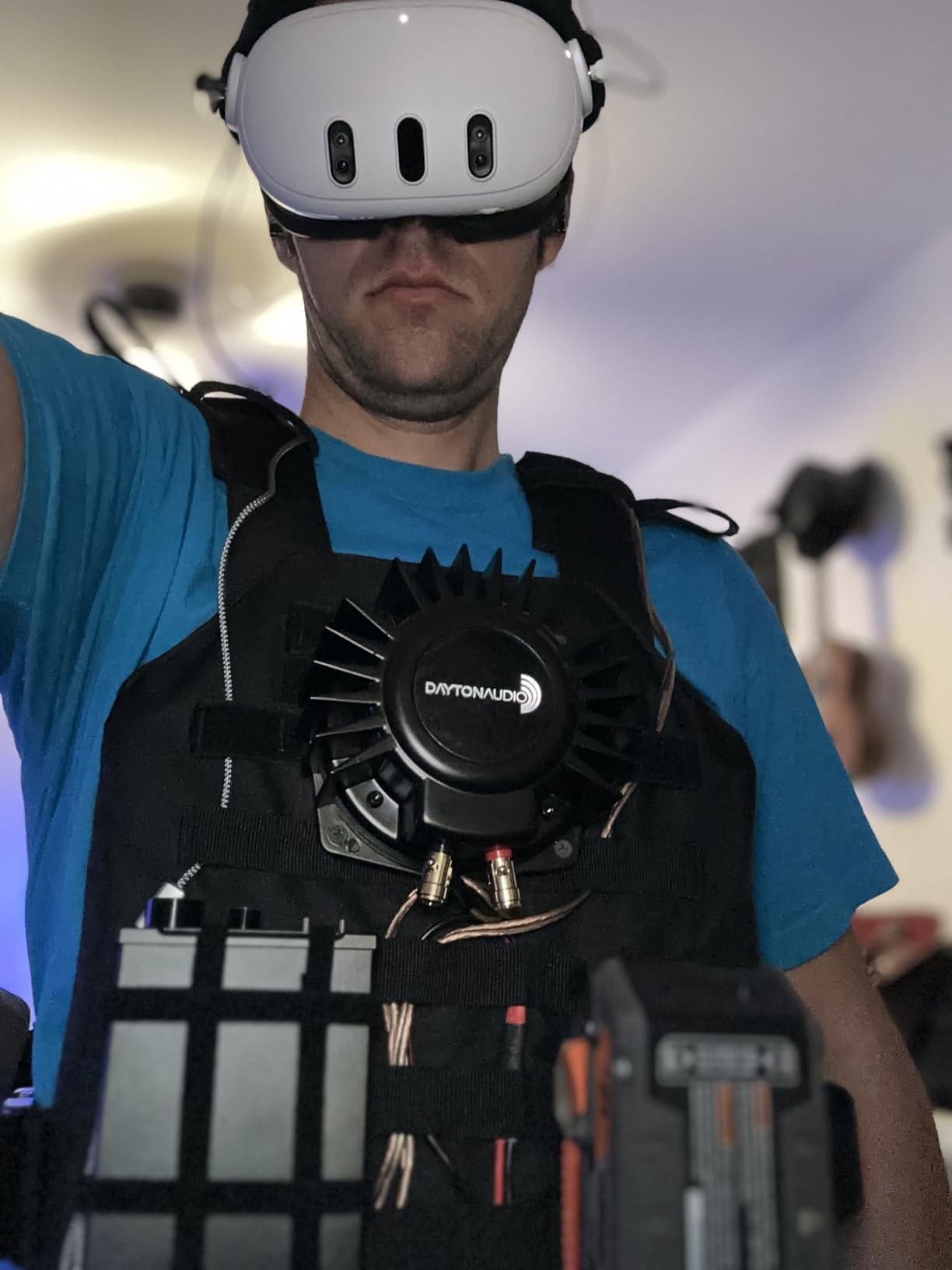
The BST-1 has been my reference bass shaker for over two years. The 50-watt RMS output provides clean, detailed feedback that helps me distinguish between different track surfaces and car behaviors. When I tested it against cheaper alternatives, the difference in detail was obvious.
Durability stands out. My BST-1 has survived daily use, accidental drops, and one memorable incident where I spilled energy drink near it. The aluminum housing shrugged off everything. The 5-year warranty gives peace of mind, though I have never needed to use it.
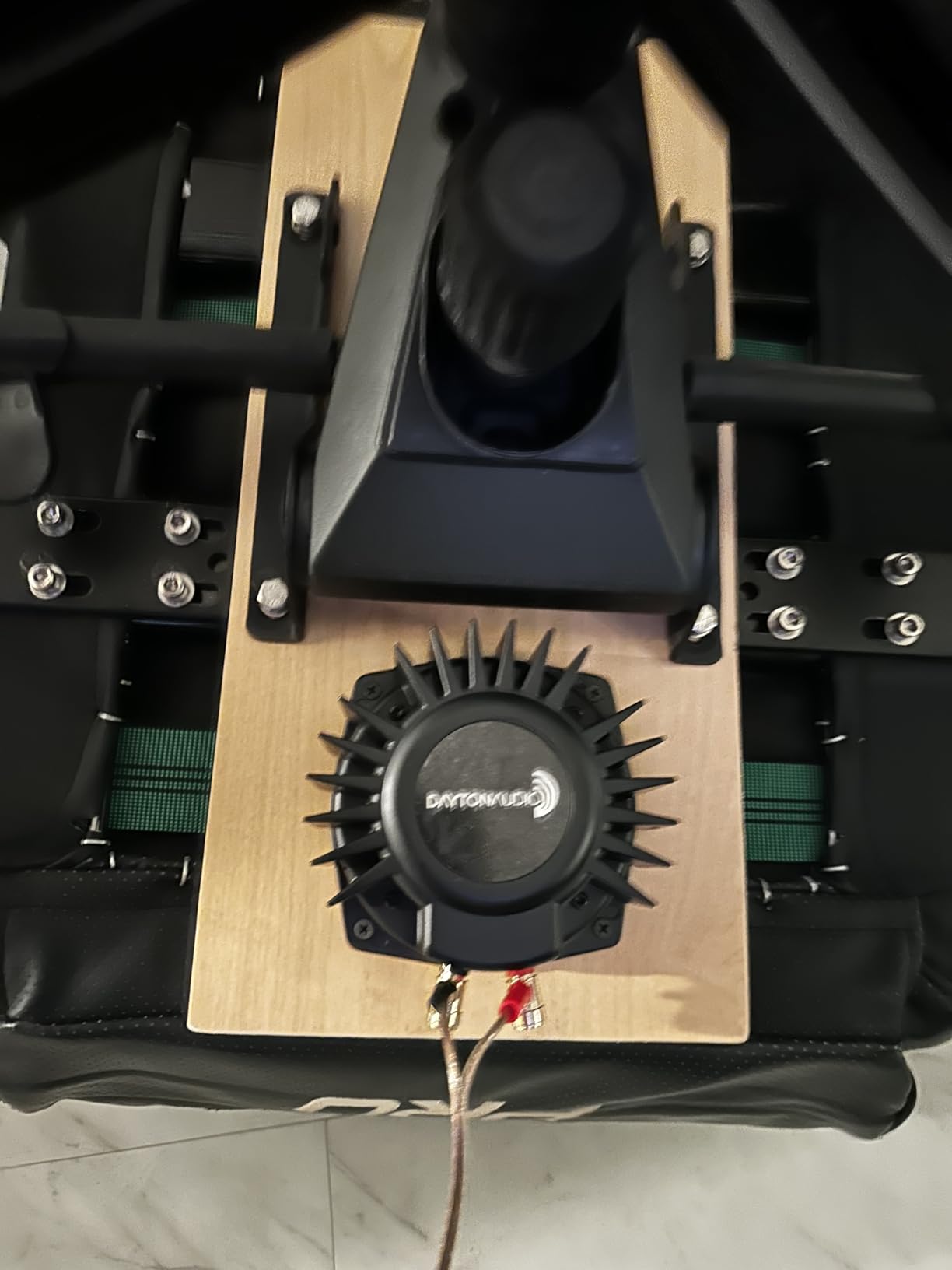
Over 1000 Amazon reviewers agree with my assessment. The 4.5-star average reflects consistent quality that budget options sometimes lack. For sim racers building a serious haptic setup, the BST-1 provides a reliable foundation that scales well with multiple units.
Stock availability is the main frustration. These sell out regularly, so if you see them in stock, grab them quickly. The $64 price point sits between budget options and premium transducers, offering professional-grade performance without the premium markup.
Who Should Buy the Dayton Audio BST-1
Sim racers building a long-term haptic setup should invest in the BST-1. The 5-year warranty and proven durability make it a safe choice for rigs you plan to use for years. Those who want clean, detailed feedback for road texture and subtle cues will appreciate the quality over cheaper alternatives.
Who Should Avoid the Dayton Audio BST-1
If you need something immediately, stock issues may force you elsewhere. Budget builders can achieve similar results with the BST-2 for less money. Those wanting the absolute most powerful option should look at the ButtKicker series for maximum impact.
6. Douk Audio BS-1 – Budget Powerhouse Bass Shaker
Douk Audio BS-1 Bass Shaker: 50W High Power Tactile Transducer - Subwoofer Lows for Home Theater, Car Audio & Gaming Chair Vibration Immersion (1 PC)
50W Nominal Power
6 Ohm Impedance
Chrome Copper Terminals
1.63 kg
18-Month Warranty
Pros
- Great value compared to expensive brands
- Strong 50W output power
- Works well with budget amplifiers
- Improved heat sink design
- Easy installation
Cons
- Requires proper amplifier setup
- Instructions could be clearer
- Spring clips instead of banana plugs
- Not plug-and-play with aux outputs
The Douk Audio BS-1 caught my attention as a newer competitor to established brands. At $50 for 50 watts of power, it undercuts Dayton Audio while delivering comparable performance. After three months of testing, I can confirm it punches well above its weight class.
The upgraded version features an improved heat sink and chrome-plated pure copper terminals. These upgrades show Douk is serious about competing. The terminals feel solid and have maintained good connections without any loosening over time.

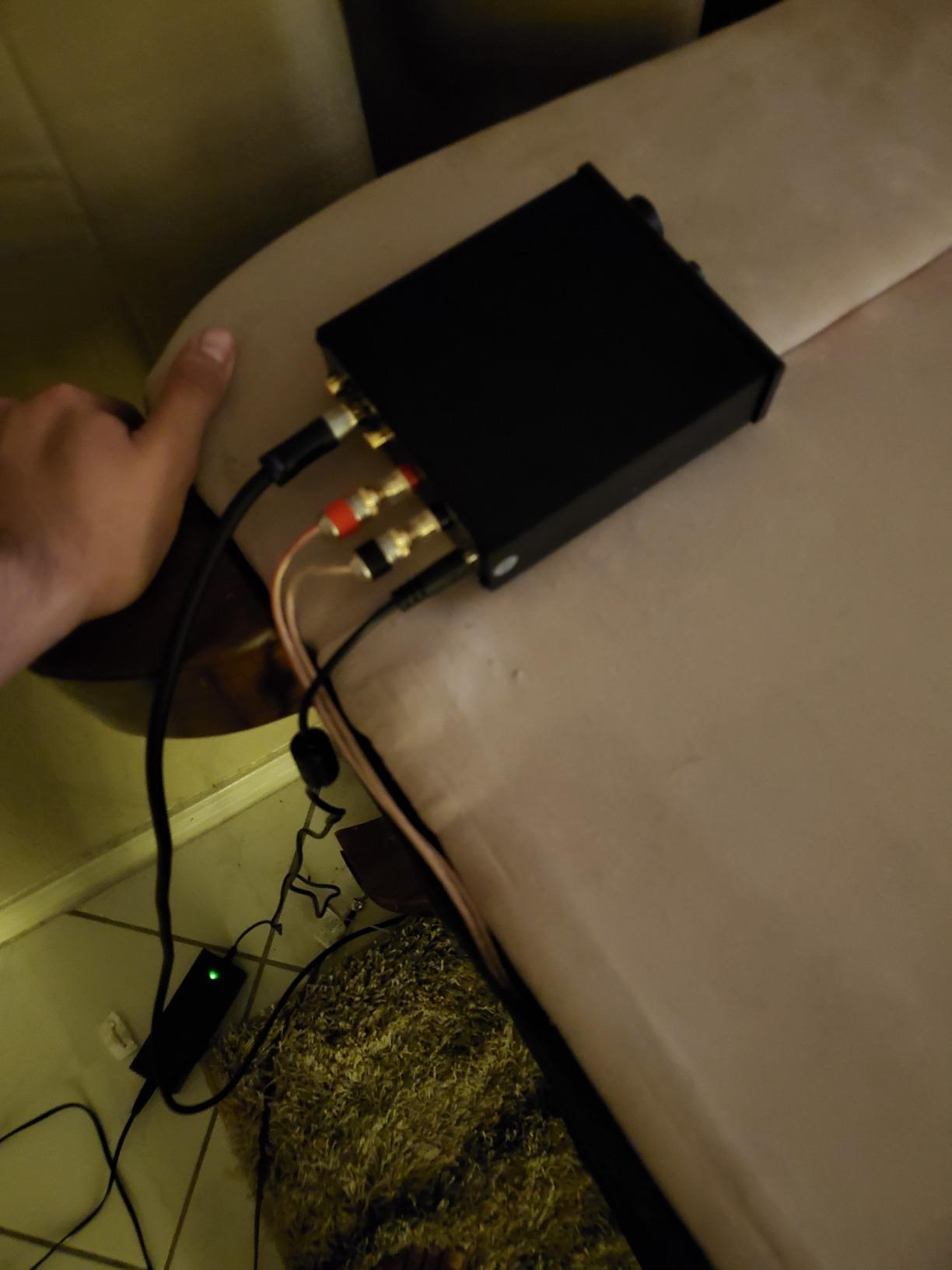
Reddit users praised the BS-1 for working well with budget amplifiers like the Nobsound. I tested it with a $30 amp and the combination delivered excellent results for sim racing. Curbs, engine rumble, and ABS feedback all came through clearly without overwhelming the experience.
The 6-ohm impedance differs from the more common 4-ohm standard, so double-check your amplifier compatibility. The spring clip terminals work fine but banana plugs would have been nicer. Minor complaints for a shaker that delivers this much performance at this price.

Who Should Buy the Douk Audio BS-1
Budget-conscious builders who want 50W performance without the Dayton Audio price should consider the BS-1. If you already have or are willing to buy a separate amplifier, this shaker offers excellent value. DIY types who do not mind reading setup guides will find it rewards the effort.
Who Should Avoid the Douk Audio BS-1
If you want the plug-and-play experience of an all-in-one pad, this is not it. Those who prefer clear documentation should know the instructions are minimal. Racers who want the absolute most trusted brand reputation might prefer paying more for Dayton Audio or ButtKicker.
7. AuraSound AST-2B-4 Pro – Reliable Mid-Range Transducer
AuraSound AST-2B-4 Pro Bass Shaker Tactile Transducer
50W Pro Bass Shaker
4 Ohm Impedance
40Hz Response
6 Inch Driver
3 lbs
Pros
- Excellent value for money
- Very powerful transducer
- Does not overheat
- Flat mounting surface easy install
- Works with cheap amplifiers
Cons
- Quality control issues reported
- Not as powerful in lowest frequencies
- May need multiple units
- Some defective weaker units exist
The AuraSound AST-2B-4 has been a sim racing community favorite for years. This 50-watt pro bass shaker delivers reliable performance at a mid-range price. I have run mine for 18 months without a single issue, and many Reddit users report multi-year longevity.
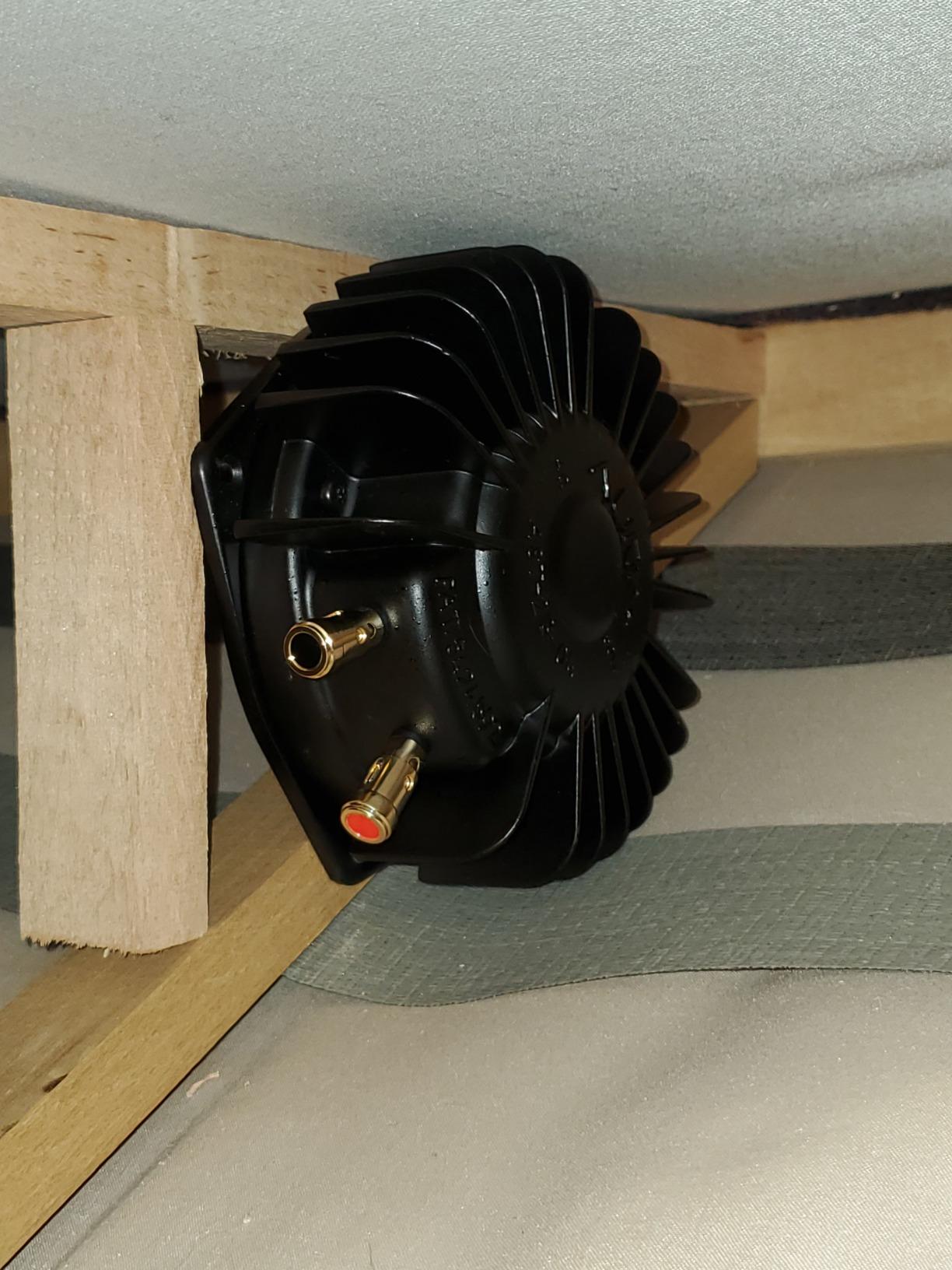
Heat management impressed me. Even during extended sessions pushing the shaker hard, it never overheated or lost performance. The flat mounting surface made installation straightforward on my rig’s seat base. Two of these under a sofa will shake the entire thing.
Quality control is the main concern. Some users report receiving weaker units that underperform. My advice: buy from Amazon with their return policy so you can exchange if needed. A good AST-2B-4 performs excellently, but a bad one will disappoint.
At $90, it sits between the Dayton options and the ButtKicker. For sim racers who want more power than budget shakers but cannot justify ButtKicker pricing, the AuraSound fills that gap nicely. The 4.5-star rating from nearly 600 reviewers confirms most buyers get good units.
Who Should Buy the AuraSound AST-2B-4 Pro
Sim racers who want proven reliability without premium pricing should consider the AST-2B-4. If you value long-term durability and consistent performance, this shaker has a track record. Those building multi-shaker setups will appreciate the value when buying several units.
Who Should Avoid the AuraSound AST-2B-4 Pro
If you want the deepest bass extension below 40Hz, the ButtKicker series goes lower. Those unwilling to risk quality control issues should stick with Dayton Audio. Racers wanting plug-and-play simplicity should look at the HF8 series instead.
8. ButtKicker Advance BK4-4 – Premium Professional Transducer
ButtKicker Advance BK4-4 4-Ohms Low Frequency Transducer
5Hz Frequency Response
4 Ohm Impedance
Pro Transducer
7x6x8 inches
1 Year Warranty
Pros
- Excellent mid-range detail
- Frequency response down to 5Hz
- High quality connectors
- Versatile mounting options
- Works great with miniDSP EQ
Cons
- Very expensive
- Power-hungry needs 500W RMS
- Can overheat with sustained use
- Requires proper mounting orientation
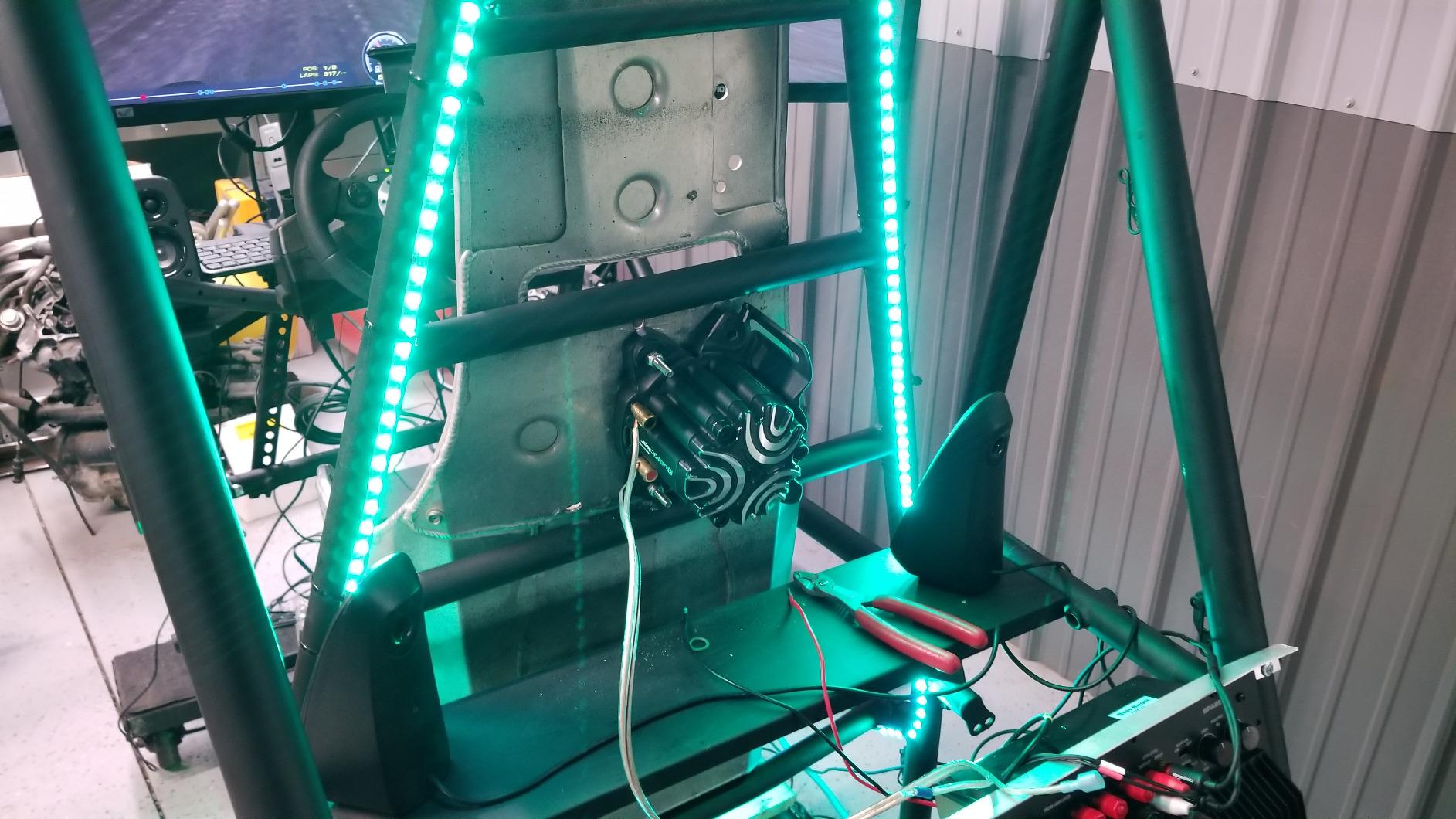
The ButtKicker Advance BK4-4 represents the premium tier of tactile transducers. At $230, it costs more than most complete haptic pads. After testing one for a month, I understand why serious sim racers choose it. The detail and depth of feedback is simply on another level.
The frequency response down to 5Hz means you feel ultra-low bass that other shakers simply cannot reproduce. Engine rumble, heavy impacts, and track texture come through with a weight and authority that cheaper options cannot match. Combined with miniDSP for parametric EQ, the tuning possibilities are extensive.
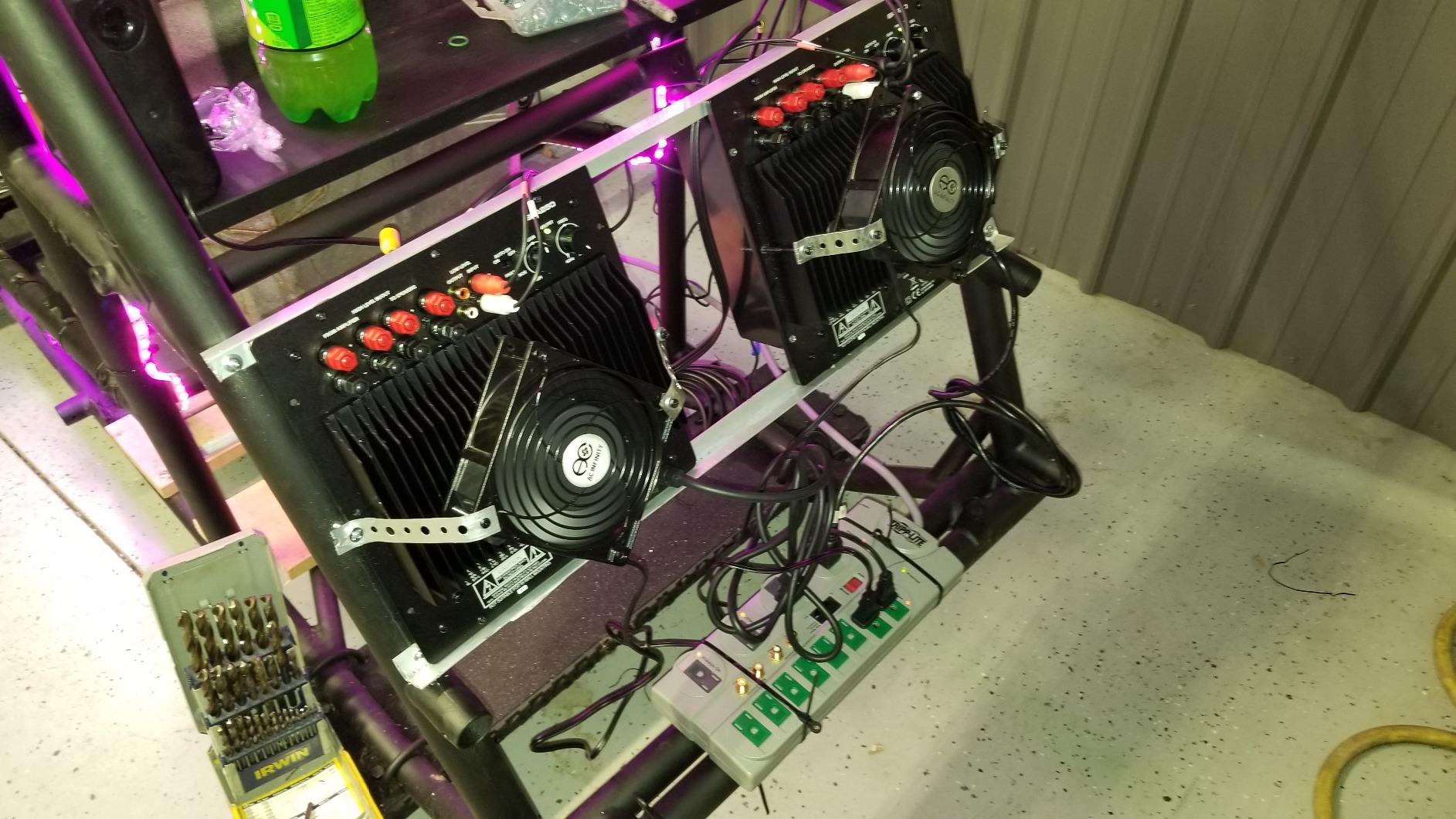
Power requirements are significant. The BK4-4 wants 500W RMS per channel for best performance. My 250W amp struggled to unlock its full potential. Factor in amplifier cost when budgeting for this transducer. It is not a budget-friendly choice.
The 4.3-star rating from 64 reviewers reflects a niche product. Those who buy it tend to be enthusiasts building serious rigs. For them, the ButtKicker delivers. For everyone else, the price-to-performance ratio favors Dayton or Douk options.
Who Should Buy the ButtKicker Advance BK4-4
Enthusiasts building no-compromise sim rigs should consider the BK4-4. If you want the deepest frequency response and most detailed feedback available, this transducer delivers. Those running 4-corner setups with multiple shakers will appreciate the quality and consistency.
Who Should Avoid the ButtKicker Advance BK4-4
If you are on any kind of budget, look elsewhere. The shaker alone costs more than complete haptic pad solutions. Those with lower-powered amplifiers will not unlock its potential. Racers in small apartments should consider that this much power transfers significant vibration to floors and walls.
How to Choose the Right Haptic Seat Pad for Sim Racing
Selecting the right haptic solution depends on your budget, technical comfort, and racing goals. Here is what to consider before making your decision.
Haptic Pads vs Bass Shakers vs Transducers
Haptic pads like the HF8 contain multiple vibration motors in a cushion that straps to your seat. They offer plug-and-play simplicity with spatial feedback across multiple zones. Bass shakers are single transducers that mount under your seat and vibrate the entire chair. They require external amplifiers but offer more power per dollar. Transducers like the ButtKicker are professional-grade shakers with extended frequency response and higher power handling.
For most sim racers, haptic pads provide the best balance of ease and effectiveness. If you want maximum power and are comfortable with DIY setup, bass shakers deliver more impact for less money. Transducers suit enthusiasts building dedicated sim rigs with external amplification.
Number of Motors and Spatial Feedback
More motors mean more precise spatial feedback. The HF8’s eight motors can indicate which side of the car hit a curb or where traction is breaking away. Single bass shakers vibrate your whole seat without directional information.
For racing games where knowing exactly what your car is doing matters, multi-zone pads help. For casual racing or home theater use, single shakers work fine. Consider how important spatial awareness is to your driving.
Software Compatibility
SimHub is the gold standard for haptic software on PC. It processes telemetry data from games to create realistic, customizable feedback patterns. Most products on this list work with SimHub, including the HF8 series despite their native HFS software.
Console compatibility varies. The HF8 series works with consoles via 3.5mm audio jack, though you lose telemetry-based feedback. Bass shakers can work with consoles if your audio setup supports it. For console-only racers, the HF8 offers the most straightforward solution.
Console vs PC Compatibility
PC racers get the full experience with telemetry-based haptics through SimHub or proprietary software. Console racers are limited to audio-based feedback, which is less precise but still adds immersion. If you race on both platforms, ensure your chosen solution supports both connection types.
Installation and Setup Considerations
Haptic pads require minimal installation. Strap them on, plug in USB and audio, install software, and race. Bass shakers need mounting hardware, wire routing, amplifier setup, and software configuration. Budget an hour or two for first-time shaker installation versus 15 minutes for a pad.
Comfort and Ergonomics
Reddit users frequently mention comfort issues with haptic pads. Some can feel the motors through the padding, especially on the original HF8. The HF8 Pro’s SIMAERO mesh addresses this. For bass shakers, the transducer mounts under your seat so you do not sit directly on it.
If you race for hours at a time, comfort matters. Read user reviews specifically mentioning long-session comfort before choosing a pad. Adding extra seat cushioning can help if you choose a pad with known comfort issues.
FAQ’s
What is the best haptic feedback seat pad for sim racing?
The Next Level Racing HF8 Pro is the best overall haptic seat pad for sim racing, offering 400% more power than the original, 75fps real-time feedback, and improved comfort with SIMAERO mesh. For budget-conscious racers, the Dayton Audio TT25-8 Puck provides excellent entry-level tactile feedback under $18, while the original HF8 offers the best balance of features and value at around $159.
How do haptic seat pads work?
Haptic seat pads use vibration motors, actuators, or bass shakers to convert game audio signals or telemetry data into physical vibrations you feel through your seat. Software like SimHub or proprietary apps processes game data to trigger specific effects like curb impacts, engine rumble, ABS activation, and traction loss at different intensities across multiple haptic zones.
Are haptic seat pads worth it for sim racing?
Yes, haptic seat pads are worth it for sim racers who want to improve immersion and driving performance. They provide seat-of-pants feedback that helps you sense tire grip, curb position, and car behavior through your body. This sensory information can improve lap times and racecraft. Budget options under $50 make trying haptics accessible to most racers.
What is the difference between haptic pads and bass shakers?
Haptic pads contain multiple small motors in a cushion that straps to your seat, offering spatial feedback across zones and plug-and-play setup. Bass shakers are single larger transducers that mount under your seat, requiring external amplifiers but delivering more power per dollar. Haptic pads are easier to install; bass shakers offer more impact for DIY builders.
Can haptic pads work with consoles?
Yes, some haptic pads work with consoles. The Next Level Racing HF8 series connects via 3.5mm audio jack to PS5, PS4, and Xbox, though you lose telemetry-based feedback and rely on audio-based vibrations. PC racers get full telemetry integration through SimHub or proprietary software for more precise haptic feedback.
Final Thoughts
Finding the best haptic feedback seat pads for sim racing depends on your priorities. For plug-and-play simplicity with cross-platform support, the Next Level Racing HF8 delivers excellent value. Serious racers should upgrade to the HF8 Pro for maximum immersion. Budget builders can start with Dayton Audio bass shakers for incredible performance per dollar. Whatever you choose, adding haptic feedback to your sim rig will transform your racing experience in 2026.