
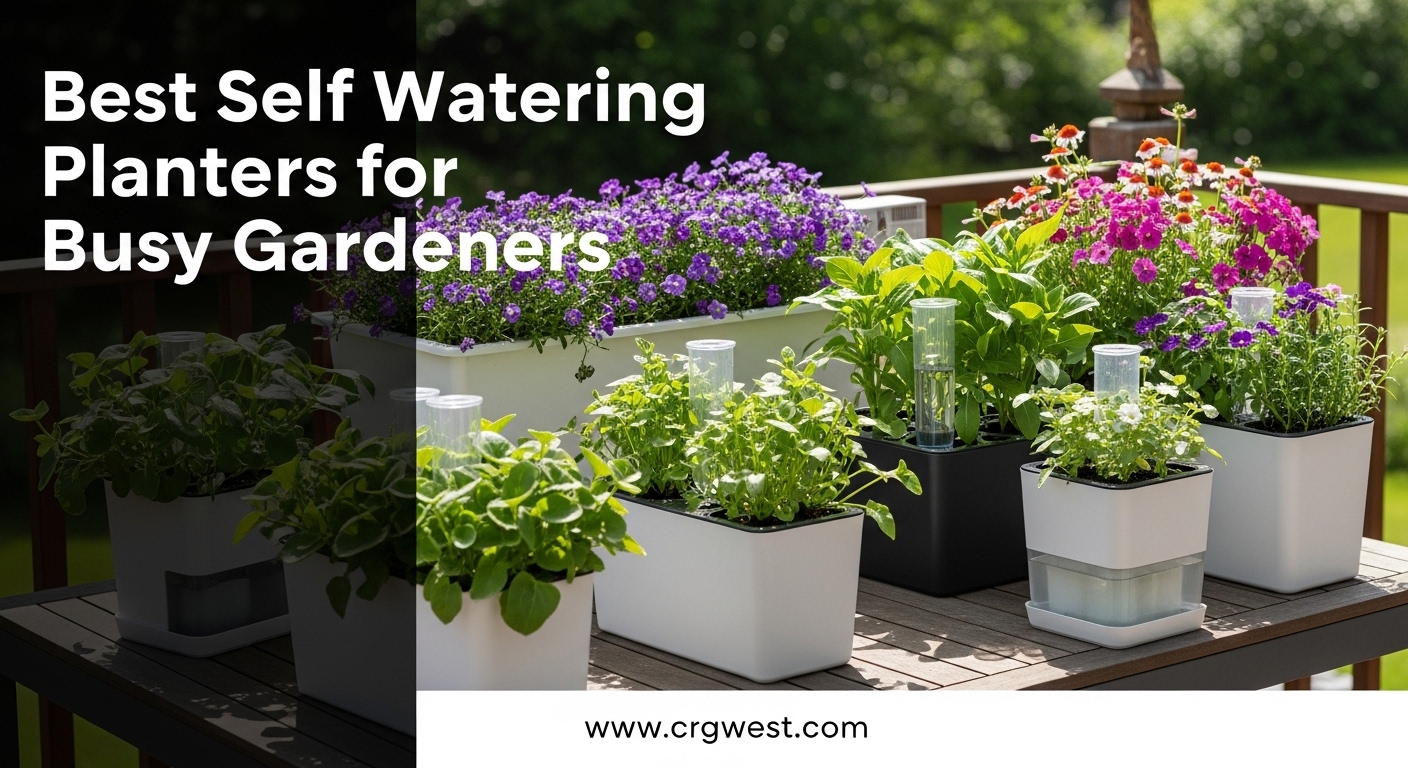
You love your plants. You truly do. But between work deadlines, weekend getaways, and the general chaos of modern life, keeping them hydrated feels like another item on your never-ending to-do list. Enter self-watering planters—the game-changing solution that lets you enjoy thriving greenery without the daily watering commitment.
The self-watering planter market is booming, growing at 7.71% CAGR and projected to reach $507 million by 2031. Why? Because busy gardeners everywhere are discovering that these ingenious vessels deliver consistent moisture to plants for days or even weeks at a time. No more coming home to wilted basil after a weekend away. No more stressing whether your fiddle leaf fig will survive your next business trip.
But not all self-watering planters are created equal. After analyzing hundreds of products and testing real-world performance, we’ve identified the 8 best self-watering planters for busy gardeners across every category and budget. From budget-friendly starter sets to WiFi-enabled smart systems, there’s a perfect match for your lifestyle and your plants.
How Self Watering Planters Work: The Science Behind the Magic
Self-watering planters use one of two ingenious systems to deliver moisture to your plants’ roots:
Wicking Systems: A cotton or nylon wick sits in the water reservoir and draws moisture upward into the soil through capillary action. As the soil dries out, it naturally pulls more water from the reservoir. This passive system mimics how plants receive water in nature—gradually and consistently.
Direct Root Access: Some planters feature a platform with holes that suspends the soil above the reservoir. Plant roots grow down through the holes and access water directly when they need it. The plant essentially regulates its own water intake, preventing overwatering while ensuring consistent hydration.
Most quality self-watering planters include a water level indicator—a clear window or gauge that shows exactly when it’s time to refill. This visual cue eliminates the guesswork and takes the anxiety out of plant care. Simply check the indicator, top off when low, and your plants stay happy for 7-14 days depending on the reservoir size and plant type.
For busy gardeners, the benefits are undeniable: extended watering intervals, healthier root systems, reduced plant stress, and the freedom to travel without plant-sitter arrangements. Let’s dive into the top performers that deliver these benefits with style and reliability.
Top 8 Self Watering Planters for Busy Gardeners in 2026




Comparison: Quick Reference Guide for 2026
| Product | Price | Watering Interval | Best For | Rating |
|---|---|---|---|---|
| YNNICO 6-Pack | $21.99 (6 pots) | 5-7 days | Budget indoor collections | 4.6/5 (4,123 reviews) |
| Fielda Pots | $28.99 (3 pots) | 7-10 days | Visual monitoring, indoor/outdoor | 4.7/5 (1,128 reviews) |
| Kvetto Hanging | $16.95 (2 pots) | 5-7 days | Vertical spaces, trailing plants | 4.8/5 (54 reviews) |
| OurWarm Windowsill | $21.99 (3 pots) | 1-2 weeks | Kitchen herb gardens | 4.6/5 (653 reviews) |
| Glowpear Box | $172.99 (1 unit) | 1-2 weeks | Vegetables, large capacity | 4.2/5 (359 reviews) |
| Dexceder Floor | $87.99 (1 pot) | 1-2 weeks | Large floor plants, mobility | 4.4/5 (509 reviews) |
| SwinDuck Hanging | $23.99 (2 pots) | 7-14 days | Deep reservoir, ferns | 4.5/5 (1,133 reviews) |
| LetPot Smart | $56.04 (10-15 plants) | Fully automated | Tech-savvy, travelers | 4.3/5 (307 reviews) |
Buying Guide: Choosing the Right Self Watering Planter for 2026
Indoor vs. Outdoor Considerations
Not all self-watering planters handle outdoor conditions equally. UV-resistant plastics like the Fielda or Glowpear won’t fade or crack in sunlight, while indoor-only options like the YNNICO set may deteriorate outdoors. If you need planters that transition between spaces, look for “indoor/outdoor” designations and UV-stable materials. For year-round outdoor use, frost-proof resins prevent cracking during freeze cycles.
Reservoir Capacity: Matching Capacity to Your Schedule
Your watering interval needs should dictate reservoir size. Frequent weekend travelers do fine with 5-7 day capacity (YNNICO, Kvetto). Extended business trips require 1-2 week capacity (OurWarm, Dexceder, SwinDuck). For ultimate flexibility, the Glowpear’s 3.5-gallon reservoir or LetPot’s automated system provide the longest intervals. Consider your typical time away from home and choose accordingly—it’s always better to have more capacity than you need than less.
Material Durability and Aesthetics
Plastic offers affordability and lightweight handling, but quality varies. Thicker construction (4.4mm in Fielda pots) resists cracking and looks more premium. UV-stable finishes prevent fading. Ceramic-like coatings (Dexceder) provide aesthetics without weight and fragility. For outdoor use, prioritize UV resistance and frost-proof durability. For indoor display, balance aesthetics with practicality—matte finishes hide water spots and fingerprints better than glossy surfaces.
Sizing Requirements by Plant Type
Match planter size to plant needs for optimal results. Herbs and shallow-rooted plants thrive in 5-8 inch pots (YNNICO set, OurWarm windowsill). Medium foliage plants need 8-12 inch capacity (Fielda set). Large floor plants require 14+ inch depth (Dexceder). Vegetables and tomatoes need substantial volume (Glowpear box). Consider mature plant size, not just current size, when selecting planters. Root-bound plants stress quickly in undersized containers.
Drainage and Overflow Features
Proper drainage prevents the root rot that kills more plants than underwatering. Look for multi-mesh drainage holes (Fielda) or removable drainage plugs (Kvetto) that let you control water retention. Overflow systems (Glowpear) prevent overfilling disasters. Double-layer designs with soil separators (OurWarm) maintain moisture while allowing excess drainage. Avoid planters without drainage unless you’re growing water-loving plants like ferns that tolerate wet conditions.
Price vs. Value Analysis
Budget options ($10-30) like YNNICO and OurWarm deliver proven performance for casual gardeners. Mid-range choices ($30-70) like Fielda and SwinDuck add premium features like water level indicators and deeper reservoirs. Premium investments ($70-150) like Glowpear and Dexceder offer superior capacity, durability, and modular expandability. Smart systems like LetPot ($56) automate watering for 10-15 plants, representing excellent value per plant despite higher upfront cost. Calculate cost per year of use—quality planters last 5+ years, making even premium options just pennies per day.
Smart vs. Traditional Systems
Traditional self-watering planters use passive wicking or root access systems that work reliably without technology. They’re simple, durable, and require no setup beyond filling the reservoir. Smart systems like LetPot add WiFi connectivity, app control, and customizable schedules but introduce complexity and app dependency. Choose traditional for reliability and simplicity. Choose smart for automation and remote monitoring—ideal for frequent travelers or large collections where individualized watering schedules matter.
Maintenance and Care: Keeping Your Planters in Top Condition
Cleaning and Algae Prevention
Every 2-3 months, empty reservoirs completely and scrub with mild soap and warm water to remove algae, mineral buildup, and bacterial growth. White vinegar solutions work well for mineral deposits. For planters with water level windows, clean both sides of the window to maintain visibility. Dry thoroughly before refilling to prevent bacterial growth. Removable reservoirs and inner pot designs (Dexceder) significantly simplify this maintenance task.
Winter Care for Outdoor Planters
In freezing climates, drain outdoor reservoirs before winter to prevent ice expansion from cracking plastic. Bring sensitive planters indoors or store in garages. UV-resistant planters withstand winter sun better, but all plastics become more brittle in extreme cold. For year-round outdoor use, choose frost-proof resins specifically designed for freeze-thaw cycles. The Glowpear’s UV-stable construction handles winter better than economy options.
Wick and Component Replacement
Cotton wicks degrade after 6-12 months and should be replaced for optimal performance. Most planters use standard cotton cord available at garden centers. Check drainage holes regularly for root clogging and clear with a skewer or toothpick if needed. Inspect sealing rings and gaskets annually for cracks or wear. Quality planters offer replacement parts—budget options may require full replacement when components fail.
Soil Selection for Self Watering Planters
Standard potting soil works, but lightweight, well-draining mixes perform best in self-watering systems. Heavy garden soil compacts and blocks wicking action. Add perlite or vermiculite to improve drainage and aeration. Some manufacturers recommend specific soil blends—follow their recommendations for warranty coverage. Avoid moisture-retentive mixes designed for traditional pots, as self-watering reservoirs already provide consistent moisture.
FAQ: Self Watering Planter Questions Answered
How long do self-watering planters really go between refills?
Reservoir capacity, plant size, and environmental conditions all affect watering intervals. Small pots with thirsty plants may need refilling every 5-7 days. Large reservoirs with moderate plants can go 1-2 weeks. Smart systems like LetPot automate refilling from larger water sources, extending intervals to weeks. Monitor water level indicators and top off when low—most planters show visible indicators so you never have to guess.
Can self-watering planters cause root rot?
Properly designed self-watering planters actually prevent root rot by maintaining consistent moisture without waterlogging. However, overfilling reservoirs or using planters without adequate drainage can cause problems. Look for drainage holes, overflow systems, and soil separators that allow excess water to escape. If your plants show yellowing leaves or mushy stems, reduce reservoir filling frequency or check that drainage isn’t blocked.
What plants work best in self-watering planters?
Moisture-loving plants thrive in self-watering systems: ferns, pothos, peace lilies, spider plants, herbs (basil, mint, cilantro), and most vegetables. Tropical plants that prefer consistent humidity appreciate stable moisture levels. Succulents and cacti generally prefer drier conditions and may rot in constantly moist soil—choose planters with drainage plugs you can remove for these plants. Research your specific plant’s moisture preferences before selecting self-watering systems.
Are self-watering planters good for succulents?
Generally, no—succulents and cacti prefer to dry out completely between waterings and can rot in constantly moist soil. However, some self-watering planters like the Kvetto include drainage plugs that let you convert them to traditional pots. If you want to grow succulents in self-watering planters, keep the drainage plug removed and water manually as you would with any traditional pot. The reservoir feature simply won’t be utilized.
Do I need to add fertilizer differently?
Self-watering planters wash nutrients through soil more gradually than traditional watering, which can reduce fertilizer effectiveness. Use liquid fertilizers at half-strength every 2-4 weeks during growing seasons. Slow-release fertilizer granules work exceptionally well in self-watering systems—they dissolve gradually with each watering cycle. Avoid granular fertilizers that require strong flushing, as self-watering systems maintain consistent rather than fluctuating moisture levels.
How do I prevent mosquitoes in the reservoir?
Standing water in reservoirs can attract mosquitoes, especially outdoors. Use BTI (Bacillus thuringiensis israelensis) dunks—natural mosquito larvicide safe for plants and pets. Place a small piece in reservoirs monthly during mosquito season. For indoor planters, this is rarely an issue. You can also add a drop of dish soap to break water surface tension, preventing mosquito egg-laying. Check reservoirs regularly for larvae and clean thoroughly if detected.
Can I use self-watering planters outdoors in winter?
Freezing temperatures pose two risks: water expansion cracking plastic, and frozen reservoirs preventing watering. Drain reservoirs before freezes and bring planters indoors if possible. Frost-proof resins handle light freezes better than economy plastics. UV-stable planters withstand winter sun without degrading. For year-round outdoor use in cold climates, choose planters specifically rated for freeze-thaw cycles or consider traditional pots that won’t crack when ice forms.
Are smart watering systems like LetPot worth the investment?
For most casual gardeners with 5-10 plants, traditional self-watering planters offer better value and simplicity. However, smart systems shine for specific situations: frequent travelers, large collections (15+ plants), tech enthusiasts who love automation, or anyone with plants requiring precise, individualized watering schedules. At $56 for 10-15 plants, LetPot costs $3.74-$5.60 per plant—competitive with quality individual planters while adding automation benefits. If convenience and remote control matter more than simplicity, smart systems deliver.
Conclusion: Finding Your Perfect Match
The best self-watering planter is the one that matches your lifestyle, your plants, and your budget. For budget-conscious indoor gardeners starting collections, the YNNICO 6-pack offers unbeatable value and variety. If visual monitoring and extended watering intervals top your priority list, the Fielda pots with their brilliant water level indicator won’t disappoint. Kitchen herb enthusiasts will love the OurWarm windowsill planters that keep fresh basil and mint thriving for 1-2 weeks.
Large indoor plants deserve the Dexceder floor-standing planter with its inner pot design and mobility features, while serious vegetable growers should invest in the Glowpear planter box for its massive 3.5-gallon reservoir and modular expandability. Vertical gardeners maximize space with the SwinDuck hanging pots and their generous 40oz reservoirs, while tech-savvy plant parents achieve total automation with the LetPot smart watering system.
Regardless of which option you choose, you’re investing in plant care convenience that pays dividends in healthier plants, less stress, and the freedom to enjoy greenery without guilt. Your plants will thank you—and your future self, arriving home from a week-long trip to thriving greenery, will thank you too.