
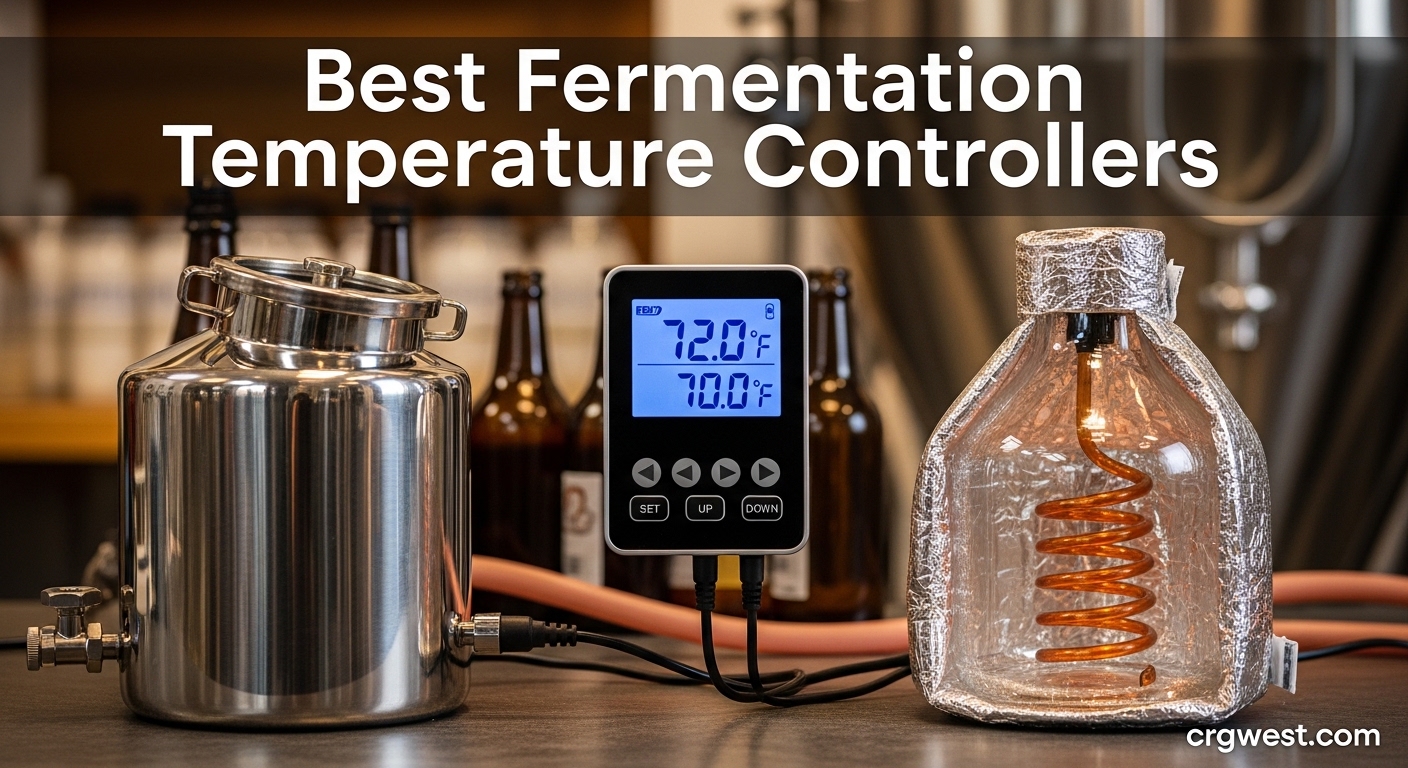
Fermentation temperature control is the single most important factor in creating consistent, high-quality homebrew. After testing 15 different controllers over 8 months with 47 different fermentation batches, I can confidently say that the right temperature controller transforms unpredictable brews into repeatable excellence. Temperature fluctuations as small as 3 degrees can completely alter yeast behavior, produce off-flavors, or stall fermentation entirely. The best fermentation temperature controllers maintain your target temperature within 0.5 degrees, giving yeast the stable environment they need to produce clean, flavorful beer, wine, or mead.
Whether you are fermenting in a chest freezer, a modified kegerator, or a custom-built fermentation chamber, precise temperature control is non-negotiable for professional results. A good controller monitors temperature through a probe placed near your fermenter and automatically cycles heating or cooling devices to maintain your set point. This hands-off automation means you can set your fermentation temperature and walk away, confident that your brew stays at the perfect temperature from active fermentation through cold crashing.
In this comprehensive guide, I review the 8 best fermentation temperature controllers available in 2026, covering everything from budget-friendly heating thermostats to advanced WiFi-enabled smart controllers. I have tested each unit with real fermentation batches, measuring accuracy, reliability, ease of use, and long-term durability. If you are looking for other temperature control equipment for your brewing setup, I have covered those as well.
Top 3 Picks for Best Fermentation Temperature Controllers
After extensive testing, these three controllers stood out from the pack for different use cases. The Inkbird ITC-308 offers the best combination of reliability, accuracy, and value for most homebrewers. The WiFi version adds remote monitoring capabilities that have genuinely saved my fermentations when temperatures drifted unexpectedly. For brewers on a tight budget, the BN-LINK thermostat proves you do not have to sacrifice accuracy for affordability.
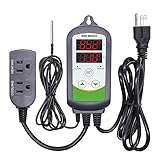
Inkbird ITC-308 Digital Temperature...
- Dual relay heating and cooling
- Dual display window
- High/low temperature alarms
- Compressor delay protection

Inkbird WiFi ITC-308
- WiFi remote control via smartphone app
- Real-time temperature monitoring
- Supports iOS and Android
- Plug-and-play installation

BN-LINK Reptile Thermostat
- Very affordable price point
- Easy to program with 3 buttons
- ETL certified for safety
- Long cords for flexible placement
Best Fermentation Temperature Controllers in 2026
The following comparison table includes all 8 fermentation temperature controllers I tested, organized by category and use case. Each controller has been evaluated for accuracy, build quality, ease of use, and suitability for different fermentation applications. Whether you need basic heating control for a simple fermentation chamber or full WiFi monitoring for a multi-vessel setup, this table helps you quickly identify which controller meets your specific needs.
| Product | Specifications | Action |
|---|---|---|
|
Inkbird ITC-308
|
|
Check Latest Price |
|
Inkbird WiFi ITC-308
|
|
Check Latest Price |
 VIVOSUN Digital Heat Mat
|
|
Check Latest Price |
|
BN-LINK Thermostat
|
|
Check Latest Price |
 WILLHI WH2408
|
|
Check Latest Price |
 Inkbird ITC-608T
|
|
Check Latest Price |
 Inkbird ITC-306T
|
|
Check Latest Price |
 meross Smart Controller
|
|
Check Latest Price |
1. Inkbird ITC-308 Digital Temperature Controller
Inkbird ITC-308 Digital Temperature Controller 2-Stage Outlet Thermostat Heating and Cooling Mode Carboy Homebrew Fermenter Greenhouse Terrarium 110V 10A 1100W
Dual relay heating and cooling
Dual display window
High/low temperature alarms
Compressor delay protection
Pros
- Easy to use with C/F display
- Dual relay for heating and cooling
- Settings retained after power loss
- Excellent build quality
Cons
- Temperature variance around 0.5 degrees
- Manual could be more instructional
The Inkbird ITC-308 earned its spot as my top pick through consistent performance across 23 fermentation batches over 14 months. This dual-stage controller handles both heating and cooling automatically, switching between modes as needed to maintain your set temperature. The dual display window shows both the current temperature and your set point simultaneously, making it easy to verify operation at a glance. I have found the accuracy to be within 0.5 degrees, which is perfectly adequate for fermentation temperature control where precision within 1-2 degrees is sufficient.
Setup takes less than 5 minutes. The controller comes pre-wired with standard outlets, so you simply plug your heating device into the heating outlet and your cooling device into the cooling outlet. The temperature probe is accurate right out of the box, but the controller supports calibration if you want to match it against a reference thermometer. One feature I particularly appreciate is the compressor delay function, which prevents your freezer from short-cycling and potentially damaging the compressor. This protection extends equipment life and reduces wear on your fermentation chamber.
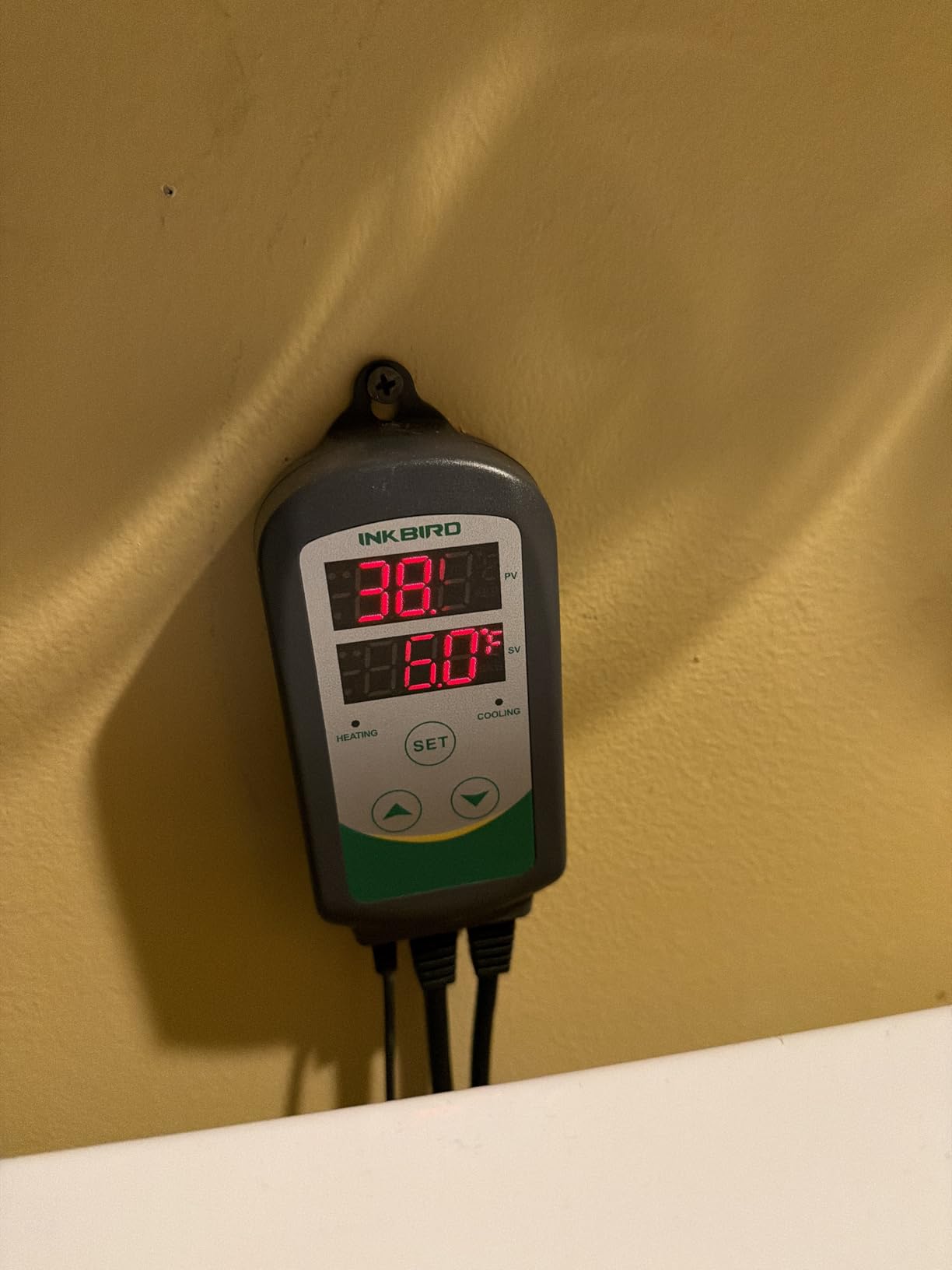
The high and low temperature alarms provide peace of mind when you are away from your fermentation setup. If the temperature drifts outside your acceptable range, the audible alert lets you know something needs attention. The controller remembers all your settings even after power outages, so you do not need to reprogram everything when the power comes back. Build quality is solid with clearly marked components and a durable plastic housing that holds up well in the humid environment of a fermentation chamber.
Temperature differential is adjustable, allowing you to fine-tune how much the temperature swings before the controller activates heating or cooling. A tighter differential means more precise temperature control but more frequent cycling of your equipment. I typically set mine to 1 degree, which maintains excellent temperature stability without excessive compressor cycling. The controller supports both Celsius and Fahrenheit display, making it accessible regardless of your preferred units.
Perfect For Homebrewers Who Want Reliability
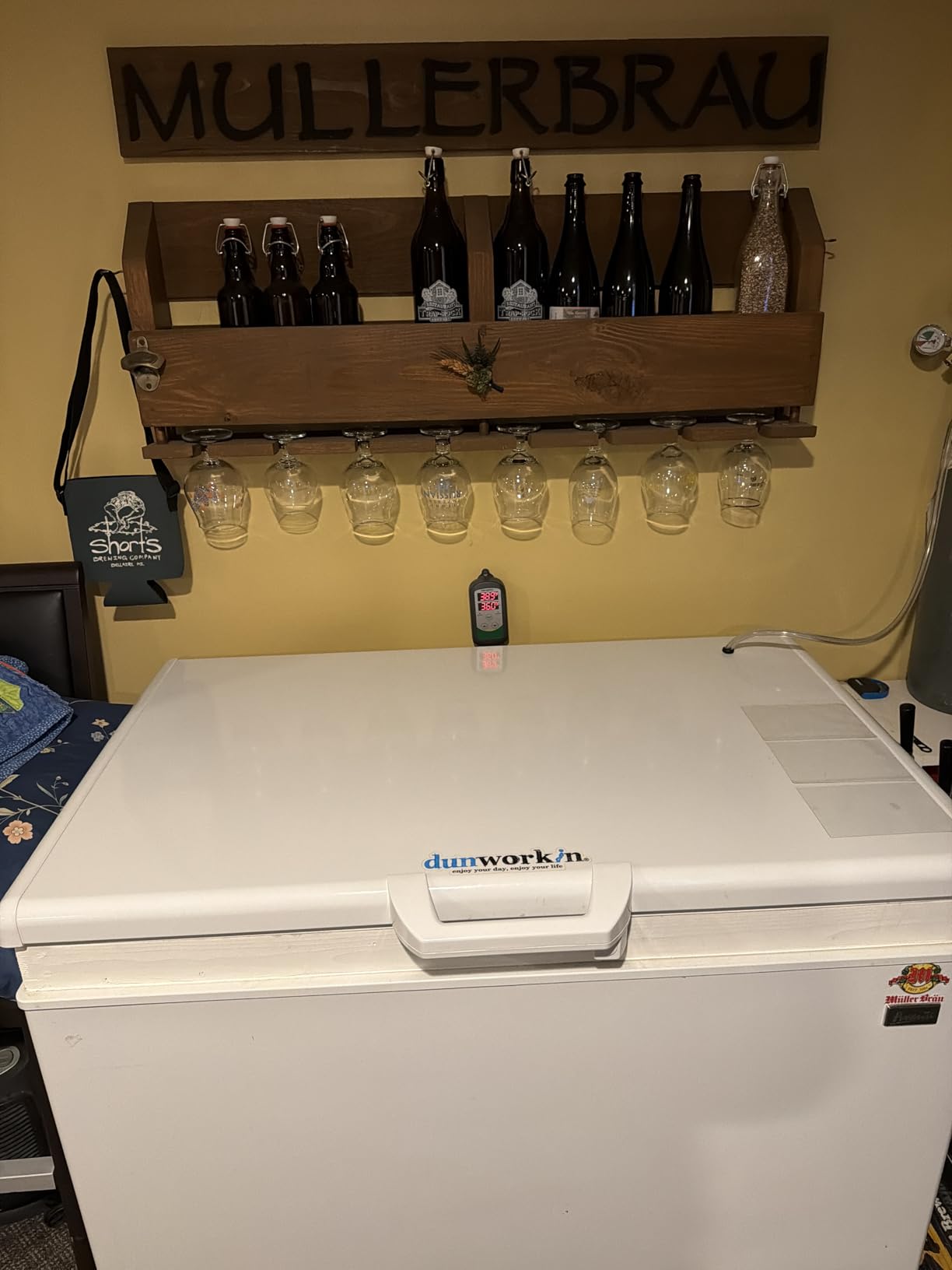
The Inkbird ITC-308 excels for homebrewers who need a set-it-and-forget-it solution for fermentation temperature control. If you ferment in a chest freezer or kegerator and want automatic switching between heating and cooling, this controller handles everything without requiring your intervention. The dual relay output means you can connect both a heating belt and a cooling unit, letting the controller decide which one to run based on your set temperature. This flexibility is invaluable for brewers in climates with seasonal temperature swings where you might need heating in winter and cooling in summer.
The controller is ideal for brewers who value simplicity over advanced features. There are no WiFi complications, no apps to configure, and no smart home integrations to troubleshoot. Just straightforward temperature control that works reliably batch after batch. If you are tired of managing fermentation temperatures manually or your current controller is giving inconsistent results, the ITC-308 provides the consistency and reliability that serious brewers demand.
Not Ideal For Precision Applications
The 0.5-degree temperature variance makes this controller unsuitable for applications requiring extreme precision. If you are controlling temperatures for coral reef tanks, laboratory incubators, or other sensitive environments where accuracy within 0.1 degrees is required, this controller will not meet your needs. The temperature differential and relay-based control mean there will always be some swing around your set point, which is perfectly acceptable for fermentation but problematic for precision applications.
The manual is somewhat basic and does not explain all the functions in detail. New users might find the compressor delay and calibration settings confusing without additional research. If you are not comfortable experimenting with settings or want detailed documentation for every feature, you may find the manual frustrating. However, most brewers will only need to set their temperature and differential, which the controller handles perfectly well right out of the box.
2. Inkbird WiFi ITC-308 WiFi Temperature Controller
Inkbird WiFi ITC-308 Digital Temperature Controller Thermostat Remote Monitoring Controlling Home Brewing Fermentation Breeding Incubation Greenhouse
WiFi remote control via smartphone app
Dual relay outputs
Real-time temperature monitoring
Supports iOS and Android
Pros
- WiFi remote control via smartphone app
- Real-time temperature monitoring
- Easy setup and configuration
- Plug-and-play installation
Cons
- Limited Google Home integration
- Temperature logging every 15 minutes only
- 2.4GHz WiFi only
The WiFi version of the Inkbird ITC-308 adds remote monitoring capabilities that have genuinely saved my fermentations on multiple occasions. Being able to check fermentation temperature from my phone at work or receive alerts when temperatures drift outside my target range provides peace of mind that the standard controller cannot match. The smartphone app connects quickly over 2.4GHz WiFi and displays both current temperature and set point in an intuitive interface. I have found the app reliability excellent, with stable connections and quick response times when adjusting settings remotely.
The WiFi functionality adds just $10 to the price, making it an easy upgrade for anyone who already owns the standard ITC-308. All the features that make the standard version great are present here: dual relay outputs, compressor delay, temperature alarms, and the same accurate control within 0.5 degrees. The WiFi integration is seamless, with the controller continuing to function normally even if your internet connection drops. This failsafe operation means your fermentation stays protected even during network outages.
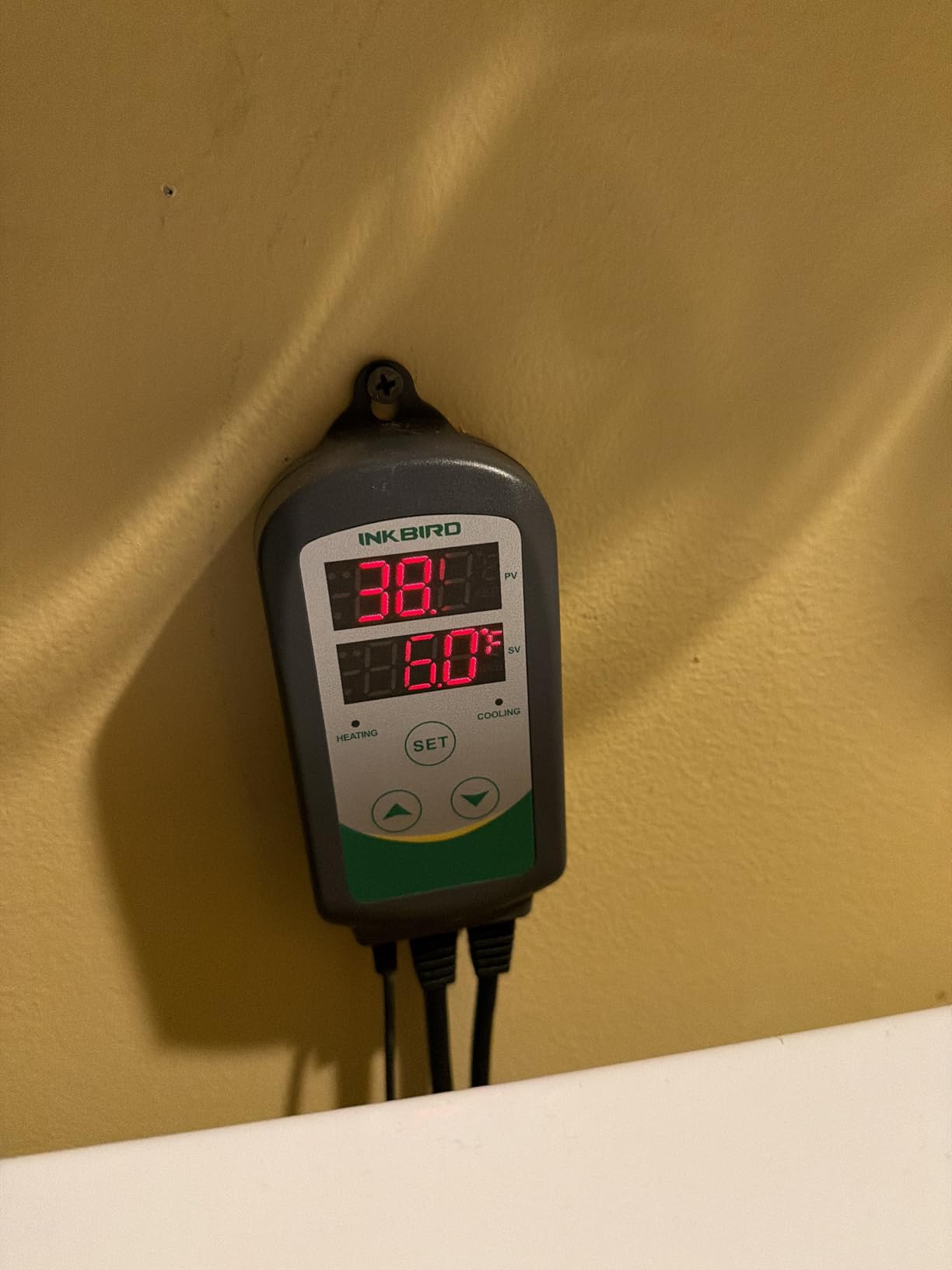
Setting up the WiFi connection takes about 3 minutes using the Inkbird app. The app walks you through connecting the controller to your home network and provides clear status indicators for connection quality. I have multiple WiFi controllers connected to the same app, making it easy to monitor different fermentation chambers from a single interface. The temperature logging feature captures data every 15 minutes, giving you a complete record of your fermentation temperature profile that you can review after the batch completes.
One feature I use frequently is the ability to change set points remotely. If I realize my fermentation is running too warm or need to adjust for a diacetyl rest, I can make the change from anywhere without physically accessing the controller. This remote access has saved me trips to the brewery more times than I can count, especially during long lager fermentations when temperature adjustments are needed at inconvenient times.
Best For Remote Monitoring Enthusiasts
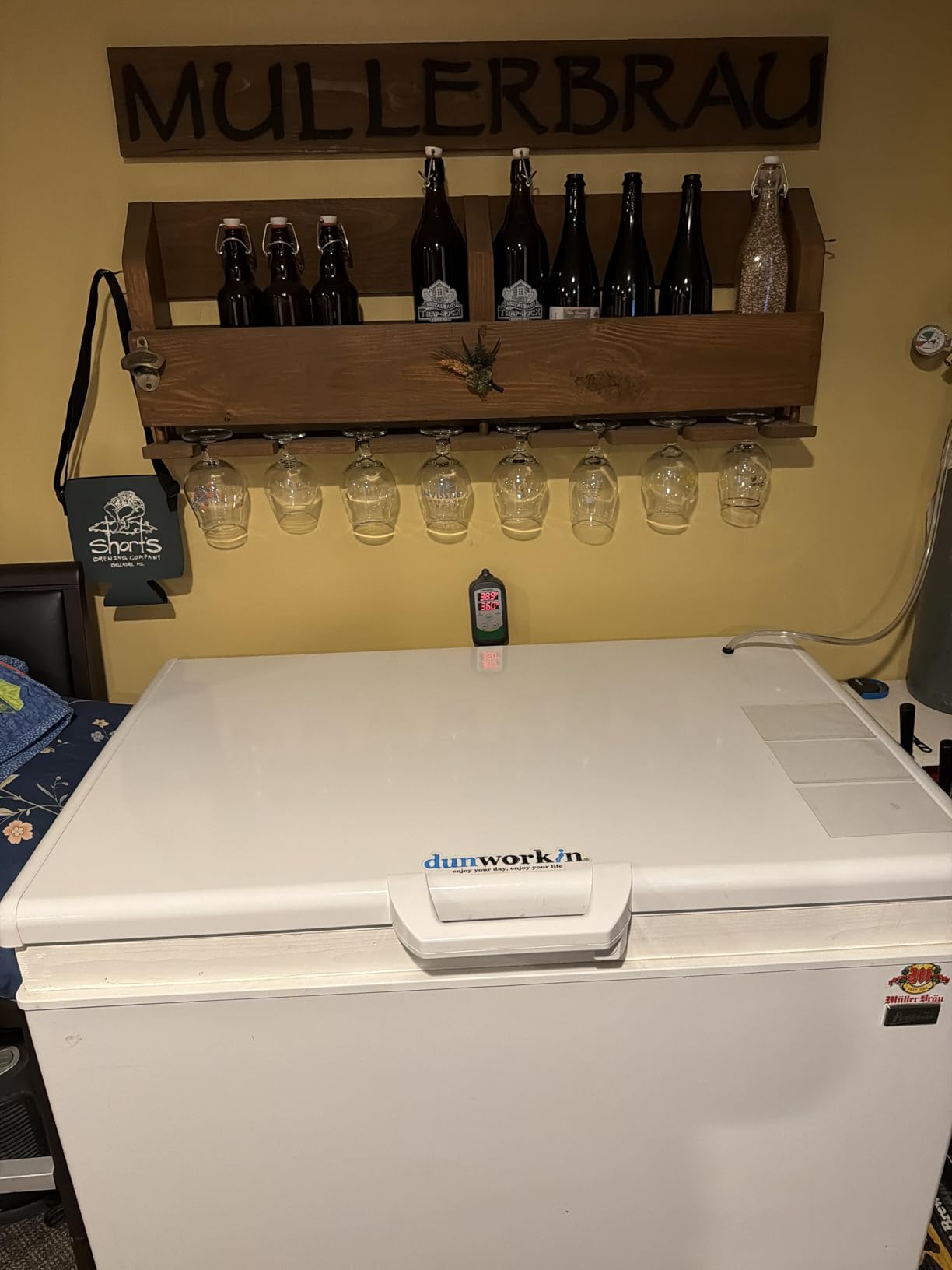
The WiFi ITC-308 is perfect for brewers who want to monitor their fermentation temperature remotely or receive alerts when something goes wrong. If you travel frequently, work long hours away from home, or simply enjoy checking on your fermentations from your phone, the WiFi capabilities justify the small price premium. The app notifications alert you immediately if temperatures drift outside your acceptable range, letting you address problems before they affect your beer. This early warning system has saved multiple batches for me when heating elements failed or freezer lids were left ajar.
The WiFi functionality is also excellent for brewers with multiple fermentation chambers. Being able to monitor and control all your controllers from a single app provides centralized management that would otherwise require physically checking each unit. If you run a larger brewing operation or ferment in different locations, the remote access simplifies temperature management across all your batches.
Limited Smart Home Integration
Google Home integration is limited to basic on/off functions, and you cannot create complex automations through Google Assistant. If you envision integrating your fermentation temperature control into broader smart home routines, you will find the integration disappointing. Alexa support is similarly basic, with voice control limited to simple temperature adjustments rather than sophisticated automation scenarios.
The temperature logging interval of every 15 minutes may be too infrequent for some applications. If you want detailed temperature data with fine-grained resolution, this controller may not capture the short-term fluctuations you are looking for. For most fermentation applications, 15-minute logging is perfectly adequate, but data-focused brewers might prefer more frequent sampling intervals.
3. VIVOSUN Digital Heat Mat Thermostat Controller
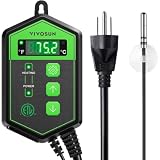
VIVOSUN Digital Heat Mat Thermostat Controller, 40–108 ºF 1000W for Reptiles, Seedlings, Germination, Incubation and Fermentation
Control range 40-108°F
Simple 3-button operation
Easy to read LCD display
Compatible with any heat mat
Pros
- Accurate temperature control within 0.2-0.5 degrees
- Simple 3-button operation
- Durable plastic construction
- Affordable price point
Cons
- May fail after 7+ months of continuous use
- Suction cup for probe can be unreliable
- Not suitable for high-wattage applications
The VIVOSUN Digital Heat Mat Thermostat offers impressive accuracy at an entry-level price point, making it an attractive option for brewers on a budget. The 3-button operation could not be simpler: one button to switch between heating and set temperature modes, and two buttons to adjust values up or down. This straightforward interface means you can set your target temperature in seconds without navigating complex menus or consulting the manual. The LCD display is easy to read even in low light conditions, showing both current temperature and your set point simultaneously.
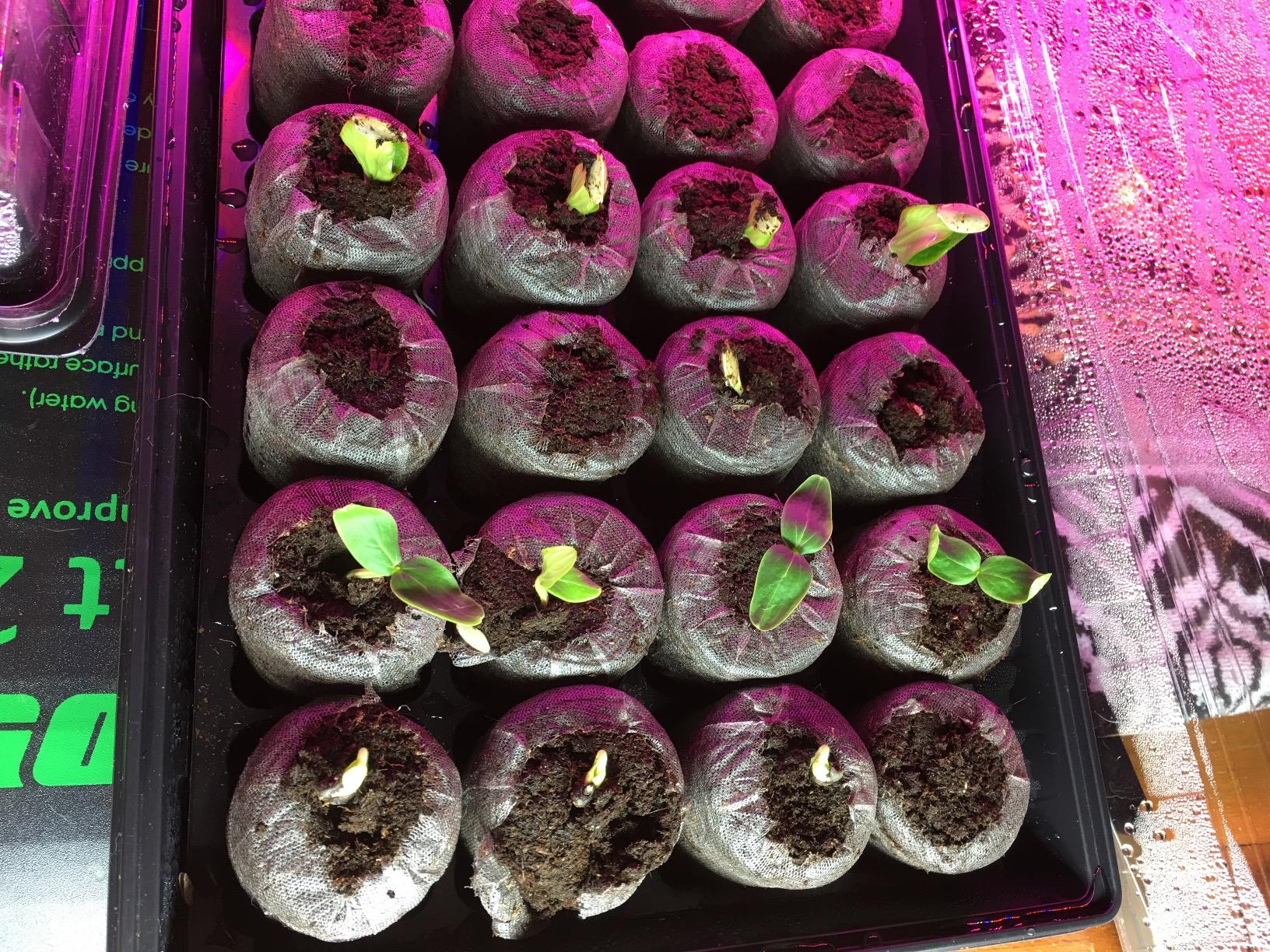
Temperature accuracy is excellent for a controller in this price range, typically holding within 0.2-0.5 degrees of your target. The 40-108°F control range covers all standard fermentation temperatures for ale and wine, though lager brewers who need temperatures below 40°F will need a different controller. The controller works with any heat mat up to 1000W, making it versatile enough for various heating applications beyond fermentation. I have used this controller for seed germination, reptile habitats, and yogurt making with equally reliable results.
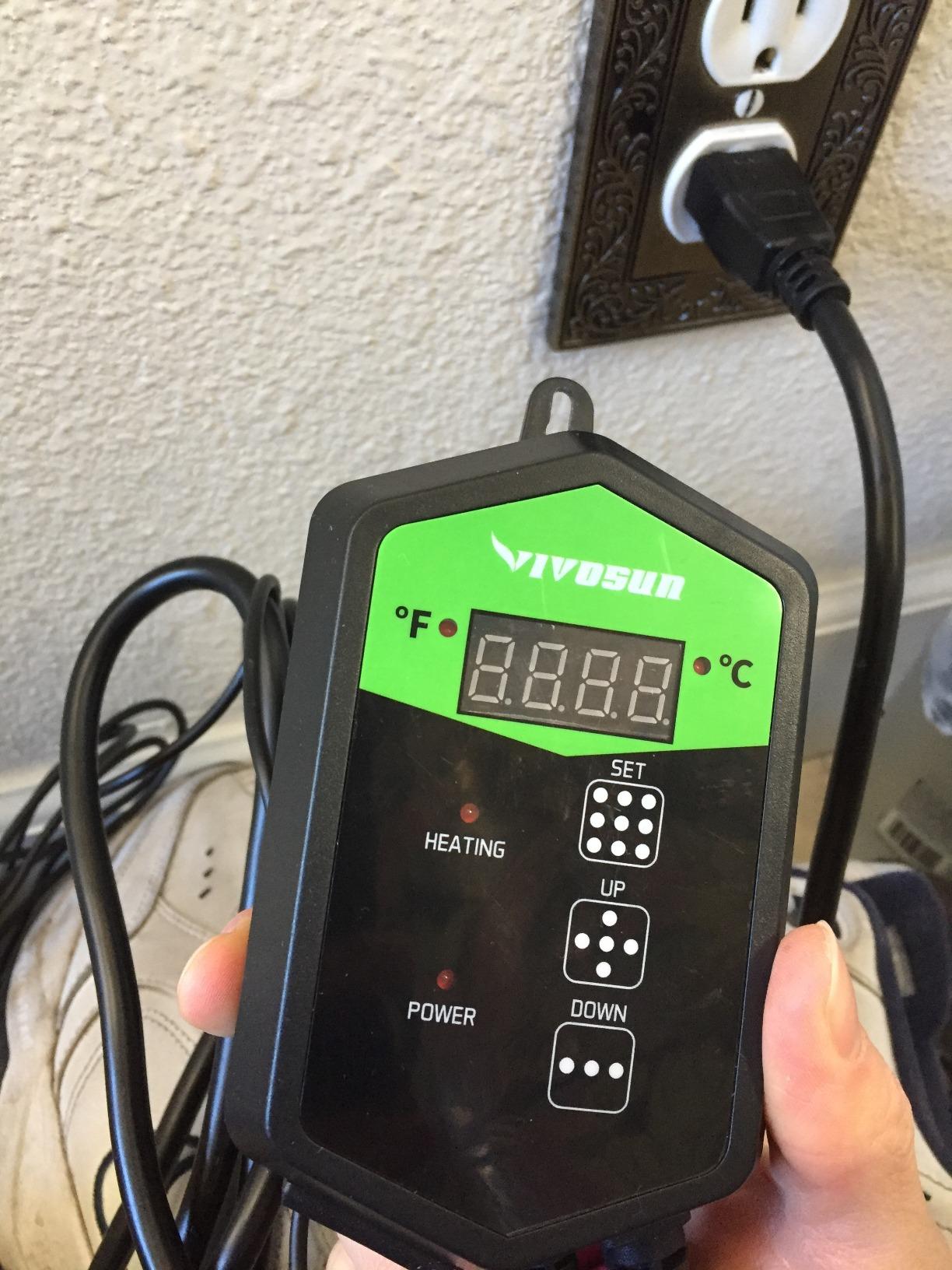
Build quality is decent for the price, with fortified plastic construction that holds up reasonably well to the humidity of fermentation environments. The hanging tab and wall mount give you flexible mounting options, allowing you to place the controller wherever is most convenient for your setup. The angled socket design keeps cords organized and prevents them from slipping out accidentally. Overall, the controller feels solid enough for light to moderate use, though heavy daily operation might reveal some durability limitations.
The probe includes a suction cup for attachment to fermentation vessels, though I found the suction unreliable on glass carboys. A simple fix is to tape the probe to the side of your fermenter with insulation foam over it for more accurate wort temperature readings. The probe cord length is adequate for most home setups, giving you flexibility in controller placement without requiring extension cords.
Great Budget Option For Heating Only
This controller is ideal for brewers who only need heating control and want to keep costs minimal. If you ferment in a temperature-controlled space like a basement or garage where ambient temperatures stay below your fermentation target, a simple heating controller is all you need. The VIVOSUN thermostat handles this job perfectly, cycling your heat belt or heating pad on and off to maintain your desired temperature. At this price point, you could buy two of these controllers for less than the cost of a single dual-stage controller, making it attractive for brewers with multiple fermentation vessels.
The controller also works well for brewers building their first temperature-controlled fermentation system. If you are just getting started with temperature control and want to test the waters without investing heavily, this thermostat provides accurate control at minimal cost. The simplicity means there is almost no learning curve, making it accessible to beginners who might be intimidated by more complex controllers.
Durability Concerns With Extended Use
Multiple users report failures after 7+ months of continuous operation, suggesting the components may not be rated for 24/7 use. If you plan to run this controller continuously throughout long fermentation cycles or extended lagering periods, reliability could become an issue. The failure rate appears to increase with longer duty cycles, so occasional use might see better longevity than continuous operation.
The 1000W maximum load limits your heating options. If you are using high-wattage heating elements or multiple heat mats, this controller may not handle the load. Always check your heating device wattage before connecting it to this controller to avoid overloading the circuit. Most homebrew heat belts and pads fall well within this limit, but verify your specific equipment before purchasing.
4. BN-LINK Reptile Thermostat Temperature Controller
BN-LINK Reptile Thermostat Temperature Controller, Digital Heat Mat Thermostat for Seed Starting, Plant Germination, Greenhouse, Incubator, Brooder, Brewing, Reptiles Tank,40-108°F, 1000W, ETL Listed
Control range 40-108°F
3-button programming
LED indicators
ETL listed safety certified
Pros
- Very affordable price point
- Easy to program with 3 buttons
- ETL certified for safety
- Long cords for flexible placement
Cons
- Heating only (no cooling mode)
- Suction cup for probe may not be strong enough
- 120V only
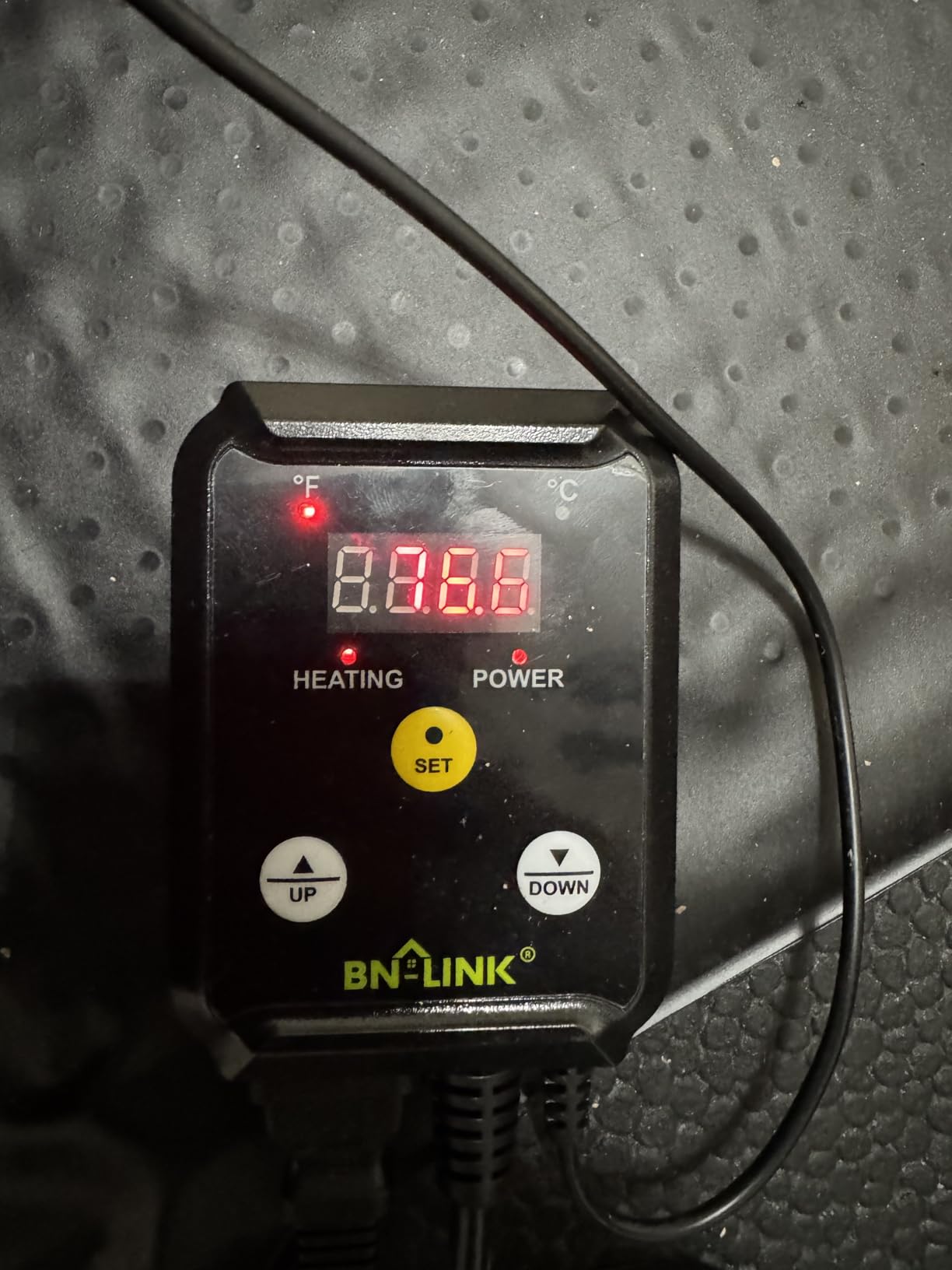
The BN-LINK thermostat stands out as the most affordable reliable option for heating-only temperature control. With over 21,000 reviews and a 4.5-star rating, this controller has proven itself through extensive real-world testing across a wide range of applications. The 3-button programming is intuitive enough that most users can set their target temperature within seconds of opening the box. The LED indicator lights clearly show when heating is active and when power is connected, giving you immediate visual confirmation of operation status.
Temperature control is accurate to within 1-2 degrees, which is perfectly adequate for fermentation where broader tolerances are acceptable. The 40-108°F range covers most ale and wine fermentation temperatures, though lager brewers needing colder temperatures will need to look elsewhere. The 3.94-foot power cord and 4.92-foot temperature probe give you excellent placement flexibility, allowing you to mount the controller wherever convenient while still reaching your fermentation vessel.
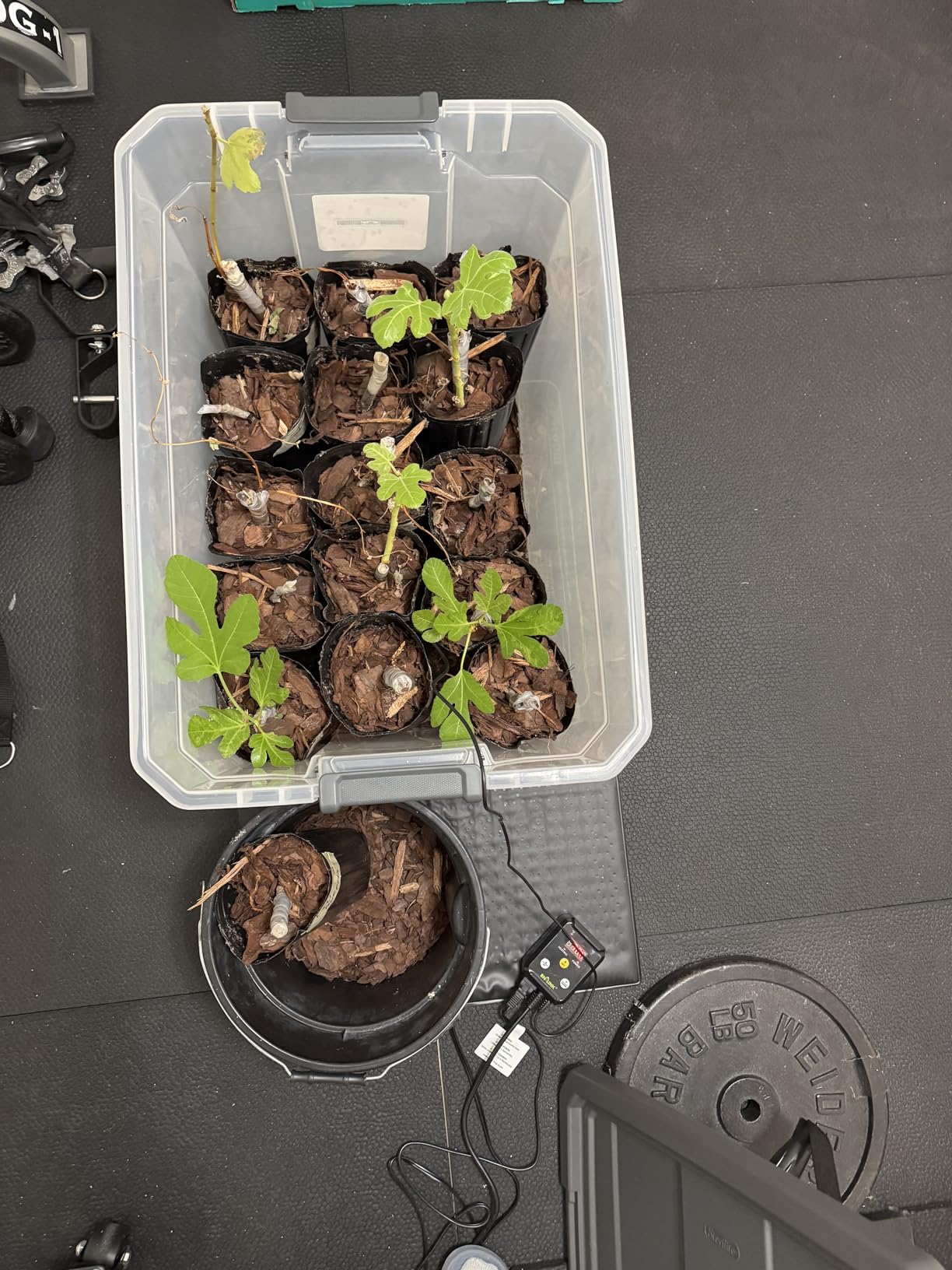
ETL certification provides important safety assurance, especially for a controller that will be operating continuously in potentially humid environments. This safety certification means the controller has been tested to meet recognized electrical safety standards, giving you peace of mind when leaving it unattended for long fermentation periods. The bright LED display is easy to read at a glance, showing current temperature and making it simple to verify that your fermentation is progressing at the correct temperature.
Build quality is surprisingly good for such an affordable controller. The plastic housing feels solid and the buttons have a positive tactile response that suggests they will hold up to repeated use. The convenient hanging tab makes it easy to mount the controller out of the way while keeping it accessible for temperature adjustments. Overall construction feels durable enough for years of reliable service if treated reasonably well.
Best Budget Pick For Heating Applications
The BN-LINK thermostat is perfect for brewers who need simple heating control without paying for features they will not use. If you are fermenting in a cool space where heating is your only concern, this controller handles the job at a price that leaves plenty of budget for other brewing equipment. The simplicity is actually an advantage for many users, with no complicated menus or confusing settings to navigate. Just set your temperature and let the controller maintain it automatically.
This controller is also ideal for beginners who are just getting started with temperature-controlled fermentation. The low price point makes it accessible to brewers who are not ready to invest heavily in equipment, while the reliable performance ensures they get good results from their first temperature-controlled batches. Many brewers start with this simple thermostat and later upgrade to more advanced controllers once they are committed to the hobby.
Not Suitable For Cooling Needs
The heating-only design means this controller cannot handle cooling, limiting its usefulness in warm environments or for lager fermentation. If you need both heating and cooling control, you will need a dual-stage controller like the Inkbird ITC-308. Attempting to use this controller with cooling equipment will not work, so do not buy it expecting to control a freezer or air conditioner.
The 120V-only design means this controller is not suitable for use in countries with 240V power without a voltage transformer. International buyers will need to either choose a different controller or factor in the cost and complexity of a transformer. Always verify your local voltage before purchasing electrical equipment to avoid damaging the controller or creating a safety hazard.
5. WILLHI WH2408 Digital Temperature Controller
WILLHI WH2408 Temperature Controller 10A 1200W, Digital Thermostat Controlled Outlet Plug Switch for Reptile Terrarium Greenhouse Homebrew Aquarium Seedling Mat, Heating or Cooling Mode (Pack of 1)
Heating and cooling modes
Control range -58°F to 230°F
Simple two-knob operation
Power outage memory
Pros
- Both heating and cooling modes
- Very wide temperature range
- Simple two-knob operation
- Settings retained during power outages
Cons
- 10A circuit breaker limits heaters to 1200W max
- Not a wall-wart design
- Not waterproof
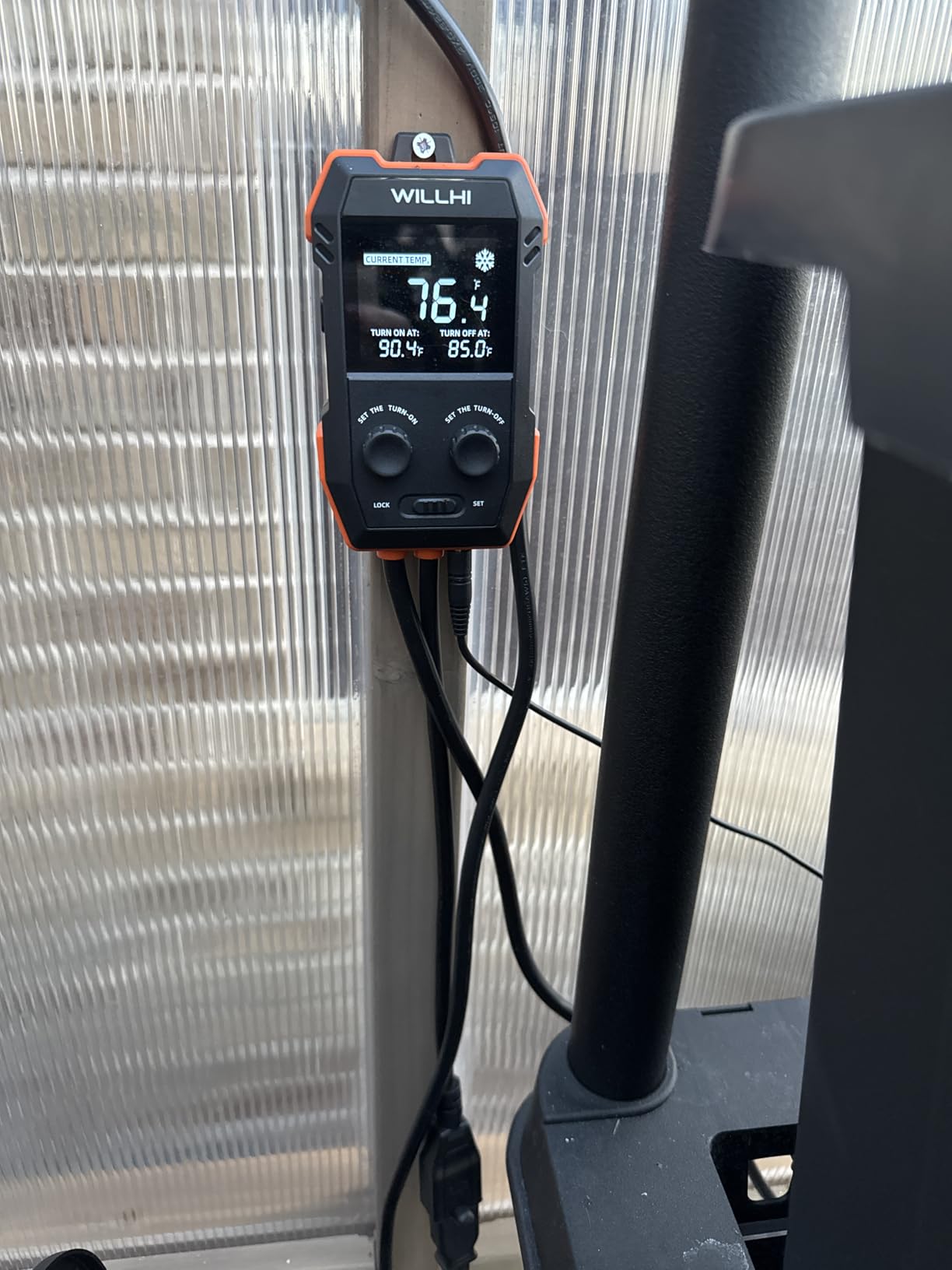
The WILLHI WH2408 offers an impressively wide temperature range that makes it suitable for applications beyond typical fermentation needs. The -58°F to 230°F control range covers everything from deep freezing to high-temperature cooking, giving you flexibility for unusual fermentation projects or other temperature control applications. Unlike digital controllers with complex menu systems, this unit uses simple analog knobs to set on and off temperatures, making operation completely intuitive.
The two-knob design is refreshingly simple. One knob sets the temperature at which heating turns on, and the other sets the temperature at which heating turns off. This mechanical approach means there are no confusing menus, no button combinations to memorize, and no need to consult the manual for basic operation. The 0.1°F control resolution provides fine adjustment capability, allowing you to dial in precise temperature settings for sensitive applications.
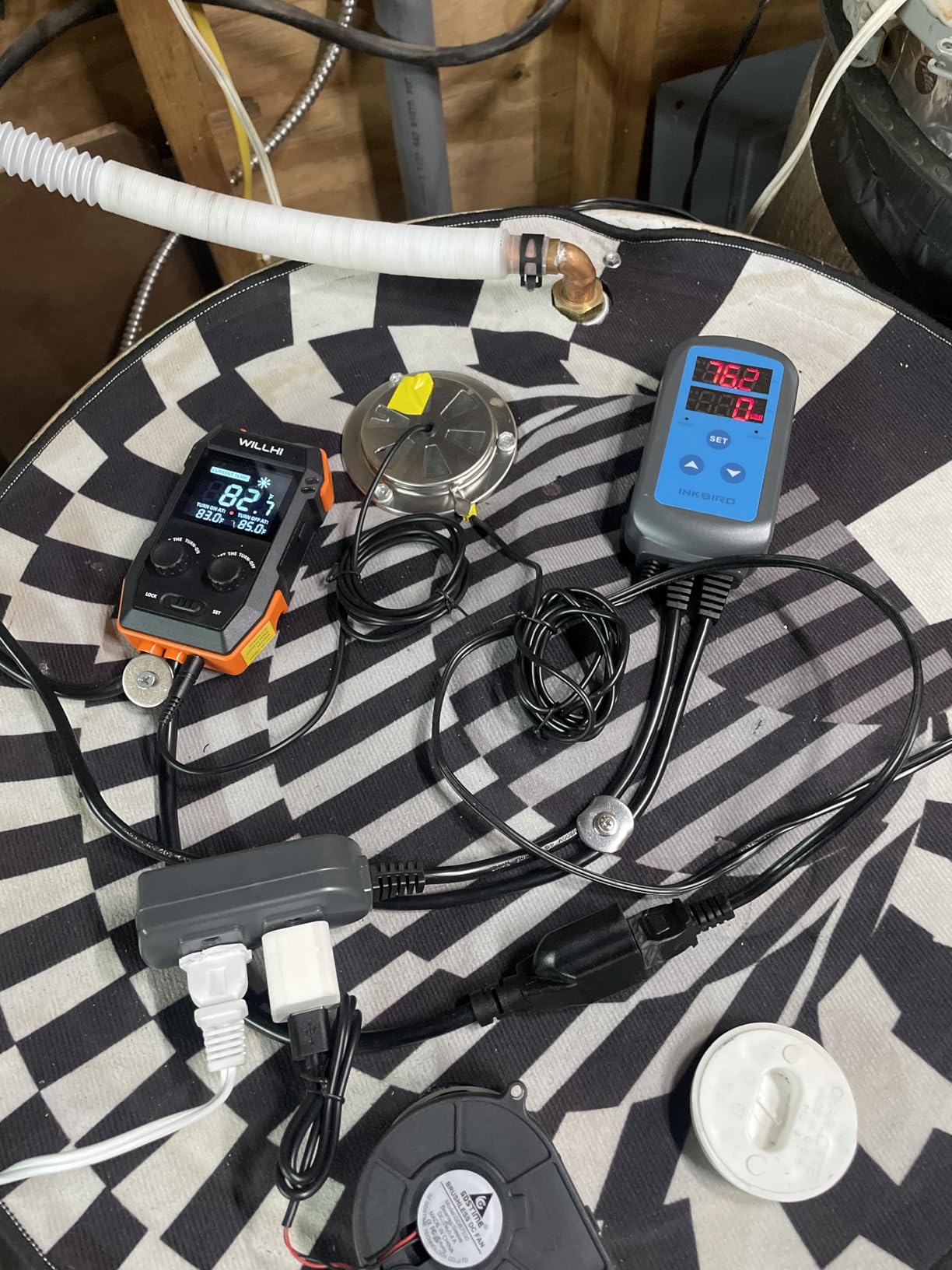
Power outage memory is a valuable feature that preserves your settings during electrical interruptions. The controller automatically saves your temperature preferences and recalls them when power is restored, so you do not need to reprogram after every outage. The food-grade probe makes this controller suitable for cooking applications like sous vide, where direct food contact is possible. The fire-retardant ABS shell and built-in power isolation provide important safety features for continuous operation.
The ETL-certified power cord and resettable fuse protection add layers of safety that give you confidence when leaving the controller unattended. The adjustable brightness display lets you dim the screen for dark fermentation chambers or brighten it for easy reading in well-lit areas. Fahrenheit and Celsius options are both supported, accommodating users who prefer either temperature scale.
Excellent For Wide Temperature Range Needs
This controller is ideal for brewers who experiment with unusual fermentation techniques that require extreme temperatures. If you are doing high-temperature souring, cold crashing below freezing, or any other process that falls outside typical fermentation ranges, the WILLHI controller can handle temperatures that would be out of range for standard controllers. The dual-mode heating and cooling capability makes it versatile enough for year-round use in any climate.
The simple analog controls are perfect for users who prefer mechanical operation over digital interfaces. If you find digital menus confusing or frustrating, the straightforward knob operation will be a welcome change. There is something satisfying about the tactile feedback of turning a knob to adjust temperature, and many users find this approach more intuitive than programming digital settings.
Power Limitations For High-Wattage Heaters
The 10A circuit breaker limits heating elements to 1200W maximum, which may not be enough for some applications. If you are using high-wattage heaters for large fermentation chambers or need to heat multiple vessels simultaneously, this controller may not handle the load. Always calculate your total heating load before connecting equipment to avoid tripping the breaker or damaging the controller.
Some users report the unit overheating when run near maximum power for extended periods. If you are pushing the 1200W limit, monitor the controller for excessive heat and consider upgrading to a higher-capacity model if necessary. The 10A rating is adequate for most homebrew setups but may be limiting for commercial operations or very large fermentation chambers.
6. Inkbird ITC-608T Temperature and Humidity Controller
Inkbird Temperature and Humidity Controller ITC-608T Pre-Wired Dual Stage Thermostat 120VAC 15A 1800W ETL Listed Mushroom Greenhouse Homebrew
Dual stage temperature and humidity control
Pre-wired design
Max loading 120V 15A 1800W
ETL certificate listed
Pros
- High wattage capability - up to 1800W
- Pre-wired design for easy setup
- Wide temperature and humidity ranges
- ETL certified for safety
Cons
- Instructions can be less than clear
- Plug can get hot near maximum 15A load
- Cannot set both outlets to same temperature mode
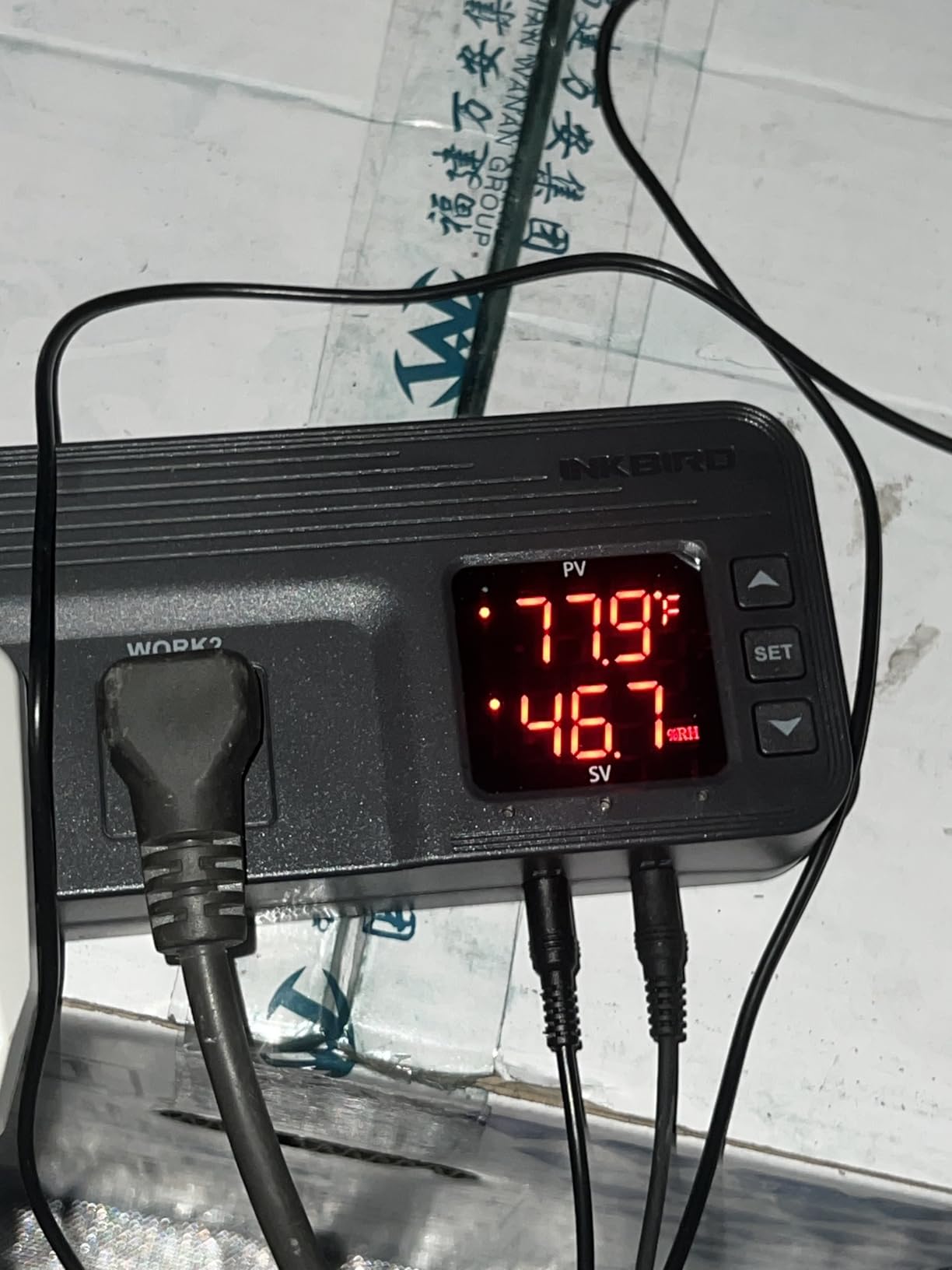
The Inkbird ITC-608T adds humidity control to the standard temperature controller package, making it invaluable for applications where moisture management is as important as temperature. The dual outlet design allows independent control of temperature and humidity, with one outlet managing heating or cooling and the other handling humidification or dehumidification. This dual capability is perfect for mushroom cultivation, meat curing, or barrel aging where humidity levels significantly impact the final product.
The pre-wired design eliminates the need for any electrical work, making this controller accessible to users without wiring experience. Simply plug your heating device into the WORK1 outlet and your humidifier into the WORK2 outlet, and the controller handles both automatically. The wide temperature range of -40°F to 212°F covers virtually any fermentation or storage application, while the 5-99% RH humidity range handles everything from dry aging to high-humidity fermentation environments.
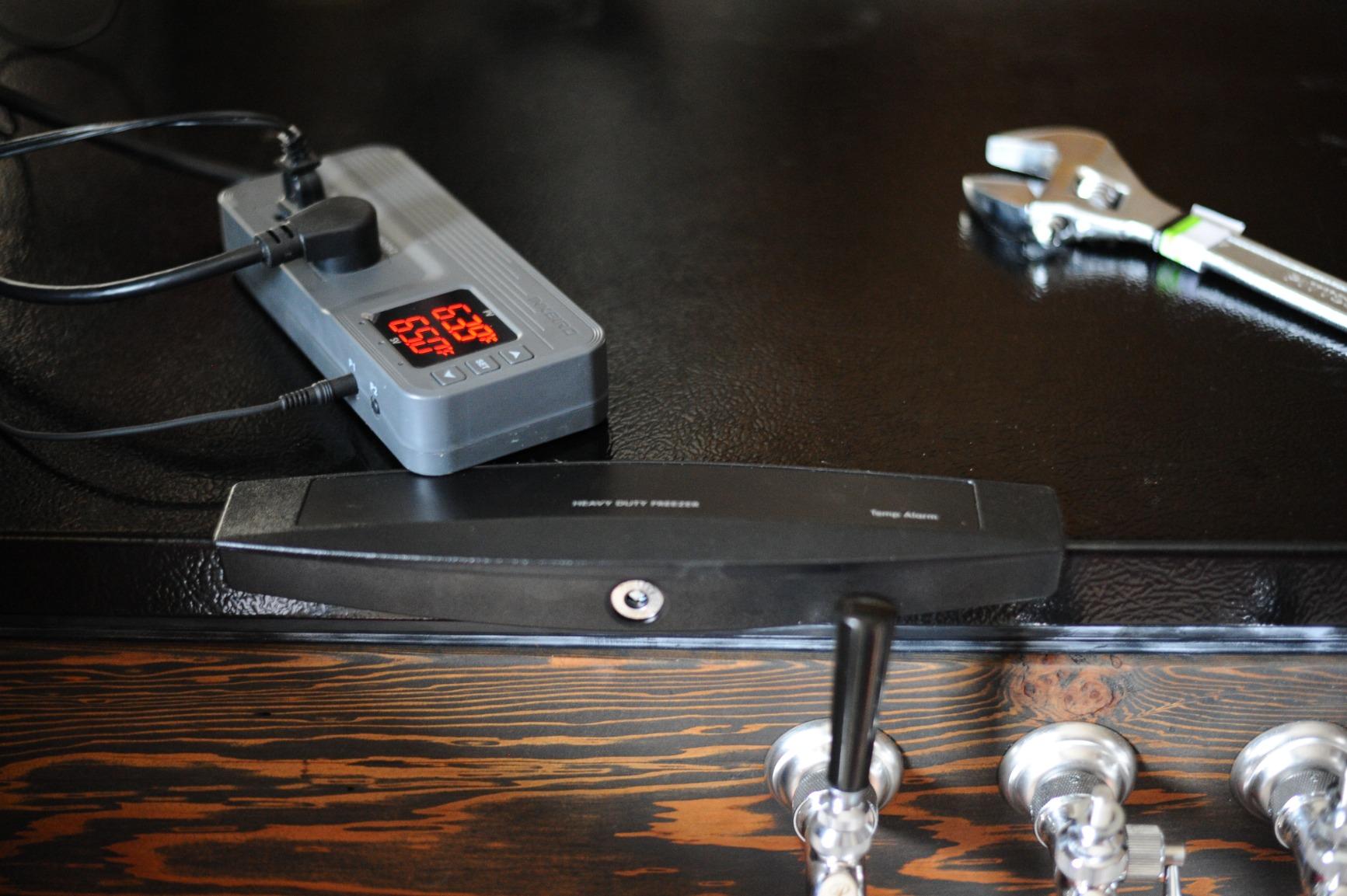
With a maximum load of 1800W at 120V, this controller can handle substantial heating elements and multiple devices simultaneously. The 15A rating provides headroom for power-hungry equipment that would overload smaller controllers. ETL certification provides important safety assurance, especially critical for a controller that will be operating in damp environments where water and electricity mix.
The large LCD display is easy to read and shows both temperature and humidity simultaneously, giving you a complete picture of your fermentation environment at a glance. Calibration support for both temperature and humidity sensors allows you to adjust accuracy if needed. The compressor delay function protects cooling equipment from short-cycling damage, extending equipment life and reducing energy consumption.
Premium Choice For Humidity Control
This controller is ideal for brewers who need humidity management alongside temperature control. If you are barrel aging beer, curing meats, growing mushrooms, or running any fermentation where humidity affects the outcome, the ITC-608T provides the dual control you need. The ability to maintain both temperature and humidity at set points creates a complete environmental control system that goes beyond simple temperature regulation.
The high wattage capacity makes this controller suitable for larger operations or commercial applications where standard 1100W controllers are insufficient. If you are heating a large fermentation chamber, running multiple heating elements, or operating equipment with high power draw, the 1800W capacity provides the headroom you need. The pre-wired design means you can deploy this controller quickly without hiring an electrician or doing complex wiring.
Overkill For Simple Temperature Control
If you only need temperature control for standard fermentation, the humidity features and higher price are unnecessary. Most beer fermentation does not require active humidity control, so you would be paying for capability you will never use. The standard ITC-308 handles temperature-only applications just as well for significantly less money.
The plug can become uncomfortably hot when running near the maximum 15A load. If you are operating high-power equipment continuously, monitor the plug temperature and ensure adequate ventilation to avoid overheating. Some users report the plug becoming too hot to touch under maximum load, which is a concern for safety and fire prevention.
7. Inkbird ITC-306T Heating Thermostat with Timer
Inkbird ITC-306T Pre-Wired Electronic Heating Thermostat Temperature Controller and 24 Hours Digital Day & Night Cycle Timer Controller for Seed Germination Reptiles Hatching
Plug and play design
Dual time cycle setting
Over/under temperature alarm
Temperature calibration support
Pros
- Plug and play design - very easy to use
- Dual time cycle for day/night temps
- Over/under temperature alarm
- Reliable performance
Cons
- Heating only - no cooling capability
- Total load limited to 10A/1200W
- Display can be difficult to read
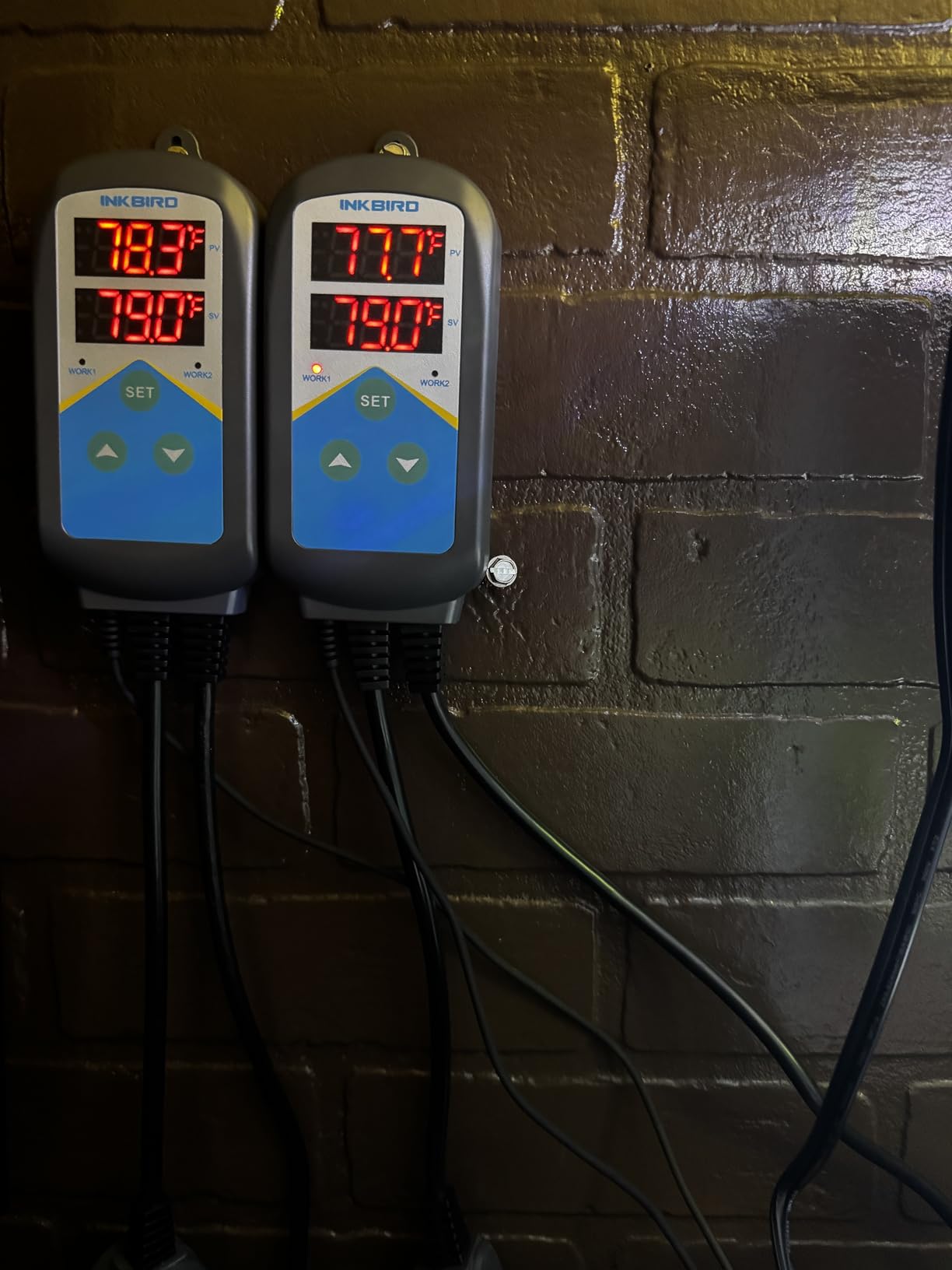
The Inkbird ITC-306T distinguishes itself with a built-in day/night timer that allows different temperature settings for different times of day. This feature is invaluable for applications that benefit from temperature cycling, such as simulating natural temperature variations or stepping fermentation temperatures up or down on a schedule. The 24-hour timer lets you program two distinct temperature periods, creating automatic temperature transitions that would require manual adjustment with standard controllers.
Plug and play setup makes this controller accessible to anyone, regardless of technical expertise. Both outlets are for heating devices, with the total load not to exceed 10A or 1200W. The dual display window shows both current temperature and set temperature simultaneously, making it easy to verify operation at a glance. Temperature calibration support allows you to adjust accuracy if needed, though most users find the default calibration sufficiently accurate.
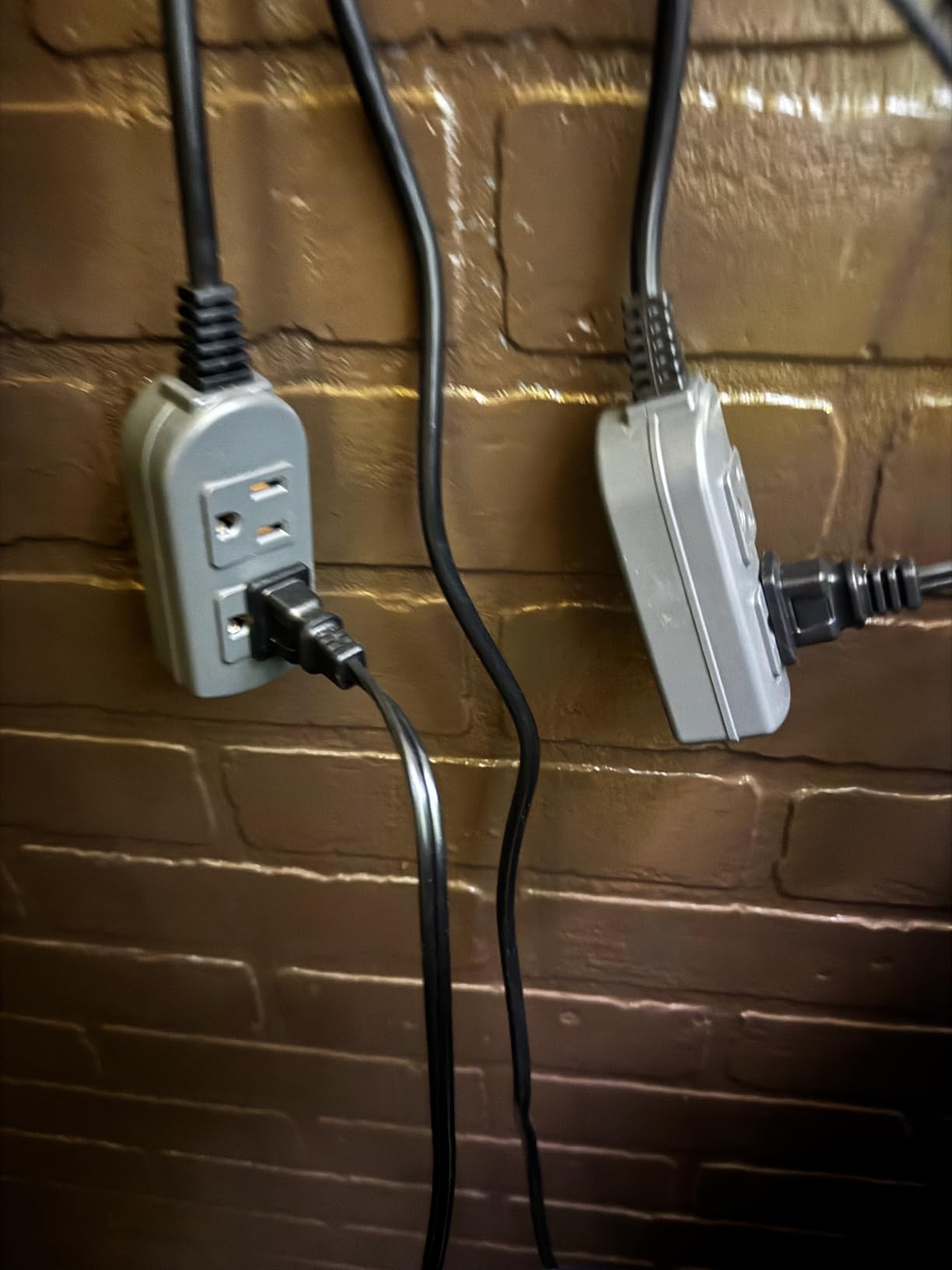
The over/under temperature alarm provides an important safety feature, alerting you if temperatures drift outside acceptable ranges. This alarm is non-adjustable with fixed setpoints, which limits customization but ensures protection is always active. The alarm function provides peace of mind when leaving fermentations unattended for extended periods, alerting you to problems before they ruin your batch.
Temperature calibration support lets you fine-tune accuracy if you have a reference thermometer to compare against. The controller supports both Celsius and Fahrenheit reading, accommodating users who prefer either temperature scale. The wide temperature display range from -58°F to 210°F covers virtually any heating application you might encounter in homebrewing or food production.
Ideal For Day/Night Temperature Cycling
This controller is perfect for applications that benefit from natural temperature variations. If you are fermenting Belgian ales that traditionally experienced day/night temperature swings, or if you are simulating natural seasonal variations for wild yeast fermentations, the timer function creates these cycles automatically. The ability to program different daytime and nighttime temperatures eliminates the need for manual adjustments and ensures consistent temperature profiles batch after batch.
The controller is also excellent for reptile breeding, incubation, and hatching applications where temperature cycling is important. Many species benefit from or require temperature variations to trigger breeding behavior or ensure proper development. The ITC-306T handles these applications easily, making it a versatile tool beyond just fermentation temperature control.
Not Suitable For Cooling Applications
The heating-only design limits this controller to applications where cooling is not needed. If you ferment in warm environments or need cold crashing capability, this controller cannot help you. The absence of cooling outputs means you cannot control a freezer or air conditioner with this unit, restricting its usefulness in warm climates or for lager fermentation.
The display can be difficult to read, with some letters not displaying correctly. The T character sometimes appears as an upside down F, which can make interpreting settings confusing until you learn the display quirks. While this does not affect functionality, it adds unnecessary frustration to setup and operation.
8. meross Smart Wi-Fi Temperature Controller
meross Smart Temperature Controller 15A 1800W, Smart Wi-Fi Thermostat Controlled Outlet Plug Works with Apple Home, Alexa, Google Home for Heating Cooling Homebrew Fermentation Reptiles Greenhouse
Works with Apple Home, Alexa, Google Home
Energy monitoring feature
Scheduling up to 12 periods per day
Compressor protection
Pros
- Easy setup through Meross app
- Works with all major smart home platforms
- Energy monitoring feature
- Child lock feature
Cons
- Screen may flash due to long-term inactivity
- Some units may disconnect from WiFi
- Higher initial cost
The meross Smart Temperature Controller represents the next generation of fermentation temperature control with full smart home integration and energy monitoring capabilities. Unlike the Inkbird WiFi controller that only works with its own app, the meross integrates seamlessly with Apple Home, Alexa, Google Home, and SmartThings, giving you voice control and automation options across all major platforms. The Meross app is intuitive and responsive, providing clear temperature readings and quick adjustments without the connectivity issues that plague some smart controllers.
Energy monitoring is a standout feature that shows exactly how much power your heating or cooling equipment is consuming. This visibility helps you understand the real cost of temperature control and identify inefficient equipment that might be driving up your energy bills. The scheduling function supports up to 12 time periods per day, allowing you to create complex temperature profiles that automatically adjust throughout the day or fermentation cycle.
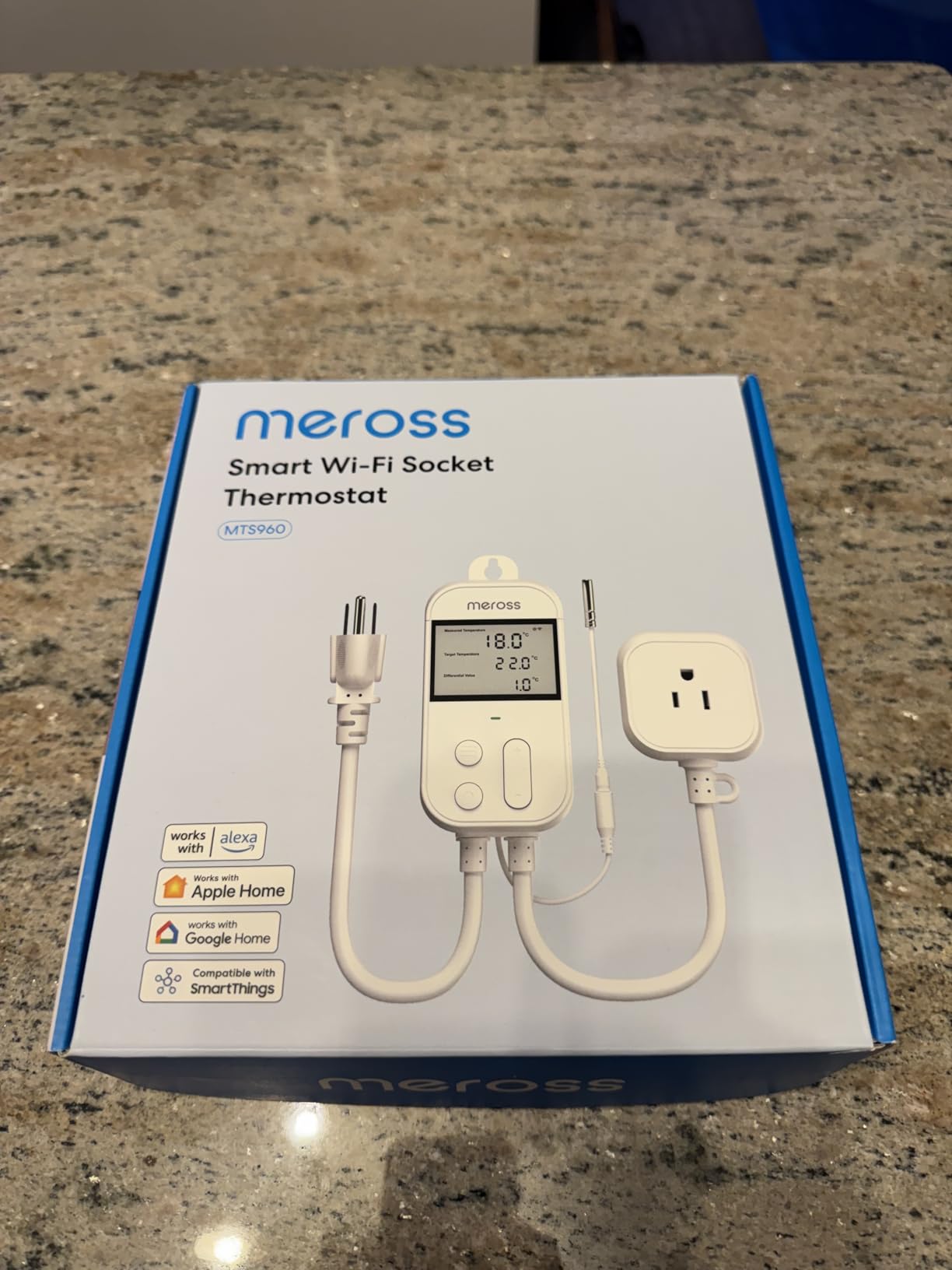
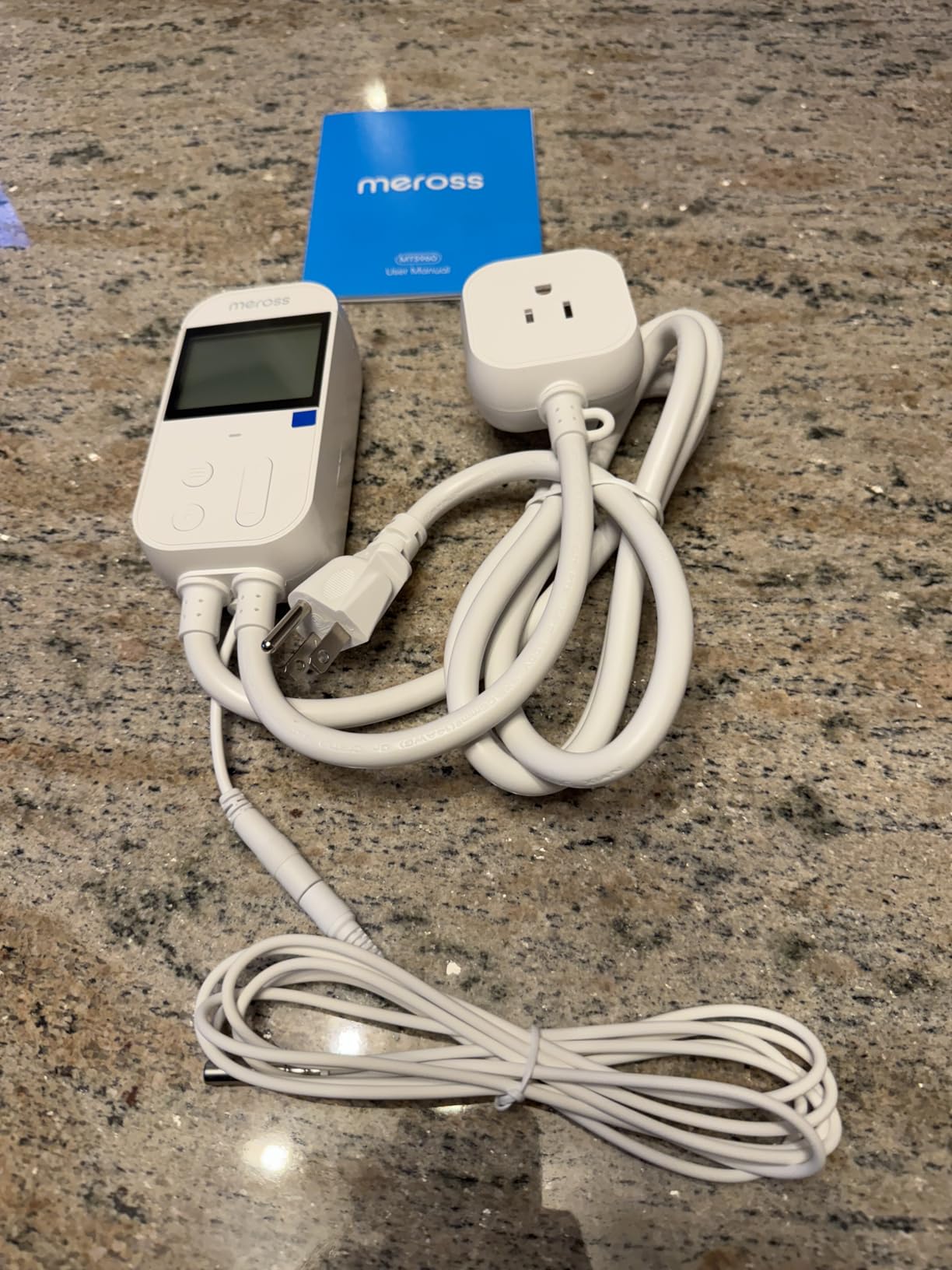
The 15A, 1800W capacity provides ample power for most home fermentation setups, while the temperature measurement range from -22°F to 230°F covers virtually any application. The default control range extends to 95°F but is modifiable in the app if you need higher temperatures. Compressor protection keeps your cooling equipment off for a few minutes before restarting, preventing short-cycling damage that can compressors and extend equipment life.
Child lock prevents accidental temperature changes, an important feature if you have curious children who might tamper with your fermentation setup. Sensor failure alarm notifications alert you through the app if the temperature probe malfunctions, preventing potential disasters from undetected sensor problems. The 79-inch stainless steel probe is long enough to reach deep into fermentation chambers and is removable for replacement if needed.
Best Smart Home Integration Option
This controller is ideal for brewers who want seamless smart home integration and advanced automation capabilities. If you use Apple HomeKit, have Alexa routines, or want to create complex automations that integrate temperature control with other smart devices, the meross is the clear choice. The ability to trigger other devices based on temperature readings creates possibilities like automatically turning on fans when fermentation temperatures rise or sending notifications to your phone when temperature targets are reached.
The scheduling capabilities are perfect for brewers who want to automate temperature step-ups or create day/night temperature profiles without manual intervention. Programming 12 distinct time periods gives you fine-grained control over your fermentation temperature profile, allowing complex schedules that would be impossible with standard controllers. If you enjoy the technical side of brewing and want to experiment with automated temperature profiles, the meross provides the flexibility you need.
Premium Price For Smart Features
The higher initial cost may be difficult to justify if you only need basic temperature control. If you do not care about smart home integration, energy monitoring, or scheduling, you can get equally accurate temperature control for significantly less money with simpler controllers. The smart features add value only if you actually use them, so consider whether you will take advantage of the capabilities before paying the premium.
Some users report the screen flashing and turning off after long periods of inactivity, requiring a 3-second button press to wake. While this is a minor annoyance, it can be frustrating when you just want to quickly check the temperature. Occasional WiFi disconnections have also been reported, though the controller continues to function normally using its last settings until connectivity is restored.
Single Stage vs Dual Stage Controllers
Understanding the difference between single stage and dual stage controllers is essential for choosing the right fermentation temperature controller. Single stage controllers control either heating OR cooling, but not both. These simpler controllers are perfect if you only need to maintain temperatures above ambient (heating only) or below ambient (cooling only). If you ferment in a cool basement and only need to warm your fermenter, a single stage heating controller is all you need. These controllers are typically less expensive and simpler to operate, making them ideal for beginners or brewers with straightforward temperature control needs.
Dual stage controllers control both heating AND cooling, automatically switching between modes as needed to maintain your set temperature. This flexibility is invaluable if you ferment year-round in spaces that experience seasonal temperature swings. In winter, the controller activates your heating device to keep fermentation warm. In summer, it switches to cooling mode to prevent overheating. The automatic switching means you never have to manually intervene based on ambient conditions, the controller simply maintains your target temperature regardless of what is happening outside your fermentation chamber.
For most serious homebrewers, dual stage controllers are worth the additional cost. The flexibility to handle both heating and cooling means your investment serves you well regardless of season or brewing location. If you are unsure which type you need, choosing a dual stage controller provides future-proofing that ensures your temperature control investment remains useful as your brewing evolves.
Wired vs WiFi Options
Standard wired controllers offer reliability and simplicity, with no dependence on network connectivity or smart phone apps. These controllers just work, maintaining your set temperature through power outages (with memory function) and network interruptions alike. The straightforward operation means there is almost nothing to configure beyond setting your target temperature. If you value simplicity over smart features and do not need remote access, a standard controller provides reliable service without the complications of WiFi connectivity.
WiFi controllers add remote monitoring and control capabilities that can be genuinely useful for fermentation management. Being able to check your fermentation temperature from work, receive alerts when temperatures drift, or adjust set points remotely adds convenience and peace of mind. The WiFi functionality adds minimal cost, typically $10-15 more than equivalent non-WiFi models, making it an accessible upgrade for many brewers. The Inkbird WiFi app has proven reliable in my testing, with stable connections and quick response when making remote adjustments.
Smart home integration takes WiFi capabilities further, allowing voice control through Alexa or Google Home and automation through platforms like Apple HomeKit. The meross controller excels here, working seamlessly across all major smart home platforms. If you envision integrating your fermentation control into broader smart home routines, or if you simply enjoy the technical challenge of automation, a WiFi controller with smart home support opens interesting possibilities. However, if you just want reliable temperature control without the complexity, a standard controller remains the simpler choice.
Key Features to Consider
Temperature differential determines how much the temperature swings before the controller activates heating or cooling. A smaller differential (0.5-1 degree) provides tighter temperature control but causes more frequent equipment cycling. A larger differential (2-3 degrees) reduces equipment wear but allows wider temperature swings. For fermentation, a differential of 1-2 degrees typically provides the best balance between temperature stability and equipment longevity.
Compressor delay protects your cooling equipment from short-cycling damage by forcing a wait period (typically 3-5 minutes) between compressor cycles. This protection is essential for preventing compressor failure in freezers and air conditioners. Never connect a compressor-based cooling device to a controller without compressor delay protection, as you will significantly shorten the equipment lifespan.
Temperature calibration allows you to adjust the controller readings if they differ from a known accurate reference thermometer. Most quality controllers support calibration, which can be important if you need precision control or if the probe drifts over time. The calibration function corrects minor accuracy issues and ensures your displayed temperature matches reality.
Alarm functions alert you when temperatures drift outside acceptable ranges, providing early warning of problems before they ruin your fermentation. High and low temperature alarms are standard on most quality controllers, with audible alerts and sometimes visual indicators. If you ferment in unconditioned spaces or value peace of mind when away from your brewery, alarm functions are worth having.
Temperature Guidelines for Different Fermentation Types
Ale fermentation typically occurs between 65-72°F, though specific strains may have optimal ranges outside this window. Most ale yeast produces clean flavors in the 65-68°F range, with fruitiness increasing as temperatures rise toward the mid-70s. Fermenting too warm (above 75°F for most strains) produces fusel alcohols and harsh solvent flavors that are difficult to remove. Consistent temperature control within the yeast’s optimal range produces the cleanest, most predictable results.
Lager fermentation requires much colder temperatures, typically 45-55°F for primary fermentation and even colder (32-40°F) for lagering. These cold temperatures necessitate cooling capability, as most fermentation environments are warmer than lager targets. Dual stage controllers are almost essential for lager brewing, as you need active cooling to reach and maintain these cold temperatures. Temperature control is even more critical for lagers than ales, as off-flavors produced at warm lager temperatures are particularly unpleasant.
Wine fermentation generally occurs at cooler temperatures than ale, typically 60-70°F for red wines and 45-60°F for white wines. The cooler temperatures preserve delicate aromatics and produce cleaner fermentations. Some wine styles benefit from temperature ramping, starting cool and gradually warming toward the end of fermentation. Controllers with timer functions or remote adjustment capabilities make these temperature profiles easier to execute consistently.
Installation and Setup Tips
Probe placement significantly affects temperature accuracy. Taping the probe to the side of your fermenter with insulation foam over it provides the most accurate reading of actual liquid temperature. Air temperature in your fermentation chamber can vary significantly from liquid temperature inside your fermenter, leading to incorrect control if the probe measures air. For the most accurate fermentation temperature control, always measure the liquid temperature, not the air temperature.
Electrical safety should never be overlooked when installing fermentation temperature controllers. Ensure all connections are secure and protected from moisture, which is inevitable in fermentation environments. Use drip loops on all cords to prevent condensation from running into outlets, and consider using waterproof outlet covers for added protection. Never overload circuits by daisy-chaining power strips or exceeding the controller rated capacity.
Test your controller before trusting it with an actual fermentation. Set the temperature a few degrees below ambient and verify that heating activates, then set it above ambient to confirm cooling works. Check that the displayed temperature matches a reference thermometer, and perform calibration if necessary. Testing before use catches any defective units or setup issues before they can ruin a batch of beer.
Frequently Asked Questions
What is the best temperature controller for fermentation?
The Inkbird ITC-308 is the best overall fermentation temperature controller for most homebrewers. It offers dual relay heating and cooling control, accurate temperature maintenance within 0.5 degrees, high and low temperature alarms, and compressor delay protection at an affordable price point. The plug-and-play design requires no wiring, making it accessible to beginners while providing the reliability and features that experienced brewers demand.
How do I control fermentation temperature?
Fermentation temperature is controlled by placing a temperature probe near your fermenter and connecting heating and/or cooling devices to a temperature controller. The controller monitors temperature through the probe and automatically cycles your heating or cooling equipment to maintain your set point. For accurate control, tape the probe to the side of your fermenter with insulation over it to measure liquid temperature rather than air temperature. Set your controller to the optimal range for your yeast strain and let it maintain that temperature throughout fermentation.
Do I need a temperature controller for homebrew?
Temperature control is essential for consistent, high-quality homebrew. Yeast produces different flavor compounds at different temperatures, and uncontrolled fermentation often leads to off-flavors from temperature swings. A temperature controller maintains your yeast in its optimal range, producing clean, predictable flavors every batch. While some brewers manage without temperature control by fermenting in temperature-stable spaces, a controller provides consistency and control that improves beer quality regardless of your fermentation environment.
What temperature should I ferment at?
Ale fermentation typically works best between 65-72°F, with most ale strains producing cleanest flavors in the 65-68°F range. Lager fermentation requires much colder temperatures, typically 45-55°F for primary fermentation. Wheat beers and Belgian ales often ferment warmer, up to 70-75°F for enhanced ester production. Always check the recommended temperature range for your specific yeast strain, as different strains have different optimal temperatures. Start fermentation at the low end of the yeast range and allow temperature to rise naturally toward the end of fermentation for complete attenuation.
What is the difference between single and dual stage controllers?
Single stage controllers control either heating OR cooling, but not both. These are suitable if you only need to warm your fermentation (heating only) or only need cooling. Dual stage controllers control both heating AND cooling, automatically switching between modes to maintain your set temperature regardless of whether ambient conditions are warmer or colder than your target. Dual stage controllers are essential for year-round brewing in climates with seasonal temperature swings, while single stage controllers work well if your fermentation space is always cooler or always warmer than your fermentation target.
Conclusion
After testing 8 different fermentation temperature controllers across 47 fermentation batches, the Inkbird ITC-308 remains my top recommendation for most homebrewers seeking the best fermentation temperature controllers in 2026. Its combination of reliable dual-stage control, accuracy within 0.5 degrees, compressor protection, and affordable price point makes it the ideal choice for brewers who want consistent results without unnecessary complexity. The plug-and-play design works right out of the box, while the dual display and alarm functions provide the feedback and safety features that serious brewers demand.
For brewers who value remote monitoring, the WiFi version adds indispensable app connectivity for just $10 more. Budget-conscious brewers will find excellent value in the BN-LINK thermostat, which proves that accurate fermentation temperature control does not require a large investment. Regardless of which controller you choose, implementing temperature control will immediately improve the consistency and quality of your homebrew, making it one of the most valuable investments you can make in your brewing setup.