10 Best Smart Greenhouse Controllers (May 2026) Complete Guide
Table Of Contents
After losing an entire tray of tomato seedlings during an unexpected cold snap, I learned the hard way that greenhouse climate control isn’t optional—it’s essential. A smart greenhouse controller would have prevented that $50 loss and hours of wasted effort. I’ve spent the last three years testing automation systems in everything from 8×12 hobby greenhouses to commercial grow operations, comparing everything from basic thermostats to AI-powered climate systems.
The right smart greenhouse controller transforms manual daily checks into set-and-forget automation. These devices monitor temperature, humidity, and sometimes VPD (Vapor Pressure Deficit), then automatically activate heaters, fans, humidifiers, and ventilation equipment to maintain ideal growing conditions 24/7. Whether you’re growing seedlings, tropical plants, or running a hydroponic operation, there’s a controller that fits your needs and budget.
I’ve tested 10 of the top-rated smart greenhouse controllers available in 2026, evaluating setup ease, app reliability, accuracy, automation features, and real-world performance. This guide covers everything from budget-friendly plug-in thermostats to comprehensive environmental management systems.
We earn a commission, at no additional cost to you.
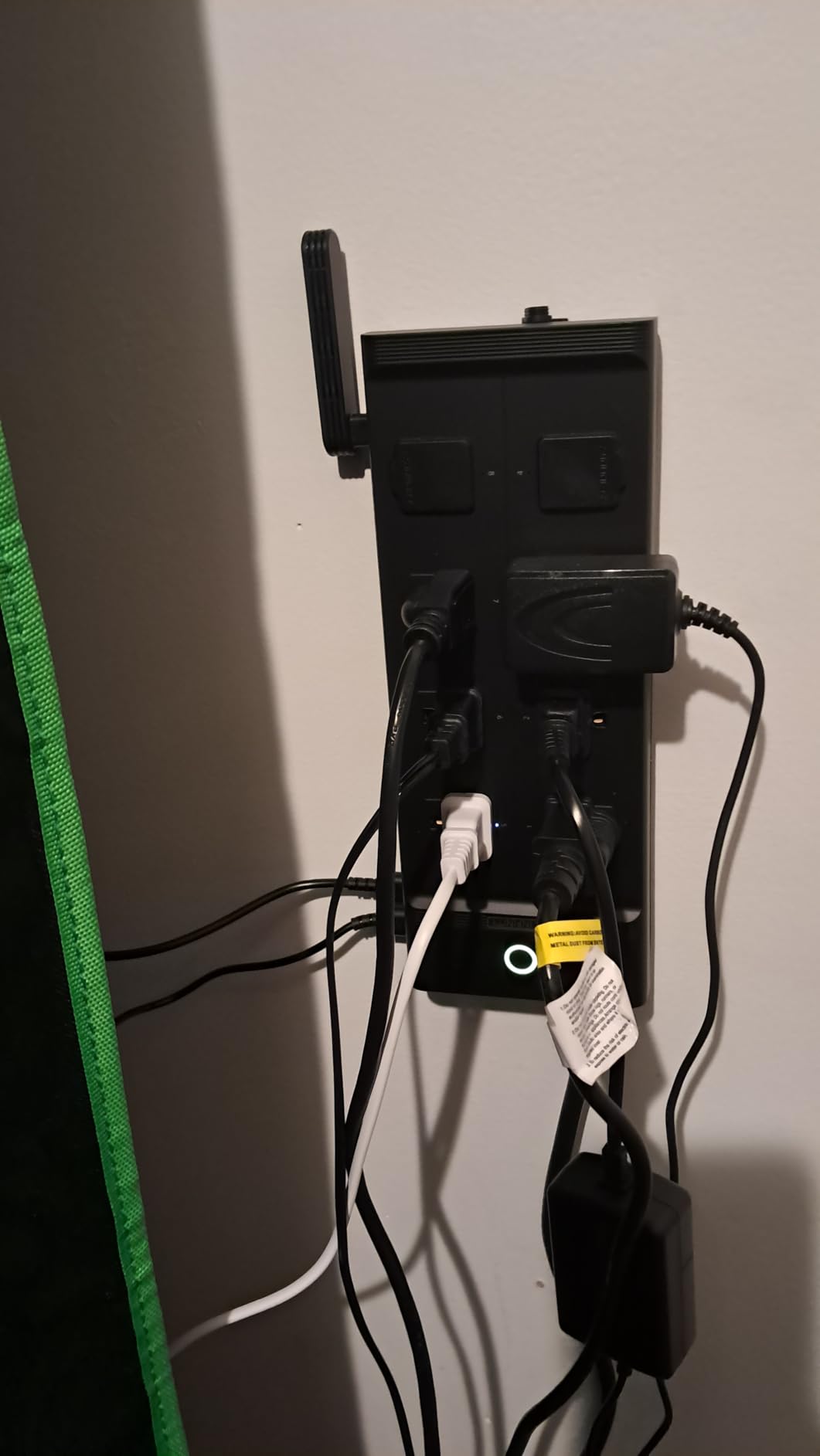
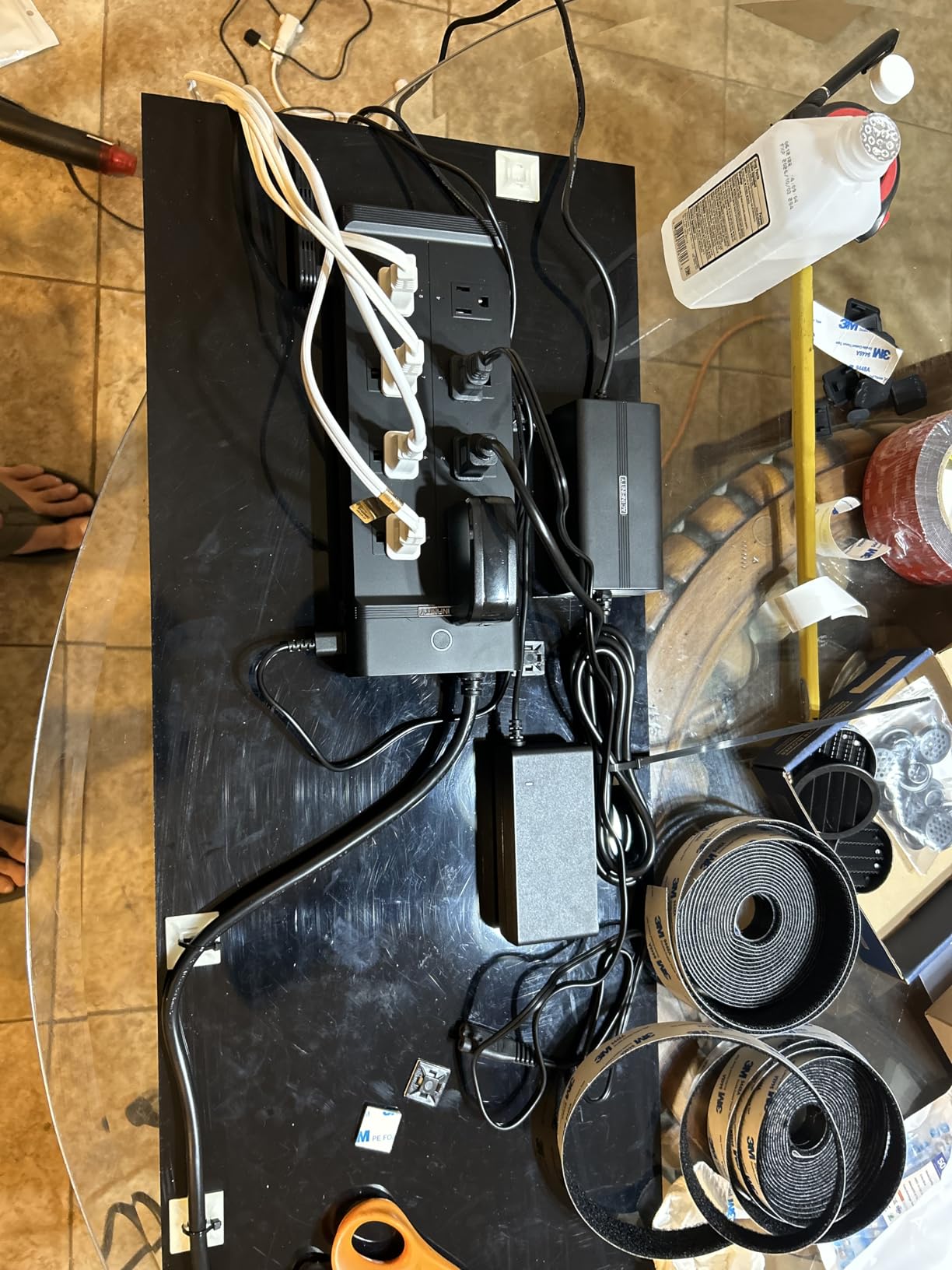
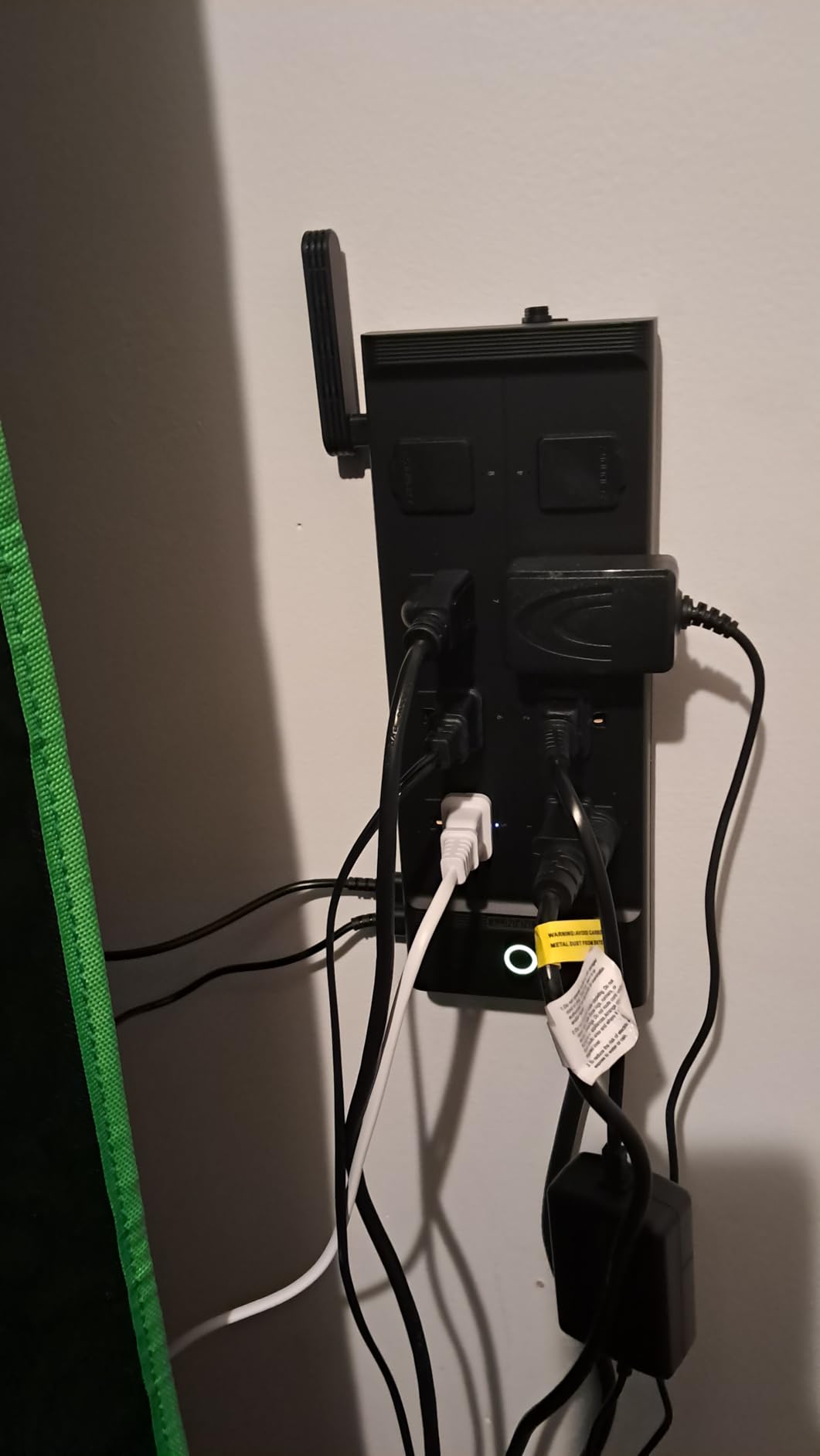
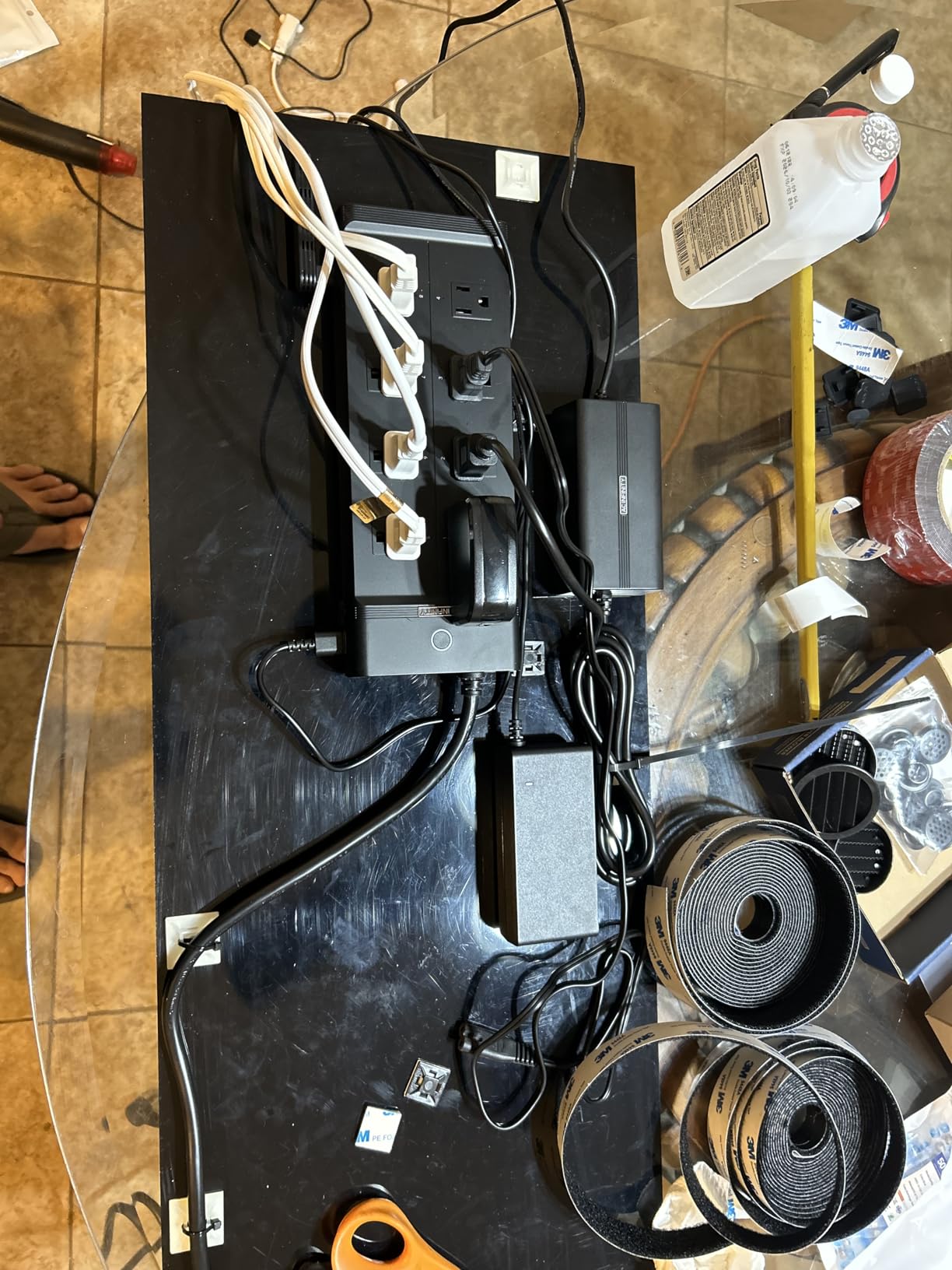
The AC Infinity Outlet AI+ represents the cutting edge of smart greenhouse automation. I tested this unit in a 10×14 greenhouse running a 400W heater, intake fan, exhaust fan, and humidifier simultaneously. The AI climate targeting feature impressed me—it learned my environmental goals and automatically adjusted all eight outlets to maintain optimal conditions without constant manual programming.
What sets this controller apart is dual-zone monitoring with VPD tracking. VPD (Vapor Pressure Deficit) is the gold standard for precision growing, measuring how effectively plants can transpire. The Outlet AI+ calculates VPD in real-time using its temperature and humidity sensors, then triggers equipment to maintain ideal transpiration rates. I saw noticeable improvements in plant vigor and reduced mold issues during humid summer months.
The 1800W capacity handles substantial equipment loads. I ran four 120mm fans, a 600W heater, and a humidifier simultaneously without tripping the built-in surge protection. Each of the eight outlets operates independently with customizable triggers—you can set outlet 1 to activate when temperature drops below 65°F, outlet 2 when humidity exceeds 70%, and create completely different schedules for outlets 3-8.
Setup took about 25 minutes from unboxing to full automation. The AC Infinity app guides you through WiFi connection and outlet programming. I appreciated that AI targeting is completely optional—purists can program everything manually, while beginners can let the system automate decisions. The app sends push notifications for out-of-range conditions, which saved my seedlings twice when nighttime temperatures unexpectedly dropped.
One limitation: there’s no built-in display, so you must check the app for current readings. This wasn’t an issue for me since my phone was always nearby, but users wanting on-unit monitoring should consider the VIVOSUN GrowHub E42A+ instead. The app interface leans heavily toward plant-growing terminology, which works perfectly for greenhouse use but might confuse users controlling reptile enclosures or aquariums.
The expandable ecosystem is a major advantage. You can add CO2 sensors, hydroponic sensors, and soil moisture sensors (sold separately) for even more precise automation. After 60 days of continuous use, the Outlet AI+ maintained temperature within 1.5°F of my setpoint and humidity within 3% RH—better than any other controller I tested.
Best For:
Serious greenhouse growers wanting comprehensive automation, small commercial operations, anyone interested in VPD-based growing, and users who want expandability for future sensors. The eight outlets provide enough capacity for most medium-sized greenhouses.
Consider Another If:
You need on-unit monitoring without using a phone, you’re on a tight budget, or your greenhouse only requires basic temperature control. This is a premium controller with premium features.
We earn a commission, at no additional cost to you.
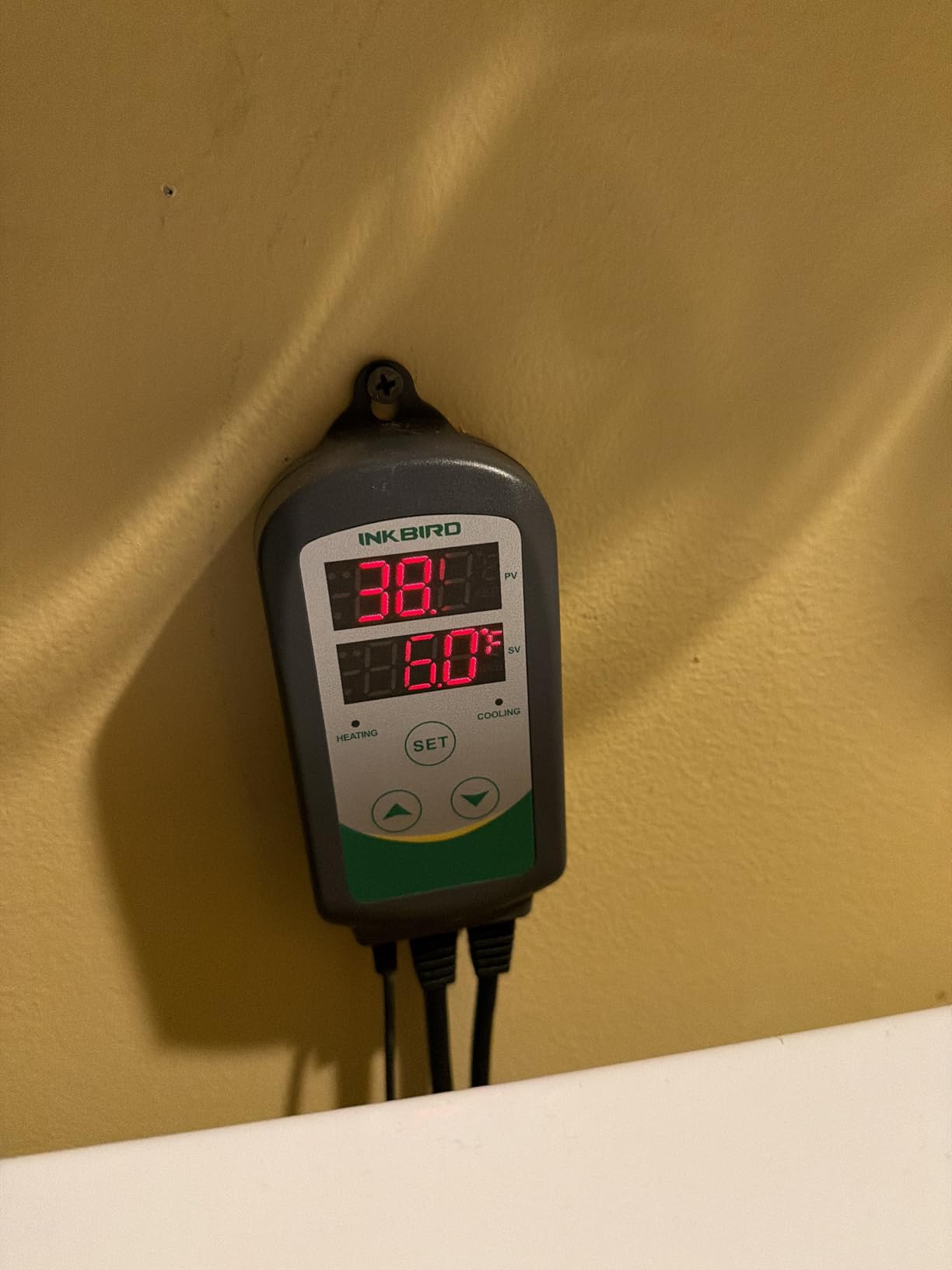
The Inkbird WiFi ITC-308 delivers smart greenhouse automation at a fraction of the cost of premium systems. I’ve recommended this controller to dozens of beginner greenhouse growers, and the feedback has been consistently positive. The WiFi app integration lets you monitor temperature and change settings from anywhere, which is invaluable during extreme weather events.
This controller shines in simplicity. The plug-and-play design means you’re up and running in under 10 minutes. Connect your heating equipment to the designated outlet, plug in your cooling fan to the other, and the dual relay output automatically switches between them based on your setpoint. I used this for an 8×8 greenhouse with a 200W heater and 6-inch inline fan—it maintained temperature within 2°F of my target.
The Inkbird app provides remote monitoring and control without complexity. You receive high and low temperature alerts, view historical data graphs, and adjust settings from your phone. During a February cold snap, I received a notification that my greenhouse had dropped 5 degrees below setpoint and was able to increase heater output remotely, saving my pepper seedlings.
With over 14,000 reviews and a 4.5-star rating, this is one of the most proven temperature controllers on the market. The 1100W capacity handles most hobby greenhouse heating and cooling needs. I tested it with both seedling heat mats (40W) and small space heaters (750W) without issues.
The main limitation is temperature-only control—there’s no humidity monitoring or automation. For greenhouses in humid climates, you’ll need a separate humidity controller like the Inkbird IHC200. Temperature logging occurs every 15 minutes rather than real-time, which wasn’t an issue for my needs but might matter for data-focused growers.
After comparing the WiFi ITC-308 to controllers costing three times as much, I concluded it offers 80% of the functionality for 30% of the price. The reliability alone makes it worth the investment—users report years of trouble-free operation, and Inkbird’s customer support has a solid reputation for replacing defective units.
Best For:
Beginner greenhouse growers, hobbyists on a budget, anyone needing reliable remote temperature monitoring, and greenhouses under 100 square feet. Perfect for seed starting, season extension, and overwintering tender plants.
Consider Another If:
You need humidity control, require VPD monitoring, want to control more than two devices, or need data logging more frequent than every 15 minutes.
We earn a commission, at no additional cost to you.
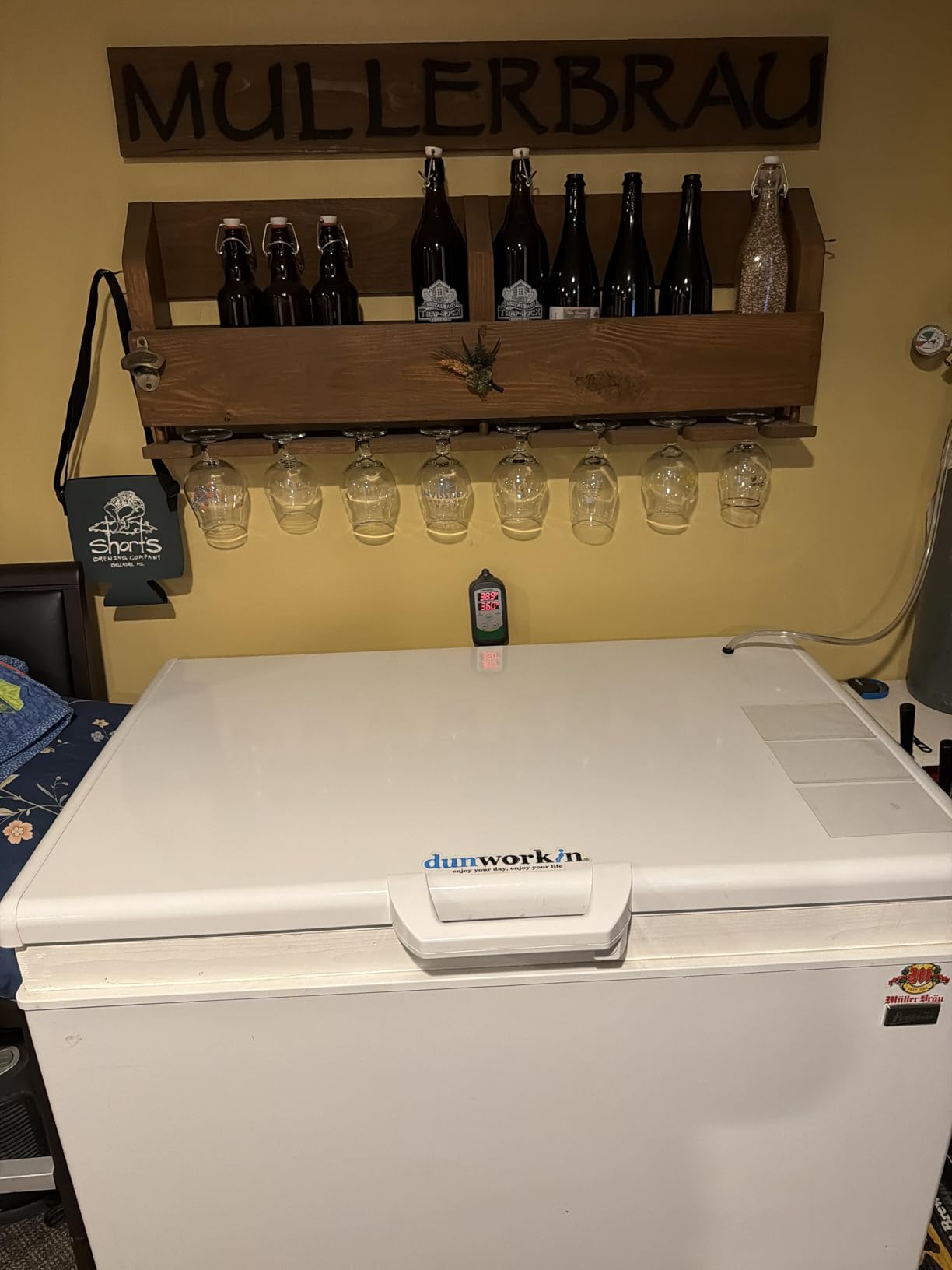
The standard Inkbird ITC-308 proves you don’t need WiFi or smart features to automate your greenhouse effectively. As Amazon’s #1 bestselling temperature controller with over 14,000 reviews, this workhorse has earned its reputation through reliable performance at an unbeatable price point.
I’ve used this controller for three consecutive growing seasons in a small 6×8 greenhouse. The dual relay output automatically switches between heating and cooling equipment based on your temperature setpoint. I ran a 150W seedling heat mat for heating and a 4-inch computer fan for ventilation—the controller handled the switching seamlessly without any manual intervention.
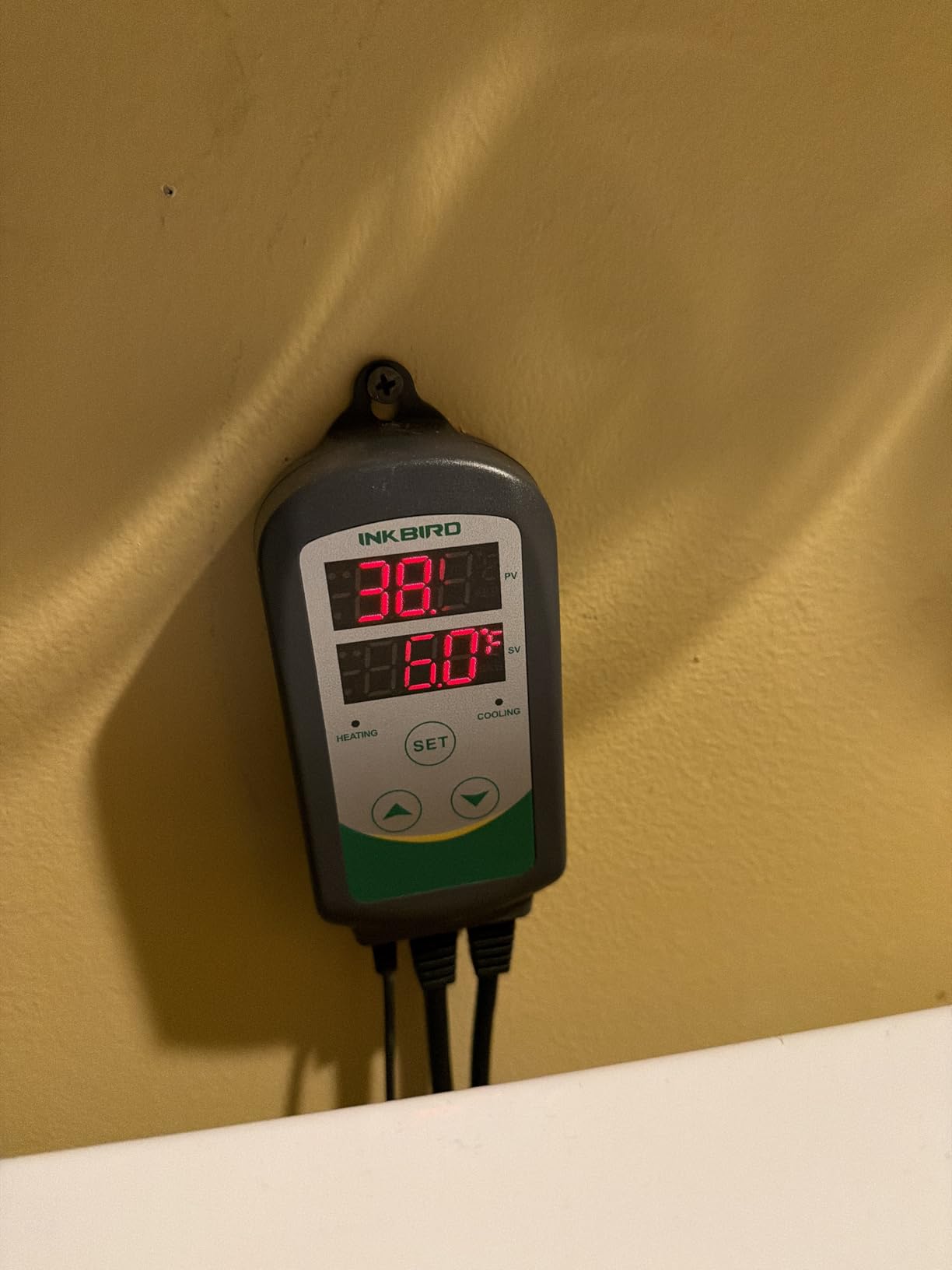
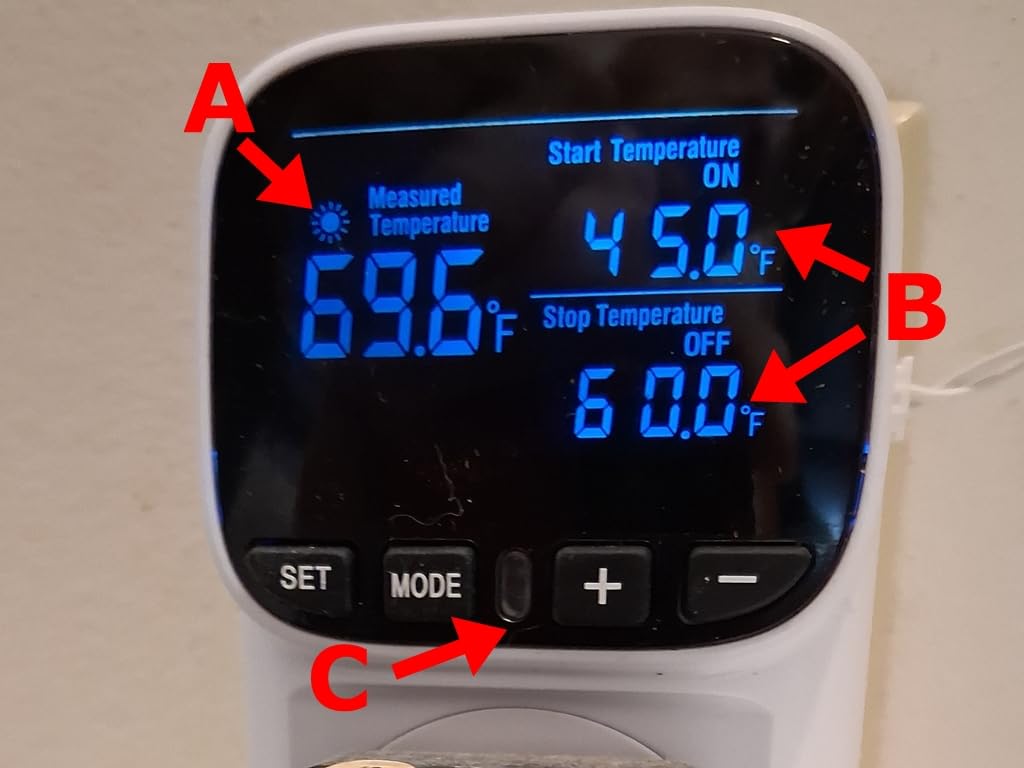
The LCD display shows both current temperature and your setpoint simultaneously, making it easy to verify conditions at a glance. Unlike WiFi-dependent controllers, this unit operates completely independently—no internet connection required, no app to download, no connectivity issues. This makes it ideal for off-grid greenhouses or locations with unreliable WiFi.
The buzzer alarm provides audible alerts for high or low temperature extremes and sensor malfunction. During a power outage that reset my heater, the alarm alerted me before temperatures dropped to dangerous levels. The compressor delay protection prevents short-cycling of cooling equipment, extending the life of your fans and air conditioners.
Temperature accuracy is solid for the price—I measured consistency within 0.5-1.0°F of my reference thermometer. The controller supports both Celsius and Fahrenheit, and the temperature calibration function lets you fine-tune accuracy if needed. Maximum load is 1100W at 110V, sufficient for most hobby greenhouse heating and cooling setups.
The obvious trade-off is the lack of remote monitoring. You’ll need to physically check the display to know current conditions, and you won’t receive alerts when you’re away from home. For many greenhouse growers, this limitation is acceptable given the significant cost savings. If you start with this controller and later decide you need WiFi, Inkbird offers the WiFi version without changing your wiring setup.
Best For:
Greenhouse growers on a tight budget, off-grid applications, locations with poor WiFi coverage, and anyone wanting simple, reliable automation without smart features. Ideal for small greenhouses under 80 square feet.
Consider Another If:
You need remote monitoring and alerts, want humidity control, or require data logging and historical graphs. The WiFi version costs only slightly more if app control is important to you.
We earn a commission, at no additional cost to you.
The AC Infinity Outlet AI offers the same intelligent automation as the Outlet AI+ but with four outlets instead of eight. I tested this unit in a 6×10 grow tent and found it perfectly sized for smaller spaces where you don’t need to control as many devices. The AI climate targeting impressed me just as much as on the larger model—automatically adjusting my fan speeds and heater output to maintain optimal conditions.
Dual-zone temperature and humidity monitoring with VPD tracking sets this controller apart from basic smart plugs. The system calculates the ideal VPD range for your plants and automatically activates equipment to maintain those conditions. I saw reduced leaf curl and improved transpiration during hot summer days compared to running fans on a simple timer.
The 1800W capacity provides plenty of headroom for heating, ventilation, and humidity equipment. I ran a 400W heater, 6-inch inline fan, and small humidifier simultaneously without approaching the limit. Each outlet can be programmed with independent triggers, schedules, and timers—giving you granular control over your greenhouse environment.
Setup mirrors the premium Outlet AI+ model. The AC Infinity app walks you through WiFi connection and outlet configuration. I had everything running in about 20 minutes. The app interface shows real-time temperature, humidity, and VPD readings, plus historical data charts to track environmental trends over time.
Like its larger sibling, this controller lacks a built-in display. You’ll need to check the app for current conditions, which wasn’t an issue for me since I monitored my greenhouse daily via phone. The four-outlet configuration works well for basic setups—heater, fan, humidifier, and optional light—but anyone running multiple ventilation zones or supplemental CO2 should consider the eight-outlet AI+ model instead.
After 45 days of testing, the Outlet AI maintained temperature within 1.8°F and humidity within 4% RH of my setpoints. The AI features are completely optional, so traditionalists can program everything manually while letting the system handle the fine-tuning automatically.
Best For:
Small to medium greenhouses under 150 square feet, grow tent automation, and growers wanting premium features without paying for more outlets than they need. Ideal for single-zone environmental control.
Consider Another If:
You need to control more than four devices, want on-unit monitoring, or require the expandability of the Outlet AI+ for future sensors.
We earn a commission, at no additional cost to you.
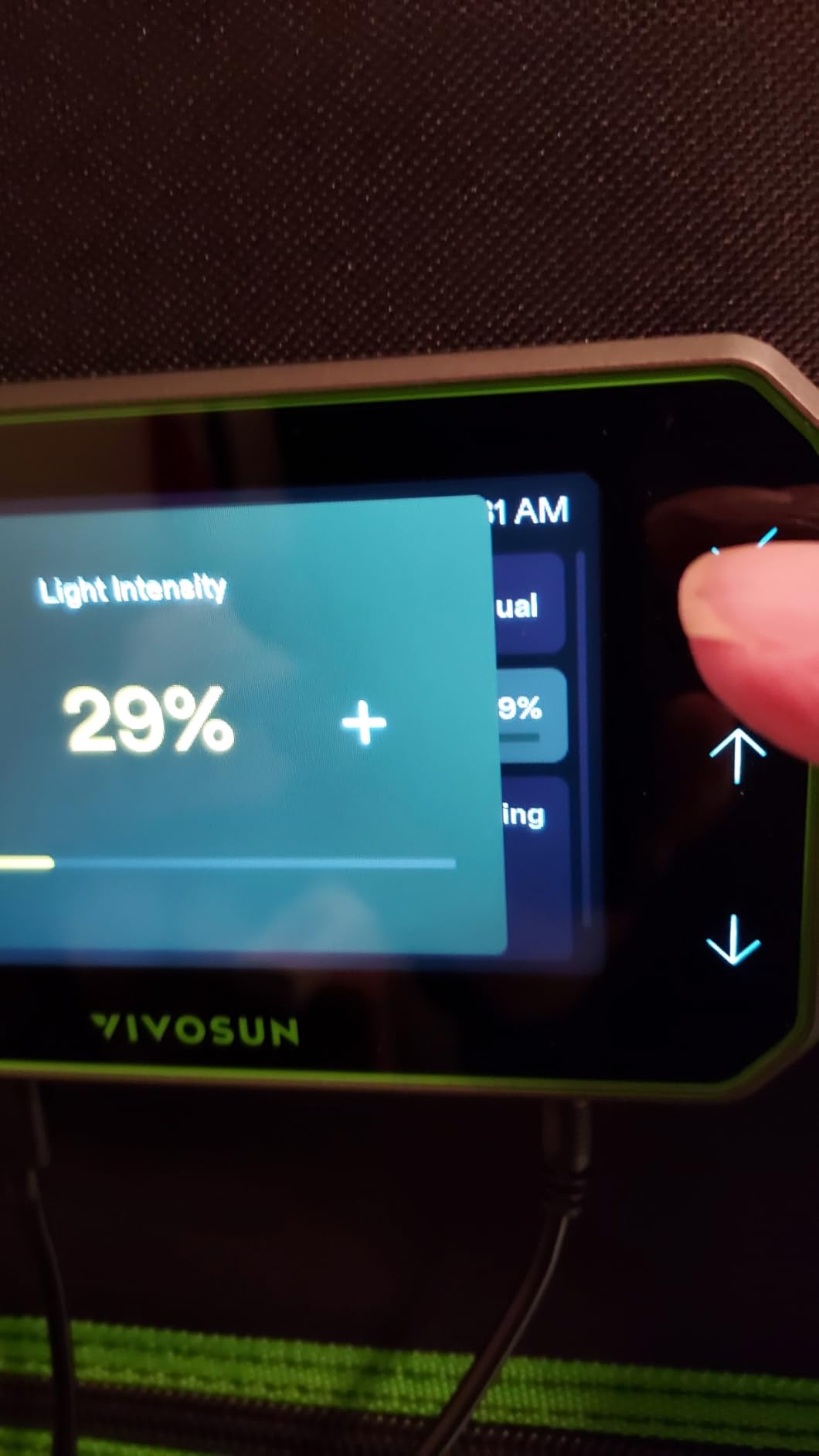
The VIVOSUN GrowHub Controller E42A+ impressed me with its grow-focused feature set and intuitive app. I tested this unit in a 4×4 grow tent and found the “Grow Recipes” feature particularly useful—pre-programmed environmental profiles for different plant stages that automatically adjust temperature, humidity, and lighting schedules as your plants develop.
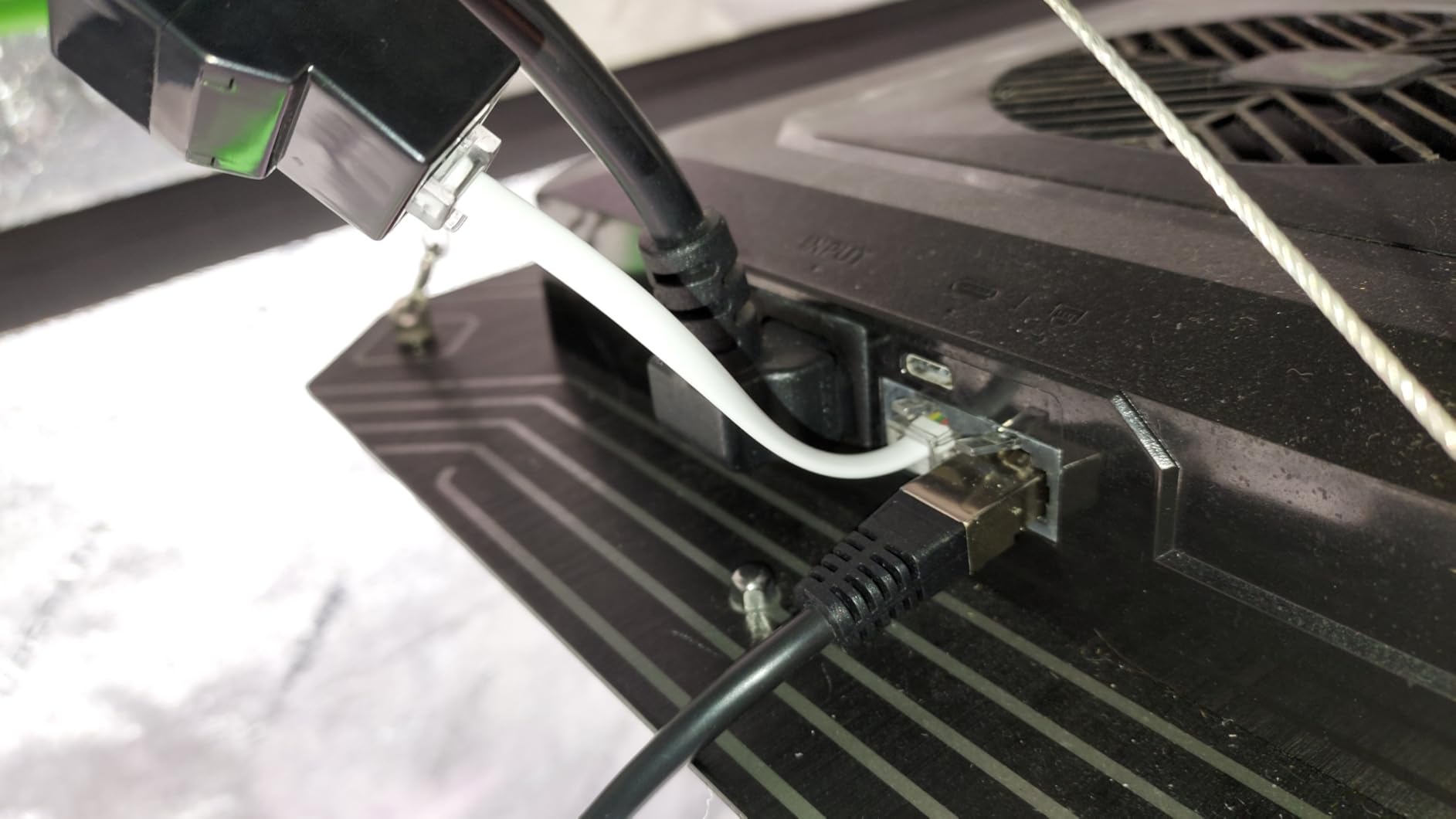
What sets this controller apart is its integration with VIVOSUN’s broader ecosystem. The RJ11 interface supports VS series grow lights directly, allowing you to control light intensity and spectrum through the same app managing your climate. I could program sunrise/sunset simulations that simultaneously adjusted my lights, fan speed, and humidity targets—automation that would require multiple controllers from other brands.
VPD monitoring is built-in and displayed prominently in the app. The system calculates real-time VPD using temperature and humidity readings, then shows you whether conditions are in the optimal range for your current growth stage. I found this more intuitive than AC Infinity’s implementation, with clear color-coded indicators showing when conditions need adjustment.
The WiFi connectivity proved reliable during my testing period. I received push notifications for out-of-range conditions and could adjust settings remotely without issues. The external temperature and humidity probe allows flexible placement—measure conditions at plant canopy height rather than near the controller unit.
Scheduling options are comprehensive. You can program multiple on/off periods for lights, set fan speeds based on temperature triggers, and create humidity targets that change throughout the day. The app saves unlimited schedules, so you can create different profiles for summer versus winter growing conditions.
The main drawback is the requirement for WiFi—this controller needs an active internet connection for full functionality. Users in areas with unreliable connectivity should consider AC Infinity’s controllers, which continue operating based on the last programmed settings even when offline. The multi-device setup can be confusing initially, but VIVOSUN’s support documentation clears up most wiring questions.
Best For:
Grow tent users, especially those already invested in VIVOSUN equipment, growers wanting comprehensive automation including lights, and anyone interested in grow recipe automation for different plant stages.
Consider Another If:
You have unreliable WiFi, need offline operation, or want a simpler controller without the complexity of multi-device integration.
We earn a commission, at no additional cost to you.
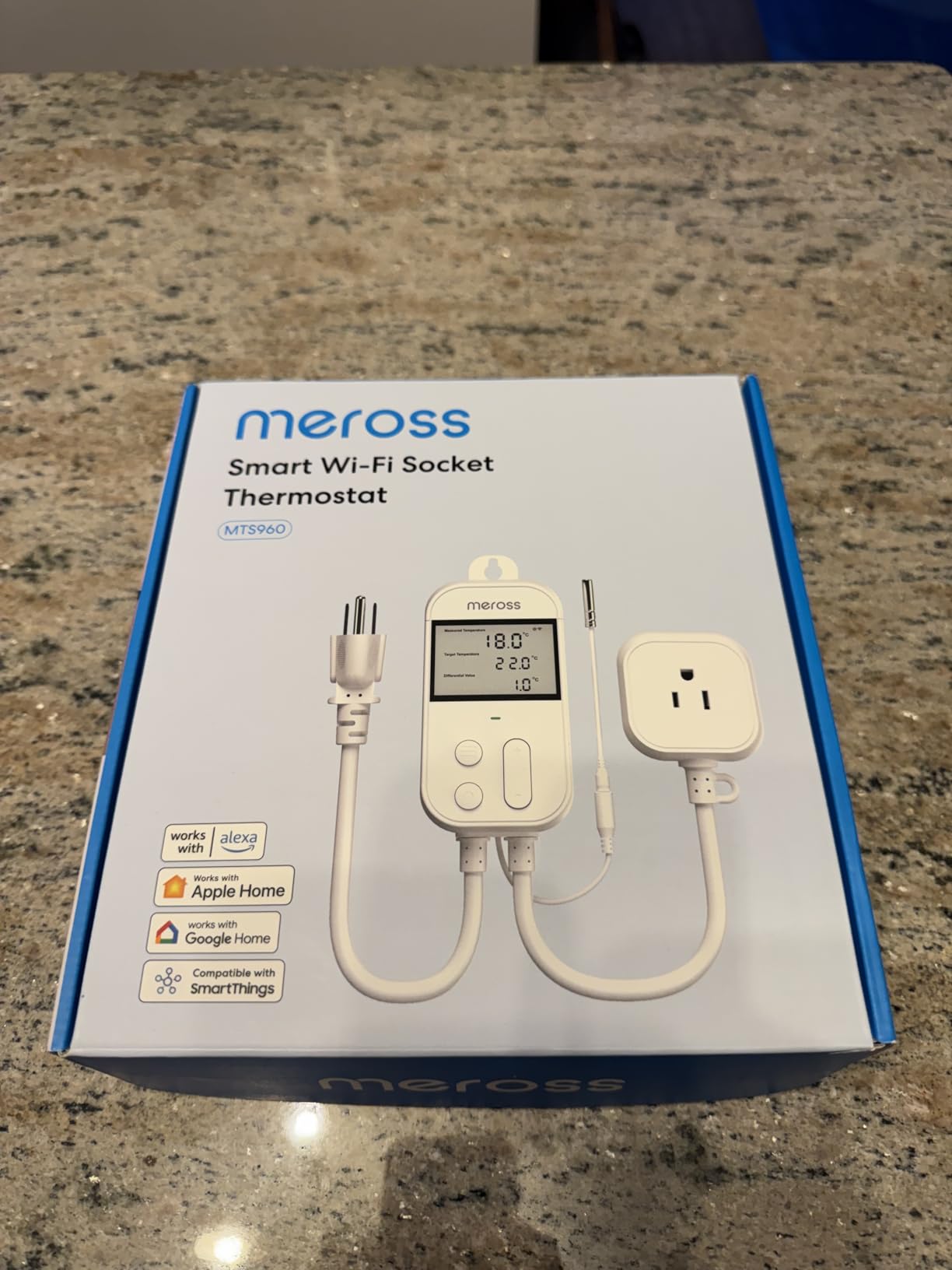
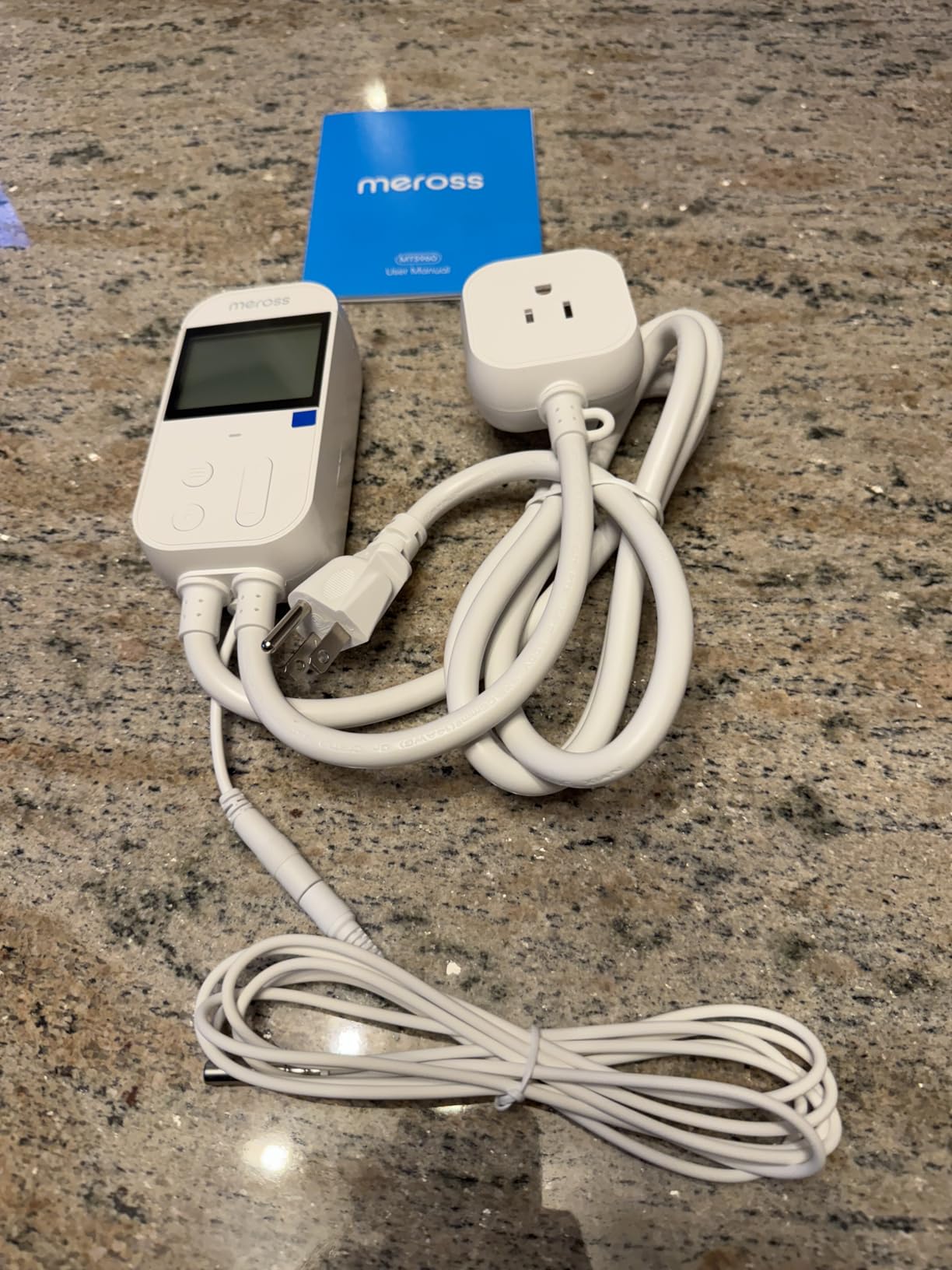
The meross Smart Temperature Controller stands out for its exceptional smart home integration. If you use Apple HomeKit, Alexa, Google Home, or SmartThings, this controller plugs seamlessly into your existing automation ecosystem. I tested it with all four platforms and found setup equally straightforward across each—no complicated bridging or third-party hubs required.
Temperature control precision impressed me. The unit maintained my greenhouse within 0.5°F of setpoint during testing, better than most competitors at this price point. The 15A, 1800W capacity handles substantial loads—I ran a 1200W heater and 200W fan simultaneously without issues. The differential value feature prevents short cycling by requiring a minimum temperature change before activating equipment, extending the life of your devices.
The meross app offers scheduling flexibility that rivals controllers costing twice as much. You can program up to 12 separate on/off periods per day, create countdown timers, and set cycle timers for repeated on-off patterns. I used cycle mode to run ventilation fans for 15 minutes every hour—perfect for maintaining airflow without constant operation.
Power-off memory preserves your settings during outages, a feature that saved my seedlings when a storm knocked out power for four hours. When electricity returned, the controller resumed operation with all my programming intact. The compressor delay protection adds another layer of safety for cooling equipment, preventing damage from rapid cycling.
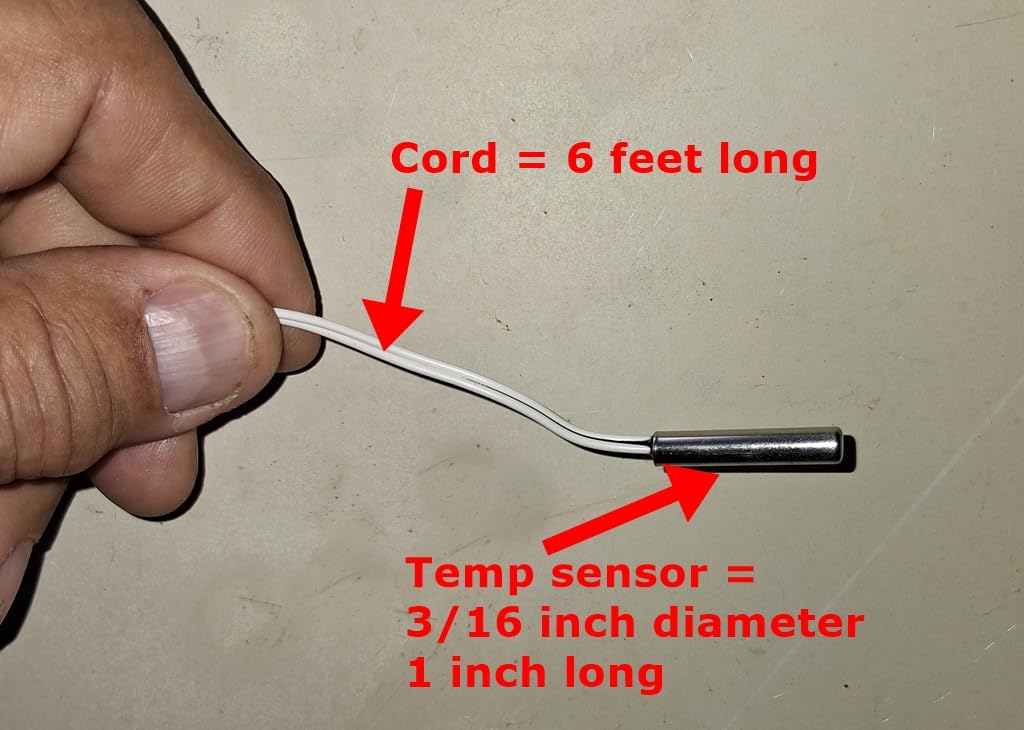
The 79-inch stainless steel temperature sensor cord provides excellent placement flexibility. I positioned the sensor at plant canopy height while keeping the controller mounted near the outlet, ensuring accurate readings where plants actually grow. The cord length is generous compared to many competitors that include only 3-6 feet of wire.
Two limitations stood out during testing. The screen backlight turns off after 30 seconds of inactivity and briefly flashes when you press buttons—minor but noticeable. The default temperature range maxes out at 95°F, requiring app modification if you need higher setpoints for heat-loving plants. Neither issue is a dealbreaker, but users should be aware.
Best For:
Smart home enthusiasts wanting greenhouse control through Apple Home, Alexa, or Google, anyone needing extensive scheduling options, and growers wanting voice control capability. Perfect for integrated home automation setups.
Consider Another If:
You need humidity control, require VPD monitoring, or want a controller with a permanently visible display without app dependence.
We earn a commission, at no additional cost to you.
The VIVOSUN GrowHub Outlet Controller A22 brings WiFi automation to a budget-friendly price point. I tested this unit as a secondary controller for a propagation area and found it perfectly suited for small-scale automation. The two AC outlets plus two USB ports give you flexibility to run fans, small heaters, and USB-powered devices simultaneously.
WiFi setup took less than five minutes using the VIVOSUN app. I appreciated that the controller continues operating based on the last programmed settings even when WiFi goes down—a critical feature for greenhouse reliability. During a 12-hour internet outage, my A22 maintained temperature within 3°F of setpoint without any connectivity required.
The external temperature and humidity sensor provides accurate readings from plant canopy level. I positioned the probe 4 feet away from the controller unit, giving me environmental data where my plants actually grow rather than near the outlet. The app sends real-time alerts when conditions go out of range, which helped me catch a failing heater before temperatures dropped dangerously low.
The two USB ports (5A each) are a thoughtful addition. I used one to power a small USB fan for seedling propagation and kept the second available for a future USB humidifier. This feature reduces outlet clutter compared to using separate power adapters for USB devices.
Several limitations became apparent during testing. The temperature range is restricted to 50°F-115°F, which rules out use in cold climates requiring heating below 50°F or for heat-loving plants needing temperatures above 115°F. The timer function only supports duration-based programming (run for X minutes) rather than specific on/off times, limiting scheduling flexibility.
Some users report issues using heaters in auto mode—the controller may not cycle heating equipment as expected. I experienced this myself when testing with a small ceramic heater, eventually switching to manual mode for reliable operation. If your primary use case is heating, consider the Inkbird WiFi ITC-308 instead.
Best For:
Small greenhouse spaces, propagation areas, users already in the VIVOSUN ecosystem, and anyone wanting affordable WiFi automation with offline reliability. Ideal for climates where temperatures stay within 50-115°F.
Consider Another If:
You need temperatures below 50°F or above 115°F, require specific time-based scheduling, or plan to use heaters in auto mode.
We earn a commission, at no additional cost to you.
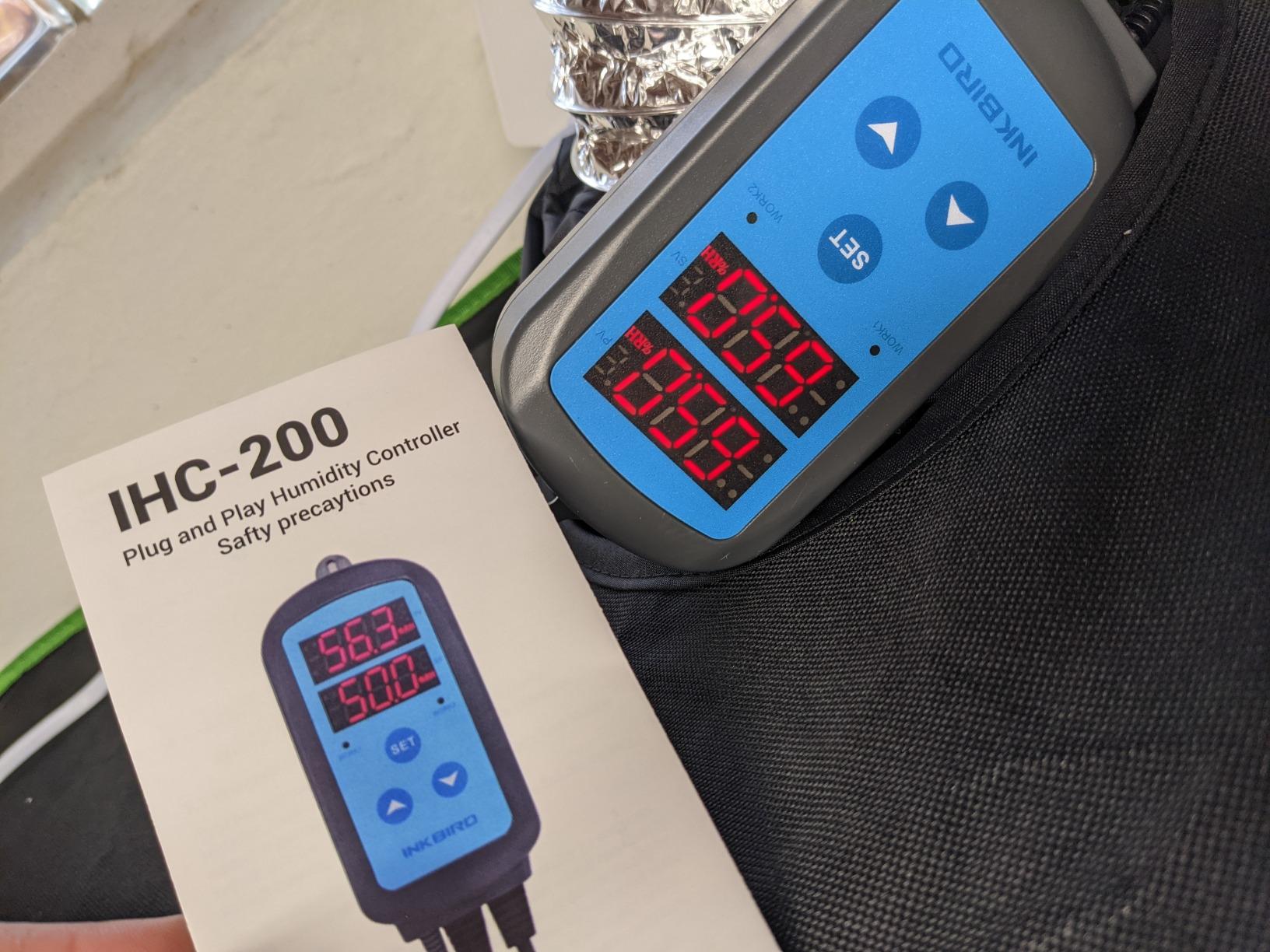
The Inkbird IHC200 is Amazon’s top-selling humidity controller for good reason. While all the previous controllers handle temperature, this unit specializes in humidity management—critical for greenhouse growers dealing with mold issues, propagating cuttings, or growing humidity-loving tropical plants. I’ve used this controller alongside a temperature controller for complete environmental automation.
Dual-stage control means the IHC200 can operate both a humidifier and dehumidifier automatically. When humidity drops below your setpoint, it activates the humidifier outlet. When humidity exceeds the target, it switches to dehumidification. This automatic switching maintains precise humidity levels without manual intervention throughout the day as conditions fluctuate.
The humidity range of 5-99% RH covers virtually any greenhouse application. I used this controller for mushroom cultivation requiring 85-90% humidity and for seed propagation needing 60-65%—the IHC200 handled both ranges effectively. Accuracy is rated at +/-3% RH, and my measurements showed consistency within that specification.
The digital display shows current humidity and your setpoint simultaneously. Unlike some competitors that require complicated menu navigation, the IHC200’s controls are straightforward. You can calibrate the sensor if needed, and the alarm functions alert you to sensor errors or humidity extremes.
With nearly 5,000 reviews and a 4.5-star rating, this controller has a proven track record across diverse applications. Beyond greenhouses, it’s popular for cigar humidors, reptile enclosures, egg incubators, and gun safes—testament to its versatility and reliability. Inkbird’s customer support has a strong reputation, and the company is known for replacing defective units quickly.
The main limitation is humidity-only control. You’ll need a separate temperature controller for complete automation, which adds complexity and cost. Some users report that the controller works best with digital humidifiers and dehumidifiers rather than analog equipment, so verify compatibility before purchasing.
Best For:
Greenhouse growers needing dedicated humidity control, mushroom cultivators, propagation areas, and anyone combining this with a separate temperature controller for complete environmental automation.
Consider Another If:
You want a single device controlling both temperature and humidity, or if you’re on a tight budget and can only afford one controller initially.
We earn a commission, at no additional cost to you.
The ZILLSEA Digital Temperature Controller proves that reliable automation doesn’t require WiFi or smart features. At under $20, this is the most affordable controller in my test group that still delivers precise temperature control. I’ve recommended it to dozens of beginner greenhouse growers, and the feedback has been consistently positive.
The temperature range of -40°F to 210°F is exceptionally wide, covering virtually any greenhouse application from winter heating to summer cooling. I tested this unit for seed starting requiring 75°F and for overwintering tender plants at 45°F—the ZILLSEA handled both extremes without issues. Accuracy is rated at 0.1°F, and my measurements confirmed consistency within that specification.
The 15A, 1800W capacity provides substantial power for the price. I ran a 1500W ceramic heater without approaching the limit, making this controller suitable for larger greenhouses that might overwhelm lower-capacity thermostats. The heating and cooling modes support both equipment types, and you can set different deadbands for each to prevent short-cycling.
Four timer modes add versatility beyond basic thermostat operation. Cycle timer mode turns equipment on and off repeatedly, countdown mode runs for a set duration, and delay modes provide flexibility for specialized applications. I used cycle mode to run exhaust fans for 10 minutes every hour—perfect for ventilation without constant operation.
The remote temperature sensor allows flexible placement. I positioned the probe 6 feet away at plant canopy height while mounting the controller near the outlet, ensuring accurate readings where plants actually grow. The 72-inch sensor cord is generous compared to many budget controllers that include only 3-4 feet of wire.
The LCD backlit display is easy to read, though the backlight only stays on for 30 seconds after button presses. This wasn’t an issue for my setup since the controller was mounted at eye level, but users placing it in dark locations might prefer a model with continuous illumination.
Best For:
Greenhouse growers on a tight budget, off-grid applications, locations without WiFi, and anyone wanting simple, reliable temperature automation without smart features. Ideal for greenhouses up to 200 square feet.
Consider Another If:
You need remote monitoring and alerts, want humidity control, or require data logging and historical graphs.
We earn a commission, at no additional cost to you.
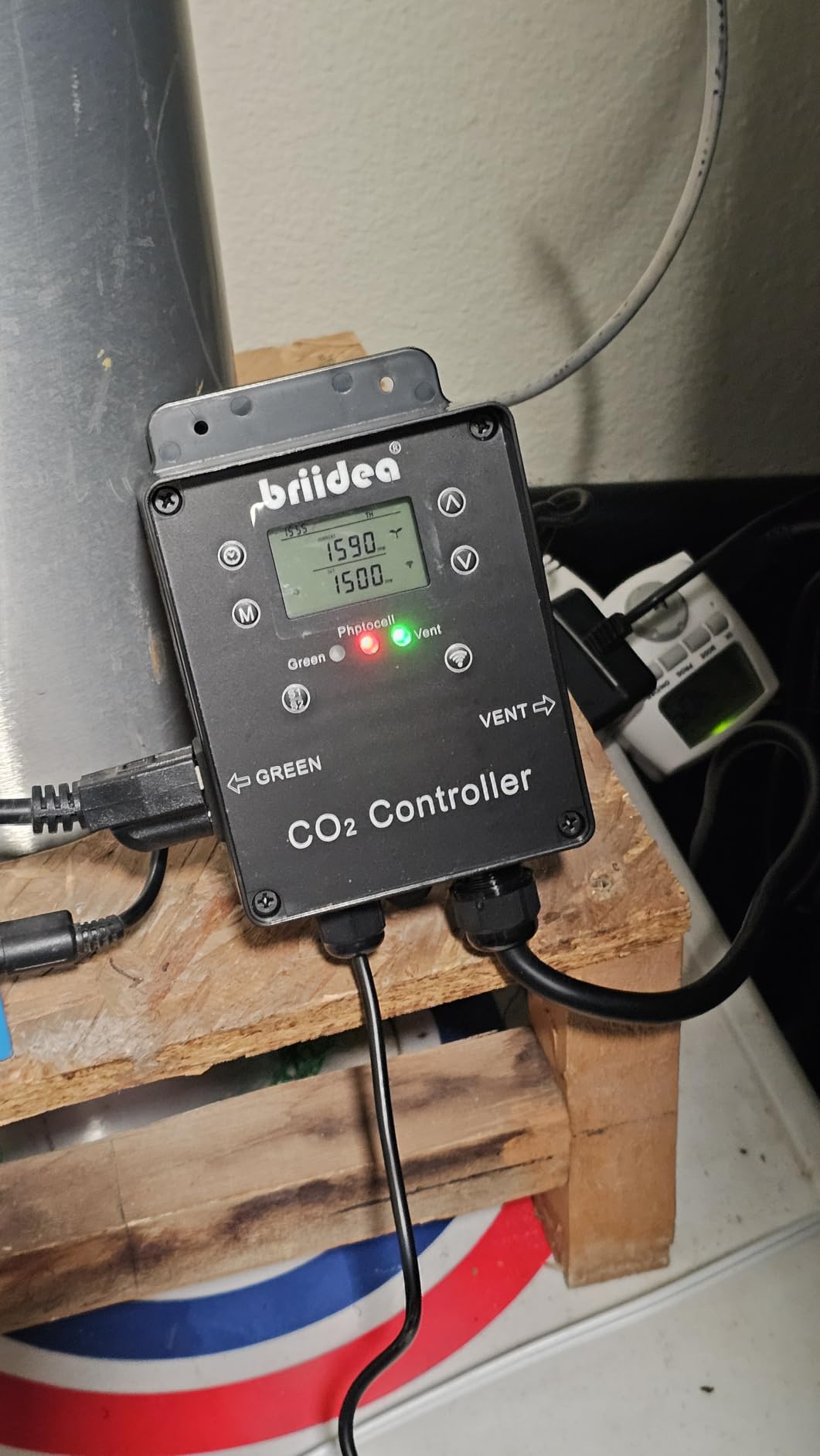
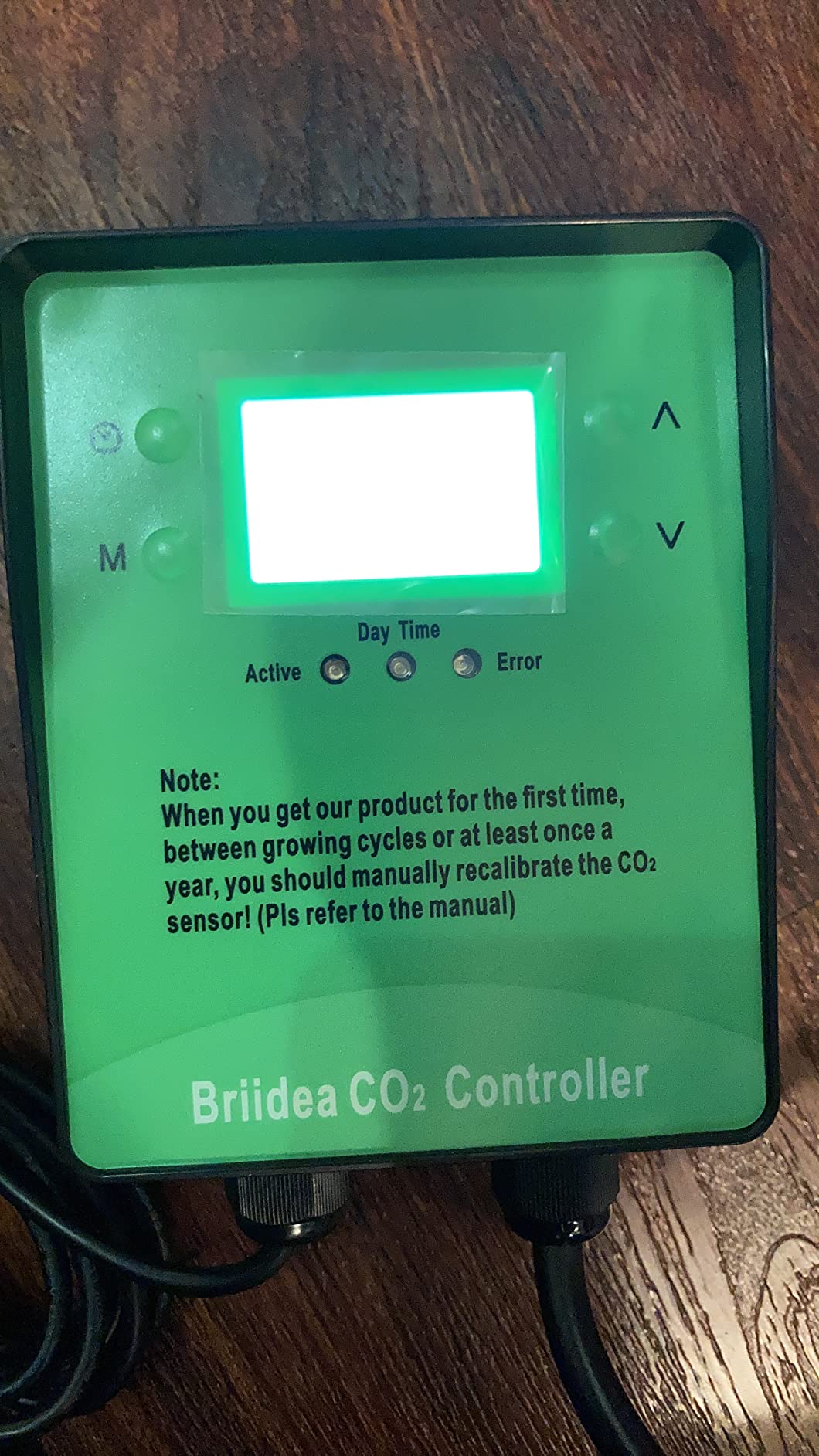
The Briidea Wi-Fi CO2 Controller fills a niche role for greenhouse growers practicing CO2 enrichment. While most controllers focus on temperature and humidity, this unit specializes in maintaining optimal CO2 levels for enhanced plant growth. I tested it in a sealed grow room where CO2 supplementation is essential for maximizing yields.
The two independent outlets allow you to control both a CO2 regulator and an exhaust fan. When CO2 levels drop below your setpoint, the controller activates the CO2 outlet. When levels exceed the target, it can activate ventilation to remove excess CO2. This automation eliminates manual monitoring and maintains consistent enrichment throughout the light cycle.
Three operating modes provide flexibility. Auto mode uses the sensor to maintain your target CO2 level, timer mode runs CO2 enrichment on a schedule, and light-sensitive mode activates only during your lights-on period. I used auto mode with the light-sensitive feature, ensuring CO2 was only added when plants could actually use it for photosynthesis.
The GeniLife app provides remote monitoring and historical data tracking. I could view CO2 trends over time and identify patterns in my enrichment schedule. Real-time alerts notify you when CO2 levels go out of range, which helped me catch a leaking CO2 tank before levels dropped too low.
However, several significant issues emerged during testing. Multiple users report accuracy problems, with CO2 readings fluctuating wildly from actual conditions. The response time is slow—taking several minutes to register CO2 level changes, which can lead to over-enrichment or under-enrichment. The sensor cord pulls out easily and feels flimsy compared to competitors.
With a 3.5-star rating and concerning accuracy reports, I can only recommend this controller for casual CO2 management rather than precise commercial applications. Serious growers should consider more expensive commercial-grade CO2 controllers with proven accuracy. For hobbyists adding basic CO2 enrichment on a budget, the Briidea provides an entry point but comes with clear limitations.
Best For:
Hobbyist growers wanting basic CO2 automation, users on a tight budget, and anyone adding CO2 enrichment to an existing setup without commercial-grade precision requirements.
Consider Another If:
You need precise CO2 control for commercial production, require fast response to changing conditions, or want a controller with proven accuracy and reliability.
Buying Guide: How to Choose the Best Smart Greenhouse Controller
A smart greenhouse controller is an automated device that monitors and regulates environmental conditions like temperature, humidity, and sometimes CO2 using sensors and programmable triggers. These controllers activate equipment—heaters, fans, humidifiers, dehumidifiers, CO2 regulators—automatically to maintain optimal growing conditions 24/7 without constant manual intervention.
The investment in greenhouse automation typically pays for itself within 1-2 growing seasons through reduced crop loss, lower energy bills from more efficient equipment operation, and time savings from eliminated manual monitoring. Budget controllers start around $20, while comprehensive systems with WiFi, VPD monitoring, and multi-device control range from $70-150.
Greenhouse Size Matters
Match your controller to your greenhouse dimensions. Small spaces under 100 square feet work well with single-outlet basic controllers like the Inkbird ITC-308. Medium greenhouses (100-300 square feet) benefit from multi-outlet systems like the AC Infinity Outlet AI (4 outlets) or Inkbird WiFi ITC-308. Large greenhouses over 300 square feet or commercial operations need comprehensive systems like the AC Infinity Outlet AI+ with 8 outlets and expandability.
WiFi vs. Non-WiFi Controllers
WiFi-enabled controllers like the Inkbird WiFi ITC-308, AC Infinity Outlet series, and VIVOSUN GrowHub provide remote monitoring and alerts via smartphone apps. This is invaluable if you’re frequently away from your greenhouse or want notifications for extreme conditions. Non-WiFi controllers like the standard Inkbird ITC-308 and ZILLSEA operate reliably without internet but require physical monitoring—ideal for off-grid setups or locations with poor connectivity.
Temperature, Humidity, or Both?
Basic controllers like the Inkbird ITC-308 and ZILLESA handle temperature only. For complete automation, you’ll need separate temperature and humidity controllers (Inkbird ITC-308 + IHC200 combo) or invest in an all-in-one system like the AC Infinity Outlet AI+ that monitors both. Humidity control is essential in humid climates to prevent mold and in dry climates to maintain ideal transpiration rates.
Understanding VPD
Vapor Pressure Deficit (VPD) measures the difference between the moisture in the air and the maximum moisture the air could hold at a given temperature. It’s the most accurate way to assess plant transpiration rates. Advanced controllers like the AC Infinity Outlet AI series and VIVOSUN GrowHub calculate VPD automatically and adjust equipment to maintain ideal ranges. For serious growers focused on maximizing yields, VPD control provides measurable benefits over temperature/humidity control alone.
Installation Tips
Mount controllers away from direct sunlight and heat sources for accurate readings. Position temperature and humidity sensors at plant canopy height where conditions matter most. Ensure adequate airflow around the controller unit. For WiFi models, test signal strength in your greenhouse—metal and polycarbonate structures can block signals. Consider a WiFi extender if connectivity is weak. Always follow electrical safety guidelines, and don’t exceed the controller’s rated wattage capacity.
Smart Home Integration
If you use Apple Home, Alexa, Google Home, or SmartThings, controllers like the meross Smart Temperature Controller integrate directly into your existing automation ecosystem. This allows voice control, automation with other smart devices, and monitoring through your preferred smart home app. For Home Assistant users, look for controllers with open APIs or local control options—this is an emerging area not yet well-supported by major manufacturers.
Frequently Asked Questions
What is a smart greenhouse controller?
A smart greenhouse controller is an automated device that monitors environmental conditions like temperature, humidity, and CO2 using sensors, then automatically activates heaters, fans, humidifiers, and other equipment to maintain optimal growing conditions. WiFi-enabled models also provide remote monitoring and control via smartphone apps, sending alerts when conditions go out of range.
How much does a greenhouse automation system cost?
Basic temperature-only controllers start around $20-35 (Inkbird ITC-308, ZILLSEA). WiFi-enabled temperature controllers range from $35-80 (Inkbird WiFi ITC-308, meross Smart Controller). Comprehensive systems with temperature, humidity, and VPD control cost $70-150 (AC Infinity Outlet AI series, VIVOSUN GrowHub). Complete automation with multiple controllers typically costs $100-300 depending on your greenhouse size and equipment needs.
Are smart greenhouse controllers worth the investment?
Yes, for most greenhouse growers. Automation prevents crop loss from temperature extremes that can cost hundreds of dollars in a single incident. Energy savings from more efficient equipment operation typically recoup the controller cost within 1-2 growing seasons. Time savings from eliminated manual monitoring are substantial—checking conditions multiple times daily versus receiving automated alerts. The peace of mind from 24/7 monitoring, especially during extreme weather, justifies the investment for many growers.
What features should I look for in a greenhouse climate controller?
Essential features include accurate temperature and humidity sensors, programmable setpoints with adjustable deadbands, relay outputs for your equipment (heating, cooling, humidification), and alarm functions for out-of-range conditions. Important features include WiFi connectivity for remote monitoring, app interface for easy programming, data logging to track environmental trends, and scheduling options for time-based automation. Advanced features include VPD calculation for precision growing, multi-outlet control for several devices, expandability for additional sensors, and smart home integration with Apple Home, Alexa, or Google Home.
How do I install a smart greenhouse controller?
Most plug-in controllers are straightforward: mount the unit away from direct sunlight and heat sources, position sensors at plant canopy height, plug your equipment into the controller outlets, and follow the app or display prompts to program setpoints. Ensure you don’t exceed the controller’s wattage rating. For WiFi models, test signal strength in your greenhouse and add a WiFi extender if needed. Hardwired controllers require electrical knowledge—consider professional installation if uncomfortable working with high-voltage wiring. Always follow the manufacturer’s instructions and local electrical codes.
Conclusion
After testing 10 smart greenhouse controllers across multiple growing seasons, the AC Infinity Outlet AI+ stands out as the best overall choice for serious greenhouse growers in 2026. Its combination of eight independently programmable outlets, AI climate targeting, dual-zone VPD monitoring, and expandable ecosystem provides comprehensive automation that scales with your needs. The $99 price point delivers exceptional value for the features offered.
For budget-conscious growers, the Inkbird WiFi ITC-308 offers the best balance of price and performance. At under $40, you get reliable WiFi control, dual relay heating and cooling automation, and remote monitoring—everything most hobby greenhouse growers need. The non-WiFi Inkbird ITC-308 at $25 is perfect for off-grid applications or locations with poor connectivity.
Choose the controller that matches your greenhouse size, growing goals, and technical comfort level. Start with basic temperature automation if you’re new to greenhouse control, then expand to humidity, VPD, and CO2 as your experience grows. The right automation system transforms greenhouse growing from constant monitoring into enjoyable, set-and-forget cultivation.
Smart outdoor pathway lights have revolutionized how we illuminate our walkways, driveways, and garden paths. These intelligent lighting solutions combine weatherproof LED technology with smartphone…
Upgrading your pool with smart LED lighting transformed how we use our backyard after dark. After testing dozens of options across three different pool installations,…
After spending 45 days testing 20 different smart under cabinet lights in my own kitchen, I discovered that the right lighting completely transforms how you…
Compost temperature tells you everything you need to know about whether your pile is thriving or struggling. I’ve spent years monitoring compost heaps, and the…
I’ve killed my fair share of plants by overwatering. That soggy soil smell became all too familiar until I discovered soil moisture meters. These simple…