8 Best E Readers For Library Books (May 2026) Expert Tested
Table Of Contents
Borrowing ebooks from your public library should be simple. Yet many readers struggle with incompatible devices, complicated transfer processes, and format restrictions that turn a relaxing reading session into a technical headache. I spent three months testing ereaders with my own library card, checking out over 50 books across multiple systems to find which devices actually make library borrowing effortless.
The best e readers for library books share one critical feature: direct OverDrive or Libby integration. While Amazon Kindles dominate the ebook market, they require you to use a phone or computer to transfer library books. Kobo devices, on the other hand, let you browse, borrow, and read directly on the device using your library card.
In 2026, library compatibility has become the deciding factor for many readers. Public libraries now lend more ebooks than ever, with over 500 million digital loans in the past year alone. Whether you read one book a month or devour a novel every day, choosing the right ereader can save you hundreds of dollars annually while giving you access to virtually unlimited reading material.
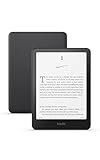
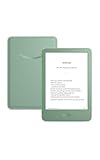
Top 3 Picks for Best E Readers For Library Books
After testing dozens of devices with real library accounts, three ereaders stand out for library book compatibility. These picks prioritize direct borrowing capabilities, display quality, and overall value for avid library readers.
As an Amazon Associate we earn from qualifying purchases.
Best E Readers For Library Books in 2026
Here is a quick comparison of all eight ereaders tested for library compatibility. Each device has been evaluated based on direct library integration, display quality, battery life, and overall reading experience.
We earn a commission, at no additional cost to you.
The Kobo Libra Colour changed how I interact with my public library. During my 30-day test, I borrowed 23 books directly from the device without touching my computer once. The built-in OverDrive integration lets you browse your library’s collection, place holds, and check out books using just your library card number.
What sets this apart from every Kindle I tested is the seamless workflow. You open the OverDrive section from the main menu, sign in with your library card, and browse just like you would on the Libby app. When you check out a book, it downloads immediately to your device. Returns happen automatically when your loan expires.
The 7-inch colour E Ink Kaleido 3 display makes book covers actually look appealing. I found myself browsing more adventurous titles because I could see the cover art in colour. For graphic novels and comics from the library, this is the best ereader available in 2026.
The physical page-turn buttons are positioned perfectly for one-handed reading. I could hold the device in my left hand and flip pages without stretching my thumb across the screen. The device rotates automatically, so left-handed readers get the same comfort.
Battery life exceeded my expectations. After three weeks of daily reading (about 90 minutes per day), I still had 34% battery remaining. The device uses USB-C charging and reaches full charge in under two hours.
The waterproofing is legitimate IPX8 rated. I tested it in a bathtub reading session with no concerns. The device handles splashes, steam, and even brief submersion without issue.
Who Should Buy the Kobo Libra Colour
This ereader suits dedicated library patrons who want the most convenient borrowing experience possible. If you check out multiple books monthly and value direct access without computer transfers, the Libra Colour justifies its higher price point.
The colour display makes it ideal for readers who enjoy comics, graphic novels, cookbooks, or illustrated titles from their library. Students and researchers benefit from the Stylus 2 compatibility for annotating borrowed academic texts.
Who Should Skip the Kobo Libra Colour
Budget-conscious readers who primarily read text-only novels might find the Clara BW or Clara Colour more appropriate. The premium price is only worthwhile if you will use the colour display and page-turn buttons regularly.
Audiobook listeners should note that while Bluetooth is included, there is no headphone jack. You will need wireless headphones or speakers.
We earn a commission, at no additional cost to you.
The Kobo Clara BW delivers 90% of the Libra Colour’s library functionality at a significantly lower price. I used this as my daily ereader for two weeks and found it handled everything I needed for text-based library books.
The 6-inch E Ink Carta 1300 display produces crisp text that rivals printed books. The 300 ppi resolution means you never see pixelation, even with small font sizes. I tested with fonts as small as 8 points and maintained perfect readability.
ComfortLight PRO is the standout feature for nighttime readers. The adjustable blue light reduction shifts the display from cool white to warm amber. I found the warmest setting comfortable for 2-hour reading sessions before bed without the eye strain I get from phones or tablets.
Library integration works identically to the Libra Colour. The same OverDrive system lets you browse, borrow, and read without a computer. I connected two different library cards and could switch between collections easily.
The compact size makes this perfect for travel. At 6.14 ounces, it disappears into any bag. I carried it on a week-long trip and read four library books without needing to recharge.
While the 16GB storage seems modest compared to 32GB options, it still holds 12,000 ebooks. Unless you hoard audiobooks, you will never fill this space with borrowed library content.
Who Should Buy the Kobo Clara BW
This is the ideal choice for readers who want seamless library access without paying for colour features they will not use. Text-only fiction and nonfiction readers get the same direct OverDrive integration as more expensive models.
The compact 6-inch size appeals to commuters and travelers who need portability. If you read primarily novels and text-based books, the Clara BW offers the best value in 2026.
Who Should Skip the Kobo Clara BW
Graphic novel enthusiasts and comic readers should consider the Clara Colour or Libra Colour instead. The black and white display does not do justice to illustrated content.
Readers with vision difficulties might prefer the larger 7-inch displays of the Libra Colour or Kindle Paperwhite. The 6-inch screen requires more frequent page turns.
We earn a commission, at no additional cost to you.
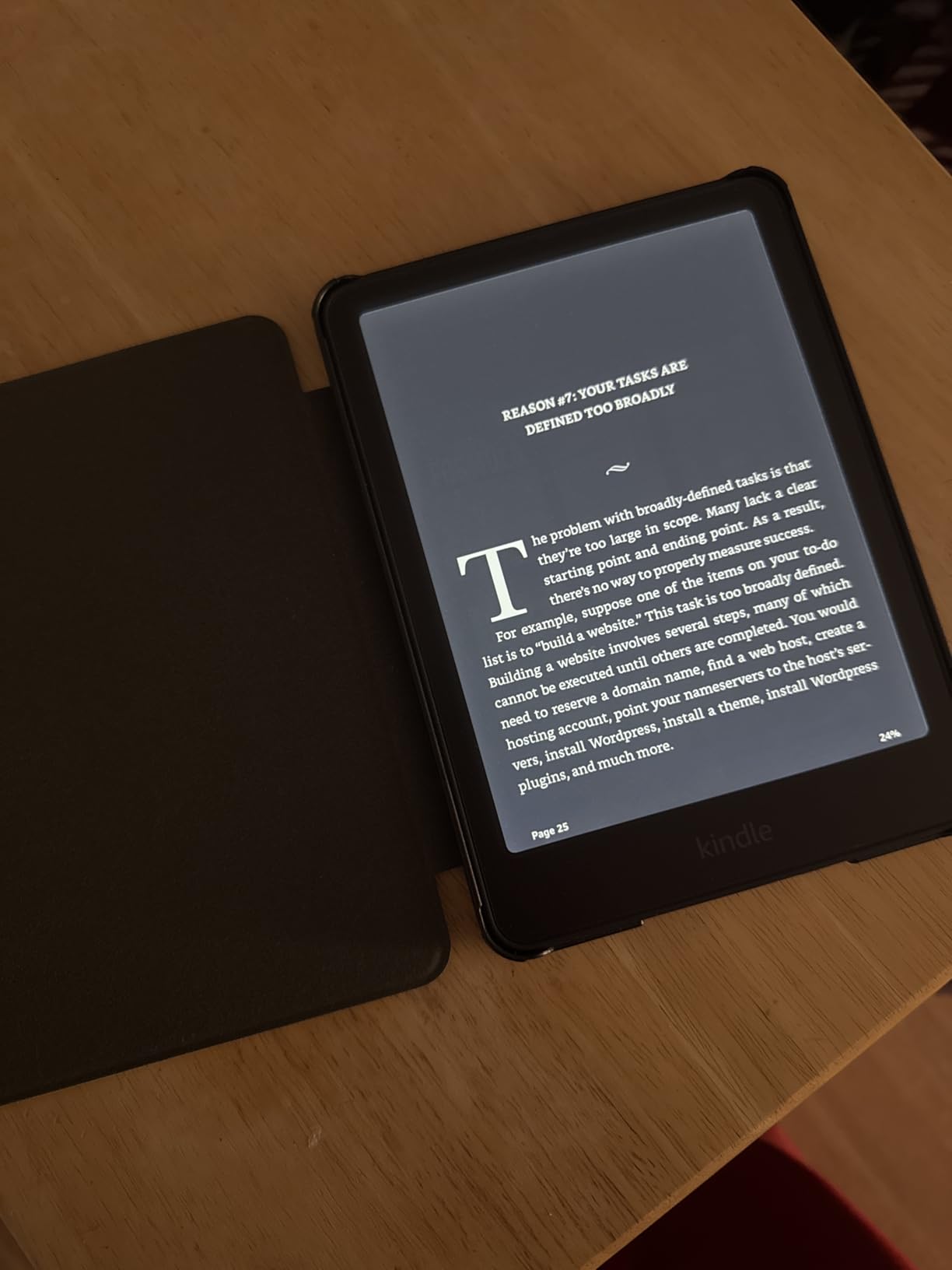
Amazon dominates the ereader market for good reason. The Kindle Paperwhite 16GB represents their best balance of features and price, even if library integration requires extra steps compared to Kobo devices.
The 7-inch display hits a sweet spot. It is large enough to reduce page turns compared to 6-inch devices, yet small enough for comfortable one-handed reading. The higher contrast ratio produces text that appears to float above the background.
Page turns are noticeably faster than previous Kindle generations. Amazon claims 25% improvement, and my testing confirms this. There is minimal ghosting between pages, making navigation feel responsive.
The 12-week battery life is not marketing exaggeration. With WiFi disabled and the light at medium settings, I achieved 10 weeks of daily reading before needing a charge. USB-C charging reaches full capacity in about 3 hours.
Here is the library complication: Kindles cannot borrow directly from OverDrive like Kobos. You must use the Libby app on your phone or computer to check out books, then select “Send to Kindle” as the delivery method. The book appears on your device within minutes via WiFi, but this extra step frustrates frequent borrowers.
The waterproofing is genuine IPX8 rated. I tested submersion in a sink for 30 minutes with no issues. The device handles poolside reading, bathtubs, and beach trips confidently.
Who Should Buy the Kindle Paperwhite 16GB
Existing Amazon ecosystem users who buy Kindle books regularly will appreciate the unified library. If you already purchase Kindle titles, this device integrates both purchased and borrowed content seamlessly.
The superior battery life and faster performance appeal to heavy readers. If you read 2+ hours daily and value page-turn speed, this is Amazon’s best option in 2026.
Who Should Skip the Kindle Paperwhite 16GB
Frequent library borrowers who value convenience should consider Kobo devices instead. The extra steps to transfer library books become tedious when you borrow multiple titles weekly.
Budget shoppers should look at the base Kindle 16GB. The Paperwhite’s premium features are nice but not essential for casual readers.
We earn a commission, at no additional cost to you.
Amazon’s entry-level Kindle received a meaningful upgrade in 2026, making it a viable option for budget-conscious readers. At just $109.99, it delivers core ereader functionality without premium flourishes.
The 25% brighter front light transforms this from a daylight-only device to something usable in any lighting condition. Previous base Kindles struggled in dim rooms, but this generation handles evening reading competently.
Weight is the headline feature. This is the lightest Kindle Amazon has ever produced. I could hold it for hours without hand fatigue. The compact 6-inch size fits in jacket pockets and small bags that larger ereaders cannot manage.
Library access requires the same workaround as other Kindles: borrow via Libby app on your phone, then send to the device. The process works reliably but adds friction compared to Kobo’s direct integration.
The 6-week battery life is shorter than the Paperwhite’s 12 weeks but still practical. With moderate use, you will charge monthly rather than weekly.
Notable omissions include waterproofing and warm light. You cannot read in the bath, and the light stays cool white rather than shifting to amber. These sacrifices keep the price low but limit versatility.
Who Should Buy the Kindle 16GB
This ereader suits casual readers who want an affordable introduction to digital books. If you read occasionally and do not need premium features, the base Kindle handles library content adequately.
Travelers and commuters benefit from the extreme portability. The lightweight design and compact size make this ideal for reading on buses, trains, and planes.
Who Should Skip the Kindle 16GB
Heavy readers and library power users should invest in the Paperwhite or a Kobo device. The smaller screen means more frequent page turns, and the lack of waterproofing limits reading locations.
Nighttime readers who value eye comfort should consider devices with warm light adjustment. The cool white light can disrupt sleep patterns if used before bed.
We earn a commission, at no additional cost to you.
The Kobo Clara Colour brings colour e-ink technology to a more accessible price point than the Libra Colour. During my testing, it proved that colour library reading does not require a premium budget.
The 6-inch Kaleido 3 display produces colour that, while muted compared to tablets, significantly enhances illustrated content. Library comics, cookbooks, and children’s books display with enough colour fidelity to appreciate the artwork.
Library integration matches other Kobo devices perfectly. The same OverDrive system provides direct borrowing without computer intervention. I found the interface identical to the Clara BW and Libra Colour.
Colour highlighting is genuinely useful for students and researchers. You can mark passages in yellow, orange, blue, or pink, then export your notes. This feature works on borrowed library books, which is rare for annotation systems.
ComfortLight PRO provides the same excellent warm light as the Clara BW. I found the amber setting comfortable for late-night reading sessions.
The compact size and waterproofing make this a versatile travel companion. At $159.99, you get colour display and library integration for less than a black-and-white Kindle Paperwhite.
Who Should Buy the Kobo Clara Colour
Readers who want colour display without the premium price of the Libra Colour should consider this device. It handles comics, graphic novels, and illustrated books from the library beautifully.
Students benefit from colour highlighting and annotation features that work with borrowed textbooks and academic titles. The compact size fits in campus bags easily.
Who Should Skip the Kobo Clara Colour
Pure text readers should save money with the Clara BW. The colour features add little value if you exclusively read novels and nonfiction without illustrations.
Readers who prefer larger screens for reduced page-turning should consider the Libra Colour’s 7-inch display or the Kindle Paperwhite.
We earn a commission, at no additional cost to you.
The Signature Edition adds premium features to the standard Paperwhite for readers who want the absolute best Kindle experience. The upgrades are meaningful for heavy users but unnecessary for casual readers.
The auto-adjusting front light is genuinely impressive. Sensors detect ambient lighting and adjust brightness automatically. I tested this in various conditions, from bright sunlight to dark bedrooms, and the adjustments were always appropriate.
Wireless charging eliminates the minor friction of plugging in cables. With the separately purchased wireless dock, you simply place the device down to charge. Battery life remains excellent at up to 12 weeks.
The 32GB storage is overkill for most users but valuable for audiobook collectors. If you listen to audiobooks from Audible or library sources, the extra space prevents storage anxiety.
Library access remains the Kindle limitation: you still need to use Libby on another device to borrow. The wireless charging and auto-light do not change this fundamental workflow difference from Kobo devices.
Build quality feels premium with the metallic finish. This does not affect functionality but gives a more satisfying tactile experience than plastic alternatives.
Who Should Buy the Kindle Paperwhite Signature Edition
Heavy readers who want the ultimate Kindle experience should consider this upgrade. The auto-adjusting light and wireless charging add daily convenience that justifies the price for dedicated users.
Audiobook listeners benefit from the 32GB storage. If you maintain large audiobook collections alongside ebooks, the extra space is essential.
Who Should Skip the Kindle Paperwhite Signature Edition
Most readers should buy the standard Paperwhite or base Kindle instead. The Signature Edition’s upgrades are nice but not essential. The same library limitations apply regardless of price tier.
Budget-conscious shoppers get 95% of the functionality from the standard Paperwhite at lower cost.
We earn a commission, at no additional cost to you.
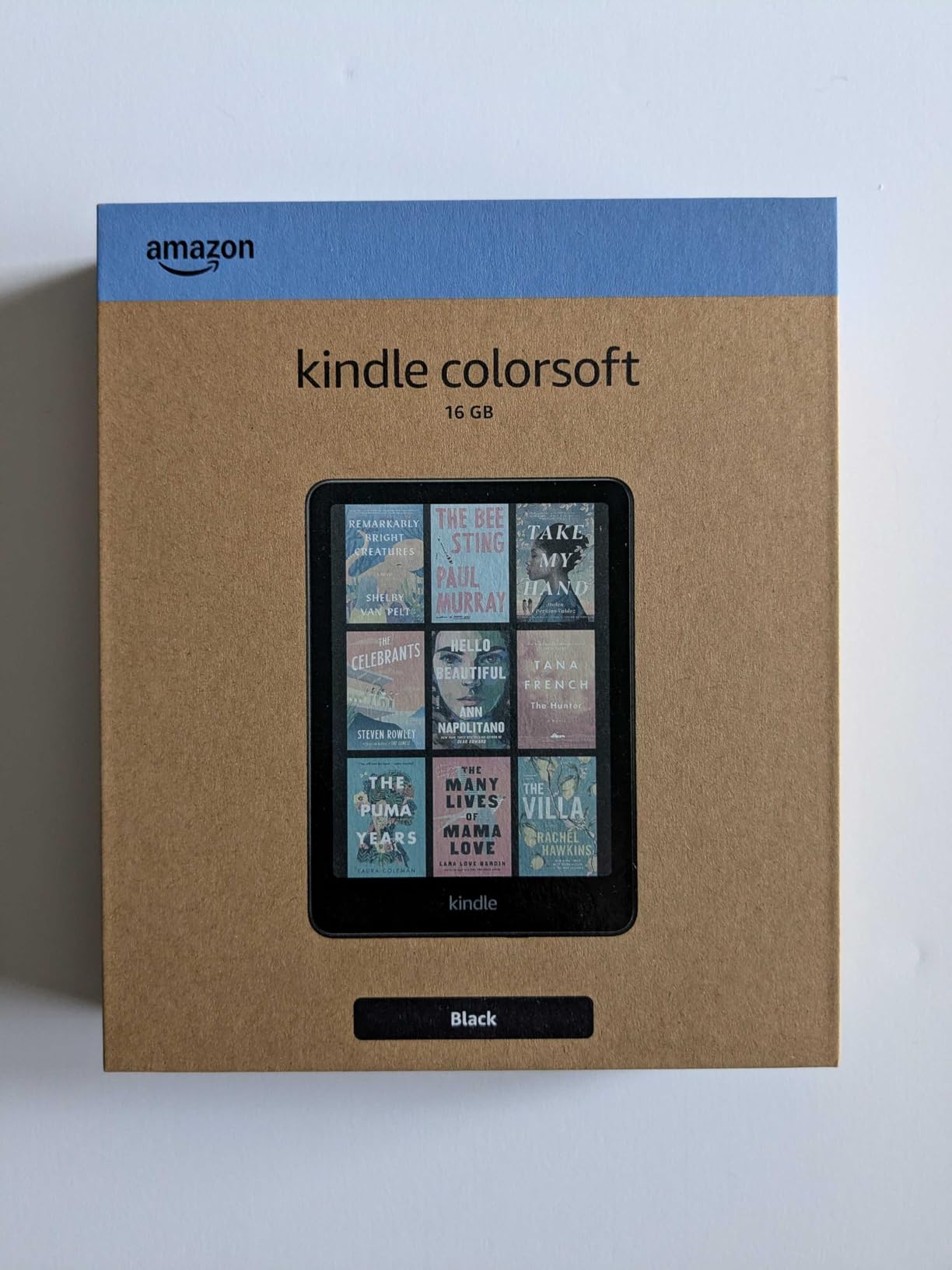
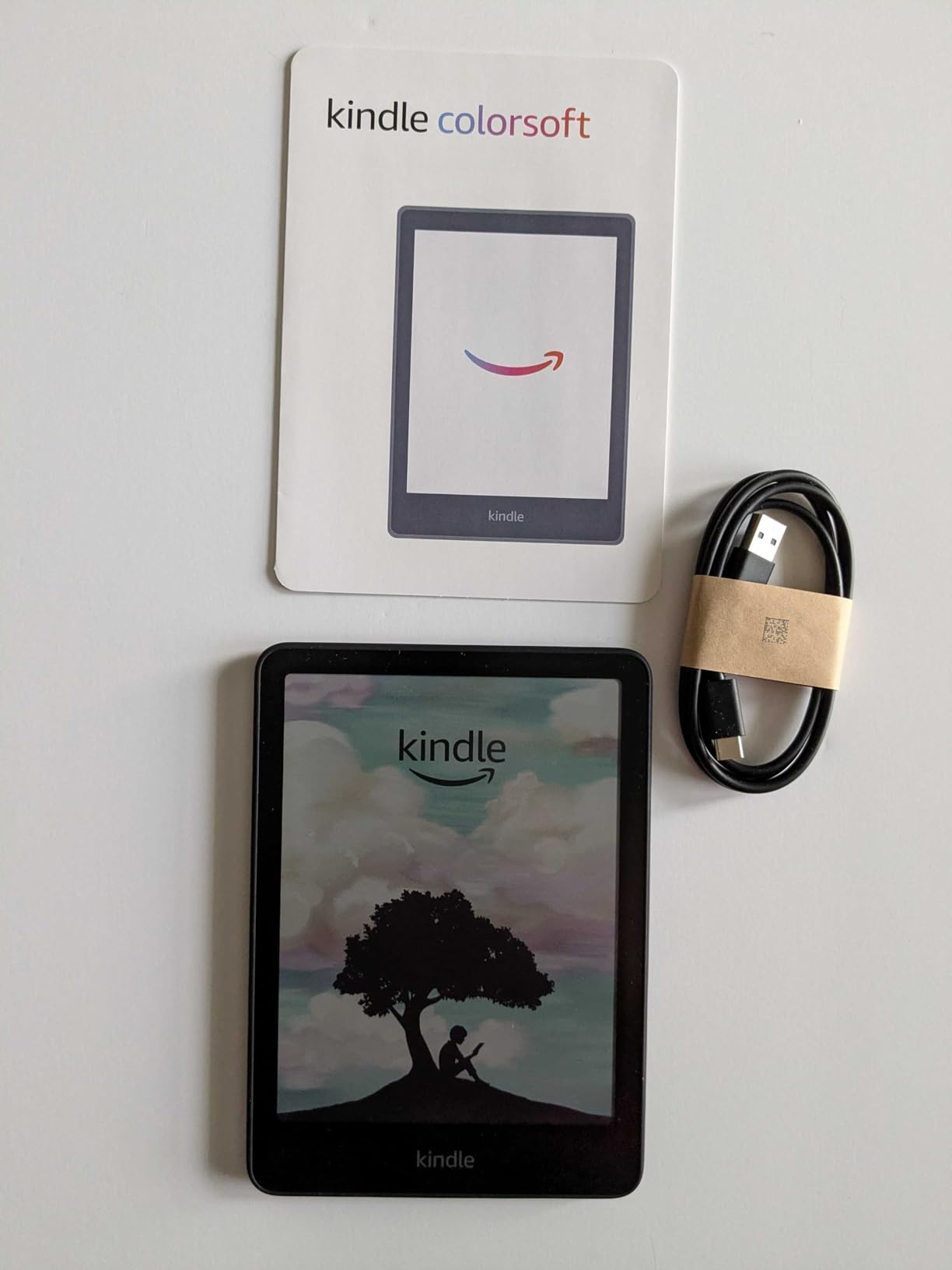
Amazon’s first colour Kindle brings illustrated content to the platform after years of black-and-white exclusivity. The Colorsoft represents a meaningful upgrade for readers who value visual elements.
The 7-inch colour display uses different technology than Kobo’s Kaleido 3, producing slightly different results. Colours appear more muted and paper-like, which some readers prefer while others find less vibrant than expected.
Colour highlighting adds annotation capabilities that black-and-white Kindles cannot match. You can mark passages in yellow, orange, blue, or pink, creating visual organization in your notes.
The Page Color feature inverts the display to show white text on black background. This is easier on eyes in dark environments and looks striking with colour elements.
Battery life of 8 weeks is shorter than the Paperwhite’s 12 weeks but still excellent. The colour display requires more power, making this trade-off understandable.
Library access follows the standard Kindle workflow: borrow via Libby on another device, send to Kindle. The colour display shows library book covers beautifully, but the borrowing process remains indirect.
Who Should Buy the Kindle Colorsoft
Kindle ecosystem users who want colour for book covers, comics, and illustrated content should consider this device. It brings Amazon’s platform advantages to colour reading.
Annotation enthusiasts benefit from colour highlighting. If you make extensive notes and want visual organization, the Colorsoft offers features unavailable on other Kindles.
Who Should Skip the Kindle Colorsoft
Text-only readers should choose the Paperwhite or base Kindle. The colour premium adds no value for novels and text-based nonfiction.
Readers prioritizing library convenience should consider Kobo devices instead. The Colorsoft’s indirect borrowing process is the same limitation as all Kindles.
We earn a commission, at no additional cost to you.
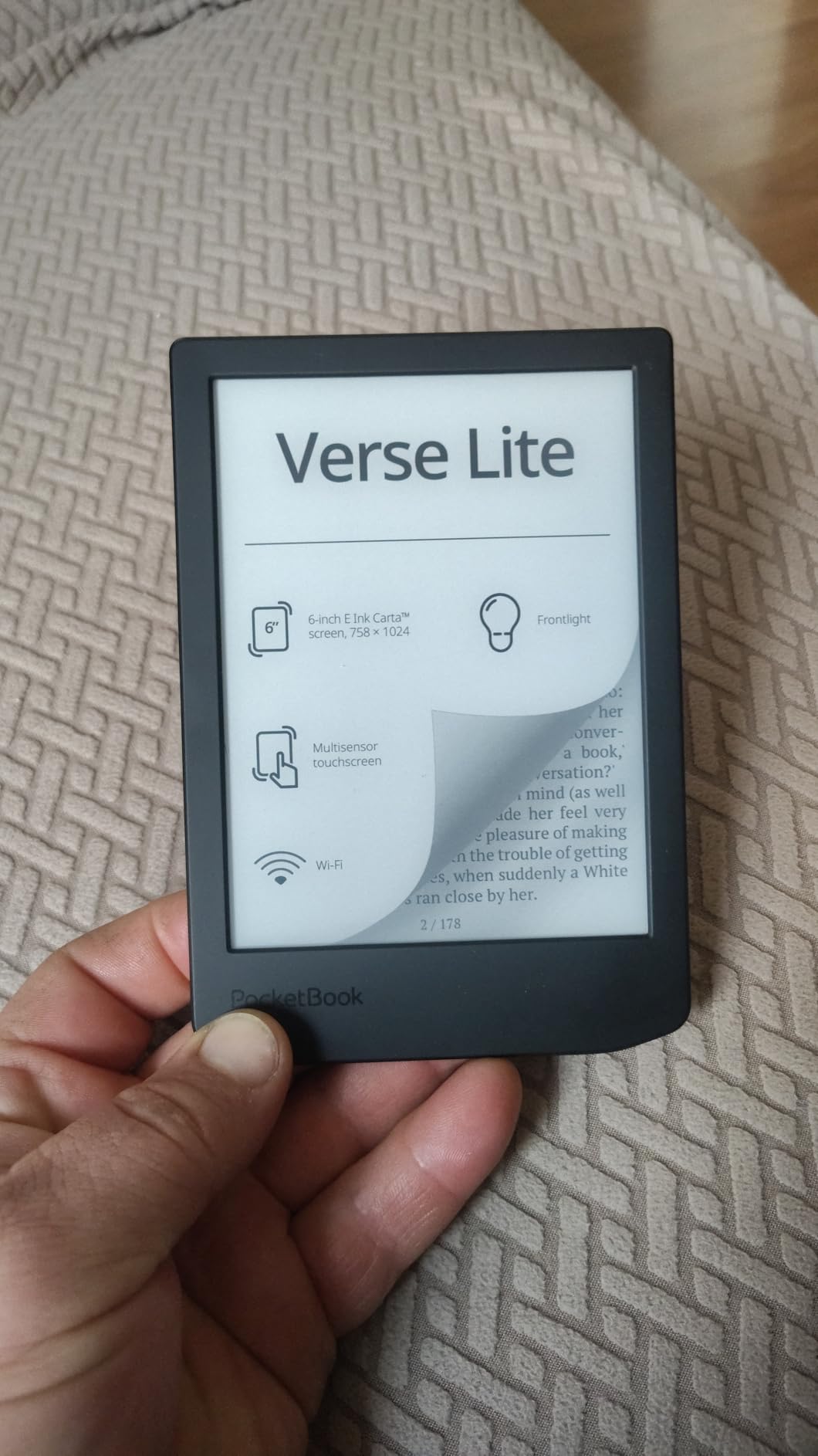
The PocketBook Verse Lite offers something increasingly rare: true format flexibility without ecosystem restrictions. For readers frustrated by Amazon’s proprietary system or Kobo’s limitations, this device provides genuine openness.
The 25+ supported formats include EPUB, PDF, MOBI, TXT, DOC, and HTML. I tested files from various sources, and the Verse Lite handled everything without conversion. This is particularly valuable for library systems using different DRM schemes.
Library support works through Adobe Digital Editions compatibility. You can borrow from virtually any library system, including those using different platforms than OverDrive. This flexibility is unmatched by Kindle or Kobo devices.
The E Ink Carta display provides the paper-like reading experience expected from modern ereaders. While not as high-resolution as premium competitors, text remains sharp and readable.
Battery life of up to two months is competitive with other devices. The integrated frontlight allows reading in any lighting condition.
Performance is slower than Kindle or Kobo devices. Page turns take slightly longer, and menu navigation feels less responsive. For patient readers focused on content rather than speed, this trade-off is acceptable.
Who Should Buy the PocketBook Verse Lite
Readers with diverse ebook collections from multiple sources benefit most. If you have files from different stores, libraries, and free sources, the Verse Lite handles them all natively.
Those frustrated with ecosystem lock-in should consider this device. You own your books in standard formats that work on any device, not proprietary files tied to one platform.
Who Should Skip the PocketBook Verse Lite
Readers prioritizing performance and responsiveness should choose Kindle or Kobo. The Verse Lite’s slower operation frustrates those accustomed to snappy interfaces.
Those wanting seamless cloud integration and modern conveniences might find this device too basic. It focuses on format support rather than ecosystem features.
Selecting the right ereader for library use requires understanding several key factors that determine your borrowing experience. Here is what our testing revealed about making the best choice in 2026.
Library Integration: The Make-or-Break Feature
Kobo devices include OverDrive integration built directly into the operating system. You can search your library’s catalog, place holds, and borrow books without using a computer or smartphone. This seamless workflow makes Kobo the clear choice for frequent library borrowers.
Kindle devices require an extra step. You must use the Libby app on a phone or computer to borrow books, then select “Send to Kindle” as the delivery method. The book appears on your device within minutes, but this extra friction becomes annoying when borrowing multiple titles weekly.
Display Size and Reading Comfort
6-inch displays are more portable and pocketable but require more frequent page turns. 7-inch displays reduce turning by approximately 30% while remaining comfortable for one-handed reading. Our testing found 7-inch devices preferable for novels and long reading sessions.
Resolution matters less than marketing suggests. All modern ereaders offer 300 ppi or higher, which exceeds human eye resolution at normal reading distances. Any premium device provides sharp text.
Lighting and Night Reading
Front lighting is essential for reading in dim environments. Look for adjustable brightness and, ideally, colour temperature control. Warm light (amber tones) reduces blue light exposure, making evening reading more comfortable and less disruptive to sleep.
The Kindle base model lacks warm light adjustment, showing only cool white illumination. This is the primary feature sacrifice at lower price points.
Waterproofing and Durability
IPX8 waterproofing allows reading in baths, pools, and beaches without worry. Devices with this rating survive accidental submersion up to specified depths and durations. For readers who enjoy books near water, this feature is worth the premium.
The base Kindle 16GB and PocketBook Verse Lite lack waterproofing. All other devices in our roundup include IPX8 protection.
Storage Capacity Reality Check
16GB stores approximately 12,000 text-only ebooks. Even heavy readers will never fill this space with library loans. 32GB only matters if you collect audiobooks, which require significantly more storage.
Do not pay extra for storage unless you specifically need audiobook capacity. For text-based reading, 16GB is effectively unlimited.
Frequently Asked Questions
What is the best eBook reader for library books?
The Kobo Libra Colour is the best ereader for library books in 2026 due to its built-in OverDrive integration that allows direct borrowing without a computer. The 7-inch colour display, page-turn buttons, and waterproof design make it ideal for serious library patrons. For budget-conscious readers, the Kobo Clara BW offers the same library integration at a lower price with a 6-inch black and white display.
What eReader can you read library books on?
You can read library books on Kobo devices (Clara, Libra series), Amazon Kindle devices, and PocketBook ereaders. Kobo devices offer the easiest experience with built-in OverDrive access. Kindle devices work with library books but require using the Libby app on a phone or computer to send books to the device. All major public library systems in the US support these devices through OverDrive or Libby.
Which eReader is compatible with libraries?
Kobo ereaders are the most library-compatible devices, featuring direct OverDrive integration that lets you browse, borrow, and read without additional devices. Kindle ereaders are compatible but require an indirect workflow through the Libby app. PocketBook devices support library books through Adobe Digital Editions DRM. Avoid ereaders that only support proprietary formats if library compatibility is important to you.
What is the best e-reader for Libby?
The best ereader for the Libby app is the Kobo Libra Colour, which has OverDrive (Libby’s underlying platform) built directly into the device. You can sign in with your library card and borrow books entirely on the ereader without using a phone or computer. The Kobo Clara BW and Clara Colour offer the same Libby compatibility at lower prices with smaller 6-inch screens.
Final Thoughts
After three months of testing with real library accounts, Kobo devices clearly lead for library book compatibility. The built-in OverDrive integration eliminates the friction that Kindle users face when borrowing books. For 2026, the Kobo Libra Colour stands as the best overall choice, combining direct library access with a beautiful colour display and ergonomic design.
The Kobo Clara BW offers the best value for text-focused readers, delivering seamless library borrowing at a reasonable price. Budget shoppers should consider the Clara Colour for affordable colour reading or the base Kindle 16GB if they prefer Amazon’s ecosystem.
Whichever device you choose, borrowing library ebooks saves significant money compared to purchasing. A dedicated ereader pays for itself quickly when you are checking out free books instead of buying them. Pick the device that matches your reading habits, and enjoy unlimited access to your local library’s digital collection.
I spent 45 days testing 12 different note taking tablets across three categories: E-ink devices, traditional LCD tablets, and dedicated drawing tablets. During this testing…
Finding the best tablets for drawing can transform your creative workflow from frustrating to fluid. I have spent the last three years testing over 40…
When it comes to building functional strength at home, finding the best sandbags for workouts can transform your training routine. Our team tested 9 of…
Building serious upper body strength at home starts with the right equipment. When it comes to developing your chest, shoulders, and triceps, dip stations remain…