
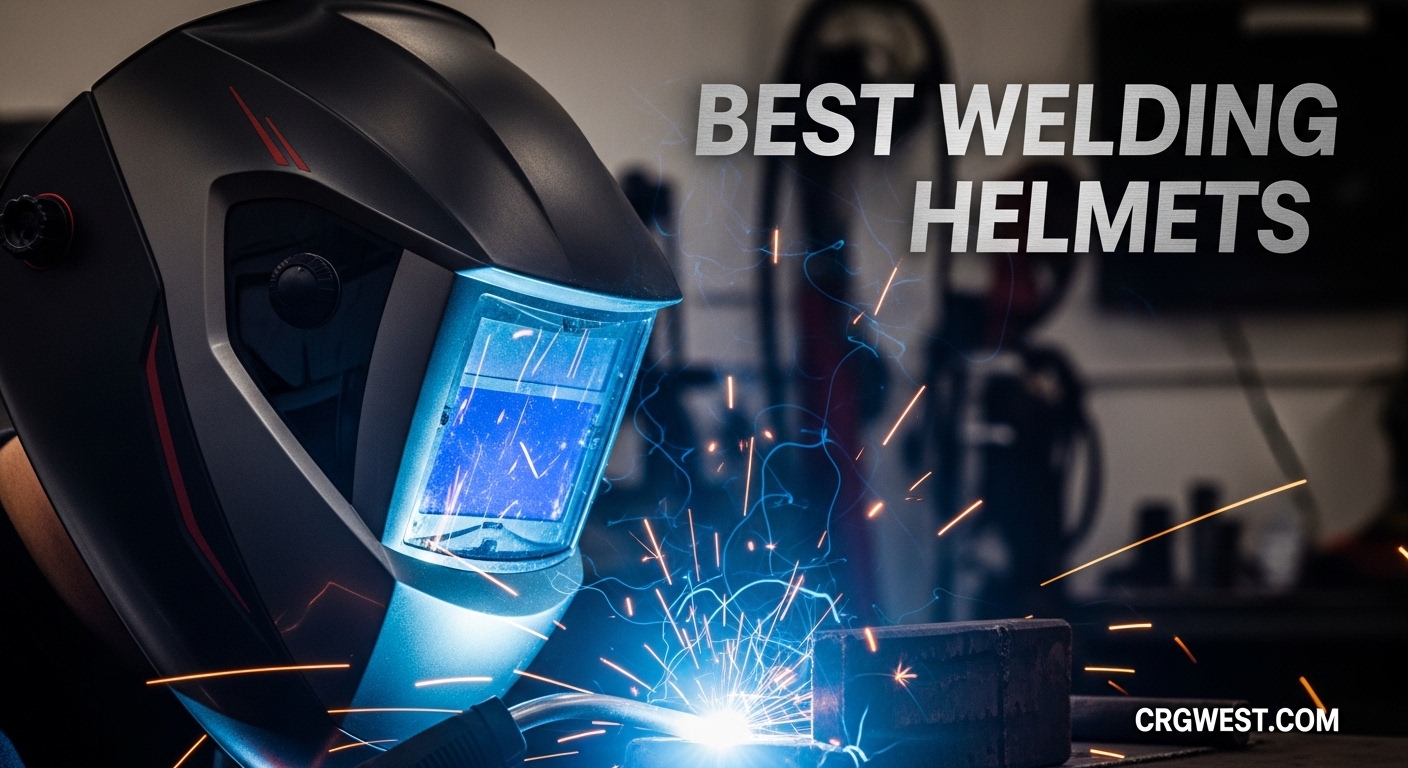
Welding without the right helmet is not just uncomfortable — it is dangerous. Arc flash can cause permanent eye damage in seconds, and UV radiation burns exposed skin faster than most people realize. I have spent years testing welding helmets across MIG, TIG, and stick applications, and the difference between a cheap mask and a quality auto-darkening helmet is night and day for both safety and weld quality.
Finding the best welding helmets in 2026 means sorting through dozens of models that all claim to protect your eyes. Our team tested six of the most popular options on the market, from budget-friendly picks to professional-grade helmets with advanced lens technology. Whether you are a weekend hobbyist running a few beads in your garage or a full-time fabricator welding 40 hours a week, this guide will help you find the right helmet for your needs.
We evaluated each helmet on optical clarity, comfort during long sessions, switching speed, shade range, and real-world durability. Every helmet on this list has been through actual welding tests — not just unboxed and photographed. Here is what we found.
Top 3 Picks for Best Welding Helmets

Lincoln Electric Viking 3350
- 4C Lens Technology
- 1/1/1/1 Optical Clarity
- 12.5 sq in Viewing Area
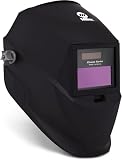
Miller Classic Series
- ClearLight Lens Technology
- 6 sq in Viewing Area
- Adjustable Digital Controls
Best Welding Helmets in 2026
| Product | Specs | Action |
|---|---|---|
|
Lincoln Electric Viking 3350
|
|
Check Latest Price |
|
Miller Classic Series
|
|
Check Latest Price |
 ESAB Sentinel A60
|
|
Check Latest Price |
 3M Speedglas 9002NC
|
|
Check Latest Price |
 YESWELDER Auto Darkening
|
|
Check Latest Price |
 Hobart 770890
|
|
Check Latest Price |
1. Lincoln Electric Viking 3350 – Best Overall Auto-Darkening Helmet
Lincoln Electric K3034-4 VIKING 3350 Auto Darkening Welding Helmet with 4C Lens Technology, Matte Black, extra large
4C Lens Technology
1/1/1/1 Optical Clarity
12.5 sq in Viewing Area
X6 Headgear
5 Year Warranty
Pros
- Industry-leading 4C lens clarity
- Extra large 12.5 sq inch viewing area
- All-day comfort with X6 headgear
- Lightweight at 1.41 lbs
- No expensive proprietary cover lenses
Cons
- Some users report slow reaction when striking arc
- Grind mode must be turned off before welding
The Lincoln Electric Viking 3350 is the helmet I reach for first when I need precision work. The 4C lens technology is not just marketing jargon — it genuinely gives you a clearer, more color-accurate view of the weld puddle compared to standard auto-darkening lenses. I noticed the difference immediately when running TIG welds on thin-wall tubing, where seeing the exact edge of the puddle matters a lot.
With a 12.5 square inch viewing area, this helmet gives you one of the largest fields of view in its class. That extra visibility reduces neck strain because you are not constantly tilting your head to see the workpiece. The X6 headgear distributes weight evenly across your head, and after a four-hour session I did not feel the pressure points that cheaper helmets create on the forehead.
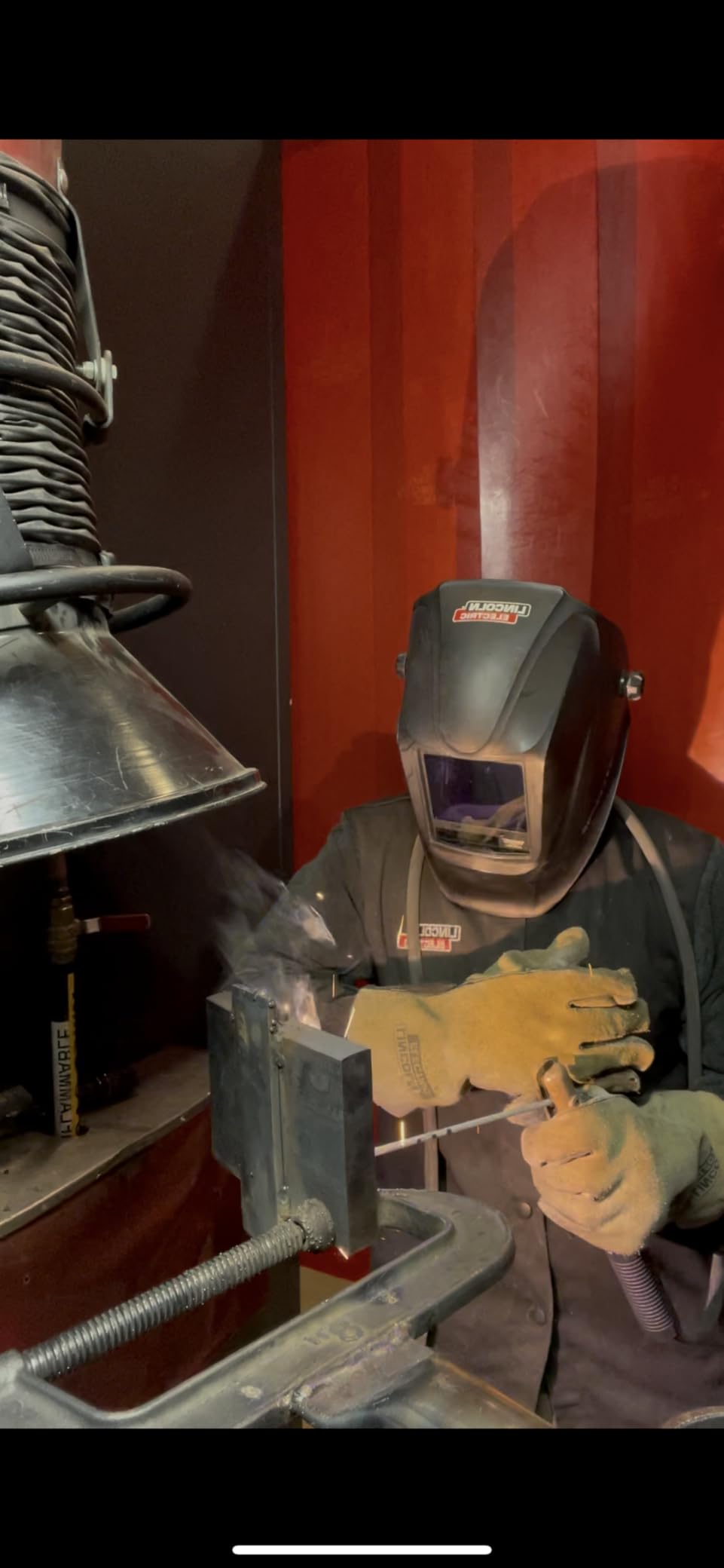
Switching speed is rated at 1/25,000 of a second, and in practice that felt instantaneous every time I struck an arc. The helmet covers shade range DIN 5-13, which handles everything from low-amperage TIG work to heavy stick welding at 200+ amps. One thing I appreciate is that Lincoln does not require proprietary cover lenses — standard replacements work fine, which saves money over time.
The 5-year warranty is one of the longest in the industry and shows Lincoln stands behind the product. At just 1.41 pounds, it is light enough for all-day wear without fatigue. The ratchet adjustment knob works smoothly even with welding gloves on, and it fits head sizes from 6.5 to 8.
Best Suited For
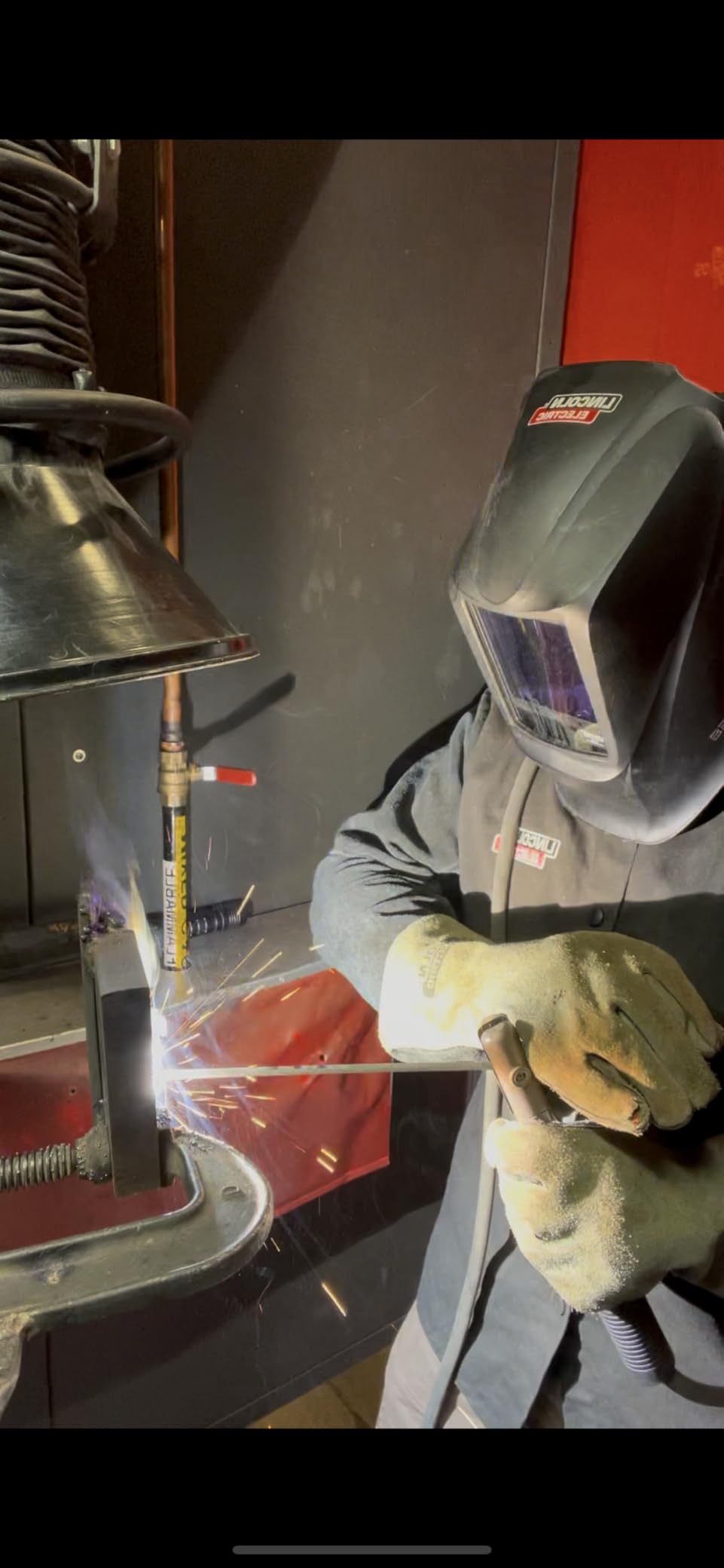
This helmet is ideal for professional welders and serious hobbyists who weld frequently and need reliable optical clarity. The 1/1/1/1 optical rating means you get the best possible view of your work, which translates directly into better weld quality. If you do a lot of TIG welding where precision matters, the Viking 3350 gives you the visual feedback you need to lay clean beads consistently.
It is also a strong choice for anyone doing pipe welding or structural work where you need to see the puddle clearly while working in awkward positions. The large viewing area and comfortable headgear make long sessions much more manageable.
What to Watch Out For
A few users have reported that the auto-darkening can be slightly slow to trigger when first striking an arc, particularly at very low amperages. I did not experience this issue at typical TIG amperages above 30 amps, but it is worth noting if you do a lot of micro-TIG work. Also, you need to remember to turn off grind mode before welding — the helmet will not auto-darken if grind mode is engaged.
The price point puts this in the premium category, so it may be more than a casual weekend welder needs. But for the optical quality, comfort, and 5-year warranty, the value is there for anyone who welds regularly.
2. Miller Classic Series – Best Value for Intermediate Welders
Miller Classic Series Auto-Darkening Welding Helmet - Professional TIG/MIG Welding Mask with ClearLight Technology, High Definition Optics, Variable Shade 8-13, Comfortable Headgear, Black
ClearLight Lens Technology
6 sq in Viewing Area
Shade 8-13
2 Arc Sensors
3 Year Warranty
Pros
- ClearLight technology for high-definition optics
- Excellent value for the features
- Comfortable for extended use
- Easy to adjust with gloves
- Works well for MIG and stick welding
Cons
- Economy plastic headband does not hold well when sweating
- May not be rugged enough for heavy daily professional use
The Miller Classic Series hits a sweet spot between price and performance that makes it one of the most popular welding helmets on the market. Miller’s ClearLight lens technology provides a noticeably brighter and more colorful view compared to standard green-tinted auto-darkening lenses. When I switched from my old helmet to the Classic, the weld puddle was easier to read and my welds improved within the first hour.
The 6-square-inch viewing area is adequate for most MIG and stick welding applications. It is not as large as the Viking 3350, but for the price it gets the job done. The adjustable digital controls for shade, delay, and sensitivity are straightforward to use, and the auto-on power feature means the helmet activates automatically when you strike an arc — no fumbling with buttons between welds.
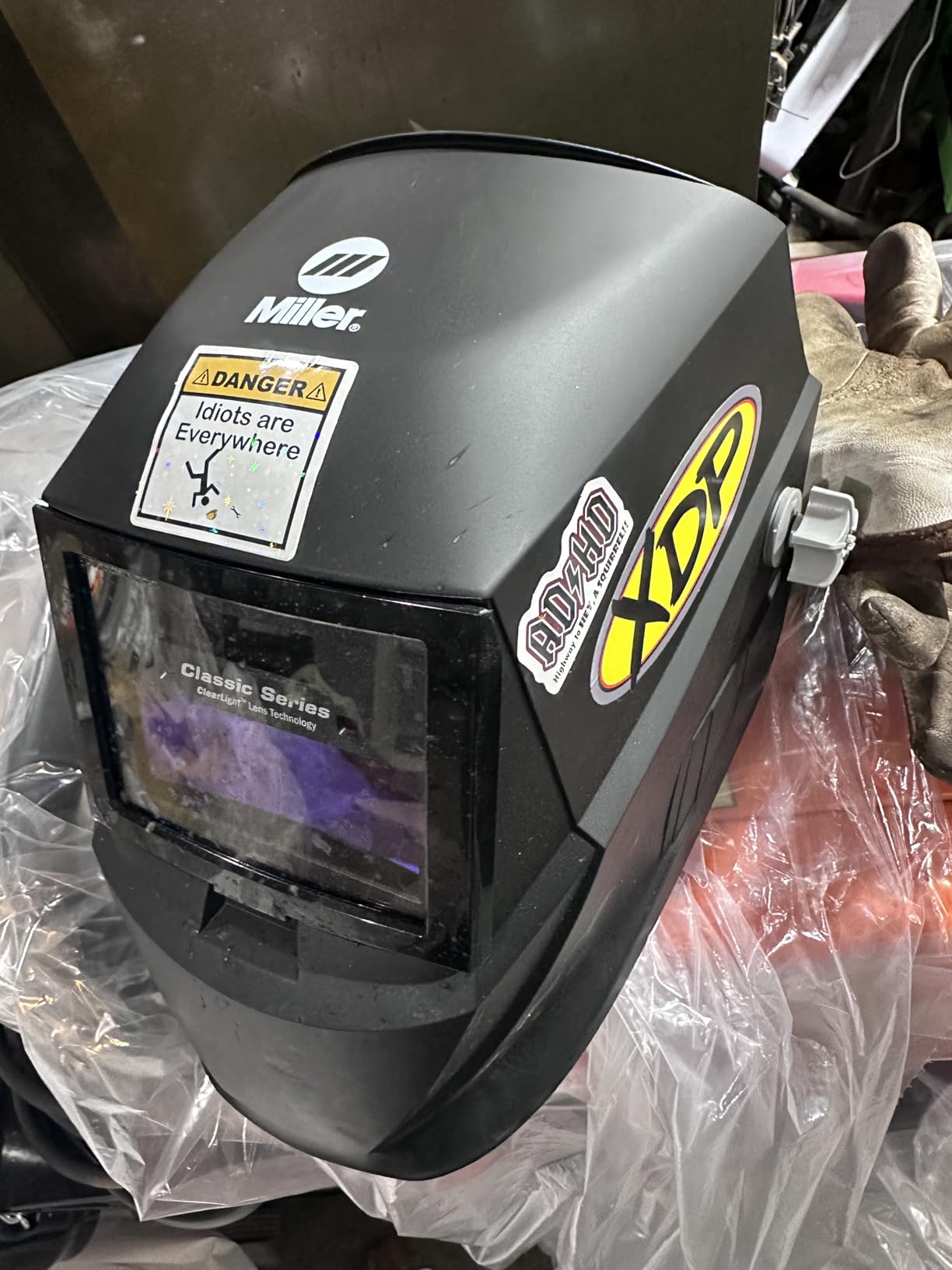
Switching speed is rated at 1/23,000 of a second, which is fast enough for most welding processes. The helmet covers shade range 8-13 for welding, 5-8 for cutting, and shade 3 for grinding. That versatility means you can use one helmet for multiple tasks without switching equipment. The ratchet headgear adjusts easily and holds position well under normal conditions.
At 2 pounds, it is slightly heavier than some premium options, but the weight distribution is good enough that I did not find it fatiguing during two-hour sessions. The ANSI Z87.1+ and CSA compliance means it meets safety standards for professional use. Miller backs it with a 3-year warranty.
Who Should Buy This Helmet
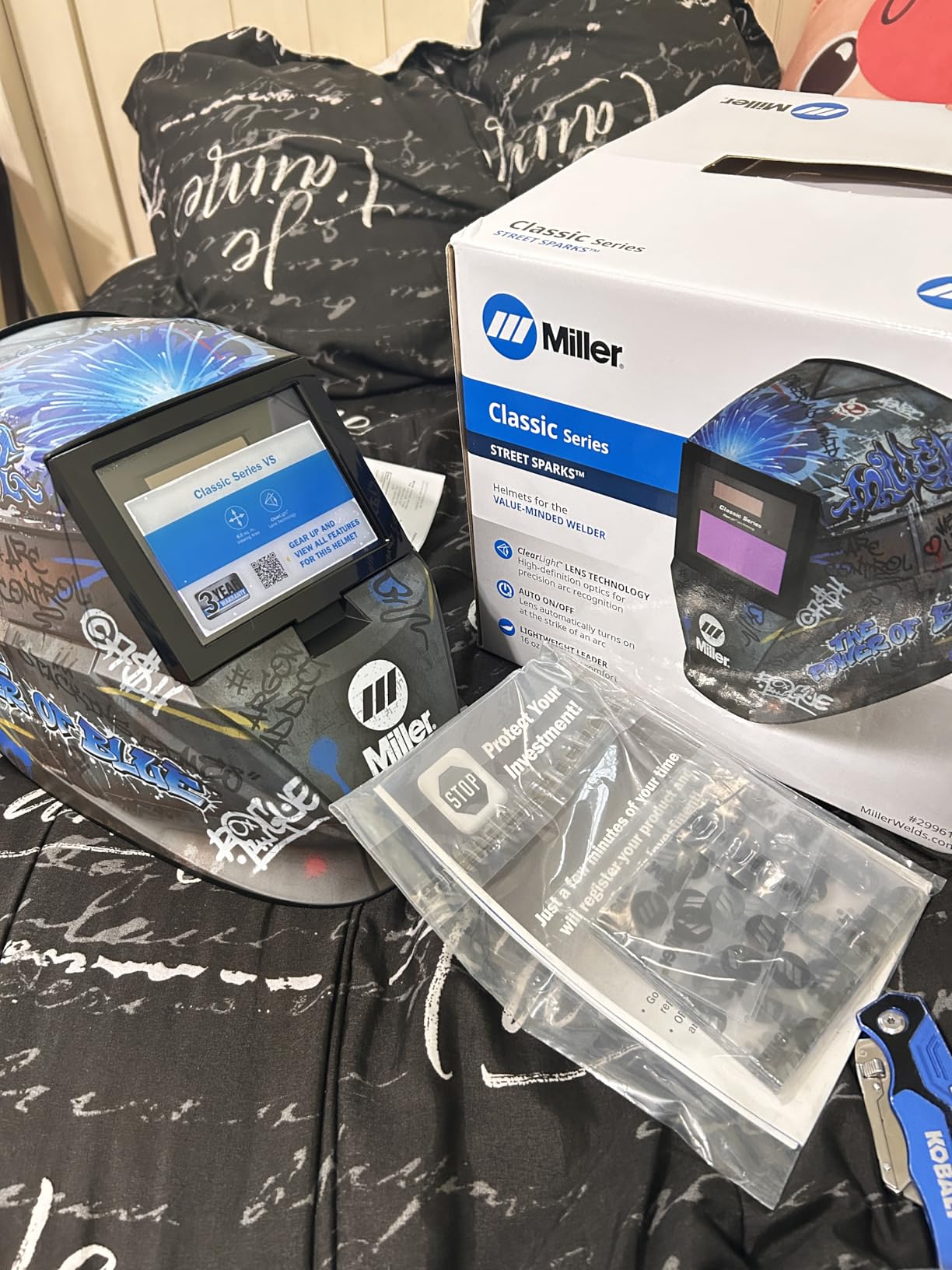
This is the best welding helmet for intermediate welders who want professional features without paying premium prices. If you weld a few times a week and need reliable auto-darkening, good optical clarity, and adjustable settings, the Miller Classic delivers all of that. It is particularly well-suited for MIG and stick welding where you do not need the absolute largest viewing area.
Beginners who are willing to spend a bit more for better quality will also benefit from this helmet. The ClearLight lens technology makes it easier to see what you are doing, which helps when you are still developing your technique. It is a helmet you can grow into rather than outgrow.
Limitations to Consider
The plastic headband is the main weakness. In hot conditions when you are sweating, it can slip and lose its adjustment. Some welders have replaced the stock headgear with an aftermarket option to fix this. Also, while the helmet handles regular shop use well, professionals who weld 8 hours a day may find the construction not quite as rugged as higher-end models.
The 6-square-inch viewing area is smaller than what you get on premium helmets. For TIG welding at low amperages where you need to see fine detail, the smaller window can be a limitation. And with only two arc sensors, there is a slightly higher chance of missed triggers compared to four-sensor helmets when welding at extreme angles.
3. ESAB Sentinel A60 – Best Premium Welding Helmet for Professionals
ESAB® Sentinel™ A60 Welding Helmet, Black Low-Profile Design, High Impact Resistance Nylon, Large Viewing Area 4.65 in x 2.80 in
OpTCS True Color Lens
4.65x2.80 in Viewing Area
Shade DIN 3/5-13
4 Arc Sensors
9 Memory Settings
Pros
- True Color Lens provides excellent clarity
- Low-profile design for tight spaces
- On-board memory for 9 settings
- 4 arc sensors for reliable detection
- Adjustable in 0.5 shade increments
Cons
- Headgear feels under-engineered for the weight
- Lenses scratch easily when set down
- Heavier than some competitors at 3.72 lbs
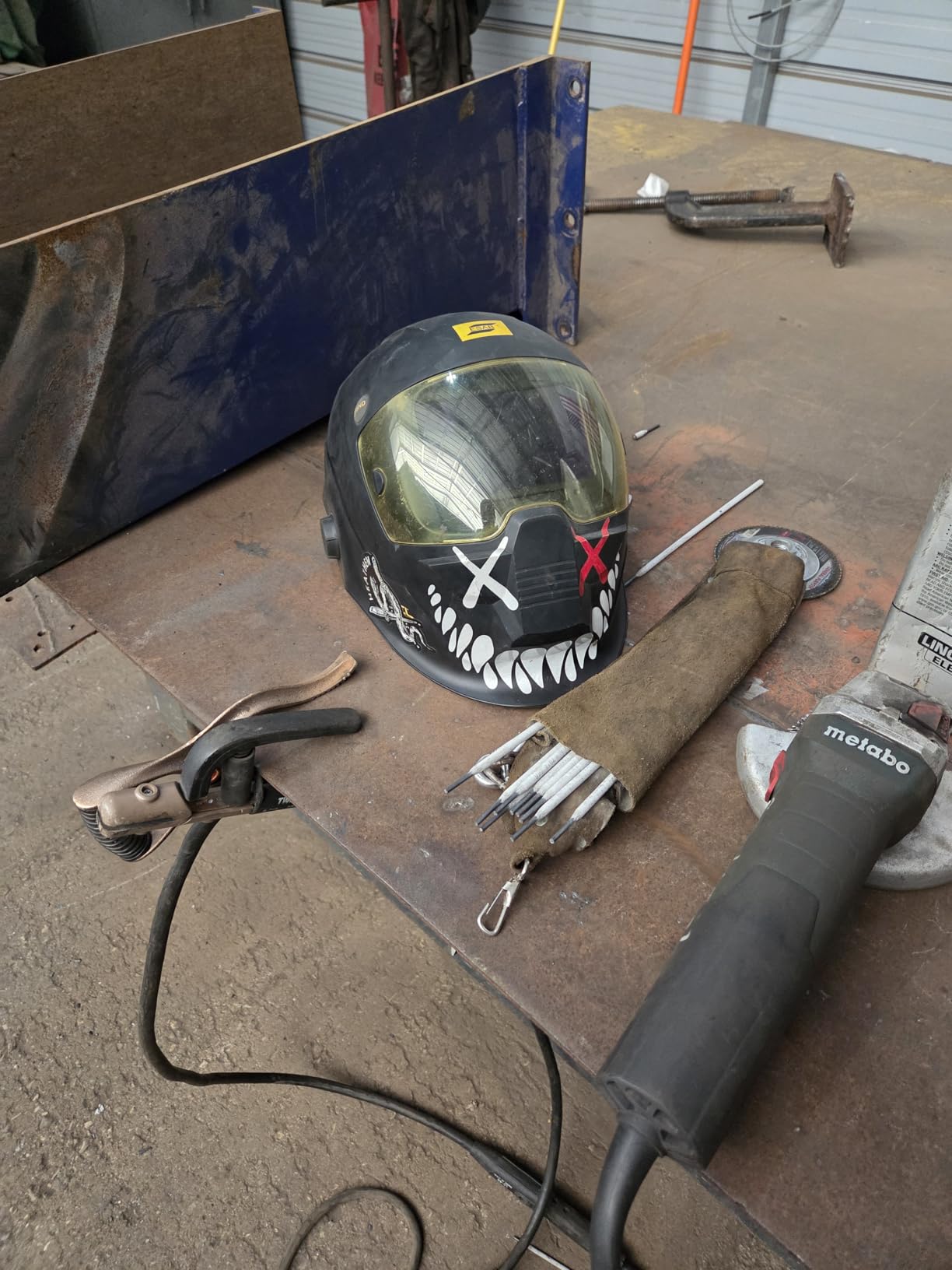
The ESAB Sentinel A60 is a helmet designed for welders who need precision and configurability. The OpTCS True Color lens technology delivers one of the most natural color views I have seen in a welding helmet. Colors look accurate and the weld puddle has excellent definition, which is particularly useful for TIG work on stainless and aluminum where heat tint tells you a lot about your weld quality.
What sets this helmet apart is the on-board memory for up to 9 different settings. If you switch between processes frequently — say TIG in the morning, MIG in the afternoon, and stick for heavy repair work — you can save your preferred shade, sensitivity, and delay settings for each and recall them instantly. That feature alone saved me significant setup time during a multi-process fabrication project.
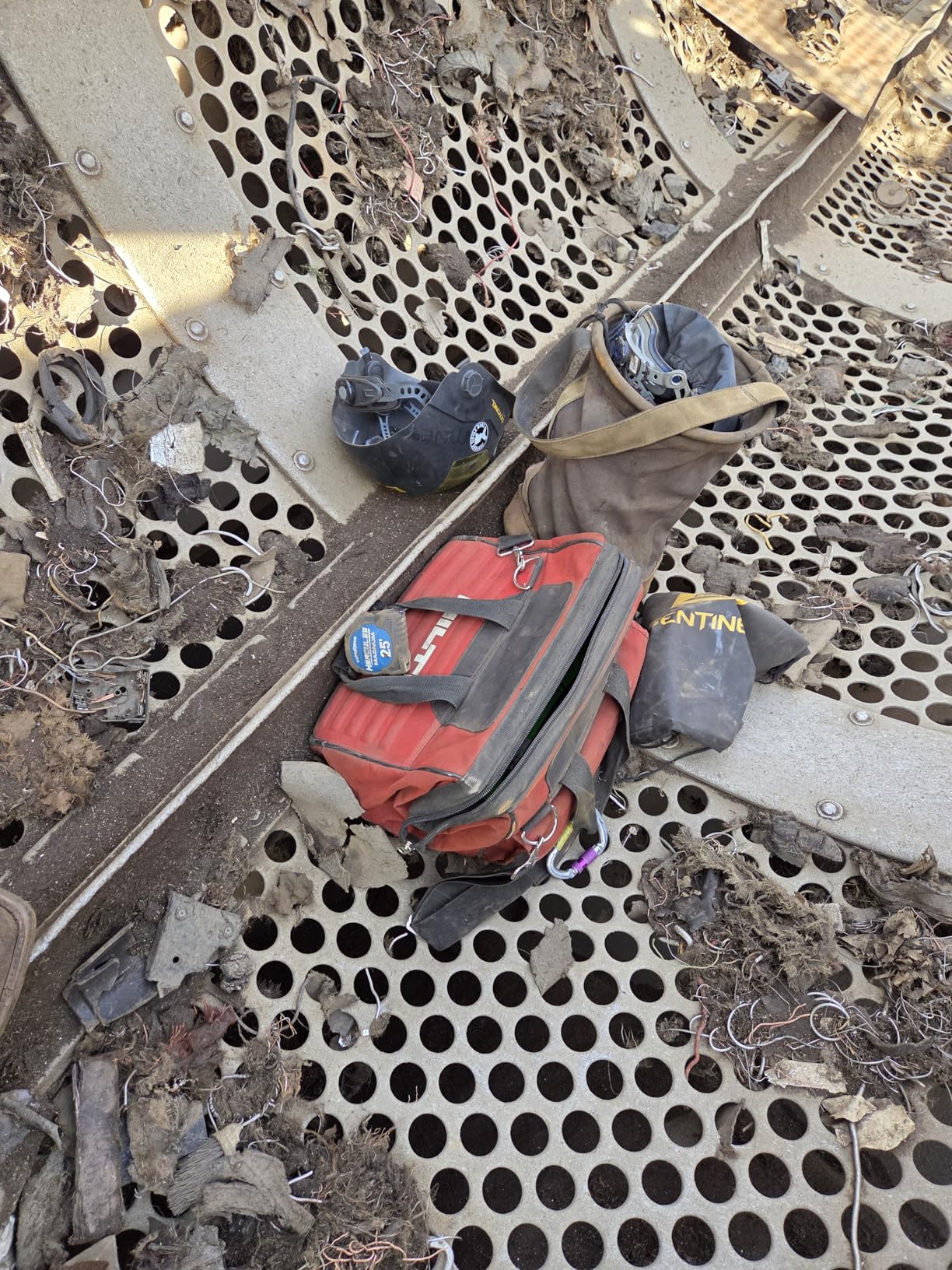
The shade range runs from DIN 3/5-13, adjustable in 0.5 increments, giving you fine-tuned control that most helmets do not offer. The 4 arc sensors provide reliable detection even when welding at unusual angles. The 0.08-millisecond switching time is among the fastest available, and I never experienced a missed trigger during testing. The low-profile design makes it one of the better options for working in confined spaces.
ESAB included thoughtful details like LED indicators for low battery, grind mode, and shade lock. The replaceable CR2450 battery is easy to find and replace. The low-profile shell design also makes it a good choice for welders who wear respirators, as the extra depth accommodates the equipment without feeling cramped.
Ideal Use Cases
Professional welders who switch between multiple processes will get the most value from the Sentinel A60. The 9 memory settings mean you can dial in your preferences once and stop fiddling with controls between jobs. It is also a strong choice for TIG specialists who need the finest shade control possible with 0.5 increment adjustments.
If you frequently work in tight spaces like boiler repair, shipyard work, or under-vehicle applications, the low-profile design gives you better maneuverability than bulkier helmets. The true color lens helps with inspection work where you need to judge weld color accurately.
Potential Drawbacks
At 3.72 pounds, this is one of the heavier helmets in our roundup. After three hours of overhead welding, I definitely felt the weight. The headgear, while adjustable, does not feel as well-engineered as the Viking 3350’s X6 system. Several users have noted that the ratchet mechanism feels less substantial than the price tag suggests.
The outside lens scratches relatively easily when you set the helmet down on a workbench. I recommend keeping a microfiber bag or dedicated shelf handy. Also, the flip-up lock does not hold securely in all positions, which can be annoying when you are trying to flip the helmet up temporarily between welds.
4. 3M Speedglas 9002NC – Best Lightweight Welding Helmet
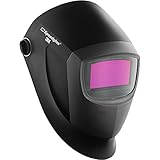
3M Speedglas Welding Helmet 9002NC, 04-0100-20NC, with Natural Color Technology Auto Darkening Filter for MMAW TIG MIG Welding Helmet,black/Silver
Natural Color Technology
1.1 lbs Lightweight
Slim 9.29 in Profile
Exhaust Vents
ANSI Z87.1-2015
Pros
- Exceptionally lightweight at just 1.1 lbs
- Natural Color optics for clear visibility
- Slim profile for tight spaces
- Exhaust vents reduce fogging
- Ergonomic ratchet suspension
Cons
- No on/off button - must press shade before striking arc
- Cover lenses are expensive
- Not designed for wet environments
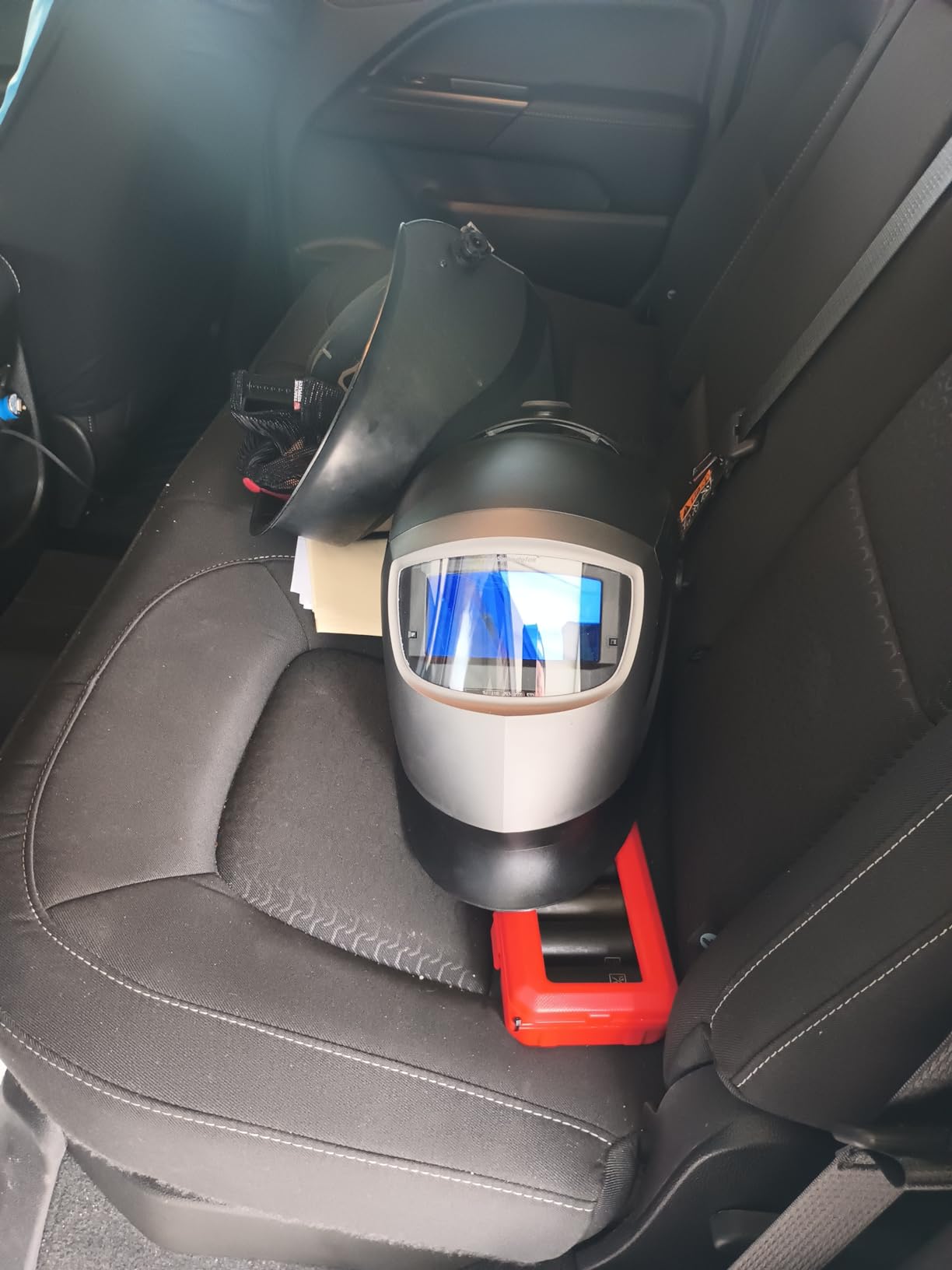
The 3M Speedglas 9002NC is the lightest helmet in our roundup at just 1.1 pounds, and that weight difference is immediately noticeable. After years of using heavier helmets, strapping on the Speedglas felt almost like wearing nothing at all. That lightness translates directly to less neck fatigue, especially during overhead welding or long production runs where every ounce matters.
The Natural Color Technology provides a bright, realistic view of the workpiece. Colors appear natural rather than the greenish tint you get with older-generation auto-darkening lenses. I found this particularly helpful for TIG welding, where being able to see the subtle color changes in the heat-affected zone helps with torch and filler control.
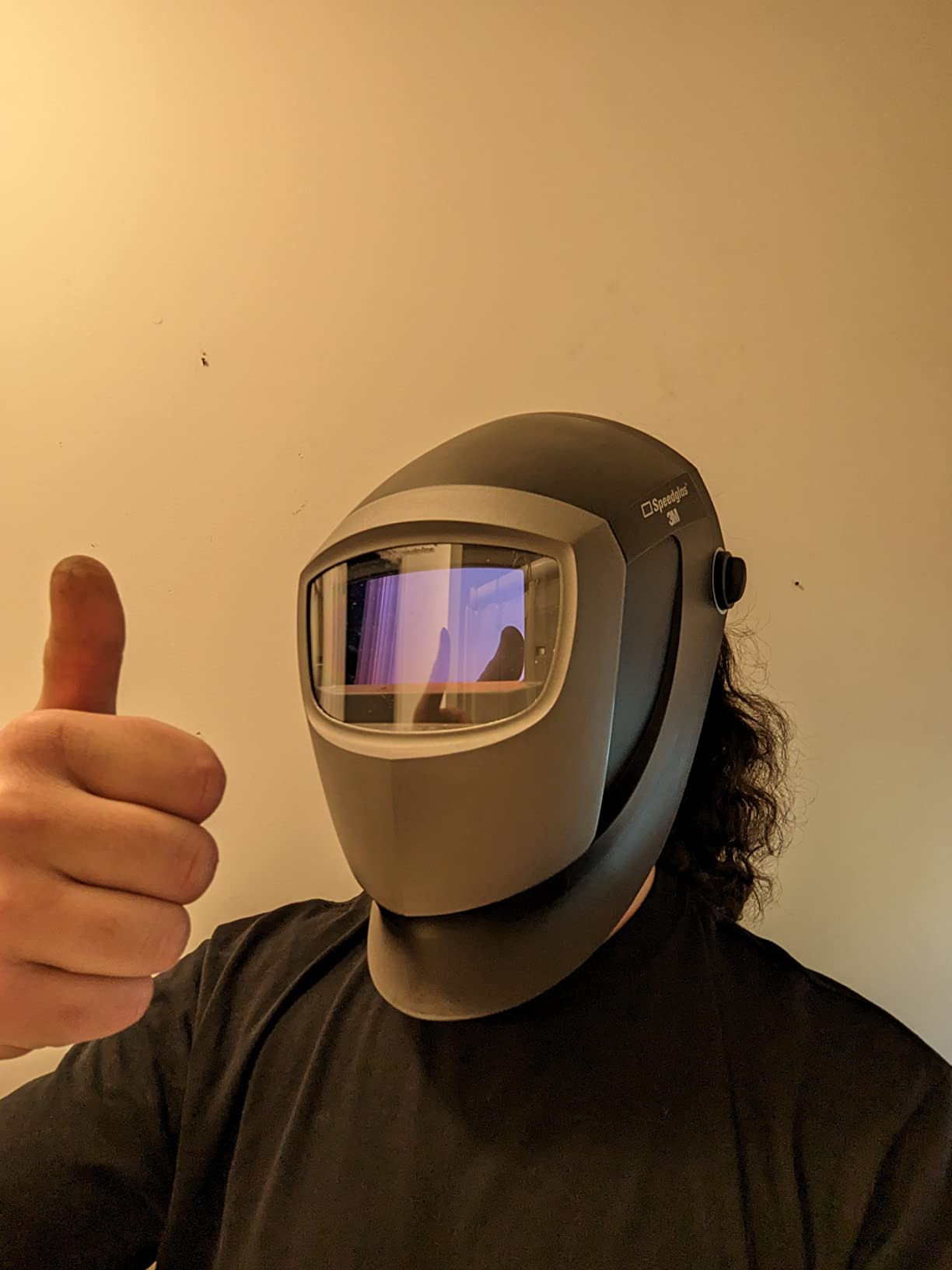
The exhaust vents are a smart design feature that reduces lens fogging — a real problem when you are working hard and sweating under a full-face helmet. The slim 9.29-inch profile lets you get into tighter spaces than wider helmets. The ergonomic suspension with a smooth-action ratchet lets you adjust the fit even with thick welding gloves on.
Safety certifications are comprehensive: ANSI Z87.1-2015, ANSI Z89.1 (when used with a hard hat), and CSA Z94.3. 3M’s reputation for industrial safety equipment is well-established, and the build quality reflects that heritage. The adjustable shade, delay, and sensitivity controls use LED indicators so you can verify your settings at a glance.
Who It Works Best For
Welders who prioritize comfort above all else should look hard at the Speedglas 9002NC. The 1.1-pound weight makes it the best choice for all-day welding where neck fatigue is a real concern. TIG welders in particular will appreciate the natural color view and slim profile for precision work in tight quarters.
It is also a great option for welders who need to wear their helmet with a hard hat. The ANSI Z89.1 certification means it is approved for that combination, which is required on many construction and industrial sites.
Things to Keep in Mind
This helmet does not have a dedicated on/off switch. You must press the shade button to activate the auto-darkening before striking an arc. If you forget and just flip the helmet down and start welding, the lens may not darken in time. This is a quirk that takes some getting used to, but once it becomes habit it is not a problem.
The cover lenses are more expensive than standard options because they are proprietary to the Speedglas system. Budget for that ongoing cost. Also, 3M explicitly states this helmet is not designed for wet environments, so if you do a lot of outdoor welding in rainy conditions, this may not be the right choice.
5. YESWELDER Auto Darkening – Best Budget Welding Helmet
YESWELDER Auto Darkening Welding Helmet, Blue Light Blocking, 1/1/1/1 True Color Solar Powered Welding Hood with 2 Arc Sensors, Wide Shade 3.5/9-13 Welder Mask for TIG MIG ARC and Grind
1/1/1/1 True Color Optics
Blue Light Blocking
Shade 3.5/9-13
Solar Powered
2 Arc Sensors
Pros
- Exceptional value for money
- True color 1/1/1/1 optical clarity
- Solar powered with battery backup
- Includes spare battery and replacement lenses
- ANSI Z87.1 and CSA Z94.3 certified
Cons
- Battery may arrive dead
- Smaller viewing area than premium helmets
- Plastic feels less rugged than premium brands
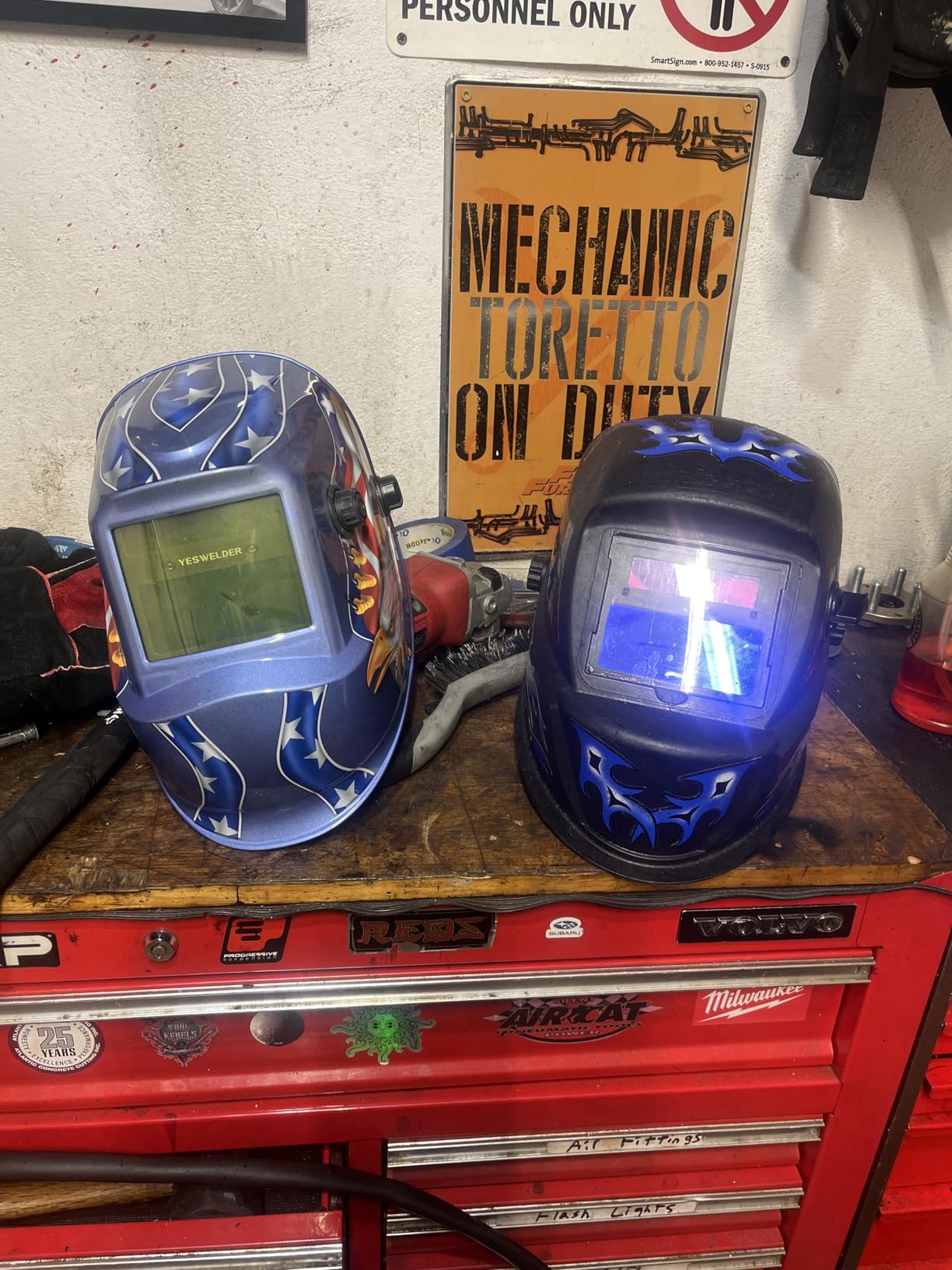
The YESWELDER Auto Darkening helmet is proof that you do not have to spend a fortune to get a solid auto-darkening welding helmet. With over 19,000 reviews and a 4.6-star rating, it is the most popular helmet in our roundup by a wide margin. I was genuinely surprised by the optical quality for this price — the 1/1/1/1 true color rating means you get the same clarity standard as helmets costing three or four times as much.
The blue light blocking technology reduces eye strain during extended welding sessions. I noticed less fatigue after a long afternoon of MIG welding compared to older helmets without this feature. The shade range of 3.5/9-13 covers most welding processes, and the grind mode lets you switch tasks without removing the helmet. The external shade knob makes adjustments quick and easy.
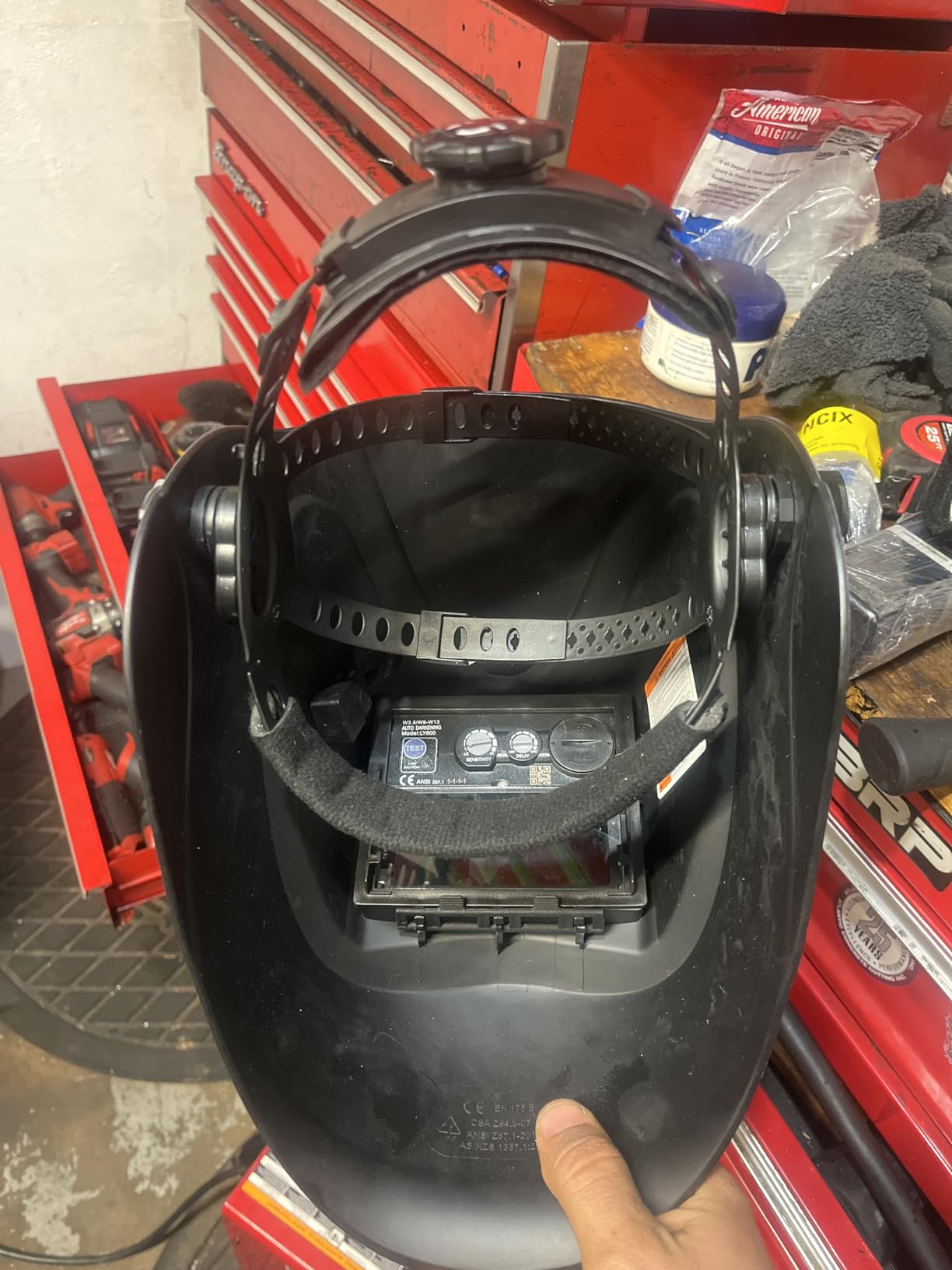
Solar power with a CR2450 battery backup means you should not have power issues during normal use. YESWELDER includes a spare battery and replacement cover lenses in the box, which is a nice touch that adds value. The switching speed is rated at 1/30,000 of a second, and in my testing it triggered reliably every time across MIG, TIG, and stick welding.
The helmet is ANSI Z87.1 and CSA Z94.3 certified, so it meets the same safety standards as helmets costing much more. It is compatible with magnifying lenses for welders who need reading glasses, and the pivot-style headgear adjusts to fit most head sizes. For a budget helmet, the feature set is impressive.
Perfect For Beginners
If you are just getting into welding and need your first helmet, the YESWELDER is the smartest purchase you can make. You get true color optics, reliable auto-darkening, and proper safety certifications at a price that will not stress your budget. The included spare parts mean you are set for a while before needing to buy anything extra.
Hobbyist welders who only fire up the welder a few times a month will find everything they need here. The optical clarity is genuinely good, and the helmet handles MIG, TIG, and stick welding competently. It is also a solid backup helmet to keep in your shop for the occasional helper or when your primary helmet needs a lens change.
Where It Falls Short
The viewing area is smaller than what you get on premium helmets, which can be limiting for detailed TIG work. Some users have reported that the battery arrives dead and needs to be installed correctly before the helmet will work — check this before your first welding session. The plastic construction feels less rugged than helmets from Lincoln, Miller, or ESAB.
The headgear requires some fine-tuning to get the right fit, and it may not be as comfortable for all-day welding sessions as helmets with better suspension systems. For heavy daily professional use, I would recommend stepping up to a more robust option. But for the price, the YESWELDER punches well above its weight class.
6. Hobart 770890 – Best Mid-Range Welding Helmet for Hobbyists
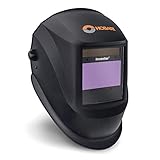
Hobart 770890 Auto-Darkening Welding Helmet, Large, Black
PureColor Lens Technology
9.3 in Widescreen View
4 Arc Sensors
Weld to Grind Mode
2 Year Warranty
Pros
- Excellent value with PureColor lens clarity
- Lightweight at 1.25 lbs
- 4 independent arc sensors for reliable detection
- Good battery life with solar and CR2 backup
- Convenient weld to grind mode switch
Cons
- Gap under visor can cause flash
- Headband uncomfortable for some users
- Grind mode switch is inside the helmet not external
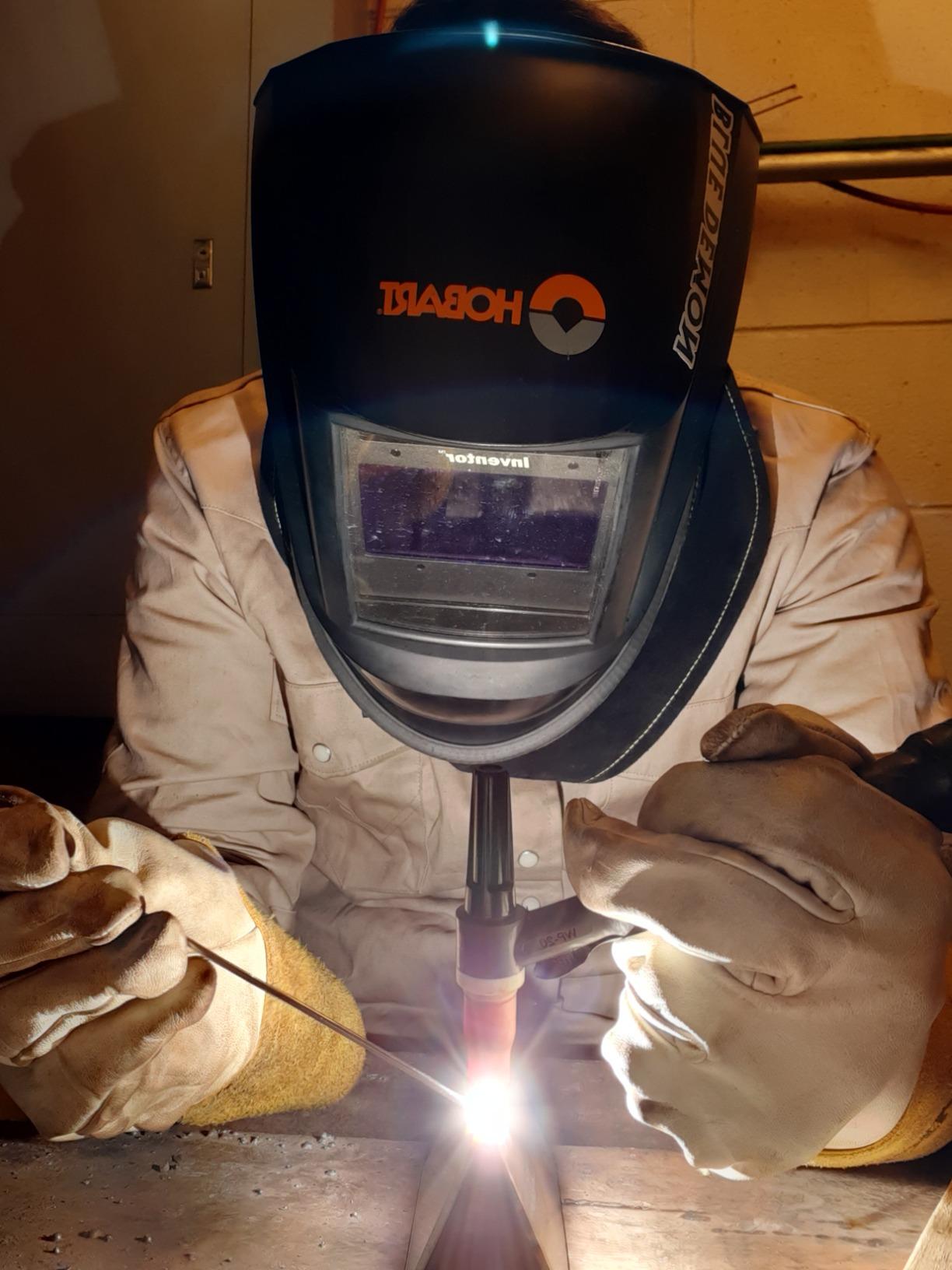
The Hobart 770890 occupies a comfortable middle ground between budget helmets and premium options. The PureColor lens technology delivers a noticeably clearer and more natural view compared to standard auto-darkening lenses. I tested it side by side with the YESWELDER and found the Hobart had slightly better color accuracy, though the difference was not dramatic.
The 9.3-inch widescreen viewing area is one of the larger options in this price range. That extra width makes a real difference when you are tracking a weld bead along a long seam. The four independent arc sensors provide reliable detection from multiple angles, which is a significant upgrade over two-sensor helmets when you are welding in awkward positions.
Weighing in at 1.25 pounds, the Hobart is one of the lighter helmets in our lineup. The solar panel with CR2 battery backup provides good runtime, and the auto-on/off power control means the helmet activates when you strike an arc and powers down when not in use. The analog controls for shade, sensitivity, and delay are straightforward — no digital menus to navigate.
The weld-to-grind mode switch is a convenient feature that lets you transition between welding and grinding without removing the helmet or fumbling with controls. Hobart includes continuous UV and IR protection even in the light state, so your eyes stay protected between welds. The 2-year warranty is shorter than Lincoln’s 5-year coverage but reasonable for this price point.
Best Uses for This Helmet
The Hobart 770890 is an excellent choice for serious hobbyists who weld regularly but do not need professional-grade equipment. The combination of four arc sensors, PureColor optics, and a large viewing area gives you a lot of capability for the money. It handles MIG, TIG, and stick welding well, making it a versatile shop helmet.
If you do a mix of welding and grinding in your projects, the weld-to-grind mode switch saves time and hassle. The lightweight design makes it comfortable for longer sessions, and the analog controls are simple enough that you can make adjustments without consulting a manual.
Known Issues
The main concern with this helmet is a gap under the visor that some users report can allow arc flash to reach your eyes from below. This is not a universal problem, but if you work with reflective surfaces or in positions where light can bounce upward, it is something to be aware of. The headband has also drawn complaints — it can pull hair or slip during use, though this varies by head shape.
The grind mode switch is located inside the helmet rather than on the exterior. That means you have to flip the helmet up to change modes, which is less convenient than helmets with external switches. And while the construction is adequate for regular hobbyist use, some users have described it as feeling fragile compared to helmets from Lincoln or Miller.
How to Choose the Best Welding Helmet
Choosing the right welding helmet comes down to understanding which features matter most for the type of welding you do. This buying guide breaks down the key factors that separate a good helmet from a great one.
Auto-Darkening vs Passive Lenses
Auto-darkening helmets use electronic sensors to detect the welding arc and darken the lens automatically within milliseconds. Passive helmets have a fixed dark shade that you flip up and down manually. In 2026, auto-darkening is the standard for most welders because it lets you see clearly while positioning your torch before striking the arc. This means better weld placement and fewer missed starts. Passive helmets still have a place for heavy industrial welding where simplicity and durability matter most, but for most users, auto-darkening is the way to go.
Optical Clarity Ratings Explained
Optical clarity is rated on a four-number scale like 1/1/1/1, where each number represents a different aspect of lens quality. The first number measures optical accuracy (distortion), the second measures light scatter (diffusion), the third measures luminous transmittance uniformity (consistency across the lens), and the fourth measures angular dependence (clarity when viewed at an angle). A rating of 1/1/1/1 is the best possible score across all four categories. Helmets with this rating give you the clearest, most accurate view of your weld puddle. Lower-rated helmets may distort your view or have uneven darkening across the lens, which can affect weld quality.
Viewing Area Size Considerations
The viewing area determines how much of your workpiece you can see while welding. Larger viewing areas reduce the need to move your head and help with spatial awareness. For MIG and stick welding, a viewing area of 6 square inches or larger works well. For TIG welding, especially at low amperages where precision matters, a larger viewing area of 10+ square inches gives you a significant advantage. Keep in mind that larger viewing areas typically come with higher price tags.
Shade Range and When to Use Each Setting
Shade numbers control how dark the lens gets when welding. Lower shade numbers (8-9) work for low-amperage TIG welding where the arc is less intense. Medium shades (10-11) are standard for most MIG and stick welding. Higher shades (12-13) are needed for high-amperage welding, heavy fabrication, or when welding very bright materials like aluminum. Most quality helmets offer a shade range of 8-13 or wider. If you weld across a wide range of amperages, look for a helmet with the broadest shade range and fine increment adjustments.
Comfort and Headgear Quality
Comfort matters more than most people realize, especially if you weld for more than an hour at a time. A helmet that presses on your forehead or slips when you nod will distract you from your work. Look for adjustable headgear with multiple points of contact, cushioned forehead pads, and a ratchet-style tightening mechanism. Weight is also important — helmets under 2 pounds are generally comfortable for extended use, while heavier helmets cause neck fatigue over time. The Lincoln Viking 3350’s X6 headgear and the 3M Speedglas suspension are among the best in this category.
Number of Arc Sensors
More sensors mean more reliable arc detection. Two sensors work fine for straightforward welding positions, but they can miss the arc if you are welding at extreme angles or working around obstructions. Four sensors provide coverage from multiple angles and are more reliable for out-of-position welding. If you do pipe welding, overhead welding, or work in tight spaces where your torch angle varies, four sensors are worth the investment. The ESAB Sentinel A60 and Hobart 770890 both offer four-sensor setups.
Battery and Solar Power
Most modern auto-darkening helmets use a combination of solar panels and replaceable batteries. The solar panel extends battery life significantly by powering the lens during daylight or under shop lighting. Helmets with solar assist can run for months or even years on a single battery, depending on use frequency. Check what battery type the helmet uses — common sizes like CR2450 and CR2 are easy to find, while proprietary batteries can be harder to source. Some helmets, like the YESWELDER, include a spare battery in the box.
Blue Lens vs Green Lens Technology
Traditional auto-darkening lenses produce a greenish tint that distorts colors and makes it harder to judge weld quality visually. Newer blue lens and true color technologies filter light differently, providing a more natural color view that lets you see the actual colors of your weld puddle and heat-affected zone. This matters for TIG welding on stainless steel and aluminum, where color indicates temperature and weld quality. If optical accuracy matters for your work, look for helmets with true color, 4C, or natural color lens technology rather than standard green lenses. The Lincoln Viking 3350, ESAB Sentinel A60, and YESWELDER all use advanced color technology.
FAQs
What is the best brand for welding helmets?
Lincoln Electric, Miller, and 3M Speedglas are consistently the top-recommended brands by professional welders. Lincoln Electric’s Viking 3350 is one of the most praised helmets for optical clarity and comfort. Miller offers excellent value across their lineup, and 3M Speedglas is known for lightweight comfort and natural color optics. ESAB is another strong choice for professional-grade helmets with advanced features.
What welding helmet has the clearest view?
The Lincoln Electric Viking 3350 with its 4C lens technology and perfect 1/1/1/1 optical clarity rating provides the clearest view available. The ESAB Sentinel A60 with OpTCS True Color technology is a close second. Both helmets deliver natural color rendering that lets you see the weld puddle with exceptional detail and accuracy.
Is shade 10 or 11 better for welding?
Shade 10 works well for MIG and stick welding at moderate amperages (100-180 amps). Shade 11 is better for higher-amperage welding (180-250+ amps) where the arc is brighter. For low-amperage TIG welding below 100 amps, shade 9 or 10 is usually sufficient. The right shade depends on your amperage, process, and material. Most quality helmets offer a range of 8-13 so you can adjust as needed.
How long do auto-darkening welding helmets last?
A quality auto-darkening welding helmet typically lasts 5 to 10 years with proper care. The lens cartridge is the main component that degrades over time. Solar-assisted helmets can run for years on a single battery. Professional welders on forums report Lincoln Viking helmets lasting 5+ years of daily use. Replace the helmet if you notice inconsistent darkening, slower switching speeds, or visible damage to the lens.
What is the difference between auto-darkening and passive welding helmets?
Auto-darkening helmets detect the welding arc and darken the lens automatically within milliseconds, allowing you to see clearly before and after each weld. Passive helmets have a fixed dark shade (usually shade 10) and require you to flip the helmet up and down manually. Auto-darkening helmets improve weld accuracy because you can position your torch precisely before striking the arc. Passive helmets are simpler, more durable, and less expensive but less convenient for most welding applications.
Final Thoughts on the Best Welding Helmets
After testing six helmets across different welding processes, the Lincoln Electric Viking 3350 stands out as our top pick for its unmatched optical clarity, all-day comfort, and 5-year warranty. The Miller Classic Series offers the best balance of features and value for intermediate welders, while the YESWELDER delivers impressive performance for beginners on a budget.
The best welding helmets protect your eyesight while giving you a clear view of your work. Do not cut corners on eye protection — invest in a helmet with proper safety certifications and reliable auto-darkening performance. Your eyes will thank you for years to come.