15 Best Dog Grooming Dryers (June 2026) Tested & Ranked
I still remember the first time I tried drying my Golden Retriever after a bath with a regular human hair dryer. Forty-five minutes in, my…

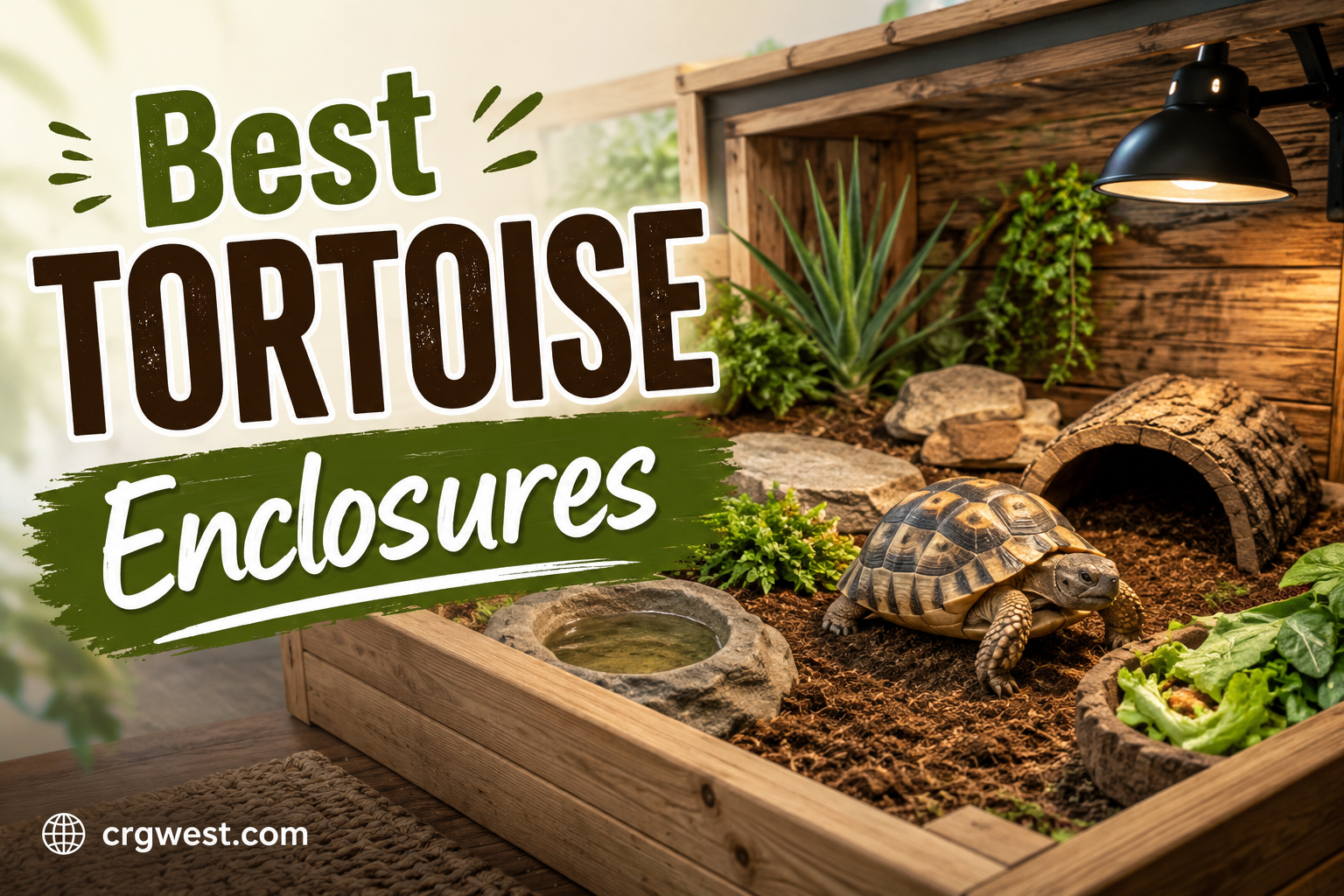
Tortoises can live 80 to 150 years, which means the enclosure you pick today needs to hold up for decades. Our team spent weeks comparing wooden tortoise houses, ECOFLEX reptile habitats, and outdoor cages to find the options that actually stand the test of time. Whether you are housing a hatchling Russian tortoise or a growing Sulcata, getting the habitat right from day one saves you money and keeps your pet healthy.
The best tortoise enclosures balance three things: enough floor space for walking and burrowing, solid ventilation for fresh air, and a design that holds heat and UVB lighting where your tortoise needs it. After comparing 13 of the most popular models on the market in 2026, we found clear winners for indoor use, outdoor setups, and budget shoppers. We also spotted a few models you should think twice about before buying.
In this guide we walk through each enclosure in plain terms, cover what to look for by tortoise species, and answer the questions tortoise owners ask most. If you want a quick answer, the New Age Pet ECOFLEX 48 inch habitat took our top spot for build quality and warranty, while the Aivituvin Wooden Tortoise House remains the best value pick for first-time owners.
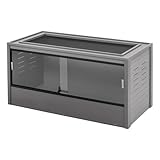


48.03 x 24.02 x 22.8 inches
ECOFLEX composite
10-year warranty
Sliding glass doors with lock
I have used the New Age Pet ECOFLEX 48 inch habitat for over a year with my Russian tortoise, and the biggest thing that stood out is how the ECOFLEX composite material holds up compared to plain wood. There is no swelling, no warping, and no weird smell after the first day. The sliding glass doors lock securely and give a clean wide view of the entire enclosure.
The vented side panels and large mesh screen top create real airflow, which matters more than most people realize for keeping the temperature gradient stable. My basking side stays around 95 degrees while the cool end hovers near 75 degrees, even on warmer afternoons. Assembly took me about 25 minutes with the included hardware and clear instructions.
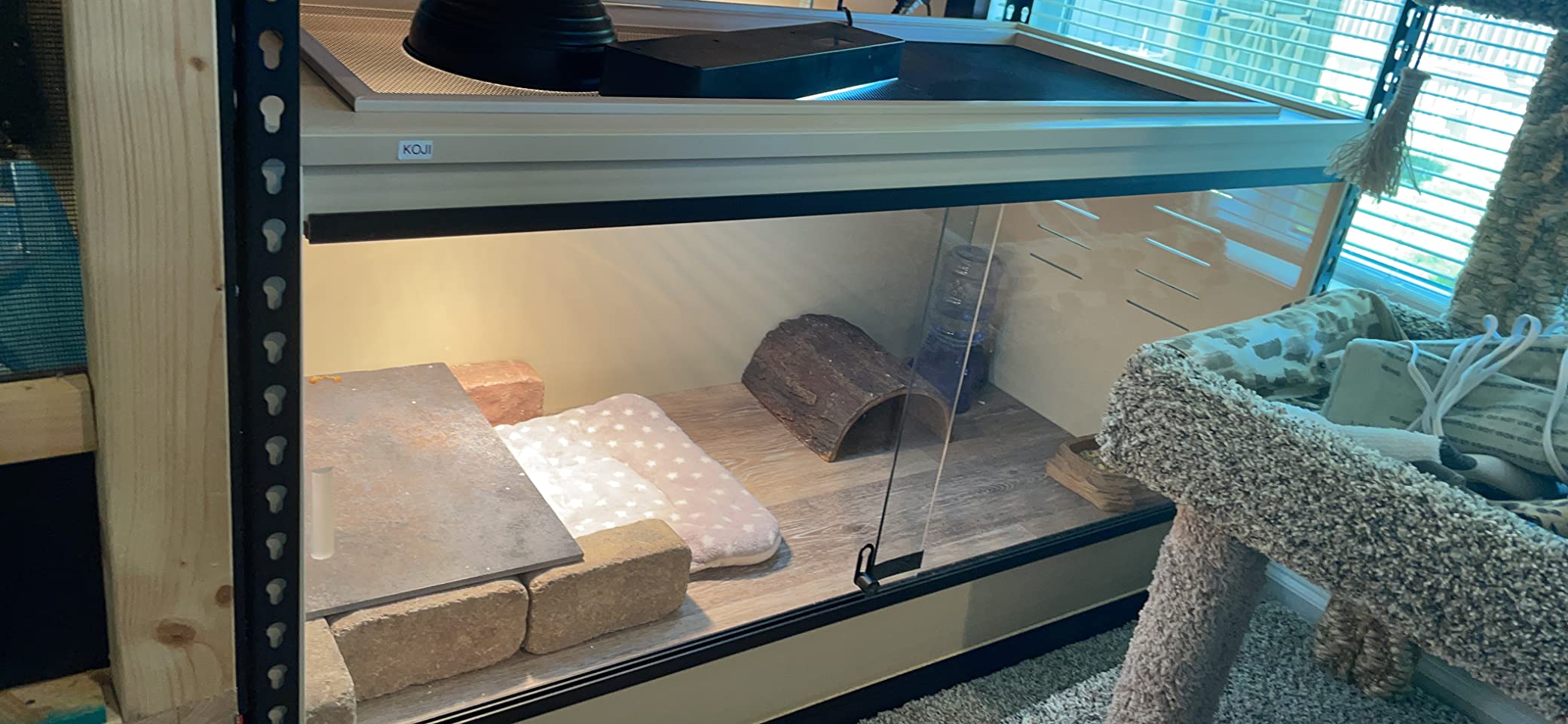
On the downside, this is not a waterproof enclosure. If you need high humidity for a Red-footed tortoise or want a shallow water feature, you will need to seal the corners with silicone yourself. There are also no wire cutouts, so every lamp cord, probe, and thermostat cable has to run over the top of the mesh.
The deep solid front panel at the bottom is a mixed bag. It holds substrate in place well, but it also blocks your view of a smaller tortoise when it burrows down. At just over 50 pounds, the unit is heavy enough to feel stable but light enough for one person to move when empty.
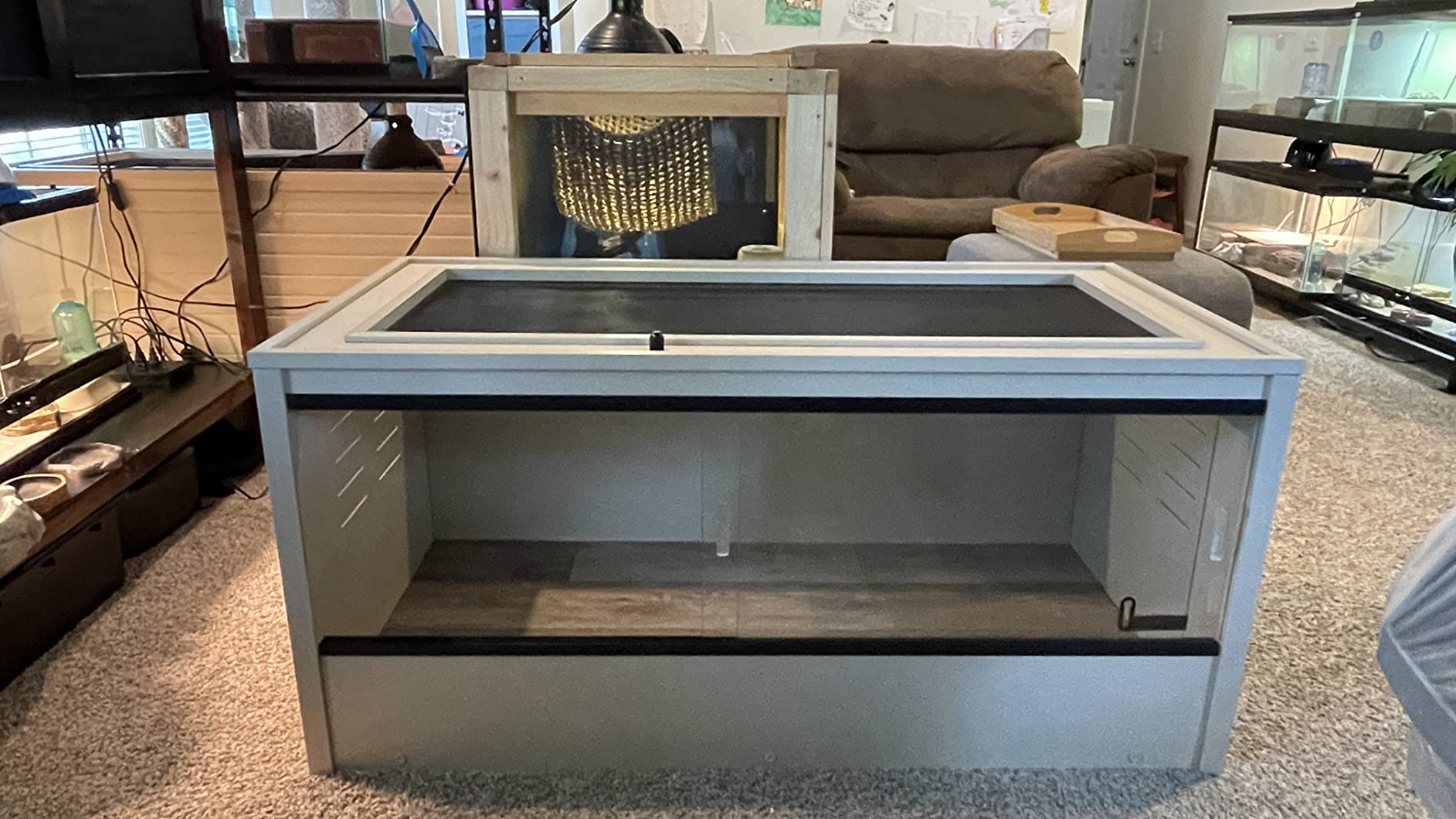
This habitat shines for Russian, Hermanns, and other Mediterranean tortoises that need a dry, well-ventilated indoor setup. The 48 inch wide model gives roughly 8 square feet of floor space, which works well for a single adult of these species. The 10-year warranty makes it a smart pick if you plan to keep tortoises long term.
Check the packaging carefully when it arrives since some buyers report shipping damage. Plan to add aquarium-safe silicone to the inside corners before adding substrate. You will also want to budget for a separate UVB fixture and basking lamp, since none are included.
15.51 x 9.45 x 4.88 inches shipping
23.94 pounds
Waterproof plastic bottom
Adjustable lamp holder
With over 2,100 reviews and a 4.5 star rating, the Aivituvin Wooden Tortoise House is the best value tortoise enclosure I have tested. The two-room design gives your tortoise a private weatherproof sleeping area plus an open viewing area with acrylic windows on two sides. For the price, the build quality beats most competitors in this range.
The upgraded waterproof plastic bottom is the feature that sold me. Many cheap wooden tortoise houses rot within a year, but the plastic tray on this model keeps moisture off the wood and makes spot cleaning easy. The adjustable lamp holder is a nice bonus since it lets you dial in the right basking height without buying a separate stand.
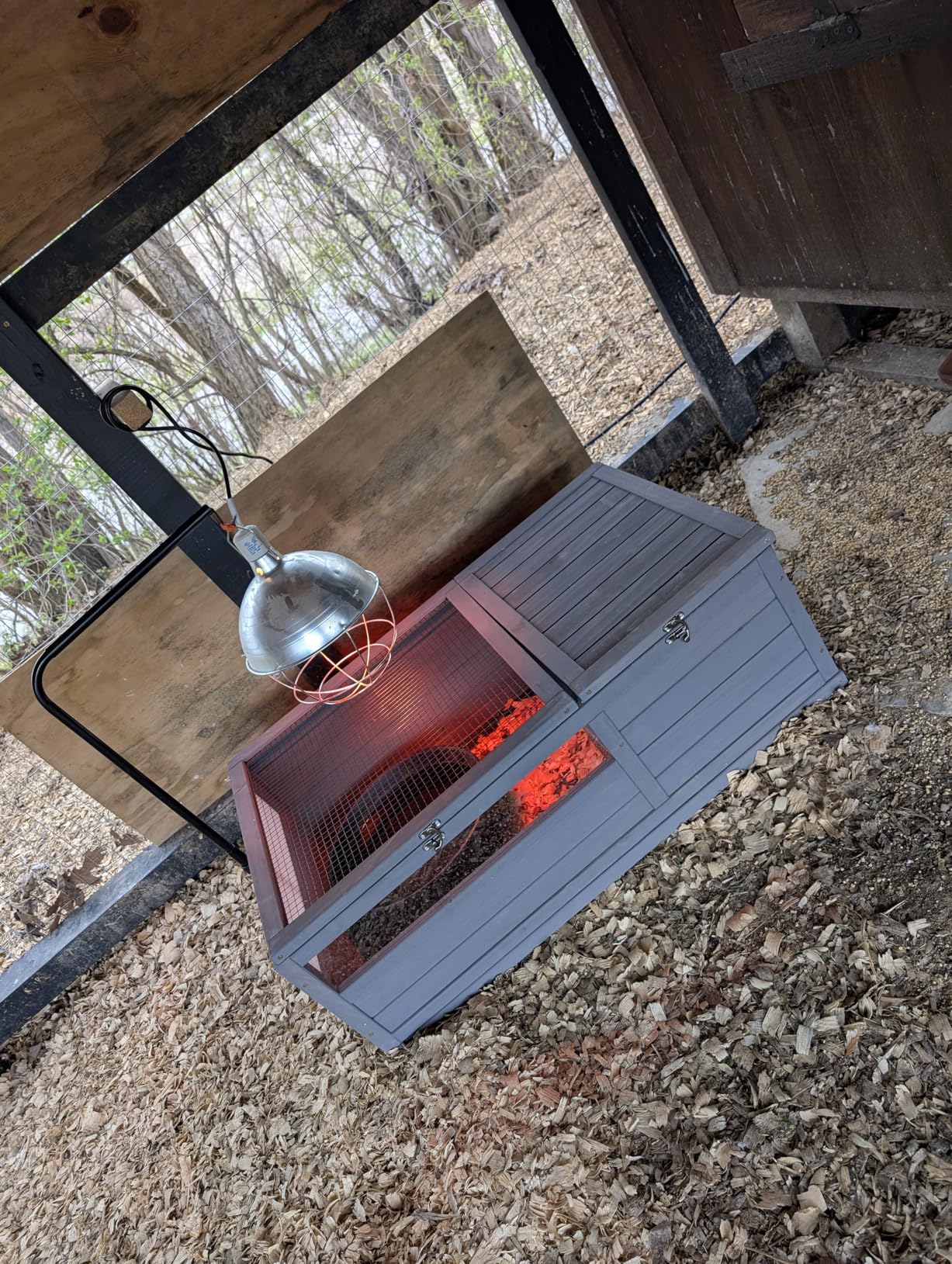
The tradeoff is that the wood is on the thin side and can splinter if you overtighten screws during assembly. There is also a strong cedar and chemical smell when you first open the box, which faded for me after about four days of airing out in a garage. The plastic film protecting the acrylic windows is annoying to peel off.
At this price point, those are minor issues. The dense wire lid keeps small tortoises secure, and the pre-drilled holes make assembly straightforward for one person. You can also connect two units together end to end if you need more space down the road.
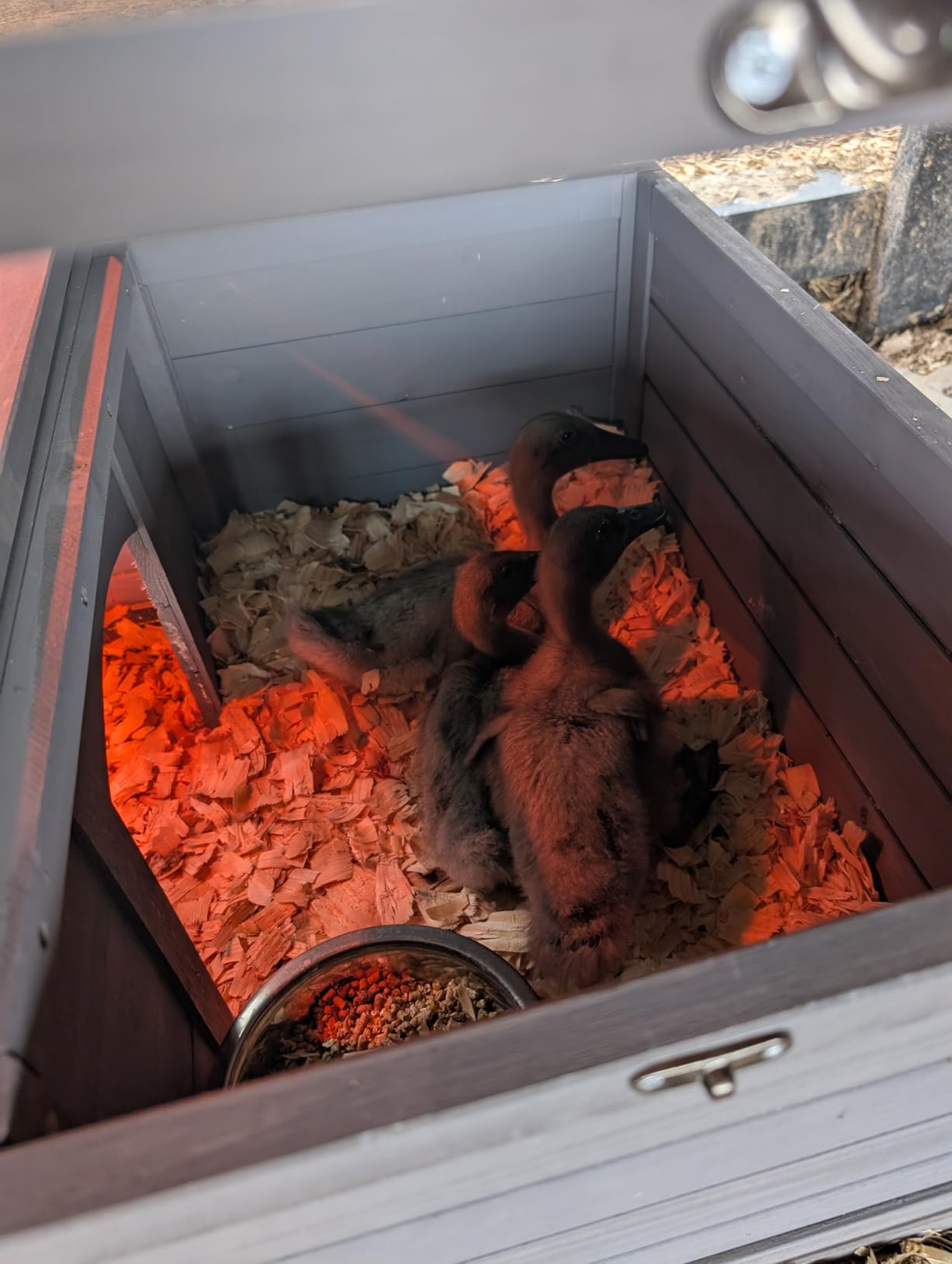
This size works well for hatchling and juvenile Russian, Hermanns, Greek, and other small Mediterranean tortoises. For a Sulcata or Leopard tortoise, plan to upgrade or connect multiple units within the first year as they grow fast.
The latches and hinges are the weak points on this enclosure. Several buyers swap them out for heavier hardware from a local store, which costs only a few dollars. For outdoor use, plan to add a coat of non-toxic sealant to extend the wood life.
38.98 x 22.95 x 13.21 inches
25.35 pounds
Universal brakeable wheels
Two leak-proof trays
The Gowoodhut Tortoise Habitat stands out for one reason that matters if you have ever struggled to move a heavy enclosure for cleaning. The rotatable, brakeable universal wheels let you roll the whole unit aside to vacuum underneath, then lock it back in place. At under 70 dollars, it is the most affordable enclosure on this list.
Despite the low price, the design includes two detachable leak-proof trays that pull out for cleaning. The metal mesh cover keeps tortoises from climbing out while still allowing UVB and heat to pass through. The wooden shelf and middle roof section are built to hold a lamp securely.
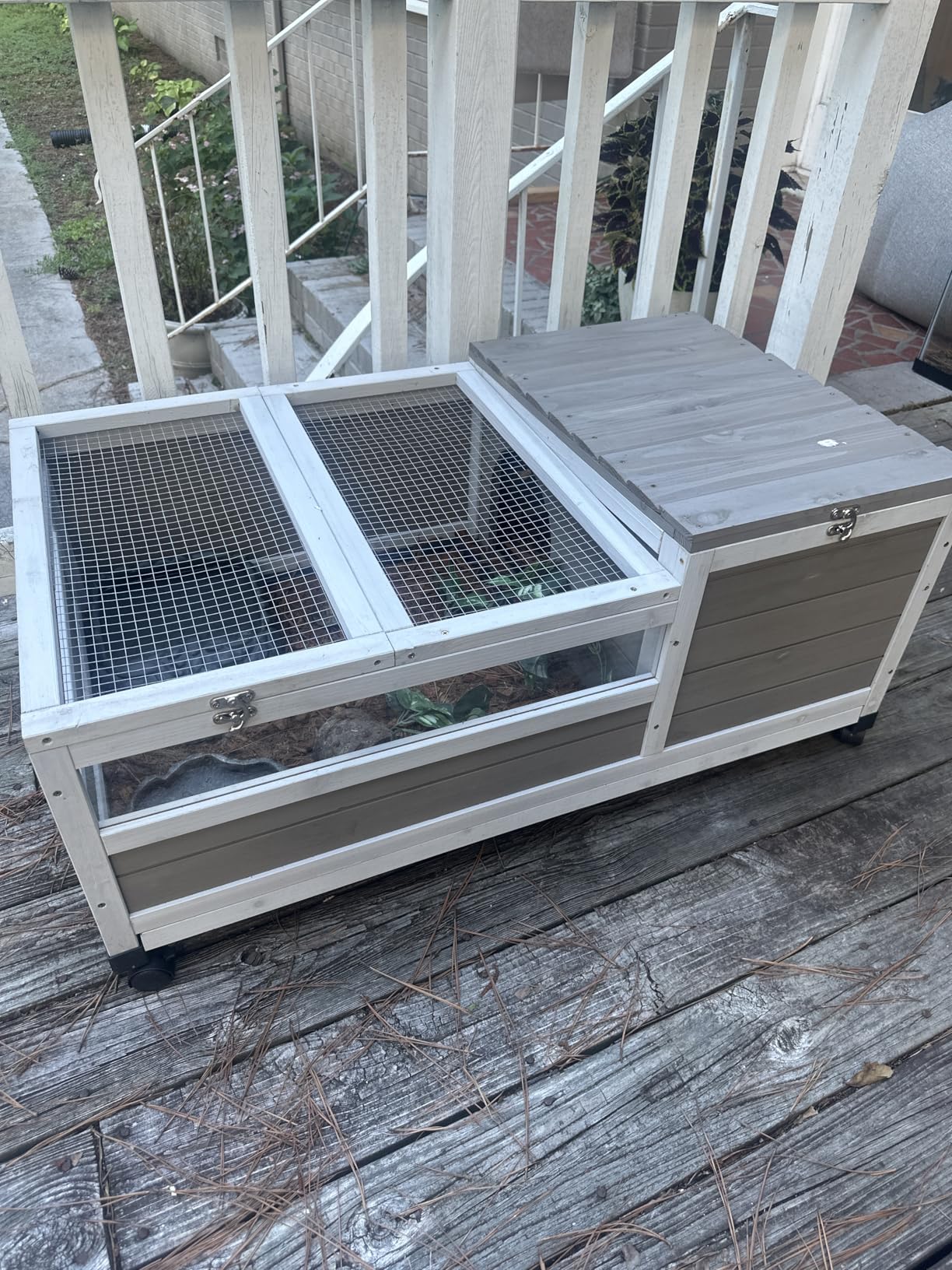
The main drawback is wood quality control. A few buyers report split or chipped pieces on arrival, and the wood can crack if you are not gentle during assembly. Small gaps between panels can let fine substrate leak out onto your floor.
For the price, the wheels alone make this enclosure worth considering if you live in an apartment or need to move the habitat between rooms. The brake system works well and keeps the unit firmly in place once positioned.
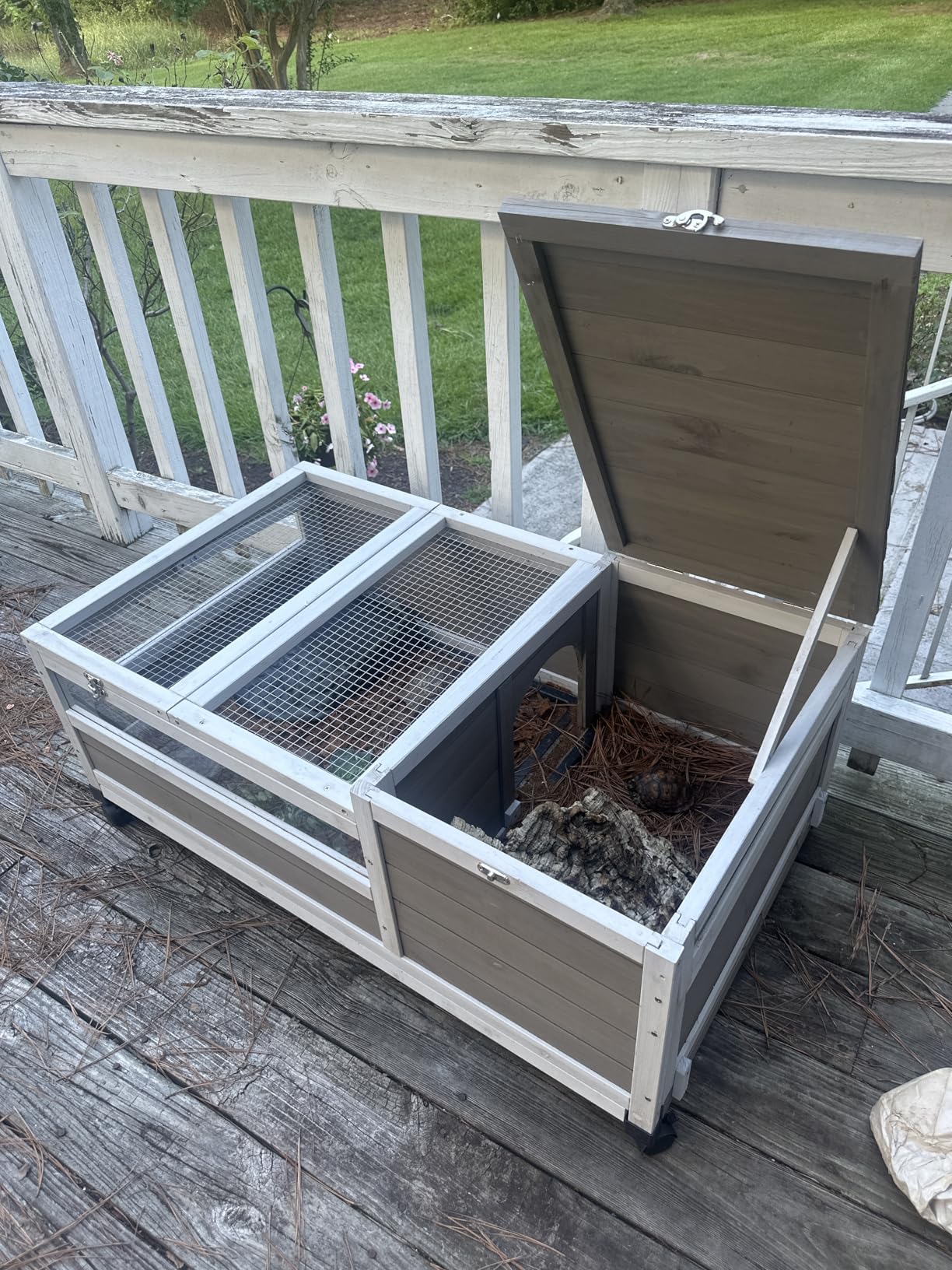
This is ideal for small tortoises in indoor settings where mobility matters. The 39 inch footprint suits a juvenile Russian or Greek tortoise comfortably. For outdoor use, you will want to add weatherproofing since the wood is not sealed for rain.
Lay out and identify every piece before tightening any screws, since the instructions can be sparse. Use a small amount of non-toxic silicone along the bottom seams to stop substrate leaks. The wheels attach last, so assemble the body on a flat surface first.

37 x 25 x 13 inches
24.4 pounds
Modular connectable design
Weatherproof sleeping area
Zoo Med has been making reptile products since 1977, and the Zoo Med Tortoise House reflects decades of feedback from tortoise keepers. The 4.6 star rating across 765 reviews makes it one of the highest-rated enclosures on the market, and the modular design means you can connect two or more units as your tortoise grows.
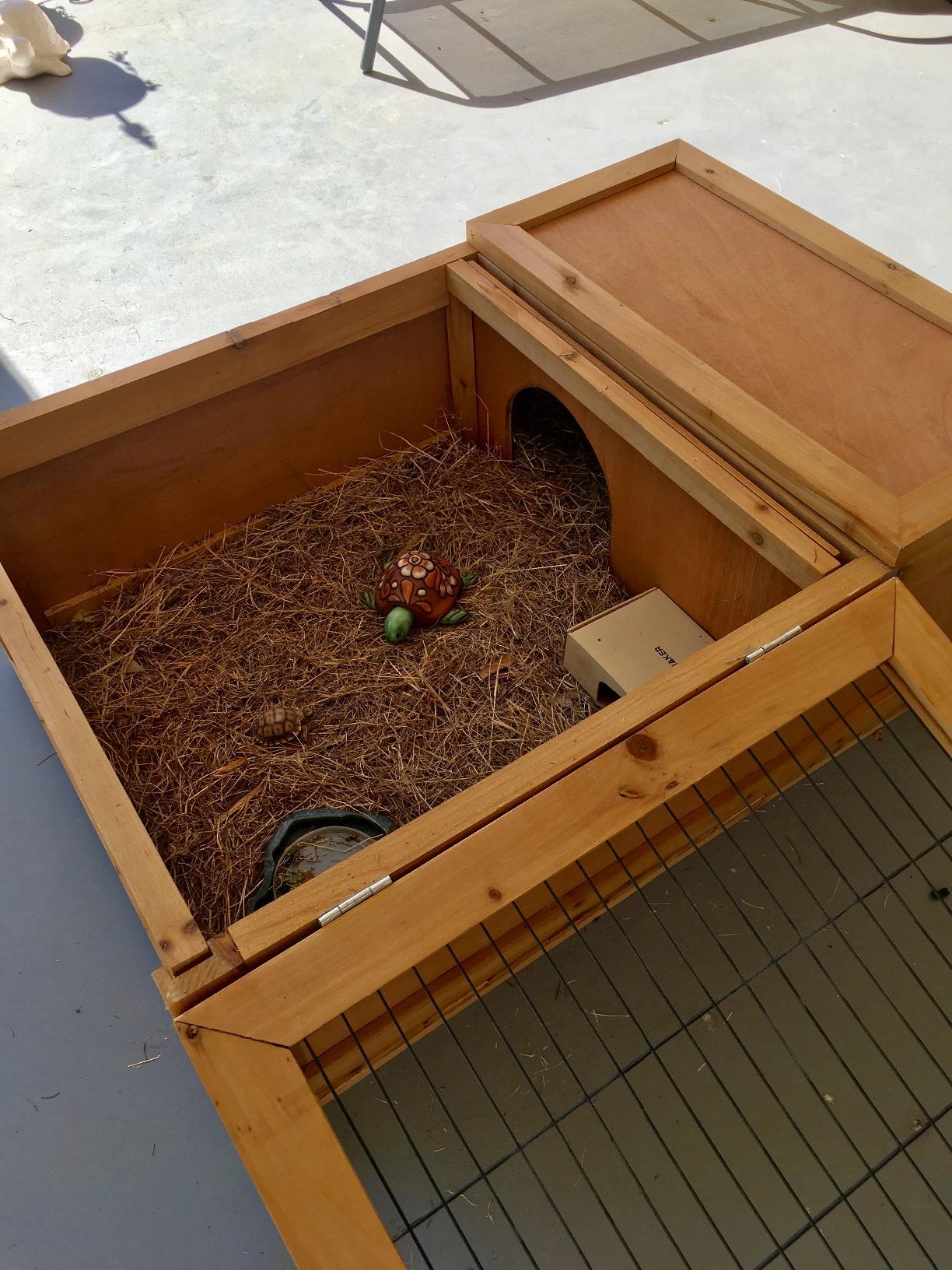
I appreciate the private weatherproof sleeping area, which gives shy tortoises a dark retreat that stays warmer at night. The flip-open top makes feeding and cleaning simple, and the whole unit weighs only 24 pounds so you can move it solo. Assembly is genuinely easy, with most buyers reporting 30 minutes or less.
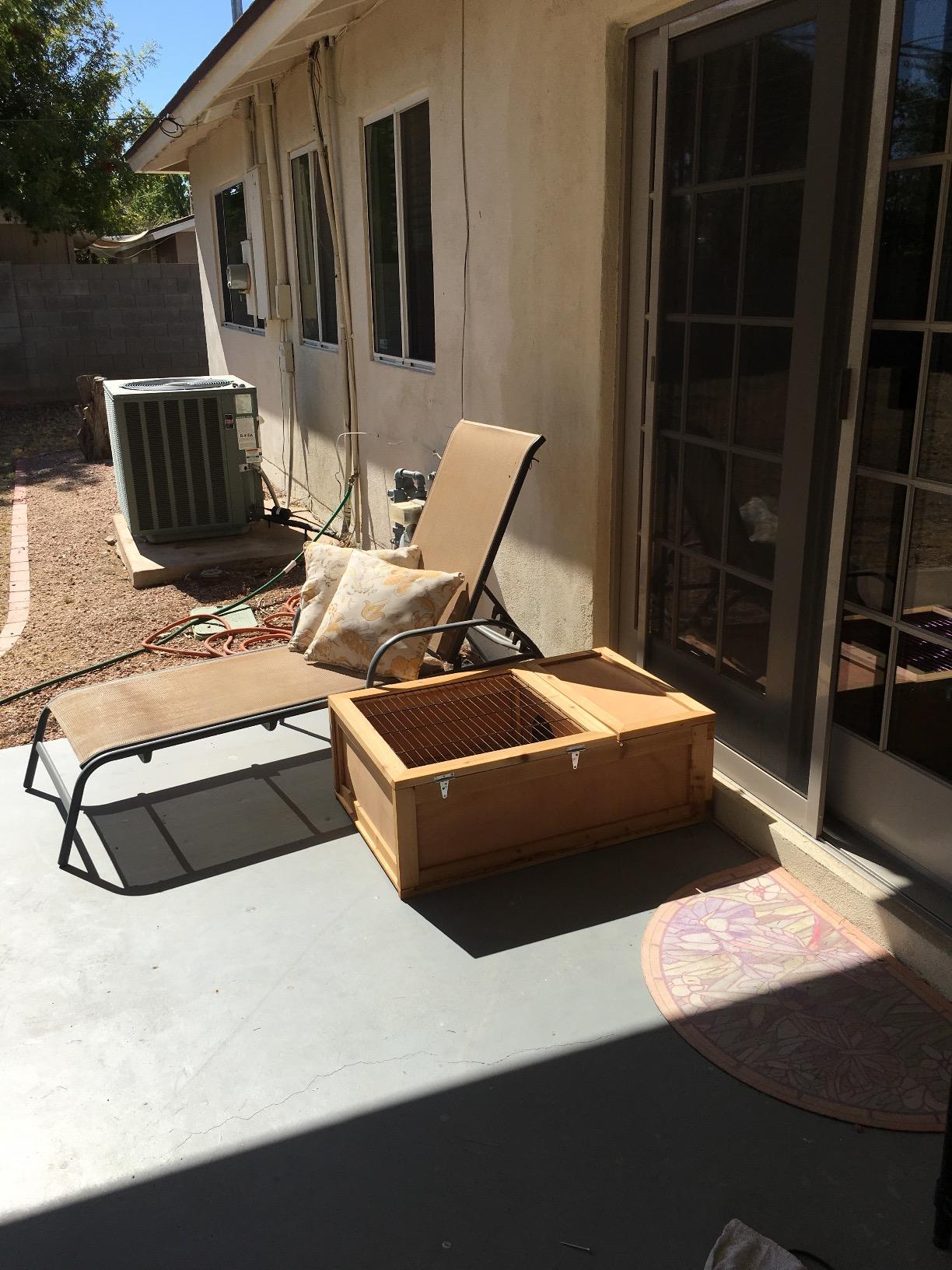
The biggest flaw is the bare wood bottom. Without a plastic tray or liner, moisture from substrate or spills soaks directly into the wood and leads to rot. Most owners line the bottom with a plastic tub, shower pan liner, or pond liner to fix this issue.
The mesh spacing on the top is also wider than on some competitors. Very small hatchlings can squeeze through or get stuck, so check the gap size against your tortoise before adding them. The Zoo Med logo stamped on a visible panel bothers some buyers aesthetically, though you can flip that panel to the inside.
Tortoises grow faster than most new owners expect. The end panel on this enclosure removes so you can connect a second unit, doubling the floor space without buying a completely new habitat. This makes it a smart long-term investment.
Cut a piece of thick plastic or a rubber tub to fit the interior floor. This protects the wood and makes deep cleaning much easier. Avoid using cedar shavings as substrate since the oils can irritate your tortoise.

38.1 x 22.4 x 39 inches
24.2 pounds
Adjustable lamp stand 11 to 31 inches
Waterproof plastic tray
The GUTINNEEN Tortoise Cage earned a 4.6 star rating from nearly 500 buyers, and the standout feature is the included adjustable heat lamp stand. Instead of buying a separate lamp clamp or stand, you get a built-in frame that adjusts from 11 to 31 inches in height. The 360 degree rotation holder lets you position the basking bulb exactly where your tortoise needs it.
The waterproof plastic bottom tray keeps the wood dry and makes waste cleanup manageable. The two-room layout matches what you see on the Aivituvin, with a private sleeping area and an open viewing section. At just under 90 dollars, the value is hard to beat for what is included.
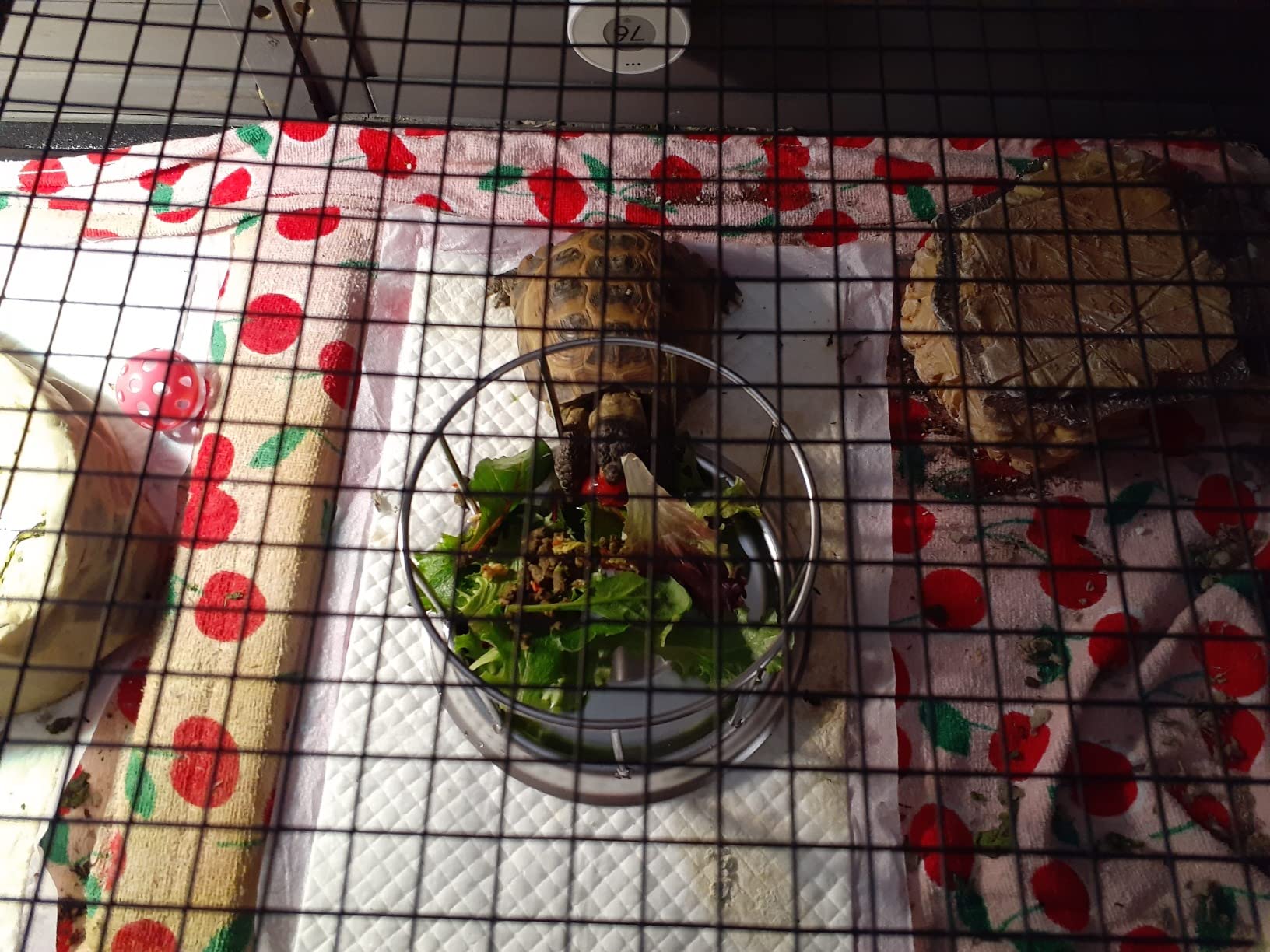
The tradeoffs are familiar if you have owned wooden tortoise enclosures before. There is a strong wood smell for the first week, the wood can split if you overtighten screws, and the latch on the lid feels thin. The bottom tray does not slide out, so you need to reach in to clean rather than pulling the tray.
The expandable design is a real plus. Like the Zoo Med, you can connect additional units end to end. This makes the GUTINNEEN a strong pick if you plan to expand your tortoise setup over time.
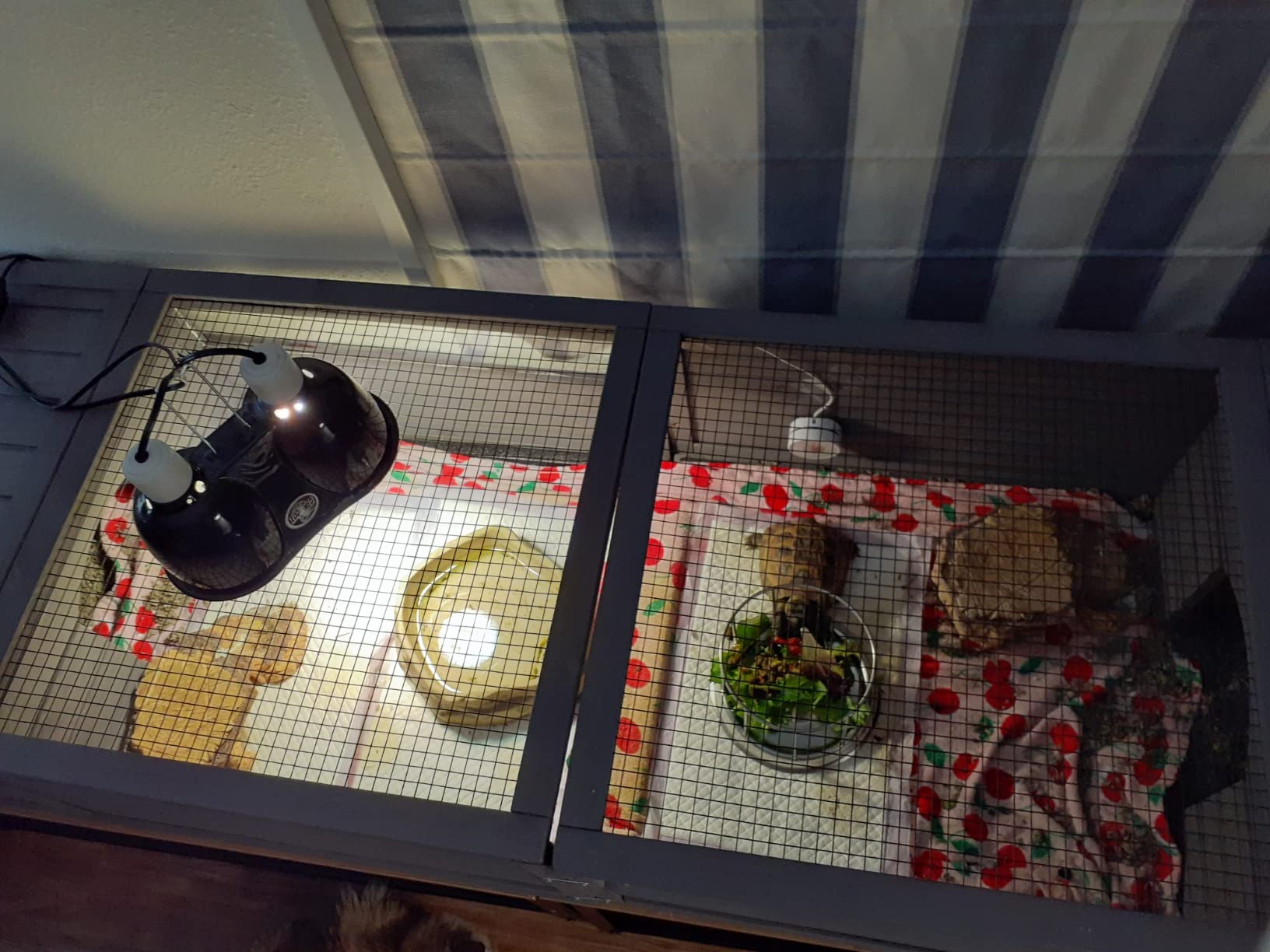
The adjustable height means you can lower the bulb for hatchlings that need more concentrated heat and raise it as your tortoise grows. This single feature saves you 25 to 40 dollars on a separate lamp stand.
Take your time with the screws since the wood splits more easily than on premium models. Pre-drill any additional holes you need. For cleaning, use a small hand vacuum or scoop rather than trying to remove the fixed tray.

40.1 x 19.4 x 41.34 inches
38.7 pounds
Three-room two-story design
Fir wood construction with storage shelf
The GEGURI 3-Room Tortoise Habitat takes the standard two-room layout and adds a second story with a basking balcony. The design gives your tortoise three distinct zones: a private hide box on the ground floor, an open ground activity area, and an elevated balcony for basking under the mesh roof. There is also a storage shelf underneath for keeping food and supplies tidy.
Our team liked the three-sided large observation windows that let you watch your tortoise from almost any angle. The fixed plastic tray prevents leaks, and the premium fir wood feels sturdier than the thinner wood on budget models. The mesh roofing delivers solid airflow across both levels.
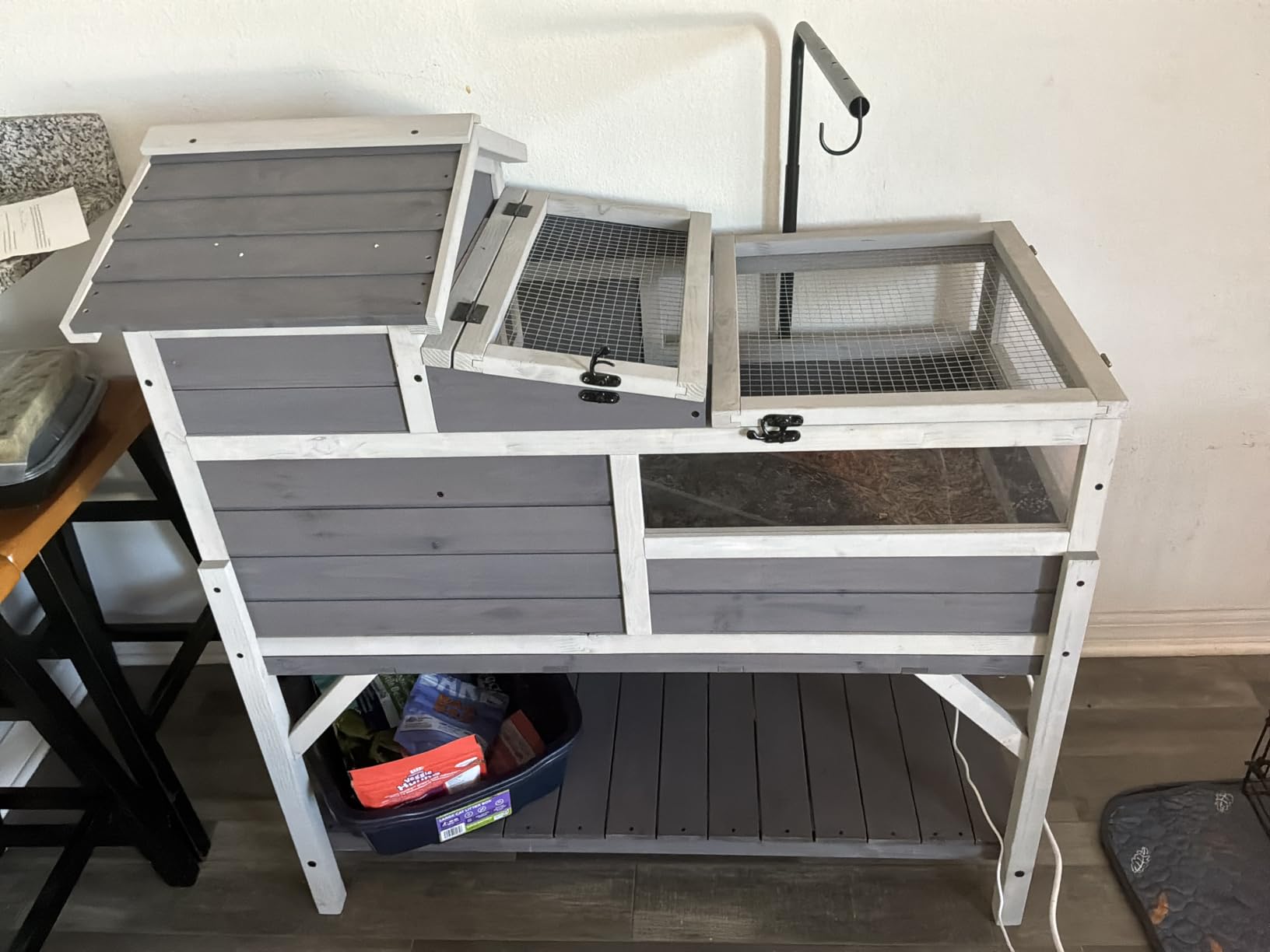
The downsides center on quality control. Some buyers report fiberglass residue on the wood pieces, which you should wipe off before assembly to protect your tortoise. The tray is fixed rather than removable, which makes deep cleaning harder than with a pull-out design.
The ramp connecting the two stories can be too long for the available space, creating a steep angle that smaller tortoises struggle to climb. Test the ramp angle with your tortoise before assuming it will use the upper level regularly.
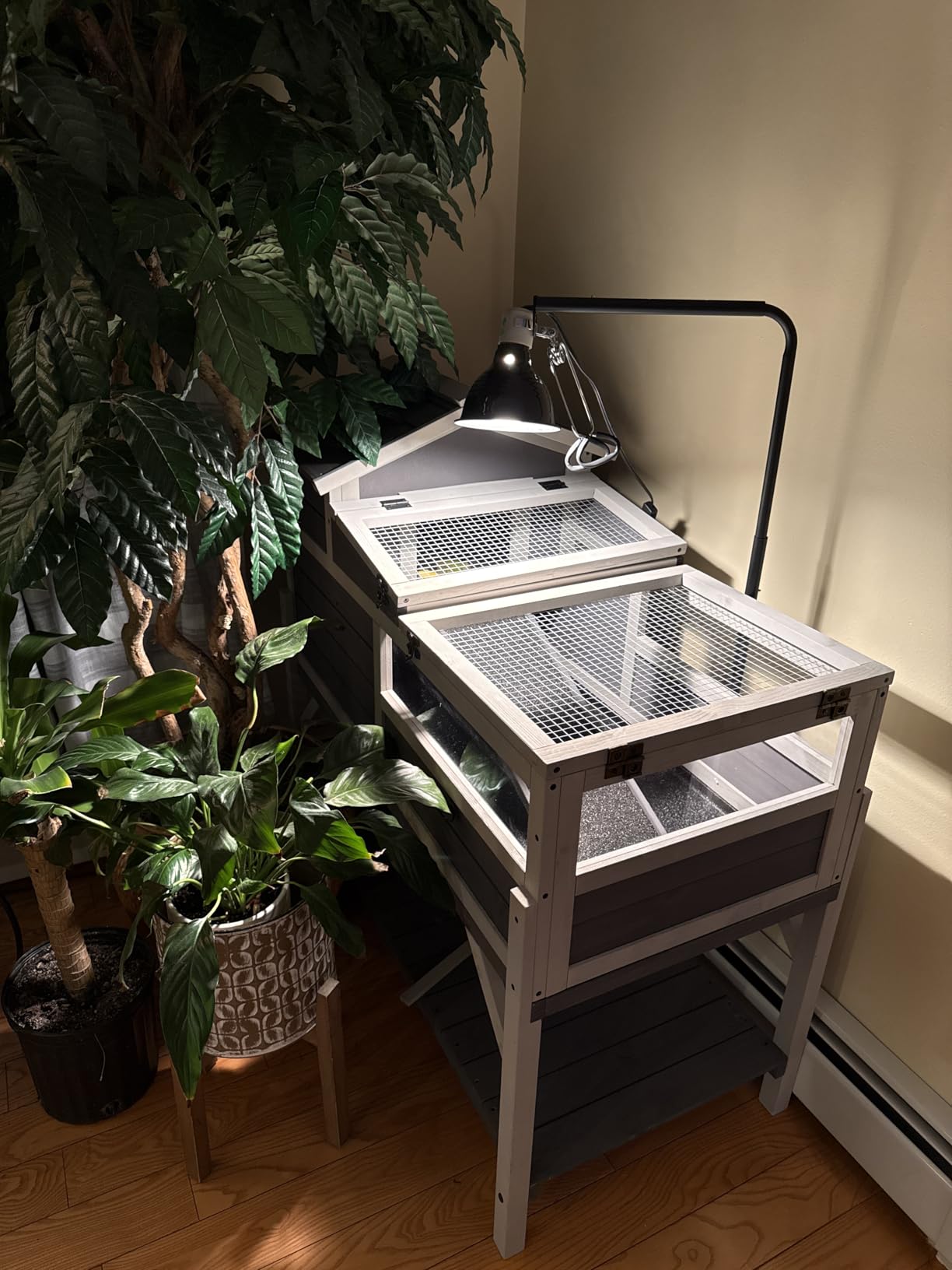
Most tortoises are ground dwellers and do not strictly need a second level. However, Mediterranean species like Russians and Hermanns will climb ramps to reach a warm basking spot. The extra vertical space also lets you create a steeper temperature gradient.
Wipe every wood piece with a damp cloth and mild soap before assembly. Let the pieces dry fully, then inspect for any remaining fibers. This takes about 20 minutes and prevents your tortoise from ingesting or absorbing loose fibers.

39.4 x 22.5 x 31.5 inches
27.35 pounds
Detachable legs
Adjustable lamp stand 11 to 31 inches
The Aivituvin Tortoise Habitat with Detachable Legs gives you flexibility that most fixed-leg enclosures cannot match. With the legs attached, the habitat sits at a comfortable standing height for feeding and cleaning. Remove the legs and the same unit sits flat on the ground for outdoor use or for keepers who prefer a lower profile.
The adjustable heat lamp stand works the same way as the one on the GUTINNEEN model, with a height range of 11 to 31 inches and full 360 degree rotation. The top roofs open independently for easy access to both the sleeping area and the viewing area. The plastic tray catches waste and wipes clean quickly.
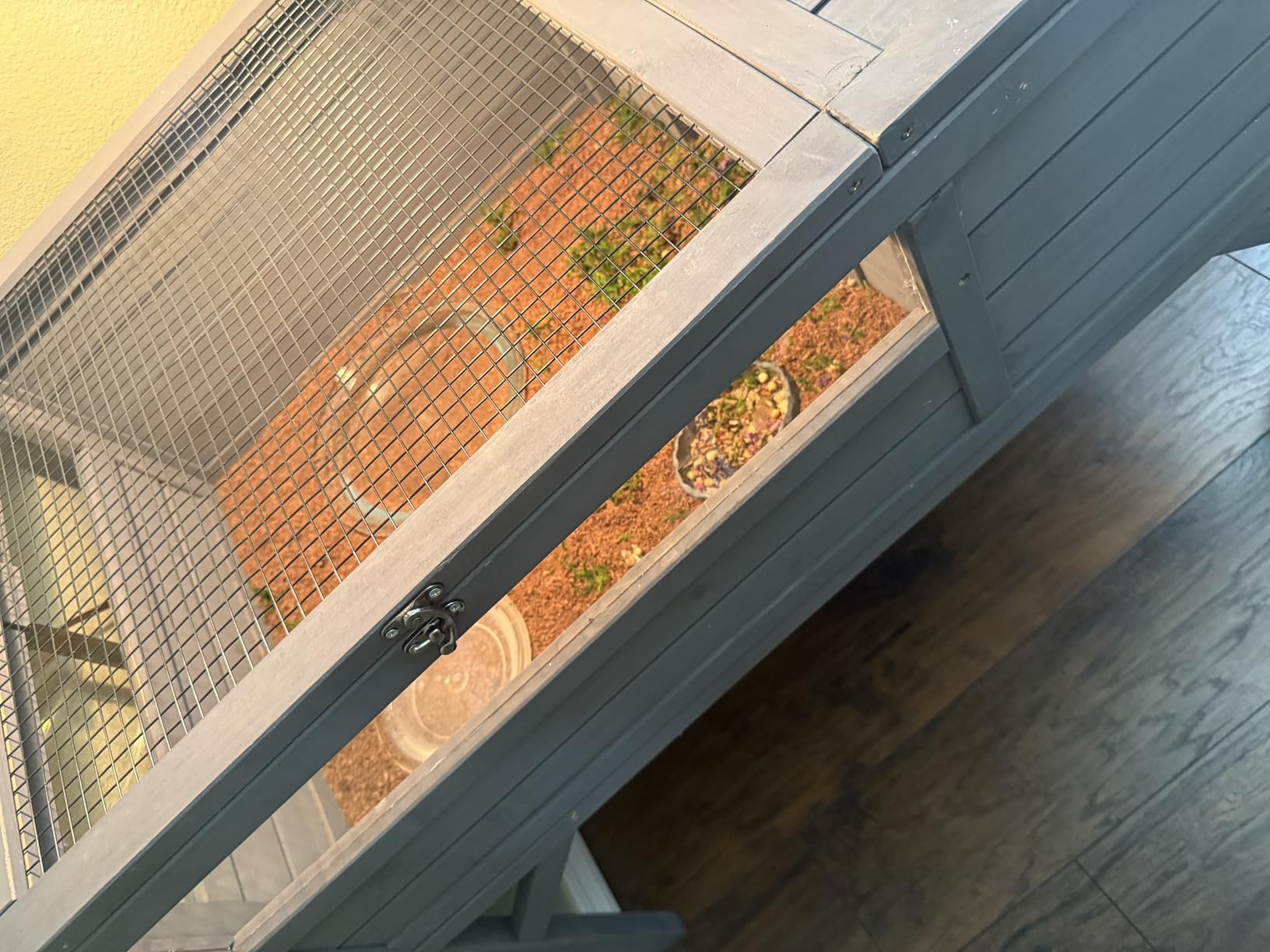
Being honest about the downsides, the wood is thinner than premium options and can feel flimsy until the unit is fully assembled and squared up. The paint has a strong odor for the first few days. Several buyers report the plexiglass windows arriving cracked due to shipping, though Aivituvin typically sends replacements.
The latches are the same lightweight hardware found on most enclosures in this price range. Upgrading them costs only a few dollars and makes a noticeable difference in security.
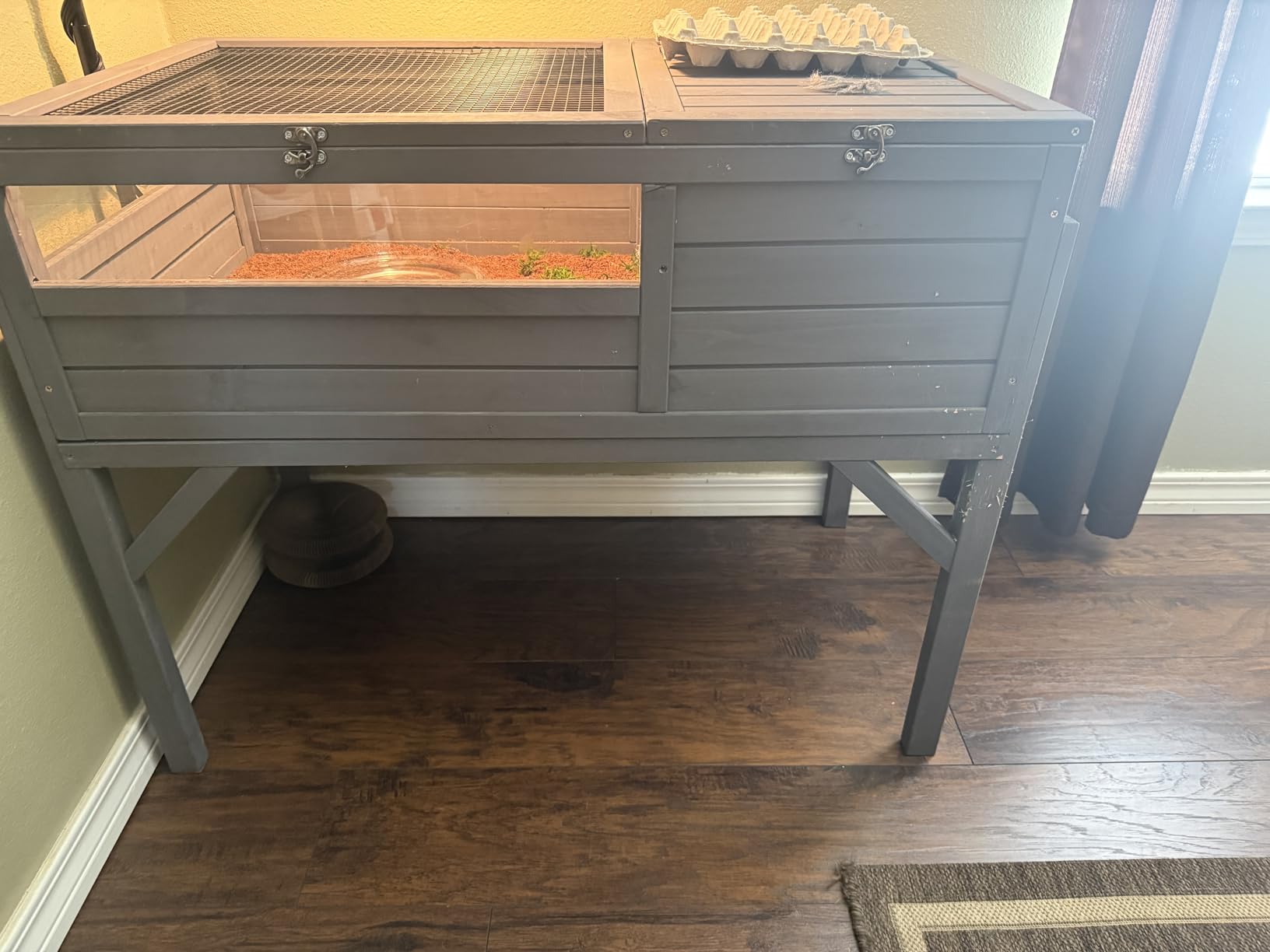
If you have back or knee issues, the elevated position saves you from bending over constantly. The legs also make it easier to place a storage bin or heat mat underneath if you need supplemental warmth in a cold room.
The water-resistant paint handles sheltered outdoor use well, but the enclosure should not sit in direct rain. For full outdoor setups, add a weatherproof cover or place it under a covered patio.

44 x 25.5 x 23.25 inches
32 pounds
Three-room two-story design
Openable roof with ladder
The PawHut 3-Room Tortoise House covers all the bases for keepers who want vertical space without paying for a custom build. At 44 inches wide and 25.5 inches deep, the footprint gives your tortoise plenty of room to roam on the ground floor, with a basking balcony accessible via an included ladder. The openable roof makes feeding and cleaning straightforward.
The water-resistant outdoor paint coating stands up better to humidity than unfinished wood, and the plastic tray under the main floor prevents leaks onto your flooring. Mesh roofing on the upper level delivers solid airflow for temperature regulation.
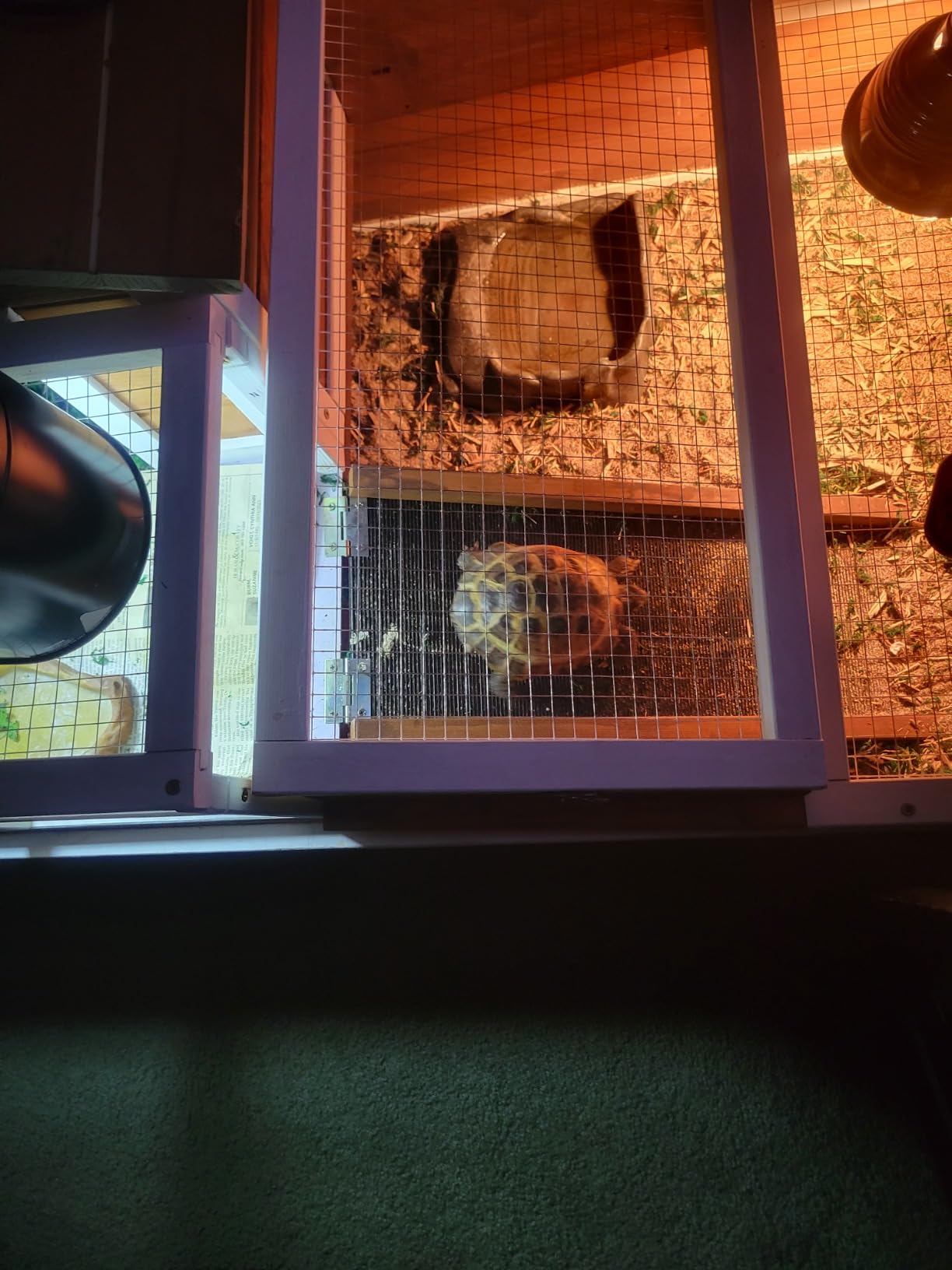
The ramp is the main pain point. Several buyers note it is steep and has clearance issues, meaning smaller tortoises may not be able to climb to the upper level without help. Adding grip strips or a gentler custom ramp solves this for most species.
The upper level uses particle board rather than solid wood, which is more susceptible to moisture damage over time. If your tortoise spills water or urinates on the upper deck, dry it promptly to prevent swelling.
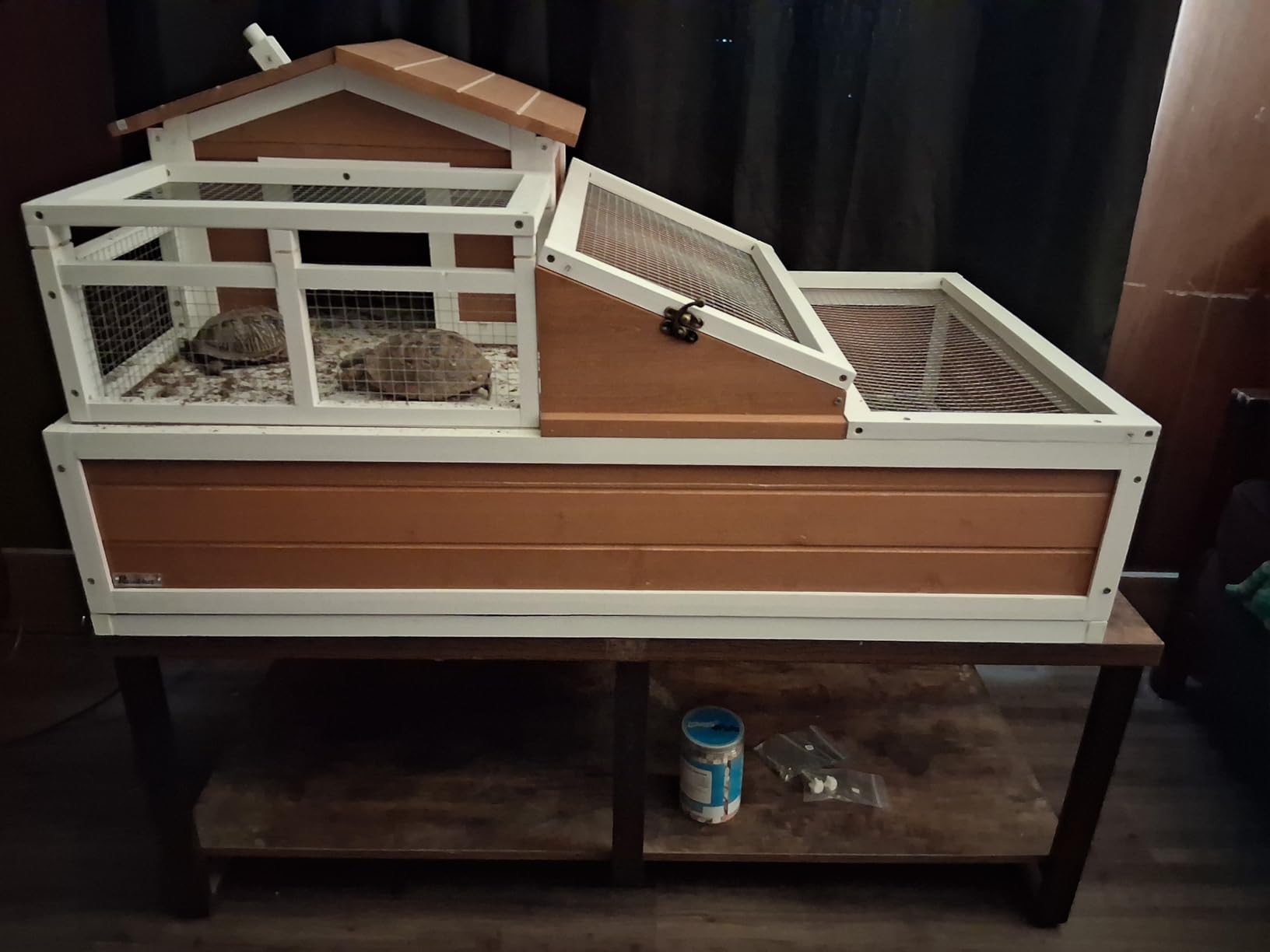
Attach thin strips of non-slip tape or cork bark along the ramp surface. This gives your tortoise traction and makes climbing safer. Test the ramp angle and reduce the slope if your tortoise repeatedly slips.
Set aside 60 to 90 minutes for assembly. The three-room design has more pieces than a standard two-room habitat, and the instructions can be sparse. Lay out all hardware before starting.

44 x 25.6 x 24 inches
32 pounds
Pull-out tray
Two-level design with balcony
The ZENTAVO 3-Room Tortoise Habitat solves one of the biggest complaints keepers have with wooden enclosures by adding a genuine pull-out tray. Instead of reaching inside to scoop waste, you slide the tray out, clean it, and slide it back. For anyone who has owned a fixed-tray enclosure, this feature alone justifies the price.
The two-level layout includes a cozy sleeping area on the lower level and a balcony with metal mesh roofing on the upper level. The premium fir wood is coated with water-resistant outdoor paint, which handles humidity and occasional outdoor use better than raw wood.
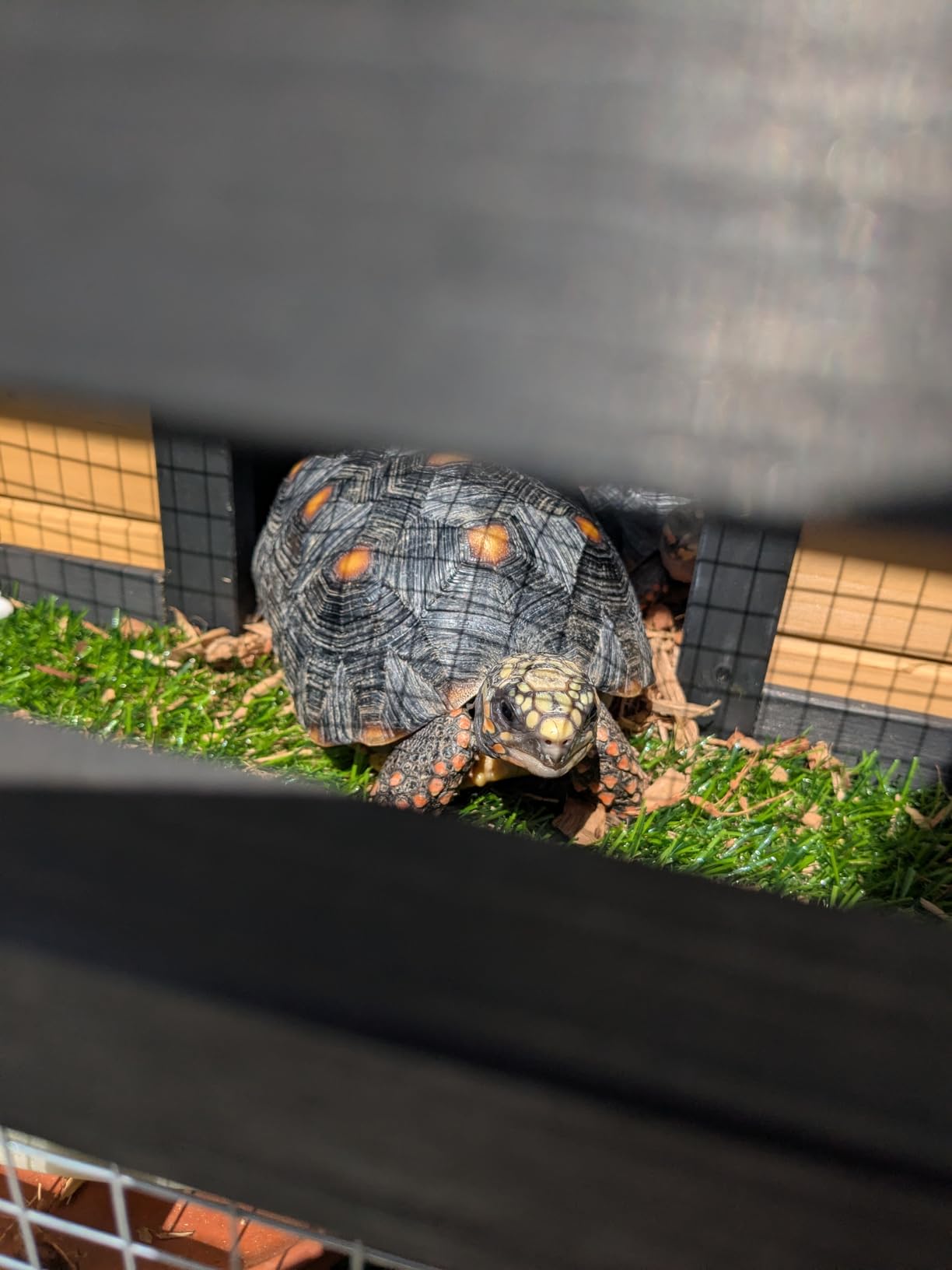
The pre-drilled holes and detailed instructions make assembly one of the smoothest experiences in this guide. Most buyers report finishing in 45 minutes or less. The metal mesh ensures solid UVB and heat penetration while keeping your tortoise secure.
The main concern is wood sturdiness during assembly. The fir wood can split if you drive screws too aggressively. Use a hand screwdriver rather than a power drill for the final tightening to avoid cracking.
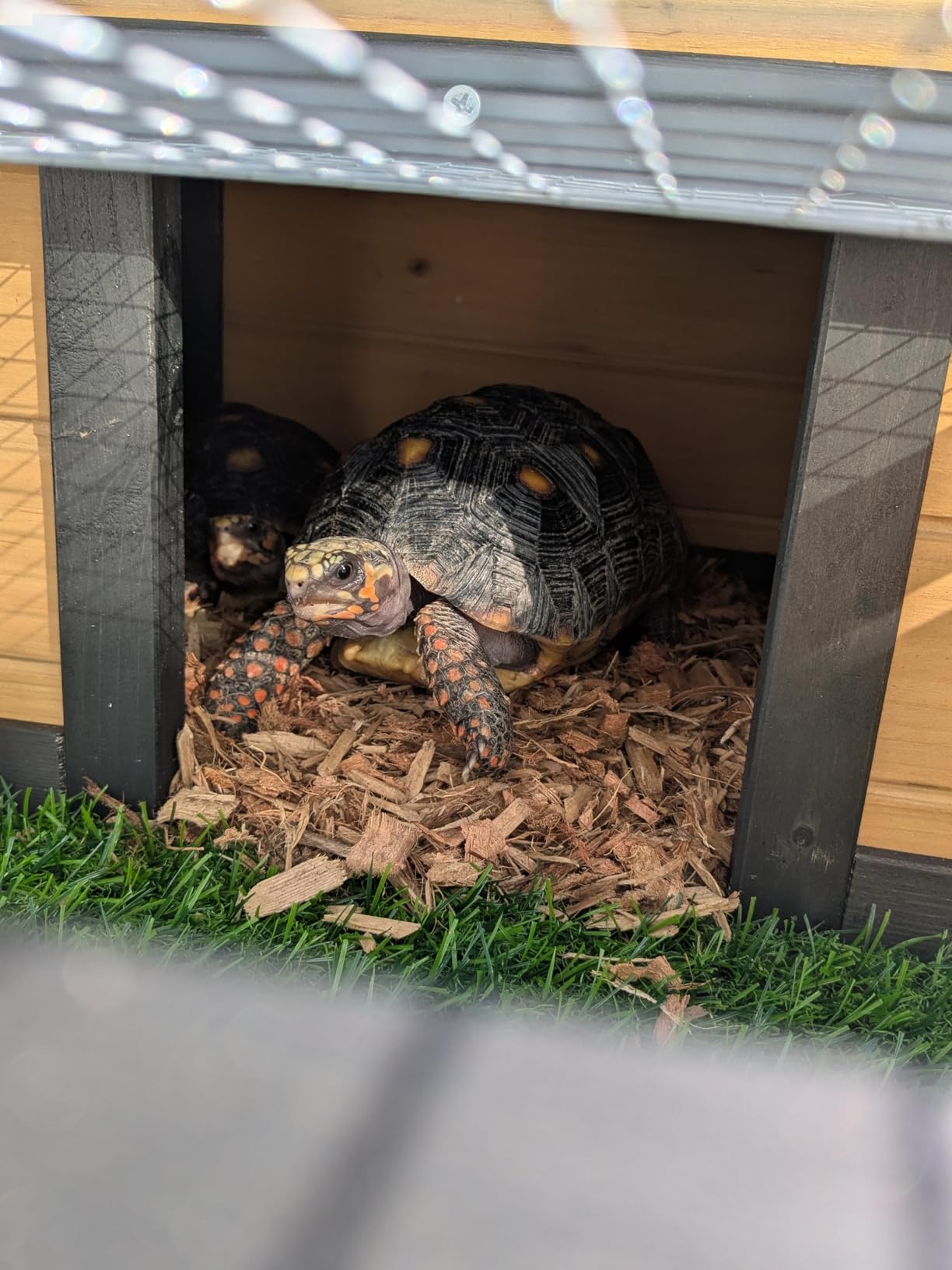
Daily spot cleaning takes about two minutes with the tray extended. For deep cleaning, you can remove the tray entirely, wash it in a tub or with a hose, and let it dry before reinserting. This is significantly faster than cleaning a fixed-bottom enclosure.
As a newer product released in late 2024, there are fewer long-term reviews. Based on the materials and construction, expect 3 to 5 years of indoor use with proper care. Apply a fresh coat of non-toxic sealant annually to extend the lifespan.

38 x 23 x 32 inches
22.7 pounds
Two-room design
Pull-out tray with detachable legs
The GEGURI Indoor and Outdoor Tortoise Habitat is the simpler sibling of the 3-Room model above. It uses the same fir wood construction but sticks to a proven two-room layout with a pull-out tray and detachable legs. The lower price reflects the simpler design, and the 359 reviews give you a solid picture of what to expect.
The pull-out tray is the feature most buyers highlight positively. It slides out smoothly and catches waste, making daily maintenance much easier than reaching into a fixed-bottom enclosure. The large three-sided viewing window gives you a clear line of sight from multiple angles.
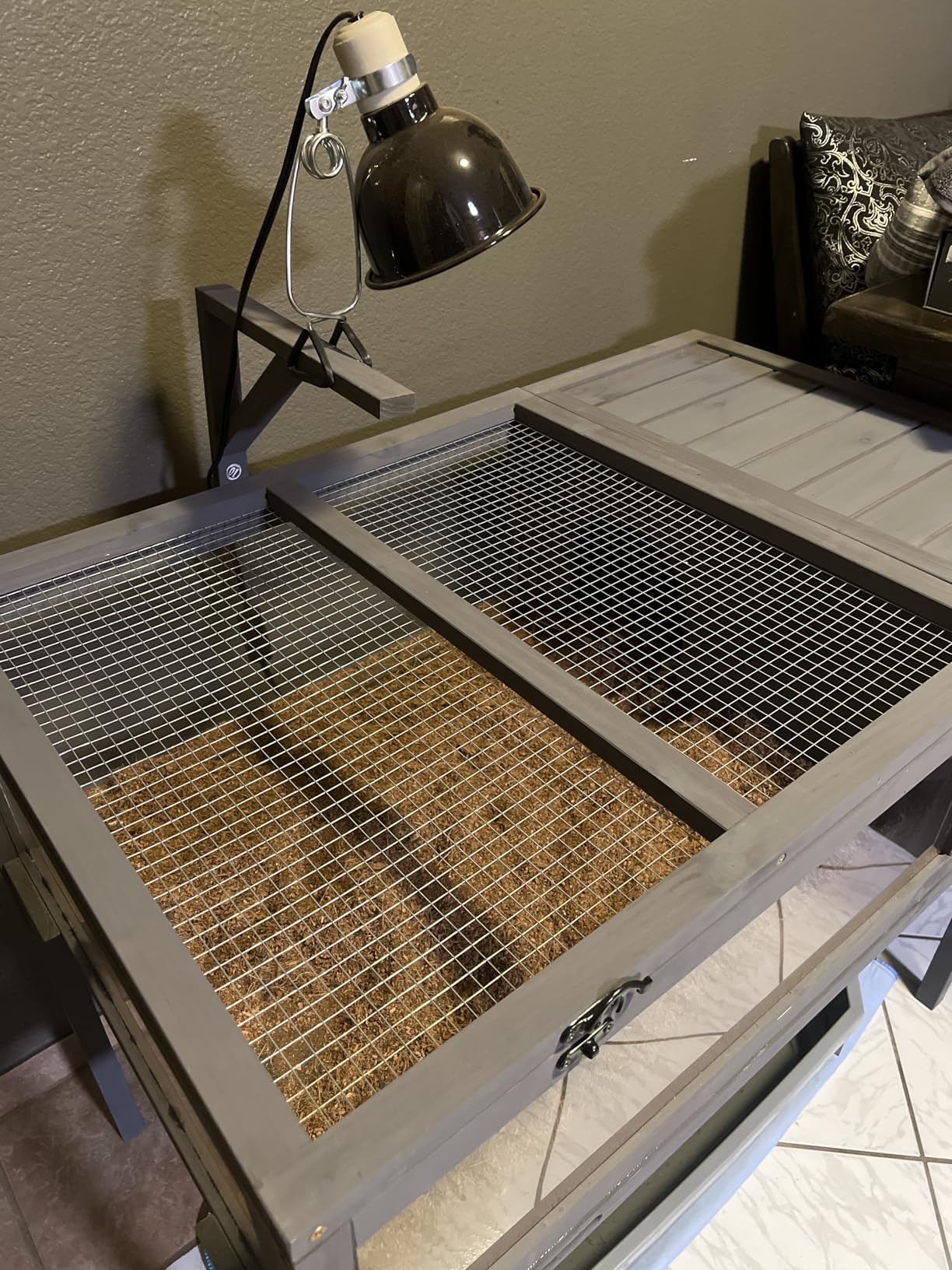
The tradeoffs are real, though. The wood and paint quality is inconsistent between batches, with some buyers reporting visible flaws. The enclosure can warp with sustained high humidity, which is a problem if you keep Red-footed or Yellow-footed tortoises that need moisture.
There is also a gap between the pull-out tray and the walls that lets fine substrate leak out. Sealing this gap with a thin foam strip or silicone resolves the issue, but it is an extra step you should plan for.
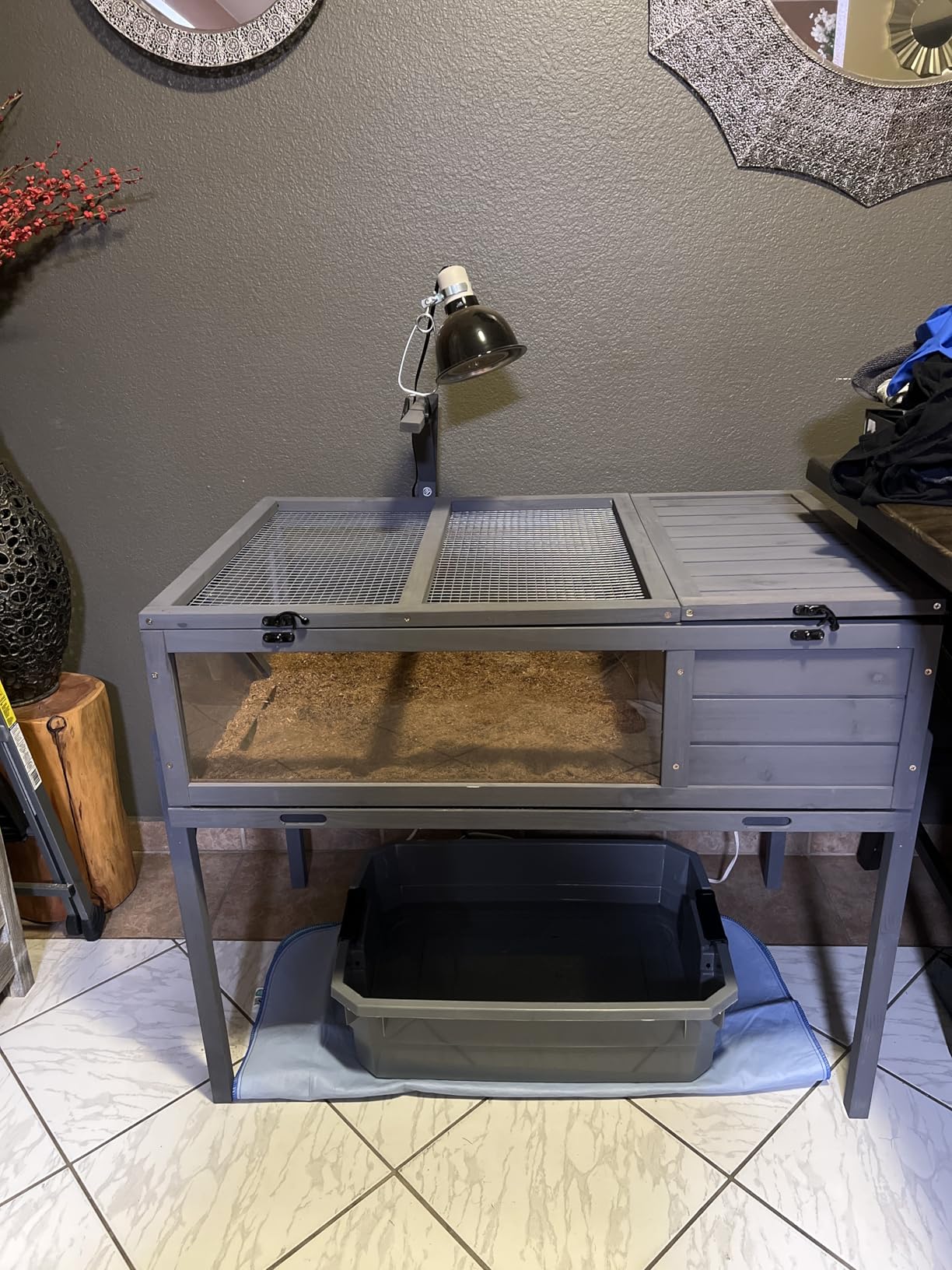
The 38 by 23 inch footprint suits Russian, Hermanns, and Greek tortoises well. For species needing higher humidity, consider the New Age Pet ECOFLEX instead, since wood warps under constant moisture.
Several buyers note errors in the included instructions. Sort and label all hardware before starting, and compare the printed steps against the parts in hand. If something does not line up, trust the pre-drilled holes over the printed diagram.

36 x 18.15 x 18.19 inches
25 pounds
ECOFLEX composite
Sliding glass doors with lock
The 36 inch version of the New Age Pet ECOFLEX habitat gives you all the benefits of the 48 inch model in a more compact footprint. If you live in an apartment or have a smaller reptile room, this size fits against a wall without dominating the space. The moisture-resistant ECOFLEX composite will not rot, warp, or absorb odors the way wood does.
The sliding front glass doors lock securely and give a clean, professional look that blends with home decor. The vented side panels and mesh screen top create consistent airflow, which helps maintain a stable temperature gradient from the basking side to the cool side.
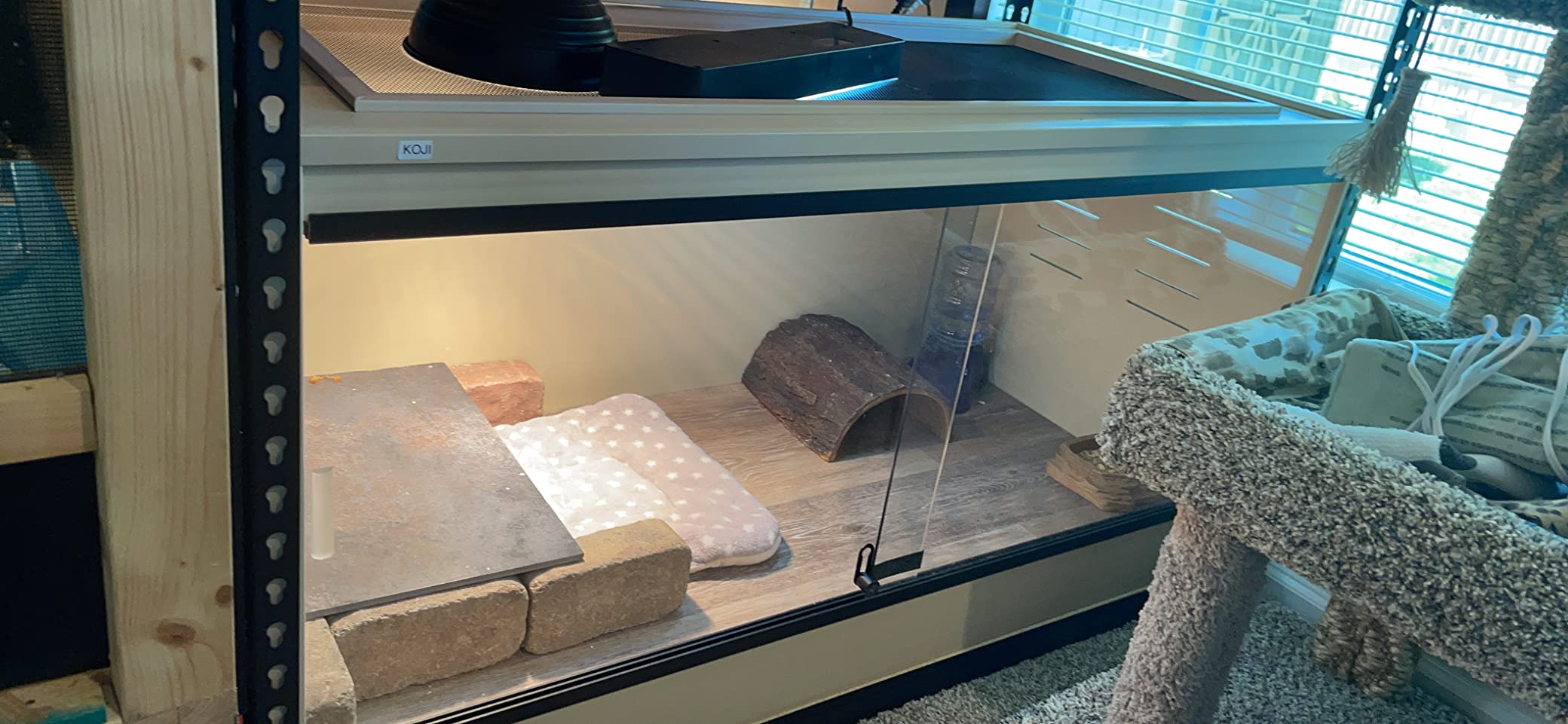
The 10-year warranty is the longest in this guide and reflects confidence in the ECOFLEX material. Assembly takes 20 to 30 minutes with all hardware included and clear instructions.
The limitations match the larger version. There are no wire cutouts, so every cord runs over the top. The solid bottom front panel blocks your view of tortoises that stay low. The enclosure is moisture-resistant but not waterproof, so seal the corners with silicone if you need higher humidity.
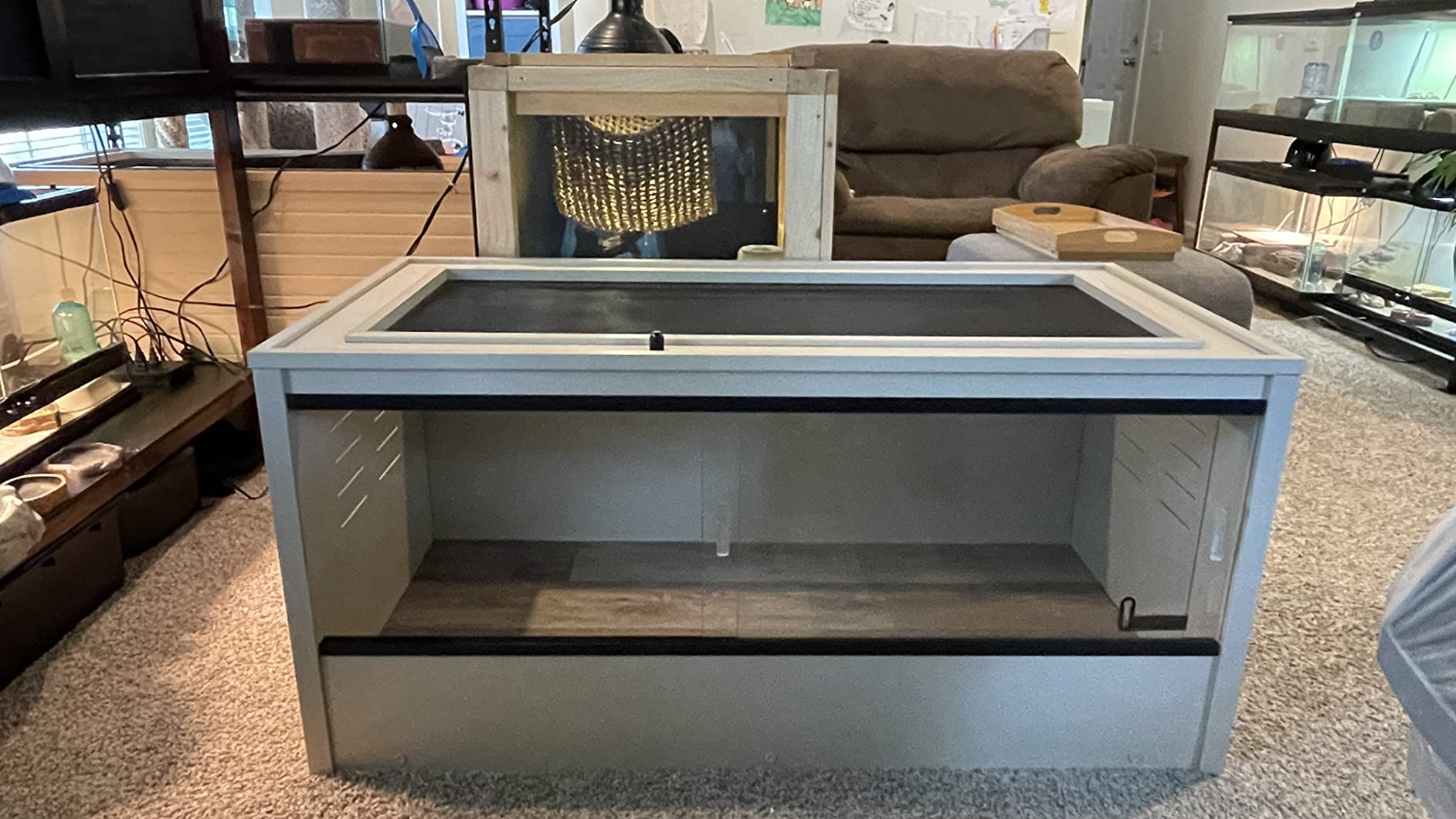
This size works for a single juvenile tortoise or for a permanent home for a smaller species like an Egyptian tortoise. It is also a popular choice for hatchling setups where you plan to upgrade as the tortoise grows.
The 36 inch gives roughly 4.5 square feet of floor space versus about 8 square feet on the 48 inch. For most Mediterranean tortoises, the 48 inch is the better long-term choice. Choose the 36 inch only if space is genuinely tight.

49 x 36 x 14 inches
34.65 pounds
Wire run with covered hut
Multi-animal design
The Rockever Tortoise House Habitat takes a different approach from the other enclosures in this guide. The 49 by 36 inch footprint gives significantly more floor space than the typical wooden tortoise house, and the design combines a covered sleeping hut with a large wire-topped run area. At around 138 dollars, the price per square foot is competitive.
The removable bottom floor in the hut section makes cleaning that area straightforward. The durable wire grate and latch keep predators out when the enclosure is used outdoors. Multiple buyers report using this unit successfully for tortoises, rabbits, guinea pigs, and even chickens.
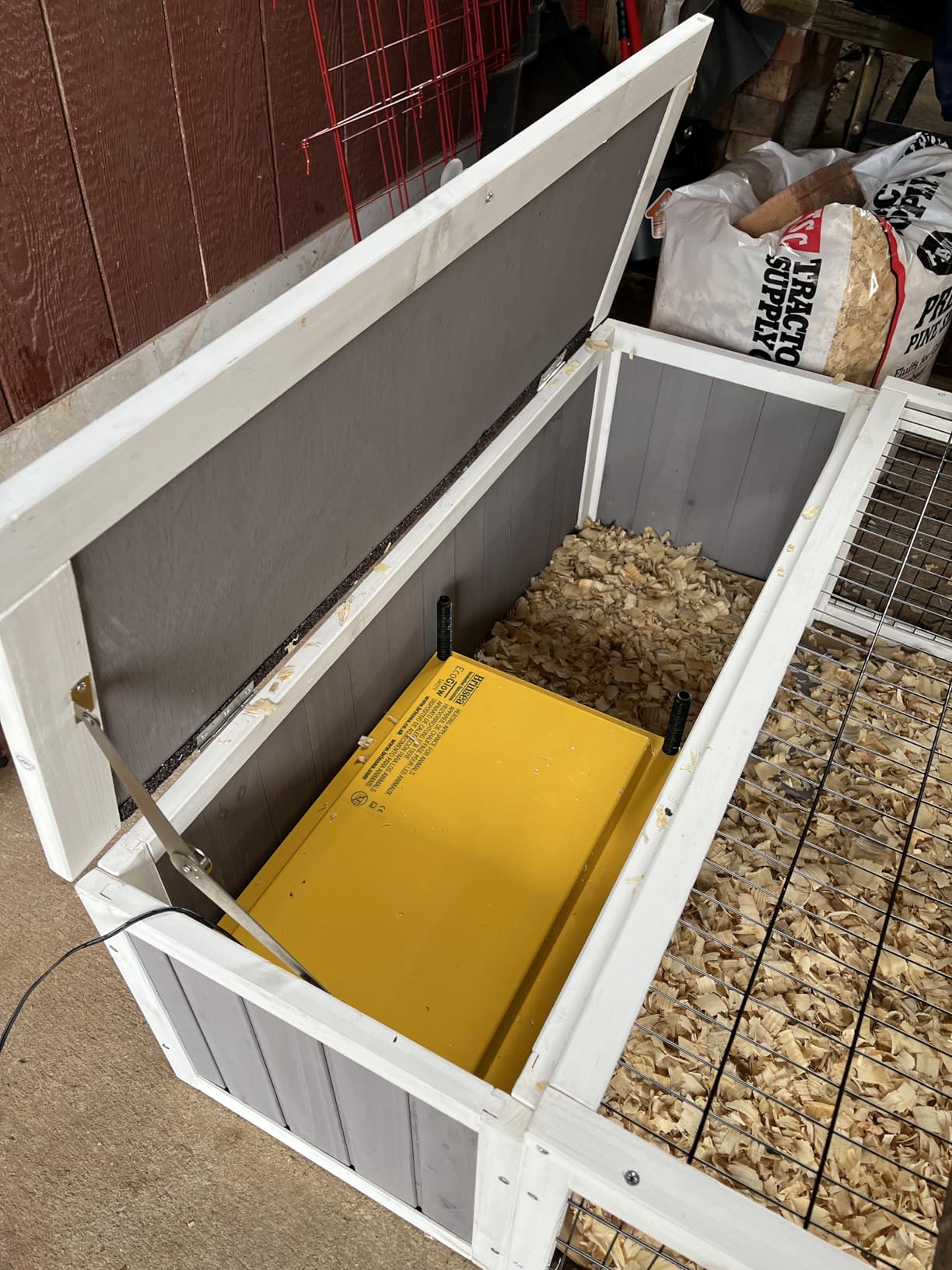
The biggest warning is that this enclosure is not waterproof out of the box. The bottom board warps with rain exposure, so you must apply a weatherproof sealant before placing it outside. Several buyers also report pieces arriving bent or damaged due to packaging issues.
The front section labeled as a door is actually just a ladder ramp, meaning it cannot be closed to secure your tortoise at night. For outdoor use, you will want to add hardware cloth or a solid door panel for predator protection.
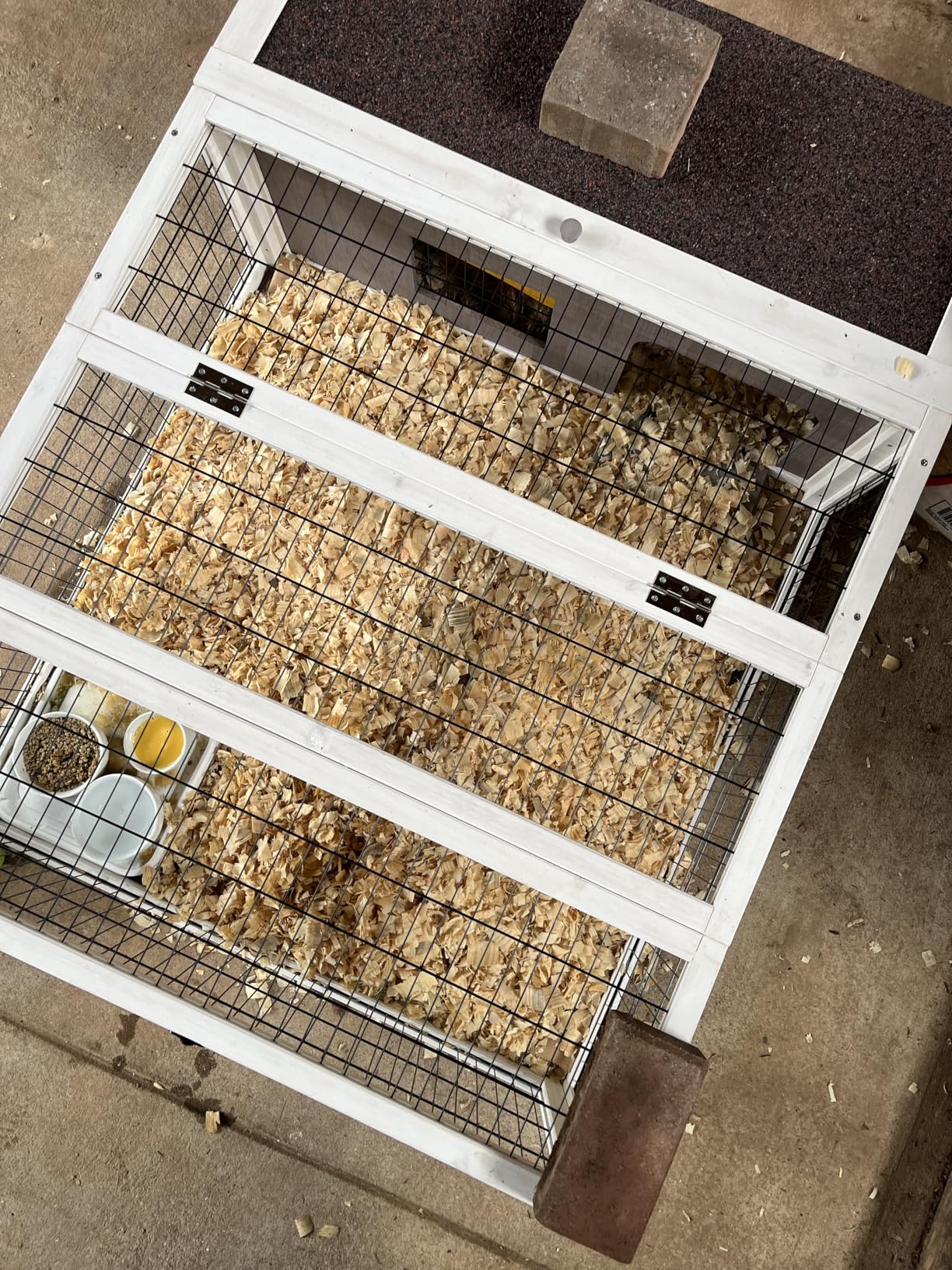
Apply two coats of non-toxic marine sealant to all wood surfaces. Replace the ladder opening with a solid hinged door fitted with a raccoon-proof latch. Add a layer of hardware cloth under the wire top to keep out smaller predators like rats.
It functions best as a covered outdoor run for small tortoises, rabbits, or guinea pigs during supervised daytime hours. For permanent outdoor tortoise housing, burrow-proof skirting around the base is essential since tortoises dig.

34.25 x 19.88 x 7.09 inches
26.46 pounds
100% cedar wood
Hanging light stand included
The VEVOR Cedar Wooden Tortoise Habitat is one of the newer entries in this guide, released in late 2024. The 100% cedar wood construction sets it apart from the fir wood used by most competitors. Cedar is naturally resistant to decay and insects, which should extend the enclosure lifespan with proper care.
The included hanging light stand eliminates the need to buy a separate lamp fixture. The high-transparency ABS side panels give you a clearer view of your tortoise than standard acrylic windows. The fully covered plastic tray protects the wood from moisture and extends the enclosure life.
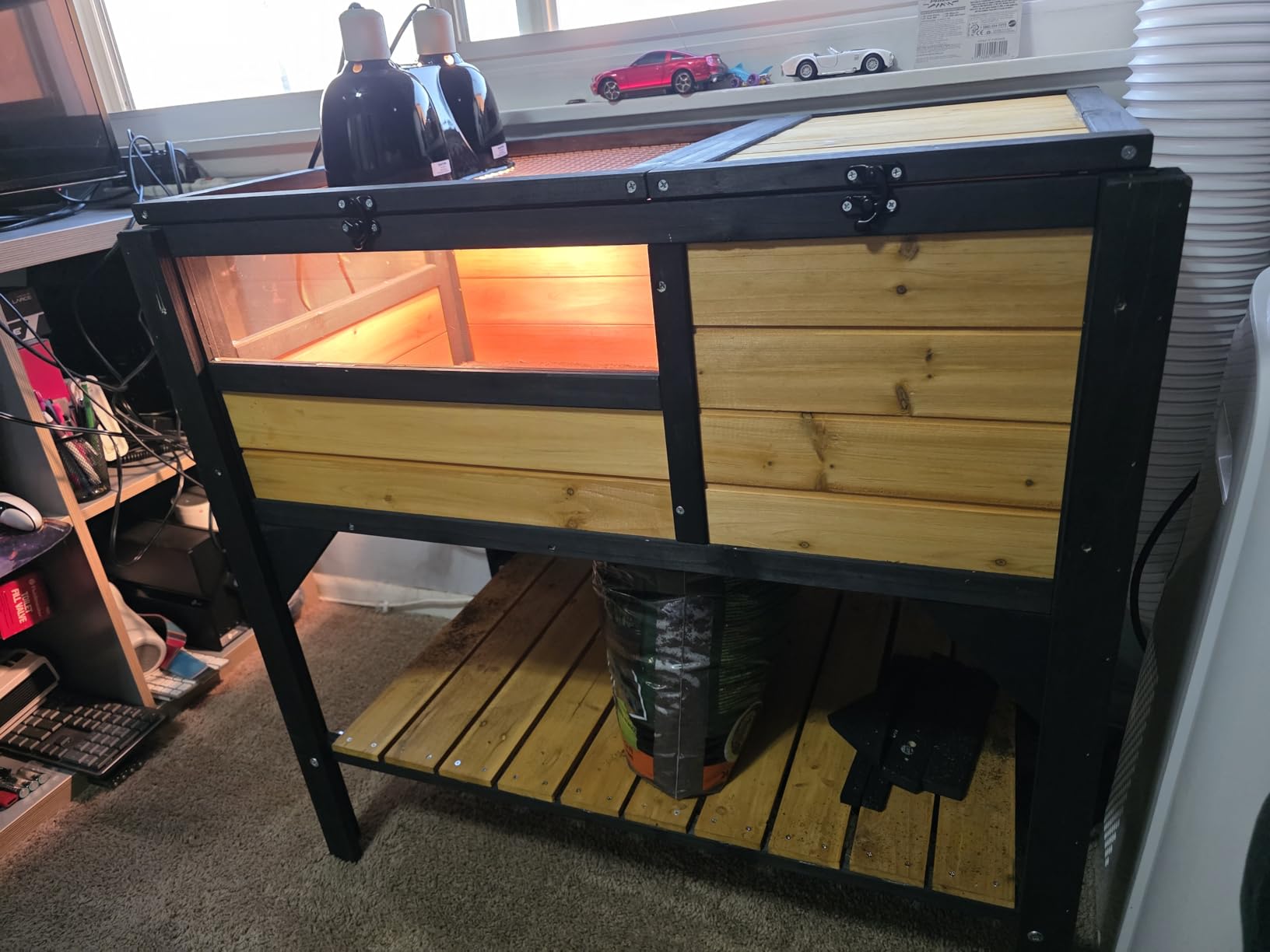
Being a newer product, the 56 reviews mean you have less long-term feedback to rely on compared to the Zoo Med or Aivituvin models. The wood can split during assembly, and some buyers report the instructions are printed backwards or contain errors.
The bottom tray lacks support underneath and can bow under the weight of deep substrate. Adding a strip of support wood underneath the tray prevents this issue entirely.
Cedar contains natural oils that repel insects and resist decay. However, western red cedar aromatics can irritate some reptiles. Air out the enclosure for at least a week before introducing your tortoise, and monitor for any respiratory signs.
Cut a thin piece of plywood or rigid plastic to fit under the tray. This distributes the weight of substrate and prevents sagging. The fix takes five minutes and costs under five dollars.
Picking the right enclosure comes down to matching the habitat to your tortoise species, your available space, and whether you need an indoor or outdoor setup. The best tortoise enclosures share a few core features regardless of brand or price.
Indoor tortoise enclosures prioritize temperature control, UVB lighting placement, and visibility. Wooden tortoise tables and ECOFLEX habitats work best indoors because they offer open-top airflow that lets your heat and UVB lamps do their job. Glass aquariums are generally not recommended for tortoises because they trap humidity and limit air circulation.
Outdoor tortoise enclosures need to handle rain, predators, and burrowing. Look for weatherproof materials, secure latches, and burrow-proof skirting around the base. The Rockever and the covered outdoor models work for supervised outdoor time, but any permanent outdoor pen should have hardware cloth extending at least 12 inches below ground level.
The minimum recommended floor space for small tortoise species like Russian, Hermanns, and Greek tortoises is 8 square feet for a single adult, though bigger is always better. The New Age Pet ECOFLEX 48 inch model hits this mark, while most standard wooden tortoise houses provide 4 to 6 square feet and work better as juvenile setups.
For medium species like Leopard tortoises, plan for at least 16 square feet. Large species like Sulcata tortoises eventually need entire yards, not commercially available enclosures. Hatchlings of any species can start in smaller enclosures but outgrow them within a year.
Solid fir wood is the most common material and offers good value, decent insulation, and a natural look. The downside is that wood rots, warps, and absorbs odors over time. Expect 3 to 5 years from a quality wooden enclosure with proper sealing and maintenance.
ECOFLEX composite, used by New Age Pet, is moisture-resistant, will not rot or warp, and comes with a 10-year warranty. It costs more upfront but lasts significantly longer. PVC enclosures, like those from Toad Ranch, offer premium durability and custom sizing at a higher price point.
Every tortoise enclosure needs a temperature gradient with a basking spot around 95 degrees and a cool end near 75 degrees. UVB lighting is non-negotiable for proper shell and bone development. Open-top enclosures with mesh lids let you position both heat and UVB fixtures directly above the basking area.
Ventilation matters because stagnant air leads to respiratory infections. Enclosures with vented side panels and mesh tops maintain better airflow than solid-walled vivariums. Avoid glass tanks with small screen lids for this reason.
The most common mistake is buying an enclosure that is too small. Pet stores routinely sell enclosures sized for hatchlings, and new owners do not realize their tortoise will outgrow it within months. Always size for the adult tortoise, not the baby.
Other frequent mistakes include using cedar or pine shavings as substrate (the oils are toxic to tortoises), skipping UVB lighting entirely, and failing to seal outdoor enclosures against moisture. Glass tanks remain a popular but poor choice because they trap humidity and block airflow.
The best type of enclosure for a tortoise is an open-top wooden tortoise table or a moisture-resistant ECOFLEX habitat with mesh ventilation. These designs allow proper airflow, support heat and UVB lamp placement, and give your tortoise enough floor space to walk and burrow. Glass aquariums are generally not recommended because they trap humidity and limit air circulation.
Most healthy adult tortoises can tolerate a brief drop in temperature for 1 to 2 days, but it is not ideal. If your heat lamp fails, keep the room temperature above 70 degrees and limit handling. Hatchlings and sick tortoises are more vulnerable to cold and should have a backup heat source available at all times.
Common mistakes include using an enclosure that is too small for the species, skipping UVB lighting, using cedar or pine substrate which is toxic to tortoises, failing to create a temperature gradient, and choosing glass tanks that trap humidity. Other errors include poor ventilation, lack of a secure hide area, and not sealing outdoor enclosures against moisture and predators.
Tortoises like a temperature gradient with a warm basking spot and a cooler retreat, a dark private hide box for sleeping, a shallow water dish for soaking, and natural substrate for digging. They also benefit from UVB exposure for shell health, varied terrain like rocks and cork bark for enrichment, and enough floor space to walk several laps per day.
Small species like Russian, Hermanns, and Greek tortoises need a minimum of 8 square feet of floor space for a single adult. Medium species like Leopard tortoises need at least 16 square feet. Hatchlings can start in smaller enclosures but typically outgrow them within the first year, so size for the adult tortoise whenever possible.
Choosing the best tortoise enclosure comes down to your species, your space, and how long you want the habitat to last. The New Age Pet ECOFLEX 48 inch habitat remains our top overall pick thanks to its moisture-resistant material, 10-year warranty, and professional sliding-glass design. For value, the Aivituvin Wooden Tortoise House delivers the best balance of price and features for first-time keepers.
If mobility matters to you, the Gowoodhut habitat on wheels is the most affordable option we tested. Whatever you choose in 2026, remember that tortoises live for decades, so investing in a quality enclosure now pays off every single year your tortoise calls it home.