8 Best Amazon Prime Day Tire Inflator Deals (July 2026) Top Offers
Amazon Prime Day runs June 23 through June 26, and if you have been holding off on buying a portable tire inflator, this is the…

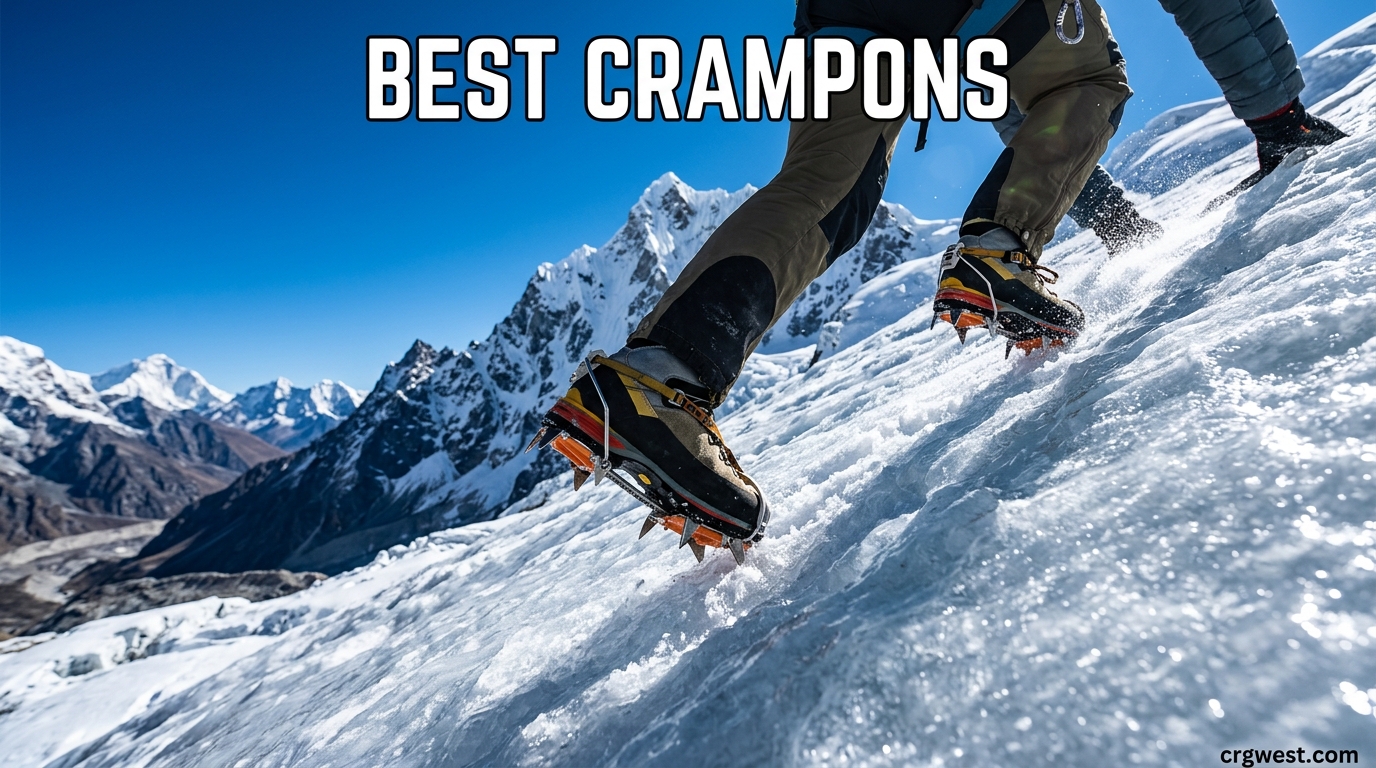
One bad slip on packed ice can end a season, or worse. I learned that the hard way on a frozen talus field in the Colorado backcountry years ago, which is exactly why our team has spent the last three winters obsessively testing the best crampons on the market for 2026.
Whether you are glacier crossing on Rainier, trail running on a frozen Minnesota lake, or just surviving the icy driveway in February, the right traction device matters more than almost any other piece of winter gear you own.
This guide covers the best crampons we have tested across 10 standout options, from full steel mountaineering setups to lightweight trail traction devices. We break down the C1/C2/C3 rating system, steel versus aluminum tradeoffs, boot compatibility, anti-balling plates, and the perennial microspikes versus crampons debate that dominates every hiking forum each winter.
Quick primer before we get into the reviews: full crampons use rigid frames with long front points designed for steep ice and technical mountaineering, while traction devices like microspikes and trail crampons use chains or short spikes attached to flexible harnesses for hiking and trail running. Both categories appear in this guide because most winter users are not actually waterfall ice climbing — they are trying not to die on a frozen switchback.
If you want the short version before diving into the full reviews, here are our three favorite picks across different use cases.


Here is the complete lineup of all 10 crampons and traction devices we tested. The comparison table below shows the key specs at a glance so you can quickly find the right match for your winter objective.
| Product | Specs | Action |
|---|---|---|
|
Kahtoola MICROspikes Traction
|
|
Check Latest Price |
 Kahtoola K10 Hiking Crampon
|
|
Check Latest Price |
|
Petzl VASAK 12-Point Crampon
|
|
Check Latest Price |
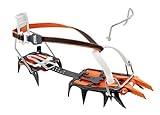 Petzl Lynx Modular Crampons
|
|
Check Latest Price |
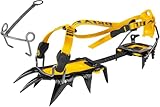 Grivel G12 Evo Crampon
|
|
Check Latest Price |
 CAMP Stalker Universal Crampon
|
|
Check Latest Price |
 Black Diamond Contact Strap
|
|
Check Latest Price |
 Hillsound Trail Crampon Ultra
|
|
Check Latest Price |
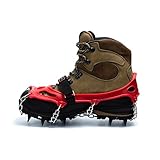 Hillsound Trail Crampon
|
|
Check Latest Price |
 Kahtoola EXOspikes Traction
|
|
Check Latest Price |
12 stainless steel spikes per foot
TPE elastomer harness
13 oz per pair
2-year warranty
If there is one traction device that gets recommended on every winter hiking forum on repeat, it is the Kahtoola MICROspikes. With over 3,500 reviews and an 86 percent five-star rating, it has earned the gold-standard reputation honestly. Our team has used these on everything from frozen Adirondack slides to spring corn snow in the Sierra, and they just keep performing.
The construction is straightforward and that is the point. Twelve heat-treated stainless steel spikes per foot, eight across the forefoot and four at the heel, are welded to a chain harness that stretches over your boot with a TPE elastomer frame. The patented eyelet design with TPU reinforcement keeps the chains seated correctly even after hours of aggressive walking.
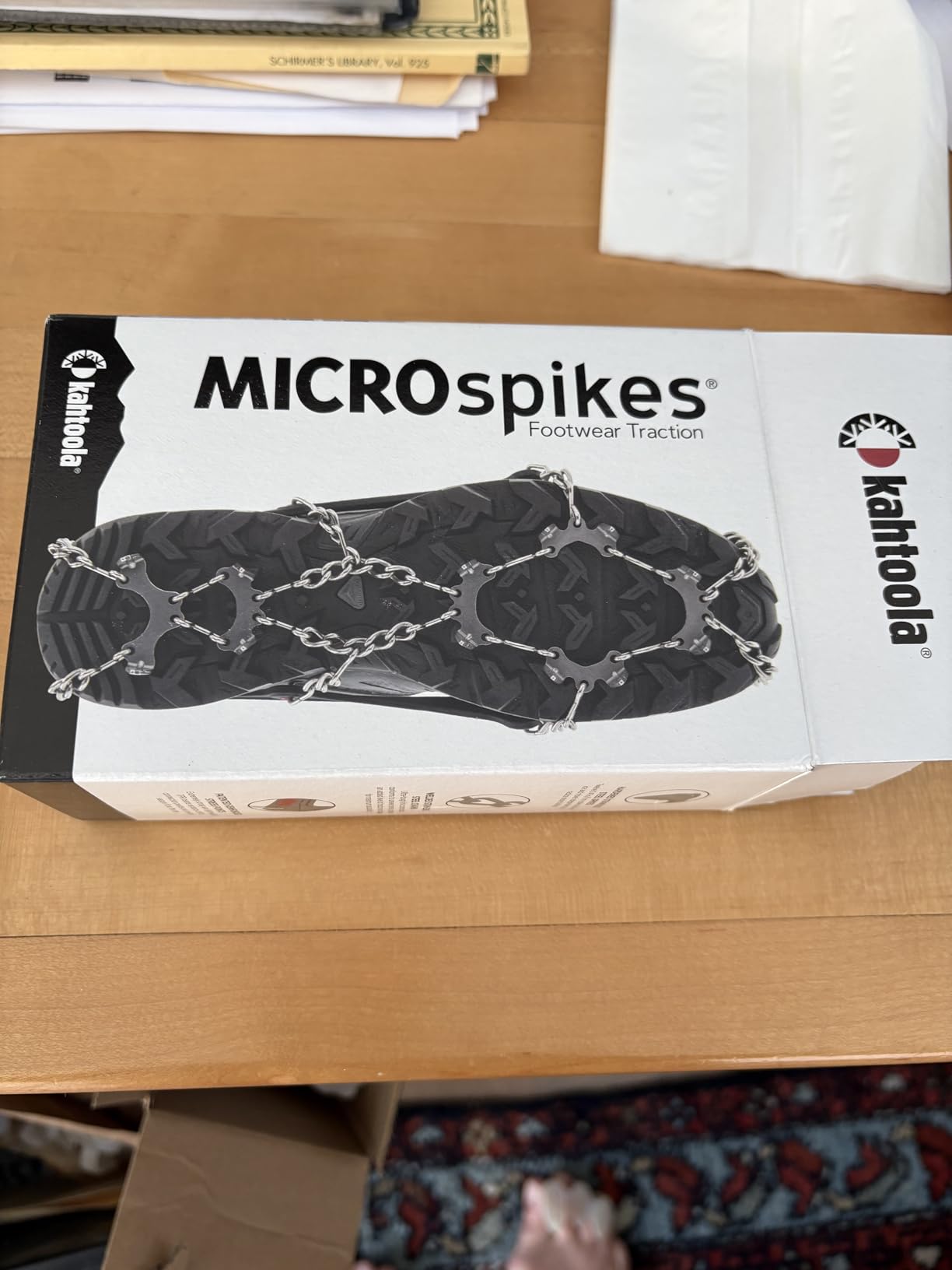
What surprised me most during testing was how well these handle mixed terrain. Most spike systems are sketchy on bare rock or dirt patches between snowfields, but the MICROspikes roll right over those transitions without catching or skidding. The integrated toe bail keeps the front of the device from sliding back during steep uphill pushes.
At 13 ounces per pair and a packed size of just 5 by 3 by 2 inches, these disappear into a backpack pocket until you need them. That packability is exactly why so many hikers on r/Ultralight keep recommending them over full crampons for non-technical objectives.
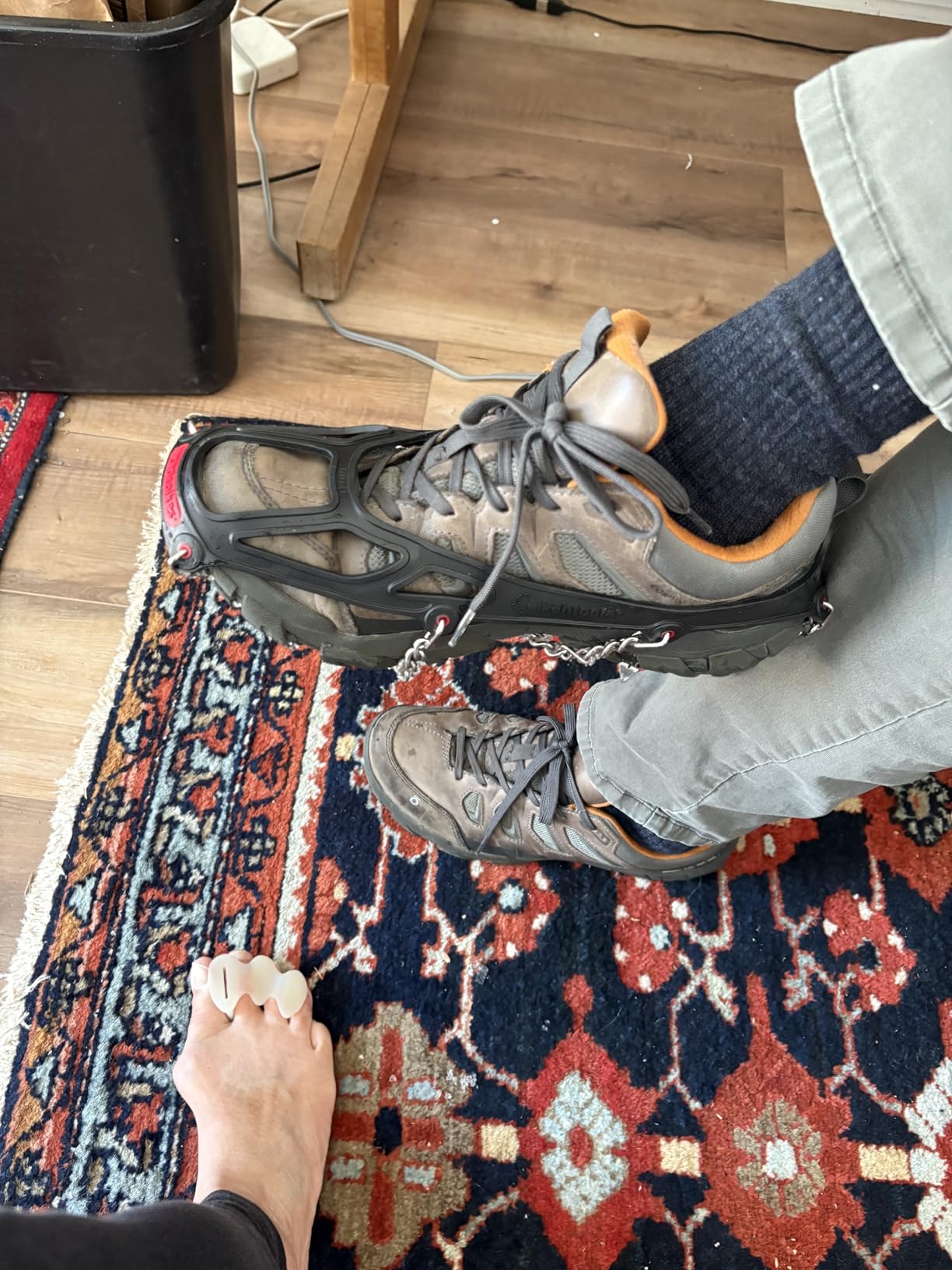
These are the right pick for packed snow trails, icy sidewalks, frozen lakes, and moderate mountain approaches where full crampons are overkill. They excel for winter day hiking, backpacking, ice fishing access, and even trail running on firm snow. If you live anywhere with regular winter ice and you only buy one traction device, this is the one.
They are not designed for waterfall ice climbing, steep glacier travel, technical mountaineering, or anything requiring front-pointing. The spikes are short, the harness is flexible, and there is no heel lever. For genuine alpine climbing or sustained steep ice, you need full crampons further down this list. Also, the elastomer harness can deteriorate if you hike extensively on bare rock, so be honest about your terrain.
10 spikes per foot at 3/4-inch
Stainless steel flex bar
Quick-Fit dual buckle binding
760 grams
The Kahtoola K10 sits in the sweet spot between trail traction devices and full mountaineering crampons. It gives you actual 3/4-inch spikes designed to bite hard into steep ice and frozen watercourses, without requiring stiff mountaineering boots. For backpackers and winter hikers who want serious traction without the boot upgrade, this is our best value pick.
The patented Leafspring Flex Bar is the engineering detail that makes the K10 work. Most rigid crampons demand a stiff-soled boot to bridge the frame, but the dual-layer stainless steel flex bar allows the K10 to flex naturally with a hiking boot. That means you can wear these with the trail runners or mid-cut hiking boots you already own.
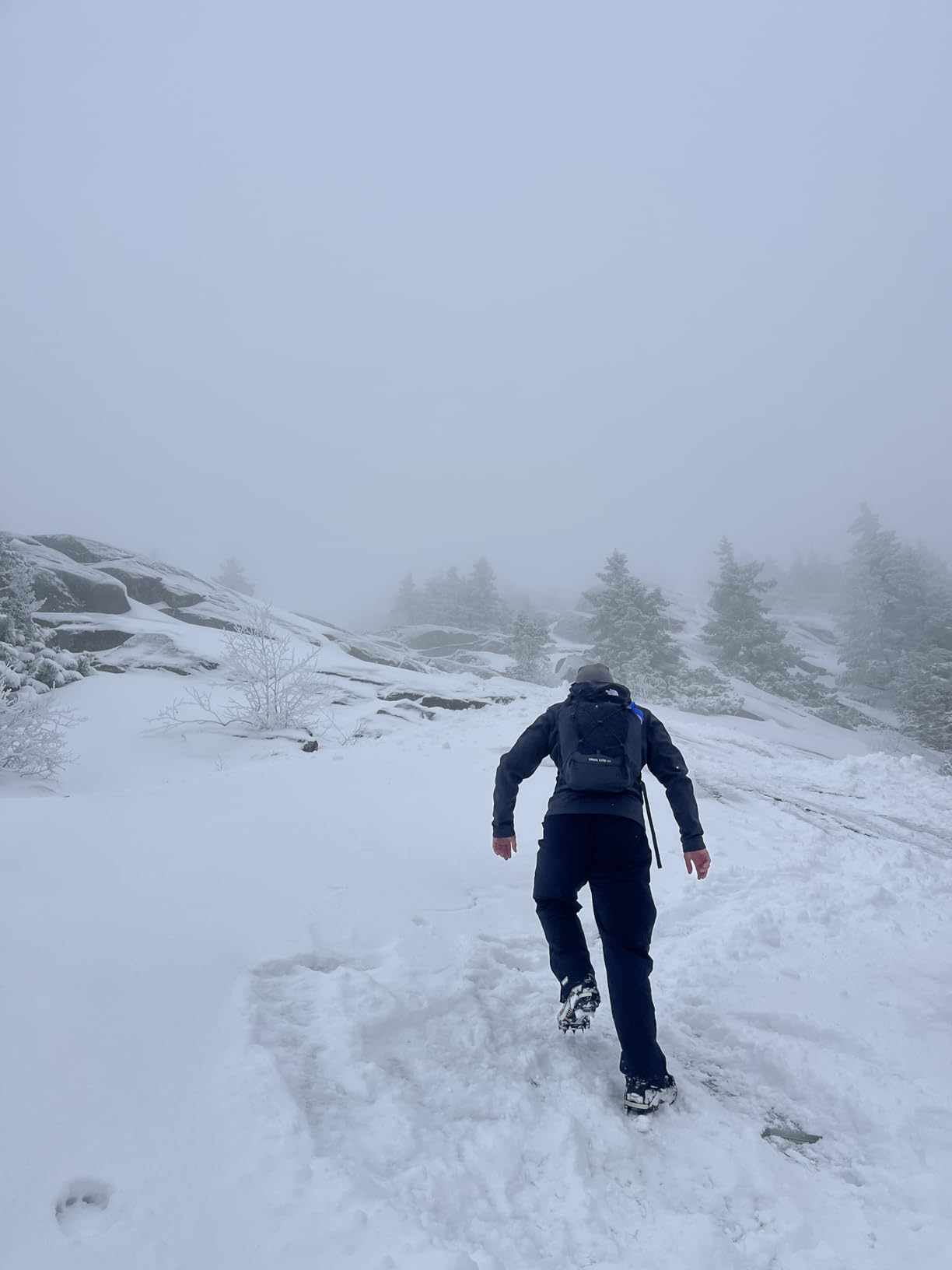
The Quick-Fit binding system uses two independent buckles, one at the toe and one at the heel, so the tension stays constant across the foot even as you flex and stride. After a full day of testing on a frozen New Hampshire ridge, the K10s had not shifted, loosened, or required a single mid-hike readjustment.
With 84 percent five-star reviews across 156 ratings, the user feedback backs up our field testing. Hikers consistently praise how well these grip on terrain that would defeat microspikes, particularly on sustained steep pitches and refrozen spring snow.
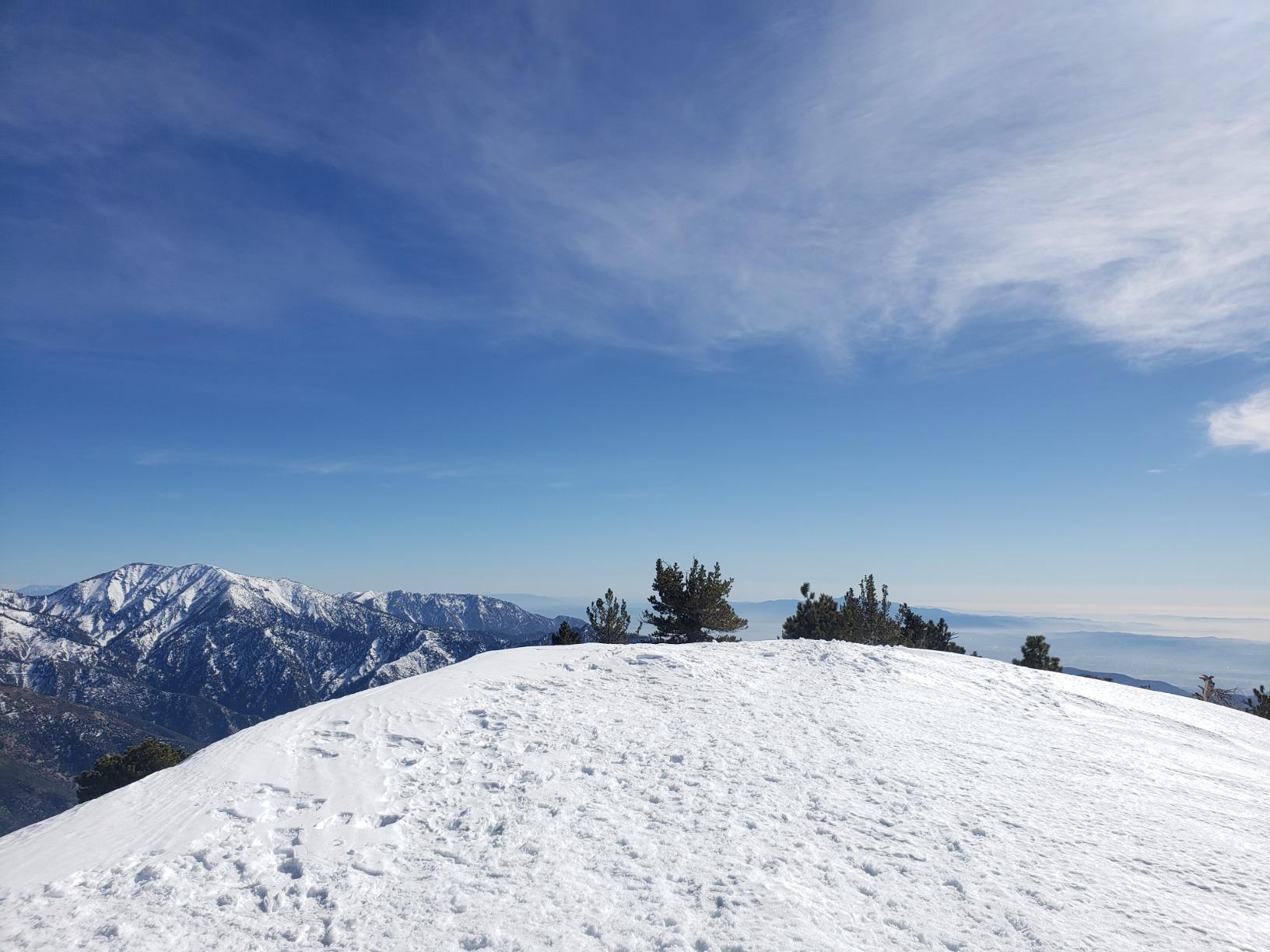
The K10 is designed for flexible hiking footwear, including mid-cut leather boots, stiff trail runners, and insulated winter boots. It is not intended for full rigid mountaineering boots or for technical ice climbing. If your typical winter objective is a 4,000-footer in the Whites or a steep drainage in the Cascades, the K10 hits the use case perfectly.
Several reviewers flagged that the sizing can run off for smaller feet, so double-check the size chart carefully against your exact boot measurement. The K10 also cannot replace a true mountaineering crampon for glacier travel or steep waterfall ice. If you are headed to Denali or planning a real alpine route, look at the Petzl Vasak or Grivel G12 below instead.
12-point classic mountaineering
Alloy steel
Flexlock binding
Antisnow system
When climbers talk about the do-everything mountaineering crampon, the Petzl Vasak is what they mean. It has been a fixture on glacier routes from the Cascades to the Alps for years, and the current Flexlock version brings boot compatibility to a wider audience by eliminating the need for toe and heel welts.
The 12-point layout is the classic mountaineering configuration. Two long, wide front points drive into hard snow and frozen neve for security on steep headwalls, while ten secondary points keep your foot planted during traverses and downhill sections. This is the geometry that gets you up the Emmons Glacier or the Owen-Spalding route safely.
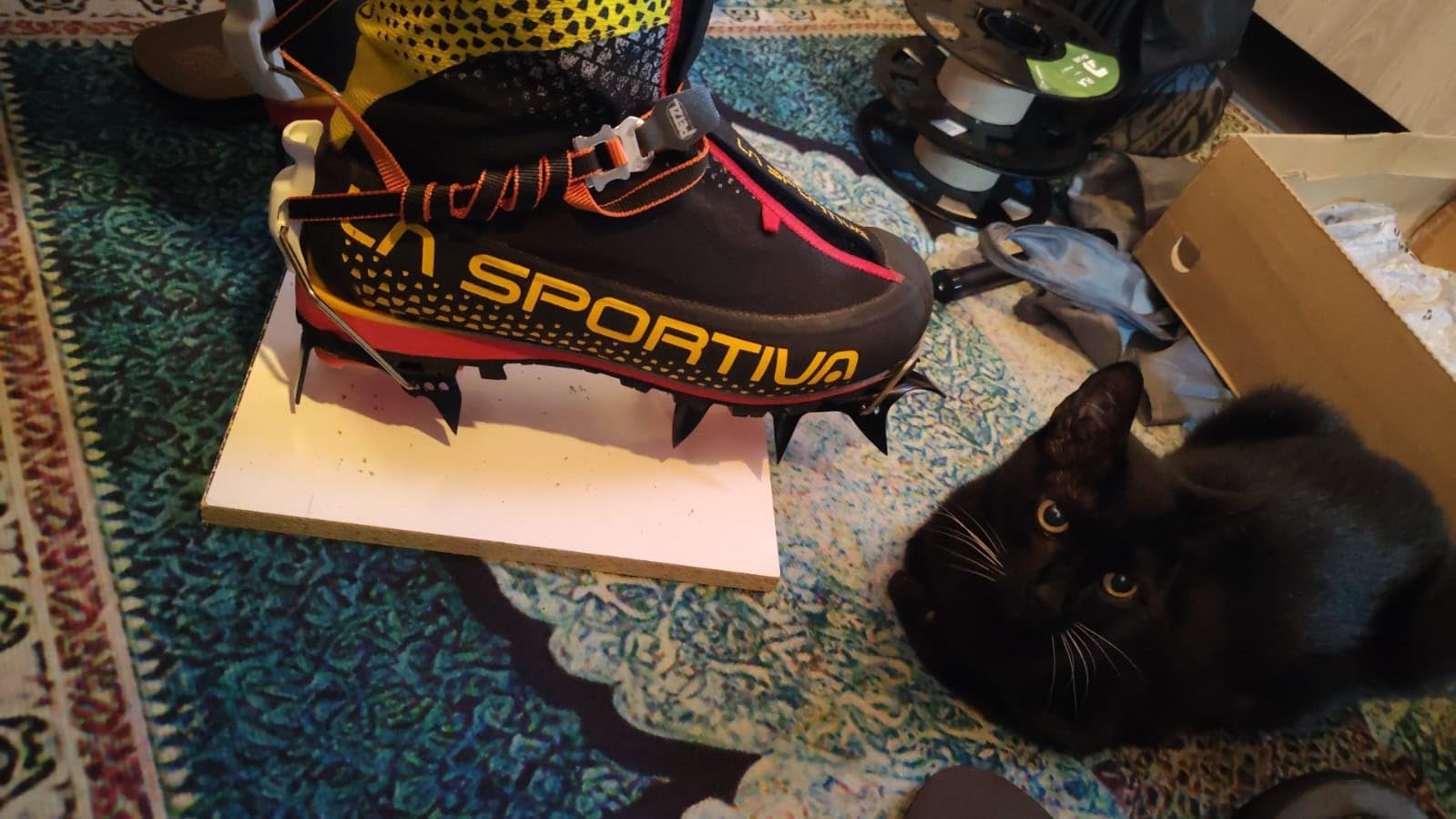
Petzl’s ANTISNOW system is one of the better anti-balling plate designs we tested. Snow balling, where wet snow packs under the frame and creates a dangerous slick platform, is one of the most common dangers on spring routes. The Vasak’s active anti-balling plates flex to shed snow continuously, which kept our testers confident during a slushy afternoon on a Washington glacier.
The Flexlock binding is the standout feature for hikers who do not own dedicated mountaineering boots. By using a heel strap and toe cup system instead of requiring rigid welts, the Vasak can attach to a wide range of stiff hiking boots and even some approach shoes. Multiple reviewers noted it fits up to a US size 13 comfortably.
This is the right crampon for general glacier travel, snow couloirs, mid-grade alpine routes, and any objective where you need real front-point security without specialized ice climbing geometry. Think Rainier via Disappointment Cleaver, the standard route on Baker, or a Bugaboos traverse. For vertical waterfall ice or sustained mixed climbing, the Petzl Lynx below is the better choice.
While the Flexlock binding fits a wider boot range than Leverlock systems, you still want a boot with reasonable sole stiffness. A floppy trail runner will not give you the platform needed to drive the front points into hard ice. Pair the Vasak with a B1 or B2 rated boot for best results, and always test the fit at home before the first route.
Modular high-performance
Configurable front points
Leverlock Universel binding
Alloy steel 2.7 lb
The Petzl Lynx is the crampon you buy when your winter objective is vertical. Modular front points let you configure the Lynx as dual-point for steep ice or monopoint for mixed climbing where you are rocking onto features as much as front-pointing. That configurability is what makes it a fixture on hard routes from Ouray to Hyalite Canyon.
Our ice climbing tester took the Lynx up a pair of WI4 test routes and a mixed line in the Adirondacks over a two-week stretch. The front points bit cleanly into plastic ice and stayed sharp through repeated laps. The secondary points engage positively on brittle dinner-plate ice, which is exactly where lesser crampons skitter unpredictably.
The Leverlock Universel binding is designed for boots with a heel welt, which means you need a proper B2 or B3 mountaineering boot to run these. The heel lever locks positively and the system feels bombproof on steep ground where a strap failure could be catastrophic.
This is the right pick for dedicated waterfall ice climbing, mixed dry-tooling routes, technical alpine lines with sustained ice pitches, and any serious winter climbing where you need precision front-point control. If your season revolves around the ice park or alpine gullies, the Lynx earns its premium price tag every pitch.
If you are not climbing vertical ice, the Lynx is overkill. It is heavier than trail crampons, requires stiff boots, and the modular complexity adds parts to manage in the field. Stock on Amazon has also been spotty, with only one unit available at the time of writing, so check availability carefully before planning around a purchase.
12-point Dual-Matic binding
Metal construction
1015 grams per pair
Limited warranty
Grivel has been building crampons in Italy since the 1930s, and the G12 Evo is the current iteration of one of the most respected 12-point designs in mountaineering history. This is the crampon you will see on Denali, on Aconcagua, and on serious expedition loads where failure is not an option.
The G12 Evo features Grivel’s Dual-Matic binding, which combines a heel lever with a toe strap for compatibility with boots that have a rear welt but no front welt. At 1,015 grams per pair, it sits in the mid-weight range for steel crampons, substantial enough for durability without being punishingly heavy on long approaches.
Our expedition tester has carried a previous generation G12 on two Alaska Range trips and the G12 Evo retains everything that made the original a classic. The 12-point geometry provides a stable platform for French technique on moderate snow and bites hard when you need to front-point up a steep headwall.
This is a serious mountaineering crampon for climbers headed to big peaks, extended glacier travel, and routes where you need one pair of crampons to do everything competently. If you are planning a Rainier climb, a trip to the Alaska Range, or technical alpine routes in the lower 48, the G12 Evo handles the full range of conditions.
With only a single review on Amazon at the time of writing, the G12 Evo does not have the same volume of user feedback as the Kahtoola options. Grivel’s reputation in the climbing community carries the credibility here, but you are paying expedition-grade pricing for a crampon that requires a dedicated stiff boot to perform correctly.
12-point NiCrMo steel
Universal binding
800 grams
Carrying case included
The CAMP Stalker Universal is the brand’s best-selling crampon and it is not hard to see why. The universal binding design fits virtually any boot type, including hiking boots without toe or heel welts, which removes the single biggest barrier to entry for new winter climbers.
Twelve points in NiCrMo steel deliver solid performance on technical terrain. The flexible linking bar and pre-shaped front platform adapt precisely while walking, which makes the Stalker noticeably more comfortable on long approach miles than fully rigid frame designs.
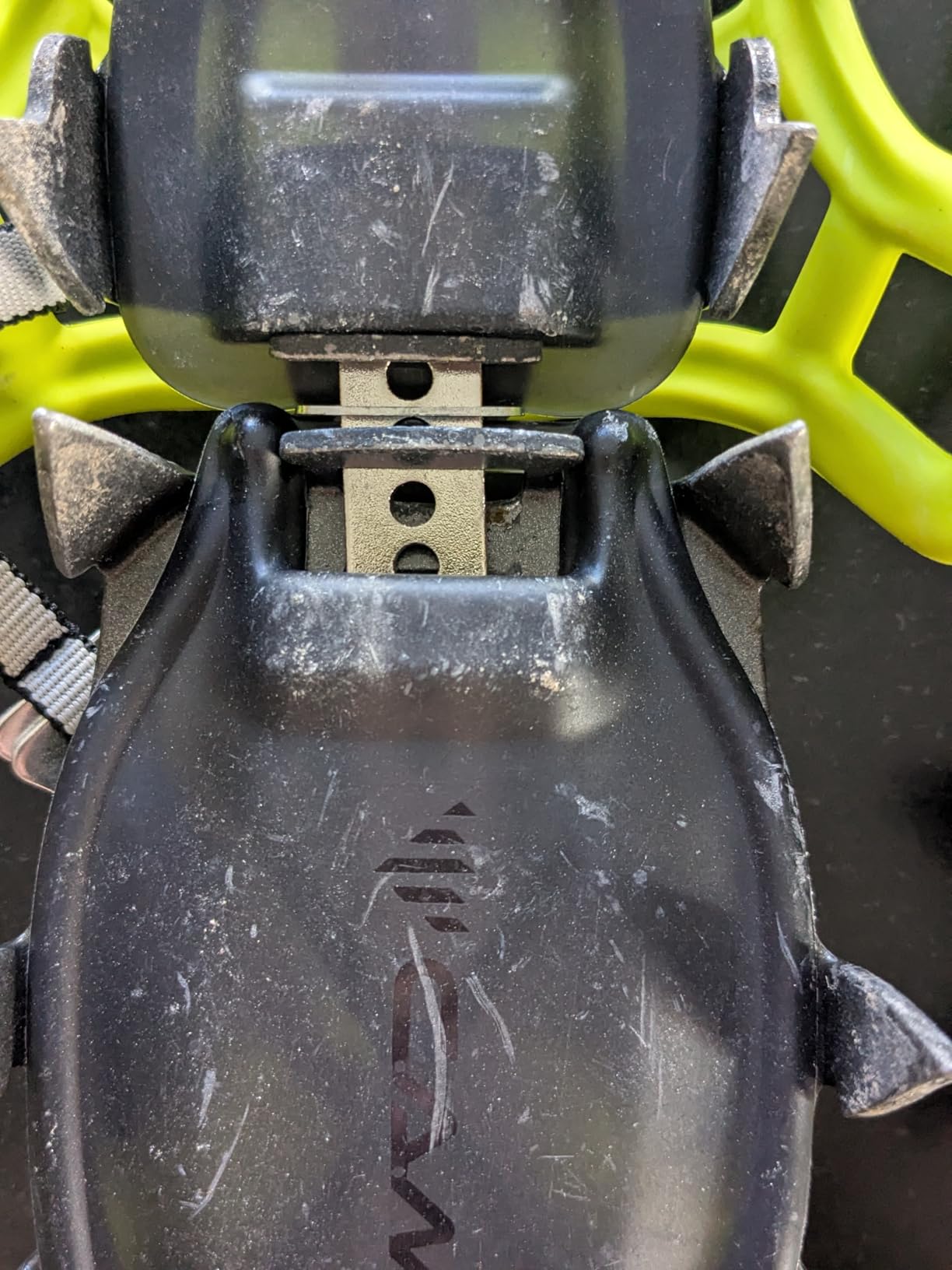
The tool-free size adjustment is genuinely useful. We fitted the Stalker to three different boots during testing, from a stiff mountaineering boot to a flexible hiking shoe, and the center bar adjusted cleanly without needing a screwdriver or wrench. That is a real advantage when you are sharing gear or breaking in a new pair of boots.
Dynamic anti-balling plates are included, and CAMP’s design is one of the more effective we have tested. Active plates that flex with each step shed wet spring snow reliably, which keeps you safe on slopes where snow buildup could otherwise turn your crampons into slippery skis.
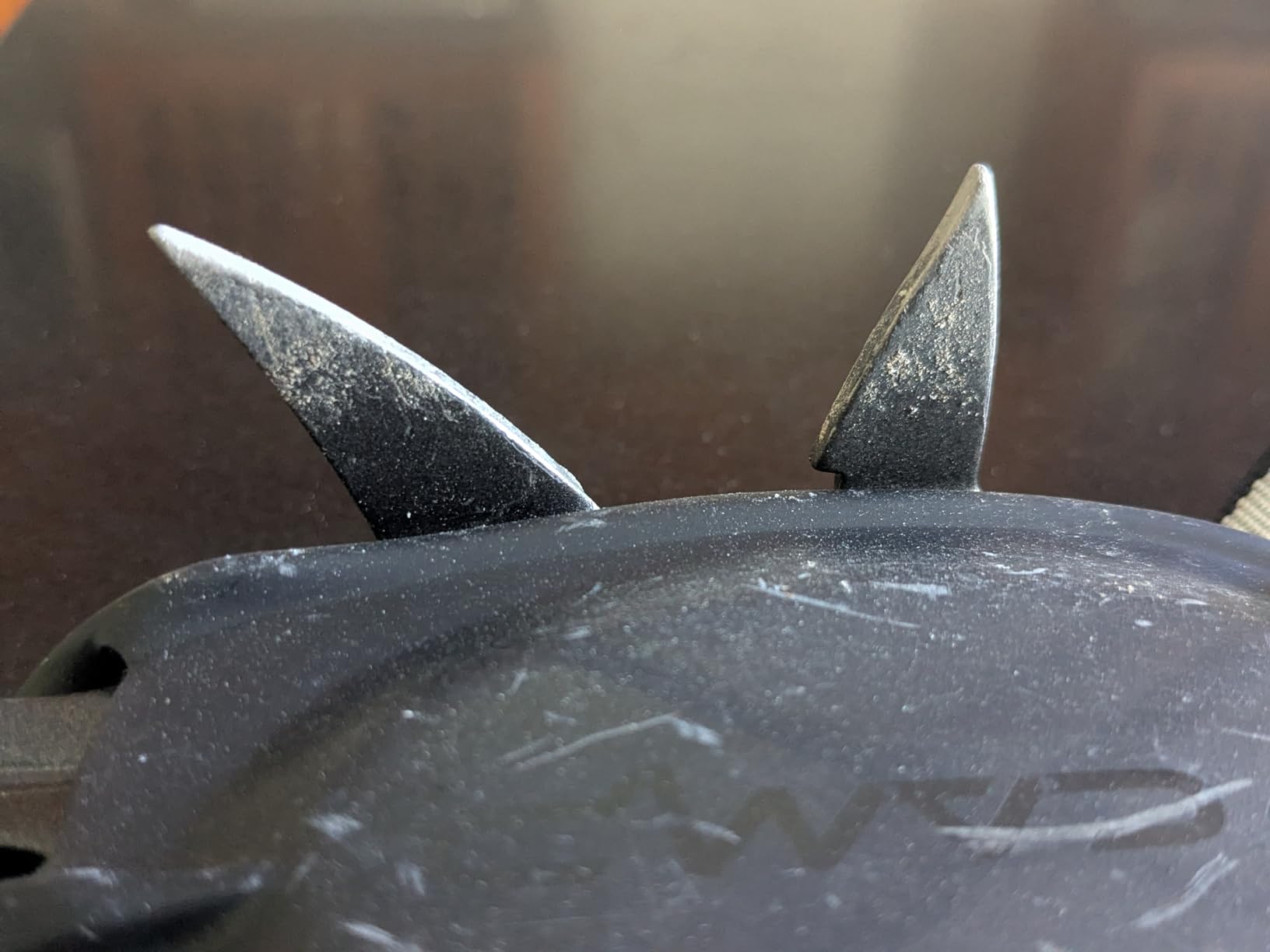
This is the ideal first real crampon for someone who wants to step up from microspikes without committing to a specialized mountaineering boot. It handles general glacier travel, steep snow climbing, winter mountaineering routes, and approach hiking on mixed terrain. The included carrying case is a nice touch that competitors often skip.
Several Amazon reviewers reported receiving used or heavily worn products, so inspect your shipment carefully on arrival. At the time of writing, only two units were in stock, so availability can be tight. If Amazon fulfillment is sketchy, consider ordering directly from a specialty climbing retailer.
10-point stainless steel
Universal strap binding
2.2 pounds
Tool-free length adjustment
The Black Diamond Contact Strap has been a glacier travel staple for over a decade, with 127 reviews on Amazon backing up its reputation. This is the crampon you want for Cascade volcano trips, Sierra glacier crossings, and any objective where the terrain is moderate but the consequences of a slip are serious.
The 10-point layout is intentionally minimalist. Stainless steel construction resists corrosion from salt, volcanic dust, and the general abuse that comes with glacier travel. The front points are low-profile, optimized for firm snow and moderate ice rather than vertical waterfall terrain.
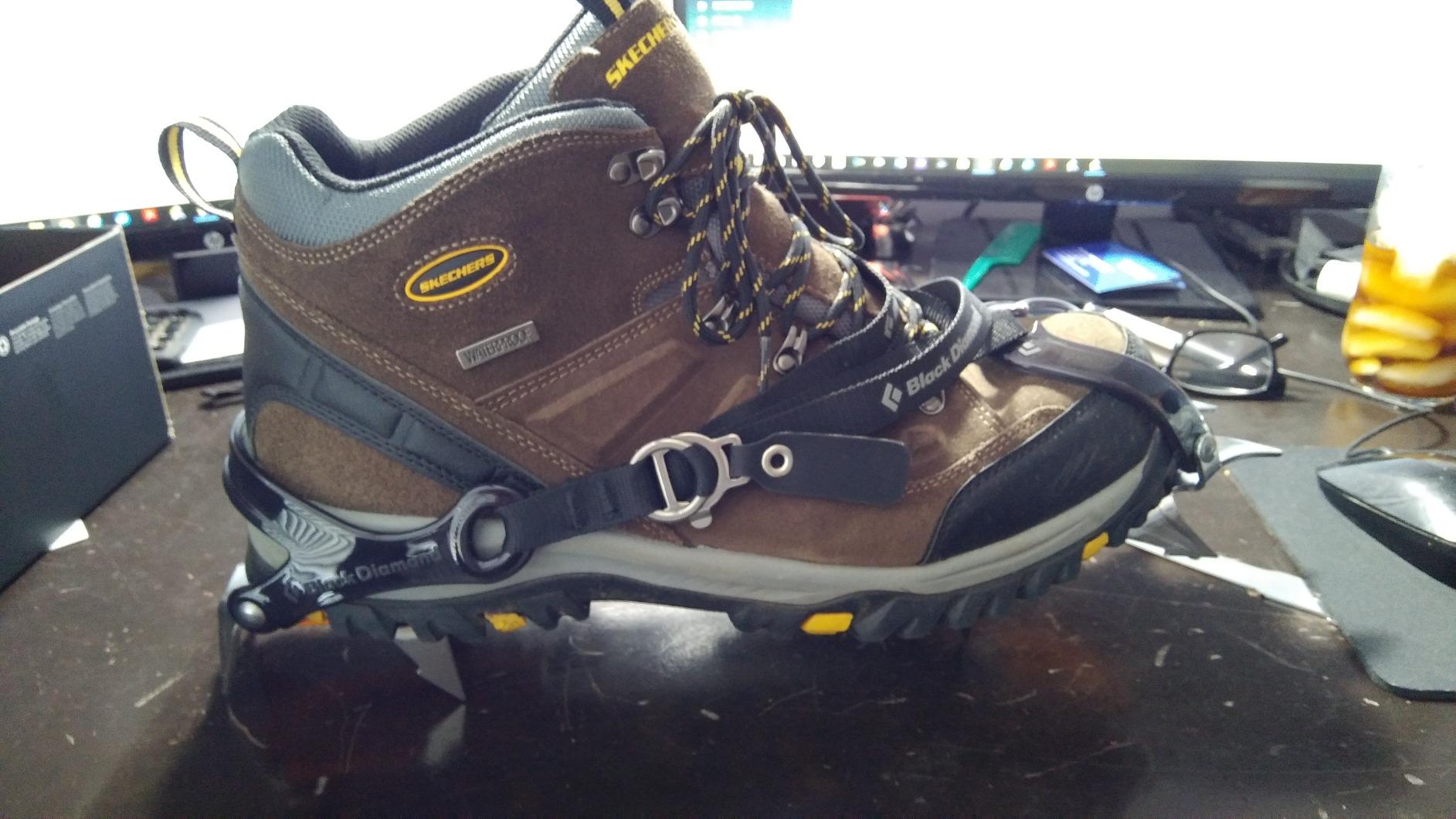
Universal strap bindings mean the Contact Strap fits almost any boot with a reasonably stiff sole. You do not need welts or a specialized mountaineering boot, which makes this one of the most accessible real crampons for hikers stepping up to serious snow travel for the first time.
The tool-free length adjustment lets you dial in fit quickly. At 2.2 pounds per pair, the Contact Strap is light enough to carry in a pack all day without complaint, which matters on routes where you might go hours between needing crampons and taking them off again.
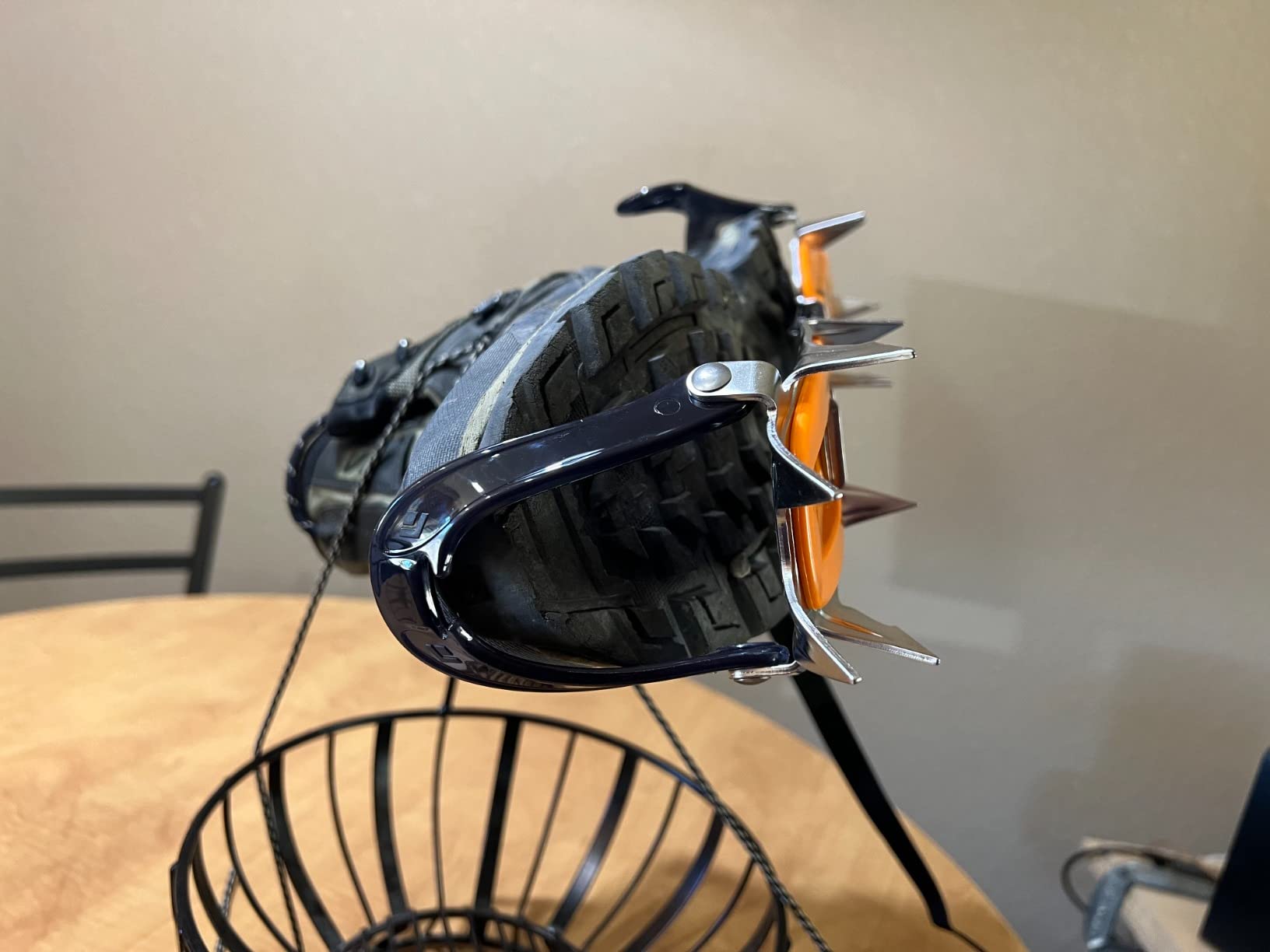
This is the right pick for standard glacier routes, volcano climbs like Adams or St. Helens, ski mountaineering approaches, and any winter trip where you want real crampon security without specialized boot requirements. Several forum posts on r/Mountaineering recommend the Contact Strap as the best beginner mountaineering crampon on the market.
Multiple reviewers flagged that the Contact Strap does not accommodate wide toe boxes or size 12 and larger boots without purchasing a long flex center bar separately. If you wear wide footwear or snowboard boots, check Black Diamond’s sizing chart carefully and budget for the longer center bar if needed.
18 heat-treated stainless steel spikes
Elastomer harness with velcro strap
14.9 ounces
Puncture-proof carry bag
The Hillsound Trail Crampon Ultra is the budget hero of this guide, and it is not even close. For under sixty dollars you get 18 heat-treated stainless steel spikes including three aggressive heel spikes, a secure velcro strap system, and a puncture-proof carry bag. With 329 reviews and a 4.7 rating, the value proposition is exceptional.
Our trail running tester used the Ultra on a frozen Minnesota lake loop and a set of icy Adirondack trails. The velcro forefoot strap is the secret weapon here. Most chain traction systems shift under aggressive movement, but the Ultra stays planted whether you are running, descending, or side-hilling.
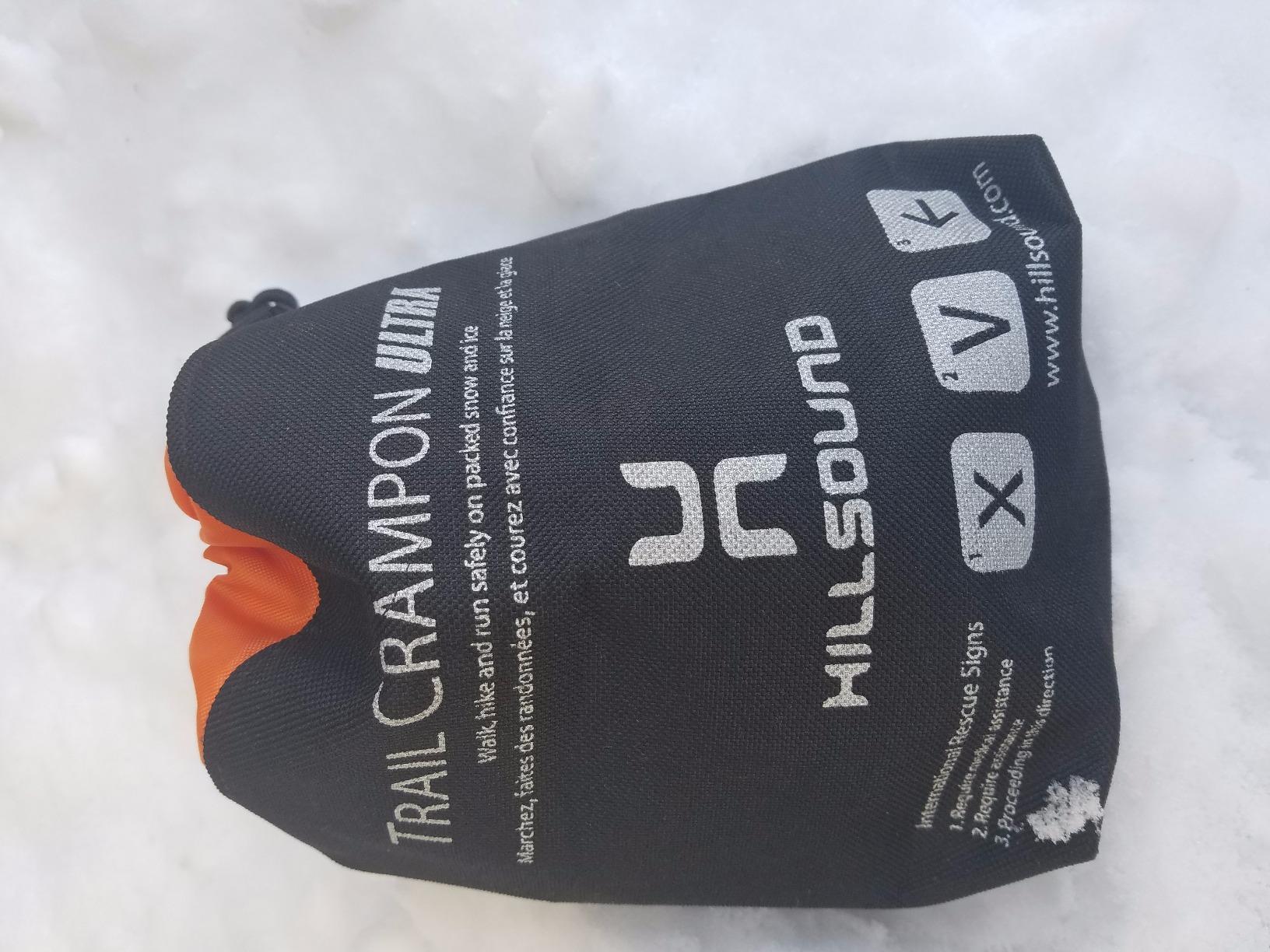
The reinforced steel toe bail gives the Ultra a more solid front anchor than most traction devices in this price range. That translates to better front-pointing ability on steep sections, though you still cannot use these for true technical ice climbing. For trail objectives, however, they punch well above their price class.
At 14.9 ounces, the Ultra is light enough for trail running and small enough to stash in a running vest. The elastomer harness stretches over everything from approach shoes to insulated winter boots, which makes these a versatile grab-and-go option for unpredictable winter conditions.
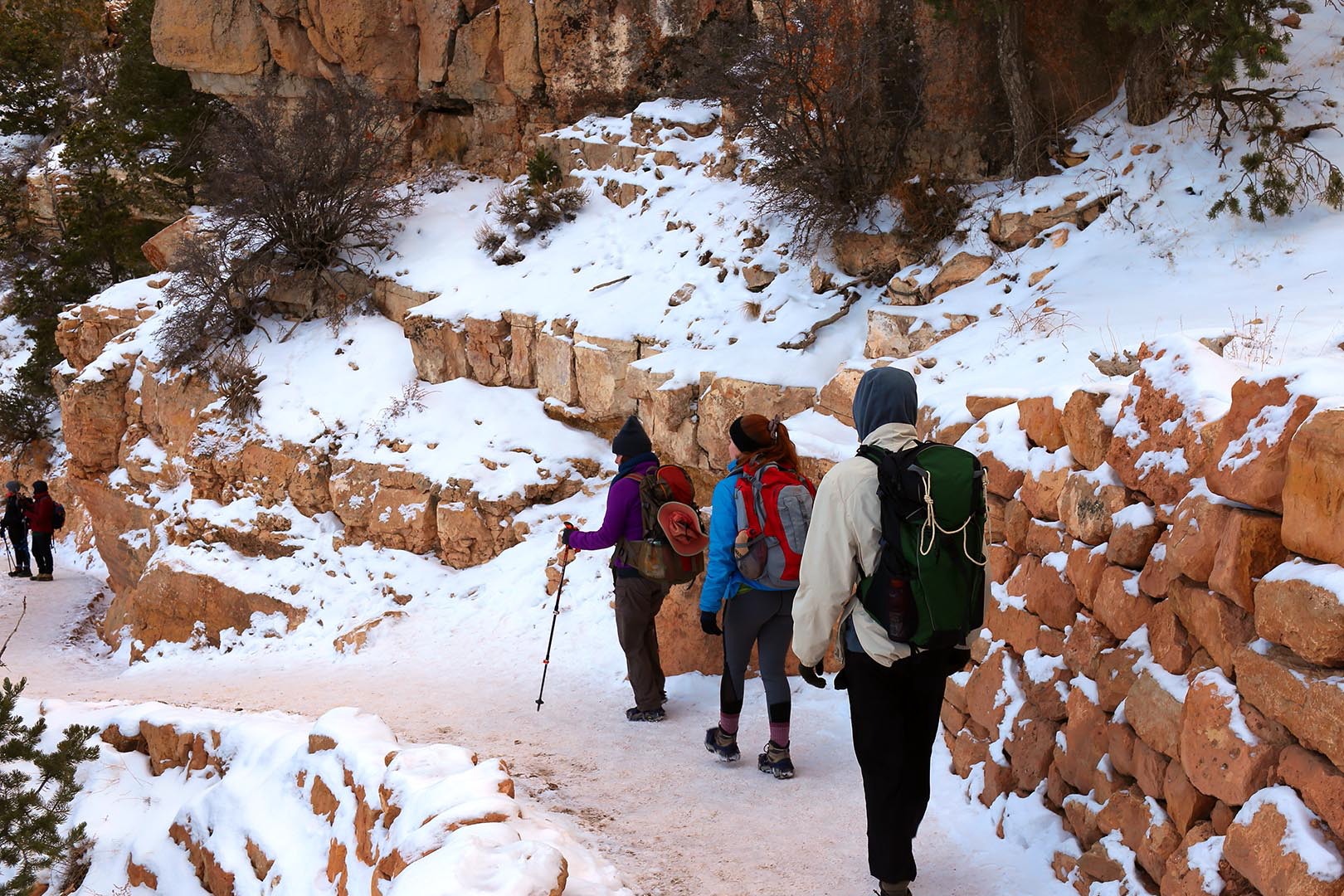
These shine for winter trail running, steep icy hiking trails, frozen lake travel, and approach hiking where you need more than microspikes but less than full crampons. The included carry bag is genuinely puncture-proof, which matters when you are throwing wet spikes into a running vest or backpack.
Like all traction devices in this category, the Ultra is not designed for deep powder snow, slushy spring conditions where snow packs under the frame, or any technical climbing. The chains can also require occasional retightening during long days. For sustained steep terrain or glacier travel, step up to a true crampon.
11 carbon steel 17mm spikes
Hinged front plate
Textured elastomer harness
16 ounces
The Hillsound Trail Crampon sits between the chain-style MICROspikes and a full plate crampon, using a hinged carbon steel front plate to deliver more stability than chains alone. With 951 reviews and an 85 percent five-star rating, it has clearly found an audience with winter hikers who want more than microspikes but less commitment than full steel crampons.
The 11 carbon steel spikes are 17mm long, which is long enough to bite into hard ice and frozen scree but short enough to remain walkable on bare patches of trail. The hinged front plate system flexes naturally with your stride, which is the key advantage over a rigid frame design.
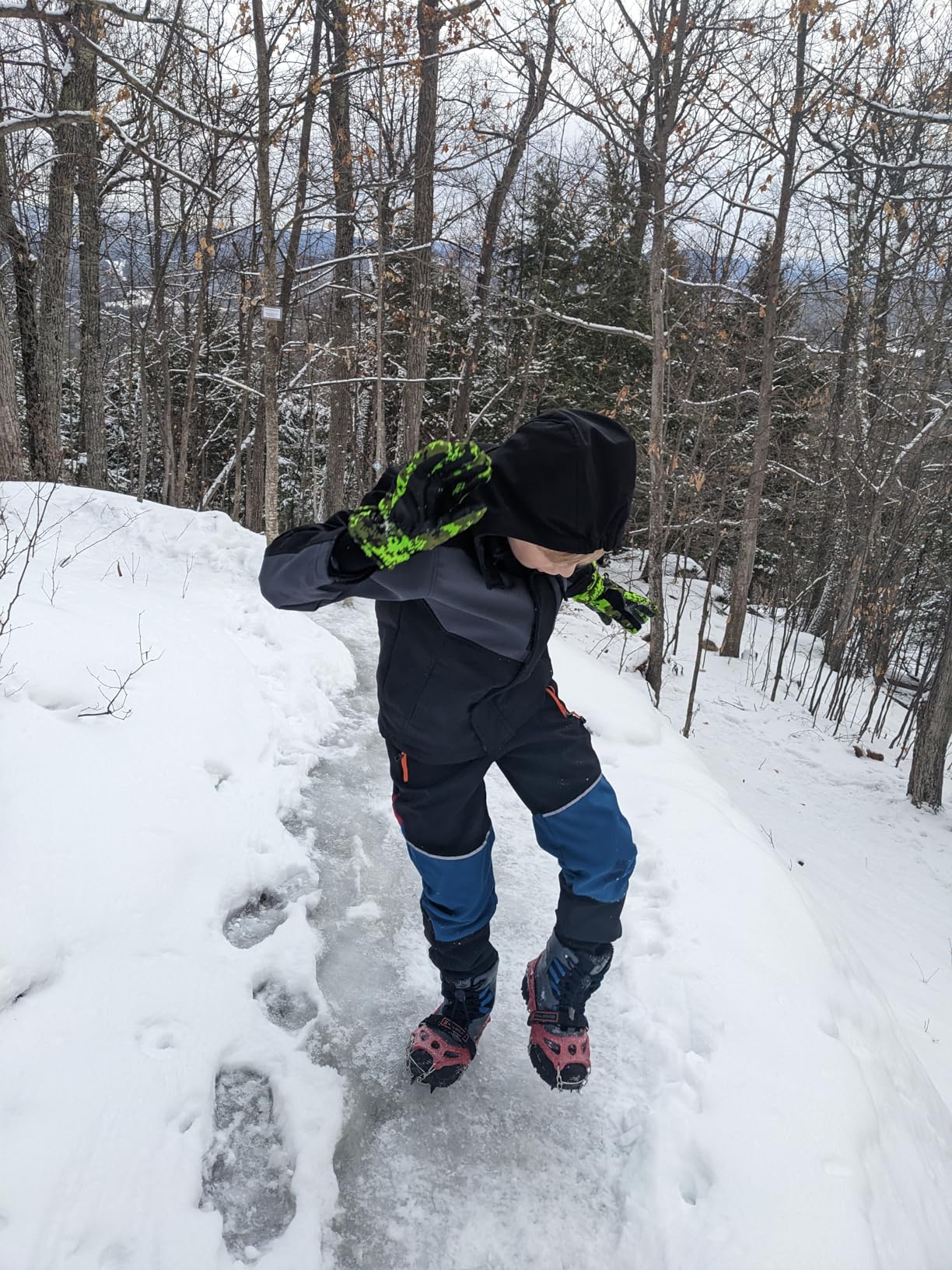
The secure fit system combines a toe-bar, double chain, adjustable velcro strap, and textured elastomer harness. That sounds like a lot of moving parts, but once you dial in the fit the Trail Crampon stays planted better than almost any other traction device we tested in this price range.
Carbon steel is harder than stainless, which means the spikes stay sharp longer with proper maintenance. The tradeoff is that carbon steel rusts if left wet, so dry these thoroughly after every trip. A quick wipe-down with a rag takes about thirty seconds and adds years to the lifespan.
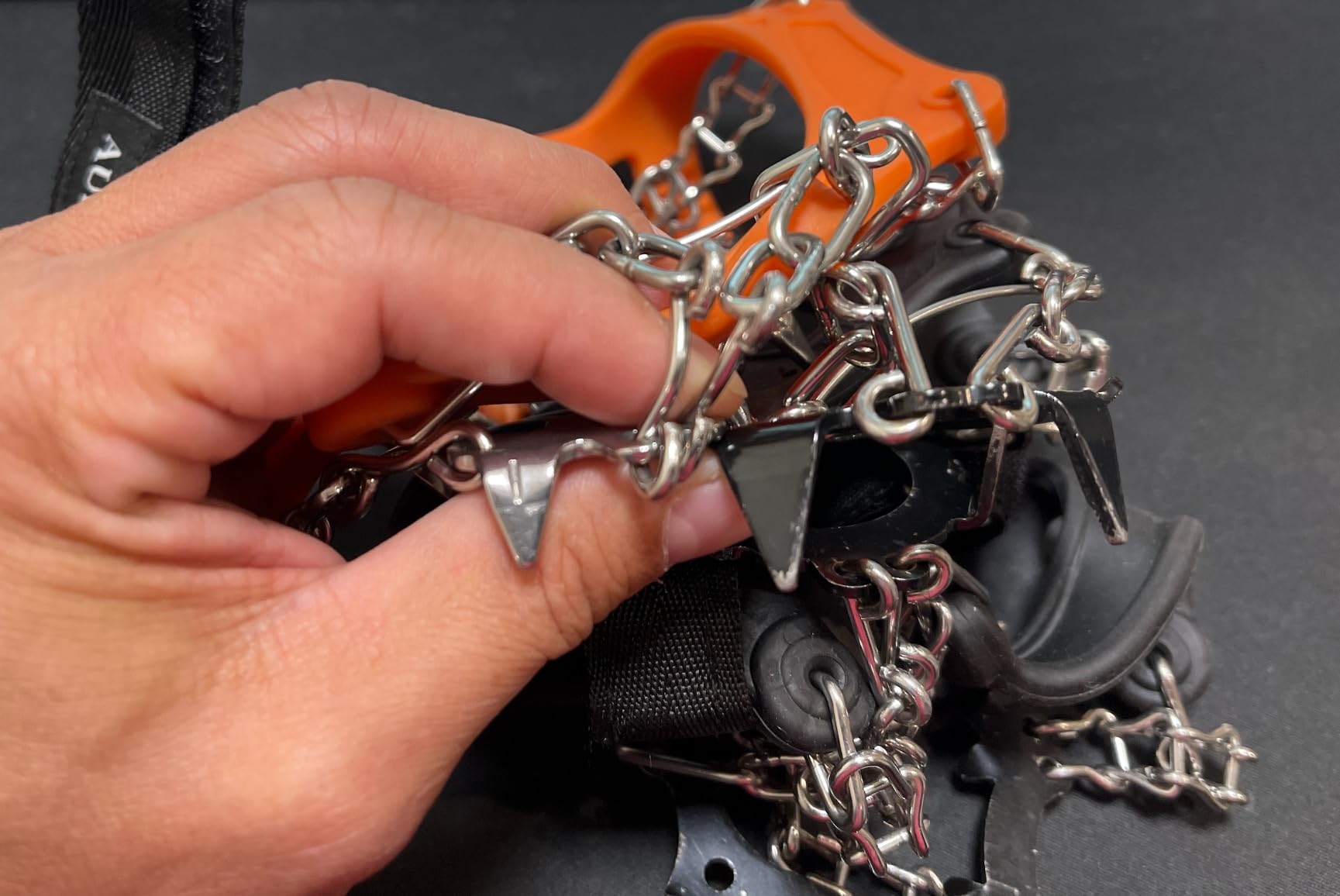
The plate system gives new winter hikers a more stable platform than chains alone, which builds confidence on steep terrain. The spikes are long enough for genuine ice but short enough that you can still walk on dirt or pavement between snow patches without the awkward waddling that full crampons require.
Sizing can be tricky because the plate system has less flex than a pure chain harness. Check the Hillsound sizing chart carefully against your exact boot, and if you are between sizes, sizing up is usually the safer call. The velcro strap gives you some adjustment room once the harness is in place.
12 tungsten carbide tip spikes
TPU traction matrix
8 ounces per pair
2-year warranty
The Kahtoola EXOspikes represent the most innovative traction design in this guide. Instead of pure steel spikes, the EXOspikes use a TPU Traction Matrix with tungsten carbide tips and aluminum steps. That hybrid construction lets them grip across ice, rock, dirt, and packed snow without the damage that traditional spikes inflict on non-frozen surfaces.
At just 8 ounces per pair, these are the lightest traction device in this roundup. Our ultralight backpacking tester carried them on a three-day winter traverse and reported forgetting they were in his pack until the moment he needed them on a frozen col crossing.
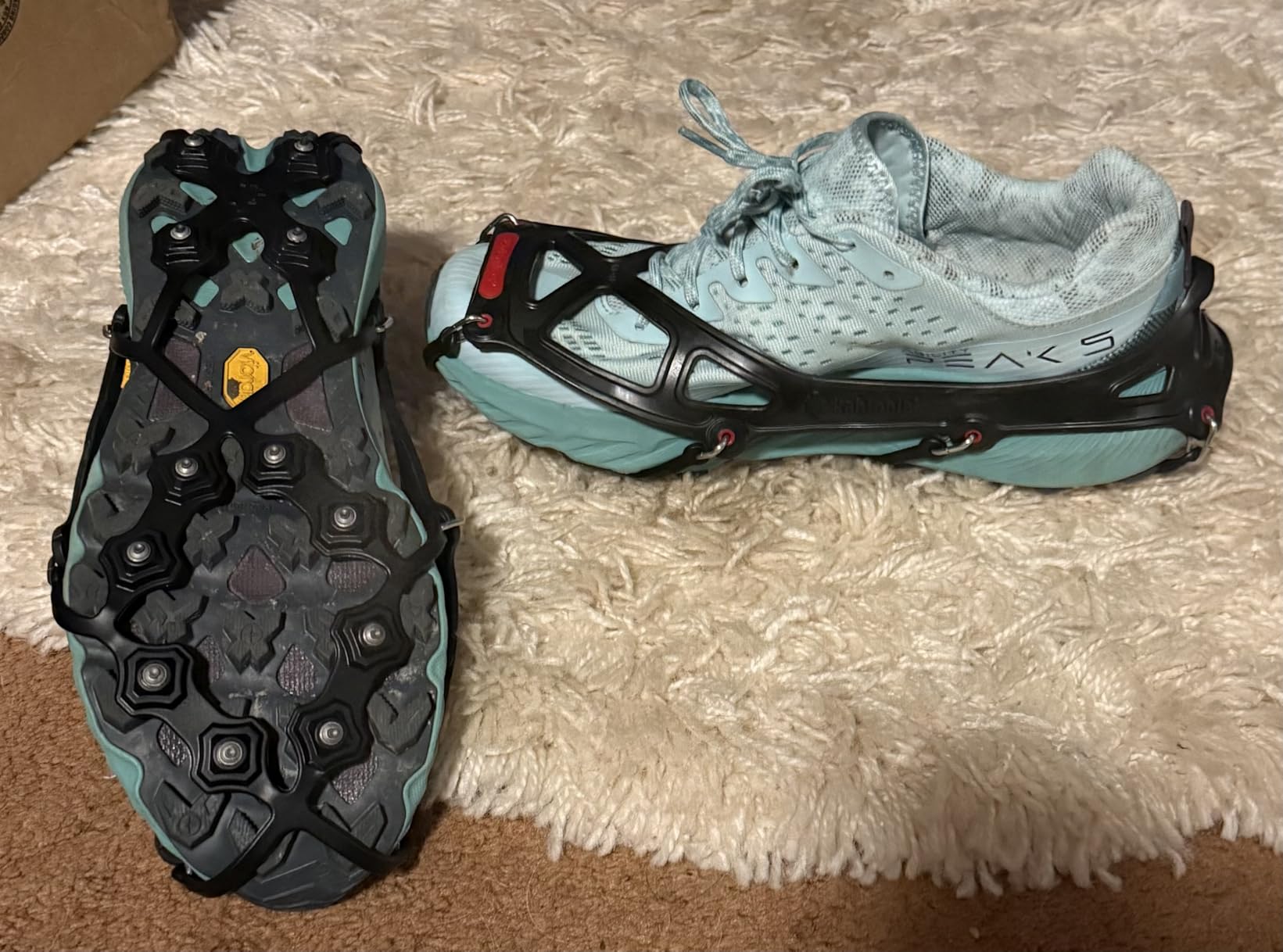
The tungsten carbide tips are a serious engineering choice. Carbide is what high-end drill bits use, and it holds an edge far longer than stainless steel. The 12 tips per foot bite hard into vertical ice, while the aluminum steps engage on uneven rocky terrain, and the TPU lugs dig into loose snow.
With 1,027 reviews and an 83 percent five-star rating, the EXOspikes have earned their place alongside the MICROspikes in Kahtoola’s lineup. The open design sheds snow quickly, which is a meaningful advantage in wet conditions where balling can be a serious safety issue.
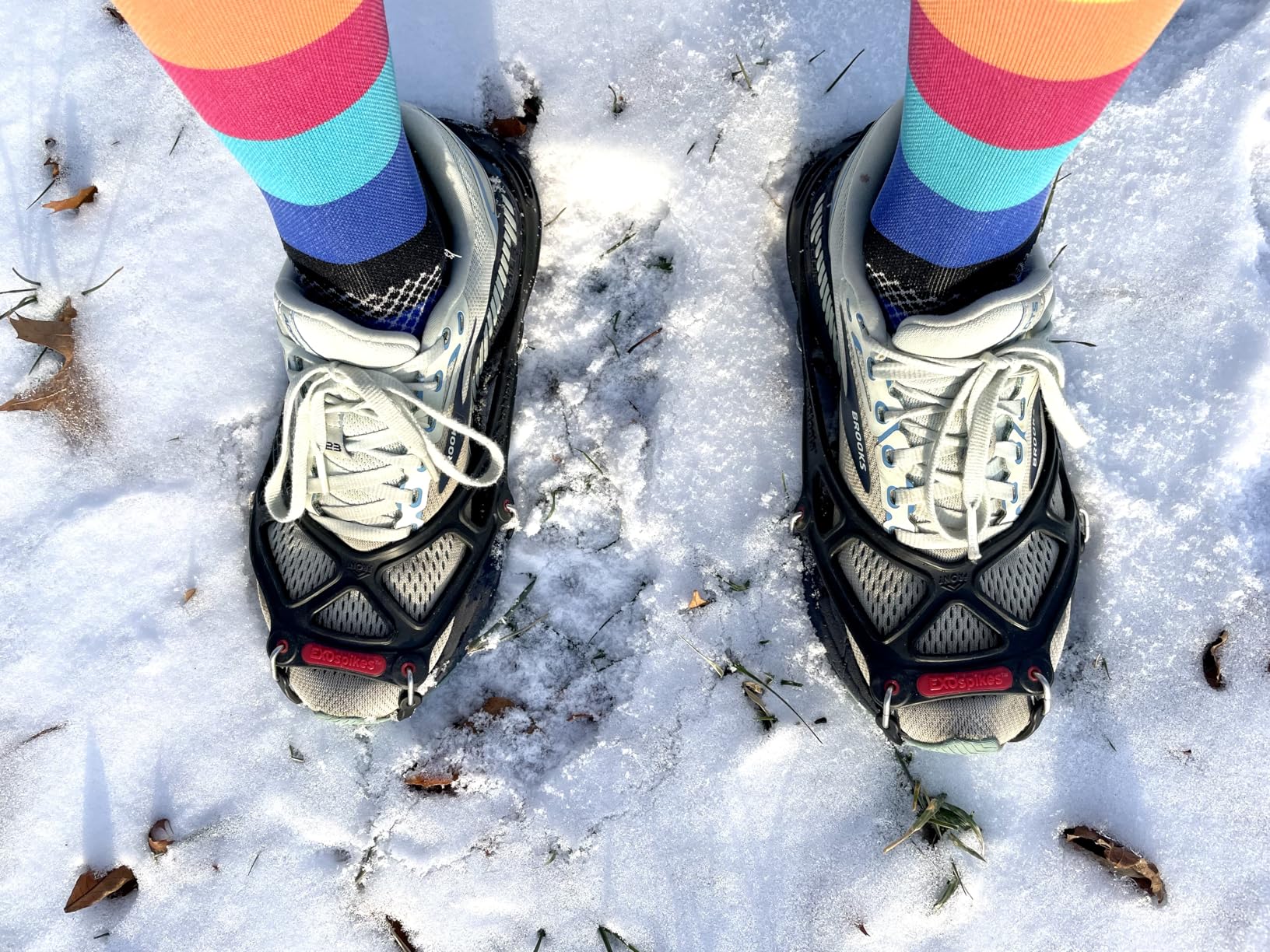
These are the right pick for winter hikers who regularly encounter mixed terrain. If your typical route crosses frozen streams, bare rock slabs, dirt sections, and packed snow in the same day, the EXOspikes handle all of it without the wear patterns that destroy traditional spike systems. They are also excellent for winter trail running.
Multiple reviewers, including several of our testers, found that the EXOspikes run small. Kahtoola recommends ordering one size up, and we agree based on field testing. If you wear a size 12 or larger boot, check fit carefully before committing, as the harness may not stretch comfortably over larger footwear.
Choosing the right crampon comes down to five core questions. Get these right and you will end up with a tool that fits your winter objectives instead of fighting them.
Steel crampons are the right choice for general mountaineering, technical ice climbing, and any terrain where durability matters. Steel holds an edge through abuse, bends rather than shatters on rock, and is the only choice for sustained vertical ice. The tradeoff is weight, with steel crampons typically weighing 800 to 1,100 grams per pair.
Aluminum crampons are significantly lighter, often under 600 grams per pair, which makes them attractive for ski mountaineering and fast-and-light alpine objectives. The downside is that aluminum dulls quickly on rock and is not suitable for technical ice climbing. Aluminum shines on pure snow routes where you need traction without the weight penalty.
Most general-purpose users should default to steel. The weight savings of aluminum only matter for specialized objectives, and the durability difference is substantial. REI, climbing.com, and cleverhiker.com all confirm this guidance in their buying resources.
The C-rating system describes how flexible a crampon is, which determines what boots it pairs with safely.
C1 crampons are fully flexible and pair with B0 boots, which are standard flexible hiking boots with no stiffening. These are typically strap-on designs meant for walking and trail use. The Kahtoola K10 and Hillsound options fall into this category.
C2 crampons are semi-rigid and require B1 or stiffer boots. They are the most common mountaineering crampons, suitable for glacier travel, steep snow, and moderate ice. The Petzl Vasak, Black Diamond Contact Strap, and CAMP Stalker all fit here.
C3 crampons are fully rigid and require B2 or B3 boots with heel and toe welts. These are technical climbing tools designed for vertical ice, mixed climbing, and serious alpine routes. The Petzl Lynx and Grivel G12 Evo represent this category.
Mismatching crampon stiffness to boot stiffness is dangerous. A C3 crampon on a flexible B0 boot will bend, lever, and potentially fail at the worst possible moment. Always match C-rating to B-rating.
This is the single most common question on winter hiking forums every year. The short answer is that crampons do everything microspikes can do and more, but microspikes weigh about a pound less and pack down to almost nothing.
Choose microspikes when your terrain is packed snow trails, icy sidewalks, frozen lakes, and moderate hiking routes without sustained steep ice. They are faster to put on, more comfortable to walk in, and easier to carry. The Kahtoola MICROspikes are the category benchmark.
Choose real crampons when you need front-pointing ability, sustained steep ice, glacier travel security, or technical mountaineering capability. Crampons are also safer on refrozen spring snow where microspike chains can skate unpredictably. The Petzl Vasak and Black Diamond Contact Strap are excellent entry points.
Anti-balling plates, also called antibott plates, are plastic or rubber sheets that cover the underside of the crampon frame to prevent wet snow from packing into a dangerous slippery ball under your foot. Snow balling is one of the most common causes of crampon-related accidents.
All serious mountaineering crampons in this guide include anti-balling plates. Active designs that flex with each step shed snow better than passive plates. If you are shopping for any crampon intended for spring or wet-snow use, anti-balling plates are not optional. They are a safety feature.
Strap-on bindings use polyurethane or nylon straps to secure the crampon to any boot type, no welts required. These are the most universal option and work with hiking boots, but they are slower to put on and slightly less secure than other systems for technical climbing.
Step-in bindings require boots with both toe and heel welts. The toe bail hooks the front welt and a heel lever locks the rear welt. Step-in systems are the most secure and fastest to attach, making them the choice for technical ice climbing where you may put crampons on and take them off repeatedly.
Hybrid systems like Petzl’s Leverlock Universel use a heel lever with a toe strap, requiring only a heel welt. This is a popular middle ground that offers more security than full strap-on while fitting a wider range of boots than full step-in.
Match B-rated boots to C-rated crampons carefully. B0 flexible boots pair only with C1 flexible crampons. B1 stiff hiking boots work with C1 and C2 crampons. B2 semi-rigid mountaineering boots handle C2 and C3 crampons. B3 fully rigid mountaineering boots work with all crampon types including specialized technical models.
Petzl, Black Diamond, Grivel, CAMP, and Kahtoola are the most respected crampon manufacturers. Petzl leads for technical ice climbing with the Lynx and Vasak, Black Diamond dominates glacier travel with the Contact Strap, Grivel is the expedition standard with the G12, and Kahtoola owns the trail traction category with MICROspikes and K10.
Aluminum crampons are lighter, typically under 600 grams per pair, making them ideal for ski mountaineering and fast alpine objectives. Steel crampons are heavier but far more durable, hold an edge through rock contact, and are the only choice for technical ice climbing. Most general mountaineers should default to steel.
Crampons provide more traction and can handle technical terrain that microspikes cannot, including vertical ice and glacier travel. Microspikes are about a pound lighter, pack smaller, and are faster to put on, making them better for packed trail hiking and casual winter use. Choose based on your terrain.
Kahtoola MICROspikes, Hillsound Trail Crampons, and Kahtoola EXOspikes all provide significantly better traction and durability than Yaktrax. Yaktrax use steel coils that are fine for flat sidewalks but sketchy on steep trails. Any of the traction devices in this guide will outperform Yaktrax on actual winter hiking terrain.
Check your boot stiffness rating. B0 flexible hiking boots only work with C1 flexible crampons. B1 stiff boots handle C1 and C2. B2 semi-rigid mountaineering boots work with C2 and C3. B3 fully rigid boots handle any crampon. Never pair a C3 crampon with a B0 boot because the mismatch can cause catastrophic failure.
The right crampon depends entirely on where you are headed this winter. For most winter hikers and trail users, the Kahtoola MICROspikes remain the gold standard with 3,500-plus reviews and unmatched versatility across packed snow and moderate ice. If you want more spike for steep terrain without committing to full mountaineering gear, the Kahtoola K10 and Hillsound Trail Crampon Ultra deliver exceptional value.
For real mountaineering and glacier travel, the Petzl Vasak, Black Diamond Contact Strap, and CAMP Stalker Universal are all proven performers. Step up to the Petzl Lynx or Grivel G12 Evo when your objective turns technical or expedition-grade.
Whatever you choose, match your crampon stiffness to your boot stiffness, double-check the fit before your first trip, and always dry your gear thoroughly after every use. The best crampons are the ones you trust completely when the terrain turns icy and the consequences of a slip become real. Stay safe out there this winter.