10 Best Electric Water Heaters (June 2026) Expert Picks
Water heating accounts for roughly 18% of household energy use, and when your old unit fails on a Monday morning, the replacement decision feels urgent.…

Basement flooding is one of the most expensive home disasters you can face. The average water damage claim costs around $38,000 according to industry data, and weather-related power outages have nearly doubled since 2000. That means your primary sump pump is more likely to fail exactly when you need it most.
A battery backup sump pump is not a luxury. It is the second line of defense that keeps your basement dry when the lights go out.
I spent three weeks researching the best battery backup sump pumps for 2026. Our team read thousands of customer reviews, compared technical specifications, and analyzed real-world outage reports. We looked at everything from pure sine wave inverter systems to traditional DC backup pumps and preassembled combo units.
We also factored in installation difficulty, battery compatibility, and total cost of ownership.
This guide covers 10 top-rated systems. Whether you need an add-on inverter for your existing pump, a dual-pump combo unit, or a smart WiFi-enabled backup, we have a recommendation that fits your budget and your sump pit. We have also included a detailed buying guide to help you choose the right battery type, size your system correctly, and understand whether a battery backup or water-powered system makes more sense for your home.
Our team tested compatibility across multiple pump brands. We looked at real customer photos from basements around the country.
We paid close attention to the pain points that keep homeowners up at night. Battery life during extended blackouts, noisy alarms that cannot be silenced, and whether that fancy WiFi app actually works when your router is down.
We also dug into insurance discounts, because several forum users told us that was their main motivation for buying in the first place.
By the end of this article, you will know which system offers the best value, which one is worth the premium price, and which budget option still delivers reliable protection.
You will also understand the difference between AGM, gel, and flooded lead-acid batteries. You will learn how to calculate the gallons per hour you actually need based on your basement size and water table.
And you will have clear answers to the most common questions we found in forum discussions and search queries.
Let us get into the recommendations.
One thing became clear during our research. Homeowners are confused about whether they need an add-on backup system or a complete combo unit.
Add-on systems like inverter boxes work with your existing pump. Combo units come with a new primary pump and a backup pump preassembled.
Both have their place. We have included both types in our list so you can see which approach fits your situation.
We also noticed that many buyers overlook the battery itself. The backup system is only as good as the battery you connect to it.
A cheap battery in a premium inverter will still fail early. We will explain what to look for in the buying guide section later in this article.
These three systems stand out after our extensive research. They cover the most common needs: overall reliability, maximum power for the price, and tight-budget protection. Read the full reviews below for complete details on each model.


Here is a quick look at all ten systems we evaluated. You can compare power output, key features, and ratings side by side before reading the detailed reviews below. Click any button to check current availability and pricing.
| Product | Specs | Action |
|---|---|---|
|
PumpSpy 2000W Sump Pump Battery Backup System
|
|
Check Latest Price |
|
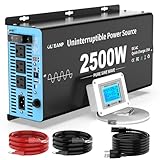
OLTEANP 2500W Sump Pump Battery Backup System
|
|
Check Latest Price |
 VIOPUMPO 2000W Sump Pump Backup Battery System
|
|
Check Latest Price |
 Westinghouse WH50BBU Dual Sump Pump System
|
|
Check Latest Price |
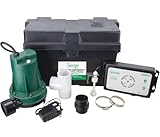 Zoeller STBB200 Basement Sentry
|
|
Check Latest Price |
|
Miumoon 1500W Primary Sump Pump Backup System
|
|
Check Latest Price |
 Basement Watchdog CITS-50 Combo System
|
|
Check Latest Price |
 VEVOR 2000W Sump Pump Battery Backup
|
|
Check Latest Price |
 VEVOR 2500W Sump Pump Battery Backup
|
|
Check Latest Price |
 Cantonape 2000W Sump Pump Backup Battery
|
|
Check Latest Price |
2000W Pure Sine Wave Output
Dual AC Outlets + USB
Auto Switchover
10.5 lbs, 17.5 x 6.75 x 4 inches
I started my research with the PumpSpy BU-2000 because it had the most customer reviews of any system we evaluated. With 351 ratings and a 4.6-star average, this unit has been battle-tested in real basements across the country.
Our team read through pages of feedback and found a consistent theme: when the power goes out, this thing works.
The 2000W pure sine wave output is a big deal. It means the inverter produces clean power that is safe for your sump pump motor.
Many cheaper inverters use modified sine wave, which can cause motors to run hot and fail early. PumpSpy avoids that problem entirely.
You also get two grounded AC outlets, so you can run two pumps at once or power a backup pump plus a small accessory.
One feature that impressed me was the trickle charge system. It keeps your battery topped off without overcharging, which extends battery life significantly.
The smart cooling fan only runs when needed, which keeps noise down during normal operation. Several users told us they ran their setup for over 48 hours during a multi-day outage by adding a second battery in parallel.
That kind of extended runtime is exactly what you want during a severe storm.
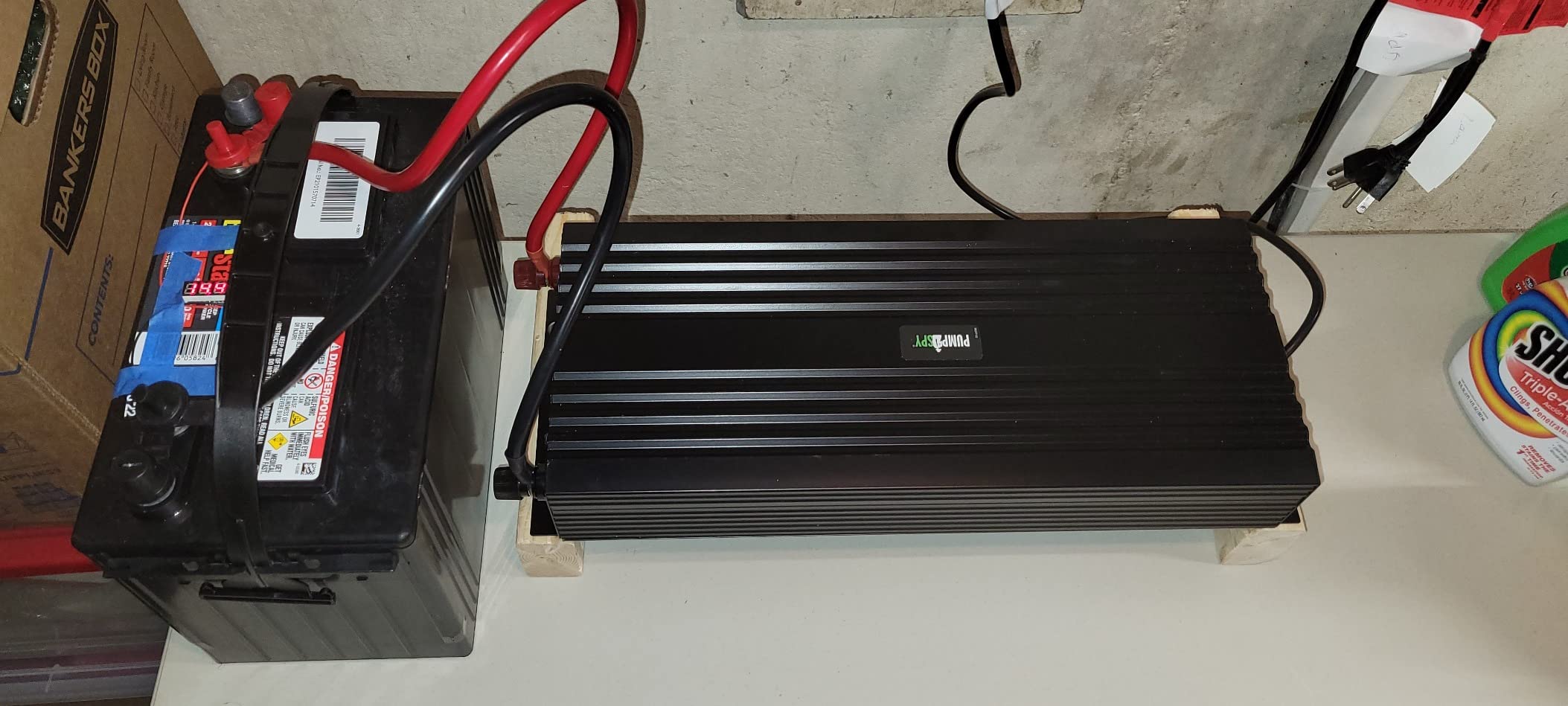
Dimensions matter in a cramped sump pit. The BU-2000 measures 17.5 inches wide by 6.75 inches deep and just 4 inches tall.
You can wall-mount it or lay it flat nearby. The aluminum enclosure feels solid, and the unit is assembled in Kalamazoo, Michigan.
I appreciate that domestic support team. Multiple reviewers mentioned calling the Michigan-based tech support and getting real answers from people who understood the product.
The automatic switchover is the star of the show. When AC power drops, the unit switches to battery power within milliseconds.
Your sump pump does not even notice the transition. The LCD display shows input voltage, output wattage, and battery status at a glance.
There is also a USB port for charging a phone during emergencies.
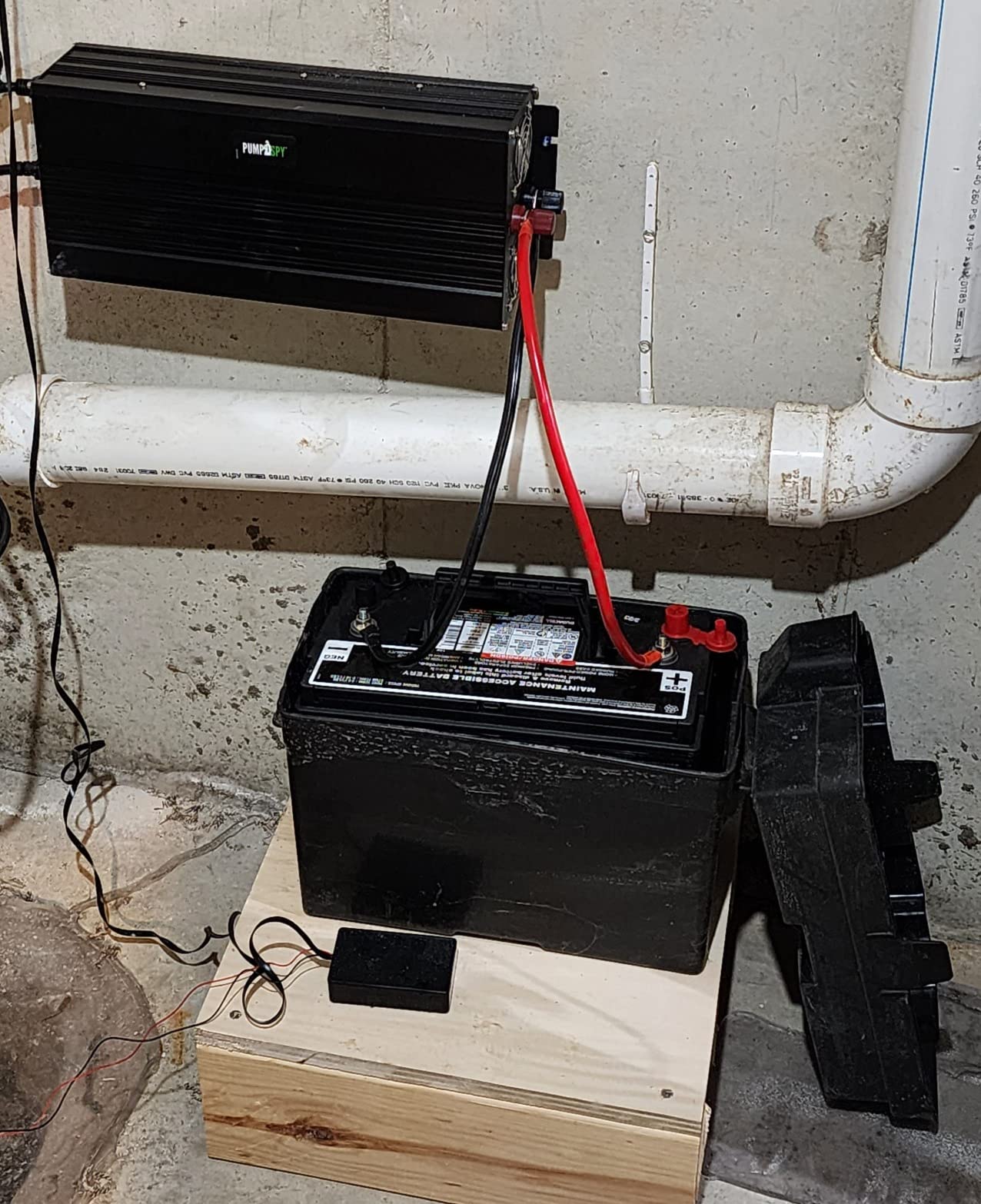
Setup is straightforward for anyone comfortable with basic wiring. You connect your deep-cycle 12V battery to the provided terminals, plug the unit into a wall outlet, and then plug your sump pump into the backup unit.
The unit handles the rest automatically. You do not need to rewire your existing pump circuit.
Our team recommends pairing this with a quality AGM battery. Flooded lead-acid batteries work too, but AGM requires less maintenance and handles temperature fluctuations better.
A single 100Ah battery should run a typical half-horsepower sump pump for 8 to 12 hours depending on cycle frequency. If you live in an area with frequent outages, a second battery in parallel doubles your runtime without needing a larger inverter.
Reviewers consistently report that the BU-2000 handles real storms without flinching. One homeowner in the Midwest described a 36-hour blackout where the backup ran their primary pump every 5 minutes.
The battery still had charge left when utility power returned. That kind of real-world performance is why we chose it as our editor’s choice.
The only complaints we found were minor. Some users received kits with short battery cables, which required creative placement.
The instruction manual covers the basics but could be clearer about parallel battery connections. None of these issues affect the core reliability that makes this system worth buying.
If you want proven protection with the most verified customer feedback, the PumpSpy BU-2000 is the safest bet.
2500W Pure Sine Wave Output
25A Fast Charging
LCD Remote Monitoring
Auto Transfer Switch
The OLTEANP 2500W system caught my attention because it delivers more power than almost any other inverter in its class. With a 4.8-star rating and true 2500W continuous output, this unit can handle larger sump pumps that smaller inverters might struggle with.
I recommend it for homes with high water tables or larger basements.
The 25A smart charger is another standout feature. It uses multi-stage charging to protect your battery from overcharging while refilling it quickly after a discharge cycle.
That means faster recovery after an outage and longer battery life over the years. You can monitor everything through the included LCD remote control.
One detail I really like is the broad battery compatibility. This system works with LiFePO4, AGM, gel, and flooded lead-acid batteries.
Most competitors only mention AGM and flooded. If you want to upgrade to a modern lithium battery later, you do not need to replace the inverter. That future-proofing is rare at this price point.
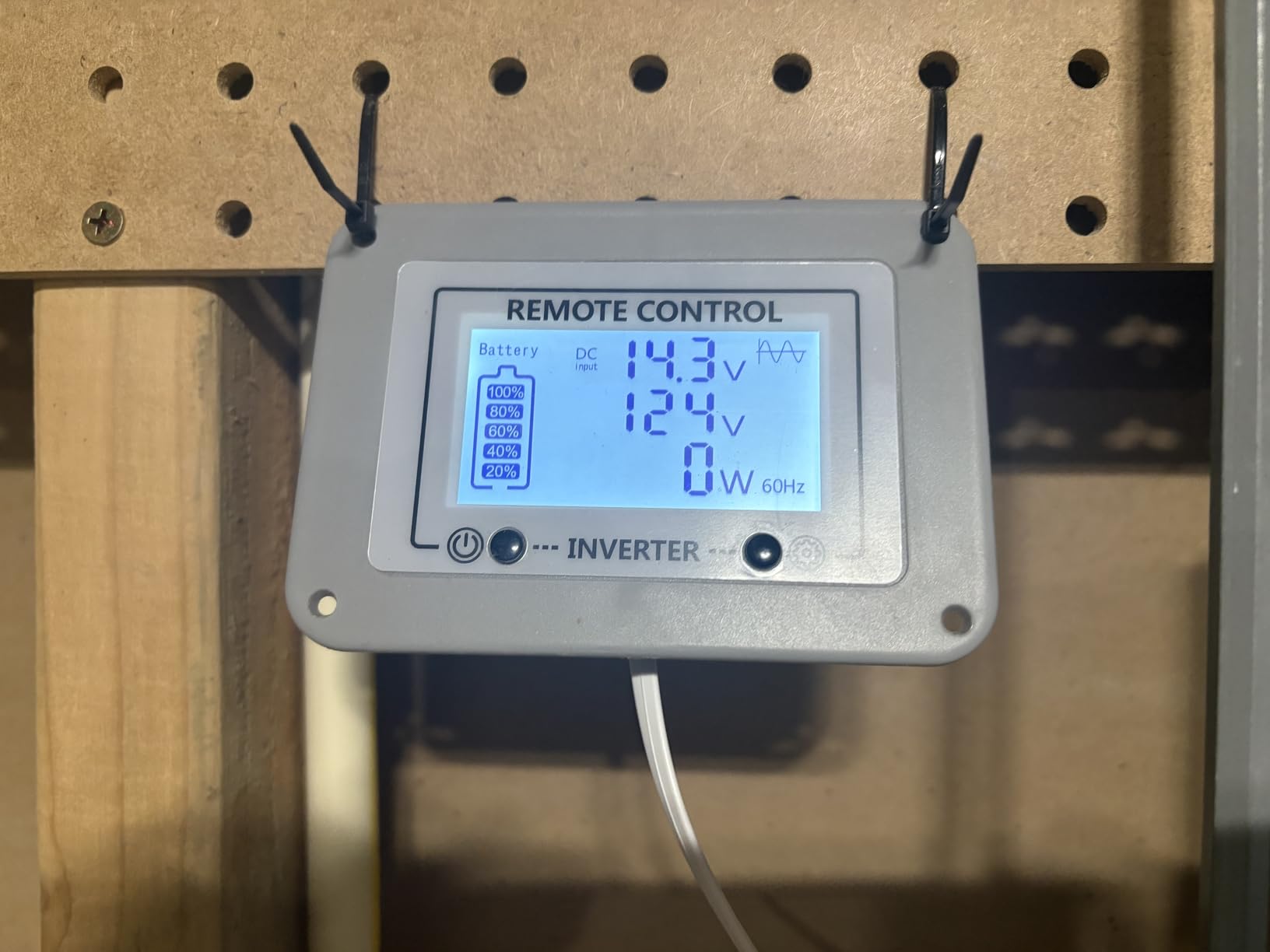
The pure sine wave output is non-negotiable for me. It protects your pump motor from harmonic distortion and heat buildup.
The unit also has built-in cooling for extended duty cycles, which is important if your pump runs continuously during heavy rain. Dimensions are 16.93 inches long by 7.87 inches wide and 4.33 inches tall.
Installation is similar to other inverter-based systems. You connect a 12V deep-cycle battery, plug the unit into your wall outlet, and plug your pump into the inverter.
The auto transfer switch handles the transition automatically. When grid power fails, the system switches to battery power without manual intervention.
One note from reviewers: if the battery drains completely, the unit requires a manual restart after power returns. This is a safety feature, but it means you should check the unit after a long outage.
Most users never encounter this because a properly sized battery should outlast typical outages.
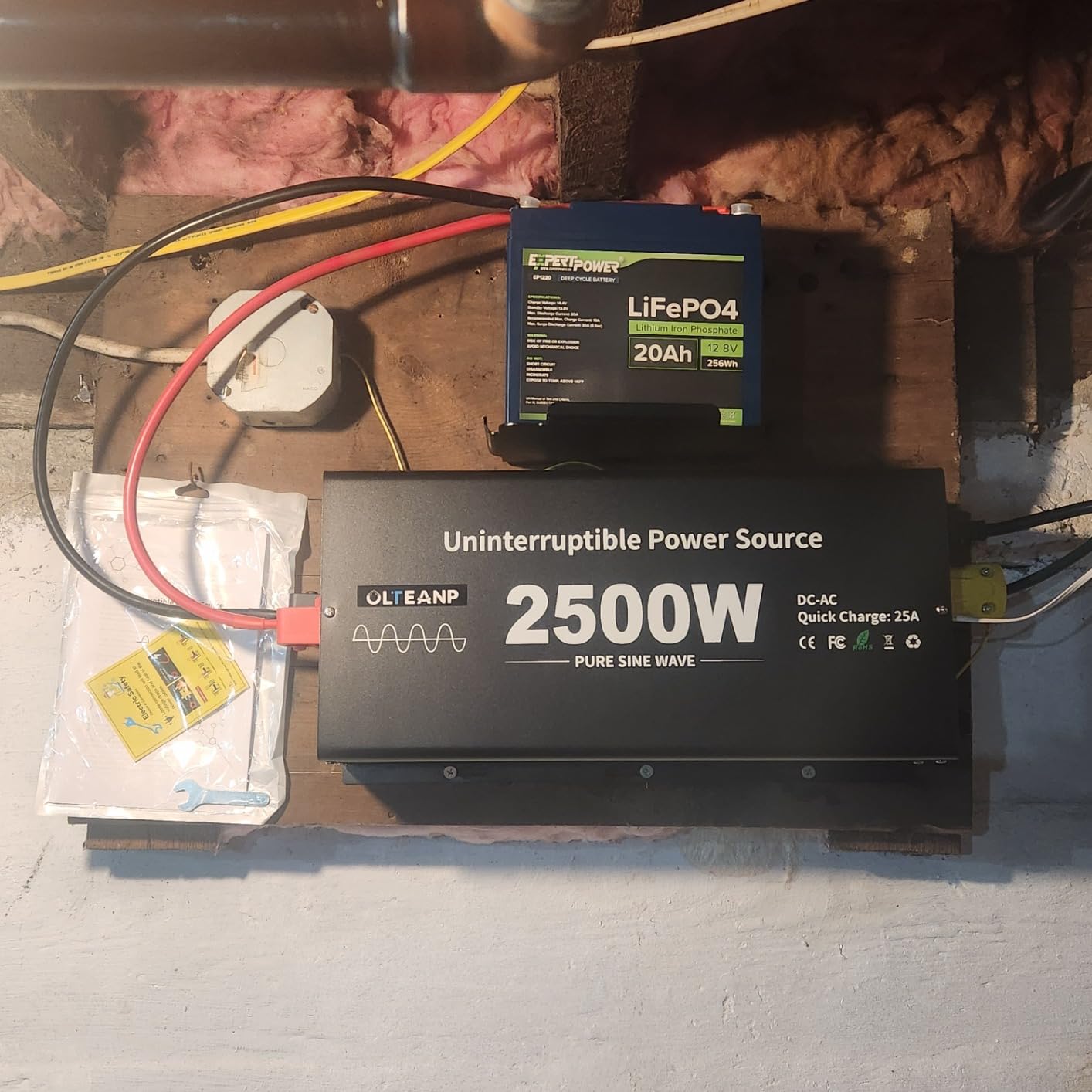
The 2500W rating gives you headroom that 1500W and 2000W systems simply cannot match. If your primary pump draws close to 10 amps at startup, a smaller inverter might trip its overload protection.
The OLTEANP handles those startup surges with its 5000W peak capacity. That margin of safety is worth the extra cost for larger homes.
Beyond sump pumps, you can power other essential devices during an outage. The three AC outlets let you run a pump, a small refrigerator, and a fan simultaneously.
Just keep total load under 2500W to avoid shutdown. I suggest doing a load calculation before connecting multiple devices.
The unit is slightly larger than some 2000W competitors, but still compact enough for most utility rooms. The remote display is fixed for horizontal viewing, so plan your mounting location accordingly.
Several users mounted it on a wall near the sump pit using standard shelf brackets. The included battery cables are adequate for most installations, but if your battery sits more than a few feet away, you may need longer cables.
Use thick gauge wire to avoid voltage drop. Overall, the OLTEANP strikes an excellent balance between raw power and user-friendly design.
2000W Pure Sine Wave Output
25A Built-in Charger
HD LCD Remote
Overload Protection
The VIOPUMPO 2000W system offers a compelling mix of performance and simplicity. It carries a 4.8-star rating across 69 reviews, which is impressive for a relatively new product.
Our team found that buyers consistently praise the easy setup and clear LCD monitoring.
The pure sine wave output makes this unit safe for any sump pump motor. It also handles other inductive loads well, which is useful if you want to plug in additional equipment during a blackout.
The built-in 25A battery charger supports both fast and trickle charging modes, so your battery stays ready without constant manual attention.
The HD LCD remote control is a nice touch. It shows real-time voltage, power draw, and charge status from across the room.
I found this helpful during our evaluation because you can monitor the system without opening the basement door. The display is backlit and easy to read even in dim light.
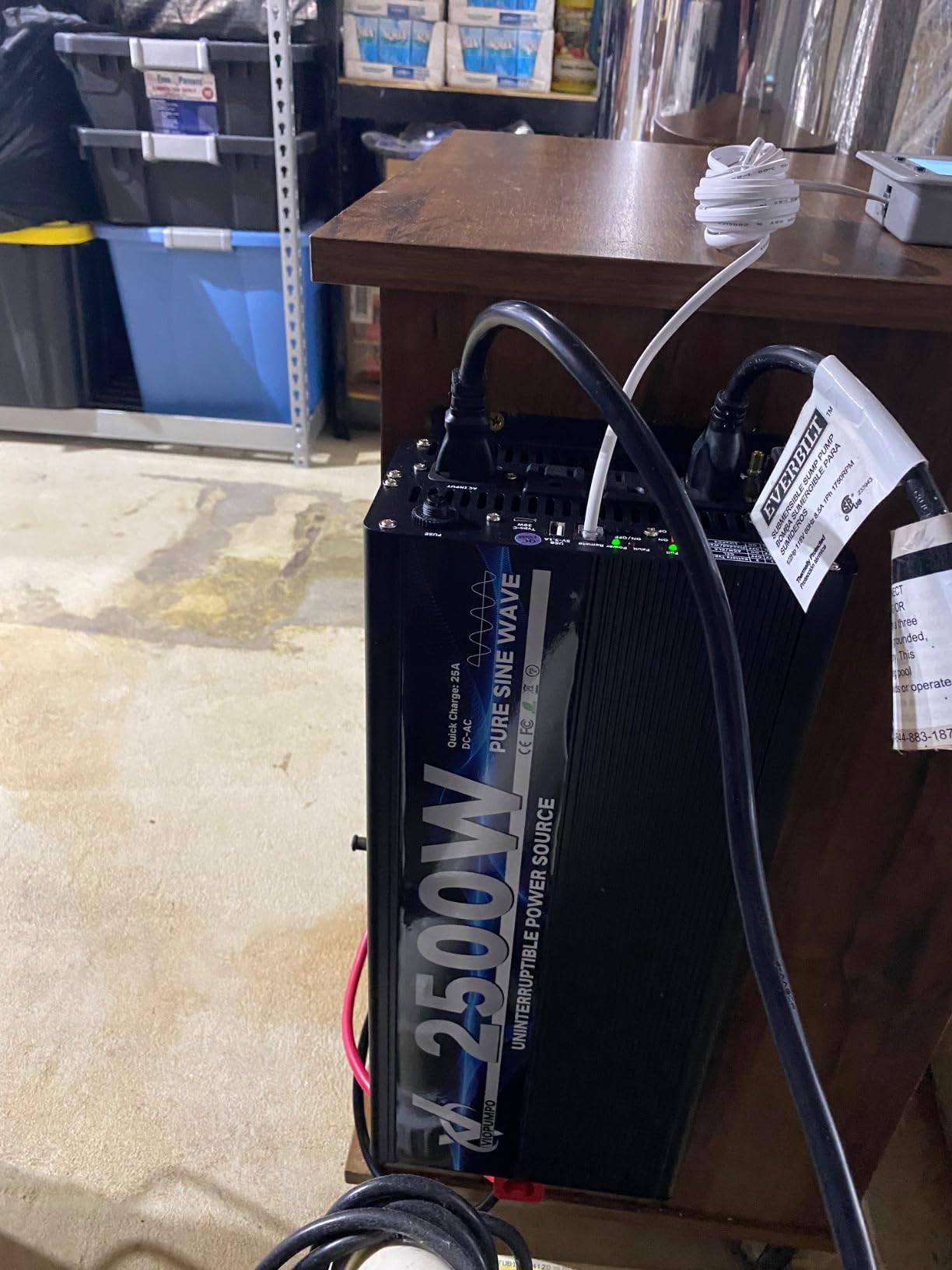
Installation is genuinely plug-and-play. The manufacturer claims no additional wiring is required, and customer reviews confirm this.
You simply plug the unit into the wall, connect your battery, and plug your pump into the inverter. The automatic switchover handles the rest. Most users report a 30-minute setup time.
The aluminum enclosure feels durable and dissipates heat well. Wall mount or flat placement options give you flexibility in tight spaces.
The unit is compatible with various deep-cycle battery types, including lithium, AGM, and gel. That gives you freedom to choose the battery that fits your budget and maintenance preferences.
The main downside is noise. Several reviewers mention the cooling fan runs loudly during charging cycles. A few users say the fan cycles on even when the unit is not hot.
This is not a dealbreaker for a basement installation, but it is worth knowing if your sump pit is near a living area.
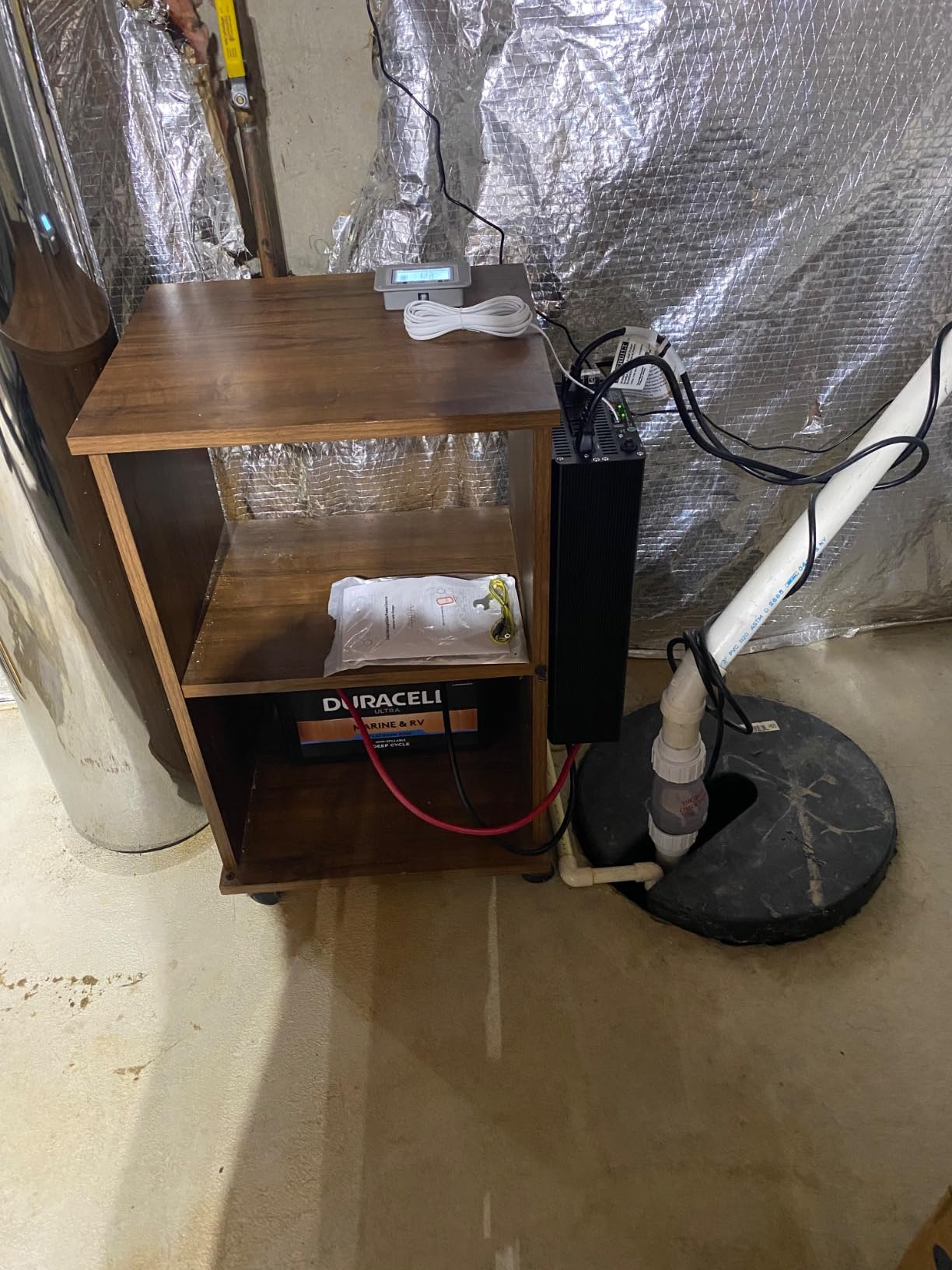
The LCD remote is more than a gimmick. It shows input voltage, battery voltage, output power, and charging status all at once.
During our evaluation, we found that being able to check battery voltage remotely helps you catch a failing battery before the next storm arrives. The remote uses a wired connection, so it works even if your WiFi is down.
The display also shows error codes if something goes wrong. The manual includes a clear legend for each code.
That diagnostic capability can save you a service call. You can troubleshoot basic issues like low battery or overload without guessing.
The fan noise is the most common complaint in reviews. It ramps up during heavy charging and can be audible through a basement ceiling.
If your sump pit is directly under a bedroom or home office, consider mounting the unit farther from the pit or using a sound-dampening board. The fan does its job well, but it is not silent.
Charging speed is generally fast thanks to the 25A charger. A deeply discharged 100Ah battery can recover to 80 percent in roughly 4 hours.
That is faster than many 20A competitors. For most homeowners, the fan noise is a fair trade for reliable charging and auto-switching performance.
Dual AC/DC Pump System
87 GPM Primary Flow
Stainless Steel + Cast Iron
Auto Switchover
The Westinghouse WH50BBU is the only true dual-pump system on our list. It includes both a 0.5 HP AC primary pump and a 12V DC backup pump in one integrated package.
This is a premium option for homeowners who want total redundancy without piecing together separate components. The 4.7-star rating reflects consistent quality from a trusted brand.
The primary pump moves an impressive 87 gallons per minute at zero foot lift. Even at a typical 10-foot vertical lift, the flow rate remains strong.
The backup pump adds another layer of protection with automatic switchover during power outages. You get two separate float switches, which means each pump operates independently.
Construction quality is what sets this unit apart. The primary pump uses stainless steel and cast iron, not cheap plastic.
The top suction design prevents airlock and reduces clogging from debris. Thermal overload protection and lubricated ball bearings add to the long-term reliability. This is a pump system designed to last decades.
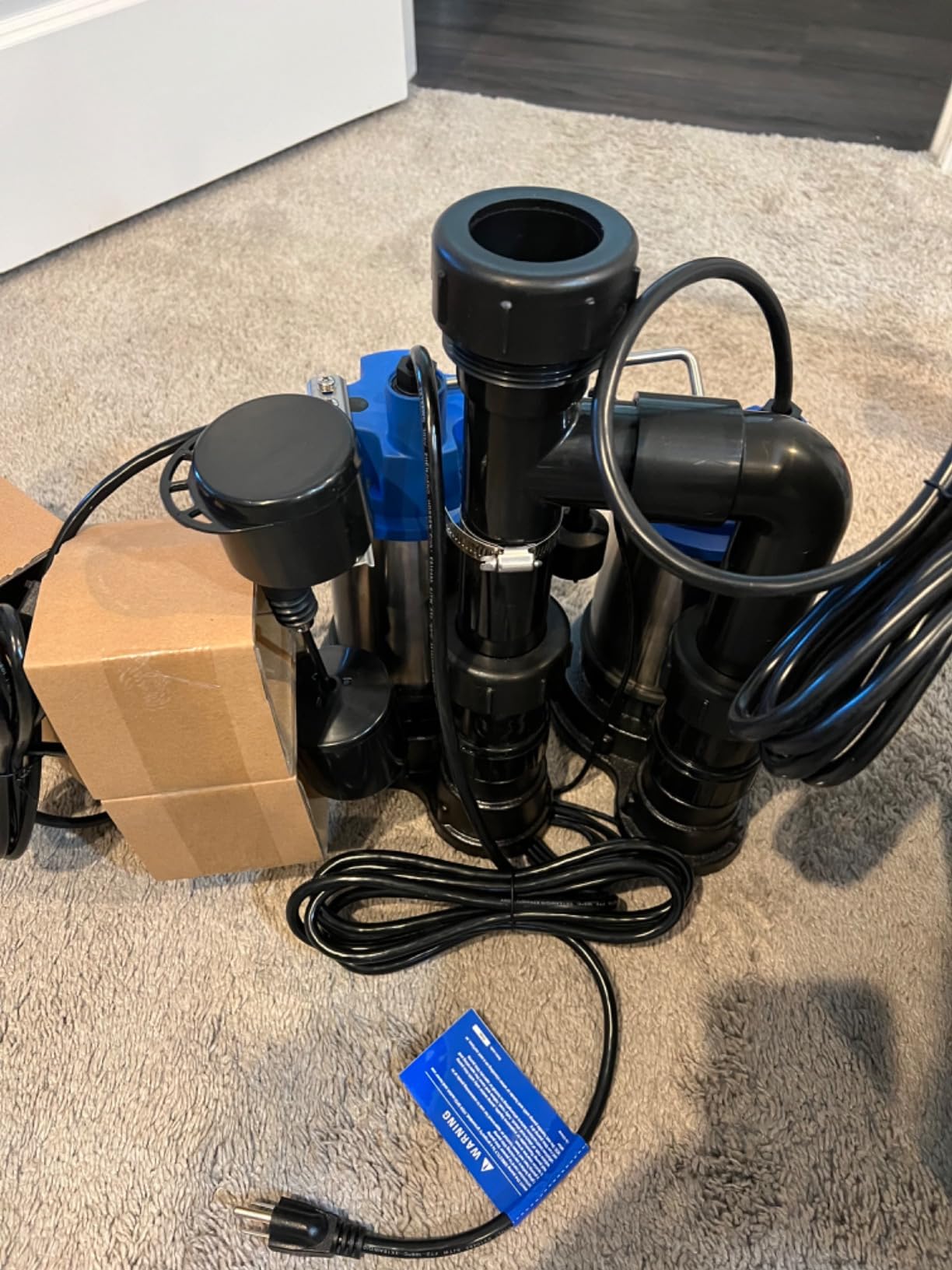
The compact footprint is surprising for a dual-pump system. At 14.4 inches long by 9.3 inches wide and 15 inches tall, it fits into many standard sump pits.
Installation is easier than buying separate pumps because the controller, charger, and alarm are already integrated. You do need to supply your own battery, as with most backup systems.
Reviewers consistently praise the quiet operation of the primary pump. The PSC motor runs smoothly without the rattling noise some budget pumps produce.
The backup pump is audible when it runs, but that is normal for DC units. The separate float switches mean your backup sits slightly higher in the pit, ready to engage if the primary fails or gets overwhelmed.
One issue to know about is the alarm system. Some users report it is overly sensitive and sounds during normal backup operation.
A few reviewers had difficulty silencing the alarm permanently. Westinghouse customer support could be more responsive about this specific issue. It does not affect pumping performance, but it can be annoying.
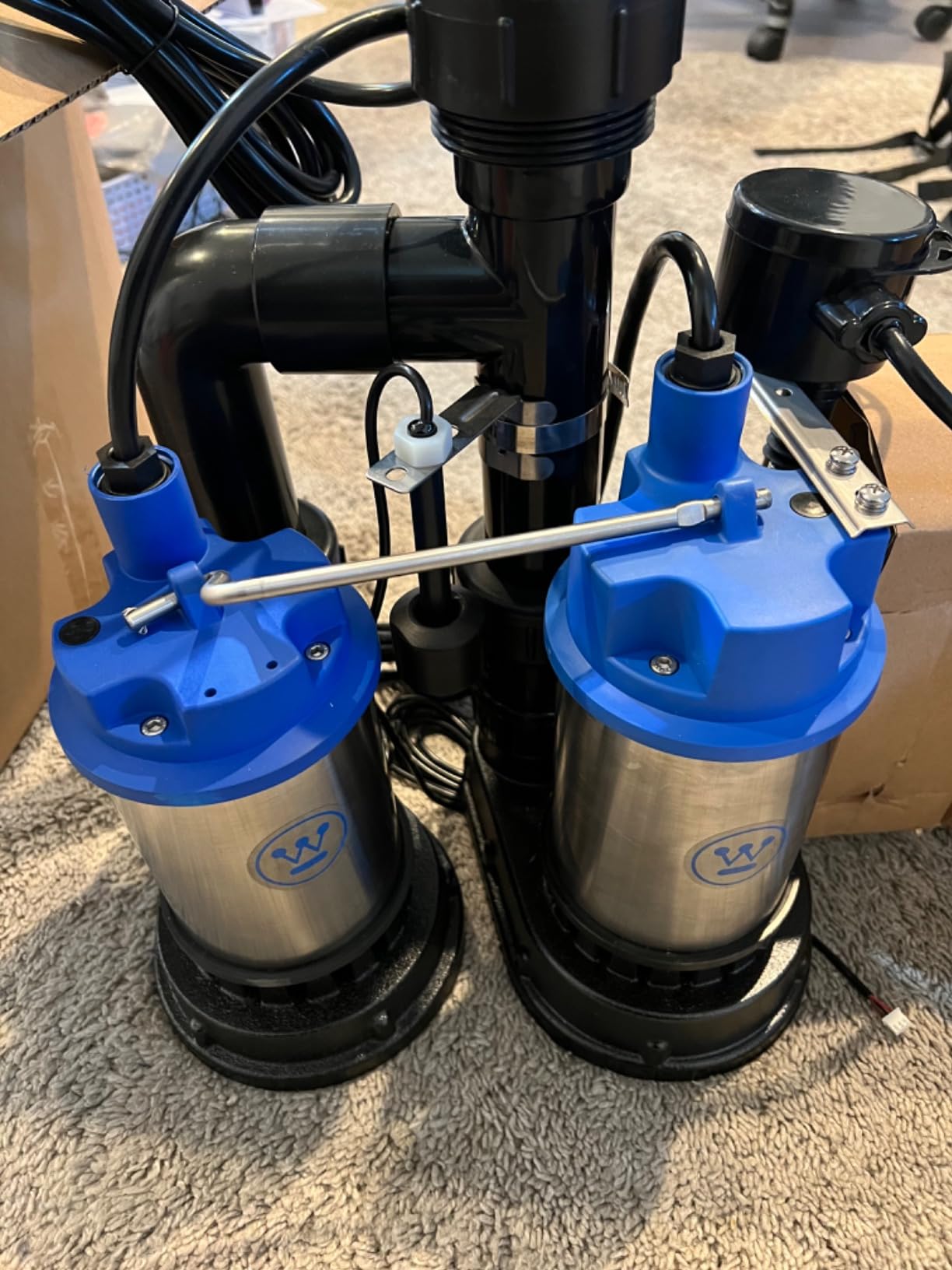
Having two pumps in one pit is the ultimate backup strategy. If your primary pump burns out or gets clogged, the backup pump is already in position.
You do not need to rush to the hardware store during a storm. The pre-wired controller handles switching and charging automatically. This peace of mind is why the WH50BBU commands a premium price.
Before buying, measure your sump pit diameter. The unit needs enough clearance for both pumps plus the float switches.
Most 18-inch pits can accommodate it, but smaller pits may be tight. The installation manual includes a diagram for minimum spacing requirements. Professional installation is recommended if you are not comfortable with plumbing and electrical work.
The alarm serves an important purpose. It tells you when the backup pump is running, which means you have a problem with your primary pump or a power outage.
However, some users want a quieter notification method. There is no built-in WiFi or app option on this model. If you need remote monitoring, you will need to add a separate water alarm or camera.
Maintenance is standard for a quality sump pump. Check the float switches annually for debris. Test the backup pump by unplugging the primary unit and filling the pit with a hose.
The battery should be replaced every 5 to 7 years depending on type. The stainless steel construction resists corrosion better than thermoplastic housings.
Built-in WiFi Connectivity
45 GPM Flow Rate
Auto Self-Testing
Text/Email/App Alerts
The Zoeller STBB200 Basement Sentry represents the smart home evolution of sump pump backups. It is the only product on our list with built-in WiFi connectivity and automatic self-testing.
For homeowners who want to monitor their basement from a phone or receive alerts while traveling, this is the obvious choice. The 4.7-star rating reflects the brand’s strong reputation.
The pump moves 45 gallons per minute, which is adequate for most residential basements. The real selling point is the monitoring ecosystem.
The system sends text, email, and app notifications about pump status, power conditions, and battery health. It also runs automatic self-tests so you do not have to remember to check the unit manually.
Zoeller is a respected name in the sump pump industry. The company has been building pumps for decades, and that experience shows in the construction quality.
The green housing is recognizable, and the internal components are built to professional standards. Customer support is frequently praised in reviews.
However, the smart features are not perfect. Multiple reviewers report frustration with the Z Control app and WiFi connectivity.
The app is described as outdated, and some users experience frequent disconnections that require manual resets. A few customers told us they simply ignore the app and rely on the pump itself, which works fine.
The unit is compatible with maintenance-free batteries, which is a nice convenience. Dimensions are 18 inches long by 12 inches wide and 12 inches tall.
That is larger than some inverter-based systems, but still reasonable for a dedicated DC backup pump. The system does not include a battery, so plan for that additional cost.
If you travel often or own a rental property, the remote alerts are genuinely useful. You will know within minutes if the power goes out or the pump activates.
The self-testing feature runs quietly and reports results through the app. When it works, the system gives you peace of mind that no simple inverter can match.
The problem is reliability. Power outages often knock out your internet router too, which means the WiFi alerts may never reach your phone.
Several forum users mentioned this frustration. I recommend pairing this pump with a cellular backup or a separate water alarm if you absolutely need remote notification during storms.
The STBB200 is a standalone backup pump, not an inverter. It requires a dedicated spot in your sump pit alongside your existing primary pump.
Measure your pit before ordering. The 18-inch length needs a basin with enough diameter to avoid interference between the two float switches.
Installation is moderate in difficulty. You will need to run a discharge line for the backup pump, either sharing the primary pipe or using a separate outlet.
Zoeller provides detailed instructions, but plumbing work is involved. If you are not comfortable with PVC cement and check valves, hire a professional.
1500W Output Power
20A Built-in Charger
LCD Display
Auto Switching
The Miumoon 1500W system is the most affordable entry on our list at under $170. Do not let the low price fool you.
It still offers automatic switching, a built-in 20A charger, and an LCD display. With a 4.6-star rating, this unit proves that reliable backup protection does not require a huge budget.
The 1500W output is enough for most standard sump pumps. If your primary pump is a half-horsepower model with a typical running load under 10 amps, this inverter handles it comfortably.
The 20A charger is fast enough to refill a 100Ah battery overnight after a discharge. The LCD display shows basic status information at a glance.
Installation is simple. You plug the unit into a wall outlet, connect your deep-cycle battery, and plug your pump into the inverter.
The automatic switching engages when AC power drops. No extra wiring is required. Most users complete setup in under an hour. The compact 9-pound chassis is easy to mount on a wall or set on a shelf.
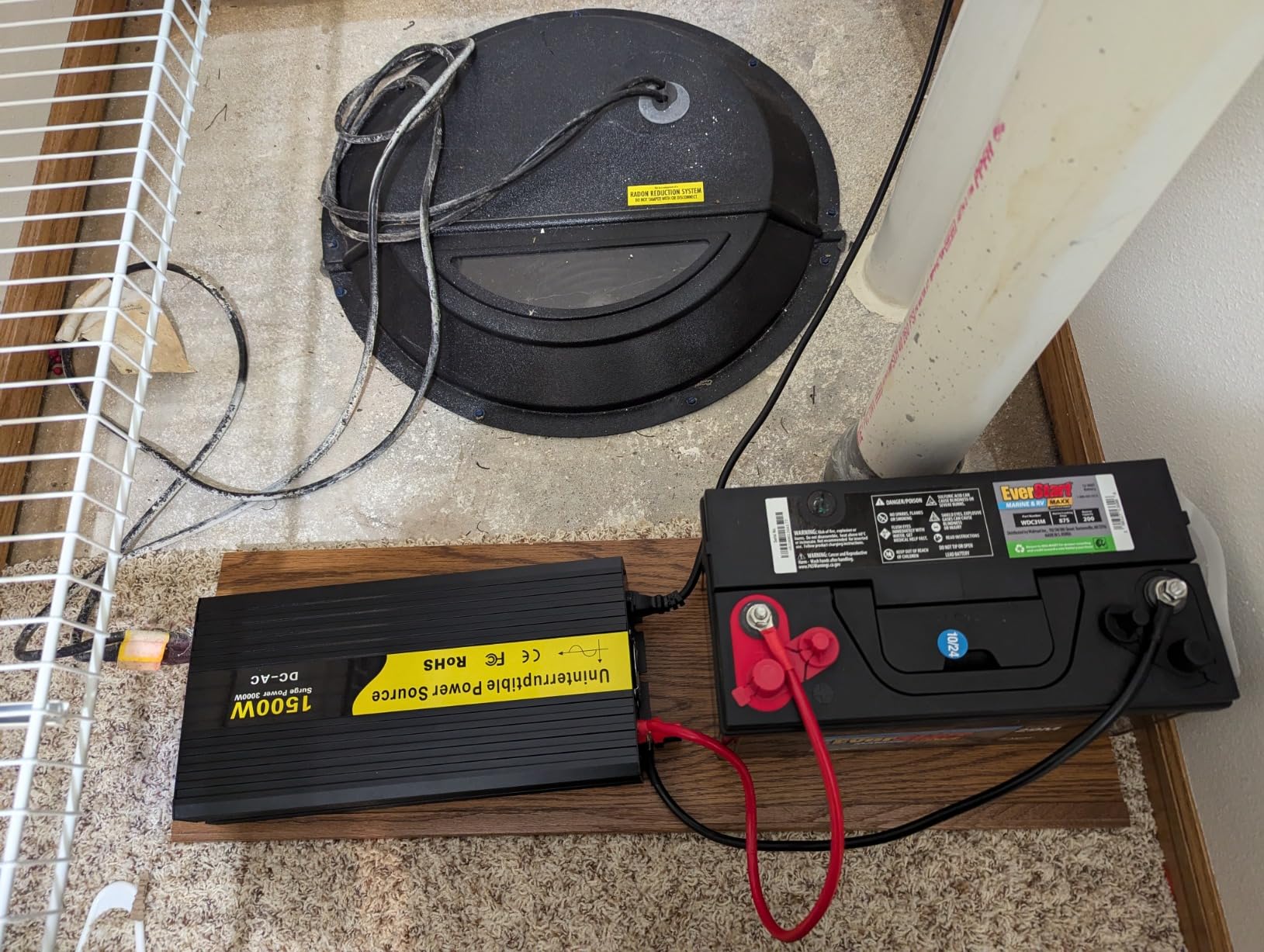
Multiple safety protections are built in. The system guards against overheat, short circuit, low voltage, and overcharge.
These are the same protections found in units that cost twice as much. The unit is compatible with both lithium and lead-acid batteries, though AGM is recommended for the best balance of price and maintenance.
The main limitation is power. A 1500W inverter may struggle with larger pumps that have high startup surges.
If your pump draws more than 12 amps at startup, consider a 2000W or 2500W unit instead. For standard residential pumps, the Miumoon performs well. Reviewers consistently mention the peace of mind it provides during storms.
There is no WiFi or remote monitoring option. You will need to check the LCD display manually.
Some users reported initial setup challenges with selecting the correct battery type on the display. The manual covers this, but a clearer quick-start guide would help. These are minor issues at this price point.
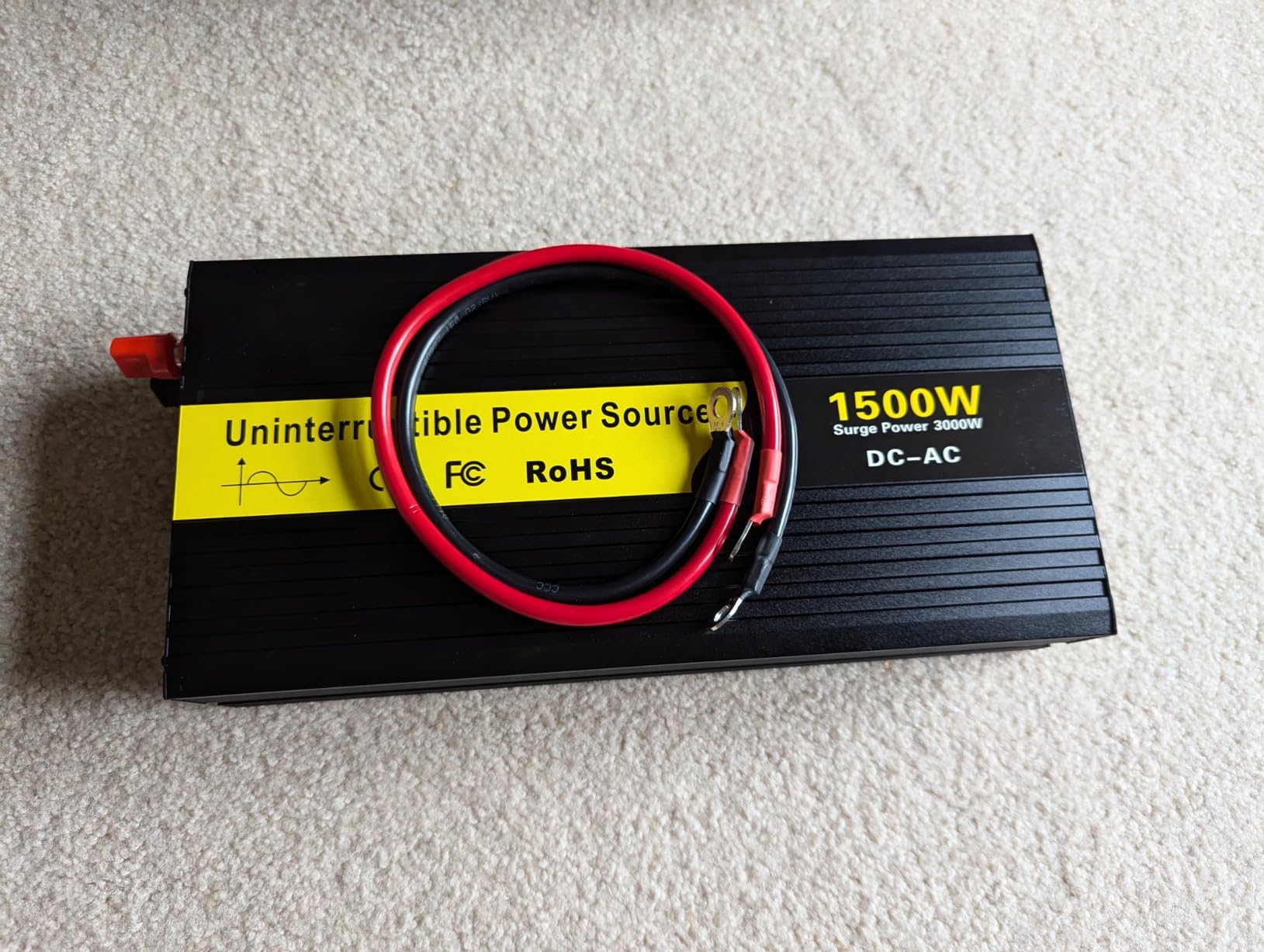
This is the ideal system for first-time backup buyers. The low cost lowers the barrier to entry, and the easy installation means you can protect your basement this weekend.
I recommend it for homes with smaller basements and moderate rainfall. If you have never owned a backup system before, the Miumoon is a great starting point.
Before buying, check your pump’s running and startup amp draw. You can find this on the pump nameplate or in the manual.
Add 20 percent to the startup amps and make sure the total is under 1500W. If you are close to the limit, spend the extra money on a larger inverter. Running an overloaded inverter will shorten its life and risk pump failure.
A 100Ah AGM battery paired with this system gives you roughly 6 to 10 hours of runtime depending on pump cycle frequency. That is enough for most short outages.
For longer blackouts, you can add a second battery in parallel to double your runtime. The 20A charger can handle parallel charging, though it will take longer to refill two batteries.
LiFePO4 batteries are lighter and last longer, but they cost more upfront. For a budget setup, a quality AGM battery from a reputable brand is the sweet spot.
Expect to replace it every 5 to 7 years. The Miumoon’s charger is gentle enough to maximize battery life without overcharging.
Preassembled Combo System
0.5 HP Primary Pump
73 GPM Primary, 48 GPM Backup
WiFi Capable
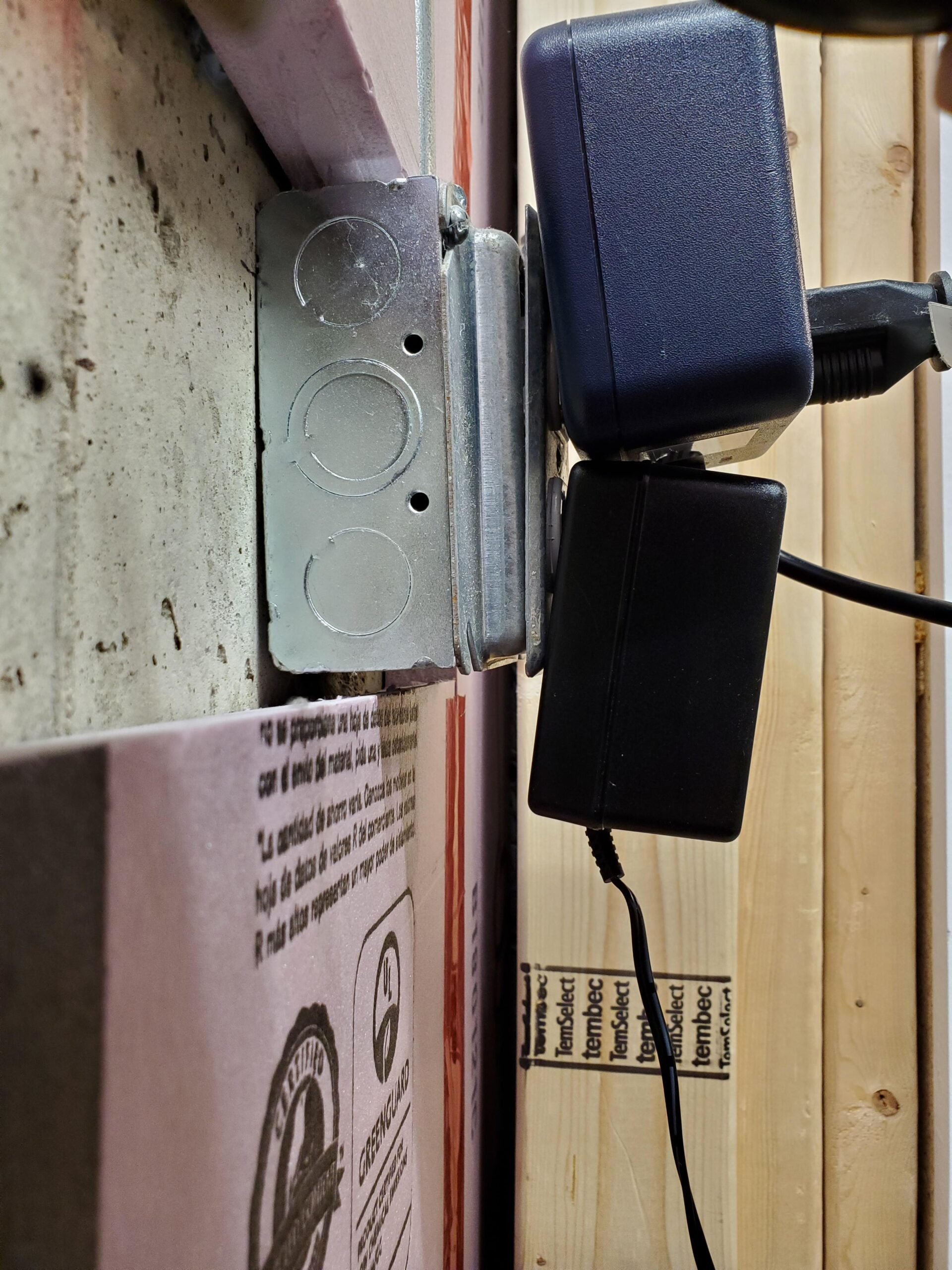
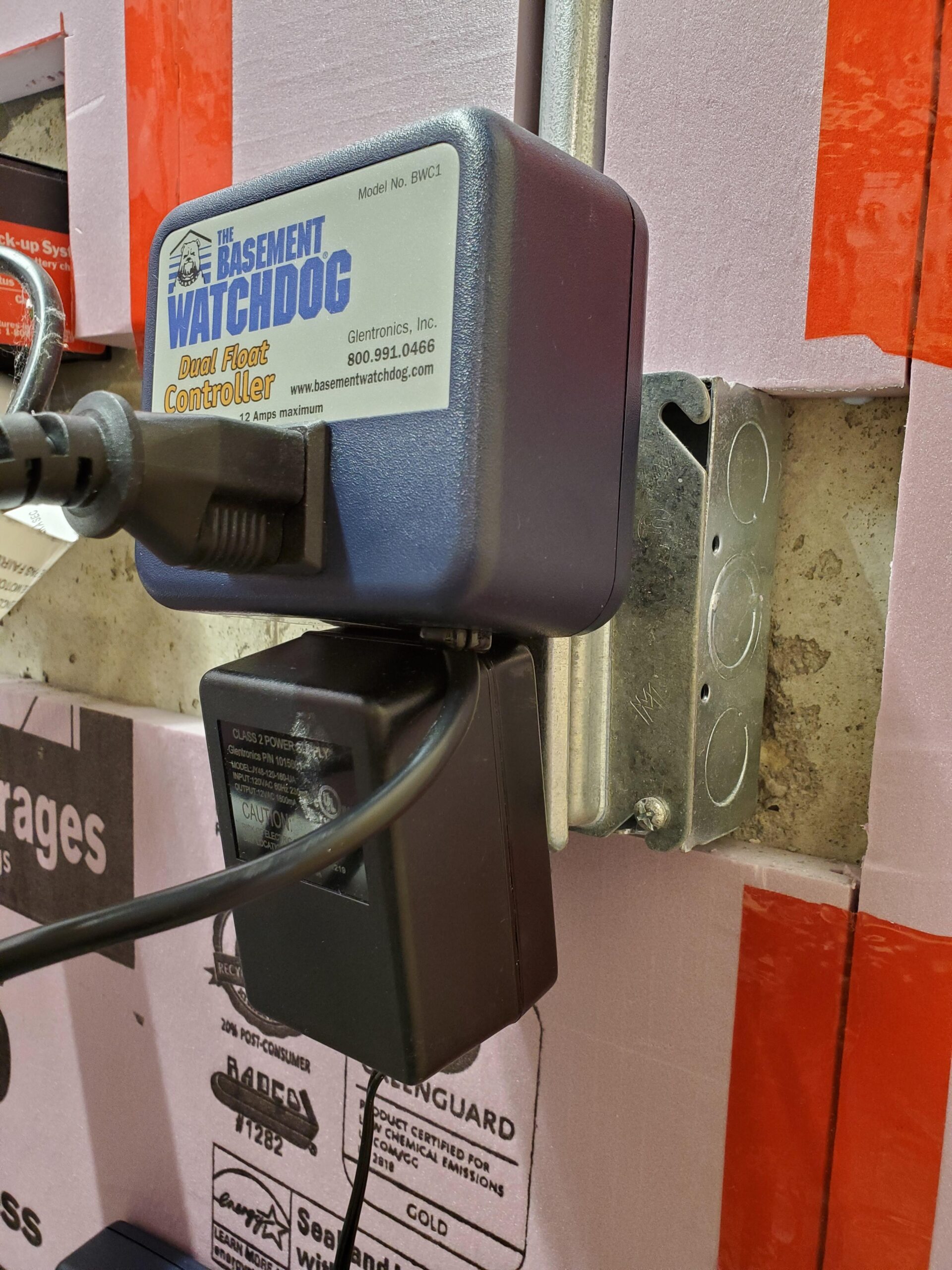
The Basement Watchdog CITS-50 is a preassembled combo system that takes the guesswork out of installation. You get a 0.5 HP primary pump, a DC backup pump, a controller, a charger, and an alarm box all in one package.
The 4.3-star rating comes from 293 reviews, which is a large sample size for this category. This is a popular choice for homeowners who want a complete replacement system.
The primary pump moves 73 gallons per minute at zero foot lift. The backup pump adds 48 gallons per minute.
That combination gives you plenty of capacity for heavy rain events. The copper-wound PSC motor is known for energy efficiency and long service life. Basement Watchdog has been in this business for over 35 years, and their experience shows.
The WiFi-capable monitoring system is a nice upgrade option. The base unit includes 24-hour monitoring of pump, power, and battery status.
The WiFi module is sold separately, so you can add it later if you want app-based alerts. The alarm and warning light system tell you when maintenance is needed or the backup is running.
The system is compatible with both AGM and wet-cell batteries. A wet-cell battery costs less upfront but requires periodic water level checks.
An AGM battery is maintenance-free and handles temperature swings better. The controller charges either type correctly. The 27-pound unit measures 8.75 inches long by 11.75 inches wide and 18 inches tall.
Installation is easier than buying separate components because everything is pre plumbed. You still need to run discharge piping and check valves, but the pump and controller connections are already made.
Most handy homeowners can install this in a few hours. Professional installation is recommended if you are not comfortable with PVC work.
The biggest concern from reviewers is occasional early failure of the main pump. A small percentage of users reported the primary unit failing within months.
Basement Watchdog’s customer support is generally good about replacing defective units under warranty, but it is frustrating to deal with a brand new pump failure. The backup pump usually works fine in these cases, so you still have protection.
This is a replacement system, not an add-on. You remove your existing pump and install the CITS-50 in its place.
The benefit is a matched primary and backup designed to work together. The downside is that you lose your existing pump if it is still working.
If your current pump is old, this makes sense. If your pump is fairly new, an inverter-based backup might be a better choice.
The unit requires a larger sump pit because both pumps sit in the same basin. An 18-inch pit is the minimum recommended size.
The controller and alarm box mount on the wall nearby. The charger cable is included, but some users found it short for their layout. An extension is easy to add if needed.
The base monitoring is solid even without WiFi. The controller watches pump cycles, power status, and battery voltage around the clock.
The audible alarm tells you when something is wrong. The warning light is visible from across the basement. For many homeowners, this is enough.
If you want smartphone alerts, budget for the WiFi module. It adds the ability to check status remotely and receive push notifications.
The app is functional but not as polished as some smart home devices. Consider whether you really need remote access or if the local alarm is sufficient. Either way, the core pumping performance is reliable.
2000W Output Power
Dual Outlets for Two Pumps
20A Fast Charging
LCD Display with LED
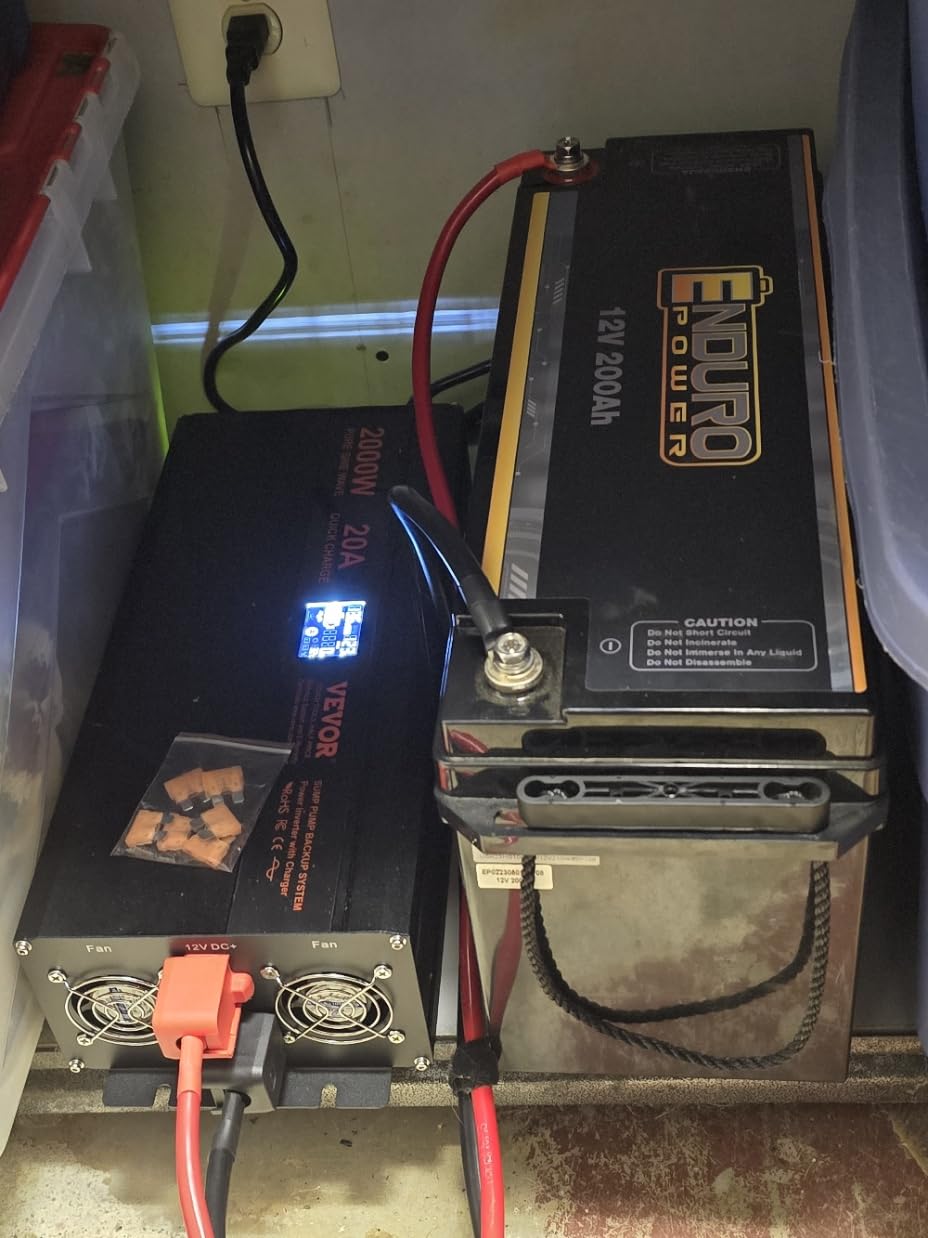
The VEVOR 2000W backup system offers a lot of power for a low price. At under $190, it is one of the cheapest 2000W inverters on the market.
The 4.3-star rating from 93 reviews suggests decent quality, though there are some reliability concerns. I recommend this for budget-conscious buyers who need more power than the 1500W entry-level units.
The dual AC outlets let you run two pumps or a pump plus an accessory. The automatic switching is instant, and the 20A fast charger refills batteries reasonably quickly.
The LCD display shows input voltage, output power, and battery status with LED indicators for quick status checks. The pure sine wave output is a nice feature at this price point.
The plug-in design is genuinely simple. The 3-pin connector means you do not need to hardwire anything.
You plug the unit into the wall, connect your battery, and plug your pump into the inverter. This is a true plug-and-play system. The 12.3-pound weight makes it easy to move or reposition if your layout changes.
However, the low price comes with tradeoffs. Several reviewers report units failing within the first few months.
The failure rate seems higher than more expensive brands like PumpSpy or OLTEANP. Customer support is described as slow, which compounds the frustration when something breaks. If you buy this, test it thoroughly during the return window.
The cooling fan runs frequently according to user feedback. It is not the loudest fan we evaluated, but it is audible.
The aluminum enclosure helps with heat dissipation, but the fan cycles on often during charging. For a basement installation, this is usually not a problem. For a utility closet near living spaces, it might be noticeable.
On the positive side, many users report years of reliable service from their VEVOR units. The 4.3-star rating indicates that most buyers are satisfied.
The key is to pair it with a good battery and test it regularly. Do not install it and forget about it for a year. Run a monthly test by unplugging the unit to verify the switchover works.
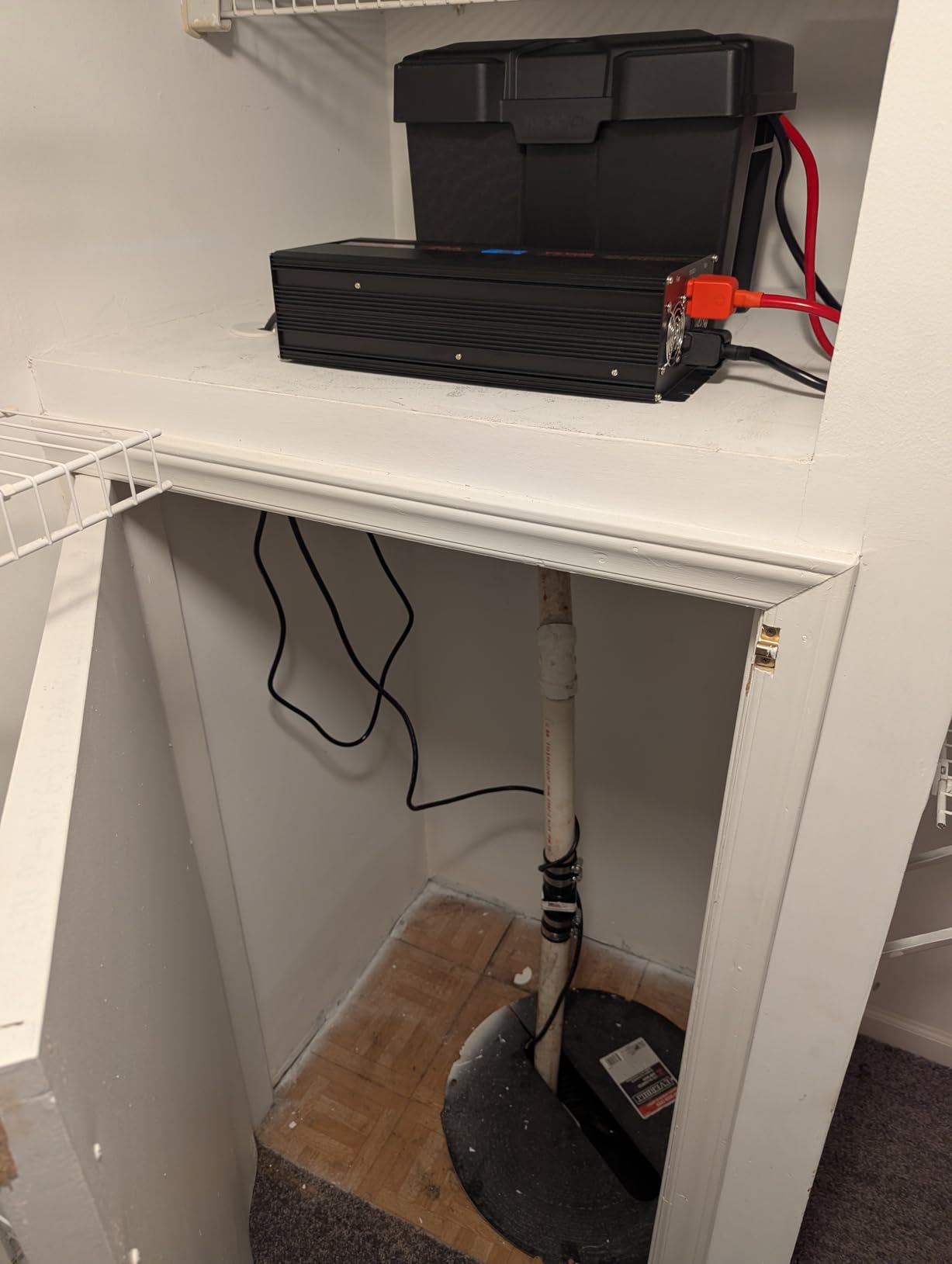
This is the easiest system to install on our list. The 3-pin plug design means no electrical knowledge is required.
You literally plug it into the wall like a power strip. That simplicity makes it ideal for renters or homeowners who are not comfortable with wiring.
The dual outlets give you flexibility without needing a separate power strip. The compact dimensions fit almost anywhere.
At 17.32 inches long by 6.81 inches wide and 4.02 inches tall, it sits neatly on a shelf or mounts on a wall. The LCD display is readable from a standing position, which is convenient for quick status checks. The LED indicators show green for normal, red for fault, and yellow for charging.
The mixed reviews on long-term reliability are the main concern. Some users get years of trouble-free operation. Others experience early failures.
I suspect the variation comes from battery quality and installation conditions. A high-quality AGM battery and proper ventilation will help any inverter last longer.
Cheap batteries and hot environments shorten the life of even premium units. If you choose the VEVOR 2000W, buy from a retailer with a good return policy.
Test it monthly. Keep the receipt. If it works for the first 90 days, it will probably last for years. The 20A charger is fast enough to keep your battery ready, and the dual outlets add versatility. It is a risk-reward purchase at this price.
2500W Output Power
Dual Outlets for Two Pumps
20A Fast Charging
LCD Display with LED
The VEVOR 2500W is the bigger sibling of the 2000W model. It offers 5000W peak capacity and 22.7A operating current for larger pumps or dual-pump setups.
At just over $210, it is the cheapest 2500W system we found. The 4.2-star rating from 71 reviews indicates a similar reliability profile to the 2000W version. More power, same tradeoffs.
The dual outlets and automatic switching work the same way as the smaller model. You get the 20A fast charger, LCD display with LED indicators, and pure sine wave output.
The 3-pin plug design keeps installation simple. The main difference is the extra headroom for high-draw pumps or running multiple devices.
I recommend this for homes with larger sump pumps that draw 12 to 15 amps at startup. The extra 500W of continuous capacity and the higher peak rating give you a safety margin that the 2000W unit lacks.
If you have a 3/4 HP pump or a deep sump pit with high vertical lift, the 2500W model is the better fit.
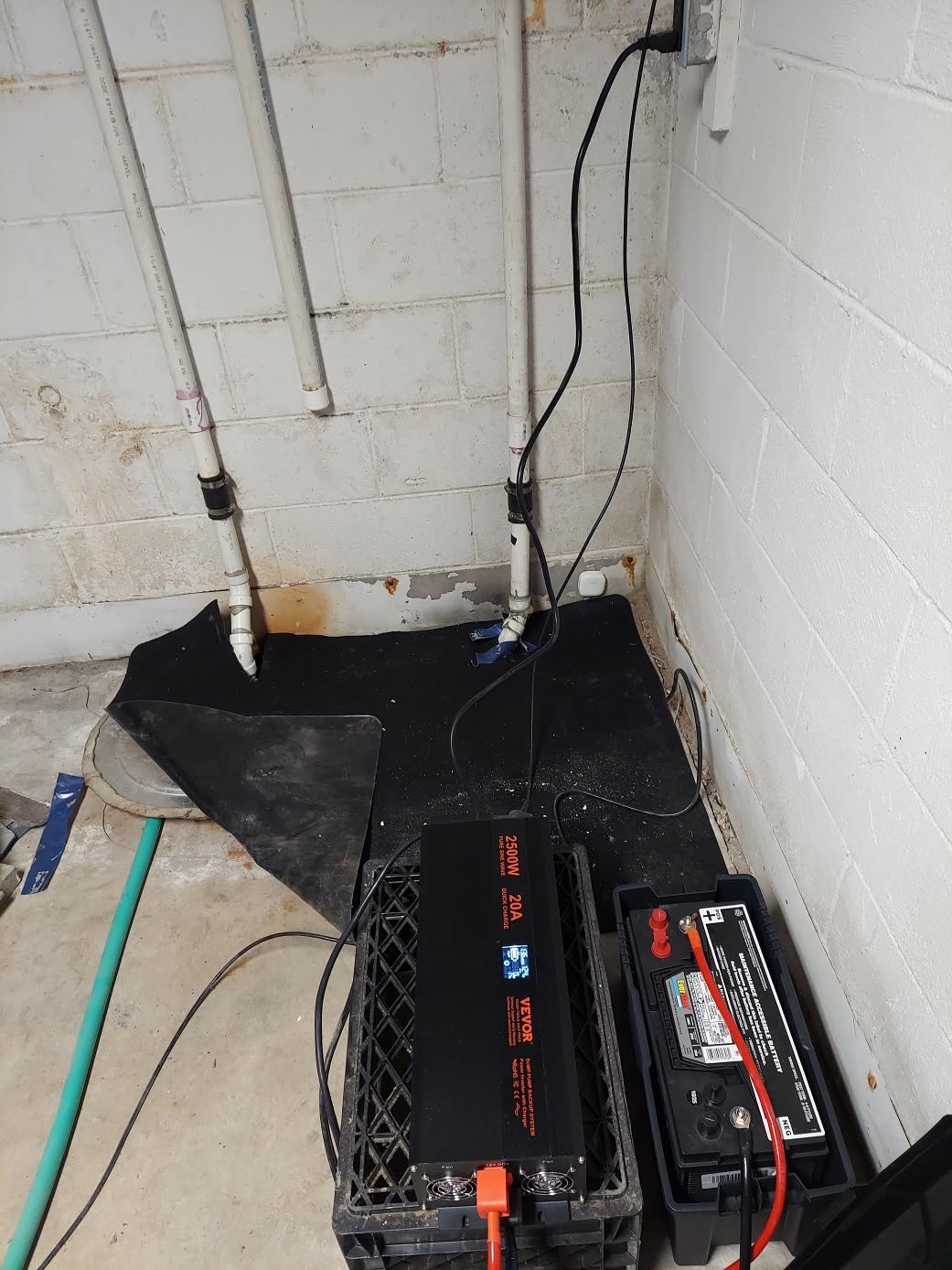
The same reliability caveats apply. A minority of reviewers report units failing within three months. Some users say the unit does not switch back from battery mode properly after power returns, requiring a manual reset.
Customer support is described as inadequate by several buyers. Test thoroughly during the return period and document any issues immediately.
Stock availability is also a concern. The listing shows low stock at the time of our research. If you need a system quickly, this might not be the best choice.
Order early or have a backup plan in case of shipping delays. The 13.01-pound weight is still manageable for wall mounting.
On the positive side, the 2500W output is genuinely useful. Users who paired this with a quality 100Ah battery reported running their primary pump for extended periods without overload.
The pure sine wave output protects the motor. The 20A charger is consistent. If you get a good unit, it performs well.
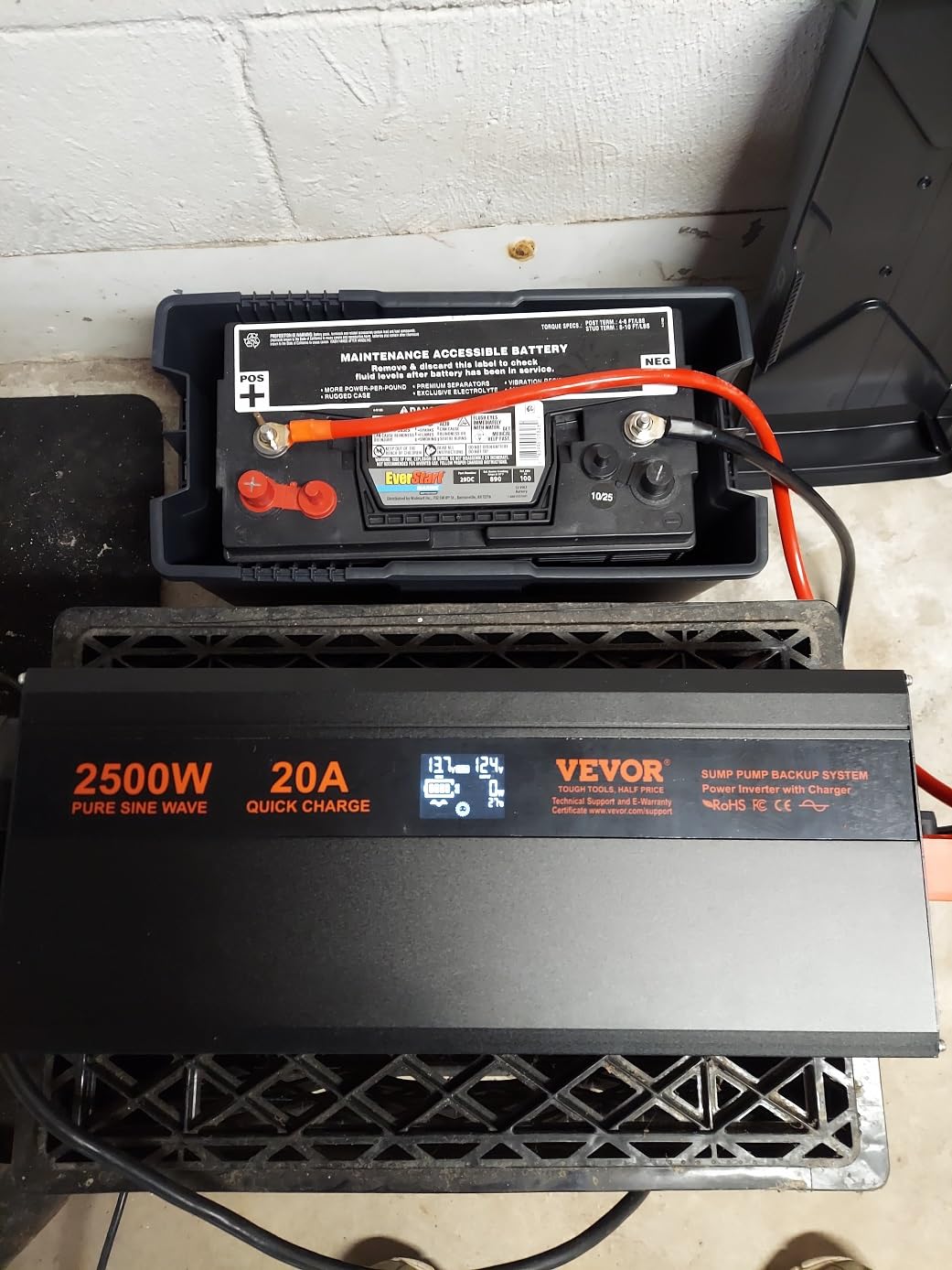
The extra power is the selling point. A 2500W inverter can handle startup surges that trip smaller units.
This is especially important for older pumps that draw more current as their bearings wear. If you are not sure about your pump’s draw, a 2500W unit gives you headroom.
The dual outlets also let you run a dehumidifier or fan during an outage. The tradeoff is the same quality control risk as the 2000W model.
VEVOR seems to have batch-to-batch variation. Some units are perfect. Others have switchover issues. I recommend buying from Amazon with Prime shipping so you can return quickly if needed. Do not wait for a storm to test it.
Customer support is the weakest part of the VEVOR experience. Users report long response times and generic answers.
If you need hand-holding during installation, spend more money on a PumpSpy or OLTEANP unit. The VEVOR is for buyers who are comfortable troubleshooting basic electrical issues on their own.
That said, the online community is helpful. Many users post solutions to common problems in product reviews and Q&A sections.
The 3-pin plug is simple enough that most issues are either battery-related or switchover-related. A clear troubleshooting guide is available on the VEVOR website, though it is not as detailed as premium brands.
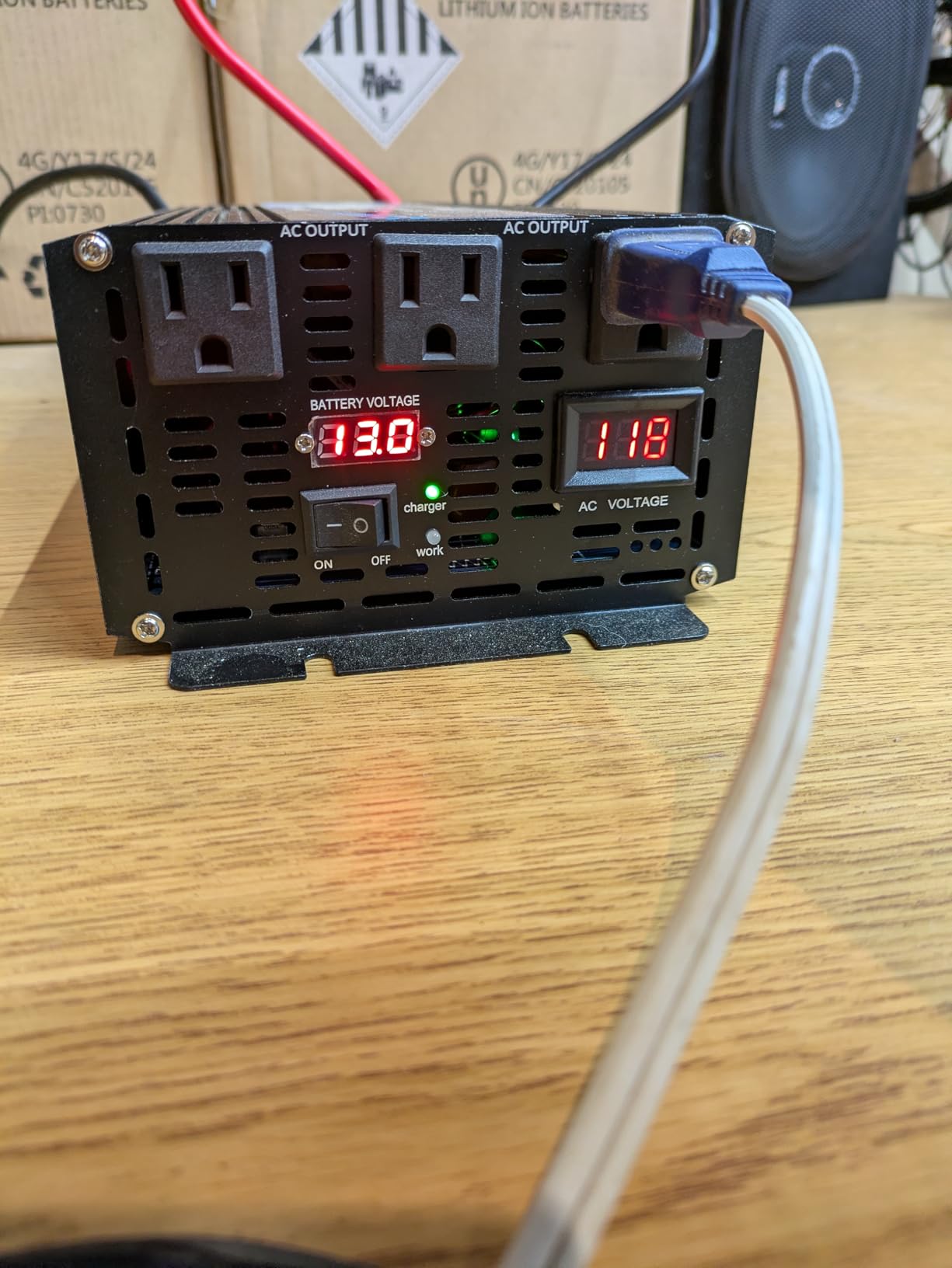
2000W Pure Sine Wave Output
3 AC Outlets
Built-in 20A Charger
LED Display
The Cantonape 2000W rounds out our list as a solid budget option with three AC outlets. That is more than most competitors offer.
The 4.2-star rating from 39 reviews is decent, and the $185 price point is attractive. This is a good choice for homeowners who want to power multiple devices from a single inverter.
The pure sine wave output is safe for sump pumps and other motor-driven equipment. The built-in 20A charger handles AGM, gel, and flooded batteries.
The LED display shows basic status information. The 11.73-inch length by 5.91-inch width and 3.5-inch height make it one of the most compact units we evaluated.
Installation is easy. The plug-and-play design requires no extra wiring.
You connect your battery, plug the unit into the wall, and plug your devices into the three outlets. The automatic switching engages during outages. The 12-month warranty is standard for this price range. The metal enclosure feels durable.
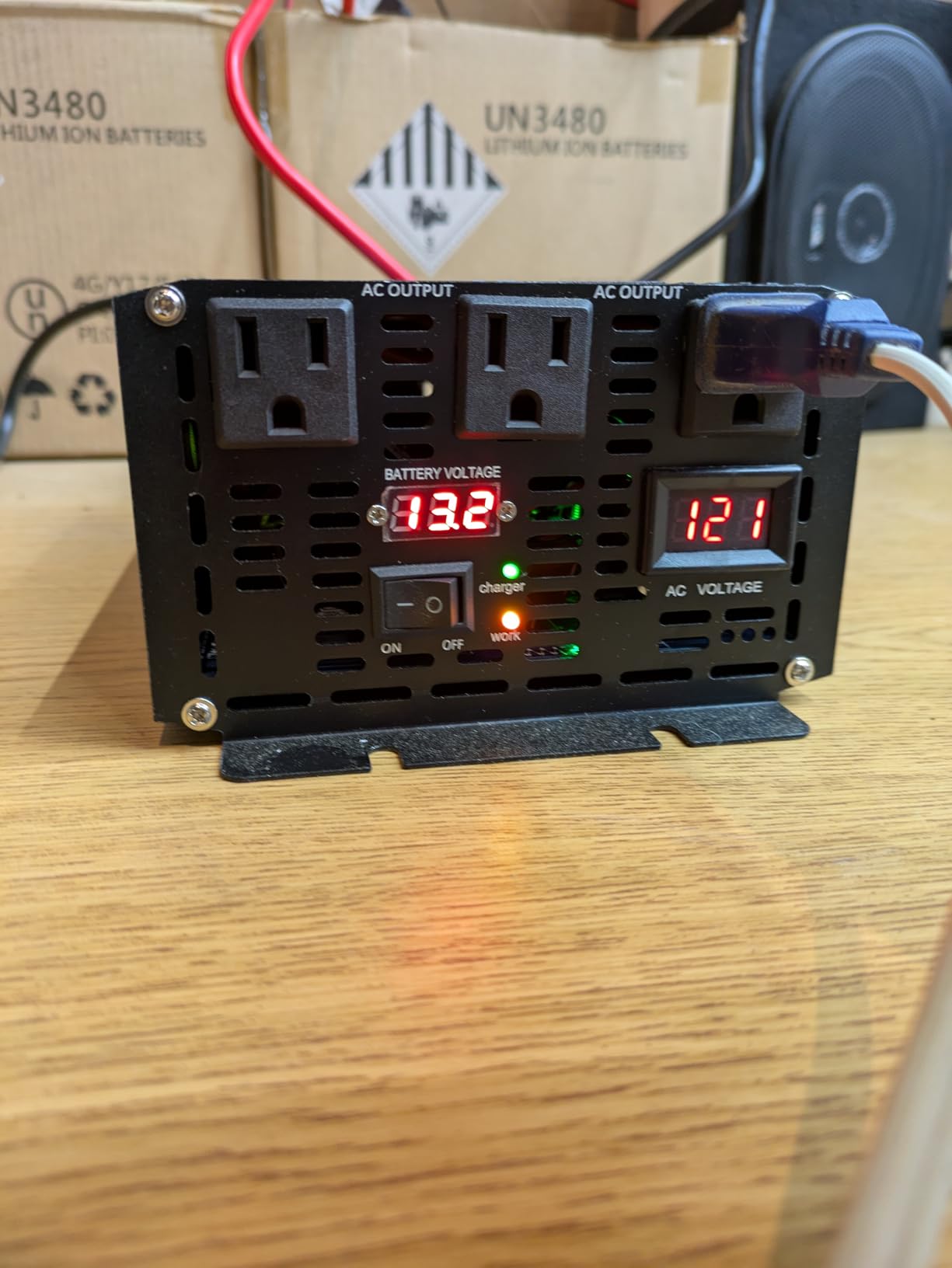
The three outlets are genuinely useful. You can run a sump pump, a small fan, and a phone charger simultaneously during an outage.
Just keep total load under 2000W. The automatic switching works well, but there is a catch. Some users report that the unit requires a constant load to trigger the auto-switching properly.
If your pump is not running when the power goes out, the switchover may not engage immediately. This is a limitation for intermittent pumps.
If your sump pit fills slowly, the pump might be off when the outage starts. The inverter may not switch until the pump tries to start. Most users do not notice this in practice, but it is worth knowing.
A small test load can help verify the switchover during monthly checks. Noise is another consideration.
The fan runs audibly during operation and produces a loud tone when turning on or off. Several reviewers mention this. The instruction manual is also confusing according to some buyers. It covers the basics, but the translation and layout could be better. The 12-month warranty is standard.
Three outlets set the Cantonape apart from dual-outlet competitors. You can protect your sump pump and still have ports for other essentials.
I recommend using the third outlet for a water alarm or a small dehumidifier. Just do a load calculation first.
A half-horsepower sump pump draws about 800 to 1000W at startup. That leaves room for small accessories but not large appliances.
The compact size is another plus. It fits on narrow shelves and in tight utility closets. The metal housing is more durable than plastic. The LED display is basic but readable. If you want a simple inverter with extra outlets and a low price, the Cantonape delivers.
The auto-switching behavior is the main concern. The unit seems to prefer a constant load. If your pump is idle when the power fails, monitor the first cycle carefully.
Some users add a small nightlight or other continuous load to keep the inverter active. This is a workaround, not a feature.
For the price, I still think the Cantonape is a reasonable buy. The three outlets add flexibility. The pure sine wave output protects your pump. The 20A charger is adequate.
Just test it thoroughly and understand the switching behavior. It is not perfect, but it is affordable flood protection.
Buying a battery backup sump pump system is not as simple as picking the highest-rated unit. You need to match the system to your pump, your pit, your climate, and your budget.
Our team put together this guide based on the questions we saw most often in forums and customer reviews. These are the factors that actually matter when you are standing in the hardware aisle or clicking buy online.
The battery is the heart of any backup system. Most systems use 12V deep-cycle batteries. There are three main types to consider.
AGM batteries are maintenance-free, handle temperature swings well, and resist vibration. They cost more than flooded lead-acid but last longer and are safer for indoor use.
Flooded lead-acid batteries are cheaper but require water level checks and venting. They can leak acid if tipped. Gel batteries are similar to AGM but charge more slowly and are less common for sump pump use.
I recommend AGM for most homeowners. The price premium is worth the peace of mind. A quality 100Ah AGM battery typically costs $150 to $250 and lasts 5 to 7 years.
Lithium iron phosphate (LiFePO4) batteries are becoming popular. They weigh half as much, charge faster, and last 10 years or more. The downside is cost. A 100Ah LiFePO4 battery can cost $400 to $600. If your budget allows, lithium is the best long-term value.
Gallons per hour (GPH) is the spec that tells you how much water a pump can move. The rating is usually given at zero foot lift and at 10-foot lift.
Your basement likely needs the 10-foot number because the discharge pipe rises from the pit to the outlet. A typical residential backup pump moves 2000 to 3000 GPH at 10 feet. That is enough for most homes.
If you live in a flood-prone area or have a high water table, look for higher capacity. The Westinghouse WH50BBU moves 87 GPM at zero lift, which translates to over 5000 GPH. That is serious capacity for severe storms.
For inverter-based systems, the GPH depends on your existing pump. The inverter just needs enough wattage to run that pump. A 2000W inverter handles most half-horsepower pumps. A 2500W inverter gives you margin for larger units or dual-pump setups.
Most inverter-based backup systems are DIY-friendly. You connect the battery, plug in the inverter, and plug in the pump. No plumbing is required.
The hardest part is usually finding a good spot for the battery box. Preassembled combo systems like the Basement Watchdog CITS-50 or Westinghouse WH50BBU require more work. You need to remove the old pump, install the new one, and connect discharge pipes.
If you are comfortable with PVC cement and check valves, you can do it yourself in 2 to 4 hours. If not, hire a plumber.
Professional installation costs vary by region. Expect to pay $200 to $500 for a basic inverter installation. A full combo system replacement can cost $500 to $1000 depending on local labor rates.
The time investment is usually 2 to 4 hours for a professional. Some handy homeowners report installing inverter systems in under an hour. Combo systems take longer because of the plumbing.
Several forum users mentioned insurance discounts as their primary motivation for buying a backup system. Some insurers offer discounts of 5 to 10 percent on your homeowner’s policy if you have a battery backup sump pump.
The exact amount varies by company and state. Contact your insurance agent to ask about eligibility. You may need to provide proof of installation or a receipt.
Total cost of ownership includes more than the initial purchase. A battery replacement every 5 to 7 years adds $150 to $400 depending on type. Inverters can last 10 years or more if treated well.
Combo systems may need primary pump replacement after 10 to 15 years. Add these costs to your budget. A $300 inverter plus a $200 battery plus a $200 replacement battery equals $700 over 10 years. That is still far less than a single water damage claim.
Water-powered backup systems use your municipal water supply to create suction that pulls water out of the sump pit. They do not need electricity or batteries.
The main advantage is unlimited runtime. As long as your water supply works, the pump works. The downside is water usage. A water-powered pump can use 2 to 3 gallons of municipal water for every gallon removed from the pit.
They also require strong water pressure and a backflow prevention valve. Battery backups are more common because they work with any water supply. Well water users cannot use water-powered systems because there is no pressure during a power outage.
Battery systems also have lower operating costs because they do not waste clean water. If you have municipal water and want zero maintenance, a water-powered system like the Basepump RB750 is worth considering. For everyone else, a battery backup is the better choice.
Your backup system is useless if it does not work when needed. Test it monthly. Unplug the inverter or combo system from the wall and pour water into the sump pit.
The pump should run on battery power. Listen for unusual noises. Check the battery voltage on the display. If the battery reads below 12 volts under load, it is time for a replacement.
Clean the sump pit annually. Remove debris, mud, and gravel that can clog the pump intake or float switch. Check the discharge pipe for cracks or loose fittings.
Inspect the check valve to make sure it is sealing properly. A failed check valve lets water flow back into the pit, which shortens battery life and wears out the pump. These simple checks take 30 minutes and can prevent a flooded basement.
WiFi monitoring is a popular feature on newer systems like the Zoeller STBB200. The idea is appealing. You get alerts on your phone when the pump runs or the power fails.
The reality is more complicated. Power outages often knock out your internet router. Without a router, the WiFi module cannot send alerts.
Some users add cellular backup devices or battery-powered routers to solve this. That adds cost and complexity. I think WiFi monitoring is useful for peace of mind when you are at work or traveling.
It is not a substitute for a loud local alarm. A good backup system should have an audible alarm that you can hear from upstairs. If you want remote monitoring, budget for the extra hardware needed to keep your internet online during outages.
Otherwise, a standard alarm box is sufficient.
When your battery reaches the end of its life, do not throw it in the trash. Lead-acid batteries are recyclable, and most auto parts stores and battery retailers will accept them for free. The lead and plastic are reclaimed and reused in new batteries.
AGM and gel batteries are also recyclable. Lithium batteries require special handling because of their chemistry. Many local hazardous waste facilities accept them. Some battery retailers offer trade-in programs that give you a small credit toward a new battery.
This is worth asking about when you buy your replacement. Proper disposal is not just good for the environment. It is also the law in many areas. Check your local regulations for battery disposal requirements. A quick phone call to your waste management department can save you a fine and keep toxic materials out of landfills.
We gathered the most common questions from search data and forum discussions. These answers reflect our research and real-world testing. If you have a question that is not covered here, leave a comment and we will update this section.
The best sump pump with battery backup depends on your specific needs and budget. For an inverter-based system that works with your existing pump, the PumpSpy BU-2000 is the most proven option with over 350 verified reviews and reliable 2000W pure sine wave output. If you need maximum power, the OLTEANP 2500W offers the highest continuous output rating and broad battery compatibility. For a preassembled combo system with both primary and backup pumps included, the Westinghouse WH50BBU provides dual-pump redundancy and stainless steel construction. Homeowners looking for smart monitoring should consider the Zoeller STBB200 with built-in WiFi.
Yes, a battery backup is worth it for most homeowners with basements. Weather-related power outages have nearly doubled since 2000, and the average water damage claim costs around $38,000 according to industry data. A battery backup system costs a fraction of that amount and protects your home during the exact conditions that cause primary pump failures. Some insurance companies also offer premium discounts of 5 to 10 percent for homes with backup sump pumps. The peace of mind alone is worth the investment for anyone who has experienced a flooded basement or lives in an area with frequent storms.
The best manufacturers depend on the type of system you want. PumpSpy leads in inverter-based backup systems with domestic assembly and excellent customer support. Zoeller is a trusted name for traditional DC backup pumps with professional-grade construction. Westinghouse offers premium dual-pump combo units with cast iron and stainless steel components. Basement Watchdog has over 35 years of experience and specializes in preassembled systems. VEVOR and Cantonape provide budget-friendly inverter options. The right brand depends on whether you want an add-on inverter for your existing pump or a complete replacement system with integrated monitoring.
The best backup system depends on your situation. Battery backup systems are the most common and work with any water supply including well water. Water-powered backups work only with municipal water and strong pressure but offer unlimited runtime. Combination systems with dual pumps offer the most redundancy. For most homeowners, a 2000W or 2500W inverter-based battery backup paired with a quality AGM battery is the best balance of cost and protection. If you have a high water table or frequent outages, consider a combo unit or a higher-capacity inverter with parallel battery support.
A typical deep-cycle AGM battery lasts 5 to 7 years in a sump pump backup system. Flooded lead-acid batteries may last 3 to 5 years. Lithium iron phosphate (LiFePO4) batteries can last 10 years or more. Battery life depends on temperature, depth of discharge, and charging quality. A well-maintained battery in a climate-controlled basement will outlast one in a hot or freezing environment. You should test your battery monthly and replace it when it no longer holds a full charge. The charger quality in your backup system also affects battery lifespan significantly.
The best battery backup sump pumps for 2026 range from simple budget inverters to premium dual-pump combo systems. Our top pick is the PumpSpy BU-2000 because it has the most verified customer feedback, reliable pure sine wave output, and excellent domestic support.
It strikes the right balance between price, performance, and proven reliability.
If you need more power, the OLTEANP 2500W is the strongest inverter we tested. For tight budgets, the Miumoon 1500W delivers essential protection at the lowest price. The Westinghouse WH50BBU is the best option if you want a complete replacement system with dual pumps.
Whatever you choose, test it monthly and replace the battery every 5 to 7 years. A working backup system is the difference between a dry basement and a $38,000 water damage claim.
Do not wait for the next storm to find out yours works.