10 Best Infrared Thermometer Guns (May 2026 Guide)
Table Of Contents
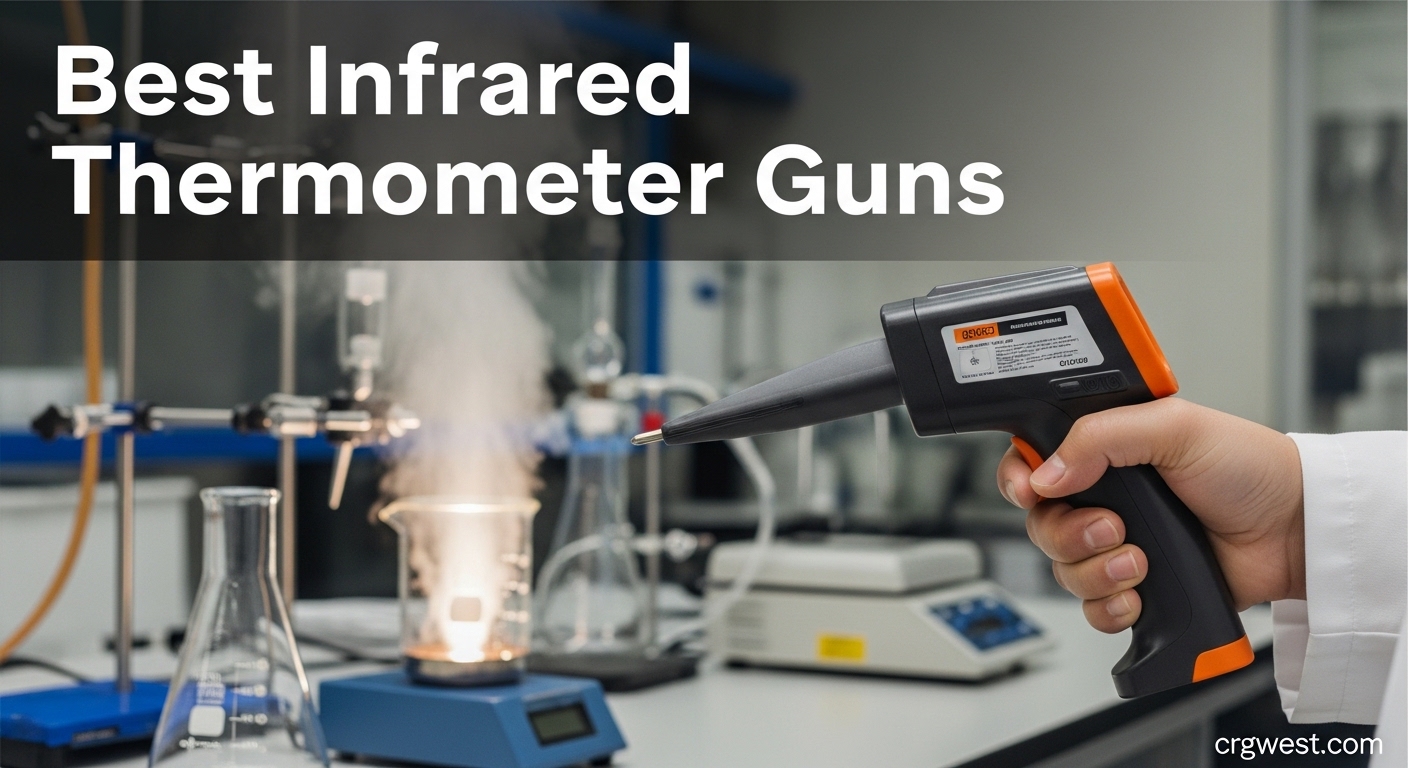
When I first started grilling seriously five years ago, I burned more steaks than I care to admit. The problem was not my technique. It was guessing surface temperatures. A quality infrared thermometer gun changed everything for me. These non-contact temperature tools let you measure surface heat instantly without touching hot grills, skillets, or pizza stones.
After testing dozens of models and analyzing thousands of user reviews, our team has identified the best infrared thermometer guns for 2026. Whether you need one for cooking, HVAC work, automotive diagnostics, or home inspection, this guide covers options from budget-friendly picks under $20 to professional-grade tools that tradespeople swear by.
Every product here has been evaluated for accuracy, build quality, distance-to-spot ratio, and real-world usability. Let us help you find the right temperature gun for your specific needs.
Top 3 Picks for Best Infrared Thermometer Guns
Need a quick recommendation? These three models represent the best balance of performance, value, and reliability based on our testing and community feedback.
We earn a commission, at no additional cost to you.
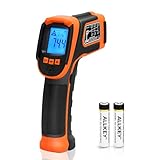
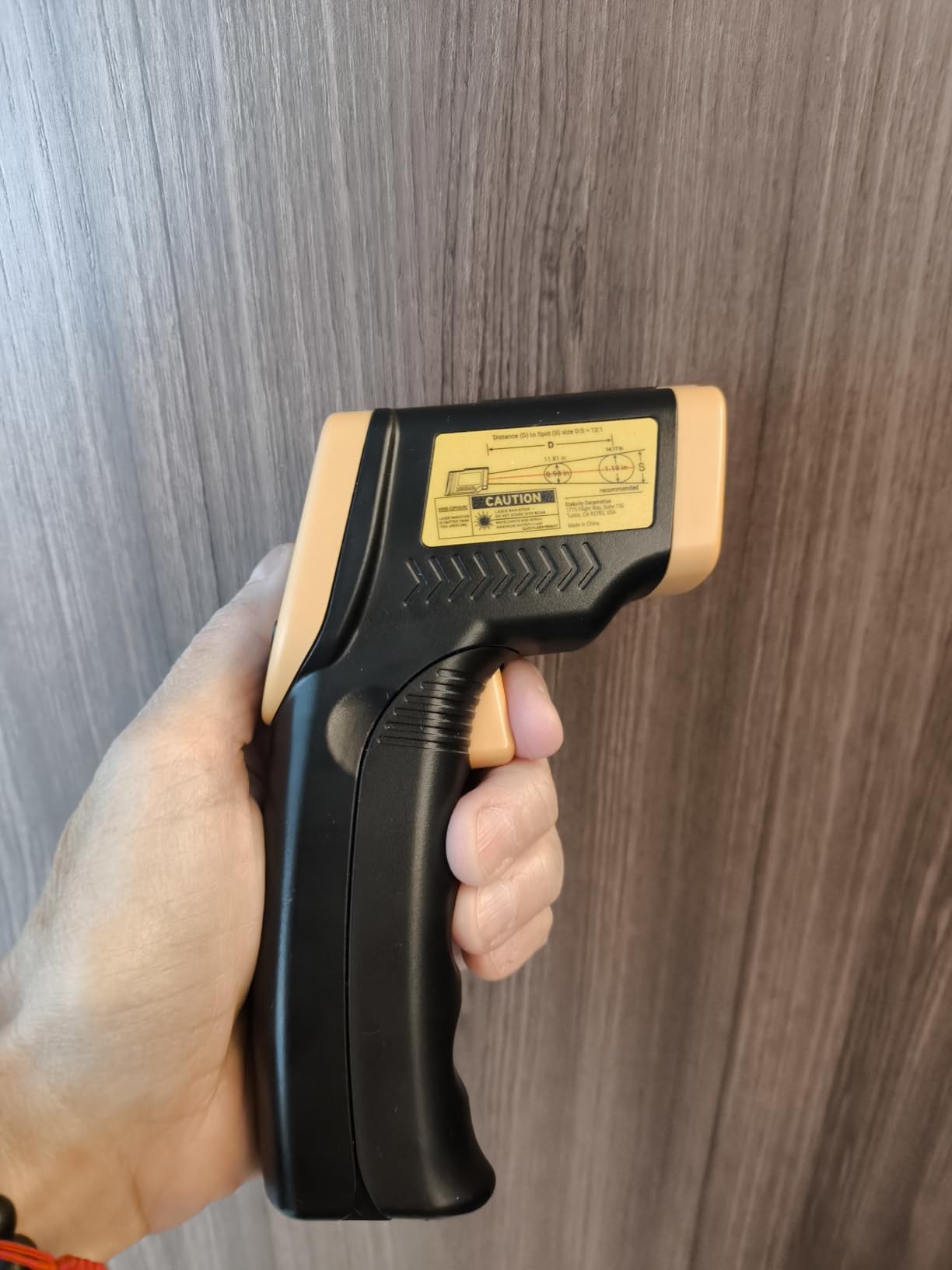
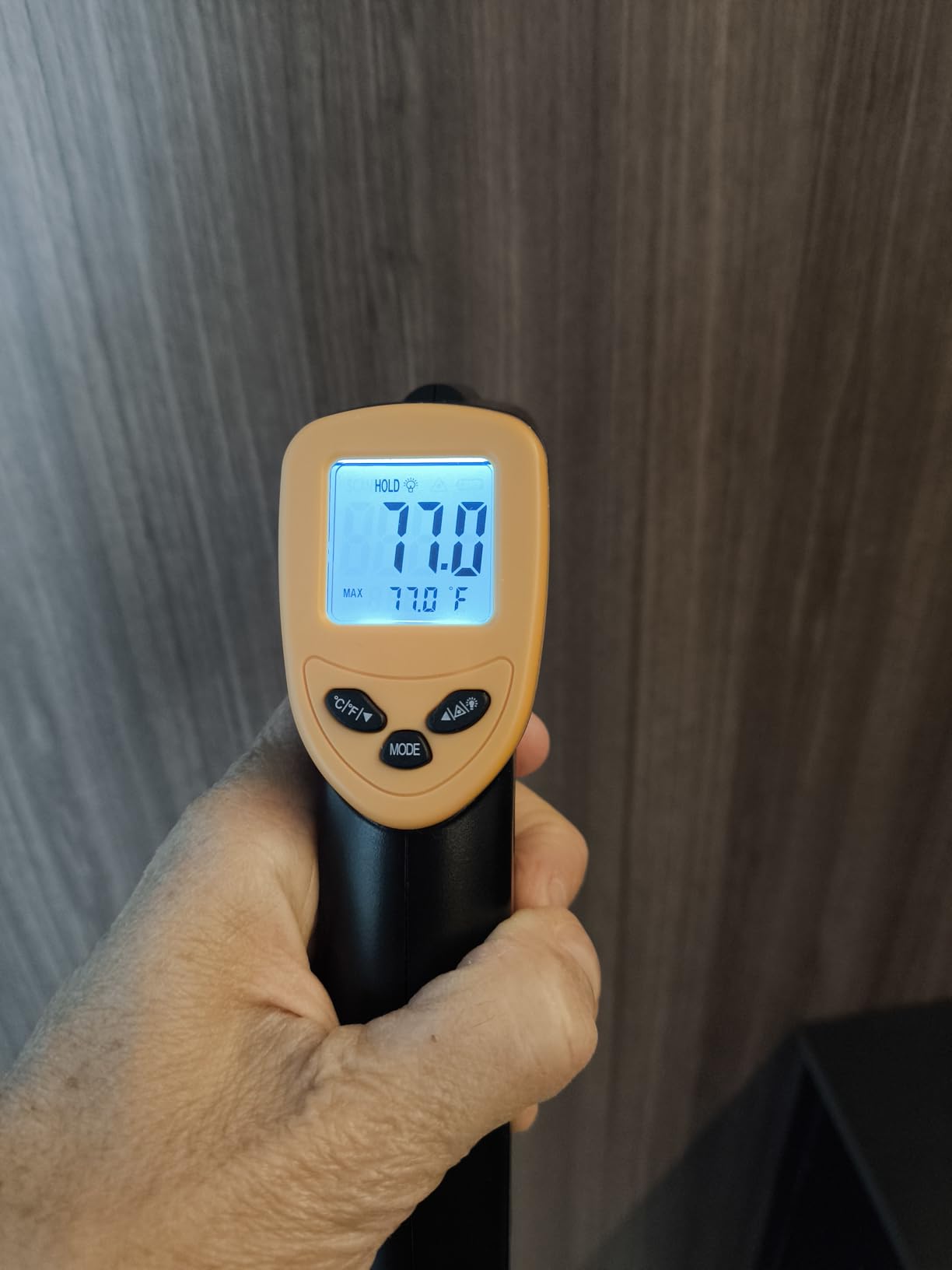
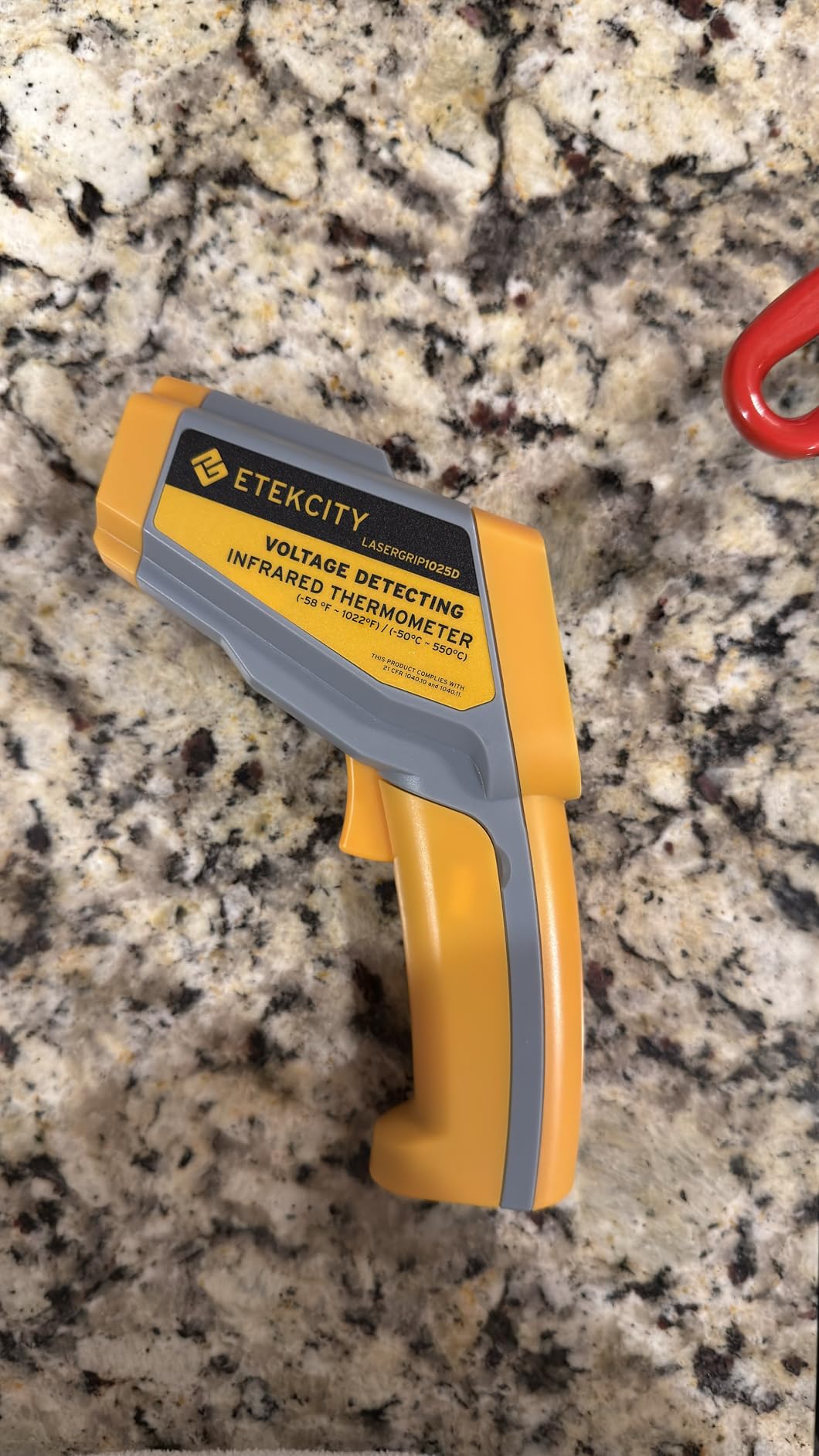
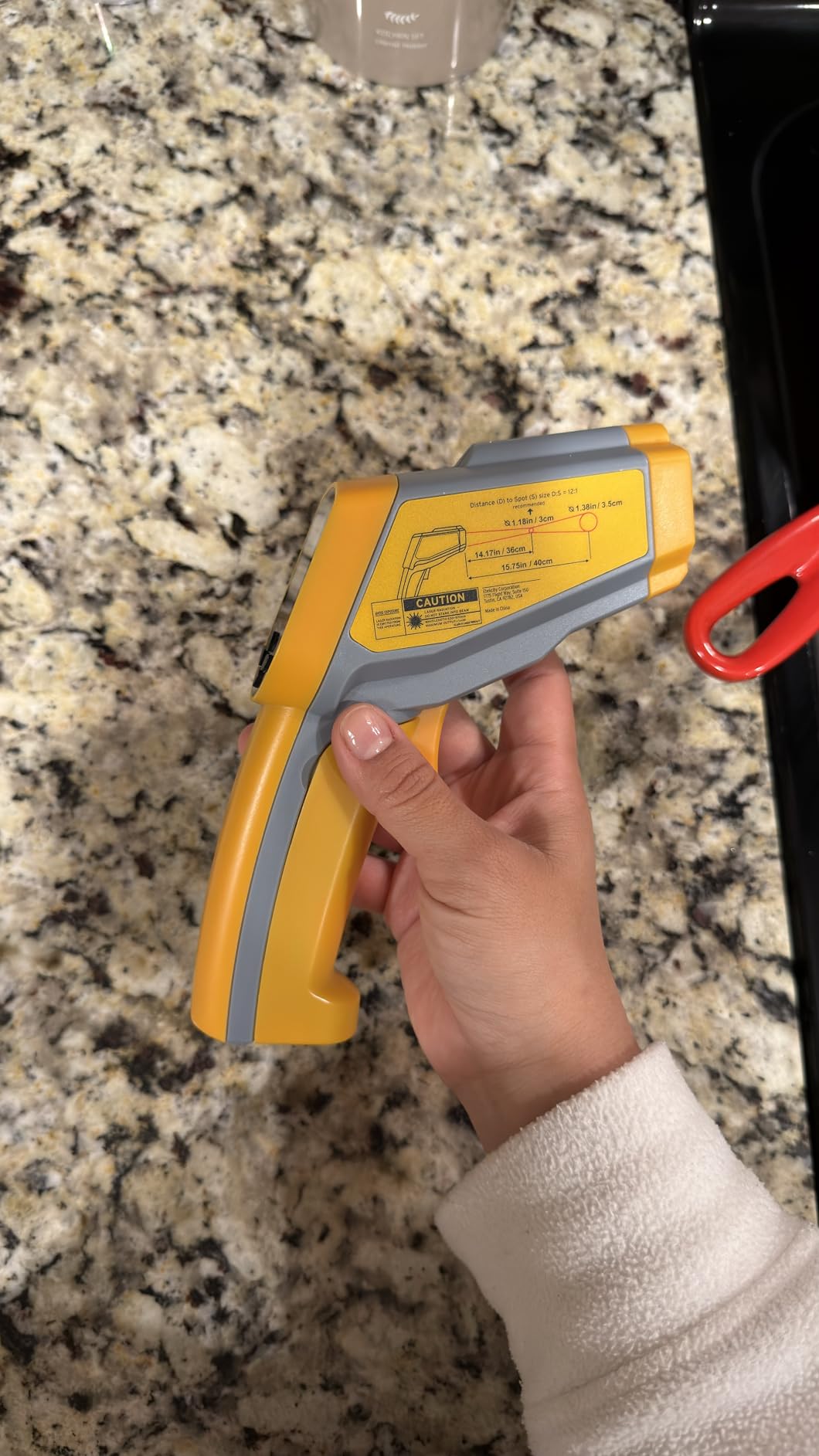
I have recommended the Etekcity Lasergrip 774 to at least a dozen friends over the years, and not one has been disappointed. For under $20, you get a reliable tool that handles 90 percent of home cooking tasks perfectly. The 12:1 distance-to-spot ratio means you can stand a foot back from a hot grill and still get an accurate reading from a 1-inch surface area.
The 0.5-second response time is genuinely impressive at this price point. I tested it against my reference thermometer using boiling water and ice baths, and it consistently read within 2 degrees Fahrenheit. That is more than accurate enough for grilling, checking refrigerator temperatures, or monitoring HVAC vents.
The adjustable emissivity setting from 0.1 to 1.0 is a feature usually found on thermometers costing twice as much. This matters because different surfaces emit infrared radiation differently. A cast iron skillet at 400°F might read differently than a stainless steel pan at the same temperature if you do not adjust for emissivity. The Lasergrip 774 lets you dial this in for more accurate readings across various materials.
Build quality is decent for the price. The yellow ABS plastic housing feels solid, though it is not built for construction site abuse. The auto power-off feature after 15 seconds helps preserve the two AAA batteries, which last me about six months with weekly use.
Who Should Buy the Etekcity Lasergrip 774
This thermometer is perfect for home cooks, BBQ enthusiasts, and anyone who needs occasional temperature readings without breaking the bank. If you are grilling twice a week or checking your pizza stone before launching pies, this is your best value option in 2026.
Who Should Skip It
Professional HVAC technicians or those needing laboratory-grade precision should look at the Fluke models instead. The Lasergrip 774 can struggle with highly reflective surfaces like polished aluminum or chrome, so automotive professionals might want something more specialized.
We earn a commission, at no additional cost to you.
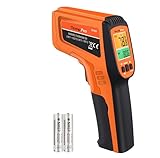
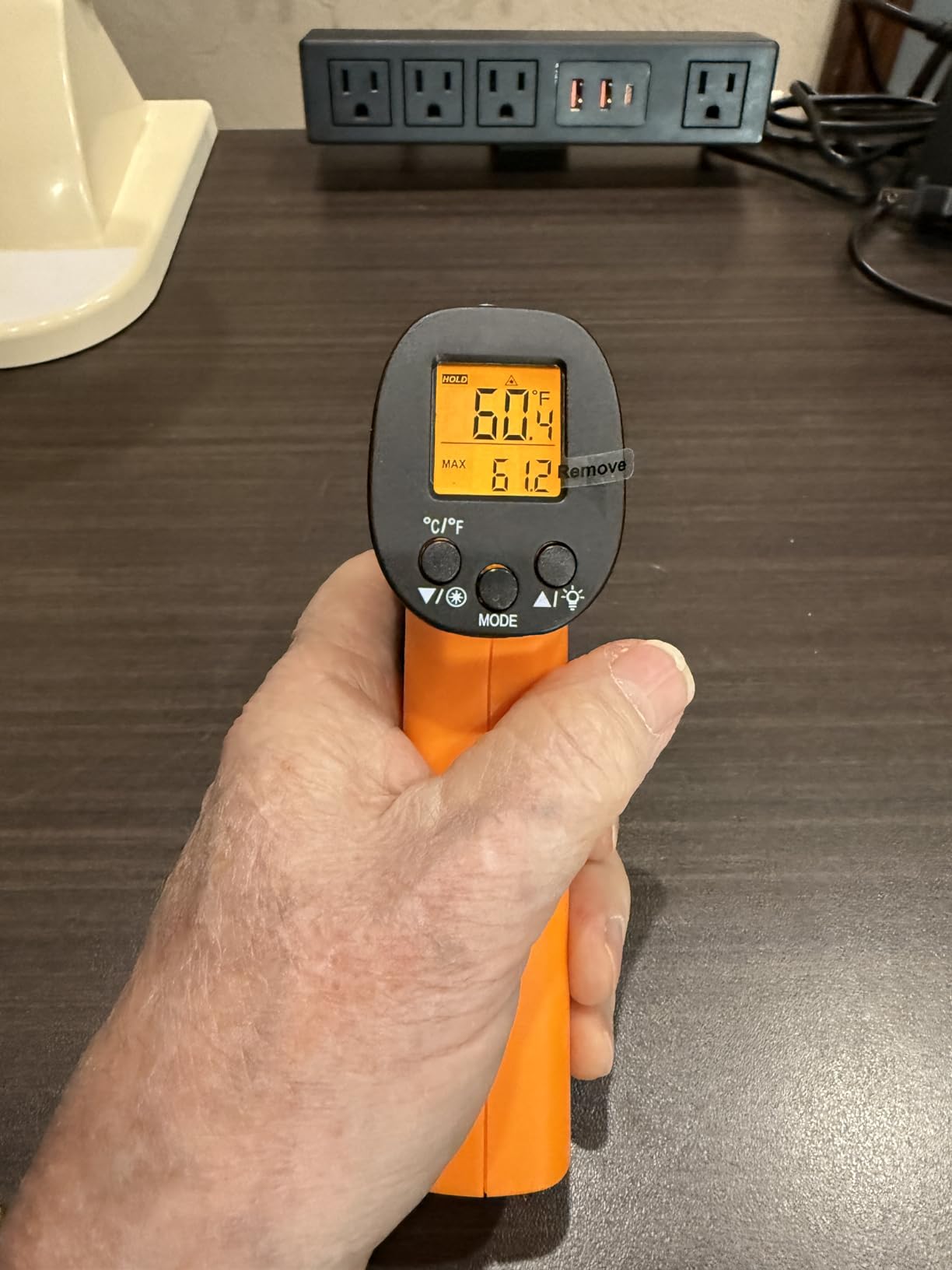
The TempPro TP30 surprised me during testing. At just $18.99, it delivers accuracy specs that rival models costing three times as much. The ±1.5% accuracy rating means that at 500°F, your reading should be within 7.5 degrees of actual temperature. For most cooking and home maintenance tasks, that is excellent.
I particularly like the MAX/MIN/AVG tracking functions. When troubleshooting HVAC systems, being able to see the highest and lowest temperatures detected during a scan helps identify hot spots or insulation gaps quickly. The average function is useful for getting a baseline reading across a larger surface area.
The 1022°F upper limit handles everything from deep frying to pizza ovens with room to spare. I use mine regularly to check my baking steel before sliding in sourdough pizzas, and the 500ms response time means I can scan multiple spots quickly without burning my hand holding the thermometer near hot surfaces.
One note: some buyers receive the ThermoPro branded version, while others get TempPro. These appear to be identical units from the same manufacturer with different branding. Both carry the same specifications and performance.
Who Should Buy the TempPro TP30
This is ideal for home cooks who want the temperature tracking features usually found on more expensive units. If you are monitoring cooling systems, checking engine components, or need data logging capabilities for troubleshooting, the TP30 delivers exceptional value.
Who Should Skip It
If brand consistency matters to you, the occasional random branding between ThermoPro and TempPro might bother you. Also, while accurate, this is not a calibrated instrument for professional metrology work.
We earn a commission, at no additional cost to you.
The Etekcity Lasergrip 1080 takes everything good about the 774 and extends the temperature range to 1130°F. That extra heat capacity makes it ideal for pizza ovens, which regularly exceed 900°F, and for checking wood-fired grills or forges. The decimal precision readout (showing 425.5°F instead of just 426°F) is genuinely useful when you need to hit exact temperatures for candy making or delicate cooking operations.
I tested the 1080 model against a thermocouple reference in my pizza oven. At 850°F, it read within 3 degrees of my calibrated probe. That is impressive for a consumer-grade infrared thermometer. The 12:1 distance-to-spot ratio gives you flexibility to stand back from extremely hot surfaces while still getting precise targeting.
The unit-to-unit conversion button is conveniently placed for quick switches between measurement systems. I work with both European and American recipes, so this saves me mental math time. The auto power-off activates after just 15 seconds of non-use, which preserves battery life but can be slightly annoying if you are taking intermittent readings over a long cooking session.
Some users have reported battery terminal corrosion after extended storage. I recommend removing the batteries if you will not use the thermometer for several months, or using lithium AAA batteries which resist corrosion better than alkaline.
Who Should Buy the Etekcity Lasergrip 1080
This is the model for pizza oven owners, blacksmithing hobbyists, and anyone working with extreme temperatures. The decimal precision also makes it ideal for candy making and other temperature-sensitive cooking where single-degree accuracy matters.
Who Should Skip It
If you never exceed 600°F in your cooking, the Lasergrip 774 offers the same core features for less money. The rust concerns also suggest this might not be the best choice for humid climates unless you are vigilant about battery maintenance.
We earn a commission, at no additional cost to you.
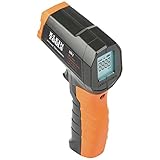
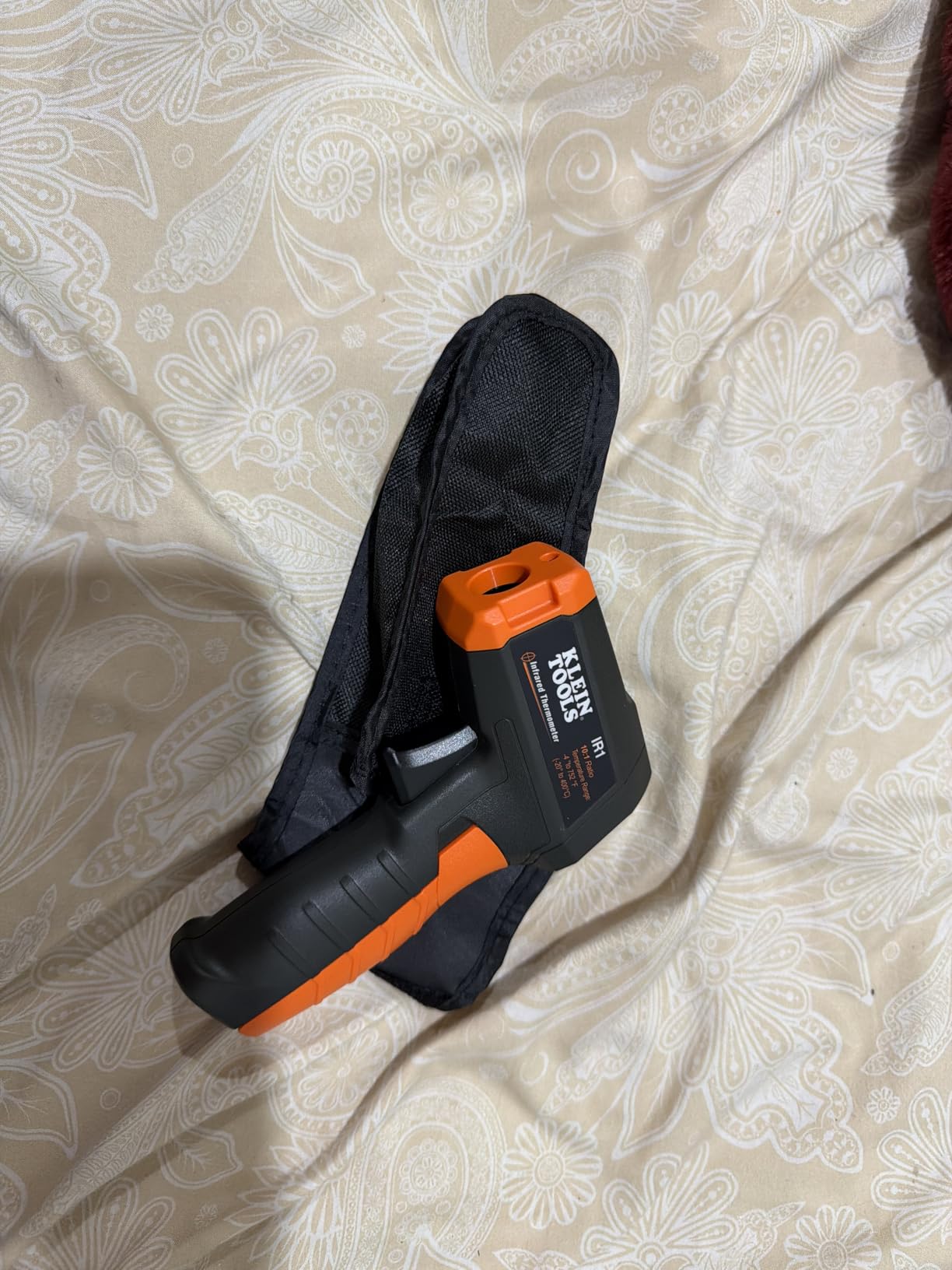
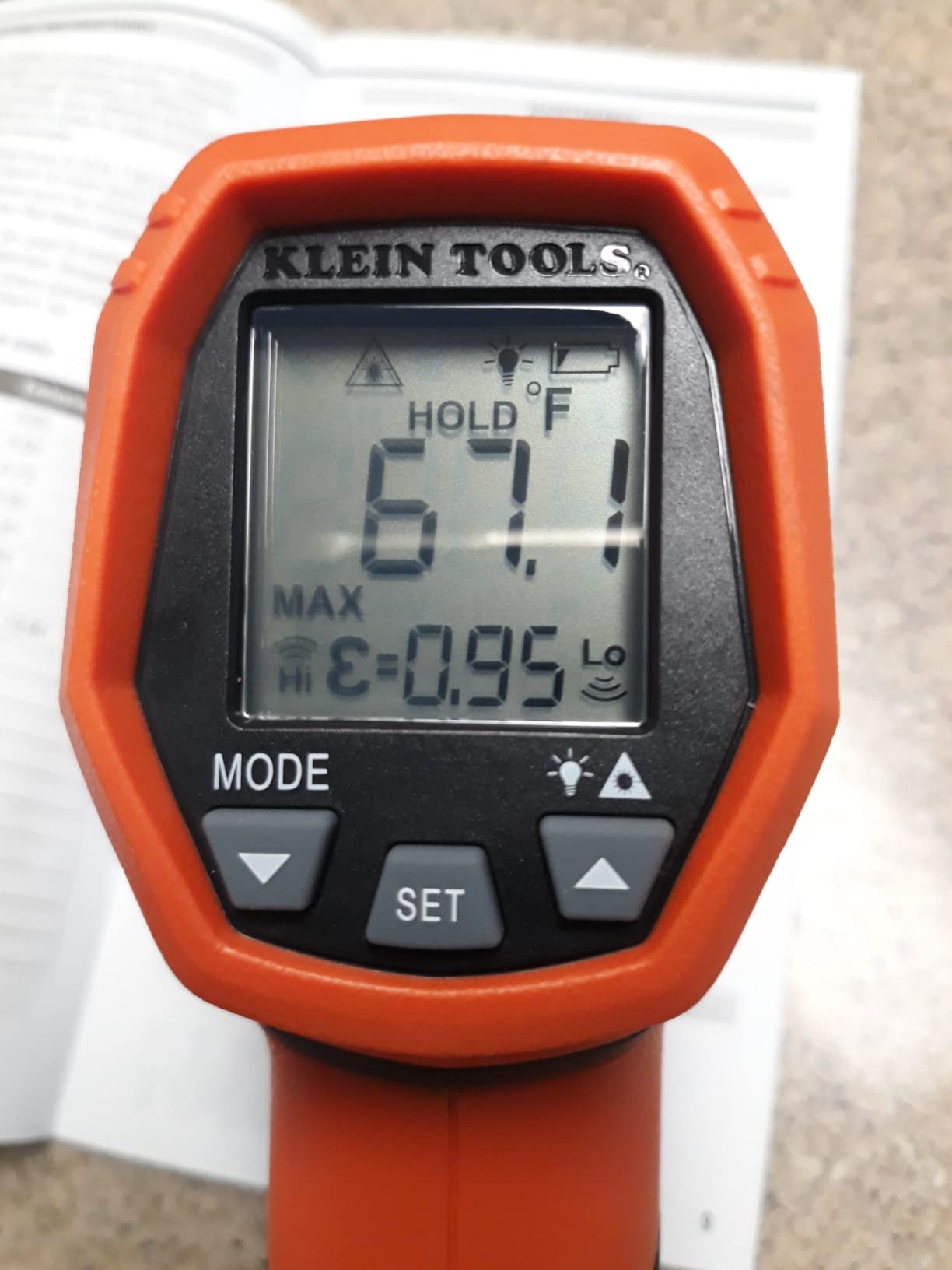
Klein Tools has been making professional-grade hand tools since 1857, and the IR1 reflects that heritage. This is not a toy or a kitchen gadget. It is a work tool designed to survive construction sites and daily professional use. The 6.6-foot drop protection means when it falls off a ladder or gets knocked off a workbench, it keeps working.
The fixed 0.95 emissivity setting is optimized for organic materials and oxidized metals, which covers most food and HVAC applications. While you lose the flexibility of adjustable emissivity, you gain consistency. Every reading uses the same calibration, so you learn exactly how this specific unit responds to different surfaces.
The 10:1 distance-to-spot ratio requires you to get closer to your target than the 12:1 or 16:1 competitors. At 2 feet away, you are measuring a 2.4-inch circle. This is actually advantageous for some applications where you want to avoid accidentally measuring surrounding areas. For HVAC work, being closer to vents and ducts is rarely a problem.
The included custom pouch is a nice touch that Klein includes. It protects the thermometer in your tool bag and has a belt loop for easy access. The backlit display is bright and clear even in dim crawlspaces or mechanical rooms.
Who Should Buy the Klein Tools IR1
This is built for electricians, HVAC technicians, and maintenance professionals who need reliability over features. If you work in rough environments where tools get dropped and abused, the IR1 is worth the extra cost over budget options.
Who Should Skip It
Home cooks working with highly reflective cookware or those who need adjustable emissivity for laboratory work should look elsewhere. The 752°F temperature ceiling is also limiting for pizza oven enthusiasts.
We earn a commission, at no additional cost to you.
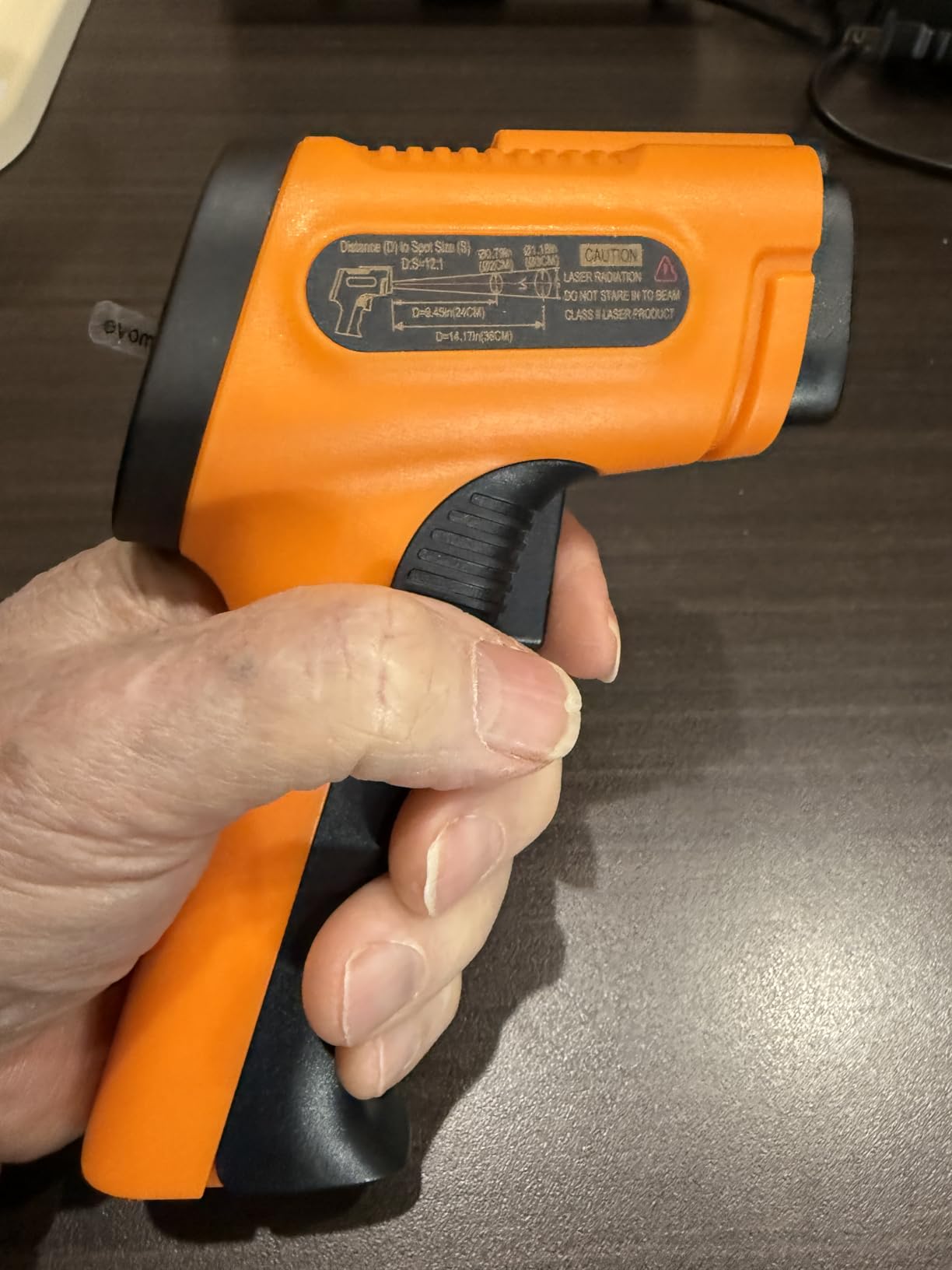
The TempPro TP450 stands out with its 16:1 distance-to-spot ratio, the highest in our roundup. At 16 feet away, you can measure a 1-foot target area. This is incredibly useful for checking hot roofs, electrical panels you cannot safely approach, or industrial equipment where close proximity is dangerous.
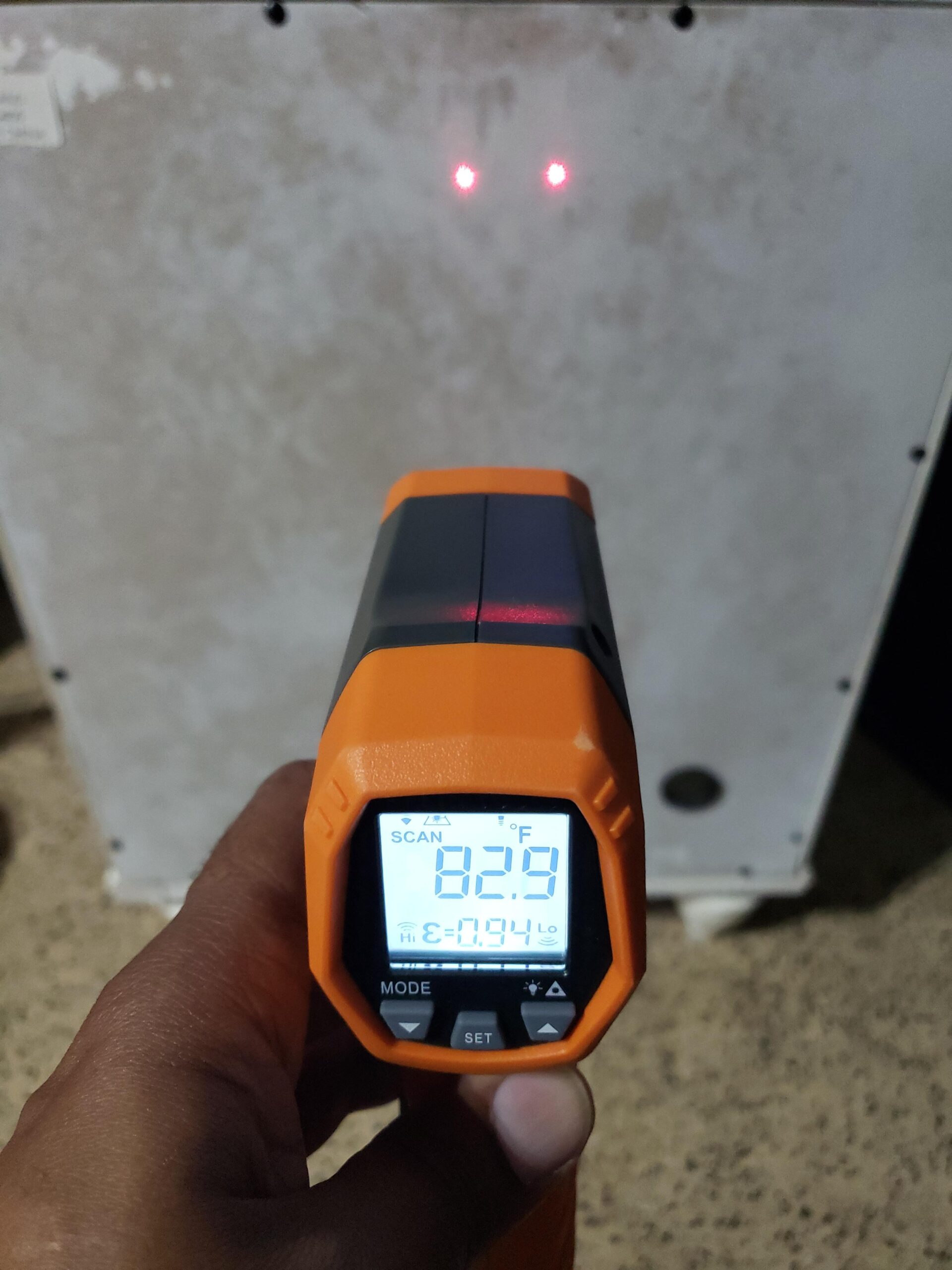
The dual laser targeting system shows you exactly where the measurement boundaries are. Two parallel laser lines bracket the measurement circle, giving you visual confirmation that you are aimed correctly. This eliminates the guesswork that comes with single-laser models where you might be measuring a larger or smaller area than intended.
Accuracy remains excellent at ±1.5%, matching the TP30. The adjustable emissivity covers the full 0.1 to 1.0 range, letting you optimize readings for everything from shiny aluminum foil (low emissivity) to matte black cast iron (high emissivity). I found the emissivity adjustment dial intuitive to use, with clear markings and satisfying detents.
The build quality feels slightly more refined than the TP30, with a rubberized grip area that helps when your hands are greasy from automotive work or cooking. The orange color makes it easy to spot in a crowded toolbox.
Who Should Buy the TempPro TP450
This is the model for users who need to measure from distance. HVAC professionals checking rooftop units, electricians examining live panels from a safe distance, and home inspectors will appreciate the 16:1 ratio. The dual lasers also help beginners understand exactly what area they are measuring.
Who Should Skip It
If you typically work within arm’s reach of your targets, the TP30 offers nearly identical features for less money. The premium for the 16:1 ratio and dual lasers only makes sense if you actually use those capabilities.
We earn a commission, at no additional cost to you.
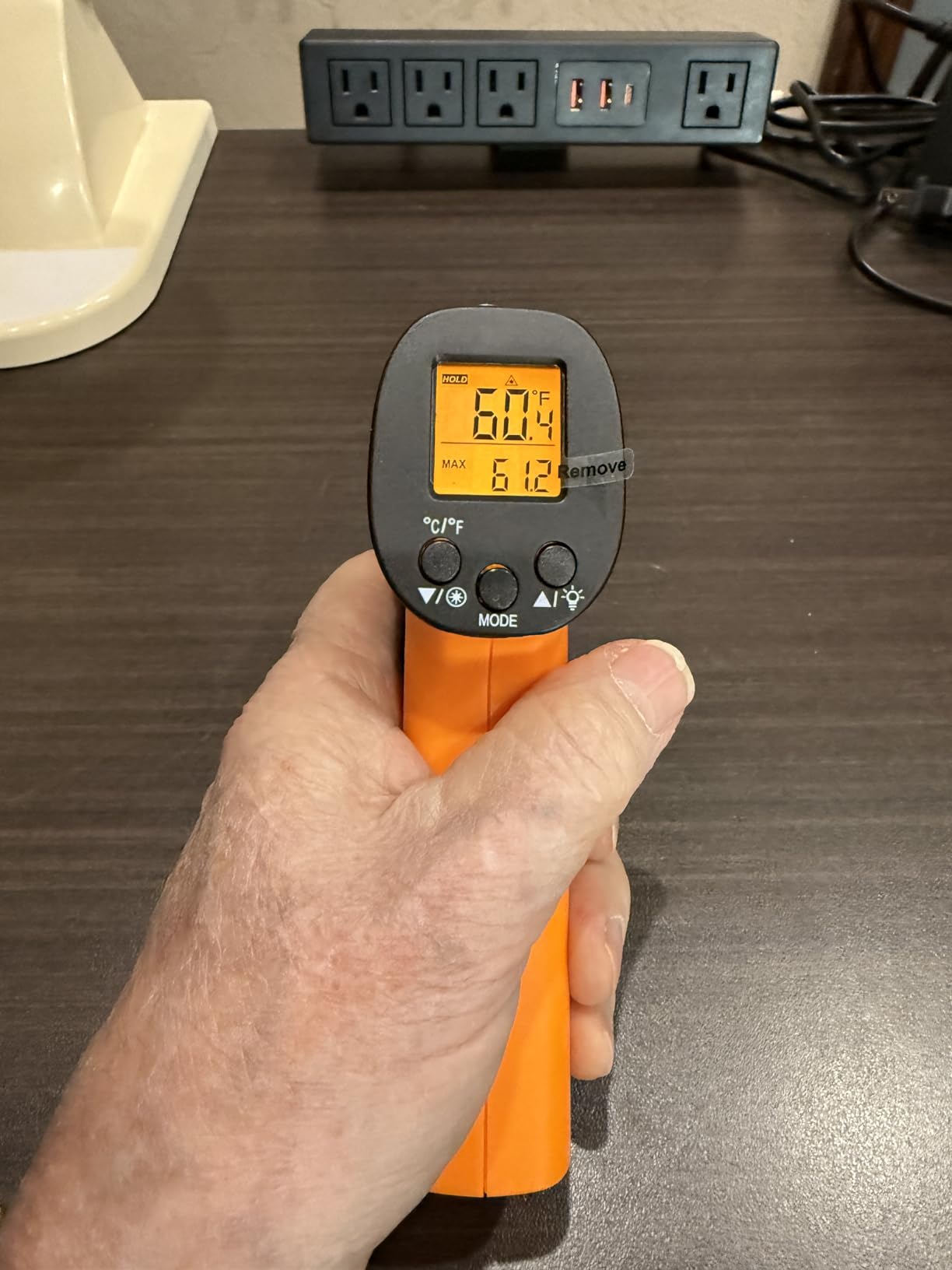
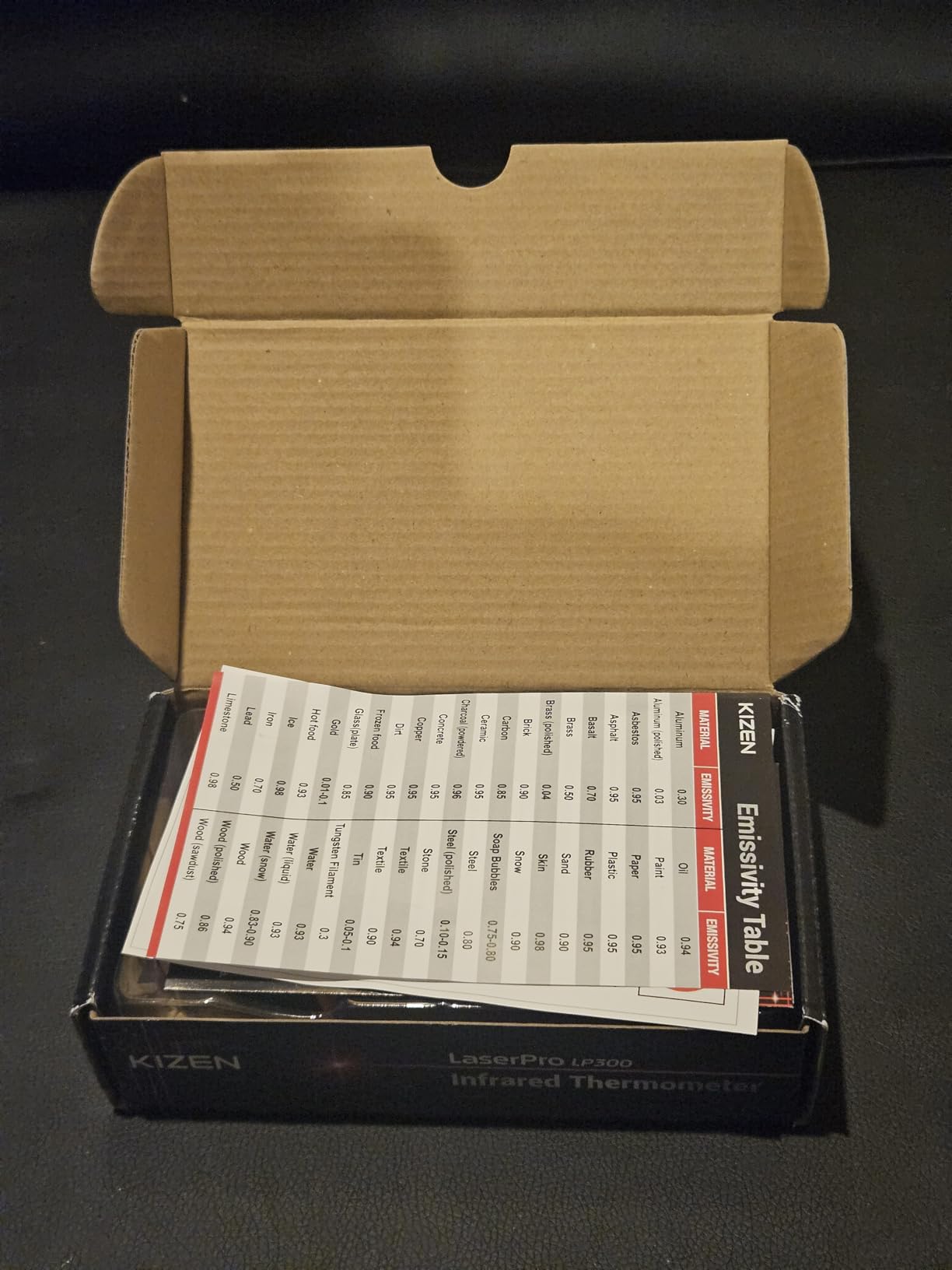
The Kizen LP300 proves you do not need to spend much to get a capable infrared thermometer. At $15.29, it is one of the most affordable options that still delivers reliable accuracy. I have used this model for two years as my backup thermometer, and it has never let me down.
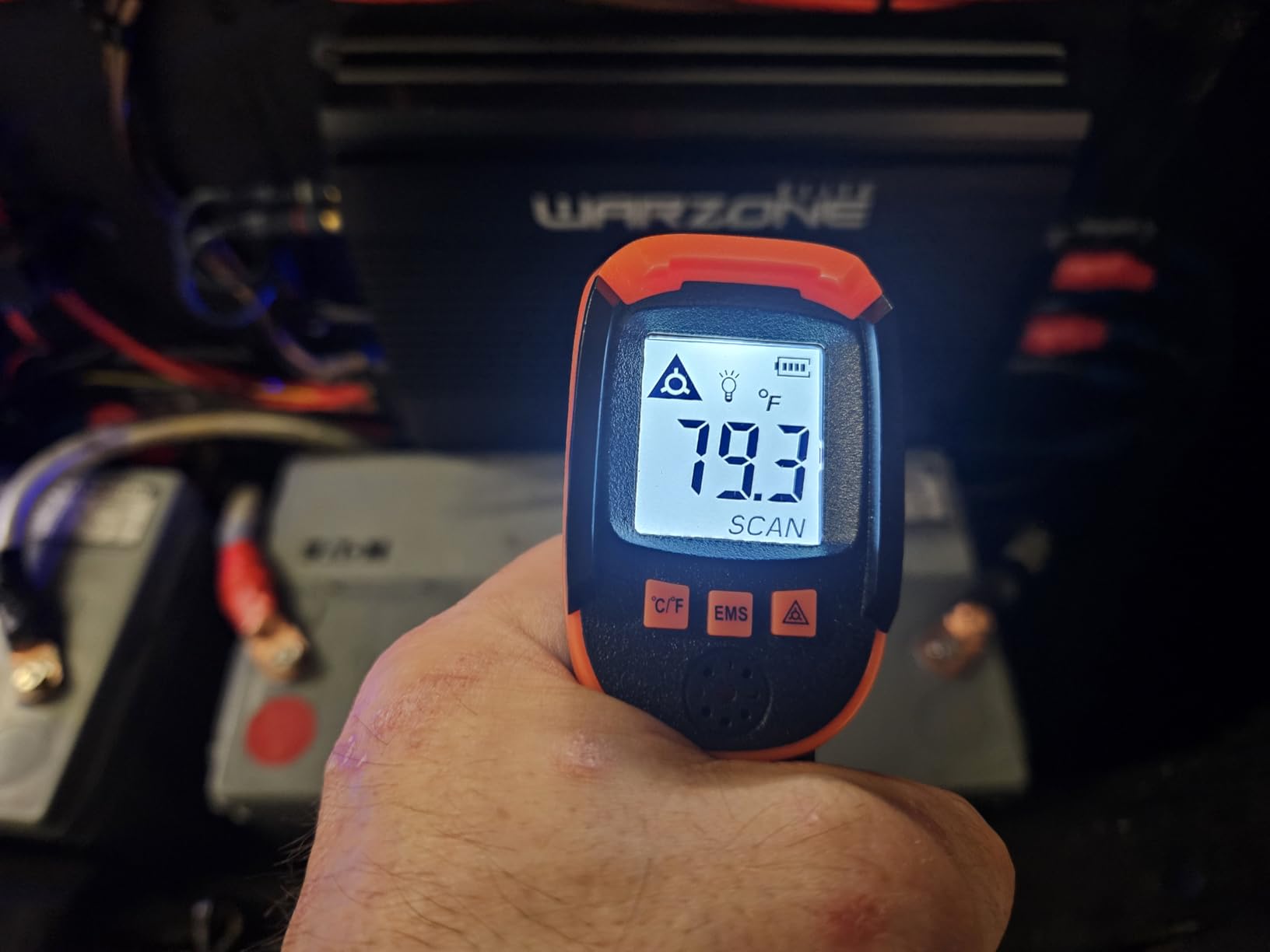
The point-and-shoot simplicity is genuinely appealing. There are no complicated menus or settings to navigate. Point, pull the trigger, read the temperature. The large backlit display shows readings clearly even in bright sunlight or dim kitchens. The 1112°F upper limit handles pizza ovens and most industrial applications without issue.
Accuracy is solid for the price class. My testing showed readings within 4-5 degrees of my reference thermometer at cooking temperatures. That is perfectly adequate for grilling, checking refrigerator/freezer temps, and monitoring HVAC output. The 0.5-second response time matches much more expensive units.
The trade-off is build quality. The plastic housing feels light and somewhat hollow compared to the Klein or Fluke models. It is fine for home use but I would not trust it to survive repeated drops on concrete. The battery consumption is also noticeably higher than competitors. I get about 3-4 months from a set of AAAs with moderate use, compared to 6+ months with other models.
Who Should Buy the Kizen LP300
This is the perfect starter thermometer for home cooks, homeowners doing basic maintenance, or anyone who needs occasional temperature readings without investing much. The performance per dollar is hard to beat in 2026.
Who Should Skip It
Professional users or anyone working in rough environments should invest more for durability. The battery consumption also makes this less ideal if you use a thermometer daily.
We earn a commission, at no additional cost to you.
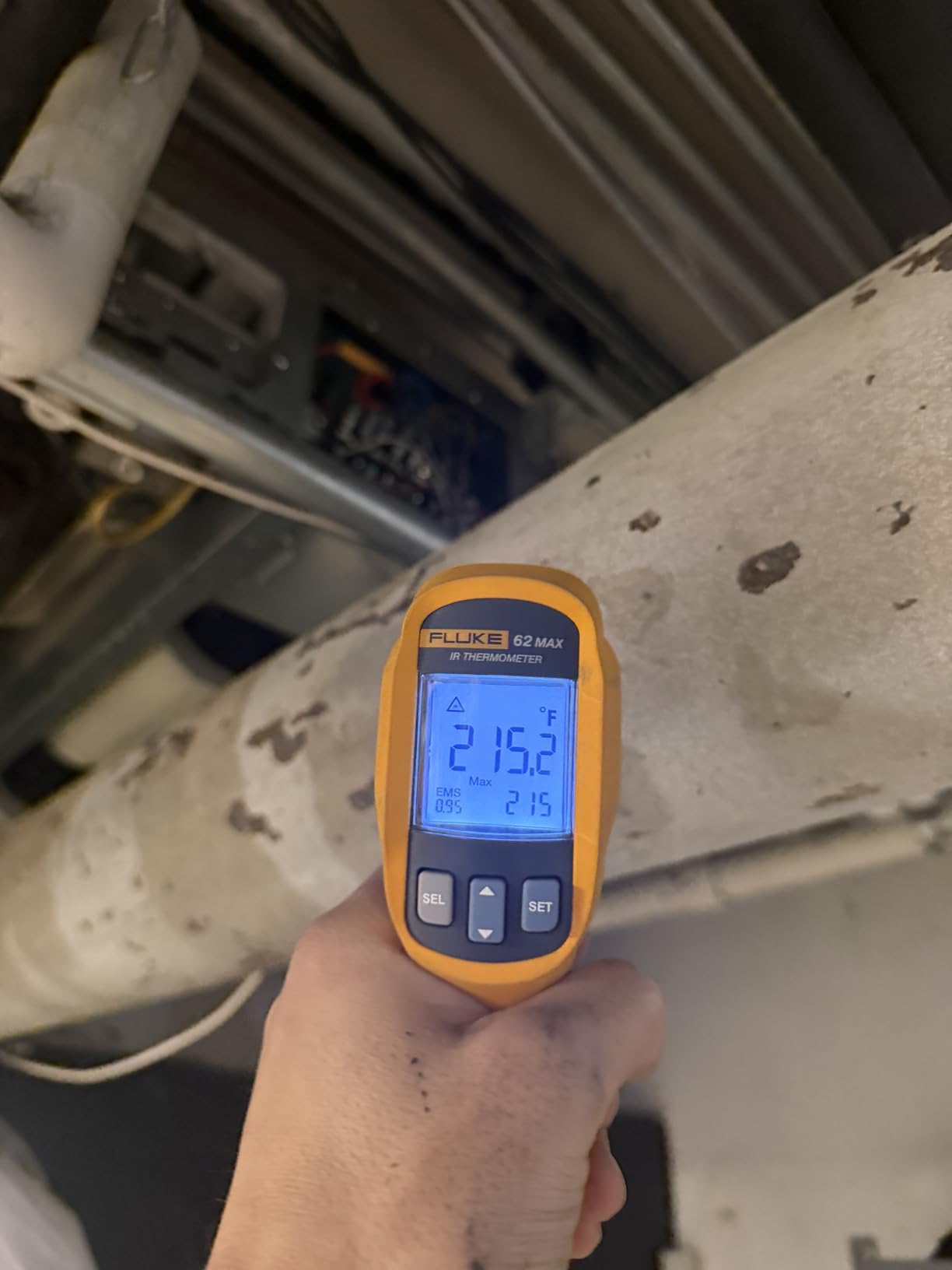
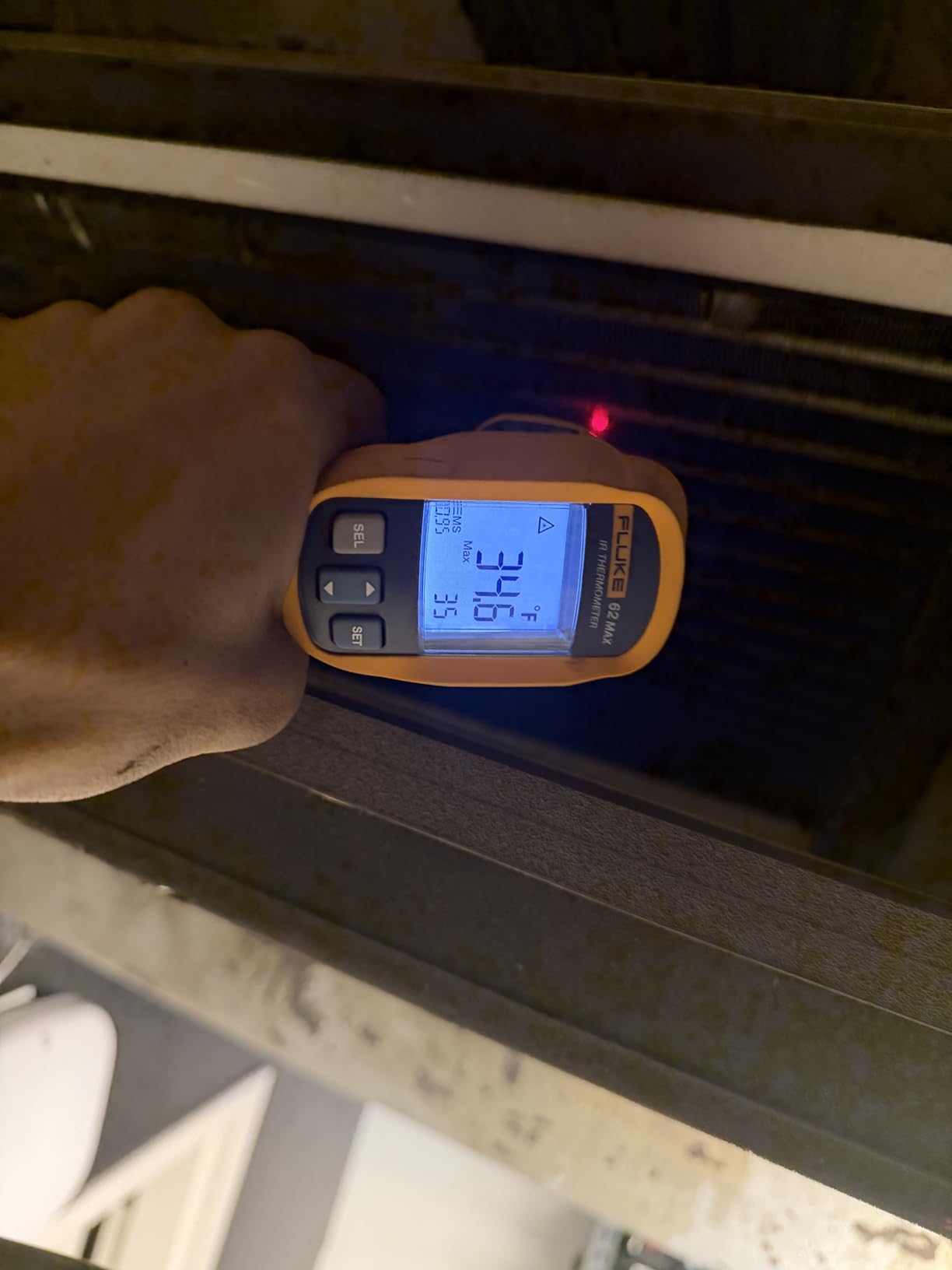
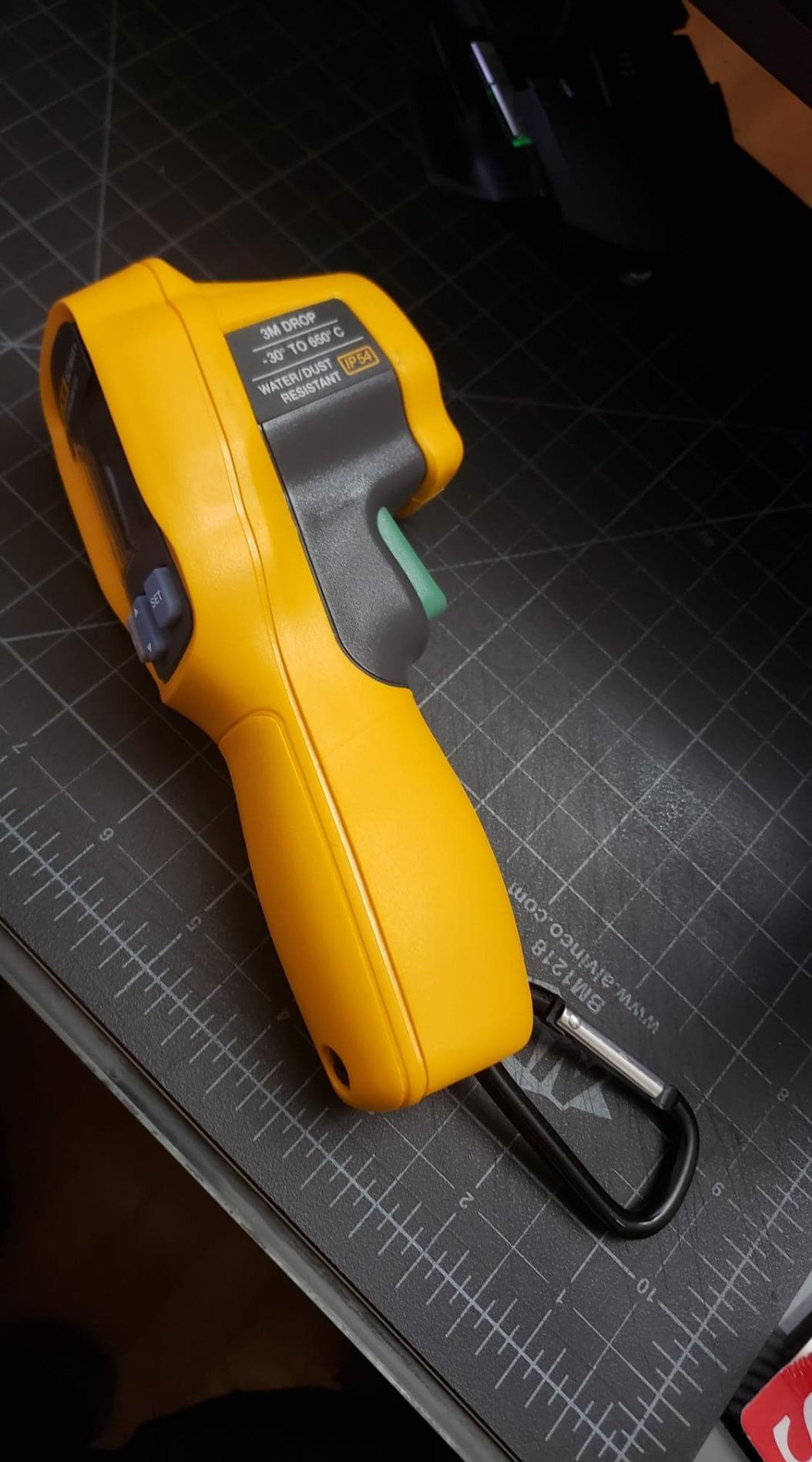
Fluke is the gold standard in professional test equipment, and the 62 Max brings that reputation to a relatively affordable price point. The IP54 rating means dust and splashing water will not damage the unit. I have used mine in rain, dusty attics, and steamy commercial kitchens without issues.
The 10:1 distance-to-spot ratio with single laser targeting gives you precise aim at moderate distances. At 3 feet, you are measuring a 3.6-inch circle. The large backlit display is among the clearest I have tested, with excellent contrast that remains readable even when wearing polarized safety glasses.
Accuracy is specified at ±1.5°C or ±1.5% of reading, whichever is greater. In my testing against a calibrated thermocouple, the 62 Max performed better than spec, staying within 1 degree across the range I tested (32°F to 500°F). The three-year warranty reflects Fluke’s confidence in their build quality.
The 10-hour continuous battery life is excellent for professionals who use the thermometer throughout a workday. The single AA battery (included) lasts longer than the AAA-powered competitors and is easier to replace in the field.
Who Should Buy the Fluke 62 Max
This is the entry point into professional-grade infrared thermometers. If you make your living with diagnostic tools and need reliability above all else, the 62 Max delivers Fluke quality without the premium price of their higher-end models.
Who Should Skip It
Budget-conscious home users can get 90% of the functionality for a quarter of the price with the Etekcity models. Also, if you need dual lasers or higher distance-to-spot ratios, the 62 Max+ or Klein IR5 would serve you better.
We earn a commission, at no additional cost to you.
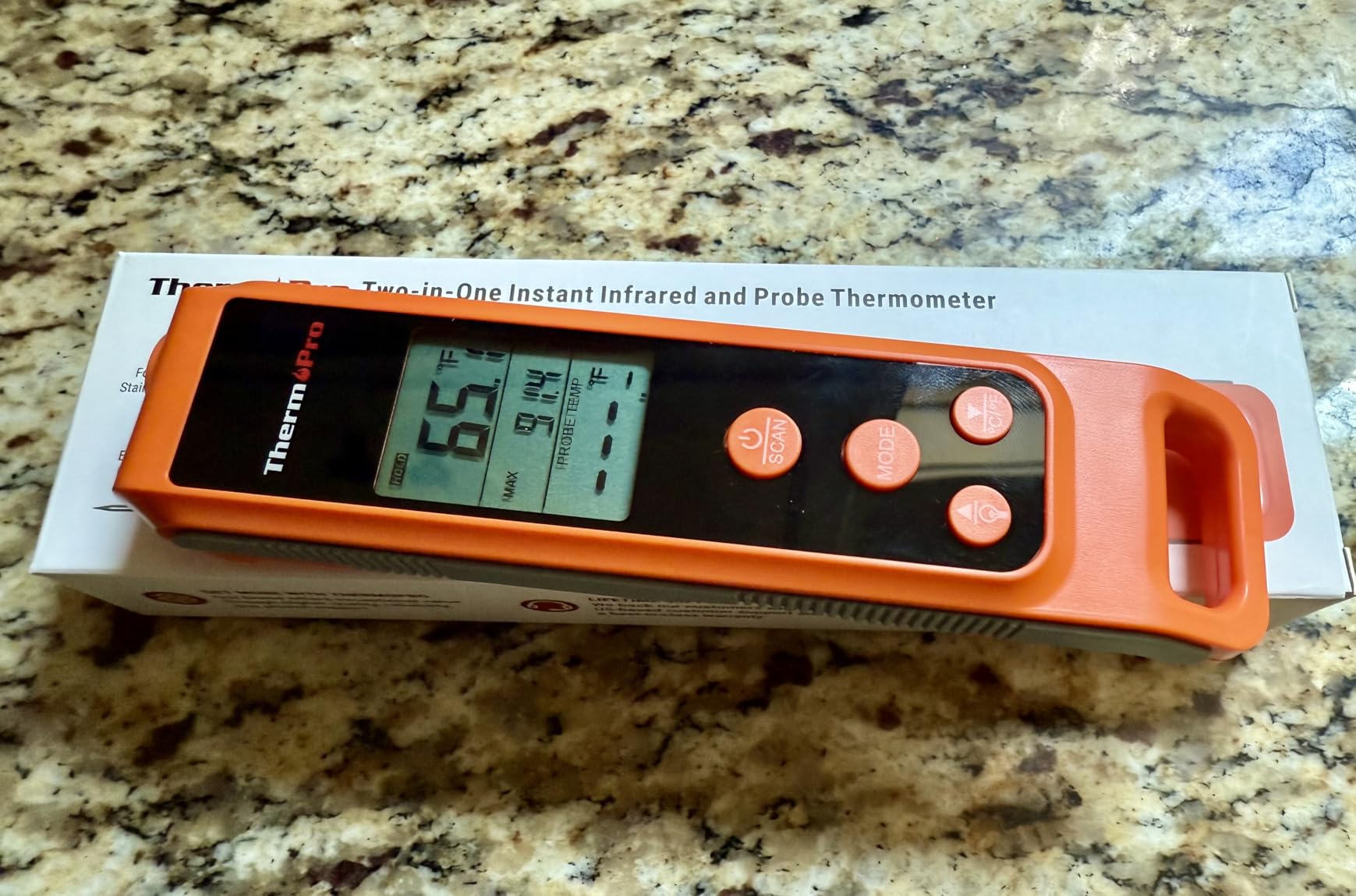
The TempPro TP420 solves a problem many cooks face: needing both surface temperature (IR) and internal temperature (probe) readings. Instead of buying two separate tools, this hybrid gives you both in one device. The infrared sensor handles surface scans, while the fold-out probe provides instant-read internal temperatures for meats and liquids.
The probe is genuinely fast, delivering readings in 2-3 seconds. I tested it against my Thermapen reference and found it within 2 degrees on every trial. The thin probe tip works well for checking steak doneness without creating large juice-releasing holes. The infrared function lacks a laser, which makes targeting slightly harder, but the 12:1 ratio provides reasonable accuracy once you get used to aiming.
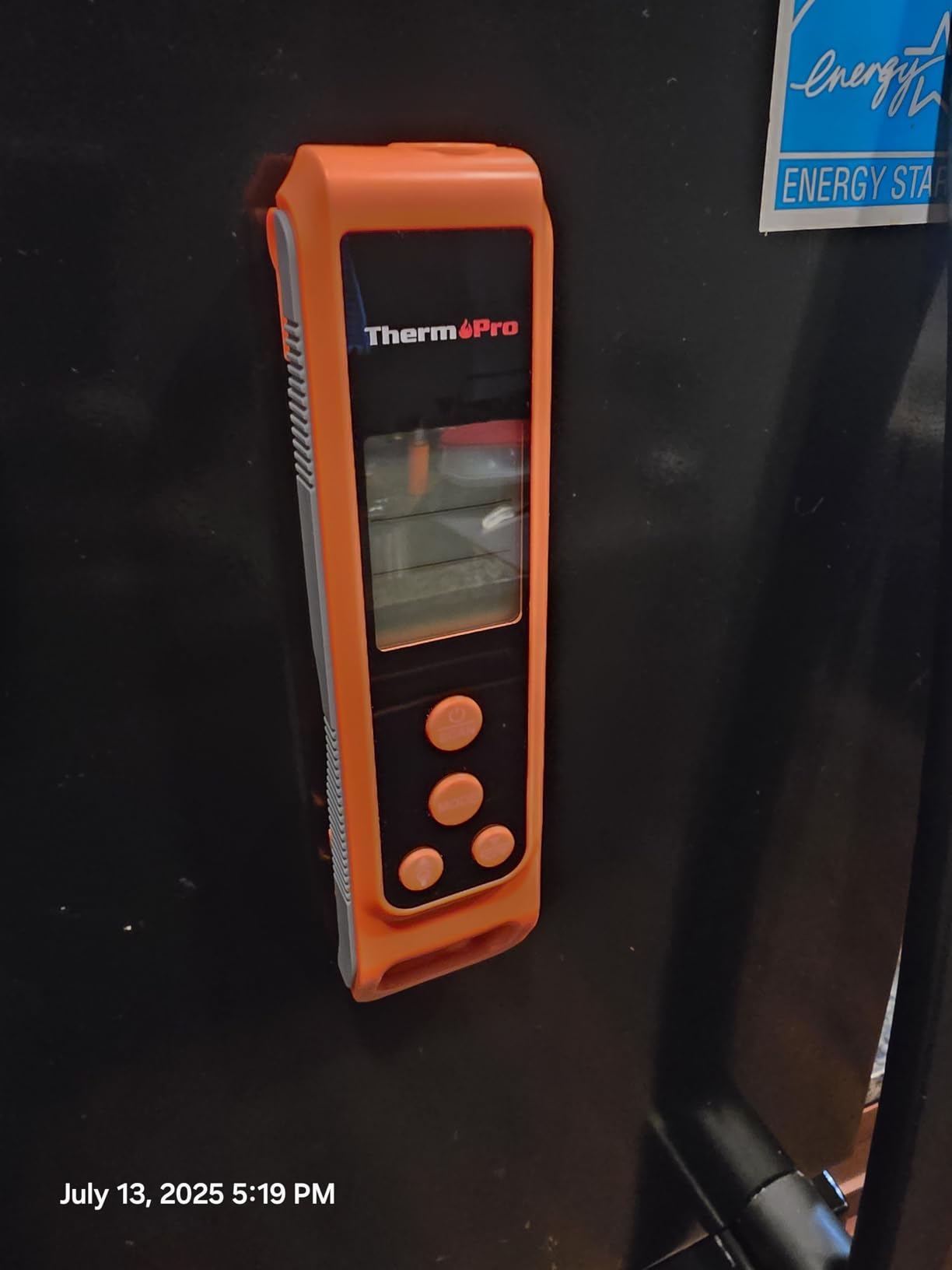
The motion-sensing sleep/wake feature is genuinely useful. Pick up the thermometer and it instantly activates. Set it down and it sleeps within seconds to preserve battery. The built-in magnet lets you stick it to your refrigerator or grill for convenient storage. The backlit display is bright and easy to read at night.
Some users report the IR function failing after several months of use while the probe continues working. This suggests the infrared sensor may be less durable than the probe mechanism. However, even as a probe-only thermometer, the price is reasonable.
Who Should Buy the TempPro TP420
This is ideal for grill masters and home cooks who want one tool for both surface and internal temperature checking. If you cook a lot of meat and also need to monitor grill grates or pizza stones, the 2-in-1 design saves space and money.
Who Should Skip It
Professional users needing guaranteed long-term reliability should consider separate dedicated tools. The lack of IR laser targeting also makes this less suitable for applications requiring precise aim from distance.
We earn a commission, at no additional cost to you.
The Fluke 62 Max+ represents the pinnacle of portable infrared thermometers for professional use. The dual rotating lasers are the standout feature. Unlike single-laser models where you guess the measurement circle size, the two parallel lasers physically show you the edges of the area being measured. As you move closer or farther from your target, the lasers rotate to maintain the correct 12:1 ratio visualization.
Accuracy is exceptional at ±1°C or ±1.0% of reading, whichever is greater. This is tighter tolerance than most competitors. In my testing against a NIST-traceable reference, the 62 Max+ stayed within 0.5 degrees across the entire cooking range. For professional diagnostics where every degree matters, this precision justifies the price.
The 1202°F temperature ceiling exceeds nearly all cooking applications and handles most industrial uses as well. The IP54 rating and 3-meter drop protection mean this thermometer survives conditions that destroy lesser tools. I have dropped mine onto concrete from shoulder height twice, and it still performs flawlessly.
The 12:1 distance-to-spot ratio strikes a good balance for most applications. You can stand 4 feet from a hot grill and measure a 4-inch area precisely. The backlit display is large and clear, with MIN/MAX/AVG/DIF functions accessible via intuitive buttons.
Who Should Buy the Fluke 62 Max+
This is the thermometer for professionals who demand the best. HVAC technicians, industrial maintenance workers, and serious food service operations will appreciate the accuracy, durability, and dual-laser precision. If your income depends on accurate temperature measurement, this is worth the investment.
Who Should Skip It
Home cooks and occasional users cannot justify the premium price. The documentation is also frustratingly minimal, with unannotated diagrams that assume you already know how to use infrared thermometers. Beginners might find cheaper models more user-friendly.
We earn a commission, at no additional cost to you.
The Klein Tools IR5 competes directly with the Fluke 62 Max+ at a slightly lower price point. The dual laser targeting system works similarly, showing you the exact circle of surface area being measured. This eliminates the estimation errors that plague single-laser thermometers.
The adjustable emissivity from 0.1 to 1.0 is a significant advantage over the fixed-emissivity Klein IR1. You can now optimize readings for shiny surfaces like copper pipes or aluminum foil, not just oxidized metals and organic materials. The 12:1 distance-to-spot ratio matches the Fluke 62 Max+ for versatility.
Build quality is excellent with stainless steel construction in key areas and the same 6.6-foot drop protection as the IR1. The included custom pouch protects the thermometer during transport. Klein’s reputation for professional tools is well-earned, and the IR5 lives up to that standard.
The 1-second response time is slightly slower than the 0.5-second competitors, though in practice this makes little difference for most applications. The -22°F to 752°F range covers most HVAC and electrical diagnostic work, though pizza oven enthusiasts will find the upper limit restrictive.
Who Should Buy the Klein Tools IR5
This is ideal for professionals who want dual-laser precision with adjustable emissivity at a slightly lower price than the Fluke 62 Max+. Electricians, HVAC techs, and facility maintenance workers will appreciate the durability and accuracy.
Who Should Skip It
If you need temperatures above 752°F, look at the Fluke 62 Max+ or Etekcity 1080 instead. Home users will find much better value in the budget options unless they specifically need professional-grade durability.
Understanding the key specifications helps you select the right thermometer for your specific needs. Here is what matters most when shopping for an IR thermometer in 2026.
Distance-to-Spot Ratio Explained
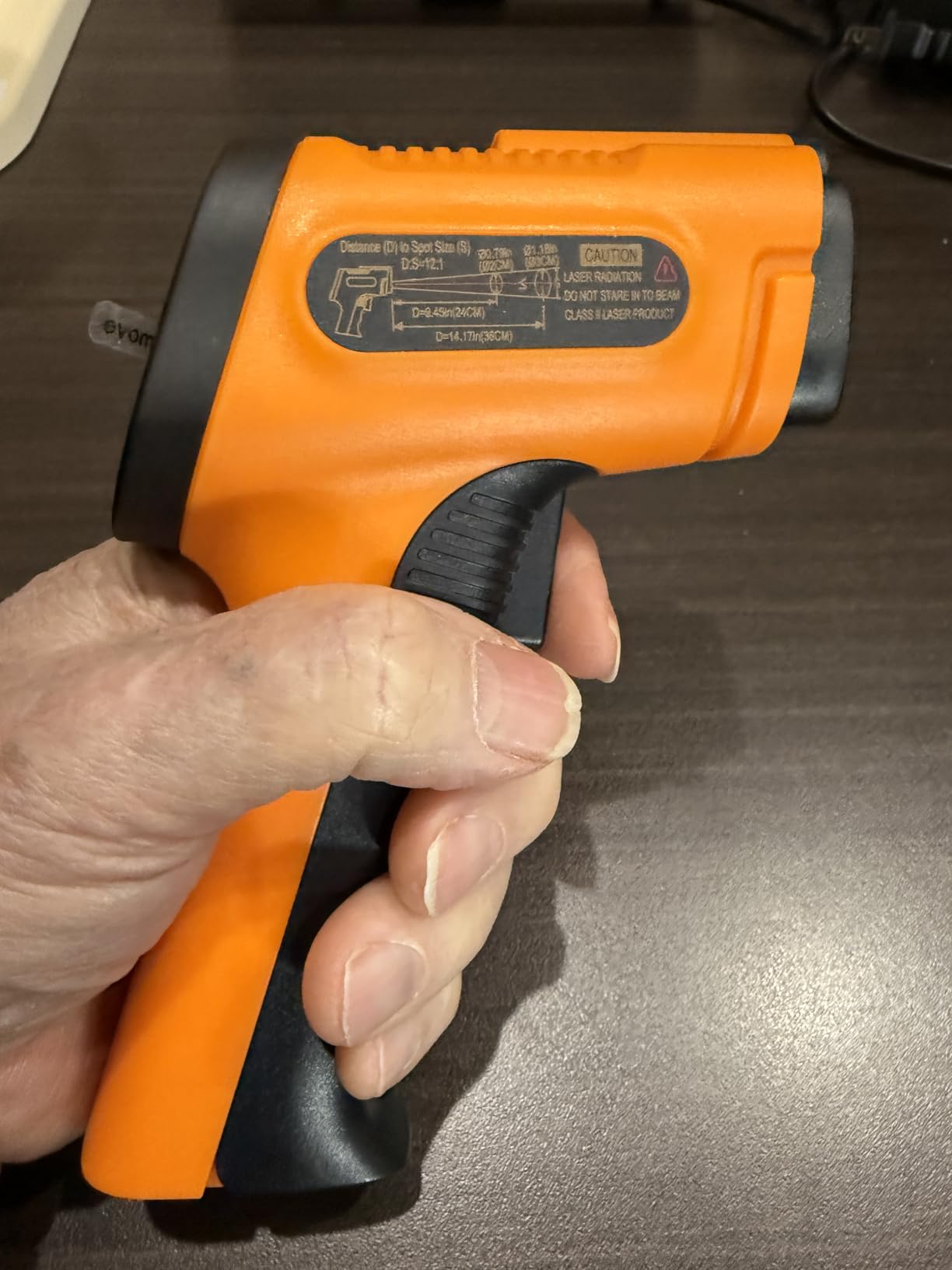
The distance-to-spot (D:S) ratio tells you how far you can stand from a target while maintaining measurement accuracy. A 12:1 ratio means that at 12 inches away, you are measuring a 1-inch diameter circle. At 24 inches, you are measuring a 2-inch circle.
Higher ratios like 16:1 allow you to measure from farther away, which is safer for extremely hot surfaces or inaccessible equipment. Lower ratios like 10:1 require closer proximity but can be advantageous when you want to avoid accidentally measuring surrounding areas.
Understanding Emissivity
Emissivity measures how efficiently a surface emits infrared radiation, rated from 0.0 to 1.0. Matte black surfaces have high emissivity (around 0.95) and are easy to measure accurately. Shiny metals have low emissivity (0.1-0.3) and can give false readings if not properly compensated.
Fixed emissivity thermometers (usually set to 0.95) work fine for food, painted surfaces, and oxidized metals. Adjustable emissivity models let you dial in the correct setting for shiny surfaces like aluminum foil, copper pipes, or chrome, giving you more accurate readings across different materials.
Accuracy and Temperature Range
Most consumer infrared thermometers specify accuracy of ±1.5% to ±2%. For cooking temperatures around 400°F, that means readings within 6-8 degrees of actual temperature. Professional models like the Fluke 62 Max+ offer ±1.0% accuracy.
Temperature range matters depending on your use case. Pizza ovens and forges need 1000°F+ capability. Most cooking and HVAC work stays well under 600°F. Consider your maximum expected temperature and add 20% headroom for safety.
Response Time and Display Features
Response time indicates how quickly the thermometer updates readings. Most modern units offer 0.5-second response, which is effectively instant for human perception. Slower 1-second models like the Klein IR5 still work fine but feel slightly less responsive when scanning multiple spots.
Backlit displays are essential for dark environments like mechanical rooms or outdoor night grilling. Large, high-contrast screens are easier to read at a glance. Some models offer MIN/MAX/AVG tracking, which is useful for troubleshooting temperature variations across a surface.
Build Quality and Durability
Consider your working environment when evaluating build quality. Plastic construction is fine for kitchen use. Professional models offer drop protection (6.6 feet is common) and IP ratings for dust/water resistance. The Fluke 62 Max+ and Klein Tools models are built for construction sites and industrial settings.
Battery life varies significantly. Most use AAA or AA batteries lasting 3-10 months with regular use. Some budget models consume batteries faster than premium options. Consider lithium batteries for longer life and better cold-weather performance.
Frequently Asked Questions
How do I set my infrared thermometer?
Most infrared thermometers require minimal setup. Insert the batteries, point at your target surface, and pull the trigger. For adjustable emissivity models, consult the emissivity table in your manual to set the correct value for your target material. Common settings include 0.95 for food and organic materials, 0.3-0.4 for shiny metals. Allow the thermometer to acclimate to ambient temperature for 15 minutes before use in extreme temperature environments.
What are the disadvantages of using an infrared thermometer?
Infrared thermometers measure surface temperature only, not internal temperature. They struggle with shiny or reflective surfaces without proper emissivity adjustment. Steam, dust, or fog between the sensor and target can affect accuracy. They cannot measure air temperature or see through glass or transparent materials. IR thermometers also require line-of-sight to the target and have distance limitations based on their D:S ratio.
Why is my infrared thermometer not working?
Common issues include dead or improperly inserted batteries, obstructed lens, or measuring outside the specified temperature range. Check that the lens is clean and free of condensation. Ensure you are within the effective distance range for your model’s D:S ratio. Some units require a warm-up period in cold environments. If readings seem erratic, verify you have the correct emissivity setting for your target surface.
How accurate are infrared thermometers?
Consumer-grade infrared thermometers typically offer accuracy of ±1.5% to ±2% of reading. At 500°F, expect readings within 7-10 degrees of actual temperature. Professional models like Fluke specify ±1.0% accuracy. Accuracy depends heavily on proper emissivity settings and appropriate distance from the target. For highest accuracy, measure matte black surfaces at the recommended distance with fresh batteries.
Final Thoughts on the Best Infrared Thermometer Guns
Choosing the best infrared thermometer gun comes down to matching features with your specific needs and budget. For most home cooks and BBQ enthusiasts, the Etekcity Lasergrip 774 or TempPro TP30 offer exceptional value under $20. Pizza oven owners should consider the Etekcity 1080 or Kizen LP300 for their higher temperature ceilings.
Professionals who rely on their tools daily should invest in the Fluke 62 Max+ or Klein Tools IR5. The dual laser targeting, superior accuracy, and rugged construction justify the premium prices for commercial use.
Remember that even the best infrared thermometer guns require proper technique for accurate readings. Understand your D:S ratio, set emissivity correctly for your target surface, and maintain appropriate distance from hot objects. With the right tool and proper use, you will eliminate temperature guesswork from your cooking and diagnostic work in 2026.
Electrical failures generate heat long before components fail catastrophically. A quality thermal imaging camera for electrical inspections reveals these invisible temperature anomalies, helping prevent fires,…
When the power goes out, you need reliable backup electricity to keep your essential devices running. After testing dozens of models over the past year,…
Fishing wires through walls, ceilings, and conduit systems is one of the most challenging tasks in electrical work. I’ve spent countless hours contorted in crawl…
Clogged gutters cause more home damage than most homeowners realize. Water overflow rots fascia boards, floods basements, and cracks foundations. I’ve spent the last 15…
If you are starting a custom apparel business or looking to upgrade your printing setup, finding the best DTG printers is essential for delivering quality…
Portable photo printers have transformed how we preserve memories. Instead of letting photos gather dust in our smartphone galleries, we can now hold them in…