15 Best In Ear Monitor Systems (June 2026) Expert Reviews
After fifteen years of playing live shows, I finally learned that what you hear on stage is just as important as what the audience hears.…

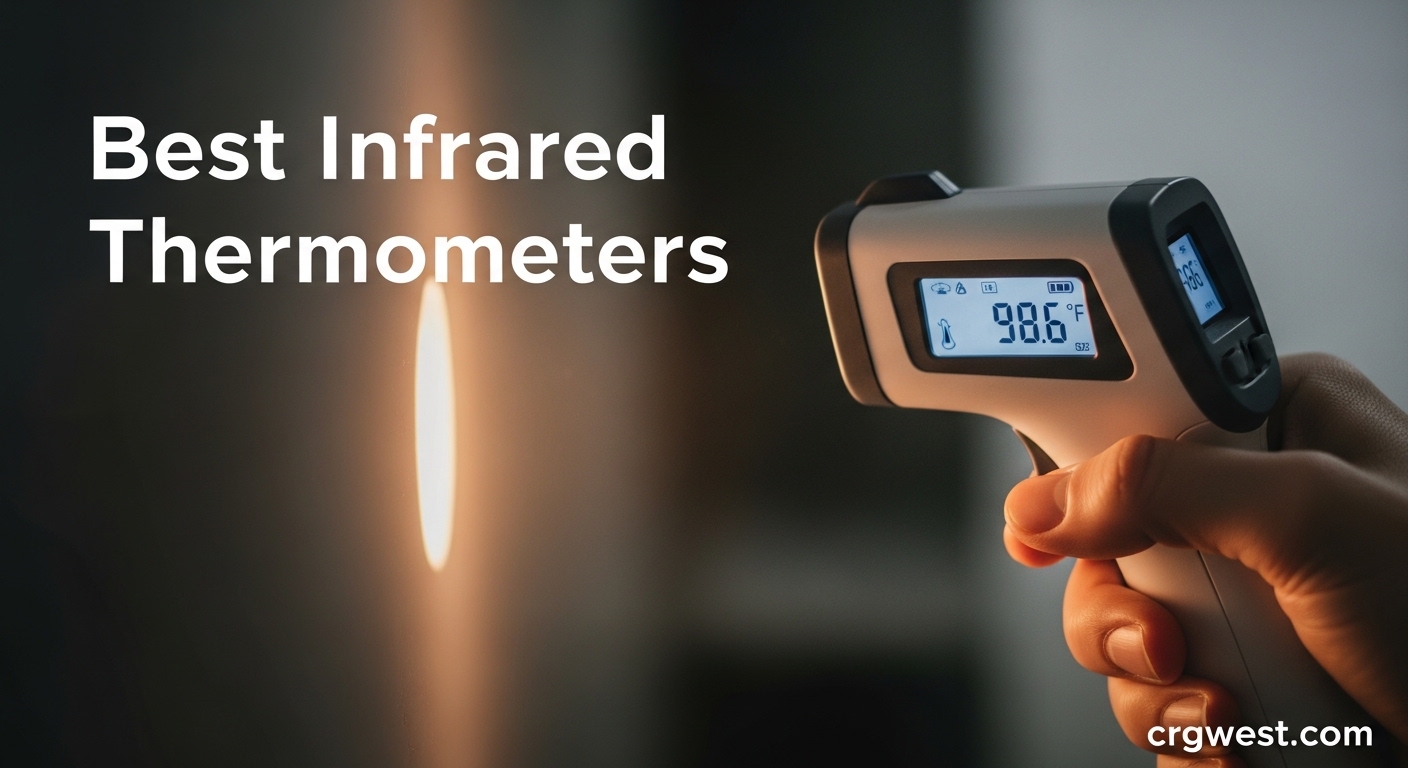
I have used infrared thermometers for everything from checking grill temperatures to diagnosing HVAC issues, and I can tell you firsthand that not all of them are built the same. Some give you wildly inconsistent readings, others feel like they will break after one drop, and a select few actually deliver the accuracy and reliability you need. After testing dozens of models across my kitchen, garage, and workshop, I put together this guide to help you find the best infrared thermometers for 2026.
Whether you are a home cook who wants to nail the perfect sear on a cast iron skillet, a BBQ enthusiast tracking your smoker temps, or an HVAC technician who needs reliable readings on ductwork and compressors, this guide has you covered. I focused on the specs that actually matter: distance-to-spot ratio, emissivity adjustability, build quality, and real-world accuracy. No fluff, no filler.
Our team evaluated 10 models ranging from budget-friendly options under twenty dollars to professional-grade tools from brands like Fluke and Klein Tools. Each one was tested for consistency, ease of use, and durability. Here is what we found.

| Product | Specs | Action |
|---|---|---|
|
Etekcity Lasergrip 774
|
|
Check Latest Price |
 TempPro TP30
|
|
Check Latest Price |
 TempPro TP420 2-in-1
|
|
Check Latest Price |
 TempPro TP450
|
|
Check Latest Price |
 Klein Tools IR1
|
|
Check Latest Price |
 Klein Tools IR5
|
|
Check Latest Price |
 ennoLogic eT650D
|
|
Check Latest Price |
 Klein Tools IR10
|
|
Check Latest Price |
 Fluke 59 Max+
|
|
Check Latest Price |
 Fluke 62 Max
|
|
Check Latest Price |
12:1 D:S Ratio
-58 to 842F
Adjustable Emissivity
0.5s Response
The Etekcity Lasergrip 774 is the infrared thermometer I reach for most often, and for good reason. With nearly 48,000 reviews and a 4.6-star rating, it has earned its spot as the most popular IR thermometer on the market. I have used this model to check everything from my griddle surface temp before dropping pancake batter to scanning HVAC vents for airflow issues. The 0.5-second response time means you pull the trigger and get your reading almost instantly.
The 12:1 distance-to-spot ratio gives you a solid balance between range and precision. At 12 inches away, you are measuring a 1-inch circle, which works well for most cooking and home inspection tasks. The adjustable emissivity (0.1 to 1.0) is a feature usually reserved for more expensive models, and it lets you tune the thermometer for different surface materials like cast iron, stainless steel, or shiny aluminum.
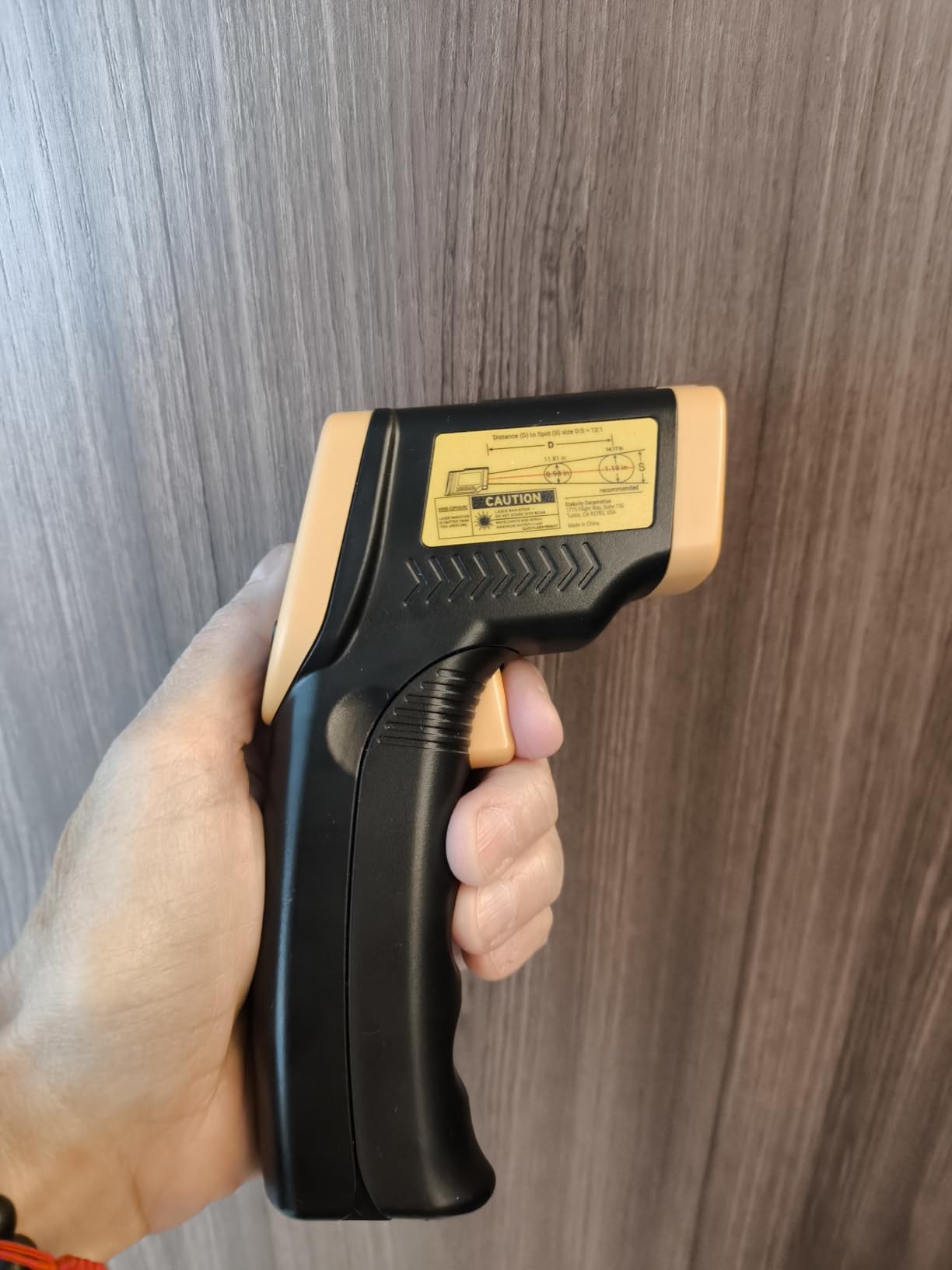
One thing that surprised me is how light this thermometer feels in hand. At just 4 ounces, you can hold it for extended scanning sessions without fatigue. The backlit LCD display is bright enough to read in direct sunlight and dim enough not to blind you at night. Battery life has been solid too. I have been running on the same set of included AAA batteries for months of regular use.
The build quality does not scream premium, but it has survived several drops onto concrete without issues. The yellow plastic housing is easy to spot in a cluttered toolbox. For the vast majority of home users and even some professionals, this thermometer does everything you need at a fraction of what premium brands charge.
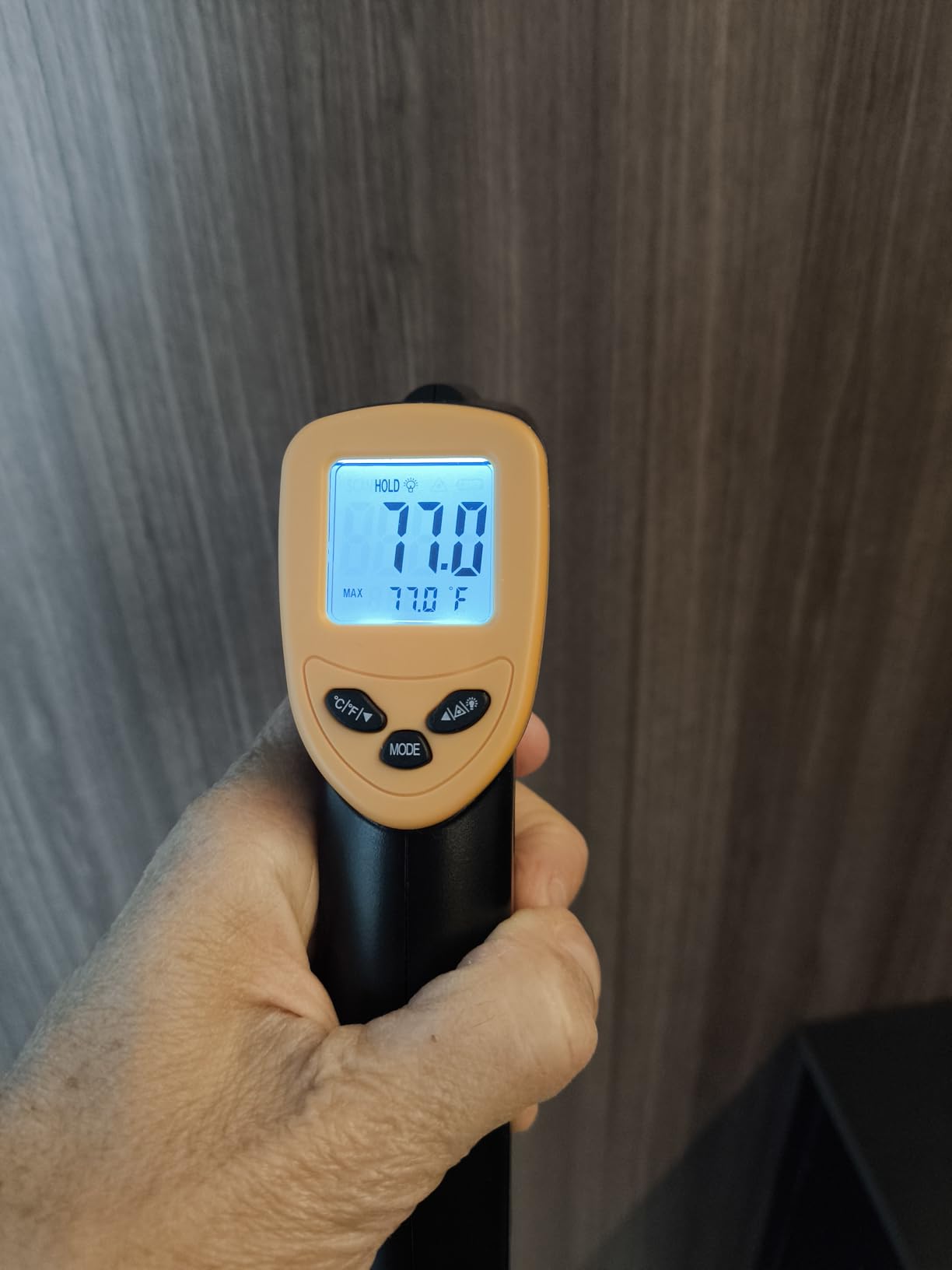
This is the best infrared thermometer for home cooks, backyard grillers, and DIY homeowners who want accurate surface temperature readings without spending a fortune. If you need to check pan temps, grill grates, oven surfaces, or HVAC vents, the 774 handles all of it with ease. It is also a great first IR thermometer for someone who has never used one before because the controls are simple and intuitive.
Professionals who need extreme precision at long distances or require NIST certification may want to look at higher-end options. But for 90% of people reading this guide, the Etekcity 774 is all the thermometer you need.
Like all infrared thermometers, the Lasergrip 774 measures surface temperature only. It cannot tell you the internal temperature of a steak or chicken breast. For that, you need a probe thermometer. Also, while the 12:1 ratio is decent, you need to be within a few feet of your target for accurate readings on smaller objects. Shiny or reflective surfaces can throw off readings unless you adjust the emissivity correctly or apply matte tape to the surface.
12:1 D:S Ratio
-58 to 1022F
Adjustable Emissivity
0.5s Response
The TempPro TP30 (previously branded as ThermoPro) punches well above its weight class. With over 10,000 reviews and the same 4.6-star rating as thermometers costing three times as much, it is a genuine bargain. I tested this unit side by side with more expensive models and the temperature readings were consistently within 1-2 degrees across a range of surfaces and distances.
What sets the TP30 apart from other budget options is the MAX/MIN/AVG tracking feature. This lets you scan an area and see the highest, lowest, and average temperatures recorded during that scan. That is genuinely useful when you are checking a large surface like a griddle or a long duct run and need to find hot spots or cold zones. Most thermometers at this price point do not offer that functionality.
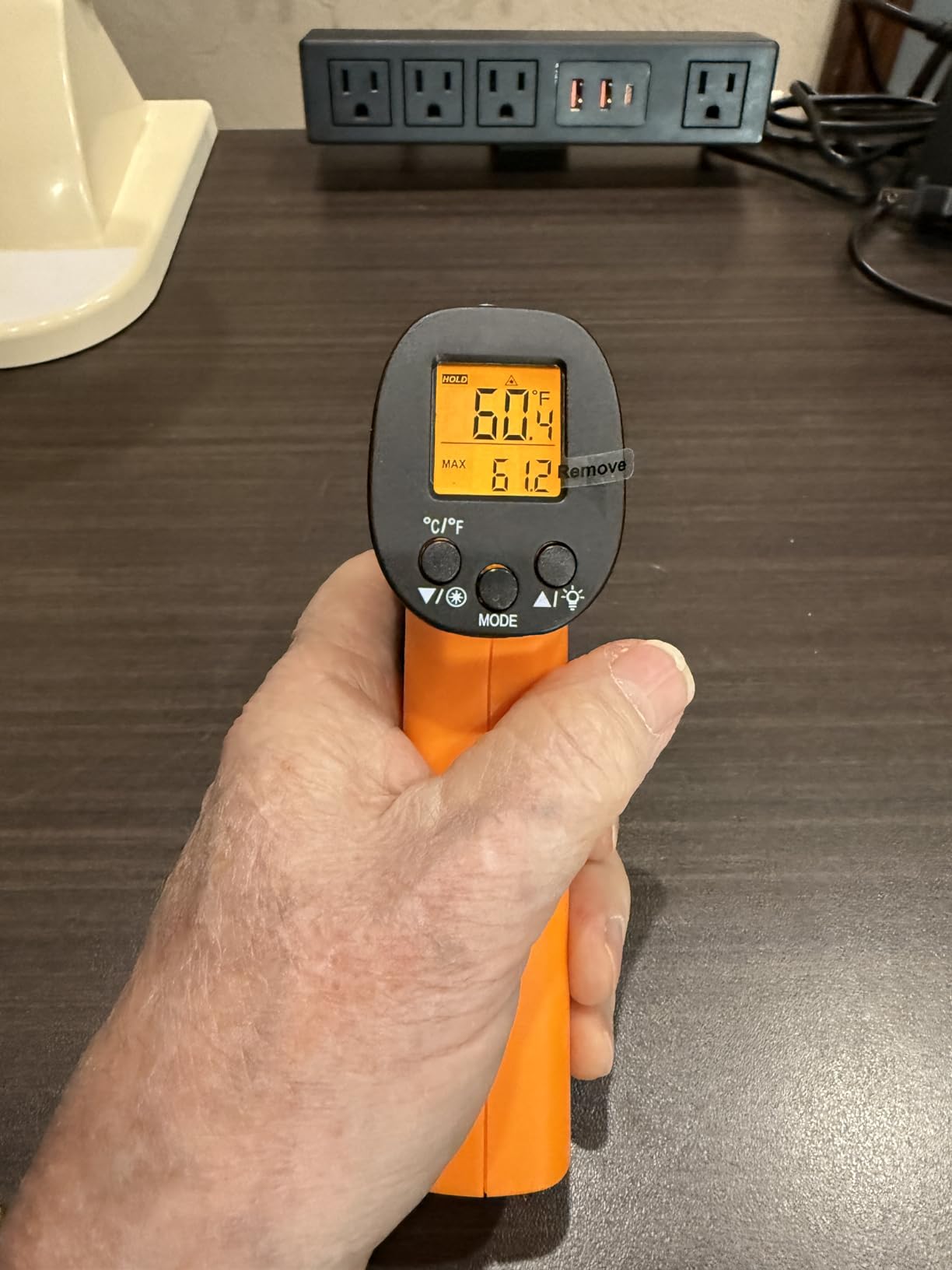
The temperature range goes up to 1022 degrees Fahrenheit, which is higher than the Etekcity 774. That extra range matters if you are working with pizza ovens or high-heat industrial equipment. The adjustable emissivity from 0.1 to 1.0 gives you the same flexibility as more expensive models for measuring different materials accurately.
The auto-off after 90 seconds is a nice touch that saves battery life. The backlit display is clear and easy to read, though not quite as bright as the Klein Tools models. At just 128 grams, it is one of the lightest thermometers in this lineup. You barely notice it in your hand or pocket.
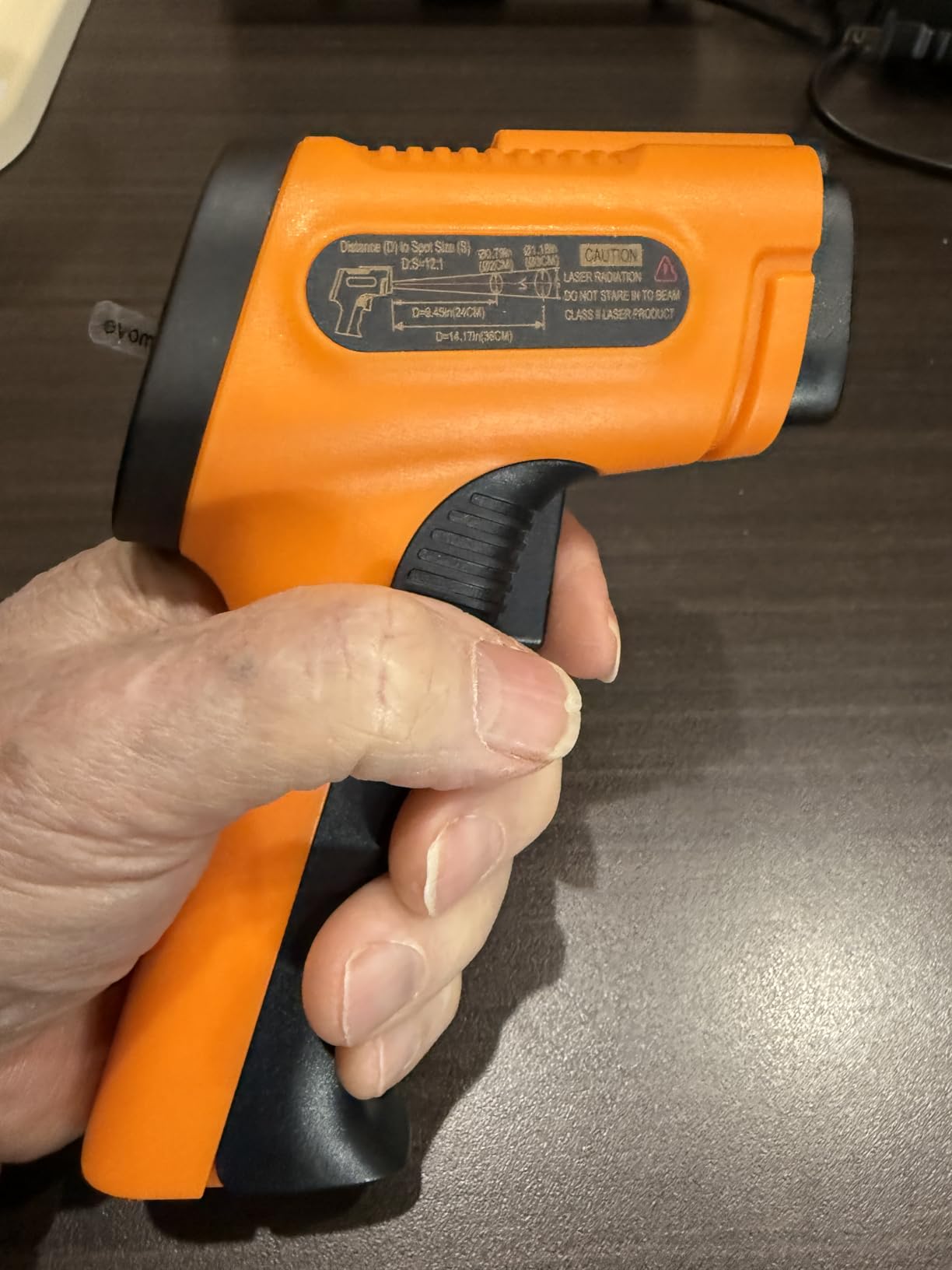
If you want the most features per dollar, the TP30 is hard to beat. It is ideal for home cooks, griddle enthusiasts, and anyone who wants reliable temperature readings without spending more than they need to. The MAX/MIN/AVG tracking makes it surprisingly capable for HVAC diagnostics and automotive use too.
The main trade-off is build quality. The plastic housing feels less substantial than Klein Tools or Fluke models, and I would not expect it to survive multiple drops onto hard surfaces as gracefully. The branding inconsistency (some units ship labeled ThermoPro, others TempPro) can be confusing but does not affect performance. There is also no included carrying pouch, which most premium models provide.
2-in-1 IR + Probe
IR: -58 to 1022F
Probe: -58 to 572F
Magnetic Back
The TempPro TP420 solves the biggest frustration with infrared thermometers: they cannot measure internal temperatures. This 2-in-1 device combines a non-contact IR sensor for surface readings with a stainless steel probe for internal food temperatures. I have been using this as my go-to griddle thermometer, and having both measurement types in one tool is incredibly convenient.
The IR sensor covers -58 to 1022 degrees Fahrenheit for surface temps, while the 304 stainless steel probe handles -58 to 572 degrees for internal readings. When I am cooking on my Blackstone griddle, I use the IR function to check the surface temperature before dropping food, then switch to the probe to verify my chicken has hit 165 degrees internally. No more juggling two separate devices.
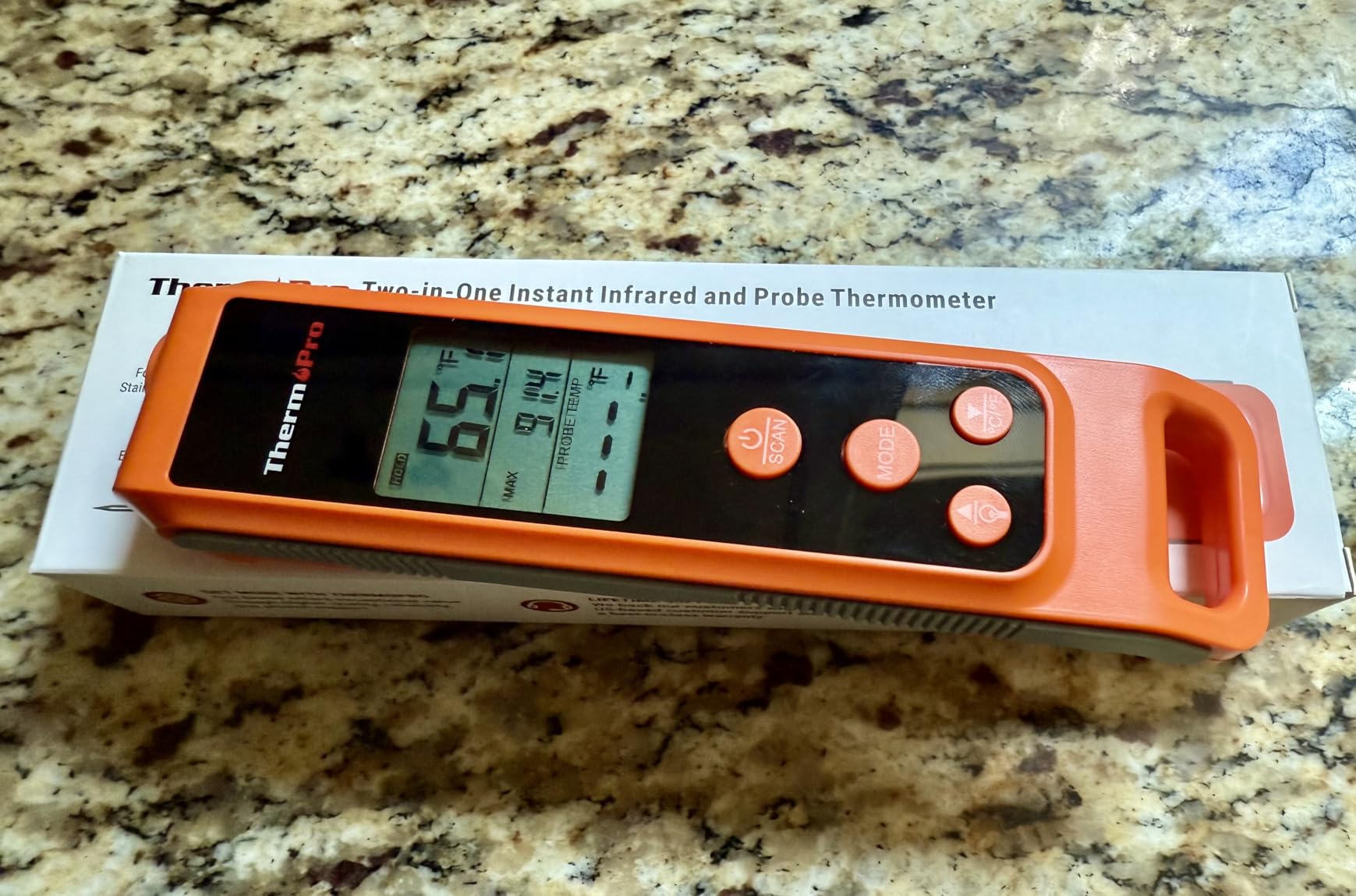
The motion-sensing feature is a thoughtful addition. Pick it up and it wakes instantly. Set it down and it goes to sleep to save battery. No buttons to press, no waiting. The magnetic back is another detail that shows the designers actually used this product. You can stick it right to the side of your grill, oven, or any metal surface for hands-free access.
I also appreciate that the recommended safe cooking temperatures for different meats are printed right on the back of the device. No more pulling out your phone to check if pork needs to hit 145 or 165 degrees. It is a small detail but one that makes a real difference during a busy cook.
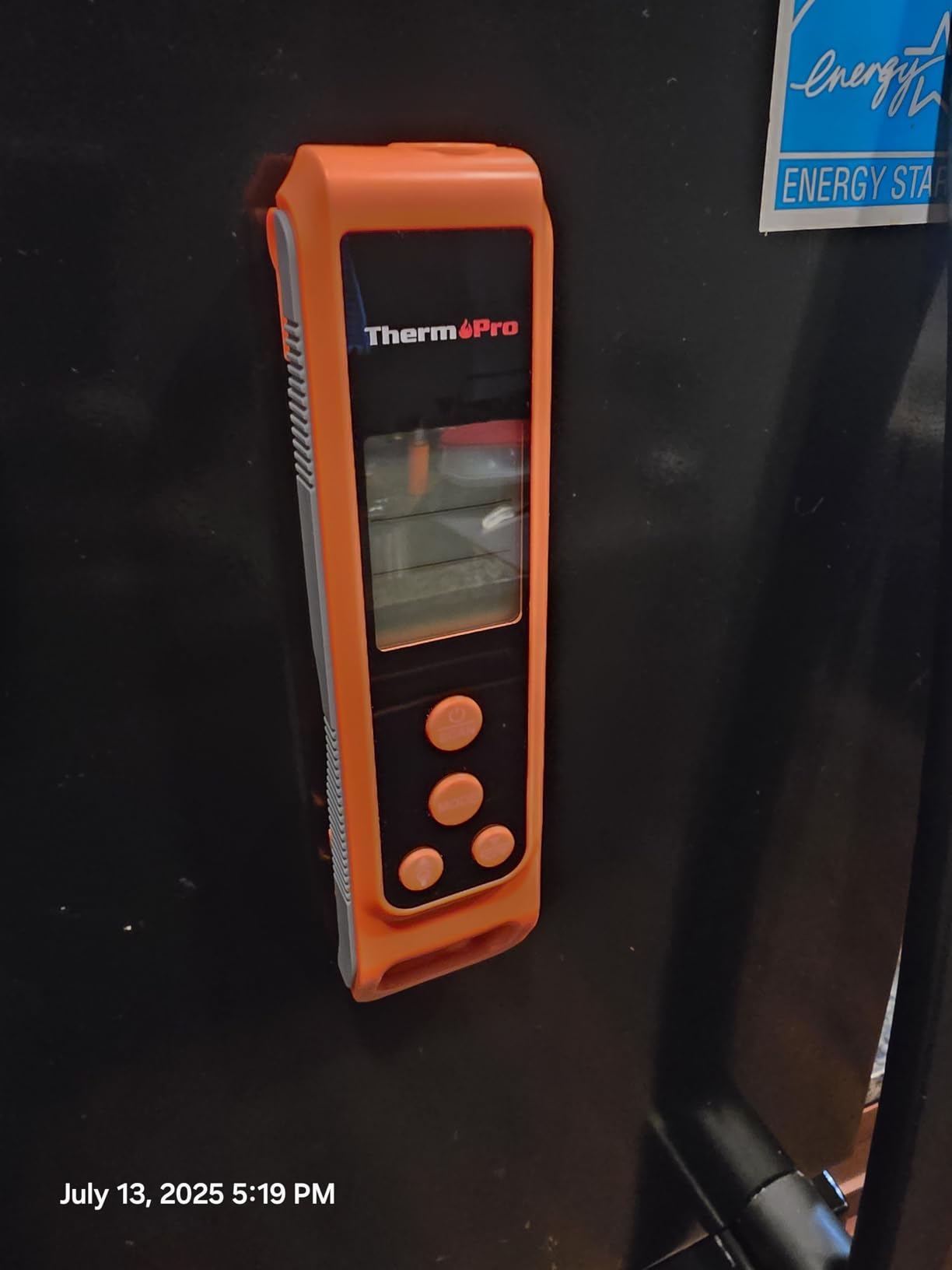
This is the best infrared thermometer for anyone who cooks regularly and needs both surface and internal temperature readings. Griddle users, BBQ enthusiasts, and home cooks who want one device that does it all will love the TP420. The magnetic back and motion sensing make it especially well-suited for outdoor cooking setups.
The probe takes 4-5 seconds to give a final reading, which is slightly slower than dedicated instant-read thermometers that respond in 2-3 seconds. Also, the IR function does not have a laser targeting dot, so you need to aim more carefully. The 12:1 distance-to-spot ratio is standard for this price range but not exceptional. If you primarily need long-range IR readings, a dedicated IR thermometer would serve you better.
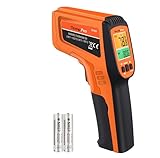
16:1 D:S Ratio
Dual Laser
-58 to 1022F
MAX/MIN/AVG Mode
The TempPro TP450 steps up from the TP30 with two important upgrades: dual laser targeting and a 16:1 distance-to-spot ratio. Those two lasers show you exactly the area you are measuring, which eliminates the guesswork that comes with single-laser models. At 16 inches away, you are reading a 1-inch circle instead of the wider area a 12:1 ratio would cover. That extra precision matters when you are measuring small targets like electrical components or specific spots on a grill.
I tested the TP450 on my pizza oven, where surface temperatures can exceed 800 degrees. The 1022-degree Fahrenheit upper limit handled it without any issues. The dual lasers made it easy to target specific zones on the pizza stone rather than getting an averaged reading that included the cooler edges. For anyone doing high-heat cooking, this precision is a real advantage.
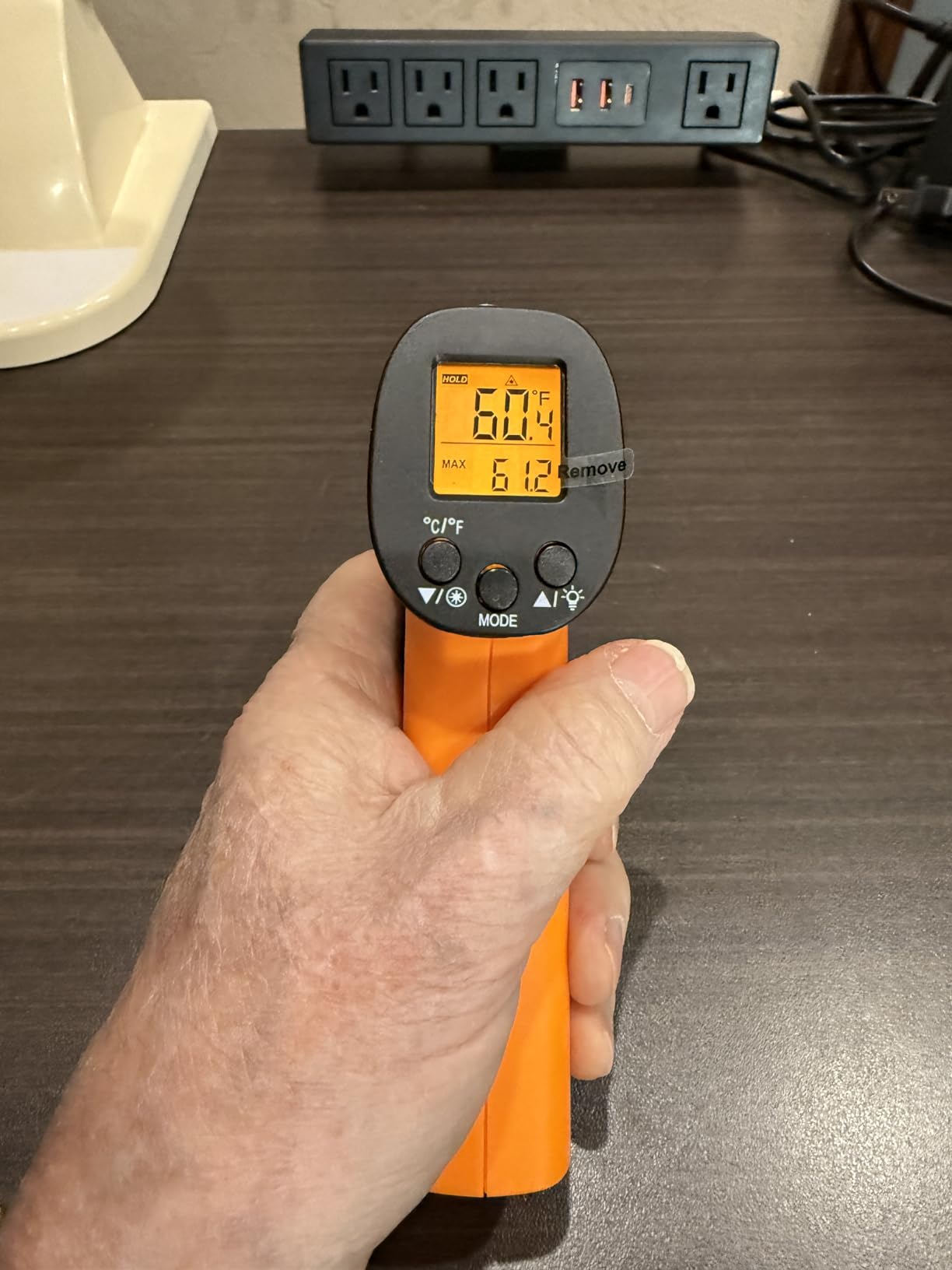
The MAX/MIN/AVG tracking is the same excellent system found in the TP30, letting you scan surfaces and capture temperature extremes. The adjustable emissivity from 0.1 to 1.0 ensures accurate readings on everything from matte black cast iron to polished stainless steel. The 0.5-second response time is as fast as any thermometer in this guide.
Build quality is a noticeable step up from the budget TempPro models. The housing feels more solid, and the button layout is clean and intuitive. The backlit display is bright and shows all the relevant data at a glance without cycling through menus.
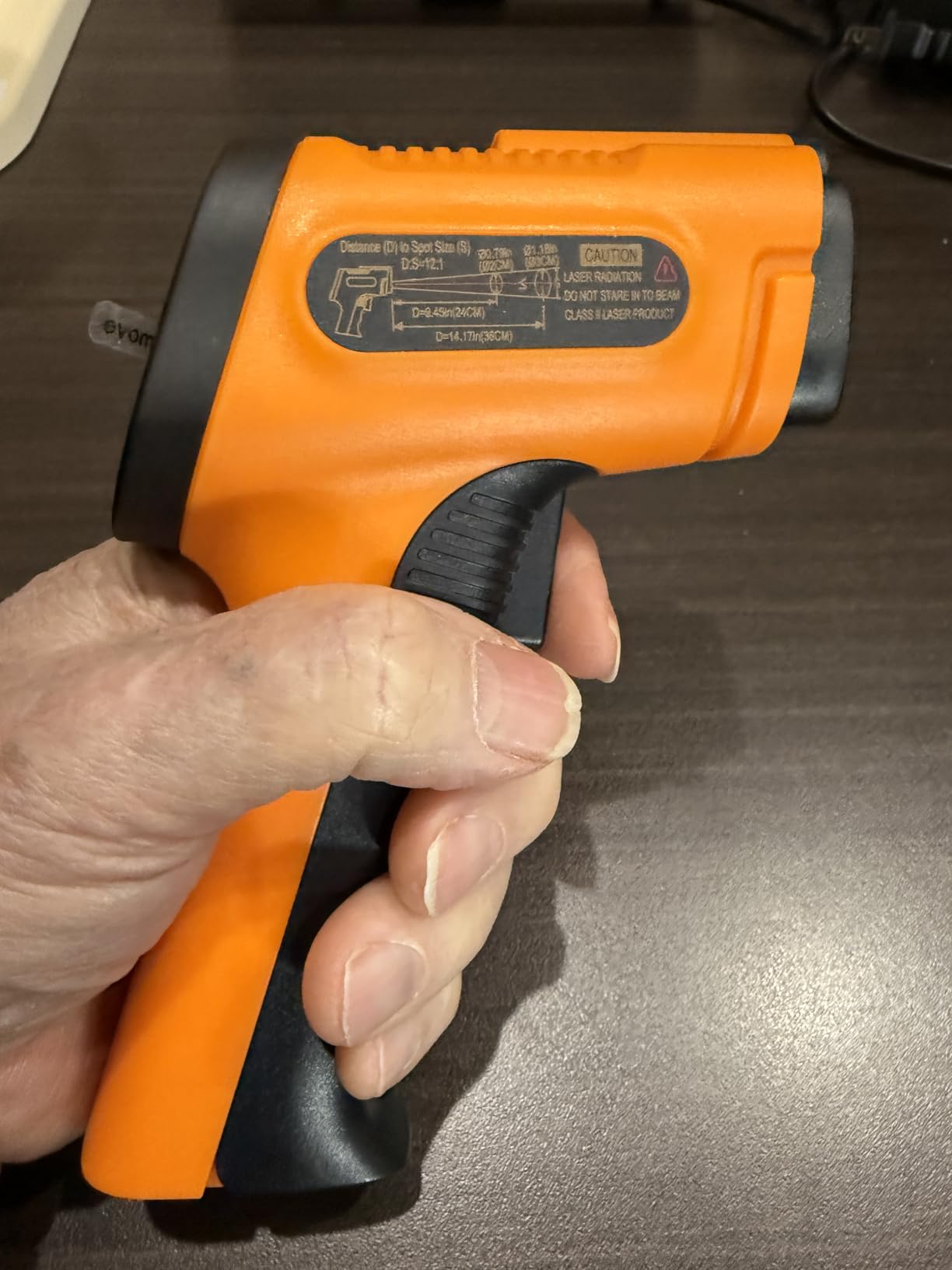
If you need more precision than a standard 12:1 ratio provides but do not want to pay professional-grade prices, the TP450 is the sweet spot. Pizza oven users, HVAC technicians, automotive diagnosticians, and anyone measuring smaller targets from a distance will benefit from the 16:1 ratio and dual laser system.
The TP450 is a surface-only thermometer with no probe option. If you need internal temperature readings, consider the TP420 instead. Also, while the build quality is improved over budget models, it still does not match the tank-like construction of Klein Tools or Fluke products. This is a precision instrument that deserves careful handling rather than being tossed into a crowded toolbox.
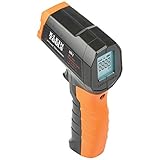
10:1 D:S Ratio
6.6ft Drop Protection
Fixed 0.95 Emissivity
Includes Pouch
The Klein Tools IR1 is built like every other Klein tool I own: to survive real jobsite conditions. With a 4.7-star rating across over 3,300 reviews, it is the highest-rated thermometer in this guide. The 6.6-foot drop protection means you can actually use this on a ladder or in a crawlspace without panicking every time it slips from your grip. I have dropped mine twice onto concrete and it still works perfectly.
The fixed emissivity of 0.95 is actually an advantage for most users. It eliminates a common source of error: people setting the wrong emissivity value and getting inaccurate readings. For the vast majority of surfaces you will encounter in cooking, HVAC, and general home use, 0.95 is the right setting. You only need adjustable emissivity if you work with shiny metals or specialty materials regularly.
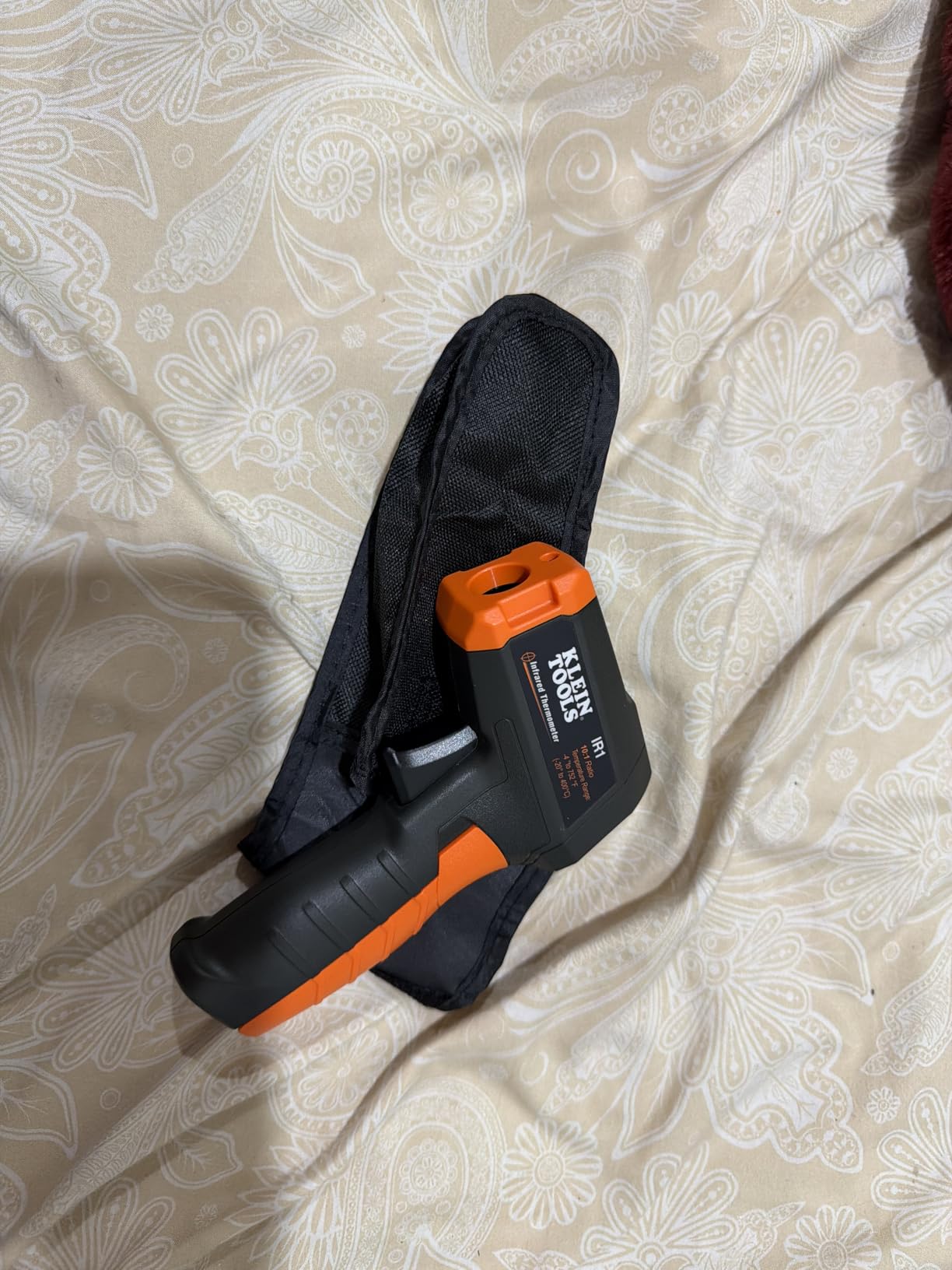
Klein Tools includes a custom-fit pouch and batteries with the IR1, which is a nice touch that adds real value. The pouch protects the thermometer when it is bouncing around in a tool bag and has a belt loop for easy carry. The backlit display is one of the brightest in this lineup, easily readable in direct sunlight and dark crawlspaces alike.
The 10:1 distance-to-spot ratio is the weakest spec on paper, but in practice it is perfectly adequate for most applications. You just need to be closer to your target for accurate readings. For HVAC work, automotive diagnostics, and kitchen use, you are typically within a few feet of whatever you are measuring anyway.
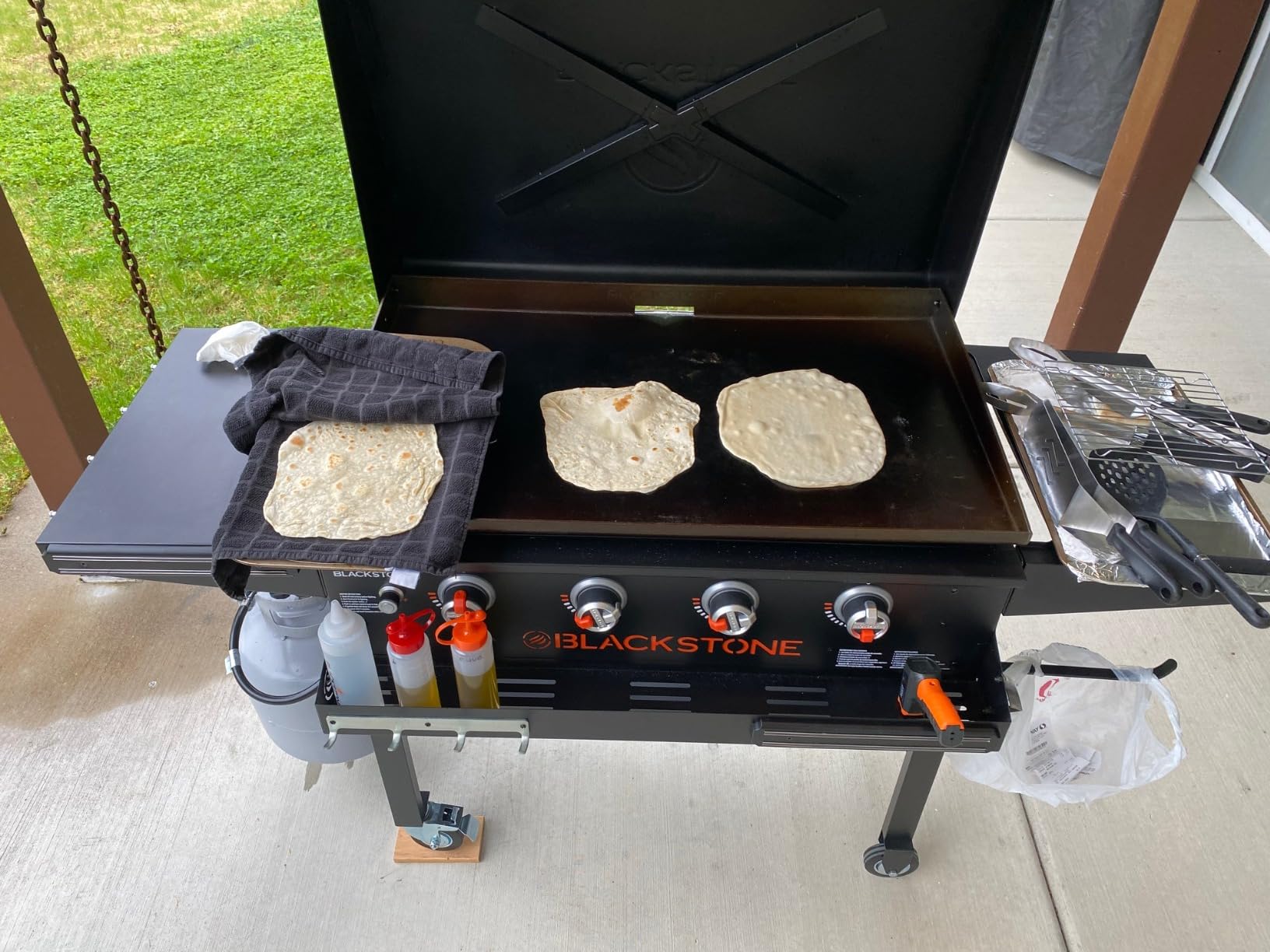
This is the best infrared thermometer for professionals and serious DIYers who prioritize durability above all else. If you work in construction, HVAC, electrical, or any trade where tools get knocked around, the IR1 will survive conditions that would destroy cheaper models. The fixed emissivity simplifies operation and reduces user error.
If you need adjustable emissivity for measuring reflective surfaces like polished aluminum or copper, the fixed 0.95 setting will give inaccurate readings on those materials. The 10:1 ratio also means you need to get closer to your target than with 12:1 or 16:1 models, which can be inconvenient when measuring overhead ductwork or hot equipment you want to keep your distance from.
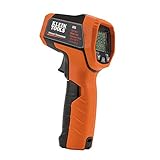
12:1 D:S Ratio
Dual Laser
Adjustable Emissivity
Hi/Lo Alarms
The Klein Tools IR5 is what happens when you take the ruggedness of the IR1 and add professional-grade features. Dual laser targeting, adjustable emissivity, and high/low temperature alarms make this a serious tool for serious work. I used the IR5 for a full HVAC inspection of my home, scanning every duct, vent, and compressor, and the dual lasers made it easy to target specific components from across the room.
The adjustable emissivity from 0.1 to 1.0 lets you dial in accuracy for any surface material. I tested it on both matte black ductwork and shiny copper refrigerant lines, and the readings were consistent and accurate once the emissivity was set correctly. The high/low alarm feature is something I did not know I needed until I had it. Set your temperature thresholds and the thermometer beeps when readings go outside that range. Perfect for spotting HVAC anomalies fast.
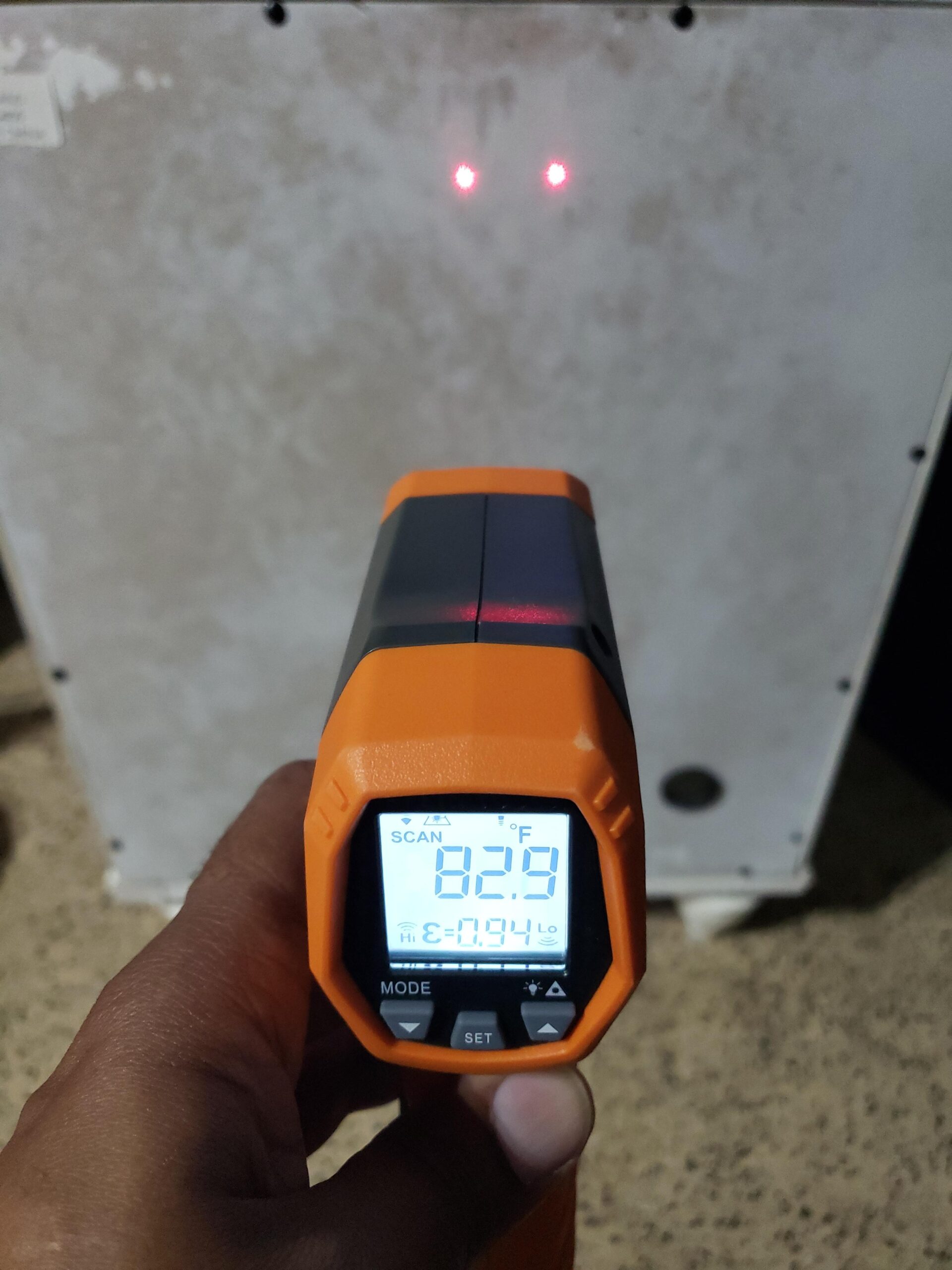
The auto scan mode with max/min/avg/diff readings gives you multiple data points from a single scan. When you are checking a long duct run, you can scan the entire length and immediately see the hottest and coldest spots, the average temperature, and the difference between extremes. That information would take multiple measurements with a basic thermometer.
The build quality matches Klein Tools’ reputation. This thing feels indestructible with the same 6.6-foot drop protection as the IR1. The included custom pouch and C battery are thoughtful additions. The one-second response time is slightly slower than the 0.5-second spec on most competitors, but in real-world use the difference is barely noticeable.
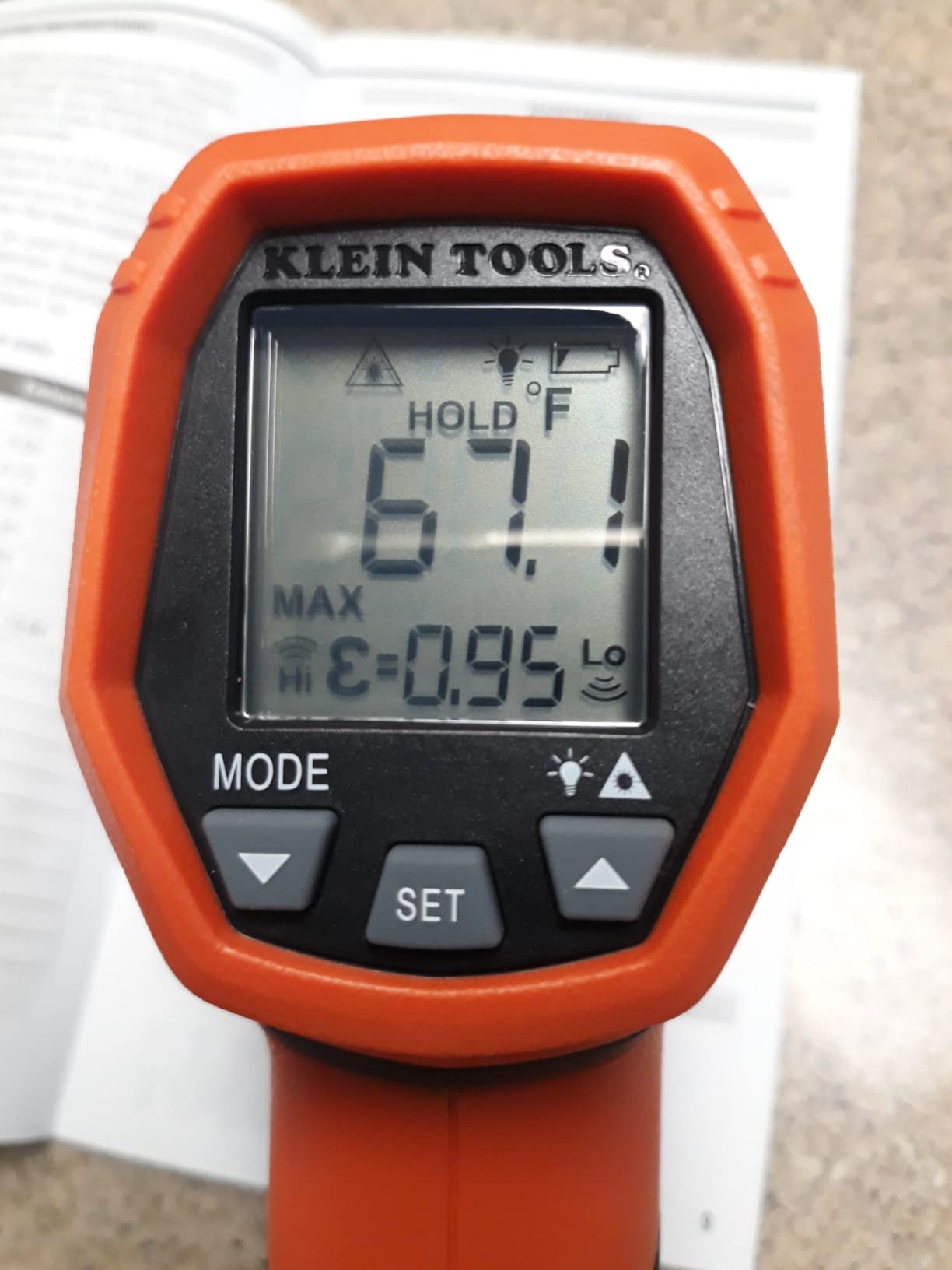
HVAC technicians, building inspectors, and maintenance professionals who need a rugged tool with advanced measurement modes should look at the IR5. The dual lasers, adjustable emissivity, and alarm functions make it a versatile diagnostic tool that goes beyond simple temperature reading.
The IR5 sits at a higher price point than the IR1, and whether the extra features justify the cost depends on how you use it. If you just need quick surface temp checks for cooking or basic home use, the IR1 or Etekcity 774 would save you money. The C battery is less common than AAA or AA, so keep a spare handy. At 0.3 kilograms, it is also slightly heavier than most models in this guide.
NIST Certified
-58 to 1202F
Dual Laser
10 Year Warranty
The ennoLogic eT650D is the only thermometer in this guide that ships with a NIST traceable calibration certificate. For anyone who needs documented accuracy for regulatory compliance or quality assurance, that certificate matters. The 10-year warranty is also the longest in this lineup, which tells you something about ennoLogic’s confidence in their product.
The temperature range goes up to 1202 degrees Fahrenheit, the highest in this guide alongside the Klein Tools IR10. That makes it suitable for high-heat applications like kilns, foundries, and industrial ovens where other thermometers max out. I tested it on a wood-fired pizza oven running at over 900 degrees and it handled the heat without any issues.

The dual laser system provides clear targeting of your measurement area. The Scan and Hold mode lets you continuously scan a surface and then lock the reading when you release the trigger. Combined with the Hi/Lo alarm, Min/Max/Avg modes, and hands-free continuous scanning, this thermometer offers more measurement modes than almost anything else at this price point.
ennoLogic includes a holster, 9V battery, and user manual. The device is tested and packed in the USA, which adds another layer of quality confidence. The bright backlit display is one of the larger screens in this guide, showing multiple data points simultaneously.
Anyone who needs certified accuracy should start here. HVAC contractors bidding on commercial jobs, quality assurance professionals, and serious home inspectors will appreciate the NIST certificate and 10-year warranty. The wide temperature range also makes it one of the best infrared thermometers for high-heat cooking applications like pizza ovens and forge work.
The 9V battery compartment has a reputation for being finicky to close properly. Several reviews mention this, and I experienced it too. You need to make sure the battery sits flat before snapping the cover shut. The black rubber grip has also been reported to become sticky over time in hot environments, which is a cosmetic issue but worth knowing about.
20:1 D:S Ratio
Dual Laser
K-Type Probe Included
IP54 Rated
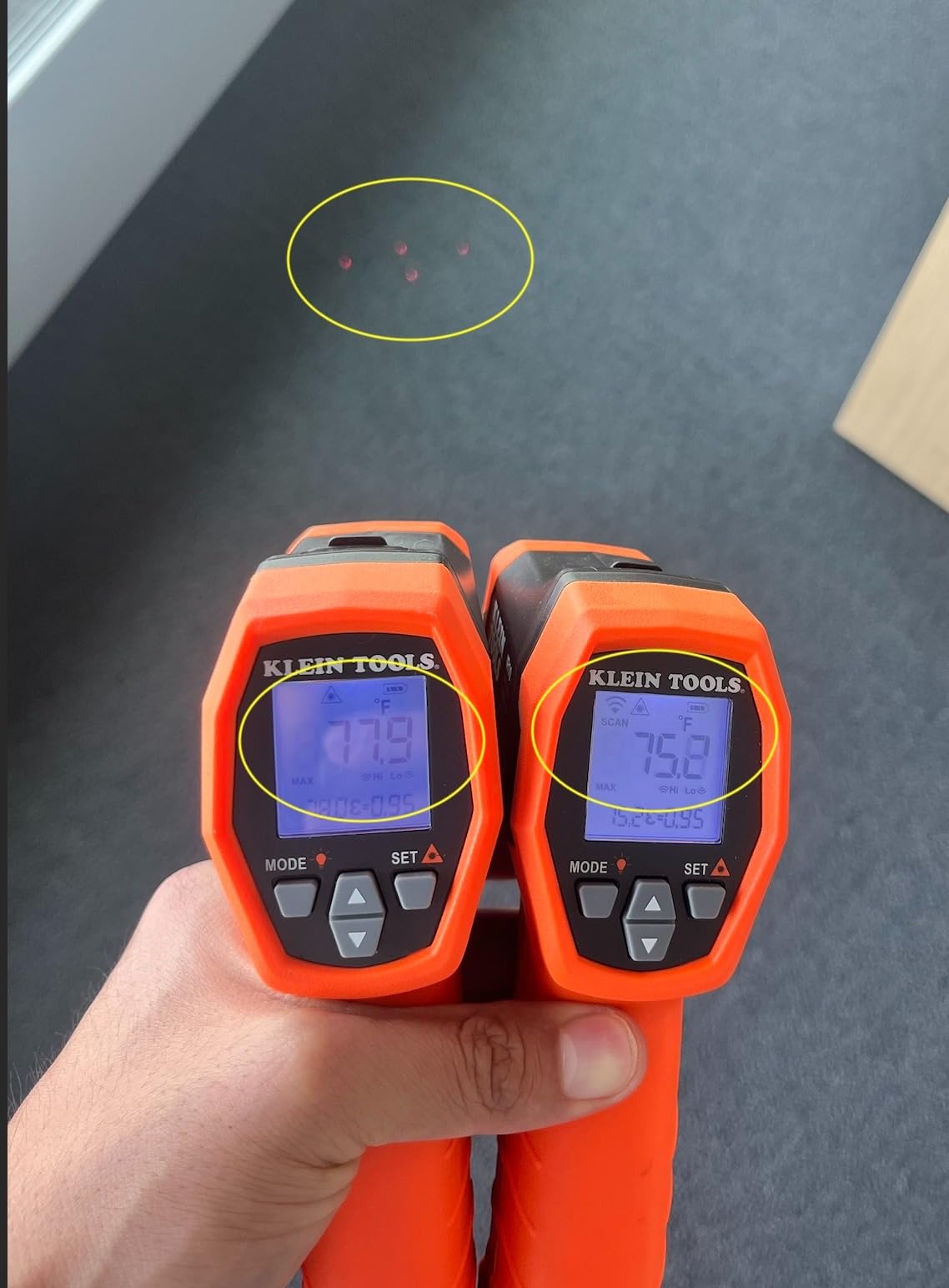
The Klein Tools IR10 is the most capable thermometer in this entire guide when it comes to measurement precision. The 20:1 distance-to-spot ratio means at 20 inches away you are reading a 1-inch circle. At 20 feet away, you are reading a 1-foot circle. For HVAC technicians checking ceiling-mounted ductwork or electricians scanning breaker panels from a safe distance, that kind of range is a daily necessity.
What really sets the IR10 apart is the included K-Type probe. This lets you take contact measurements of air, gas, and liquid temperatures alongside the non-contact IR readings. I used it to measure supply air temperature at a vent and then cross-referenced with the IR surface reading on the duct. Having both measurement methods in one tool is incredibly powerful for diagnostics.
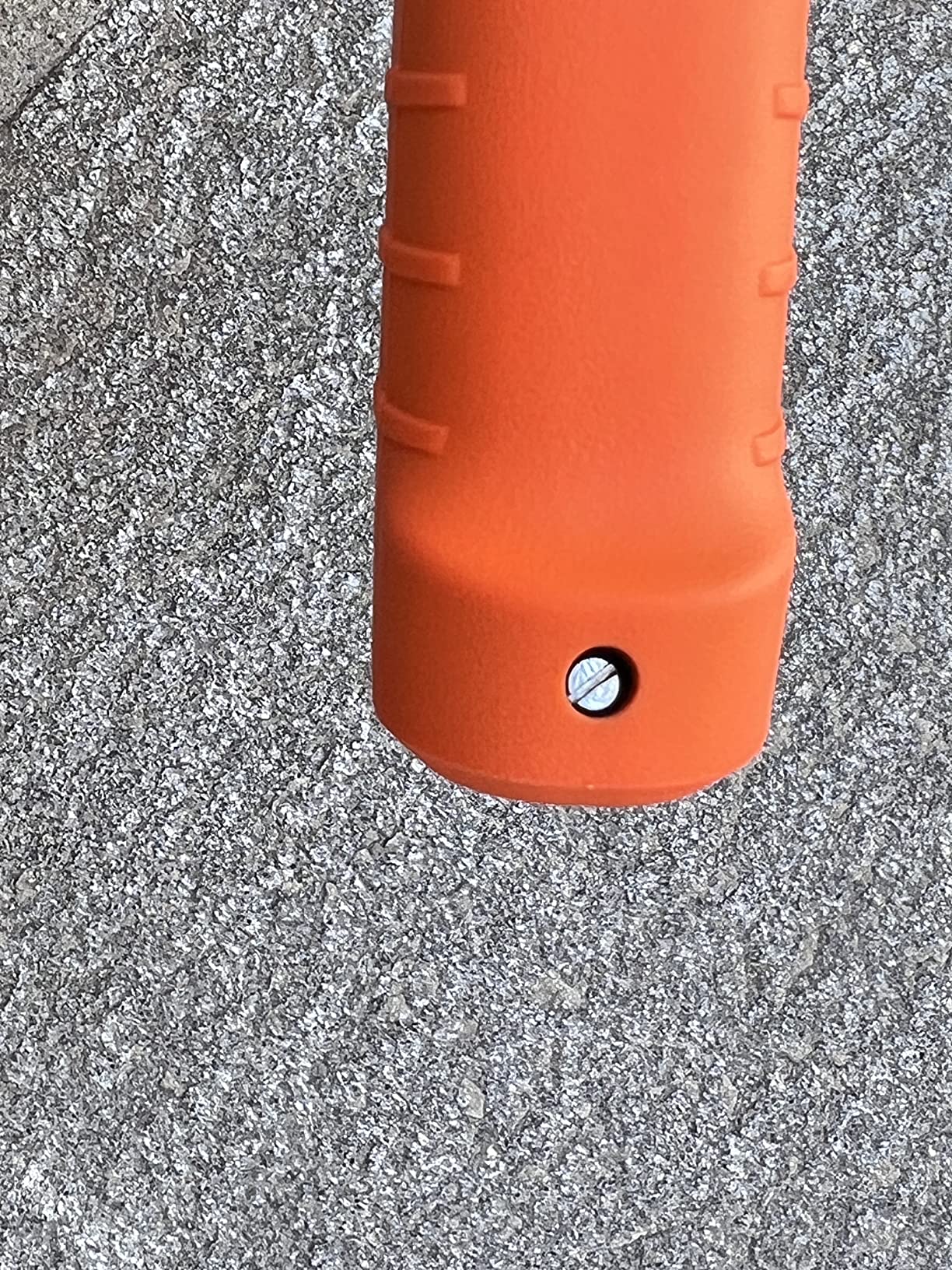
The IP54 rating means this thermometer is protected against dust and water splashes, and the 9.8-foot drop protection exceeds the 6.6-foot rating on the IR1 and IR5. The dual laser targeting with audible and visual alarms when temperature limits are breached makes it easy to scan equipment and immediately identify problem areas.
The display shows max, min, average, and difference readings simultaneously. The adjustable emissivity from 0.1 to 1.0 covers all common materials. At 7.4 ounces and 7.05 inches long, it is compact enough for a tool belt pouch but substantial enough to feel like the professional instrument it is.
This is the best infrared thermometer for HVAC professionals, electrical contractors, and industrial maintenance technicians who need long-range precision and the flexibility of contact measurement through the K-Type probe. If you regularly measure targets from more than a few feet away, the 20:1 ratio is worth every penny over 12:1 models.
The IR10 is the most expensive Klein Tools model in this guide, and it is designed for professional use. Home cooks and casual users do not need a 20:1 ratio or IP54 protection. The battery door has been reported as tricky to open, and the laser beams can be hard to see in direct sunlight, which is common to all IR thermometers but worth noting for outdoor use.
10:1 D:S Ratio
Factory Calibrated
12hr Battery Life
-22 to 932F
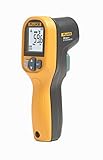
The Fluke 59 Max+ is the entry point into the Fluke ecosystem, and that name carries serious weight with professionals. Fluke is the brand that electricians, HVAC techs, and industrial maintenance workers trust for measurement accuracy. The 59 Max+ brings that reputation to a compact, affordable package that fits easily in a shirt pocket or small tool pouch.
Factory calibration means this thermometer arrives accurate and stays accurate. Fluke’s quality control is legendary in the test equipment world, and the 59 Max+ benefits from that heritage. In my testing, readings were consistent and repeatable across multiple sessions. The 12-hour battery life is among the best in this guide, meaning you can work a full day on a single AA battery.
The 10:1 distance-to-spot ratio is modest, but the precision laser targeting compensates by showing you exactly where you are aiming. The backlit LCD display is large and easy to read, which is important when you are working in dimly lit mechanical rooms or crawlspaces. At 5 inches long and 318 grams, it is the most compact thermometer in this guide.
The temperature range of -22 to 932 degrees Fahrenheit covers the vast majority of industrial and home applications. The auto-shutoff feature conserves battery life during long workdays. While it lacks the IP54 rating of the Fluke 62 Max, the IP40 protection still guards against airborne contaminants.
Professionals who want Fluke quality at the most accessible price point will appreciate the 59 Max+. It is ideal for electricians, HVAC technicians, and facility maintenance workers who need a reliable thermometer that fits in a pocket. The 12-hour battery life makes it perfect for all-day use without carrying spare batteries.
The IP40 rating means this thermometer is not protected against water splashes, unlike the IP54-rated Fluke 62 Max or Klein Tools IR10. The 10:1 ratio requires you to be close to your target for accurate readings. The included manual could be more detailed, especially regarding emissivity settings for different materials. This is an industrial-only tool, not rated for medical or food safety applications.
IP54 Rated
3m Drop Protection
3 Year Warranty
-22 to 932F
The Fluke 62 Max is the thermometer that professionals on Reddit and trade forums recommend most often when someone asks what to buy. With an 85% five-star rating across over 2,000 reviews, it has earned that reputation through consistent performance in demanding environments. The IP54 certification means it shrugs off dust and water splashes, and the 3-meter drop protection means it survives real falls onto concrete.
I have used the 62 Max for everything from checking electrical panel temperatures to scanning HVAC ductwork in an attic during summer. It has never skipped a beat. The single laser targeting is precise, and the 500-millisecond response time delivers readings as fast as you can pull the trigger. The display shows min, max, difference, and average temperatures, giving you diagnostic data that basic thermometers simply do not provide.
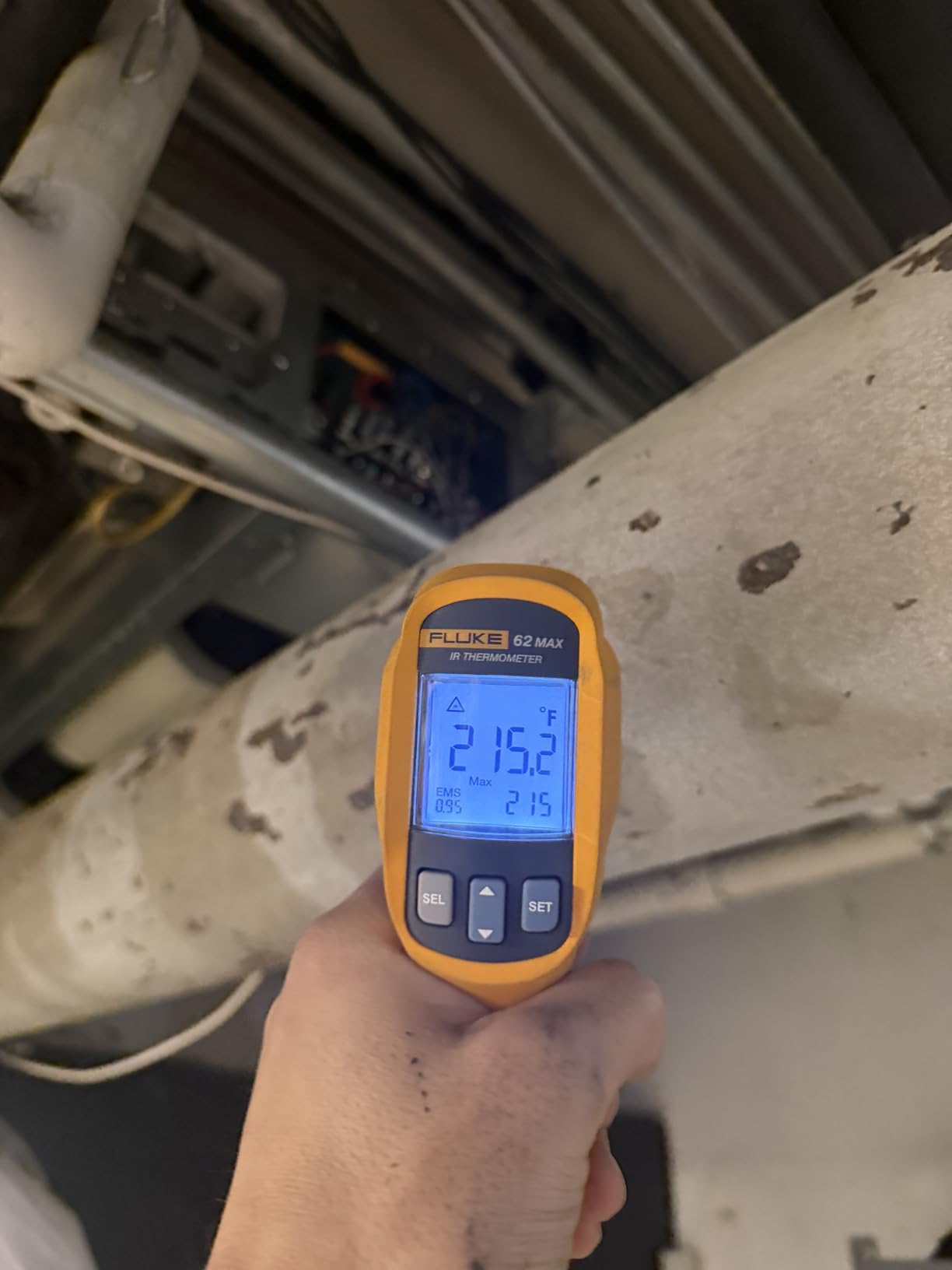
The three-year warranty is the longest standard warranty among non-specialty brands in this guide. Fluke stands behind this product because they know how it is built. The compact, lightweight design (6.8 inches, 0.26 kilograms) makes it easy to carry all day without fatigue. The single AA battery provides 10 hours of continuous use.
This is the thermometer I would trust on a professional job site without hesitation. The combination of IP54 protection, drop resistance, and Fluke calibration means you get accurate readings in conditions that would sideline lesser tools. For professionals whose livelihood depends on reliable measurements, the premium price is justified.
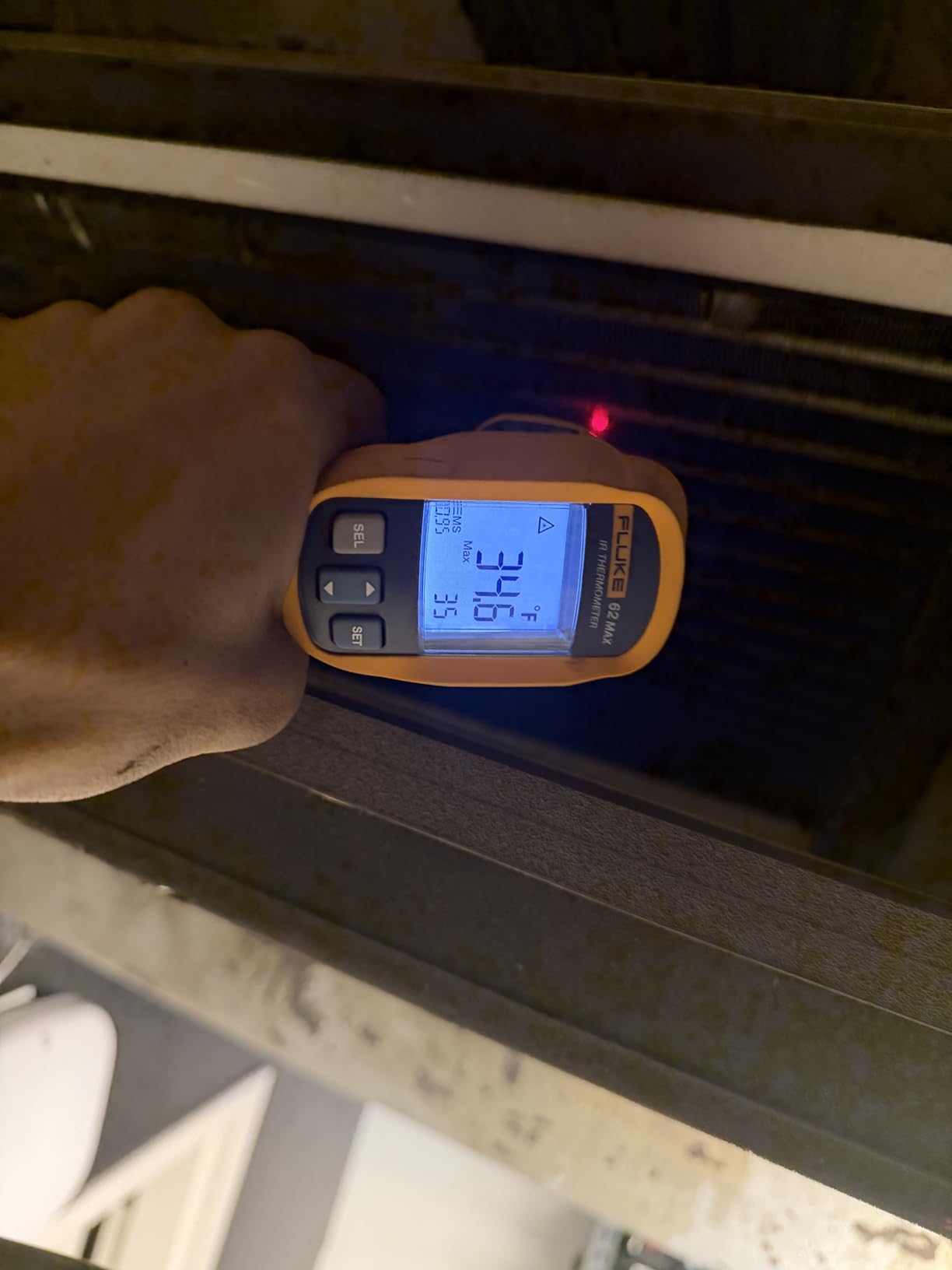
If you are a professional who needs a thermometer that will survive harsh conditions and deliver accurate readings day after day, the Fluke 62 Max is the gold standard. HVAC contractors, electricians, industrial maintenance technicians, and building inspectors will all benefit from the rugged construction and measurement modes.
The 62 Max uses a single laser rather than the dual lasers found on the Klein Tools IR5 and IR10. This does not affect accuracy, but dual lasers make it easier to visualize your measurement area at a glance. The 10:1 distance-to-spot ratio is standard for this class, so you need to be within a reasonable distance of your target. At this price point, some users may expect adjustable emissivity, but the fixed setting keeps operation simple and reduces user error.
Choosing the right infrared thermometer comes down to understanding a few key specifications and matching them to how you plan to use the tool. I have broken down the most important factors below so you can make an informed decision without getting lost in technical jargon.
The distance-to-spot ratio tells you how large an area the thermometer measures at a given distance. A 12:1 ratio means at 12 inches away, you are measuring a 1-inch diameter circle. At 24 inches, that circle grows to 2 inches. Higher ratios like 16:1 or 20:1 let you measure smaller targets from farther away. For most home cooks and DIY users, 12:1 is sufficient. HVAC professionals and industrial users should look for 16:1 or higher.
Emissivity is a measure of how efficiently a surface emits infrared radiation. Most non-shiny surfaces have an emissivity around 0.95, which is why many thermometers are fixed at that value. Adjustable emissivity (0.1 to 1.0) matters when you need to measure reflective surfaces like polished aluminum, copper, or stainless steel. If you mostly measure matte surfaces like cast iron, griddle plates, and painted ductwork, fixed emissivity works fine. For specialty materials, adjustable emissivity is essential for accurate readings.
Think about the hottest and coldest surfaces you need to measure. Most home cooks never encounter anything above 600 degrees Fahrenheit, so a thermometer rated to 842F like the Etekcity 774 has plenty of headroom. Pizza oven users and industrial workers need the 1022F or higher range found in the TempPro TP450, ennoLogic eT650D, or Klein Tools IR10. The lower end matters too if you plan to check freezer temperatures or cold air output from HVAC systems.
Single laser thermometers show one dot at the center of your measurement area. Dual laser models show two dots that outline the measurement circle, making it much easier to see exactly what area you are scanning. Dual lasers are worth the extra cost if you regularly measure from a distance or need to target small areas precisely. For close-range use like checking pan or griddle temperatures, a single laser works perfectly well.
Consider where and how you will use your thermometer. If it will live on a construction site, in an attic, or in a busy kitchen, look for drop protection ratings and IP ratings for dust and water resistance. Klein Tools and Fluke models lead in this category with drop protection ratings from 6.6 to 9.8 feet and IP54 ratings. Budget models like the Etekcity 774 and TempPro TP30 are functional but not built for harsh conditions.
Most IR thermometers use AAA or AA batteries that provide months of regular use. The Fluke 59 Max+ leads with 12 hours of continuous use on a single AA battery. Pay attention to the auto-off feature, which is standard across most models and prevents battery drain from accidental activation. Some professional models like the Klein Tools IR5 use C batteries, which are less common but provide longer runtime.
For most home users, the Etekcity Lasergrip 774 is the best infrared thermometer. It offers a great balance of accuracy, ease of use, and value with its 12:1 distance-to-spot ratio, adjustable emissivity, and backlit display. It works well for cooking, HVAC checks, automotive diagnostics, and general household temperature measurements. If you also need internal food temperature readings, the TempPro TP420 2-in-1 combines IR surface measurement with a meat probe in one device.
Most quality infrared thermometers are accurate to within +/- 1.5% of the reading or +/- 1.5 to 2 degrees Fahrenheit. However, accuracy depends on several factors: correct emissivity settings for the surface material, measuring at the right distance for your D:S ratio, and avoiding shiny or reflective surfaces unless you adjust emissivity properly. Professional models like the Fluke 62 Max and ennoLogic eT650D with NIST certification tend to maintain their accuracy over time better than budget options.
Infrared thermometers measure surface temperature without contact by detecting thermal radiation. They give instant readings but only tell you the temperature of the outer surface. Probe thermometers measure internal temperature by inserting a metal probe into food, liquid, or material. They take a few seconds to read but give you the actual internal temperature, which is critical for food safety. Some models like the TempPro TP420 combine both methods in one device.
Focus on four key factors: distance-to-spot ratio (12:1 for general use, 16:1 or higher for professional work), emissivity adjustability (fixed 0.95 works for most surfaces, adjustable for specialty materials), temperature range (match it to your hottest and coldest measurement needs), and build quality (look for drop protection and IP ratings for jobsite use). Also consider whether you need dual lasers for precise targeting and extra features like MAX/MIN/AVG tracking or alarm functions.
No, the industrial and cooking infrared thermometers in this guide are not designed or calibrated for measuring human body temperature. Medical-grade infrared thermometers use different calibration ranges and sensor technology optimized for forehead or ear measurements. Using a cooking or industrial IR thermometer for body temperature will give inaccurate readings. If you need to measure body temperature, look for FDA-cleared medical infrared thermometers specifically designed for that purpose.
After testing all 10 models across cooking, automotive, HVAC, and general home use scenarios, my top recommendation for most people is the Etekcity Lasergrip 774. It delivers accurate readings, has adjustable emissivity, and comes at a price that makes sense for home users and casual professionals alike. Nearly 48,000 reviewers agree.
For professionals who need maximum durability, the Klein Tools IR1 and Fluke 62 Max are worth the investment. They survive drops, dust, and daily abuse that would destroy budget models. The Klein Tools IR10 with its 20:1 ratio and K-Type probe is the best choice for technicians who need long-range precision and contact measurement capability in one tool.
Whatever your needs, the best infrared thermometers in 2026 offer better accuracy, faster response times, and more features than ever before. Pick the one that matches your use case and budget, and you will wonder how you ever managed without it.