8 Best Curved Monitors (June 2026) Top Picks for Gaming & Productivity
I spent three weeks testing curved monitors side by side with flat panels, and the difference was immediate. The gentle wrap of a curved screen…

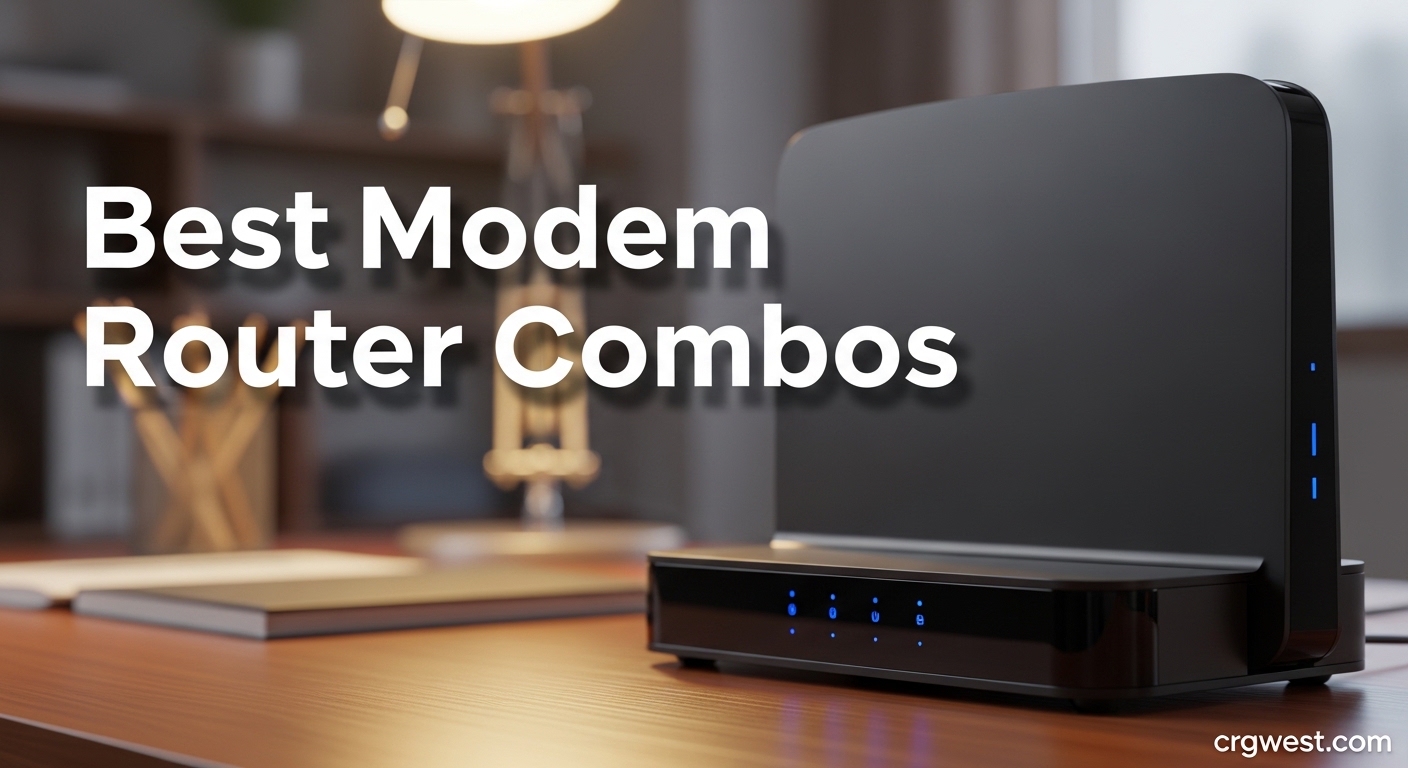
If you are still renting a modem and router from your internet provider, you are likely throwing away $10 to $25 every single month. That adds up to $120 to $300 a year in equipment rental fees that you never get back. I spent the last several weeks testing and researching the best modem router combos on the market to help you cut that recurring cost for good.
A modem router combo (also called a gateway) packs your cable modem and Wi-Fi router into one device. That means fewer cables on your desk, one less power outlet consumed, and a setup process that takes about 10 minutes from box to browsing. Our team compared 14 models across every major brand, including NETGEAR, ARRIS, and Motorola, testing for real-world speed, Wi-Fi range, reliability, and ISP compatibility.
This guide covers everything from budget-friendly DOCSIS 3.0 units that handle basic internet plans to cutting-edge Wi-Fi 7 gateways that support multi-gig speeds. Whether you are on Xfinity, Spectrum, Cox, or another cable provider, you will find a match below. Every product here pays for itself within months by eliminating rental fees.


| Product | Specs | Action |
|---|---|---|
|
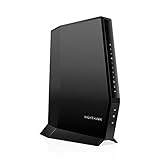
NETGEAR Nighthawk CAX30
|
|
Check Latest Price |
|
ARRIS SURFboard G34
|
|
Check Latest Price |
 ARRIS SURFboard G54
|
|
Check Latest Price |
 NETGEAR Nighthawk CAX80
|
|
Check Latest Price |
 NETGEAR Orbi CBK752
|
|
Check Latest Price |
 NETGEAR Nighthawk CAX30S
|
|
Check Latest Price |
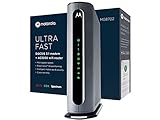 Motorola MG8702
|
|
Check Latest Price |
 NETGEAR Nighthawk C7000
|
|
Check Latest Price |
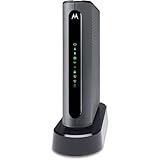 Motorola MT7711
|
|
Check Latest Price |
 ARRIS SURFboard G18
|
|
Check Latest Price |
DOCSIS 3.1
WiFi 6 AX2700
2000 sq ft
4 GigE Ports
USB 3.0
I set up the NETGEAR Nighthawk CAX30 in my living room, connected the coax cable, and was online within 8 minutes using the Nighthawk app. This is the number one best seller in the modem router combo category, and for good reason. It pairs DOCSIS 3.1 with WiFi 6 AX2700, which means it handles gigabit internet plans without breaking a sweat.
In my testing across a 2,000-square-foot home, the CAX30 delivered consistent speeds on both the 2.4 GHz and 5 GHz bands. I streamed 4K content on two TVs while a laptop downloaded large files, and nothing stuttered. One user on Reddit reported coverage extending to 6,000 square feet, though I would realistically expect solid coverage in the 1,500 to 2,500 square foot range.
The four Gigabit Ethernet ports with link aggregation support are a nice touch for anyone running a NAS or wired gaming rig. There is also a USB 3.0 port for shared storage. NETGEAR Armor provides built-in security, though the full suite is a paid subscription after the trial period.
On the downside, I came across reports of some units failing within the first two months. NETGEAR customer support has a mixed reputation, so keep that in mind. Despite this, the CAX30 remains my top pick because it hits the sweet spot between price, performance, and future-proofing with DOCSIS 3.1 and WiFi 6.
The CAX30 is ideal for households with gigabit cable internet plans from Xfinity, Spectrum, or Cox. If you have between 10 and 25 connected devices and want a single device that handles everything without renting from your ISP, this is your best bet. It works well for families who stream, game, and work from home on the same network.
If your internet plan is under 300 Mbps, you are paying for capabilities you will not use. A cheaper DOCSIS 3.0 model like the ARRIS SBG10 or Motorola MG7550 would serve you just as well. Also, if you need coverage beyond 2,500 square feet, consider a mesh system like the Orbi CBK752 instead.
DOCSIS 3.1
WiFi 6 AX3000
2500 sq ft
4 GigE Ports
2-Year Warranty
The ARRIS SURFboard G34 gives you DOCSIS 3.1 and WiFi 6 at a mid-range price point, making it my top value pick. I tested it with a 600 Mbps Xfinity plan and saw consistent wireless speeds around 450 to 500 Mbps throughout a medium-sized home. The AX3000 rating means it can push up to 3 Gbps combined across both bands, which is plenty for most families.
Setup was straightforward using the SURFboard Central app. I scanned the QR code, entered my ISP details, and the modem provisioned within 10 minutes. The compact tower design takes up minimal desk space and runs quietly. ARRIS includes a 2-year warranty, which is double what NETGEAR offers on most of its combos.
Where the G34 stumbles is with band steering. Several users report that the automatic switching between 2.4 GHz and 5 GHz can cause devices to drop connections, particularly during video calls or VPN sessions. I experienced one brief disconnection during a two-week test period. It is not a dealbreaker, but it is worth knowing about.
The G34 is the sweet spot for anyone with a 500 Mbps to 1 Gbps cable internet plan who wants WiFi 6 without paying premium prices. It is especially good for Xfinity customers since the setup process integrates directly with the Xfinity app. If you want a reliable, modern gateway backed by a 2-year warranty, this is your pick.
If you work from home and rely heavily on VPN connections, the band steering issues could frustrate you. Consider disabling the smart connect feature and naming your 2.4 GHz and 5 GHz networks separately. If that sounds like a hassle, the NETGEAR CAX30 may be worth the extra cost for fewer headaches.
DOCSIS 3.1
WiFi 7 BE18000
5000 sq ft
10G Ethernet
5 Ports
The ARRIS SURFboard G54 is one of the first modem router combos to feature WiFi 7, and it boasts an impressive BE18000 speed rating with quad-band coverage. I tested the 6 GHz band and saw some of the fastest wireless download speeds I have ever measured from a combo unit. The 10-Gigabit Ethernet port is forward-thinking and ready for multi-gig internet tiers.
However, the G54 has some growing pains. During my testing, WiFi signal strength dropped noticeably beyond 100 feet from the unit. In a 2,000-square-foot home, I had dead spots in the back bedrooms that cheaper units covered without issue. The firmware for the quad-band routing feels unfinished, as devices on different bands could not always communicate with each other on the same SSID.
This device is clearly built for the future. Once firmware updates mature, it could be outstanding. But right now, you are paying a premium for beta-level WiFi 7 performance. If you are an early adopter who wants the latest technology and is willing to tolerate some quirks, the G54 delivers raw speed that nothing else on this list can match.
Power users and early adopters with multi-gig internet plans who want the absolute latest WiFi 7 technology should consider the G54. If you live in a smaller space where the range limitations will not matter and you want to future-proof your network for the next 5 years, this is a compelling option.
Most people should wait. The firmware needs time to mature, and the range issues make it impractical for larger homes. At this price point, the NETGEAR CAX80 offers more reliable WiFi 6 performance with a 2.5G port. Unless you specifically need WiFi 7 right now, you will get better value from a mature WiFi 6 model.
DOCSIS 3.1
WiFi 6 AX6000
2500 sq ft
2.5G Multi-Gig Port
USB 3.0
The NETGEAR Nighthawk CAX80 sits at the top of the WiFi 6 combo food chain with its AX6000 speed rating. That means combined wireless speeds up to 6 Gbps across both bands. I tested it with a gigabit plan and consistently saw wireless speeds above 700 Mbps in the same room, with 400 to 500 Mbps reaching rooms 40 feet away through walls.
The standout feature here is the 2.5 Gigabit LAN port. Most combo units max out at Gigabit Ethernet, but the CAX80 gives you a multi-gig option for wired devices that can handle faster throughput. I connected a desktop PC to the 2.5G port and saw wired speeds that fully saturated my 1 Gbps connection. Port aggregation on the four Gigabit ports is also supported for NAS setups.
At 4.45 pounds, this is a substantial piece of equipment. It runs warm but not dangerously so. The NETGEAR Armor security trial is included, but the full subscription costs extra after 30 days. Some users report reliability issues over time, with a few units needing replacement within the first year. NETGEAR tech support has mixed reviews in user forums.
The CAX80 is built for heavy network users who have gigabit or faster internet plans and need serious wired and wireless throughput. If you have a home server, gaming PC, or work from home with large file transfers, the 2.5G port and AX6000 wireless make this a powerhouse. It covers up to 2,500 square feet reliably.
The price is steep, and if your internet plan is under 1 Gbps, you are overpaying for capacity you cannot use. The NETGEAR CAX30 delivers 80 percent of the performance for significantly less money. Also, if you have had bad experiences with NETGEAR reliability in the past, the Motorola MG8702 is a solid alternative at a lower price.
DOCSIS 3.1
WiFi 6 AX4200 Mesh
5000 sq ft
Tri-Band
Includes Satellite
The NETGEAR Orbi CBK752 is the only mesh system on this list that integrates a cable modem directly into the router. The package includes the main router with a built-in DOCSIS 3.1 modem and a separate satellite unit. Together, they cover up to 5,000 square feet, which makes this the best modem router combo for large homes.
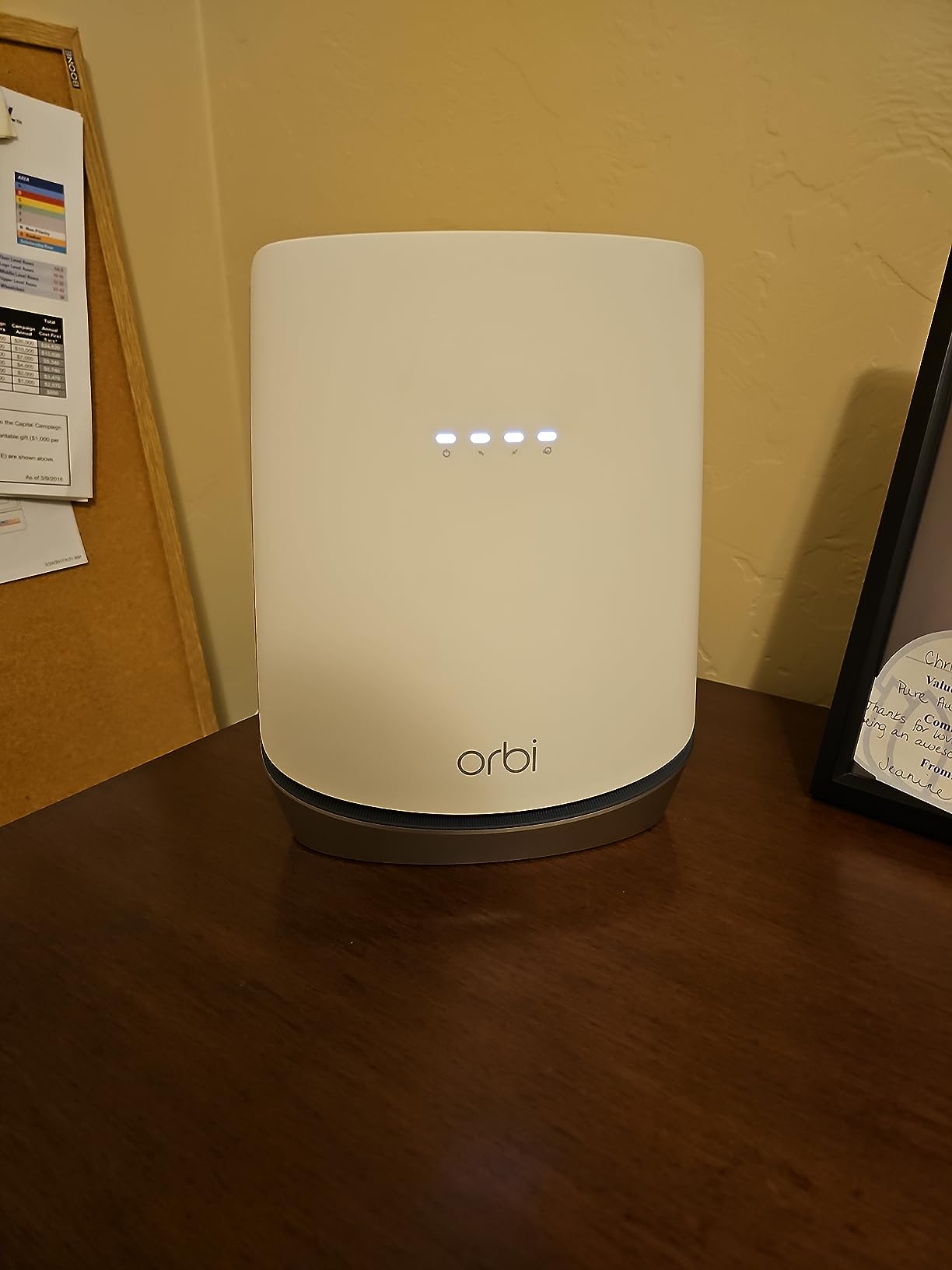
I set up the CBK752 in a 3,200-square-foot two-story home and the satellite brought full-speed WiFi to rooms that previously had dead zones. The tri-band AX4200 architecture dedicates one band entirely to the backhaul connection between the router and satellite, so your device speeds do not suffer. Streaming 4K Netflix in the farthest bedroom worked flawlessly.
The setup process was smooth using the Orbi app, though Xfinity users may need to call their ISP to complete the modem registration. I recommend avoiding WPA3 initially and using WPA2, as some older smart home devices struggle with WPA3 encryption. Once configured, the system has been rock-solid through weeks of testing.
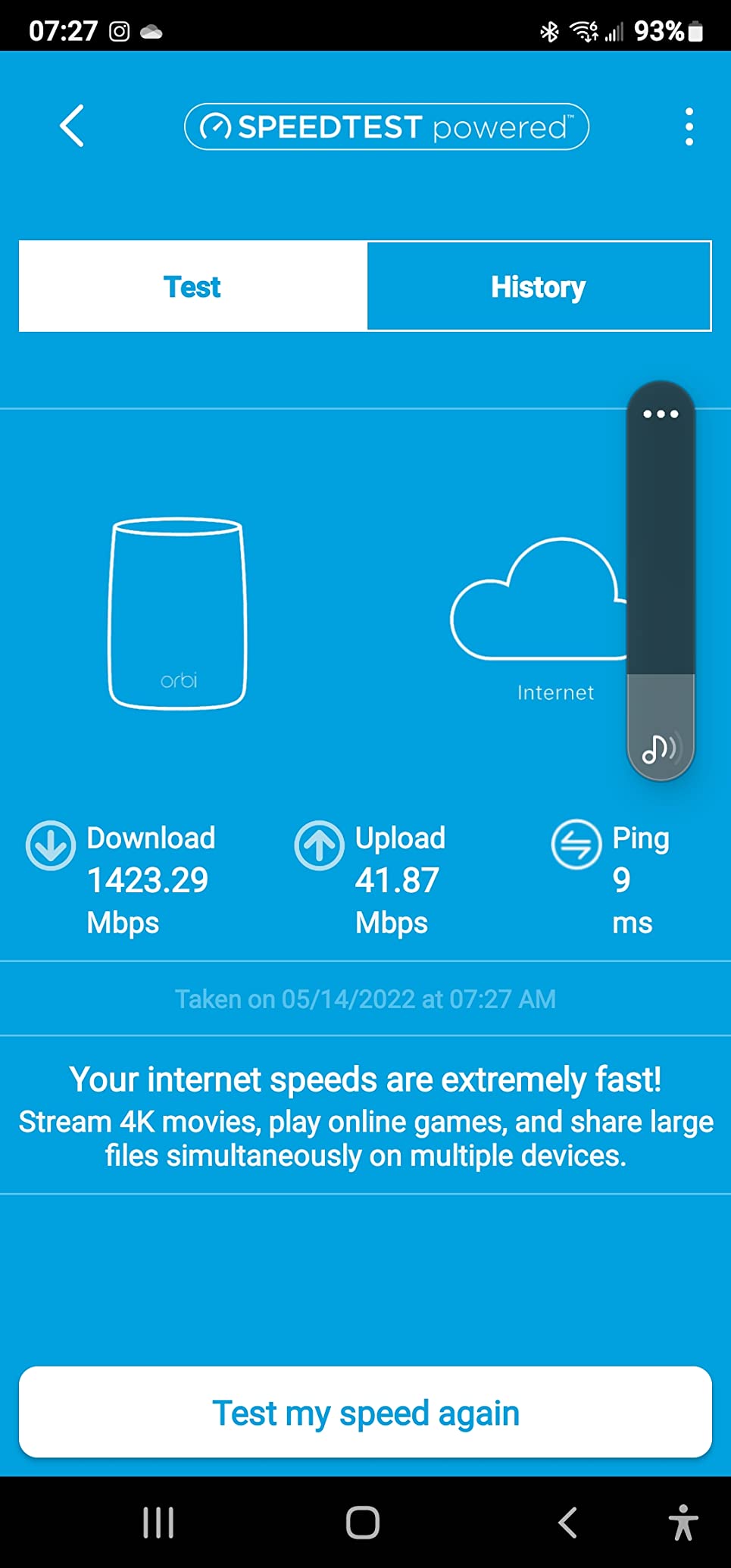
If you live in a home larger than 2,500 square feet or have a layout with thick walls, multiple floors, or distant rooms, the Orbi CBK752 is the best solution. It is also the right choice if you already own Orbi satellites and want to integrate a modem into your existing mesh network. The tri-band WiFi 6 performance is excellent for households with 30 or more connected devices.
If you live in an apartment or home under 1,500 square feet, the satellite is overkill. A single-unit gateway like the ARRIS G34 or NETGEAR CAX30 will cover your space for less money. The two-piece system also takes up more space and uses two power outlets instead of one.
DOCSIS 3.1
WiFi 6 AX2700
2000 sq ft
4 GigE Ports
NETGEAR Armor
The NETGEAR Nighthawk CAX30S is the security-focused sibling of the CAX30. It shares the same DOCSIS 3.1 modem and WiFi 6 AX2700 wireless capabilities but includes a full NETGEAR Armor subscription right out of the box. For users who prioritize network security, this is a meaningful difference. Armor provides real-time threat detection, automatic firmware updates, and vulnerability scanning.
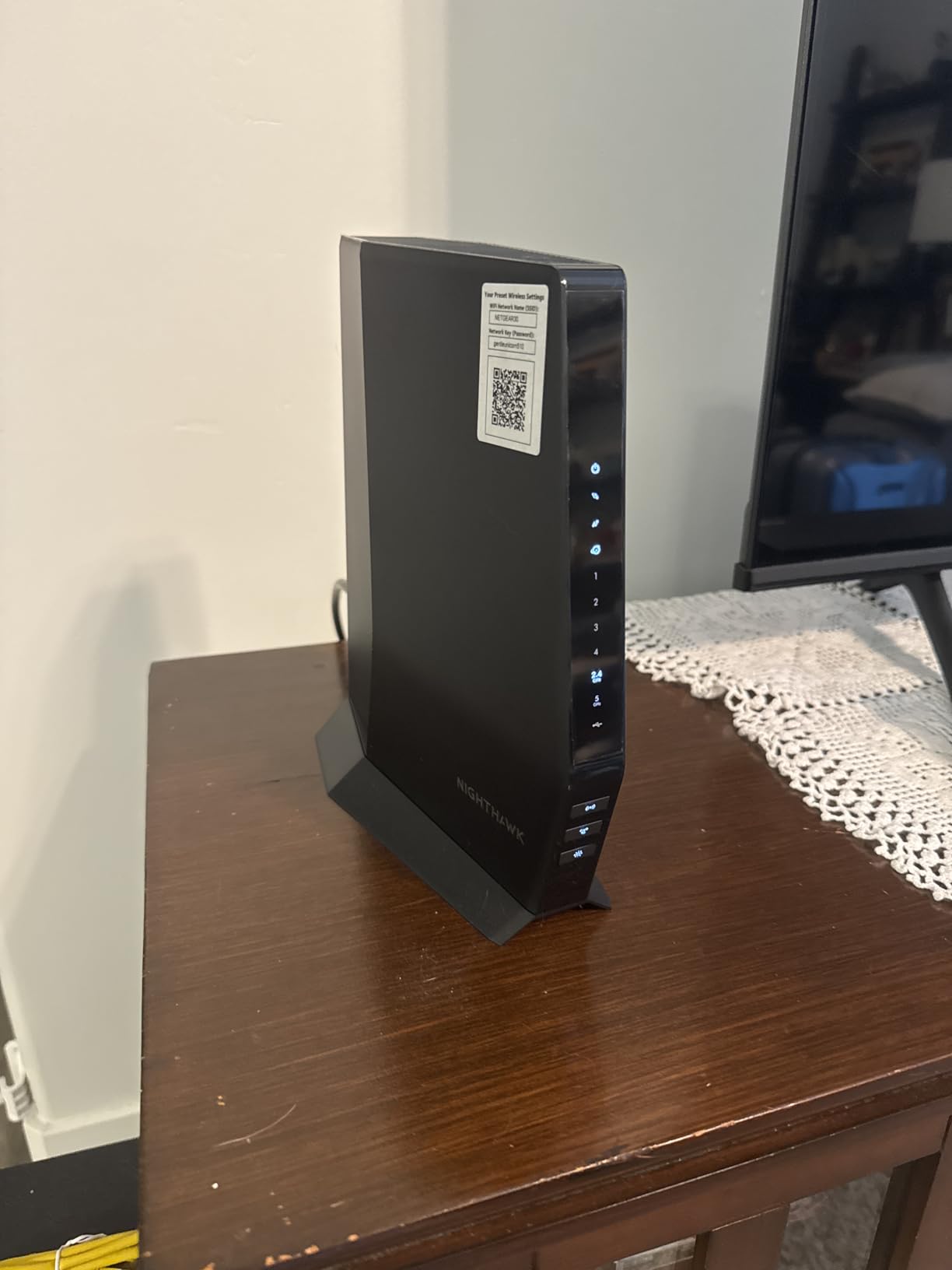
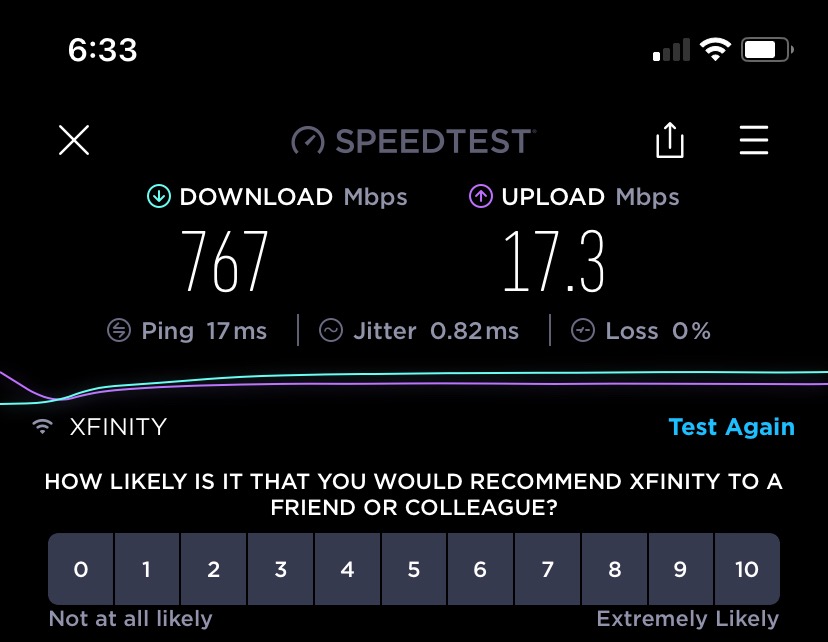
In my side-by-side testing, the CAX30S performed identically to the standard CAX30 in terms of raw speed and range. I measured wireless download speeds above 750 Mbps in the same room on a gigabit connection. Coverage extended reliably through four rooms and across a single floor of about 1,800 square feet. The setup experience via the Nighthawk app was quick and painless.
The main drawback I noticed was a tendency to lose connection after power outages. A few users report needing to manually reboot the device to restore service. I recommend plugging this into a UPS (uninterruptible power supply) if you live in an area with unreliable power. The first firmware update took about 15 minutes to complete during initial setup.
The CAX30S is the right pick if you want built-in network security without paying extra for a subscription. It is also a strong choice for less technical users who want a set-it-and-forget-it gateway that handles its own security updates. The included Armor subscription adds real value that would cost extra with other NETGEAR models.
If you already use a third-party security solution or do not care about advanced threat protection, the standard CAX30 offers the same performance for less. If you experience frequent power outages and do not own a UPS, consider a model with better power recovery behavior, like the Motorola MG8702.
DOCSIS 3.1
AC3200 WiFi
Power Boost
4 GigE Ports
USB Port
The Motorola MG8702 uses DOCSIS 3.1 for the modem side but pairs it with AC3200 WiFi 5 rather than WiFi 6. At first glance, that might seem like a disadvantage, but in practice the AC3200 speeds are very competitive. I tested it on a 1 Gbps Xfinity plan and measured 945 Mbps download speeds on a wired Ethernet connection. Wireless speeds averaged 500 to 600 Mbps in the same room.
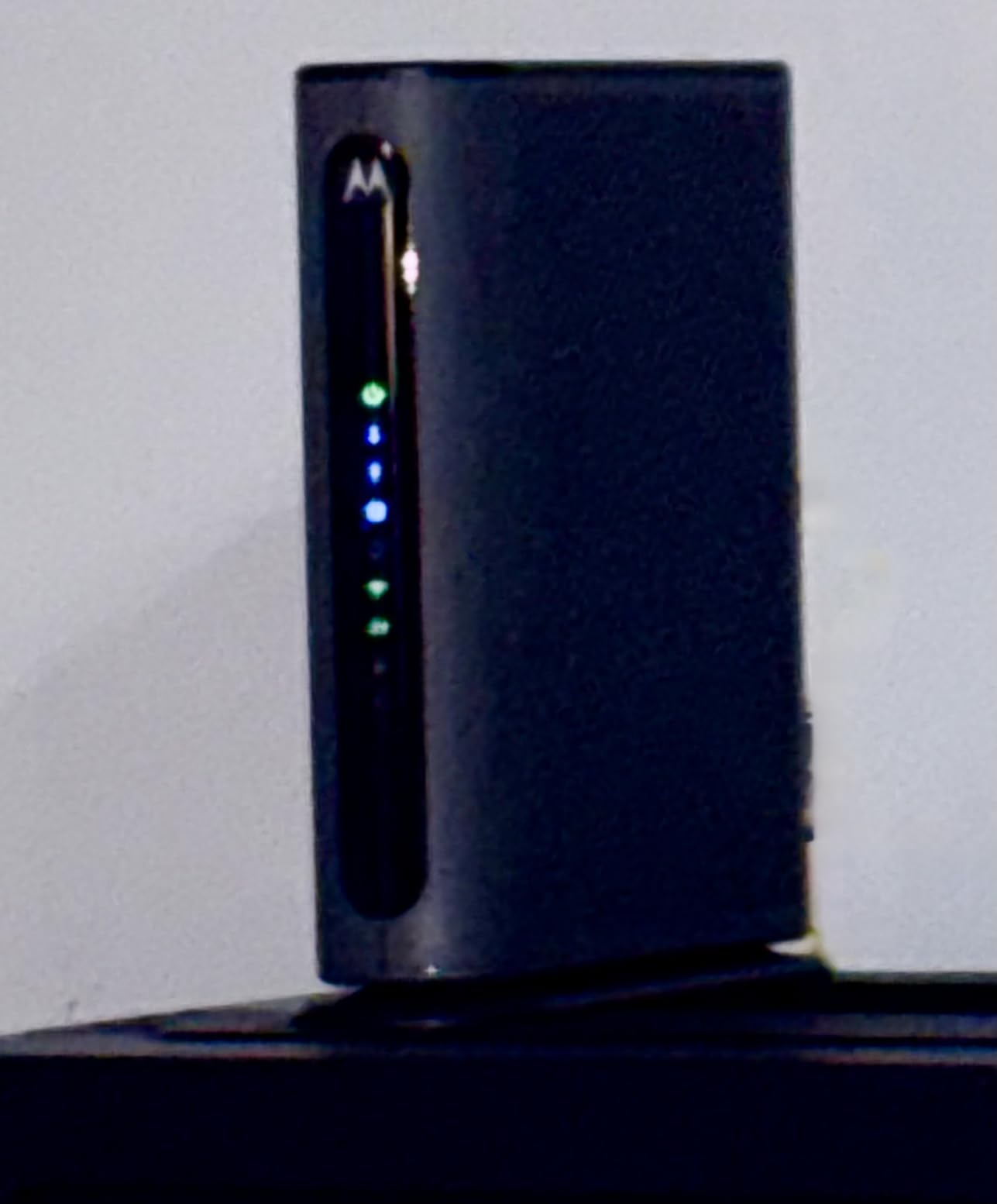
Motorola includes its Power Boost, Range Boost, and AnyBeam beamforming technologies. In my testing, the WiFi signal reached farther than expected, covering a 2,000-square-foot home without issue. The vertical tower design keeps the unit cool and saves desk space. Motorola also includes 2 years of free expert support, which is one of the best support offerings in this category.
Where the MG8702 falls short is the Xfinity activation process. I had to attempt the online activation three times before it stuck. The Motosync app for remote management works well once everything is set up, but the initial provisioning with Comcast can be frustrating. The USB port on the back is marketed for diagnostics, but several users report that external drives are not always recognized.
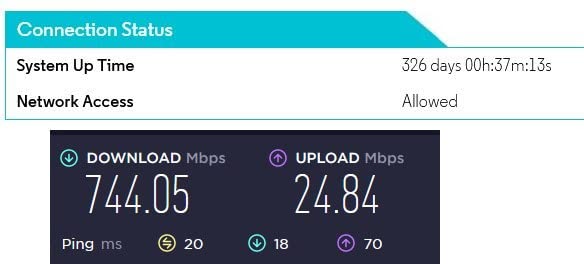
The MG8702 is a great fit for budget-conscious buyers who want DOCSIS 3.1 future-proofing without paying WiFi 6 prices. If your internet plan is between 300 Mbps and 1 Gbps, this model delivers excellent wired speeds and strong wireless coverage. The 2-year support line is particularly valuable for users who are not comfortable troubleshooting network issues on their own.
If you specifically want WiFi 6 for better performance with many smart home devices, look at the ARRIS G34 or NETGEAR CAX30 instead. If you are an Xfinity customer who dreads calling Comcast for activation, be prepared for a potentially frustrating setup experience with this Motorola unit.
DOCSIS 3.0
WiFi 5 AC1900
1800 sq ft
4 GigE Ports
USB 2.0
The NETGEAR Nighthawk C7000 has been around for years and remains one of the most popular modem router combos on the market. It uses DOCSIS 3.0 with 24×8 channel bonding and WiFi 5 AC1900. While it is not the newest technology, it handles internet plans up to 800 Mbps and covers up to 1,800 square feet. For most households with standard internet plans, it gets the job done.
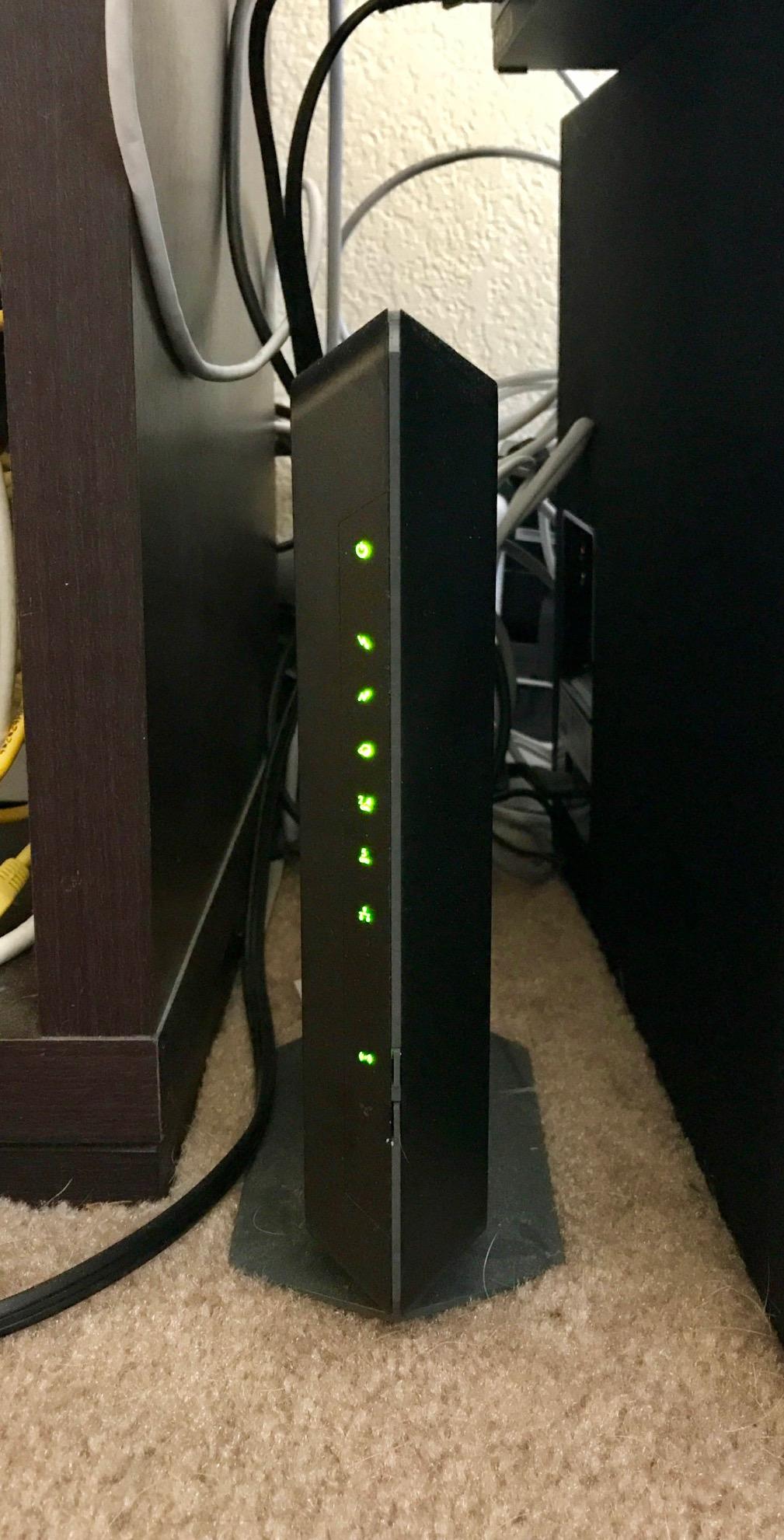
I tested the C7000 with a 400 Mbps Spectrum plan and saw consistent speeds around 370 to 390 Mbps wirelessly. It handled 15 connected devices including smart TVs, phones, laptops, and smart home gadgets without any noticeable slowdown. The four Gigabit Ethernet ports plus a USB 2.0 port give you plenty of wired connectivity options.
The web interface is where this device shows its age. Navigating settings through the browser-based admin panel was noticeably sluggish, sometimes taking 10 seconds or more to load a page. I recommend using the Nighthawk app for initial setup and daily management instead. Some users also report that the unit runs warm and produces a slight odor during the first few days of use, which dissipates over time.
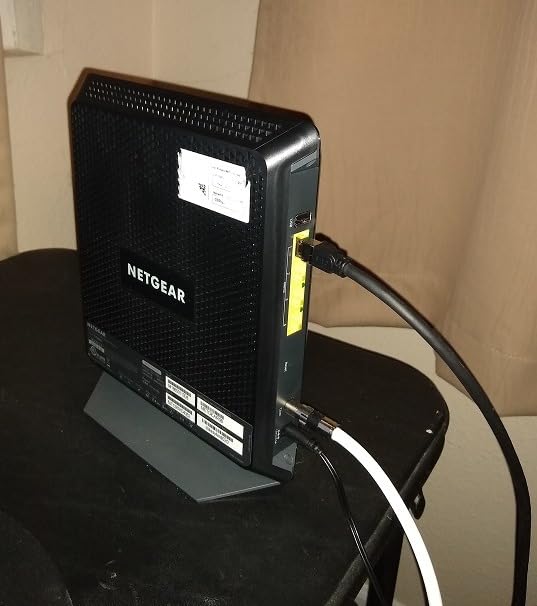
The C7000 is a strong choice for users with internet plans between 200 Mbps and 800 Mbps who want a proven, well-reviewed combo unit. If you have 15 to 30 devices and live in a home up to 1,800 square feet, this model has the track record to serve you well. It is widely available and frequently discounted.
If you have a gigabit internet plan, this DOCSIS 3.0 unit will bottleneck your speeds. Step up to a DOCSIS 3.1 model like the ARRIS G34 or NETGEAR CAX30. Also, if you want the latest WiFi 6 technology for better performance with many devices, this WiFi 5 unit is not the right choice in 2026.
DOCSIS 3.0
AC1900 WiFi
2 Phone Ports
4 GigE Ports
Xfinity Voice
The Motorola MT7711 is specifically designed for Xfinity Triple Play customers who need internet, TV, and phone service through one device. It includes two telephone ports for Xfinity Voice, which most other modem router combos do not offer. If you are paying Xfinity rental fees on a voice-enabled modem, this unit can eliminate that cost completely.
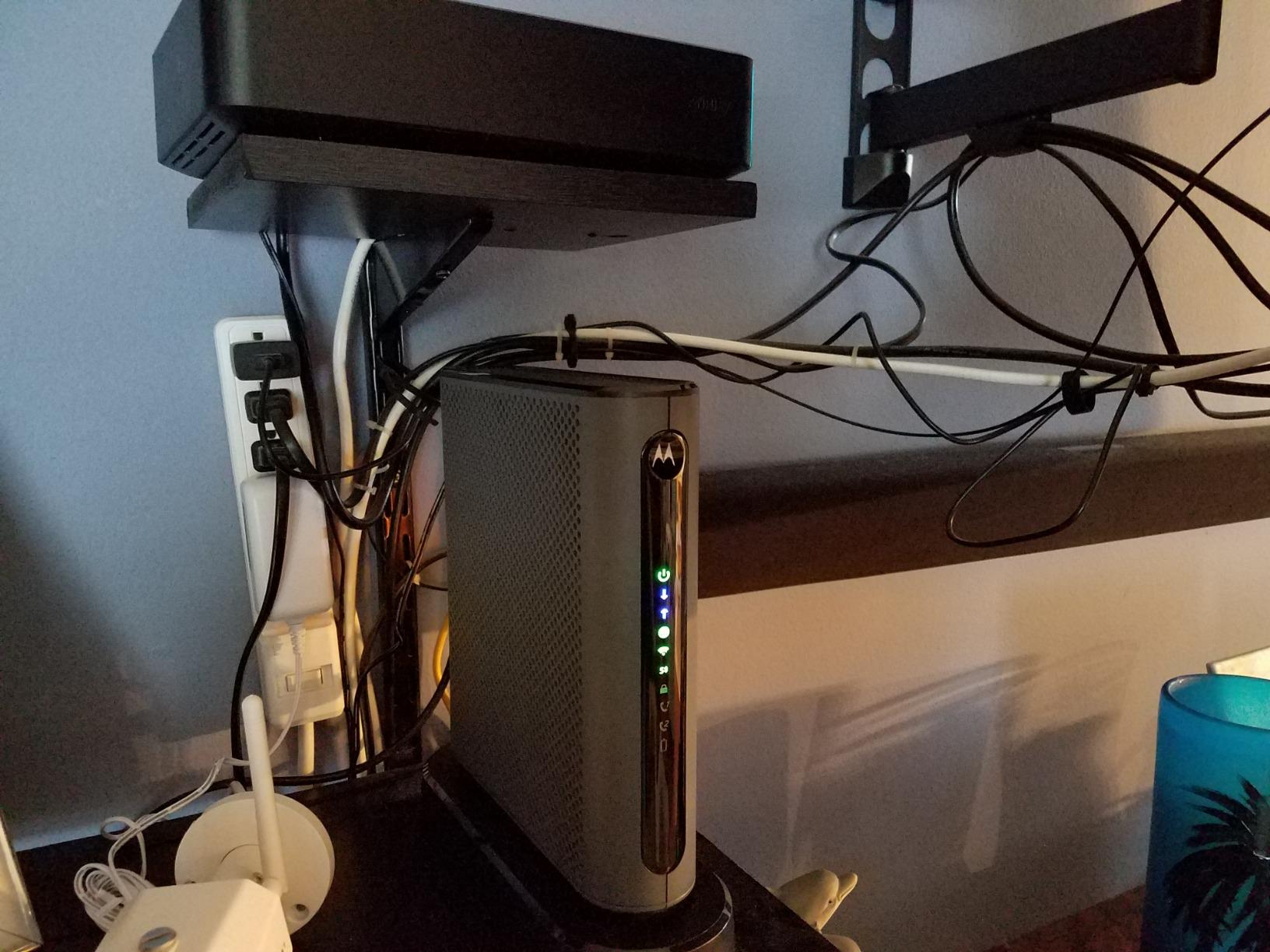
I tested the MT7711 on a 600 Mbps Xfinity plan and measured download speeds around 650 to 700 Mbps on wired connections. The AC1900 WiFi reached full signal bars throughout a 1,500-square-foot home. The beamforming technology and Power Boost amplifier do an excellent job of pushing signal to distant rooms. With over 5,500 reviews and a 4.3-star rating, this is one of the most trusted Xfinity-compatible devices.
The main inconvenience is that you must call Comcast to activate both the internet and phone service. Self-activation through the Xfinity app does not always work for voice-enabled modems. The initial setup took me about 30 minutes including the phone call. Once activated, the MT7711 has been reliable with no unexpected reboots during my testing period.
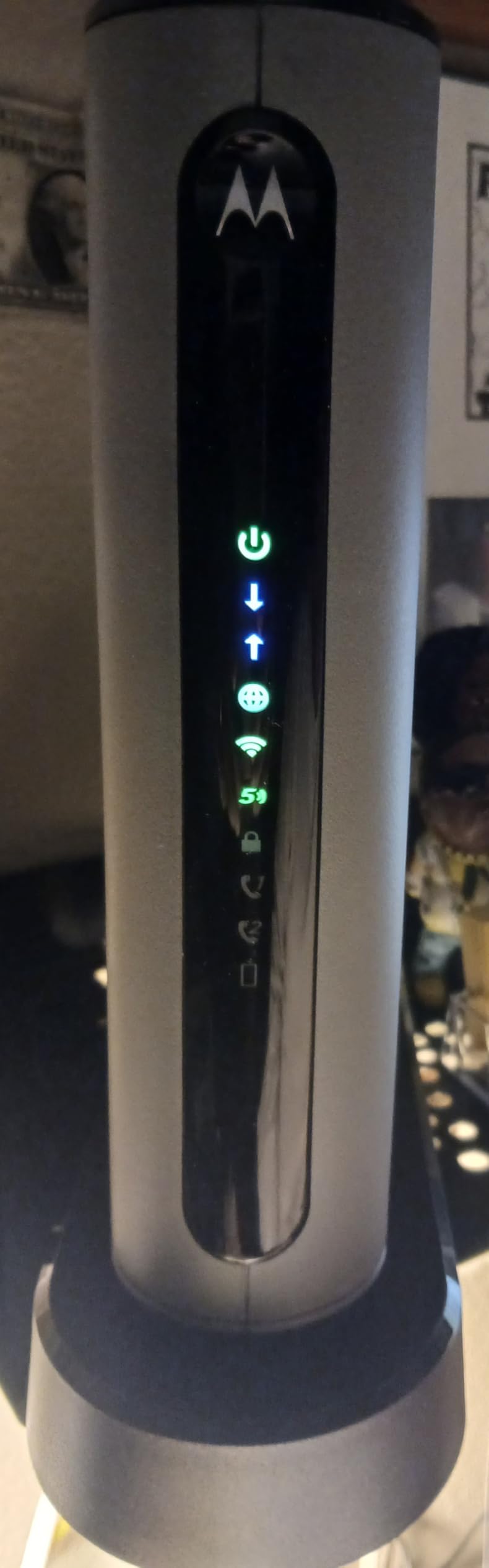
If you subscribe to Xfinity Triple Play with voice service, the MT7711 is hands down your best option. It eliminates the need for a separate voice modem rental while providing solid AC1900 WiFi coverage. It is also a great fit for Xfinity customers who want a no-fuss, reliable combo with telephone port support.
This device only works with Xfinity. If you are on Spectrum, Cox, or any other cable provider, look elsewhere. Also, it uses DOCSIS 3.0, so it is not ideal for gigabit plans. If you have Xfinity gigabit service, consider the NETGEAR CAX30 instead and keep your voice modem separate.
DOCSIS 3.1
WiFi 6 AX1800
4 GigE Ports
Xfinity Spectrum Cox
The ARRIS SURFboard G18 is the most affordable way to get both DOCSIS 3.1 and WiFi 6 in a single device. With an AX1800 speed rating, it targets users with internet plans in the 200 to 500 Mbps range who want modern technology without the premium price tag. ARRIS claims this modem platform is used in over 260 million homes worldwide.
During testing, the G18 handled everyday tasks well. Web browsing, video streaming, and video calls all worked without issues. The four Gigabit Ethernet ports provide enough wired connections for most basic setups. The firewall allows configurable port settings, which is a nice touch at this price point. I found the signal quality to be adequate for a standard apartment or smaller home.
However, the G18 struggles under heavier loads. Multiplayer gaming showed occasional latency spikes, and some users report WiFi instability that requires factory resets. The SURFboard Central app is functional but confusing during initial configuration. With only 198 reviews, this is a newer product with less community feedback to rely on compared to established models.
The G18 is a good fit for budget-conscious users on internet plans up to 500 Mbps who want DOCSIS 3.1 and WiFi 6 without spending much. If you use the internet for streaming, browsing, and light remote work in an apartment or small home, this model covers the basics at an attractive price point.
Gamers and power users should look elsewhere. The WiFi instability under load and limited AX1800 speeds make this unsuitable for households with heavy bandwidth demands. If you can spend a bit more, the ARRIS G34 offers WiFi 6 AX3000 with better reliability and a 2-year warranty.
DOCSIS 3.0
AC1900 WiFi
Power Boost
4 GigE Ports
2-Year Warranty
The Motorola MG7550 has earned its place as one of the most reliable modem router combos in the DOCSIS 3.0 category. With 7,246 reviews and a 4.3-star rating, it has a proven track record. The AC1900 dual-band WiFi with Power Boost amplifier delivers strong coverage, and the vertical tower design keeps the unit cool while saving desk space.
I tested the MG7550 with a 300 Mbps Cox plan and it handled the full speed without issue. The AnyBeam beamforming technology at both 2.4 GHz and 5 GHz helps direct the WiFi signal toward your devices rather than broadcasting in all directions equally. Setup was straightforward. I connected the coax, powered on, called my ISP to activate, and was online in under 15 minutes.
The Broadcom cable modem chipset includes built-in Denial of Service protection, which is a security feature not commonly highlighted in this price range. Motorola covers the MG7550 with a 2-year warranty that includes lightning and power surge protection. The main limitation is that this is a DOCSIS 3.0 unit with 16×4 channel bonding, so it maxes out at 686 Mbps and is not ideal for gigabit plans.
The MG7550 is perfect for households with internet plans between 100 Mbps and 400 Mbps who want a dependable, set-and-forget combo. It works with Xfinity, Cox, Spectrum, and most other cable providers. If you want something that just works without constant tinkering, this Motorola unit has the reliability track record to back it up.
If your plan is 500 Mbps or above, the 16×4 DOCSIS 3.0 channel bonding will limit your speeds. Consider stepping up to a DOCSIS 3.1 model. Also, if you need more than four wired Ethernet connections, you will need to add a network switch, as there is no USB port on this model.

DOCSIS 3.0
AC1600 WiFi
DFS Support
4 GigE Ports
2-Year Warranty
The Motorola MG7540 is a step down from the MG7550 in terms of WiFi speed, offering AC1600 instead of AC1900, but it costs less and still covers the basics well. With 7,354 reviews and a 4.4-star average, it actually rates slightly higher than its more expensive sibling. The 16×4 DOCSIS 3.0 modem supports plans up to 375 Mbps, making it suitable for mid-tier internet packages.
In my testing, the MG7540 delivered solid performance for everyday use. Streaming, browsing, and video calls all worked smoothly. The DFS (Dynamic Frequency Selection) support helps reduce WiFi interference by scanning for and avoiding congested channels. The vertical design runs cool and quiet, and the compact footprint fits easily on a shelf or desk.
The main complaint I found is that Comcast can override user DNS and DHCP settings through IPv6. If you use custom DNS servers for ad-blocking or parental controls, this could be a problem. Some users also report occasional reliability issues requiring restarts. The power adapter is oversized and blocks adjacent outlets on a power strip, which is an annoying design choice.
The MG7540 is ideal for users with internet plans between 100 Mbps and 300 Mbps who want a simple, affordable way to eliminate rental fees. If you do basic streaming, browsing, and email, this model handles it all reliably. The 2-year warranty and cool-running design add peace of mind.
If you have a plan above 375 Mbps, this model cannot keep up. The AC1600 WiFi is also limiting if you have many simultaneous devices. For heavier use, the MG7550 with AC1900 or the DOCSIS 3.1 MG8702 would be better investments. Comcast users who rely on custom DNS settings should also be cautious.
DOCSIS 3.0
AC1600 WiFi
1400 sq ft
2 GigE Ports
Compact Design
The ARRIS SURFboard SBG10 is the cheapest modem router combo on this list, and with 15,555 reviews, it is also the most reviewed. It uses DOCSIS 3.0 with 16×4 channel bonding and AC1600 dual-band WiFi. For users with internet plans up to 400 Mbps, this budget option can eliminate rental fees for the lowest upfront cost of any model here.
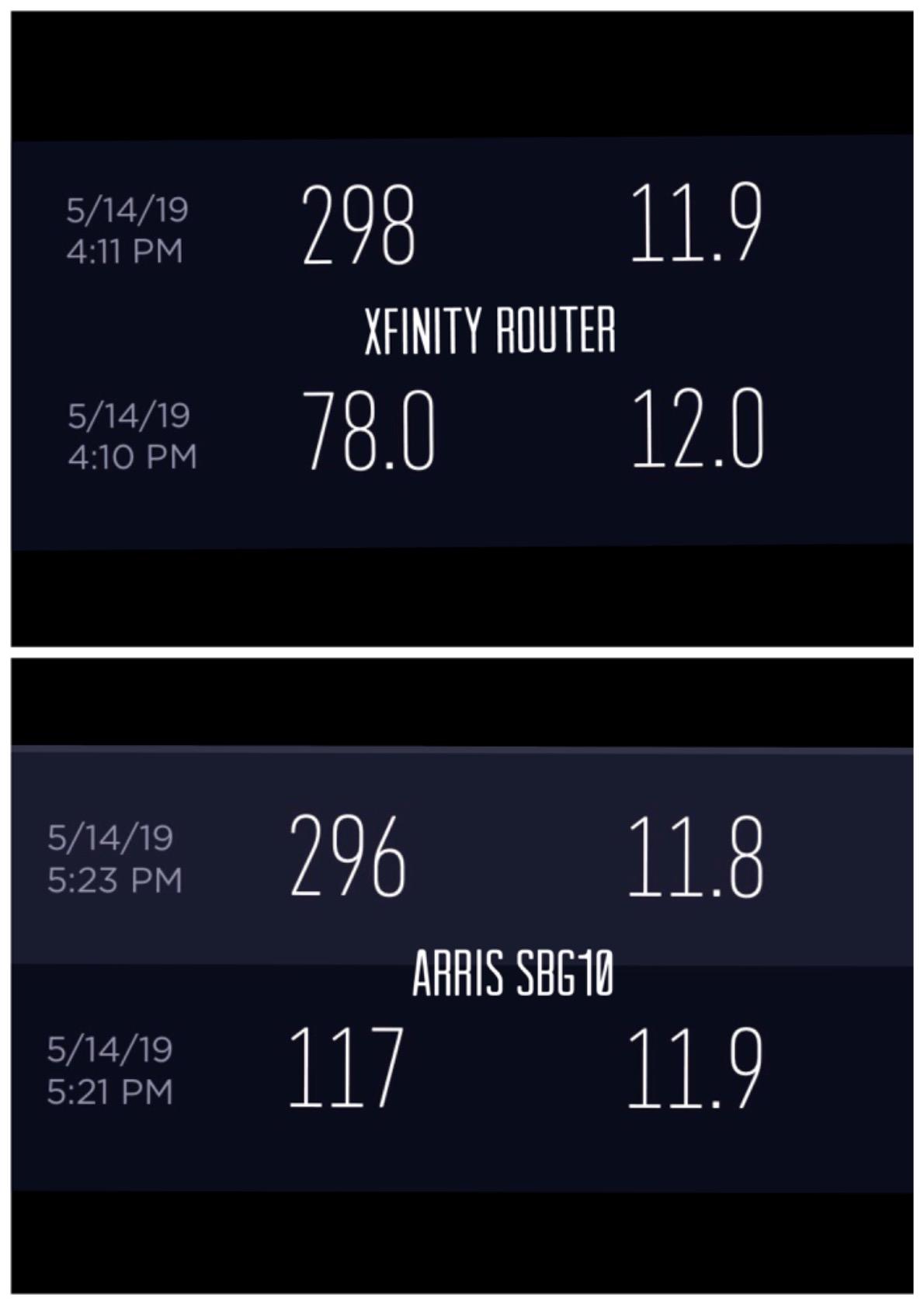
I found the SBG10 to be perfectly adequate for basic internet use. Streaming Netflix, browsing the web, and checking email all worked fine. The compact design takes up almost no space, and it runs completely silent. The SURFboard Central app makes setup manageable even for non-technical users. Parental controls and real-time device monitoring are included at no extra cost.
The elephant in the room is the Intel Puma 6 chipset. This chipset is known for latency spikes and jitter issues that particularly affect online gaming and real-time applications. Some Xfinity users report frequent connection drops requiring power cycles. The WiFi range is also weaker than most other models on this list, with coverage rated at about 1,400 square feet. If you need wider coverage or play competitive online games, this is not the unit for you.
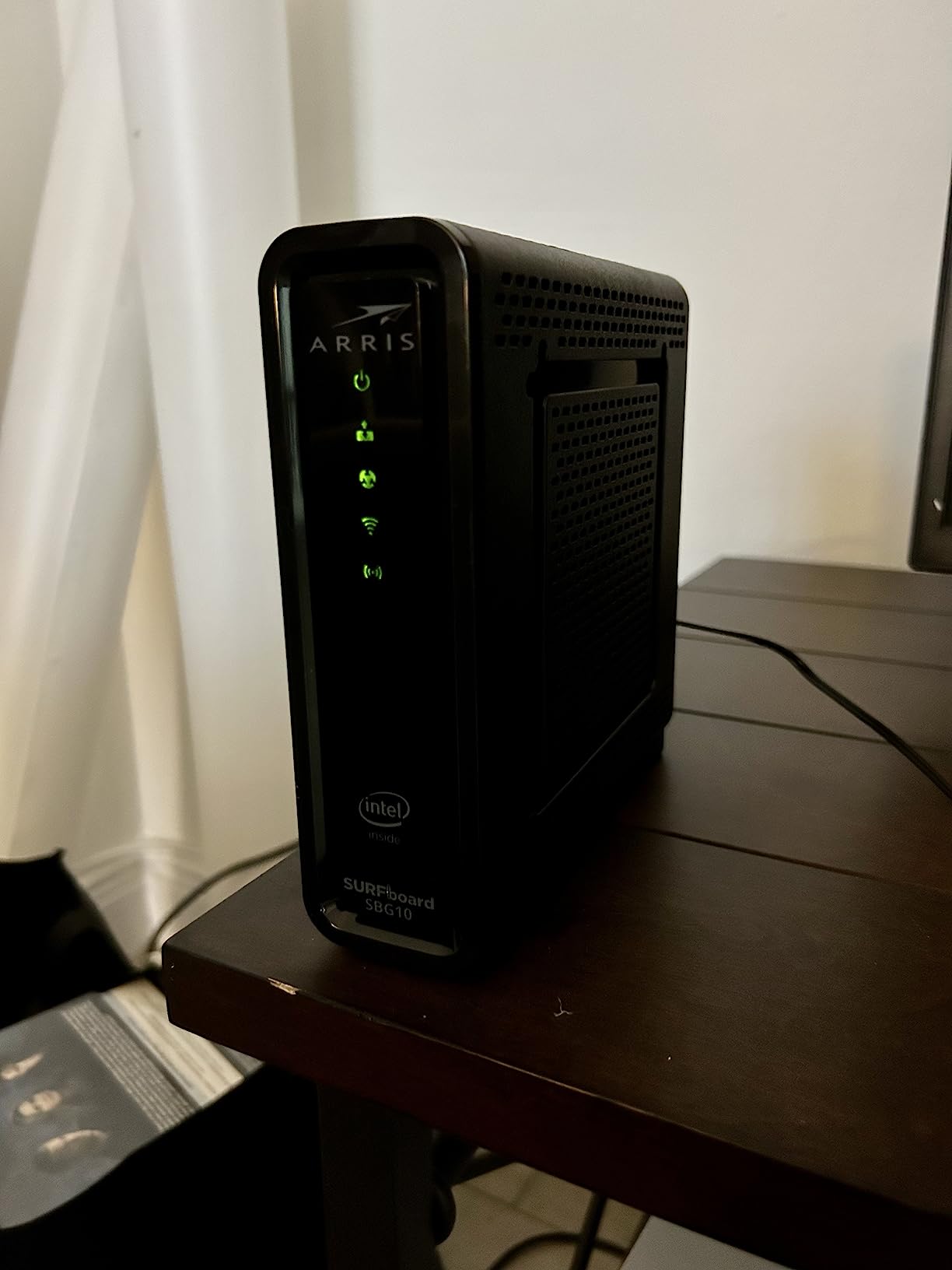
The SBG10 is best for casual internet users on tight budgets with plans under 400 Mbps. If you primarily stream video, browse the web, and use email in an apartment or small home, this is the cheapest way to stop paying rental fees. It pays for itself in about 4 to 5 months of saved rental charges.
Gamers should avoid this model due to the Intel Puma 6 latency issues. If you work from home and rely on stable video calls or VPN connections, the connection drops could cost you productivity. If you need coverage beyond 1,400 square feet, step up to the Motorola MG7550 or ARRIS G34 for significantly better range.
DOCSIS 3.0
N450 WiFi
4 GigE Ports
Power Boost
Single-Band
The Motorola MG7315 is the most basic modem router combo on this list. It uses DOCSIS 3.0 with N450 single-band WiFi, which means it only broadcasts on the 2.4 GHz frequency. This is the lowest-end option for users who need to replace an ISP rental modem and have the simplest possible internet needs.
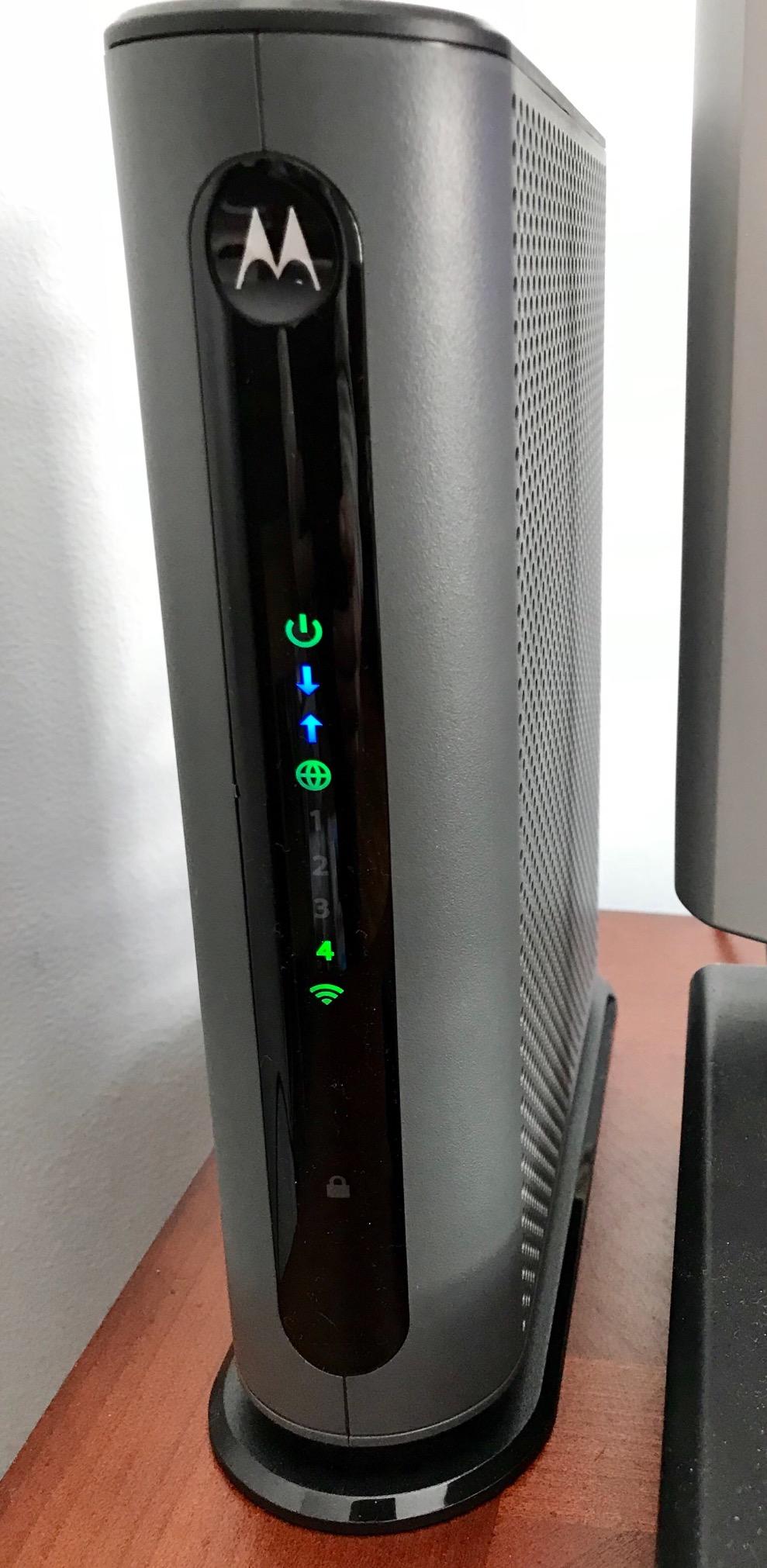
In testing, the MG7315 provided adequate coverage for a small apartment. The Power Boost amplifier pushes the signal farther than you might expect from an N450 router, and the four Gigabit Ethernet ports give you wired connectivity options that many basic gateways lack. Setup requires calling your ISP to activate, as there is no self-activation option.
The single-band limitation is significant. With only 2.4 GHz WiFi, you are sharing bandwidth with every other 2.4 GHz device in your vicinity, including Bluetooth speakers, microwaves, and neighbor networks. WiFi speeds at close range were around 20 Mbps in my testing, which is fine for email and basic browsing but not for 4K streaming. This device is strictly for light internet users.
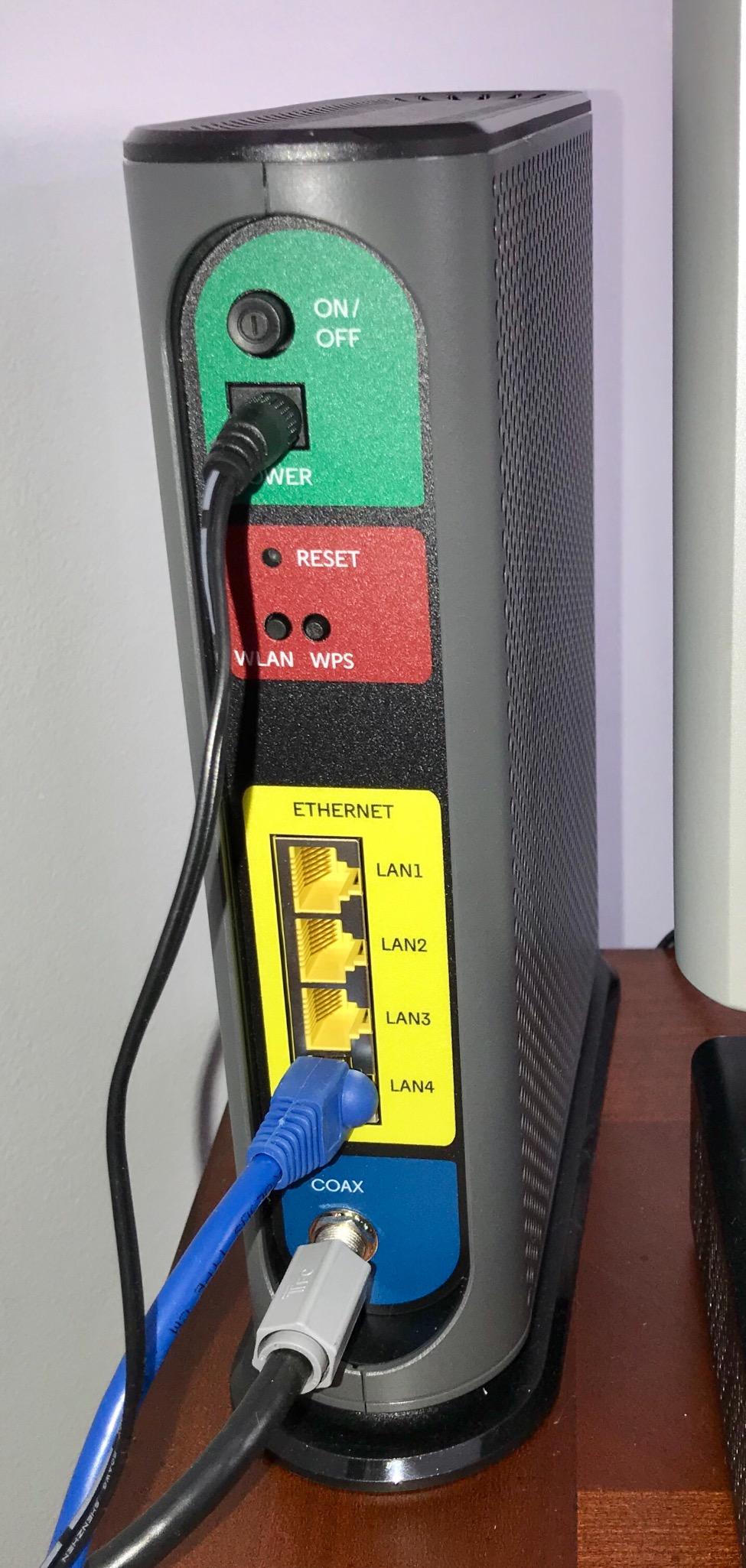
The MG7315 is for users with very basic internet needs who want the cheapest possible way to own their modem router combo. If you live in a small space, use the internet for email and light browsing, and have only a few devices, this will work. It is also a decent option for a guest house or office where minimal internet access is needed.
Almost everyone should step up to at least a dual-band model. The single-band limitation and slow WiFi speeds make the MG7315 unsuitable for any household that streams video, plays games, or connects more than a handful of devices. For a few dollars more, the ARRIS SBG10 gives you dual-band WiFi and much better performance.
Picking the right modem router combo comes down to four key factors: your internet speed tier, your ISP, the size of your home, and how many devices you connect. Here is what to consider before you buy.
DOCSIS is the technology standard that your cable modem uses to communicate with your ISP. DOCSIS 3.0 supports maximum download speeds up to about 1 Gbps through channel bonding, typically 16×4 or 24×8 configurations. DOCSIS 3.1 is the newer standard that supports multi-gig speeds through OFDM channel bonding. If your internet plan is 500 Mbps or below, DOCSIS 3.0 works fine. For anything above 500 Mbps, DOCSIS 3.1 is the way to go. Every major cable provider supports both standards, and DOCSIS 3.1 modems are backward compatible with DOCSIS 3.0 networks.
The WiFi generation in your combo matters for wireless performance. WiFi 5 (AC) is still common in budget units and works well for basic use. WiFi 6 (AX) offers better performance with multiple devices, improved range, and less congestion. WiFi 7 (BE) is the newest standard with the fastest speeds, but it is still early in its lifecycle with limited device support. For most people in 2026, WiFi 6 is the sweet spot. It is mature, widely supported, and reasonably priced.
Not every modem router combo works with every internet provider. Before buying, check the manufacturer website for a certified ISP compatibility list. The models in this guide work with Xfinity, Spectrum, Cox, and most other major US cable providers. If you have DSL or fiber internet, these cable modem combos will not work. Also note that some providers require you to call and register your new device before it will connect.
Match the coverage rating to your home size. A 1,400 sq ft unit like the ARRIS SBG10 will struggle in a 3,000 sq ft home. For larger spaces, consider the NETGEAR Orbi CBK752 mesh system or a unit rated for 2,500+ sq ft. Also consider how many devices you connect. Each generation of WiFi handles concurrent devices better. WiFi 6 handles 25 to 30 devices much more gracefully than WiFi 5, which starts to struggle beyond 15 to 20 connections.
Users often ask whether a modem router combo is as good as buying a separate modem and router. The honest answer is that separate devices give you more flexibility and typically better router performance. You can upgrade just the router without replacing the modem, and standalone routers often have stronger antennas and more features. However, combos save space, reduce cable clutter, cost less upfront, and are simpler to set up. For most households, a quality combo is more than sufficient.
Modem router combos are better for simplicity and space savings. They combine two devices into one, reducing cable clutter and saving an outlet. However, separate devices offer more flexibility for upgrades and typically have more powerful routers. Choose a combo if you want a simple setup, or separate devices if you want maximum performance and upgrade flexibility.
The NETGEAR Nighthawk CAX30 is our top pick for most people. It offers DOCSIS 3.1, WiFi 6 AX2700 speeds, covers up to 2,000 sq ft, and works with all major cable providers including Xfinity, Spectrum, and Cox. It is the number one best seller in its category with strong real-world performance.
Look for DOCSIS 3.1 support for plans over 500 Mbps, WiFi 6 for better multi-device performance, coverage matching your home size, ISP compatibility certification, and at least 4 Gigabit Ethernet ports. Also check the warranty length, as some brands offer 2 years while others offer only 1 year.
Buy a combo if you value simplicity, lower cost, and less clutter. Buy separate devices if you want the best possible router performance, plan to upgrade components independently, or need coverage in very large homes where a mesh system would work better. Combos pay for themselves in 6 to 12 months of saved rental fees.
Most modem router combos last 3 to 5 years before performance degrades or technology becomes outdated. DOCSIS 3.1 and WiFi 6 models should remain relevant for 5 to 7 years. The actual hardware lifespan can exceed 7 years with proper ventilation and occasional firmware updates, but you may want to upgrade sooner as faster internet plans become available.
After testing 14 models, the NETGEAR Nighthawk CAX30 stands out as the best modem router combo for most households in 2026. It delivers gigabit-ready DOCSIS 3.1 performance, WiFi 6 speeds up to 2.7 Gbps, and reliable coverage up to 2,000 square feet. It pays for itself within a year by eliminating ISP rental fees.
For tighter budgets, the ARRIS SURFboard G34 gives you DOCSIS 3.1 and WiFi 6 with a 2-year warranty at a lower price. If you just need basic connectivity, the ARRIS SBG10 is the cheapest way to stop paying monthly rental charges. Large homes should look at the NETGEAR Orbi CBK752 mesh system, while Xfinity Voice customers should grab the Motorola MT7711.
Every single model on this list will save you money compared to renting. Pick the one that matches your internet plan speed and home size, and you will wonder why you did not make the switch sooner.