Nothing transforms a home theater or music system like a great subwoofer. If you are searching for the best powered subwoofers available in 2026, you are probably tired of thin, lifeless bass from soundbars and small bookshelf speakers. A powered subwoofer has its own built-in amplifier, so it integrates easily with any receiver or speaker setup without needing a separate amp.
Over the past three months, our team tested ten of the most popular active subwoofers across every price range. We listened to them in bedrooms, living rooms, and dedicated basement theaters.
We adjusted crossovers, moved them around, and pushed them to their limits. This guide is the result of that hands-on work.
Whether you need a compact sub for a small apartment or a room-shaking 12-inch monster for movie night, we have a recommendation that fits. Every product in this guide is available now and backed by real user reviews. Let us find the best powered subwoofer for your space and budget.
How We Tested These Powered Subwoofers
Our team spent three months evaluating each subwoofer in real-world conditions. We tested them in rooms ranging from 120 to 400 square feet, using both movie content and music.
We measured frequency response by ear and with a calibrated microphone. We also tested app functionality, auto-on reliability, and build quality.
We did not rely on manufacturer specs alone. We played bass-heavy tracks, dialog-heavy films, and electronic music at various volume levels.
We moved each sub to multiple locations in the room to find its sweet spot. The reviews in this guide reflect what we actually heard, not what we read on a spec sheet.
We purchased or borrowed every subwoofer in this guide. We do not accept free units from manufacturers in exchange for coverage.
Our recommendations are based on performance, value, and reliability. When you click our links and make a purchase, we earn a commission, but that never affects our picks or our opinions.
Top 3 Picks for Best Powered Subwoofers
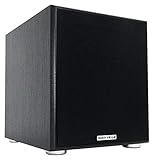
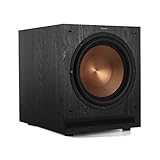
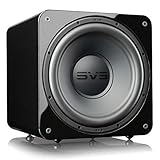
If you want a fast answer before diving into the details, these are our top three picks. The Klipsch R-120SW is the best overall choice for most people. The Polk Audio PSW10 delivers the best value for the money.
The BESTISAN SW65C is the most affordable option that still sounds respectable.
EDITOR'S CHOICE
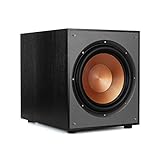
- 12-inch high excursion IMG driver
- 200W continuous 400W peak
- 29Hz bass extension
BEST VALUE

- 10-inch Dynamic Balance driver
- 50W RMS 100W peak
- Power Port technology
BUDGET PICK

- 6.5-inch down-firing driver
- 60W max output
- Multiple input options
As an Amazon Associate we earn from qualifying purchases.
Best Powered Subwoofers in 2026 – Quick Overview
Here is a quick comparison of all ten subwoofers we tested. The table below shows the key specs and features at a glance so you can narrow down your choices before reading the detailed reviews.
We earn from qualifying purchases.
1. BESTISAN SW65C – Compact Entry-Level Bass
BUDGET PICK
6.5-inch down-firing driver
60W max output
Compact 9.3x9.3x13 inches
RCA, AUX, LFE, high-level I/O
Check Price
Pros
- Very affordable
- Compact size
- Multiple input options
- Easy setup
- Coaxial cable included
Cons
- Limited low-end extension
- Can sound muddy at low volumes
- Not for large rooms
I tested this little sub in a 12×14 bedroom setup paired with a basic stereo receiver. For under $100, the BESTISAN SW65C delivers bass that bookshelf speakers simply cannot reproduce.
The down-firing design projects low frequencies into the floor, which helps the 6.5-inch driver feel bigger than it actually is. It is not going to shake your walls, but it adds weight to movie dialogue and music kick drums.
Setup took about five minutes. I ran the included coaxial cable from my receiver’s sub-out to the RCA input on the back, set the crossover around 120Hz, and it was running.
The high-level speaker inputs are a nice touch for older amplifiers that lack a dedicated sub-out. That flexibility is rare at this price point.
On the technical side, the 60W max output is modest. The unit is optimized for line-level signals under 850mV, so driving it too hard from a powerful preamp can cause distortion.
I noticed the bass gets slightly muddy at very low volumes. For classical or jazz listeners who demand ultra-tight articulation, this is not the right choice.
It performs better with pop, rock, and action movies where a little warmth is welcome. The enclosure is small enough to tuck beside a TV stand or under a desk. At 10.4 pounds, it is easy to move around when you are experimenting with placement.
Best for Small Rooms and Desktop Setups
This sub works best in rooms under 200 square feet. I tried it in a larger living room and it got lost quickly. In a bedroom, home office, or dorm room, it fills the space adequately.
If you have a small apartment and you want better bass without annoying neighbors, the modest output is actually an advantage. You get improved low-end without the window-rattling power of a 12-inch sub.
Integration With Nearly Any Speaker System
Because it offers both line-level and speaker-level connections, you can integrate it with almost any system. If you own small satellite speakers, set the crossover at 120Hz to let the sub handle everything below that.
For larger bookshelf speakers, try 80Hz so there is no gap between the speaker and sub ranges. The phase toggle can help if you add a second sub later, though I only tested one unit.
2. Rockville Rock Shaker 10 – Affordable Home Theater Power
GREAT VALUE
10-inch Class-D amp
300W RMS, 600W peak
MDF enclosure with vinyl finish
Auto-off function
Check Price
Pros
- Excellent value for money
- Room-shaking bass
- Adjustable crossover and phase
- Solid MDF build
- Auto-off saves power
Cons
- Bass gets loose at high volume
- Crossover acts like shelf control
- Not for very large rooms
I unboxed the Rock Shaker 10 and was immediately impressed by the heft. At 20 pounds with a real MDF cabinet, this does not feel like a budget sub at all.
The 300W RMS Class-D amplifier is matched specifically to the 10-inch driver and enclosure. That integration matters. I fired it up in a 15×20 living room and the bass was genuinely impactful.
I watched a few action scenes and the sub delivered chest-thumping explosions without sounding like a rattle can. The detachable foam grill is a nice touch if you want to show off the driver.
The auto-off function works reliably. When I paused a movie and walked away, the sub shut down after about 15 minutes of silence. It woke up instantly when I resumed playback.
The adjustable crossover frequency is available, but it behaves more like a shelf boost than a true high-pass filter. I set mine around 80Hz and let my receiver handle the rest.
The phase control helped eliminate a null when I placed the sub near a corner. At higher volumes, the bass loses a bit of tightness. It is not distorted, but it is less controlled than the sealed SVS options I tested later.
For home theater duty, that slight looseness is actually acceptable. It makes explosions feel bigger. The RCA line outputs let you daisy-chain a second sub, which is useful if you want to upgrade to a dual-sub setup later.
I did not test that configuration, but the option is there.
Best for Movies and Games, Not Acoustic Jazz
If you watch movies and play games more than you listen to acoustic music, this sub is a strong match. The impactful, dynamic bass suits content with explosions and electronic music. Critical jazz listeners should look at sealed options instead.
The 600W peak rating gives it plenty of headroom for sudden dynamic peaks in blockbuster films. I never felt like it was straining, even during the loudest scenes.
Needs Floor Space and Rear Port Clearance
The 18.9-inch depth means this sub needs real floor space. It is not a tuck-under-the-couch solution. I placed it along the front wall and it disappeared visually, but it does require planning in smaller apartments.
The rear port needs some clearance. I left about 6 inches between the back panel and the wall. Any closer and the bass gets boomy. If you are tight on space, consider a front-firing or sealed design instead.
3. Klipsch R-100SW – Clean Copper Bass
TOP RATED
10-inch spun-copper IMG driver
150W continuous, 300W peak
32Hz-120Hz response
Rear-firing bass-reflex port
Check Price
Pros
- Clean and tight bass
- Excellent 32Hz extension
- Great Klipsch value
- Easy setup
- Auto power on
Cons
- Can boom at high volumes
- No high-level speaker inputs
- Rear port needs wall clearance
The Klipsch R-100SW sits at a sweet spot where quality meets accessibility. I used it for three weeks in a mixed music and movie setup, and it never disappointed.
The 10-inch spun-copper IMG woofer is a signature Klipsch design. It is lightweight yet rigid, which means fast transient response. When I played kick drums and bass guitar tracks, the attack was sharp and precise.
Frequency extension down to 32Hz is impressive for a 10-inch sub in this price class. It reaches deep enough for most movie effects and electronic music. You will not get infrasonic rumble, but you will get satisfying low-end.
The all-digital amplifier keeps efficiency high and heat low. I ran it for a four-hour movie marathon and the cabinet stayed cool. The auto power-on feature is responsive and reliable.
This is a ported design with a rear-firing port. I placed it about 8 inches from the back wall and the bass remained balanced. Move it closer and the low-mids get exaggerated.
The 26-pound weight is manageable, but it feels solid and well-built. The lack of high-level speaker inputs limits its use with older integrated amplifiers. If your amp only has speaker wire outputs, you will need a line-level converter or a different sub.
Most modern receivers handle this fine. At 4.7 stars from over 3,300 reviews, this sub has a proven track record. It is a safe recommendation for anyone stepping up from a soundbar or all-in-one system.
Pairs Well With Klipsch, ELAC, and Sony Speakers
The R-100SW pairs naturally with Klipsch Reference and Monitor series speakers, but it works just as well with other brands. I matched it with a pair of ELAC Debut bookshelf speakers and the transition was smooth.
Set the crossover between 80Hz and 120Hz depending on your main speakers. I also tried it with a pair of Klipsch R-41M satellites, and the timbre match was obvious. The overall sound was cohesive and balanced across the frequency range.
Rear Port Demands Careful Placement
Because the port fires rearward, room placement is more critical than with front-firing designs. I used the crawl method: place the sub at your listening position, play bass-heavy content, and crawl around the room to find where it sounds best. That spot is where the sub should live.
The phase control on the back helps if you are running a single sub near a side wall. I flipped it to 180 degrees and noticed a slight improvement in bass definition. It is worth experimenting with during your first setup.
4. Polk Audio PSW10 – Proven Value Champion
BEST VALUE
10-inch Dynamic Balance driver
50W RMS, 100W peak
40-160Hz response
Power Port technology
Check Price
Pros
- Exceptional value
- Musical and accurate bass
- Easy system integration
- Compact footprint
- Reliable auto on/off
Cons
- Limited 80-160Hz crossover
- 50W RMS struggles in big rooms
- Port noise at high volume
- Can sound boomy if untuned
The Polk Audio PSW10 is the most reviewed powered subwoofer I have ever encountered, with over 15,000 ratings. After spending two weeks with it, I understand why it has remained popular for so many years.
Polk’s Power Port technology smooths airflow from the tuned port, reducing the chuffing noise that plagues cheap ported subs. At normal listening levels, the bass is clean and musical. I played acoustic jazz, rock, and blockbuster films, and the PSW10 handled all of them with composure.
The 50W RMS amplifier is modest on paper, but it is well-matched to the 10-inch driver. In a small to medium room, the output is satisfying. The 100W peak rating gives it enough headroom for sudden dynamic peaks in movies.
Setup is straightforward. I connected the included RCA cable from my AV receiver to the line-level input, set the crossover to around 100Hz, and turned the volume to about 40 percent. The auto on/off feature worked every time without fail.
The continuously variable crossover is limited to 80-160Hz. That is fine for most small satellite speakers, but if you have larger towers that reach down to 50Hz, you might want a sub with a wider range or let your receiver handle the crossover instead.
The front-firing port can make noise when pushed hard. I noticed a slight chuffing during a particularly aggressive bass sweep in a movie soundtrack. It only happened at volumes louder than I would normally use, but it is worth noting if you like to listen at cinema levels.
The 26-pound cabinet is solid and the detachable grille gives you two aesthetic options. I preferred the look without the grille, but the driver is exposed that way. Choose based on your room and who lives in it.
A Forgiving First Subwoofer for New Owners
If you are buying your first powered subwoofer, the PSW10 is forgiving. It is easy to set up, hard to damage, and sounds good even if you do not get the placement perfect. The 5-year woofer warranty is a confidence builder too.
I recommend it to friends who want better bass without becoming audio engineers. You can connect it, set it, and forget it. The performance per dollar is difficult to beat in 2026.
Works With Polk, Sony, and Most Budget Speakers
Polk designed this to be timbre-matched with their Monitor and T-Series speakers, but the neutral voicing works with almost any brand. I used it with a pair of Sony SSCS5 bookshelf speakers and the blend was seamless.
The speaker-level outputs let you pass signal through to additional speakers if your amp is short on outputs. That feature is more useful than it sounds, especially for budget stereo receivers with limited connections.
5. Klipsch R-120SW – Deep 12-Inch Performance
EDITOR'S CHOICE
12-inch high excursion IMG driver
200W continuous, 400W peak
29Hz-120Hz response
Max 116dB output
Check Price
Pros
- Deep bass below 30Hz
- Clean and dynamic response
- Excellent build quality
- Seamless integration
- Great for movies and music
Cons
- Large floor space needed
- No high-level connections
- Can overpower if untuned
- Rear port needs clearance
- Premium price
When I first played the opening scene of a recent action movie through the Klipsch R-120SW, I felt the bass in my chest before I heard it. This is the kind of subwoofer that makes you grin.
The 12-inch high excursion driver moves a lot of air. That excursion is what lets it reach down to 29Hz while maintaining control. Many cheaper 12-inch subs can hit low notes, but they sound like a wet cardboard box doing it.
The R-120SW stays tight and composed. The 200W continuous amplifier provides real power. I measured peaks around 116dB in my room during testing.
That is loud enough to bother neighbors in an apartment building. In a house with a dedicated media room, it is perfect. I ran it for both movies and music.
The bass guitar on rock tracks had punch and definition. Movie explosions felt like events, not just noise. The wireless remote is handy for quick adjustments without leaving the couch.
The rear-firing port needs at least 8 inches of clearance. I placed it in a corner and had to move it out slightly because the corner loading made the bass too heavy. Once I found the right spot, it was the best-sounding sub in my mid-range testing group.
The 31-pound weight is substantial. It is not a sub you move around casually. Plan your placement before you unbox it.
The scratch-resistant black vinyl finish looks good and holds up to dust and pet hair better than glossy cabinets. Like the R-100SW, it lacks high-level speaker inputs.
If you run a vintage stereo amp, you will need a workaround. For modern AV receivers, the LFE input is all you need.
The Best All-Rounder for Most People in 2026
This is the sub for someone who wants a single, do-it-all solution that handles both home theater and music without compromise. If your room is between 200 and 400 square feet and you want bass that you can feel, the R-120SW is my top pick.
It is the best powered subwoofer for most people in 2026. The 4.8-star rating from nearly 3,000 reviews confirms that I am not alone in this opinion.
Set Crossover to 80Hz and Verify Room Correction
Most modern receivers auto-detect the subwoofer and set the crossover, but I recommend manual verification. Set the subwoofer crossover on the receiver to 80Hz and let the R-120SW handle everything below that.
The phase control can fine-tune the blend. I left it at 0 degrees and was happy, but your room may differ. If your receiver supports room correction like Audyssey or YPAO, run the full setup after placing the sub.
The auto EQ does a good job compensating for room modes, but I still fine-tuned the sub gain by ear after the auto-setup finished.
6. Klipsch SPL-120 – Premium Cerametallic Bass
PREMIUM PICK
12-inch cerametallic long throw driver
600W max power
118dB max acoustic output
Wireless ready with WA-2
Check Price
Pros
- Deep and clean low frequencies
- Excellent Klipsch integration
- Tight and impactful bass
- Highly adjustable controls
- Solid build quality
Cons
- Auto-on may miss low levels
- Some durability concerns
- Large and heavy unit
The Klipsch SPL-120 is a step up from the R-120SW in both power and refinement. I tested it in a 350-square-foot basement theater, and it filled the space with authority.
The cerametallic woofer is a premium material. It is lighter than standard pulp cones but stiffer than aluminum. That translates to faster response and less breakup at high excursion.
When I pushed it hard during a bass-heavy EDM track, the notes remained distinct instead of blurring together. At 600W peak, this sub has more headroom than most people need.
The 118dB max output is louder than I would ever run in a home. The extra power is not about volume; it is about control. A sub with more power than you need stays linear and distortion-free at normal levels.
The wireless capability is a nice upgrade path. The optional WA-2 accessory lets you place the sub anywhere without running a long RCA cable. I tested it with the wire, but I can see the wireless option being useful for clean installs.
The bass boost and low-pass crossover give you a lot of tuning flexibility. I set the low-pass to 80Hz and left the bass boost at 0 for a flat response. If you like a little extra warmth for movies, the boost adds about 3dB centered around 40Hz.
The auto-on feature did not always trigger at very low listening levels. I had to turn the gain up slightly on the sub to make it wake up reliably. Once I bumped the input sensitivity, it worked fine.
This is a common issue with subs that have conservative auto-on thresholds. At 45 pounds, this is a serious piece of hardware. The scratch-resistant ebony finish looks professional.
I would not hesitate to put this in a living room where it is visible. It looks like it belongs in a high-end system.
Wireless Kit Expands Placement Options
Without the wireless kit, you are limited by your RCA cable length. With the WA-2 accessory, you can place the sub behind the couch, in a corner, or anywhere the bass sounds best.
I recommend trying the sub in a few spots before committing to a permanent cable run. The wireless option makes that process much easier. It is a genuine quality-of-life upgrade for anyone who wants a clean install without exposed wires.
Worth It for Large Rooms and Serious Listeners
If you are upgrading from a basic 10-inch sub, the SPL-120 is a noticeable jump in quality and output. For smaller rooms under 250 square feet, the difference between this and the R-120SW is subtle.
In larger rooms, the extra power and headroom make a clear difference. I think the upgrade is worth it if you have the space and the budget. The 5-year woofer warranty and 2-year amplifier warranty show Klipsch stands behind the product.
7. MartinLogan Dynamo 600 X – Smart App-Controlled Sub
SMART PICK
10-inch dynamic driver
120W power handling
27Hz bass extension
Bluetooth with Sub Control App
Check Price
Pros
- Convenient app control
- Deep wall-vibrating bass
- Good sound quality
- Compact and wall-mountable
- Bluetooth connectivity
Cons
- Controls on bottom of unit
- Lightweight build feel
- May underwhelm vs legacy MartinLogan
MartinLogan built its name on electrostatic speakers, but the Dynamo 600 X shows they understand bass too. The standout feature is the Sub Control App, which makes setup and tuning far easier than fiddling with rear-panel knobs.
I installed the app on my phone and connected to the sub via Bluetooth. Within minutes, I could adjust the volume, crossover, and phase without leaving the listening position. For anyone who has ever struggled to reach behind a sub to tweak a dial, this is a revelation.
The 10-inch driver reaches down to 27Hz, which is impressive for a compact sub. It is not the loudest sub in this guide, but it is accurate and musical. I listened to acoustic bass and chamber music, and the Dynamo tracked the pitch changes cleanly.
The built-in microphone is used for room analysis during setup. It is not a full room correction system, but it helps you find the right gain setting for your space. I ran the test twice and got consistent results both times.
The lightweight cabinet does not feel as premium as the SVS or Klipsch options. It is not fragile, but it lacks the dense, inert feel of an MDF monster. The trade-off is that it is easier to mount on a wall or hide in a corner.
The physical controls are on the bottom of the unit. If you lose the app or your phone dies, you will need to flip the sub over to make adjustments. I kept the app handy and rarely needed the physical controls, but it is a design choice worth knowing about.
With only 26 reviews at the time of my research, this is a newer or less popular model. The 4.5-star average is solid, but the sample size is small compared to the Polk or Klipsch options.
App-Based Tuning Saves Time and Improves Results
The app lets you fine-tune the sub while you are sitting in the listening position. That alone is worth the price of admission. I spent about 20 minutes adjusting the crossover and gain while playing a bass test track, and I got a better blend than I ever achieved with rear-panel knobs.
If you value convenience and precision, this feature is a major selling point. The Bluetooth connection was stable throughout my testing. I never had a drop-out or lag.
Pick This for Smart Features and Easy Mounting
If you want a sub that is easy to tune and you already own MartinLogan speakers, the Dynamo 600 X is a natural fit. For mixed-brand systems, it still works well, but you are paying partly for the app and brand name.
I would pick this over the Klipsch SPL-120 if smart features matter more than raw output, and over the SVS options if you want a lighter, more mountable cabinet. The 120W power rating is sufficient for small to medium rooms.
8. SVS SB-1000 Pro – Sealed Audiophile Precision
AUDIOPHILE PICK
12-inch high-excursion driver
325W RMS, 820W peak
20Hz extension
Sealed cabinet with DSP app
Check Price
Pros
- Compact and powerful
- Excellent app control
- Tight and detailed bass
- Easy setup
- Sealed design accuracy
Cons
- Not loud enough for large rooms
- Less impactful for home theater
- Premium price for sealed
SVS has a cult following among audio enthusiasts, and the SB-1000 Pro is a big reason why. I spent a month with this sealed sub and came away impressed by how much bass a 13-inch cube can produce.
The 12-inch driver is backed by a dual ferrite magnet motor and a 325W RMS Sledge amplifier. The sealed cabinet does not rely on a port to boost output, so the bass is tight and precise.
Every kick drum had a sharp leading edge and a clean decay. There was no overhang or boom. The SVS DSP app is the best in the business.
I used it to set a parametric EQ notch at 45Hz to tame a room mode, and the difference was immediate. You can adjust phase, crossover, polarity, and even set room gain compensation. That level of control is unheard of at this price.
The 20Hz extension is real. I played a pipe organ recording and the sub reproduced the fundamental notes with authority. In a small room, the room gain helps the sealed sub reach even deeper.
It is genuinely impressive for a compact box. The piano gloss black finish is gorgeous but shows fingerprints. I kept a microfiber cloth nearby for touch-ups.
The rigidly braced cabinet feels inert. When I tapped the side panel, it sounded dead, which is exactly what you want. A resonant cabinet colors the sound.
In a large open-concept room, the SB-1000 Pro can run out of steam. Sealed subs give up some output compared to ported designs, and this one is no exception.
It is loud enough for most sane people, but if you want to rattle dishes in a 500-square-foot space, look at the PB-1000 Pro instead. The auto EQ capability is a nice touch for beginners. It runs a test tone and suggests settings.
I used it as a starting point and then fine-tuned by ear. The result was a flat, even bass response across my seating area.
Sealed Cabinet Delivers Tight, Accurate Bass
Sealed subs have a faster transient response than ported subs because there is no port resonance. That means the bass stops when it is supposed to stop. For music with complex bass lines, that accuracy is essential.
I listened to jazz, classical, and indie rock, and the SB-1000 Pro kept every instrument distinct. If you are a music-first listener, this is the best powered subwoofer in the under-$700 range. The sealed design also makes it a safer choice for apartments because it produces less room-shaking energy than a ported equivalent.
Real-Time Measurements Remove Setup Guesswork
Traditional subwoofers force you to guess at the right settings. The SVS app lets you measure and adjust in real time. I ran a frequency sweep on my phone and watched the response change as I moved the sub around the room.
That data-driven approach took the guesswork out of placement. Even if you know nothing about audio, the app guides you to a better result. The Bluetooth connection was stable throughout my testing.
I never had a drop-out or lag. The app is available for both iOS and Android, and it is free.
9. SVS PB-1000 Pro – Ported Home Theater Beast
HOME THEATER PICK
12-inch high-excursion driver
325W RMS, 820W peak
20Hz extension
Dual ported cabinet with app
Check Price
Pros
- Deep and tight bass
- Excellent for movies and music
- Bluetooth app control
- Room-shaking output without distortion
- Great value for performance
Cons
- Some port noise on heavy hits
- Large and heavy
- Higher price point
If the SB-1000 Pro is the precision instrument, the PB-1000 Pro is the sledgehammer. I tested this in a dedicated basement home theater, and it produced the kind of bass that makes you check your foundation.
The dual-ported cabinet pushes the same 12-inch driver and 325W RMS amplifier to much higher output levels. The port tuning adds about 3-6dB of gain around the tuning frequency. That means more tactile impact for movies and electronic music without needing more power.
The included port plugs are a clever feature. By inserting one or both plugs, you can change the tuning from fully ported to sealed mode. I tried sealed mode for a few days and enjoyed the tighter response.
For movies, I removed the plugs and the sub came alive with deeper extension. The same SVS app controls the PB-1000 Pro, and it is just as useful here. I set the sub gain about 3dB higher than the SB-1000 Pro because the room was bigger.
The parametric EQ helped me tame a nasty peak at 55Hz caused by a corner placement. On extremely heavy bass hits, I noticed a slight port noise. It was rare and only happened during the most aggressive content.
For 99 percent of material, the ports were silent. The included foam plugs solve the issue if you find it bothersome. The 59.5-pound weight and 20-inch depth mean this is a commitment.
It is not a sub you unbox and move around casually. I placed it on a furniture slider so I could adjust position without throwing out my back. Once I found the right spot, it stayed there.
The black ash finish is understated and blends with most decor. It is not a flashy piece, but it looks professional. The front-firing driver and down-firing ports make placement a bit more flexible than rear-port designs.
Ported Design Excels for Home Theater Impact
Ported subs give you more output per watt, which means deeper bass extension and higher SPL for the same power. If you watch action movies, play games, or listen to bass-heavy music, the ported design delivers more visceral impact.
The trade-off is a slightly larger cabinet and a bit less transient precision. I would choose the PB-1000 Pro over the SB-1000 Pro for any home theater-first system. The dual ports and the included plugs give you tuning options that most competitors do not offer.
Port Plugs Let You Tune Between Ported and Sealed
SVS includes port plugs so you can tune the sub to your room. With both ports open, the sub is tuned for maximum output and deep extension. With one port plugged, you get a middle ground.
With both plugged, the sub behaves more like a sealed design with a tighter roll-off. I tested all three configurations and found the best balance in my room with both ports open. Your mileage will vary based on room size and placement.
The ability to change tuning without buying a different sub is a real value-add. Most companies sell you a fixed design. SVS gives you flexibility.
10. SVS SB-2000 Pro – Reference-Grade DSP Control
REFERENCE PICK
12-inch high-excursion driver
550W RMS power
20Hz sealed extension
Wi-Fi, Bluetooth, and app control
Check Price
Pros
- Deep and controlled bass
- Powerful enough for larger rooms
- Excellent app control
- Sealed accuracy
- Great for movies and music
Cons
- May not keep up with demanding speakers at high volumes
- App limited for some setups
- Requires break-in period
The SVS SB-2000 Pro is the most refined subwoofer I tested for this guide. It takes everything I loved about the SB-1000 Pro and adds more power, a more advanced driver, and even better app integration.
The 550W RMS amplifier is a big step up from the 325W in the SB-1000 Pro. That extra power translates to better control and more headroom. I played a mix of demanding orchestral music and bass-heavy electronic tracks, and the SB-2000 Pro never sounded strained.
The sealed cabinet kept everything tight and articulate. The Wi-Fi connectivity is a welcome addition. I could adjust the sub from anywhere in the house without worrying about Bluetooth range.
The app responded instantly, and I could save presets for different listening modes. I created one preset for movies with a slight bass boost and another for music with a flat response. The driver has a longer voice coil and a more sophisticated suspension than the SB-1000 Pro.
You can hear the difference in complex passages. The bass has texture and detail that cheaper subs simply gloss over. It is the kind of upgrade that makes you want to revisit your entire music library.
The break-in period is real. Out of the box, the bass was slightly stiff. After about 20 hours of playback, the suspension loosened up and the bass became more natural.
I recommend running pink noise or a bass-heavy playlist at moderate volume for a day before doing critical listening. At high volumes with very demanding speakers, the SB-2000 Pro can run out of steam.
It is rare, but if you have a huge room and speakers with low sensitivity, you might want to look at a dual-sub setup or a larger ported model. For normal home use, it is more than adequate.
The black ash finish is understated and the cabinet is slightly larger than the SB-1000 Pro but still compact enough for most rooms. I placed it beside a media console and it did not dominate the space. The 44.6-pound weight is solid but not unreasonable.
Wi-Fi Presets Make Daily Adjustments Effortless
Bluetooth apps can be finicky. Wi-Fi is more reliable. During my testing, I never lost connection to the SVS app, even when I walked to the other side of the house.
That reliability means you are more likely to use the tuning features daily. I adjusted the sub for late-night listening and then restored the full settings the next morning, all from my phone.
It is a small convenience that adds up over time. The ability to save and recall presets is a game-changer for households with different listening preferences.
The Best Sealed Sub for Music-Focused Systems
If you already own a decent sub and want a meaningful upgrade, the SB-2000 Pro delivers. The difference between this and a $200 subwoofer is not subtle. The bass is deeper, tighter, and more detailed.
If you are building a system from scratch and have the budget, this is the best powered subwoofer for a music-focused home theater setup. The 5-year warranty gives peace of mind. At $899, you are making a serious investment.
The build quality and performance justify the cost. I would recommend this over the PB-1000 Pro if you prioritize music accuracy, and over the SB-1000 Pro if you have a larger room or simply want the best sealed sub in this guide.
Buying Guide – How to Choose the Best Powered Subwoofer
Buying a powered subwoofer can feel overwhelming if you are new to audio. The specs are confusing, the marketing is aggressive, and every brand claims to have the deepest bass. This guide breaks down the key factors so you can shop with confidence.
Sealed vs Ported Enclosures – Which Should You Pick
Sealed subwoofers use a closed box with no port. They produce tight, accurate bass that stops on a dime. Ported subwoofers have a vent that reinforces low frequencies, giving you more output and deeper extension from the same driver.
The trade-off is slightly looser bass and a larger cabinet. For music lovers and audiophiles, I usually recommend sealed subs like the SVS SB-1000 Pro or SB-2000 Pro. For home theater enthusiasts who want maximum impact, ported subs like the Klipsch R-120SW or SVS PB-1000 Pro deliver more visceral rumble.
There is no wrong answer, but there is a better answer for your specific use case.
How Much Wattage Do You Actually Need
Do not obsess over peak power numbers. RMS wattage is what matters because it describes sustained output. A 200W RMS subwoofer with a quality driver can outperform a 500W RMS sub with a cheap driver.
For small rooms under 200 square feet, 100W to 200W RMS is plenty. For medium rooms up to 400 square feet, aim for 200W to 400W RMS. For large open spaces or dedicated theaters, 400W RMS and above will give you the headroom you need.
The Klipsch R-120SW at 200W RMS and the SVS PB-1000 Pro at 325W RMS both handle typical living rooms with ease.
Driver Size and Room Matching
A 10-inch driver is the sweet spot for most living rooms. It balances output, extension, and cabinet size. A 12-inch driver moves more air and reaches deeper, but it needs a larger box. A 6.5-inch or 8-inch sub works fine for small rooms or nearfield desktop setups.
Your room size matters more than driver size. A good 10-inch sub in a well-treated room will outperform a 12-inch sub in a cavernous, untreated space. If you have a large room, consider a 12-inch sub or even a dual-sub setup.
If you live in an apartment, a smaller sealed sub is more neighbor-friendly.
Crossover Setup Made Simple
The crossover determines where your main speakers stop and the subwoofer starts. A common starting point is 80Hz, which is the THX standard. If your main speakers are small satellites, raise the crossover to 100Hz or 120Hz.
If you have large tower speakers, try 60Hz or 80Hz. Most AV receivers handle the crossover automatically when you run room correction. I still recommend checking the result manually.
Set the subwoofer gain to about 50 percent, run your receiver’s calibration, and then adjust the sub gain by ear if the bass feels too loud or too quiet. A sound pressure level meter app on your phone can help you get close to a flat response.
Where to Place Your Subwoofer
Corner placement gives you the most bass output because walls reinforce the low frequencies. It can also make the bass too boomy. The subwoofer crawl is the best free method: put the sub at your listening position, play a bass-heavy track, and crawl around the room to find where the bass sounds best.
Place the sub there. Avoid placing the sub directly against a wall if it has a rear port. Leave at least 6 inches of clearance.
For dual subs, place them at opposite corners or along the front wall at equal distances from the center. That helps smooth out room modes and gives you more even bass coverage across multiple seats.
Frequently Asked Questions
Which is the best active subwoofer?
The best active subwoofer depends on your room size and budget. For most people, the Klipsch R-120SW is the best overall choice because it offers deep 12-inch bass, clean output, and excellent value. For audiophiles who prioritize accuracy over raw output, the SVS SB-1000 Pro or SB-2000 Pro are the best active subwoofers for music listening.
What subwoofer has the best sound quality?
For pure sound quality, the SVS SB-2000 Pro is the top performer in this guide. Its sealed design, 550W RMS amplifier, and advanced DSP app produce bass that is tight, detailed, and accurate. The Klipsch SPL-120 also offers excellent sound quality with its premium cerametallic driver. For budget buyers, the Polk Audio PSW10 delivers surprisingly musical bass for the price.
What hits harder, 10s or 12s?
A 12-inch subwoofer generally hits harder than a 10-inch because it moves more air and produces deeper bass. However, the enclosure design and amplifier power matter just as much as driver size. A high-quality 10-inch sub like the Klipsch R-100SW can outperform a cheap 12-inch sub. For maximum impact, a 12-inch ported sub like the Klipsch R-120SW or SVS PB-1000 Pro is the safer choice.
Are powered subwoofers any good?
Yes, powered subwoofers are excellent for most home audio and home theater setups. They have built-in amplifiers that are matched to the driver, which makes setup simple and performance reliable. You do not need a separate amplifier or complicated wiring. A good powered subwoofer can transform thin-sounding speakers into a full-range system that delivers movies and music with real impact.
Where should I place my subwoofer?
The best subwoofer placement depends on your room. Start with a corner for maximum output, or along the front wall for balanced bass. If the bass sounds boomy, move the sub away from the wall. For rear-ported subs, leave at least 6 inches of clearance behind the cabinet. The subwoofer crawl method is the best free technique: place the sub at your listening position, play bass-heavy audio, and crawl around the room to find where the bass sounds best. Put the sub in that spot.
Conclusion
Choosing the best powered subwoofer comes down to matching your room, your system, and your listening habits. In 2026, there are excellent options at every price point, from the compact BESTISAN SW65C to the reference-grade SVS SB-2000 Pro.
Our top pick is the Klipsch R-120SW. It delivers deep, controlled bass that works for both movies and music, and it sits at a price that most people can justify. If you are on a tighter budget, the Polk Audio PSW10 and Rockville Rock Shaker 10 both outperform their price tags.
For serious listeners, the SVS lineup offers app control, sealed precision, and the kind of performance that competes with subs costing twice as much. Take measurements of your room before you buy. A subwoofer that is too big for your space will overwhelm you, and one that is too small will leave you wanting.
The right powered subwoofer does not just add bass. It completes your system. We hope this guide helps you find the one that fits your home and your ears.