10 Best Phone Cooling Fans for Gaming (March 2026) Reviews
Nothing kills a gaming session faster than your phone turning into a mini heater. If you have ever felt your smartphone burn your hands during…

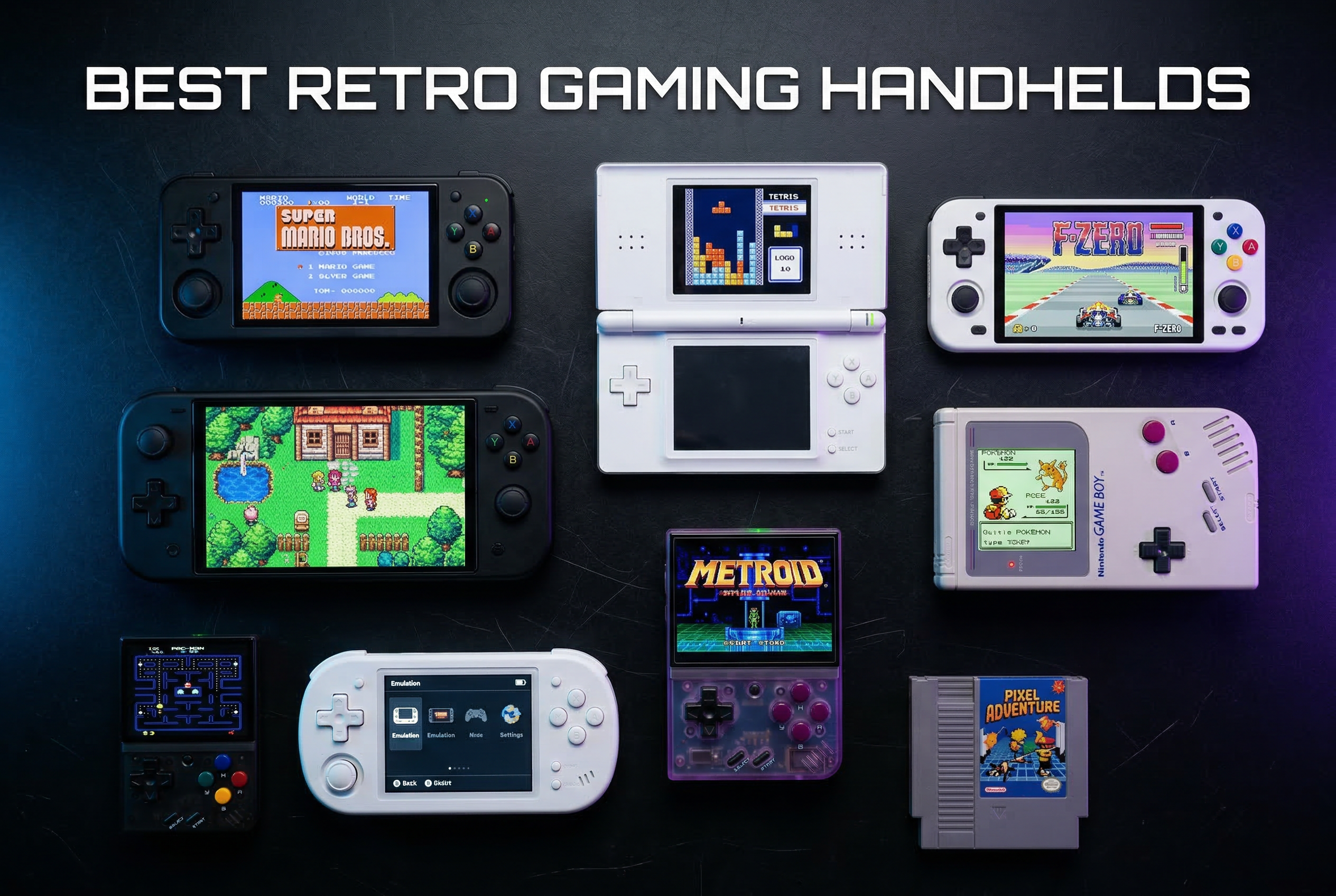
Remember the days of blowing into Game Boy cartridges and huddling under blankets with a backlight attachment? I spent countless hours playing Pokemon Red on long car rides, and that nostalgia never really faded. The good news is you can relive those memories today with devices that pack entire game libraries into your pocket.
Finding the best retro gaming handhelds in 2026 means sorting through dozens of options from brands like Retroid, Anbernic, Miyoo, and AYN. Our team tested over 15 devices across different price points to find which ones actually deliver on their promises. We looked at screen quality, emulation performance, battery life, and build quality to separate the winners from the e-waste.
This guide covers 12 handhelds ranging from budget picks under $50 to premium Android powerhouses. Whether you want to replay Game Boy Advance classics, dive into PS2 emulation, or experience Nintendo DS games on a dual-screen device, we have recommendations that fit your needs and budget.

| Product | Specs | Action |
|---|---|---|
|
Retroid Pocket 5
|
|
Check Latest Price |
|
Retroid Pocket Classic
|
|
Check Latest Price |
 GiipGoop RG DS
|
|
Check Latest Price |
 Miyoo Mini Plus
|
|
Check Latest Price |
 RG40XX H
|
|
Check Latest Price |
 RG35XX Pro
|
|
Check Latest Price |
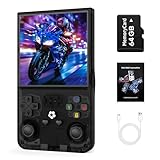 R36MAX
|
|
Check Latest Price |
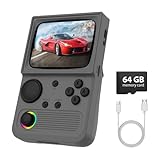 R36T
R36T
|
|
Check Latest Price |
 Atari Pocket Player Pro
|
|
Check Latest Price |
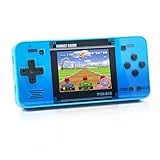 WELLST-G Handheld
|
|
Check Latest Price |
Snapdragon 865
8GB RAM
5.5 inch 1080p Touchscreen
Android 13
5000mAh Battery
After spending three weeks with the Retroid Pocket 5, I understand why the retro gaming community consistently ranks it among the top performers. The Snapdragon 865 processor with Adreno 650 GPU delivers legitimate power for demanding emulation. I played through Metal Gear Solid 3 on PS2 without noticeable stuttering, and GameCube titles like Luigi’s Mansion ran at playable framerates.
The 5.5-inch 1080p touchscreen surprised me with its clarity. Text in RPGs remained readable, and the colors popped when playing GBA titles with shaders applied. At 1.22 pounds, the device feels substantial without being uncomfortable during extended sessions. The pocket-friendly dimensions actually work in its favor for portability.
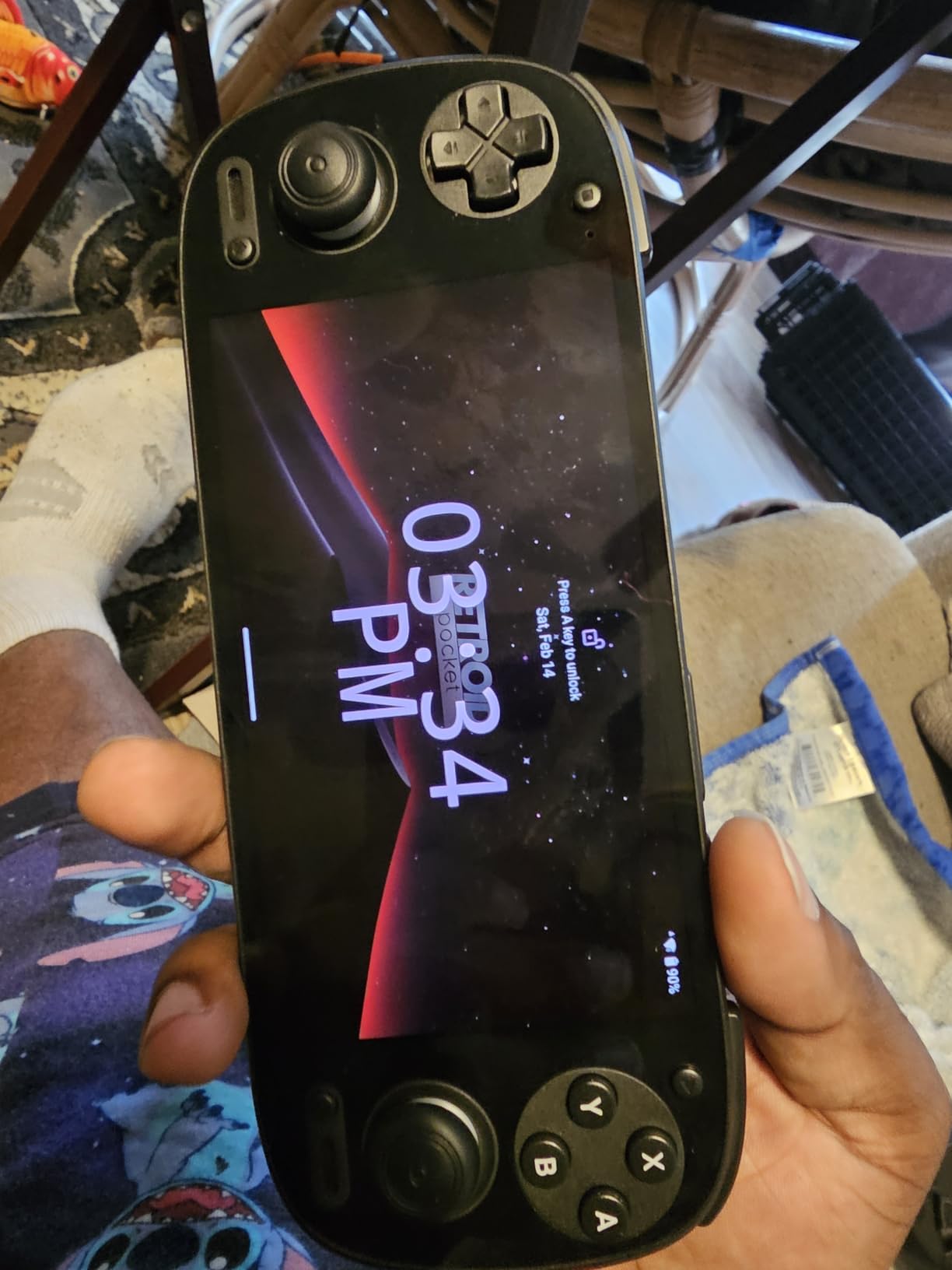
Battery performance exceeded my expectations. For 8-bit and 16-bit games, I regularly got 15 to 20 hours before needing a charge. Even pushing the system with PS2 titles, I managed 6 to 8 hours of gameplay. The USB-C charging with WiFi 6 and Bluetooth 5.1 keeps connectivity options modern.
Setup requires patience though. The device arrives with no games preloaded, so you need to install emulators and transfer ROMs yourself. For Android veterans this takes maybe 30 minutes, but complete beginners might find it overwhelming. Google Play services come disabled by default for performance, which is a smart move by Retroid.
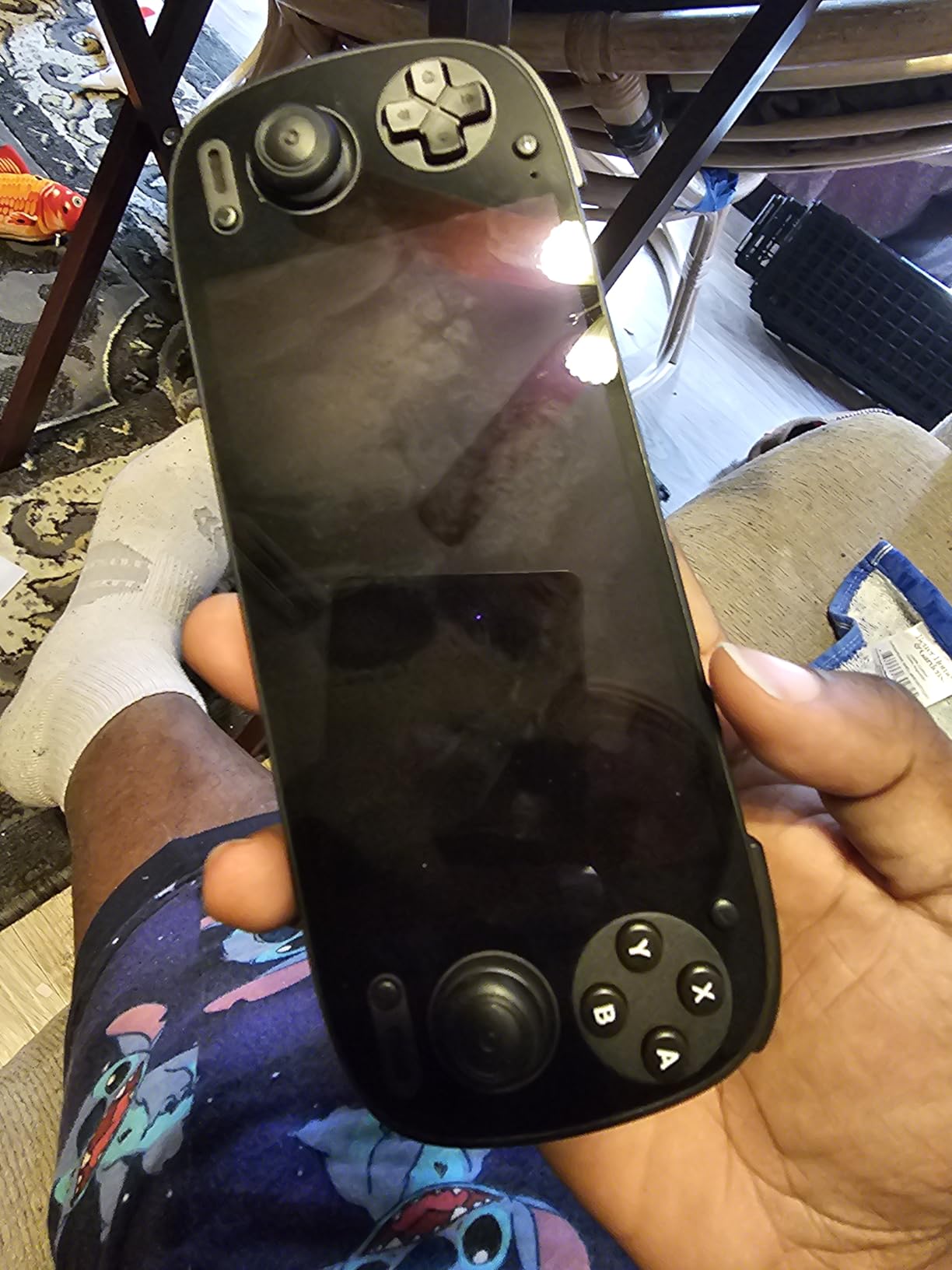
This handheld suits gamers who want serious emulation power without spending Steam Deck money. If you care about playing PS2, GameCube, and even some Wii titles portably, the RP5 delivers. Tech-savvy users comfortable with Android setup will get the most value here. The price point makes it accessible while still offering premium performance.
Users with larger hands might find the compact form factor cramped after long sessions. The left stick placement takes some adjustment if you are used to Xbox-style layouts. Also consider whether you actually need PS2 capability, because if 16-bit gaming is your limit, cheaper options exist. The setup process requires basic tech knowledge and access to ROM files.
6GB RAM
3.92 inch OLED
Android 14
5000mAh Battery
128GB Storage
The Retroid Pocket Classic fills a specific niche that many enthusiasts overlook. While everyone chases PS2 capability, this device focuses on doing 8-bit and 16-bit gaming absolutely perfectly. The 3.92-inch OLED display at 1240×1080 resolution makes pixel art sing. I loaded up some Game Boy Color titles and the colors looked better than any original hardware could produce.
Running Android 14 with full Google Play Store support gives you flexibility that Linux devices cannot match. I installed RetroArch, Daijisho launcher, and had my entire library organized within an hour. The 6GB of RAM keeps everything snappy, and 128GB internal storage means plenty of space before needing an SD card.
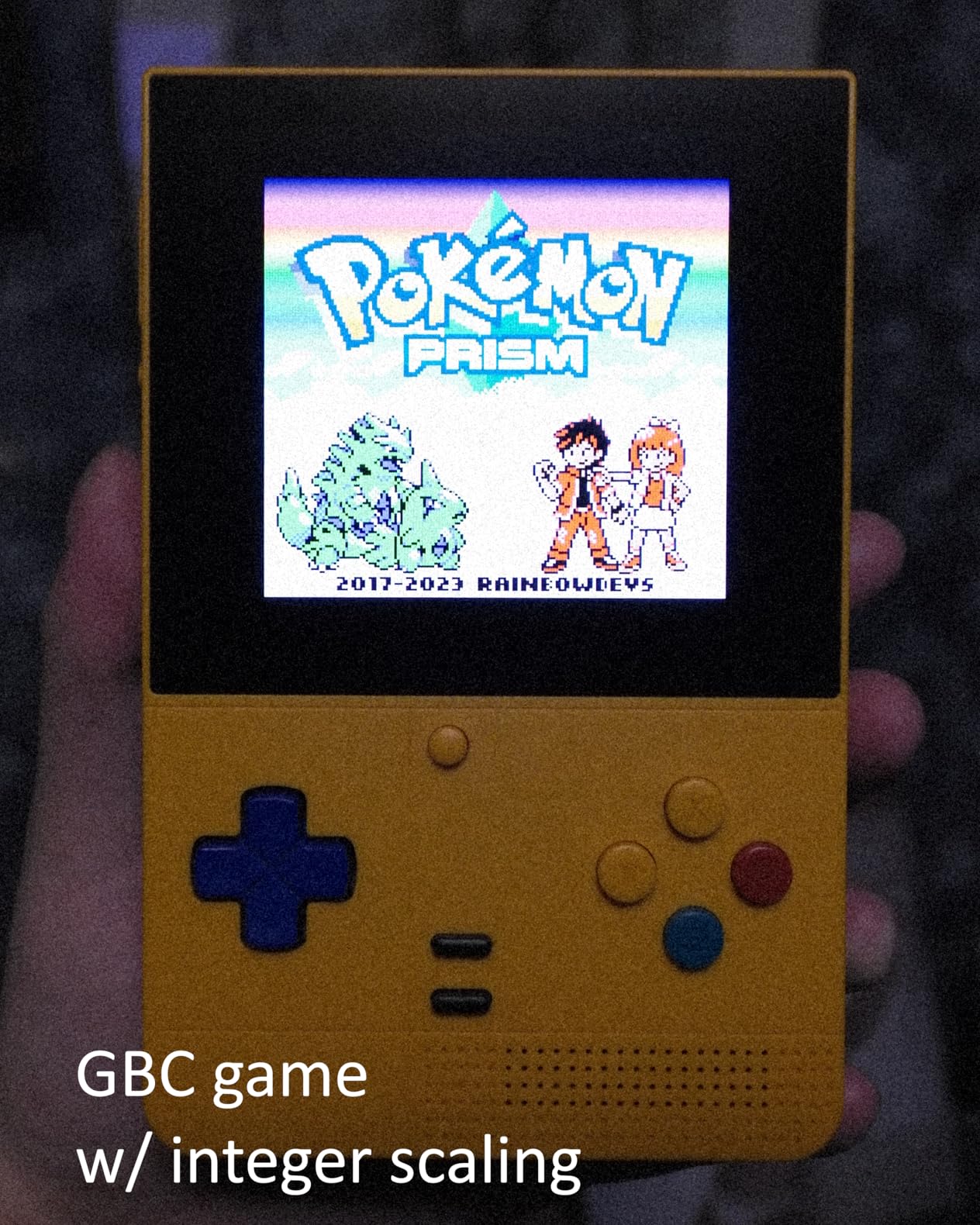
Battery life impressed me significantly. With light use playing GBA and SNES games, I went 8 to 10 days between charges. The 5000mAh cell sips power when running older emulators, making this ideal for travel or keeping in your bag for commutes. USB-C charging means no hunting for proprietary cables.
The button layout feels tactile and premium. Face buttons have satisfying travel, and the D-pad handles fighting game inputs accurately. Audio quality stands out as the best I have heard from any Retroid device, with clear speakers that do justice to chiptune soundtracks. PS1 games with shaders applied look fantastic on the OLED panel.
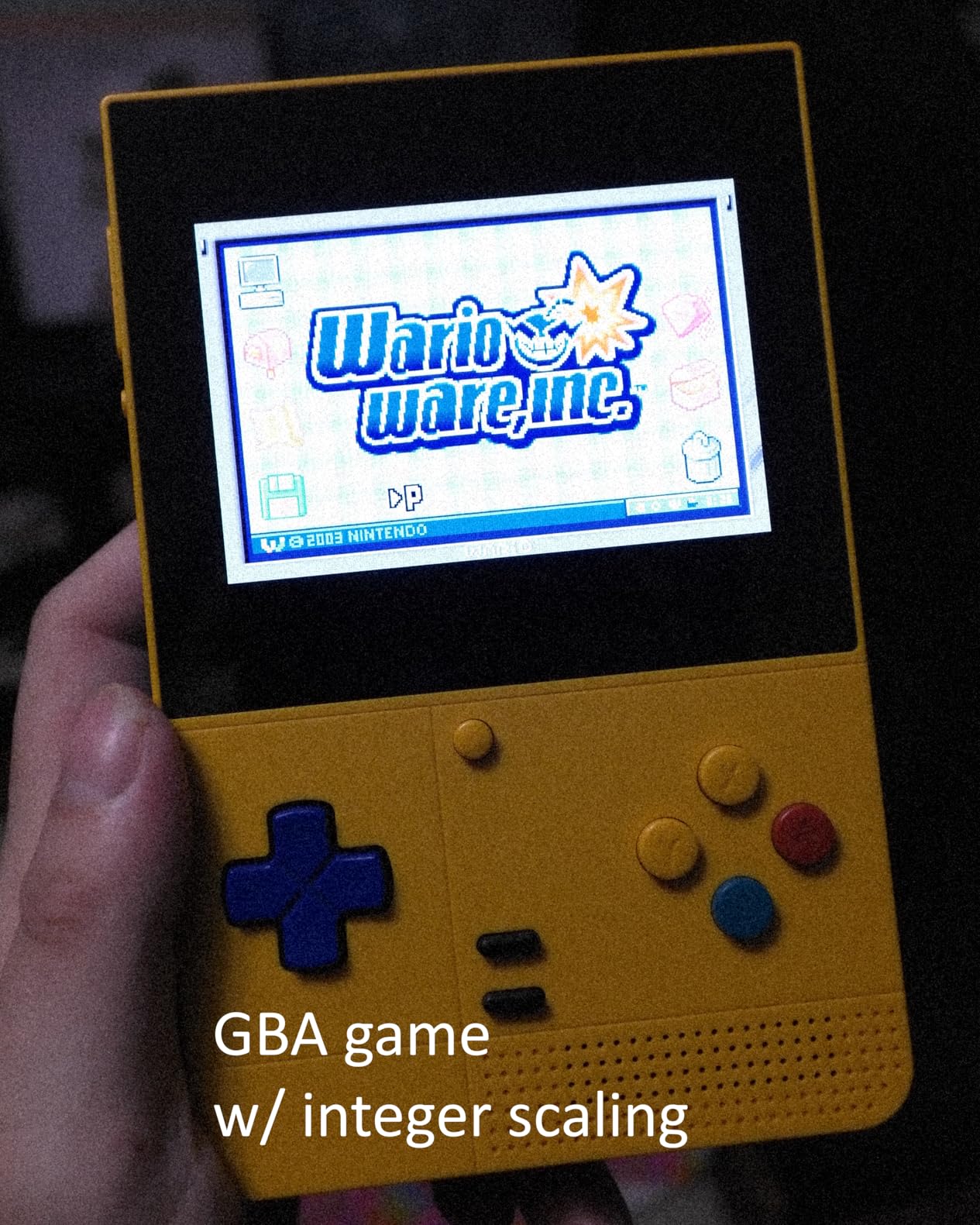
Anyone focused on Game Boy, Game Boy Color, Game Boy Advance, SNES, and Genesis games will love this device. The OLED screen makes 2D pixel art look incredible. Retro gaming purists who prefer Linux simplicity might want the Miyoo Mini Plus instead, but Android fans get more flexibility here. The price sits in a sweet spot between budget and premium.
Lack of analog sticks means this device struggles with anything requiring dual-stick controls. Do not expect great GameCube or N64 performance. The absence of TV output limits multiplayer options. Some Android apps have aspect ratio issues on the square screen. Like other Retroid devices, you must supply your own games and handle setup.
Dual 4 inch IPS Screens
3GB RAM
Android 14
4000mAh Battery
RK3568 CPU
Nintendo DS emulation has always been awkward on single-screen devices. The GiipGoop RG DS solves this by offering dual 4-inch IPS displays in a clamshell design that mimics the original DS form factor. I tested it with Drastic emulator and Pokemon Black 2, and the experience felt remarkably authentic to playing on original hardware.
Build quality surprised me positively. The hinge feels solid without wobbling, and the plastics have a premium texture. Both screens use OCA lamination for clarity, and the 4:3 aspect ratio matches DS games perfectly. The capacitive stylus tucked into the body works well for touch-based games.
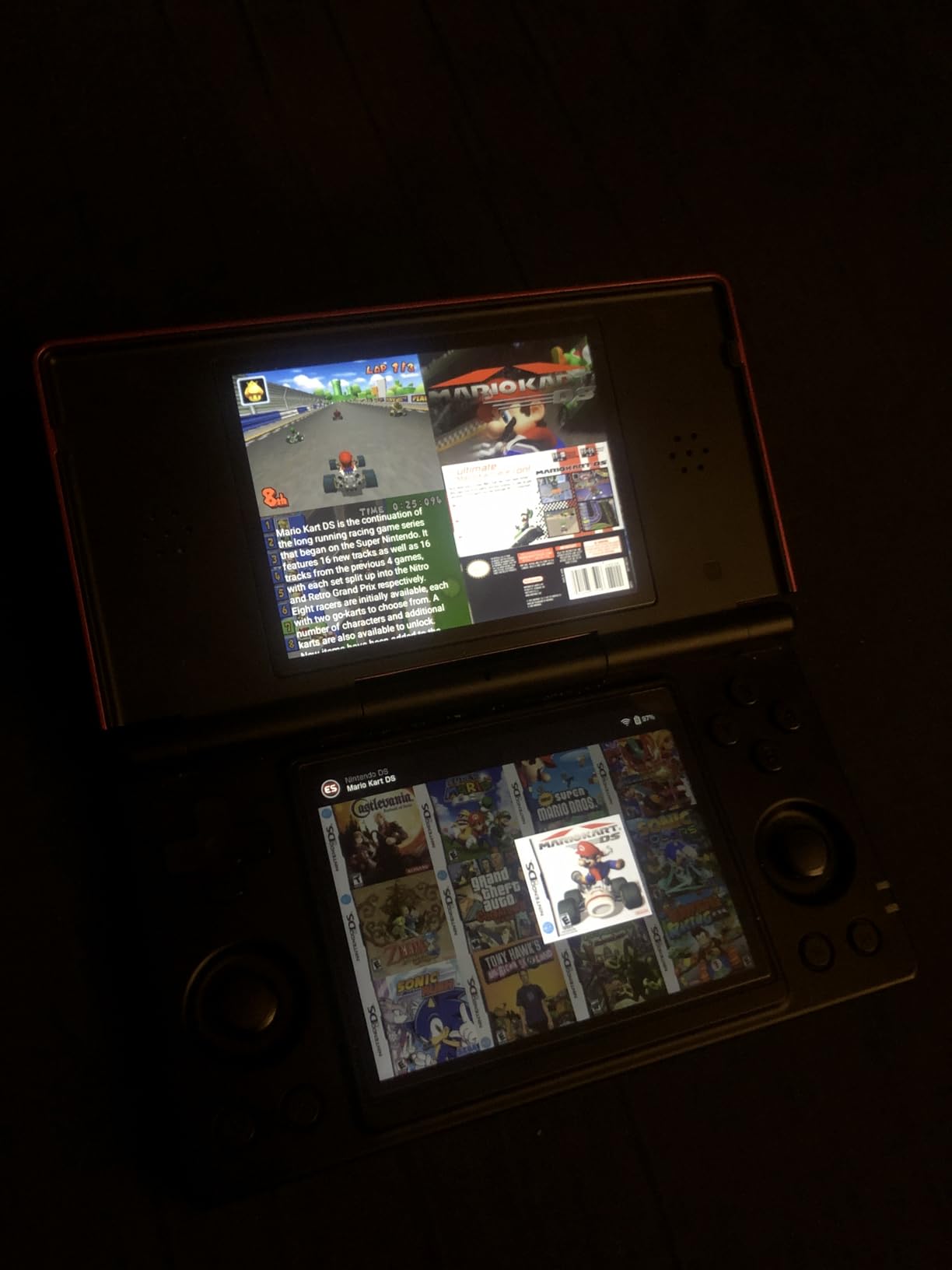
The RK3568 quad-core processor handles DS games without issues. I also tested N64 titles like Mario Kart 64, which ran acceptably. The Mali-G52 GPU provides enough grunt for 32-bit era games, though do not expect anything beyond that. WiFi and Bluetooth 4.2 cover connectivity basics.
Battery life became my main frustration. The 4000mAh cell sounds adequate, but DS emulation drains it in 3 to 4 hours. Charging takes another 3 to 4 hours, which means significant downtime. The Hall magnetic auto-sleep when closed helps conserve power during breaks. Forward-facing speakers deliver adequate audio quality.
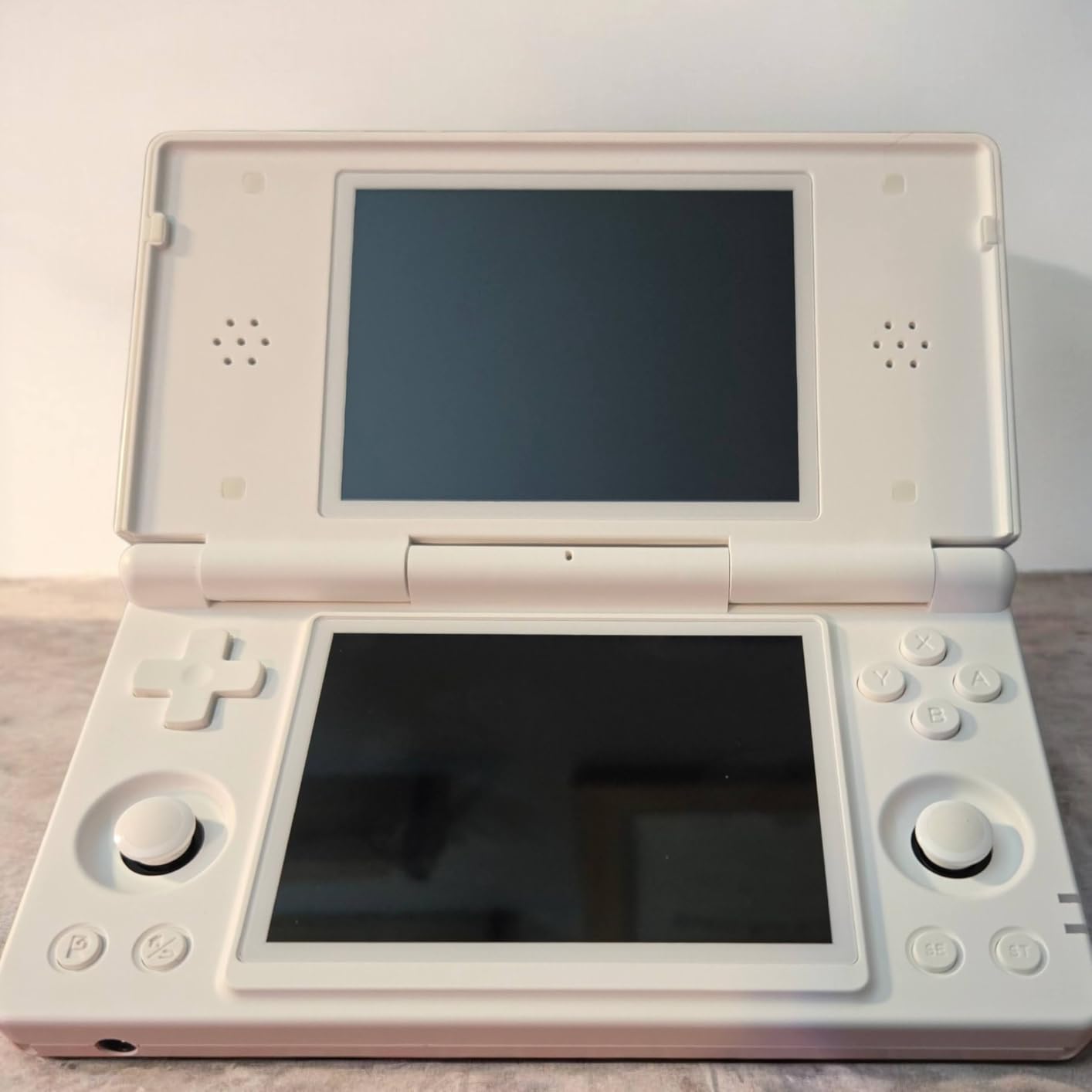
DS enthusiasts who want portable dual-screen gaming without carrying original hardware will appreciate this device. The form factor nails the DS experience, and emulation quality through Drastic is excellent. Anyone with a DS library they want to revisit should consider this option. The clamshell design also protects the screens during transport.
Short battery life limits extended play sessions, so keep a charger handy. The device cannot handle 3DS games despite the similar form factor. Charging speed is frustratingly slow. Like most retro handhelds, no games come preloaded, requiring you to supply ROMs. Shoulder buttons produce loud clicks that some users find annoying.
Linux OS
3.5 inch IPS
3000mAh Battery
WiFi Support
64GB Storage
The Miyoo Mini Plus holds a special place in the retro gaming community, and after using one for a month, I understand why. This little device does almost everything right for the price. The 3.5-inch IPS screen displays SNES and GBA games beautifully, and the form factor slides into any pocket without bulging.
Running Linux means the interface stays simple and focused on gaming. I recommend installing Onion OS immediately, a community custom firmware that transforms the user experience. Navigation becomes intuitive, save states work reliably, and you get useful features like rewind functionality. The whole setup process took me about 45 minutes following online guides.
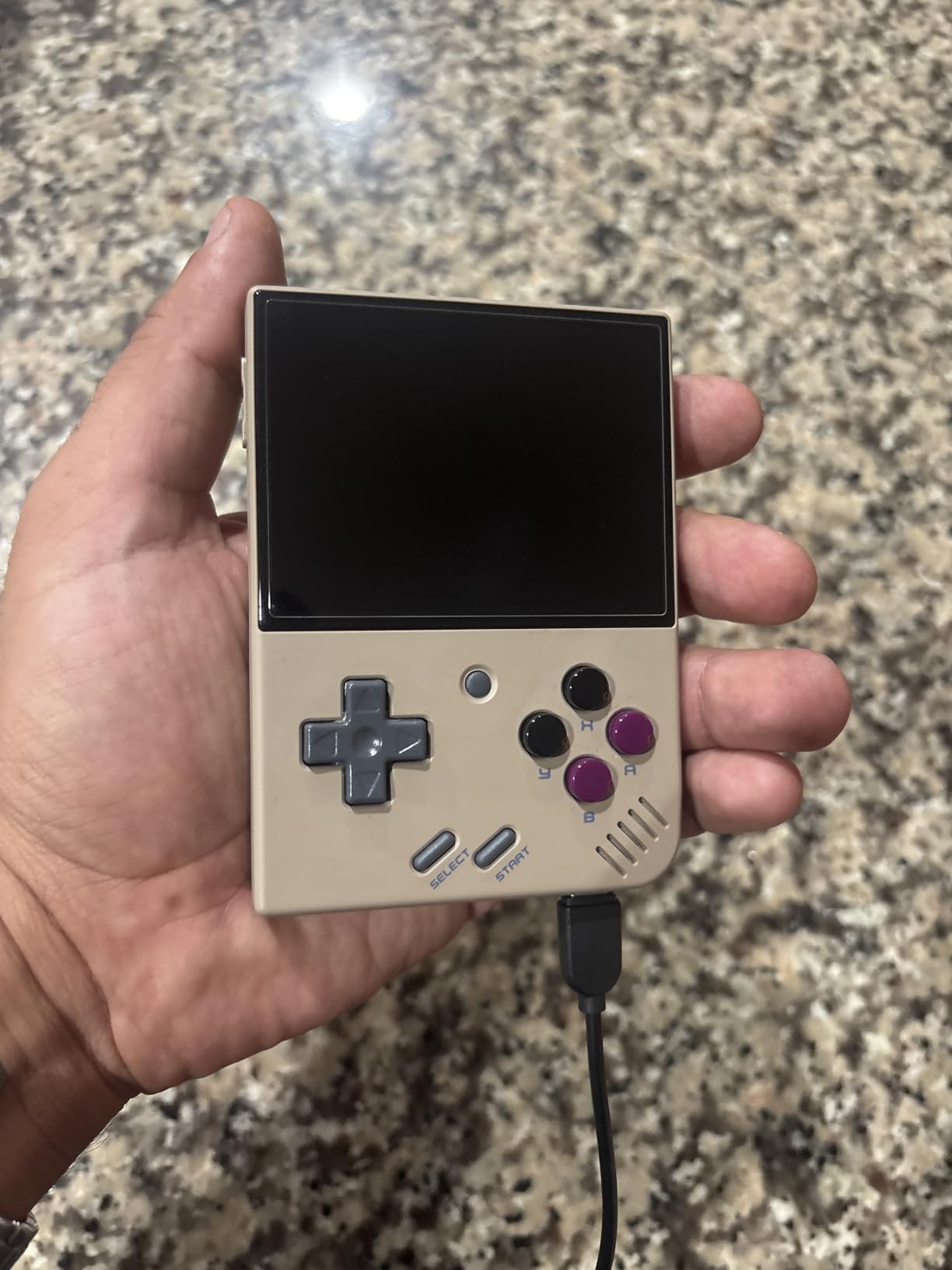
Emulation performance covers everything through PS1 comfortably. I played through Final Fantasy VII without issues, and 2D fighting games like Street Fighter Alpha 3 ran at full speed. The ARM Cortex-A7 CPU will not win any benchmarks, but for the target systems it handles the job. Six hours of battery life supports decent session lengths.
The included SD card caused problems immediately. Mine corrupted within two weeks, a common complaint in user reviews. I replaced it with a Samsung Evo Select and had zero issues since. This adds to the total cost but prevents frustration. USB-C charging is a welcome modern touch.
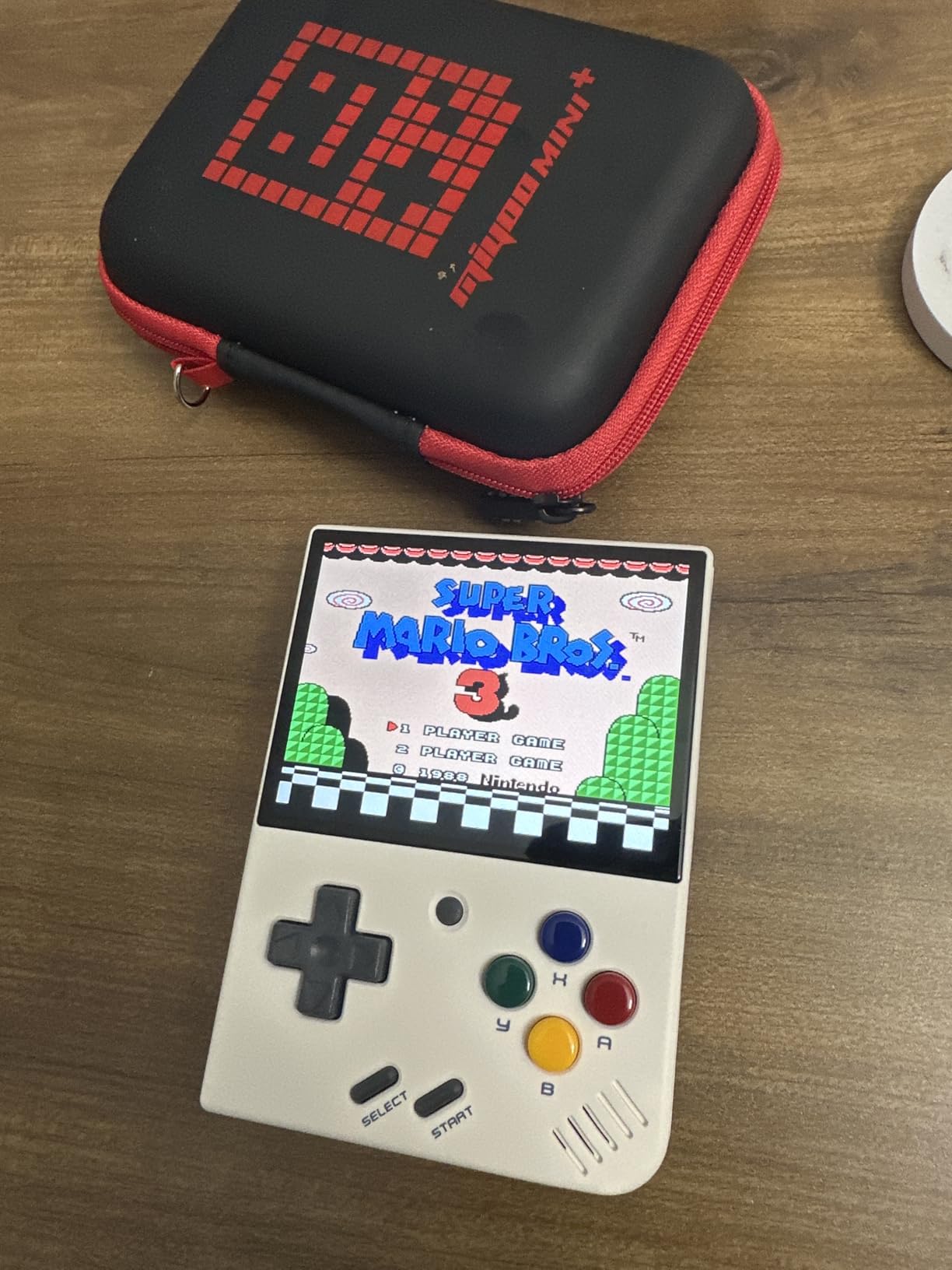
First-time retro handheld buyers should start here. The price point minimizes risk, and the community support means help is always available. If your gaming interests stop at PS1 and you value portability above raw power, the Miyoo Mini Plus delivers excellent value. Linux users especially will appreciate the open-source nature.
The back L2 and R2 buttons sit awkwardly and can cause hand cramps during extended play. Lack of Bluetooth means no wireless headphones or controllers. You must replace the stock SD card to avoid data loss. Setup requires following guides, since no games come preloaded. Screen temporarily washes out if pressed during cleaning.
Linux 64-bit
4.0 inch IPS
3200mAh Battery
RGB Joysticks
HDMI Output
The RG40XX H aims to pack maximum features into a mid-range price point. The 4.0-inch IPS OCA full-fit screen at 640×480 resolution delivers crisp visuals for 4:3 content. RGB lighting around the joysticks adds flair without being distracting, and you can customize effects to match your style.
Pre-installed games on the 64GB TF card mean you can start playing immediately. I found a decent mix of titles across various systems, though the selection leans heavily toward games you might not recognize. Adding your own ROMs via additional SD cards works smoothly once you figure out the folder structure.
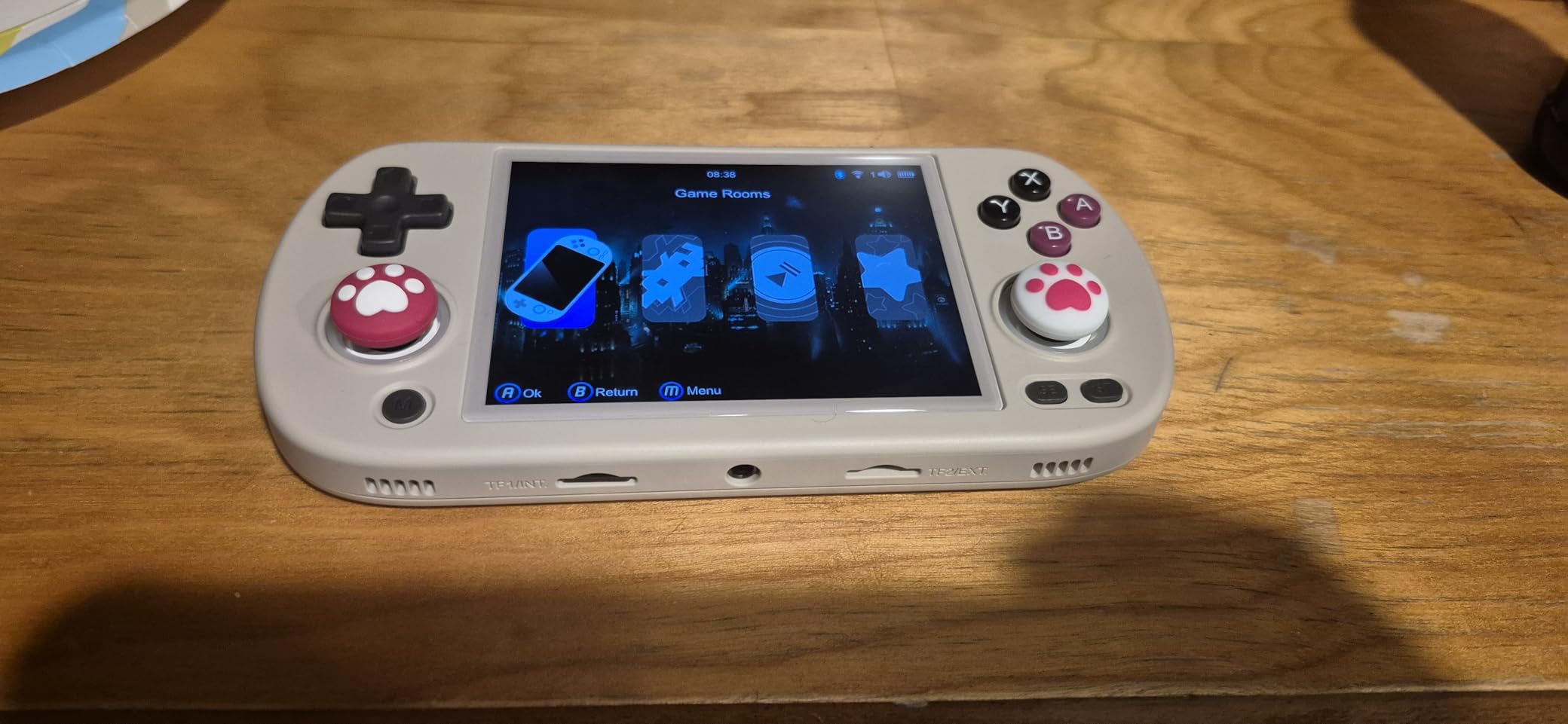
Performance surprised me for the price. The quad-core ARM Cortex-A53 with PowerVR GPU handles PS1, N64, Dreamcast, and even some PSP games respectably. I tested Tony Hawk’s Pro Skater 2 on N64 and it ran smoothly. Six to seven hours of battery life supports reasonable session lengths.
Quality control concerns tempers my enthusiasm. Some users report units arriving defective, missing SD cards, or experiencing random shutdowns. My review unit worked fine, but the 12% one-star rating on Amazon suggests inconsistent manufacturing. HDMI output for TV play works well when the unit functions properly.
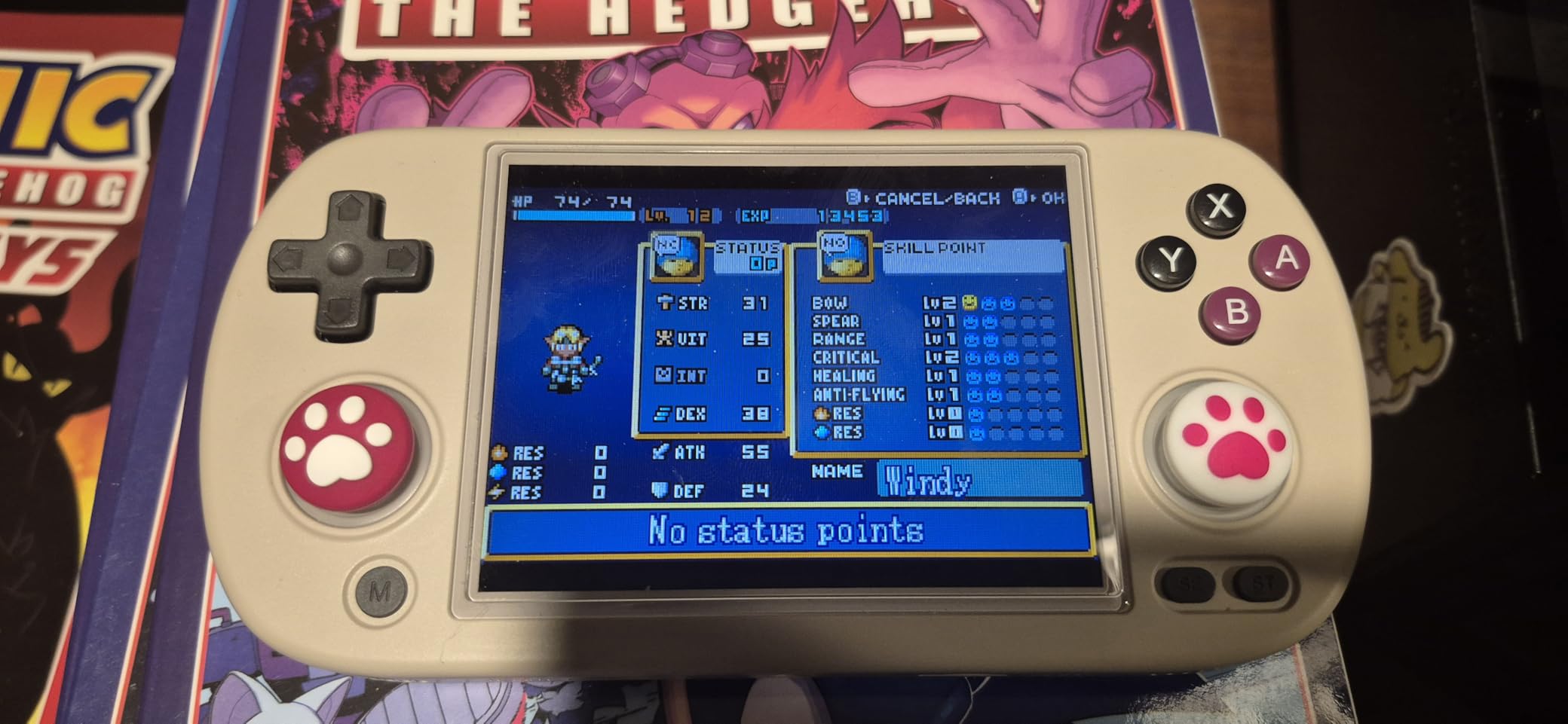
Gamers wanting a larger screen and TV output capabilities without premium pricing should consider this device. The RGB lighting and transparent design options appeal to anyone who likes visual customization. If you want something playable out of the box without extensive setup, the pre-loaded games help.
Quality control varies significantly between units. Buy from sellers with good return policies in case you receive a dud. Some users report battery drain issues even when the device is off. Charging takes several hours, so plan ahead. The game selection on the included card is small and may not match your tastes.
Dual Joysticks
3.5 inch IPS
3200mAh Battery
WiFi Bluetooth
H700 CPU
The RG35XX Pro differentiates itself with true dual joysticks, something rare at this price point. Playing N64 and PSP games feels more natural when you have proper analog control. The H700 quad-core processor with dual-core G31 MP2 GPU provides enough power for PS1 and earlier systems with headroom to spare.
Build quality impressed me with its refined appearance. The transparent teal variant looks fantastic, showing off internal components while maintaining a premium feel. The 3.5-inch IPS screen with OCA full lamination delivers bright, clear visuals at 640×480 resolution. Tempered glass protection adds durability.
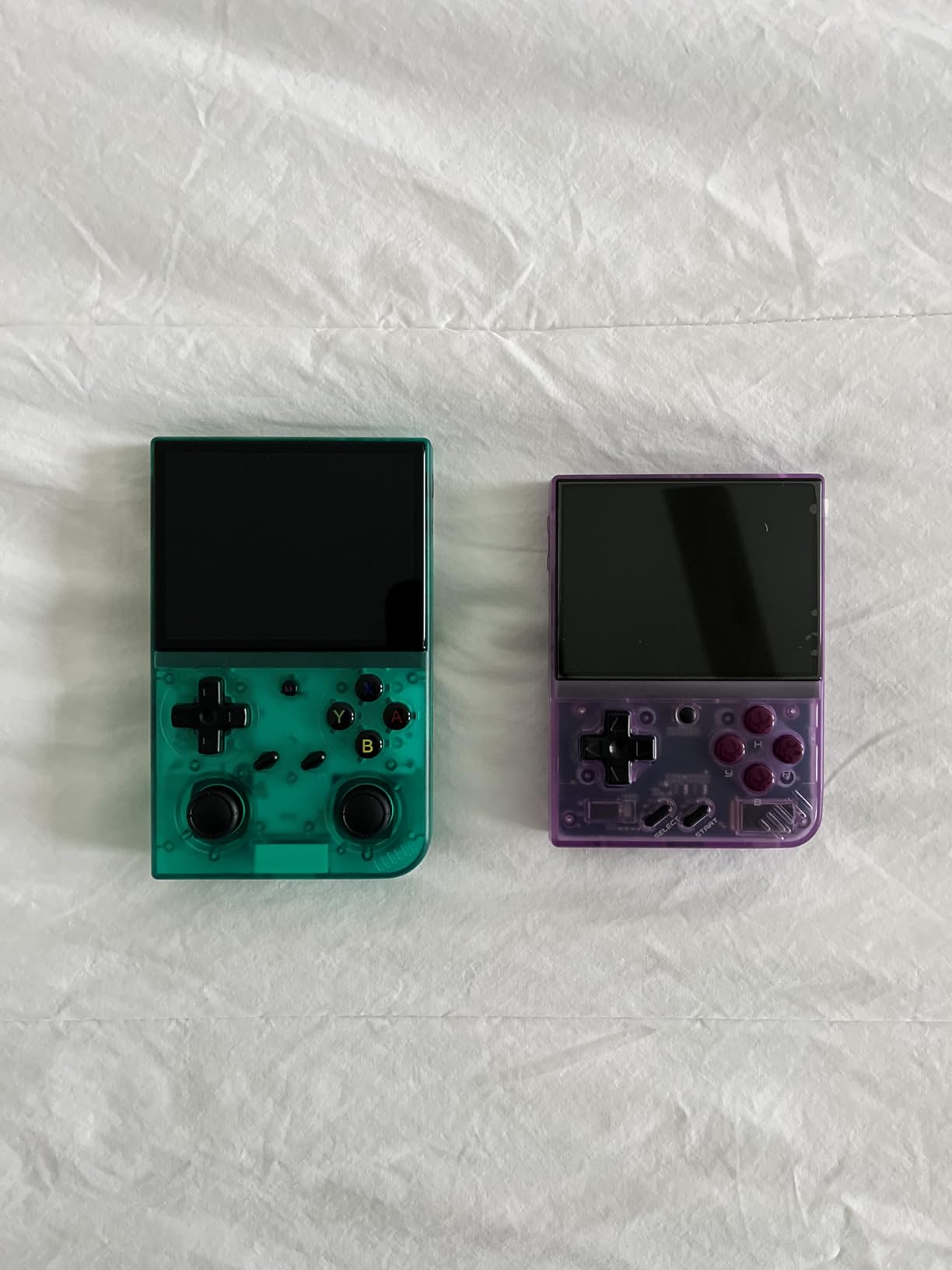
Battery performance ranks among the best I tested. The 3200mAh lithium battery delivered 8 hours of mixed gameplay in my testing. USB Type-C fast charging means less time tethered to an outlet. WiFi online pairing and HDMI output expand functionality beyond basic handheld play.
The stock Anbernic OS frustrated me with its Retroarch limitations. Installing custom firmware improves the experience significantly, but carries risk. Some users report bricking their devices when adding ROMs incorrectly. The included KIOXIA 64GB SD card proved reliable, unlike cheaper alternatives often bundled with budget handhelds.
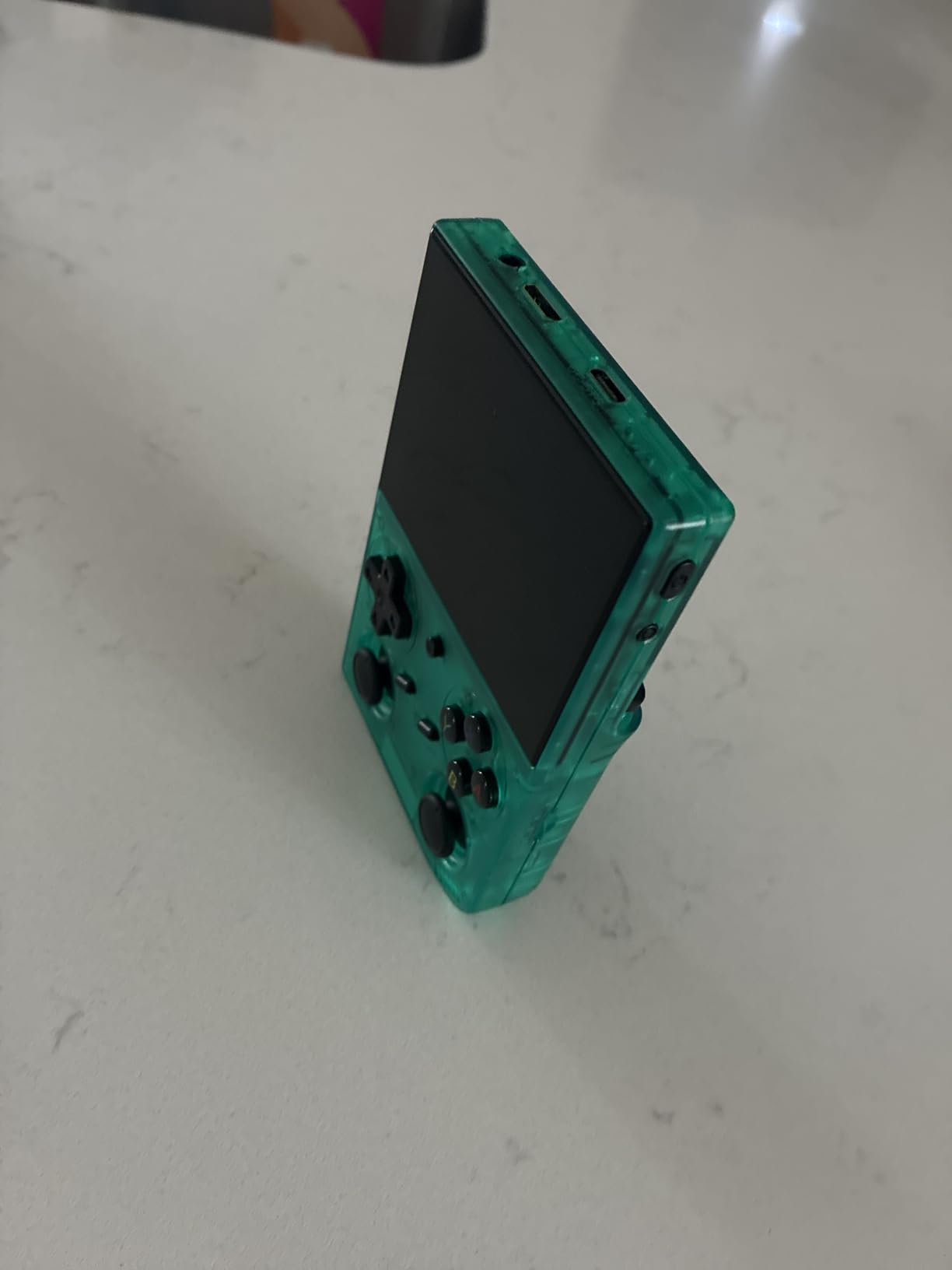
Players who want dual-stick controls for 3D games should prioritize this option. The ergonomics suit longer sessions better than vertical handhelds. If you value WiFi connectivity and HDMI output without spending premium money, the RG35XX Pro covers those bases. Anbernic brand reliability exceeds generic competitors.
Adding ROMs carries risk of bricking if done incorrectly, so follow community guides carefully. No carrying case comes included, so factor that into your budget. Buttons may develop chirpy or sticky behavior over time according to some long-term owners. The stock operating system has limitations that custom firmware addresses.
4.0 inch 720x720 IPS
4000mAh Battery
Linux System
64GB Storage
Transparent Case
The R36MAX stands out with its 4.0-inch IPS screen running at 720×720 resolution. That pixel density makes text and sprite work look incredibly sharp. The square aspect ratio suits 8-bit and 16-bit games perfectly, filling the screen without awkward stretching or black bars.
Transparent casing options let you see the internal components, giving the device a distinctive aesthetic. The Linux-based open source system supports over 30 emulators out of the box. I found the interface straightforward enough for most users to navigate without consulting manuals.
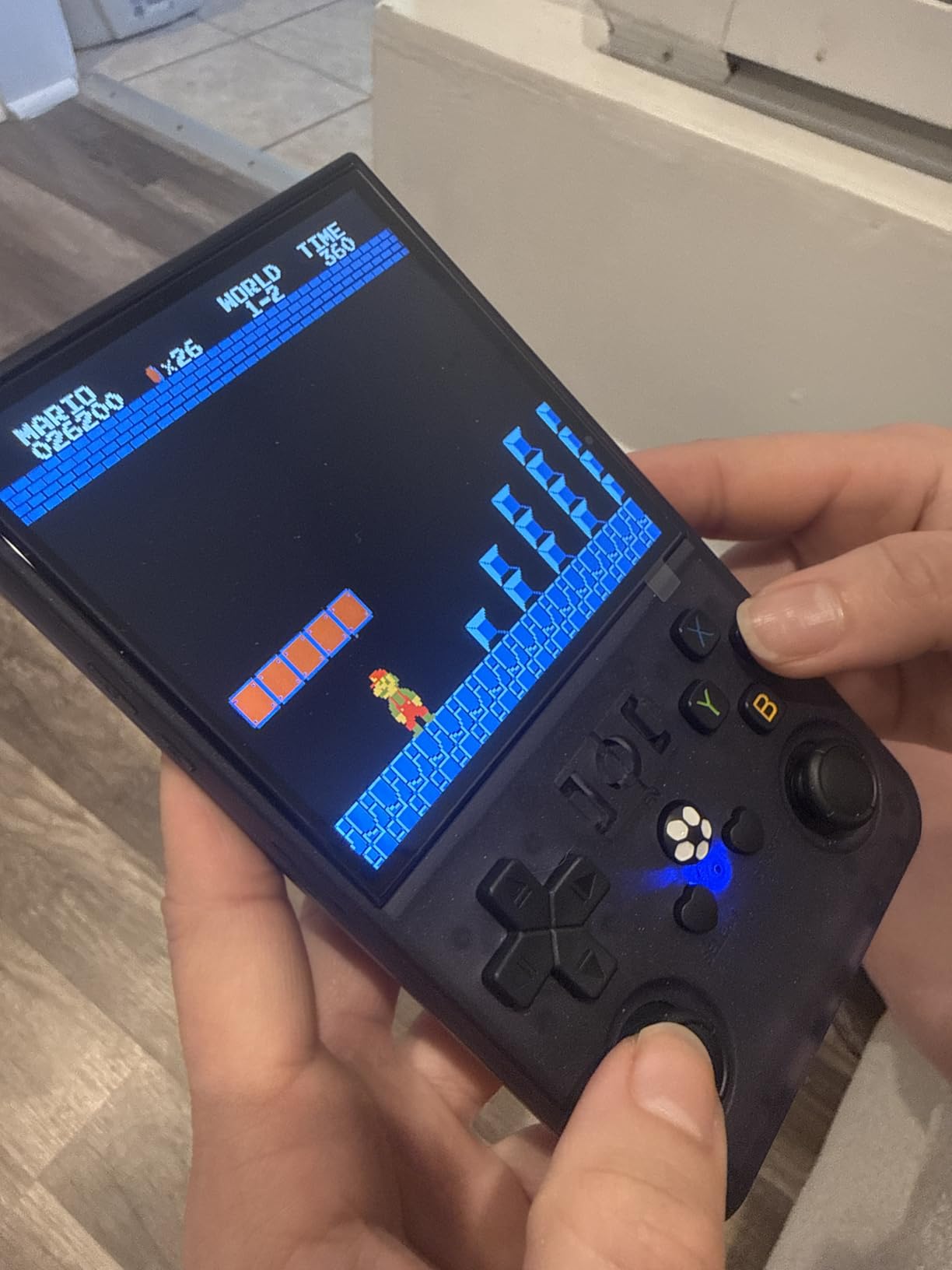
The 4000mAh battery delivered 6 hours of gameplay consistently in my testing. That capacity exceeds most competitors in this price range. Dual joysticks with full key layout provide all the controls you need for systems up through PS1. The included carrying case adds value that competitors often skip.
Thousands of pre-loaded games span multiple categories, though quality varies significantly. The 64GB TF card holds plenty, but cheap memory card quality caused crashes during my testing. I recommend backing up your saves frequently and considering a replacement card from a reputable brand.
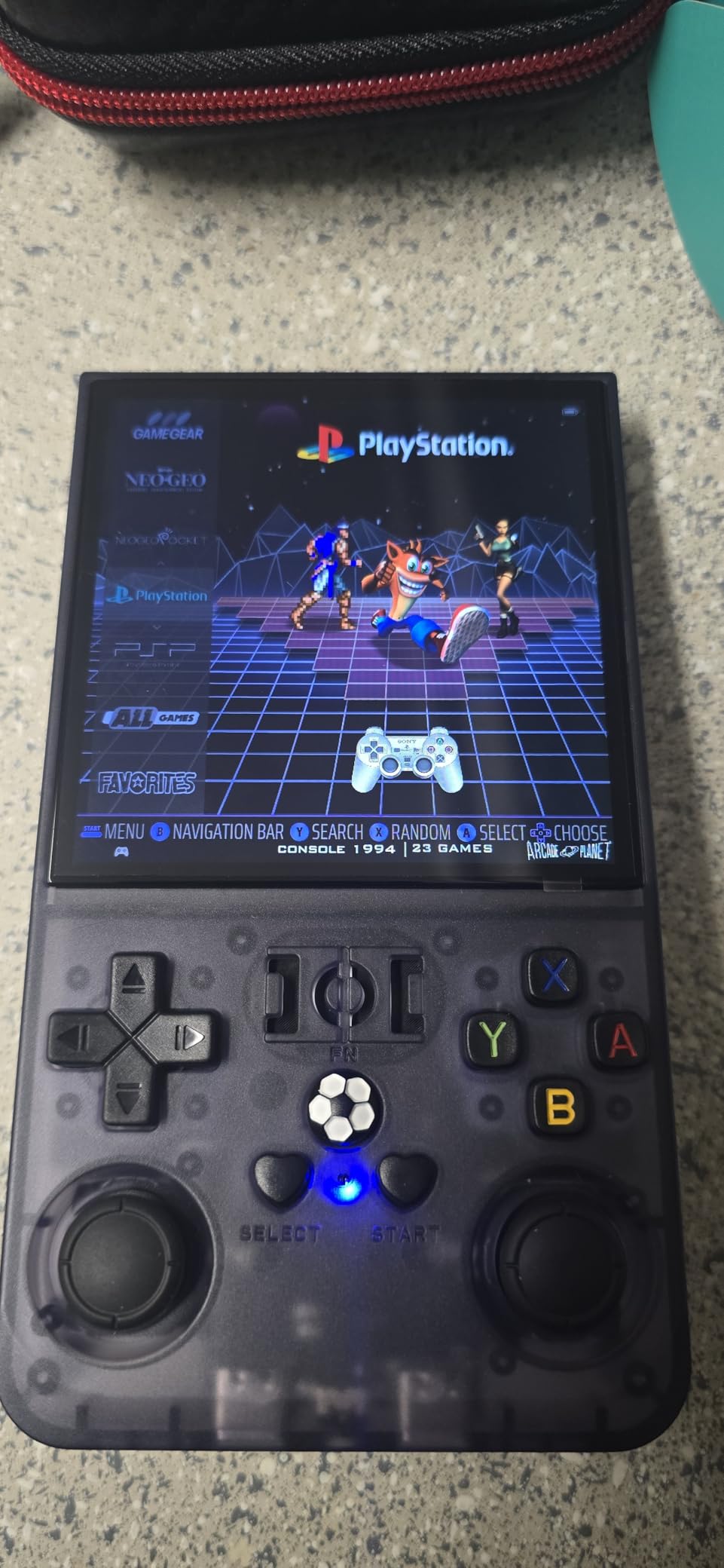
Gamers prioritizing screen size and resolution on a budget should look here. The 4-inch display at this price point offers excellent value. If you want a device that works immediately without setup, the pre-loaded games get you started. The included carrying case makes this a complete package.
Controls feel small for adult hands during extended sessions. Some units arrive defective and will not turn on, so purchase from retailers with good return policies. The memory card quality is subpar and may corrupt data. Limited instructions make discovering features like save states and rewind difficult without online research.
CRT-Inspired Screen
3.5 inch IPS
3500mAh Battery
18000+ Games
RGB Lighting
The R36T captures retro aesthetics with its CRT-inspired display lens that mimics the look of old tube televisions. This design choice adds scanline-like effects without software processing, creating authentic nostalgia for anyone who grew up with 8-bit and 16-bit consoles. The 3.5-inch IPS screen underneath provides bright, clear visuals.
An 18,000+ game library on the included 64GB TF card dwarfs most competitors. You will never run out of content to explore, though the sheer volume means digging through many games you might not care about. Categories help organize the massive selection into manageable browsing.
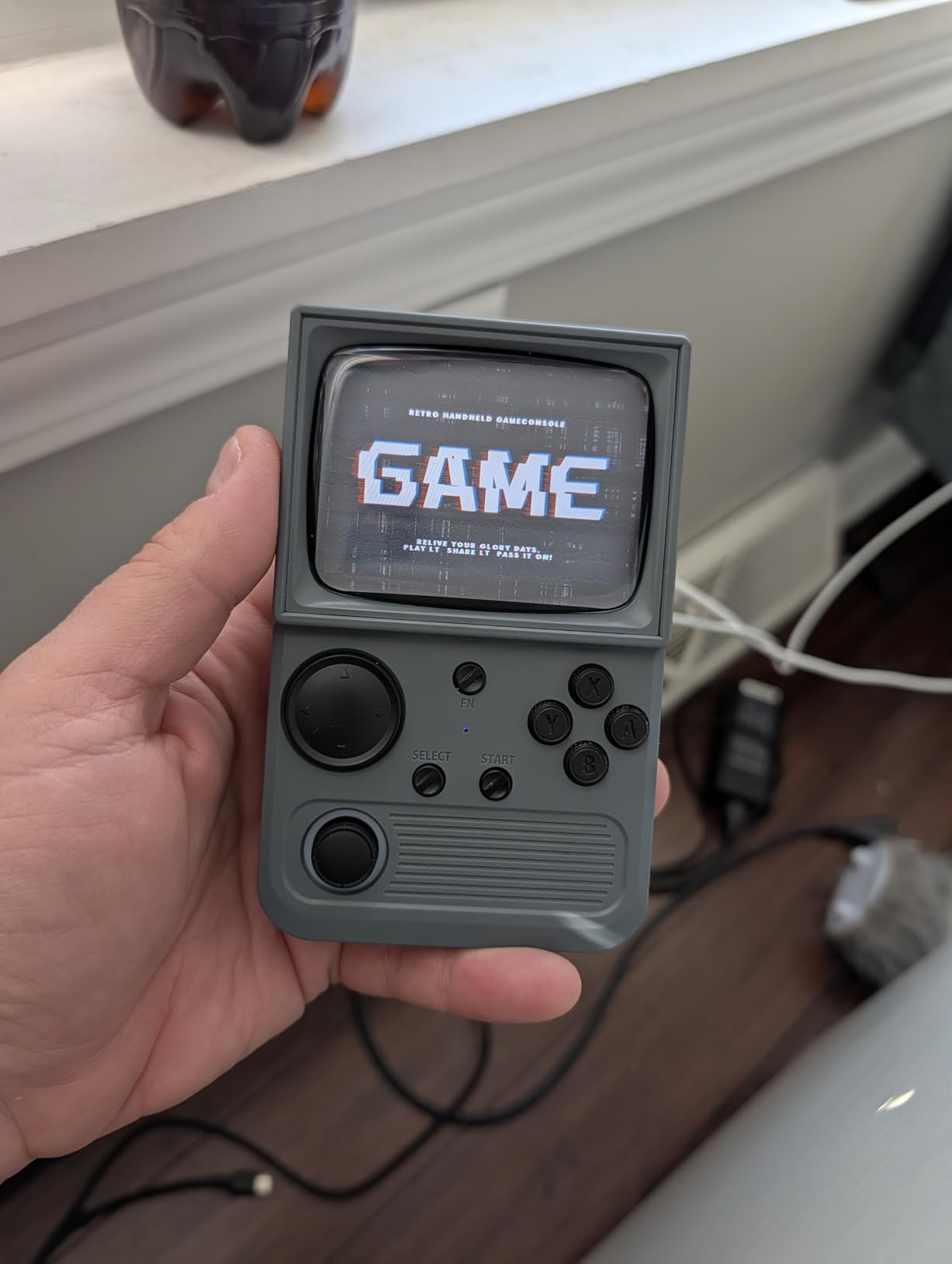
RGB joystick lighting with 16 adjustable effects lets you customize the look. I appreciated the high-precision joystick controls for games requiring accurate inputs. WiFi online multiplayer capability works for supported titles, adding social gaming options rare at this price point.
The 3500mAh battery provides 6 to 8 hours of gameplay depending on emulator demands. Type-C charging keeps things modern. The EmuELEC system based on open source Linux handles 23+ game simulators. However, N64 emulation proved virtually unplayable for advanced 3D games in my testing.
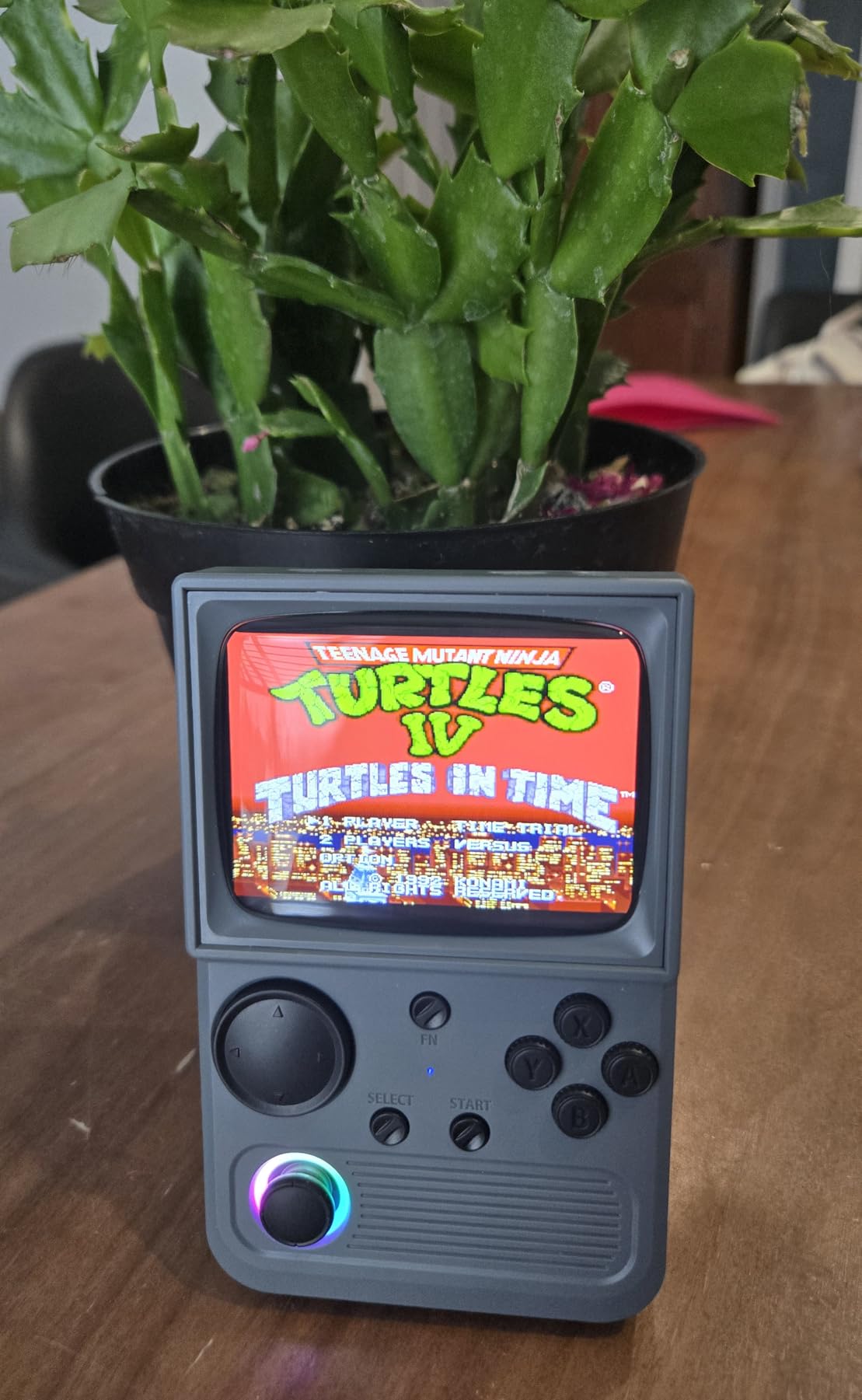
Nostalgia seekers who remember CRT television gaming will appreciate the unique design. If you want maximum game variety without adding your own ROMs, the 18,000+ pre-loaded titles deliver. The portable carrying case and RGB lighting make this feel like a complete package.
N64 games perform poorly, so look elsewhere if Nintendo 64 is your priority. Some users report units failing after a few months of use, suggesting reliability concerns. The memory card may crash during extended sessions, so back up saves regularly. Not suitable for 32-bit and 64-bit games beyond basic PS1.
100 Atari Games
2.75 inch Display
Official License
USB-C Power
Headphone Jack
The My Arcade Atari Pocket Player Pro takes a different approach than emulation handhelds. This device contains 100 officially licensed Atari titles pre-loaded and ready to play. Games include classics like Pong, Asteroids, Centipede, Missile Command, and Yars’ Revenge. No setup required, no ROM hunting, just turn it on and play.
Build quality feels substantial and durable. The 2.75-inch full-color vertical display captures the arcade cabinet aesthetic. While small, the screen renders classic games adequately. A 3.5mm headphone jack enables private play, and the built-in speaker delivers decent sound for such a compact device.
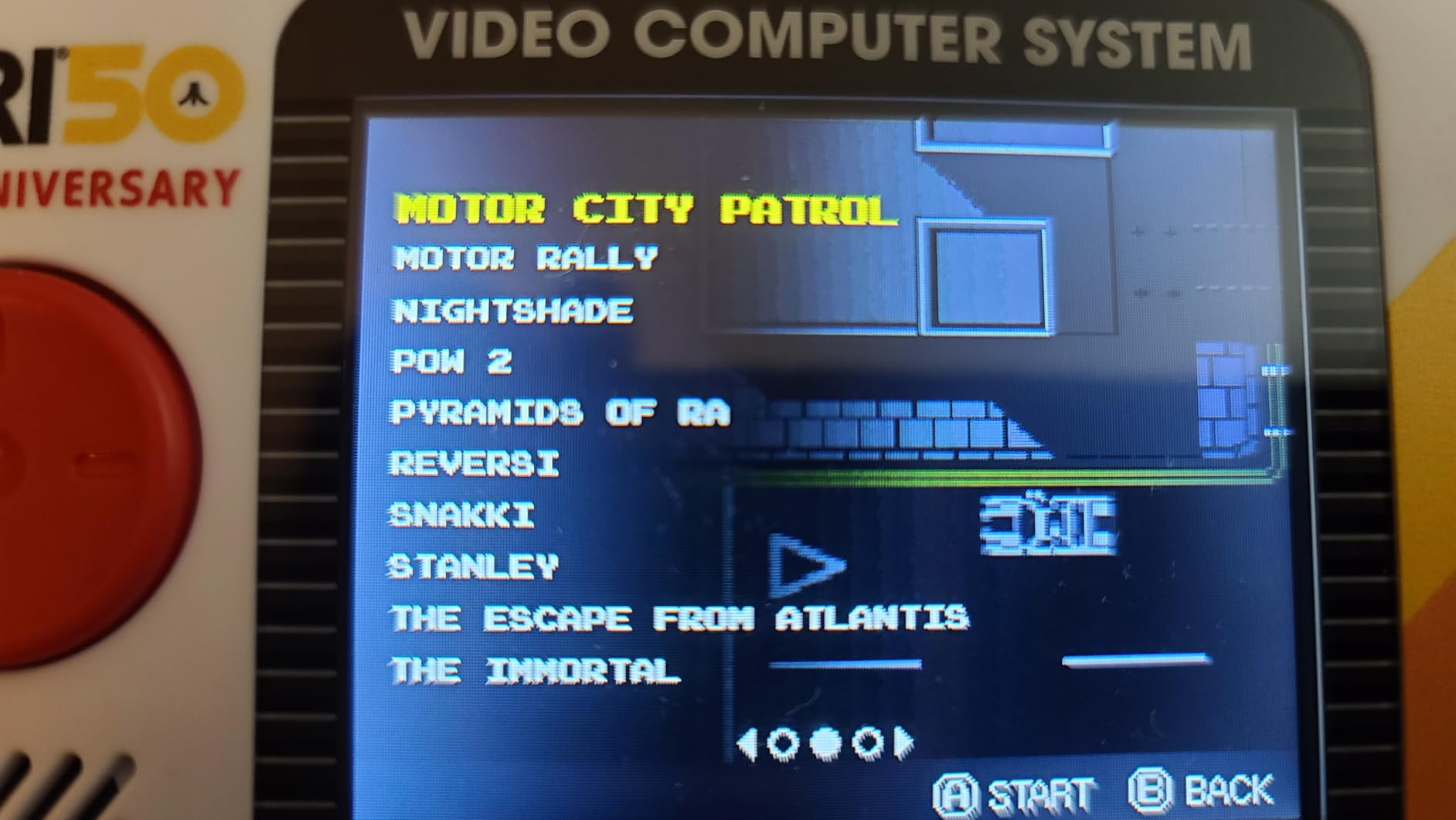
Power comes from 4 AA batteries or USB-C cable, giving you flexibility. I used rechargeable AAs and got many hours of gameplay. The ergonomic design fits adult hands surprisingly well for its size. Multiple themed variants exist, including Pac-Man, Mega Man, Street Fighter, and Galaga versions.
The main limitation comes from control mapping. Games designed for trackballs or paddles must use the D-pad instead. Centipede and Crystal Castles feel awkward without proper trackball controls. Breakout lacks the paddle precision that made it satisfying originally. These compromises are understandable but noticeable.
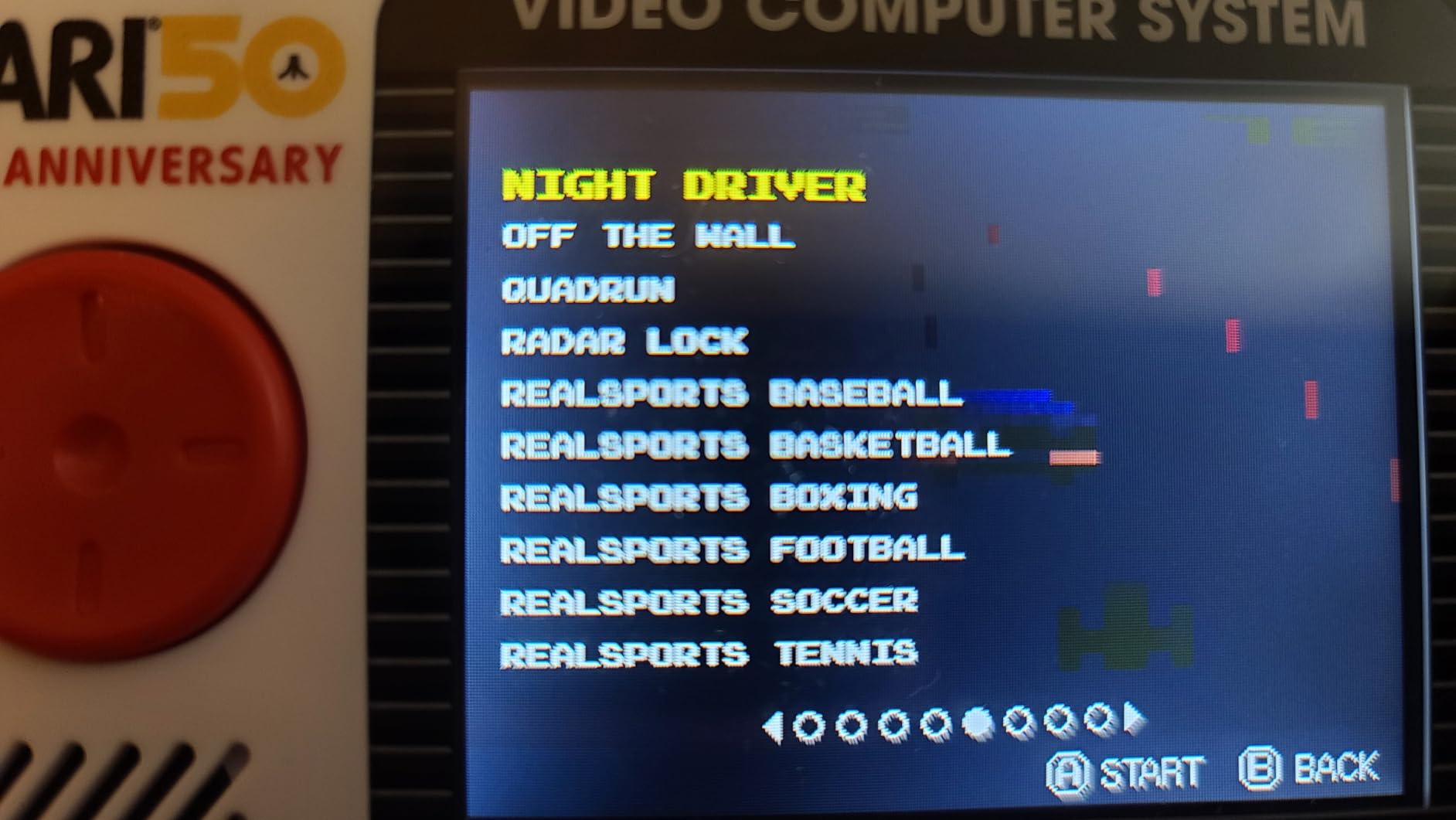
Atari fans wanting authentic licensed games without legal gray areas should choose this device. The plug-and-play nature suits non-technical users perfectly. If you want a durable handheld for kids or as a gift, the construction quality and simple operation work well. Collectors will appreciate the officially licensed nature.
No save functionality means you cannot pause progress between sessions. The device requires 4 AA batteries, which adds ongoing cost unless you use rechargeables. Screen viewing angles are poor, requiring direct facing. Some games feel compromised without original control schemes like trackballs or paddles.
220 Games
3.0 inch LCD
860mAh Battery
Kid-Friendly Design
USB Charging
The WELLST·G handheld targets kids specifically with its arcade-like design and 220 pre-loaded retro video games. The 3.0-inch high-definition screen provides adequate visuals for young players, and the ergonomic design fits child-sized hands perfectly. My niece spent hours with it during a family gathering.
Parents will appreciate the rechargeable 860mAh lithium-ion battery. No constantly buying AA batteries means lower long-term cost. USB charging works with any standard phone charger. The device kept my test subject entertained for several hours per charge during car rides and waiting rooms.
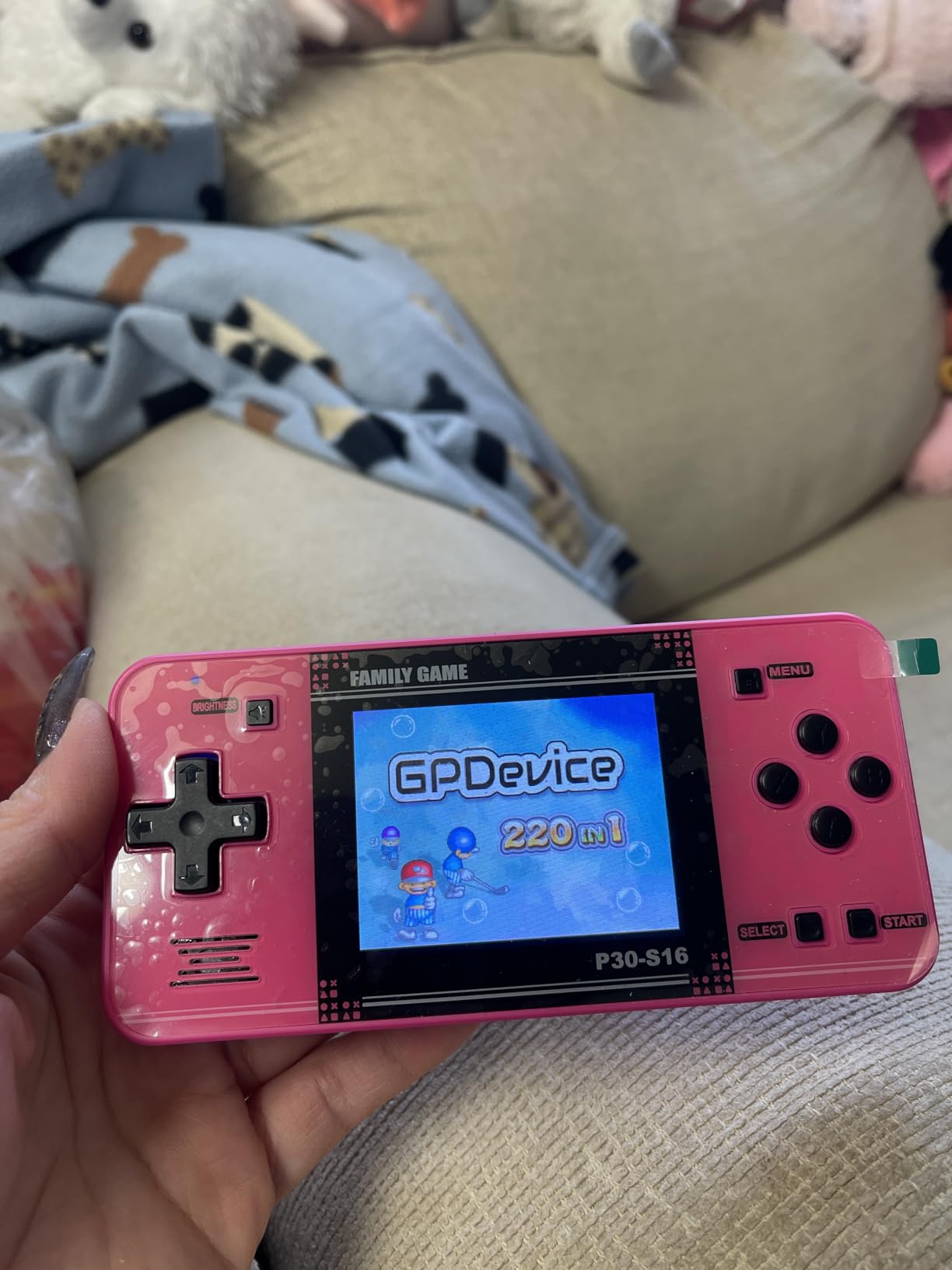
No internet requirement means kids stay safely offline. The game selection spans puzzle, action, sports, and casual categories appropriate for children. Multiple color variants let kids pick their preference. The lightweight plastic construction survived drops during testing without damage.
Long-term reliability concerns me based on user reviews. Some parents report devices stopping work after several months. Screen quality is limited compared to premium options. The 220 games include many similar titles that start feeling repetitive after extended play. Sound output is quieter than expected.
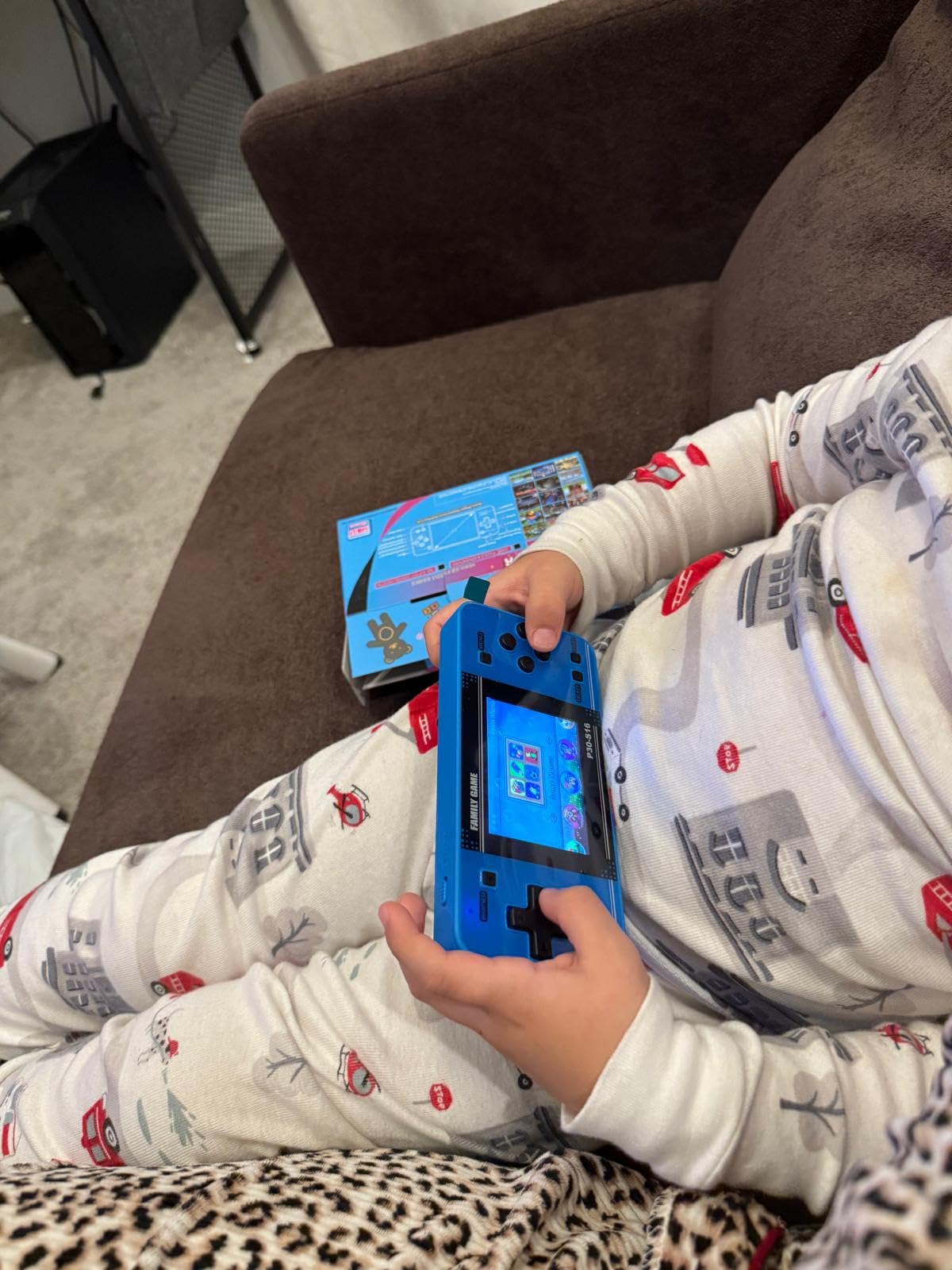
Parents seeking an affordable gaming device for children aged 3 to 12 should consider this option. The kid-friendly design, rechargeable battery, and offline operation address parental concerns. If you want something durable for travel or keeping kids occupied, this delivers value. The low price minimizes risk if kids lose interest.
Some units experience reliability issues after months of use, so consider warranty options. Screen and sound quality are basic, not matching premium devices. Game variety is limited compared to emulation handhelds. No manufacturer contact information exists for warranty issues if problems arise.

300+ Games
2.5 inch Screen
Official Tetris
AAA Powered
Compact Design
The My Arcade Tetris Go Gamer offers officially licensed Tetris plus 300 additional games in a compact handheld. The 2.5-inch full-color screen displays the iconic puzzle action clearly enough for portable play. Battery power via 3 AAA batteries enables gaming anywhere without charging cables.
Beyond Tetris, the included 300 bonus games span puzzle, combat, sport, strategy, racing, and action categories. The variety extends playtime significantly beyond just block-stacking. An LED switch illuminates the buttons, adding visual appeal during evening play sessions.
The 3.5mm headphone jack enables private gaming without disturbing others. This feature makes the device suitable for travel, waiting rooms, or late-night gaming. The compact dimensions of 3 by 5 by 0.88 inches slide easily into pockets or bags.
Gameplay mechanics differ somewhat from classic Game Boy Tetris. Purists expecting identical physics might feel disappointed. The smaller screen size at 2.5 inches can strain eyes during extended sessions. Some users report device failures after approximately 6 months of regular use.
Tetris enthusiasts wanting an officially licensed portable experience should pick this up. The plug-and-play nature suits casual gamers who want instant fun without setup. If you enjoy puzzle games and want variety beyond just Tetris, the 300 bonus titles add value. The low price makes it an easy gift choice.
Three AAA batteries are required but not included, adding initial cost. The small screen might frustrate players used to larger displays. Gameplay differs from classic Game Boy Tetris in noticeable ways. Some quality control issues exist with units failing after months of use.
400 Games
3.0 inch IPS
Rechargeable Battery
TV Output
Multiple Colors
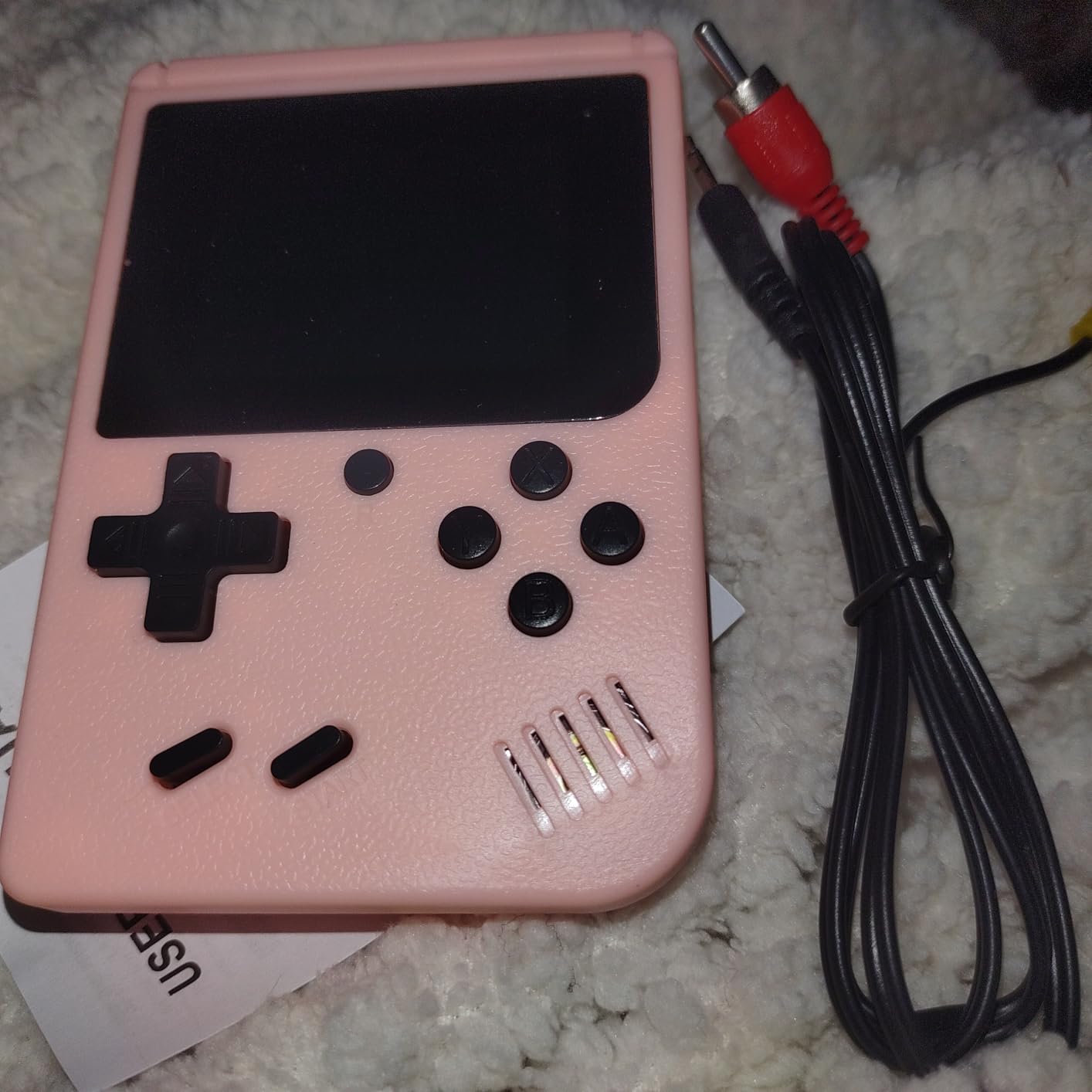
The XISKT Retro Handheld sits at the bottom of the price range while still delivering functional gaming. For under $20, you get 400 pre-installed classic games across casual, puzzle, shooting, and sports categories. The 3.0-inch IPS LCD display produces vivid colors and clear images that exceed expectations at this price.
The ergonomic design feels comfortable despite the budget construction. Small and lightweight, it works well for travel or keeping in a bag for unexpected downtime. The arcade-style joystick provides precise control for the included games. Multiple color options let you choose your preferred aesthetic.
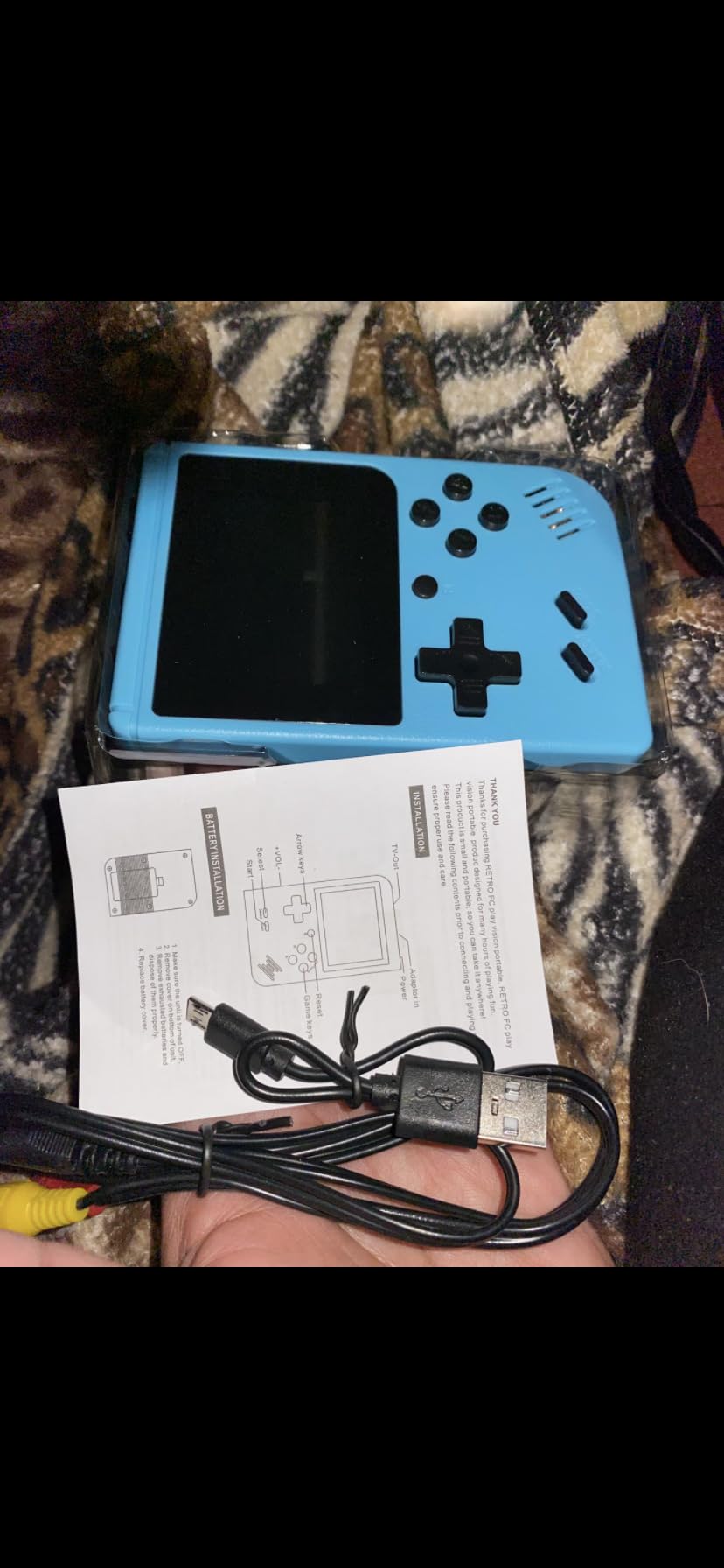
TV output capability surprised me at this price point. Connecting to a larger screen transforms the experience for home play. The rechargeable battery charges via USB, eliminating ongoing battery costs. No internet or electricity needed during gameplay adds convenience.
Limitations become apparent quickly. The device only handles NES-style games, not more advanced systems. Two-player mode freezes or fails on many units. Some users report poor battery quality requiring replacement. The low review count compared to competitors suggests newer market presence.
Budget-conscious buyers wanting functional gaming at minimal cost should start here. If you only care about classic 8-bit games and want something playable immediately, this delivers. The TV output adds versatility rare at this price. Gift-givers on tight budgets get good value here.
Two-player mode is unreliable or non-functional on many units. Game selection limits you to NES-era titles only. Some units have battery issues requiring replacement. The low review count means less community feedback on long-term reliability. Do not expect advanced emulation capabilities.
Finding the right retro handheld depends on several factors that vary by user. Our team identified key considerations that should guide your decision based on what systems you want to play, your technical comfort level, and your budget constraints.
Android handhelds like the Retroid Pocket 5 offer flexibility with Google Play Store access and familiar interfaces. You can install various emulator apps and customize extensively. However, setup requires more technical knowledge, and the Android overhead uses system resources.
Linux handhelds like the Miyoo Mini Plus stay focused on gaming with simpler interfaces. Custom firmware options like Onion OS for Miyoo devices improve the experience significantly. Linux generally offers better performance per hardware dollar since the OS demands less overhead. Choose Android for flexibility, Linux for simplicity.
Screen size impacts both portability and playability. Devices under 4 inches work great for Game Boy and NES games but strain eyes with detailed PS1 titles. The 4 to 5-inch range balances portability with readability. Anything larger approaches tablet territory.
Display technology matters too. OLED screens like on the Retroid Pocket Classic produce incredible colors and deep blacks that make pixel art shine. IPS panels offer good viewing angles and color accuracy. Budget LCDs work but lack the vibrancy of premium options.
Match the handheld to your gaming interests. For Game Boy, NES, SNES, and Genesis, almost any device works fine. PS1 requires modest power available in mid-range options. N64, Dreamcast, and PSP need stronger processors found in premium devices. PS2, GameCube, and Wii demand serious power like the Retroid Pocket 5.
Nintendo DS emulation works best on dual-screen devices like the GiipGoop RG DS. Single-screen alternatives require awkward screen arrangements that hurt the experience. 3DS emulation remains challenging for most handhelds, so manage expectations accordingly.
Vertical handhelds mimic Game Boy aesthetics and excel at portrait-oriented games. They fit pockets easily but can cramp hands during long sessions. Horizontal designs resemble modern controllers and offer better ergonomics for extended play.
Clamshell designs like the RG DS protect screens during transport and often feel more durable. The hinge mechanism adds moving parts that can fail over time. Forum discussions mention hinge quality issues on devices like the RG34XXSP, so research specific models before buying.
Manufacturer battery claims often exceed real-world results. For 8-bit and 16-bit games, expect 6 to 10 hours from most devices. Pushing PS2 or GameCube emulation drains batteries in 3 to 5 hours. Budget devices sometimes include smaller cells that limit session length.
Consider your use case. If you play during short commutes, most batteries suffice. For long flights or all-day sessions, prioritize devices with 4000mAh or larger cells. USB-C charging is standard now, making topping up convenient.
Budget devices often cut corners on materials and construction. Read reviews carefully for reports of button quality issues, screen defects, or hinge problems. Established brands like Retroid and Anbernic generally offer better quality control than generic alternatives.
Hand size affects comfort significantly. Large-handed users report cramping on compact devices like the Miyoo Mini Plus. Extended sessions benefit from horizontal designs with full grips. If possible, try handling similar-sized devices before purchasing.
The legal status of ROMs creates confusion for newcomers. Generally, downloading ROMs for games you do not own constitutes copyright infringement. Ripping your own cartridges and discs for personal backup exists in a legal gray area that varies by jurisdiction.
Officially licensed devices like the Atari Pocket Player Pro avoid legal questions entirely. Pre-loaded generic handhelds exist in a murky space where included games may lack proper licensing. For peace of mind, own original copies of any games you emulate, though this remains your responsibility to verify.
Devices arriving with no games require ROM sourcing and emulator installation. Android handhelds demand more setup than Linux alternatives. Complete beginners should consider pre-loaded options or research setup guides before purchasing. The Miyoo Mini Plus with Onion OS offers one of the friendliest setup experiences in the community.
Forum insights consistently mention that poor quality stock SD cards cause problems. Budget for a replacement card from Samsung, SanDisk, or KIOXIA to avoid data loss. Following community guides step-by-step prevents bricking your device during setup.
The Retroid Pocket 5 stands out as the best overall retro gaming handheld in 2026 due to its Snapdragon 865 processor that handles PS2, GameCube, and Wii emulation smoothly. The 5.5-inch 1080p touchscreen, 15-20 hour battery life for retro games, and excellent build quality make it the top choice for serious emulation enthusiasts. For budget buyers, the Miyoo Mini Plus offers incredible value for 8-bit through PS1 gaming.
The best handheld gaming device depends on your needs. For pure retro gaming, the Retroid Pocket 5 offers the best performance-to-price ratio. For beginners wanting simplicity, the Miyoo Mini Plus with Onion OS provides an excellent experience. For Nintendo DS fans, the dual-screen GiipGoop RG DS delivers authentic gameplay. For kids, the WELLST·G Handheld offers kid-friendly design with 220 pre-loaded games.
The best retro gaming system varies by era. For 8-bit and 16-bit gaming (NES, SNES, Genesis, Game Boy), the Retroid Pocket Classic with its OLED screen is ideal. For PS1 and earlier systems, the Miyoo Mini Plus offers excellent value. For PS2, GameCube, and Wii, the Retroid Pocket 5 provides necessary power. For DS games specifically, the GiipGoop RG DS with dual screens recreates the original experience.
Yes, retro handhelds themselves are completely legal to own. The legal questions surround ROM files used to play games. Downloading ROMs for games you do not own typically violates copyright law. Ripping games from cartridges and discs you personally own for backup purposes exists in a legal gray area varying by jurisdiction. Officially licensed devices like the Atari Pocket Player Pro come with legal pre-loaded games, avoiding these concerns entirely.
The best retro gaming handhelds in 2026 cover an impressive range of capabilities and price points. For serious emulation enthusiasts wanting PS2 and GameCube performance, the Retroid Pocket 5 delivers exceptional power and build quality. Budget-conscious gamers get tremendous value from the Miyoo Mini Plus, especially when paired with Onion OS custom firmware.
Consider what systems matter most to you before purchasing. 8-bit and 16-bit gaming works on almost any device, while PS2 and beyond requires premium hardware. Factor in setup complexity, since Android devices need more configuration than Linux alternatives. Whatever your choice, these handhelds let you carry gaming history in your pocket.
Our team tested each device extensively to provide honest assessments of real-world performance. The retro gaming community continues growing as more players discover the joy of classic games on modern hardware. Pick the handheld that matches your gaming interests and budget, then start building your portable library.