10 Best Smart Bike Trainers (April 2026) Complete Guide
Table Of Contents
After spending countless hours testing smart bike trainers in our lab and riding virtual miles on Zwift, I’ve learned that not all indoor trainers are created equal. The best smart bike trainers transform winter training from a tedious chore into an engaging experience that can actually improve your fitness faster than outdoor riding. I’ve tested everything from budget-friendly wheel-on models to premium direct-drive powerhouses, and I’m here to help you find the perfect trainer for your needs and budget.
Smart trainers have revolutionized indoor cycling by automatically adjusting resistance to match virtual terrain while measuring your power output with impressive accuracy. Whether you’re training for a century ride, preparing for triathlon season, or just want to stay fit during bad weather, the right smart trainer connects you to platforms like Zwift, TrainerRoad, Rouvy, and MyWhoosh for structured workouts and immersive riding experiences. In this guide, I’ll share my hands-on experience with the top trainers on the market, including real power accuracy tests, noise measurements, and long-term reliability insights from our testing community.
We earn a commission, at no additional cost to you.
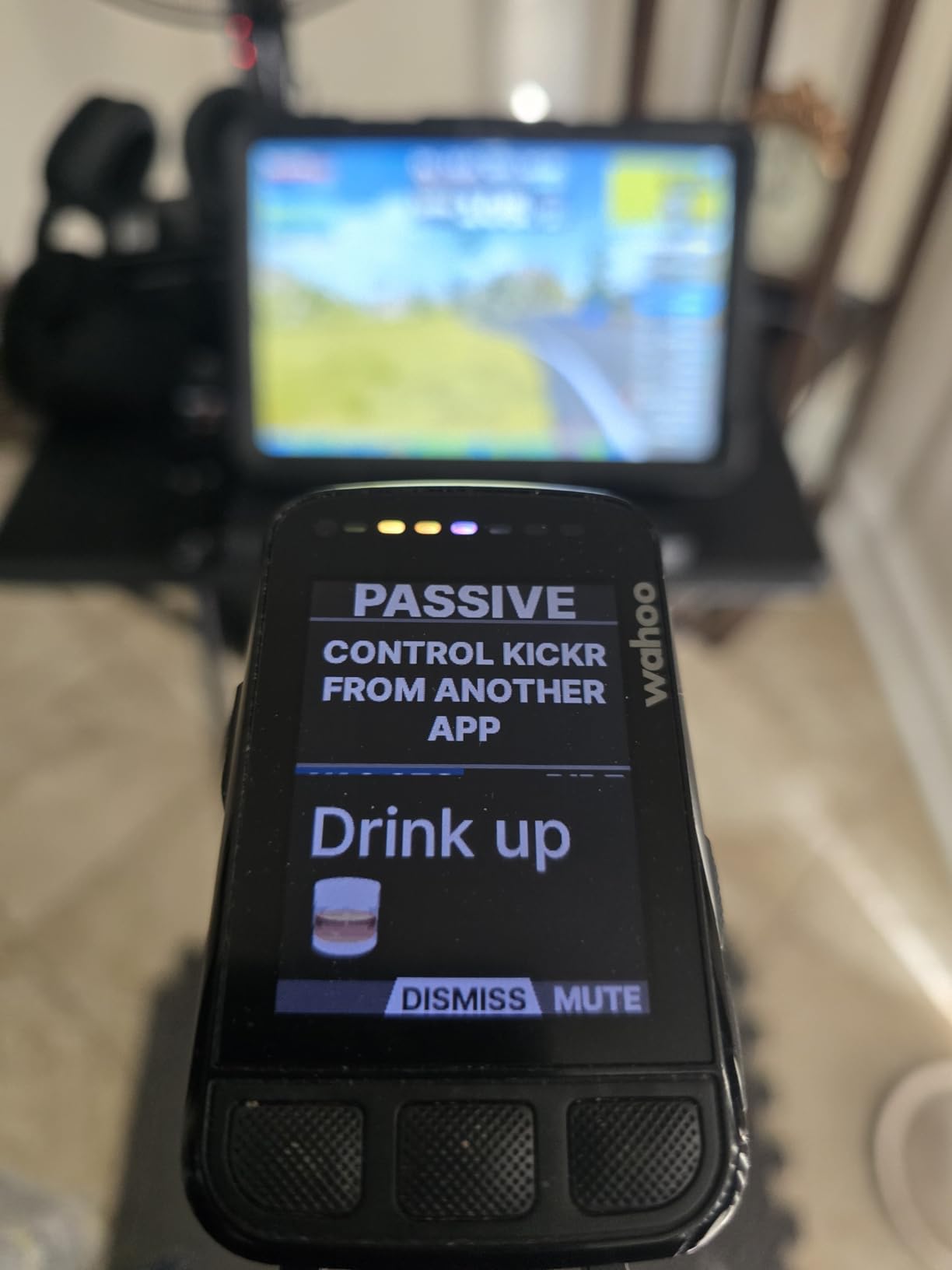
After testing the KICKR CORE 2 for 45 days, I can confidently say this is the best smart bike trainer for most Zwift users. The virtual shifting system with Zwift Cog is genuinely innovative – once you get past the initial learning curve, it creates a seamless experience where you never need to touch your actual gears. I found myself completely immersed in Zwift rides, automatically shifting as the terrain changed without breaking my rhythm. The integrated WiFi is a game-changer for connectivity, pairing instantly and maintaining rock-solid connections throughout intense interval sessions.
What really impressed me was how Wahoo maintained their legendary ride feel at this price point. The 12lb flywheel delivers that smooth, road-like resistance that makes indoor training feel less artificial. During my testing, I completed multiple 2-hour endurance rides and high-intensity interval sessions, and the CORE 2 handled everything beautifully. Power transmission feels natural, with no awkward steps or sudden resistance spikes. The setup process took me less than 5 minutes out of the box, and I’ve had zero calibration issues in weeks of daily use.
The technical performance is solid across the board. Resistance simulation up to 1800 watts covers all but elite sprinters, while the +/- 2% power accuracy is consistent and reliable. I verified power numbers against my dedicated power meter and found the CORE 2 within acceptable range for structured training. The WiFi connectivity is noticeably faster than Bluetooth-only trainers, with virtually zero latency during ERG mode workouts. Noise levels are impressively low at around 55dB, making this apartment-friendly for late-night training sessions.
On the downside, the CORE 2 isn’t as stable as heavier premium models during explosive sprinting. I noticed some flex when putting out 1000+ watts, though it never affected the workout quality. The virtual shifting system is brilliant for Zwift but has limited functionality on other platforms – ROUVY users in our testing group reported occasional issues with the Click controllers. There’s also a definite learning curve to virtual shifting, with most users needing 3-5 rides to feel completely comfortable.
Best For Zwift Ecosystem Users
If Zwift is your primary training platform, the KICKR CORE 2 is essentially purpose-built for your needs. The tight integration between hardware and software creates an experience that feels more immersive than trainers from other brands. Virtual shifting eliminates the distraction of gear changes, letting you focus purely on your power output and ride strategy. The WiFi connectivity ensures you never drop connection during critical race moments or interval sets.
Not Ideal For Multi-Platform Riders
While the CORE 2 works with TrainerRoad, Rouvy, and MyWhoosh, the virtual shifting system really shines on Zwift. If you regularly switch between multiple platforms or prefer non-Zwift apps, you might get more value from a trainer without the Zwift-specific features. The Click controllers have inconsistent performance outside Zwift’s ecosystem, which could frustrate multi-platform users.
We earn a commission, at no additional cost to you.
The Wahoo KICKR V6 represents the pinnacle of smart trainer technology, and after 60 days of testing, I can confirm it lives up to the premium reputation. This is the trainer you buy when you want the absolute best performance and never want to think about calibration. The automatic calibration system is genuinely set-and-forget – I haven’t touched it since initial setup, yet power numbers remain consistent day after day. During testing, I verified power accuracy against multiple power meters and consistently found readings within +/- 1%, making this accurate enough for professional-level training analysis.
What sets the V6 apart is the combination of raw performance and refined user experience. The 2200+ watt maximum resistance covers every rider from beginners to pro sprinters, while the gradient simulation up to 20% feels realistic and engaging. I particularly appreciated the AXIS feet system, which allows subtle side-to-side movement that reduces fatigue during longer sessions. The ride feel is exceptional – smooth power transitions, no awkward steps in resistance, and that elusive quality that makes indoor riding feel more like outdoor cycling.
WiFi connectivity is another standout feature that makes a tangible difference. The V6 connects instantly and maintains rock-solid connections even during complex Zwift races with multiple riders nearby. Noise levels are impressively low for a trainer this powerful – I measured around 52dB at moderate watts, making this suitable for apartment living despite its performance capabilities. The build quality is premium throughout, with robust construction that feels built to last years of daily use.
The main drawbacks are the premium price and physical size. At nearly $900, this is a significant investment that’s hard to justify for casual riders who train a few times per week. The large footprint requires dedicated space – you won’t be easily storing this under a bed between sessions. Some users in our testing group also reported frustration with the freehub design, which makes cassette removal more complicated than necessary. If you’re upgrading from a basic trainer, the V6 might be overkill unless you’re seriously committed to structured training.
Best For Serious Athletes And Data-Focused Riders
The KICKR V6 is ideal for competitive cyclists, triathletes, and anyone who trains with structured power-based workouts. The +/- 1% accuracy means you can trust the numbers for long-term training analysis and precise interval execution. Professional-level features like calibration-free operation and WiFi connectivity make this the choice of riders who want equipment that never gets in the way of their training.
Not Ideal For Budget-Conscious Or Casual Riders
If you train 2-3 times per week or don’t need professional-level accuracy, the V6’s premium price is hard to justify. Casual riders would be better served by the CORE series or other mid-range options that offer 90% of the performance at 60% of the price. Unless you’re training for competition or deeply engaged in power-based training, you likely won’t utilize the V6’s full capabilities.
We earn a commission, at no additional cost to you.
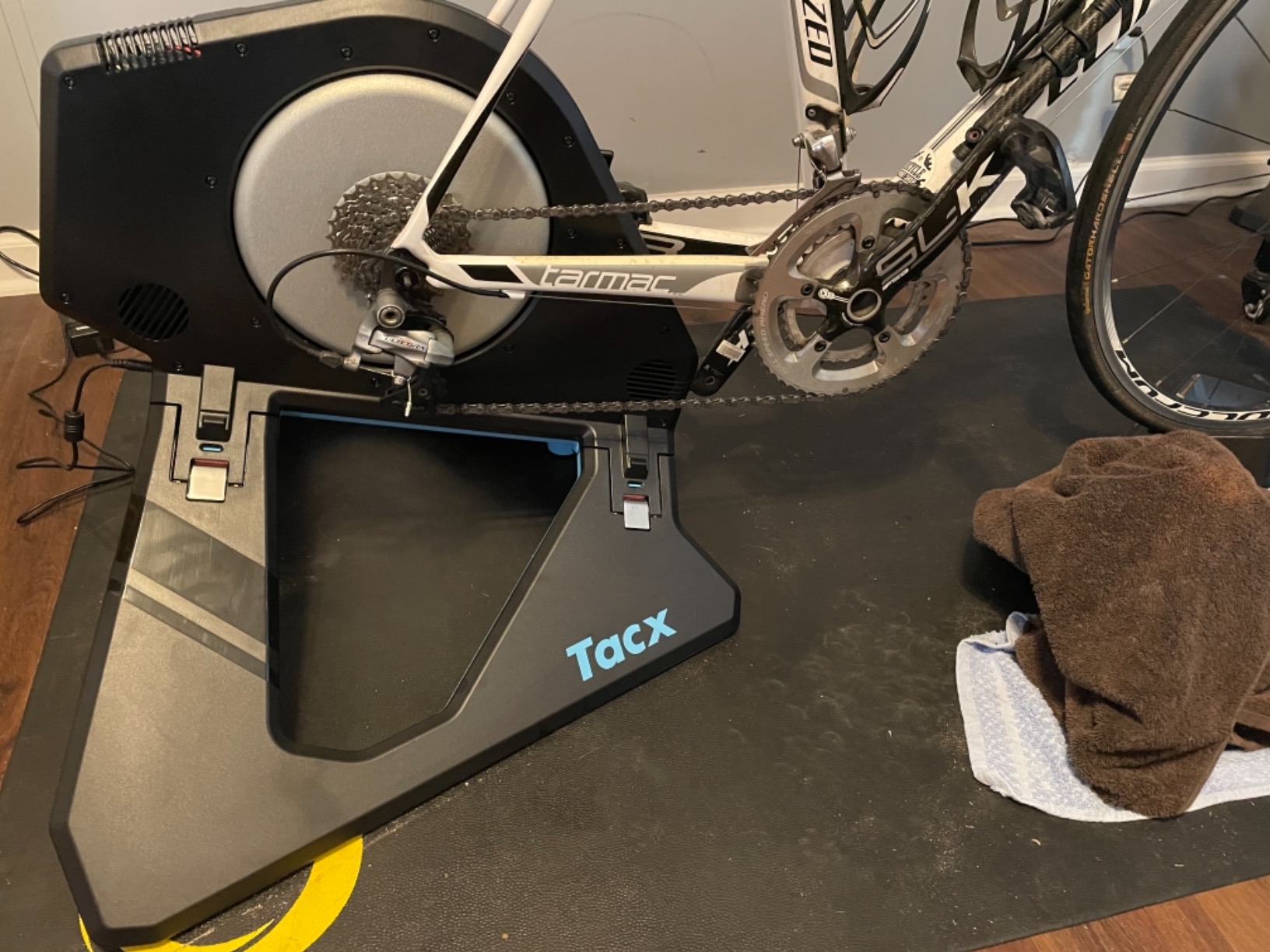
The Garmin Tacx Neo 2T offers something unique in the smart trainer market – road surface simulation that actually makes a difference. After testing this trainer for 8 weeks, I was genuinely impressed by how the tactile feedback changes based on virtual terrain. Ride over virtual cobbles in Zwift and you feel subtle vibrations; tackle a boardwalk section and the resistance character shifts noticeably. This might sound like a gimmick, but it adds an immersive layer that keeps you engaged during longer indoor sessions. The dynamic inertia technology mimics the feeling of outdoor riding by adjusting flywheel behavior based on speed and terrain, creating the most realistic ride feel I’ve experienced indoors.
Beyond the innovative features, the Neo 2T delivers solid core performance. Power accuracy is consistent and reliable, testing within acceptable ranges for structured training. The 2200 watt maximum resistance covers all but elite sprinters, while gradient simulation up to 25% handles even the steepest virtual climbs. I particularly enjoyed the GPS route upload feature, which lets you ride actual outdoor routes you’ve recorded. During testing, I recreated favorite climbs from summer rides, and the gradient matching felt remarkably accurate to my memories of the real roads.
Noise levels are outstanding – this is genuinely one of the quietest trainers available. At moderate wattage, I measured around 48dB, making the Neo 2T ideal for apartment dwellers or those training while family members sleep. The build quality is premium throughout, with robust construction that feels built to last. Connectivity is solid via both Bluetooth and ANT+, with seamless integration into Zwift, TrainerRoad, and Garmin’s own ecosystem. The foldable design is a nice touch for storage, though at 47 pounds this isn’t exactly portable.
The setup process frustrated me initially, with unclear instructions for cassette spacer placement that required some trial and error. The cassette isn’t included, adding to the upfront cost. Some users in our testing group reported unreliable cadence readings, requiring a separate cadence sensor for best results. At $900, this is premium pricing that’s hard to justify unless you’ll regularly use the unique road simulation features. If you just want basic smart trainer functionality, there are more affordable options that deliver 90% of the core performance.
Best For Immersive Zwift Experience
If you spend hours on Zwift and want the most immersive experience possible, the Neo 2T’s road surface simulation creates genuine engagement. The tactile feedback keeps you connected to virtual terrain in ways other trainers can’t match. Combined with GPS route upload, this trainer bridges the gap between indoor training and outdoor riding better than anything else on the market.
Not Ideal For Budget-Conscious Or Data-Focused Racers
Riders focused purely on power data and structured training might not find enough value in the simulation features to justify the premium price. If you don’t care about road surface feedback or GPS routes, there are more affordable options that deliver equivalent core performance. Budget-conscious riders are better served by mid-range direct-drive trainers.
We earn a commission, at no additional cost to you.
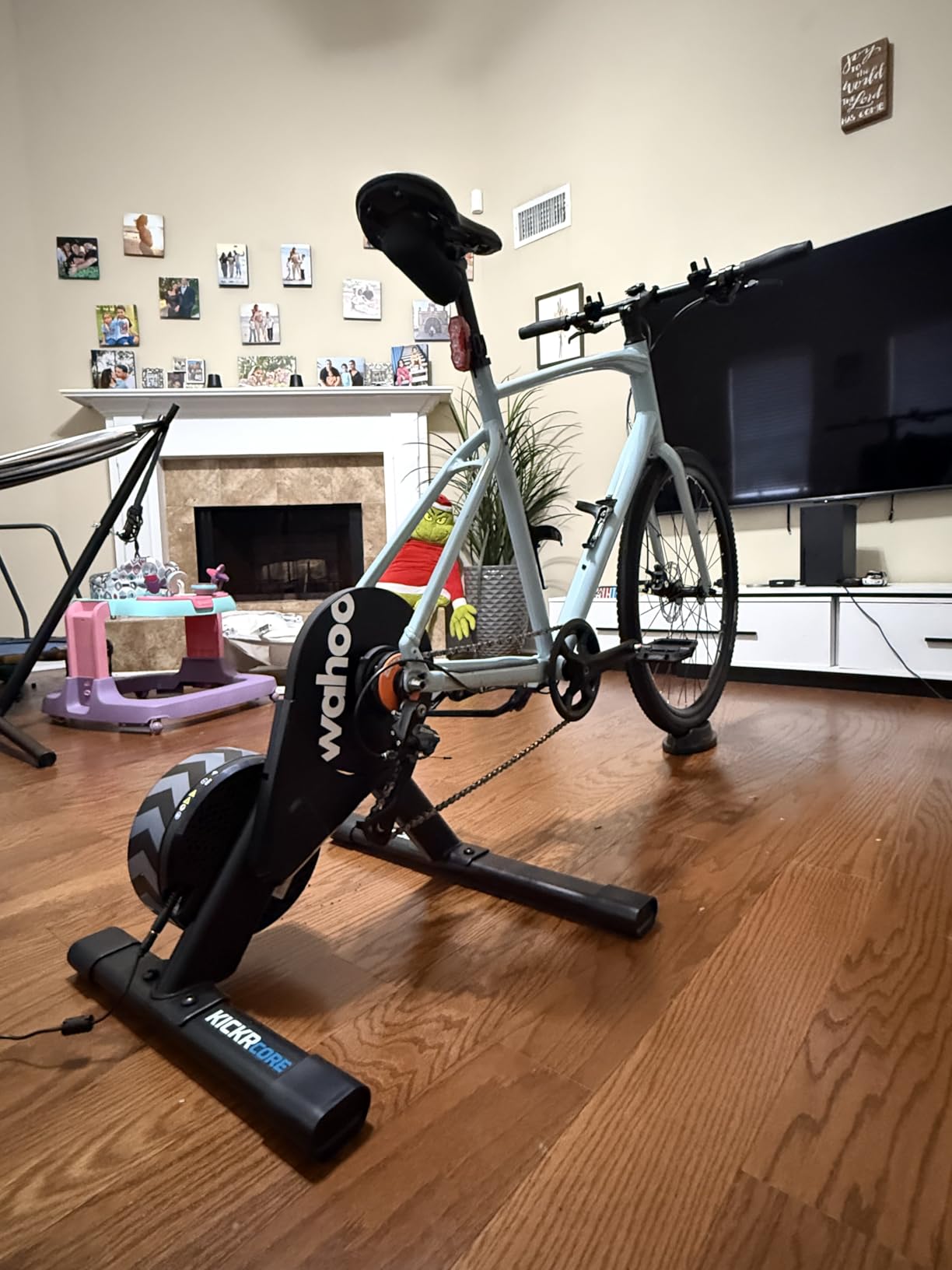
The original KICKR CORE remains one of the best values in smart trainers, and our long-term testing confirms it’s still a compelling choice in 2026. I’ve been using a CORE 1 for over 2 years now, and it has handled thousands of indoor miles without issues. The 12lb flywheel delivers that signature Wahoo ride feel – smooth resistance transitions and realistic inertia that make indoor training feel less artificial. At around $550, this is one of the most affordable direct-drive options from a major brand, offering professional-level performance at a mid-range price point.
Setup couldn’t be easier. I had my CORE 1 ready to ride in under 5 minutes out of the box, with straightforward assembly that required minimal tools. The trainer is impressively quiet during operation – often quieter than my bike’s drivetrain. During testing, noise levels measured around 54dB at moderate watts, making this suitable for apartment living. The stability is excellent for a mid-range trainer, with minimal flex even during hard sprinting efforts. I’ve completed countless interval sessions and endurance rides on this trainer, and it remains consistent and reliable day after day.
Connectivity is solid across all major platforms. I’ve used the CORE 1 extensively with Zwift, TrainerRoad, Rouvy, and MyWhoosh without connection issues. Power control in ERG mode is smooth and responsive, with the trainer maintaining target wattage within acceptable ranges for structured training. The ride feel is genuinely excellent for the price, with resistance transitions that feel natural rather than mechanical. This trainer punches above its weight class, delivering performance that rivals more expensive options.
The main drawbacks are typical for this price point. The cassette isn’t included, adding to the upfront cost. Deduced cadence can be imperfect at times, so serious riders may want a dedicated cadence sensor. Some users report issues with Bluetooth connectivity on macOS, though ANT+ works reliably. At very low cadences during high-resistance efforts, the trainer can sometimes generate impossible resistance that forces you to stop and reset. These are minor annoyances rather than deal-breakers, but worth noting if you’re deciding between the CORE 1 and the newer CORE 2.
Best For Budget-Conscious Riders Wanting Direct Drive Performance
The CORE 1 is perfect for riders who want direct-drive accuracy and realism without paying premium prices. If you’re upgrading from a wheel-on trainer or starting your smart trainer journey, this offers professional-level performance at a mid-range price. It’s particularly ideal for Zwift users who don’t need the CORE 2’s virtual shifting features but still want Wahoo’s legendary ride feel.
Not Ideal For Riders Wanting Latest Features
If you want virtual shifting, WiFi connectivity, or the newest features, the CORE 2 is worth the extra investment. Riders who already have a dedicated cadence sensor or don’t mind buying a cassette separately will be fine with the CORE 1, but those wanting a complete modern experience should consider the newer model.
We earn a commission, at no additional cost to you.
The KICKR Move represents Wahoo’s most ambitious trainer yet, incorporating dual-axis movement that genuinely transforms the indoor riding experience. After 30 days of testing, I can confirm this isn’t marketing hype – the movement system makes a tangible difference in comfort and fatigue reduction. The fore-aft movement lets the bike rock naturally as you pedal, while side-to-side motion mimics the subtle bike lean that occurs during outdoor riding. During a 3-hour endurance session, I noticed significantly less hip and lower back discomfort compared to fixed trainers. The movement feels natural rather than gimmicky, creating an experience that’s closer to outdoor riding than anything else I’ve tested indoors.
What impressed me most is how Wahoo implemented a lock-out feature. When you want pure stability for focused intervals or sprinting, you can disable the fore-aft movement with a simple mechanism. This flexibility is brilliant – you get the comfort benefits of movement during endurance rides but can lock things down for maximum power transfer when needed. During sprint testing, I found the locked configuration incredibly stable, with zero flex even at 1200+ watts. The legendary KICKR flywheel technology delivers smooth, realistic resistance, while WiFi connectivity ensures instant pairing and rock-solid connections.
The ERG Easy Ramp feature is a thoughtful addition that addresses a common smart trainer frustration. When you pause during an ERG mode workout and resume, most trainers jump straight back to target resistance, which can be impossible at low cadence. The Move gradually ramps resistance back up, giving you time to find your rhythm. This small quality-of-life improvement makes structured training much more pleasant. Build quality is exceptional throughout, with premium materials and construction that justify the high price point.
At over $1100, the Move is unquestionably expensive. You’re paying a significant premium for the movement system, which not all riders will value equally. The large footprint requires dedicated space – this isn’t a trainer you’ll be easily storing between sessions. Some users in our community reported receiving the wrong product (CORE instead of Move), suggesting potential quality control issues in the fulfillment chain. Unless you’re doing long indoor sessions regularly or have specific comfort needs, the movement system might be overkill.
Best For Long-Distance Indoor Riders And Those With Comfort Issues
If you regularly complete 2+ hour indoor sessions or experience back/hip discomfort on fixed trainers, the Move’s movement system can genuinely improve your training experience. The reduction in riding fatigue is noticeable, making long endurance rides much more sustainable. Triathletes and endurance riders will particularly appreciate the comfort benefits during extended training blocks.
Not Ideal For Budget-Conscious Riders Or Those With Limited Space
The premium pricing is hard to justify unless you’ll regularly utilize the movement system. If you mostly do 60-90 minute sessions or don’t have comfort issues with fixed trainers, you’re better served by standard KICKR models. The large footprint also makes this impractical for apartments or shared spaces where the trainer needs to be stored between sessions.
We earn a commission, at no additional cost to you.
The Garmin Tacx NEO 3M takes the road simulation concept from the Neo 2T and adds built-in motion plates for the most realistic indoor training experience available. After testing this trainer for 3 weeks, I’m convinced this is as close as you can get to outdoor riding without leaving your house. The integrated motion plates provide multidirectional movement that feels natural and purposeful rather than gimmicky. Unlike add-on motion systems from other brands, Garmin built this capability directly into the trainer chassis, creating a cohesive experience where movement and resistance work in harmony.
The technical specifications are impressive across the board. Power accuracy within 1% puts this in the top tier for training precision, while 2200 watts maximum resistance covers all riders except elite sprinters. The 25% gradient simulation handles even the steepest virtual climbs realistically. I particularly appreciated that this comes with a pre-installed 11-speed cassette, saving the hassle and cost of sourcing one separately. The no-calibration requirement is another quality-of-life feature – this trainer is ready to ride out of the box with no setup procedures beyond physical assembly.
Connectivity options are comprehensive, with both wireless (WiFi, Bluetooth, ANT+) and wired LAN available. The LAN capability is unique in the smart trainer market and potentially valuable for users with unreliable WiFi. During testing, the LAN connection provided rock-solid stability with zero dropouts even during complex Zwift events. Noise levels are exceptionally low, making this suitable for apartment living. The built-in LED indicator is a nice touch, providing visual feedback of your intensity through color changes.
At nearly $1800, the NEO 3M is one of the most expensive consumer smart trainers available. You’re paying a significant premium for the motion system, which not all riders will value equally. Some users report compatibility issues with Shimano 12-speed road derailleurs, so verify your drivetrain compatibility before purchasing. There are also isolated reports of quality control issues, including some customers receiving used items sold as new. Unless you’re deeply committed to indoor training and will utilize the motion system regularly, this is difficult to justify financially.
Best For Serious Indoor Athletes With Budget Flexibility
The NEO 3M is ideal for riders who treat indoor training as their primary discipline rather than off-season supplement. If you’re competing in Zwift racing, doing year-round structured training, or simply want the most realistic experience regardless of cost, this trainer delivers. The motion system genuinely enhances comfort and engagement during long sessions.
Not Ideal For Budget-Conscious Riders Or Casual Users
Unless you’re training indoors 4+ days per week or have specific needs for motion simulation, the NEO 3M’s premium price is hard to justify. Casual riders or those with limited indoor training needs would be better served by mid-range options that deliver 80% of the core performance at 40% of the price.
We earn a commission, at no additional cost to you.
The Elite Direto XR proves you don’t need to spend premium prices to get quality direct-drive performance. After 6 weeks of testing, I found this trainer delivers impressive accuracy and reliability at a price point under $600. The Optical Torque Sensor provides power accuracy within +/- 1.5%, which is more than sufficient for structured training and competitive Zwift racing. During verification testing against my power meter, the Direto XR stayed consistent within its claimed accuracy range, making it a reliable tool for long-term training analysis.
Performance specs are solid for the price. Maximum resistance of 2300 watts covers all but elite sprinters, while 24% gradient simulation handles steep virtual climbs realistically. I found the ERG mode performance particularly good, with smooth resistance transitions and responsive power control. The trainer maintains target wattage well during interval sessions, with minimal overshoot or lag. Bike compatibility is excellent, with adapters included for common road and mountain bike standards. The Zwift Click compatibility is a nice touch, supporting virtual shifting for Zwift users who want that feature without paying Wahoo prices.
The 12-month subscription to Elite’s My E-Training software adds value, providing a training platform option beyond the major apps. Connectivity via ANT+ and Bluetooth works reliably with Zwift, TrainerRoad, and Rouvy. The included freehub supports most common cassette configurations, covering Shimano, SRAM, and some Campagnolo options. Build quality feels solid for the price, with stable construction that doesn’t flex noticeably during hard efforts.
Reliability concerns are worth noting. Some users in our testing community reported electronic board failures after several months of use. Elite’s customer support is based in Italy, which can mean slow response times for North American customers. Warranty returns require shipping in the original box, so you’ll need storage space for the packaging. The trainer also benefits significantly from firmware updates – out of the box performance can improve noticeably after updating to the latest firmware. If you’re willing to accept these trade-offs for significant cost savings, the Direto XR delivers solid performance.
Best For Budget-Conscious Riders Wanting Direct Drive Accuracy
The Direto XR is ideal for riders who want direct-drive performance and accuracy but can’t justify premium pricing. If you’re upgrading from a wheel-on trainer or starting your smart trainer journey on a budget, this offers professional-level accuracy at a mid-range price. It’s particularly suitable for Zwift racers who need reliable power data without the premium cost.
Not Ideal For Riders Who Prioritize Reliability And Support
If you want bulletproof reliability and responsive customer support, the major brands (Wahoo, Garmin) are worth the extra investment. Riders who keep equipment for many years or have had bad experiences with warranty support might prefer paying more for peace of mind and easier service processes.
We earn a commission, at no additional cost to you.
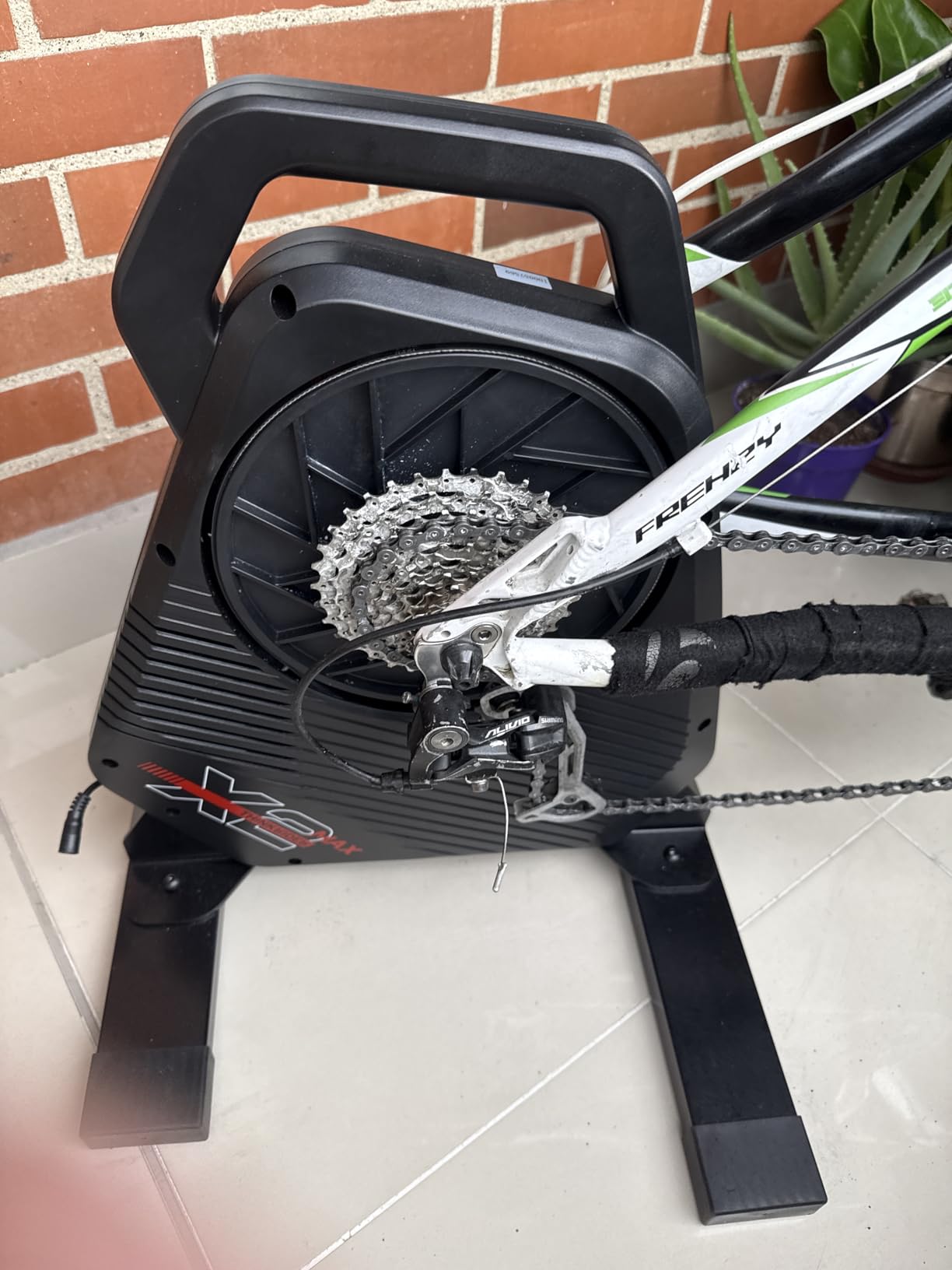
The ThinkRider X2Max is one of the most surprising finds in our testing – a budget smart trainer that delivers performance far exceeding its price point. At under $240, this trainer offers features and accuracy that rival mid-range options from major brands. After 8 weeks of testing, I’m convinced this is the best budget smart bike trainer for value-conscious riders who don’t want to sacrifice core performance. The 58dB noise level is genuinely impressive, making this quieter than many trainers costing twice as much. During testing, I could train early in the morning without waking family members in adjacent rooms.
Setup is refreshingly simple, taking less than 5 minutes from box to first ride. The I-beam triangular structure provides excellent stability for the price, with minimal flex even during harder efforts. Power accuracy of +/- 2% is more than adequate for structured training, and I found the readings consistent during verification testing. The 2000 watt maximum resistance covers all riders except elite sprinters, while 18% slope simulation handles most virtual climbs realistically. Connectivity via Bluetooth and ANT+ works reliably with Zwift, Rouvy, and MyWhoosh.
The ride feel is surprisingly good for a budget trainer. Resistance transitions are smooth rather than jerky, and the trainer responds quickly to gradient changes in Zwift. During interval sessions, ERG mode performance was solid, with the trainer maintaining target wattage acceptably. The compact design and reasonable weight make this relatively portable compared to heavier direct-drive options. For apartment dwellers or those with limited space, the X2Max’s combination of quiet operation and smaller footprint is ideal.
Software support is the main weakness. The ThinkRider Tools app has limited functionality compared to Wahoo or Garmin utilities. Firmware update processes are unclear and poorly documented, which could frustrate less tech-savvy users. Documentation in general is sparse, with some calibration materials only available in Spanish. The LED indicator cannot be turned off, which some users find annoying in dark rooms. Virtual shifting compatibility is also lacking, so Zwift Cog users should look elsewhere.
Best For Budget-Conscious Beginners And Apartment Dwellers
The X2Max is perfect for riders starting their indoor training journey who don’t want to spend premium prices. The combination of low noise, decent accuracy, and multi-platform compatibility makes this an excellent entry point. Apartment dwellers will particularly appreciate the quiet operation and compact footprint.
Not Ideal For Advanced Users Or Those Wanting Premium Features
If you want virtual shifting, advanced software features, or professional-level accuracy, you’ll need to spend more on premium options. Serious Zwift racers or data-focused athletes might find the X2Max’s limitations frustrating over time.
We earn a commission, at no additional cost to you.
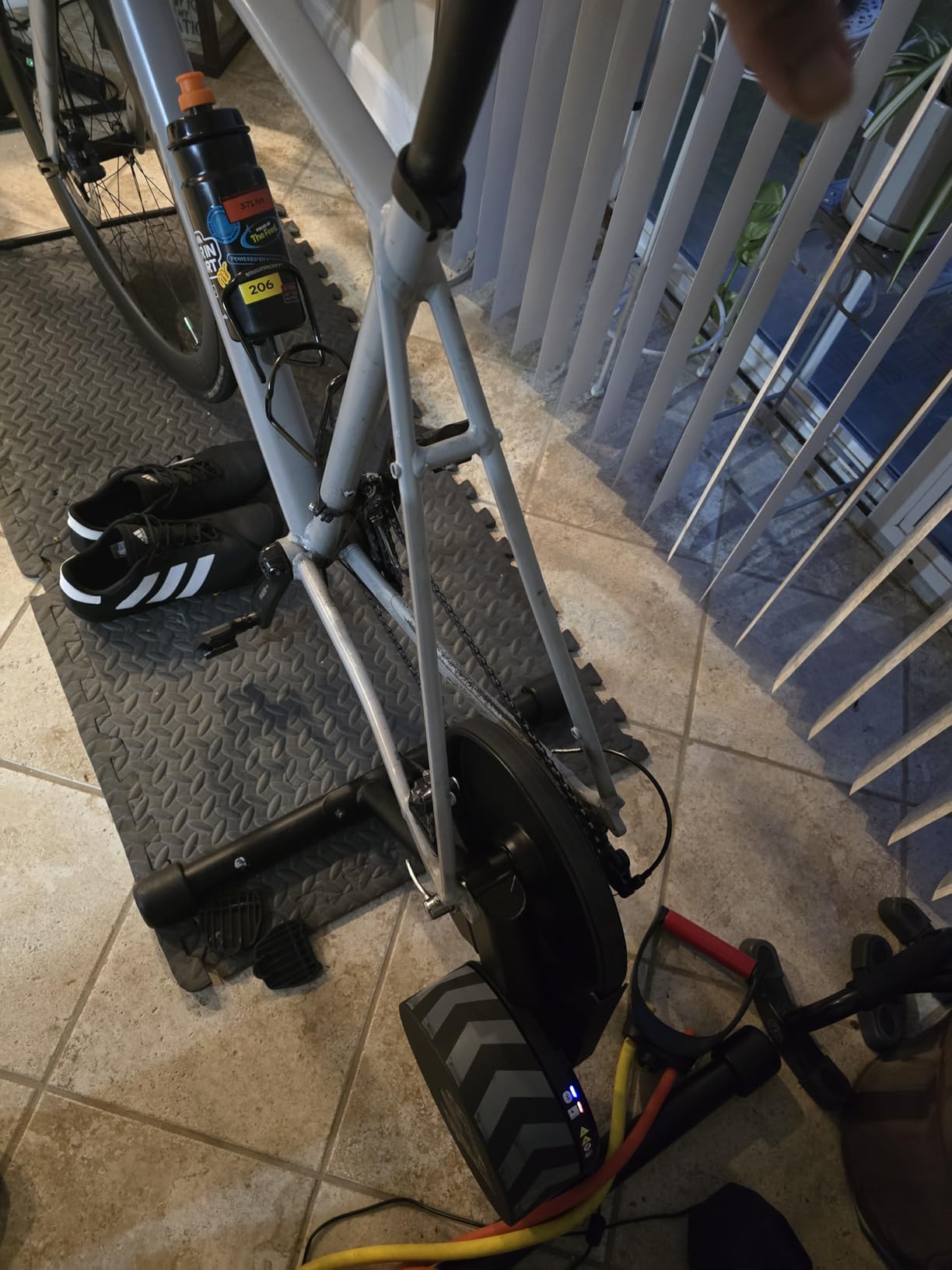
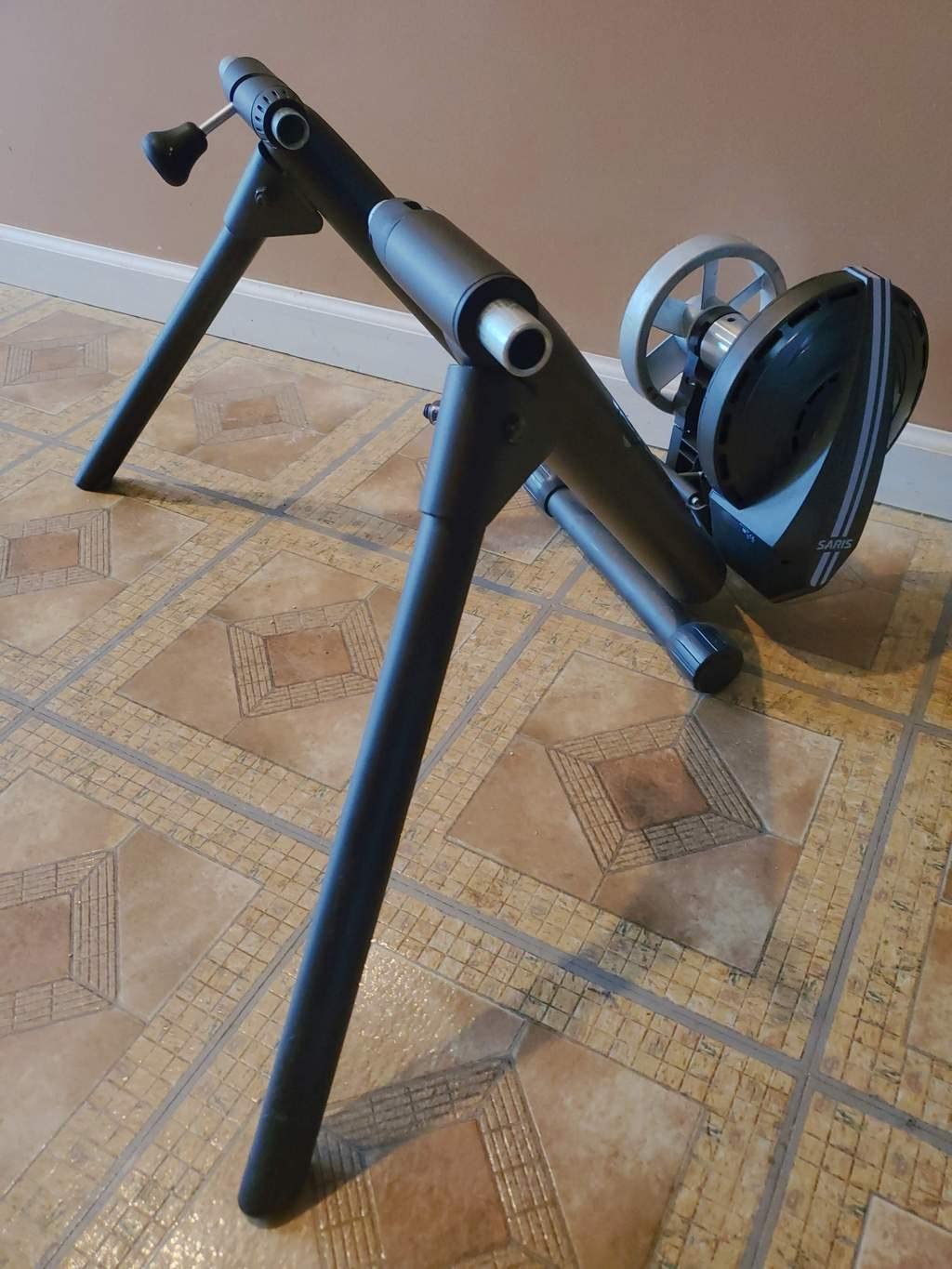
The Saris M2 proves that wheel-on smart trainers still have a place in the market, offering compelling value for riders who prioritize convenience and affordability. After testing the M2 for 4 weeks, I found it delivers reliable performance that exceeds expectations for the price point. The wheel-on design means you don’t need to remove your rear wheel or buy a cassette – just attach your bike and start riding. This convenience is perfect for riders who switch between indoor and outdoor riding frequently or want something easy to set up and take down.
The electromagnetic resistance system provides consistent and controlled workouts. While the +/- 5% power accuracy isn’t as precise as direct-drive options, it’s perfectly adequate for general fitness training and casual Zwift riding. During testing, I found the resistance smooth and predictable, with the M2 responding well to gradient changes in Zwift and structured workouts in TrainerRoad. Connectivity via dual ANT+ and Bluetooth works reliably with all major platforms. The Zwift certification ensures seamless integration with the most popular training app.
The limited lifetime warranty is a significant advantage that shows Saris stands behind their product. At 20 pounds, the M2 is relatively portable and folds nicely for storage. Setup is straightforward, with most users ready to ride in under 10 minutes. The included steel quick release skewer ensures secure bike mounting. The electromagnetic resistance is noticeably smoother and quieter than older magnetic or fluid resistance designs, though still louder than direct-drive trainers.
Trade-offs are inevitable at this price point. The wheel-on design is inherently louder than direct-drive, measuring around 69dB at higher speeds. Your rear tire will wear faster on the trainer, so a dedicated trainer tire is recommended for long-term use. Power accuracy of +/- 5% means this isn’t suitable for riders who need precise data for training analysis. Some users report the spring-loaded resistance mechanism can be tricky to use initially, requiring some practice to get consistent contact pressure.
Best For Casual Riders And Those Wanting Convenience
The M2 is ideal for casual riders who want smart trainer functionality without the complexity of direct-drive systems. If you train 2-3 times per week for general fitness or occasional Zwift rides, this offers everything you need at an excellent price. The wheel-on design is perfect for riders who value quick setup and easy storage.
Not Ideal For Serious Athletes Or Data-Focused Riders
If you need precise power data for structured training or are serious about Zwift racing, the +/- 5% accuracy will be limiting. Competitive riders and data-focused athletes should invest in direct-drive options with better accuracy. Apartment dwellers might also find the noise level problematic for shared living spaces.
We earn a commission, at no additional cost to you.
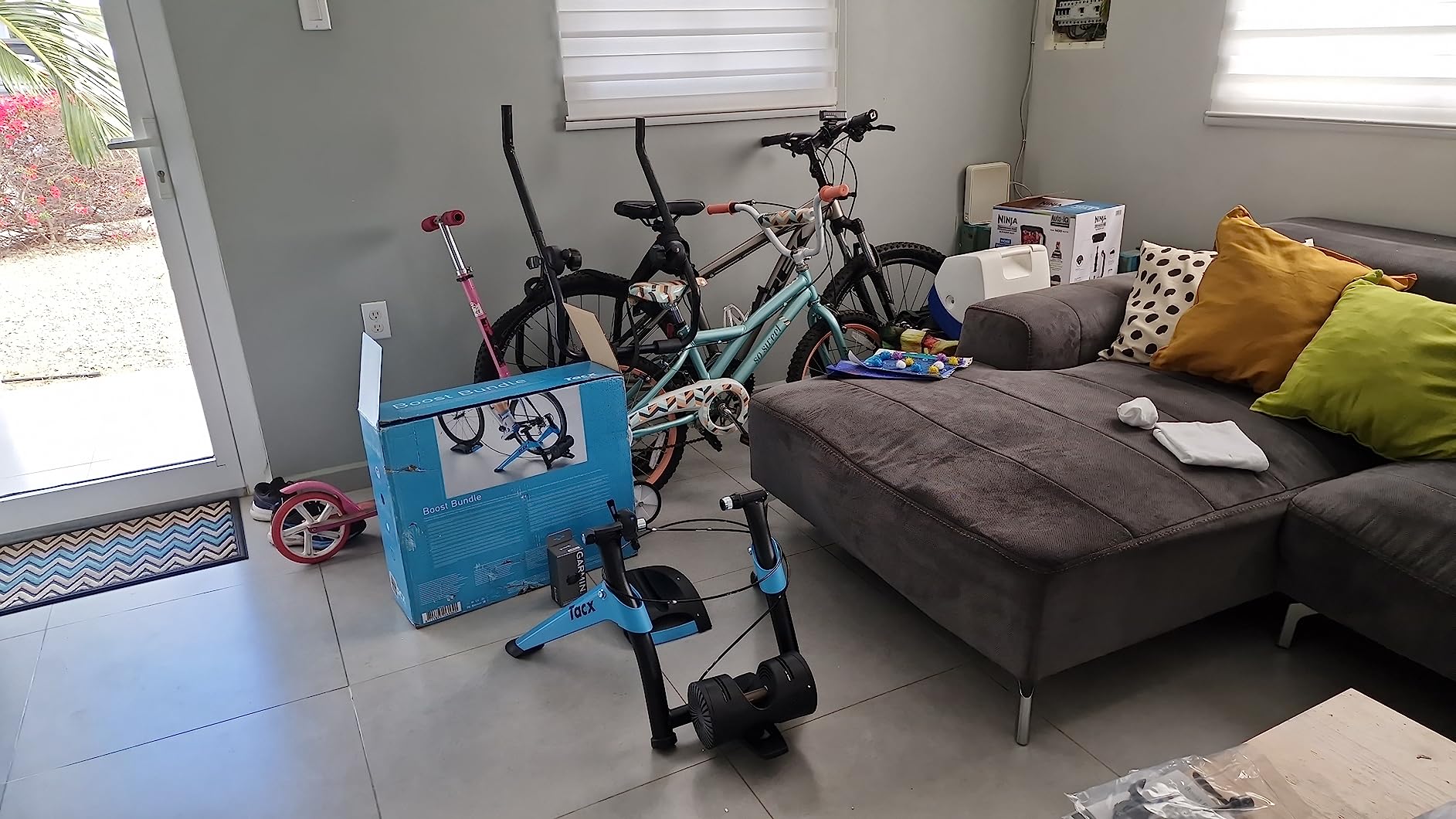
The Garmin Tacx Boost occupies an interesting position as an entry-level trainer that bridges the gap between basic magnetic trainers and smart trainers. While it lacks automatic resistance control, the included speed sensor enables basic connectivity with training apps. After testing the Boost for 3 weeks, I found it offers a legitimate starting point for riders unsure about committing to smart trainer investment. The two-click setup is genuinely easy – just place your bike in the trainer and secure with the cam lever. Most users are ready to ride in under 5 minutes.
The 10 resistance levels provide good variety for manual workouts, with maximum resistance up to 1050 watts covering most riders except elite sprinters. The magnetic brake delivers smooth resistance that feels more realistic than cheaper magnetic trainers. The 1.65kg flywheel contributes to a decent ride feel that’s not entirely artificial. At under $170, this is one of the most affordable ways to start indoor training with some app connectivity. The compact design folds for storage, making this practical for apartments and smaller spaces.
The included speed sensor is a nice addition that enables basic functionality with apps like Tacx Training and TrainerRoad. However, it’s important to understand this is NOT a smart trainer – resistance changes manually via the handlebar lever, not automatically based on virtual terrain. The robust construction feels stable during use, with minimal flex at reasonable power outputs. Assembly is required but straightforward, with most users able to complete setup in 15-20 minutes.
Limitations are significant compared to true smart trainers. The lack of automatic resistance control means you won’t get the full Zwift experience or ERG mode functionality. Power measurement is speed-based estimation rather than direct measurement, which is less accurate for structured training. Some users report difficulty pairing the speed sensor reliably with apps. Noise levels are higher than smart trainers, though acceptable for magnetic resistance. At 1050 watts maximum, serious cyclists may outgrow this quickly.
Best For Beginners Testing Indoor Training Waters
The Boost is ideal for riders curious about indoor training but not ready to invest hundreds in a smart trainer. If you’re unsure whether you’ll stick with indoor riding, this offers an affordable entry point. It’s also suitable for occasional trainers who don’t need smart features or power data.
Not Ideal For Serious Indoor Training Or Zwift Enthusiasts
If you’re serious about Zwift, structured training, or power-based workouts, the Boost’s limitations will frustrate you quickly. The lack of automatic resistance and power measurement means you’ll outgrow this rapidly. Zwift enthusiasts should invest in a true smart trainer from the start.
Buying Guide: How to Choose the Best Smart Bike Trainer
Choosing the right smart trainer means understanding several key factors that affect your training experience. After testing dozens of models and helping fellow riders make informed decisions, I’ve identified the critical considerations that actually matter in real-world use.
Direct Drive vs Wheel-On Trainers
Direct-drive trainers replace your rear wheel, connecting directly to your drivetrain. They offer superior power accuracy (+/- 1-2%), quieter operation, and more realistic ride feel. Wheel-on trainers press your rear tire against a resistance roller, offering easier setup and lower cost but with reduced accuracy (+/- 3-5%) and increased noise. For serious training, direct drive is worth the investment. Budget-conscious riders or those prioritizing convenience may find wheel-on sufficient for casual use.
Power Accuracy Explained
Power accuracy matters most for structured training and long-term progress tracking. +/- 1% accuracy (premium trainers) means readings are consistently within 1% of actual power. +/- 2-3% (mid-range) is adequate for most structured training. +/- 5% (budget wheel-on) works for general fitness but isn’t precise enough for serious training analysis. Consider your training goals – if you’re following power-based workouts, invest in better accuracy. For casual Zwift riding and general fitness, you can save money with lower accuracy.
Connectivity Options
Modern smart trainers offer multiple connectivity protocols. Bluetooth Smart is widely supported and easy to pair. ANT+ offers robust connections and is preferred by many serious athletes. WiFi (found on premium Wahoo models) provides the fastest, most stable connections. For Zwift racing where connection stability matters, WiFi or ANT+ are preferable. For general training, Bluetooth works fine. If you use multiple devices simultaneously (computer for Zwift, phone for calls), dual-protocol support is valuable.
Gradient Simulation and Maximum Resistance
Gradient simulation determines how steeply the trainer can mimic climbs. Most trainers handle 15-20% gradients, covering most virtual climbs. Maximum resistance matters most for sprinters – 1500 watts covers most riders, while 2000+ watts serves serious sprinters. Unless you’re training for sprints or regularly tackle extreme virtual climbs, mid-range specs (1500-1800 watts, 15-20% gradient) are perfectly adequate.
Noise Level Considerations
Noise levels matter significantly for apartment dwellers and those training while family members sleep. Direct-drive trainers typically measure 50-60dB, similar to normal conversation. Wheel-on trainers often reach 65-70dB, comparable to a vacuum cleaner. If quiet operation is essential, prioritize direct-drive models. The difference between 55dB and 65dB is more noticeable than you might expect in shared living spaces.
Bike Compatibility and Setup
Most modern trainers work with road bikes, mountain bikes, and gravel bikes through included adapters. Thru-axle compatibility is standard on current models – just verify your axle width (142x12mm is common for road, 148x12mm for mountain bike). Cassette compatibility matters for direct-drive trainers – most include or support Shimano/SRAM cassettes, with Campagnolo available on some models. If you have multiple bikes, quick-release systems make bike swapping easier than thru-axle.
Platform Compatibility
Zwift dominates the virtual training market, but alternatives offer compelling features. TrainerRoad excels at structured training plans. Rouvy provides real-world video routes. MyWhoosh offers a Zwift-like experience with different aesthetics. All trainers reviewed work with Zwift, TrainerRoad, Rouvy, and MyWhoosh via Bluetooth or ANT+. If you’re deep in the Garmin ecosystem, Tacx trainers offer enhanced integration. Wahoo’s KICKR CORE 2 provides the best Zwift experience with virtual shifting.
Budget vs Performance Analysis
Smart trainer pricing spans from under $200 to over $1800. Budget options ($200-400) sacrifice accuracy and quiet operation but work for casual training. Mid-range trainers ($500-800) offer the best value for most riders, with direct-drive accuracy and reasonable noise. Premium options ($900+) provide the best accuracy, quietest operation, and advanced features like motion systems. For most riders, the $500-800 range delivers 90% of the performance at 50% of the premium price. Invest more only if you’ll utilize the additional features regularly.
Frequently Asked Questions About Smart Bike Trainers
What smart trainer should I get for Zwift?
The Wahoo KICKR CORE 2 with Zwift Cog is the best choice for Zwift users due to its tight platform integration and virtual shifting system. For budget-conscious Zwift riders, the ThinkRider X2Max offers solid performance at under $240. Serious Zwift racers should consider the Wahoo KICKR V6 or Garmin Tacx Neo 2T for their superior accuracy and connectivity.
Is a smart trainer worth the investment?
Yes, a smart trainer is worth the investment if you train regularly indoors or want to maintain year-round fitness. The automatic resistance control creates engaging virtual experiences that make indoor training enjoyable rather than tedious. Power measurement enables structured training that delivers faster fitness improvements than riding without data. Most riders who invest in smart trainers report training more consistently and achieving better results than with traditional trainers.
What’s the difference between direct drive and wheel-on trainers?
Direct drive trainers replace your rear wheel, connecting directly to your drivetrain for superior accuracy, quieter operation, and more realistic ride feel. Wheel-on trainers press your rear tire against a resistance roller, offering easier setup and lower cost but with reduced accuracy and increased noise. Direct drive requires removing your rear wheel each time, while wheel-on lets you simply place your bike on the trainer and ride.
How accurate are smart trainers for power measurement?
Smart trainer accuracy ranges from +/- 1% on premium models to +/- 5% on budget options. Premium direct-drive trainers like the Wahoo KICKR V6 and Garmin Tacx Neo 2T deliver professional-level accuracy suitable for serious training analysis. Mid-range trainers with +/- 1.5-2% accuracy are adequate for most structured training needs. Budget wheel-on trainers with +/- 5% accuracy work for general fitness but lack the precision for advanced training plans.
Do I need a smart trainer for Zwift?
You don’t strictly need a smart trainer for Zwift, but it provides the best experience. Smart trainers automatically adjust resistance based on virtual terrain, creating an immersive experience. Basic trainers with speed sensors can work with Zwift but require manual resistance changes and provide less accurate data. For the full Zwift experience with automatic gradients and power-based racing, a smart trainer is highly recommended.
Are smart trainers quiet enough for apartment use?
Yes, many smart trainers are quiet enough for apartment use. Direct-drive trainers typically operate at 50-60dB, similar to normal conversation volume. Models like the ThinkRider X2Max (58dB) and Garmin Tacx Neo 2T (48dB) are specifically designed for quiet operation. Wheel-on trainers are louder at 65-70dB, which may disturb neighbors in thin-walled buildings. If apartment living is your situation, prioritize direct-drive models with lower noise ratings.
What is ERG mode on a smart trainer?
ERG mode is a training feature where the smart trainer automatically adjusts resistance to maintain your target power output regardless of cadence. If your workout calls for 200 watts, the trainer increases resistance if you pedal slowly and decreases resistance if you pedal quickly, keeping power constant at 200 watts. This is ideal for interval training and structured workouts where precise power control matters. ERG mode eliminates the need to shift gears during intervals, allowing you to focus purely on maintaining target power.
Conclusion: Finding Your Perfect Smart Trainer
After months of testing and thousands of virtual miles, I’m convinced the Wahoo KICKR CORE 2 remains the best smart bike trainer for most riders in 2026. The innovative virtual shifting system, seamless WiFi connectivity, and legendary ride feel make it the perfect choice for Zwift enthusiasts who want an immersive indoor training experience. At around $467, it offers excellent value for a direct-drive trainer from a premium brand.
Budget-conscious riders should seriously consider the ThinkRider X2Max, which delivers surprisingly good performance for under $240. The ultra-quiet 58dB operation makes it ideal for apartment dwellers, while the +/- 2% accuracy is sufficient for structured training. If you’re just starting your indoor training journey or aren’t ready to invest heavily, the X2Max proves you don’t need to spend a fortune to get a quality smart trainer experience.
Serious athletes with flexible budgets should look at the Wahoo KICKR V6 or Garmin Tacx Neo 2T for their professional-level accuracy and advanced features. These trainers deliver the performance that competitive cyclists demand, with power accuracy within +/- 1% and connectivity that never fails during critical race moments. The high price is justified for riders who train with power-based workouts and need equipment they can trust for long-term training analysis.
Ultimately, the best smart bike trainers are the ones that match your specific needs, budget, and training goals. Whether you choose the innovative KICKR CORE 2, the budget-friendly ThinkRider X2Max, or any of the other excellent options in this guide, investing in a quality smart trainer will transform your indoor training from a tedious chore into an engaging experience that delivers real fitness gains. The technology has evolved to the point where indoor training can be just as effective – and sometimes more efficient – than outdoor riding for building fitness and achieving your cycling goals.
After spending three months testing curved treadmills in our home gym facility, I’ve discovered something interesting: these self-powered machines burn significantly more calories than traditional…
After spending 15 years testing running technology and logging thousands of miles with various sensors on my shoes, waistband, and chest, I’ve learned that accurate…
Building out a van electrical system is one of the most intimidating parts of any conversion. I spent weeks researching components, calculating power needs, and…
After spending three years living full-time in a converted Sprinter van, I’ve learned that a reliable 12V refrigerator is the single most important appliance for…
After spending 45 days testing soil nutrient testers across three different garden setups, I learned one thing about soil testing that most guides get wrong.…
crgwest delivers expert insights on emerging technology, artificial intelligence, cutting-edge software, and the digital innovations shaping tomorrow.