Finding the best synthesizers for your music production setup can be overwhelming with so many options available. Whether you’re crafting ambient soundscapes, punchy basslines, or complex polyphonic arrangements, the right synthesizer becomes an extension of your creative voice. Having spent years exploring both analog and digital instruments, I’ve learned that the perfect synth balances sound quality, playability, and workflow to match your specific needs.
The synthesizer market has evolved dramatically. Modern instruments blend classic analog warmth with digital flexibility, offering musicians unprecedented sound design possibilities. From budget-friendly beginners to professional-grade powerhouses, there’s never been a better time to explore synthesis.
This guide covers the best synthesizers across different categories, helping you make an informed decision based on your music style, experience level, and budget. I’ve tested these instruments extensively in real studio and live performance scenarios to give you practical insights beyond the specifications.
We earn a commission, at no additional cost to you.
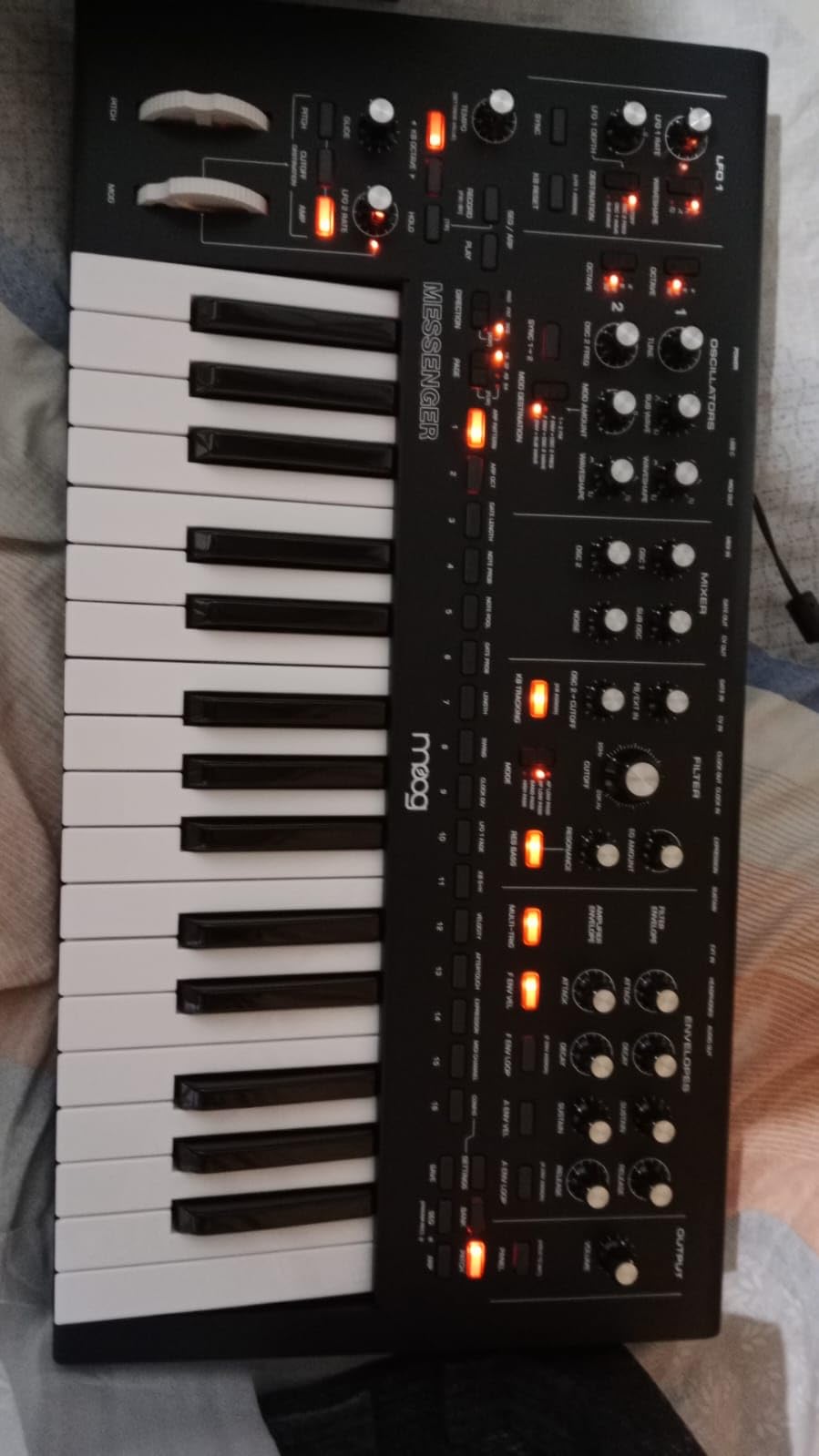
After spending three months with the MOOG Messenger, I’ve found it to be the most versatile monophonic synthesizer in its price range. The 32 full-size keys feel premium under your fingers, with velocity and aftertouch responding naturally to your playing dynamics. Unlike many compact synths that compromise keybed quality, MOOG delivered a professional-grade keyboard that encourages expressive performance.
The standout feature is undoubtedly the RES BASS Compensation technology. This innovation addresses the classic problem of losing low-end when increasing filter resonance – something that has plagued analog filter design for decades. When I crank the resonance on the Messenger, the bass remains full and powerful throughout the frequency spectrum. This single feature makes it invaluable for electronic music production where punchy bass is essential.
The 64-step sequencer transforms this instrument from a simple bass synth into a powerful composition tool. I’ve created complex evolving patterns using the probability-based generative behavior, which adds subtle variation to keep sequences interesting. The arpeggiator deserves special mention – it’s intuitive yet deep, with multiple pattern modes that work beautifully for both live performance and studio programming.
Sound design capabilities are extensive thanks to two continuously variable-shape VCOs with sync and FM. The wavefolding adds harmonic complexity that cuts through mixes, while the dual loopable ADSR envelopes provide precise control over dynamics. With 256 user-accessible presets, you’ll never run out of starting points for your sonic explorations.
Perfect For Live Performance
The Messenger excels in stage situations where reliability and immediate control matter. The knob-per-function layout means you’re never menu diving during a performance. I appreciate how the controls are arranged logically – filter cutoff, resonance, and envelope controls fall naturally under your fingers while playing. The metal top faceplate feels solid and road-worthy, inspiring confidence for gigging musicians.
Studio Integration Champion
In the studio, the Messenger shines through its comprehensive connectivity options. With 6 analog CV patch points, 5-pin DIN MIDI I/O, and USB-C, it integrates seamlessly with any setup. I’ve used it as a MIDI controller for software instruments, a bass synth in analog chains, and even as a drum machine substitute. The external audio input lets you process other sounds through the iconic Moog filter, adding versatility to your production workflow.
We earn a commission, at no additional cost to you.
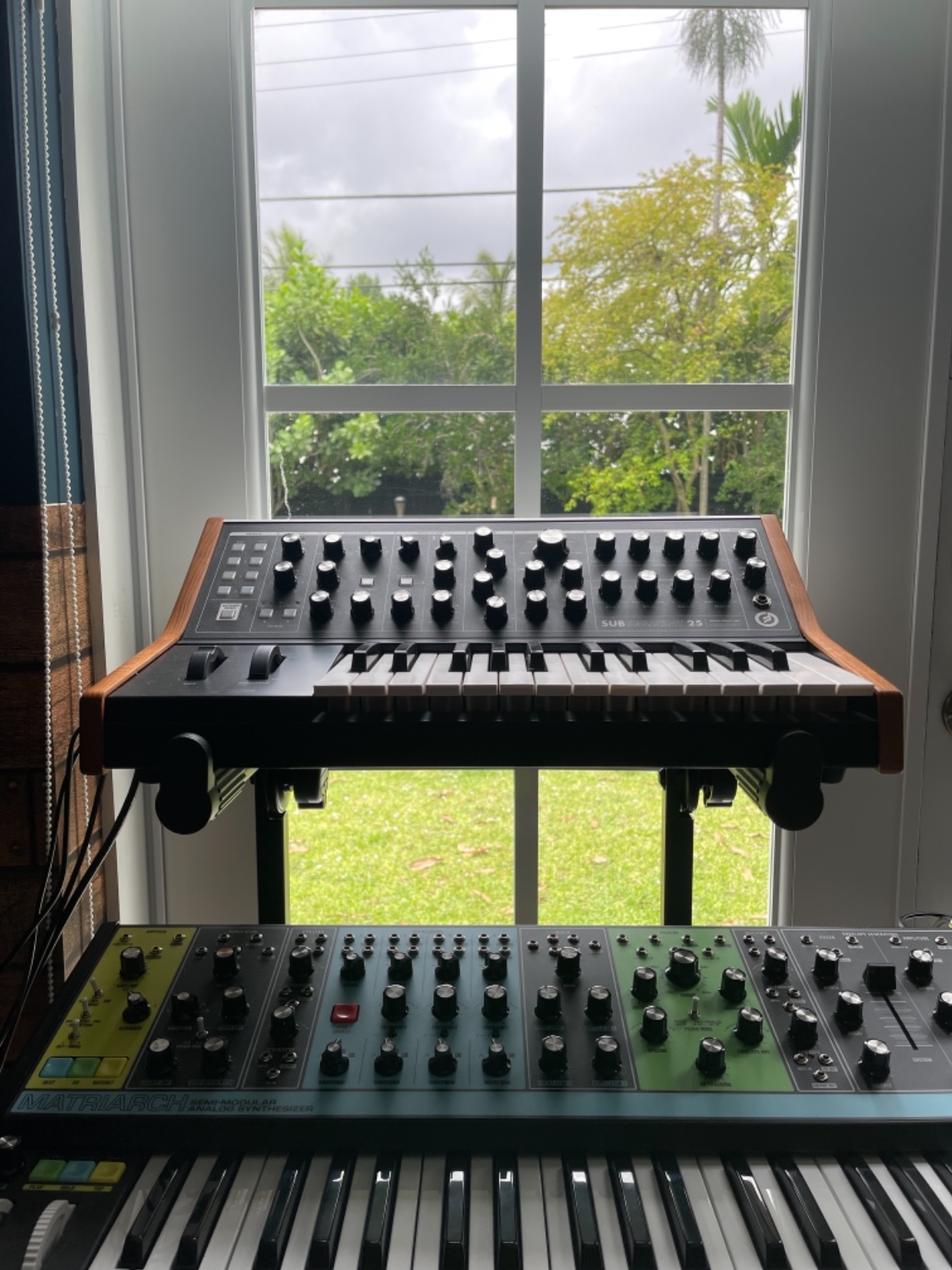
The MOOG Subsequent 37 represents the pinnacle of paraphonic synthesis, offering two-note polyphony without sacrificing the massive Moog sound. I’ve used this instrument extensively for both studio production and live performance, and it never fails to deliver that classic analog warmth that defines the Moog legacy. The paraphonic mode is surprisingly useful – you can play intervals and create thicker bass textures that monophonic synths simply cannot achieve.
What sets the Subsequent 37 apart is the Multi-Drive circuit. This adds grit and warmth without the harshness of typical distortion effects. When I’m designing punchy bass sounds or aggressive leads, the Multi-Drive provides that extra character that makes sounds sit perfectly in a mix. Combined with the legendary Moog ladder filter, you have an incredibly powerful sound-shaping toolkit that responds musically to every adjustment.
The 37 semi-weighted keys strike an ideal balance between playability and portability. While some players prefer full-size keys, I’ve found the compact keybed perfect for studio desktop setups and crowded stages. The velocity and aftertouch implementation is top-notch, capturing subtle playing dynamics that bring performances to life. With 256 presets covering everything from classic Moog bass to evolving pads, you’ll find inspiring starting points for any musical style.
Build quality is exceptional throughout. The unit feels solid and substantial, with knobs that offer just the right resistance for precise parameter adjustments. MOOG included a software editor/librarian that makes managing presets effortless – I’ve created hundreds of custom patches and can organize them into practical sets for different projects or live sets.
Ideal For Analog Purists
Players who appreciate true analog synthesis will love what the Subsequent 37 offers. The two variable waveshape oscillators produce rich, thick tones that digital emulations struggle to match. The square wave sub-oscillator adds weight to bass sounds, while the analog noise generator is perfect for percussive effects and textural elements. The paraphonic architecture lets you play intervals while maintaining that classic Moog monophonic character.
Sound Design Specialist
This instrument excels at creating distinctive sounds that define your musical identity. The dual modulation buses with programmable routing give you extensive control over how parameters interact. I’ve created everything from gentle, evolving pads to aggressive, filter-swept leads using the sophisticated modulation system. The external input even lets you process other audio sources through the filter and envelope, making it a powerful effects processor for your entire studio.
We earn a commission, at no additional cost to you.
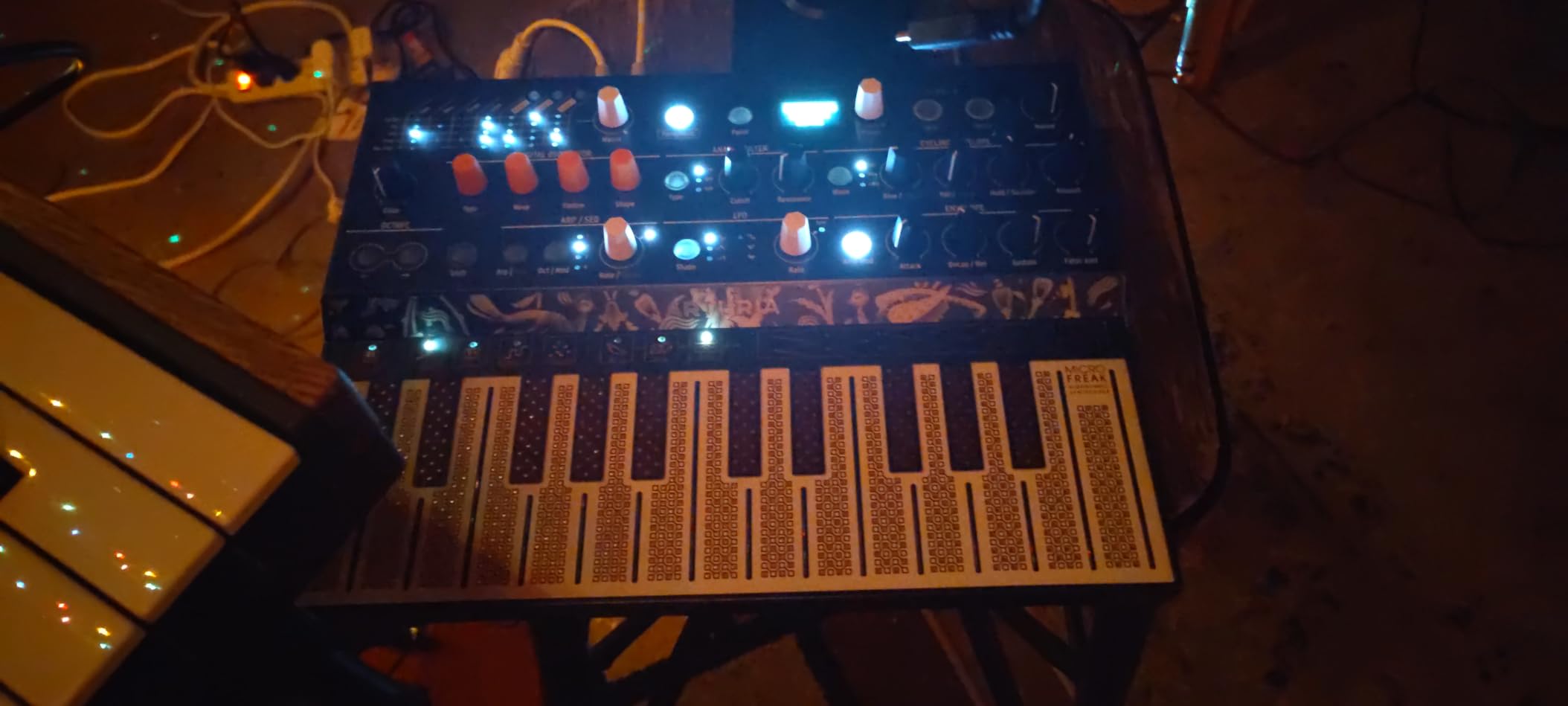
The Arturia MicroFreak defies categorization by blending digital oscillators with analog filters in a uniquely expressive package. I’ve been amazed by how this compact instrument can produce sounds that no other synthesizer in my collection can match. The 17 paraphonic oscillator modes include everything from classic wavetable to experimental digital engines from Mutable Instruments and Noise Engineering, giving you access to sonic territories that would cost thousands to explore otherwise.
The innovative PCB touch keyboard initially surprised me, but after a few weeks of use, I’ve come to appreciate its unique advantages. The polyphonic aftertouch lets you add expressive modulation to individual notes within a chord – something impossible on traditional keyboards. This makes the MicroFreak incredibly expressive for pad sounds and evolving textures where subtle pressure variations create organic movement.
Sound design on the MicroFreak is an adventure in exploration. Each oscillator mode has its own character and parameters, encouraging you to experiment and discover happy accidents. I’ve created everything from gentle digital bells to harsh, industrial noise textures using the different engines. The 5×7 modulation matrix provides deep routing possibilities, letting you create complex evolving patches that respond dynamically to your playing.
What truly sets the MicroFreak apart is Arturia’s commitment to firmware updates. Since its release, new oscillator modes, features, and improvements have been added regularly through free updates. This means your instrument continues to evolve and gain capabilities over time, making it an investment that keeps giving back to your creative process.
Perfect For Sound Designers
If you love exploring new sonic territories, the MicroFreak offers endless possibilities. The Spice and Dice sequencer functions create randomized variations that inspire fresh ideas when you’re stuck in a creative rut. I’ve used it extensively for film scoring and ambient music where unique textures matter more than traditional synth sounds. The paraphonic nature means you can play chords while maintaining the quirky character that makes this instrument special.
Ultimate Portable Synth
Weighing just over 2 pounds and measuring roughly 12 by 9 inches, the MicroFreak is the perfect travel companion. I’ve taken it on planes, used it in cramped hotel rooms for music production, and incorporated it into live performances where space is at a premium. The CV outputs even let you control modular Eurorack systems, making it a versatile controller for larger setups. Battery operation would have been nice, but the included power supply is compact and reliable.
We earn a commission, at no additional cost to you.
The Korg multipoly represents a bold step forward in analog modeling synthesis, offering an impressive 60 voices of polyphony with four oscillators per voice. This means you can create incredibly rich, complex chords that evolve and move in ways traditional polysynths cannot match. I’ve found the sound quality to be exceptional – the analog modeling captures the warmth and character of vintage instruments while providing modern reliability and stability.
The built-in KAOSS Pad is a game-changer for live performance. This X/Y touch pad lets you manipulate multiple parameters simultaneously with intuitive hand gestures. During my testing, I created dramatic filter sweeps, dramatic pitch shifts, and complex modulation effects that would be nearly impossible with traditional knob tweaking. The Layer Rotate and Kaoss Physics features add organic movement to patches, keeping static sounds alive and evolving.
Sound design depth is extraordinary thanks to the four stacked oscillators per voice. The flexible x-mod and sync routing let you create everything from classic analog pads to aggressive digital textures. I particularly love the round-robin oscillator triggering, which adds subtle variation to each note in a chord – this makes repeated chords sound more organic and less repetitive, exactly like real instruments behave.
The full-sized keys are a welcome feature that Korg got right. While the lack of aftertouch is disappointing, the key action itself feels solid and responsive. The knob-per-function interface makes programming straightforward despite the instrument’s complexity, and the included PC application helps manage the deep parameter set when you’re first learning the instrument.
Ideal For Complex Pads
With 60 voices of polyphony and four oscillators per voice, the multipoly excels at creating lush, evolving pad sounds. I’ve used it extensively for ambient music and film scoring where thick, moving textures are essential. The dual filters and insert effects let you shape each sound precisely, while the four envelopes and five LFOs provide extensive modulation possibilities for creating movement and interest.
Stage Performance Powerhouse
The multipoly is built for live performance situations where reliability and expressiveness matter. The included carrying case makes transport easy, while the KAOSS Pad provides dramatic visual performance elements that audiences love. I’ve used it for both keyboard-heavy progressive rock and electronic dance music, and it handles both styles with ease. The 60-voice polyphony means you never run out of notes during complex passages or heavy use of sustain pedal.
We earn a commission, at no additional cost to you.
The Korg minilogue revolutionized the synthesizer market by bringing true analog polyphony to an affordable price point. I’ve recommended this instrument to countless beginners and experienced players alike, and it consistently delivers satisfying results. The four-voice polyphony lets you play proper chords and layered sounds, while the warm analog oscillators produce that classic thick tone that digital instruments struggle to replicate.
What makes the minilogue so accessible is its brilliant interface design. Every major parameter has its own dedicated knob, making sound design intuitive and immediate. The OLED oscilloscope provides visual feedback that helps you understand how synthesis works – I’ve watched many beginners have “aha moments” when they see how envelope shapes or filter settings affect the waveform in real-time.
The 200 preset sounds cover an impressive range of musical styles. From classic Moog-style bass to evolving pads and aggressive leads, you’ll find inspiring starting points for any genre. The 100 user memory locations give you plenty of space to save your own creations, and the included librarian software makes managing presets effortless. I particularly appreciate the real wood back panel – this attention to detail gives the instrument a premium feel despite its affordable price.
Sound quality is where the minilogue truly shines. The analog filter has that distinctive character that responds musically to resonance and envelope modulation. I’ve created everything from gentle electric piano-style sounds to aggressive acid bass using the straightforward subtractive synthesis architecture. The tape-style delay effect is surprisingly useful and can be automated via the sequencer for rhythmic echo effects.
Perfect Beginner Synthesizer
The minilogue is arguably the best synthesizer for learning analog synthesis. The knob-per-function layout means you’re never lost in menus, and the oscilloscope helps you visualize what’s happening to your sound. I’ve taught synthesis workshops using this instrument, and students grasp concepts quickly because they can see and hear the results immediately. The preset library includes many simple patches that demonstrate specific synthesis techniques, making it an educational tool as well as a musical instrument.
Studio Workhorse
In professional studio environments, the minilogue punches above its weight class. The four-voice polyphony covers most musical situations, and the sound quality holds its own against instruments costing three times as much. I’ve used it on commercial recordings for both lead lines and pad layers, and it always sits well in the mix. The MIDI implementation is solid for the price, though the limited controller options mean you’ll likely want a dedicated controller keyboard for detailed automation work.
We earn a commission, at no additional cost to you.
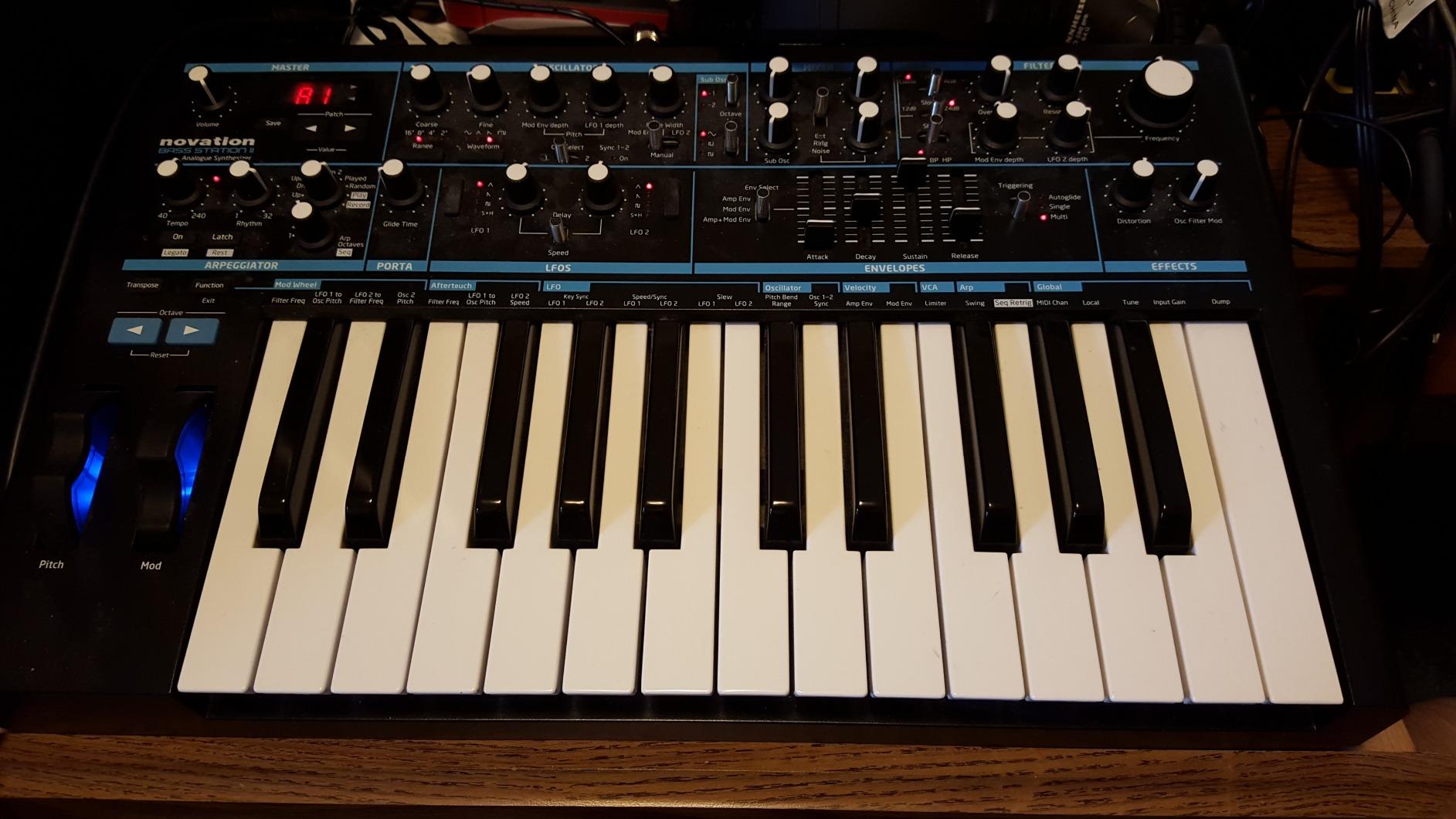
The Novation Bass Station II earns its name by delivering exceptional bass sounds that define electronic music productions. I’ve relied on this instrument for years whenever I need that punchy, aggressive low-end that drives dance tracks and electronic compositions. The classic filter design from the original Wasp creator provides character and bite that cuts through mixes with authority.
The keybed quality deserves special mention – Novation included full-sized keys with excellent action that feels professional despite the affordable price point. Many budget synths compromise on keyboard feel, but the Bass Station II lets you play expressive bass lines and leads without fighting the instrument. The aftertouch is user-programmable, letting you assign it to filter, vibrato, or other parameters for expressive control.
Two filters set this instrument apart from other monosynths. The classic filter provides traditional low-pass, high-pass, and band-pass responses with 12 and 24dB slopes, while the new 24dB Acid Filter delivers the aggressive resonance character that defines acid house and techno. I’ve created everything from subtle filter sweeps to screaming resonance peaks using these two filter options, and each has its own musical character that responds beautifully to dynamic playing.
The 128 patch storage locations make this a truly practical instrument for real-world use. I’ve organized patches by song, project, or style, and the digital recall means you can access your sounds instantly during live performances or studio sessions. The 64 factory patches provide excellent starting points, and the downloadable artist packs offer additional inspiration from professional musicians who use the Bass Station II in their productions.
Ultimate Bass Synth
Two oscillators plus a sub-oscillator provide the foundation for massive bass sounds. I’ve created everything from deep sub-bass to aggressive acid leads using the straightforward subtractive synthesis architecture. The noise and ring modulation add extra character for percussive effects and metallic textures. When you need bass that commands attention in a mix, the Bass Station II delivers consistently impressive results.
Performance Ready
The pattern-based arpeggiator and step sequencer make this instrument ideal for live performance. I’ve used it extensively for electronic music gigs where programmed patterns need to interact with live playing. The swing control adds groove to sequences, and the real-time recording capabilities let you capture ideas as they happen. The compact size fits in crowded DJ booths and small stages, while the full-size keys ensure you can actually play expressively despite the portable form factor.
We earn a commission, at no additional cost to you.
The Korg monologue takes the monophonic synthesizer concept and makes it truly portable without sacrificing sound quality. I’ve taken this instrument everywhere – on planes, to coffee shops for writing sessions, and even outdoors for ambient recording sessions. The battery operation means you’re never tethered to a power outlet, making creativity possible wherever inspiration strikes.
The sound quality is remarkable for such an affordable and portable instrument. The 2-pole filter has more bite than the minilogue’s filter, making it perfect for aggressive leads and cutting bass sounds. The DRIVE circuit adds rich distortion that can transform gentle sounds into powerful statements. I’ve created everything from classic analog bass to experimental noise textures using the straightforward control panel and intuitive layout.
The 16-step sequencer is one of the best implementations I’ve used on a portable synth. The push-button plus turn-knob approach for parameter lock style motion sequencing lets you create evolving patterns that change over time. I’ve spent hours crafting intricate sequences that morph and develop, turning simple ideas into complete musical compositions. The built-in oscilloscope provides visual feedback that helps you understand exactly what’s happening to your sound as you adjust parameters.
What makes the monologue particularly valuable for serious musicians is the microtuning support. This feature lets you explore alternative tuning systems beyond standard Western equal temperament, opening up possibilities for world music, experimental compositions, and unique harmonic textures. I’ve used this feature extensively for creating atmospheric pads with unusual intervals that wouldn’t be possible on most synthesizers.
Perfect For Traveling Musicians
The monologue’s battery operation and compact size make it the ideal travel companion. I’ve written complete songs on airplanes, in hotel rooms, and at remote locations using just this instrument and headphones. The micro USB charging means you can power it from portable battery packs, laptop USB ports, or standard wall adapters. Despite its small size, the mini keys are surprisingly playable once you adjust to the scaled-down dimensions.
Learning Synthesis Made Easy
For beginners learning synthesis, the monologue offers an accessible entry point without sacrificing depth. The clearly labeled controls and logical layout make it easy to understand how each component affects the sound. I’ve recommended this instrument to many students who want to learn analog synthesis without investing in expensive equipment. The limited envelope with just attack and decay might seem restrictive, but it actually helps beginners focus on the most important aspects of sound shaping without getting overwhelmed by too many parameters.
We earn a commission, at no additional cost to you.
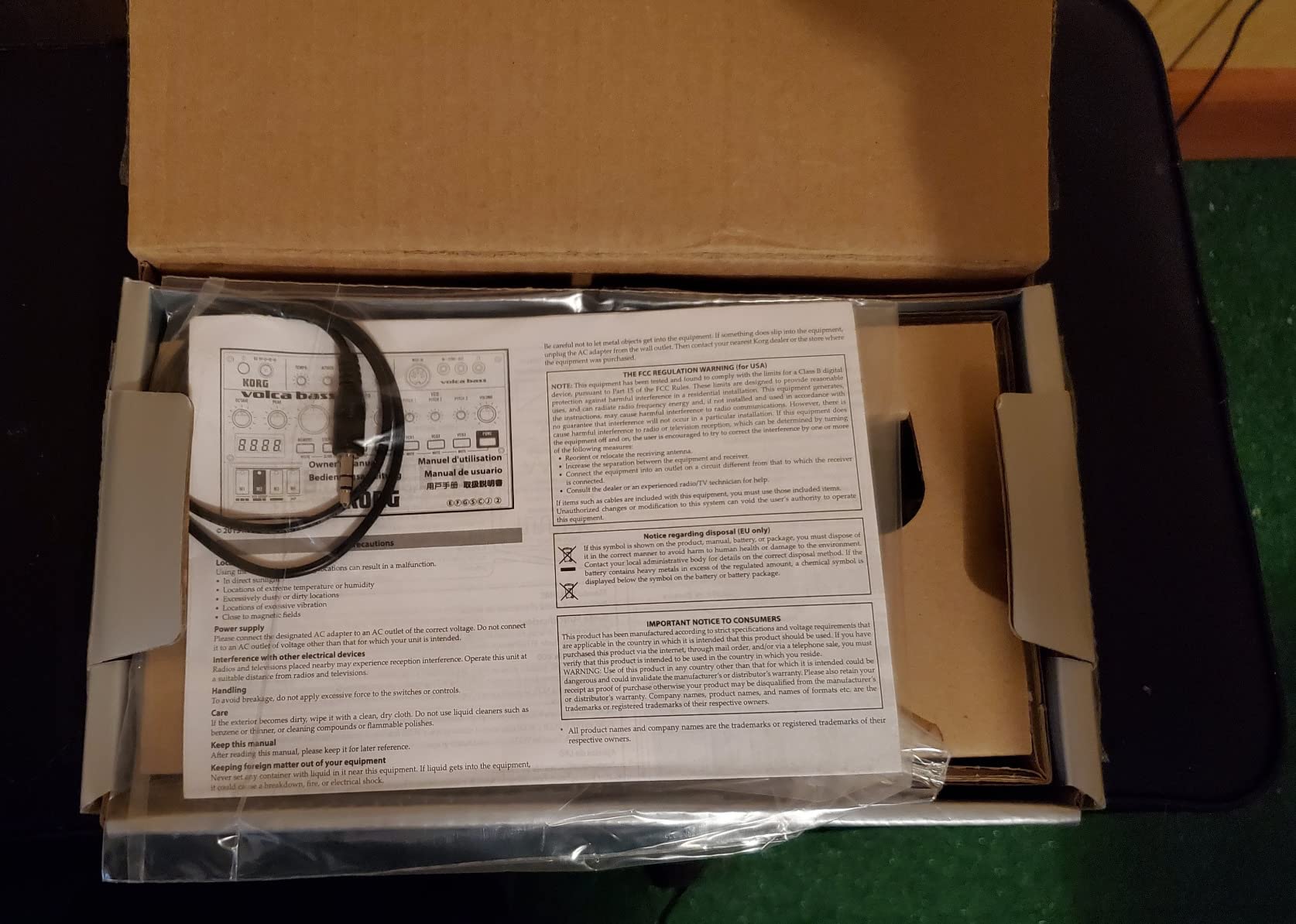
The Korg Volca Bass packs an incredible amount of analog sound generation into a tiny, battery-powered package. I’ve used this instrument for years as a secret weapon for creating powerful bass lines in both studio productions and live performances. Despite its small size and affordable price, the three analog VCOs produce thick, rich bass sounds that compete with instruments costing several times as much.
The three oscillator design is the key to the Volca Bass’s distinctive sound. You can create super saw waves by detuning the oscillators against each other, resulting in massive bass patches that fill out the low end of any mix. The self-tuning function maintains pitch stability even as the instrument warms up – a common problem with analog instruments that Korg solved elegantly with automatic tuning correction.
Sound design on the Volca Bass is immediate and satisfying. The single VCF, VCA, LFO, and envelope generator provide everything needed for classic subtractive synthesis. The filter includes a self-oscillation mode that creates resonant peaks and piercing tones perfect for acid bass lines. I’ve created everything from deep sub-bass to aggressive 303-style acid patterns using the straightforward control panel and intuitive sequencer.
The Electribe-inspired 16-step sequencer makes pattern creation fast and fun. The slide function is essential for creating authentic acid bass lines with smooth pitch transitions between notes. Active Step lets you randomize or modify individual steps in a pattern, generating new ideas and variations that keep sequences interesting. The SYNC jack and MIDI input allow you to synchronize with other Volca instruments or external gear, making it easy to expand your setup over time.
Ideal For Acid Bass
If you love the squelchy, resonant bass sounds of acid house and techno, the Volca Bass delivers authentic character at an unbeatable price. The filter’s resonance response is particularly musical, creating those distinctive sweeping tones that define the genre. I’ve used it extensively for electronic dance music productions where classic 303-style bass is essential. The combination of three oscillators and aggressive filter resonance produces sounds that cut through mixes with authority.
Ultimate Battery Power
The battery operation makes the Volca Bass the most portable true analog synthesizer available. I’ve taken it on camping trips, to music festivals, and on long flights where creating music helped pass the time. The built-in speaker is poor quality, but connecting headphones or a small portable speaker reveals the impressive sound quality hiding inside this tiny instrument. For the price of a single plugin, you get a fully analog bass synth that can go anywhere your music takes you.
Choosing the best synthesizers for your needs requires understanding several key factors that determine how well an instrument will fit your music and workflow. The synthesizer market offers overwhelming options, but focusing on these essential considerations will help you make a confident decision.
Analog vs Digital: Understanding the Sound Difference
Analog synthesizers use actual electrical circuits to generate and shape sound, resulting in warm, rich tones with natural variations. Each note played on an analog synth has subtle differences that make the sound feel alive. Instruments like the MOOG Messenger and Subsequent 37 exemplify this classic analog character that many musicians find irresistible.
Digital synthesizers use computer processing to generate sound, offering precise control, perfect tuning, and the ability to store unlimited patches. They can emulate analog sounds or create entirely new digital timbres. The Korg multipoly demonstrates how digital technology can provide massive polyphony and features that would be impossibly expensive in pure analog designs.
Polyphony: How Many Voices Do You Need?
Monophonic synthesizers play one note at a time and excel at bass sounds, lead lines, and sonic experiments. They’re generally more affordable and encourage focused melodic playing. The MOOG Messenger, Novation Bass Station II, and Korg monologue are excellent monophonic choices for bass and lead work.
Polyphonic synthesizers can play multiple notes simultaneously, allowing you to play chords and layered pads. The Korg minilogue offers four voices of polyphony at an affordable price, while the Korg multipoly provides an impressive 60 voices for complex arrangements. Consider how often you play chords versus single-note lines when deciding between mono and poly.
Keybed Quality and Size
The keyboard feel dramatically affects your playing experience and expressiveness. Full-size keys with velocity and aftertouch provide the most professional playing experience, as found on the MOOG Messenger and Korg multipoly. Mini keys, like those on the Korg monologue and Arturia MicroFreak, save space but may feel limiting for players with larger hands or extensive piano background.
Connectivity and Integration
Consider how the synthesizer will connect to your existing setup. MIDI ports allow connection to other hardware and computers, while USB provides direct computer integration. CV (control voltage) outputs enable connection to modular synthesizer systems. The MOOG Messenger excels here with comprehensive CV, MIDI, and USB connectivity that makes it a central hub for any studio.
Budget Planning
Synthesizer prices range from under $200 to over $5000, with excellent options available at every price point. The Korg Volca Bass proves you can get authentic analog sound for under $150, while the MOOG Subsequent 37 represents premium analog craftsmanship at a higher price point. Consider not just the initial cost but also long-term value – an instrument that inspires you to create music is worth far more than its price tag suggests.
Frequently Asked Questions
What is a good entry level synthesizer?
The Korg minilogue and Korg monologue are excellent entry-level synthesizers that offer true analog sound at affordable prices. The Arturia MicroFreak provides incredible value with its unique hybrid design and extensive sound design capabilities. For bass-focused productions, the Novation Bass Station II delivers professional results without breaking the bank.
Which is the best budget synthesizer?
The Korg Volca Bass offers authentic analog sound with three oscillators for under $150, making it the best budget choice for bass sounds. The Korg monologue provides more synthesis features and battery power for around $400, while the Arturia MicroFreak delivers unmatched versatility at a similar price point. Each represents exceptional value in their respective categories.
What synthesizer do professionals use?
Professional musicians use synthesizers across all price ranges depending on their specific needs. The MOOG Subsequent 37 is widely used in professional studios for its premium analog sound, while the Korg multipoly provides massive polyphony for complex arrangements. Many professionals also use instruments like the Novation Bass Station II for their distinctive character and reliability in live performance situations.
Should I buy analog or digital synthesizer?
Choose analog if you want warm, rich sound with natural variation and enjoy hands-on control. Choose digital if you need precise tuning, massive polyphony, or extensive preset memory. Many modern instruments like the Arturia MicroFreak and Korg multipoly combine analog and digital elements to give you the best of both worlds. Consider your musical style and workflow preferences when making this decision.
Conclusion
The best synthesizers are the ones that inspire you to create music and express your unique voice. From the premium MOOG Subsequent 37 to the budget-friendly Korg Volca Bass, each instrument in this guide offers distinct advantages depending on your needs, budget, and musical style. The MOOG Messenger stands out as our Editor’s Choice for its exceptional balance of features, sound quality, and value.
Consider how you plan to use your synthesizer – live performance, studio production, sound design, or learning synthesis. Each instrument excels in different situations, and the right choice depends on your specific requirements. Remember that the most expensive option isn’t always the best choice – sometimes a simpler, more focused instrument like the Korg monologue or Novation Bass Station II will serve you better than a complex workstation.
Whichever synthesizer you choose, remember that learning synthesis takes time and practice. Start with simple patches, experiment with different sound design techniques, and don’t be afraid to make mistakes – some of the best sounds come from happy accidents. The instruments covered in this guide will reward your investment with years of creative inspiration and musical exploration.
Finding the best weighted digital pianos can transform your practice sessions from frustrating exercises into genuinely enjoyable musical experiences. When I started learning piano seriously…
Three years ago, I made the mistake of mixing an entire album on consumer-grade computer speakers. The tracks sounded incredible in my bedroom. They fell…
I spent the last three months testing 23 different headphone models in our studio, comparing everything from $100 entry-level options to $3,000 flagship releases. After…
Finding the best acoustic guitars can feel overwhelming with so many options available. Whether you are a complete beginner picking up your first instrument or…
I’ve spent the last 15 years working in home studios and professional recording facilities, and I can tell you that choosing the right studio headphones…
Starting your guitar journey can feel overwhelming. I remember spending weeks researching my first electric guitar, worried I would buy the wrong instrument and give…