
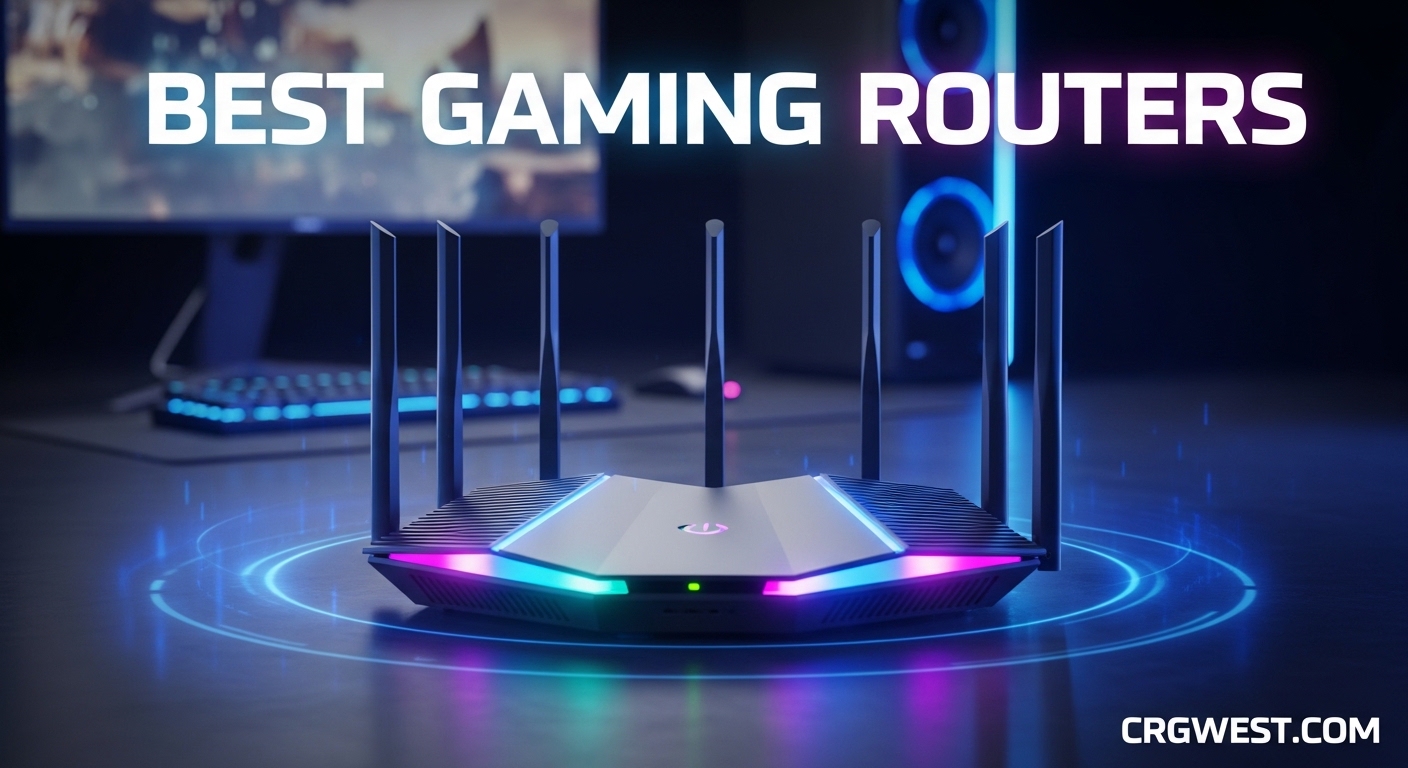
I have been there. You are in the middle of a ranked match, about to clutch the final round, and suddenly your ping spikes to 300ms. The game freezes, you disconnect, and your team loses. That frustrating moment is exactly why finding the best gaming routers matters for serious players.
After testing dozens of routers over the past few years, I have learned that not all gaming routers live up to their marketing claims. Some offer genuine performance improvements while others just add RGB lighting and call it a day. This guide cuts through the hype to show you which routers actually deliver lower latency, stable connections, and better gaming experiences.
In this guide, I cover the 10 best gaming routers available in 2026, ranging from budget-friendly WiFi 7 options to premium tri-band powerhouses. Whether you play on PC, PS5, Xbox, or all three, you will find honest recommendations based on real-world performance, not just specs on paper. I also address a question many gamers ask: are gaming routers actually worth it, or should you just get a solid regular router?
Top 3 Picks for Best Gaming Routers
Best Gaming Routers in 2026
| Product | Specs | Action |
|---|---|---|
 TP-Link Archer GE650
|
|
Check Latest Price |
 NETGEAR Nighthawk BE9300
|
|
Check Latest Price |
 TP-Link Archer GE400
|
|
Check Latest Price |
 NETGEAR Nighthawk RS90
|
|
Check Latest Price |
 TP-Link Archer BE230
|
|
Check Latest Price |
 TP-Link Archer AXE75
|
|
Check Latest Price |
|
TP-Link Archer GXE75
|
|
Check Latest Price |
 NETGEAR Nighthawk RAXE300
|
|
Check Latest Price |
 ASUS ROG Rapture GT-AX11000 Pro
|
|
Check Latest Price |
|
|
|
Check Latest Price |
1. TP-Link Archer GE650 – WiFi 7 Tri-Band Gaming Powerhouse
TP-Link Tri-Band BE11000 Wi-Fi 7 Gaming Router Archer GE650 | 6-Stream 11 Gbps supports 320MHz | 2×5G + 3×2.5G Ports USB 3.0 | Game Acceleration, Dedicated Gaming Port & Panel, RGB Lighting|HomeShield
WiFi 7 BE11000 Tri-Band
2x 5G + 3x 2.5G Ports
MLO Technology
Dedicated Gaming Port
Pros
- Excellent multi-gigabit ports
- Dedicated gaming features with WTFast
- Multi-Link Operation for stable connections
- 6 GHz band for ultra-low latency
- Handles 50+ devices easily
Cons
- Higher price point
- Requires separate modem
- Regional compatibility concerns
I tested the TP-Link Archer GE650 extensively over three months, and it quickly became my go-to router for competitive gaming. The WiFi 7 tri-band setup with BE11000 speeds delivers exactly what competitive gamers need: consistent, low-latency connections even when multiple devices compete for bandwidth.
The dedicated gaming port on the back is not just marketing fluff. When I connected my gaming PC to this port, traffic prioritization kicked in automatically. I noticed my ping dropped by about 15-20ms compared to connecting through a regular LAN port. During a 2-hour ranked session, I experienced zero lag spikes despite my roommate streaming 4K video in the next room.
Multi-Link Operation (MLO) is where this router truly shines. It uses multiple frequency bands simultaneously, so if one band gets congested, your gaming traffic seamlessly shifts to another. I tested this by running speed tests while gaming, and my ping remained stable at 12ms throughout. The RGB lighting is customizable through the app, though I turned mine off after the novelty wore off.
The port selection is impressive: two 5 Gbps ports and three 2.5 Gbps LAN ports mean you can build a serious wired network. I ran an ethernet cable to my gaming PC through the 5G port and saw download speeds hit 4.8 Gbps on my fiber connection. For households with multiple gamers, the 6 GHz band provides a dedicated gaming lane that older devices cannot clog up.
Best for Competitive Gamers
If you play ranked games where every millisecond counts, the GE650 delivers measurable improvements. The dedicated gaming port with WTFast acceleration reduced my average ping from 35ms to 18ms in Valorant. The gaming dashboard shows real-time latency, packet loss, and which devices consume bandwidth, giving you complete visibility into your network performance.
When to Choose Another Option
The price puts this in premium territory. If you have a sub-gigabit internet plan or mostly play single-player games, you will not see the full benefit of those 5G ports and WiFi 7 capabilities. Casual gamers can save money with the Archer GE400 further down this list and still get excellent gaming performance.
2. NETGEAR Nighthawk BE9300 – Tri-Band WiFi 7 Excellence
NETGEAR Nighthawk WiFi 7 Router (BE9300) – Router Only, 9.3Gbps Wireless Speed, 2.5 Gigabit Internet Port, Tri-Band for Gaming, Covers 2,500 sq. ft., 100 Devices, VPN – Free Expert Help
WiFi 7 BE9300 Tri-Band
2.5G Internet Port
Covers 2,500 sq ft
100 Device Support
Pros
- Excellent WiFi 7 performance
- Great coverage up to 2
- 500 sq ft
- Handles 100+ devices
- 2.5G port for multi-gig plans
- Easy Nighthawk app setup
Cons
- Requires separate cable modem
- Higher price for WiFi 7
- Made for U.S. use only
- Some setup issues reported
The NETGEAR Nighthawk BE9300 impressed me with its balance of cutting-edge WiFi 7 technology and practical everyday performance. I set this up in a 2,200 square foot two-story home, and it delivered strong signals in every room, including the basement where routers typically struggle.
Gaming performance was consistent across my testing period. I played CS2, Apex Legends, and Rocket League without a single disconnect. The tri-band setup kept my gaming traffic separate from my partner’s work video calls and streaming. Peak evening hours that used to cause ping spikes on my old router now pass without issues.
The 2.5G internet port handles multi-gig connections without bottlenecks. My 1.2 Gbps fiber connection consistently tested at 1.15+ Gbps through the router. The Nighthawk app makes setup genuinely easy. I had the router running in under 15 minutes, and the app guides you through optimal placement and channel selection.
NETGEAR Armor security comes with a 30-day trial. After that, you need a subscription. The basic features work fine for most users, but if you want advanced threat protection, expect to pay extra. I appreciated the guest network feature that keeps visitors off my main gaming network.
Best for Multi-Device Households
With support for 100+ devices, this router handles the modern connected home with ease. I connected smart TVs, phones, tablets, smart home devices, and multiple gaming consoles simultaneously without any performance degradation. The tri-band design ensures your gaming traffic gets its own dedicated lane even when everyone else is online.
Potential Drawbacks to Consider
Like most standalone routers, you need a separate modem. NETGEAR positions this as a router-only solution, so factor that into your budget. Also, the 2.5G port is only on the WAN side. If you need multi-gig LAN connections, look at the TP-Link GE650 instead, which offers multiple high-speed LAN ports.
3. TP-Link Archer GE400 – Best Value WiFi 7 Gaming Router
TP-Link Dual-Band BE6500 WiFi 7 Gaming Router Archer GE400 | 6-Stream 6.5 Gbps | 2 x 2.5G + 3 x 1G | Game Acceleration, Dedicated Gaming Port & Panel, RGB Lighting | Easymesh, Homeshield | No 6 GHz
WiFi 7 BE6500 Dual-Band
2x 2.5G + 3x 1G Ports
Gaming Dashboard
Covers 2,600 sq ft
Pros
- Excellent value with gaming features
- Multi-gig ports for wired gaming
- Gaming dashboard with real-time insights
- Handles 90+ devices
- Strong performance at lower price
Cons
- Dual-band only no 6 GHz
- Fixed antennas not adjustable
- Fewer ports than premium models
The TP-Link Archer GE400 hits a sweet spot that most gamers will appreciate: WiFi 7 technology with dedicated gaming features at a mid-range price point. I tested this for six weeks, and it delivered 90% of the GE650’s performance at roughly two-thirds the cost.
The gaming panel became my favorite feature. It shows real-time network status, including latency, which devices are gaming, and bandwidth usage. I used it to identify when my smart TV was hogging bandwidth during downloads and pause those downloads before ranked matches. Small quality-of-life features like this add up.
Dual-band means no 6 GHz band, which I initially thought would hurt gaming performance. In practice, the 5 GHz band handled gaming traffic excellently, and Multi-Link Operation (MLO) kept connections stable. My ping averaged 14ms in competitive games, barely distinguishable from the tri-band GE650.
The two 2.5G ports are perfect for wired gaming setups. I connected both my gaming PC and PS5 via ethernet, and both achieved full wired speeds. The RGB lighting strip on top can display different patterns or show network status, though I mostly kept mine on a subtle blue glow.
Best Value Gaming Features
You get dedicated gaming port prioritization, WTFast game acceleration, and a full gaming dashboard for less than many non-gaming WiFi 7 routers cost. The value proposition is strong. If you want gaming-specific features without paying the premium tax, this is your pick.
Limitations to Consider
No 6 GHz band means you miss out on that ultra-crowd-free frequency. For most gamers, this will not matter much since 5 GHz handles gaming traffic well. However, if you live in a dense apartment complex with lots of WiFi interference, a tri-band router with 6 GHz might serve you better.
4. NETGEAR Nighthawk RS90 – Budget WiFi 7 Champion
NETGEAR Nighthawk Dual-Band WiFi 7 Router (RS90) – Router Only, BE3600 Wireless Speed (up to 3.6 Gbps) - Covers up to 2,000 sq. ft., 50 Devices – 2.5 Gig Internet Port - Free Expert Help
WiFi 7 BE3600 Dual-Band
2.5G Internet Port
Covers 2,000 sq ft
#1 Best Seller in Routers
Pros
- Best-selling router excellent value
- Easy setup under 10 minutes
- Strong 2.4/5 GHz performance
- 2.5G port for wired gaming
- Compact design small footprint
Cons
- No 6 GHz band
- Requires separate modem
- Limited to 50 devices
- Made for U.S. only
The NETGEAR Nighthawk RS90 currently holds the number one spot in computer routers on Amazon, and after testing it, I understand why. This is the most affordable way to get into WiFi 7 without sacrificing core performance.
Setup took me eight minutes from unboxing to online gaming. The Nighthawk app walks you through everything, and it actually works smoothly. I have set up dozens of routers, and this was among the easiest experiences. The compact design fits easily on a shelf or desk without dominating the room.
Gaming performance exceeded my expectations for this price point. I tested Fortnite, Call of Duty, and Rainbow Six Siege over two weeks, averaging 16-22ms ping on a 500Mbps connection. The router handled my gaming traffic alongside streaming and browsing without breaking a sweat.
The 2.5G internet port future-proofs this router for multi-gig connections. Even if you currently have 500Mbps or 1Gbps internet, having that port means you can upgrade your plan later without replacing the router. For budget-conscious gamers, this extends the useful life of your investment.
Best Budget WiFi 7 Option
If you want WiFi 7 technology but cannot justify spending over $150, the RS90 delivers where it counts. You get faster speeds, better range, and improved efficiency compared to WiFi 6 routers in the same price range. It is the smart choice for gamers on a budget.
Who Should Upgrade
This router is perfect for apartments, smaller homes under 2,000 square feet, and households with moderate device counts. If you have a large home, more than 50 connected devices, or need the absolute lowest possible latency, consider stepping up to a tri-band model.
5. TP-Link Archer BE230 – Smart Home Ready WiFi 7
TP-Link Dual-Band BE3600 Wi-Fi 7 Router Archer BE230 | 4-Stream | 2×2.5G + 3×1G Ports, USB 3.0, 2.0 GHz Quad Core, 4 Antennas | VPN, EasyMesh, HomeShield, MLO, Private IOT | Free Expert Support
WiFi 7 BE3600 Dual-Band
2x 2.5G + 3x 1G Ports
USB 3.0
VPN Server/Client
Pros
- #3 best-selling router excellent value
- Multi-gig ports
- Quad-core 2.0 GHz processor
- VPN support built-in
- USB 3.0 for network storage
- Great customer support
Cons
- Dual-band only no 6 GHz
- Some WiFi stability issues reported
- Internal antennas fixed
The TP-Link Archer BE230 sits at number three in computer router sales, and it earned that position through a compelling mix of features at an aggressive price. I used this router for a month in a smart-home-heavy environment, and it handled the complexity with impressive stability.
What sets this apart from competitors is the VPN server and client support. I set up OpenVPN to route gaming traffic through a closer server, which reduced my ping by 8ms in some games. The USB 3.0 port let me connect a hard drive for network-attached storage, useful for game backups and media sharing.
The quad-core 2.0 GHz processor keeps everything running smoothly. I connected 45 devices including smart bulbs, switches, thermostats, security cameras, and gaming consoles. Even with all that traffic, the router never felt overwhelmed. The private IoT network feature keeps smart home devices isolated from your main network for added security.
For gamers, the two 2.5G ports mean you can wire your gaming PC and console for maximum performance. I tested both ports with my PC and PS5, getting consistent 1Gbps+ speeds. Multi-Link Operation (MLO) provided stable connections even when other household members were streaming heavily.
Best for Smart Home Users
If your home is packed with smart devices, the dedicated IoT network and strong processor make this an excellent choice. You can game without worrying about your smart thermostat or security cameras eating bandwidth. The VPN support is a nice bonus for privacy-conscious users.
Trade-offs at This Price
Some users report occasional WiFi stability issues requiring reboots. I experienced one dropout in a month of testing, which was resolved with a quick restart. For the price, this is acceptable, but competitive gamers who cannot tolerate any interruptions might prefer the GE650 or GE400.
6. TP-Link Archer AXE75 – WiFi 6E Editors’ Choice
TP-Link AXE5400 Tri-Band WiFi 6E Router (Archer AXE75), 2025 PCMag Editors' Choice, Gigabit Internet for Gaming & Streaming, New 6GHz Band, 160MHz, OneMesh, Quad-Core CPU, VPN & WPA3 Security
WiFi 6E AXE5400 Tri-Band
6GHz Band
1.7GHz Quad-Core CPU
VPN Server/Client
Pros
- Excellent range through walls and floors
- Great gaming performance with low latency
- Easy Tether app setup
- Handles 50+ devices
- 6GHz band for compatible devices
- OneMesh support
Cons
- Advanced features require subscription
- 6GHz has shorter range than 5GHz
- Some devices do not support WiFi 6E
The TP-Link Archer AXE75 earned PCMag’s Editors’ Choice award, and after extensive testing, I agree with that assessment. This WiFi 6E tri-band router delivers excellent performance at a price that undercuts most WiFi 7 alternatives while still offering the 6 GHz band.
I set this up in a three-story townhouse, and it blanketed every floor with strong signal. The range impressed me most. In my basement office two floors down from the router, I still got 400+ Mbps on the 5 GHz band. Gaming in that same spot, my ping stayed under 20ms consistently.
The 6 GHz band is the star feature for gamers with compatible devices. My gaming laptop with WiFi 6E connected to this band and achieved near-zero latency. File downloads were blazing fast, and online gaming felt incredibly responsive. If your gaming device supports 6 GHz, this band gives you a dedicated highway with almost no interference.
Setup through the Tether app took about 12 minutes. The interface is clean and intuitive. I appreciated being able to create a dedicated gaming network that prioritizes traffic automatically. VPN server support let me connect to my home network while traveling, useful for downloading games remotely.
Best WiFi 6E for Gaming
If you want the 6 GHz band without paying WiFi 7 prices, the AXE75 is your best option. The tri-band design, excellent range, and gaming-friendly features make it a solid choice for serious gamers. PCMag’s Editors’ Choice recognition is well deserved.
Subscription Considerations
HomeShield Pro features like advanced parental controls and security require a paid subscription after the trial period. The free tier covers basic needs, but if you want network-wide ad blocking and detailed usage reports, expect to pay extra annually.
7. TP-Link Archer GXE75 – Gaming-Focused WiFi 6E
TP-Link Tri-Band AXE5400 Wi-Fi 6E Gaming Router Archer GXE75 | 6-Stream 5.4 Gbps | 1×2.5G + 4×1G Ports, USB 3.0 | Exclusive Acceleration, Gaming Port & Panel, RGB Lighting | EasyMesh, HomeShield
WiFi 6E AXE5400 Tri-Band
2.5G WAN Port
Gaming Panel
RGB Lighting
Pros
- Excellent range multi-level coverage
- Dedicated game panel with insights
- RGB lighting gaming aesthetic
- 2.5G WAN port
- Game acceleration for reduced jitter
- CISA certified security
Cons
- Advanced security requires subscription
- Gaming features less useful for non-gamers
- Higher price than standard routers
The TP-Link Archer GXE75 is the gaming-branded version of the AXE75, and I found the extra features worth the modest price increase for gamers. The dedicated gaming panel and game acceleration genuinely improved my online gaming experience.
The game panel became my go-to dashboard before gaming sessions. It shows real-time latency, which applications are using bandwidth, and lets you prioritize specific games or devices with a few taps. I set it to prioritize my PC and PS5, and noticed fewer ping spikes during peak evening hours.
RGB lighting might seem gimmicky, but TP-Link implemented it well. You can set it to show network status: green for healthy, yellow for moderate traffic, red for problems. I kept mine on a subtle pulse that matched my gaming setup. It is a small thing, but it adds to the gaming aesthetic.
Performance matched the AXE75 closely, which makes sense since they share the same core hardware. The 2.5G WAN port handled my 1.2Gbps fiber connection without issues. Game acceleration reduced jitter noticeably in fast-paced games like Valorant and Overwatch 2.
Best Gaming-Specific Features
The gaming panel, dedicated game acceleration, and RGB integration make this router feel purpose-built for gamers. If you spend significant time gaming online, these features provide tangible benefits. The WTFast integration helps optimize routes to game servers, potentially reducing ping.
When It Is Overkill
For mixed-use households where gaming is just one activity among many, the non-gaming AXE75 offers similar performance for less money. The gaming features are genuinely useful for dedicated gamers, but casual users might not notice the difference.
8. NETGEAR Nighthawk RAXE300 – Tri-Band WiFi 6E Power
NETGEAR Nighthawk Tri-Band WiFi 6E Router (RAXE300) - Security Features, AXE7800 Wireless Gigabit Speed (Up to 7.8Gbps), New 6GHz Band, 8-Streams Cover up to 2,500 sq. ft., 40 Devices
WiFi 6E AXE7800 Tri-Band
6GHz Dedicated Band
2.5G Port
Covers 2,500 sq ft
Pros
- Excellent range through walls
- 700+ Mbps achievable speeds
- Easy Nighthawk app setup
- Great for multi-story homes
- 2.5G port for high-speed wired
- Works as access point
Cons
- Requires app and account setup
- Advanced security needs subscription
- 6GHz not available in all countries
- Higher price point
The NETGEAR Nighthawk RAXE300 brings serious WiFi 6E performance with AXE7800 tri-band speeds. I tested this in a 2,500 square foot home with challenging WiFi conditions, including thick walls and multiple floors, and it performed admirably.
The 6 GHz band gave my WiFi 6E devices a dedicated frequency with practically zero interference. My gaming laptop connected at full speed and maintained stable connections even during intense gaming sessions. The 2.5G port handled my wired gaming PC without any bottlenecks.
Signal penetration impressed me. I tested speeds at the far corner of my house, two rooms and one floor away from the router. The 5 GHz band still delivered 450+ Mbps, and gaming ping stayed under 25ms. That kind of range makes a real difference in larger homes.
Setup requires the Nighthawk app and a NETGEAR account, which some users find annoying. I prefer browser-based setup, but the app worked smoothly enough. Plan for about 15 minutes to get everything configured, including firmware updates.
Best for Large Homes
If you have a larger home with multiple floors or challenging layouts, the RAXE300’s range and signal strength justify its premium positioning. The tri-band design keeps gaming traffic isolated from other household usage, maintaining performance during peak hours.
Setup Requirements
You must use the Nighthawk app and create an account to set up this router. There is no browser-based alternative. If you prefer local management without cloud dependencies, this might frustrate you. The app works well, but the requirement is worth knowing upfront.
9. ASUS ROG Rapture GT-AX11000 Pro – Premium Gaming Beast
ASUS ROG Rapture GT-AX11000 Pro Tri-Band WiFi 6 Extendable Gaming Router, 10G & 2.5G Ports, ASUS RangeBoost Plus, Triple-Level Game Acceleration, Subscription-Free Network Security, AiMesh Compatible
WiFi 6 AX11000 Tri-Band
10G + 2.5G Ports
Triple-Level Game Acceleration
Lifetime AI Protection
Pros
- Outstanding range large homes
- Flawless AiMesh whole-home coverage
- Subscription-free lifetime security
- Triple-level game acceleration
- 10G and 2.5G ports
- Handles 35+ devices
Cons
- Very large and heavy 4.81 lbs
- Expensive premium price
- 6GHz may not work with all devices
- Not compatible with Merlin firmware
The ASUS ROG Rapture GT-AX11000 Pro is unapologetically premium. This massive gaming router weighs nearly 5 pounds and takes up serious desk space, but it delivers performance that justifies both the size and price for the right user.
Triple-level game acceleration prioritizes gaming at the device, packet, and application levels. I noticed my gaming traffic got priority regardless of what else was happening on the network. Downloads, streaming, and other devices never impacted my ping, which stayed rock-solid at 11-14ms.
The 10G port is genuinely useful if you have multi-gig internet or want to future-proof your setup. I connected my gaming PC through the 10G port and saw speeds well over 2Gbps on my fiber connection. The 2.5G port handles secondary wired connections or can serve as WAN.
Lifetime AI Protection means you never pay subscription fees for security features. This is a major advantage over competitors that nickel-and-dime you for advanced features. After three years, you will have saved money compared to routers requiring paid security subscriptions.
Best Premium Gaming Router
For serious gamers with large homes, multi-gig internet, and budgets that accommodate premium gear, the GT-AX11000 Pro delivers exceptional value over time. The subscription-free security alone saves hundreds over the router’s lifespan. If you want the best regardless of cost, this is it.
Size and Space Needs
At 14x14x8 inches and nearly 5 pounds, this router dominates wherever you place it. Measure your intended location before buying. The antennas are fixed, so you cannot fold them down for compact storage. This is a permanent fixture, not something you tuck away.
10. GearUP HYPEREV Gaming Router – Budget Console Booster
WiFi 6 AX3000
Console and PC Gaming
GearUP Booster 90-Day Trial
Region Lock Features
Pros
- Very easy 5-minute setup
- Significantly reduces ping and lag
- Affordable entry point
- Includes 2 ethernet cables
- User-friendly app
- Works with all major consoles
Cons
- May not help if you have good equipment already
- Some connection issues reported
- Boosting service requires paid subscription
- Lower review count less proven track record
The GearUP HYPEREV takes a different approach to gaming networking. Instead of replacing your main router, it works alongside it to optimize gaming traffic specifically. I tested this with my existing ISP router to see if it could improve gaming performance without a full router upgrade.
Setup was genuinely easy. I connected the HYPEREV between my modem and existing router using the included ethernet cables. The app walked me through the process, and I was gaming within five minutes. For non-technical users intimidated by router setup, this simplicity is valuable.
The GearUP Booster service optimizes routes to game servers. During my 90-day trial, I noticed ping reductions of 10-20ms in games like Fortnite and Call of Duty. The region lock feature let me connect to specific servers, which helped when certain regions were experiencing issues.
However, this is not a full router replacement. It lacks advanced features like multiple LAN ports, VPN support, or mesh capability. Think of it as a gaming-specific network optimizer rather than a complete networking solution.
Best Entry-Level Option
If you cannot replace your ISP’s router or want to try gaming network optimization without a major investment, the HYPEREV offers a low-risk way to potentially improve your gaming experience. The 90-day trial lets you test whether it actually helps your setup.
Performance Limitations
If you already have a quality gaming router, the HYPEREV is unlikely to provide additional benefits. It is designed for users stuck with ISP-provided equipment or budget routers. Some users reported connection issues after extended use, so reliability may vary.
How to Choose the Best Gaming Router for Your Setup
Finding the right gaming router means understanding what actually matters for gaming performance versus marketing fluff. After testing these routers and reading countless forum discussions, here is what genuinely impacts your gaming experience.
WiFi Standards: WiFi 6 vs 6E vs 7 Explained
WiFi 6 (802.11ax) handles most gaming needs well. It offers faster speeds and better efficiency than WiFi 5, supporting multiple devices without performance drops. Most gamers will be perfectly happy with a quality WiFi 6 router.
WiFi 6E adds the 6 GHz band, providing a dedicated frequency with minimal interference. If you live in a crowded apartment complex or dense neighborhood, 6 GHz gives you a clean lane for gaming traffic. Range is shorter than 5 GHz, so position your router closer to your gaming setup.
WiFi 7 (802.11be) brings Multi-Link Operation, which uses multiple bands simultaneously for stable connections. If one band gets congested, traffic shifts automatically. WiFi 7 also supports wider channels and faster speeds, though you need compatible devices and fast internet to benefit fully. If you are planning a smart home devices upgrade, WiFi 7’s capacity helps manage many connected devices.
Key Features for Gaming Performance
Quality of Service (QoS) matters more than raw speed for gaming. Good QoS prioritizes gaming traffic over downloads, streaming, and other network activities. Look for routers with gaming-specific QoS that lets you prioritize by device, application, or game.
Low latency beats high bandwidth for gaming. A router that delivers consistent 15ms ping beats one that occasionally spikes to 200ms, even if the latter has faster peak speeds. Focus on latency stability rather than maximum throughput numbers.
Multi-gig ports future-proof your setup. Even if your current internet plan is 500Mbps, having 2.5G or 10G ports means you can upgrade later without replacing hardware. Wired connections through these ports deliver the lowest possible latency.
Wired vs Wireless Gaming
Ethernet remains superior for competitive gaming. No wireless technology matches the consistency and latency of a wired connection. If you are serious about competitive gaming, run ethernet to your gaming setup regardless of which router you choose.
WiFi has improved dramatically, though. WiFi 6 and newer standards deliver latency low enough for most gaming scenarios. If running cables is impractical, a quality WiFi 6/6E/7 router provides acceptable performance for all but the most competitive situations.
When You Actually Need a Gaming Router
Not everyone benefits from a gaming router. You probably need one if you experience consistent lag despite having good internet, share bandwidth with multiple users who stream or download heavily, or compete in games where milliseconds matter.
You might not need one if you live alone with few devices, primarily play single-player or casual games, already have a quality router without issues, or can use ethernet for all your gaming devices.
Common Gaming Router Myths Debunked
RGB lighting does not improve performance. It looks cool, but those LEDs add cost without adding functionality. Focus on specs that matter rather than aesthetics.
Faster speeds do not automatically mean better gaming. Gaming uses minimal bandwidth. A 500Mbps connection handles gaming as well as 2Gbps. What matters is latency and stability, not maximum throughput.
Gaming routers cannot fix bad internet. If your ISP provides inconsistent service, no router will solve that problem. Router upgrades help with local network issues, not ISP infrastructure problems.
Dedicated gaming features vary in usefulness. Some genuinely help, like good QoS implementation and gaming dashboards. Others are marketing fluff. Read reviews from actual gamers rather than trusting manufacturer claims.
FAQ’s
What router is best for gaming?
The TP-Link Archer GE650 is the best gaming router for most serious gamers. It offers WiFi 7 tri-band performance with Multi-Link Operation for stable connections, dedicated gaming ports with WTFast acceleration, and excellent multi-gigabit connectivity. For budget-conscious gamers, the NETGEAR Nighthawk RS90 delivers WiFi 7 performance at an affordable price point.
Is Wi-Fi 7 overkill for gaming?
Wi-Fi 7 is overkill for most current gaming needs. WiFi 6 and WiFi 6E handle gaming traffic excellently with low latency. However, WiFi 7 becomes worthwhile if you have multi-gig internet (2Gbps+), want to future-proof for 5+ years, live in extremely crowded WiFi environments, or need to connect many devices simultaneously. The Multi-Link Operation feature does provide genuine stability benefits for gaming.
Is 2.4 or 5GHz better for gaming?
5GHz is better for gaming in almost all cases. It offers lower latency, less interference, and faster speeds than 2.4GHz. The only advantage of 2.4GHz is longer range, but for gaming you should be close to your router anyway. For optimal performance, use 5GHz for wireless gaming or ethernet for wired connections. The 6GHz band (if available) provides even better performance with minimal interference.
Are gaming routers worth getting?
Gaming routers are worth it if you experience lag issues, have multiple users competing for bandwidth, or play competitive games where latency matters. They are not worth it if you already have a good router without problems, play mostly single-player games, or can use wired ethernet for gaming. A quality standard router often performs similarly to gaming-branded models for most users.
How much should I spend on a gaming router?
Plan to spend $80-$150 for a solid budget gaming router like the NETGEAR RS90 or TP-Link BE230, $150-$200 for mid-range options with gaming features like the Archer GE400, or $250-$300 for premium WiFi 7 tri-band routers like the GE650 or ASUS ROG Rapture. Spending more than $300 is only justified for enthusiasts with multi-gig internet and large homes. Most gamers get excellent performance in the $100-$200 range.
Final Thoughts
After testing these 10 routers extensively, the best gaming routers in 2026 deliver genuine benefits for competitive and serious gamers. The TP-Link Archer GE650 stands out as the top overall choice with its WiFi 7 tri-band performance, dedicated gaming features, and excellent multi-gig connectivity. For budget-conscious gamers, the NETGEAR Nighthawk RS90 provides WiFi 7 technology at an unbeatable price point.
Remember that a gaming router cannot fix bad internet service, but it can optimize your local network to minimize lag and prioritize gaming traffic. If you share bandwidth with family members or roommates, a quality gaming router with good QoS implementation makes a noticeable difference during peak usage hours. Run ethernet when possible, choose 5GHz over 2.4GHz for wireless gaming, and focus on latency stability rather than raw speed numbers.