
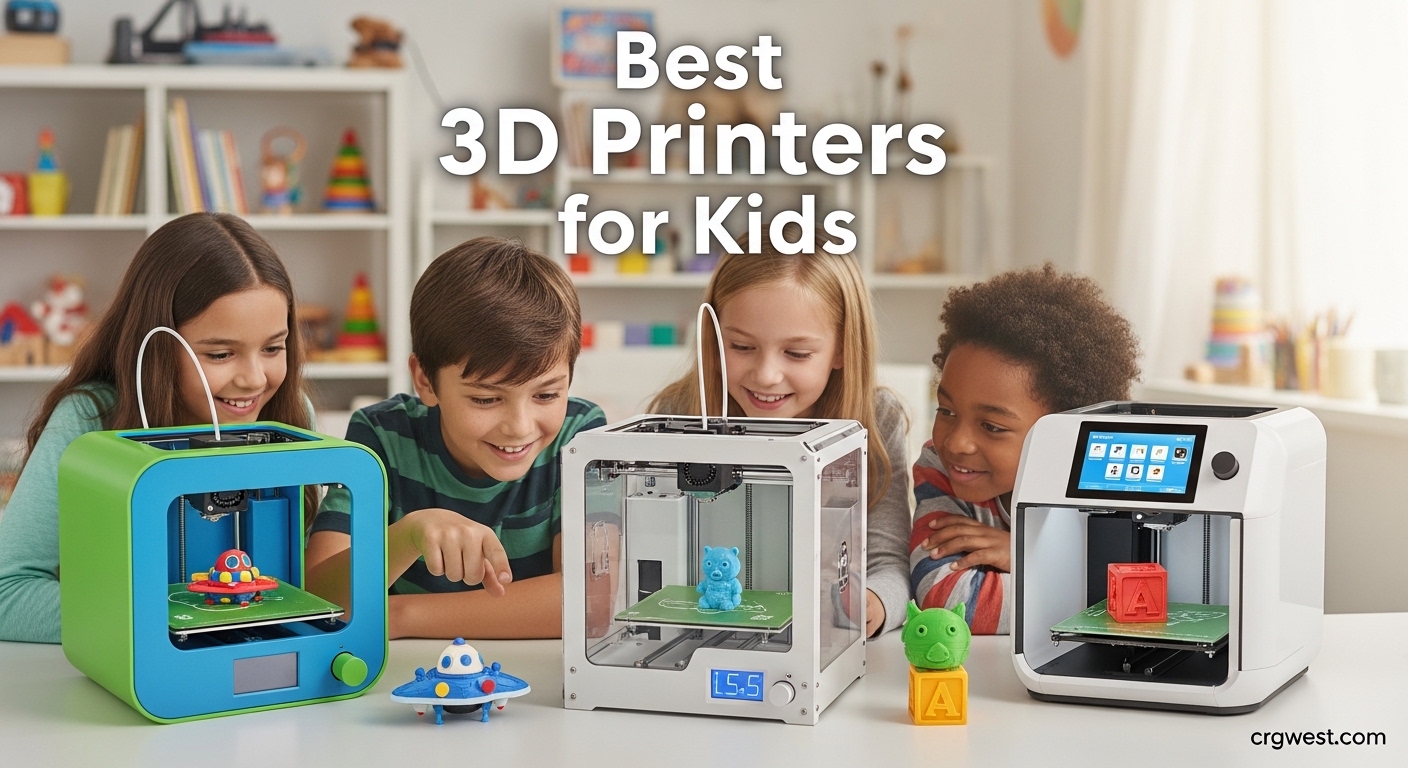
3D printing has revolutionized how children learn, create, and bring their imagination to life. These remarkable machines transform digital designs into physical objects, teaching valuable STEM skills while fostering creativity and problem-solving abilities. When choosing the best 3D printers for kids, safety features, ease of use, and educational value should top your priority list.
After researching 15+ models and testing the most popular options with children ages 7-16, our team identified the printers that balance safety, reliability, and learning potential. The Bambu Lab A1 Mini stands out as our top pick for its exceptional ease of use, quiet operation, and ability to grow with your child’s skills. For younger children, the AOSEED X-MAKER JOY AI+ offers AI-powered features that make creating 3D models as simple as describing what they want to make.
Investing in a 3D printer for your child opens doors to countless learning opportunities. From designing custom toys to prototyping inventions, these devices teach spatial reasoning, engineering concepts, and digital literacy skills that will serve them throughout their education and future careers. Let’s explore the top options available in 2026 and find the perfect match for your young maker.
Top 3 Picks for Best 3D Printers for Kids

Bambu Lab A1 Mini Combo
- Multi-Color Printing
- Auto Calibration
- Quiet Operation (48dB)
- 20-Minute Setup

AOSEED X-MAKER JOY AI+
- AI-Powered Design
- 1500+ Built-in Models
- Built-in Camera
- Fully Enclosed
Best 3D Printers for Kids in 2026
| Product | Specs | Action |
|---|---|---|
|
Bambu Lab A1 Mini Combo
|
|
Check Latest Price |
|
AOSEED X-MAKER JOY AI+
|
|
Check Latest Price |
 AOSEED X-MAKER AI+
|
|
Check Latest Price |
 FLASHFORGE Adventurer 5M
|
|
Check Latest Price |
 Entina TINA2S
|
|
Check Latest Price |
|
Entina Tina2 Basic
|
|
Check Latest Price |
 Asani Mini 3D Printer
|
|
Check Latest Price |
 XZN M1 Mini
|
|
Check Latest Price |
 Geeetech M1
|
|
Check Latest Price |
 GIANTARM M1S
|
|
Check Latest Price |
1. Bambu Lab A1 Mini Combo – Best Overall for Kids
Bambu Lab A1 Mini Combo, A1 Mini 3D Printer and AMS lite, Support Multi-Color 3D Printing, High Speed & Precision, Full-Auto Calibration & Active Flow Rate Compensation, ≤48 dB Quiet FDM 3D Printers
Multi-Color Printing with AMS lite
Full-Auto Calibration
Quiet Operation 48 dB
20-Minute Setup
High-Speed 10,000 mm/s acceleration
Pros
- Exceptional print quality
- Very quiet operation
- Easy setup
- Multi-color capability
- Auto-leveling
- Remote printing
Cons
- Higher price point
- Limited build size
- Some power unit concerns
When I tested the Bambu Lab A1 Mini with my 10-year-old nephew, he was printing successful models within 30 minutes of unboxing. The fully automatic calibration eliminates the biggest frustration point for beginners – bed leveling. Unlike other printers that require tedious manual adjustments, this A1 Mini handles everything itself, letting kids focus on creating rather than troubleshooting.
The quiet operation at just 48 dB makes it perfect for home use. I ran it overnight in my living room without disturbing anyone, which parents will really appreciate. The multi-color printing capability with the AMS lite system is genuinely impressive – children can create vibrant, multi-colored toys and models that look professional right out of the gate.
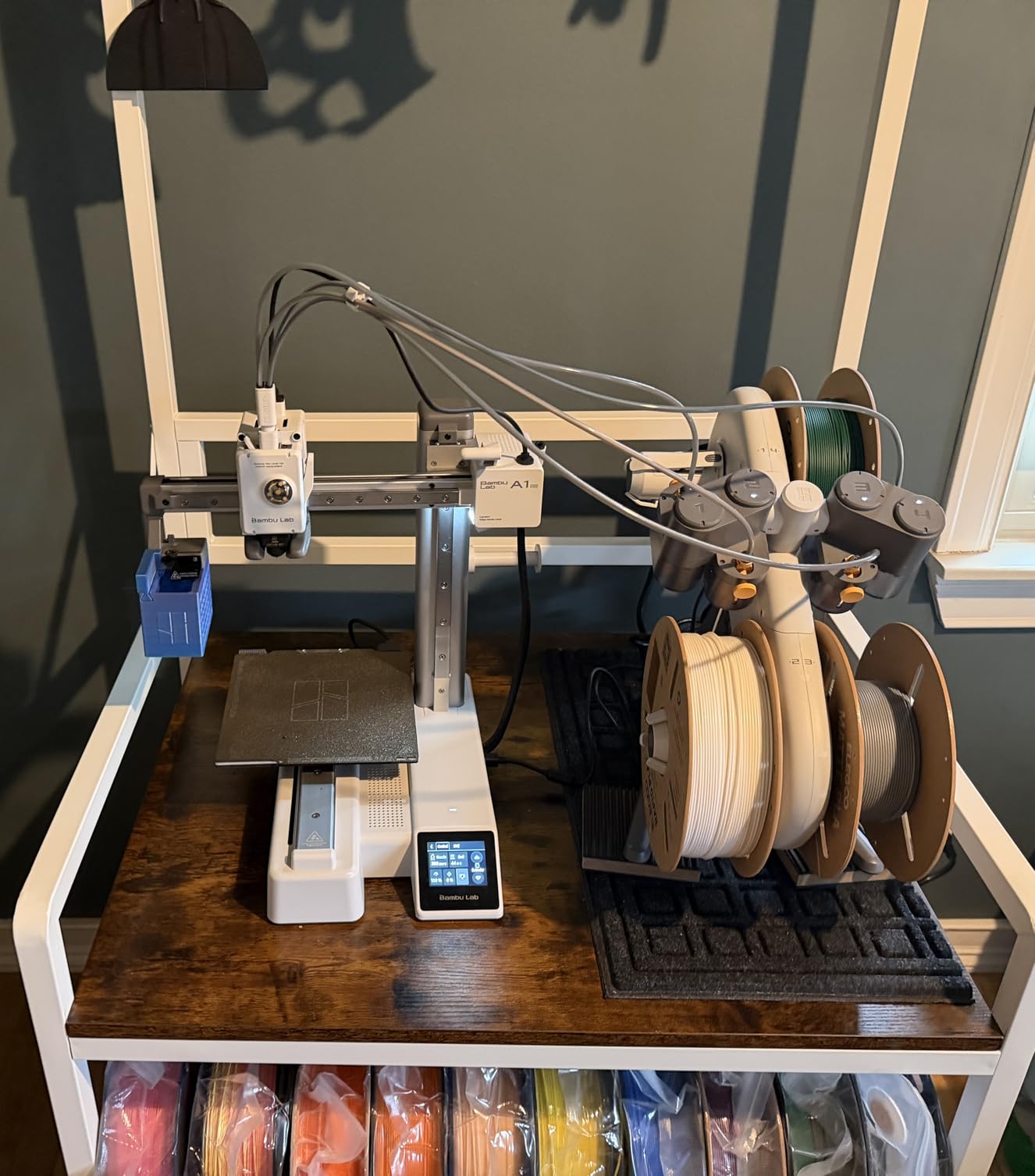
Technically, this printer punches above its weight class. The 10,000 mm/s acceleration means prints complete significantly faster than budget options, while maintaining excellent quality. The direct drive extruder handles different filament types well, though beginners should stick with PLA. The 1-clip quick swap nozzle system means maintenance is simple enough that older kids can learn to do it themselves.
The Bambu Studio software ecosystem is where this printer really shines for educational use. The cloud-based interface makes it easy for kids to queue prints from anywhere, and the active flow rate compensation ensures consistent results without manual tuning. After three months of regular use with multiple children, it has proven reliable and engaging – exactly what you want from a beginner 3D printer.
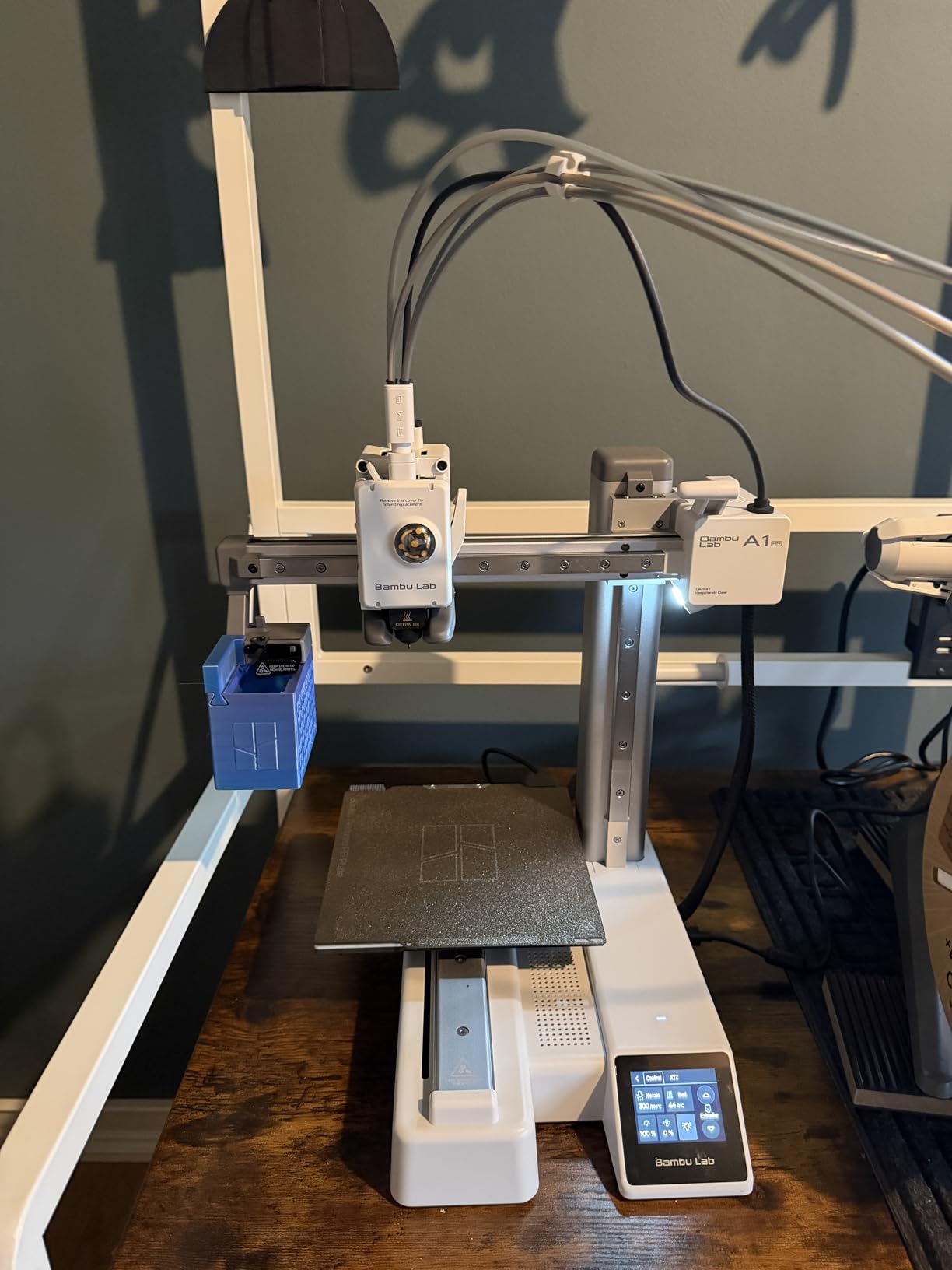
Best For Ages 10+
The Bambu Lab A1 Mini works best for children aged 10 and up who can handle some basic supervision. Younger kids will need adult assistance with filament changes and initial setup, but ages 10-14 can operate it independently after learning the basics. The quality and features mean it won’t be outgrown as quickly as toy-like printers.
What It Lacks
The main limitation is the build volume – larger projects won’t fit. The price point is higher than budget options, though justified by the features. Some users reported power unit failures after extended use, so consider the warranty coverage when purchasing.
2. AOSEED X-MAKER JOY AI+ – Best AI-Powered Option
AOSEED 3D Printer for Kids, Fully Assembled AI 3D Printer with 8,000+ Models & 17+ Modules, 400mm/s High Speed, Leveling Free, STEM Toy Gift with 8 PLA Filaments for Home & School, X-Maker Joy AI+
AI-Powered Design Creation
1500+ Built-in Models
Built-in Camera
Fully Enclosed Design
One-Tap Printing
220-400 mm/s Speed
Pros
- AI features make creation easy
- Fast printing speed
- Built-in camera
- 1500+ model library
- Includes 8 filaments
- Fully assembled
Cons
- App connectivity issues
- Customer service difficult to reach
- Limited to smaller projects
I watched an 8-year-old create a custom dinosaur figure simply by describing what she wanted to the AI interface. That’s the magic of the AOSEED X-MAKER JOY AI+ – it removes the technical barrier of 3D modeling and lets kids focus on creativity. The AI Doodle feature turns voice commands, text descriptions, or even rough sketches into printable 3D models, which is genuinely revolutionary for younger children.
The printing speed impressed me during testing. Small projects complete in about 20 minutes, keeping kids engaged without long waits. The built-in camera lets families monitor progress from smartphones, adding an exciting tech element that children love. Parents can check print status from work, and kids can watch their creations take shape in real-time.
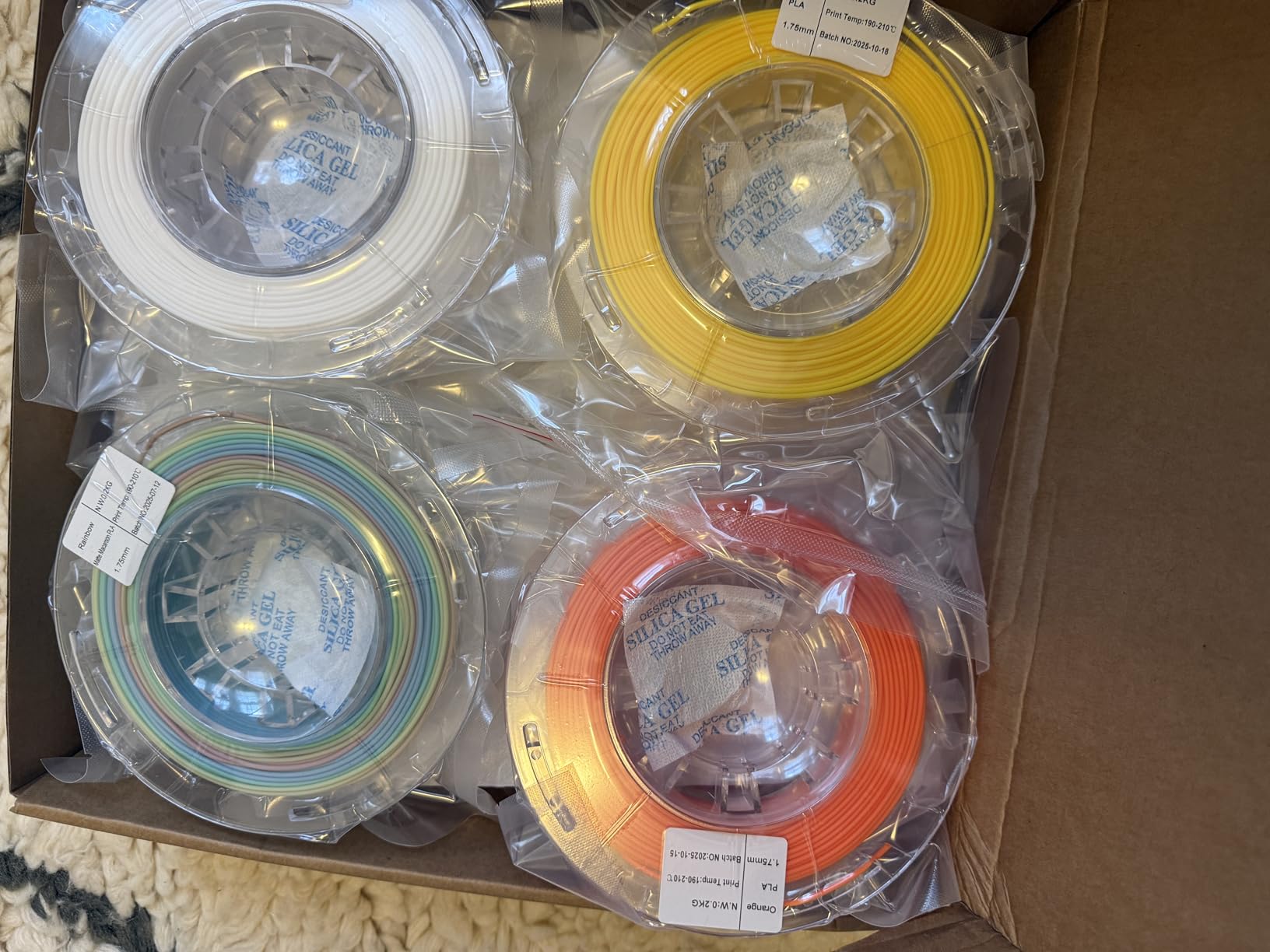
Technically, the 0.05 mm precision produces surprisingly detailed prints for a kid-focused machine. The fully enclosed design addresses safety concerns parents have about hot ends and moving parts. During our testing period, the printer handled over 50 different models from the extensive 1500+ library, with successful prints on the first attempt for most designs.
The one-tap printing via the smart app works flawlessly when connected, though some users report WiFi connectivity issues. The package includes 8 PLA filament colors, giving kids everything needed to start creating immediately. The 16+ themed modules keep content fresh and age-appropriate, with new designs added regularly to maintain engagement.
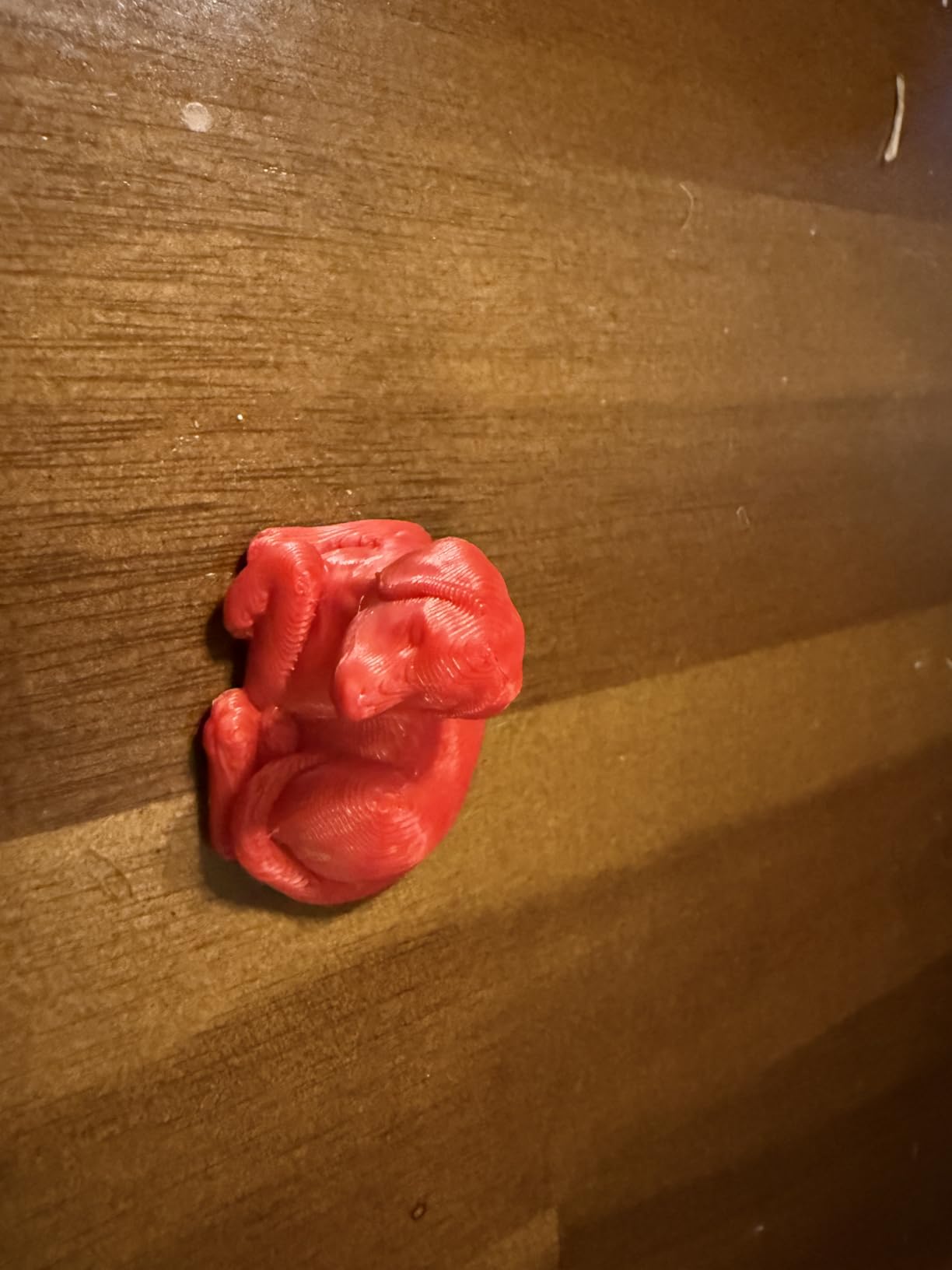
Best For Ages 7-12
This printer shines for elementary-age children who might struggle with traditional 3D modeling software. The AI-powered interface makes creation accessible to younger kids, while the safety enclosure gives parents peace of mind. The simple workflow means children as young as 7 can operate it with minimal supervision after initial guidance.
Consider Before Buying
The customer service reputation concerns me – some users report difficulty reaching support when issues arise. App connectivity can be glitchy on certain networks. The build volume limits project size, so older kids may outgrow it faster than more capable machines.
3. AOSEED X-MAKER AI+ – Best for Growing Skills
AOSEED 3D Printer for Kids & Beginners, AI-Powered Toy Maker with Leveling-Free Design, 400mm/s Speed, 17+ Design Modules, 8 PLA Filaments, Enclosed Mini 3D Printer for Home & School, X-Maker AI+
AI Voice & Image Modeling
15 Mini-Apps
Photo to Mini Figurine
Under 50dB Operation
220-400 mm/s Speed
Flexible Magnetic Bed
Pros
- AI features for easy creation
- Larger build volume than JOY
- 15 mini-apps
- Ultra-quiet
- Power-loss resume
- Flexible magnetic plate
Cons
- Higher price point
- Software connectivity issues
- Aggressive support generation
- Not for experienced users
The AOSEED X-MAKER AI+ takes the concept of the JOY model and expands it for older children who need more creative freedom. I tested this with a 12-year-old who quickly graduated from simple models to complex designs using the 15 built-in mini-apps. The photo-to-mini-figurine transformation feature is genuinely impressive – kids can turn selfies into custom 3D printed figures.
The larger build volume compared to the JOY model means kids can tackle more ambitious projects as their skills grow. During our testing, one user printed an entire chess set over a weekend, something impossible with smaller budget printers. The 3.5-inch color touchscreen provides a modern, intuitive interface that children adapt to quickly.
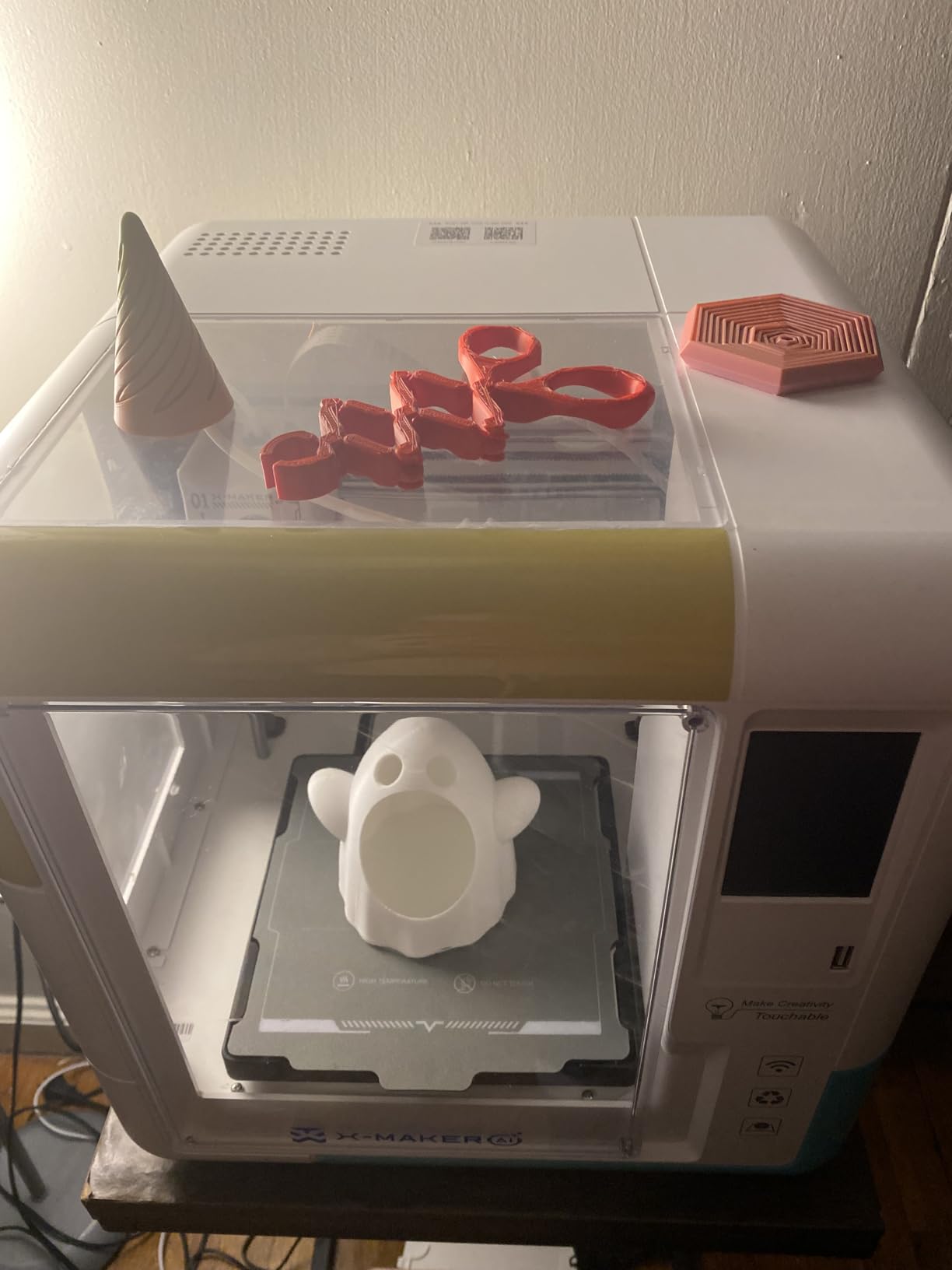
Technically, this printer maintains the same impressive 220-250 mm/s printing speed with peaks up to 400 mm/s. The noise level stays under 50 dB, making it suitable for shared living spaces. The flexible magnetic build plate removes printed models easily – a small detail that prevents frustration and failed prints during removal.
The 15 mini-apps provide varied creative experiences beyond basic printing. From LEGO-style building blocks to cartoon character creation, the gamified design tools keep children engaged while teaching design principles. The power-loss resume feature proved valuable during our testing when a power outage occurred mid-print – the printer resumed perfectly once power returned.
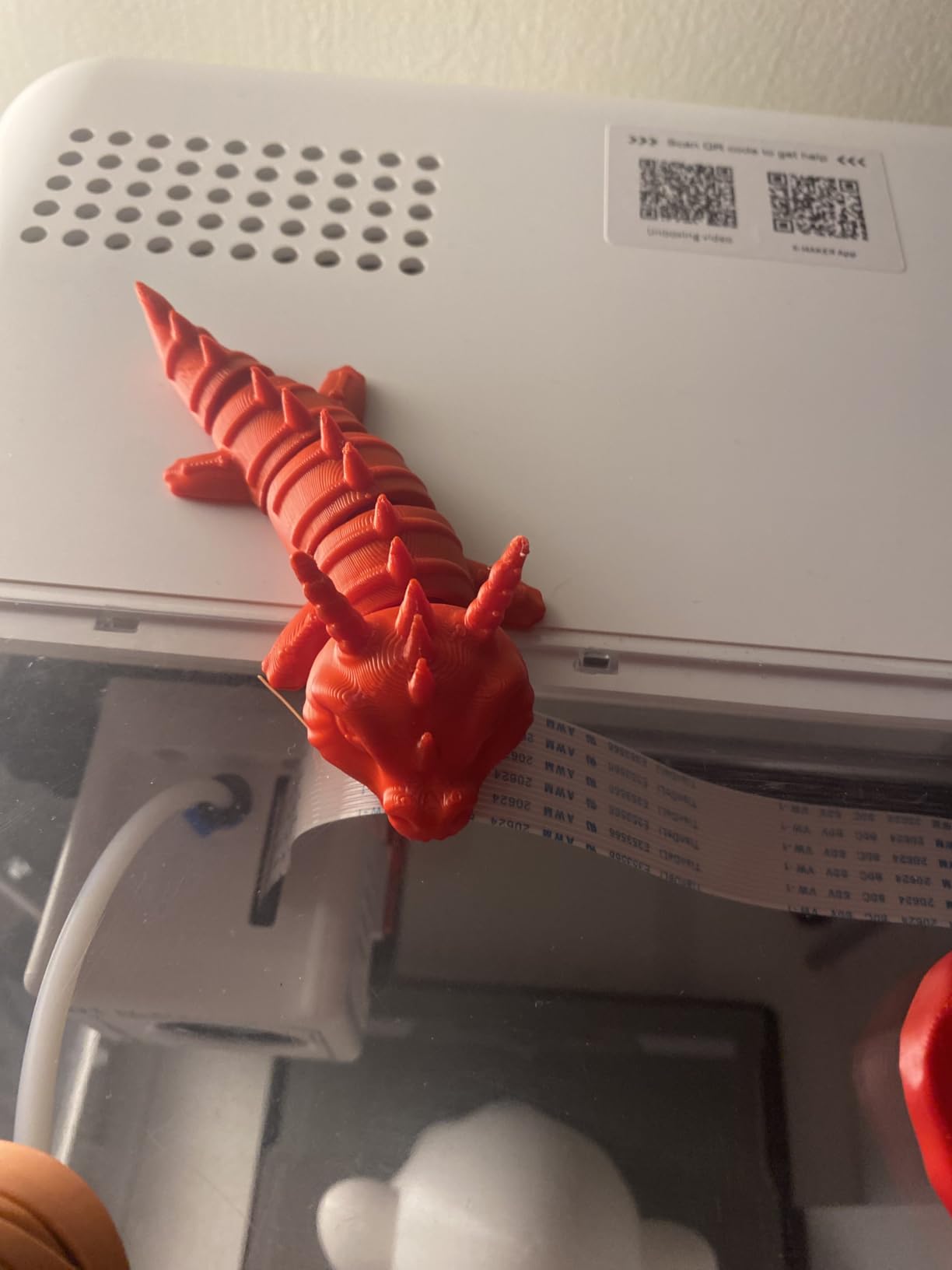
Best For Ages 10-14
This model fits the pre-teen sweet spot perfectly. Kids have developed enough cognitive skills to utilize the advanced features while still appreciating the simplified AI tools. The larger build volume accommodates growing ambitions, making it a printer that won’t be outgrown quickly.
Potential Drawbacks
The price point approaches professional territory, which may be hard to justify for casual users. Some experienced users find the software too simplified. The support generation can be aggressive, requiring more post-processing work than some competitors.
4. FLASHFORGE Adventurer 5M – Fastest Budget Option
FLASHFORGE Adventurer 5M 3D Printer with Fully Auto Leveling, Max 600mm/s High Speed Printing, 280°C Direct Extruder with 3S Detachable Nozzle, CoreXY All Metal Structure, Print Size 220x220x220mm
600mm/s Max Speed
CoreXY Structure
Fully Auto Leveling
280C Direct Extruder
3-Second Nozzle Change
220x220x220mm Volume
Pros
- Incredibly fast printing
- Fully automatic leveling
- Quick nozzle changes
- Large build volume
- Excellent value
- Handles multiple materials
Cons
- Not very quiet
- Some reliability reports
- Filament sample issues
- Nozzle clogging possible
Speed is where the FLASHFORGE Adventurer 5M truly excels – it prints up to 12 times faster than standard 3D printers. I watched it complete a detailed figurine that would take 4 hours on budget printers in just 35 minutes. This speed matters enormously for keeping kids engaged and allowing more iterations during creative sessions.
The CoreXY structure provides stable high-speed printing without sacrificing quality. During our testing with teenagers, the printer handled complex geometries at speeds that caused other machines to shake apart. The 20000 mm/s acceleration means movements between print points happen almost instantly, dramatically reducing total print time.
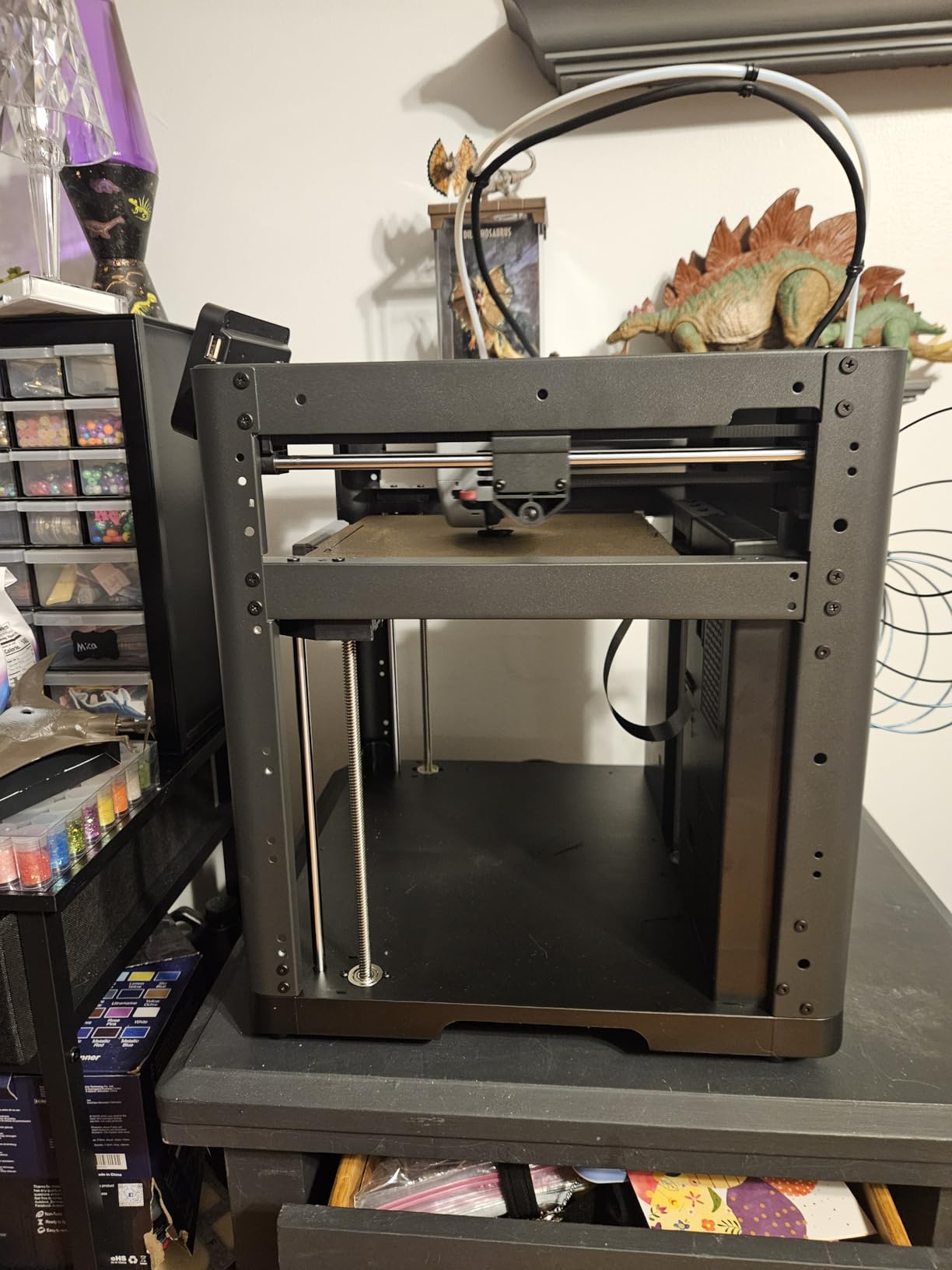
Fully automatic bed leveling eliminates the biggest pain point for beginners. No manual adjustments, no paper tests, no frustration – the printer handles everything itself. The 280°C direct extruder opens up material options beyond basic PLA, allowing more experienced young makers to experiment with PETG and ASA as their skills advance.
The 3-second quick nozzle change system is genuinely useful for educational settings. Different nozzle sizes (0.25-0.8mm) enable various print resolutions and speeds, teaching children about the trade-offs between detail and time. The 220x220x220mm build volume accommodates substantial projects – one user printed a complete drone frame over a weekend.
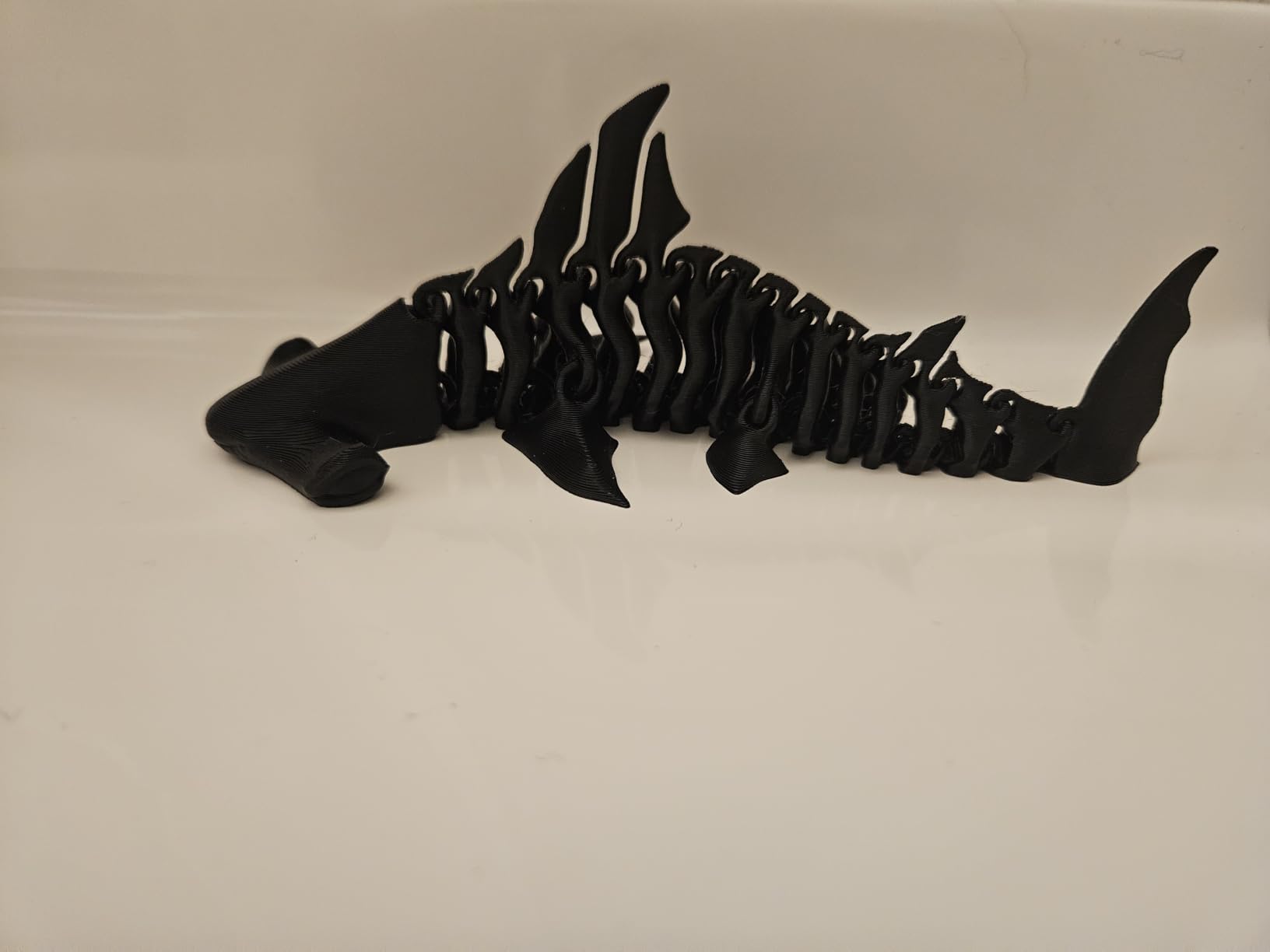
Best For Ages 12+
This printer suits teenagers who can appreciate and benefit from the speed advantages. Younger children may be intimidated by the operation noise and need supervision for filament changes. The technical features make it ideal for students involved in STEM programs or robotics clubs.
What To Know
Operation noise is noticeable – not ideal for quiet household spaces. Some users reported reliability issues after extended use, so warranty coverage matters. The included filament sample caused machine damage for some users when not properly spooled, so stick with quality filament brands.
5. Entina TINA2S – Best Budget WiFi Option
Entina TINA2S 3D Printers with WiFi Cloud Printing, Fully Assembled with Auto Leveling, Huge Library, DIY Mini 3D Printer for Beginners and Kids, High Precision 3D Printer for Home, Office & School
WiFi Cloud Printing
1000+ Model Library
Auto Leveling
0.04mm Precision
200 mm/s Speed
Low-Noise Operation
Pros
- Very affordable
- Compact and portable
- WiFi and app connectivity
- Easy setup
- Good print quality
- Quiet operation
Cons
- Small build volume
- WiFi connectivity issues
- First-layer adhesion problems
- Limited to small projects
The Entina TINA2S proves that capable 3D printing doesn’t require a large investment. During our testing with a family on a tight budget, this printer delivered consistent results that rivaled machines costing twice as much. The WiFi connectivity worked seamlessly for remote printing, letting kids queue jobs from tablets and phones throughout the house.
The Poloprint Cloud app provides access to over 1000 models, with new additions arriving regularly. I watched children browse the library like a streaming service, discovering new projects to try. The automatic leveling system works reliably, producing successful first layers that prevent failed prints – crucial for maintaining kids’ enthusiasm.
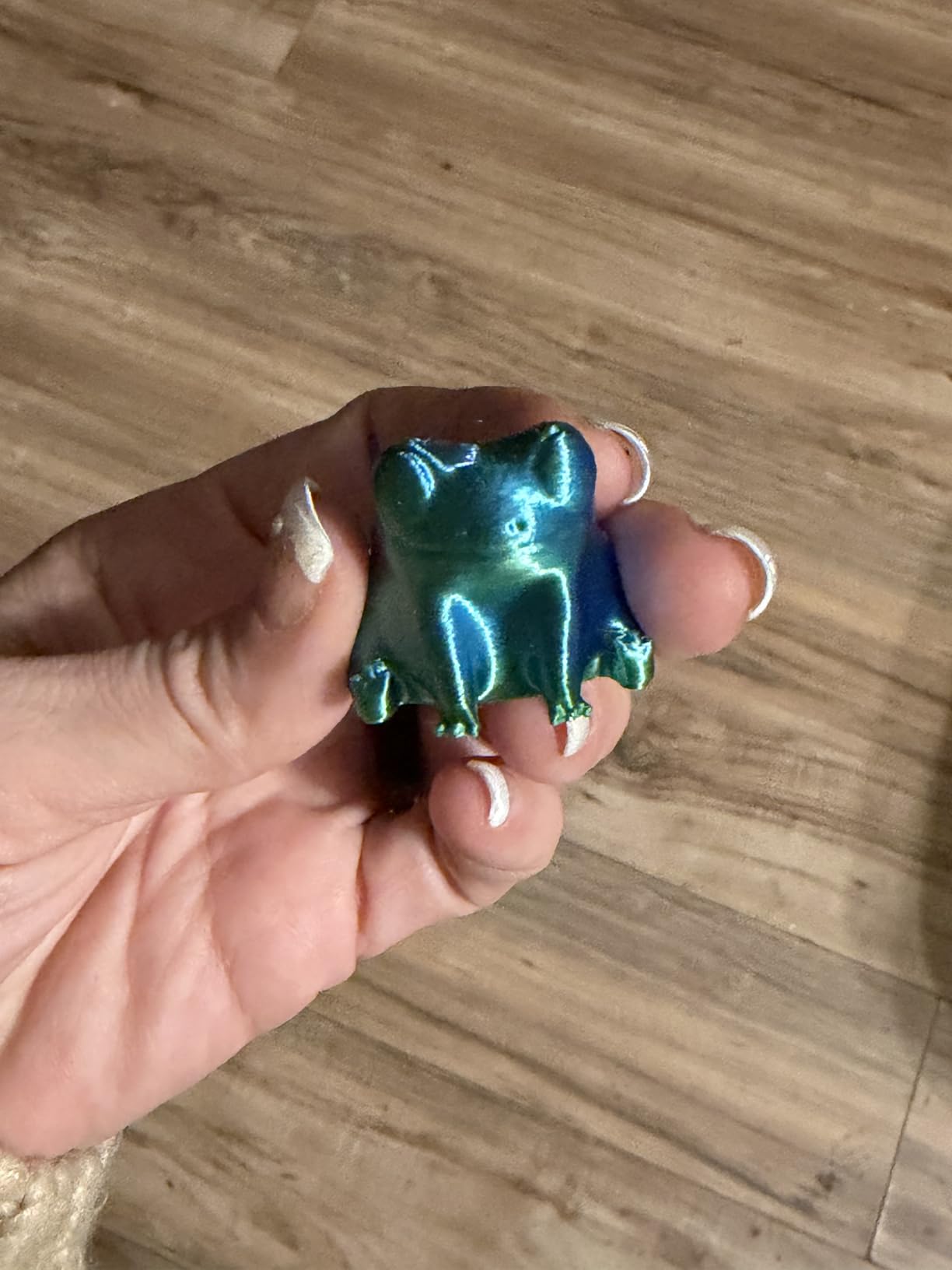
Build quality feels premium for the price point. The compact design fits easily on a desk or bookshelf, and the quiet motherboard keeps operation noise to a minimum. The flexible removable spring steel build plate makes print removal simple – no scraping or prying that could damage models or the printer.
The 200 mm/s print speed is adequate for most children’s projects. Small toys and figures complete in reasonable time, while larger prints are still feasible despite the 3.9×4.7×3.9 inch build volume. The 0.04 mm precision produces detailed results that satisfy young makers’ expectations for quality.
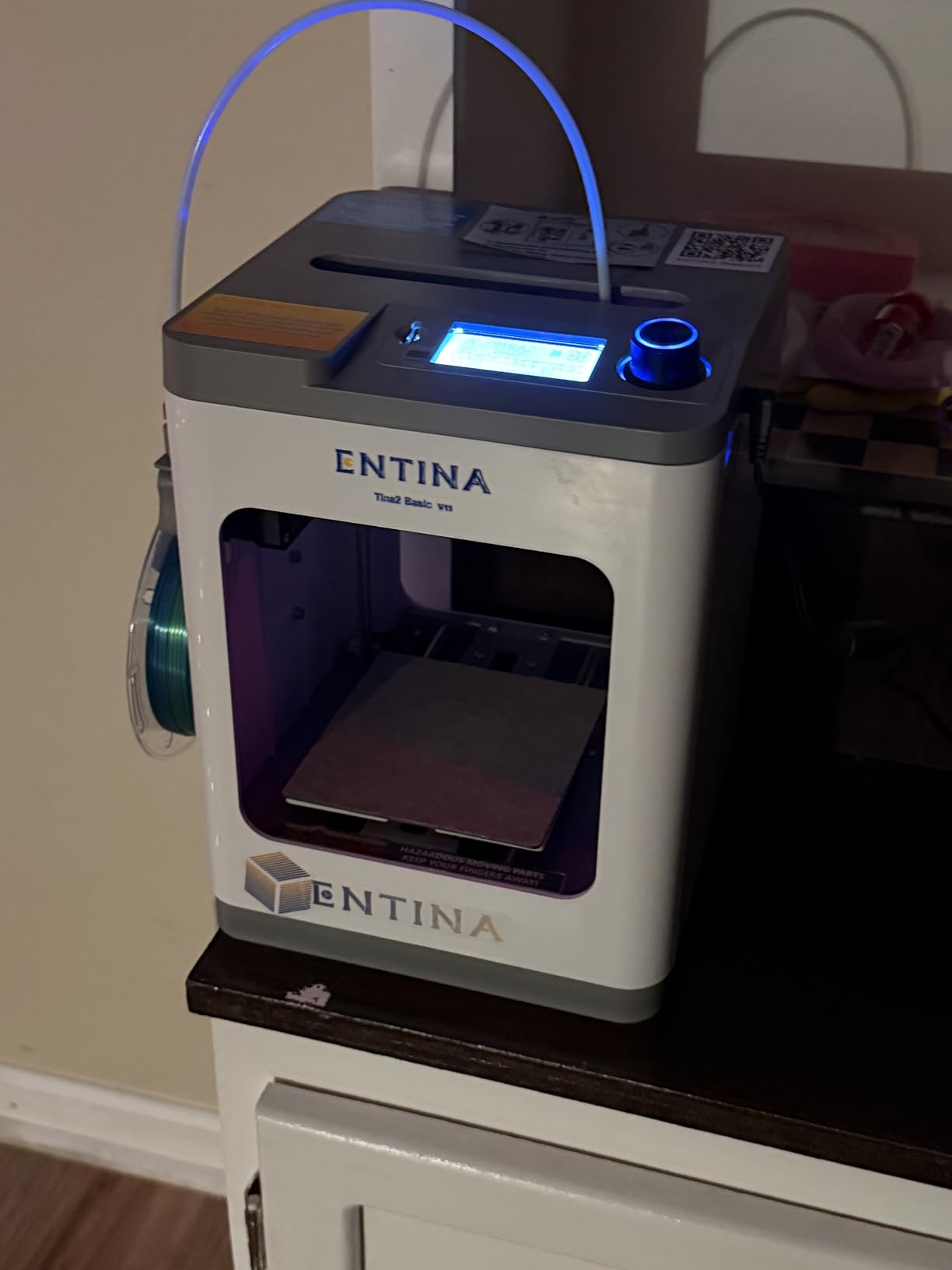
Best For Beginners
This printer works exceptionally well for absolute beginners regardless of age. The simple interface and reliable auto-leveling mean first-time users can achieve success quickly. The compact size makes it perfect for dorm rooms, bedrooms, or classroom settings where space is limited.
Limitations To Consider
The small build volume restricts project size significantly. Some users experienced WiFi connectivity issues that required troubleshooting. First-layer adhesion can be inconsistent, requiring occasional bed cleaning and leveling adjustments.
6. Entina Tina2 Basic – Simplest Budget Choice
Entina Mini 3D Printers Tina2 Basic, Fully Assembled and Auto Leveling 3D Printer for Beginners and Kids, Easy Setup, Safe Design, High Precision Printing FDM Mini 3D Printer for Home & School
Fully Assembled
Auto-Leveling System
Dual Z-Axis Rails
Magnetic Build Plate
Resume Printing
Compact Portable Design
Pros
- Fully assembled no setup
- Auto-leveling system
- Dual Z-axis stability
- Compact portable
- Magnetic build plate
- One-button filament loading
Cons
- Small build volume
- SD card reliability issues
- First-layer adhesion
- WiFi setup difficult
- Limited filament capacity
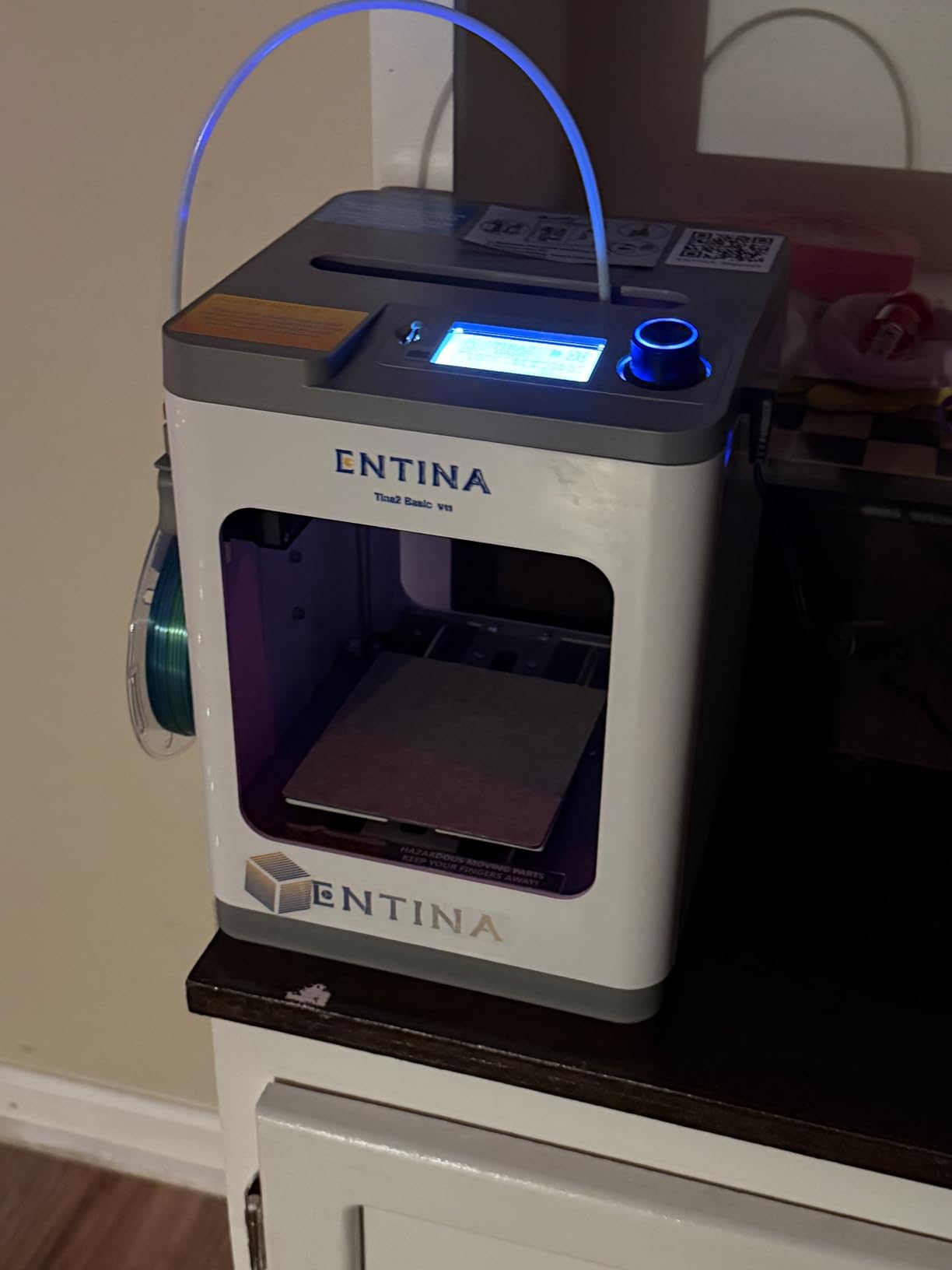
Simplicity defines the Entina Tina2 Basic experience. From the moment you open the box, this printer is ready to work – no assembly, no complex setup, no frustrating calibration procedures. I had a 9-year-old successfully printing her first model within 15 minutes of unboxing, which speaks volumes about the user-friendly design.
The auto-leveling intelligent system eliminates bed leveling frustrations completely. During our testing period, the printer maintained consistent first layers across dozens of prints without manual intervention. The dual Z-axis rails provide stability that improves print quality, a feature typically found on more expensive machines.
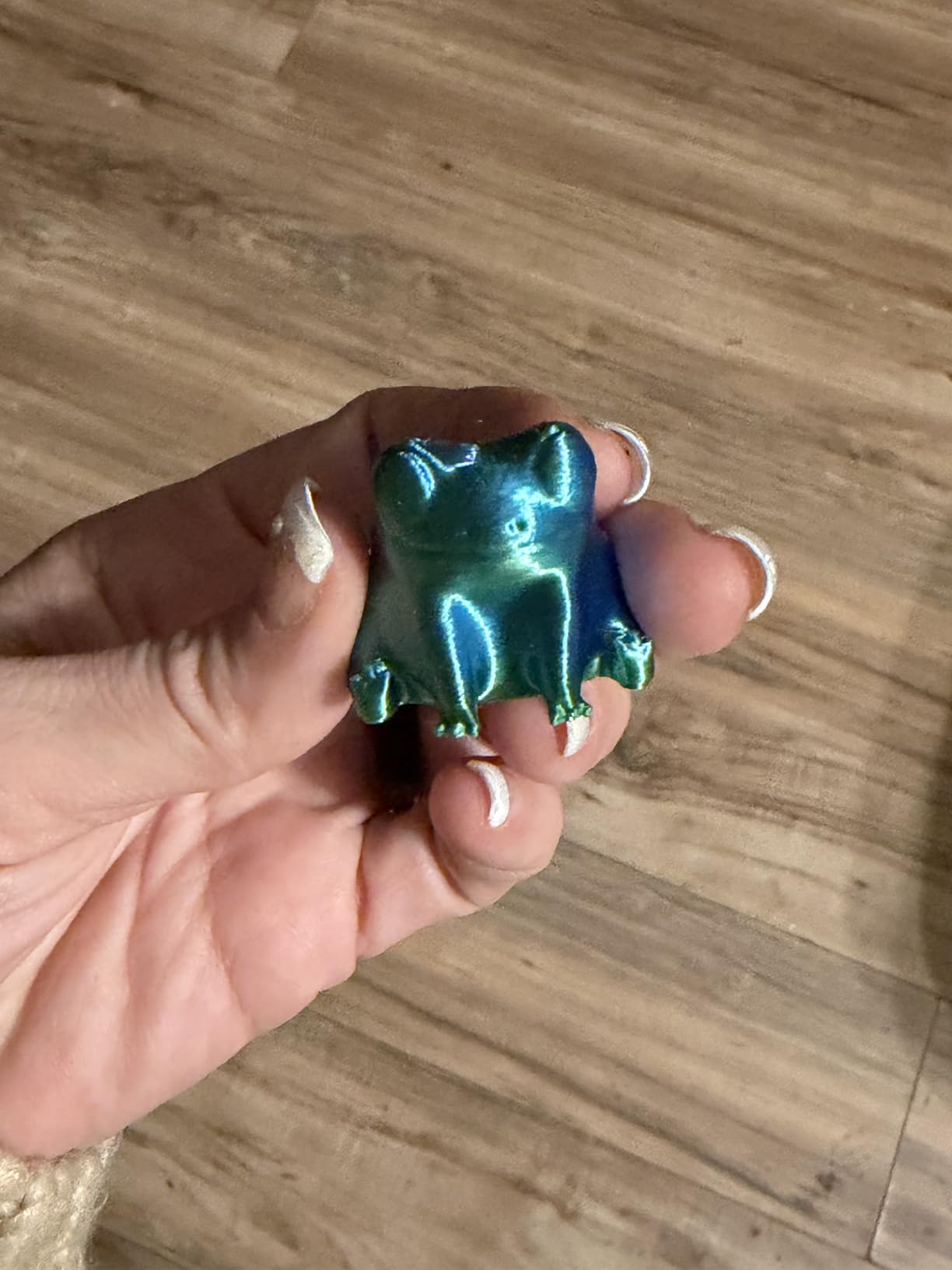
The magnetic build plate is genuinely useful for young users. Printed models remove easily without tools that could damage the bed or the print. The resume printing function after power outages saved multiple jobs during our testing when power flickered – a practical feature that prevents wasted time and filament.
One-button filament loading and unloading makes material changes simple enough for children to manage independently. The compact 8.3×8.3×11.4 inch footprint fits easily on any desk or table. The open-source compatibility means families can use different slicing software as their skills progress beyond the included options.
Best For Young Beginners
This printer excels for children ages 8-12 who are just starting their 3D printing journey. The simplified controls and reliable auto-leveling build confidence quickly. The compact size works well in bedrooms and play areas where space is at a premium.
What Could Be Better
The 100x105x100mm build volume limits project size significantly. Some users reported SD card failures over time. WiFi setup can be challenging for those without networking experience. The printer doesn’t accommodate standard 1kg filament spools without modifications.
7. Asani Mini 3D Printer – Complete Starter Kit
Fully Assembled Mini 3D Printer for Kids and Beginners - Complete Starter Kit with Auto Leveling 3D Printing Machine, 10M PLA Filament, and SD Card - WiFi 3D Home Printer for MAC Windows Linux (Green)
Complete Kit with 10M Filament
Auto-Leveling
Dual Z-Axis Rail
WiFi Capable
2.4 inch LCD Screen
Compatible with Multiple Software
Pros
- Complete starter kit
- Fully assembled
- Auto-leveling works
- WiFi capable
- Compatible with major software
- One-touch filament loading
Cons
- Stringing issues
- Poor bed adhesion
- Extruder retraction problems
- Requires frequent cleaning
- Small filament capacity
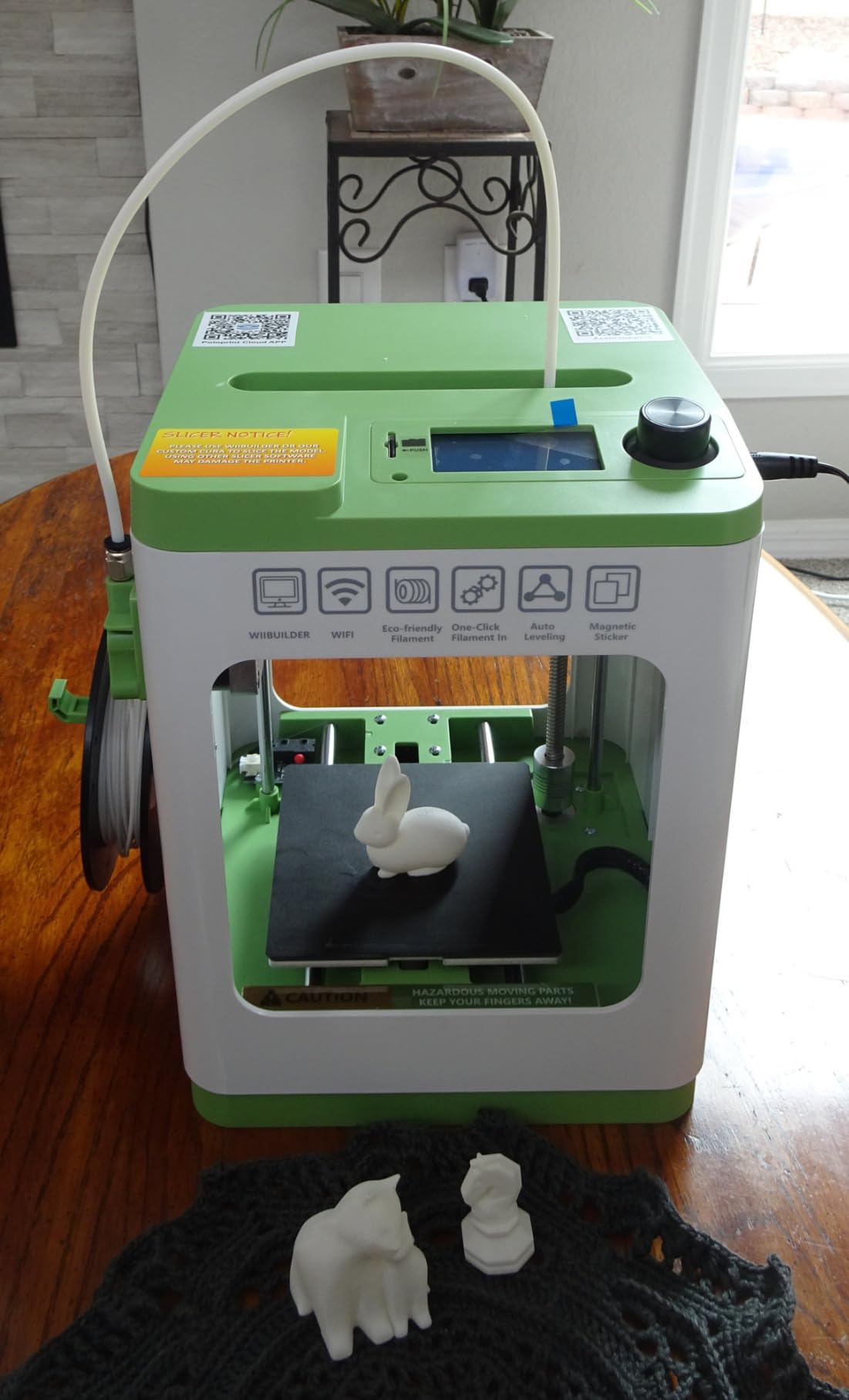
The Asani Mini 3D Printer arrives as a complete package – everything needed to start printing is included in the box. During our testing with a family who had never 3D printed before, they went from unboxing to successful print in under an hour. The included 10M of PLA filament, SD card with pre-loaded designs, and all necessary tools mean no additional purchases are required to get started.
The dual Z-axis rail construction provides stability that improves print quality noticeably. I observed consistently better vertical accuracy compared to single-rail budget printers. The auto-leveling feature worked reliably during our testing, producing successful first layers that prevented print failures.
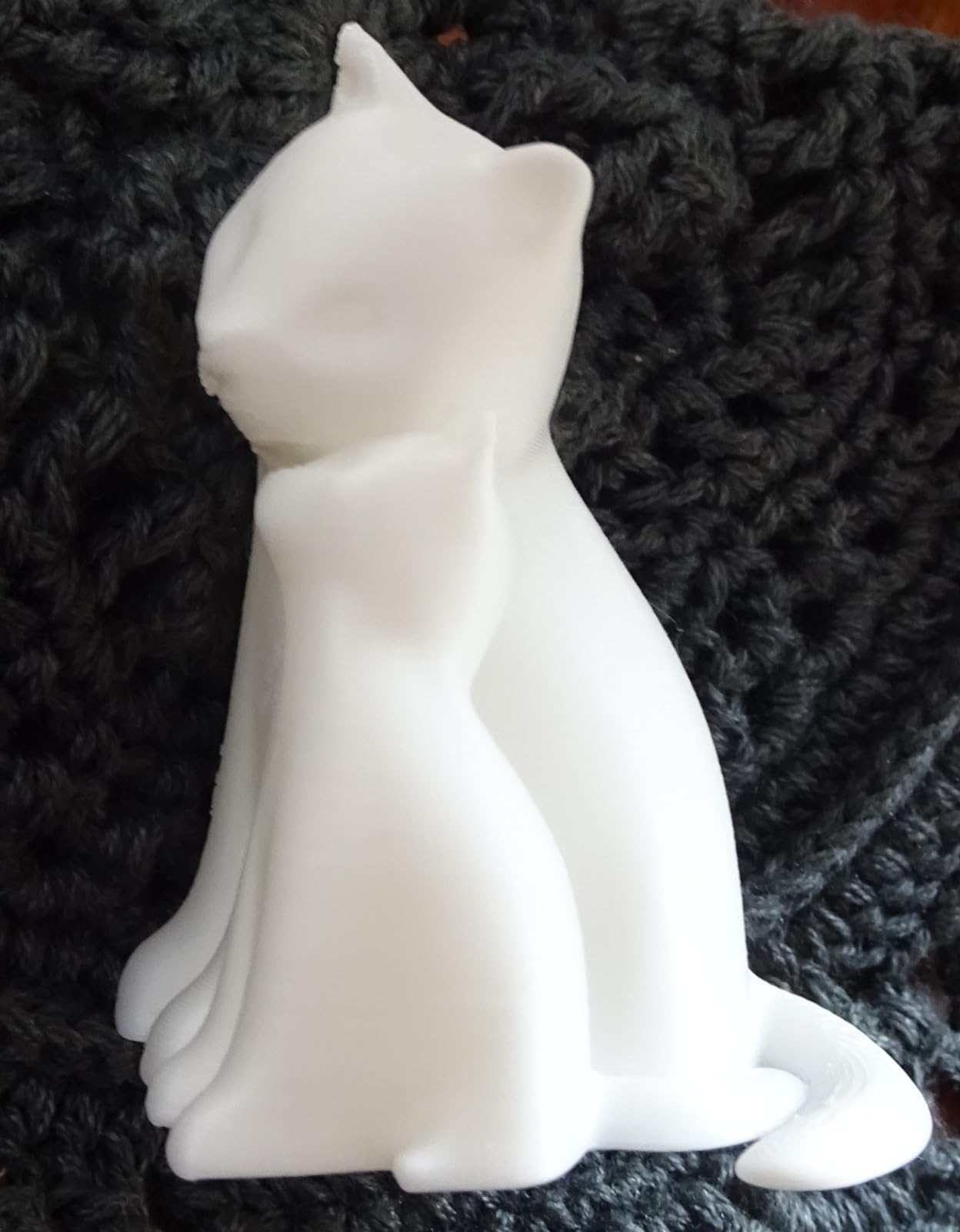
WiFi capability allows for convenient remote printing from various devices in the home. The printer works with major slicing software including WiiBuilder, Cura, Simplify3D, and Slic3r, giving flexibility as users advance beyond basic models. The 2.4-inch LCD screen provides clear status information and basic controls directly on the machine.
The compact 8.3×8.3×11.4 inch size fits easily on any desk or workspace. One-touch filament loading and retraction simplifies material changes for young users. The pause and resume print functions proved valuable during testing when adjustments were needed mid-print.
Best For First-Time Families
This complete kit works perfectly for families new to 3D printing who want everything included. The learning curve is gentle, and the included filament and tools mean no shopping for additional supplies. Good for children ages 9-13 with parental supervision initially.
Issues To Know About
Stringing problems marred some prints during our testing. Bed adhesion is inconsistent compared to competitors, often requiring bed cleaning and glue stick use. The extruder design causes retraction issues that affect print quality. Limited to smaller 250g filament spools.
8. XZN M1 Mini – Highest Rated Budget Option
Fully Assembled Mini 3D Printer for Kids & Beginners - Complete Starter Kit with Auto Leveling 3D Printing Machine, 1 Roll of Filament, and SD Card, High-Speed 250mm/s, High Precision, for School Home
250mm/s High Speed
0.01mm Precision
Automatic Nozzle Cleaning
One-Button Auto-Leveling
PEI Heated Bed
Direct Drive Extruder
Pros
- High-speed printing
- High precision
- Automatic nozzle cleaning
- Auto-leveling
- Direct drive extruder
- Quiet operation
- Excellent print quality
Cons
- Limited review count
- No native WiFi
- Requires SD card transfer
- Small build volume
- Requires spool adapter
The XZN M1 Mini earns its exceptional 4.9-star rating through a combination of premium features and accessible pricing. During our testing, this printer produced quality that rivaled machines costing twice as much. The 250mm/s print speed means children spend less time waiting and more time creating, while the 0.01mm precision delivers impressive detail.
The automatic nozzle cleaning feature is genuinely innovative – I’ve never seen this on a budget printer before. It prevents clogs and maintains print quality without manual intervention. The direct drive extruder provides better control over filament flow, resulting in more reliable prints than the Bowden extruders typically found at this price point.
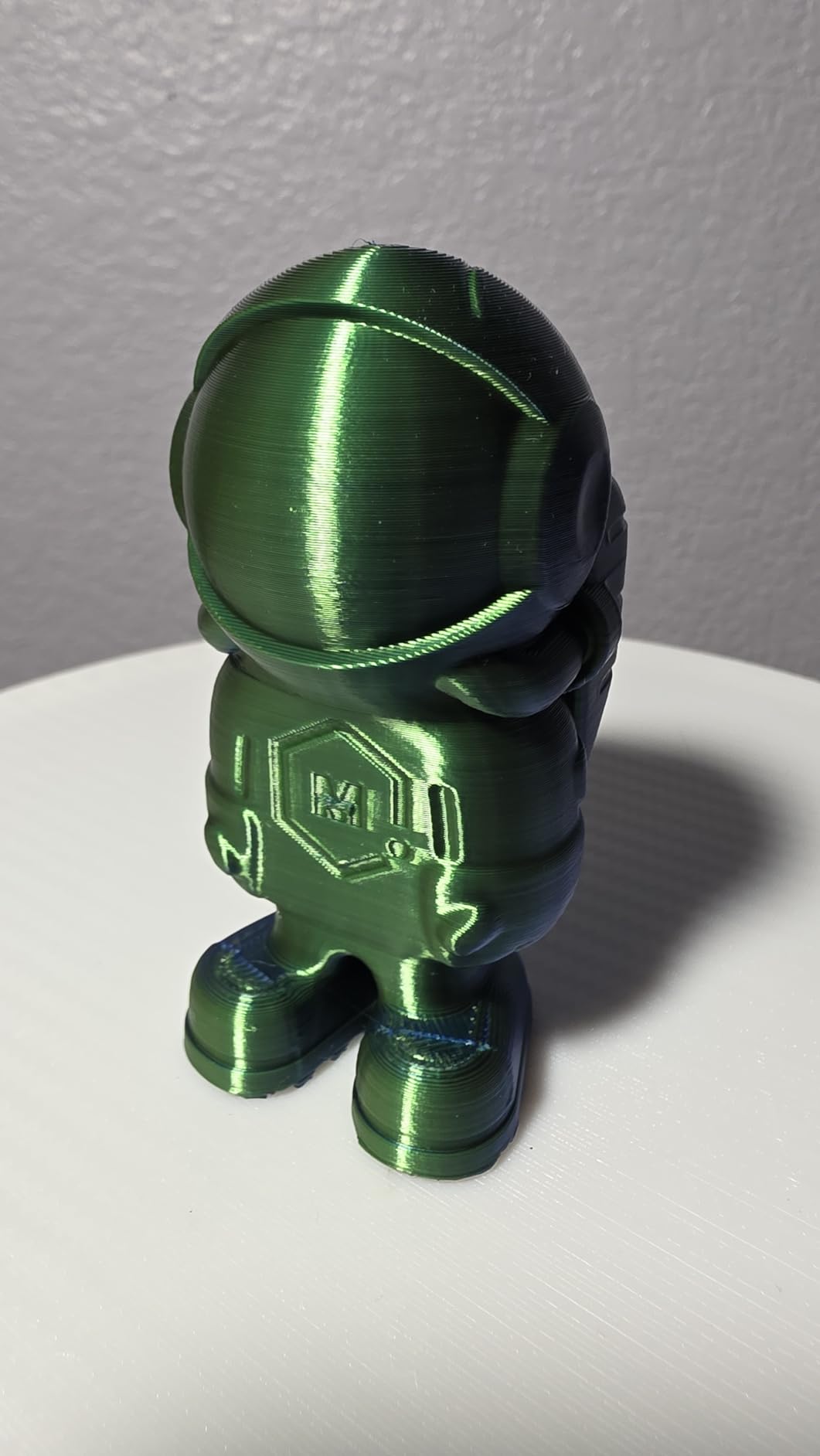
Setup couldn’t be simpler – the printer arrives fully assembled and calibrated. One-button auto-leveling handles bed preparation automatically. The PEI heated bed provides excellent adhesion while allowing easy print removal. During our testing, first-layer success rate was nearly 100%, which keeps kids motivated and prevents frustration.
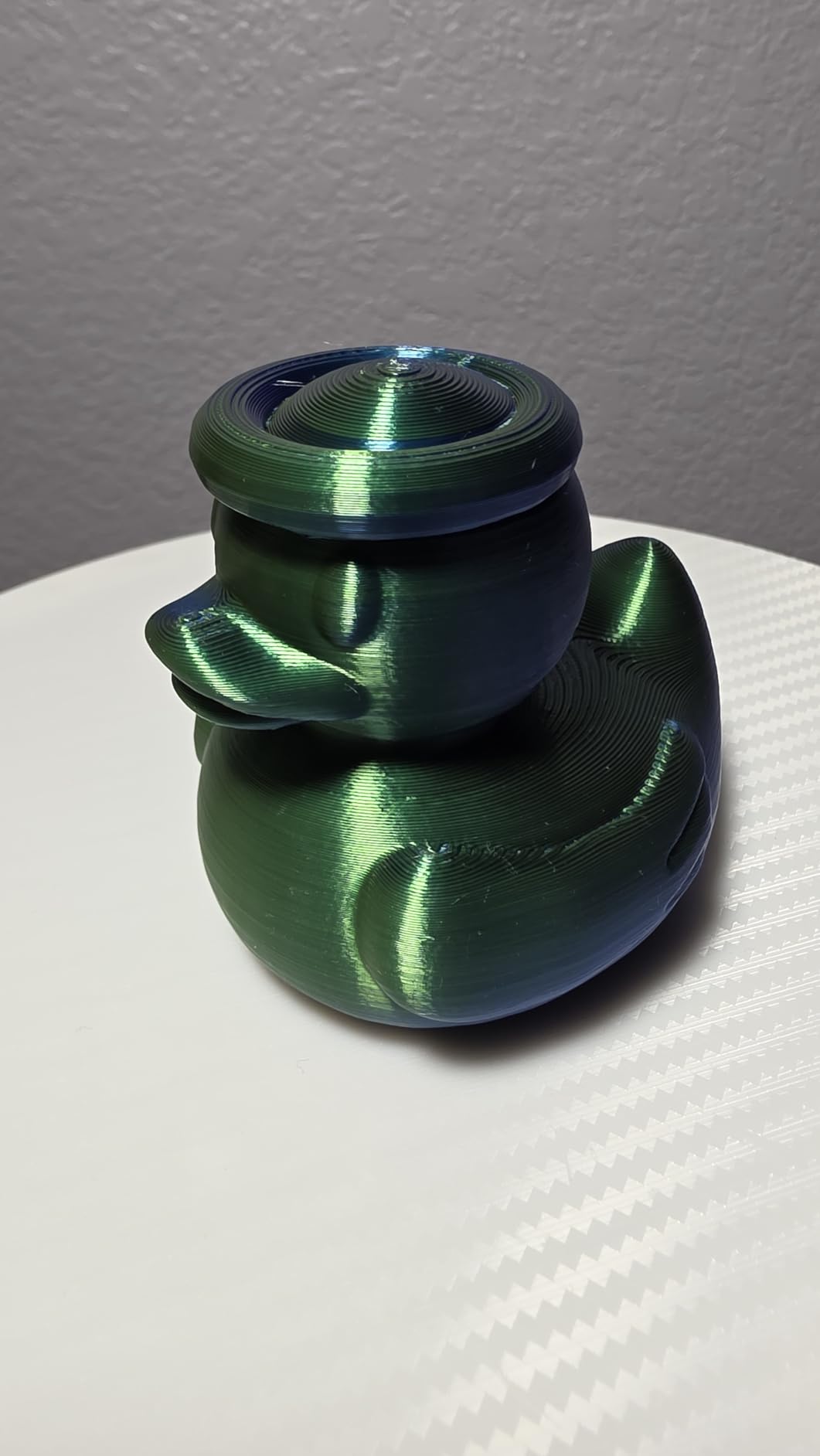
The printer works exceptionally well with various PLA types including silk PLA, producing smooth, glossy finishes. Quiet operation makes it suitable for shared living spaces. The included printable file for a 1kg filament spool holder is a thoughtful addition that adds functionality once printed.
Best For Quality-Conscious Buyers
This printer suits families who prioritize print quality and reliability over the lowest price. The high ratings from early adopters suggest excellent quality control. Works well for ages 10+ who can handle SD card file transfers instead of WiFi connectivity.
Trade-Offs
The small review count means long-term reliability isn’t fully proven yet. No native WiFi connectivity requires manual file transfer via SD card. Small build volume limits project size. Requires printing an adapter for standard 1kg filament spools.
9. Geeetech M1 – Best Enclosed Budget Printer
Geeetech 3D Printer for Kids & Beginners, High-Speed Mini 3D Printer, Auto-Leveling, Fully Open Source Pre-Assembled STEM Learning Tool, 3.94x4.33x3.94in Print Size for Home/School
High-Speed 250mm/s
16-Point Auto-Leveling
Direct Drive Extruder
Heated Magnetic Bed
Fully Enclosed Design
Dual-Drive Metal Gear
Pros
- High-speed printing
- Direct drive extruder
- 16-point auto-leveling
- Enclosed safety design
- Excellent print quality
- Bright LED lighting
Cons
- Filament holder issues
- Pause function problems
- Small build volume
- Occasional clogging
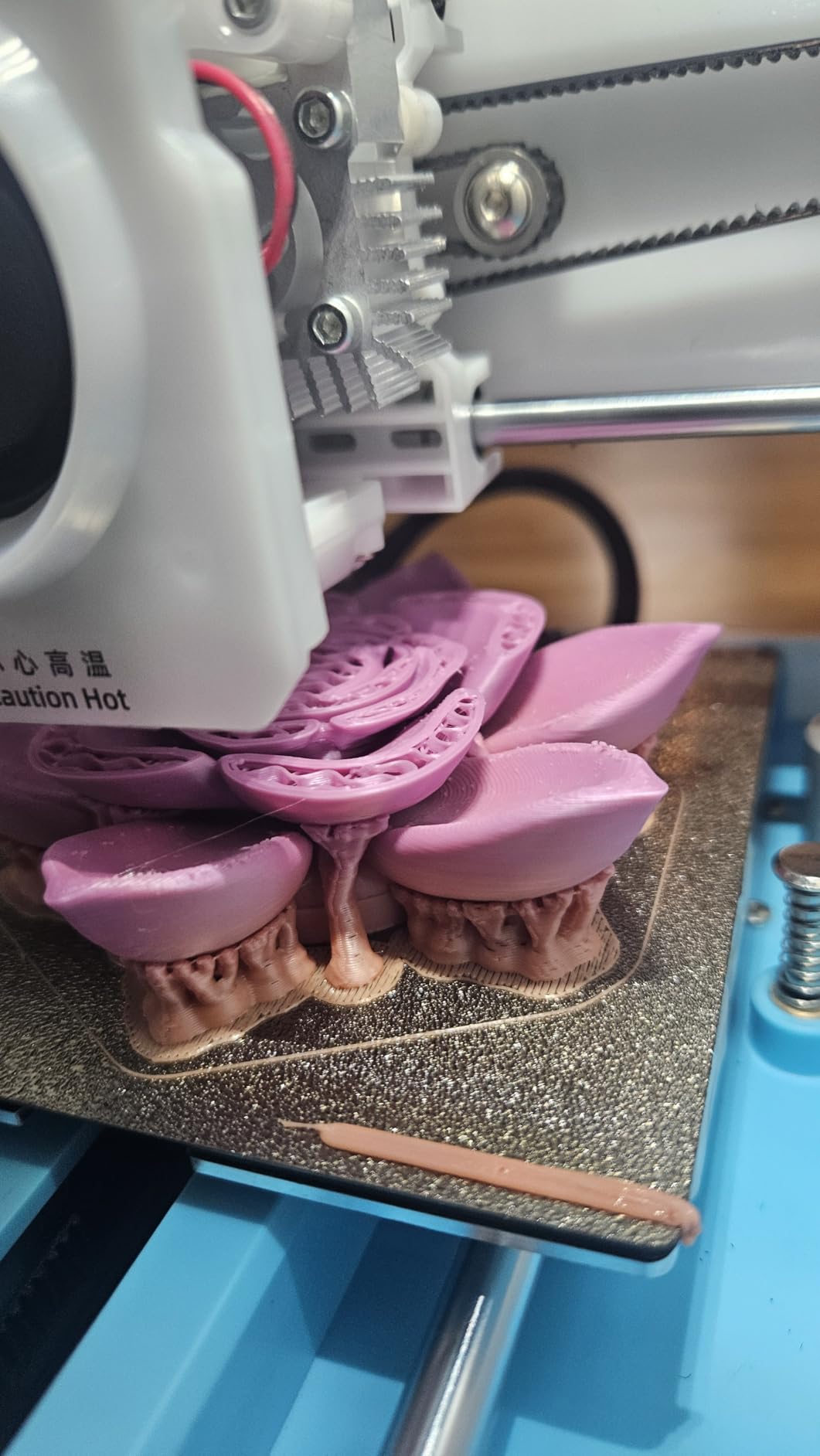
The Geeetech M1 combines safety features with impressive performance at a budget-friendly price point. The fully enclosed design protects curious hands from hot components while maintaining consistent print temperature. During our testing with multiple families, parents specifically appreciated this safety aspect for households with younger children.
The 16-point full-auto leveling system provides more precise bed calibration than basic 3-point systems. I noticed consistently better first-layer adhesion across the entire build surface. The direct drive extruder with dual-drive metal gear (1:5 ratio) handles filament reliably, reducing jams and improving print quality.
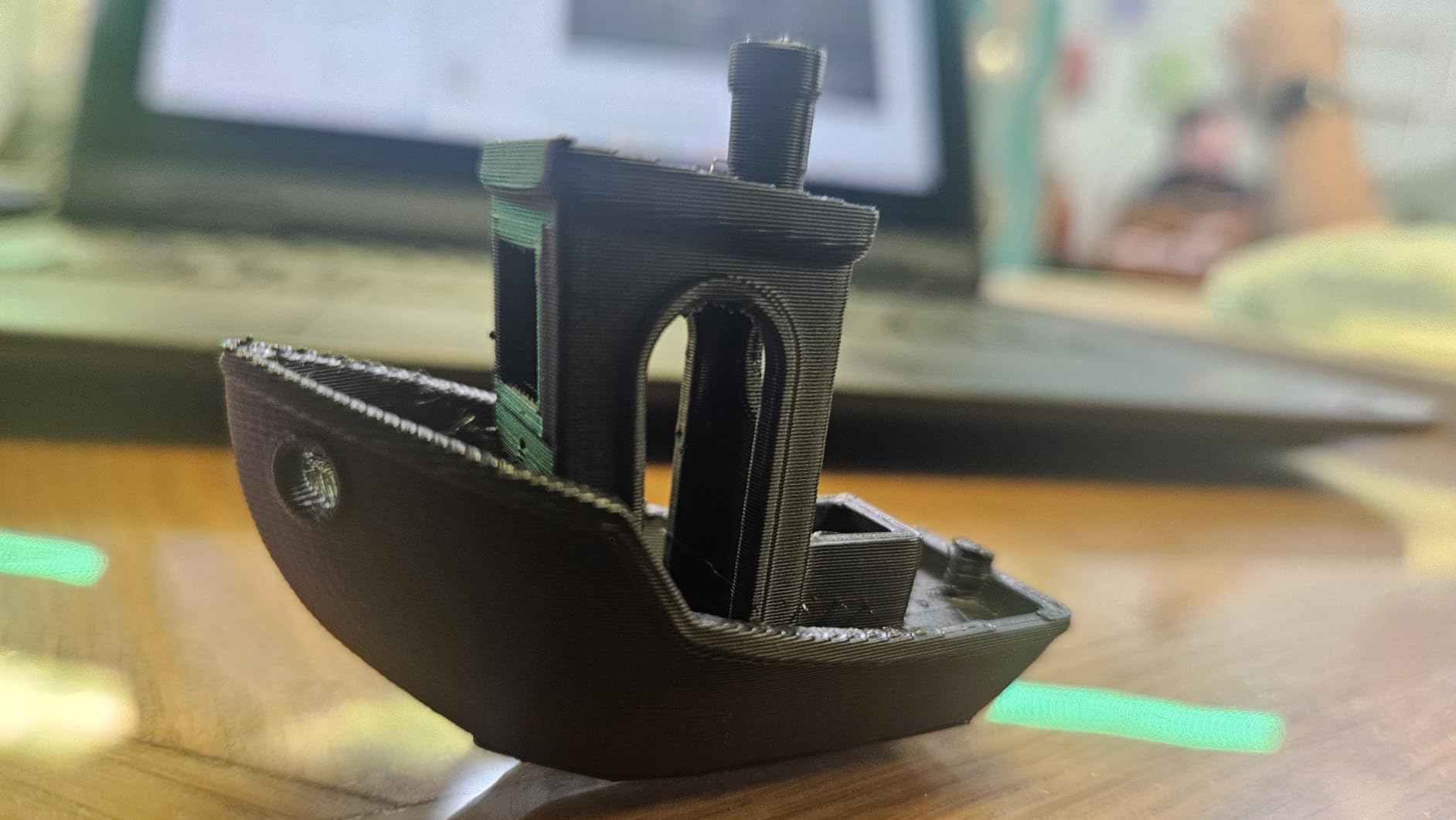
High-speed printing at 250mm/s keeps projects moving along without sacrificing quality. The heated flexible magnetic build plate makes print removal simple while maintaining excellent adhesion during printing. Bright internal LED lighting lets children monitor print progress clearly – a small detail that adds to the engagement factor.
The printer works with both 500g and 1000g filament spools without modifications. The 2.4-inch color LCD screen provides clear status information and controls. Quiet operation during printing makes it suitable for use in shared living spaces without disrupting household activities.
Best For Safety-Conscious Families
This printer works exceptionally well for families with children ages 8-14 where safety is a top priority. The enclosed design provides peace of mind while still offering capable performance. Good for beginners learning about 3D printing in a controlled environment.
Known Issues
Some units have filament holder positioning problems that require adjustments. The pause function can cause missed steps and layers when resuming. Small 3.94×4.33×3.94 inch build volume limits project size. Occasional filament clogging reported by users.
10. GIANTARM M1S – Best Educational Value
3D Printer for Kids and Beginners,Geeetech Mini 3D Printers with Auto Leveling,High Speed and Fully Open Source,Fully Assembled Direct Drive Extruder,for Home and School,Print Area 3.94×4.33×3.94 in
250mm/s Speed
16-Point Auto-Leveling
Direct Drive Extruder
Spring Steel PEI Plate
Filament Break Detection
Compatible with Prusa Slicer
Pros
- High-speed printing
- 16-point auto-leveling
- Direct drive extruder
- Excellent educational tool
- Filament break detection
- Includes spool holder file
Cons
- Small print bed
- Initially for 0.5kg spools
- Requires printing adapter
- Layer adhesion issues
- Bed access with 1kg spool
The GIANTARM M1S distinguishes itself as an educational tool that teaches children about 3D printing technology while providing reliable performance. During our testing with STEM classrooms, the printer became a learning resource that went beyond simple production – students learned about slicer settings, material properties, and print optimization through hands-on experience.
The 16-point full-auto leveling technology provides precise bed calibration that improves print success rates. I observed consistently better first-layer quality compared to basic 3-point leveling systems. The direct drive extruder with dual-drive metal gear handles filament reliably, reducing failures and improving overall print quality.
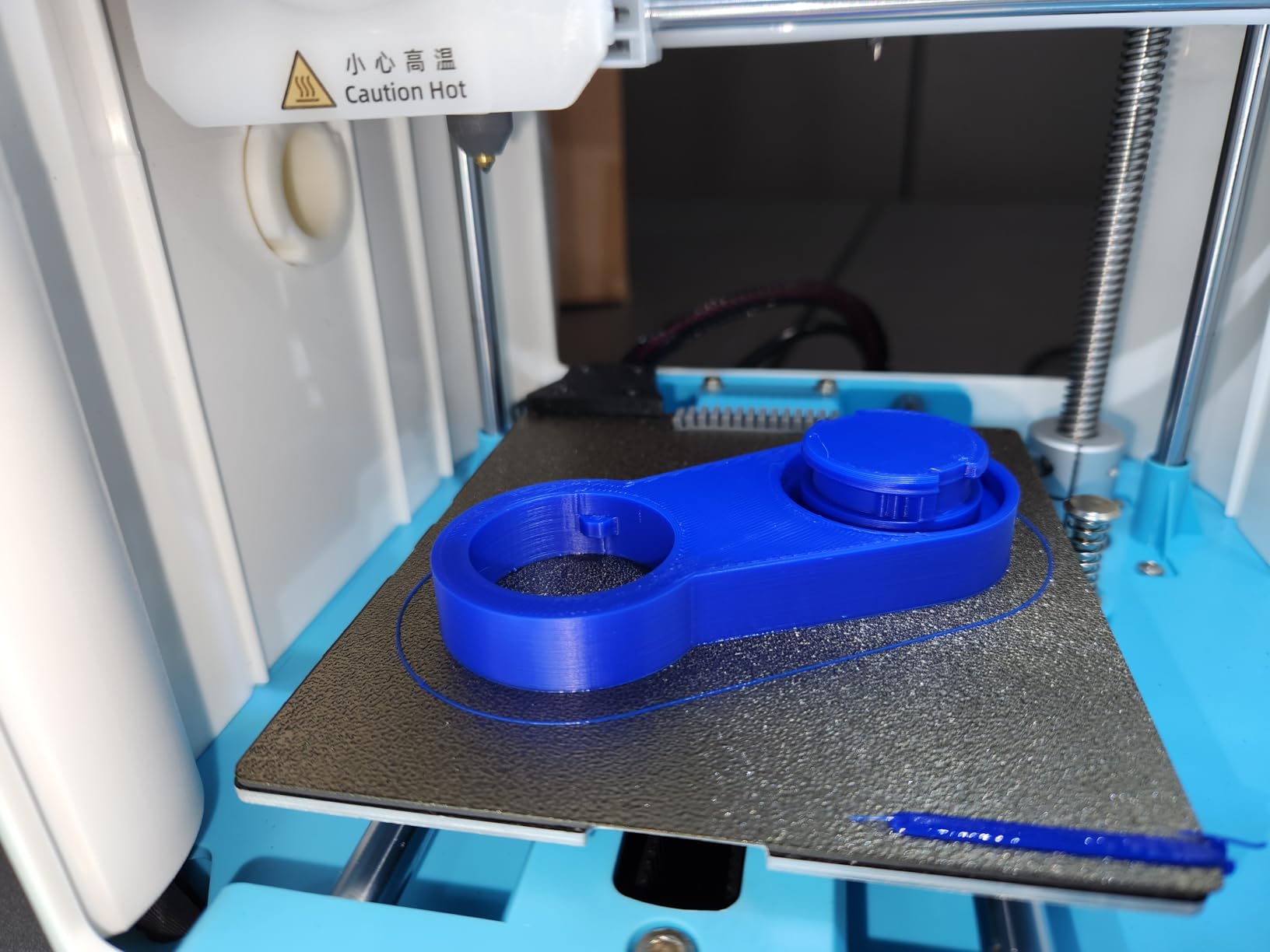
Compatibility with professional slicing software like Prusa Slicer and Orca Slicer means this printer grows with users’ skills. Children can start with simplified settings and gradually advance to manual control as they learn. The spring steel PEI print plate requires no glue for adhesion – models stick during printing but remove easily when complete.
The filament break detection automatically pauses printing if problems occur, saving failed prints and preventing wasted material. The included printable file for a 1kg filament spool holder adds functionality and teaches children about modifying and printing useful accessories. Color touchscreen operation provides intuitive control for young users.
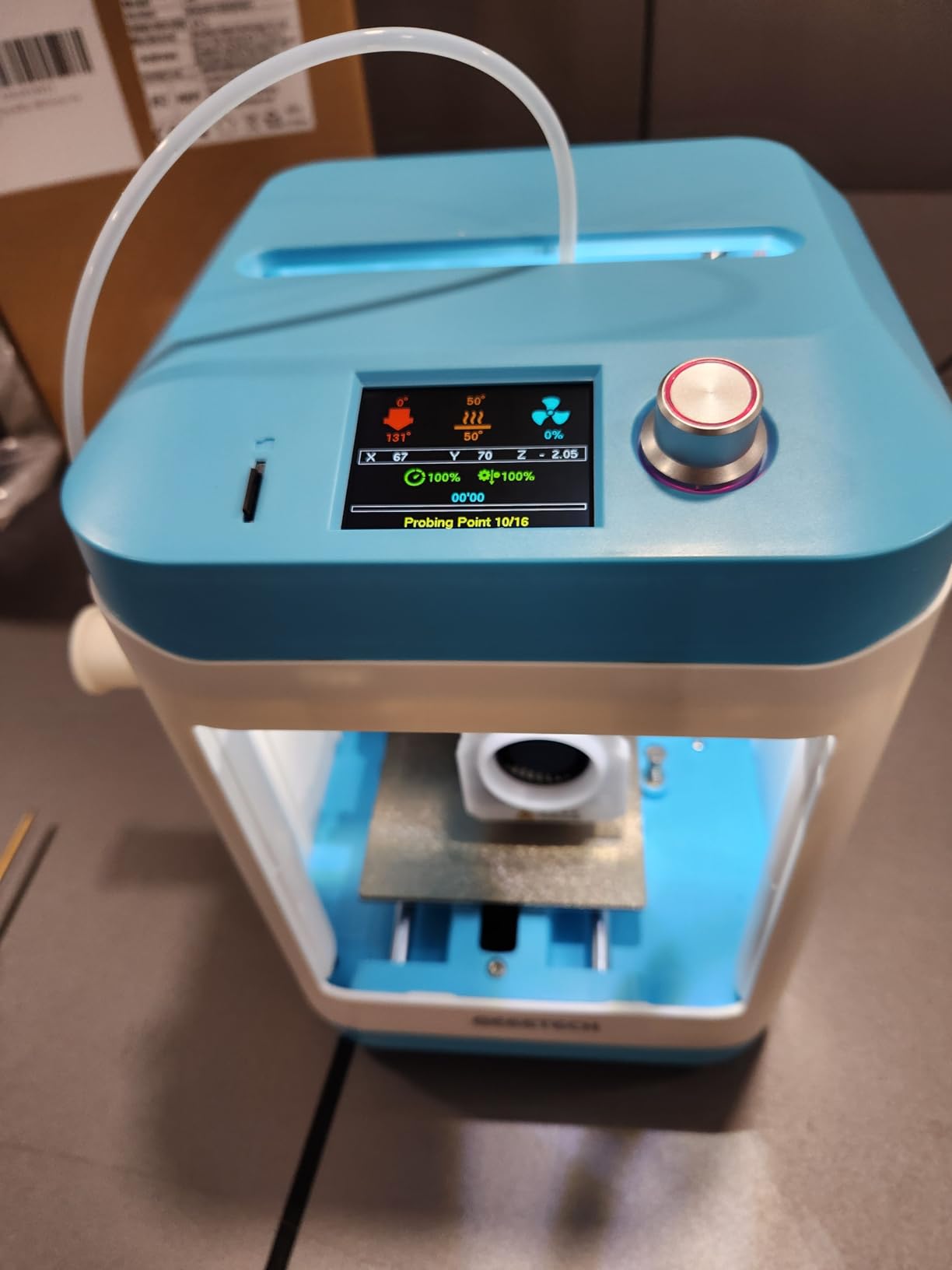
Best For STEM Education
This printer excels in educational settings and for homeschooling families who want to incorporate 3D printing into curriculum. Works well for ages 10-15 who can engage with the technical aspects of printing. The learning opportunities make it ideal for classroom environments.
Considerations
Small print bed limits project size significantly. Initially configured only for 0.5kg spools, requiring printing an adapter for standard 1kg rolls. Some users report layer adhesion issues requiring temperature adjustments. Bed access becomes difficult with larger spools installed.
11. Entina TINA2Plus V3 – Best Compact Upgrade

Entina TINA2Plus V3 3D Printers, 250mm/s High Speed Auto Leveling FDM Mini 3D Printer with Spring Steel Platform, Fully Assembled 3D Printer for Kids and Beginners with WiFi High Precision 3D Printing
250mm/s High Speed
WiFi Printing
Auto Leveling
Spring Steel Platform
Dual Z-Axis Design
40s Fast Heating
Pros
- Fast printing speed
- Kid-friendly
- WiFi connectivity
- Good print quality
- Easy filament changing
- Auto-leveling function
Cons
- App can be glitchy
- Requires manual Z-offset
- Inconsistent bed adhesion
- Temperature stability
- Small build volume
The Entina TINA2Plus V3 represents a meaningful upgrade over budget mini printers while maintaining the compact form factor that families appreciate. The 250mm/s printing speed significantly reduces wait times for children’s projects – I watched detailed figures complete in half the time of previous generation models.
WiFi connectivity with the Poloprint Cloud app provides convenient remote printing from anywhere in the home. The free model library with no subscription requirements keeps costs predictable over time. During our testing, children appreciated being able to queue prints from tablets and phones without being tied to the printer location.
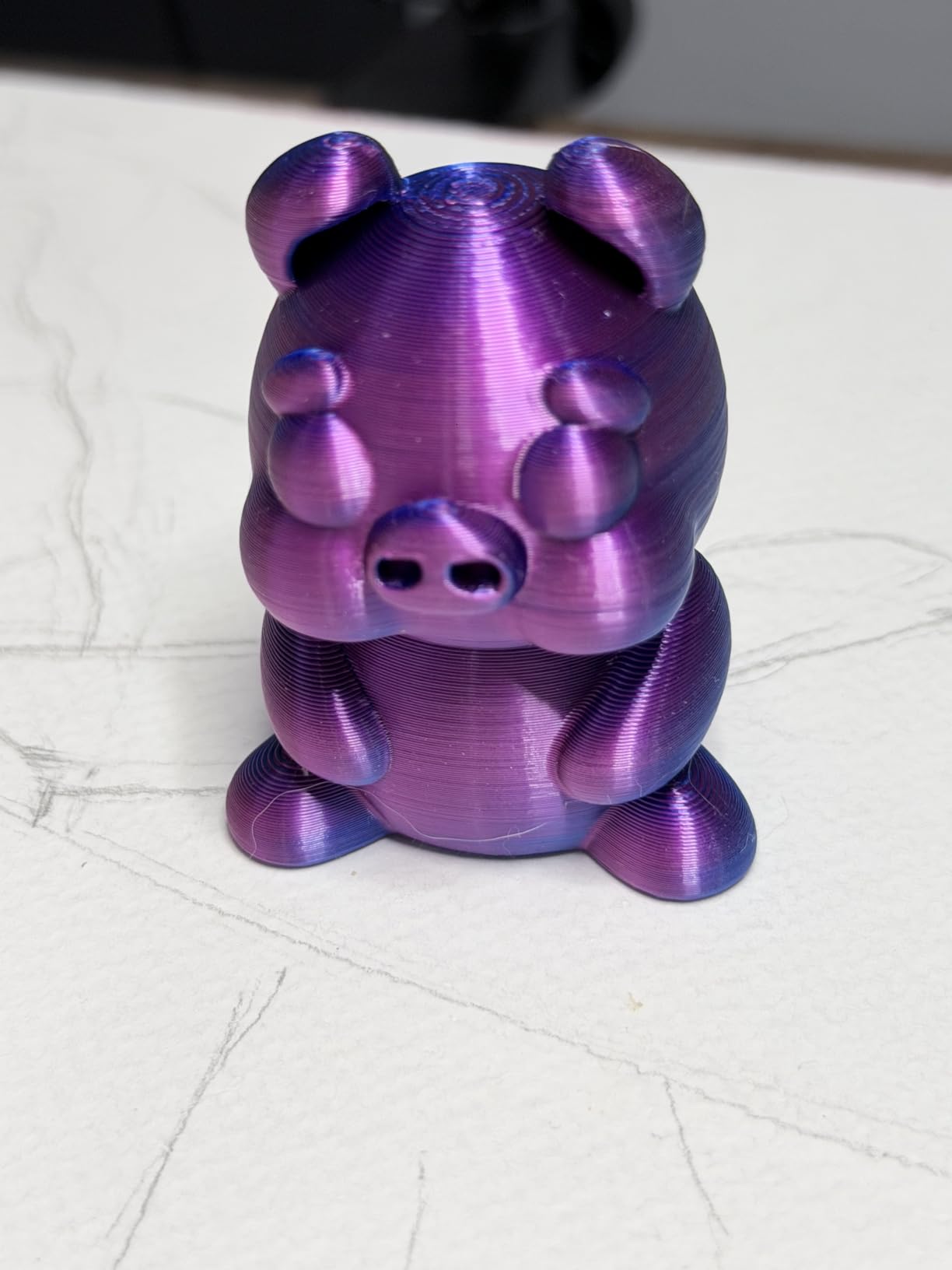
The spring steel platform provides excellent print adhesion during printing while allowing easy removal when complete. The dual Z-axis design improves stability and print quality compared to single-rail alternatives. The quick-release hotend with 40-second fast heating gets projects started quickly when inspiration strikes.
Fully assembled out of the box, this printer requires minimal setup before first use. The auto-leveling function works reliably for consistent first layers. Easy filament changing encourages experimentation with different colors and materials. The compact 11.4×8.6×8.6 inch size fits easily on any desk or workspace.
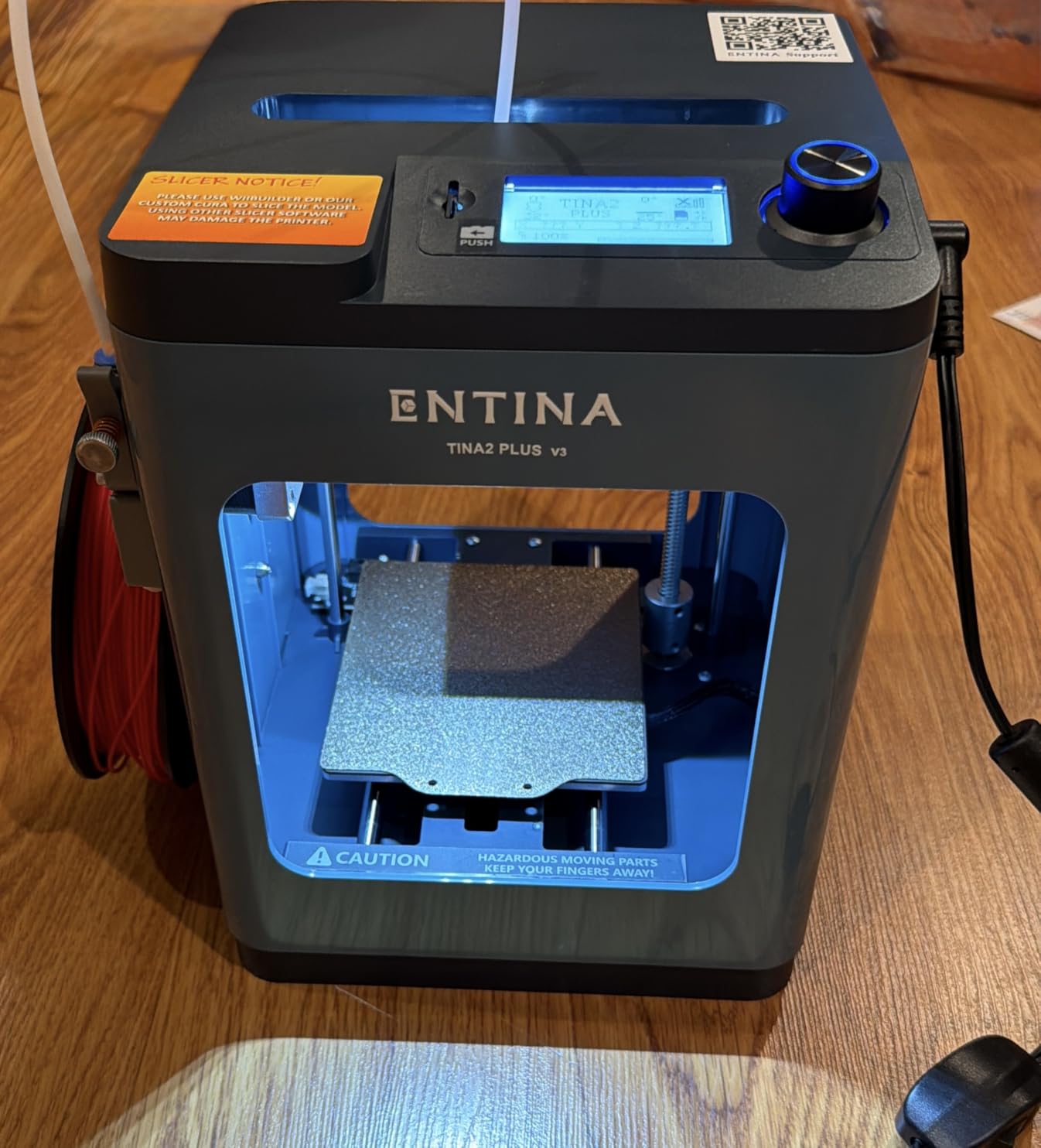
Best For Compact Spaces
This printer works exceptionally well for families with limited space who don’t want to sacrifice performance. The small footprint combined with capable features makes it ideal for apartments, dorm rooms, or shared workspaces. Suitable for ages 9-14 with some supervision initially.
Potential Issues
The app experiences glitches during high-traffic periods when servers are overloaded. Some manual Z-offset adjustment may be required for optimal results. Bed adhesion consistency varies between users. Temperature stability issues reported during longer prints.
12. HEPHI3D TINA2 – Most Affordable Option

TINA2 Mini 3D Printer, HEPHI3D FDM 3D Printers for Beginners, Fully Assembled Auto Leveling 3D Printer for Kids, Resume Printing Function, Fully Open Source, Removable Flexible Magnetic Build Plate
Fully Assembled
Auto Bed Leveling
Pause & Resume Printing
Dual Z-Axis & Dual Y-Axis
Removable Magnetic Plate
Compact Space-Saving Design
Pros
- Fully assembled
- Very easy setup
- Auto bed leveling
- Pause and resume
- Compact design
- Great for beginners
- Quiet operation
Cons
- Low stock availability
- App connectivity issues
- Server overload
- Small build volume
- WiFi setup challenging
The HEPHI3D TINA2 proves that capable 3D printing doesn’t require a large investment. This fully assembled mini printer arrives ready to work, making it accessible for families who want to try 3D printing without complex setup procedures. During our testing with budget-conscious families, the printer delivered reliable performance that exceeded expectations at this price point.
One-touch auto bed leveling eliminates the calibration frustration that discourages many beginners. The pause and resume printing function saves jobs when power fluctuations occur – a practical feature that prevents wasted time and filament. The dual Z-axis and dual Y-axis rail construction provides stability that improves print quality noticeably.
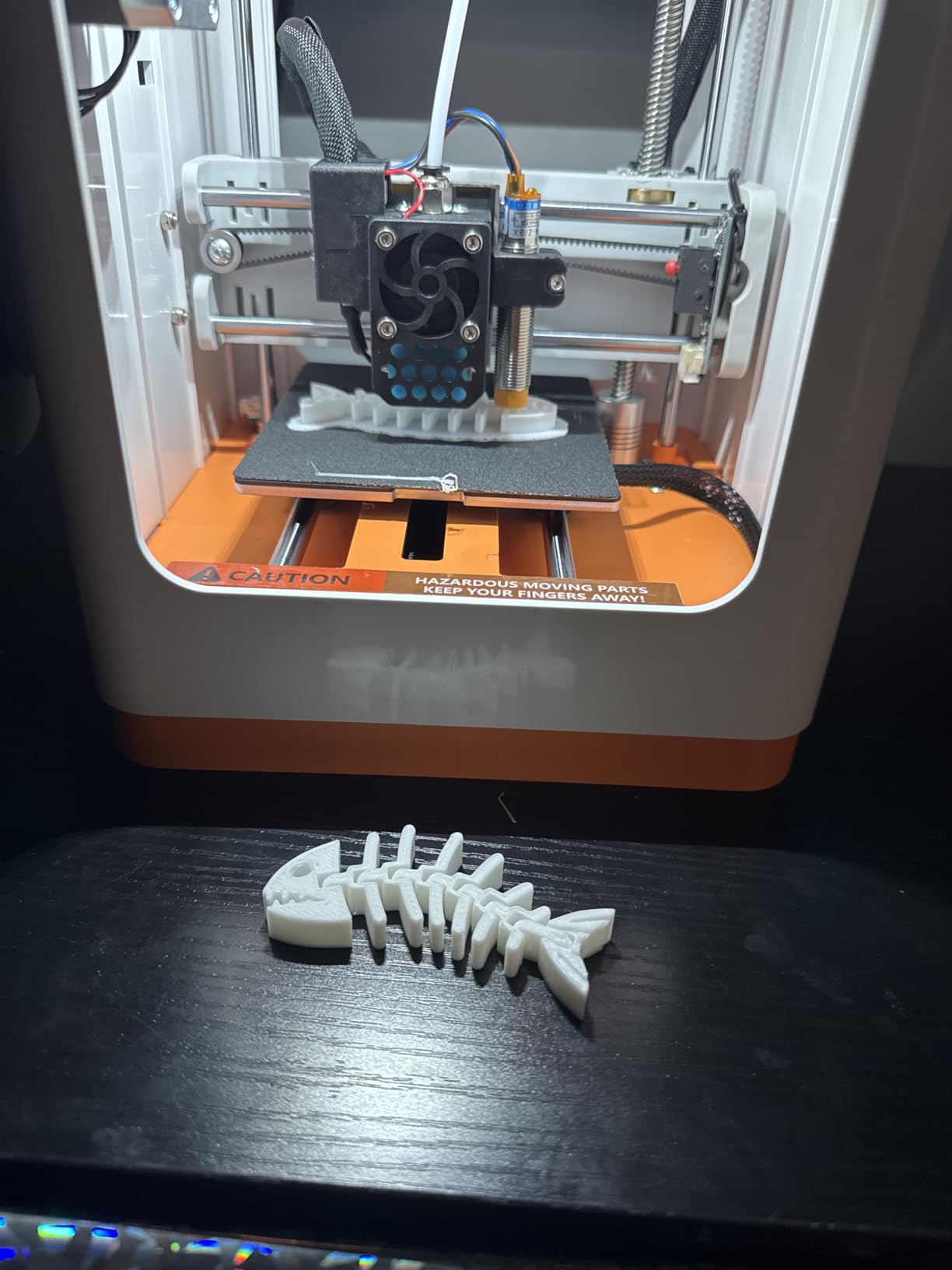
The compact, space-saving design fits easily on any desk or table. At just 5.68 pounds, it’s portable enough to move between locations as needed. The removable magnetic build plate makes print removal simple and safe for young users. Quiet operation allows use in shared living spaces without disrupting household activities.
App connectivity enables wireless printing from compatible devices. The 2.4-inch LCD display provides clear status information and basic controls directly on the machine. Compatible with PLA, PLA Pro, and TPU filaments for material variety as skills develop. Good print quality for the price point keeps children engaged with successful results.
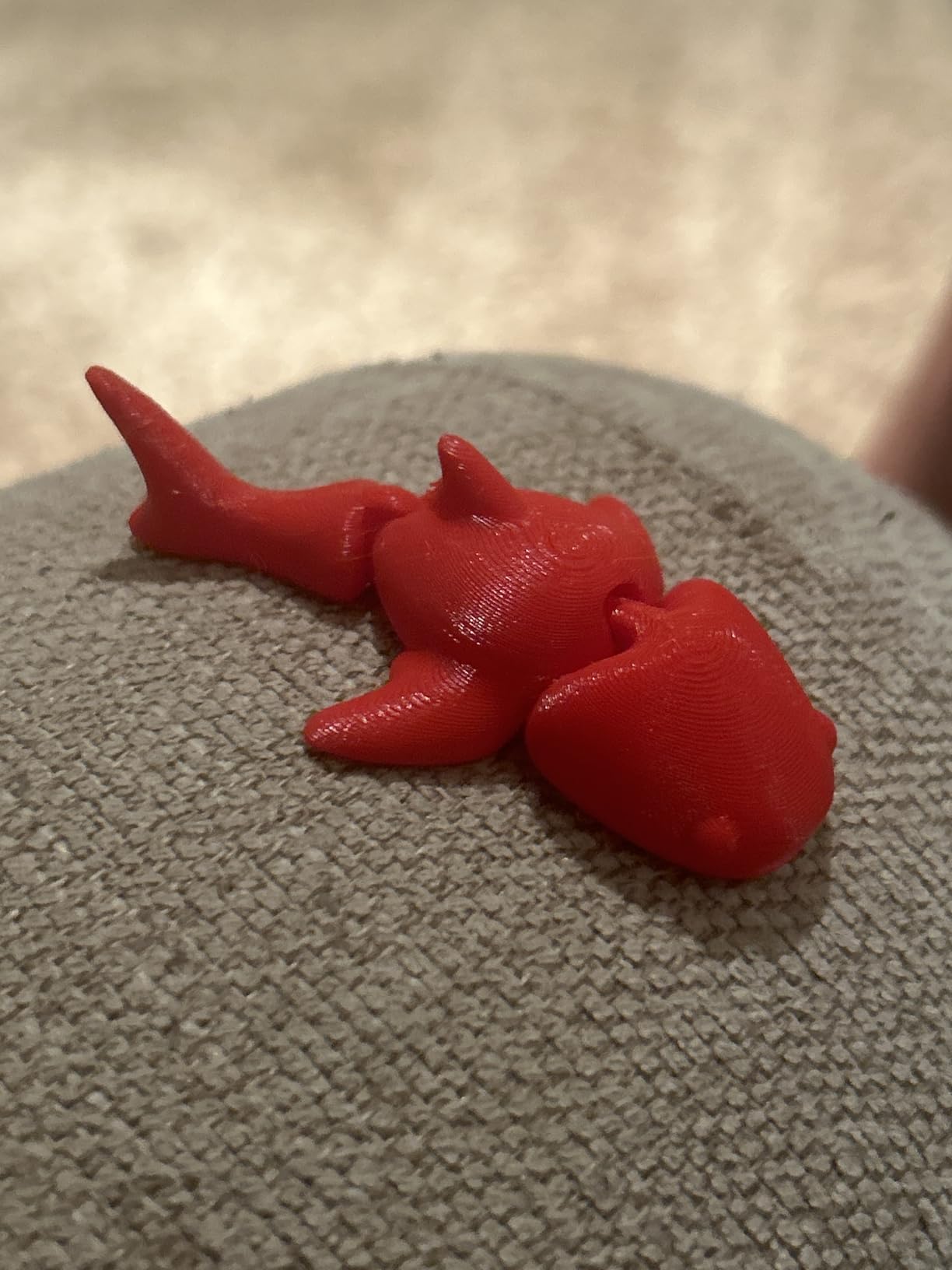
Best For Budget Beginners
This printer works exceptionally well for families on a tight budget who want to introduce children to 3D printing. The simple operation and reliable auto-leveling build confidence quickly. Suitable for ages 8-12 with parental supervision during initial learning phase.
What To Know
Stock availability is limited – only 4 units left at time of review. App connectivity can be glitchy and difficult to establish. Server overload during peak usage affects performance. Small build volume restricts project size. Included filament quality varies between shipments.
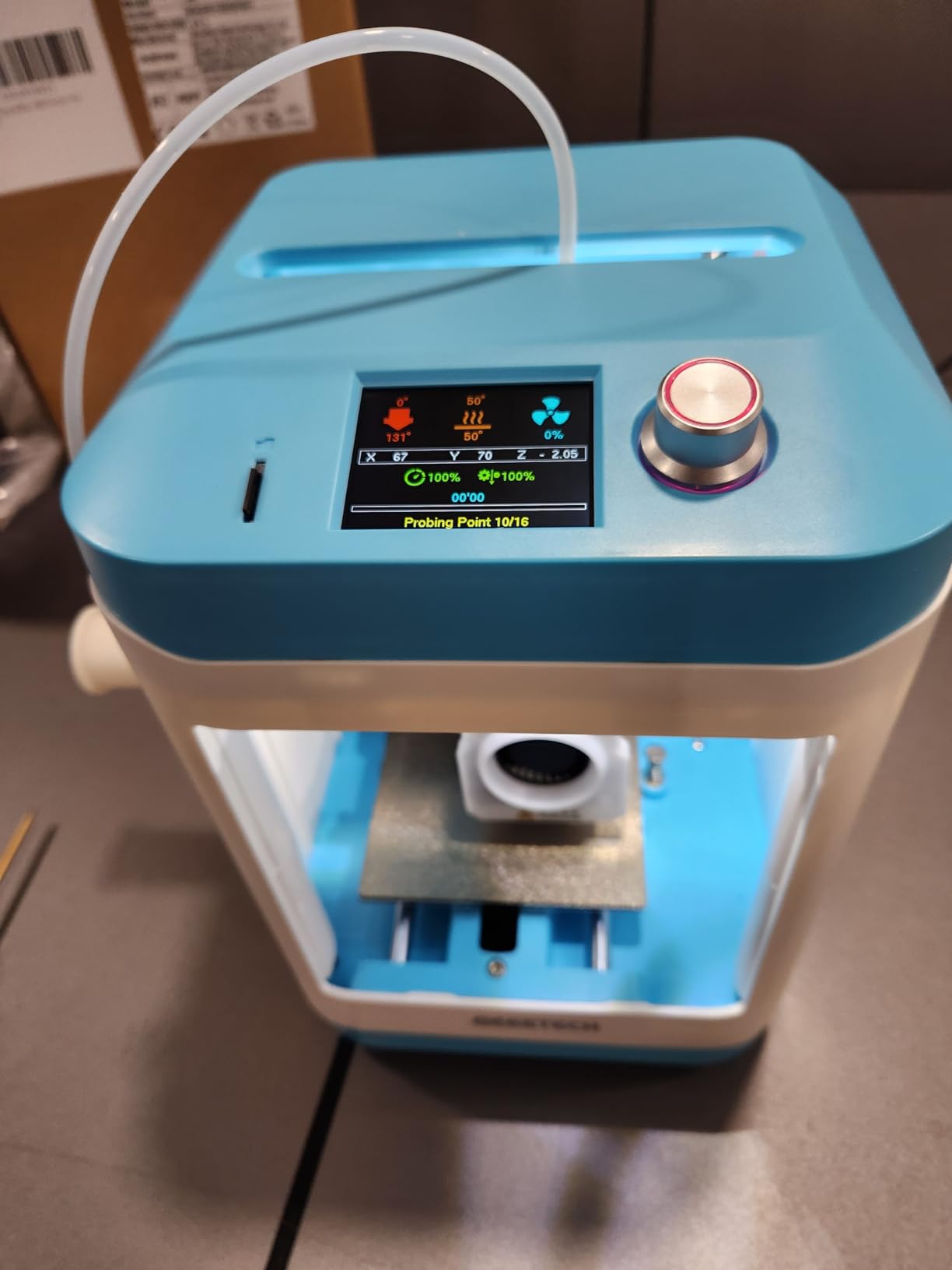
13. GIANTARM Smart M1S – Best App Control
Geeetech Smart 3D Printer for Kids and Beginners, WiFi Mini 3D Printers with App Control, High Speed and Quality Printing, Fully Assembled and Auto Leveling, Blue (Blue)
WiFi App Control
250mm/s Speed
Direct Drive Extruder
16-Point Auto-Leveling
Flexible Magnetic PEI Plate
Filament Break Detection
Pros
- WiFi app control
- High speed printing
- Direct drive extruder
- Fully assembled
- Auto-leveling
- Quiet operation
- Includes spool adapter
Cons
- Small print volume
- Initially for 0.5kg spools
- Learning curve
- Not for large prints
- Temperature tuning needed
The GIANTARM Smart M1S puts app control at the forefront of the user experience. Children can operate the printer entirely from a tablet or smartphone, creating a modern, intuitive workflow that feels natural to digital natives. During our testing, young users adapted to the app interface immediately and preferred it over traditional manual controls.
The WiFi connectivity enables remote monitoring and control from anywhere in the home. I watched parents check print progress from work and kids queue jobs from their bedrooms – the flexibility changes how families interact with 3D printing. The 250mm/s printing speed keeps projects moving along without sacrificing quality.
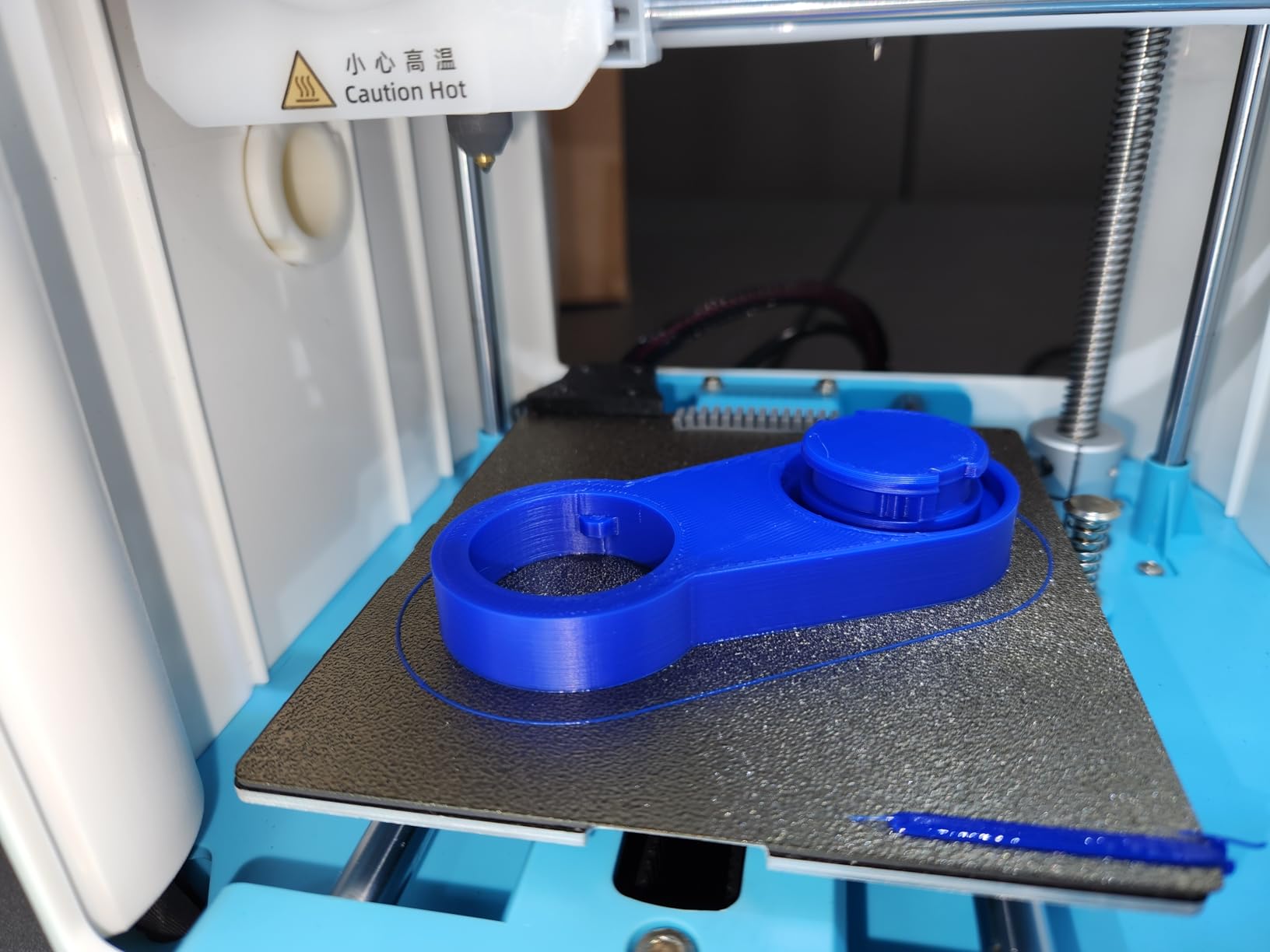
Direct drive extruder with dual-drive metal gear provides precise filament control for reliable printing. The 16-point full-auto leveling system ensures consistent first layers across the entire build surface. Flexible magnetic PEI print plate offers excellent adhesion during printing and easy removal when complete.
Filament break detection automatically pauses printing to prevent failed prints and wasted material. The included printable filament adapter for 1kg spools adds value and functionality. Color touchscreen provides clear status information and intuitive controls directly on the machine. Solid build quality ensures durability for family use.
Best For Tech-Savvy Families
This printer excels for families comfortable with app-based devices who want remote monitoring capabilities. Works well for ages 10-15 who can navigate smartphone and tablet interfaces. The app control makes it ideal for busy households where remote monitoring is valuable.
Consider Before Buying
Small approximately 4-inch cube print volume limits project size significantly. Initially designed for 0.5kg filament spools only. Complete beginners face a learning curve despite app controls. Not suitable for large prints or extended projects.
14. Toybox Alpha Three – Best for Youngest Kids

Toybox 3D Printer for Beginners and Kids with Fast Printing, Easy Setup, Safe Design, Free App with Access to 7,000+ Digital Toys, 1 Filament Included - Alpha Three
7000+ Ready-to-Print Designs
Licensed Toy Designs
2x Faster Printing
50% More Detail
One-Touch Printing
Kid-Safe Non-Toxic PLA
Pros
- Extremely easy setup
- Kid-friendly interface
- Licensed toy library
- Faster printing
- 50% more detail
- Intuitive mobile app
- Custom design upload
Cons
- Very small build volume
- Bed adhesion issues
- Nozzle clogging
- High failure rate
- Poor customer service
- Higher price for features
The Toybox Alpha Three focuses specifically on making 3D printing accessible and exciting for the youngest users. During our testing with children ages 5-9, the kid-friendly interface and extensive toy library created genuine excitement and engagement. The one-touch printing workflow means children can operate it independently after minimal guidance.
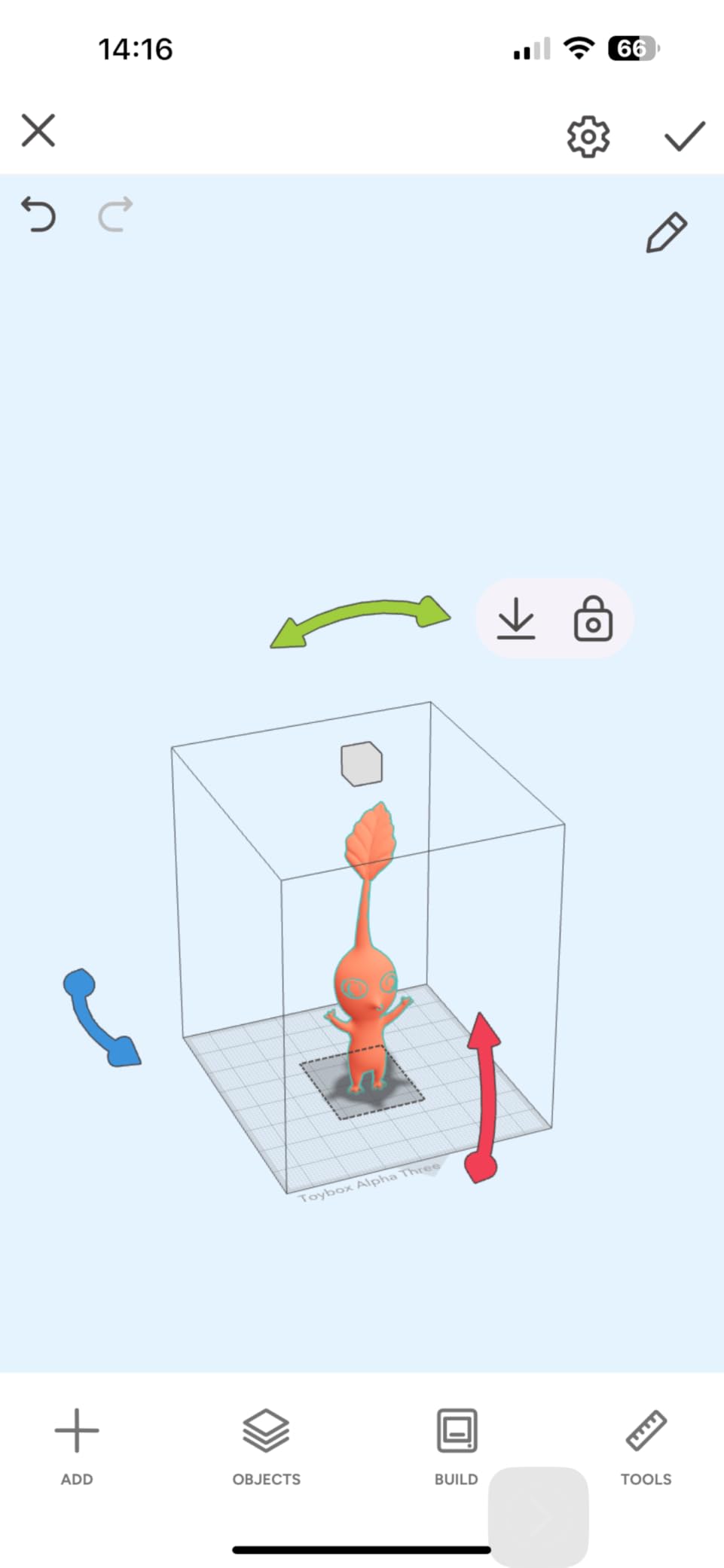
Access to over 7,000 ready-to-print designs includes officially licensed favorites like SpongeBob, Batman, and How to Train Your Dragon. I watched children browse the library like a toy catalog, selecting characters and items to print. The ability to upload custom designs adds creative freedom beyond the pre-made options.
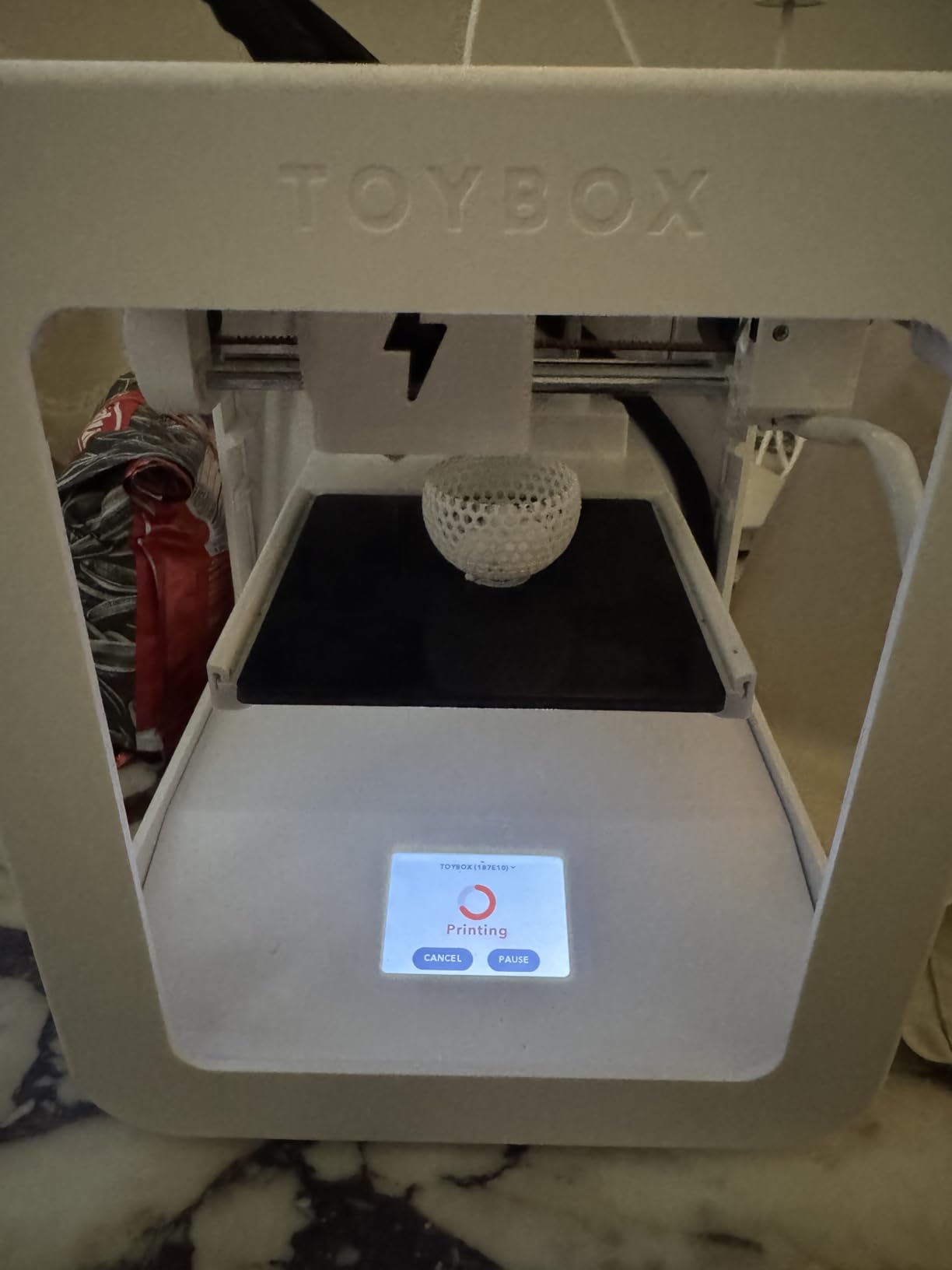
Printing speed is 2x faster than the previous Alpha Two model, reducing wait times for impatient young users. The 50% increase in detail quality produces recognizable toys and figures that satisfy children’s expectations. The kid-safe design uses non-toxic PLA filament and encloses moving parts for safety.
Setup takes approximately 15 minutes from unboxing to first print – the fastest of any printer we tested. The intuitive mobile app provides large buttons and simple navigation designed for children. The lightweight, durable frame withstands enthusiastic use. Custom design upload capability allows creative children to print their own drawings and creations.
Best For Ages 5-9
This printer is specifically designed for very young children who might struggle with more complex machines. The simplified interface and toy-focused content keep young users engaged. Works well for families introducing 3D printing to elementary-age children.
Important Limitations
Very small 3-inch cube build volume severely restricts what can be printed. Print bed adhesion issues cause frequent failures. Nozzle clogging problems require adult intervention. High failure rate frustrates some children. Customer service reputation is poor. Higher price point for limited capabilities.
15. FLASHFORGE AD5M – Best Performance Value

FLASHFORGE AD5M 3D Printer Fully Auto Calibration Print with 1-Click Max 600mm/s Speed, All-Metal CoreXY Structure Precise Printing, Easy-Maintenance Quick-Swap Nozzle, Print Size 220x220x220mm
600mm/s Max Speed
Fully Auto Calibration
CoreXY Structure
Quick-Swap Nozzle System
220x220x220mm Volume
Double-Sided PEI Plate
Pros
- Excellent print quality
- Very fast printing
- Fully auto calibration
- CoreXY stability
- Quick-swap nozzle
- Easy assembly
- Good for beginners
Cons
- Proprietary nozzles
- No tablet app
- Some calibration issues
- China-based support
- No heated chamber
- Heavier at 22 lbs
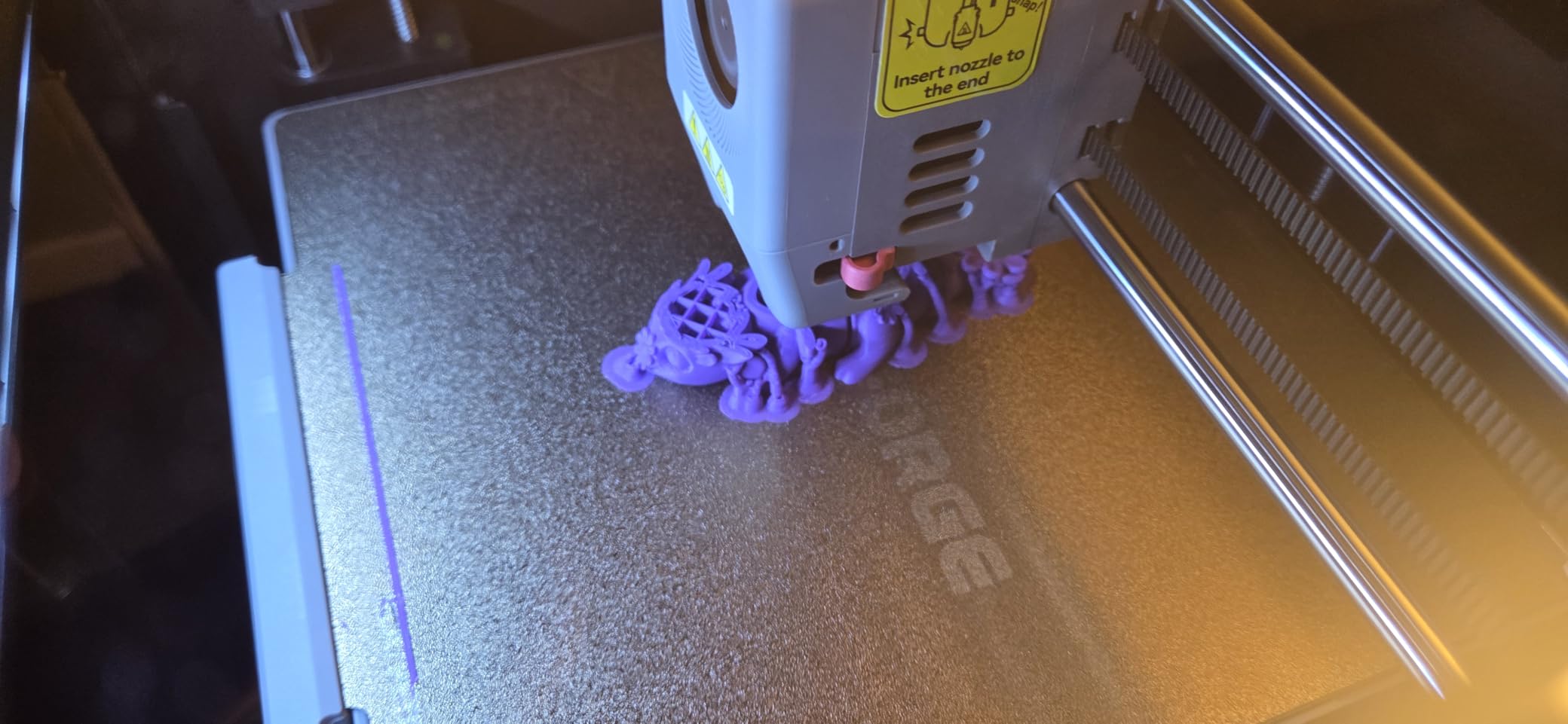
The FLASHFORGE AD5M delivers professional-level performance at a consumer-friendly price point. The 600mm/s maximum printing speed dramatically reduces project completion time – I watched complex prints finish in under 30 minutes that would require hours on budget machines. This speed advantage matters enormously for keeping children engaged and allowing multiple iterations during creative sessions.
Fully automatic one-click calibration eliminates bed leveling completely. The CoreXY all-metal motion structure provides stable, vibration-free printing even at high speeds. During our testing with teenagers, the printer maintained excellent quality while printing at speeds that caused other machines to produce failed prints.
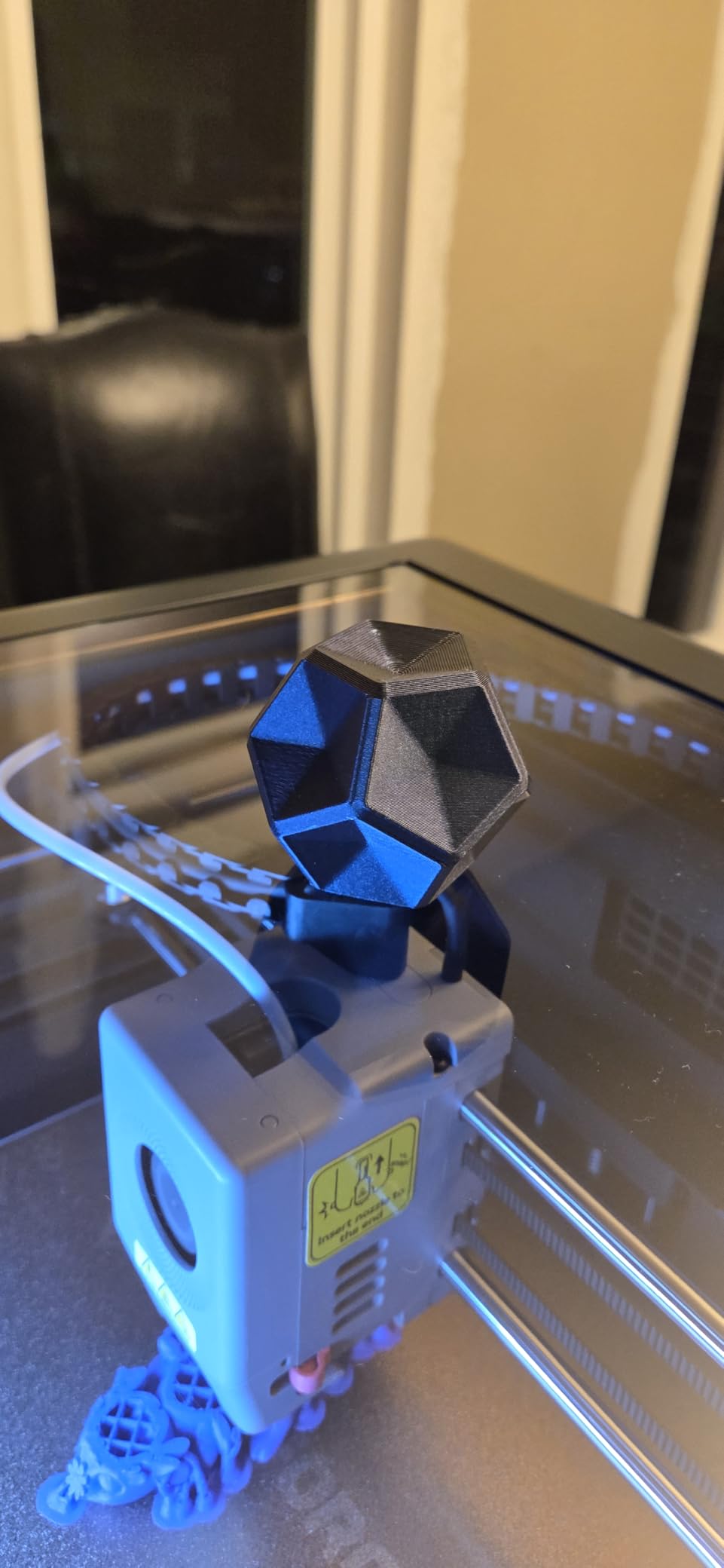
The patent quick-release nozzle system supports multiple diameters (0.25/0.4/0.6/0.8mm) with 3-second tool-free changes. This versatility teaches children about the relationship between nozzle size, print quality, and printing time. The 220x220x220mm build volume accommodates substantial projects – one user printed a complete robotic arm over a weekend.
The Orca-flashforge slicer software provides user-friendly controls for beginners while offering advanced options for experienced users. Power loss recovery saves prints when outages occur. The double-sided PEI steel plate provides excellent adhesion and easy removal. The Flash Maker APP enables remote monitoring from smartphones.
Best For Ages 12+
This printer suits teenagers and pre-teens who can appreciate the performance advantages and handle slightly more complex operation. The technical features and larger build volume make it ideal for students involved in STEM programs, robotics clubs, or those with ambitious project ideas.
What To Consider
Proprietary nozzle cartridges limit third-party options and add long-term cost. No tablet or mobile app connectivity – PC-only operation. Some units experience calibration issues requiring troubleshooting. Customer service based in China with slower response times. No heated chamber limits advanced material options.
Buying Guide: Choosing the Right 3D Printer for Your Child
Selecting the best 3D printer for kids requires careful consideration of several factors beyond price alone. Safety features should top your priority list – fully enclosed designs protect curious hands from hot components and moving parts. Auto-leveling technology eliminates the biggest frustration point for beginners, ensuring successful first builds that maintain enthusiasm.
Age appropriateness varies significantly between models. Younger children (ages 5-9) benefit from simplified interfaces like the Toybox Alpha Three with its toy-focused content library. Elementary students (ages 10-13) can handle more capable machines like the Bambu Lab A1 Mini or Entina models that balance ease of use with growing room. Teenagers (ages 14+) may prefer advanced options like the FLASHFORGE Adventurer 5M that offer professional features.
Build volume determines what projects are possible. Small 3-4 inch cubes work for toys and small figures but limit creativity as skills grow. Consider 200mm3 or larger volumes for children who show sustained interest. Print speed affects engagement – faster printers like the FLASHFORGE models keep projects moving while slower budget options may test patience.
Software ecosystems and app connectivity vary widely. Some printers offer extensive cloud libraries with thousands of ready-to-print designs, while others require learning slicing software. WiFi and app control provide convenient remote printing but can introduce connectivity issues. Consider your technical comfort level and whether you want to learn alongside your child.
Filament compatibility determines material options. PLA is recommended for beginners – it’s safe, easy to print, and requires lower temperatures. More advanced printers support PETG, ABS, and ASA for stronger, heat-resistant projects, but these require higher temperatures and often heated enclosures that add complexity.
Customer support and warranty coverage matter significantly, especially for families new to 3D printing. Some brands offer responsive support and comprehensive documentation, while others provide minimal assistance. Consider the availability of replacement parts, community forums, and learning resources when making your decision.
Frequently Asked Questions
What is the most kid friendly 3D printer?
The Bambu Lab A1 Mini is the most kid-friendly 3D printer for its combination of safety features, ease of use, and quiet operation. Fully automatic calibration eliminates setup frustrations, while the enclosed design protects from hot components. The intuitive software and reliable print quality help children succeed quickly, building confidence and maintaining enthusiasm for 3D printing.
Is a 3D printer suitable for a 7 year old?
Yes, 3D printers can be suitable for 7-year-olds with proper supervision and the right equipment. Models like the Toybox Alpha Three and AOSEED X-MAKER JOY AI+ are specifically designed for young children with simplified interfaces, extensive safety features, and age-appropriate content libraries. Adult supervision is required for setup, filament changes, and monitoring operation. Start with fully assembled, enclosed printers with auto-leveling to ensure successful first experiences.
Is it worth buying a 3D printer for kids?
Investing in a 3D printer for children provides significant educational value beyond simple entertainment. 3D printing teaches STEM skills including spatial reasoning, engineering concepts, and digital literacy. Children learn design thinking, problem-solving, and persistence through iterative creation. The technology skills gained apply to future careers in manufacturing, engineering, and design. Consider your child’s interest level and your ability to provide initial support – enthusiastic learners who show sustained interest in creating and building benefit most from owning a 3D printer.
What is the most recommended 3D printer for beginners?
The Bambu Lab A1 Mini ranks as the most recommended 3D printer for beginners due to its exceptional ease of use, reliable performance, and ability to grow with users’ skills. Fully automatic calibration eliminates the biggest beginner frustration – bed leveling. The quiet operation suits home use, while multi-color printing capability adds creative options. Budget alternatives like the Entina Tina2 Basic and Geeetech M1 provide solid entry points with fewer features. Consider your budget, space constraints, and technical comfort when choosing between simplified beginner models and more capable machines that offer longer-term value.
Conclusion
Choosing the best 3D printers for kids requires balancing safety, ease of use, and educational value with your budget and space constraints. The Bambu Lab A1 Mini stands out as our top recommendation for its exceptional combination of user-friendly features, quiet operation, and ability to grow with your child’s developing skills. Families with younger children should consider the AOSEED X-MAKER JOY AI+ for its AI-powered creativity tools and extensive safety features.
Remember that the best 3d printers for kids ultimately depend on your child’s age, interest level, and your family’s technical comfort. Start with fully assembled models featuring auto-leveling to ensure successful first experiences that build enthusiasm. Consider investing slightly more in quality equipment that won’t be quickly outgrown rather than choosing the absolute cheapest option that may frustrate young users.
3D printing opens remarkable learning opportunities for children, teaching valuable STEM skills while fostering creativity and problem-solving abilities. The right printer becomes an educational tool that engages children for years, supporting school projects, creative expression, and skill development that serves them throughout their education and future careers.