15 Best Keycap Pullers for Mechanical Keyboards (March 2026)
Owning a mechanical keyboard means eventually needing to remove those keycaps. Whether you are deep cleaning your board, swapping to a custom keycap set, or…

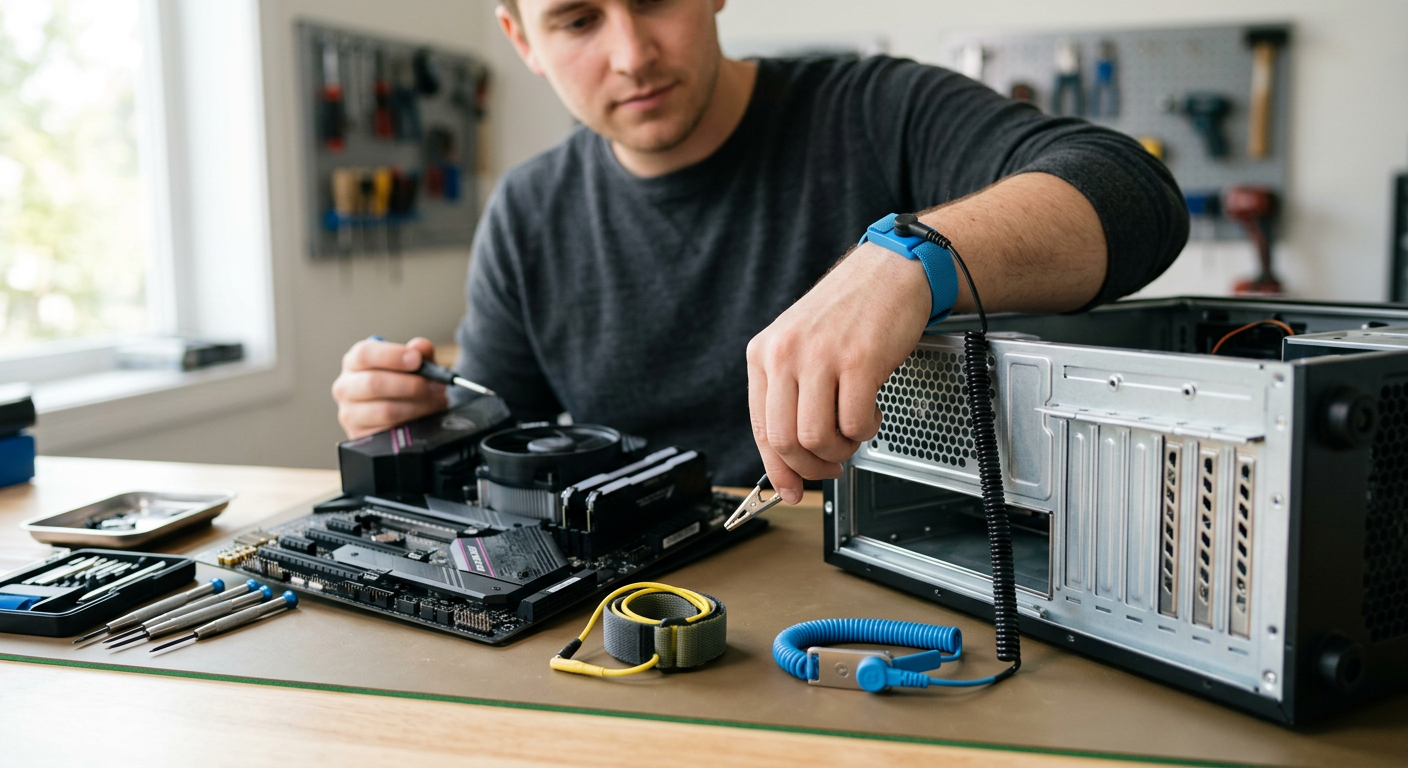
I fried a stick of RAM once. It wasn’t from dropping it or installing it wrong — it was from a single static discharge I never even felt. One moment it was working, the next my PC refused to POST. That experience is why I now swear by the best anti-static wrist straps for PC building, and I want to help you avoid learning that lesson the expensive way.
Electrostatic discharge (ESD) is invisible, painless, and can permanently destroy your CPU, motherboard, or RAM in a fraction of a second. A quality anti-static wrist strap costs less than a cup of coffee and creates a continuous grounding path between your body and the case, keeping that charge safely away from your components.
I’ve tested and compared 9 of the most popular options on the market in 2026 — from budget-friendly everyday straps to full ESD mat kits used by professional repair techs. Whether you’re putting together your first build or doing component-level repairs regularly, there’s a solid option on this list for you.


| Product | Specs | Action |
|---|---|---|
|
ARCTIC EAGLE Anti Static Wrist Strap
|
|
Check Latest Price |
 iFixit Portable Anti-Static Mat Kit
|
|
Check Latest Price |
|
iFixit Anti-Static Wrist Strap XL
|
|
Check Latest Price |
|
Kingwin Anti Static Wrist Strap Yellow
|
|
Check Latest Price |
 FEITA Metal Anti Static Wrist Strap
|
|
Check Latest Price |
 STREBITO Anti Static Wrist Strap 11 inch
|
|
Check Latest Price |
 STREBITO Anti Static Wrist Strap 13 inch
|
|
Check Latest Price |
 HPFIX ESD Anti-Static Mat with Wristband
|
|
Check Latest Price |
 Mobudy Anti-Static Wrist Strap 4-Pack
|
|
Check Latest Price |
7 copper foils
9.8 ft coiled cable
Fits 6-8.5 inch wrists
1 MOhm to 1000 MOhm resistance
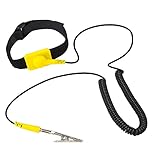
This is the strap I reach for every single time I’m working inside a case. The ARCTIC EAGLE has earned its #1 spot in Lab ESD Supplies on Amazon for good reason — it just works, and it works every time. I’ve been using mine through three consecutive builds and it still looks and functions like new.
What separates this from cheap knockoffs is the seven-layer copper foil construction inside the wristband. That gives it genuinely high conductivity rather than relying on thin wire sewn into fabric. When I set it up with my ESD mat, the monitoring light stays green from the moment I clip in.
The coiled cable is one of the best features here. At rest it’s compact and tidy, but fully stretched it reaches up to 9.8 feet. That means I can clip it to the top USB header inside a mid-tower and still comfortably reach down to work on the M.2 slots without yanking the cord loose.
The 1 MOhm to 1000 MOhm resistance range is worth calling out. This isn’t an accident — that resistance is there to slow down the discharge rate so it’s safe for both you and the components. Too fast and you risk a spike. This design gets the balance right.
This is the best pick for first-time builders and experienced hobbyists alike. If you want a reliable, no-fuss strap that covers 99% of use cases without spending much, this is the one. The adjustable band fits wrist circumferences from 6 to 8.5 inches, which covers the vast majority of adults.
It also pairs well with any ESD mat setup. The alligator clip grabs onto your case’s unpainted metal with a firm, confident grip that I’ve never had fail mid-build.
If you have larger wrists (above 8.5 inches), the band may feel tight. Consider the STREBITO 13-inch version instead, which is specifically designed for larger circumferences. The cord snap connector has also popped loose on me once when I yanked the cable accidentally — not a disaster, but worth being aware of.
Anti-static mat + wrist strap bundle
ESD S4.1 and S20.20 compliant
60cm x 60cm mat size
Surface resistivity 10^7 to 10^9 Ohms
When I started doing phone and laptop repairs on the side, I realized a wrist strap alone wasn’t cutting it for close-quarters component work. The iFixit Portable Anti-Static Mat Kit solved that problem completely. It’s the professional-grade setup in a package that fits into a backpack.
The mat measures 60cm x 60cm — large enough to lay out a disassembled laptop alongside your tools without things sliding off. The surface resistivity sits in the 10^7 to 10^9 Ohm range, which is exactly where you want it for safe component work. It meets both ESD S4.1 and ESD S20.20 standards, which are the same specs used in professional electronics repair facilities.
The included wrist strap uses a 10mm grounding snap that connects directly to the mat’s grounding cord. Everything works together as a system rather than a collection of mismatched parts. The mat folds cleanly into thirds and stays that way, making it easy to transport or stash in a drawer between builds.
iFixit’s lifetime warranty covers the entire kit. That kind of backing from a brand is rare in this category and signals genuine confidence in the product. The quality of the nylon and polymer materials backs that confidence up — this thing feels like it’s built to last years of regular use.
If you’re doing any kind of repair work — not just PC building — a mat setup gives you double protection. The mat grounds your workspace surface and your components while the wrist strap grounds you. For working with bare circuit boards or sensitive SOC chips, that dual protection is worth it.
Professional repair shops use exactly this type of setup. Getting the iFixit kit means you’re working at that standard without needing to source the mat, cord, and strap separately.
The mat arrives with fold creases that take a bit of time to fully flatten out. Lay it out flat under something heavy for a day and it settles nicely. Also, some users running specialized grounding setups will need a banana jack adapter — that’s not included. For standard PC building with a case clip, it’s not an issue.
Adjustable up to XL size
6 ft coiled cord
1 MOhm cord resistance
Polyester and stainless steel weave
iFixit has been the go-to name in electronics repair tools for well over a decade, and this wrist strap reflects that reputation. It’s the one I hand to anyone who’s never used an ESD strap before, because the design is clear, the quality is reliable, and the lifetime warranty removes any doubt about its legitimacy.
The polyester and stainless steel weave band is genuinely comfortable for extended sessions. I’ve worn this through a three-hour build where I was constantly reaching into tight spots, and it never got uncomfortable or felt like it was slipping. The adjustable buckle lets you dial in the fit tightly enough to maintain conductivity but loose enough that it doesn’t cut off circulation.
The 1 MOhm resistor in the cord is something I want to address directly, because some user reviews flag this as a problem when it’s actually a feature. That resistance is intentional — it slows the discharge rate to a safe level. Without it, you’d have a direct connection that could theoretically cause a fast surge. This strap is doing exactly what it’s designed to do.
At 6 feet, the coiled cord is shorter than the ARCTIC EAGLE’s 9.8-foot option, but for most PC case sizes it’s more than enough. I used this strap for an ATX build and had no issues reaching from the case exterior to every corner of the motherboard.
Buying from iFixit means you’re getting a product from a company that lives and breathes electronics repair. Their tools are used by repair professionals worldwide, and they back everything with a lifetime warranty. If this strap ever fails, they replace it — no questions asked.
For someone who wants the peace of mind of a reputable brand behind their ESD protection, this is the obvious choice among standalone wrist straps.
If you’re working on a full tower case or an open test bench far from the case exterior, the 6-foot cord may feel limiting. In those situations, I’d suggest the ARCTIC EAGLE’s 9.8-foot option. For standard mid-towers and mini-ITX builds, though, 6 feet is perfectly fine.
Adjustable velcro band fits all sizes
Durable coiled grounding wire
Alligator clip connection
Lightweight at 0.88 oz
I recommended this strap to my neighbor when he was putting together his first ever PC. He’s not a tech person, he just wanted basic protection without overthinking it. The Kingwin delivered exactly that. It works, it’s straightforward to use, and it doesn’t cost much.
The yellow colorway actually comes in handy — it’s easy to spot in your toolbox when you’re digging around. The velcro adjustment works reliably and doesn’t loosen mid-session, which is a genuine concern with budget straps that rely on cheaper closures.
The main trade-off at this price point is the material quality. The band is functional but doesn’t have the same quality feel as the iFixit or ARCTIC EAGLE options. It’s a velcro-only design with no elastic portion, so getting the fit just right takes a bit more fiddling. Once it’s on and adjusted correctly, though, it stays put.
This strap is ideal for casual builders who build once every few years and don’t want to invest in something more expensive. It provides legitimate ESD protection and has over 1,400 verified reviews to back up its effectiveness. For the price, the value-to-protection ratio is hard to beat.
If you’re building frequently, doing professional repairs, or working with high-end components regularly, spending a few more dollars on the ARCTIC EAGLE or the iFixit will get you a noticeably better experience. The Kingwin is a solid starter strap, not a forever strap.
Metal bracelet with ESD protection
Exceeds industrial and military standards
1M Ohm cord resistance
Suitable for cleanroom environments
Most wrist straps use fabric with conductive threads woven in. The FEITA takes a different approach with an all-metal bracelet that gives you maximum skin contact and consistent conductivity across the entire band. When I put this on compared to fabric straps, the difference in how solid the connection feels is noticeable.
The specs here are serious. The strap exceeds both industrial-level and US military static control standards. For a PC building context, that’s considerable overkill — but if you want the absolute best ESD protection you can wear on your wrist, this is it. The 1M Ohm cord resistance matches best practices for safe discharge rates.
One thing I appreciated is that the metal bracelet sits comfortably without pinching. It doesn’t catch arm hair the way some metal designs do. The adjustable sizing mechanism slides smoothly and locks securely, so you’re not constantly fidgeting with it during a build.
For anyone doing professional repair work or working in environments where ESD control is taken seriously, the metal bracelet gives you an added layer of confidence. Fabric straps can degrade over time as the conductive threads break down. A metal bracelet maintains its conductivity reliably over the long term.
The cleanroom-rated construction also makes this a solid option for handling bare chips or modules outside of their anti-static bags.
Some professional environments prohibit all-metal jewelry or wristbands due to electrical safety rules. If you’re working in a data center or professional shop, check your facility’s policies before purchasing. For home PC building, this is a non-issue.
11 inch adjustable wristband
6.16 ft polyurethane coiled cable
360-degree rotatable grounding wire
Stainless steel alligator clip
STREBITO has quickly built a strong reputation in the ESD accessories space, and this 11-inch strap shows why. It sits at number 2 in Lab ESD Supplies on Amazon and has earned over 1,000 reviews with a 4.6 rating — that’s a genuinely competitive product in a crowded category.
The 360-degree rotatable grounding wire is a feature I didn’t realize I needed until I had it. When you’re working in tight spaces inside a PC case, the cable tends to twist and snag. The rotating connection at the alligator clip end means the cord swivels freely instead of torquing against your wrist. It’s a small thing that makes a real difference during longer sessions.
The silver conductive woven fibers in the band give it a comfortable, slightly soft feel against the skin — more comfortable than the hard plastic-backed designs you sometimes see. The stainless steel alligator clip has strong clamping force that doesn’t slip off thin metal edges inside a case.
Static is eliminated in 0.1 seconds according to the specs, and the built-in 1 MOhm resistor keeps that discharge at a safe rate. The 6.16-foot coiled cable covers most standard PC builds without feeling cramped.
The 11-inch total length fits wrist circumferences up to about 8 inches comfortably. The hook-and-loop adjustment makes micro-fitting easy, so you can get just the right tension for good electrical contact without discomfort. If your wrist is at the upper end of that range, look at the 13-inch version below.
The 6.16-foot cable is long enough for mid-tower and ATX builds without creating excess slack that gets tangled in your build area. The 360-degree swivel handles the cable routing gracefully when you’re twisting to reach different areas of the motherboard tray. This is a well-thought-out design at an accessible price point.
13 inch adjustable wristband
Up to 9.8 ft coiled cable
7 pure copper foil wires
Fits 8 to 10.5 inch wrists
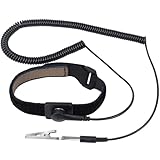
This is the strap I’ve pointed people toward when they complain that most ESD wrist straps feel too tight. The 13-inch total length is specifically designed for wrist circumferences between 8 and 10.5 inches — a size range that most straps simply don’t accommodate well. If you’ve given up on wrist straps because they never fit, this one will change that.
The seven pure copper foil wires inside the band mean this strap has excellent conductivity from the moment you put it on. Combined with a 9.8-foot coiled cable — the same impressive reach as the ARCTIC EAGLE — you get full coverage for even large full-tower cases without straining the cord.
Everything else carries over from the excellent 11-inch version: the 360-degree rotatable grounding wire, the stainless steel alligator clips, and the comfortable conductive yarn construction. The only real difference is the extra band length — but for larger wrists, that difference is the whole point.
The 9.8-foot cable length also makes this a smart pick for large full-tower builds and open test bench setups where you’re working far from the grounding point. Between the generous cable length and the larger band size, this is the most comfortable option for big hands and large cases.
If your wrist circumference is below 8 inches, save a dollar and go with the 11-inch version — it’s identical in every other way. If you’re at 8 inches or above, the 13-inch is worth the small price difference for the proper fit. A strap that fits correctly has better skin contact, which means more reliable grounding.
15.9 x 12 inch silicone ESD mat
37 component organization slots
Heat resistant up to 932 degrees F
Includes grounding plug cord and wristband
When I started repairing laptops and iPhones alongside PC builds, I needed a compact mat that could handle the small, delicate components involved. The HPFIX mat became my go-to for that work. It’s ranked #10 in Computer and Mobile Device Repair Kits on Amazon and has earned that spot through genuinely useful design.
The 37 built-in slots are the feature that makes this mat stand out for repair work. When you’re disassembling a laptop, you remove dozens of tiny screws, brackets, and clips that all look similar. Having dedicated slots to organize them in the order they came out makes reassembly dramatically less painful. The integrated ruler helps you keep track of screw sizes.
The silicone construction is heat resistant up to 932°F, which matters if you’re doing any soldering work at the same bench. It also provides a soft, slightly grippy surface that keeps components from sliding around. ESD resistivity sits at 10^6 to 10^8 Ohms — solidly in the professional-grade range.
The included grounding setup (plug, cord, and wristband) means you can get fully grounded right out of the box. It’s a complete solution at a reasonable price point.
This mat shines brightest for laptop teardowns, phone repairs, and any work involving small PCBs. The 15.9 x 12 inch surface is perfect for a MacBook or an iPhone main board with room for tools alongside it. For large ATX motherboards, the surface gets tight — it’ll fit, but barely.
If your primary activity is full PC builds rather than device repair, the iFixit mat kit is a better fit — it’s larger at 60cm x 60cm. But if you do a mix of PC building and device repair, the HPFIX mat’s organization slots and heat resistance make it the more versatile daily-use option.
4-pack bundle
Industrial-grade ESD protection
1.9M flexible grounding wire
Stainless steel alligator clip
I brought these into a small PC repair workshop where three techs were regularly fighting over the two ESD straps we had. The Mobudy 4-pack solved that problem instantly and gave us a spare for when one inevitably gets misplaced. At the per-unit cost compared to buying four individual straps, the math makes sense.
Each strap in the pack delivers industrial-grade anti-static protection. The 1.9-meter flexible grounding wire gives good range of movement without the springback that coiled cables can sometimes develop. The stainless steel alligator clip has solid clamping force that grabs onto case metal reliably.
The adjustable design accommodates a range of wrist sizes, which is exactly what you need when multiple people are sharing gear. The build quality on each individual strap is functional rather than premium — these are workhorses, not showpieces. For a workshop setting where straps are getting daily use and the occasional rough handling, that’s the right trade-off.
If you’re setting up a makerspace, running a PC repair business, or teaching a class on computer assembly, the 4-pack is the smart buy. Having multiple straps also means you always have a backup if one fails inspection before a build. Some builders like keeping a spare in the PC case itself so it’s always where they need it.
For a solo builder, a single higher-quality strap from ARCTIC EAGLE or iFixit is a better use of money. But if you regularly have a friend or family member helping with builds, having two working straps ready makes a real difference. Both people can stay grounded simultaneously — particularly useful when handing components back and forth.
After testing nine different straps, I’ve narrowed down the factors that actually matter when choosing ESD protection for PC work. Here’s what I look at before recommending any strap.
Cord length is more important than most people realize. A short cord forces you to stay close to the grounding point, which limits your movement inside the case. Aim for at least 6 feet of coiled length — which translates to real-world reach well beyond that when the coil extends.
The ARCTIC EAGLE and STREBITO 13-inch stretch to 9.8 feet, which is genuinely useful for full-tower builds. The 360-degree rotating connection on the STREBITO straps is a nice addition that prevents the cord from binding up as you twist around inside the case.
You’ll be wearing this for potentially hours at a time. A band that digs in, scratches, or causes sweating will get taken off mid-build — which defeats the entire purpose. Fabric bands with conductive fibers tend to be the most comfortable. Metal bracelets like the FEITA give better conductivity but can feel cold and rigid initially.
Elastic adjustability is worth prioritizing over pure velcro designs. Elastic bands naturally maintain consistent pressure and skin contact as you move, while velcro-only bands can loosen slightly with movement. For good ESD protection, consistent skin contact is essential.
The alligator clip at the end of the grounding cord needs to connect to unpainted metal on your PC case. Painted or powder-coated surfaces don’t conduct electricity, so look for a bare metal spot — usually the inner frame, a screw hole, or the PSU shell if it’s accessible.
A strong alligator clip with good clamping force won’t pop off when you’re reaching across the case. Stainless steel clips consistently outperform cheaper plastic-coated options. The iFixit and STREBITO clips both have solid, confident grip that stays put.
Every quality ESD wrist strap should have a 1 MOhm resistor built into the cord. This is not optional — it’s a safety feature that slows the discharge rate to protect both you and your components. A direct wire connection with no resistance would dissipate charge too quickly and could theoretically damage components or cause a shock.
If a strap doesn’t mention its resistance rating anywhere on the product listing, that’s a red flag. All nine straps reviewed here include proper 1 MOhm resistance, which is why I’m comfortable recommending them.
A wrist strap grounds you personally — it keeps static from building up on your body as you work. An anti-static mat grounds your work surface — it gives components somewhere safe to sit that won’t accumulate charge from the environment.
For typical PC building, a wrist strap alone is sufficient. For professional repairs, fine component work, or any situation where you’re setting bare boards down on a surface, a mat adds meaningful extra protection. The iFixit kit and HPFIX mat include both, which is the most complete protection you can get for the money.
Yes, using an anti-static wrist strap for PC building is a straightforward way to protect your components from ESD damage. While many experienced builders skip them by periodically touching the metal case, a wrist strap provides continuous grounding without any extra steps. For a few dollars, it’s an easy way to protect hardware that costs hundreds or thousands of dollars.
Yes, they do work when used correctly. An anti-static wristband creates a continuous grounding path between your skin and a grounded metal surface through a built-in 1 MOhm resistor. This allows any static charge that builds up on your body to slowly dissipate rather than suddenly discharge through your components. Multiple independent tests and decades of industry use confirm their effectiveness.
There are several effective methods: 1) Wear a grounded anti-static wrist strap connected to the metal PC case frame. 2) Periodically touch an unpainted metal surface on the case before handling components. 3) Work on a hard floor rather than carpet. 4) Avoid wearing synthetic fabrics while building. 5) Use an anti-static mat as a work surface. A wrist strap is the most reliable single method since it keeps you continuously grounded.
Attach the alligator clip to any unpainted metal on your PC case — the inner metal frame, a bare screw hole, or the PSU housing work well. Avoid painted or powder-coated surfaces, as the coating insulates the metal and breaks the ground connection. If you plug the power supply into the wall but leave the PC switched off, the grounded power supply provides an excellent ground point through the case.
Yes, ESD damage is a real and common cause of component failure. A single static discharge as low as 100 volts can damage sensitive ICs, even though humans typically can’t feel static below about 3,000 volts. The damage may not show up immediately — sometimes components pass initial testing but fail weeks later due to partial ESD damage. Given that CPUs and motherboards are the most expensive parts of a build, the risk is not worth ignoring.
After testing all nine options, the ARCTIC EAGLE Anti Static Wrist Strap remains my top pick for most people. It has the longest cable reach, excellent copper foil construction, and over 4,400 reviews backing its reliability — all at a price that makes it a total no-brainer purchase before any build.
For the best anti-static wrist straps for PC building that give you complete ESD coverage, the iFixit Portable Anti-Static Mat Kit is the premium upgrade. If you need something for larger wrists, the STREBITO 13-inch is purpose-built for that. Teams and workshops will find the Mobudy 4-pack saves money while keeping everyone grounded.
Whatever you pick from this list, you’ll be in good shape. A few dollars spent on ESD protection now can save a CPU, motherboard, or RAM kit that costs many times more to replace. The investment is always worth it.