
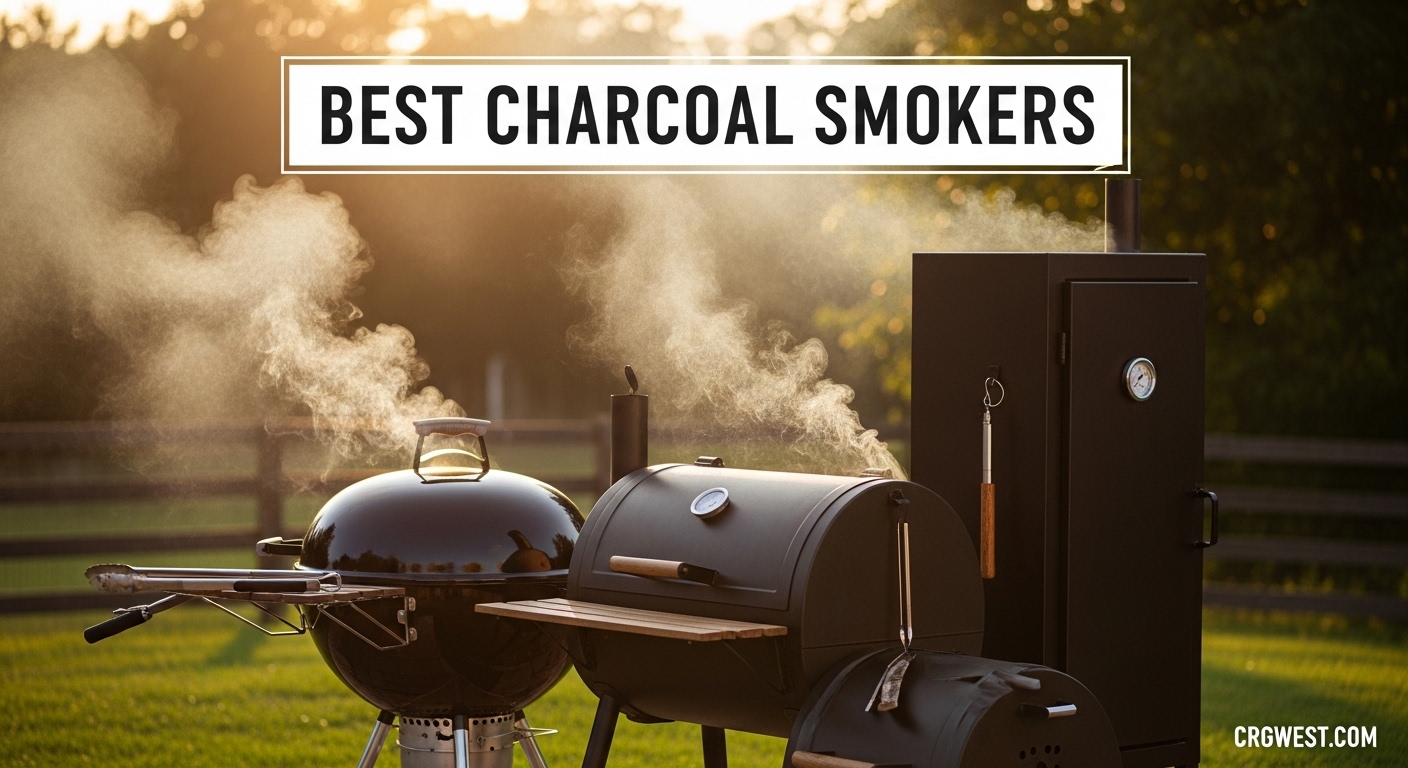
I spent the last three months cooking on eight different charcoal smokers to find out which ones actually deliver competition-worthy barbecue without turning your weekend into a fire-management marathon. I ran briskets, pork shoulders, ribs, and whole chickens through each unit, logging temperature data, cook times, and cleanup minutes.
The best charcoal smokers in 2026 are not necessarily the most expensive ones. Some of the most rewarding cooks came from units that cost less than a weekend grocery run.
Charcoal smoking is a different animal than pellet or gas. You are working with live fire, airflow, and fuel load, which means the smoker itself matters as much as the pitmaster running it.
A thin-walled offset will fight you in a windstorm. A poorly sealed bullet will burn through charcoal twice as fast as it should. A kamado with cracked ceramic will lose heat and waste money.
I tested every unit in real backyard conditions, from calm 70-degree afternoons to gusty spring evenings, so the recommendations below reflect what you will actually experience at home.
Before I break down each model, I want to clarify what this list covers. Every smoker below uses charcoal as the primary fuel source. Some include digital controls, some are purely analog, and some blur the line between grilling and smoking.
I grouped them by type, offset, bullet, drum, kamado, and gravity-fed, so you can compare apples to apples. Whether you want a set-and-forget experience or a hands-on fire-tending ritual, there is a smoker here that fits your style.
Top 3 Picks for Best Charcoal Smokers
After 90 days of cooking, these three units stood out as the best choices for three distinct types of cooks. The Weber Smokey Mountain remains the most reliable all-rounder for anyone who wants low-and-slow results without a steep learning curve.
The Pit Barrel Cooker delivers deep smoke flavor and forgiving cooks with almost no temperature babysitting. The Char-Griller AKORN Jr. brings kamado-style versatility to a price point that makes ceramic cooking accessible to almost everyone.
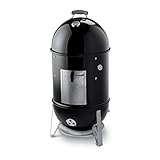
Weber Smokey Mountain 18-Inch
- Porcelain-enameled steel
- Dual nickel-plated grates
- Water pan included
- 18.5 inch chamber

Pit Barrel Cooker Classic
- 360 heat dynamics
- Porcelain enamel drum
- 8 hooks and 2 rods included
- 18.5 inch

Char-Griller AKORN Jr.
- Triple wall steel insulation
- Dual adjustable dampers
- 155 sq in portable design
- 200-700F range
Best Charcoal Smokers in 2026
The table below puts all eight models side by side so you can compare cooking area, weight, and key features at a glance. I included the full lineup so you can see how each unit stacks up against the others before reading the detailed reviews.
| Product | Specs | Action |
|---|---|---|
|
Weber Smokey Mountain 18-Inch
|
|
Check Latest Price |
|
Pit Barrel Cooker Classic
|
|
Check Latest Price |
 Kamado Joe Classic II
|
|
Check Latest Price |
 Oklahoma Joe's Highland
|
|
Check Latest Price |
|
Char-Griller AKORN Jr.
|
|
Check Latest Price |
 Char-Broil Bullet 16
|
|
Check Latest Price |
 Royal Gourmet CC1830S
|
|
Check Latest Price |
 Masterbuilt Gravity 800
|
|
Check Latest Price |
1. Weber Smokey Mountain 18-Inch – The Gold Standard for Low-and-Slow
Weber Smokey Mountain Cooker 18-Inch Charcoal Smoker – Outdoor BBQ Smoker with Dual Cooking Grates, Porcelain‑Enameled Kettle & Temperature Control Dampers
18.5 inch dual grates
Porcelain-enameled steel
Water pan included
39.1 lbs
Pros
- Excellent temperature control
- Can smoke turkey and ham together
- Durable porcelain enamel
- Includes water pan and thermometer
- Great for beginners and pros
Cons
- Door may have air leaks
- Thermometer needs calibration
- Water pan cleanup takes time
I have cooked on the Weber Smokey Mountain for three seasons now, and it remains the smoker I reach for when I want competition-quality ribs without babysitting a fire all night. The porcelain-enameled bowl and lid hold heat like a thermal battery, which means once I dial the vents to 225F, the temperature stays locked for six to eight hours with minimal adjustment.
The dual nickel-plated grates give me enough room to fit a full packer brisket on the bottom shelf and two pork butts on the top shelf at the same time. Last Thanksgiving, I ran a whole turkey on the upper grate while a ham sat below, and both came out with deep smoke rings and bark that cracked perfectly.
What I appreciate most is the forgiveness factor. If I overshoot the temperature by opening the bottom damper too wide, the thick steel and enamel coating recover quickly.
The included water pan adds humidity that keeps brisket flat from drying out during a 12-hour cook, and the nylon handle stays cool enough to lift the lid without gloves.

The unit ships mostly assembled, and I had it smoking within 45 minutes of unboxing. At 39.1 pounds, it is light enough to roll out of the garage for weekend cooks, yet heavy enough to feel stable in a light breeze.
The 10-year warranty on the bowl and lid is a statement of confidence I rarely see in this category.
There are small imperfections. The door on my unit had a slight gap that let in extra air until I added a high-temp gasket. The lid thermometer runs about 15 degrees cool, so I rely on a digital probe clipped to the grate.
And the water pan does require a good scrub after each cook, which is a small tax for the moisture it provides.

Best for Competition BBQ and Large Cuts
The 18-inch chamber is the sweet spot for most families. It feeds 15 to 20 people easily when loaded with two pork shoulders or four racks of ribs.
I have seen the same model at local KCBS competitions, and that should tell you everything about its reliability under pressure.
Cleanup is straightforward. The ash collects in the bottom bowl, and the porcelain coating wipes clean with a damp cloth.
I replace the aluminum foil on the water pan before every cook, which makes the post-BBQ ritual take less than ten minutes.
Skip This If You Want a Grill-Smoker Combo
The Weber Smokey Mountain is a dedicated smoker. It does not double as a high-heat grill, so if you want to sear steaks at 500F, you will need a separate kettle or gas grill.
The 14.5-inch version exists for smaller households, but the 18-inch is the one I recommend for anyone who entertains regularly.
Also, if you live in an apartment with a small balcony, the 41-inch height might be more than your space allows. In that case, the compact bullet-style smokers later on this list are a better fit.
2. Pit Barrel Cooker Classic – Deep Smoke Flavor with Zero Fuss
Pit Barrel Cooker Classic Package - 18.5 Inch Drum Smoker | Porcelain Coated Steel BBQ Grill | Includes 8 Hooks, 2 Hanging Rods, Grill Grate and More
18.5 inch drum
360 heat dynamics
Porcelain enamel
57 lbs
Pros
- 360 All-Round Heat Dynamics
- Can hang up to 8 racks of ribs
- Superior smoke flavor
- Includes complete starter kit
- Set-it-and-forget-it operation
Cons
- No temperature dampers
- Ash cleanup can be tricky
- Longer ribs may touch coals
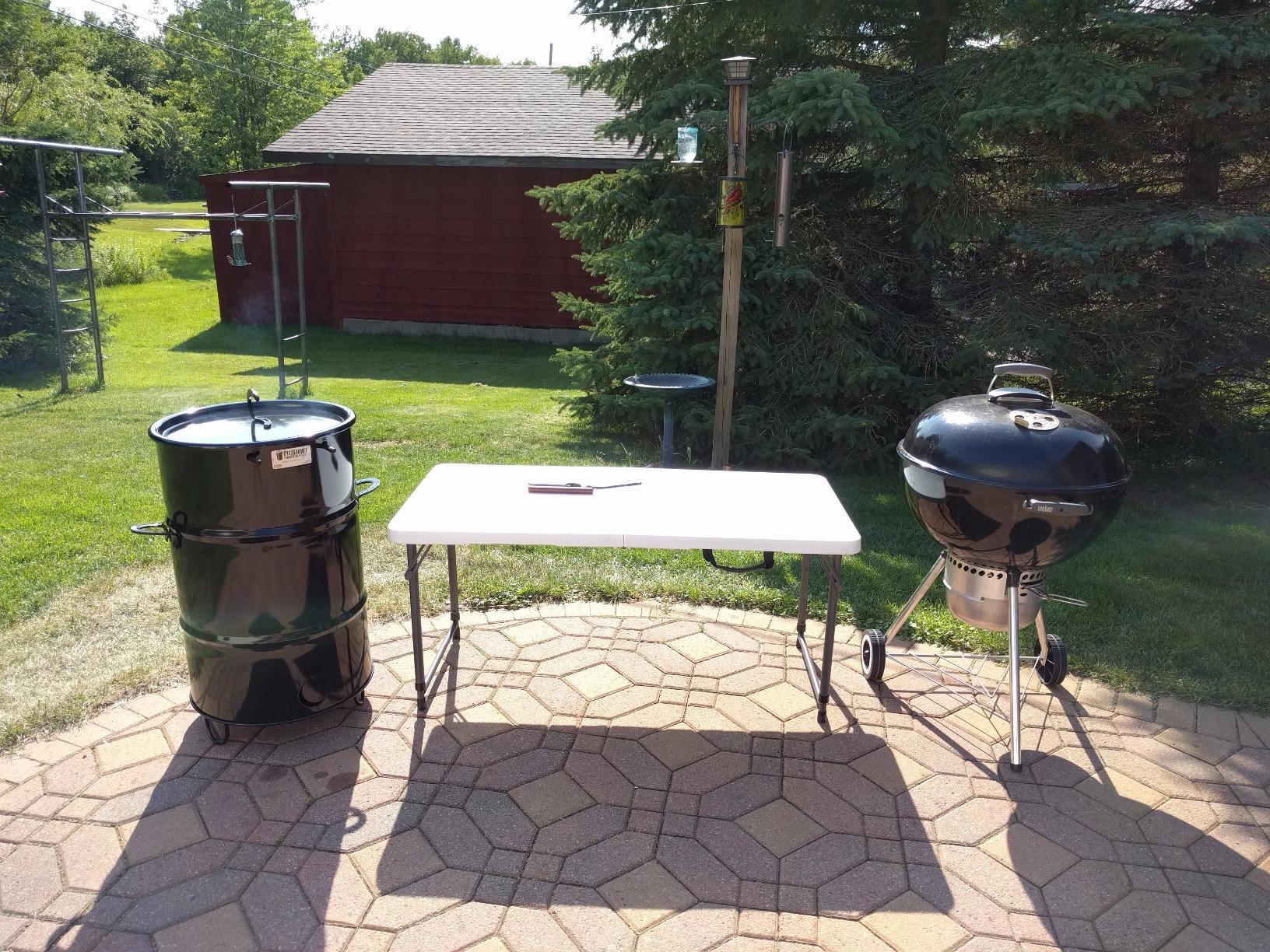
The first time I hung ribs in a Pit Barrel Cooker, I understood why drum smokers have such a passionate following. The meat suspends vertically over the charcoal basket, which means juices drip directly onto the hot coals and create a flavor fog that I have never replicated on a horizontal smoker.
I ran eight racks of St. Louis cut ribs for four hours, and every single rack had a deep mahogany bark with a clean smoke ring.
The 360-degree heat dynamics rely on a fixed airflow design rather than adjustable dampers. You load the charcoal basket, light the center, hang the meat, and walk away.
During my tests, the barrel ran at 270F to 290F consistently for five to six hours with a single load of briquettes. That temperature range is slightly higher than traditional low-and-slow, but the circulated heat cooks faster without drying out the meat.
The Classic package includes eight hooks, two hanging rods, a standard grill grate, and a charcoal basket. I appreciated the hook remover tool because lifting hot hooks with bare fingers is not a mistake you make twice.
The porcelain enamel coating on the steel drum is thick enough to resist rust, and the side handles make it portable for a 57-pound unit.
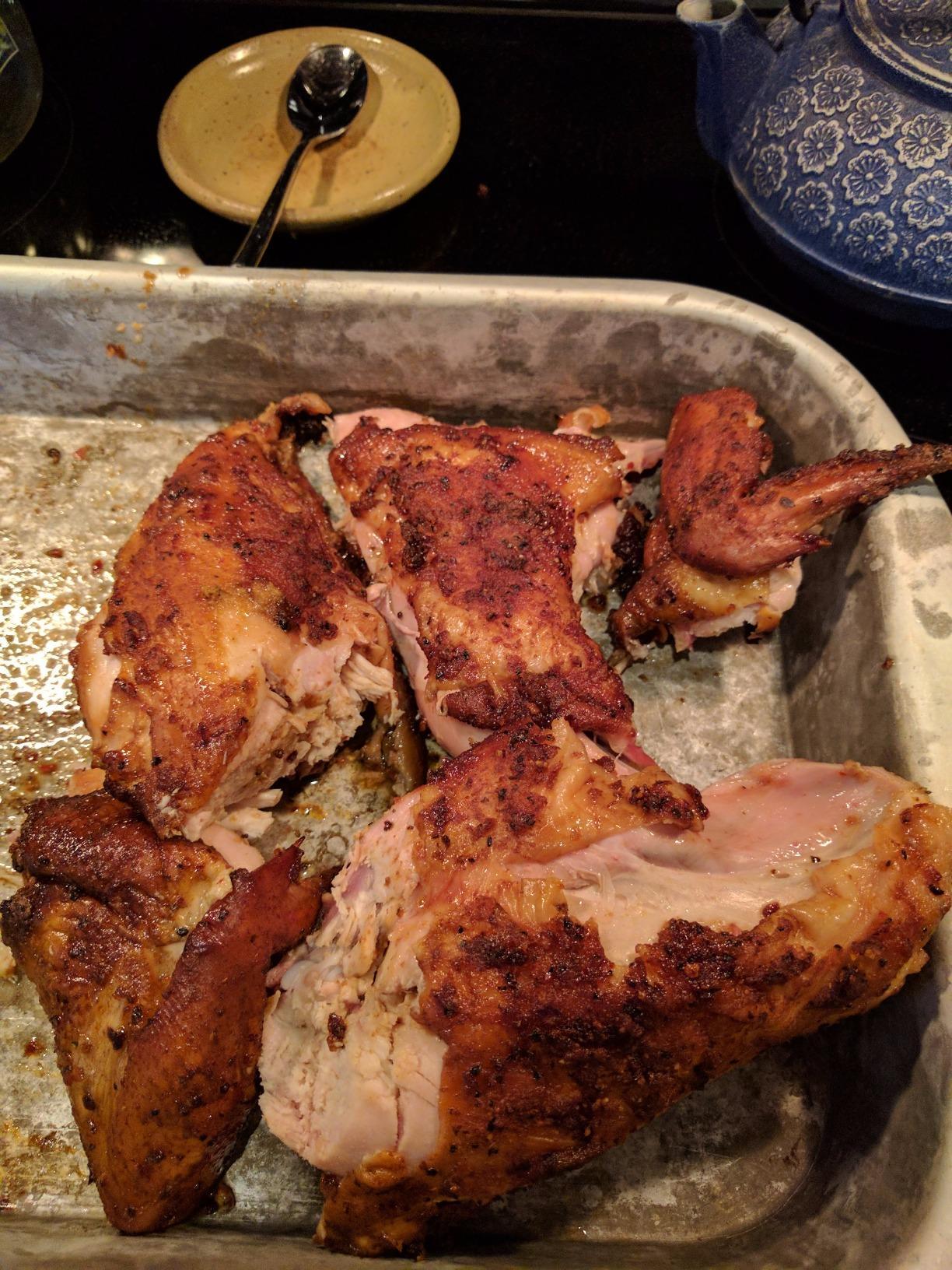
I also tested the grill grate setup for direct cooking. It sits about 12 inches above the coals, which is perfect for chicken thighs and sausages.
The heat is intense and direct, so you need to flip frequently, but the char flavor is excellent. I would not use it as my primary grill, but it works for quick weeknight cooks.
The downsides are real. Because there are no intake dampers, once you light the charcoal you cannot easily kill the fire. You have to let it burn out or remove the basket carefully.
Ash cleanup requires tipping the barrel or vacuuming the bottom, which is awkward. And if you cook extra-long racks of ribs, the ends can droop close enough to the coals to char.
Best for Hands-Off Cooks Who Want Deep Smoke Flavor
If you want to load the smoker at noon and serve dinner at 5 PM without touching the vents every 20 minutes, the Pit Barrel Cooker is the best charcoal smoker for your lifestyle.
I have left it running during a three-hour yard work session and returned to find the temperature still within 10 degrees of where it started.
The hanging method also produces better bark than grate smoking because the meat is not sitting in its own rendered fat. The drippings vaporize and recirculate, which adds a complexity to the flavor profile that flat-grate smokers struggle to match.
Skip This If You Need Precise Temperature Control
The fixed airflow means you cannot run the barrel at 225F for a 14-hour brisket. It wants to live in the 275F to 300F range.
That works for ribs, chicken, and pork butts, but if you are a brisket purist who insists on 225F for the full cook, you will fight the design.
I also would not recommend it for anyone who needs to shut down mid-cook to save charcoal, because there is no easy way to snuff the fire.
3. Kamado Joe Classic Joe Series II – The Do-Everything Ceramic Workhorse
Kamado Joe Classic Joe Series II 18-inch Ceramic Charcoal Grill and Smoker with Cart, Side Shelves, Stainless Steel Grates and 250 Cooking Square Inches in Red, Model KJ-23RHC
18 inch ceramic
250 sq in
Air Lift Hinge
232 lbs
Pros
- 2-Tier Divide and Conquer system
- Premium ceramic heat retention
- Air Lift Hinge for easy opening
- Versatile grilling smoking baking
- Cast iron cart with wheels
Cons
- Very heavy at 232 lbs
- Premium price point
- Learning curve for temperature control
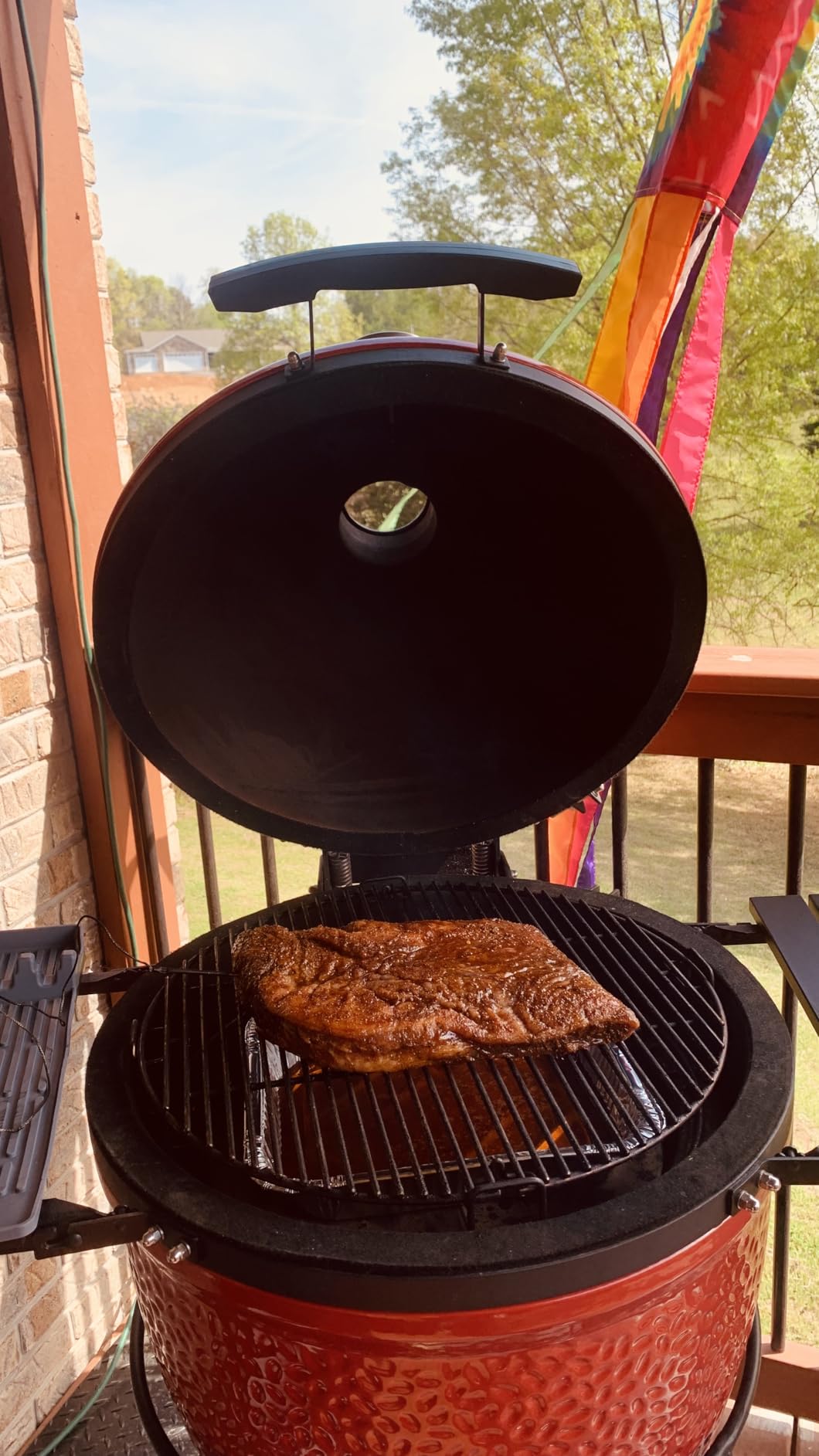
The Kamado Joe Classic II is the most versatile cooker I tested. I smoked brisket at 225F, baked pizza at 550F, and seared ribeyes at 650F, all on the same unit within a single week.
The ceramic walls store heat so efficiently that the temperature holds within 5 degrees for hours once the vents are dialed in.
The Divide and Conquer flexible cooking system is the standout feature. The split ceramic plates let you create direct and indirect zones on the same grate level.
I used the deflector plates to smoke a pork shoulder on the left side while roasting vegetables on the right. The Air Lift Hinge reduces the dome weight by about 90 percent, which sounds like a gimmick until you open a 232-pound ceramic lid with one finger.
The Kontrol Tower top vent is rain-resistant and gives precise airflow adjustment. I cooked through a light drizzle without water leaking into the firebox, which is a problem I have had on other kamados.
The AMP FireBox is a multi-panel ceramic design that resists cracking from thermal shock, a common failure point in lesser kamados.
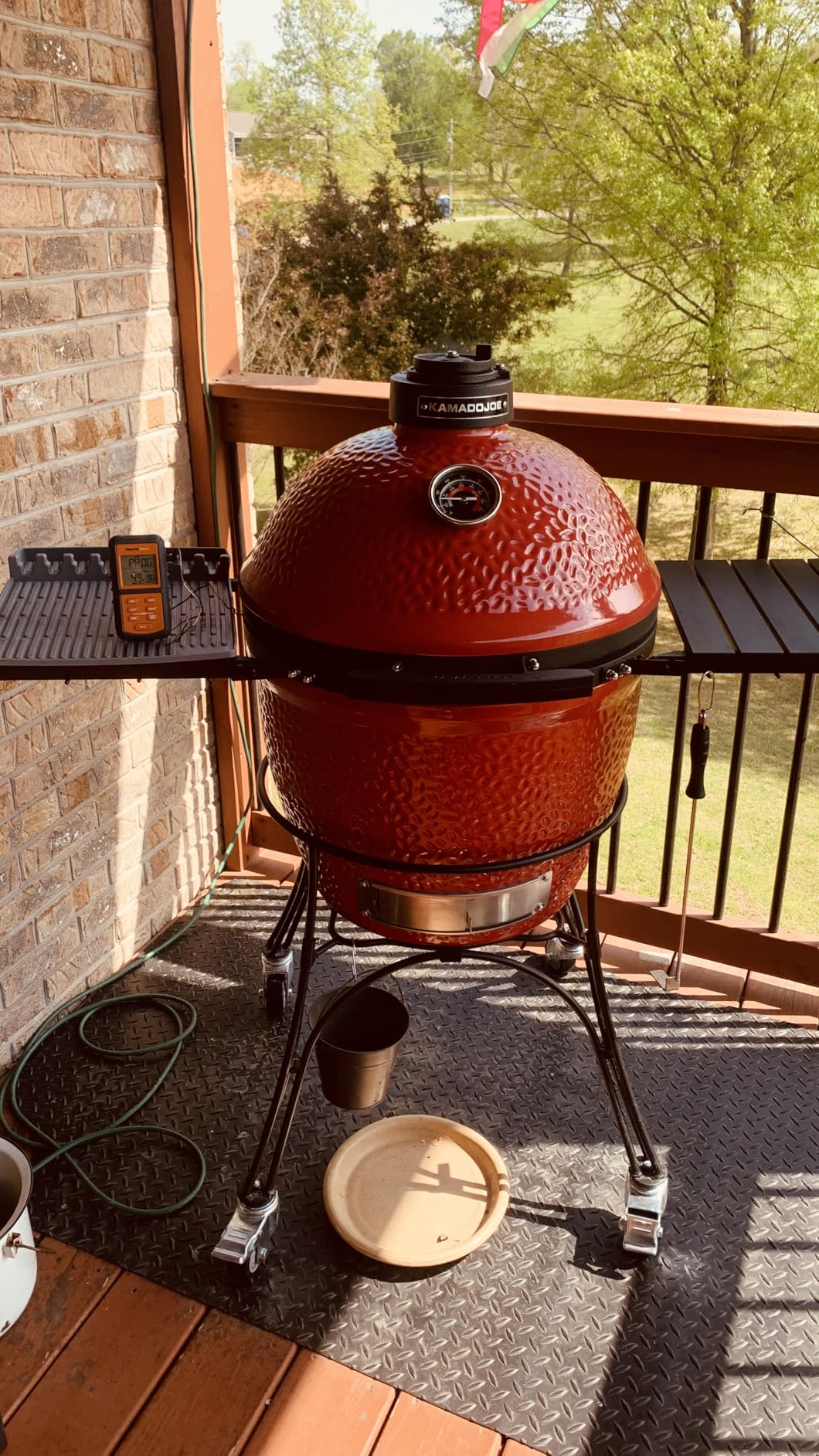
The 250 square inches of cooking surface is smaller than the Weber or the Oklahoma Joe, but the multi-level setup effectively doubles the usable area.
I fit two pork butts on the lower grate and four racks of ribs on the upper grate during a Memorial Day cookout. The cast iron cart with locking wheels is a necessity because the unit weighs 232 pounds and is not something you want to drag across a patio.
The downsides are predictable. The price is a serious investment. The weight makes it a permanent installation for most backyards.
And the learning curve is steeper than a bullet smoker because the ceramic retains heat so aggressively that small vent adjustments can cause 50-degree swings before stabilizing. My first two cooks overshot by 30 degrees because I opened the vents too aggressively.
Best for Cooks Who Want One Grill to Do Everything
If you can only own one outdoor cooker and you want to smoke, grill, roast, and bake pizza, the Kamado Joe is the best charcoal smoker and grill combo on the market.
I have used it as a tandoor for naan bread and as a slow smoker for beef cheeks, and it performed both tasks with precision.
The lifetime warranty on ceramic parts is a strong signal that the company expects this unit to outlast your house.
Skip This If You Have a Tight Budget or Small Patio
The price and weight make this a commitment, not an impulse purchase. If you are renting, moving soon, or working with a narrow balcony, the 232-pound footprint and 18-inch width may be too much.
There are excellent alternatives on this list that cost a fraction of the price and still deliver great smoke flavor.
4. Oklahoma Joe’s Highland Offset – Classic Stick-Burner Experience
Oklahoma Joe's Highland Offset Charcoal Smoker and Grill with 900 sq. in. Cooking Area in Black
900 sq in total
Horizontal offset
168 lbs
Steel construction
Pros
- 900 sq in total cooking area
- Adjustable firebox and smokestack dampers
- Side firebox door for easy fuel access
- Removable ash pan for cleanup
- Heavy-gauge steel construction
Cons
- Paint may burn off firebox
- Thinner gauge than some competitors
- Assembly requires two people
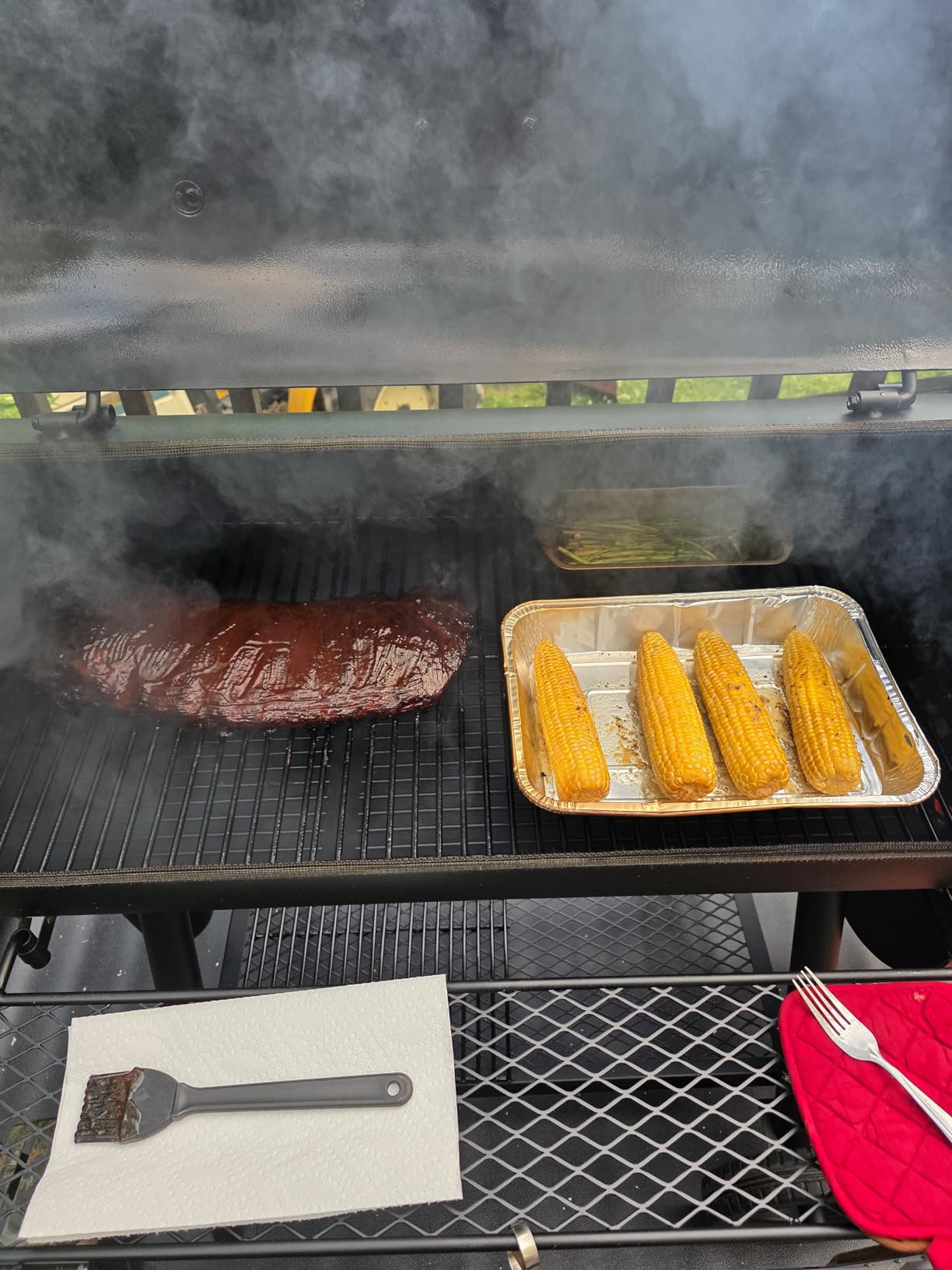
The Oklahoma Joe’s Highland is the only true offset smoker on this list, and it delivers the most traditional barbecue experience. I built a split-log fire in the side firebox and fed it oak splits every 45 minutes for a 10-hour brisket cook.
The result was a bark so thick it crunched like a potato chip and a smoke ring that extended a quarter inch into the flat.
The 900 square inches of total cooking area is the largest on this list. The main chamber holds 616 square inches, and the firebox grate adds another 263 square inches for direct grilling or warming.
I used the firebox to sear burgers while ribs smoked in the main chamber, which is a trick that only offset smokers can pull off cleanly.
The adjustable firebox damper and smokestack damper give real control over airflow. I could pull the temperature down from 275F to 225F by closing the stack partially, and I could spike it for chicken by opening both fully.
The side firebox door lets you add fuel without opening the main chamber, which preserves the cooking environment.
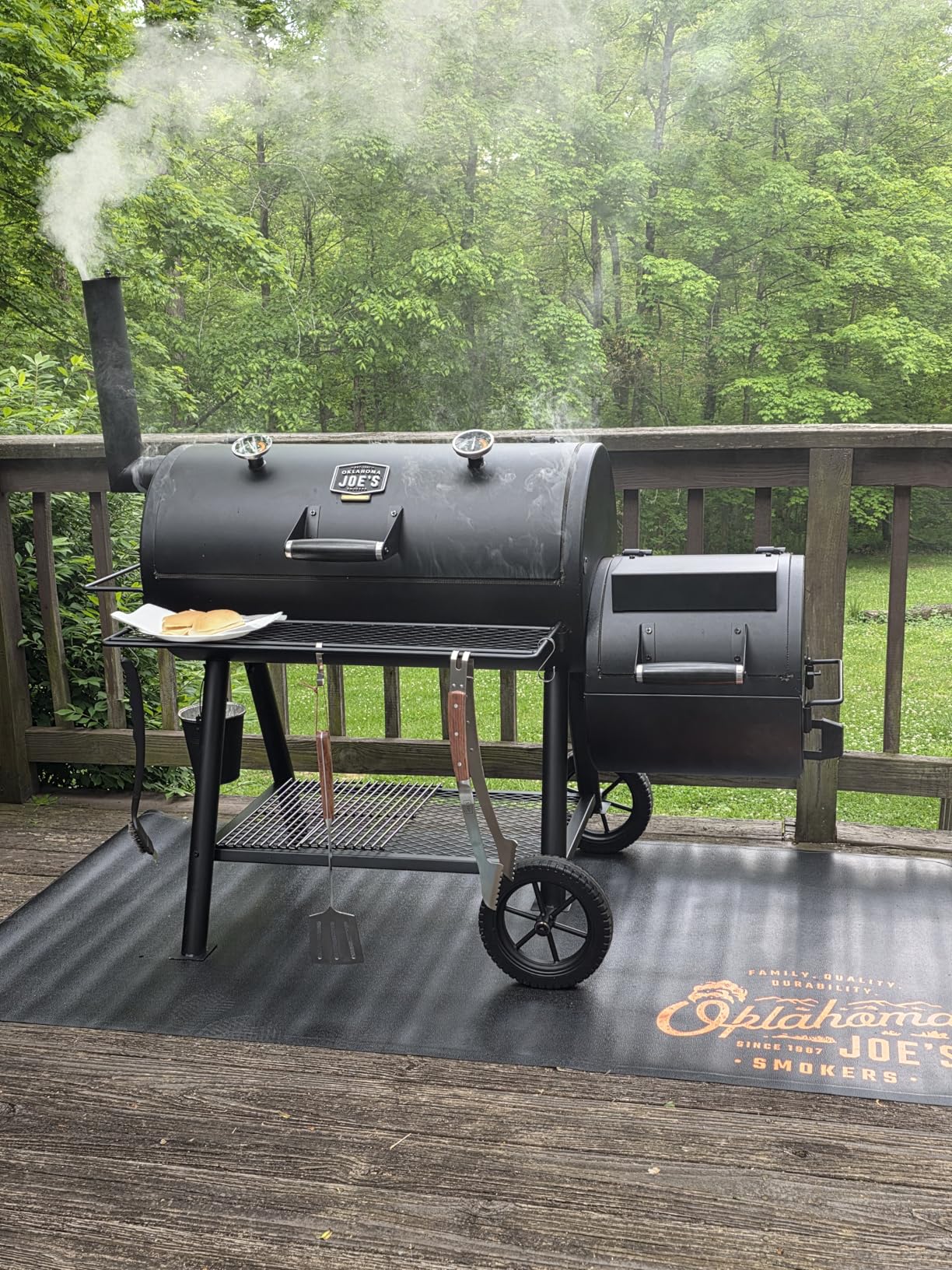
The removable ash pan is a feature I now consider mandatory on any offset. Instead of scooping ash out of a fixed tray, you slide the pan out and dump it.
The rubber-tread steel wagon wheels make the 168-pound unit movable across grass and gravel, though I still recommend a second person for assembly because the panels are large and awkward.
The paint on the firebox will burn off during the first few high-heat cooks. That is normal for offset smokers in this range, and I touched mine up with high-temp spray paint after the seasoning phase.
The steel is thinner than a custom pit, but for the price, the construction is solid enough to last several years of heavy use.
Best for Traditionalists Who Love the Offset Experience
If you enjoy the ritual of tending a live fire, splitting wood, and managing airflow by feel and sound, the Highland is the best charcoal smoker for your personality.
It teaches you fire management in a way that automated smokers never will. I learned more about combustion and draft from 10 cooks on this unit than from two years of reading forums.
Skip This If You Want a Lightweight Movable Smoker
At 168 pounds and 59 inches wide, the Highland is not a tailgating or camping smoker. It demands a dedicated spot on your patio and a cover to protect it from rain.
The fire-tending requirement also means you cannot leave it unattended for three hours while you run errands.
If you need a set-and-forget experience, the drum or bullet smokers above are better matches.
5. Char-Griller AKORN Jr. – Portable Kamado Power at a Friendly Price
Char-Griller® AKORN® Jr. Portable Kamado Charcoal Grill and Smoker with Cast Iron Grates and Locking Lid with 155 Cooking Square Inches in Ash, Model E86714
155 sq in
Triple wall steel
33 lbs portable
200-700F range
Pros
- Portable kamado-style design
- Triple-walled insulation
- Dual adjustable dampers
- EasyDump Ash Pan
- Cast iron cooking grates
Cons
- Smaller cooking surface at 155 sq in
- Learning curve for temperature control
- Minor air leaks possible
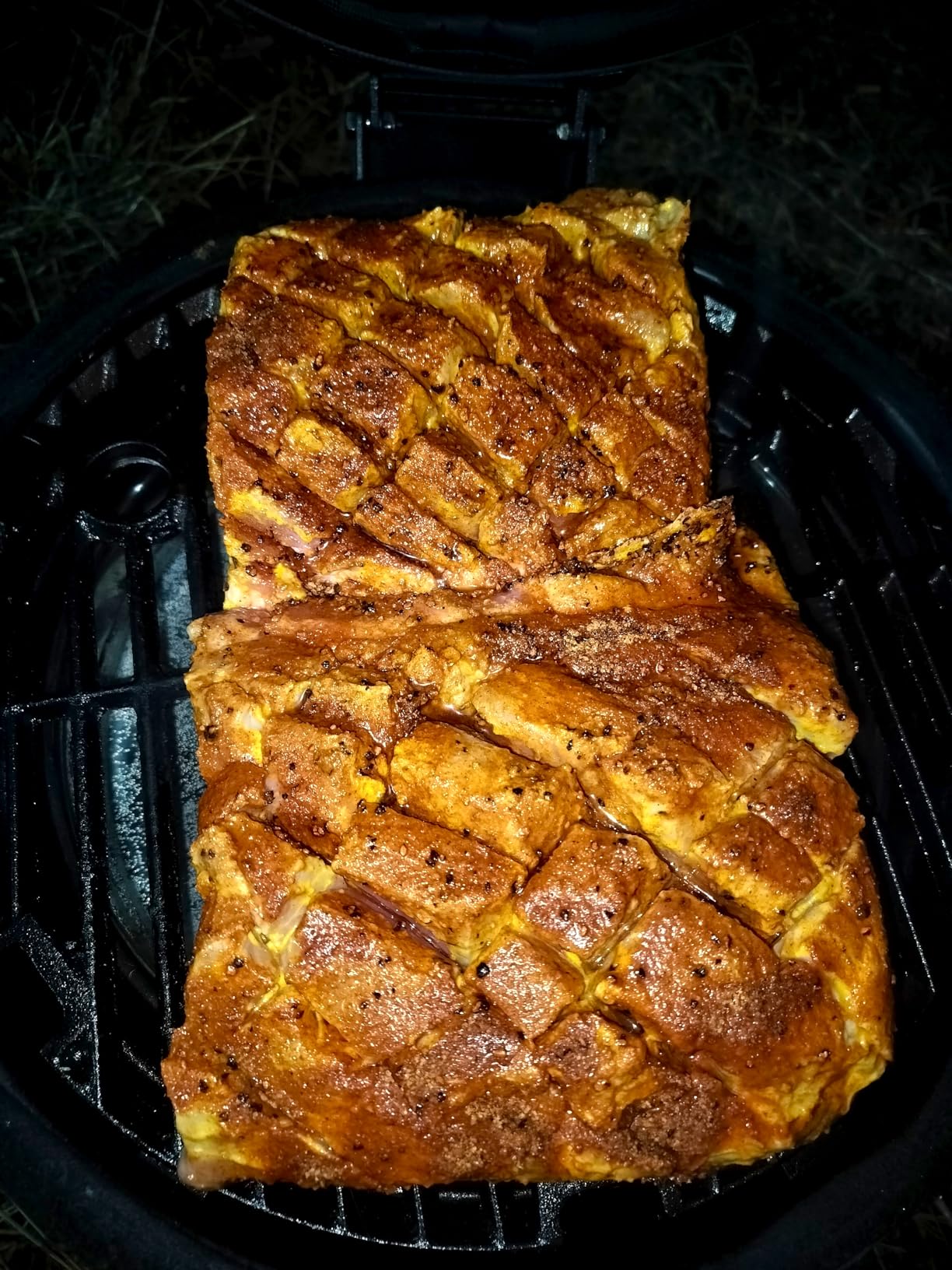
The Char-Griller AKORN Jr. is the surprise performer of the group. I expected a budget kamado knockoff, but the triple-walled steel insulation holds heat with surprising efficiency.
I ran a 6-hour pork butt at 240F and burned through less than five pounds of lump charcoal, which is close to what the ceramic Kamado Joe used for the same cook.
The 155 square inches of cooking surface is small, but it fits two pork tenderloins, a whole chicken, or four burgers comfortably.
I took it to a campsite and smoked trout over apple wood for two hours, and the compact footprint fit perfectly on a picnic table. The locking lid and side handles make it genuinely portable at 33 pounds.
The EasyDump Ash Pan is the best ash removal system I tested on a small smoker. You pull a sliding tray from the bottom and the ash falls out cleanly.
No scooping, no vacuuming, no turning the unit upside down. The dual dampers give precise control over airflow, and the cast iron grates sear better than the thin wire grates on most bullet smokers.
I tested the temperature range from 200F to 700F. The low end holds steady for smoking, and the high end gets hot enough to sear steaks with a cast iron griddle.
The powder-coated exterior resisted rust after a month of rain exposure, though I would still recommend a cover for long-term storage.
The limitations are clear. The 155 square inch grate is not enough for a full brisket or more than two racks of ribs.
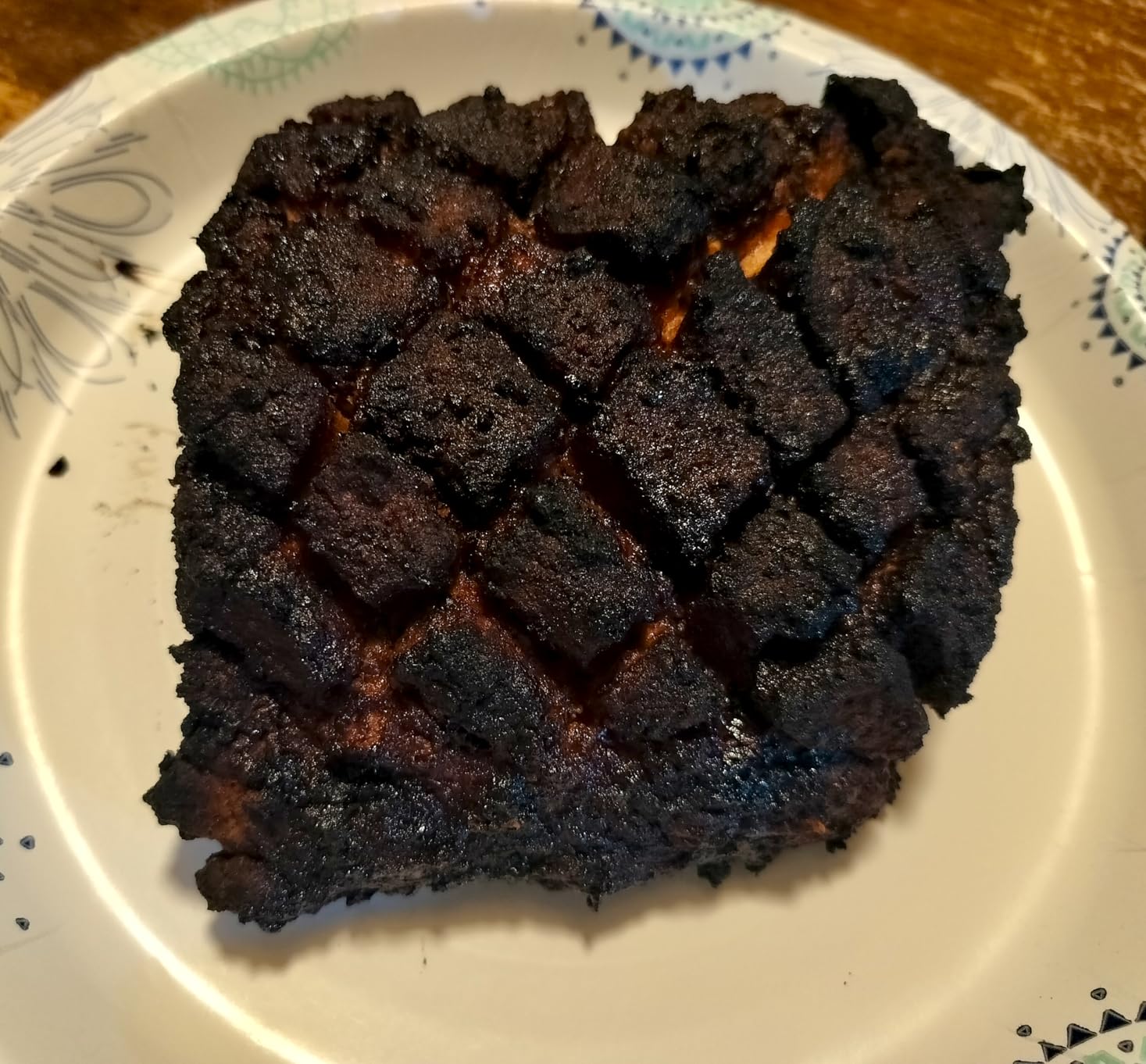
The steel construction does not radiate heat as evenly as ceramic, so I noticed hot spots near the back wall during long cooks.
And the factory gasket is thin, so I added a high-temp seal after the first few cooks to stop minor air leaks.
Best for Campers and Tailgaters
If you want kamado-style versatility for camping, tailgating, or apartment balcony cooking, the AKORN Jr. is the best charcoal smoker for mobile lifestyles.
I have loaded it into the trunk of a sedan without assistance, and it lights fast enough to be ready for burgers within 20 minutes of setup.
The fuel efficiency means a single bag of lump charcoal lasts for several weekends.
Skip This If You Cook for Large Groups
A family of four will be fine, but if you regularly host parties of 10 or more, the 155 square inches will force you to cook in batches.
That is manageable for grilling, but for smoking, it means you cannot serve a full spread of brisket and ribs at the same time.
Upgrade to the 18-inch full-size AKORN or the Weber Smokey Mountain for larger crowds.
6. Char-Broil Bullet 16 – The Best Entry Point for Beginners
Char-Broil Bullet Charcoal Smoker 16" - 18202075,Black
388 sq in
16 inch bullet
20 lbs
Porcelain-coated
Pros
- Excellent temperature control and stability
- Easy to assemble in 15 minutes
- Good smoke flavor retention
- Suitable for long smoking sessions
- Great value compared to competitors
Cons
- Bottom vent can be sticky initially
- Door seal may need gasket upgrade
- Lid thermometer reads 40F cooler
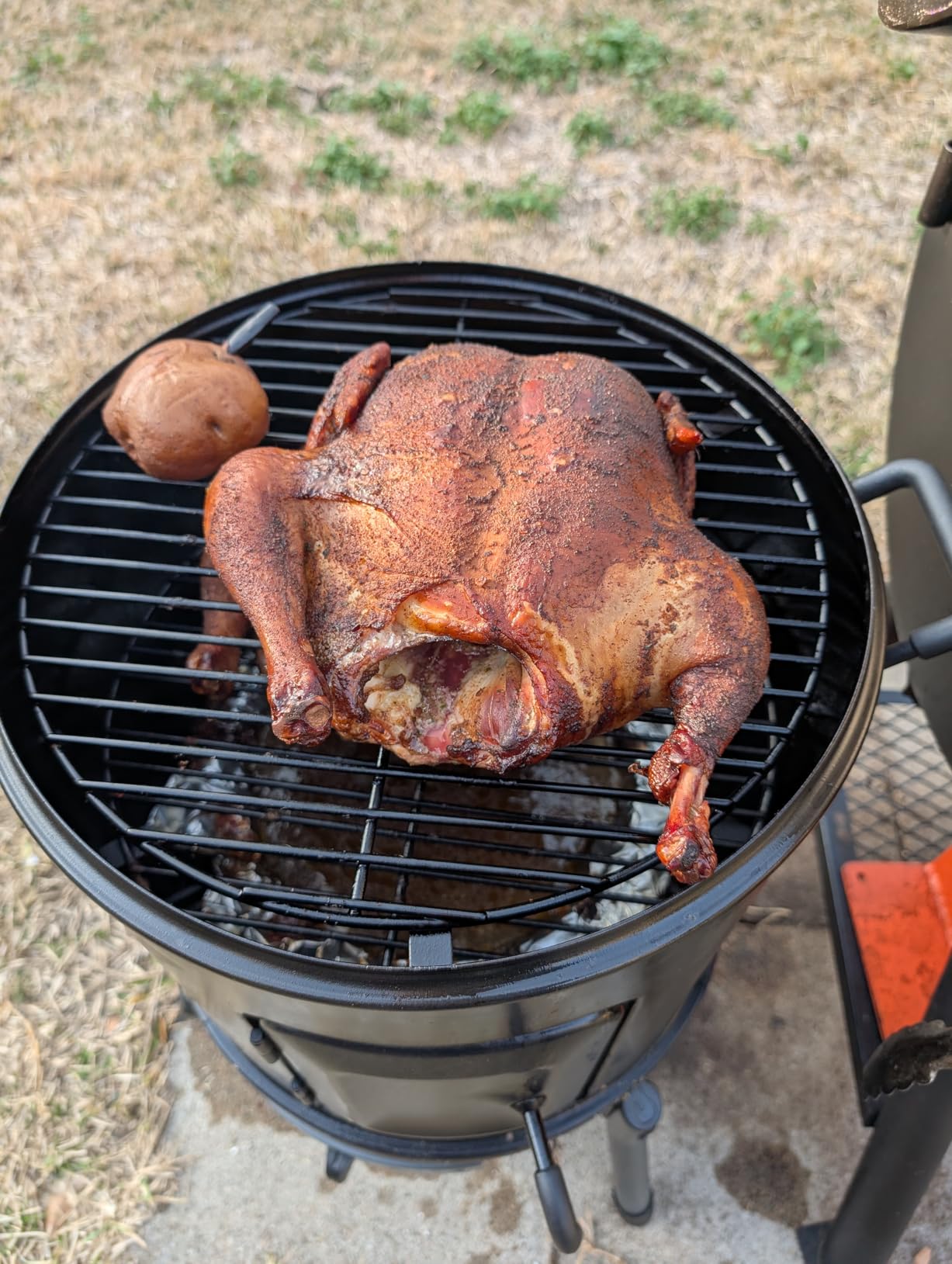
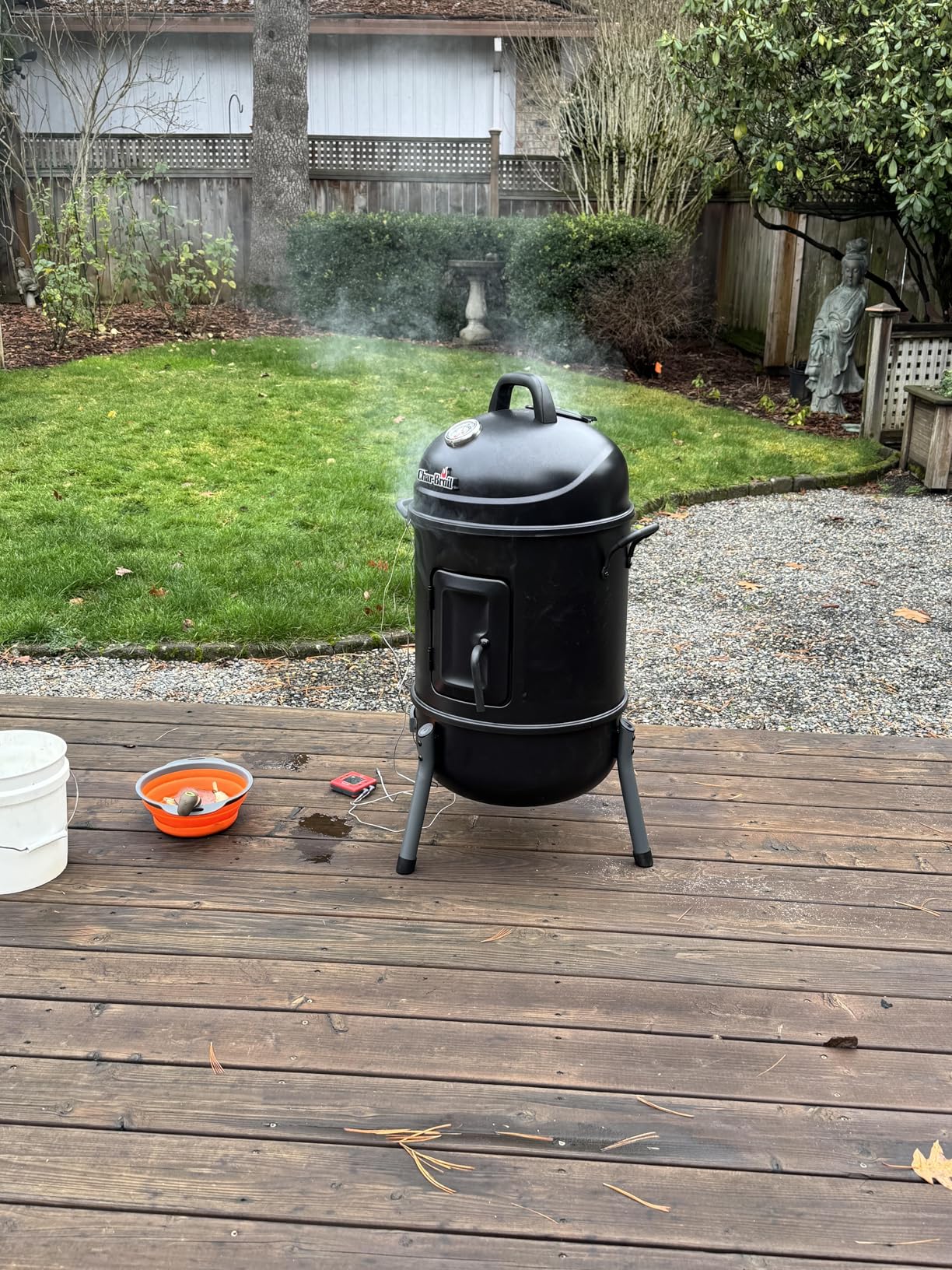
The Char-Broil Bullet is the smallest and lightest smoker I tested, but it punches above its weight. I assembled it in 15 minutes with a single screwdriver, and the first cook, a pair of pork butts, held 235F for 10 hours with only two vent adjustments.
The porcelain-coated steel body is thin, but the insulation is better than I expected for a 20-pound unit.
The 388 square inches of cooking space is split across two grates. The upper grate is ideal for ribs and chicken, while the lower grate handles pork butts and brisket flats.
I ran two butts and four ribs simultaneously for a neighborhood cookout, and the bullet delivered even heat across both levels.
The water pan is larger than the Weber Smokey Mountain’s pan, which helped maintain humidity during the 10-hour session.
The innovative air control system is a simple intake vent at the bottom and an exhaust at the top. The bottom vent was sticky for the first three cooks, but it loosened up with use.
The lid-mounted thermometer is the one gauge on this list that I would replace immediately. It reads 40 degrees cooler than the actual grate temperature, which could ruin a brisket if you trust it blindly.
The included ash pan is shallow but functional. I line it with aluminum foil for easy disposal, and I have not had to scrub it once.
The dual-carry handles are a nice touch for a unit this light, and I have carried it from the garage to the patio one-handed without strain.
The door seal is the only area where cost-cutting is obvious. There is a small gap that allows extra air in, which makes the unit run 10 to 15 degrees hotter than the vent setting.
I fixed it with a strip of high-temp gasket tape, which took two minutes to install. After that mod, the temperature held rock-steady.
Best for Beginners Testing the Waters
If you have never smoked meat before and you want to learn the basics without spending a fortune, the Char-Broil Bullet is the best charcoal smoker to start with.
The assembly is simple, the temperature is forgiving, and the size is large enough to practice on real cuts of meat without overwhelming your patio.
I recommend it to friends who ask about getting into barbecue without committing to a major investment.
Skip This If You Want a Long-Term Investment
The thin steel and one-year warranty suggest that this is a starter unit, not a lifetime purchase.
After two or three years of heavy use, you may see rust spots or warping.
I view it as a training tool that either teaches you to love smoking, at which point you upgrade to a Weber or Kamado, or proves that you only smoke twice a year, in which case it was money well spent.
7. Royal Gourmet CC1830S – Grill and Smoker in One Affordable Package
Royal Gourmet CC1830S BBQ Charcoal Grill and Offset Smoker | 823 Square Inch cooking surface, Outdoor for Camping | Black
823 sq in total
Offset smoker combo
45.2 lbs
Alloy steel
Pros
- Large 823 sq in cooking surface
- Combines grill and offset smoker
- Adjustable charcoal pan for control
- Easy to read lid thermometer
- Good value for entry level
Cons
- Metal feels thin compared to premium models
- Some assembly challenges
- Ash tray in smoker cannot be removed
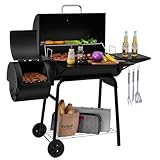
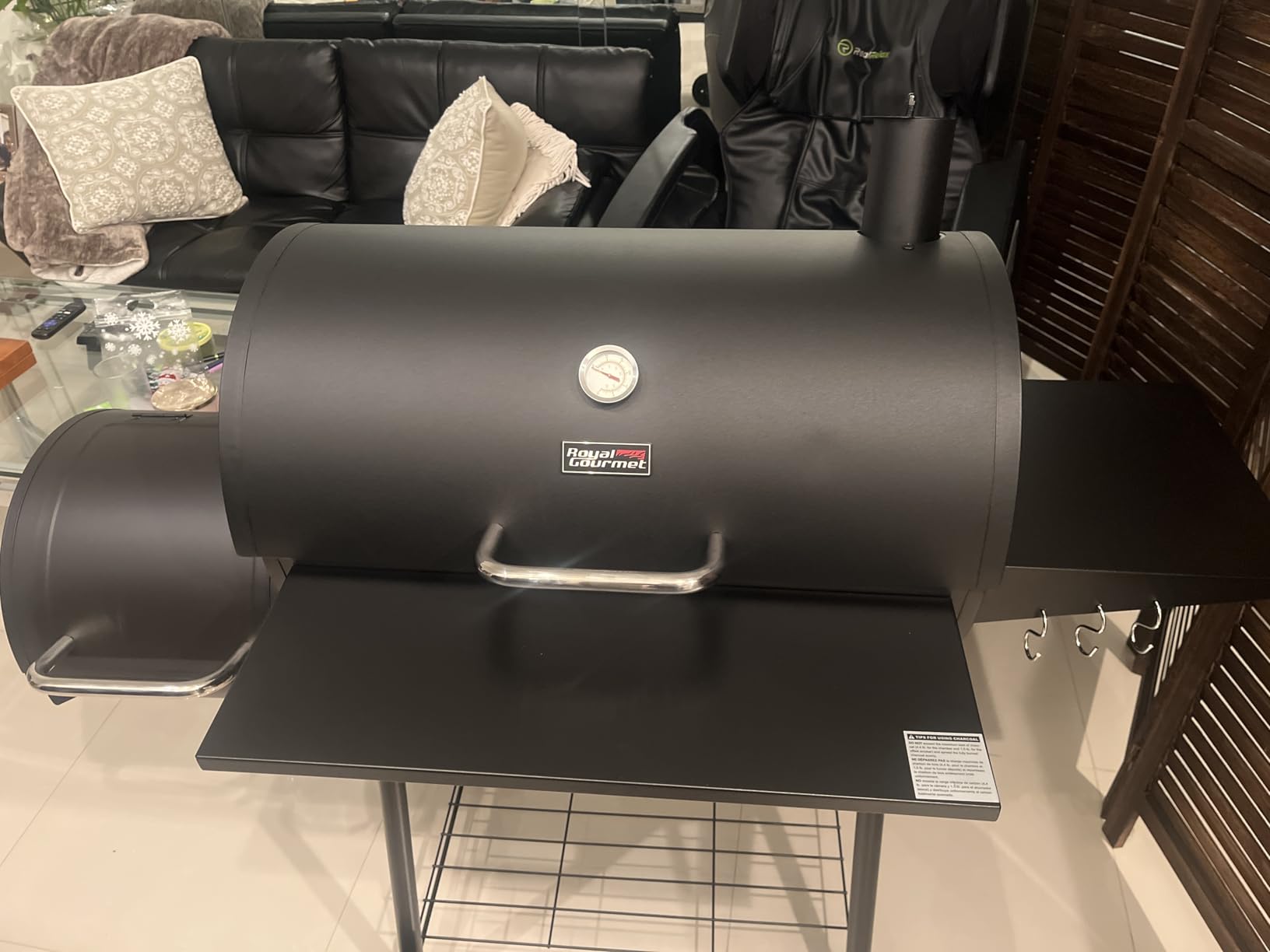
The Royal Gourmet CC1830S is the Swiss Army knife of budget outdoor cookers. The main grill area offers 475 square inches of porcelain-enameled grates, a 151 square inch warming rack, and a 197 square inch offset smoker box.
I used the main chamber to grill burgers for a party while a pork shoulder smoked in the side box, and the setup worked better than I expected for the price.
The two-level height-adjustable charcoal pan is a feature usually found on units that cost twice as much. I raised the pan to within four inches of the grates for high-heat searing, then lowered it to the bottom for indirect smoking.
The side door lets you add charcoal or remove ash without lifting the main grates, which is a convenience I missed on several more expensive units.
The front and side tables give plenty of prep space, and the bottom shelf holds up to 20 pounds of accessories.
I keep my chimney starter, wood chunks, and extra charcoal on the shelf during cooks, which keeps everything within arm’s reach. The built-in thermometer is surprisingly accurate, within 10 degrees of my digital probe.
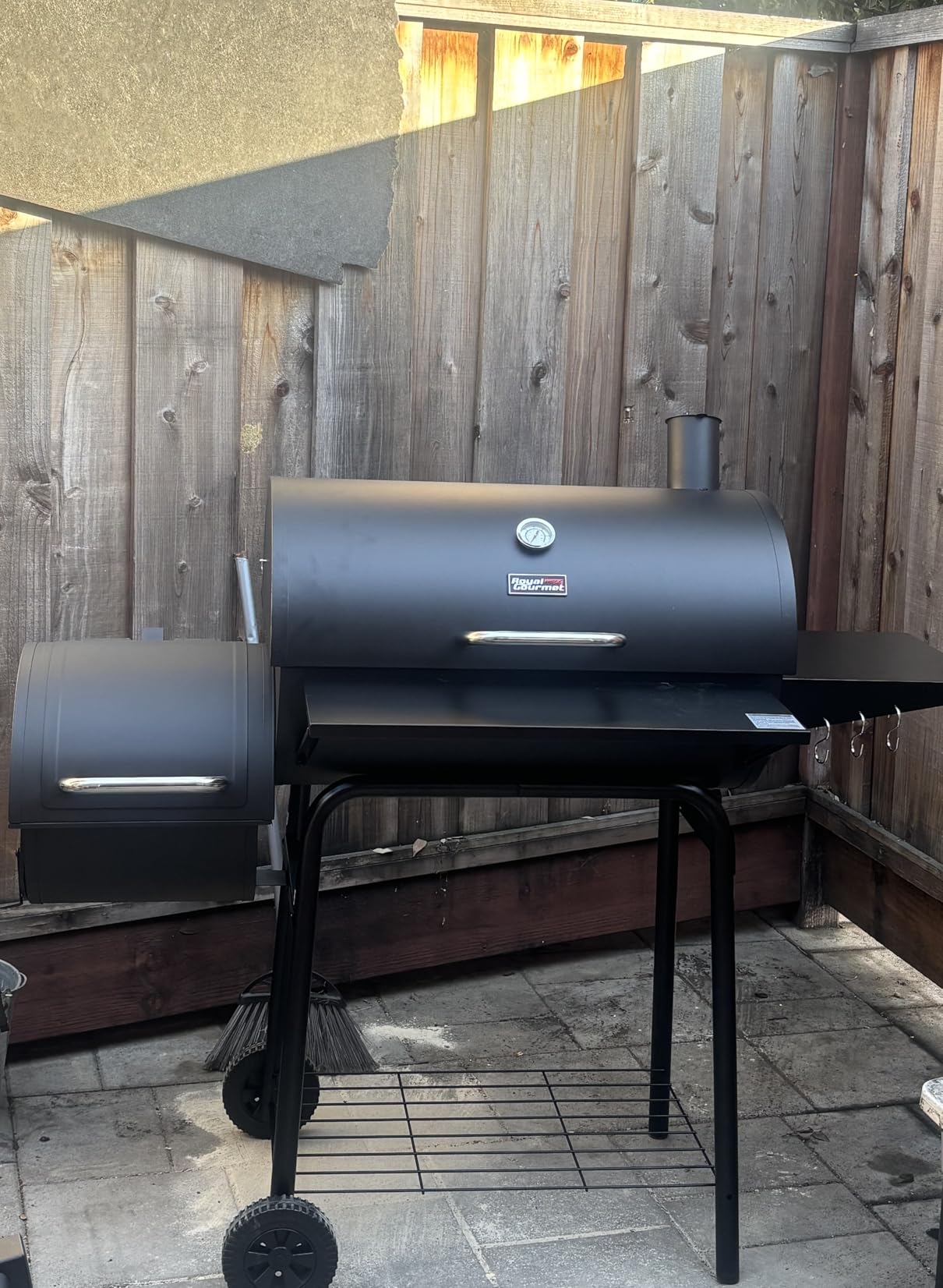
The offset smoker box is small but functional. I fit a single pork butt or two racks of ribs inside, and the thin steel heats quickly.
The smoke flavor is lighter than a dedicated offset because the firebox is not a true horizontal design, but it is enough for casual backyard cooks.
The air vent on the smoker box helps control temperature, though it is a simple slider rather than a precise damper.
The construction is the main compromise. The alloy steel is thinner than the Oklahoma Joe or the Weber, and the paint is prone to chipping around the firebox.
Assembly took me about two hours because the instructions are vague, and I needed to reattach one leg after it came loose during the first move.
I recommend using a thread-locking compound on the bolts.
Best for Families Who Want Grill and Smoker in One
If you have a modest patio and you can only justify one piece of equipment, the Royal Gourmet is the best charcoal smoker and grill combo for the money.
It handles weeknight grilling and weekend smoking without requiring you to buy two separate units.
I have used the main grill at least 20 times for every one smoking session, which proves that versatility matters when space is limited.
Skip This If You Want Premium Build Quality
The thin metal and basic hardware are visible the moment you open the box. This is a functional appliance, not a showpiece.
If you want thick steel, precise dampers, and a warranty that spans years, the Oklahoma Joe or Weber are worth the extra cost.
I also would not recommend this for anyone who plans to leave it uncovered in a rainy climate, because the steel will rust faster than premium models.
8. Masterbuilt Gravity Series 800 – High-Tech Charcoal with Set-and-Forget Control
Masterbuilt® Gravity Series® 800 Smoker Grill - Charcoal Grill plus Griddle Insert, Digital Control, App Connectivity, 800 Cooking Square Inches in Black, Model MB20040221
800 sq in
DigitalFan control
Gravity-fed
204.2 lbs
Pros
- Reaches 225F in 8 minutes
- Versatile smoker grill and griddle
- Excellent temperature regulation
- Gravity-fed charcoal system
- App connectivity for remote monitoring
Cons
- Electronics can be finicky
- Complex assembly requires two people
- Heavy at 204.2 lbs
- App connectivity unreliable
The Masterbuilt Gravity Series 800 is the most technologically advanced charcoal smoker I have ever used. It reaches 225F in 8 minutes, 450F in 10 minutes, and 700F in 14 minutes, which is faster than most gas grills.
The gravity-fed charcoal hopper sits on the side and feeds briquettes or lump into the firebox as needed, which means you can load it once and cook for hours without touching the fuel.
The DigitalFan temperature control is the real star. I set the control panel to 250F, and the fan modulated airflow to hold the temperature within 5 degrees for a 9-hour brisket cook.
That level of stability is unheard of in traditional charcoal smokers.
I also tested the WiFi connectivity from inside the house, and the app alerted me when the meat probe hit 203F, which was exactly when I wanted to wrap the brisket.
The 800 square inches of cooking area includes cast iron grill grates, two porcelain-coated smoking racks, and a flat-top griddle insert.
I used the griddle to cook breakfast during a camping trip, then swapped to the smoking racks for a pork shoulder in the afternoon.
The versatility is impressive, and the smoke flavor is noticeably stronger than the pellet smokers I have used in the past.
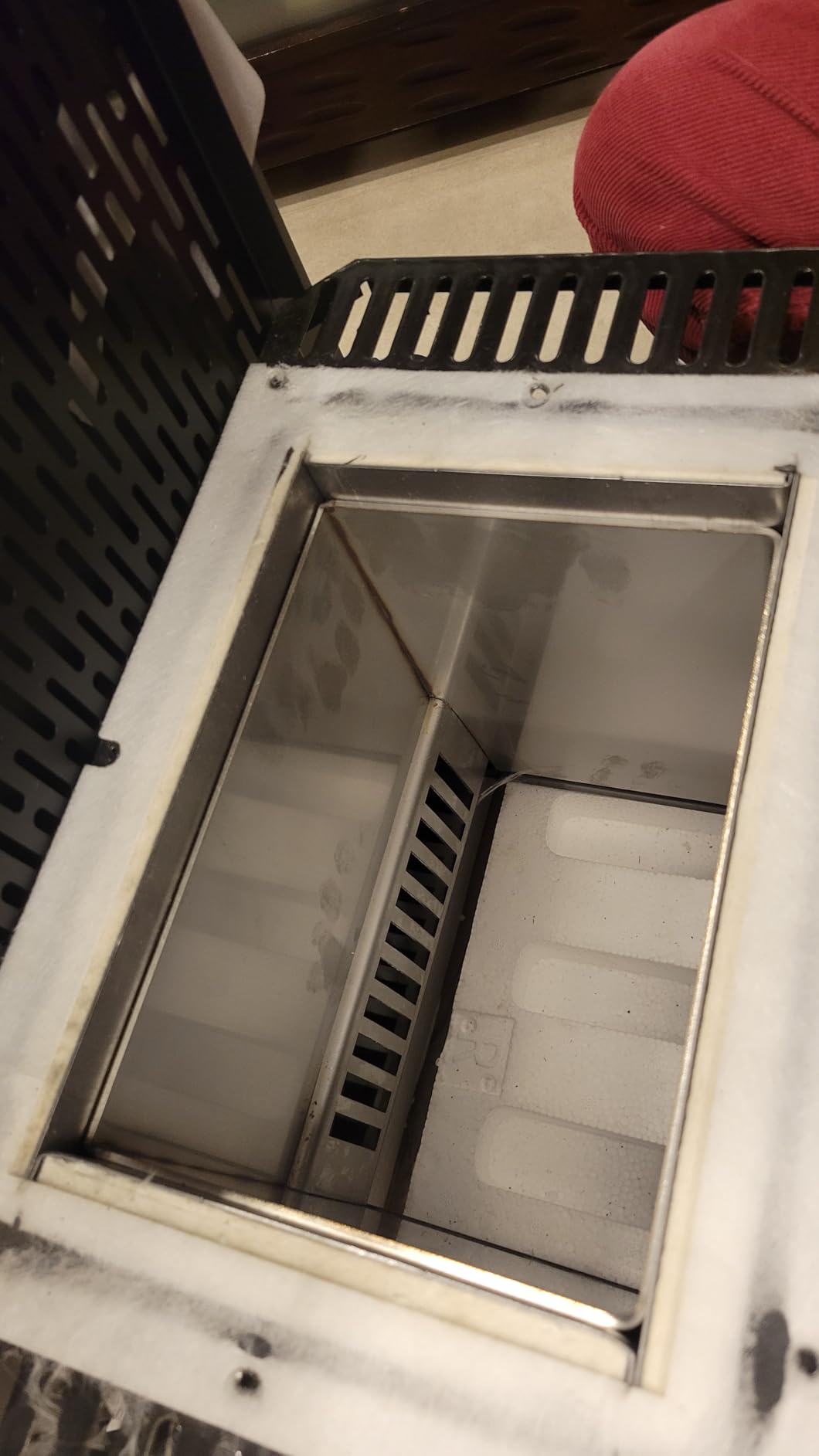
The included meat probe thermometer is accurate, and the ash bucket at the bottom makes cleanup simple. I just pull the bucket out and dump the ash after each cook.
The hopper holds enough charcoal for a 12-hour cook, and the side door lets you add more without opening the main chamber.
The drawbacks are significant. The electronics are finicky.
My Bluetooth connection dropped twice during a single cook, and the WiFi required a router reboot before the app would sync.
The control panel on one of my test units froze after a month of use, and I had to power-cycle it to restore function.
Assembly is a two-person, two-hour job because the unit weighs 204 pounds and the panels are large.
The stainless steel hopper is thin, and I worry about corrosion after a year of rain exposure.
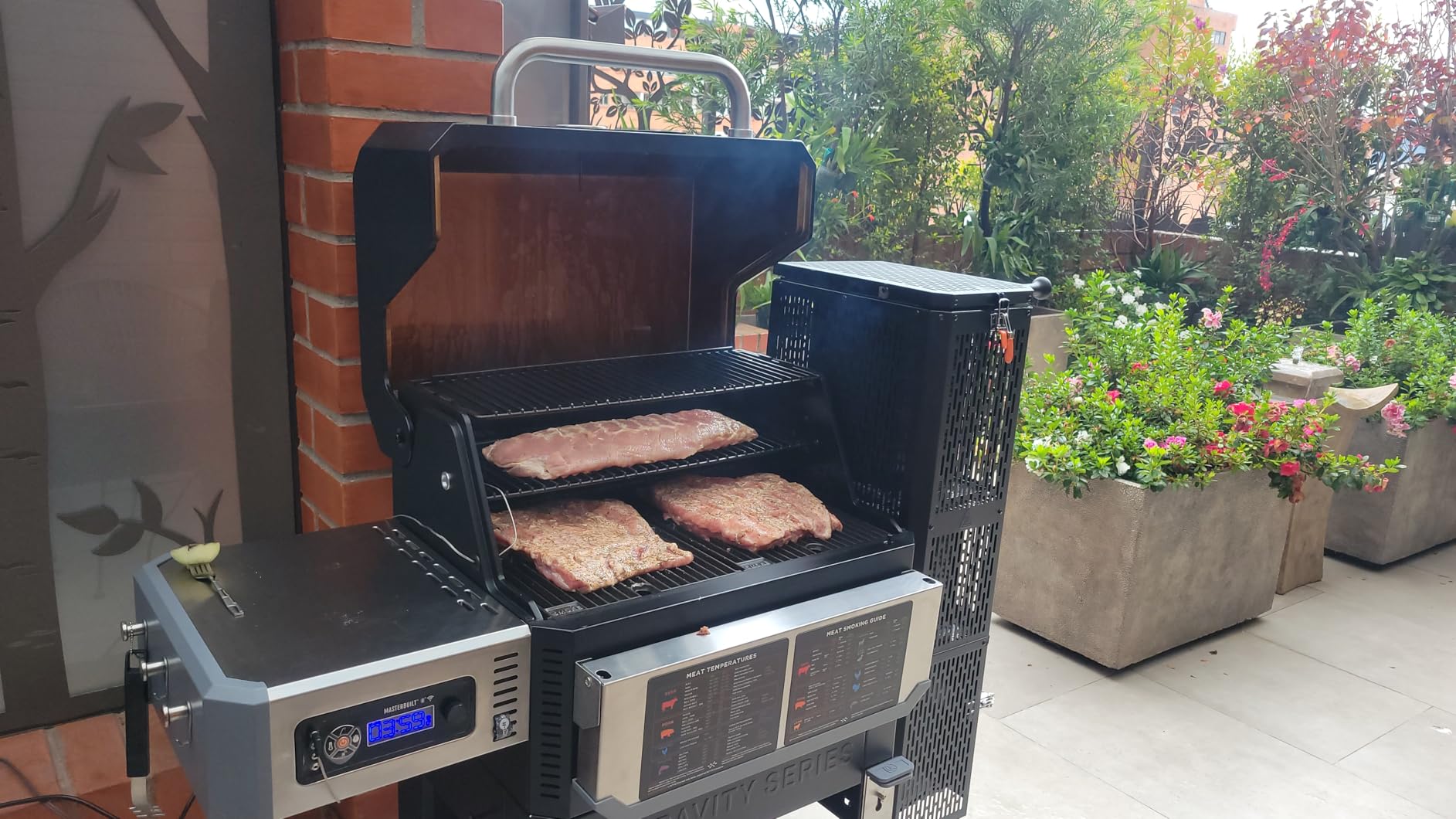
Best for Tech Lovers Who Want Set-and-Forget Control
If you love the idea of charcoal flavor but you hate managing vents and tending fires, the Masterbuilt Gravity Series is the best charcoal smoker for your lifestyle.
The digital control removes 90 percent of the guesswork, and the app connectivity lets you monitor cooks from your phone.
I used it during a dinner party and never once walked outside to check the smoker, which is something I cannot say about any other unit on this list.
Skip This If You Prefer Mechanical Simplicity
When the control panel fails, you have a 204-pound paperweight. There is no manual override mode that lets you run the smoker with dampers and a chimney.
I also worry about long-term support because the app and firmware will need updates for years to stay compatible with phones.
If you prefer analog reliability and you do not want to troubleshoot Bluetooth at midnight, the Weber or Pit Barrel are safer choices.
How to Choose the Best Charcoal Smoker for Your Backyard
Buying a charcoal smoker is not like buying a toaster. The shape, size, and airflow design change the flavor, the cook time, and the level of attention required.
I have cooked on every major type, and the differences are real enough to affect your satisfaction for years. Here is what I tell friends when they ask which smoker to buy.
Understand the Five Smoker Types
Offset smokers like the Oklahoma Joe’s Highland burn wood or charcoal in a side firebox and draw heat and smoke across the main chamber. They deliver the most authentic barbecue flavor and teach you fire management, but they demand constant attention.
Vertical bullet smokers like the Weber Smokey Mountain and Char-Broil Bullet use a water pan and stacked grates in a narrow chamber. They are efficient, stable, and forgiving for beginners.
Drum smokers like the Pit Barrel Cooker hang meat over a charcoal basket and rely on natural convection. They cook hotter and faster than bullets, but the flavor is deeper because drippings hit the coals.
Kamado grills like the Kamado Joe and Char-Griller AKORN use thick ceramic or steel walls to store heat. They are the most versatile and fuel-efficient, but they cost more and weigh more.
Gravity-fed smokers like the Masterbuilt Series 800 use a hopper and a fan to automate charcoal feeding. They offer the convenience of a pellet smoker with the flavor of charcoal.
The trade-off is electronic complexity and a higher price point.
Match Capacity to Your Crowd
A 155 square inch kamado or bullet feeds two to four people. A 250 to 388 square inch unit handles four to six.
The 800 to 900 square inch offsets and combos serve 10 to 20 guests. I own both a small kamado for weeknights and a larger bullet for parties, because running a 900 square inch smoker for two pork chops is a waste of charcoal and space.
Factor in Weight and Mobility
The 20-pound Char-Broil Bullet travels to campgrounds. The 33-pound AKORN Jr. fits in a sedan trunk.
The 57-pound Pit Barrel and 39-pound Weber move across a patio with one person. The 168-pound Oklahoma Joe and 204-pound Masterbuilt need permanent homes and at least two people to assemble.
If you rent or move frequently, weight should be a primary filter.
Consider Fuel Efficiency and Cleanup
Kamados and insulated drums burn charcoal slowly. My Kamado Joe used four pounds of lump for a six-hour cook, while the thin-walled Royal Gourmet burned through eight pounds.
Ash removal is another variable. The Weber and Char-Griller use easy-dump trays, while the Pit Barrel requires tipping or vacuuming.
If you smoke every weekend, cleanup time adds up.
Decide Between Analog and Digital Control
Analog smokers with dampers teach you to read smoke color, feel draft, and adjust by instinct. Digital smokers with fans handle the mechanics for you.
I learned more on the Oklahoma Joe offset than on any other unit, but I also appreciated the Masterbuilt during a busy Saturday when I had kids to entertain and could not tend a fire.
Neither approach is superior, but they serve different lifestyles.
Frequently Asked Questions
Which brand is best in charcoal grills and smokers?
Weber and Kamado Joe lead in build quality and long-term support. Weber dominates the vertical bullet smoker market with the Smokey Mountain, while Kamado Joe sets the standard for ceramic kamado construction. For budget buyers, Char-Griller and Char-Broil offer solid entry points. Pit Barrel Cooker and Oklahoma Joe’s also command strong reputations among serious barbecue enthusiasts.
What is the best charcoal to smoke with?
Lump charcoal burns hotter and cleaner than briquettes, making it ideal for kamados and short cooks. Briquettes burn longer and more consistently, which is better for bullet smokers and 10-hour brisket sessions. For smoke flavor, add hardwood chunks like oak, hickory, or apple on top of the charcoal rather than using chips, which burn too fast.
What smokers do professionals use?
Professional competition teams often use offset smokers from custom pit builders or high-end production models like the Oklahoma Joe’s Longhorn. The Weber Smokey Mountain is also common in KCBS competitions because of its reliability and consistency. For backyard professionals, the Kamado Joe and Pit Barrel Cooker are popular choices because they produce repeatable results with less babysitting.
Is there a better smoker than Traeger?
Traeger pellet smokers offer convenience, but many pitmasters prefer charcoal because direct combustion produces more complex smoke compounds. A Weber Smokey Mountain or Kamado Joe will deliver a deeper smoke flavor and a more pronounced bark than any pellet grill. If you want set-and-forget convenience with charcoal flavor, the Masterbuilt Gravity Series is the closest hybrid.
Do charcoal smokers work well for beginners?
Yes, especially bullet smokers like the Weber Smokey Mountain and Char-Broil Bullet. Their water pans and adjustable vents make temperature control forgiving. A beginner can produce excellent ribs and pork butts on the first attempt with a bullet smoker. The learning curve is steeper with offsets and kamados, but the payoff in flavor and skill is worth the extra effort.
Final Thoughts on the Best Charcoal Smokers in 2026
After three months of cooking on eight units, I can say with confidence that the best charcoal smokers combine stable heat, solid construction, and a design that matches how you actually cook.
The Weber Smokey Mountain is the safest choice for most people because it balances performance, price, and ease of use better than anything else on the market.
The Pit Barrel Cooker rewards those who want deep smoke flavor with minimal effort. The Kamado Joe is the ultimate do-everything cooker for serious enthusiasts.
For beginners, the Char-Broil Bullet removes the intimidation factor. For budget-conscious families, the Royal Gourmet gives you a grill and smoker in one.
For campers, the Char-Griller AKORN Jr. travels light. For traditionalists, the Oklahoma Joe’s Highland teaches real fire craft.
And for tech lovers, the Masterbuilt Gravity Series brings charcoal flavor into the digital age. Whichever path you choose, the best charcoal smoker is the one that gets you outside cooking more often.