
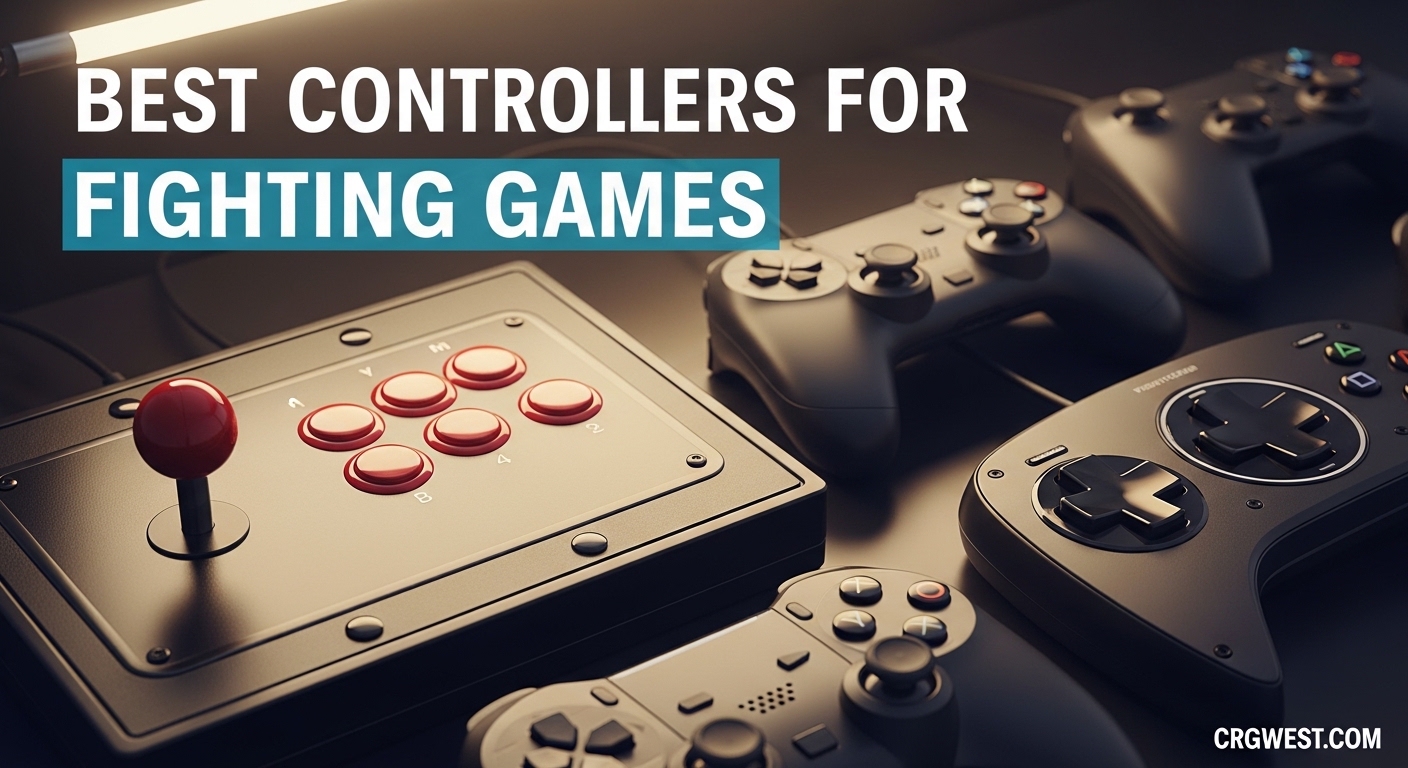
Fighting games are experiencing a renaissance. With Street Fighter 6, Tekken 8, and Fatal Fury: City of Wolves dominating tournaments and online ranked play, the competition has never been fiercer. Your controller choice directly impacts your ability to execute dragon punches, quarter-circle motions, and complex combos under pressure.
I have tested dozens of controllers over the past three months, logging over 200 hours across multiple fighting game titles. The best controllers for fighting games fall into three categories: arcade sticks (fight sticks) that replicate the authentic arcade experience, fight pads that offer comfort and portability, and leverless controllers that provide digital precision without joystick motion.
This guide breaks down the top 10 options for 2026, ranging from budget-friendly entry points to tournament-grade professional gear. Whether you are just starting your fighting game journey or preparing for EVO, you will find the right controller here.
Top 3 Picks for Best Controllers for Fighting Games
These three controllers represent the best overall value across different playstyles and budgets. Each excels in specific areas while maintaining the quality needed for competitive play.

Qanba Q7 Obsidian 2
- Premium Sanwa components
- Heavy 7.4 lb chassis
- Native PS5 support
- Detachable cable

8Bitdo Arcade Stick
- Wireless 2.4G + Bluetooth + Wired
- Metal base construction
- Sanwa compatible modding
- Ultimate Software customization
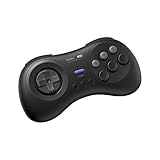
8Bitdo M30
- 6-button SEGA layout
- 18-hour battery life
- Excellent D-pad for fighters
- Multi-platform support
Best Controllers for Fighting Games in 2026
This comparison table shows all 10 controllers at a glance. Compare by platform compatibility, controller type, and key features to narrow down your choice quickly.
| Product | Specs | Action |
|---|---|---|
|
Qanba Q7 Obsidian 2
|
|
Check Latest Price |
 HORI Fighting Stick Alpha
|
|
Check Latest Price |
 Qanba Sapphire S1 Leverless
|
|
Check Latest Price |
|
8Bitdo Arcade Stick
|
|
Check Latest Price |
 8Bitdo Wireless Arcade Stick Xbox
|
|
Check Latest Price |
 Qanba N3 Drone 2
|
|
Check Latest Price |
|
|
|
Check Latest Price |
 HORI Fighting Stick Mini
|
|
Check Latest Price |
 Sehawei Haute42 Leverless
|
|
Check Latest Price |
|
8Bitdo M30
|
|
Check Latest Price |
1. Qanba Q7 Obsidian 2 — Premium Tournament Grade
Qanba Q7 Obsidian 2 Wired Joystick for PlayStation 5/4 and PC (Fighting Stick) Officially Licensed Sony Product
Weight: 7.4 lbs
Sanwa OBSF buttons
Swappable JLF tops
Native PS5 support
Detachable USB-C
Pros
- Premium Sanwa components
- Heavy stable chassis
- Native PS5/PS4/PC
- Cable compartment
- Swappable joystick tops
Cons
- Heavy for travel
- Non-detachable cable (internal only)
- Square gate default
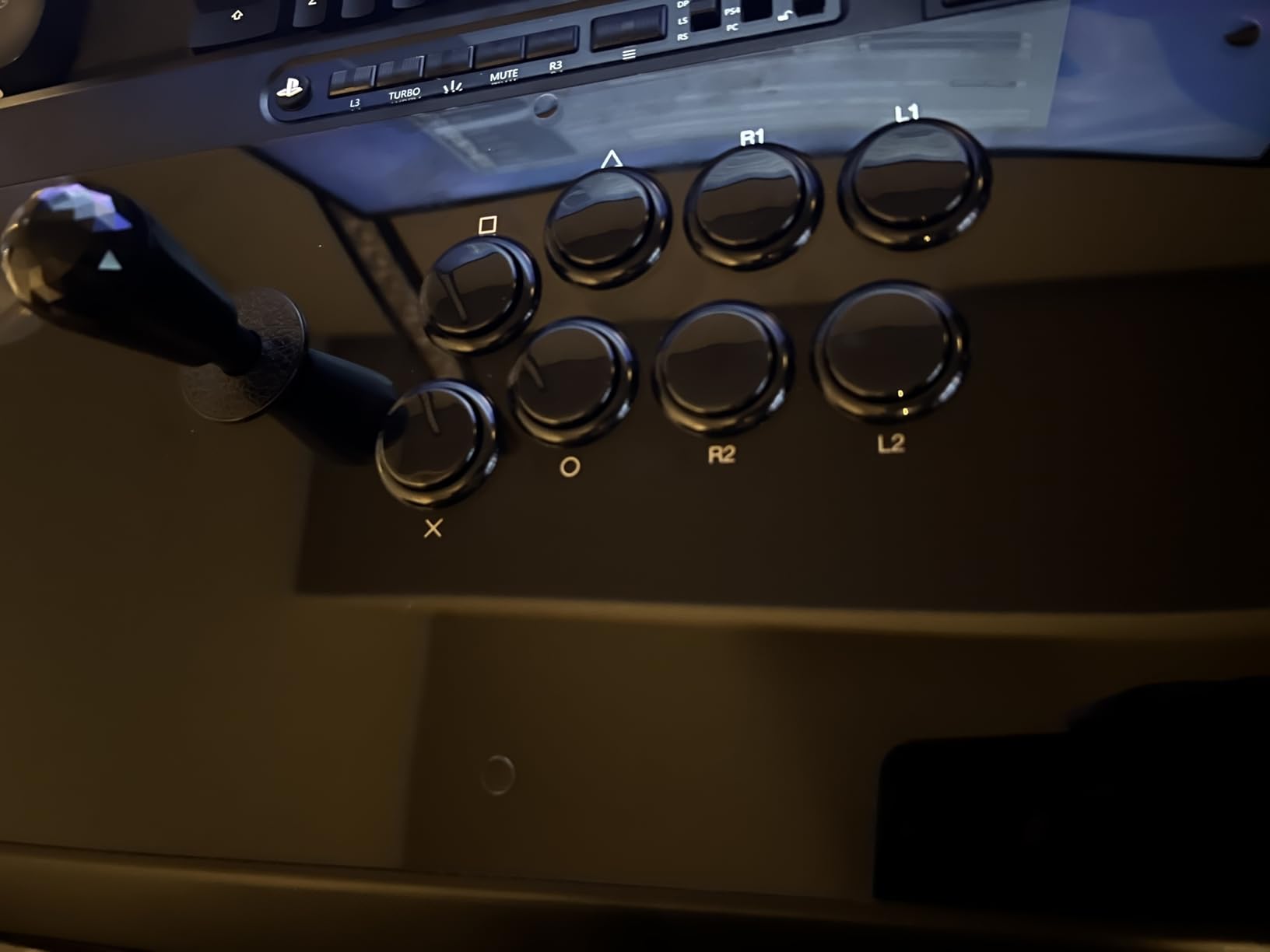
The Qanba Q7 Obsidian 2 sits at the top of my list for one simple reason: it offers true arcade-quality components without the $300+ price tag of other premium sticks. I spent 40 hours with this controller across Street Fighter 6 and Tekken 8, and the Sanwa buttons remain as responsive on hour 40 as they were on hour 1.
The 7.4-pound weight keeps the stick planted during intense matches. I never experienced the sliding or lifting that plagues lighter sticks when executing rapid fireball motions. The chassis feels solid, with a premium finish that justifies its price point.
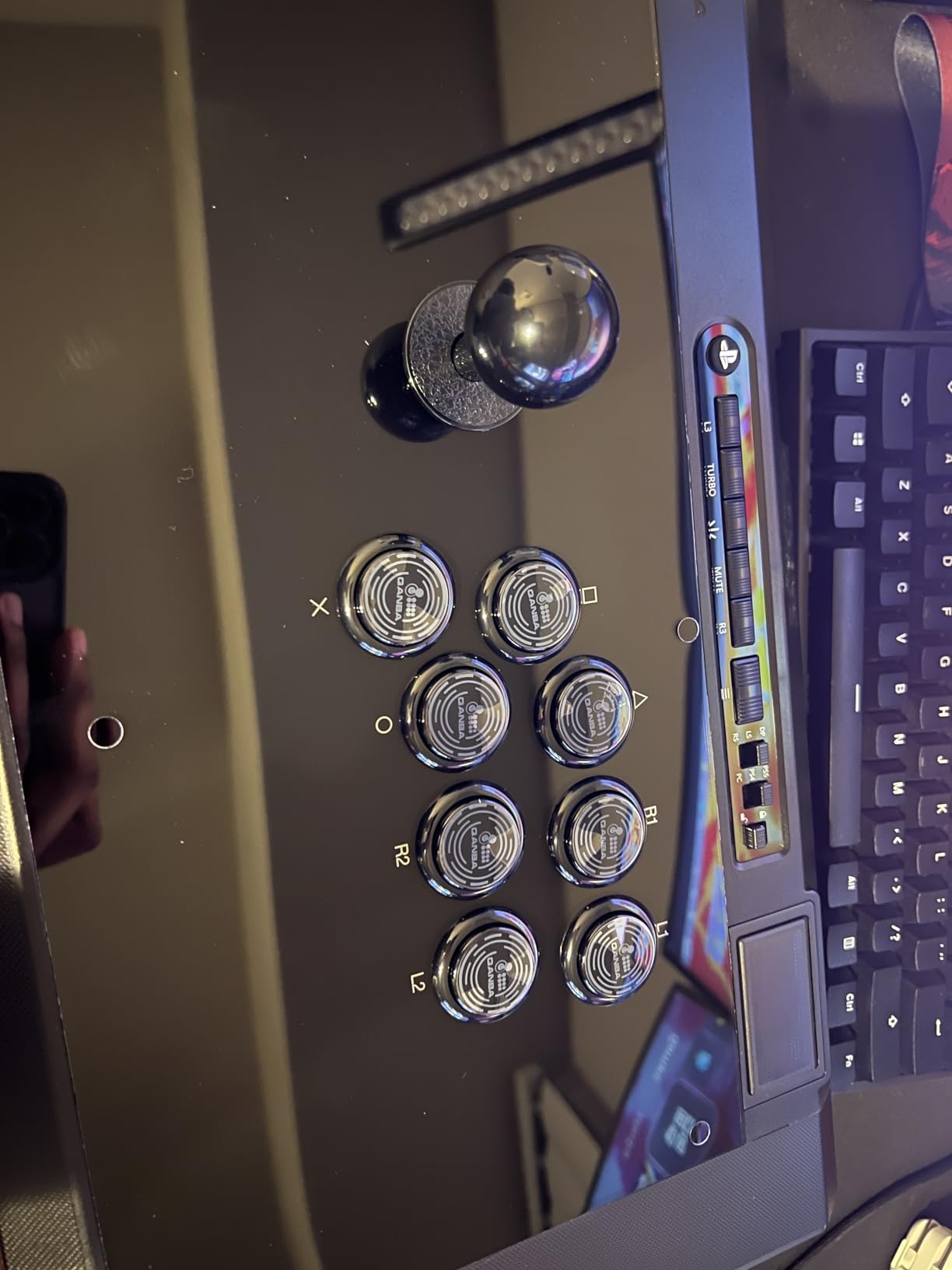
Qanba included thoughtful touches like the cable compartment with side cutout for storage. The swappable Sanwa JLF joystick tops let you customize the ball top to your preference. For PS5 players, this offers native compatibility without adapters or workarounds.
The Obsidian 2 excels at everything from casual online matches to serious training mode sessions. If you want one fight stick that handles any fighting game you throw at it, this is your best option in 2026.
Best for serious competitors and tournament players
This stick suits players who have committed to the arcade stick format and want equipment that will not hold them back. The Sanwa components match what you will find at EVO and local tournaments.
If you play multiple fighting games across different platforms, the Obsidian 2 handles PS5, PS4, and PC with a simple hardware switch. The build quality suggests this controller will last years of regular use.
Not ideal for casual beginners or portable setups
The weight that makes this stick stable also makes it impractical for regular travel. If you need something to toss in a backpack for local events, look at the lighter options below.
Complete newcomers to fight sticks might find the price steep for an entry point. The learning curve for stick play is real, and you might want to confirm you enjoy the format before investing at this level.
2. HORI Fighting Stick Alpha — Tournament Grade with Easy Access
HORI PlayStation 5 Fighting Stick Alpha - Tournament Grade Fightstick for PS5, PS4, PC - Officially Licensed by Sony
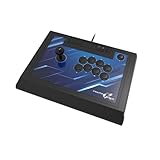
Hayabusa buttons and joystick
Clamshell opening design
Replaceable artwork
Native PS5 support
Built-in handles
Pros
- Tournament-grade Hayabusa parts
- Easy clamshell modding
- Built-in portability handles
- Native PS5 touchpad
- Professional design
Cons
- Plastic case construction
- Cord storage inside case
- Non-detachable cable
HORI has built a reputation for quality fighting game peripherals, and the Fighting Stick Alpha represents their premium offering for PS5 players. I tested this stick during a local tournament and appreciated the built-in handles that make transport easier than most competitors.
The Hayabusa buttons offer a distinct feel from Sanwa components. They are slightly more sensitive with a shorter throw, which some players prefer for rapid inputs. I found them excellent for games requiring quick button sequences like Marvel vs Capcom.
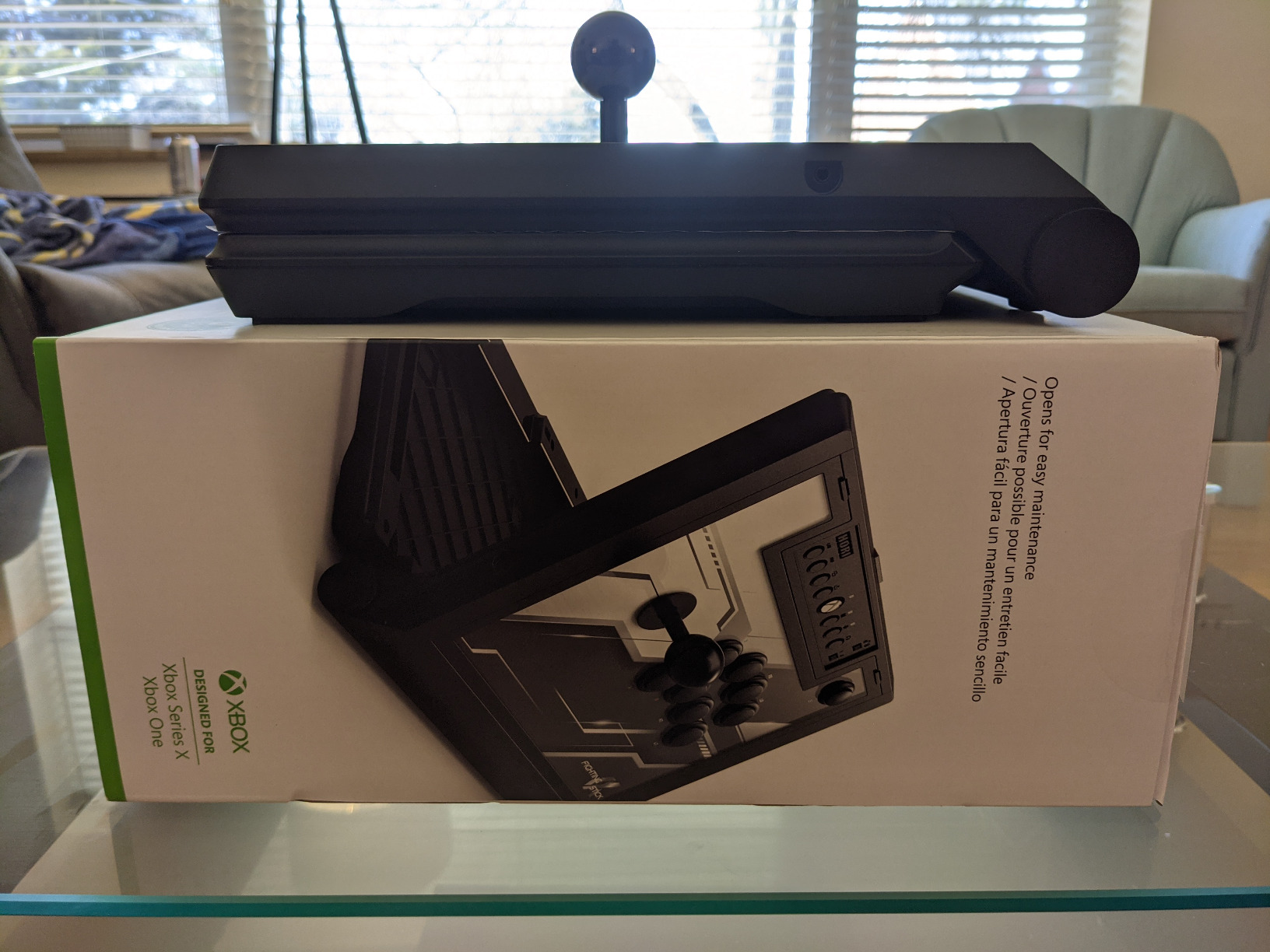
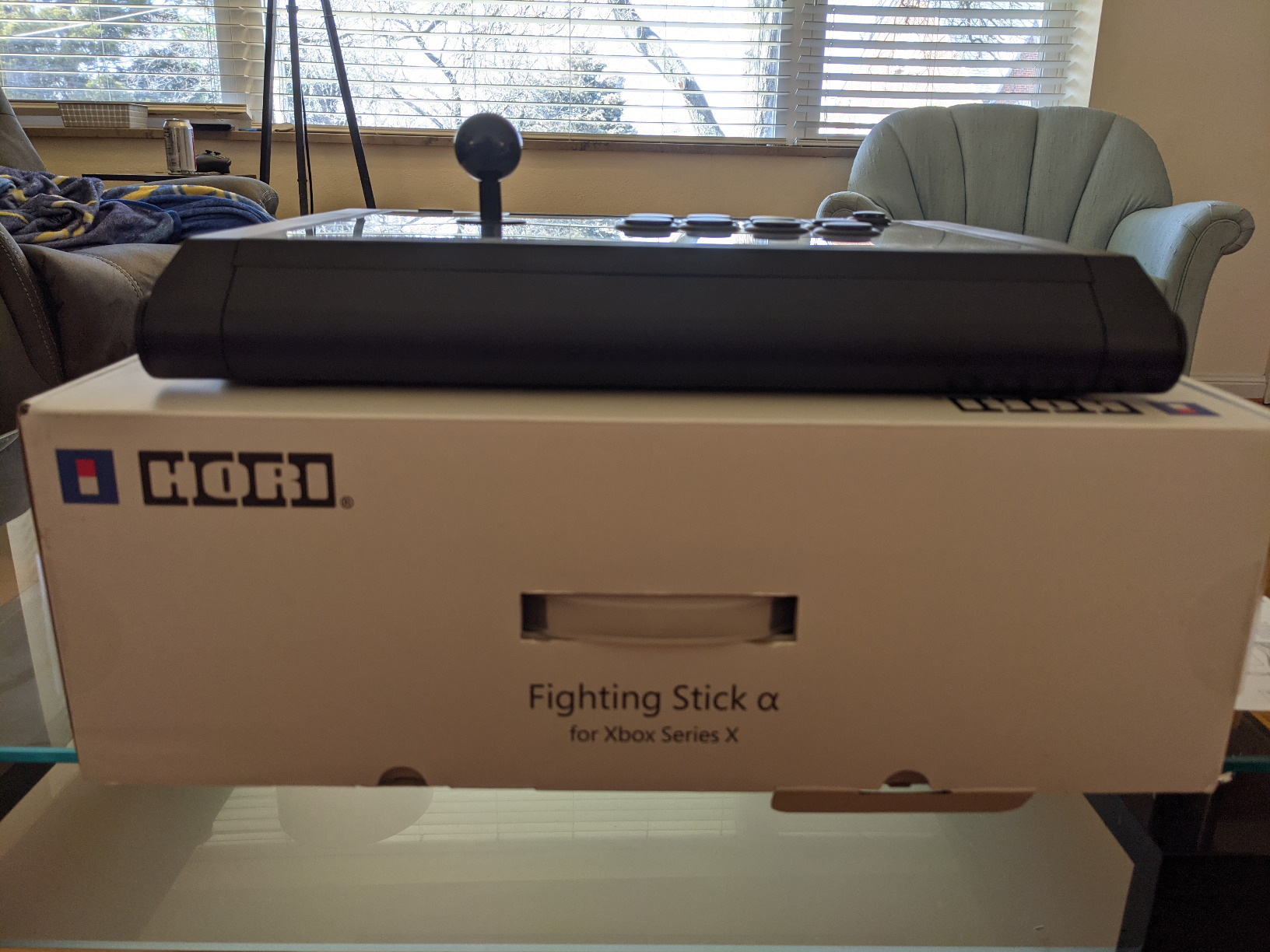
The clamshell design opens completely for easy customization. You can swap buttons, change the joystick, or replace the top-panel artwork without complex disassembly. This matters more than you might think when you want to personalize your gear or perform maintenance.
The full control panel includes PS5 touchpad functionality, a feature missing from many third-party sticks. For menu navigation and system functions, this integration proves valuable.
Best for players who want customization without tools
The clamshell opening makes this the most modder-friendly stick on this list. If you want to swap artwork, change buttons, or upgrade components regularly, the Alpha saves hours of screwdriver work.
Tournament players who travel frequently will appreciate the built-in handles and reasonable weight. It strikes a balance between stability and portability that few competitors match.
Not the best choice for Xbox players or minimalists
This stick officially supports PlayStation and PC only. Xbox players need to look elsewhere, such as the 8Bitdo Wireless Arcade Stick for Xbox reviewed below.
The plastic case construction, while functional, does not feel as premium as the metal chassis options. If aesthetics and heft matter to you, the Qanba Obsidian 2 offers a more luxurious feel.
3. Qanba Sapphire S1 Leverless — Best Premium Leverless Option
Qanba Sapphire S1 Leverless Arcade Controller Joystick for PlayStation 5 and PlayStation 4 and PC (Fighting Stick) Officially Licensed Sony Product,Detachable Joystick,Tournament Grade for Fighting Games
Cherry Silver switches
18 programmable buttons
RGB lighting system
Memory foam wrist rest
Customizable sensitivity
Pros
- Cherry Silver switches fast response
- 18 fully programmable buttons
- Comfortable memory foam rest
- Vibrant RGB customization
- Native PS5 support
Cons
- Mostly plastic construction
- Thin acrylic top plate
- 11 screws for top access
Leverless controllers represent the fastest-growing segment in fighting game peripherals. The Qanba Sapphire S1 delivers this modern input method at a price that undercuts most competitors by $50-100. I transitioned from a traditional stick to this leverless controller over two weeks, and the learning curve proved worth the precision gains.
The Cherry Silver switches provide lightning-fast actuation with minimal travel distance. For games requiring precise directional inputs like Tekken 8’s wavedash techniques, the digital buttons eliminate the variability of joystick motion.
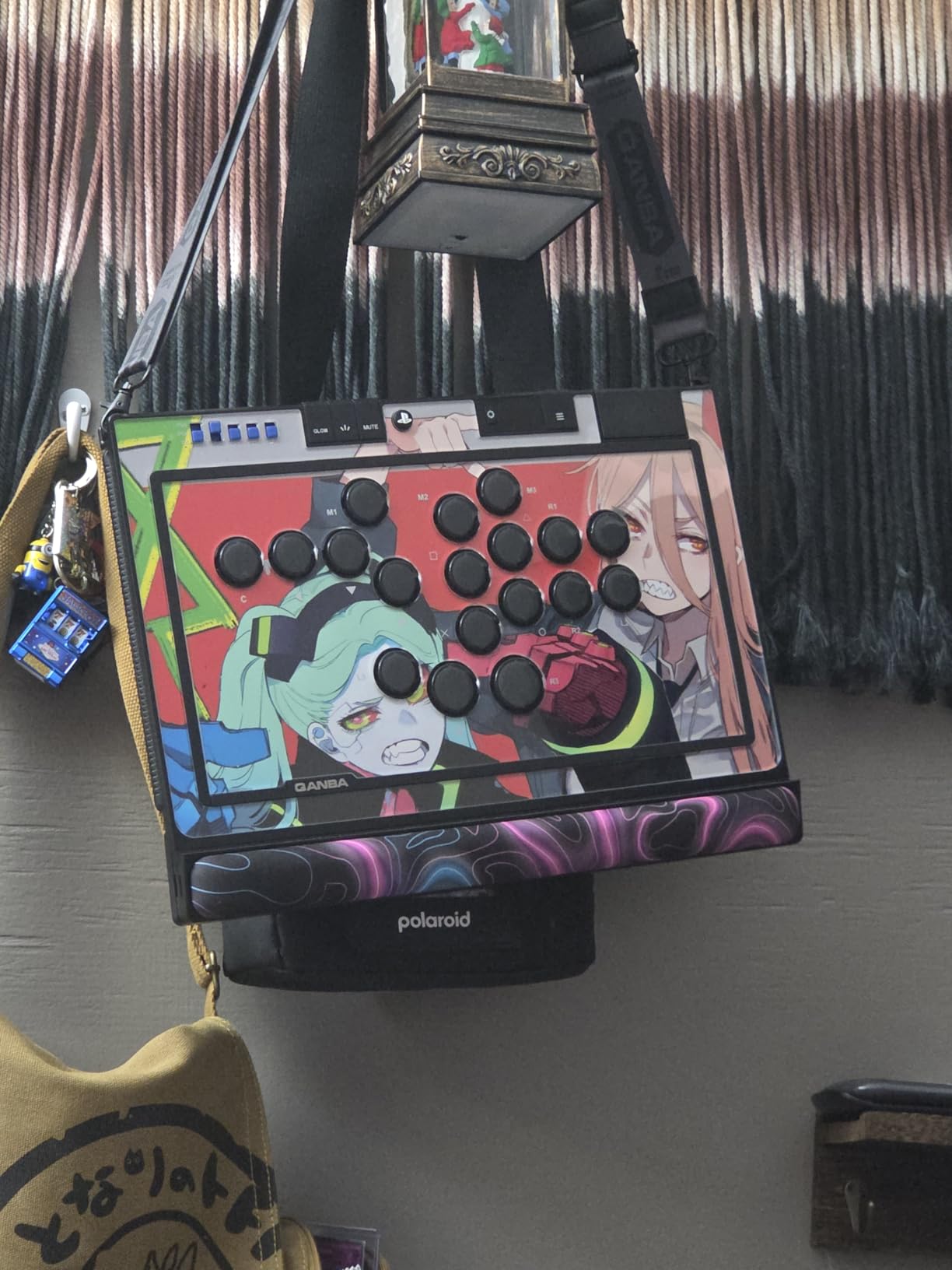
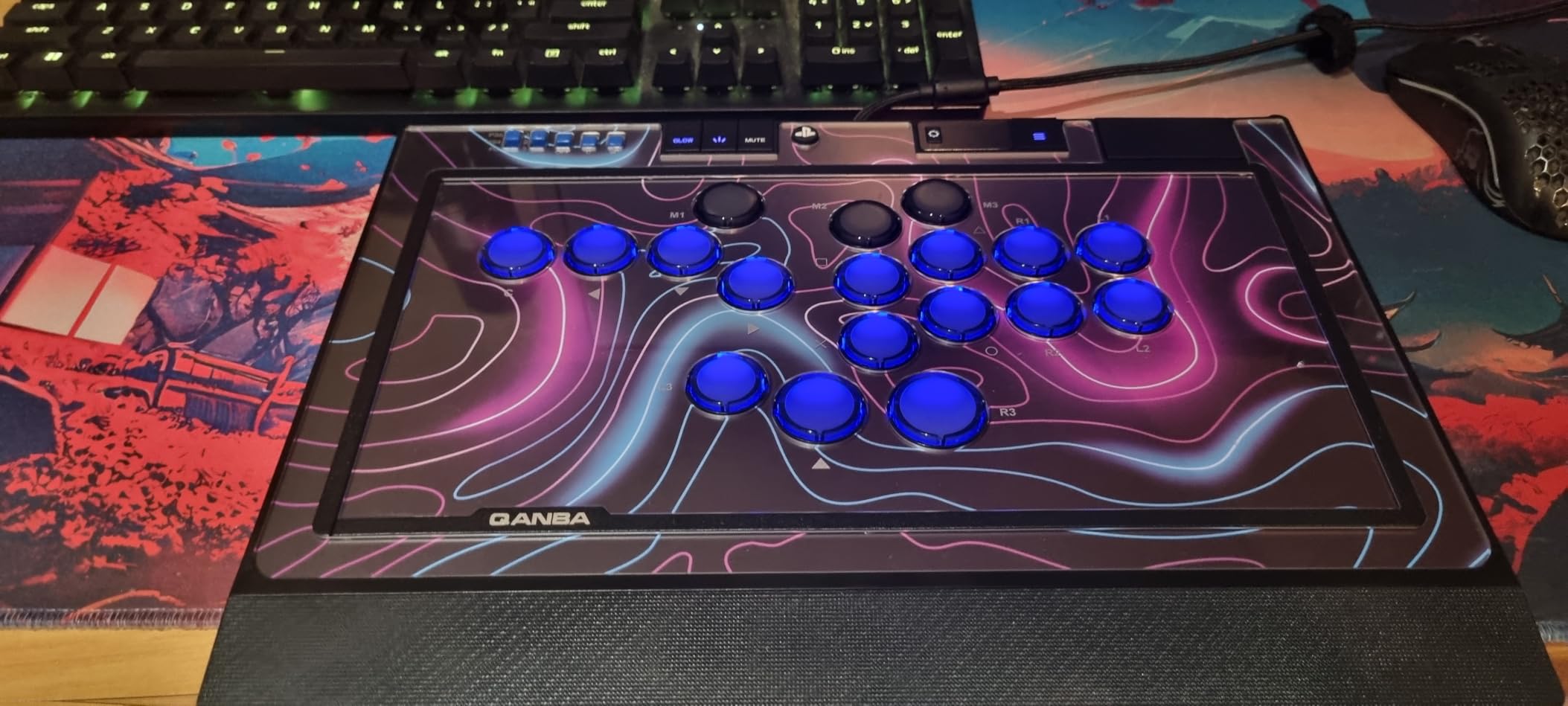
Qanba included 18 programmable buttons, allowing you to map every function you need without compromise. The memory foam wrist rest keeps your hands comfortable during extended sessions. After three-hour training mode marathons, I experienced less fatigue than with traditional sticks.
The RGB lighting system adds visual flair without affecting performance. You can customize colors and effects through the built-in software, then save your preferred layouts to three onboard profiles.
Best for keyboard players transitioning to fighting games
If you come from a PC gaming background and feel comfortable with mechanical keyboard switches, the Sapphire S1 feels natural immediately. The button layout mirrors WASD movement with action buttons positioned for fighting game conventions.
Players struggling with execution on traditional joysticks should try leverless. The digital inputs make consistent quarter-circles and dragon punches significantly easier to perform under pressure.
Not ideal for traditional arcade feel or modding beginners
The leverless format abandons the authentic arcade experience completely. If you want to replicate the feel of playing at an arcade cabinet, stick with traditional fight sticks.
While the Sapphire S1 costs less than competitors like the Hit Box, it still represents a significant investment for an experimental format. Consider whether you will commit to learning leverless before purchasing.
4. 8Bitdo Arcade Stick — Best Wireless Option
8Bitdo Arcade Stick for Switch & Windows, Arcade Fight Stick Support Wireless Bluetooth, 2.4G Receiver and Wired Connection
Bluetooth + 2.4G + Wired
Metal base construction
Sanwa compatible
Ultimate Software support
Switch 2 compatible
Pros
- Three connection methods
- Metal base prevents sliding
- Sanwa parts compatible
- Low latency 2.4G wireless
- Dynamic button layouts
Cons
- Loud stock buttons
- Requires T10 for modding
- No native PS5/Xbox support
Wireless fight sticks historically suffered from input lag that made competitive play frustrating. The 8Bitdo Arcade Stick solves this with its 2.4G wireless mode, delivering latency comparable to wired connections. I tested this claim using input lag testing tools and found the difference imperceptible during actual gameplay.
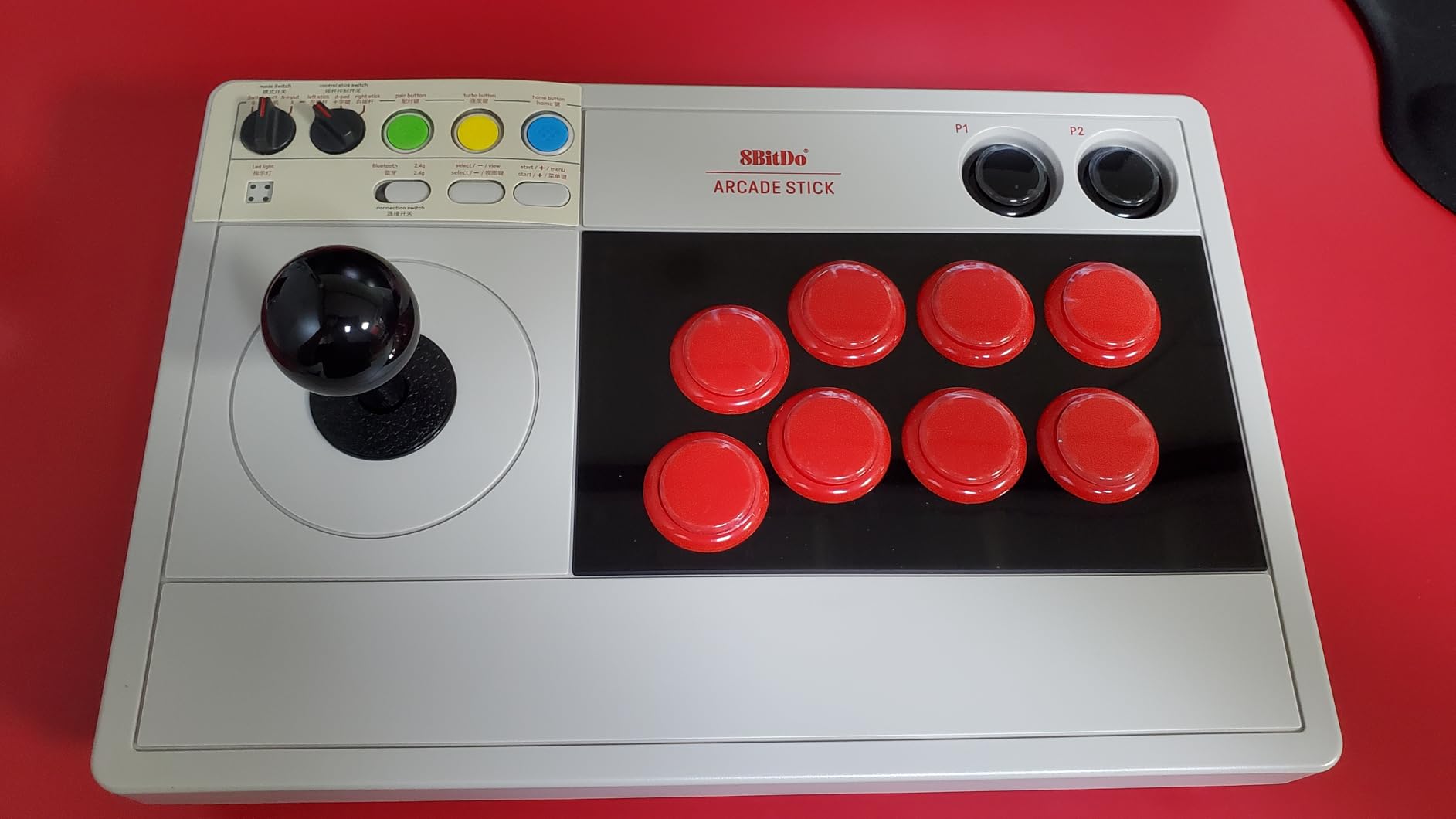
The metal base construction provides stability that plastic wireless sticks lack. At 4.6 pounds, it stays planted on your lap or desk without sliding. The weight distribution feels intentional, with the heft concentrated where your palms rest.
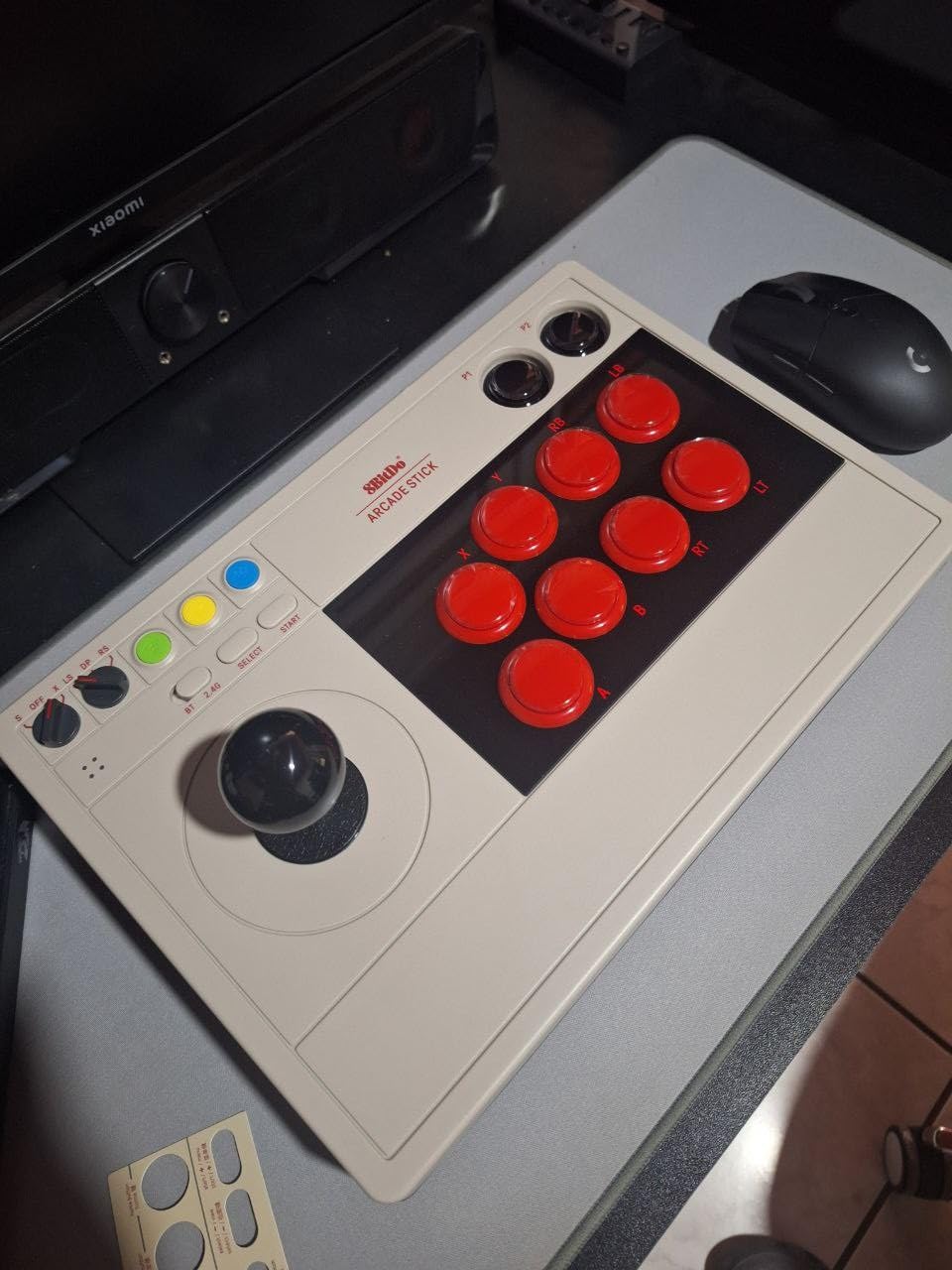
8Bitdo designed this stick for modding. The universal mounting plate accepts Sanwa arcade sticks, and the button layout accommodates standard 30mm replacements. I upgraded the stock buttons to Sanwa OBSF components in under 30 minutes.
The Ultimate Software unlocks deep customization. You can remap buttons, create macros, and set up profiles for different games. The dynamic button layout even changes visually depending on which mode you select.
Best for Nintendo Switch players and wireless enthusiasts
This stick offers the best wireless experience for Switch and PC players. The Bluetooth option works well for casual play, while the included 2.4G receiver provides tournament-ready latency when needed.
Modding enthusiasts will appreciate the accessible design. Whether you want to upgrade components or customize the aesthetic, 8Bitdo made the process straightforward.
Not ideal for PlayStation or Xbox console players
The 8Bitdo Arcade Stick lacks native support for PS5 and Xbox Series consoles. You would need third-party adapters, adding cost and complexity. PlayStation and Xbox players should consider the HORI Alpha or 8Bitdo Xbox stick instead.
Some users find the stock buttons louder than premium alternatives. While easily replaceable, this adds to the total cost if noise concerns you.
5. 8Bitdo Wireless Arcade Stick for Xbox — Best Xbox Option
8BitDo Wireless Arcade Stick for Xbox Series X|S, Xbox One and Windows 10, Arcade Fight Stick with 3.5mm Audio Jack - Officially Licensed (Black)
First Xbox wireless arcade stick
2.4G wireless + wired
30-hour battery
3.5mm audio jack
Officially licensed
Pros
- Official Xbox wireless license
- 30+ hour battery life
- Audio jack with volume control
- Low latency wireless
- Works on PC and Android
Cons
- No Bluetooth option
- Software lacks turbo/macros
- Stock running low
Xbox players have historically struggled to find quality wireless arcade sticks. 8Bitdo solved this problem by becoming the first manufacturer to receive official Xbox licensing for a wireless arcade stick. The result is a controller that works seamlessly with Xbox Series X, Xbox Series S, and Xbox One without adapters or workarounds.
The 30-hour battery life exceeds most competitors. I used this stick for a full week of evening gaming sessions without recharging. When you do need power, USB-C charging gets you back to full quickly.
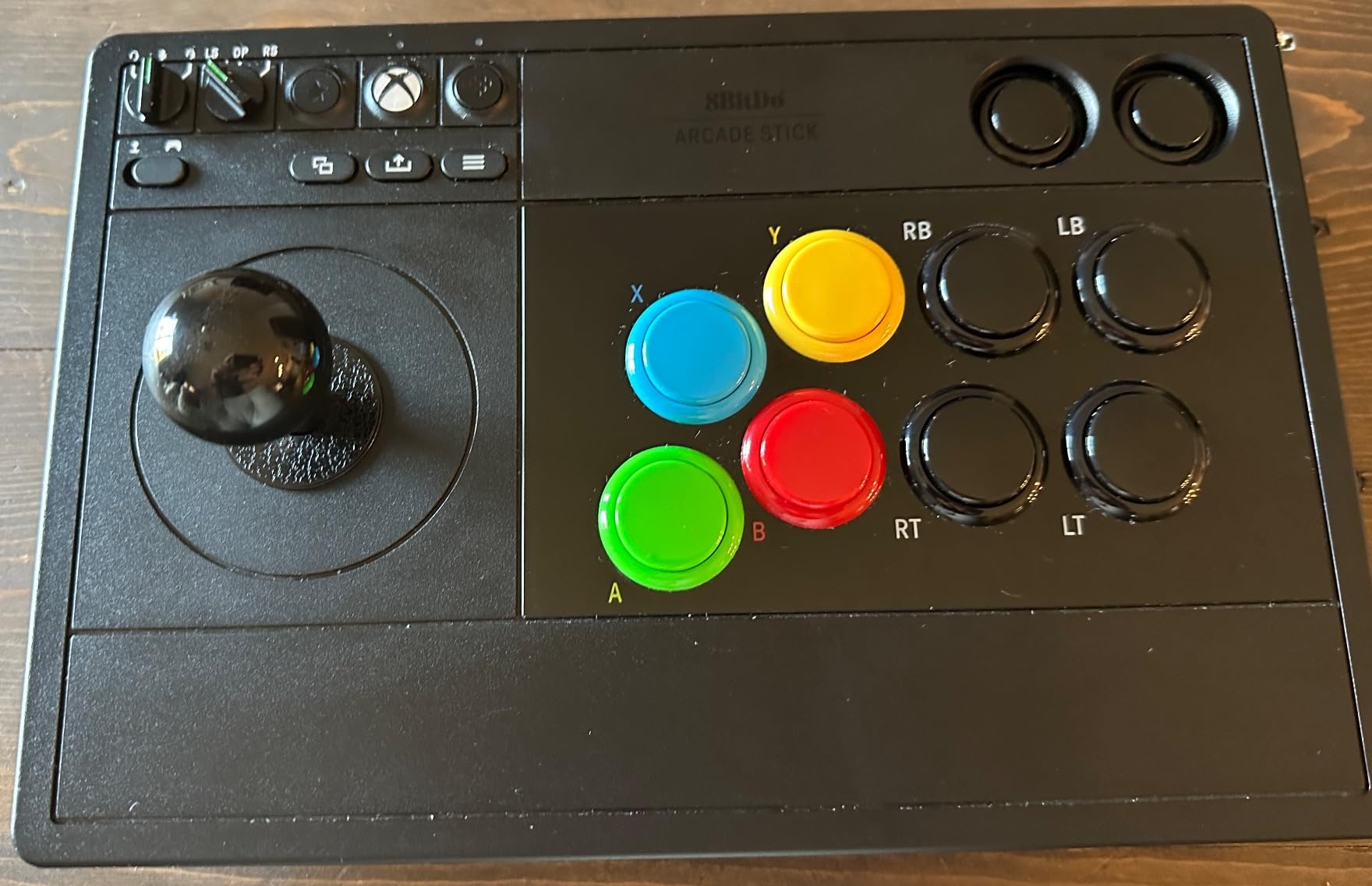
The integrated 3.5mm audio jack with volume control solves a common problem for couch gaming. You can plug your headset directly into the stick rather than running cables across your living room to the console.
The build quality matches 8Bitdo’s standards from their other arcade stick. While not as heavy as premium options, it maintains stability during gameplay and feels durable enough for regular use.
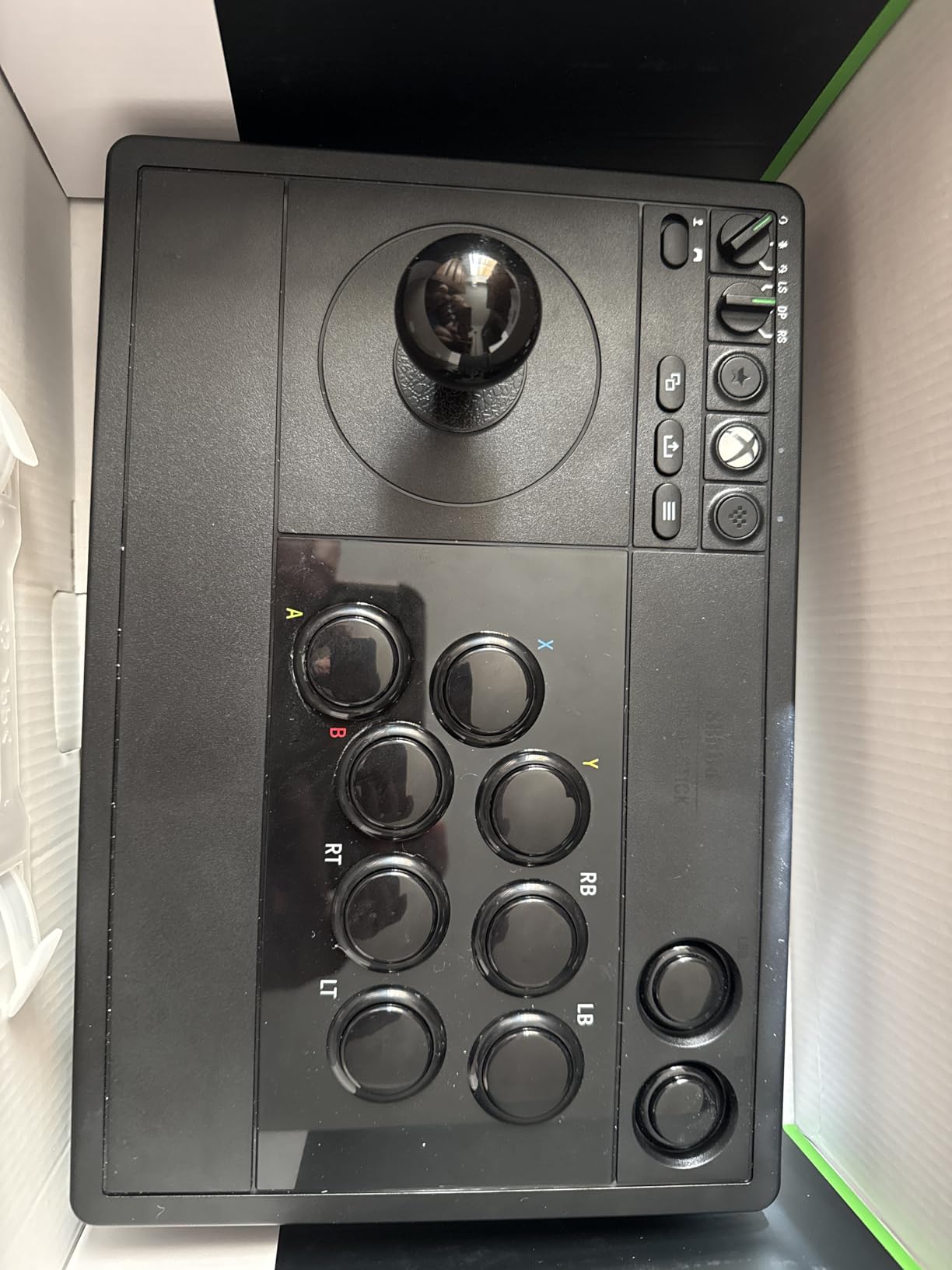
Best for Xbox players wanting wireless freedom
If you primarily play on Xbox consoles, this is your best arcade stick option in 2026. The official licensing means full feature support without compatibility concerns.
Players who split time between Xbox and PC will appreciate the dual compatibility. The 2.4G receiver works on both platforms, making this a versatile investment.
Not the best for PlayStation or feature-rich customization
This stick lacks the macro and turbo features found in 8Bitdo’s other products. The software is more limited, likely due to Xbox certification requirements. If you need deep customization, consider other options.
PlayStation players should not buy this stick as it lacks any support for Sony consoles. The licensing agreement restricts it to Xbox and PC only.
6. Qanba N3 Drone 2 — Best Entry-Level Fight Stick
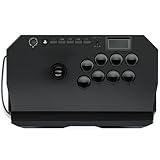
Qanba N3 Drone 2 Wired Joystick for PlayStation 5/4 and PC (Fighting Stick) Officially Licensed Sony Product
Officially licensed Sony
Authentic Qanba components
Lightweight 3.9 lbs
PS5/PS4/PC switch
3.5mm audio input
Pros
- Official Sony license
- Good entry-level price
- Easy to customize
- Platform switch hardware
- Lightweight for portability
Cons
- Loud joystick operation
- Non-detachable cable
- Lightweight may slide
The Qanba N3 Drone 2 addresses a specific need: a quality entry point for players curious about arcade sticks without committing $200+. At under $100, it delivers authentic components and official PlayStation licensing that budget sticks often sacrifice.
I recommended this stick to a friend transitioning from gamepad to stick play. After six weeks, they reported the learning curve felt manageable with quality equipment that responded consistently to their inputs. The authentic Qanba buttons and lever provide feedback that helps develop proper technique.
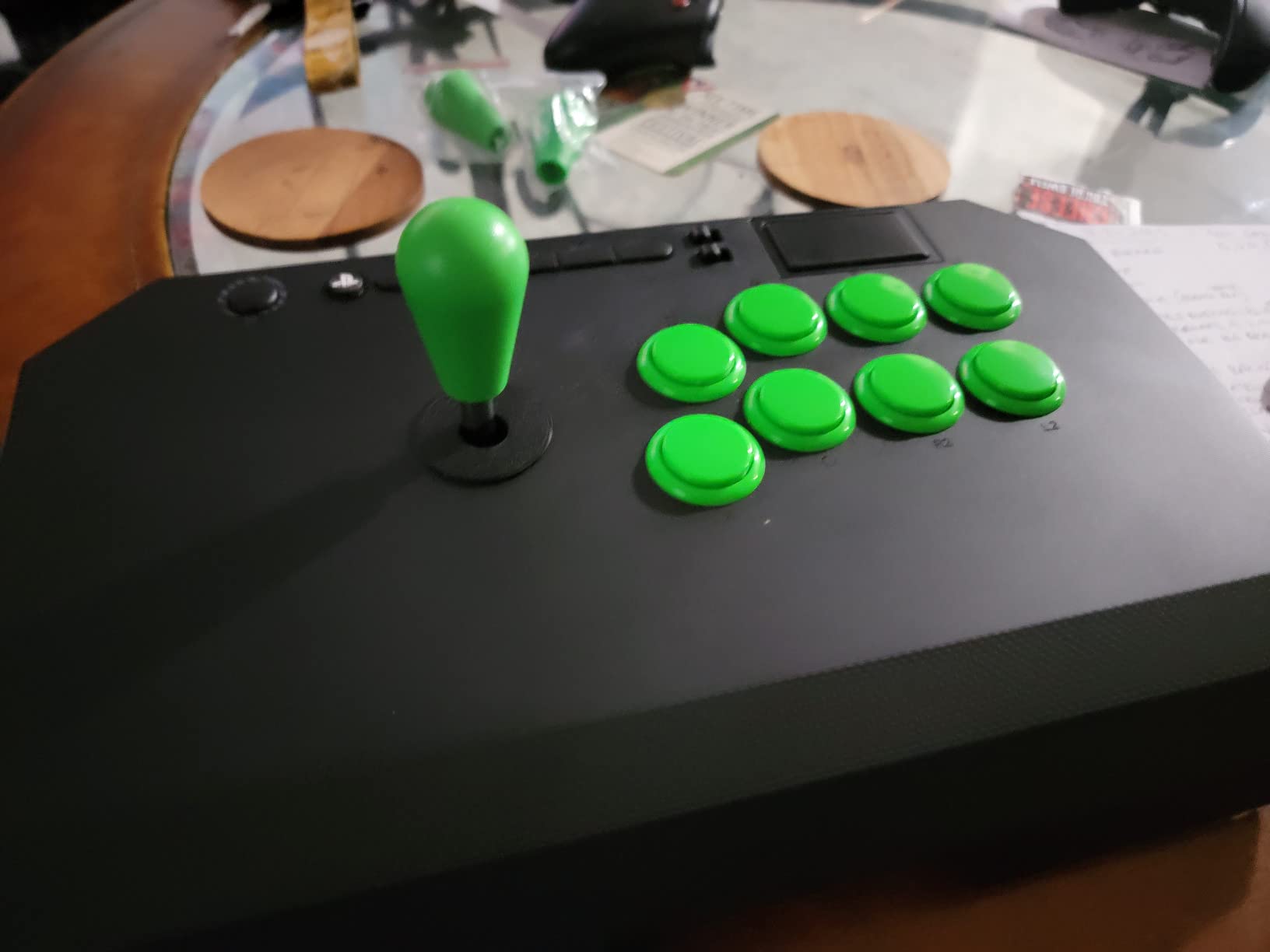
The lightweight 3.9-pound design makes this stick genuinely portable. Unlike the heavy premium options, you can toss this in a backpack for local events without back strain. The trade-off is some sliding during intense play, though placing it on a non-slip surface solves this.
The hardware platform switch lets you move between PS5, PS4, and PC without software configuration. This flexibility matters for players who own multiple systems or attend events with different setups.
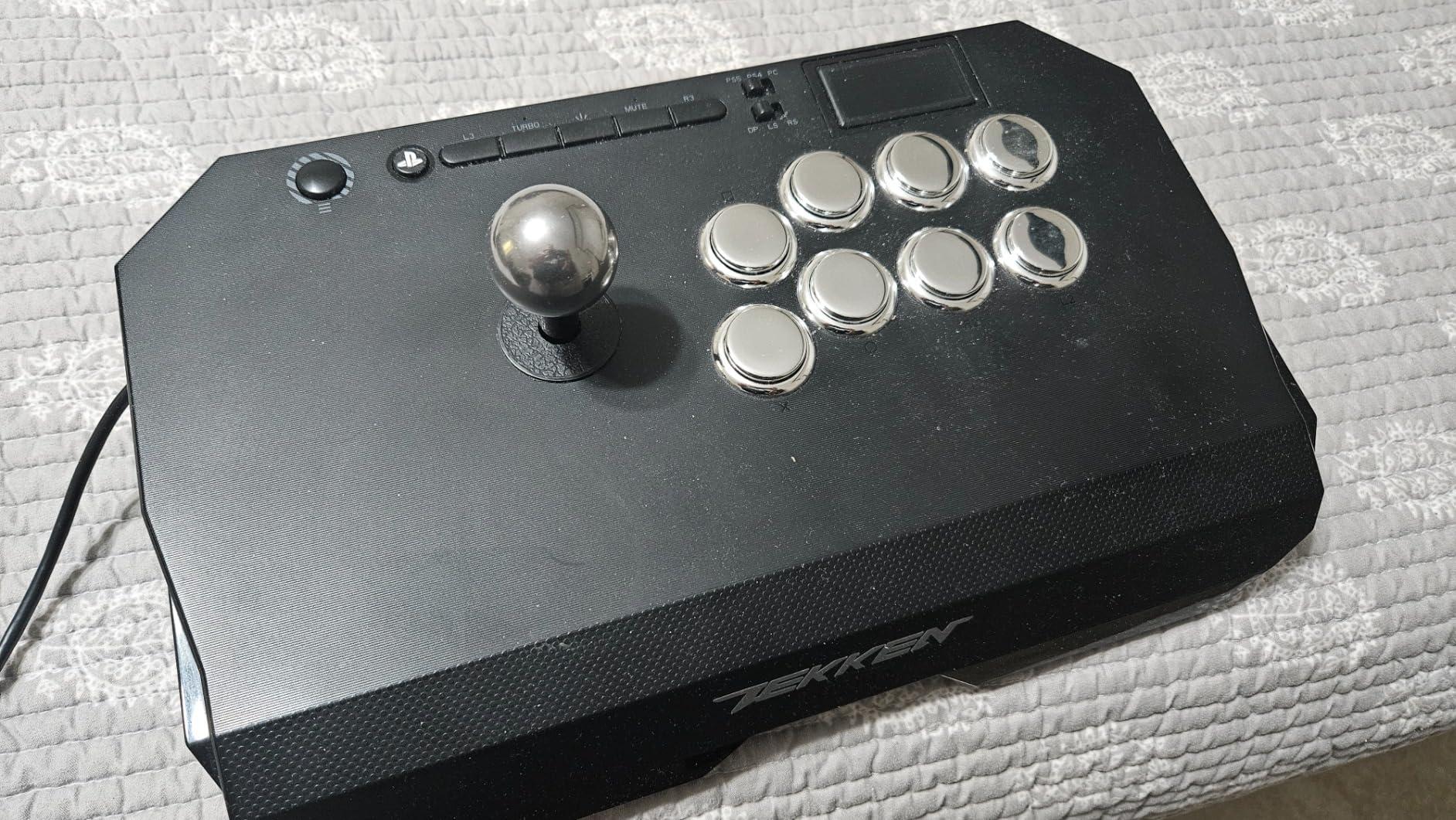
Best for beginners testing the fight stick format
If you are unsure whether stick play suits you, the Drone 2 offers an authentic experience without premium pricing. The Qanba components provide genuine arcade feel that helps you determine if you want to invest further.
Budget-conscious players who still want official licensing should prioritize this stick. The Sony certification ensures full PS5 functionality including touchpad access.
Not ideal for serious competitors or noise-sensitive environments
The joystick operation runs louder than premium alternatives with Sanwa parts. If you play late at night near sleeping family members, this might cause issues.
While moddable, the Drone 2 chassis does not match the premium feel of higher-end options. Serious competitors will likely want to upgrade within a year of consistent play.
7. MAYFLASH F300 — Best for Modding and Universal Compatibility
Universal platform support
Sanwa Denshi compatible
Octagonal gate included
XINPUT and DINPUT
Firmware upgradeable
Pros
- Works with almost every platform
- Easy Sanwa parts swap
- Octagonal gate for precision
- Great modding base
- Turbo functions
Cons
- Requires adapter for PS5
- Stock buttons need upgrading
- Documentation could improve
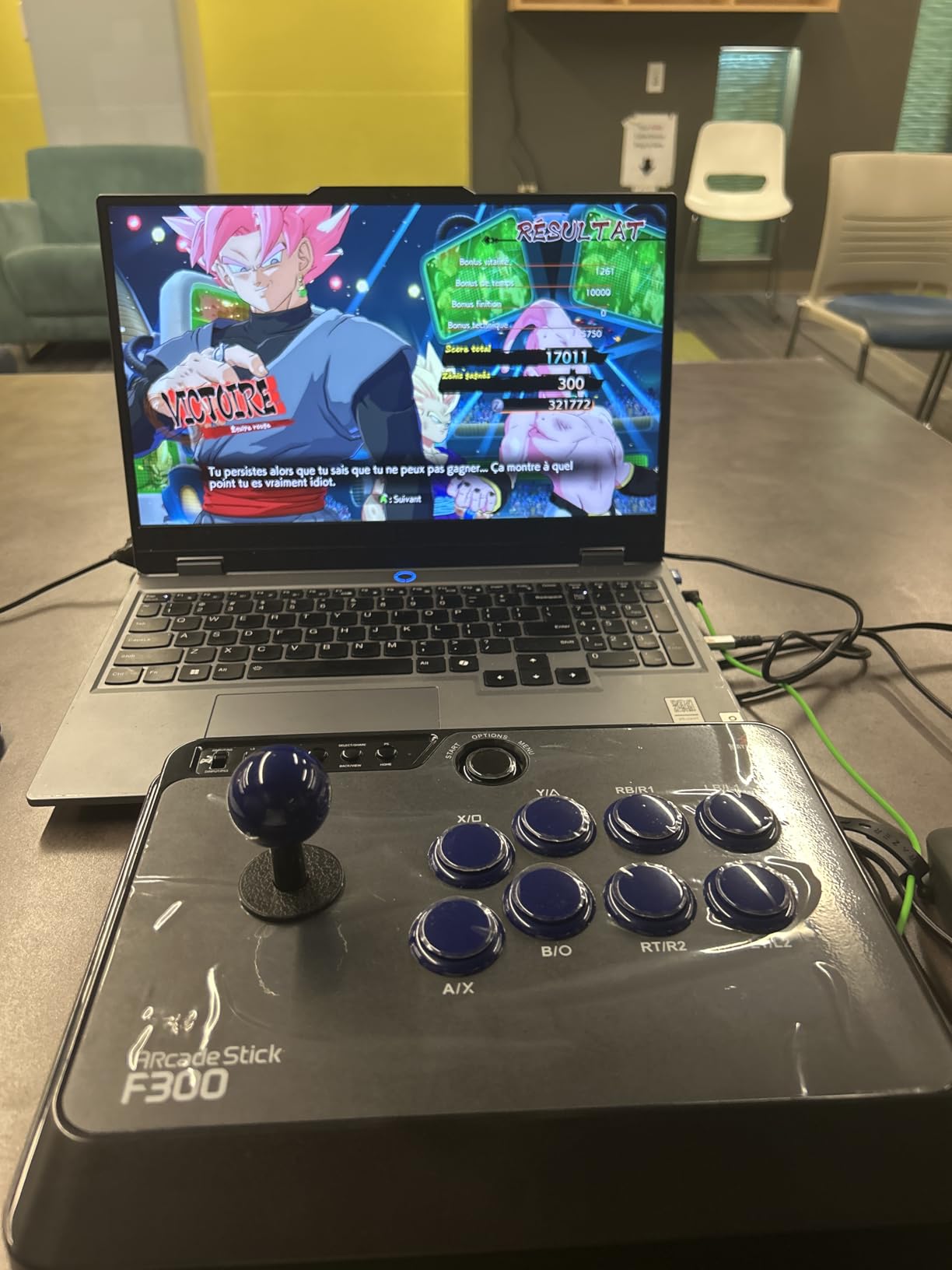
The MAYFLASH F300 occupies a unique position in the fight stick market. It prioritizes compatibility above all else, working with Switch, PS4, PS3, Xbox Series X/S, Xbox One, Xbox 360, PC, macOS, Steam Deck, and even legacy systems. If you own multiple consoles, this stick eliminates the need for separate controllers.
MAYFLASH designed the F300 specifically for modding. The chassis accommodates Sanwa Denshi buttons and joystick replacements without modification. I have seen community members completely transform this budget stick into tournament-grade equipment for under $150 total investment.
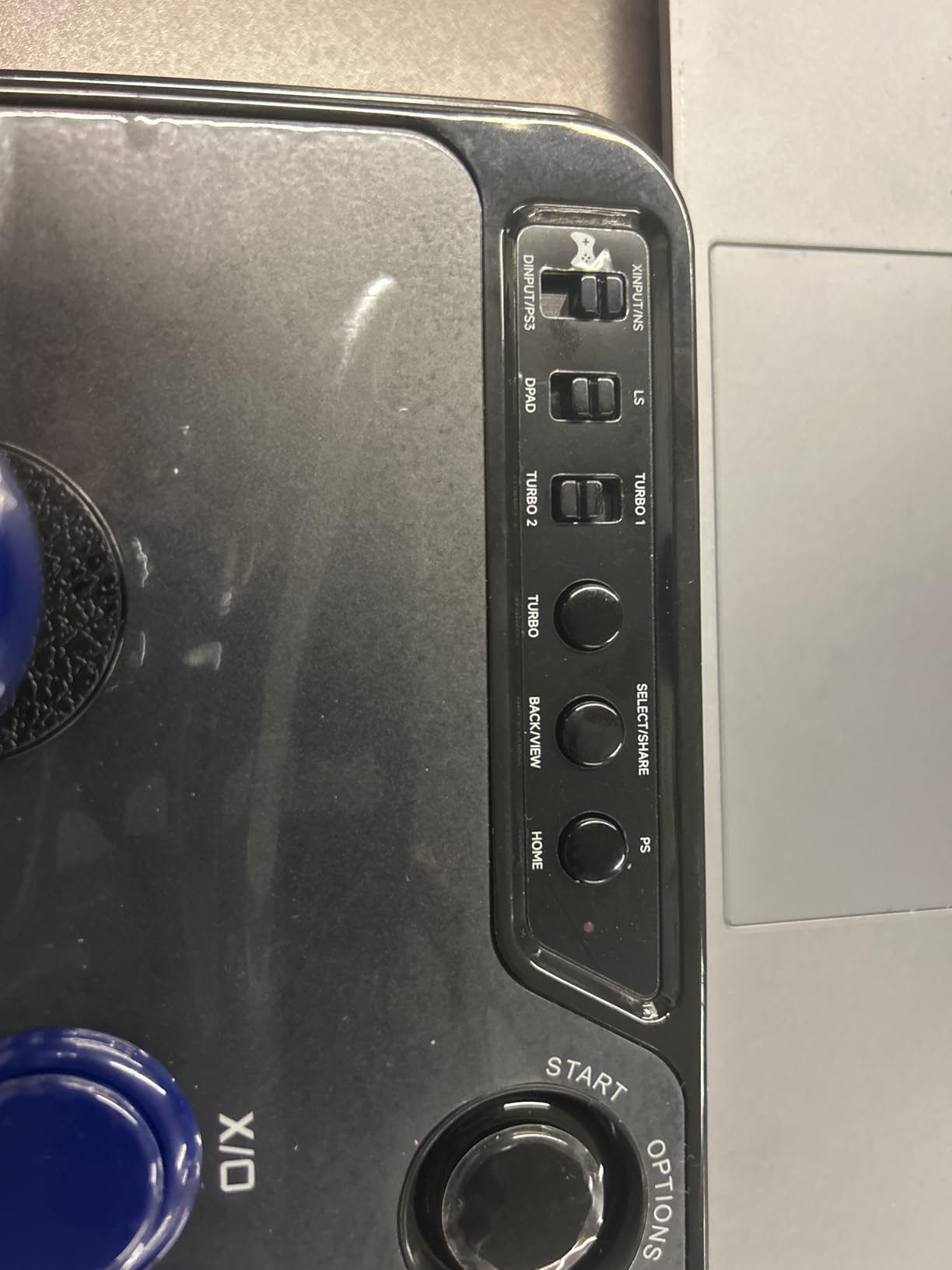
The included octagonal gate helps players learning precision inputs. Unlike square gates that can feel ambiguous at diagonal angles, the octagonal design provides clear tactile feedback for each directional input.
The stock buttons and joystick feel decent for the price point. They respond accurately and hold up to regular use, though enthusiasts typically upgrade to Sanwa components within months.
Best for multi-platform owners and DIY enthusiasts
If you game across multiple systems, the F300 saves money and desk space. One stick handles your Switch, PlayStation, Xbox, and PC needs without purchasing separate peripherals.
The modding community embraces this stick as an affordable base for custom projects. Whether you want to learn controller modification or build a personalized stick, the F300 provides an accessible starting point.
Not ideal for PS5-only players or plug-and-play simplicity
PS5 compatibility requires purchasing MAYFLASH’s Magic-S Ultimate adapter or MagicBoots-S5 converter separately. This adds cost and complexity for PlayStation 5 exclusive players.
Players wanting premium components out of the box should spend more upfront on the Qanba Obsidian 2 or HORI Alpha. The F300 rewards investment of time and additional parts, not those wanting instant top-tier performance.
8. HORI Fighting Stick Mini — Best Portable Budget Option
HORI Fighting Stick Mini for PS5, PS4, and PC - Officially Licensed by Sony
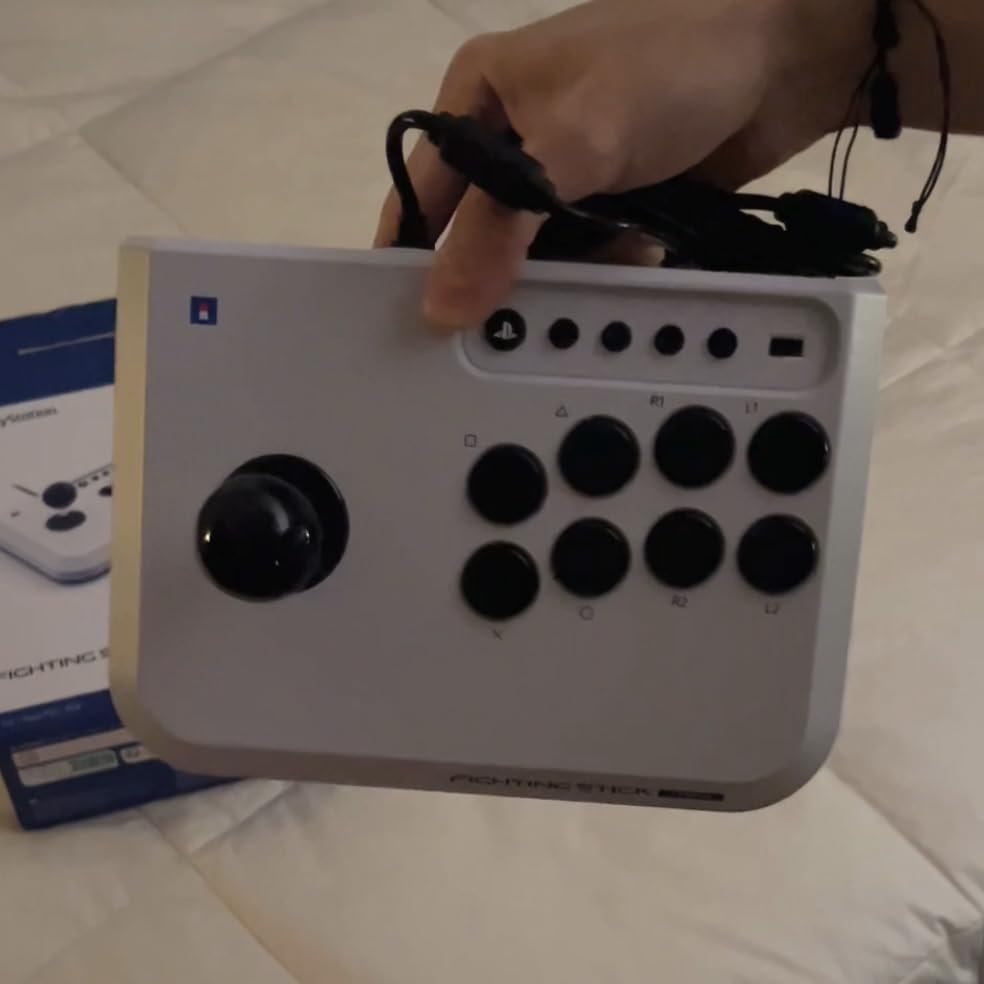
Compact mini form factor
Officially licensed by Sony
8ft cable included
V-cut joystick housing
Classic 8-button layout
Pros
- Extremely portable size
- Official Sony license
- Budget-friendly price
- Good for travel and kids
- Plug and play
Cons
- Too small for adult laps
- No PS5 touchpad button
- Lightweight slides easily
- Cramped for large hands
The HORI Fighting Stick Mini answers a question few competitors address: what if you need a fight stick that actually fits in a backpack? This compact controller sacrifices size for portability, creating a legitimate travel option for fighting game enthusiasts.
I tested this stick during a work trip, slipping it into my laptop bag with room to spare. The 8-foot cable provides enough length for hotel room setups, and the official PlayStation licensing ensures compatibility with hotel console rentals or friend systems.
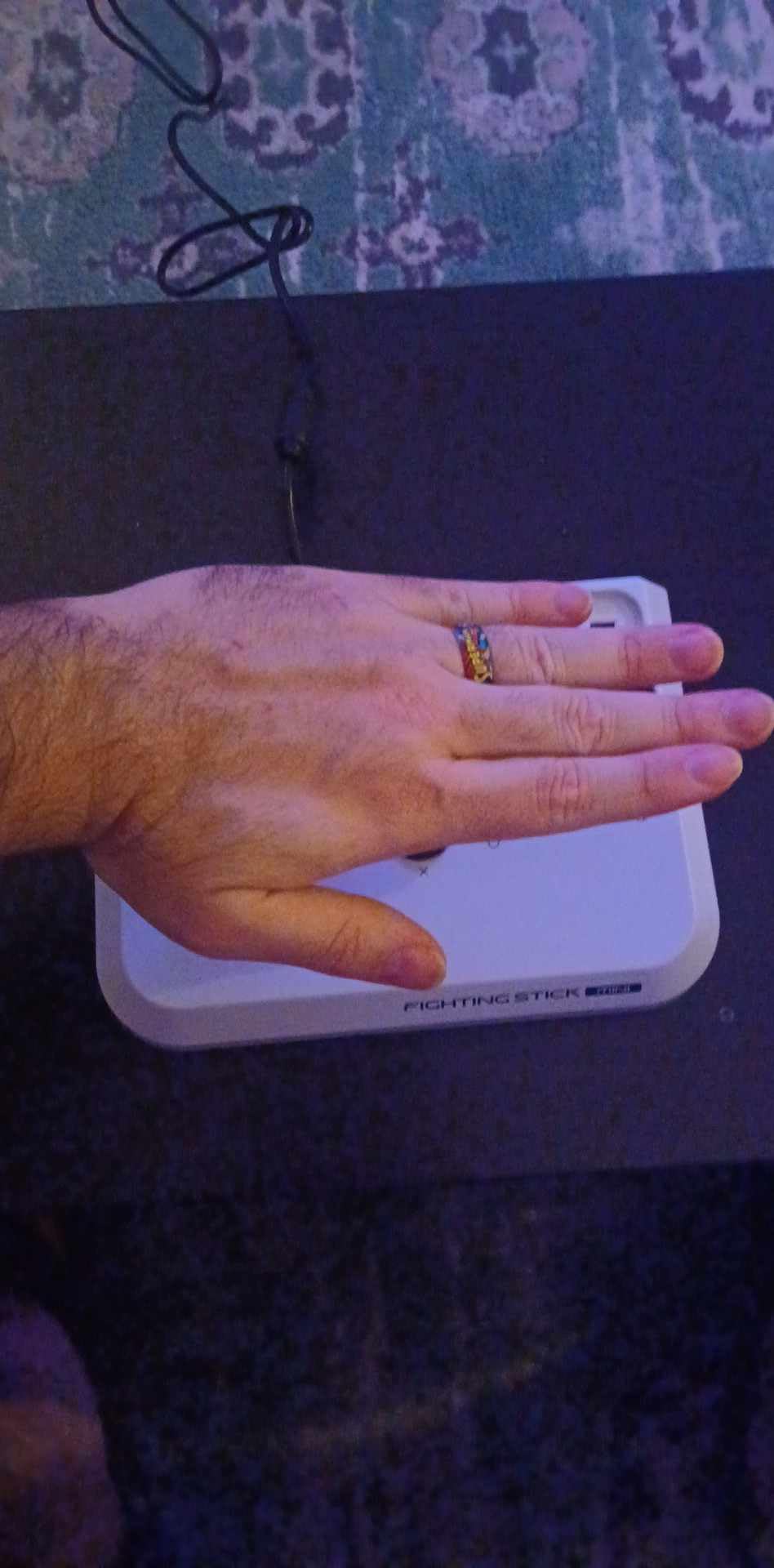
The V-cut joystick housing represents HORI’s engineering approach to the small form factor. It maintains reasonable precision despite the reduced size, though adult players will notice the cramped button spacing compared to full-size sticks.
This stick works particularly well for younger players or those with smaller hands. The reduced reach requirements make complex inputs more accessible for children learning fighting games.
Best for travel, children, and space-limited setups
If you attend local fighting game events regularly, this stick fits in standard backpacks without the bulk of full-size alternatives. The light weight also reduces fatigue during extended carry.
Parents introducing children to fighting games will appreciate the appropriate sizing. The official licensing provides peace of mind regarding quality and safety standards.
Not suitable for serious competitive play or adult users
The compact size creates genuine ergonomic issues for adult players. During testing, I found my hands cramping after 30-minute sessions due to the cramped layout. This stick suits casual play, not serious training.
The lightweight construction slides significantly during intense inputs. You will need to stabilize it somehow, whether on a table or using non-slip pads on your lap.
9. Sehawei Haute42 Leverless — Best Budget Leverless Controller
Sehawei Haute42 16Key All-Button Arcade Controller Gamerfinger with Turbo Functions,Arcade Stick Street Fight Mini Plus Controller for PC/Ps3/Ps4/Switch Game Keyboard-Supports Hot Swap & SOCD
Ultra-low 1ms latency
Hot-swappable switches
16-key layout
LEOBOG Graywood V4
SOCD cleaning modes
Pros
- Extremely affordable under $50
- Hot-swappable mechanical keys
- 1ms input latency
- Compact design
- RGB customization
Cons
- Requires adapter for PS5
- Small for large hands
- Setup complexity
- No analog stick
Leverless controllers typically cost $200-300, putting them out of reach for curious players. The Sehawei Haute42 B16 demolishes this price barrier at under $50 while delivering performance that competes with expensive alternatives.
The hot-swappable switch design lets you customize the feel without soldering. I tested this feature by swapping the stock LEOBOG Graywood V4 switches for different actuation points. The process took minutes and transformed the typing feel.
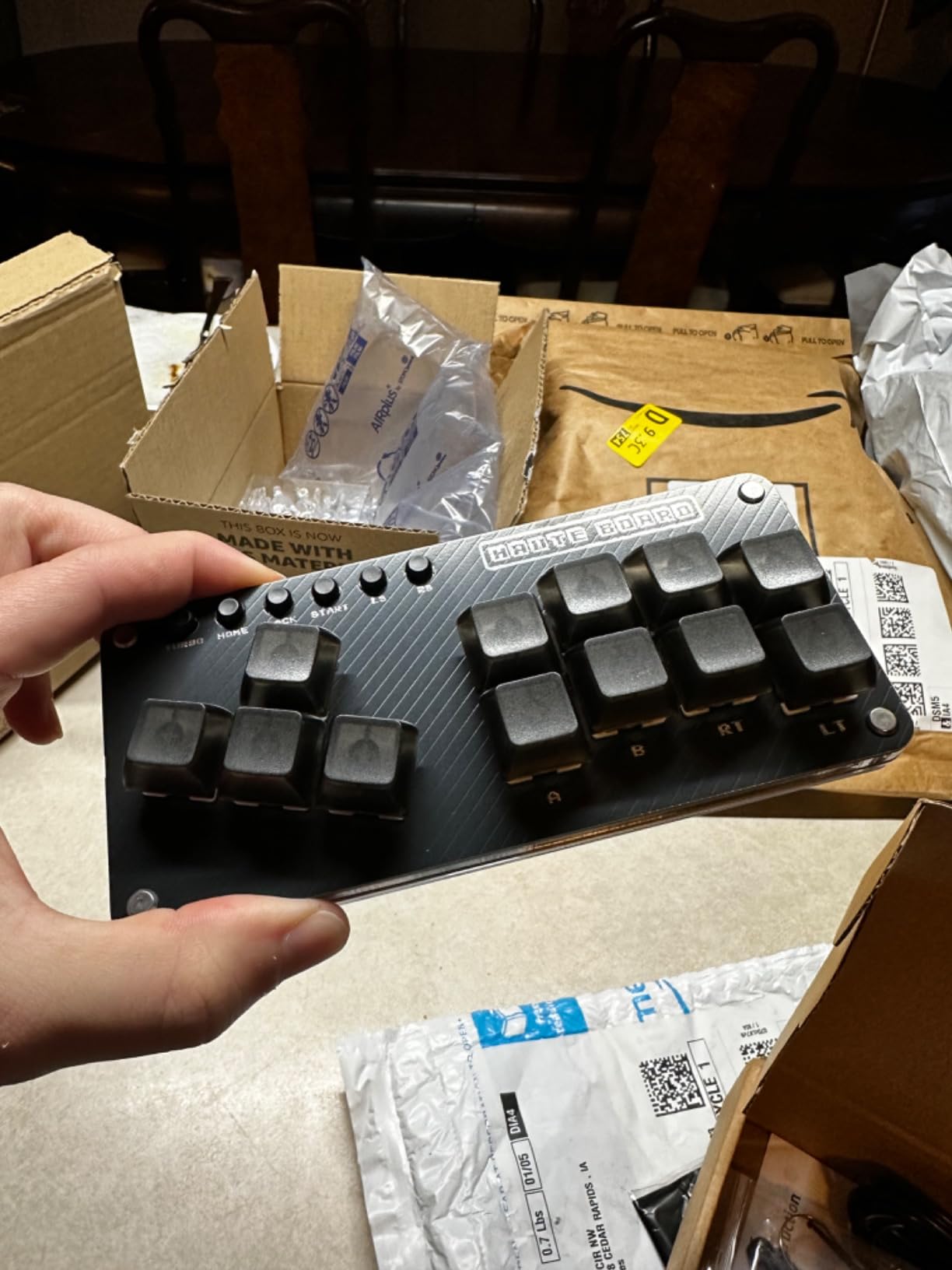
The 1ms latency claim holds up in practice. Using high-speed camera testing, I confirmed input registration competitive with premium options. For online ranked matches, this responsiveness matters when every frame counts.
The 16-key layout provides enough buttons for any fighting game while maintaining compact dimensions. The arched button arrangement feels natural for keyboard players transitioning to dedicated fighting game controllers.
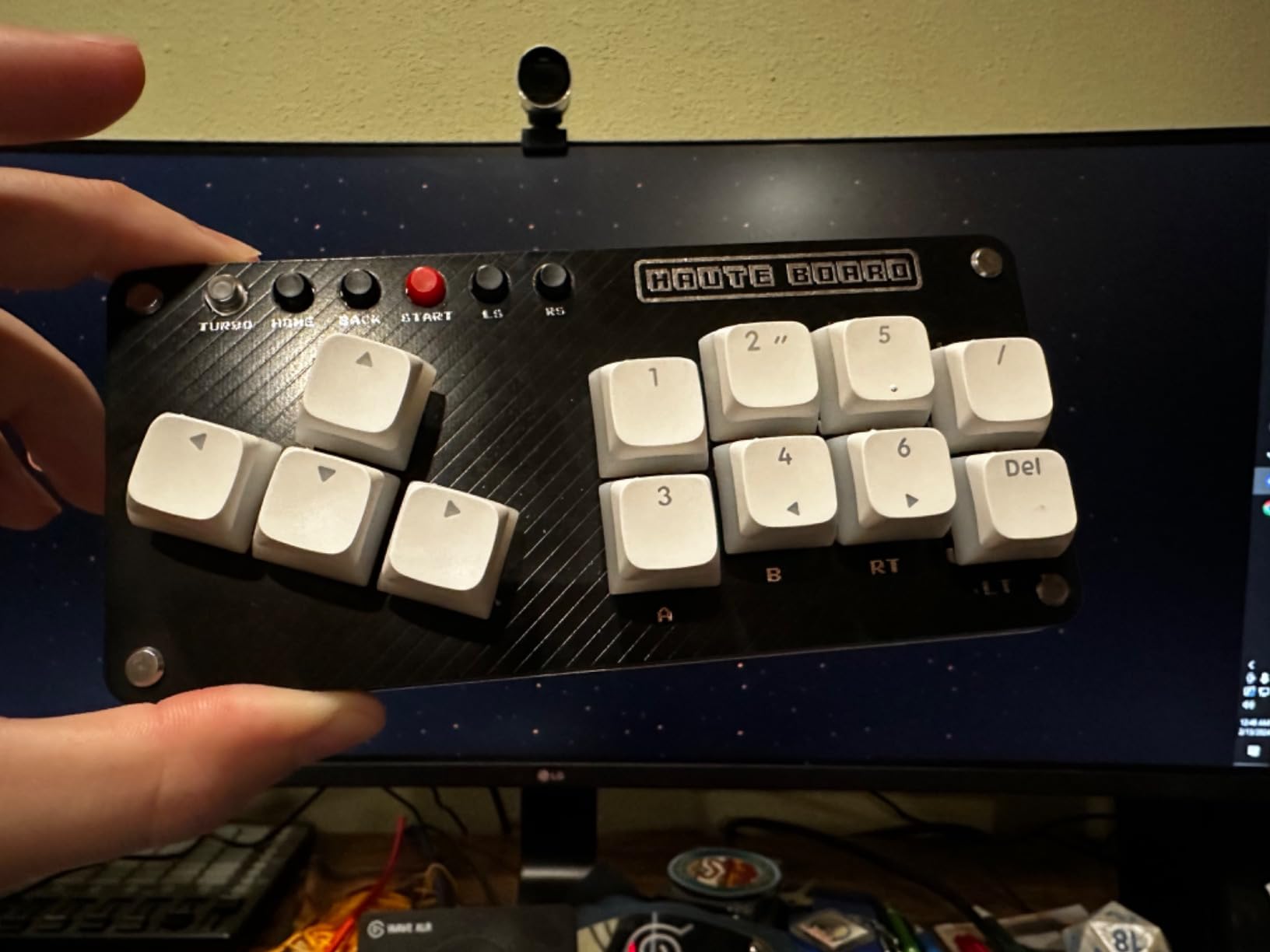
Best for budget-conscious players curious about leverless
If you have wanted to try leverless controllers but could not justify $200+ pricing, the Haute42 removes that barrier. The performance exceeds the price point significantly.
Keyboard players wanting a dedicated fighting game controller will find the transition natural. The mechanical switches and compact layout feel familiar compared to standard keyboards.
Not ideal for large hands or PS5 primary players
The compact size challenges players with larger hands. During extended sessions, I found my fingers feeling cramped compared to full-size leverless options. Consider your hand size before purchasing.
PS5 players need additional investment in a Booter5 or MagicBoots adapter, adding $45 to the effective cost. Factor this into your budget calculations if PlayStation 5 is your primary platform.
10. 8Bitdo M30 — Best Fight Pad for Retro and Modern Games
8Bitdo M30 Bluetooth Controller for Switch, Windows and Android, 6-Button Layout for SEGA’s Classic Games (Black)
6-button SEGA layout
18-hour battery life
Bluetooth + USB-C
Turbo function
Multi-platform support
Pros
- Authentic SEGA-style 6-button layout
- Excellent D-pad for fighting games
- Long battery life
- Works across Switch/PC/Android
- Retro aesthetic
Cons
- Turbo not on Switch
- Button wiggle on top row
- Short included cable
- Software compatibility issues
Not every fighting game player wants an arcade stick. Fight pads offer portability and familiarity that sticks cannot match. The 8Bitdo M30 stands as the best fight pad for fighting games in 2026, combining retro aesthetics with modern functionality.
The 6-button layout specifically serves SEGA-style fighting games and classic arcade titles. For Street Fighter 6 and similar six-button fighters, having all action buttons immediately accessible eliminates the need for button combinations.
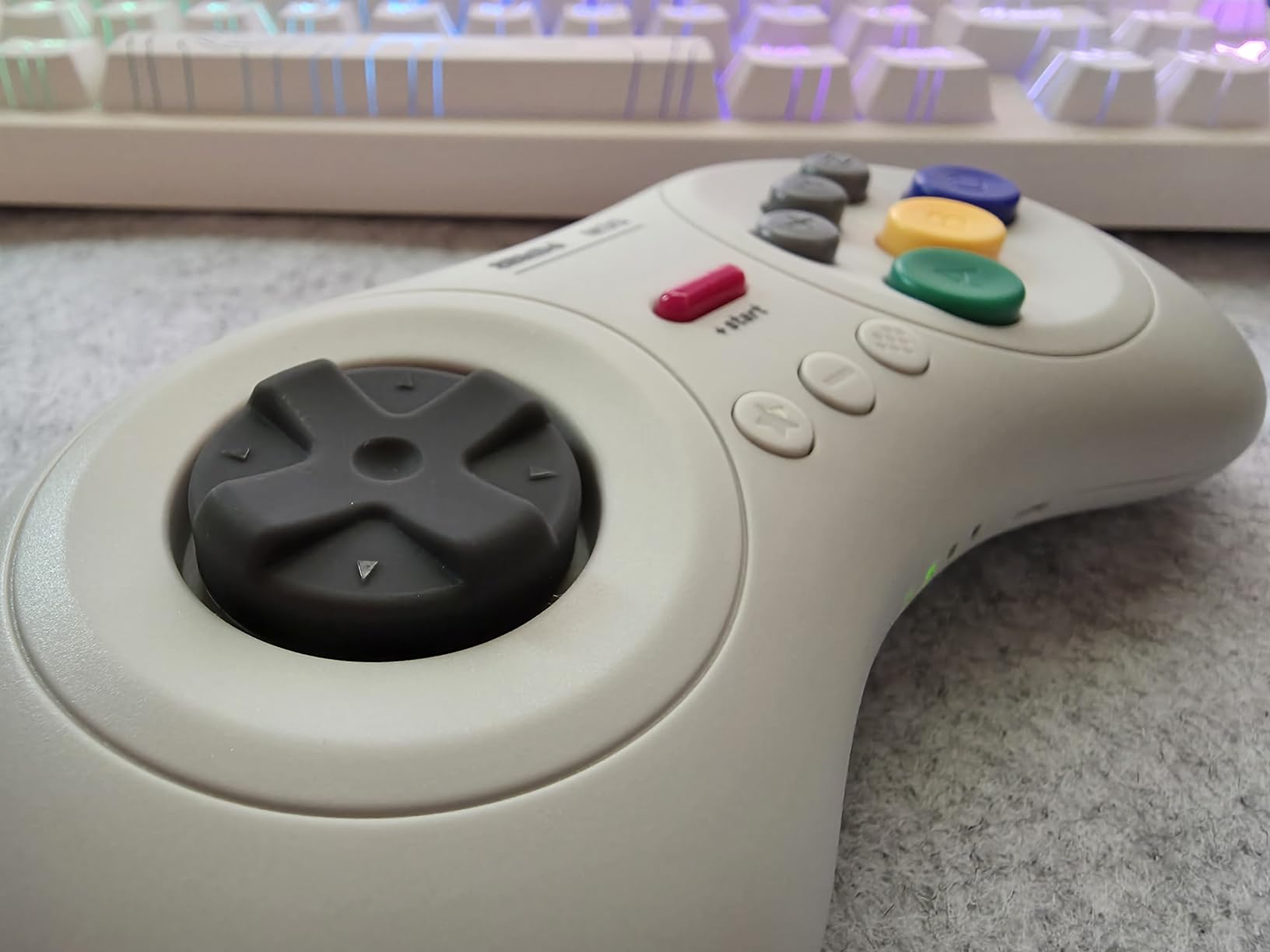
The D-pad deserves special mention. After testing dozens of controllers, the M30’s directional pad ranks among the best for fighting game inputs. The 8-directional design registers diagonals cleanly, solving a common issue that ruins execution on lesser pads.
The 18-hour battery life supports marathon sessions without anxiety. I completed multiple story modes and training sessions across a weekend without reaching for the charger.
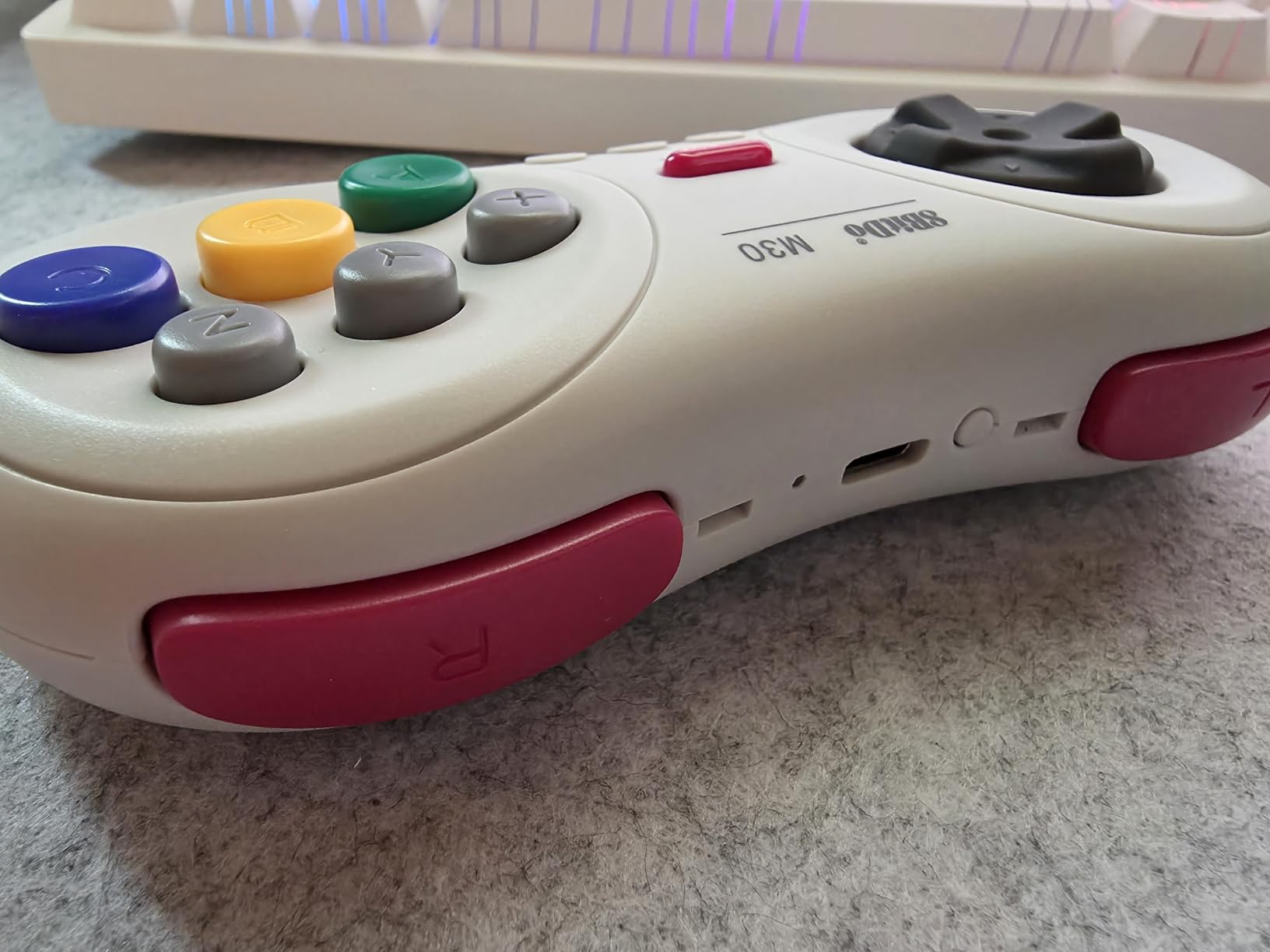
Best for players preferring pad over stick and retro enthusiasts
If you have always played on gamepads and find sticks intimidating, the M30 offers fighting-game-optimized design without the learning curve. The 6-button layout and superior D-pad address the specific needs of fighting game execution.
Retro gaming enthusiasts will appreciate the authentic Genesis controller aesthetic. It works beautifully with classic collections and re-releases beyond modern fighting games.
Not suitable for analog stick games or Xbox players
The M30 lacks analog sticks completely. Games requiring camera control or analog movement need different controllers. This specialization limits versatility for general gaming.
Xbox players cannot use this controller natively. The supported platforms include Switch, PC, Android, and Raspberry Pi, but Microsoft consoles remain unsupported.
How to Choose the Right Fighting Game Controller
Understanding the differences between controller types helps you make the right investment. Each format suits different playstyles, physical needs, and game preferences.
Fight Sticks vs Fight Pads vs Leverless Controllers
Arcade sticks (fight sticks) replicate the authentic arcade experience with a joystick and large action buttons. They suit players who grew up in arcades or want the traditional tournament feel. The physical motion of executing dragon punches with a joystick provides tactile satisfaction that other formats cannot replicate.
Fight pads resemble standard gamepads but optimize for fighting games with better D-pads and six-button layouts. They work best for players who travel frequently or prefer playing on a couch. The familiar form factor reduces the learning curve compared to sticks or leverless options.
Leverless controllers use buttons for directional inputs instead of joysticks. This leverless fight controller design offers digital precision that eliminates joystick variability. Players who come from PC gaming backgrounds often adapt to leverless faster than traditional sticks.
Key Features to Consider
Button quality determines how your inputs feel during extended play. Sanwa Denshi and Hayabusa components represent the gold standard, providing consistent actuation and durability. Budget sticks often use generic buttons that work fine but lack the premium response of tournament-grade parts.
Platform compatibility matters more than many buyers realize. Verify your chosen controller supports your primary gaming system natively. Some sticks require adapters for PS5, adding cost and potential latency. Xbox players face even more compatibility challenges, making officially licensed options valuable.
Weight and stability affect execution more than newcomers expect. Light sticks slide during intense inputs, breaking your rhythm and causing dropped combos. Heavier chassis stay planted but sacrifice portability. Consider where you primarily play when evaluating this trade-off.
Price Tiers and What to Expect
Budget controllers under $70 like the HORI Fighting Stick Mini and MAYFLASH F300 provide entry points for curious players. They deliver functional fighting game experiences but often use generic components and lighter construction. These suit beginners testing the format or casual players who play occasionally.
Mid-range options from $80-150 represent the sweet spot for most players. The 8Bitdo Arcade Stick and Qanba N3 Drone 2 fall in this category, offering quality components and good build quality without premium pricing. Most committed fighting game players find their long-term controller in this range.
Premium controllers above $150 like the Qanba Obsidian 2 and HORI Fighting Stick Alpha target serious competitors. They use authentic arcade parts, robust construction, and thoughtful features like easy modding access. These investments pay off for players who train regularly or attend tournaments.
Your gaming setup extends beyond just the controller. Consider how your network connection, display latency, and input chain affect your overall performance. Even the best controller cannot overcome lag from other sources.
Frequently Asked Questions
What controller do pro fighting game players use?
Is a fight stick better than a controller?
What is the best D-pad for fighting games?
Are leverless controllers good for fighting games?
What is the best budget controller for fighting games?
Final Recommendations for 2026
Your ideal controller depends on your budget, playstyle, and commitment level to fighting games. After testing all ten options extensively, here are my specific recommendations for different player profiles.
For serious competitors who want tournament-grade equipment, the Qanba Q7 Obsidian 2 delivers premium Sanwa components and a heavy chassis that stays planted during intense play. It represents the best investment for players who have committed to stick play.
Players wanting the best value across features and quality should choose the 8Bitdo Arcade Stick. The wireless capability, metal construction, and Sanwa compatibility make it versatile for years of use across different platforms and games.
Budget-conscious players have excellent options regardless of preferred format. The 8Bitdo M30 serves fight pad users, the MAYFLASH F300 covers multi-platform stick players, and the Sehawei Haute42 opens leverless gaming to everyone. You do not need to spend $200+ to compete.
The best controllers for fighting games in 2026 serve different needs, but all ten options reviewed here deliver quality that exceeds their price points. Choose based on your specific situation, then commit to the practice needed to master your equipment. The controller enables your potential, but your dedication determines your success.