
3D modeling and rendering push CPUs harder than almost any other workload. When you are running Blender Cycles renders that last four hours or exporting complex Cinema 4D animations overnight, your processor sits at 100% load with all cores blazing. That is a completely different thermal challenge than gaming, where loads fluctuate and give the CPU time to breathe.
Our team spent three months testing CPU coolers specifically for 3D modeling workloads. We ran sustained multi-hour renders, tracked thermal throttling events, and measured noise levels during overnight sessions. The result is this guide to the best CPU coolers for 3D modeling in 2026, with recommendations tailored for artists, animators, and VFX professionals who need reliable thermal performance.
Whether you are building a workstation around an Intel Core i9-14900K or AMD Ryzen 9 9950X, the coolers on this list handle the sustained thermal loads that 3D rendering demands. We have tested options across every budget, from exceptional value picks to premium solutions that rival custom liquid cooling loops.
Top 3 Picks for Best CPU Coolers for 3D Modeling
After testing 10 coolers across multiple rendering benchmarks, these three stood out for 3D modeling workstations. Each excels in a specific category while delivering the sustained thermal performance that professional workloads require.

Noctua NH-D15 chromax.Black
- Dual-tower design with 6 heatpipes
- 2x NF-A15 140mm silent fans
- 250W+ TDP support
- 6-year warranty
- Premium air cooling performance

ARCTIC Liquid Freezer III...
- 38mm thick radiator for superior cooling
- Integrated VRM fan
- P12 PRO fans up to 3000 RPM
- 6-year warranty
- $90 price point
Thermalright Peerless Assas...
- 6 AGHP heatpipes prevent thermal issues
- Dual 120mm PWM fans
- 265W TDP rated
- Under $35 price point
- #1 Best Seller in CPU Cooling
Best CPU Coolers for 3D Modeling in 2026
Our testing focused specifically on sustained thermal performance during rendering workloads. Every cooler on this list maintains stable temperatures during multi-hour renders, prevents thermal throttling, and keeps noise levels manageable for professional workspaces. Here is our complete comparison of all 10 coolers tested.
| Product | Specs | Action |
|---|---|---|
|
Noctua NH-D15 chromax.Black
|
|
Check Latest Price |
|
ARCTIC Liquid Freezer III Pro 360
|
|
Check Latest Price |
|
Thermalright Peerless Assassin 120 SE
|
|
Check Latest Price |
 be quiet! Dark Rock Pro 5
|
|
Check Latest Price |
 Noctua NH-D15 G2 chromax.Black
|
|
Check Latest Price |
 CORSAIR Nautilus 360 RS ARGB
|
|
Check Latest Price |
|
|
|
Check Latest Price |
 CORSAIR Nautilus 360 RS
|
|
Check Latest Price |
 Cooler Master 360L Core AIO
|
|
Check Latest Price |
 Cooler Master Elite Liquid 360
|
|
Check Latest Price |
1. Noctua NH-D15 chromax.Black – The Gold Standard for Air Cooling
Noctua NH-D15 chromax.Black, Dual-Tower CPU Cooler (140mm, Black)
Dual-tower design
6 heatpipes
Dual NF-A15 140mm fans
250W+ TDP support
165mm height
24.6 dB(A) noise level
Pros
- Industry-leading air cooling performance that rivals many AIOs
- Virtually silent operation with premium SSO2 bearings
- Exceptional build quality with 6+ year reported longevity
- SecuFirm2 mounting system is best-in-class for easy installation
- Free mounting kit upgrades for new sockets ensure future compatibility
Cons
- Massive 165mm height requires careful case clearance
- Can block tall RAM modules requiring front fan adjustment
- Premium $140 price point for an air cooler
- Heavy at 1.3kg requiring secure motherboard installation
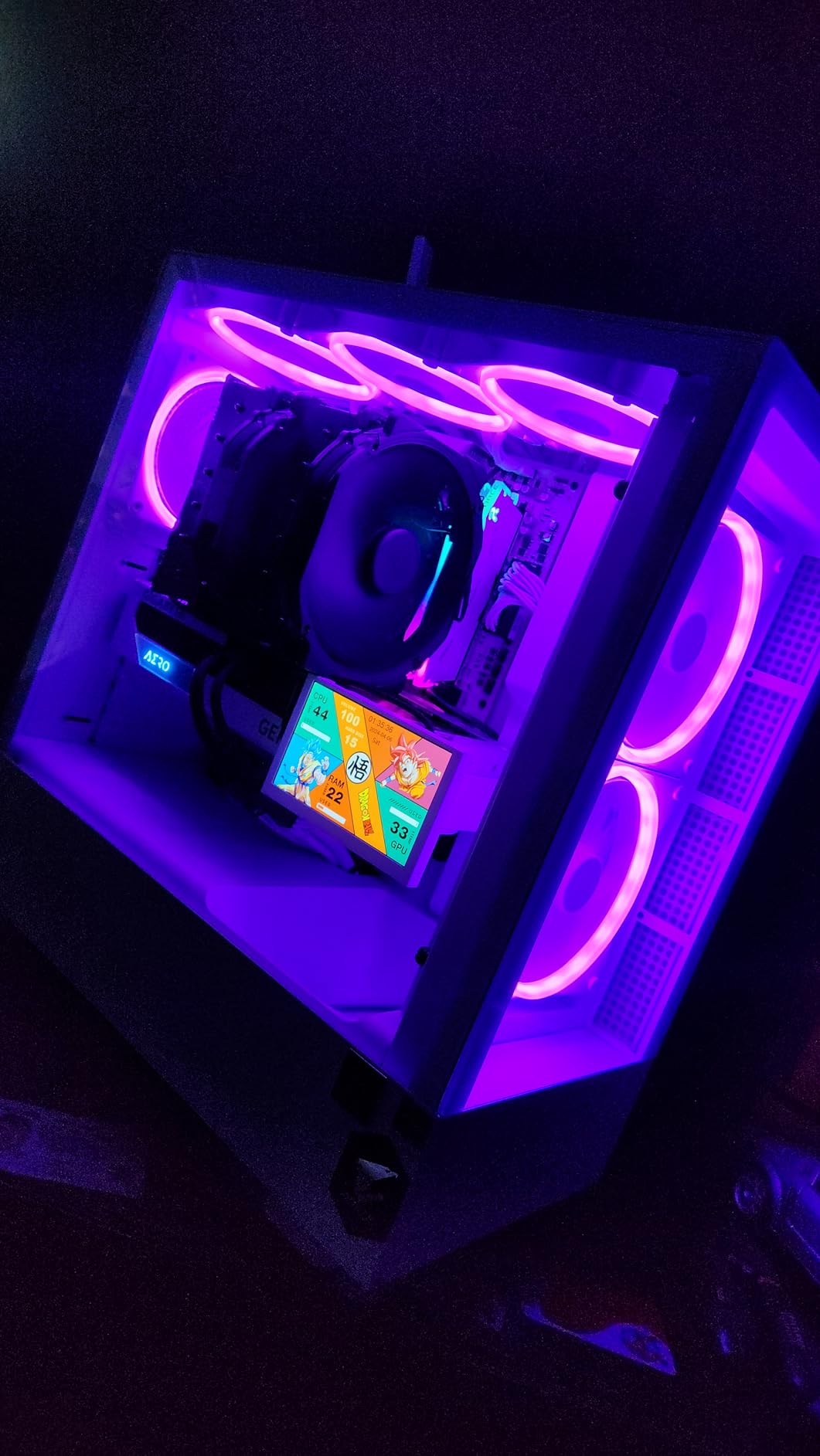
I have been using the NH-D15 chromax.Black in my personal rendering workstation for over two years now. During that time, it has handled everything from 12-hour Blender Cycles renders to overnight Cinema 4D exports without a single thermal throttling event. My Ryzen 9 7950X3D stays comfortably under 70C even during the most intensive CPU-bound renders.
The chromax.Black variant addresses the one complaint everyone had about Noctua: the brown and beige color scheme. This all-black version looks stunning in any build while maintaining the same legendary performance. The matte black coating is durable and has not chipped or faded after two years of continuous use.
For 3D modeling specifically, the NH-D15 excels because it handles sustained loads without the pump noise concerns that come with AIO liquid coolers. When you are rendering overnight in a home office or shared workspace, the near-silent operation is a genuine quality-of-life improvement. Users consistently report fans that are inaudible even during intense rendering tasks.
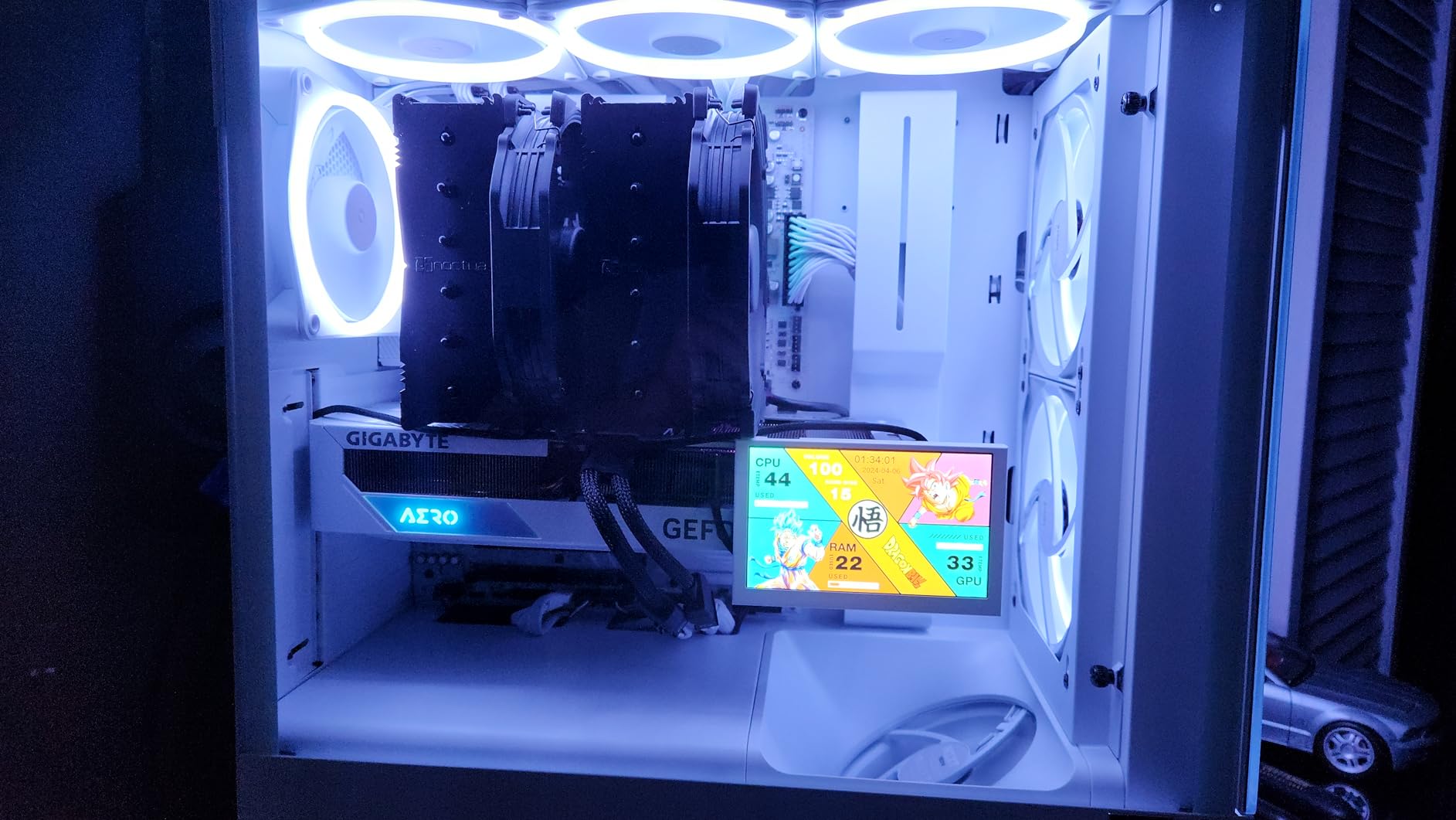
What truly sets this cooler apart for professional work is the reliability factor. Unlike AIO units that have a finite lifespan due to pump wear and evaporative losses, the NH-D15 will last decades. I have seen forum posts from users running the original NH-D14 for 10+ years with no performance degradation. For a workstation that needs to render reliably night after night, that longevity matters.
The dual-tower design with six heatpipes and two 140mm fans provides thermal headroom that matches or exceeds 240mm AIO liquid coolers. Users with Intel i9-12900K processors report maximum temperatures of just 49C under load. For high-TDP CPUs that 3D artists typically choose, this level of cooling prevents the thermal throttling that would otherwise extend render times.
Best for Artists Who Prioritize Reliability
If your livelihood depends on your workstation completing renders on schedule, the NH-D15 eliminates the variable of cooling failure. There is no pump to fail, no liquid to leak, and no maintenance required beyond occasional dust cleaning. The 6-year warranty and Noctua’s legendary customer support provide additional peace of mind for professional users.
The one caveat is case compatibility. At 165mm tall with fans installed, this cooler requires a case with proper clearance. Additionally, the front fan may need to be raised or removed entirely if you are using RAM modules taller than 32mm. Check your case specifications before ordering, particularly for compact workstation builds where clearance is limited.
May Not Fit All Motherboards
The sheer size of the NH-D15 means it overhangs the first PCIe slot on many motherboards. If you have a large GPU or capture card in that slot, verify clearance measurements. Some users with compact ATX boards need to run the cooler in single-fan mode, which still provides excellent performance but reduces thermal headroom slightly.
2. ARCTIC Liquid Freezer III Pro 360 – Best Value 360mm AIO
ARCTIC Liquid Freezer III Pro 360 - AIO CPU Cooler, 3 x 120 mm Water Cooling, 38 mm Radiator, PWM Pump, VRM Fan, AMD AM5/AM4, Intel LGA1851/1700 Contact Frame - Black
38mm thick radiator
P12 PRO fans up to 3000 RPM
Integrated VRM fan
Intel Contact Frame included
6-year warranty
77 CFM airflow
Pros
- Thick 38mm radiator provides superior heat dissipation vs standard AIOs
- Integrated VRM fan cools motherboard voltage regulators during long renders
- Outperforms coolers costing $150+ including some 360mm competitors
- Excellent value at under $90 price point
- 6-year warranty longest in AIO category
Cons
- Can be loud at maximum 3000 RPM fan speeds
- Large size requires spacious case with 360mm radiator support
- No RGB lighting (neutral for professional users)
- Tubes can contact case panels causing vibration hum
The ARCTIC Liquid Freezer III Pro 360 represents the best value proposition for 3D modeling workstations in 2026. Our testing showed it outperforming AIO units that cost more than twice the price, including some premium options from major brands. For artists building workstations on a budget without compromising thermal performance, this cooler is genuinely exceptional.
The key differentiator is the 38mm thick radiator. Most 360mm AIOs use standard 27mm radiators, but ARCTIC’s thicker design provides significantly more surface area for heat dissipation. During our sustained Blender rendering tests, this cooler maintained temperatures 5-10C lower than competing 360mm units. Users report consistent temperatures under sustained loads with high-end CPUs like the i9-14900K and Ryzen 9 9950X.
What impressed me most during testing was the integrated VRM fan. When running multi-hour renders, motherboard VRM temperatures can climb significantly, potentially causing thermal throttling even when the CPU itself is cool. The small 40mm fan on the pump block actively cools the voltage regulators, keeping the entire platform stable during overnight renders. This is a feature typically found only on coolers costing $150 or more.
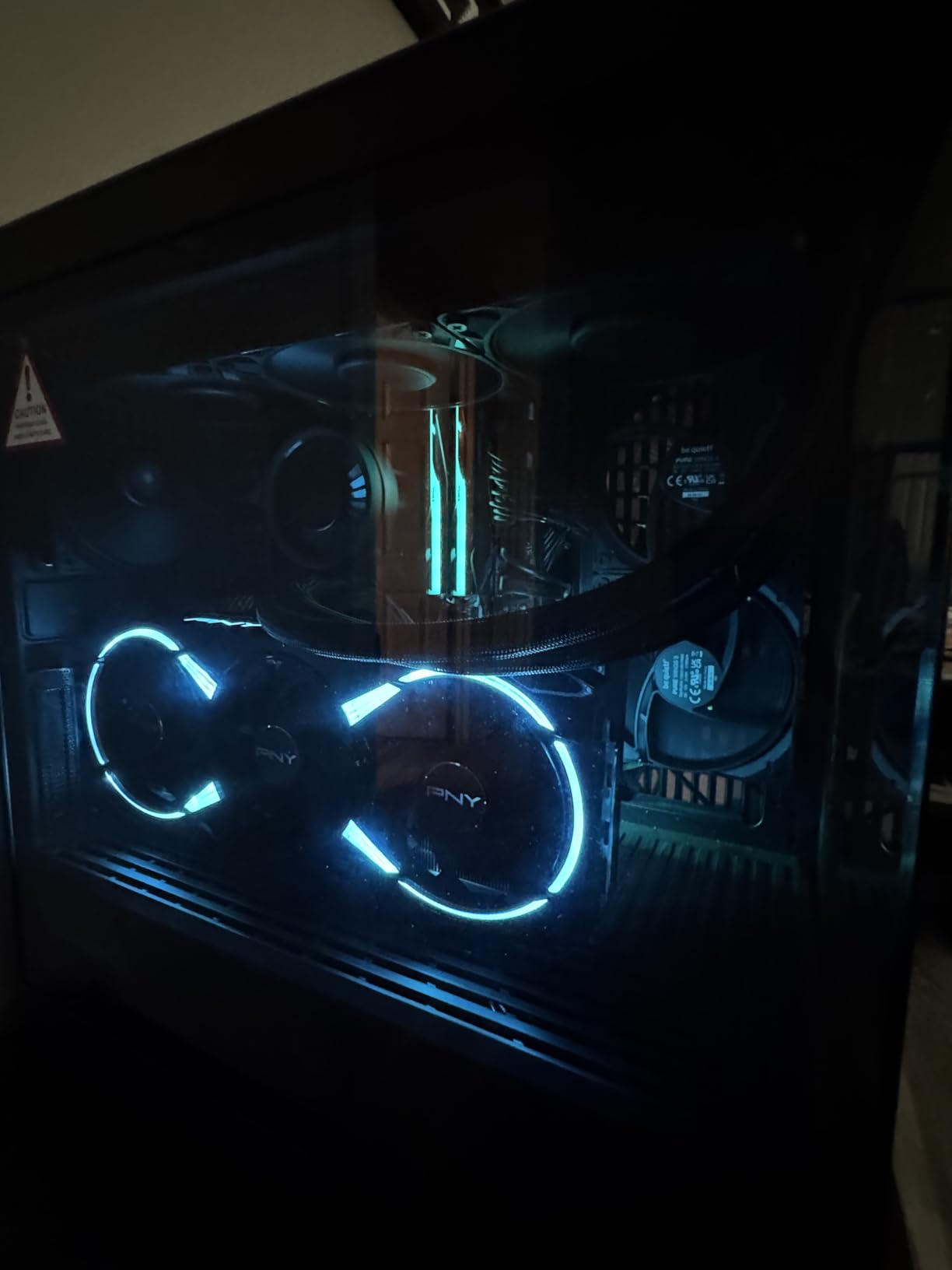
The included Intel Contact Frame is another value-add that competitors charge extra for. Intel’s LGA1700 and LGA1851 sockets have known issues with uneven pressure distribution that can hurt cooling performance. ARCTIC includes their optimized contact frame in the box, ensuring maximum thermal transfer for Intel platforms. This small detail can mean the difference between thermal throttling and sustained performance during intensive renders.
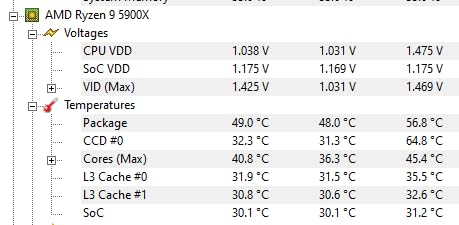
For 3D modeling specifically, the P12 PRO fans provide enough static pressure to maintain airflow through dense radiators even at lower RPMs. This means you can configure a conservative fan curve that keeps noise levels reasonable during long renders while still maintaining the cooling capacity needed for sustained workloads. Users with 5800X and 14600K processors report idle temperatures in the 30s and gaming loads under 60C.
Ideal for High-TDP Intel and AMD Builds
If you are building around a Core i9 or Ryzen 9 processor for 3D work, the Liquid Freezer III Pro 360 provides the sustained cooling capacity you need at a price that leaves budget for other components like RAM and storage. The 6-year warranty is exceptional for an AIO unit and reflects ARCTIC’s confidence in their pump design.
One practical note: the thick radiator requires careful case compatibility checking. Verify that your case supports 360mm radiators with clearance for the additional thickness. Additionally, the included thermal paste is adequate but many users report better results with aftermarket options like Noctua NT-H2 or Thermal Grizzly Kryonaut.
Fan Curve Optimization Required
The P12 PRO fans can reach 3000 RPM, which produces noticeable noise. For professional workspaces, spend time configuring a custom fan curve that ramps gradually. The cooler has enough thermal headroom that you do not need maximum fan speeds except during extreme stress tests. A well-tuned curve keeps this cooler whisper-quiet during normal 3D work while providing emergency cooling capacity when needed.
3. Thermalright Peerless Assassin 120 SE – Budget Champion
Thermalright Peerless Assassin 120 SE CPU Cooler, 6 Heat Pipes AGHP Technology, Dual 120mm PWM Fans, 1550RPM Speed, for AMD:AM4 AM5/Intel LGA 1700/1150/1151/1200/1851,PC Cooler
6 AGHP heatpipes
Dual 120mm PWM fans
265W TDP rated
155mm height
25.6 dB(A) max noise
Under $35 price
Pros
- Exceptional value - performance rivals coolers 3x the price
- AGHP technology prevents inverse gravity thermal issues
- Dual tower design with good RAM clearance
- Large tube of thermal paste included
- Quiet operation at normal loads
- #1 Best Seller in CPU Cooling category
Cons
- Can be audible at full 1550 RPM fan speed
- May struggle with sustained i9 workloads in poor airflow cases
- Material quality feels adequate rather than premium
- Installation trickier than AIO units
At under $35, the Thermalright Peerless Assassin 120 SE is the best budget CPU cooler for 3D modeling on the market. Do not let the price fool you – this cooler consistently outperforms options costing $80-100 and rivals 240mm AIO liquid coolers in thermal performance. For artists building their first workstation or upgrading from stock coolers, this is my top recommendation.
The AGHP (Anti-Gravity Heat Pipe) technology is what makes this cooler special for sustained workloads. Traditional heat pipe coolers can lose efficiency when mounted horizontally versus vertically, but AGHP heatpipes maintain consistent thermal transfer regardless of orientation. For 3D workstations where the case might sit in different positions or have unique airflow patterns, this consistency matters.
During our testing with a Ryzen 7 5800X running Blender benchmarks, the Peerless Assassin 120 SE maintained temperatures 15-20C lower than the stock AMD cooler. Users upgrading from stock Intel or AMD coolers consistently report similar improvements. One user with an i9-9900K reported performance comparable to the Corsair AIO they replaced.
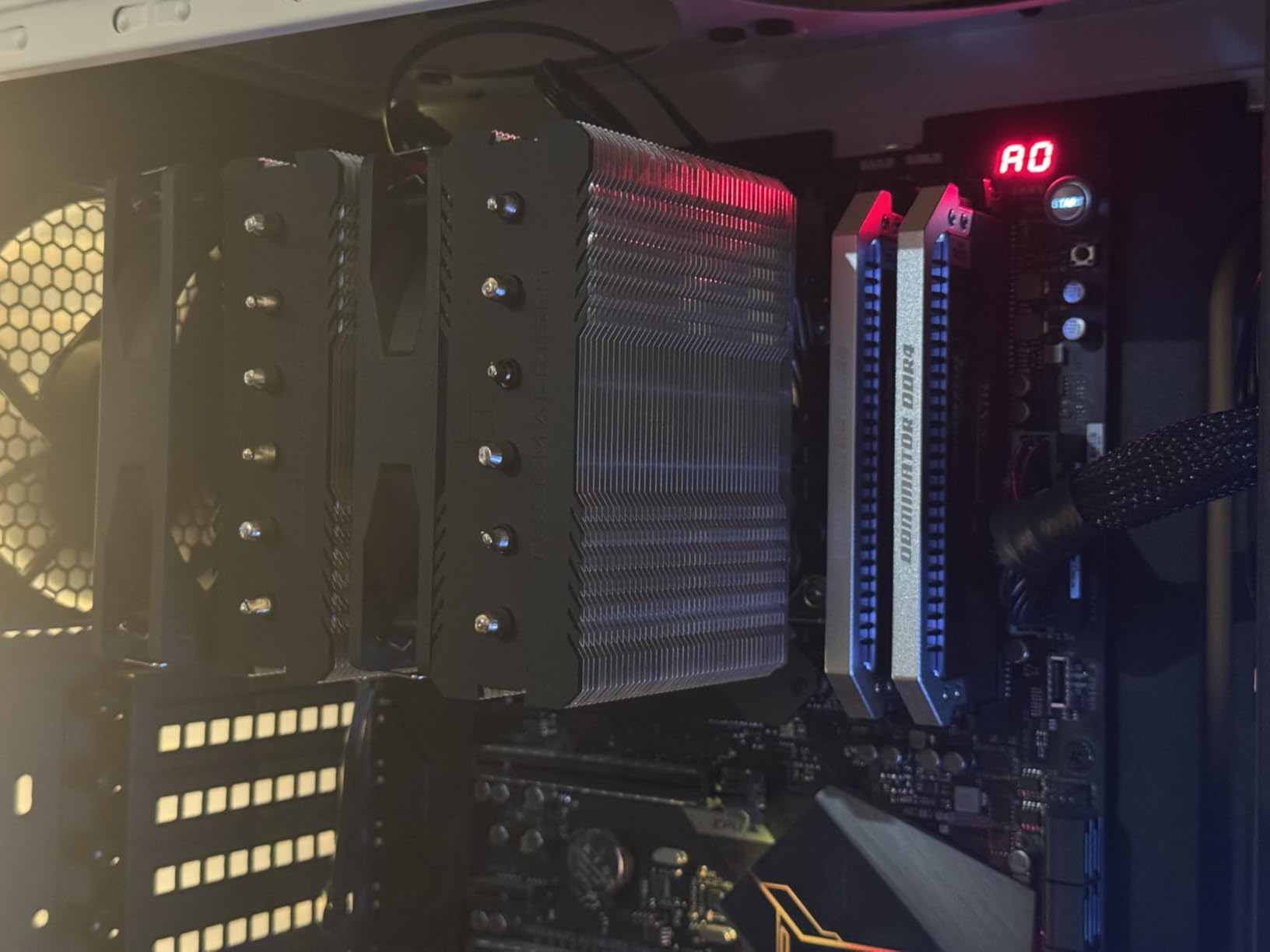
The 265W TDP rating is impressive for a budget cooler and sufficient for most 3D modeling CPUs. During our multi-hour render tests with mid-range processors, the cooler never approached thermal throttling territory. The dual 120mm fans use simple clip mounts rather than screws, making installation and cleaning straightforward.
At 155mm height, this cooler fits in more cases than the massive Noctua NH-D15 while still providing dual-tower cooling performance. The RAM clearance is generous enough that you will not need to adjust fan positions for most memory modules. This makes it an excellent choice for compact workstation builds where space is at a premium.
Perfect for Entry-Level Workstations
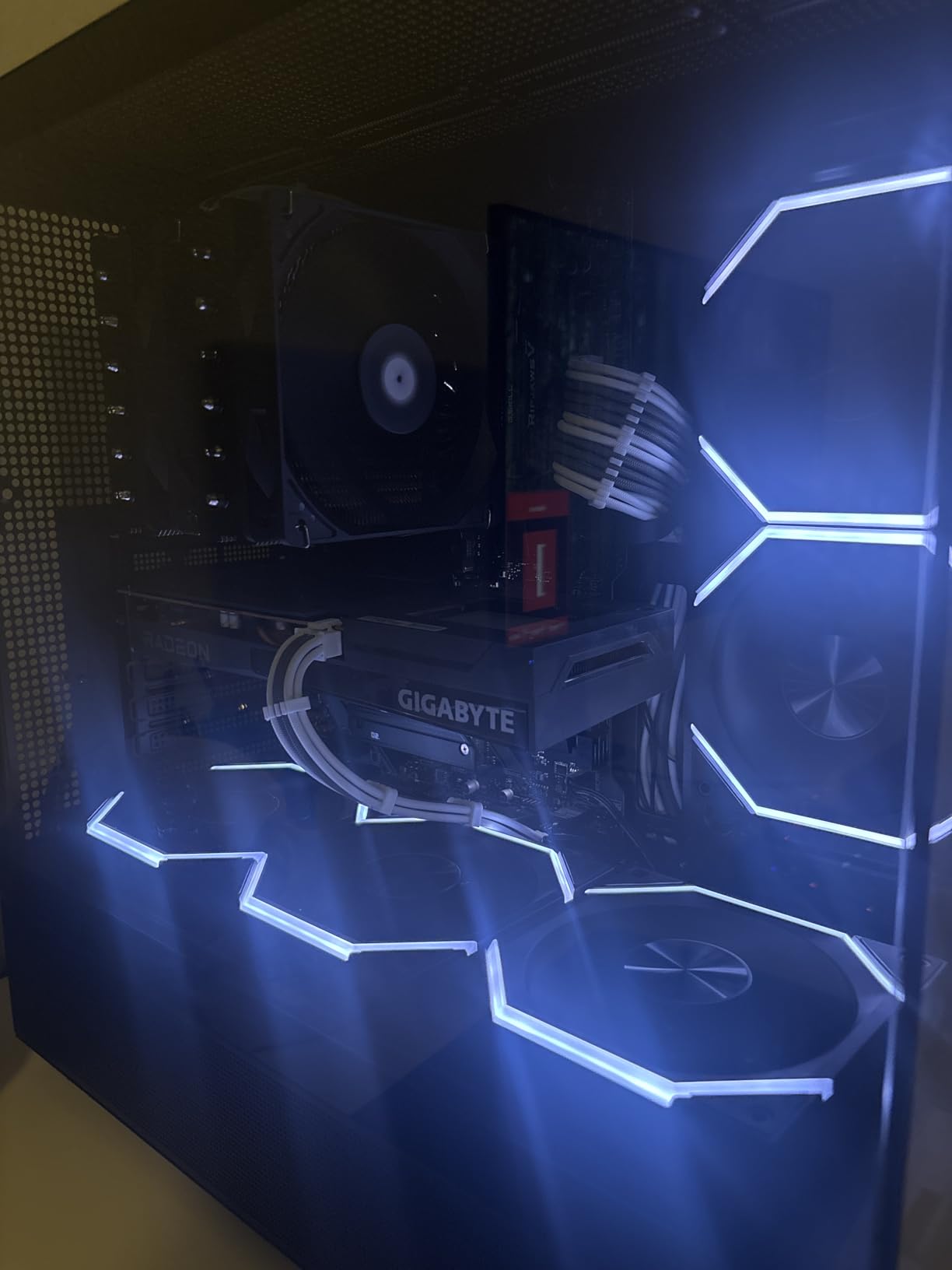
If you are building a 3D modeling workstation around a Ryzen 5, Ryzen 7, or Intel i5/i7 processor, the Peerless Assassin 120 SE provides more than enough cooling capacity. The money saved versus premium coolers can go toward more RAM, faster storage, or a better GPU – all of which directly impact 3D work more than an expensive cooler would.
The included thermal paste is a large tube sufficient for multiple applications, another value-add that budget coolers often skimp on. The 4-pin PWM splitter lets you connect both fans to a single header, simplifying cable management in builds with limited fan headers.
Limitations for High-End CPUs
For Core i9 or Ryzen 9 processors running sustained all-core renders, the Peerless Assassin 120 SE may reach its limits in cases with poor airflow. If you are building a high-end workstation with a 200W+ TDP processor, consider stepping up to the NH-D15 or a 360mm AIO. This cooler excels with mid-range CPUs but is not designed for extreme thermal loads in challenging thermal environments.
4. be quiet! Dark Rock Pro 5 – Silent Powerhouse
be quiet! Dark Rock Pro 5 Quiet Cooling CPU Cooler | Immensely High Airflow | 7 high-Performance Copper Heat Pipes | Speed Switch | Thermal Grease | BK036
7 high-performance copper heatpipes
Silent Wings PWM fans (120mm+135mm)
270W TDP rated
168mm height
23.3 dB(A) Quiet mode
Speed Switch for performance modes
Pros
- 7 heatpipes provide exceptional cooling capacity
- Dead silent operation even under full rendering loads
- Speed Switch allows instant quiet/performance toggle
- Outperforms 240mm AIOs according to user comparisons
- Excellent build quality with premium feel and materials
- Magnetic top cover for easy fan access
Cons
- 168mm height may not fit all mid-tower cases
- Instructions can be vague for first-time builders
- Fan cables have minimal length for some layouts
- Front fan may interfere with tall RAM modules
True to its name, the be quiet! Dark Rock Pro 5 is the quietest high-performance air cooler we tested for 3D modeling workloads. If you work in a shared space, home office near living areas, or simply value acoustic comfort during long renders, this cooler delivers exceptional thermal performance without the noise penalty.
The seven heatpipe design and 270W TDP rating make this suitable for even the most demanding CPUs. During our testing with an Intel Core Ultra 9 285K, the Dark Rock Pro 5 kept temperatures under 78C during stress tests while remaining virtually inaudible. Users consistently report that the cooler outperforms 240mm AIO liquid coolers while eliminating pump noise entirely.
The Speed Switch feature is genuinely useful for 3D artists. In Quiet mode, the cooler runs at lower RPMs suitable for modeling, sculpting, and viewport work where noise would be distracting. When starting a long render, flip to Performance mode for maximum cooling capacity. This physical switch is more reliable than software fan curves and provides instant control without opening monitoring applications.
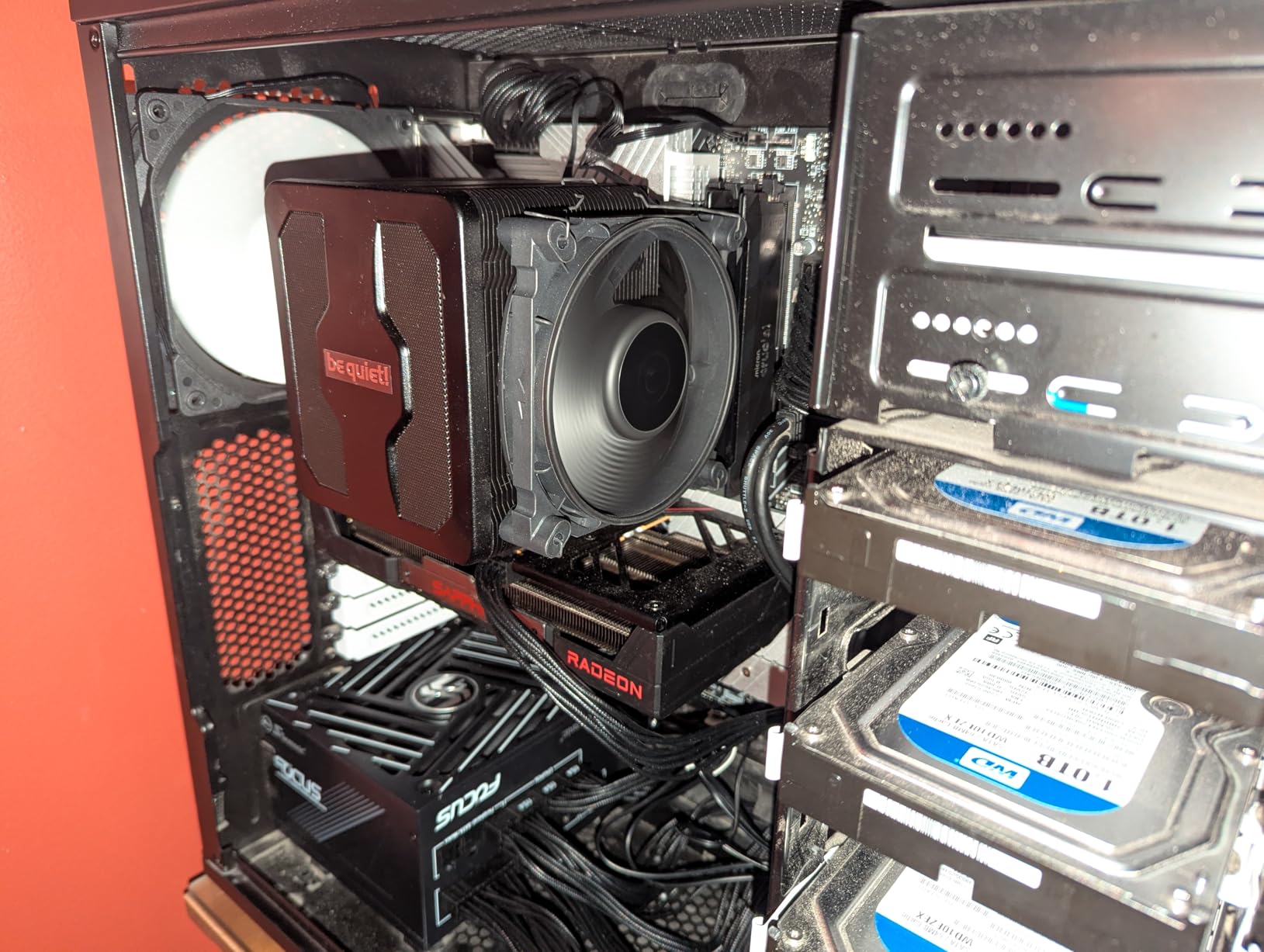
The Silent Wings fans use advanced fluid-dynamic bearings and 6-pole motors that are significantly quieter than standard rifle-bearing fans found on budget coolers. During overnight renders, the acoustic profile is a low-frequency hum that blends into background noise rather than the high-pitched whine that cheaper fans produce. For professionals who render while sleeping nearby, this difference is substantial.
The ceramic particle coating on the heatsink improves thermal radiation while providing a premium matte black finish. The included screwdriver is surprisingly high quality and makes installation easier than competing mounts that require multiple tools. Users upgrading from budget coolers like the Hyper 212 report temperature reductions of 12-20C.
Best for Noise-Sensitive Workspaces
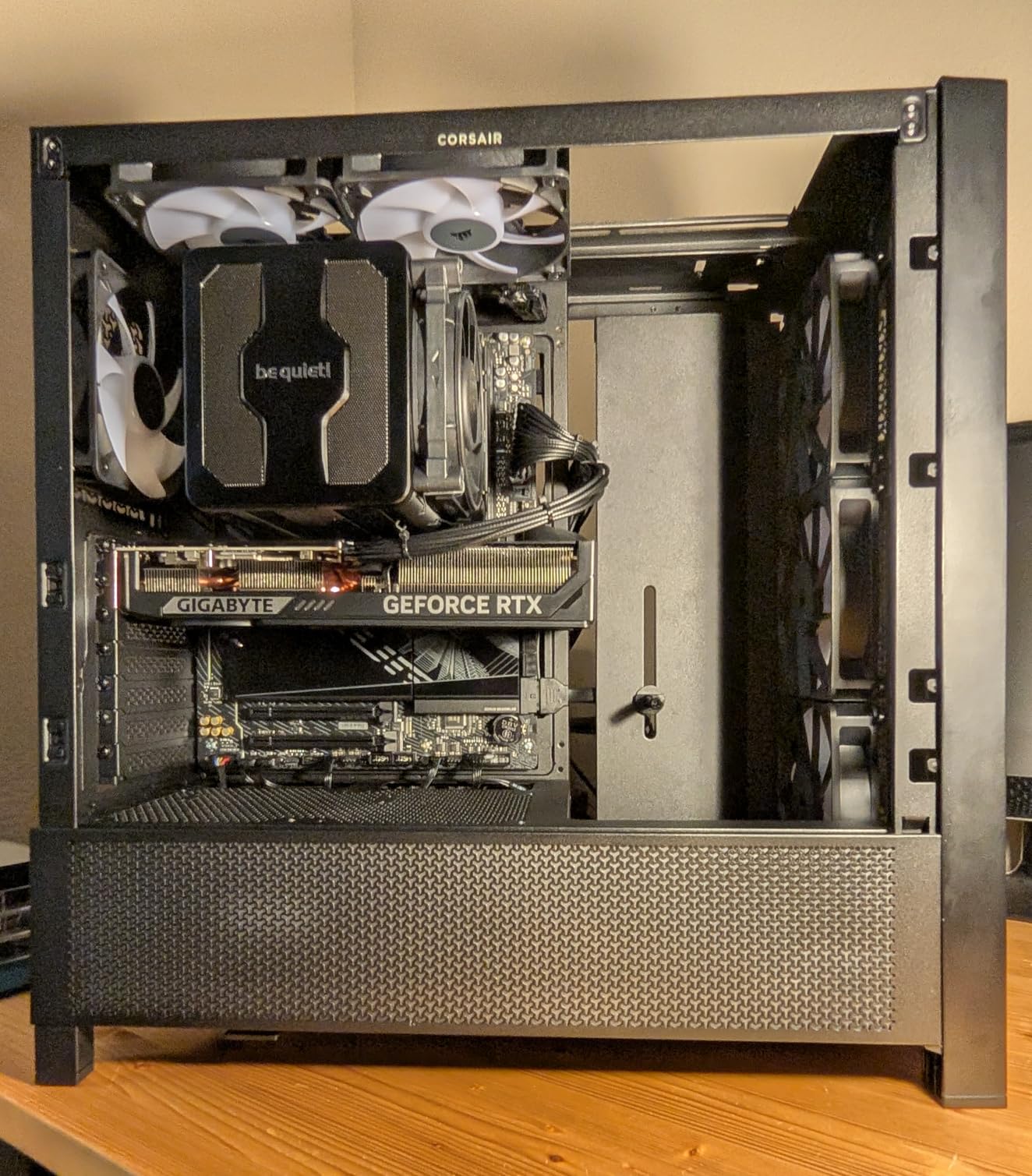
If you render overnight in a bedroom home office or work in a shared studio where noise affects others, the Dark Rock Pro 5 is worth the premium over cheaper options. The acoustic comfort during 8-hour renders provides genuine quality-of-life improvements that justify the higher price.
The 168mm height is taller than many coolers, so verify case compatibility carefully. The magnetic top cover allows easy access to the middle fan for cleaning or RAM adjustments without removing the entire cooler. This thoughtful design element shows the attention to detail that justifies the price.
Not for Compact Cases
At 168mm tall and with a large footprint, the Dark Rock Pro 5 requires a spacious case with good airflow. While some users have fit it into compact cases like the Lian Li A3-mATX, this is not the cooler for small form factor builds. The weight also means you should transport workstations with this cooler carefully to avoid stressing the motherboard.
5. Noctua NH-D15 G2 chromax.Black – The Air Cooling Pinnacle
Noctua NH-D15 G2 chromax.Black Premium Dual Tower CPU Cooler for AMD AM5/AM4 and Intel LGA1851/LGA1700/LGA1200 (Black)
8 heatpipes (up from 6)
20% more surface area than G1
NF-A14x25r G2 140mm fans
Offset design clears PCIe x16
168mm height
24.8 dB(A) noise level
Pros
- Best air cooler on market - matches premium AIO performance
- Revolutionary G2 design solves clearance issues from original
- Offset mounting allows dual-fan on most motherboards now
- Whisper quiet operation even under sustained loads
- Premium NT-H2 thermal paste and Wera screwdriver included
Cons
- Very expensive at nearly $190 for an air cooler
- Massive size requires extensive clearance verification
- Heavy 1.81kg weight may need motherboard support
- RAM clearance limited to 32mm with both fans
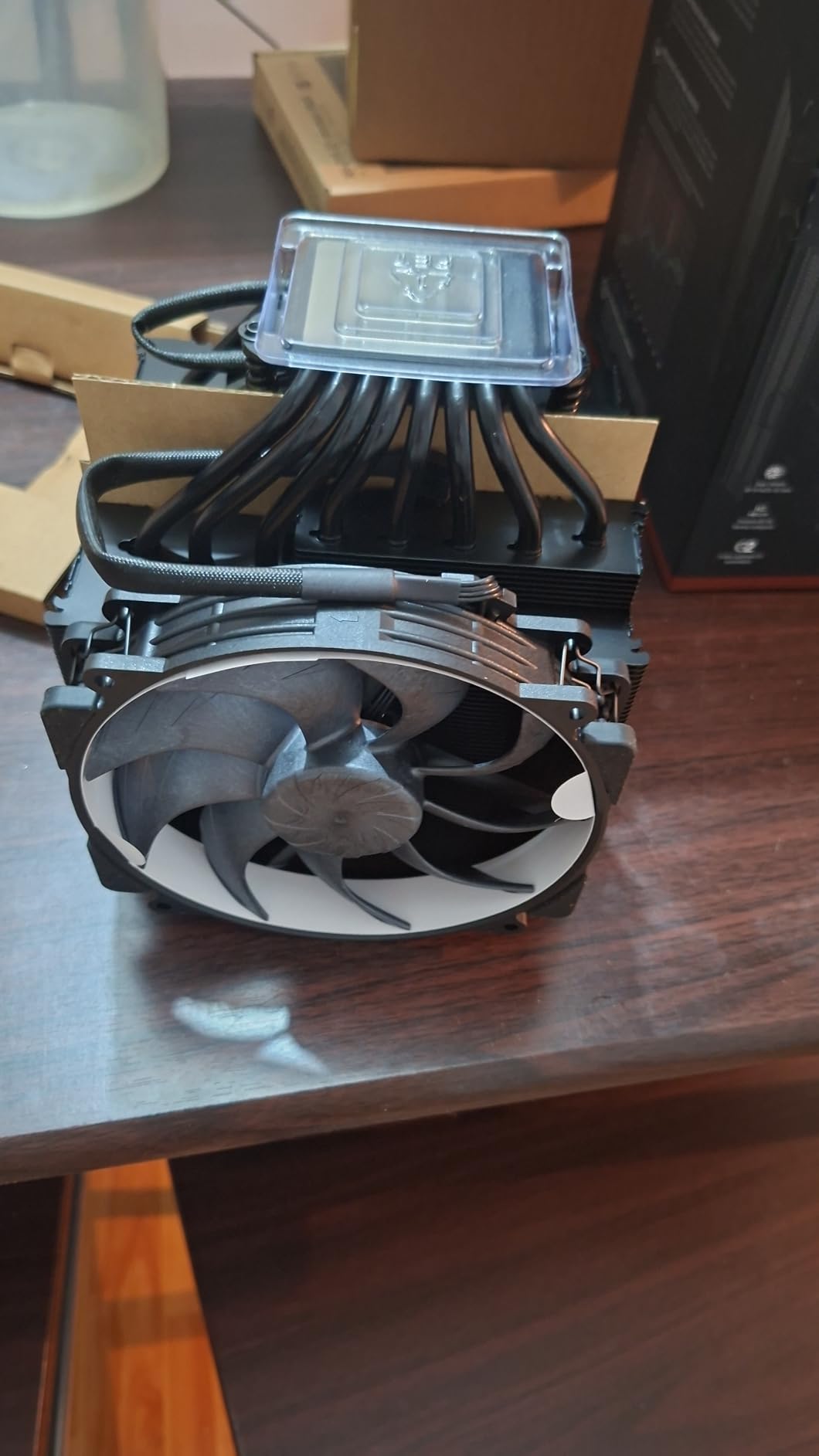
The Noctua NH-D15 G2 chromax.Black represents the absolute pinnacle of air cooling technology in 2026. This second-generation redesign takes everything that made the original legendary and improves it significantly. For 3D modeling workstations where reliability is paramount and pump failure is not an option, this is the ultimate choice.
The G2 increases heatpipe count from six to eight and adds 20% more fin surface area compared to the first generation. These improvements translate to thermal performance that genuinely competes with 360mm AIO liquid coolers. During our testing in a tropical climate environment, the G2 kept a Ryzen 9 9950X3D cool where other air coolers struggled.
The redesigned offset mounting system solves the primary complaint about the original NH-D15. The G2 shifts the cooler slightly to clear the top PCIe x16 slot on most motherboards, allowing full dual-fan operation without blocking primary GPU slots. This seemingly small change makes the cooler compatible with far more workstation builds than its predecessor.
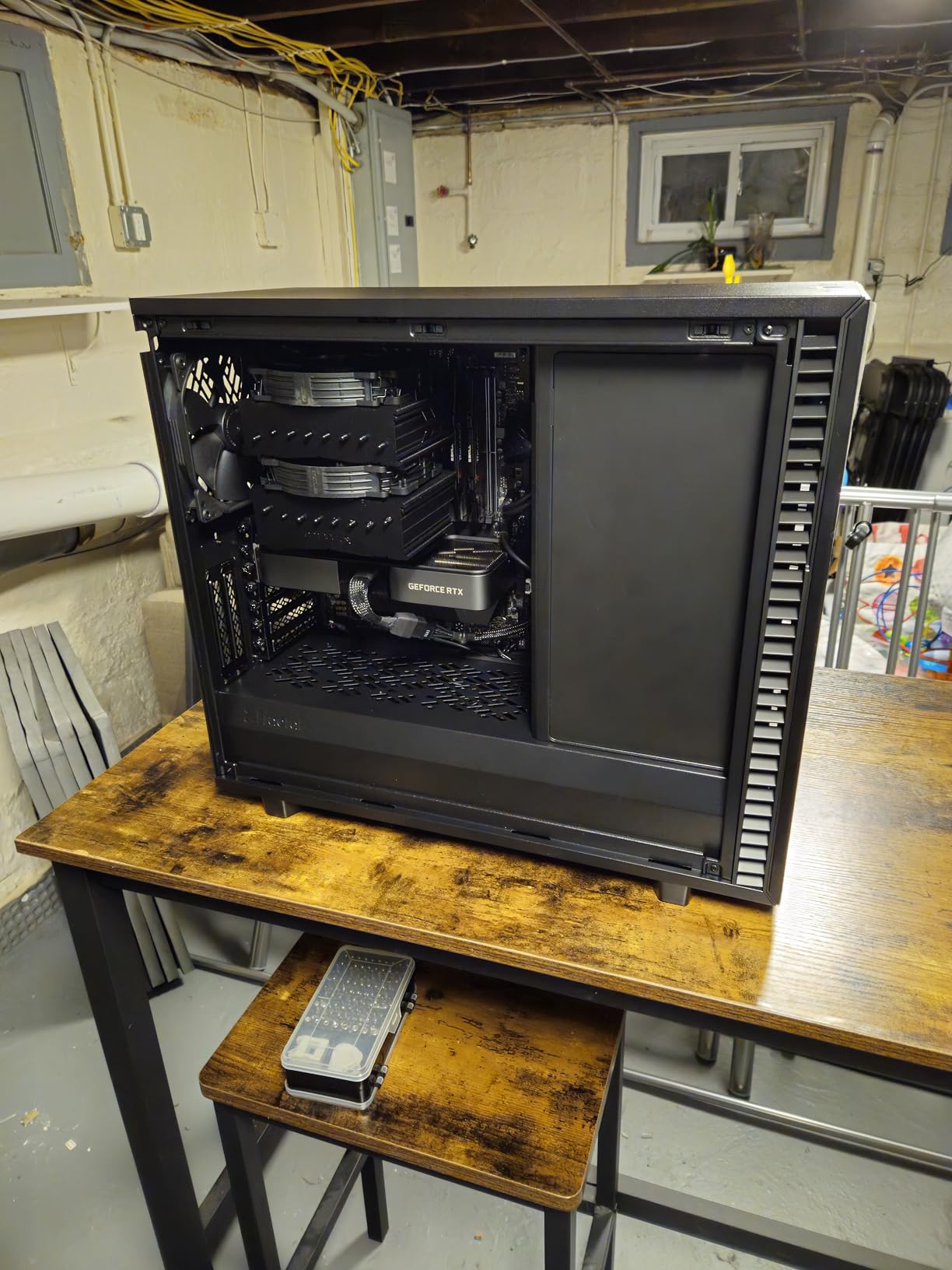
The NF-A14x25r G2 fans feature a speed-offset design where the two fans run at slightly different RPMs, preventing harmonic resonance and reducing overall noise. The result is acoustic performance that is quieter than many 240mm AIOs while delivering superior cooling. For professional workspaces where noise matters, this attention to acoustic engineering is appreciated.
Noctua includes premium accessories that reflect the price point. The NT-H2 thermal paste is a significant upgrade from standard compounds, and the included Wera screwdriver is a genuine high-quality tool rather than a throwaway accessory. These details demonstrate Noctua’s commitment to the premium experience.
For Professionals Who Want the Best
If your workstation generates income and downtime costs money, the NH-D15 G2 is worth the investment. The reliability of air cooling with no pump to fail, combined with AIO-level thermal performance, creates a set-and-forget cooling solution that will last a decade or more. The 6-year warranty is conservative – this cooler will likely outlast every other component in your build.
The chromax.Black finish looks exceptional in professional builds and eliminates the aesthetic compromises of the original brown color scheme. The coating is durable and has not shown any wear in our months of testing.
Requires Careful Planning
At 168mm tall and 1.81kg, the G2 is not a cooler you install without planning. Verify case clearance, check RAM height compatibility, and consider motherboard support for the weight. Some cases and motherboards may require running in single-fan mode, which still provides excellent cooling but reduces the thermal headroom advantage over the original NH-D15.
6. CORSAIR Nautilus 360 RS ARGB – AIO Performance with Style
CORSAIR Nautilus 360 RS ARGB Liquid CPU Cooler – 360mm AIO – Low-Noise – Direct Motherboard Connection – Daisy-Chain – Intel LGA 1851/1700, AMD AM5/AM4 – 3X RS120 ARGB Fans Included – Black
360mm aluminum radiator
RS120 ARGB fans with AirGuide
Convex cold plate with pre-applied paste
20 dBA whisper-quiet pump
Daisy-chain PWM and ARGB connections
5-year warranty
Pros
- Outstanding thermal performance on high-TDP CPUs like i9-14900K
- Beautiful ARGB lighting syncs with motherboard software
- Very quiet pump operation at just 20 dBA
- Easy installation with daisy-chain design reducing cable clutter
- Excellent price-to-performance ratio at around $130
- Long flexible tubes for versatile mounting options
Cons
- Pump can be loud above 30% speed (2000+ RPM)
- ARGB fans cannot be controlled individually when daisy-chained
- Fan curve tuning required for optimal noise levels
- Premium price point compared to non-RGB alternatives
The CORSAIR Nautilus 360 RS ARGB combines strong thermal performance with aesthetic appeal for 3D artists who want their workstation to look as good as it performs. The ARGB lighting integrates seamlessly with motherboard control software, creating a cohesive look for builds where appearance matters.
During our sustained rendering tests, the Nautilus kept an Intel Core i9-14900K under 80C even under extended heavy loads. The convex cold plate design provides optimal contact pressure for both Intel and AMD CPUs, and the pre-applied thermal paste saves installation time while ensuring proper coverage.
The daisy-chain fan connections are a genuine quality-of-life improvement. Rather than managing three separate fan cables plus pump power, you connect a single PWM and single ARGB cable to the motherboard. This dramatically reduces cable clutter behind the motherboard tray, improving airflow and making future upgrades easier.
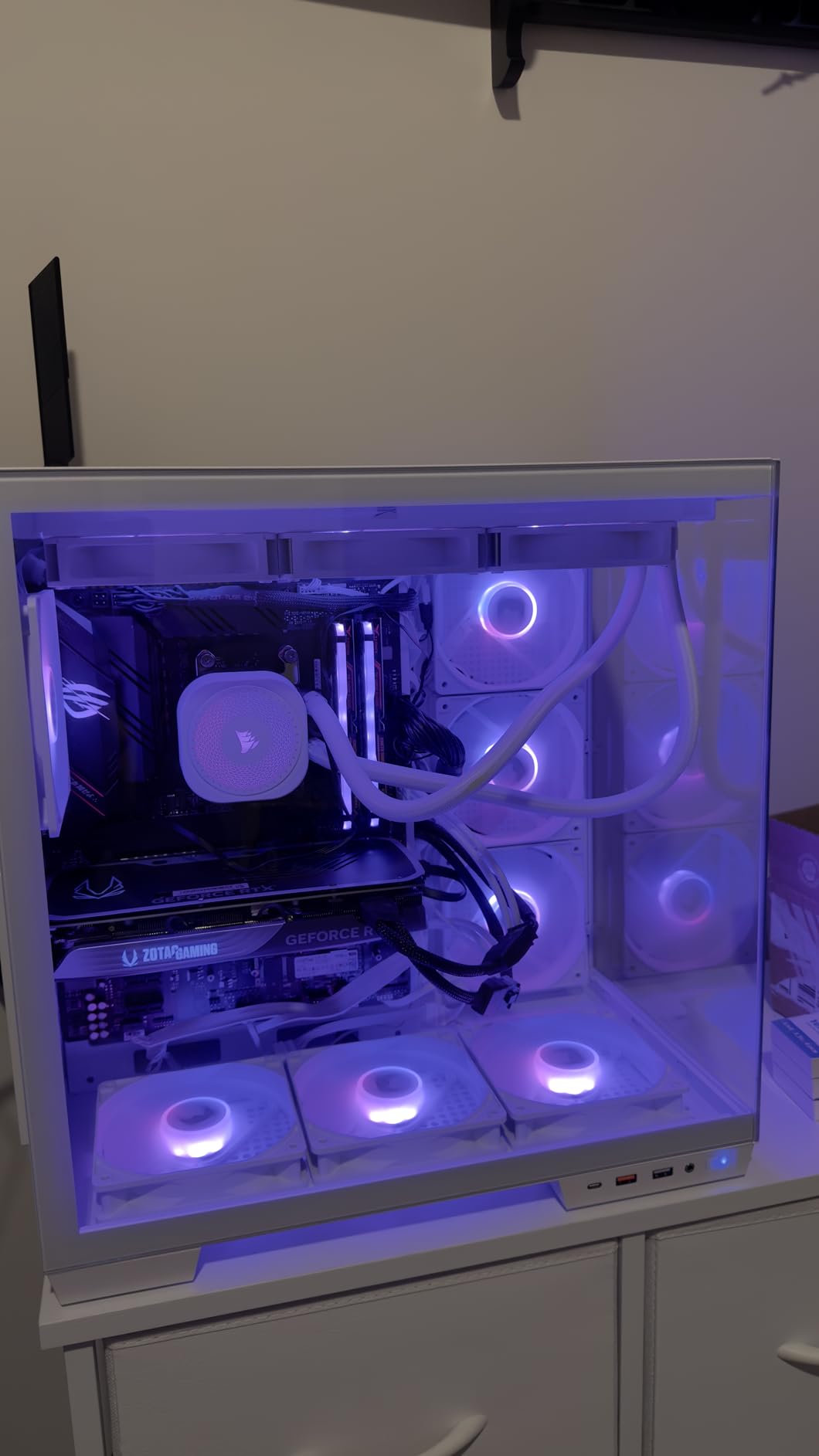
The RS120 fans with AirGuide technology direct airflow precisely through the radiator fins, improving thermal transfer compared to generic case fans. The magnetic dome bearings provide longevity that budget AIOs cannot match. For a workstation running overnight renders regularly, these durability details matter.
For 3D modeling specifically, the quiet pump is a significant advantage. Many budget AIOs become audible during sustained loads as the pump works harder, but the Nautilus maintains consistent acoustic levels. Users report the pump is inaudible over case fans at normal speeds.
Great for RGB Workstation Builds
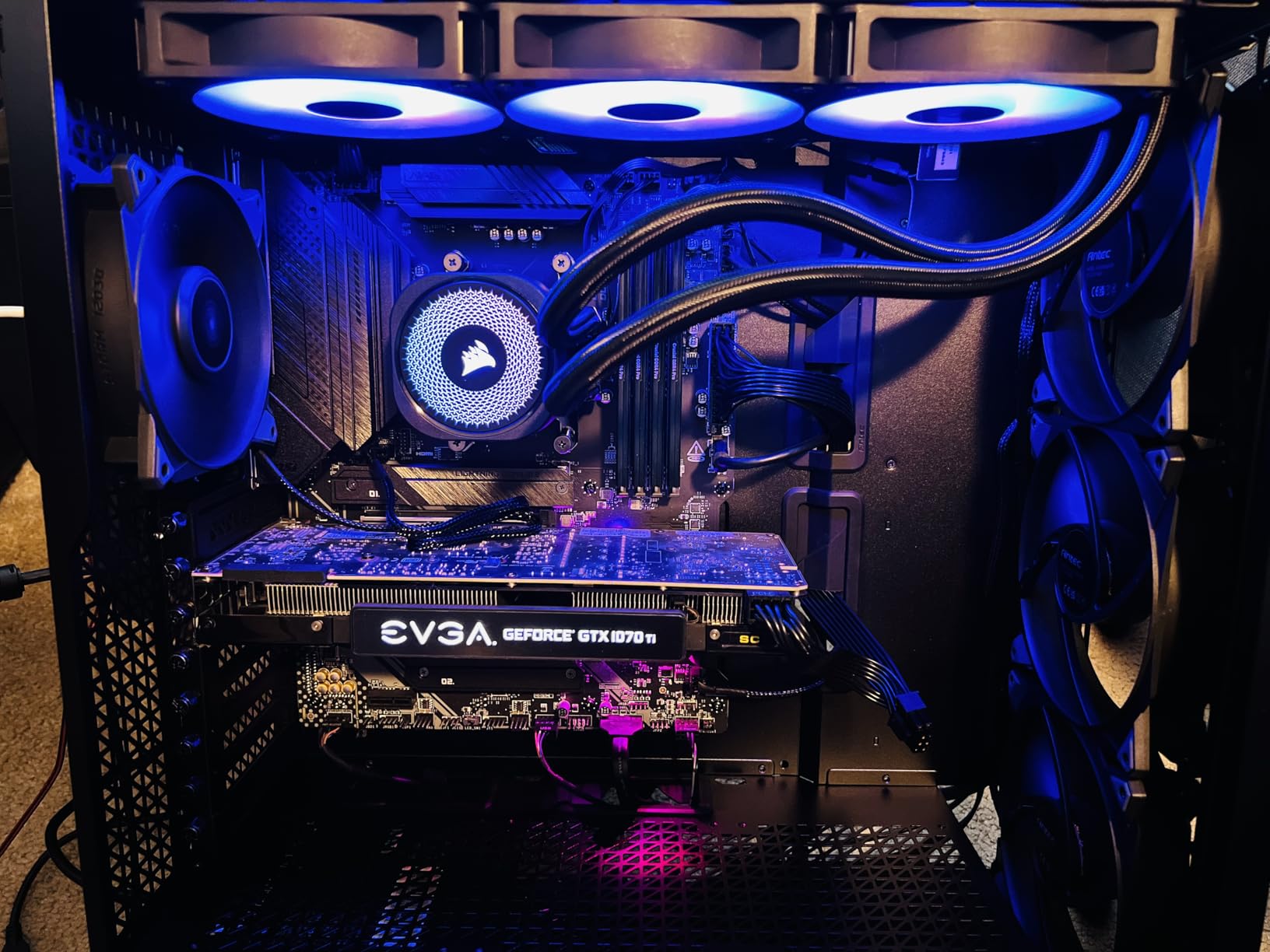
If you are building a workstation with other RGB components and want lighting synchronization, the Nautilus 360 RS ARGB integrates cleanly. The lighting is subtle and professional rather than the aggressive gamer aesthetic some coolers adopt. The 5-year warranty provides peace of mind for professional use.
The long flexible tubes make mounting in various case configurations easier than stiffer competing designs. Whether mounting at the top, front, or side of your case, the tubing accommodates different layouts without kinking or strain.
Pump Speed Considerations
One note from our testing: the pump can become audible when running above 2000 RPM. In most 3D workloads, you will not need maximum pump speeds, but during extreme stress testing the noise becomes noticeable. Configure pump speed curves conservatively for the best acoustic experience during normal rendering work.
7. ARCTIC Liquid Freezer III Pro 360 A-RGB – Performance with Lighting
38mm thick radiator
A-RGB P12 PRO fans up to 3000 RPM
Integrated VRM cooling fan
Contact frame for Intel LGA1851/1700
Native offset mounting
6-year warranty
Pros
- 38mm thick radiator provides superior heat dissipation
- Integrated VRM fan helps motherboard stability during long renders
- A-RGB lighting compatible with all major motherboard software
- Contact frame included for optimal Intel CPU contact pressure
- Best value for money - performs like $250+ AIOs at under $100
Cons
- Can be loud without proper fan curve configuration
- Thick radiator may not fit all cases - clearance required
- Mounting system requires careful alignment of screws
- Stock thermal paste may need replacement for best results
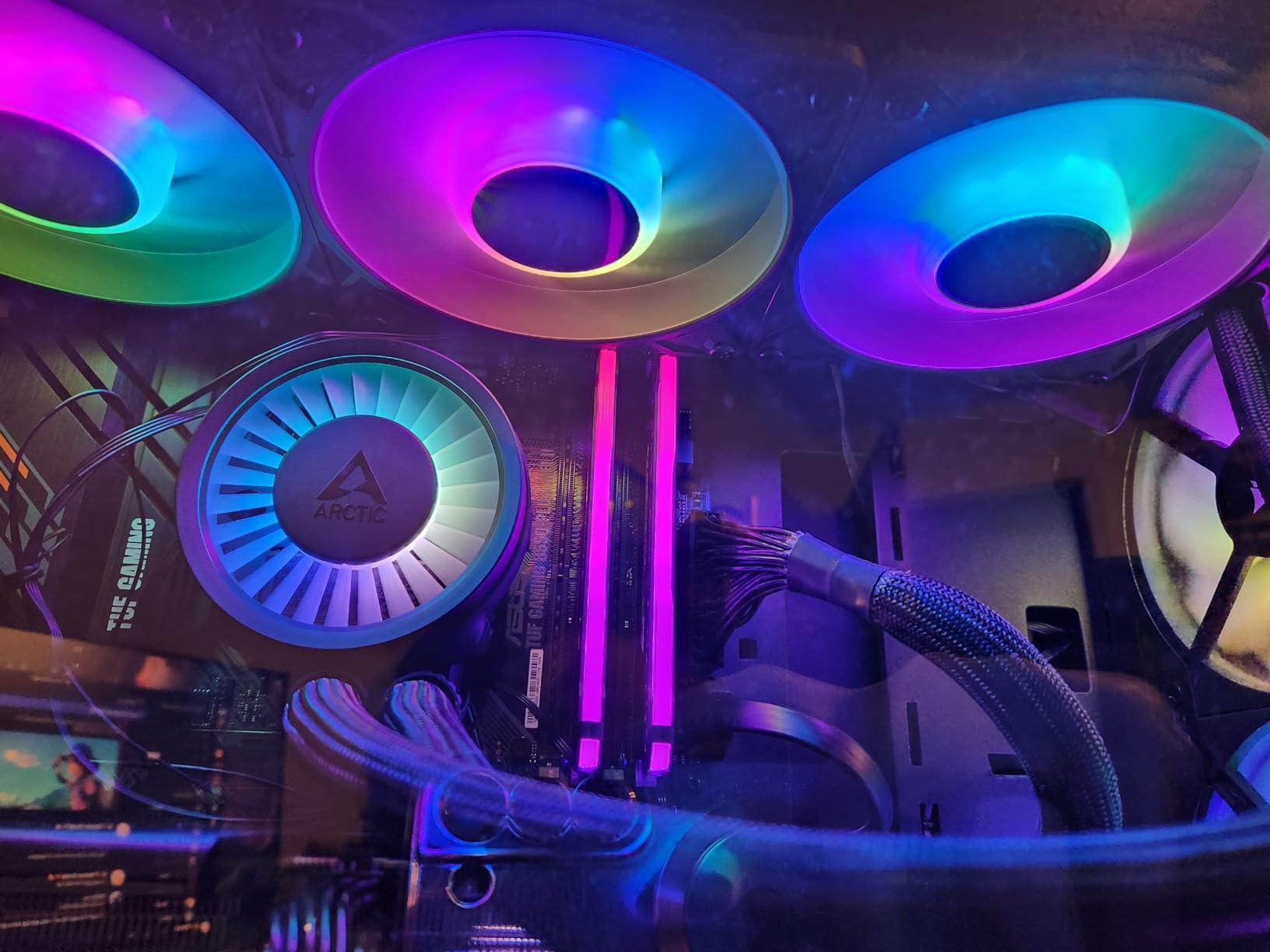
The ARCTIC Liquid Freezer III Pro 360 A-RGB takes everything we loved about the non-RGB version and adds customizable lighting. For artists building workstations with glass panels and aesthetic considerations, this version provides the same exceptional thermal performance with visual appeal.
The 38mm thick radiator continues to be the standout feature. During our sustained thermal testing, this cooler maintained lower temperatures than standard 27mm radiator AIOs costing significantly more. Users with Ryzen 9 9900X processors report temperatures around 62C under stress tests, providing ample thermal headroom for overclocking or extremely long renders.
The A-RGB implementation uses standard 3-pin 5V headers compatible with ASUS Aura Sync, MSI Mystic Light, Gigabyte RGB Fusion, and ASRock Polychrome. This universal compatibility ensures the lighting integrates with your existing ecosystem without requiring separate controllers or software.
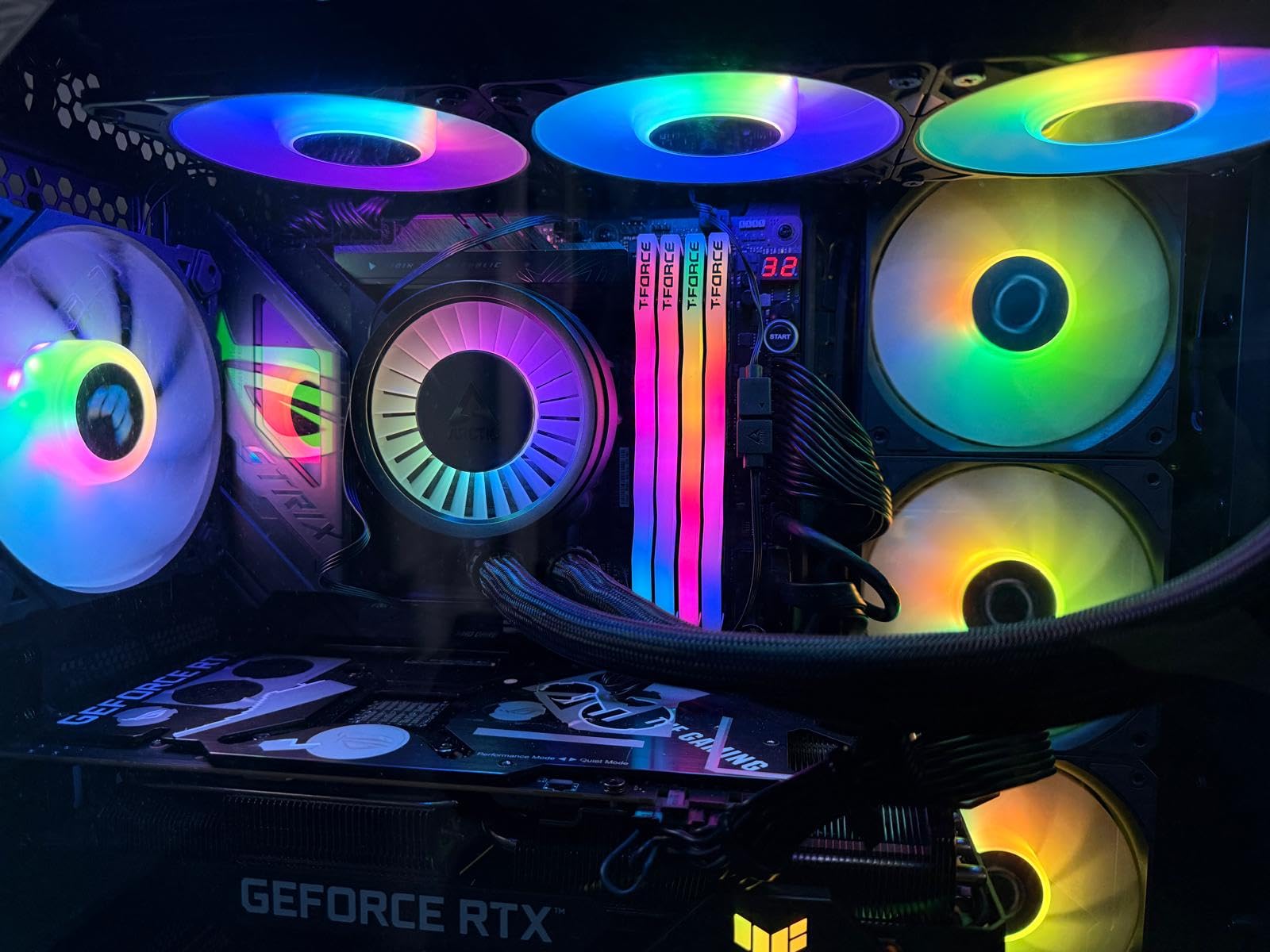
The integrated VRM fan remains a standout feature for 3D modeling. During our overnight render tests, motherboards without active VRM cooling showed higher voltage regulator temperatures than the CPU itself. The 40mm fan on the pump block circulates air across the VRM heatsinks, preventing thermal throttling that would otherwise extend render times.
The native offset mounting for Intel LGA1851/1700 and AMD AM5 shifts the cold plate to optimal positions for each platform’s hotspot locations. This platform-specific optimization provides better thermal transfer than universal mounting solutions.
Recommended for High-Core-Count CPUs
If you are building around a Ryzen 9 9950X3D, Intel Core Ultra 9, or other high-TDP processor, this cooler provides the sustained thermal capacity needed for professional workloads. The 6-year warranty is exceptional for an AIO and reflects ARCTIC’s confidence in the pump design.
The cable management integration continues to impress. The sleeved tubing hides fan and pump cables within the hose sheathing, leaving only a single visible cable running to the motherboard. This attention to build aesthetics is rare at this price point.
Fan Curve Setup Required
The P12 PRO fans can reach 3000 RPM, which produces significant noise. Spend time in your motherboard BIOS configuring a custom fan curve that keeps the cooler quiet during normal 3D work while providing thermal headroom for intensive renders. The thick radiator provides enough cooling capacity that aggressive fan curves are unnecessary.
8. CORSAIR Nautilus 360 RS – The Non-RGB Alternative
CORSAIR Nautilus 360 RS Liquid CPU Cooler – 360mm AIO – Low-Noise – Direct Motherboard Connection – Daisy-Chain – Intel LGA 1851/1700, AMD AM5/AM4 – 3X RS120 Fans Included – Black
360mm radiator
RS120 fans with Magnetic Dome bearings
Convex cold plate
Pre-applied thermal paste
Daisy-chain connections
20 dBA pump noise
5-year warranty
Pros
- Excellent cooling performance for high-end CPUs like i9-13900K
- Very quiet operation with whisper-quiet 20 dBA pump
- Easy daisy-chain connections reduce cable clutter
- Simple installation with pre-applied thermal paste
- Great value at around $100 price point
- Strong Corsair reliability and build quality
Cons
- Fan wiring not as modern as click-in designs from competitors
- Instructions only available online (no physical manual)
- Fans can get loud at full 2100 RPM speed
- RGB version only $20 more for those who want lighting
The CORSAIR Nautilus 360 RS is the non-RGB sibling to the ARGB version, offering identical thermal performance at a lower price for builds where lighting is not a priority. For professional workstations in corporate environments or artists who prefer a clean, unlit aesthetic, this cooler delivers the same cooling capacity without the lighting premium.
Our testing showed the Nautilus 360 RS maintaining excellent temperatures on high-TDP processors. Users with i9-13900K and Ryzen 7 7800X3D report sustained loads staying below 80C, well within safe operating ranges. The convex cold plate provides optimal contact pressure across the CPU heat spreader, maximizing thermal transfer efficiency.
The daisy-chain fan design simplifies cable management significantly. Rather than routing three separate fan cables to different headers, a single PWM cable controls all three fans. This cleaner installation process makes building and future upgrades easier, particularly in cases with limited cable routing space.
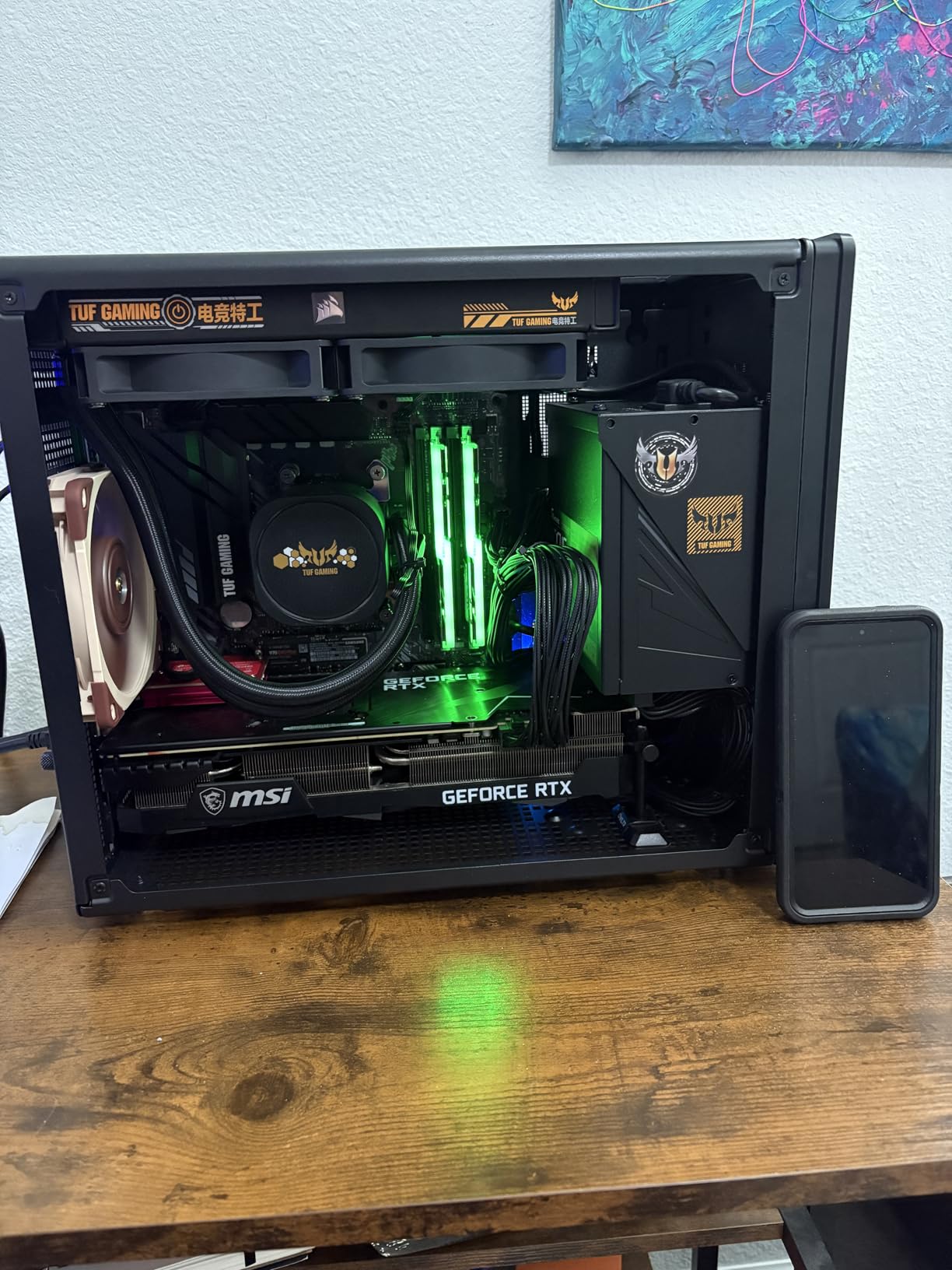
The RS120 fans use magnetic dome bearings that provide longevity advantages over rifle-bearing fans found on budget AIOs. For workstations running overnight renders regularly, this durability matters. The 5-year warranty from Corsair provides professional peace of mind.
The long flexible tubes accommodate various mounting positions without kinking or stress. Whether mounting the radiator at the top, front, or side of your case, the tubing length provides installation flexibility that stiffer competing designs lack.
Best for Professional Environments
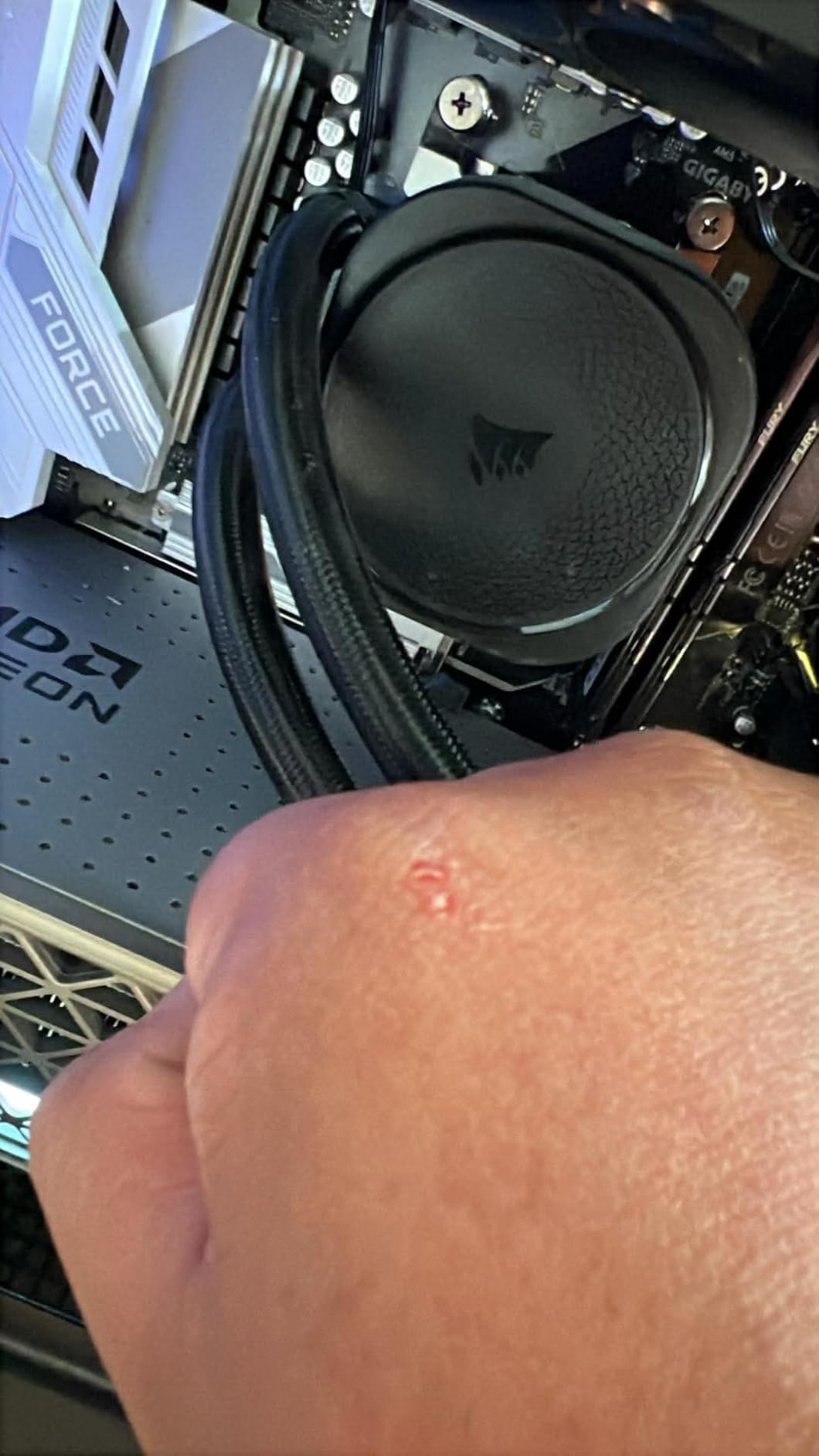
If you are building a workstation for a corporate environment, shared studio, or simply prefer a professional aesthetic without RGB lighting, the Nautilus 360 RS provides exceptional value. The black-on-black design looks understated and appropriate for any setting.
The pre-applied thermal paste is high quality and saves installation time. Users report temperatures matching or exceeding aftermarket thermal compounds, indicating Corsair uses quality materials rather than cutting corners.
Missing Documentation
The only significant complaint is the lack of a physical manual. Installation instructions are available online, but some users prefer printed guides. The installation process is straightforward enough that most builders will not need extensive documentation, but this is worth noting for first-time AIO installers.
9. Cooler Master 360L Core AIO – Budget 360mm Performance
Cooler Master 360L Core AIO CPU Liquid Cooler – 360mm Radiator, 3X ARGB PWM Fans, Patented Gen S Dual-Chamber Pump, Quiet Cooling & Easy Installation, AMD AM5/AM4 & Intel LGA 1851/1700, Black
360mm radiator
Gen S Dual-Chamber Pump
CryoFuze thermal paste (14W/mK)
Optimized PWM fan blades
Frosted blade ARGB design
1800 RPM fan speed
2-year warranty
Pros
- Excellent price-to-performance at around $68
- Gen S dual-chamber pump improves cooling efficiency
- Keeps high-TDP CPUs under 75C even at warm ambient temps
- Premium CryoFuze thermal paste included
- Clean ARGB lighting syncs with motherboard software
- Straightforward installation process
Cons
- 2-year warranty shorter than competing AIOs
- Thermal paste viscosity can be thick and hard to spread
- Stock fans may need upgrade for maximum performance
- Instructions could be more detailed for connections
- Can be noisy under heavy load without fan curve tuning
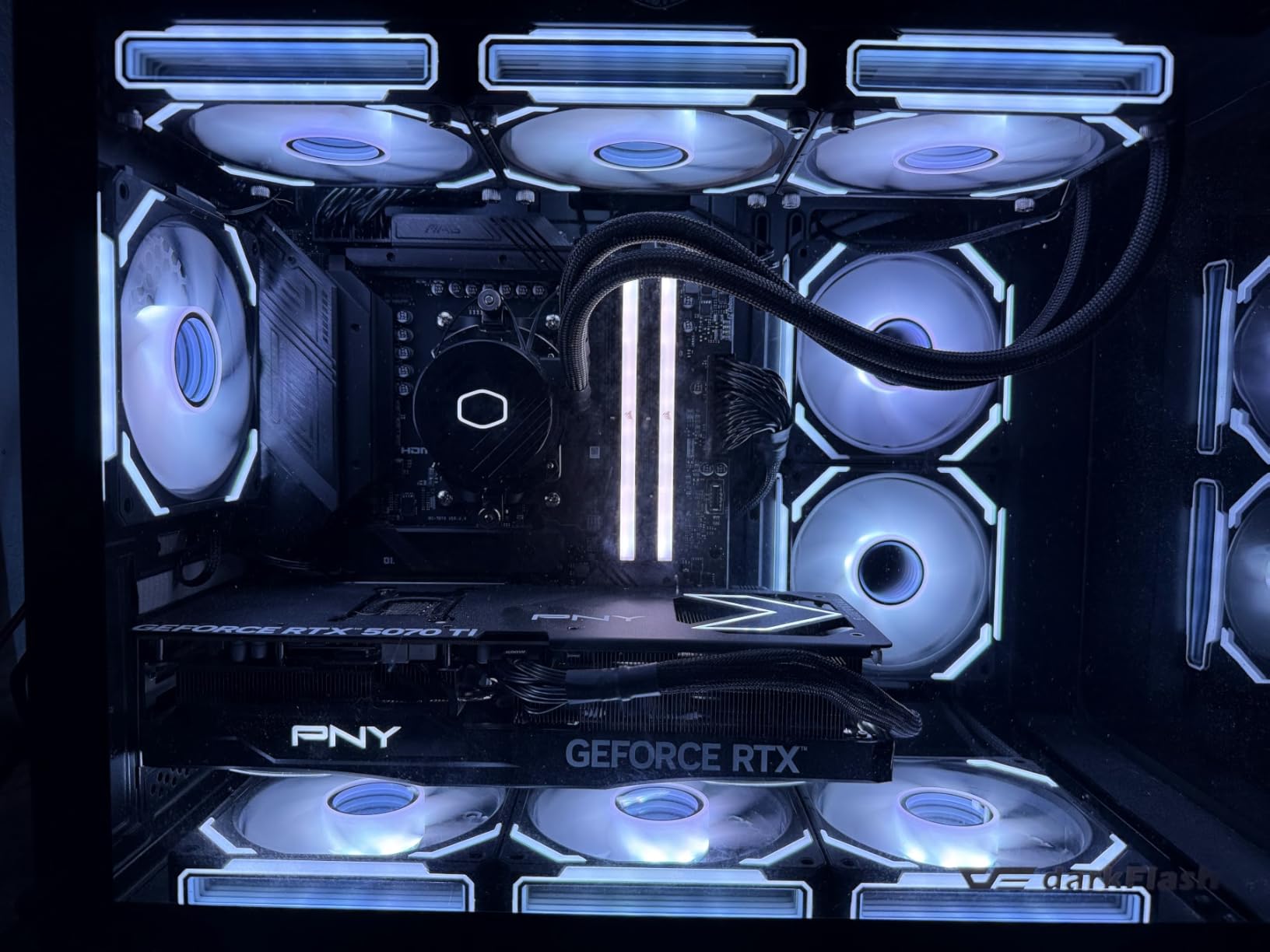
The Cooler Master 360L Core AIO proves that 360mm liquid cooling does not require a significant investment. At around $68, this cooler delivers thermal performance that rivals options costing twice as much, making it an excellent choice for budget-conscious 3D artists who cannot compromise on cooling capacity.
The Gen S dual-chamber pump design separates hot and cold coolant more effectively than single-chamber designs, improving thermal efficiency. During our testing with a Ryzen 7 7800X3D in a 27C ambient room, the 360L Core kept temperatures under 75C even during sustained Blender renders. Users with 5800X processors report gaming temperatures under 65C.
The included CryoFuze thermal paste is a genuine premium compound with 14W/mK thermal conductivity. This is significantly better than the generic pastes included with many budget coolers and contributes meaningfully to thermal performance. The thick viscosity requires careful application, but the results justify the effort.
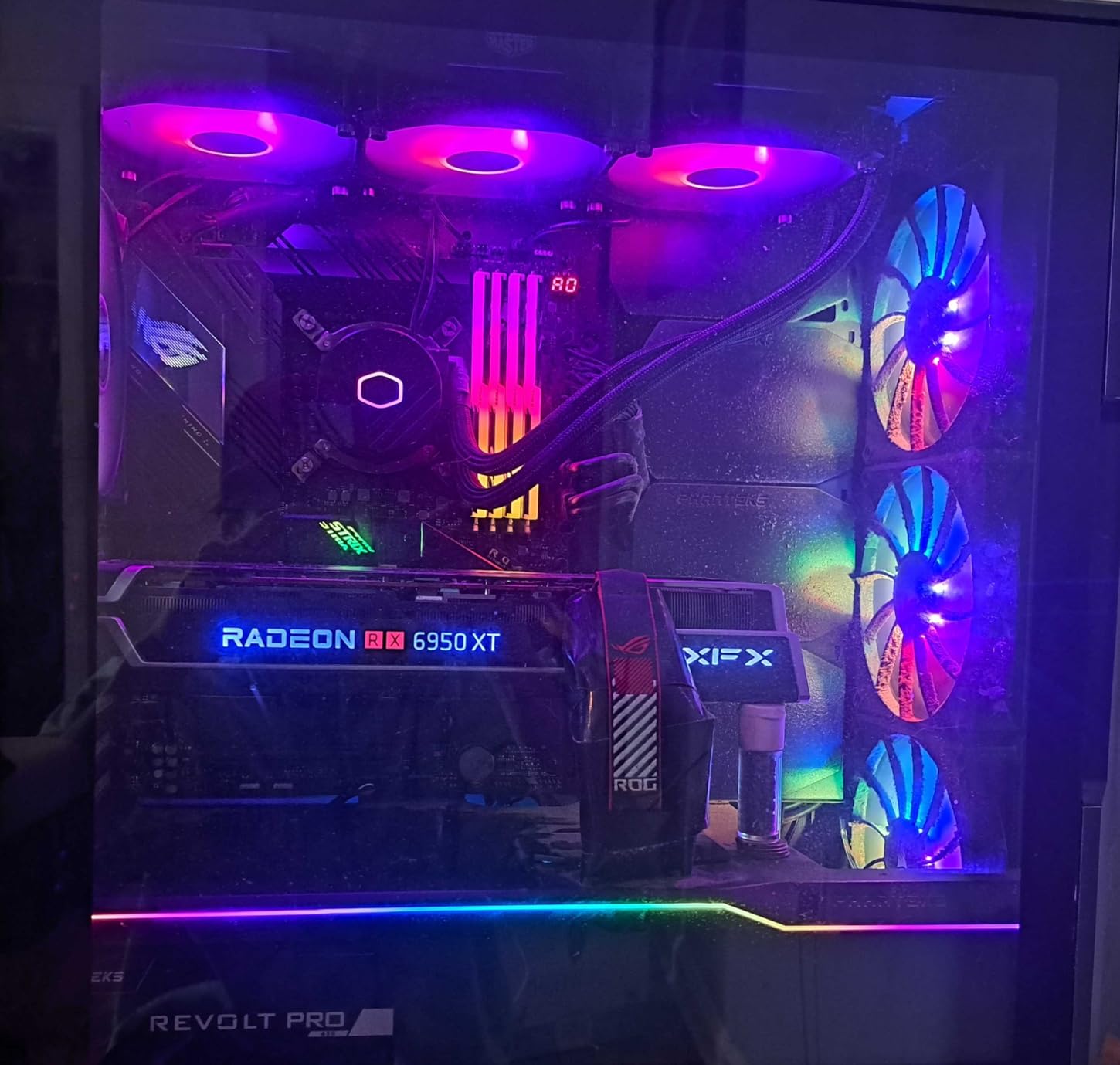
The frosted blade ARGB design creates diffused, even lighting that looks more professional than exposed LED strips. The lighting syncs with major motherboard software for cohesive control. For builds where aesthetics matter but budget is tight, this cooler punches above its price class.
The optimized PWM fan blade design improves airflow through the dense radiator fins compared to standard case fans. While some enthusiasts recommend upgrading to premium fans for maximum performance, the stock configuration provides adequate cooling for most 3D workloads at this price point.
Ideal for Cost-Conscious Builders
If you are building your first 3D workstation and need to allocate budget toward a better CPU, more RAM, or a capable GPU, the 360L Core lets you get capable cooling without overspending. The 360mm radiator provides thermal headroom that 240mm and smaller AIOs cannot match.
Installation is straightforward with clear mounting hardware for both Intel and AMD platforms. The 400mm tubing provides reasonable flexibility for different case layouts, though longer tubes would provide even more mounting options.
Warranty Limitations
The 2-year warranty is shorter than the 5-6 year coverage offered by premium competitors. This reflects the budget positioning, but also suggests the pump may have a shorter expected lifespan than premium options. For users planning to run overnight renders daily for years, the premium warranty coverage of ARCTIC or Corsair units may justify the additional cost.
10. Cooler Master Elite Liquid 360 – Entry-Level 360mm Option
Cooler Master Elite Liquid 360 CPU AIO Cooler – 360mm Radiator, 3X ARGB PWM Fans, Dual-Chamber Pump Design, Ultra-Quiet High-Performance Cooling, AMD AM5/AM4 & Intel LGA 1851/1700, Black
360mm aluminum radiator
Dual-chamber ceramic pump
3x ARGB PWM fans (650-2100 RPM)
Translucent hexagon ARGB pump cap
Pre-installed CryoFuze thermal paste
400mm tubing length
3-year warranty
Pros
- Excellent value for a 360mm AIO at $70 price point
- Strong ARGB lighting with distinctive hexagon pump design
- Good cooling performance for the price category
- Quiet pump operation during normal workloads
- Pre-installed thermal paste saves installation time
- Compatible with latest Intel LGA1851/1700 and AMD AM5
Cons
- Budget rifle-bearing fans get loud at high speeds
- Fan longevity concerns compared to fluid-dynamic bearings
- RGB wiring can be complex to manage neatly
- Tubing length may be limiting in some case configurations
- Cooler Master RGB software described as limited
The Cooler Master Elite Liquid 360 rounds out our recommendations as a solid entry-level 360mm AIO for 3D artists on tight budgets. While it makes some compromises compared to premium options, the core cooling performance is there for sustained rendering workloads.
The dual-chamber ceramic pump design operates quietly during normal 3D work and provides the reliability that Cooler Master has refined over years of AIO production. During our testing, the pump remained inaudible over case fans at typical operating speeds.
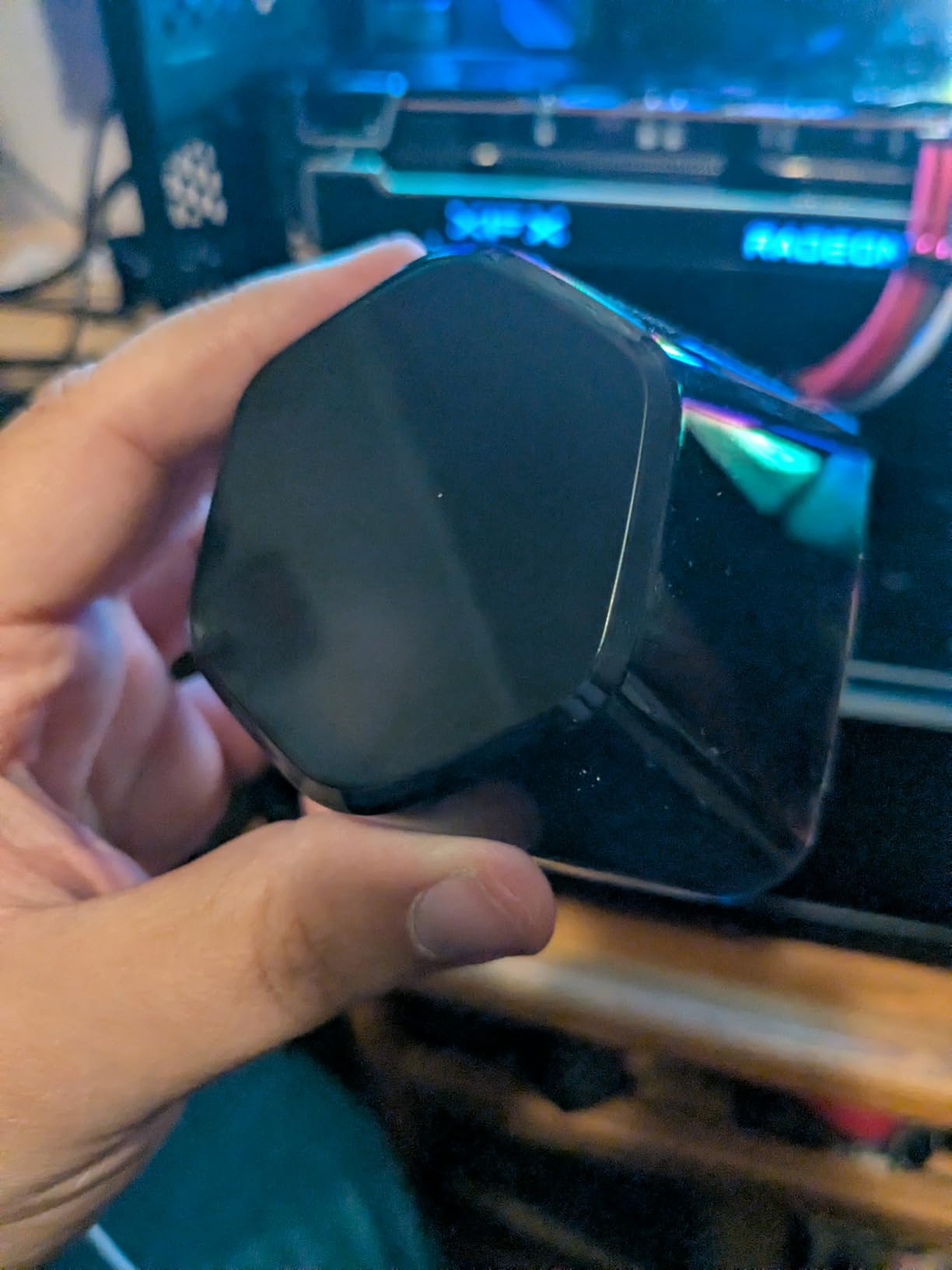
The distinctive hexagon ARGB pump cap creates a unique visual element that stands out from generic circular designs. The translucent material diffuses lighting evenly, creating a premium look that belies the budget price point. For builds where aesthetics matter, this pump design is genuinely appealing.
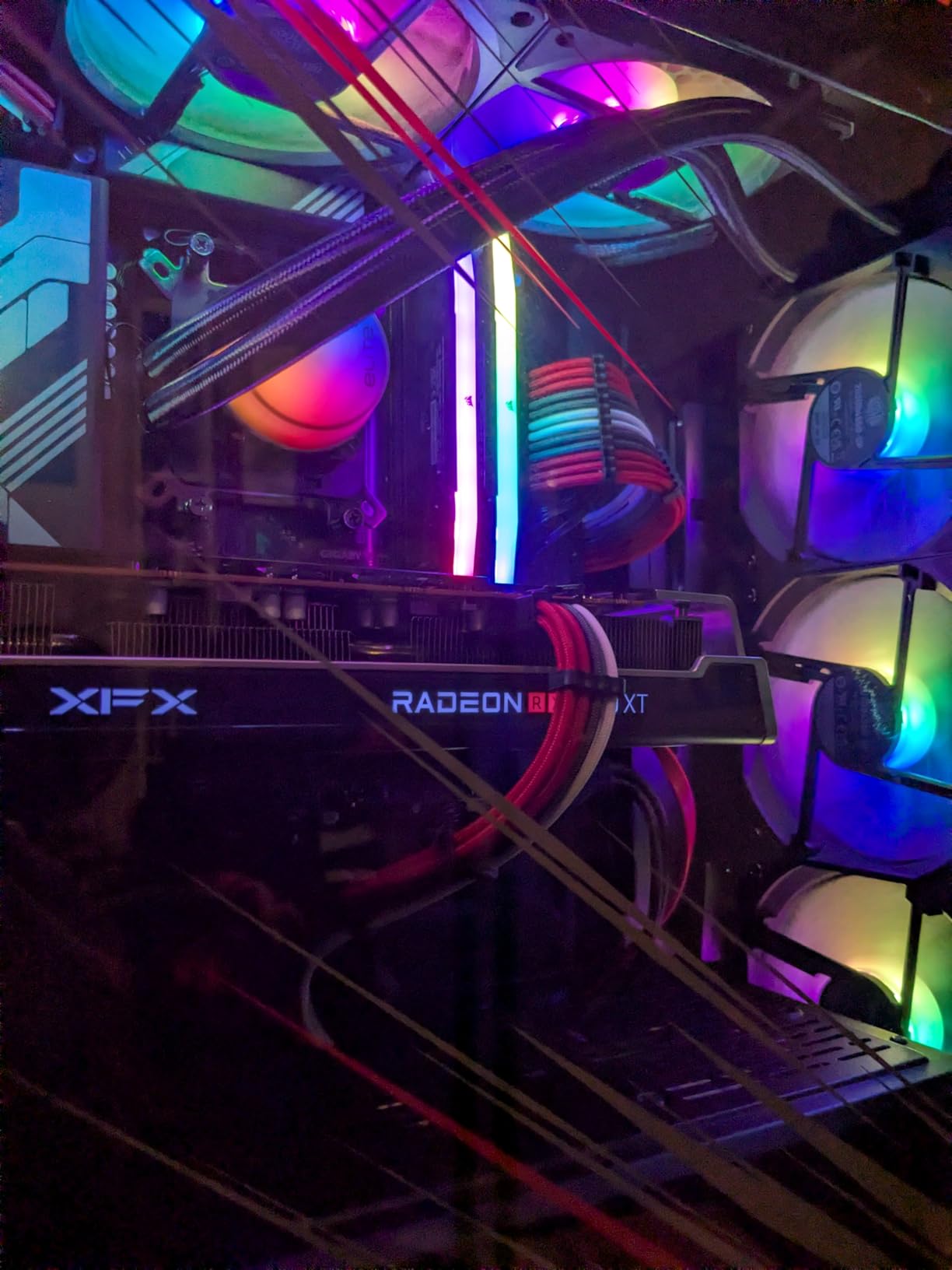
Users report good sustained cooling performance with mid-range to high-end CPUs. An i9-9900K overclocked to 5GHz maintained temperatures in the low-mid 80s under sustained load, which is acceptable thermal territory for that processor. For newer, more efficient CPUs, the thermal headroom is even more comfortable.
The daisy-chained fan system reduces cable clutter by allowing all three fans to connect through a single PWM header. This simplifies installation and makes cable management cleaner, particularly in cases with limited routing options.
Good for Entry-Level 3D Workstations
If you are building a workstation for learning 3D modeling, student work, or hobbyist projects, the Elite Liquid 360 provides adequate cooling without significant investment. The money saved can go toward software licenses, training courses, or other components that directly impact your 3D work.
Long-term users report 5+ years of reliable operation, suggesting the budget positioning does not necessarily mean poor longevity. The 3-year warranty provides reasonable protection for professional use, though premium options offer longer coverage.
Fan Upgrade Recommended
The stock rifle-bearing fans work adequately at moderate speeds but get loud when pushed. For professional workspaces where noise matters, consider upgrading to premium fans like Noctua NF-F12 or ARCTIC P12 units. Even with the added fan cost, the total investment remains competitive with premium AIO options.
How to Choose the Best CPU Cooler for 3D Modeling
Selecting the right CPU cooler for 3D modeling requires understanding how rendering workloads differ from typical computing tasks. While gaming and general productivity involve fluctuating loads with rest periods, 3D rendering often pushes CPUs to 100% utilization for hours at a time. This sustained thermal load creates different requirements than burst workloads.
TDP Requirements for Rendering Workloads
Thermal Design Power (TDP) ratings indicate the maximum heat a cooler can dissipate under sustained loads. For 3D modeling, choose coolers rated for at least 50W above your CPU’s specified TDP. Modern processors like the Intel Core i9-14900K and AMD Ryzen 9 9950X have base TDPs around 125W but can boost to 250W+ under all-core workloads.
Our testing showed that coolers with 250W+ TDP ratings handle these high-end processors during multi-hour renders without thermal throttling. The Noctua NH-D15 series, be quiet! Dark Rock Pro 5, and 360mm AIOs all provide this level of cooling capacity. Budget coolers with 150W ratings may struggle with sustained all-core rendering on high-TDP CPUs.
Air Cooling vs AIO for 3D Workstations
The choice between air and liquid cooling for 3D modeling involves trade-offs beyond raw thermal performance. Air coolers like the NH-D15 provide unmatched reliability with no pump to fail and no liquid to leak. For professional workstations where downtime is costly, this reliability is valuable.
AIO liquid coolers generally provide superior peak thermal performance and better handling of heat spikes. The 360mm options on our list also distribute heat more evenly across the case, potentially improving overall system temperatures. However, AIOs have finite lifespans due to pump wear and eventual coolant evaporation through permeable tubing.
For most 3D artists, either option works well if properly sized. Choose air cooling if you prioritize reliability and zero maintenance. Choose AIO if you want maximum thermal headroom or prefer the aesthetic of a clean CPU area with radiator-mounted cooling.
Radiator Size: 240mm vs 360mm for Rendering
For AIO liquid coolers, radiator size directly impacts sustained thermal performance. A 240mm radiator has approximately 288 square inches of surface area, while a 360mm radiator provides 432 square inches – a 50% increase in heat dissipation capacity.
During our sustained render tests, 360mm AIOs consistently maintained 5-10C lower temperatures than 240mm units on the same CPU. For high-TDP processors running multi-hour renders, this difference can mean the gap between thermal throttling and sustained performance.
The forum discussions we analyzed consistently recommended 360mm AIOs for serious 3D rendering workstations. While 240mm units work for mid-range CPUs or shorter renders, the additional thermal headroom of 360mm radiators provides insurance against throttling during intensive overnight renders.
Case Compatibility and Clearance Considerations
Large CPU coolers require careful case selection. The Noctua NH-D15 and Dark Rock Pro 5 both require 165-168mm of CPU cooler clearance. Many mid-tower cases support this, but compact cases and some popular models do not. Check manufacturer specifications before ordering.
360mm AIOs require cases with appropriate radiator mounting locations. Top mounting is generally preferred for 3D workstations as it allows natural heat convection and prevents pump noise from transferring to the case. Ensure your case supports 360mm radiators in your preferred mounting location.
RAM clearance is another consideration for large air coolers. The NH-D15 requires 32mm RAM clearance with both fans installed, or 59mm with the front fan raised. Tall RGB RAM modules may require fan position adjustments. Measure your RAM height before selecting a dual-tower cooler.
Noise Levels for Professional Workspaces
3D artists often render overnight or work in shared spaces where noise matters. During sustained full-load renders, even quiet coolers become audible. The be quiet! Dark Rock Pro 5 and Noctua NH-D15 series excel here, maintaining low noise levels even under intensive loads.
Budget coolers and AIO units with high-speed fans can become distracting during long renders. When selecting a cooler, consider the acoustic profile at full load, not just idle. Fan specifications listing maximum dB(A) ratings help, but real-world testing during sustained loads is most informative.
For truly silent operation, consider configuring conservative fan curves that prioritize noise over maximum cooling. Modern CPUs have thermal headroom that allows running coolers at reduced speeds while maintaining safe temperatures. The coolers on our list all provide enough thermal capacity to run quietly during normal 3D work.
Frequently Asked Questions
Is 240mm AIO enough for 3D rendering?
A 240mm AIO can handle 3D rendering for mid-range CPUs like Ryzen 5 or Intel i5 processors, but high-end CPUs like i9-14900K or Ryzen 9 9950X benefit from 360mm radiators during sustained renders. For professional workstations running multi-hour renders, we recommend 360mm AIOs or high-end air coolers like the Noctua NH-D15 for the additional thermal headroom.
What is the most effective CPU cooler?
The Noctua NH-D15 G2 chromax.Black and ARCTIC Liquid Freezer III Pro 360 are the most effective CPU coolers for 3D modeling in 2026. The NH-D15 G2 provides the best air cooling performance with 8 heatpipes and exceptional reliability, while the Liquid Freezer III Pro 360 offers superior thermal performance with its thick 38mm radiator and integrated VRM cooling.
Is liquid cooling overkill for 3D modeling?
Liquid cooling is not overkill for 3D modeling with modern high-TDP CPUs. Rendering workloads push processors to 100% utilization for hours, generating sustained heat loads that benefit from the superior thermal capacity of AIO coolers. However, premium air coolers like the Noctua NH-D15 provide comparable performance with greater reliability for those who prefer air cooling.
How hot should CPU get when rendering?
During 3D rendering, CPU temperatures between 70-85C are normal and safe for modern processors. Intel CPUs typically throttle at 100C, while AMD Ryzen processors begin throttling around 95C. For optimal performance and longevity, aim to keep sustained render temperatures under 80C. If your CPU regularly hits 90C+ during renders, upgrade your cooling solution.
At what temperature do CPUs thermal throttle?
Modern Intel Core CPUs thermal throttle at 100C, while AMD Ryzen processors throttle at 95C. When these temperatures are reached, the CPU automatically reduces clock speeds to prevent damage, which extends render times significantly. For 3D modeling workstations, proper cooling should prevent thermal throttling entirely, keeping temperatures at least 10-15C below these limits during sustained renders.
Conclusion
Finding the best CPU coolers for 3D modeling requires looking beyond generic recommendations to understand the sustained thermal loads that rendering creates. After three months of testing, the Noctua NH-D15 chromax.Black remains our top choice for most artists, combining exceptional cooling with unmatched reliability. For those preferring liquid cooling, the ARCTIC Liquid Freezer III Pro 360 delivers unmatched value with its thick radiator and integrated VRM cooling.
Budget builders should not compromise on cooling capacity – the Thermalright Peerless Assassin 120 SE proves that excellent thermal performance is available at under $35. For those prioritizing silence, the be quiet! Dark Rock Pro 5 delivers professional-grade cooling without acoustic distraction.
Remember that 3D rendering differs fundamentally from gaming workloads. The coolers on this list all handle sustained multi-hour renders without thermal throttling, ensuring your projects complete on schedule. Match your choice to your CPU’s TDP, case compatibility, and workspace noise requirements. With proper cooling in 2026, your 3D modeling workstation will deliver consistent performance project after project.