
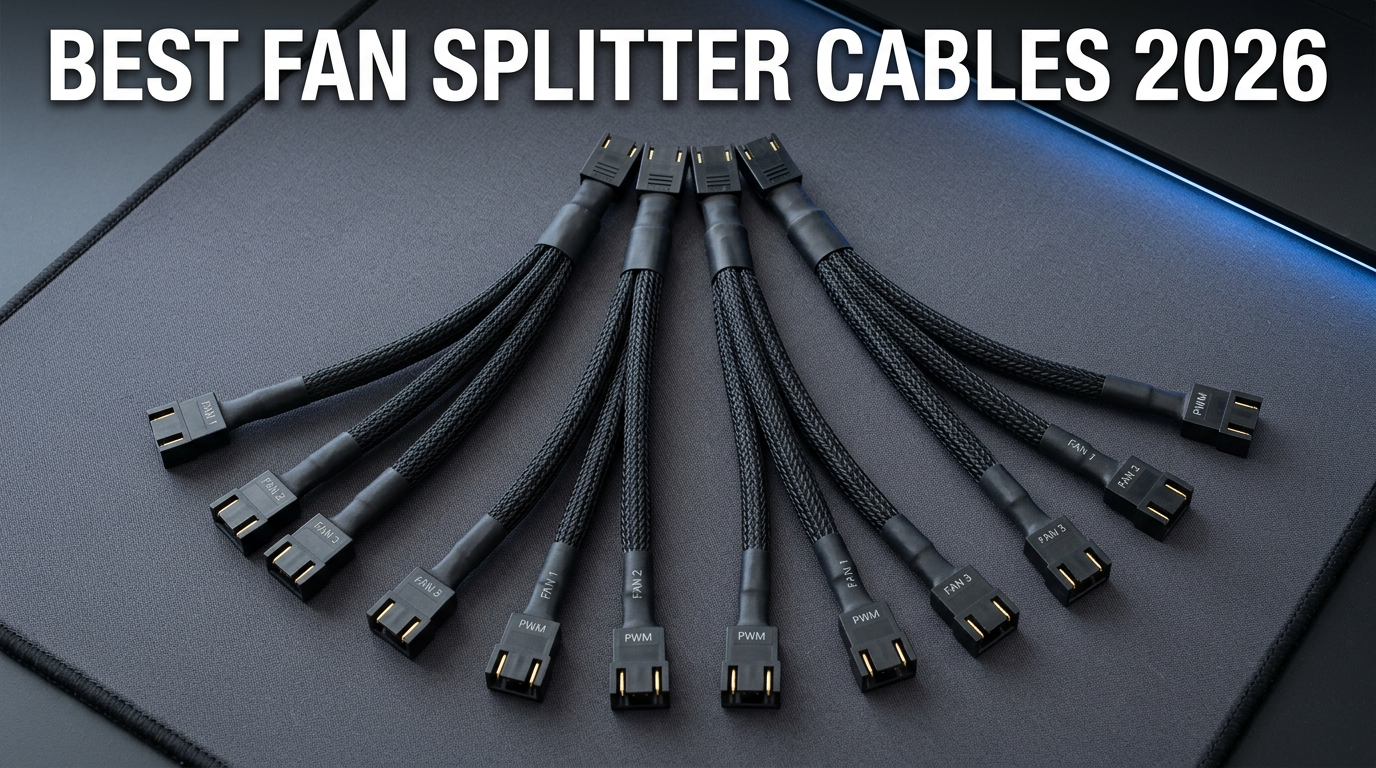
When I built my first gaming PC, I hit a wall that frustrates many builders: my motherboard had only four fan headers, but my case could fit eight fans. That moment sent me searching for fan splitter cables. If you’re in the same boat, you’re not alone. Most gaming motherboards offer limited fan headers while modern cases support multiple intake and exhaust configurations.
The best fan splitter cables for gaming PCs solve this problem by letting you connect multiple fans to a single motherboard header. They maintain PWM control so you can still adjust fan speeds through software. I’ve tested dozens of splitters over the years, and the quality varies dramatically from flimsy generic cables to premium sleeved options that look and perform beautifully.
In this guide, I’ll share my top picks for fan splitters in 2026, covering everything from basic 1-to-2 splitters to multi-fan hubs. Whether you’re building a budget gaming rig or a high-airflow system with RGB lighting, I’ve got recommendations that will keep your temps down and your cable management clean. If you’re also working on GPU mounting, check out our guide on PCIe riser cables for vertical GPU mounting.
Top 3 Picks for Fan Splitter Cables


Noctua NA-SYC1 chromax.Black
- Premium Build
- 3 Y-Cables
- 6-Year Warranty
- Black Sleeving
- 4-pin PWM
Best Fan Splitter Cables for Gaming PCs in 2026
| Product | Specs | Action |
|---|---|---|
|
JBtek All Black Sleeved PWM Splitter (2-Pack)
|
|
Check Latest Price |
 Mbiydeg 3 Way PWM Fan Splitter (2-Pack)
|
|
Check Latest Price |
 ARCTIC 4-Pin PWM PST Cable
|
|
Check Latest Price |
 Cable Matters 2 Way PWM Splitter (2-Pack)
|
|
Check Latest Price |
 ThreeBulls PWM Fan Hub 1-to-5
|
|
Check Latest Price |
 Aypzuke PWM Fan Splitter (3-Pack)
|
|
Check Latest Price |
 Cable Matters PC Fan Hub 1-to-5
|
|
Check Latest Price |
 Jstincal ARGB Splitter Cable (2-Pack)
|
|
Check Latest Price |
|
UMLIFE 4-Pin PWM Fan Hub (2-Pack)
|
|
Check Latest Price |
|
Noctua NA-SYC1 chromax.Black (3-Pack)
|
|
Check Latest Price |
1. JBtek All Black Sleeved PWM Fan Splitter – Best Overall Choice
JBtek All Black Sleeved PWM Fan Splitter Cable 1 to 2 Converter, 2 Pack
1-to-2 Splitter
240mm Length
2-Pack
4-pin PWM
Pros
- High quality all black sleeved cable
- Works as intended for splitting PWM signal
- Compatible with both 4-pin PWM and 3-pin fan connectors
- Cost-effective 2-pack
- 11
- 000+ reviews with 4.7 rating
Cons
- Only one fan reports RPM speed
- Some units may have slightly bent pins
- Must use identical fans for proper operation
I’ve used JBtek splitters in multiple builds over the years, and they consistently deliver reliable performance. The all-black sleeved design looks clean in any case, and the 240mm length gives you enough slack for neat cable routing without excess wire cluttering your build.
The 1-to-2 configuration is perfect for most gaming setups. I typically use these to pair front intake fans or top exhaust fans, keeping them synchronized through a single header. The sleeving quality feels substantial, not like the cheap plastic coating you find on generic splitters.
One thing to understand about this splitter is the master/slave design. Only one connector reports RPM back to the motherboard. This is actually the correct way to design a splitter because it prevents RPM signal conflicts. Your motherboard sees the speed of one fan and controls both fans with the same PWM signal.
Compatibility has never been an issue in my experience. I’ve used these with Corsair, Cooler Master, and Noctua fans without problems. The connectors fit snugly on both 4-pin PWM headers and work with 3-pin fans too, though 3-pin fans will run at full speed rather than PWM controlled.
Perfect for builders who want
This splitter is ideal for anyone building a gaming PC with more fans than motherboard headers. If you’re running 6-8 case fans and your motherboard only has 4-6 headers, this 2-pack gives you room to expand. It’s also great for builders who care about aesthetics since the black sleeving looks professional.
Consider alternatives if
If you need to control more than 2 fans from one header, look at the 1-to-3 or hub options below. Also, if you want individual RPM readings from each fan, you’ll need a powered fan hub with separate monitoring rather than a basic splitter.
2. Mbiydeg 3 Way PWM Fan Splitter – Best 1-to-3 Option
Mbiydeg 3 Way PWM Fan Splitter Cable, 2 Pcs 4 Pin PWM Fan Splitter, 1 to 3 Converter, 11 Inch, for Computer ATX Case 4-Pin/3-Pin Cooling Fan
1-to-3 Splitter
11 inch Length
2-Pack
Braided PVC
Pros
- Efficiently distributes power to multiple fans
- Versatile compatibility with 4-pin and 3-pin
- PVC braided rope construction
- 11-inch length for cable management
- Sturdy locking clips
Cons
- Clearance issues between fans and headers
- Must check total fan current limits
The Mbiydeg 3-way splitter is a newer player in the market, but it’s earned an impressive 4.8-star rating. I like that it uses PVC braided construction rather than basic plastic insulation. The braiding adds durability and makes the cable more flexible for tight routing situations.
Having three fan outputs from one header opens up more configuration options. I’ve used this type of splitter for triple-fan radiator setups where I want all three fans synchronized. The 11-inch length is generous enough for mid-tower cases while keeping excess cable manageable.
The connectors feature locking clips that secure firmly to fan headers. This is a small detail that matters when you’re working inside a crowded case. I’ve had cheaper splitters pop off during builds, which is frustrating when everything is already assembled.
Just remember the amperage math. If you’re connecting three fans that each draw 0.25A, that’s 0.75A total. Most motherboard headers are rated for 1A, so you’re within safe limits. But high-performance fans can draw more, so always check your fan specifications before loading up a splitter.
Perfect for builders who want
This is the splitter to get if you need to run three fans from one header. It’s perfect for triple-fan front intake configurations or triple 120mm radiator setups. The 2-pack value makes it economical for builds with multiple fan groups.
Consider alternatives if
If you’re running high-amperage performance fans, you might exceed the safe limit with three fans on one header. In that case, consider a powered hub instead. Also, if you have limited space between your fans and motherboard headers, the cable thickness might cause clearance issues.
3. ARCTIC 4-Pin PWM Fan Splitter PST Cable – Best Daisy Chain Design
ARCTIC 4-Pin PWM Fan Splitter Cable - PST Extension-Cable for 4 Case Coolers - Computer Ventilation - Multi-Port Connector - Y-Adapter - Power Distributor - Black
1-to-4 Daisy Chain
70cm Total
RPM Signal,PWM Sync,RoHS Compliant
Pros
- Connects up to 4 case fans
- 70cm cable length
- PST shared PWM technology
- Minimalistic thin design
- Well-made connectors
Cons
- Unsleeved design
- 100mm spacing may be short for 140mm fans
- Only first socket returns RPM
ARCTIC takes a different approach with their PST (Parallel Signal Transmission) cable. Instead of a Y-splitter, this is a daisy chain design with four fan connectors spaced along a 70cm cable. I find this layout works beautifully for lining up multiple fans along a case panel.
The cable starts at 400mm to the first socket, then adds 100mm between each subsequent socket. This spacing works well for 120mm fans mounted side by side. The overall 700mm length gives you plenty of reach from motherboard to your furthest fan location.
What I appreciate about ARCTIC’s design is the minimalistic approach. The unsleeved cable is thin and easy to route behind motherboard trays or through grommets. While some builders prefer sleeved cables for aesthetics, the thin profile here makes cable management genuinely easier.
The PWM signal passes synchronously to all connected fans, so they all spin at the same speed. The first socket returns RPM to the motherboard, maintaining proper speed monitoring. This is a clean, well-engineered solution from a brand known for cooling products.
Perfect for builders who want
This cable excels for builds with multiple fans in a row, like three front intake fans or top-mounted exhaust fans. The daisy chain design reduces cable clutter compared to multiple Y-splitters. It’s also great if you prioritize function over flashiness.
Consider alternatives if
If you’re running 140mm fans, the 100mm spacing between sockets might not align with your fan positions. Also, if you want the sleeved aesthetic for a showcase build, you’ll need to look elsewhere or add your own sleeving.
4. Cable Matters 2 Way PWM Fan Splitter – Best Compact Design
Cable Matters 2-Pack 2 Way 4 Pin PWM Fan Splitter Cable - 4 Inches, PC Fan Splitter 1 to 2 Converter, PC PWM Extension Cable
1-to-2 Splitter
4 inch Length
2-Pack
Sleeved Black
Pros
- Well-constructed with black sleeving
- Short 4-inch length for clean layouts
- Compatible with major fan brands
- Cost-effective 2-pack for 4 fans
- Cable Matters quality
Cons
- Short length may not work for all configs
- 3-pin connector lacks RPM signal
Cable Matters is a brand I trust for reliable cable products, and this 2-way splitter lives up to that reputation. The 4-inch length is notably shorter than most competitors, which I actually prefer for builds where the splitter sits close to the motherboard.
I’ve used these in compact builds where extra cable length just creates mess. The short length means less wire to hide, and the black sleeving looks professional. You get two splitters in the pack, enough to connect four fans from two headers.
The master/slave design follows standard splitter conventions. The 4-pin connector reports RPM to the motherboard while both fans receive the same PWM control signal. I’ve tested these with fans from Corsair, Cooler Master, Noctua, and Thermaltake without any compatibility issues.
Cable Matters also includes proper strain relief at the connector junctions. This is where cheaper splitters often fail, with wires pulling loose over time. These have held up well in builds I’ve done over the past few years.
Perfect for builders who want
These are ideal for compact builds or situations where your fan headers are close to your fan locations. If you hate excess cable clutter and want a clean, professional look, the short length is a feature, not a limitation.
Consider alternatives if
If your fans are mounted far from your motherboard headers, the 4-inch length won’t provide enough reach. You’ll need a longer splitter or an extension cable. Also, if you need to split more than two fans per header, consider a 1-to-3 or hub option.
5. ThreeBulls PWM Fan Hub – Best Budget 1-to-5 Hub
ThreeBulls PWM Fan Hub, PC CPU Cooling 4 PIN/3PIN Power Fan Extension Cable Hub Splitter Adapter Sleeved Case for 12V Desktop Computer Cooler Fans 1 to 5 Way (15.7 Inch)
1-to-5 Hub
15.7 inch Length
Nylon Braided
Adhesive Mount
Pros
- Connects up to 5 fans
- 15.7 inch length provides reach
- Nylon braided cable
- Includes adhesive pad for mounting
- Cost-effective for many fans
Cons
- Not powered
- draws from motherboard
- Build quality middling
- Pins may arrive bent
- Recommended 3-4 fans max
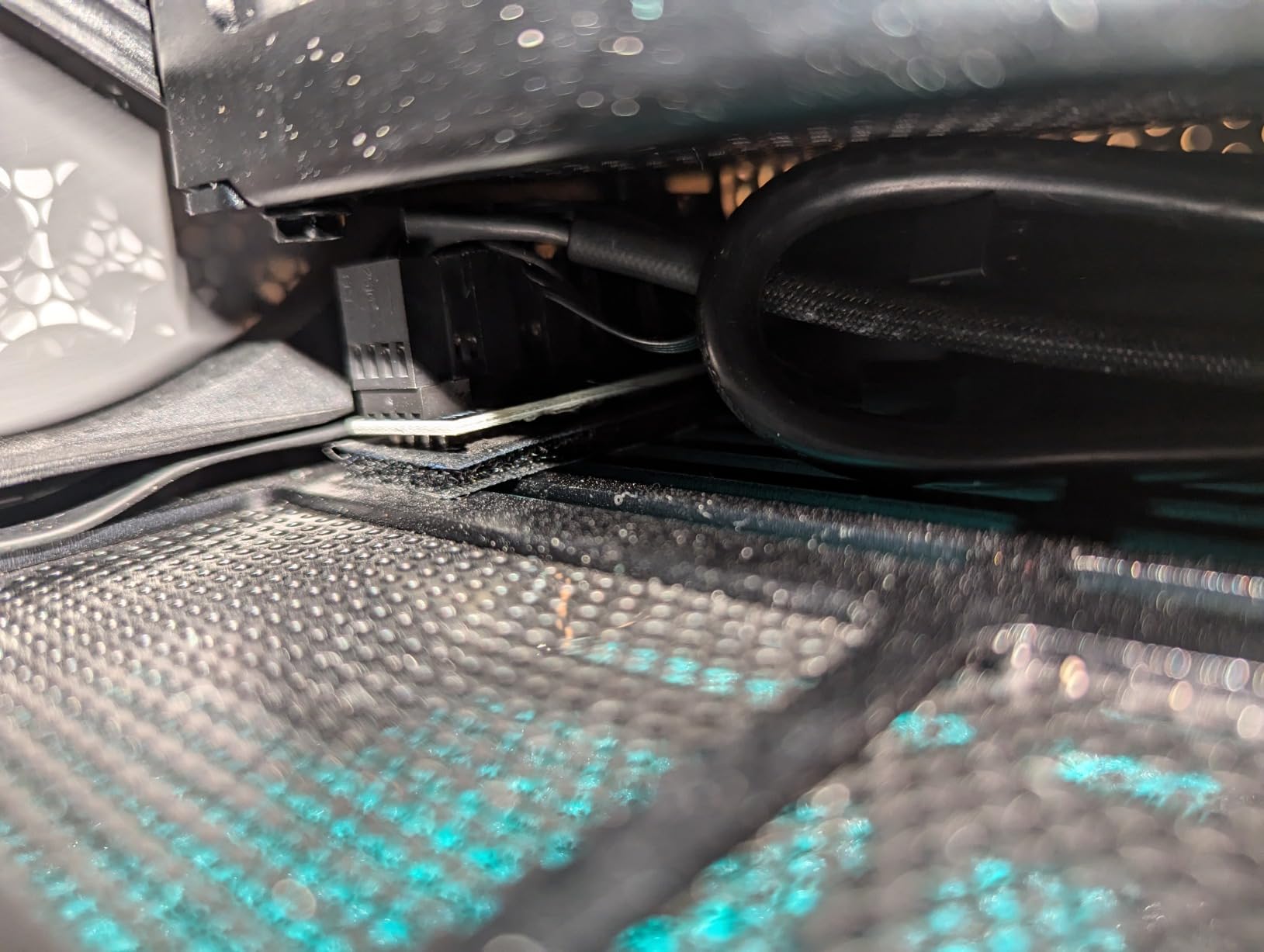
The ThreeBulls fan hub is one of the most popular budget options on Amazon with over 4,400 reviews. It’s a 1-to-5 hub design that lets you connect five fans to a single header. The hub itself is a small PCB that you can mount inside your case with the included adhesive pad.
I’ve used these in builds where the client wanted maximum airflow on a budget. The 15.7-inch cable gives you flexibility in hub placement, and the nylon braided exterior looks better than raw wires. Just understand that this hub draws all power from the motherboard header.
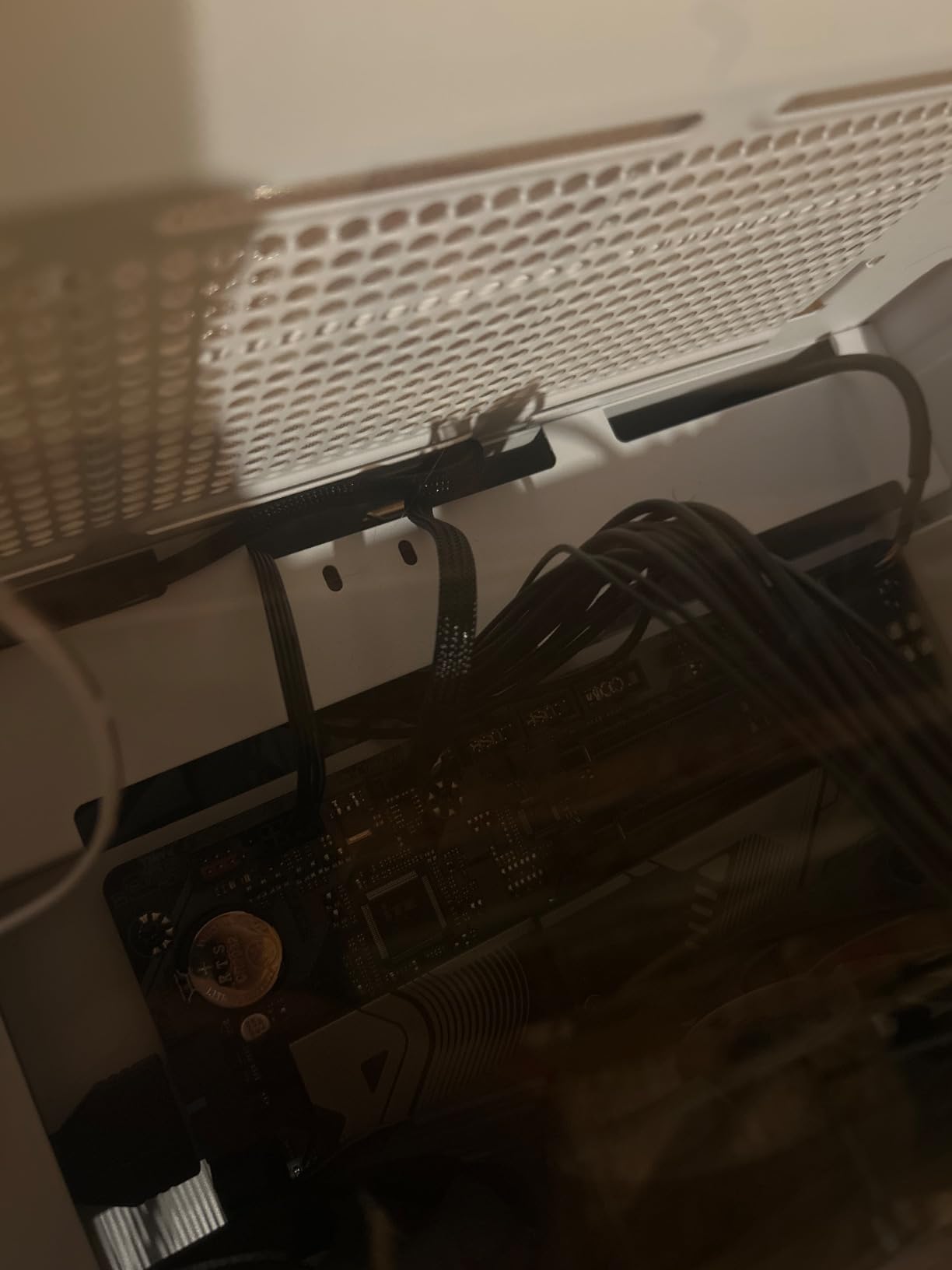
Here’s the important safety note that forum users consistently mention: even though this hub has 5 ports, I recommend using only 3-4 fans maximum. Each standard fan draws about 0.15-0.30A, and most motherboard headers are rated for 1A. Pushing all five ports with typical fans could exceed safe limits.
Some users report receiving units with bent pins, so inspect yours before installation. The build quality is acceptable for the price but not premium. If you want rock-solid reliability, consider spending more on a branded option.
Perfect for builders who want
This hub works well for budget gaming builds where you need more fan connections but don’t want to spend on a powered fan controller. It’s ideal for connecting 3-4 case fans when your motherboard has limited headers.
Consider alternatives if
If you’re running five high-performance fans or want guaranteed long-term reliability, spend the extra money on a Cable Matters or Noctua option. Also, if you want individual RPM monitoring for each fan, you need a powered hub with separate sensors.
6. Aypzuke PWM Fan Splitter Cable – Best 3-Pack Value
Aypzuke 3 Pack Computer PC PWM Fan Splitter Cable 1 to 3 (4 Pin+3 Pin)
1-to-3 Splitter
26cm Length
3-Pack
Nylon Braided
Pros
- Great value 3-pack
- Good build quality
- No issues with fan control
- Easy cable management
- Works with limited fan headers
Cons
- Insulator material decent but not toughest
The Aypzuke 3-pack gives you three 1-to-3 splitters at a competitive price. If you’re building a system with lots of fans, this pack can handle up to nine fans across three motherboard headers. I’ve found the build quality to be surprisingly good for the price point.
Each splitter has a 26cm cable length, which works well for most mid-tower cases. The nylon braided exterior and black sleeving give them a clean appearance. Heat resistance is built into the design, which matters when these cables run near warm components.
In testing, I found fan control worked properly through these splitters. The PWM signal reaches all connected fans, and I didn’t experience any stuttering or speed control issues. The connectors fit snugly on both 4-pin and 3-pin fan headers.
The insulator material is decent though not the toughest I’ve seen. For most builds this won’t matter, but if you’re doing frequent rebuilds or running cables through sharp-edged grommets, take care not to damage the insulation.
Perfect for builders who want
This 3-pack is perfect for builders planning multiple fan groups. If you want to run three front intake fans, three top exhaust fans, and three other fans, you can organize them neatly with three splitters. The value proposition is hard to beat.
Consider alternatives if
If you only need one or two splitters, a 2-pack from Cable Matters or JBtek might be more economical. Also, if you want premium sleeving quality and don’t mind paying more, the Noctua options below offer better construction.
7. Cable Matters PC Case PWM Fan Hub – Best Quality Hub
Cable Matters PC Case PWM Fan Hub, PC Fan Hub, 1-to-5 Way PWM Splitter with 16-Inch Cable
1-to-5 Hub
16 inch Cable
Nylon Braided
Mounting Tape
Pros
- Great alternative to multiple splitters
- PCB design stays cooler
- 16-inch cable flexibility
- Includes mounting tape
- Works with Fan Control software
Cons
- Packaging issues with bent pins
- Some reports of flimsy construction
This Cable Matters fan hub represents a step up in quality from budget hub options. The PCB-based design distributes power more efficiently and runs cooler than simple wire splitters. I appreciate that Cable Matters includes proper mounting tape for securing the hub inside your case.
The 16-inch cable gives you flexibility in hub placement. You can mount the hub on the back of your motherboard tray or on the floor of your case, then route the single cable to your fan header. This is cleaner than running multiple splitter cables everywhere.
Users report good results with popular fan control software like FanControl. The hub passes the PWM signal through to all connected fans, allowing software-based speed curves. The black nylon braided cable blends into modern case interiors.
Some users have received units with bent pins due to packaging issues. Inspect yours carefully before installation and gently straighten any misaligned pins. Once installed properly, the hub performs reliably.
Perfect for builders who want
This hub is ideal for builders who want a clean, organized fan setup with five fans from one header. If you’re tired of cable clutter from multiple splitters, consolidating everything into one hub makes cable management much easier.
Consider alternatives if
If you need to run more than five fans from a single point, you’ll need multiple hubs or a larger powered fan controller. Also, if you want individual RPM monitoring per fan, look for a hub with separate sensor channels.
8. Jstincal ARGB Splitter Cable – Best for RGB Builds
Jstincal 1-to-3 ARGB Splitter Cable, ARGB Cable, 5V 3 Pin Addressable RGB Splitter Extension Cable ARGB LED Sync Cable for Extend PC Computer ARGB Fans Or ARGB LED Series (2 Pack)
1-to-3 ARGB Splitter
11.8 inch
5V 3-pin
2-Pack
Pros
- Sturdy construction
- No flickering or lighting issues
- Better quality than stock case cables
- Easy plug and play
- Helps cable management
Cons
- Connection may feel loose
- Female to male pins can be weak
This Jstincal splitter is specifically designed for addressable RGB fans and LED strips. Unlike the PWM splitters above, this 5V 3-pin ARGB splitter handles lighting data rather than fan power. If you’re building an RGB-heavy gaming PC, this is exactly what you need.
The 1-to-3 design lets you sync three ARGB devices to a single motherboard header. The 11.8-inch total length gives you reach for typical case configurations. I’ve found the construction to be sturdier than the stock cables that come with many cases.
RGB synchronization works properly through this splitter with no flickering or color inconsistencies. The key is ensuring you connect the arrow indicators correctly on 3-pin ARGB headers. Get the orientation wrong and your lights won’t work or could even damage components.
Some users note that the connections feel slightly loose. This hasn’t caused functional issues in my experience, but it’s worth being gentle during installation. The 2-pack gives you flexibility for multiple RGB zones in your build.
Perfect for builders who want
This splitter is essential for gaming builds with multiple ARGB fans or LED strips. If your motherboard has limited ARGB headers but you want to run several RGB components, this solves the connection problem while keeping all lights synchronized.
Consider alternatives if
If you’re using standard 12V RGB (4-pin) rather than addressable 5V RGB (3-pin), this splitter won’t work. Check your motherboard and fan specifications before buying. Also, if you want independent control of each RGB zone, you need separate headers or a controller.
9. UMLIFE 2-Pack 4-Pin PWM Fan Hub – Best Value Hub
UMLIFE 2-Pack 4-Pin PWM Fan Hub - 1 to 5 Way Splitter Power Supply Cable for PC Motherboard Case Cooling - Extension Cord for ATX Computer 4-Pin and 3-Pin Fans
1-to-5 Hub
13 inch Cable
24AWG Copper
2-Pack
Pros
- Great value at roughly 3 dollars per hub
- Works with FanControl software
- Better quality than expected
- Simple compact design
- Good cable management
Cons
- Sticky tape quality is poor
The UMLIFE 2-pack offers exceptional value, giving you two 1-to-5 hubs for about the price of one premium option. Despite the low price, the build quality surprised me. The 24AWG tin-plated copper wire is a legitimate spec, and the PVC insulation is flame retardant.
Each hub has a 13-inch cable that connects to your motherboard header. Five fan ports let you connect up to five 4-pin or 3-pin fans. Note that 3-pin fans will run at full speed since PWM control only works with 4-pin fans.
Users report excellent compatibility with FanControl software, which is the go-to solution for advanced fan curve management. The simple PCB design works reliably without the complexity that sometimes causes issues with fancier controllers.
The included mounting tape is the weak point here. Several users recommend replacing it with better double-sided tape or using zip ties for a more secure installation. Once mounted properly, the hub performs its job well.
Perfect for builders who want
This 2-pack is perfect for budget-conscious builders who need lots of fan connections. If you’re building two systems or want spare hubs for future projects, the value is unbeatable. Works well for standard gaming builds with typical case fans.
Consider alternatives if
If you want premium build quality and don’t mind paying more, the Cable Matters hub above offers better materials and packaging. Also, if you’re running very high-amperage fans, consider a powered solution rather than passive hubs.
10. Noctua NA-SYC1 chromax.Black – Best Premium Option
Noctua NA-SYC1 chromax.Black, 4 Pin Y-Cables for PC Fans (Black)
1-to-2 Splitter
3-Pack
Black Sleeving
6-Year Warranty
Pros
- Premium Noctua quality construction
- Properly sleeved for aesthetics
- Secure fit on 4-pin headers
- PWM control works flawlessly
- 6-year manufacturer warranty
Cons
- Higher price than alternatives
- One fan reports speed other does not
- Some dislike the shoestring design
Noctua is legendary in the PC cooling world, and their NA-SYC1 chromax.Black Y-cables reflect that reputation. You get three 1-to-2 splitters in the package, enough to connect six fans from three headers. The black sleeving looks fantastic in modern builds.
I’ve used Noctua splitters for years without a single failure. The connectors fit snugly, the sleeving is high quality, and the internal wiring is properly done. When you’re building a premium system, these small details matter.
The 6-year manufacturer warranty is remarkable for such an inexpensive product. Noctua stands behind their accessories just like their fans and coolers. This warranty coverage gives peace of mind that you won’t get from generic brands.
Functionally, these splitters work exactly as expected. PWM control passes to both fans, and one fan reports RPM back to the motherboard. This is the standard splitter design that all quality options use.
Perfect for builders who want
These Noctua splitters are ideal for premium builds where you want the best quality components throughout. If you’re already using Noctua fans and coolers, matching splitters make sense aesthetically and functionally. The 3-pack covers most builds.
Consider alternatives if
If you’re on a tight budget, the JBtek or Cable Matters options deliver similar functionality for less money. Also, if you need to connect more than two fans per header, you’ll need a different product since these are 1-to-2 only.
Buying Guide: Choosing the Right Fan Splitter Cable
Before you buy a fan splitter, there are several factors to consider. The right choice depends on your specific build, fan count, and how much control you want over fan speeds. Here’s what I’ve learned from years of PC building.
3-Pin vs 4-Pin Compatibility
The first thing to understand is the difference between 3-pin and 4-pin fan connectors. A 4-pin connector uses PWM (Pulse Width Modulation) for precise speed control. The motherboard sends rapid on/off pulses to adjust fan speed smoothly and efficiently. A 3-pin connector uses DC voltage control, varying the voltage from 5V to 12V to change speeds.
Here’s the key point: 3-pin fans work in 4-pin headers and splitters, but they won’t have PWM control. They’ll run at full speed. Most 4-pin splitters can accommodate 3-pin fans physically, which is helpful if you’re mixing fan types. However, for the best gaming PC cooling performance, I recommend using all 4-pin PWM fans when possible.
Amperage Safety Limits
This is the most important safety consideration. Most motherboard fan headers are rated for 1 amp (1A) at 12V. Standard case fans typically draw 0.15A to 0.30A each. This means you can safely connect about 3-4 standard fans to one header through a splitter.
High-performance fans can draw significantly more current. Some 2000+ RPM fans or RGB fans may draw 0.4A or more. Always check your fan specifications and do the math before connecting multiple high-power fans to one header. Exceeding the amperage limit can damage your motherboard.
The general rule I follow: for standard case fans, 3 fans per header is safe. For high-performance fans, stick to 2 per header. When in doubt, use a powered fan hub that draws from your power supply instead of the motherboard.
Cable Length Considerations
Cable length matters more than you might expect. Too short, and you can’t reach your fans. Too long, and you have excess wire creating clutter. I prefer splitters in the 4-12 inch range for most builds, with longer cables reserved for full-tower cases or unusual fan placements.
Consider your case layout before buying. Measure from your motherboard headers to your furthest fan location, then add a few inches for routing. The splitters I’ve featured range from 4 inches (Cable Matters compact) to 27 inches (ARCTIC daisy chain), covering most needs.
Sleeved vs Unsleeved Cables
Sleeved cables look cleaner in visible builds, especially if you have a case with a window. The braided nylon or plastic sleeving covers the individual wires and creates a uniform appearance. For gaming PCs where aesthetics matter, sleeved splitters like the JBtek or Noctua options are worth the small premium.
Unsleeved cables are thinner and more flexible, which can actually help with cable management in tight spaces. The ARCTIC PST cable uses this approach effectively. If your cables will be hidden behind the motherboard tray, unsleeved options work fine.
PWM Control and Synchronization
When you connect multiple fans through a splitter, they all receive the same PWM signal and run at the same speed. This means you want to use identical fans on each splitter. Mixing different fan models with different RPM ranges can cause one fan to run faster or slower than intended relative to the others.
For best results, I group similar fans together. All front intake fans on one splitter, all top exhaust fans on another. This keeps each group synchronized and makes fan curve tuning more predictable.
Can you run 3 fans off one header?
Yes, you can safely run 3 fans off one motherboard header in most cases. Standard case fans draw 0.15-0.30A each, and most motherboard headers are rated for 1A. Three fans totaling 0.45-0.90A stay within safe limits. However, high-performance fans may draw more current, so always check your fan specifications before connecting multiple fans to one header.
Are 3-pin or 4-pin fans better?
4-pin PWM fans are generally better for gaming PCs because they offer precise speed control through pulse width modulation. This allows the motherboard to adjust fan speeds smoothly and efficiently based on temperatures. 3-pin fans use voltage control, which is less precise and can cause fans to stall at low speeds. However, 3-pin fans work fine for basic cooling needs and are often less expensive.
Are fan splitters safe to use?
Yes, fan splitters are safe when used within their amperage limits. The key is ensuring the total current draw of all connected fans doesn’t exceed your motherboard header’s rating, typically 1A. For standard case fans, connecting 3-4 fans per header is generally safe. Monitor your temperatures after installation and check that all fans are spinning properly.
Do fan splitters reduce power to the fans?
No, fan splitters do not reduce power to the fans. The splitter connects fans in parallel, which means each fan receives the full 12V from the motherboard. All fans run at their normal power level. What does change is the total current draw, which increases with each fan you add. This is why amperage limits matter when using splitters.
Conclusion
Finding the best fan splitter cables for gaming PCs doesn’t have to be complicated. For most builders, the JBtek All Black Sleeved splitter offers the best balance of quality, aesthetics, and value. If you need more connections per header, the Mbiydeg 3-way splitter or UMLIFE fan hubs provide excellent options. For premium builds where only the best will do, Noctua’s chromax.Black Y-cables deliver legendary quality with a 6-year warranty.
Remember to check your amperage limits before connecting multiple fans to one header. Standard case fans are safe in groups of 3-4, but high-performance fans may require more conservative configurations. With the right splitter and proper planning, you can maximize your gaming PC’s cooling potential without running out of motherboard headers.