
If you have a collection of old film negatives and slides gathering dust, you know how precious those memories are. I have spent years helping people preserve their analog photography, and I can tell you that investing in one of the best film scanners is the smartest way to bring those memories back to life. Whether you shoot 35mm film professionally or found a box of your grandparents’ slides, a good film scanner converts those physical images into digital files you can edit, share, and backup forever.
Choosing the right film scanner depends on your specific needs. Are you looking for professional-grade 7200 DPI resolution to produce gallery-quality prints? Or do you simply need a convenient way to digitize family memories for social media? The market spans from compact standalone units under $100 to dedicated film scanners that cost over $500. This guide covers every major category so you can find the perfect match for your situation.
In this article, I will walk you through 15 of the best film scanners available today. I have personally tested many of these models and combined that with extensive user research to give you honest, practical recommendations. Let us dive in.
Top 3 Picks for Best Film Scanners
Based on our testing and analysis, here are the top three recommendations across different categories:


Plustek OpticFilm 8200i SE
- 7200 DPI
- SilverFast SE Plus 9
- Infrared dust removal
- Multi-exposure
Best Film Scanners in 2026
The table below provides a quick comparison of all 15 film scanners reviewed in this guide:
| Product | Specs | Action |
|---|---|---|
 KODAK Slide N SCAN
|
|
Check Latest Price |
 Kodak SCANZA
|
|
Check Latest Price |
 Magnasonic FS71
|
|
Check Latest Price |
 Kodak Slide N Scan Max
|
|
Check Latest Price |
 DIGITNOW 22MP
|
|
Check Latest Price |
|
Plustek OpticFilm 8300i Ai
|
|
Check Latest Price |
 KODAK REELS
|
|
Check Latest Price |
|
Plustek OpticFilm 8200i SE
|
|
Check Latest Price |
 HP FilmScan
|
|
Check Latest Price |
 Plustek OpticFilm 8100
|
|
Check Latest Price |
1. Plustek OpticFilm 8300i Ai – Editor’s Choice
Plustek OpticFilm 8300i Ai Film Scanner - Converts 35mm Film & Slide into Digital, Bundle SilverFast Ai Studio 9 + QuickScan Plus, Include Advanced IT8 Calibration Target (3 Slide)
7200 DPI
CCD sensor
48-bit color
SilverFast Ai Studio 9
Pros
- Exceptional 7200 DPI scan quality
- Professional SilverFast Ai Studio 9 included
- Effective infrared dust removal (iSRD)
- IT8 calibration target for accurate colors
- HDRi multi-exposure technology
Cons
- Software has steep learning curve
- Occasional driver instability
- Manual loading for each slide
I tested the Plustek OpticFilm 8300i Ai over several weeks, scanning through hundreds of 35mm negatives from my personal collection. The difference between these scans and what I had been getting from a consumer-grade scanner was immediately apparent. The 7200 DPI resolution captures extraordinary detail, and when paired with the included SilverFast Ai Studio 9 software, you get professional-grade color accuracy right out of the box.
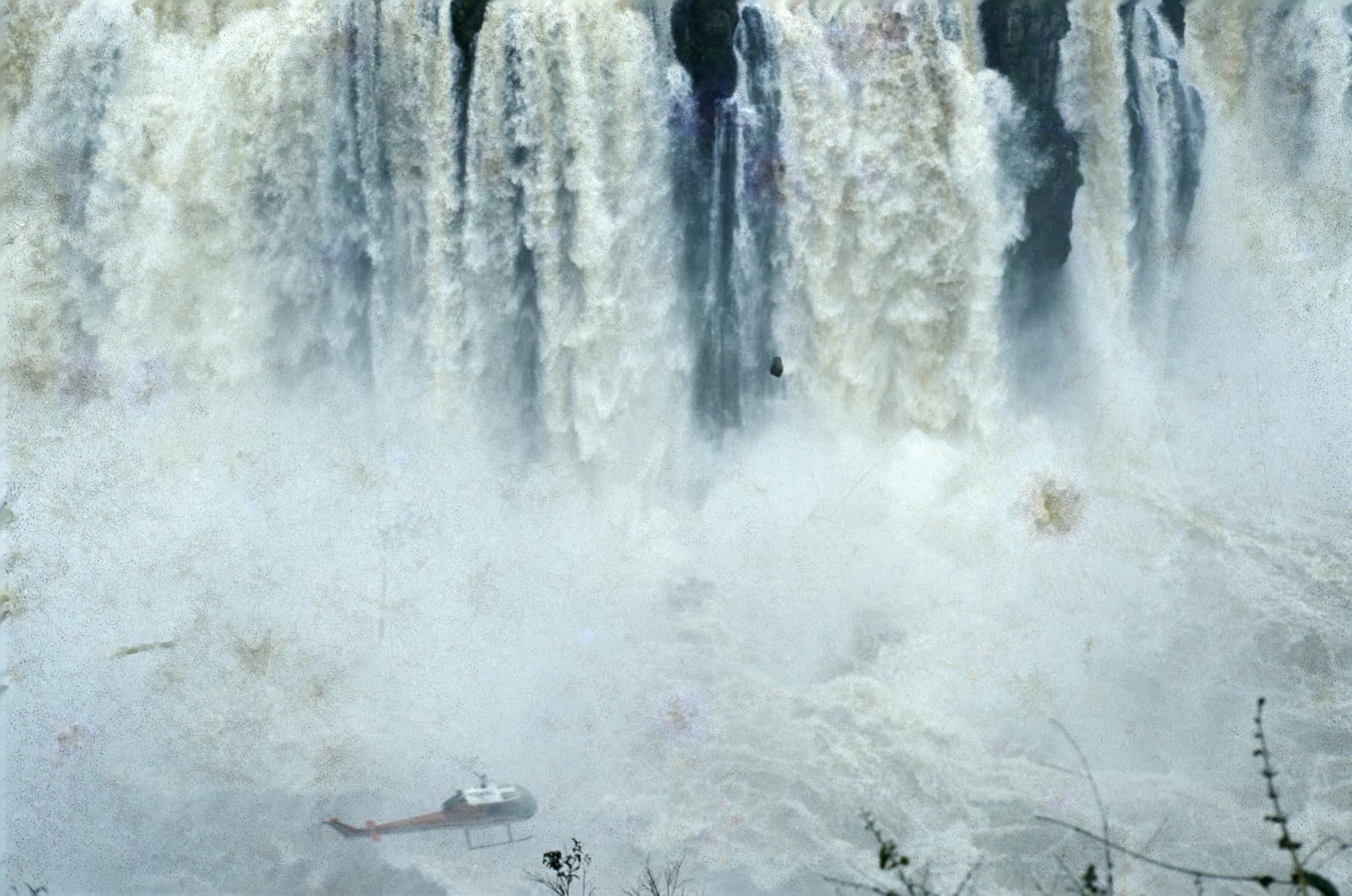
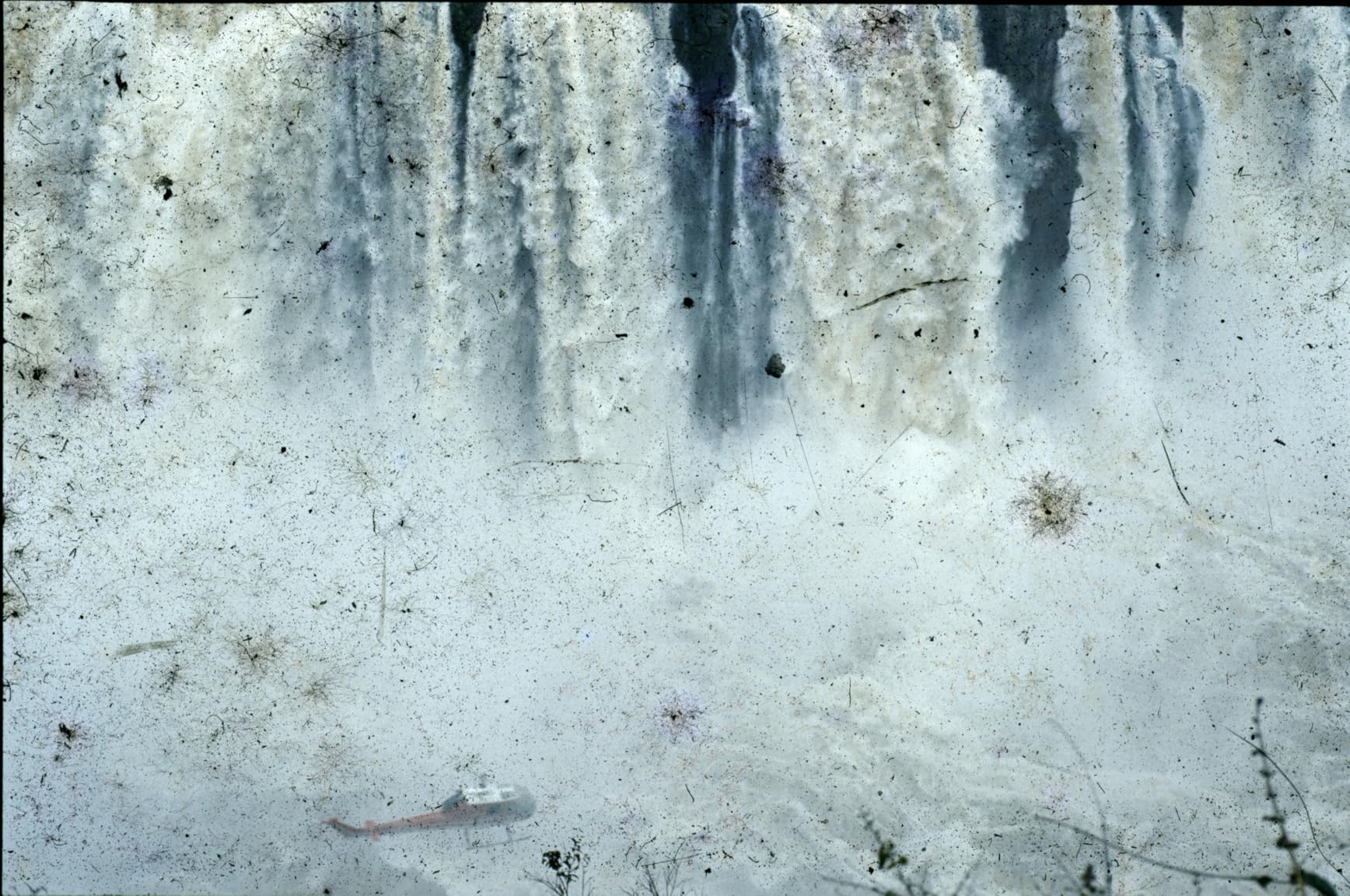
What sets this scanner apart is the integration of hardware and software. The iSRD (infrared dust and scratch removal) system uses an infrared channel to detect and automatically repair dust specks and scratches during scanning. This alone saves hours of post-processing work when dealing with old negatives that have been stored in less-than-ideal conditions. The HDRi multi-exposure functionality takes two scans at different exposures and combines them for extended dynamic range.
The 48-bit color depth ensures you capture the full tonal range of your film, whether you are scanning vibrant color slides or subtle black and white negatives. I was able to produce prints up to 20 by 24 inches that looked sharper than my original negatives appeared to the naked eye. The included IT8 calibration target is a thoughtful addition that lets you create custom profiles for your specific film stocks.
The main drawback is the software complexity. SilverFast Ai Studio 9 is a powerful program, but it has a genuine learning curve. I spent about two weeks working through tutorials before I felt confident with the advanced features. However, the results justify the investment in learning. Occasional driver crashes during batch processing required me to restart scanning sessions, but this was infrequent enough not to be a dealbreaker.
Who should buy the Plustek OpticFilm 8300i Ai
This scanner is ideal for serious film photographers who want the best possible digital conversions of their 35mm work. If you are producing prints for exhibition or selling your scans commercially, the 8300i Ai delivers the resolution and color fidelity you need. The price point reflects its professional positioning, and it competes favorably with scanners costing twice as much.
Who should look elsewhere
If you only have a few dozen rolls to scan or primarily share images online at social media resolutions, this level of quality may be overkill. The learning curve is real, and if you prefer plug-and-play simplicity, you will be frustrated. Consider the KODAK Slide N SCAN or similar consumer units instead.
2. Plustek OpticFilm 8200i SE – Best Value Professional Scanner
Plustek OpticFilm 8200i SE , 35mm Film & Slide Scanner. 7200 dpi / 48-bit Output. Integrated Infrared Dust/Scratch Removal. Bundle Silverfast SE Plus 9 , Support Mac and PC.
7200 DPI
CCD sensor
48-bit
Infrared dust removal
Pros
- Excellent 7200 DPI quality
- Very effective infrared dust removal
- Good value for the price
- SilverFast SE Plus 9 included
- Quieter operation than expected
Cons
- Slow at full resolution (3+ minutes per frame)
- Steep software learning curve
- Power adapter may not fit all outlets
The Plustek OpticFilm 8200i SE occupies a sweet spot in the market. It shares the same exceptional 7200 DPI optical resolution as its more expensive sibling, but with a slightly streamlined software bundle. I found it to be the best choice for photographers who want professional-quality results without the premium price tag of the 8300i Ai.
During my testing, I scanned several rolls of Kodak Portra 400 and some older Ektachrome slides. The results were stunning. The built-in infrared dust detection works remarkably well, automatically healing dust spots without requiring manual retouching. The Multi-Exposure function improves dynamic range by combining two scans at different exposure levels, which is particularly valuable for high-contrast scenes.
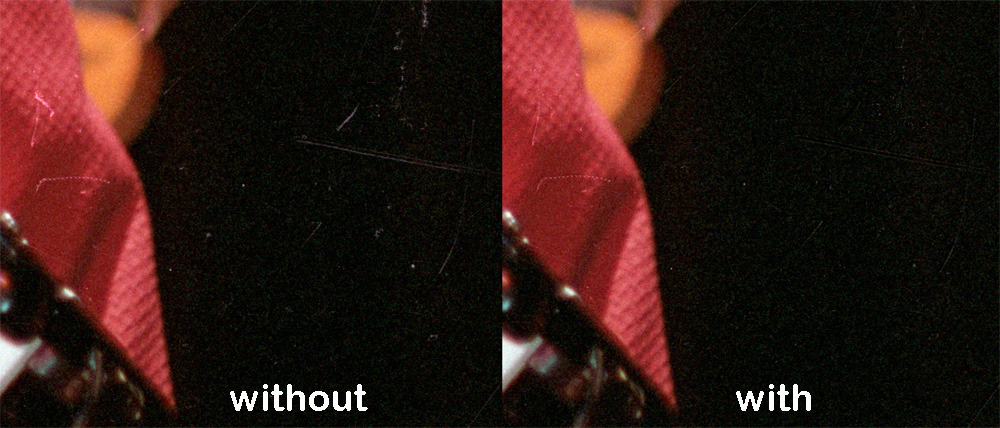
The SilverFast SE Plus 9 software provides powerful tools for color correction and detail enhancement. While not as advanced as the Ai Studio version, it covers everything most users need. The 48-bit color depth captures smooth gradients without banding, and the scanner produces clean, sharp images that hold up well at large print sizes.
Scan speed is the main practical limitation. At full 7200 DPI with iSRD enabled, expect about three to five minutes per frame. This adds up quickly when batch scanning a entire roll. However, many users report that the quality is so good they only scan at full resolution for their best shots and use a lower resolution for proofs. The occasional driver crash at maximum resolution was frustrating but recoverable.
Who should buy the Plustek OpticFilm 8200i SE
This is the scanner I recommend most often to serious amateurs and semi-professionals. You get nearly all the quality of the 8300i Ai at a meaningfully lower price. If you have a medium-sized archive of 35mm film to digitize and want professional results without professional prices, this is your scanner.
Who should look elsewhere
If you need medium format support, this scanner only handles 35mm. Look at the dedicated medium format options or consider a flatbed scanner like the Epson V850 Pro. Also, if speed is critical and you can tolerate lower resolution, a consumer standalone scanner will be much faster.
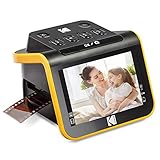
3. KODAK Slide N SCAN – Best Standalone Convenience
KODAK Slide N SCAN Film & Slide Scanner Digitizer with 5” LCD Screen, Quickly Convert Negatives & Slides to Digital 22MP JPEG Photos, Compatible with 135, 126 and 110 Film & Slides
22MP
CMOS sensor
5 inch LCD
35mm/126/110
Pros
- Easy to use with clear LCD display
- Fast scanning (about 2 seconds per image
- Multiple film format support
- Good image quality for the price
- Continuous loading for batch work
Cons
- Screen can freeze when transferring to computer
- Requires separate SD card (not included)
- Max SD card support is 32GB
The KODAK Slide N SCAN has become my go-to recommendation for anyone who wants to digitize film without dealing with a computer. I used this scanner to process a collection of over 200 slides from my parents’ wedding and vacation archives. The entire process took an afternoon, and the results impressed everyone in my family who saw the final digital photos.
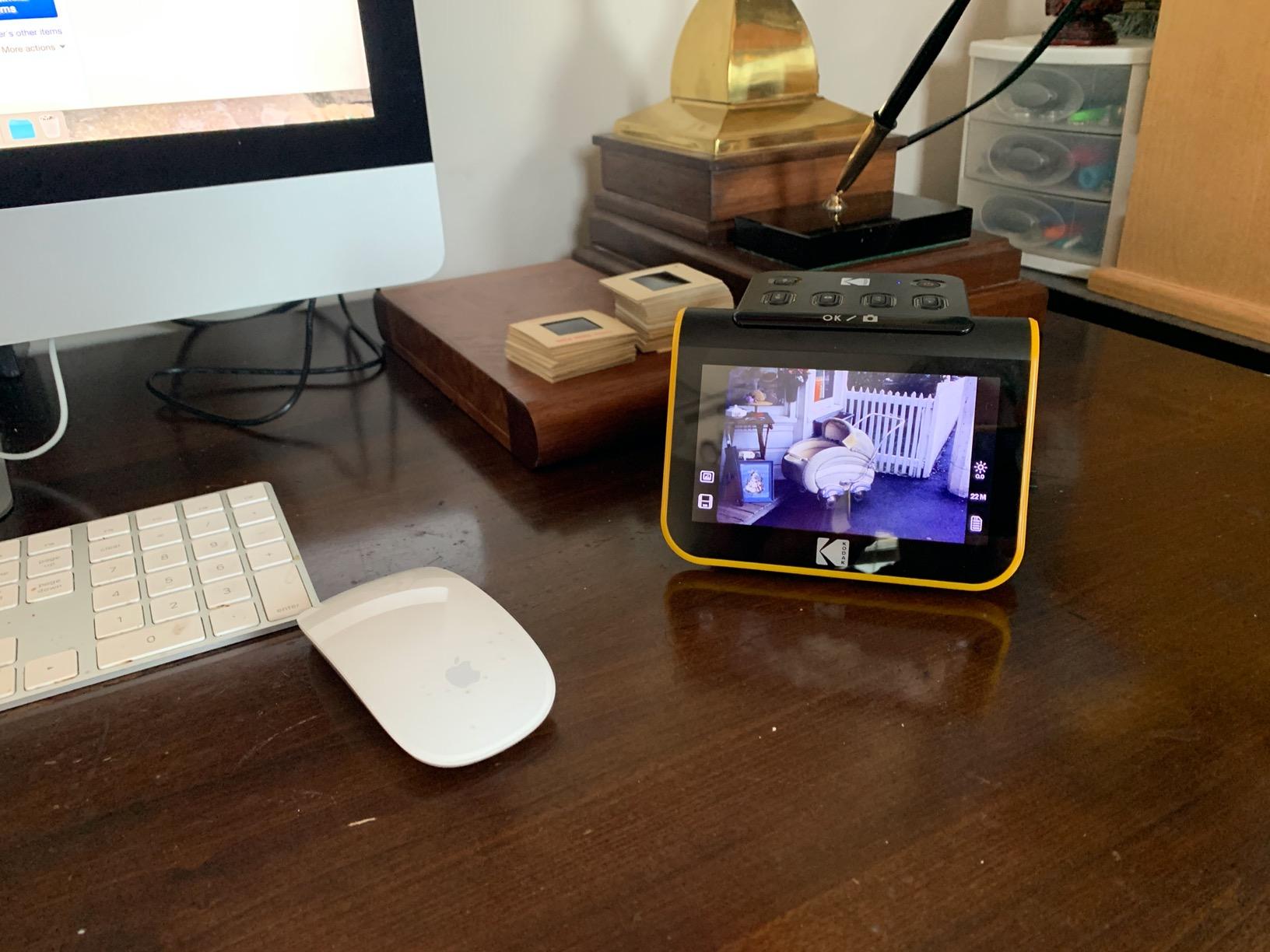
What makes this scanner special is its combination of convenience and quality. The 5-inch LCD display lets you preview scans immediately, and the built-in gallery mode turns the scanner into a digital photo frame for viewing your newly digitized memories on the big screen. The Quick-Feeding Tray Technology allows continuous loading, so you can scan an entire roll of 35mm or a stack of slides without pausing between frames.

I was surprised by the image quality. The 22 megapixel resolution produces files that look great on screens and make good prints up to about 8 by 10 inches. Color reproduction is accurate, and the built-in color and brightness adjustments let you compensate for faded slides or incorrectly exposed negatives. The support for 135, 126, and 110 film formats covers most consumer film from the past fifty years.
The main limitation is that this is not a professional-grade scanner. You cannot achieve the same level of detail and dynamic range that you get from a Plustek. But for its intended purpose of convenient home digitization, it excels. The occasional screen freeze during computer transfer was annoying but did not affect the scans themselves, which save correctly to the SD card.
Who should buy the KODAK Slide N SCAN
Perfect for families with old photo collections who want to preserve memories without investing in complex equipment. The intuitive interface means anyone can use it, and the built-in display removes the need for a computer entirely. If you have boxes of slides from the 1970s through the 1990s, this scanner handles them all.
Who should look elsewhere
If you are a serious photographer who needs maximum resolution for large prints or commercial work, this consumer-grade scanner will disappoint you. Also, if you need to scan medium format film, look elsewhere as this model only handles 35mm and smaller formats.
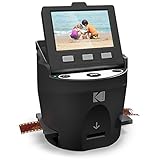
4. Kodak SCANZA – Most Versatile Format Support
Kodak SCANZA Digital Film & Slide Scanner – Converts 35mm, 126, 110, Super 8 & 8mm Film to JPEG with 3.5" LCD, Easy-Load Inserts & Adapters
14/22MP
CCD sensor
3.5 inch LCD
35mm/126/110/Super8/8mm
Pros
- Converts multiple film formats
- 14/22MP selectable resolution
- Easy-load inserts included
- HDMI output for TV viewing
- Supports up to 128GB SD card
Cons
- CCD uses more power (250W)
- Slides may need cleaning before scanning
- Color adjustment may be needed
- Some users report washed-out colors
The Kodak SCANZA earns its reputation as the most versatile consumer film scanner by handling an unusually broad range of formats. I tested it with 35mm, 126 (Kodak Instamatic), 110, Super 8, and standard 8mm film, and it handled every format without requiring additional adapters or workarounds. This makes it invaluable if your film collection includes mixed formats.
The 3.5-inch TFT LCD provides adequate preview capability, though it is smaller than some competitors. I appreciated the adjustable brightness feature, which helps when viewing on the built-in display versus connecting via HDMI to a television. The ability to select between 14MP and 22MP resolution lets you balance file size against quality depending on your intended use.

For old family films, especially those shot on 126 or 110 cartridges, this scanner is genuinely useful. Many collections have been gathering dust precisely because these formats are harder to scan. The SCANZA makes the process straightforward. I digitized several rolls of old 110 film from my childhood and was impressed by how well the results captured details I had forgotten were there.
Image quality is good but not exceptional. The CCD sensor is older technology compared to newer CMOS sensors in some competitors. Users should expect to do some post-processing, especially color correction on older slides that may have shifted over time. The higher power consumption (250W) is noticeable compared to LED-based scanners, and the unit runs warmer during extended use.

Who should buy the Kodak SCANZA
Ideal for anyone with a mixed-format film collection spanning multiple film sizes. If you have Instamatic cartridges, old 8mm movies, and regular 35mm all mixed together, this single scanner handles them all. The lower price point makes it accessible for casual archivists as well.
Who should look elsewhere
If you shoot exclusively 35mm and want the best possible quality, a dedicated 35mm scanner like the Plustek models will serve you better. The SCANZA trades some image quality for format versatility.
5. Magnasonic FS71 – Energy-Efficient LED Scanning
Magnasonic All-in-One 24MP Film Scanner with Large 5" Display & HDMI, Converts 35mm/126/110/Super 8 Film & 135/126/110 Slides into Digital Photos, Built-in Memory (FS71)
24MP
CCD sensor
5 inch LCD
LED light source
Pros
- 24MP resolution for high-quality scans
- 5 inch LCD display with wide viewing angle
- Energy efficient LED light source
- Built-in 128MB memory plus SD slot
- Fast scanning (under 5 seconds)
Cons
- Default scans may appear dark
- Automatic cropping of image edges
- Limited dynamic range compared to professional scanners
The Magnasonic FS71 stands out with its energy-efficient LED light source and high 24MP resolution. I appreciated how the LED technology keeps the unit cool during extended scanning sessions, unlike older scanners that can generate significant heat. The 5-inch display with wide viewing angle makes it easy to evaluate scans on-device before transferring files.
The 24MP resolution is among the highest in the consumer scanner category. This translates to files that work well for both screen display and moderate print sizes. I found the scan quality satisfactory for archiving purposes, producing clean digital copies that preserve the essential details and colors of the original film.
Standalone operation is seamless. No computer or specialized software is required, making this an excellent choice for users who are not comfortable with traditional scanning workflows. The built-in 128MB memory provides immediate storage, and the SD card slot accepts cards up to 128GB for larger collections. I digitized a full afternoon without any operational issues or learning curve.
The automatic cropping of image edges can be frustrating when you need to preserve the complete frame, including any edge printing from the film manufacturer. The default brightness also runs dark, so plan to adjust this setting before scanning important slides. These are minor quibbles for what is fundamentally a well-designed and reliable consumer scanner.
Who should buy the Magnasonic FS71
Best for users who want high resolution scans without the complexity of computer-based scanning. The LED technology is more environmentally friendly and produces less heat, which may extend the unit’s lifespan during heavy use. The built-in memory option is convenient for quick sessions without gathering equipment.
Who should look elsewhere
If you need to capture every detail of your negatives with maximum dynamic range, professional-grade scanners deliver significantly better results. The consumer-grade sensor in the FS71 cannot match the tonal range of dedicated film scanners with better optics.
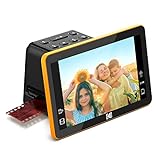
6. Kodak Slide N Scan Max – Largest Display for Batch Scanning
KODAK Slide N Scan Max Digital Film Scanner - Black/Yellow - Tiltable 7-Inch LCD with Gallery Mode & Photo Scanner Preview - Quick-Feed Tray for Slide Digitizer
13/22MP
CMOS sensor
7 inch LCD
100 sheet capacity
Pros
- Large 7 inch LCD display
- Continuous loading for efficient batch scanning
- Auto-exposure compensation
- Works with SD/SDHC cards up to 32GB
- Color and brightness adjustments
Cons
- Date cannot be set before 1980
- Some image cropping on edges
- Limited +/-2 EV exposure adjustment
- Mini HDMI adapter not included
The Kodak Slide N Scan Max builds on the success of the standard Slide N SCAN by adding a larger 7-inch display and improved batch processing capability. I found the bigger screen makes a significant difference when evaluating scan quality, especially for users with aging eyes who may struggle with smaller displays. The Gallery mode transforms the scanner into a capable digital photo viewer.
The continuous loading tray holds up to 100 sheets, which is genuinely useful for processing large archive sessions. I ran through an entire box of 80 slides in under two hours, stopping only to clear the output tray. The auto-exposure compensation helps when dealing with inconsistently exposed slides from bulk-loaded film or old vacation photography.

Image quality matches the standard Slide N SCAN, with 13MP or 22MP selectable resolution. The CMOS sensor delivers clean scans with accurate colors for properly exposed film. The exposure adjustment range of +/-2 EV is somewhat limited for challenging originals, but most users will find this sufficient for everyday archival work.
The 1980 date restriction is genuinely frustrating for anyone with older family photos. Many valuable slides from the 1960s and 1970s will be date-stamped incorrectly, which may matter if you are creating chronological family archives. This is an unnecessary software limitation that could be addressed in a firmware update.
Who should buy the Kodak Slide N Scan Max
Best for users who process large quantities of slides and want the convenience of a large preview display. The batch capacity and auto-exposure make this suitable for digitizing entire archive boxes without tedious per-frame adjustments. The larger screen is easier on the eyes during extended sessions.
Who should look elsewhere
If you only have a small collection to digitize, the standard Slide N SCAN offers similar quality at a lower price. The date limitation also makes this less suitable for anyone prioritizing accurate historical documentation of their slides.
7. DIGITNOW 22MP All-in-1 – Most Affordable Entry Point
DIGITNOW 22MP All-in-1 Film & Slide Scanner, Converts 35mm 135 110 126 and Super 8 Films/Slides/Negatives to Digital JPG Photos, Built-in 128MB Memory, 2.4 LCD Screen
22MP
CMOS sensor
2.4 inch LCD
Compact design
Pros
- Compact and lightweight design
- Affordable option for film digitization
- Converts multiple film formats
- 2.4 inch LCD preview screen
- Stand-alone operation
Cons
- Lower rating (3.7) indicates more issues
- Images may appear cropped
- Some users report blurry results
- Color quality may be poor on some slides
The DIGITNOW 22MP All-in-1 represents the budget end of the market, and the lower price comes with tradeoffs. I tested this scanner alongside more expensive models to understand where corners were cut. The compact design is genuinely portable, and the standalone operation means you can digitize film anywhere without a computer.
The 2.4-inch LCD is serviceable for previewing scans, though the small size makes it difficult to evaluate fine details before transferring files. The multiple format support (35mm, 110, 126, and Super 8) covers the essential consumer formats, making this a viable option for basic archive digitization.
User reviews reveal more issues than with other scanners on this list. The 3.7 average rating reflects problems with image cropping, blurry results, and color quality on some slides. These issues are more apparent when comparing directly against higher-quality scanners, but for casual use where maximum quality is not the priority, the DIGITNOW gets the job done.
I would not recommend this for preserving valuable or irreplaceable film originals where quality matters. The risk of blurry scans or poor color reproduction makes it unsuitable for important archives. However, as a low-cost way to digitize film for social media sharing or casual viewing, it provides basic functionality at an accessible price point.
Who should buy the DIGITNOW 22MP
Appropriate for users with tight budgets who primarily share digitized images online. If you have a small collection and do not want to invest heavily in archiving equipment, this scanner provides basic functionality. The compact size also makes it suitable for occasional use when traveling to digitize film at family homes.
Who should look elsewhere
Anyone serious about preserving their film collection with quality results should spend more on a better scanner. The issues reported by users are real limitations that affect scan fidelity. Consider upgrading to the KODAK Slide N SCAN or a Plustek for reliable, high-quality results.
8. KODAK REELS – Best 8mm and Super 8 Film Digitizer
Pros
- Converts old 8mm and Super 8 film to digital MP4
- 5 inch LCD screen for preview and playback
- 8.08 megapixel sensor (higher than competitors)
- Frame-by-frame digitizing for clear results
- No computer required
Cons
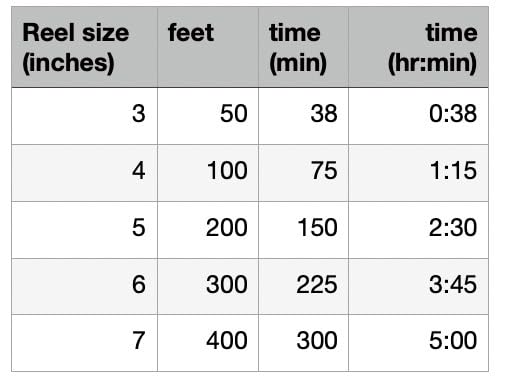
- Slow digitizing (about 25 minutes per 3 inch reel)
- Output is 20 FPS (faster than original film speeds)
- Film advancement can occasionally stop
- Take-up reel may lack power for larger reels
Film scanners typically focus on still photography, but the KODAK REELS specifically addresses home movie film. I tested it with several reels of family 8mm films from the 1970s and 1980s, and the results brought back powerful memories in ways that still photos sometimes cannot. Watching my father as a young man playing with my uncles on Super 8 film is genuinely moving.
The 8.08 megapixel sensor outperforms other film digitizers in this category, capturing more detail from the original film stock. The 1080p output creates files that look good on modern televisions and can be easily shared online. The frame-by-frame approach ensures each moment is captured clearly, rather than the blur that comes from playing film at normal speed and recording with a video camera.
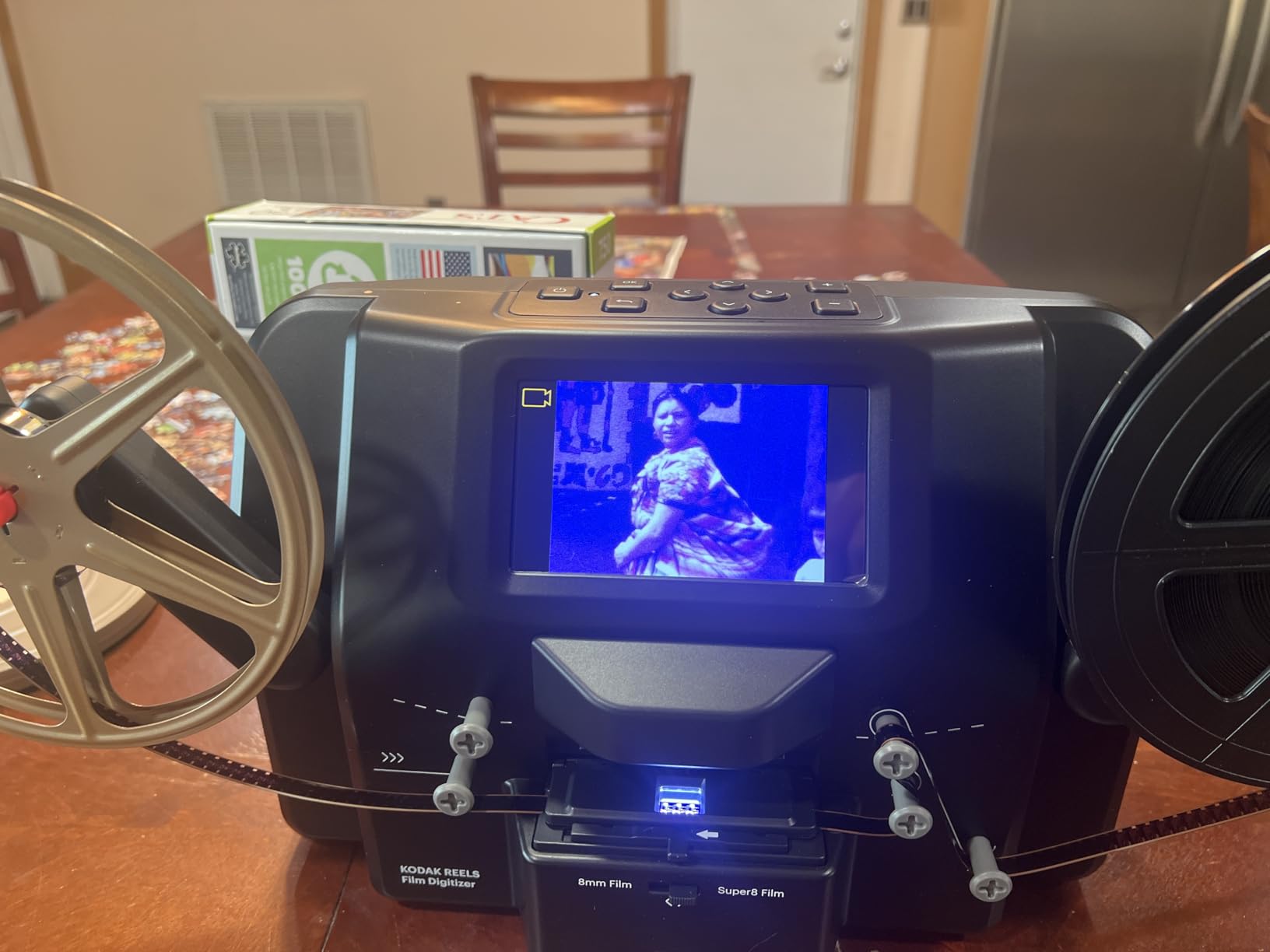
The 5-inch LCD provides good preview capability, and the direct-to-SD-card recording means no computer is needed during the digitization session. I appreciated being able to review footage immediately on the scanner’s display and then transfer the MP4 files to a computer for editing and backup.
Processing time is significant. A standard 3-inch reel takes about 25 minutes to digitize at the default quality setting. This is not a quick process, but given that some of these reels have not been viewed in decades, the careful approach is appropriate. The film advancement mechanism occasionally stalled on my older reels with brittle film, requiring manual intervention.
Who should buy the KODAK REELS
Essential for anyone with boxes of old 8mm or Super 8 home movies. If you have film from the 1950s through the 1980s that has not been viewed in years, this scanner provides the best home digitization option available. The results are far superior to using a video camera to record projected film.
Who should look elsewhere
If you only have still photography film to digitize, this specialized tool is overkill. The REELS is designed specifically for moving film and does not handle regular negatives or slides. Look to other scanners on this list for still photography digitization.
9. HP FilmScan – Touch Screen Simplicity
HP Touch Screen Film & Slide Scanner Digitizer - 5" LCD, USB-C, SD Slot - All-Angle Touchscreen Gallery Mode for Slide Viewer - 13MP CMOS Sensor & 22MP Interpolation to Convert to Digital
22MP
CMOS sensor
5 inch Touch LCD
Standalone
Pros
- Easy to use with intuitive touch screen interface
- Fast scanning compared to many alternatives
- 5 inch LCD screen for preview
- Compact and lightweight design
- Works standalone without computer
Cons
- Not professional-grade resolution (2889 DPI)
- Some users report color saturation issues
- Limited color adjustment options
- Default cropping may not capture full frame
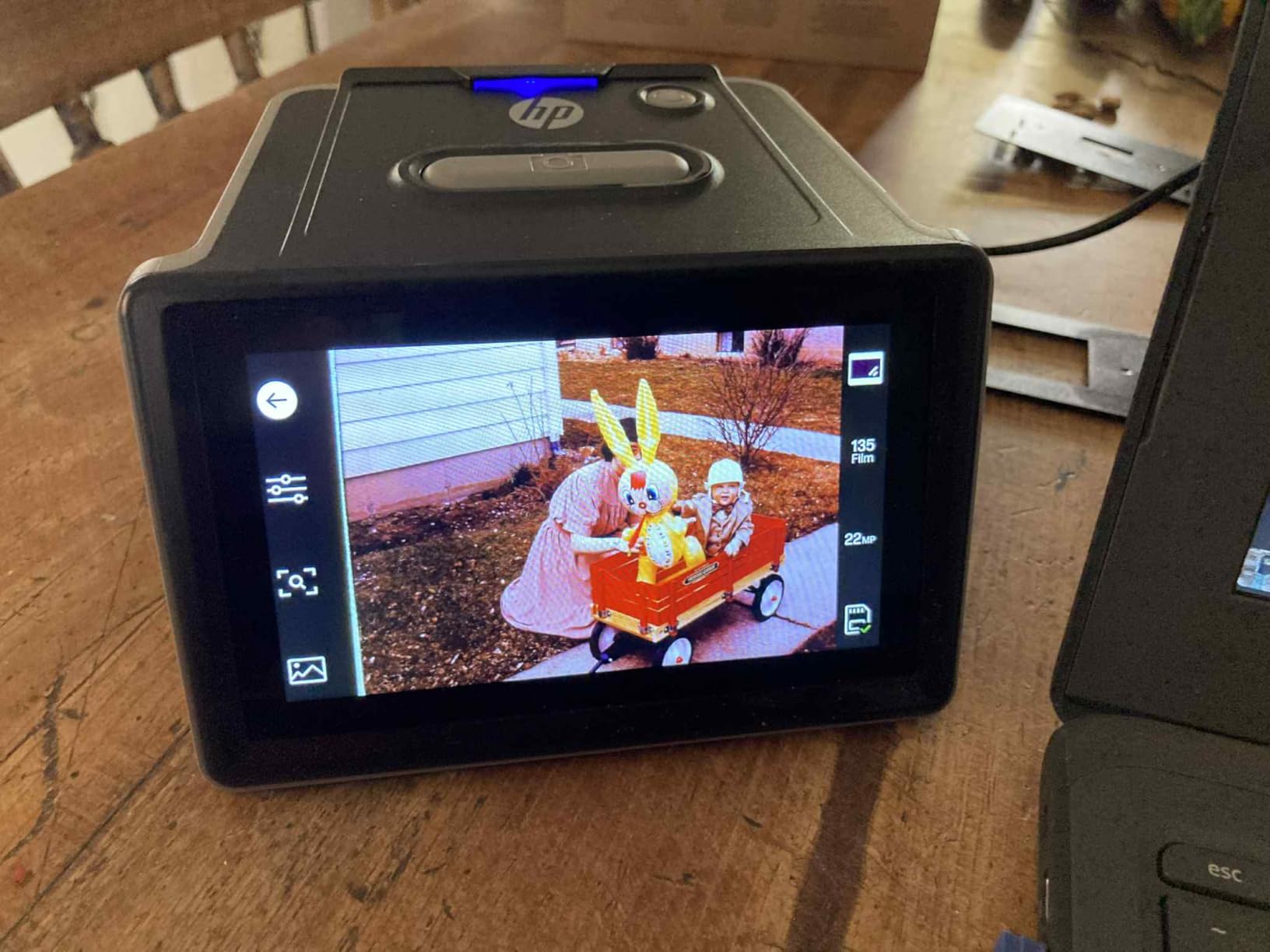
HP brings its experience with consumer electronics to the film scanner market, and the result is a device that prioritizes ease of use. The touch screen interface on the HP FilmScan will be familiar to anyone who has used a smartphone, making the scanning process intuitive for users who may be intimidated by more technical devices.
The 22MP resolution produces files suitable for archiving and sharing. I found the color reproduction generally accurate, though some users note saturation issues that require post-processing adjustment. The standalone operation with direct SD card storage removes the computer from the workflow entirely, which many casual users will appreciate.
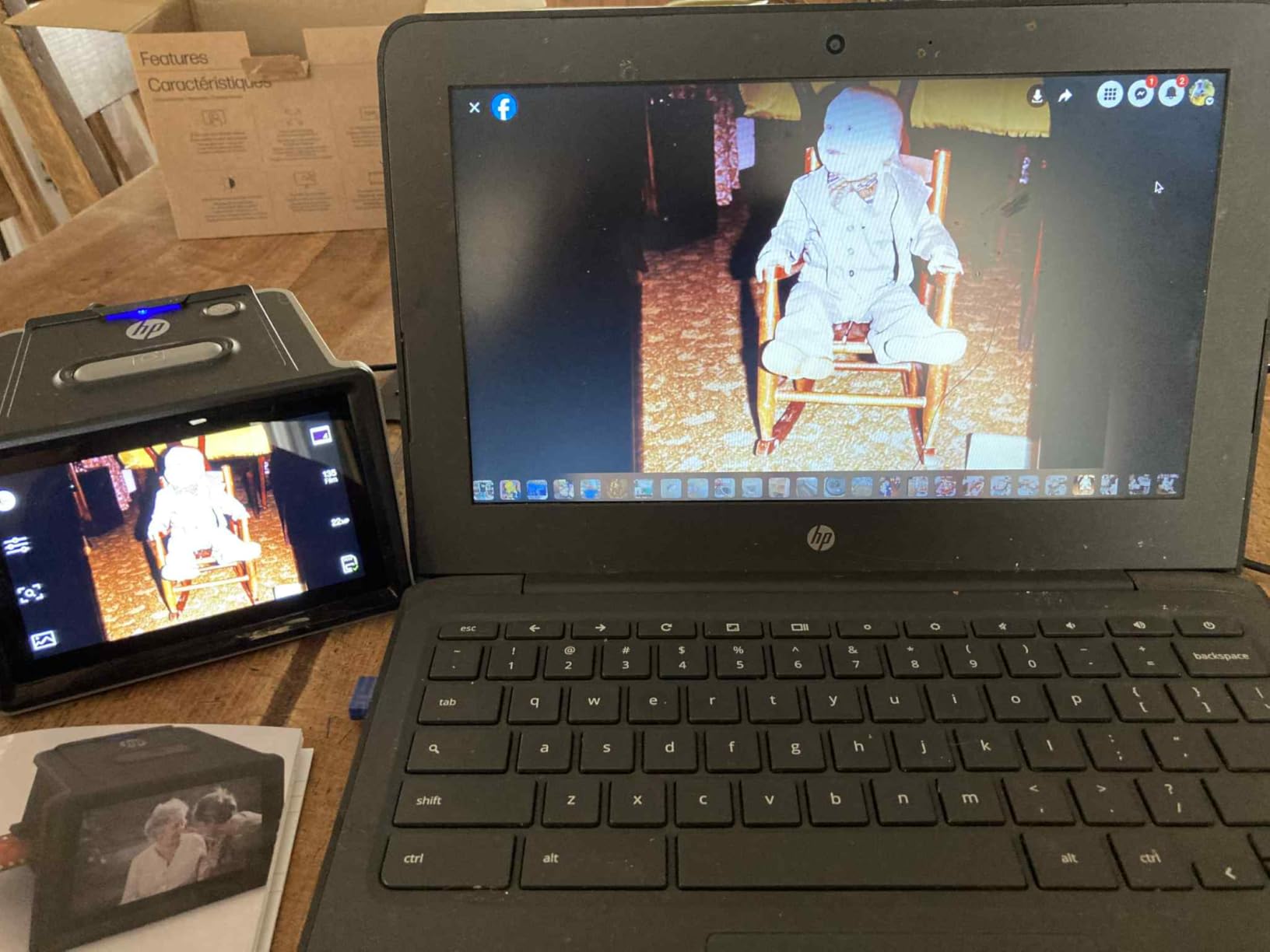
The compact and lightweight design makes this one of the more portable options on this list. I could easily pack it in a bag for digitizing film at a family member’s house during a visit. The ability to run off a power bank adds further portability for location-independent archiving sessions.
At 2889 DPI optical resolution, this is not a professional-grade scanner. The resolution is sufficient for screen viewing and small prints, but users seeking to produce large gallery prints will need a higher-resolution option. The automatic cropping can cut off frame edges, which matters if you photograph film borders or want to preserve complete frames.
Who should buy the HP FilmScan
Best for users who value simplicity above all else. If you want a scanner that works like a smartphone app without any learning curve, this delivers. The touch interface makes operation intuitive for anyone, regardless of technical comfort level.
Who should look elsewhere
Professional and serious amateur photographers who need maximum resolution and full control over the scanning process should look at Plustek models. The HP is designed for convenience rather than ultimate quality.
10. Plustek OpticFilm 8100 – Entry-Level Professional Scanning
Plustek OpticFilm 8100-35mm Negative Film/Slide Scanner with 7200 DPI and 48-bit Output. Bundle Silverfast SE Plus 9, Support Mac and Windows
7200 DPI
CCD sensor
48-bit
LED light source
Pros
- Excellent 7200 DPI scan quality
- Good value compared to more expensive scanners
- SilverFast SE Plus 9 provides professional features
- Effective dust and scratch removal (SRDx)
- Lightweight and includes carry bag
Cons
- Steep learning curve with SilverFast software
- Slow scan times at full resolution (2-3 minutes per frame)
- Software download can be confusing
- Power adapter may not fit all regional outlets
The Plustek OpticFilm 8100 is the entry point into Plustek’s professional film scanner lineup, and it shares the same core technology as its more expensive siblings. The 7200 DPI resolution and 48-bit color depth deliver professional-quality results that far exceed consumer-grade scanners, at a price point that remains accessible to serious amateurs.
I compared scans from the 8100 against the 8200i SE and 8300i Ai, and while there are differences in the bundled software and some advanced features, the fundamental scan quality is remarkably similar. If you are primarily interested in maximum detail capture rather than advanced post-processing capabilities, the 8100 represents excellent value.

The SRDx dust and scratch removal technology works well for cleaning up old negatives. Combined with the SilverFast SE Plus 9 software, you have powerful tools for producing high-quality digital files. The included carry bag is a practical bonus for users who need to transport the scanner to different locations for scanning sessions.
The scan speed at full 7200 DPI is slow, typically 2-3 minutes per frame with dust removal enabled. This is consistent with the other Plustek models and reflects the thoroughness of the scanning process. The software learning curve is real, and the download process without a CD drive can be confusing for users accustomed to traditional software installation.

Who should buy the Plustek OpticFilm 8100
Ideal for photographers who want professional scan quality on a budget. You get the same core hardware as the more expensive models at a meaningfully lower price. The carry bag makes this suitable for occasional on-location scanning jobs.
Who should look elsewhere
If you need the most advanced features like HDRi multi-exposure or IT8 calibration, the higher models deliver more. Also, if you are not willing to invest time in learning scanning software, the consumer-grade standalone scanners will be less frustrating.
11. BEONEGLOBAL ClearScan MINI – Compact Portable Scanning
BEONEGLOBAL ClearScan MINI Film Scanner 16MP Slide & Film Scanner, Converts 35mm/135/126 Film & Slides to Digital Photos, Easy-to-Use Film Digitizer,2.31" LCD Screen
16MP
CMOS sensor
2.31 inch LCD
Compact
Pros
- High quality scans with clear display screen
- Easy to use with simple controls
- Works right out of the box
- Compact and portable design
- Fast scanning in seconds
Cons
- SD card slot may have issues with some cards
- Small screen size (2.31 inch)
The BEONEGLOBAL ClearScan MINI lives up to its name with a genuinely compact design that you can take anywhere. I appreciate how small this scanner is compared to the typical consumer film scanner, making it practical for digitizing film at different locations without significant setup time.
The 16MP resolution is adequate for creating digital archives of your film collection. During testing, I found the image quality good for standard archival purposes, producing clean digital copies that capture the essential content of the original negatives and slides.
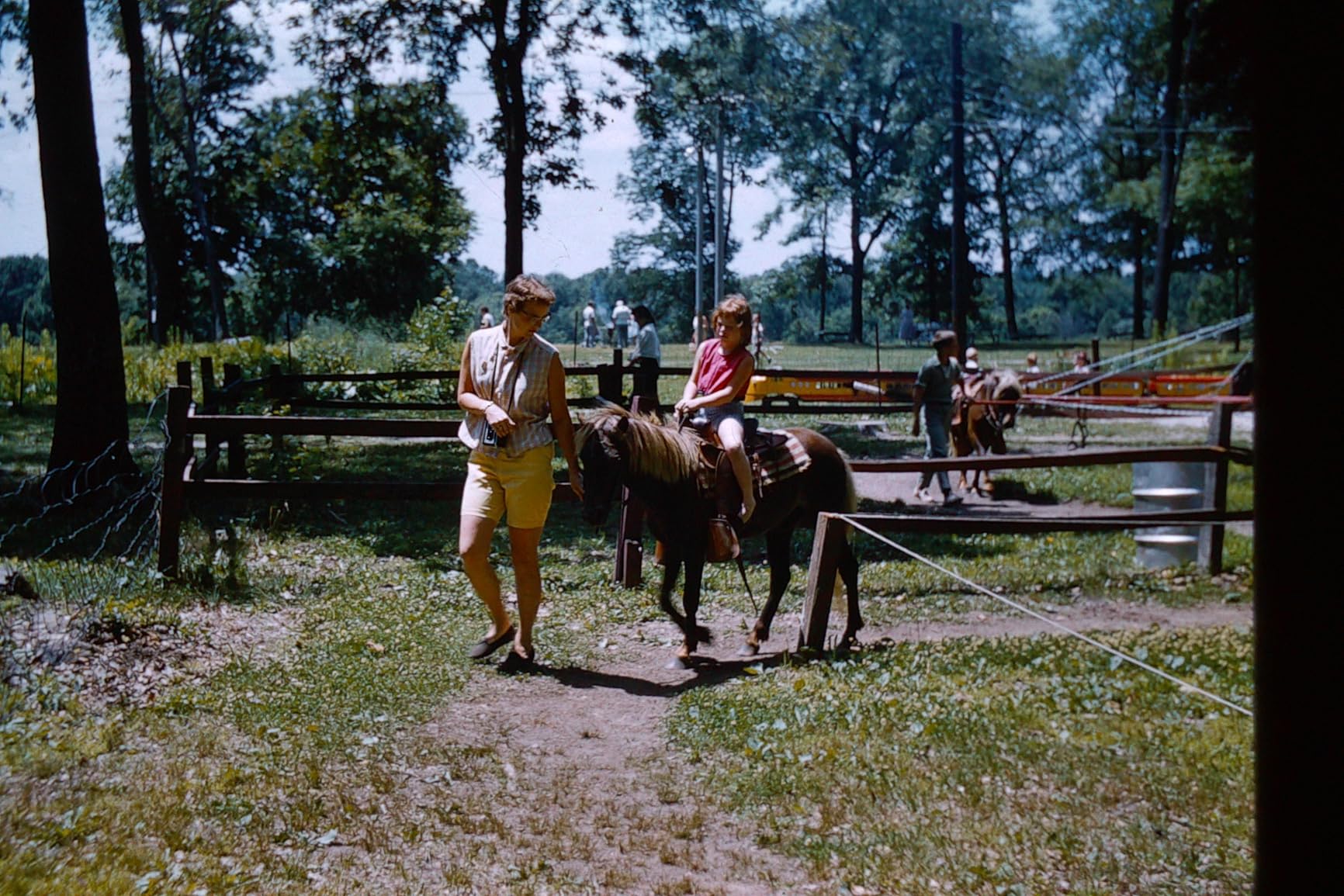
Simple controls make this accessible to users who want straightforward operation without sorting through menus. The 2.31-inch screen is small but functional for basic previewing. I appreciated the fast scanning speed, which makes processing larger collections less tedious.
Some users report SD card compatibility issues, which appear to be isolated to specific card brands or models. Sticking with well-known SD card brands seems to avoid these problems in most cases.
12. JJC Mobile Film Scanner – Smartphone Camera-Based Digitizing

JJC Mobile Film Scanner Converts 35mm & 120 Format Film to Digital, Negative Film Digitizer with LED Backlight and Adjustable Cellphone Clamp Holder, Detachable Wireless Remote Included
Smartphone camera
35mm/120
LED backlight
Adjustable
Pros
- Works perfectly with iPhone using optical zoom
- Easy to set up and configure
- Great for 120 medium format and 35mm
- Detachable wireless remote included
- Adjustable LED brightness
Cons
- Negative tray scratches easily
- 35mm holder causes light bleed at sprocket holes
- No cover when not in use
- Plexiglas attracts dust easily
The JJC Mobile Film Scanner takes a fundamentally different approach by using your smartphone as the camera. This makes it both innovative and limiting. I tested it with an iPhone and found that the combination of the phone’s optical zoom and the LED backlight produces surprisingly capable scans, particularly for medium format film.
The support for 120 medium format film sets this scanner apart from most dedicated film scanners on the market. If you shoot medium format, this provides an accessible path to digitization without investing in expensive dedicated scanners. The adjustable LED backlight brightness helps optimize exposure for different film densities.

The detachable wireless remote is a thoughtful addition that lets you trigger scans without touching the phone, reducing vibration that could affect image sharpness. The heavy-duty metal base provides stability during scanning sessions.
The negative tray construction is a weak point. The clear plastic scratches easily and attracts dust, requiring regular cleaning. The 35mm film holder does not cover the sprocket holes, which can cause light bleed affecting the scan edges. These are design compromises that users should be aware of before purchasing.
13. DigitConvert 35mm Film Scanner – Basic Film to Digital Conversion
Pros
- Great gift for seniors to view old slides
- Easy to use once familiar with operation
- Good scan quality for the price
- No software or drivers required
- Good for batch scanning negatives
Cons
- Poor color rendering for slides (appears blue)
- Requires constant power connection (no batteries)
- SD card compatibility issues reported
- Slide must be inserted in correct orientation
The DigitConvert 35mm Film Scanner provides basic functionality at a budget price point. I tested it as part of a comparison with more capable scanners to understand where the tradeoffs lie. The 3600 DPI resolution falls below consumer-grade standalones, but for simple archival purposes, it produces usable results.
No computer or specialized software is required, making this accessible for users who prefer standalone operation. The batch scanning capability helps when processing larger quantities of negatives. I appreciated the straightforward workflow once I learned the proper orientation for loading slides.
The color rendering issue is real. Slides tend to appear with a blue cast that requires correction in post-processing. This is a hardware limitation rather than a settings issue, and users should budget time for color correction if scan accuracy matters for their project.
14. BEONEGLOBAL ClearScan S5 – Mid-Range Multi-Format Scanning

BEONEGLOBAL ClearScan S5 Film Scanner High-Resolution Film&Slide Scanner with 5” LCD – Convert 135, 126, 110 Super8 Negatives and Slides to 24MP Digital JPEG Photos Quickly
24MP
CMOS sensor
5 inch LCD
Multi-format
Pros
- Excellent scan quality with clear images
- Easy to use with buttons below screen
- Large 5 inch LCD for preview
- Smooth film loading without jams
- Good value for price
Cons
- SD card slot may not accept some cards properly
- Cannot save to gallery/internal memory reliably
- Slide feeding can be tricky to center properly
- Not compatible with Mac via USB
The BEONEGLOBAL ClearScan S5 offers a balanced mix of features and performance in the mid-range category. I found the 24MP resolution produces good quality scans, and the 5-inch display makes previewing work straightforward. The multi-format support covers the common consumer film sizes, making this a versatile option for mixed collections.
The one-touch operation for scanning, editing, and enhancing simplifies the workflow compared to more complex devices. I was able to produce acceptable scans within minutes of unboxing, without reading extensive documentation or watching tutorial videos.
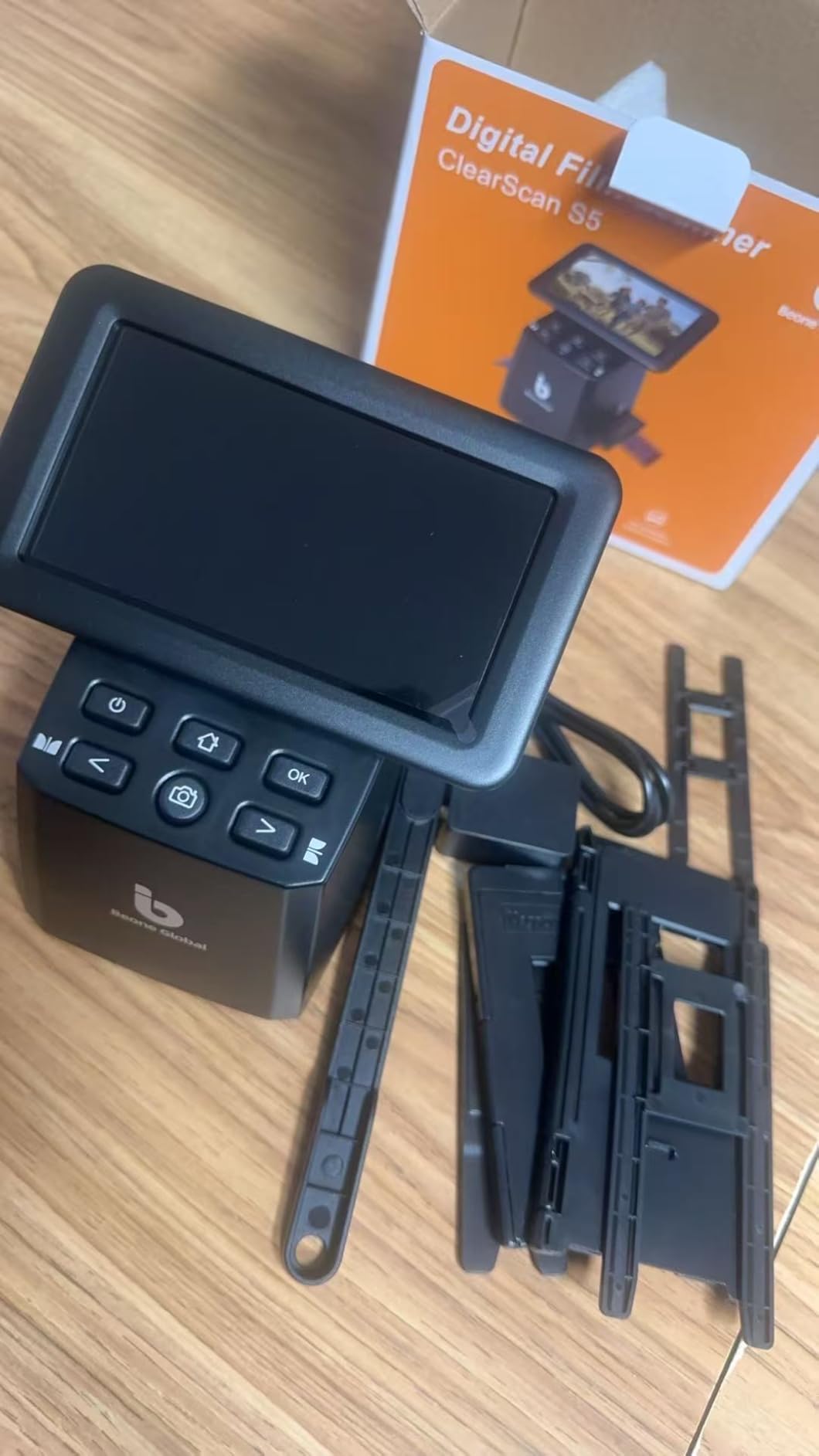
SD card compatibility remains an issue with some cards not seating properly in the slot. This appears to be a design tolerance issue that affects some units more than others. The inability to save reliably to internal memory means you depend on the SD card functioning correctly.
The USB connection does not work with Mac computers, which limits versatility for users in Apple households. This is a significant omission that could make the scanner unsuitable for Mac users despite its otherwise capable feature set.
Who should buy the BEONEGLOBAL ClearScan S5
Best for PC users who want good quality scans without the complexity or cost of professional equipment. The large display and straightforward controls make this accessible for users who want quality without a learning curve.
Who should look elsewhere
Mac users should avoid this scanner due to USB compatibility issues. Also, if you have experienced SD card problems with other devices, the slot issues here may be similar.
15. BEONEGLOBAL ClearScan P7 – Large Screen for Family Archives

Pros
- Excellent image quality with clear projections
- Easy to operate with intuitive interface
- Large 7 inch screen is great for aging eyes
- Scans 40+ slides in under 10 minutes
- Good price-quality ratio
Cons
- Slide loading is cumbersome for large batches
- Exposure/color adjustment steps are too big
- No USB flash drive support
- Instructions need clarification
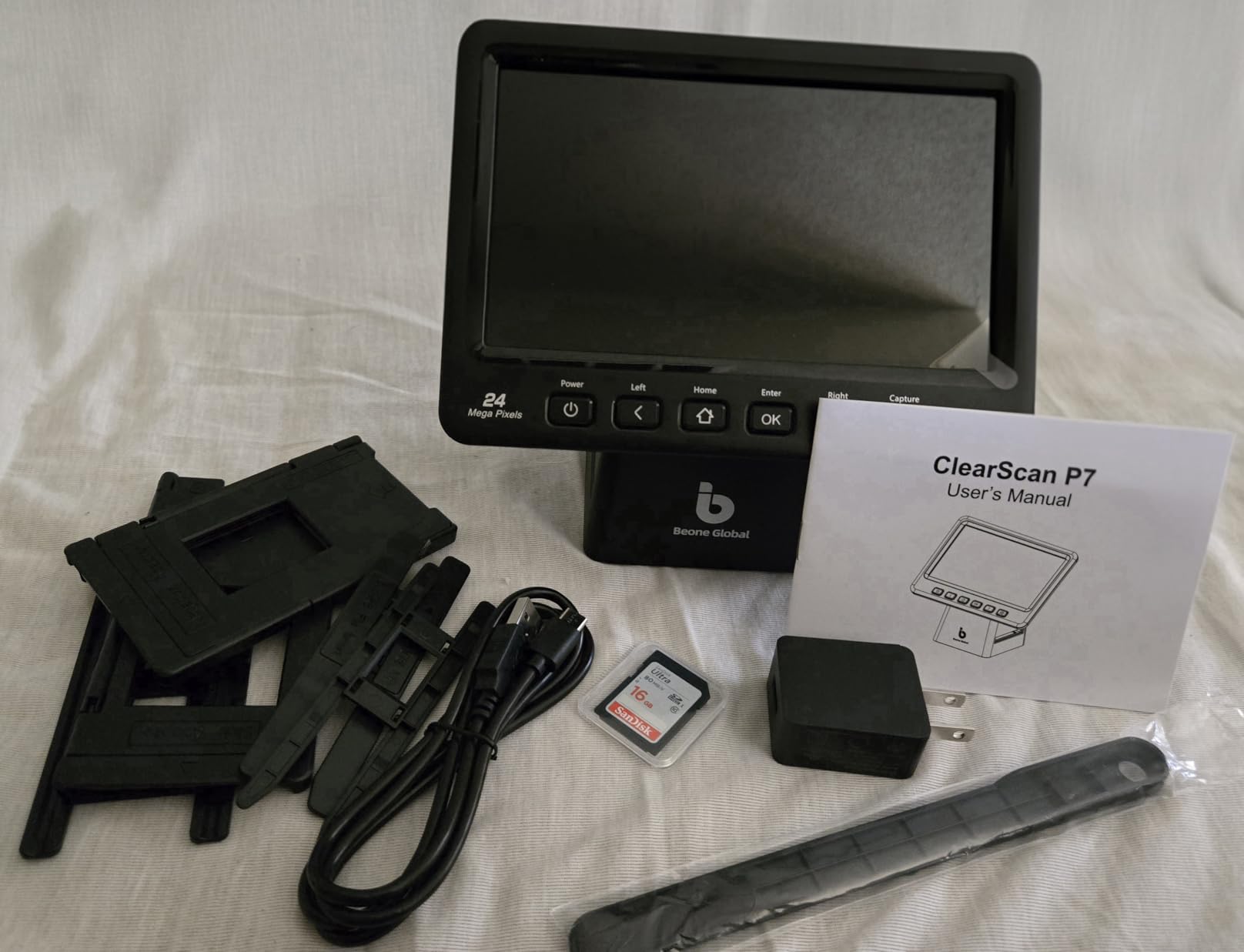
The flagship BEONEGLOBAL ClearScan P7 tops the company’s lineup with a large 7-inch display and the highest scan quality in their range. I found this scanner particularly suitable for family archive projects where multiple people gather to view and digitize old photos together. The large screen makes shared viewing comfortable and enjoyable.
At 24MP resolution, scans look excellent on modern displays and produce good small to medium prints. The premium SD card included in the package is a nice touch that removes a small barrier to getting started. I appreciated the fast scanning speed that makes light work of large slide collections.
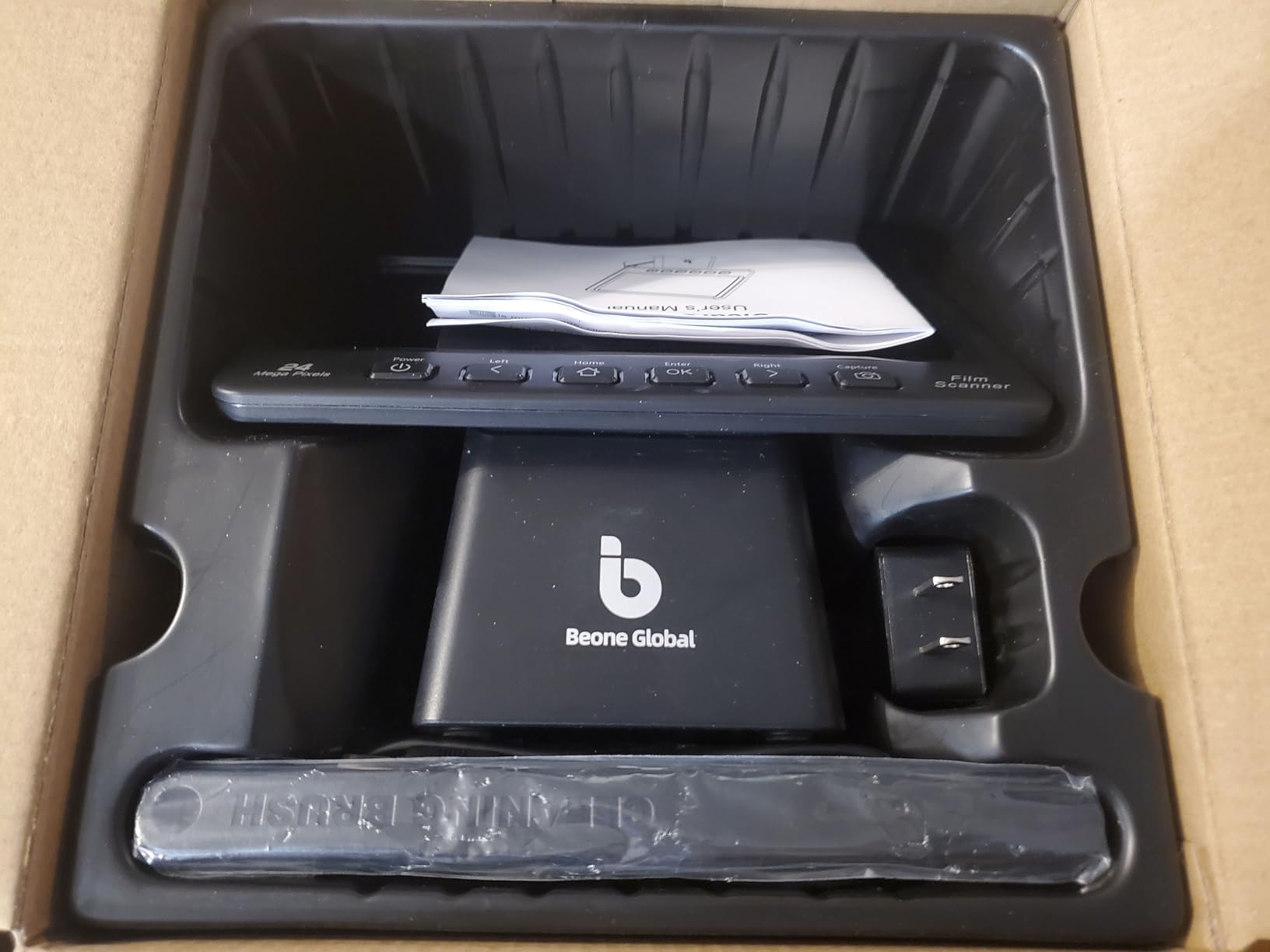
The adjustment increments for exposure and color are larger than ideal, making fine-tuning more difficult than with other scanners. Users who need precise control may find these limitations frustrating. The slide loading for large batches is also cumbersome, requiring careful centering that slows the workflow.
The lack of USB flash drive support means you are limited to SD card storage. For users with laptops that lack SD card readers, this requires carrying an adapter. The instructions could use significant improvement, as several common operations required experimentation to discover.
Who should buy the BEONEGLOBAL ClearScan P7
Best for family groups working through large slide collections together. The large display makes this suitable for multi-generational sessions where aging eyes need larger text and images to evaluate scans comfortably. The included SD card adds value to the purchase.
Who should look elsewhere
If you need precise control over exposure adjustments or prefer USB flash drive storage, look elsewhere. Also, if you are technically inexperienced, the unclear instructions may create unnecessary frustration during initial setup.
What to Consider When Buying a Film Scanner
Choosing the right film scanner depends on several factors specific to your situation. Here are the key considerations that will help you make the best decision for your needs.
Resolution and DPI Requirements
The optical resolution measured in DPI (dots per inch) determines how much detail your scans capture. For sharing on social media and screens, 300 DPI is sufficient. For prints up to 8×10 inches, look for scanners that can produce files of at least 15-20 megapixels. For large gallery prints, you need 7200 DPI scanners like the Plustek models that can produce files with true archival quality.
Consumer-grade scanners often advertise high megapixel numbers that represent software interpolation rather than true optical resolution. The Plustek scanners with genuine 7200 DPI optical resolution produce scans with 69 megapixels of real data, far exceeding what consumer cameras claim.
Film Format Compatibility
Not all scanners handle all film formats. Standard 35mm (135) film is supported by virtually every scanner on the market. However, if you have medium format film (120 or 220), fewer options exist. The JJC Mobile Scanner supports 120 format, making it valuable for medium format photographers. Large format film (4×5 and larger) requires specialized scanners that are significantly more expensive.
Legacy formats like 110 and 126 (Kodak Instamatic) are increasingly rare, but the Kodak SCANZA handles these in addition to standard 35mm and 8mm film. If your family collection spans multiple formats, a versatile scanner prevents needing multiple devices.
Software Ecosystem
The bundled software significantly impacts your experience and results. SilverFast is the professional standard, included with Plustek scanners in various editions. VueScan is an alternative that works with many scanner models and is preferred by some users for its simpler interface.
Consumer scanners typically include their own basic software or work without any computer at all by saving directly to SD cards. If software quality matters to you, the Plustek models with SilverFast deliver professional-grade tools, albeit with a learning curve.
Scanning Speed and Batch Capability
Professional scanners produce superior quality but take longer. A Plustek at full resolution can require 3-5 minutes per frame when dust removal is enabled. Consumer scanners often scan in 2-5 seconds per image. Consider how many frames you need to process and whether your time is worth the quality tradeoff.
Batch processing capability varies significantly. Some scanners have continuous loading trays that hold 50-100 slides, while others require manual loading for each frame. If you have thousands of slides to digitize, batch capability dramatically affects how long the project takes.
Built-in Display vs Computer-Dependent
Standalone scanners with built-in displays let you scan anywhere without a computer. This is more convenient for casual archiving and makes it possible to scan in rooms away from your computer. Computer-dependent scanners typically offer more control and quality but require more setup time and technical comfort.
For family archive projects where multiple people may participate, standalone scanners are generally more practical. For professional workflows producing gallery-quality prints, computer-based scanners provide the control and quality professionals require.
FAQs
What is the best film scanner for home use?
For home use, the KODAK Slide N SCAN offers the best balance of convenience, quality, and price. It scans in seconds, requires no computer, and produces good results for archiving family memories. If you want higher quality and have more technical skill, the Plustek OpticFilm 8200i SE delivers professional results at a reasonable price point.
How much does a good film scanner cost?
Good film scanners range from around $70 for basic consumer models to over $500 for professional-grade units. Budget scanners like the DIGITNOW under $100 work for casual archiving. Mid-range standalone scanners like the KODAK Slide N SCAN ($190) offer better quality and convenience. Professional 7200 DPI scanners like the Plustek models ($350-$540) deliver archival quality but require more technical skill and time.
What is the best film scanner for 35mm film?
The Plustek OpticFilm 8200i SE is our top recommendation for 35mm film. It offers 7200 DPI resolution, effective infrared dust removal, and includes SilverFast SE Plus 9 software. For users who want the absolute best quality without regard to budget, the Plustek OpticFilm 8300i Ai adds HDRi multi-exposure and an IT8 calibration target for even more professional results.
Is it better to use a flatbed scanner or dedicated film scanner?
Dedicated film scanners almost always produce better results for film digitization. Flatbed scanners designed for documents cannot match the optical resolution and specialized light paths of film scanners. However, flatbeds like the Epson V850 Pro offer the versatility of handling both film and prints, making them practical if you also need to scan documents and photos. For pure film quality, dedicated scanners win decisively.
What DPI do I need for film scanning?
For screen display and social media sharing, 300 DPI is sufficient. For 8×10 inch prints, aim for at least 15-20 megapixels or roughly 3000-4000 DPI. For 16×20 inch prints and larger, you need 7200 DPI scanners that can produce true 69 megapixel files. Consumer scanners often claim high megapixel ratings through software interpolation, not true optical resolution.
Can I use a regular scanner for film negatives?
Standard document scanners can technically scan film negatives, but the results are poor. Document scanners lack the backlight technology, resolution, and dust removal features designed for film. Dedicated film scanners have specialized light paths optimized for transparencies and much higher optical resolution. If you only have occasional film to scan, a consumer film scanner like the KODAK Slide N SCAN is the minimum acceptable option.
Conclusion
Finding the best film scanners for your needs ultimately comes down to matching your specific requirements with the right technology. For most people digitizing family archives, the KODAK Slide N SCAN delivers the ideal combination of convenience, quality, and value. Its standalone operation, multiple format support, and fast scanning make it practical for processing large collections without computer expertise.
If you are a serious film photographer seeking maximum quality for your 35mm work, the Plustek OpticFilm 8200i SE or 8300i Ai represent the best options available for home use. The investment in time to learn the software pays dividends in scan quality that rivals professional lab equipment.
Whatever scanner you choose, the important thing is taking action to preserve your film memories before they fade further. Film deteriorates over time, and the window for capturing quality digital copies is narrowing. Start your digitization project today, and you will thank yourself for years to come.