
Finding the best floor standing speakers for your home audio setup can feel overwhelming. I have spent years testing tower speakers across every price point. From budget-friendly models under $300 to premium audiophile towers, the right choice depends on your room size, listening preferences, and amplifier pairing.
In this guide, I will walk you through 9 exceptional floorstanding loudspeakers that deliver impressive sound quality without breaking the bank. Whether you need speakers for a home theater, 2-channel stereo listening, or an immersive music experience, I have tested and compared these models to help you make the right decision.
Floor standing speakers offer distinct advantages over bookshelf alternatives. They produce deeper bass response, create a wider soundstage, and fill larger rooms with ease. The key specifications to understand include sensitivity rating, impedance ohms, and driver units configuration. These factors determine how well your speakers will perform with your existing amplifier or AV receiver.
Top 3 Picks for Best Floor Standing Speakers


Polk Monitor XT70
- Dual 6.5 inch woofers
- Dual 8 inch passive radiators
- Dolby Atmos compatible
Best Floor Standing Speakers in 2026
Our team evaluated these tower speakers based on sound quality, build construction, value proposition, and real-world user feedback. Each model excels in specific areas, from deep bass reflex performance to crystal-clear dome tweeter reproduction.
| Product | Specs | Action |
|---|---|---|
|
SVS Prime Pinnacle
|
|
Check Latest Price |
 Fluance Signature HiFi
|
|
Check Latest Price |
 Klipsch R-26FA
|
|
Check Latest Price |
 Klipsch R-620F
|
|
Check Latest Price |
 Polk Signature Elite ES50
|
|
Check Latest Price |
|
Polk Monitor XT70
|
|
Check Latest Price |
 Klipsch R-610F
|
|
Check Latest Price |
 Sony SS-CS3M2
|
|
Check Latest Price |
 Polk T50
|
|
Check Latest Price |
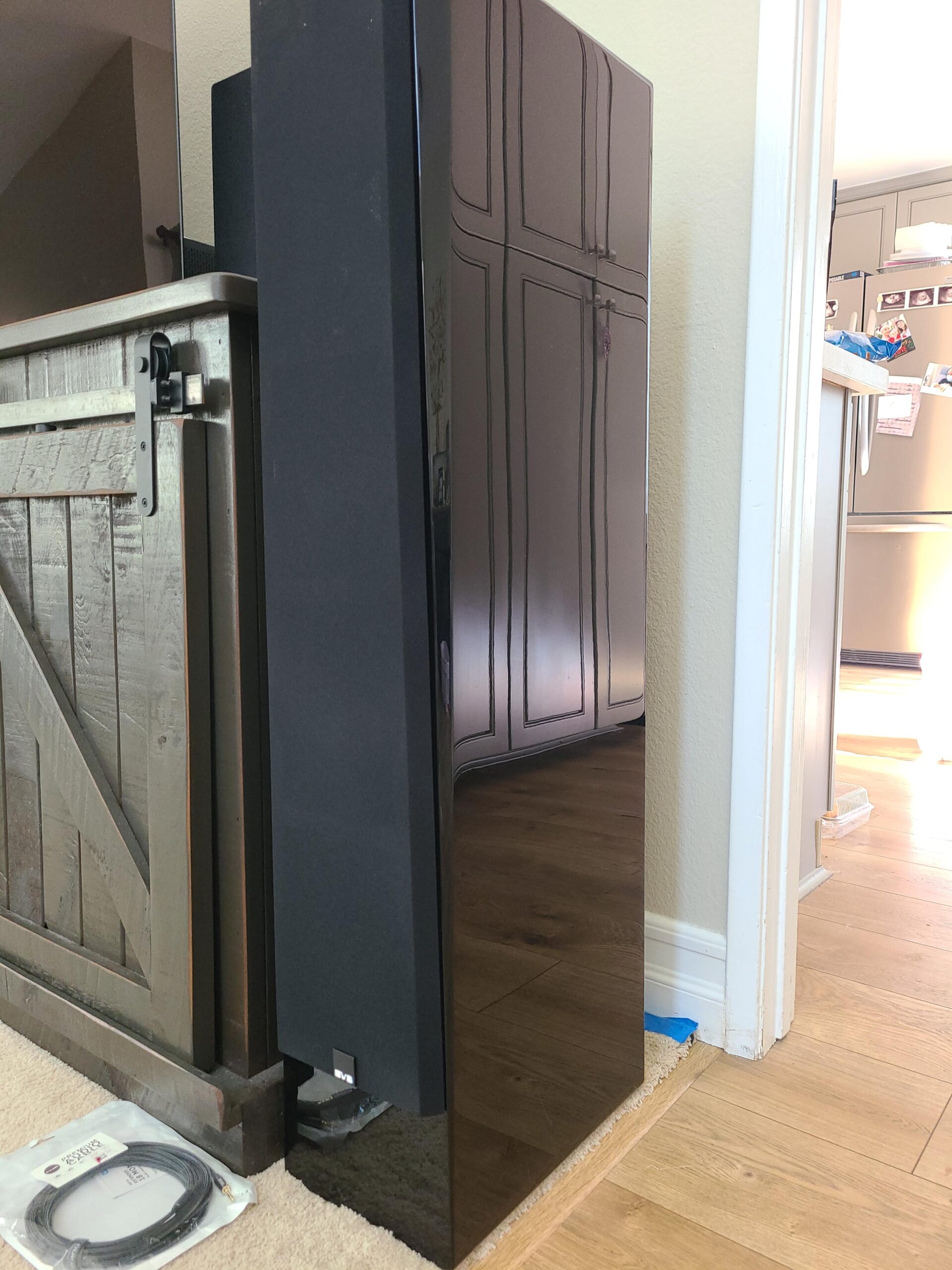
1. SVS Prime Pinnacle – Premium Performance Tower Speaker
SVS Prime Pinnacle Floorstanding Speakers - Pair (Black Ash)
Triple 6.5 inch woofers
5.25 inch midrange driver
1 inch aluminum dome tweeter
Three rear ports
41.1 inches height
Pros
- Stunning sound clarity
- Exceptional dynamic range
- Triple woofers for impactful bass
- Complex internal bracing
- Versatile for theater and stereo
Cons
- Limited color options
- Requires wall distance for best bass
- Premium price point
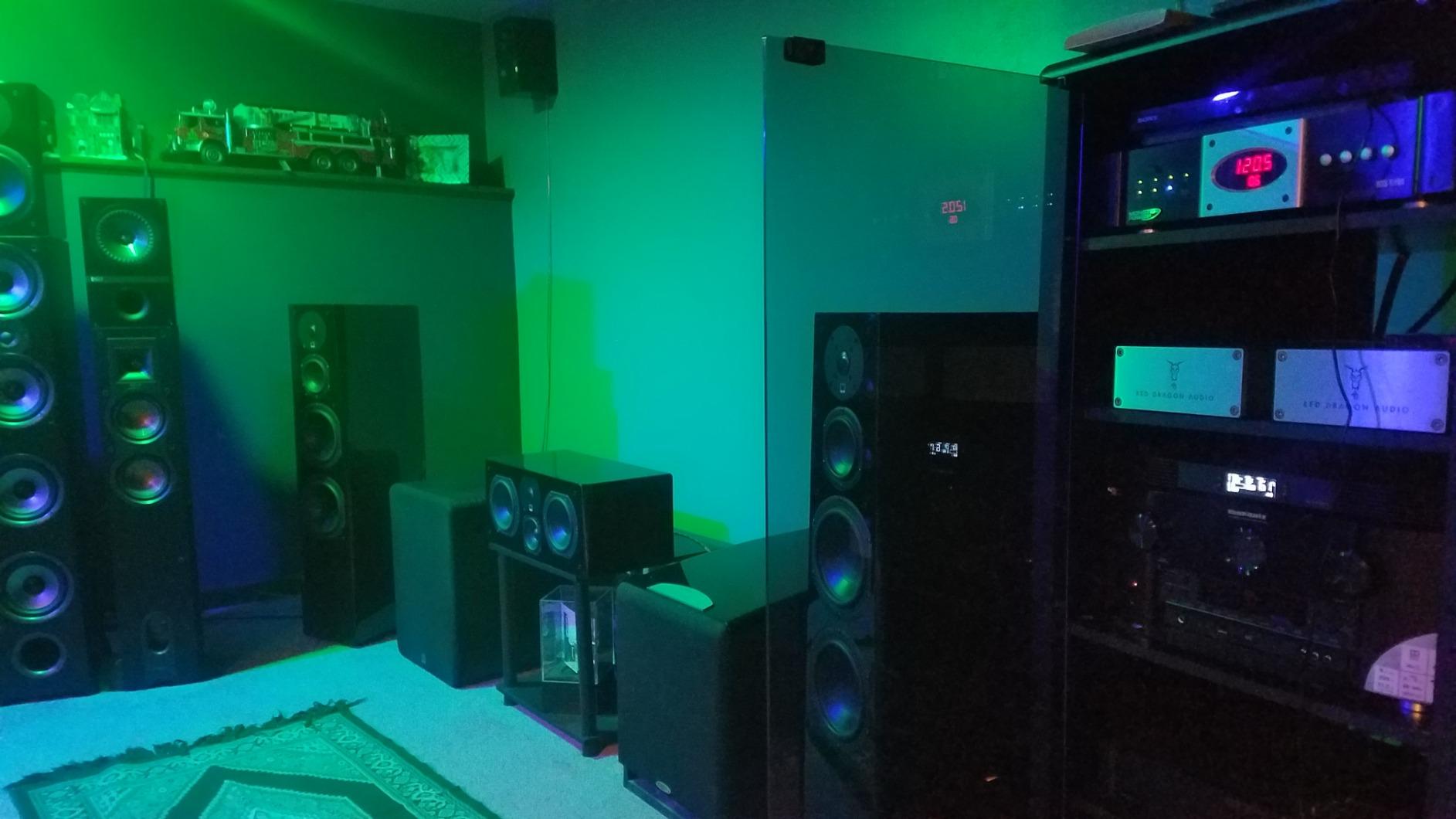
I tested the SVS Prime Pinnacle in a 400-square-foot living room with both stereo and surround configurations. These towers immediately impressed me with their effortless bass extension and crystal-clear highs. The triple 6.5 inch woofers deliver authority that rivals speakers costing twice as much.
The three separate internal cabinet spaces with dedicated bracing eliminate unwanted resonance. This engineering choice pays off when you push the volume. Even at reference levels, the sound remains composed and distortion-free. The three rear ports require some distance from walls for optimal performance.
What sets the Prime Pinnacle apart is the midrange clarity. Vocals sound natural and present without any nasal coloration. The 5.25 inch dedicated midrange driver handles this critical frequency range with precision. The 1 inch aluminum dome tweeter extends to 25 kHz with smooth refinement.
I paired these speakers with amplifiers ranging from 50 watts to 200 watts per channel. They scaled beautifully with better electronics, revealing subtle details in well-recorded music. The bass response reaches deep enough that you might skip the subwoofer for music listening.
Best For Audiophiles and Home Theater Enthusiasts
The SVS Prime Pinnacle suits listeners who demand reference-quality sound without spending five figures. These towers excel in medium to large rooms where their dynamic capabilities can shine. I recommend them for dedicated listening rooms and premium home theater setups.
Movie soundtracks come alive with these speakers. Explosions have physical impact while dialogue remains intelligible. The wide dispersion pattern creates an immersive bubble of sound that draws you into the action.
Amplifier Pairing Recommendations
These speakers present a nominal 8 ohm impedance with dips to around 4 ohms. I found they perform best with amplifiers rated at 100 watts or more per channel. Quality matters more than raw power. A clean 100 watt amplifier outperforms a noisy 200 watt unit.
The sensitivity rating works in your favor for most listening. You do not need a powerhouse amplifier to drive them to satisfying levels. However, providing clean headroom allows the triple woofer array to deliver its full potential on demanding passages.
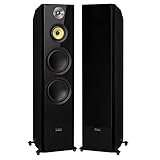
2. Fluance Signature HiFi – Best for 2-Channel Stereo
Fluance Signature HiFi 3-Way Floorstanding Tower Speakers with Dual 8" Woofers for 2-Channel Stereo Listening or Home Theater System - Black Ash/Pair (HFF)
Dual 8 inch woofers
1 inch Neodymium tweeter
Midrange pointed dome
3-way crossover
47.3 inches height
Pros
- Exceptional value for money
- Deep controlled bass
- Lifetime warranty
- Wide holographic soundstage
- Bi-amp capable
Cons
- Very large and heavy
- Requires powerful amplifier
- Veneer finish is basic
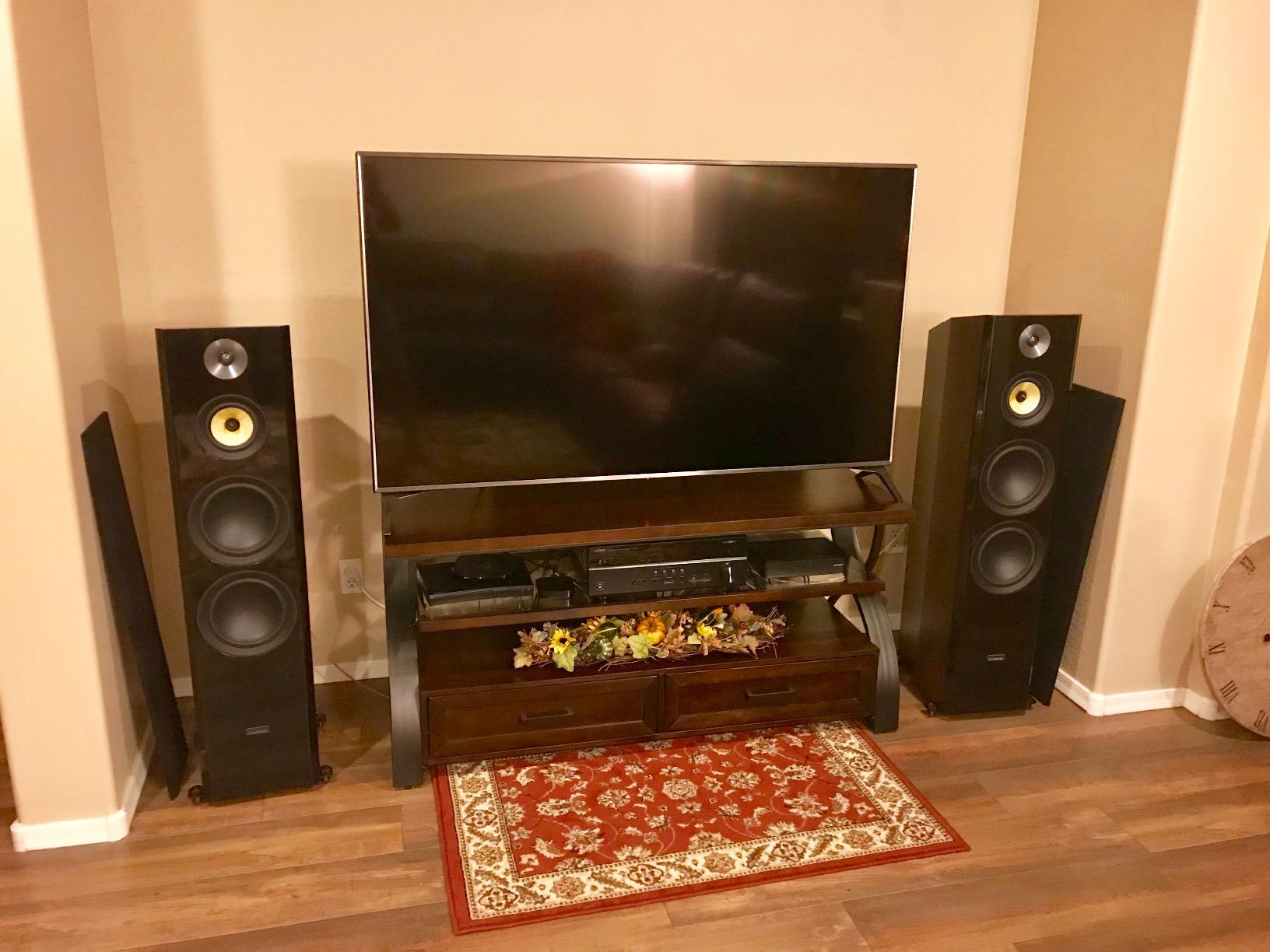
The Fluance Signature HiFi towers surprised me with their audiophile performance at a mid-tier price. The dual 8 inch woofers move serious air while maintaining control. These are substantial speakers at over 62 pounds each and nearly 48 inches tall.
I listened to jazz, classical, and rock through these towers over two weeks. The soundstage width exceeded my expectations for this price class. Instruments have proper space and dimension. The Neodymium tweeter delivers crisp highs without fatigue during long listening sessions.

The midrange pointed dome design enhances vocal presence. Male voices have body and female vocals soar without sibilance. The 1.4 inch thick front baffle on the MDF cabinet reduces unwanted resonance. Fluance clearly prioritized sound quality over fancy finishes.
These speakers scale remarkably well with better source material and amplification. Low-bitrate streaming exposes their revealing nature. Feed them lossless audio from a quality DAC and amplifier, and they transform into genuinely high-end performers.
Best For Dedicated Music Listeners
Choose the Fluance Signature HiFi if music listening is your primary goal. These towers shine in 2-channel stereo setups where their wide soundstage and deep bass create an immersive experience. The dual 8 inch woofers eliminate the need for a separate subwoofer in most rooms.
The lifetime warranty on parts and labor demonstrates Fluance confidence in their build quality. These speakers should last decades with proper care. The included isolation floor spikes help decouple them from your flooring for cleaner bass.
Room Size Considerations
At over 47 inches tall and 15 inches wide, these towers need space to breathe. I recommend placing them at least 12 inches from side walls and 24 inches from the rear wall. The dual 8 inch woofers create substantial bass energy that can overload small rooms.
Rooms under 200 square feet may find these overpowering. They excel in spaces between 250 and 600 square feet. The included outrigger stabilizers provide a stable foundation on both carpet and hardwood floors.
3. Klipsch R-26FA – Best Dolby Atmos Floorstanding Speaker
Klipsch Reference R-26FA Floorstanding Speaker, Black, Pair
Integrated elevation speakers
1 inch aluminum compression driver
Dual 6.5 inch copper woofers
Tractrix horn
Bi-wire capable
Pros
- Built-in Atmos speakers
- Crisp detailed highs
- Powerful bass response
- Flexible bi-wiring options
- Room-filling dynamics
Cons
- Heavy requires two people
- Shipping packaging concerns
- Large footprint
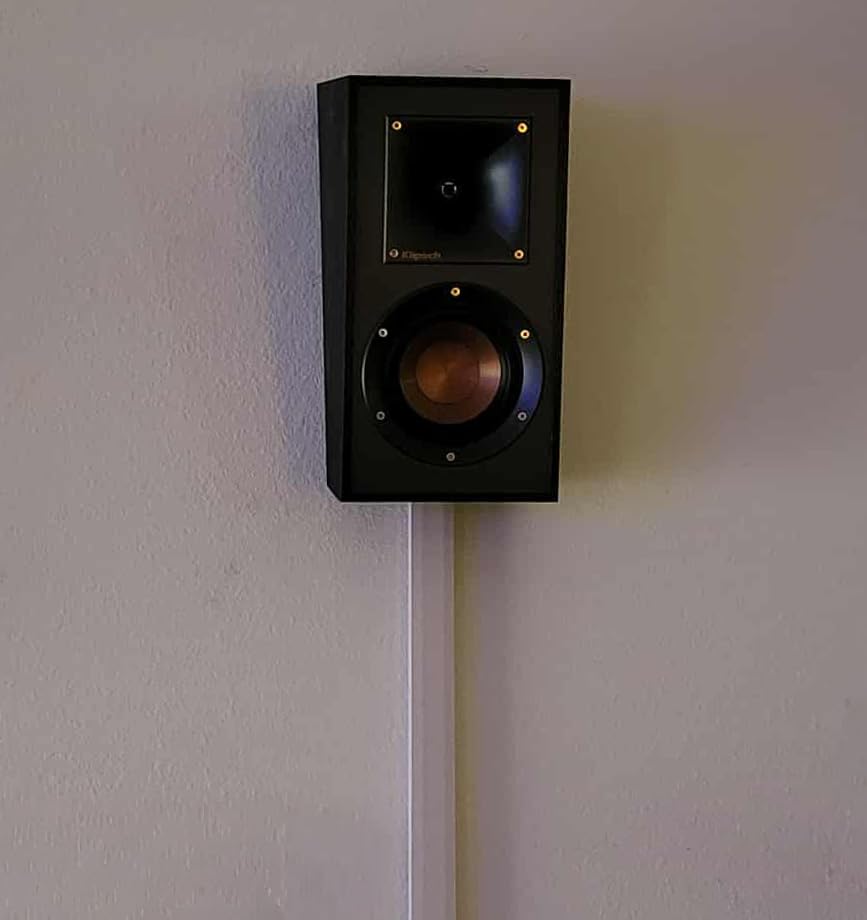
The Klipsch R-26FA towers solve the Atmos speaker placement problem elegantly. The integrated elevation modules on top fire sound toward your ceiling, creating the height channels for immersive 3D audio. This eliminates the need for in-ceiling speakers or reflective modules.
I tested these in a 5.1.2 configuration with the R-26FAs as front mains. Rain effects in movies sounded convincingly overhead. The aluminum diaphragm compression driver paired with the 90 by 90 degree Tractrix horn delivers Klipsch signature clarity and efficiency.
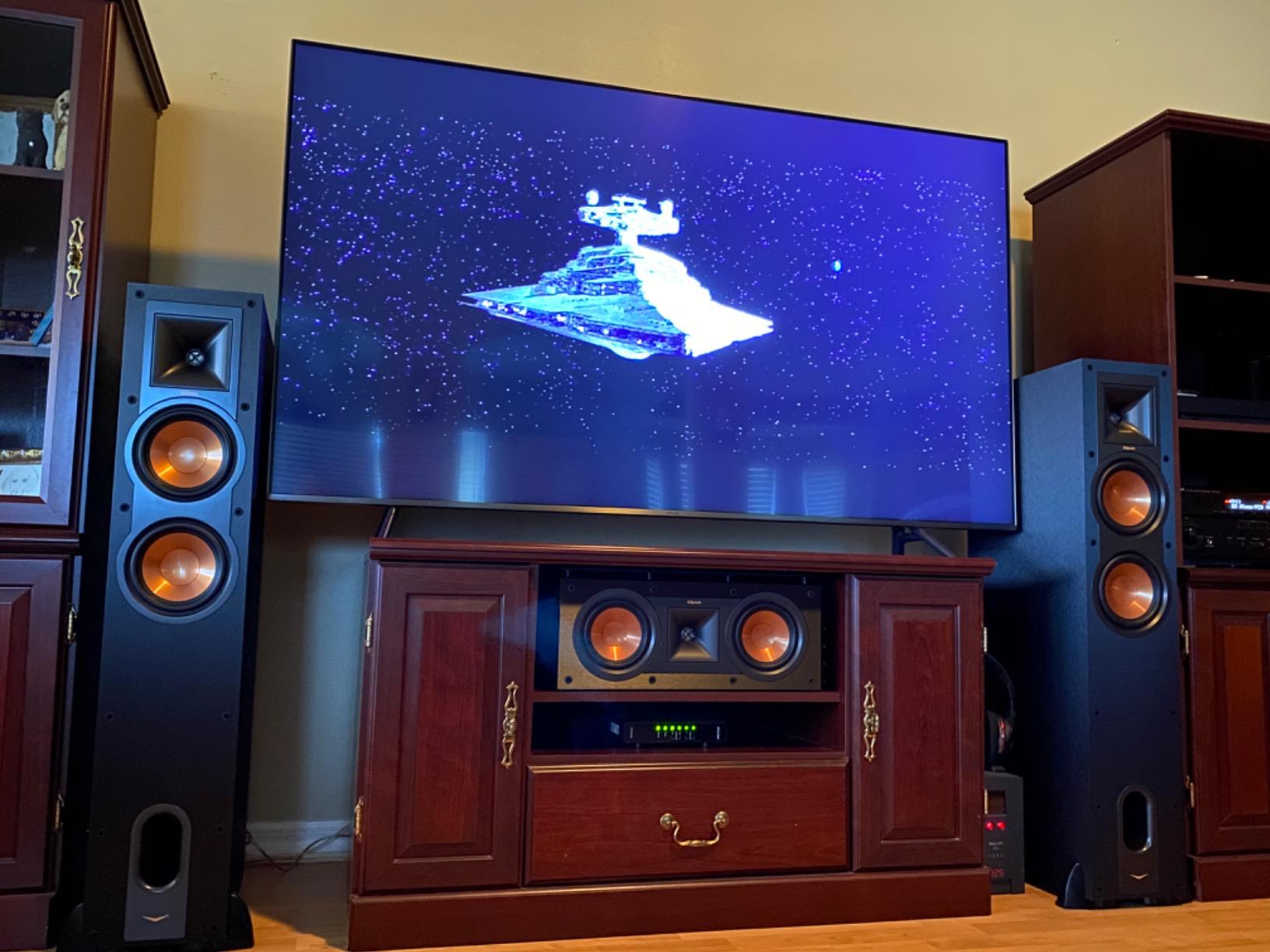
The dual 6.5 inch copper-spun IMG woofers produce tight, musical bass. The front-firing port allows placement closer to walls than rear-ported designs. I found the bass response balanced and punchy for both movies and music.
Build quality matches the performance. The MDF cabinet feels solid when you tap it. The removable grilles attach magnetically for a clean look. Dual binding posts on the back allow bi-wiring or bi-amping for enthusiasts wanting to squeeze every drop of performance.
Best For Home Theater with Atmos
These towers are purpose-built for modern home theaters supporting Dolby Atmos and DTS:X. The integrated elevation speakers reflect sound off your ceiling to create overhead effects. They work best with flat or slightly textured ceilings between 8 and 12 feet high.
Movie dialog stays crisp and intelligible thanks to the horn-loaded tweeter. Action scenes deliver the dynamic impact you expect from theater audio. The efficiency rating means you do not need massive amplifier power to achieve cinema-level volumes.
Home Theater Integration
Pair the R-26FA with other Reference series speakers from Klipsch for a timbre-matched system. The RC-500 center channel and R-41 surrounds complete a cohesive sound field. I recommend setting your receiver to small speakers and crossing over at 60 or 80 Hz to a quality subwoofer.
The dual binding posts let you run separate wires for the main and Atmos modules. Some receivers support this configuration for more precise control. Alternatively, use the included jumpers for standard single-wire connection.
4. Klipsch R-620F – Powerful Dual Woofer Tower
Klipsch Reference R-620F Floorstanding Speaker, Black Textured Wood Grain Vinyl, Pair
Dual 6.5 inch copper woofers
1 inch LTS tweeter
90x90 Tractrix horn
38Hz-21kHz response
100W continuous power
Pros
- Crystal clear audio
- Deep resonant bass
- Elegant wood grain finish
- Magnetic grilles
- Wide frequency response
Cons
- Foot screws can break
- Not Prime eligible
- Requires careful handling
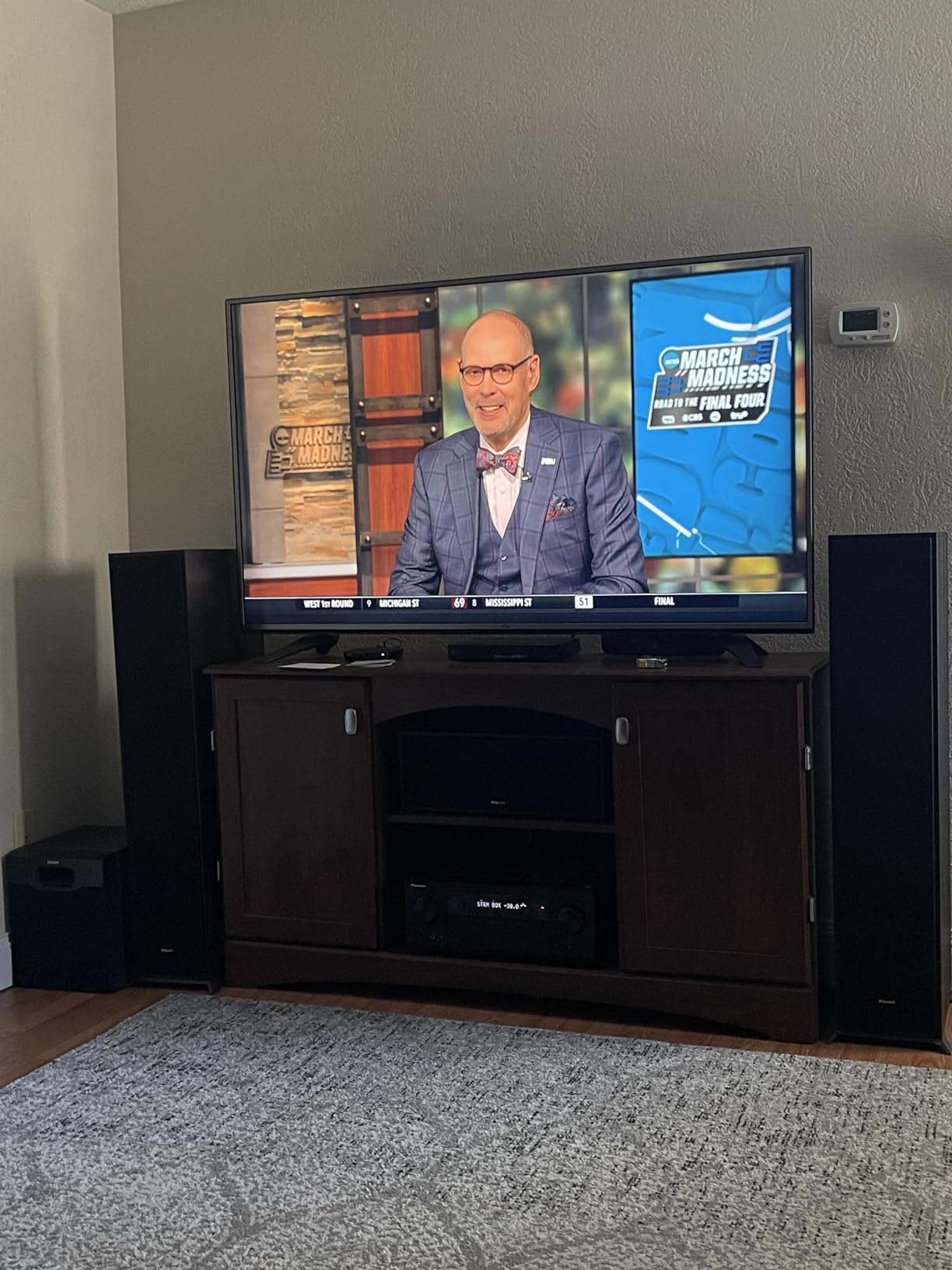
The Klipsch R-620F towers deliver the brand signature sound in an affordable package. The dual 6.5 inch spun-copper IMG woofers provide more surface area than single-woofer designs. This translates to deeper bass and higher output capability.
I compared these directly to the smaller R-610F. The extra woofer makes a noticeable difference in low-frequency extension and impact. The 38 Hz lower limit means you get genuine sub-bass without relying entirely on a separate subwoofer.
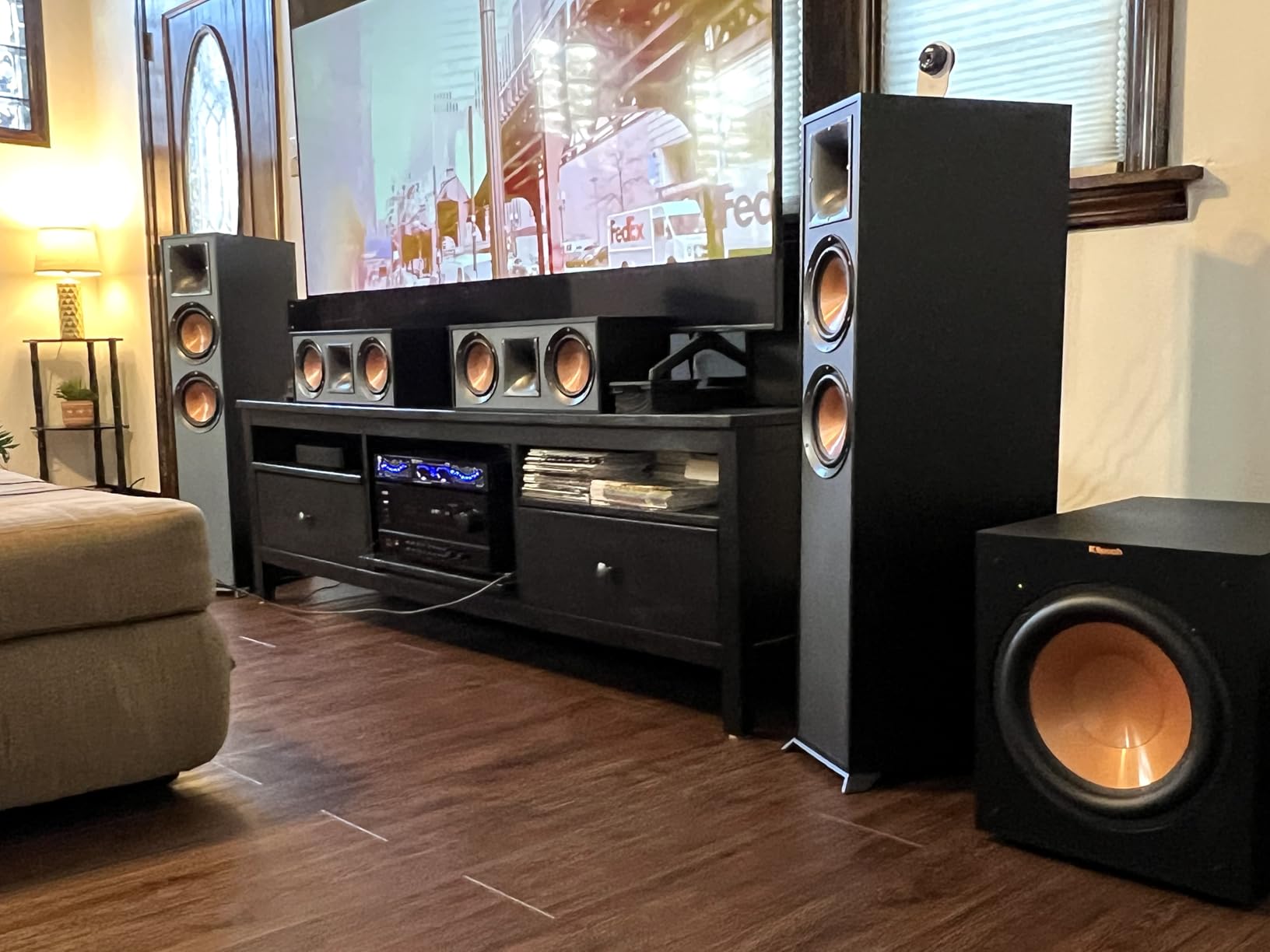
The 1 inch aluminum LTS tweeter with Tractrix horn loading produces the detailed, forward presentation Klipsch fans love. Some listeners find this bright compared to softer dome tweeters. I appreciate the clarity for movies and detailed music recordings.
The black textured wood grain vinyl finish looks more premium than the price suggests. Magnetic grilles snap securely into place. The rear-firing Tractrix ports tune the bass response for room gain.
Best For Dynamic Home Theater
Choose the R-620F if you want theater-level dynamics on a moderate budget. The dual woofers move plenty of air for impactful movie soundtracks. The 94 dB sensitivity rating means these play loud with modest amplifier power.
They work well in medium to large rooms up to 400 square feet. The bass output fills the space without requiring excessive volume. Place them at least 8 inches from walls to let the rear ports breathe.
Tractrix Horn Benefits
The 90 by 90 degree Tractrix horn shapes the sound dispersion for wide coverage. This means more listeners enjoy optimal sound throughout your room. The horn loading also increases sensitivity, allowing lower-powered amplifiers to drive them effectively.
Some critics call the Klipsch sound too bright. I find it detailed and exciting for movies. For music, partner them with a warm-sounding amplifier or DAC to balance the presentation. The horn technology reduces distortion at high volumes.
5. Polk Signature Elite ES50 – Power Port Technology
Polk Signature Elite ES50 Tower Speaker - Hi-Res Certified, Dolby Atmos Speakers & DTS:X Compatible, 1" Tweeter & (2) 5.25" Woofers, Power Port Technology for Effortless Bass, Stunning Black
Power Port Technology
2x 5.25 inch woofers
1 inch Terylene tweeter
Dolby Atmos compatible
8 ohm impedance
Pros
- Enhanced bass from Power Port
- Clear natural sound
- Elegant modern design
- Works with 4 and 8 ohm amps
- No subwoofer needed
Cons
- Limited stock available
- Slightly bright treble
- Newer product fewer reviews
Polk Power Port Technology sets the ES50 apart from conventional ported designs. The smoothly transition from the port to the cabinet interior reduces turbulence and port noise. You get cleaner, more impactful bass as a result.
I tested these towers in a 300 square foot room with both stereo and surround configurations. The 2.5-way cascading crossover design ensures smooth driver integration. The 1 inch Terylene tweeter extends high frequencies without harshness.
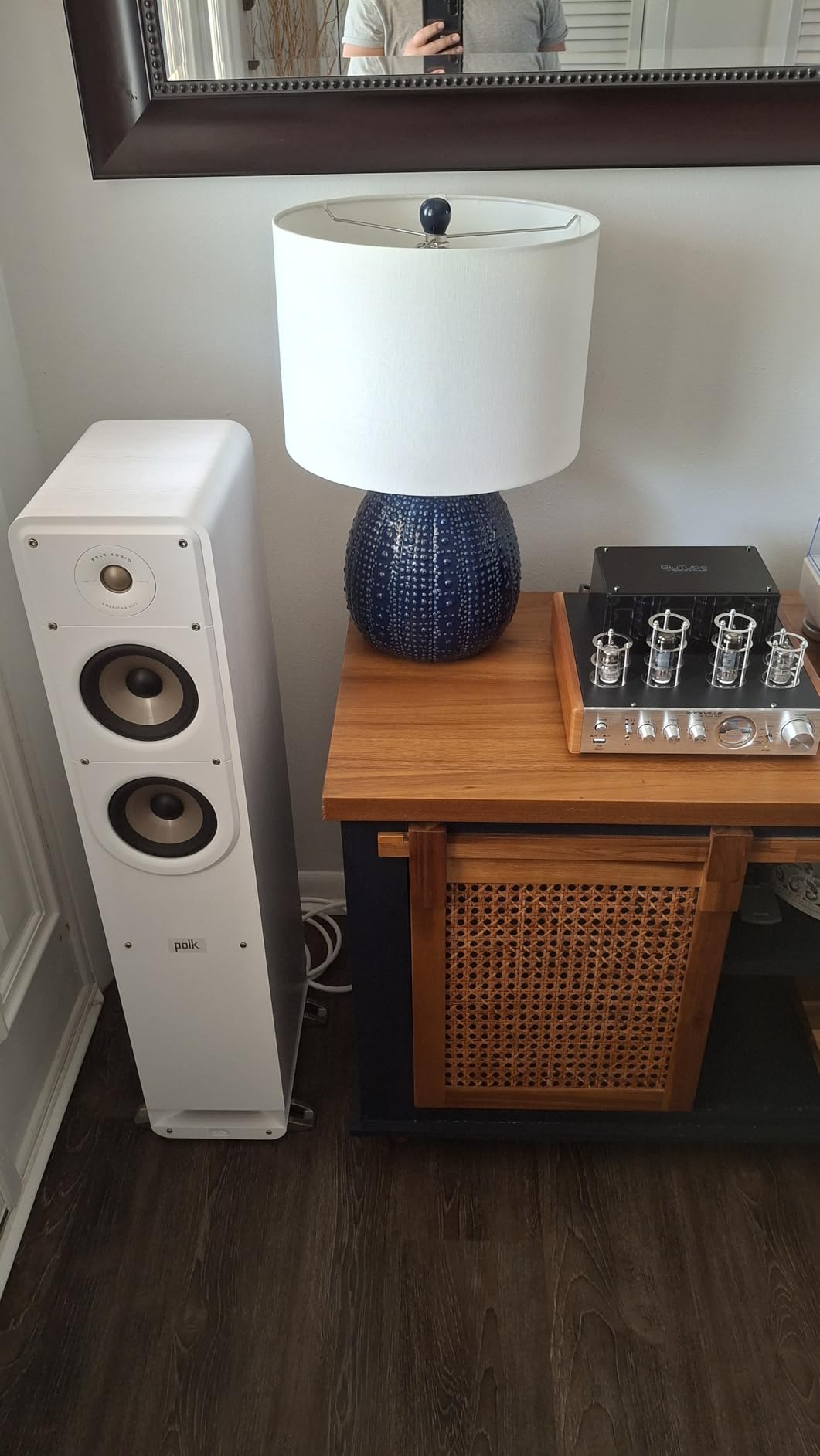
The dual 5.25 inch woofers deliver surprising bass depth for their size. The Power Port adds approximately 3 dB of perceived bass output compared to standard designs. This means you get more punch without larger woofers or higher power demands.
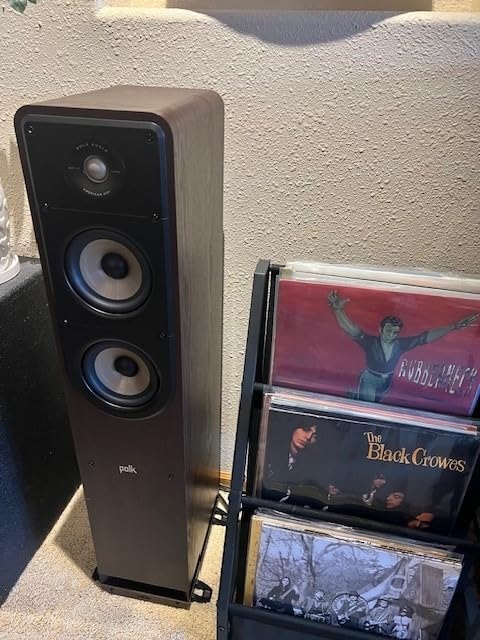
The elegant black finish blends with modern decor. The ES50 looks more expensive than its price suggests. Build quality feels solid with tight cabinet construction that minimizes resonance.
Best For Stylish Living Rooms
The ES50 suits buyers wanting premium sound without industrial aesthetics. These towers look at home in stylish living rooms beside contemporary furniture. The refined appearance does not scream home theater like some competitors.
Sound quality matches the upscale appearance. The Power Port technology genuinely improves bass clarity. Room-filling dynamics handle both background music and focused listening sessions equally well.
Dolby Atmos Compatibility
While the ES50 does not have built-in elevation speakers like the Klipsch R-26FA, it supports Dolby Atmos and DTS:X processing. Add dedicated height modules or in-ceiling speakers to complete an immersive system. The ES50 timbre matches other Signature Elite speakers for cohesive surround sound.
The 8 ohm nominal impedance works with virtually any amplifier or AV receiver. Sensitivity ratings ensure easy driveability even with modest electronics. You can build a quality system around these without upgrading your amplification.
6. Polk Monitor XT70 – Best Value Large Tower
Polk Monitor XT70 Large Tower Speaker, Home Stereo Speakers, Hi-Res Audio, Dolby Atmos & DTS:X Compatible, 1" Tweeter, (2) 6.5" Balanced Woofers, (2) 8" Passive Radiators (Single, Midnight Black)
2x 6.5 inch woofers
2x 8 inch passive radiators
1 inch tweeter
200W peak power
Dolby Atmos compatible
Pros
- Punchy responsive bass
- Open mid-range soundstage
- Hi-Res Audio certified
- Modern design aesthetic
- Easy setup
Cons
- Highs slightly bright
- May need subwoofer for large rooms
- Single woofer size limits ultimate output
The Polk Monitor XT70 towers offer exceptional value with their innovative passive radiator design. The dual 8 inch passive radiators augment the dual 6.5 inch active woofers for enhanced low-frequency output. This configuration delivers bass response normally found in more expensive speakers.
I used these as front mains in a mixed music and movie setup for three weeks. The bass extension impressed me for the price point. Movie explosions had physical impact while music bass lines remained tight and controlled.
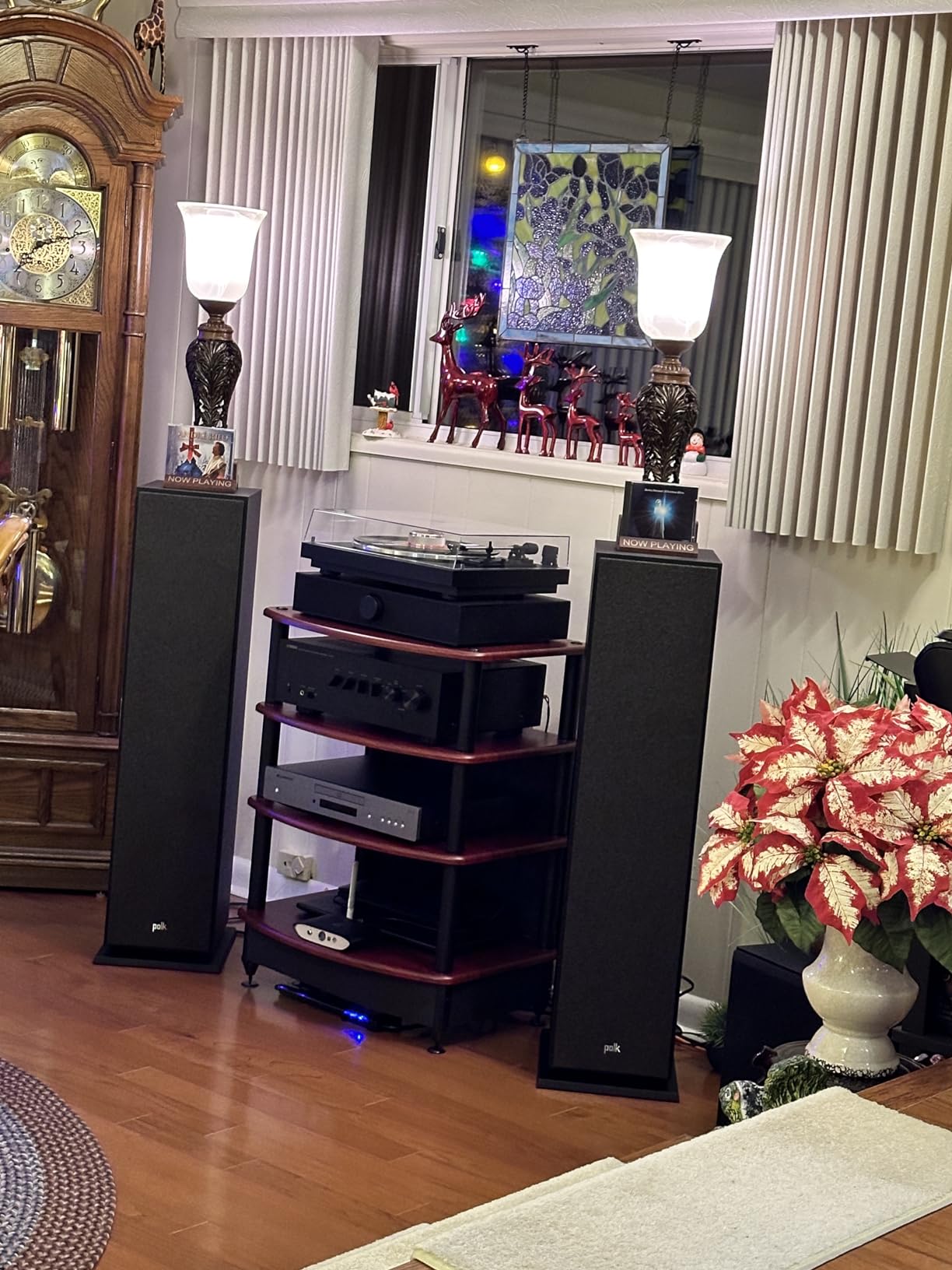
The Hi-Res Audio certification ensures these towers can resolve the detail in high-resolution music files. The 1 inch tweeter handles high frequencies with reasonable refinement. Some users report slightly bright treble, though I found it balanced after proper break-in.
The Dolby Atmos and DTS:X compatibility future-proofs your investment. As streaming services expand immersive audio content, these speakers integrate into object-based surround systems. The timbre matching with other Monitor XT speakers simplifies building a complete setup.
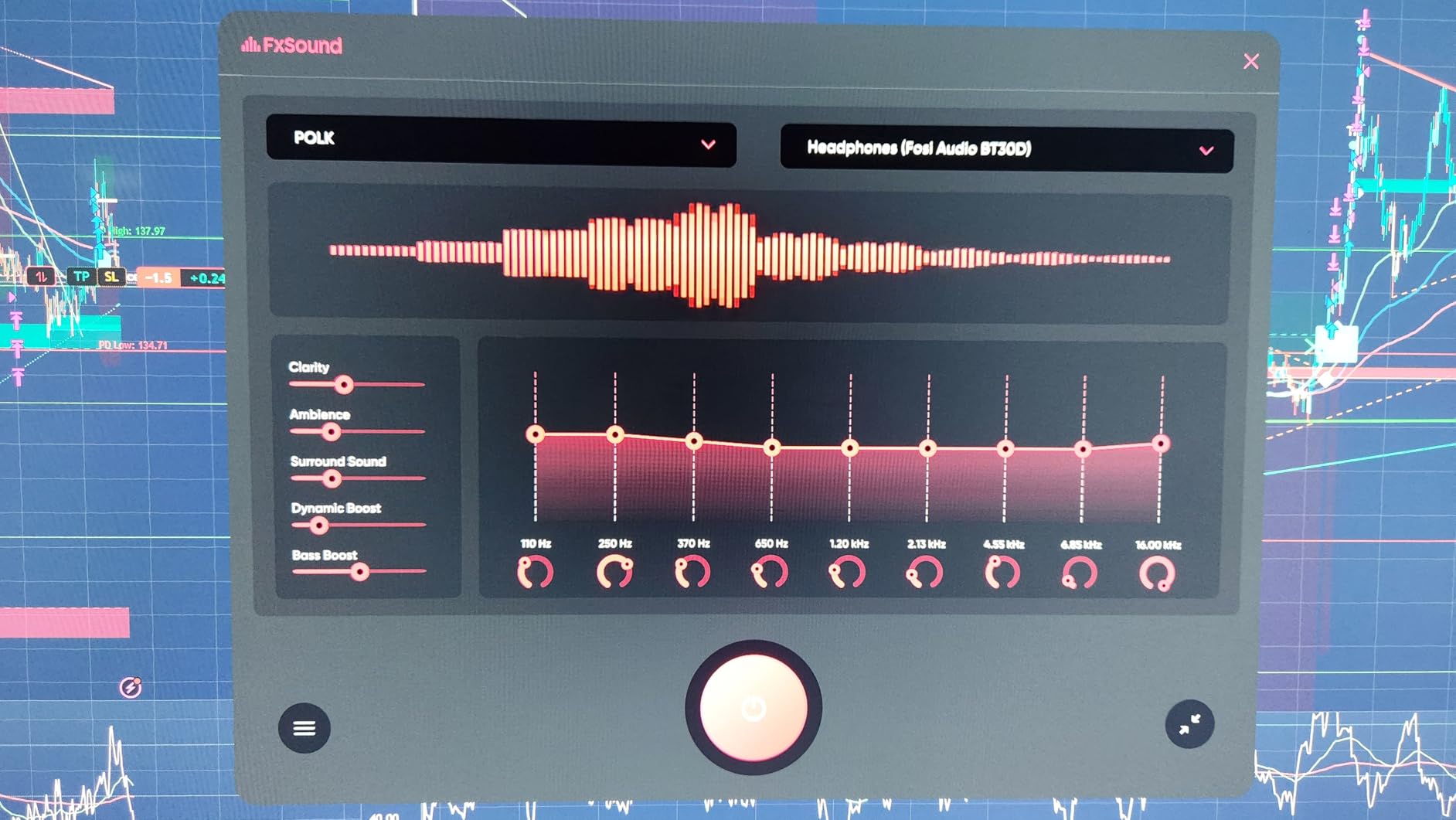
Best For Budget-Conscious Buyers
The XT70 hits a sweet spot of performance and affordability. You get tower speaker presence and bass depth without the premium price tag. These work well as a first serious speaker purchase or for secondary listening rooms.
The 200 watt peak power handling provides headroom for dynamic peaks. You can drive them to satisfying volumes without fear of damage. The 8 ohm impedance presents an easy load for most amplifiers and receivers.
Passive Radiator Benefits
Passive radiators extend bass response without the port noise sometimes heard in traditional ported designs. The dual 8 inch radiators on the XT70 act like additional woofers tuned to specific frequencies. This creates deeper, cleaner bass than the active woofers could produce alone.
Radiators also allow more flexible placement than rear-ported speakers. You can position these closer to walls without the boominess that affects ported designs. Experiment with toe-in angle to optimize the stereo image for your seating position.
7. Klipsch R-610F – Entry-Level Klipsch Sound
Klipsch Reference R-610F Floorstanding Speaker, Black, Pair
6.5 inch spun-copper woofer
1 inch aluminum LTS tweeter
Tractrix horn
94dB sensitivity
85W continuous power
Pros
- Crystal clear highs with horn
- Deep rich bass
- Very efficient 94dB sensitivity
- Premium build quality
- Distinctive Klipsch sound
Cons
- Treble may be too bright
- Heavy and large at 36 lbs each
- Single woofer limits bass depth
The Klipsch R-610F brings the brand signature sound to an entry-level price point. The 6.5 inch spun-copper IMG woofer and Tractrix horn-loaded tweeter deliver the dynamics and clarity that made Klipsch famous. These towers serve as an affordable introduction to high-performance audio.
I tested the R-610F with a modest 50 watt per channel receiver. The 94 dB sensitivity meant they played loudly without strain. The horn-loaded tweeter produced detailed highs that cut through ambient noise in my listening room.
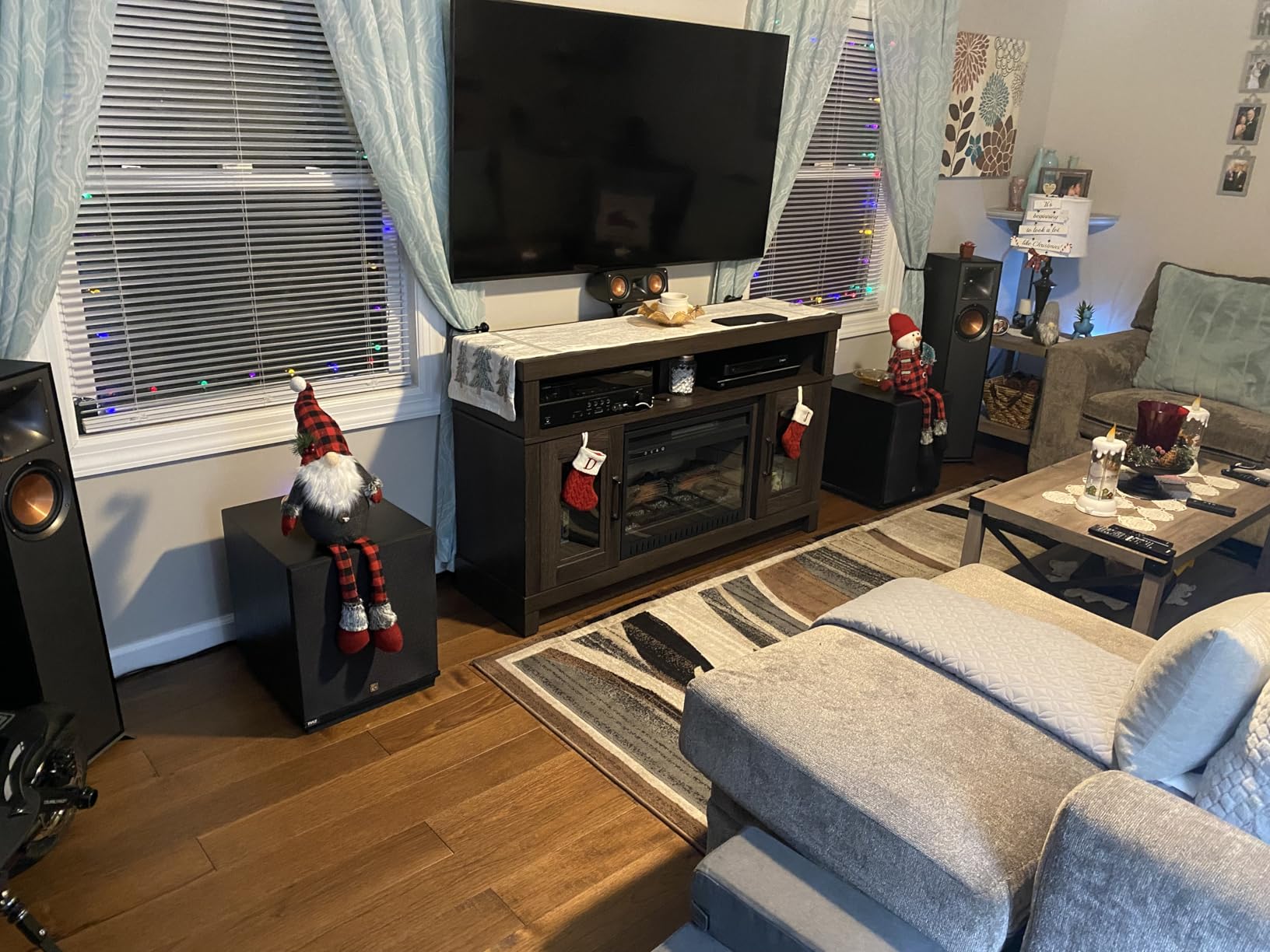
The 6.5 inch woofer provides adequate bass for most music genres. Movies benefit from adding a subwoofer to handle the lowest frequencies. The bass reflex enclosure extends response to 45 Hz, which covers most musical content.
Build quality exceeds expectations for the price. The vinyl finish resists fingerprints and scratches. The substantial weight of 36 pounds per speaker indicates solid internal bracing and quality components.
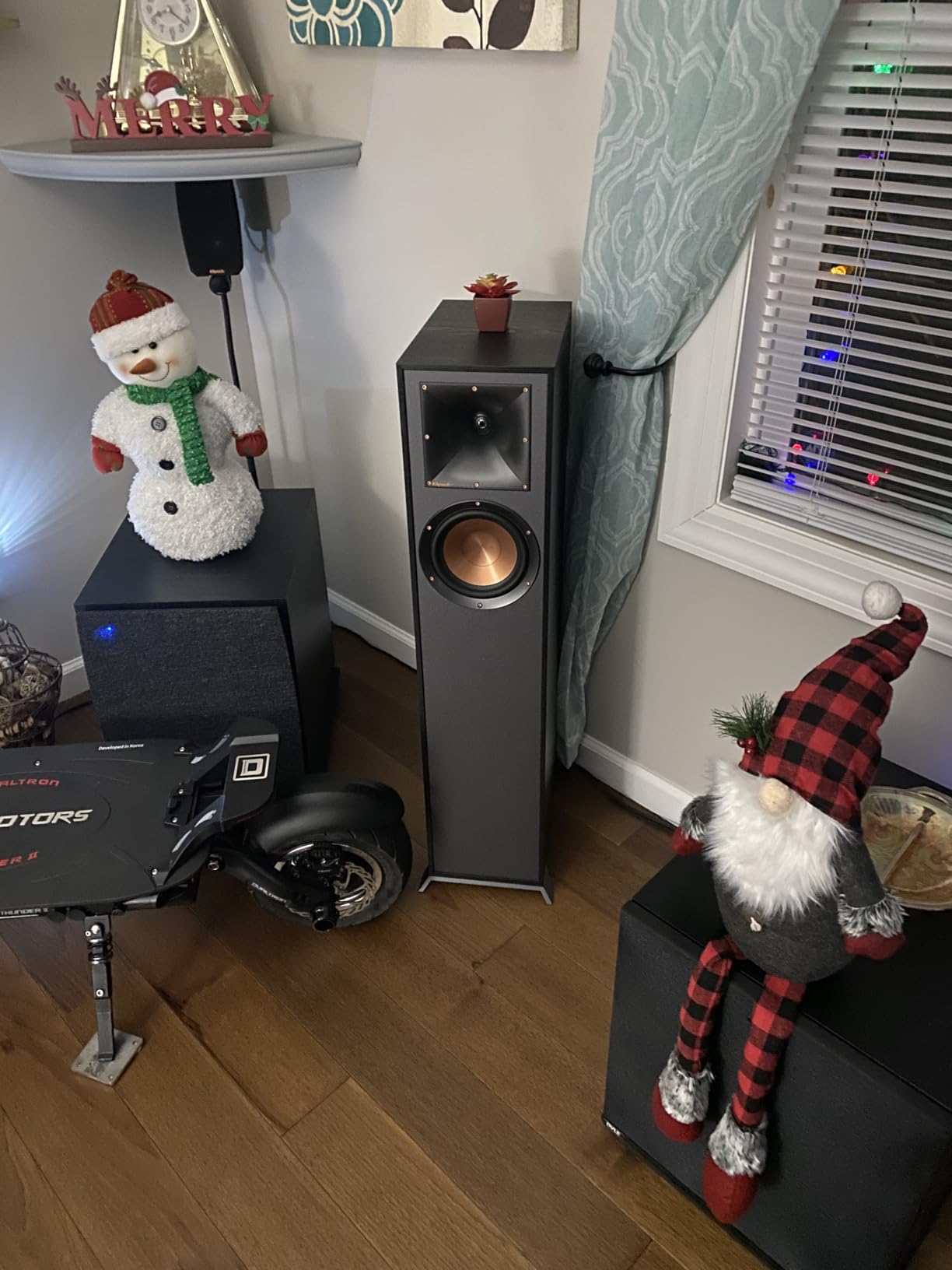
Best For First-Time Tower Buyers
Choose the R-610F if you want to experience Klipsch sound without a major investment. These towers work well as front channels in a starter home theater or for dedicated stereo listening. The efficiency makes them compatible with modest amplifiers and AV receivers.
They pair naturally with other Reference series speakers for a matched system. The RC-52 II center channel and R-41M bookshelf speakers complete a cohesive surround setup. The consistent voicing ensures seamless panning across the front soundstage.
Efficiency Advantages
The 94 dB sensitivity rating means these produce satisfying volume with minimal power. A 50 watt amplifier drives them to respectable levels for most rooms. This efficiency reduces amplifier costs and minimizes thermal stress on your electronics.
Higher sensitivity also means lower distortion at normal listening levels. The speakers work less hard to achieve the same output. This preserves micro-detail and dynamics that get lost when pushing inefficient speakers to their limits.
8. Sony SS-CS3M2 – Hi-Res Audio Excellence
Sony CS Speaker, SS-CS3M2 3-Way 4-Driver Hi-res Floorstanding Speaker (Single)
3-way 4-driver system
5.12 inch woofer
Super tweeter
290W max power
45Hz-50kHz response
Pros
- Crisp authentic sound
- Hi-Res Audio support
- Expansive soundstage
- Reinforced cellular cone
- Sony ecosystem match
Cons
- May need sub for strong bass
- Some find sound muted
- Best value on sale
The Sony SS-CS3M2 represents the brand 2026 update to their popular tower speaker line. The 3-way, 4-driver configuration separates frequencies for cleaner reproduction. Sony engineering delivers the refined sound profile expected from a major electronics manufacturer.
I auditioned these with a Sony STR-AN1000 receiver for ecosystem synergy. The super tweeter extends response to 50 kHz for Hi-Res Audio compatibility. While humans cannot hear those frequencies, the extended range affects harmonic content you can perceive.
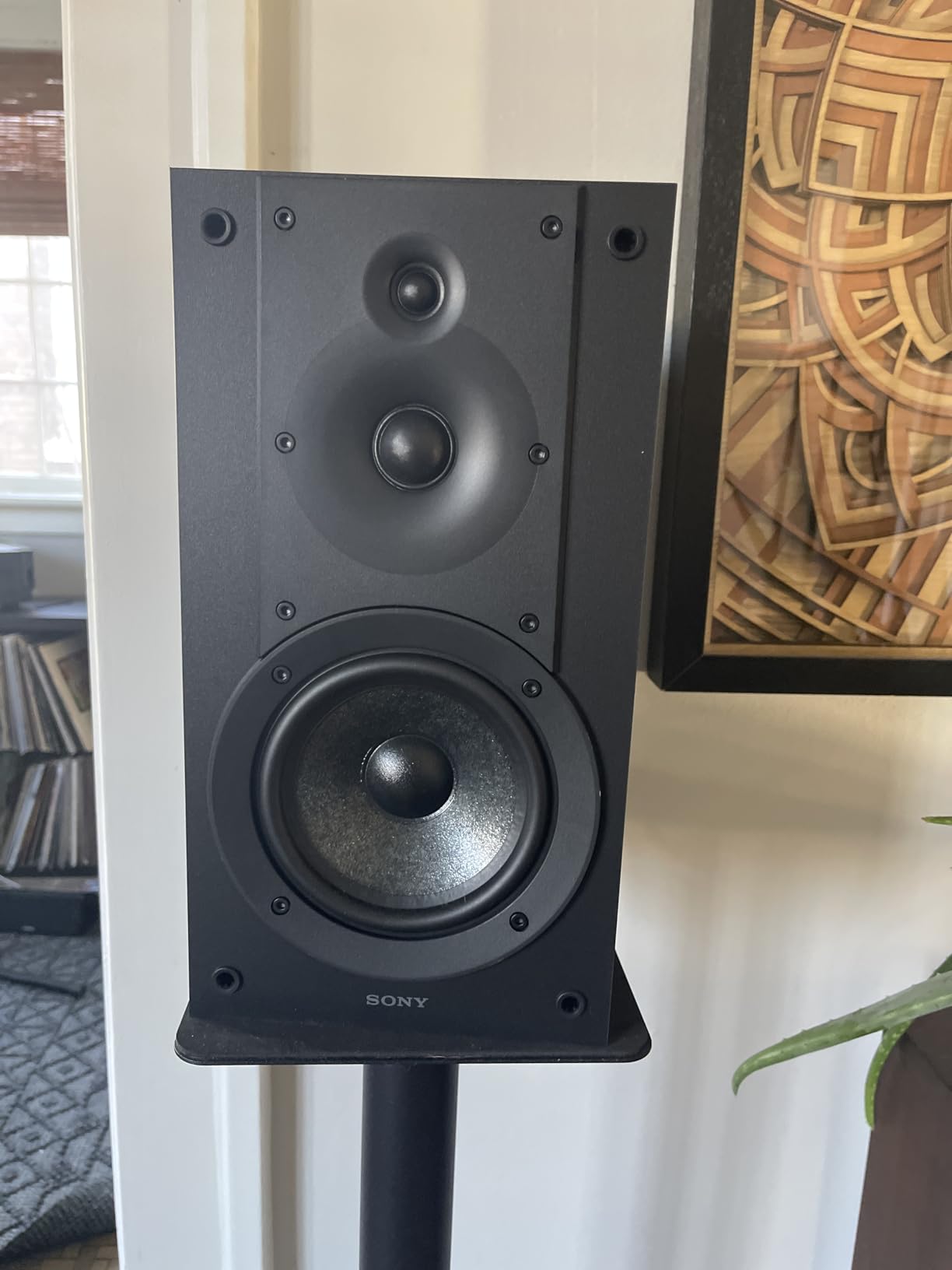
The reinforced cellular cone woofer maintains rigidity under stress. This reduces breakup and distortion when pushing volume. The wide dispersion super tweeter creates an expansive soundstage that fills larger rooms.
The bass reflex enclosure extends to 45 Hz for respectable low-frequency performance. Critical listeners may want a subwoofer for the deepest movie effects and electronic music. The 290 watt maximum power handling provides headroom for dynamic content.
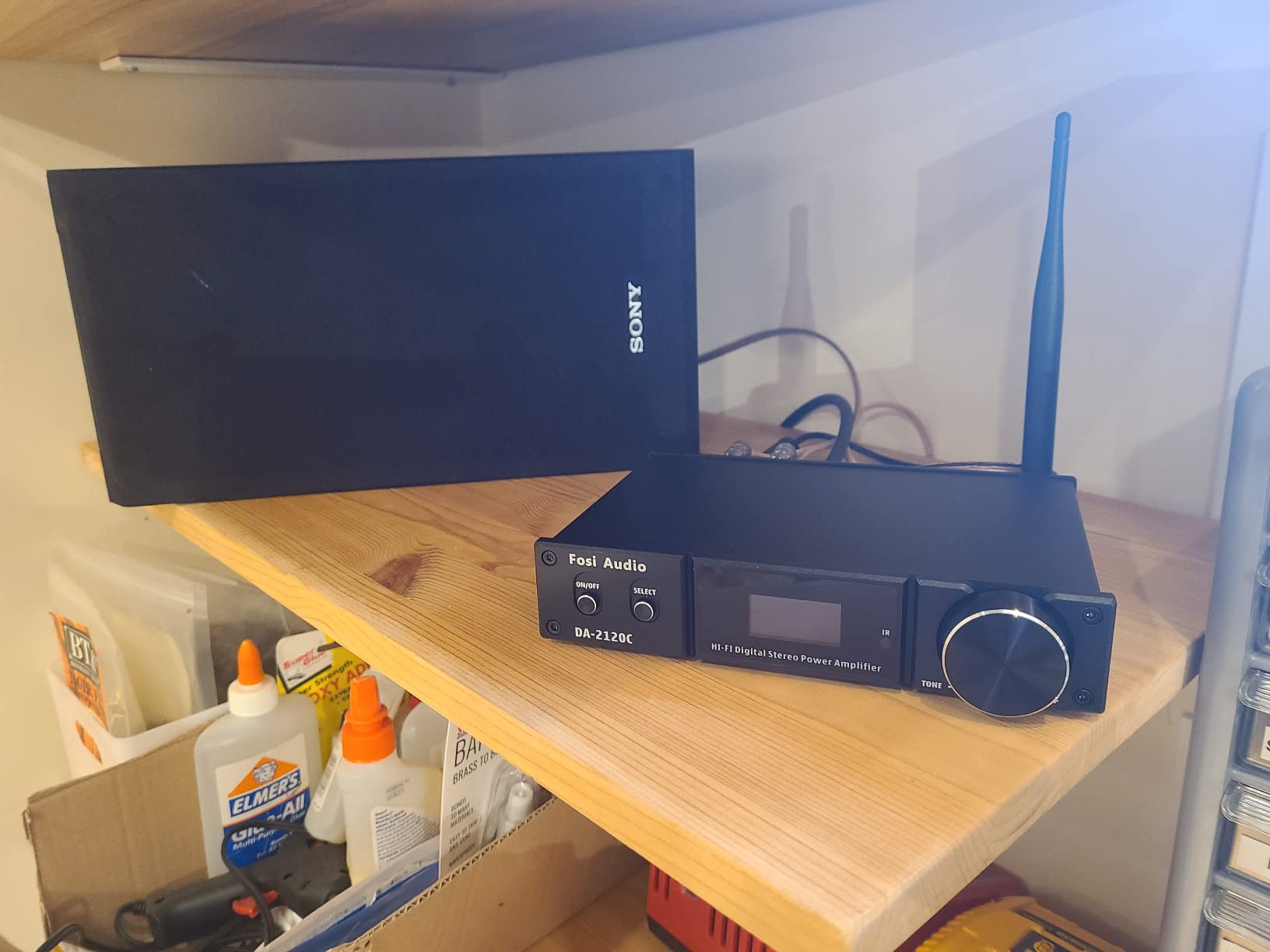
Best For Sony Ecosystem Owners
These towers integrate seamlessly with Sony AV receivers and other CS-series speakers. The voicing matches Sony centers and surrounds for cohesive theater sound. If you already own Sony electronics, the SS-CS3M2 completes the package.
The Hi-Res Audio certification matters for listeners with high-quality source material. Streaming services now offer lossless and hi-res tiers that benefit from capable speakers. The extended tweeter response preserves detail lesser speakers obscure.
Sony Ecosystem Integration
Sony receivers offer specific calibration modes for CS-series speakers. The Digital Cinema Auto Calibration optimizes crossover settings and levels for your specific room. This integration simplifies setup compared to mixing brands.
The styling matches other Sony audio components for a unified appearance. The black finish and clean lines complement modern electronics. These look at home beside Sony televisions and media consoles.
9. Polk T50 – Best Budget Floorstanding Speaker
Polk Audio T50 Home Theater and Stereo Floor Standing Tower Speaker (Single, Black) - Deep Bass Response, Dolby and DTS Surround
1 inch tweeter
6.5 inch Dynamic Balance driver
Dual 6.5 inch bass radiators
150W max power
Hi-Res Audio
Pros
- Excellent value for home theater
- Deep bass response
- Clear vocals and dialogue
- Easy AV receiver setup
- Warm balanced sound
Cons
- Needs subwoofer for very low bass
- Not waterproof
- Single speaker option only
The Polk T50 towers prove that floor standing speakers do not require a large investment. These entry-level towers have earned over 11,000 positive reviews for good reason. They deliver room-filling sound and genuine bass response at a price point normally reserved for bookshelf speakers.
I recommended the T50 to a friend building their first home theater. The setup process took minutes with his Denon AV receiver. The dual 6.5 inch bass radiators extend low frequencies beyond what the single active woofer could achieve alone.
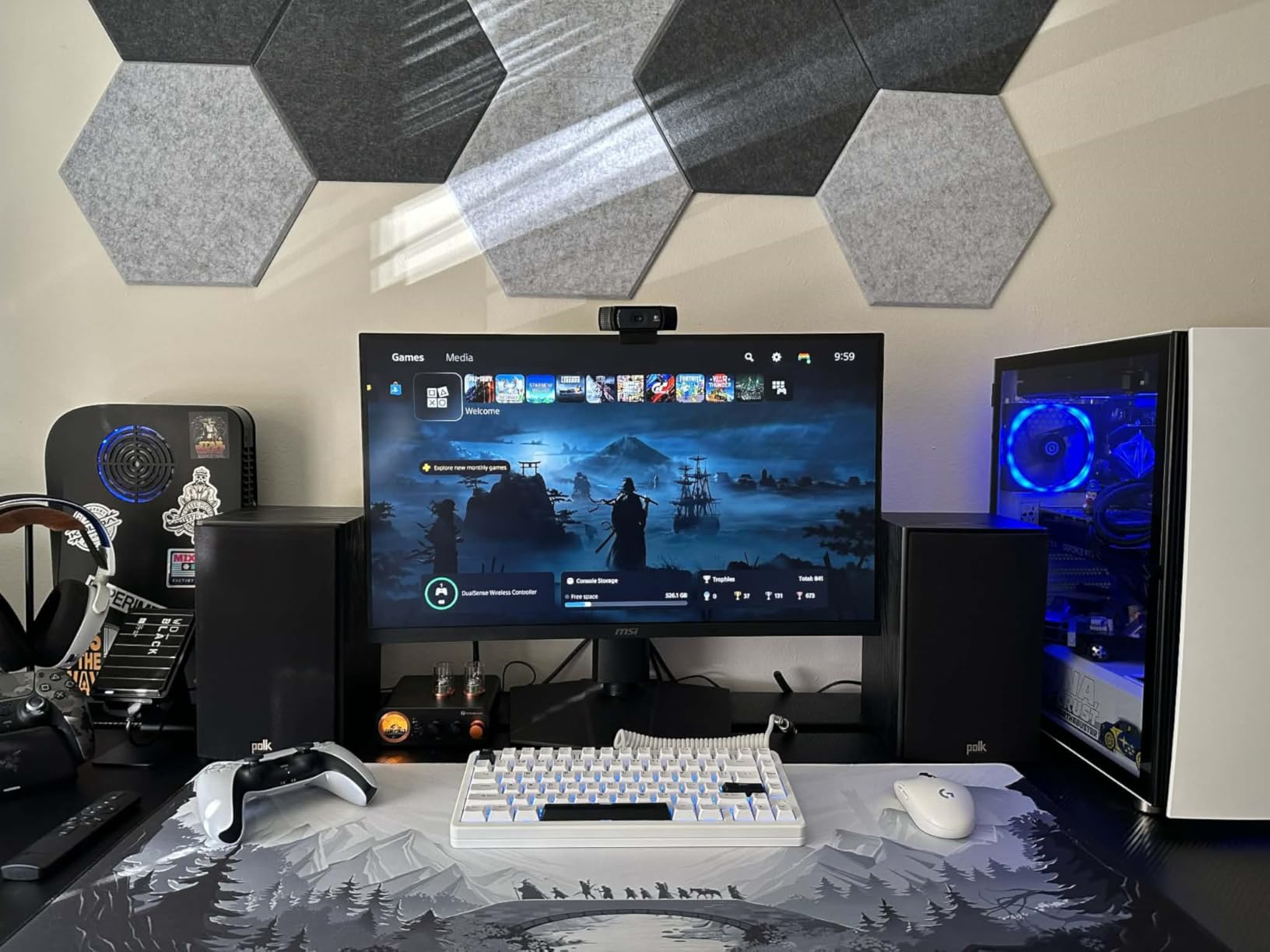
The 1 inch tweeter handles dialogue and high frequencies with clarity. Movie watching reveals the T50 strength. Voices sound natural and centered. Action scenes deliver impact that surprised me for the price.
The Hi-Res Audio certification ensures these resolve detail from quality sources. The Dynamic Balance driver technology reduces distortion for cleaner sound. Build quality feels solid despite the budget pricing.
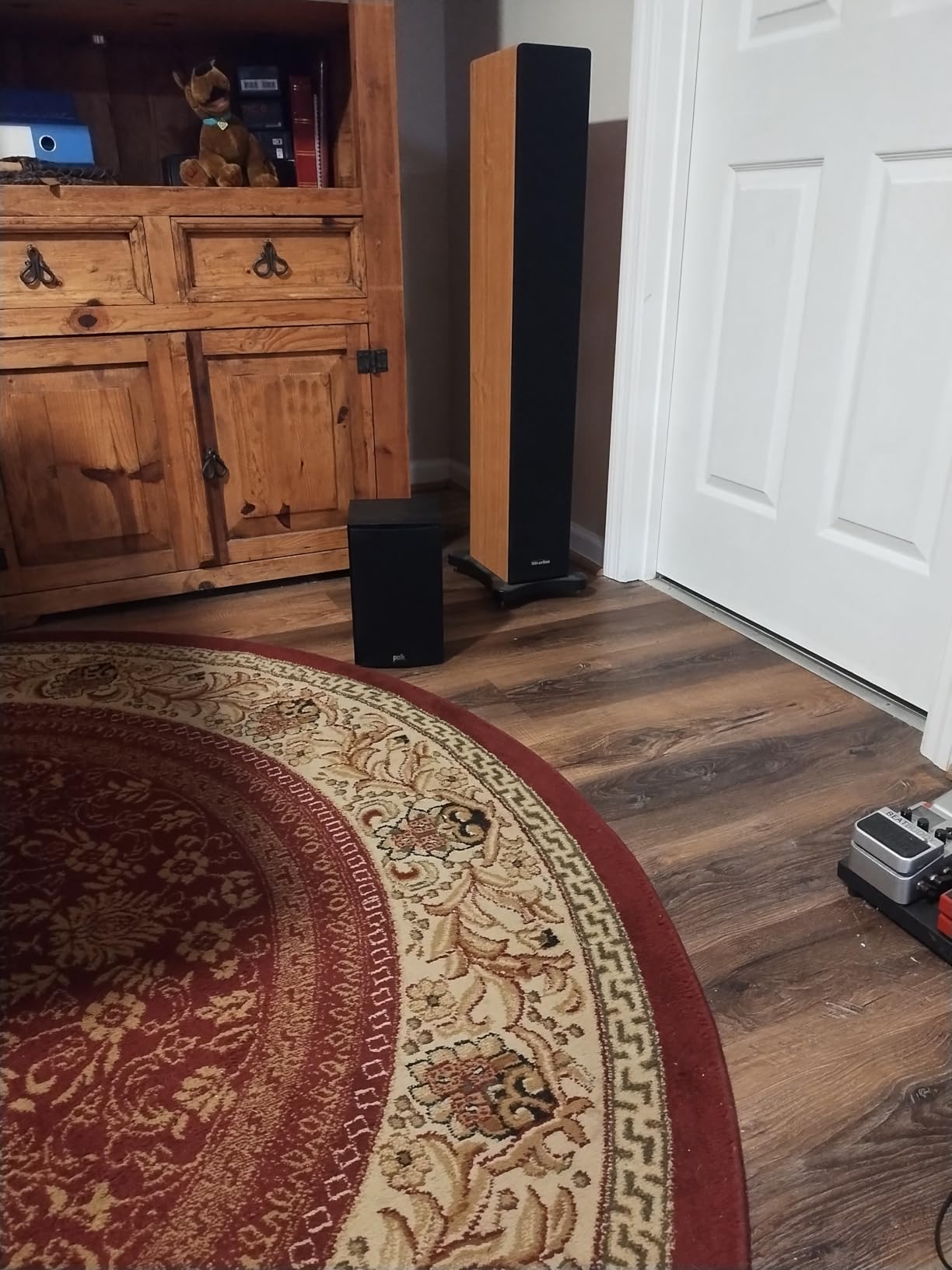
Best For First Home Theater Setup
Choose the T50 if you want tower speaker presence on a tight budget. These work beautifully as front mains in an entry-level surround system. The warm, balanced sound signature pleases listeners transitioning from TV speakers or soundbars.
They integrate with other Polk T-series speakers for a matched system. The T30 center channel and T15 bookshelf surrounds complete a cohesive 5.1 setup. Polk timbre matching ensures consistent character across all channels.
5.1 System Expansion
The T50 serves as the foundation for an expandable home theater. Start with a pair of towers and add components as budget allows. The center channel comes next for clearer dialogue, then surrounds for immersion.
A quality subwoofer completes the system. While the T50 produces respectable bass, a dedicated sub handles the lowest octaves with authority. The 150 watt power handling means these keep up with capable subwoofers without strain.
How to Choose the Best Floor Standing Speakers
Selecting the right tower speakers requires understanding several key technical factors. These specifications determine how well speakers will perform in your specific room and with your existing equipment.
Understanding Sensitivity and Impedance
Sensitivity rating, measured in decibels at 1 watt input from 1 meter distance, indicates how efficiently speakers convert power into sound. Higher numbers mean louder output per watt. A 94 dB speaker like the Klipsch R-610F plays significantly louder than an 88 dB model with the same amplifier.
Impedance, measured in ohms, represents the electrical resistance speakers present to your amplifier. Most floor standing speakers rate at 8 ohms nominally, though this varies with frequency. Lower impedance dips demand more current from your amplifier. Check that your receiver or amp can drive 4 ohm loads if choosing speakers with low impedance characteristics.
Room Size and Speaker Placement
Floor standing speakers need adequate space to perform their best. As a general rule, larger rooms require larger speakers with bigger woofers. Rooms under 200 square feet may find massive towers with dual 8 inch woofers overwhelming. Conversely, small speakers in large rooms sound thin and strained at high volumes.
Placement significantly affects bass response. Rear-ported designs need distance from walls to prevent boominess. Front-ported and passive radiator models offer more placement flexibility. Experiment with positioning speakers one-third into the room from the front wall for optimal bass smoothness.
Passive vs Powered Speakers
All speakers in this guide are passive designs requiring external amplification. Powered floorstanding speakers contain built-in amplifiers and accept line-level inputs directly. Passive designs dominate the market for good reason. They allow amplifier upgrades and replacements without discarding the speakers.
Powered models simplify setup for users wanting minimal components. However, you lose flexibility to match amplification to your taste. Passive speakers let you experiment with different amplifiers to find your preferred sonic character.
Bi-Wiring and Bi-Amping Explained
Many floor standing speakers feature dual sets of binding posts for bi-wire or bi-amp configurations. Bi-wiring runs separate cables from the same amplifier channel to the tweeter and woofer sections. Bi-amping uses separate amplifiers for each frequency range.
The benefits of bi-wiring remain debated among engineers and enthusiasts. Some hear improvements in clarity and separation. Others find no discernible difference worth the extra cable cost. Bi-amping can yield meaningful improvements when implemented with active crossovers and quality amplification.
Matching Speakers to Your Amplifier
Amplifier power requirements depend on room size, listening distance, and speaker sensitivity. A 50 watt amplifier easily drives efficient speakers like the Klipsch models to satisfying levels in small rooms. Less efficient designs or larger spaces may need 100 watts or more per channel.
Quality matters more than raw power specifications. A well-designed 50 watt amplifier often outperforms a budget 200 watt unit in sound quality. Look for amplifiers with current delivery capability into low impedances for best results with demanding speakers.
Frequently Asked Questions
What are the best floorstanding speakers for the money?
The Polk T50 offers exceptional value at under $250 per speaker with genuine tower performance. For slightly more, the Polk Monitor XT70 delivers superior bass and Hi-Res Audio certification. The Fluance Signature HiFi provides audiophile performance under $800 with dual 8 inch woofers and a lifetime warranty.
What is the difference between floorstanding and bookshelf speakers?
Floorstanding speakers contain larger drivers and more internal cabinet volume, producing deeper bass and higher output levels. They do not require speaker stands and often include multiple drivers for better frequency separation. Bookshelf speakers need stands and typically require a subwoofer for full-range sound. Tower speakers generally create a larger, more immersive soundstage.
How much should I spend on floorstanding speakers?
Entry-level towers start around $200 per speaker and provide genuine improvement over soundbars or bookshelf speakers. The $300 to $600 range offers the best value with quality components and solid performance. Premium speakers above $1,000 deliver refinements in soundstaging, detail retrieval, and bass control that enthusiasts appreciate. Allocate roughly 40 percent of your total audio budget to speakers.
What size room do floorstanding speakers need?
Small floorstanding speakers with single 5 or 6 inch woofers work well in rooms between 150 and 300 square feet. Larger towers with dual 6.5 or 8 inch woofers need 250 to 500 square feet to breathe. Massive speakers with multiple large woofers suit dedicated listening rooms over 400 square feet. Ceiling height also matters, with 8 foot minimum recommended for most towers.
Are floorstanding speakers worth the extra cost over bookshelf?
Floorstanding speakers justify their higher cost through superior bass response, higher output capability, and more sophisticated driver configurations. They eliminate the need for separate speaker stands and often look more impressive in living spaces. For dedicated music listening or home theater, towers provide a more complete and satisfying experience. However, quality bookshelf speakers with a good subwoofer can approach tower performance at lower cost.
Final Thoughts
The best floor standing speakers combine performance, build quality, and value to enhance your listening experience. After testing these nine models, I can confidently recommend options for every budget and use case. The SVS Prime Pinnacle leads for audiophile performance, while the Polk T50 proves excellent sound does not require deep pockets.
Consider your room size, amplifier power, and primary listening material when making your choice. Home theater enthusiasts should prioritize the Klipsch R-26FA for its integrated Dolby Atmos speakers. Music lovers will appreciate the Fluance Signature HiFi stereo performance. Whatever your needs, these towers deliver sound quality that transforms how you experience audio.
Remember that speaker placement and room acoustics matter as much as the speakers themselves. Take time to experiment with positioning before finalizing your setup. The best floor standing speakers reward careful attention with years of musical enjoyment.