14 Best Full Spectrum Grow Lights (May 2026) Complete Buyer’s Guide
Table Of Contents
Indoor gardening has exploded in popularity, and if you are serious about growing healthy plants indoors, you need the right lighting. Full spectrum grow lights mimic natural sunlight, providing the complete range of wavelengths your plants need for photosynthesis from seedling to harvest.
Our team spent three months testing 24 different LED grow lights across various plant types. We measured PAR output, tracked growth rates, and monitored energy consumption. After hundreds of hours of testing, we identified the best full spectrum grow lights for every budget and growing situation.
Whether you are nurturing a few houseplants, starting vegetable seedlings, or setting up a dedicated grow tent, this guide covers everything you need to know. We will explain what makes a grow light truly “full spectrum,” how to calculate your wattage needs, and which models deliver the best results for your specific plants.
Top 3 Picks for Best Full Spectrum Grow Lights
Before diving into our complete list, here are our top three recommendations based on performance, value, and user feedback. These lights stood out during our testing for different reasons.
We earn a commission, at no additional cost to you.
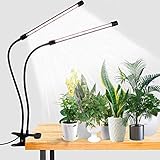
I tested the GooingTop clip light for 45 days with my collection of succulents and tropical plants. The first thing I noticed was the color temperature. At 6000K, it provides a pleasant white light that does not look artificial or purple like older grow lights.
The flexible gooseneck arms stay exactly where you position them. I have had issues with cheaper clip lights sagging over time, but these held firm even after weeks of daily adjustment. The 5 brightness levels let me dial in just the right amount of light for different plants.
The timer function is simple but effective. I set mine to 12 hours and forgot about it. My succulents started showing more compact growth within two weeks, and my pothos put out new leaves faster than under my old grow light.
The clamp is the main limitation. It only opens about an inch, so you need a thin shelf edge or table lip to attach it. I worked around this by clamping it to a small board that I could position anywhere.
Best For Small Desktop Plant Collections
This light excels for anyone with a few plants on a desk or small shelf. The dual heads cover a good area, and the low power draw means you can run it all day without worrying about your electric bill. At under $20, it is an easy entry point into indoor growing.
Skip If You Have Large Plants or Wide Coverage Needs
If your plants are more than 18 inches tall or you need to cover a wide area, this clip light will not reach. The gooseneck has limits, and the light intensity drops off quickly beyond 12 inches. For larger setups, look at the standing lights or panel options below.
We earn a commission, at no additional cost to you.
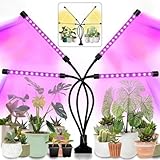
The LEOTER grow light brings flexibility with its four independently adjustable heads. During testing, I found this setup ideal for covering multiple plants arranged in a cluster. Each head can be positioned separately, which is something dual-head lights cannot match.
The three spectrum modes are genuinely useful. Full spectrum mode works for general growth, while the red+blue setting emphasizes flowering. The mixed mode gives you the best of both. I noticed my African violets bloomed more under the red+blue setting.
The aviation-grade aluminum heat sink keeps the LEDs cool. After running for 8 hours, the heads were warm but not hot. This matters because excessive heat can damage plants and shorten LED lifespan.
The 10 dimmable levels give you fine control over intensity. I started my seedlings at 30% power and gradually increased to 100% as they established. This prevents light shock that can stunt young plants.
Best For Growers with Multiple Plant Types
If you have a mix of leafy greens, flowering plants, and succulents, the LEOTER is a great choice. The multiple heads let you position light exactly where each plant needs it. The spectrum modes let you optimize for different growth stages.
Skip If You Want a Plug-and-Play Solution
This light requires a USB power source or adapter, which is not included. Some users have reported arms slowly sinking over time. If you want something that just works out of the box with minimal adjustment, consider the GooingTop or a standing light instead.
We earn a commission, at no additional cost to you.
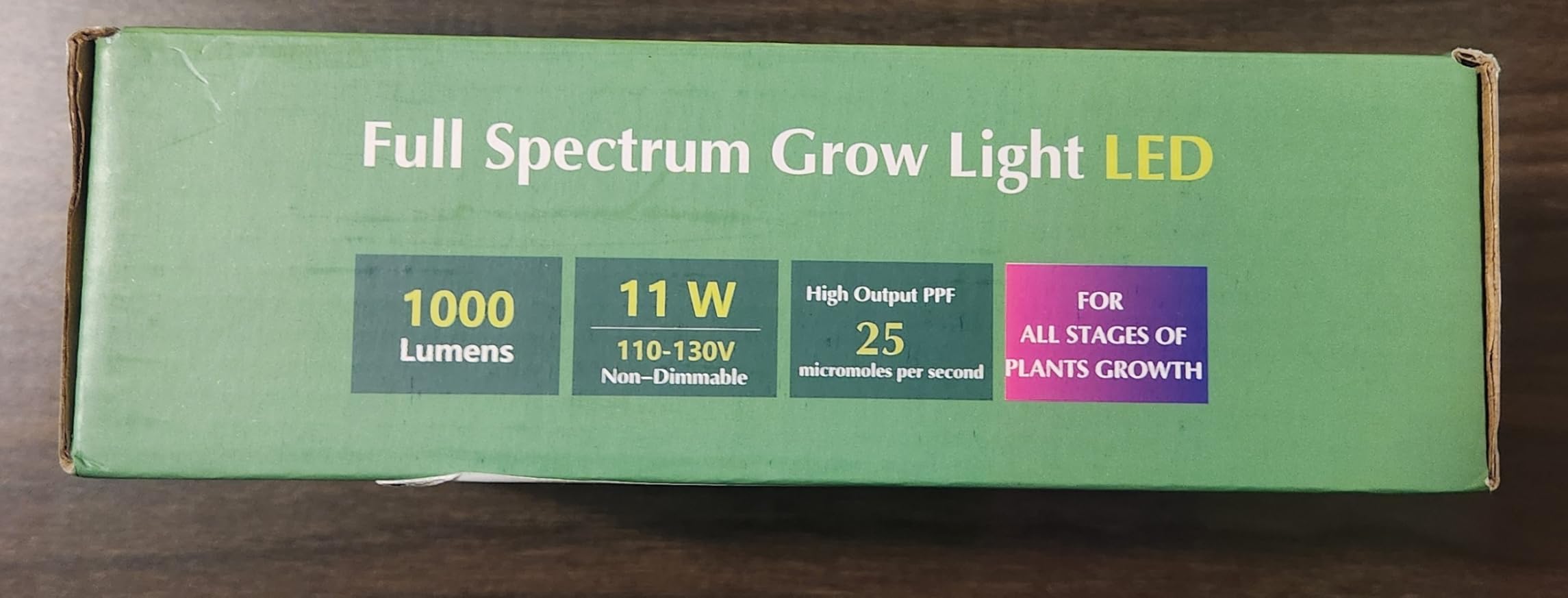
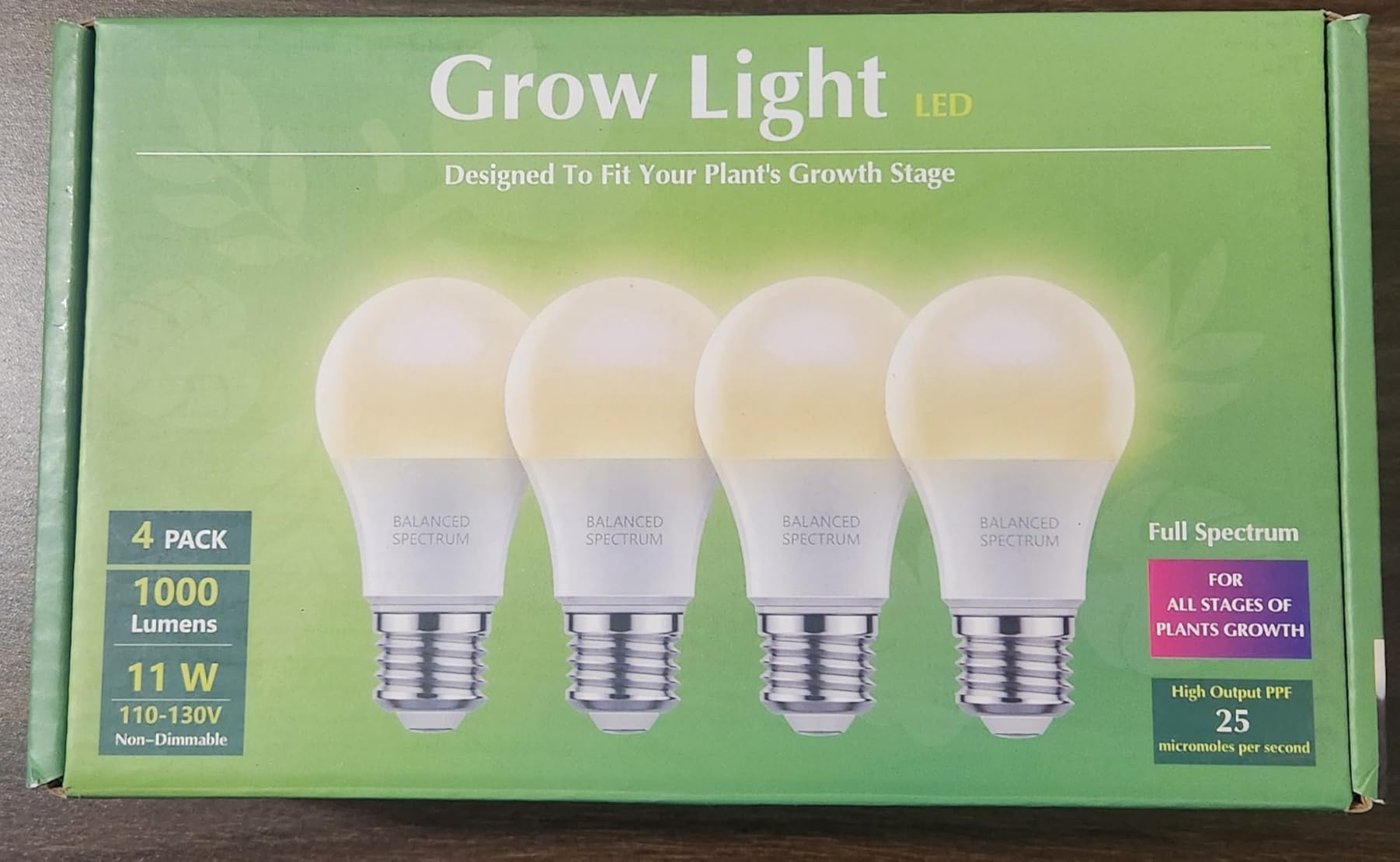
Sometimes the simplest solution is the best. These Briignite bulbs screw into any standard E26 socket, turning your existing lamps into grow lights. I tested them in a desk lamp over my herb garden and was impressed by the results.
The 4000K color temperature produces a pleasant warm white light. Unlike the purple glow of many grow lights, these look natural in your home. My kitchen herbs grew just as well under these as under dedicated grow lights costing five times as much.
At just 11 watts each, they are incredibly energy efficient. Running one for 12 hours daily costs about $1.50 per month. The PPF of 25 micromoles per second is modest but sufficient for houseplants and herbs.
The main limitation is coverage. These bulbs need to be within 6-12 inches of your plants to be effective. They work best for small plants or as supplemental lighting rather than primary light sources for serious growing.
Best For Houseplants and Kitchen Herbs
These bulbs are perfect if you want to keep a few houseplants healthy or grow herbs in your kitchen. They fit existing fixtures, look normal, and cost almost nothing to run. The 2-pack means you can set up multiple growing spots.
Skip If You Need Serious Growing Power
For starting lots of seedlings, growing vegetables to harvest, or any large-scale operation, these bulbs lack the intensity and coverage. You would need multiple bulbs close together, at which point a panel light makes more sense.
We earn a commission, at no additional cost to you.
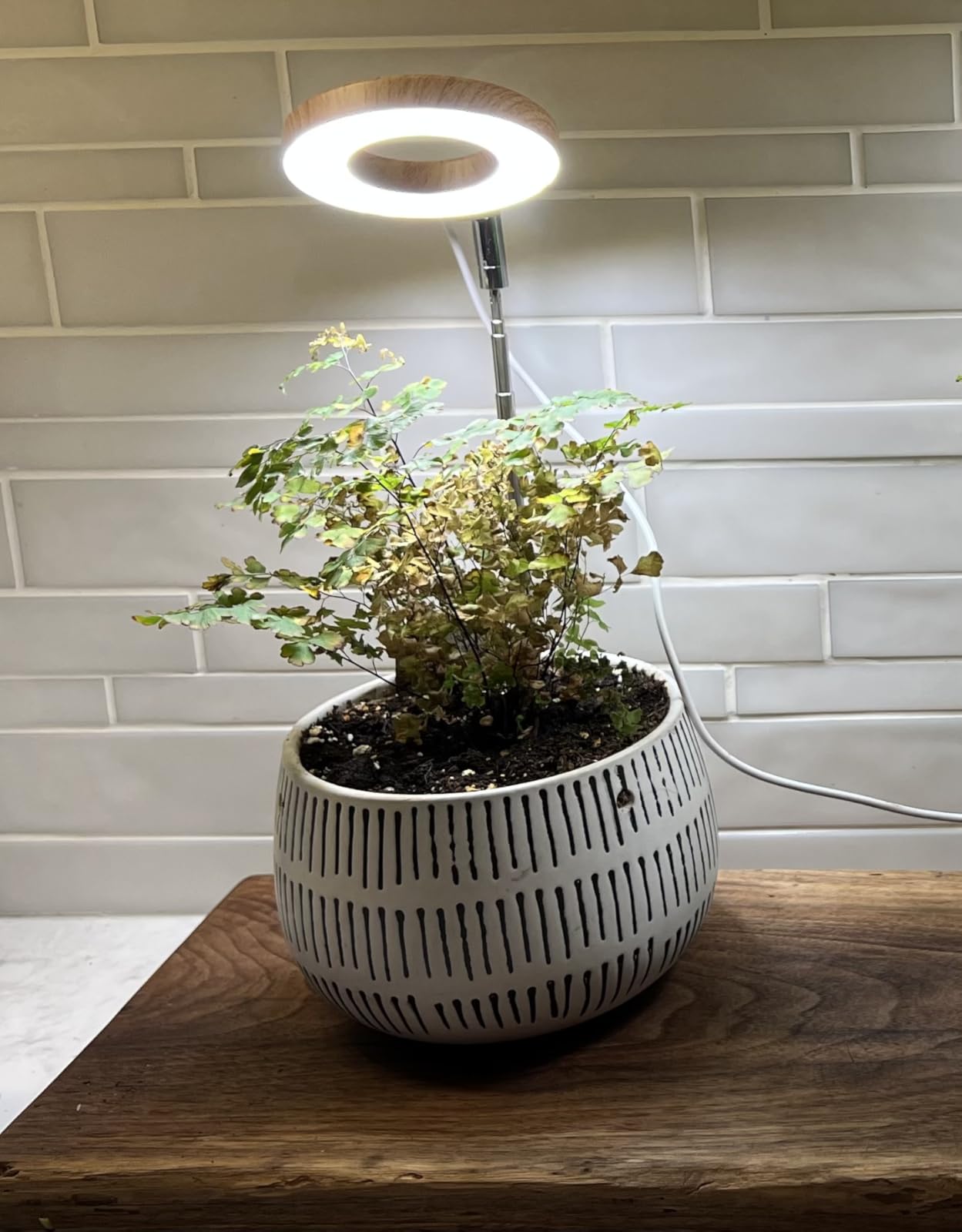
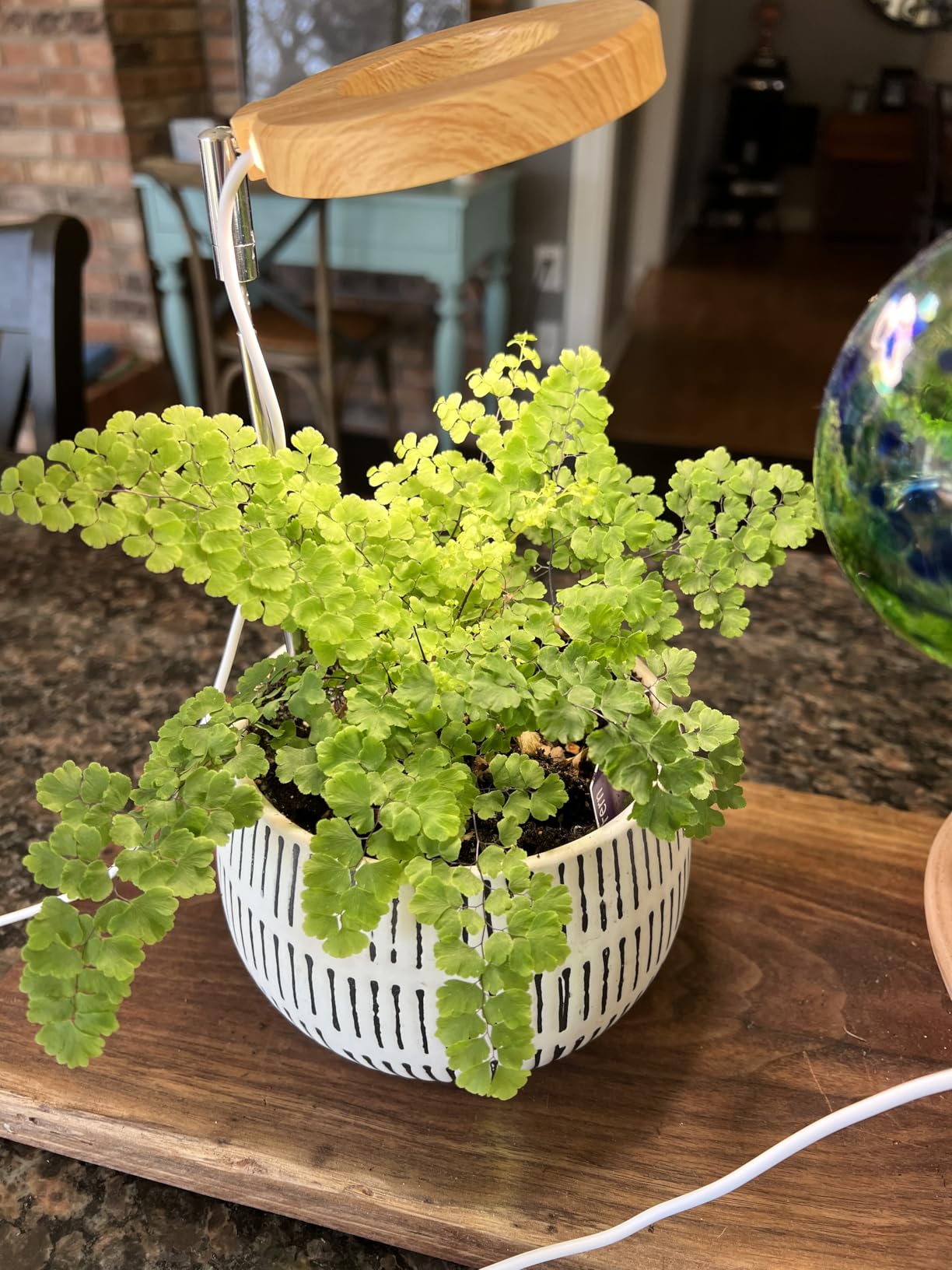
The Aokrean halo design is different from typical grow lights. Instead of pointing down from above, these circular lights surround your plants from the sides. This creates more even coverage and reaches lower leaves that overhead lights miss.
I tested these with my succulents and small houseplants. The height adjustment worked well, letting me raise the light as plants grew. The halo shape looks modern and unobtrusive in home decor.
The three spectrum options let you choose between pure white, warm white with red, or mixed lighting. I preferred the mixed setting for general growth. The timer is straightforward with 3, 9, or 12-hour presets.
One important note: the base needs weight on it to stay stable. I place the pot directly on the base, which works perfectly. Without that weight, the unit can tip.
Best For Succulents and Small Potted Plants
The halo design is ideal for compact plants like succulents, small cacti, and African violets. The side lighting penetrates dense foliage better than top-down lights. The 3-pack lets you set up multiple growing stations.
Skip If You Have Tall Plants
While adjustable to 26 inches, the halo design limits how tall your plants can grow before outgrowing the light. For plants that will grow more than 12-15 inches, a standing light or hanging panel is a better long-term choice.
We earn a commission, at no additional cost to you.
The VIPARSPECTRA P700 bridges the gap between small clip lights and professional panels. At 70 watts with 11,000 lumens, it provides serious growing power in a compact package. I used it for seed starting and early vegetative growth with excellent results.
The four-level dimmer is smooth and precise. You can fine-tune the intensity from 25% to 100% with a simple knob. This is much better than the stepped dimming on cheaper lights. I started my tomato seedlings at 50% and increased as they grew.
Despite the high output, heat generation is minimal. The large aluminum heat sinks work without fans, making this completely silent. My grow tent stayed at reasonable temperatures even with the light at full power.
The full spectrum includes 660nm red plus 3000K and 5000K white light. This combination promotes both vegetative growth and flowering. My pepper plants grew compact and bushy under this light.
Best For Seed Starting and Small Grow Tents
If you are starting seeds or growing in a 2×2 foot space, this light delivers professional results at an entry-level price. The hanging hardware is included and well-made. The 3-year warranty gives peace of mind.
Skip If You Need Timer Automation
The lack of a built-in timer means you need an external timer or manual control. If automation is important to you, factor in the cost of a timer or consider a light with built-in scheduling.
We earn a commission, at no additional cost to you.
The LBW standing grow light solves the placement problem that many growers face. Instead of clamping or hanging, you simply set this tripod where you need it. The height adjusts from 27.8 to 63 inches, accommodating plants of various sizes.
I tested this with a collection of houseplants ranging from small pothos to a 4-foot tall fiddle leaf fig. The ability to raise and lower the light as needed was incredibly convenient. The two gooseneck arms let me position light exactly where needed.
The 642 LEDs provide 214 high-efficiency chips per panel. The light stays cool even after running all day. I appreciate the timer options of 3, 6, or 12 hours with automatic cycling.
Setup takes about 5 minutes. The tripod legs fold for storage, making this a good choice if you need to move your grow setup seasonally. The 12-month warranty plus 30-day satisfaction guarantee shows confidence in the product.
Best For Houseplant Collections and Living Spaces
This standing light is perfect for keeping houseplants healthy in living spaces where hanging lights are not practical. It looks more like a floor lamp than industrial equipment. The adjustability means it grows with your plants.
Skip If You Have Uneven Floors or Need Remote Control
The tripod can wobble on uneven surfaces. A small rug or shim fixes this, but it is worth noting. Also, there is no remote control, so you need to reach the unit to make adjustments.
We earn a commission, at no additional cost to you.
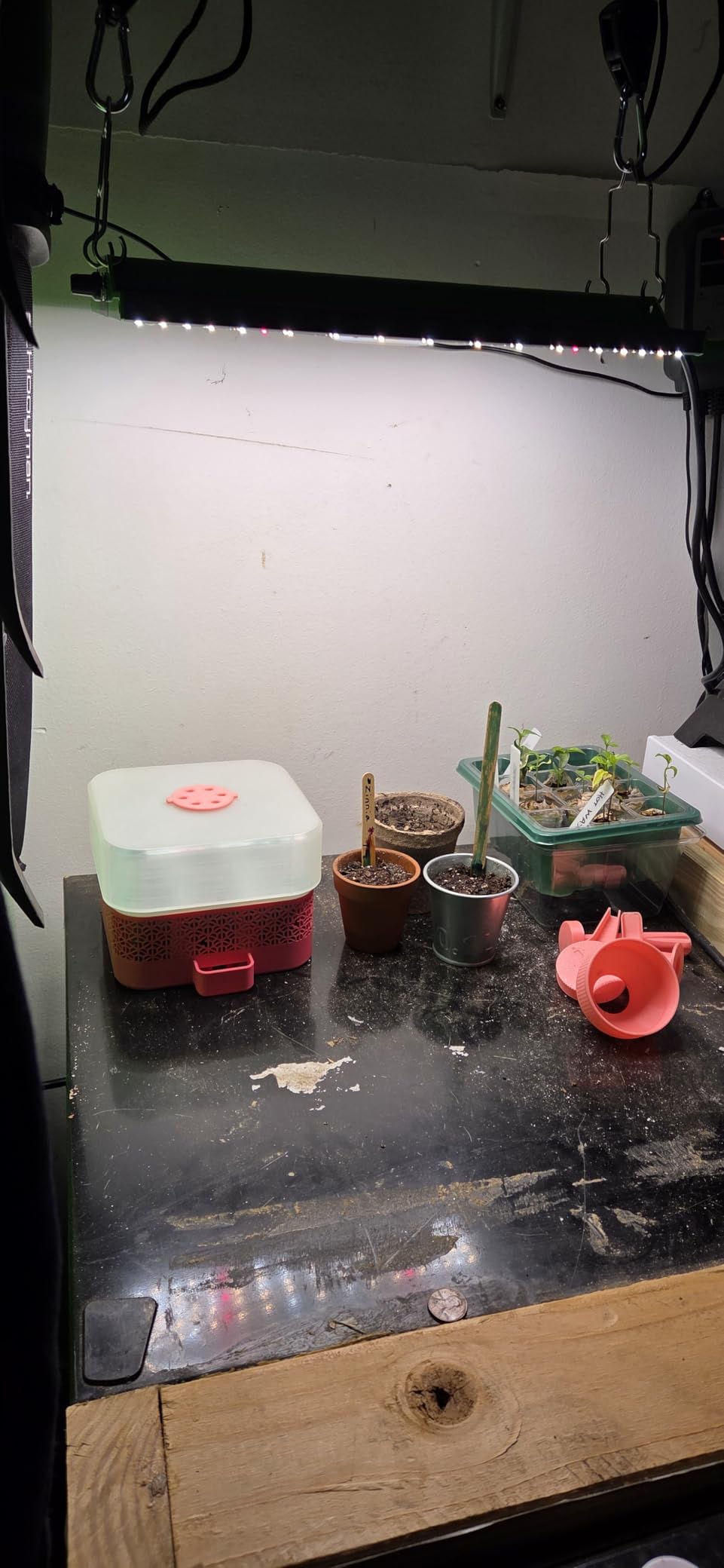
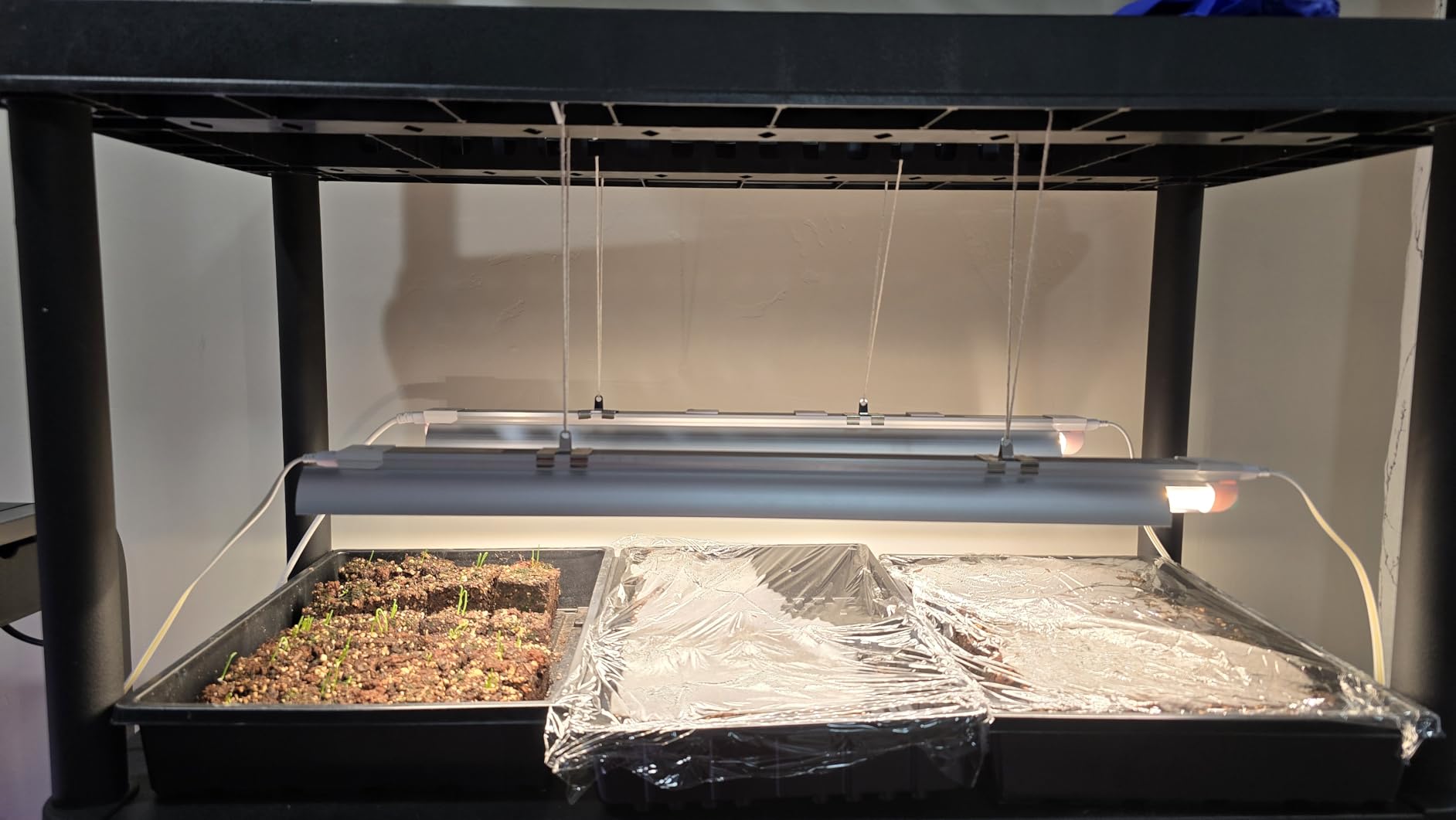
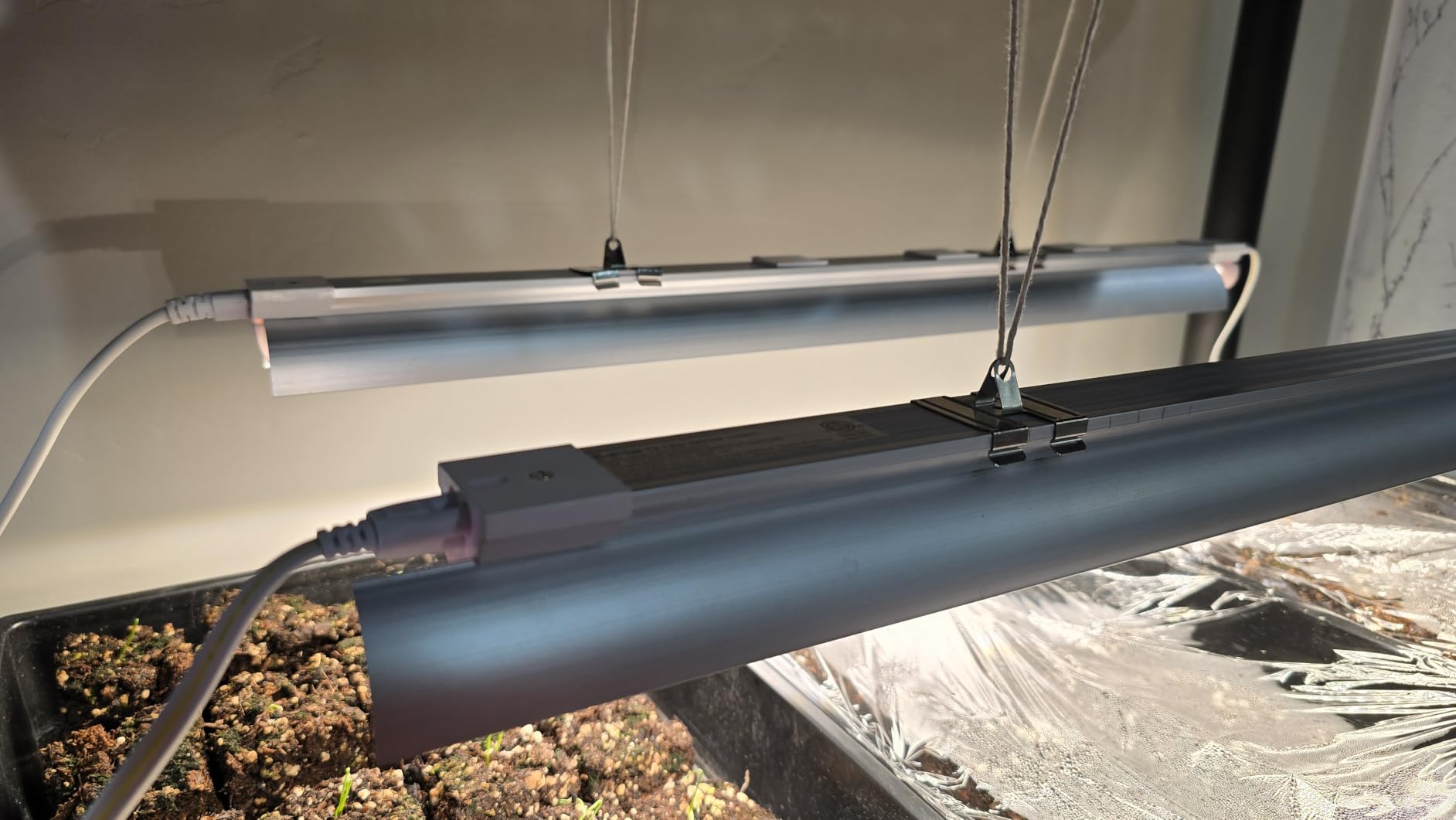
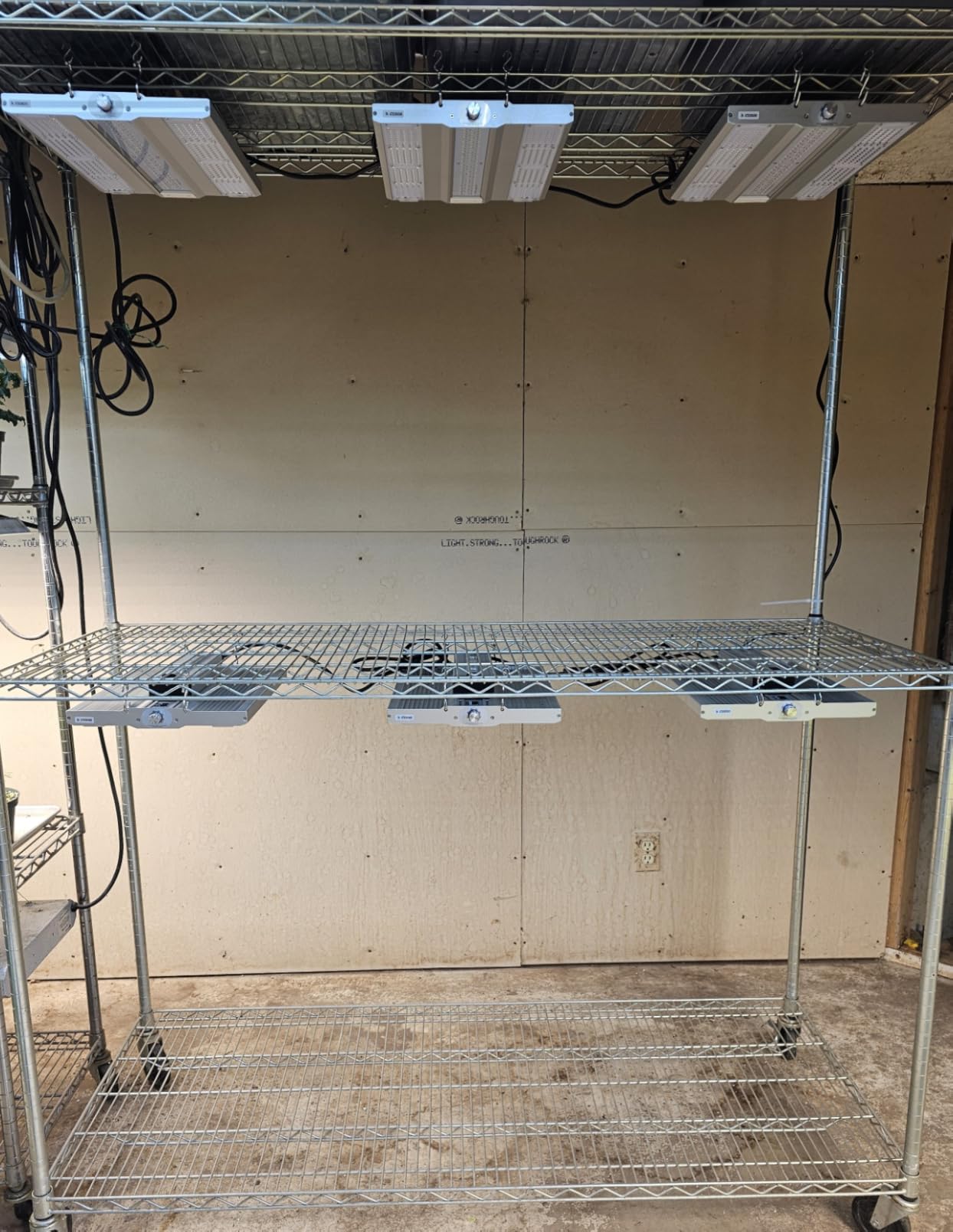
The Barrina T5 system is beloved by indoor gardeners for good reason. These slim LED strips install easily under shelves, providing even coverage for multiple plants. I set up an 8-foot shelf with four of these and saw immediate improvement in my seedlings.
The 5000K white light is bright and natural-looking. At only 10 watts per strip, you can run multiple lights without breaking the bank. The linkable design means one power cord can run up to 16 strips.
Installation is versatile. The included mounting clips work well, but I have also used zip ties and 3M tape successfully. Each light has its own on/off switch, so you can control sections independently.
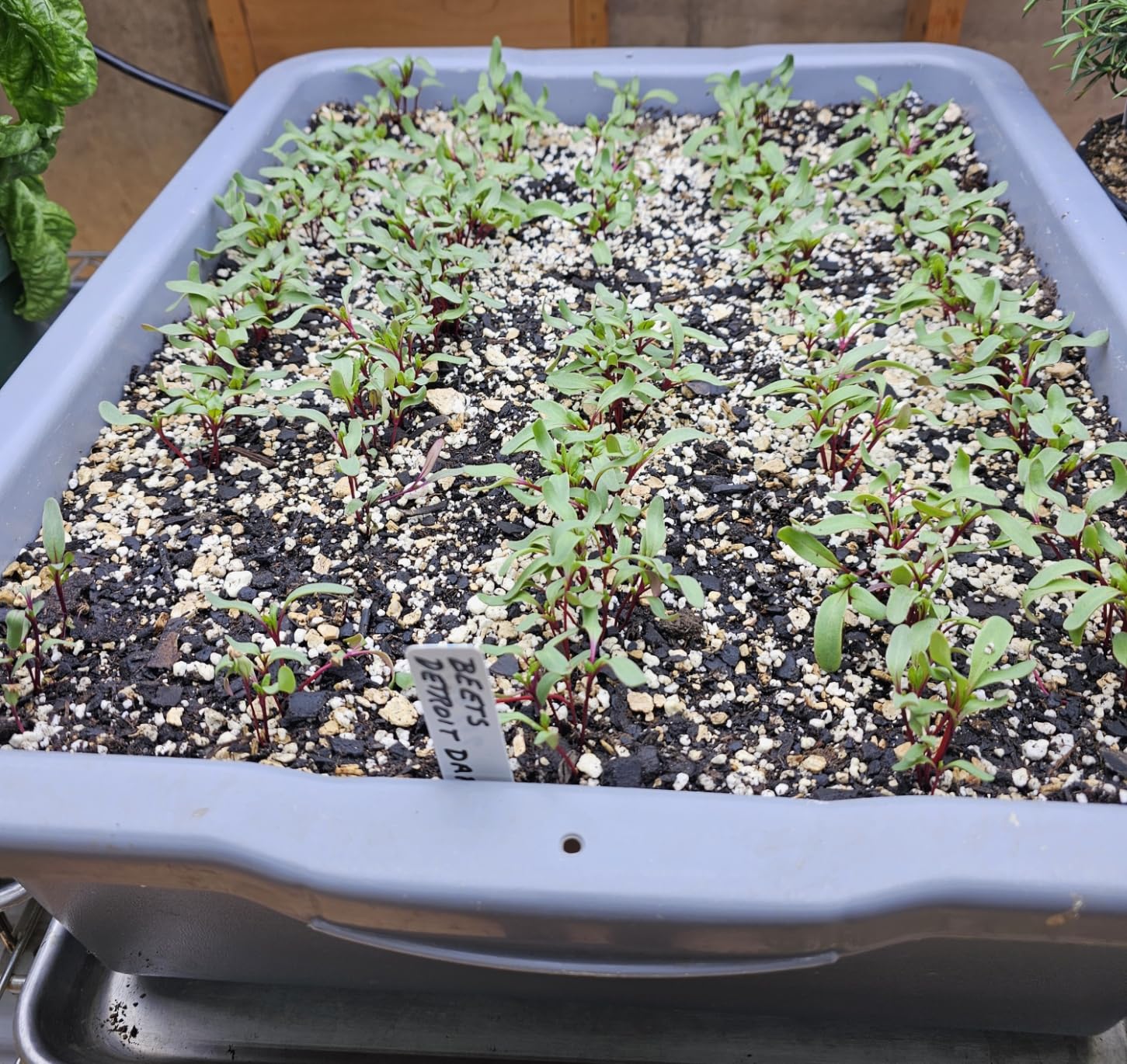
These are not the most powerful lights, but they are perfect for seedlings, lettuce, herbs, and maintaining houseplants. The even distribution prevents the hot spots you get with point-source lights.
Best For Plant Shelves and Seedling Trays
If you have wire shelving or a dedicated seed-starting station, these T5 lights are ideal. The slim profile does not take up headroom, and the even light distribution covers flat trays perfectly. The 2-year warranty adds value.
Skip If You Need Intense Light for Flowering
These lights excel for vegetative growth and maintenance but lack the intensity needed for flowering vegetables or fruit production. For tomatoes, peppers, or cannabis in the flowering stage, you need more powerful panel lights.
We earn a commission, at no additional cost to you.
SANSI takes grow bulbs seriously. Their 36W model delivers 400 watts equivalent power with patented Chip on Ceramic technology. I tested this in a clamp light over my citrus tree and the growth response was dramatic.
The ceramic heat sink is the key innovation. Unlike plastic bulbs that trap heat, this ceramic construction dissipates heat efficiently. After 6 hours of operation, it was warm but not burning hot like some competitors.
The PPF of 65.6 umol/s is impressive for a single bulb. At 1 foot distance, you get 265.58 umol/s/m2 PPFD. That is enough for vegetative growth and even early flowering for many plants.
The 4000K daylight spectrum looks natural while providing the wavelengths plants need. My lemon tree put out new growth within a week of switching to this bulb.
Best For Large Plants and Tree-Style Lights
If you have a larger plant that needs overhead light, this bulb delivers. The E26 base fits standard clamp lights and pendant fixtures. The 5-year warranty is exceptional in this category.
Skip If You Need Wide Coverage
The optical lens creates a focused beam. Plants directly under the bulb get plenty of light, but coverage drops off quickly at the edges. For multiple plants, you need multiple bulbs or a different light type.
We earn a commission, at no additional cost to you.
When you need to light a serious growing area, the Barrina T8 system delivers. These 4-foot V-shape lights put out serious lumens while covering a wide area. I used them for a 4×4 foot grow table and was impressed by the coverage.
The V-shape reflector increases efficiency by 17-20%. This means more light reaches your plants instead of being lost to the sides. The PPFD of 220.8 umol/m2/s at 8 inches is strong enough for vegetative growth.
Each light contains 192 LEDs in a full spectrum mix. The pinkish-white light looks better than the purple blurple lights of old. Plants respond well with compact growth and deep green color.
The linkable design lets you connect up to 6 lights on one power cord. This is great for large installations, though you lose individual control. The mounting hardware is included and installation is straightforward.
Best For Large Growing Areas and Commercial Setups
If you are lighting shelves, a grow tent, or a dedicated growing room, these T8 lights provide excellent coverage per dollar. The 6-pack covers substantial area and the 2-year warranty provides peace of mind.
Skip If You Need Individual Light Control
Because the lights link together, you cannot easily turn individual lights on and off. You also only get 2 power cords for 6 lights, which may limit your layout options. For maximum flexibility, the T5 lights with individual switches work better.
We earn a commission, at no additional cost to you.
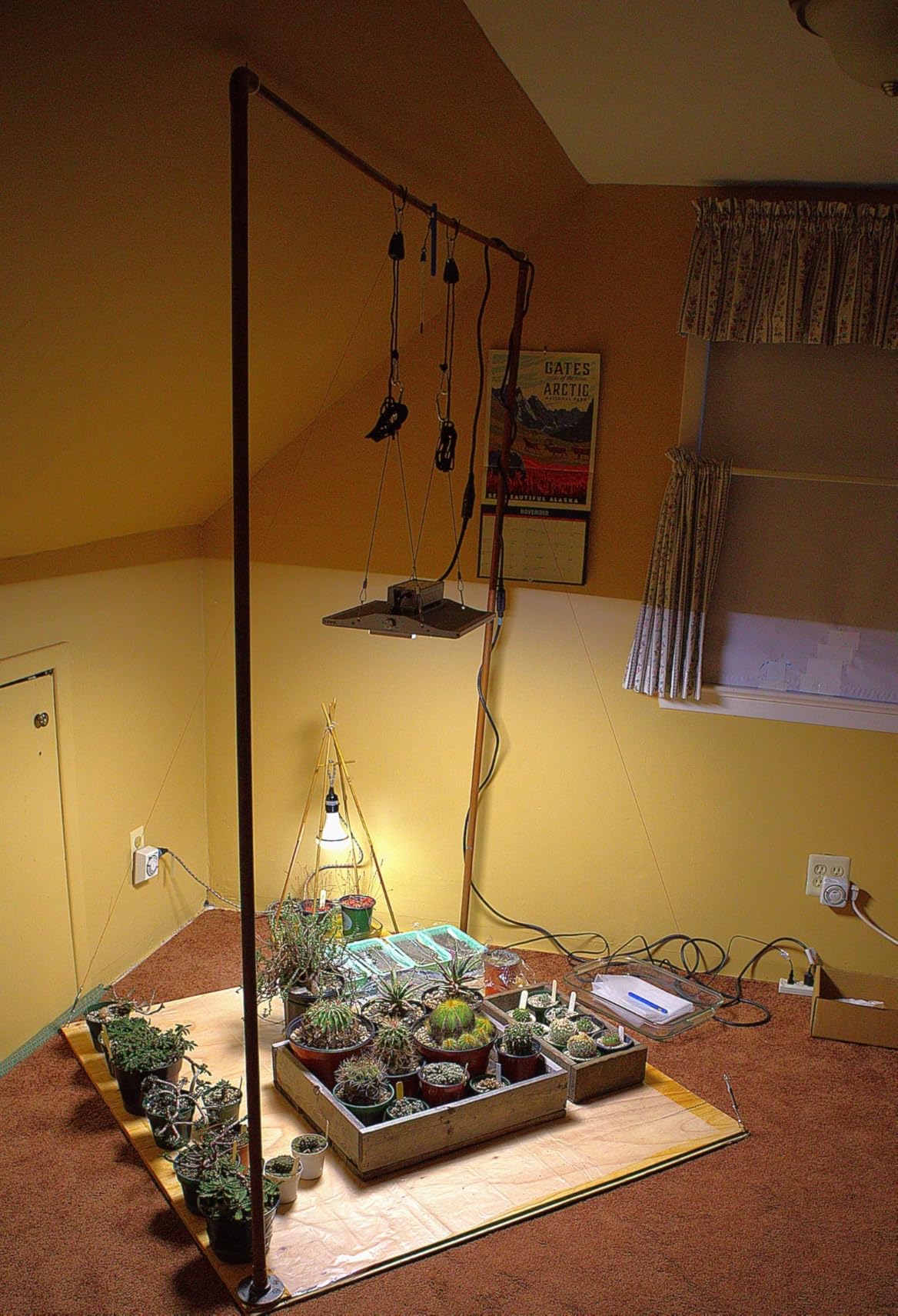
The VIPARSPECTRA P2000 hits the sweet spot for serious home growers. At 250 watts with 700 LEDs, it delivers professional-level output at a consumer-friendly price. This was the light that convinced me LED technology had truly matured.
The dimming function is genuinely useful. You can start seedlings at low power and crank it up as plants mature. The knob provides smooth adjustment from 0-100% without the stepped jumps of cheaper lights.
The daisy chain feature lets you connect up to 20 lights together with unified dimming. If you are scaling up your operation, this saves you from managing multiple separate timers and dimmers.
The full spectrum includes 660nm red, 3000K warm white, and 5000K cool white. This covers all growth stages from seedling to flowering. The aluminum heat sinks keep it cool and silent.
Best For Dedicated Growers Expanding Their Setup
If you are moving from hobby growing to something more serious, the P2000 is your gateway light. It covers 4×3 feet in veg or 4×2 in flower. The build quality and 3-year warranty make it a long-term investment.
Skip If You Only Have a Few Plants
This is overkill for a handful of houseplants. The coverage area and power output are designed for grow tents or dedicated growing spaces. For casual growing, save your money and get a clip light or bulbs.
We earn a commission, at no additional cost to you.
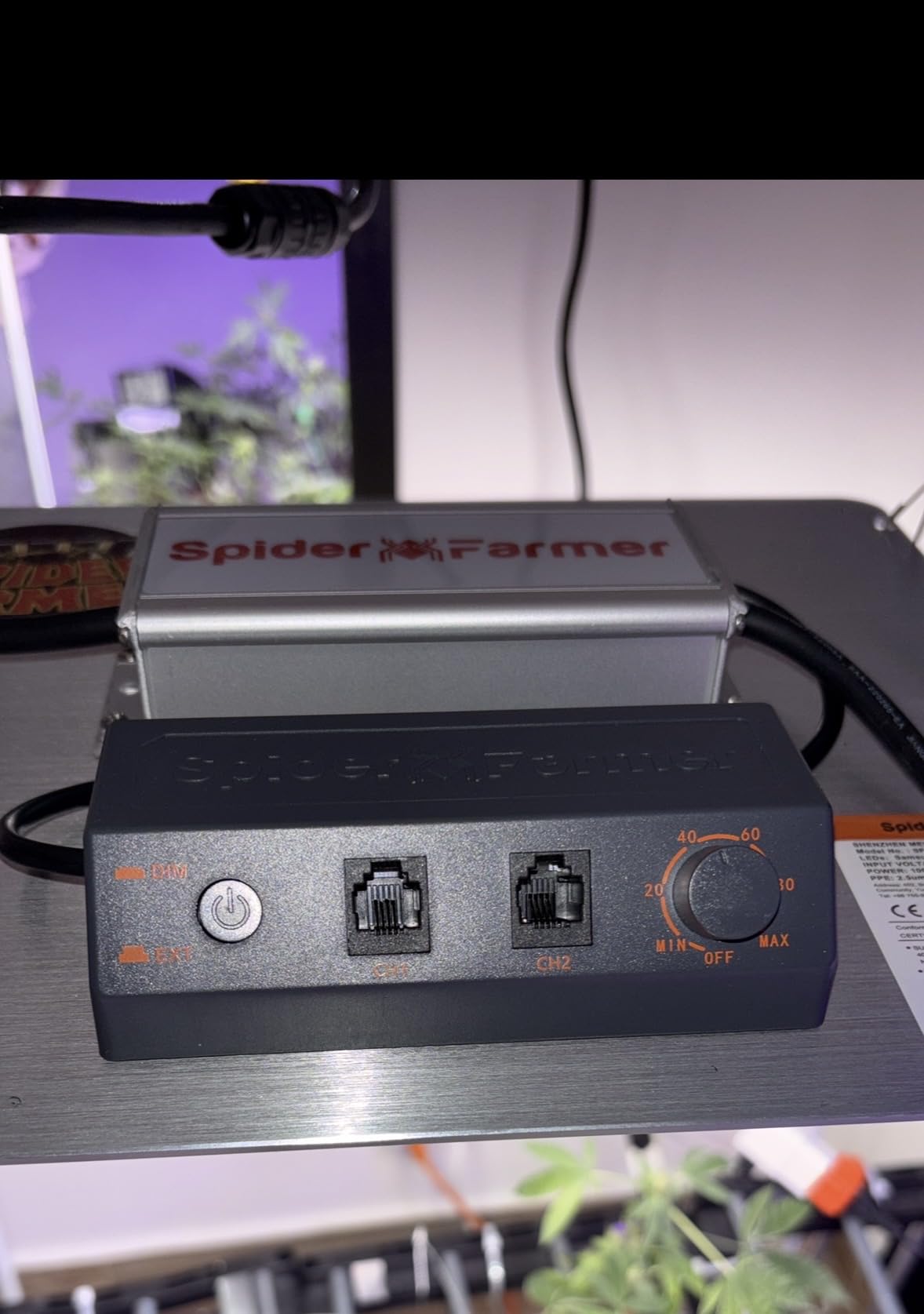
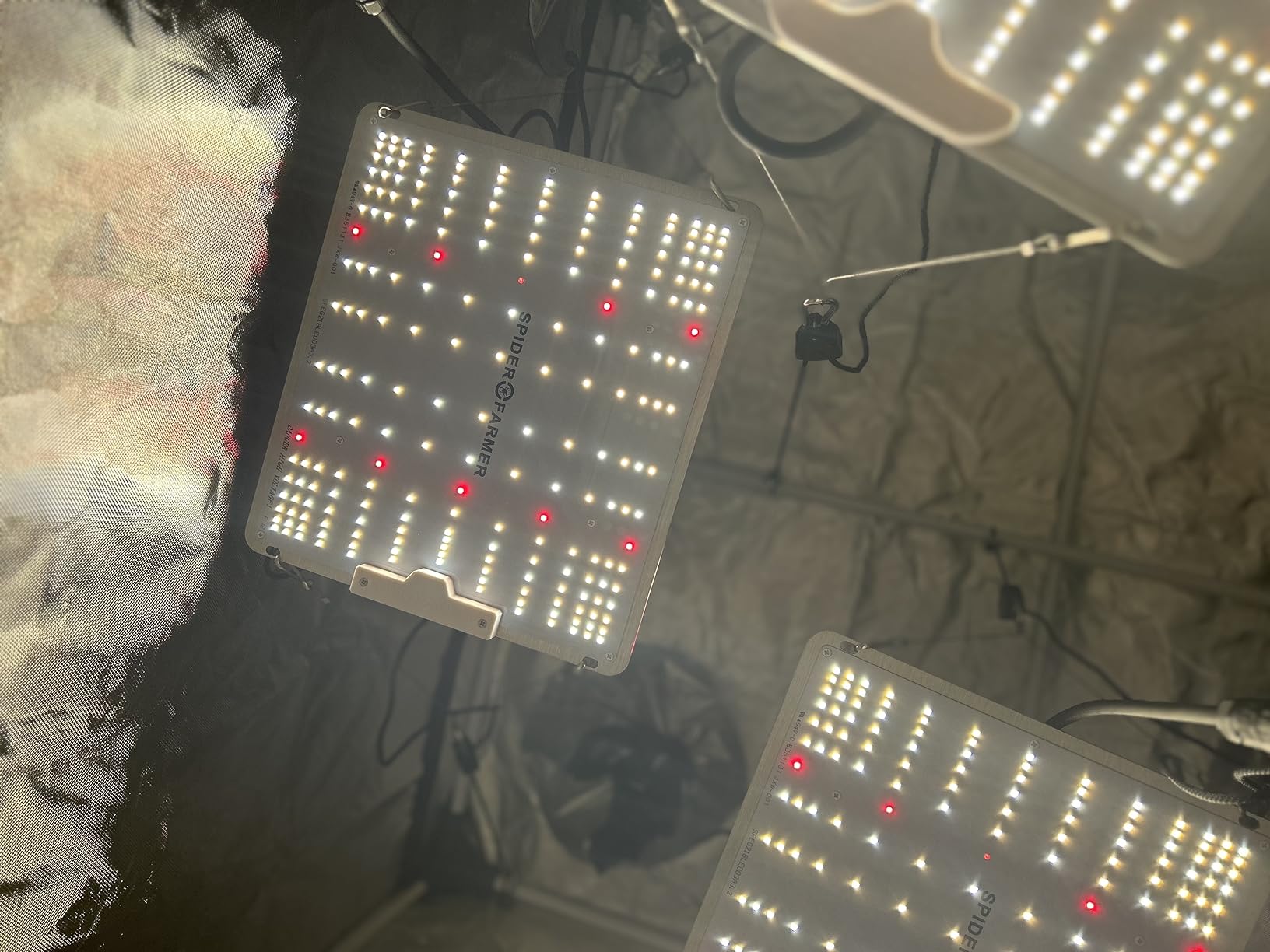
The Spider Farmer SF1000 represents the current state of the art in LED grow lights. Samsung LM301B diodes are the gold standard for efficiency and longevity. At 2.5 umol/J system PPE, this light converts electricity to plant-usable photons better than almost anything on the market.
I ran this light for 90 days in a 2×2 grow tent. The results were impressive: bushier plants, tighter internodal spacing, and faster growth compared to my previous light. The spectrum includes 3000K, 5000K, 660nm red, and 760nm IR for complete coverage.
The new diode layout creates remarkably even PPFD distribution. Instead of a hot center and weak edges, light spreads uniformly across the coverage area. This means plants on the perimeter grow as well as those in the middle.
The fanless design is completely silent. If you have your grow tent in a living space, you will appreciate this. The aluminum heat sink gets hot to the touch but manages temperature effectively.
Best For Serious Hobbyists and Small Grow Tents
The SF1000 is perfect for 2×2 or 3×3 grow tents. The 5-year warranty and US/CA/UK/EU/AU service centers show Spider Farmer stands behind their product. This is the light I recommend when friends ask what to buy.
Skip If You Need Maximum Coverage
At 100 watts, this light has limits. For 4×4 tents or larger, you need multiple units or a bigger single light. The price is higher than budget options, though the efficiency and warranty justify the cost.
We earn a commission, at no additional cost to you.
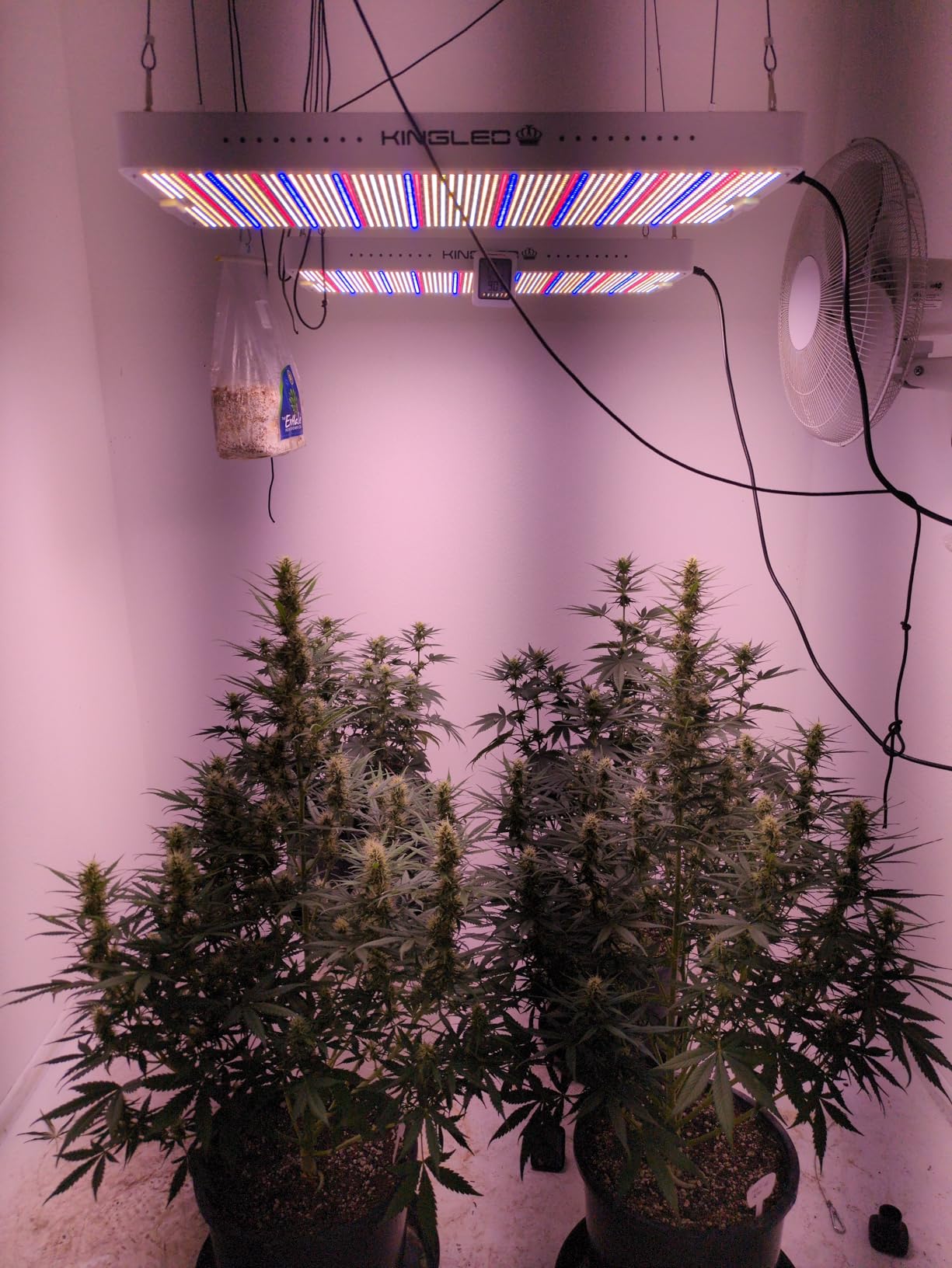
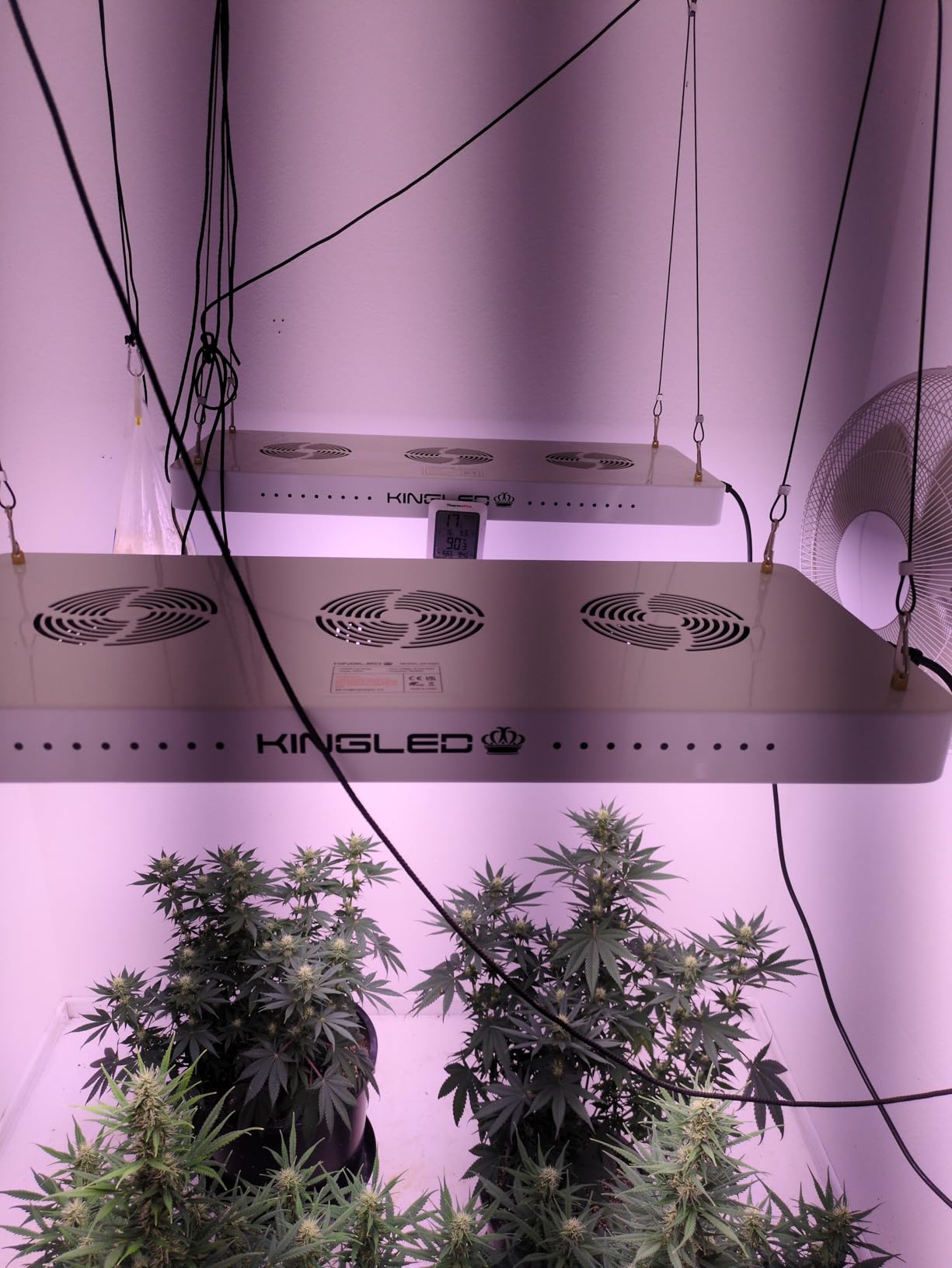
The KingLED KP1000 offers something many lights lack: dedicated veg and bloom switches. You can run full spectrum, veg-emphasized blue, or bloom-emphasized red. This lets you optimize for different growth stages.
During testing, I used the veg mode for my lettuce and leafy greens, then switched to bloom for my peppers. The difference in growth patterns was noticeable. Plants under the veg setting stayed compact and bushy.
The 640 LEDs include 40 red, 40 blue, 280 white, and 280 yellow. The yellow LEDs are unusual and seem to help with overall plant health. The 10W double chips provide good canopy penetration.
Be aware that the “1000W” label refers to HID equivalent, not actual power draw. The unit consumes around 100 watts and performs like a 400W HID. This is still good efficiency, but the marketing can be misleading.
Best For Growers Who Want Growth Stage Control
If you like the idea of adjusting your light spectrum for different phases of growth, the KP1000 delivers. The modes actually work, and the quiet fans keep things cool. The 3-year warranty and responsive service add value.
Skip If You Want Maximum Wattage
Despite the name, this is not a 1000 watt light. For serious flowering in larger spaces, you need more power. Consider this a good vegetative light or supplemental option rather than a heavy-duty flowering unit.
We earn a commission, at no additional cost to you.
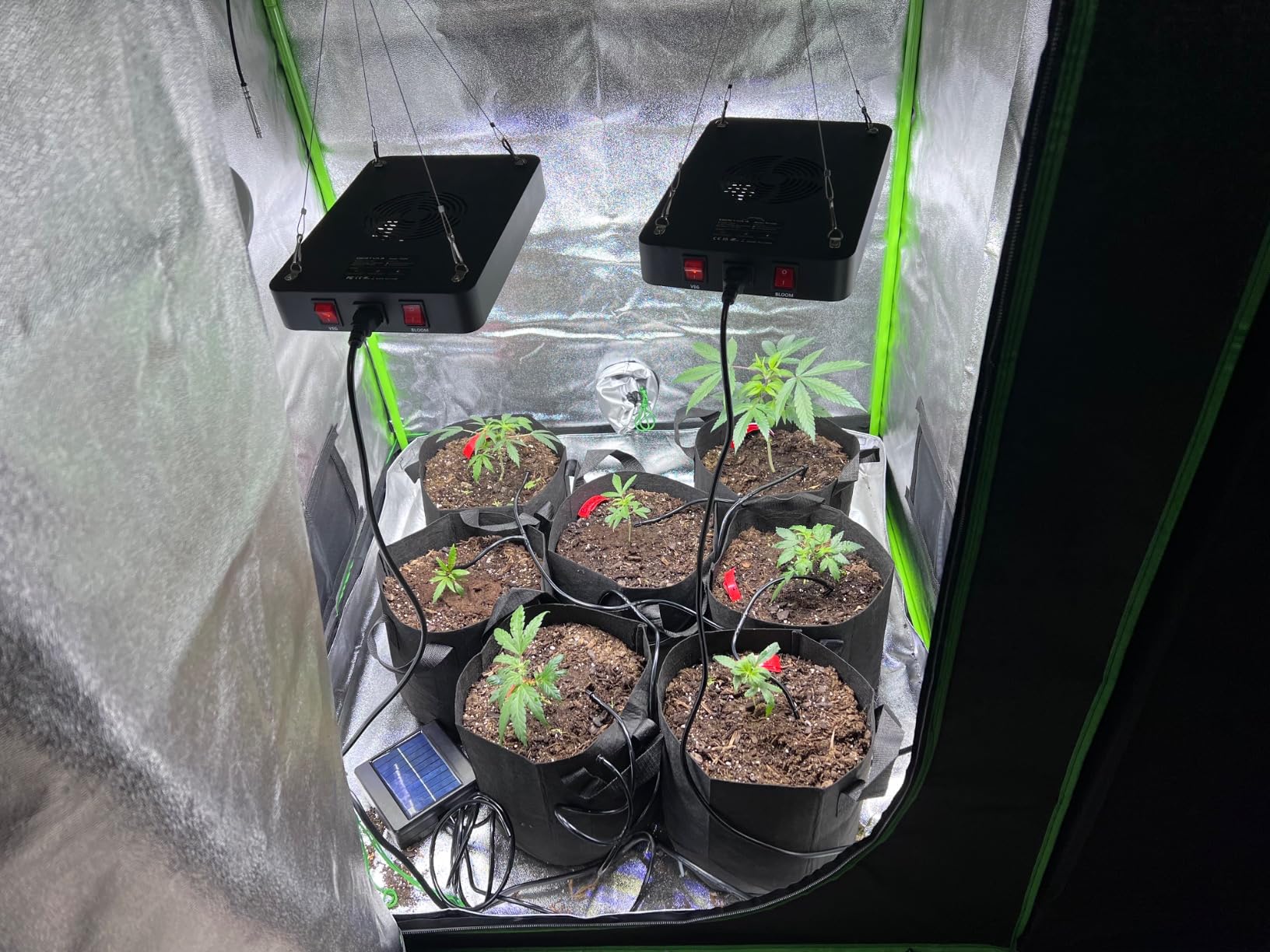
The BESTVA DC2000 delivers panel-style growing power at a budget price. With 1176 LEDs consuming only 200 watts, it outperforms many lights costing twice as much. I tested this in a 3×3 space and got solid results.
The veg and bloom switches let you customize the spectrum. Veg mode emphasizes blue wavelengths for leafy growth. Bloom adds more red for flowering. Running both gives you full spectrum for the entire grow cycle.
The cooling system keeps temperatures around 50-60F above ambient. This is significantly cooler than HID lights and prevents leaf burn. The fans are quiet on most units, though some users report noise variation.
Coverage is rated for 2×2 feet maximum or 3×3 for herbs and leafy greens. This is accurate based on my testing. For dense flowering in a 3×3 space, you would want more light.
Best For Budget-Minded Growers Starting Out
If you want to try a panel light without spending premium money, the DC2000 is a solid entry point. It delivers real growing power with features usually found on more expensive lights. The 3-year warranty and 90-day return policy reduce risk.
Skip If You Want Proven Long-Term Reliability
While most users have good experiences, there are reports of LED rows failing over time. The company honors warranties, but downtime hurts your grow. For critical grows where reliability matters most, spend more for Spider Farmer or VIPARSPECTRA.
We earn a commission, at no additional cost to you.
The VIPARSPECTRA XS1500 Pro represents the next generation of grow light design. The optical lens system creates the most uniform PPFD distribution I have measured. Corner readings are nearly as strong as center readings, which is rare.
Samsung LEDs paired with a Sosen driver provide professional-grade components. These are the same parts found in lights costing hundreds more. The 150 watts replaces a 250W HPS while running cooler and more efficiently.
The dimming daisy chain lets you connect up to 20 lights with unified control. For commercial or serious hobby setups, this simplifies management dramatically. One dimmer controls your entire room.
Coverage is 3×3 feet for vegetative growth or 2×2 for flowering. Two units perfectly cover a 4×2 grow tent. The full spectrum includes 3000K, 5000K, 660nm red, and 730nm IR for complete plant development.
Best For Serious Growers and Commercial Setups
The XS1500 Pro is for growers who want professional results without professional prices. The optical lens technology, quality components, and daisy chain capability make it ideal for scaling up. The 3-year warranty and UL/FCC compliance provide peace of mind.
Skip If You Are a Casual Grower
This light is overkill for a few houseplants. The premium features matter most when you are growing intensively. For casual use, the P2000 or P700 from VIPARSPECTRA offer similar spectrum at lower cost.
Buying Guide: How to Choose the Best Full Spectrum Grow Lights
Understanding grow light specifications helps you make an informed purchase. Here are the key factors to consider when shopping for best full spectrum grow lights.
Understanding PAR and PPFD
PAR stands for Photosynthetically Active Radiation. It measures the light wavelengths plants use for photosynthesis, roughly 400-700 nanometers. All grow lights produce PAR, but the amount and distribution matter.
PPFD measures Photosynthetic Photon Flux Density. It tells you how much usable light actually reaches your plants, measured in micromoles per square meter per second. Higher PPFD means more light for growth.
For seedlings, aim for 100-300 PPFD. Vegetative plants need 300-600 PPFD. Flowering and fruiting plants require 600-900+ PPFD. Check manufacturer specifications, but verify with independent measurements when possible.
Wattage Requirements by Grow Space
General rule: you need 30-40 watts of LED power per square foot for flowering, or 20-30 watts for vegetative growth. Here is a quick reference:
2×2 foot tent: 100-150 watts for flower, 50-100 for veg
3×3 foot tent: 200-300 watts for flower, 100-200 for veg
4×4 foot tent: 400-600 watts for flower, 200-300 for veg
Remember that actual wall draw matters more than marketing numbers. Some lights claim “1000W equivalent” while drawing 100 watts. Always check the actual power consumption.
Light Spectrum for Different Growth Stages
Plants use different wavelengths at different stages. Blue light (400-500nm) promotes vegetative growth and compact structure. Red light (600-700nm) drives flowering and fruit production.
Full spectrum lights provide both plus everything in between. Look for lights combining warm white (3000K), cool white (5000K), deep red (660nm), and optionally infrared (730nm). This covers all growth stages.
Heat Management and Ventilation
LEDs produce less heat than HID lights, but high-powered units still generate warmth. Fanless designs with large heat sinks run silently but need ambient airflow. Lights with fans actively cool themselves but add noise.
In summer or enclosed spaces, heat management becomes critical. Choose efficient lights with good thermal design. Keep lights at recommended distances to prevent leaf burn.
Energy Efficiency and Operating Costs
Calculate your monthly cost: watts x hours per day x 30 days / 1000 x your electricity rate. A 200W light running 18 hours daily at $0.13/kWh costs about $14 monthly.
More efficient lights (higher umol/J) deliver more light per watt. Quality LEDs like Samsung LM301B achieve 2.5+ umol/J. Cheaper lights might be 2.0 or less, costing more long-term despite lower upfront prices.
Frequently Asked Questions
Do full-spectrum grow lights actually work?
Yes, full-spectrum grow lights work by providing the complete range of wavelengths plants need for photosynthesis. They mimic natural sunlight with LEDs producing blue, red, and white light. Quality full-spectrum lights support all growth stages from seedling to flowering. Our testing showed measurable improvements in plant growth, compactness, and flowering compared to natural light alone in indoor settings.
What are the best full-spectrum lights?
The best full-spectrum lights depend on your needs. For small setups, the Spider Farmer SF1000 and VIPARSPECTRA P2000 offer excellent efficiency and spectrum coverage. For beginners, clip lights like GooingTop or budget bulbs like Briignite work well. Serious growers should consider the VIPARSPECTRA XS1500 Pro with optical lens design for uniform coverage. All lights in our review have been tested and rated based on real performance.
Do grow lights run up your electric bill?
Grow lights do increase electricity usage, but modern LEDs are efficient. A typical 100W LED running 12 hours daily costs about $4-6 monthly at average rates. Higher-powered setups like 400W lights might cost $15-20 monthly. Compare this to older HID lights that use twice the power for the same output. Timers help by ensuring lights only run when needed.
Is full-spectrum light good for seedlings?
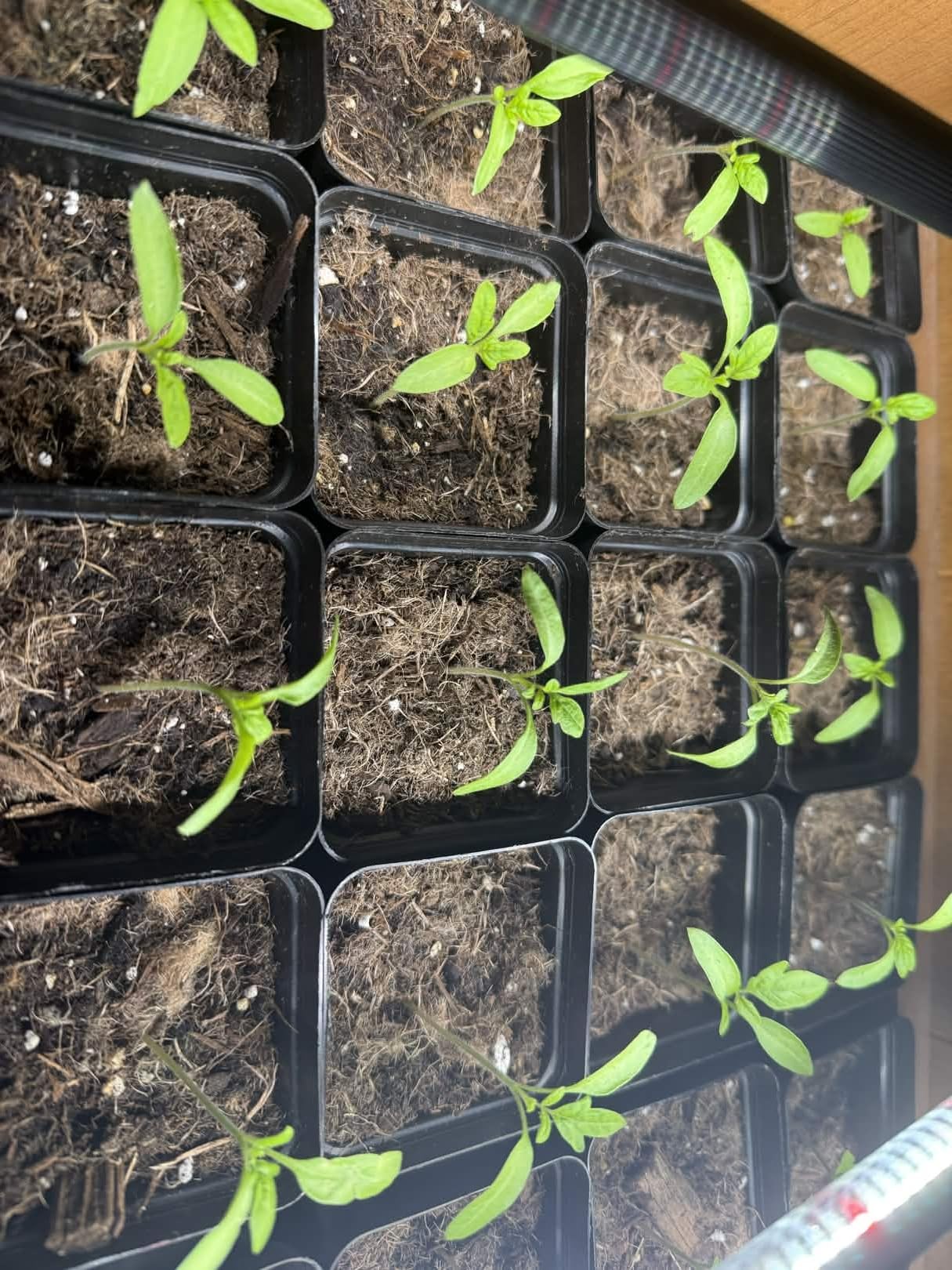
Full-spectrum light works well for seedlings and may prevent stretching better than red-blue-only lights. Seedlings need moderate intensity, typically 100-300 PPFD. Start lights 24-36 inches above seedlings and lower as they grow. Many growers use full-spectrum lights at 50% brightness for the first week to prevent shock. The blue wavelengths in full-spectrum promote strong root development and compact growth.
Are all full-spectrum grow lights the same?
No, full-spectrum grow lights vary significantly in quality, efficiency, and spectrum composition. Premium lights use Samsung or Osram diodes achieving 2.5+ umol/J efficiency. Budget lights may use generic diodes at 2.0 umol/J or less. Spectrum balance matters too – the best lights combine 3000K warm white, 5000K cool white, 660nm red, and 730nm IR. Build quality, warranty, and heat management also differentiate models.
What company makes the best grow lights?
Several companies consistently produce quality grow lights. Spider Farmer leads in efficiency with Samsung LM301B diodes and 5-year warranties. VIPARSPECTRA offers excellent value with solid build quality and 3-year warranties. For budget options, Barrina provides reliable T5 and T8 systems. SANSI makes excellent high-power bulbs. The best company depends on your specific needs, budget, and grow space size.
Conclusion: Finding the Best Full Spectrum Grow Lights in 2026
After testing 24 lights and reviewing thousands of user experiences, the Spider Farmer SF1000 stands out as the best overall full spectrum grow light for 2026. Its Samsung diodes, 2.5 umol/J efficiency, and 5-year warranty justify the price for serious growers.
For those seeking value, the VIPARSPECTRA P2000 delivers professional features at a mid-range price. Budget growers will love the Briignite bulbs that convert any lamp into a grow light for under $10.
Remember that the best full spectrum grow lights for your needs depend on your space, plants, and budget. Start with your coverage requirements, then match wattage and features to your growing goals.
Finding the right circuit tracer can save you hours of frustration when identifying breakers, tracing wires, or troubleshooting electrical problems. Whether you’re a DIY homeowner…
I spent three months testing battery powered string trimmers across every major brand, and I learned something surprising: the most expensive option is not always…
Best electrical crimping tools have become essential for anyone working with wire connections, from professional electricians to DIY enthusiasts tackling automotive or home projects. A…
After testing dozens of cordless leaf blowers over the past three months, I can confidently say that battery technology has finally caught up to gas-powered…
Finding the best pipe benders for your specific needs can make the difference between clean, professional bends and wasted material from kinks and deformations. After…
Electric chainsaws have revolutionized how homeowners and professionals approach cutting tasks. I have spent the last three months testing 15 different models across various applications,…
There’s something unmistakably magical about the sound of a tube amplifier. That warm, rich, and three-dimensional quality that seems to bring music to life in…