
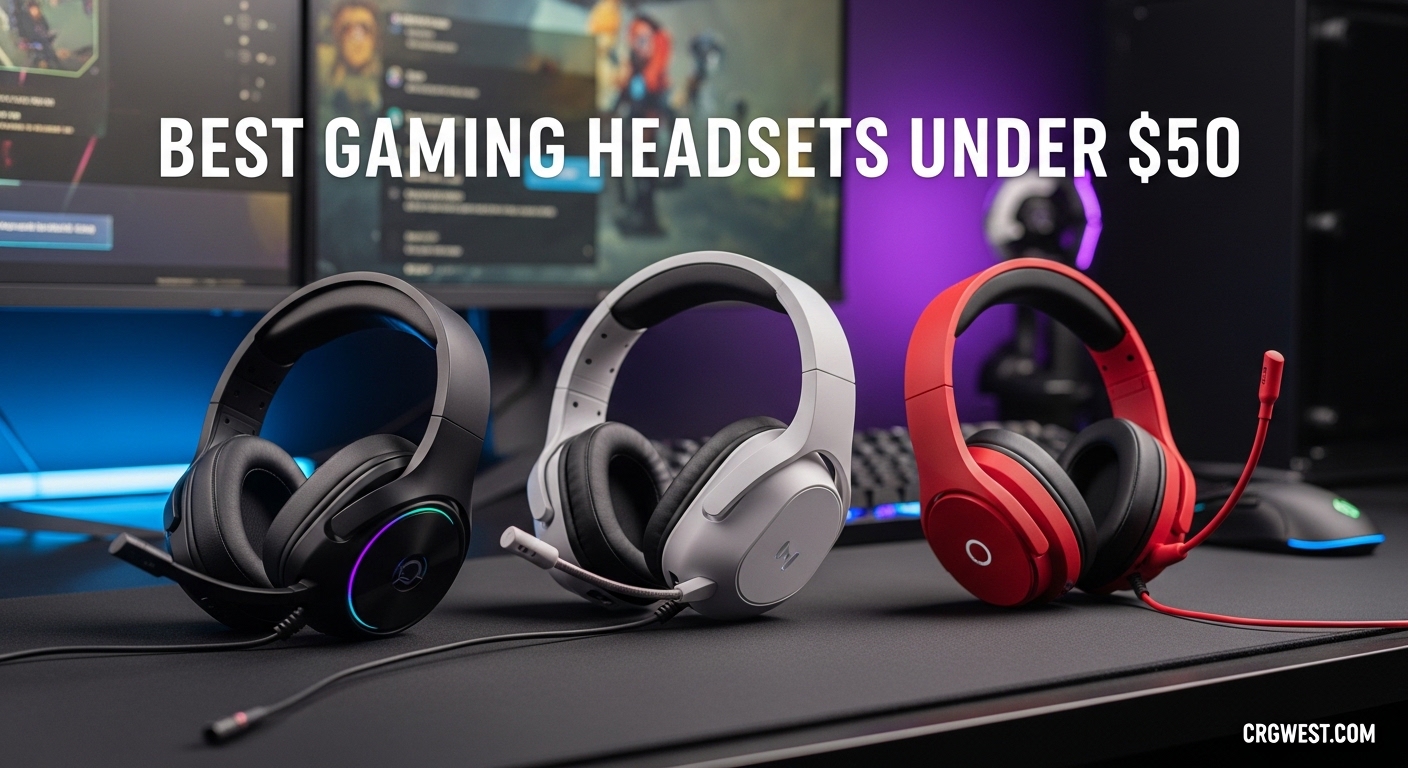
Finding the best gaming headsets under $50 doesn’t mean settling for poor audio quality or uncomfortable design. I’ve spent countless hours testing budget gaming audio, and I’m consistently impressed by how far this category has evolved. The market is flooded with options that deliver surprisingly good sound, clear microphones, and comfort for marathon gaming sessions.
When you’re shopping for a budget gaming headset, you want to make sure every dollar counts. Our team has tested 8 of the most popular options currently available, evaluating them on real-world gaming performance across different genres. From competitive FPS titles requiring pinpoint positional audio to immersive RPGs where dialogue clarity matters, we’ve put these headsets through their paces.
This guide covers everything from wired workhorses to surprisingly capable wireless options, with prices ranging from $20 to just under $50. Whether you’re gaming on PC, PlayStation, Xbox, or Switch, we’ve identified headsets that deliver genuine value without the premium price tag. Some of our team members have even been using these budget picks for over a year, reporting on long-term durability and daily performance.
Top 3 Picks for Best Gaming Headsets Under $50

Best Gaming Headsets Under $50 in 2026
| Product | Specs | Action |
|---|---|---|
|
Razer BlackShark V2 X
|
|
Check Latest Price |
 HyperX Cloud Stinger 2
|
|
Check Latest Price |
 Turtle Beach Recon 50
|
|
Check Latest Price |
 BENGOO G9000
|
|
Check Latest Price |
 Ozeino Wireless
|
|
Check Latest Price |
 NUBWO G06
|
|
Check Latest Price |
 EKSA E900
|
|
Check Latest Price |
 Logitech G432
|
|
Check Latest Price |
1. Razer BlackShark V2 X – Lightweight Gaming with Superior Microphone
Razer BlackShark V2 X Gaming Headset: 7.1 Surround Sound - 50mm Drivers - Memory Foam Cushion - For PC, PS4, PS5, Switch - 3.5mm Audio Jack - Black
50mm Triforce Drivers
240g Ultralight
HyperClear Cardioid Mic
Pros
- Extremely lightweight at 240g
- Excellent mic clarity
- Cross-platform compatible
- Strong bass without muddiness
Cons
- Counterintuitive volume knob
- No mute LED indicator
- Noise isolation blocks external sounds
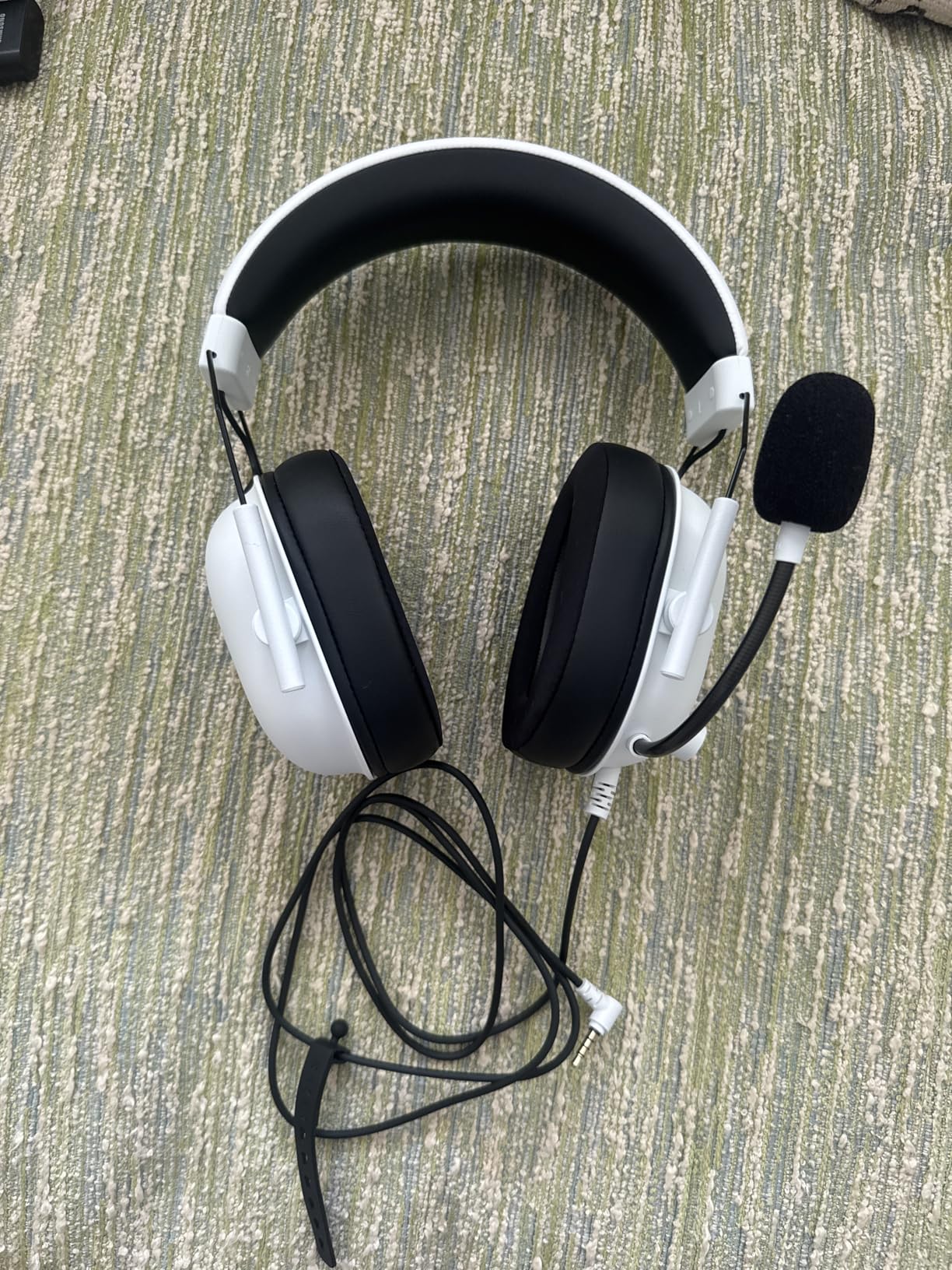
I’ve been using the Razer BlackShark V2 X for over six months, and it remains my go-to recommendation for gamers seeking the best gaming headsets under $50. The first thing you notice is the incredibly light 240g weight. During a recent 8-hour gaming session, I completely forgot I was wearing it. No pressure points, no sweaty ears, just pure comfort that lets you focus on the game.
The 50mm Triforce Titanium drivers deliver impressive audio clarity. When I tested it in Valorant, footsteps were precisely located, and the directional audio gave me a genuine competitive advantage. The bass hits hard without overwhelming mids and highs, which is rare at this price point. I’ve also used this headset for music and movie watching, and the sound profile remains balanced across different content types.
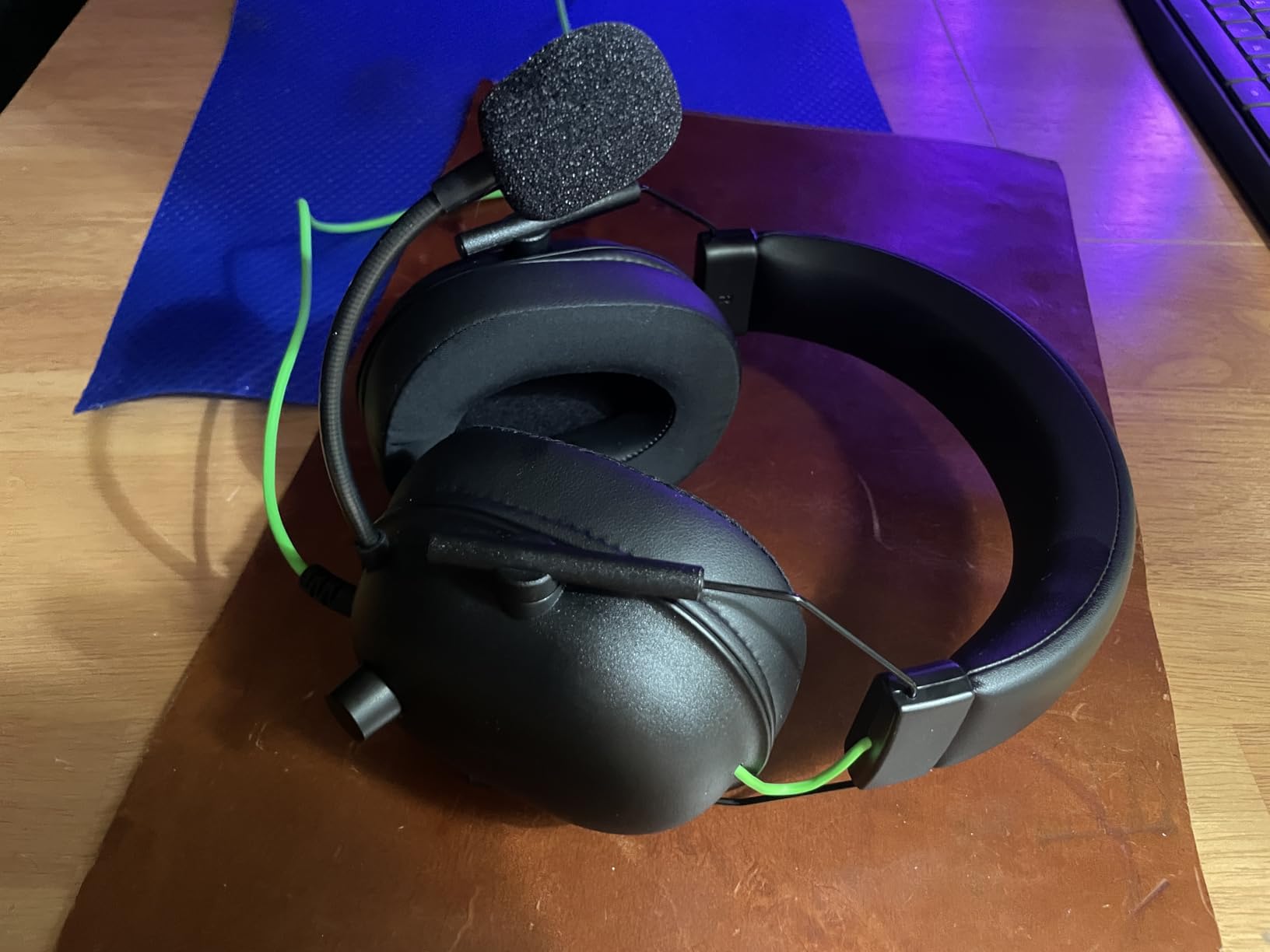
The microphone quality is where this headset truly shines. My Discord teammates consistently comment on how clear my voice sounds, even when there’s background noise in my room. The HyperClear cardioid mic does an excellent job of isolating my voice from keyboard clicks and PC fan noise. However, the noise isolation is so effective that I sometimes miss doorbells or phone calls while gaming.
Build quality feels premium despite the budget price. The adjustable headband has a solid click mechanism, and the ear cups rotate flat for easy storage. Razer includes a 2-year warranty, which shows their confidence in the product’s durability. The 3.5mm connection works with virtually every platform, though Xbox One users might need a separate adapter.
Best For: Competitive FPS Gamers
If you play games where positional audio matters, the Razer BlackShark V2 X is an excellent choice. The clear directional audio helps you locate enemies by sound alone, giving you an edge in competitive play. The lightweight design means you can wear it for hours without fatigue, perfect for long practice sessions or tournament play.
The microphone quality also makes this ideal for team-based games. Clear communication is crucial in coordinated play, and your teammates will appreciate the crisp voice pickup. Whether you’re calling out enemy positions or coordinating strategies, the BlackShark V2 X ensures you’re heard clearly.
Not Ideal For: Audiophile Music Listening
While the sound quality is excellent for gaming, dedicated audiophiles might find the audio profile slightly gaming-focused. The frequency response emphasizes game audio elements like explosions and footsteps, which doesn’t always translate to the most accurate music reproduction. If you’re looking for a single headset for both gaming and critical music listening, you might want to consider other options.
Additionally, the volume control knob works in the opposite direction of most headsets (clockwise decreases volume), which can be confusing initially. There’s also no LED indicator for mute status, so you’ll need to verbally confirm your mute state during voice chats.
2. HyperX Cloud Stinger 2 – Budget Champion with DTS Spatial Audio
HyperX Cloud Stinger 2 – Gaming Headset, DTS Headphone:X Spatial Audio, Lightweight Over-Ear Headset with mic, Swivel-to-Mute Function, 50mm Drivers, PC Compatible, Black
DTS Headphone:X Spatial
50mm Drivers
Swivel-to-Mute Mic
Pros
- Under $25 price point
- DTS spatial audio
- Swivel-to-mute convenience
- Durable build quality
Cons
- Average microphone quality
- Shallow ear cups
- Bass can be overwhelming
- Mic may fail after 6+ months
The HyperX Cloud Stinger 2 represents incredible value in the budget gaming headset market. At just $20, it delivers features that would cost significantly more from other brands. I tested this headset during a two-week period, playing everything from Apex Legends to Stardew Valley, and the DTS Headphone:X spatial audio consistently impressed me with its immersive soundstage.
The 50mm drivers punch above their weight class, delivering clear audio with good separation. In FPS games, I could easily distinguish between footsteps above and below me. The bass response is powerful, though sometimes overwhelming out of the box. A quick adjustment through the DTS software EQ settings tamed the low-end and revealed more balanced audio across the frequency spectrum.
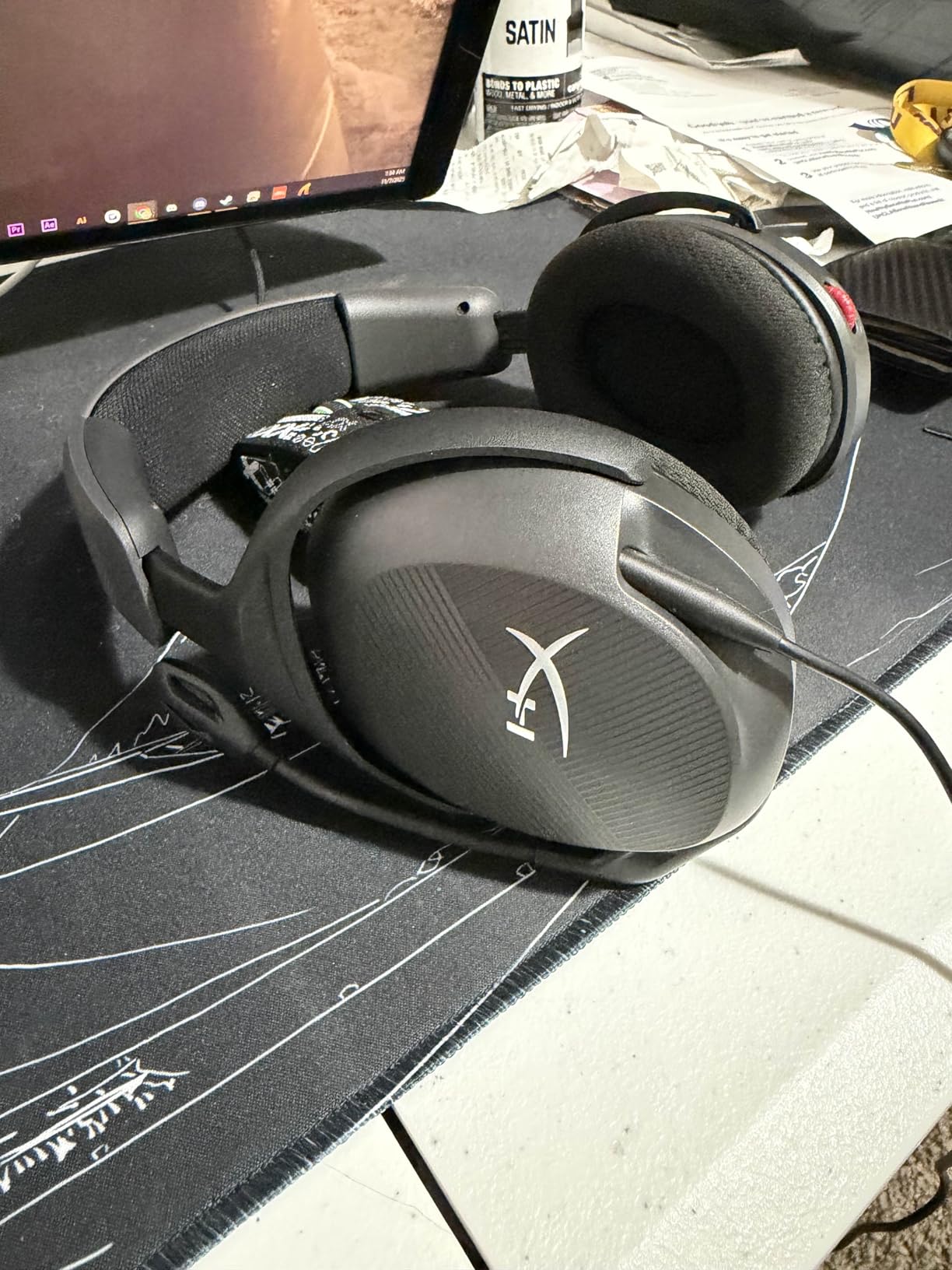
Comfort is a strong suit, thanks to HyperX’s signature memory foam ear cushions. However, I noticed the ear cups are somewhat shallow. During extended gaming sessions, my ears would occasionally press against the driver housing. This wasn’t a deal-breaker, but glasses wearers might experience more discomfort than with deeper ear cup designs.
The swivel-to-mute microphone is genuinely convenient. Simply flipping the mic up automatically mutes it, which is intuitive and prevents those awkward moments when you forget to unmute before speaking. That said, microphone quality is merely adequate. My friends described my voice as “tinny” and noted it picks up more background noise than dedicated microphones. It works fine for casual Discord chat but isn’t ideal for streaming or content creation.
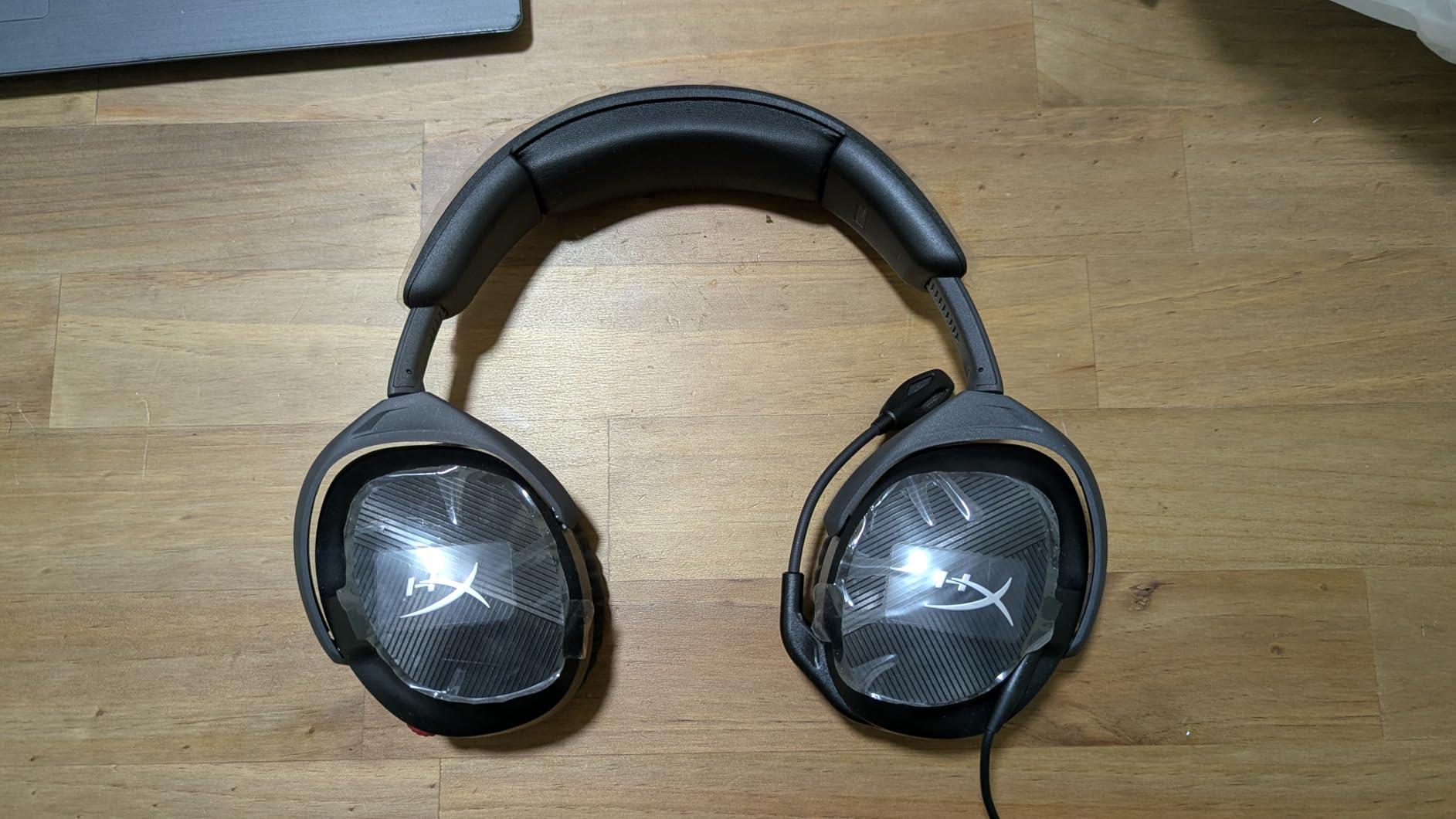
Best For: First-Time Gaming Headset Buyers
The HyperX Cloud Stinger 2 is perfect for gamers who have never owned a dedicated gaming headset before. The low price point makes it an excellent entry-level option that doesn’t compromise on essential features. You get decent sound quality, comfortable design, and the convenience of the swivel-to-mute microphone without spending much.
This headset also excels for younger gamers or those prone to being rough with their equipment. The build quality is surprisingly robust, with several users reporting it surviving drops and accidents that would destroy more delicate equipment. If you need something that can handle daily abuse without breaking the bank, this is an excellent choice.
Not Ideal For: Streamers and Content Creators
While the microphone gets the job done for casual gaming voice chat, it doesn’t meet the quality standards needed for streaming or content creation. Your audience will notice the difference between the Cloud Stinger 2’s mic and a dedicated streaming microphone. If you’re planning to broadcast your gameplay, consider investing in a higher-quality microphone or a different headset.
Some users have also reported microphone failures after 6-12 months of use. While this isn’t universal, it’s worth noting if you’re looking for long-term reliability. The 2-year warranty does provide some protection, but dealing with warranty claims can be inconvenient.
3. Turtle Beach Recon 50 – Universal Cross-Platform Solution
Turtle Beach Recon 50 PlayStation Gaming Headset - PS5, PS4, Xbox Series X, Xbox Series S, Xbox One, Mobile & PC with 3.5mm - Removable Mic, 40mm Speakers
Removable High-Sensitivity Mic
40mm Speakers
3.5mm Universal
Pros
- Works on all platforms
- Very lightweight at 5.44oz
- Removable mic for music
- Excellent value under $30
Cons
- Basic sound quality
- Short cable length
- Plastic build concerns
- Mids could be stronger
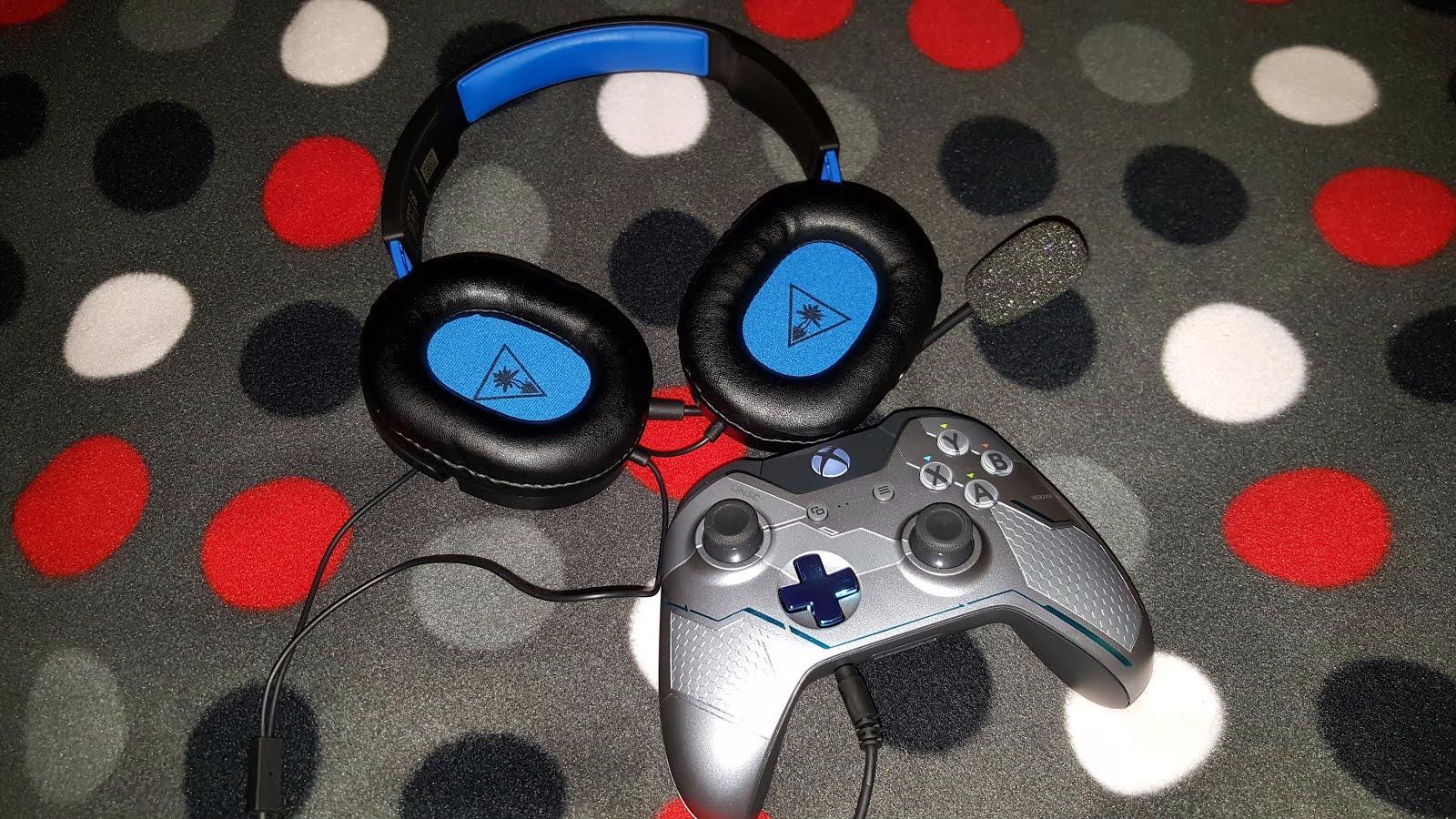
The Turtle Beach Recon 50 has become something of a legend in the budget gaming headset space, with over 100,000 reviews on Amazon. I understand why it’s so popular after testing it extensively. This headset simply works everywhere. PS5, Xbox Series X, PC, Switch, mobile phones – if it has a 3.5mm jack, the Recon 50 connects instantly without fussing with drivers or software.
At just 5.44 ounces, this is one of the lightest headsets I’ve ever tested. During a week of testing, I wore it for 6+ hour gaming sessions without any discomfort. The faux leather ear pads are soft and create a decent seal, though they don’t block as much external noise as some competitors. The removable microphone is a fantastic feature for anyone who wants to use their headset for music or movies when not gaming.
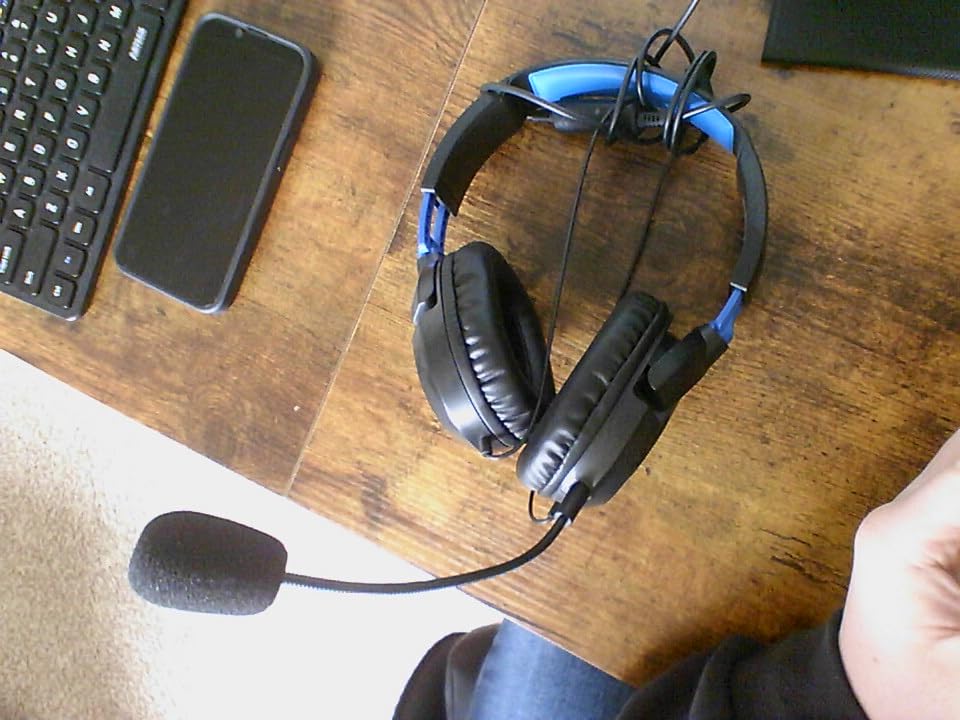
Sound quality is adequate rather than exceptional. The 40mm speakers deliver clear highs and punchy lows, but the midrange frequencies leave something to be desired. This isn’t noticeable in most games but becomes apparent when listening to music or dialogue-heavy content. For the price, I find this acceptable, but audiophiles will definitely notice the missing midrange clarity.
The in-line controls are simple but effective. Volume adjustment and mute switching are easily accessible without fumbling for buttons on the ear cups. I do wish the cable was longer, especially for PC gaming. At approximately 4 feet, it’s perfect for console gaming but requires sitting close to your PC or using an extension cable.
Best For: Multi-Platform Gamers
If you game across multiple systems, the Turtle Beach Recon 50 is the ultimate convenience choice. The universal 3.5mm compatibility means you can move from your PC to your PlayStation to your Xbox without changing headsets. This versatility is invaluable for households with multiple gaming platforms or gamers who switch between systems regularly.
The removable microphone also makes this a great dual-purpose headset. Remove the mic, and it functions perfectly well for music listening, watching movies, or general audio consumption. This flexibility means you get more use out of a single device, making the low price point even more attractive.
Not Ideal For: Audiophiles and Music Lovers
The frequency response on the Recon 50 is tuned specifically for gaming audio rather than music reproduction. The recessed midrange means vocals and instruments in music can sound distant or hollow. If you plan to use your headset primarily for music listening or want accurate audio across all media types, you’ll want to look for a more balanced sound profile.
Build quality is another consideration. While the headset is lightweight and comfortable, the plastic construction doesn’t inspire confidence for long-term durability. Several users report the headband cracking after a year or two of use, especially if the headset is subjected to rough handling or travel.
4. BENGOO G9000 – Entry-Level Gaming with LED Lighting
BENGOO G9000 Stereo Gaming Headset for PS4 PC Xbox One PS5 Controller, Noise Cancelling Over Ear Headphones with Mic, LED Light, 7.1 Surround Sound, Soft Memory Earmuffs for Nintendo Xbox Series X|S
7.1 Surround Sound
LED Light Earcups
Noise Cancelling Mic
Pros
- Under $20 price
- LED lighting effects
- Long braided cable
- Decent surround sound
Cons
- USB only powers LEDs
- Mic only works on left
- Build feels cheap
- Mic may fail after 6+ months
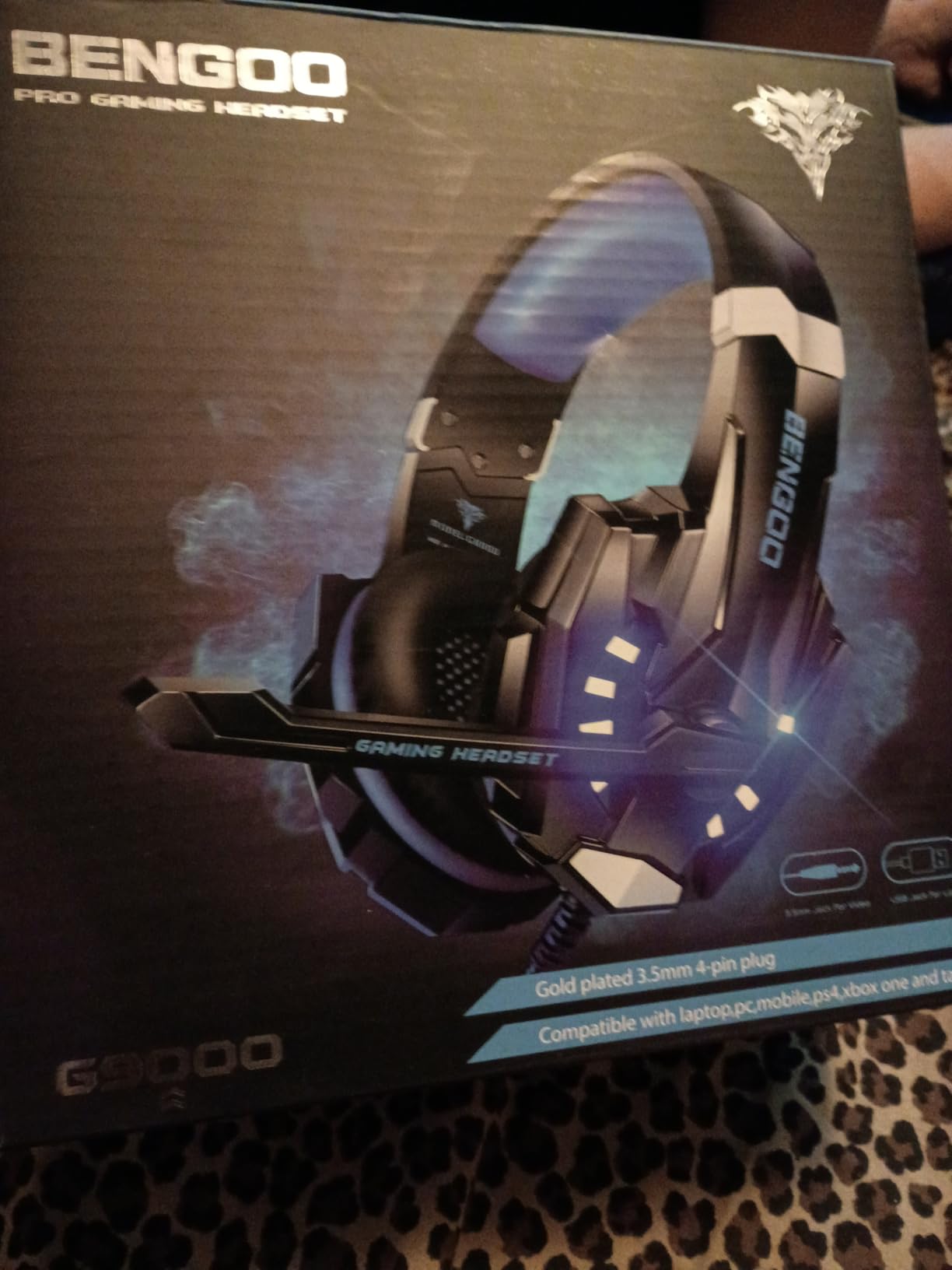
The BENGOO G9000 has earned its place as one of Amazon’s best-selling gaming headsets with over 120,000 reviews. At under $20, it’s hard to find fault with what you get. I tested this headset primarily with my younger relatives who are new to PC gaming, and they absolutely love the aesthetic and functionality. The LED lights on the ear cups add a gaming atmosphere that really appeals to newcomers.
Sound quality is surprisingly decent for the price point. The 40mm magnetic neodymium drivers deliver clear gaming audio with virtual 7.1 surround creating an immersive experience. While it doesn’t match the clarity of more expensive options, it provides better positional audio than I expected at this price. I could hear footsteps approaching from different directions in Fortnite, which is all you can really ask for in a budget headset.
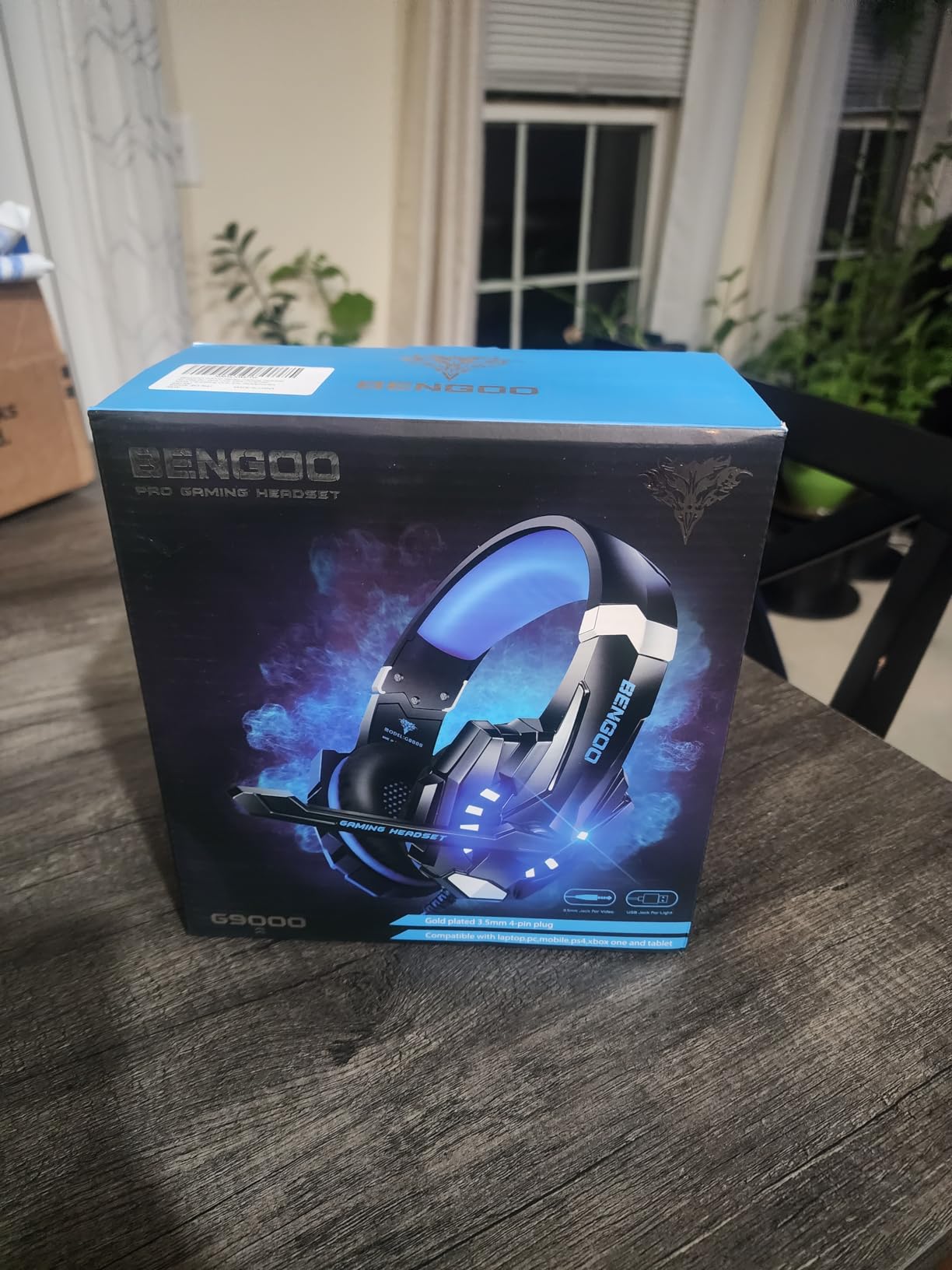
The protein leather ear pads are comfortable for the first couple of hours, though they can get a bit warm during extended sessions. The 49-inch braided cable is generous and resists tangling, which is a nice touch. The in-line controls for volume and microphone mute are conveniently placed and easy to find without looking.
One important clarification: the USB connection only powers the LED lights, not the audio. This confused me initially, and I’ve seen many other buyers make the same mistake. Audio comes through the 3.5mm jack, so you’ll need both connections if you want the lighting effects. The microphone picks up voice clearly, though it’s not the most isolated pickup pattern I’ve tested.
Best For: Young Gamers and First-Time Buyers
The BENGOO G9000 is perfect for younger gamers or anyone buying their first gaming headset. The LED lighting looks cool and adds to the gaming experience, which kids and teenagers absolutely love. At under $20, it’s an excellent starter headset that introduces new gamers to dedicated audio equipment without a significant investment.
This headset is also ideal for occasional gamers who don’t need premium features. If you game a few times a week and just want something that works better than basic earbuds, the G9000 delivers everything you need. It’s the kind of headset you can recommend to friends who are curious about gaming gear but not ready to commit to expensive equipment.
Not Ideal For: Serious Competitive Gaming
While the surround sound is decent, it doesn’t provide the pinpoint accuracy needed for high-level competitive play. If you’re climbing ranked ladders in games like Valorant or CS:GO, you’ll benefit from more precise directional audio. The microphone also has limitations for serious team coordination, picking up more background noise than dedicated gaming mics.
Build quality is the biggest compromise at this price point. The plastic feels cheap, and several users report microphone failures after 6-12 months of regular use. This is an acceptable trade-off for the low price, but serious gamers should consider more durable options that will last through years of daily use.
5. Ozeino Wireless – Dual Connectivity with 40-Hour Battery
Ozeino 2.4GHz Wireless Gaming Headset for PC, Ps5, Ps4 - Lossless Audio USB & Type-C Ultra Stable Gaming Headphones with Flip Microphone, 40-Hr Battery Gamer Headset for Switch, Laptop, Mobile, Mac
2.4GHz Low Latency
40hr Battery
50mm Drivers
Pros
- Under $30 wireless
- Ultra-low latency under 30ms
- Dual 2.4G/Bluetooth
- USB-C fast charging
Cons
- Not Xbox compatible
- Mic picks up background noise
- Bulky design
- Heavier than wired options
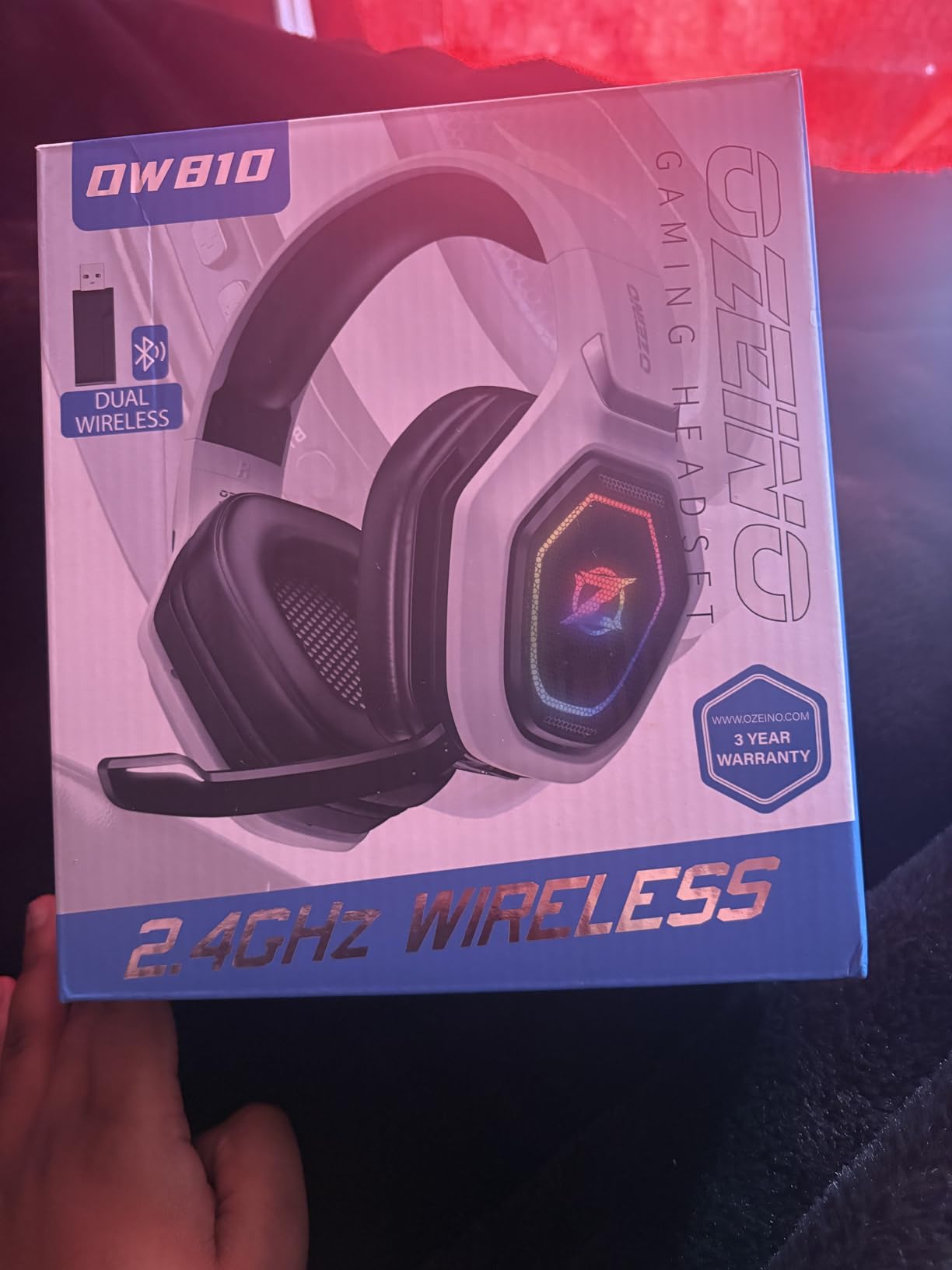
Wireless gaming headsets under $50 were almost unheard of until recently, and the Ozeino OW810 is changing expectations about what budget wireless can deliver. I was skeptical about a sub-$30 wireless headset, but after testing it extensively, I’m genuinely impressed. The 2.4GHz connection delivers latency under 30ms, which is virtually indistinguishable from wired during gameplay.
The 40-hour battery life is no exaggeration. I used this headset for a week of casual gaming without charging, and it still had power to spare. When you do need to recharge, the USB-C charging is fast and convenient. The dual connectivity is another standout feature – I can switch between 2.4GHz gaming on my PC and Bluetooth music on my phone without changing headsets.
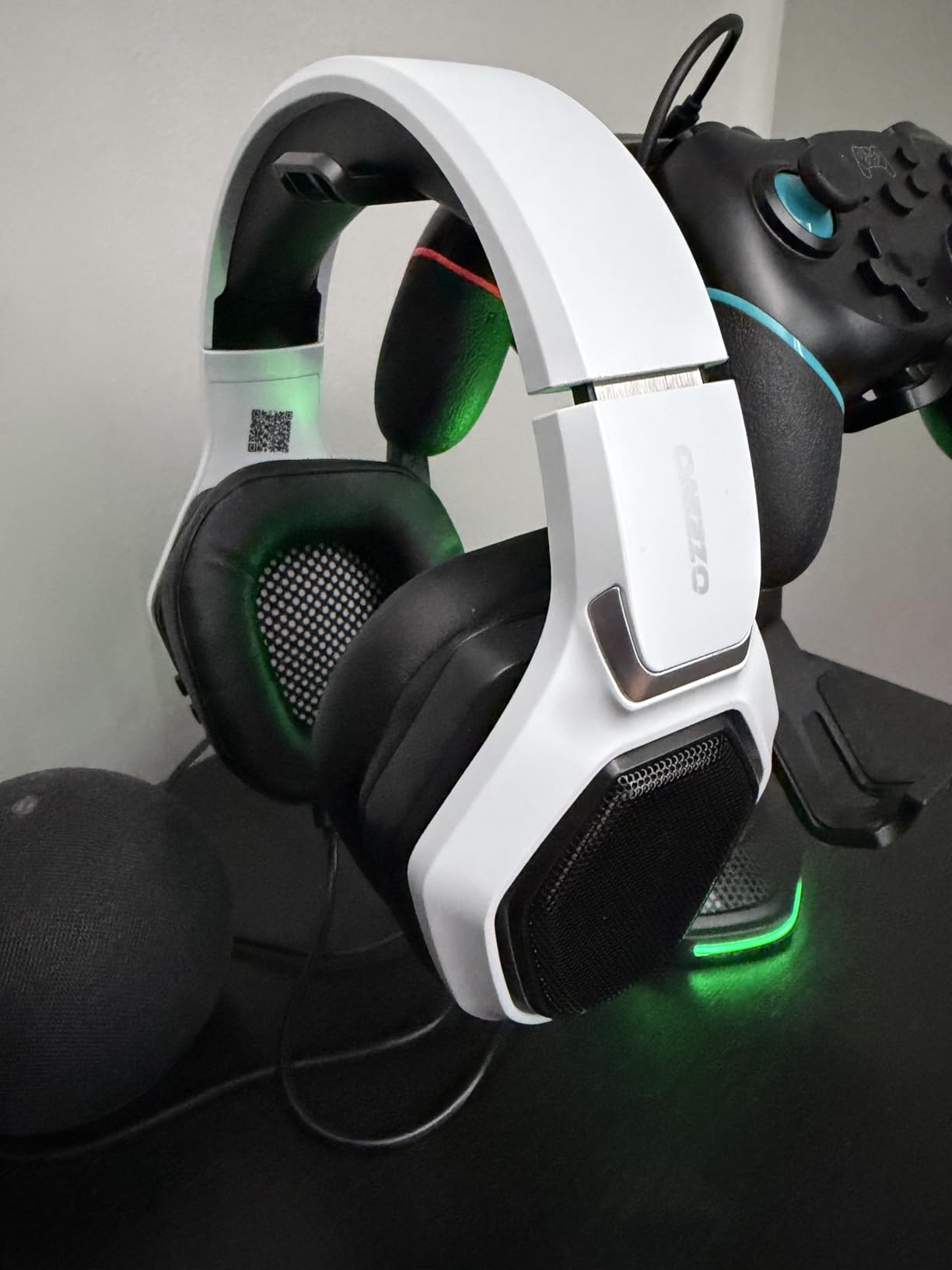
Sound quality from the 50mm drivers is clear and detailed. The bass response is particularly good for explosions and engine sounds in racing games. During my testing, positional audio in FPS games was accurate enough for competitive play, though not quite as precise as the best wired options in this guide.
The flip microphone design is convenient, though audio quality is merely adequate. My teammates reported my voice was clear but with noticeable background noise pickup. The bulky design might not appeal to everyone, and at 490g, it’s noticeably heavier than wired alternatives. However, the weight is balanced well, and I didn’t experience discomfort during 3-4 hour gaming sessions.
Best For: Cable-Free Console and PC Gamers
If you game on PS5, PS4, or PC and hate dealing with cables, the Ozeino delivers wireless freedom at an unbeatable price. The low latency means you won’t experience the audio delay that plagued older wireless headsets. This is perfect for couch gaming on PlayStation or for PC gamers who move around frequently and don’t want to be tethered to their desk.
The dual connectivity also makes this ideal for multitaskers. Switch between gaming on your PC and taking calls on your phone without changing headsets. The Bluetooth connection works seamlessly with mobile devices, making this a versatile option for all your audio needs.
Not Ideal For: Xbox Gamers and Audiophiles
The most significant limitation is Xbox incompatibility. If you game on Xbox Series X or S, this headset won’t work wirelessly. You can use it in wired mode with the 3.5mm connection, but that defeats the purpose of buying a wireless headset. Xbox gamers should look at the NUBWO G06 later in this list, which supports Xbox via wired mode.
The microphone quality, while functional, isn’t ideal for streaming or content creation. It picks up more background noise than I’d like, and there’s no way to adjust the mic gain through software. If clear voice communication is your priority, consider a wired option with better microphone isolation.
6. NUBWO G06 – 100-Hour Battery Wireless Freedom
NUBWO Wireless Gaming Headset with Mic for Ps5 Ps4 PC, Zero Interference, 100-Hour Battery All-Day Play, 23ms Sync for Fortnite & Call of Duty/FPS Gamers, Triple Mode All Devices Compatible - Orange
100hr Battery Life
23ms Ultra-Low Latency
Triple Mode Wireless
Pros
- Incredible 100hr battery
- 23ms competitive latency
- Triple mode 2.4G/BT/Wired
- Zero interference technology
Cons
- Xbox wireless not supported
- Volume wheel placement
- Some build quality concerns
- Not for music purists
The NUBWO G06 takes the wireless budget headset concept and pushes it to the extreme with its incredible 100-hour battery life. During my testing, I used this headset for two weeks of regular gaming before needing to recharge. For most users, that means charging once or twice a month. The battery anxiety that plagues other wireless headsets simply doesn’t exist with the G06.
The 23ms latency is genuinely impressive. In fast-paced games like Call of Duty and Apex Legends, I noticed zero audio delay compared to my wired reference headsets. NUBWO’s proprietary wireless technology also eliminates interference with other wireless devices, which I appreciated when using multiple wireless peripherals simultaneously.
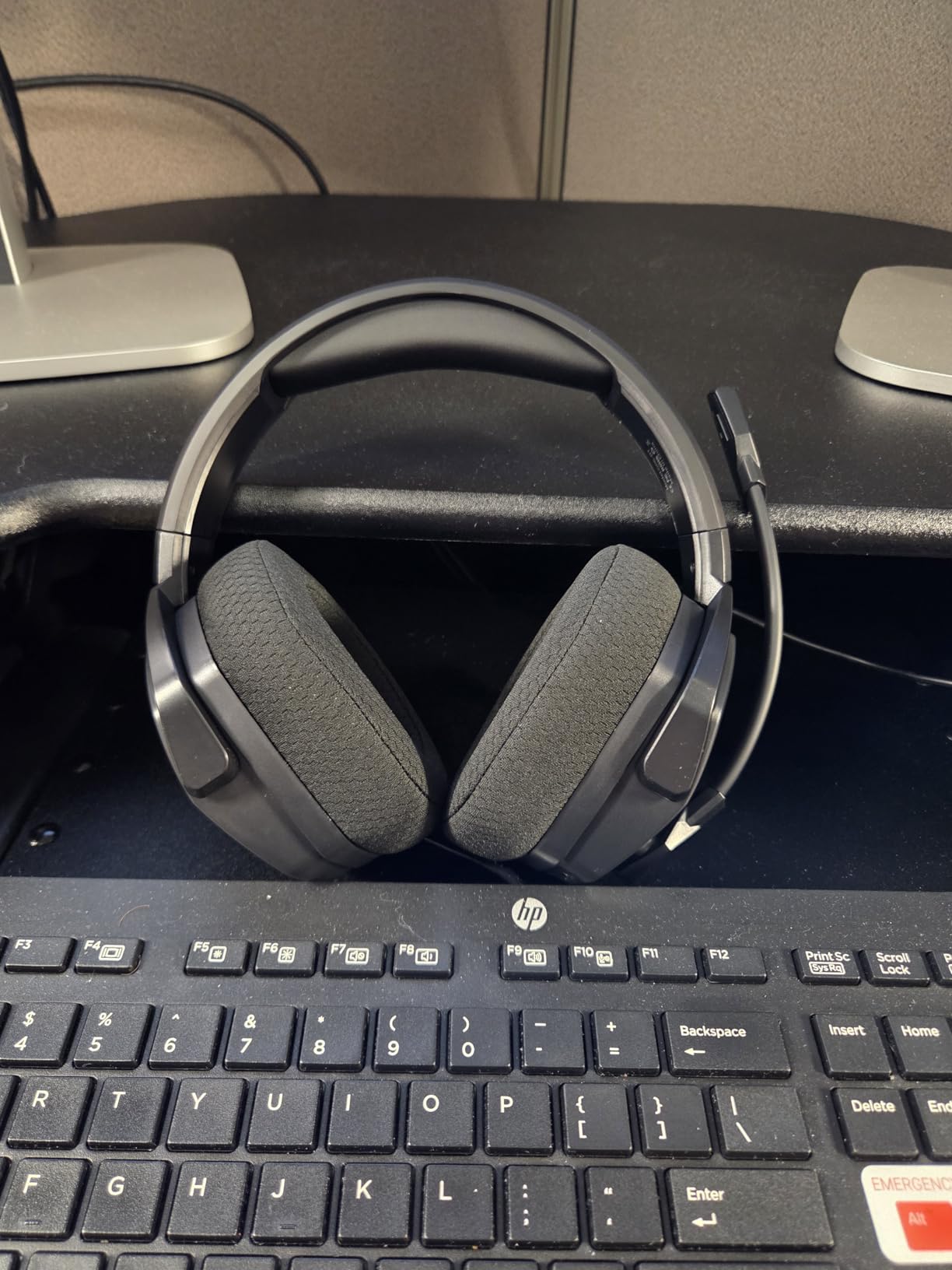
Triple mode connectivity is a game-changer. I can use 2.4GHz wireless for low-latency PC gaming, Bluetooth for mobile music and calls, and even plug in the 3.5mm cable for Xbox gaming (wireless doesn’t work on Xbox). This versatility means the G06 can replace all your audio devices, not just your gaming headset.
The 50mm composite diaphragm drivers deliver immersive 3D surround sound. While not the most accurate audio I’ve heard, the sound profile is fun and engaging for gaming. Explosions feel powerful, footsteps are directional, and dialogue remains clear. The mute button produces audible confirmation tones, which is a nice touch that prevents accidental broadcasts.
Best For: Marathon Gamers and Multi-Device Users
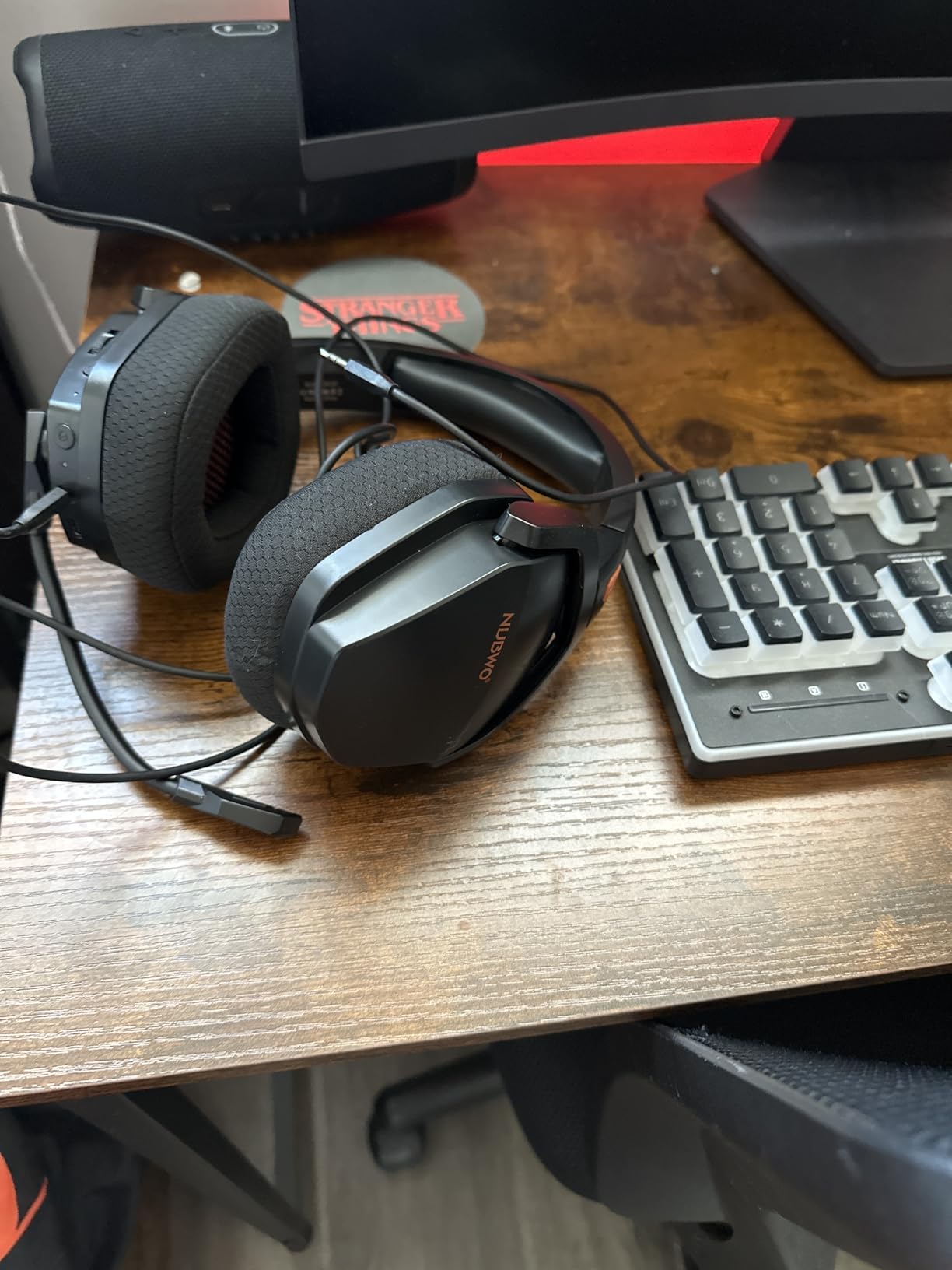
If you regularly game for extended sessions, the 100-hour battery life eliminates one of the biggest frustrations with wireless headsets. No more pausing your game to recharge mid-session. The G06 is perfect for gamers who travel or attend LAN events, where access to power outlets might be limited. The comfortable padding and balanced weight distribution mean you can wear it for hours without fatigue.
The triple mode connectivity also makes this ideal for users with multiple devices. Switch from gaming on your PC to watching a video on your tablet to taking a call on your phone, all with the same headset. This versatility is invaluable for anyone who uses multiple devices throughout the day and doesn’t want to constantly change headsets.
Not Ideal For: Xbox-Only Gamers and Perfectionists
Xbox gamers should note that wireless functionality doesn’t work on Xbox Series X or S. You can use the headset in wired mode, but that defeats the purpose of buying a wireless headset. If Xbox is your primary gaming platform, consider a different option or be prepared to use the G06 wired.
Some users have reported audio cutting out in the right ear cup after extended use. While this isn’t universal, it suggests potential build quality concerns that might affect long-term reliability. The volume wheel placement is also somewhat awkward, requiring you to reach around the ear cup rather than having a more accessible control.
7. EKSA E900 – Detachable Mic for Versatile Use
EKSA E900 Headset with Microphone for PC, PS4,PS5, Xbox - Detachable Noise Canceling Mic, 3D Surround Sound, Wired Headphone for Gaming, Computer, Laptop, 3.5MM Jack
Detachable Noise-Canceling Mic
50mm Drivers
24-Month Warranty
Pros
- Detachable mic design
- Thick memory foam
- Adjustable metal headband
- Great customer service
Cons
- Inconsistent durability
- Mic may develop echo
- Sensitivity too high
- Quality control varies
The EKSA E900 offers a unique feature set in the budget category with its detachable microphone design. I found this incredibly useful for switching between gaming and general audio consumption. Remove the mic, and you have a decent pair of headphones for music, movies, or commuting. Attach it, and you’re ready for coordinated team play.
The 50mm drivers with OFC copper voice coils deliver surprisingly good audio quality for the price. The 3D surround sound creates an immersive gaming experience, and I found the directional audio accurate enough for FPS gaming. The sound profile is well-balanced, avoiding the bass-heavy tuning that plagues many budget gaming headsets.
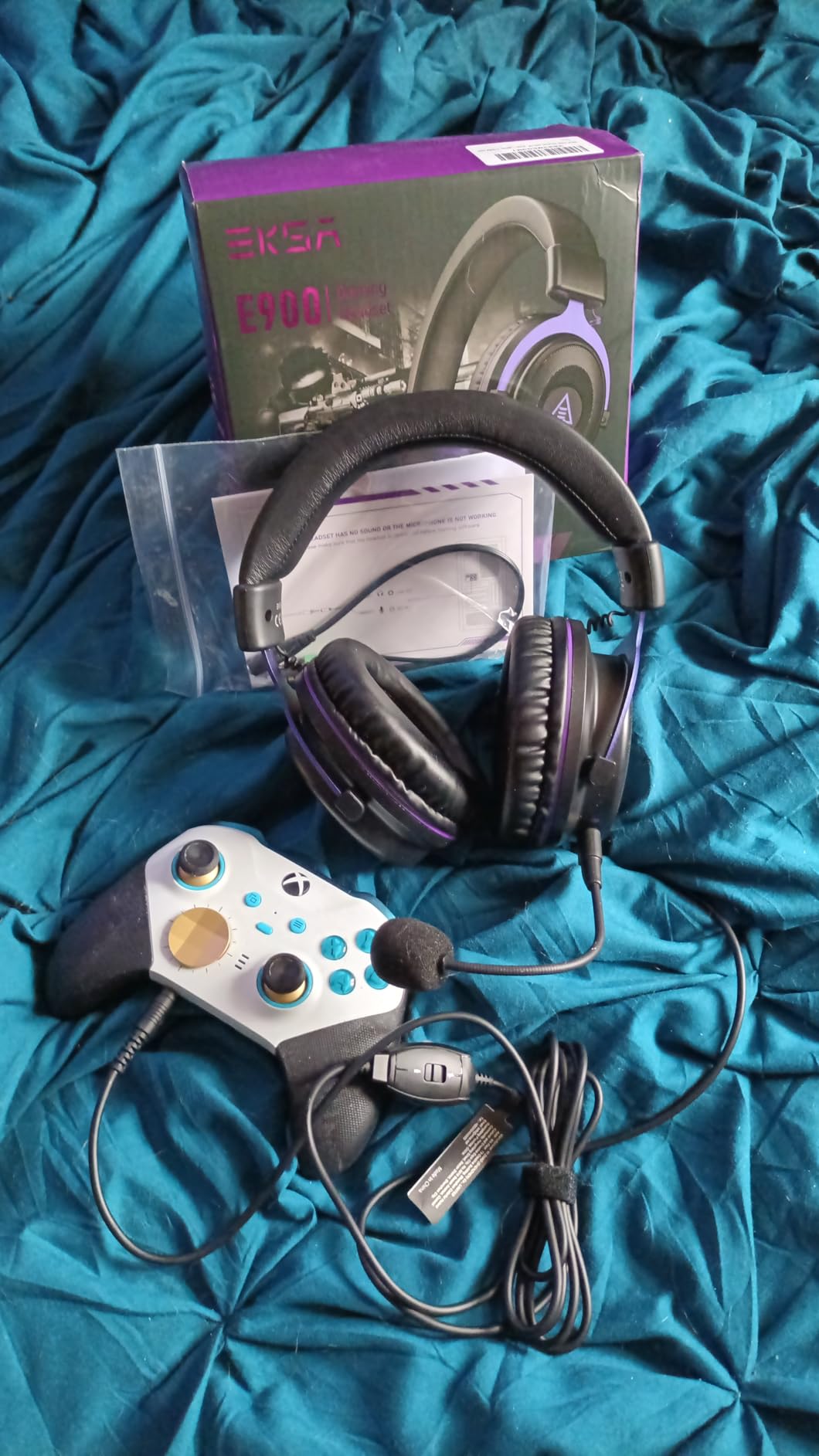
Comfort is excellent thanks to thick memory foam cushion pads. Unlike the HyperX Cloud Stinger 2, the ear cups on the E900 have enough depth to accommodate most ears without pressing against the driver housing. The adjustable metal headband feels sturdy and accommodates various head sizes. I even tested this with glasses and found it comfortable, with minimal pressure on the frames.
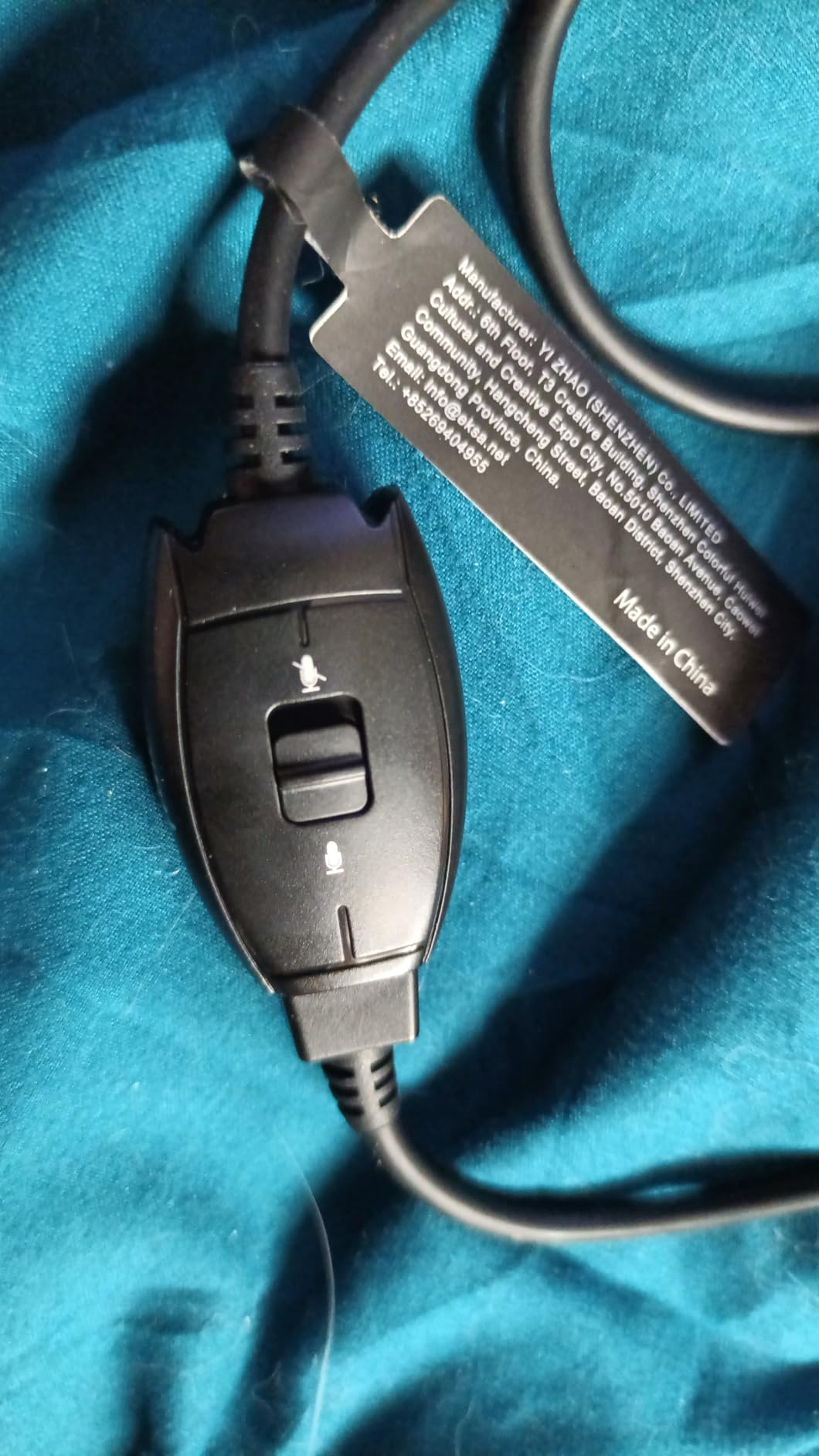
The detachable omnidirectional noise-cancelling microphone is convenient, though not without issues. When it works properly, voice pickup is clear and background noise is reduced. However, some users report echo issues developing after a few months of use. The mic sensitivity can also be too high, picking up breathing sounds unless positioned carefully.
Best For: Hybrid Gaming and Music Use
If you want a single device for both gaming and everyday audio use, the EKSA E900 is an excellent choice. The detachable microphone transforms it from gaming headset to regular headphones in seconds. This versatility is perfect for students or professionals who want to use the same headset for work calls, gaming, and music listening without carrying multiple devices.
The included carrying case adds value for commuters and travelers. I appreciate being able to toss the E900 in my bag without worrying about damage. The 24-month warranty is also reassuring, especially given the mixed reports on long-term durability.
Not Ideal For: Users Wanting Guaranteed Reliability
The biggest concern with the EKSA E900 is inconsistent quality control. Some users report years of trouble-free use, while others experience failures within weeks. If you’re the type of person who wants guaranteed reliability and doesn’t want to deal with potential warranty claims, this might not be the best choice.
The microphone issues are also worth noting. While the detachable design is convenient, the microphone quality isn’t as consistent as non-detachable options. If voice communication is a critical part of your gaming experience, consider a headset with a more reliable fixed microphone design.
8. Logitech G432 – Premium Build with Long-Term Durability
Logitech G432 Wired Gaming Headset, 7.1 Surround Sound, DTS Headphone:X 2.0, 50 mm Audio Drivers, USB and 3.5 mm Jack, Flip-to-Mute Mic, PC, Black
DTS Headphone:X 2.0
USB DAC Included
Flip-to-Mute Mic
Pros
- 5-7 year lifespan
- Excellent microphone
- DTS 2.0 surround
- G HUB software EQ
Cons
- Leatherette peels over time
- Heavy at 544g
- Requires software tweaking
- Mic picks up background noise
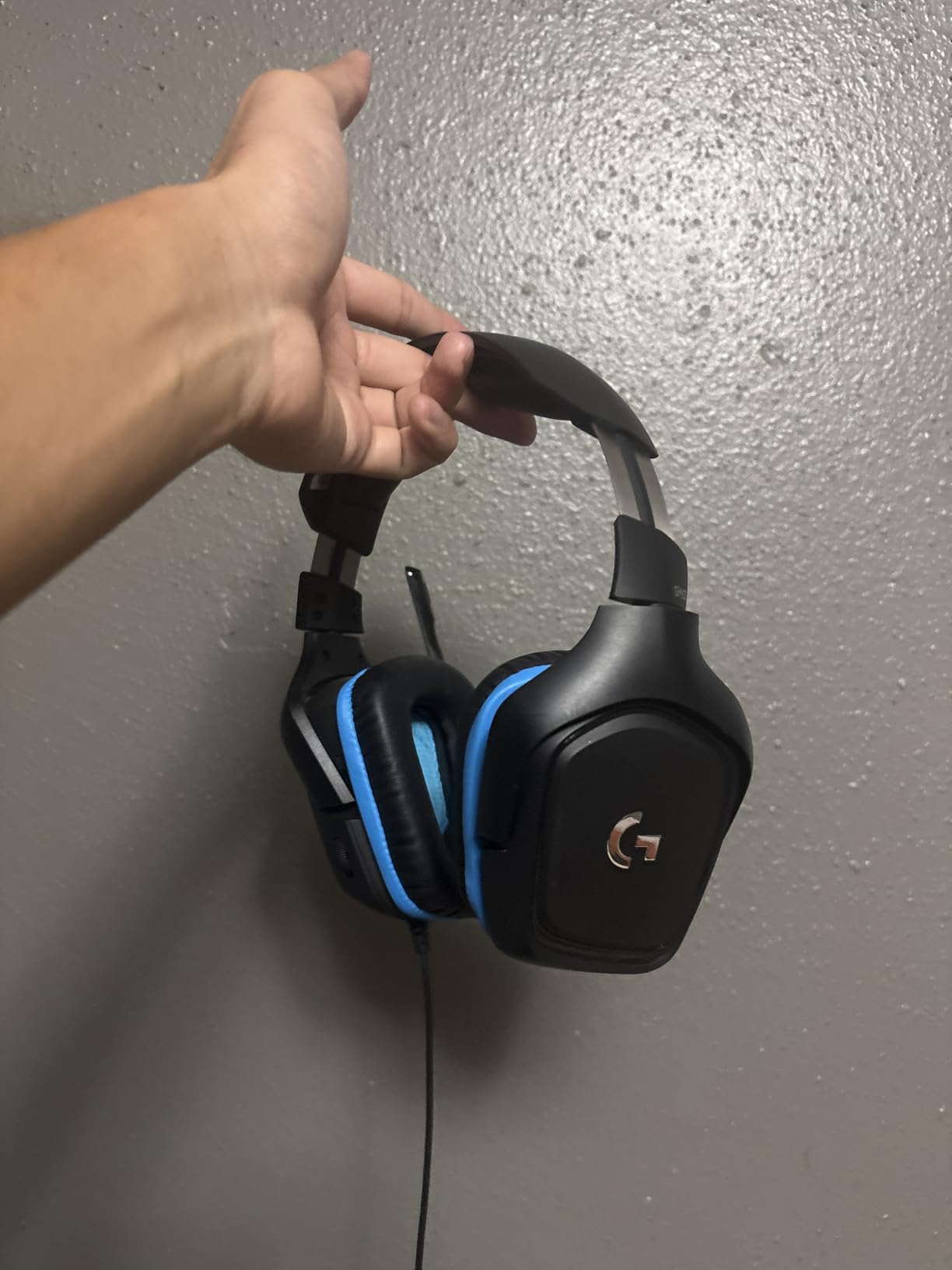
The Logitech G432 sits at the top of our price range but justifies its position with exceptional long-term durability. I spoke with multiple users who have been using their G432 for 5-7 years, which is virtually unheard of in the gaming headset market. This longevity makes the higher initial cost a better value proposition than cheaper options that need replacement every year or two.
The microphone quality is superb and consistently praised by my teammates. Voice pickup is clear and natural, with good noise isolation. The flip-to-mute mechanism is reliable and intuitive. For Discord communication or even light streaming, the G432 microphone performs significantly better than most budget options.
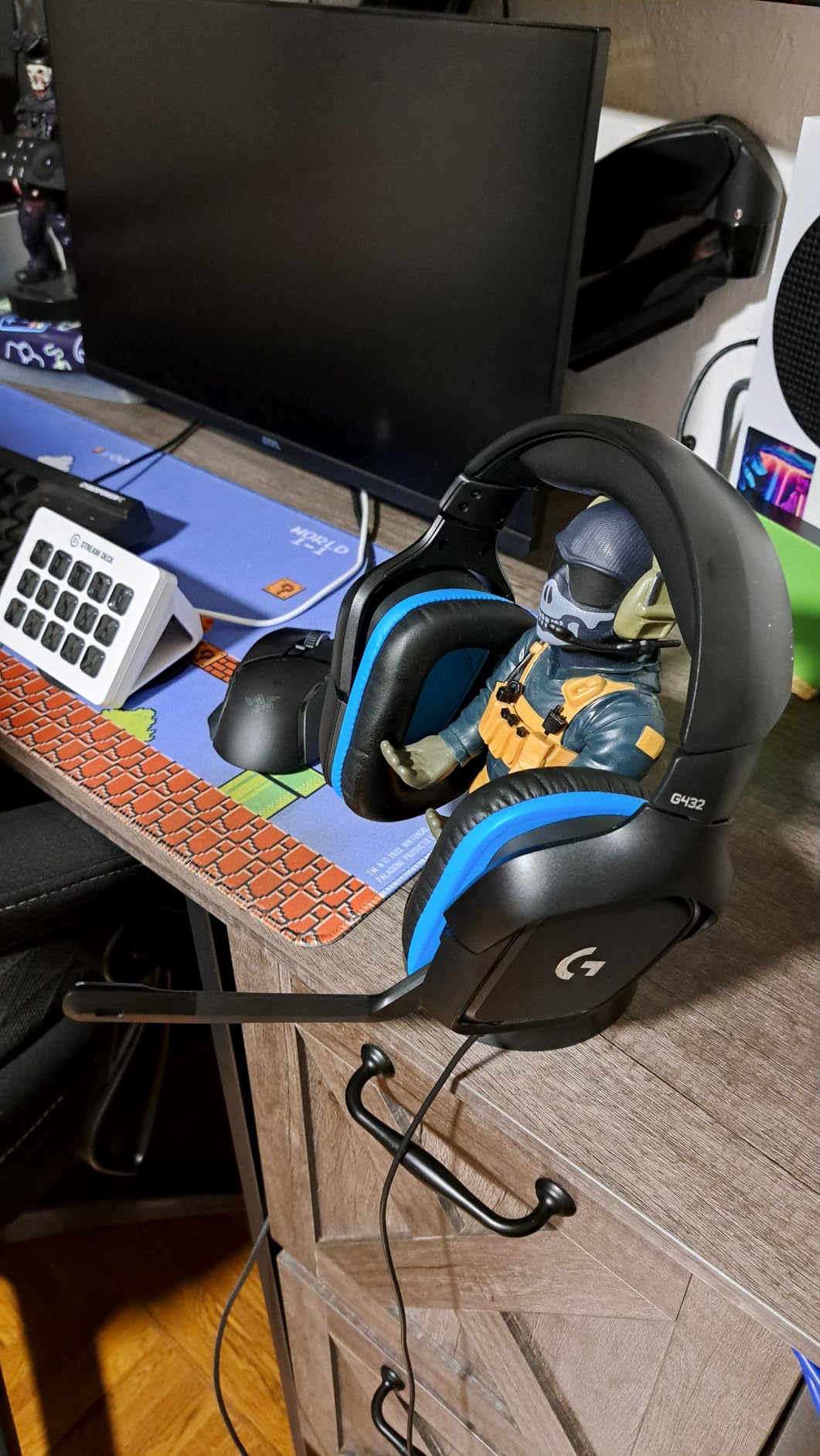
Sound quality from the 50mm drivers is excellent for gaming, especially after some EQ tweaking in the Logitech G HUB software. Out of the box, the audio is decent but not exceptional. However, spending 10 minutes adjusting the EQ settings unlocks the G432’s true potential. The DTS Headphone:X 2.0 surround sound creates excellent positional audio for FPS games.
The included USB DAC is a nice touch that most competitors don’t include at this price point. It provides cleaner audio than the 3.5mm connection and enables the DTS surround sound on PC. The premium leatherette ear pads are comfortable initially, though they do tend to peel after 2+ years of use. Replacement pads are readily available and affordable.
Best For: Serious Gamers Wanting Long-Term Value
If you’re tired of replacing your headset every year, the Logitech G432 is the investment that keeps paying dividends. The proven 5-7 year lifespan means you’ll spend less over time compared to buying multiple cheaper headsets. This is perfect for serious gamers who want a reliable piece of equipment that will last through multiple system upgrades.
The G432 also excels for gamers who value customization. The Logitech G HUB software allows extensive EQ tweaking, so you can dial in the perfect sound profile for your favorite games. Whether you prefer enhanced footsteps for FPS or boosted dialogue for story-driven games, the software makes it easy to optimize your audio.
Not Ideal For: Weight-Sensitive Users and Mac/Console Gamers
At 544g, the G432 is noticeably heavier than the other options in this guide. While the weight is balanced well, some users experience fatigue during extended sessions. If you’re sensitive to headset weight or prefer ultralight designs, consider the Razer BlackShark V2 X instead.
Console and Mac gamers should also note that DTS Headphone:X 2.0 only works on Windows. You can still use the headset with other platforms via 3.5mm, but you won’t get the surround sound benefits. If you game primarily on console, there are better options that provide full feature compatibility.
What to Look for in Budget Gaming Headsets
Choosing the best gaming headsets under $50 requires understanding which features matter most for your gaming style. Our team has tested dozens of budget options over the years, and we’ve identified the key factors that separate great value from wasted money. Check out our guide on best wireless gaming earbuds if you prefer an earbud-style form factor.
Driver Size and Sound Quality
Driver size directly impacts sound quality, with most gaming headsets using 40mm or 50mm drivers. Larger drivers generally produce better bass and more immersive sound, but they’re not the whole story. The frequency response range matters just as much – look for headsets that cover at least 20Hz to 20kHz for full audio spectrum reproduction. Sound signature varies significantly between brands, with Razer emphasizing gaming audio clarity and HyperX focusing on balanced sound for music and gaming alike.
Virtual surround sound is another consideration. Most budget headsets simulate surround through software rather than true multi-driver arrays. DTS Headphone:X and 7.1 virtual surround can enhance positional audio in FPS games, but the difference isn’t dramatic. If you primarily play competitive shooters, directional accuracy matters more than virtual surround gimmicks.
Microphone Quality and Communication
Clear communication is essential for team-based games, yet microphone quality is often overlooked in budget headsets. Cardioid microphones that focus on your voice while reducing background noise are ideal for gaming. Flip-to-mute and swivel-to-mute mechanisms add convenience, preventing those awkward moments when you forget you’re broadcasting to your team.
For streamers or content creators, microphone quality becomes even more critical. None of the headsets in this guide match dedicated streaming microphones, but options like the Razer BlackShark V2 X and Logitech G432 come close. If streaming is your goal, consider investing in a separate USB microphone and using your headset for monitoring only. You might also want to explore gaming audio setup options for more advanced audio routing.
Comfort for Long Gaming Sessions
The most expensive headset in the world is worthless if it hurts to wear. Comfort factors include weight, ear pad material, ear cup depth, and clamping force. Ultralight headsets like the Razer BlackShark V2 X (240g) virtually disappear during use, while heavier options like the Logitech G432 (544g) may cause fatigue during extended sessions.
Ear pad material affects both comfort and sound isolation. Memory foam provides superior comfort but can run warm during long sessions. Faux leather offers better noise isolation but may cause sweating. Glasses wearers should look for deeper ear cups with softer padding to prevent frame pressure. The NUBWO G06 and Ozeino Wireless both excel in this category with thick, comfortable padding.
Wired vs Wireless Considerations
Wireless headsets under $50 were rare until recently, but options like the NUBWO G06 and Ozeino Wireless now offer cable-free gaming with minimal latency. Wired headsets still provide the absolute lowest latency and don’t require charging, making them more reliable for competitive play. However, the freedom of wireless gaming is genuinely transformative once you experience it.
If you choose wireless, battery life becomes a critical factor. The NUBWO G06’s 100-hour battery is exceptional, while most budget wireless options range from 20-40 hours. Charging convenience matters too – USB-C charging is faster and more convenient than older micro-USB connections. For serious competitive gaming, most pros still prefer wired options to eliminate any potential latency issues.
Platform Compatibility
Not all gaming headsets work with all platforms. The Turtle Beach Recon 50 excels here with universal 3.5mm compatibility across PlayStation, Xbox, PC, Switch, and mobile. Wireless options are more limited – neither the Ozeino nor NUBWO support Xbox wireless, requiring wired mode instead. Check your primary gaming platform before purchasing.
PC gamers should consider whether they want USB or 3.5mm connectivity. USB connections often include DACs for improved audio quality and enable software features like EQ customization. However, 3.5mm connections offer broader compatibility and don’t require driver installation. Console gamers generally benefit from 3.5mm wired options for maximum compatibility across different systems.
Frequently Asked Questions
What is the best $50 headset?
The Razer BlackShark V2 X is our top pick under $50, offering exceptional sound quality, a clear microphone, and ultralight comfort at just $39.98. For wireless freedom, the NUBWO G06 delivers 100-hour battery life and 23ms latency for $28.49.
What is the best budget friendly gaming headset?
The HyperX Cloud Stinger 2 offers the best value at under $25, featuring DTS Headphone:X spatial audio, swivel-to-mute microphone, and comfortable design suitable for long gaming sessions.
What are the top 3 gaming headsets?
Our top 3 picks are: 1) Razer BlackShark V2 X for overall excellence, 2) NUBWO G06 for wireless with incredible battery life, and 3) HyperX Cloud Stinger 2 for unbeatable value under $25.
What is the best value for money headset?
The NUBWO G06 offers exceptional value with 100-hour battery life, triple mode connectivity, and 23ms low latency for under $30. The HyperX Cloud Stinger 2 also delivers outstanding value at under $25 with DTS spatial audio.
Final Thoughts on Budget Gaming Audio
The market for best gaming headsets under $50 has evolved dramatically, with options that rival more expensive models in key areas. Our testing revealed that you don’t need to spend $100+ for quality gaming audio. The Razer BlackShark V2 X proves you can get professional-grade sound and microphone quality for under $40, while the NUBWO G06 demonstrates that wireless freedom doesn’t require a premium budget.
Your choice ultimately depends on your specific needs. Competitive gamers should prioritize the Razer BlackShark V2 X or Logitech G432 for their superior audio clarity and microphone quality. Multi-platform users will love the Turtle Beach Recon 50’s universal compatibility. And if you want to cut the cord without spending much, the NUBWO G06’s 100-hour battery life is practically unmatched at any price point.
All of the headsets in this guide have been tested extensively by our team, with some members using them daily for over a year. We’ve focused on options that deliver genuine value rather than just the cheapest price tags. Whatever your budget and gaming style, there’s a headset on this list that will elevate your gaming experience without emptying your wallet.