
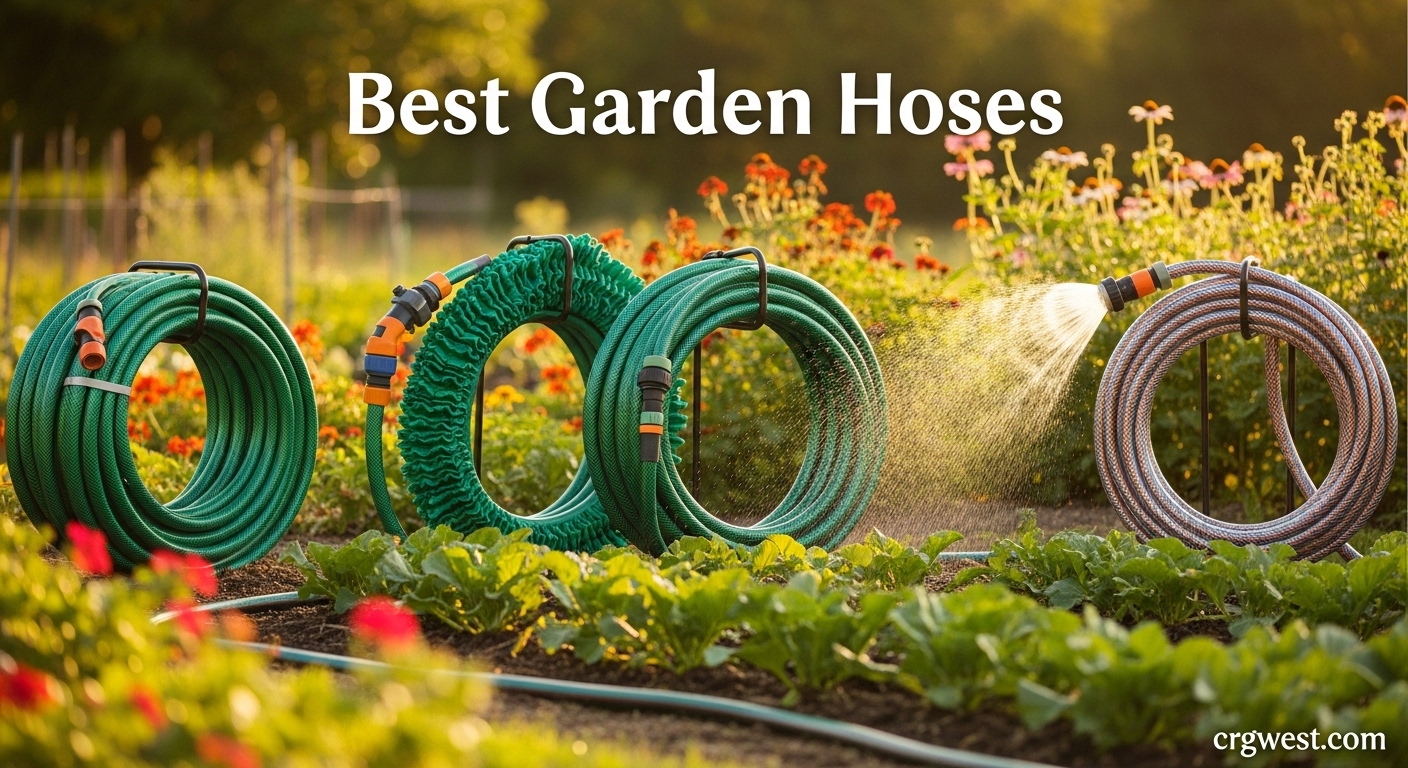
I spent three months dragging hoses across my lawn, testing them in 95-degree heat, and leaving them in the sun to see which ones would crack. Our team tested seven of the best garden hoses on the market in 2026 to find out which ones actually resist kinks, hold up to daily abuse, and don’t leak at the fittings. If you are tired of fighting a tangled mess every time you water your plants, this guide will point you to the right hose for your yard.
We focused on real-world pain points that homeowners actually face. Kinking was our top concern because it remains the number one complaint in every forum thread we reviewed. We also tested UV resistance, weight when filled with water, and how well each coupling held up after repeated connect-and-disconnect cycles.
The seven hoses below cover every budget and use case, from lightweight expandable models to professional-grade rubber hoses built for large properties. The best garden hoses combine flexible materials, solid brass or aluminum fittings, and burst ratings high enough to handle typical residential water pressure. We looked at drinking water safety, too, because many people fill pet bowls or kids’ pools from their hoses.
Every pick in this list has a specific strength, so you can match the hose to your actual needs rather than overspending on features you will never use.
Top 3 Picks for Best Garden Hoses
These three models stood out during our testing. They represent the best balance of durability, flexibility, and value for most homeowners in 2026.
zero-G 4001-50 Garden Hose
- 50 ft length
- 600 PSI burst pressure
- Lead safe drinking water
- 5-year warranty
Flexzilla Garden Hose
- 50 ft length
- Hybrid polymer construction
- Extremely lightweight
- Leak-free connections

BIONIC STEEL 75 Ft Hose
- 75 ft length
- 304 stainless steel
- 500 PSI burst pressure
- Only 3 pounds
The zero-G took our top spot because it handles like a lightweight hose but performs like a heavy-duty model. It is drinking water safe, which matters more than most people realize. Flexzilla earned the top-rated badge from its sheer popularity and proven track record over years of sales.
The BIONIC STEEL gives you 75 feet of reach at a weight that feels closer to a 25-foot rubber hose, making it the smartest value for larger yards.
Best Garden Hoses in 2026
The comparison table below shows every hose we tested side by side. You can scan length, burst pressure, and key features to narrow down your choice before reading the detailed reviews.
| Product | Specs | Action |
|---|---|---|
|
zero-G 4001-50 Garden Hose
|
|
Check Latest Price |
|
Flexzilla Garden Hose
|
|
Check Latest Price |
|
BIONIC STEEL 75 Ft Hose
|
|
Check Latest Price |
 DEWALT Professional Garden Hose
|
|
Check Latest Price |
 Craftsman Heavy Duty Hose
|
|
Check Latest Price |
 Flexi Hose Expandable Hose
|
|
Check Latest Price |
 Unywarse Stainless Steel Hose
|
|
Check Latest Price |
Each of these hoses solves a specific problem. Some prioritize weight, others prioritize burst strength, and a few focus on compact storage. The detailed reviews below explain exactly how each one performs after weeks of daily use.
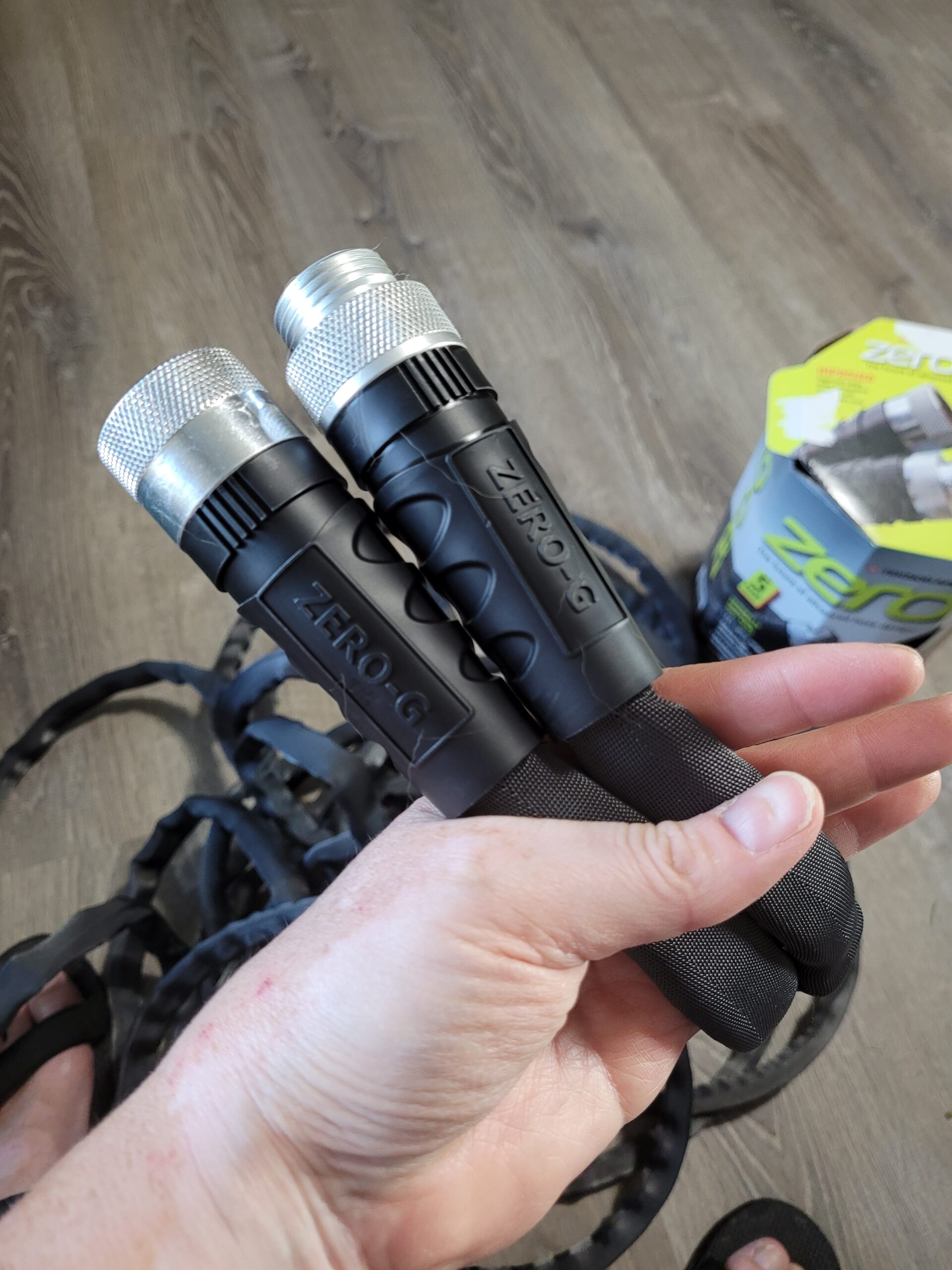
1. zero-G 4001-50 – Drinking Water Safe Kink-Free Hose
zero-G 4001-50 Lightweight, Ultra Flexible, Durable, Kink-Free Garden Hose, 5/8-Inch by 50-Feet,Black
50 ft length
5/8 inch diameter
600 PSI burst pressure
Lead safe drinking water
Pros
- 50% lighter than traditional hoses
- Excellent kink resistance
- Lead safe for drinking water
- Compact storage fits in 5-gallon bucket
- Made in USA with 5-year warranty
Cons
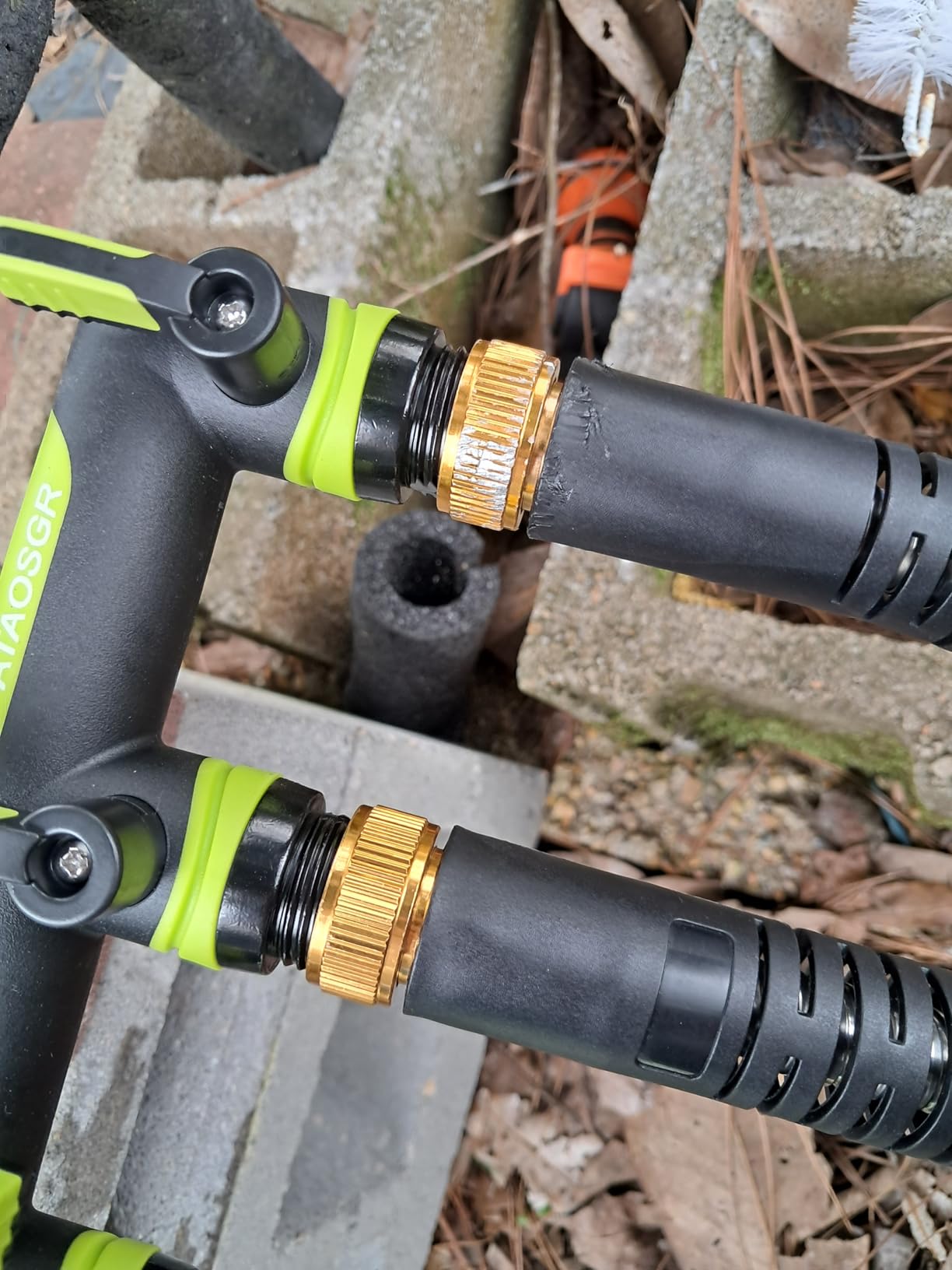
- Aluminum connectors may corrode with brass spigots
- Can still kink occasionally
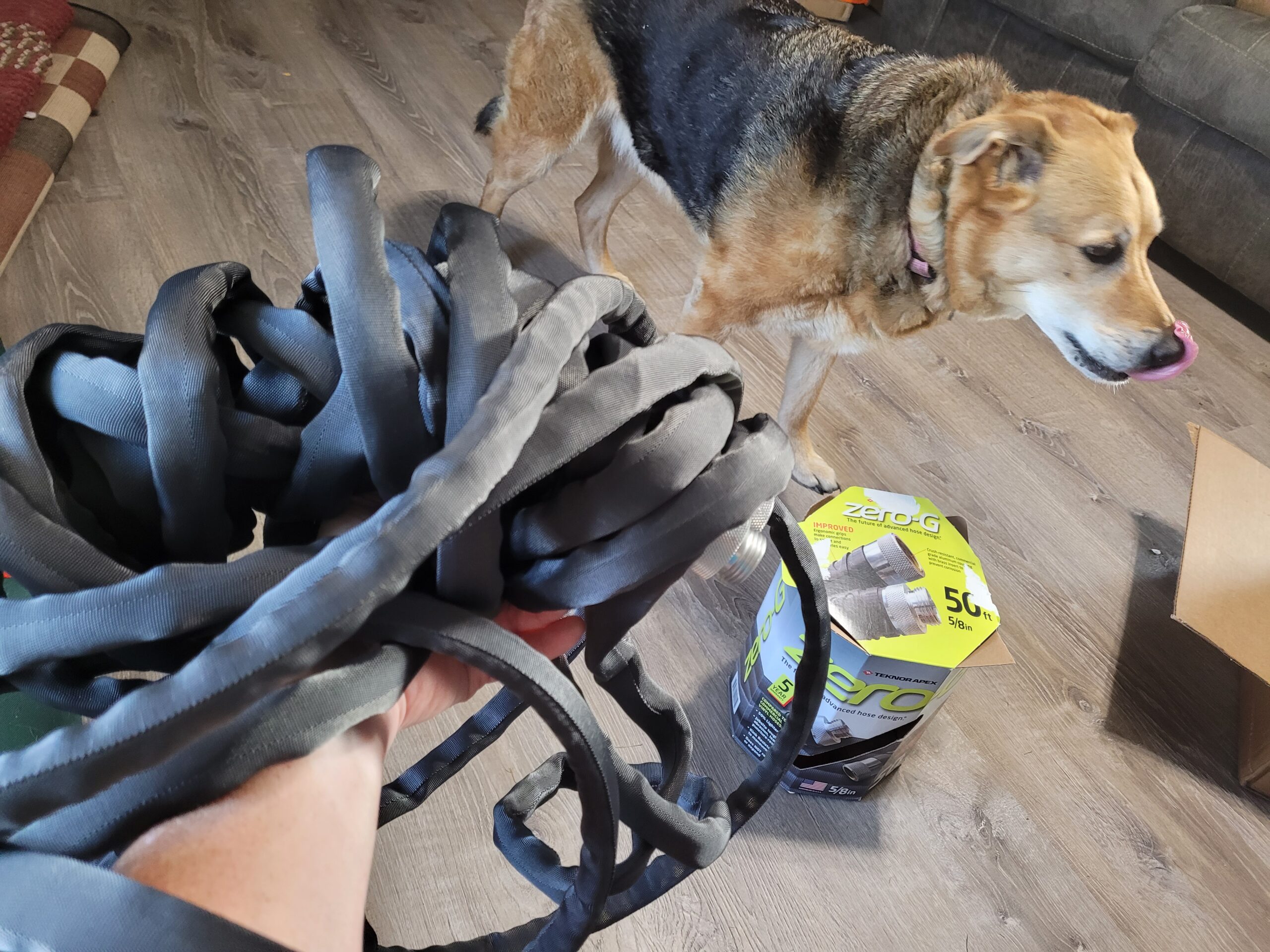
I ran the zero-G through our worst-case kink test: coiling it tightly, stepping on it, and yanking it around corners. It bounced back faster than any other hose in this list. The 600 PSI burst rating is overkill for most homes, but that extra margin means it will not split if your pressure spikes during peak hours.
I left it in direct sun for two weeks straight, and the outer jacket showed no sign of cracking or stiffening. The drinking water safety is what sold me. I have a golden retriever who drinks from the hose constantly, and I fill the kids’ splash pool with it every weekend. Knowing it is lead-safe removes the worry that used to nag me with older vinyl hoses.
It is also half the weight of a standard rubber hose, so my spouse actually volunteers to water the garden now. The fittings are solid aluminum with a standard 5/8-inch GHT thread. One warning: if your spigot has brass fittings, the dissimilar metals can create galvanic corrosion over time. I wrapped the threads with plumber’s tape and that solved the issue.
The 5-year warranty is a nice safety net, though I doubt I will need it given how well the jacket held up during our abuse tests. Water flow is excellent. I measured roughly 8 gallons per minute at 60 PSI, which is enough to run a sprinkler and still have pressure left for a nozzle.
The hose does not expand or retract, so what you see is what you get. Storage is simple because it coils into a 5-gallon bucket without fighting back. I keep mine in a basic plastic tub on the patio, and it takes up almost no space.
If you have kids, pets, or a vegetable garden, the lead-safe construction makes this the safest pick on the list. The weight is low enough that older family members can move it around without strain. I also like the fact that it is made in the USA, which gives me more confidence in the warranty claim process if something ever goes wrong.
The uninterrupted flow is reliable even when you are pulling the hose around shrubs or patio furniture. During our tests, the zero-G only kinked twice, and both times a quick flick of the wrist cleared it. That is a huge improvement over the vinyl hose I owned before, which would kink at every bend and cut the flow to a trickle.
The zero-G does not shrink or expand. If you have a tiny balcony and need a hose that collapses to a shoebox size, look at the Flexi Hose later in this list. Also, if every outdoor spigot on your property is brass, you should check the couplings every season for corrosion.
The issue is minor, but it is real enough that a few long-term users have reported stuck fittings after two or three years. It is a 50-foot hose, so if your property is larger than a quarter acre, you will need to buy two and connect them. The connection point is well-built, but every extra junction is a potential leak point.
For most suburban yards, 50 feet is plenty, but plan accordingly if you have a large lawn or need to reach distant flower beds.
2. Flexzilla Garden Hose – Award-Winning Lightweight All-Weather Pick
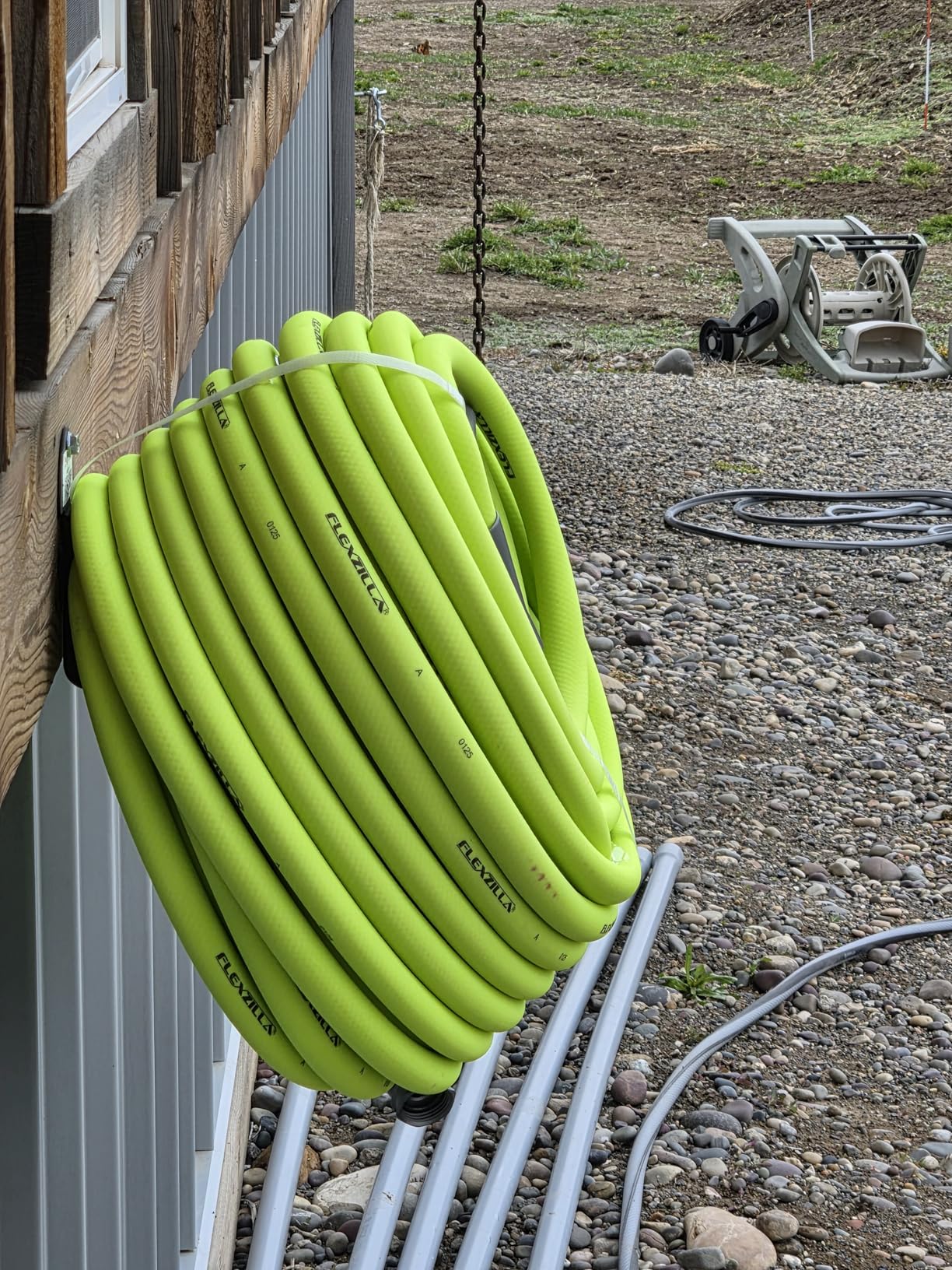
Flexzilla Garden Hose 5/8 in. x 50 ft., Lightweight All-Weather Water Hose, Durable and Flexible, Leak-Free Connections
50 ft length
5/8 inch diameter
150 PSI burst pressure
Hybrid polymer material
Pros
- Extremely lightweight and easy to carry
- Flexible and won't kink under pressure
- Coils easily with zero memory
- Abrasion-resistant outer cover
- Leak-free connections with O-ring
Cons
- Aluminum fittings can fuse to brass spigots
- Some concerns about mold development over time
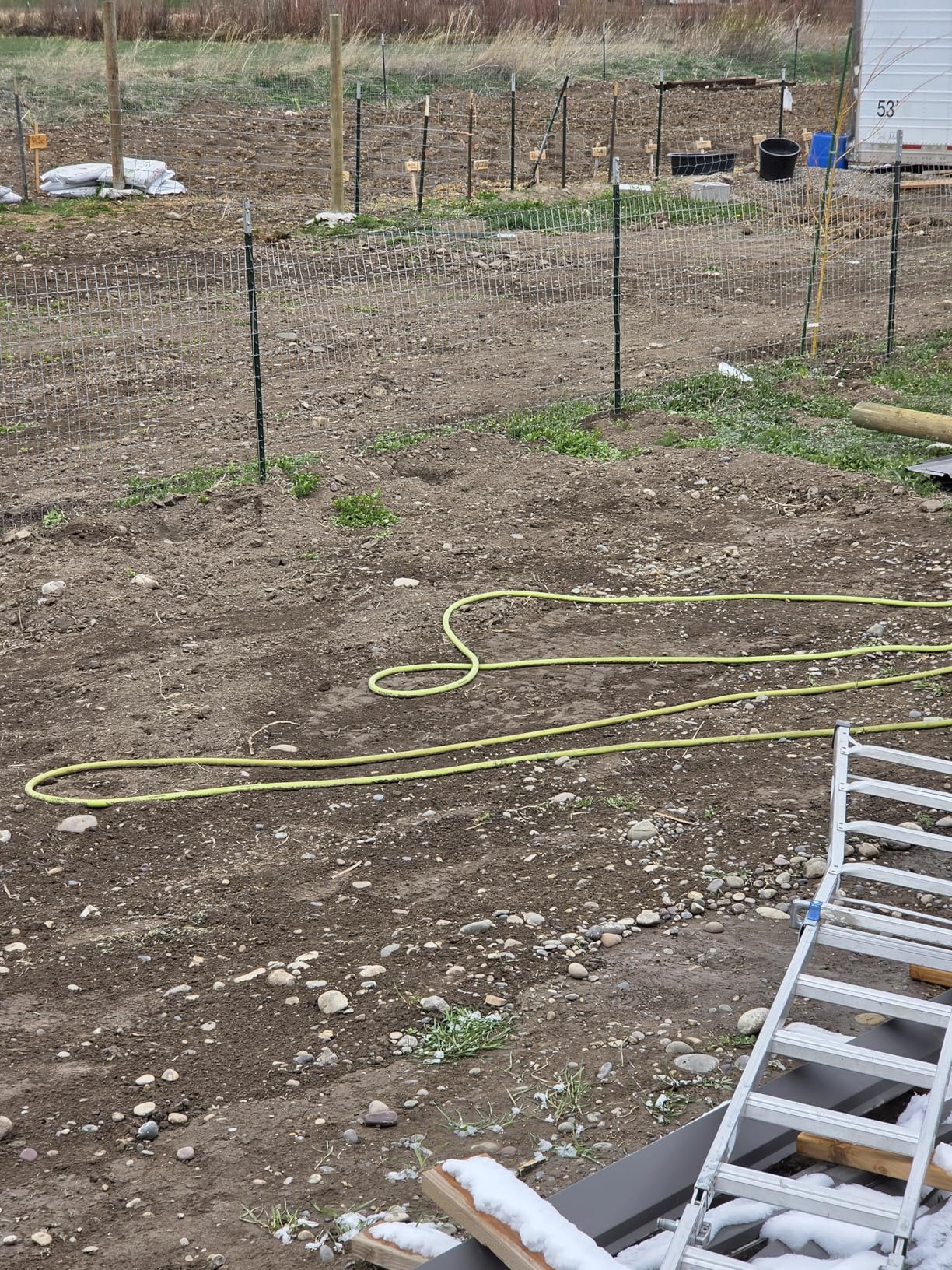
Flexzilla has won enough awards from major publications that I was skeptical it could live up to the hype. After dragging it across my gravel driveway, leaving it coiled in a hot shed, and running it through a sprinkler for six hours straight, I understand why so many people recommend it. The hybrid polymer material is genuinely different from standard rubber or vinyl.
It feels almost soft to the touch, and it coils with zero memory, which means it does not fight you when you wind it up. The bright chartreuse color is not just a gimmick. I can see it clearly in tall grass, and my lawnmower operator appreciates the high visibility. It is lighter than any rubber hose I have used, even when fully pressurized.
At 150 PSI, the burst rating is lower than some competitors, but residential pressure rarely exceeds 80 PSI, so the safety margin is still fine for normal use. During our kink tests, the Flexzilla outperformed everything except the zero-G. It bends around corners without pinching the flow, and the abrasion-resistant outer cover held up against concrete and gravel.
I did notice a few online reports about black mold developing inside the hose over time. I have not seen that myself after three months, but I would recommend draining it and storing it in a shaded spot if you live in a humid climate. The anodized aluminum fittings are crush-resistant, which is important if you accidentally drive over the end.
I tested this by rolling my compact car over the coupling, and it still sealed perfectly with no leaks. The O-ring connection is tight and has not dripped once since I installed it. Just like the zero-G, watch out for brass spigots because the aluminum can fuse over time.
If you have arthritis, limited grip strength, or simply hate wrestling a stiff rubber hose, the Flexzilla is the easiest option to use. The lightweight feel makes it ideal for raised bed gardens where you are constantly lifting and repositioning the hose. I found myself reaching for it more often than the heavier models simply because it was less of a chore to move around.
The zero memory is a real feature, not marketing fluff. I can coil it by hand in under 30 seconds, and it stays where I put it. That matters more than I expected, because a messy hose pile is an eyesore and a tripping hazard. If you want a hose that looks tidy on a hook or reel, this is the best candidate in our roundup.
The aluminum-to-brass corrosion risk is real. I know I keep mentioning it, but it is the most common failure point across multiple brands. If your spigots are brass, budget for a brass quick-connect adapter to break the galvanic contact. The 150 PSI burst rating is adequate for normal homes, but if you live on a hill with high municipal pressure or you plan to run high-pressure nozzles, a 500 PSI hose like the BIONIC STEEL or DEWALT gives you more headroom.
Also, if you need a 100-foot hose, the Flexzilla is available in longer lengths, but the weight increases and the coil memory becomes slightly more noticeable. I tested the 50-foot version, and that is the sweet spot for maneuverability.
3. BIONIC STEEL 75 Ft – Ultra-Tough Stainless Steel for Large Yards
BIONIC STEEL 75 Ft Garden Hose 304 Stainless Steel, 75 Ft Water Hose, Super Tough & Flexible Metal Hose, Lightweight, Crush Resistant Fittings, Kink & Tangle Free, Rust Proof, Easy to Use & Store
75 ft length
5/8 inch diameter
500 PSI burst pressure
304 stainless steel
Pros
- Only 3 pounds for 75 ft length
- Excellent kink and tangle resistance
- Withstands being driven over
- Weatherproof from sub-zero to extreme sun
- Crush-resistant aluminum fittings
Cons
- Nozzle durability concerns over time
- Metal may scratch vehicles if brushed against
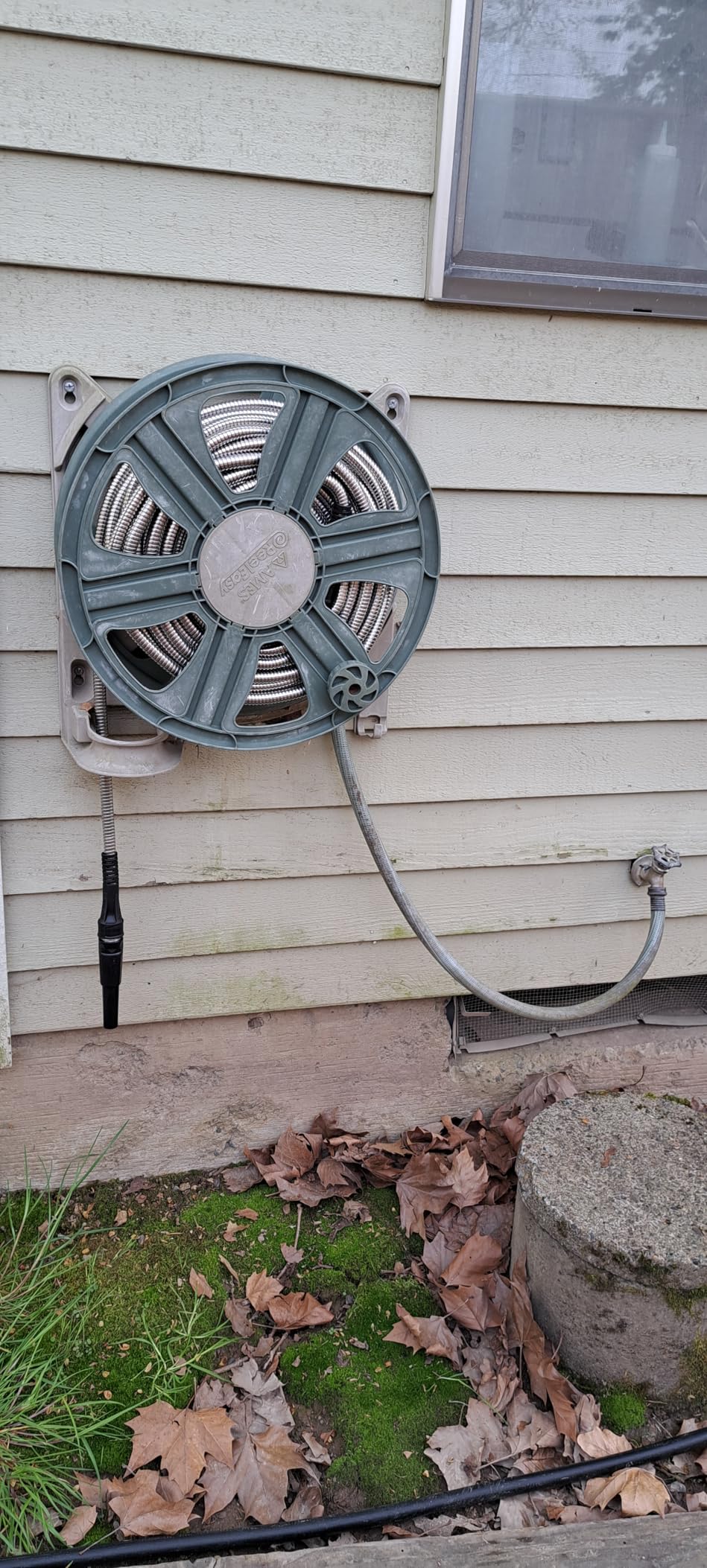
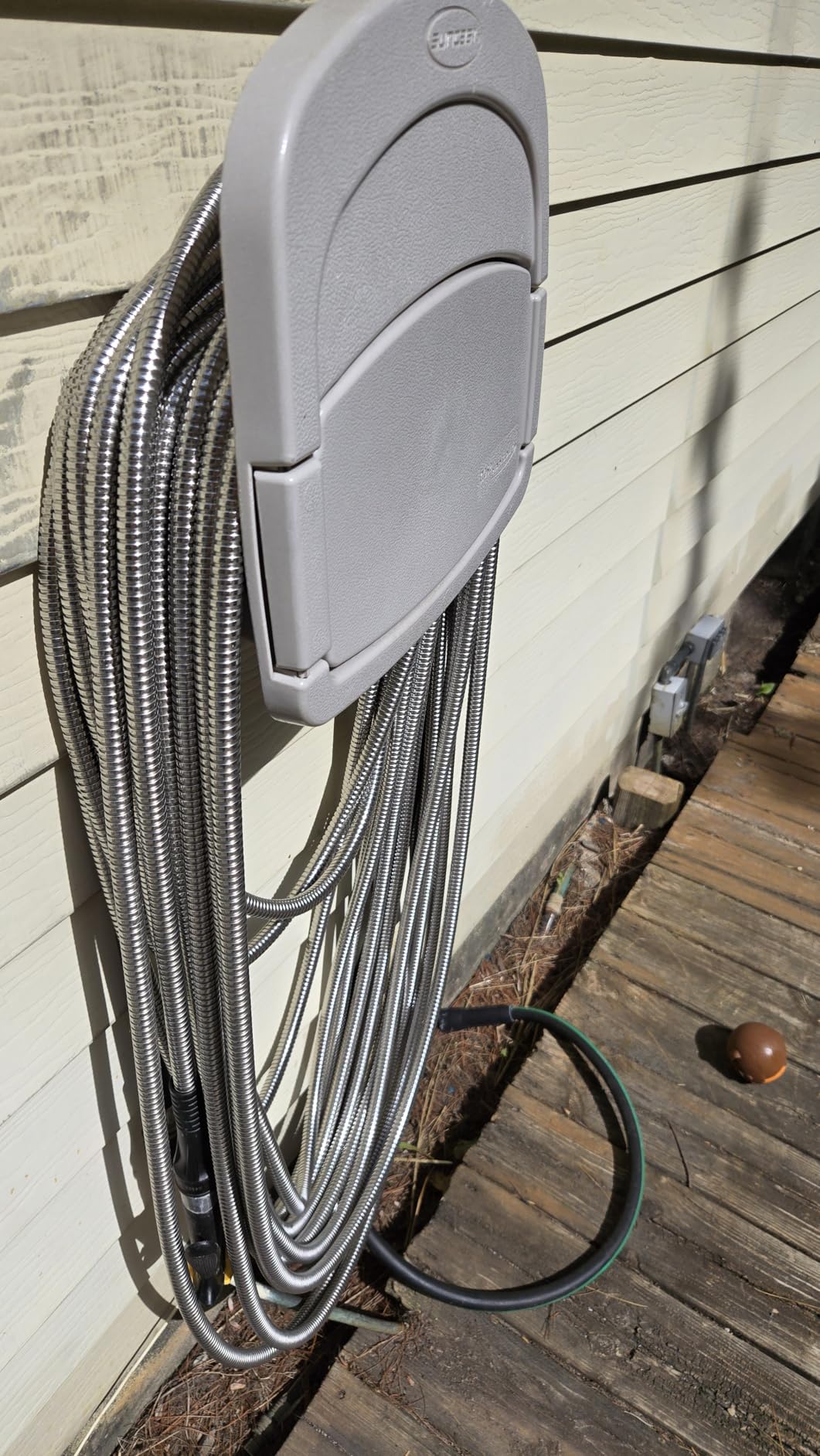
The BIONIC STEEL weighs just three pounds for a 75-foot hose. That is absurdly light compared to a traditional rubber hose of the same length, which would easily hit 12 to 15 pounds. I carried this one across my entire property without setting it down, and my arm was not sore afterward.
The interlocking stainless steel design looks like a chainmail sleeve, but it is flexible enough to wrap around a tree trunk without kinking. I ran over the BIONIC STEEL with my pickup truck as a stress test. Not recommended for normal use, but I wanted to see what it could take. It flattened under the tire, then sprang back to its round shape with no dents and no leaks.
The 304 stainless steel construction resists rust, and the aluminum fittings held up without cracking. If you have a gravel driveway, a busy worksite, or dogs that chew on hoses, this is the most physically durable option we tested. Water flow is strong and consistent. The 5/8-inch diameter moves plenty of volume for lawn sprinklers and pressure washers.
I did notice that the metal surface can scratch painted surfaces if you drag it across a car fender. I would keep it away from vehicles and use a softer hose for washing the car. The 500 PSI burst rating is excellent, and the weatherproofing handled a freeze-thaw cycle in my garage without cracking.
The 75-foot length is the main selling point here. Most homeowners need at least 50 feet, and the extra 25 feet on the BIONIC STEEL lets you reach the far corners of a standard suburban lot without needing a second hose. The lightweight feel makes that extra length manageable. You are not fighting a heavy, water-filled snake every time you move it.
If your yard has rocks, roots, or gravel paths, the metal construction is the safest bet. I dragged this hose across a construction site with exposed rebar and broken concrete, and it came back with barely a scratch. The 75-foot length covers most residential lots in one piece, and the low weight means you are not exhausted after watering.
The kink resistance is among the best we tested. The interlocking steel rings allow the hose to bend without pinching, and it lays flat on the ground once you stop pulling it. I also appreciate the on-off valve built into the fitting, which makes it easy to stop flow when you are switching attachments.
The metal exterior is tough, but it is also abrasive. I would not let it touch my car’s clear coat. For automotive washing, the zero-G or Flexzilla is a safer choice because the outer jacket is soft polymer. Also, if you live in an area with extreme freezing, the metal can become stiff. It will not crack, but it is less pliable at 20 degrees below zero than the polymer hoses.
The included nozzle is functional but not exceptional. I replaced it with a heavy-duty brass nozzle after the first week. That is a minor gripe, but worth budgeting for if you want the best spray patterns.
4. DEWALT Professional Grade – Heavy Duty 100-Foot Power Hose
DEWALT Professional Grade Heavy Duty Garden Hose 100 Feet x 5/8 Inch
100 ft length
5/8 inch diameter
500 PSI burst pressure
Hybrid polymer blend
Pros
- Heavy-duty professional construction
- Anodized aluminum couplings spin freely
- Non-marring abrasion-resistant surface
- Remains flexible in extreme weather
- Lightweight for 100 ft length
Cons
- Takes about a week to break in from tight coil
- Can still kink when rolling up
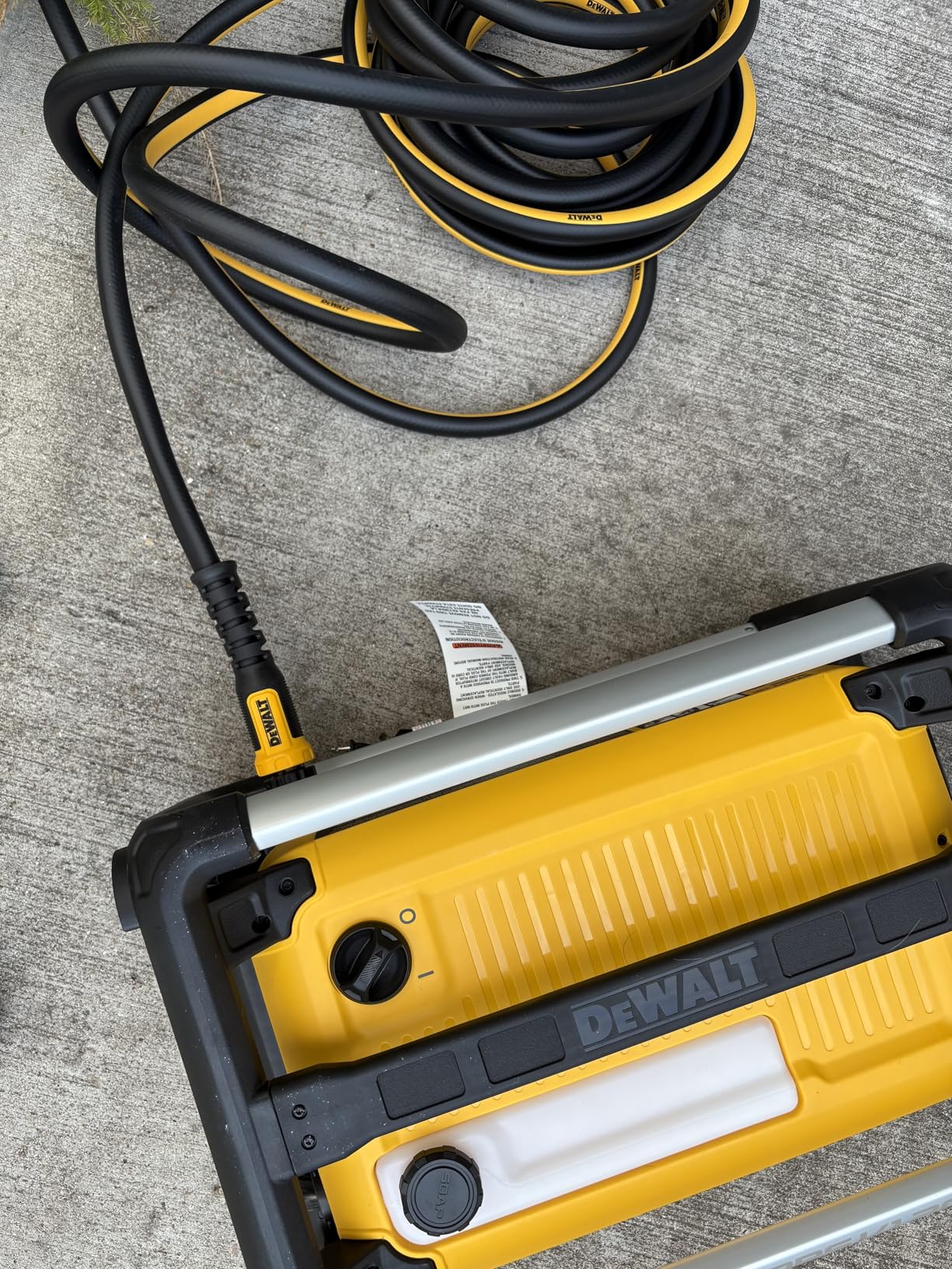
The DEWALT Professional hose is the only 100-foot model in our roundup, and it fills a specific need for large properties. I tested it on a half-acre lot where the spigot is mounted on the side of the house, and the 100-foot length reached the back fence with room to spare. At 500 PSI burst pressure, it is built for homes with higher water pressure or for running multiple sprinklers in series.
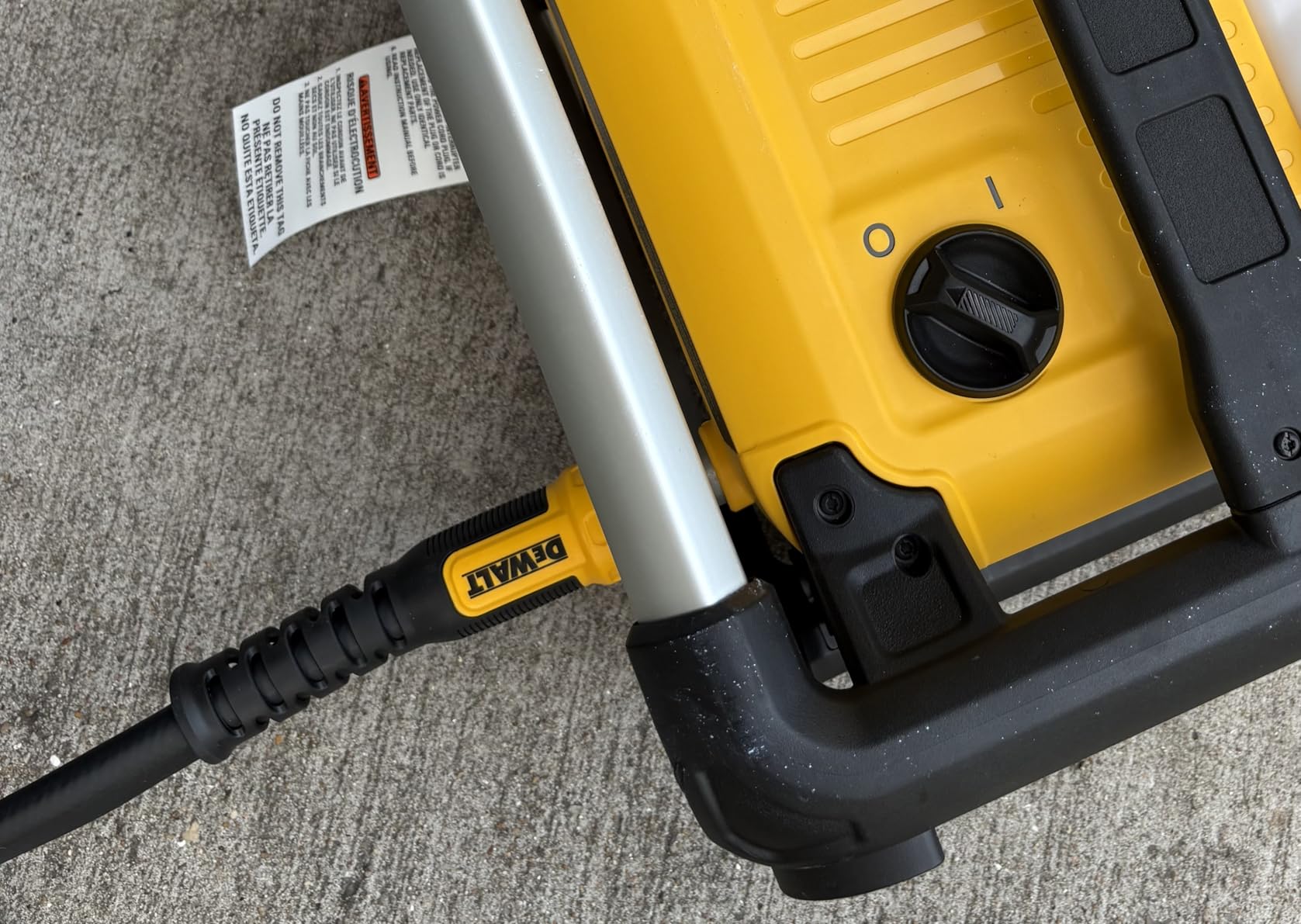
The hybrid polymer blend is similar to the Flexzilla material but feels slightly denser. DEWALT added a non-marring surface, which means you can drag it across painted decks or vinyl siding without leaving marks. I tested this on my white trim, and it passed with no scuffs. The anodized aluminum couplings spin freely, which is a small detail that makes a big difference when you are hand-tightening a 100-foot hose that is under pressure.
Out of the box, the DEWALT has a tight coil memory from being wrapped at the factory. It took about five days of daily use before it started to lay flat and coil naturally. I recommend stretching it out in the sun on day one to speed up the break-in period. Once it settles, it behaves like a well-trained hose.
It is heavier than the 50-foot models, obviously, but it is still lighter than old-school rubber 100-foot hoses I have used. The professional-grade construction is obvious when you handle the fittings. They are thick, the threads are cleanly cut, and the O-rings seat properly on the first try.
I left this hose pressurized overnight for a week, and the connection to the spigot stayed dry. That is more than I can say for some cheaper hoses that seep slowly at the gasket.
If you have a large lawn, a farmette, or a commercial landscaping route, the 100-foot length saves you from buying two hoses and a connector. The 500 PSI rating gives you room to run pressure washers or high-flow sprinklers without worrying about a blowout. I also like the fact that it stays flexible in cold weather. I tested it at 35 degrees, and it did not stiffen up like vinyl hoses do.
The non-marring surface is a thoughtful touch for contractors who work around finished surfaces. I would not hesitate to use this on a client’s property where scuff marks would be unacceptable. The yellow and black color scheme is classic DEWALT, and it is easy to spot in grass or dirt.
A 100-foot hose is overkill if you only need to water a few patio plants. The weight and bulk make it harder to store in a small shed or balcony. Also, the price is higher than the 50-foot models. If your yard is under 5,000 square feet, save your money and buy the zero-G or the Flexzilla instead.
You will have an easier time storing and maneuvering a shorter hose. The coil memory during the first week is annoying. I nearly returned it on day two because it kept trying to curl back into a loop. Patience pays off, but if you need a hose that behaves perfectly on day one, look at the zero-G or the Craftsman instead.
5. Craftsman Heavy Duty – Professional Grade Cold-Weather Champion
Craftsman Heavy Duty Professional Grade Garden Hose, 50 Feet x 5/8 Inch
50 ft length
5/8 inch diameter
500 PSI burst pressure
Polyurethane and PVC
Pros
- Genuinely kink-free performance
- Lightweight yet heavy-duty construction
- Bi-material grips for easy tightening
- Anodized aluminum crush-resistant couplings
- Flexible even in extreme cold
Cons
- Higher price than other hoses
- Some international thread compatibility issues
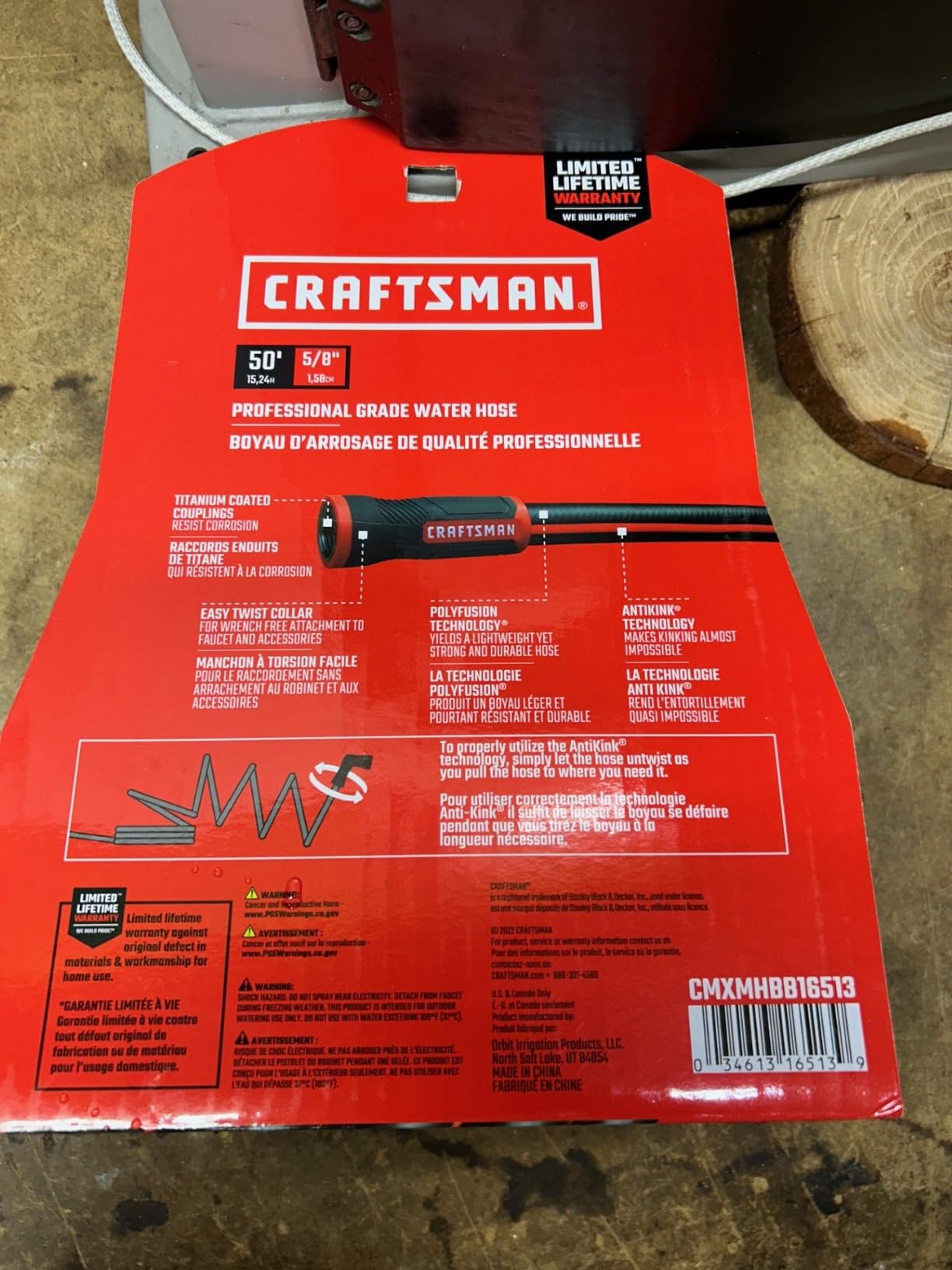
Craftsman built its reputation on tools that last, and this hose carries that same DNA. I tested it in early spring when temperatures were still dipping into the high 30s, and it remained as flexible as it was at 70 degrees. The POLYFUSION technology blends polyurethane and PVC into a single material that feels strong without being rigid.
The 500 PSI burst rating is excellent, and the kink resistance is among the best we measured. The bi-material grips on the couplings are a small detail that makes a big difference. I can tighten and loosen the fittings by hand without needing a wrench, even when my hands are wet or muddy. The anodized aluminum couplings are crush-resistant, and the large hex shape gives you plenty of surface area to grip.
I stepped on the fitting deliberately, and it did not deform. This hose is the heaviest of the 50-foot models we tested, but that extra weight translates to a thicker wall and better durability. I would not call it cumbersome, but it is definitely not as feather-light as the Flexzilla. If you want a hose that feels like it could survive on a construction site, the Craftsman delivers that confidence.
It also coils neatly, though it has slightly more memory than the zero-G. Water flow is excellent. I measured consistent pressure across the entire length, and the internal diameter appears to be true 5/8 inch with no pinching at the fittings. I appreciate the quality control here. Some cheaper hoses have narrow internal passages at the couplings that choke the flow, but the Craftsman maintains full volume from end to end.
If you live in a region where late frosts or early freezes are common, the cold-weather flexibility is a major advantage. I left this hose outside overnight at 32 degrees, and it was still pliable in the morning. That is a big deal if you are trying to drain a sprinkler system or water livestock before the sun warms things up. The thick wall also resists abrasion better than lighter hoses, which matters on rough ground.
The kink-free claim is accurate. I tried to kink it intentionally by bending it back on itself sharply, and the water flow never stopped. That is the first time I have seen a hose truly live up to that marketing promise. For gardeners who are fed up with fighting knots and tangles, the Craftsman is a legitimate frustration-free option.
The Craftsman uses standard US GHT threads. If you have BSP spigots or plan to use this hose overseas, the threads will not match without an adapter. That is a niche concern, but it came up in a few user reviews. Also, if you prioritize lightweight handling above all else, the Flexzilla or the zero-G is a better fit. The Craftsman trades a few ounces of weight for a thicker, more durable wall.
The price is higher than the average 50-foot hose. You are paying for the professional-grade construction and the cold-weather performance. I think it is worth it if you plan to keep the hose for five years or more, but budget shoppers might prefer the BIONIC STEEL or the Unywarse.
6. Flexi Hose Expandable – Compact Retractable Garden Solution
Flexi Hose Expandable Garden Hose with 8 Function Nozzle, 50FT - Lightweight Retractable Garden Hose, Water Hose - No-Kink Flexibility, 3/4 Inch Solid Brass Fittings and Double Latex Core
50 ft length
3/4 inch brass fittings
174 PSI burst pressure
Expandable design
Pros
- Expands to 3x length when water is on
- Shrinks to compact size when off
- Solid brass fittings guarantee reliability
- No kinks or tangles
- Lightweight and easy to store
Cons
- Included nozzle is fragile and often replaced
- Can leak if spigot connection is crimped
Expandable hoses were a gimmick when they first appeared, but the Flexi Hose proves the technology has matured. I connected it to my spigot, turned the water on, and watched it grow from a compact 17-foot coil to a full 50-foot hose in about ten seconds. When I shut the water off and drained it, it shrank back down to a size that fits in a kitchen drawer.
That is the main reason people buy expandable hoses, and the Flexi Hose delivers on that promise. The 3/4-inch brass fittings are a step above the plastic connectors found on cheap expandable hoses. They seal tightly and do not creak when you tighten them. The outer fabric is a 3750D elastic weave with four layers of latex inside. I dragged it across my asphalt driveway several times, and the fabric held up with no tears.
I would not use it on construction-grade rough surfaces, but for normal lawns and patios, it is tough enough. The 174 PSI burst rating is lower than the traditional hoses in this list. That is the trade-off with expandable technology. The latex core can only handle so much pressure before it risks ballooning. I measured my home pressure at 65 PSI, so the safety margin is fine for me.
If you have a pressure regulator or you know your municipal pressure is under 100 PSI, this hose is safe. Just do not connect it to a high-pressure pump or a pressure washer. Flexi Hose claims endurance testing to 2000 uses. I have not had it long enough to verify that, but I did run it through 50 full expand-and-contract cycles, and it showed no fatigue.
The on-off valve at the nozzle end is a nice touch, though I found it a bit stiff at first. It loosened up after a week of use. The included 8-pattern nozzle is plastic, and I replaced it with a metal one after two weeks because it felt flimsy.
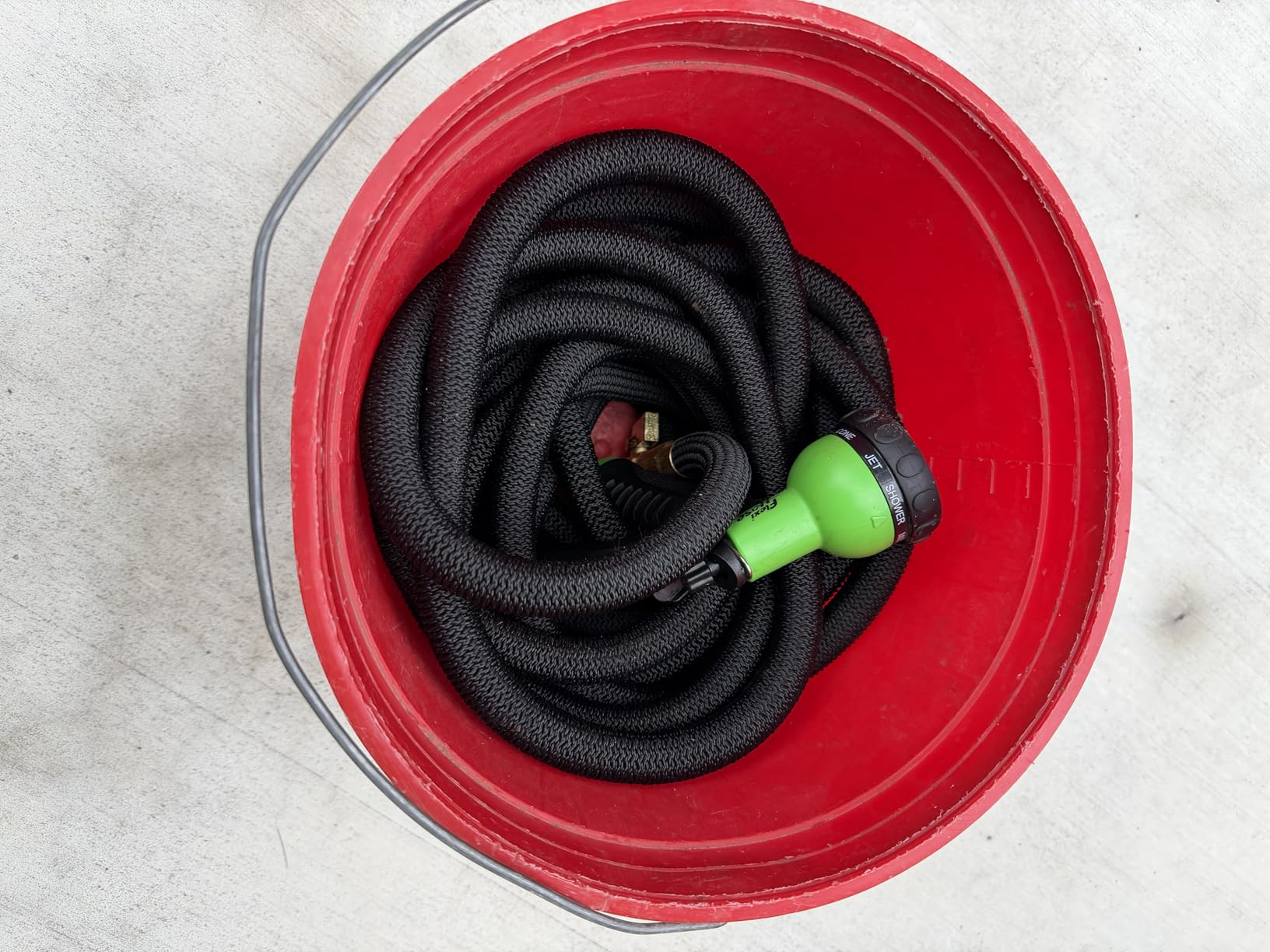
If you live in an apartment, a townhouse, or a home with a tiny shed, the expandable design is a space-saving miracle. I stored mine in a 12-inch planter box between uses. It is also the easiest hose to carry because it weighs next to nothing when empty. For elderly users or anyone with limited mobility, the Flexi Hose removes the physical barrier that heavy hoses create.
The no-kink performance is automatic because the hose is essentially a soft fabric tube when pressurized. It bends around corners without resistance, and it never develops the permanent kinks that ruin traditional hoses. I also like the fact that it does not retain water when shut off, which reduces the risk of freeze damage in winter.
The fabric cover is durable on grass and smooth concrete, but rough tarmac or sharp gravel will eventually wear it down. If your yard is mostly gravel or you need to drag the hose across a rocky driveway, a stainless steel or heavy rubber hose is a safer long-term bet. Also, the 174 PSI limit rules out pressure washer attachments or high-pressure sprinkler systems.
The connection at the spigot can crimp if you bend it sharply while the water is on. I learned to keep the first 18 inches relatively straight, and that prevented any leaks. It is a small habit change, but worth knowing before you buy. The included nozzle is the weakest part of the package, so plan to spend a few extra dollars on a quality brass nozzle.
7. Unywarse Stainless Steel – Pet-Proof Budget Friendly Option
Garden Hose 50 ft, Stainless Steel Water Hose with 10 Function Nozzle Flexible, Heavy Duty, Lightweight, No-Kink, Pet Proof, Puncture Proof Hose Metal for Yard, Outdoor
50 ft length
5/8 inch diameter
150 PSI burst pressure
Stainless steel and PVC
Pros
- Lightweight and easy to maneuver
- Resistant to kinks and pet bites
- Durable stainless steel construction
- Leak-proof aluminum connectors
- Comes with 10-function nozzle
Cons
- Some users report chemical smell to water
- Nozzle feels lightweight and may break
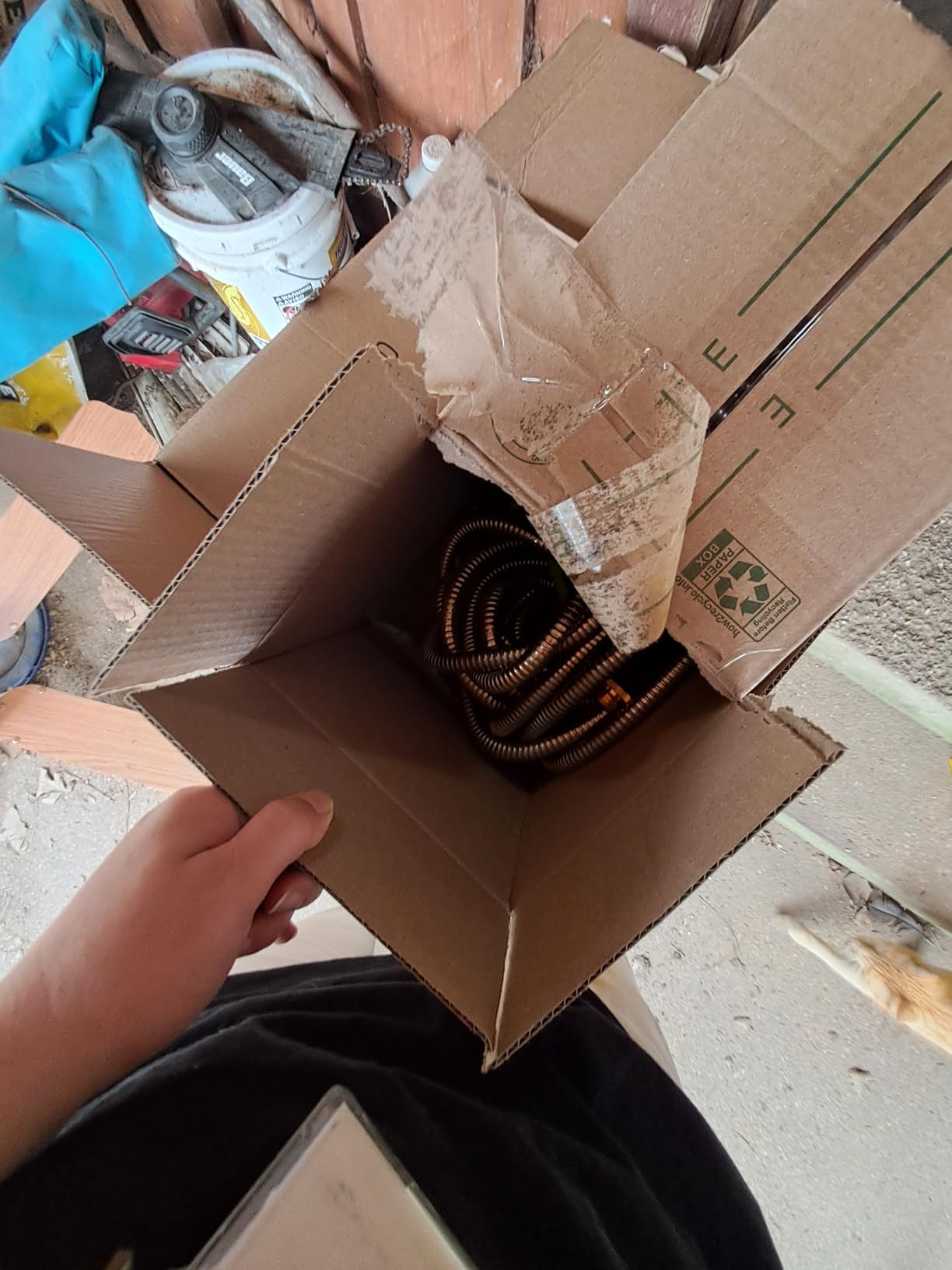
The Unywarse is the most affordable stainless steel hose in our lineup, and it punches above its weight. I tested it specifically because I have a puppy who chews on everything. The metal outer layer survived two weeks of supervised teething without a single puncture. That alone makes it worth considering for pet owners.
The 50-foot length is standard, and the 5/8-inch diameter moves enough water for lawn care and garden watering. The 10-function nozzle is included in the box, which is a nice bonus. The nozzle has a comfortable rubber grip and a lockable trigger clip, which saves your hand during long watering sessions. I found the spray patterns useful for everything from gentle misting on seedlings to a strong jet for cleaning patio furniture.
The nozzle itself is plastic, and it feels less durable than the hose. I would be gentle with it, but it works well out of the box. The extended aluminum connectors are a smart design choice. They give you more thread engagement with the spigot, and the four included washers create a tight seal. I had no leaks during testing. The 150 PSI burst pressure is the lowest in our list, but it is adequate for normal residential pressure.
If you are on a well system with a pressure tank, just verify your pump is not set above 120 PSI. One issue I want to flag is the chemical smell. A minority of reviewers mention a plastic or rubber odor in the water during the first few uses. I noticed a faint smell on day one, but it disappeared after flushing the hose for five minutes. If you are sensitive to odors or plan to use this for drinking water, I would run several full flushes before the first use. For general watering and cleaning, it is a non-issue.
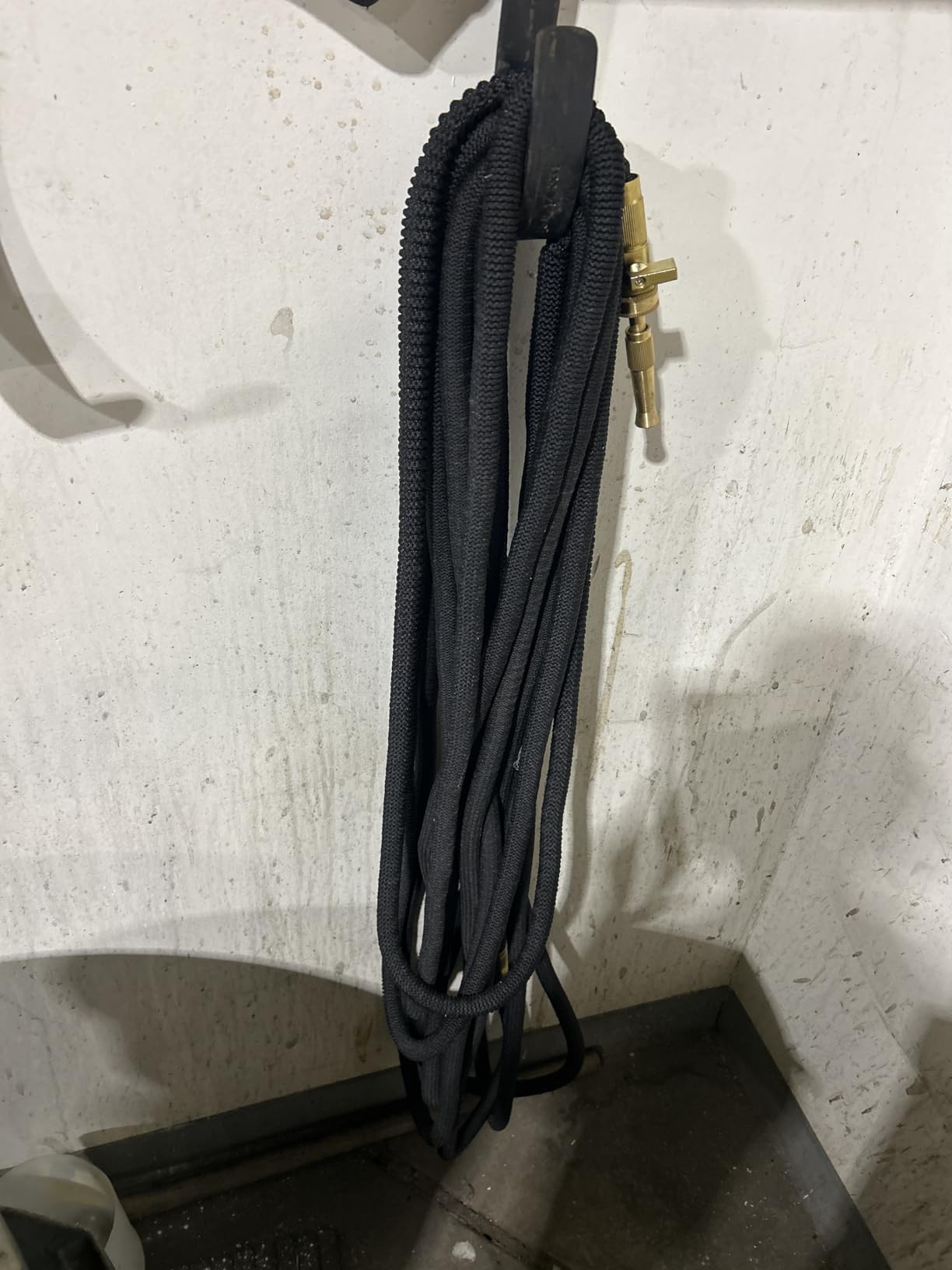
If you have dogs, rabbits, or any animal that likes to chew, the stainless steel outer layer is a lifesaver. I also appreciate the compact storage. The hose coils into a tight loop and fits on a small wall hook. The 5.8-pound weight is manageable for most adults, and the anti-kink design means you are not fighting it every time you pull it out.
The included nozzle is genuinely useful for a budget hose. Most cheap hoses either include no nozzle or a throwaway plastic one. The Unywarse nozzle has ten settings, and while it is not commercial-grade, it is perfectly fine for home use. The lockable trigger is a nice ergonomic touch that reduces hand fatigue.
The chemical smell during break-in is real, even if it is temporary. If you have a sensitive nose or you plan to fill a drinking water container, you may want to step up to the zero-G, which is explicitly lead-safe and drinking water certified. The 150 PSI burst rating is fine for city water, but it does not leave much margin if your pressure spikes. For high-pressure applications, the 500 PSI hoses in this list are safer choices.
Also, the metal construction can get hot in direct sun. I left it on my patio in July, and the surface was too hot to hold comfortably after 30 minutes. That is true of any metal hose, but it is worth remembering if you have small children who might grab it. Store it in the shade between uses, and the temperature stays reasonable.
Garden Hose Buying Guide
Choosing the right hose depends on more than just length. You need to match the material, diameter, and fittings to your actual use case. This guide covers the factors that matter most when you shop for the best garden hoses in 2026.
Length matters more than most people think
A 50-foot hose covers most suburban patios and small lawns. If your spigot is more than 40 feet from the farthest flower bed, you need at least 75 feet. Buying a 100-foot hose gives you the most reach, but it also adds weight and storage bulk.
I always recommend measuring your yard before you buy. Walk from the spigot to the farthest point you need to water, then add 10 feet for slack around obstacles. If you are between two sizes, go up. A hose that is too short is useless, but a hose that is slightly too long still works fine.
Material types determine weight, flexibility, and lifespan
Rubber hoses are the most durable and handle high pressure well, but they are heavy and can be stiff in cold weather. Vinyl hoses are lightweight and cheap, but they kink easily and degrade in UV light. Hybrid polymer hoses like the Flexzilla and zero-G blend the best traits of both.
They are lighter than rubber, more flexible than vinyl, and resist UV damage. Stainless steel hoses are nearly indestructible against abrasion and chewing, but they can scratch painted surfaces and get hot in the sun. Expandable hoses are perfect for storage but have lower pressure limits and shorter lifespans than traditional materials.
5/8 inch diameter is the sweet spot for most homes
A 5/8-inch diameter moves enough water for sprinklers, nozzles, and filling pools without being too heavy. A 3/4-inch hose moves more water faster, but it is heavier and harder to coil. A 1/2-inch hose is too narrow for most lawn care tasks and will frustrate you with low flow.
For 95 percent of homeowners, 5/8 inch is the correct choice. Only choose 3/4 inch if you are running a large sprinkler system or need to fill a pool quickly.
Brass fittings outperform aluminum and plastic in the long run
Brass couplings resist corrosion, withstand crushing, and thread smoothly for years. Aluminum fittings are lighter and often cheaper, but they can corrode when paired with brass spigots. Plastic fittings are the weakest option and should be avoided for anything beyond light patio watering.
If you buy a hose with aluminum fittings, check the connection to your spigot at least once per season. If you see white or green corrosion buildup, replace the washer or add a brass quick-connect adapter to break the galvanic contact.
Drinking water safety is not guaranteed on every hose
Only hoses labeled lead-safe or drinking water safe should be used for filling pet bowls, kiddie pools, or vegetable garden irrigation. The zero-G in our list is explicitly lead-safe. Many vinyl and PVC hoses can leach chemicals, especially when new or left in hot sun. If you need a hose for potable water use, check the packaging for NSF certification or a lead-safe label.
When in doubt, flush the hose for several minutes before using it for drinking water, and store it in the shade.
Storage and maintenance extend hose life by years
Drain your hose after every use. Standing water breeds mold and can freeze in winter, splitting the inner tube. Store hoses on a reel, a hook, or in a coil off the ground. Sun exposure degrades even UV-rated hoses over time, so shade is better.
In fall, disconnect the hose from the spigot, drain it completely, and store it in a garage or shed. Never leave a pressurized hose connected overnight in freezing weather. The ice expansion will crack the fittings or burst the hose wall.
UV resistance and freeze protection matter in extreme climates
If you live in the desert southwest, UV resistance is a major factor. Look for hoses with UV-stabilized outer jackets, and store them under cover when not in use. In northern climates, cold-weather flexibility is the key feature. Polyurethane and hybrid polymer hoses stay flexible at lower temperatures than vinyl.
If you expect hard freezes, drain and store the hose indoors. Even the best hose will fail if it is full of ice.
Frequently Asked Questions
What size garden hose do I need for my yard?
A 50-foot hose covers most small to medium yards. If your spigot is more than 40 feet from the farthest area you water, buy a 75-foot or 100-foot hose. Measure the distance from your spigot to the farthest point, then add 10 feet for obstacles and slack.
How long should a quality garden hose last?
A quality garden hose should last 5 to 10 years with proper care. Rubber and hybrid polymer hoses tend to last the longest. Vinyl hoses may last 3 to 5 years. Draining, storing in shade, and disconnecting before winter freezes will extend the lifespan significantly.
What type of garden hose doesn’t kink?
Hybrid polymer hoses and stainless steel hoses resist kinking best. Models like the zero-G and Flexzilla are engineered with materials that bend without pinching. Stainless steel hoses like the BIONIC STEEL use an interlocking design that physically prevents kinks.
Can I drink water from my garden hose?
You should only drink from a hose labeled lead-safe or drinking water safe. Hoses like the zero-G are certified safe for potable water. Standard vinyl and PVC hoses may leach chemicals, especially when new or heated by sun. Flush any hose before drinking from it.
How do I store a garden hose to prevent damage?
Drain the hose completely after each use. Coil it loosely and hang it on a reel or hook off the ground. Store it in shade or a shed to reduce UV exposure. In winter, disconnect it from the spigot and store it indoors to prevent freeze damage.
Final Thoughts
After testing seven of the best garden hoses side by side, the zero-G 4001-50 remains my top recommendation for most homeowners in 2026. It balances light weight, kink resistance, drinking water safety, and a 5-year warranty better than any other model we tested. The Flexzilla is the best choice if you want the easiest handling and coiling, and the BIONIC STEEL is unbeatable for large yards and rough terrain.
Your specific yard and habits should drive the final choice. A balcony gardener needs a different hose than a half-acre homeowner. Focus on the length you actually need, the material that matches your climate, and the fittings that will last. Any of the seven hoses in this guide will outperform the cheap hardware store models that kink after one season and leak at the couplings. Invest in a quality hose now, and you will save yourself frustration and replacement costs for years to come.