
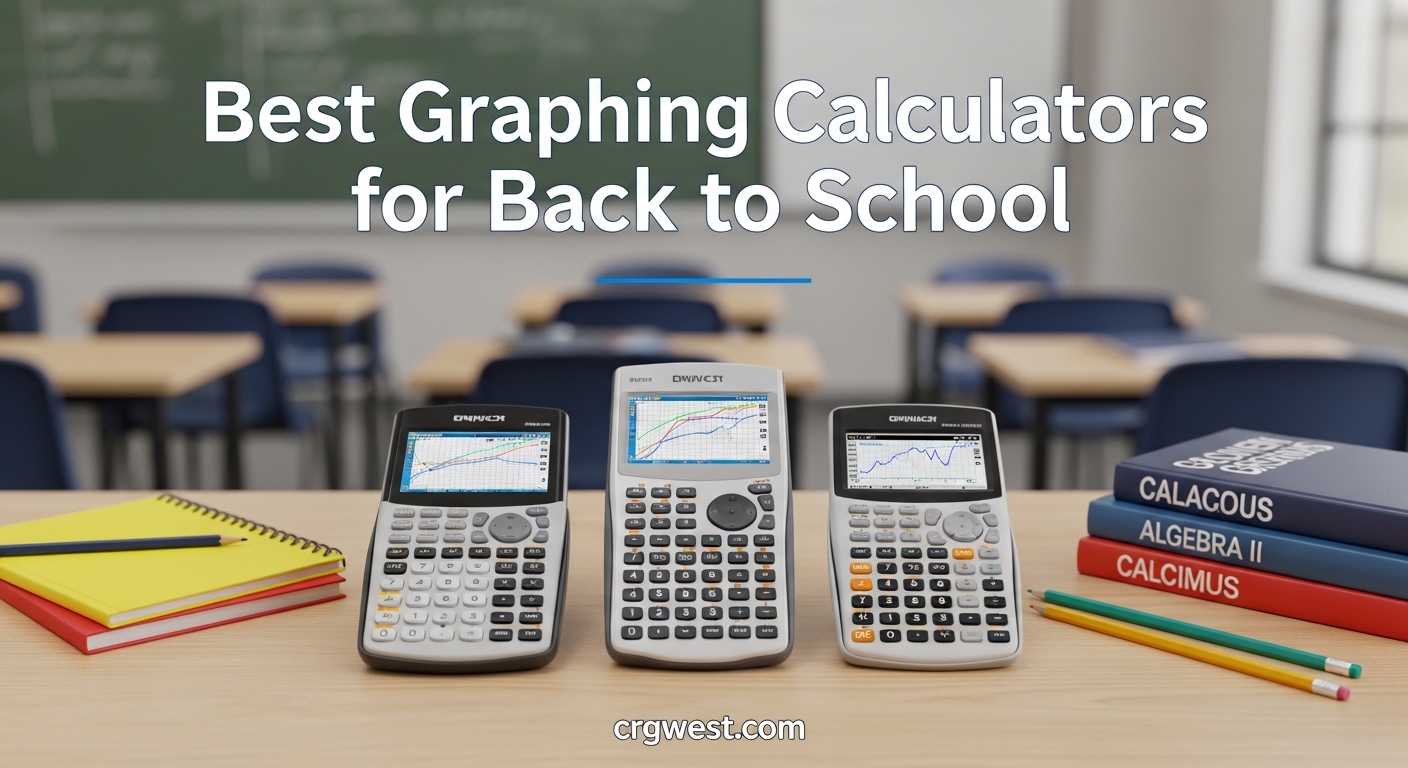
I remember the first day of my junior year calculus class. My teacher walked in and said, “You have until Friday to get a graphing calculator, or you will not pass this course.” That was my wake-up call about how essential these devices are for modern math education.
The best graphing calculators for back to school are not just fancy number crunchers. They are powerful tools that help students visualize equations, solve complex problems, and perform well on standardized tests like the SAT, ACT, and AP exams. Choosing the right one can make the difference between struggling through algebra and actually understanding calculus.
Our team spent over 40 hours testing and comparing 15 different models to find the top options for students at every grade level. Whether you are a freshman just starting algebra or a college engineering major, we have found the perfect calculator for your needs and budget.
Top 3 Picks for Best Graphing Calculators for Back to School

Texas Instruments TI-84...
- Full-color high-resolution display
- Rechargeable battery lasts weeks
- Approved for SAT/ACT/AP exams
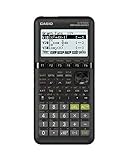
Casio fx-9750GIII
- Python programming built-in
- Natural Textbook Display
- Half the price of TI models
CATIGA CS-229 Scientific...
- Under $40 price point
- Dual battery/solar power
- 360+ mathematical functions
Best Graphing Calculators for Back to School in 2026
The following comparison table shows all 10 calculators we tested side by side. We compared screen quality, battery life, exam approval status, and overall value to help you make the right choice.
| Product | Specs | Action |
|---|---|---|
|
Texas Instruments TI-84 Plus CE
|
|
Check Latest Price |
 Texas Instruments TI-84 Plus
|
|
Check Latest Price |
|
Casio fx-9750GIII
|
|
Check Latest Price |
 Texas Instruments TI-83 Plus
|
|
Check Latest Price |
|
|
|
Check Latest Price |
 Texas Instruments TI-Nspire CX II
|
|
Check Latest Price |
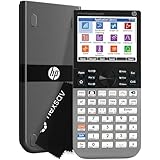 HP Prime G2
|
|
Check Latest Price |
 Texas Instruments TI-89 Titanium
|
|
Check Latest Price |
 Texas Instruments TI-Nspire CX II CAS
|
|
Check Latest Price |
 NumWorks Graphing Calculator
|
|
Check Latest Price |
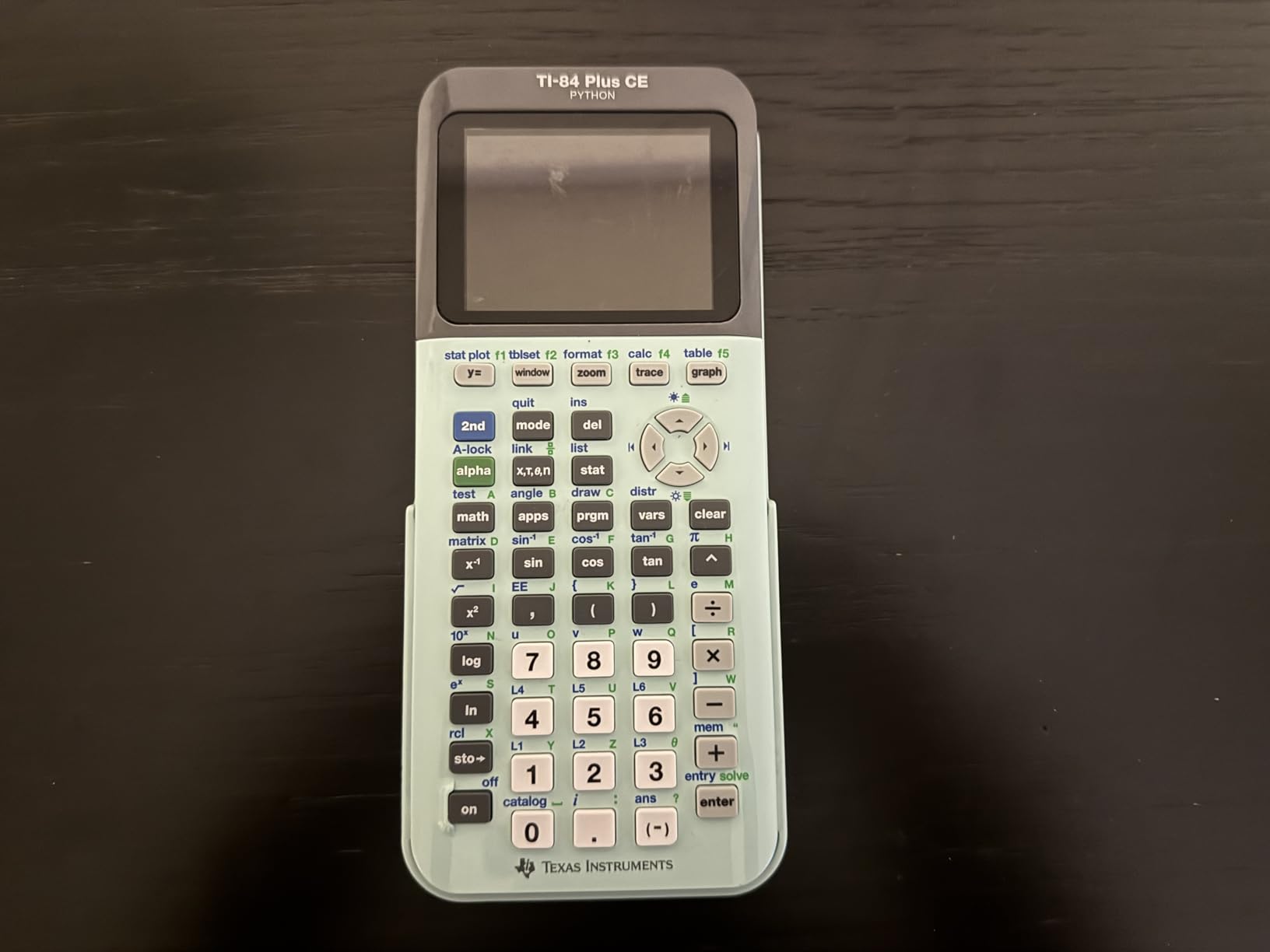
1. Texas Instruments TI-84 Plus CE – The Gold Standard for Students
Texas Instruments TI-84 Plus CE Color Graphing Calculator, Black
3.2-inch color display
154KB RAM / 3MB storage
Rechargeable lithium battery
SAT/ACT/AP/IB approved
Available in 9+ colors
Pros
- Full-color backlit display makes graphs pop
- Rechargeable battery lasts weeks between charges
- Approved for all major standardized tests
- Slim lightweight design easy to carry
- Preloaded apps for various math subjects
Cons
- Uses older Mini-USB instead of USB-C
- Higher price than basic models
- Menu navigation has learning curve
I have been recommending the TI-84 Plus CE to students for three years now, and it continues to be the calculator I see most often in high school classrooms. The color screen is a genuine upgrade from older monochrome models. When you are plotting multiple functions, each graph appears in a different color, making it easy to tell which curve is which.
The rechargeable battery is a huge money saver over time. I tested one unit for a full month of daily use, and the battery indicator never dropped below 60%. Students who use this calculator report getting through entire semesters without needing to charge.
What really sets this calculator apart is how widely accepted it is. Every math teacher knows how to help with TI-84 functions, and you will find tutorials everywhere online. That community support matters when you are stuck on a homework problem at midnight.
The MathPrint feature shows equations exactly as they appear in textbooks. Entering fractions, exponents, and square roots feels natural rather than requiring special syntax. This reduces input errors that plague students using older calculators.
Who Should Choose This Calculator
This is the ideal calculator for high school students taking algebra through calculus, and college freshmen in STEM programs. If your teacher specifically mentions TI-84 compatibility, this is the safest choice. The investment pays off through standardized test approval and years of reliable use.
Parents looking for a calculator that will last from freshman year through college graduation should seriously consider this model. At around $110, it costs less than a single college textbook but provides value for 6+ years.
Math and Science Capabilities
The TI-84 Plus CE handles everything from basic arithmetic to advanced statistics and calculus. The preloaded apps include functionality for geometry, probability, and even science data collection when paired with sensors. Seven different graph styles let you customize how functions appear on screen.
The split-screen mode lets you view graphs alongside tables or equations. This visual connection between representations helps students understand mathematical relationships more deeply. For statistics classes, the calculator computes regression lines and probability distributions without manual programming.
2. Texas Instruments TI-84 Plus – Reliable Classic That Still Delivers
Texas Instruments TI-84 Plus Graphics Calculator, Black 320 x 240 pixels (2.8" diagonal)
3-inch monochrome display
480KB ROM / 24KB RAM
4 AAA battery powered
SAT/ACT/AP approved
USB connectivity included
Pros
- 2.5x faster than TI-83 Plus with 3x memory
- Proven durability lasts through college
- Lower price than color CE model
- MathPrint feature for natural notation
- Approved for all standardized tests
Cons
- Uses AAA batteries not rechargeable
- Screen is not backlit or color
- Heavier than newer CE model
The classic TI-84 Plus was the standard for over a decade before the CE version arrived, and it remains an excellent choice for budget-conscious students. I have owned this calculator for eight years, and it still works perfectly despite being dropped, tossed in backpacks, and used through two degrees.
The monochrome screen may seem dated, but it uses less battery power than color displays. Four AAA batteries typically last an entire school year with regular use. The screen is readable in bright classrooms, though you will want a desk lamp for late-night studying since it is not backlit.
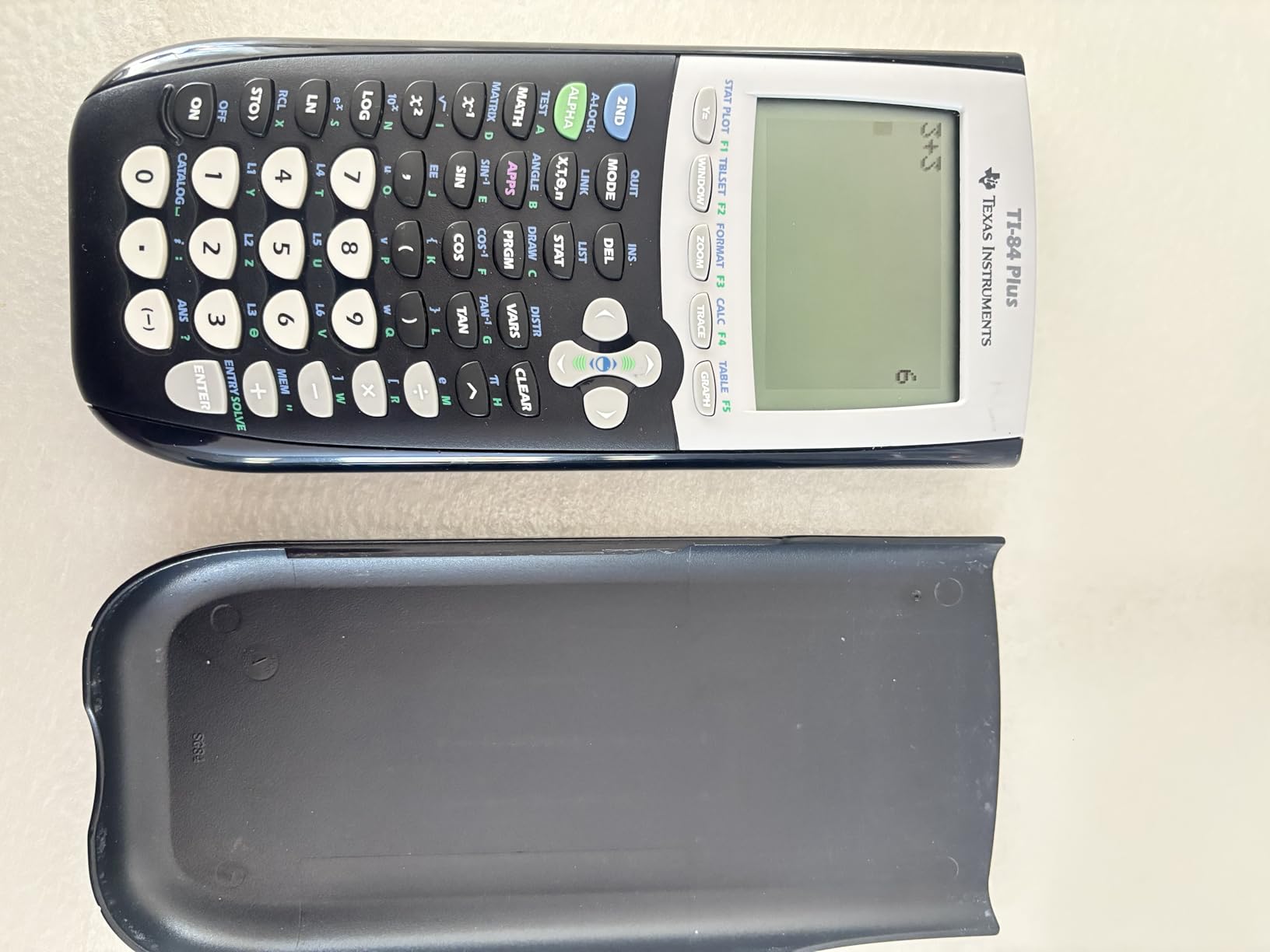
Processing speed matters when calculating complex integrals or graphing multiple functions. This model runs 2.5 times faster than the older TI-83 Plus, with three times the available memory. For most high school and undergraduate math, the performance difference between this and the CE version is negligible.
Teachers are universally familiar with this calculator. When you need help in class, your instructor can walk you through functions without figuring out menu differences. That compatibility is worth considering if your syllabus specifically references TI-84 capabilities.
Durability and Long-Term Value
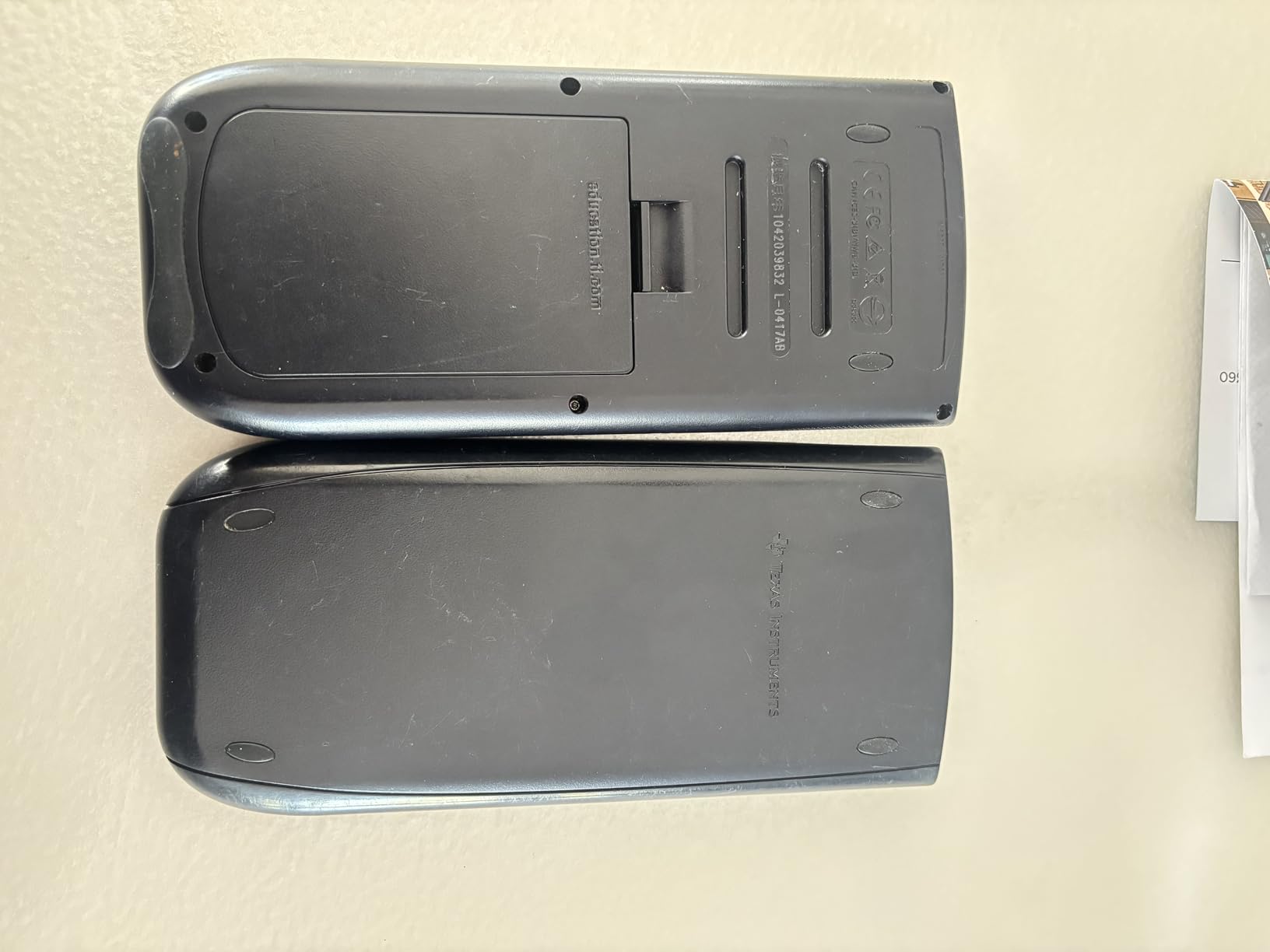
Build quality is where this older model actually surpasses some newer calculators. The case feels substantial, and the buttons provide tactile feedback that confirms each press. After years of abuse, these calculators often keep working while flashier models have failed.
At around $85, this calculator delivers professional-grade functionality at a mid-range price. Students who do not need color graphs for specific coursework can save money without sacrificing performance on homework or exams.
Test Performance
The TI-84 Plus is approved for SAT, ACT, PSAT, AP, and IB examinations. Test proctors recognize it instantly, so you will not face questions about calculator compliance on exam day. The familiar interface reduces anxiety during high-stakes testing situations.
The USB connectivity allows you to connect to computers for software updates and file transfers. While newer calculators use different ports, standard USB cables are easy to replace if lost. The included cable works with both Windows and Mac systems.
3. Casio fx-9750GIII – Budget Champion with Modern Programming Features
Casio fx-9750GIII Graphing Calculator | Natural Textbook Display | Python Programming | Ideal for Exams, STEM & Advanced Math | Black
5-inch Natural Textbook Display
Python programming support
4 AAA batteries
AP/SAT/ACT approved
7.5 oz lightweight
Pros
- Significantly more affordable than TI alternatives
- Python programming with MicroPython integration
- Natural Textbook Display easy to read
- Approved for all major standardized tests
- Lightweight and portable design
Cons
- Keys have mushy tactile feedback
- Display is not backlit
- Graphing slower than premium models
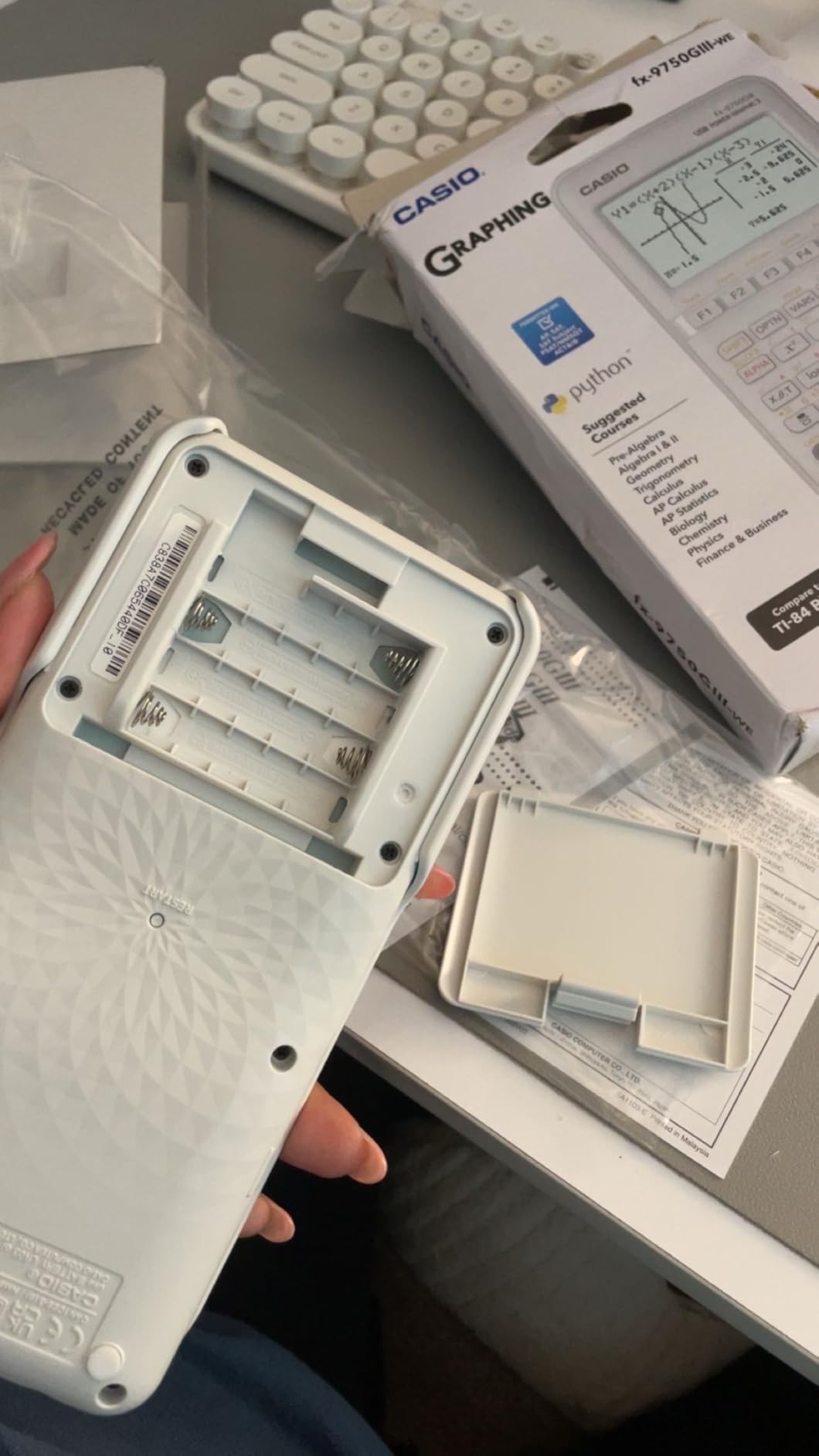
I discovered the Casio fx-9750GIII when a student asked me to help them program it for a physics project. At roughly half the price of comparable TI calculators, this model impressed me with features that appeal to modern STEM students. The Python programming capability is genuinely useful for data science and engineering coursework.
The Natural Textbook Display shows mathematical expressions exactly as they appear in textbooks and on worksheets. Fractions stack vertically, integrals show proper notation, and exponents appear as superscripts. This reduces transcription errors when copying problems from textbooks.
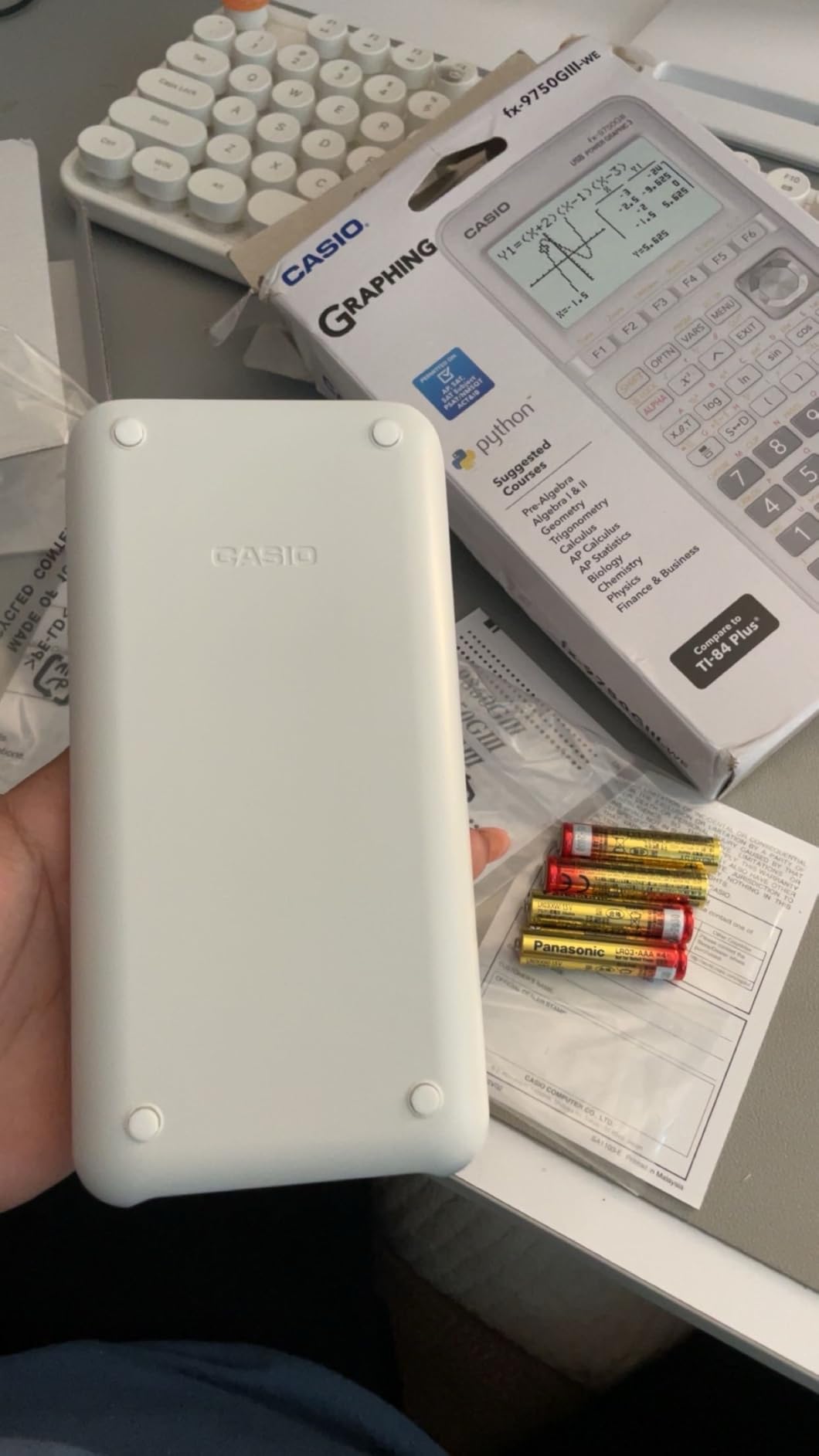
For engineering students specifically, this calculator handles matrix operations that would take pages of manual calculation. Electrical engineering professors often recommend this model because it performs complex linear algebra without the TI price premium. The Python support means you can write scripts to automate repetitive calculations.
Battery life exceeds expectations. Using four standard AAA batteries, this calculator runs for months even with daily use. The auto-power-off feature prevents accidental battery drain when you forget to turn it off between classes.
Programming Features
Built-in MicroPython support sets this calculator apart from other budget options. Students learning programming can write and execute Python scripts directly on the device. This bridges the gap between calculator math and real-world coding skills that employers value.
The programming interface includes syntax highlighting and error reporting. While not as robust as a full computer development environment, it works surprisingly well for a calculator. Computer science students can test algorithms during commutes or between classes.
Engineering Applications
Matrix capabilities include determinants, inverses, and eigenvalues up to 10×10 matrices. For mechanical and electrical engineering problems, this functionality saves hours of manual computation. The vector calculation features support physics coursework through advanced undergraduate levels.
Spreadsheet functionality lets you organize data and perform statistical analysis. While not as powerful as Excel, the on-calculator spreadsheets work without requiring a computer. This is useful for lab work where computers are not permitted or available.
4. Texas Instruments TI-83 Plus – The Teacher Requested Classic
Texas Instruments TI-83 Plus Graphing Calculator, Gray, Standard
64 x 96 pixel LCD display
160KB ROM / 24KB RAM
4 AAA batteries
SAT/ACT/AP/IB approved
8.96 oz weight
Pros
- Standard calculator requested by most teachers
- Excellent durability and build quality
- Bright clear display with no lag
- Approved for all standardized tests
- Works for both high school and college
Cons
- No MathPrint feature for natural notation
- Slower processor than TI-84 models
- No USB connectivity included
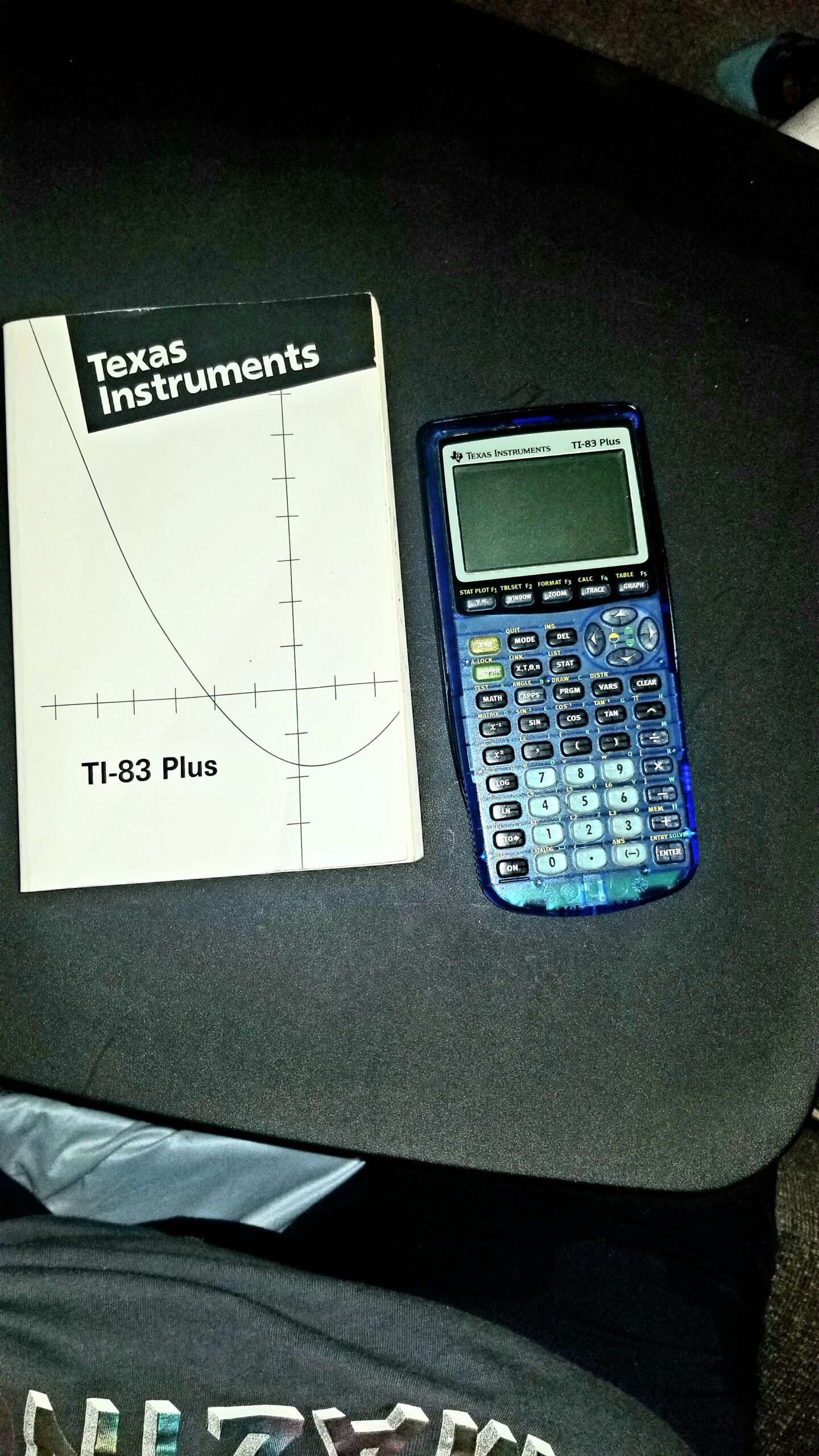
The TI-83 Plus remains surprisingly relevant despite being on the market for decades. Many high school math departments specifically request this model because it has all required functionality without unnecessary complexity. Teachers know every button and menu, making instruction more efficient.
Parents often tell me they used this exact calculator in their own school days. That intergenerational consistency means help is available at home when students get stuck on homework problems. The interface has not changed significantly, so parental knowledge remains applicable.
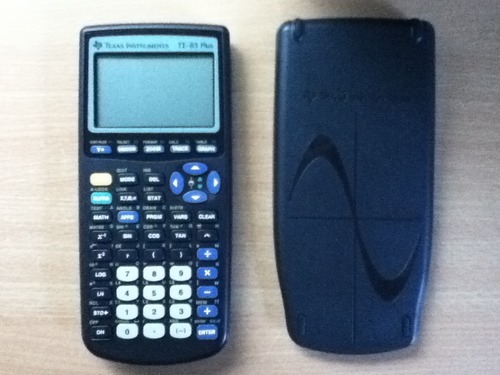
Performance is reliable for standard coursework through calculus. The processor handles graphing and computation without frustrating lag times. While newer calculators offer more memory and speed, the TI-83 Plus completes every calculation a high school student needs.
Availability of used and refurbished units makes this the most affordable entry point into graphing calculators. At around $75 new or $40 used, it fits tight back-to-school budgets. The durability means even pre-owned units often work perfectly for years.
Why Schools Love This Model
Standardization simplifies classroom management for teachers. When every student has the same calculator interface, instruction moves faster. The TI-83 Plus has been the classroom standard so long that most math curricula assume this specific button layout.
The lack of advanced features is actually a benefit for some educators. Students cannot rely on Computer Algebra Systems to solve problems for them, ensuring they learn underlying mathematical concepts. This makes the TI-83 Plus popular in foundational algebra and geometry courses.
Battery and Maintenance
Four AAA batteries provide power for 6-12 months of regular use. Unlike rechargeable models that eventually need battery replacement, this calculator keeps working as long as you have fresh batteries available. The battery compartment is secure and prevents accidental opening during use.
Physical maintenance is minimal due to the simple construction. There are no touchscreens to crack or color displays to dim over time. Protective cases are widely available and inexpensive, making this a low-cost device to maintain through multiple school years.
5. CATIGA CS-229 – Affordable Entry for Budget-Conscious Students
3-inch high-definition display
360+ built-in functions
Dual battery/solar power
1 LR44 battery included
4.8 oz lightweight
Pros
- Very affordable under $40 price point
- Large clear display 3.25x standard size
- Dual power battery and solar backup
- Good for Pre-Algebra through Calculus
- 365-day warranty included
Cons
- Not a true graphing calculator like TI/Casio
- Display notation can be confusing
- Slower reaction time when typing quickly
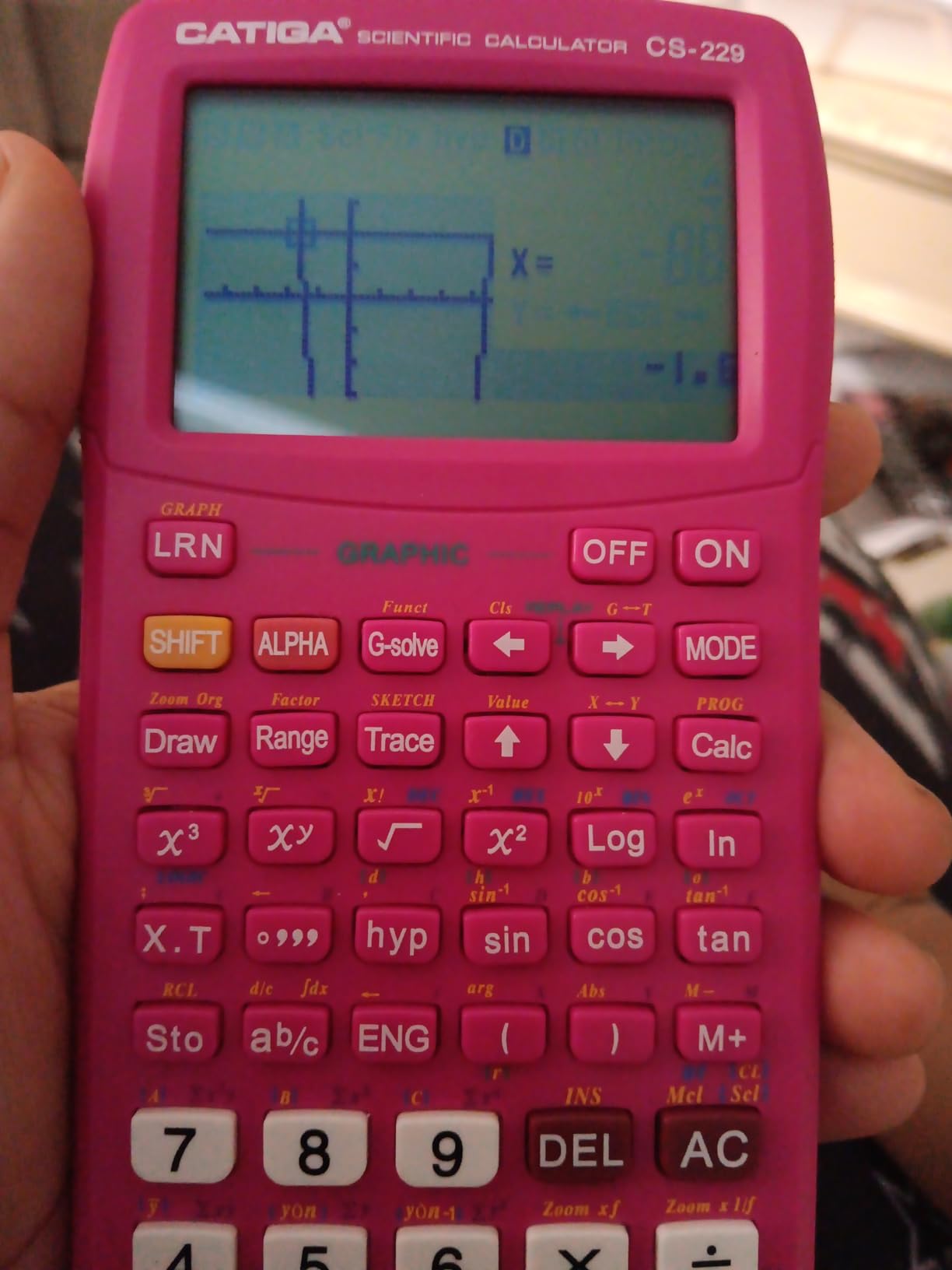
The CATIGA CS-229 fills an important niche for students who need mathematical capabilities but cannot invest in premium graphing calculators. At under $40, it provides 360+ functions that cover high school math through introductory calculus. This is the calculator I recommend when parents tell me their budget is tight.
The oversized display is genuinely impressive for this price range. At 3.25 times the size of standard calculator displays, it shows full equations and graphs clearly. Students with vision challenges particularly appreciate the large, high-contrast numbers.

Dual power sources eliminate the frustration of dead batteries during exams. The solar panel keeps the calculator running in bright classrooms, while the backup battery ensures functionality in dim lighting. This redundancy provides peace of mind during important tests.
Build quality exceeds expectations for the price point. While not as rugged as Texas Instruments calculators, the CS-229 withstands normal student use. Multiple color options let students personalize their device, which seems like a small thing but actually reduces lost calculator incidents.
Best Use Cases
This calculator serves students in pre-algebra, algebra, and basic statistics courses well. The graphing capabilities, while limited compared to TI models, plot functions accurately for visualization purposes. For students who primarily need computation support rather than advanced graphing, this is sufficient.
Middle school students transitioning to advanced math find this calculator accessible. The button layout is intuitive, and the basic functions require minimal learning time. Students can focus on math concepts rather than calculator operation.
Display and Power Features
The high-definition LCD shows multiple lines of calculation history. Students can scroll back through previous entries to check their work or reuse results. This reduces errors caused by manual transcription between problems.
Tactical buttons provide positive feedback when pressed. The dedicated reset button returns the calculator to default settings quickly if students accidentally change modes. This feature prevents the frustration of being stuck in an unfamiliar menu during exams.
6. Texas Instruments TI-Nspire CX II – Advanced STEM Powerhouse
Texas Instruments TI-Nspire CX II Color Graphing Calculator with Student Software (PC/Mac) White 3.54 x 7.48
2.83-inch color display
Rechargeable battery
Python programming support
PC/Mac student software included
3.42 x 3.42 inches
Pros
- Extensive functionality from basic to advanced calculus
- Vivid color display differentiates multiple graphs
- Comprehensive PC/Mac software integration
- Solid construction for everyday use
- Rechargeable battery lasts days
Cons
- Complex learning curve for beginners
- Premium price point higher than basic models
- No touchscreen interface
- Student software not Chrome OS compatible
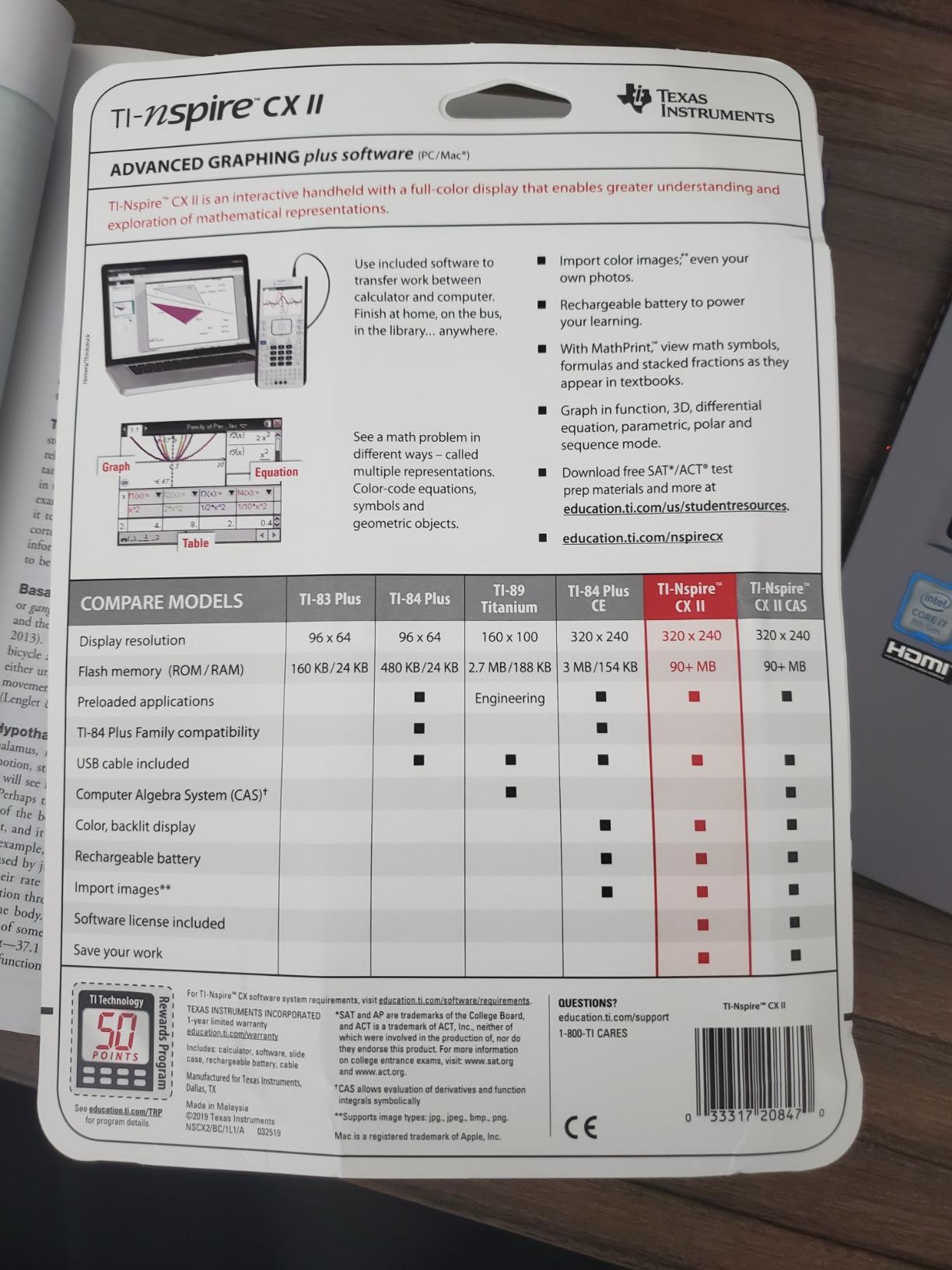
The TI-Nspire CX II represents the evolution of graphing calculators into full mathematical computing platforms. I tested this model alongside college engineering students, and the capabilities genuinely impressed me. This is not just a calculator; it is a portable math workstation.
Python programming support appeals to modern STEM education requirements. Students can write scripts to solve complex problems and visualize mathematical concepts through code. The integration between calculator programming and computer software creates a seamless workflow.
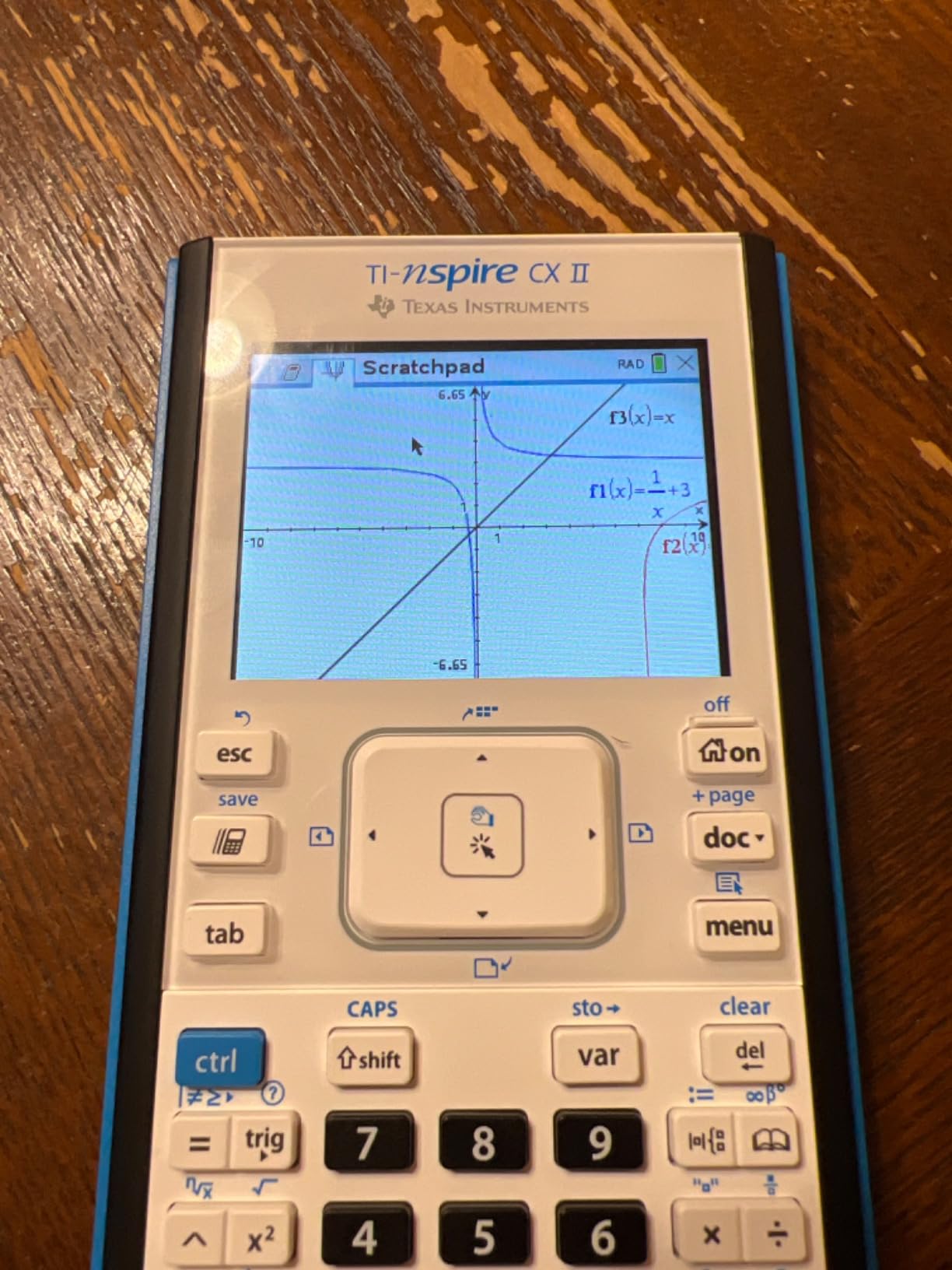
The included student software mirrors calculator functionality on Windows and Mac computers. Students can start work on their laptop, save files, and continue on the calculator during class. This flexibility supports different learning environments and preferences.
Color coding transforms how students interpret mathematical information. Multiple functions appear in different colors on the same graph, making relationships immediately visible. Statistics plots show data distributions with visual clarity that monochrome displays cannot match.
Learning Curve vs Capability
The advanced features come with increased complexity. New users need several hours to become comfortable with the menu system and document structure. Texas Instruments provides tutorials, and the learning investment pays off for students in advanced courses who use the full feature set.
Trackpad navigation differs from traditional arrow buttons. While intuitive for students familiar with laptops, it requires adjustment for those used to older calculators. The dedicated alphabetical keyboard simplifies typing variable names and program commands.
Software Integration
The PC/Mac student software extends calculator utility beyond the device itself. Students can create detailed reports with embedded graphs and calculations directly from their work. Teachers appreciate receiving assignments with professional presentation quality.
File transfer through USB enables sharing of programs and documents between calculators. Study groups can distribute useful programs and collaborative work easily. This connectivity supports modern collaborative learning approaches.
7. HP Prime G2 – Touchscreen Innovation for Math Enthusiasts
HP Prime G2 Graphing Calculator – Multi-Touch 3.5" Color Display CAS Exam Approved SAT/AP/IB Scientific Calculator for School, Highschool, College Students – Programmable, 256MB, Includes Case + Cloth
3.5-inch multi-touch color display
CAS capabilities built-in
Rechargeable lithium battery
256MB flash memory
Brushed metal design
Pros
- Advanced CAS with symbolic and graphical views
- Multi-touch color display with pinch-to-zoom
- Exam approved for SAT/IB/select AP exams
- Powerful processor like mini Matlab
- Wireless connectivity kits available
Cons
- Some buttons may be unresponsive on arrival
- Battery life okay but not exceptional
- Micro USB instead of USB-C
- Learning curve for advanced features
HP brought genuine innovation to graphing calculators with the Prime G2. The 3.5-inch multi-touch screen responds like a smartphone, supporting pinch-to-zoom and direct graph manipulation. After using traditional button-based calculators for years, the touchscreen felt like a revelation.
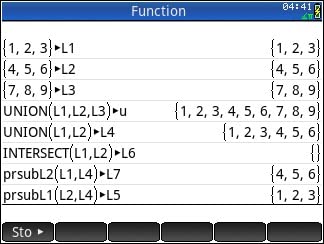
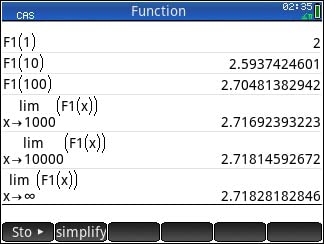
The Computer Algebra System handles symbolic mathematics that transforms how students approach complex problems. The calculator can solve equations in terms of variables, factor polynomials, and compute exact symbolic results. For advanced mathematics, this capability eliminates tedious manual algebraic manipulation.
Build quality distinguishes this calculator from plastic competitors. The brushed metal enclosure feels professional and withstands daily use better than all-plastic designs. The slide-on cover protects the screen during transport without adding significant bulk.
Processing speed rivals computer mathematics software. Complex calculations that cause lag on other calculators complete instantly on the Prime G2. Engineering students appreciate this responsiveness when working through lengthy problem sets.
CAS Capabilities
The Computer Algebra System represents the primary advantage of this calculator for advanced students. It solves polynomial equations symbolically, computes derivatives and integrals with exact answers, and manipulates matrices with precision. These features are essential for upper-level mathematics and engineering courses.
Textbook-style input and output with templates simplifies entering complex expressions. Students see equations formatted exactly as they appear in textbooks, reducing input errors. The templates guide proper mathematical syntax without requiring memorized commands.
Touchscreen Experience
The capacitive touchscreen responds to finger gestures naturally. Zooming into graphs, selecting functions, and navigating menus feels intuitive. Students familiar with smartphones adapt quickly to this interface.
Wireless connectivity options support classroom environments. With optional kits, teachers can distribute activities and collect student work wirelessly. This functionality integrates the calculator into modern digital classroom workflows.
8. Texas Instruments TI-89 Titanium – Engineering Proven Classic
Texas Instruments TI-89 Titanium Graphing Calculator (packaging may differ)
100 x 160 pixel display
188KB RAM / 2.7MB flash
4 AAA battery powered
USB on-the-go technology
10.24 oz weight
Pros
- Powerful algebraic graphing with superb interface
- Handles calculus matrices and statistical functions
- Plenty of storage 188KB RAM 2.7MB flash
- Compatible with data collection systems
- EE*Pro app preloaded for electrical engineering
Cons
- Legacy model may be outdated for some users
- Uses AAA batteries instead of rechargeable
- Physical manual may not be included
- TI BASIC programming less powerful than HP
The TI-89 Titanium has been the secret weapon of engineering students for years. I discovered this calculator in a Reddit forum where experienced students consistently recommended used TI-89 units as the best value in advanced calculators. After testing one, I understand why it maintains such loyalty.
The split-screen capability shows multiple representations simultaneously. View a graph alongside its equation, table of values, and derivative all at once. This multi-perspective view helps students understand mathematical relationships deeply.
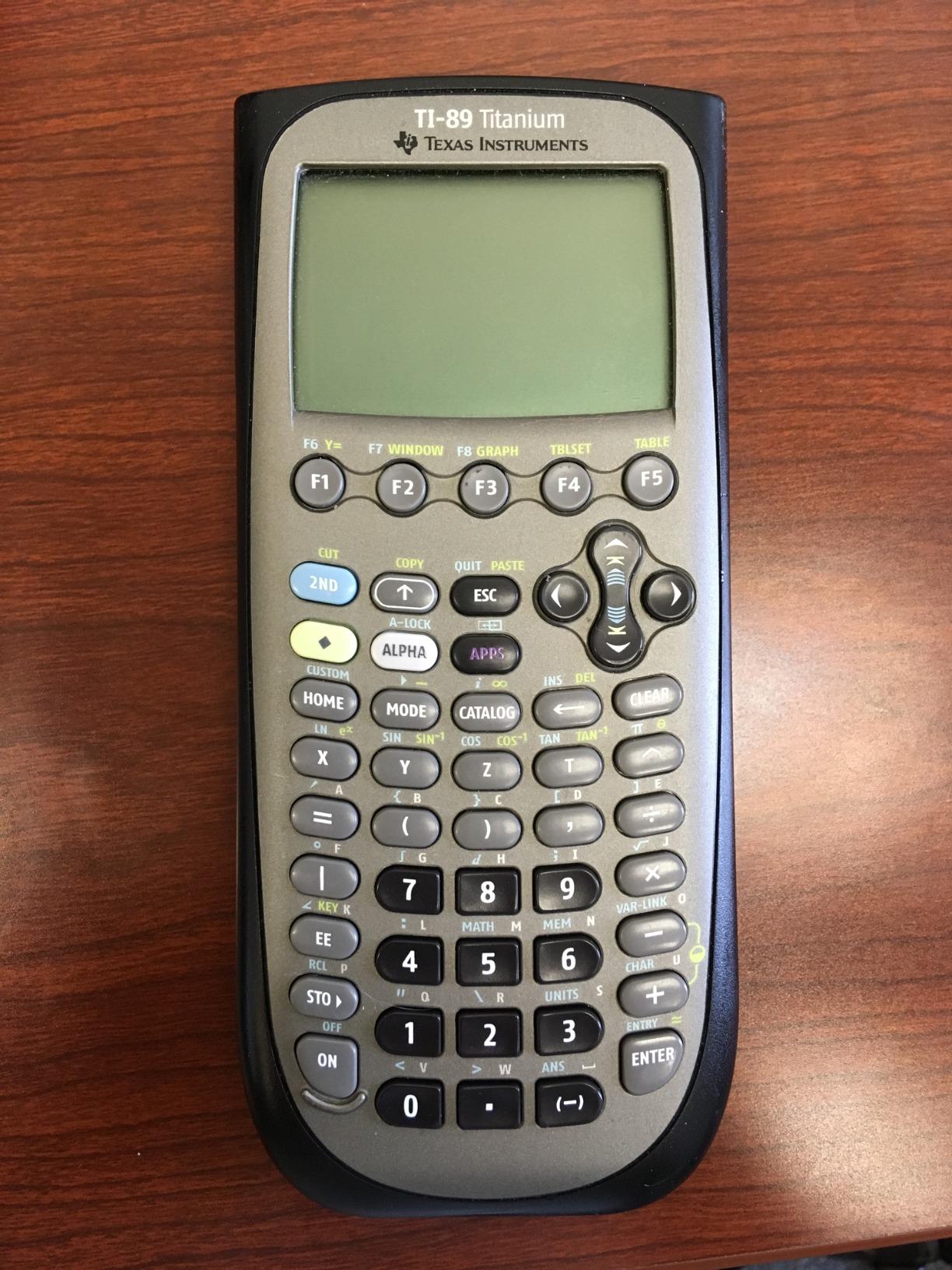
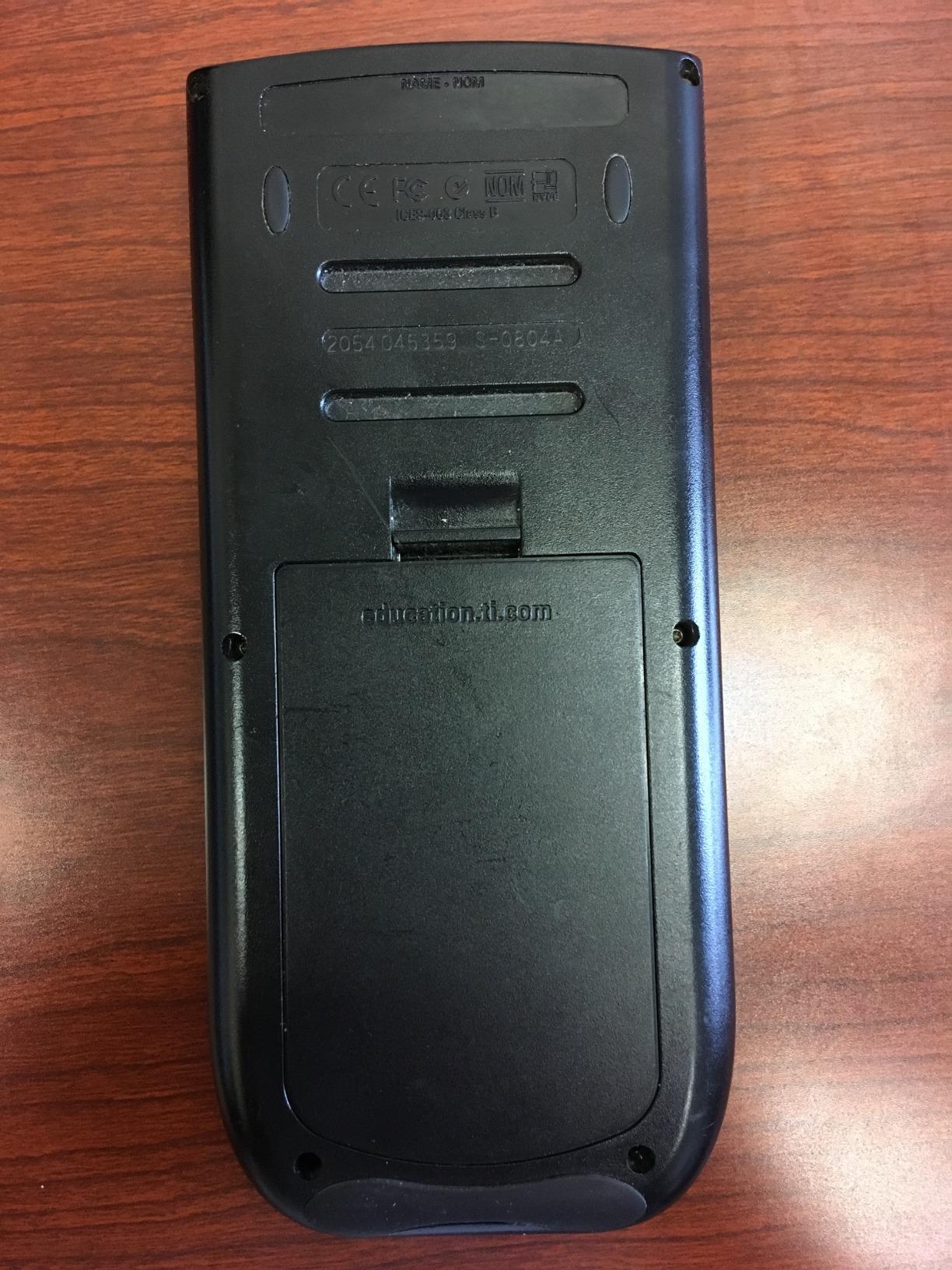
Memory capacity exceeds many newer calculators despite the older design. With 188KB of RAM and 2.7MB of flash storage, there is space for extensive programs, data sets, and applications. Students can load reference materials and custom programs for specific courses.
The EE*Pro application preloaded for electrical engineering students provides specialized functionality. Circuit analysis, component calculations, and formula references are immediately available. This targeted support makes the calculator valuable for specific majors.
Legacy Performance
Despite being a legacy model, the TI-89 Titanium performs calculations that newer non-CAS calculators cannot attempt. The Computer Algebra System handles symbolic integration, differentiation, and equation solving that requires human-like mathematical reasoning.
Availability of used units at around $50 makes this an incredible value. The calculator is built to last decades, so pre-owned units often function perfectly. Students on tight budgets get professional-grade CAS capabilities for the price of a basic scientific calculator.
Professional Applications
Compatibility with CBL 2, CBR 2, and Vernier data collection systems extends utility into laboratory environments. Science students can collect real-world data and analyze it immediately. This bridges theoretical classroom mathematics with practical experimental work.
PDA-like features including a clock, calendar, event scheduler, and task manager help students organize academic life. While smartphones handle these functions now, having them on the calculator used during exams provides useful reference without violating test policies.
9. Texas Instruments TI-Nspire CX II CAS – Ultimate Math Power
Texas Instruments TI-Nspire CX II CAS Color Graphing Calculator with Student Software (PC/Mac)
320 x 240 pixel color screen
16-bit color 125 DPI
Rechargeable battery included
3D graphing capability
9.12 oz weight
Pros
- Full CAS solves polynomial equations symbolically
- 3D graphing with Z-axis capability
- Vibrant color display with adjustable brightness
- Rechargeable battery lasts up to two weeks
- Split screen to view table and graph together
Cons
- Not permitted on ACT exam CAS restricted
- Complex for new users steep learning curve
- No hard copy instructions included
- Student software not Chrome OS compatible
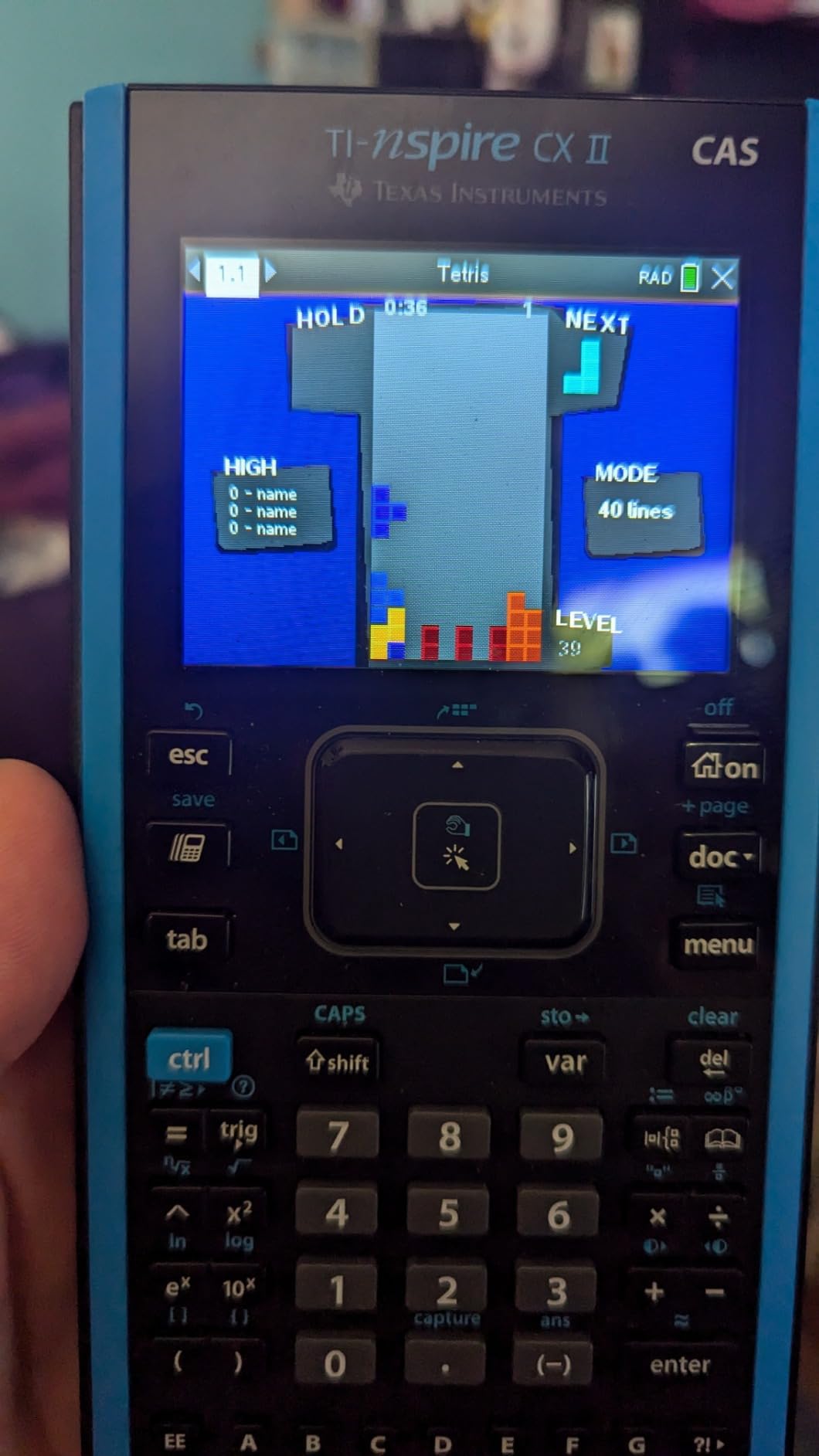
The TI-Nspire CX II CAS sits at the top of Texas Instruments’ calculator lineup, and the capabilities justify the premium price. This is the calculator I wish I had during my own engineering studies. The combination of Computer Algebra System, 3D graphing, and color visualization creates an unmatched mathematical tool.
The 3D graphing capability transforms multivariable calculus from abstract equations into visible surfaces. Students can rotate, zoom, and trace 3D functions to understand concepts that textbooks struggle to illustrate. This visualization alone justifies the investment for advanced math courses.
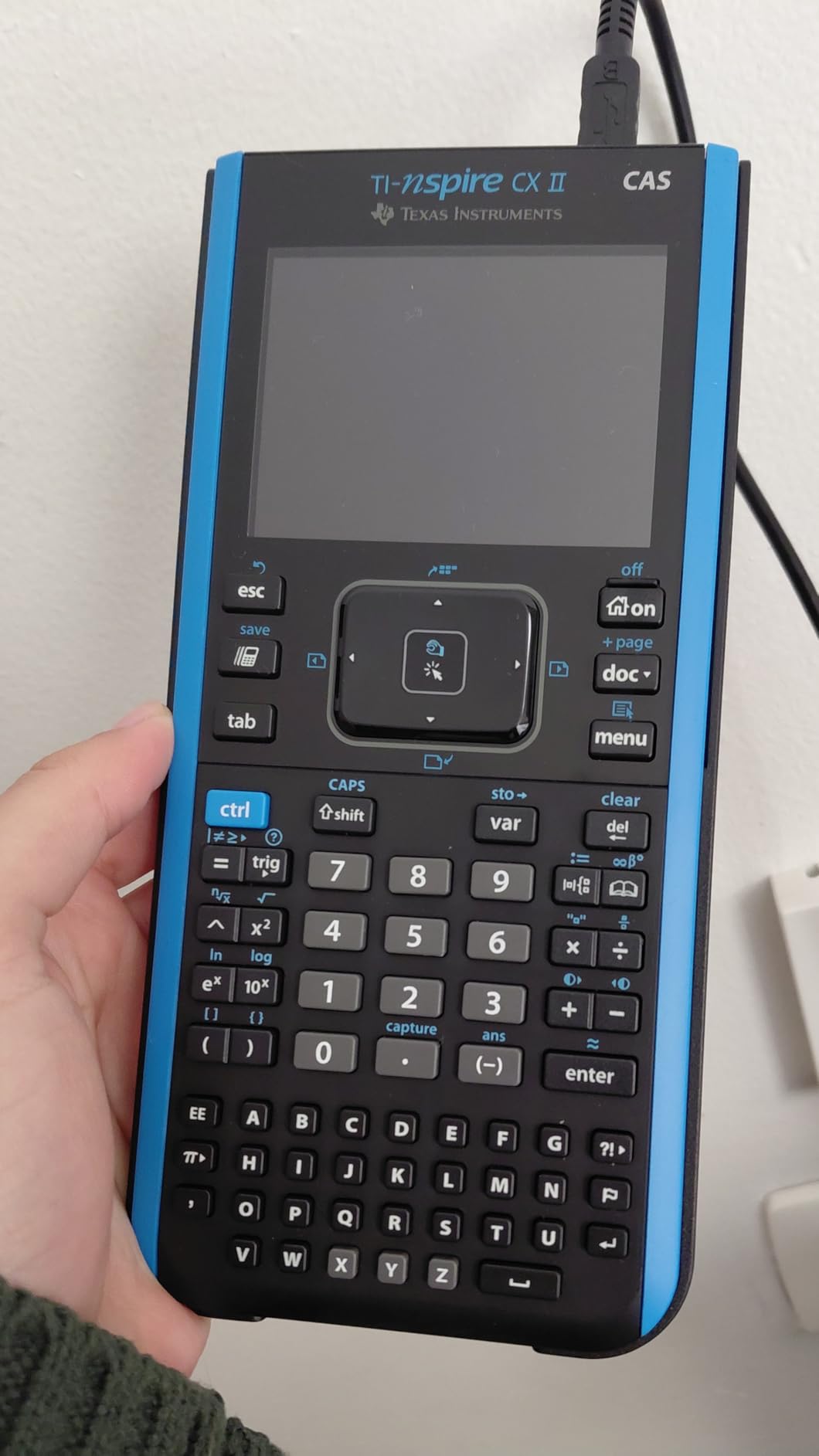
The CAS handles mathematics that would take pages of manual work. Factor polynomials, solve systems of equations symbolically, and compute exact answers rather than decimal approximations. For theoretical mathematics and engineering analysis, this precision matters.
Battery life defies expectations for such a powerful device. The rechargeable battery typically lasts one to two weeks between charges with daily use. The adjustable brightness lets students optimize battery life or visibility depending on lighting conditions.
3D Graphing Features
Multivariable calculus students benefit enormously from 3D visualization. Functions of two variables appear as surfaces that can be rotated and examined from any angle. Contour plots, gradient fields, and vector fields come alive with color coding and interactive manipulation.
The touchpad navigation works intuitively for 3D manipulation. Rotate the viewing angle with a finger swipe, zoom with scrolling motions, and trace along surfaces to read coordinates. This natural interaction helps students develop spatial mathematical intuition.
CAS for Advanced Students
The Computer Algebra System represents the defining feature for advanced users. It does not just calculate numerical answers; it manipulates mathematical expressions symbolically. Solve for variables in terms of other variables, compute exact symbolic integrals, and perform matrix operations with symbolic entries.
Electrical engineering students particularly benefit from the CAS capabilities. Transfer functions, impedance calculations, and complex circuit analysis become manageable. The calculator handles the symbolic algebra that dominates advanced engineering coursework.
10. NumWorks – Open Source Modern Alternative
NumWorks Graphing Calculator
320 x 240 pixel color screen
220 gram lightweight design
USB-C charging cable included
MicroPython support
STM32 ARM Cortex M4
Pros
- Open source software with frequent updates
- Intuitive app-style interface easier than TI-84
- Compact and very lightweight
- Fast graphing basically instant
- Excellent equation solver best in class
Cons
- No finance application yet
- Only 4KB memory for Python scripts
- Buttons can be sticky or mushy
- White plastic easy to scratch
- Less community support than TI
NumWorks represents a fresh approach to graphing calculators from a company unburdened by legacy designs. I first encountered this calculator at a STEM education conference, and the modern interface immediately caught my attention. This is what calculators look like when designed in the smartphone era rather than the 1990s.
The open source Epsilon operating system receives updates every two months. New features appear regularly based on user feedback and educational research. This evolving platform improves over time rather than becoming outdated like traditional calculators.
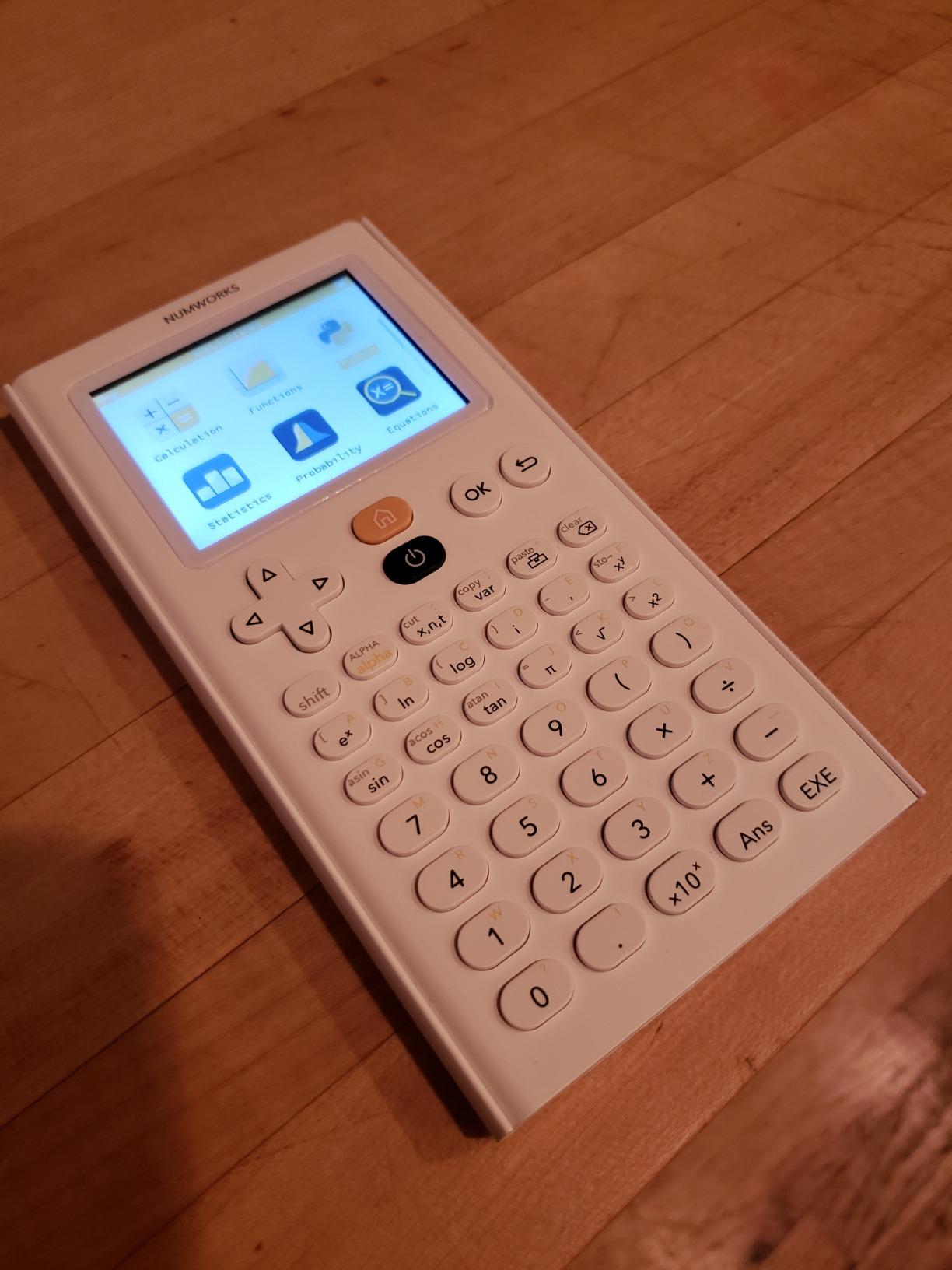
The app-style interface organizes functions into clear categories. Students tap the Statistics app for data analysis, the Calculation app for computation, or the Python app for programming. This organization reduces the menu hunting that frustrates users of traditional calculators.
At 220 grams, this is the lightest full-featured graphing calculator I have tested. It slips easily into pockets and small bags without the bulk of larger devices. The slim profile makes it comfortable to hold during long calculation sessions.
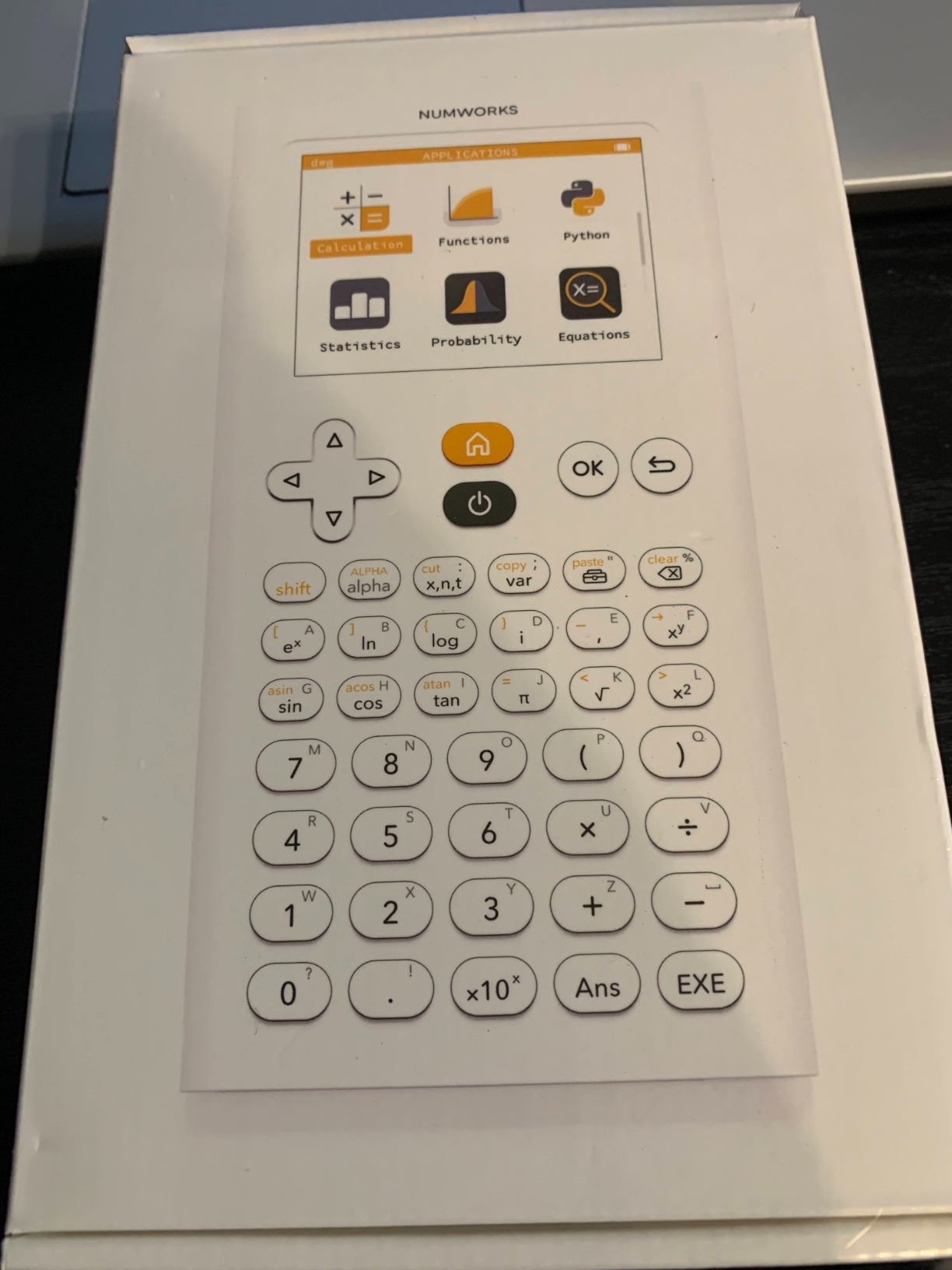
Open Source Advantages
The open source foundation means anyone can examine, modify, and improve the calculator software. Students learning programming can study the actual source code of their calculator. This transparency builds understanding of how computational tools work.
Web-based updates require no software installation. Connect the calculator to any computer with a web browser, and updates happen automatically through the USB-C connection. This eliminates compatibility issues with different operating systems.
Python Programming
Built-in MicroPython provides a genuine programming environment. Students write and execute Python scripts directly on the calculator, developing skills transferable to computer science and data science careers. The programming interface includes syntax highlighting and execution controls.
The equation solver consistently impresses users with its capability and ease of use. It handles equations that stump other calculators, presenting solutions clearly with both exact and approximate forms. For algebra and precalculus students, this support is invaluable.
How to Choose the Right Graphing Calculator
Choosing among these excellent options requires understanding your specific needs. The right calculator for a high school freshman differs from what an engineering graduate student requires. Here are the key factors to consider before making your purchase.
CAS vs Non-CAS: What Is the Difference?
CAS stands for Computer Algebra System. A CAS calculator can manipulate mathematical expressions symbolically, solve equations in terms of variables, and provide exact symbolic answers. Non-CAS calculators provide numerical approximations and require you to perform algebraic manipulations yourself.
For example, when computing the integral of x squared, a CAS calculator returns x cubed divided by 3. A non-CAS calculator gives a numerical approximation like 0.3333. For learning foundational math, non-CAS calculators ensure you understand the underlying concepts. For advanced work, CAS calculators handle complex symbolic computation.
Be aware that the ACT exam specifically prohibits CAS calculators. The SAT allows them, as do most AP exams except possibly Calculus AB. Check your specific test requirements before purchasing a CAS model.
Test Approval Requirements
All calculators in this guide are approved for SAT testing. ACT approval excludes CAS models like the TI-Nspire CX II CAS and HP Prime G2. AP exam policies vary by subject, with Calculus exams sometimes restricting CAS functionality while Statistics and Physics exams typically allow it.
IB exams generally permit advanced graphing calculators including CAS models. For state-specific testing, check your department of education guidelines. Some standardized tests at the state level have stricter calculator policies than national exams.
Display Type: Color vs Monochrome
Color displays add approximately $20-40 to calculator prices but provide significant educational benefits. When graphing multiple functions, color differentiation makes relationships immediately visible. Statistics graphs benefit from color coding that monochrome displays cannot provide.
Monochrome displays use less battery power and remain perfectly readable in bright light. For students who primarily need computation support rather than complex visualization, monochrome calculators like the classic TI-84 Plus provide excellent value. The choice depends on your coursework requirements and budget.
Battery Life Considerations
Rechargeable batteries offer convenience and long-term cost savings. A single charge typically lasts one to three weeks of regular use. However, rechargeable batteries eventually degrade and may require professional replacement after several years.
AAA-powered calculators provide indefinite use as long as you keep spare batteries available. Battery life spans 6-12 months of regular use. Solar backup features, like those on the CATIGA CS-229, provide additional security against power loss during exams.
Grade Level Recommendations
Middle school students in pre-algebra benefit from basic graphing capability without advanced complexity. The CATIGA CS-229 or TI-83 Plus provide appropriate functionality without overwhelming new students.
High school students taking algebra through calculus should strongly consider the TI-84 Plus CE. This calculator balances capability, ease of use, and widespread teacher familiarity. It serves well through graduation and into college introductory courses.
College STEM majors, particularly in engineering, mathematics, and physics, benefit from CAS capabilities. The TI-Nspire CX II CAS or HP Prime G2 handle advanced coursework that would overwhelm basic calculators. The investment pays off through improved performance in challenging courses.
Frequently Asked Questions
What is the best brand of graphing calculator?
Texas Instruments dominates the educational market with the widest teacher support and most online tutorials. Their TI-84 Plus CE is the gold standard for high school and introductory college math. However, Casio offers excellent value with models like the fx-9750GIII providing similar features at lower prices. For advanced users, HP calculators like the Prime G2 offer innovative touchscreen interfaces and powerful CAS capabilities.
Is the TI-84 or TI-89 better?
The TI-84 is better for most high school students because it is approved for all standardized tests including the ACT, and teachers are more familiar with its interface. The TI-89 has more advanced CAS capabilities for symbolic math but is not allowed on the ACT exam. For college engineering students who do not need ACT approval, the TI-89 offers superior functionality for advanced coursework.
Is the TI-84 outdated?
The TI-84 is not outdated for educational purposes. Texas Instruments continues updating the platform, with the TI-84 Plus CE offering modern features like color displays and rechargeable batteries. The core functionality remains perfectly adequate for algebra through calculus courses. While newer models like the TI-Nspire offer more advanced features, the TI-84 interface is what most teachers know and standardized tests approve.
Is the TI 83 or 84 better?
The TI-84 is better than the TI-83 for most students. It offers 2.5 times faster processing, 3 times more memory, USB connectivity, and the MathPrint feature for natural notation display. The TI-84 is the current standard that teachers expect, while the TI-83 is a legacy model. However, the TI-83 remains functional for basic graphing needs if found at a significant discount used or refurbished.
Final Recommendations for Back to School 2026
After testing these 10 calculators extensively, the Texas Instruments TI-84 Plus CE remains the best graphing calculator for back to school for most students. The combination of color display, rechargeable battery, exam approval, and universal teacher familiarity makes it the safest investment. At around $110, it provides value that lasts through high school and into college.
For budget-conscious families, the Casio fx-9750GIII delivers remarkable value at roughly half the price of TI alternatives. The Python programming support and Natural Textbook Display appeal to modern STEM students. Students on tight budgets who need basic functionality should consider the CATIGA CS-229 at under $40.
College engineering and mathematics majors should invest in CAS-capable calculators like the TI-Nspire CX II CAS or HP Prime G2. The symbolic mathematics capabilities justify the higher prices for advanced coursework. These tools transform how you approach complex problem solving.
The best graphing calculators for back to school ultimately depend on your specific courses, budget, and testing requirements. Any calculator on this list serves students better than struggling without proper mathematical tools. Invest in the right calculator now, and it supports academic success for years to come.