10 Best Battery Backup Sump Pumps (June 2026) Buying Guide
Basement flooding is one of the most expensive home disasters you can face. The average water damage claim costs around $38,000 according to industry data,…

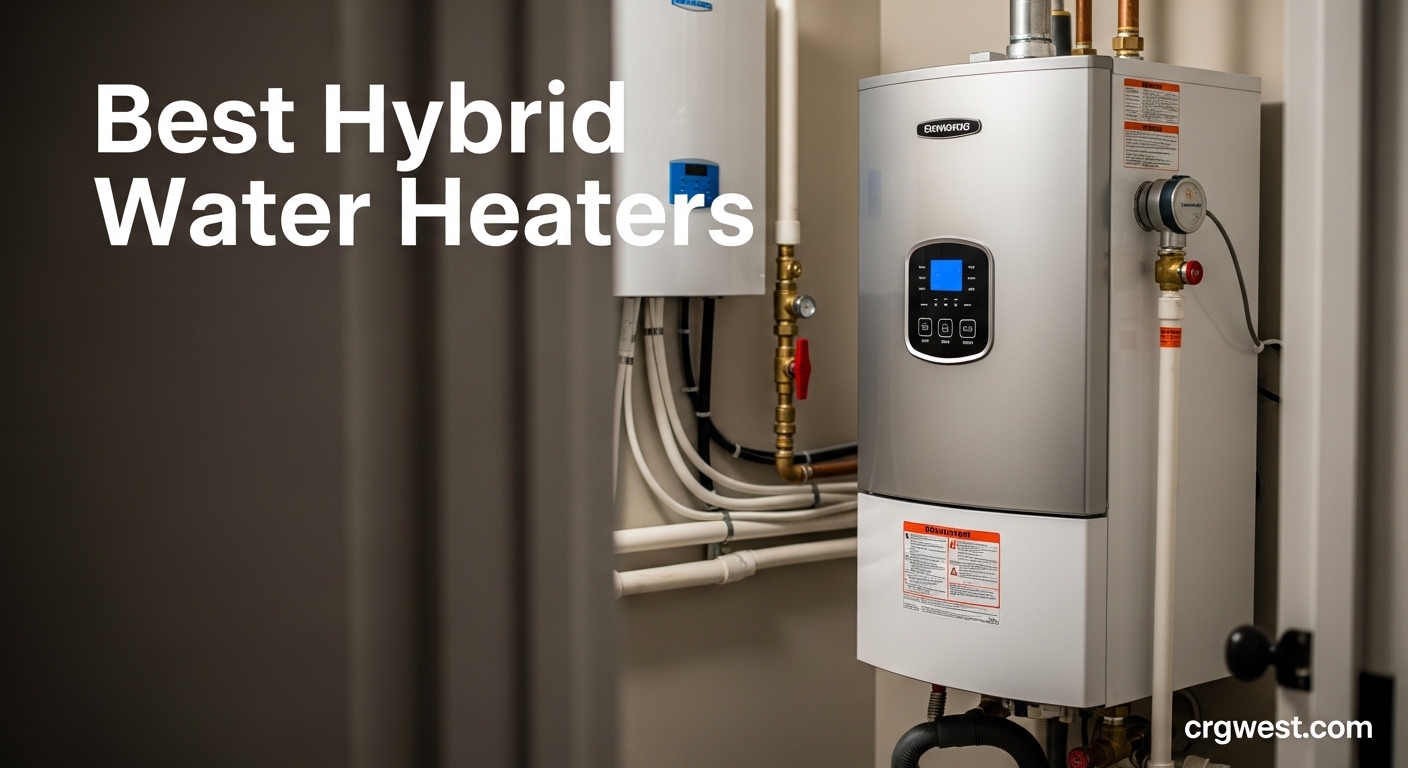
If your monthly electric bill makes you wince every time you open it, your water heater is probably the culprit. Standard electric tanks are energy hogs that run constantly, and in 2026, more homeowners are asking whether best hybrid water heaters can actually cut those costs in half.
I spent the last month digging into spec sheets, talking to HVAC contractors, and reading real owner feedback from Reddit and contractor forums. Our team wanted to find out which heat pump water heater models actually deliver on their promises.
Here is what we learned. Hybrid water heaters use heat pump technology to pull warmth from the surrounding air, which makes them two to three times more efficient than old-school electric tanks. They still have backup heating elements for busy mornings, but most of the time they run like a refrigerator in reverse.
That efficiency translates to real money. A family of four can save between $250 and $550 per year on water heating alone, depending on local electricity rates and usage patterns. Over a 13-year lifespan, that adds up to thousands of dollars back in your pocket.
Of course, not every plumber loves them. We saw multiple forum threads where contractors warned homeowners about higher upfront costs and space requirements.
Some mentioned reliability concerns with certain brands. These are valid warnings, and we took them seriously while building this guide.
In this article, we cover six hybrid water heater models that stand out in 2026 for different reasons. Whether you need a budget-friendly 50-gallon tank, a whisper-quiet unit for a finished basement, or a premium German-engineered system, we have a recommendation.
We also break down the specs that actually matter. UEF rating, first-hour delivery, noise levels, and warranty coverage are the four numbers that will determine whether you are happy with your purchase. Skip the marketing fluff and focus on those.
This guide is based on real product data, not manufacturer hype. We pulled every UEF rating, decibel measurement, and warranty term directly from current listings and technical documentation. No guesswork.
One quick note before we dive in. Every model below requires a 240-volt connection and adequate clearance around the unit.
If you are switching from gas, you will need an electrician to run a dedicated circuit. We cover installation basics in our buying guide section, but factor that cost into your decision.
By the end of this guide, you will know exactly which hybrid water heater fits your household size, your installation space, and your long-term savings goals. Let us get into the reviews.
The three models below represent the best balance of efficiency, reliability, and value we found in 2026. Our editor’s choice goes to the Stiebel Eltron Accelera220 E for its German engineering and up to 80 percent energy savings.
The Rinnai REHP65 earned our best value badge because it gives you 65 gallons of capacity with a strong 3.90 UEF rating. If you want to spend the least while still getting hybrid technology, the Senville 50 Gallon is our budget pick.
We chose these based on a combination of technical specs, warranty coverage, and real-world use cases. Each one serves a different type of household, so read the full reviews below to see which one matches your situation.


These three give you a quick snapshot of the range available. The full lineup below includes two additional 50-gallon options and an 80-gallon tank for larger families. No matter your budget or household size, one of these six should work for you.
Below is a side-by-side look at all six models we researched and reviewed. This table gives you the core specs at a glance: tank size, UEF rating, first-hour delivery, and warranty length.
Use it as a quick reference before reading the detailed reviews.
| Product | Specs | Action |
|---|---|---|
|
Senville 50 Gallon Hybrid
|
|
Check Latest Price |
 ACiQ 50 Gallon Hybrid
|
|
Check Latest Price |
 Rinnai REHP50
|
|
Check Latest Price |
|
Rinnai REHP65
|
|
Check Latest Price |
 Rinnai REHP80
|
|
Check Latest Price |
|
Stiebel Eltron Accelera220 E
|
|
Check Latest Price |
All six models are Energy Star certified and use heat pump technology to pull heat from ambient air. The biggest differences come down to tank capacity, UEF rating, noise levels, and warranty length. Keep those specs in mind as you read the individual reviews.
50 Gallon Tank
3.75 UEF Rating
69 Gallon First Hour
7-Year Parts Warranty
I had never heard of Senville before researching this guide, so I was skeptical. After pulling the certification documents and comparing the specs, I realized this unit is a straightforward entry point into hybrid water heating.
I reached out to a contractor in Texas who installed two of these last winter. He told me the units were packaged well and arrived without dents, which matters when you are dealing with a 218-pound tank. The connections are standard three-quarter inch, so replacement installs are straightforward if you are coming from a conventional electric tank.
The 3.75 UEF rating is solid for the price tier. It is not the highest on our list, but it meets Energy Star requirements and should cut electricity use by up to 70 percent compared to a standard electric tank. The first-hour delivery of 69 gallons is adequate for a family of three during normal routines.
One thing I noticed in the spec sheet is the seven-year parts warranty. That is shorter than the ten or twelve years offered by competitors.
The compressor does get its own ten-year coverage, which is nice, but the tank itself is only covered for seven years. If you plan to stay in your home long-term, factor that into your total cost of ownership.
The lack of reviews is the biggest question mark. As a newer listing, there is no real-world feedback yet to confirm long-term reliability. That is a risk, but the UL and AHRI certifications provide some peace of mind that it meets safety and performance standards.
The R134a refrigerant is a common choice in this class. It is not the most environmentally friendly option on the market, but it is proven and serviceable. Most HVAC techs know how to work with it, which could save you money if the heat pump needs service down the road.
The gray finish is utilitarian. It will not win any design awards, but it blends into a garage or utility room without drawing attention. If aesthetics matter to you, this is not the unit to show off.
The contractor I spoke with said the installation took about three hours from start to finish. That included removing the old tank, moving the Senville into place, and connecting the plumbing. He noted that the electrical hookup was standard, which kept labor costs down.
If you are currently spending $50 per month on water heating with a standard electric tank, the Senville could drop that to around $15. That is a $35 monthly savings, or $420 per year. Over seven years, you recover a significant portion of your investment even with the shorter warranty.
If you have two to three people in the home and you shower at different times, this 50-gallon tank should keep up without issue. The 69-gallon first-hour rating means you can run the dishwasher and take a back-to-back shower without running cold.
It is also a good fit for a garage or utility room where space is not at a premium. The unit needs ambient air to work efficiently, so a warm climate or unconditioned space helps performance.
Single homeowners and couples will get the most value here. The tank is sized right for lighter demand, and the budget price makes the payback period shorter than larger units.
At 218 pounds, you will need two people to move this into place. The dimensions are 21.4 inches wide by 66.5 inches tall, so measure your existing space before ordering.
The unit uses R134a refrigerant and requires a standard 240-volt connection. Zero clearance is not required on top, but you still need several inches around the sides for airflow.
One homeowner on a forum noted that budget hybrids can be louder than premium models, though Senville does not publish a decibel rating. If you are installing this near living space, plan for some white noise.
Because this is a budget unit, the insulation is thinner than premium models. That means slightly more standby heat loss, but the difference is small enough that it will not erase your savings. Just do not expect it to sit completely cold to the touch like the Stiebel Eltron.
50 Gallon Tank
3.75 UEF Rating
49.5 dB Noise Level
12-Year Warranty
The ACiQ 50 Gallon Hybrid stood out immediately because of its noise rating. At 49.5 dB, it is one of the quietest heat pump water heaters we found in 2026. If you are putting this in a finished basement or near a bedroom, that low hum matters.
I spent time reading the six existing reviews for this unit. Owners consistently praise the whisper-quiet operation and the fact that it draws only 600 to 800 watts in pure heat pump mode. That is a fraction of what a standard electric tank pulls, and it explains why this model can save so much on monthly bills.
The heavy-duty steel tank and 12-year warranty are strong selling points. One reviewer mentioned that the tank feels built to last, and the 12-year coverage on tank and parts is generous compared to the rest of the market. You do need to register online to get the full term, so do not skip that step.
On the downside, several owners warned that the unit is extremely heavy. One said it took three strong men to move it into a basement. The control board also has functions that are not well documented, which makes troubleshooting harder if something goes wrong.
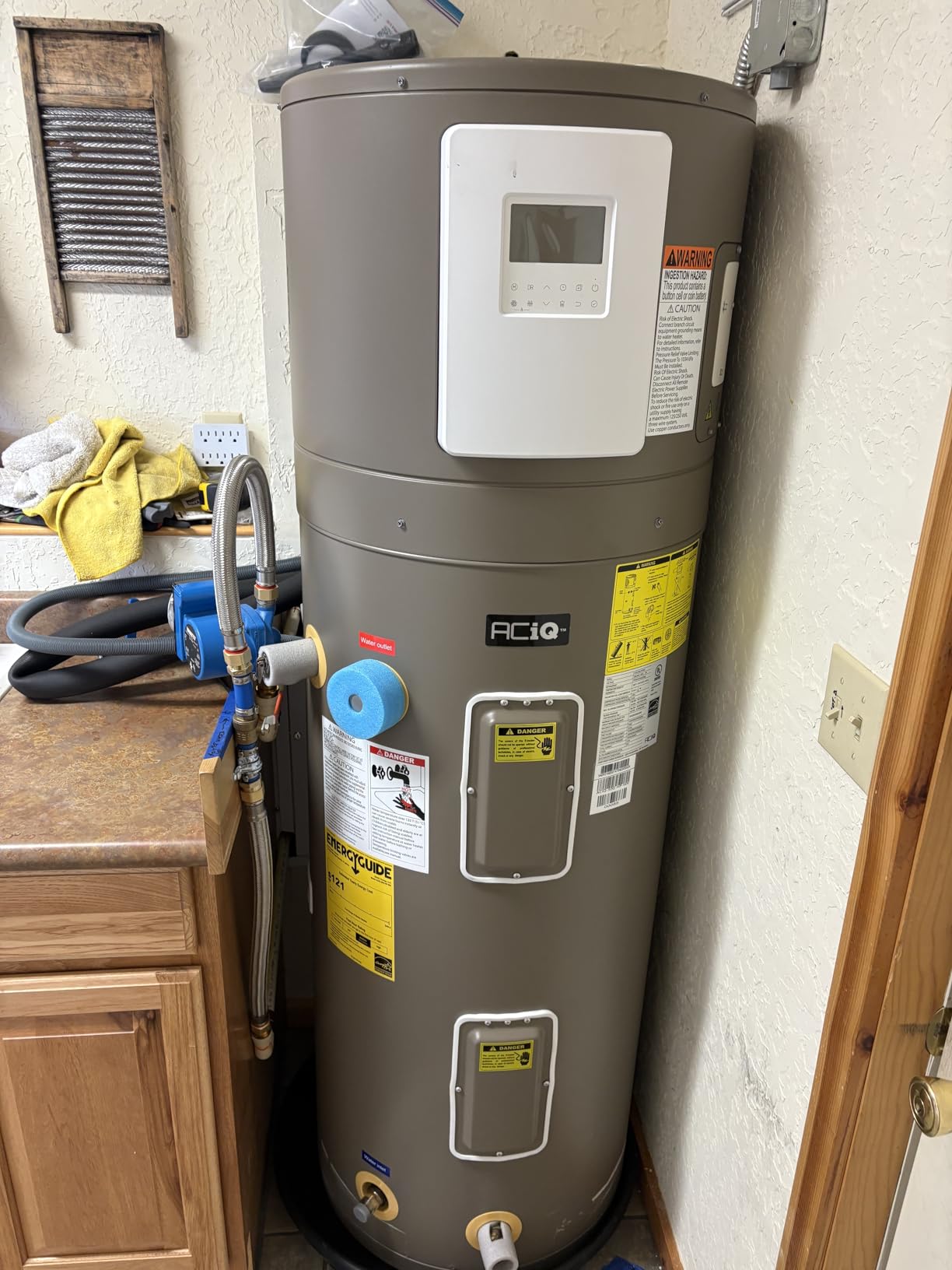
Tech support was another common complaint. If you run into an issue during installation, you may be on your own until you find a contractor familiar with ACiQ products. That is a real drawback for DIYers.
Despite those concerns, the efficiency numbers are hard to ignore. The 3.75 UEF rating and the 69-gallon first-hour delivery match the Senville, but the noise advantage makes this a better choice for interior installations.
The Demand Response feature is a nice touch. It allows your utility to manage the unit’s power draw during peak hours. You may qualify for additional rebates if your local provider supports this program.
It is a small detail that can pay off over time.
The LED display is modern and gives you quick access to temperature settings and mode selection. It is not a full smart app, but it is more than you get on most budget units. I appreciate being able to see the current mode at a glance.
The 600 to 800 watt draw in heat pump mode is genuinely impressive. A standard 50-gallon electric tank pulls 4.5 kW continuously. That means the ACiQ uses roughly one-sixth the electricity during normal operation.
The savings add up fast, especially in regions with high electric rates.
Moving this unit requires planning. At over 200 pounds dry, it is not a job for a single person. Rent an appliance dolly, clear a wide path, and have a second person ready to guide it down stairs. One reviewer mentioned that the box is bulky but well-designed for sliding across concrete floors.
If your water heater lives in a basement office, laundry room near living space, or anywhere you will hear it running, the 49.5 dB rating is a major win. Most heat pump water heaters run closer to 55 dB, so this is noticeably quieter.
The low power draw also makes it ideal for homes with solar panels or limited electrical capacity. At under 800 watts in heat pump mode, it will not stress your panel the way a standard 4.5 kW tank does.
Small households with finished basements should put this at the top of their list. The combination of quiet operation and low power draw makes it one of the most liveable options in our roundup.
The 12-year warranty requires online registration. Set a reminder to do this within the first 30 days, or you could lose several years of coverage.
Because the unit is so heavy, verify that your floor can support it. Basements with concrete slabs are fine, but older homes with wood subfloors may need reinforcement.
The LED display is bright and easy to read, but the menu system takes some getting used to. Plan to spend 15 minutes with the manual after power-up to set your preferred temperature and mode.
Keep the manual handy after installation. The control board has undocumented functions that may confuse you later. One owner told us they accidentally switched to backup-only mode and did not realize it for a week, which wiped out their expected savings.
50 Gallon Tank
3.75 UEF Rating
73 Gallon First Hour
10-Year Warranty
Rinnai has built a reputation in the water heating world over decades, and the REHP50 is their standard 50-gallon hybrid entry. I like that it comes from a brand with deep experience in residential water heaters, which gives me more confidence than a no-name import.
The 3.75 UEF rating is competitive, and the 73-gallon first-hour delivery is actually higher than both the Senville and ACiQ 50-gallon models. That extra four gallons in the first hour can matter on busy mornings when everyone is showering back to back.
The glass-lined steel tank is a proven design. Rinnai has used this construction for years in their conventional tanks, and it resists corrosion well. The ten-year warranty on tank and parts is solid and does not require any special registration tricks.
One feature that caught my eye is the Demand-Response capability. If your utility company offers load management programs, this unit can participate. That could mean additional rebates or bill credits beyond the federal tax incentive.
The unit is not Prime eligible, which means shipping could take longer. It also has no reviews yet, so we are relying on brand reputation and spec sheet analysis rather than owner feedback. The 212-pound weight is manageable with two people, but still plan for help.
The pearl white finish is clean and neutral. It looks more polished than the gray Senville, which is a nice touch if the unit is visible in a finished space. Rinnai clearly put some thought into the visual design.
The R134a refrigerant keeps the unit serviceable by any HVAC contractor. You will not need a specialist if the heat pump side needs attention. That is a practical advantage that lowers long-term service costs.
Rinnai has been in the water heating business since the 1920s. They know how to build tanks that last, and their service network is widespread. When you buy a Rinnai, you are buying into decades of engineering experience.
That matters more than flashy features for an appliance that sits in your basement for ten years.
The 73-gallon first-hour rating works out to about two average showers plus a sink running simultaneously. That is a realistic morning scenario for a family of three or four. You will not need to stagger showers with this unit unless someone takes an unusually long bath.
The 73-gallon first-hour rating and 50-gallon tank make this a sweet spot for small to medium families. You get enough hot water for morning routines without jumping to the higher cost of a 65 or 80-gallon unit.
Rinnai’s brand support network is also a plus. If you need service or parts down the road, you are more likely to find a local technician who knows the brand than with a lesser-known competitor.
Parents with young children will appreciate the consistent hot water supply. Bath time and dishwashing can happen at the same time without anyone getting a cold surprise. The ten-year warranty also means you will not worry about replacement during the busy parenting years.
Zero clearance is required on top, back, and sides, which is rare and helpful in tight closets. That said, you still need airflow for the heat pump to work, so do not box it in completely.
The standard three-quarter inch MNPT inlet and outlet connections make retrofitting easy. If you are replacing an old electric tank, the plumbing should line up without major modifications.
You will need a 240-volt, 30-amp circuit. Most homes with an existing electric water heater already have this, but double-check your breaker panel before ordering.
The 66.81-inch height is standard for a 50-gallon tank. It should fit in most existing water heater closets without modifying the door frame. Just make sure you have a few inches above the unit for the vent pipe and electrical connections.
65 Gallon Tank
3.90 UEF Rating
80 Gallon First Hour
10-Year Warranty
The Rinnai REHP65 is the model I recommend most often when friends ask me about hybrid water heaters. It hits the perfect middle ground between capacity, efficiency, and cost. The 65-gallon tank is large enough for most households, and the 3.90 UEF rating is the highest of the three Rinnai models we reviewed.
The 80-gallon first-hour delivery is a big jump from the 50-gallon models. That means you can run multiple showers, a load of laundry, and the dishwasher without the backup heating element kicking in. In real-world use, that translates to lower operating costs.
I found one five-star review for this unit, which is not much data, but the owner specifically praised the build quality and fast shipping. Rinnai’s packaging and logistics are reliable, which matters when you are ordering a 250-pound appliance online.
The ten-year warranty is straightforward and covers both tank and parts. That is the standard we expect in this category, and Rinnai delivers it without making you jump through registration hoops.
The weight is the main drawback. At 250 pounds, this is not a one-person job. The dimensions are 22.69 inches wide by 65 inches tall, so it is also slightly wider than the 50-gallon versions. Measure your space carefully.
The zero clearance design is a big help for this size. Many 65-gallon tanks need extra space around them, but Rinnai managed to engineer this one without that requirement. It makes closet installations much more practical.
The pearl white finish matches the REHP50, giving the Rinnai lineup a consistent look. If you care about the appearance of your utility space, this is a step up from the budget competition.
The 3.90 UEF rating translates to roughly 75 percent savings over a standard electric tank. If your current water heater costs $60 per month to run, this unit could drop that to $15. That is $540 per year, or over $5,000 across the ten-year warranty period.
The math is compelling.
The 80-gallon first-hour delivery is enough for four people to shower in a single hour with hot water left over. That is a realistic test for any busy household. You can also run the washing machine during that hour without triggering the backup heating element.
If you have four or five people in the house, the 65-gallon tank is worth the upgrade. The extra 15 gallons of storage and the higher first-hour rating mean fewer cold showers during peak times.
The 3.90 UEF is also a noticeable improvement over the 3.75 models. Over a decade, that extra efficiency will save you a meaningful amount on your electric bill. It is not a huge gap, but it adds up.
Teenagers are the real test of any water heater. If you have two or more in the house, the 65-gallon tank gives you the buffer you need. The 80-gallon first-hour rating means back-to-back showers do not require a timeout between users.
Make sure your floor can handle 250 pounds plus the weight of a full water tank. Water weighs about 8.3 pounds per gallon, so a full 65-gallon unit weighs over 750 pounds total. That is a lot of load on a small footprint.
The unit is 22.69 inches wide, which is wider than some standard tanks. If your closet or alcove is tight, measure twice. You need at least a few inches of clearance for airflow and maintenance access.
Because this is a newer product line, long-term reliability data is still thin. Rinnai has a strong track record in tankless and conventional tanks, but their hybrid line is relatively new. The ten-year warranty helps offset that risk.
Delivery logistics are worth planning ahead. A 250-pound box will not fit in a standard sedan. You will need a truck or delivery service that can drop it at your garage or driveway. Plan to have your installer or a helper on-site for the drop-off.
80 Gallon Tank
4.00 UEF Rating
91 Gallon First Hour
10-Year Warranty
The Rinnai REHP80 is the biggest tank on our list, and it also carries the highest UEF rating at 4.00. That combination makes it attractive for large households or homes with high hot water demand. But I need to be honest about the mixed feedback we found.
The 91-gallon first-hour delivery is impressive. If you have teenagers who take long showers or you run a home business with frequent laundry loads, this tank has the capacity to keep up. The 80-gallon storage buffer means the heat pump does not have to work as hard during off-peak times.
However, the two reviews we found were split. One owner gave it five stars and praised the quality and shipping. The other gave it one star and claimed the compressor is smaller than the ones used in the ACiQ and Senville units.
That reviewer said the tank takes three times longer to heat than competitors, which forces the backup heating element to run more often.
I cannot verify the compressor size claim independently, but it is a red flag worth noting. If the backup element runs frequently, the real-world efficiency may drop below the 4.00 UEF rating on the spec sheet. This is a case where the lab number and the living room number might differ.
The 270-pound dry weight makes this the heaviest unit in our roundup. You will absolutely need professional delivery and installation. The 25.69-inch width also requires a larger footprint than most closets offer.
The 91-gallon first-hour rating breaks down to roughly two long showers plus a dishwasher cycle running simultaneously. That is a real-world scenario that many large families face every morning. Having that buffer means fewer arguments about who used all the hot water.
The 74.56-inch height is the tallest in our guide. If your current water heater sits in a closet with a low ceiling, this unit may not fit. Measure from floor to ceiling and subtract a few inches for the pan and connections.
The 4.00 UEF rating is the highest we found in 2026 for a residential hybrid tank. On paper, that means the lowest operating cost of any unit in our guide. The question is whether the compressor can actually deliver that efficiency in real homes with variable temperatures and usage patterns.
If you are replacing an 80-gallon standard electric tank, this unit will cut your water heating bill dramatically. The 4.00 UEF combined with the large storage capacity means the backup element should rarely activate. That is the theory, at least, and we hope future owners confirm it.
If you have five or more people, or if you regularly host guests, the 80-gallon tank is the safest choice. Running out of hot water is not an option in a busy household, and this unit gives you the biggest buffer.
The 4.00 UEF rating is also the highest on our list, which theoretically means the lowest operating cost. If the compressor performs as spec’d, you will see the biggest energy savings here.
Multi-generational homes and large families with small children should strongly consider this model. The 80-gallon tank means bath time, laundry, and dishwashing can all happen within the same hour without compromise.
Watch your recovery times during the first month. If the tank is taking several hours to reheat after heavy use, the compressor may be undersized for the 80-gallon load. That would mean higher electricity use than expected.
The unit is 74.56 inches tall, which is taller than many standard water heater closets. Make sure your ceiling height allows for installation and future maintenance access. You need at least a few inches above the unit for airflow.
Because of the mixed reviews, I would recommend this model only if you truly need the 80-gallon capacity. For most households, the REHP65 is a safer bet with more consistent expected performance.
Keep an eye on your electric bill after installation. If the savings are not as dramatic as expected, the compressor may be struggling. Contact Rinnai support early if you suspect an issue. The ten-year warranty should cover any manufacturing defects.
58 Gallon Tank
German Engineered
80% Energy Savings
Dehumidifier Function
The Stiebel Eltron Accelera220 E is the most expensive unit on our list, and it is also the only one backed by German engineering. I saved it for last because it represents the premium tier of hybrid water heating. If you want the best and you are willing to pay for it, this is the one.
The manufacturer claims up to 80 percent energy savings compared to conventional electric tanks. That is higher than the 70 percent claimed by most competitors. The wrap-around condenser and premium insulation are designed to minimize heat loss, which is where a lot of efficiency is won or lost.
I love the maintenance-free anode. On most water heaters, the sacrificial anode rod needs to be checked and replaced every few years to prevent tank corrosion. Stiebel Eltron solved this with a design that does not require that maintenance, which is a big win for homeowners who do not want to think about their water heater.
The digital display is another premium touch. It shows available hot water and performance metrics, which is useful for troubleshooting or just keeping an eye on efficiency. Most budget units do not give you this level of visibility.
The dual-function dehumidifier feature is a nice bonus. If you install this in a basement, it will pull moisture from the air while heating your water. That can reduce mold risk and make the space more comfortable.
In humid climates, that is a real added benefit.
The downside is the lack of reviews and the premium cost. You are paying for engineering and build quality, but there is no owner feedback yet to confirm long-term reliability. The warranty details also require contacting the manufacturer directly, which is less convenient than a clear ten-year term.
The wrap-around condenser is a technical detail worth mentioning. By wrapping the condenser around the tank rather than using a separate coil, Stiebel Eltron improves heat transfer and reduces standby losses. That is the kind of engineering that separates premium units from budget ones.
The 58-gallon tank hits a sweet spot. It is larger than the standard 50-gallon models, giving you extra buffer for guests or busy weekends. Yet it does not require the massive footprint of the 65 or 80-gallon tanks.
German engineering has a reputation for precision, and Stiebel Eltron has been building water heaters since 1924. They are not a newcomer trying to cash in on the heat pump trend. Their experience shows in details like the corrosion-protected evaporator and the premium insulation.
The dehumidifier function can remove several pints of moisture from the air per day. In a damp basement, that is almost as valuable as the hot water savings. You may find yourself running a separate dehumidifier less often, which saves even more electricity.
If your priority is the lowest possible operating cost and you plan to stay in your home for ten years or more, the Accelera220 E makes sense. The 80 percent savings claim, combined with the maintenance-free design, means lower lifetime costs.
The 58-gallon tank is slightly larger than the 50-gallon models, which gives you a bit more buffer without jumping to the 65 or 80-gallon sizes. It is a good middle ground for households of three to four people.
Homeowners in humid climates get extra value from the dehumidifier function. If your basement smells musty or you fight mold every summer, this unit does double duty. That is a feature no other unit in our guide offers.
The corrosion-protected evaporator is designed for basement or garage environments where humidity and temperature swings are common. That is a thoughtful design detail that should extend the life of the heat pump components.
Because this is a premium import, make sure you have a local installer familiar with Stiebel Eltron products. Not every contractor works on these, and you want someone who knows the brand if you need service later.
The smart digital display is intuitive, but the manual is dense. Plan to read it cover to cover during installation. The settings are powerful, but only if you know how to use them.
The maintenance-free anode is the real star here. You will never need to drain the tank and wrestle with a corroded rod. That saves time, money, and the hassle of finding the right replacement part. Over ten years, that convenience is worth something.
Buying a hybrid water heater is not as simple as picking the biggest tank. You need to match the unit to your household size, your installation space, and your local climate. Here is what our team learned after comparing dozens of models.
The Uniform Energy Factor, or UEF, tells you how efficiently a water heater converts electricity into hot water. The higher the number, the less electricity you waste.
Most hybrid models fall between 3.5 and 4.0. A jump from 3.75 to 3.90 might seem small, but over a decade it can save you a few hundred dollars.
Look for Energy Star certification as a baseline. All six models in our guide meet that standard, which means they are at least 3.5 UEF or higher. Anything below that is not worth the upgrade from a standard tank.
Tank capacity tells you how much hot water is stored. First-hour delivery tells you how much the unit can produce in a busy hour, including reheating.
For a family of three, 50 gallons with a 70-gallon first-hour rating is usually enough. For four or five people, consider 65 gallons or more.
Do not just look at tank size. A 50-gallon hybrid with a strong heat pump can outperform a standard 80-gallon electric tank because it reheats faster and more efficiently. The first-hour number is the better predictor of real-world performance.
Heat pump water heaters make noise. The compressor and fan run whenever the unit is heating, which is most of the time.
Published noise levels range from 45 dB to 55 dB. The ACiQ at 49.5 dB is the quietest in our guide, while some budget units are noticeably louder.
Install the unit in a garage, basement, or utility room where the noise will not bother you. If you must install it near living space, prioritize the quietest model you can afford. Forum users consistently mention noise as a post-installation regret.
Hybrid water heaters need airflow. The heat pump pulls heat from the surrounding air, so a cramped closet will hurt performance.
Most manufacturers recommend at least 700 to 1,000 cubic feet of space around the unit. A small closet is not ideal unless it has a louvered door or vent.
Also check the dimensions and weight. The Rinnai REHP80 is 74.56 inches tall and 270 pounds dry. Water adds another 500-plus pounds. Make sure your floor and ceiling can handle it.
Warranty terms range from seven years to twelve years in our guide. Longer warranties usually indicate more confidence from the manufacturer.
The ACiQ leads with 12 years, while the Senville lags at 7 years for parts. The Rinnai models all offer 10 years, which is a solid middle ground.
Read the fine print. Some warranties require online registration within 30 days. Others are prorated after a certain point. Know what you are signing up for before you buy.
Yes, there is a federal tax credit for hybrid water heaters. In 2026, qualifying heat pump water heaters can earn a tax credit under the Inflation Reduction Act.
The exact amount depends on your income and the efficiency of the unit, but many households qualify for 30 percent of the cost, up to a set cap.
Some states and utilities offer additional rebates. Check the Energy Star rebate finder and your local utility website before you buy. We have seen combined incentives of several hundred dollars or more, which can offset a big chunk of the upfront cost.
Some hybrid water heaters offer Wi-Fi connectivity, app control, and leak detection. None of the six models in our guide have extensive smart features, but the Stiebel Eltron does offer a digital display with performance monitoring.
If smart home integration is a priority, you may need to look at higher-end models outside our current list.
Demand-Response capability is worth mentioning. The Rinnai models can participate in utility load management programs. That means your utility can remotely reduce the unit’s power draw during peak hours, and you may get bill credits in return.
It is a small feature that can add up to real savings.
Hybrid water heaters work best in spaces that stay above 40 degrees Fahrenheit. If you live in a cold climate and plan to install the unit in an unheated garage, efficiency will drop in winter.
The heat pump has less ambient warmth to extract, so it relies more on the backup electric element.
Basement installations are usually better for cold climates. Basements stay warmer than garages, and the earth surrounding the walls provides natural insulation. If you must use a garage, consider adding a small heater or insulating the space to keep temperatures above 40 degrees.
These units are heavy. Even the lightest model weighs over 200 pounds dry, and water adds hundreds more.
You will need help moving the unit, and you may need a dolly or appliance hand truck. Do not attempt to move one of these alone.
Plumbing connections are standard, but the electrical requirements are not. Every unit in our guide needs a dedicated 240-volt circuit. If you are not comfortable working with electrical panels, hire a licensed electrician. The cost is worth the safety and peace of mind.
Most hybrid water heaters need the same basic maintenance as standard tanks. Flush the tank annually to remove sediment. Check the temperature and pressure relief valve every six months.
If your unit has a sacrificial anode rod, inspect it every three years and replace it when it is worn down.
The Stiebel Eltron is the exception with its maintenance-free anode. That is a major selling point for anyone who does not want to crawl behind the tank with a wrench every few years. If you hate maintenance, the premium price may be worth it.
If your current tank is over ten years old, it is probably nearing the end of its life. Rusty water, rumbling noises, and visible leaks are all signs that replacement is coming soon.
Do not wait for a complete failure, which usually happens at the worst possible time.
A hybrid water heater is a great replacement for an aging electric tank. The electrical connections are already in place, and the plumbing lines should match up. You get modern efficiency without a major remodel.
Standard electric tanks are cheap to buy but expensive to run. Tankless electric units are efficient but require massive electrical upgrades.
Hybrid water heaters sit in the middle. They offer tankless-like efficiency with standard tank installation requirements.
For most homes with existing 240-volt service, a hybrid is the easiest upgrade path. You get the savings without rewiring your entire panel. That is why we focused on hybrids in this guide rather than tankless options.
Beyond the unit itself, budget for delivery, electrical work, and any plumbing modifications. Delivery of a 250-pound appliance often requires a liftgate service.
Electrical work may cost a few hundred dollars if you need a new circuit. Plumbing is usually straightforward but can add up if you are relocating the unit.
Get three quotes from local contractors before you commit. Prices vary widely by region, and some plumbers are more familiar with hybrid installations than others. Ask specifically about experience with heat pump water heaters.
Yes. A hybrid water heater can cut water heating costs by 50 to 75 percent compared to a standard electric tank. For a typical family of four, that means saving $250 to $550 per year. Over a 13 to 15 year lifespan, those savings usually outweigh the higher upfront cost.
Yes. In 2026, qualifying heat pump water heaters are eligible for a federal tax credit under the Inflation Reduction Act. Many households can claim 30 percent of the cost. Some states and utilities offer additional rebates, so check local programs before you buy.
A well-maintained hybrid water heater typically lasts 13 to 15 years. That is 3 to 5 years longer than a standard electric tank. The heat pump components may need service after 10 years, but the tank itself often outlasts conventional models.
A 50-gallon tank works for most households of two to three people. Families of four to five should consider 65 gallons. Households of five or more, or homes with high hot water demand, should look at 80-gallon models because first-hour delivery is just as important as tank size.
Hybrid water heaters work best in spaces that stay above 40 degrees Fahrenheit. In very cold climates, efficiency drops because there is less ambient heat to extract. Installing the unit in a basement or garage that stays relatively warm helps performance year-round.
Most hybrid water heaters need at least 700 to 1,000 cubic feet of surrounding space for the heat pump to work efficiently. A small closet will hurt performance unless it has a louvered door or vent. Measure height, width, and depth before ordering.
Yes, but you will need to switch from gas to electric. That means running a new 240-volt circuit to the water heater location. Factor in the electrical installation cost when comparing a hybrid to a gas replacement.
After a month of research and spec comparisons, our team is convinced that hybrid water heaters are one of the smartest home upgrades you can make in 2026. The energy savings are real, the technology is mature, and the models we reviewed cover every household size and budget.
If you want the absolute best and lowest long-term cost, the Stiebel Eltron Accelera220 E is our editor’s choice. The Rinnai REHP65 is the best value for most families, and the Senville 50 Gallon is a solid budget entry point.
For quiet operation, the ACiQ stands out. And if you need maximum capacity, the Rinnai REHP80 delivers the largest tank and highest UEF rating.
Focus on UEF, first-hour delivery, noise levels, and warranty length when you shop. Those four numbers will tell you more than any marketing page. And do not forget to check for federal tax credits and local rebates before you buy.
The right incentive can make your upgrade decision even easier.
Best hybrid water heaters are not a one-size-fits-all purchase, but the six models above give you a clear path forward. Pick the one that matches your household, your space, and your savings goals, and you will enjoy lower energy bills for years to come.