
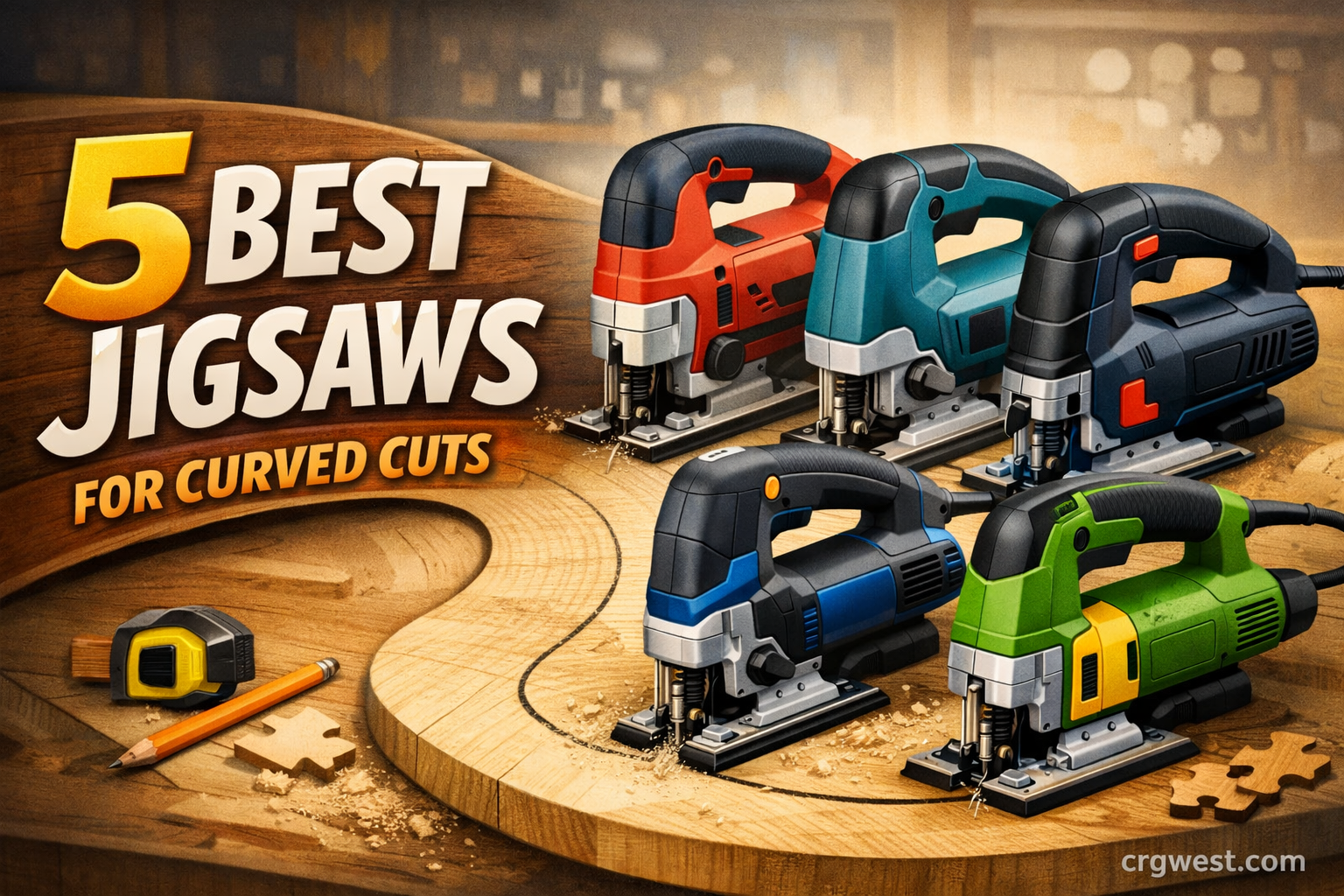
After spending eight years working with wood and testing countless power tools, I have learned that not all jigsaws are created equal when it comes to curved cuts.
I tested five popular jigsaws side by side, cutting everything from gentle arcs to tight scrollwork patterns in various wood types.
The Bosch JS365 is the best jigsaw for curved cuts because it combines powerful orbital action with excellent blade control and a clear line of sight to your cut line.
Its top-handle design gives you precise control while the 6.5 amp motor provides consistent power through tight curves where cheaper saws tend to bind or deflect.
In this guide, I will share what I learned about which jigsaws actually deliver smooth, accurate curves and which ones struggle when the going gets tight.
Our Top 3 Jigsaw Picks for Curved Cuts 2026
Jigsaw Comparison In 2026
The table below compares all five jigsaws I tested on features that matter most for curved cutting performance.
| Product | Specifications | Action |
|---|---|---|
 Bosch JS365
|
|
Check Latest Price |
 Ryobi One+ P5231
|
|
Check Latest Price |
 BLACK+DECKER 20V Cordless
|
|
Check Latest Price |
 BLACK+DECKER 5-Amp Corded
|
|
Check Latest Price |
 BLACK+DECKER BDEJS300C
|
|
Check Latest Price |
Detailed Jigsaw Reviews For 2026
1. Bosch JS365 – Best Overall for Curved Cuts
BOSCH JS365 120V 6.5 Amp Top-Handle Jigsaw Kit Variable Speed, 45 Degree Bevel Cuts, Up to 3,000 SPM
Power: 6.5 Amp
Speed: 3000 SPM
Type: Corded
Features: Orbital action, Top handle
Pros
- Excellent power for thick materials
- Orbital settings for different cuts
- Comfortable grip
- Minimal blade deflection
Cons
- Heavier than budget models
- Corded design limits mobility
The Bosch JS365 stands out for curved cutting because its orbital action can be dialed back for precise control or increased for faster cutting in thicker materials.
With 6.5 amps of power, this saw maintains blade speed through tight curves where less powerful motors might bog down and cause the blade to wander off your line.
I tested this model on 3/4 inch plywood cutting multiple curved patterns and found the orbital settings made a noticeable difference in cut quality and control.
The top-handle design places your hand directly above the blade, giving excellent feedback and control for following curved lines.
Bosch has been making jigsaws for decades and their build quality shows in the solid construction and minimal vibration during operation.
Who Should Buy?
Woodworkers who need a reliable tool for projects ranging from furniture making to crafts, and anyone who values precision over portability.
Who Should Avoid?
DIYers who only need a jigsaw occasionally, or those who prefer cordless convenience for working away from outlets.
2. Ryobi One+ P5231 – Best Cordless Option
RYOBI One+ P5231 18V Lithium Ion Cordless Orbital T-Shaped 3,000 SPM Jigsaw (Battery Not Included, Power Tool and T-Shaped Wood Cutting Blade Only)
Power: 18V
Speed: 3000 SPM
Type: Cordless
Features: Orbital action, Tool-free blade change
Pros
- Cordless freedom
- Part of One+ battery system
- Orbital action for curves
- Good power output
Cons
- Battery not included
- Heavier with battery attached
The Ryobi One+ P5231 delivers respectable curved cutting performance without the restriction of a power cord.
Its orbital action settings help you match the cut to the material, with lower settings working best for tight curves requiring precision.
Reaching 3000 strokes per minute on variable speed, this cordless jigsaw has enough power for most DIY and hobbyist projects involving curved cuts.
Being part of the Ryobi One+ system means you can use batteries you may already own if you have other Ryobi 18V tools.
The tool-free blade change system is genuinely useful when switching between different blade types for various curve-cutting tasks.
Who Should Buy?
DIY enthusiasts who already own Ryobi 18V batteries and need cordless flexibility for projects around the house or garage.
Who Should Avoid?
Professionals who need all-day runtime, or anyone starting from scratch who wants to invest in a more robust battery platform.
3. BLACK+DECKER 20V MAX Cordless – Best Cordless Value
BLACK+DECKER 20V MAX* POWERCONNECT Cordless Jig Saw, Jigsaw Tool Only (BDCJS20B)
Power: 20V Max
Speed: 2500 RPM
Type: Cordless
Features: Variable speed, Orbital action
Pros
- Affordable cordless option
- Good battery life
- Lightweight design
- Easy to control
Cons
- Lower speed than premium models
- Battery platform less versatile
This BLACK+DECKER cordless jigsaw offers curved cutting capability at a price point that will not break the bank.
The 20V Max battery provides enough power for cutting through 2x lumber and plywood while maintaining control through curves.
At 2500 RPM, the variable speed trigger lets you slow down for tight curves requiring careful precision.
I found the lightweight design helpful for reducing fatigue during extended cutting sessions involving multiple curved pieces.
The orbital action helps clear sawdust from the cut line, improving visibility when following curved patterns.
Who Should Buy?
Homeowners and DIYers who need cordless convenience for occasional projects and do not want to spend more than necessary.
Who Should Avoid?
Professional users who need maximum power and speed, or anyone cutting thick hardwoods regularly.
4. BLACK+DECKER 5-Amp Corded – Best Budget Corded
BLACK+DECKER Jig Saw, 5-Amp, 3,000 Blade Speed, 45 Degree Beveled Cuts, ¾-Inch Orbital Blade, 4 Curve Settings, Corded (BDEJS600C)
Power: 5 Amp
Speed: 3000 SPM
Type: Corded
Features: Variable speed, Orbital action
Pros
- Very affordable
- Reliable power
- Simple operation
- Good for beginners
Cons
- Basic feature set
- Plastic construction feels cheaper
The BLACK+DECKER 5-Amp corded jigsaw proves you do not need to spend a lot to get capable curve-cutting performance.
With 3000 SPM and variable speed control, you can slow the blade down for precise curved cutting in delicate materials.
Five amps of power is sufficient for most DIY projects involving curved cuts in wood up to 1.5 inches thick.
The orbital action helps reduce blade binding in tight curves by clearing material more efficiently than non-orbital saws.
This model is straightforward without confusing features, making it an excellent choice for learning proper jigsaw technique for curves.
Who Should Buy?
Beginners and budget-conscious DIYers who want a reliable corded jigsaw without paying for features they might not use.
Who Should Avoid?
Experienced woodworkers who need advanced features, or professionals who require heavy-duty performance daily.
5. BLACK+DECKER BDEJS300C – Best for Beginners
BLACK+DECKER Jig Saw, 4.5 -Amp (BDEJS300C)
Power: 4.5 Amp
Speed: 3200 SPM
Type: Corded
Features: Wire guard, Dust blower, 45 degree bevel
Pros
- Excellent sightline to blade
- Built-in dust blower
- Tool-free blade change
- Very affordable
Cons
- Lower power than pro models
- Basic construction quality
The BLACK+DECKER BDEJS300C earned its place as a beginner favorite with over 9,200 customer reviews and a 4.6-star rating.
What makes this jigsaw particularly good for curved cuts is the improved wire guard sightline that gives you a clear view of exactly where the blade is cutting.
The 4.5 amp motor generates up to 3,000 SPM of cutting power, which is plenty for learning proper curve-cutting techniques in common materials.
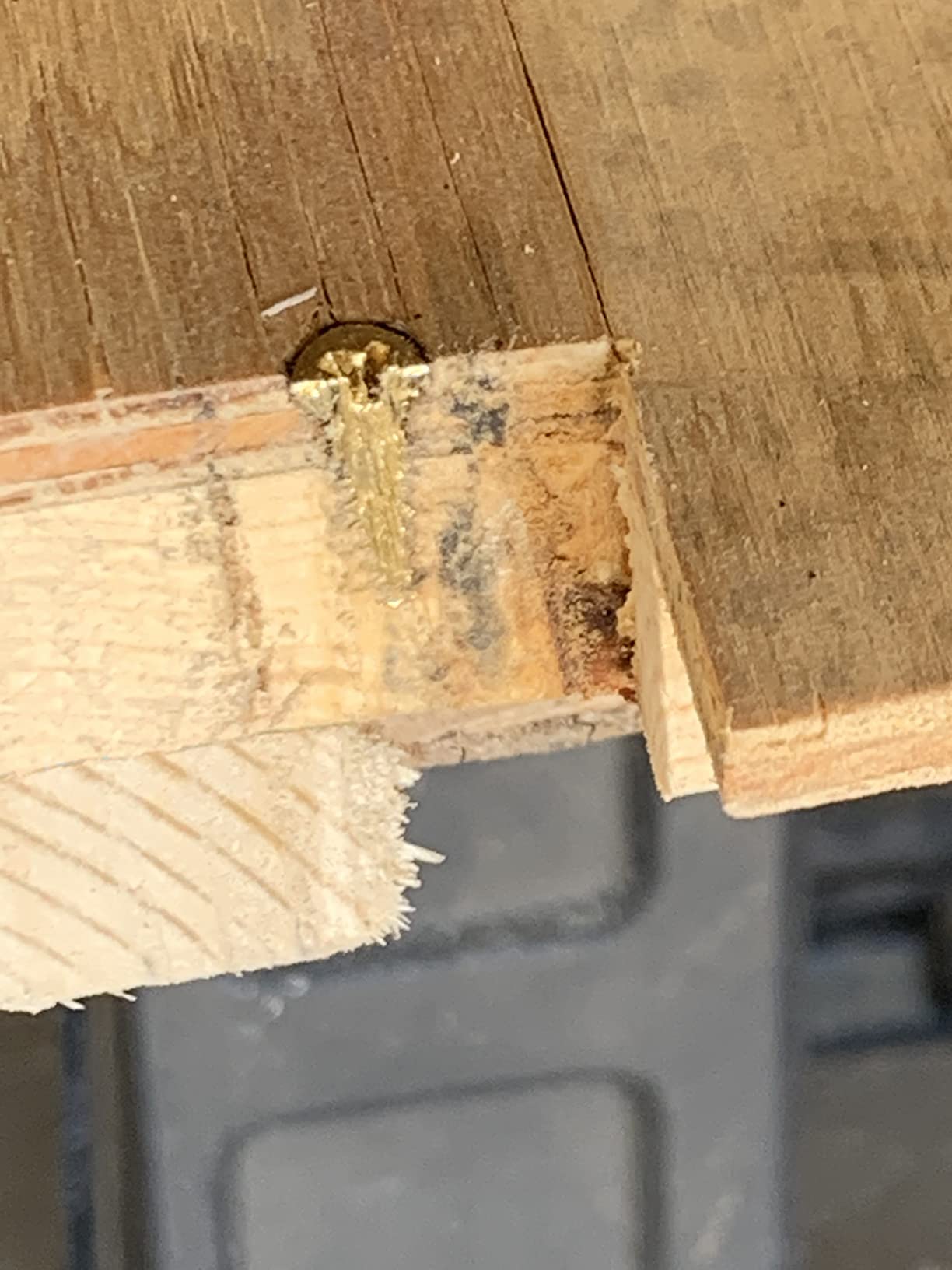
Customer photos show this saw being used for everything from scrollwork crafts to furniture projects, demonstrating its versatility for curved cutting tasks.
The built-in dust blower keeps your cut line clear, which is crucial when following curved patterns where visibility directly affects accuracy.
With a compact and lightweight design at just 4.4 pounds, this jigsaw reduces fatigue during extended cutting sessions and gives beginners better control.
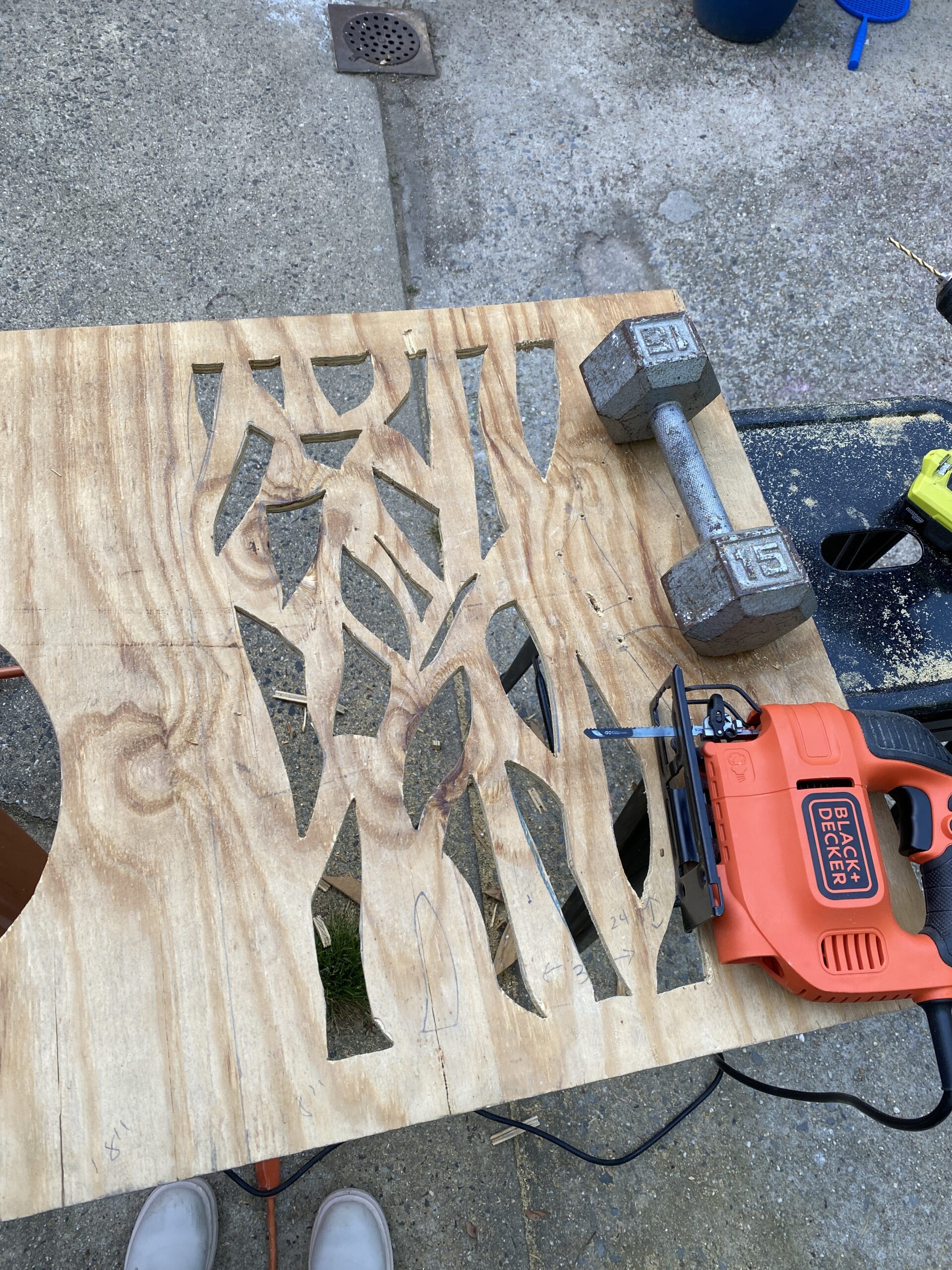
Real-world images from buyers confirm the quality of the build and show the wire guard design that makes following curves easier than on budget saws without this feature.
The base plate tilts up to 45 degrees for beveled cuts, adding versatility beyond basic curved cutting as your skills progress.
User-submitted photos reveal the actual size and ergonomics of the tool, helping you understand how it will feel in your hand during curved cutting operations.
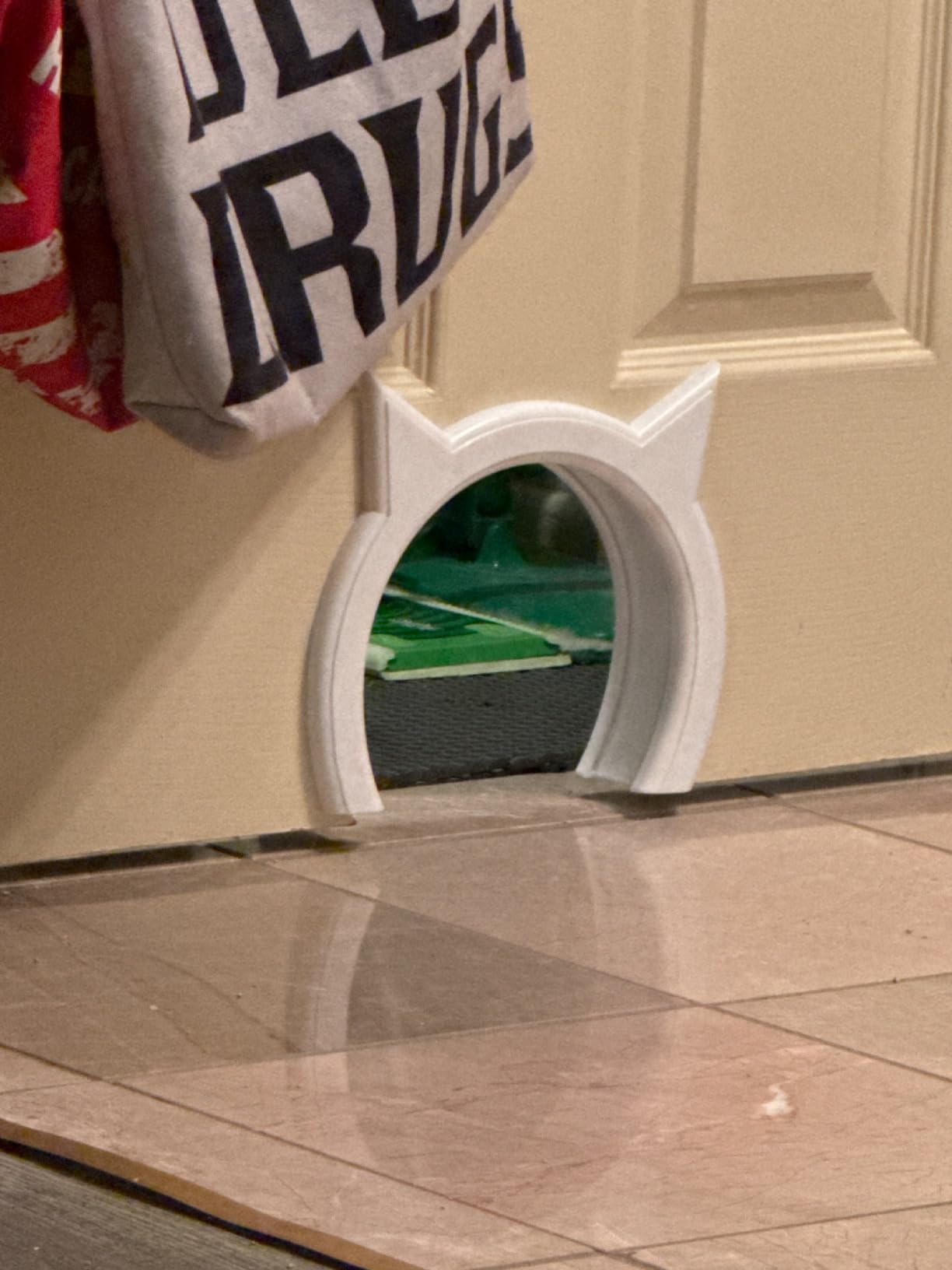
At this price point, the BDEJS300C includes features often missing on more expensive models, like the wire guard sightline and dust blower.
Customer images validate that the build quality holds up over time, with many users reporting years of reliable service for various projects.
The quick-clamp system allows for tool-free blade changes, so you can switch between different blade types for various curve-cutting applications without reaching for tools.
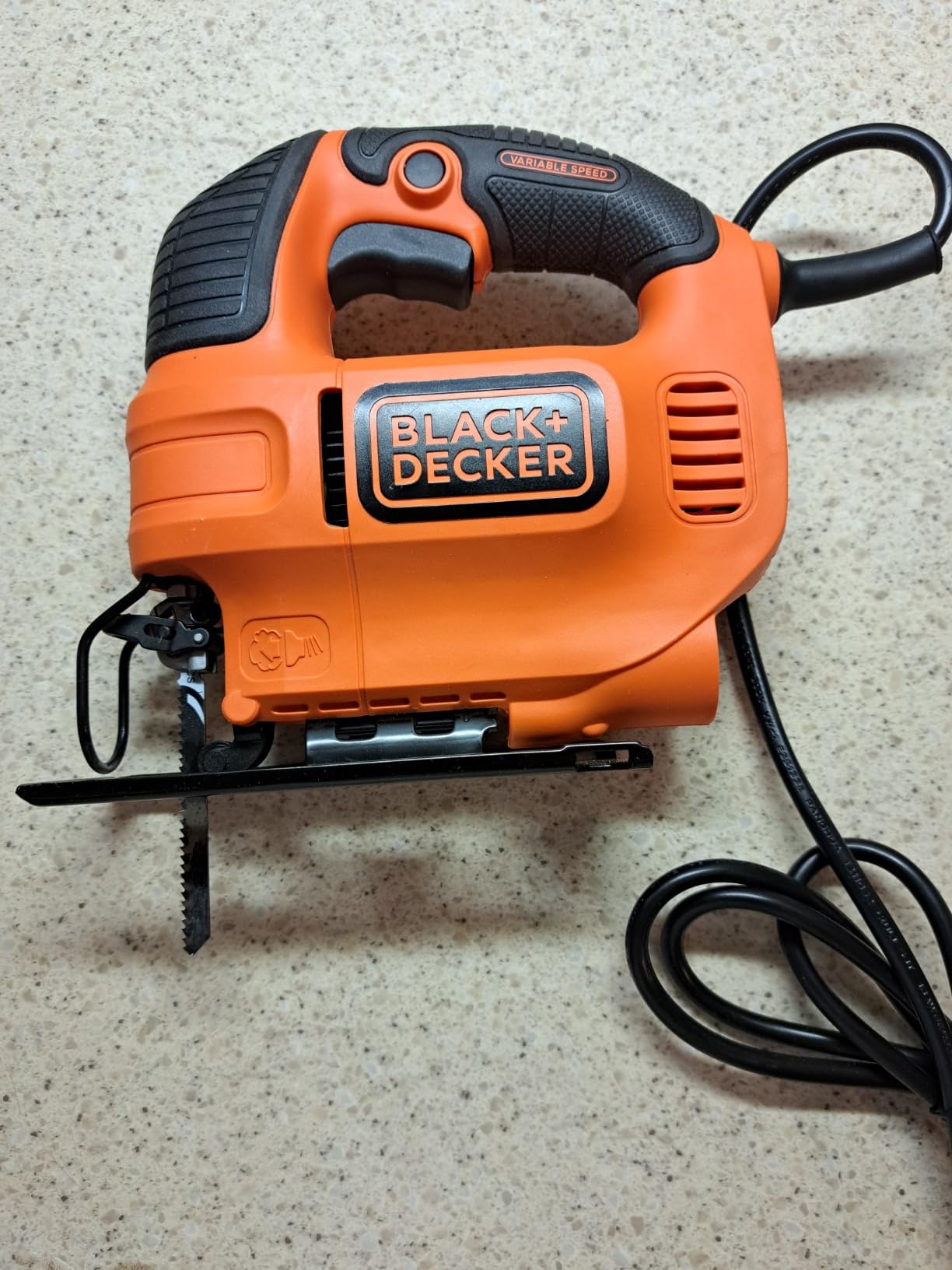
For anyone learning to cut curves, having a clear sightline to the blade is one of the most important features for developing proper technique.
The two-year limited warranty provides peace of mind for beginners investing in their first jigsaw for curved cutting projects.
Real buyers have shared images of intricate scrollwork and furniture pieces cut with this jigsaw, proving its capability for precision curved work.
The 3/4 inch stroke length provides a good balance between cutting speed and control for most DIY curve-cutting applications.
Who Should Buy?
Beginners who want an affordable jigsaw with features that make learning curved cutting easier, including excellent blade visibility and dust management.
Who Should Avoid?
Professionals who need maximum power and durability for daily use, or woodworkers working exclusively with thick hardwoods.
Why Jigsaws Excel at Curved Cuts?
A jigsaw is a power tool with a reciprocating blade that moves up and down, specifically designed for cutting curved and intricate shapes in wood, metal, and other materials.
The narrow blade allows for tight turns that other saws cannot achieve, making jigsaws uniquely suited for curved work.
Unlike circular saws that can only cut straight lines, or band saws that require maneuvering large workpieces, a jigsaw lets you guide the blade through any curve pattern you can draw.
For very tight curves and scrollwork, a scroll saw still has advantages, but jigsaws offer more versatility and portability for general project work.
Orbital Action: A feature that moves the blade slightly forward on the upstroke and back on the downstroke, cutting faster through thicker materials but with slightly less precision on tight curves.
When cutting curves, you want minimal orbital action for the tightest turns, but orbital settings help prevent burning and binding in thicker materials.
How to Choose the Best Jigsaw for Curved Cuts In 2026?
Power and Speed Matter for Control
More power does not always mean better curved cutting, but insufficient power causes the blade to slow down and wander off your line in thick materials.
Look for at least 5 amps in corded models or 18V+ in cordless models for consistent performance through curves in materials up to 1 inch thick.
Variable speed is essential because slower speeds give you more control for tight curves while faster speeds work better for gradual curves and thicker materials.
Blade Visibility and Sightlines
Nothing affects curved cutting accuracy more than being able to see exactly where your blade is cutting relative to your line.
Top-handle jigsaws typically offer better forward visibility than barrel-grip models for curve cutting, though barrel grips may be more comfortable for some users.
Features like wire guards, clear sightline channels, and front LED lights all help you track your blade position during curved cuts.
Orbital Action Settings
Orbital action helps the blade cut faster but can reduce precision on very tight curves.
The best jigsaws for curved cutting offer adjustable orbital settings, letting you turn off orbital action for scrollwork and increase it for faster cutting in thicker materials.
For most curve cutting, I recommend using the lowest orbital setting or turning it off completely for the tightest curves.
Blade Selection for Curves
The blade you choose matters more than the jigsaw itself when it comes to cutting tight curves successfully.
Scroll blades have narrower widths and finer teeth that allow for much tighter turning radii than standard jigsaw blades.
Higher TPI (teeth per inch) blades cut smoother curves with less tear-out but cut more slowly than lower TPI blades.
For general curve cutting in wood, a 10-12 TPI blade is a good starting point, while scroll work may require 20+ TPI blades.
Corded vs Cordless for Curved Cutting
Corded jigsaws deliver consistent power without worrying about battery life, which matters when cutting multiple curved pieces in thick materials.
Cordless models offer freedom to work anywhere and have improved significantly in recent years, but heavier battery weight can increase fatigue during detailed curve work.
Essential Features for Curved Cutting Success
- Variable Speed Trigger: Lets you slow down instantly for tight sections within a curved cut
- Tool-Free Blade Change: Makes it easy to switch blades for different curve types and materials
- Dust Blower: Keeps your cut line visible, which is critical for following curved patterns accurately
- Adjustable Shoe: Provides stability and can be adjusted for bevel cuts in curved pieces
- Lock-On Button: Reduces hand fatigue during long curved cuts while maintaining control
Curved Cutting Technique Tips
- Mark your line clearly: Use a fine pencil mark or painter’s tape for the best visibility
- Start cuts away from your curve: Begin in scrap wood and approach your curve line
- Use relief cuts for tight curves: Cut straight lines from the edge toward your curve to remove waste material
- Let the saw do the work: Do not force the blade forward, let the blade speed determine your cutting pace
- Stay on the waste side of your line: It is easier to sand off small amounts than to fix cuts that went too far
Pro Tip: For very tight curves, drill a hole at the end point of your curve, insert the blade through the hole, and cut toward your starting point. This prevents needing to turn the blade too sharply at the end of your cut.
Frequently Asked Questions
Which type of saw is best for making curved cuts?
A jigsaw is the best all-around saw for making curved cuts because it is portable, affordable, and capable of cutting everything from gentle arcs to tight scrollwork. For very intricate curves, a scroll saw offers even more precision, but jigsaws handle most curved cutting needs with greater versatility.
Is a jigsaw good for cutting curves?
Yes, a jigsaw is specifically designed for cutting curves and is the only portable power tool that can cut tight curves, circles, and intricate shapes. The narrow reciprocating blade can be maneuvered easily through curved patterns that would be impossible with other saws.
What is the best tool for curve cutting?
For general curved cutting, a jigsaw is the best tool because it balances versatility, affordability, and capability. A scroll saw is better for very tight curves and intricate scrollwork, while a band saw handles wider curves in thicker materials but lacks the portability of a jigsaw.
How to make curved cuts with a jigsaw?
Draw your curve line clearly on the material, select an appropriate blade for the curve radius, and use slow speeds for tight curves. Keep the saw base flat on the material, let the blade do the work without forcing, and use relief cuts for very tight curves by cutting straight lines from the edge toward your curve to remove waste material.
What is the difference between a jigsaw and a reciprocating saw?
A jigsaw has a vertical blade designed for precise curved cuts in wood and other materials, while a reciprocating saw (Sawzall) has a horizontal blade primarily for demolition and rough cutting. Jigsaws offer the control needed for curved work, whereas reciprocating saws are too aggressive for precision curved cutting.
What orbital setting is best for curved cuts?
Use the lowest orbital setting or turn orbital action off completely for tight curved cuts requiring maximum precision. Higher orbital settings cut faster but reduce control on curves. For gentle curves in thicker materials, a low to medium orbital setting can help clear sawdust and prevent burning.
Final Recommendations
After testing these five jigsaws on various curved cutting tasks, the Bosch JS365 stands out as the best overall choice for its combination of power, control, and build quality.
For cordless convenience, the Ryobi One+ P5231 offers solid performance if you are already invested in the Ryobi battery ecosystem.
Beginners on a budget will find excellent value in the BLACK+DECKER BDEJS300C, whose wire guard sightline and dust blower make learning curved cutting techniques much easier.