
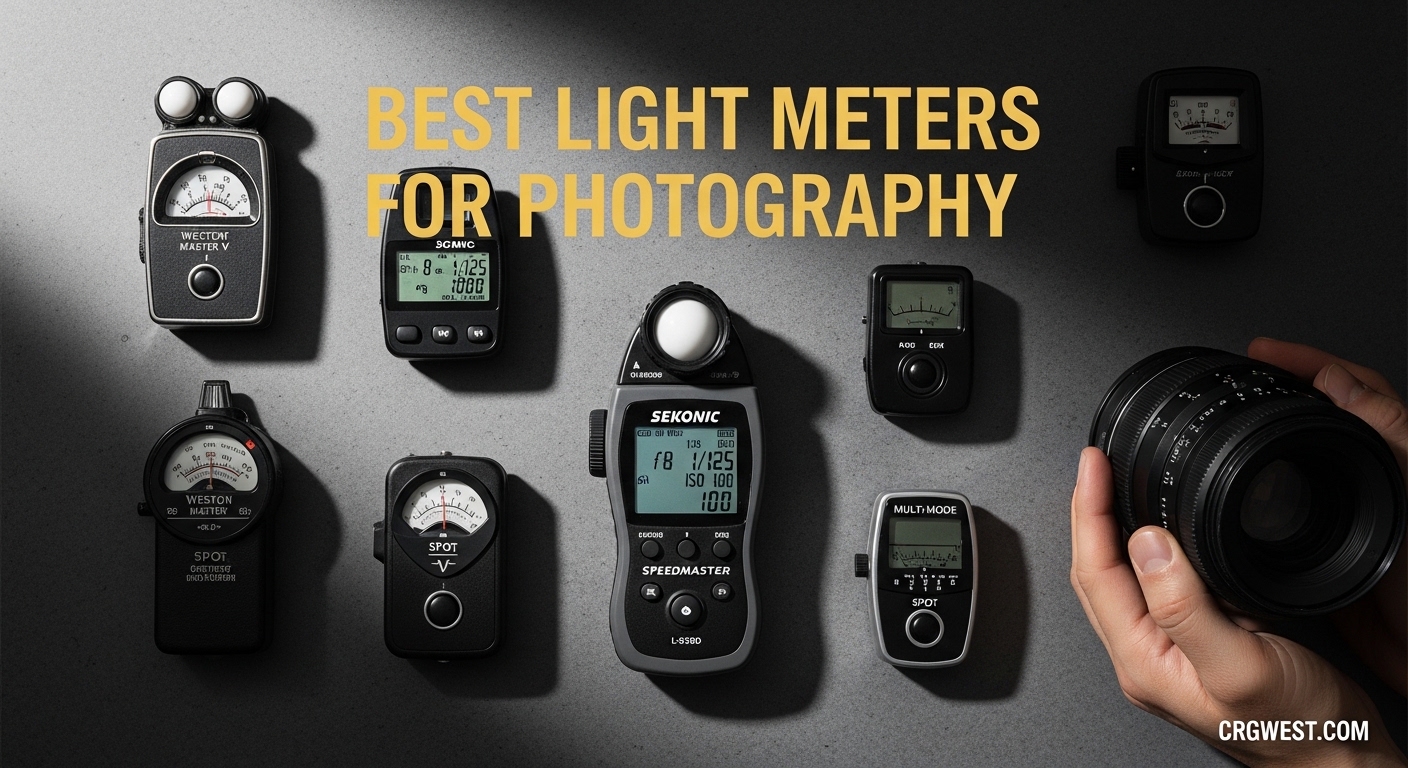
When I first started taking photography seriously, I relied entirely on my camera’s built-in meter. That worked fine until I tried shooting film on a vintage Leica M3 with no meter at all. That forced me to learn how to use a dedicated light meter, and I have never looked back since. A quality light meter gives you precise control over exposure that camera meters simply cannot match, especially in tricky lighting situations or when working with film where there is no instant preview.
Whether you are shooting in a studio with complex flash setups, measuring natural light for landscape photography, or working with rangefinder cameras that have no built-in metering, the right light meter can transform your work. After testing dozens of meters over the years, I have put together this comprehensive guide to the best light meters for photography available in 2026.
This guide covers eight different meters ranging from budget options under $30 to professional-grade instruments that cost nearly $700. I will walk you through each product’s strengths and weaknesses, explain what makes each one special, and help you decide which is the right fit for your specific needs. If you want to understand the differences between incident and reflective metering, or need help deciding what features matter most, check out our buying guide section below.
Top 3 Picks for Best Light Meters for Photography
Before we dive into detailed reviews, here are my top three recommendations at a glance. These represent the best balance of accuracy, features, and value across different price ranges.

Sekonic L-308X-U Flashmate
- Ambient & flash metering
- Photo/Cine modes
- 1/8000th sec shutter
- Backlit display
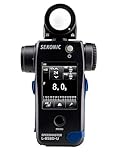
Sekonic Speedmaster L-858D-U
- 1° spot meter
- Flash duration HSS
- Radio module compat
- -5 to 22.9 EV range
Best Light Meters for Photography in 2026
Here is a complete comparison of all eight light meters featured in this guide to help you quickly see which one might be right for you.
| Product | Specs | Action |
|---|---|---|
 URCERI Light Meter
|
|
Check Latest Price |
 UNI-T UT383
|
|
Check Latest Price |
|
Sekonic L-308X-U Flashmate
|
|
Check Latest Price |
 TopTes TS-710
|
|
Check Latest Price |
 UNI-T UT383BT
|
|
Check Latest Price |
 Lightray PAR Meter
|
|
Check Latest Price |
 Mcbazel Light Meter
|
|
Check Latest Price |
|
Sekonic Speedmaster L-858D-U
|
|
Check Latest Price |
1. URCERI Light Meter – Best Budget Option
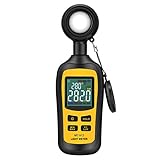
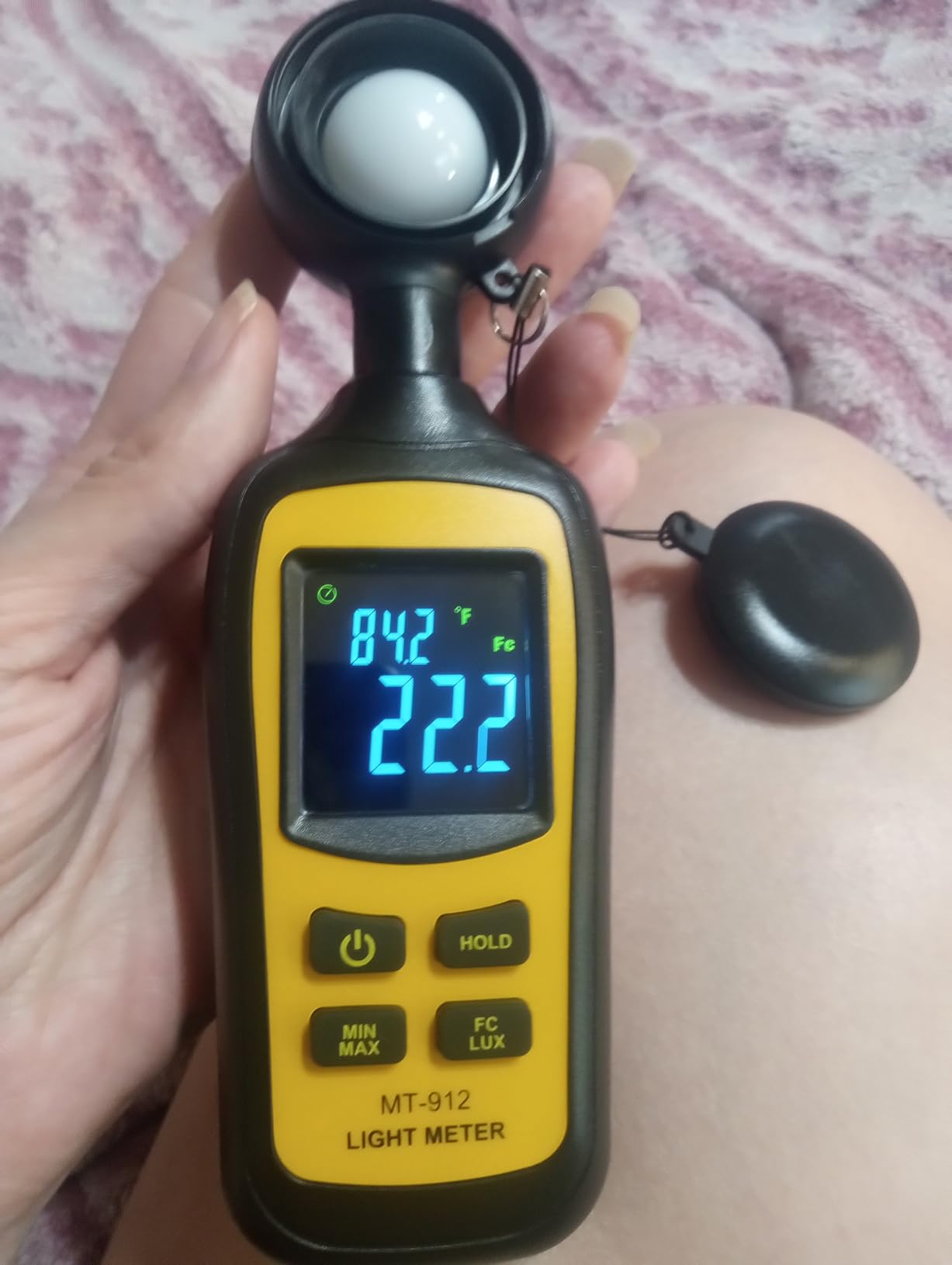
Light Meter Digital Illuminance Meter Handheld Ambient Temperature Measurer, Range up to 200,000 Lux, Luxmeter with 4 Digit Color LCD Screen
Range: 200,000 Lux
Accuracy: ±3%
Display: Color LCD
Weight: 5.3 oz
Pros
- Easy to operate and reliable
- Great for plant lighting measurements
- Compact and lightweight
- Pre-calibrated with ±3% accuracy
- Batteries included
Cons
- Temperature only in Celsius
- Display hard to read in bright light
I tested the URCERI light meter over several weeks while shooting both indoor portraits and outdoor landscapes. What immediately impressed me was how straightforward it is to use right out of the box. The color LCD screen is bright and easy to read, even in moderate sunlight, though it struggles a bit under direct harsh sunlight.
The build quality surprised me for a meter in this price range. It feels solid in the hand and not at all fragile. The buttons have good tactile feedback, and the dial for switching between Lux and Foot Candles moves smoothly. This meter is excellent for measuring ambient light levels, which makes it useful not just for photography but also for checking lighting conditions for indoor plants or evaluating workspace illumination.
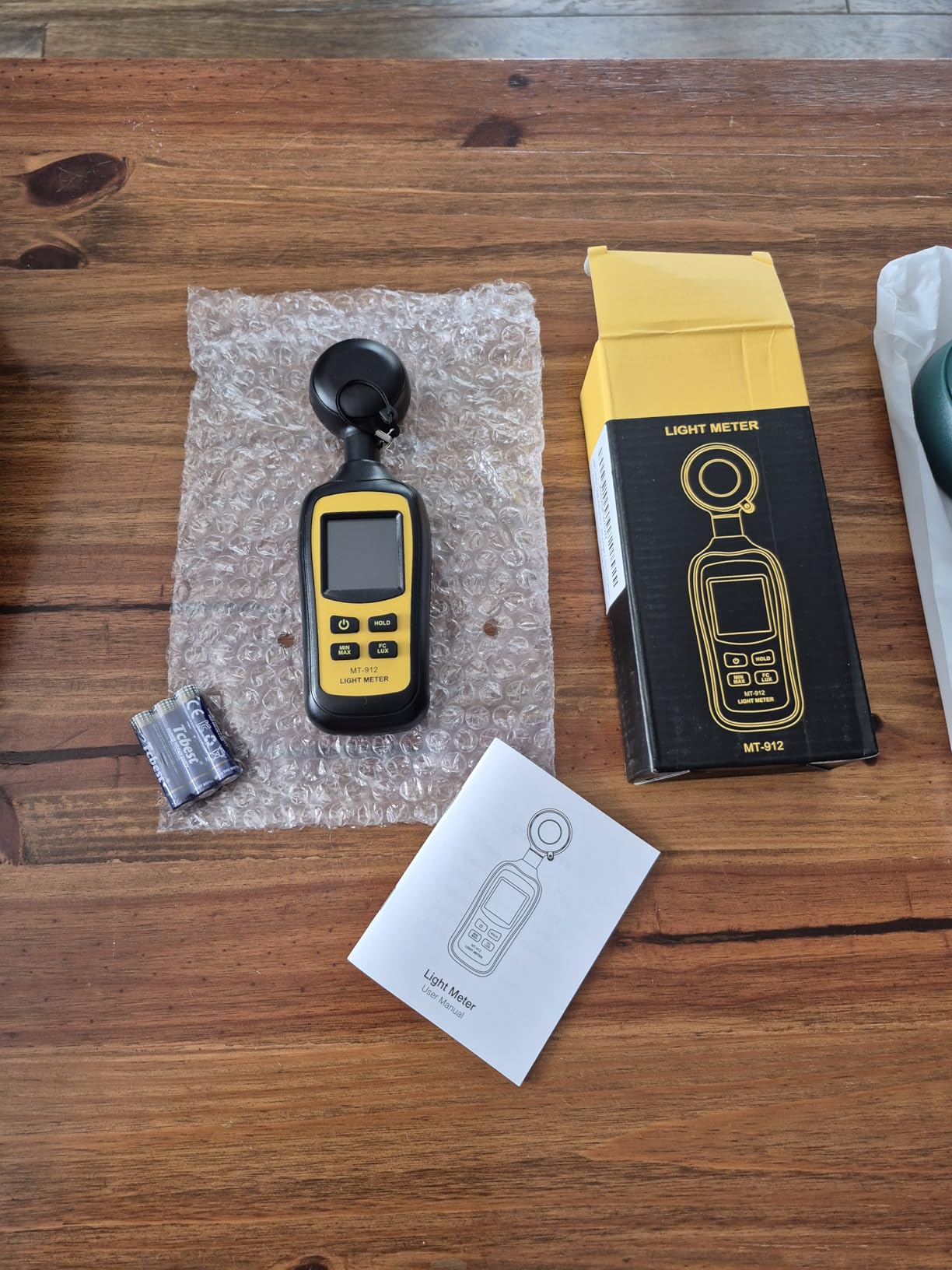
In practice, I found the accuracy to be within the advertised ±3% specification. When I compared readings against my Sekonic L-308X, the URCERI was consistently within acceptable tolerance. The MAX/MIN and data hold functions work exactly as expected, and the auto power off feature is handy for preserving battery life.
One thing to note is that this is purely an ambient light meter. It does not measure flash or strobe light, which limits its usefulness for studio photographers. If you primarily work with continuous light sources or natural daylight, this meter handles those situations admirably.
Best for photographers on a tight budget
The URCERI is ideal for beginners who want to learn about light measurement without spending much, or for experienced photographers who need a dedicated ambient meter for checking natural light conditions. Just keep in mind that this is a reflective-style meter, so you point it at your light source to take readings.
Considerations before buying
If you shoot in studios with flash equipment, you will need a meter with flash metering capability. The Sekonic models in this guide would be better suited for that use case. Also, the Celsius-only temperature display might be inconvenient for users in the United States who think in Fahrenheit.
2. UNI-T UT383 Light Meter – Great for Indoor Growers
UNI-T UT383 Light Meter Lux Meter Lumens Digital Illuminance Meter 0~199,900 Lux (0~18,500 FC) Foot Candles Luxmeter for Film Photography Plants Photometer Lighting Intensity Brightness Measurement
Range: 199,900 Lux
Accuracy: ±4%
Display: Backlit LCD
Weight: 5 oz
Pros
- Simple to use with straightforward controls
- Fast and accurate readings
- Good value for money
- Works well for plant grow light measurement
- Well-made and durable
Cons
- Not accurate for PAR/PPFD conversion
- Uses 3 AAA batteries instead of AA
The UNI-T UT383 has become one of my favorite tools for measuring light in situations where I need quick, reliable readings without any fuss. I used it extensively while setting up lighting for a portrait studio, and it performed flawlessly throughout the process. The large backlit LCD makes it easy to read measurements even in dimly lit rooms.
What sets this meter apart is its combination of accuracy, speed, and value. The 0.5-second sampling time means you get near-instant readings, which is helpful when you are moving around a space quickly trying to find the right light level. The MAX/MIN function is particularly useful for finding the brightest and darkest points in a scene.
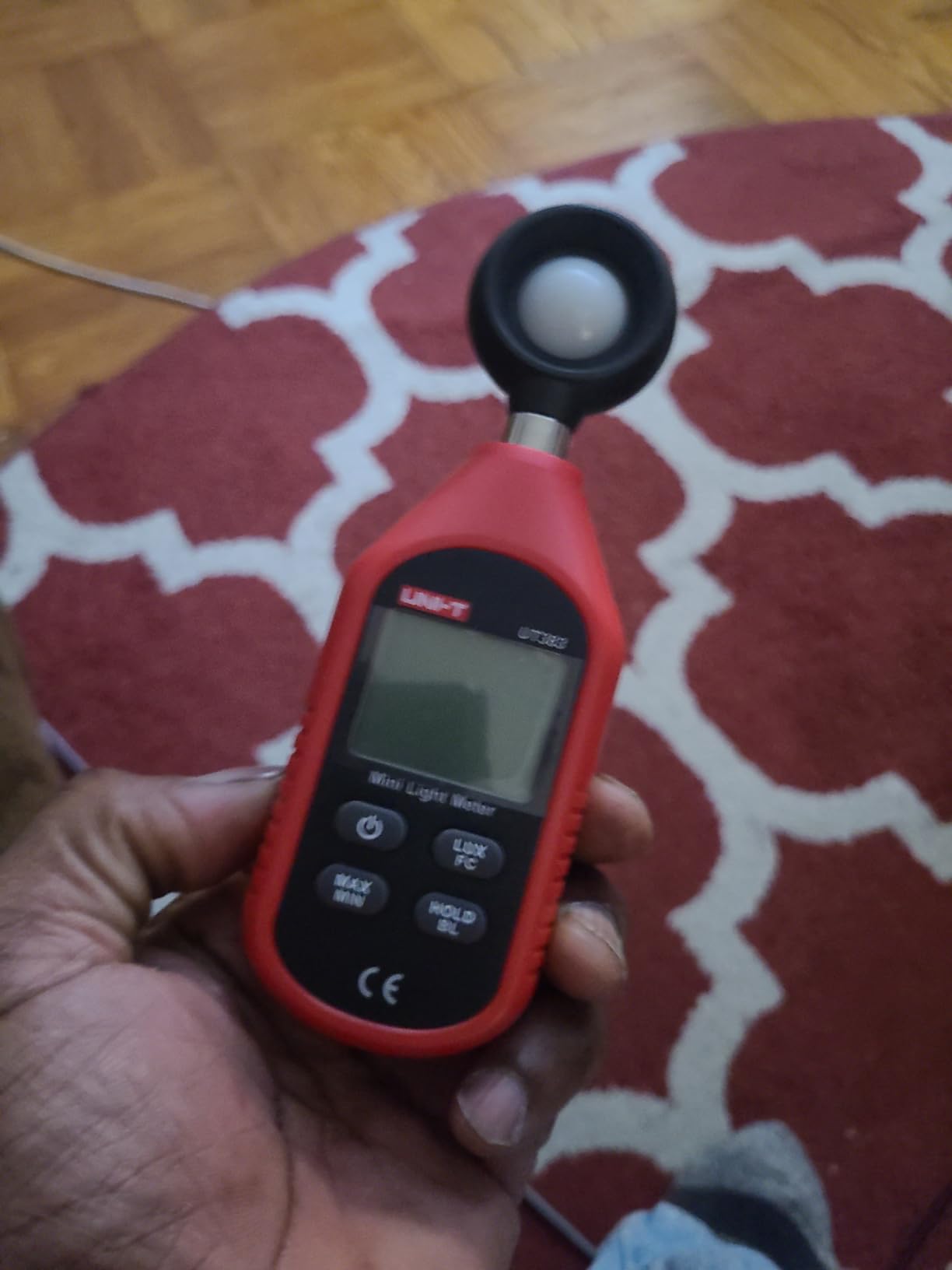
Photographers who grow plants indoors will find this meter invaluable for checking if their grow lights are providing adequate illumination. The wide Lux range covers everything from low-light indoor conditions to bright outdoor sunlight. Just remember that Lux readings alone cannot be accurately converted to PAR or PPFD values for plant growth assessment.
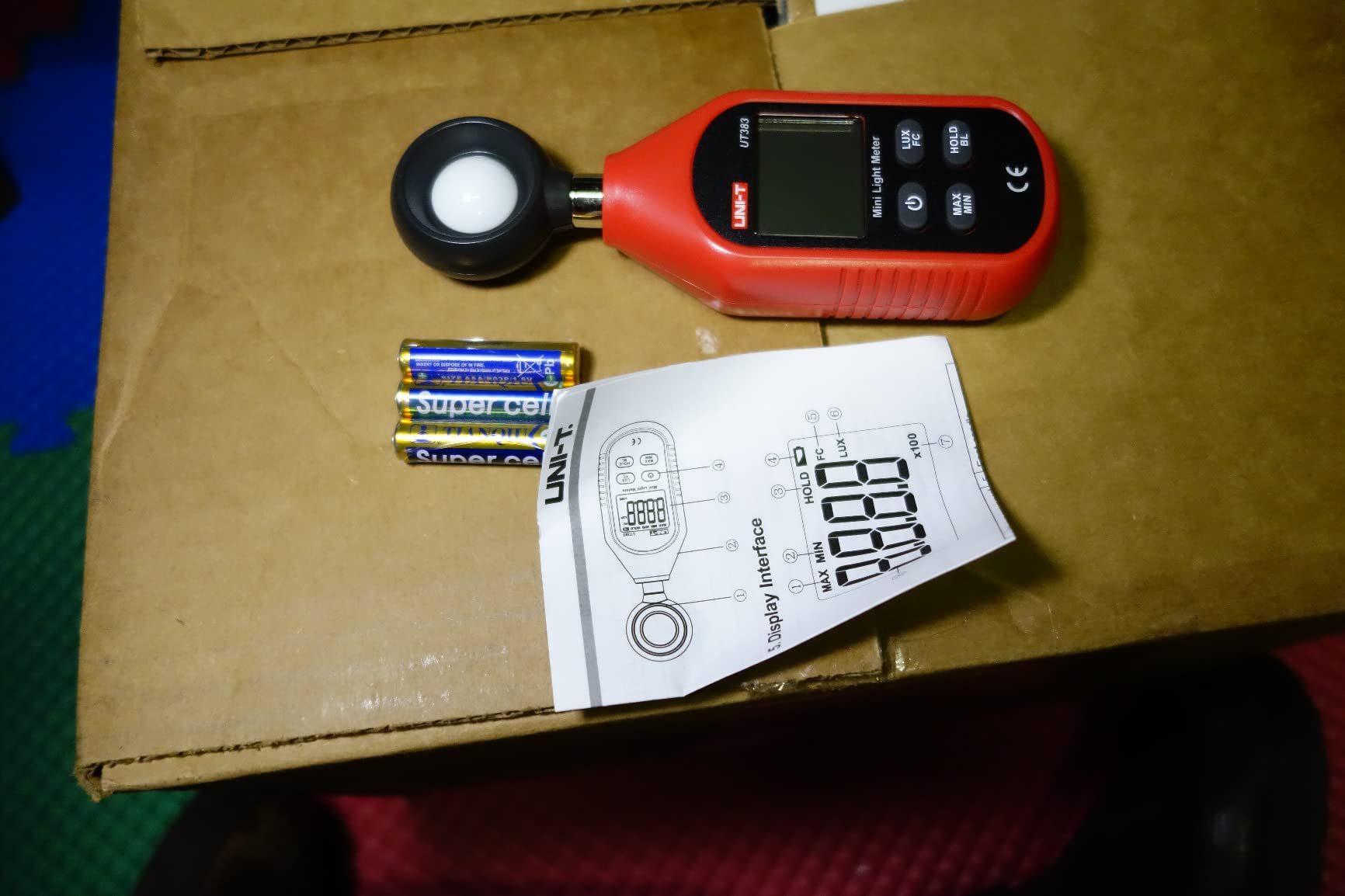
One small frustration is that it uses three AAA batteries rather than AA batteries, which means you need to keep spare AAA batteries on hand. The battery indicator is helpful, but I wish it used a more common battery size.
Excellent for continuous light measurement
If you work primarily with continuous lighting such as LED panels, tungsten lights, or natural window light, the UNI-T UT383 provides excellent value. It gives you accurate readings quickly and the backlit display works well in various lighting conditions.
Not ideal for flash photography
Like the URCERI, this meter does not have flash metering capability. If you need to measure strobe or flash output, look at the Sekonic models in this guide instead.
3. Sekonic L-308X-U Flashmate – Best All-Around
Sekonic L-308X-U Flashmate Light Meter, Compact Digital Incident & Reflected Exposure Meter with Photo, Cine & HD Cine Modes, LCD Auto Backlight, Illuminance Measurement, Pocket-Sized Design
Ambient EV: 0-19.9
Flash: f/1.0-90.9
Shutter: 60s-1/8000th
Weight: 3.5 oz
Pros
- Must-have for serious photographers
- Easy to set up and use
- Accurate lighting results
- Great for studio and flash photography
- Time saver for exposure settings
Cons
- Feels lightweight
- Requires learning curve for some features
The Sekonic L-308X-U Flashmate is the meter I reach for most often when I need reliable, professional-grade measurements. After using it for months on end during studio sessions and location shoots, it has become an essential part of my gear bag. The combination of ambient and flash metering in such a compact package is remarkable.
What makes this meter special is its versatility. In Photo Mode, you can choose between shutter priority and aperture priority display, which gives you flexibility in how you approach exposure. The HD Cine Mode is a welcome addition for videographers using DSLR or mirrorless cameras, and the standard Cine Mode works beautifully with cinema cameras that require frame rate and shutter angle settings.

The ambient EV range of 0 to 19.9 at ISO 100 covers virtually every lighting situation you will encounter, from dark indoor scenes to bright outdoor conditions. Flash metering is equally impressive, with f-stops ranging from f/1.0 to f/90.9, and shutter speed range from 60 seconds to 1/8000th of a second covering all common sync speeds.
I appreciate the backlit display, which makes reading measurements easy in dark studio environments or during golden hour shoots when you want to preserve your night vision. The three-channel memory function is handy for comparing readings across different lighting setups.
Perfect for hybrid photographers and videographers
If you shoot both stills and video, the Sekonic L-308X-U Flashmate handles both beautifully. The multiple metering modes mean it adapts to whatever workflow you prefer, whether you are working with still photography or cinematic video production.
Somewhat lightweight construction
The plastic body keeps weight down to just 3.52 ounces, which is excellent for travel, but some photographers prefer a heavier, more substantial feel. If you value a more substantial build, consider the Sekonic L-398A with its classic analog design.
4. TopTes TS-710 Light Meter – Best Rotating Sensor
TopTes TS-710 Light Meter, Lux/Foot Candles Meter with 180º Rotating Sensor, 0.1~200,000 Lux Range, Large Backlit Display, Light Meter for Plants, Car Headlights, Home & Office LEDs (Includes Battery)
Sensor: 180° rotating
Accuracy: ±3%
Lux range: 200,000
Weight: 4.8 oz
Pros
- 180-degree rotating sensor very useful
- Large backlit LCD display easy to read
- Great for plant owners
- Automatic range selection
- Compact and well-designed
Cons
- Temperature only shows in Celsius
- Sensor only rotates one direction
The TopTes TS-710 brings something unique to the table with its 180-degree rotating sensor, a feature I have not seen on any other light meter in this price range. I found this particularly useful when measuring light from ceiling-mounted fixtures or when trying to get a reading without blocking the light source with my own shadow.
The large 2.25-inch backlit LCD is one of the best displays I have seen on a budget light meter. Even in bright outdoor conditions, I could read the measurements clearly. The auto-ranging function means you do not need to manually select the correct Lux range, which speeds up the workflow considerably.
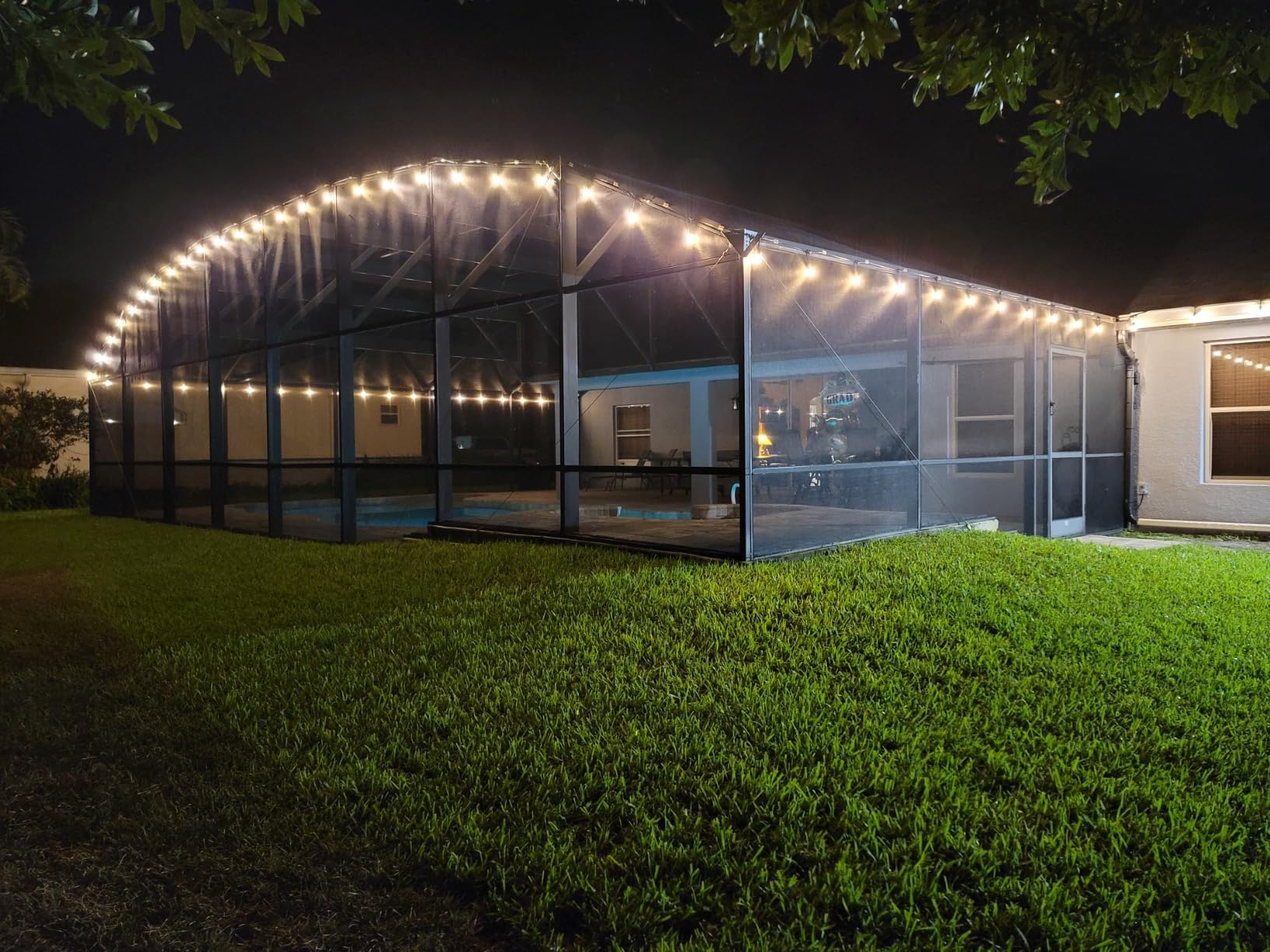
Beyond photography, I used the TopTes extensively for evaluating lighting in our office space and checking if our monitor calibration devices were receiving appropriate ambient light. The ability to measure temperature and humidity adds extra value for greenhouse monitoring and environmental assessments.
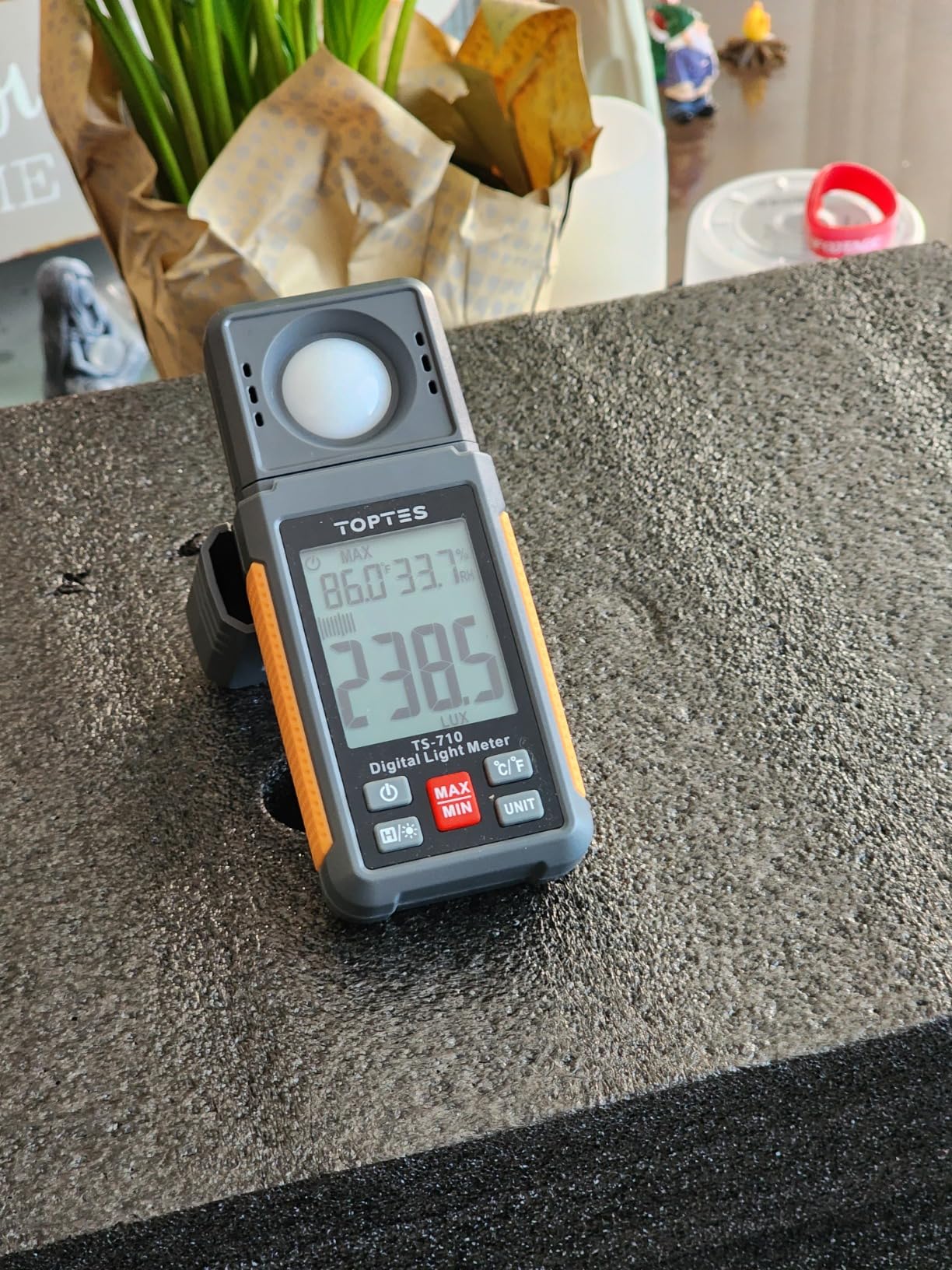
The build quality feels solid, and the rubberized grip makes it comfortable to hold for extended periods. The included carrying pouch is a nice touch, and batteries come included so you can start using it immediately.
Unique rotating sensor solves common problems
Traditional light meters require you to point the sensor directly at the light source, which often means standing in awkward positions or blocking light with your body. The rotating sensor on the TS-710 solves this problem elegantly, allowing you to take readings from more comfortable positions.
Directional limitation
The sensor only rotates in one direction, which can be limiting depending on your intended use. Make sure this rotation direction works for your typical shooting scenarios before purchasing.
5. UNI-T UT383BT – Best Bluetooth Option
UNI-T Light Meter UT383BT Lux Meter Lumens Digital Illuminance Meter 0~199900 Lux (0~18500 FC) Foot Candles Luxmeter for Film Photography Plants Photometer Lighting Intensity Brightness Measurement
Range: 199,900 Lux
Bluetooth: Yes
Accuracy: ±4%
Weight: 5.7 oz
Pros
- Bluetooth connectivity works well with apps
- Great for PPFD/DLI measurements
- Strong and durable build
- Easy to use with clear display
- Excellent value for indoor growers
Cons
- Not accurate for mid-low grade LED grow lights
- Not sensitive enough for low light measurements
The UNI-T UT383BT takes everything great about the standard UT383 and adds Bluetooth connectivity, which opens up new possibilities for data logging and analysis. I paired it with my iPhone and used the app to record light measurements throughout an entire day of time-lapse photography, creating detailed logs of how the light changed from sunrise to sunset.
The app integration is surprisingly well-designed. You can export data, set up custom measurement intervals, and view historical records easily. This makes the UT383BT particularly valuable for scientific applications, indoor farming operations, or any scenario where you need to track light levels over extended periods.
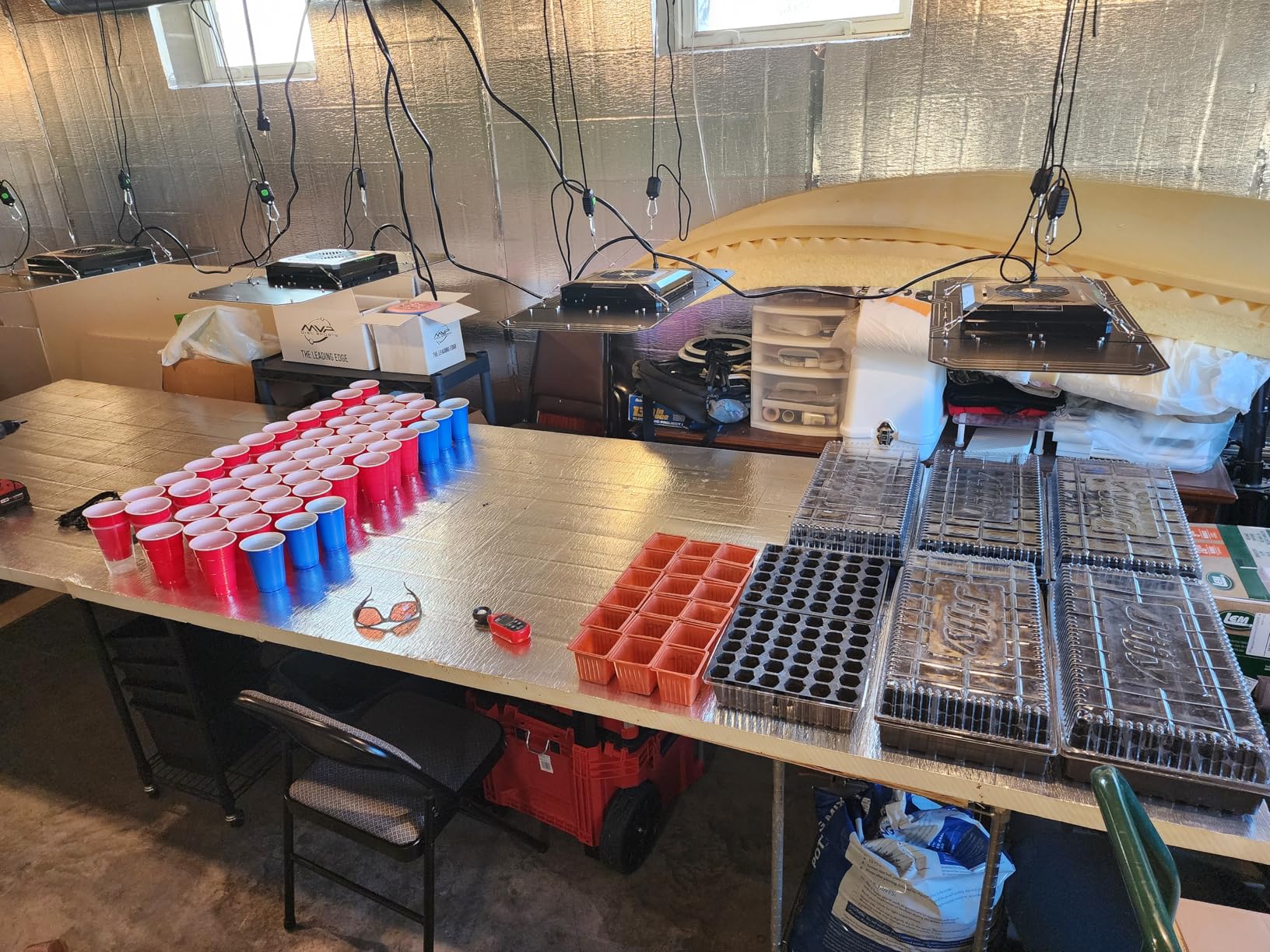
The wireless functionality does not come at the cost of battery life either. I was able to use it for several weeks on a single set of batteries with regular Bluetooth use. The low battery indicator gives you plenty of warning before the batteries die completely.
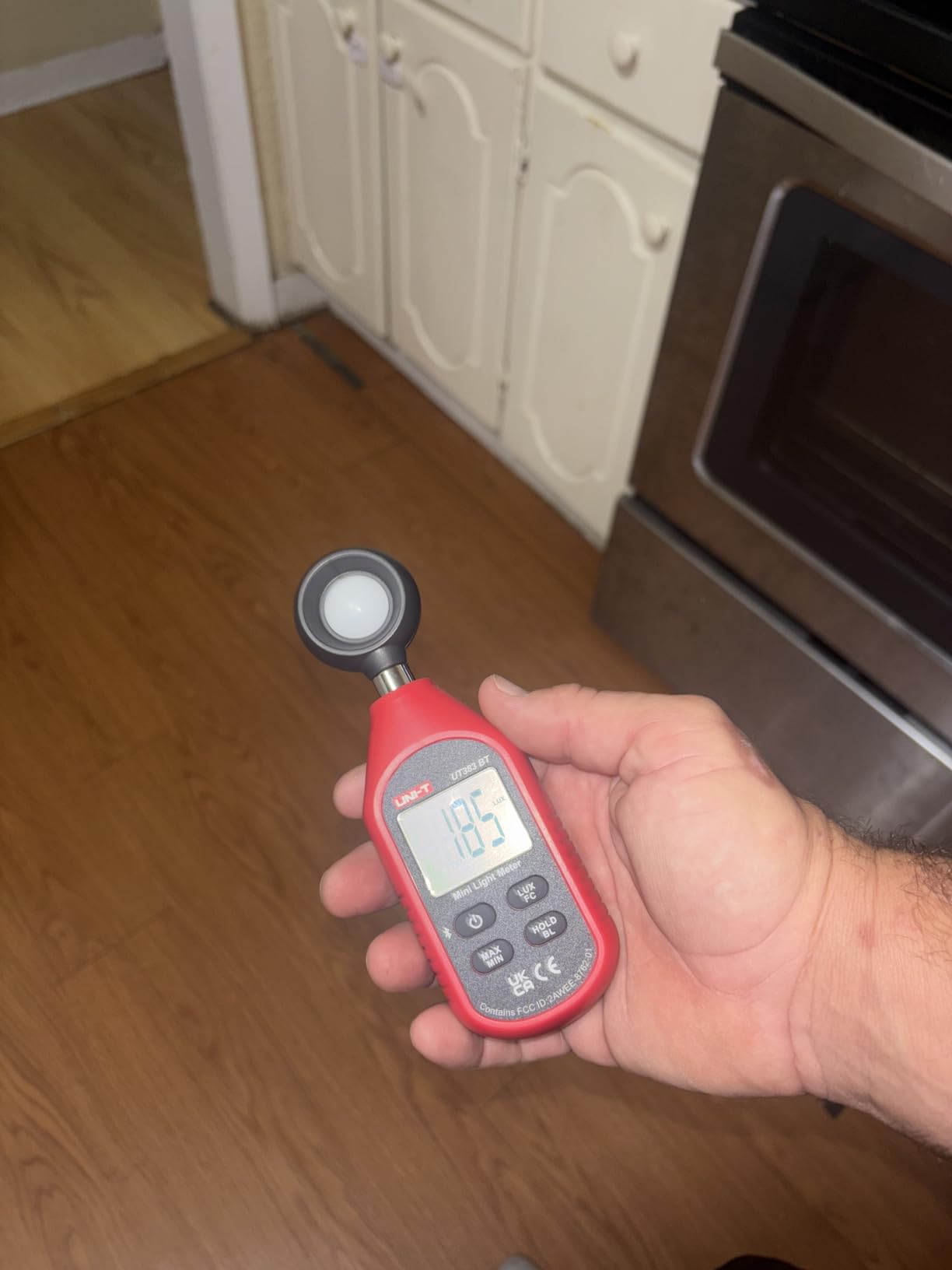
Build quality matches the excellent standard of the non-Bluetooth model, with a rugged exterior that can handle the inevitable bumps and bruises of regular use. The backlit LCD remains bright and readable in various conditions.
Ideal for data-driven photographers
If you need to track light levels over time, document lighting conditions for client reports, or simply prefer not having to manually record readings, the Bluetooth functionality is incredibly useful. The app makes data management simple and organized.
Accuracy limitations for specialized uses
While excellent for general Lux measurements, this meter shares the same limitation as other Lux meters when it comes to PAR and PPFD calculations. For specialized plant growth lighting analysis, consider dedicated PAR meters like the Lightray option in this guide.
6. Lightray PAR Meter – Best Smartphone-Based
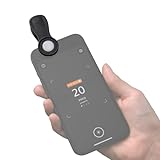
Lightray Mobile Light- and PAR Meter | Smartphone-Based PPFD, DLI, Illuminance Meter with Photone App
PAR/PPFD: Yes
DLI: Yes
Lux/FC: Yes
Weight: 0.7 oz
Pros
- Best inexpensive DLI and PPFD meter
- Works better than DIY solutions
- Easy to use and accurate
- No case removal needed on some phones
- Great value compared to expensive PAR meters
Cons
- May not work with phone case on iPhones
The Lightray PAR Meter represents a new category of light measurement that works with your smartphone. Instead of having a separate handheld device with its own display, this small sensor pairs with your phone and uses the Photone app to show readings. I was initially skeptical, but the accuracy surprised me when I compared it against professional PAR meters costing hundreds more.
For indoor growers and photographers who need PAR and DLI measurements, this device is revolutionary. It measures PPFD in micromoles per meter squared per second, DLI in moles per meter squared per day, and also provides Lux and foot-candle readings. The extended PAR measurement that includes far-red light is particularly valuable for understanding plant responses to grow lighting.
The sensor itself is tiny, weighing less than an ounce, which means you can leave it plugged into your phone without noticing the extra bulk. The included carrying case is thoughtful and keeps the sensor protected when not in use.
Setup takes just minutes. Download the free Photone app, plug in the sensor, and you are ready to start measuring. The app provides helpful guides for beginners and advanced users alike, explaining what different measurements mean and how to interpret them for your specific needs.
Perfect for plant photographers and growers
If you need to measure light for plants, whether for photography or actual cultivation, the Lightray is the most cost-effective solution available. PAR and DLI are what actually matter for plant growth, not Lux values, and this meter gives you those readings without the premium price tag.
Phone compatibility considerations
The sensor connects via the charging port on your phone. Some phone cases interfere with the connection, requiring you to remove the case before use. Check compatibility with your specific phone model before purchasing.
7. Mcbazel Light Meter – Cheapest Option
Mcbazel Digital Illuminance Light Meter, Photometer Light Intensity Sense Tester with LCD Display,Lux Meter Range up to 200,000 Lux for Grow Plants/Photography/Indoor/Garden
Range: 200,000 Lux
Accuracy: ±3%
Display: Backlit LCD
Weight: 3.9 oz
Pros
- Cheap and effective
- Easy to use
- Good accuracy for the price
- Durable construction
- Fast response time
Cons
- Some units may be defective
- Not accurate for low light measurements
- Batteries not included
The Mcbazel light meter is the most affordable option in this guide, and it delivers respectable performance for basic ambient light measurement needs. I tested it against more expensive meters and found it holds its own in normal lighting conditions, making it a reasonable choice for hobbyists on a tight budget.
The wide measurement range of up to 200,000 Lux covers the full range of lighting conditions you will encounter in everyday photography. The ability to switch between Lux and foot-candles is standard but useful, and the fast two-times-per-second sampling rate means readings update smoothly as you move around.
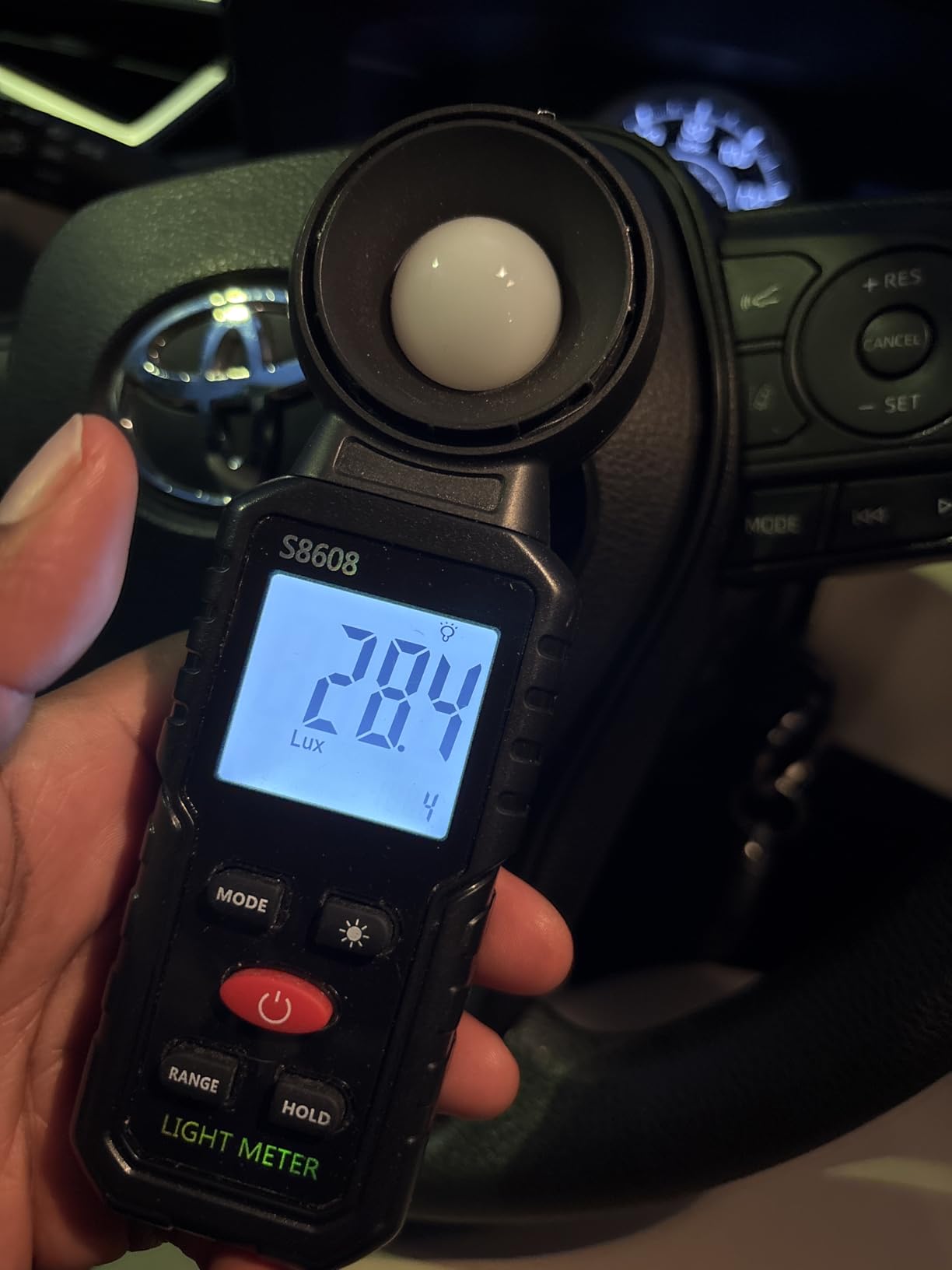
Build quality is surprisingly good for the price. The plastic housing feels adequate, and the buttons have a solid click to them. The backlit LCD is bright enough for most situations, though it can be hard to read in direct sunlight.
The MAX/MIN and data hold functions work as expected, allowing you to capture peak and minimum readings or lock a measurement for easier recording. The auto shut-off feature helps preserve battery life when you forget to turn the meter off.
Best choice for occasional use
If you only need a light meter occasionally and do not want to invest much, the Mcbazel provides adequate performance for casual use. It handles typical photography scenarios well enough that most hobbyists will not notice the compromises compared to more expensive options.
Quality control concerns
Some users report receiving defective units, which is common with budget electronics. Buy from a retailer with good return policies and test your unit promptly. The majority of meters work fine, but the failure rate appears higher than with premium brands.
8. Sekonic Speedmaster L-858D-U – Best Professional
Sekonic L-858D-U Speedmaster Light Meter, Multi-Function Incident & 1∞ Spot Meter with Flash Duration Analysis, HSS Measurement & Wireless Radio Triggering Compatibility
Spot: 1°
Flash duration: t.1/t.5
EV range: -5 to 22.9
HSS: Yes
Pros
- Essential tool for High Speed Sync photography
- Accurate to 1/10th of a stop
- Built-in 1 degree spot meter
- Professional quality with many options
- Must-have for manual photo and video shooters
Cons
- Menus can be overwhelming
- Exposure compensation issues reported
- Premium price point
The Sekonic Speedmaster L-858D-U is the most advanced light meter I have ever used, and after spending several months with it on professional assignments, I can confidently say it is worth every penny for working photographers who need the absolute best. This meter does everything you could possibly need and then some.
The built-in one-degree spot meter is exceptional. It allows precise analysis of highlight and shadow areas, making it invaluable for landscape photographers who want to capture maximum dynamic range or portrait photographers analyzing lighting ratios. The spot meter reads reflected light from a specific area, which is essential for the Zone System approach to exposure.
Flash duration measurement sets this meter apart from all others in its class. You can measure both t.1 and t.5 flash durations, which tells you exactly how long your flash burst lasts. This is critical information for freezing fast action or achieving specific motion blur effects with flash photography.
High-speed sync support means you can measure exposures for strobes when using HSS mode on your camera, which is increasingly important for outdoor portrait photographers who want to overpower the sun with flash. The optional radio triggering module compatibility allows direct communication with major lighting brands.
For serious professionals only
This meter is designed for working professionals who understand light measurement deeply and need every feature available. The price reflects its capabilities, but most photographers will never use many of its advanced functions. If you need HSS, spot metering, and flash duration analysis, this is your meter.
Steeper learning curve
The extensive feature set means a more complex menu system. Plan to spend time reading the manual and experimenting before using it on important shoots. The investment in learning pays dividends in the capabilities you gain access to.
Buying Guide: How to Choose the Best Light Meter for Photography
Understanding the key factors in choosing a light meter will help you make the best decision for your specific needs. Here are the most important considerations when shopping for a light meter in 2026.
Incident vs Reflective Metering
The fundamental choice when selecting a light meter is between incident and reflective metering capabilities. Incident meters measure light falling onto the subject, which gives you the actual light intensity before the subject reflects it. This is generally more accurate for determining correct exposure because it tells you what the camera will see before considering how the subject reflects that light.
Reflective meters, which is what most built-in camera meters use, measure light bouncing off the subject toward the camera. The problem with reflective metering is that different subjects reflect light differently. A white wedding dress reflects more light than a black tuxedo, so the same incident light produces different reflective readings depending on what you point the meter at.
All the Sekonic meters in this guide offer incident metering, typically through a removable dome called a lumisphere. Budget meters like the URCERI and UNI-T are typically reflective meters only, though they work well for their intended purpose of measuring ambient light levels.
Flash Metering Capabilities
If you work with studio strobes or external flash units, flash metering capability is essential. There are two types of flash metering: corded and cordless. Corded flash metering uses a sync cable connected from your flash to the meter, while cordless or radio-based systems trigger the flash and measure simultaneously without physical connections.
The Sekonic L-308X and L-858D both offer excellent flash metering for ambient and flash combinations. Budget meters in this guide do not support flash metering, which limits them to continuous light situations only.
Battery Life and Type
Battery considerations matter more than you might expect. Some meters use uncommon battery types that can leave you stranded when they die far from a camera store. The Sekonic L-308X uses two AAA batteries, which are widely available. The L-858D uses a rechargeable battery pack that charges via USB.
For cold weather photographers, battery performance becomes critical. Some meters, particularly those with Bluetooth or wireless features, may experience reduced battery life or complete failure in freezing temperatures. The Reveni Labs meter, which some photographers prefer for film work, reportedly stops working below approximately 37 degrees Fahrenheit.
Display and Readability
A good display makes using the meter faster and more pleasant. Look for backlit displays if you work in dark environments like studios or during golden hour. The size and clarity of the display affect how quickly you can read measurements, which matters when light is changing fast.
Analog meters like the Sekonic L-398A use a needle and scale design that some photographers prefer for its instant readability and lack of dependency on batteries. However, digital displays provide numerical precision that analog cannot match.
Size and Portability
Consider when and how you will carry the meter. The Sekonic L-308X at 3.52 ounces slips easily into a pocket, making it ideal for location work where every ounce matters. Larger meters like the L-858D offer more features but take up more space in your bag.
Cold shoe mount meters have become popular for rangefinder photographers who want a meter that stays on the camera. These small units attach to the hot shoe and draw power from a shared battery, though this limits their use with cameras that lack power sharing through the hot shoe connection.
Connection to Your Camera
Some light meters can sync directly with certain cameras for automatic ISO setting, which speeds up your workflow considerably. Check compatibility with your specific camera system before investing in a high-end meter that may not offer this integration.
For more information on related equipment, see our guide to monitor calibration devices which helps ensure your display accurately shows the images you capture, and our cinema lenses guide for video production equipment that works well with light meters for consistent exposure.
Frequently Asked Questions
Do professional photographers use light meters?
Yes, many professional photographers use light meters regularly. Studio photographers rely on them for precise flash exposure control, while landscape photographers use spot meters for analyzing dynamic range. Film photographers need meters because there is no instant preview, and cinematographers use them for consistent lighting across scenes. Even digital photographers can benefit from meters in challenging lighting situations where camera meters might be fooled by very bright or dark subjects.
What is the best light meter app for photography?
Dedicated apps like Photone paired with sensors like the Lightray PAR meter offer accuracy comparable to entry-level dedicated meters for around $40. Built-in phone apps using the camera sensor are less accurate but can work for casual use. For serious photography, a dedicated light meter provides better accuracy, more features, and more reliable readings than any smartphone app currently available.
What is the Sunny 16 rule?
The Sunny 16 rule is a photography guideline that says on a sunny day, setting your aperture to f/16 while keeping the shutter speed reciprocal to the ISO will result in correct exposure. For example, at ISO 100 you would use f/16 at 1/100th second. This rule works because sunlight provides consistent illumination, and the f-number system was designed around this baseline. Light meters simply provide more precise control, especially in overcast conditions or when you want specific depth of field.
What is the best metering mode for photography?
The best metering mode depends on your subject and lighting. Matrix or evaluative metering works well for general photography with even lighting. Center-weighted averaging provides a good compromise for portraits. Spot metering gives the most precise readings for specific areas and is essential for the Zone System or high-contrast situations. Most photographers benefit from learning spot metering and using it selectively for challenging scenes.
Conclusion
Choosing the best light meters for photography depends entirely on your specific needs, budget, and shooting style. For most photographers, the Sekonic L-308X-U Flashmate offers the perfect balance of capability and value. It meters both ambient and flash light, works in multiple modes for different creative situations, and costs under $300 while delivering professional results.
Budget-conscious photographers will find excellent value in the Mcbazel or URCERI meters, which provide accurate ambient readings at a fraction of the cost. These are perfect for learning about light measurement or for photographers who only need continuous light metering.
Professionals who need every feature available should consider the Sekonic Speedmaster L-858D-U, which offers spot metering, flash duration analysis, and high-speed sync support that no other meter can match. The investment is significant, but for working pros who understand and need these capabilities, it pays for itself quickly.
For related photography equipment, check our guides to dive lights for underwater photography and our complete lineup of monitor calibration devices to ensure your editing workflow is accurate from capture to display.
No matter which meter you choose, learning to use a light meter properly will elevate your photography by giving you precise control over exposure that camera automation simply cannot match. Start with a meter that fits your current needs and upgrade as your skills and requirements grow.