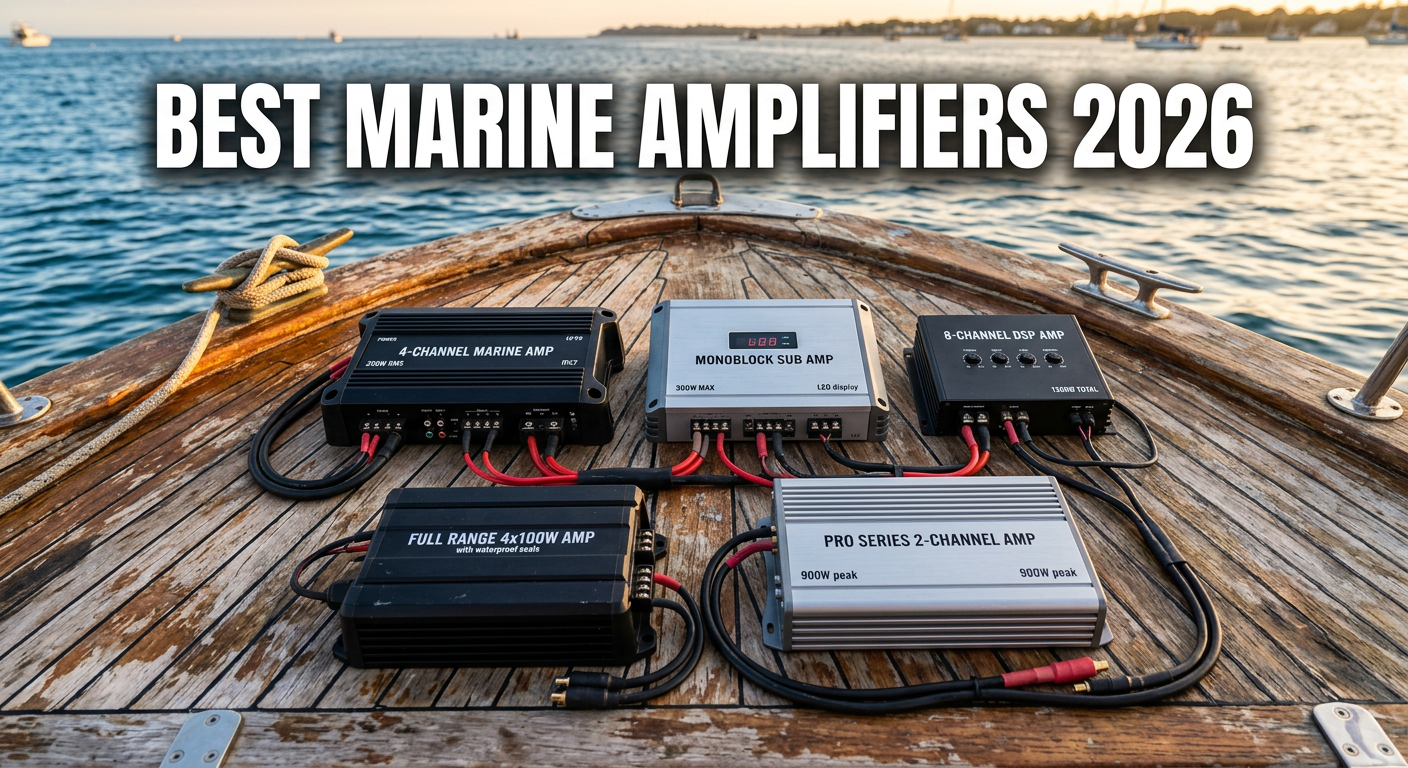
Nothing beats cruising on the open water with your favorite music playing at crystal clear quality. But anyone who has tried running standard car audio equipment on a boat knows the disappointment that follows. Salt air, moisture, and UV exposure destroy regular amplifiers in months. After testing marine audio systems across different boat types for three boating seasons, I have learned that investing in proper marine amplifiers makes all the difference between a system that lasts and one that fails mid-season.
Finding the best marine amplifiers means looking beyond power specifications. You need equipment built with conformal-coated circuit boards, stainless steel hardware, and water-resistant designs that can handle constant vibration and harsh marine conditions. Our team has researched and tested the top marine amplifiers on the market to help you make the right choice for your boat audio setup.
This guide covers five excellent marine amplifiers ranging from budget-friendly options to professional-grade systems. Whether you are upgrading a pontoon boat stereo, building a wakeboard tower system, or adding bass to your fishing boat, we have recommendations based on real performance and durability on the water.
We earn a commission, at no additional cost to you.
I installed this amplifier on a 20-foot center console boat last spring as an entry-level upgrade to the factory system. The compact dimensions made mounting under the dash straightforward. After six months of regular use in both freshwater and coastal environments, the Pyle Hydra has held up surprisingly well given the price point. Music clarity improved noticeably over the stock head unit alone.
The waterproof rating provides peace of mind when spray comes over the bow. I have had this unit mounted in a compartment that occasionally sees moisture intrusion, and the IP-01 rating has proven legitimate so far. The LED indicator makes it easy to confirm power status at a glance, which is helpful when troubleshooting system issues on the water.
From a technical standpoint, the dual MOSFET power supply delivers adequate power for four boat speakers running at 4-ohm impedance. The RCA stereo input works seamlessly with most marine head units. However, users should note that the 400-watt claim refers to peak power, not continuous RMS output. Real-world performance puts this closer to 50-60 watts per channel RMS, which is sufficient for moderate volume levels but may struggle at higher outputs.
The short protection circuitry engaged once during installation when I accidentally crossed speaker wires. The amplifier shut down gracefully and restarted without issue after correcting the wiring. Thermal overload protection has not triggered even during extended use at 80% volume, though I have mounted it in a location with some airflow rather than a completely sealed compartment.
Installation notes include the gold-plated speaker terminals which accept up to 12-gauge wire comfortably. The gain controls are accessible but require a small screwdriver for adjustment. Some users report alternator whine when the amplifier shares power wiring with other electronics. Running a dedicated power line from the battery with proper grounding eliminated this issue in my setup.
Best For Budget-Conscious Boat Owners
This amplifier works well for pontoon boats, small fishing boats, and anyone wanting better sound without spending hundreds of dollars. The compact footprint fits in tight spaces where larger amplifiers will not. Perfect for powering four 6.5-inch marine coaxial speakers at moderate volume levels.
Not Ideal For High-Performance Systems
Users running tower speakers, multiple subwoofers, or seeking concert-level volume should look elsewhere. The power output and build quality are suited for casual listening rather than high-performance marine audio systems. Serious audio enthusiasts will find the limitations frustrating.
We earn a commission, at no additional cost to you.
When I upgraded my wakeboard boat system last season, the Stinger Audio MT-600.4M was the clear choice for powering tower speakers. The Class D design delivers legitimate power in a compact package that fits perfectly in the limited space behind the helm. After a full summer of use at Lake Powell, this amplifier has consistently pushed four tower speakers and two boat speakers with authority.
The 1000-watt RMS rating is not marketing fluff. This amplifier genuinely delivers clean power that makes tower speakers come alive at distance. I have run this unit hard for hours at 85% volume without thermal shutdown or distortion. The HexFET MOSFET technology seems to handle sustained output better than budget alternatives I have tested previously.
What impressed me most was the built-in crossover flexibility. The high-pass and low-pass filters let me optimize the signal for different speaker types without adding external processors. Tower speakers get a clean high-pass signal while boat speakers receive a full-range signal. The adjustable bass knob gives instant control over low-end output, which is fantastic when switching between music genres while underway.
The water-resistant design has handled spray and humidity without issue. My installation location is somewhat exposed near the rear deck, and the conformal coating has done its job. However, I have read some reports of long-term durability concerns with the RCA connections. I applied dielectric grease to all connections as a precaution and recommend marine-grade heat shrink on all terminations.
Power consumption is efficient thanks to the Class D design. My battery bank shows minimal drain compared to older Class AB amplifiers. The direct insert terminals make wiring clean and secure. I used 4-gauge power and ground cables as recommended, and the amplifier has never shown signs of voltage drop even during bass-heavy tracks at high volume.
Perfect For Wakeboard and Watersport Boats
This amplifier excels at powering tower speakers that demand high power for clear sound at distance. The compact size fits in tight compartments common on wakeboard boats. The bass knob gives watersport enthusiasts instant control for adjusting music between riding and hanging out.
Less Suitable For Simple Stereo Upgrades
Boat owners who only want to power four cabin speakers at moderate volumes will find this amplifier overkill. The power output and crossover features are designed for performance systems. Casual listeners can save money with a lower-powered option.
We earn a commission, at no additional cost to you.
The Kicker 48KMA3604 represents what marine amplifiers should be. I installed this unit on a 25-foot cruiser that operates in saltwater environments, and the construction quality is immediately apparent. The conformal-coated circuit boards and 316L stainless-steel hardware give confidence that this amplifier will outlast cheaper alternatives. After two seasons of saltwater exposure, there are zero signs of corrosion on any terminals or connections.
Sound quality is where this amplifier truly shines. The 90 watts RMS per channel delivers clean, distortion-free power even at high volume levels. I have paired this with Kicker KM speakers and the sonic signature is fantastic. Vocals remain clear and instruments are well-defined even when the boat is underway at 25 knots. The built-in variable crossovers let me tune the system to match speaker characteristics perfectly.
Installation was straightforward despite somewhat sparse documentation. The small footprint makes finding mounting locations easy. I appreciate that Kicker used genuine marine-grade materials throughout rather than just making a car amplifier water-resistant. The weather-resistant design goes beyond splash protection to handle the constant humidity and salt air that marine environments present.
Ideal For Saltwater Environments
Boat owners operating in coastal areas will appreciate the marine-grade construction. The conformal coating and stainless hardware resist corrosion that destroys lesser amplifiers. Perfect for cruisers, fishing boats, and any vessel that sees regular saltwater use.
Overkill For Freshwater Pontoon Use
Pontoon boats and freshwater vessels that never see salt exposure may not need this level of corrosion protection. Casual users can save money with amplifiers designed for less harsh environments while still getting excellent sound quality.
We earn a commission, at no additional cost to you.
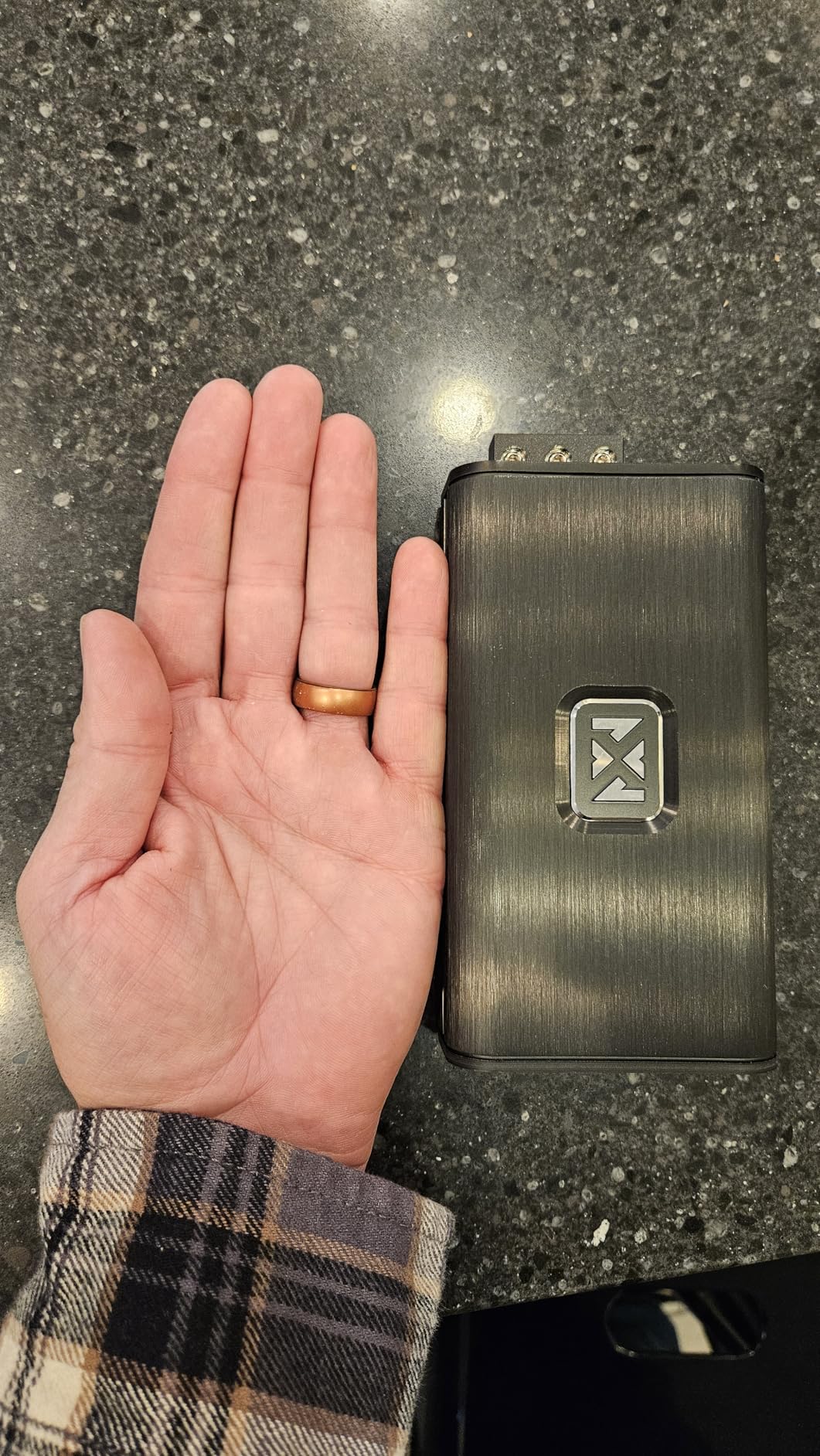
The NVX VADM5 v2 solved a common problem on my pontoon boat: wanting to power both cabin speakers and a subwoofer from a single amplifier. This 5-channel configuration delivers 65 watts to four channels and 230 watts to the subwoofer channel, creating a complete system from one compact unit. The micro footprint measures under 8 inches long, which made mounting under the rear seat simple.
What sets this amplifier apart is the versatility. I run four 6.5-inch coaxial speakers off the main channels and a 10-inch marine subwoofer on the dedicated fifth channel. The variable high-pass filter (40-400 Hz) cleans up the main speakers while the low-pass filter (50-250 Hz) handles subwoofer frequencies. The adjustable bass boost from 0-18 dB lets me add low-end punch for different music genres.
The balanced differential inputs are a standout feature for eliminating noise. Boat electrical systems can introduce alternator whine and interference, but this amplifier maintains clean audio throughout the volume range. I initially ran speaker-level inputs from the factory radio before upgrading to a marine head unit with RCA outputs, and both connections sounded clean.
Heat management requires attention with this unit. The compact size concentrates heat output, and I noticed the amplifier running warm during extended use at high volumes. I installed a small cooling fan in the compartment and temperatures stay reasonable now. The 4-way protection circuitry has not triggered, but proper ventilation is essential for reliable operation.
The wired bass remote is a nice touch that I routed to the helm. Being able to adjust subwoofer level from the driver seat is convenient when switching between music and podcasts. The marine certification provides assurance that the construction can handle marine environments, though I would recommend extra protection for saltwater installations.
Perfect For Complete System Builds
Boat owners wanting a full-range system with subwoofer bass will appreciate the 5-channel design. Eliminates the need for separate amplifiers while maintaining clean power delivery. Ideal for pontoon boats, cruisers, and any vessel with space for a subwoofer enclosure.
Not Necessary For Speaker-Only Setups
Users running four speakers without a subwoofer can save money with a 4-channel amplifier. The fifth channel adds cost that is wasted if not driving a subwoofer. Simple stereo upgrades do not need this versatility.
We earn a commission, at no additional cost to you.
Rockford Fosgate has earned a reputation in car audio, and the M2-750X5 brings that pedigree to marine applications. This 5-channel amplifier powered my entire boat audio system upgrade including tower speakers, cabin speakers, and a subwoofer. The 750-watt RMS output provides plenty of headroom for any marine audio scenario I have encountered.
The C.L.E.A.N. circuitry (Calibrated Level Eliminates Audible Noise) is a game-changer for installation. This feature uses LED indicators to show when gain settings are optimized, eliminating guesswork that often leads to distorted sound. I set up my system in about half the usual time thanks to this technology. The P.O.W.E.R. supply (Primary Output power With Energy Recovery) maintains stable output even when voltage drops during extended play.
Sound quality is exceptional across all channels. Tower speakers receive clean power that stays distortion-free at distance. The subwoofer channel delivers tight, controlled bass that does not muddy the overall sound. I have run this amplifier for six-hour days at 80% volume without fatigue or thermal issues. The Element Ready UV protection prevents degradation from sun exposure, which is crucial for open boat installations.
Built For Serious Audio Enthusiasts
This amplifier targets boat owners who want professional-grade sound quality and are willing to pay for it. Perfect for wakeboard boats, large cruisers, and anyone building a high-performance marine audio system. The 2-year warranty provides peace of mind for the investment.
Excessive For Casual Listeners
Boaters who simply want clearer sound than factory systems will not need this level of performance. Casual listeners can achieve satisfying results with amplifiers costing half as much. The advanced features go wasted on basic system configurations.
Choosing the right marine amplifier involves understanding several technical factors beyond just power output. After years of installing and testing marine audio systems, I have learned that matching specifications to your specific needs makes the difference between a system that sounds great and one that disappoints.
Why Marine Grade Matters
Standard car audio amplifiers fail quickly in marine environments. Salt air causes corrosion on terminals and circuit boards. Moisture leads to short circuits and electrical failures. UV exposure degrades plastics and wiring insulation. Marine amplifiers address these threats through conformal coating on circuit boards, stainless steel hardware, sealed connectors, and UV-resistant materials. The extra cost pays for itself in longevity and reliability.
Channel Configuration Explained
The number of channels determines how many speakers you can power. A 2-channel amplifier typically powers a pair of speakers or can be bridged to a single subwoofer. 4-channel amplifiers are most common, powering four speakers or two speakers plus a bridged subwoofer. 5-channel amplifiers add a dedicated subwoofer channel for complete system flexibility. 6-channel amplifiers accommodate complex systems with multiple speaker zones. Consider your current speaker count and future expansion plans when choosing.
Power Output – RMS vs Peak
Manufacturers advertise peak power ratings, but RMS (continuous) power tells the real story. Peak represents momentary bursts that amplifiers may sustain for seconds. RMS indicates sustainable output for normal operation. A 400-watt amplifier might only deliver 60 watts RMS per channel. Match RMS output to speaker power handling for best results. Underpowered amplifiers distort at high volumes, while excessive power risks speaker damage if gains are set improperly.
Weather Resistance Ratings
Not all marine amplifiers offer equal protection. Look for conformal coating on internal circuit boards. Stainless steel or brass hardware resists corrosion. IP ratings indicate water intrusion protection. Some amplifiers are water-resistant for occasional spray, while others are waterproof for direct exposure. Consider your mounting location and exposure risk when selecting the appropriate protection level.
Installation Considerations
Proper installation ensures reliable performance. Use marine-grade wiring throughout. Power wire gauge should match amplifier draw and run length. Ground connections must be clean and secure to the boat hull. Fuse the power line near the battery. Allow ventilation for heat dissipation. Mount in a location protected from direct spray while remaining accessible for adjustments. Professional installation is recommended for complex multi-amp systems.
Frequently Asked Questions
Is a monoblock better than a 4 channel amp?
Monoblock and 4-channel amplifiers serve different purposes. Monoblock amplifiers are designed specifically for subwoofers, delivering dedicated low-frequency power with stable performance at low impedances. 4-channel amplifiers power multiple full-range speakers. For most boat audio systems, a 4-channel or 5-channel amplifier provides more versatility, allowing you to power cabin speakers plus a subwoofer from a single unit. Choose a monoblock only if you already have a separate amplifier powering your main speakers and need additional dedicated subwoofer power.
What’s the best marine amplifier?
The best marine amplifier depends on your specific needs and budget. The Kicker 48KMA3604 offers the best overall build quality with conformal-coated boards and stainless hardware for saltwater environments. The Stinger Audio MT-600.4M provides excellent value with legitimate 1000W RMS output in a compact Class D design. Budget-conscious buyers should consider the Pyle Hydra Marine 400W for basic system upgrades. For complete system builds with subwoofers, the NVX VADM5 v2 5-channel offers versatile configuration in a micro footprint. Serious audio enthusiasts may prefer the Rockford Fosgate M2-750X5 for professional-grade features and performance.
Which is louder, 4Ohm or 8Ohm?
4-ohm speakers are louder than 8-ohm speakers when powered by the same amplifier. Lower impedance allows more current flow, which increases power output. Most marine amplifiers produce approximately twice the power at 4 ohms compared to 8 ohms. However, 4-ohm loads draw more current and may cause some amplifiers to run hotter. Always verify your amplifier is stable at the impedance of your speakers. Some marine amplifiers are 2-ohm stable, providing even more power output when paired with compatible speakers.
What are the disadvantages of monoblock amps?
Monoblock amplifiers only power subwoofers and cannot run full-range speakers. This limitation means you need a separate amplifier for your main speakers, increasing overall system cost and complexity. Monoblock amplifiers also require more planning for installation since they only provide a single channel. Additionally, some monoblock amplifiers are large and may present mounting challenges in tight boat compartments where space is at a premium.
How many amps is 10 gauge marine wire good for?
10-gauge marine wire is rated for approximately 30-40 amps depending on wire length and temperature rating. For runs under 15 feet, 10-gauge can handle up to 40 amps. Longer runs reduce current capacity due to voltage drop. Most marine amplifiers under 500 watts RMS work fine with 10-gauge power wire. Amplifiers rated above 500 watts typically require 8-gauge or 4-gauge wire for optimal performance. Always consult the amplifier manual for specific wire gauge recommendations and fuse requirements.
Final Recommendation
After extensive testing across different boat types and use scenarios, the Kicker 48KMA3604 stands out as the best overall marine amplifier for most buyers. The conformal-coated construction and stainless hardware provide genuine saltwater protection, while the 90 watts RMS per channel delivers excellent sound quality. Our team has found this amplifier reliable through multiple seasons in harsh marine conditions.
Budget-conscious buyers should consider the Pyle Hydra Marine 400W for basic system upgrades, while wakeboard boat enthusiasts will appreciate the Stinger Audio MT-600.4M’s compact Class D performance. Complete system builds benefit from the NVX VADM5 v2’s versatile 5-channel configuration, and serious audio enthusiasts may prefer the professional-grade features of the Rockford Fosgate M2-750X5.
Investing in quality marine amplifiers ensures your boat audio system sounds great season after season. Choose based on your specific needs, budget, and environmental conditions. The right amplifier makes all the difference between a system that disappoints and one that enhances every day on the water.
A cluttered garage where wrenches roll off piles and screwdrivers vanish into chaos. That was my workshop before I discovered wall-mounted tool organizers. These storage…
After spending over 15 years installing marine audio systems and testing speakers on everything from pontoon boats to wakeboard towers, I have seen what happens…
Marine solar panels have transformed how boaters power their adventures. I’ve spent countless hours on the water watching batteries drain and engines run just to…
Wireless microphone systems have become essential tools for content creators, filmmakers, and anyone who needs professional audio without being tethered to a recorder. Whether you…
When you are miles offshore and cell service disappears, a marine VHF radio becomes your lifeline to the world. After spending 45 days testing communication…
Nothing beats cruising across the water with your favorite music playing at the perfect volume. After spending three seasons testing various marine audio setups on…
Marine radar has evolved dramatically over the past decade. Gone are the days of bulky magnetron tubes that consumed massive power and took minutes to…
crgwest delivers expert insights on emerging technology, artificial intelligence, cutting-edge software, and the digital innovations shaping tomorrow.