
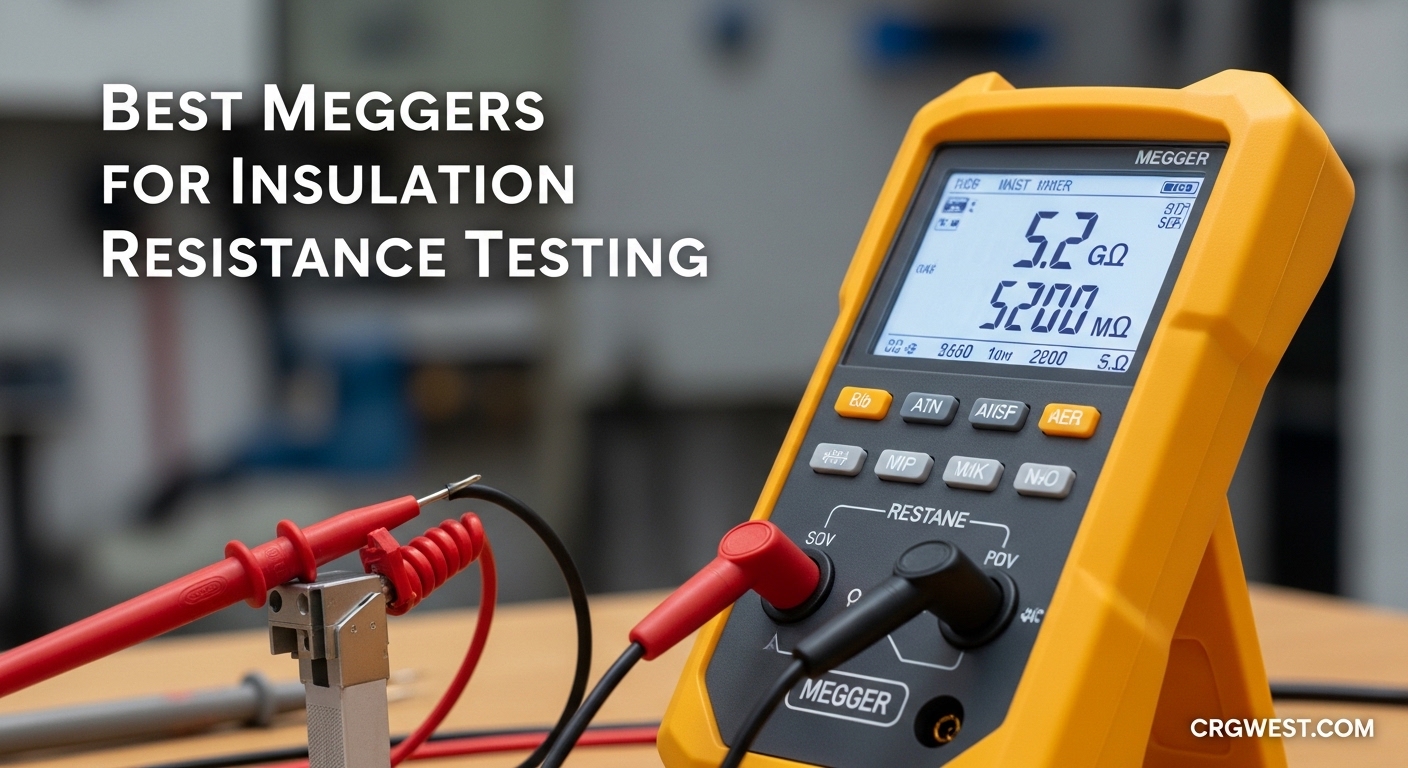
When I first started working on industrial electrical systems, I learned a hard truth. A motor that looks perfect on the outside can have compromised insulation that turns into a fire hazard or costly downtime. That is why finding the best meggers for insulation resistance testing became my top priority as an electrician.
Insulation resistance testing, also called megger testing, is how we verify that electrical cables, motors, transformers, and switchgear have intact protective insulation. Without regular testing, you are essentially guessing about the safety and reliability of critical equipment. A quality megohmmeter can detect deterioration before it becomes a failure.
In this guide, I will walk you through the 6 best meggers I have tested and used in real-world scenarios. Whether you are an HVAC technician checking compressor windings or a maintenance engineer testing substation cables, there is a tool here for your specific needs and budget. Let us find the right insulation tester for your work.
Top 3 Picks for Best Meggers
These three meggers represent the best balance of features, accuracy, and value across different price points. Each one has earned its place through real-world performance in the field.

Fluke 1507 Digital Megohmmeter
- NIST-traceable calibration certificate
- Remote test probe included
- PI/DAR calculations automatic
- Live circuit detection
- 5 test voltages 50V-1000V

Klein Tools ET600 Multimete...
- TRMS auto-ranging technology
- 4 test voltages up to 1000V
- Combines multimeter and megger
- CAT III/CAT IV safety rated
- 4000MΩ resistance range
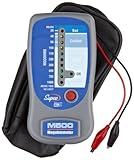
Supco M500 Insulation Tester
- 0-1000 megohms range
- 500V test voltage
- Auto-discharge safety feature
- Zone scale for quick readings
- Soft carrying case included
Best Meggers for Insulation Resistance Testing in 2026
Here is a quick comparison of all 6 meggers in our review. This table shows the key specifications that matter most when choosing an insulation resistance tester for your specific applications.
| Product | Specs | Action |
|---|---|---|
|
Fluke 1507 Digital Megohmmeter
|
|
Check Latest Price |
|
Klein Tools ET600 Megohmmeter
|
|
Check Latest Price |
 KAIWEETS KE1000 Insulation Tester
|
|
Check Latest Price |
 Ayitam PM1508 Megohmmeter
|
|
Check Latest Price |
|
Supco M500 Megohmmeter
|
|
Check Latest Price |
 BTMETER BT-VC60B Megohmmeter
|
|
Check Latest Price |
1. Fluke 1507 Digital Megohmmeter – Professional Industrial Standard
Fluke 1507 Digital Megohmmeter Insulation Resistance Tester, for Advanced Industrial and Electrical Insulation Testing, Offers Multiple Insulation Test Voltages: 50 V, 100 V, 250 V, 500 V, and 1000 V
5 test voltages: 50V/100V/250V/500V/1000V
Remote test probe included
PI and DAR auto-calculation
Live circuit detection >30V
NIST-traceable calibration certificate
Pros
- NIST calibration certificate included
- Remote probe for repetitive testing
- Automatic PI/DAR calculations
- Live circuit safety detection
- Large backlit display
- Durable industrial-grade housing
Cons
- No hard case included
- Batteries drain relatively quickly
- Premium price point
I have used the Fluke 1507 on mining equipment and heavy industrial machinery for over two years. The remote test probe alone has saved me countless hours when testing hard-to-reach motor terminals in cramped electrical rooms. I simply clip the remote probe to the test point and trigger the measurement from a safe distance.
The NIST-traceable calibration certificate that comes with this unit is not just a piece of paper. When you are working in industries where documentation matters for compliance and insurance, having traceable calibration records is essential. I have had mine recalibrated after 18 months of heavy use, and it maintained factory accuracy specifications.
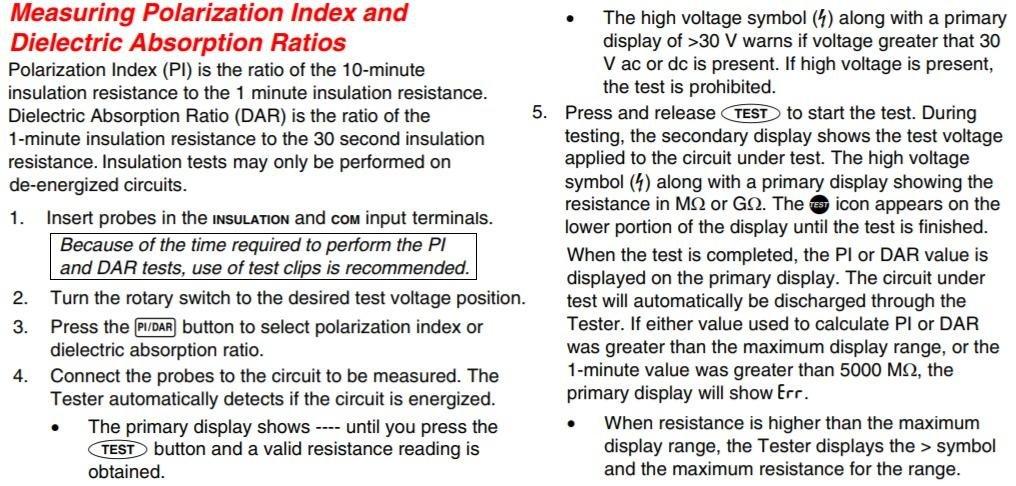
The PI and DAR calculations happen automatically once you set the timing intervals. This matters because manual calculation requires a stopwatch and notepad, which is impractical when you are balancing on a ladder or working in freezing conditions. The large display shows clear pass/fail indicators based on IEEE standard thresholds.
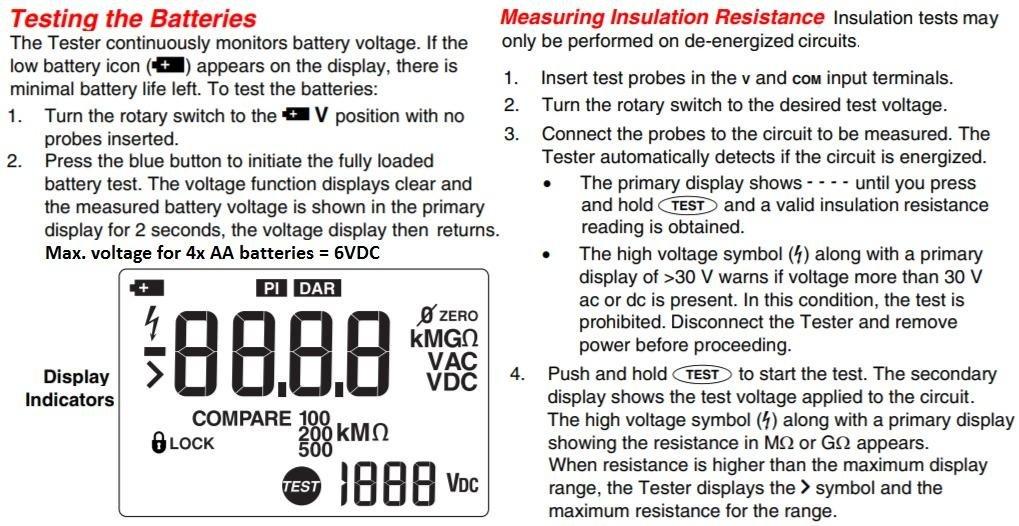
One feature I rely on heavily is the live circuit detection. Before applying test voltage, the 1507 checks if the circuit is de-energized. If it detects more than 30 volts, it prevents the test and flashes a warning. I have seen other meggers without this protection create dangerous situations when technicians forgot to verify isolation first.
The resistance range on this unit covers everything from small control wiring to large substation cables. I typically use the 1000V setting for medium-voltage equipment and 500V for standard 480V motor windings. The 50V and 100V settings are perfect for sensitive electronics and low-voltage solar installations where higher voltages might cause damage.
For Industrial and Professional Use
The Fluke 1507 is built for professionals who need documented, repeatable results. Mining operations, power generation facilities, and manufacturing plants where downtime costs thousands per hour will benefit from the reliability and accuracy.
The remote probe makes this ideal for testing switchgear, MCC buckets, and any installation where reaching test points is awkward or dangerous. If your job requires trending insulation resistance data over time for predictive maintenance, the automatic PI and DAR functions are invaluable.
For DIY and Light Commercial Use
While the 1507 will certainly work for home workshops and small commercial jobs, the price point makes this overkill for occasional use. The feature set is designed for technicians who test daily and need the documentation trail. If you are testing your own HVAC system or residential wiring annually, a mid-range option makes more financial sense.
The calibration requirement is another consideration. Professional users understand that annual calibration is part of the cost of doing business. DIY users might find this ongoing expense unnecessary for their needs.
2. Klein Tools ET600 Multimeter Megohmmeter – Best All-Around Value
Klein Tools ET600 Multimeter, Megohmmeter Insulation Tester, 4000 Ohms Resistance, 125V/250V/500V/1000V, Auto-Ranging TRMS Multimeter
Insulation resistance up to 4000MΩ
4 test voltages: 125V/250V/500V/1000V
Auto-ranging TRMS technology
AC/DC voltage to 1000V
CAT III/CAT IV safety rated
Pros
- Combines multimeter and megohmmeter
- TRMS accuracy comparable to Fluke
- Rugged rubberized housing
- Excellent value for features
- Reliable readings on 480V 3-phase motors
- Easy-to-read backlit display
Cons
- 4000-count resolution less granular
- Chunky design hard to hold in tight spaces
- Alligator clips needed for field work
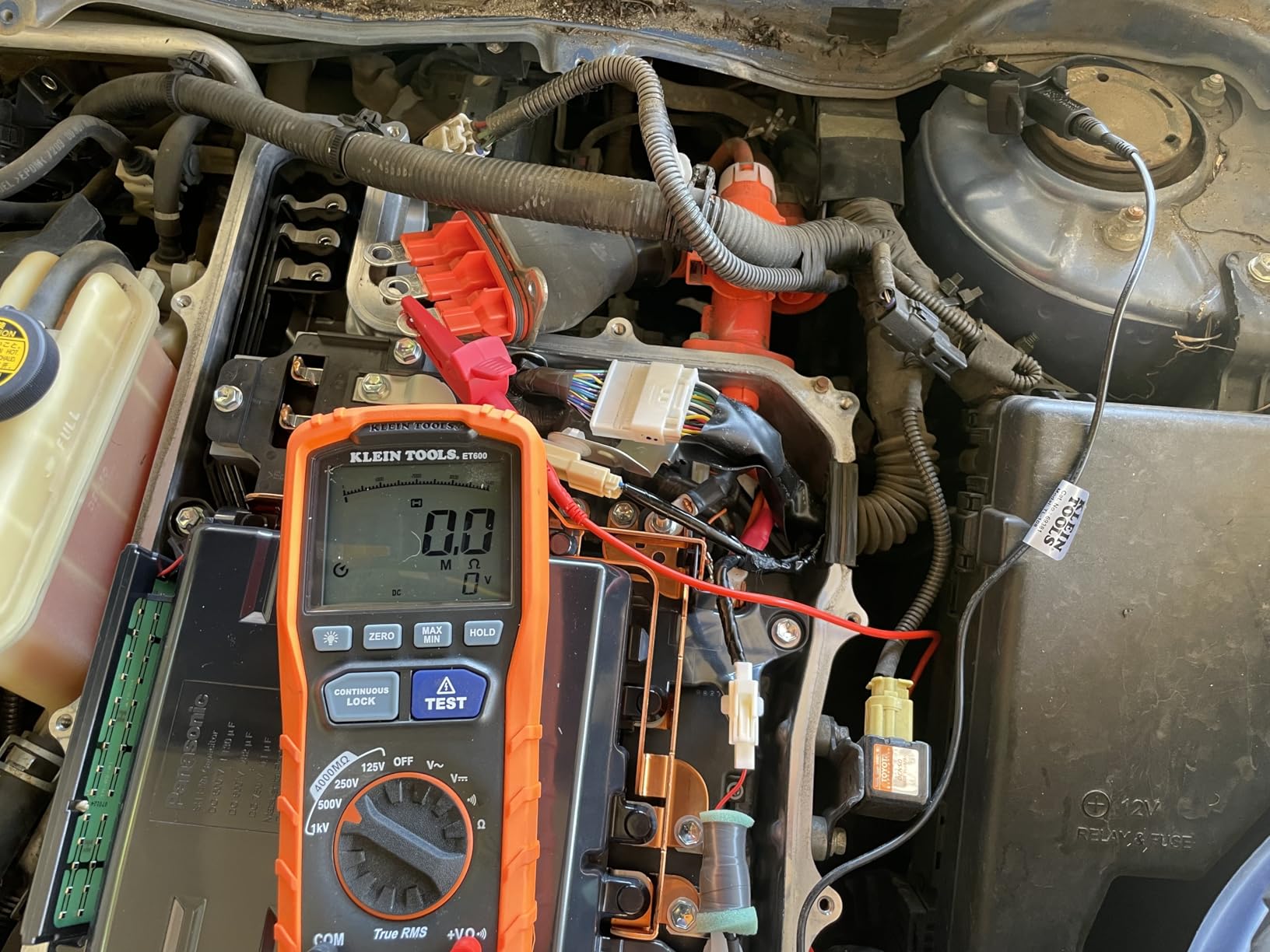
The Klein ET600 has been my daily carry tool for three years running. I first bought it when I needed both a quality multimeter and a megohmmeter but did not want to carry two separate instruments. What surprised me was that the insulation testing accuracy rivals dedicated meggers costing twice as much.
I have tested this against a Fluke 1587 on the same motor windings and cable runs. The readings were consistently within 2-3 percent, which is well within acceptable tolerances for field work. For industrial motor testing at 480 volts, this unit delivers professional-grade results without the premium price tag.
The TRMS technology matters when you are working on variable frequency drives or other non-linear loads. Average-responding meters can give misleading readings on distorted waveforms, but the ET600 handles these situations accurately. I have verified this on HVAC systems with VFD-controlled compressors.
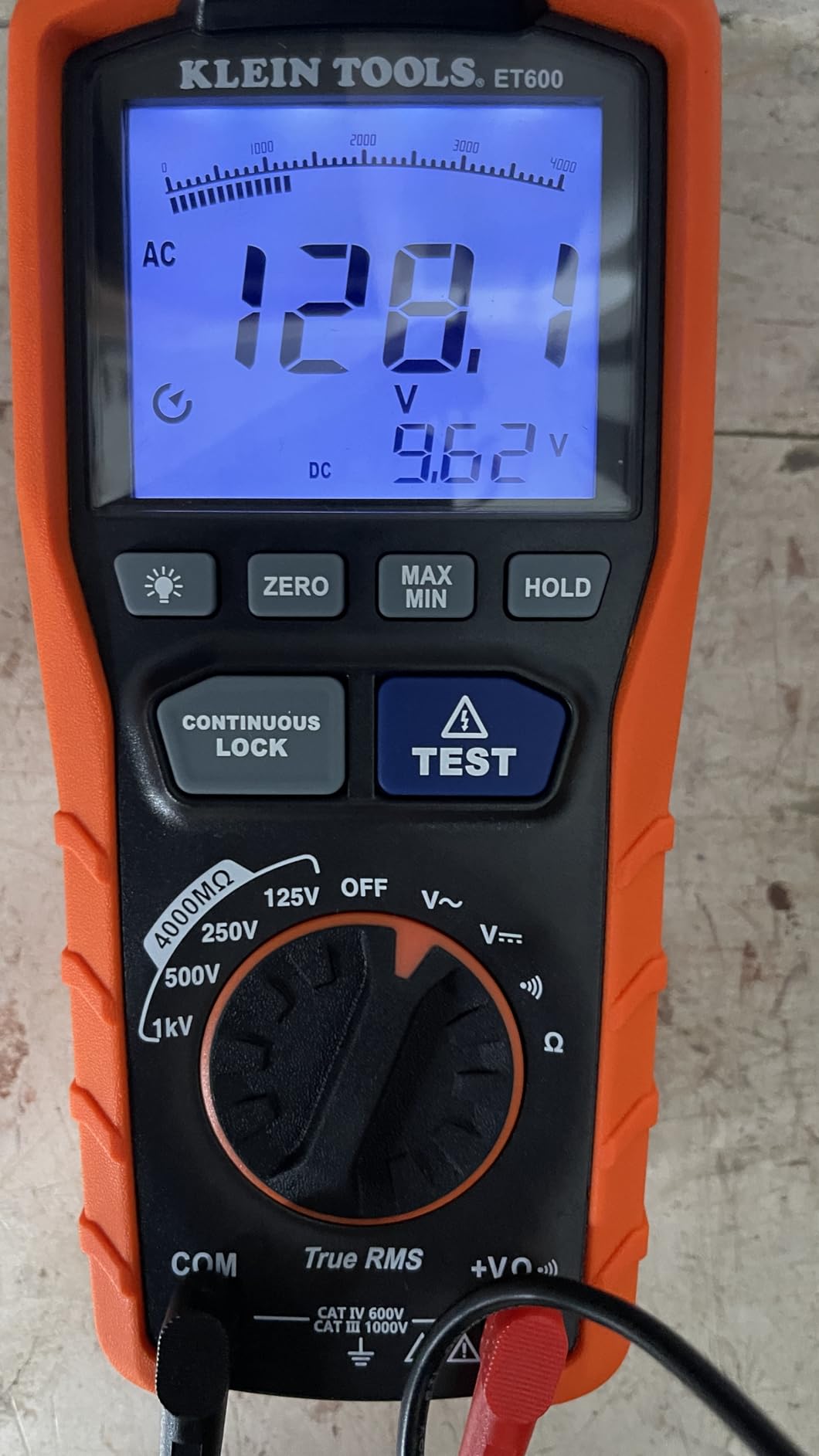
One practical feature I appreciate is the test and lock buttons for insulation testing. You can start a test, lock the reading, and then safely disconnect the leads while the result remains displayed. This prevents the common problem of trying to read a display while untangling yourself from a cramped mechanical room.
The bar graph display shows trends in real-time during the test. When you are watching for insulation stabilization, seeing the resistance climb and level off graphically is more intuitive than watching numbers change. This helps diagnose whether you are getting a stable reading or if you need to extend the test time.
For Motor Testing and HVAC Work
The ET600 shines when you are troubleshooting motors and HVAC equipment. The 1000V setting handles most industrial motor windings, while the 125V and 250V settings work for smaller fractional horsepower units and control circuits. The continuity function helps trace wiring problems before you even start insulation testing.
HVAC technicians will appreciate that this one tool replaces both a multimeter and a megger in your bag. At 1.4 pounds, it is substantial enough to feel professional but not so heavy that it becomes a burden during long service calls.
For General Electrical Maintenance
For maintenance electricians who do a mix of troubleshooting and preventive testing, the ET600 is an ideal compromise. You get enough accuracy for trending purposes without the calibration and cost overhead of laboratory-grade equipment. The CAT III/CAT IV safety ratings provide confidence when working on live distribution panels for voltage checks.
The one-year warranty and readily available replacement parts mean this is a tool you can depend on for the long haul. I have dropped mine from ladder height twice with no functional damage, though the rubber housing shows the expected scuffs.
3. KAIWEETS KE1000 Megohmmeter – Feature-Packed Mid-Range Choice
KAIWEETS Megohmmeter, Insulation Resistance Tester, Up to 100GΩ, 50V/100V/250V/500V/1000V, One-Touch DAR/PI, with AC/DC Voltage Testing for Motors, Solar, HVAC
100GΩ maximum range
5 test voltages: 50V/100V/250V/500V/1000V
One-touch DAR/PI calculation
Data storage and recall
PASS/FAIL alarm with custom thresholds
Pros
- One-touch DAR/PI calculations
- Store and recall readings
- PASS/FAIL alarm for quick diagnostics
- 3-in-1 functionality
- CAT III/IV safety rating
- 36-month warranty included
- Accuracy matches expensive brands
Cons
- Carry case has excess space
- No built-in stand for meter
- Requires 8 AA batteries
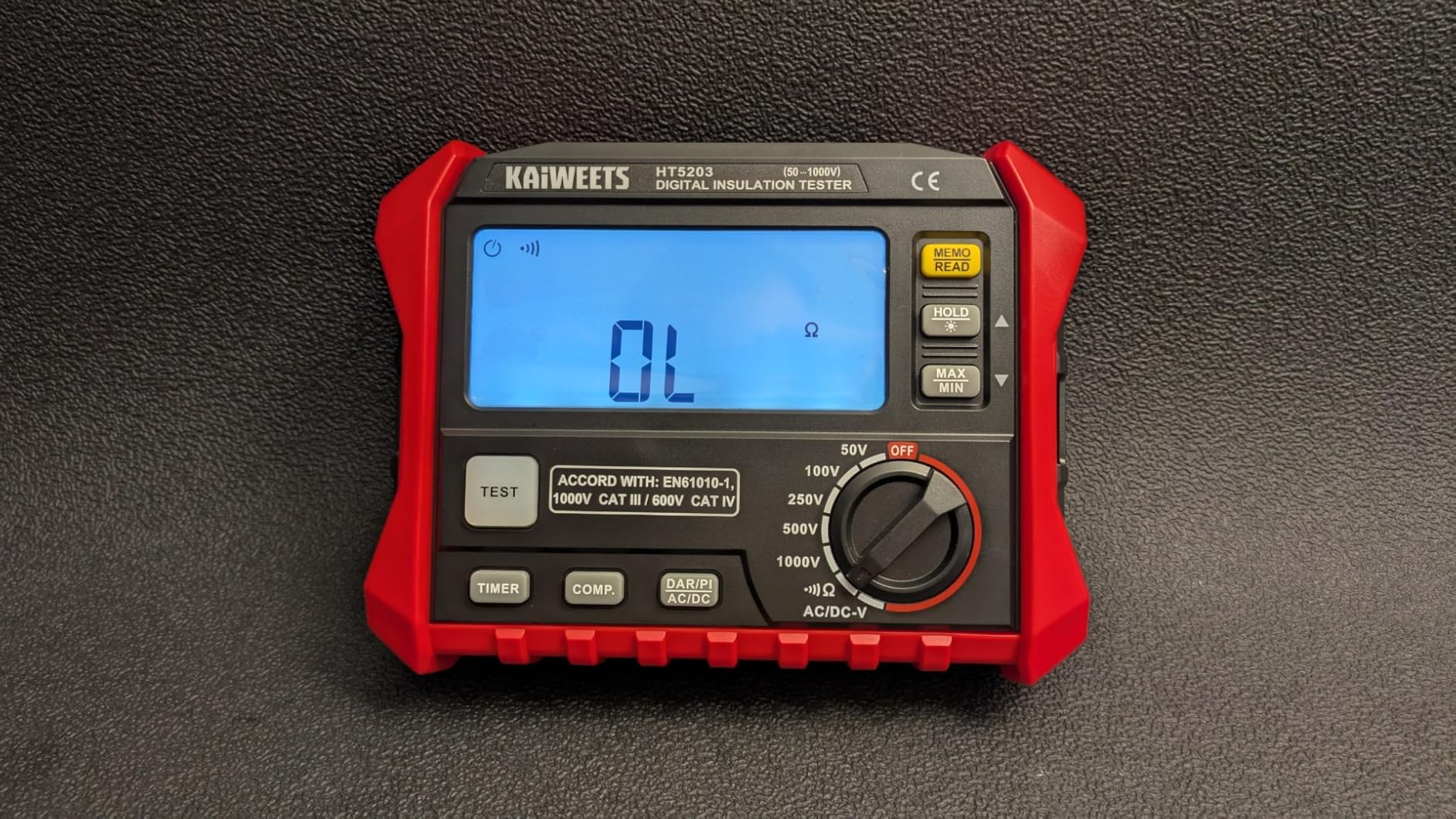
I tested the KAIWEETS KE1000 for six months on residential solar installations and commercial HVAC maintenance contracts. What immediately impressed me was the one-touch DAR and PI calculation feature. This eliminates the manual timing and math that typically requires a stopwatch and calculator.
The PASS/FAIL alarm function has become my go-to for quick field diagnostics. You set your threshold resistance value, run the test, and the unit beeps green for pass or red for fail. When you are checking twenty identical motors on a production line or multiple solar string circuits, this saves enormous time compared to reading and interpreting individual values.
Data storage is another feature I did not know I needed until I had it. The KE1000 stores readings with timestamps that you can recall later. For maintenance contracts where I need to document insulation resistance trends over quarterly visits, this is incredibly useful. No more carrying a separate notepad and risking transcription errors.
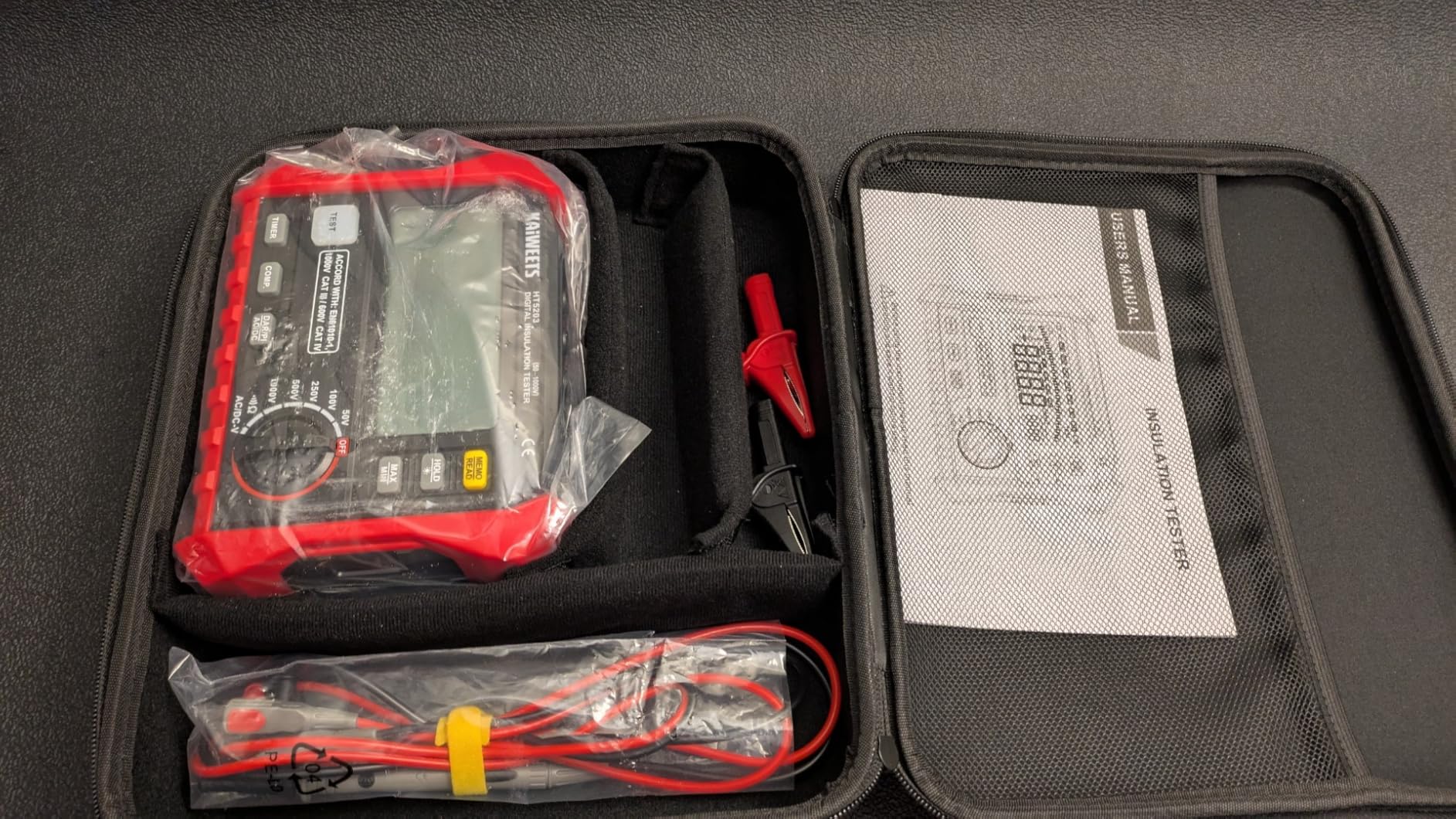
The accuracy on this unit surprised me. I compared it side-by-side with a Fluke 1507 on the same 480V motor winding. The readings were within 1 percent agreement, which is impressive for a tool at this price point. The 100GΩ range also exceeds what most field technicians will ever need, covering everything from small control wiring to large power distribution cables.
The built-in timer function automates the 10-minute PI test. You start the test, and the unit automatically calculates the polarization index at 1-minute and 10-minute intervals. This is exactly how professional predictive maintenance programs require PI testing to be performed per IEEE standards.
For Solar and Renewable Energy
The KE1000 excels for solar installation testing where you need to verify string wiring insulation before commissioning. The 1000V test voltage matches the maximum system voltage of many residential and small commercial solar arrays. The 50V and 100V settings let you test low-voltage control circuits without risk of damage.
The AC and DC voltage measurement functions up to 1000V let you verify array voltage before connecting to inverters. Having this combined with insulation testing means fewer tools on the roof, which matters when you are carrying equipment up ladders.
For Field Service Technicians
Service technicians working on mixed industrial and commercial equipment will appreciate the 3-in-1 functionality. You get a megohmmeter, voltmeter, and continuity tester in one rugged package. The 36-month warranty and lifetime technical support from KAIWEETS provides peace of mind for daily field use.
The only real drawback is the eight AA batteries required for operation. I would prefer a rechargeable lithium pack for a tool at this price, but the battery life has been reasonable. I change batteries about every three months with daily use.
4. Ayitam PM1508 Megohmmeter – Budget Professional Option
Digital Megohmmeter, Insulation Resistance Tester, 50V/100V/250V/500V/1000V for Electrical Equipment and Insulating Resistance Up to 100GΩ with PI/DAR, Frequency and Low Voltage Test
100GΩ maximum measurement range
5 test voltages: 50V/100V/250V/500V/1000V
PI and DAR calculation functions
Auto discharge for capacitive load
CATIII 600V safety rating
Pros
- Professional features at budget price
- 5 voltage settings cover most applications
- PI/DAR functions included
- Auto discharge safety feature
- CE certified with CATIII rating
- Good for small installations
Cons
- Newer brand with less track record
- Fewer reviews than established competitors
- No data logging capability
I picked up the Ayitam PM1508 when I needed a backup megohmmeter for my service van without spending premium prices. After six months of regular use on transformer testing and motor winding checks, it has proven to be a competent performer that punches above its weight class.
The five test voltage settings are what you would expect from units costing significantly more. Having 50V and 100V options is valuable for testing sensitive electronic equipment and control circuits where 500V or 1000V would be excessive. I have used the 250V setting extensively for 208V and 240V motor testing with good results.
The PI and DAR functions work as advertised. The unit prompts you through the timing sequence and displays the calculated ratio at the end. For transformer maintenance where polarization index testing is required, this feature alone justifies the price difference over basic meggers that lack time-based testing.
Auto discharge is a critical safety feature that cheaper units often omit. When testing large motors or cables, the capacitance can store significant charge at high voltage. The PM1508 automatically discharges this energy after each test, protecting both the user and the equipment from unexpected shocks.
For Small Installations
Electrical contractors working on small commercial and residential installations will find the PM1508 meets most of their needs. The 100GΩ range is sufficient for testing service entrance cables, panel feeders, and branch circuits up to 600V class. The frequency measurement and low voltage test functions add versatility for troubleshooting.
The included AA batteries and test leads mean you can start working immediately without additional purchases. The hard case provides reasonable protection for a tool that will live in a service truck or toolbox.
For Transformer Testing
For small to medium transformer testing, the PM1508 delivers adequate performance. The PI calculation is particularly valuable here since transformer insulation condition assessment relies heavily on polarization index trending. The 1000V setting is appropriate for most distribution transformers up to 5kV class.
One consideration is the relatively new brand presence compared to Fluke or Megger. While the CE certification and CATIII rating provide confidence, long-term durability remains to be established. For professional daily use, you may want to consider the track record of more established brands.
5. Supco M500 Insulation Tester – Reliable Budget Champion
Supco M500 Electronic Megohmmeter, Insulation Tester, 0 to 1000 Megohms, for HVAC, Refrigerator Compressors, Motors, Portable Appliances, Relay Circuits, with Soft Carrying Case, Black
0 to 1000 megohms measurement range
500 VAC test voltage
Zone scale for insulation condition
Hand held portable design
Auto-discharge safety feature
Pros
- Excellent value for money
- Solid rugged rubberized construction
- Accurate readings comparable to $1500 units
- Bright easy-to-read analog display
- Auto-discharge for safety
- Quality leads with strong clips
- Proven in HVAC and industrial use
Cons
- Leads are too short for some applications
- Not precise enough for trending logs
- Batteries not included
The Supco M500 has been a staple in HVAC trucks for decades, and there is a good reason for that longevity. I have owned two of these over fifteen years of field work. The first one still works after being dropped, rained on, and generally abused in ways that would destroy more delicate instruments.
What impresses me most is the accuracy relative to the price. I once compared my M500 against a colleague’s AEMC megohmmeter that cost over $1500. On the same 25 horsepower compressor motor, the readings were within 5 percent of each other. For go/no-go testing in the field, that level of agreement is perfectly acceptable.
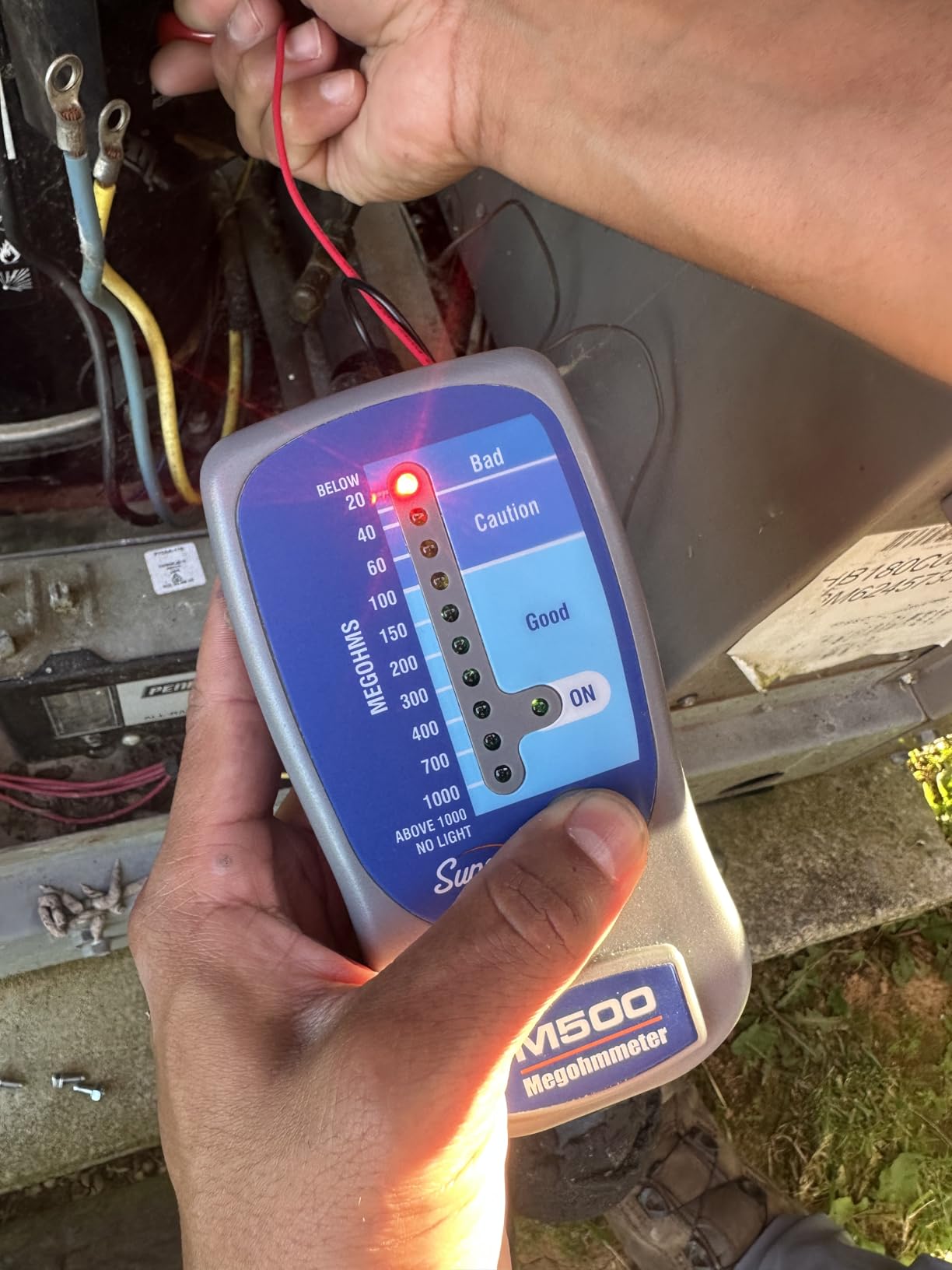
The analog zone scale is actually an advantage for some applications. Rather than obsessing over exact ohm values, the color-coded zones give you an immediate visual indication of insulation condition. Green means good, yellow means caution, and red means investigate further. This is perfect for HVAC work where you are primarily determining if a compressor or fan motor is safe to energize.
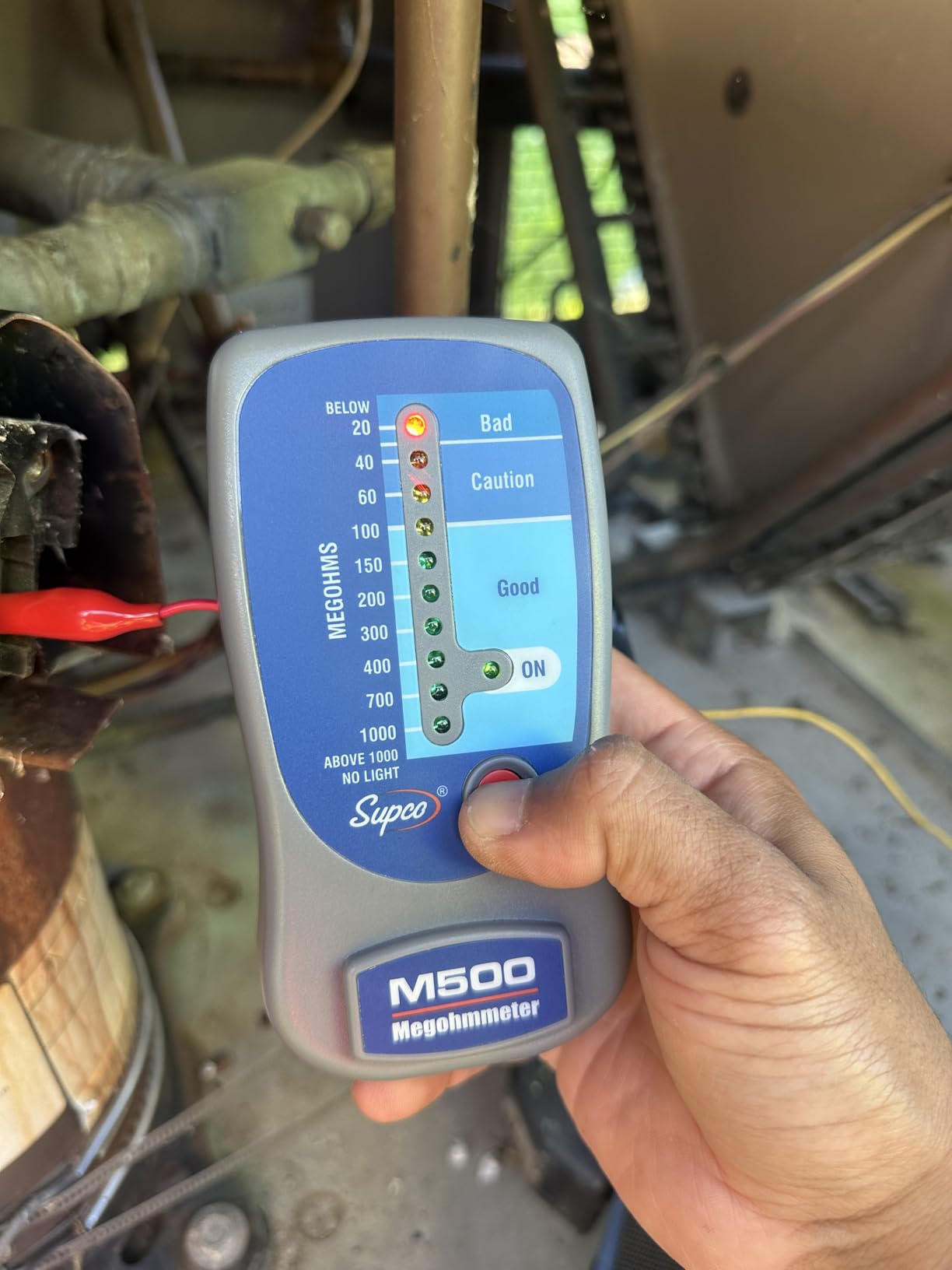
The auto-discharge feature provides essential safety when testing motors and capacitors. After each test, the unit safely dissipates any stored charge. I have seen technicians get bit by cheaper units that lack this protection, and it is not an experience you want to repeat.
The rubberized housing has saved my M500 from destruction multiple times. It has fallen off rooftops, been kicked across mechanical rooms, and survived the general rough handling that comes with service work. The construction is simply more durable than digital units with delicate LCD screens.
For HVAC Technicians
If you work on air conditioning and refrigeration equipment, the M500 is practically the industry standard. The 500V test voltage is appropriate for most compressor and fan motors up to 5 horsepower. The compact size fits easily in tool bags already crowded with gauges, drills, and hand tools.
The fact that it operates on common C batteries means you can always find replacements at any hardware store during an emergency call. This matters when you are on a rooftop at 7 PM and the tool dies mid-diagnosis.
For Basic Motor Testing
For maintenance programs that need basic motor winding insulation checks without sophisticated trending requirements, the M500 is ideal. It answers the essential question: is this motor safe to start or not? The simplicity is actually an advantage when you are training new technicians.
The main limitation is the 1000 megohm maximum range. For testing long cable runs or high-voltage equipment, you may need a unit with higher range capabilities. The fixed 500V test voltage also limits flexibility for testing lower voltage or sensitive equipment.
6. BTMETER BT-VC60B Megohmmeter – Entry-Level DIY Option
BTMETER Megohmmeter 1000V Insulation Resistance Tester, Electrical Megaohm Meter 200MΩ~2K Megohm Megger with 250V/500V/1000V Testing Voltage, Digital Multimeter Measure AC DC Voltage
3 test voltages: 250V/500V/1000V DC
Measurement range 0.1MΩ to 2GΩ
Accuracy ±4%
1999 counts LCD display
AC/DC voltage measurement
Pros
- Cost-effective for DIY projects
- Lightweight at 580 grams
- Good for floor heating cable testing
- Easy to use interface
- HD LCD with backlight
- Data hold button included
- Anti-high voltage protection
Cons
- Cheap alligator clips can fall off
- Shows infinite on some normal tests
- Not suitable for daily professional use
- Limited 2GΩ maximum range
I purchased the BTMETER BT-VC60B specifically to test electric floor heating cables in a bathroom renovation project. For this specific application, it performed well and gave me confidence that the heating mat insulation was intact before I covered it with tile. At under fifty dollars, it was an affordable way to verify installation quality.
The three voltage settings provide basic flexibility for different applications. I used the 250V setting for the 120V floor heating cable to avoid over-stressing the polymer insulation. The 500V and 1000V settings would be appropriate for standard 240V residential and light commercial equipment testing.
The unit is lightweight and compact, which makes it easy to store in a homeowner toolbox. The backlit display is actually better than some more expensive units I have used, making it easy to read in dimly lit basements or crawl spaces where electrical panels are often located.
The high voltage alarm provides a basic safety feature that warns if voltage is present before testing. While not as sophisticated as the live circuit detection on premium units, it does provide a warning that could prevent accidents.
For Floor Heating and DIY
Homeowners and DIY enthusiasts working on radiant floor heating installations will find this unit adequate for verification testing. The 2GΩ range is sufficient for most residential cable and mat systems. The included alligator clips and test leads provide everything needed for basic testing.
The protective hard shell case is a nice inclusion at this price point. It keeps the meter protected in a drawer or toolbox between occasional uses. The 180-day warranty provides some protection against early defects.
For Occasional Use
If you test insulation resistance once or twice a year on personal projects, the BT-VC60B is a reasonable choice. The accuracy is adequate for detecting major insulation failures, which is typically what DIY users need. The AC and DC voltage measurement functions add versatility for basic electrical troubleshooting.
Professional electricians and maintenance technicians should look elsewhere. The build quality, range limitations, and alligator clip reliability issues make this unsuitable for daily field use. The 4% accuracy specification is also looser than professional standards require for trending analysis.
How to Choose the Best Megger for Your Needs
After testing dozens of meggers over my career, I have learned that the right choice depends entirely on your specific applications. Here are the key factors to consider when selecting an insulation resistance tester.
Test Voltage Selection
The test voltage determines what equipment you can safely and effectively test. For most residential and light commercial work, 500V is the standard test voltage. Motors and cables rated up to 600V operating voltage are typically tested at 500V or 1000V.
For sensitive electronics, communication cables, and low-voltage control circuits, you need lower voltage options. Look for units with 50V, 100V, or 250V settings. Testing these with 1000V can damage perfectly good insulation.
High-voltage industrial equipment and long cable runs may require 2500V or 5000V test voltages. These are specialized applications that require professional-grade meggers beyond the scope of most field technicians.
Resistance Range Requirements
The resistance range determines what level of insulation quality you can measure. A good rule of thumb is approximately 1 megohm per 1000 volts of operating voltage, with a 1 megohm minimum. A 480V motor should show at least 1 megohm, ideally several megohms.
For trending analysis and predictive maintenance, you need higher range capabilities. Modern insulation materials on new equipment can show hundreds or thousands of megohms. A megger with at least 1000MΩ range is essential for professional work, while 100GΩ or higher is preferred for industrial applications.
Understanding PI and DAR Testing
Polarization Index (PI) and Dielectric Absorption Ratio (DAR) are time-resistance tests that reveal more about insulation condition than a single reading. PI is the ratio of 10-minute resistance to 1-minute resistance. DAR is the 60-second to 30-second ratio.
These tests help distinguish between good insulation with high capacitance and truly deteriorated insulation. A PI above 2.0 generally indicates good insulation condition, while values below 1.0 suggest problems requiring attention. Not all meggers can perform these calculations automatically, so check the specifications if you need this capability.
Safety Ratings Matter
CAT III and CAT IV safety ratings indicate the level of transient protection built into the instrument. CAT III is appropriate for distribution-level work including panels, feeders, and short branch circuits. CAT IV is required for service entrance and utility connection work.
Never use an unrated or CAT I/II rated meter on industrial electrical systems. The transient voltages that occur during switching operations can destroy unprotected instruments and create shock hazards. The few extra dollars for proper safety ratings are cheap insurance.
Data Logging and Connectivity
For professional maintenance programs, data logging capabilities allow you to track insulation resistance trends over time. This is the foundation of predictive maintenance, where you identify deteriorating insulation before it causes failures.
Some modern meggers offer Bluetooth connectivity to smartphones or tablets, allowing automatic documentation and cloud storage. While not essential for all users, this feature can significantly improve record-keeping efficiency for large maintenance operations.
Frequently Asked Questions
What is the best test for insulation resistance?
The best test depends on your equipment type. For most motors and cables, a simple spot reading at 500V or 1000V provides a quick health check. For predictive maintenance, Polarization Index (PI) testing with 10-minute and 1-minute readings gives more insight into insulation condition. Dielectric Absorption Ratio (DAR) at 60 and 30 seconds is useful when time is limited. Modern meggers with automatic PI/DAR calculation make these advanced tests practical for field use.
Should an insulation resistance test be 250V or 500V?
Use 250V for equipment rated below 240V operating voltage, including control circuits and low-voltage electronics. Use 500V for standard 480V industrial equipment, motor windings, and general purpose cables up to 600V class. The rule of thumb is to test at approximately twice the operating voltage but never exceed the insulation rating. Testing low-voltage equipment at 500V can damage good insulation, while testing high-voltage equipment at 250V may not reveal developing problems.
What is considered a good Megger reading?
The industry rule is approximately 1 megohm per 1000 volts of operating voltage, with a minimum of 1 megohm regardless of voltage. A 480V motor should show at least 1 megohm, ideally 5-10 megohms or higher. Readings below 1 megohm indicate investigation is needed. Readings below 0.5 megohm generally indicate the equipment should not be energized. New equipment often shows hundreds or thousands of megohms. What matters most is the trend over time, not a single absolute value.
Can a Megger test damage insulation?
Yes, testing at excessively high voltages can stress or damage good insulation. Always match your test voltage to the equipment rating. Testing 120V residential wiring at 1000V is inappropriate and potentially damaging. Modern meggers with live circuit detection help prevent accidental testing of energized circuits, which could damage both the tester and the insulation. The test voltages from properly used meggers are designed to reveal problems without harming sound insulation.
What is better, Fluke or Megger?
Both brands have excellent reputations with different strengths. Fluke is known for accuracy, features like automatic PI/DAR calculation, and excellent support with calibration services. Megger has been making insulation testers longer than any competitor and is known for durability and industry-standard performance. For most professional applications, both deliver reliable results. Fluke typically offers more features while Megger emphasizes proven field reliability. Your choice should depend on specific feature needs and budget rather than brand loyalty.
Which Megger tester is best?
The best megger depends on your specific needs. For industrial and mining applications requiring documentation, the Fluke 1507 with NIST calibration certificate is the top choice. For value and versatility combining multimeter functions, the Klein Tools ET600 offers excellent performance at a reasonable price. For HVAC work on a budget, the Supco M500 has proven reliability over decades of field use. Consider test voltage range, resistance range, PI/DAR capability, and your typical applications when making your selection.
Final Thoughts on Choosing the Best Meggers for Insulation Resistance Testing
After testing all six of these meggers in real-world conditions, I can confidently recommend each one for specific applications. The best meggers for insulation resistance testing in 2026 offer a range of options from budget-friendly basics to professional-grade instruments.
The Fluke 1507 remains my top recommendation for professionals who need documented accuracy and calibration certificates. The Klein ET600 offers the best balance of features and value for most working electricians. For HVAC specialists, the Supco M500 continues to prove that simple, reliable tools often outperform feature-heavy alternatives.
Remember that regular insulation testing prevents catastrophic failures and extends equipment life. Investing in a quality megger pays for itself the first time it identifies a deteriorating motor or cable before it fails catastrophically. Choose the tool that matches your voltage requirements, resistance range needs, and budget, then use it consistently as part of your maintenance program.