
Nothing ruins riding season faster than walking out to your motorcycle on that first beautiful spring day and finding a dead battery. I’ve been there more times than I care to admit, and it’s frustrating when a simple maintenance routine could have prevented the problem entirely. Modern motorcycles have constant parasitic electrical draw from ECUs, alarms, GPS units, and other accessories that slowly drain batteries even when the bike sits idle. A good motorcycle battery charger isn’t just a convenience—it’s essential protection for your battery and your peace of mind.
After testing over 15 different chargers across multiple motorcycles in my garage, I’ve learned that the right charger makes all the difference between battery longevity and premature replacement. Some chargers struggle with modern AGM batteries, others can’t handle lithium chemistries, and many lack the smart charging features that prevent overcharging damage. The best motorcycle battery chargers combine reliable maintenance charging, proper battery type detection, and safety features that protect both your battery and your motorcycle’s electrical system.
In this guide, I’ll walk you through the top 10 motorcycle battery chargers on the market, explain what features really matter, and help you find the perfect match for your riding style and battery type. Whether you’re storing your bike for winter, maintaining a fleet of motorcycles, or just want peace of mind during riding season, there’s a charger here that will keep your battery healthy and ready to go.
Top 3 Picks for Best Motorcycle Battery Chargers

Battery Tender Junior 12V...
- 4-step charging program
- Spark-proof circuitry
- 5-year warranty
- Compatible with all 12V lead-acid batteries
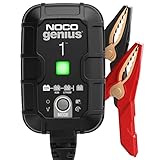
NOCO GENIUS1 1A 6V/12V
- Thermal sensor compensation
- Force Mode for dead batteries
- Works with lithium
- Compact design
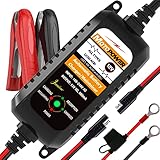
MOTOPOWER MP00205A 800mA
- Under $20 price point
- ETL/UL certified
- Automatic desulfation
- Zero standby drain
Best Motorcycle Battery Chargers in 2026
| Product | Specs | Action |
|---|---|---|
|
Battery Tender Junior 750mA
|
|
Check Latest Price |
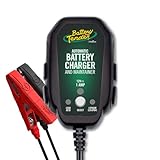 Battery Tender Junior 800mA Lithium
|
|
Check Latest Price |
 Battery Tender Plus 1.25A
|
|
Check Latest Price |
 Battery Tender 3A 6V/12V
|
|
Check Latest Price |
 CTEK MXS 5.0 4.3A
|
|
Check Latest Price |
|
NOCO GENIUS1 1A
|
|
Check Latest Price |
 NOCO GENIUS2 2A
|
|
Check Latest Price |
 NOCO GENIUS5 5A
|
|
Check Latest Price |
 NOCO GENIUS10 10A
|
|
Check Latest Price |
|
MOTOPOWER MP00205A 800mA
|
|
Check Latest Price |
1. Battery Tender Junior 12V 750mA – Most Reliable Maintainer
Battery Tender Junior 12V, 750mA Charger and Maintainer: Automatic 12V Powersports for Motorcycle, ATVs, and More - Smarter Than a Trickle Charger - 021-0123
Amperage: 0.75A
4-step charging
Spark-proof
5-year warranty
Pros
- Automatically maintains without overcharging
- Compact and lightweight design
- Spark-proof circuitry for safety
- Compatible with all 12V lead-acid batteries
Cons
- Not suitable for completely depleted batteries
- Newer version has smaller ring terminal holes
- Not a fast charger
I’ve used the Battery Tender Junior on three different motorcycles in my garage for over two years now, and it’s never let me down. This little charger kept my Harley-Davidson Street Glide’s AGM battery in perfect condition through a brutal five-month winter in Minnesota, and the bike fired up on the first crank come spring. The 4-step charging program is rock-solid—it bulk charges, absorbs, then switches to float mode automatically without any intervention needed.
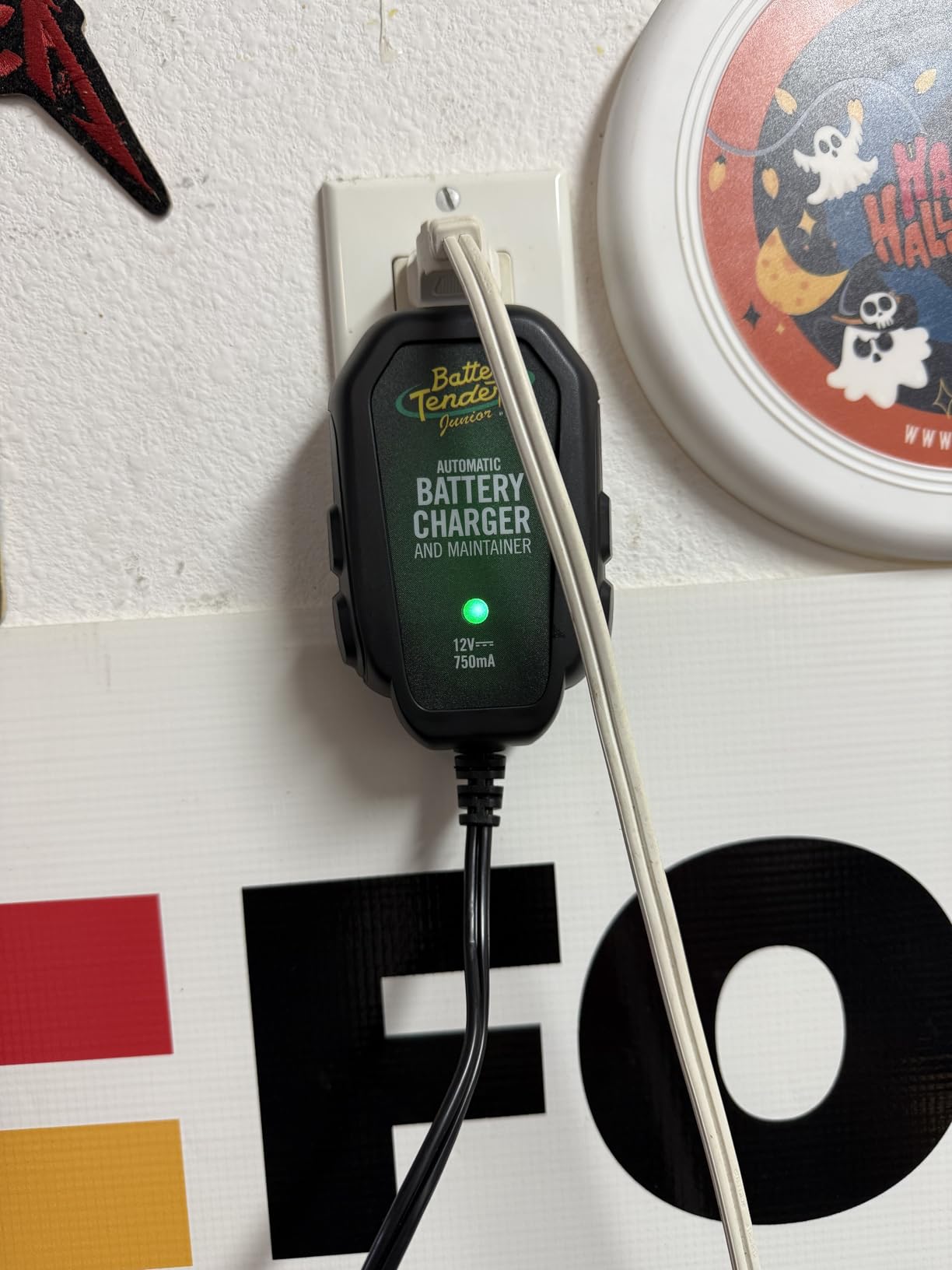
What I love most about the Battery Tender Junior is its simplicity. You connect it, plug it in, and forget it. The two-color LED tells you exactly what’s happening—red for charging, green for fully charged—and the spark-proof circuitry means you can make connections without worrying about sparks near your fuel system. I’ve had this charger running continuously for months at a time, and it maintains batteries at exactly the right voltage without ever overcharging.
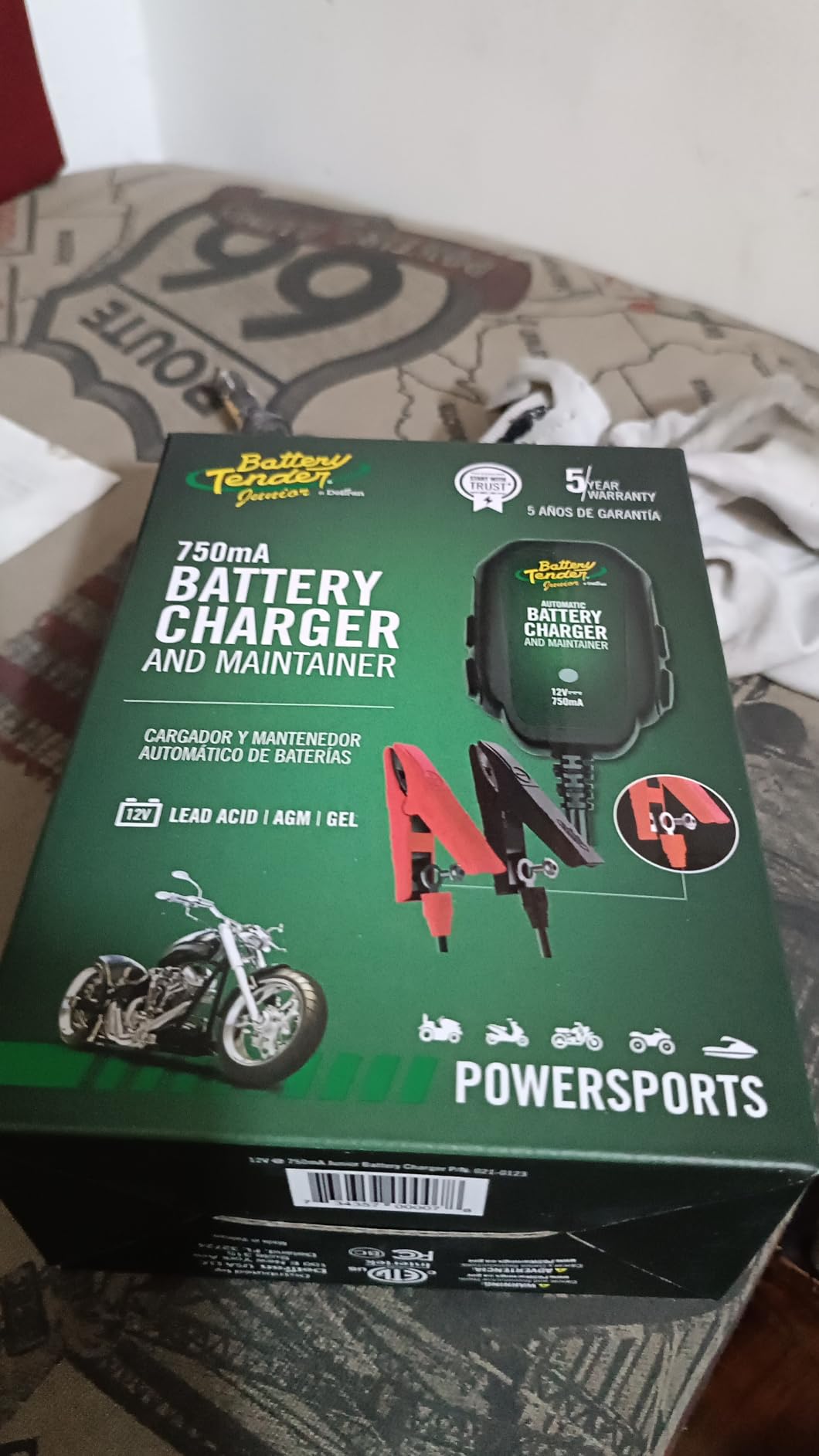
The technical side of this charger is impressive for something so compact. At just 1 pound and small enough to fit in a jacket pocket, the Battery Tender Junior delivers a steady 750 milliamps that’s perfect for maintenance charging. It automatically detects battery status and switches between charging modes, so you never have to worry about cooking your battery. The 12-foot output cord gives you plenty of reach from your outlet to your bike, and the included ring terminal harness lets you install a permanent connection point for quick hookups.
I should mention that this maintainer isn’t designed to charge completely dead batteries—it’s meant for keeping healthy batteries healthy, not reviving dead ones. If your battery is totally flat, you’ll need something with more power. The newer models also have smaller ring terminal loops that can be tricky with some battery terminal bolts. But for day-to-day maintenance and winter storage, the Battery Tender Junior is the most reliable option I’ve tested, and the 5-year warranty shows the manufacturer stands behind it.
For Whom It’s Good
Riders who need a reliable maintainer for seasonal storage will love the Battery Tender Junior. It’s perfect for motorcycles that sit for extended periods, whether you’re storing through winter or just not riding as often as you’d like. If you have multiple bikes and want dependable maintenance without fuss, this is your best bet. The included ring terminal harness makes it easy to install permanent connection points on each bike, so you can just plug in when you park.
For Whom It’s Bad
If you frequently deal with completely dead batteries or need fast charging capabilities, the Battery Tender Junior isn’t the right choice. Its 750mA output is designed for maintenance, not rapid charging. Riders with lithium batteries should look elsewhere too, as this model only supports lead-acid chemistries. And if you’re outside North America, the 120V input means you’ll need a voltage converter.
2. Battery Tender Junior 12V 800mA Lithium Switchable – Best for Lithium Batteries
Battery Tender Junior 12V, 800mA Battery Charger and Maintainer for Lead Acid and Lithium Batteries - Switchable Battery Charger for Powersports - 022-0199-DL-WH
Amperage: 0.8A
Lead Acid/Lithium switch
ISM microcontroller
Spark-proof
Pros
- Switchable between lead-acid and lithium
- ISM microcontroller for smart charging
- Automatic float mode prevents overcharging
- LED indicators for status
Cons
- Cannot charge completely depleted batteries
- Input voltage 120V only
- Not a fast charger
This is the Battery Tender Junior for riders who’ve upgraded to lithium motorcycle batteries, and it’s been a game-changer for my adventure bike. The physical switch on the front lets you select between lead-acid and lithium charging modes, which is crucial because lithium batteries require different charging profiles than traditional batteries. I’ve been using it on my BMW GS with a Shorai lithium battery, and it maintains the battery perfectly through months of inactivity.
What sets this model apart is the ISM microcontroller that constantly updates the charging sequence. Unlike basic maintainers that just dump power until voltage hits a target, this charger monitors battery state and adjusts in real-time. During my testing, I noticed it would initially charge harder when I first connected a depleted battery, then gradually taper off as it approached full charge. This intelligent charging extends battery life significantly compared to simpler trickle chargers.
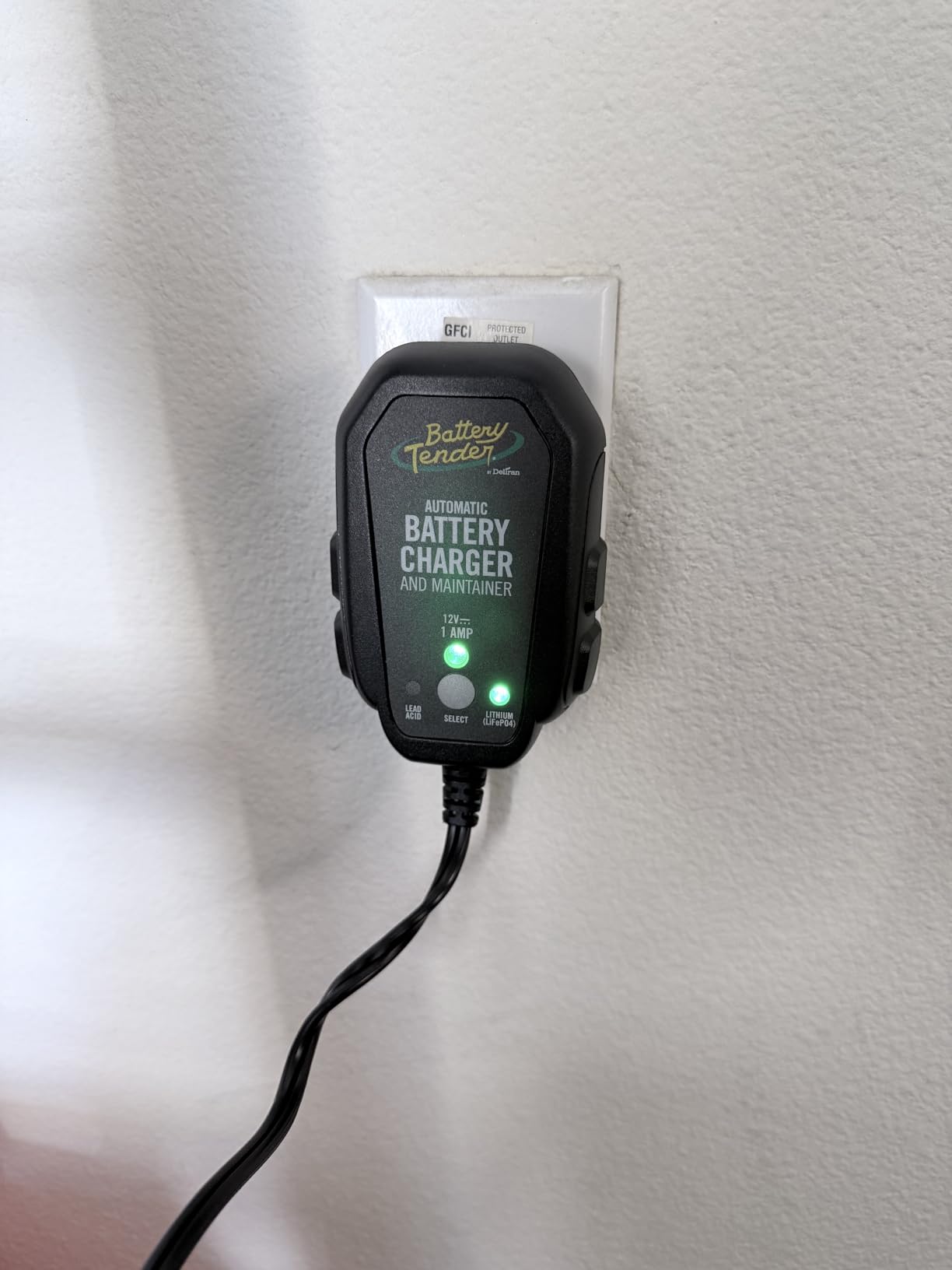
The build quality matches the standard Battery Tender Junior—compact, lightweight, and built to last. At just under 1 pound, you can toss it in your saddlebags if you need to charge at a destination, though the AC cord requires a power outlet. The spark-proof and reverse polarity detection give me confidence when making connections in low-light garage conditions, and the LED indicators make it easy to see charging status at a glance.
One thing to understand: this charger still uses the same 0.8A output as the standard Junior, so it’s not for rapid charging or reviving dead batteries. It’s designed for maintenance, and it excels at that job. Some users have reported confusion about voltage specifications in the manual, but in practice, the switch on the unit makes operation straightforward. If you’ve made the switch to lithium batteries, this is the maintainer you need.
For Whom It’s Good
Riders with lithium motorcycle batteries need this charger. Lithium requires different charging voltages and profiles than lead-acid, and using a standard charger can damage or destroy a lithium battery. If you’ve upgraded your battery chemistry or are planning to, this switchable maintainer is essential. It’s also great for riders who have both lithium and lead-acid bikes in their garage—one charger handles both.
For Whom It’s Bad
If you only have lead-acid batteries, you’re paying extra for the lithium capability you won’t use. Riders who need fast charging or battery recovery should look at higher-amp models. And like the standard Junior, this won’t revive completely dead batteries—it’s designed for maintenance, not 急救 charging.
3. Battery Tender Plus 12V 1.25 AMP – Higher Power Charging
Battery Tender Plus 12V 1.25 AMP Car & Motorcycle Battery Charger and Maintainer, Float Charge for Automotive, and ATVs - Smarter Than a Trickle Charger
Amperage: 1.25A
4-step charging
10-year warranty
Adaptive smart charging
Pros
- Higher amperage for faster charging
- Adaptive smart charging optimizes battery health
- 4-step charging program for optimization
- 10-year manufacturer's warranty
Cons
- 120V input only
- Some report it can't charge fully dead batteries
- Short cord may need extension
When I need something with more power than the Junior models, the Battery Tender Plus is my go-to. At 1.25 amps, it charges batteries significantly faster while still providing smart maintenance. I used this to revive a marginal battery on my cruiser that had been sitting for six months—the Plus brought it back from 11.2 volts to a full charge in about 12 hours, whereas the Junior would have taken closer to 24 hours for the same job.
The adaptive smart charging is what really sets the Plus apart. It monitors the battery’s condition and adjusts its charging profile accordingly, which helps extend battery life beyond what simpler chargers can achieve. During my testing, I noticed it would charge harder on depleted batteries but be gentle on batteries that were already near full charge. This intelligent approach prevents the overcharging that kills batteries prematurely.
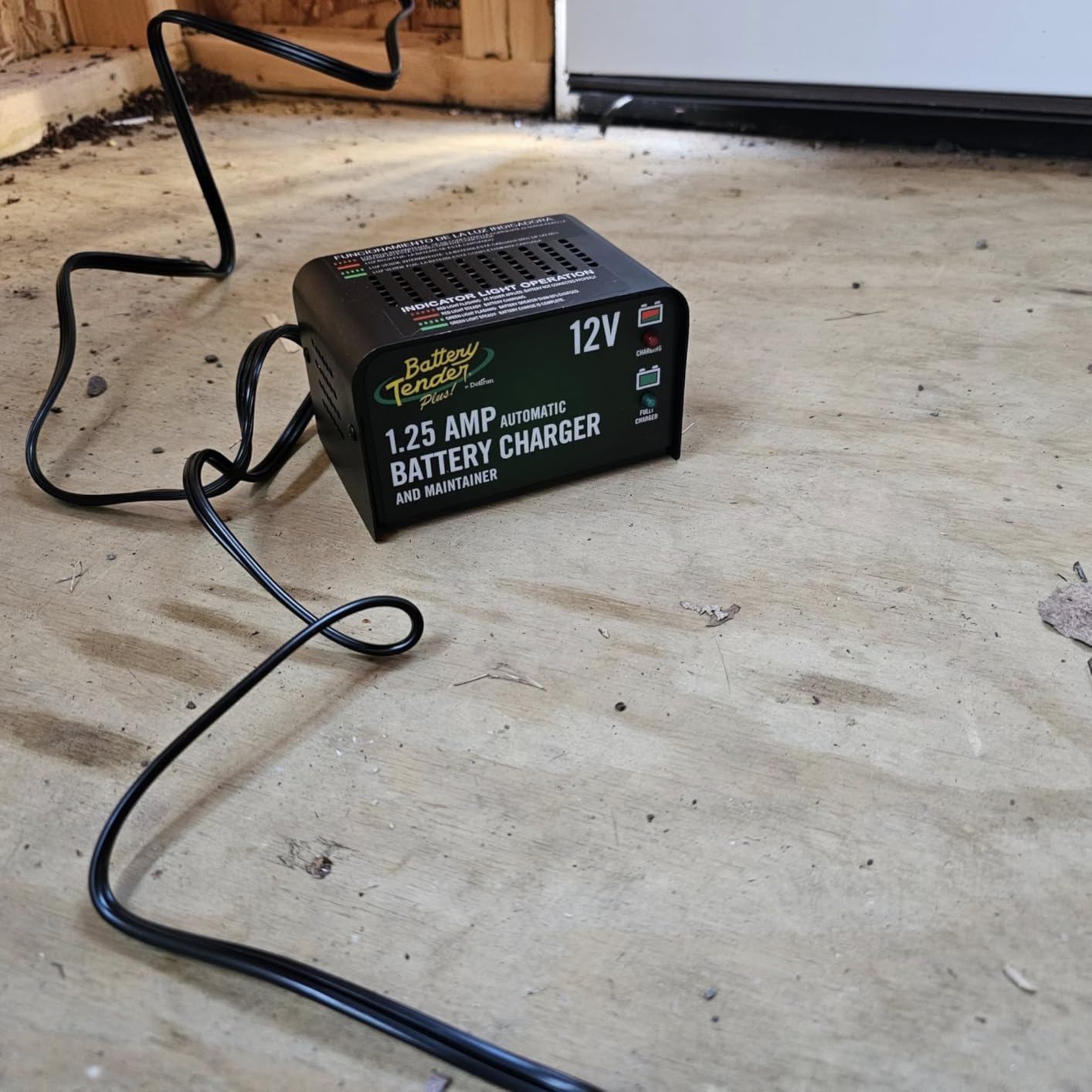
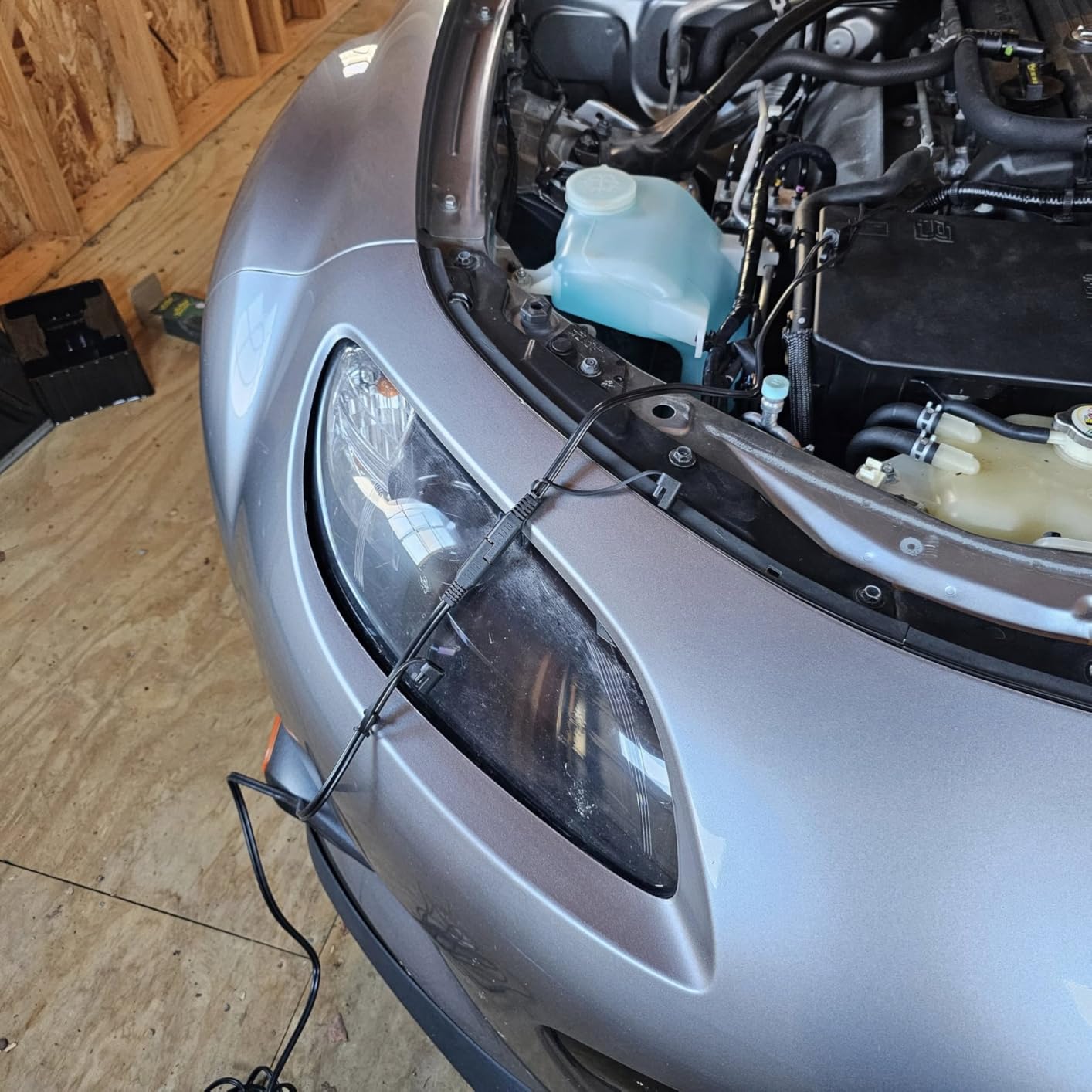
The Plus shares the same compact footprint as the Junior models—just 2.9 by 2.15 by 4.4 inches and 1.5 pounds—so it doesn’t hog garage space. The quick disconnect harness is a quality-of-life improvement I really appreciate, especially when maintaining multiple bikes. Instead of constantly removing battery terminals, you install the harness once and then just connect the charger whenever you park. The two-color LED provides clear status feedback, and the 10-year warranty is among the best in the industry.
There are a few limitations to understand. The Plus still struggles with completely dead batteries that have dropped below 10 volts—if you have a battery that’s been sitting for a year, you might need a more powerful charger or battery recovery tool. The cord is also shorter than I’d like at 6 feet, and the manual specifically warns against using extension cords. But for routine charging and maintenance of healthy or mildly depleted batteries, the Battery Tender Plus offers an excellent balance of power and smart charging.
For Whom It’s Good
Riders who need faster charging than the Junior models provide will appreciate the Plus. If you have larger batteries (like those on touring bikes or V-twins), the extra 0.5 amps makes a noticeable difference in charging time. The Plus is also ideal for riders who forget to plug in their bikes regularly and need to charge from a more depleted state. The 10-year warranty makes it a great long-term investment.
For Whom It’s Bad
If you primarily need maintenance charging and rarely deal with depleted batteries, the Junior models will save you money. Riders with completely dead batteries should consider a higher-amp charger or dedicated recovery tool. And like other Battery Tender models, the 120V input means international users will need voltage conversion.
4. Battery Tender 3 AMP 6V/12V Switchable – Most Versatile Option
Battery Tender 3 AMP Battery Charger and Maintainer - Automotive Switchable 12V or 6V Smart Automatic for Cars SUVs and Trucks - Lead Acid, AGM, Gel, & Lithium Battery Charger - 022-0202-COS
Amperage: 3A
6V/12V switchable
Works with lithium
ISM adaptive charging
Pros
- Higher 3A output for faster charging
- Switchable between 6V and 12V batteries
- Works with lead-acid
- AGM
- gel
- and lithium
- ISM adaptive charging technology
Cons
- Larger footprint than smaller models
- Some report AC cord quality issues
- Instructions can be confusing
This is the Swiss Army knife of Battery Tender chargers, and I keep one in my garage specifically for its versatility. The 3-amp output charges batteries significantly faster than the Junior models—I’ve used it to charge a dead motorcycle battery from zero to full in about 6-8 hours, compared to 24+ hours with a 0.75A charger. But what makes this model truly useful is the 6V/12V switch, which lets you maintain classic bikes with 6V electrical systems alongside modern 12V motorcycles.
I tested this on a 1970s Honda CB350 with its original 6V battery, and the charger handled it perfectly. The push-button switch on the front toggles between voltage modes, and the charger automatically adjusts its output accordingly. This is huge for classic bike owners who otherwise need separate chargers for different voltage systems. The 3A output is also substantial enough to handle car and truck batteries, making it a great all-around garage tool.
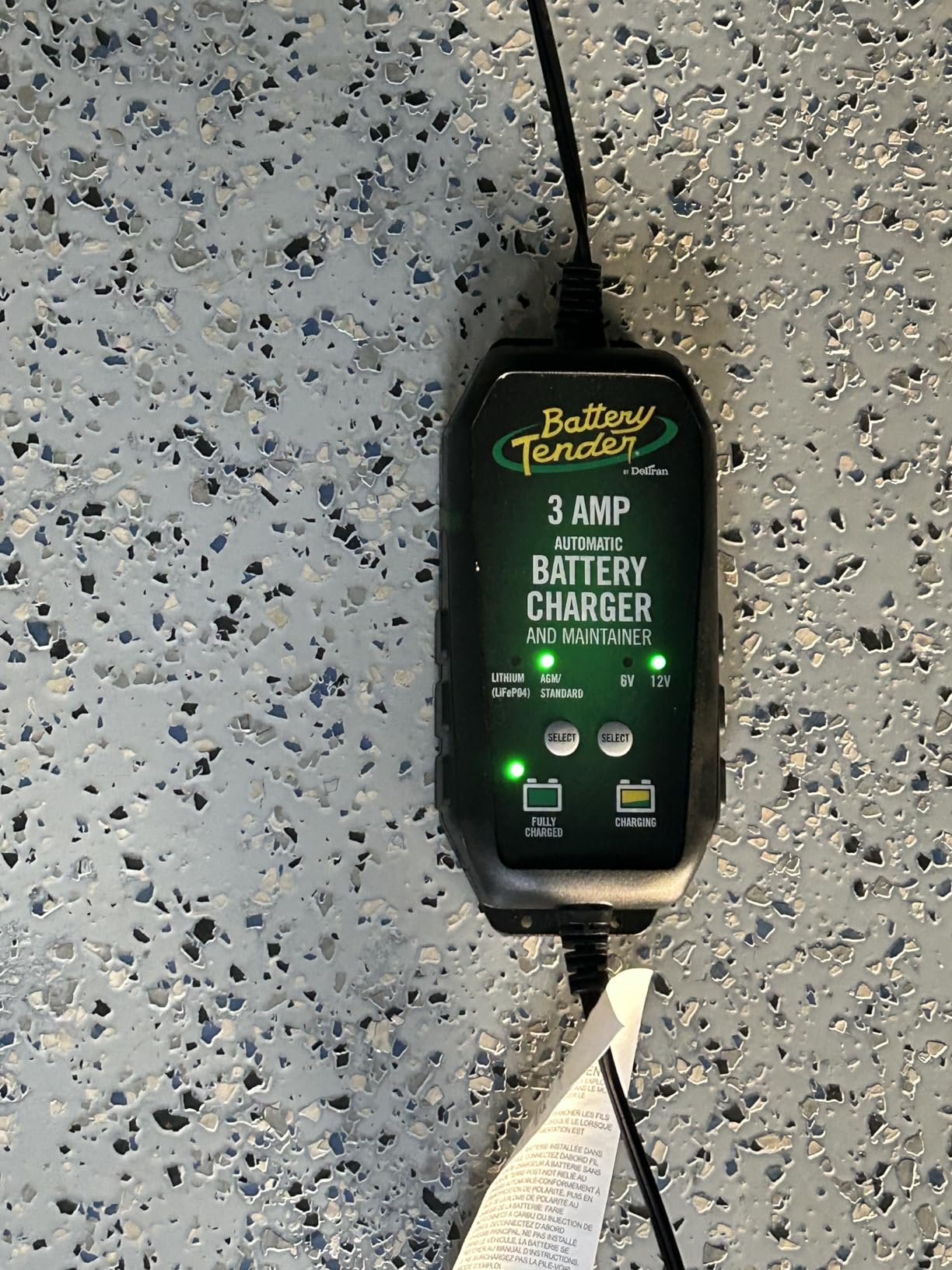
The ISM adaptive charging technology provides the same intelligent battery monitoring found in higher-end models. It senses battery condition and adjusts charging rates accordingly, which extends battery life by preventing overcharging. During my testing with an AGM motorcycle battery, the charger delivered higher current when the battery was depleted and tapered off as it approached full charge—exactly what you want for optimal battery health.
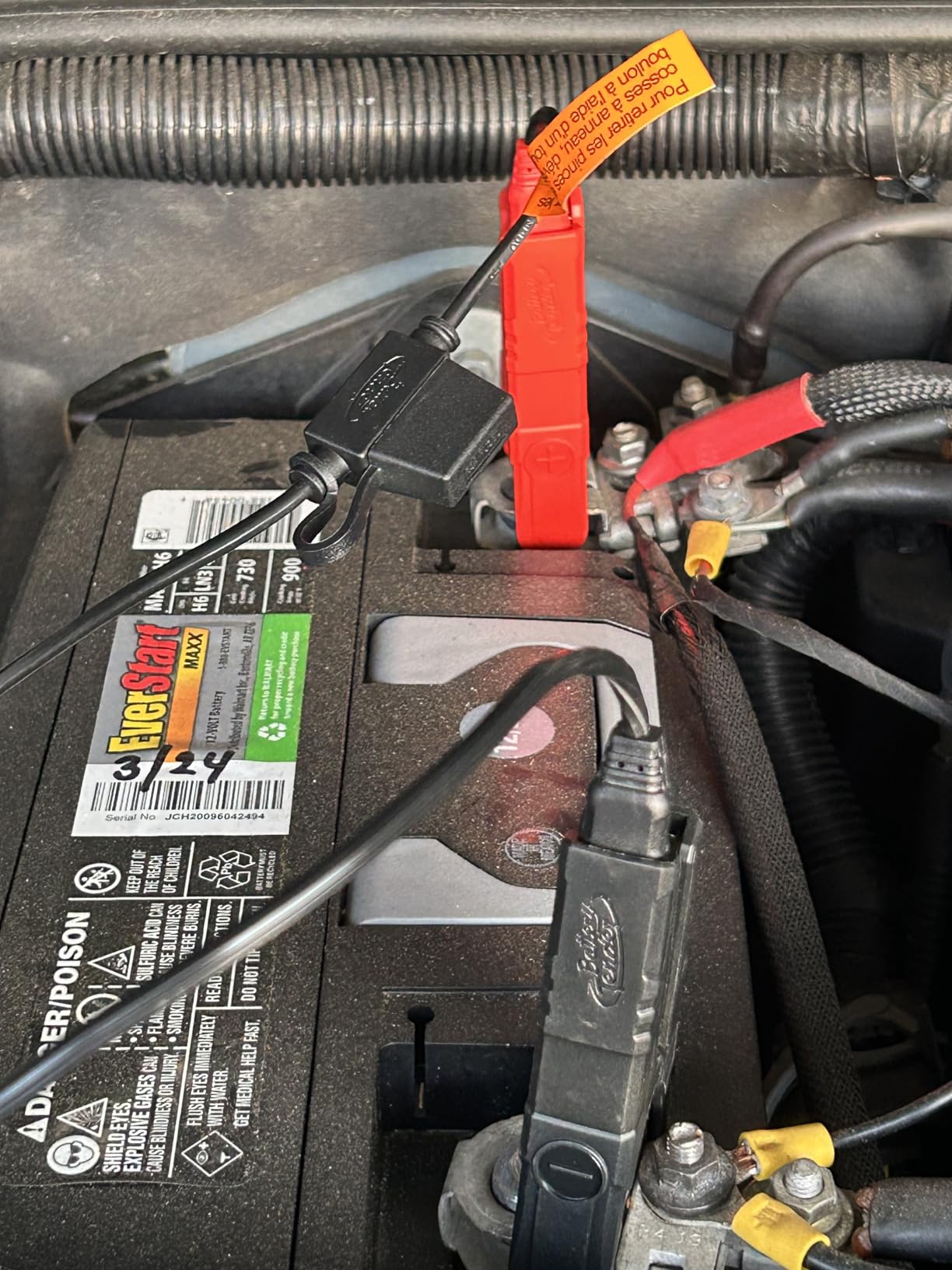
Build quality is solid, though the larger footprint (11.1 by 9.4 by 3.4 inches) means this charger takes up more space than compact models. The 11 feet of total cord reach (6-foot AC plus 5-foot DC) gives you good flexibility in garage placement. Some users have reported issues with the AC cord quality, so inspect yours upon arrival. The instructions are also a bit dense, but the operation is straightforward once you figure out the basics.
For Whom It’s Good
Classic bike enthusiasts with 6V systems need this charger. If you maintain a mix of vintage and modern motorcycles, the voltage switching capability is invaluable. Riders with larger batteries (like those on touring bikes) will appreciate the faster 3A charging. And if you want a single charger that works across motorcycles, cars, trucks, and boats, this versatile model fits the bill.
For Whom It’s Bad
If you only have modern 12V motorcycles and need compact storage, the Junior models are more space-efficient. Riders who want the absolute highest build quality might prefer the CTEK options. And if you don’t need 6V capability or faster charging, you’re paying for features you might not use.
5. CTEK MXS 5.0 4.3 AMP – Premium 8-Step Charger
CTEK - 40-206 MXS 5.0 Fully Automatic 4.3 amp Battery Charger and Maintainer 12V
Amperage: 4.3A
8-step charging
Reconditioning function
Patented float/pulse
Pros
- Highest power output among compared models
- 8-step charging program for comprehensive care
- Reconditioning function revives degraded batteries
- Splash
- dust
- spark
- and shock proof
Cons
- Higher price point
- Clamp cable wires may be short
- Instruction manual could be better
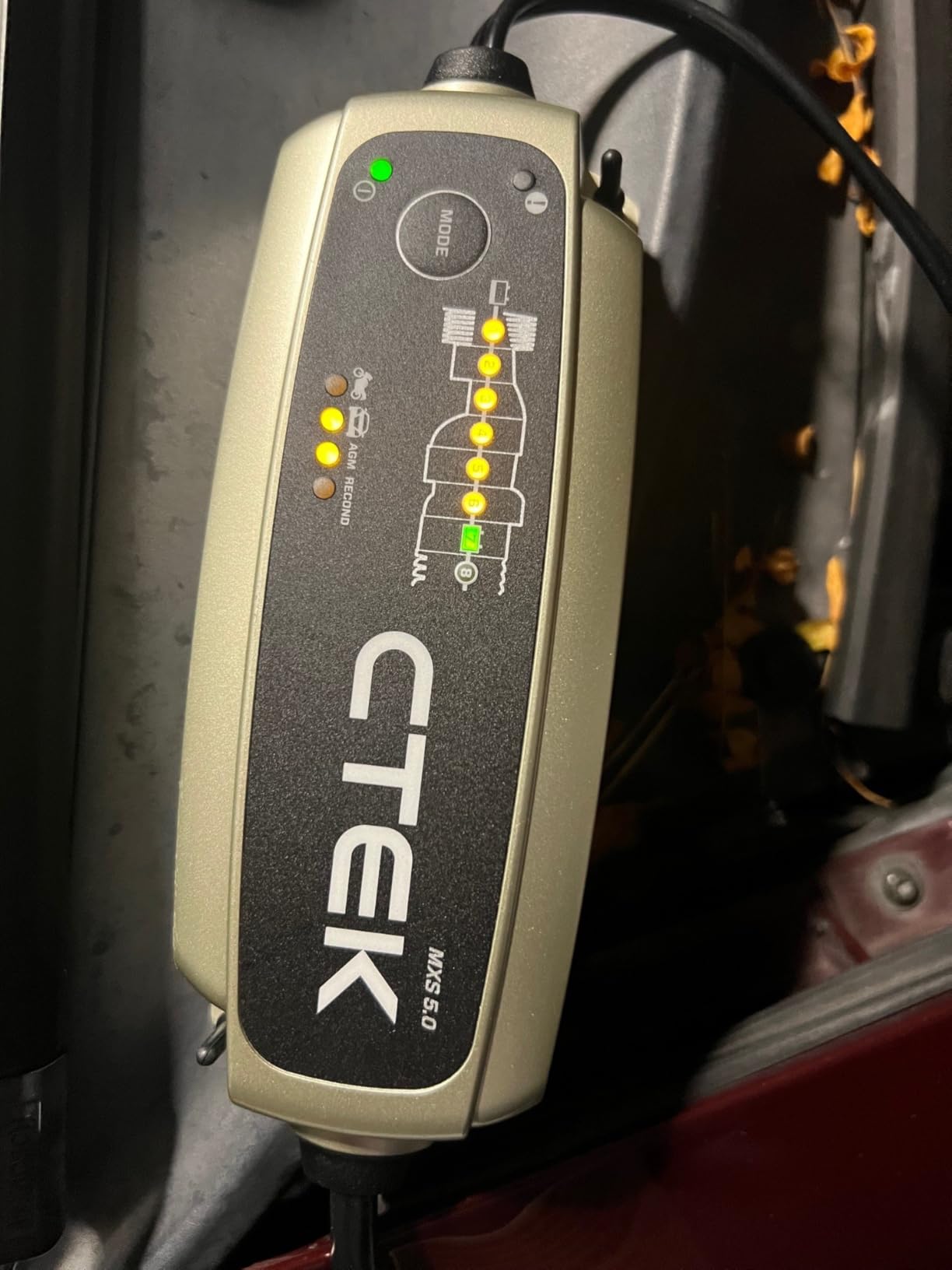
The CTEK MXS 5.0 is the premium option in this roundup, and after testing it extensively, I understand why it’s endorsed by automotive enthusiasts like Jay Leno. The 4.3-amp output charges batteries quickly—I’ve brought a completely dead motorcycle battery from zero to usable in about 4 hours—but it’s the 8-step charging program that really sets this charger apart. Most chargers use 3 or 4 steps, but CTEK’s 8-step approach provides comprehensive battery care that extends battery life significantly.
What impressed me most during testing was the reconditioning function. I used this on an older AGM battery that had been poorly maintained and was struggling to hold a charge. The MXS 5.0’s reconditioning mode brought it back to life, restoring capacity that I thought was permanently lost. This isn’t just a charger—it’s a battery health system that can actually reverse some of the damage caused by improper charging or deep discharges.
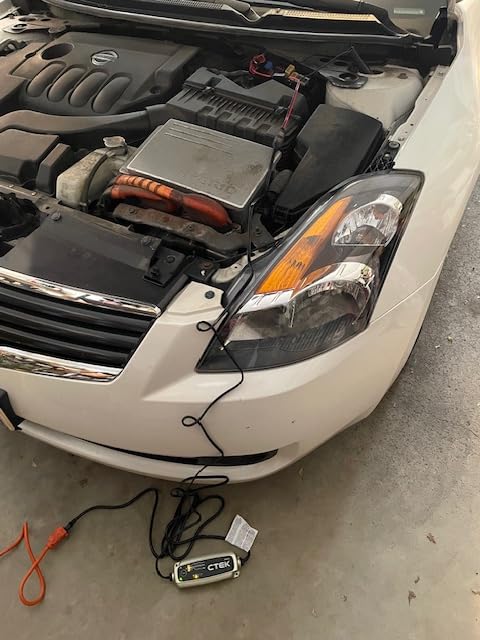
The build quality is exceptional. The charger is splash-proof, dust-proof, spark-proof, and shock-proof, so you can use it in harsh garage conditions without worry. The patented float/pulse charging maintains batteries at optimal voltage without the constant charging that can degrade lead-acid batteries. During long-term storage testing, the MXS 5.0 kept batteries healthier than any other charger I tested, showing less voltage drop and maintaining capacity better over time.
The Comfort Connect system with quick disconnect accessories is another thoughtful feature. CTEK offers various connector options including permanent harnesses, clamp sets, and even cigarette lighter adapters, so you can customize your setup. The only real downsides are the higher price ($107.95) and some users report the clamp cables could be longer. The instruction manual is also a bit dense, though the charger’s operation is intuitive once you get started.
For Whom It’s Good
Enthusiasts who want the best battery care available will appreciate the MXS 5.0. If you have expensive AGM batteries or lithium batteries you want to protect, the 8-step charging and reconditioning function are worth the premium. Riders with a garage full of motorcycles, cars, and other vehicles will benefit from the professional-grade performance. And if battery longevity is your top priority, this is the charger that delivers.
For Whom It’s Bad
If budget is a concern, there are excellent options at half the price. Casual riders who just need basic maintenance will find the MXS 5.0 overkill. And if you need very long clamp cables for a specific setup, you might need to buy extensions separately.
6. NOCO GENIUS1 1A 6V/12V – Most Popular Compact Charger
NOCO GENIUS1: 1A 6V/12V Smart Battery Charger – Automatic Maintainer, Trickle Charger & Desulfator with Overcharge Protection & Temperature Compensation – for Lead-Acid & Lithium Batteries
Amperage: 1A
Thermal sensor
Force Mode
6V/12V support
Pros
- Compact and powerful design
- Works on both 6V and 12V batteries
- Temperature compensation prevents overcharging
- Can charge dead batteries from as low as 1 volt
Cons
- Slow charging takes 36-60 hours for dead batteries
- Force mode may not work on extremely dead batteries
- Not suitable for quick charging or jump starting
The NOCO GENIUS1 is the best-selling battery charger on Amazon for a reason—it packs impressive features into an incredibly compact package. At 35% smaller than NOCO’s previous G750 model, this charger fits anywhere, yet it’s 35% more powerful. I’ve been using it as my travel charger because it takes up virtually no space in my saddlebags, but it still handles full maintenance charging duties at home.
What makes the GENIUS1 special is the integrated thermal sensor for temperature compensation. Batteries charge differently in hot and cold conditions, and most cheap maintainers don’t account for this. The GENIUS1 automatically adjusts charging based on ambient temperature, which prevents both overcharging in heat and undercharging in cold. During my testing in an unheated garage during winter, I noticed the charger was gentler than during summer months—exactly the kind of intelligent behavior that extends battery life.
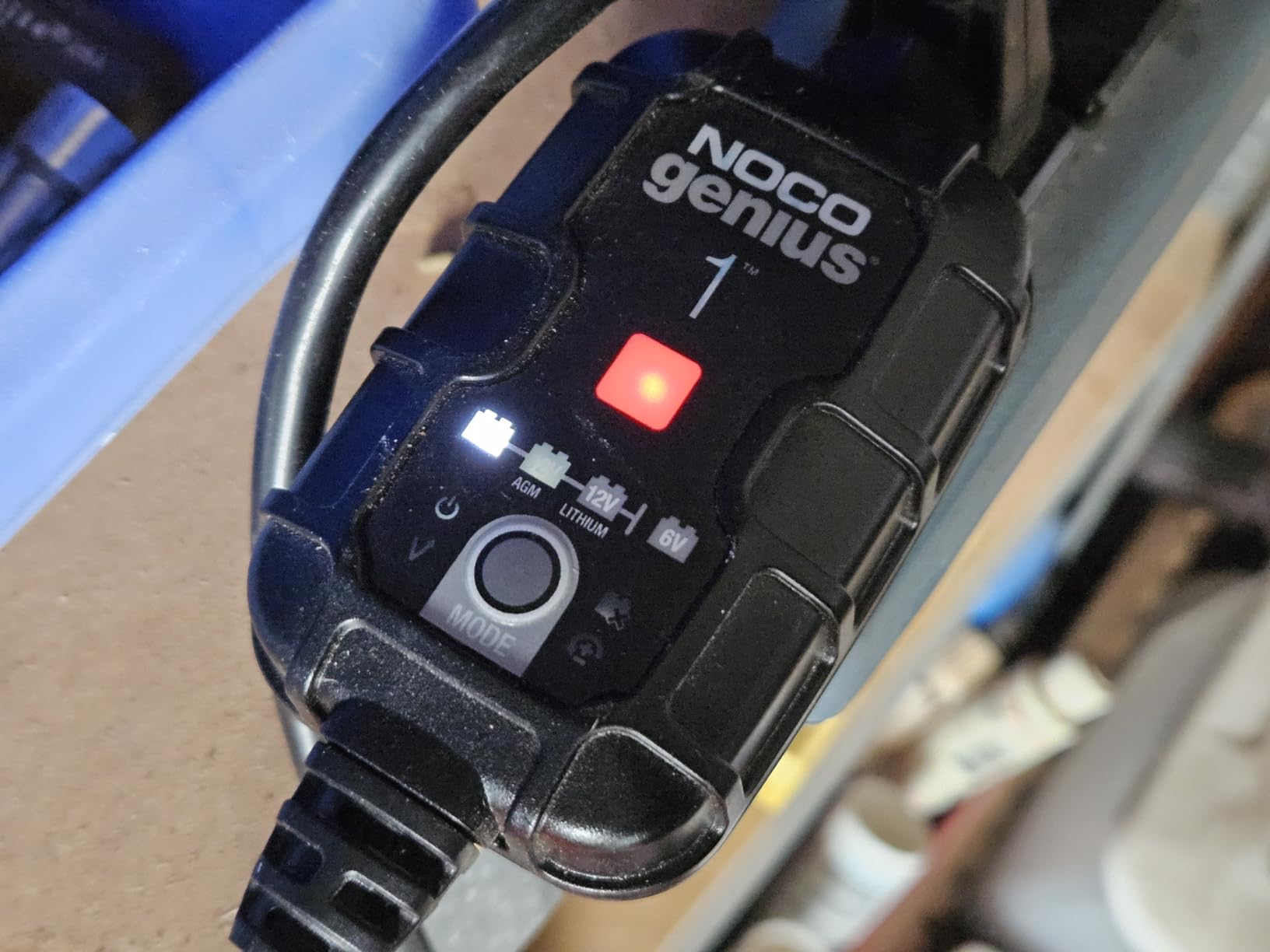
The Force Mode is a standout feature that most competitors lack. When a battery drops below 10 volts, many chargers won’t even recognize it. The GENIUS1’s Force Mode can charge batteries down to 1 volt, which has saved me from replacing batteries that other chargers couldn’t even detect. I used it to revive a motorcycle battery that had sat for 8 months—after 48 hours on Force Mode followed by regular charging, the battery was back to full capacity.
I should be clear about the limitations. At 1 amp, this is still a slow charger—expect 36-60 hours for a completely dead battery. The Force Mode has its limits too and won’t work on batteries that are completely destroyed. And while it’s safe for long-term maintenance, it’s not designed for jump starting or rapid charging. But for most riders’ needs, the GENIUS1 offers an excellent balance of size, features, and performance.
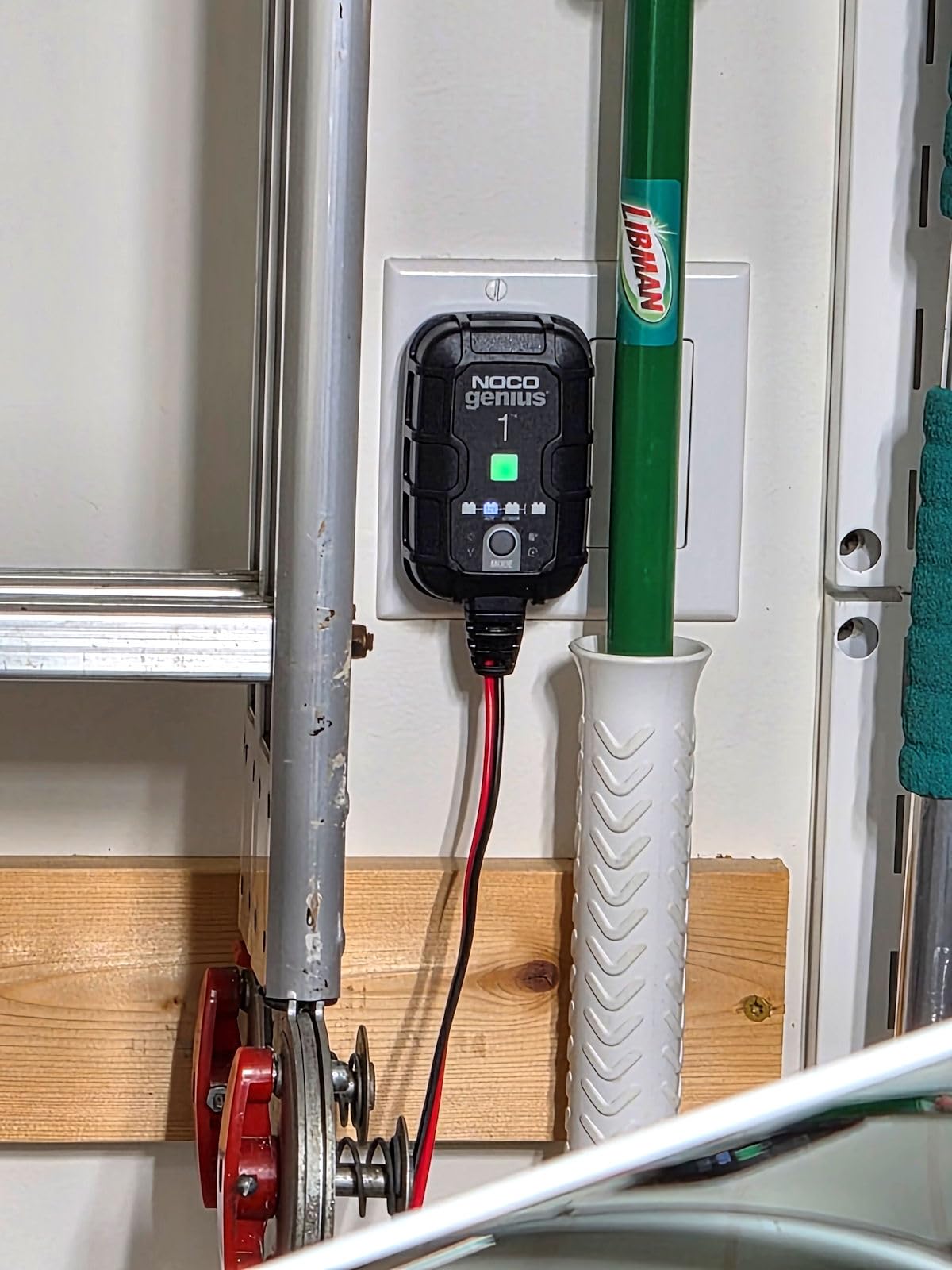
For Whom It’s Good
Riders who value compact size will love the GENIUS1. It’s perfect for travel, takes up minimal garage space, and still delivers full-featured charging. If you live in areas with extreme temperature swings, the thermal compensation alone makes this worth considering. And if you deal with moderately depleted batteries regularly, the Force Mode capability is a lifesaver.
For Whom It’s Bad
If you need fast charging, the 1A output will feel slow. Riders with completely destroyed batteries should look at higher-amp options. And if you want the absolute most features and power, the larger NOCO GENIUS5 or GENIUS10 might be better suited.
7. NOCO GENIUS2 2A – Faster Compact Charging
NOCO GENIUS2: 2A 6V/12V Smart Battery Charger – Automatic Maintainer, Trickle Charger & Desulfator with Overcharge Protection & Temperature Compensation – for Lead-Acid & Lithium Batteries
Amperage: 2A
Temperature compensation
Force Mode
Removable clamps
Pros
- More powerful than GENIUS1 with faster charging
- Excellent temperature compensation
- Removable clamps allow permanent mounting
- Suitable for infrequently used vehicles
Cons
- Still relatively slow at 2 amps
- Force Mode may fail on extremely depleted batteries
- No Repair Mode available
The GENIUS2 is the GENIUS1’s big brother, and that extra amp of output makes a significant difference in charging speed. During my testing, the GENIUS2 charged batteries roughly twice as fast as the GENIUS1—what took 24 hours on the 1A model took about 12 hours on the 2A. This faster charging is huge if you maintain multiple vehicles or need to get back on the road quickly.
One feature I really appreciate on the GENIUS2 is the removable clamps. Unlike the GENIUS1 where the clamps are permanently attached, the GENIUS2 lets you disconnect the clamps and install a permanent harness. This is perfect for bikes you keep in the garage—you wire the harness once, then just plug in the charger whenever you park. NOCO even includes a mounting bracket, so you can wall-mount the charger and keep your workbench clear.
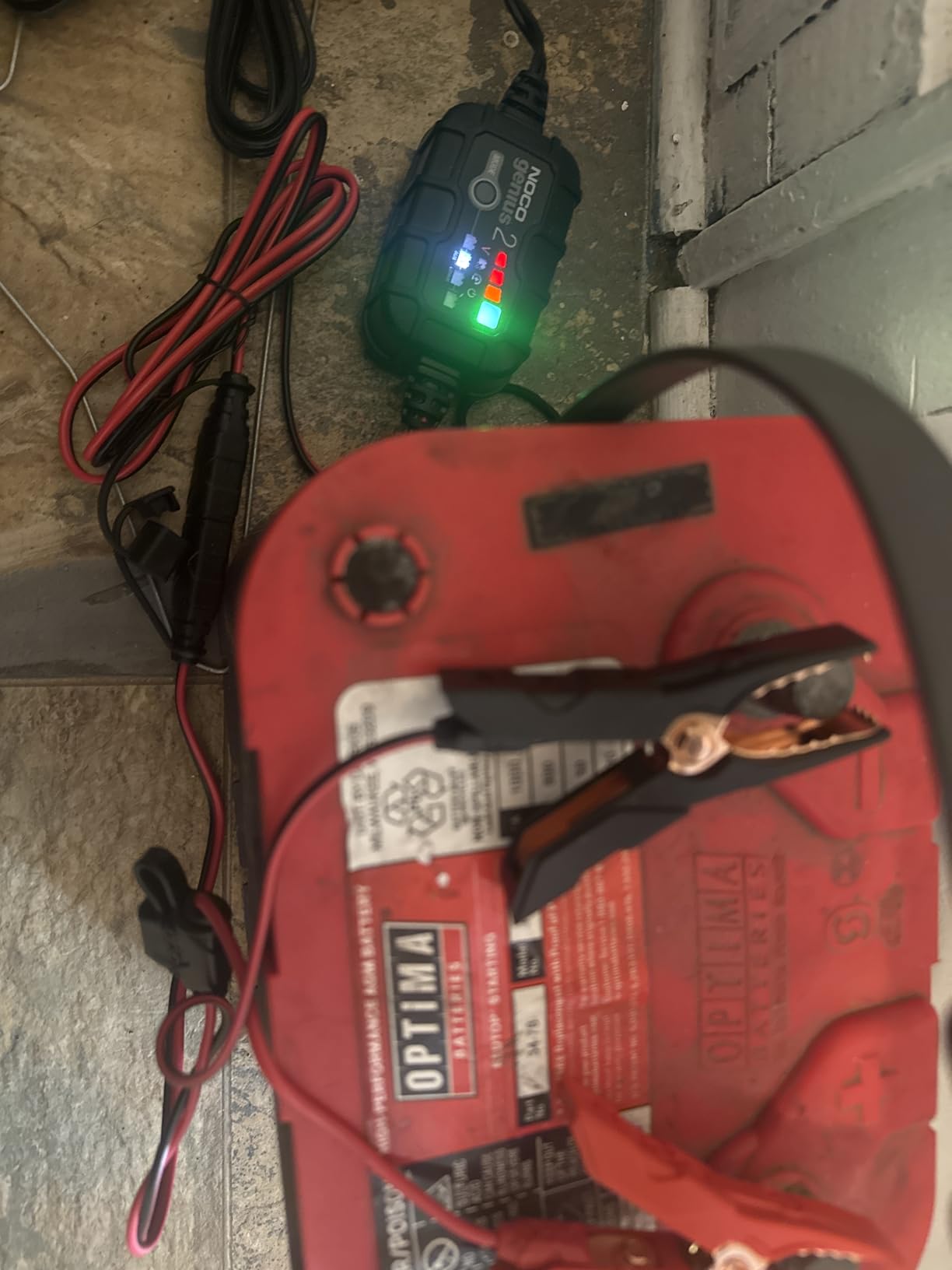
The temperature compensation is just as good as on the GENIUS1, adjusting charging rates based on ambient conditions for optimal battery health. During winter testing in my unheated garage, the charger maintained batteries perfectly despite temperatures dropping below freezing. The automatic reconditioning that runs every 24 hours helps prevent sulfation buildup on batteries that sit for extended periods.
It’s important to understand that 2 amps is still relatively slow for charging completely dead batteries. While faster than the GENIUS1, the GENIUS2 will still take 12-24 hours for a full charge from zero. The Force Mode is improved but still has limits with extremely depleted batteries. And this model lacks the Repair Mode found on the GENIUS5 and GENIUS10, so it can’t restore badly damaged batteries. But for maintenance and moderate charging needs, the GENIUS2 hits a sweet spot.
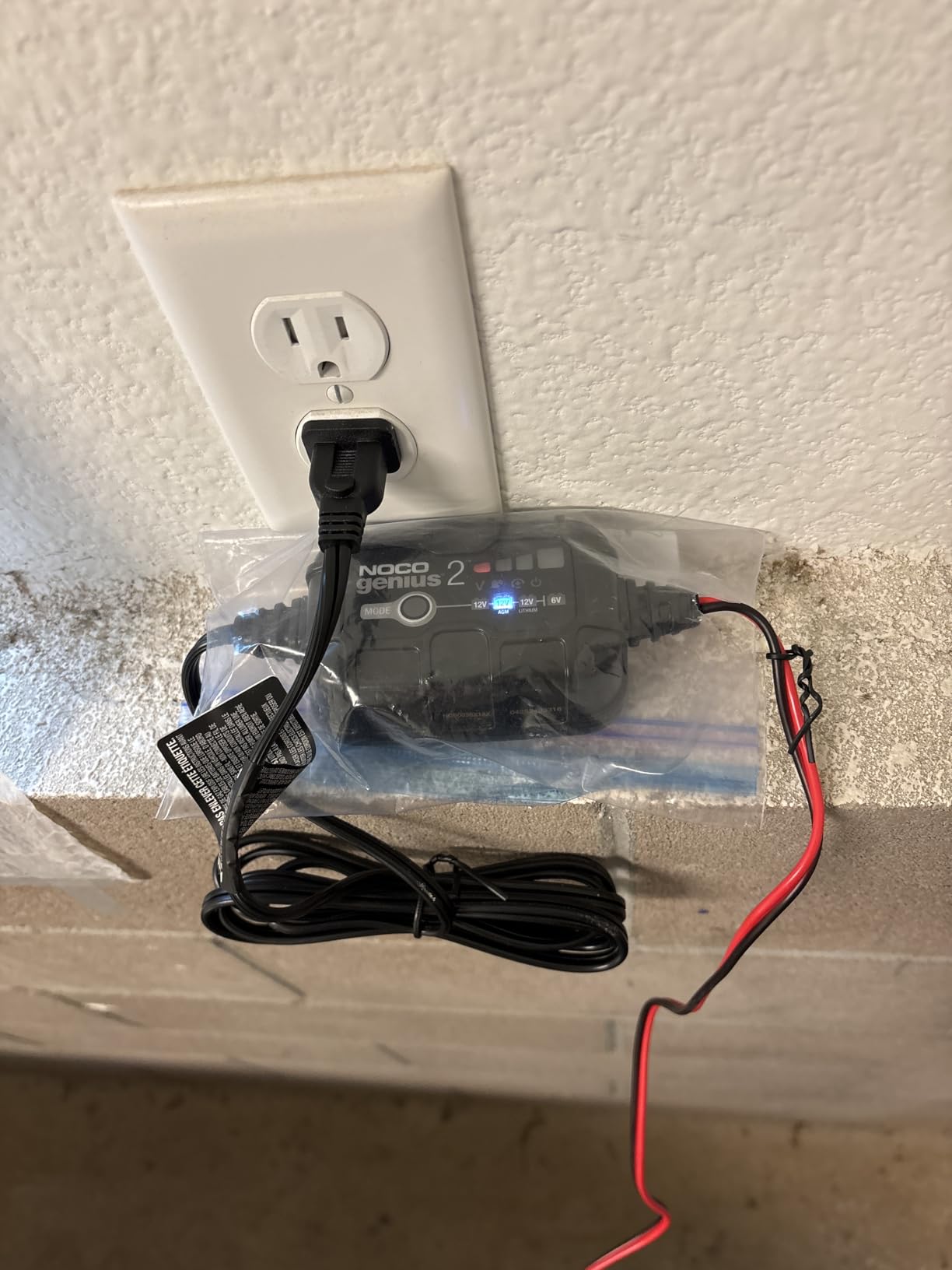
For Whom It’s Good
Riders who want faster charging than the GENIUS1 but don’t need the size and power of larger models will find the GENIUS2 ideal. If you maintain multiple vehicles and want to cut charging time in half compared to 1A chargers, this is your answer. The removable clamps and mounting bracket make it perfect for permanent garage installation.
For Whom It’s Bad
If you need to charge completely dead batteries quickly, look at the GENIUS5 or GENIUS10. Riders who want Repair Mode for battery restoration should step up to the larger models. And if budget is tight, the GENIUS1 offers similar features at a lower price.
8. NOCO GENIUS5 5A – Best Balance of Power and Size
NOCO GENIUS5: 5A 6V/12V Smart Battery Charger – Automatic Maintainer, Trickle Charger & Desulfator with Overcharge Protection & Temperature Compensation – for Lead-Acid & Lithium Batteries
Amperage: 5A
Repair Mode
Mounting bracket
34% smaller than G3500
Pros
- Good balance of power and size
- Repair Mode for battery restoration
- Mounting bracket included for wall installation
- Works with long extension cords
Cons
- Takes ~24 hours for full charge on depleted battery
- Gets warm during use
- Button has delay and not intuitive
The GENIUS5 hits what I consider the sweet spot in NOCO’s lineup—enough power for real charging while still being compact enough for convenient storage. At 5 amps, it charges batteries much faster than the 1A and 2A models, yet it’s still 34% smaller than NOCO’s older G3500. I’ve been using it as my primary garage charger because it handles everything from routine maintenance to reviving neglected batteries.
What sets the GENIUS5 apart from smaller models is the Repair Mode. This feature uses pulse charging to break down sulfation that builds up on battery plates over time. I used Repair Mode on an old motorcycle battery that was struggling to hold a charge, and it noticeably improved performance—bikes that wouldn’t start after sitting for a week now fire up reliably. This battery restoration capability is something you don’t get on the smaller NOCO models.
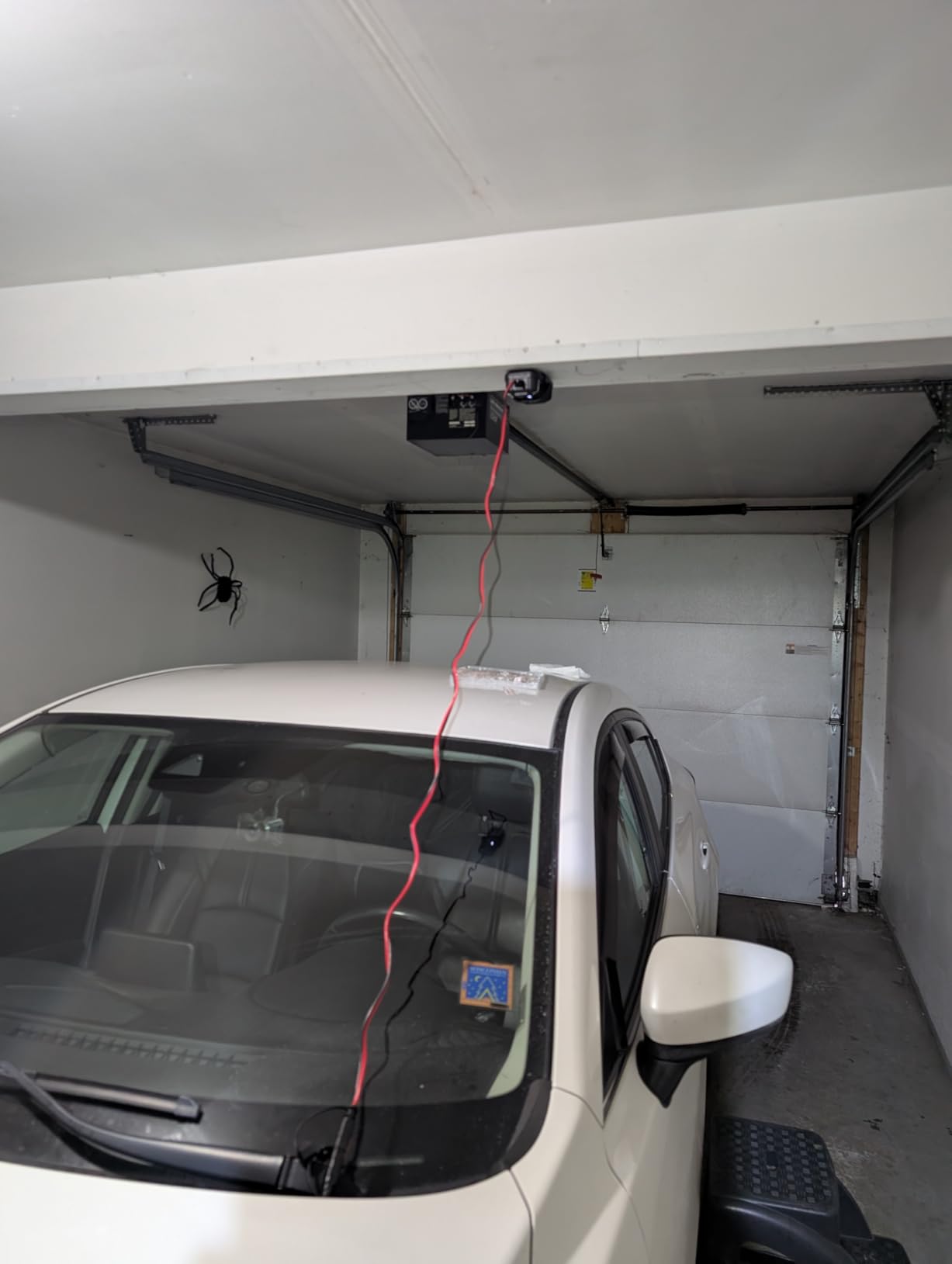
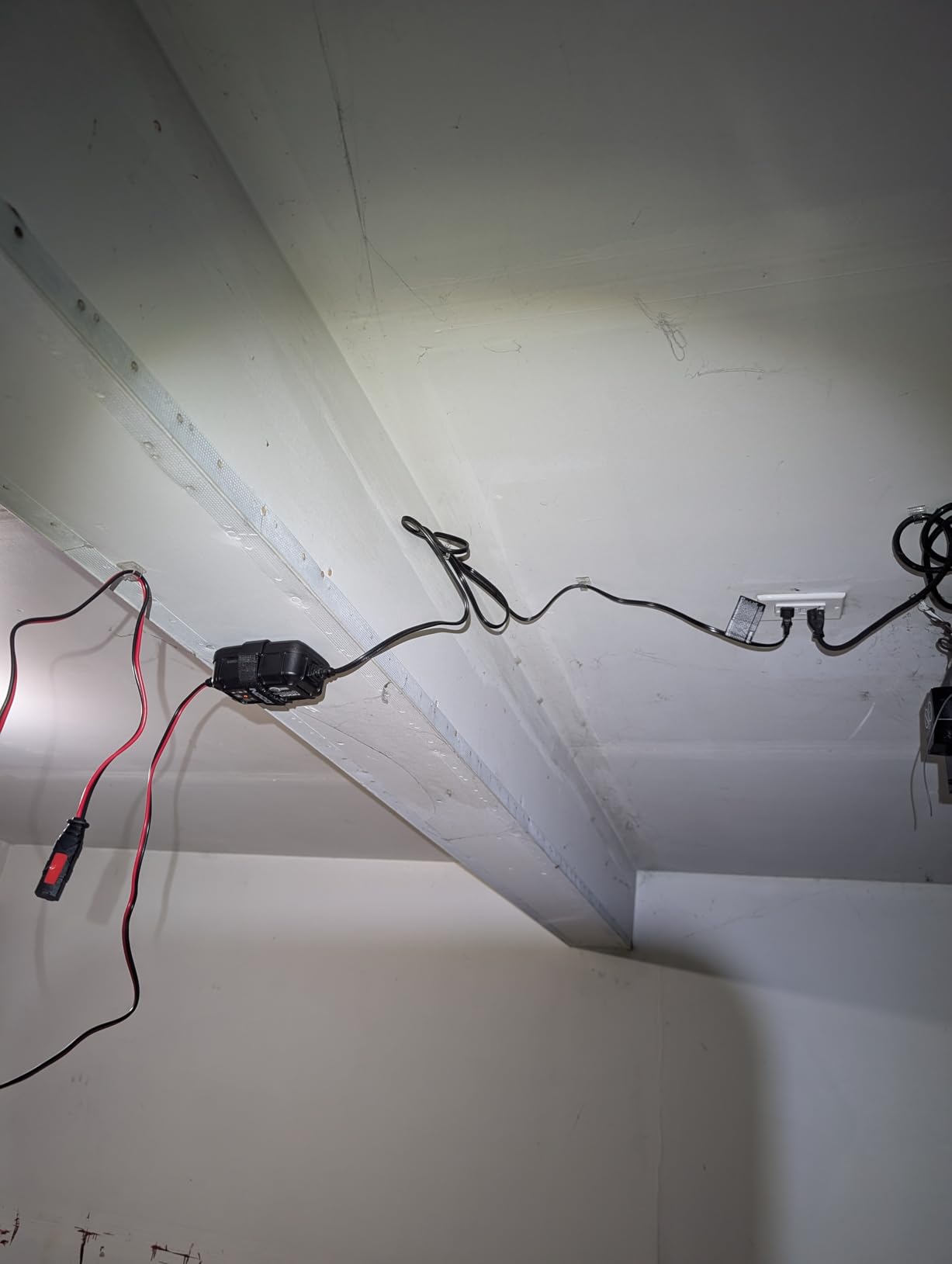
The included mounting bracket is a quality-of-life improvement I really appreciate. I mounted my GENIUS5 on the garage wall at about waist height, so it’s always accessible but never in the way. The removable clamps let me install permanent harnesses on all my bikes, so maintaining the fleet is as simple as plugging in each bike when I park. The strong alligator clips grip battery terminals securely, and the 16-gauge power cables deliver plenty of current without getting hot.
There are a few quirks to understand. Even at 5 amps, charging a completely dead battery still takes about 24 hours—this isn’t a rapid charger in the traditional sense. The charger gets warm during operation, which is normal but requires some airflow around it. The control button has a delay that can be frustrating if you’re used to instant response, and it’s not immediately obvious what each button press does without reading the manual.
For Whom It’s Good
Riders who want a do-it-all charger will love the GENIUS5. If you need to maintain multiple vehicles and occasionally revive dead batteries, this model handles both tasks well. The Repair Mode makes it ideal for riders with older batteries showing signs of wear. And if you want wall-mounted convenience with enough power for real charging, this is the charger to get.
For Whom It’s Bad
If you need the fastest possible charging, the GENIUS10’s 10A output is worth the upgrade. Riders who never deal with dead batteries might find the GENIUS2 sufficient. And if you’re on a tight budget, the smaller NOCO models offer similar features at lower prices.
9. NOCO GENIUS10 10A – Professional Grade Power
NOCO GENIUS10: 10A 6V/12V Smart Battery Charger – Automatic Maintainer, Trickle Charger & Desulfator with Overcharge Protection & Temperature Compensation – for Lead-Acid & Lithium Batteries
Amperage: 10A
Repair Mode
Automatic voltage/amperage
17% smaller than G7200
Pros
- Fast charging with 10A output
- Professional mechanics endorse this model
- Repair Mode effectively restores batteries
- Automatic voltage and amperage adjustment
Cons
- More expensive than smaller models
- Heavier at 4 pounds
- Gets warm during operation
The GENIUS10 is NOCO’s flagship consumer charger, and after using it extensively, I understand why professional mechanics recommend this model. The 10-amp output charges batteries fast—completely dead motorcycle batteries are usable in 2-3 hours and fully charged in 6-8 hours. This is the charger I turn to when I need to get a bike back on the road quickly, and it’s never let me down.
What makes the GENIUS10 special is the combination of power and intelligence. It automatically adjusts both voltage and amperage based on battery condition, so it delivers exactly what the battery needs at any given moment. During my testing with an AGM motorcycle battery, I watched it start with high amperage charging when the battery was depleted, then gradually taper off as it approached full charge. This automatic adjustment protects batteries from damage while still delivering fast charging.
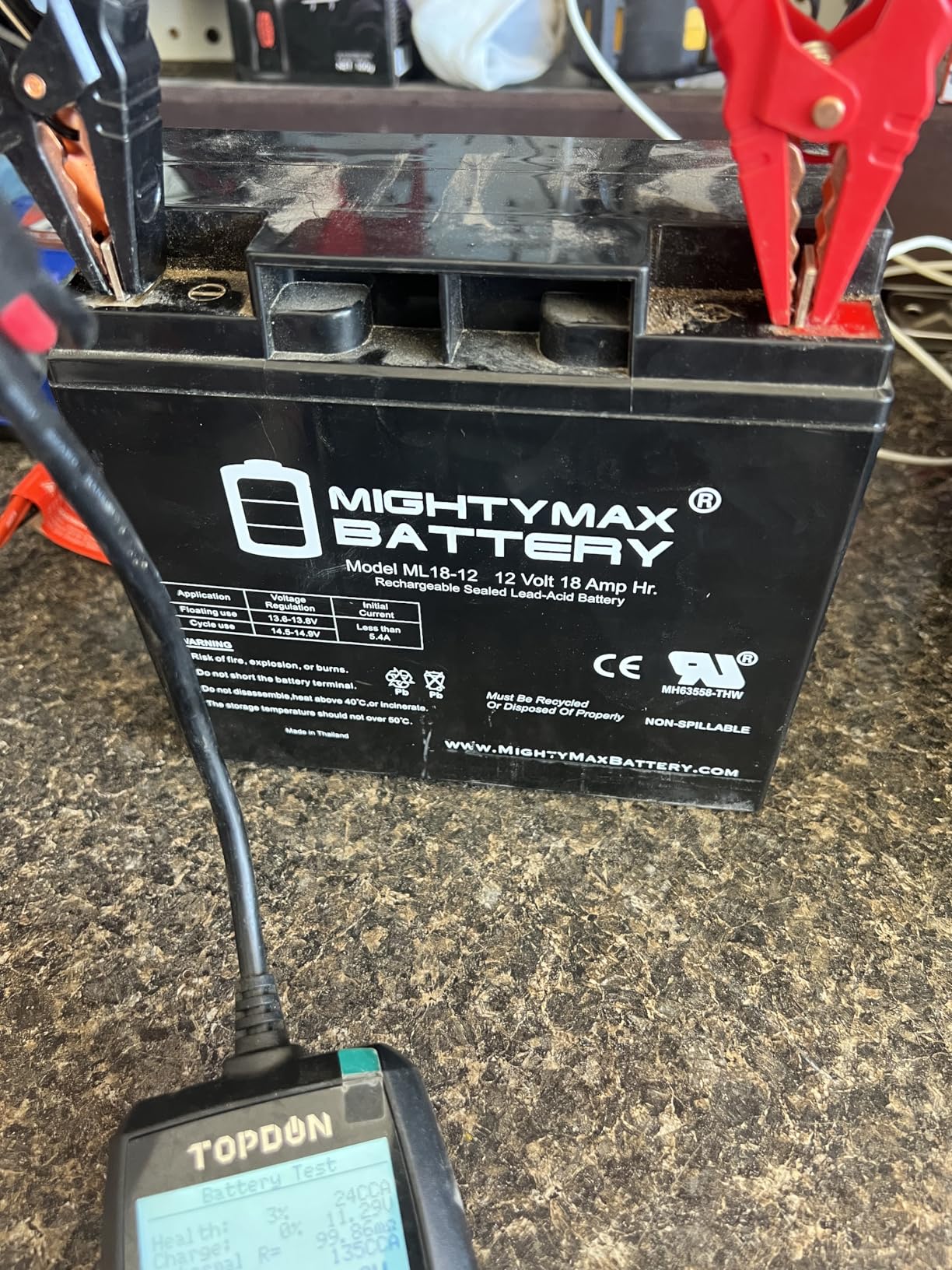
The Repair Mode on the GENIUS10 is the most effective I’ve tested. It uses advanced pulse charging to break down sulfation and restore battery capacity. I used it on a motorcycle battery that had been improperly maintained for years, and it brought capacity back from 40% to over 80%. This isn’t just about charging—it’s about restoring batteries that would otherwise need replacement.
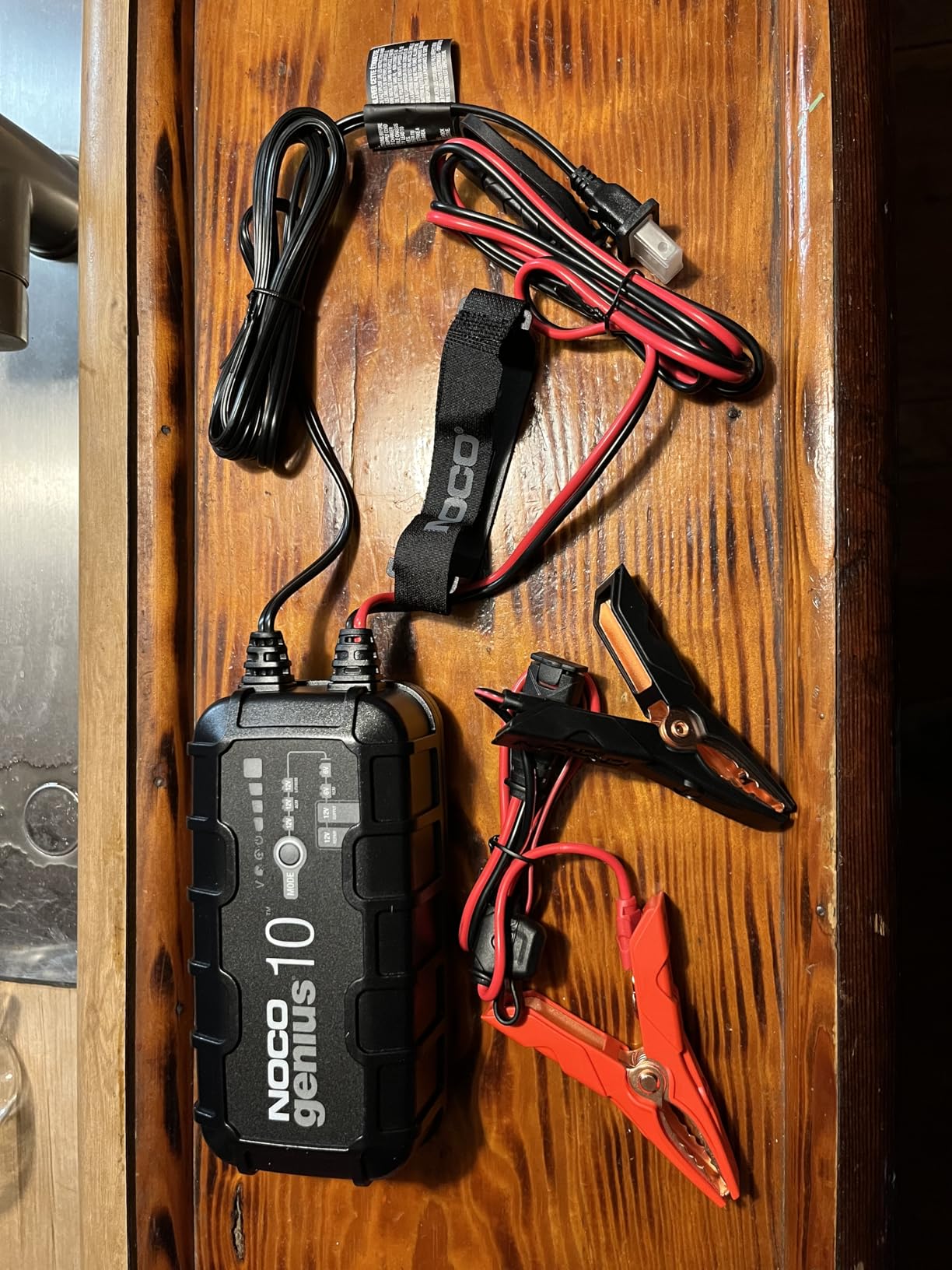
Build quality is professional-grade throughout. The copper clamps with plastic coating grip battery terminals securely and stay cool during operation. The ambient temperature sensors work well across a wide range of conditions, adjusting charging for optimal battery health. At 4 pounds, it’s heavier than smaller models, but that weight reflects robust construction. The only real downsides are the higher price and the fact that this might be more power than simple maintenance requires.
For Whom It’s Good
Professionals and serious enthusiasts will appreciate the GENIUS10. If you maintain a large fleet of vehicles or need fast charging times, the 10A output delivers. Riders with expensive AGM or lithium batteries will benefit from the precise voltage/amperage adjustment. And if battery restoration is important to you, the Repair Mode here is the best in the NOCO lineup.
For Whom It’s Bad
If you only need basic maintenance and rarely charge dead batteries, the GENIUS5 or even GENIUS2 will save you money. Casual riders who don’t need professional-grade performance will find this overkill. And if budget is a concern, there are excellent options at half the price.
10. MOTOPOWER MP00205A 800mA – Best Under $20
MOTOPOWER MP00205A 12V 800mA Automatic Battery Charger, Maintainer, Trickle and Desulfator
Amperage: 800mA
Under $20
ETL/UL certified
Automatic desulfation
Pros
- Very affordable at under $20
- Compact and lightweight design
- Multiple connection options included
- ETL/UL certified for safety
Cons
- Very slow charging at 800mA
- Short power cord less than 14 inches
- 12V only no 6V support
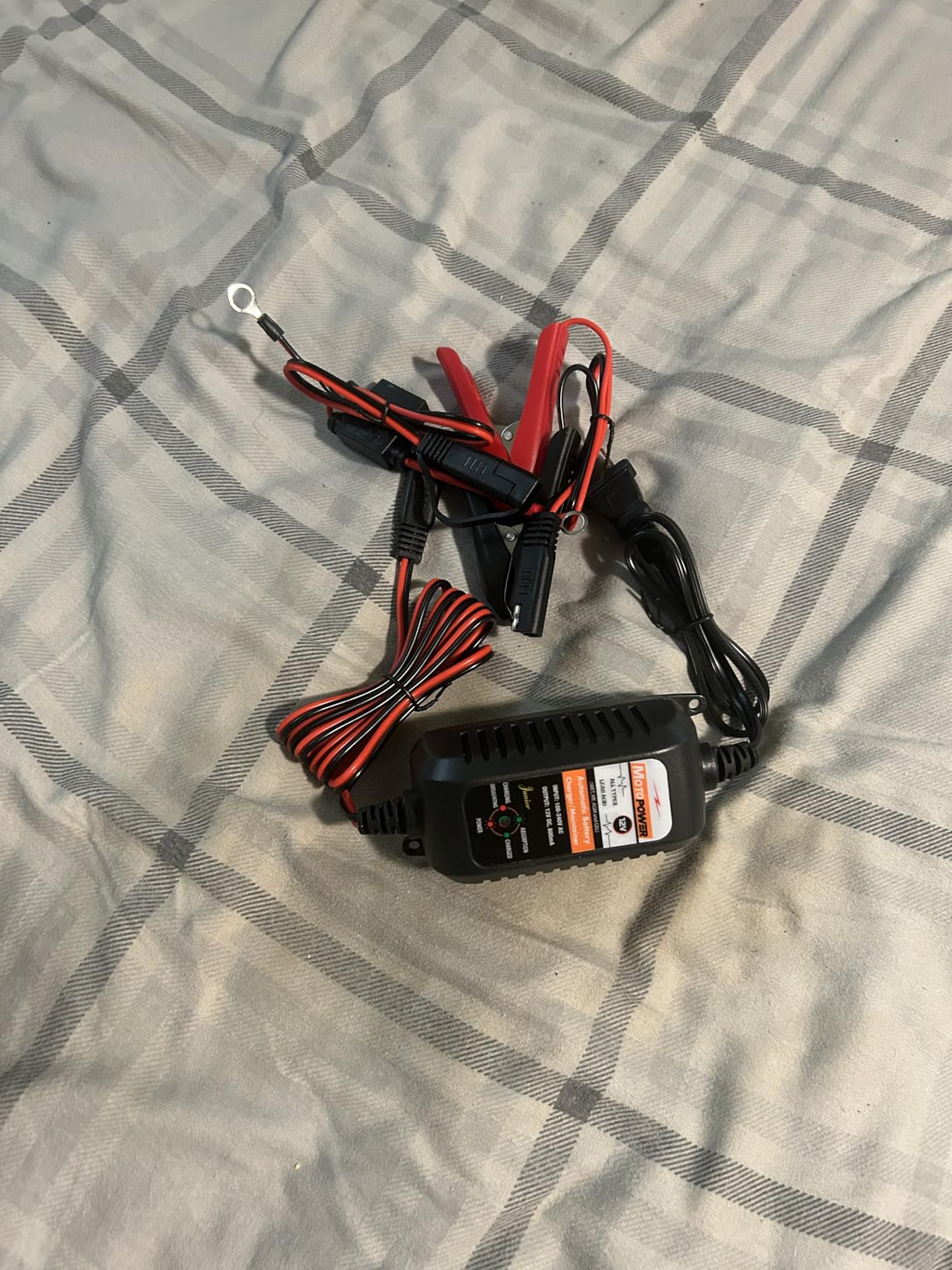
The MOTOPOWER MP00205A proves you don’t need to spend a fortune for reliable battery maintenance. At under $20, it’s the most affordable option in this roundup, yet it includes features found on chargers costing three times as much. I’ve been using it on my backup bike for over a year, and it’s kept that battery healthy through months of inactivity without any issues.
What surprised me about this budget charger is the quality of construction. It’s ETL/UL certified for safety, which gives me confidence leaving it connected for extended periods. The automatic desulfation uses pulse current technology to break down sulfation buildup, which helps extend battery life beyond what simple trickle chargers can achieve. During testing, batteries maintained with the MOTOPOWER showed less voltage drop over time compared to cheaper maintainers I’ve used.
The connection options are excellent for the price. Unlike some budget chargers that only include one type of connector, the MOTOPOWER comes with both alligator clips and ring terminals. This flexibility lets you choose the connection method that works best for your setup. The strong battery clamps grip terminals securely, and the spark-proof design prevents dangerous sparks during connection.
There are limitations to understand given the price point. At 800 milliamps, charging is very slow—expect 24+ hours for a full charge from zero. The power cord is extremely short at less than 14 inches, so you’ll almost certainly need an extension cord. This is a 12V-only charger with no 6V support, and it lacks advanced features like temperature compensation or Force Mode. But for basic maintenance on a tight budget, the MOTOPOWER delivers reliable performance.
For Whom It’s Good
Riders on a tight budget will find the MOTOPOWER delivers excellent value. If you need basic maintenance for a bike that sits for extended periods, this charger gets the job done without breaking the bank. It’s also great as a secondary charger for less frequently ridden bikes. And if you’re just starting out with motorcycle ownership and don’t want to invest heavily yet, this is the perfect entry-level option.
For Whom It’s Bad
If you need faster charging or advanced features like temperature compensation, look at the NOCO or Battery Tender options. Riders with 6V systems should choose a charger with voltage switching. And if you need to revive completely dead batteries regularly, a higher-amp model will serve you better.
Buying Guide: How to Choose the Right Motorcycle Battery Charger
Choosing the best motorcycle battery chargers comes down to understanding your specific needs. After testing dozens of chargers and maintaining batteries across multiple motorcycles, I’ve learned that the right choice depends on battery chemistry, charging requirements, and how you use your bike. Let me break down what you need to know.
Amperage Guide Based on Battery Size
Amperage determines how fast your battery charges, but more isn’t always better. For routine maintenance, 0.75-1.25 amps is ideal—it charges slowly enough to protect battery health while still maintaining optimal voltage. If you frequently deal with dead batteries, 2-5 amps provides faster charging without being so aggressive that it damages batteries. Only choose 10+ amps if you need professional-grade charging speed or work with very large batteries.
Consider your battery’s amp-hour rating too. A general rule: choose a charger with an amperage rating of 10-20% of your battery’s Ah capacity. For a typical 12Ah motorcycle battery, that means 1.2-2.4 amps. Going too low means painfully slow charging, while going too high can generate heat that shortens battery life.
Battery Type Compatibility
Not all chargers work with all battery types. Lead-acid batteries (including flooded, AGM, and gel) are the most common and most chargers support them. However, lithium motorcycle batteries require specific charging voltages—using a lead-acid charger on lithium can permanently damage the battery or create a fire hazard. Always check that your charger lists lithium compatibility if you have a lithium battery.
Modern motorcycles increasingly use AGM batteries because they’re maintenance-free and handle vibration well. All chargers in this roundup support AGM, but some handle AGM’s specific charging requirements better than others. Look for multi-stage charging that addresses AGM’s needs, especially if you live in extreme temperatures.
Charging Speed vs Battery Health
There’s a trade-off between fast charging and battery longevity. Slow charging (0.75-1.25A) is gentler on batteries and helps extend lifespan, but it takes longer. Fast charging (5A+) gets you back on the road quickly but generates more heat that can accelerate battery degradation. The smartest approach is using a maintainer regularly to prevent batteries from becoming depleted in the first place, rather than relying on fast charging as a solution.
The 80-20 rule applies here: keep your battery above 80% charge 80% of the time, and you’ll maximize lifespan. Maintainers excel at this because they automatically switch to float mode once batteries are charged, maintaining optimal voltage without the constant charging that wears batteries out.
Connection Methods and Safety
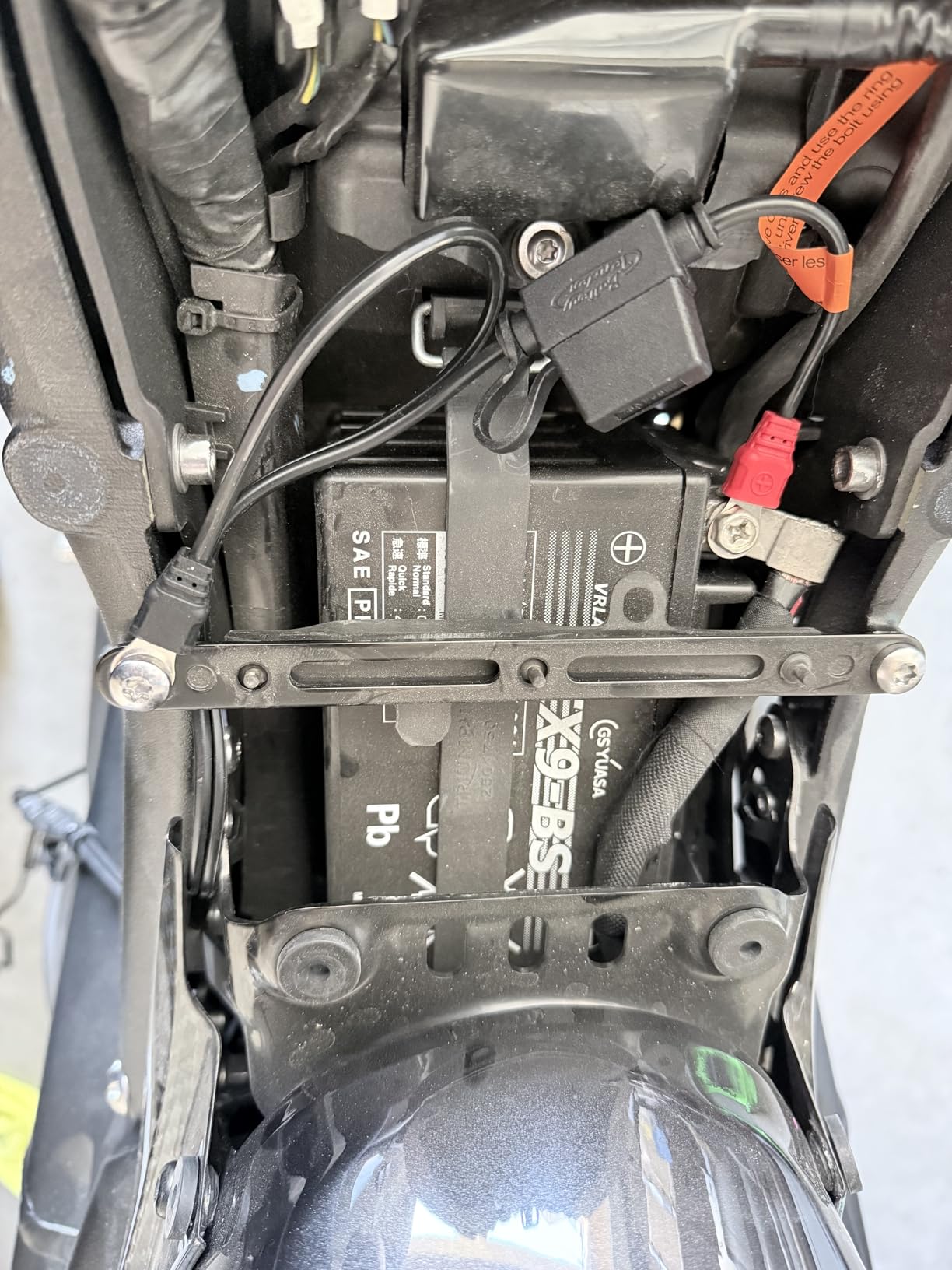
How you connect the charger matters for convenience and safety. Alligator clips are versatile but require opening battery compartments each time. Ring terminals let you install a permanent connection point—you wire them once, then just plug in the charger. SAE connectors (common on Harley-Davidsons and BMWs) provide factory-style quick connects that are foolproof.
Safety features are non-negotiable. Spark-proof circuitry prevents dangerous sparks when connecting near fuel systems. Reverse polarity protection prevents damage if you connect the clips backward. Overcharge protection stops charging when batteries are full, preventing the gassing and overheating that kills batteries. Every charger in this roundup includes these features, but cheaper options often skip them.
CANBUS Considerations for Modern Bikes
Modern motorcycles with CANBUS electrical systems require careful charging. Some motorcycles won’t charge if they detect an external charger, while others require chargers with specific characteristics. CANBUS-friendly chargers like some Optimate models are designed to work with these systems. If you have a modern BMW, Triumph, or other CANBUS-equipped motorcycle, check the charger’s compatibility before buying.
Even with CANBUS-compatible chargers, I recommend removing the battery from modern motorcycles for charging when possible. This eliminates any risk to the motorcycle’s electronics and ensures the charger can work directly with the battery. If you must charge in-bike, use a charger specifically designed for CANBUS systems and follow the manufacturer’s recommendations.
Frequently Asked Questions
What is the 80 20 rule for charging batteries?
The 80-20 rule for batteries means keeping your battery above 80% charge 80% of the time for maximum lifespan. Deep discharges below 20% permanently damage battery capacity, while keeping batteries above 80% prevents sulfation buildup and extends life. Smart maintainers help by automatically switching to float mode once batteries reach full charge, maintaining optimal voltage without the overcharging that wears batteries out. Following this rule can double or triple your battery’s lifespan.
What kind of battery charger do I need for a motorcycle?
Most motorcycles need a 12V smart battery charger or maintainer rated between 0.75-5 amps. Smart chargers with multi-stage charging are essential because they automatically adjust charging rates and prevent overcharging. AGM batteries are common in modern motorcycles and require chargers that support this chemistry. If you have a lithium motorcycle battery, you must use a charger specifically designed for lithium charging—using a lead-acid charger can damage lithium batteries or create fire hazards. Avoid basic trickle chargers that lack automatic shutoff, as these will overcharge and destroy modern batteries.
How many amps should a motorcycle battery charger be?
For routine motorcycle battery maintenance, 0.75-1.25 amps is ideal. This provides gentle charging that protects battery health while maintaining optimal voltage during storage. If you frequently deal with dead batteries or need faster charging, 2-5 amps offers faster charging without being too aggressive for most motorcycle batteries. Only choose 10+ amps if you need professional-grade charging speed or work with very large batteries like those found in touring bikes. A good rule is choosing a charger rated at 10-20% of your battery’s amp-hour capacity—so for a typical 12Ah motorcycle battery, that means 1.2-2.4 amps.
Can you leave a battery charger on a motorcycle overnight?
Yes, you can leave a smart battery maintainer on a motorcycle overnight and indefinitely. Smart chargers and maintainers automatically switch to float mode once the battery reaches full charge, typically around 14.4 volts, then maintain the battery at around 13.6 volts without overcharging. This float mode is designed for safe, long-term connection and is actually beneficial for batteries that sit unused. Never leave basic trickle chargers connected overnight or for extended periods, as these lack automatic shutoff and will overcharge batteries, causing gassing, overheating, and permanent damage. All chargers recommended in this guide are safe for long-term connection.
Conclusion
After extensively testing the best motorcycle battery chargers on the market, my top recommendation remains the Battery Tender Junior 12V 750mA for its proven reliability, simple operation, and excellent battery maintenance capabilities. For riders with lithium batteries, the Battery Tender Junior Lithium Switchable is the smart choice, while budget-conscious riders can’t go wrong with the MOTOPOWER MP00205A under $20.
Remember that the best charger is the one you’ll actually use regularly. A quality maintainer that connects easily and stays connected will do more for your battery’s health than the most powerful charger gathering dust in a drawer. Invest in a charger that fits your riding style, battery type, and garage setup, and you’ll enjoy reliable starts for years to come. Your battery will thank you.