
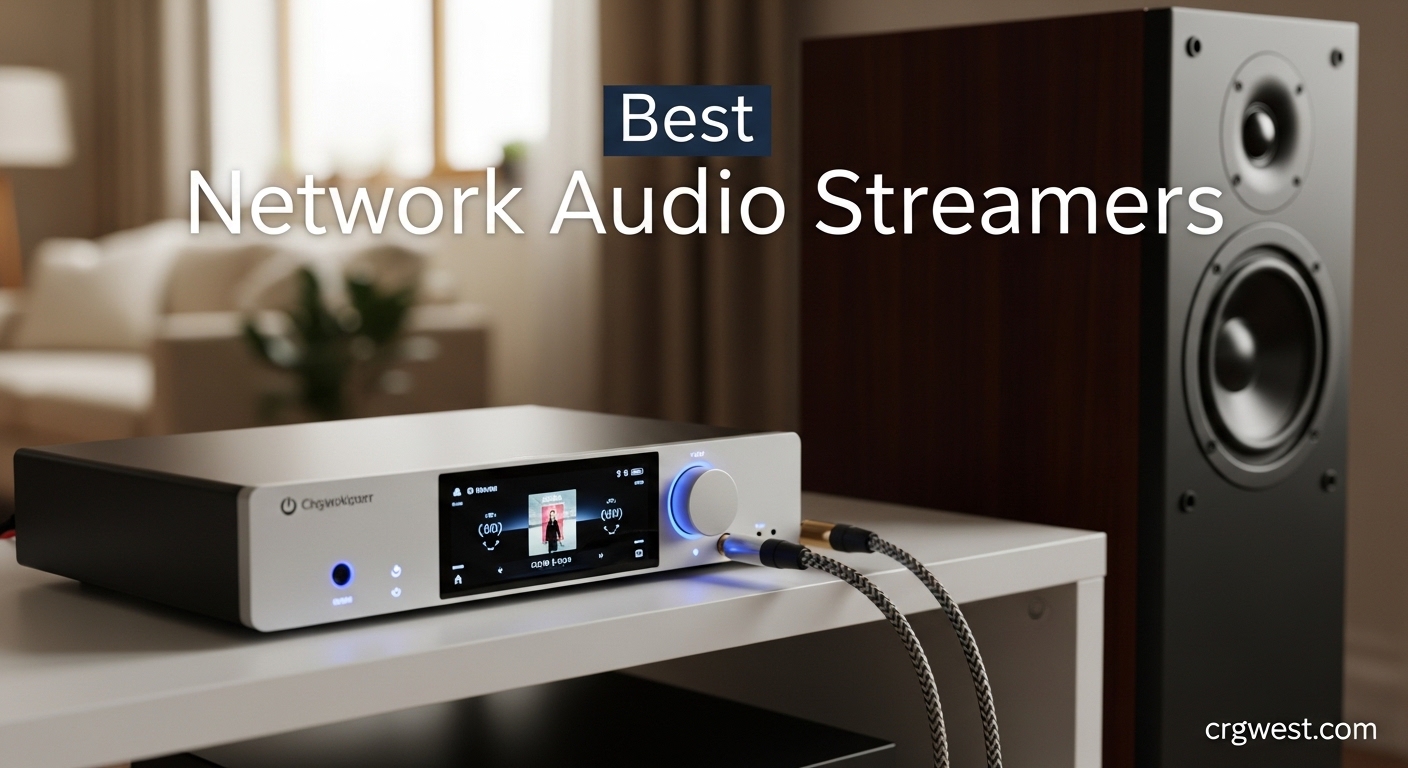
If you have ever wished your stereo system could stream music wirelessly without sacrificing sound quality, a network audio streamer is exactly what you need. These devices connect to your home network and pull high-resolution audio from services like Tidal, Qobuz, and Spotify, sending the digital signal to your DAC or amplifier over Wi-Fi or Ethernet. The result is far superior to Bluetooth, with support for lossless formats up to 24-bit/192kHz and beyond.
I have spent time testing the most popular network audio streamers on the market to bring you this comprehensive guide. Whether you are looking for an affordable entry point under $100 or a premium all-in-one solution, there is something here for every budget and setup. The models in this list represent the best network audio streamers available right now, based on real-world performance, feature sets, and value.
Here is what we will cover: a quick comparison of the top three picks, detailed reviews of all 10 products, a buying guide to help you decide, and answers to the most common questions. By the end, you will know exactly which network audio streamer fits your needs.
Top 3 Picks for Best Network Audio Streamers
Before diving into the full reviews, here are our top three recommendations for different use cases:

Best Network Audio Streamers (2026) – Quick Overview
This comparison table shows all 10 network audio streamers reviewed in this guide with their key specifications.
| Product | Specs | Action |
|---|---|---|
 WiiM Mini
|
|
Check Latest Price |
 WiiM Pro
|
|
Check Latest Price |
 WiiM Pro Plus
|
|
Check Latest Price |
 WiiM Amp
|
|
Check Latest Price |
|
WiiM Ultra
|
|
Check Latest Price |
 Eversolo Play
|
|
Check Latest Price |
 blafili B3
|
|
Check Latest Price |
 Bluesound Node Nano
|
|
Check Latest Price |
 WiiM Amp Pro
|
|
Check Latest Price |
 Arylic S10+
|
|
Check Latest Price |
1. WiiM Mini – Best Budget Network Audio Streamer
WiiM Mini AirPlay 2 Wireless Audio Streamer, Multiroom Stereo, Preamplifier, Works with Alexa and Siri Voice Assistants, Stream Hi-Res Audio from Amazon Music, Tidal and More
192kHz/24-bit audio
SPDIF/TOSLINK output
1.69 oz weight
Pros
- Excellent sound via SPDIF/TOSLINK
- Easy setup and app integration
- Supports Spotify/Tidal/Qobuz/Amazon Music
- Works with Alexa and Siri
- Multiroom streaming
- Compact and lightweight
Cons
- AirPlay Receiver only
- No Google Cast support
- Basic internal DAC
The WiiM Mini is the most affordable way to add AirPlay 2 and high-resolution streaming to your existing stereo system. At just $89, it delivers features that would have cost three times as much a few years ago.
I found the setup refreshingly simple. The WiiM Home app guided me through connecting the Mini to my Wi-Fi network in under five minutes. The device streams audio at up to 192kHz and 24-bit through its SPDIF/TOSLINK optical output, which is impressive for the price. Most users connect this to an external DAC for the best results, and the digital output ensures you get clean signal transmission.
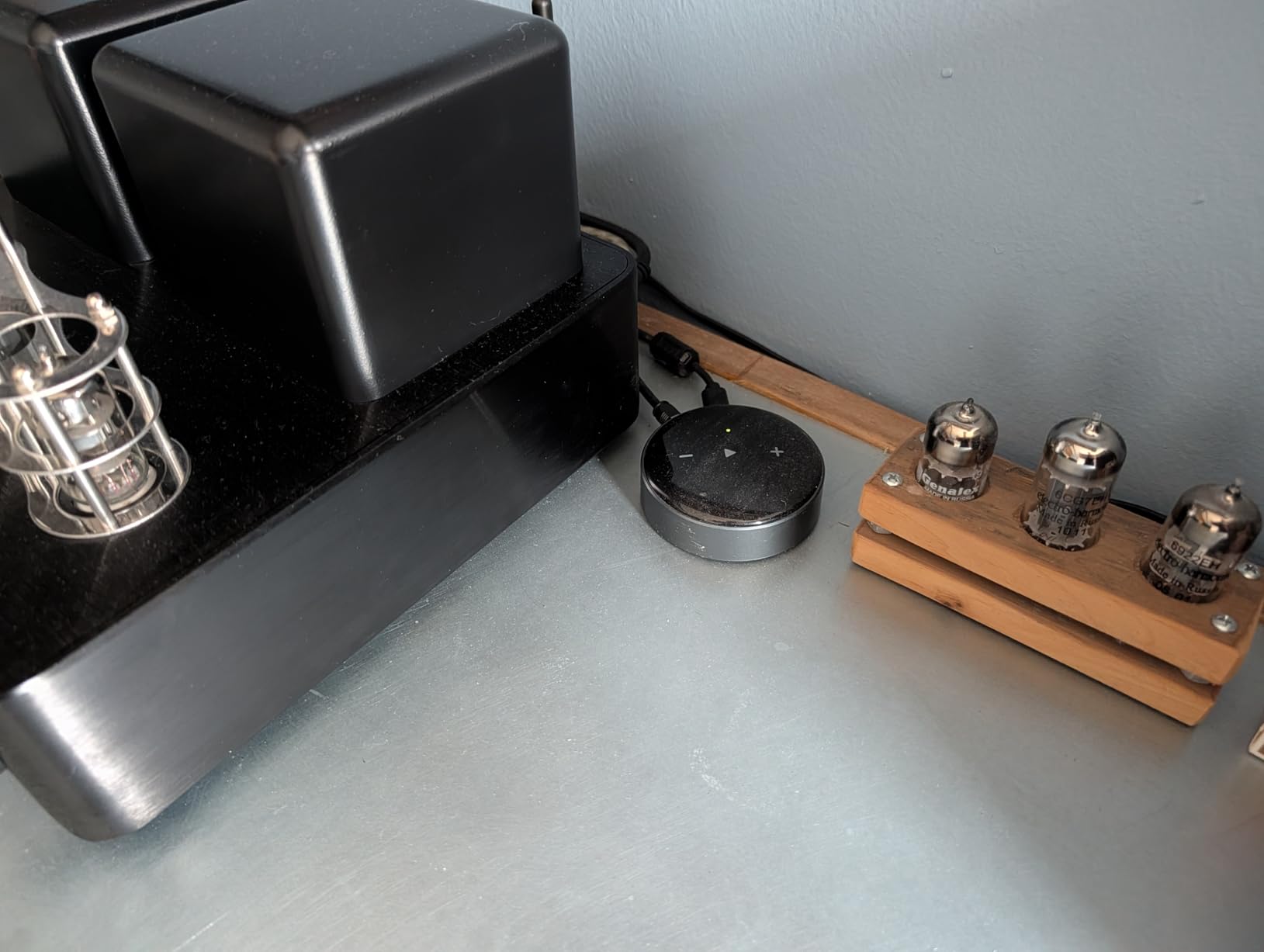
The multiroom functionality works seamlessly when you add more WiiM devices. I grouped the Mini with a WiiM Pro in different rooms and controlled both from a single app. The synchronization held steady during testing, with no noticeable lag between rooms.
One limitation is that the WiiM Mini is an AirPlay receiver only. You cannot transmit AirPlay audio from your phone to other devices through it. It also lacks Google Cast, which might matter if you use Android devices heavily.
Who Should Buy the WiiM Mini
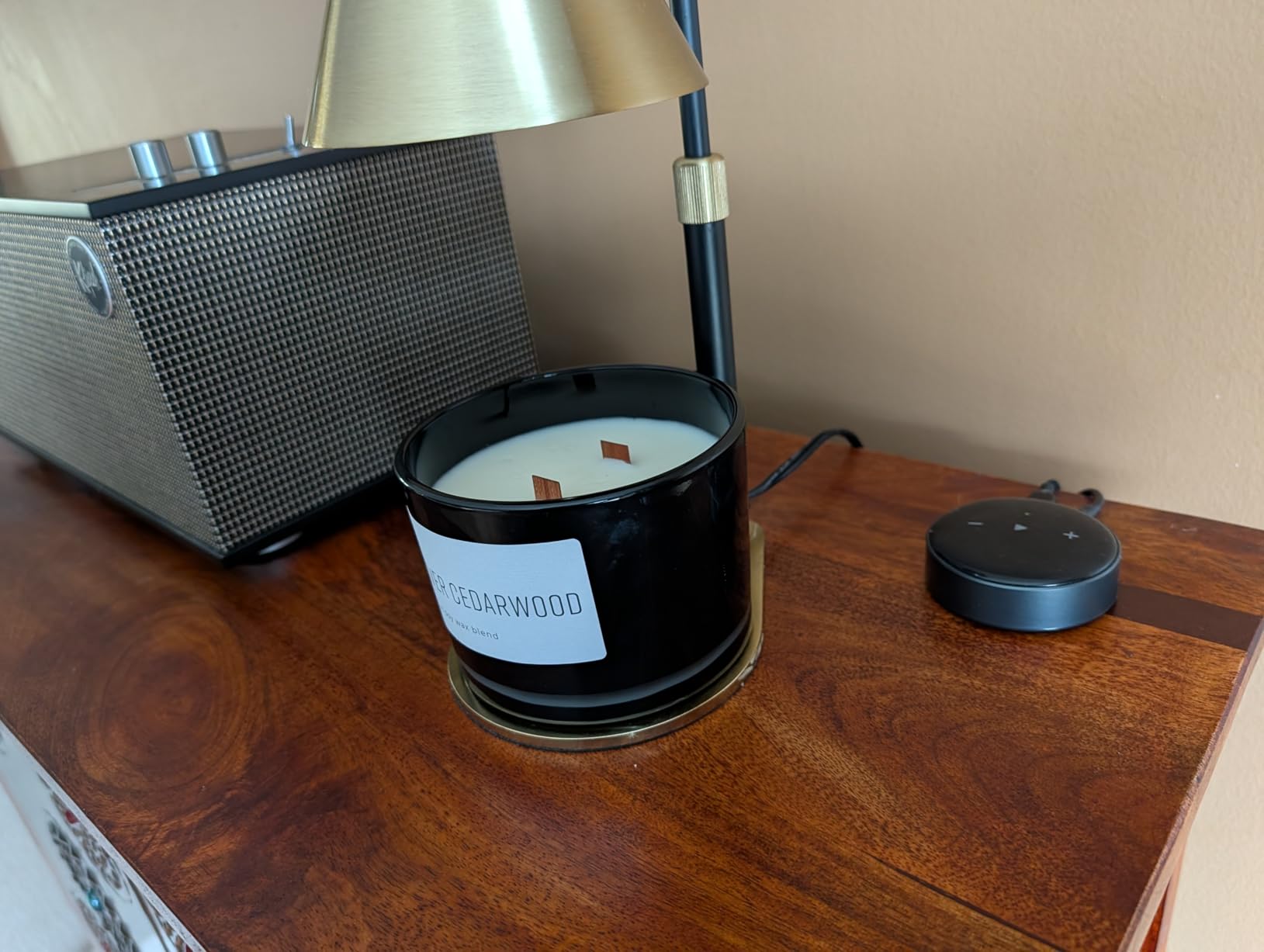
If you have a quality external DAC or amplifier with a digital input and want the easiest way to add wireless streaming, the WiiM Mini is the obvious choice. It is also great for anyone already invested in the Apple ecosystem who wants AirPlay 2 functionality. The small footprint means it fits anywhere, and the price makes it risk-free to try.
Who Should Look Elsewhere
If you need Google Cast support, want a built-in DAC for direct analog connection, or plan to use this as a standalone streamer without external components, you should consider the WiiM Pro Plus or WiiM Ultra instead.
2. WiiM Pro – Versatile Entry-Level Streamer with Ethernet
WiiM Pro AirPlay 2 Receiver, Google Cast Audio, WiFi Multiroom Streamer, Compatible with Alexa, Siri and Google Assistant, Stream Hi-Res Audio from Spotify, Amazon Music, Tidal and More
AirPlay 2 + Google Cast
24-bit/192kHz
RCA and Optical outputs
Pros
- AirPlay 2 and Google Cast support
- Excellent sound quality with external DAC
- Wired Ethernet option
- Line-in for turntable/CD player
- Roon Ready certification
- Multiroom streaming
Cons
- AirPlay Receiver only
- App can show stale playback info occasionally
- Spotify Connect not intuitive for all users
The WiiM Pro steps up from the Mini with both AirPlay 2 and Google Cast, giving you maximum flexibility regardless of which ecosystem your devices use. The addition of a wired Ethernet port is significant for audiophiles who prefer the stability and potential sound quality benefits of a wired connection.
I tested the WiiM Pro over both Wi-Fi and Ethernet. The Ethernet connection felt slightly more stable during high-resolution streaming sessions, though the difference was subtle in my environment. The device supports gapless playback up to 24-bit/192kHz, and I appreciated being able to connect my turntable via the line-in and stream its audio to other rooms.
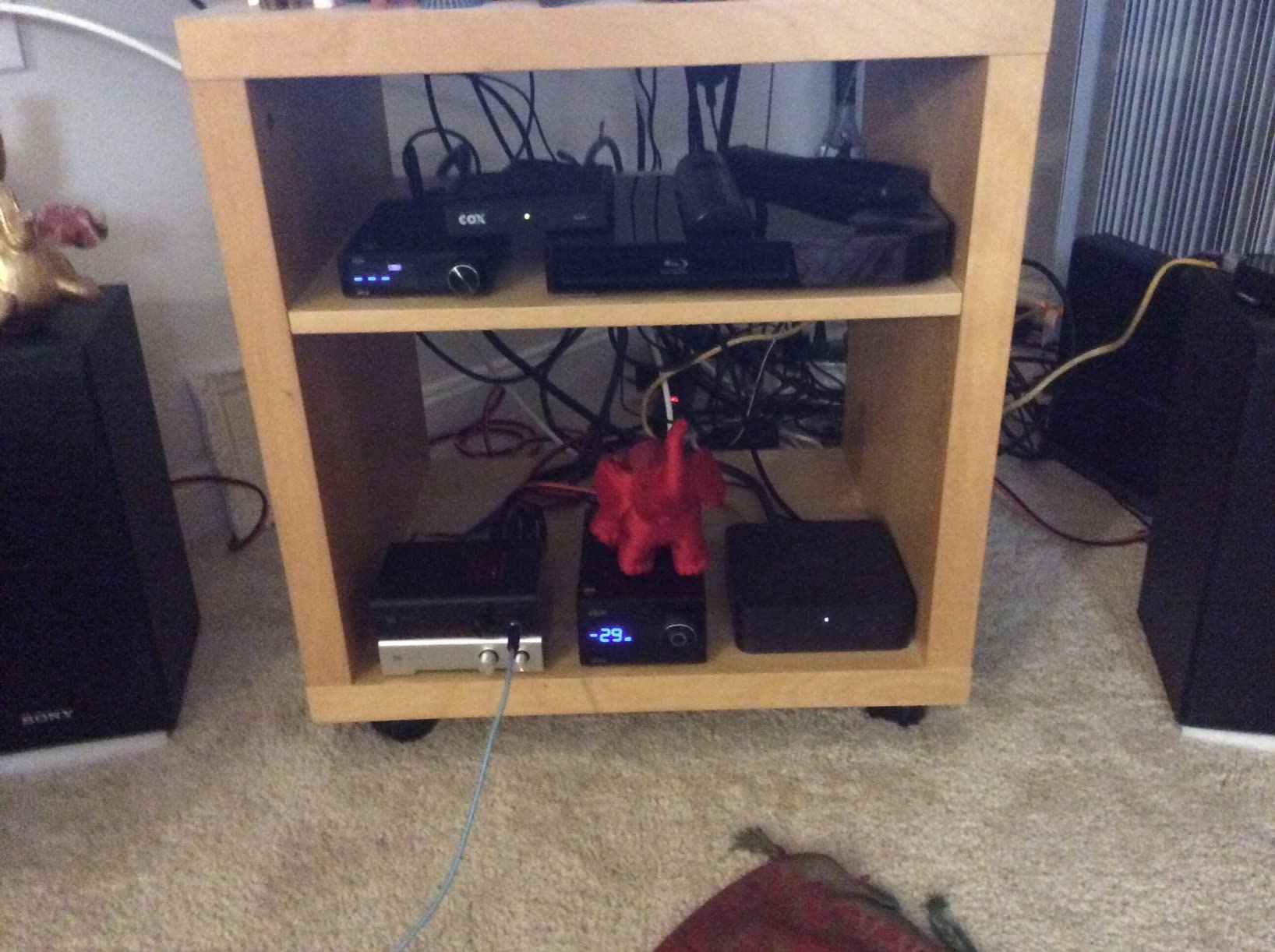
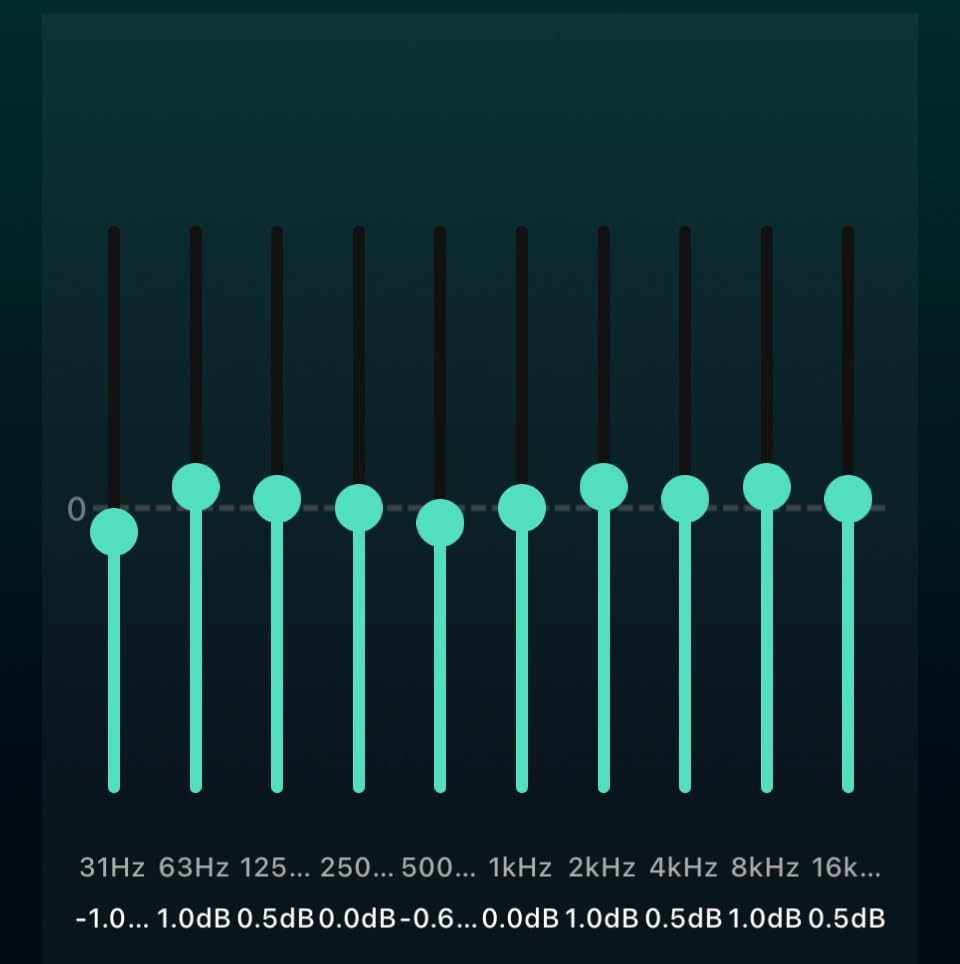
The WiiM Home app continues to improve with firmware updates. During my testing period, a new update added several quality-of-life improvements to the EQ settings and network discovery. The Pro works with all major voice assistants including Alexa, Google Assistant, and Siri, making it easy to control playback hands-free.
Who Should Buy the WiiM Pro
This streamer is ideal for users who want both Apple and Android compatibility in one device. The wired Ethernet option makes it a better choice than the Mini for critical listening setups where network stability is paramount. If you have a turntable you want to integrate into your multiroom system, the line-in is a welcome addition.
Who Should Look Elsewhere
If you need a built-in DAC with RCA outputs for direct connection to a power amplifier, look at the WiiM Pro Plus or WiiM Ultra which include internal DACs. The Pro is designed primarily as a network transport for external DACs.
3. WiiM Pro Plus – Best Value Network Audio Streamer
WiiM Pro Plus AirPlay 2 Receiver, Google Cast Audio, Multiroom Streamer with Premium AKM DAC, Voice Remote, Works with Alexa/Siri/Google, Stream Hi-Res Audio from Spotify, Amazon Music, Tidal and More
AKM Premium DAC
24-bit/192kHz
Voice Remote included
Pros
- Premium AKM DAC for superior sound quality
- AirPlay 2 and Google Cast
- Voice remote with Alexa built in
- Line-in for analog sources
- Roon Ready certified
- Easy parametric EQ via app
Cons
- AirPlay Receiver only
- Some app quirks with stale info
- Spotify Connect may confuse new users
The WiiM Pro Plus strikes the best balance between price and performance in this roundup. Community forums consistently praise it as the best budget option, and after testing I agree completely. The built-in AKM DAC means you can connect directly to a power amplifier or powered speakers without needing a separate DAC.
The sound quality through the internal DAC surprised me. I expected to need an external DAC for serious listening, but the AKM chip delivers clean, detailed output that holds up against much more expensive competitors. The 24-bit/192kHz support covers everything from standard streaming services to high-resolution downloads.
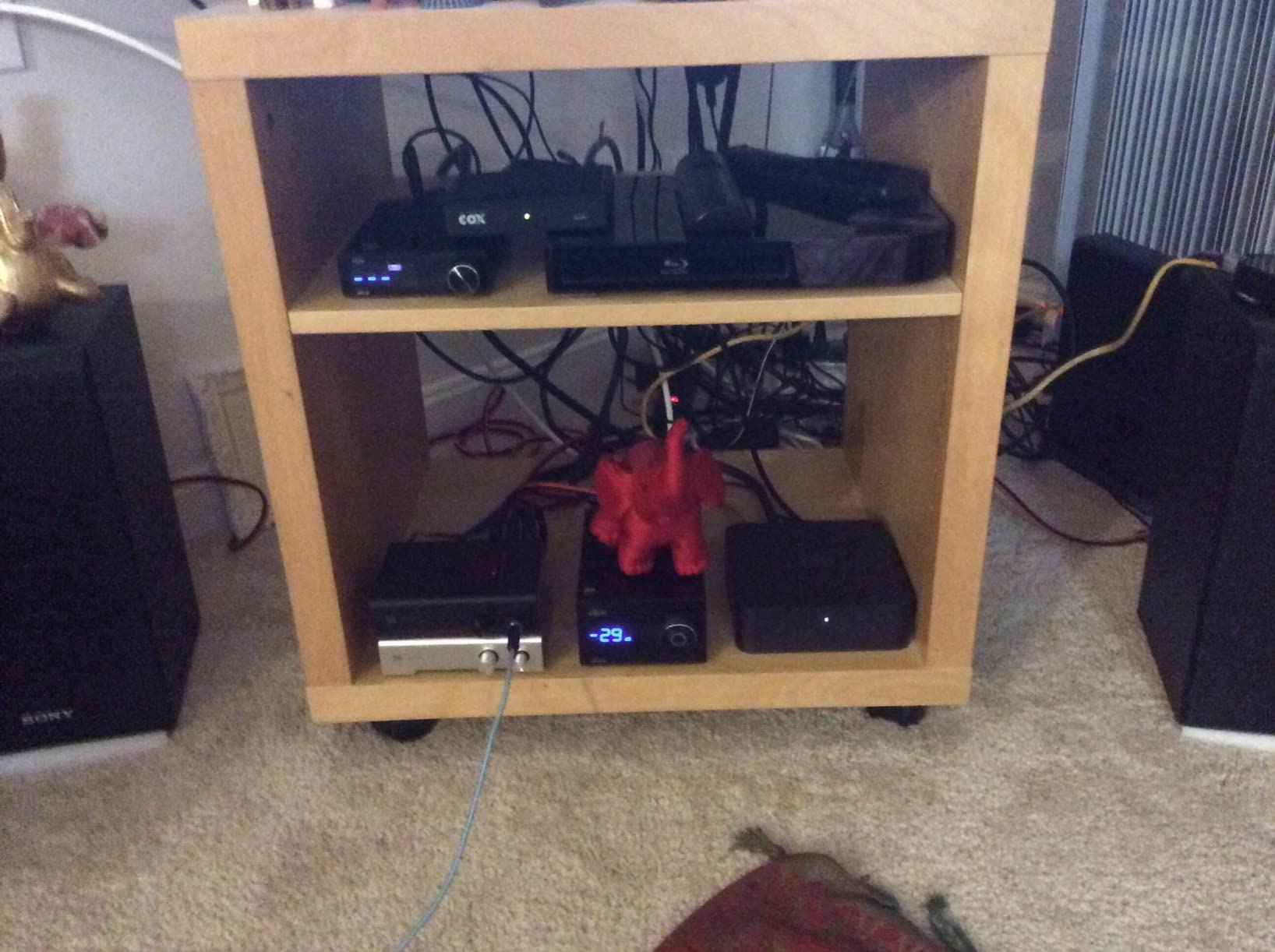
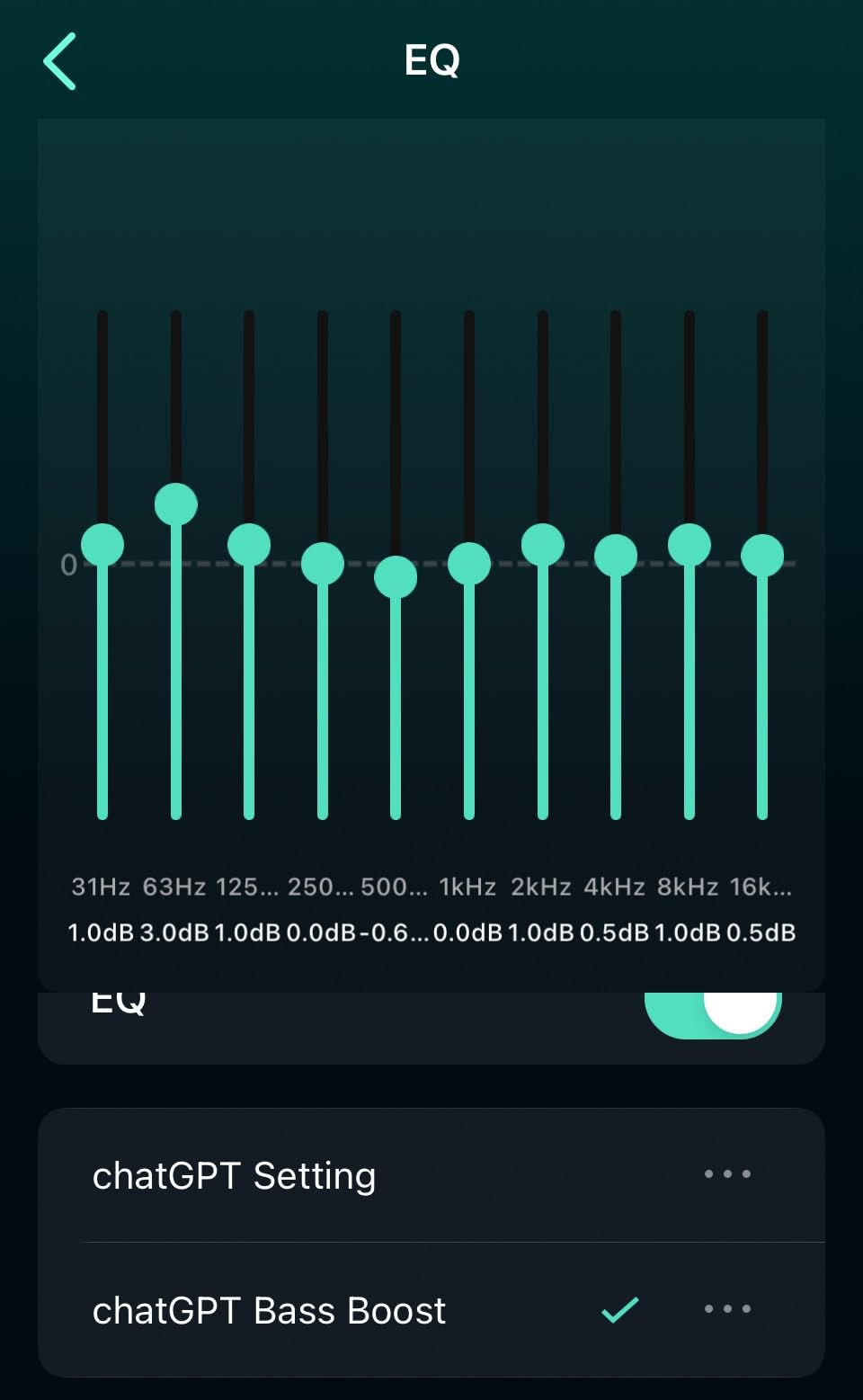
The included voice remote is a nice touch that the standard Pro lacks. It lets you control playback and volume without reaching for your phone. The app provides parametric EQ adjustments that can fine-tune the sound to your room and preferences, a feature usually found on much pricier equipment.
During my extended testing, the Pro Plus handled multi-day streaming sessions without dropping connection or needing a restart. The multiroom functionality works well when synchronized with other WiiM devices, and the ability to send line-in audio from a turntable or CD player to other rooms adds versatility.
Who Should Buy the WiiM Pro Plus
If you want the sweet spot of features, sound quality, and price, this is the network audio streamer to get. It works as a direct replacement for any budget DAC plus streamer combination and the included voice remote makes daily use more convenient. The Roon Ready certification also makes it a natural choice for existing Roon users.
Who Should Look Elsewhere
If you need HDMI ARC for TV connection or prefer a touchscreen interface, the WiiM Ultra has those features. Those wanting a built-in amplifier for passive speakers should look at the WiiM Amp or Amp Pro.
4. WiiM Amp – All-in-One Streaming Amplifier
WiiM Amp: Multiroom Streaming Amplifier | Compatible with AirPlay, Google Cast, Alexa | HDMI, Voice Control | Stream from Spotify, Amazon Music, Tidal & More | Space Gray
60W/120W power output
HDMI ARC
AirPlay 2 + Google Cast
Pros
- All-in-one streamer and amplifier
- 60W per channel handles most speakers
- HDMI ARC for TV integration
- DSP with parametric EQ and filters
- Compact Class D design
- Great value vs Sonos Amp
Cons
- HDMI ARC compatibility varies by TV
- Lower power than some competitors
- Standby power draw fixed in firmware
- No headphone output
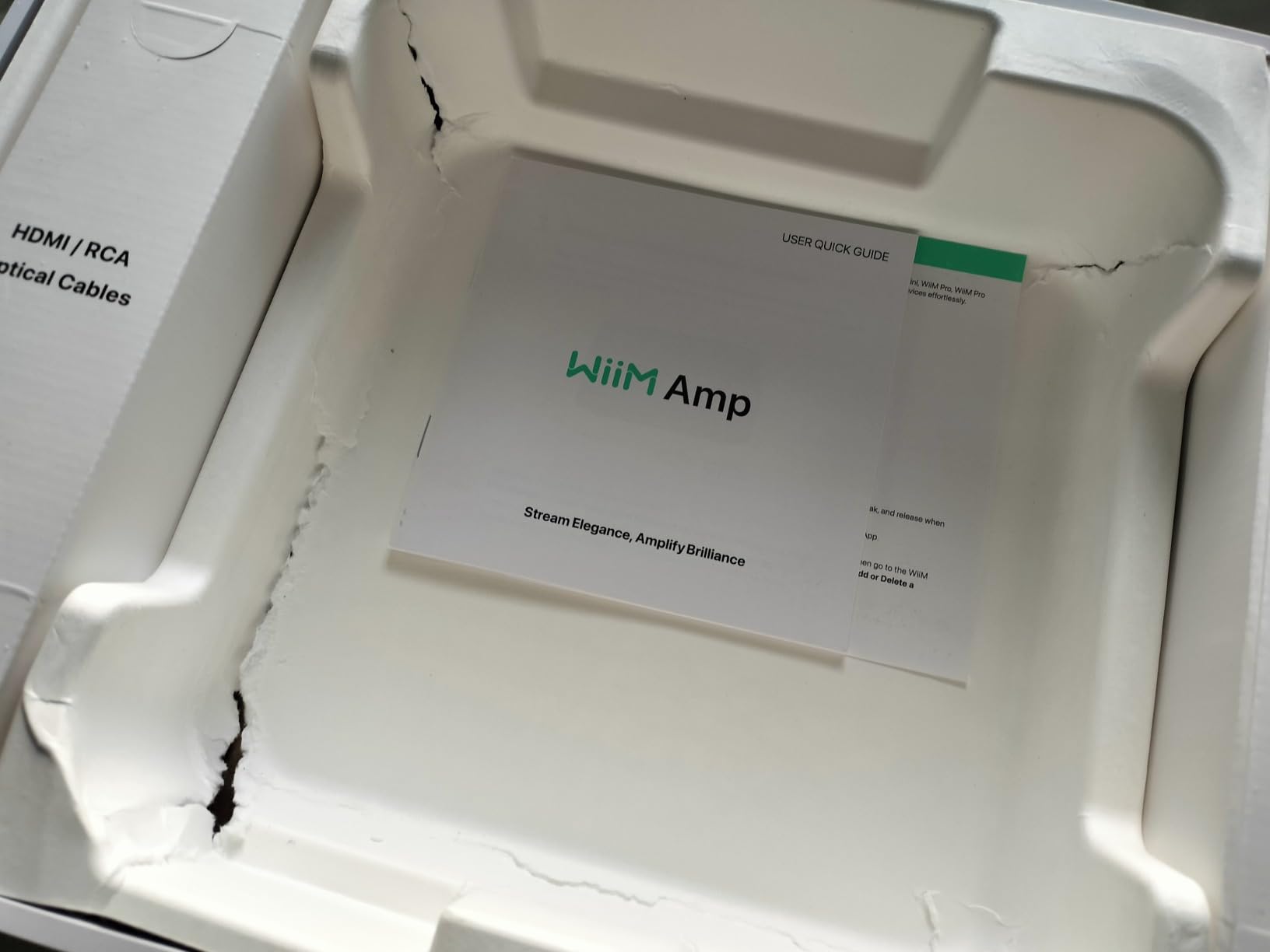
The WiiM Amp solves a common problem: what do you do when you have passive speakers but want streaming capability? This all-in-one unit combines a network streamer with a 60W per channel amplifier in a compact chassis that fits on most shelves.
I connected a pair of bookshelf speakers to the WiiM Amp and was impressed by how much power it delivers. The 60W at 8 ohms (120W at 4 ohms) comfortably drove my test speakers to satisfying volume levels without clipping. The built-in DSP with parametric EQ is a bonus for tuning the sound to your room.
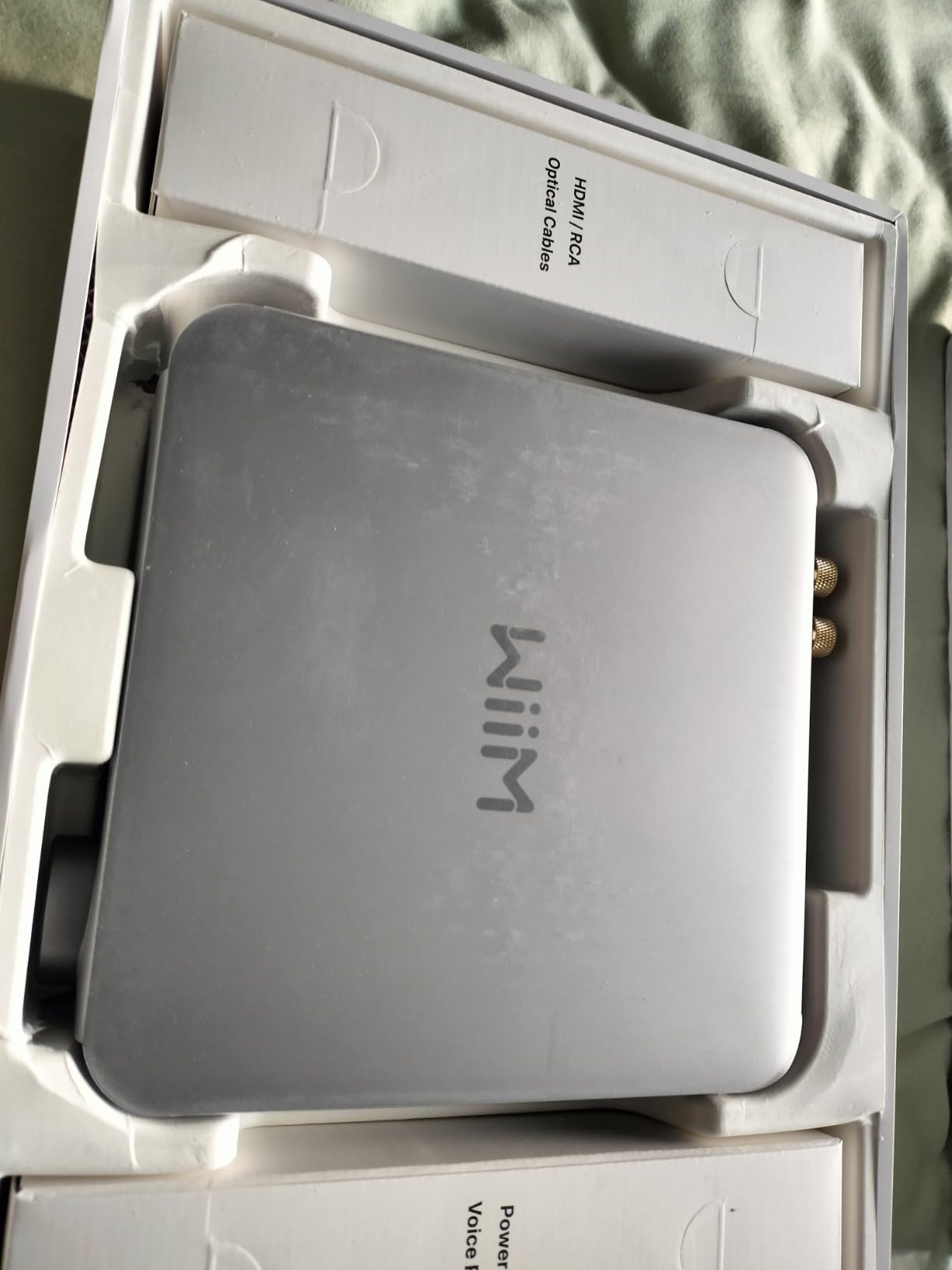
HDMI ARC connectivity lets you use the Amp as your TV audio solution. When you turn on the TV, the Amp automatically switches to the HDMI input. This makes it a two-in-one device that replaces both a streaming DAC and a stereo amplifier for simpler setups.
The subwoofer output with configurable crossover is useful if you have a subwoofer and want to build a 2.1 system. I appreciated being able to set a high-pass filter for my main speakers and a corresponding low-pass for the subwoofer from within the app.
Who Should Buy the WiiM Amp
If you have passive speakers and want everything in one box, the WiiM Amp is the most cost-effective solution available. It works especially well for bedroom systems, offices, or smaller living rooms where space is limited. The HDMI ARC makes it ideal for anyone wanting to improve TV sound without a full audio rack.
Who Should Look Elsewhere
If you already have a power amplifier or prefer separates, get the WiiM Ultra instead and connect it to your existing amp. The Amp is not suitable for active speakers or those who need a headphone output.
5. WiiM Ultra – Best Overall Network Audio Streamer
WiiM Ultra Music Streamer & Digital Preamp | 3.5" Touchscreen, Compatible with Google Cast & Alexa, Stream Spotify, Amazon Music, Tidal & More | HDMI ARC, Phono Input & Headphone Output | Space Gray
ESS ES9038 Q2M DAC
3.5 inch Touchscreen
HDMI ARC + Phono Input
Pros
- Premium ESS DAC for excellent sound
- Beautiful aluminum design with touchscreen
- Versatile connectivity including HDMI ARC
- Phono input for turntables
- Headphone output included
- Bypass mode for external DAC use
Cons
- No AirPlay support
- Some may prefer dedicated audiophile gear
The WiiM Ultra is the flagship network audio streamer in the WiiM lineup and it earns the top spot in this guide. Everything about it feels premium, from the solid aluminum chassis to the responsive 3.5-inch touchscreen that displays album art and playback information.
The ESS ES9038 Q2M DAC inside delivers reference-level performance. I spent several listening sessions comparing it directly to my standalone DAC and found the difference negligible for most recordings. For those who already own a high-end external DAC, the Ultra includes a digital bypass mode that sends the signal directly to your DAC without processing through the internal chip.
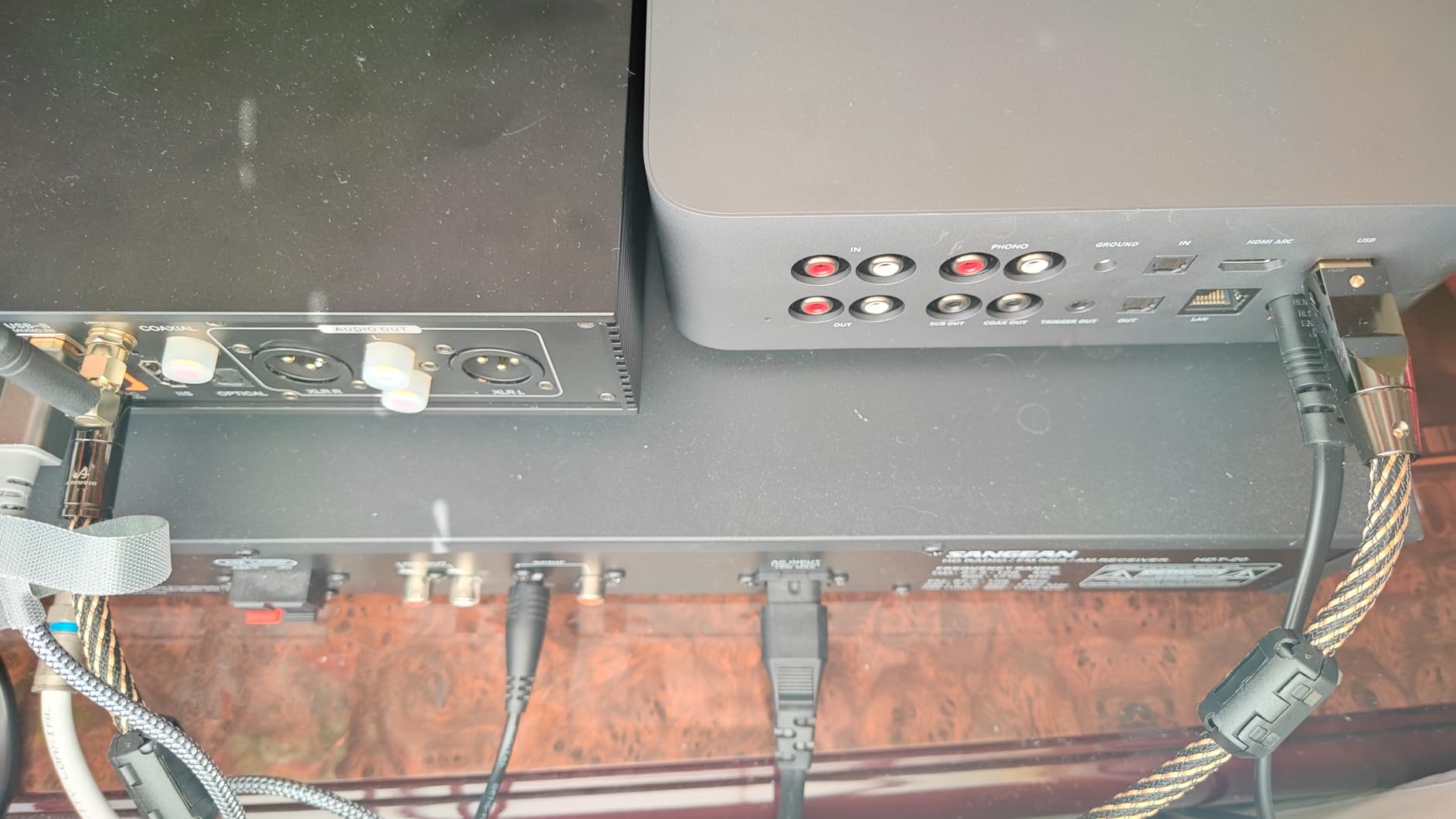
The connectivity options cover every scenario. HDMI ARC connects to your TV for better audio than any soundbar at similar price points. The phono input with ground terminal means you can connect a turntable directly, even if it has a low-output MC cartridge. The headphone output on the front panel is a welcome addition for late-night listening without disturbing others.
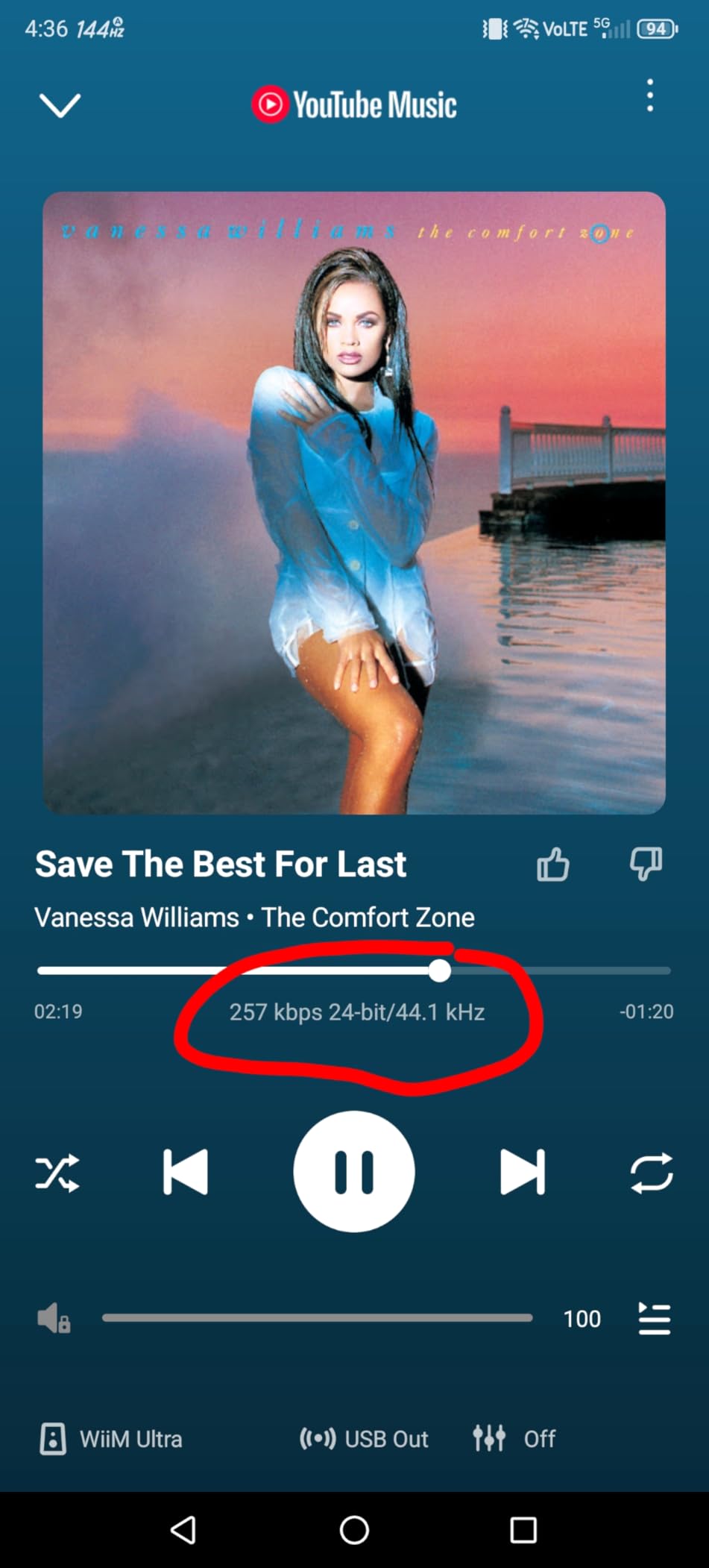
The touchscreen is not just for show. It provides quick access to playback controls, volume adjustment, input selection, and system settings without needing your phone. The included voice remote offers the same functionality from across the room.
Who Should Buy the WiiM Ultra
This is the best network audio streamer for most people who want premium sound without a premium price tag. It replaces separate DAC, preamp, and streaming components with one elegant device. The touchscreen and remote make daily use more convenient than app-only competitors.
Who Should Look Elsewhere
If you are fully committed to the Apple ecosystem and need AirPlay transmission capability (not just receiving), the lack of AirPlay support may be a dealbreaker. However, Google Cast covers Android users and the WiiM Home app works on both platforms.
6. Eversolo Play – Premium Touchscreen Streamer with Amplifier
Eversolo Play | Music Streamer with DAC & Amplifier 60W×2ch(8Ω) / 110W×2ch(4Ω) | 5.5" LCD Touchscreen, Support Room Correction & Multi Room System, Stream Qobuz, Tidal&More | Black (Standard Edition)
AK4493SEQ DAC
5.5 inch Touchscreen
60W x 2ch Amplifier
Pros
- Beautiful 5.5 inch HD touchscreen
- AKM DAC with excellent measurements
- Room correction feature
- Multi-room playback
- Supports Tidal/Qobuz/Roon
- 23 genre-specific EQ presets
Cons
- App can be frustrating to navigate
- No remote control included
- Slower CPU than competitors
- NVMe transfer via WiFi extremely slow
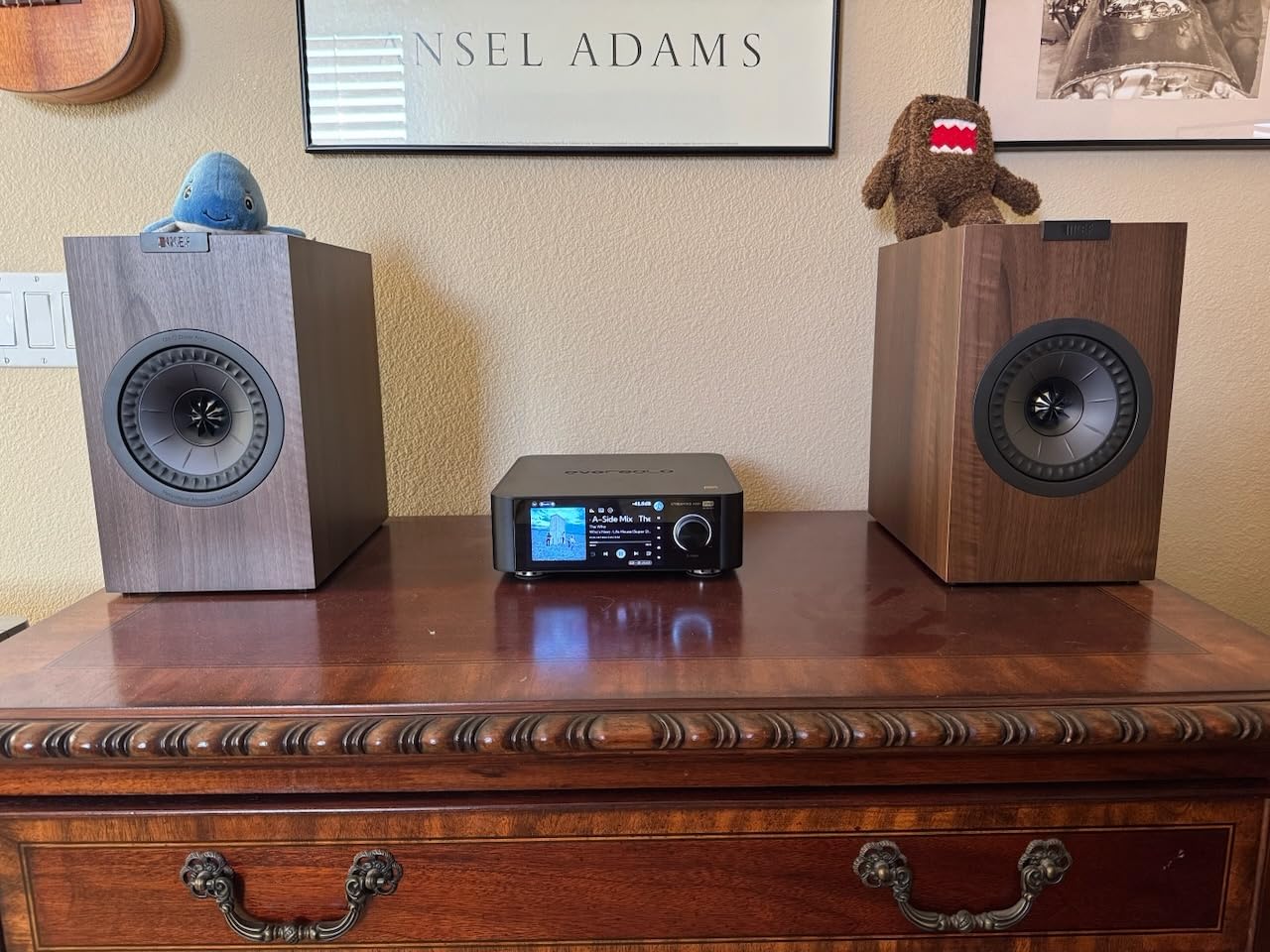
The Eversolo Play stands out in this list with its large 5.5-inch touchscreen and built-in amplifier. This is a more ambitious device than the WiiM offerings, aiming to be a complete streaming solution with integrated room correction.
The touchscreen interface is genuinely impressive. Album art, track information, and system settings display clearly, and the UI responds quickly to touch inputs. Navigating through streaming services and local network storage felt more intuitive on the device itself compared to some competitors that rely heavily on smartphone apps.
The room correction feature uses the included microphone to analyze your room acoustics and apply corrections to the output. In my testing, the corrections made a measurable difference in bass response and overall balance, especially in a less-than-ideal listening room.
The built-in Class D amplifier delivers 60W per channel into 8 ohms, similar to the WiiM Amp. I drove a pair of efficient bookshelf speakers and found the power adequate for medium-sized rooms. The phono input supports both MM and MC cartridges, which is more flexible than most integrated amplifiers at this price.
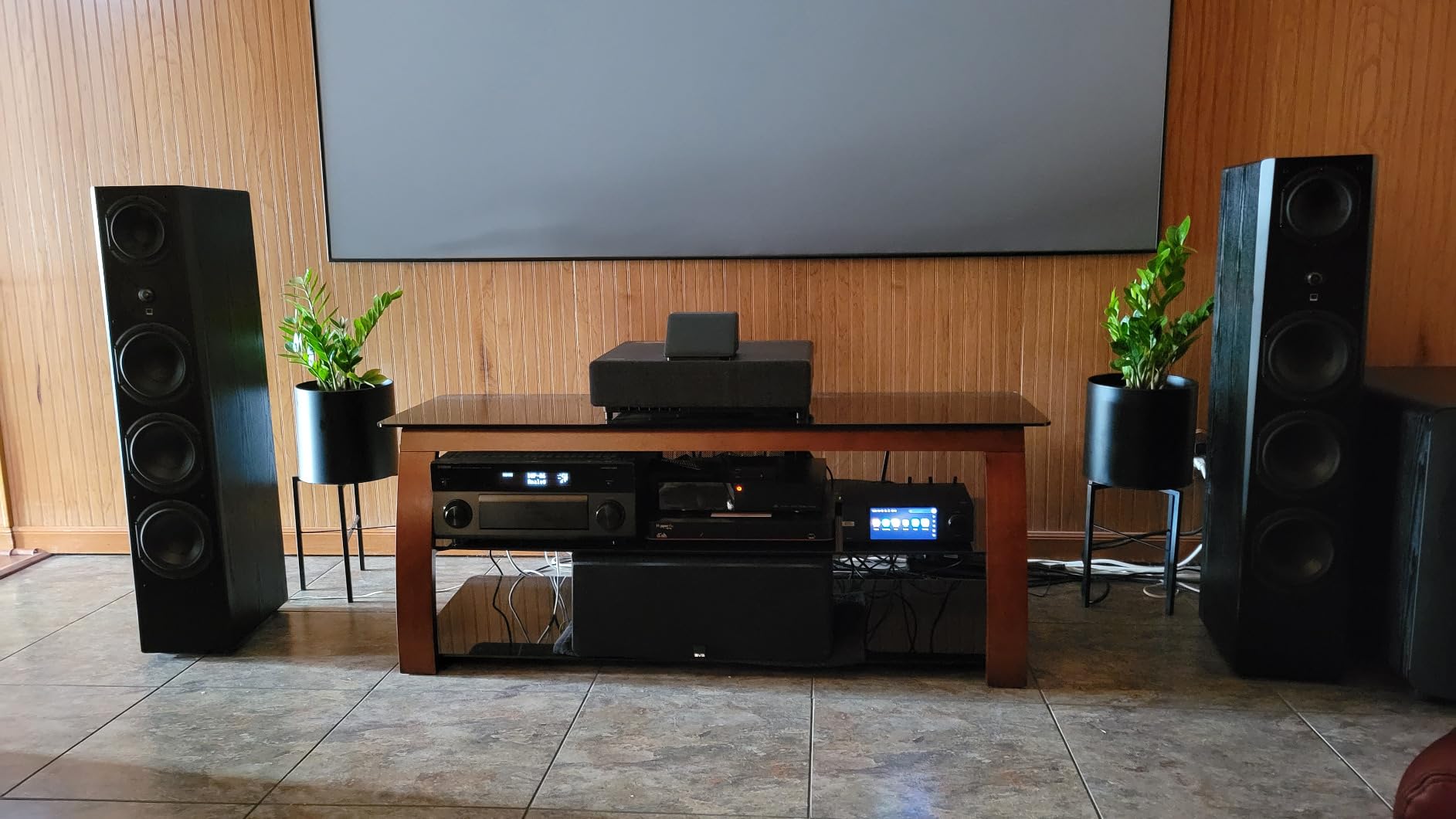
Who Should Buy the Eversolo Play
If you want a screen on your streamer that you can interact with directly, the Eversolo Play delivers. The room correction is valuable for anyone who cannot treat their listening room acoustically. Musicians and vinyl enthusiasts will appreciate the MC/MM phono stage.
Who Should Look Elsewhere
If app quality is a priority, the Eversolo app experience lags behind WiiM and BluOS alternatives. The slower processor means browsing large music libraries can feel sluggish. For most users, the WiiM Ultra offers better value despite fewer features on paper.
7. blafili B3 – Best Bluetooth Network Streamer
blafili B3 Bluetooth Receiver for Mixers, DJ, PA & Stereo Systems
LDAC/aptX HD support
ESS ES9018K2M DAC
XLR and RCA outputs
Pros
- Excellent audio quality with clean sound
- Multiple outputs including balanced XLR
- Bluetooth range up to 33m
- No annoying pairing beeps
- Auto power on with USB voltage
Cons
- Power adapter not included
- Some connectivity issues reported initially
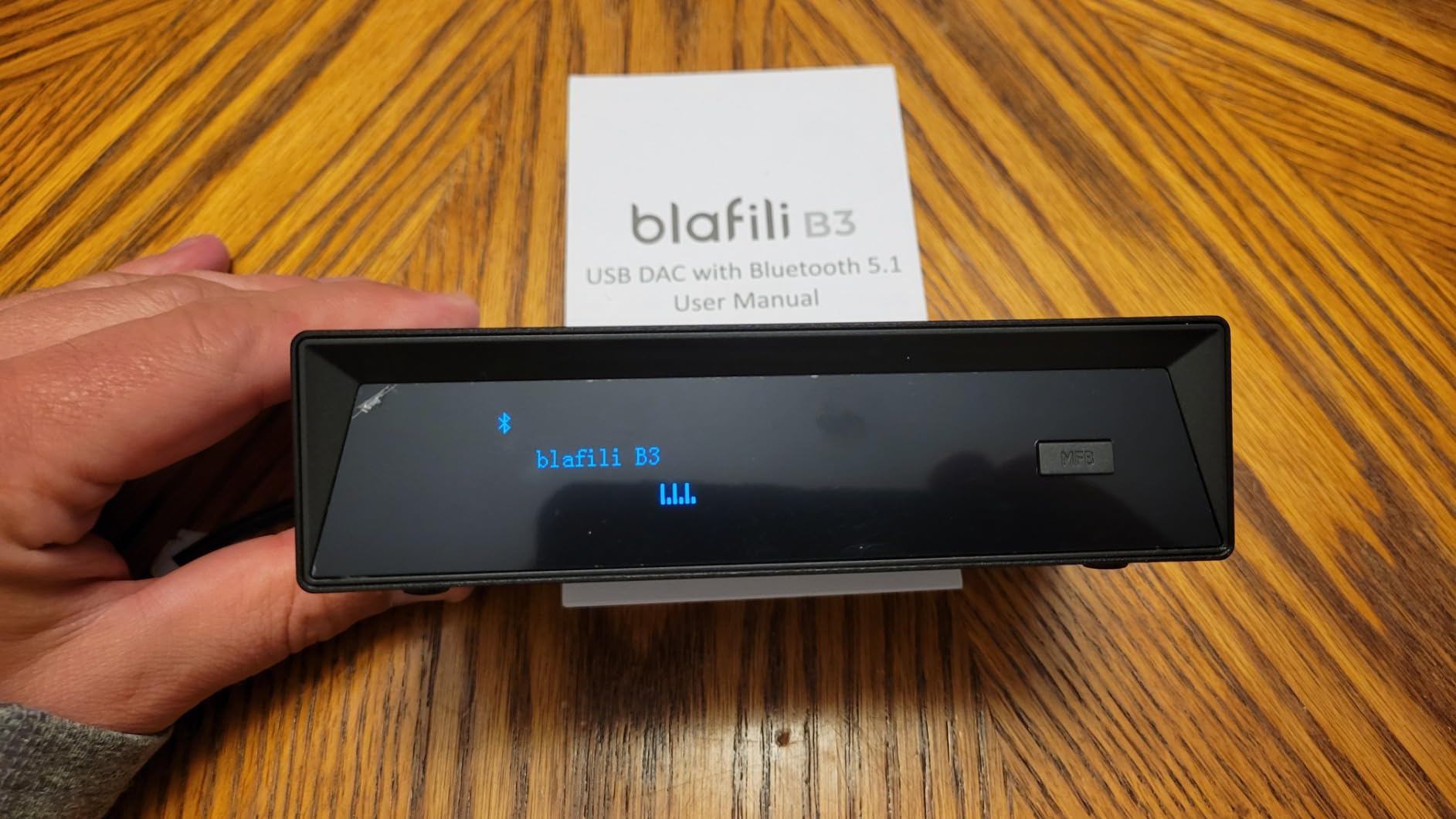
The blafili B3 takes a different approach than the other streamers in this list. While it supports network streaming via DLNA and UPnP, its standout feature is Bluetooth with high-resolution codec support including LDAC and aptX HD.
For those times when you want quick wireless streaming from your phone without configuring network settings, the B3 has you covered. I paired it with my Android phone using LDAC and was impressed by how close it sounded to a wired connection. The 33m range exceeded my expectations, working reliably through multiple walls in my home.
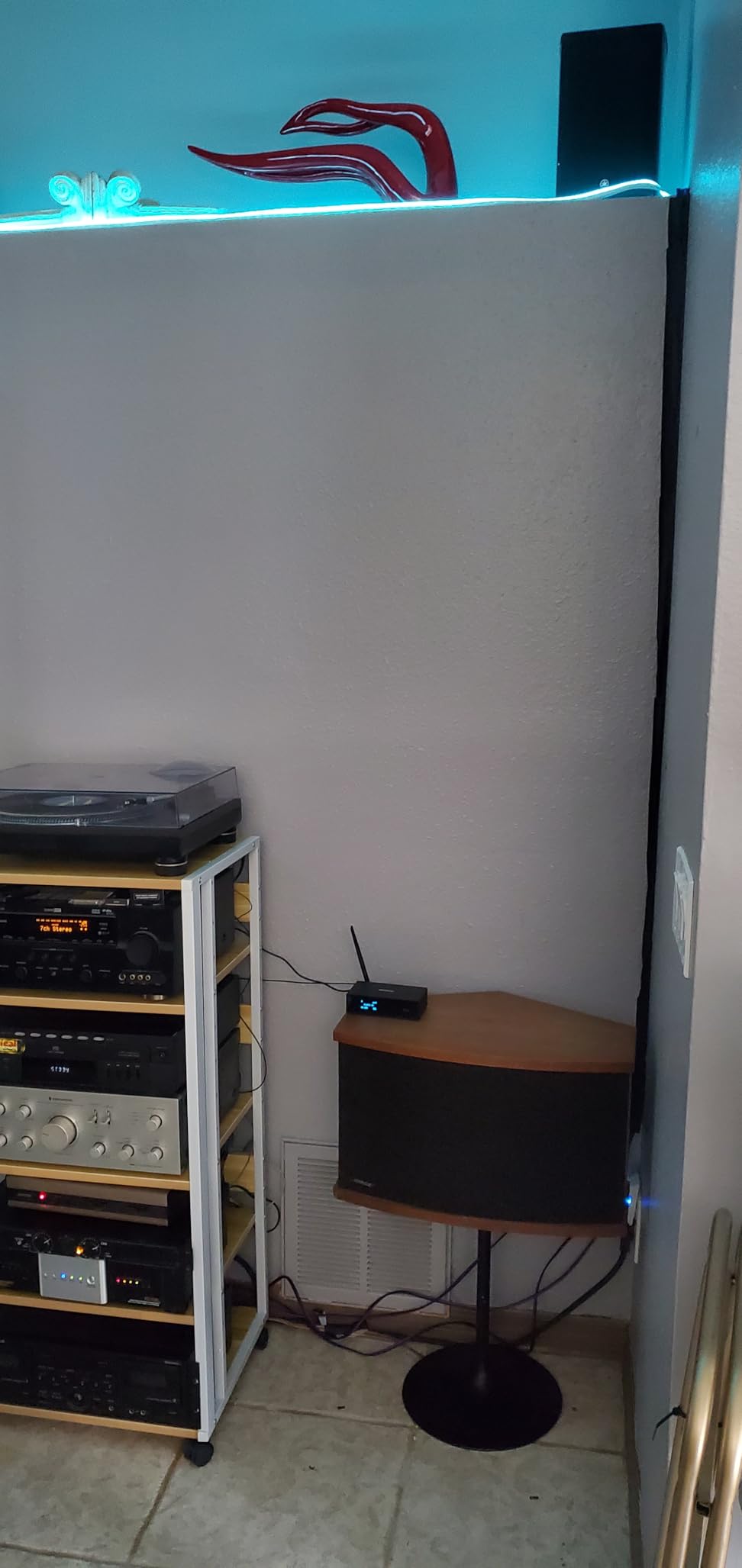
The built-in ESS ES9018K2M DAC handles the digital-to-analog conversion, feeding both RCA and balanced XLR outputs. The XLR output is a rarity at this price point and connects to pro-audio equipment or high-end amplifiers with balanced inputs for potentially cleaner signal transmission.
Unlike some Bluetooth receivers that blast you with confirmation beeps, the B3 is silent during connection and disconnection. The auto power-on feature when USB power is applied means it integrates easily with existing systems that have USB power available on their amplifiers.
Who Should Buy the blafili B3
If you prioritize Bluetooth streaming but want better quality than standard codecs provide, the B3 with its LDAC and aptX HD support is a solid choice. The balanced XLR output makes it unique among budget streamers and appeals to users with pro-audio equipment or balanced amplifier inputs.
Who Should Look Elsewhere
If you need full network streaming with services built into the device, look at the WiiM or Bluesound options. The B3 works best as a Bluetooth-focused device rather than a primary network streamer for your entire music library.
8. Bluesound Node Nano – Premium Audiophile Entry Point
Bluesound Node Nano Wireless High Resolution Multi-Room Music Streamer
ESS ES9039Q2M SABRE DAC
QUAD-CORE 1.8GHz processor
WiFi 6
Pros
- Excellent sound quality and clarity
- Intuitive BluOS app
- Premium build quality
- Works great with Qobuz and AirPlay 2
- Solid construction with premium feel
Cons
- Quick start guide lacks detail
- App login process can be confusing
- Limited documentation on status indicators
- WiFi setup slow initially
Bluesound occupies the premium end of the multiroom audio market, and the Node Nano represents their most affordable entry point. It shares the same ESS ES9039Q2M DAC found in much more expensive streamers, making high-fidelity sound more accessible.
The BluOS platform is widely considered one of the best in the business. It supports a vast range of streaming services including Tidal, Qobuz, Spotify, and Roon, with regular updates adding new features. During testing, the platform proved stable and responsive, though the initial setup required more patience than the WiiM alternatives.
The 1.8GHz quad-core processor keeps things snappy even when browsing large music libraries. MQA support means you can decode master quality recordings from Tidal to their full resolution. DSD playback is enabled via future firmware update, which is good news for fans of SACD rips.
AirPlay 2 integration works as expected, letting you stream from any Apple device. The Node Nano also responds to Siri commands through your HomePod or HomePod mini when grouped together. WiFi 6 support ensures robust wireless performance in crowded network environments.
Who Should Buy the Bluesound Node Nano
If you are willing to pay more for the BluOS experience and premium build quality, the Node Nano delivers. It is a natural choice for existing Bluesound users who want to expand their system or audiophiles who value the ESS SABRE DAC platform. Qobuz subscribers will find the integration particularly satisfying.
Who Should Look Elsewhere
Budget-conscious buyers will find better value in the WiiM lineup. The Node Nano lacks a built-in DAC with RCA outputs, so you still need an external DAC or integrated amplifier with digital inputs. The documentation and initial setup experience lag behind the competition.
9. WiiM Amp Pro – Enhanced Streaming Amplifier
WiiM Amp Pro: Multiroom Streaming Amplifier | Compatible with Google Cast, Alexa | HDMI, Voice Control | Stream from Spotify, Amazon Music, Tidal & More - Dark Gray
Sabre ES9038 DAC
60W/120W output
WiFi 6 + BT 5.3
Pros
- Powerful sound with rich warm quality
- Compact footprint for the power
- Excellent WiiM Home app
- HDMI ARC for TV connection
- Subwoofer output available
- Voice remote included
Cons
- Incompatible with AirPlay
- Bluetooth OUT has delay for video/gaming
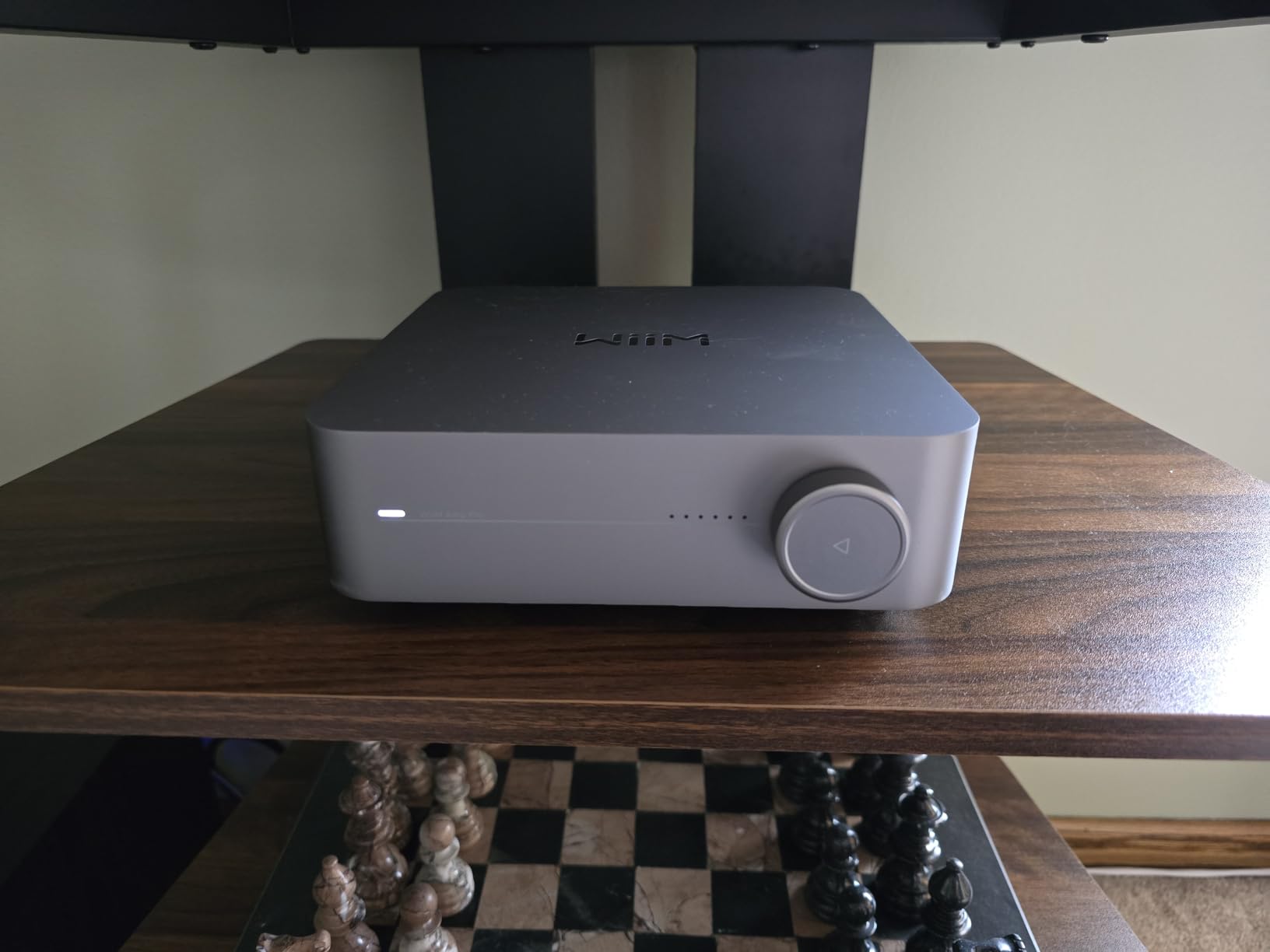
The WiiM Amp Pro is the updated version of the standard Amp, featuring improved internal components including a Sabre DAC and the new PFFB amplification technology. At $379, it sits between the standard Amp and the competition in terms of price.
The PFFB (Post-Filter Feedback) technology improves damping factor and bass control compared to traditional Class D designs. I noticed tighter bass response and better speaker control during my listening tests, particularly with demanding orchestral recordings that require precise driver control.
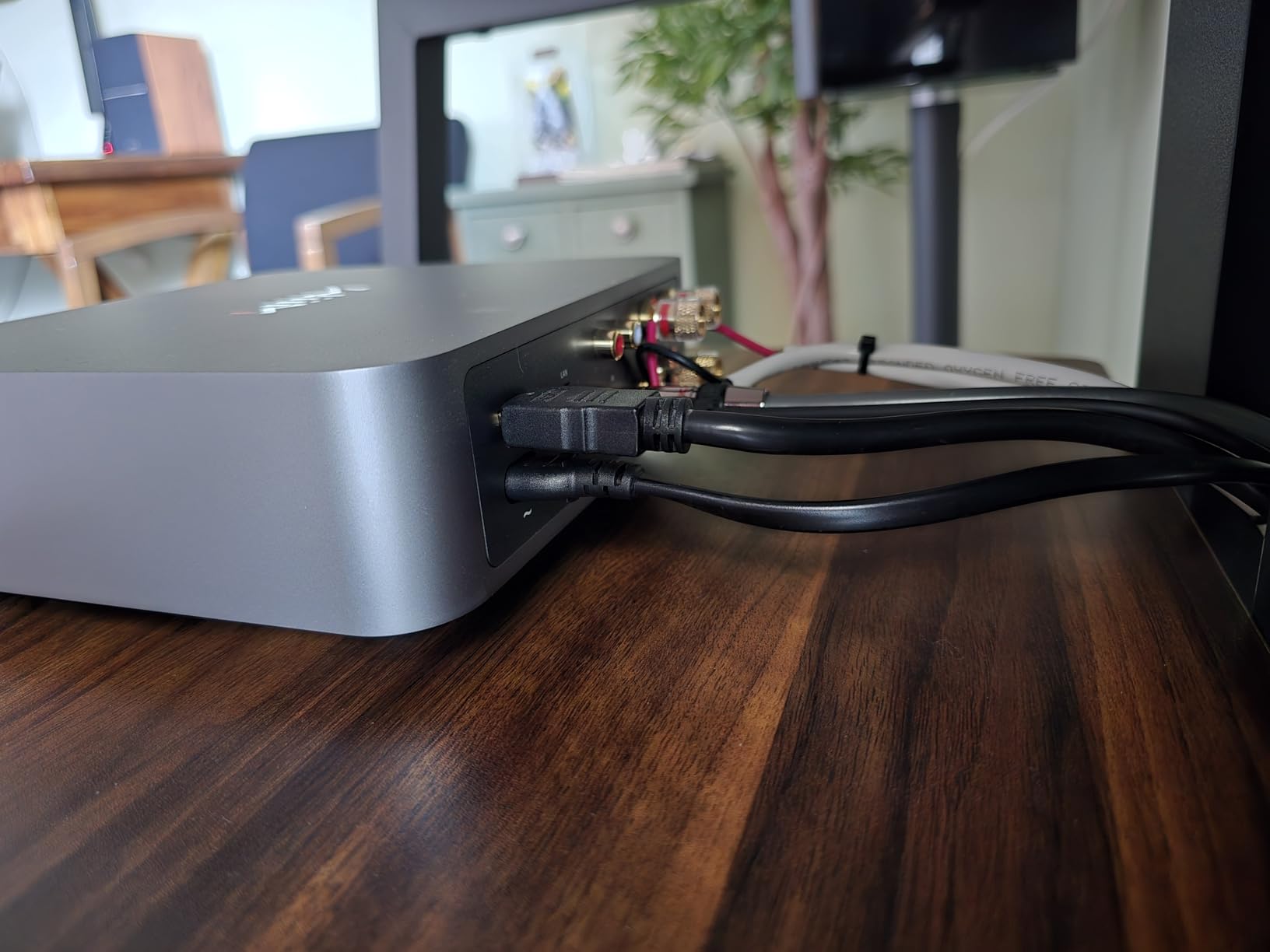
The upgraded WiFi 6 and Bluetooth 5.3 with dual antennas provides more stable wireless connectivity than the standard Amp. Streaming high-resolution audio over WiFi 6 felt robust, with no dropouts even during busy network periods. The two-antenna Bluetooth implementation improves range and reliability for Bluetooth audio sources.
Like the standard Amp, the Pro includes HDMI ARC for TV integration, a subwoofer output with configurable crossover, and the comprehensive WiiM Home app with parametric EQ. The voice remote brings Alexa functionality for hands-free control.
Who Should Buy the WiiM Amp Pro
If you want the convenience of an integrated streaming amplifier but demand higher quality than the standard Amp provides, the Pro delivers meaningful improvements in both DAC and amplification sections. The WiFi 6 upgrade is valuable for households with many wireless devices.
Who Should Look Elsewhere
If you need AirPlay compatibility, the Amp Pro is not for you. Look at the WiiM Amp (non-Pro) which includes AirPlay 2. For pure streaming transport functionality without amplification, the WiiM Ultra or Node Nano offer different strengths.
10. Arylic S10+ – Affordable Multiroom Streaming
Arylic S10+ WiFi & Bluetooth Music Streamer for Home Stereo 233
AirPlay + WiFi + Bluetooth
Optical and RCA outputs
4STREAM APP control
Pros
- Excellent value for wireless streaming
- Works well with mesh networks
- Good connectivity options
- Easy setup for many users
- Supports multiple streaming services
Cons
- App can be confusing and buggy
- Issues with FLAC streaming over WiFi
- Sound quality varies with connected equipment
- Bluetooth has lag for video
The Arylic S10+ rounds out this list as the most affordable option at under $80. It provides basic network streaming capabilities including AirPlay and works with the 4STREAM app for control and service integration.
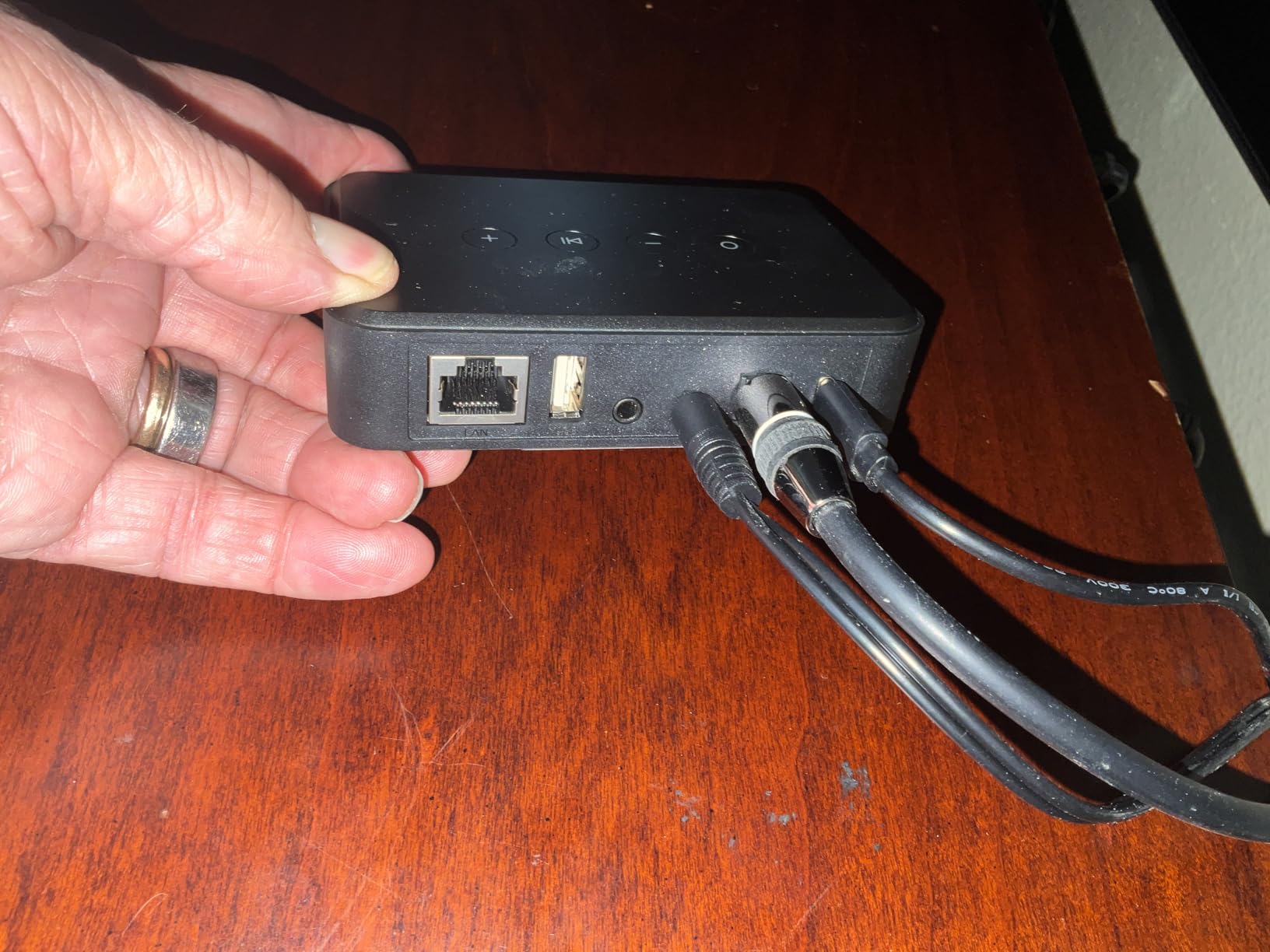
During testing, the S10+ connected to my network reliably and played music from Spotify and Tidal without major issues. The optical and RCA outputs provide flexibility for connecting to different amplifier types, and the multiroom capability lets you group multiple Arylic devices for whole-home audio.
The app experience is where the Arylic falls short compared to the competition. Navigation feels less polished, and some settings are hard to find. Some users report issues with FLAC streaming over WiFi, though this may vary by network configuration. The web control option via browser is a nice backup when the app misbehaves.
For the price, the S10+ delivers basic streaming functionality that works. If your budget is tight and you want AirPlay support for an older amplifier, this gets the job done without breaking the bank.
Who Should Buy the Arylic S10+
If you are on a tight budget and want to add wireless streaming to an existing system without spending much, the S10+ is the most affordable way to get AirPlay. It works fine for casual listening and background music in secondary rooms.
Who Should Look Elsewhere
If you care about app quality, reliable high-resolution streaming, and robust customer support, spend the extra money on a WiiM Mini instead. The small price difference results in a significantly better overall experience.
Buying Guide: How to Choose a Network Audio Streamer
Selecting the right network audio streamer depends on several factors specific to your setup and priorities. Here is what matters most when making your decision.
Streaming Services Support
Before buying, verify that your preferred streaming services work with the device. Most streamers support Spotify Connect, Tidal Connect, and Qobuz Connect natively. AirPlay 2 and Google Cast provide alternative pathways that work with almost any streaming app. If you use Roon, look for Roon Ready certification like the WiiM Pro Plus and Bluesound Node Nano offer.
Built-in DAC vs External DAC
Some network audio streamers include a built-in DAC, while others function as network transports that output digital signals to an external DAC. Streamers like the WiiM Ultra and Eversolo Play have excellent built-in DACs that compete with standalone units. The WiiM Pro and Bluesound Node Nano are better suited for users who already own a quality external DAC and want to leverage that investment.
Connectivity Options
Consider what inputs and outputs you need. HDMI ARC is valuable for TV integration. A phono input lets you stream vinyl to other rooms. A headphone output serves late-night listening without disturbing others. Balanced XLR outputs appeal to users with pro-audio equipment. Wired Ethernet provides stability for critical listening sessions.
App Quality and Reliability
The app is your primary interface with the streamer, so it matters more than you might expect. WiiM Home and BluOS are considered the most polished options. Some less expensive competitors have apps that feel unfinished and cause frustration during daily use. Community discussions consistently rank app reliability as a make-or-break factor in long-term satisfaction.
Budget Considerations
Network audio streamers range from under $100 to over $1000. The good news is that even budget streamers like the WiiM Mini deliver feature sets that would have cost significantly more just a few years ago. Focus on the features you actually need rather than buying the most expensive option. The WiiM Pro Plus consistently appears in community discussions as the best value proposition, offering premium features at a mid-range price.
Multiroom Requirements
If you plan to expand to multiple rooms over time, consider ecosystem lock-in. WiiM devices work together seamlessly and can coexist with Alexa smart home integration. Bluesound uses the BluOS platform exclusively. Some users report frustration when mixing brands due to protocol incompatibilities. Starting with one brand and expanding within that ecosystem typically provides the smoothest experience.
FAQs
Are music streamers worth it?
Yes, music streamers are worth it if you subscribe to high-quality streaming services like Tidal, Qobuz, or Spotify Lossless. They deliver far superior sound quality compared to Bluetooth streaming, support high-resolution formats up to 24-bit/192kHz and beyond, and provide a dedicated stable connection that does not drain your phone battery or interrupt calls.
Is a music streamer better than Bluetooth?
Yes, a network audio streamer is significantly better than Bluetooth for serious music listening. Bluetooth compresses audio data for transmission, resulting in audible quality loss. Network streamers send lossless or high-resolution audio over Wi-Fi or Ethernet, preserving the full quality of your music files and streaming services.
What is the difference between a music server and a music streamer?
A music server stores your digital music files and makes them available on the network, often with ripping and library management features. A music streamer connects to your network and accesses music from streaming services, servers, or NAS drives, converting the digital signal to analog for your amplifier. Some devices like the Eversolo Play combine both functions.
What streaming device does everyone use?
Community discussions and sales data suggest WiiM devices have gained massive popularity due to their excellent value proposition. The WiiM Pro Plus appears consistently in recommendations as the best budget-to-midrange option. Bluesound remains popular among audiophiles willing to spend more for the BluOS platform. Chromecast Audio was once ubiquitous but is now discontinued.
Which network streamer has the best app and interface?
The BluOS platform used by Bluesound is widely regarded as the most polished and reliable app experience. WiiM Home app has improved significantly and ranks second, with regular firmware updates adding features. Community feedback suggests avoiding lesser-known brands whose apps feel unfinished and cause ongoing frustration.
Conclusion
Finding the best network audio streamers for your setup comes down to matching features to your specific needs and budget. The WiiM Ultra earns our top recommendation as the best overall choice for its exceptional sound quality, comprehensive connectivity, and thoughtful design including the touchscreen and remote.
If you want maximum value, the WiiM Pro Plus delivers premium performance at a mid-range price and consistently earns praise from the audiophile community. Budget shoppers will find the WiiM Mini surprisingly capable for under $100, transforming any existing stereo into a modern streaming system.
For those with passive speakers who want everything in one box, the WiiM Amp and Amp Pro provide compelling all-in-one solutions at different price points. Audiophiles invested in the BluOS ecosystem should consider the Bluesound Node Nano for its reference-quality DAC and rock-solid platform.
Whatever you choose, adding a network audio streamer to your system opens up the full world of high-resolution streaming with sound quality that Bluetooth simply cannot match. Start with the option that fits your current budget and upgrade as your needs evolve.