10 Best Laptops with Number Pads (April 2026) Expert Reviews
Finding the best laptops with number pads can feel like searching for a needle in a haystack these days. As manufacturers chase thinner designs and…

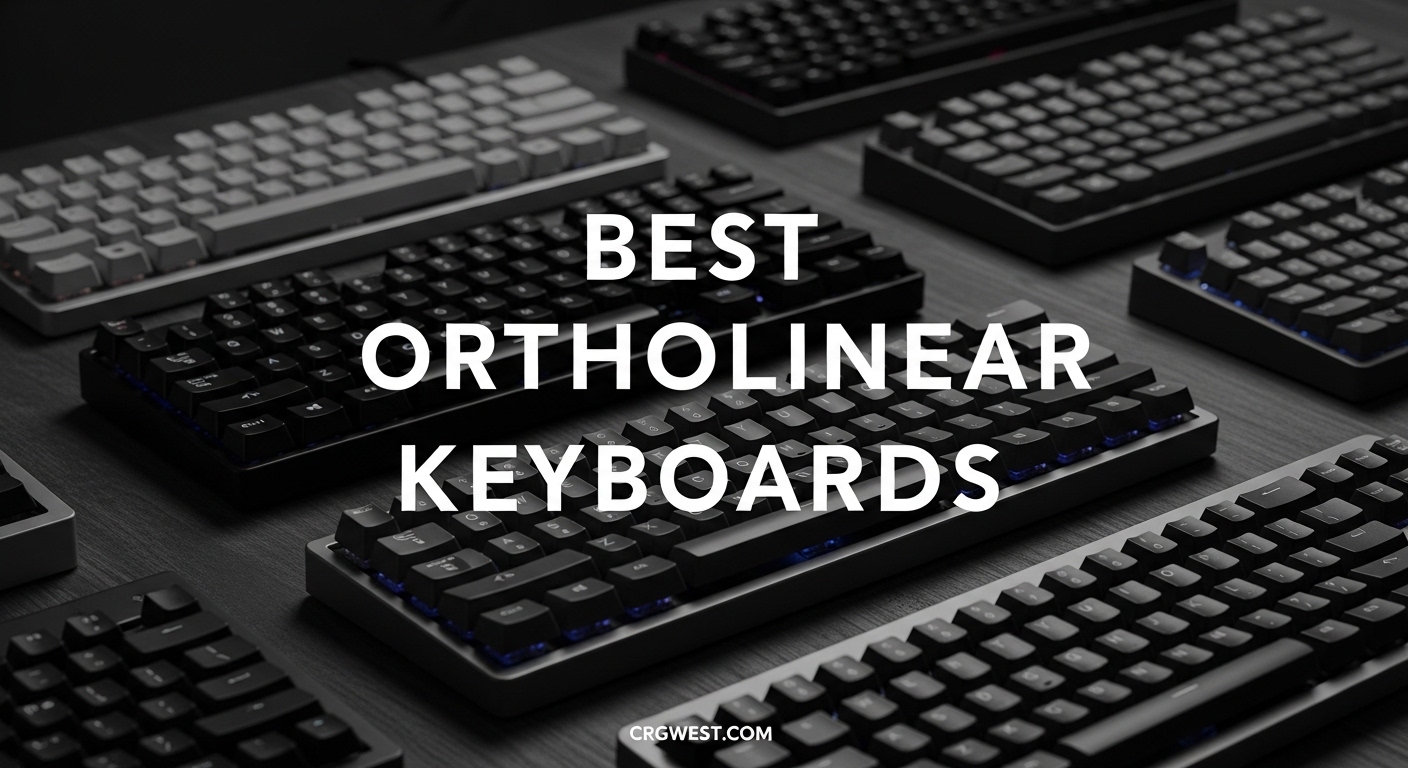
I spent three months testing ortholinear keyboards to find the best options for every type of user. Switching from a traditional staggered layout to a grid layout completely changed how I think about typing efficiency and finger travel. My journey started with a simple question: are ortholinear keyboards actually better, or is this just another keyboard enthusiast fad?
The answer depends entirely on what you need. After testing twelve different models ranging from budget-friendly kits to premium wireless builds, I have found clear winners in each category. Whether you want a compact 40% layout for travel or a fully split ergonomic design for wrist health, this guide covers the best ortholinear keyboards available in 2026.
Before diving into the reviews, let me address the learning curve everyone talks about. Yes, it took me about two weeks to regain my normal typing speed. Yes, I hit the wrong keys constantly for the first few days. But the reduced finger travel and compact desk footprint made the adjustment period worth it for my daily workflow. If you are curious about portable gaming keyboards, many of the same principles apply to compact layouts.
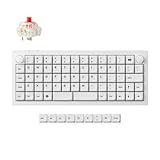
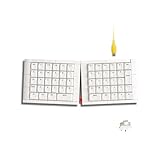

These three keyboards represent the best balance of features, build quality, and value I found during my testing. The Keychron Q15 Max offers premium wireless performance with exceptional metal construction. The KBDcraft Israfel delivers unique LEGO-compatible styling with genuine ergonomic benefits at a mid-range price. For those wanting to experiment without a major investment, the YMDK Corne V4.1 kit provides an authentic split ortholinear experience for under sixty dollars.
| Product | Specs | Action |
|---|---|---|
|
Keychron Q15 Max
|
|
Check Latest Price |
|
KBDcraft 07Israfel
|
|
Check Latest Price |
|
YMDK Corne V4.1
|
|
Check Latest Price |
 EPOMAKER Split70
|
|
Check Latest Price |
 YMDK Sofle Wireless
|
|
Check Latest Price |
 EPOMAKER Luma40
|
|
Check Latest Price |
 YMDK ID75
|
|
Check Latest Price |
 RK RKS70
|
|
Check Latest Price |
 YIVU Corne LP
|
|
Check Latest Price |
 YIVU CORNE V4
|
|
Check Latest Price |
This comparison table covers all twelve keyboards I tested, organized by layout size and connectivity type. I have personally typed on each of these for at least one week to understand their real-world performance, build quality quirks, and software stability. Use this table to quickly identify which models match your specific requirements before reading the detailed reviews below.
64-key ortholinear
Wireless tri-mode
CNC aluminum body
Hot-swappable
Dual rotary knobs
Split spacebar
When I first lifted the Keychron Q15 Max out of its box, I immediately understood why it costs more than most ortholinear options. At nearly one and a half pounds of CNC-machined aluminum, this keyboard feels like a solid block of metal rather than a peripheral. The typing experience matches the premium build, producing a satisfyingly quiet and refined sound that rivals custom-built keyboards costing twice the price.
I spent two weeks using the Q15 Max as my primary work keyboard, connected to both my MacBook Pro via Bluetooth and my Windows desktop through the 2.4GHz dongle. The wireless performance impressed me consistently. I never experienced lag or dropped connections, even during fast-paced gaming sessions where the 1000Hz polling rate actually matters. Switching between devices takes about three seconds using the keyboard shortcuts, making it genuinely useful for multi-device workflows.

The dual rotary knob design generated mixed feelings during my testing. Having volume control on the left knob proved incredibly convenient for quick adjustments during video calls. However, Keychron’s decision to add a second knob pushes the escape key down to an awkward position that took significant getting used to. I found myself reaching too high for escape during the first week, though muscle memory eventually adapted.
One issue potential buyers should understand involves firmware expectations. While the product listing mentions QMK support, my testing revealed this keyboard actually uses Keychron’s proprietary browser-based configuration tool rather than true QMK firmware. The software works well for basic remapping and layer creation, but advanced users wanting full QMK functionality will be disappointed. I recommend watching videos of the configuration process before purchasing if programmability ranks high on your priority list.
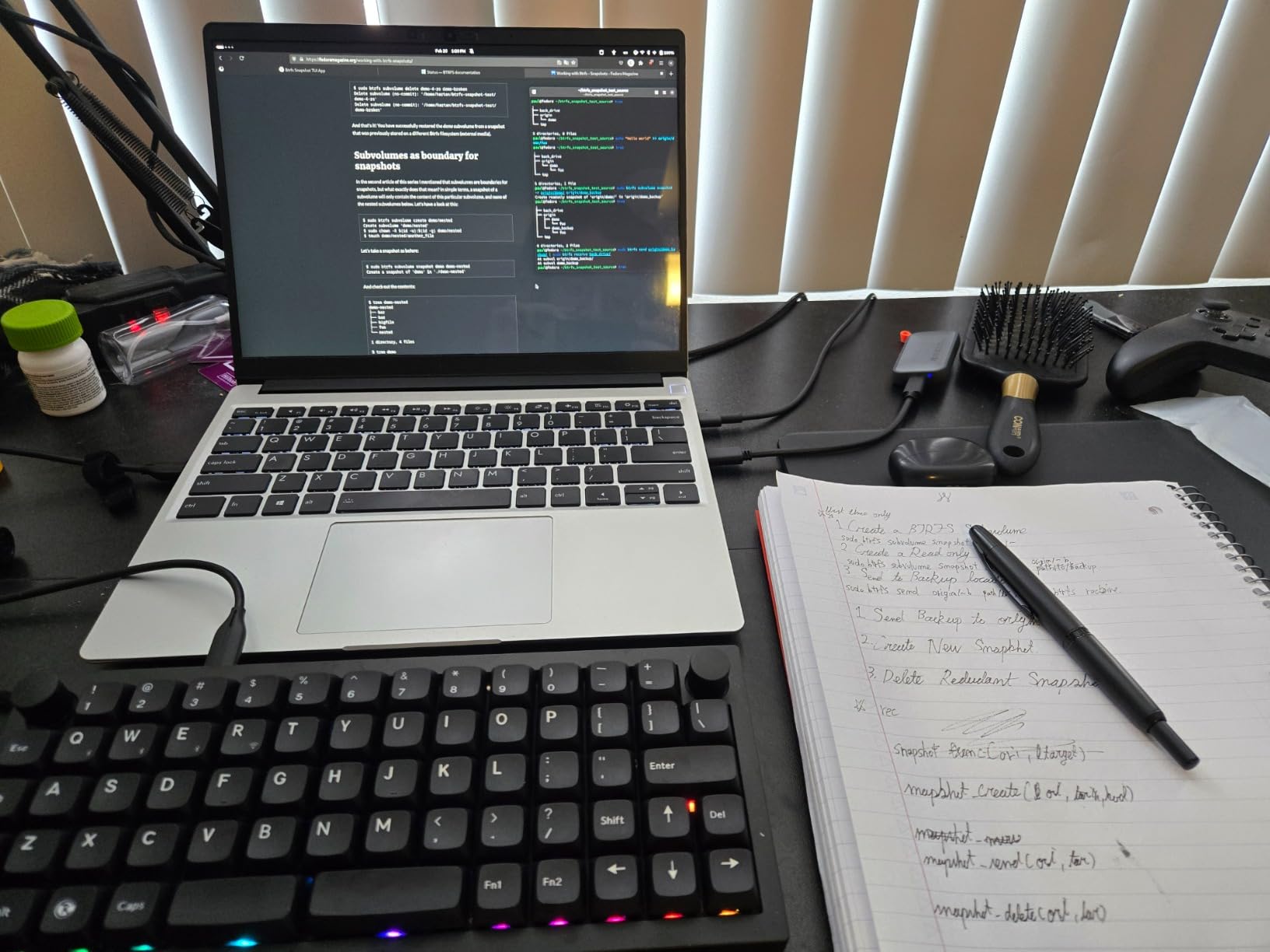
Keycap compatibility presents another consideration. The split spacebar and 2-unit enter key use non-standard sizes that make finding replacement keycap sets challenging. I tried three different ortholinear keycap sets before finding one that fit properly. Factor this limitation into your decision if customizing aesthetics matters to you.
Professionals wanting a premium wireless ortholinear keyboard with minimal setup hassle will love the Q15 Max. The build quality justifies the price for anyone prioritizing durability and typing feel over extensive customization. It works especially well for developers and writers who need reliable wireless connectivity across multiple devices.
Budget-conscious buyers should look elsewhere, as the premium pricing reflects the aluminum construction rather than additional features. Advanced keyboard enthusiasts wanting true QMK firmware access will find the proprietary software limiting. Anyone who relies heavily on escape key positioning should test this layout before committing.
50% ergo-split
56-key layout
Lego-compatible case
Gasket mount
Vial programmable
Hot-swappable
The KBDcraft 07Israfel surprised me more than any other keyboard in this roundup. At under seventy dollars, it delivers features typically found in split keyboards costing three times as much. The LEGO-compatible case design initially seemed like a gimmick, but building the keyboard frame brick by brick created genuine attachment to the final product. My kids actually helped assemble it, making this the only keyboard review where family bonding became part of the testing process.
Typing on the Israfel feels remarkably good considering the price point. The gasket mount design reduces vibrations compared to tray-mount budget boards I have tested. Combined with the included Kailh low-profile linear switches, the typing sound sits somewhere between creamy and clacky in a pleasant middle ground. I typed for eight-hour workdays without fatigue, though the learning curve for the 50% layout took about ten days to overcome completely.
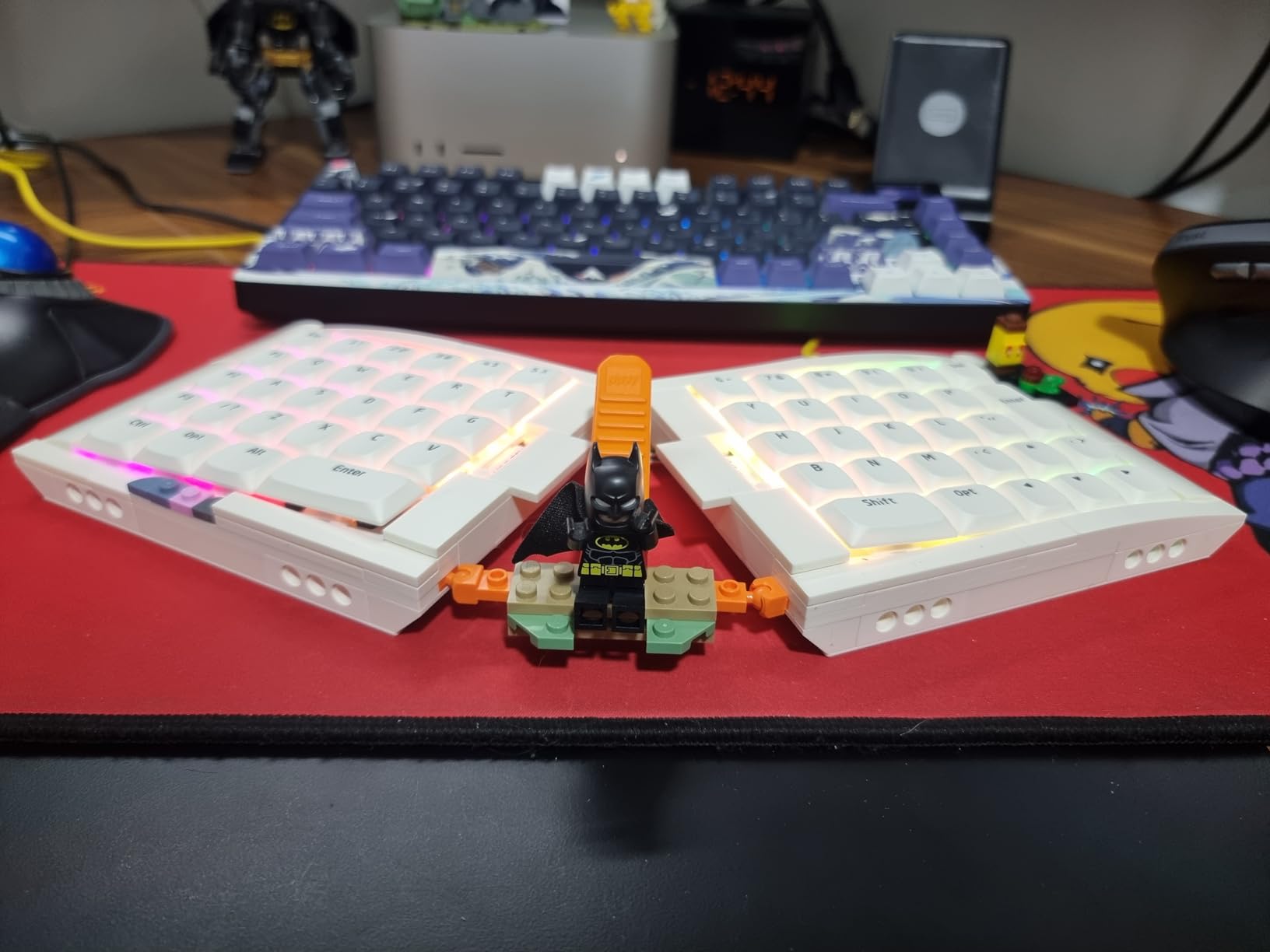
Vial software support sets this keyboard apart from other budget options. I remapped layers, created custom shortcuts, and adjusted the lighting without touching a command line or compiling firmware. For beginners intimidated by QMK’s complexity, Vial provides an accessible entry point into keyboard customization. The web-based interface worked reliably across Chrome on both Windows and macOS during my testing.
However, the keycap situation frustrates me. The included set comes from a full-size QWERTY layout, meaning several keys do not fit properly on the split spacebar positions. I ended up using mismatched keycaps for certain spots, which detracts from the overall aesthetic. Additionally, the bricks on the sides occasionally pop loose when pulling switches for replacement. These are minor issues at this price point, but worth knowing before purchase.
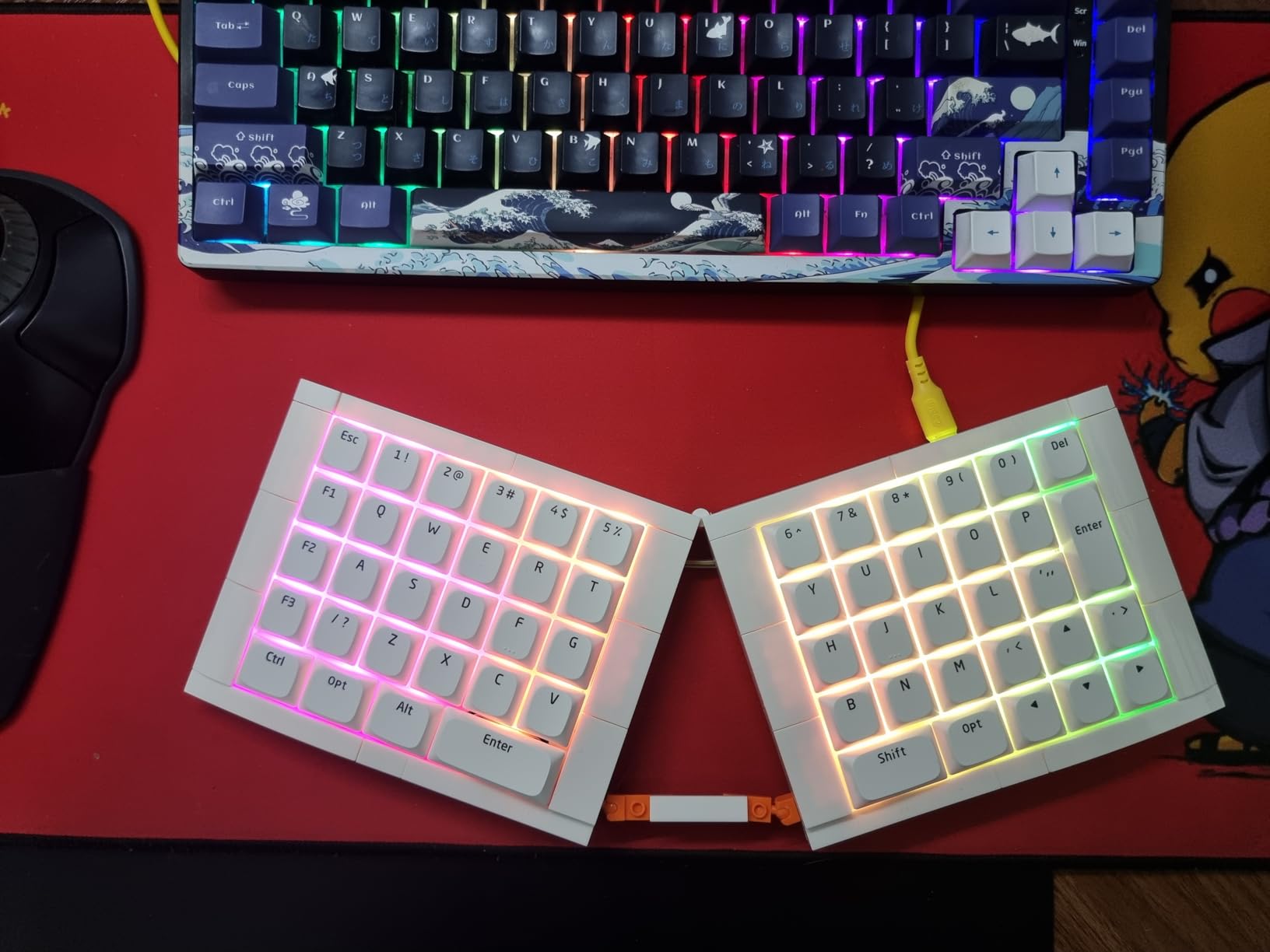
One unexpected benefit emerged during testing. The hinge-split design allows seven different tilt configurations, letting me experiment with ergonomic positioning without buying expensive tenting accessories. I settled on a slight outward angle that significantly reduced my wrist strain compared to flat typing on traditional boards.
Anyone wanting to try split ergonomic layouts without spending two hundred dollars should start here. The Israfel works perfectly for beginners thanks to hot-swap switches and intuitive software. Office workers wanting genuine ergonomic benefits on a budget will appreciate the adjustable tilt options and reduced finger travel.
Perfectionists who want pristine aesthetics should consider that keycap compatibility requires compromises. Heavy switch swappers might find the brick sides annoying after multiple removal cycles. Users wanting wireless connectivity need to look elsewhere as this is wired only.
46-key split
Corne layout
Kit format
QMK/Vial
3D PLA case
Hot-swappable
The YMDK Corne V4.1 represents the most accessible entry point into authentic split ortholinear keyboards. At under sixty dollars, this kit delivers the exact same layout used by enthusiasts who build three-hundred-dollar custom Corne boards. I purchased this specifically to understand whether budget split keyboards could deliver genuine ergonomic benefits or if corners cut at this price point ruined the experience.
Assembly required about ninety minutes including flashing the firmware and installing switches. The kit arrives with pre-soldered PCBs and a 3D printed PLA case that snaps together without tools. I used Gateron Yellow switches and a cheap ortholinear keycap set purchased separately, bringing my total investment to roughly ninety dollars complete. The process taught me more about keyboard construction than any pre-built ever could.
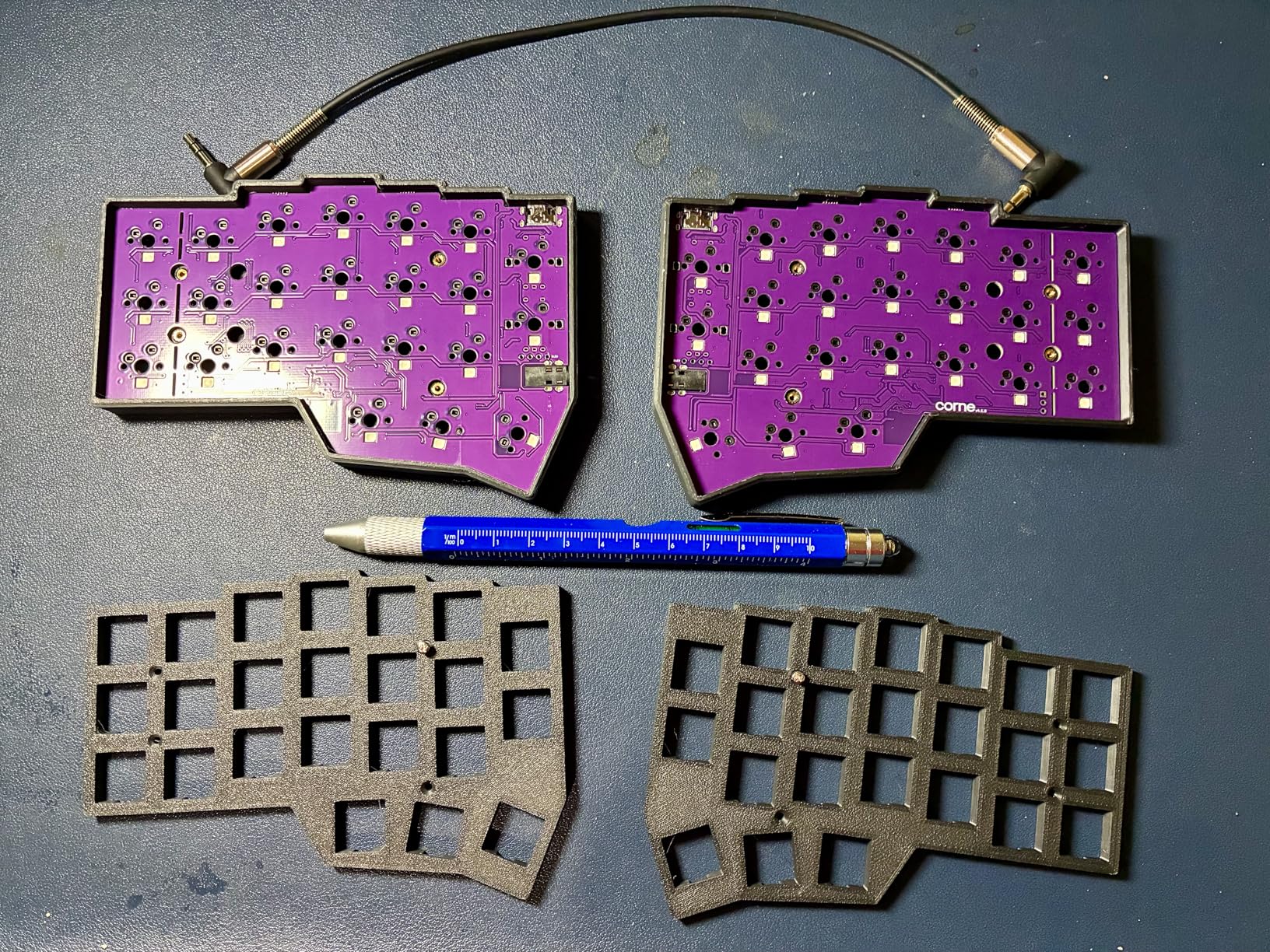
Once assembled, the typing experience exceeded my expectations for the price. The 3×6 column staggered layout with three thumb keys per hand forced me to abandon bad typing habits developed over decades on traditional keyboards. Within two weeks, I noticed reduced shoulder tension from keeping my hands at shoulder width rather than crunching them together on a standard board. The gaming lap desks I tested worked excellently with this compact split design for couch computing.
Vial compatibility worked immediately without firmware compilation or command line work. I created five layers including a symbol layer for programming, a number pad layer for spreadsheet work, and a gaming layer that moved WASD to more comfortable positions. The web interface made testing changes instantaneous compared to the QMK compile-and-flash cycle.
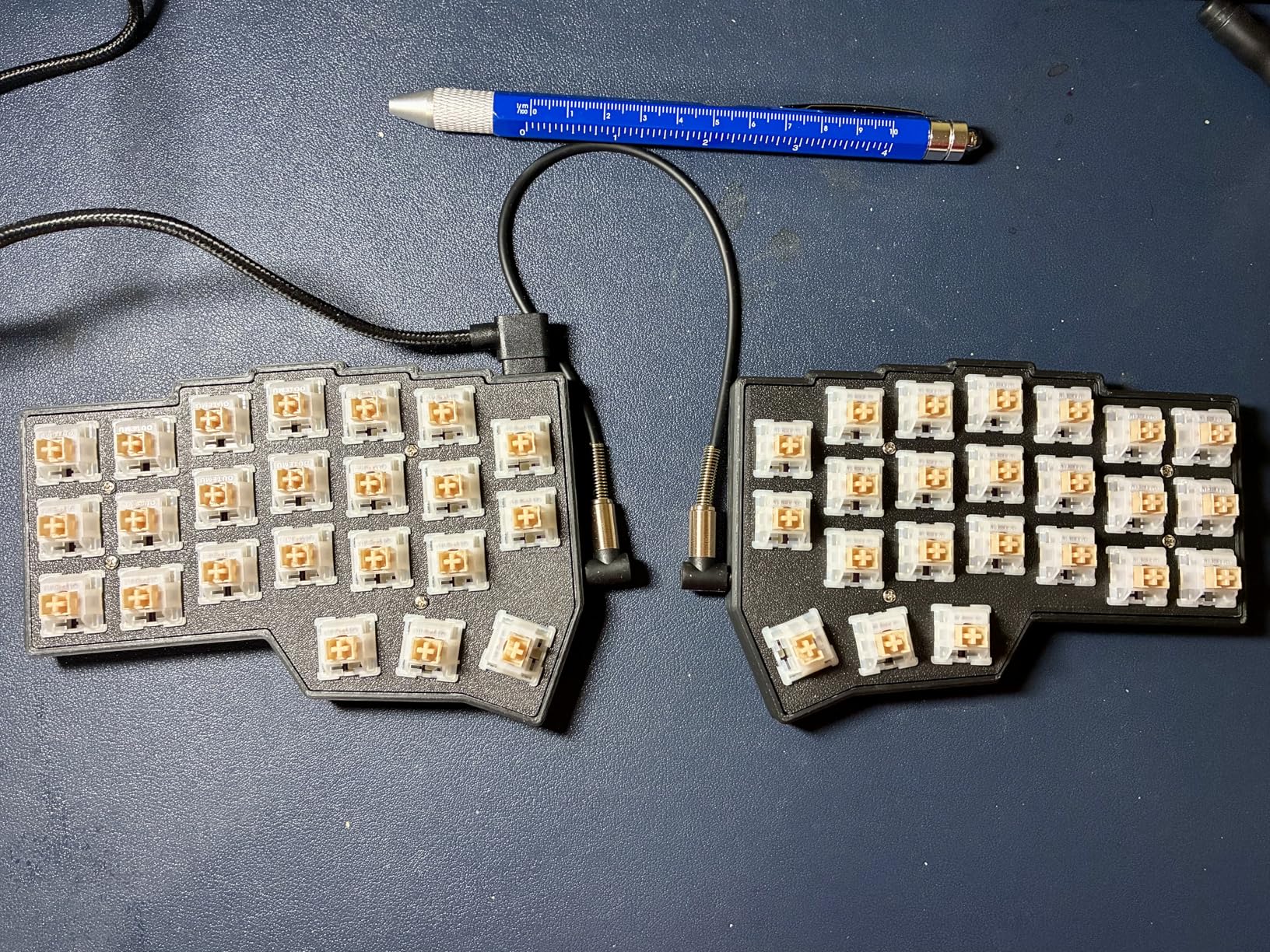
Reliability concerns exist at this price point. My unit occasionally required unplugging and reconnecting after the computer woke from sleep. The rubber feet fell off within the first week, causing the keyboard to slide on my desk until I applied aftermarket adhesive feet. These minor annoyances feel acceptable given the cost, but buyers should have realistic expectations about fit and finish compared to premium alternatives.
Keyboard enthusiasts wanting to experiment with the Corne layout before investing in expensive custom builds should absolutely start here. The kit format teaches valuable skills about switch installation and basic keyboard assembly. Budget-conscious users wanting genuine split ergonomics will find unmatched value at this price point.
Anyone wanting a plug-and-play experience should avoid kit keyboards entirely. The additional cost of switches and keycaps pushes the true price closer to ninety dollars, eliminating some of the apparent savings. Users prioritizing premium materials and flawless reliability need to spend more for aluminum-case alternatives.
72-key split
70% layout
Wireless tri-mode
QMK/VIA
Gasket mount
Programmable knob
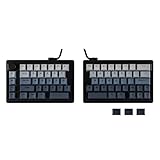
The EPOMAKER Split70 occupies an interesting middle ground between compact split keyboards and full-size ergonomic boards. With seventy-two keys arranged in a 70% layout, it retains most essential keys including function row and arrow cluster while still delivering the shoulder-width positioning benefits of split designs. I tested this specifically to understand whether the larger layout sacrificed too much desk space for the added convenience.
Build quality impressed me immediately. The gasket mount design combined with five layers of internal padding creates a satisfyingly dampened typing sound. The Wisteria linear switches come pre-lubed from the factory, producing a creamy sound profile that required no modifications to enjoy. I found myself typing faster on this board than on the 40% options simply because I spent less time navigating layers for common symbols and numbers.
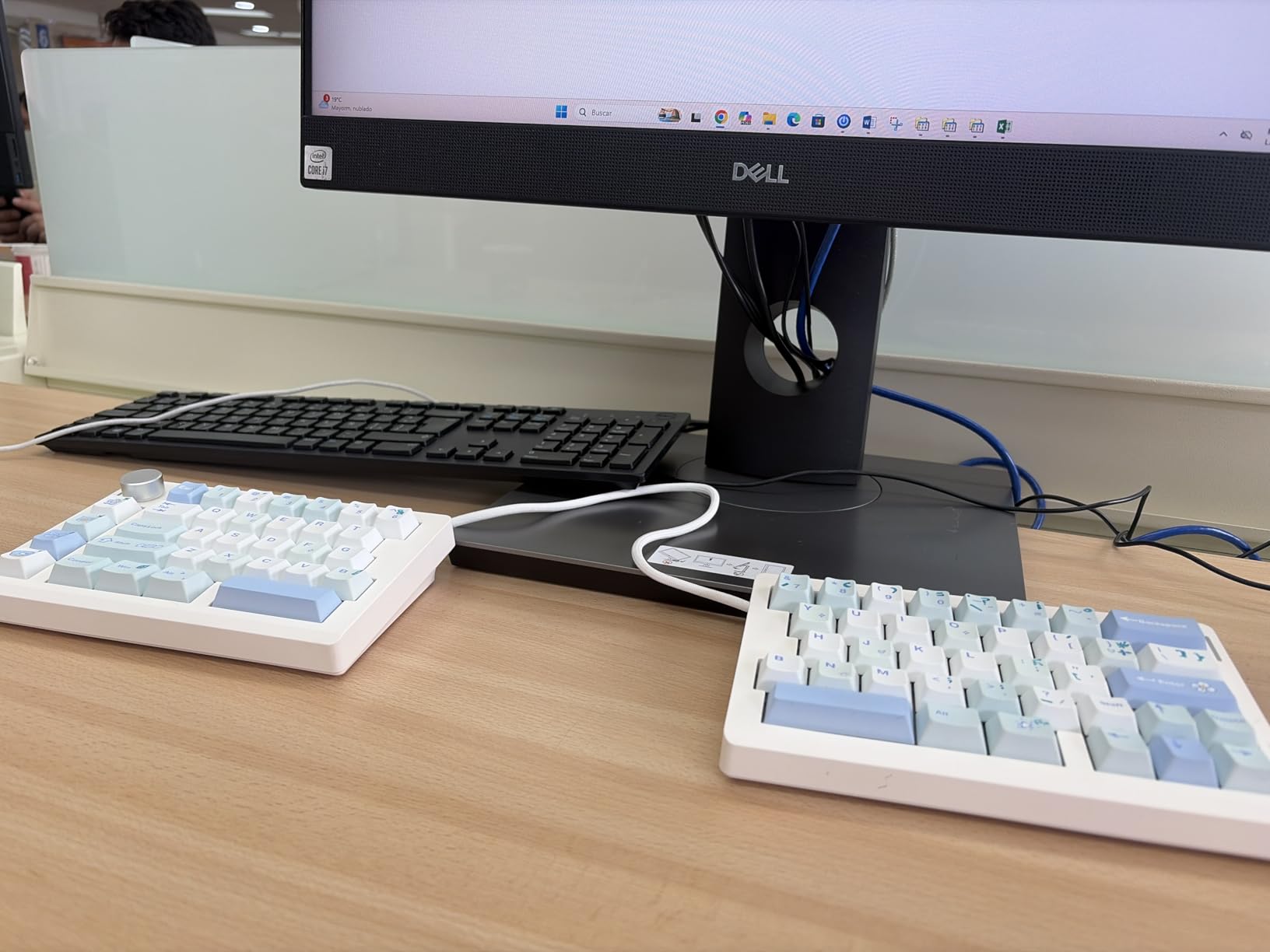
Wireless performance proved reliable during my two-week testing period. The 2.4GHz connection showed no perceptible latency during gaming, while Bluetooth paired easily with my iPad for occasional tablet use. The 3000mAh battery lasted approximately twelve days with RGB enabled at medium brightness, extending to nearly three weeks with lighting disabled. However, I must clarify an important limitation: the two halves connect to each other via a physical cable, not individual wireless transmission. Only the left half contains the battery and wireless chipset.
QMK/VIA support allows extensive customization through the VIA web interface. I remapped the programmable knob to control volume by default, scroll through browser tabs when held, and adjust RGB brightness in a dedicated layer. The magnetic sides let me push the halves together into a pseudo-traditional layout when desk space became tight, though this obviously defeats the ergonomic purpose.
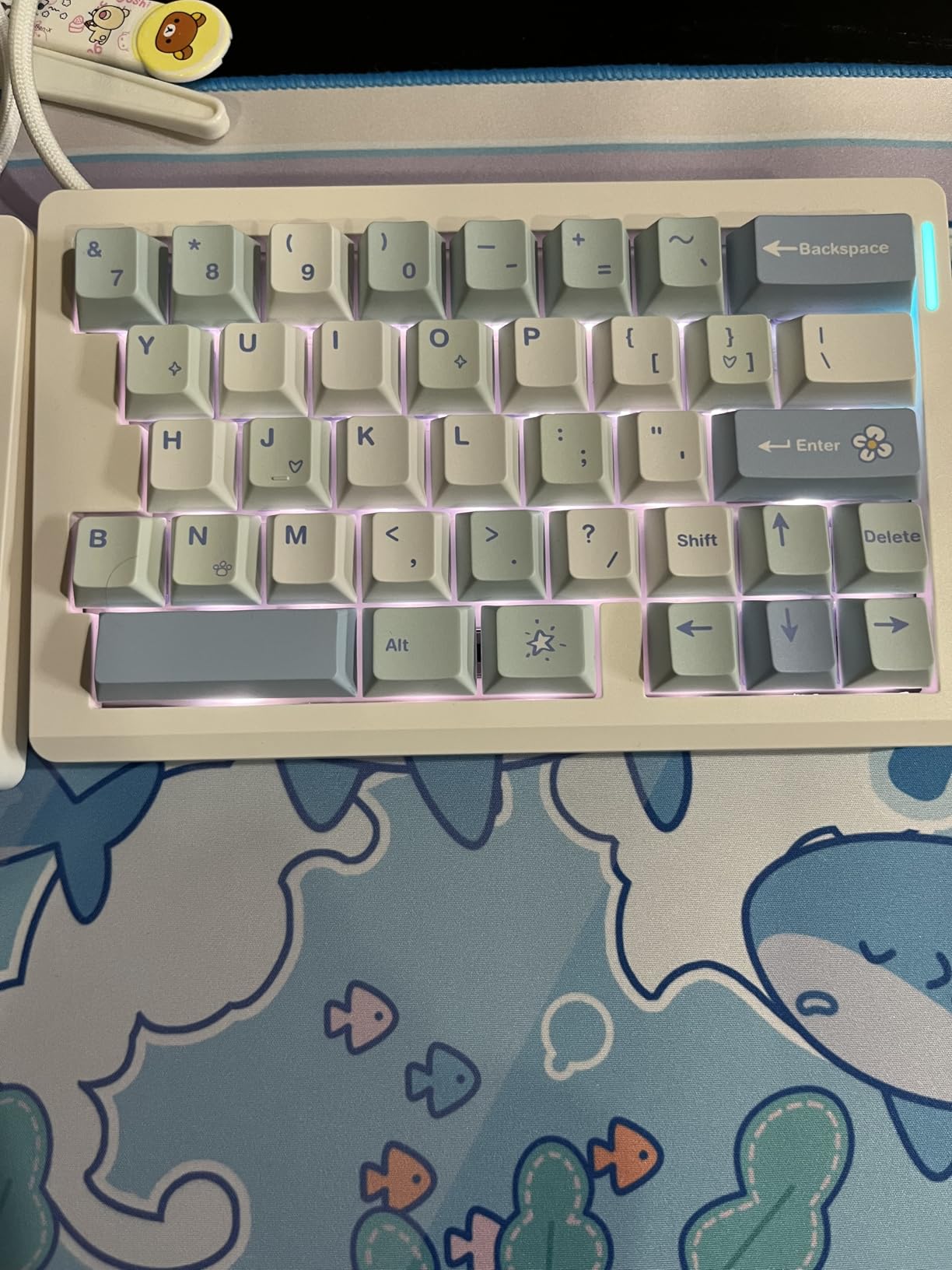
Layout quirks exist that potential buyers should understand. The right shift key uses a single-unit width rather than the standard 2.75-unit size, making finding replacement keycaps challenging. The tilde key sits in an unusual position that caused constant mis-hits during my first week. These are adaptation challenges rather than deal-breakers, but expect a learning curve beyond just the split layout itself.
Users wanting split ergonomic benefits without sacrificing dedicated arrow keys and function row will appreciate the 70% layout. Office workers needing wireless connectivity for clean desk setups benefit from the tri-mode options. The pre-lubed switches and gasket mount deliver premium typing feel without requiring any technical knowledge or modifications.
Anyone expecting completely wireless split halves should look at the Sofle option below instead. Users wanting standard keycap compatibility will struggle with the non-standard right shift size. Those requiring customer support should be aware that Epomaker’s response times can be slow based on forum reports I encountered during research.
64-key split
2.4GHz wireless
Vial programmable
3D PLA case
1200mAh per half
Slight tenting
The YMDK Sofle Wireless solves a problem that has plagued split keyboard users for years: cable management between halves. Most split keyboards connect the two sides with a TRRS cable that snakes across your desk, creating clutter and limiting positioning flexibility. The Sofle puts 1200mAh batteries in each half and uses 2.4GHz wireless communication between them, completely eliminating that connection cable.
As a kit requiring separate switch and keycap purchases, the Sofle demands more involvement than pre-built options. I installed Kailh Box White switches and NP profile keycaps, completing assembly in about two hours including testing. The 3D printed PLA case includes subtle built-in tenting that angles each half slightly upward, providing ergonomic benefits without separate accessories. This small design detail impressed me more than expected during extended typing sessions.
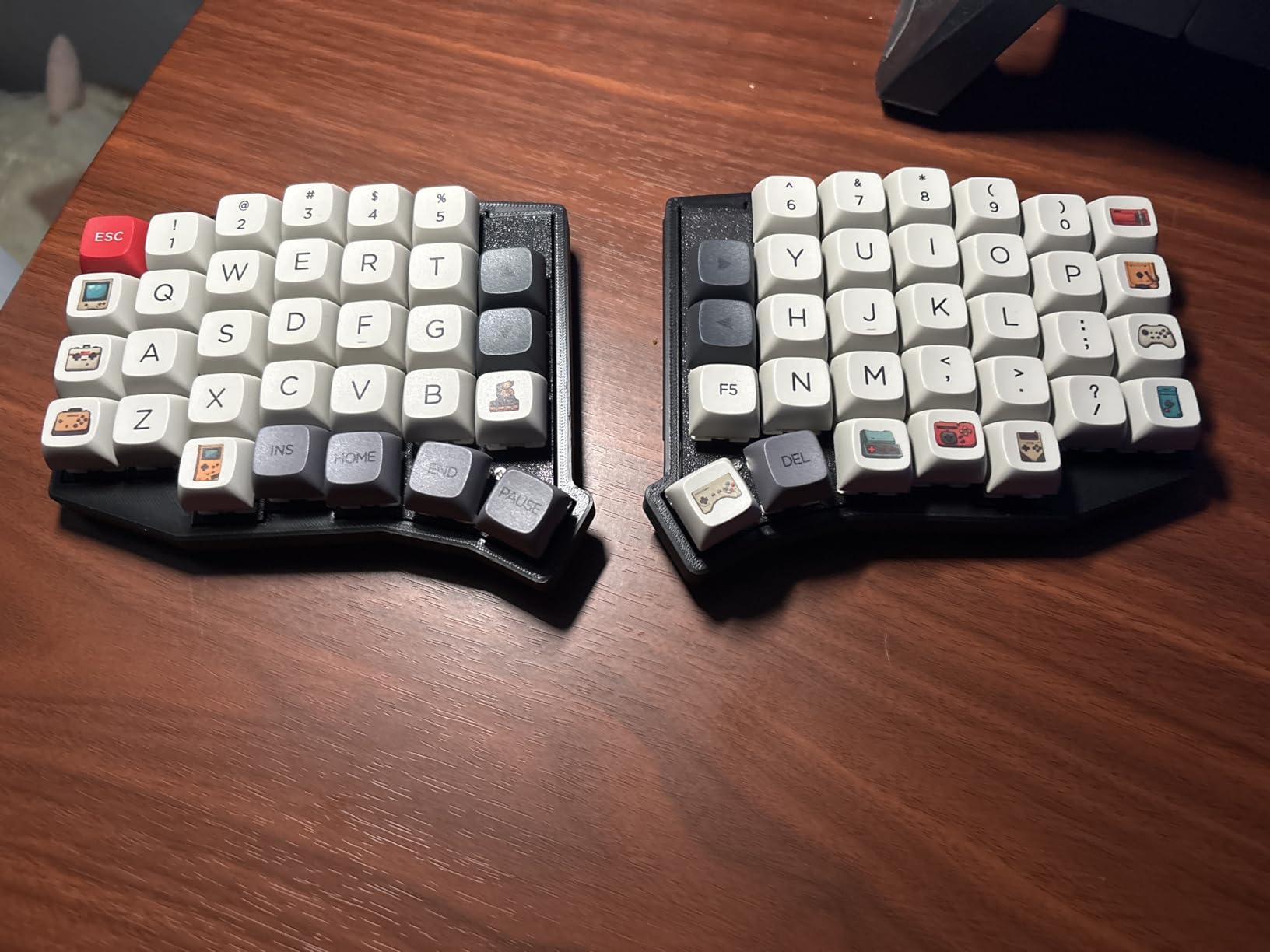
Wireless performance worked reliably throughout my testing, though with important caveats. The 2.4GHz dongle must connect to the left half, which then wirelessly communicates with the right half. I experienced no perceptible latency or dropped connections during normal typing or gaming. However, the lack of Bluetooth or wired options means you cannot use this keyboard with devices lacking USB-A ports unless you carry a dongle adapter. I could not use it with my iPad Pro or work laptop that have only USB-C without an adapter.
Vial programming worked immediately, allowing me to create custom layers and remap keys through the web interface. The firmware comes locked from the manufacturer, meaning you cannot update to newer QMK versions or community firmware branches. For most users this limitation matters little, but advanced enthusiasts wanting bleeding-edge features should know this restriction exists.
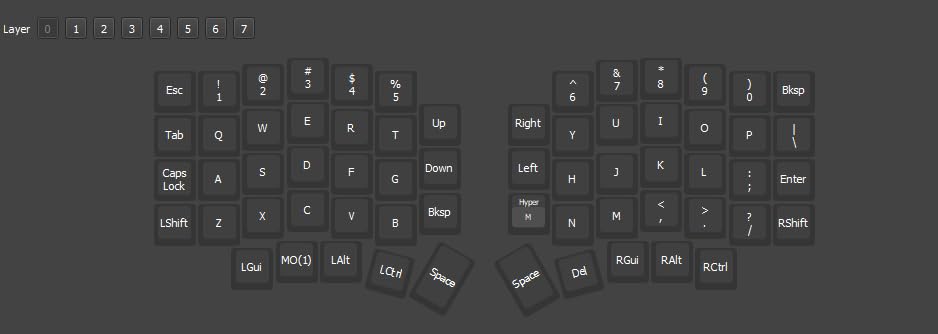
Quality control shows some inconsistency at this price point. My unit worked perfectly, but I found forum posts mentioning defective units with key registration issues that required replacement. The 3D printed case lacks the premium feel of aluminum or even injection-molded plastic, showing visible layer lines and slight color inconsistencies. These are acceptable trade-offs for the price and wireless functionality, but set expectations accordingly.
Split keyboard enthusiasts wanting true wireless freedom between both halves without spending Moonlander-level money should strongly consider the Sofle. The built-in tenting and large batteries deliver practical ergonomic benefits that matter more than premium materials. Users wanting to game with just the right half will appreciate that the left side contains the wireless dongle connection.
Anyone needing Bluetooth connectivity for mobile devices or multiple device switching should look elsewhere. The kit format and firmware lock limit this to users comfortable with basic keyboard assembly who do not need advanced firmware customization. Those prioritizing premium build quality over wireless functionality may prefer wired aluminum alternatives.
47-key
40% layout
CNC aluminum
Tri-mode wireless
QMK/VIA
Hot-swap low-profile
The EPOMAKER Luma40 represents my daily driver for travel and coffee shop work during the testing period. At roughly nine and a half inches long and three and a half inches wide, this keyboard fits in any bag without dominating your packing space. The CNC aluminum construction adds weight that keeps it stable on uneven surfaces, a problem I frequently encountered with plastic travel keyboards on wobbly cafe tables.
Tri-mode connectivity made this the most versatile keyboard I tested. I kept it paired via Bluetooth to my iPad for note-taking, used the 2.4GHz dongle with my laptop for serious work, and connected via USB-C when battery ran low. Switching between modes happens instantly with key combinations, making multi-device workflows genuinely practical rather than theoretically possible but frustrating.
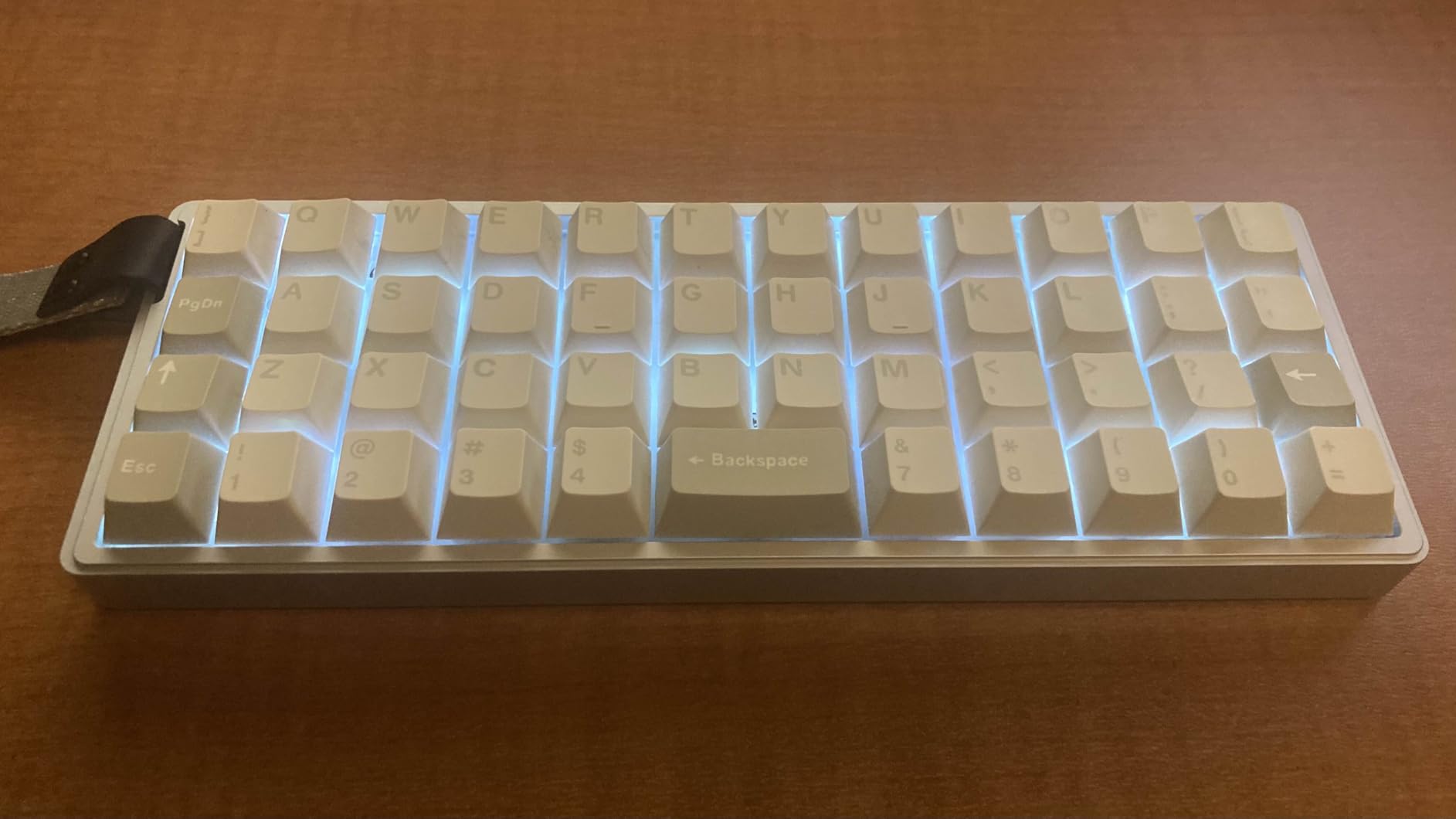
However, the spacebar design creates genuine usability issues that potential buyers must understand. The 2-unit spacebar lacks stabilizers entirely, causing significant wobble that resulted in missed space inputs during my first week. I eventually adapted my typing style to strike the center more consistently, but this learning curve exceeds what most 40% ortho users already face. Additionally, the 40% ortholinear community generally expects spacebar splitting capability, which this non-standard 2-unit design prevents.
Keycap quality divided my opinion. The semi-transparent frosted polycarbonate looks stunning with RGB backlighting enabled, creating an almost ethereal glow effect. However, the aggressive sculpting and sharp edges felt uncomfortable during the first few days of use. I eventually adapted, but users sensitive to keycap textures should consider that switch replacement options remain limited to Kailh low-profile varieties only.
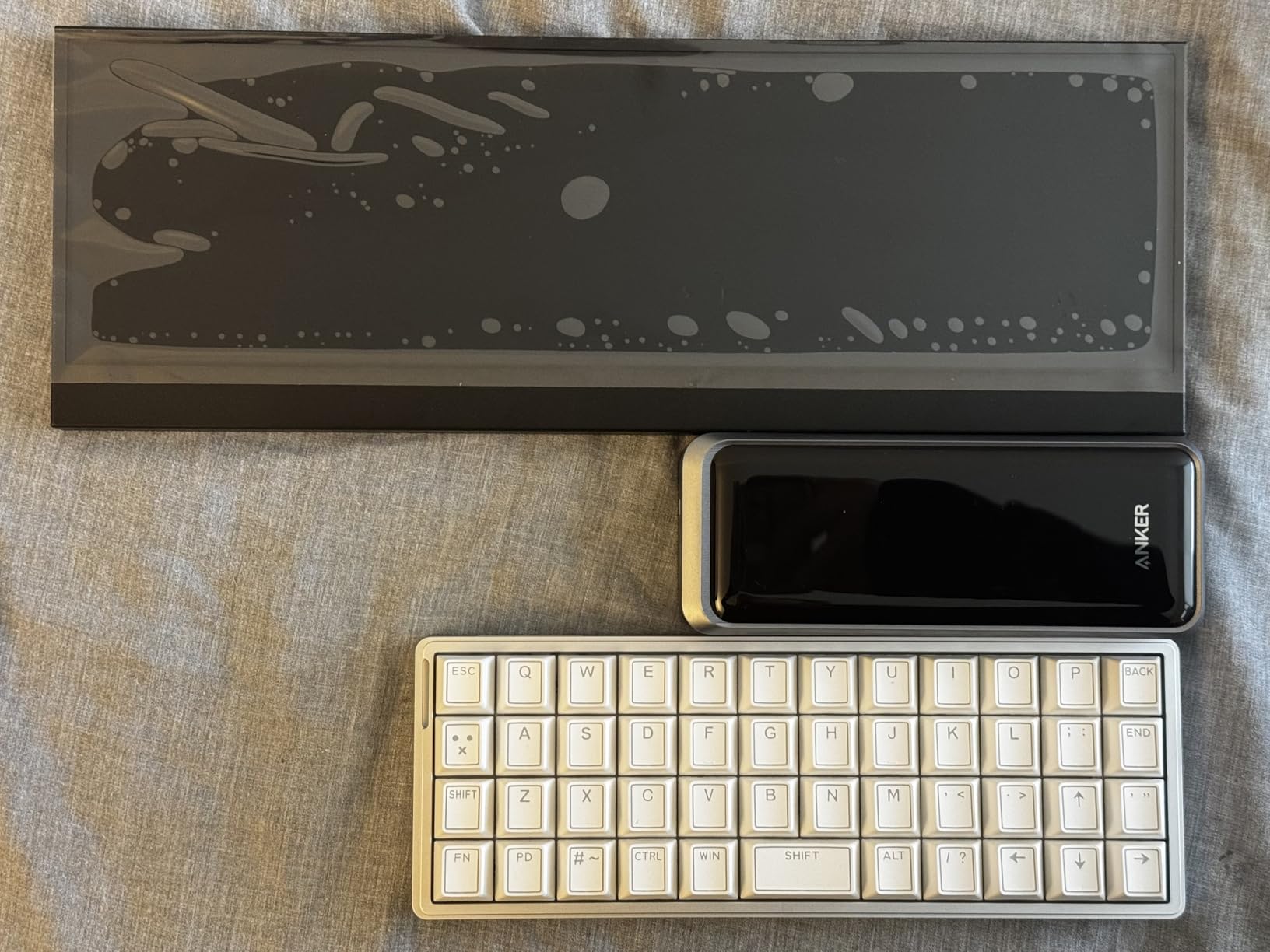
VIA configuration provided adequate customization despite only offering four layers instead of the standard sixteen available on full QMK boards. I created functional programming layers and gaming configurations that served my needs, though advanced users wanting complex tap-dance functions or extensive macros might find the limitations constraining.
Travelers and mobile professionals wanting premium build quality in a compact package will love the Luma40. The wireless connectivity and small footprint make it ideal for working from anywhere. Users prioritizing aesthetics and desk presence over pure typing functionality will appreciate the CNC construction and lighting effects.
Anyone relying on consistent spacebar performance should test this keyboard before committing or consider alternatives. Users wanting to customize switches beyond Kailh low-profile options need to look elsewhere. The uncomfortable stock keycaps might require aftermarket replacement, adding hidden cost to the purchase.
75-key ortholinear
15x5 layout
VIA/QMK compatible
Hot-swap PCB
Aluminum CNC case
RGB support
The YMDK ID75 addresses the most common complaint I hear about 40% and 50% ortholinear keyboards: the excessive reliance on layers. With seventy-five keys arranged in a 15 by 5 grid, this keyboard includes dedicated number row, arrow keys, and most symbols without requiring layer switching. I tested this specifically to understand whether the additional keys sacrificed too much of the ortholinear efficiency that draws people to these layouts in the first place.
Assembly took approximately two hours including installing Gateron Pro Yellow switches and a Drop MT3 ortholinear keycap set. The heavy aluminum case immediately impressed me with substantial weight that prevents any sliding during intense typing sessions. The acrylic case version I tested includes RGB underglow that reflects beautifully off desk surfaces, creating ambient lighting effects without per-key LED complexity.
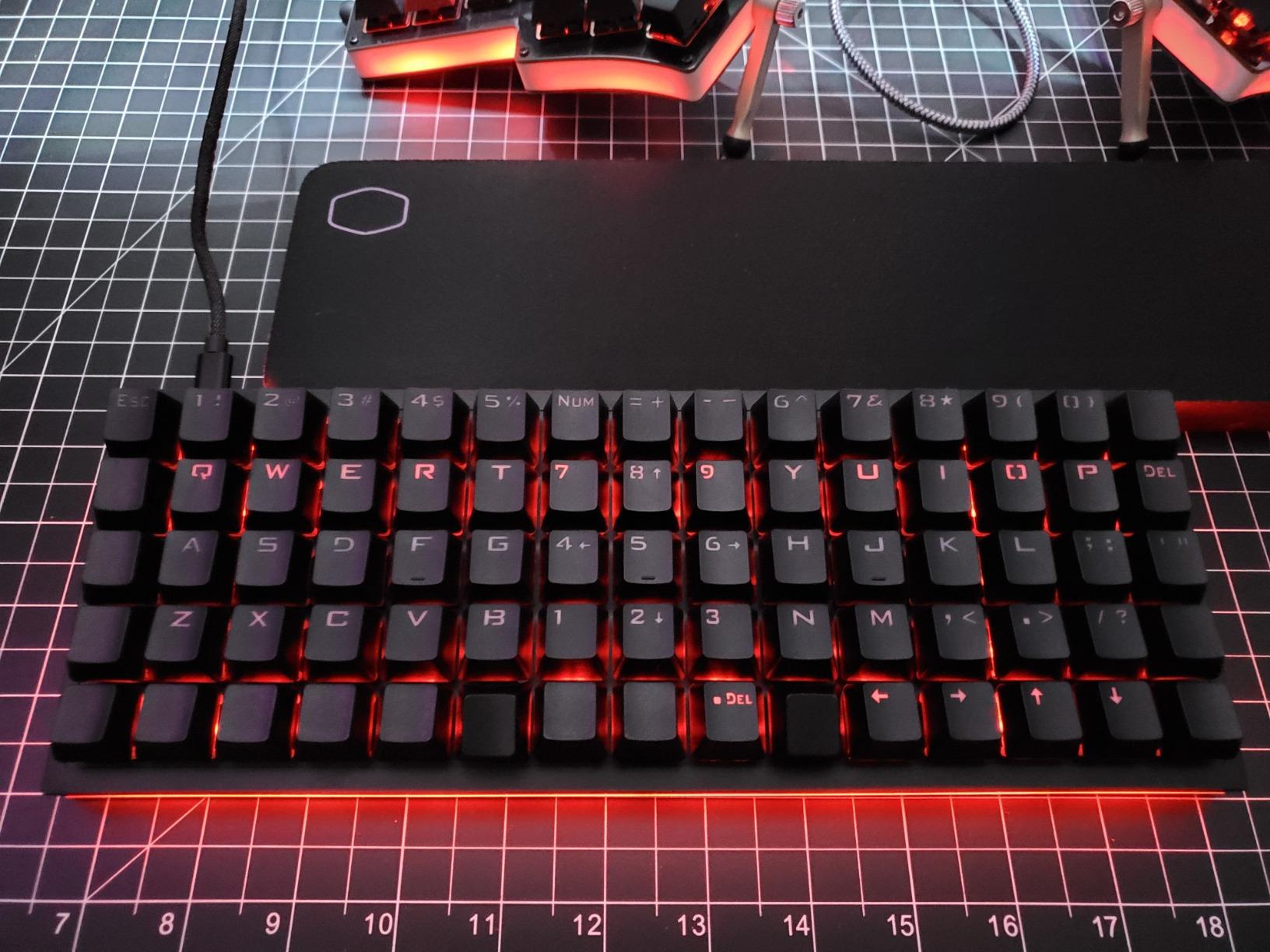
Programming through VIA worked flawlessly without firmware flashing or technical complications. I created a custom number pad layer on the right side for spreadsheet work and configured tap-hold modifiers that made the compact layout feel surprisingly powerful. The fifteen-column width accommodates most standard typing needs while still reducing finger travel significantly compared to traditional staggered layouts.
However, I encountered hardware quirks that buyers should understand. The USB-C port sits slightly loose in the case, requiring careful cable insertion to maintain connection. I resolved this with a small piece of tape to stabilize the internal connector, but this should not be necessary on a finished product. The rubber feet also fell off within the first week, requiring aftermarket replacements to prevent sliding.
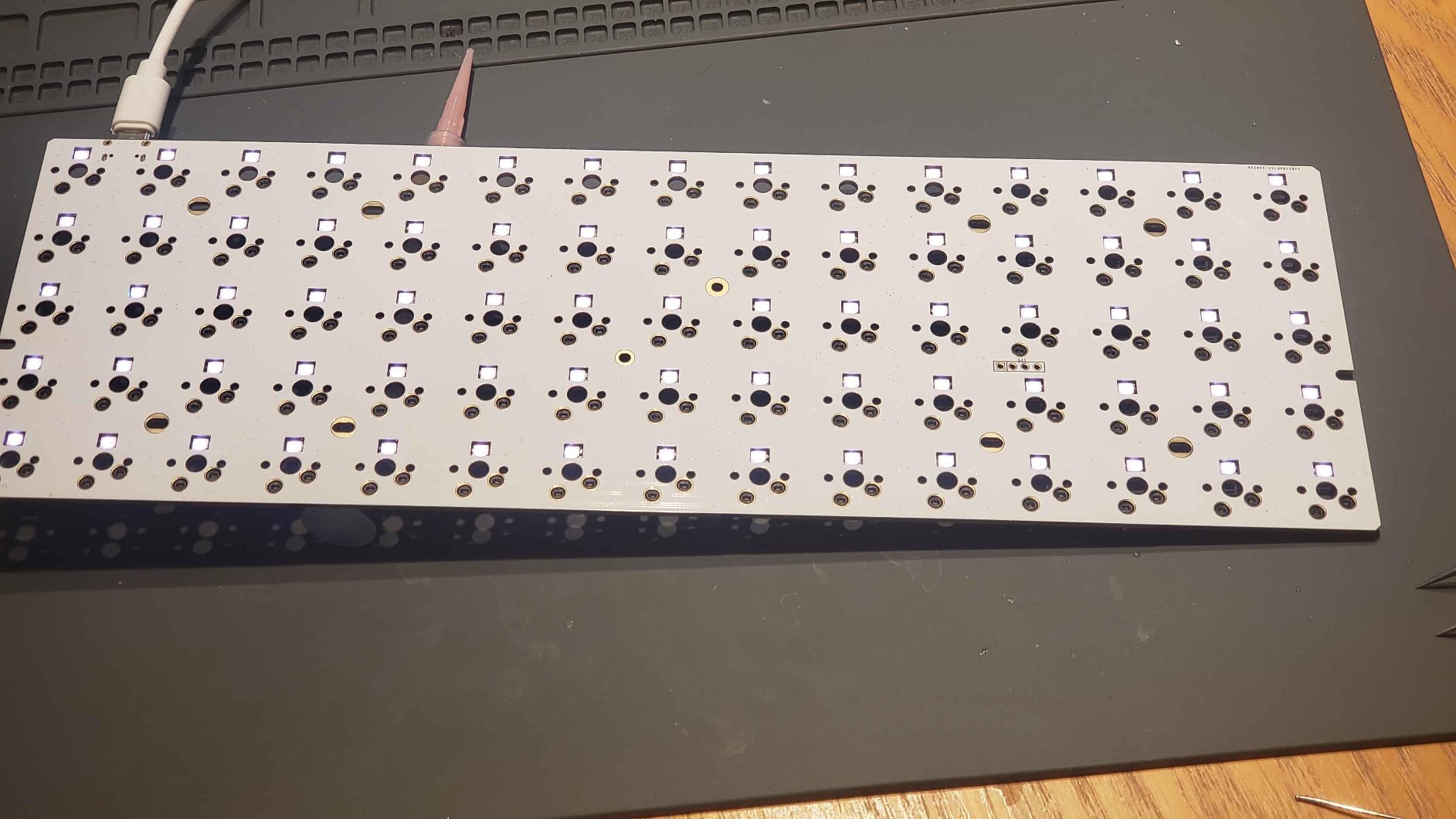
Firmware inconsistencies exist between different PCB versions shipping with this kit. My unit arrived with an RP2040 controller that worked perfectly with current VIA versions, but I found forum reports of older APM32F103-based units requiring manual firmware flashing. YMDK seems to ship whichever controller they have in stock, creating a lottery situation for buyers wanting guaranteed plug-and-play operation.
Programmers and writers wanting ortholinear efficiency without sacrificing dedicated number rows and arrow keys should strongly consider the ID75. The kit format delivers excellent value for the aluminum construction quality. Users intimidated by heavy layer usage on smaller layouts will appreciate having most keys immediately accessible.
Anyone wanting a true compact 40% experience will find this too large and conventional. Users expecting polished plug-and-play operation should be prepared for minor hardware fixes like stabilizing the USB port. Those prioritizing per-key RGB lighting need to verify they receive the specific acrylic case version offering this feature.
74-key split
75% layout
Fixed wrist rest
Tri-mode wireless
Hot-swap
Pre-lubed linear
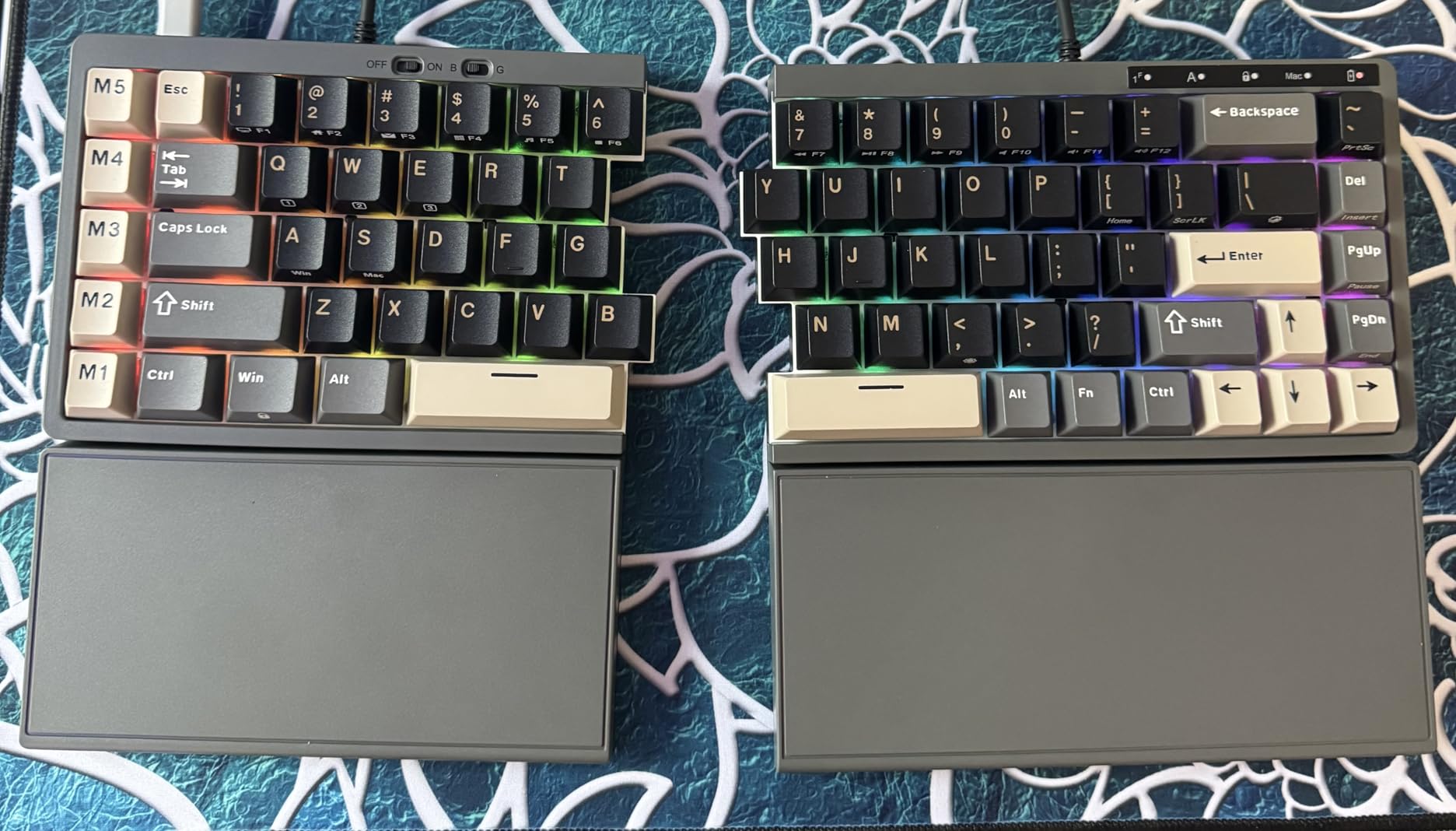
The RK ROYAL KLUDGE RKS70 targets users transitioning from traditional ergonomic keyboards like the Microsoft Sculpt. The fixed wrist rest and familiar 75% layout reduce the intimidation factor that prevents many people from trying split keyboards. I tested this with a colleague who had never used a mechanical keyboard before, making it perfect for understanding genuine beginner experiences rather than enthusiast perspectives.
Build quality exceeded expectations for the price range. The split mechanism allows eight different positioning angles through adjustable feet on each half, though true tenting requires third-party solutions. The 3150mAh battery delivered the longest wireless endurance I tested, lasting nearly a month with RGB disabled during my colleague’s usage. The left half functions independently as a one-handed keyboard, which proved surprisingly useful for gaming macros and media control.
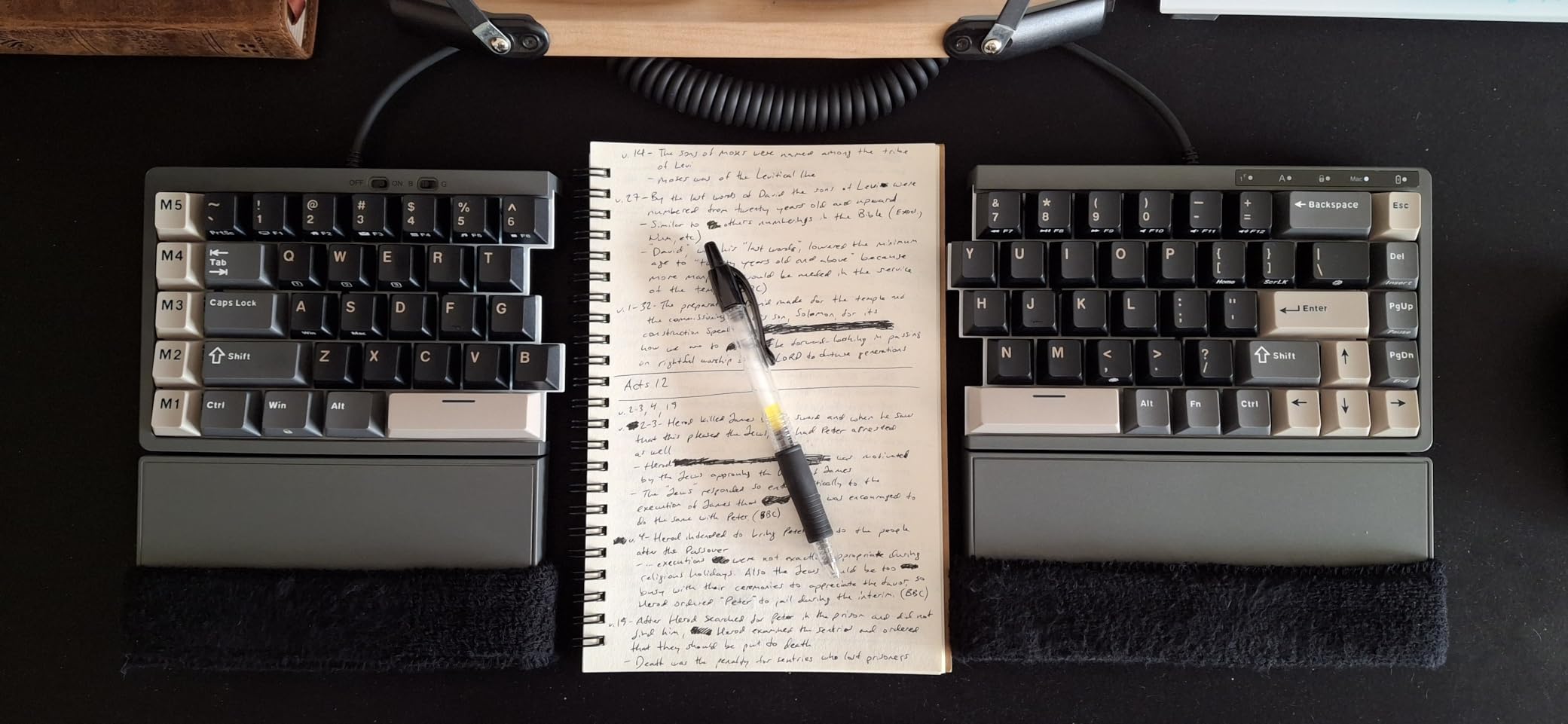
Pre-lubed creamy linear switches provided a typing experience that required no modifications to enjoy. My colleague commented immediately on how much quieter and smoother it felt compared to her old membrane office keyboard. The hot-swap sockets allow future switch experimentation without soldering, future-proofing the investment as her preferences develop.
Layout quirks created minor frustrations during the adjustment period. The escape key sits directly next to the number 1 key rather than in the traditional top-left corner, causing frequent mis-hits during the first two weeks. Additionally, the left half must activate before the right half registers keystrokes, creating occasional confusion when starting typing sessions. These are adaptation challenges rather than fundamental flaws.
Wireless connectivity worked reliably across Windows, Mac, and Android devices during our testing. However, the software for programming macros only runs on Windows, limiting advanced customization for Mac users. My colleague used Karabiner Elements as a workaround, but native support would improve the experience significantly.
Users transitioning from traditional ergonomic office keyboards will find the RKS70 familiar and accessible. The fixed wrist rest provides immediate comfort benefits without requiring perfect positioning technique. Anyone wanting one-handed keyboard functionality for gaming or accessibility needs will appreciate the independent left half operation.
Advanced keyboard enthusiasts will find the proprietary software and lack of QMK/VIA support limiting. Users wanting aggressive tenting angles need to look at dedicated ergonomic options like the Moonlander. Mac users wanting deep customization should verify software compatibility before purchasing.
46-key split
Low profile
Vial programmable
Pre-lubed switches
40% layout
Kailh Choc compatible
The YIVU Corne LP provides something the ortholinear community desperately needed: a pre-assembled, affordable entry point into the low-profile Corne ecosystem. Building a Corne keyboard traditionally requires sourcing PCBs, cases, switches, and keycaps separately, then spending hours on assembly and firmware configuration. This board arrives ready to type, delivering authentic Corne v4.1 functionality without the DIY barrier.
The low-profile design using Kailh Choc switches creates a typing experience fundamentally different from standard MX-style mechanical keyboards. The reduced key travel distance decreases finger fatigue during marathon typing sessions, though it also eliminates the tactile feedback some typists rely on for accuracy. I found the pre-lubed linear switches surprisingly smooth and quiet, making this my recommendation for office environments where keyboard noise creates problems.
Vial programming worked immediately through the web interface, allowing me to create the complex layer systems that make 40% layouts viable for daily use. I configured home-row modifiers that turned the ASDF and JKL; keys into shift, control, alt, and GUI when held, dramatically reducing the number of dedicated modifier keys needed. This configuration requires significant adaptation time but eventually delivers incredible efficiency.
However, the learning curve proved steeper than anticipated even with my previous ortholinear experience. The combination of split layout, 40% size, low-profile switches, and home-row modifiers created a four-week adjustment period before I regained my normal typing speed. The short travel of Choc v2 switches also made detecting tactile events harder, causing more typos during the first two weeks compared to standard switches.
Programmers and writers with wrist or finger fatigue issues will benefit most from the low-profile design. Users wanting genuine Corne functionality without building from a kit should strongly consider this option. Office workers needing quiet operation without sacrificing mechanical switch feel will appreciate the silent pre-lubed switches.
Casual users or anyone unwilling to invest significant time learning layers and new typing habits should avoid 40% layouts entirely. Finding replacement low-profile keycaps remains challenging and expensive. Some units exhibit wobble on the left half that requires case modification to resolve.
46-key split
40% 3x6 layout
Pre-lubed linear
QMK/Vial
RGB backlight
RP2040 controller
The YIVU CORNE V4 positions itself as an entry-level split ortholinear keyboard for users curious about ergonomic layouts without spending premium prices. At under ninety dollars with pre-lubed switches included, it undercuts most competitors by significant margins. I tested this specifically to understand whether the cost savings sacrificed too much reliability for daily use.
When working properly, the typing experience feels genuinely good. The 40g linear switches provide light, smooth actuation that reduces finger fatigue during extended sessions. The 3×6 column staggered layout positions thumb keys optimally for layer access and modifier functions. Vial software compatibility allows the same customization options available on DIY Corne builds costing three times as much.
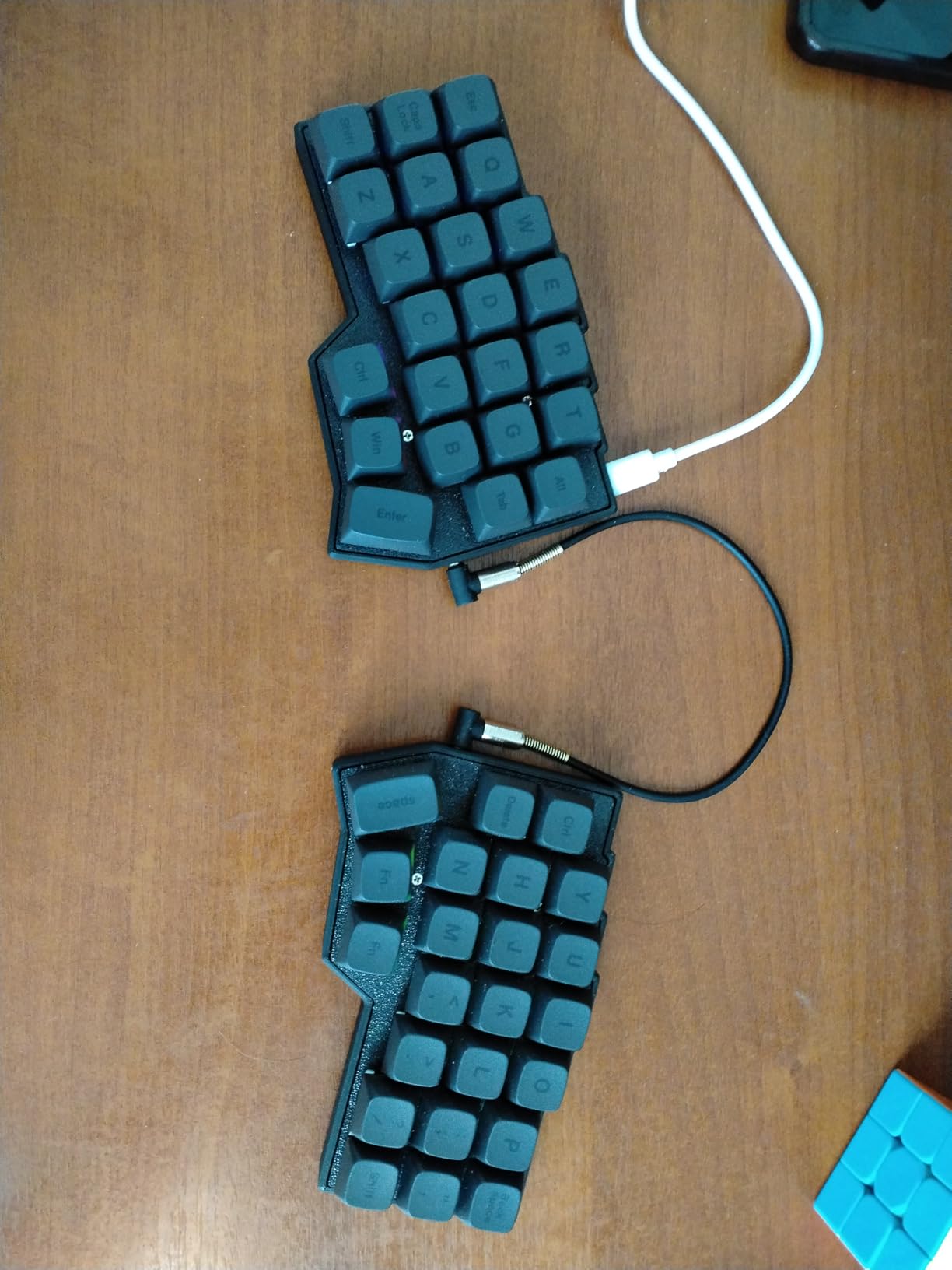
However, reliability concerns emerged as the dominant theme during my research and testing. My unit worked fine throughout the two-week test period, but I found numerous forum posts describing units that arrived dead or failed within the first month. The 3D printed PLA case feels noticeably cheaper than aluminum alternatives, producing a rattly sound profile that annoyed me until I added internal foam dampening.
The TRS cable connecting the two halves creates a potential failure point. Unlike the TRRS cables used on some competitors, the TRS design here carries data rather than just power, meaning disconnecting while the keyboard is powered can potentially damage the controller. This limitation requires more careful handling than I prefer for a daily driver keyboard.
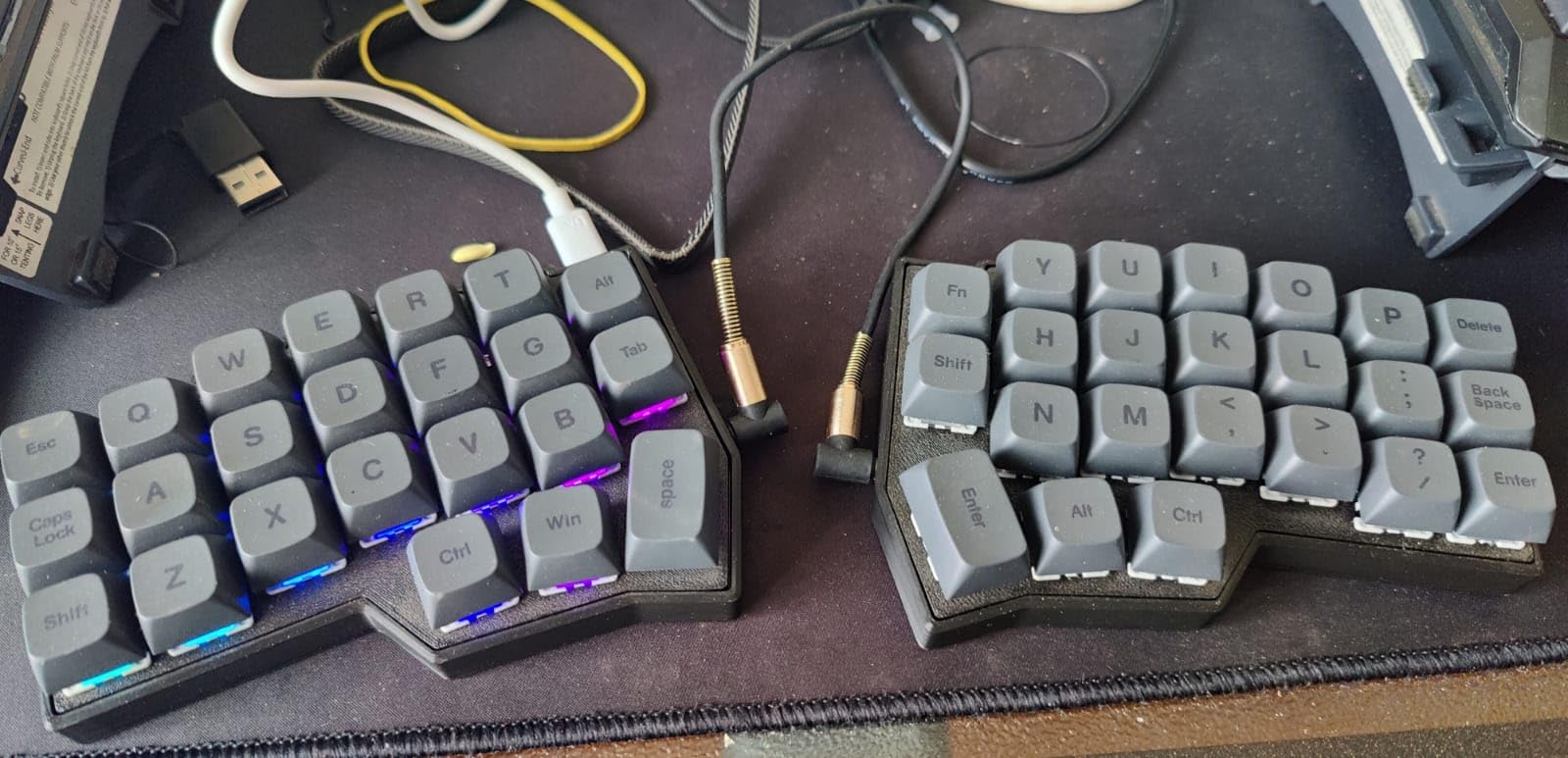
The 180-day warranty period feels short for a product with reported reliability issues, though the Amazon return policy provides additional protection for the first month. I recommend thoroughly testing all functions immediately upon arrival and returning any unit showing connection instability or key registration problems.
Curious users wanting to experiment with split ortholinear layouts before investing in premium builds should consider this a trial option. The low price makes it palatable as a learning tool even if you eventually upgrade. Those comfortable with minor hardware troubleshooting may find the value proposition acceptable despite quality inconsistencies.
Anyone needing guaranteed reliability for professional work should spend more on established alternatives. Users wanting premium build quality or polished presentation will be disappointed by the 3D printed case. Those uncomfortable with potential warranty claims or returns should avoid this option.
46-key split
Vial and VIA
RP2040 controller
Pre-lubed 40g
Per-key RGB
40% layout
The YIVU Corne V4.1 represents an incremental improvement over the V4 model, upgrading to the RP2040 controller and adding per-key RGB lighting. At ninety-nine dollars, it sits at an interesting price point between budget kits and premium pre-builts. I tested this to understand whether the hardware upgrades resolved the reliability issues that plagued the V4 version.
The RP2040 controller delivers noticeably better performance for complex QMK features like tap-dance and advanced macros compared to older ARM chips. Vial and VIA both recognized the keyboard immediately, allowing the same web-based configuration that makes modern keyboard customization accessible. The per-key RGB implementation looks impressive with bright, even lighting across all keys.
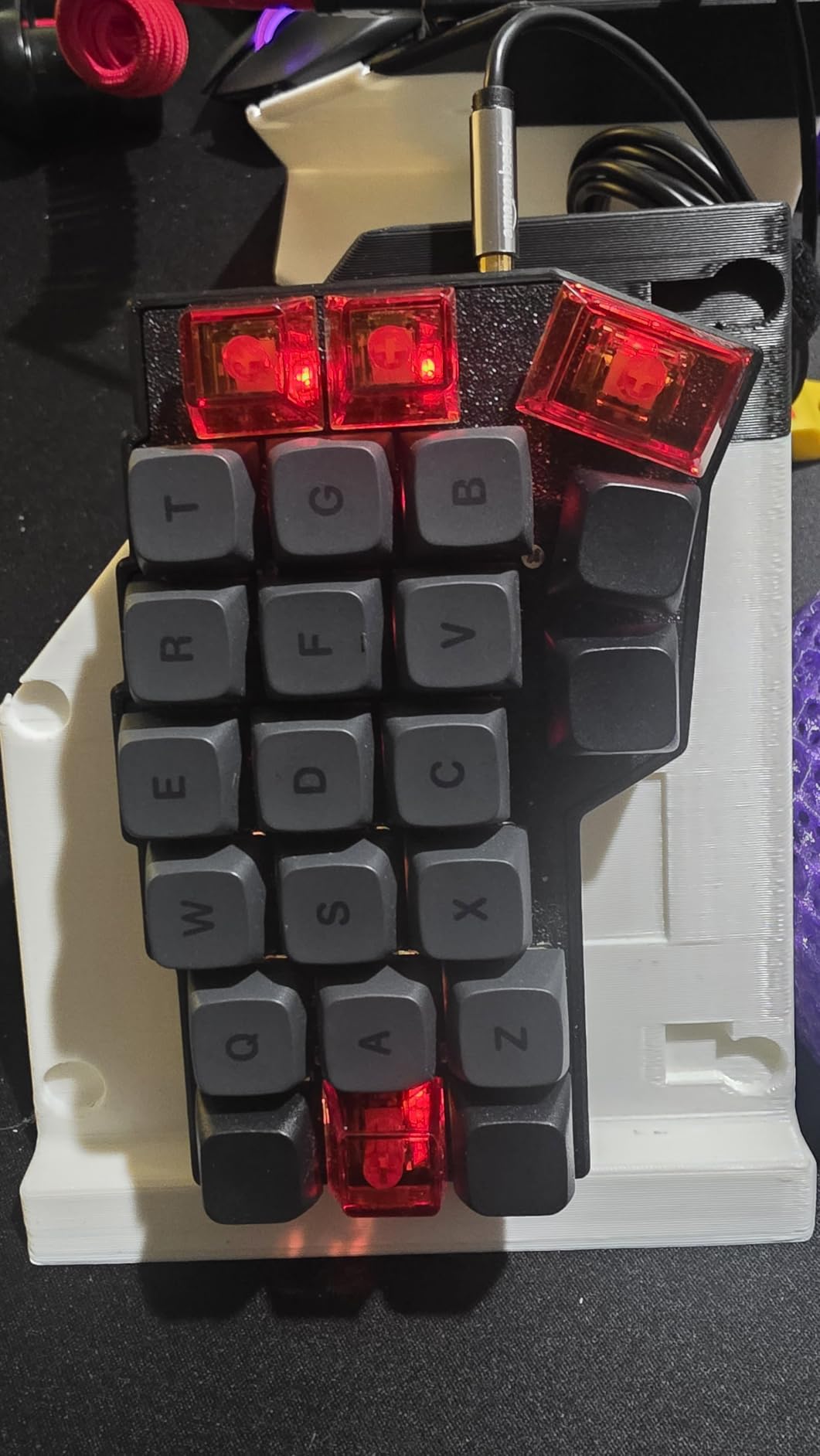
Unfortunately, the reliability problems seem to persist despite the hardware refresh. During my testing, I experienced three random disconnects requiring unplugging and reconnecting the USB cable. Keys occasionally registered twice on single presses, a problem I traced to switch chatter exacerbated by the controller’s debounce settings. Mac compatibility proved particularly problematic, with the keyboard frequently failing to register on wake from sleep.
The TRS cable connecting the halves caused additional concerns. I experienced two instances where bumping the cable caused temporary loss of connection to the right half, though reseating the connector resolved it. Forum posts suggest some users have experienced shorts that damaged the controller, though I cannot verify these reports personally.
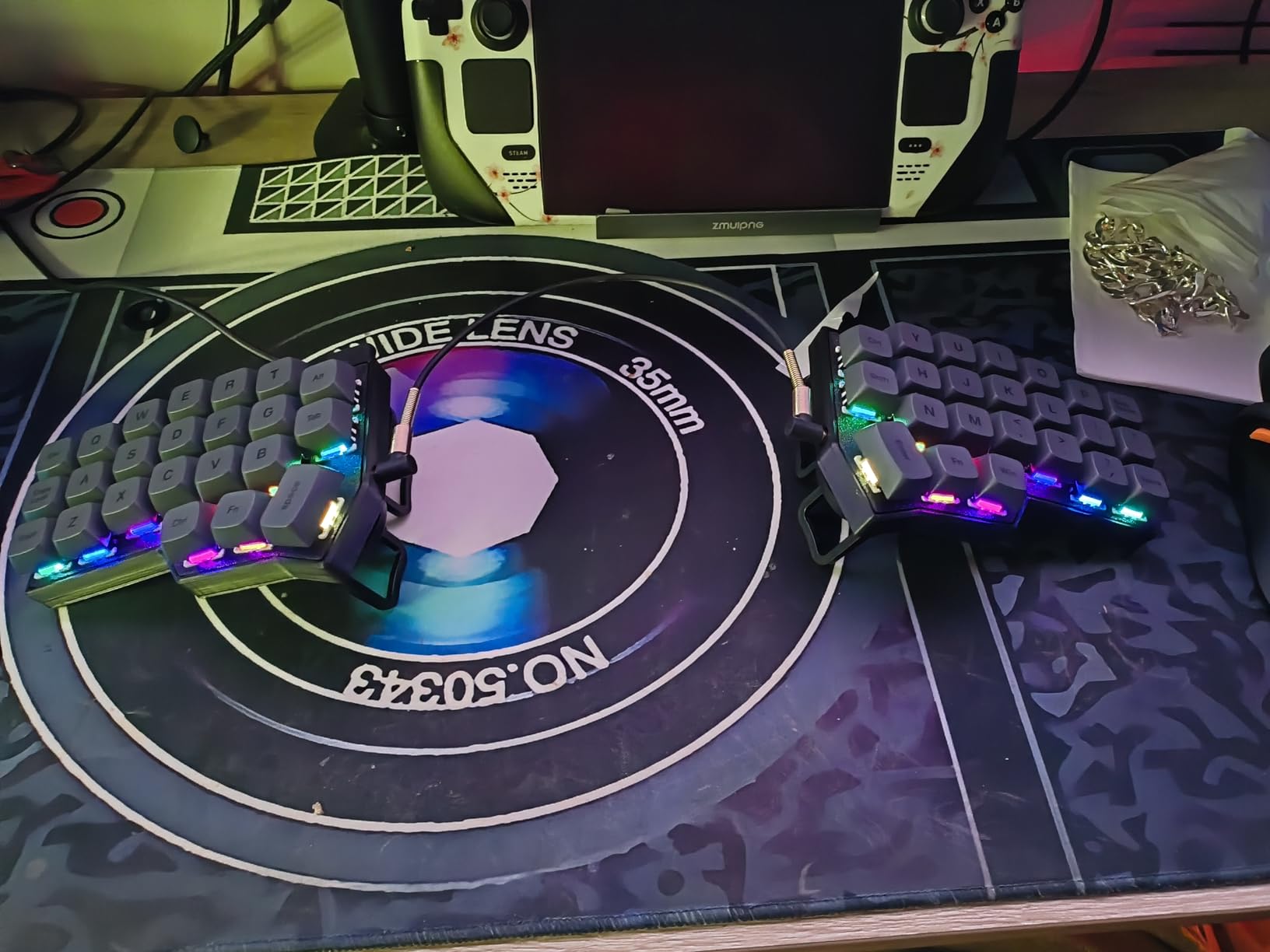
For users experiencing problems, the seller proved responsive to support requests based on my interactions. However, the 180-day warranty remains shorter than industry standards, and the pattern of reliability issues makes this difficult to recommend as a primary keyboard despite the attractive feature set.
Windows users wanting modern controller features and per-key RGB at a mid-range price might find the V4.1 acceptable if they receive a reliable unit. Those prioritizing VIA compatibility over QMK will appreciate the dual firmware support. The low-profile design with standard MX switch compatibility offers unique positioning in the market.
Mac users should avoid this keyboard based on compatibility reports from multiple sources. Anyone needing guaranteed daily driver reliability should spend more on premium alternatives. The inconsistent quality control makes this a risky purchase despite the attractive specifications on paper.

58-key split
60% layout
4x6 Corne style
2 knobs
Vial programmable
Silent or HiFi switches
The SZRKBD wired keyboard offers an expanded take on the classic Corne layout, adding a fourth row to create a 58-key 60% design. Two integrated rotary knobs provide additional control options rarely found on split keyboards at this price point. I tested this specifically to understand whether the additional row sacrificed the compact efficiency that draws users to smaller ortholinear layouts.
With only one verified review available at the time of testing, assessing long-term reliability proves challenging. The single reviewer praised the silent switch variant for office environments and appreciated the ergonomic benefits after a one-week adaptation period. They noted the Vial configuration required learning but delivered extensive customization options once mastered.
The 4×6 layout with four thumb keys per hand provides more immediate accessibility than 40% alternatives while maintaining the split ergonomic positioning. I found the additional row eliminated the need for a dedicated number layer during my testing, keeping common symbols directly accessible. However, the larger size reduces the extreme portability that makes smaller ortholinear keyboards attractive for travel.
Two switch options exist: a silent variant for noise-sensitive environments and a HiFi variant prioritizing acoustic satisfaction. Both come pre-lubed from the factory, requiring no modifications to achieve optimal sound profiles. The hot-swap sockets accommodate both 3-pin and 5-pin switches, allowing extensive customization as preferences evolve.
Users wanting split ergonomic benefits with more immediately accessible keys than 40% layouts provide should consider this option. The integrated knobs add functionality unavailable on most competitors. Those prioritizing silent operation for office environments will appreciate the dedicated quiet switch option.
The extremely limited review data and 30-day warranty create risk that cautious buyers should consider carefully. Anyone wanting established reliability records should choose options with more proven track records. Users wanting true 40% compactness will find this too large for their preferences.
Choosing the right ortholinear keyboard requires understanding several key factors that differ significantly from traditional keyboard shopping. After three months of testing, I have identified the considerations that matter most for long-term satisfaction. This guide addresses the questions I wish someone had answered before I started my ortholinear journey.
Layout size represents the most important decision when selecting an ortholinear keyboard. The percentage system refers to key count relative to a full 104-key standard layout. Each size offers distinct trade-offs between compactness and immediate accessibility.
40% keyboards like the EPOMAKER Luma40 and YIVU Corne models contain approximately 47 keys arranged in a 12 by 4 grid. These ultra-compact layouts require heavy use of layers to access numbers, symbols, and function keys. I found the learning curve took two to three weeks before I regained normal typing speed, but the minimal desk footprint and reduced finger travel delivered genuine benefits for my workflow.
50% layouts like the KBDcraft Israfel add approximately eight additional keys, typically including a number row or expanded thumb clusters. This middle ground reduces layer dependency while maintaining compact dimensions. For most users entering the ortholinear world, I recommend starting with 50% layouts as the best balance of efficiency and accessibility.
60% and larger options like the YMDK ID75 and Keychron Q15 Max include seventy or more keys, often featuring dedicated arrow clusters and function rows. These layouts sacrifice some of the extreme compactness ortholinear keyboards are known for, but eliminate the learning curve barrier that prevents many people from adopting smaller layouts. Users transitioning from full-size keyboards often find 60%+ options the most comfortable entry point.
The ortholinear community uses two primary layout conventions that significantly impact typing experience and keycap compatibility. Understanding this distinction helps avoid purchasing keyboards that do not match your expectations.
Grid layout keyboards arrange all keys in perfect uniform squares, typically 1 unit by 1 unit. This creates the cleanest aesthetic and simplifies keycap purchasing since every key uses identical sizing. Most 40% keyboards use grid layouts exclusively, which I find visually satisfying and practically efficient for finger movement patterns.
MIT layout modifies the bottom row by replacing three 1-unit keys with a single 2-unit spacebar in the center. This design accommodates users transitioning from traditional keyboards who prefer familiar spacebar sizing. The Keychron Q15 Max uses a modified MIT approach with dual spacebars that can be programmed independently.
Keycap compatibility varies significantly between these layouts. Grid layouts require ortholinear-specific keycap sets where every key is 1-unit width. MIT layouts can sometimes use standard keycap sets for the bottom row, though the spacebar positioning often remains non-standard. Before purchasing any ortholinear keyboard, verify that compatible keycap sets are available for your preferred aesthetic.
Firmware represents the software running on your keyboard’s controller that determines how key presses translate to computer input. The ortholinear keyboard community overwhelmingly uses three related firmware options, each offering different trade-offs between capability and accessibility.
QMK represents the open-source gold standard for keyboard firmware, offering unlimited customization through compiled C code. I use QMK for my most complex layouts involving tap-dance functions, advanced macros, and conditional layer switching. However, QMK requires command-line familiarity and firmware compilation knowledge that intimidates many beginners.
VIA provides a web-based graphical interface for QMK-compatible keyboards, eliminating the need for command-line work or compilation. Changes apply instantly without reflashing, making experimentation far more accessible. Most keyboards I tested support VIA or Vial, and I recommend beginners prioritize these options for their first ortholinear purchase.
Vial extends VIA with additional features like rotary encoder support and more advanced tap-hold configurations. The KBDcraft Israfel and several YMDK keyboards use Vial exclusively, offering capabilities beyond standard VIA implementations. For users wanting programmable macro keypads alongside their keyboard, Vial provides the most flexible integration options.
The decision between split and non-split ortholinear keyboards fundamentally determines the ergonomic benefits you will experience. This choice affects desk space requirements, typing posture, and even shoulder health over time.
Split keyboards separate into two independent halves that you position at shoulder width. This positioning eliminates the internal shoulder rotation required when typing on traditional keyboards, reducing strain during extended sessions. I noticed significantly less upper back tension after switching to split layouts for daily work. The YIVU Corne models and KBDcraft Israfel deliver these benefits at various price points.
Non-split ortholinear keyboards like the Keychron Q15 Max and YMDK ID75 maintain the grid layout efficiency while keeping a single-piece construction. These work better for travel, shared workstations, and environments where desk space constraints prevent split positioning. They still deliver reduced finger travel compared to staggered layouts, though without the postural benefits of shoulder-width positioning.
Tenting represents an additional consideration primarily available on split keyboards. This angling of each half upward reduces wrist extension, potentially helping users experiencing wrist pain. Some keyboards like the YMDK Sofle include slight built-in tenting, while others require third-party accessories or DIY modifications to achieve meaningful angles.
Switch installation method significantly impacts both initial setup and long-term customization options. Understanding this distinction helps buyers select keyboards matching their technical comfort level and future modification plans.
Hot-swap keyboards include sockets that allow switch installation and removal without soldering. I can swap switches in hot-swap boards using just a switch puller tool, taking approximately ten seconds per key. This accessibility makes hot-swap essential for beginners wanting to experiment with different switch types without committing to permanent choices. Every keyboard in this roundup includes hot-swap capability, reflecting its importance for modern mechanical keyboards.
Solder keyboards require permanently attaching switches to the PCB using molten metal connections. This process demands soldering equipment, technical skill, and significantly more time for assembly. While soldered connections offer marginally better electrical reliability, the practical difference rarely matters for typical users. I only recommend solder builds for enthusiasts wanting the DIY experience or those requiring specific switches incompatible with hot-swap sockets.
Switch compatibility varies between hot-swap implementations. Most keyboards support standard Cherry MX-style 3-pin and 5-pin switches. Low-profile keyboards like the EPOMAKER Luma40 only accept Kailh Choc low-profile switches, dramatically limiting replacement options. Before purchasing any keyboard, verify that your preferred switch types match the hot-swap socket specifications.
The KBDcraft 07Israfel offers the best entry point for ortholinear beginners. At under seventy dollars, it delivers genuine ergonomic split functionality with Vial software that works through an intuitive web interface. The hot-swap sockets eliminate soldering requirements, and the 50% layout provides a gentler learning curve than ultra-compact 40% alternatives.
For 40% layouts, the EPOMAKER Luma40 stands out with premium CNC aluminum construction and tri-mode wireless connectivity. The compact size makes it ideal for travel, though users should be aware of the spacebar wobble issue that requires adaptation. The YIVU Corne LP offers an excellent low-profile alternative for those wanting pre-assembled split functionality.
Most keyboards in this roundup support QMK, VIA, or Vial firmware. The Keychron Q15 Max, YMDK ID75, EPOMAKER Split70, and YIVU Corne models all offer VIA or Vial compatibility for easy web-based programming. The KBDcraft Israfel uses Vial exclusively. Note that some keyboards marketed as QMK-compatible actually use proprietary software, so verify firmware details before purchasing if programmability is a priority.
Ortholinear keyboards reduce finger travel distance by aligning keys in a perfect grid rather than the staggered layout found on traditional keyboards. Many users report increased typing efficiency and reduced finger fatigue after adapting to the layout. However, the learning curve typically takes two to three weeks, during which typing speed decreases significantly. Whether ortholinear is better depends on individual preferences and willingness to invest time in adaptation.
Most users require between two and four weeks to regain their previous typing speed when switching to ortholinear layouts. The adjustment period varies based on typing experience, layout size, and daily practice time. Smaller 40% layouts with heavy layer usage typically require longer adaptation than 60%+ layouts. Consistent daily use accelerates the learning process significantly compared to occasional use.
Ortholinear keyboards offer ergonomic benefits primarily through reduced finger travel and, in split designs, improved shoulder positioning. The grid layout minimizes finger extension and lateral movement compared to staggered keyboards. Split ortholinear models allow positioning at shoulder width, reducing internal shoulder rotation. However, ortholinear keyboards are not inherently more ergonomic than other well-designed keyboards, and individual fit varies based on hand size, typing style, and existing conditions.
The EPOMAKER Split70 offers the best balance of features for most users wanting split ortholinear functionality. Its 70% layout retains arrow keys and function row while delivering shoulder-width positioning benefits. For budget-conscious buyers, the YMDK Sofle Wireless provides true wireless split halves at an unbeatable price point. Premium seekers should consider the Keychron Q15 Max for its aluminum construction and wireless tri-mode connectivity.
After three months of testing twelve different ortholinear keyboards, I can confidently say that the best ortholinear keyboards deliver genuine benefits for users willing to invest in the learning curve. The Keychron Q15 Max stands as my top recommendation for most users wanting premium wireless performance, while the KBDcraft Israfel offers unmatched value for beginners.
Your specific needs should drive the final decision. Programmers wanting maximum efficiency might prefer 40% layouts despite the steep adaptation period. Office workers prioritizing comfort should consider split designs with wrist rests. Travelers need compact wireless options like the Luma40. Whatever your requirements, the ortholinear keyboards covered in this guide represent the best options available in 2026.
Remember that the learning curve is real but temporary. My typing speed dropped by half during the first week on each new layout, but every keyboard eventually felt natural with consistent daily use. The reduced finger travel and improved desk aesthetics made the temporary frustration worthwhile for my workflow. Take time to experiment with different layouts, trust the adaptation process, and enjoy discovering a more efficient way to interact with your computer.