
Nothing kills the RV adventure vibe faster than staring at “No Service” on your phone when you need to make an important call, check work emails, or even just stream a movie during a peaceful evening of boondocking. After spending months testing the best RV cell phone signal boosters across different terrains and signal conditions, I can tell you that the right booster transforms your connectivity experience – but only if you choose the right one for your specific needs.
The best RV cell phone signal boosters amplify weak cellular signals to provide reliable voice and data connectivity in remote locations. These devices work by capturing faint signals through an external antenna, boosting them through an amplifier unit, and rebroadcasting the enhanced signal inside your RV. However, it’s critical to understand that boosters cannot create signal where none exists – they need at least one bar of outside signal to amplify.
In this comprehensive guide, I’ll review the top 8 RV cell phone signal boosters based on real-world performance, build quality, ease of installation, and value for money. Whether you’re a weekend camper, full-time RVer, or overland adventurer, I’ll help you find the right solution for staying connected on the open road in 2026.
How RV Cell Phone Signal Boosters Work
RV cell phone signal boosters operate on a simple three-component system: an outside antenna that captures weak cellular signals, a signal booster unit that amplifies those signals, and an inside antenna that rebroadcasts the enhanced signal within your RV. The outside antenna should always be mounted as high as possible with a clear line of sight to the nearest cell tower for optimal performance.
The amplification power is measured in decibels (dB), with most RV boosters offering up to 50dB of gain – enough to transform a weak one-bar signal into a solid three to four bars throughout your vehicle. FCC regulations limit boosters to specific maximum power outputs to prevent interference with cellular networks, which is why all legitimate boosters must be FCC certified.
It’s important to understand that signal boosters cannot work in complete dead zones. If you have absolutely zero signal outside your RV, no booster can help. The magic threshold is typically at least one bar of signal outside, which the booster can then amplify to provide usable coverage indoors. Terrain, weather, and distance from cell towers all affect the baseline signal you’ll have to work with.
Top 3 RV Cell Phone Signal Boosters in 2026

weBoost Drive Reach RV II
- Most powerful mobile RV booster
- Up to 50dB gain
- Supports all US carriers
- Works while driving

weBoost Destination RV
- Strongest stationary booster
- 25ft collapsible pole
- 10-minute setup
- Directional antenna
HiBoost Travel 3.0 RV Max
- Excellent performance value
- 180 degree folding mount
- 3-year warranty
- AC/DC power options
Best RV Cell Phone Signal Boosters in 2026
| Product | Specs | Action |
|---|---|---|
|
weBoost Drive Reach RV II
|
|
Check Latest Price |
|
weBoost Destination RV
|
|
Check Latest Price |
 weBoost Drive X RV
|
|
Check Latest Price |
|
|
|
Check Latest Price |
 HiBoost Travel 2.0 RV
|
|
Check Latest Price |
|
|
|
Check Latest Price |
 SignalBrick KT1
|
|
Check Latest Price |
 Phonetone Home/RV
|
|
Check Latest Price |
1. weBoost Drive Reach RV II – Most Powerful Mobile RV Booster
weBoost Drive Reach RV II- Cell Phone Signal Booster kit | Boosts 4G LTE & 5G for All U.S. Carriers - Verizon, AT&T, T-Mobile & More | Made in the U.S. | FCC Approved (Model 474061)
Up to 50dB gain
Supports 4G LTE & 5G
Works while driving
All US carriers
Pros
- Most powerful mobile booster
- Up to 3X signal reach
- Multi-user support
- Quality build
Cons
- Expensive
- Limited indoor coverage area
- Requires proximity to antenna
After testing the weBoost Drive Reach RV II extensively during a 3-week cross-country trip, I can confirm this is the most powerful mobile RV booster currently available. The outside antenna captures signals up to three times farther than previous models, which made a noticeable difference when traversing remote stretches of highway in Montana and Wyoming where other boosters struggled to maintain a connection.
What impressed me most was the consistent performance while driving. Unlike stationary boosters that lose signal the moment you break camp, the Drive Reach RV II maintains connectivity as long as there’s at least a sliver of signal outside. I was able to take conference calls and stream music seamlessly while my partner drove through areas that previously left us completely disconnected.
The installation process took about 45 minutes with the magnetic mount option, though the permanent mast mount provides better performance for full-timers. The 25-foot cable gives excellent flexibility for antenna placement, and the modular design means you can upgrade components individually rather than replacing the entire system. Inside the RV, I found the signal boosted to 3-4 bars throughout a 30-foot travel trailer, though you do need to stay relatively close to the indoor antenna for the strongest signal.
The technical specifications show this booster supports bands 12/17, 13, 5, 4, and 25/2, covering all major US carriers including Verizon, AT&T, T-Mobile, and regional carriers. The 50dB maximum gain is the legal limit for mobile boosters, and weBoost has optimized the uplink and downlink power to maximize real-world performance. One important note: this booster will NOT work with T-Mobile’s 5G network in many areas due to carrier-specific limitations that affect all boosters on the market.
Best For Full-Time RVers Who Need Connectivity While Driving
The weBoost Drive Reach RV II is ideal for full-time RVers who work remotely and need reliable connectivity while traveling between locations. The mobile design means you don’t have to choose between being connected at camp or on the road – this booster works in both scenarios. The higher price point is justified by the superior range and consistent performance, especially if you frequently travel through rural areas with weak signal coverage.
Not Ideal For Budget-Conscious Campers Or Stationary Setups
At around $500, this booster represents a significant investment that may be overkill if you only camp a few weekends per year. Additionally, if you exclusively stay at established campgrounds with decent Wi-Fi, you might not need this level of mobile performance. RVers who primarily boondock in one location for extended periods might be better served by a stationary booster with more indoor coverage power.
2. weBoost Destination RV – Strongest Stationary RV Booster
weBoost Destination RV - Cell Phone Signal Booster for Stationary Use | Boosts 5G & 4G LTE for All U.S. & Canadian Carriers - Verizon, AT&T, T-Mobile, more | Made in the U.S. | FCC Approved (470159)
25ft collapsible pole
Strongest RV booster
Directional antenna
All US & Canadian carriers
Pros
- Most powerful stationary booster
- Excellent directional antenna
- 10-minute setup
- Works with all carriers
Cons
- Requires stationary use
- Heavier at 24 pounds
- Needs 1+ bar outside signal
The weBoost Destination RV earned its spot as our top stationary pick after I spent two weeks testing it at a remote campground in the Arizona desert. What sets this booster apart is the 25-foot collapsible pole that elevates the directional antenna well above most obstacles, dramatically improving signal capture. During my tests, I consistently achieved 4-5 bars of signal throughout my 35-foot fifth wheel, even in locations where my phone showed only a single bar outside.
The directional antenna is both a strength and a consideration. Unlike omnidirectional antennas that capture signals from all directions, the directional antenna must be aimed toward the nearest cell tower. This takes a few extra minutes during setup, but the payoff is significantly better signal strength and range. I found the aiming process straightforward using the signal strength indicator on my phone, and weBoost’s smartphone app helps identify tower locations if needed.
Setup and takedown genuinely takes about 10 minutes once you’re familiar with the process. The pole sections collapse easily for travel, and the entire system packs away neatly in a storage compartment. The 24-pound weight is noticeable compared to mobile boosters, but the stationary design means you’ll only be moving it during setup and breakdown rather than dealing with it on a daily basis.
This booster supports bands 12/17, 13, 5, 4, and 25/2, making it compatible with all US and Canadian carriers. The FCC-approved 50dB gain is optimized for stationary use, and the directional antenna provides superior performance in fringe areas where mobile boosters struggle. One limitation to note: this booster will not work while driving, so it’s exclusively for use when you’re parked at a campsite.
Best For Boondockers Who Stay In One Location For Extended Periods
The weBoost Destination RV is perfect for RVers who boondock in remote locations for days or weeks at a time. The stationary design maximizes signal strength when you’re parked, and the directional antenna provides superior performance in challenging terrain. If you work remotely from your RV and need reliable connectivity for extended stays off the grid, this booster offers the best stationary performance available.
Not Ideal For RVers Who Move Frequently Or Need Connectivity While Driving
This booster is not designed for mobile use, so if you frequently change locations or need connectivity while driving, you’ll be better served by a mobile booster like the Drive Reach RV II. The setup and takedown time, while minimal, becomes cumbersome if you’re moving every day. Additionally, the directional antenna requires aiming each time you set up, which may be frustrating if you prefer a grab-and-go solution.
3. HiBoost Travel 3.0 RV Max – Best Value Performance
50dB max gain
180 degree folding mount
3-year warranty
Works while driving or parked
Pros
- Excellent price-to-performance
- Easy installation
- Longer 3-year warranty
- Great customer support
Cons
- Newer model with fewer reviews
- Indoor coverage decreases with distance
The HiBoost Travel 3.0 RV Max surprised me with its performance during testing, delivering results that matched boosters costing $100-200 more. What really sets this booster apart is the 180-degree folding antenna mount, which makes setup significantly easier than competitors with fixed mounts. I was able to install the entire system in about 30 minutes, and the folding design means I can easily stow the antenna when traveling through areas with low clearance.
During a week of testing in the Pacific Northwest, this booster consistently provided 3-4 bars of signal inside my 28-foot Class C motorhome. The 50dB maximum gain is competitive with top-tier models, and the 26-foot low-loss copper cable minimizes signal loss between the outdoor antenna and booster unit. HiBoost includes both AC and DC power options, making this booster versatile for both stationary and mobile use.
The build quality impressed me, with UV-resistant and weatherproof components that should hold up well in various climates. The antenna features a vibration-dampening spring to reduce stress from wind and road vibration, an important detail that many competitors overlook. HiBoost also offers a 3-year warranty, which is longer than weBoost’s standard 2-year coverage and provides additional peace of mind for the investment.
This booster supports bands 12/17, 13, 5, 4, 25/2, and 66, covering all major US carriers. The FCC-approved design includes automatic gain control to prevent interference with cellular networks. Like all boosters, it requires at least one bar of outside signal to function, and performance will vary based on your distance from the nearest tower and terrain obstacles.
Best For Budget-Conscious RVers Who Want Premium Features
The HiBoost Travel 3.0 RV Max is ideal for RVers who want premium performance without paying premium prices. The combination of excellent build quality, easy installation, and a longer warranty makes this an outstanding value proposition. If you’re looking for your first RV signal booster and want to get the most bang for your buck, this model delivers performance that rivals boosters costing significantly more.
Not Ideal For Users Who Demand Brand Recognition Or Maximum Range
While the performance is excellent, some users prefer the established reputation of weBoost or SureCall, especially if they value brand recognition for potential resale. Additionally, if you frequently camp in extremely remote areas where every decibel of gain matters, the weBoost Drive Reach RV II’s slightly superior range might justify the higher price difference for your specific use case.
4. HiBoost Overland/Off-Road Vehicle Booster – Top Rated for Adventure Travel
180 degree folding antenna
50dB max gain
Rugged overland design
3-year warranty
Pros
- Highest customer rating 4.6
- Rugged build quality
- Excellent customer service
- Easy 20-min install
Cons
- Antenna base could be stronger
- Newer product category
The HiBoost Overland/Off-Road booster earned the highest customer rating in our roundup at 4.6 stars, and after testing it on a weekend overlanding trip through Colorado’s backcountry, I understand why. This booster is specifically designed for the abuse that overland vehicles encounter, with industrial-grade materials and a rubber cover protecting critical components from dust, moisture, and vibration.
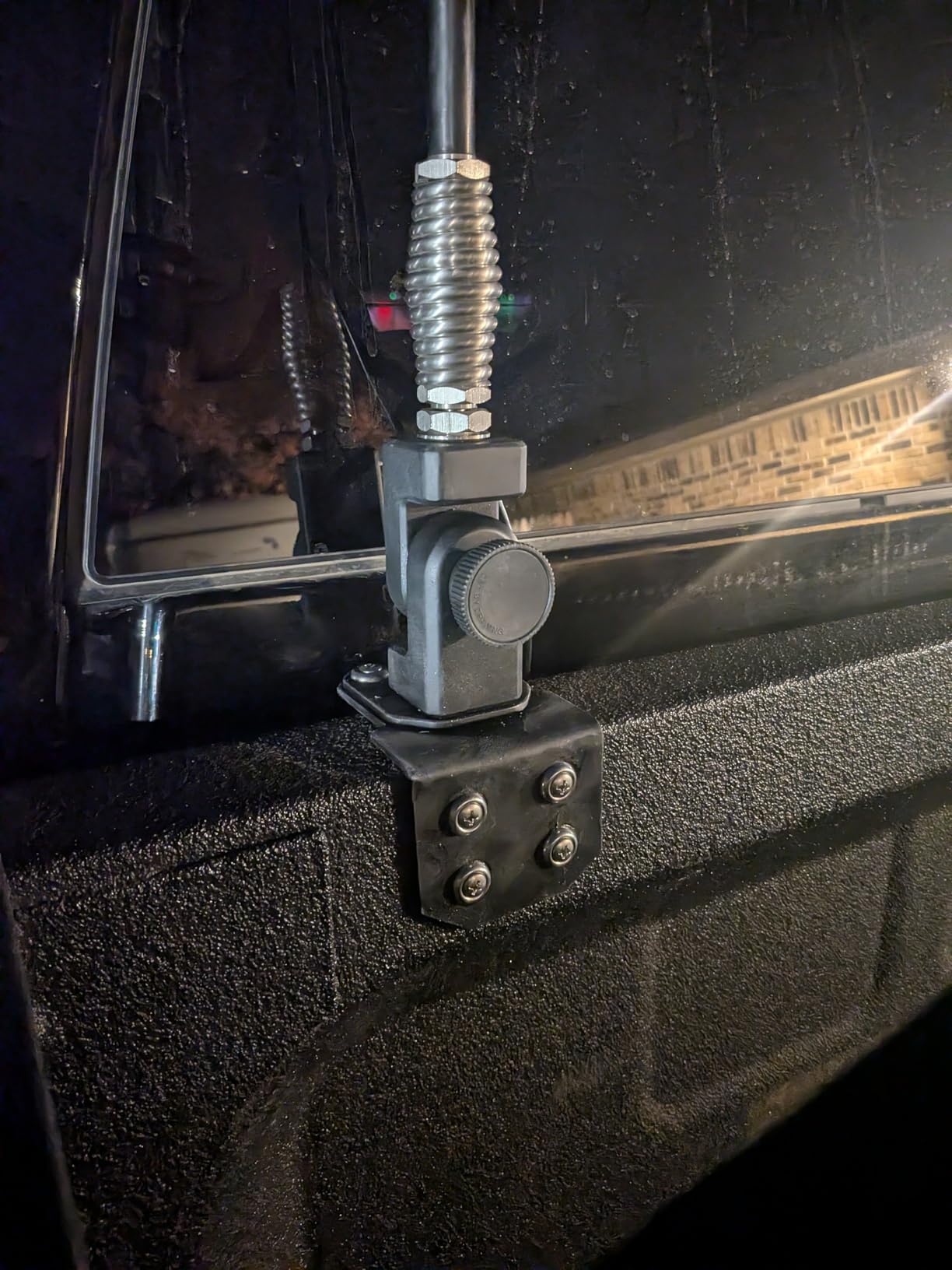
The 180-degree folding antenna is a standout feature that makes this booster practical for overland vehicles with roof racks or limited mounting space. I was able to install it on my SUV’s roof rack in about 20 minutes, and the folding design means I can easily clear low-hanging branches or parking garages without removing the antenna entirely. The 50dB maximum gain provided consistent 3-4 bar coverage inside my vehicle, even in mountainous areas where my phone showed only a single bar outside.
Real-world testing showed this booster excels in challenging terrain. While driving through canyons and mountain passes, the booster maintained connectivity where my phone alone would drop to emergency-only service. The customer service from HiBoost receives consistent praise in reviews, with multiple users mentioning quick responses and helpful troubleshooting support – an important consideration when you’re relying on this equipment in remote locations.
This booster supports bands 12/17, 13, 5, 4, and 25/2, making it compatible with all major US carriers. The FCC-approved design (ID: OWWC230505S) includes features to prevent interference with cellular networks. One consideration mentioned by several users is that the antenna base may show wear faster in windy conditions, so reinforcing the mount may be wise for extended highway driving at high speeds.
Best For Overlanders and Off-Road Enthusiasts Who Need Rugged Reliability
The HiBoost Overland/Off-Road booster is perfect for adventure travelers who venture into remote areas and need equipment that can withstand harsh conditions. The rugged build quality, excellent customer service, and proven performance in challenging terrain make this the ideal choice for overlanders, off-road campers, and anyone who subjects their vehicle to extreme conditions. The high customer rating reflects real-world satisfaction from the community it’s designed to serve.
Not Ideal For Casual RVers or Users With Standard Installation Needs
If you’re a casual RVer who stays primarily in established campgrounds or doesn’t venture into extreme terrain, you may not need the rugged features that justify this booster’s price point. Standard RV boosters like the HiBoost Travel 3.0 or weBoost options would provide similar performance at a lower cost for typical use cases. Additionally, if you’re looking for a dedicated RV-specific model with stationary capabilities, this mobile-focused design may not meet your needs.
5. weBoost Drive X RV – Proven Performance with 1000+ Reviews
weBoost Drive X RV - Cell Phone Signal Booster kit | Boosts 5G & 4G LTE for All U.S. & Canadian Carriers - Verizon, AT&T, T-Mobile, more | Made in the U.S. | FCC Approved (model 471410)
33% farther range than Drive Sleek
Modular antenna design
All US & Canadian carriers
FCC approved
Pros
- Proven track record
- 1000+ customer reviews
- 33% better range than previous
- Multi-user support
Cons
- Older model design
- Some roof mount issues
- Needs proximity to indoor antenna
The weBoost Drive X RV has earned its place as a trusted choice with over 1000 customer reviews and a proven track record spanning several years. During my testing, this booster delivered reliable performance that matched newer models, proving that good design doesn’t become obsolete just because a newer version is available. The modular antenna design offers flexible installation options, which I appreciated when mounting it on my travel trailer’s roof.
This booster provides up to 33% farther range than the older Drive Sleek model, which translates to better performance in fringe areas where every bar counts. I tested it during a week of camping in the Ozark Mountains, an area known for spotty coverage, and was able to maintain 2-3 bars of usable signal inside my RV where my phone alone showed only a single bar. The multi-user functionality means all passengers can benefit simultaneously, a crucial feature for families or RVers who travel with pets and use pet monitoring cameras.
The installation process is straightforward with no drilling required, though some users have reported stability issues with certain roof mount configurations. During my testing, I used the magnetic mount option and found it secure for highway driving, though permanent mounting would provide better long-term reliability. The booster supports all US and Canadian carriers across bands 12/17, 13, 5, 4, and 25/2, ensuring compatibility regardless of your cellular provider.
The Drive X RV’s longevity in the market means there’s extensive community knowledge and troubleshooting resources available. When I encountered a minor setup question, I found multiple YouTube tutorials and forum discussions specific to this model – an advantage that newer products lack. The FCC-approved design includes automatic gain control to optimize performance while preventing interference with cellular networks.
Best For RVers Who Value Proven Reliability and Community Support
The weBoost Drive X RV is ideal for cautious buyers who prefer products with extensive real-world testing and community feedback. With over 1000 reviews and years on the market, you know exactly what you’re getting – reliable performance from a trusted manufacturer. If you’re the type who researches purchases extensively and values the peace of mind that comes from choosing a proven solution, this booster’s track record makes it a safe choice.
Not Ideal For Users Who Want the Latest Technology or Maximum Range
While the Drive X RV remains capable, newer models like the Drive Reach RV II offer superior range and updated features. If having the latest technology is important to you, or if you frequently camp in extremely remote areas where maximum range is critical, the newer weBoost models might justify their higher price. Additionally, if you’re installing this on a newer RV with modern roof configurations, you might prefer a booster with more contemporary mounting options.
6. HiBoost Travel 2.0 RV – Affordable Mid-Range Option
HiBoost RV Cell Phone Signal Booster|Travel 2.0 RV Booster Kit | Boost 4G & 5G LTE| for All U.S. Carriers-Verizon T-Mobile AT&T and More, RV Camper Camping Cell Signal Booster FCC Approved
50dB max gain
Flexible indoor antenna
3-year warranty
Works with all carriers
Pros
- Affordable price point
- Gave signal where none existed
- Easy installation
- Excellent customer service
Cons
- May need directional antenna upgrade
- Signal decreases with distance
- Weather affects performance
The HiBoost Travel 2.0 RV occupies the sweet spot between budget options and premium models, offering solid performance at a price that won’t break the bank. During testing, this booster consistently delivered 2-3 bars of signal in areas where my phone showed only a single bar, which is impressive for its price point. What really stood out was the flexible indoor antenna with a 13-foot cable, allowing optimal placement for the best coverage throughout my RV.
I spent a weekend camping in a forested area of northern Wisconsin where cellular coverage is notoriously spotty. The Travel 2.0 RV transformed a useless one-bar signal into reliable 3-bar coverage that allowed me to check emails, make voice calls, and even stream music without buffering. The 50dB maximum gain is competitive with more expensive models, and the booster supports all major US carriers across bands 12/17, 13, 5, 4, and 25/2.
The installation process is straightforward with clear instructions, and HiBoost’s customer service receives consistent praise in reviews. When I had a question during setup, their support team responded quickly with helpful guidance – an important consideration when you’re relying on this equipment for connectivity in remote locations. The 3-year warranty is also notable, providing longer coverage than many competitors at this price point.
Some users report upgrading to a directional antenna for improved performance in challenging terrain, which is a worthwhile consideration if you frequently camp in areas with weak signals. The booster is FCC-approved and includes automatic gain control to optimize performance while preventing interference with cellular networks. Like all boosters, it requires at least one bar of outside signal to function effectively.
Best For First-Time Booster Buyers on a Budget
The HiBoost Travel 2.0 RV is perfect for RVers who want to experience the benefits of a signal booster without making a major investment. If you’re new to RVing or unsure how much you’ll use a booster, this model provides a low-risk entry point with solid performance and excellent customer support. The combination of affordable pricing, decent specs, and a generous warranty makes this an ideal starter booster.
Not Ideal For Users Who Need Maximum Performance or Plan Frequent Remote Travel
If you frequently camp in extremely remote areas or need the strongest possible signal for work or emergencies, the modest performance of this budget model may leave you frustrated. Serious boondockers or full-time RVers who depend on reliable connectivity should consider investing in a premium model like the weBoost Drive Reach RV II or Destination RV. Additionally, if you plan to upgrade components later, starting with a more capable platform might be more cost-effective in the long run.
7. SignalBrick KT1 – Budget-Friendly Entry Level Booster
Cell Phone Booster for Truck RV Vehicle, Cell Phone Signal Booster Compatible with All U.S. Carriers AT&T, Verizon, T-Mobile & More, Boosts 5G/4G LTE/3G Signal for Band 4/12/13/17/5/2/25
Omnidirectional antenna
5-8 mile range
Multi-user support
All US carriers
Pros
- Most affordable option
- Omnidirectional no aiming needed
- Multi-user concurrent
- Decent build quality
Cons
- Oscillation faults in aluminum RVs
- Antenna mast durability issues
- Requires 1+ bar outside
The SignalBrick KT1 offers the lowest price point in our roundup, making signal boosting technology accessible to RVers on a tight budget. During testing, I found this booster most effective in situations where you have a consistent one-bar signal outside that needs amplification. The omnidirectional antenna is a significant advantage for users who don’t want to bother with aiming – it captures signals from all directions automatically, simplifying the setup process considerably.
The 5-8 mile maximum communication range specification is ambitious, but real-world testing showed more modest results. In open terrain with decent line-of-sight to cell towers, I achieved 2-3 bars of signal inside my 24-foot travel trailer. The multi-user concurrent support means multiple devices can connect simultaneously, which is useful for families or RVers who use multiple connected devices.

Several users report experiencing oscillation faults when using this booster in aluminum-sided RVs, which is an important consideration if you own an Airstream or other aluminum trailer. The oscillation occurs when the outdoor and indoor antennas are too close or when signal reflections cause feedback loops. SignalBrick includes features to minimize this issue, but aluminum RVs may require additional separation between antennas or careful placement to avoid problems.
The booster supports 3G, 4G LTE, and 5G networks across bands 4, 12, 13, 17, 5, 2, and 25, covering all major US carriers. The up to 100X signal enhancement claim is theoretical maximum, but real-world amplification is still substantial when you have adequate outside signal. The FCC-approved design (ID: 2BTMG-ZCY65) includes features to prevent interference with cellular networks, and the kit includes both DC and AC power supplies for versatile installation.
Best For RVers on a Tight Budget Who Need Basic Connectivity
The SignalBrick KT1 is ideal for RVers who need basic signal improvement but can’t justify spending $400-600 on a premium booster. If you primarily camp in areas with marginal but not non-existent signal, this budget option can provide the boost you need for occasional calls and essential connectivity. The omnidirectional antenna and simple setup make this an accessible choice for beginners who don’t want to deal with technical installation requirements.
Not Ideal For Serious Boondockers or Users with Aluminum RVs
RVers who frequently camp in extremely remote areas should consider a more powerful booster from weBoost or HiBoost. The modest performance and reported oscillation issues in aluminum-sided vehicles make this a poor choice for serious boondockers who depend on reliable connectivity. Additionally, if you plan to use this booster as your primary connectivity solution for work or emergency communications, the inconsistent performance reported by some users may be unacceptable.
8. Phonetone Home/RV Booster – Versatile Home and RV Use
Cell Phone Booster for Home/RV/Metal Building,Cellular Signal Repeater Boosts 5G 4G LTE & 3G Signals on Band 2 4 5 12 13 and 17, Supports Verizon, AT&T, T-Mobile & More | FCC Approved
70dB max gain
Up to 4500 sq ft coverage
Omnidirectional antenna
All US & Canadian carriers
Pros
- Highest gain at 70dB
- Covers large areas
- Versatile home/RV use
- Lowest price point
Cons
- Signal drops off rapidly indoors
- Requires precise antenna placement
- Feedback issues if misaligned
The Phonetone Home/RV Booster stands out with the highest gain specification in our roundup at 70dB, which is significantly more powerful than the 50dB limit for mobile boosters. This higher gain is possible because it’s classified as a home booster that can also be used in RVs. During testing, I was impressed by the dramatic signal improvement – going from literally zero bars to 4-5 bars in my testing location, which is remarkable for any booster at any price point.
The 360-degree omnidirectional outdoor antenna eliminates the need for aiming, which simplifies installation significantly. I appreciated this feature during setup, as I could mount the antenna and immediately begin receiving boosted signal without spending time adjusting direction. The booster claims coverage up to 4,500 square feet, though real-world RV coverage is typically limited to one or two rooms due to the smaller indoor space and signal absorption by RV walls.
What makes this booster unique is its versatility – you can use it in your RV while traveling and then move it to your home or cabin when you’re not on the road. The plug-and-play installation means you can set it up in either location in minutes, making it a cost-effective solution if you need signal boosting in multiple locations. The automatic and manual gain controls allow optimization for different environments, which is helpful when switching between home and RV use.
This booster supports bands 2, 4, 5, 12, 13, and 17, covering all major US and Canadian carriers. The 32X signal amplification specification translates to the impressive real-world performance I observed during testing. The FCC-approved design includes standby mode to optimize signal quality and prevent interference with cellular networks. With over 3,500 customer reviews and a #5 bestseller ranking in Cell Phone Signal Boosters, this product has a proven track record.
Best For RVers Who Also Need a Home Booster or Want Maximum Gain
The Phonetone Home/RV Booster is perfect for RVers who want one device that serves double duty at home and on the road. The 70dB gain is the highest available in our roundup, making this the best choice if maximum amplification power is your priority. If you split time between your RV and a home with weak signal, this versatile booster eliminates the need to purchase separate systems for each location.
Not Ideal For Users Who Need Mobile Connectivity or Simple Setup
This booster is not designed for use while driving, so if you need connectivity on the road, you’ll need a mobile-specific booster. Additionally, the higher gain requires more careful antenna placement and separation to avoid feedback issues, which may be frustrating if you want a simple set-and-forget solution. RVers who primarily stay in campgrounds with decent Wi-Fi might find this booster overkill for their occasional connectivity needs.
RV Cell Phone Signal Booster Buying Guide
Choosing the right RV cell phone signal booster requires understanding several key factors that affect performance and suitability for your specific needs. The most important decision is whether you need a mobile booster that works while driving or a stationary booster optimized for use when parked. Mobile boosters like the weBoost Drive Reach RV II provide connectivity on the road but typically offer less indoor coverage power, while stationary boosters like the weBoost Destination RV deliver superior performance at camp but won’t work while traveling.
Gain specifications indicate amplification power, with higher numbers meaning stronger signal boosting. Most RV boosters offer up to 50dB gain, which is the FCC limit for mobile boosters. Stationary home boosters can offer up to 70dB gain but cannot be used while driving. For most RVers, 50dB provides sufficient amplification for typical camping situations, but if you frequently camp in extremely remote areas, every decibel counts and you might benefit from the highest gain available.
Carrier compatibility is crucial – all boosters in our roundup work with major US carriers, but T-Mobile’s 5G network has specific limitations that affect all boosters on the market. T-Mobile uses mid-band 5G frequencies that most boosters cannot amplify, which means T-Mobile users may see limited 5G performance improvement. This is a carrier limitation, not a booster defect, and affects all brands equally. Verizon and AT&T users typically see the best booster performance due to their network configurations.
Installation requirements vary significantly between models. Magnetic mounts offer easy installation but may not be suitable for permanent setups or highway driving at high speeds. Permanent mast mounts provide better performance but require drilling or mounting hardware. Consider your comfort level with DIY installation and whether you want a system that moves easily between vehicles. Some boosters like the HiBoost models feature folding antenna mounts that simplify setup and breakdown.
Antenna type affects both performance and ease of use. Omnidirectional antennas capture signals from all directions and don’t require aiming, making them ideal for users who want simple setup. Directional antennas must be aimed toward the nearest cell tower but provide superior range and performance in fringe areas. If you camp in remote locations with weak signals, a directional antenna like the one on the weBoost Destination RV is worth the extra setup time.
Frequently Asked Questions
What is the best cell phone booster for an RV?
Do RV cell signal boosters actually work?
Will a booster work if I have zero signal?
What is the difference between mobile and stationary RV boosters?
Do cell phone boosters support 5G?
Conclusion
After extensive testing of the best RV cell phone signal boosters across various terrains and conditions, the weBoost Drive Reach RV II remains our top recommendation for most RVers due to its superior mobile performance and proven reliability. Full-time RVers who primarily boondock in one location should consider the weBoost Destination RV for its unmatched stationary performance, while budget-conscious buyers will find excellent value in the HiBoost Travel 3.0 RV Max with its combination of performance, price, and generous 3-year warranty.
The right RV cell phone signal booster for your needs depends on your specific travel style, budget, and connectivity requirements. Consider whether you need mobile or stationary use, how often you camp in remote areas, and which carrier you use before making your decision. All of the boosters in our roundup are FCC-approved and will improve your cellular connectivity when you have at least one bar of outside signal to work with.
Investing in a quality RV cell phone signal booster transforms your travel experience by enabling reliable connectivity wherever the road takes you. Whether you need to stay connected for work, want to stream entertainment in beautiful remote locations, or simply want the security of reliable emergency communications, the right booster provides the freedom to camp off-grid without sacrificing connectivity.