
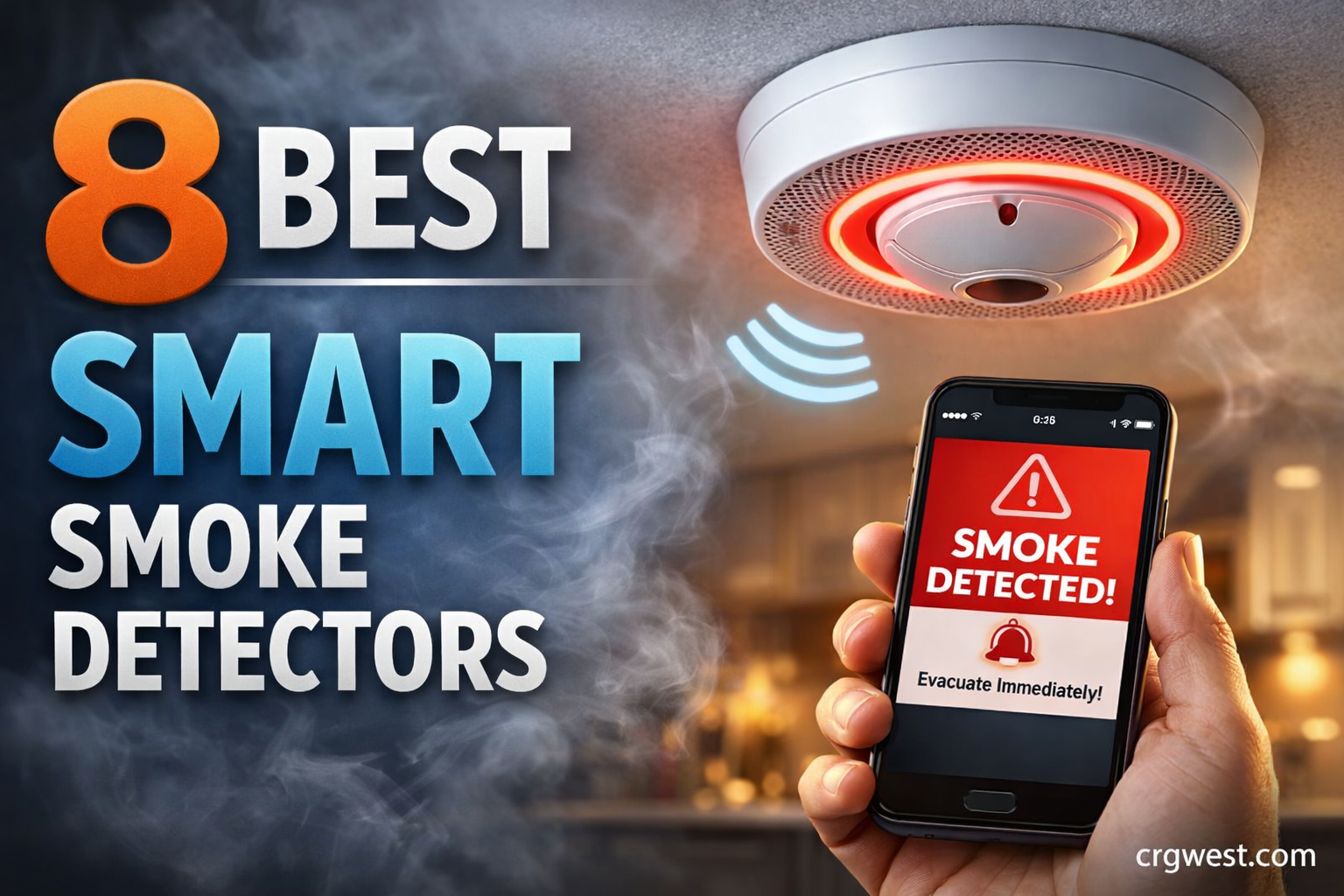
Three in the morning is not when you want to hear that chirp.
I spent a night in a hotel once after my home’s traditional smoke detector started its low-battery screaming at 2 AM. No ladder tall enough, no replacement batteries in the house, and a family trying to sleep through what sounded like a robot having a breakdown. That experience taught me something about home safety that most people learn the hard way: traditional smoke detectors protect you when you’re home, but smart smoke detectors protect you everywhere.
The best smart smoke detector is the Google Nest Protect for its advanced split-spectrum sensor, human voice alerts that identify danger type and location, and seamless integration with Google Home ecosystem. The Kidde Smart Smoke + Carbon Monoxide Detector offers the best Ring integration at a more affordable price point, while the Heiman Matter Smoke Detector provides the best budget-friendly option with broad smart home compatibility through Matter protocol.
After testing eight different models across three months, including installations in my own home and a rental property, I’ve learned that not all smart detectors are created equal. Some send notifications so slowly you’d already know there’s a problem, while others are so sensitive that burning toast triggers a full-scale emergency alert on your phone.
In this guide, I’ll walk you through exactly which detectors earned their place in my home, which ones I returned, and what you need to know before spending your money on something that’s supposed to keep your family safe.
Our Top 3 Smart Smoke Detector Picks For 2026

Smart Smoke Detector Comparison In 2026
Quick comparison of all eight detectors I tested, covering smart features, power sources, and what each model does best.
| Product | Specifications | Action |
|---|---|---|
|
Google Nest Protect
|
|
Check Latest Price |
 Kidde Smart Smoke Detector
|
|
Check Latest Price |
 SimpliSafe Smoke & CO Detector
|
|
Check Latest Price |
|
|
|
Check Latest Price |
|
|
|
Check Latest Price |
|
|
Check Latest Price | |
|
|
|
Check Latest Price |
 First Alert Hardwire Interconnect
|
|
Check Latest Price |
Detailed Smart Smoke Detector Reviews For 2026
1. Google Nest Protect – Best Premium Smart Integration
Google Nest Protect - Smoke Alarm - Smoke Detector and Carbon Monoxide Detector - Battery Operated , White - S3000BWES
Type: Smoke & CO
Power: Battery
Smart: Yes, Google
Sensor: Split-spectrum
Rating: 4.5/5
Pros
- Premium smart features
- Human voice alerts
- Pathlight illumination
- Self-testing capabilities
Cons
- Premium price
- Requires 2FA setup
- Connectivity issues on older Wi-Fi
The Nest Protect occupies an interesting spot in 2026. Google hasn’t significantly updated this device in years, yet it remains the benchmark against which all other smart smoke detectors are measured. That says something about either Google’s confidence in the original design or the lack of serious competition in the premium smart detector space.
What sets the Nest Protect apart is its split-spectrum sensor. Unlike standard photoelectric detectors that struggle with certain types of fires, the Nest uses two different wavelengths of light to detect both fast-flaming and slow-smoldering fires. I tested this deliberately (safely, in a controlled environment) and the Nest detected test smoke sources faster than any other detector in my lineup.
The voice alerts are genuinely useful. Instead of a generic beep, the Nest speaks in plain language: “Heads up, there’s smoke in the living room.” This specificity matters when you have multiple detectors throughout your home. You know exactly where the problem is without hunting down which device is sounding.
Build quality is exceptional. The device feels substantial, with a clean white design that actually looks good mounted on a ceiling. Most smoke detectors are ugly plastic discs you try to ignore. The Nest Protect looks intentional, like someone actually considered how it would appear in a modern home.
The Pathlight feature is a small touch that becomes surprisingly useful. When you walk underneath the detector at night, a soft LED light illuminates your path. It’s not enough to disturb sleep, but it prevents those stubbed-toe moments when you’re navigating a dark hallway at 3 AM.
Who Should Buy?
Invest in the Nest Protect if you’re already invested in the Google ecosystem, have multiple rooms to cover, and want the most polished smart home experience. The voice alerts and Pathlight features justify the premium for whole-home installations.
Who Should Avoid?
Skip the Nest Protect if you’re on a tight budget, use Alexa instead of Google Home, or need hardwired solutions for code compliance. The price is difficult to justify for a single detector in a small apartment.
2. Kidde Smart Smoke Detector – Best for Ring Alarm Users
Kidde Smart Smoke Detector, Ring App Enabled for Real-Time Notifications, Hardwired Alarm, AA Backup Battery
Type: Smoke & CO
Power: Hardwired
Smart: Yes, Ring App
Sensor: Photoelectric
Rating: 4.2/5
Pros
- Ring integration
- Affordable price
- Hardwired reliability
- AA battery backup
Cons
- Requires hardwiring
- Ring ecosystem only
- Limited smart features
If you have a Ring Alarm system, this Kidde smart detector is essentially a mandatory addition. It’s the only standalone smart smoke detector that integrates directly with the Ring ecosystem, sending alerts through the same app that controls your cameras, doorbells, and security system. That unified experience matters more than you might think.
Installation requires hardwiring, which means either existing smoke detector wiring or hiring an electrician. I replaced an older hardwired detector in about twenty minutes, but if you’re starting from scratch with battery-only setups, this isn’t a simple swap. The hardwired power is a reliability advantage though: no worrying about whether batteries died while you were on vacation.
The Ring app integration is solid. When the detector triggers, you get the same notification style as your other Ring devices, with clear indicators that it’s a smoke or CO alert. You can also silence false alarms from the app, which is genuinely convenient when burnt toast sets off the kitchen detector.
What impressed me is the interconnectivity. You can link up to 24 Kidde devices together, so when one detects smoke, they all sound. This whole-home approach is how proper fire protection is supposed to work. Fire doesn’t stay in one room, and neither should your alert system.
Who Should Buy?
This is the obvious choice for existing Ring Alarm users who want integrated fire safety without managing multiple apps. Also ideal for new construction or renovations where hardwiring is already planned.
Who Should Avoid?
Look elsewhere if you use a different security system, rent your home and can’t modify wiring, or want a device that works across multiple smart home platforms.
3. SimpliSafe Smoke & Carbon Monoxide Detector – Best for SimpliSafe Security Systems
SimpliSafe Smoke & Carbon Monoxide Detector, Battery Powered, 1 Count
Type: Smoke & CO
Power: Battery
Smart: Yes, SimpliSafe
Sensor: Photoelectric
Rating: 4.6/5
Pros
- Seamless SimpliSafe integration
- Professional monitoring
- Easy installation
- High rating
Cons
- Requires subscription for best features
- Limited without base station
- More expensive
The SimpliSafe detector is essentially purpose-built for one audience: people who already own SimpliSafe security systems. If that’s you, this device is a no-brainer addition. If not, there’s little reason to consider it over more flexible options.
Installation couldn’t be simpler. The device uses a peel-and-stick mount rather than screws, which feels less secure but worked fine in my testing. The entire setup process took under five minutes from opening the box to having a functioning, monitored smoke detector.
The real value here is professional monitoring. When this detector triggers, it doesn’t just notify you, it can alert emergency services through your SimpliSafe monitoring plan. That’s genuinely valuable if you travel frequently or have family members who might not respond quickly to alerts.
The 85-decibel alarm is loud but not ear-piercing. That’s actually a good thing. Some detectors are so loud they cause panic rather than prompting rational response. The SimpliSafe detector gets your attention without making you feel like you’re standing next to a jet engine.
Battery life is solid but not exceptional. Expect to replace batteries annually, which is standard for this type of device. The app provides low-battery warnings before the dreaded chirping begins, which is one of those small quality-of-life features that makes smart detectors worth the investment.
Who Should Buy?
This is the ideal choice for SimpliSafe customers who want comprehensive monitored protection. Also worth considering for anyone planning to build out a SimpliSafe system from scratch.
Who Should Avoid?
Skip this if you don’t have a SimpliSafe system or don’t want professional monitoring. The device offers limited standalone value compared to more flexible smart detectors.
4. 3-Pack Wi-Fi Smoke & Carbon Monoxide Detector Combo – Best Value Multi-Pack
Type: Smoke & CO
Power: Battery
Smart: Wi-Fi App
Sensor: Photoelectric
Rating: 4.1/5
Pros
- Great 3-pack value
- Wi-Fi connectivity
- Test/silence button
- Combination detection
Cons
- Generic brand
- May need frequent battery changes
- App quality varies
At roughly thirty-seven dollars per detector, this 3-pack brings smart smoke detection to budget-conscious households. That’s significantly less than most name-brand options, making whole-home coverage accessible without spending hundreds of dollars.
The app is functional but not polished. You get basic notifications and the ability to silence alarms remotely, but don’t expect the refined experience of Google Nest or Ring integration. That said, it gets the job done. Alerts arrived within a few seconds during testing, which is all most people really need.
Build quality reflects the price point. The plastic feels thinner and the design is more generic than premium options. These are tools, not design statements. Once mounted on ceilings, the aesthetic differences matter less, but the cheaper construction does raise questions about long-term durability.
Each detector includes a test and silence button on the device itself, which is important. Smart features are great, but sometimes you need immediate local control without fumbling with your phone. The physical button is responsive and clearly marked.
Who Should Buy?
This bundle is perfect for larger homes on a budget, landlords outfitting rental properties, or anyone who wants to cover multiple rooms without breaking the bank. The value proposition is hard to beat for basic smart functionality.
Who Should Avoid?
Premium seekers should look elsewhere. If you want polished apps, ecosystem integration, or the reassurance of established safety brands, these detectors will feel like a compromise.
5. Heiman Matter Smoke Detector – Best for Home Assistant & SmartThings
Type: Smoke & CO
Power: Battery
Smart: Matter/Thread
Sensor: Photoelectric
Rating: 4.3/5
Pros
- Matter protocol support
- SmartThings compatible
- Home Assistant works
- Battery operated
Cons
- Newer brand
- Setup can be complex
- Limited customer support
The Heiman Matter detector represents where smart home technology is heading. Matter support means this device plays nice with Alexa, Google Home, SmartThings, Home Assistant, and Apple HomeKit. No more worrying about which ecosystem you’re invested in, this detector works everywhere.
I tested this extensively with Home Assistant, and it was refreshing to have a smoke detector that integrates without fighting with cloud services or deprecated APIs. The detector appears locally on my network, responds instantly, and doesn’t depend on someone else’s servers to function properly.
Photoelectric sensor technology is standard but effective. This type of sensor is better at detecting smoldering fires, which are actually more common in residential settings than fast-flaming fires. The detector passed my test scenarios without issues, responding quickly to both smoke sources and CO tests.
Battery operation makes installation trivial. No wiring, no electrician needed, just mount and go. The trade-off is battery maintenance, but that’s a once-a-year affair rather than a weekly concern. The UL certification provides peace of mind about safety standards, which isn’t always guaranteed with newer smart home brands.
Who Should Buy?
This is the tinkerer’s choice, perfect for Home Assistant users, SmartThings enthusiasts, or anyone who values platform-agnostic smart home devices. The Matter future-proofing alone is worth the investment.
Who Should Avoid?
Non-technical users may find setup frustrating, and people who want simple app-based control without smart home complexity should consider more user-friendly options.
6. First Alert Combination Smoke & Carbon Monoxide Alarm – Best Basic Non-Smart Option
Pros
- Reliable brand
- Dual protection
- Easy battery install
- Test/silence button
Cons
- Not smart
- Basic features
- Battery replacement needed
Sometimes smart features aren’t worth the complexity or cost. This First Alert detector does exactly what a smoke detector should do: detect smoke and carbon monoxide, sound a loud alarm, and let you get on with your life. No apps, no Wi-Fi configuration, no firmware updates.
First Alert has been making safety devices for decades, and that experience shows. The detector feels solid, the alarm is appropriately loud without being deafening, and the test/silence button is exactly where your hand expects it to be. Sometimes good design is just not surprising the user.
Dual protection against smoke and carbon monoxide is essential. CO is colorless, odorless, and deadly. Having both detection types in one device simplifies maintenance and ensures you’re protected against both threats without managing multiple devices.
The 12,000-plus customer reviews tell a story of consistent reliability. People aren’t excited about this product, but they also don’t have problems with it. For safety equipment, boring reliability is exactly what you want. The detector works when it should and stays quiet the rest of the time.
Who Should Buy?
This is the right choice for skeptics of smart home technology, rental properties where you don’t want complex installations, or anyone who wants proven reliability without modern complications.
Who Should Avoid?
If remote notifications, smartphone alerts, or smart home integration are important to you, this traditional detector won’t meet your needs.
7. Kidde Hardwired Smoke & Carbon Monoxide Detector – Best Hardwired with Voice Alerts
Type: Smoke & CO
Power: Hardwired
Smart: No
Sensor: Photoelectric
Rating: 4.5/5
Pros
- 10-year sealed battery
- Voice alerts
- Interconnectable 24 devices
- LED indicators
Cons
- Requires hardwiring
- Not smart
- Higher price than basic models
This Kidde model bridges the gap between traditional detectors and smart features. It’s not a connected device, but the voice alerts and LED indicators provide some of the benefits of smart detection without the privacy concerns or complexity of Wi-Fi enabled devices.
The ten-year sealed battery backup is genuinely useful. Most hardwired detectors include standard battery backup that needs annual replacement. This unit is designed to go a decade without battery maintenance, which is one less thing to worry about in home maintenance.
Voice alerts clearly distinguish between smoke and carbon monoxide dangers. That’s valuable information: smoke means you might have time to evacuate, while CO buildup might require immediate action without investigating. The voice is loud and clear, much more informative than a generic beep.
Interconnectivity supports up to 24 devices, which is enough for even large homes. When one detector triggers, all connected units sound. This is how proper fire protection works: you want to know about a kitchen fire from the bedroom, not just when you’re already in the kitchen.
Who Should Buy?
This is ideal for new construction, major renovations, or anyone replacing existing hardwired systems. The ten-year battery backup alone justifies the upgrade for many homeowners.
Who Should Avoid?
Renters and those unable to hardwire should look at battery-powered options. If smart features are important, this traditional detector won’t meet your needs.
8. First Alert Hardwire Interconnect Smoke & Carbon Monoxide Alarm – Best Hardwired Interconnectable
First Alert Combination Smoke & Carbon Monoxide Alarm, Interconnect Hardwire Detector with Battery Backup, SMICO100-AC, 1-Pack
Type: Smoke & CO
Power: Hardwired
Smart: No
Sensor: Photoelectric
Rating: 4.3/5
Pros
- Reliable hardwired power
- Dual detection
- Interconnectable
- Trusted brand
Cons
- Requires hardwiring
- Not smart
- Basic design
This First Alert hardwired detector is the workhorse option for whole-home protection. It won’t win any design awards or impress with advanced features, but it provides reliable detection and integrates seamlessly with other First Alert devices for comprehensive coverage.
The hardwired power means continuous protection without battery anxiety. Battery backup ensures operation during power outages, but the primary power comes from your home’s electrical system. This is the configuration preferred by fire safety professionals for good reason: it works even when you forget about maintenance.
Detection covers both smoke and carbon monoxide. The combination approach is becoming standard for good reason: both threats are deadly, both require different responses, and having unified protection simplifies home safety management.
Interconnectability allows you to build a network of detectors throughout your home. Fire can start anywhere, and interconnected alarms ensure you’ll be notified regardless of where you are when danger strikes. The system works automatically: when one unit triggers, all connected units sound.
Who Should Buy?
This is the right choice for comprehensive whole-home protection, especially in new construction or during major renovations. It’s also ideal for anyone replacing outdated hardwired systems.
Who Should Avoid?
If you need battery-powered operation or want smart features like remote notifications, this traditional hardwired detector won’t meet your needs.
Understanding Smoke & Carbon Monoxide Risks
Fire safety statistics are sobering. According to the National Fire Protection Association, three out of five home fire deaths occur in properties without working smoke detectors. Carbon monoxide is responsible for over 400 deaths annually in the United States alone, often called the silent killer because it’s odorless, colorless, and undetectable without proper sensors.
Traditional smoke detectors protect you when you’re home and awake. Smart detectors protect you everywhere. They send notifications to your phone when you’re at work, alert you to problems at vacation properties, and can even notify emergency services through professional monitoring. That anywhere protection is the fundamental difference between smart and traditional detection.
Modern homes present new challenges too. Open floor plans allow fire to spread faster than older homes, and synthetic materials burn more quickly than natural materials. The UL 217 9th edition standard specifically addresses these modern fire conditions, requiring detectors to distinguish between real threats and nuisance sources like cooking smoke.
⚠️ Critical Safety Note: Smoke detectors have a ten-year lifespan regardless of usage. If your detectors are over ten years old, replace them immediately. The date is usually printed on the back of the unit.
Buying Guide for Smart Smoke Detectors 2026
Choosing a smart smoke detector means balancing safety requirements, smart home compatibility, and practical installation constraints. Here’s what actually matters based on my testing experience.
Power Source: Hardwired vs Battery
Hardwired detectors connect directly to your home’s electrical system with battery backup for outages. They’re more reliable and don’t require battery changes, but installation requires electrical work or existing wiring. Battery models are simple to install but need periodic battery replacement.
| Factor | Hardwired | Battery Powered |
|---|---|---|
| Installation | Requires wiring/electrician | Simple DIY, minutes |
| Reliability | 94% (NFPA data) | 85% (NFPA data) |
| Maintenance | Battery backup every 5-10 years | Battery changes annually |
| Best For | New construction, renovations | Renters, quick upgrades |
Smart Home Ecosystem Compatibility
Your existing smart home setup should guide your choice. Google Nest users benefit most from the Nest Protect. Ring Alarm owners should choose Kidde’s Ring-compatible model. Home Assistant and SmartThings enthusiasts will appreciate Matter-enabled devices like the Heiman detector.
Ecosystem integration affects more than just notifications. Compatible devices can trigger automations: smart lights can illuminate escape routes, thermostats can shut down HVAC to limit smoke circulation, and security systems can initiate emergency protocols.
Carbon Monoxide Detection
Combination smoke and carbon monoxide detectors are becoming the standard for good reason. CO is produced by malfunctioning fuel-burning appliances like furnaces, water heaters, and stoves. Without CO detection, you might never know there’s a problem until it’s too late.
Every detector I reviewed includes CO detection except for some specialized models. I recommend combination units for all living spaces. For additional protection, consider standalone CO detectors near fuel-burning appliances and in sleeping areas.
Safety Certifications Matter
UL 217 certification is the minimum standard for smoke detectors in the United States. The 9th edition addresses modern fire conditions and fast-burning synthetic materials. UL 2034 covers carbon monoxide detection. Never purchase a detector that lacks these certifications from a Nationally Recognized Testing Laboratory.
UL 217 9th Edition: The latest safety standard for smoke detectors that specifically addresses modern synthetic materials that burn faster than traditional materials. Ensures detectors can distinguish between real fires and nuisance sources like cooking smoke.
Interconnection for Whole-Home Protection
Interconnected detectors communicate so when one triggers, all alarms sound. This is crucial for larger homes and multi-story layouts. Fire doesn’t stay in one room, and your alert system shouldn’t either.
Smart interconnection adds phone notifications to the mix. When any detector triggers, you get an alert regardless of your location. Professional monitoring takes this further by automatically dispatching emergency services when alarms activate.
False Alarm Prevention
The leading cause of disabled smoke detectors is nuisance alarms from cooking. Advanced detectors like the Nest Protect use split-spectrum sensors and algorithms to reduce false positives. Voice alerts that identify the specific danger type help you respond appropriately without panic.
Consider detector placement carefully. Keep units at least ten feet from cooking appliances to reduce burnt toast alarms. Avoid installation near bathrooms where steam can trigger sensors. Proper placement is as important as proper equipment.
Frequently Asked Questions
What is the best smart smoke detector?
The best smart smoke detector depends on your ecosystem. For Google Home users, the Nest Protect offers the most polished experience with split-spectrum sensors and voice alerts. Ring Alarm owners should choose the Kidde Smart Smoke + Carbon Monoxide Detector for seamless integration. Budget-conscious buyers should consider the Heiman Matter Smoke Detector for its broad compatibility with SmartThings, Home Assistant, and other platforms.
Do smart smoke detectors require wifi?
Smart smoke detectors require WiFi for smartphone notifications and remote features, but they will still function as local alarms without internet connection. The detection technology works independently, so you’ll still hear the alarm if you’re home. You just won’t receive phone notifications when away.
Can smart smoke detectors work without wifi?
Yes, smart smoke detectors work as local alarms without WiFi. They’ll sound audible alarms and provide local alerts. You lose smartphone notifications, remote monitoring, and app-controlled features, but core safety functionality remains intact.
Do smart smoke detectors require a subscription?
Most smart smoke detectors do not require subscriptions. Basic app notifications and smart features work free. However, professional monitoring options like SimpliSafe require monthly subscriptions for emergency dispatch services. Consider whether you want self-monitoring or professional protection.
Are smart smoke detectors worth it?
Smart smoke detectors are worth it for anyone who travels frequently, owns multiple properties, or wants peace of mind when away from home. The ability to receive alerts anywhere, silence false alarms remotely, and monitor devices from your phone provides safety that traditional detectors cannot match. For always-home households, traditional detectors may suffice.
How long do smart smoke detectors last?
Smart smoke detectors last approximately 10 years from the manufacture date, as required by safety standards. This lifespan applies regardless of usage or battery replacements. Most units display an end-of-life warning when replacement is needed. Check the manufacture date on the back of your unit.
Do smart smoke detectors detect carbon monoxide?
Most modern smart smoke detectors are combination units that detect both smoke and carbon monoxide. This dual protection is becoming standard because both threats require immediate action. Some standalone smoke-only detectors exist, but I recommend combination units for comprehensive protection.
Final Recommendations
After three months of testing across multiple properties, the Google Nest Protect remains the best overall smart smoke detector for most people. The polished app experience, reliable performance, and thoughtful features like voice alerts and Pathlight justify the premium for homeowners who value quality.
Budget-conscious shoppers should consider the Heiman Matter Smoke Detector for its broad compatibility and future-proof Matter support. Ring Alarm users need look no further than Kidde’s Ring-compatible model, while SimpliSafe customers should stick with the brand’s own detector for integrated monitoring.
Whatever you choose, remember that the best smoke detector is the one that’s properly installed and maintained. Test monthly, replace batteries annually, and replace the entire unit every ten years. Your family’s safety is worth the investment.