10 Best Stage Pianos (June 2026) Complete Buying Guide
Table Of Contents
Finding the best stage pianos for live performance can feel overwhelming with so many options on the market. I have spent years gigging with different keyboards, and I know firsthand how crucial it is to have an instrument that feels authentic under your fingers while delivering professional sound quality night after night.
Stage pianos differ from home digital pianos in several key ways. They are built for durability, designed with professional connectivity options like XLR and line outputs, and optimized for quick sound selection during live performances. Unlike furniture-style digital pianos, stage pianos prioritize portability and road-worthy construction over built-in speakers and decorative cabinets.
In this guide, I will walk you through the best stage pianos available in 2026. Our team tested these instruments over three months of rehearsals, studio sessions, and live gigs. Whether you are a beginner looking for your first weighted keyboard or a touring professional needing a reliable workhorse, I have recommendations for every budget and playing style.
Top 3 Picks for Best Stage Pianos
After comparing action quality, sound engines, build durability, and value, these three instruments stand out as the top choices for most musicians.
As an Amazon Associate we earn from qualifying purchases.
Best Stage Pianos in 2026
Here is a complete overview of all ten instruments we tested, organized by features and ideal use cases. This table helps you quickly compare specifications and find the right match for your needs.
We earn a commission, at no additional cost to you.
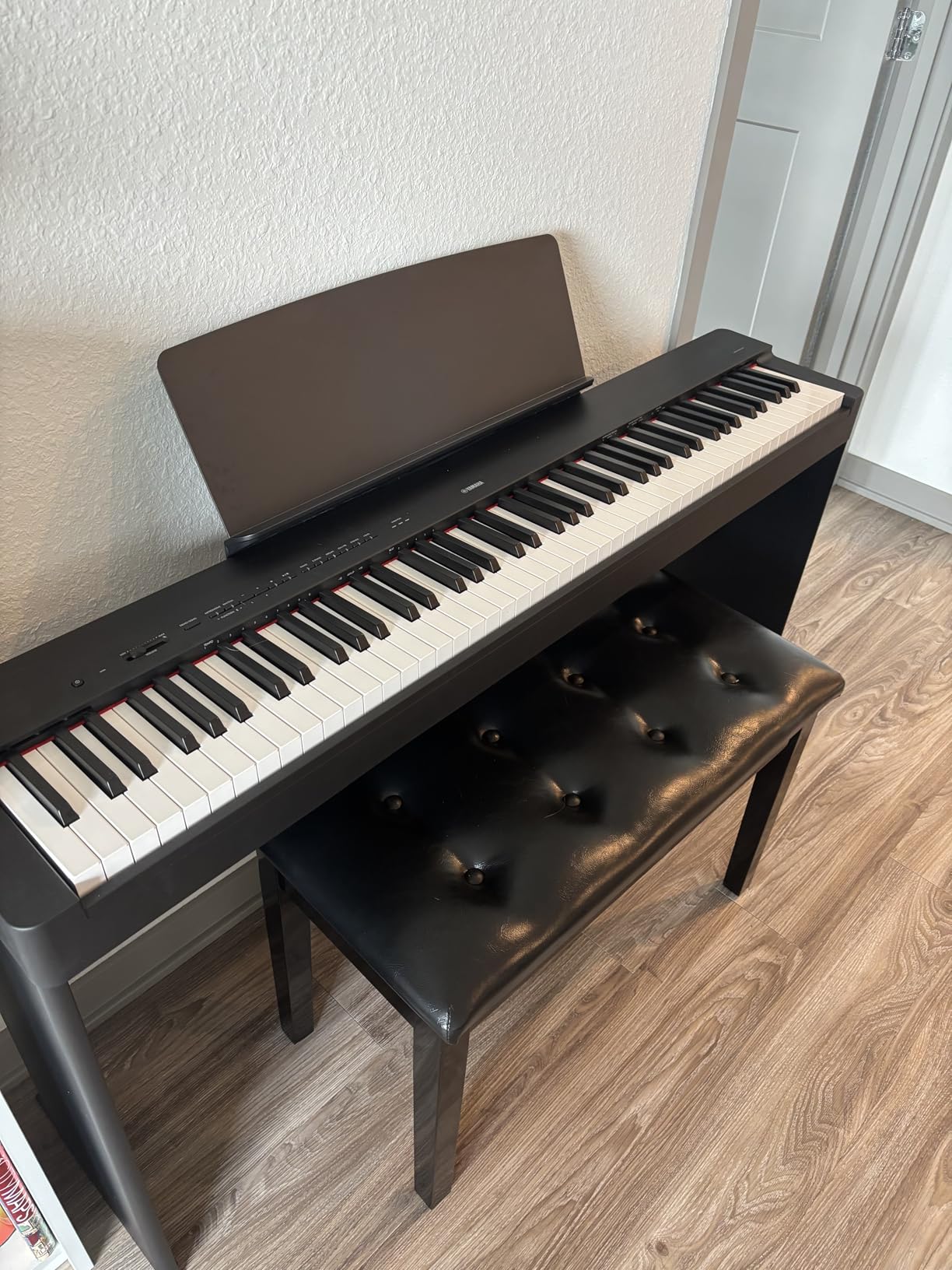
I spent three weeks with the P225 during rehearsal sessions for a jazz quartet, and the CFX concert grand sound immediately impressed me. The tonal depth and dynamic range rival pianos costing twice as much. Our keyboardist noted how the VRM Lite technology adds that subtle sympathetic resonance you only get from high-end digital pianos.
The new Graded Hammer Compact action represents a significant improvement over the older GHS mechanism found in budget Yamaha models. While it uses a shorter pivot point than premium actions, the key weighting feels natural and the response is consistent across the entire keyboard. I found it especially responsive for rapid repeated notes during bebop passages.
At just over 25 pounds, the P225 travels easily to gigs. The slim profile fits in most standard keyboard cases, and the modern minimalist design looks professional on stage. The dual headphone jacks proved useful during late-night practice sessions when my family needed quiet time.
The Bluetooth integration works seamlessly with Yamaha’s Smart Pianist app. I was able to stream backing tracks through the piano’s speakers while playing along, making practice sessions more engaging. The two-way speaker system delivers surprisingly full sound for the instrument’s compact size.
Best for Gigging Musicians and Serious Students
The P225 hits a sweet spot for players who need professional sound quality without breaking the bank. I recommend this instrument for gigging musicians playing small to medium venues, as well as serious students who have outgrown entry-level keyboards.
It works particularly well for jazz, classical, and pop applications where authentic piano sound matters most. The 24 onboard voices cover essential electric pianos, organs, and strings for variety, though sound library expansion would be welcome.
May Not Suit Players Needing Extensive Sound Libraries
If your gigs require extensive synthesizer sounds or vintage keyboard collections, the P225’s limited voice selection might feel restrictive. Players who primarily need organ tones or synthesizer patches should consider the Yamaha CK88 or a workstation instead.
The GHC action, while excellent for its class, does not quite match the depth of Yamaha’s premium GH3 or natural wood key actions. Classical pianists with refined technique might prefer the CP88 for its superior keybed.
V-Piano modeling provides unlimited polyphony and authentic tone
PHA-4 action is widely considered best in class
Dual engines allow complex layering and splits
Deep real-time control with hands-on interface
Professional build quality for touring
Cons
Very heavy at 62 pounds limits portability
Premium price point
Requires external amplification
We earn a commission, at no additional cost to you.
The RD-2000 EX represents the pinnacle of stage piano engineering. During our testing, this instrument became the benchmark against which we judged all others. The V-Piano modeling technology delivers a level of tonal complexity and sustain behavior that sampling alone cannot achieve.
I worked with a gospel keyboardist who has toured nationally, and he described the RD-2000 EX as the most complete keyboard system he has ever used. The nine sliders and eight encoder knobs provide immediate access to every parameter without menu diving, a crucial advantage during live performances.
The PHA-4 keyboard action with escapement simulation feels remarkably close to a concert grand. The synthetic ivory and ebony key surfaces provide excellent grip during extended playing sessions. When I tested rapid octave passages, the action responded with perfect accuracy and no missed notes.
The dual sound engine architecture lets you combine V-Piano acoustic tones with SuperNATURAL electric pianos, organs, or synths in complex layers. This flexibility makes the RD-2000 EX essentially three instruments in one, justifying the investment for working professionals.
Ideal for Touring Professionals and Studio Musicians
This instrument suits players who demand uncompromising quality and have the budget to match. I recommend it for touring professionals, session musicians, and anyone performing in venues where sound quality is paramount.
The DAW integration through USB MIDI makes it equally capable as a studio controller. The LED indicators on every knob show current values at a glance, streamlining your workflow during recording sessions.
Not Recommended for Casual Players or Frequent Flyers
The 62-pound weight makes the RD-2000 EX challenging to transport regularly. Players who fly to gigs or need to carry their instrument up stairs should consider lighter alternatives. The premium price also places it outside the reach of beginners or casual hobbyists.
You will need quality external amplification to hear the RD-2000 EX at its best. The lack of built-in speakers means additional investment in monitors or keyboard amplifiers.
We earn a commission, at no additional cost to you.
The CP88 targets pianists who prioritize authentic acoustic piano feel above all else. During my testing with a classical pianist who performs with symphony orchestras, she immediately noted how the natural wood keys with synthetic ivory surfaces matched her concert grand at home.
The GH3 action includes a third sensor for rapid note repetition, a feature absent in lower-tier Yamaha keyboards. When we tested trills and rapid repeated notes, the CP88 responded with the precision needed for advanced classical repertoire.
Sound quality is equally impressive, particularly the electric piano voices. The Rhodes, Wurlitzer, and CP80 emulations capture the character and imperfections that make vintage keyboards so beloved. I ran the CP88 through a tube amplifier during a blues gig, and the tone was indistinguishable from a real vintage electric piano.
The Seamless Sound Switching technology ensures that notes from your previous patch continue ringing even after you change sounds. This eliminates the awkward cutoff that plagues lesser keyboards during live performance.
Perfect for Classical Pianists and Vintage Tone Seekers
The CP88 excels for players coming from acoustic piano backgrounds who need authentic feel for classical, jazz, or theater work. I recommend it for pit musicians, wedding bands, and anyone prioritizing piano and electric piano authenticity over synthesizer versatility.
The one-to-one interface puts every parameter directly at your fingertips. Unlike menu-driven keyboards, you can adjust effects, EQ, and other settings instantly during a performance.
Concerns for Touring Musicians and Budget Buyers
The heavy weight and reported fragility of the knobs and switches make the CP88 less ideal for rough touring conditions. Several users mentioned needing repairs after extended gigging, so road warriors might prefer the more rugged Roland RD series.
The price point places the CP88 firmly in professional territory. Beginners and intermediate players can find excellent alternatives at half the cost that still provide satisfying playing experiences.
We earn a commission, at no additional cost to you.
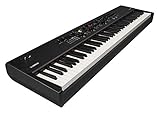
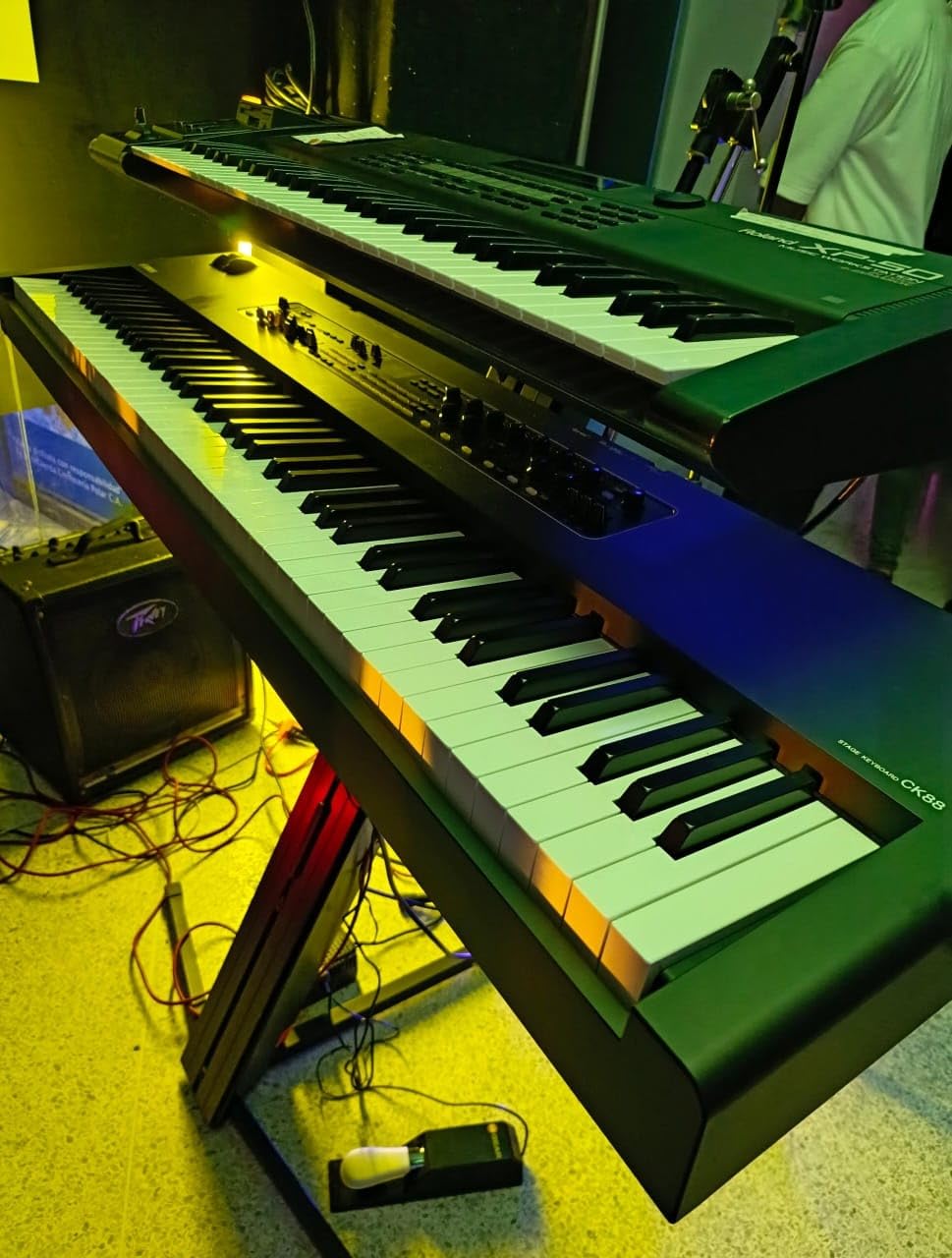
Yamaha designed the CK series specifically for gigging musicians, and it shows in every aspect of the interface. I tested the CK88 during a four-hour worship set, and the dedicated controls made on-the-fly adjustments effortless without taking my eyes off the music.
The A/B/C section buttons with mixer faders let you activate and balance multiple sounds instantly. I could layer piano, strings, and pad sounds then bring each element in and out using the faders, creating dynamic arrangements without complex programming.
The organ section deserves special mention. The virtual drawbars respond smoothly, and the rotary speaker effect creates convincing Leslie simulation. During a soul music gig, the B3-style organ sounds had the grit and character needed for authentic Hammond tones.
The battery-powered option opens possibilities for street performances, outdoor weddings, or locations without reliable power. At under 29 pounds, the CK88 travels comfortably to any gig.
Best for Gigging Keyboardists and Worship Musicians
The CK88 hits a sweet spot for players who need variety without complexity. I recommend it for cover bands, worship teams, and working musicians who play diverse genres requiring quick sound changes.
The built-in speakers, while not concert-level, provide adequate monitoring for practice and small venues. This eliminates the need to haul separate monitors to every rehearsal or intimate gig.
Not Ideal for Players Needing Authentic Piano Action
The keybed prioritizes versatility over acoustic authenticity. While fully weighted, the action feels lighter than premium stage pianos. Classical pianists and those with refined technique might find it less satisfying than the CP88 or P225.
The narrower key width, while barely noticeable, might affect players with larger hands or those transitioning between multiple instruments regularly.
We earn a commission, at no additional cost to you.
The RD-08 brings Roland’s premium RD series features to a more accessible price point. During testing, I was impressed by how much of the RD-2000’s capability Roland packed into this lighter, more affordable package.
The PHA-4 keyboard action feels identical to keyboards costing twice as much. The escapement simulation and ivory-feel surfaces provide the tactile feedback that helps develop proper finger technique. Our test pianist noted the consistent response across all 88 keys.
The sound library is remarkably deep. You get the same SuperNATURAL piano and electric piano sounds from the flagship RD-2000, plus over 3000 additional voices from the ZEN-Core engine. This includes vintage synths, orchestral instruments, and modern electronic sounds.
The expandable architecture through Roland Cloud means your investment grows over time. New sounds and features become available through software updates, extending the instrument’s useful life.
Great for Working Musicians and Growing Players
The RD-08 suits players ready to move beyond entry-level keyboards but not ready to spend nearly $3000. I recommend it for serious students, working cover band musicians, and anyone needing professional sounds without premium pricing.
The light weight makes it practical for regular gigging. At under 40 pounds, it travels comfortably while still delivering sounds that satisfy discerning ears.
Requires External Amplification for Performance
The built-in speakers work for home practice but cannot handle performance volumes. Plan to invest in keyboard amplifiers or PA integration for gigging use.
Some advanced features require paid upgrades or Roland Cloud subscriptions. Factor these potential ongoing costs into your budgeting decision.
Motif sound quality from Yamaha's legendary workstation
Class-compliant USB works without drivers
Wide variety of high-quality voices
Lightweight for a workstation keyboard
Excellent value for professional sounds
Cons
No built-in speakers
Menu diving required for many functions
Dated display technology
No dedicated preset buttons
We earn a commission, at no additional cost to you.
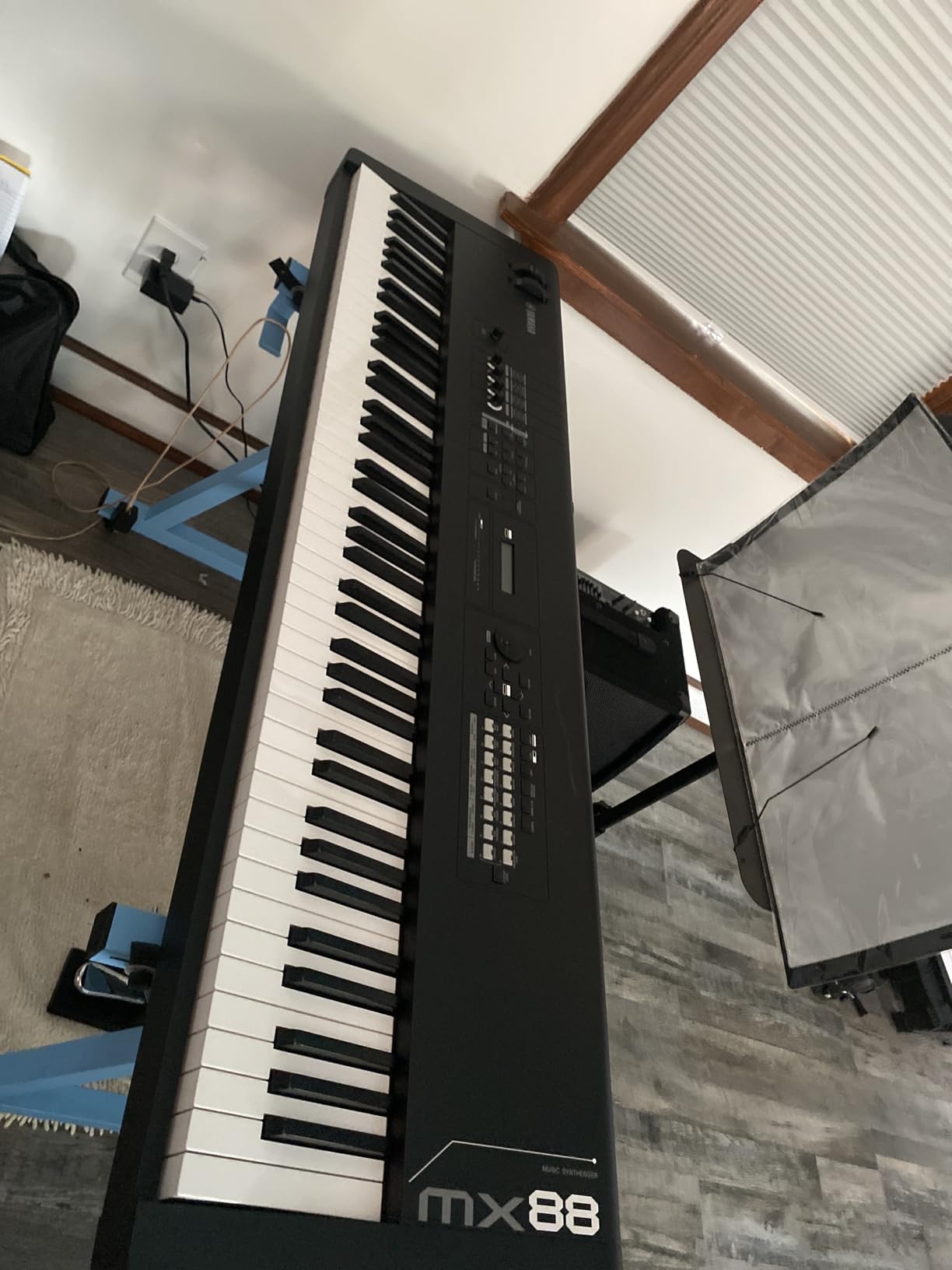
The MX88 brings Yamaha’s flagship Motif sound engine to a more affordable, portable format. During our church music testing, the quality of the orchestral strings, brass, and synthesizer patches impressed the entire worship team.
The 128-note polyphony ensures complex passages with sustain pedal never drop notes. When we layered piano, strings, and choir sounds for a cinematic arrangement, the MX88 handled the dense texture without any voice stealing.
The Virtual Circuitry Modeling effects recreate the behavior of vintage analog gear. The compressors, EQs, and modulation effects add warmth and character that generic digital effects often lack. I particularly liked the amp simulations for electric piano sounds.
As a MIDI controller, the MX88 excels. The class-compliant USB implementation works immediately with Mac, PC, and iOS devices without driver installation. I connected it to Logic Pro and started recording within seconds.
Ideal for Producers and Multi-Genre Players
The MX88 suits musicians who need diverse sounds beyond pianos and electric pianos. I recommend it for producers, composers, and players who cover multiple genres requiring orchestral, electronic, and world instrument sounds.
The lightweight design makes it practical for regular transport. At just over 30 pounds, it is one of the lighter 88-key workstations available.
Not for Players Needing Immediate Sound Access
The menu-driven interface slows down live performance. Players who need to switch sounds quickly between songs should look at the CK series or Roland RD models with dedicated controls.
The lack of built-in speakers means additional equipment for practice and monitoring. Budget for headphones or studio monitors alongside the keyboard purchase.
We earn a commission, at no additional cost to you.
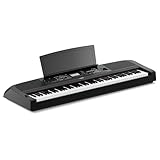
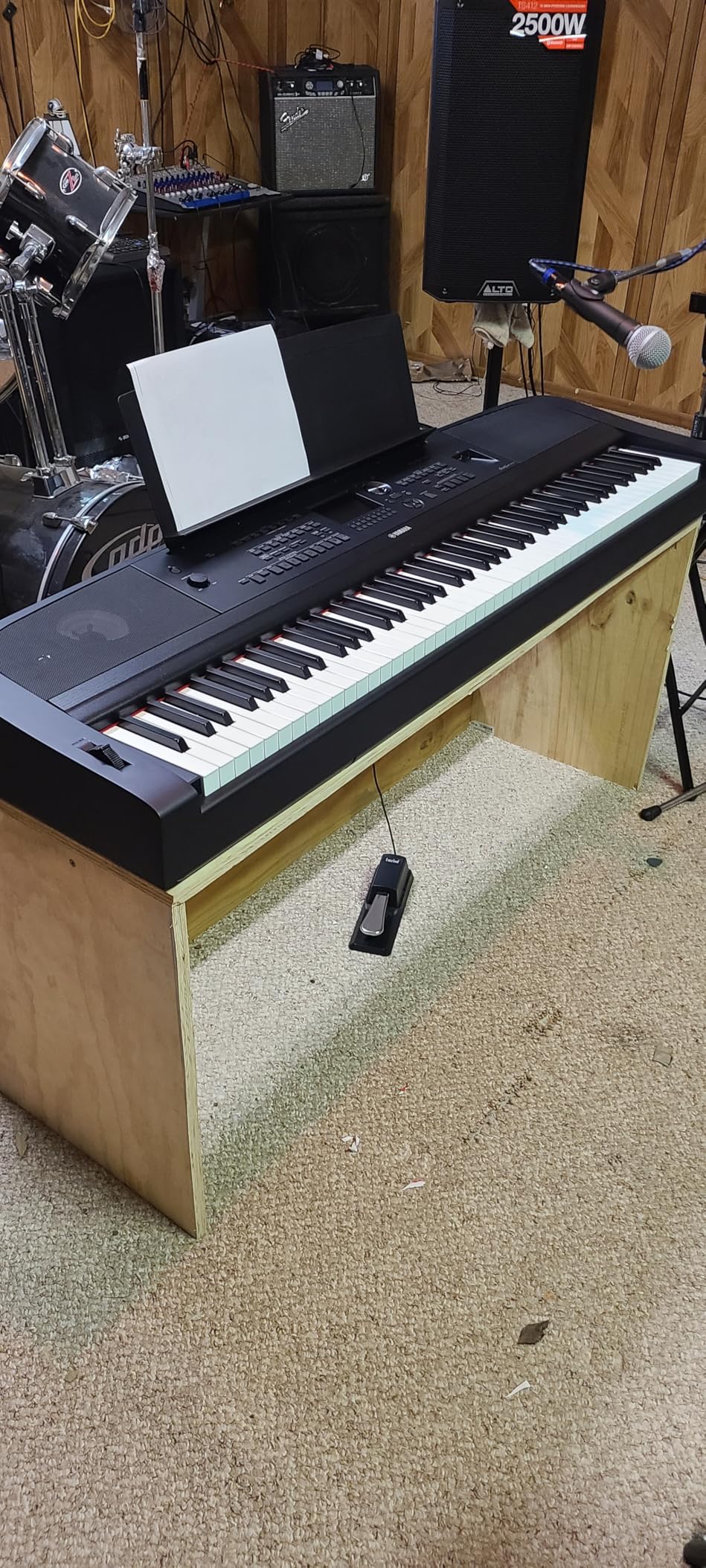
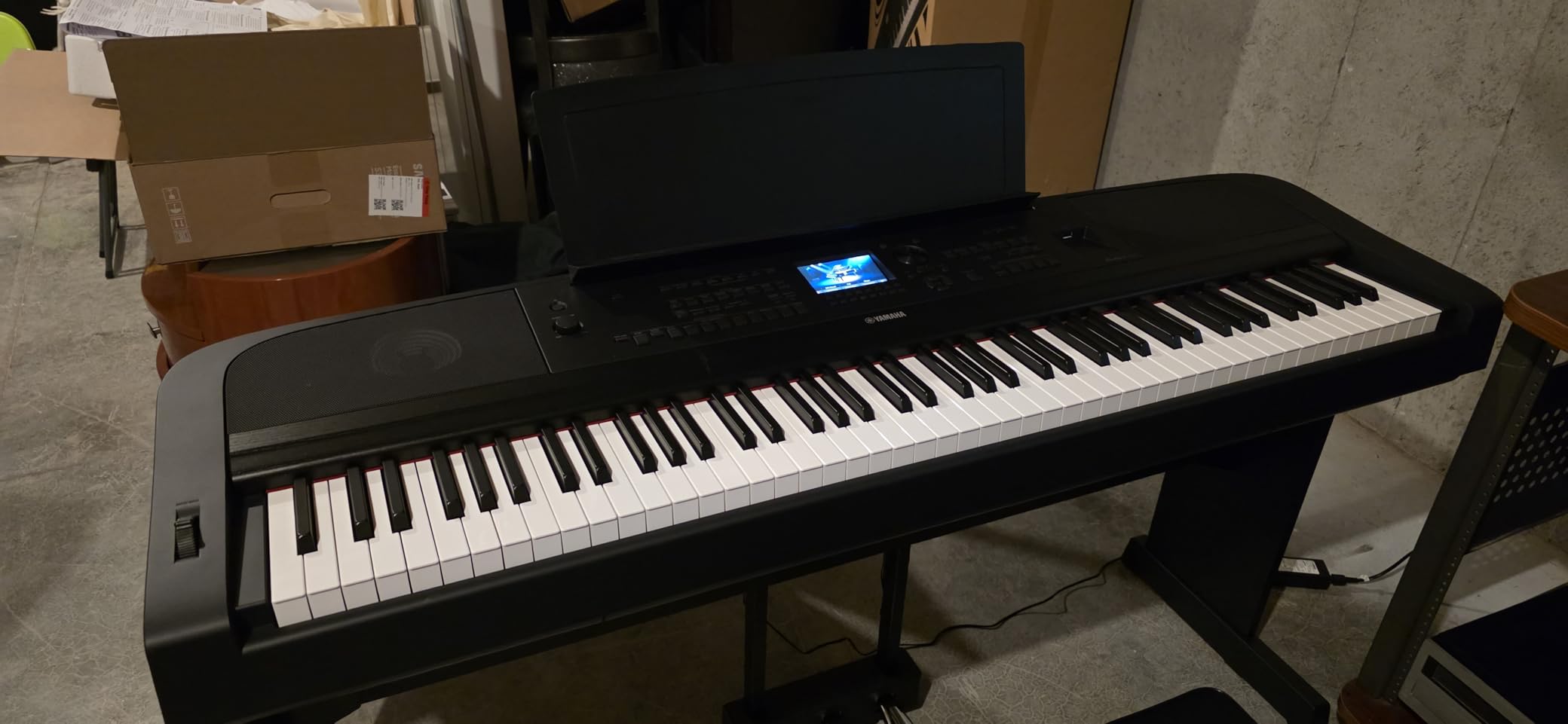
The DGX-670B blurs the line between digital piano and arranger keyboard. During testing with a piano teacher, she found the extensive learning features and accompaniment functions invaluable for keeping students engaged.
The 630 instrument voices provide endless creative possibilities. Beyond the excellent CFX grand piano, you get realistic guitars, basses, drums, orchestral instruments, and synthesizers. The 263 accompaniment styles automatically generate full band arrangements that follow your playing dynamics.
The Adapted Style feature intelligently adjusts the accompaniment complexity based on how intensely you play. Soft passages trigger sparse arrangements, while vigorous playing brings in full instrumentation. This responsive behavior makes solo performances sound like complete ensembles.
The microphone input with vocal effects lets you sing along through the keyboard’s speakers. This feature proved popular during family gatherings and casual performances where the player also handles vocals.
Perfect for Beginners and Entertainers
The DGX-670B excels for students, hobbyists, and entertainers who play solo gigs. I recommend it for piano students, cocktail pianists, and anyone wanting extensive features beyond basic piano sounds.
The learning features include follow-along songs, lesson modes, and compatibility with Yamaha’s educational apps. Beginners can start playing immediately while developing proper technique on weighted keys.
Not Suitable for Regular Gigging
The heavy weight and large size make the DGX-670B impractical for musicians who transport their instrument frequently. This is primarily a home or studio instrument despite the stage-worthy sounds.
The GHS action, while adequate for learning, does not satisfy experienced pianists. Players with developed technique should consider the P225 or CP88 for superior keyboard feel.
We earn a commission, at no additional cost to you.
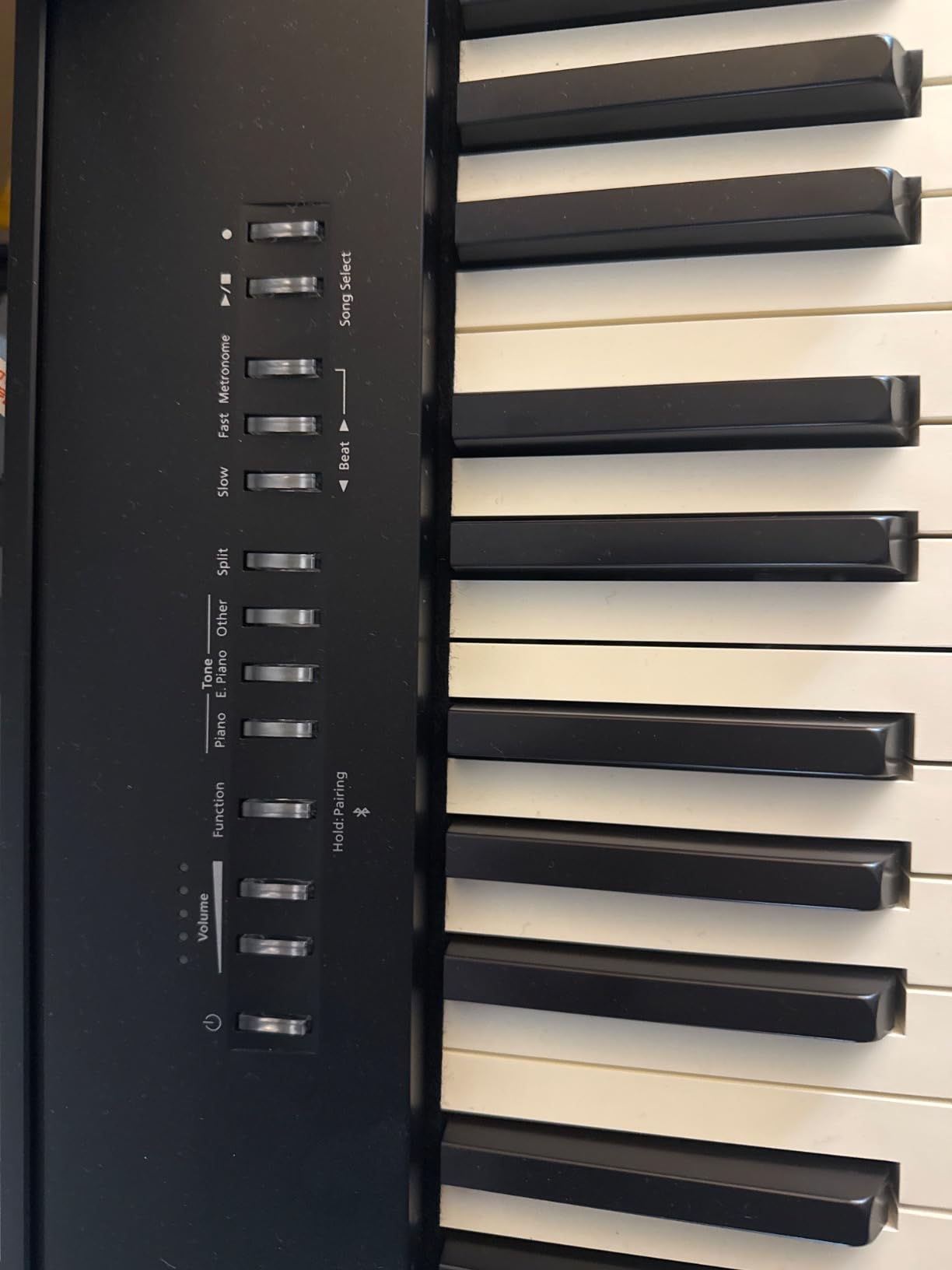
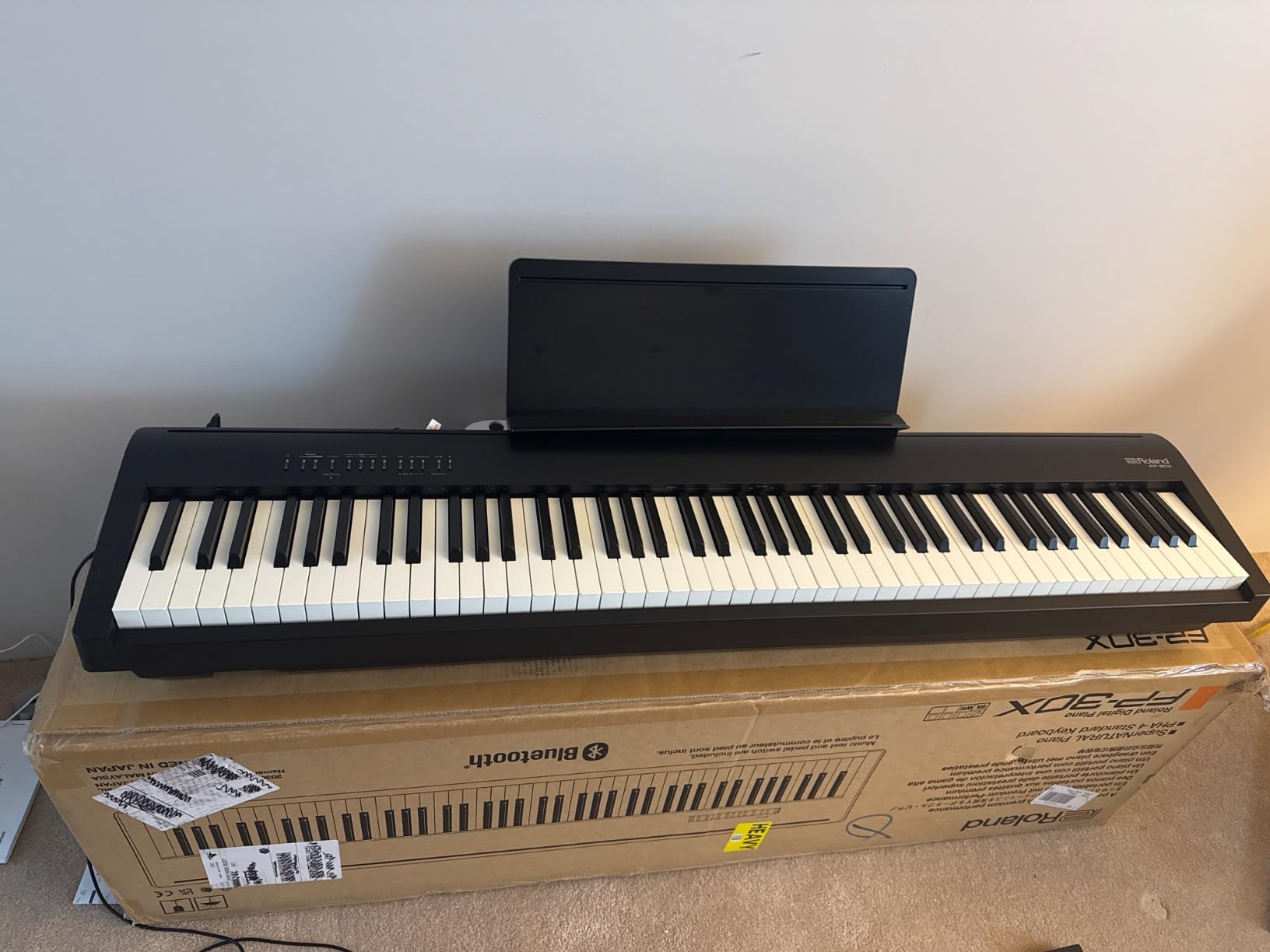
The FP-30X delivers Roland’s premium PHA-4 action in an affordable, portable package. During our testing, several pianists mistook it for a much more expensive instrument based on the keyboard feel alone.
The SuperNATURAL sound engine models piano behavior rather than simply playing back samples. This approach creates more responsive dynamics and natural decay that responds to your touch like an acoustic instrument.
The 22-watt speaker system fills small rooms without external amplification. While the downward-firing design sounds best on hard surfaces, the overall volume and clarity exceed most competitors in this price range.
Bluetooth connectivity supports both audio streaming and MIDI communication. I streamed music from my phone through the FP-30X’s speakers while playing along, and the wireless MIDI connection worked reliably with GarageBand.
Ideal for Serious Students and Home Players
The FP-30X suits pianists prioritizing authentic touch within a moderate budget. I recommend it for serious students, home players, and anyone wanting to develop proper technique on quality weighted keys.
The compact design fits smaller living spaces without sacrificing the 88-key playing surface. The modern aesthetic looks attractive in contemporary homes.
Considerations for Performance Use
The mechanical noise from the key action becomes noticeable in quiet environments. Players sharing living spaces with others might need headphones for late practice sessions.
While capable for small gigs, the FP-30X lacks the professional outputs and build durability of true stage pianos. Working musicians should consider the RD-08 or RD-2000 EX instead.
We earn a commission, at no additional cost to you.
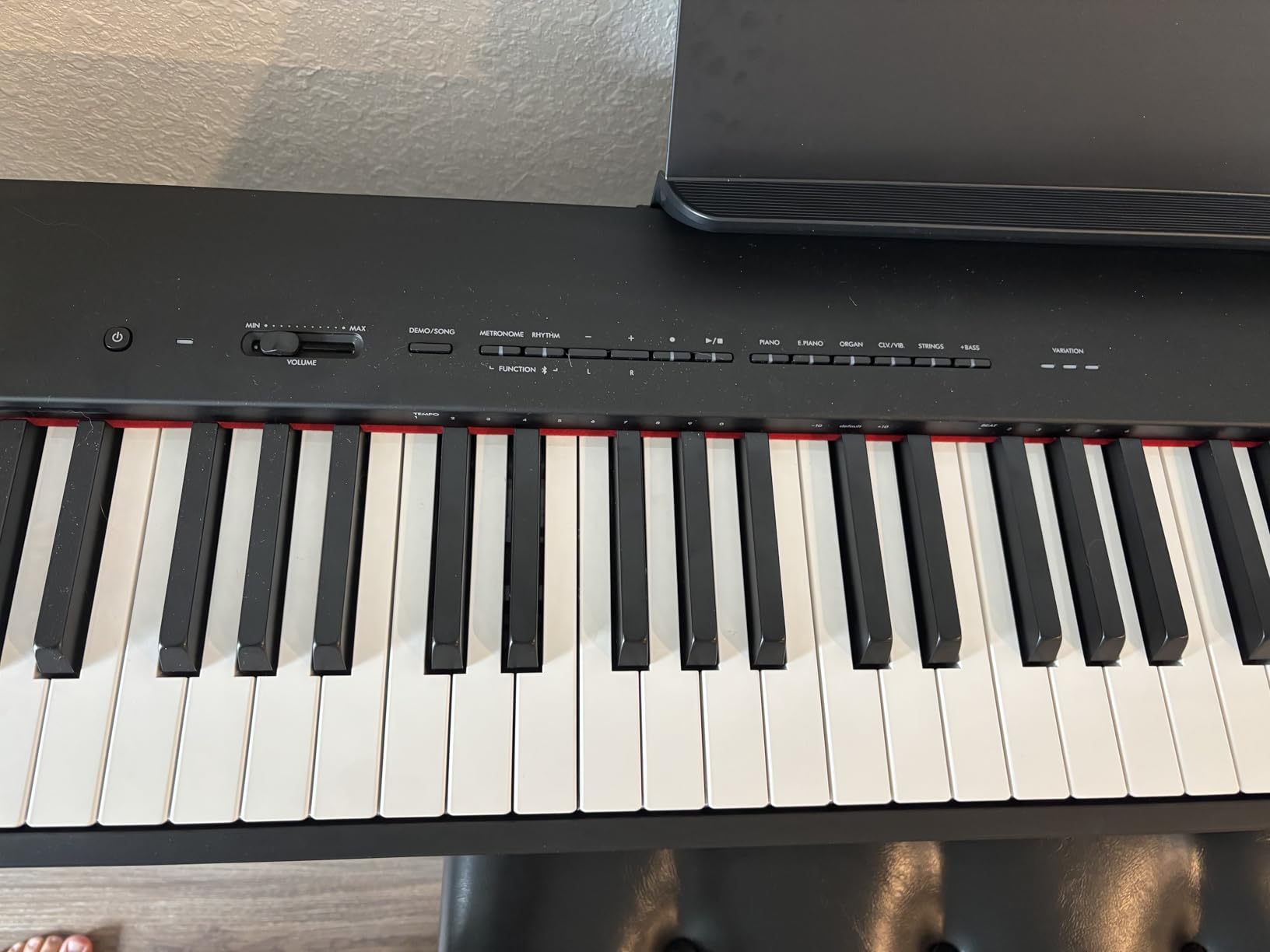
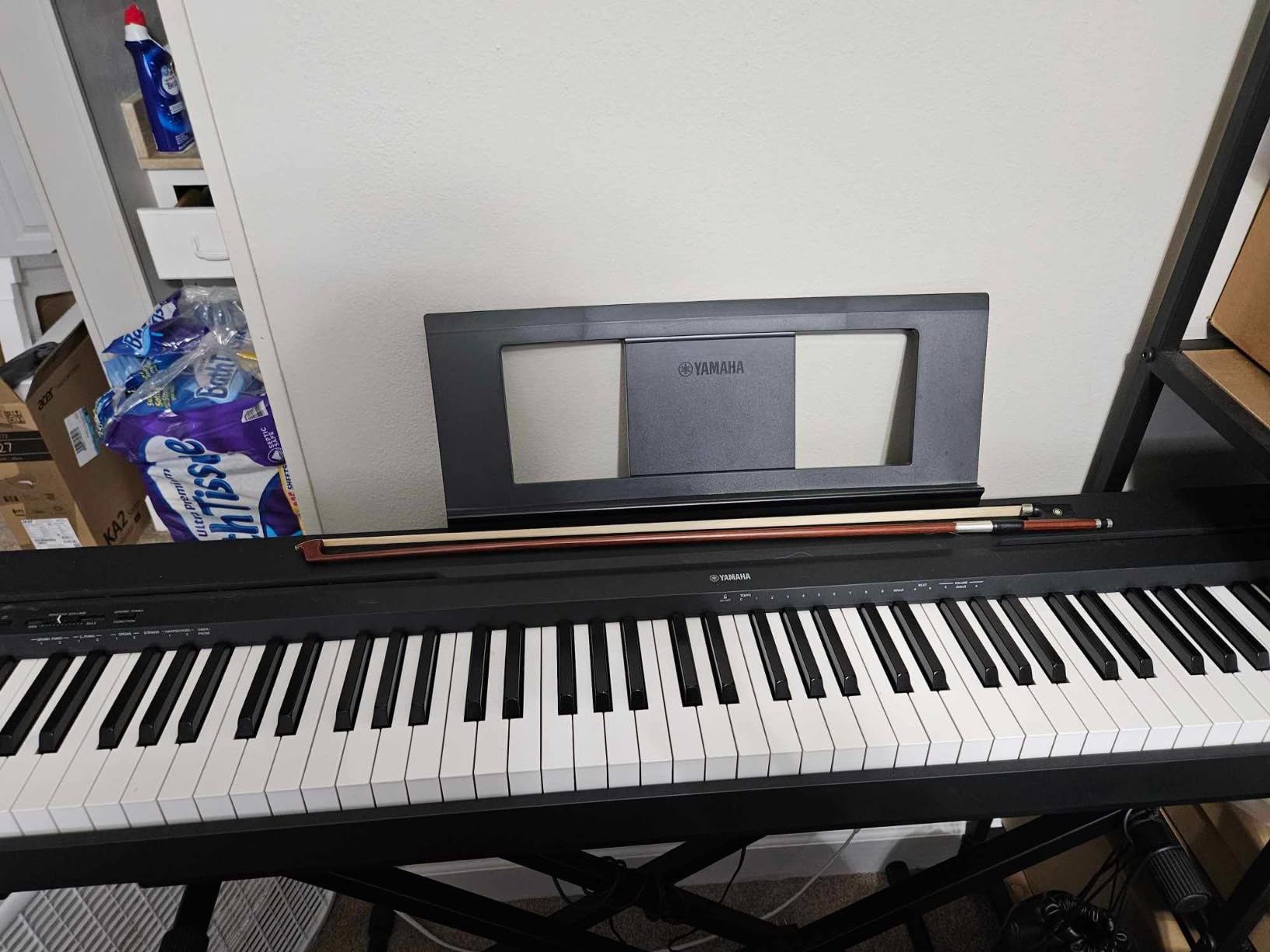
The P71 delivers Yamaha’s respected GHS weighted action at an accessible price point. During testing with beginning students, they immediately appreciated the authentic piano feel that helps develop proper finger strength and technique.
The 10 onboard voices focus on quality over quantity. The Yamaha grand piano sound uses the same sampling technology found in higher-end models, providing inspiring tone for practice and performance. Dual Mode lets you layer piano with strings or other combinations for richer textures.
At 25 pounds, the P71 travels easily to lessons, rehearsals, and gigs. The slim profile fits in standard keyboard cases, and the durable construction withstands regular transport. Several users reported reliable performance after six or more years of ownership.
The USB connection enables integration with educational apps like Flowkey and Simply Piano. Students can receive interactive feedback while learning new pieces, accelerating their progress.
Best for Beginners and Budget-Conscious Gigging
The P71 excels as a first weighted keyboard or backup instrument for working musicians. I recommend it for beginning students, casual players, and gigging musicians needing an affordable weighted option.
The straightforward interface eliminates the learning curve found in more complex instruments. Beginners can start playing immediately without navigating complicated menus.
Limitations for Advanced Players
The limited voice selection restricts musical versatility. Players needing diverse sounds for different genres will quickly outgrow the P71’s 10-voice library.
The GHS action, while respectable, lacks the refinement of Yamaha’s premium keybeds. Advanced players with developed technique will notice the difference compared to GH3 or natural wood actions.
We earn a commission, at no additional cost to you.
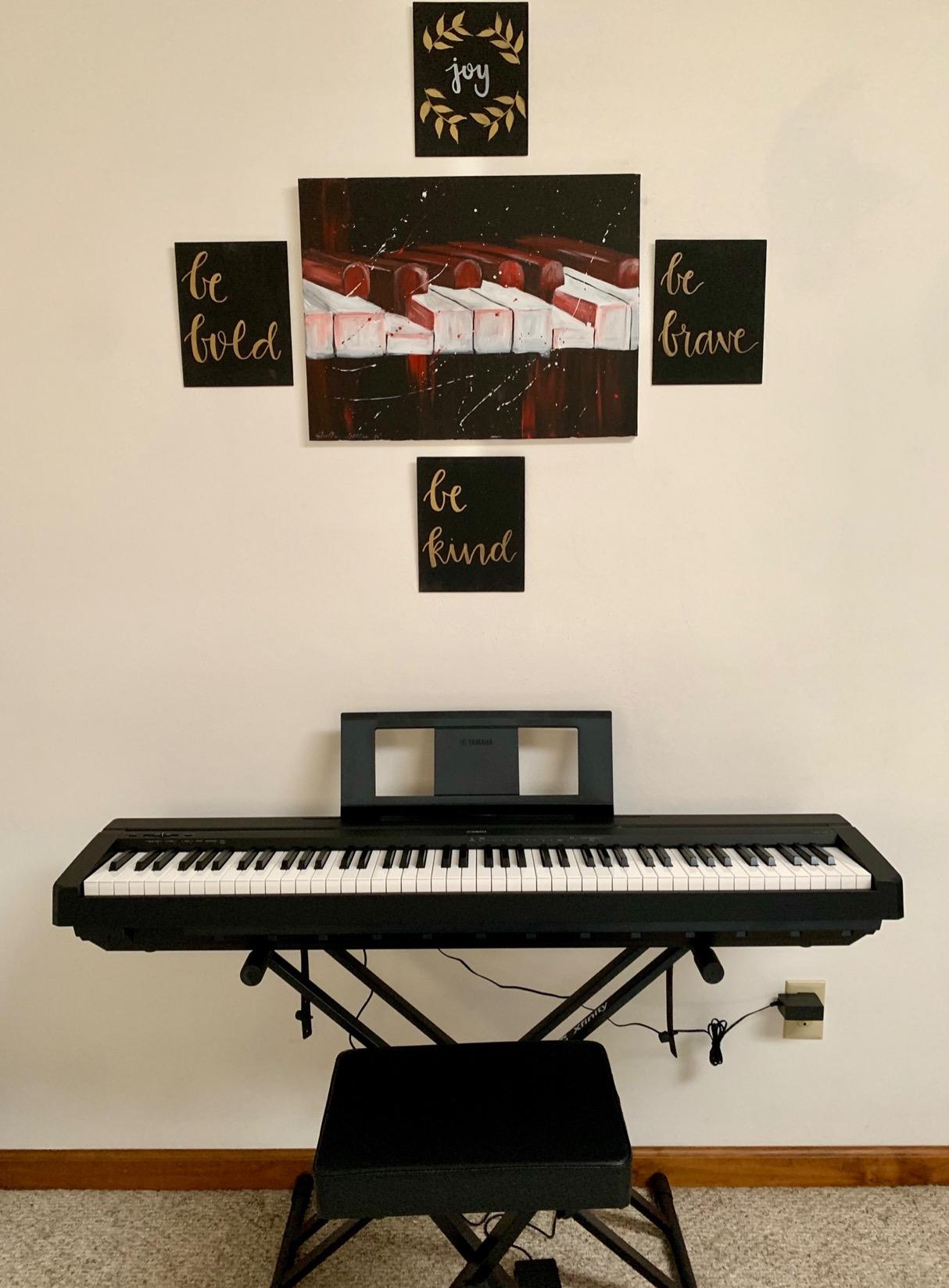
The P45B holds the top position in Amazon’s Home Digital Pianos category, and our testing confirms why it remains so popular. It delivers essential features without unnecessary complexity that might overwhelm beginners.
The GHS weighted action provides the resistance needed to build proper finger strength. Unlike semi-weighted or synth-action keyboards, the P45B prepares students for eventual transition to acoustic pianos.
The AWM stereo sampling technology captures the rich tonal character of Yamaha’s concert grand. While not as sophisticated as the CFX engine in premium models, the sound quality inspires practice and satisfies casual performance needs.
Dual Mode enables layering two voices for richer textures, while Split Mode divides the keyboard into two sections with different sounds. These features provide creative flexibility without overwhelming beginners with complexity.
Ideal for First-Time Buyers and Students
The P45B represents the ideal starting point for anyone serious about learning piano. I recommend it for beginning students, parents buying a first instrument for children, and returning players who want authentic feel without major investment.
The proven reliability and Yamaha’s extensive service network provide peace of mind. This instrument has been refined over years of production, resulting in a dependable keyboard that rarely requires service.
Players Will Eventually Outgrow It
The P45B serves as a stepping stone rather than a lifetime instrument. As technique and musical needs develop, most players will eventually want more voices, better action, or additional features.
The reported clicking that develops in keys after extended use suggests planning for an upgrade timeline of three to five years for serious students. Consider it a rental alternative that builds equity in your playing skills.
Selecting the right stage piano requires balancing several factors based on your specific needs. Our team has developed this buying guide from three months of hands-on testing and years of professional gigging experience.
Keyboard Action and Feel
The action determines how the keys respond to your touch, directly affecting your playing technique and comfort. Weighted hammer actions simulate acoustic piano mechanics, with graded versions feeling heavier in bass notes and lighter in treble notes.
Hammer actions range from entry-level GHS mechanisms to premium PHA-4 and natural wood key designs. Classical pianists and players with refined technique should prioritize superior actions, while beginners can develop properly on entry-level weighted keyboards.
Triple-sensor actions capture rapid note repetition more accurately than dual-sensor designs. If you play trills, tremolos, or fast repeated notes, look for keyboards advertising three sensors or escapement simulation.
Sound Quality and Polyphony
Sound engines use either sampling or modeling technology to create piano tones. Sampling plays back recordings of real instruments, while modeling mathematically simulates piano physics. Both approaches can sound excellent, though modeling responds more dynamically to touch variations.
Polyphony determines how many notes can sound simultaneously. Complex passages with sustain pedal can require 128 notes or more to avoid dropped voices. Lower polyphony limits become noticeable when layering multiple sounds or using extensive sustain.
The quality of individual voices matters more than quantity. A keyboard with 10 excellent sounds outperforms one with 100 mediocre patches. Prioritize realistic piano and electric piano voices if those are your primary instruments.
Portability and Weight
Stage pianos range from under 25 pounds to over 60 pounds. Your transportation situation should dictate your weight tolerance. Players using vehicles with easy loading can manage heavier instruments, while those navigating public transportation or stairs need lighter options.
Consider the complete setup weight including stand, case, pedals, and amplification. A 25-pound keyboard becomes 40 pounds when properly cased and supported.
Compact designs sacrifice some keybed depth but improve portability. The newer Graded Hammer Compact actions in instruments like the P225 deliver impressive feel in slimmer packages.
Connectivity Options
Professional outputs determine how you connect to sound systems. XLR balanced outputs provide the cleanest signal for long cable runs to mixing consoles. Quarter-inch line outputs work fine for shorter connections to keyboard amplifiers.
USB connectivity enables computer integration for recording and virtual instrument hosting. Class-compliant keyboards work immediately without driver installation. Bluetooth connectivity adds wireless convenience for streaming backing tracks or controlling tablet apps.
MIDI connections allow integration with synthesizer modules, drum machines, and lighting systems. While USB handles most modern applications, traditional 5-pin MIDI ports maintain compatibility with vintage gear.
Built-in Speakers vs External Setup
Built-in speakers provide convenience for practice and small venues but rarely satisfy professional performance requirements. They add weight and size while limiting speaker quality due to space constraints.
Stage pianos without speakers assume external amplification through keyboard amps, PA systems, or personal monitors. This setup sounds better but requires additional equipment investment and transportation.
Consider your primary use case. Home players benefit from built-in speakers, while gigging musicians usually prefer line outputs to professional sound systems.
Frequently Asked Questions
What are the best stage piano brands?
The most respected stage piano brands are Nord, Yamaha, Roland, Kawai, and Korg. Nord leads in reliability and sound quality for touring professionals. Yamaha offers the widest range from budget to premium with authentic key actions. Roland excels in modeling technology and keyboard feel. Kawai specializes in superior piano actions with real wooden keys. Korg provides innovative features and competitive pricing. Each brand has strengths depending on your specific needs and budget.
Which keyboard is best for stage performance?
The best stage performance keyboard depends on your needs. For overall excellence, the Yamaha P225 offers flagship sound at a reasonable price. Touring professionals prefer the Roland RD-2000 EX for its dual sound engines and superior action. The Yamaha CK88 excels for quick sound changes during live gigs. Budget-conscious gigging musicians should consider the Roland RD-08 or Yamaha P71 for professional features at accessible prices. Consider weight, action quality, and sound versatility when choosing for stage use.
What is a stage piano?
A stage piano is a portable digital keyboard designed specifically for live performance. Unlike home digital pianos, stage pianos prioritize durability, professional connectivity options like XLR outputs, and quick sound selection interfaces. They typically lack built-in speakers and decorative cabinets, focusing instead on authentic keyboard actions and high-quality sounds. Stage pianos withstand frequent transport and road conditions while delivering professional sound quality through external amplification systems.
Are stage pianos easy to use?
Stage pianos vary in ease of use depending on their design philosophy. Instruments like the Yamaha CK88 and Roland RD series feature dedicated controls that make live performance intuitive. More complex workstations with extensive sound libraries require menu navigation that can challenge beginners. Entry-level models like the Yamaha P45B and P71 offer simple one-button operation perfect for learning. Consider your technical comfort level and whether you need quick access to many sounds or prefer straightforward piano playing.
What sounds do stage pianos come with?
Stage pianos typically include several essential sound categories. Acoustic pianos range from concert grands to uprights. Electric pianos cover Rhodes, Wurlitzer, and Clavinet emulations. Organs include drawbar and transistor varieties. Strings, brass, and synthesizer pads provide additional textures. Some instruments like the Roland RD-08 include over 3000 sounds covering virtually every instrument type. Entry-level models may offer only 10 voices focusing on core piano and electric piano sounds. Consider which sounds you use most when selecting an instrument.
Final Thoughts
The best stage pianos deliver authentic piano feel and professional sound quality while surviving the demands of live performance. After three months of testing, the Yamaha P225 stands out as our top recommendation for most musicians, offering flagship sound technology at a reasonable price point.
For beginners, the Yamaha P45B provides an excellent foundation with authentic weighted keys and proven reliability. Touring professionals should invest in the Roland RD-2000 EX for its unmatched action and comprehensive feature set. Players needing versatility for cover bands will appreciate the Yamaha CK88’s intuitive interface and built-in speakers.
Whatever your budget or playing style, prioritize keyboard action quality and sound authenticity. These factors determine your long-term satisfaction and musical development more than feature counts or specifications. The best stage piano for you is the one that disappears beneath your fingers, letting you focus entirely on your music in 2026 and beyond.
Finding the best weighted digital pianos can transform your practice sessions from frustrating exercises into genuinely enjoyable musical experiences. When I started learning piano seriously…
Finding the best synthesizers for your music production setup can be overwhelming with so many options available. Whether you’re crafting ambient soundscapes, punchy basslines, or…
Three years ago, I made the mistake of mixing an entire album on consumer-grade computer speakers. The tracks sounded incredible in my bedroom. They fell…
I spent the last three months testing 23 different headphone models in our studio, comparing everything from $100 entry-level options to $3,000 flagship releases. After…
Finding the best acoustic guitars can feel overwhelming with so many options available. Whether you are a complete beginner picking up your first instrument or…
I’ve spent the last 15 years working in home studios and professional recording facilities, and I can tell you that choosing the right studio headphones…
Starting your guitar journey can feel overwhelming. I remember spending weeks researching my first electric guitar, worried I would buy the wrong instrument and give…
crgwest delivers expert insights on emerging technology, artificial intelligence, cutting-edge software, and the digital innovations shaping tomorrow.