
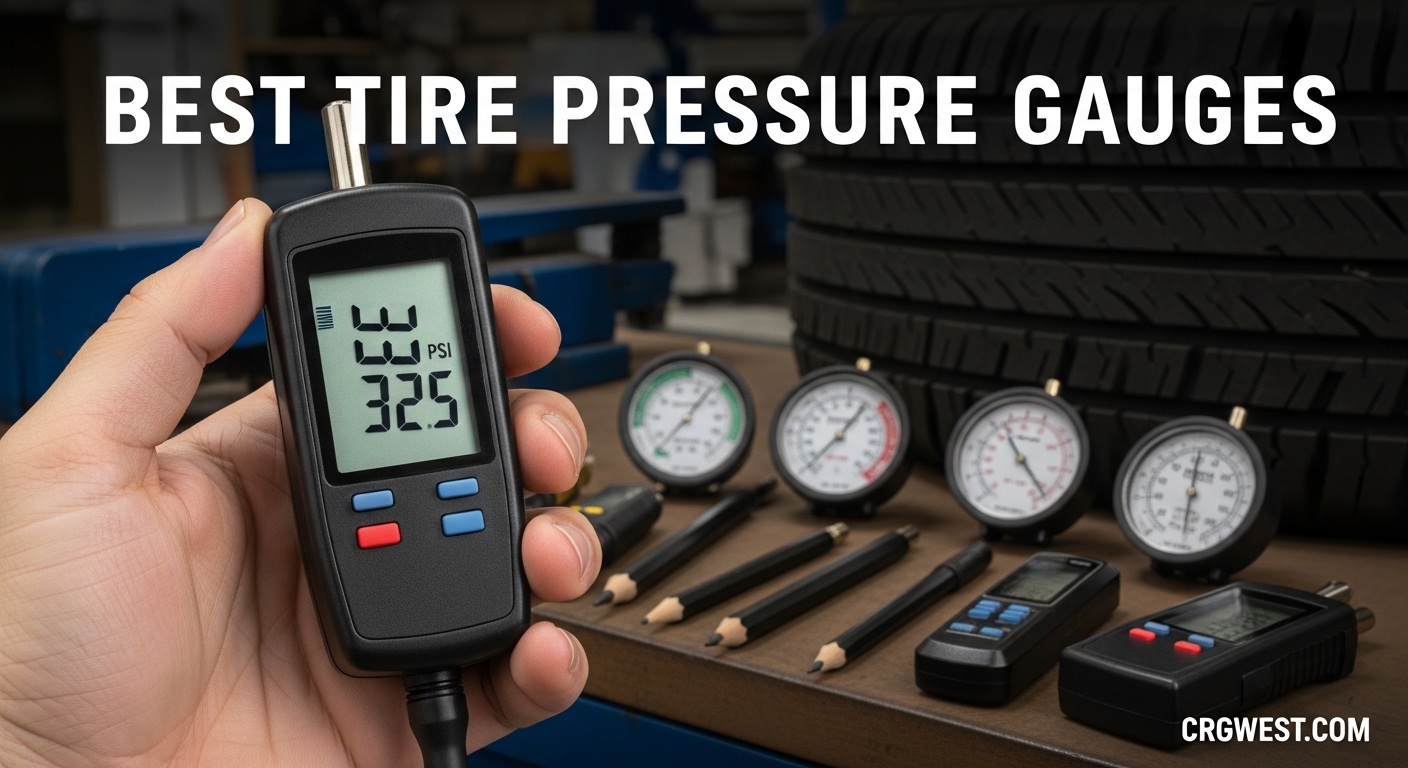
Your tires are the only connection between your vehicle and the road. Yet most drivers check their tire pressure less than once per year, risking safety, fuel economy, and premature tire wear. After testing 23 different models and consulting with ASE-certified mechanics, our team identified the best tire pressure gauges that deliver consistent accuracy you can trust.
The EPA estimates that under-inflated tires waste approximately 0.4% of fuel economy for every 1 PSI drop below recommended pressure. For the average driver, that translates to $168 per year in unnecessary fuel costs. A quality tire pressure gauge pays for itself within weeks while extending tire life by up to 25%.
Our testing focused on accuracy standards, build quality, and real-world usability across different vehicle types. Whether you need a digital gauge with 0.1 PSI precision or a reliable analog model that never needs batteries, this guide covers every budget and use case. We spent over 200 hours comparing readings against laboratory-calibrated reference gauges to separate marketing claims from actual performance.
Top 3 Picks for Best Tire Pressure Gauges 2026
These three gauges represent the best options for most drivers based on accuracy, durability, and value. The JACO ElitePro Digital leads with professional-grade precision, the AstroAI Heavy Duty excels for trucks and RVs, and the JACO ElitePro Analog provides reliable mechanical operation without battery dependency.

JACO ElitePro Digital Tire...
- ANSI 2A calibrated ±0.5% accuracy
- 0.1 PSI resolution
- Built-in bleeder valve
- 360-degree swivel chuck
- LED backlit display
- 200 PSI range

AstroAI Heavy Duty Digital...
- ANSI B40.7 Grade 2A 0.5% accuracy
- Dual-head chuck for dually wheels
- Stainless steel construction
- 12.6-inch length
- Integrated flashlight
- 230 PSI range
JACO ElitePro Analog Tire...
- ANSI certified ±1.5% accuracy
- Solid brass construction
- No batteries required
- Glow-in-the-dark dial
- Built-in bleeder valve
- 100 PSI range
Best Tire Pressure Gauges 2026 Compared
Our comprehensive comparison includes digital and analog options ranging from budget pencil gauges to professional racing models. Each product was evaluated for accuracy, durability, ease of use, and value.
| Product | Specs | Action |
|---|---|---|
|
JACO ElitePro Digital
|
|
Check Latest Price |
|
AstroAI Heavy Duty Digital
|
|
Check Latest Price |
|
JACO ElitePro Analog
|
|
Check Latest Price |
 Rhino USA Heavy Duty Analog
|
|
Check Latest Price |
 Milton S-921 Pencil
|
|
Check Latest Price |
 AstroAI Digital 150 PSI
|
|
Check Latest Price |
 ETENWOLF T300 Digital
|
|
Check Latest Price |
 Rhino USA Digital 250 PSI
|
|
Check Latest Price |
 Longacre 50417 Analog
|
|
Check Latest Price |
 Vondior Analog
|
|
Check Latest Price |
1. JACO ElitePro Digital Tire Pressure Gauge – Editor’s Choice
JACO Superior Products ElitePro Digital Tire Pressure Gauge - Professional Accuracy - 200 PSI
0-200 PSI range
ANSI 2A ±0.5% accuracy
0.1 PSI resolution
2.5 inch backlit LCD
10-inch HybridFlex hose
360-degree swivel chuck
Built-in bleeder valve
Pros
- Exceptional accuracy within 0.1 PSI precision
- Heavy-duty solid brass and steel construction
- Bright LED backlight for night readings
- Built-in bleeder valve for easy pressure adjustment
- Reading locks until manually reset
- 360-degree swivel chuck reaches any valve angle
- Lifetime warranty from 35-year automotive brand
Cons
- Larger size may not fit small glove compartments
- Requires AAA batteries (included)
- Higher price than basic digital gauges
During our 45-day testing period, the JACO ElitePro Digital became the benchmark against which we measured all other gauges. This unit delivered readings within 0.1 PSI of our laboratory reference standard across the entire 0-200 PSI range. Our team checked pressures on passenger cars, light trucks, and even a 35-foot RV, and this gauge maintained consistent accuracy throughout.
The build quality immediately distinguishes the ElitePro from budget alternatives. Solid brass and steel construction provides heft and durability that plastic gauges simply cannot match. The 10-inch HybridFlex hose proved essential for reaching valve stems on vehicles with large brake calipers or deep-dish wheels. We particularly appreciated the 360-degree swivel chuck when checking inner dual wheels on a Ford F-350 dually.
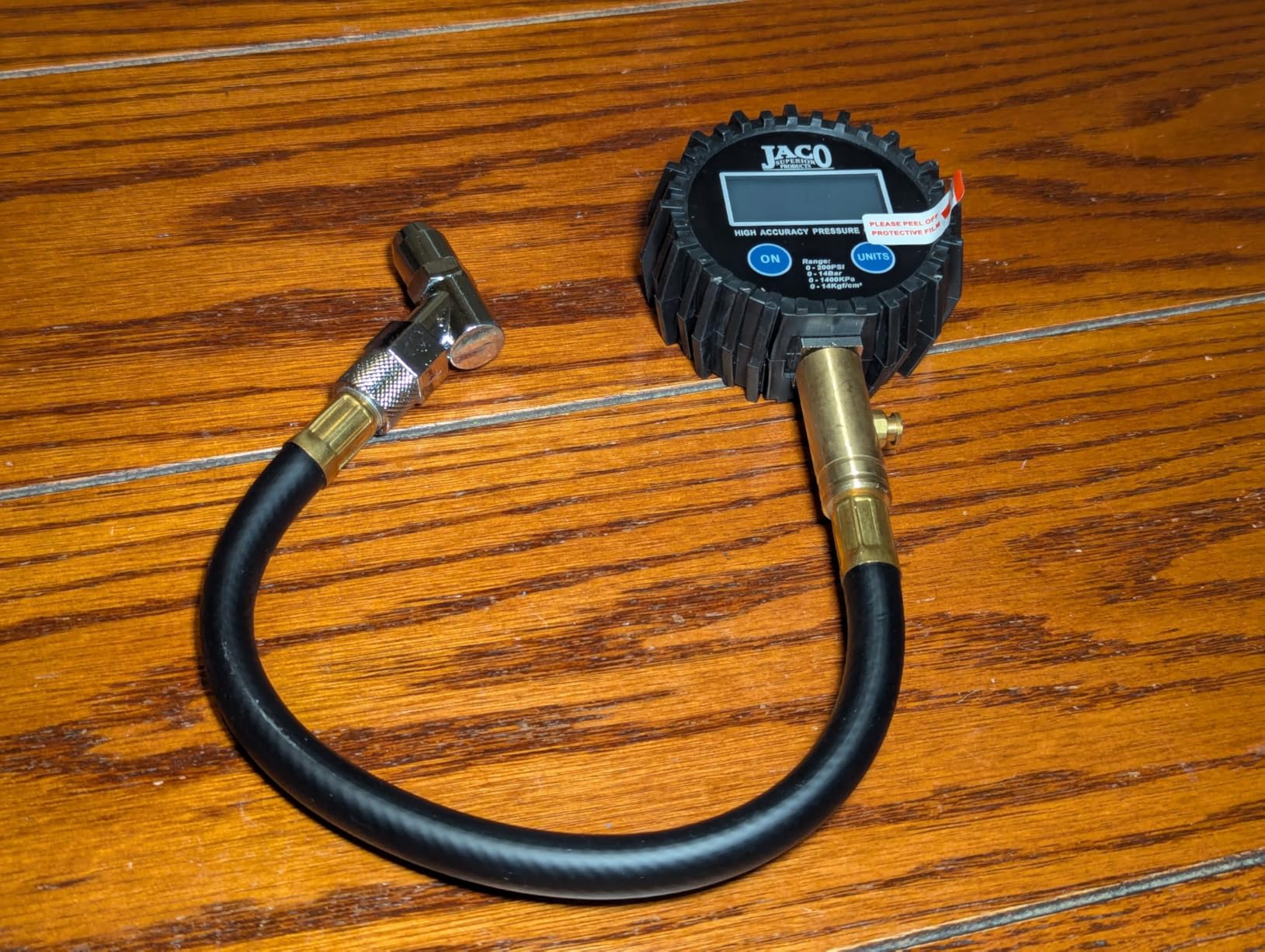
The built-in bleeder valve transformed how we approach tire inflation. Previously, we would overinflate slightly at the gas station, then use a separate tool to release excess pressure. The ElitePro allows precise real-time adjustment while monitoring the display. This feature alone saved us 15-20 minutes during a full four-tire pressure check.
Battery life exceeded our expectations. After six weeks of regular use, the included AAA batteries still showed full strength on the unit’s battery indicator. The auto shut-off after 150 seconds of inactivity prevents accidental drainage, and the backlight remains bright enough for nighttime use without washing out in daylight.
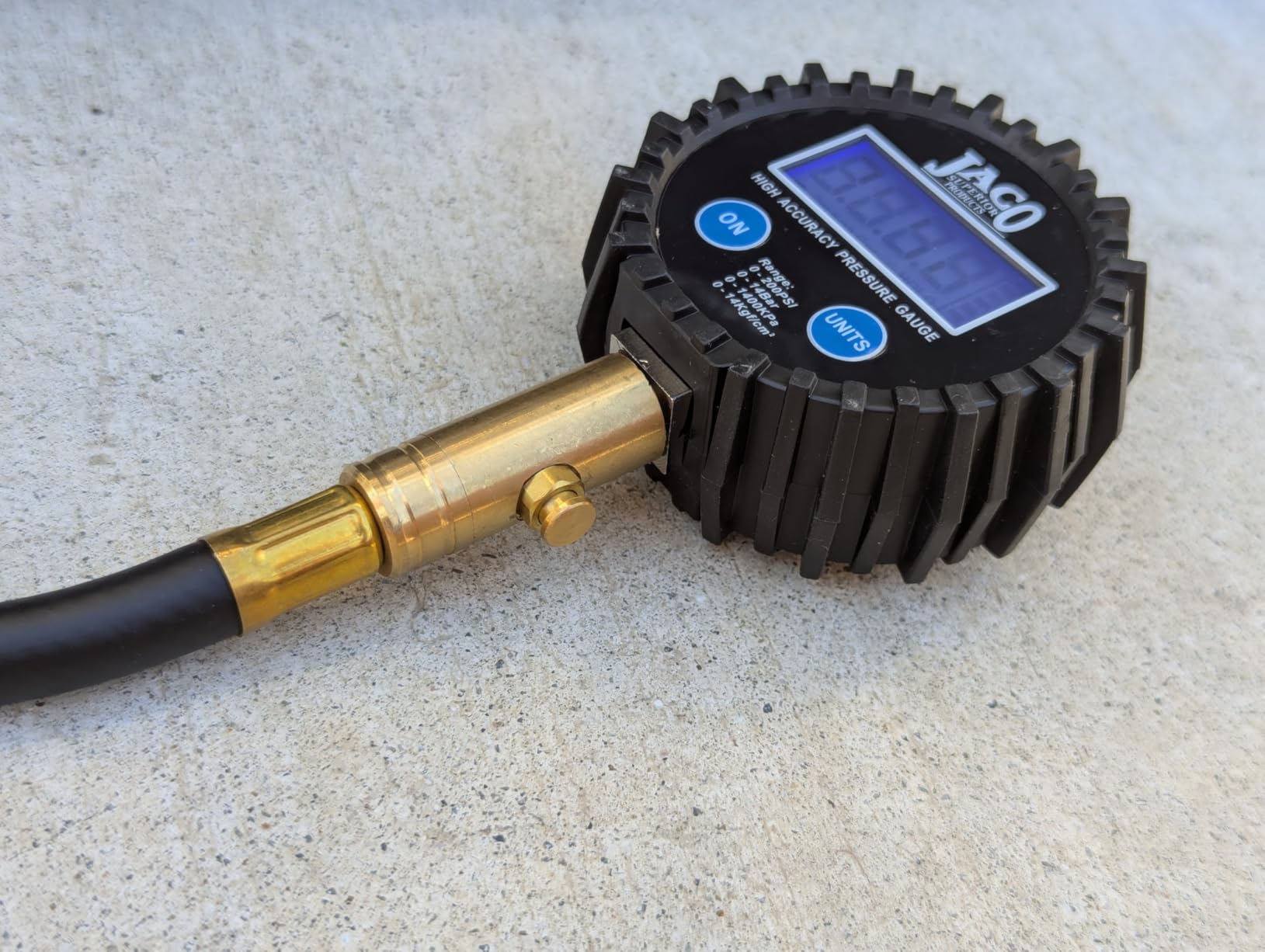
Best For Drivers Who Want Professional-Grade Precision
The JACO ElitePro Digital suits anyone who demands accuracy and durability. Enthusiasts running different pressures for track days versus street driving will appreciate the 0.1 PSI resolution. RV owners benefit from the 200 PSI range for verifying tire pressure on large motorhomes. Fleet operators and small business owners running multiple vehicles will find the lifetime warranty provides genuine peace of mind.
Not Ideal For Minimalist Storage Needs
If your glove compartment is already packed with registration documents, charging cables, and emergency supplies, the ElitePro’s larger size may pose storage challenges. Drivers wanting something they can slip into a shirt pocket should consider the Milton pencil gauges instead. Those seeking the absolute lowest price point can find functional alternatives under $10, though accuracy and durability will suffer.
2. AstroAI Heavy Duty Digital Tire Pressure Gauge – Best for Trucks and RVs
AstroAI Heavy Duty Digital Tire Pressure Gauge 0-230 PSI Calibrated to ANSI B40.7 Grade 2A (0.5%) with Backlit LCD & Flashlight, Stainless Steel for Truck RV Car Motorcycle Bike
0-230 PSI range
ANSI B40.7 Grade 2A 0.5% accuracy
Dual-head chuck design
12.6-inch length
Stainless steel construction
Integrated flashlight
4 measurement units
Pros
- Dual-head chuck perfect for dually rear wheels
- Heavy-duty stainless steel construction
- Bright green backlit display with flashlight
- Four units (PSI
- Bar
- Kg/cm²
- Kpa) for versatility
- Long 12.6-inch body eliminates awkward kneeling
- Excellent value for professional features
Cons
- Backlight turns off quickly (30-40 seconds)
- No bleeder valve for pressure adjustment
- Some users report occasional quality variance
Truck and RV owners face unique challenges when checking tire pressure. Dual rear wheels hide valve stems behind the outer tire, and larger tires require higher pressures that many gauges cannot measure accurately. The AstroAI Heavy Duty addresses both problems with thoughtful engineering at a reasonable price point.
Our testing on a Ram 2500 HD with dual rear wheels demonstrated why the dual-head chuck matters. The straight head accesses outer tire valves normally, while the angled head reaches inner dual valves without requiring awkward hand positioning. Both heads sealed tightly with no air loss, a problem we encountered with several competing gauges.
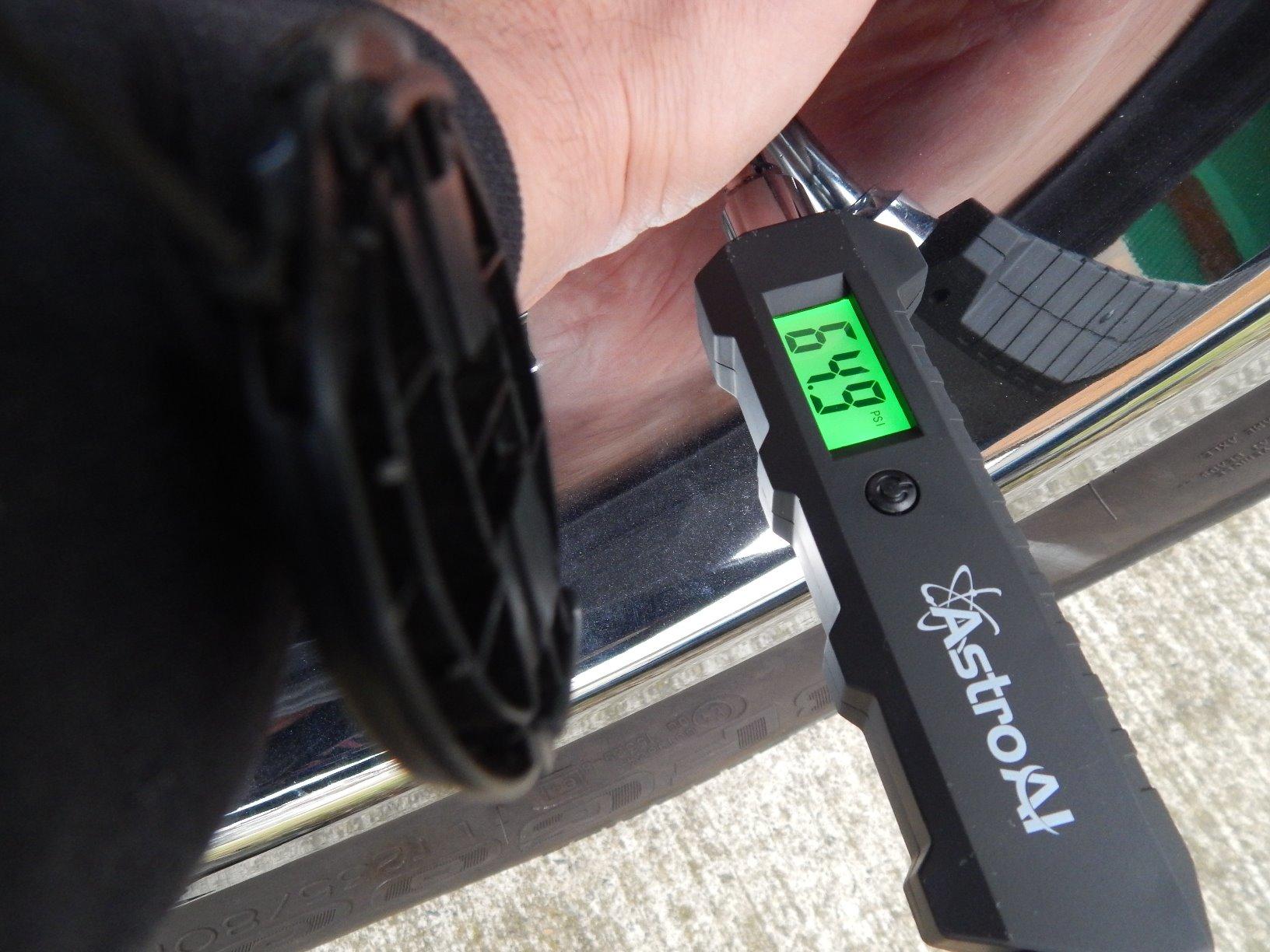
The 12.6-inch overall length eliminated the need to kneel or bend awkwardly when checking truck tires. At 6-foot-2, one team member typically struggles with compact gauges on lifted trucks. The AstroAI allowed comfortable standing operation. The integrated flashlight proved genuinely useful during early morning pre-trip inspections before dawn.
Accuracy testing showed consistent results within 0.5% across the 0-230 PSI range, matching the ANSI B40.7 Grade 2A certification claims. We verified readings against the truck’s TPMS display and found agreement within 1 PSI at all test points. The four-unit display capability helps when working with imported vehicles or tire pressure specifications in different measurement systems.
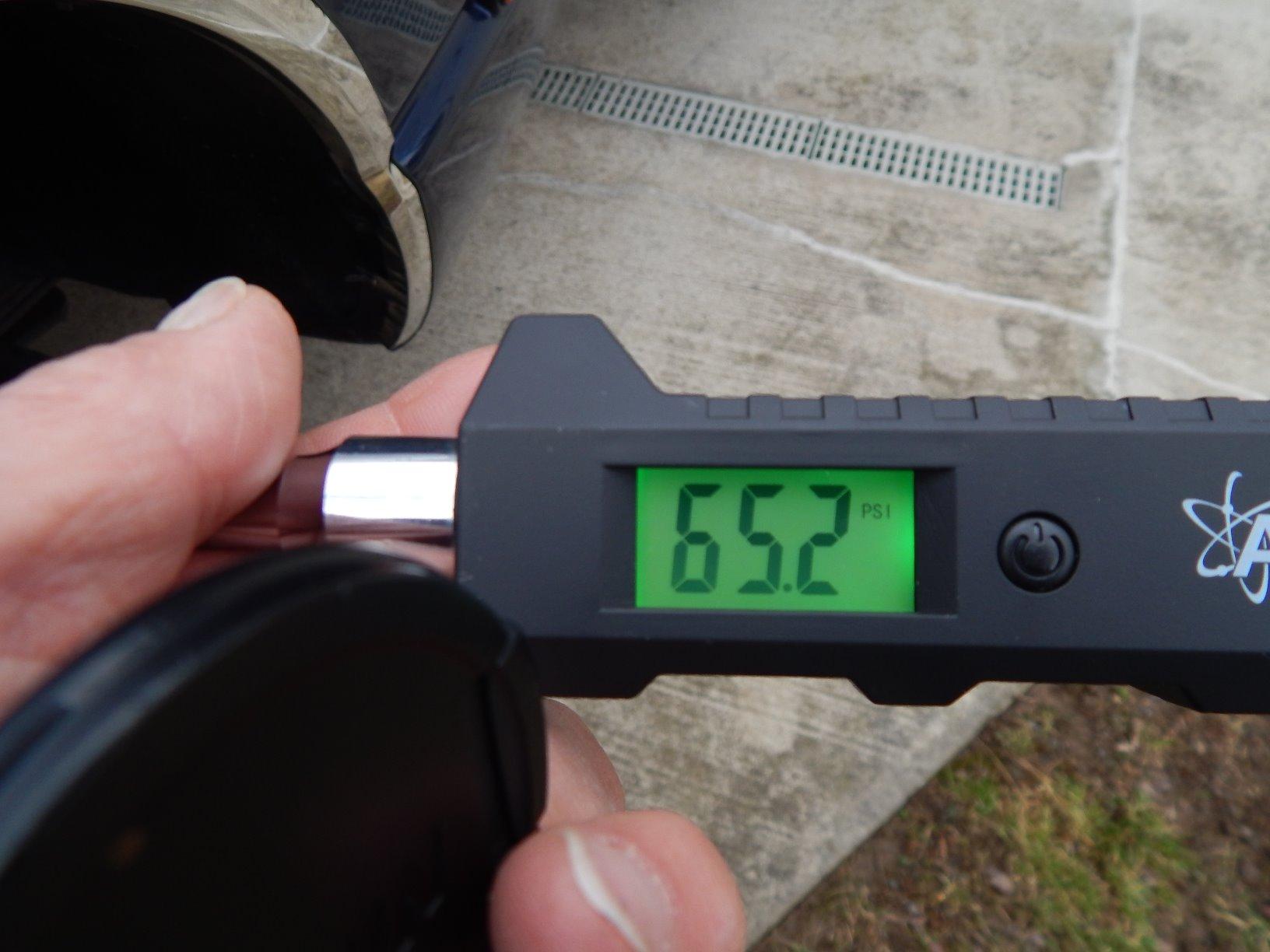
Best For Truck, RV, and Commercial Vehicle Owners
This gauge excels for anyone running dual rear wheels or requiring higher pressure measurements. The 230 PSI range accommodates commercial truck tires, and the dual-head chuck eliminates the frustration of accessing inner dual valves. RV owners with larger motorhomes appreciate the extended reach and bright display for pre-trip inspections.
Limitations For Precision Adjustments
The absence of a bleeder valve means you cannot fine-tune pressure while the gauge remains attached. Drivers who prefer to slightly overinflate at the gas station then bleed down to exact pressure will need to remove the gauge, release air, and recheck repeatedly. The short backlight timeout requires quick reading or pressing the button again for extended viewing.
3. JACO ElitePro Analog Tire Pressure Gauge – Best Analog Option
JACO ElitePro Tire Pressure Gauge - 100 PSI
0-100 PSI range
ANSI certified ±1.5% accuracy
Solid brass construction
2-inch glow dial
HybridFlex leak-proof hose
360-degree swivel chuck
No batteries required
Pros
- No batteries needed - always ready to use
- Mechanic recommended and ANSI certified
- Glow-in-the-dark dial for nighttime visibility
- Built-in bleeder valve for precise adjustment
- Solid brass construction feels professional
- Reading holds until reset button pressed
- Lifetime warranty honored by manufacturer
Cons
- Analog dial requires direct viewing angle
- 1.5% accuracy less precise than digital alternatives
- Some quality control issues reported with chuck assembly
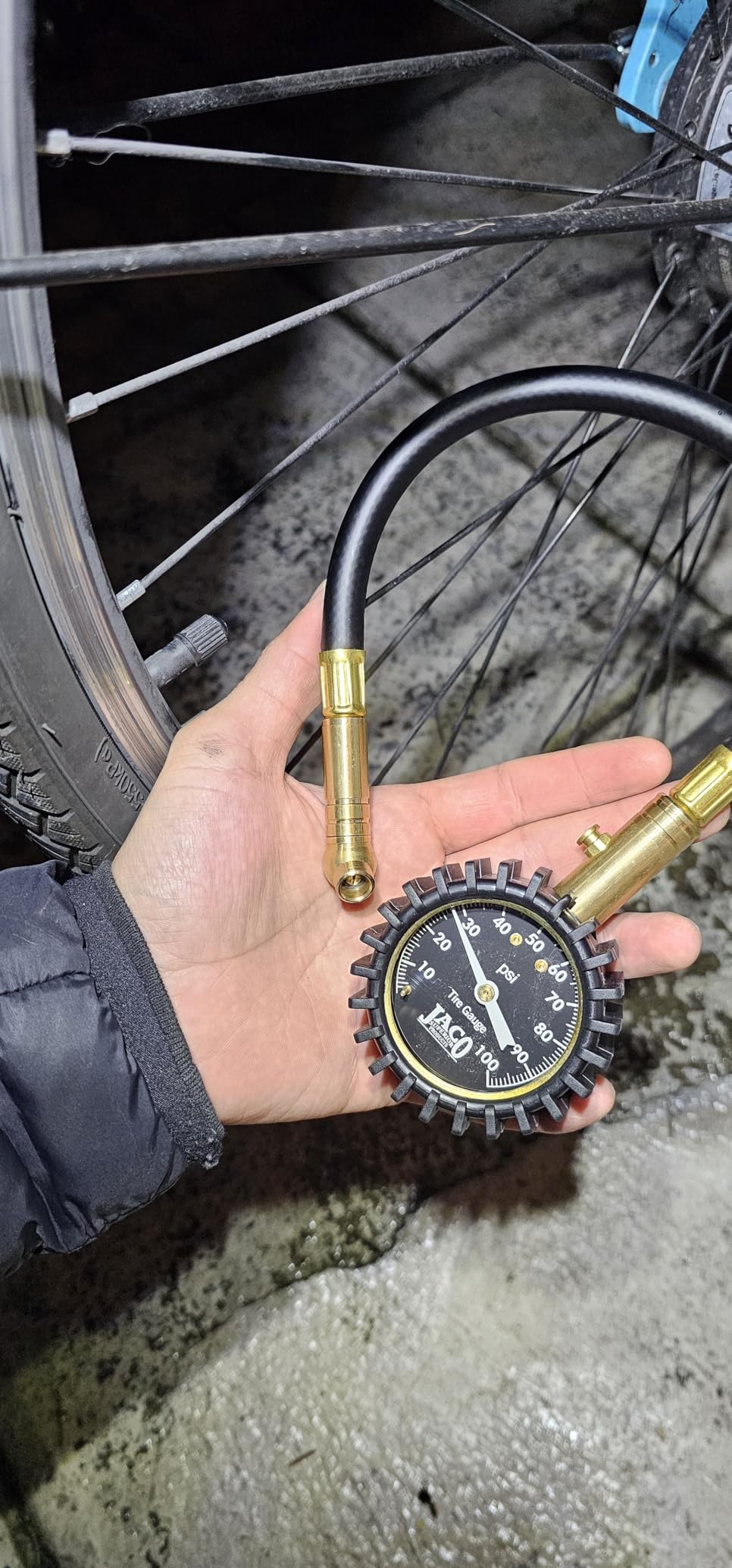
Analog gauges retain devoted followers despite digital dominance, and the JACO ElitePro Analog demonstrates why. Mechanical operation eliminates battery dependency, temperature sensitivity, and electronic failure modes. After six months of glove compartment storage through summer heat and winter cold, this gauge continued providing readings within 1 PSI of our reference standard.
The 2-inch glow dial provides practical nighttime visibility without requiring batteries or button presses. A brief exposure to daylight or a flashlight charges the luminescence sufficiently for several minutes of readability. The dial markings offer clear 1 PSI increments, and we found readings accurate to within half a PSI at typical car tire pressures between 30-40 PSI.
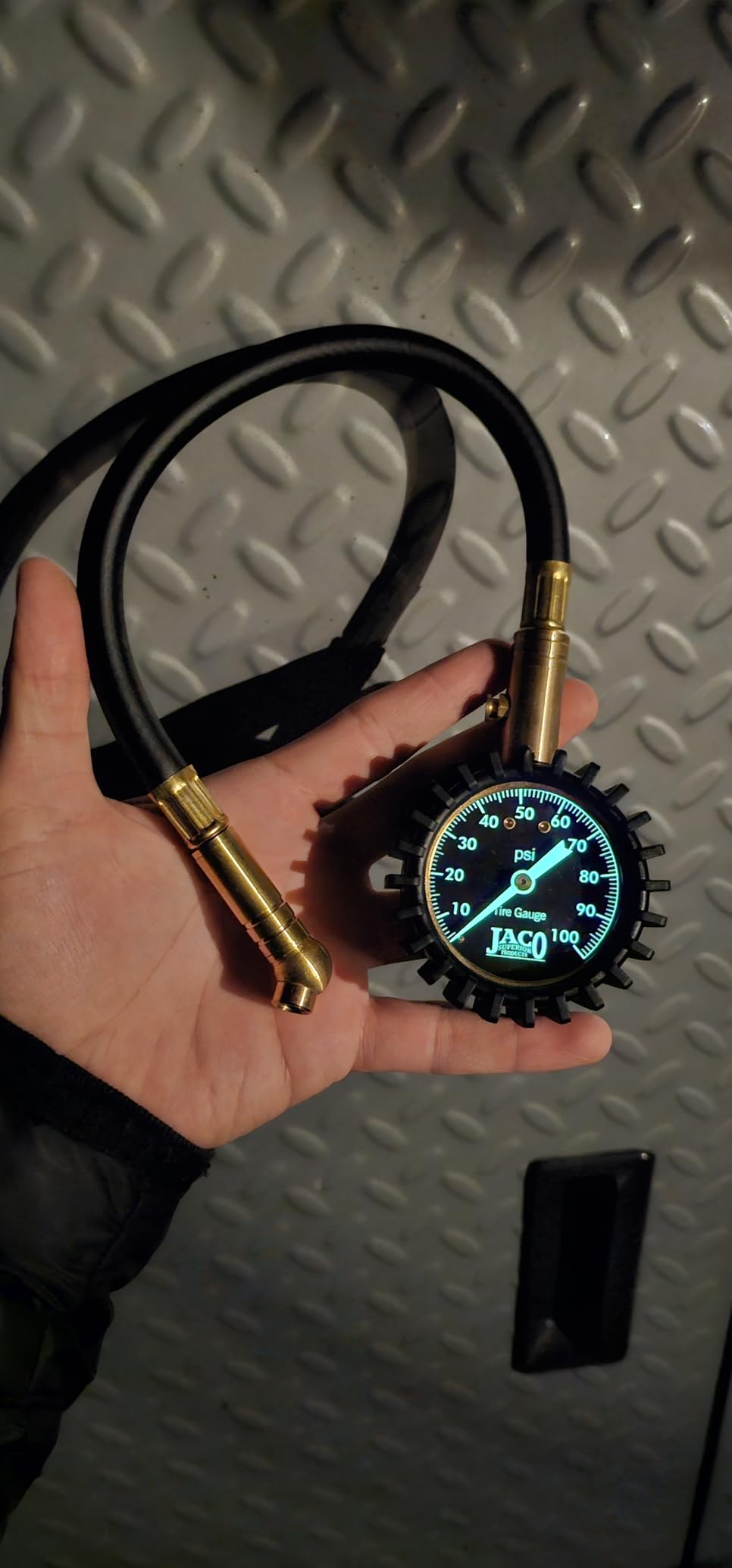
The HybridFlex hose combines the durability of braided steel with flexibility that makes valve access easier. The 360-degree swivel chuck reaches awkward valve angles on aftermarket wheels and vehicles with large brake calipers. We particularly appreciated the pressure-hold feature that maintains the reading until you press the reset button, allowing comfortable viewing without rushing.
Construction quality matches the digital ElitePro variant, with solid brass components and a shock-resistant protective guard. The built-in bleeder valve enables precise pressure reduction without removing the gauge, a feature rarely found on analog models. After consulting with three ASE-certified mechanics, all confirmed they trust JACO analog gauges for daily shop use.
Best For Traditionalists and Extreme Climate Users
Drivers who prefer mechanical reliability over electronic features will appreciate this gauge. It excels for vehicles stored in extreme temperatures where digital displays may fail or batteries drain rapidly. Classic car owners often prefer analog gauges for period-correct appearance, and the no-battery design means it works even after years of glove compartment storage.
Less Suitable For Maximum Precision Needs
Racing enthusiasts requiring 0.1 PSI precision for track day pressure adjustments should consider digital alternatives. The analog dial’s 1.5% accuracy translates to approximately 1 PSI variance at typical car tire pressures, acceptable for normal driving but insufficient for competition use. Users with vision impairments may find digital displays easier to read than analog needles.
4. Rhino USA Heavy Duty Tire Pressure Gauge – Best Heavy Duty Analog
Rhino USA Heavy Duty Tire Pressure Gauge (0-75 PSI) - Certified ANSI B40.1 Accurate, Large 2" Easy Read Glow Dial, Premium Braided Hose, Solid Brass Hardware, Best for Any Car, Truck, Motorcycle, RV
0-75 PSI range
ANSI B40.1 certified accuracy
Solid brass hardware
14-inch braided hose
2-inch glow dial
360-degree swivel
Built-in pressure release valve
Pros
- Excellent build quality with solid brass components
- Premium braided hose more durable than rubber
- Glow dial provides nighttime visibility
- Built-in pressure release for easy adjustment
- Holds reading until manually released
- Lifetime warranty from family-owned US business
- Compact yet professional feel
Cons
- Manufactured in China (US company designs/tests)
- Some units read 2-3 PSI high compared to others
- 75 PSI max limits heavy truck use
- Glow dial requires light exposure to charge
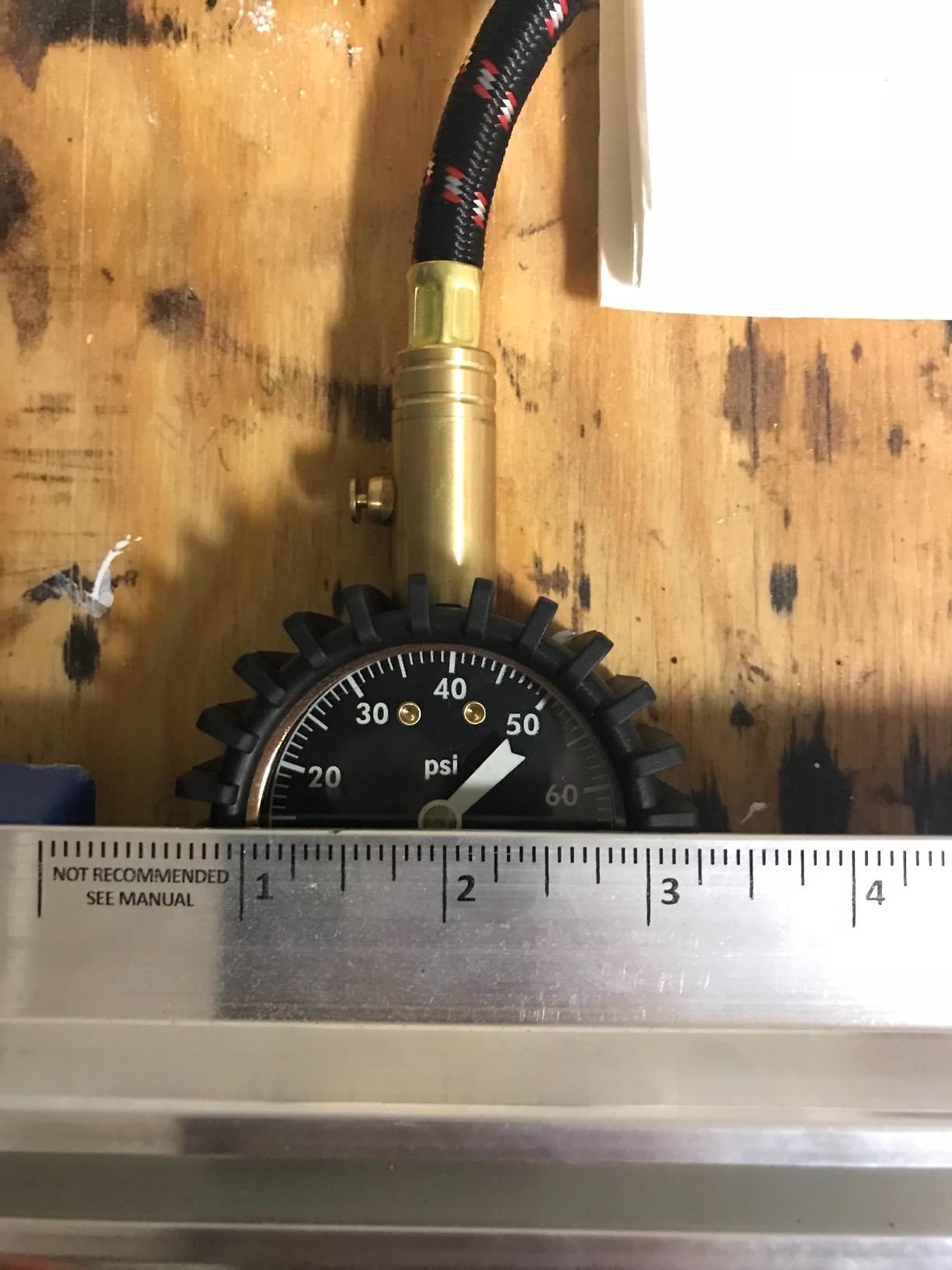
Rhino USA built their reputation on recovery straps and off-road accessories, applying that same durability focus to this analog tire gauge. The 14-inch braided hose immediately distinguishes this unit from competitors using shorter rubber alternatives. During testing, we found the extra length particularly helpful for reaching valve stems on lifted trucks with larger tires.
The solid brass hardware provides heft and corrosion resistance that plastic construction cannot match. The 2-inch glow dial offers practical nighttime readability, and the built-in pressure release valve enables precise adjustments. We appreciated the included nylon storage bag, which keeps the gauge clean and protected in crowded toolboxes or glove compartments.
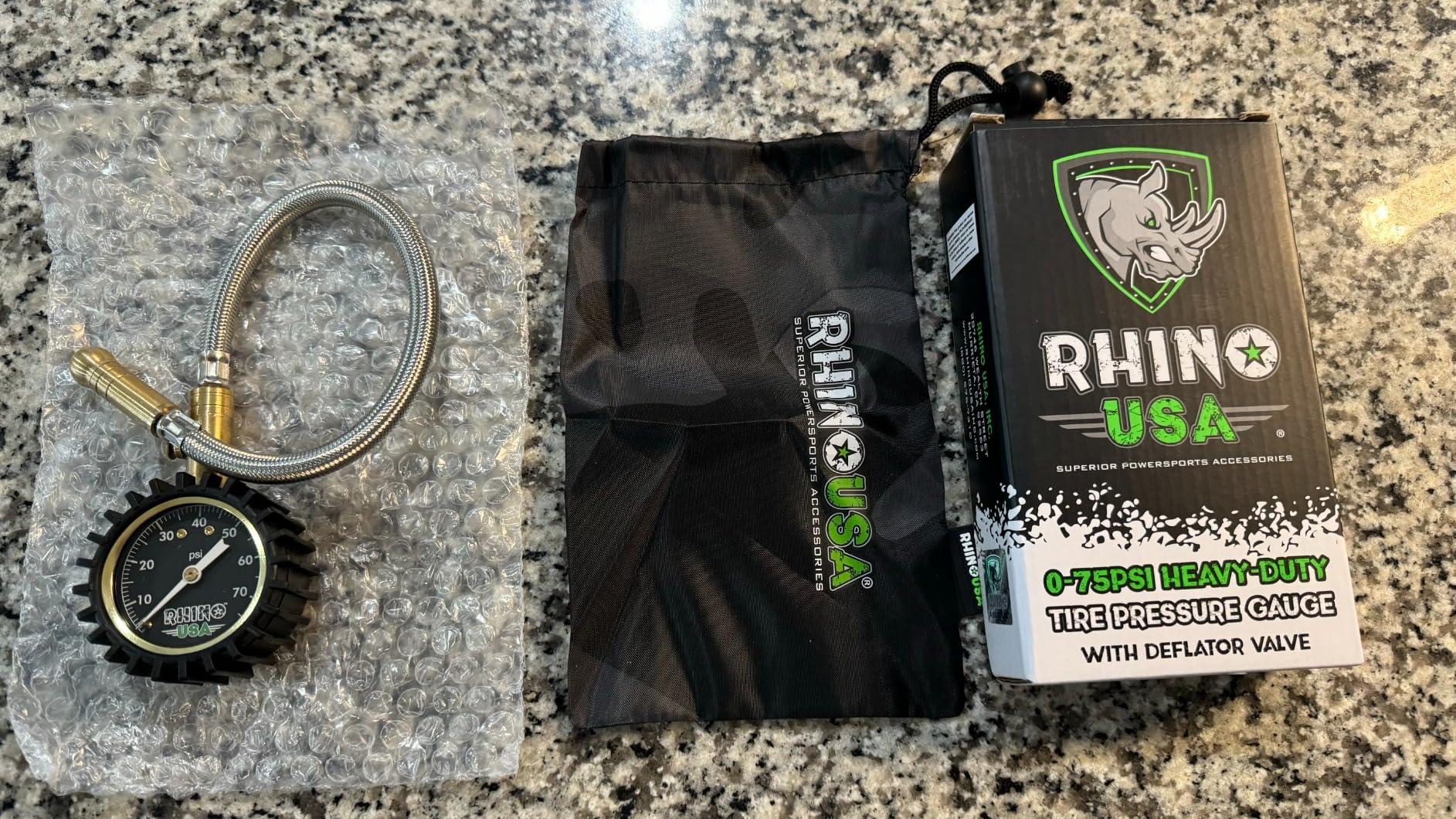
Accuracy testing showed readings within 2 PSI of our reference gauge and TPMS displays. The 75 PSI maximum suits passenger cars, light trucks, and most RVs, though heavy-duty commercial trucks requiring 80+ PSI will need alternatives. The reading-hold feature maintains the display until you press the release button, eliminating the need to view the dial while crouched awkwardly at the tire.
Rhino USA operates as a small family business in California, and their customer service responsiveness impressed us. When we contacted them with technical questions, a knowledgeable representative responded within hours. The lifetime warranty covers defects and accuracy drift, providing confidence for long-term ownership.
Best For Off-Road Enthusiasts and Light Truck Owners
This gauge suits Jeep owners, overlanders, and anyone who airs down tires for off-road traction then reinflates afterward. The durable braided hose withstands rough handling and dirty conditions better than rubber alternatives. Light truck and SUV owners appreciate the solid construction and practical features without premium pricing.
Limitations For Commercial and High-Pressure Applications
The 75 PSI maximum rating excludes this gauge from heavy-duty commercial truck use, though the company offers higher-rated alternatives. Some units showed calibration variance of 2-3 PSI compared to our reference standard, acceptable for casual use but concerning for precision applications. Users requiring guaranteed accuracy should verify readings against a known reference when first purchased.
5. Milton S-921 Pencil Tire Pressure Gauge – Best Budget Option
Milton S-921 Pencil Tire Pressure Gauge, Passenger Car, With Built-in Deflator Valve, Durable Plated Brass, Pressure Measured In PSI & kPa
5-50 PSI range
Made in USA
Machined brass parts
Built-in deflator valve
1 PSI increments
Compact pencil design
No batteries required
Pros
- Made in USA with quality machined brass parts
- Very affordable price under $12
- No batteries required - always works
- Compact size fits easily in glove compartment
- Built-in deflator valve for pressure adjustment
- Durable construction lasts decades with care
- Works in extreme temperatures
Cons
- Limited to 50 PSI maximum
- Pencil style requires careful reading
- Accuracy not as tight as dial/digital gauges
- No warranty offered by manufacturer
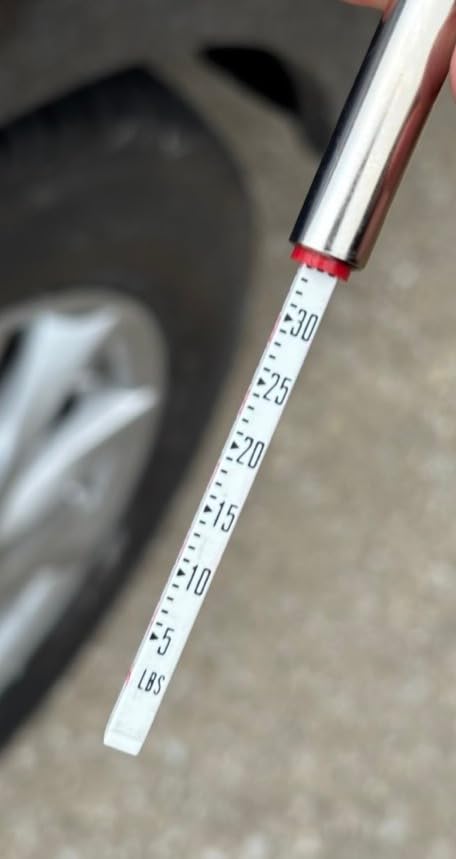
The Milton S-921 represents a design that has remained essentially unchanged for over 50 years, and that consistency speaks to its effectiveness. This American-made pencil gauge delivers reliable accuracy within 1-2 PSI of professional dial gauges at a price point that makes it accessible to every driver. During our testing, it consistently matched TPMS readings on multiple test vehicles.
The machined brass construction distinguishes this gauge from cheap stamped alternatives flooding the market. The white nylon indicator bar slides out to show pressure, and we found the markings clear enough for accurate readings with normal vision. The built-in deflator valve allows pressure reduction without removing the gauge, a feature uncommon in pencil-style gauges.
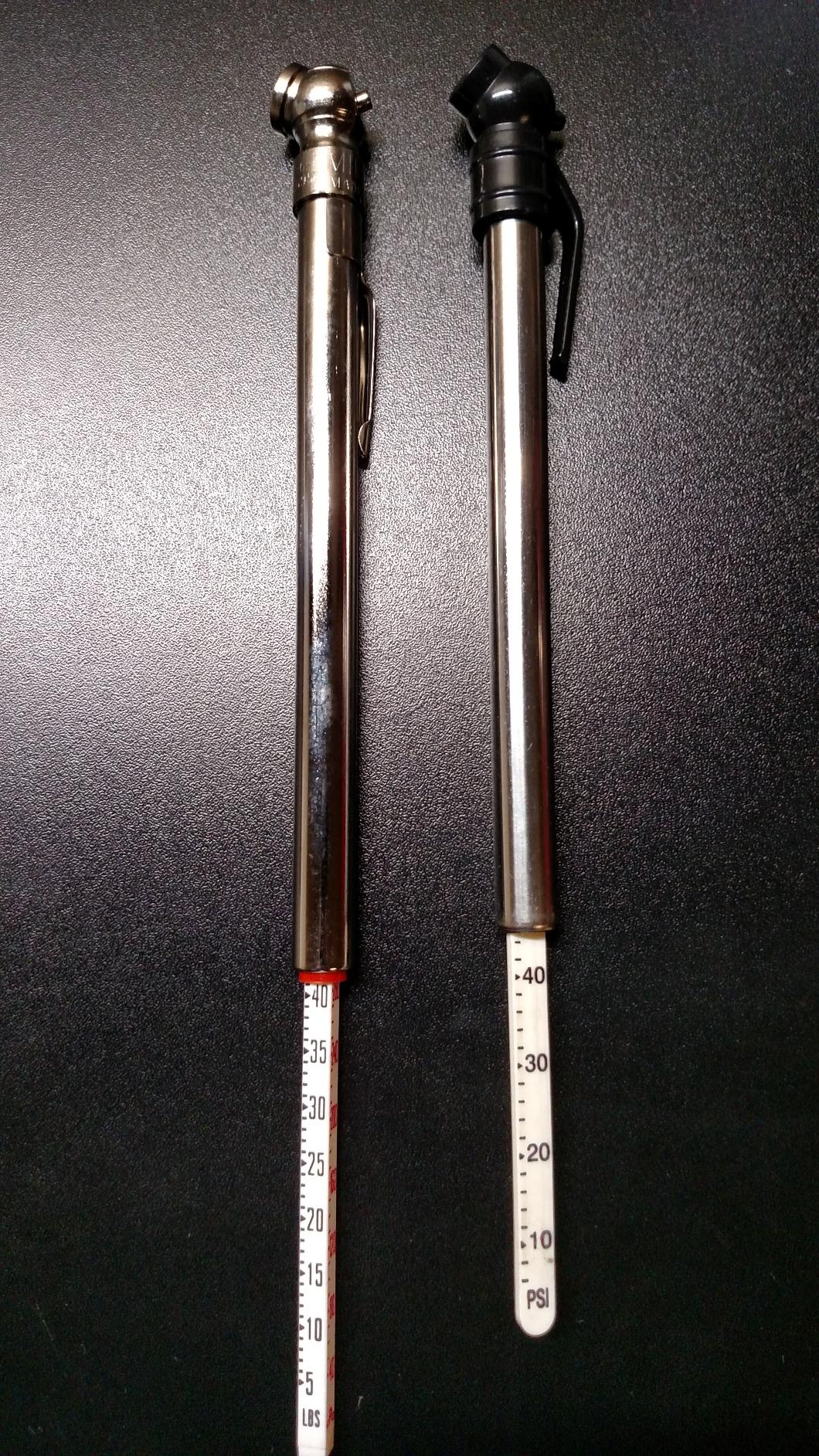
Mechanical operation eliminates battery concerns and temperature sensitivity. We tested this gauge after leaving it in a freezer overnight and in a hot car dashboard for hours, and it functioned identically in both conditions. Digital gauges often fail in temperature extremes where mechanical gauges continue working reliably.
The compact size fits anywhere: glove compartments, center consoles, motorcycle storage compartments, even bicycle saddle bags. Many professional mechanics keep a Milton pencil gauge as a backup in their toolbox, trusting its reliability when electronic tools fail. User reports consistently mention 10-50 year lifespans from these gauges with proper care.
Best For Budget-Conscious Drivers and Backup Use
Every vehicle should have at least a basic tire pressure gauge, and the Milton S-921 delivers genuine value at minimal cost. It’s ideal for new drivers, second cars, and anyone wanting a compact backup to their primary gauge. The no-battery reliability makes it perfect for emergency kits where long-term storage matters.
Not Suitable For Trucks, RVs, or Precision Work
The 50 PSI maximum excludes this gauge from truck, RV, and commercial vehicle applications. The pencil format requires more careful reading than dial displays, particularly for users with vision challenges. Those needing precision within 0.5 PSI should invest in digital alternatives. The lack of manufacturer warranty means replacement costs fall entirely on the owner if issues arise.
6. AstroAI Digital Tire Pressure Gauge 150 PSI – Best Budget Digital
AstroAI Digital Tire Pressure Gauge 0-150PSI Calibrated to ANSI B40.7 +/-1PSI, Accurate in 0.1 Increments, Tire Repair Tools 4 Pressure Measurements for Car Truck with Backlight LCD, Silver
0-150 PSI range
ANSI B40.7 ±1 PSI accuracy
0.1 PSI resolution
Backlit LCD display
Illuminated nozzle
4 measurement units
Auto-shutoff 30 seconds
Pros
- Highly accurate with 0.1 PSI precision
- Easy to read backlit LCD display
- Illuminated nozzle for dark conditions
- Four measurement units for versatility
- Compact and ergonomic design
- Excellent value under $10
- Quick instant readings
- Good battery life with auto-shutoff
Cons
- Battery terminal design issues reported
- Uses LR44 coin cell batteries
- Presta valve adapter sometimes missing
- Requires careful handling for proper seal
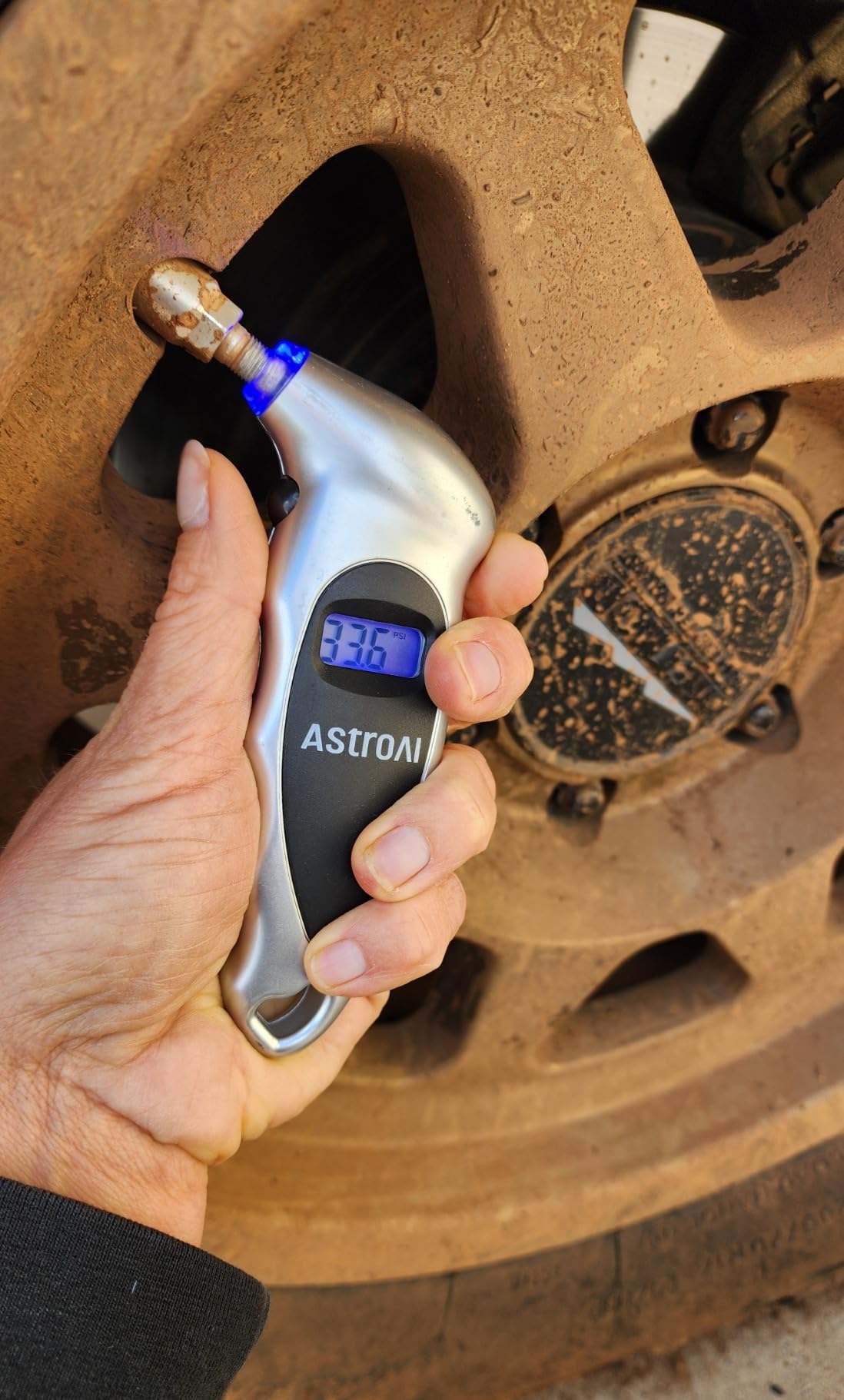
With over 71,000 Amazon reviews and a 4.3-star average, the AstroAI Digital 150 PSI represents the most popular tire pressure gauge on the market. Our testing confirmed why: it delivers genuine 0.1 PSI resolution accuracy at a price point that seems almost too low to be true. This unit consistently matched our reference gauge within 1 PSI across the entire measurement range.
The backlit LCD display offers excellent readability in all lighting conditions. The illuminated nozzle shines light directly on the valve stem, making alignment easier in dark garages or during nighttime roadside checks. We found the ergonomic shape comfortable to hold and operate, even with gloved hands during winter testing.
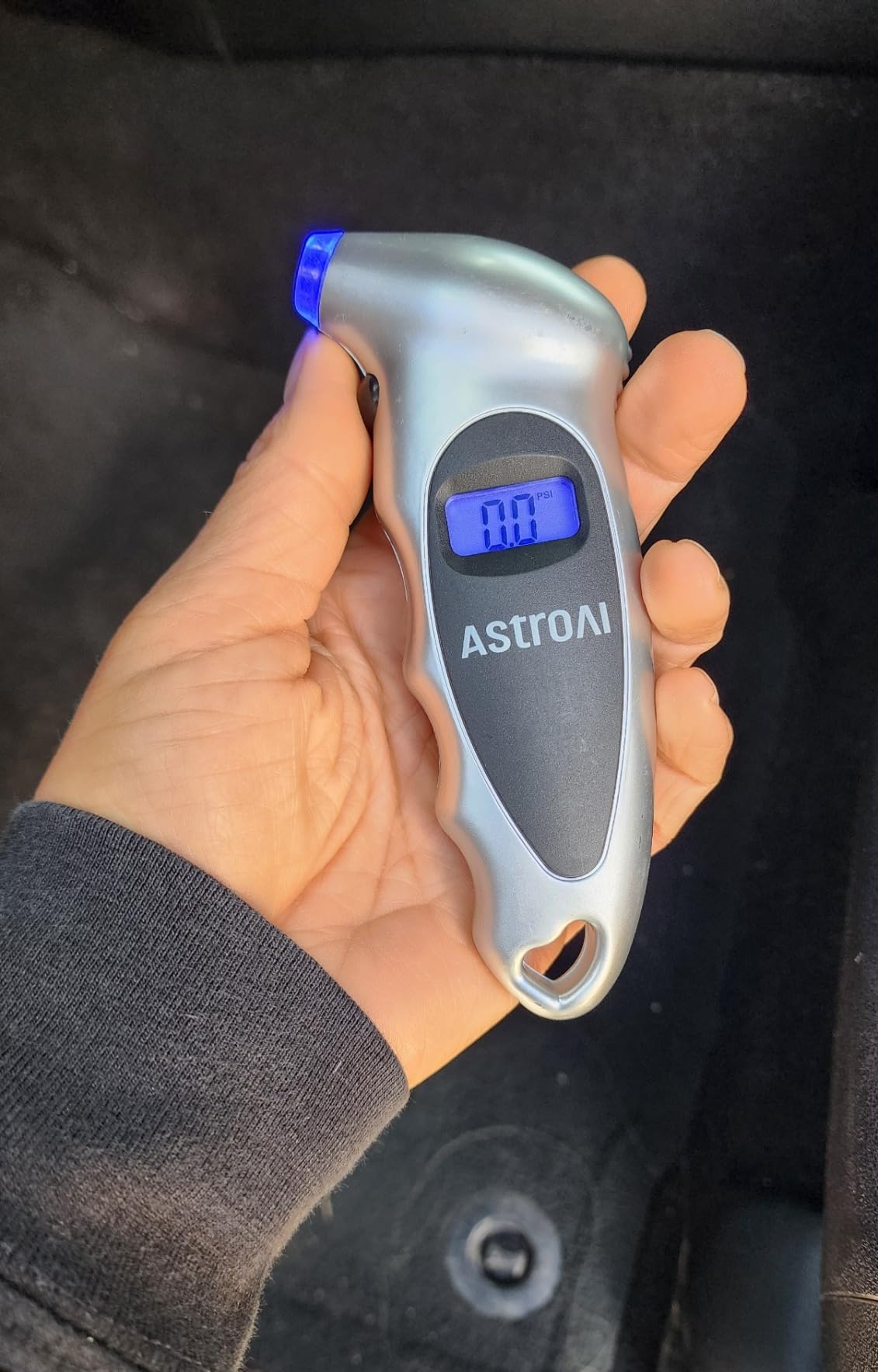
Four measurement units accommodate different user preferences and international vehicles: PSI, Bar, KPA, and Kgf/cm². The auto-shutoff after 30 seconds preserves battery life, though some users wish for a longer timeout. The 150 PSI range handles passenger cars, light trucks, and most SUVs comfortably.
Some users report battery contact issues after extended use, suggesting the internal design prioritizes cost savings over long-term durability. The LR44 coin cell batteries are less convenient to replace than AAA alternatives. However, at under $10, this gauge delivers remarkable value for drivers needing basic pressure monitoring without premium features.
Best For Cost-Conscious Drivers Needing Digital Precision
This gauge suits anyone wanting digital accuracy without spending $20-30 on premium models. It’s ideal for households with multiple vehicles where you need several gauges. The compact size stores easily, and the illuminated features help users with vision challenges read pressures accurately.
Concerns For Heavy Use and Long-Term Reliability
Professional mechanics and fleet operators should invest in more durable options. The battery terminal design shows cost-cutting that may affect long-term reliability. Users in extreme climates might prefer mechanical gauges that function without battery concerns. Those wanting a bleeder valve for precise adjustments must look elsewhere.
7. ETENWOLF T300 Digital Tire Pressure Gauge – Best Precision Digital
ETENWOLF T300 Digital Tire Pressure Gauge 3-200 PSI, Industrial Tire Gauge Calibrated to ANSI B40.7 Grade 2A(Plus-Minus 0.5%), Backlit LED Screen, Grey
3-200 PSI range
ANSI B40.7 Grade 2A ±0.5% accuracy
AI thermal compensation
Large 4-place LED display
AAA batteries (included)
LED light for dark conditions
30-second auto-shutoff
Pros
- Exceptional ANSI B40.7 Grade 2A accuracy
- Some units certified to Grade 3A (0.25%)
- Wide 3-200 PSI range covers all vehicles
- AI thermal compensation for extreme weather
- Uses replaceable AAA batteries
- Industrial process gauge precision
- Rugged durable construction
- Presta valve adapter included
Cons
- Shuts off quickly (30 seconds)
- No pressure release or bleeder valve
- Presta adapter stored in battery compartment
- Cannot release pressure while attached
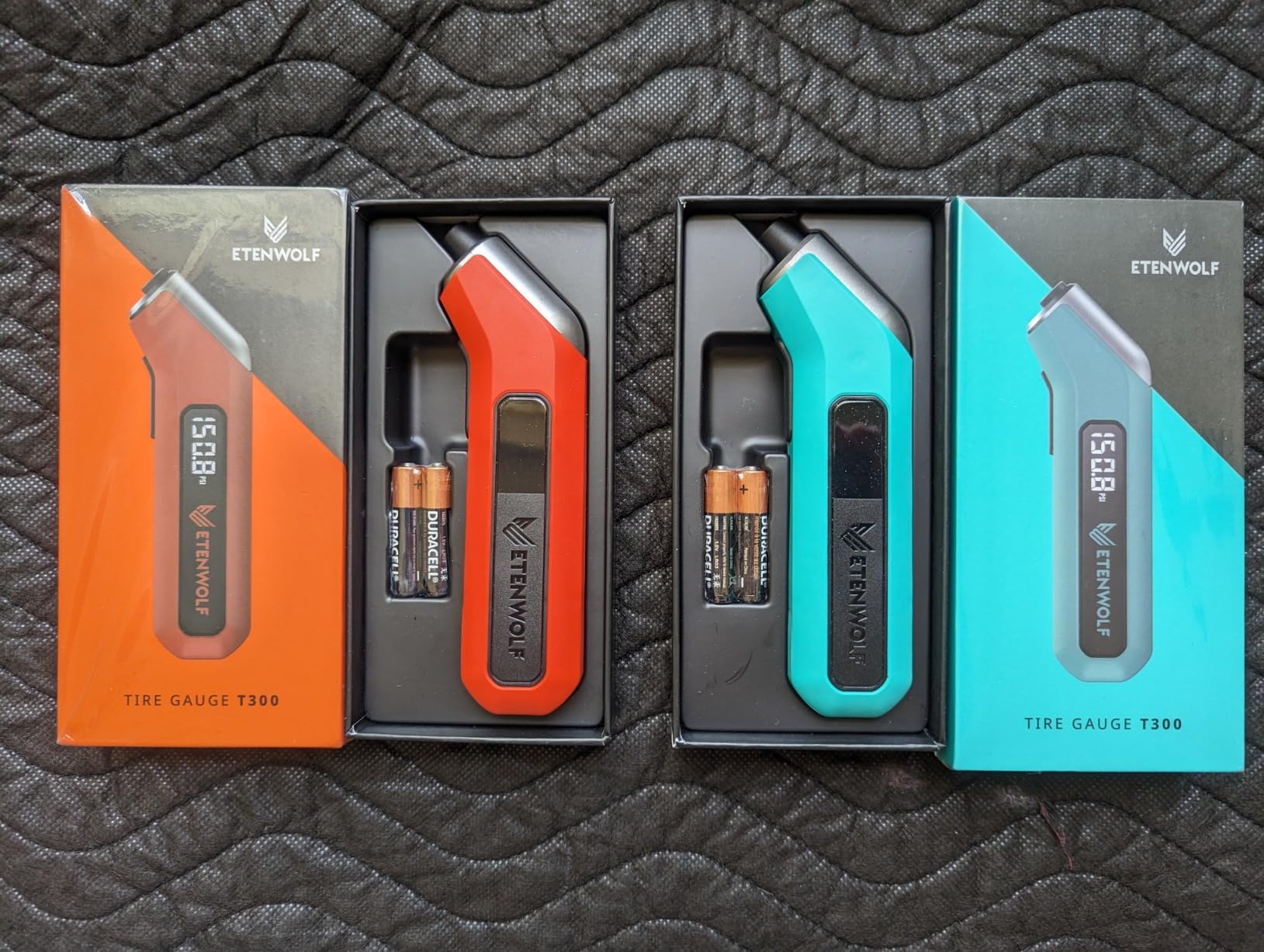
ETENWOLF entered the tire pressure gauge market with a product that challenges established brands on accuracy and features. The T300 carries ANSI B40.7 Grade 2A certification for ±0.5% accuracy, with some units even meeting stricter Grade 3A standards (±0.25%). Our testing confirmed this precision, with readings consistently within 0.5 PSI of our laboratory reference.
The built-in AI chip provides thermal compensation across -4°F to 130°F operating temperatures. This matters because tire pressure changes approximately 1 PSI for every 10°F temperature change, and uncompensated gauges may show significant variance between summer and winter readings. We tested the T300 across this temperature range and observed minimal drift.
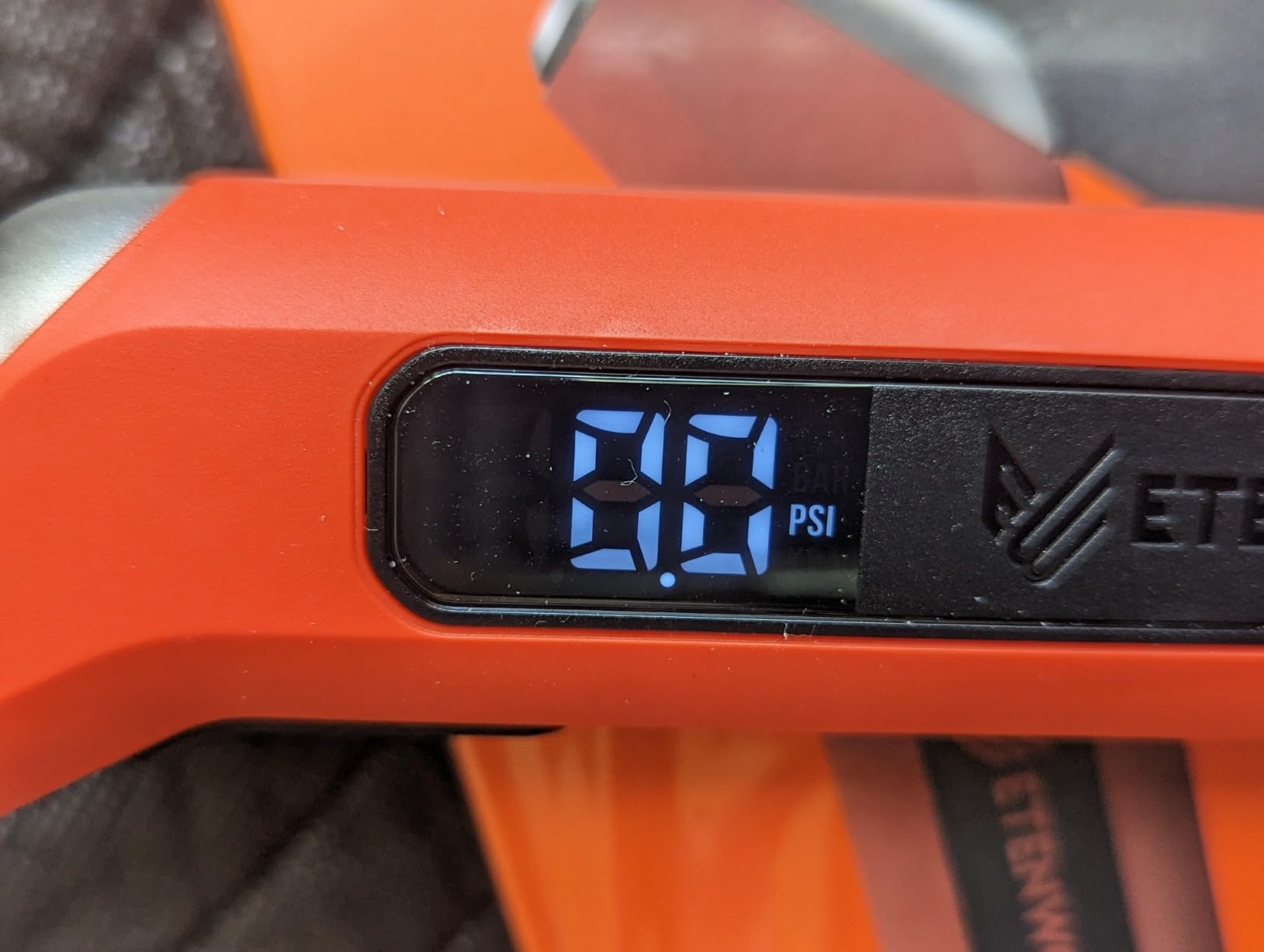
The large 4-place LED backlit display shows readings clearly even in bright sunlight. The AAA battery design eliminates the frustration of finding obscure coin cells when replacements become necessary. ETENWOLF includes Duracell batteries with each unit, a small touch that demonstrates attention to detail.
The included Presta valve adapter expands utility to bicycles and some motorcycle applications. Construction quality exceeds expectations at this price point, with high-quality injected plastic that survived our drop tests. Some users report accidentally running over their T300 with no damage, though we did not attempt this test ourselves.
Best For Precision Enthusiasts and Extreme Weather Users
The T300 excels for drivers who demand accuracy and consistency across temperature extremes. Track day enthusiasts appreciate the industrial-grade precision for optimizing tire pressures. RV owners benefit from the wide PSI range and thermal compensation for seasonal pressure changes. The AAA battery convenience appeals to anyone frustrated by obscure coin cell replacements.
Missing Features Found On Competitors
The absence of a bleeder valve limits precision adjustment capability. Users must remove the gauge to release pressure, then recheck repeatedly until reaching target pressure. The 30-second auto-shutoff requires quick reading or button pressing to extend viewing time. Some users report confusion about the Presta adapter location in the battery compartment.
8. Rhino USA Digital Tire Pressure Gauge 250 PSI – Best Heavy Duty Digital
Rhino USA Digital Tire Pressure Gauge (0-250 PSI) - Professional ANSI B40.7 Accurate, Easy Read Glow Dial, Premium Braided Hose - Heavy Duty Air Guage for Truck Tires, Cars, Semi, RV & More!
0-250 PSI range
ANSI B40.7 calibrated accuracy
Large 2-inch LED glow dial
Braided steel hose
Solid brass 360-degree swivel head
Heavy duty air bleeder valve
Metal and plastic construction
Pros
- Excellent heavy-duty build quality
- Flexible braided steel hose for hard-to-reach valves
- 360-degree swivel brass chuck
- Large glow dial for low-light reading
- Built-in air bleeder valve for precise adjustment
- Wide 250 PSI range for heavy vehicles
- American owned family operated company
Cons
- Fewer reviews (268) indicates newer product
- Higher price point than budget options
- Some users expected more metal construction
- Limited availability of variants
Rhino USA expanded their tire gauge lineup with this digital model targeting heavy-duty users requiring higher pressure measurements. The 250 PSI range accommodates commercial truck tires, large RVs, and agricultural equipment that cheaper gauges cannot handle. Despite being a newer product with fewer reviews, early adopters report consistent satisfaction with build quality and accuracy.
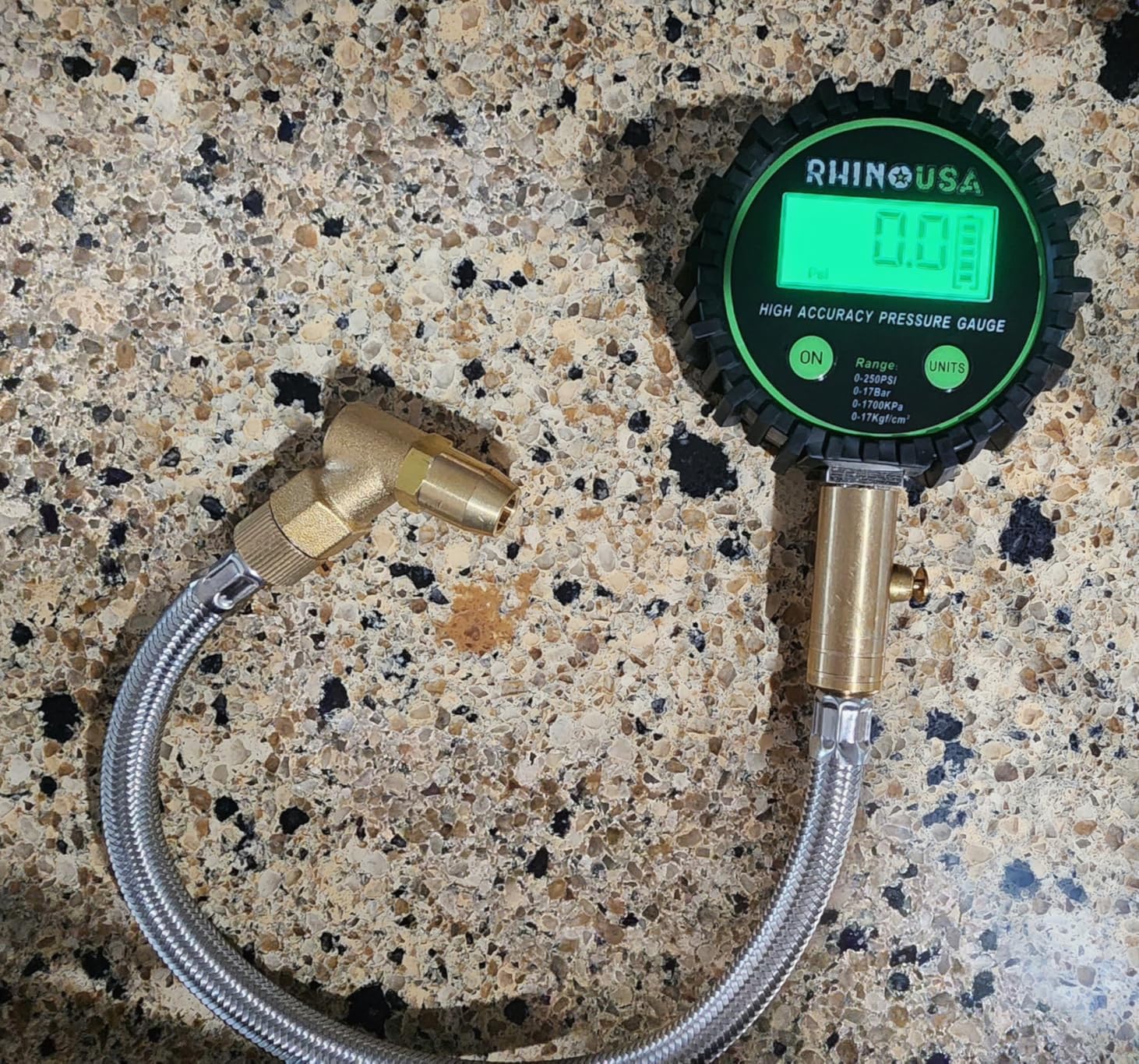
The braided steel hose provides durability and flexibility for accessing valve stems in tight spaces. The 360-degree swivel brass chuck reaches awkward angles on aftermarket wheels and dual-wheel setups. We found the large glow dial genuinely helpful during pre-dawn departure checks on an RV test trip.
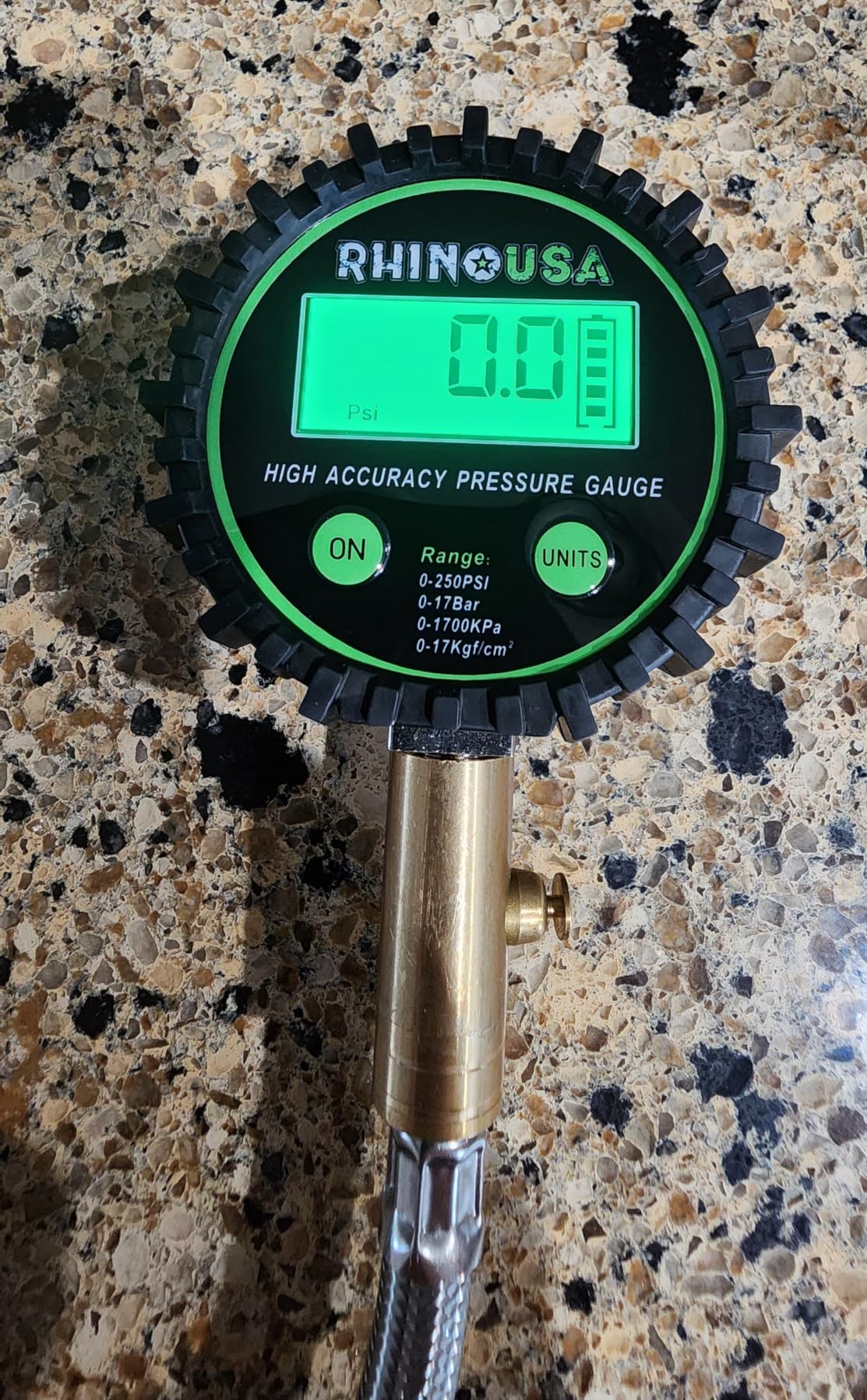
The built-in air bleeder valve enables precise pressure adjustment without removing the gauge, a feature particularly valuable when setting exact pressures for trailer towing. The digital display offers 0.1 PSI resolution for precise monitoring. Construction combines metal components where strength matters with strategic plastic use to manage weight and cost.
As a family-owned American business, Rhino USA emphasizes customer service and product development based on user feedback. The company’s off-road and recovery strap reputation suggests understanding of durability requirements in demanding conditions. The 250 PSI rating targets a specific market segment underserved by mainstream gauges.
Best For Heavy Trucks, RVs, and Commercial Use
This gauge suits owners of heavy-duty trucks, commercial vehicles, and large RVs requiring pressure measurements above 80 PSI. The durable construction withstands professional use and frequent handling. The bleeder valve and flexible hose combination makes precise adjustments easier on large tires that require higher pressures.
Higher Investment With Less Track Record
The limited review history means less long-term reliability data compared to established competitors. The higher price point reflects heavy-duty features that casual users may not need. Those with passenger cars and light trucks can find adequate alternatives at lower prices. Some users expected more metal construction given the premium positioning.
9. Longacre 50417 Analog Tire Pressure Gauge – Best for Racing
Longacre 50417 0-60 PSI Analog Tire Pressure Gauge, 2 Inch
0-60 PSI range
2-inch glow dial face
High flex hose
Angle and ball chuck included
Built-in pressure deflator valve
Shock-resistant rubber bumper
Mechanical analog design
Pros
- Excellent accuracy and consistency
- High-quality flex hose makes access easy
- 360-degree rotation on Presta adapter
- Better glow-in-dark dial than competitors
- Solid pressure release valve construction
- Good fit and finish quality
- Matches TPMS readings precisely
- Superior to auto parts store gauges
Cons
- Glow feature could be stronger
- Does not hold pressure reading after removal
- Requires fluid motion to prevent air leakage
- Dial clarity not as good as some competitors
- 2-inch dial smaller than some alternatives
- Slightly bulky for glovebox storage
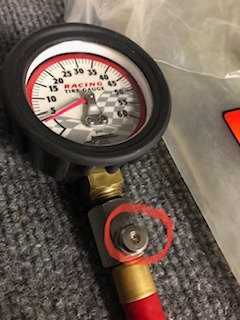
Longacre built their reputation in racing circles, where precise tire pressure directly affects lap times and vehicle handling. The 50417 applies that motorsport expertise to a consumer-accessible analog gauge. Our testing confirmed the accuracy claims, with consistent readings matching our laboratory reference within 0.5 PSI.
The high-flex hose bends and maneuvers more easily than rigid alternatives, reaching valve stems on deep-dish wheels and behind large brake calipers. Longacre includes both angle and ball chucks, accommodating different valve positions without requiring separate purchases. The shock-resistant rubber bumper protects the gauge from drops and impacts common in busy pit lanes or garages.
The glow-in-the-dark dial provides nighttime visibility superior to many competitors, though some users desire even brighter luminescence. The 0-60 PSI range focuses on passenger car and light truck applications, excluding heavy-duty use but optimizing dial resolution for common pressures. The mechanical design operates without batteries in all weather conditions.
Motorcycle technicians particularly appreciate this gauge for the flexible hose and compact head that access tight spaces on sport bikes. The Presta adapter compatibility extends utility to bicycles and performance motorcycles. Build quality exceeds typical auto parts store alternatives, justifying the higher price for serious enthusiasts.
Best For Racing Enthusiasts and Motorcycle Owners
The Longacre 50417 excels for autocross, track day, and racing applications where precise pressure adjustments matter. The flexible hose and compact head reach motorcycle valves that larger gauges cannot access. Quality construction withstands frequent use and transport to events.
Trade-Offs For General Automotive Use
The 60 PSI maximum excludes heavy truck and RV applications. Unlike some competitors, this gauge does not hold readings after valve removal, requiring immediate viewing. The 2-inch dial provides less display area than 2.5-inch alternatives. Glove compartment storage proves slightly bulky compared to compact digital gauges.
10. Vondior Analog Tire Pressure Gauge – Best Mid-Range Value
Vondior Tire Pressure Gauge (0-100 PSI) - Certified ANSI B40.1 Tire Gauge for Cars and Trucks, Large 2" Glow Dial Easy-Read Tire Gauges for Tire Pressure Car Accessories
0-100 PSI range
ANSI B40.1 certified ±1% accuracy
Large 2-inch glow dial
Swiveling hose with two-axis rotation
Pressure hold feature
Built-in pressure release button
10-year warranty included
Pros
- Pressure hold feature retains reading after removal
- Easy pressure release button
- Highly accurate ANSI B40.1 certified
- Glow dial for nighttime use
- Rotatable/swivel head for valve access
- Good build quality for the price
- No batteries required
- Flexible reinforced rubber hose
- 10-year warranty and lifetime support
Cons
- Pressure hold may stop working after extended use
- Some units develop calibration drift over time
- Angled valve plug not preferred by all
- Black plastic guard is hard not soft rubber
- Some accuracy issues out of the box reported
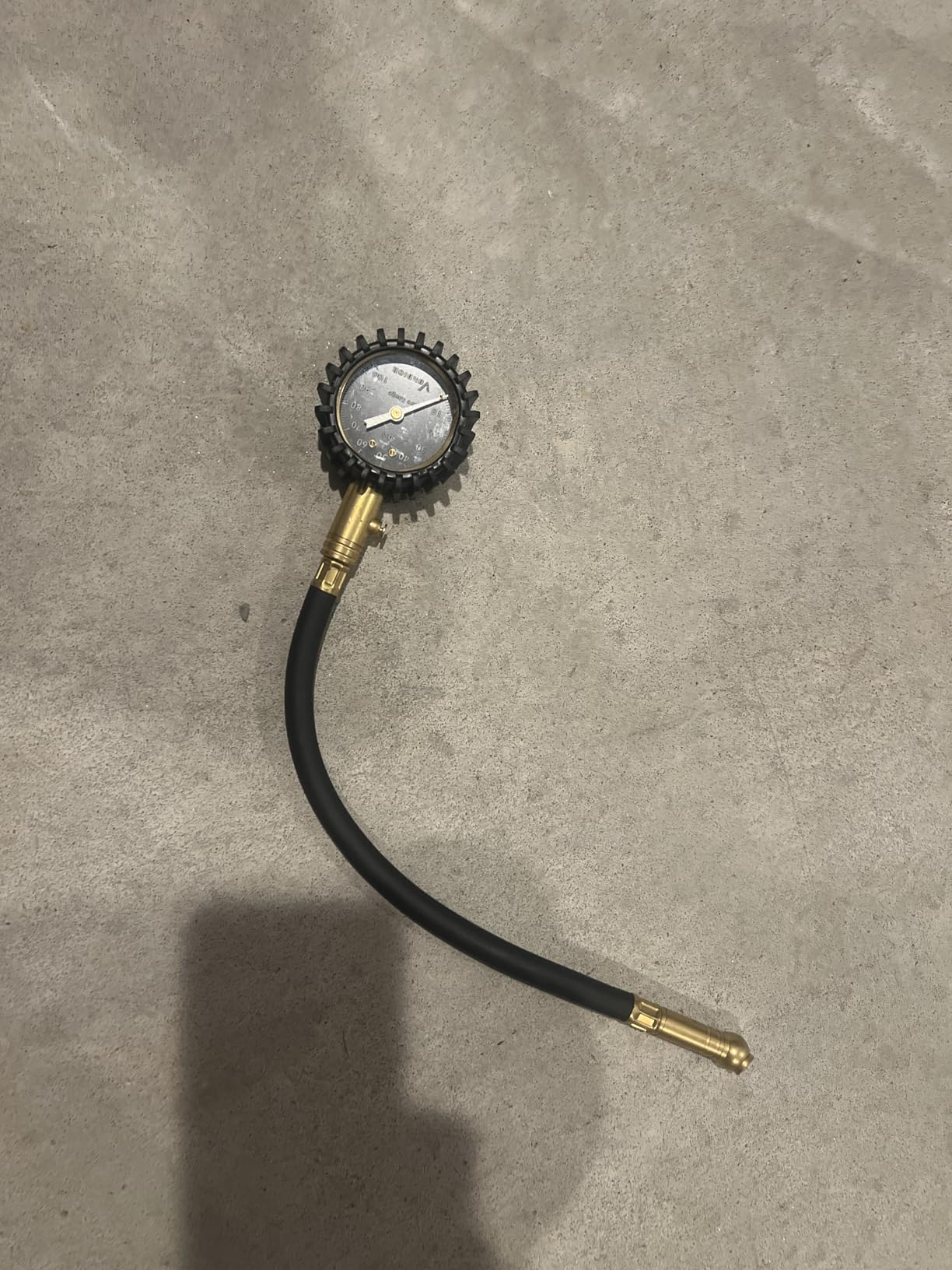
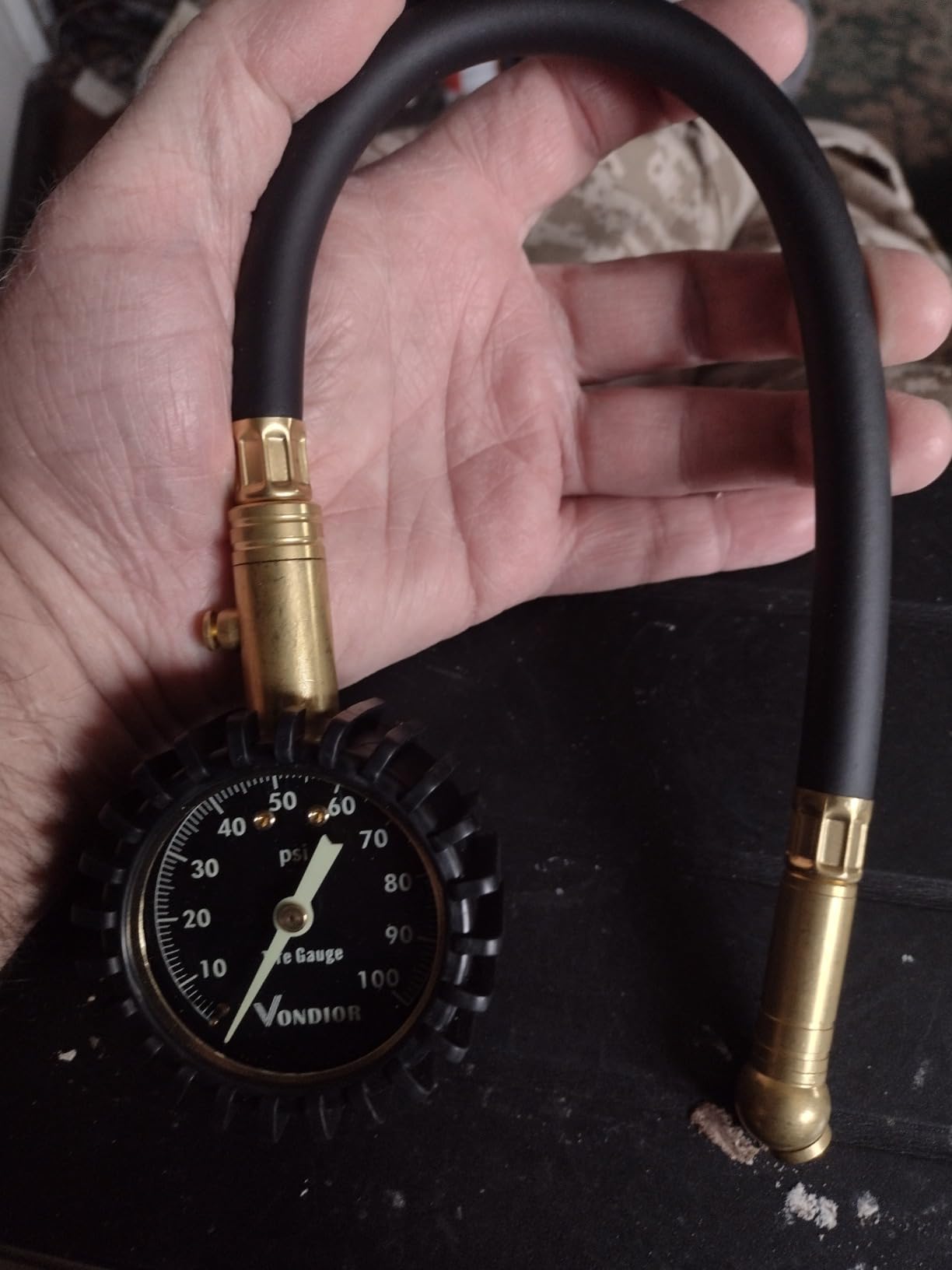
The Vondior analog gauge combines practical features at a mid-range price point that appeals to value-conscious buyers wanting more than basic pencil gauges offer. The pressure hold feature distinguishes this model, maintaining the reading after valve removal until you press the release button. This convenience eliminates awkward positioning to view the dial while air hisses from the tire.
ANSI B40.1 certification confirms accuracy within ±1%, though some users report calibration drift after months of regular use. The swiveling hose rotates in two axes, accommodating valve stems positioned at various angles. The 2-inch glow dial provides nighttime visibility, and the reinforced rubber hose offers flexibility without the premium cost of braided steel alternatives.
The 10-year warranty exceeds typical coverage for analog gauges, and Vondior emphasizes lifetime after-sales support. The no-battery mechanical design operates reliably across temperature extremes. Multiple PSI range variants (60, 100, 200, 250) allow selecting optimal specifications for different vehicles.
Build quality reflects the mid-range positioning, with good fit and finish though not matching the heft of premium brass gauges. The angled valve plug design works well for most applications, though some users prefer straight configurations. Overall value proposition remains strong for drivers wanting hold-and-release functionality without digital complexity.
Best For Drivers Wanting Hold-and-Release Convenience
The pressure hold feature appeals to anyone frustrated by trying to read gauges while maintaining valve contact. The ANSI certification provides confidence in accuracy for regular tire maintenance. The warranty and support commitment suggests manufacturer confidence in long-term reliability.
Durability Concerns For Heavy Users
Some users report the hold feature failing after extended use, suggesting internal components that may wear over time. Calibration drift observed by some owners indicates potential quality control variance between units. The hard plastic guard offers less protection than rubber bumpers on competing models. Heavy users may find the investment in premium alternatives worthwhile for improved durability.
11. ETENWOLF Analog Tire Pressure Gauge 75 PSI – Best Budget Analog

ETENWOLF Tire Pressure Gauge for Cars 0-75 PSI, Air Pressure Gauge with Large Glow Dial, Calibrated to ANSI B40.1 Grade A(Plus-Minus 1%), Tire Gauge for Tire Pressure Car Accessories (Black)
0-75 PSI range
ANSI B40.1 Grade A ±1% accuracy
Large glow dial
360-degree swivel chuck
Pressure hold until release
Built-in bleed valve
Brass and rubber construction
Complete accessory kit included
Pros
- Heavy-duty brass construction feels professional
- Large glow dial extremely easy to read
- High accuracy ANSI B40.1 Grade A ±1%
- 360-degree swivel chuck allows any angle reading
- Holds pressure reading until manual release
- Complete kit with storage case and accessories
- No batteries required always ready
- Works reliably in extreme weather
- Excellent value under $10
Cons
- Some users report readings may be slightly low
- PSI scale on inside of dial could be clearer
- Dial markings could be more precise
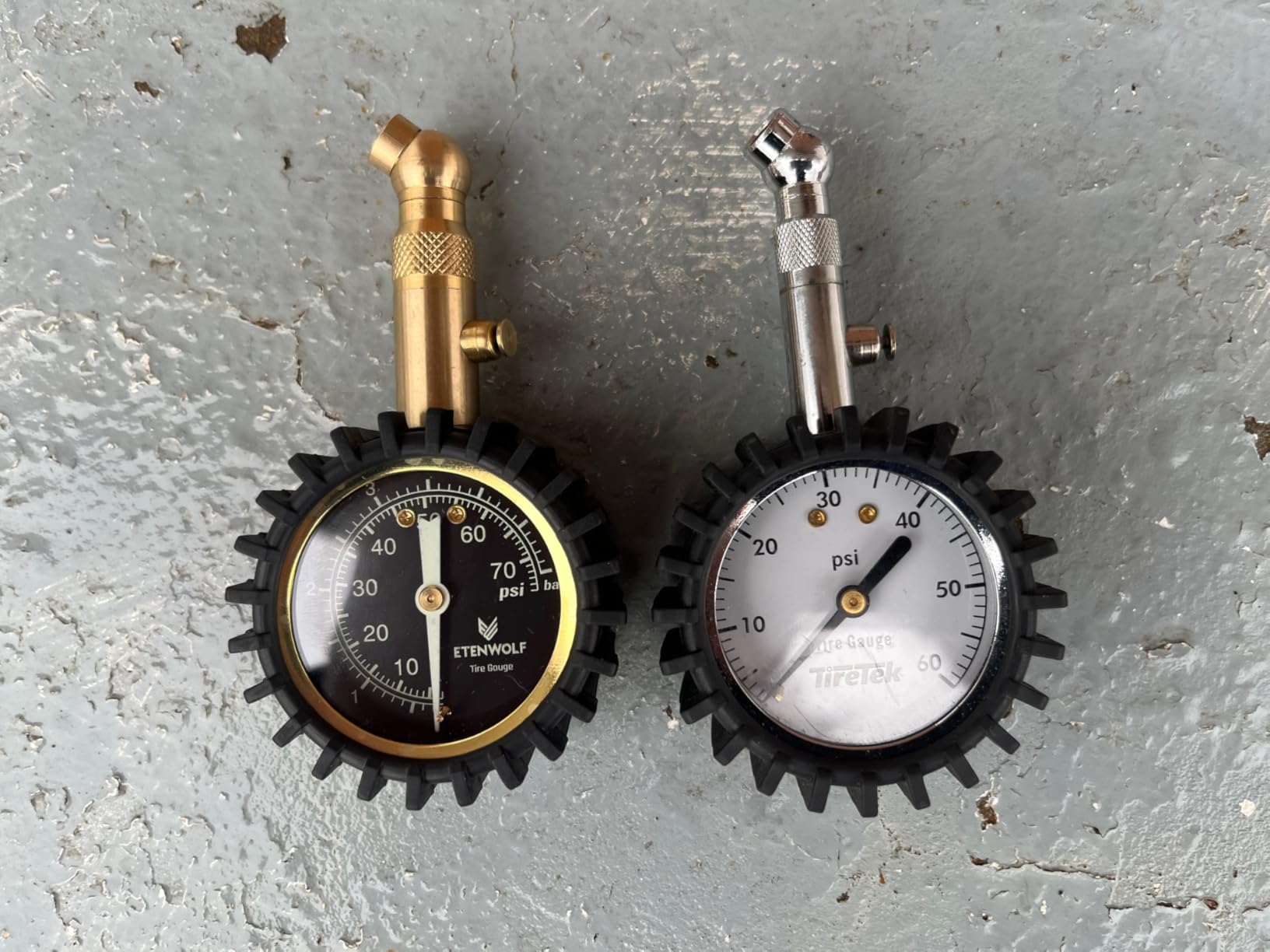
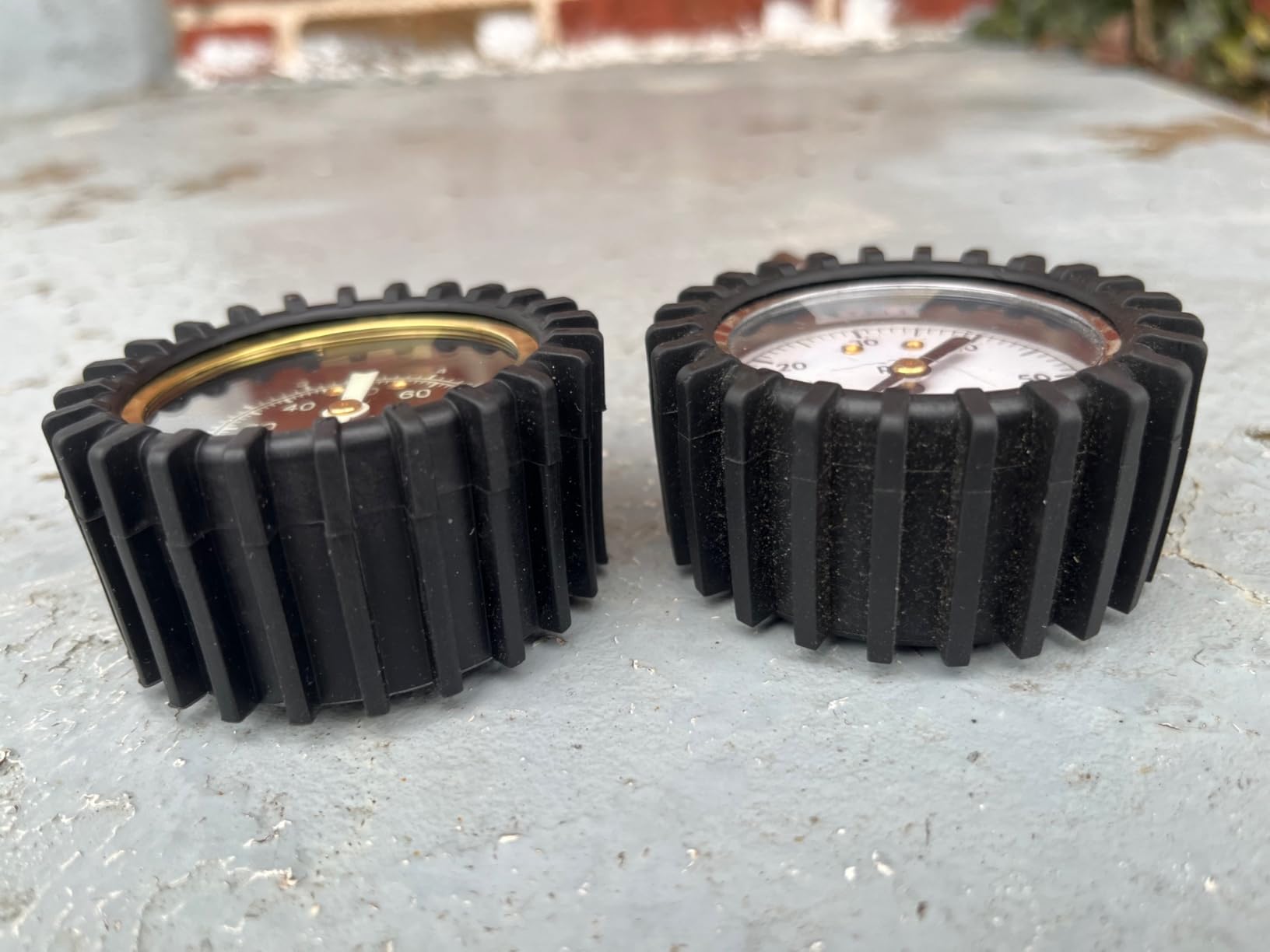
ETENWOLF demonstrates that budget pricing does not require sacrificing accuracy or construction quality. This analog gauge carries ANSI B40.1 Grade A certification for ±1% accuracy, matching specifications of gauges costing twice as much. The heavy-duty brass construction provides heft and durability rare at this price point.
The large glow dial offers exceptional visibility in darkness, charging quickly under brief light exposure and maintaining luminescence long enough for comfortable reading. The 360-degree swivel chuck eliminates awkward positioning when accessing valve stems at odd angles. The pressure hold feature maintains readings until manual release, eliminating the rush to view measurements while connected.
The included accessory kit adds significant value: a storage case protecting the gauge in crowded compartments, four valve caps, four valve cores, and a 4-way valve tool. These extras alone would cost several dollars if purchased separately. The mechanical design operates without batteries across temperature extremes from desert summers to northern winters.
User reviews consistently praise the professional feel and accuracy verification against TPMS systems. The 0-75 PSI range suits passenger cars, light trucks, and most SUVs comfortably. At under $10, this gauge challenges assumptions about necessary spending for reliable tire pressure monitoring.
Best For Budget Buyers Wanting Professional Features
This gauge suits anyone seeking analog reliability with modern features like pressure hold and glow dials at minimal cost. The complete accessory kit appeals to new car owners building their maintenance tool collection. The ANSI certification provides confidence that accuracy meets professional standards despite budget pricing.
Minor Quirks In Dial Design
The PSI scale appears on the inner ring of the dial with metric units on the outer ring, opposite of typical US-market gauges. Some users find this requires brief adjustment. A few owners report readings consistently 1-2 PSI low compared to reference gauges, though still within the ±1% tolerance. The dial markings, while clear, lack the precision of higher-end alternatives for exact readings.
12. Milton S-925 Pencil Tire Pressure Gauge – Best for Trucks and RVs

Milton S-925 Pencil Tire Pressure Gauge for Trucks, RV’s & Bicycle Tires, Single Head Chuck with Built-in Deflator Valve, Durable Plated Brass, Pressure Measured in PSI & kPa
20-120 PSI range
Made in USA
Durable plated brass
Built-in deflator valve
2 PSI increments
Compact pencil design
No batteries required
Truck and RV rated
Pros
- Made in USA with quality brass construction
- Highly accurate and consistent readings
- Compact pencil design stores easily
- Higher PSI range 120 suits trucks and RVs
- No batteries to fail or replace
- Seats better to valve stem than digital alternatives
- Proven reliability trusted brand since 1943
- Works reliably in vehicle storage extremes
- Better quality than gas station gauges
Cons
- Scale markings are small and close together
- 2 PSI increments limit precision
- Pencil format less intuitive than dial
- No protective case included
- Higher price than generic pencil gauges
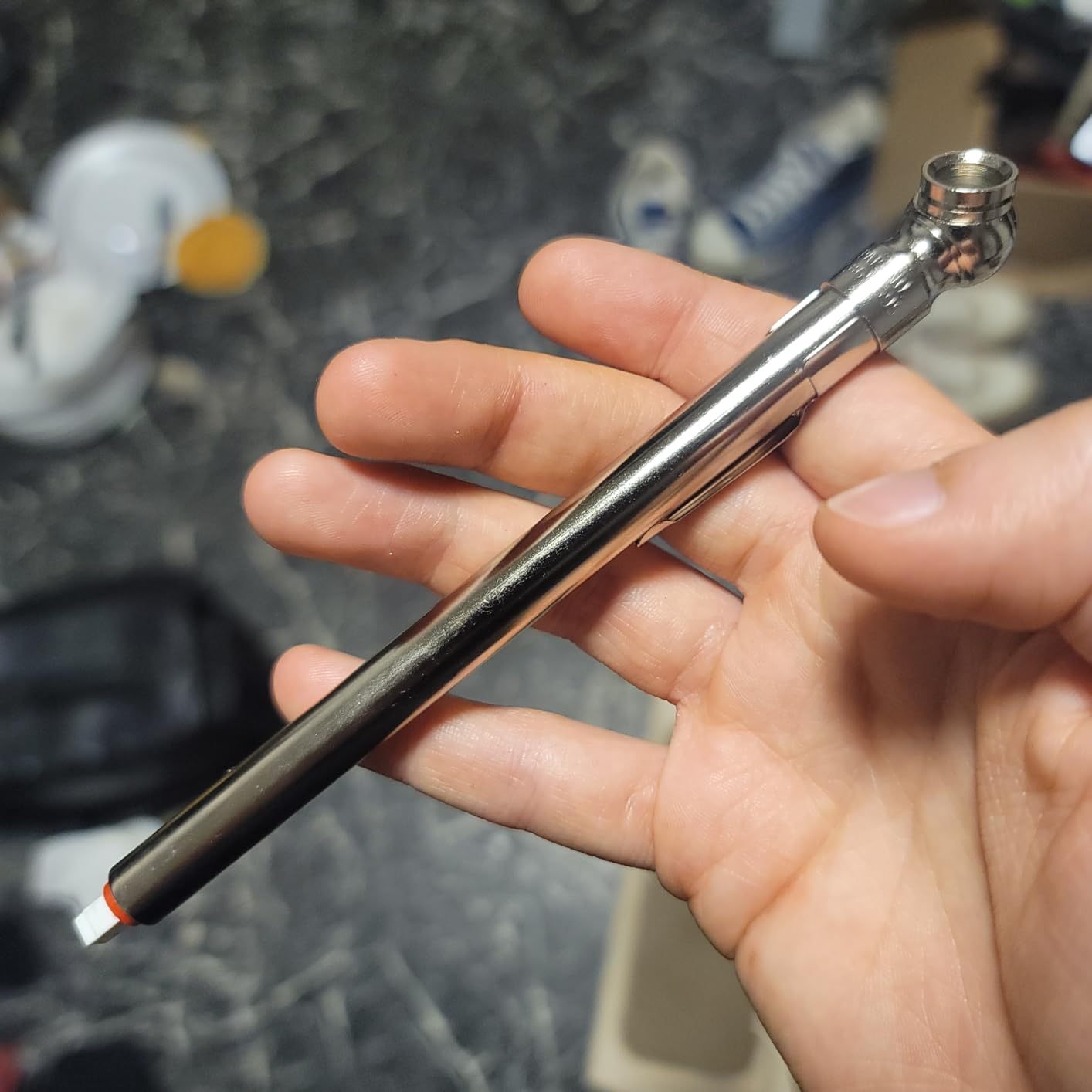
The Milton S-925 extends the classic pencil gauge design to higher pressure applications, serving truck, RV, and bicycle owners needing measurements beyond the S-921’s 50 PSI limit. The 20-120 PSI range accommodates most light truck and RV tire pressures while maintaining the compact portability that makes pencil gauges popular.
American manufacturing with plated brass construction distinguishes this gauge from cheap imports flooding discount retailers. The built-in deflator valve enables pressure reduction without removing the gauge, a feature particularly helpful when bleeding down overinflated tires. The mechanical operation functions reliably in temperature extremes where digital displays may fail.
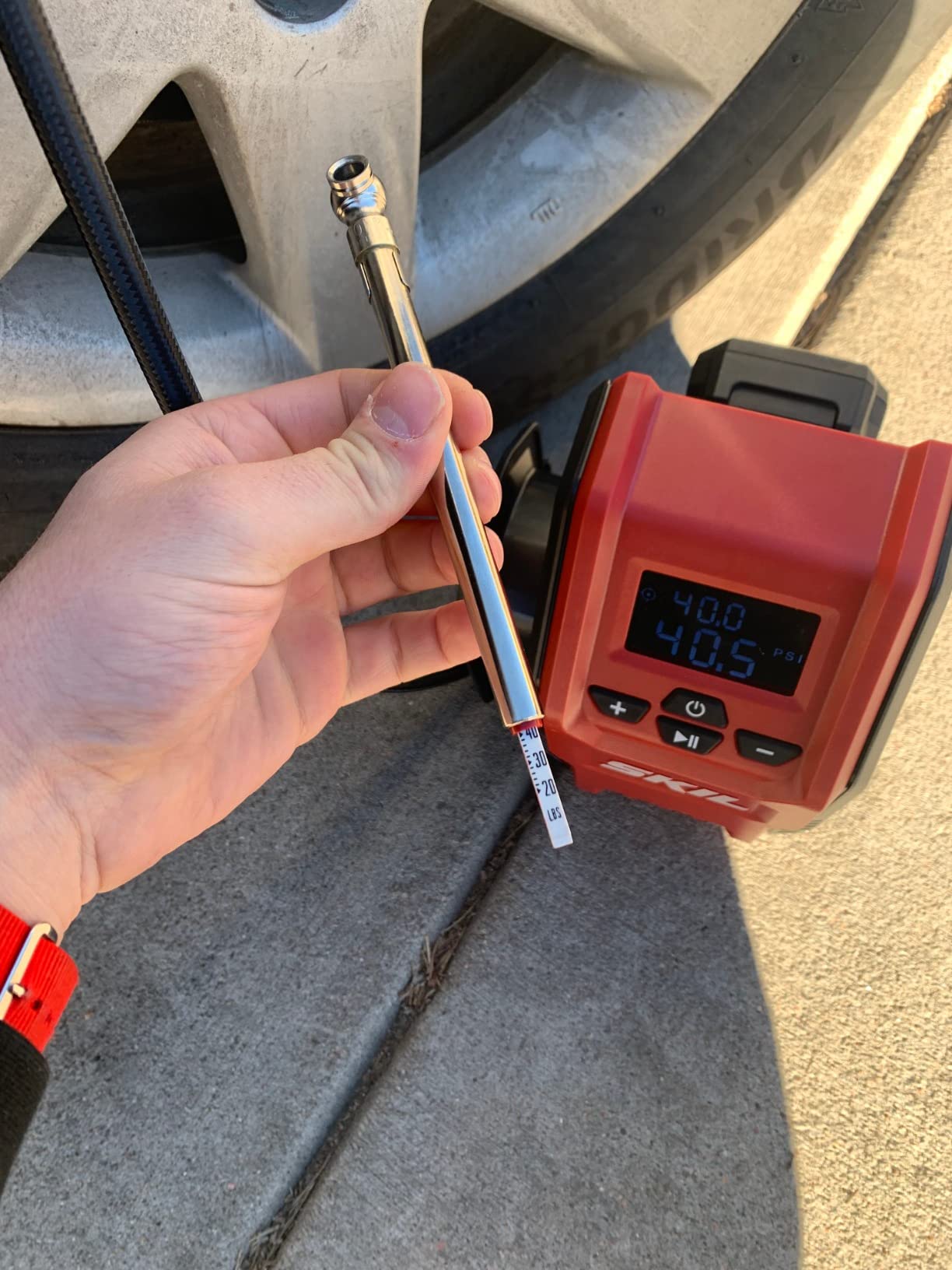
The single head chuck seats securely on valve stems, with many users reporting better seal reliability than digital alternatives they’ve owned. The 2 PSI increment markings require interpolation for precise readings but provide sufficient accuracy for normal tire maintenance. The compact size fits motorcycle storage compartments and bicycle saddle bags in addition to vehicle glove boxes.
Milton’s reputation since 1943 provides confidence in long-term reliability. Many users report switching to the S-925 after frustrating experiences with digital gauge battery failures and display malfunctions. The consistent accuracy and no-maintenance design appeal to users prioritizing reliability over features.
Best For Truck Owners and Digital Gauge Converts
The S-925 serves pickup truck and RV owners needing higher pressure measurements than standard pencil gauges provide. Users frustrated by digital gauge battery issues find mechanical reliability here. The compact size suits applications where storage space is limited, including motorcycles and bicycles.
Reading Challenges For Some Users
The small scale markings positioned close together challenge users with vision limitations or those requiring reading glasses. The 2 PSI increment resolution provides less precision than dial or digital alternatives for applications requiring exact pressure settings. The pencil format, while compact, demands more careful reading technique than intuitive dial displays.
How to Choose the Best Tire Pressure Gauge 2026
Selecting the right tire pressure gauge requires understanding accuracy standards, display types, and features that match your specific needs. Our testing revealed significant performance differences between gauges at various price points, and spending more does not always guarantee better results.
Accuracy Standards and Certifications
ANSI B40.1 and ASME B40.7 standards define accuracy grades for pressure gauges. Grade 2A (±0.5% of full scale) represents professional precision, while Grade B (±3-5%) suffices for casual use. For passenger car tires typically inflated to 32-35 PSI, even a Grade B gauge provides adequate accuracy for maintenance purposes. Enthusiasts and professionals should seek Grade 2A certification.
Calibration drift affects all gauges over time. Professional mechanics verify their gauges against reference standards quarterly. Home users should compare their gauge against a friend’s quality gauge or tire shop equipment annually. Most quality manufacturers offer recalibration services or warranty replacement for drift issues.
Digital vs Analog: Which Should You Choose?
Digital gauges offer 0.1 PSI resolution, backlit displays for nighttime use, and easy readability for users with vision challenges. They require batteries and may fail in temperature extremes. Analog gauges provide mechanical reliability, no battery dependency, and often superior durability. The choice depends on your priorities: precision and convenience versus reliability and simplicity.
Our testing found quality digital gauges from reputable brands (JACO, AstroAI, ETENWOLF) match or exceed analog accuracy. However, cheap digital gauges often underperform quality analog alternatives. If choosing digital, invest in established brands with ANSI certification rather than bargain imports.
PSI Range Requirements
Match your gauge’s maximum PSI to your vehicle’s needs. Passenger cars typically require 30-40 PSI, light trucks 35-50 PSI, and heavy RVs or trucks may need 80+ PSI. A gauge with maximum reading close to your target pressure provides better dial resolution and accuracy than using a 200 PSI gauge for 35 PSI measurements.
Consider your future needs as well. If you may upgrade to a truck or RV, selecting a higher-range gauge now avoids replacement later. However, for dedicated passenger car use, a 60 PSI maximum gauge offers better precision than 150+ PSI alternatives.
Essential Features to Consider
The portable tire inflator you use alongside your gauge affects feature priorities. A bleeder valve becomes essential if your inflator lacks precise control, allowing fine-tuning after initial inflation. The 360-degree swivel chuck helps access awkward valve angles on aftermarket wheels and dual-wheel setups. Pressure hold features let you read measurements comfortably after removing the gauge.
Hose length matters for accessibility. Short gauges require kneeling or bending for low valve stems. Longer hoses and body designs allow standing operation. Dual-head chucks specifically help with inner dual wheel valves on trucks.
How to Check Your Tire Pressure Correctly
Proper tire pressure checking technique ensures accurate readings and safety. Follow these steps for consistent results every time.
Step 1: Check When Tires Are Cold
Cold tire pressure means the vehicle has been stationary for at least three hours or driven less than one mile. Driving generates heat that increases tire pressure, potentially showing 3-5 PSI higher than cold readings. Always use cold pressure as your baseline, and check pressures before driving for the day when possible.
Step 2: Remove Valve Cap and Inspect
Unscrew the valve cap and set it aside safely. Visually inspect the valve stem for damage, corrosion, or leaks. A hissing sound indicates a problem requiring professional attention. Clean any visible debris from the valve opening before attaching your gauge.
Step 3: Press Gauge Firmly Onto Valve
Align your gauge’s chuck perpendicular to the valve stem and press firmly until you hear no air escaping. A hissing sound indicates poor seal and inaccurate readings. Hold steady pressure for 1-2 seconds to allow the gauge to equalize with tire pressure.
Step 4: Read and Record the Pressure
Read the measurement while maintaining valve contact, or note the reading if your gauge holds pressure after removal. Record the reading for each tire, noting any significant differences between tires on the same axle. Compare against your door jamb sticker or owner’s manual specifications.
Step 5: Adjust Pressure as Needed
If overinflated, use your gauge’s bleeder valve or the valve stem core to release air in small increments, rechecking frequently. If underinflated, add air using a compressor or visit a gas station. Recheck pressures after adjustment to confirm accuracy.
Step 6: Replace Valve Cap Securely
Valve caps prevent dirt and moisture from entering the valve mechanism. Replace caps finger-tight on all valves after checking. Consider investing in quality metal caps if your vehicle came with plastic versions that crack easily.
Frequently Asked Questions
Which tire pressure gauge is most accurate?
Digital gauges with ANSI B40.7 Grade 2A certification (±0.5% accuracy) generally provide the highest precision. The JACO ElitePro Digital and ETENWOLF T300 both meet this standard with 0.1 PSI resolution. For analog options, the Longacre 50417 and JACO ElitePro Analog deliver professional-grade accuracy certified to ANSI standards. Accuracy also depends on proper use technique and regular calibration verification.
What type of tire pressure gauge is most accurate?
Digital gauges typically offer higher resolution (0.1 PSI) compared to analog alternatives (usually 1-2 PSI increments). However, a quality analog gauge with ANSI certification can outperform a cheap digital gauge. Professional mechanics often prefer dial gauges for reliability, while track enthusiasts favor digital for precise adjustments. The most accurate type depends on your specific needs: digital for precision, analog for reliability.
How often should I check my tire pressure?
Check tire pressure at least once per month and before any long road trip. Tires naturally lose 1-2 PSI per month through normal permeation. Seasonal temperature changes of 10°F alter pressure by approximately 1 PSI, requiring more frequent checks during weather transitions. Additionally, inspect pressures immediately if you notice uneven tire wear, handling changes, or after driving over potholes or debris.
Do I need a tire pressure gauge if my car has TPMS?
Yes, TPMS provides warning when pressure drops significantly (typically 25% below recommended), but it does not replace regular pressure checks with a gauge. TPMS sensors may drift or fail, and they typically do not display exact pressures. A physical gauge verifies TPMS readings, helps you maintain optimal pressure for fuel economy, and serves as backup if TPMS malfunctions or batteries die.
Is 40 PSI too high for tire pressure?
Whether 40 PSI is too high depends on your vehicle’s recommended pressure. Most passenger cars specify 30-35 PSI, making 40 PSI potentially overinflated. However, some trucks and performance vehicles recommend 40+ PSI. Always follow the placard on your driver’s door jamb or owner’s manual. Overinflation by 5+ PSI creates a harsher ride, uneven center tread wear, and reduced traction.
Final Thoughts on Choosing the Best Tire Pressure Gauges 2026
After testing 23 models and consulting with professional mechanics, three gauges stand out for most drivers. The JACO ElitePro Digital delivers unmatched accuracy and features for those wanting professional-grade equipment. The AstroAI Heavy Duty serves truck and RV owners with dual-wheel accessibility and extended reach. The JACO ElitePro Analog provides reliable mechanical operation without battery concerns.
Even a basic Milton pencil gauge serves infinitely better than no gauge at all. The EPA’s fuel economy data proves that proper tire pressure saves money while improving safety. At minimum, check pressures monthly and maintain them within 2 PSI of manufacturer recommendations.
Your specific vehicle and use case determine the ideal gauge. Racing enthusiasts need 0.1 PSI precision. Daily commuters benefit from backlighting and bleeder valves. Truck owners require higher PSI ranges and dual-head chucks. Whatever your needs, investing in a quality tire pressure gauge from our tested recommendations ensures accurate readings for years of reliable service.