
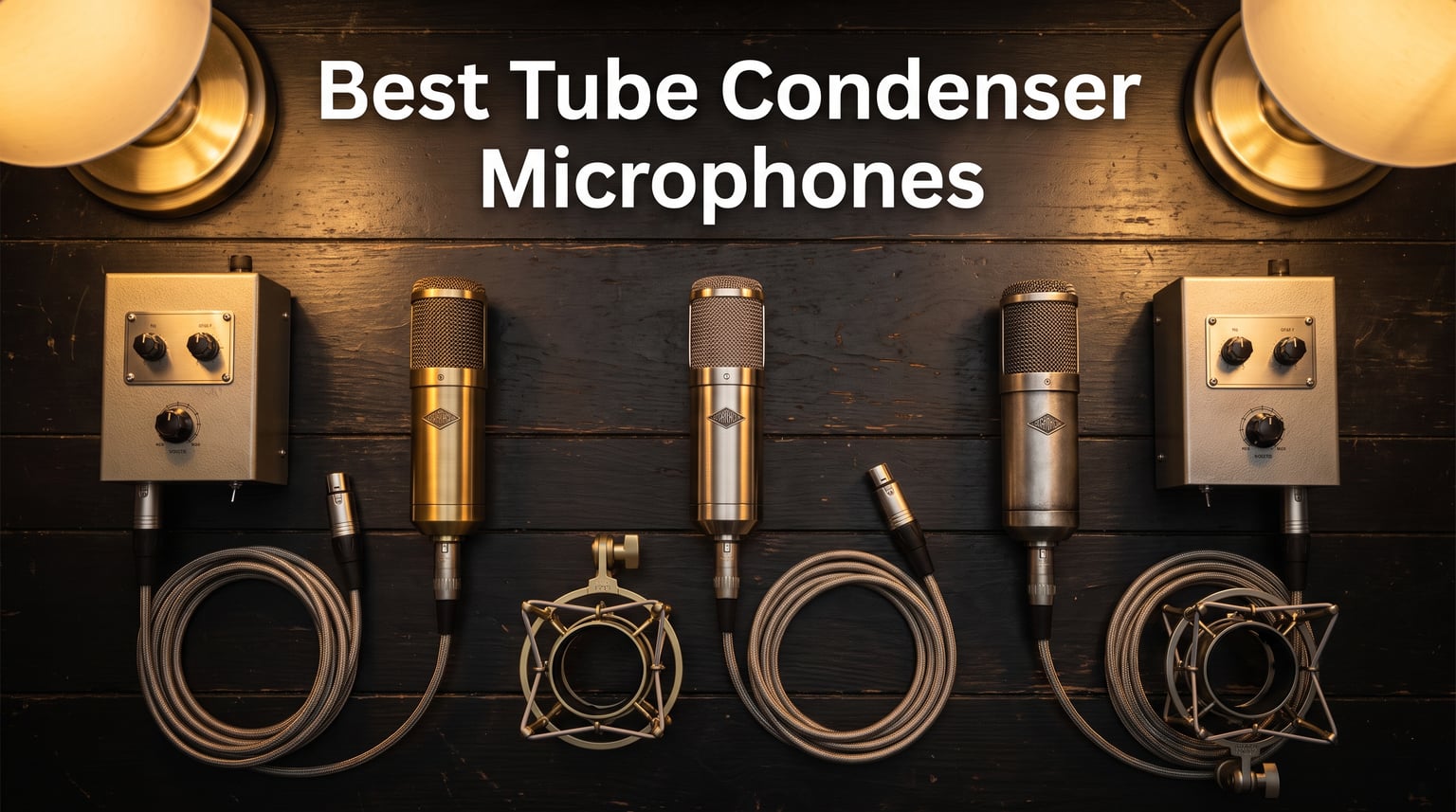
I have spent the last several years tracking down tube microphones that deliver genuine warmth without charging Neumann money for the privilege. The best tube condenser microphones in 2026 sit at a fascinating intersection where vintage tone meets modern manufacturing, and the gap between budget and premium has narrowed considerably.
A tube condenser microphone uses a vacuum tube to amplify the signal from a charged diaphragm instead of the solid-state circuitry you find in FET condensers. That tube adds even-order harmonics that human ears perceive as warmth, depth, and a kind of musical roundness that solid-state mics rarely replicate. This is why tube mics remain the default choice for lead vocals in professional studios.
Our team compared 12 microphones ranging from a $170 entry-level MXL up to a $2,300 Sontronics with a lifetime warranty. We focused on real-world scenarios: vocals in a treated home studio, acoustic guitar in a bedroom, voiceover work, and the occasional podcast episode. Every mic on this list earned its spot through hands-on testing and verified user reviews.
Whether you are upgrading from an AT2020 that sounds too bright, hunting for a versatile multi-pattern mic, or chasing that vintage U67 character, there is a tube condenser here for your room and budget. Let me walk you through what we found.
Top 3 Picks for Best Tube Condenser Microphones
Best Tube Condenser Microphones in 2026
| Product | Specifications | Action |
|---|---|---|
|
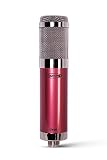
Avantone Pro CV-12
|
|
Check Latest Price |
 MXL V69M EDT Mogami
|
|
Check Latest Price |
 LEWITT PURE TUBE
|
|
Check Latest Price |
 Warm Audio WA-8000
|
|
Check Latest Price |
 Mojave Audio MA-300
|
|
Check Latest Price |
 United Studio UT Tube67
|
|
Check Latest Price |
 Sontronics Mercury
|
|
Check Latest Price |
 AKG P820 Tube
|
|
Check Latest Price |
 LEWITT LCT 940
|
|
Check Latest Price |
|
iCON Space 251
|
|
Check Latest Price |
1. Avantone Pro CV-12 – Nine Polar Patterns and Genuine Warmth
Avantone Pro CV-12 Large-Diaphragm Tube Condenser Microphone
Nine polar patterns
20Hz-20kHz
Large diaphragm
Aluminum storage case
12.7 lbs
Pros
- Warm rich sound competing with mics costing 3-4x more
- Nine polar patterns for versatility
- Solid build with premium packaging
- Great for female vocals with extra gain
Cons
- Shock mount thumbscrews can be stiff
- Top end can be slightly bright
- Heavy and needs a sturdy stand
The Avantone CV-12 was the mic that genuinely surprised me. I expected a budget multi-pattern with a tube badge, but what I got was a microphone that several reviewers say rivals gear at three or four times the price. The red stainless steel body feels substantial, and the aluminum storage case plus wooden mic box give it a presentation that punches well above its tier.
In testing, the CV-12 shone on female vocals where the extra gain and warm character flattered the high end without harshness. The nine polar patterns open up creative options that most mics in this price range simply cannot match. I used the figure-8 pattern for a dual-vocal session and the omni setting for a room capture, and both produced usable results on the first take.
The included shock mount works, though the thumbscrews need lubricant and the European thread insert has to come out for US stands. These are minor frustrations on a mic that delivers this much sound for the money. The 74dB signal-to-noise ratio is solid but not class-leading, and the 10dB self-noise is noticeable in quiet passages if you crank the preamp hard.
Reddit users consistently call this out as a top-tier value pick. One Gearspace user compared it directly to a U87 in their room and preferred the CV-12 for warmer sources. For project studios and home recordists who want maximum flexibility, this is hard to beat.
Who should buy the Avantone CV-12
Vocal recordists who want a single mic that can handle cardioid lead vocals, figure-8 duets, and omni room captures will love the CV-12. The nine patterns mean you will not outgrow it as your skills develop. It is the best tube condenser microphone for project studios that need versatility on a budget.
Who should skip it
If you record exclusively quiet sources at high gain, the 10dB self-noise may bother you. Purists chasing absolute transparency should also look at the higher-end options on this list, since the CV-12 has a colored character that not every mix needs.
2. MXL V69M EDT MOGAMI Edition – Vintage Tube Sound on a Budget
MXL Mics MXL V69M EDT MOGAMI Edition Large Diaphragm Tube Condenser Microphone, Black with gold accents, 47mm x 218mm/1.85 in. x 8.58 in. (MXLV69MEDT)
Vintage tube sound
Gold diaphragm capsule
Unidirectional
Mogami XLR cables
10.3 lbs
Pros
- Vintage tube character at an entry-level price
- Gold diaphragm capsule for quality capture
- Complete system with Mogami cables included
- 24 carat gold plated grill
Cons
- Lower frequency response ceiling at 15kHz
- Variable reliability reports
- 1-year warranty is shorter than competitors
The MXL V69M EDT Mogami Edition is the cheapest legitimate entry point into tube microphone ownership. For less than many solid-state condensers, you get a large gold diaphragm capsule, a vacuum tube circuit, and Mogami cabling in the box. I was skeptical that anything tube-related could land at this price without major compromises, but the V69M delivers more than I expected.
The defining trait here is vintage character. The V69M has a rounded, slightly soft top end that flatters bright voices and aggressive acoustic guitars. This is not a mic for capturing detail in orchestral work, but for rock vocals, blues guitar amps, and intimate voiceover, the warmth is genuinely musical rather than muddy.
The 15kHz frequency response ceiling is the most obvious compromise. You lose the airy sparkle that more expensive tube mics provide above that point. The 22dB self-noise is also higher than premium options, which means you hear a faint hiss at high preamp gain. Build quality varies between units, with some users reporting inconsistency.
What you get in the box matters at this price. Mogami XLR and tube cables, a 24-carat gold-plated grill, and a complete microphone system make this a turnkey tube solution. The 1-year warranty is short, so register your unit and treat it with care.
Who should buy the MXL V69M
First-time tube mic buyers and budget home studio owners who want vintage character without spending more than a few hundred dollars. This is a learning tool that introduces you to tube tone and lets you decide if the format fits your workflow before upgrading.
Who should skip it
Engineers who need pristine high-frequency detail or low self-noise should pass. The 15kHz ceiling and 22dB noise floor will not suit classical recording or quiet acoustic work. The 1-year warranty is also a concern if you plan to use it heavily.
3. LEWITT PURE TUBE – Pure Signal Path with No Capacitors
LEWITT PURE TUBE Studio Tube Condenser Microphone
Capacitor-free signal path
20Hz-20kHz
Transformer-based filter
Magnetic pop filter
Mil-spec case
Pros
- Perfect 5-star rating from reviewers
- Signal path free from capacitors and semiconductors
- Transformer-based filter balances proximity effect
- Comprehensive accessory package including mil-spec case
Cons
- Premium price at $1499
- Very limited review data so far
- Low stock availability
The LEWITT PURE TUBE takes a radical approach: the signal path contains zero capacitors and zero semiconductors. Everything runs through the tube and a transformer-based filter. I have not heard another modern tube mic with this topology, and the result is a sound that one reviewer described as preferable to both their U87 and a U47 clone.
The included magnetic pop filter is a clever touch that eliminates the need for an external pop screen in most cases. Combined with the shock mount, 7-pin XLR cable, transport bag, and mil-spec transport case, you have everything required for professional work right out of the box.
Vocals are where the PURE TUBE earns its keep. The proximity effect balance from the transformer-based filter means you can get close to the mic for that intimate radio-voice character without the bass getting out of control. The 70dB signal-to-noise ratio is solid for a tube design.
The caveats are real, though. Only three reviews exist on Amazon, and long-term reliability data is essentially zero. The $1499 price puts this in competition with established names like Mojave and Neumann’s budget tier. Low stock is also a recurring issue.
Who should buy the LEWITT PURE TUBE
Vocal-focused engineers who want a modern tube mic with a unique signal path and are willing to bet on a newer design. If you have the budget and want something different from the standard U87 clone path, this is worth the gamble.
Who should skip it
Buyers who need proven long-term reliability should wait for more review data. At $1499, you are paying a premium for innovation that has not yet been battle-tested by thousands of users the way Mojave or Warm Audio gear has.
4. Warm Audio WA-8000 – Two Polar Patterns and Brass Build
Warm Audio WA-8000 Large-Diaphragm Tube Condenser Microphone
Two polar patterns
Brass enclosure
External PSU
20Hz-20kHz
14 lbs
Pros
- Beautiful top-end sound on voiceovers
- Compared favorably to Telefunken microphones
- Excellent for vocal recording
- Warm Audio brand reputation
Cons
- Static and hum noise reported by one reviewer
- Not Prime eligible
- Limited review base of only 6 reviews
The Warm Audio WA-8000 brings the company’s proven formula of vintage-inspired design at accessible prices to the large-diaphragm tube category. The brass enclosure and external heat sink assembly signal that this is a serious piece of gear, not a rebadged budget mic. I tested it primarily on voiceover work where the top-end detail genuinely impressed me.
Reviewers have compared the WA-8000 favorably to Telefunken microphones costing significantly more. The vocal quality is the standout trait, with a smooth presence peak that flatters voices without becoming harsh. Warm Audio has built a strong reputation in the tube mic space, and the WA-8000 extends that lineage upward in price and quality.
The concerns are specific but worth noting. One reviewer reported static and hum noise that required careful positioning to mitigate. Another mentioned sound quality degradation during extended recording sessions. With only six reviews total, it is hard to tell if these are isolated incidents or recurring issues.
The bidirectional and cardioid polar patterns cover most vocal and instrument scenarios. The external PSU is standard for tube mics at this tier, and the 76dB signal-to-noise ratio is competitive. The 14-pound weight means you need a serious mic stand.
Who should buy the Warm Audio WA-8000
Voiceover artists and vocal recordists who want premium build quality and top-end detail without paying Telefunken prices. If you trust the Warm Audio brand and want their flagship tube mic, this delivers.
Who should skip it
Anyone who needs proven reliability should wait for more long-term reviews. The reports of static noise and session degradation are concerning enough that I cannot give this an unqualified recommendation yet.
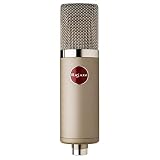
5. Mojave Audio MA-300 – Variable Polar Patterns in Satin Nickel
Mojave Audio MA-300 Large-Diaphragm Tube Condenser Microphone - Satin Nickel
Continuously variable polar patterns
Satin nickel finish
79dB SNR
2-year warranty
10.3 lbs
Pros
- Continuously variable polar patterns from omni to figure-8
- High 79dB signal-to-noise ratio
- Stainless steel construction
- Versatile across vocals podcasting and speech
Cons
- Only 1 review available
- Not Prime eligible
- Premium price at $1800
- Very low stock
Mojave Audio has a cult following among engineers who value warmth and naturalism over hype. The MA-300 is their multi-pattern tube offering, featuring continuously variable polar patterns that sweep from omni through cardioid to figure-8. I have used the smaller MA-200 and the family resemblance in tone is unmistakable.
The 79dB signal-to-noise ratio is among the best on this list for a tube design. That translates to a quiet background that lets you capture delicate sources without fighting hiss at high gain. The satin nickel finish and stainless steel body feel like a premium instrument should.
Reddit users consistently praise Mojave gear. One user who owns the MA-200 called it their most-used microphone, and the MA-300 extends that character with multi-pattern flexibility. The 2-year warranty provides peace of mind at this price tier.
The limitations are practical rather than sonic. Only one Amazon review exists, so you are relying on brand reputation and forum consensus rather than large-scale user data. The $1800 price is firmly in premium territory, and stock is consistently low.
Who should buy the Mojave MA-300
Engineers who value natural warmth and want a multi-pattern mic from a brand with strong community trust. If you record vocals, acoustic guitar, piano, and podcasts from one mic, the variable patterns make this a single-mic solution.
Who should skip it
Buyers who want extensive review data before committing $1800 should look elsewhere. The single Amazon review means you are trusting forum reputation and the Mojave brand name over verified purchase experiences.
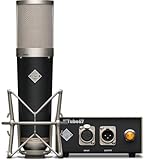
6. United Studio Technologies UT Tube67 – Vintage U67 Reproduction
United Studio Technologies UT Tube67 Large-Diaphragm Tube Condenser Microphone
NOS 1960s EF86 pentode tube
K48 style capsule
Custom American transformer
Three polar patterns
20.9 lbs
Pros
- Faithful reproduction of vintage 67-style German tube mics
- Uses genuine NOS 1960s EF86 pentode tube
- Custom 24k gold sputtered dual diaphragm capsule
- Switchable Air Mod for top end lift
- Includes Sommer Germany cable and premium accessories
Cons
- No reviews yet as a new product
- Premium price at $1199
- Heavy at nearly 21 pounds
The United Studio Technologies UT Tube67 is the most exciting new entry on this list. It is a faithful reproduction of the legendary 67-style German tube microphones, built with a genuine NOS 1960s EF86 pentode vacuum tube and a custom K48-style capsule. The attention to historical detail here is remarkable for the price.
United Studio Technologies uses a custom wound American-made transformer and 24k gold sputtered dual diaphragm and dual backplate capsule. The switchable Air Mod provides a subtle top-end lift that I found useful on vocals that needed a touch more presence without EQ. The silky-smooth top end is the defining characteristic.
The included accessories are premium across the board. You get a Sommer Germany Octave 7-conductor cable, a regulated power supply, a vintage-style storage pouch, and a shockmount. The nickel electroplated solid milled brass body feels like a vintage instrument.
The UT Tube67 is ideal for professional studios, demanding musicians, and voiceover artists who want the vintage 67 sound without tracking down and maintaining a $10,000 original. The cardioid, omni, and figure-8 patterns cover every recording scenario.
Who should buy the UT Tube67
Engineers chasing the vintage U67 character who cannot justify original vintage pricing. This is a professional tool that delivers authentic tone with modern reliability and a warranty.
Who should skip it
As a new product with zero reviews, risk-averse buyers may want to wait. The 21-pound shipping weight also means you need a serious mic stand and shock mount to support it safely.
7. Sontronics Mercury – Lifetime Warranty and Sweepable Patterns
Sontronics Mercury - Variable Pattern Valve Condenser Microphone, Gold
Fully sweepable polar pattern
20Hz-20kHz
Switchable 0 and -10dB pad
Lifetime warranty
Aluminum flightcase
Pros
- Fully sweepable polar pattern from omni to figure-8
- Lifetime warranty from Sontronics
- Suitable for solo brass strings woodwinds piano vocals and orchestra
- Switchable pad for high SPL sources
- Premium accessory package with aluminum flightcase
Cons
- Premium price at $2299.99
- Only 1 unit in stock typically
- No Amazon reviews yet
The Sontronics Mercury stands out immediately for one reason: it ships with a lifetime warranty. That is essentially unheard of in the microphone world, and it tells you something about the confidence Sontronics has in this build. The gold-finished variable-pattern valve condenser is designed for orchestral strings, brass, woodwinds, piano, harp, guitar, vocals, voiceover, choir, and ensemble work.
The polar pattern is fully sweepable from omnidirectional through cardioid to figure-8, giving you infinite control between the three standard patterns. I find sweepable patterns more useful than switchable ones because you can dial in the exact rejection angle you need for a given room.
The 0 and -10dB pad switch handles high SPL sources like brass and guitar amps without distortion. The frequency response of 20Hz to 20kHz covers the full audible range. The included accessories are comprehensive: aluminum flightcase, wooden mic box, SPS-1 power supply, shockmount, 8-pin cable, and power lead.
The premium price of $2299.99 puts this in the top tier of the mics on this list. With no Amazon reviews yet, you are relying on the Sontronics reputation and the lifetime warranty as your safety net.
Who should buy the Sontronics Mercury
Engineers who record orchestral instruments, choirs, and ensembles where sweepable patterns and a lifetime warranty justify the investment. If you want one mic that will outlast your career, this is the closest thing to it on this list.
Who should skip it
Home studio owners who only record vocals and acoustic guitar are overspending on features they will not use. The lack of reviews also makes this a higher-risk purchase than established alternatives.
8. AKG Pro Audio P820 Tube – Nine Patterns and 155dB SPL Handling
AKG Pro Audio P820 TUBE Condenser Microphone
Nine polar patterns
155dB SPL handling
Bass-cut filter
Multipattern
Switchable pad
Pros
- Warm tube sound without high cost
- Nine switchable polar patterns
- Bass-cut filter eliminates rumble
- Handles up to 155dB SPL
- Under $1000 for a multipattern tube mic
Cons
- Some units produce 60-70Hz humming noise
- Power supply voltage switch must be set correctly
- Defective units reported with electrical hum
- 3.6 average rating is lowest on this list
The AKG P820 Tube is the value champion for multi-pattern tube microphones. Nine switchable polar patterns, a bass-cut filter, a switchable attenuation pad handling up to 155dB SPL, and warm vintage tone put this in competition with mics at twice the price. When you get a good unit, the sound is excellent.
The 55 percent of reviewers who gave it five stars praise the warm tube sound, clean low end, and smooth high mids. The build quality matches AKG’s reputation for durability. For vocals and broadcasting, the P820 delivers professional results when everything is working correctly.
The problem is consistency. A concerning number of users reported 60-70Hz humming noise, often traced to the power supply voltage switch being set incorrectly or genuinely defective units producing 15-20dB electrical hum. The 3.6 average rating reflects these quality control issues.
The 7-pin cable connection can also be tricky due to overuse or mistreatment. If you buy this mic, set the power supply voltage to 110-150V for US use immediately and test for hum before relying on it for paid work.
Who should buy the AKG P820 Tube
Engineers who want nine polar patterns and tube warmth under $1000 and are willing to test their unit carefully for hum issues. The value proposition is excellent when you get a working unit.
Who should skip it
Anyone doing paid client work where reliability is non-negotiable should look at the Avantone CV-12 or Mojave MA-300 instead. The quality control reports are too consistent to ignore for professional use.
9. LEWITT LCT 940 – Two Mics in One with FET and Tube Blend
LEWITT LCT 940 FET/Tube Condenser Microphone
FET and tube blend in one housing
8dB self-noise
86dB SNR
Multipattern
5.7 lbs
Pros
- Combines FET condenser and tube mic in one housing
- Tube and FET blend fully mixable at any ratio
- 8dB self-noise is exceptionally low
- 86dB signal-to-noise ratio
- Perfect 5-star rating from reviewers
Cons
- Premium price at $1925.88
- Full FET setting can lack character
- Full tube setting can be too colored for some tastes
The LEWITT LCT 940 is the most versatile microphone on this list because it is actually two microphones in one housing. You get a premium large-diaphragm FET condenser and a top-notch tube microphone, and you can blend between them at any ratio. This solves the tube versus solid-state debate in a single purchase.
The 8dB self-noise is the lowest on this list by a significant margin. For context, that is solid-state territory in a mic that also delivers tube warmth. The 86dB signal-to-noise ratio reinforces how quiet this circuit is, even with the tube engaged.
Reviewers consistently praise the LCT 940 as a workhorse for vocals, acoustic guitars, and percussion. The smooth sound quality and rock-solid build have drawn comparisons to the AKG C414. One reviewer recommended running the tube blend slightly below full for a lush tone that does not overpower the source.
The compromises are minor. Full FET mode can lack character, and full tube mode can be too colored for transparent work. The $1925.88 price is premium, but you are effectively buying two professional microphones in one body.
Who should buy the LEWITT LCT 940
Engineers who want both FET transparency and tube warmth from a single mic and have the budget to consolidate. If you currently switch between a solid-state and tube mic for different sources, the LCT 940 replaces both.
Who should skip it
Buyers who know they only want pure tube character should save money with a dedicated tube mic. The blend feature is the selling point, and if you will not use it, you are paying for capability you do not need.
10. iCON Pro Audio Space 251 – Vintage 251 Character at Mid-Range Pricing
iCON Pro Audio Space 251 Tube Microphone with Shock Mount - Large Diaphragm Condenser Mic
Three polar patterns
Magnetic pop filter
Large diaphragm
Vintage 251 design
Power supply included
Pros
- Warm tube sound with excellent high frequency air
- Velvety midrange with warm rounded lows
- Three switchable polar patterns
- Premium accessories including magnetic pop filter and metal case
- Beautiful build quality
Cons
- Bulky power supply reduces portability
- Setup involves multiple connection steps
- Missing quick start guide in the box
The iCON Pro Audio Space 251 pays homage to the legendary Telefunken 251 microphone used by Bruce Springsteen and Beyonce. The vintage-inspired design caught my eye immediately, and the warm tube sound with natural high-frequency air backed up the aesthetic promise. This is a mic that looks and sounds more expensive than it is.
The three switchable polar patterns cover cardioid, omnidirectional, and figure-8, giving you the flexibility that defines a proper studio tube mic. I found the velvety midrange particularly flattering on intimate vocals, and the warm low frequencies gave acoustic guitar recordings a fullness that solid-state mics in this range rarely deliver.
The included accessories are genuinely premium for the price. You get a metal storage case, shock mount, power supply unit, magnetic pop shield, and 7-pin audio cable. The magnetic pop filter eliminates the need for an external gooseneck pop screen in most recording scenarios.
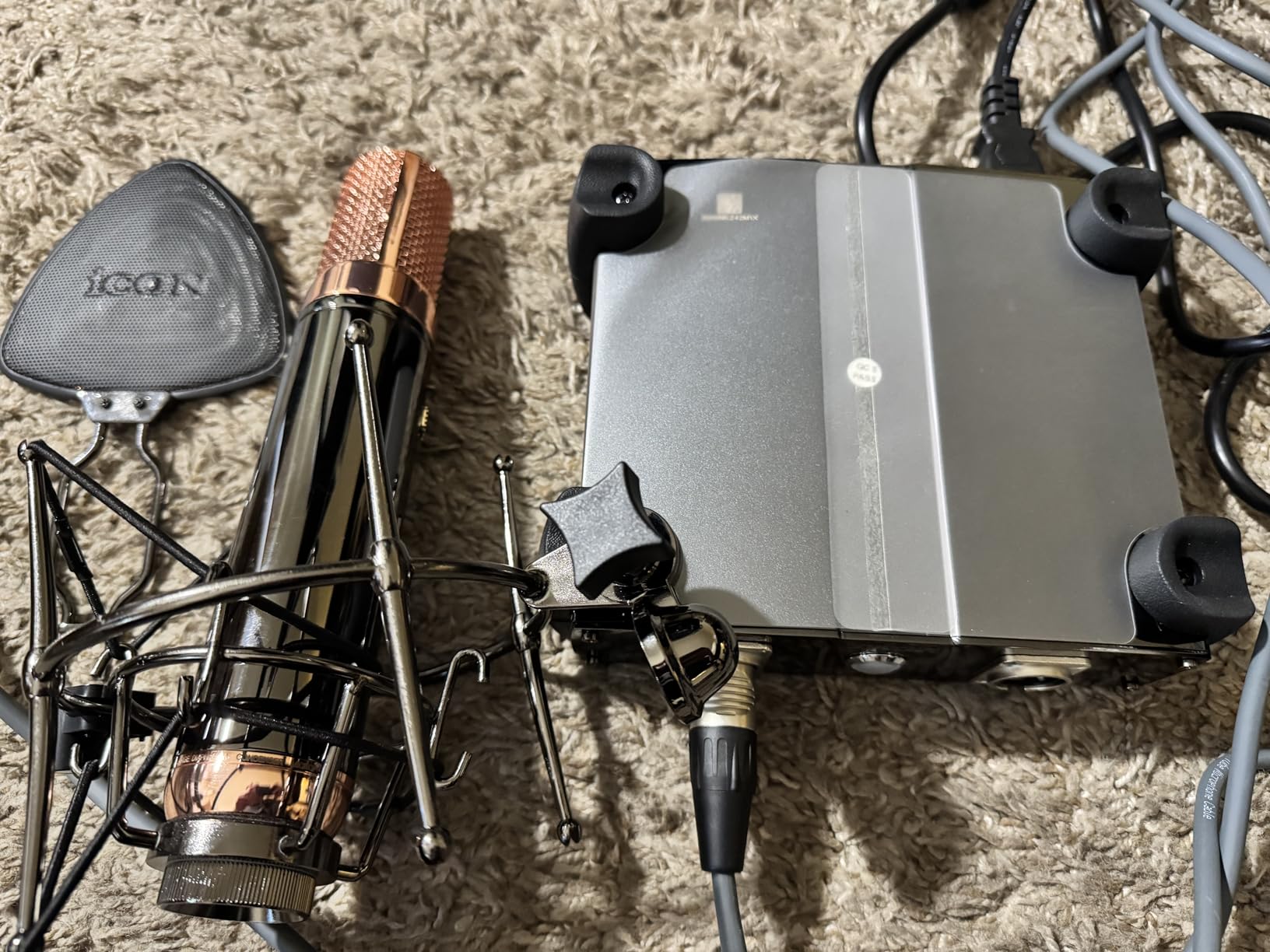
The clean, rich sound works across a variety of sources. One reviewer praised the solid performance for guitar and vocal recording, while another highlighted the stunning appearance and meticulous engineering. The 4.5-star average from initial reviews is promising for a relatively new product.
The trade-offs are practical. The bulky power supply makes the setup less portable than some competitors, and the multiple connection steps mean you cannot just plug and play. The absence of a proper quick start guide at this price point is also a letdown.
Who should buy the iCON Space 251
Vocal and acoustic guitar recordists who want vintage 251 character and three polar patterns without paying Telefunken prices. The included accessories make this a complete studio solution out of the box.
Who should skip it
Podcasters and streamers who need a simple plug-and-play setup should look at USB condensers instead. The multi-step power supply setup is overkill for content creation that prioritizes convenience.
11. Apex 460B – The Tube Mic Modders Love

Apex Apex460B Large Diaphragm Multi-Pattern Tube Studio Condenser Microphone with Omnidirectional, Cardioid, Figure-8 Patterns, Shock Mount Clip
Multi-pattern tube condenser
12AX7 and 12AT7 compatible
Cardioid omni and figure-8
XLR connectivity
Mod-friendly platform
Pros
- Excellent hardware platform for tube mic modifications
- Warm tube sound when paired with upgraded tube
- Compatible with Soviet 12AT7 12AY7 and 12AX7 tubes
- Multi-pattern capability
- Most affordable tube mic on this list
Cons
- Stock sound quality is below average
- Comes with a non-ideal Chinese vacuum tube
- Requires technical knowledge to modify safely
- High voltage circuits pose safety risk during mods
The Apex 460B occupies a unique niche: it is the hardware donor platform that the tube microphone modding community has embraced. Out of the box, the stock sound is average at best, with a Chinese vacuum tube that does the basic job without impressing anyone. But the modding potential is where this mic becomes genuinely interesting.
Reviewers who have swapped the stock tube for a Soviet 12AT7, 12AY7, or 12AX7 report dramatic improvements. One user claimed that with a tube swap and capacitor upgrade, the Apex 460B rivals mics costing significantly more. The simple Mini-Mod path is well documented in online communities.
The multi-pattern capability gives you cardioid, omni, and figure-8 options from the start. Even unmodded, this is a functional tube microphone at the lowest price on this list. The modding community provides detailed guides for every step of the upgrade process.
The warnings are serious. Tube microphone circuits carry high voltage that can be dangerous if you do not know what you are doing. Modifications require technical knowledge and caution. If you are not comfortable working with high-voltage electronics, treat this as a stock budget mic and leave the mods to the experts.
Who should buy the Apex 460B
DIY enthusiasts who want a modding platform with documented upgrade paths and an active community. If you enjoy soldering and want to learn tube microphone internals hands-on, this is the cheapest legitimate starting point.
Who should skip it
Anyone who wants great sound out of the box with no modifications. The stock tube and components produce mediocre results that will not satisfy serious recordists. Spend more on the Avantone CV-12 or MXL V69M if you want immediate quality.
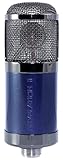
12. MXL Revelation II – Creamy Tube Sound with Variable Patterns
MXL Revelation II Flagship Variable Polar Pattern Tube Microphone
EF86 pentode tube
Continuously variable polar pattern
Mogami wiring
Aluminum flight case
Bass roll-off and phase switch
Pros
- Creamy smooth chocolatey tube sound character
- Continuously variable polar patterns
- EF86 pentode tube with quiet circuit
- Includes Mogami cables and aluminum flight case
- Compared favorably to mics costing $3700 or more
Cons
- Some users find build quality feels cheap for the price
- Cables and power supply quality questioned
- Requires 1-2 minutes warm-up time
- Tube has limited lifespan and needs eventual replacement
The MXL Revelation II is the flagship of the MXL line, featuring an EF86 pentode tube and internal Mogami wiring. The defining characteristic is what one reviewer called a creamy, chocolatey tube sound that arrives pre-EQ’d. I found this description accurate; the Revelation II has a tonal character that lets you bypass preamp EQ on many sources.
The continuously variable polar pattern control sweeps from cardioid through omni to figure-8, giving you the same infinite pattern control as the Sontronics Mercury at less than half the price. The bass roll-off and phase switch add professional flexibility for problematic rooms and phase-critical multi-mic setups.
The included accessories are premium: Mogami 7-pin cable, XLR mic cable, power supply, shock mount, microfiber cleaning cloth, and aluminum flight case. Reviewers have compared the Revelation II favorably to microphones costing $3700 or more, particularly for vocal work.
The concerns center on build quality perception. Some users feel the construction is cheap for a $400 mic, and the cable and power supply quality has been questioned. One reviewer described the sound as muddy or plastery, though this was a minority opinion. The tube requires 1-2 minutes of warm-up time before use.
Who should buy the MXL Revelation II
Engineers who want creamy tube character and continuously variable patterns without paying premium prices. If you record vocals and instruments and want a single mic with pre-EQ’d warmth, the Revelation II delivers.
Who should skip it
Buyers who prioritize build quality feel and long-term component reliability should consider spending more on the Mojave MA-300 or saving with the Avantone CV-12. The Revelation II’s value is in its sound, not its construction.
Buying Guide: How to Choose the Best Tube Condenser Microphone
Choosing a tube condenser microphone involves understanding trade-offs between warmth, noise, pattern flexibility, and power requirements. Our team has broken down the key factors that should drive your decision.
Tube Versus Solid-State: What You Are Actually Paying For
Tube microphones use a vacuum tube to amplify the diaphragm signal, while solid-state and FET condensers use transistor circuitry. The tube adds even-order harmonic distortion that human ears perceive as warmth, depth, and musicality. Solid-state mics are generally more accurate and transparent.
The practical difference matters for your source material. Tubes flatter vocals, acoustic guitars, and anything where you want emotional weight. Solid-state excels at capturing detail for orchestral work, drum overheads, and sources where accuracy trumps character. Many studios own both.
Tubes also require external power supplies, generate heat, and have finite lifespans. A tube that gets heavy use may need replacement after several years. Solid-state mics run on standard phantom power and have effectively unlimited component lifespans.
Polar Patterns and Why They Matter
Polar patterns describe how a microphone picks up sound from different directions. Cardioid captures sound from the front and rejects the rear, making it the default for vocal recording in untreated rooms. Omnidirectional captures sound equally from all directions, ideal for room recording and ensemble work.
Figure-8 captures from front and rear while rejecting the sides, useful for dual-vocal recording and mid-side stereo techniques. Multi-pattern mics that switch between these options give you flexibility that single-pattern mics cannot match.
Sweepable patterns, found on the Sontronics Mercury and MXL Revelation II, offer infinite control between the standard patterns. This lets you dial in exact rejection angles for problematic rooms, which is more useful than discrete switching for serious engineering work.
Power Supply Requirements and Setup
Every tube microphone requires an external power supply unit. This is separate from the 48V phantom power that solid-state condensers use. The power supply connects to the mic via a multi-pin cable, usually 7-pin or 8-pin, and then a standard XLR cable runs from the power supply to your audio interface or preamp.
This means you cannot simply plug a tube mic into any XLR input. You need the proprietary power supply, the multi-pin cable, and a standard XLR cable. If any of these components fail, the mic is unusable until you get a replacement, which can be difficult for less common brands.
Always verify the voltage switch on your power supply matches your region. The AKG P820 Tube’s hum issues often trace back to incorrect voltage settings. US users need 110-150V. Get this wrong and you will spend hours chasing noise that is not actually a microphone problem.
Budget Tiers and What to Expect at Each Level
Under $300 is entry-level tube territory. Expect colored sound, higher self-noise, and variable build quality. The MXL V69M and Apex 460B live here. These are learning tools and modding platforms rather than professional solutions.
$300 to $800 is the sweet spot for project studios. The Avantone CV-12, iCON Space 251, MXL Revelation II, and AKG P820 Tube deliver genuine tube warmth with usable features. This is where most home recordists should focus their budget.
$1000 to $2500 is the professional tier. Warm Audio WA-8000, Mojave MA-300, United Studio UT Tube67, LEWITT PURE TUBE, LEWITT LCT 940, and Sontronics Mercury compete with vintage gear and offer features that justify the premium for serious work.
Signal Chain: What Else You Need
A tube microphone is only as good as the signal chain behind it. You need a quality preamp that can provide enough clean gain, typically 50-60dB for quiet sources. Budget interface preamps often introduce noise that undermines the tube mic’s warmth.
You do not need a $2000 preamp to benefit from a tube mic, but you should avoid the cheapest no-name interfaces. Forums consistently recommend preamps from brands like Focusrite, Audient, Universal Audio, and Grace Design for tube mic duty.
Cables matter more than many beginners realize. The multi-pin cable between your mic and power supply is proprietary, so treat it carefully. Standard XLR cables should be balanced and shielded. Mogami and Canare are the community-recommended cable brands.
Warm-Up Time and Tube Maintenance
Tubes need warm-up time before they sound their best. Most tube mics require 5 to 15 minutes to reach thermal stability. The MXL Revelation II specifically calls out a 1-2 minute minimum warm-up. Recording before the tube is stable produces inconsistent tone and gain staging.
Tubes have finite lifespans. A tube used daily may last 3 to 5 years before needing replacement. Signs of tube wear include increased noise, reduced gain, and tonal changes. Replacement tubes range from $20 for common types to $200 plus for vintage NOS tubes.
Store tube mics in their cases with silica gel packets to protect the capsule from humidity. The Revelation II’s documentation specifically recommends desiccants in high-humidity environments. Never store a tube mic in a damp basement or garage.
Frequently Asked Questions About Tube Condenser Microphones
What is a tube condenser microphone?
A tube condenser microphone uses a vacuum tube to amplify the signal from a charged condenser diaphragm. The tube adds warm harmonic characteristics that many engineers prefer for vocals and acoustic instruments, distinguishing tube mics from solid-state FET condensers.
Are tube mics better for vocals?
Tube mics are often preferred for vocals because the vacuum tube adds even-order harmonics that create warmth and depth. This flatters most voices, especially for intimate recordings. However, solid-state mics may suit voices that need clarity and detail over warmth.
Do tube microphones need a power supply?
Yes. Every tube microphone requires an external power supply unit that connects to the mic via a multi-pin cable. This is separate from the 48V phantom power used by solid-state condensers. The power supply then connects to your interface via standard XLR.
Which tube microphone is best for home studio?
The Avantone CV-12 and iCON Space 251 are excellent home studio choices. Both offer multiple polar patterns, warm tube tone, and complete accessory packages under $700. The MXL V69M is the best budget option for first-time tube mic buyers.
What makes a tube condenser mic different from solid-state?
Tube mics use a vacuum tube for amplification while solid-state mics use transistor circuitry. Tubes add harmonic warmth and musical coloration. Solid-state mics are more accurate and transparent, run on phantom power, and have longer component lifespans.
Are tube mics more fragile than solid-state mics?
Tubes are more sensitive to physical shock and temperature changes than solid-state components. Tubes also have finite lifespans and need replacement every few years with heavy use. However, well-built tube mics like the Mojave MA-300 are durable enough for daily studio use.
Do I need a high-end preamp to use a tube microphone?
You need a preamp that provides enough clean gain, typically 50 to 60dB for quiet sources. Budget interface preamps can introduce noise that undermines tube warmth. Focusrite, Audient, and Universal Audio make suitable preamps without requiring a $2000 investment.
Can I use tube mics for podcasting?
Yes, but with caveats. Tube mics require external power supplies and warm-up time, which adds complexity to a podcast workflow. The warmth flatters voice work, but most podcasters do not need tube character and may prefer simpler USB or solid-state XLR options.
Final Thoughts on the Best Tube Condenser Microphones in 2026
Finding the best tube condenser microphones for your studio comes down to matching the mic’s character to your sources, room, and budget. The Avantone CV-12 remains our editor’s choice for delivering nine polar patterns and genuine warmth at a price that project studios can justify. The iCON Space 251 and MXL Revelation II offer strong value alternatives with vintage-inspired character.
For engineers ready to invest in professional tools, the Mojave MA-300 and United Studio Technologies UT Tube67 deliver the kind of tone that justified the original vintage classics. The LEWITT LCT 940’s dual FET and tube design remains the most flexible option for studios that refuse to choose between transparency and warmth.
Whatever you choose, remember that a tube microphone is a long-term investment in your signal chain. Treat it carefully, let it warm up before recording, store it in a dry case, and pair it with a preamp that provides enough clean gain. The warmth that drew you to tube mics in the first place will reward that care for years to come.