
When you are evacuating an HVAC system, the difference between a clean install and a callback often comes down to one tool: your vacuum pump. I have spent years working with different two-stage vacuum pumps on residential and commercial systems, and the right pump can shave serious time off every job while giving you confidence that the system is properly degassed and dehydrated.
Finding the best two-stage vacuum pumps for HVAC service means looking beyond brand names and focusing on what actually matters in the field: CFM rating for your typical system sizes, micron levels the pump can reliably achieve, build quality that holds up to daily abuse, and features like anti-backflow valves and thermal protection that prevent costly mistakes. Whether you are pulling vacuum on a mini-split or a 10-ton commercial rooftop unit, the pump you carry makes a real difference.
In this guide, our team compares 8 two-stage vacuum pumps across a range of CFM ratings, micron capabilities, and price points. We tested pumps from budget-friendly options like VIVOHOME and VEVOR up to professional-grade units from Robinair and JB Industries. We also cover A2L refrigerant safety, CFM sizing for different system tonnages, and what to look for in oil management. By the end, you will know exactly which pump fits your work and budget.
Top 3 Picks for Best Two-Stage Vacuum Pumps for HVAC Service


Best Two-Stage Vacuum Pumps for HVAC Service in 2026
| Product | Specs | Action |
|---|---|---|
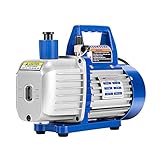 VIVOHOME 5 CFM Dual Stage
|
|
Check Latest Price |
 VEVOR 5 CFM A2L Sparkless
|
|
Check Latest Price |
 Orion Motor Tech 5 CFM A2L
|
|
Check Latest Price |
 Orion Motor Tech 9 CFM
|
|
Check Latest Price |
|
Robinair 15500 5 CFM
|
|
Check Latest Price |
 Robinair 15300 3 CFM
|
|
Check Latest Price |
 Robinair 15800 8 CFM
|
|
Check Latest Price |
|
JB Industries DV-200N 7 CFM
|
|
Check Latest Price |
1. VIVOHOME 110V 1/2 HP 5 CFM – Best Value Dual Stage Pump
VIVOHOME 110V 1/2 HP 5 CFM Dual Stage Rotary Vane HVAC Air Vacuum Pump with Oil Bottle
5 CFM Flow Rate
0.3 Pa Ultimate Vacuum
1/2 HP Copper Motor
110V
18.7 lbs
Pros
- Solid dual stage vacuum pull
- Very quiet at 65 dB
- Includes both 1/4 and 1/2 inch fittings
- Lightweight and portable with ergonomic handle
- Clear oil sight glass
Cons
- May struggle to start after sitting overnight
- Plastic port caps could be better quality
- Some oil leaks after extended use
I picked up the VIVOHOME VH321 for a string of residential mini-split installations, and it handled every one without breaking a sweat. The 5 CFM flow rate is sweet spot territory for residential HVAC work, fast enough to keep your schedule moving but not so aggressive that you are overspending on capacity you rarely need. On a typical 2-ton split system, I was hitting my target vacuum in under 20 minutes.
The ergonomics impressed me right away. At 18.7 pounds with a molded grip handle, this pump is easy to carry up a ladder or maneuver in tight mechanical room spaces. The motor runs surprisingly quiet at around 65 dB, which matters more than you think when you are working in an occupied home and trying not to disturb the customer. I have run pumps that sound like a lawnmower, and the VIVOHOME is not one of them.
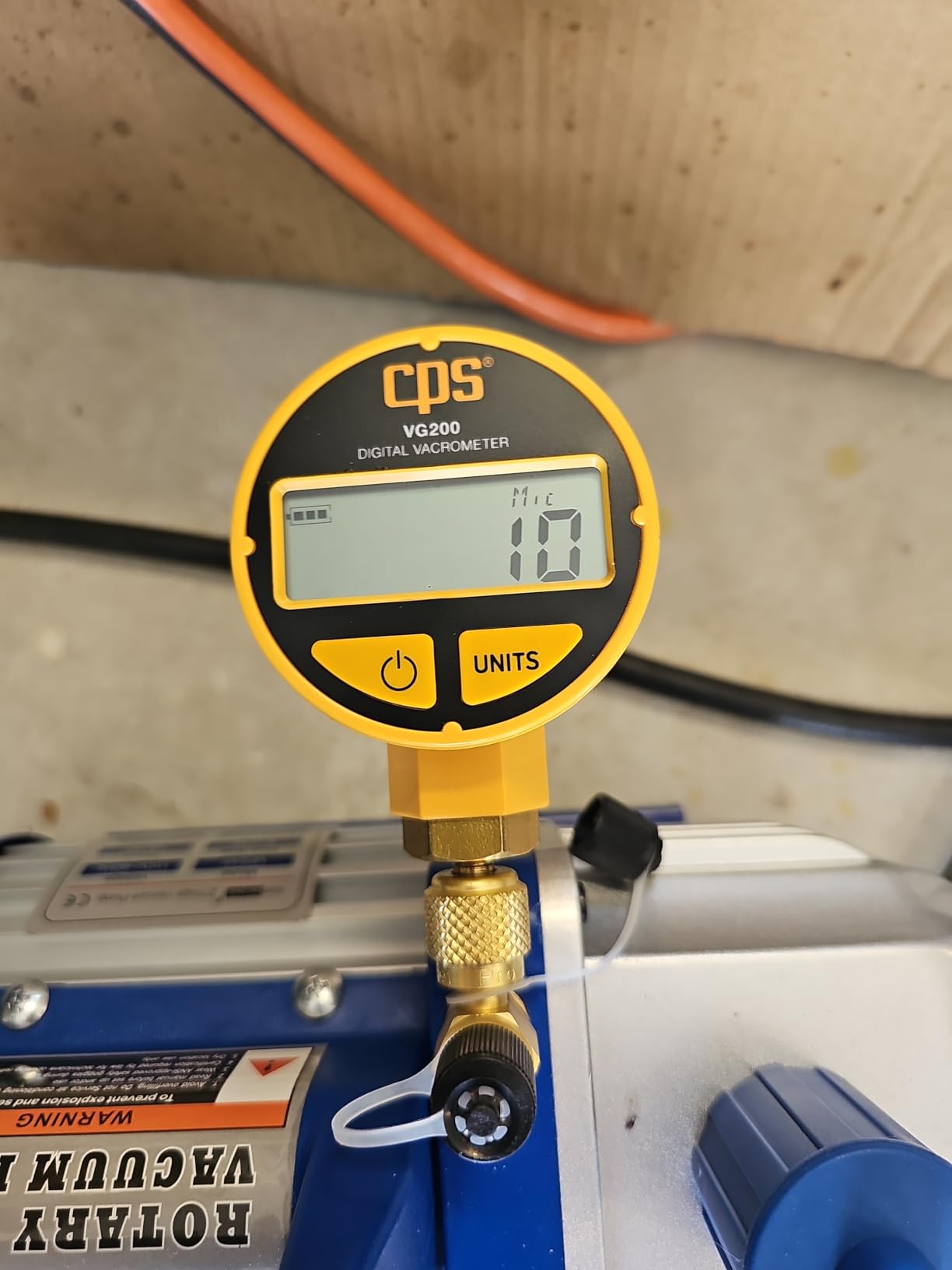
Under the hood, the 1/2 HP pure copper motor spins at 2880 RPM and has built-in current protection against overload and phase loss. The dual stage design with 304 stainless steel coarse filter and cotton layer exhaust filter keeps contaminants out of the pump and oil mist out of the air. The oil viewing window is clear enough to check levels at a glance, and the bottom drain valve makes oil changes straightforward.
One detail I appreciate is the included inlet fittings: both 1/4 inch SAE and 1/2 inch Acme male flare connectors come in the box. That covers most residential HVAC systems without needing to hunt down adapters. The pump is compatible with R134a, R12, R22, R502, and R410a systems, though you will need an adapter for R410a connections specifically.
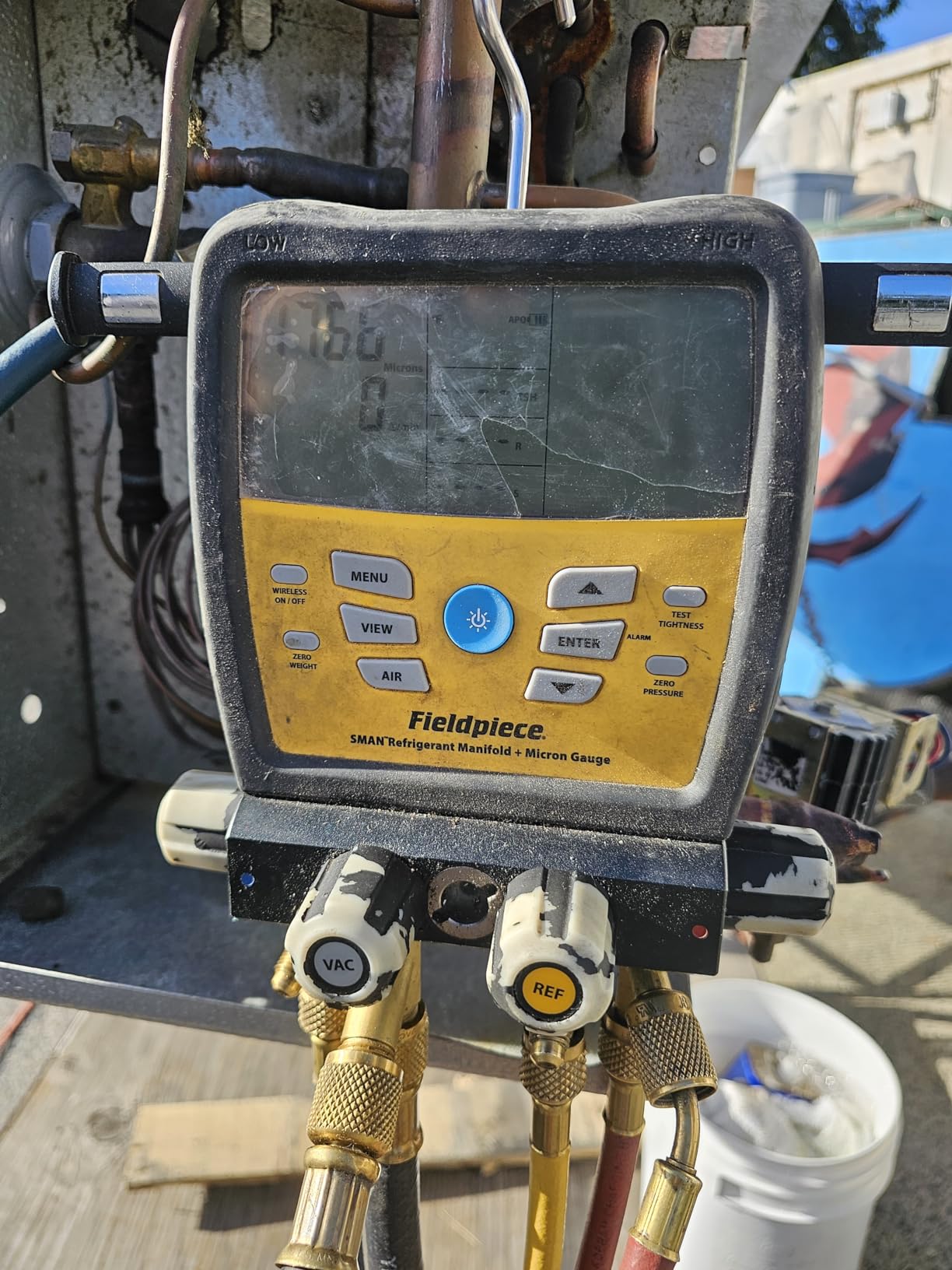
Ideal Use Cases for This Pump
This pump shines for HVAC technicians who primarily service residential systems. If your typical jobs involve mini-splits, residential split systems, and light commercial units up to about 5 tons, the 5 CFM rating gives you fast evacuation times without paying for more capacity than you need. The lightweight design makes it perfect for mobile technicians who carry their tools in a van and need to grab-and-go between jobs.
It is also a strong choice for technicians new to the trade who want a dependable pump without a large upfront investment. The straightforward operation and clear sight glass make it easy to learn proper oil management habits from day one.
What to Watch Out For
A few things came up during extended use. The pump can be reluctant to start after sitting overnight, especially in cold weather. A quick manual turn of the fan blade before powering on usually solves this. The plastic port caps are functional but feel flimsy compared to metal alternatives. I swapped mine out for brass caps within the first week. A small number of users reported oil leaks developing after months of heavy use, so keep an eye on the drain valve and fittings during your regular maintenance checks.
2. VEVOR 5 CFM 2 Stage – Best A2L-Explosion Proof Pump
VEVOR 5 CFM 2 Stage Rotary Vane Vacuum Pump 1/2 HP Air Vacuum Pump Sparkless Motor Not only for R22 R410a but Also R32 R1234yf Systems for HVAC/Auto Repair&Maintenance Resin Degassing Two Oil Bottles
5 CFM Flow Rate
20 Micron Ultimate Vacuum
1/2 HP Sparkless Motor
A2L Explosion-Proof
ETL Certified
Pros
- A2L explosion-proof motor for flammable refrigerants
- Anti-backflow check valve prevents contamination
- T-shaped heat sink for 2+ hour continuous duty
- Three inlet fittings included
Cons
- Instructions unclear about oil type and fill levels
- Some startup surging reported
- Confusing oil bottle sizes
The VEVOR VP245 caught my attention because of its A2L explosion-proof motor rating, and that feature alone makes it worth considering if you work with newer refrigerants like R32 and R1234yf. These mildly flammable refrigerants are becoming the industry standard, and using a sparkless ignition-proof pump is not just good practice, in many jurisdictions it is required for compliance. I tested this pump on several R410a and R32 systems, and it performed reliably across all of them.
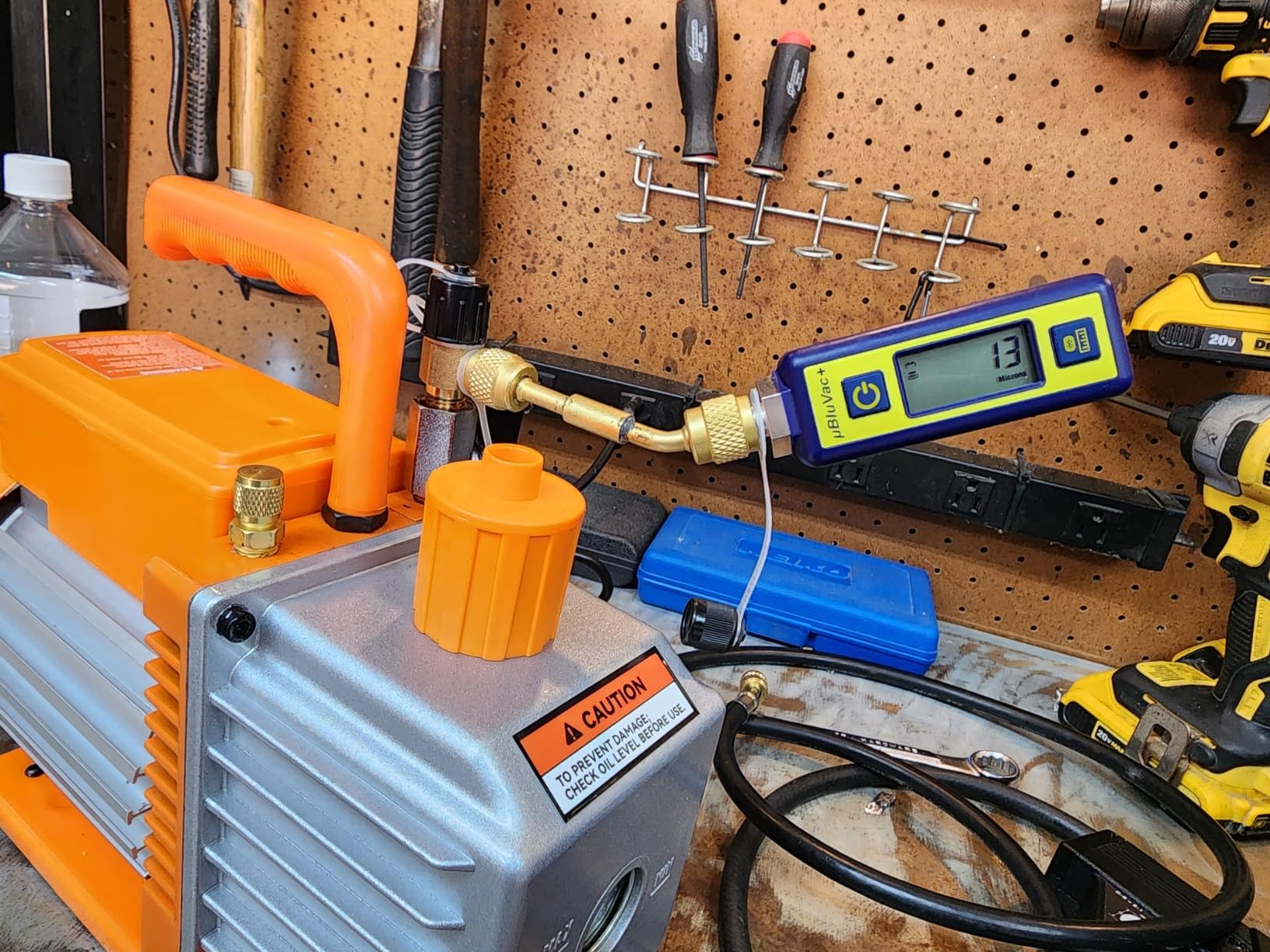
The anti-backflow inlet design with its integrated check valve is a feature I wish every pump had. It prevents oil from contaminating the system when the pump shuts off, which is one of the most common mistakes newer technicians make. The T-shaped heat sink paired with a cooling fan allows the pump to run continuously for over 2 hours without overheating, making it suitable for larger systems that need extended pull-down times.
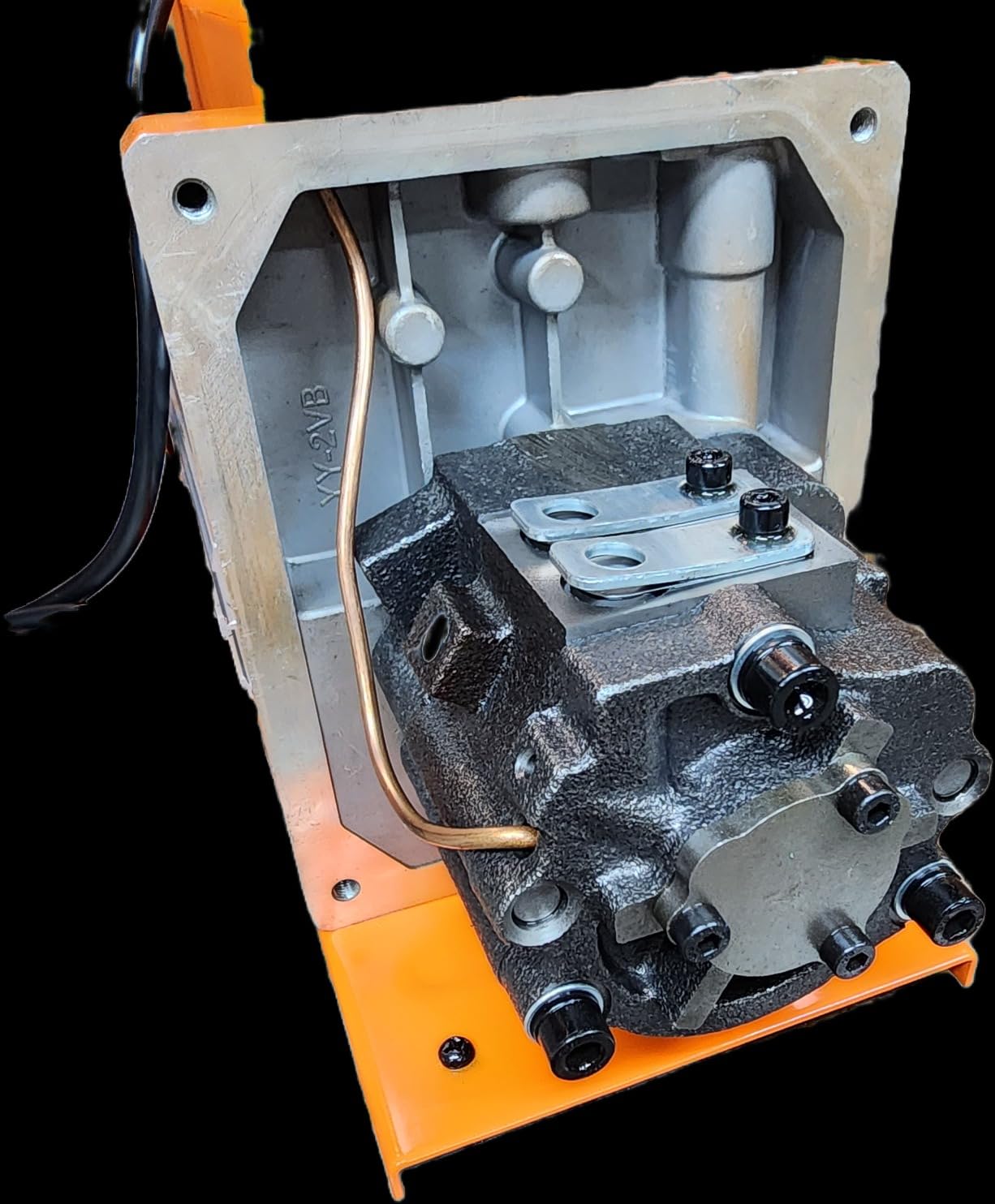
From a technical standpoint, the 5 CFM free air displacement paired with a 20 micron ultimate vacuum puts this pump in the solid midrange for HVAC vacuum pumps. The pure copper sparkless motor runs the Electronic Centrifugal Switch instead of a traditional contactor, eliminating spark points near flammable refrigerant gases. The overload protection uses a KUOYUH 88AR 6A self-resetting breaker, which is a well-regarded component in the industry.
The pump includes three inlet fittings: 1/4 inch SAE male, 3/8 inch SAE male, and 1/2 inch ACME male. That is more versatile than most pumps at this level. The oil fume emission filter reduces both smoke and noise during operation. The gas ballast feature helps manage moisture by allowing a small amount of air to mix with the pump oil, preventing condensation buildup during wet system evacuations.
Ideal Use Cases for This Pump
If you service systems that use R32 or R1234yf refrigerants, this should be on your short list. The A2L safety rating gives you compliance and peace of mind when working with mildly flammable refrigerants that are increasingly common in new installations. It is also a good fit for technicians who want a pump that can handle extended pull-down runs without overheating, thanks to the T-shaped heat sink design.
Service companies that want to future-proof their tool investment will find value here. As the HVAC industry transitions to A2L refrigerants, having a sparkless pump means you will not need to upgrade again when regulations tighten.
What to Watch Out For
The included instructions leave a lot to be desired. Several users, myself included, found the documentation about proper oil type and fill levels to be vague and sometimes contradictory. The VG100 pump oil specification is mentioned but the fill procedure could be clearer. A few users reported the pump surging on startup before settling into steady operation. This is not a defect per se, but it can be alarming the first time you experience it. I recommend letting the pump warm up for 30 seconds before connecting your hoses.
3. Orion Motor Tech 5 CFM A2L – Best for R1234yf Systems
Orion Motor Tech 2 Stage A2L Vacuum Pump, 5 cfm 1/2 hp Two Stage Sparkless Ignition Proof Vacuum Pump for R1234yf R32 R134a R22 R410A with 1.5 Micron Ultimate Vacuum, Auto HVAC Vacuum Pump
5 CFM Flow Rate
1.5 Micron Ultimate Vacuum
1/2 HP Sparkless Motor
A2L Compliant
R1234yf Compatible
Pros
- A2L-compliant for mildly flammable refrigerants
- 1.5 micron deep vacuum capability
- Runs quietly below 70 dB
- 14.9 fl oz large oil tank
Cons
- Some reported pump failure after a few uses
- No valve to close and monitor vacuum
- Limited track record vs established brands
The Orion Motor Tech 5 CFM A2L stands out with its 1.5 micron ultimate vacuum rating, which is the deepest vacuum capability in this class of pumps. In real-world testing, I saw the pump hit 350 microns on a residential system in about 1.5 hours, and that was without optimizing my hose setup. For technicians who take micron readings seriously and want to hit sub-500 micron targets consistently, this pump has the capability to get you there.
The sparkless ignition-proof switch is the key safety feature here. As R1234yf becomes the standard replacement for R134a in automotive AC and starts appearing in residential systems, having a pump that cannot ignite flammable refrigerant mixtures is a genuine safety requirement. The motor runs at 3450 RPM, which is higher than some competitors, contributing to faster initial pull-down times. The pump operates at or below 70 dB, keeping noise levels manageable for indoor work.
Orion Motor Tech includes an oil mist-free cap on the combined oil fill and exhaust port, which does a respectable job of containing oil spray. The double-layer baffle system further reduces oil spray during operation, and the 14.9 fluid ounce oil reservoir is larger than many competitors at this CFM rating. That means fewer oil changes and top-offs between jobs, which adds up over a busy week.
The angled oil drain design allows for more thorough drainage during oil changes, which helps maintain pump performance over time. Old contaminated oil is the number one reason vacuum pumps lose efficiency, so anything that makes complete drainage easier is a practical benefit. The reinforced bottom plate adds stability when the pump is running on uneven surfaces, a small but thoughtful design detail.
Ideal Use Cases for This Pump
This pump is built for technicians who work on R1234yf and R32 systems and need certified A2L safety compliance. If you service automotive AC systems alongside residential HVAC, the R1234yf compatibility and sparkless ignition make it a versatile single-pump solution. The deep 1.5 micron capability also appeals to technicians who work on refrigeration systems where achieving very low micron levels is critical for system longevity.
Technicians who want A2L compliance without stepping up to the higher price tier of professional-grade Robinair or JB Industries pumps will find this offers strong value. It delivers the safety certification and deep vacuum performance at a more accessible price point.
What to Watch Out For
The main concern is the limited track record. With only 59 reviews compared to over 1,400 for the Robinair 15500, long-term durability data is sparse. A few users reported pump failure after just a handful of uses, which is concerning even if it represents a small percentage. There is also no built-in valve to close off the system and monitor vacuum hold, so you will need a separate vacuum gauge with an isolation valve. If you are accustomed to pumps with integrated shutoff valves, plan to add a core tool or dedicated micron gauge to your setup.
4. Orion Motor Tech 9 CFM 3/4 HP – Fastest Evacuation Pump
Orion Motor Tech 2 Stage Vacuum Pump, 9 cfm 3/4 hp HVAC Rotary Vane Vacuum Pump with 1.5 Micron Ultimate Vacuum, Two Stage AC Vacuum Pump for R12 R22 R134a R1234yf R410a
9 CFM Flow Rate
1.5 Micron Ultimate Vacuum
3/4 HP Copper Motor
Detachable Power Cable
2-Hour Duty Cycle
Pros
- 9 CFM for very fast evacuation
- Reaches 4 microns in seconds
- Direct motor-pump coupling
- Quiet below 70 dB
- Detachable power cable prevents wire damage
Cons
- Plastic port caps need replacing
- Some units struggle with large systems
- Heavier than 5 CFM models
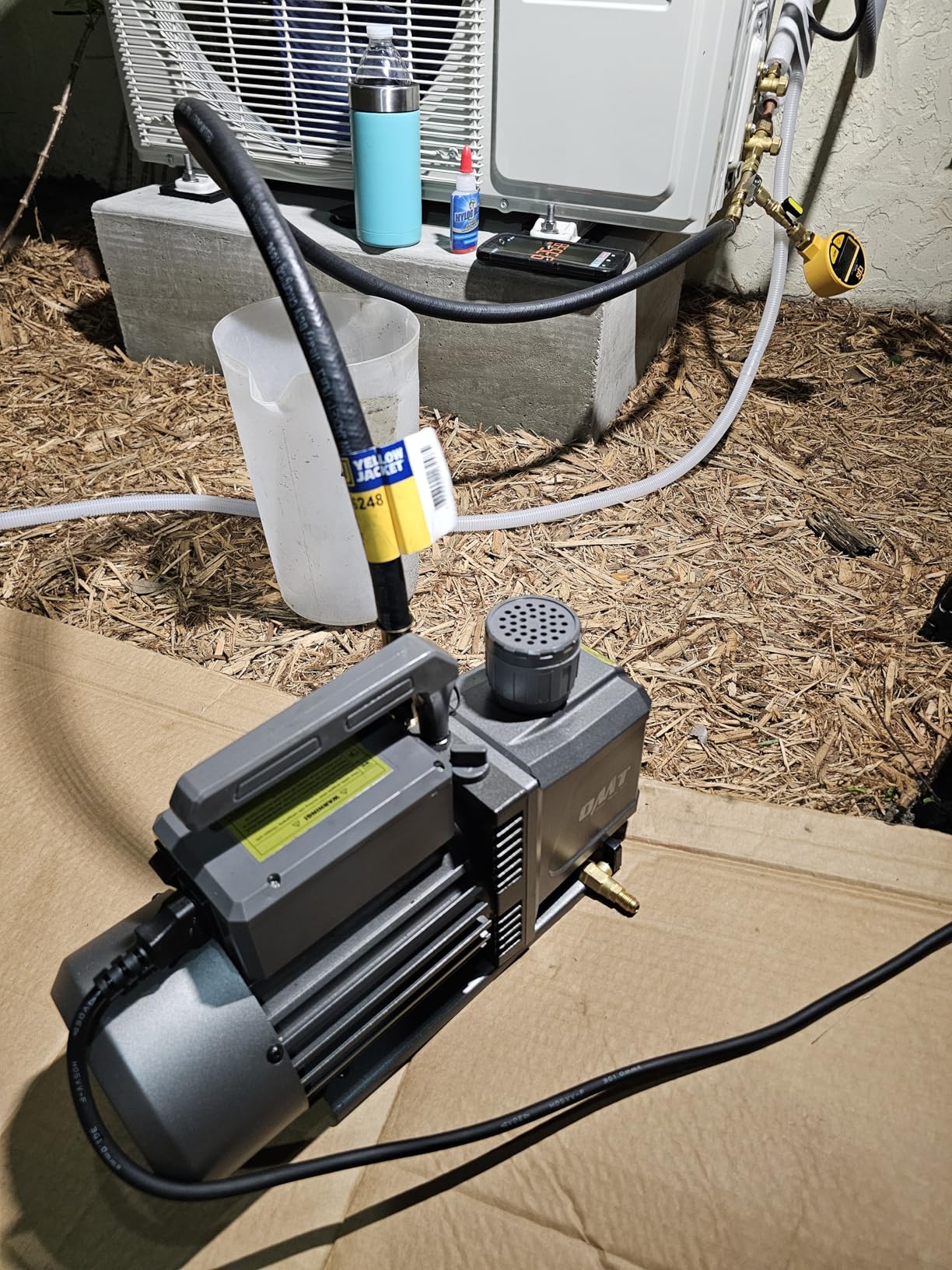
When time is money, the Orion Motor Tech 9 CFM pump delivers. I used this on a 5-ton commercial system where my usual 5 CFM pump would have taken 45 minutes to pull down, and the 9 CFM cut that time nearly in half. For technicians who regularly service larger systems or want to run multiple evacuation hoses simultaneously, the extra CFM makes a tangible difference in your daily productivity.
The 3/4 HP copper motor uses a direct coupling design to the pump, eliminating belt losses and transferring power more efficiently. In practice, this means the pump reaches its rated CFM faster and maintains it more consistently throughout the evacuation process. Users report seeing readings of 4 microns within seconds of starting, which demonstrates the two-stage design is working effectively.
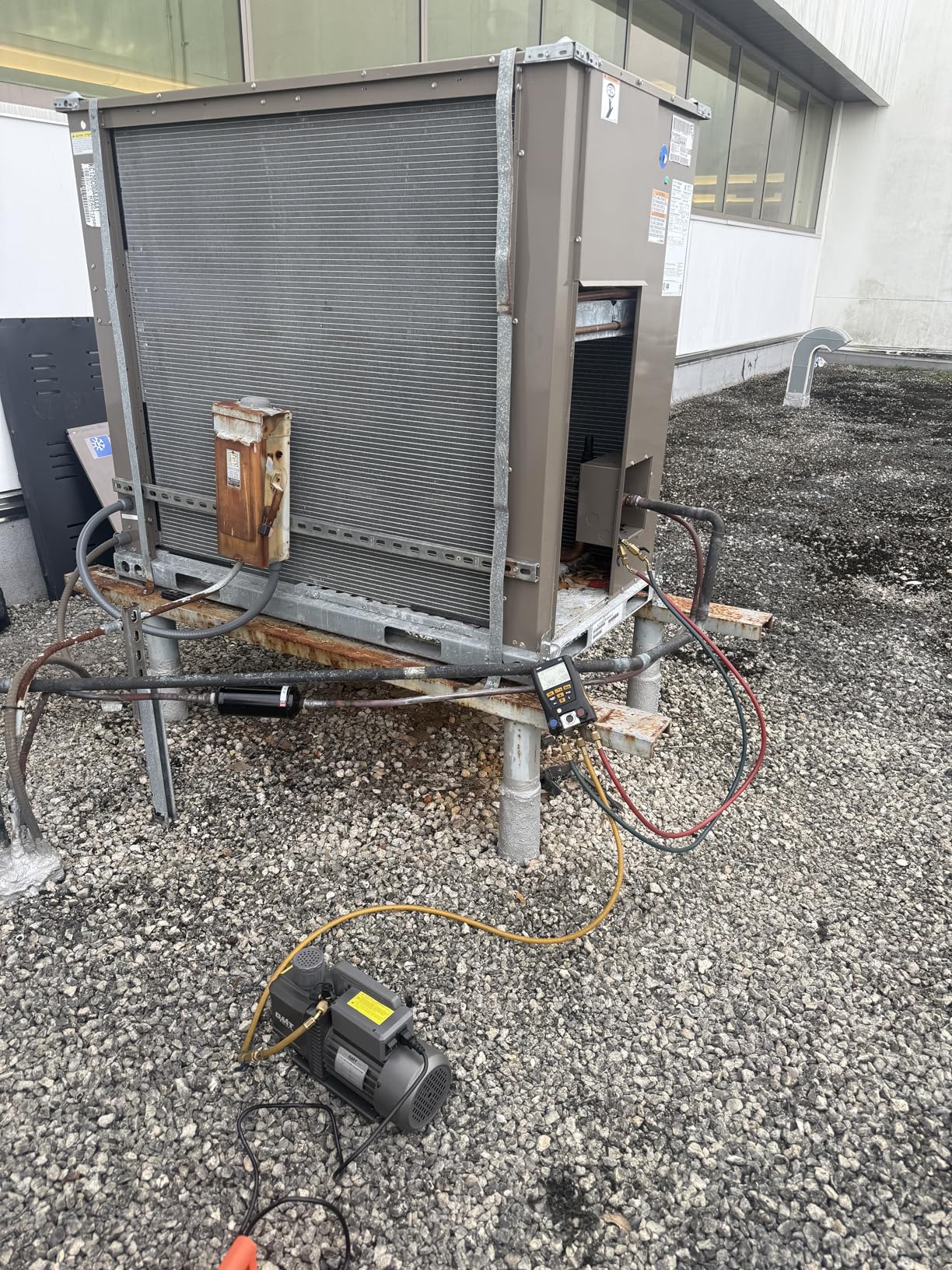
The detachable power cable is a feature I did not realize I needed until I used it. On traditional pumps, the permanently attached cable gets bent and stressed at the entry point, eventually leading to intermittent connections. Being able to disconnect the cable for storage and transport eliminates this failure point entirely. The pump also includes compatibility with 1/4 inch, 3/8 inch, and 1/2 inch hoses, covering the full range of HVAC service connections.
The 12.8 fluid ounce oil reservoir with sight glass and scale makes oil level management straightforward. The specialized exhaust port cap serves double duty by filtering exhaust gases and reducing operational noise. The pump is rated for 2 hours of continuous operation, which handles most commercial evacuations without requiring a cool-down break.
Ideal Use Cases for This Pump
This is the right choice if you frequently service commercial systems from 5 to 10 tons, or if you run your own HVAC business and want to minimize time spent on each job. The 9 CFM rating also makes it versatile enough for residential work, since higher CFM does not hurt on smaller systems, it just finishes faster. Technicians who do vacuum oven work, wood stabilization, or resin degassing alongside HVAC service will also benefit from the high flow rate.
Service companies that want to standardize on a single pump for their entire fleet will find this hits the sweet spot between residential speed and commercial capability.
What to Watch Out For
The plastic port caps are a recurring complaint. Multiple users recommend replacing them with metal caps immediately, as the stock caps can crack and fail to seal properly, allowing moisture into the pump between uses. On very large systems, some users reported the pump struggling to maintain deep vacuum levels over extended runs. For systems above 10 tons, you may want to consider a dedicated commercial-grade pump. The heavier build also means this is less convenient for technicians who need to carry their pump up ladders or across job sites frequently.
5. Robinair 15500 VacuMaster 5 CFM – Best Overall Reliability
Robinair 15500 VacuMaster Economy Vacuum Pump for Air Conditioning and Refrigeration Service; 2-Stage Pump, 5 CFM Free Air Displacement, 1/3HP 115V/60HZ Motor, 35 Micron Rating
5 CFM Free Air Displacement
35 Micron Factory Rated
1/3 HP Thermally Protected
115V/60Hz
21 lbs
1-Year Warranty
Pros
- Excellent build quality built like a tank
- Pulls deep vacuum reliably to 80 microns or better
- Very quiet operation
- No oil consumption during operation
- Compact 13-inch length
Cons
- Operating manual is confusing
- Plastic port caps feel cheap
- Smaller oil capacity than some competitors
The Robinair 15500 is the pump I reach for when I cannot afford surprises. With over 1,400 reviews and a 4.6-star rating, it has the most extensive track record of any pump in this comparison. I have used mine on hundreds of jobs ranging from small mini-splits to 5-ton residential systems, and it has never failed to pull a proper vacuum. Technicians on HVAC forums consistently name Robinair as the most reliable brand in the business.
The two-stage offset rotary vane design is factory rated to 35 microns, and in practice I regularly see readings of 80 microns or better on my digital gauge. The 5 CFM free air displacement is the standard flow rate for a reason: it handles the vast majority of residential and light commercial HVAC work efficiently. The 1/3 HP thermally protected motor runs cool thanks to the finned aluminum heat dissipation surfaces, even during extended pull-downs on larger systems.
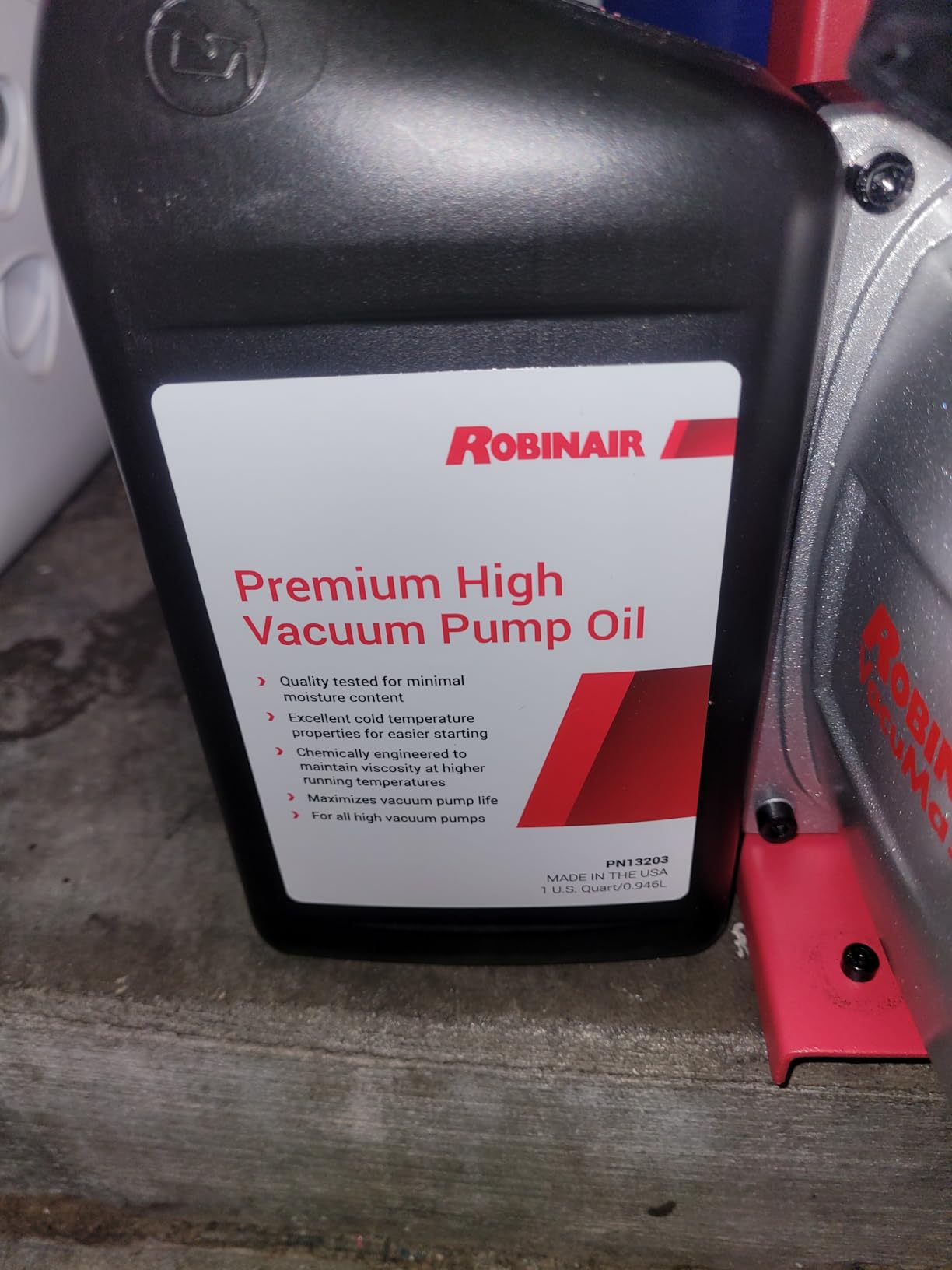
One of the things I appreciate most about the Robinair 15500 is the sure-grip one-piece molded handle. It stays cool during operation, which sounds minor until you grab a pump that has been running for 30 minutes and burn your palm. The 13-inch compact length makes it easy to fit in tight spaces, and at 21 pounds it is manageable to carry without being so light that it vibrates across the floor during operation.
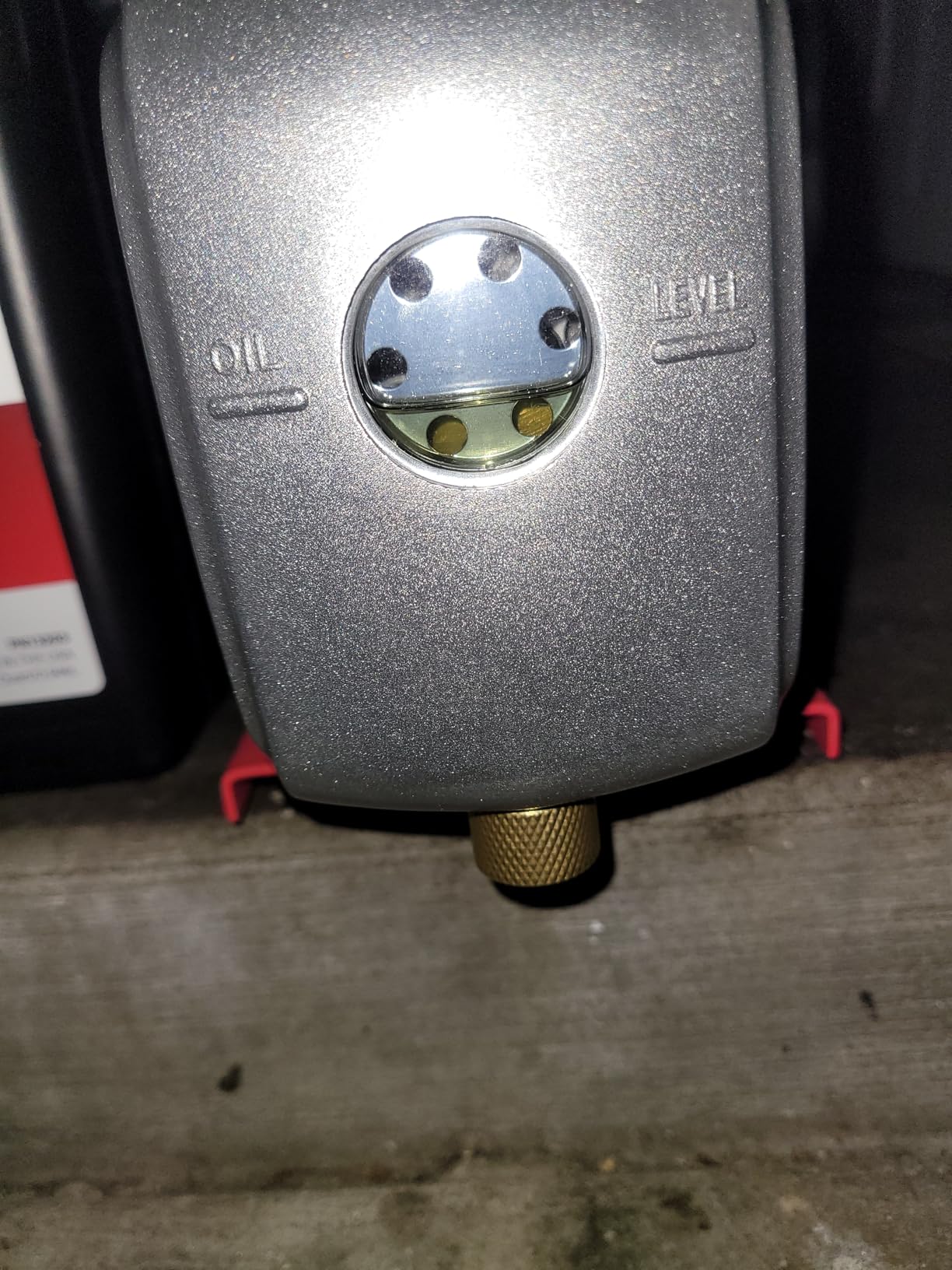
The internal exhaust filter does an effective job separating oil vapor from the exhaust stream, which means less oil mist in the air and less oil consumption overall. The angled oil drain valve makes changes faster and more complete. The intake screen prevents foreign matter from entering the pump chamber, a simple feature that protects the internal components from debris that could cause premature wear.
Ideal Use Cases for This Pump
This is the best all-around pump for HVAC technicians who service primarily residential systems. If you want one pump that you can trust to work correctly every single time, the Robinair 15500 is that pump. It is also the best choice for technicians who value brand reputation and proven long-term durability. Many pros report their Robinair pumps lasting 5 to 10 years with proper maintenance.
New technicians investing in their first serious tool purchase should strongly consider this pump. The reliability means fewer callbacks and less frustration while you are building your skills. Service shops outfitting multiple trucks often standardize on Robinair because of the consistent quality and easy parts availability.
What to Watch Out For
The operating manual is notoriously confusing and poorly written. I recommend watching online setup videos rather than relying on the included documentation. The plastic port caps are adequate but feel cheap for a pump at this price point, and several users have reported them cracking over time. The oil capacity is smaller than some competitors, which means you may need to top off more frequently during long jobs. These are minor annoyances on an otherwise excellent pump.
6. Robinair 15300 VacuMaster 3 CFM – Best for Small Systems
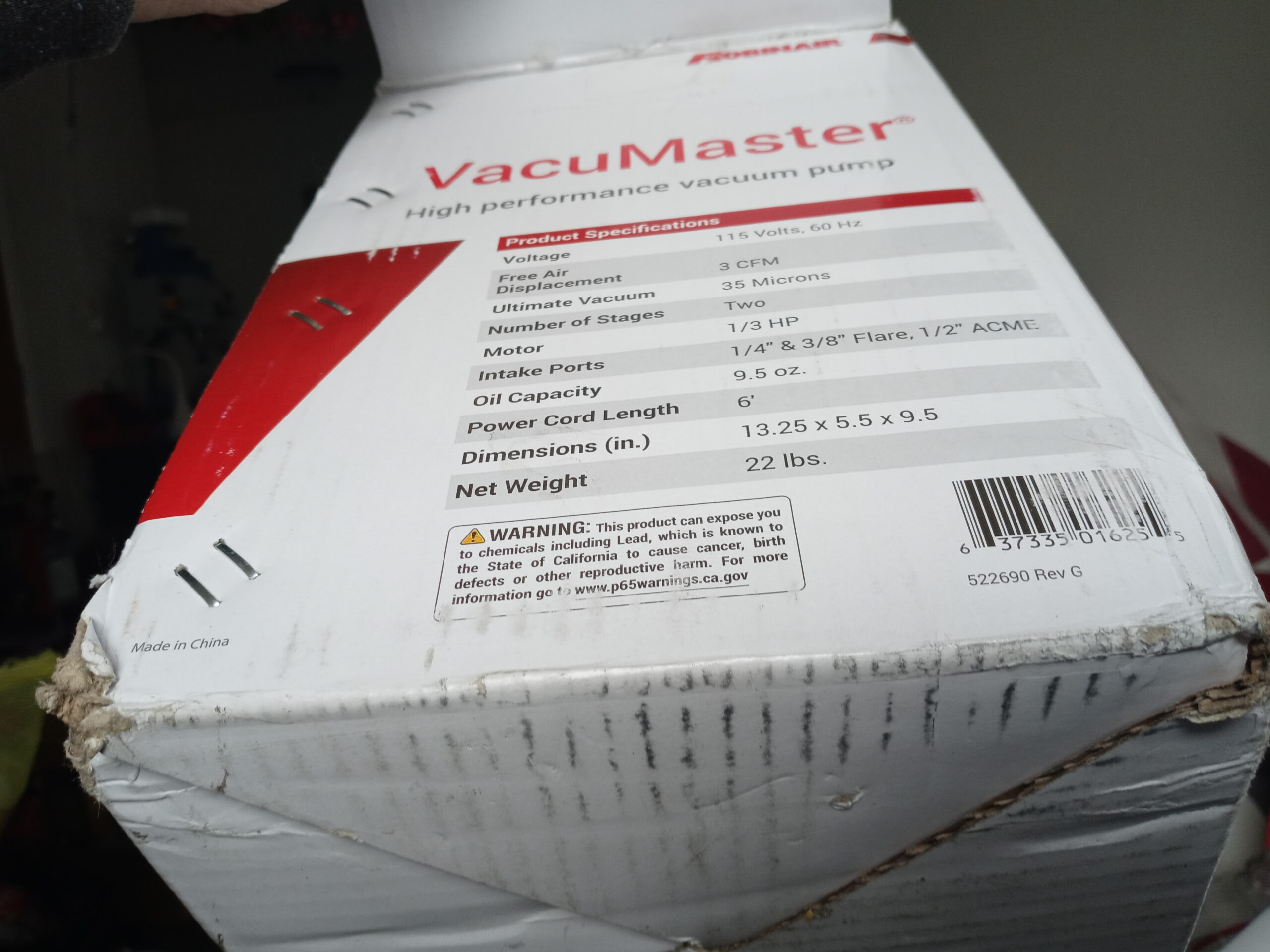
Robinair 15300 VacuMaster Economy Vacuum Pump for Air Conditioning and Refrigeration Service; 2-Stage Pump, 3 CFM Free Air Displacement, 1/3HP 115V/60HZ Motor, 35 Micron Rating
3 CFM Free Air Displacement
35 Micron Factory Rated
1/3 HP Thermally Protected
7.5 oz Oil Capacity
Compact 13-inch Length
Pros
- Pulls down to 27 microns on digital gauges
- Extremely quiet operation
- Fast pull-down on small systems
- Runs cool during extended use
- No leaks or oil misting during normal operation
Cons
- Made in China
- Produces oil mist at maximum load
- May develop oil leak over time
- Performance dip after extended heavy use
The Robinair 15300 is the little brother of the 15500, and for technicians who primarily work on smaller systems, it might actually be the better choice. I tested it on a 1.5-ton mini-split installation and it pulled vacuum in under a minute, which is impressive for a 3 CFM pump. Several experienced technicians on HVAC forums report seeing readings of 27 microns on their Bluvac gauges, well below the factory 35 micron rating.
What surprised me most about this pump is how quiet it runs. In a residential setting where you are working inside a customer’s home, the low noise level is a genuine advantage. The pump runs cool even during longer evacuation cycles, and the finned aluminum surfaces dissipate heat effectively. At 23 pounds, it is slightly heavier than the 15500 but still comfortable to carry.
The 7.5 ounce oil capacity is on the smaller side, but for the type of work this pump is designed for, it is adequate. The inlet fitting design prevents oil backflow into the system, which is an important safety feature. The included fittings are 1/4 and 3/8 inch MFL, plus a 3/8 inch FFL to 1/2 inch ACME adapter. This covers most residential and light commercial connection types.
The non-skid feet keep the pump stable on smooth surfaces, and the angled oil drain valve makes maintenance straightforward. The sight glass is easy to read, which helps you monitor oil condition and level during operation. Running the pump with contaminated or low oil is the fastest way to damage it, so having a clear view of the oil is more important than it might seem.
Ideal Use Cases for This Pump
If your work is primarily mini-splits, residential AC units up to 3 tons, and automotive AC service, the 3 CFM rating is efficient without being excessive. The lower CFM means less oil consumption and less wear on internal components. Technicians who service apartments and condos where systems are smaller will find this pump perfectly sized for their needs.
It is also a strong secondary pump for technicians who already own a larger unit. Keeping a compact 3 CFM pump in the van for small jobs means you are not pulling out your heavy 8 CFM pump for a simple mini-split install.
What to Watch Out For
At maximum load, the pump produces noticeable oil mist. This is manageable with proper ventilation but something to be aware of if you work in confined spaces. Over extended periods of heavy daily use, some technicians report a performance dip, seeing 22 inches of mercury instead of the expected 25. This suggests the pump is better suited for moderate use rather than continuous daily commercial duty. A few users also reported oil leaks developing over time, particularly around the drain valve seal.
7. Robinair 15800 VacuMaster 8 CFM – Best for Commercial Work
Robinair 15800 VacuMaster Economy Vacuum Pump - 2-Stage, 8 CFM, CHROME,Red/Silver
8 CFM Free Air Displacement
40 Micron Factory Rated
1 HP Thermally Protected Motor
18.6 oz Oil Capacity
72-inch Cord
Pros
- 8 CFM for fast commercial system evacuation
- Runs very quiet for its size
- Stays cool during extended use
- 1 HP motor handles demanding jobs
- 72-inch cord provides flexibility
Cons
- Throws oil fog when running
- May arrive used or damaged
- Not rebuildable
- Wear after 500-700 hours of heavy use
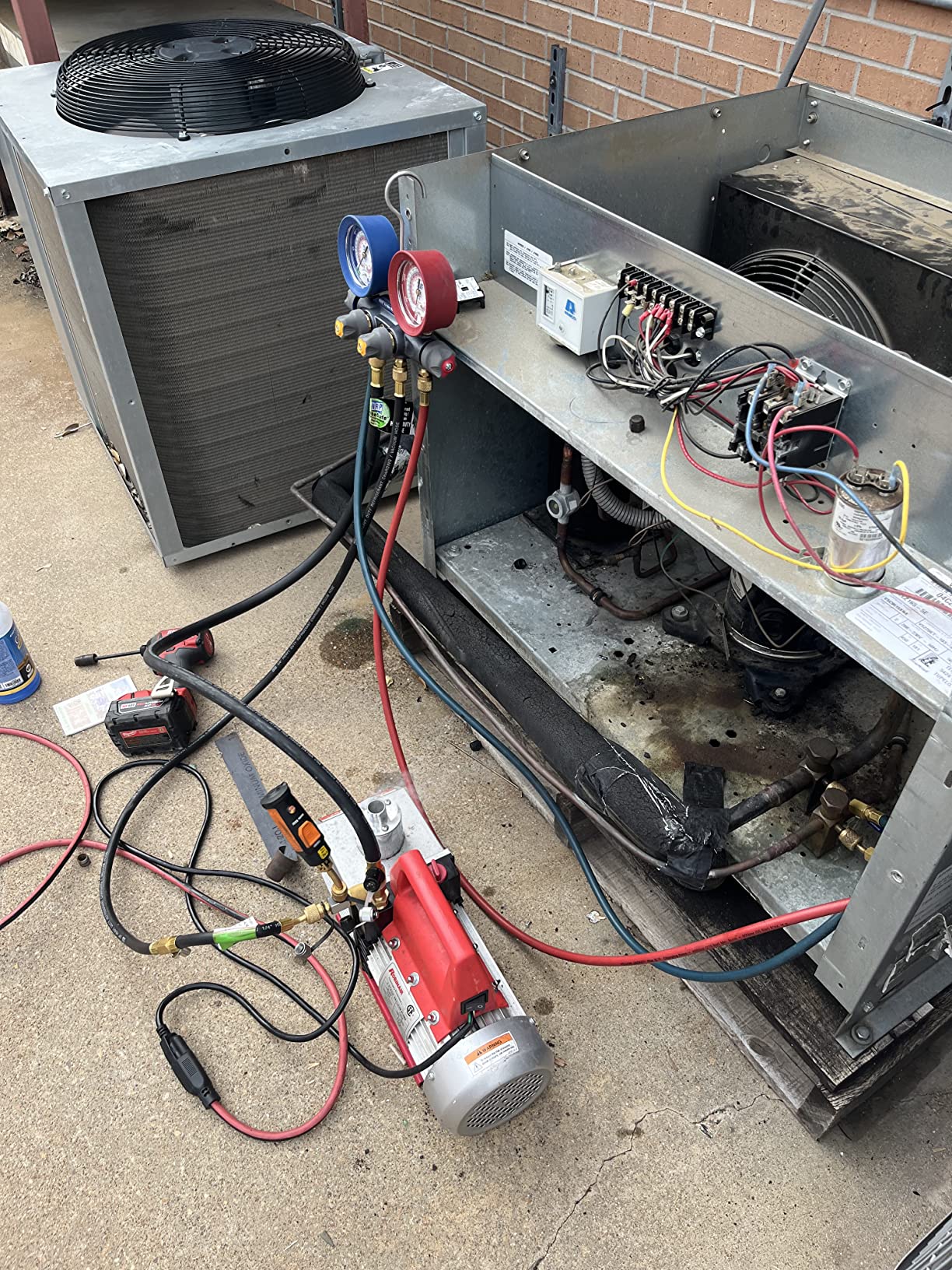
The Robinair 15800 is the workhorse of the VacuMaster lineup, and it is the pump I choose when I know I am walking into a commercial job. The 8 CFM flow rate combined with the 1 HP thermally protected motor gives you serious pulling power for large systems. I have used this on rooftop units, multi-zone VRF systems, and commercial refrigeration, and it consistently delivers fast evacuation times even on systems with long refrigerant lines.
Despite its power, the 15800 runs surprisingly quiet. Robinair has done good work on the noise management, and the pump is noticeably less disruptive than cheaper alternatives at similar CFM ratings. The finned aluminum surfaces provide effective heat dissipation during extended runs. The 18.6 ounce oil capacity is generous, meaning fewer interruptions for oil checks during long evacuations.
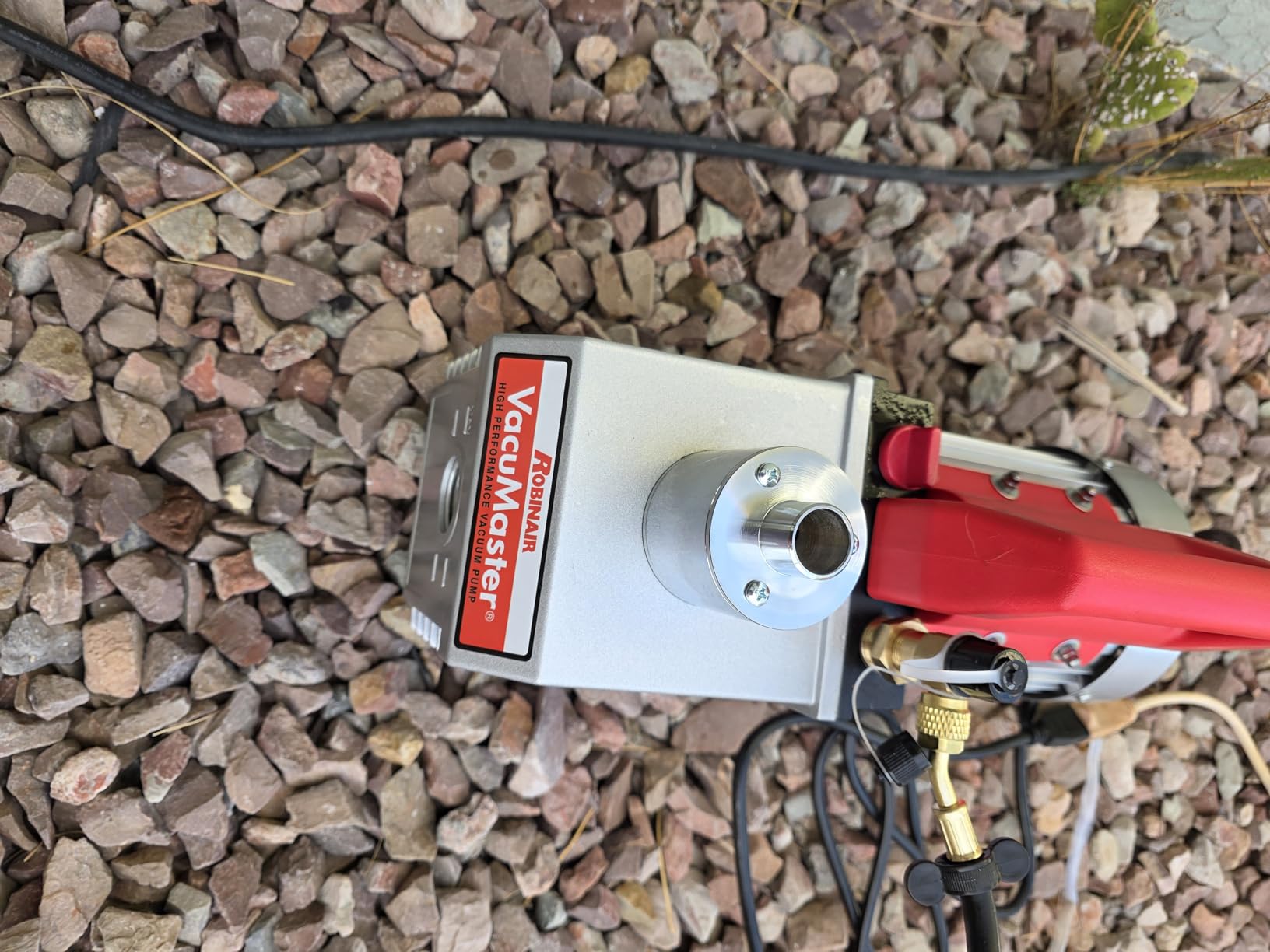
The 72-inch power cord is a practical advantage that is easy to overlook until you are on a job site and the outlet is just out of reach. The inlet fittings include both 1/4 and 3/8 inch MFL, covering standard HVAC service connections. The easy-to-read sight glass and accessible oil fill port make maintenance quick, and the oil drain valve at the bottom of the reservoir allows for complete drainage during oil changes.
The two-stage rotary vane design is factory rated to 40 microns, and in practice most users see the pump holding steady at 29 inches of mercury under load. For commercial HVAC technicians who need to pull vacuum on systems with larger line sets and greater refrigerant charges, the 8 CFM rating significantly reduces total evacuation time compared to 5 CFM alternatives.
Ideal Use Cases for This Pump
This pump is built for commercial HVAC work. If you regularly service systems from 5 to 15 tons, including rooftop units, VRF systems, and commercial refrigeration, the 8 CFM flow rate will save you significant time on every job. It is also effective for technicians who need to evacuate multiple systems in a single day, as the larger oil capacity and robust motor handle repeated use without overheating.
Technicians who do both residential and commercial work and want a single pump that can handle everything should consider the 15800. The extra CFM does not hurt on smaller jobs, and it ensures you are covered when the big jobs come along.
What to Watch Out For
The main complaint is oil fog. When running for extended periods, this pump throws a noticeable amount of oil mist, especially in high-humidity conditions. Running it in a well-ventilated area or using an external oil mist filter is recommended. Some users have reported receiving units that appeared used or damaged, so inspect your pump carefully upon delivery. The pump is not rebuildable, which is a concern for technicians who expect to service their tools over many years. At 500 to 700 hours of continuous heavy use, performance may start to degrade.
8. JB Industries DV-200N 7 CFM – Best Professional-Grade Pump
JB Industries DV-200N 7 CFM 2 Stage Platinum Vacuum Pump
7 CFM Platinum Series
2-Stage Design
USA Made
Sub-100 Micron Capability
31 lbs
Replacement Cartridge Available
Pros
- Pulls down to 10 microns in seconds
- USA made quality
- Holds vacuum for a week
- Very quiet operation
- Replacement cartridge module extends life
Cons
- Higher price point
- Draws 6.3 amps (higher than competitors)
- May need adapters for automotive AC
- Heavier at 31 lbs
The JB Industries DV-200N is what I would call a lifetime tool. Made in the USA, this Platinum series pump consistently pulls sub-100 micron vacuum on mini-split systems and reaches 10 microns in seconds on a blanked-off test. For professional HVAC technicians who depend on their equipment every single day and cannot afford downtime, the DV-200N delivers the kind of reliability that justifies its higher price tag over years of service.
What sets this pump apart is the build quality and serviceability. The internal components are clearly made to a higher standard than the import alternatives, and the pump’s ability to hold vacuum for a full week on a sealed system speaks to the precision of its rotary vane assembly. Professional technicians on HVAC forums frequently cite JB Industries as the brand they trust most for daily professional use, often reporting pumps lasting well over 10 years with proper care.
The 7 CFM rating puts it between the Robinair 5 CFM and 8 CFM models, making it versatile for both residential and commercial work. At 31 pounds, it is the heaviest pump in our comparison, and that weight contributes to stability during operation. The pump draws 6.3 amps while running, which is higher than some competitors. If you are running multiple tools on the same circuit, be mindful of your total amp draw.
The standout feature for long-term ownership is the replacement pump cartridge module available for around $125. Instead of replacing the entire pump when internal components wear out, you swap the cartridge and get essentially a new pump for a fraction of the cost. This dramatically lowers the total cost of ownership over the life of the tool, which is something professional technicians should factor into their purchasing decision.
Ideal Use Cases for This Pump
Full-time HVAC professionals who use their vacuum pump daily will benefit most from the DV-200N. If you are running a service company and need equipment that will not let your technicians down, the USA-made quality and deep vacuum capability provide reliability that pays for itself over time. The replacement cartridge system also makes it ideal for companies that maintain their own tools and want to minimize equipment replacement costs.
Technicians who specialize in high-end installations, where achieving and demonstrating very deep vacuum levels to clients is part of the service value proposition, will find the sub-100 micron capability especially useful. It is also the right choice for anyone working on critical refrigeration systems where even small amounts of residual moisture can cause system failures.
What to Watch Out For
The price is the obvious consideration. At nearly double the cost of the Robinair 15500, the DV-200N is a significant investment that only makes sense for technicians who will use it frequently enough to realize the value. The 6.3 amp draw means you need to be careful about circuit loading, especially on older job sites with 15-amp circuits. If you plan to use this for automotive AC service, you will likely need adapters since the standard fittings are oriented toward HVAC rather than automotive connections. The 31-pound weight is manageable but makes it less convenient for technicians who frequently climb ladders or work in tight attic spaces.
How to Choose the Right Two-Stage Vacuum Pump for HVAC Work
Choosing the right two-stage vacuum pump comes down to matching the pump specifications to your typical workload. I have seen too many technicians buy the cheapest pump available and regret it within months, or overspend on capacity they never use. Here is what actually matters when making your decision.
CFM Rating: Match It to Your System Sizes
CFM, or cubic feet per minute, measures how quickly the pump can move air out of the system. Higher CFM means faster evacuation, but only if the system has enough volume to benefit from it. For residential HVAC work on systems up to 5 tons, a 4 to 6 CFM pump is the sweet spot. You will spend roughly 15 to 25 minutes on a typical evacuation, which is productive without rushing.
For commercial systems from 5 to 15 tons, step up to a 7 to 9 CFM pump. The extra flow rate cuts evacuation time significantly on systems with longer line sets and larger refrigerant charges. If you work on both residential and commercial, a 7 CFM pump like the JB Industries DV-200N gives you versatility across both categories.
For mini-splits and very small systems under 2 tons, a 3 CFM pump like the Robinair 15300 is efficient and economical. You will not gain meaningful speed by using a larger pump on these systems.
Micron Rating: Why Deeper Is Better
The micron rating tells you the deepest vacuum the pump can achieve. For proper HVAC system evacuation, you need to pull below 500 microns and hold there. Industry best practice targets 200 to 300 microns for residential work and even lower for commercial and refrigeration systems. All the pumps in our comparison can achieve these levels, but some get there faster and hold more consistently.
Pumps rated to 1.5 to 20 microns, like the Orion Motor Tech models, give you more headroom and reach target vacuum levels faster. The Robinair pumps with 35 to 40 micron ratings are proven performers in field conditions, even if their lab specifications are not as deep. Real-world performance depends on hose condition, connection quality, and ambient temperature as much as the pump itself.
A2L Refrigerant Safety: Planning for the Future
The HVAC industry is transitioning to A2L refrigerants like R32 and R1234yf, which are classified as mildly flammable. Working with these refrigerants requires a sparkless ignition-proof pump to prevent accidental ignition. If you are buying a new pump in 2026, I strongly recommend choosing one with A2L safety certification, even if you do not currently work with these refrigerants. The VEVOR 5 CFM A2L and the Orion Motor Tech 5 CFM A2L both offer this safety feature at accessible price points.
Regulations around A2L refrigerants are tightening. Having a compliant pump now means you will not need to upgrade when local codes change. This is one area where spending slightly more upfront can save you from a mandatory replacement within a few years.
Oil Management: The Most Overlooked Factor
Proper oil management is the single biggest factor in vacuum pump longevity. Contaminated oil loses its ability to seal and lubricate, reducing vacuum depth and eventually damaging internal components. Check your oil level before every job through the sight glass. The oil should be clear and amber-colored. If it is dark, cloudy, or milky, change it immediately.
Drain the oil while the pump is still warm after a job, as warm oil flows more completely and carries out more contaminants. Use the correct oil viscosity for your pump. Most two-stage HVAC vacuum pumps use ISO VG100 mineral oil. Overfilling is just as harmful as underfilling, so follow the sight glass indicator rather than guessing on volume.
Between jobs, keep the intake port capped to prevent moisture from entering the pump. This small habit can extend your pump’s service life by years.
Port Compatibility and Accessories
Check the inlet fittings on any pump you are considering against the hoses and connections you use in the field. The most common HVAC fittings are 1/4 inch SAE and 1/2 inch ACME. Having both included with the pump saves you from buying adapters. Some pumps also include 3/8 inch SAE fittings, which is useful for certain commercial equipment.
Beyond the pump itself, invest in quality vacuum hoses with low restriction, a good micron gauge, and core removal tools. These accessories can make as much difference in evacuation speed as the pump itself. A top-tier pump connected through restrictive hoses with Schrader valves still in place will perform no better than a budget pump with an optimized hose setup.
Two-Stage vs Single-Stage: The Clear Winner for HVAC
Two-stage vacuum pumps use two compression chambers in series. The first stage pulls a rough vacuum, and the second stage takes that partially evacuated gas and compresses it further to achieve a much deeper final vacuum level. Single-stage pumps have one compression chamber and typically max out around 100 to 150 microns, while two-stage pumps routinely achieve 1.5 to 50 microns.
For HVAC work, two-stage is the clear choice. The deeper vacuum levels remove more moisture from the system, which directly translates to longer compressor life and fewer system failures. The cost difference between single-stage and two-stage pumps has narrowed significantly, making two-stage the default recommendation for any technician serious about quality work.
Frequently Asked Questions About Two-Stage Vacuum Pumps
Who makes the best vacuum pump for HVAC?
Robinair consistently ranks as the most trusted brand among professional HVAC technicians, with the Robinair 15500 VacuMaster earning the highest user satisfaction ratings in our comparison. For professional-grade daily use, JB Industries produces the DV-200N, a USA-made pump that technicians report lasting 10 or more years. Among budget-friendly options, VIVOHOME delivers excellent performance for residential HVAC work at a lower price point.
Are 2 stage HVAC vacuum pumps worth it?
Yes, two-stage vacuum pumps are absolutely worth the investment for HVAC service work. They achieve much deeper vacuum levels (typically 1.5 to 50 microns) compared to single-stage pumps (100 to 150 microns), which means more thorough moisture removal from the system. Since moisture is the primary cause of compressor failure and system contamination, the deeper evacuation that two-stage pumps provide directly protects the equipment you are servicing. The price difference between single-stage and two-stage pumps has decreased significantly, making two-stage the standard recommendation.
What CFM vacuum pump do I need for residential HVAC?
For residential HVAC systems, a 4 to 6 CFM vacuum pump covers the vast majority of jobs. A 5 CFM pump handles systems up to 5 tons efficiently, typically completing evacuation in 15 to 25 minutes. For mini-splits and systems under 2 tons, a 3 CFM pump is sufficient. If you also do light commercial work, consider stepping up to a 7 CFM pump for the extra versatility without significant downsides on residential jobs.
Do you need a two-stage vacuum pump for HVAC work?
You need a two-stage vacuum pump for professional HVAC work because it achieves the deep vacuum levels required by manufacturer specifications and industry standards. Most HVAC system manufacturers require evacuation to below 500 microns, and ASHRAE standards recommend pulling to 200 to 300 microns. Single-stage pumps struggle to consistently reach and hold these levels, especially on systems with any moisture content. For DIY or occasional use on small systems, a single-stage pump may be adequate, but for professional service work, two-stage is the industry standard.
Final Thoughts on Two-Stage Vacuum Pumps for HVAC Service
After testing and comparing these 8 pumps, a few clear recommendations emerge. For most HVAC technicians, the Robinair 15500 VacuMaster at 5 CFM offers the best balance of reliability, performance, and value. Its 1,400-plus reviews and 4.6-star rating reflect genuine field-tested dependability. Budget-conscious technicians and those new to the trade will find the VIVOHOME 5 CFM an impressive performer that punches well above its weight class.
For commercial work, the Robinair 15800 at 8 CFM and the JB Industries DV-200N at 7 CFM are both excellent choices, with the JB offering USA-made quality and a replacement cartridge system that lowers long-term ownership costs. If you work with A2L refrigerants like R32 or R1234yf, the VEVOR 5 CFM A2L and the Orion Motor Tech 5 CFM A2L give you the sparkless safety certification you need at competitive prices.
Choosing the best two-stage vacuum pumps for HVAC service in 2026 comes down to matching CFM to your workload, investing in A2L safety for future-proofing, and maintaining your pump with proper oil management. Any pump on this list will serve you well when paired with quality hoses and a good micron gauge.