
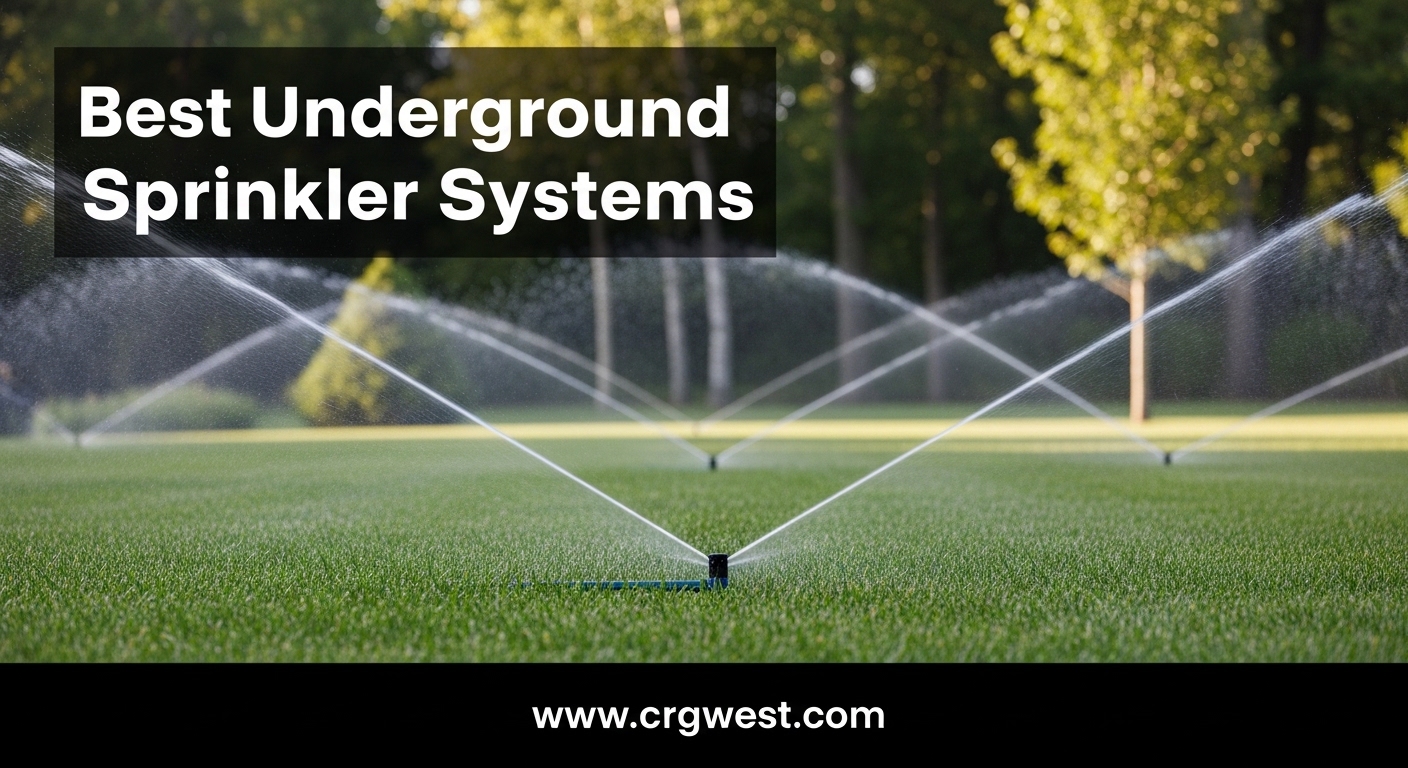
A lush, healthy lawn doesn’t happen by accident—it takes the right watering system working quietly in the background. Best Underground Sprinkler Systems explores smart, efficient solutions designed to keep your landscape perfectly hydrated without the clutter of visible hoses or manual effort. From precision coverage to water-saving technology, underground sprinklers offer a seamless way to maintain gardens, lawns, and yards year-round. Whether you’re upgrading an existing setup or installing a new system, choosing the right underground sprinkler can save time, conserve water, and elevate the look of your outdoor space.
Quick Top Picks:
- Best Overall: Rain Bird 32ETI DIY Kit – Complete underground system with professional-grade results at a budget price
- Best Budget Smart Controller: Orbit B-hyve 6-Zone – Premium WiFi features at half the price of competitors
- Best Premium Smart Controller: Rachio 8-Zone – Advanced Weather Intelligence with exceptional water savings
- Best Professional Controller: Hunter XC800 X-Core – 10+ year reliability with 4.7/5 star rating
- Best Rotor Heads: Rain Bird 5000 Series – Professional-grade coverage with Rain Curtain technology
Why Install an Underground Sprinkler System?
If you’re tired of dragging hoses across your lawn every weekend, frustrated by brown patches in your grass, or shocked by rising water bills, an underground sprinkler system might be the solution you need. Modern automatic lawn sprinklers deliver precise, even watering that keeps your landscape lush while actually reducing water consumption through smart scheduling and efficient distribution.
The benefits go beyond convenience. A well-designed underground irrigation system can increase your property value, save you hours of maintenance time each week, and ensure your lawn receives the right amount of water at the right time – whether you’re home or away. With today’s smart controllers and DIY-friendly kits, professional-grade results are more accessible than ever for homeowners.
In this comprehensive guide, we’ll review the top underground sprinkler systems and components available in 2025, from complete DIY installation kits to smart WiFi controllers and professional-grade sprinkler heads. We’ve analyzed thousands of customer reviews, compared technical specifications, and consulted industry experts to help you find the perfect irrigation solution for your lawn.
Top 8 Underground Sprinkler Systems and Components for 2026
1. Rain Bird 32ETI DIY Self Install In-Ground Automatic Sprinkler System Kit – Best Budget-Friendly DIY Kit
Why It’s Our Top Budget Pick: The Rain Bird 32ETI is the #1 bestseller in underground sprinkler systems for good reason. This complete DIY kit delivers professional-grade results at a fraction of the cost of professional installation – saving you thousands while providing everything needed to water up to 3,000 square feet.
The kit includes six high-efficiency 32SA rotary sprinklers with Rain Bird’s patented Rain Curtain nozzle technology, which delivers large water droplets that resist wind drift and provide uniform coverage. The 125 feet of distribution tubing and simple hose-end timer make installation straightforward for most DIYers, even without special plumbing skills.
What Customers Love: Users consistently praise this kit for being “cost-effective compared to professional quotes” and “easy to install in a weekend.” The professional-grade Rain Bird rotors receive particular appreciation for their even water distribution and retractable design that disappears into the lawn for mowing.
Things to Consider: This system works best for small to medium lawns (1,000-3,000 sq ft) with adequate water pressure (45-75 PSI). Larger properties may need multiple kits. The plastic hose components, while durable, don’t match the longevity of professional PVC systems. Some users note that the 3,000 sq ft coverage claim can be optimistic depending on water pressure and layout.
Bottom Line: Perfect for DIY homeowners wanting professional results without the professional price tag. Ideal for lawns up to 3,000 square feet with standard water pressure.
2. Orbit B-hyve 6-Zone Smart Indoor/Outdoor Sprinkler Controller – Best Value Smart Controller

Why It’s Our Top Smart Controller Value: The Orbit B-hyve delivers premium WiFi sprinkler control features at roughly half the price of competitors like Rachio. With over 15,000 reviews and a 4.4-star rating, it’s proven itself as the best budget-friendly smart irrigation upgrade for existing sprinkler systems.
This controller shines with its dual programming flexibility – you can control it entirely through the smartphone app or program it directly on the device using the LCD display. The WeatherSense technology automatically skips watering when rain, wind, or freeze conditions are forecast, while Smart Watering adjusts schedules based on local weather data.
Standout Features: Unlike many competitors, the B-hyve is outdoor-rated right out of the box – no need to purchase a separate weatherproof enclosure. Voice control integration works seamlessly with Alexa and Google Assistant for hands-free watering commands. The app’s Quick Run feature lets you instantly activate any zone from your phone, perfect for spot-watering dry patches.
What Customers Say: Users love the “fast WiFi setup” and “intuitive app experience.” Many report saving 30-50% on water bills after upgrading to smart watering. The outdoor-rated construction receives particular praise from installers who don’t want to deal with enclosure mounting.
Things to Consider: Weather-based delays use forecast data rather than actual conditions, so some users add a separate rain sensor for absolute precision. The 2.4GHz WiFi-only limitation can cause connectivity issues on some routers (solved by creating a dedicated IoT network). Six zones may not suffice for larger properties.
Bottom Line: Exceptional value for homeowners wanting smart irrigation without the premium price tag. Perfect for replacing outdated controllers with WiFi and app control.
3. Rachio WiFi Smart Sprinkler Controller (8-Zone) – Best Premium Smart Controller
Why It’s Our Premium Choice: As the #1 bestseller in smart irrigation controllers, Rachio sets the standard for intelligent watering. With superior Weather Intelligence, dual-band WiFi, and an exceptional app experience, this controller delivers the most advanced water-saving features available for residential irrigation.
Rachio’s Weather Intelligence goes beyond basic rain skip – it considers temperature, humidity, wind speed, and precipitation probability to optimize every watering cycle. The exclusive soak cycle feature splits watering into multiple shorter bursts, preventing runoff and allowing water to penetrate deeper into soil for healthier root growth.
Advanced Features: The Rachio app offers unmatched customization with zone-specific inputs for soil type, slope, plant type, and sun exposure. This detailed data enables the algorithm to calculate precise watering schedules that maximize plant health while minimizing waste. Automatic seasonal adjustments ensure your lawn adapts to changing conditions throughout the year.
What Makes It Special: Many users report that the controller “pays for itself in water savings within 6-12 months.” Water companies frequently offer rebates ranging from 50-100% of the purchase cost when upgrading to smart controllers like Rachio. The dual-band WiFi (2.4 and 5GHz) ensures reliable connectivity where budget controllers struggle.
Real User Feedback: Reviewers consistently describe the WiFi setup as “incredibly fast” and the app as “intuitive and powerful.” The Quick Run buttons get frequent mentions for instant zone activation convenience. Long-term users appreciate that the system “just works” with minimal intervention needed after initial setup.
Things to Consider: At $195+, this is the most expensive controller in our roundup. It’s indoor-rated only, so outdoor installations require a separate weatherproof enclosure (adding $30-50 to the cost). The wealth of customization options means initial setup takes time to configure properly – garbage in, garbage out applies to the smart watering algorithm.
Bottom Line: The best smart controller for tech-savvy homeowners wanting maximum automation and water savings. Worth every penny if you qualify for water company rebates or value advanced features.
4. Hunter XC800 X-Core 8-Station Outdoor Sprinkler Timer – Best Professional Traditional Controller
Why It’s Our Reliability Champion: With a 4.7/5 star rating and countless reports of 10+ years of trouble-free operation, the Hunter XC800 represents professional-grade reliability in a traditional controller. For homeowners who prefer simple, straightforward operation without apps, WiFi, or cloud services, this is the gold standard.
Hunter Industries has been a trusted name in professional irrigation for decades, and the X-Core series reflects their commitment to durability. The outdoor-rated cabinet features a locking door to protect wiring and electronics from weather exposure. Non-volatile memory preserves your programming during power outages, so you don’t need to reprogram after every storm.
Professional Features: Three independent programs with four start times each provide flexible scheduling for different zones and plant types. The Test Program runs each zone for 1-15 minutes, allowing quick verification of sprinkler operation. Hunter’s exclusive Quick Check feature helps troubleshoot wiring issues by indicating which field wire has problems.
Why Users Love It: Simplicity and reliability are the recurring themes in reviews. Users appreciate that there’s “no WiFi to configure or apps to update” – just solid, dependable operation. Many professional installers specify this controller for residential installations because it “just works year after year.”
Upgrade Path: The X-Core is Solar Sync compatible, meaning you can add Hunter’s weather sensor later to convert it into a smart controller that automatically adjusts for local weather conditions. This future-proofs your investment if you decide to upgrade later.
Things to Consider: This is a traditional controller – no WiFi, no app control, no voice assistant integration. All scheduling is manual, so you’ll need to adjust for seasonal changes yourself. The small LCD display can be difficult to read, and watering days are marked with slashed circles that some users find confusing.
Bottom Line: The best choice for homeowners who value reliability and simplicity over smart features. Perfect for properties with poor WiFi or those who prefer straightforward operation.
5. Rain Bird 5000 Series Rotor Sprinkler Heads (2-Pack) – Best Professional Rotor Heads
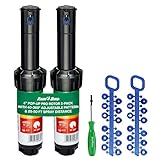
Why These Are the Best Rotor Heads: The Rain Bird 5000 Series represents the industry standard for professional-grade rotor sprinklers. With Rain Curtain nozzle technology that delivers uniform coverage and wind-resistant large droplets, these heads eliminate the dry spots and seed washout problems common with lesser rotors.
These professional rotors adjust from 40 to 360 degrees, covering any lawn configuration. The 4-inch pop-up height ensures the nozzle clears tall grass for even distribution. Rain Bird’s patented slip-clutch mechanism allows quick adjustment by hand, while the top-adjust arc requires only a flat-blade screwdriver for fine-tuning.
What Makes Rain Bird Special: The Rain Curtain nozzle technology creates large water droplets that resist wind drift and misting, ensuring water reaches your lawn rather than blowing away. This superior coverage eliminates the patchy green/brown lawn syndrome that plagues cheaper sprinkler heads. The self-flushing arc adjustment port prevents debris buildup that can cause other rotors to fail.
Professional Installation Quality: Each head comes with eight low-angle and eight standard nozzles, providing customization for any lawn shape and water pressure. The pressure-activated multi-function wiper seal prevents leaks during operation, while the reinforced flow path delivers side-load strength for durability.
Customer Feedback: Reviewers consistently note that these heads “provide the most even coverage of any sprinkler” and “last for years without problems.” Many users replacing older heads immediately notice improved lawn health and uniform growth. Professional landscapers frequently specify the 5000 Series for residential installations.
Things to Consider: At $29.14 for a 2-pack, these cost more than budget rotor heads. Some users report quality control issues with missing or broken nozzle tree components in packaging. The filter can be difficult to locate for cleaning if the head becomes clogged.
Bottom Line: The best rotor heads for homeowners wanting professional-quality coverage and durability. Essential for medium to large lawns requiring 25-50 foot spray distances.
6. Orbit Voyager II Professional Gear Drive Rotor Sprinkler – Best Budget Rotor Heads

Why It’s Our Budget Rotor Pick: The Orbit Voyager II delivers professional-grade performance at a remarkably budget-friendly price. With exceptional water distribution that eliminates brown spots and a spray radius reaching 52 feet, these heads compete with sprinklers costing twice as much.
The Voyager II’s standout feature is its low precipitation rate of 0.24 inches per hour – significantly lower than many competitors. This slower water application prevents runoff and puddling, making it ideal for sloped areas and clay soils that struggle with water absorption. The nearly silent gear drive operation is a welcome upgrade from the constant clacking of impact sprinklers.
Complete Nozzle Kit: Unlike many budget options, Orbit includes ten bonus nozzles covering every application scenario. You’ll receive standard flow nozzles (1.0, 2.0, 3.0, 4.0 GPM), low-angle options (0.5, 1.5, 2.0, 3.0) for windy areas, and even an 8.0 GPM pasture nozzle. This variety allows precise customization for any water pressure and coverage requirement.
Universal Compatibility: The Voyager II replaces rotors from Rain Bird, Hunter, and Toro with its 3/4-inch female thread connection. This makes it an excellent choice for retrofits and repairs when you’re replacing failed heads in an existing system. The built-in filter prevents clogging, extending the lifespan between maintenance.
What Users Say: Many reviewers call this “the best sprinkler on the market” despite its budget price. Users love the “exceptional water distribution” that eliminates lawn brown spots. The nearly silent operation receives frequent praise from those upgrading from noisy impact sprinklers.
Things to Consider: The 3/4-inch connection limits compatibility with 1/2-inch PVC systems without adapters. Some users find the diffusion screws easy to lose during nozzle changes. The filter assembly can be difficult to locate for cleaning when maintenance is needed.
Bottom Line: Outstanding value for professional-quality rotor heads. Perfect for DIYers and professionals alike who want excellent coverage without the premium brand price tag.
7. Raindrip R560DP Automatic Drip Watering System – Best Drip Kit for Containers
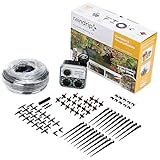
Why It’s Our Top Container Drip Pick: Not every irrigation need requires a full underground sprinkler system. For container gardens, hanging baskets, and patio plants, the Raindrip R560DP provides complete automated watering for up to 20 plants at an exceptional price point.
This starter kit includes 75 feet of 1/4-inch supply tubing with all necessary fittings, elbows, tees, and 20 drip emitters. The battery-powered timer eliminates the need for electrical outlets, making it perfect for remote areas of the garden. Setup is designed for complete beginners – most users complete installation in under an hour.
Ideal Applications: Container gardens, hanging baskets, rooftop gardens, and patio plantings are perfect candidates for drip irrigation. The system delivers water directly to plant root zones, avoiding the waste that occurs when spray heads water empty space between pots. Vacation watering becomes worry-free with reliable automation.
Customer Experiences: Users praise this kit as “great value compared to local stores that charge $100+ for similar systems.” Many report it “keeps plants healthy during vacations” and appreciate the “excellent customer service with quick replacement parts” when issues arise. The 45-minute setup time makes it accessible for complete beginners.
What Makes It Special: The 3/4-inch FHT adapter connects directly to standard outdoor faucets, requiring no special plumbing. Barbed fittings create secure connections without glue or tools. The timer supports multiple watering cycles per day, perfect for container plants that need frequent light watering.
Limitations: The drip rate is not adjustable, which can cause overwatering in small pots or underwatering in large containers. Water tends to channel straight down through potting soil rather than spreading horizontally, potentially leaving dry spots. Some users report durability issues after 1-2 years of use.
Bottom Line: The best drip irrigation starter kit for container gardens and hanging baskets. Perfect for beginners and vacation watering needs.
8. Orbit Micro Bubbler Complete Drip Irrigation Watering Kit – Best Micro Bubbler for Flower Beds

Why It’s Our Water Efficiency Choice: For water-conscious gardeners and drought-prone areas, the Orbit Micro Bubbler kit delivers exceptional efficiency with up to 70% water savings compared to traditional spray heads. The targeted watering approach delivers water directly to plants while skipping landscape areas and weeds.
Micro bubbler technology excels in flower beds, planter boxes, and garden areas where spray sprinklers waste water on bare soil and pathways. The gentle bubbling action prevents soil compaction and runoff while delivering water precisely where plants need it. This kit covers up to 250 square feet with flexible tubing that routes around obstacles.
Installation Experience: Orbit advertises 15-minute installation, though most users report 30-60 minutes for careful setup. The critical technique is softening the 1/4-inch tubing in warm water or with a hair dryer before inserting barb fittings – cold tubing is frustratingly rigid. Once softened, connections slide together securely.
Why Gardeners Love It: Users report the system “saves tremendous time on manual watering” and becomes “nearly invisible in landscaping” once installed. The flexible tubing routes easily around plants and obstacles. Zero leakage when properly assembled means every drop reaches your plants rather than running onto walkways.
Water Conservation Benefits: During drought conditions and water restrictions, micro bubbler systems shine. They deliver the precise amount of water plants need without the overspray and runoff problems of traditional sprinklers. Many water districts offer rebates for water-efficient drip irrigation systems.
Things to Consider: The 1/4-inch tubing can be extremely rigid and difficult to work with until softened. You’ll likely need a heat gun or hair dryer for assembly. Some users find the installation guide method not always the best approach for their garden layout. Not enough fittings are included for complex layouts.
Bottom Line: The best micro bubbler kit for flower beds and water-conscious gardeners. Perfect for drought-prone areas and maximizing water efficiency.
Buying Guide: How to Choose the Right Underground Sprinkler System ?
With so many options available, selecting the right underground sprinkler system requires understanding your specific needs and constraints. This buying guide breaks down the key factors to consider before making your investment.
System Type Considerations
Complete DIY Kits vs. Component Systems: Complete kits like the Rain Bird 32ETI include everything needed for a basic underground system – tubing, sprinkler heads, timer, and fittings. These are ideal for smaller lawns (up to 3,000 sq ft) and DIY installation. Component systems require you to purchase individual parts separately but offer greater customization for larger or more complex properties.
Smart Controllers vs. Traditional Timers: Smart controllers like the Rachio and Orbit B-hyve use WiFi connectivity, weather data, and sophisticated algorithms to optimize watering schedules automatically. They typically pay for themselves in water savings within 1-2 years. Traditional timers like the Hunter XC800 offer proven reliability and simpler operation without internet dependency or subscription fees.
Sprinkler Head Types: Rotor heads like the Rain Bird 5000 and Orbit Voyager II are best for medium to large lawns, throwing water 25-52 feet in a rotating pattern. Spray heads are better for small areas and flower beds, delivering water in a fixed pattern with shorter radius. Drip irrigation and micro bubblers excel for containers, flower beds, and water-conscious applications.
Water Efficiency Features
Smart Scheduling: Advanced controllers automatically adjust watering frequency and duration based on seasonal weather patterns, soil moisture levels, and plant needs. Rachio’s Weather Intelligence considers temperature, humidity, wind, and precipitation forecasts to skip unnecessary watering cycles.
Rain Sensors: These simple devices detect rainfall and prevent your sprinkler system from running during or immediately after rain. While smart controllers use forecast data, rain sensors measure actual conditions – some users install both for maximum accuracy. Many water districts now require rain sensors on new irrigation systems.
Flow Monitoring: Premium systems include flow sensors that detect abnormal water usage, potentially identifying leaks or broken heads before they cause significant damage or water waste. This feature is particularly valuable for larger properties and commercial applications.
Installation Factors
DIY vs. Professional Installation: DIY kits typically require basic tools and can be installed over a weekend by handy homeowners, saving thousands compared to professional quotes. However, professional installation ensures optimal design, proper zoning, and usually includes warranty coverage on workmanship. Large properties over 5,000 sq ft or complex terrain may benefit from professional design expertise.
Water Pressure Requirements: Most underground sprinkler systems require 45-75 PSI for proper operation. Low water pressure prevents sprinkler heads from popping up completely and reduces coverage radius. Before investing in a system, test your water pressure and ensure it meets manufacturer specifications. Booster pumps can address pressure issues but add cost and complexity.
Permit and Code Considerations: Some municipalities require permits for underground irrigation systems, particularly when connecting to home water supply lines. Backflow prevention devices are legally required in most areas to protect municipal water supplies. Check local codes before beginning installation.
Coverage Area Requirements
Small Lawns (Under 1,000 sq ft): Simple DIY kits with 3-4 sprinkler heads typically suffice. Consider smaller rotor heads or spray heads for adequate coverage without overspray onto walkways and buildings. Drip irrigation may be more efficient for small courtyard spaces.
Medium Lawns (1,000-3,000 sq ft): The Rain Bird 32ETI kit targets this size range perfectly. Systems usually require 6-10 rotor heads with proper spacing for uniform coverage. Smart controllers become more cost-effective at this scale due to greater water savings potential.
Large Lawns (3,000+ sq ft): Multiple zones are essential to maintain adequate water pressure and coverage. Professional-grade components like Hunter controllers and Rain Bird 5000 series rotors provide reliable performance for demanding applications. Consider professional design for optimal zoning and head placement.
Budget Considerations
Budget Systems ($100-$500): DIY kits like the Rain Bird 32ETI, hose-end timers, and basic rotors provide functional underground irrigation for small to medium lawns. These systems require more manual adjustment but deliver substantial labor savings compared to hand-watering.
Mid-Range Systems ($500-$1,500): Complete underground systems with smart controllers offer the best value for most homeowners. The Orbit B-hyve controller combined with quality sprinkler heads delivers professional results at a reasonable price point. Water savings typically offset the cost within 1-2 years.
Premium Systems ($1,500-$5,000+): Professional-grade equipment like Rachio controllers, Hunter Pro-C systems, and commercial-grade components provide maximum reliability and advanced features. These investments make sense for large properties, water-conscious regions, and homeowners wanting the absolute best equipment available.
Installation Tips for Success
Proper installation determines whether your underground sprinkler system delivers the lush, healthy lawn you envision or becomes a source of frustration with poor coverage and constant repairs. Follow these tips for professional results.
Plan Your Layout Carefully
Before digging a single hole, map your lawn on paper showing all obstacles (trees, walkways, patios), water sources, and proposed sprinkler head locations. Measure your water pressure and flow rate at the outdoor faucet – these numbers determine how many heads can run simultaneously in each zone. Plan for head-to-head coverage where each sprinkler’s spray reaches the adjacent head, ensuring uniform water distribution.
Match Sprinkler Heads to Zones
Never mix rotor heads and spray heads in the same zone – their precipitation rates differ significantly, causing some areas to receive too much water while others stay dry. Group heads by type and by plant material needs (lawns require different watering than flower beds). Typical zones contain 4-6 rotor heads or 8-10 spray heads depending on water pressure and flow rate.
Install at Proper Depth
Bury sprinkler lines 6-12 inches deep to protect them from freeze damage and accidental shovel strikes during future yard work. Pop-up sprinkler heads should sit flush with ground level when retracted – too deep and grass blocks the spray, too shallow and mower blades will damage them. Use swing joints for each head to allow vertical adjustment after installation.
Include Essential Components
Every system needs a backflow preventer (required by code in most areas) to protect your water supply. Install shut-off valves at key points for zone isolation during maintenance. Include drain valves at low points in each zone to facilitate winterization. Place a filter before the valve box to catch debris that could clog sprinkler nozzles.
Test Thoroughly Before Final Backfilling
Run each zone individually and check for proper coverage, Leaks, and head alignment. Adjust spray patterns and radius as needed. Only after confirming everything works perfectly should you complete backfilling and reseed or sod over trenches. This saves enormous frustration if problems are discovered later.
Maintenance and Winterization
Regular maintenance keeps your underground sprinkler system operating efficiently for years. Neglect leads to poor coverage, water waste, and expensive repairs. Follow these seasonal maintenance routines.
Spring Startup Checklist
Slowly open the main water valve to fill pipes gradually – rapid pressurization can damage components. Run each zone and inspect every sprinkler head for proper operation. Clean clogged nozzles and filters. Adjust spray patterns that shifted over winter. Check the controller programming and update for seasonal needs. Inspect valve boxes for rodent damage and leaks.
Summer Maintenance
Monitor your lawn for dry spots indicating sprinkler problems – adjust heads or clean nozzles as needed. Check for leaks or unusual water usage that could indicate broken pipes or malfunctioning valves. Raise sprinkler heads that have settled too low for grass to clear. Adjust watering schedules based on rainfall and temperature – smart controllers handle this automatically.
Fall Winterization (Critical for Freeze Zones)
In regions where ground freezes, complete winterization prevents expensive pipe and valve damage. Shut off the main water supply to the irrigation system. Use an air compressor to blow all water from pipes – start with the zone furthest from the compressor and work closer, using 50 PSI maximum for polyethylene pipe or 80 PSI for PVC. Open drain valves and test cocks after blowing out lines. Keep the system shut off until spring.
Common Troubleshooting
Sprinkler heads won’t pop up: Check for debris blocking the filter screen, ensure adequate water pressure (45-75 PSI needed), and verify the zone valve is opening completely. Dirt in the gear drive mechanism can prevent rotation – disassemble and clean if necessary.
Uneven coverage with dry spots: This usually indicates improper nozzle selection or spacing. Ensure heads achieve head-to-head coverage where spray reaches adjacent heads. Clean nozzles clogged with debris. Check that sprinkler heads are fully rising and not blocked by tall grass.
Zone won’t shut off: The zone valve is likely stuck open – debris in the diaphragm or solenoid failure are common causes. Manual bleed valves that were accidentally left open can also cause continuous operation. Try turning off the main water supply immediately to prevent waste.
Low pressure throughout system: Check that the main water valve is fully open. A partially closed backflow preventer can restrict flow. Leaks in the main line or too many heads running simultaneously in one zone reduce pressure. Your home’s water supply may be inadequate for the system design.
FAQ: Common Questions About Underground Sprinkler Systems
How much does it cost to install an underground sprinkler system?
DIY installation costs range from $500-$1,500 for materials depending on system size and quality. Professional installation typically costs $2,500-$5,000+ for an average residential system. The Rain Bird 32ETI DIY kit costs under $200 and covers up to 3,000 sq ft, while smart controllers like the Rachio add $150-$250. Larger properties and premium equipment increase costs accordingly. Many homeowners save $2,000-$3,000 by choosing DIY installation over professional quotes.
Can I install a sprinkler system myself?
Yes, DIY installation is very achievable for handy homeowners, especially with complete kits like the Rain Bird 32ETI. Basic tools (shovel, PVC cutter, adjustable wrenches) and weekend time are typically sufficient. The most complex aspects are planning the layout and connecting to your home’s water supply – youtube tutorials and manufacturer guides walk you through the process. However, large properties over 5,000 sq ft or complex terrain may benefit from professional design expertise.
What is the best sprinkler system brand?
Rain Bird, Hunter, and Orbit are the top three brands for residential irrigation, each with strengths in different areas. Rain Bird excels in DIY-friendly kits and professional rotor heads. Hunter is preferred by contractors for reliable professional-grade controllers. Orbit dominates the smart controller market with the B-hyve line. For most homeowners, the best approach is mixing brands – Rain Bird 32ETI kit for DIY installations, Orbit B-hyve for smart controller upgrades, or Hunter XC800 for traditional reliability.
How long do underground sprinkler systems last?
Professional-grade components typically last 15-20 years with proper maintenance. Budget systems may last 8-12 years. Controllers like the Hunter XC800 are known to run 10+ years without issues, while sprinkler heads usually last 10-15 years before needing replacement. PVC piping lasts indefinitely, but polyethylene tubing may need replacement after 15-20 years due to UV degradation and cracking. Proper winterization in freeze zones dramatically extends system lifespan.
Do smart sprinkler controllers really save water?
Yes, smart controllers typically reduce water usage by 30-50% according to EPA WaterSense and manufacturer studies. The savings come from skipping unnecessary watering when rain is forecast, adjusting for seasonal needs, and preventing overwatering through smarter scheduling. Many users report the controller pays for itself in water savings within 6-18 months. Water companies frequently offer rebates of 50-100% for upgrading to smart controllers, improving ROI even further.
How many zones do I need for my lawn?
The number of zones depends on your water pressure, flow rate, and lawn size. Most residential systems need 4-8 zones. Each zone should contain similar sprinkler head types (all rotors or all spray heads) and plant material (all lawn or all garden). A typical 5,000 sq ft lawn might have 6 zones – 4 for lawn areas and 2 for garden beds. Calculate your flow rate (gallons per minute) and divide by each head’s GPM requirement to determine heads per zone.
When should I water my lawn with an underground system?
The best watering time is early morning (4-8 AM) when wind is low, evaporation is minimal, and grass dries before nightfall. Watering in evening promotes fungal diseases because grass stays wet overnight. Midday watering wastes water to evaporation. Smart controllers automatically optimize watering times based on weather conditions. Most lawns need 1-1.5 inches of water per week, delivered in 2-3 deep watering sessions rather than daily light sprinklings.
How do I winterize my sprinkler system?
In freeze zones, complete winterization involves shutting off the main water supply, then using an air compressor to blow all water from pipes and sprinkler heads. Start with the zone furthest from the compressor and work closer, using 50 PSI for poly pipe or 80 PSI for PVC. Continue until only mist emerges from the furthest head. Open manual drains and leave valves open. Skip this step in freezing climates and you risk thousands in damage from frozen, burst pipes.
Conclusion: Finding Your Perfect Underground Sprinkler System
The right underground sprinkler system transforms lawn care from a weekend chore into automated luxury while keeping your landscape healthy and increasing property value. For most DIY homeowners, the Rain Bird 32ETI kit delivers professional results at a budget price, especially for small to medium lawns. Those upgrading existing systems should consider the Orbit B-hyve for exceptional smart features at half the price of premium competitors, while Rachio represents the best choice for tech-savvy homeowners wanting maximum water savings and automation.
Remember that the best system is one matched to your specific needs – lawn size, water pressure, budget, and technical comfort all factor into the decision. Start with our top picks and consider how each aligns with your situation. With proper installation and maintenance, a quality underground sprinkler system will keep your lawn lush for 15+ years while saving countless hours and reducing water waste through smart, efficient irrigation.