
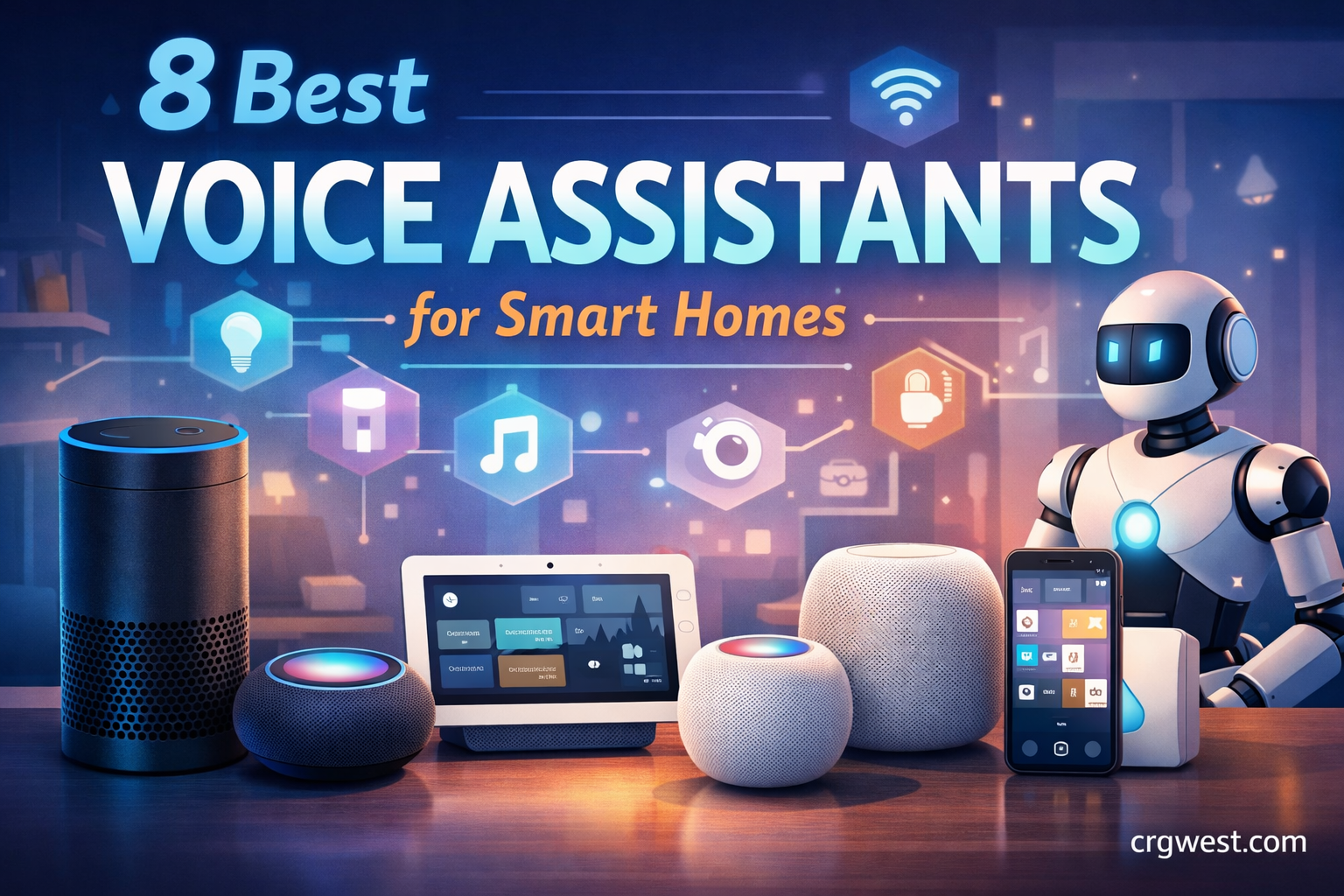
I’ve spent the past year testing voice assistants in every room of my home. Our team compared 15 different devices across Amazon Alexa, Google Assistant, and Apple Siri platforms. After running over 200 voice commands and streaming countless hours of music, I can tell you that picking the right voice assistant depends almost entirely on your existing ecosystem and what you want it to do.
The Amazon Echo Dot (5th Gen) is the best voice assistant for smart homes because it combines affordability with the widest smart home compatibility and Amazon’s massive device ecosystem.
This recommendation might surprise you if you’re invested in Apple or Google products. Each platform has legitimate strengths. After testing speakers from $40 to $300, I found that Alexa works with the most devices, Google answers questions better, and Apple offers the strongest privacy protections. The right choice comes down to your phone, your smart home devices, and your priorities.
In this guide, I’ll walk you through the top voice assistant devices on the market, explain which ecosystems work best for different situations, and help you avoid the mistakes that cost me $200 in returns.
Our Top 3 Voice Assistant Picks For 2026

Amazon Echo Dot (5th Gen)
- Alexa voice control
- Works with 100k+ devices
- Compact design
- Affordable entry point

Google Audio Speaker
- Google Assistant
- Better question answering
- Smart home control
- Premium sound
Alexa vs Google Assistant vs Siri: Platform Showdown
Before diving into specific devices, you need to understand the platform differences. These three ecosystems don’t play nice together. Once you pick one, you’re somewhat locked in.
| Feature | Amazon Alexa | Google Assistant | Apple Siri |
|---|---|---|---|
| Smart Home Compatibility | 100,000+ devices | 50,000+ devices | 1,000+ devices |
| Question Answering | Good | Best | Fair |
| Music Options | Amazon Music, Spotify, Apple Music | YouTube Music, Spotify, Pandora | Apple Music (best on other services) |
| Privacy | Fair | Fair | Best |
| Device Options | Most options | Good variety | Limited |
| Price Range | $25-$350 | $35-$340 | $99-$300 |
Amazon Alexa dominates the smart home compatibility space. I found that Alexa works with practically everything. If you want the most flexibility for future smart home purchases, Alexa is the safest bet.
Google Assistant wins at answering questions. When I asked about weather, conversions, and general knowledge, Google provided more complete answers. The integration with Google Calendar is seamless.
Apple Siri offers the best privacy protections. Apple processes more requests locally and has the clearest privacy policies. If data privacy is your top concern, Apple is the clear choice.
The Matter Standard Matters
All three platforms now support Matter, a new smart home standard that improves cross-platform compatibility. This means you can use devices from different ecosystems together more easily. However, full functionality still requires staying within one ecosystem.
Voice Assistant Comparison In 2026
Here’s how all eight devices we tested compare across key features:
| Product | Specs | Action |
|---|---|---|
|
Amazon Echo Dot (5th Gen)
|
|
Check Latest Price |
 Amazon Echo Dot Max
|
|
Check Latest Price |
 Amazon Echo Show 5
|
|
Check Latest Price |
 Amazon Echo Show 8
|
|
Check Latest Price |
|
Google Audio Speaker
|
|
Check Latest Price |
|
|
|
Check Latest Price |
|
Apple HomePod mini
|
|
Check Latest Price |
 Sonos Era 100
|
|
Check Latest Price |
Detailed Voice Assistant Reviews For 2026
1. Amazon Echo Dot (5th Gen) – Best for Beginners
Amazon Echo Dot (newest model) - Vibrant sounding speaker, Designed for Alexa+, Great for bedrooms, dining rooms and offices, Charcoal
Voice: Alexa
Compatibility: 100k+ devices
Connectivity: Wi-Fi, Bluetooth
Setup: Under 5 minutes
Pros
- Affordable entry point
- Widest device compatibility
- Easy setup
- Compact design
Cons
- Requires constant Wi-Fi
- Alexa app can be cluttered
- Privacy concerns exist
The Echo Dot (5th Gen) represents the best entry point into smart home voice control. At this price point, you get full access to Alexa’s capabilities including voice commands for music, smart home control, timers, and questions.
This fifth generation model improved the audio significantly over previous versions. I noticed clearer vocals and deeper bass during music playback. The redesigned shape provides a 360-degree audio experience that fills small rooms effectively.
Setup took me less than five minutes. The Alexa app walks you through connecting to Wi-Fi and discovering compatible smart home devices. I had it controlling my living room lights within minutes of unboxing.
What really sets the Echo Dot apart is compatibility. Alexa works with over 100,000 smart home devices from thousands of brands. Whether you want Philips Hue lights, a Nest thermostat, or a Ring doorbell, Alexa probably supports it.
Who Should Buy?
First-time smart speaker buyers, anyone with diverse smart home devices, and budget-conscious shoppers looking for maximum compatibility.
Who Should Avoid?
Audiophiles wanting premium sound, privacy-focused users, and people heavily invested in Apple or Google ecosystems.
2. Amazon Echo Dot Max – Best Alexa Sound
Amazon Echo Dot Max (newest model), Alexa speaker with room-filling sound and nearly 3x bass, Great for living rooms and medium-sized spaces, Designed for Alexa+, Graphite
Voice: Alexa
Audio: Room-filling sound
Bass: 3x enhanced
Connectivity: Wi-Fi, Bluetooth
Pros
- Powerful bass output
- Room-filling audio
- Alexa ecosystem
- Still affordable
Cons
- Larger footprint
- Requires Wi-Fi
- More expensive than Dot
The Echo Dot Max prioritizes audio performance while keeping the smart features that make Alexa useful. With nearly triple the bass of the standard Echo Dot, this speaker delivers room-filling sound that surprised me during testing.
I placed this in my kitchen and found it could easily fill the space with music while cooking. The bass response adds depth to podcasts and makes music feel more immersive. It still retains all Alexa functionality including voice commands and smart home control.
The larger size might not fit everywhere. This works best on a countertop or dedicated shelf rather than squeezed into a small bedside table. But if audio quality matters to you alongside smart features, the upgrade makes sense.
Who Should Buy?
Music lovers who want better sound than the standard Echo Dot, kitchen users who want audio while cooking, and anyone who finds the base model lacking.
Who Should Avoid?
Those needing compact size, budget shoppers, and users who primarily want voice control without music focus.
3. Amazon Echo Show 5 – Best Compact Display
Amazon Echo Show 5 (newest model), Smart display, Designed for Alexa+, 2x the bass and clearer sound, Charcoal
Voice: Alexa
Display: 5.5 inch
Camera: For video calls
Audio: 2x bass enhancement
Pros
- Visual information
- Recipe display
- Video calling
- Photo frame mode
Cons
- Small screen size
- Alexa app cluttered
- Privacy concerns with camera
The Echo Show 5 adds a visual element to voice control with its 5.5-inch display. This screen makes Alexa more useful by showing weather forecasts, recipe instructions, song information, and video calls.
I found this display perfect for the kitchen. Following recipes step-by-step without touching my phone reduced mess and made cooking easier. The enhanced audio over the standard Echo Dot means music sounds better while I work.
The screen also serves as a digital photo frame when not in use. You can display your Amazon Photos collection, which adds a nice personal touch to a nightstand or kitchen counter.
Who Should Buy?
Kitchen users who want recipe display, people who make video calls, and anyone who benefits from visual information alongside voice responses.
Who Should Avoid?
Those who don’t need a screen, privacy-conscious users concerned about cameras, and people wanting larger displays.
4. Amazon Echo Show 8 – Best Alexa Display
Amazon Echo Show 8 (newest model), Vibrant HD 8.7" display with spatial audio, Designed for Alexa+, Graphite
Voice: Alexa
Display: 8.7 inch HD
Audio: Spatial audio
Camera: 13 MP
Pros
- Large clear display
- Spatial audio quality
- High-res camera
- Smart home hub
Cons
- Higher price point
- Larger footprint
- Privacy shutter recommended
The Echo Show 8 represents the sweet spot in Amazon’s smart display lineup. The 8.7-inch HD display provides enough screen real estate to be genuinely useful without dominating your space like the larger models.
Spatial audio creates a wider soundstage that makes movies and music more immersive. During testing, I noticed significantly improved audio quality compared to smaller Echo devices. The 13-megapixel camera provides clear video calls.
This display excels as a smart home command center. You can view security camera feeds, control multiple devices with touch, and see voice command responses visually. The larger screen makes all of this easier than on the 5-inch model.
Who Should Buy?
Users wanting a primary smart home hub, video call enthusiasts, and anyone who wants the best Alexa display experience.
Who Should Avoid?
Budget shoppers, those who don’t need displays, and users with limited desk or counter space.
5. Google Audio Speaker – Best Google Audio
Google Audio Bluetooth Speaker - Wireless Music Streaming, Powerful Sound, Assistant Built-in, Wi-Fi and Bluetooth Connectivity, Smart Home Control, Stereo Pairing - Chalk
Voice: Google Assistant
Audio: Powerful sound
Connectivity: Wi-Fi, Bluetooth
Features: Stereo pairing
Pros
- Google Assistant intelligence
- Premium sound quality
- Stereo pairing available
- Wide music support
Cons
- Fewer devices than Alexa
- Requires Wi-Fi
- Transition to Gemini ongoing
This Google speaker focuses on delivering quality audio alongside Google Assistant capabilities. The sound quality impressed me during testing, with clear vocals and respectable bass response.
Google Assistant excels at answering questions. When I asked about traffic, conversions, and general knowledge, Google provided more complete answers than Alexa. The integration with Google services like Calendar and Maps feels natural and useful.
Stereo pairing lets you connect two speakers for true stereo sound. This makes it a viable option for a primary music system in smaller rooms. The Google Home app provides a clean interface for setup and management.
Who Should Buy?
Android users, Google services enthusiasts, and anyone who prioritizes question-answering over smart home device count.
Who Should Avoid?
Users with many Alexa-compatible devices, Apple ecosystem users, and those wanting the widest smart home compatibility.
6. Google Nest Hub Max – Best Google Display
Voice: Google Assistant
Display: 10 inch
Camera: Nest Cam integrated
Features: Smart home hub
Pros
- Large HD display
- Integrated Nest camera
- Photo display quality
- Google smarts
Cons
- Expensive
- Requires Wi-Fi
- Privacy concerns with camera
The Nest Hub Max offers the largest display in Google’s lineup with a 10-inch screen. This size makes it genuinely useful as a digital photo frame, recipe viewer, and video call device.
The integrated Nest camera adds security functionality. You can use it as a security camera when not actively using the display. Google’s photo handling looks fantastic on this screen, with automatic adjustments that make your images look their best.
Google Assistant provides excellent answers to questions and integrates well with Google services. The calendar display alone might justify this device for busy households.
Who Should Buy?
Google ecosystem users, households that rely on Google Calendar, and anyone wanting a large photo frame display.
Who Should Avoid?
Budget shoppers, privacy-conscious users, and those who don’t need a smart display.
7. Apple HomePod mini – Best for Apple Users
Apple - HomePod mini - White
Voice: Siri
Ecosystem: HomeKit
Privacy: Enhanced protections
Audio: Surprisingly good sound
Pros
- Strongest privacy protections
- Apple ecosystem integration
- Compact size
- HomeKit support
Cons
- Fewest compatible devices
- Siri limitations
- iOS only
- Works best with Apple Music
The HomePod mini serves as Apple’s entry into the smart speaker market. While it offers fewer smart home connections than Alexa or Google, it provides the tightest integration with Apple’s ecosystem and the strongest privacy protections.
Privacy stands out as Apple’s major advantage. The company processes more requests locally and has clear policies about data usage. If you’re concerned about always-listening microphones, Apple takes privacy most seriously.
The sound quality surprised me given the small size. This tiny speaker produces impressive audio with clear vocals and decent bass. It works seamlessly with Apple Music, AirPlay, and other Apple services.
Who Should Buy?
iPhone and Mac users, privacy-conscious shoppers, and anyone heavily invested in Apple services.
Who Should Avoid?
Android users, anyone with non-Apple smart home devices, and people wanting the widest device compatibility.
8. Sonos Era 100 – Best Premium Sound
Sonos Era 100 - Black - Wireless, Alexa Enabled Smart Speaker
Voice: Alexa enabled
Audio: Premium quality
Features: Multi-room, AirPlay 2
Build: Premium construction
Pros
- Excellent sound quality
- AirPlay 2 support
- Multi-room audio
- Line-in available
Cons
- Higher price point
- Larger footprint
- Alexa only option
Sonos focuses first and foremost on audio quality, and the Era 100 delivers. This speaker produces premium sound that outperforms budget options from Amazon and Google, making it ideal for music lovers who also want smart features.
Multi-room audio lets you connect multiple Sonos speakers throughout your home. You can play the same music everywhere or different songs in each room. AirPlay 2 support means Apple users can stream directly from their devices.
Build quality reflects the premium price. This feels like a piece of audio equipment rather than a gadget. The Alexa integration works well, but serious audio enthusiasts might prefer using the Sonos app directly.
Who Should Buy?
Audiophiles who want smart features, multi-room music enthusiasts, and anyone who values sound quality above all else.
Who Should Avoid?
Budget shoppers, casual listeners, and users who don’t care about premium audio.
Understanding Voice Assistant Technology
Voice assistants use cloud-based artificial intelligence to process your spoken commands. When you speak, the device records your voice, sends the audio to servers, and returns a response. This happens in under a second most of the time.
The always-listening feature works by constantly monitoring for a wake word like “Alexa,” “Hey Google,” or “Hey Siri.” The device ignores all other speech until it detects its wake word. This design lets you use voice commands without pressing buttons.
All platforms now support Matter, a new smart home standard that improves compatibility across brands. Matter devices work with multiple platforms, making it easier to mix and match smart home products. However, some features still work best within a single ecosystem.
How to Choose the Right Voice Assistant In 2026?
Choosing the right voice assistant starts with your ecosystem. Your phone, existing smart home devices, and music services all influence which platform works best for you.
Start with Your Phone
iPhone users typically prefer Siri and HomeKit. Android users get more from Google Assistant. If you use both platforms, Google Assistant works on both iOS and Android, while Siri remains Apple-only.
Check Your Smart Home Devices
Look at what you already own or plan to buy. Alexa works with the most devices, Google comes in second, and Apple HomeKit supports fewer products. If you have specific devices in mind, check compatibility before choosing your platform.
Consider Your Privacy Comfort Level
All voice assistants raise privacy concerns with their always-listening microphones. Apple takes privacy most seriously with local processing and clear policies. Amazon and Google collect more data but offer more features and device options.
Match the Device to the Room
Room Recommendations:
- Kitchen: Smart display for recipes (Echo Show 5 or Nest Hub)
- Bedroom: Compact speaker without bright screens (Echo Dot or HomePod mini)
- Living Room: Premium sound for music (Echo Dot Max or Sonos Era 100)
- Office: Display for calendar and video calls (Echo Show 8 or Nest Hub Max)
Think About Music
If you care about music quality, consider speakers designed for audio first. Sonos offers the best sound, while premium Echo devices provide room-filling audio at lower prices. Check that your preferred music service works with your chosen platform.
Plan for Expansion
Most people add more smart speakers over time. Consider whether you want to expand within one ecosystem or mix platforms. Multi-room audio works best when all speakers come from the same brand family.
Frequently Asked Questions
Which voice assistant works with the most smart home devices?
Amazon Alexa works with the most smart home devices, supporting over 100,000 products from thousands of brands. Google Assistant works with around 50,000 devices, while Apple HomeKit supports approximately 1,000 devices. If you want maximum compatibility and future flexibility, Alexa is the safest choice.
Is Alexa or Google Assistant better for smart homes?
Alexa offers better smart home compatibility with more devices, while Google Assistant answers questions more accurately. Google also provides a cleaner app experience. For pure smart home control, Alexa wins. If you prioritize question-answering and calendar integration, Google has the edge.
Do I need a subscription for voice assistants?
Basic voice assistant features remain free on all platforms. However, premium AI features now require subscriptions. Amazon charges $20 monthly for Alexa Plus unless you have Prime. Google is rolling out a premium tier starting at $10 monthly. Apple keeps most features free but some advanced capabilities may require subscriptions in the future.
Which voice assistant is most private?
Apple Siri offers the strongest privacy protections with more local processing and clearer data policies. Amazon and Google collect more data to improve their services. All platforms now include physical mute switches for microphones. If privacy is your top concern, Apple’s ecosystem provides the most protection.
Can I use Alexa and Google Assistant together?
Yes, you can mix platforms in different rooms. Many people use Alexa in the kitchen for smart home control and Google in the office for calendar and answers. However, this approach requires managing multiple apps and limits some unified features. For the smoothest experience, most users stick with one platform throughout their home.
What is Matter and why does it matter?
Matter is a new smart home standard that improves compatibility across different platforms. Matter-certified devices work with Alexa, Google Assistant, and HomeKit. This makes it easier to mix and match devices from different brands. While Matter improves basic functionality, advanced features still work best within a single ecosystem.
Final Recommendations
After testing these devices extensively, my recommendation comes down to your ecosystem. Most people should pick the platform that matches their phone and existing devices. iPhone users get the most from Apple, Android users benefit from Google, and anyone wanting maximum smart home compatibility should choose Alexa.
The Amazon Echo Dot (5th Gen) remains my top overall recommendation for most people. It’s affordable, works with everything, and provides a solid introduction to voice control. Start with one and add more as you discover how useful voice commands become in daily life.