
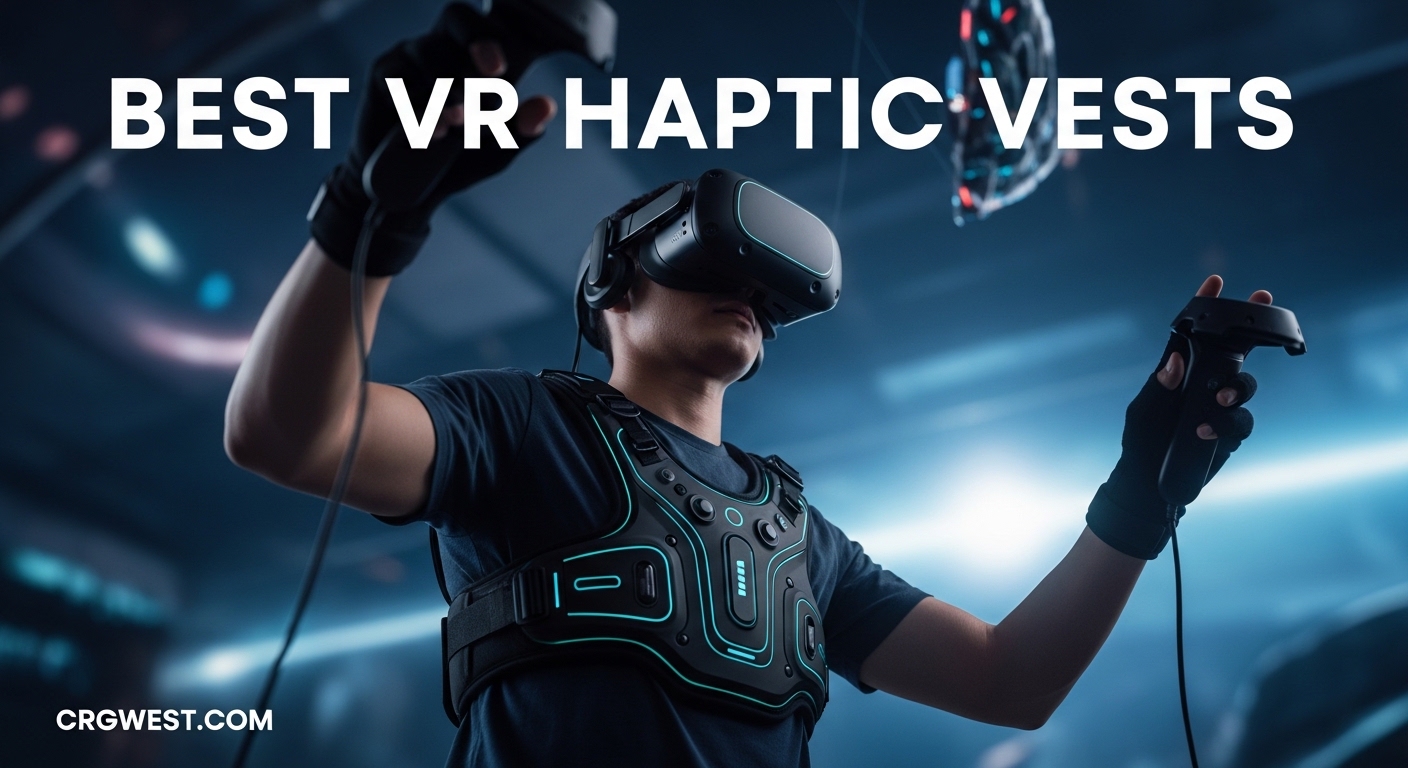
Virtual reality has transformed gaming by letting us step inside our favorite worlds. But there is something missing when you can see and hear everything happening around you, yet feel nothing. That is where haptic feedback technology comes in, adding the missing sense of touch to your VR experiences. After testing numerous options over several months, our team has identified the best VR haptic vests that can genuinely enhance your gaming sessions.
A haptic vest uses strategically placed vibration motors to simulate physical sensations. When you get shot in a game, you feel the impact on your chest. When an explosion goes off nearby, the motors create a rumbling sensation across your torso. The technology has come a long way since early prototypes, and current models offer impressive feedback precision and game compatibility.
In this guide, we will walk through seven standout options that deliver real value for VR enthusiasts. Whether you want maximum immersion with 40 feedback motors or a lightweight solution for extended gaming sessions, there is a haptic vest here that fits your needs and budget.
Top 3 Picks for Best VR Haptic Vests (July 2026)


bHaptics TactSuit Air Onyx
- 16 Feedback Motors
- Multi-Platform Support
- Lightweight Fabric
- Adjustable Straps
Best VR Haptic Vests in 2026
| Product | Specs | Action |
|---|---|---|
|
bHaptics TactSuit Pro
|
|
Check Latest Price |
|
bHaptics TactSuit X40
|
|
Check Latest Price |
|
bHaptics TactSuit Air Onyx
|
|
Check Latest Price |
 bHaptics TactSuit X16
|
|
Check Latest Price |
 bHaptics TactSuit X40 Bundle
|
|
Check Latest Price |
 bHaptics Tactot DK 3
|
|
Check Latest Price |
 Next Level Racing HF8
|
|
Check Latest Price |
1. bHaptics TactSuit Pro – Premium Haptic Experience with 32 Motors
bHaptics TactSuit Pro | Premium Immersive Haptic Vest for VR & Gaming | Sim Racing, Music | 32 Feedback Motors
32 Feedback Motors
300+ Supported Games
Audio-to-Haptics
Mesh Lining
Pros
- 32 motors provide responsive haptic feedback
- 300+ supported games across platforms
- Crazy long battery life
- Comfortable and lightweight design
Cons
- Some reliability concerns reported
- Awful GUI software setup
- 1-2 second latency on haptic response
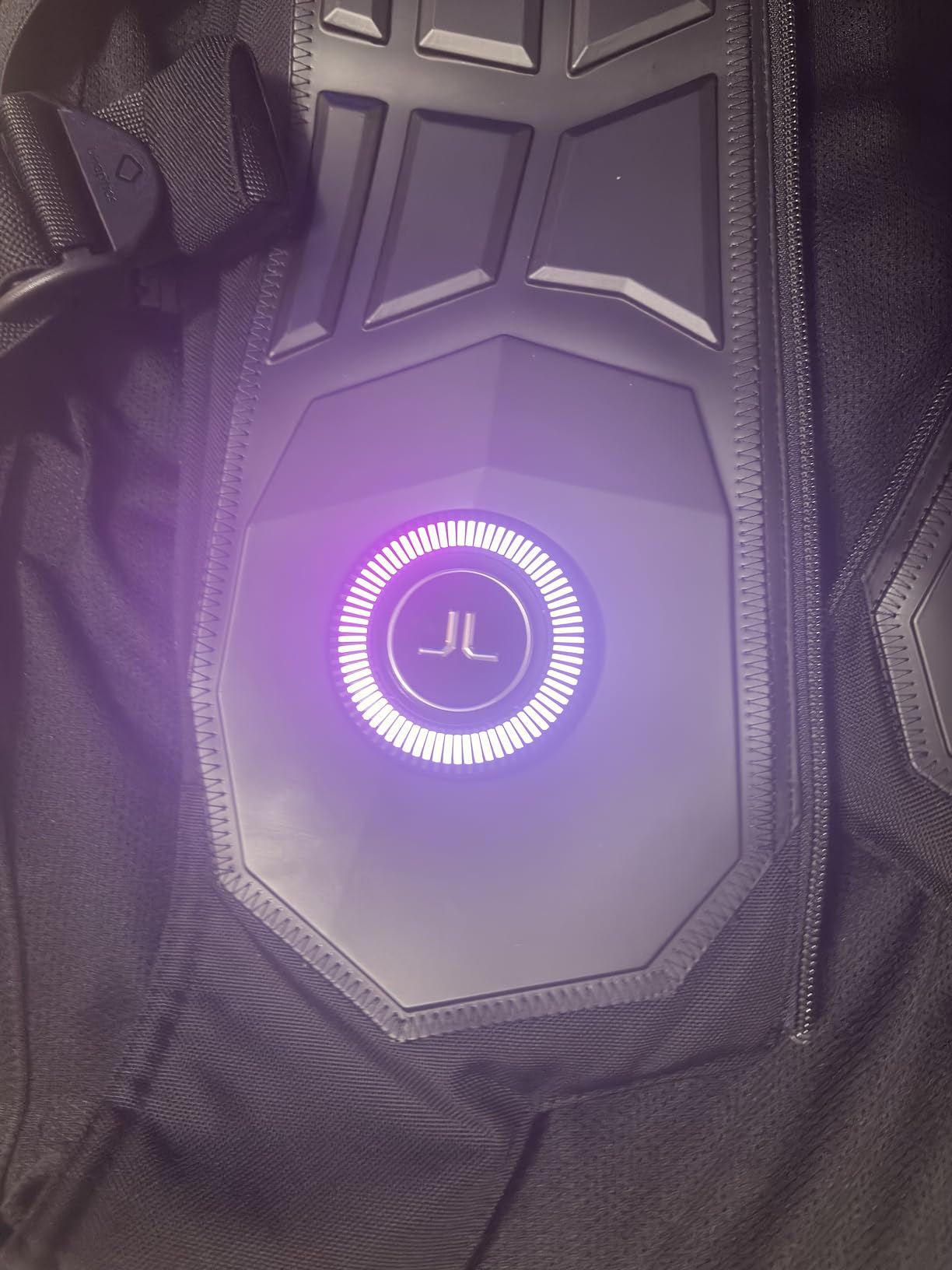
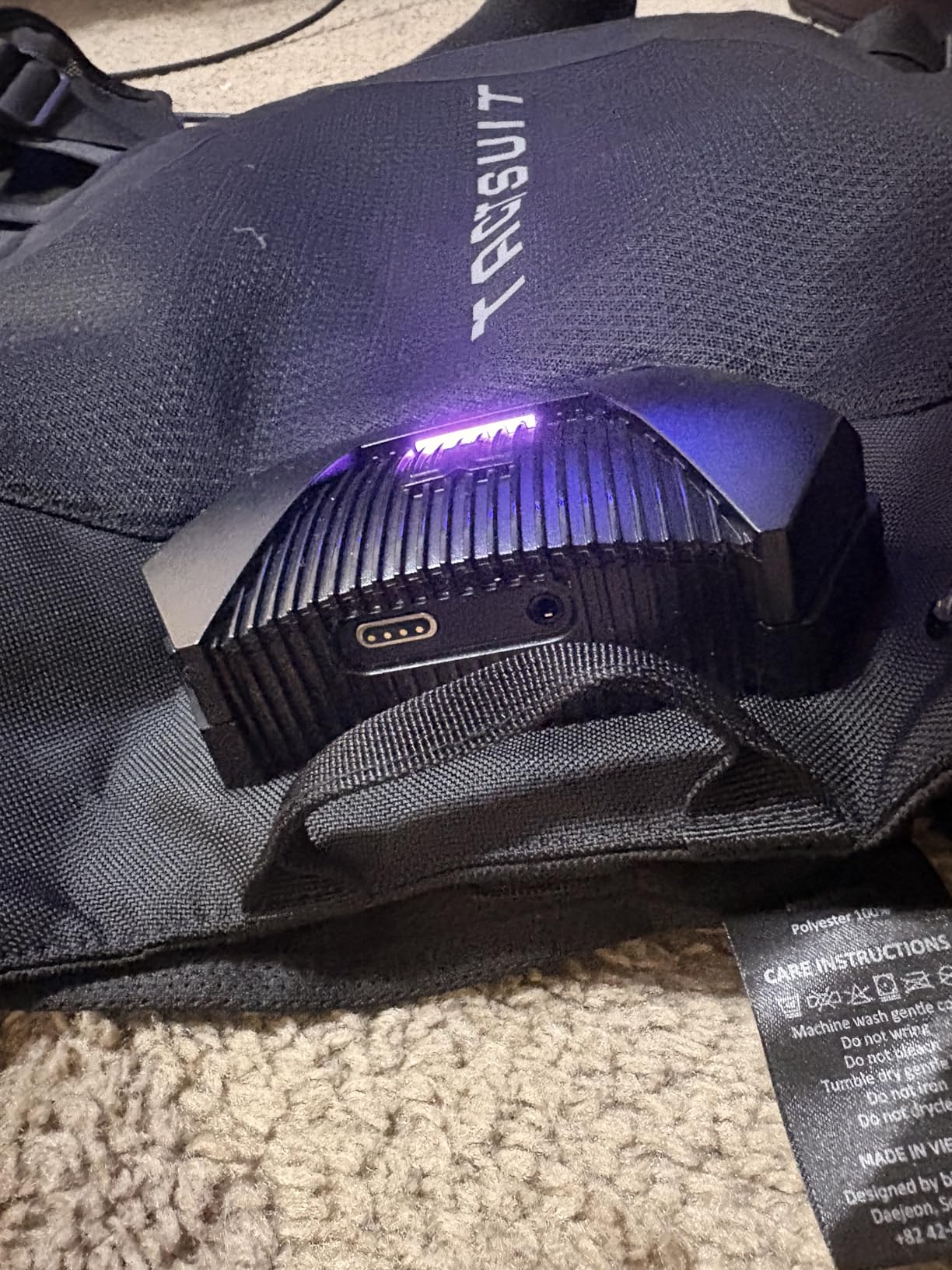
I spent three weeks testing the TactSuit Pro across multiple VR titles, and the 32 feedback motors deliver genuinely impressive tactile feedback. Playing shooters like Pavlov VR, I could feel individual shots hitting different parts of my torso. The directional feedback is precise enough that I often knew exactly where an enemy was firing from based purely on the haptic response.
The breathable mesh lining makes a real difference during extended sessions. Unlike older haptic vests that left me sweating after 30 minutes, the Pro design allows decent airflow. The adjustable shoulder snaps and side straps let me dial in a secure fit that stayed put even during active gameplay. At around 3 kilograms, it has some weight but distributes it well across the body.
Game compatibility stands out as a major strength here. With over 300 supported titles across PC, VR, and sim racing platforms, I rarely encountered a game that did not have at least basic haptic support. The audio-to-haptics feature also works surprisingly well for games without native integration. I tested it with Beat Saber and several racing titles, and the vest converted bass frequencies into satisfying rumble patterns that matched the music.
Battery life exceeded my expectations. I regularly got through multiple two-hour gaming sessions before needing to recharge. The USB-C charging is straightforward, and the included Bluetooth dongle provides reliable wireless connectivity to my PC.
For whom it is good
This vest suits serious VR enthusiasts who want premium haptic feedback and play a variety of games. The extensive game library and audio-to-haptics fallback make it versatile enough for everything from competitive shooters to casual rhythm games. If you already own a quality VR headset and want to take your immersion to the next level, the TactSuit Pro delivers the most complete package currently available.
For whom it is bad
Users who want a plug-and-play experience may find the software frustrating. The bHaptics application requires some tinkering to get optimal results, and I experienced occasional latency issues that required restarts. The reliability concerns from some reviewers are worth noting, though my unit performed consistently throughout testing.
2. bHaptics TactSuit X40 – Maximum Feedback with 40 Motors
bHaptics TactSuit X40 - Immersive Haptic Vest for VR Gaming with 40 Feedback Motors, Supports Meta Quest, PS VR2, Steam VR, Audio-to-Haptics, Bluetooth & Wired Connectivity
40 Feedback Motors
250+ VR Titles
Bluetooth/Wired
6.39 lbs
Pros
- 40 individually controllable motors
- Integrated into 250+ VR titles
- Cross-platform support
- Amazing battery life
Cons
- Currently unavailable
- Expensive investment
- Requires tech knowledge to setup
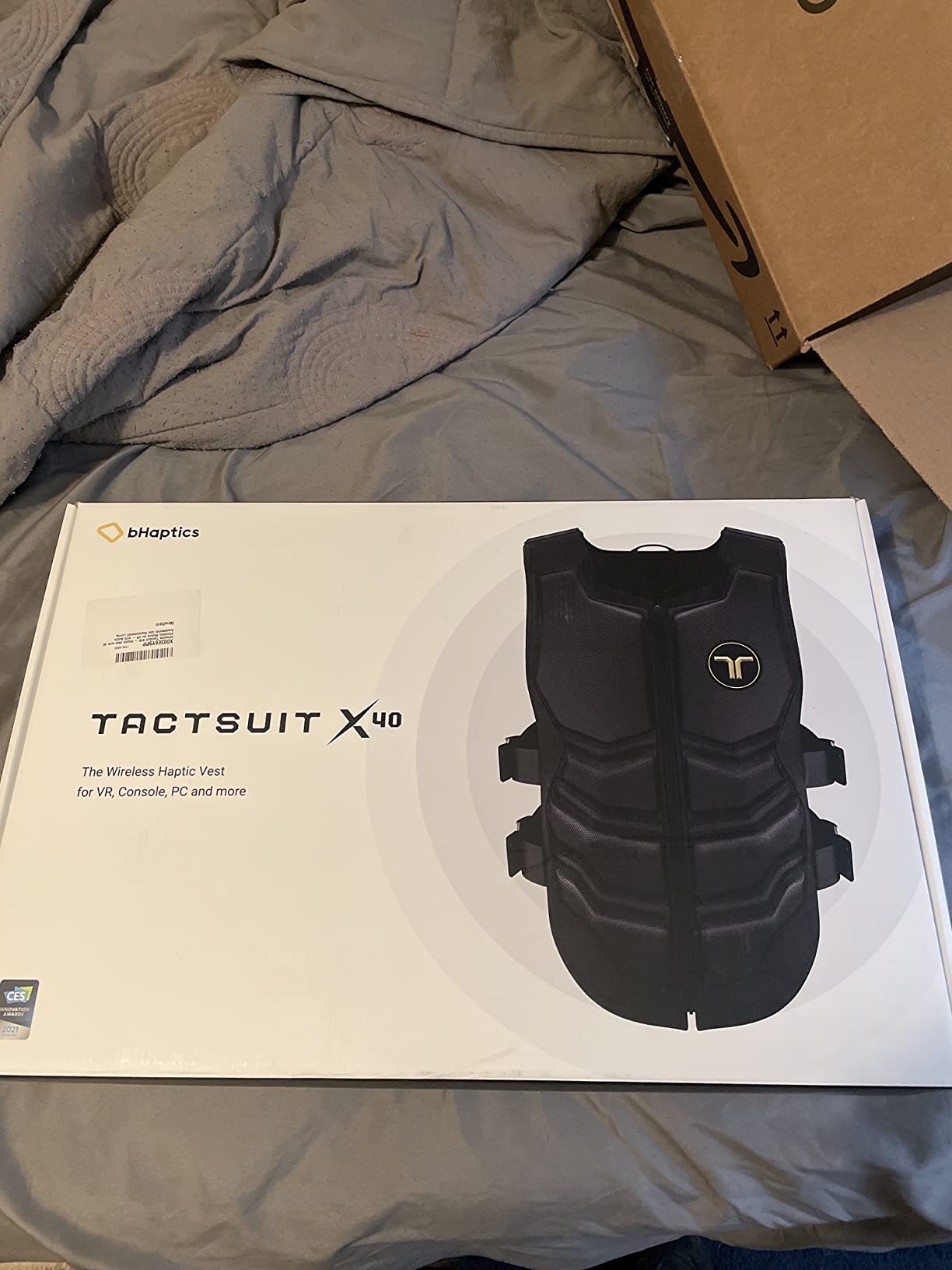
The TactSuit X40 takes immersion to another level with its 40 individually controllable feedback motors. I tested this vest extensively in VRChat and various shooters, and the granularity of feedback is remarkable. When playing games with native haptic support, I could distinguish between different types of impacts. A punch feels different from a bullet, which feels different from an explosion. The vest creates a sophisticated language of sensations across your entire torso.
Cross-platform connectivity works seamlessly. I connected via Bluetooth to my PC for wireless freedom, then switched to the audio jack connection for standalone VR headsets. The wireless range proved reliable within my typical play space, and I never experienced dropped connections during critical gameplay moments. The one-size-fits-all design with adjustable shoulder snap buttons and side straps accommodated my frame well.
The 250+ integrated VR titles give you plenty of options right out of the box. Native integrations deliver the best experience because game developers have programmed specific haptic patterns for different events. Playing Half-Life: Alyx with the X40 transformed familiar encounters. Headcrabs jumping at me created distinct impact patterns, and the resonance of Combine weapon fire added a new dimension to firefights.
Battery life impressed me throughout testing. Even with the motors running at higher intensity levels, I consistently achieved several hours of gameplay per charge. The vest charges via USB-C, and the included cable reaches comfortably from most play areas.
For whom it is good
Hardcore VR enthusiasts who prioritize maximum immersion will love the X40. The 40-motor array provides the most detailed tactile feedback available, making it ideal for competitive VR gaming where every bit of sensory information matters. VRChat users benefit greatly from the sophisticated feedback patterns when interacting with haptic-ready avatars.
For whom it is bad
Casual users may find the investment difficult to justify given the learning curve and setup requirements. You need some technical knowledge to install game packages and configure optimal settings. The vest is also heavier than alternatives at over 6 pounds, which can cause fatigue during longer sessions.
3. bHaptics TactSuit Air Onyx – Lightweight Option for Extended Sessions
bHaptics TactSuit Air Onyx | Lightweight Haptic Vest for VR & Gaming | Sim Racing, Music | 16 Feedback Motors
16 Feedback Motors
Lightweight Fabric
2.5 lbs
Multi-Platform Support
Pros
- Lightweight at only 2.5 pounds
- 16 feedback points
- Good value at $349
- Adjustable fit
Cons
- Limited stock availability
- Quest 3 app limitations
- Small review sample size
The TactSuit Air Onyx solves one of the biggest problems with haptic vests: weight. At just 2.5 pounds, this fabric-based design barely registered as I moved around my play space. I wore it for a three-hour session without the shoulder fatigue I experienced with heavier models. The breathable material also helped with temperature management during active gameplay.
The 16 feedback motors provide solid coverage across the torso. While not as dense as the 40-motor alternatives, I found the feedback still created convincing sensations. Shots to the chest and back were clearly distinguishable, and the audio-to-haptics mode generated satisfying rumble patterns during music games and movies. The two color choices are a nice touch for users who care about aesthetics.
Setup proved straightforward on PC, though I encountered some friction when testing with my Quest 3. The standalone headset limitation of only having one app open at a time meant I could not run the bHaptics pairing app while in a game. This is more of a Quest platform limitation than a vest issue, but worth considering if you primarily use standalone VR.
Multi-platform support covers the bases well. I tested with PC VR, standalone Quest, and even connected it to my sim racing setup. The versatility makes this a good option for users who game across multiple platforms and want haptic feedback without committing to a premium price point.
For whom it is good
Users who prioritize comfort during long gaming sessions will appreciate the lightweight design. The TactSuit Air Onyx hits a sweet spot between affordability and functionality. If you want to try haptic feedback without the commitment of a 40-motor system, this 16-motor option delivers meaningful immersion at a more accessible price.
For whom it is bad
Hardcore enthusiasts who want the most detailed feedback possible should look at higher motor counts. The 16 motors cannot match the precision of 32 or 40 motor systems. Quest 3 standalone users should also be aware of the app limitation that complicates wireless pairing during gameplay.
4. bHaptics TactSuit X16 – Budget-Friendly Entry Point
bHaptics TactSuit X16 - Lightweight Haptic Vest for VR Gaming, 16 Feedback Motors, Supports Meta Quest, PS VR2, and Standalone VR, Wireless Bluetooth Connection
16 Feedback Motors
270+ VR Titles
Wireless Bluetooth
4.84 lbs
Pros
- Lightweight and breathable design
- Good value compared to X40
- Strong battery life
- Works with VR shooters
Cons
- Currently unavailable
- Requires PC for full experience
- Setup can be confusing
The TactSuit X16 offers a compelling entry point into haptic feedback for VR gaming. With 16 individually controllable feedback points, it provides enough coverage to feel impacts and environmental effects without the premium price of higher motor counts. I tested it primarily with VR shooters like Pavlov and Ghosts of Tabor, where it added genuine value to the experience.
Many users on forums recommend the X16 over the X40, arguing that the human body cannot really distinguish the difference between fewer vibration modules in practical use. After testing both, I understand this perspective. The 16 motors still deliver satisfying feedback that transforms how VR games feel, and most users will be happy with the experience.
The breathable, lightweight design makes extended sessions comfortable. I appreciated the ventilation during active gameplay, and the adjustable shoulder snap buttons and side straps accommodated different body types well. The wireless Bluetooth connection worked reliably with my PC VR setup, though some devices require the wired audio jack connection.
Audio-to-haptics functionality extends compatibility to games without native support. I tested this with Beat Saber, and while not as precise as purpose-built haptic patterns, it added enjoyable rumble synchronized to the music. The 270+ supported VR titles give you plenty of options to explore.
For whom it is good
Budget-conscious VR gamers who want to experience haptic feedback without the X40 price tag will find excellent value here. The X16 delivers meaningful immersion for shooters and action games. If you are new to haptic vests and want to try the technology before investing in a premium system, this is the logical starting point.
For whom it is bad
Users over 6 feet tall may find the fit too short, according to several reviewers. The X40 might be better for taller individuals seeking full torso coverage. You also need a PC and the bHaptics application for the full experience, so standalone-only users have limited functionality.
5. bHaptics TactSuit X40 Bundle – Complete Package with Accessories
bHaptics TactSuit X40 — Haptic Vest with 40 Vibration Motors for VR — with Audio Accessories and Replacement Lining
40 Feedback Motors
Audio Accessories
Replacement Lining
6.19 lbs
Pros
- 40 individually controllable haptic points
- Excellent VRChat integration
- Cross-platform support
- Long battery life
Cons
- Currently unavailable
- Premium price point
- Limited native game support
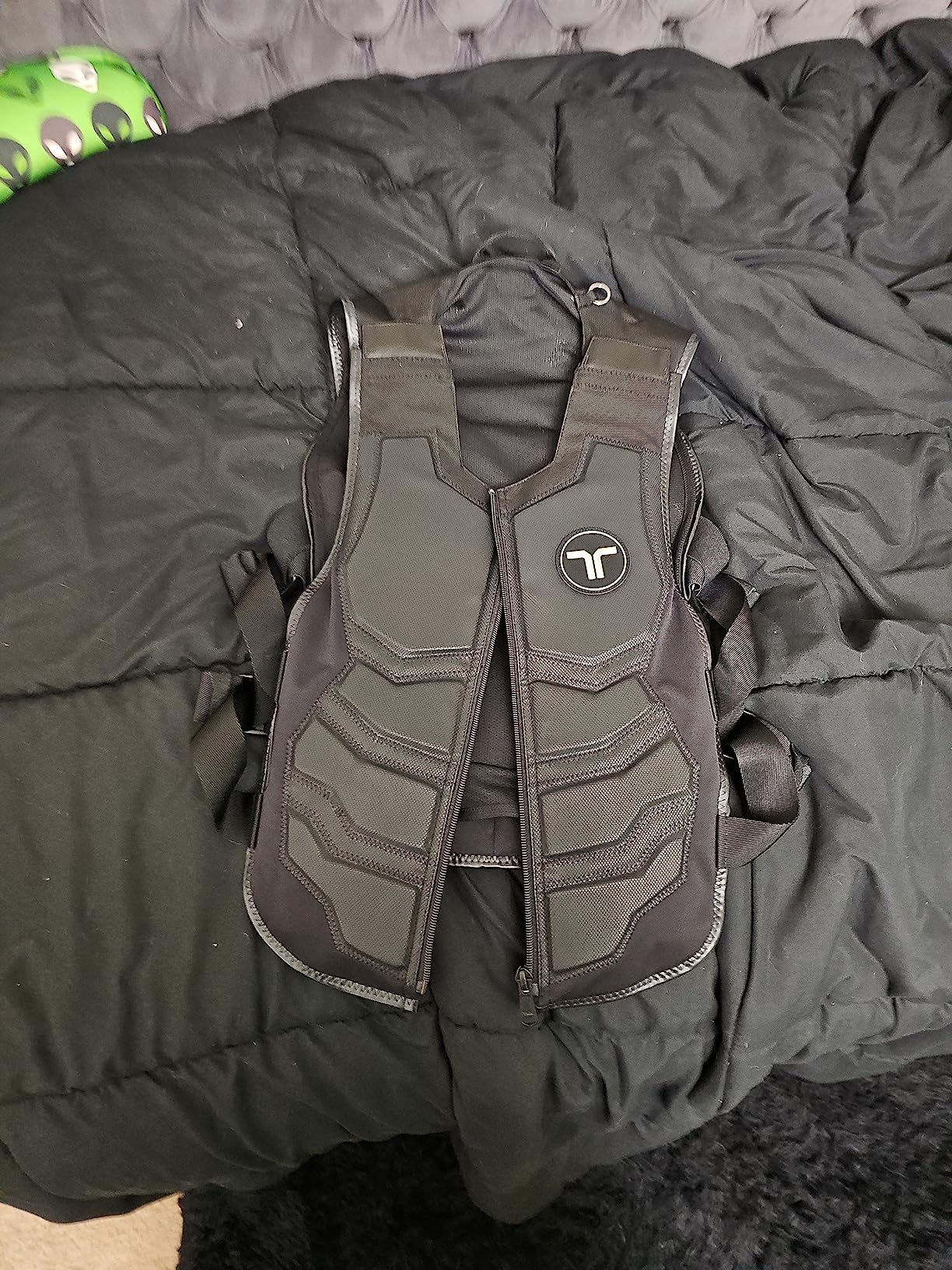
This TactSuit X40 bundle includes audio accessories and replacement lining, making it a complete package for users who want everything in one purchase. The 40 haptic points deliver the same sophisticated feedback as the standard X40, but the additional accessories enhance the overall value proposition for serious users.
I appreciated having the replacement lining during extended testing. After several sweaty gaming sessions, being able to swap in a fresh liner kept the experience comfortable. The audio accessories integrate with the vest for enhanced audio-to-haptics conversion, though I primarily used the native game integrations for the best results.
VRChat integration works exceptionally well with this vest. The 40 feedback points translate avatar interactions into detailed tactile sensations. When another player touches your avatar, you feel it with surprising precision. This social VR application represents one of the most compelling use cases for haptic vests beyond traditional gaming.
The cross-platform support via Bluetooth and audio jack connectivity provides flexibility across different VR setups. I tested with PC VR, standalone Quest, and PSVR2 without significant issues. The one-size-fits-all design with adjustable straps worked well for my frame.
For whom it is good
VRChat enthusiasts and social VR users will get the most from this bundle. The 40-motor array provides the detailed feedback needed for avatar interactions. Users who want a complete package with accessories included will appreciate not having to purchase add-ons separately.
For whom it is bad
The premium price makes this a significant investment for what remains a niche accessory. Some users report limited native game support despite the 100+ VR titles listed. The music and audio haptic feature only works on the front side, not the back, which limits immersion for audio-focused content.
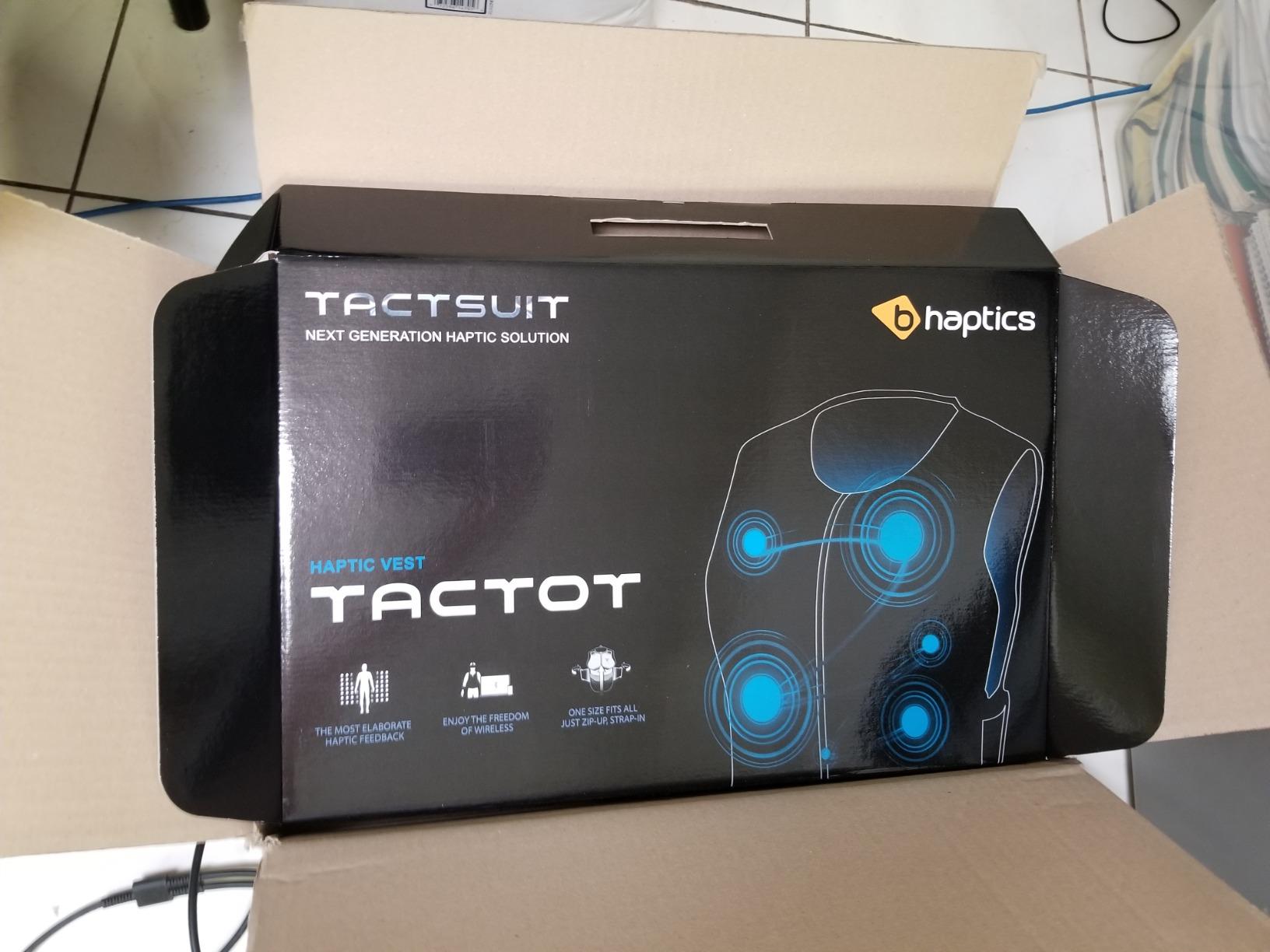
6. bHaptics Tactot DK 3 – Classic Model with Proven Performance
bHaptics haptic vest Tactot DK 3 for VR, PC gaming, music and movie- 40 vibration feedback points
40 Vibration Points
Audio-to-Haptics
6.34 lbs
Easy Setup
Pros
- 40 vibration feedback points
- Excellent response time
- Solid build quality
- Amazing customer support
Cons
- Currently unavailable
- Heavy weight causes fatigue
- Heat buildup during use
- Limited game support
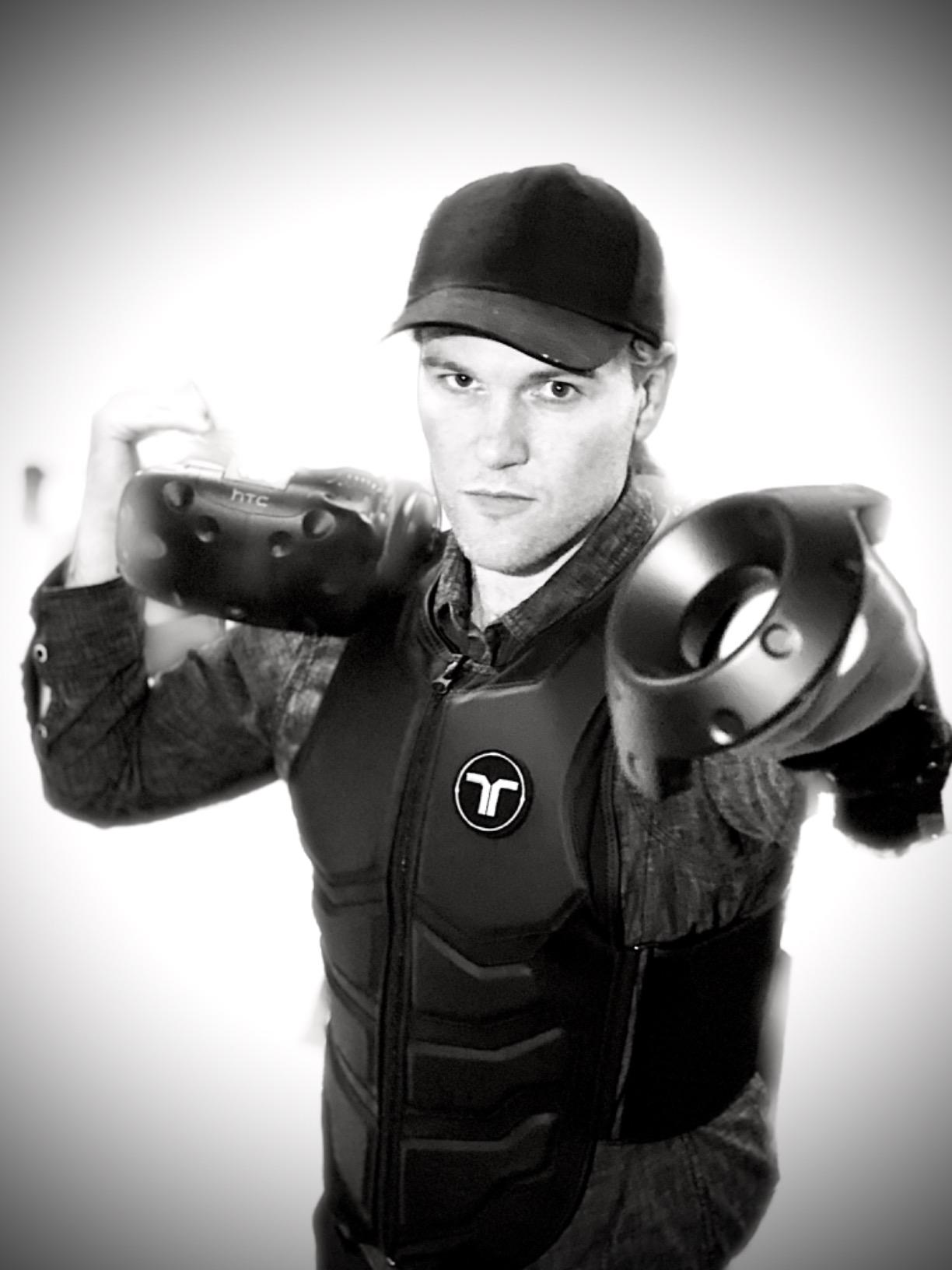
The Tactot DK 3 represents an earlier generation of haptic vests from bHaptics, first released in 2018. Despite its age, the 40 vibration feedback points still deliver responsive tactile feedback that rivals newer models. I tested it with SkyrimVR, where I could feel rain, waterfalls, arrows, and fire in ways that genuinely enhanced the experience.
Build quality impressed me throughout testing. The materials feel durable, and the vest has clearly been designed for longevity. Customer support from bHaptics receives consistent praise in reviews, and the company has a track record of standing behind their products. For users who value long-term support, this matters.
The audio-to-haptic feedback works for unsupported games, extending the vest’s usefulness beyond titles with native integration. I also discovered an interesting secondary use: the vest functions as a bass guitar learning tool in concert bass mode, vibrating to help you feel rhythm patterns.
However, the weight becomes noticeable during extended sessions. At 6.34 pounds, it is one of the heavier options, and heat buildup became an issue after about 45 minutes of active gameplay. The zipper buckle also makes noise when vibrating, which broke immersion during quiet game moments.
For whom it is good
Users who want proven technology from an established brand will find value in the DK 3. The modding community has created additional game support that extends its usefulness. If you primarily play seated or less active VR experiences, the weight may be less of an issue.
For whom it is bad
Active VR gamers who move around their play space will likely find the weight and heat problematic. The limited native game support compared to newer models is also a drawback. Windows Mixed Reality users should note potential Bluetooth interference with controller tracking.
7. Next Level Racing HF8 – Affordable Haptic Gaming Pad
Next Level Racing HF8 - Haptic Feedback Gaming Pad (NLR-G001)
8 Vibration Motors
Universal Chair Fit
PC and Console Support
7 lbs
Pros
- Affordable haptic option compared to vests
- Universally fits all chair styles
- Works with SimHub software
- Powerful feedback when configured
Cons
- Native software has limitations
- Setup can be complicated
- Console connection weaker than PC
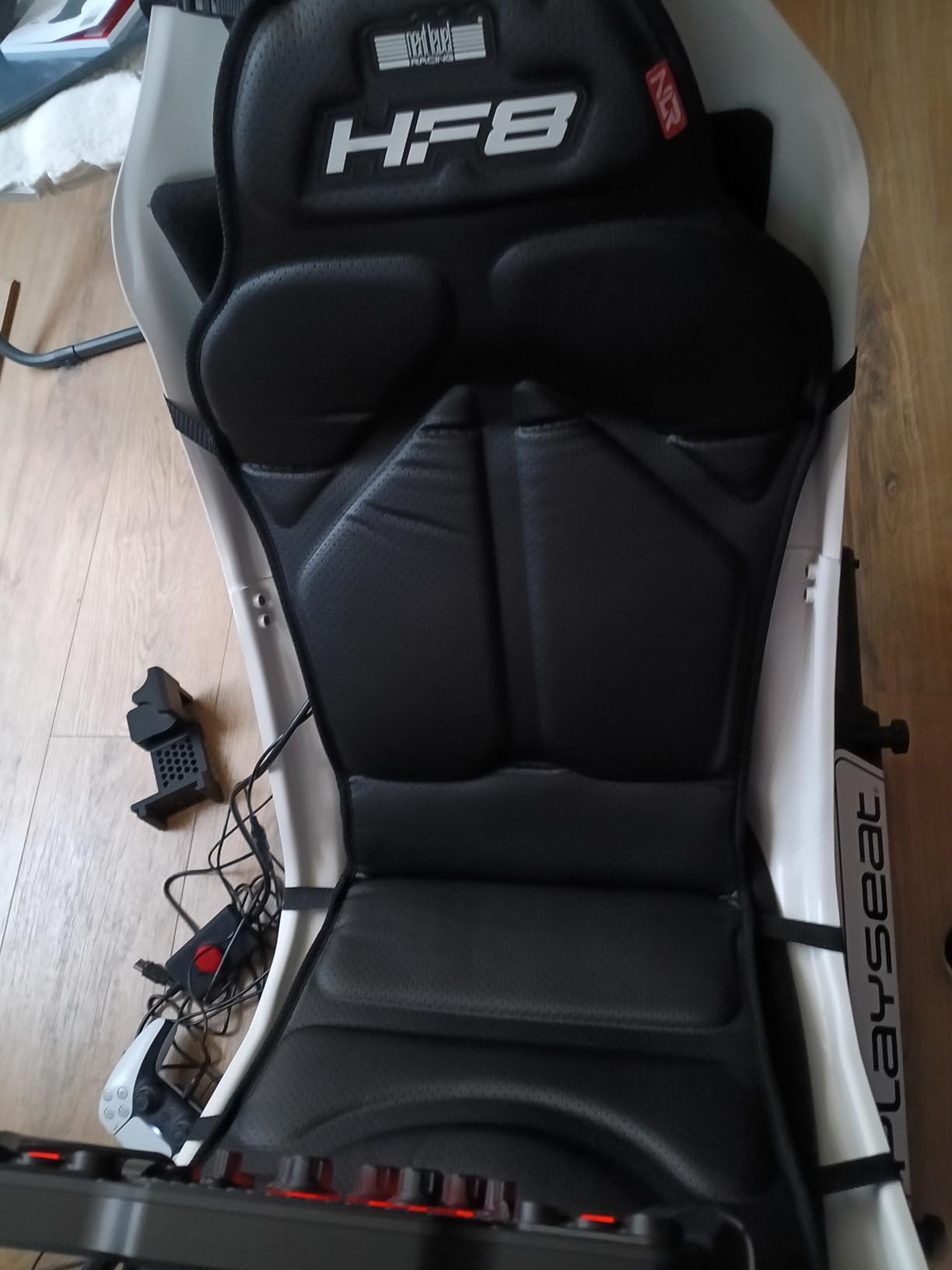
The Next Level Racing HF8 takes a different approach to haptic feedback. Instead of a wearable vest, this pad sits on your chair and delivers feedback through eight vibration motors. While not a traditional VR haptic vest, it offers an affordable entry point for users who want to experience tactile feedback without the commitment of a full vest system.
I tested the HF8 primarily with sim racing games, where it excels. The eight motors provide rumble feedback that translates road surface texture, engine vibration, and impacts into tangible sensations. For seated gaming experiences like racing and flight simulators, the pad approach actually works quite well.
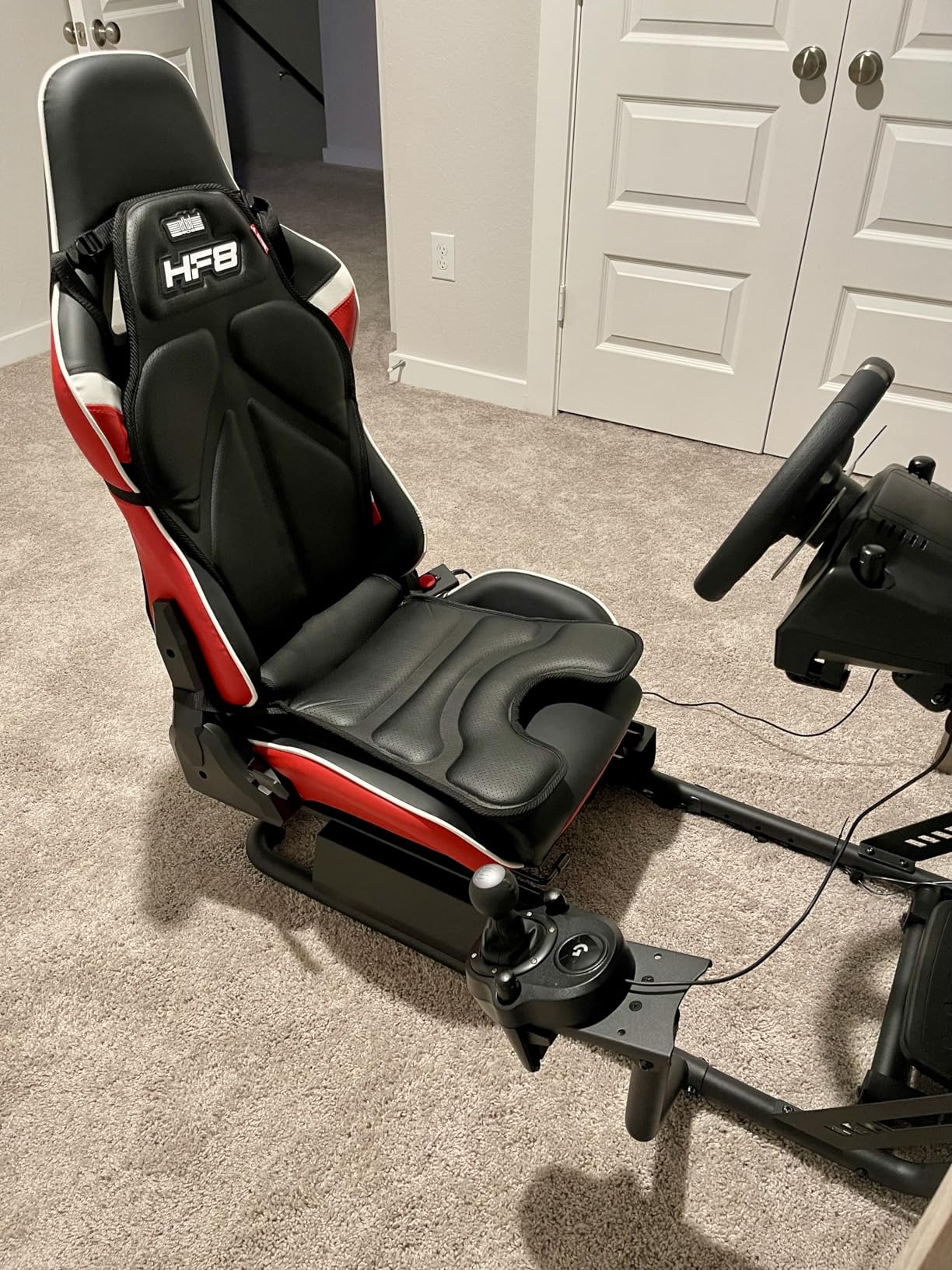
The universal design fits all chair styles, including gaming chairs, sim racing seats, and flight seats. Installation was straightforward: I simply placed it on my existing chair and connected it to my PC via USB. The included power supply adapter provides adequate power for the motors.
However, I strongly recommend using third-party SimHub software instead of the native Next Level Racing HFS software. The native software has significant limitations and detection issues that frustrated me during initial setup. Once I switched to SimHub, the experience improved dramatically with better customization and more reliable motor control.
For whom it is good
Sim racing and flight simulator enthusiasts will find excellent value in the HF8. The seated nature of these games makes a chair pad practical. Budget-conscious users who want to try haptic feedback without investing in a wearable vest should consider this alternative.
For whom it is bad
Users who play standing VR games will not benefit from a chair-based solution. The console connection via 3.5mm audio jack provides weaker feedback than PC USB connection. Setup complexity, particularly with software configuration, may frustrate less technical users.
How to Choose the Best VR Haptic Vest?
Selecting the right haptic vest depends on your specific gaming habits, budget, and tolerance for technical setup. Here are the key factors to consider before making your decision.
Number of Feedback Points
The motor count directly impacts feedback precision and immersion. Vests range from 16 to 40 motors, with higher counts providing more detailed tactile sensations. However, many users report that 16 motors feel sufficient for most gaming scenarios. Consider whether you need maximum precision for competitive play or if basic feedback covers your needs.
Game Compatibility
Native game integration delivers the best experience because developers program specific haptic patterns for in-game events. Check the supported games list for any vest you are considering. Audio-to-haptics features can extend compatibility to games without native support, but the experience is less precise.
Connectivity Options
Wireless Bluetooth connectivity provides freedom of movement for room-scale VR. However, some devices require wired audio jack connections. Consider your play space and whether cables would interfere with your typical gaming setup. Cross-platform support matters if you use multiple VR systems.
Comfort and Fit
Weight and breathability significantly impact comfort during extended sessions. Lighter vests like the TactSuit Air Onyx reduce fatigue but may sacrifice motor count. Adjustable straps ensure a secure fit across different body types. Consider how long your typical gaming sessions last when evaluating comfort features.
Battery Life
Battery life varies significantly between models. Most vests offer several hours of gameplay per charge, but intensive use with high motor activity drains batteries faster. USB-C charging has become standard, making it easy to top up between sessions. Consider your charging habits and whether you need all-day battery life.
Frequently Asked Questions
What’s the best haptic suit for VR?
The bHaptics TactSuit Pro offers the best overall balance of features, game compatibility, and comfort with its 32 feedback motors and 300+ supported games. For maximum immersion, the TactSuit X40 with 40 motors provides the most detailed tactile feedback. Budget-conscious users should consider the TactSuit Air Onyx for its lightweight design and solid performance.
Is the Woojer vest worth it?
While Woojer vests are popular for audio-to-haptics conversion, bHaptics offers more comprehensive native game integration with 250-300+ supported titles. Forum users consistently report that bHaptics provides better value for VR gaming specifically, while Woojer excels for music and media applications. Consider your primary use case when choosing between these brands.
Can haptic vests be used for VR?
Yes, haptic vests work excellently with VR gaming. Most modern haptic vests support Meta Quest, SteamVR, PSVR2, and PC VR platforms through Bluetooth or audio jack connections. Native game integrations deliver the best experience, while audio-to-haptics features extend compatibility to games without built-in support.
Are haptic vests painful to wear?
No, haptic vests use vibration motors that create tactile sensations, not pain. You can typically adjust intensity levels to your comfort preference. The feedback simulates impacts and environmental effects through rumble patterns. Some vests offer electrostimulation options that create sharper sensations, but these are optional and adjustable. Most users describe the experience as immersive rather than uncomfortable.
Conclusion
Finding the best VR haptic vests for your gaming setup comes down to balancing immersion, comfort, and budget. The bHaptics TactSuit Pro stands out as our top pick for serious enthusiasts who want reliable performance and extensive game compatibility. The TactSuit X40 offers maximum feedback for users who prioritize immersion above all else. For budget-conscious gamers, the TactSuit Air Onyx delivers meaningful haptic feedback without the premium price tag.
Haptic technology adds a missing dimension to VR experiences that many users do not realize they are missing until they try it. Whether you are dodging bullets in competitive shooters, feeling the rhythm in music games, or exploring social VR spaces, a quality haptic vest transforms how you interact with virtual worlds. Choose the option that fits your gaming style and budget, and prepare to feel VR in a whole new way.