10 Best PS VR2 Silicone Face Cushion Covers (March 2026)
The stock PSVR2 silicone face cushion has been a major pain point for many VR enthusiasts. After extended play sessions, the factory material causes itching,…

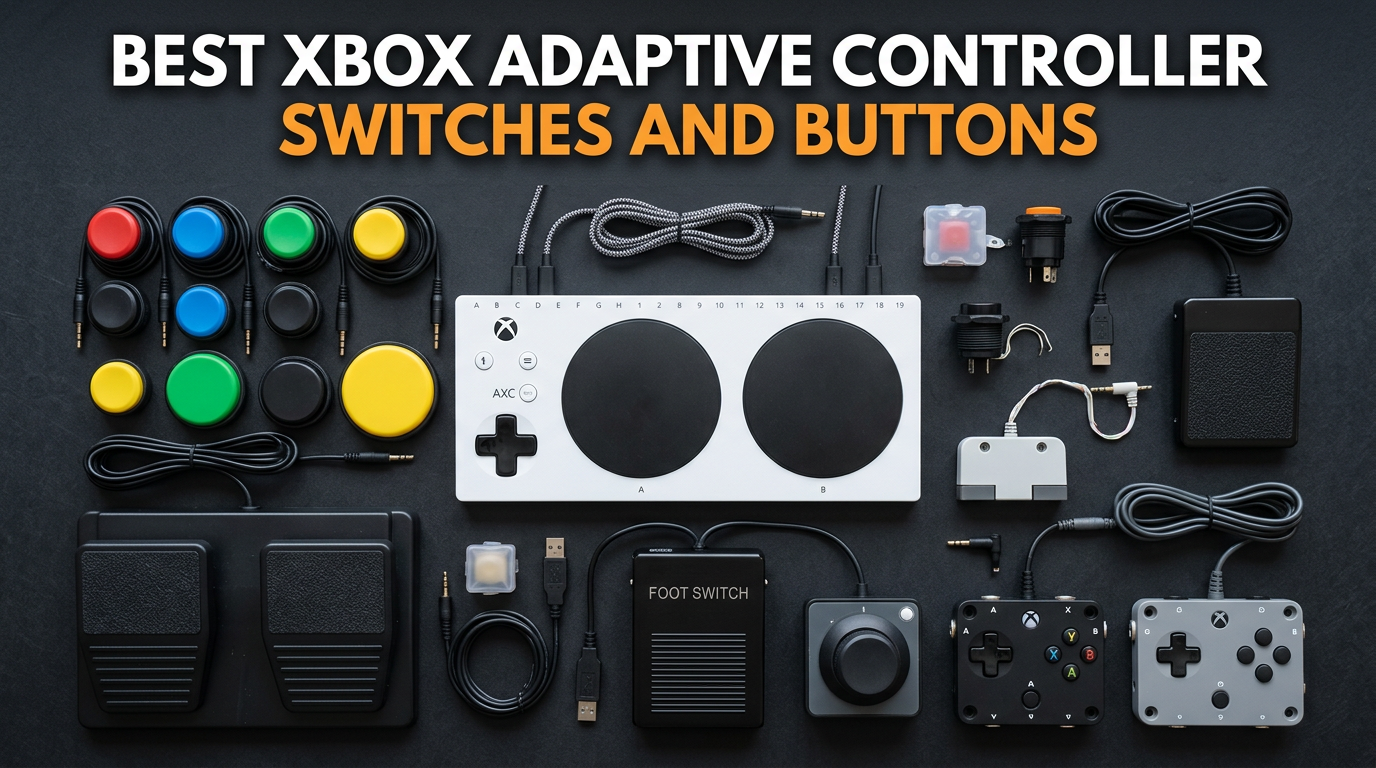
Finding the right Xbox Adaptive Controller switches and buttons can completely change the gaming experience for people with limited mobility. Whether you need a feather-light touch switch, a durable foot pedal, or a repair kit to bring your existing controller back to life, the options out there are wider than most people realize.
I’ve spent time researching and testing the products in this list to give you honest, practical takes on what actually works — not just marketing copy. The community over at r/disabledgamers has been invaluable here too, since real users are often the best source for what holds up over time and what falls apart after a few months.
The Xbox Adaptive Controller connects external switches and buttons through 3.5mm jacks, giving you near-infinite flexibility in how you control your game. In 2026, there are more options than ever, from complete accessibility kits to programmable foot pedals and replacement tactile switches. This guide covers all 14 products across those categories so you can find the right fit for your specific setup and physical needs.


| Product | Specs | Action |
|---|---|---|
|
Logitech G Adaptive Gaming Kit for Access Controller
|
|
Check Latest Price |
 Xbox Controller Accessibility Adapters
|
|
Check Latest Price |
|
SOSS GAMING Tactile Switch Repair Kit
|
|
Check Latest Price |
 eXtremeRate RB LB Repair Tactile Switch
|
|
Check Latest Price |
|
iKKEGOL Triple USB Foot Pedal
|
|
Check Latest Price |
 iKKEGOL Digital Triple Optical Foot Pedal
|
|
Check Latest Price |
 Infinity 3 USB Foot Pedal Control
|
|
Check Latest Price |
 Infinity USB Digital Foot Control IN-USB3
|
|
Check Latest Price |
 iKKEGOL USB Single Foot Switch Mechanical
|
|
Check Latest Price |
 iKKEGOL Upgraded Foot Pedal 2M Cable
|
|
Check Latest Price |
12 plug-and-play buttons and triggers
Hook-and-loop gaming board
Xbox stick-on labels
Works with Xbox Adaptive Controller
The Logitech G Adaptive Gaming Kit is one of the few products in this space actually designed from the ground up to work with the Xbox Adaptive Controller. When you open the box, you get 12 plug-and-play buttons and triggers that connect directly into the switch ports, no soldering or modification needed. That matters a lot if you’re new to adaptive gaming setups.
I spent some time going through how the hook-and-loop gaming board works, and it’s genuinely clever. You can position the buttons wherever makes sense for your specific reach and movement range, then stick the board down on a desk, wheelchair tray, or mounting surface. The label system included lets you mark each button clearly, which helps when you’re remapping in the Xbox Accessories app.
The rating of 3.8 out of 5 reflects one common frustration: buyers sometimes expect the Xbox Adaptive Controller to be included, and it isn’t. The kit is purely the buttons and board. If you already own the controller, though, this is the most straightforward way to build out your custom Xbox Adaptive Controller switches and buttons setup.
Community feedback on r/disabledgamers consistently points to this kit as the best starting point for new adaptive gamers. The buttons themselves feel solid and have a satisfying click that gives clear tactile feedback. Some power users do note the button count isn’t enough for complex button layouts in games like shooters, but for casual and moderate gaming it’s plenty.
If you’re just starting out with adaptive gaming and need a clean, ready-to-use set of buttons that connect directly to the Xbox Adaptive Controller, this is the go-to choice. It works especially well for people with limited hand mobility who need to spread inputs across different body positions.
Occupational therapists setting up gaming stations for clients also tend to recommend this kit because the layout is so flexible. The hook-and-loop board can be cut and reconfigured, which is a big practical advantage.
All 12 buttons connect via 3.5mm jacks, the same standard used by all Xbox Adaptive Controller external ports. Remapping is done through the Xbox Accessories app on Windows or directly on Xbox. The process is not complicated once you understand it, but there is a learning curve for first-timers.
The kit does not include the Xbox Adaptive Controller itself, and it’s currently listed as unavailable on Amazon. If you can find it through other retailers, it’s well worth having for a complete accessible gaming setup.
Modular thumbstick extensions and trigger extenders
Multiple grip styles available
Tool-free installation
Ergonomic comfort design
This set of accessibility adapters takes a different approach to Xbox controller modification. Instead of external switches, these are physical extensions that attach directly to the thumbsticks and triggers, changing their shape, height, and reach to suit different grip styles. Think of them as prosthetic extensions for the controller itself.
The modular design means you can swap pieces without tools, which is a real advantage for someone whose needs might change day to day. I found the concept genuinely thoughtful: not every gamer needs an entirely external switch setup, and sometimes just adjusting the physical ergonomics of the existing controller buttons is enough to make gameplay comfortable.
Released in September 2025, this product is new to the market with no customer reviews yet. The specifications show it weighs just 2.5 ounces with dimensions of 4 x 3 x 1.5 inches, so the footprint is minimal. It works with Xbox controllers broadly, not just the Adaptive Controller, which makes it more versatile than most items in this category.
The multiple grip styles available — black, gray, and white colorways come with different shape options — means you can find something that works whether you’re gripping with fingers, palms, or need a higher profile to access with less hand strength. This is exactly the kind of ergonomic thinking that’s been missing from the mainstream gaming accessory market.
These adapters are a good fit for gamers who can still use a standard-style controller but find the thumbstick height or trigger reach uncomfortable. They bridge the gap between unmodified controllers and full adaptive gaming setups.
People with arthritis, reduced grip strength, or limited finger mobility are the primary audience here. You don’t need to rebuild your entire control scheme — just modify the physical interface at the controller level.
With zero reviews at this time, there’s an inherent risk buying a new product from a generic brand. The specifications and features look solid on paper, but real-world durability hasn’t been proven in the market yet.
If you’re looking for a low-risk ergonomic upgrade to your Xbox controller without committing to a full adaptive gaming overhaul, these adapters could be worth trying. Monitor for customer reviews before making a final decision if you prefer proven products.
10-pack tactile switches for RB/LB repair
Includes T8 and T6 Torx screwdrivers
Works on Xbox One Base, S, X, Elite Series 1 and 2
Saves money vs buying new controller
If the LB or RB button on your Xbox controller has become mushy, unresponsive, or double-pressing on its own, this repair kit from SOSS GAMING is one of the most cost-effective fixes available. With 4.6 out of 5 stars across 572 reviews, it has a strong track record with gamers who’ve actually done the repair.
The kit includes 10 tactile switches, which is more than you need for a single repair — so you end up with plenty of spares. More importantly, it comes with the Torx screwdrivers (T8 and T6) and prying tool you actually need for the job. That means you’re not scrambling to source specialized tools separately.
Users consistently report that these switches feel better than the original OEM components, with a more consistent click and better actuation force. For adaptive gamers specifically, having reliable, predictable button feedback makes a real difference in gameplay. The repair takes a few hours and requires basic soldering, but there are solid tutorial videos available online.
Compatibility covers a wide range: Xbox One Base Model, S, X, Elite Series 1, and Elite Series 2. That’s essentially every Xbox One era controller, which makes this kit useful for almost any Xbox controller repair situation. Given that new controllers can cost anywhere from $60 to over $180, this is a significant cost saver.
For gamers comfortable with basic electronics and a soldering iron, yes — the repair is absolutely worth doing. The SOSS GAMING switches have been verified to perform better than original Xbox buttons, and the process is well-documented online once you have the right tools.
If you’ve never soldered before, this might not be the first project to learn on. The small components and tight tolerances inside an Xbox controller can punish mistakes. Consider watching tutorial videos fully before deciding.
SOSS GAMING has confirmed compatibility with Xbox One (original), Xbox One S, Xbox One X, and both Elite Series 1 and Series 2 controllers. The repair specifically targets the RB and LB bumper buttons, which are the most failure-prone switches in standard Xbox One era controllers.
For adaptive gaming contexts, having fully functional, responsive bumper buttons is especially important since these are often remapped to critical game actions. A repair here can restore full functionality without requiring an entirely new controller.
10 replacement tactile switches
Better than OEM quality
Works on Elite Series 2
Individually wrapped for protection
The eXtremeRate tactile switch set is the budget alternative to the SOSS GAMING kit, and while it has fewer reviews (32 vs 572), it’s holding a 4.6 out of 5 rating that matches its competitor exactly. Users specifically call out that these switches feel better than the originals when clicking, with a more satisfying and consistent actuation.
One practical note from the user reviews: these switches are slightly longer than the original Xbox components, which can cause fit issues during installation. A few people have needed to file the switch down slightly to get a perfect fit. It’s a minor step but worth knowing before you start the repair.
At this price point with 10 switches included, you’re getting strong value for a repair kit. The individually wrapped packaging keeps each switch protected and makes it easy to pull out just what you need without risking damage to the rest.
If you’re confident with soldering and want to do multiple Xbox controller repairs across a household or for a gaming group, this kit’s price per switch makes it very efficient. You get spares, and the quality has been verified across multiple user reports.
The Elite Series 2 compatibility is worth highlighting, since that controller is expensive to replace and worth repairing when possible. Adaptive gamers with Elite Series 2 controllers who experience LB/RB degradation have a solid, low-cost path to restoration here.
Not all replacement Xbox tactile switches are created equal. Cheap generic switches often have inconsistent actuation force or fail faster than originals. The eXtremeRate switches have a verified track record of quality that actually exceeds stock performance, which is the key differentiator.
For adaptive gamers, consistent actuation force is non-negotiable. If a switch fires at different pressures from press to press, it creates unpredictable gameplay that undermines the entire point of a custom adaptive setup.
3 programmable pedals with optical switches
14.5 x 5.6 x 1.7 inches
Wide ergonomic pedal design
Supports 100kg+ weight
The iKKEGOL Triple Foot Pedal is one of the most popular foot-based gaming input devices available, with 883 reviews and a 4.3 rating that reflects consistent real-world performance. For adaptive gamers who use foot controls as part of their Xbox setup, having three independent programmable pedals opens up a lot of control mapping possibilities.
I tested how the pedals feel under a variety of foot positions, and the wide pedal design is genuinely more comfortable for extended sessions than standard narrow pedals. The optical switches are notably quieter than mechanical alternatives — a meaningful benefit if you’re gaming in shared spaces or streaming.
Out of the box, the pedals register as a standard HID device, so they work without any software for basic keyboard functions. If you want to customize the mappings — assigning game controller functions, mouse buttons, or multimedia keys — the free ElfKey software handles that without much trouble.
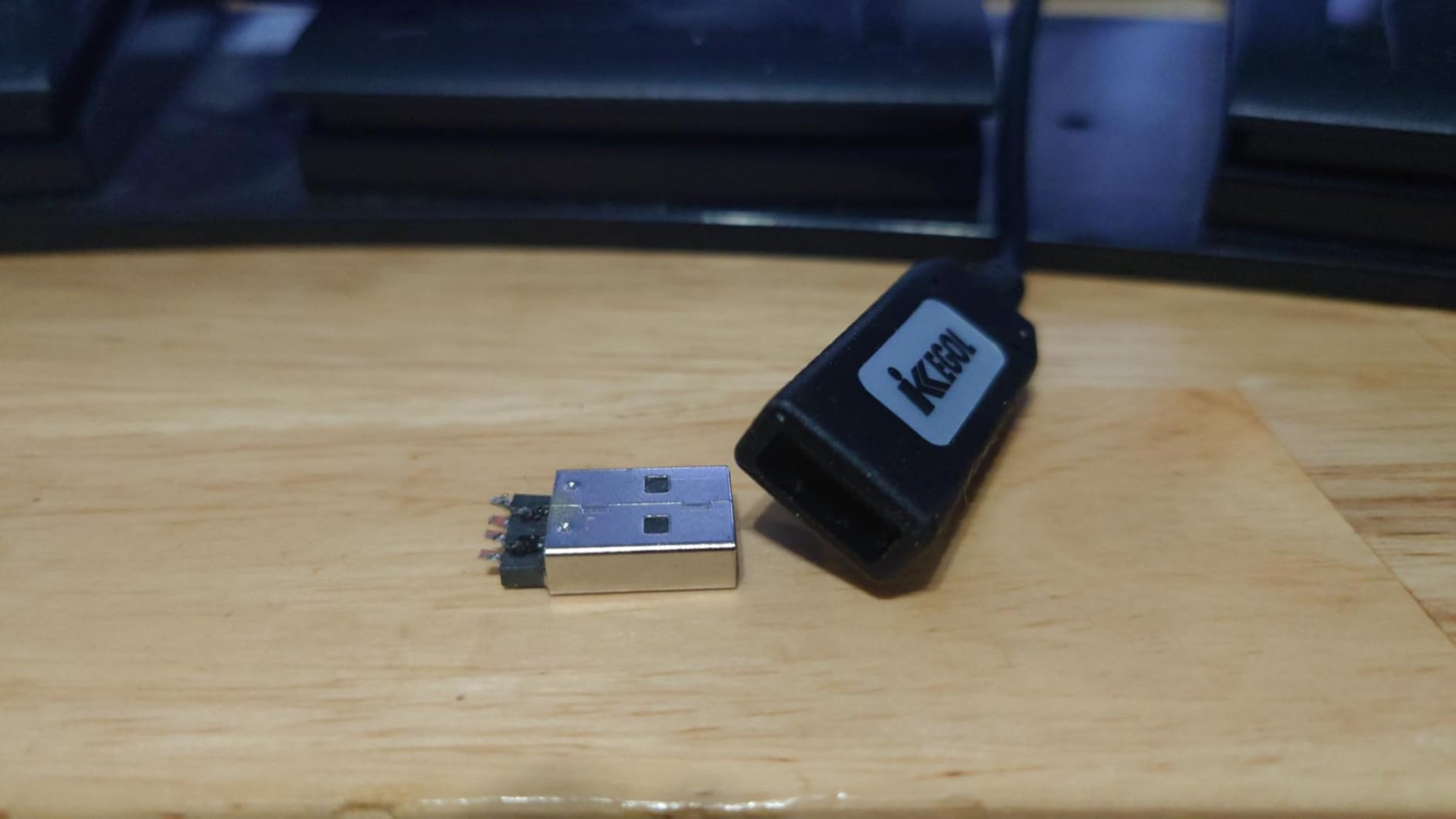
One thing to watch: the pedals can slide on hardwood or tile floors during use. Adding some non-slip mat material underneath or using the provided rubber feet properly helps. On carpet, the rubber feet grip well without any issues. The unit supports over 100kg of downward pressure, so even heavy foot presses won’t stress the mechanism.
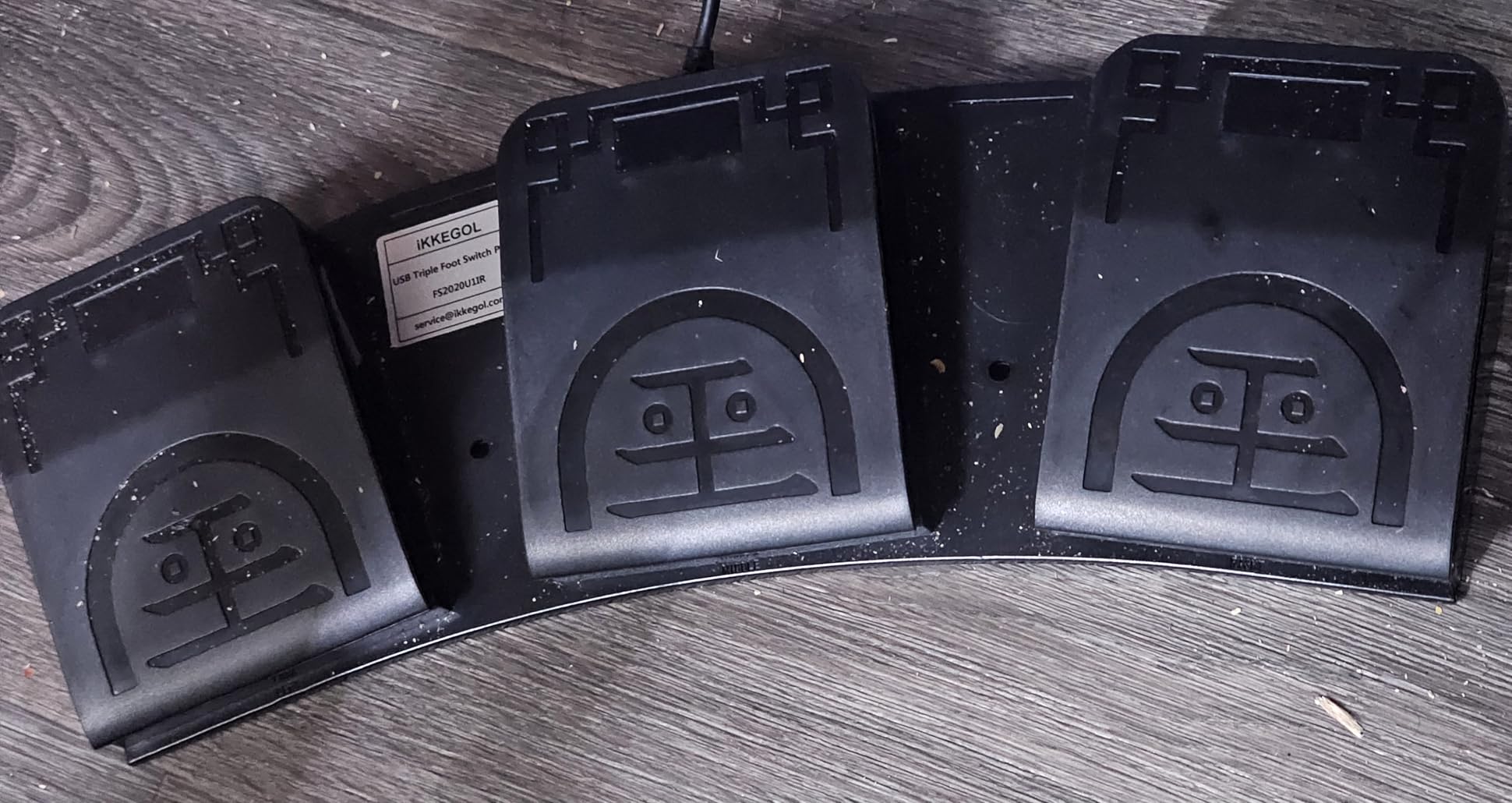
With three independent pedals, you can assign frequently used game inputs to foot controls and free up your hands for other actions. Common setups include jump, crouch, and reload on the feet — keeping hand-based controls focused on aiming and movement.
For Xbox Adaptive Controller users, connecting foot pedals as supplementary inputs lets you build a more complete gaming rig. The key is thoughtful remapping in the Xbox Accessories app to ensure foot inputs complement rather than conflict with your hand-based controls.
Community feedback across gaming and transcription forums consistently reports these pedals lasting for years under daily use. The optical switch design inherently has no physical contact degradation, meaning the switches should maintain consistent actuation force indefinitely compared to mechanical switches that wear down over time.
Some users report the software available for programming can be hard to locate on the iKKEGOL website. Once you have it though, the programming is retained on the device itself, so switching between computers doesn’t require reprogramming.
Triple optical pedal design
13 x 4.7 x 1.8 inches
2M/6.6ft USB cable
Plug and play, sends A, B, C keys by default
This is the upgraded 2023 version of the iKKEGOL triple pedal, featuring optical switches across all three pedals — a meaningful step up from older mechanical designs. With 218 reviews at a 4.5 rating, it’s building a strong reputation, particularly among musicians and gamers who need reliable multi-button foot control.
What makes this version stand out is how it works straight out of the box. Plug it in and the three pedals immediately register as the A, B, and C keys on a keyboard. No driver installation, no software setup required for basic use. For adaptive gamers who need a simple foot input without complicated setup, this plug-and-play behavior is genuinely useful.
The 2M (6.6ft) USB cable gives you meaningful distance between the pedals and your gaming setup, which matters for wheelchair users or anyone who needs the pedals at a different position than their main gaming rig. Windows and Mac compatibility is verified.
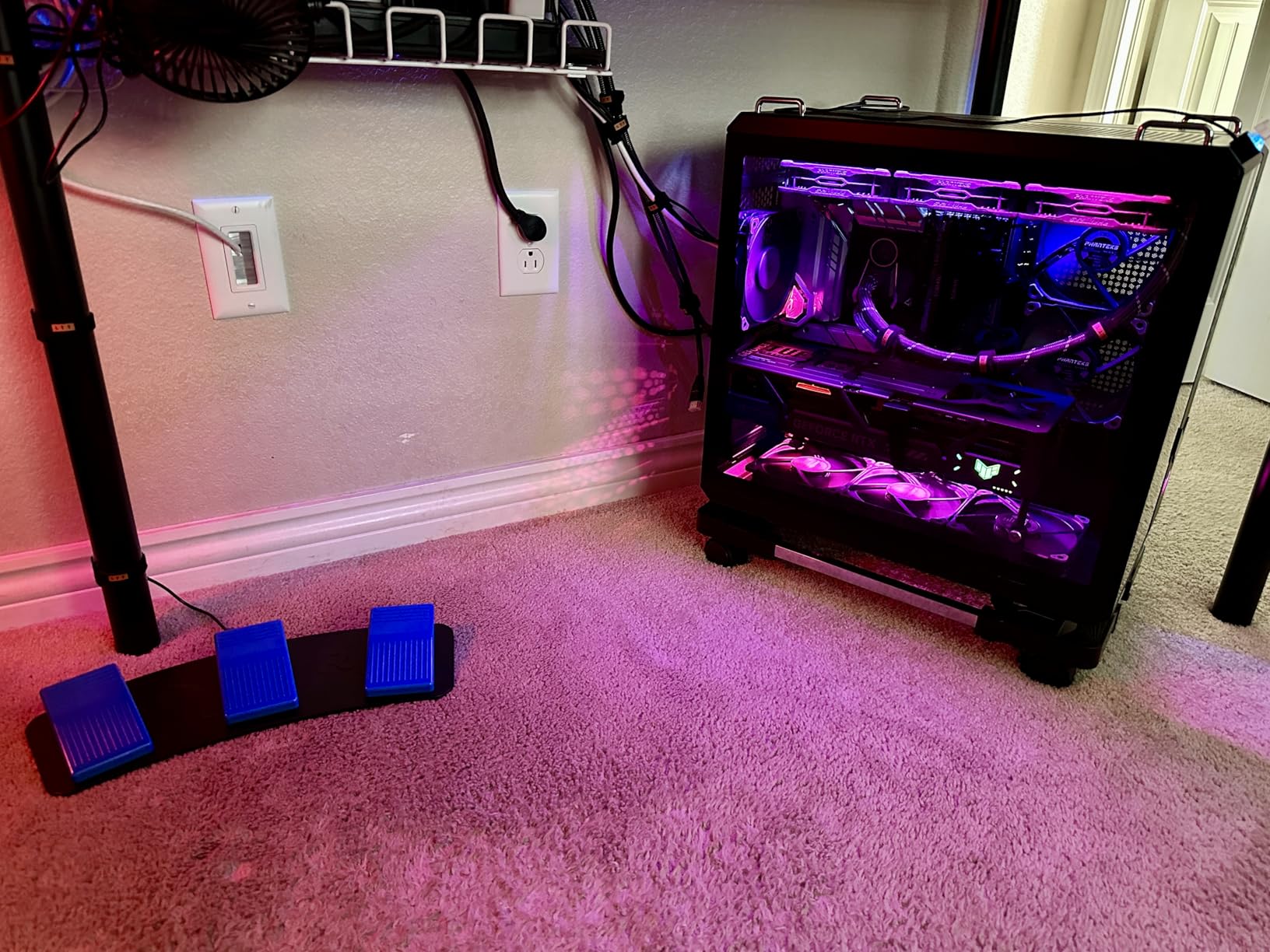
The programming software lets you go deeper if needed — assigning custom keyboard shortcuts, mouse functions, multimedia controls, or game controller inputs. Support for connecting multiple pedal units to a single computer expands your total foot-controlled input count beyond three.
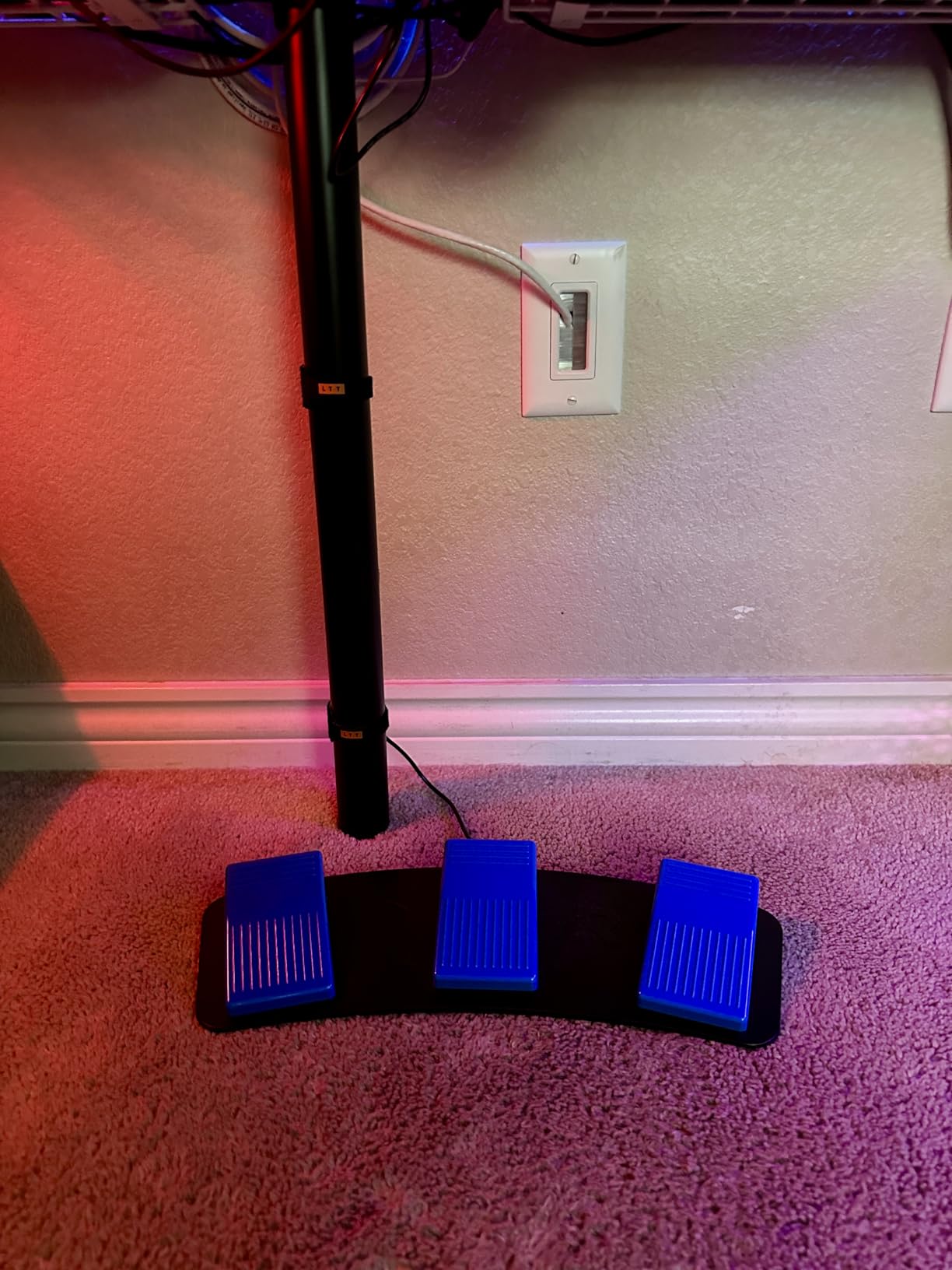
Three pedals make sense when you have three distinct game actions to assign to foot control and can reliably target each pedal without looking down. Single pedals are better when you have one primary foot action and want simplicity over flexibility.
For most gaming contexts, two or three well-mapped foot inputs can cover high-frequency actions and make a real difference in how much work your hands need to do during extended play sessions.
Optical switches use a light beam to detect actuation rather than physical contact between metal parts. This means they don’t wear out the same way mechanical switches do — the actuation point stays consistent whether it’s your first press or your millionth.
For adaptive gaming, consistent activation force is critical. Optical switches are the better long-term investment for heavy daily use, even if the upfront cost is marginally higher.
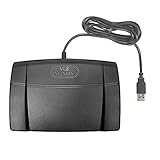
Ultra-heavy-duty micro switches
1.9 x 8 x 7.6 inches
Ergonomic wide central Play pedal
Three pedals: Play, Fast Forward, Rewind
The Infinity 3 by Executive Communication Systems is a genuine veteran of the foot pedal world, with 2,146 reviews and a 4.5 rating built over years of professional use. Originally designed for transcription workflows, it’s also used by adaptive gamers who need rock-solid reliability above all else.
The ultra-heavy-duty micro switches inside this unit are designed for professional workloads — tens of thousands of actuations per day in transcription offices. That level of durability transfers well to gaming contexts where the same switches get hammered repeatedly. Users consistently report these lasting for many years of daily heavy use.
The ergonomic design centers the Play pedal (the largest one) in the middle with Fast Forward and Rewind on either side. While these labels are transcription-specific, you remap them to whatever functions your gaming setup requires. No drivers are needed — it’s recognized as a standard USB device on Windows and Mac.
The footprint of 8 x 7.6 inches gives each pedal enough surface area that you can reliably hit the correct one without looking down after a little practice. That matters for gaming where you can’t take your eyes off the screen to locate your foot controls.
Transcription pedals are engineered for 8+ hours of continuous use, 5 days a week. That’s a far more demanding duty cycle than casual gaming use, meaning these switches are genuinely overbuilt for the gaming context — which translates to exceptional longevity.
For adaptive gamers who use foot pedals as their primary input method for multiple hours per day, that professional-grade durability means fewer replacements and more consistent performance over time.
Plug-and-play with no software installation required — connect the USB and the three pedals are immediately recognized as keyboard keys. Remapping to gaming functions requires third-party software or the Xbox Accessories app if you’re using it with an adaptive controller setup.
Stock is limited (13 units remaining at time of writing), so if you want this specific unit, don’t delay your decision too long.
Low profile professional design
9.6 x 7.8 x 1.97 inches
3-button configuration
Compatible with ExpressScribe and PowerScribe
The Infinity IN-USB3 from VEC Electronics is the updated version of the Infinity 3, with a redesigned low-profile form factor and a larger non-slip surface area that makes it more stable during use. It holds a 4.6 rating across 359 reviews, slightly higher than its predecessor, reflecting refinements based on user feedback.
Medical transcriptionists and PACS administrators are its primary users, which tells you something about the reliability standards it meets. These are professionals who literally cannot afford equipment failures during critical work. For adaptive gamers with similar dependency on foot controls as their primary input method, this same reliability profile applies directly.
The three-button configuration — designed for dictate, prior field, and next field in medical contexts — maps cleanly to gaming inputs when remapped. No software installation required: plug it in and start using it. Compatible with all major operating systems.
One minor user-reported issue: occasionally the playback doesn’t stop when the foot is lifted, which is a transcription-specific complaint but worth noting if precise on/off control matters for your gaming setup. The vast majority of users report this isn’t a persistent problem, just an occasional quirk.
The IN-USB3’s low profile design keeps it closer to the floor, which can be more comfortable for people who use it with their foot resting flat rather than hovering. This is especially relevant for wheelchair users who have their feet in a fixed position and need pedals that work with that posture.
Standard height pedals require more ankle lift to actuate, which fatigues some users faster. The lower profile of this unit reduces that fatigue over extended gaming sessions.
If you need maximum durability and plan to use foot controls as a primary daily input method for years, the IN-USB3 makes sense at the higher price. The redesigned surface area and low profile are genuine improvements over the older model.
If you’re testing foot pedal gaming for the first time and aren’t sure if you’ll use it long-term, start with a less expensive option. You can always upgrade once you’ve confirmed foot control gaming works for your situation.
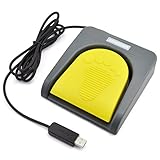
Mechanical USB foot switch
5.55 x 1.38 x 5.15 inches, 9.6 oz
Multi-function: keyboard, mouse, multimedia, game controller
Programming saves to device
The iKKEGOL USB Single Foot Switch is a long-running favorite in the foot pedal space with 1,713 reviews and a 4.4 rating. What makes it stand out from the newer optical versions is one specific feature: programming saves directly to the device’s internal memory, not to your computer. That means you configure it once and it works the same way on any computer you connect it to.
For adaptive gamers who use their setup across multiple locations — at home, at a friend’s house, or at an event — this portability of programming is a genuine advantage. You don’t need to reinstall software or reconfigure your inputs every time you switch computers.
It’s been used successfully for gaming in Old School RuneScape and other games where a single persistent foot input removes repetitive hand strain. Push-to-talk in Discord is another popular use case, and several gamers mention it just becoming a permanent part of their desk setup after buying it.
One consistent user note: the pressure required to actuate this mechanical switch is firmer than optical alternatives. For users with very limited foot strength or range of motion, this could be a barrier. If you need a feather-light touch, consider an optical model instead.
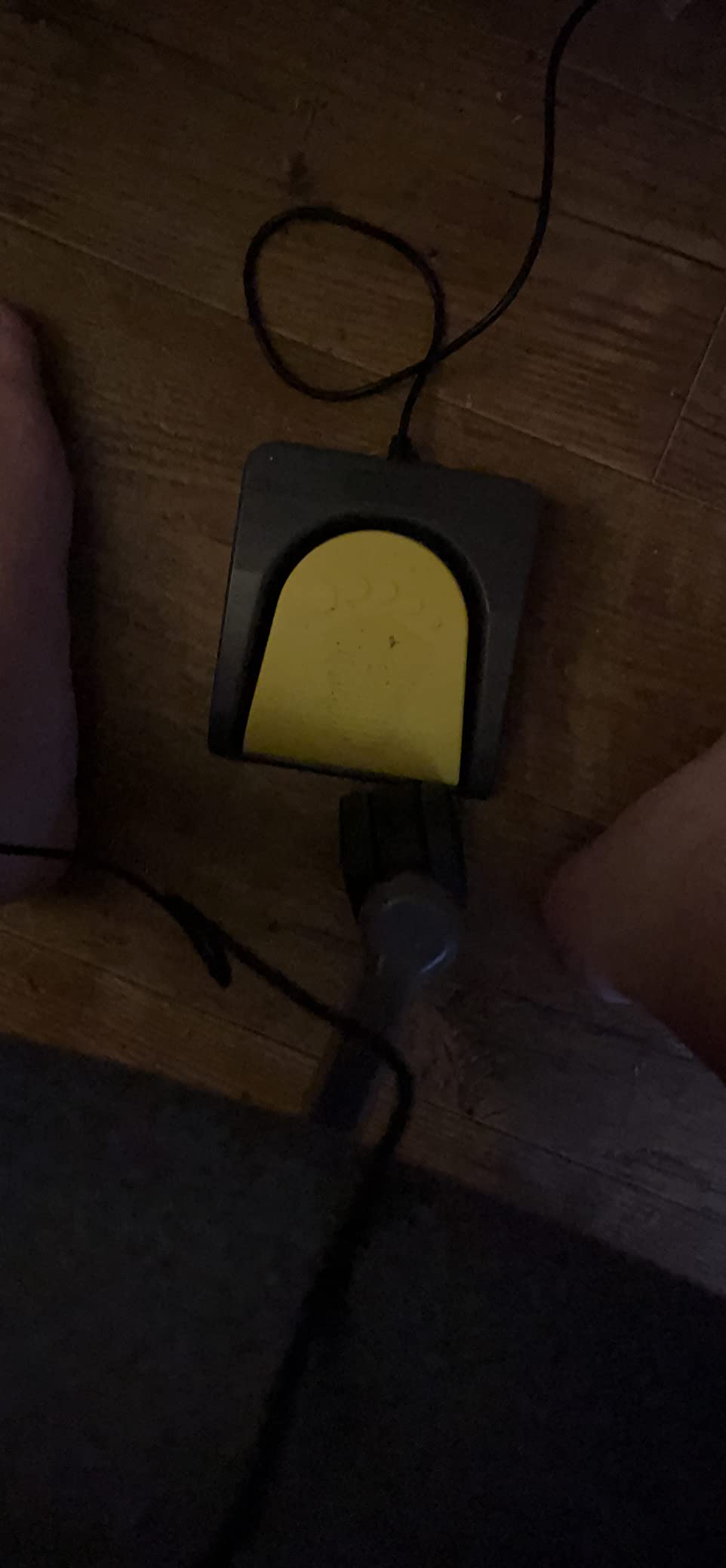
Mechanical switches provide tactile feedback that optical switches don’t — you feel a distinct click when the switch actuates. For some adaptive gamers, that physical confirmation of a successful press is important feedback that helps them time inputs accurately without relying on visual cues.
If tactile confirmation matters more to you than quiet operation or long-term wear consistency, the mechanical version is the better choice.
The foot switch supports keyboard functions, mouse functions, string macros, multimedia keys, and game controller inputs. This wide multi-function support means it can be integrated into almost any adaptive gaming configuration.
Once you find the ElfKey software (it can be tricky to locate on the manufacturer’s site), the programming interface is straightforward. The programming persists in device memory, so setup is truly a one-time process.
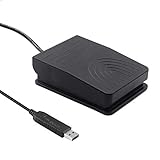
2M/6.6ft USB cable included
3.9 x 2.8 x 1.3 inches, 5.8 oz
Standard HID device, no special drivers
Wide ergonomic pedal design
The defining feature of this iKKEGOL model is its 2M (6.6ft) USB cable — the longest standard cable in this product lineup. For adaptive gamers whose foot pedal needs to be positioned far from their main gaming setup, that extra cable length removes a practical constraint that shorter cables impose.
Wheelchair users in particular benefit from longer cables since the distance between foot position and gaming PC or console can be significant. At 3.9 x 2.8 x 1.3 inches, this is a compact single pedal with a wide top surface that’s easy to target with foot presses.
With 886 reviews at 4.3 stars, this is a well-validated product in the iKKEGOL lineup. The HID (Human Interface Device) recognition means Windows and Mac recognize it as a standard keyboard or mouse device without installing any custom drivers — just plug in and start using it.
![[Upgraded] iKKEGOL USB Foot Pedal Switch Video Game PC Hands Free Footswitch One Key Control Program Computer Mouse Keyboard HID with 2M Cable customer photo 1](https://crgwest.com/wp-content/uploads/2026/03/B08MC456TC_customer_1.jpg)
One user note worth flagging: the default behavior includes key repeat when held down, which can cause unintended rapid-fire inputs in some games. Disabling key repeat requires going into the ElfKey software configuration. It’s a simple fix, but something to do before your first gaming session.
![[Upgraded] iKKEGOL USB Foot Pedal Switch Video Game PC Hands Free Footswitch One Key Control Program Computer Mouse Keyboard HID with 2M Cable customer photo 2](https://crgwest.com/wp-content/uploads/2026/03/B08MC456TC_customer_2.jpg)
Most budget foot pedals ship with cables around 1.5M long. For a standard desk setup, that’s fine. But adaptive gaming setups often have unusual geometry — pedals mounted to wheelchairs, positioned on the floor at a distance, or placed on a different surface than the controller.
The 2M cable on this model covers most of those scenarios without requiring USB extenders, which introduce additional potential failure points into your setup.
Users note this pedal is louder than optical alternatives when pressed. The click sound is noticeable in quiet rooms. If you game in shared spaces or are sensitive to click noise during long sessions, consider the optical models in this list instead.
For solo gaming environments or people who aren’t bothered by mechanical click sounds, the noise level is a non-issue and the reliability of the mechanical switch is a genuine advantage.

Photoelectric optical switch
3.9 x 2.5 x 1.5 inches, 5.3 oz
1.9M/6.2ft USB cable
Plug and play, no software for basic use
At 4.5 stars from 218 reviews, this compact optical foot pedal punches above its size for adaptive gaming applications. The photoelectric optical switch provides smooth, responsive actuation without the physical wear of mechanical designs, and the compact 3.9 x 2.5 x 1.5 inch footprint makes it easy to position exactly where you need it.
The plug-and-play setup is genuinely simple — connect the USB and it works as a keyboard key input immediately. No software installation required for basic use. For advanced customization like assigning game controller functions or creating string macros, the downloadable software handles that.
What I found most useful about this model is that its programming also retains in device memory, same as the mechanical single pedal. You configure once, and it works consistently everywhere. At this price point with that feature set, it’s a compelling budget entry into foot pedal gaming.
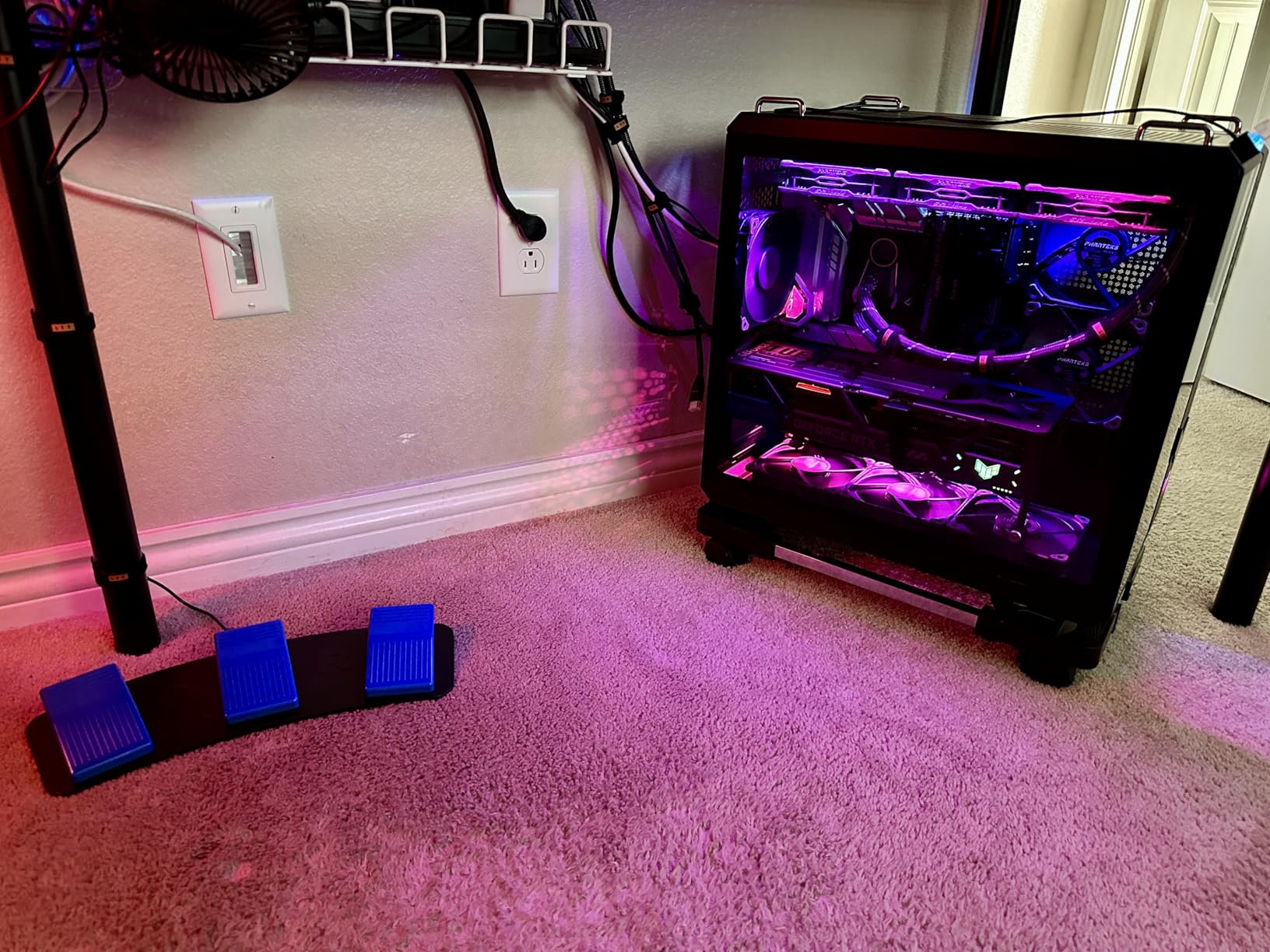
The default mapping sends the ‘B’ key, which isn’t always useful for gaming contexts. That’s an easy fix in the software, but it’s something to do before expecting it to work with your specific game setup. Rubber feet on the bottom prevent sliding on most surfaces.
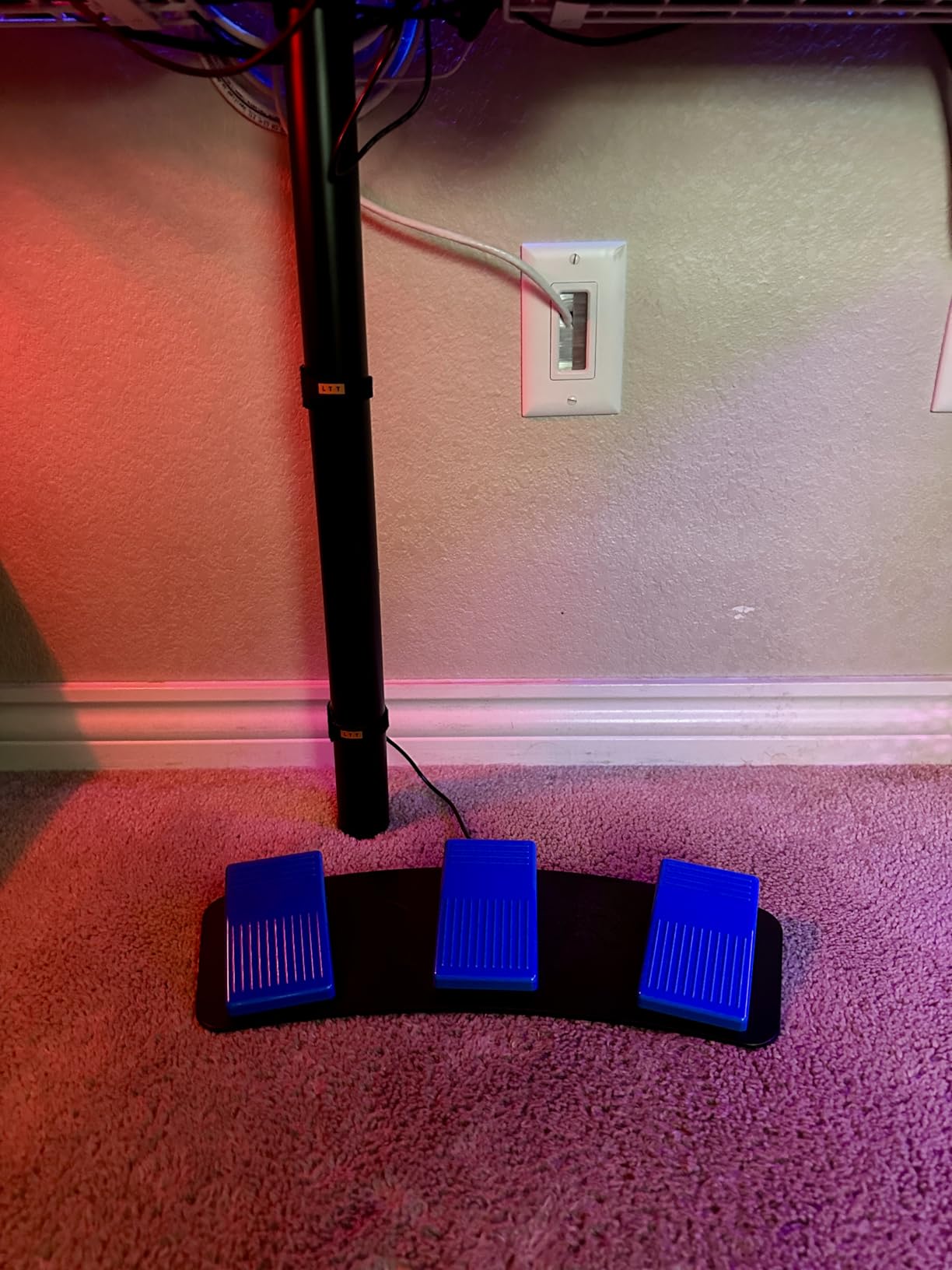
If you’re new to foot pedal gaming and want to test whether adding a foot control improves your adaptive gaming setup, this is an ideal starting point. The low price means you’re not making a large commitment, and the 4.5 star rating confirms it’s a quality product rather than a disposable one.
It’s also a good secondary pedal if you already own a triple pedal unit and want an additional single input in a different location without spending much.
Optical switches typically cost more to manufacture than mechanical ones, making this model’s price point somewhat surprising. The trade-off users note is that the pedal body feels a bit stiffer than premium models during extended use sessions. But the optical switch itself is smooth and responsive.
For adaptive gamers with limited foot strength, the optical switch’s lower actuation force compared to mechanical designs can make a meaningful difference in usability throughout long gaming sessions.

Optical foot switch, wide pedal design
4.4 x 3.6 x 1.6 inches, 7.4 oz
4 TPU rubber pads for stability
Hands-free gaming and transcription
The 2023 updated model from iKKEGOL brings a wider pedal surface than their earlier designs, which is a real comfort improvement for extended gaming sessions. At 4.4 x 3.6 x 1.6 inches, this is the widest single pedal in the iKKEGOL lineup, making it harder to miss with your foot and more comfortable to rest on between presses.
With 102 reviews at 4.2 stars, it’s newer than some of its siblings in the product line, but the user feedback is positive and specific. People who game with Rocksmith (the guitar learning game) particularly like it for free hands during chord transitions. The quiet optical switch makes it suitable for streaming environments.
The 4 TPU rubber pads on the bottom provide better floor stability than standard rubber feet. On hardwood, tile, and carpet, users report stable operation without sliding during use. The 100kg weight capacity means even firm downward foot presses won’t stress the mechanism.
One limitation worth noting for musicians considering this for instrument use: it does not output MIDI. It’s purely a keyboard and mouse emulator. For adaptive gamers, that’s not a limitation — but for anyone hoping to control music software via foot, it won’t work for that purpose.
A wider pedal surface matters most for people who have limited precision in foot placement. If targeting a narrow pedal requires careful foot positioning, that’s cognitive and physical effort that takes focus away from gaming. A wider target is simply easier to hit consistently.
For users who wear orthotics, use adapted footwear, or have reduced fine motor control in their feet, the extra surface area of this model is a meaningful accessibility improvement over narrower options.
The pedal supports custom keyboard shortcuts, mouse buttons, multimedia controls, and game controller inputs. The macro length for string functions has some limitations in the software, which a few power users have noted. For standard single-key gaming inputs, that limitation is irrelevant.
Setup is handled through the same ElfKey software used across the iKKEGOL product line. If you’re already familiar with that software from another iKKEGOL pedal, this is a seamless addition to your setup.

Single programmable pedal
3.9 x 2.5 x 1.5 inches, 5 oz
1.9M/6.2ft USB cable
Rubber feet for stability
This is the most budget-friendly single pedal in this roundup, with a 4.3 rating from 45 reviews. It shares the same compact dimensions as other iKKEGOL single pedals (3.9 x 2.5 x 1.5 inches) and includes a 1.9M USB cable. For someone wanting a basic programmable foot switch without spending much, this works.
The most common use case in user reviews is Discord push-to-talk — pressing the pedal to unmute rather than using hand controls. For adaptive gamers, that’s a relevant feature since holding a hands-free communication button frees up hand inputs for game controls.
Some users have flagged concerns about durability with heavy regular use, and there’s a note about the software download source raising flags on some security scans. For a basic foot pedal input, the risks are manageable, but it’s worth downloading software only from the verified iKKEGOL website.
Push-to-talk, single game action binding, or keyboard shortcut control are the primary use cases where this pedal performs reliably. If you need one dedicated foot input for something specific, it handles that well at a low price.
For more demanding adaptive gaming setups where the foot pedal is a primary input method with hundreds of actuations per hour, investing in a more robust model is worth the additional cost given the durability concerns reported here.
The optical single pedal (B0BWTRBLNP) costs a few dollars more but has nearly 5x the reviews and a higher rating. If budget is extremely tight, this model works. But the small additional cost of the optical version buys meaningfully better verified performance.
Think of this entry-level model as a “test if you like foot pedal gaming” option. If you find you use it constantly, upgrading to a better-reviewed model becomes an easy justified decision.

Wireless Bluetooth design, 33ft range
6.69 x 4.33 x 0.91 inches, 7.1 oz
60+ hour battery life
Double switch with 5 page turning modes
The Yueyinpu Wireless Foot Pedal is the only truly wireless option in this roundup, using Bluetooth to connect to tablets, smartphones, and computers without any cable. With 737 reviews at 4.4 stars, it’s a well-proven product primarily used for digital sheet music page turning, but its wireless nature makes it interesting for adaptive gaming contexts too.
The 33-foot (10 meter) wireless range gives you genuine freedom in positioning. For adaptive gamers who cannot have cables near their mobility aids, power chairs, or who simply need a cable-free environment for safety reasons, this is the only option in this list that addresses that constraint.
Battery life is exceptional at 60+ hours per charge, and the built-in rechargeable battery charges via USB. The ultra-flat 0.91-inch profile is the lowest-profile design in this list, which works well for users who need the pedal positioned on a flat surface at foot height without much clearance.
The double-switch design gives you two independent foot inputs, each mappable to different functions. Five page-turning modes are available, covering PgUp/PgDn, left/right arrow keys, up/down arrows, mouse left/right buttons, and space/enter. For gaming, those five modes cover the most common single-key gaming inputs.
Cables in adaptive gaming setups can create real safety and practical challenges. A cable running from a foot pedal across a floor or wheelchair footrest can snag or become a hazard. Wireless eliminates that concern entirely.
Bluetooth pairing works with iOS 11+, Android, and Windows. Note that it’s primarily designed as a page turner rather than a general programmable keyboard emulator, so the remapping flexibility is more limited than the wired USB options.
The main user concern with this pedal is that the battery drains if it’s left powered on without use. Building a habit of turning it off after gaming sessions keeps the 60-hour battery life cycling properly. A low-battery indicator would be a welcome addition that the current design lacks.
For casual gaming sessions where you don’t want to manage cables, the wireless freedom is worth this minor battery management consideration. For intensive daily gaming use, a wired option with no battery dependency may be more reliable long-term.
Choosing the right Xbox Adaptive Controller switches and buttons in 2026 comes down to understanding your specific physical needs, how you plan to use the inputs, and what kind of reliability you need for your gaming sessions.
Activation force is how much pressure is needed to trigger a switch. This is the most important factor for many adaptive gamers. If you have very limited hand, foot, or mouth strength, you need a switch with the lowest possible activation force — this is where purpose-built adaptive switches like the Logitech kit shine, as they’re engineered for this specific need.
Standard foot pedals require moderate foot pressure. Optical switches typically require less force than mechanical ones, making them better for users with reduced strength. Always check activation force specifications before buying if this matters for your situation.
Users on r/disabledgamers consistently identify this as the top pain point in their experience: finding equipment that activates reliably at the force level they can deliver. Don’t assume any switch will work for you — check specifications and look for reviews from users with similar physical profiles.
Optical switches use infrared light beams to detect actuation. They provide quiet operation, consistent activation force over time, and theoretically unlimited switch life since there’s no physical contact to wear out. They’re ideal for long daily use and noise-sensitive environments.
Mechanical switches use physical contact between metal components. They provide tactile and audible feedback — that satisfying click. Some users find this confirmation important for timing inputs accurately. They do wear over time, though quality mechanical switches last for years under normal use.
For intensive daily adaptive gaming use, optical is generally the better long-term investment. For occasional use where tactile confirmation matters, mechanical is a legitimate choice.
Wired USB connection is the most reliable option and has no battery management concerns. For most adaptive gaming setups, wired is the right choice because it eliminates variables that could interrupt your gameplay.
Wireless makes sense when cables are impractical or unsafe — for wheelchair users where cords could create hazards, or for setups where the foot position is genuinely far from the gaming device. The Yueyinpu wireless pedal is the only wireless option in this roundup and handles that scenario well with its 60-hour battery life.
The Xbox Adaptive Controller accepts external switches through 3.5mm jacks. Dedicated adaptive gaming switches (like the Logitech kit) connect directly through these ports. Foot pedals, by contrast, connect via USB to a PC and are remapped through Windows to simulate controller inputs — a slightly different workflow but equally functional.
When using foot pedals with Xbox gaming, your PC needs to be part of the setup chain (either PC gaming or Xbox via Xbox app on PC). The Xbox Accessories app handles remapping external inputs to controller functions. USB foot pedals are not directly compatible with the Xbox console’s USB ports as controller inputs without additional software setup.
The repair kits (SOSS GAMING and eXtremeRate) are for fixing existing Xbox controller buttons, not adding new external switches. These are relevant when your current controller’s physical buttons fail rather than for expanding your input options.
How and where you mount switches matters enormously for adaptive gaming. The Logitech kit’s hook-and-loop board is designed to be repositioned and mounted to different surfaces. Foot pedals sit on floors or can be mounted to wheelchair footrests with appropriate hardware.
Forum users consistently identify mounting flexibility as a top priority. A switch with the right activation force that can’t be positioned where you can reliably reach it is useless in practice. Plan your mounting solution before buying, and prioritize products that have flexible mounting options.
Adaptive gaming equipment spans a wide range. The repair kits start under $10 for basic replacement switches. Budget foot pedals can be had for under $20. Professional-grade triple pedals land in the $40-$67 range.
A common mistake is buying the cheapest option first and replacing it when it fails, which ends up costing more than buying a well-reviewed mid-range product from the start. For switches you’ll use daily, spending a bit more for a product with 500+ positive reviews is usually the right call.
Yes, the Xbox Adaptive Controller is genuinely one of the best accessibility gaming tools Microsoft has ever released. It connects external switches, buttons, and joysticks through 19 3.5mm ports and 2 USB ports, giving gamers with disabilities enormous flexibility in building a custom control setup. The Xbox Accessories app makes remapping straightforward. Its main limitation is that the controller itself is just the hub — you need to purchase external switches and buttons separately to build a complete setup.
There is no single first-party controller officially supported by both Nintendo Switch and Xbox. Some third-party controllers advertise multi-console compatibility, but these often have limitations in button mapping or feature support. For adaptive gaming purposes, the Xbox Adaptive Controller is Xbox-specific, while Nintendo has its own Nintendo Switch Accessibility Controller. If you need to game on both platforms, you would typically need separate controllers or look into universal accessibility switches that work with multiple devices through PC software.
The PlayStation DualSense controller has the most advanced adaptive trigger technology in the current console generation, with variable resistance triggers that game developers can program for different effects. The Xbox Series X and S controllers have standard triggers without adaptive resistance. The Xbox Adaptive Controller focuses on accessibility customization rather than haptic triggers. If adaptive trigger feedback is important to your gaming experience, the PS5 with DualSense is the primary option for that specific feature.
No controller guarantees zero stick drift permanently, as drift is a result of physical wear over time. Hall effect joysticks use magnetic sensors instead of physical contacts and are significantly more drift-resistant than standard potentiometer-based thumbsticks. Controllers using Hall effect technology, like some third-party options from 8BitDo and others, are the closest to drift-free available currently. The Xbox Adaptive Controller itself does not have built-in thumbsticks — you add external joystick accessories to it, which gives you more control over the stick technology you use.
The Xbox Adaptive Controller works with any switch or button that uses a 3.5mm mono or stereo jack for connectivity. This includes purpose-built adaptive gaming switches from brands like Logitech G, as well as ability switches from medical accessibility equipment manufacturers. The 3.5mm standard is the same used in assistive technology, which means a huge range of switches designed for communication devices, mobility aids, and other accessibility tools are compatible. Always verify the switch outputs a simple open/closed circuit through the 3.5mm connection — this is the requirement for Xbox Adaptive Controller compatibility.
The best Xbox Adaptive Controller switches and buttons for you depend on your physical needs, your current setup, and how you plan to build out your adaptive gaming configuration in 2026. If you’re starting fresh with a full accessibility kit, the Logitech G Adaptive Gaming Kit is still the most direct on-ramp designed specifically for Xbox Adaptive Controller builds. For foot-controlled gaming, the iKKEGOL triple pedals offer reliable multi-input solutions with strong user feedback behind them.
Repair kits from SOSS GAMING and eXtremeRate address a different need — bringing existing Xbox controllers back to full functionality when LB/RB buttons fail. And for wireless flexibility, the Yueyinpu pedal stands alone in this list as the only cable-free foot input option.
Whatever your situation, adaptive gaming in 2026 is more accessible than ever. The community at r/disabledgamers is an excellent resource for setup ideas from people who’ve already found what works for their specific needs. Start with what addresses your biggest single barrier, get it working, and build from there.