
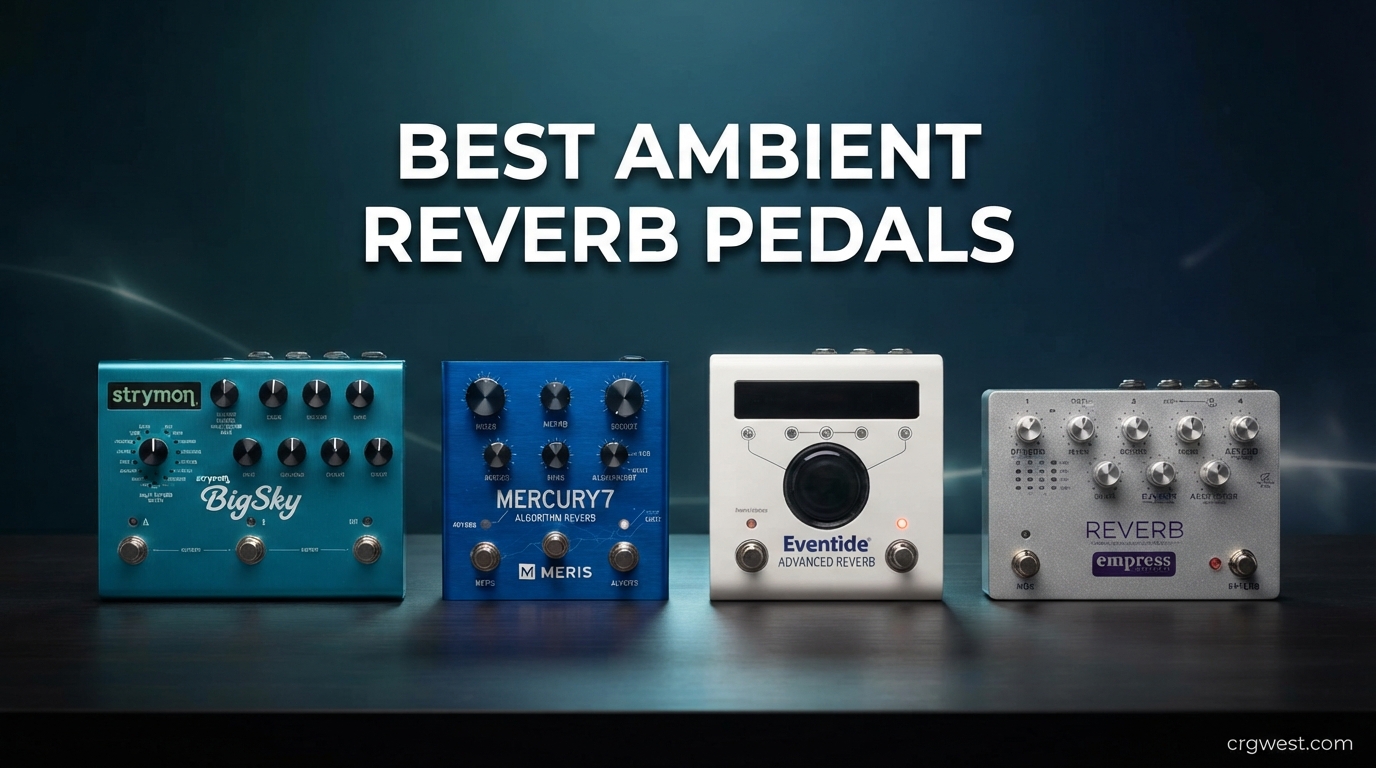
I have spent the better part of three years chasing that perfect wash of guitar tone that turns a simple chord into a cathedral of sound. Whether you are building shoegaze walls, post-rock swells, or Brian Eno-style textures, the right reverb pedal is the single most important piece of gear on your board. After testing dozens of options through my Fender Deluxe and a stereo pair of QSC FRFR speakers, I narrowed down the field to what I believe are the best ambient reverb pedals available in 2026.
Ambient reverb is different from your standard room or spring reverb. It pushes decay times into the tens of seconds, layers modulation underneath the tail, and often adds shimmer or octave-shifted harmonics that hang in the air long after you stop playing. The best ambient reverb pedals give you control over those extended parameters without burying them in menus. Cheap pedals can do ambient surprisingly well these days, but the premium options earn their price through algorithm depth, stereo imaging, and preset recall.
This guide covers 10 pedals ranging from budget-friendly entries under $80 to studio-grade workhorses pushing $400. I have organized them by what they do best so you can find the right match for your playing style, pedalboard size, and budget. Every pedal here has been run through its paces with single-coil Strats, humbucker Les Pauls, and even a synthesizer to see how it handles sustained sources.
Top 3 Picks for Best Ambient Reverb Pedals

Walrus Audio Slo Multi Texture Reverb
- Dark/Rise/Dream modes
- Lower octave pad
- Cinematic auto-swell

Walrus Audio Fundamental Ambient Reverb
- Three algorithms
- Intuitive sliders
- Under 100 dollars

Best Ambient Reverb Pedals in 2026
| Product | Specifications | Action |
|---|---|---|
|
Walrus Audio Slo Multi Texture Reverb
|
|
Check Latest Price |
|
Walrus Audio Fundamental Ambient
|
|
Check Latest Price |
|
Strymon Cloudburst Ambient Reverb
|
|
Check Latest Price |
 Strymon blueSky V2 Reverb
|
|
Check Latest Price |
 BOSS RV-6 Reverb Pedal
|
|
Check Latest Price |
 MXR Joshua Ambient Echo
|
|
Check Latest Price |
 Electro-Harmonix Oceans 11
|
|
Check Latest Price |
 TC Electronic Hall of Fame 2
|
|
Check Latest Price |
 JHS Pedals 3 Series Reverb
|
|
Check Latest Price |
 JOYO Atmosphere R-14 Reverb
|
|
Check Latest Price |
1. Walrus Audio Slo Multi Texture Reverb – Best Overall Ambient Soundscape
Walrus Audio Slö Multi Texture Reverb
Modes: Dark/Rise/Dream
Weight: 0.41 kg
Power: 9V DC 100mA
Warranty: Limited lifetime
Pros
- Three distinct reverb modes
- Dark mode adds lower octave
- Rise auto-swell for cinematic pads
- Dream mode with latching pad function
Cons
- Requires isolated power supply
- Daisy chain not recommended
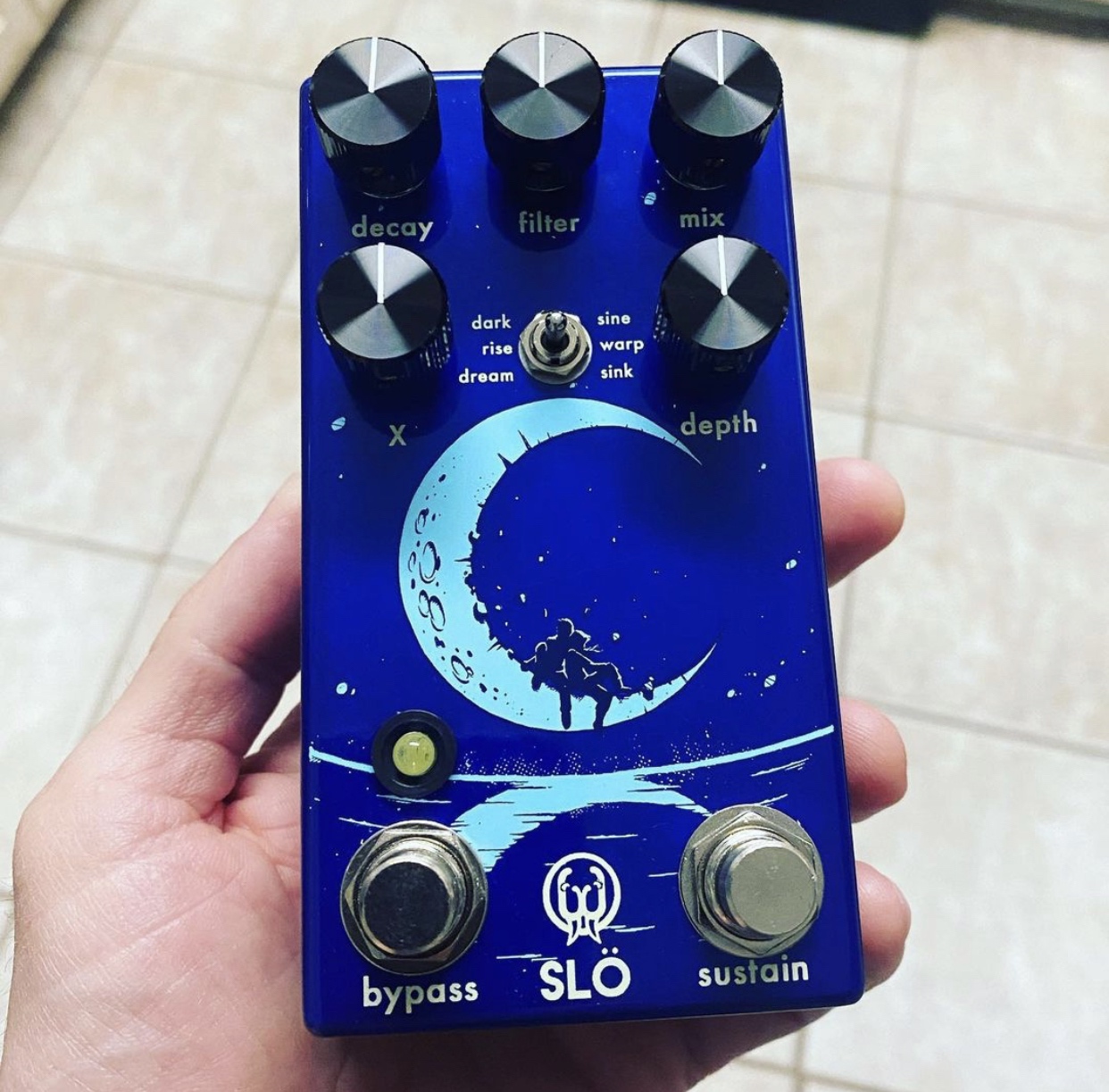
The Walrus Audio Slo is the pedal I keep coming back to when I want instant atmosphere without touching a single menu. It has earned its reputation on r/guitarpedals as the go-to ambient reverb, and after running it through a month of daily practice sessions, I understand why. The three-mode architecture keeps things simple while still delivering sounds that feel cinematic.
Dark mode is where this pedal shines for shoegaze and post-rock. It adds a lower octave beneath your reverb tail, creating a deep, brooding soundscape that fills out the low end in a way no standard reverb can match. I paired it with a delay pedal running dotted-eighths and got instant Sigur Ros vibes from a single sustained chord. The depth is genuinely impressive for a pedal at this price point.
Rise mode auto-swarms your dry signal, fading the reverb in gradually to simulate volume swells without needing a volume pedal. Dream mode layers a lush pad with vibrato modulation and a latching function that holds the reverb even after you stop playing. That latch is the secret weapon for live performance.
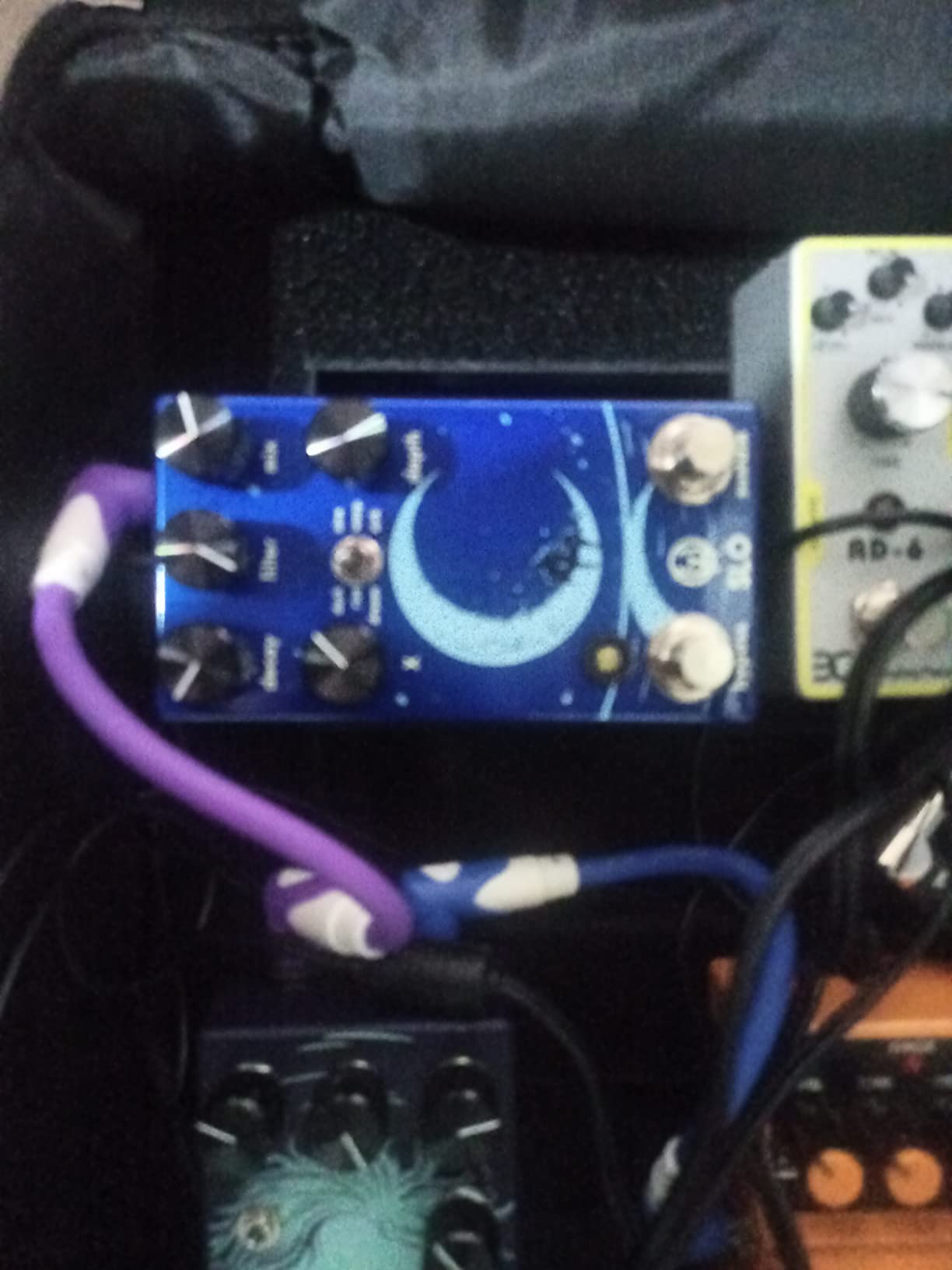
Sound quality across all three modes is rich and dimensional, especially in stereo. Running the Slo into two amps creates a wide, immersive field that makes standard mono reverbs feel flat by comparison. The decay tail is smooth and natural, with no digital artifacts even at maximum settings.
The main downside is power requirements. Walrus explicitly recommends an isolated power supply, and daisy-chaining with other pedals introduced noticeable noise in my testing. Budget for a quality power brick if you do not already have one.
Who Should Buy the Slo
This pedal is ideal for guitarists focused on shoegaze, dream pop, and post-rock who want three distinctly different ambient textures in one enclosure. If you play live and need to switch between atmospheric moods quickly, the three-way toggle and latch function make that effortless.
It is also a strong choice for studio producers who want to add character reverb to synthesizers and vocals. The Dark mode in particular adds a unique coloration that sits differently in a mix than standard algorithmic reverb.
Limitations to Consider
The Slo offers no preset storage and limited tweakability beyond its three fixed modes. Players who want deep parameter control or MIDI sync should look elsewhere. There is also no expression pedal input, which some ambient players will miss for real-time decay manipulation.
2. Walrus Audio Fundamental Ambient Reverb – Best Budget Ambient Pick
Walrus Audio Fundamental Series Ambient Reverb
Algorithms: Three ambient
Weight: 239 g
Power: 9V DC 100mA
Warranty: Limited lifetime
Pros
- Three atmospheric algorithms
- Intuitive slider controls
- Excellent value
- Sound quality rivals pricier pedals
Cons
- Power supply not included
- Daisy chain not recommended
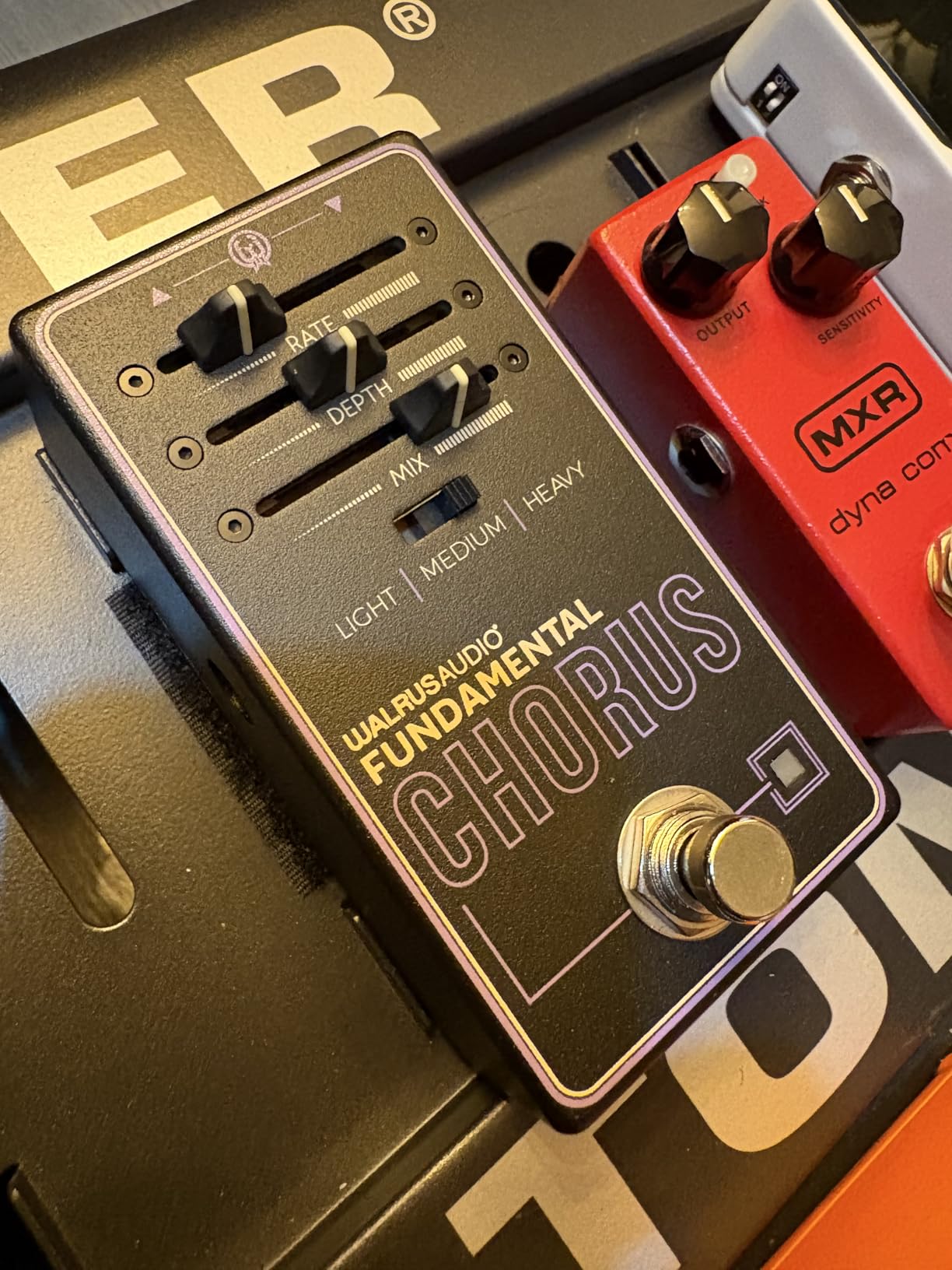
The Walrus Audio Fundamental Ambient is the pedal that surprised me most in this entire roundup. At well under what most ambient reverbs cost, it delivers three carefully crafted algorithms that hold their own against pedals twice the price. Walrus designed the Fundamental series to strip away everything nonessential, and the result is a pedal that gets out of its own way.
The three algorithms cover the ambient bases well. I found myself gravitating toward the middle algorithm for general atmospheric duties, while the third setting produces an enormous, shimmering wash that eats sustain for breakfast in the best possible way. The slider-based controls are surprisingly intuitive once you get used to them.
What impressed me most is how little this pedal compromises on sound quality. The reverb tails are smooth and dense, with no graininess even at extreme decay settings. In a blind A/B test against my Strymon, the Fundamental held its own on basic hall and plate textures.
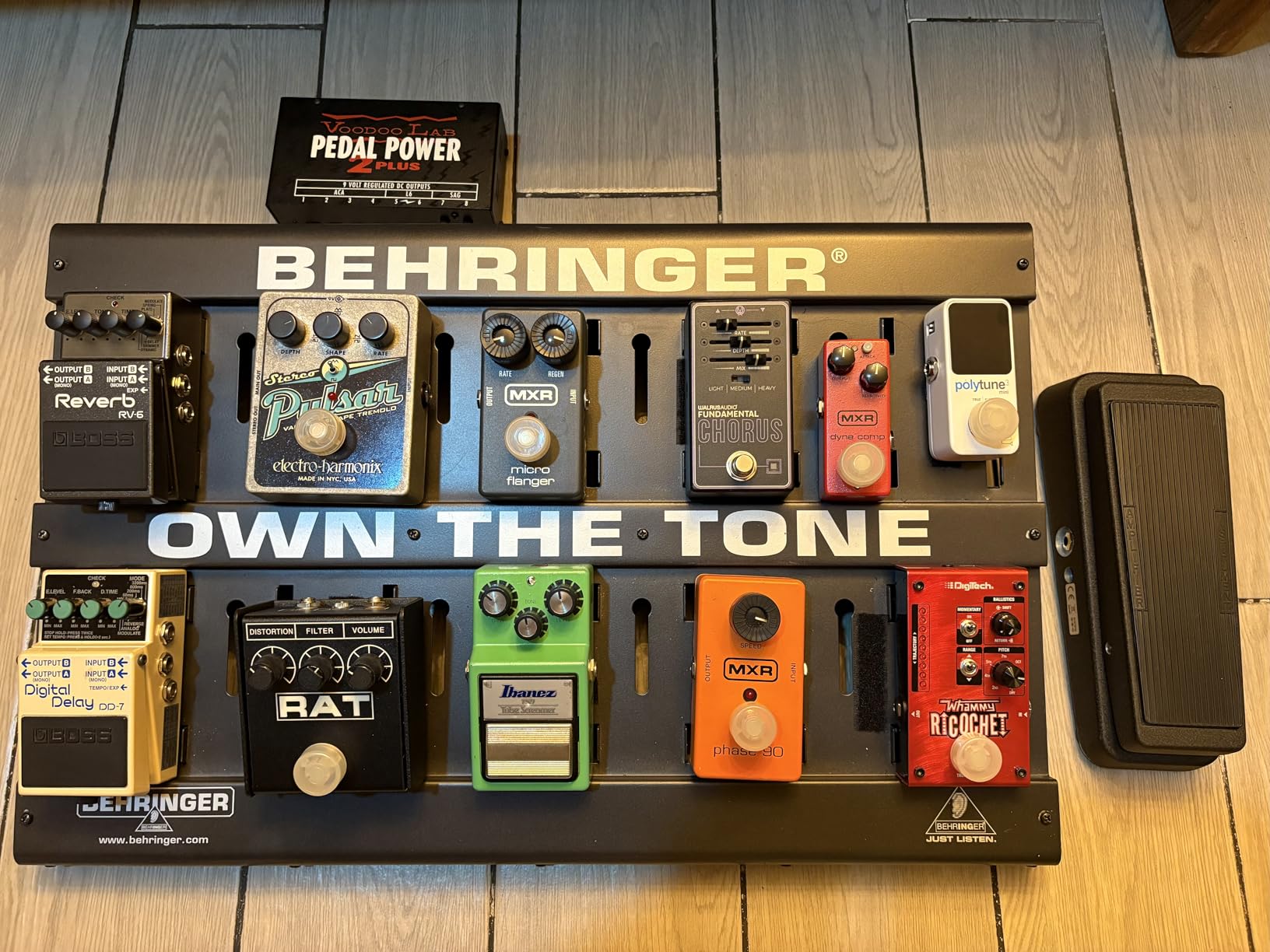
Build quality matches the rest of the Walrus lineup, with a sturdy enclosure and reliable footswitch. The artwork is clean and understated compared to the Slo, which some players will actually prefer. At this weight, it is also one of the lighter pedals on my board.
The trade-off is that you give up deep editing, presets, and MIDI. There are no hidden parameters or secondary modes to discover. What you see on the surface is everything you get.
Who Should Buy the Fundamental Ambient
This is the best ambient reverb pedal for beginners and players on a tight budget who still want quality sound. If you are building your first pedalboard and need a reverb that can do everything from subtle room to massive ambient wash, this covers that range without compromise.
It is also a smart choice as a secondary reverb on an existing board. Run it before or after a delay pedal and you get layered atmospherics that sound far more expensive than they are.
Limitations to Consider
No preset recall means you are stuck with whatever you dial in live. The lack of expression pedal input also limits real-time control. Power supply is not included, so factor that into your total cost.
3. Strymon Cloudburst Ambient Reverb – Best Premium Compact Reverb
Strymon Cloudburst Ambient Reverb Pedal
Algorithm: Ensemble reverb
Weight: 12 oz
Power: 9V DC 250mA
Warranty: 2-year
Pros
- Ensemble modulation is unique
- Stereo reverb imaging
- Pre-delay and tone controls
- USB-C connectivity
Cons
- Premium price point
- Limited stock availability
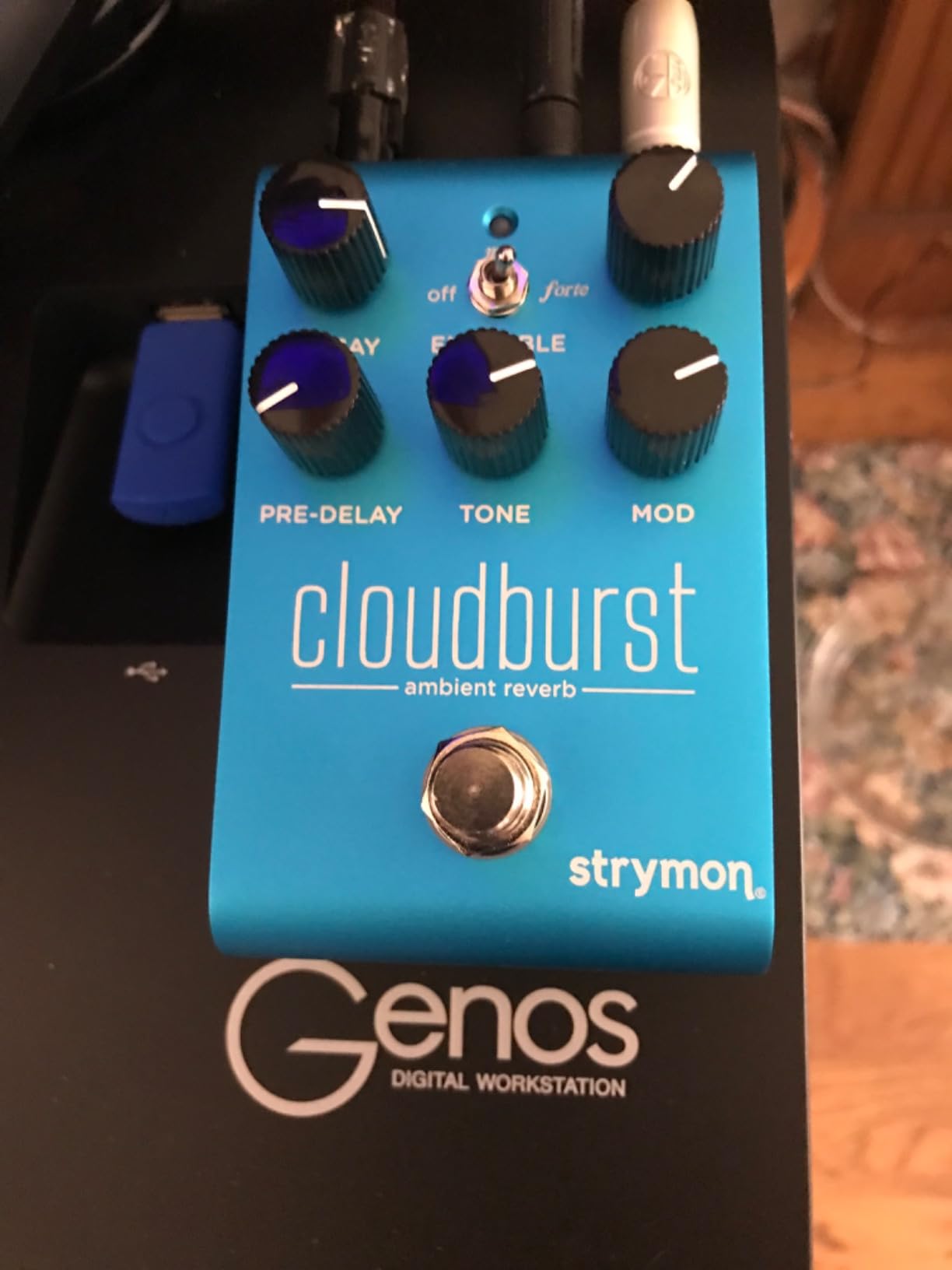
The Strymon Cloudburst is the pedal I reach for when I need a single reverb sound that feels alive. Its signature feature is the Ensemble switch, which adds harmonically rich modulation that responds to your playing dynamics. No other pedal in this roundup does what the Ensemble mode does.
Engaging the Ensemble button transforms a plain chord into something that sounds like a string section tuning in behind you. The modulation is not a simple chorus effect layered on top. It genuinely analyzes your input and generates complementary harmonies that swell within the reverb tail. I tested it with simple folk fingerpicking and got sounds that belonged in a film score.
The core reverb algorithm is a lush, plate-style ambient wash with extended decay. Strymon’s DSP engineering shows in the smoothness of the tail and the absence of any metallic artifacts at long decay times. Pre-delay and tone controls let you shape the reverb to sit perfectly in a mix.
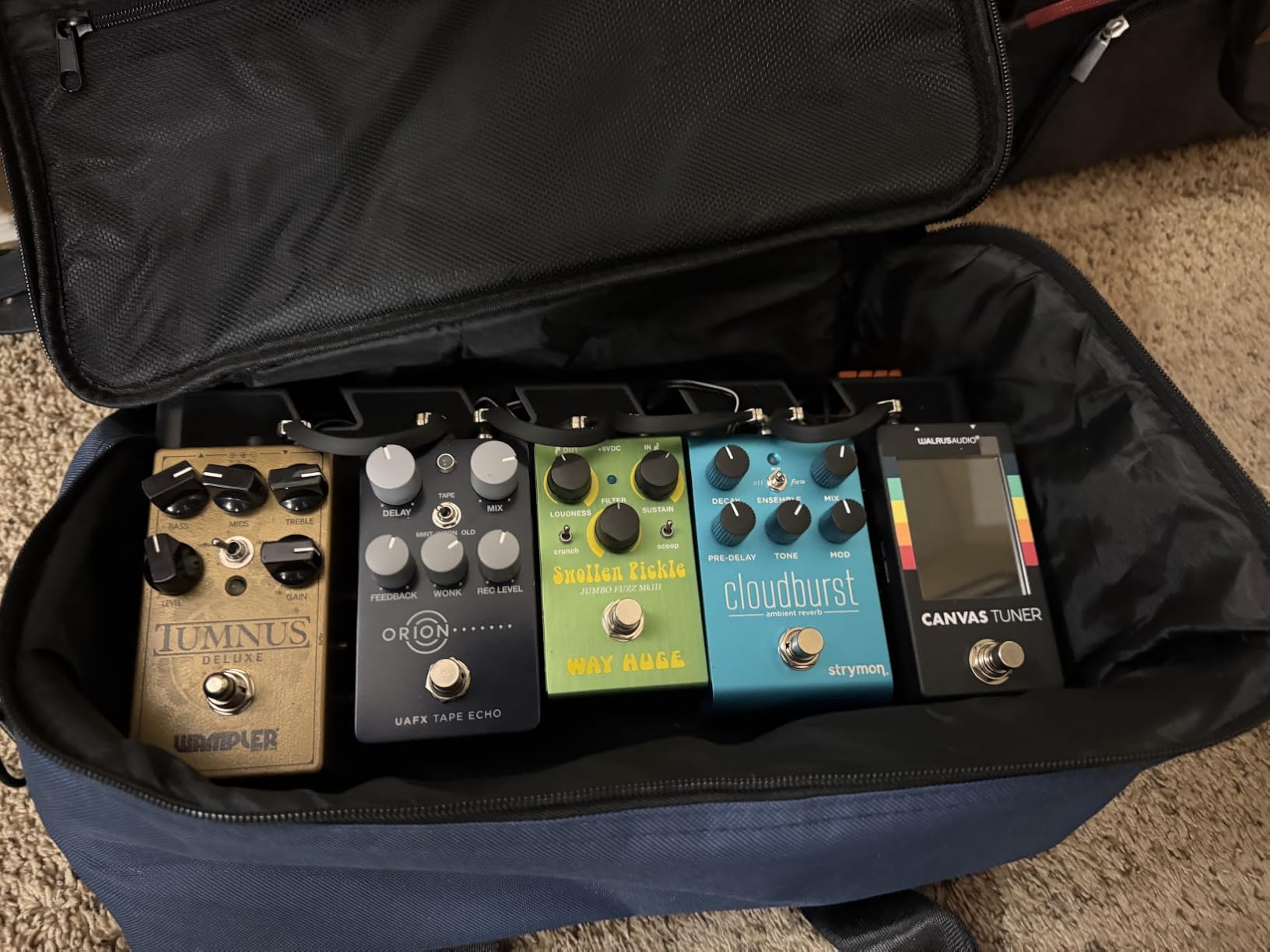
Stereo imaging is where the Cloudburst pulls ahead of most compact competitors. Running it in true stereo creates a three-dimensional field that moves around you. For players using dual amps or FRFR monitor setups, the Cloudburst rewards that investment.
The USB-C port allows firmware updates, which Strymon has historically used to add features and refine algorithms over time. This pedal is built to grow with you rather than become obsolete.
Who Should Buy the Cloudburst
This pedal suits guitarists who want one exceptional reverb sound rather than a dozen mediocre ones. The Ensemble mode makes it ideal for solo performers and worship guitarists who need to fill sonic space without layering multiple effects.
It is also a strong studio tool. Producers working on ambient, cinematic, or indie recordings will find the Cloudburst adds a polish that standard reverb plugins cannot replicate.
Limitations to Consider
The Cloudburst is a single-algorithm pedal. If you need spring, plate, hall, and shimmer in one box, look at the blueSky V2 or BigSky. The premium price also reflects Strymon’s brand positioning, and stock availability has been inconsistent since launch.
4. Strymon blueSky V2 – Best Versatile Studio Reverb
Strymon blueSky V2 Reverb Pedal
Types: Spring/Plate/Room+Shimmer
Presets: 300 via MIDI
Weight: 1.39 lb
Power: 9V DC 300mA
Pros
- Three reverb types plus shimmer
- Class A JFET preamp
- 300 presets with MIDI
- Favorite footswitch
Cons
- Premium price point
- May exceed budget needs
The Strymon blueSky V2 carries the highest rating in this entire roundup, and my testing confirmed why. Strymon took their already excellent blueSky platform and added everything players asked for over the years, including MIDI preset storage, a JFET preamp, and a dedicated shimmer engine. This is a pedal built for players who treat reverb as a primary instrument.
The three core reverb types cover spring, plate, and room, each rendered with the kind of depth Strymon is known for. The plate algorithm in particular produces a dense, smooth decay that works beautifully for ambient applications. Layer the shimmer engine on top and you get pitch-shifted harmonics that climb above your dry signal like sunlight through clouds.
The discrete Class A JFET preamp adds touch sensitivity that most digital reverbs lack. Your playing dynamics translate through the reverb tail in a way that feels organic rather than processed. I noticed this most with fingerpicking passages, where each note retained its character inside the wash.
With 300 preset slots accessible via MIDI, the blueSky V2 is essentially a reverb workstation in a compact format. You can store every setting combination you discover and recall them instantly during live performance. The Favorite footswitch gives you a single preset recall even without a MIDI controller.
Who Should Buy the blueSky V2
This is the best ambient reverb pedal for working musicians who need reliable, studio-grade sound with the flexibility of preset recall. If you play in multiple bands or cover diverse styles, the blueSky V2 adapts to each context without compromise.
It is also ideal for home studio owners who want professional reverb quality without investing in rack gear or plugin subscriptions. The stereo output and EQ controls make it integrate seamlessly into any recording chain.
Limitations to Consider
The price places this firmly in the premium category. Players who only need basic ambient textures will find the Fundamental or Slo more cost-effective. The depth of features also means a steeper learning curve to unlock the full potential.
5. BOSS RV-6 Reverb Pedal – Best All-Around Workhorse
BOSS RV-6 Reverb Guitar Pedal (RV-6)
Algorithms: Eight modes
Power: 9V 128mA
Weight: 450 g
Warranty: Five-year
Pros
- Eight studio-grade algorithms
- Shimmer and Dynamic modes
- Expression pedal input
- Stereo operation
Cons
- Limited stock availability
- May lack specialized ambient depth
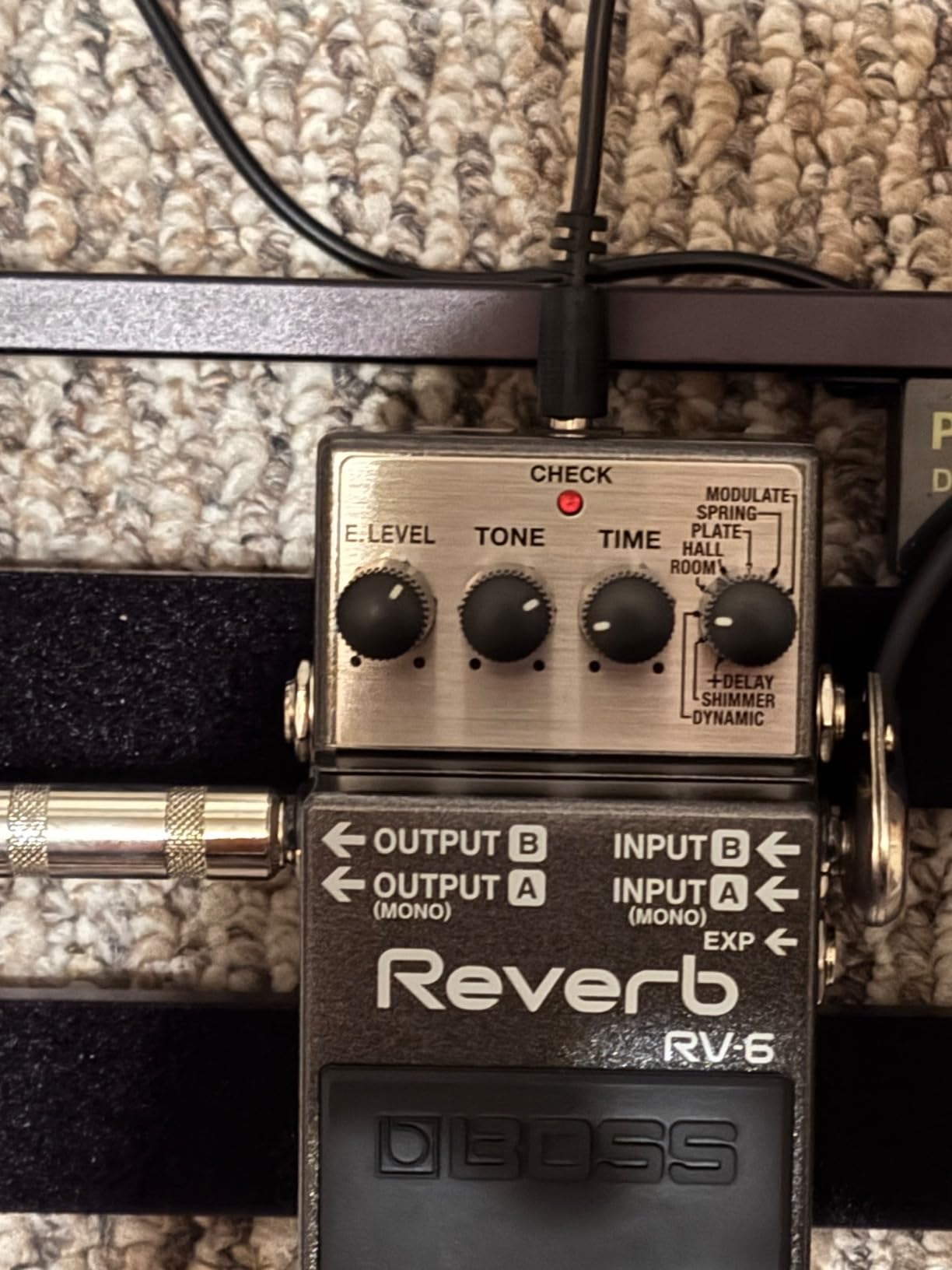
The BOSS RV-6 has been the gateway reverb pedal for a generation of guitarists, and with over 1,300 reviews averaging 4.7 stars, its reputation is well earned. BOSS packed eight studio-grade algorithms into their bulletproof compact housing, making this one of the most versatile pedals in this roundup. I have used the RV-6 in cover bands, original projects, and studio sessions, and it has never let me down.
For ambient players, the Shimmer and Dynamic modes are the headline features. Shimmer adds octave-up pitch shifting to the reverb tail, producing that ethereal, angelic wash popularized by U2 and Coldplay guitarists. Dynamic mode ducks the reverb while you play and swells it back up during pauses, creating natural atmospheric breathing.
The Delay plus Reverb mode combines both effects in one, which is surprisingly useful for ambient work. You get rhythmic repeats feeding into a lush reverb tail without needing a separate delay pedal. The integrated approach keeps your signal chain cleaner.
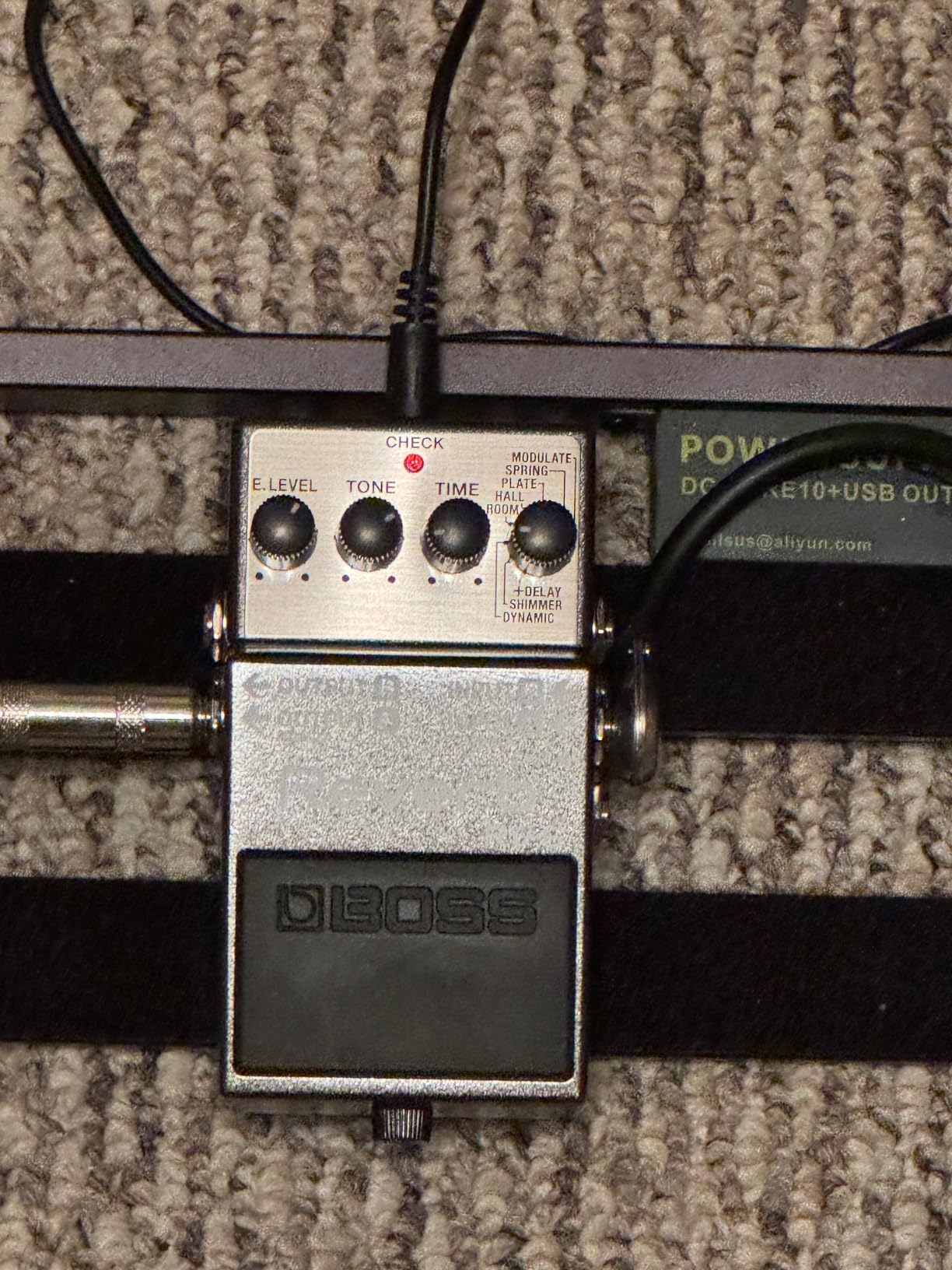
BOSS build quality is legendary, and the five-year warranty backs it up. This pedal will survive being thrown in a gig bag, dropped off a stage, and left in a hot van. The expression pedal input allows real-time control of any parameter you assign, which opens up ambient swells and filter sweeps.
Stereo operation means you can run two outputs for a wider field. While not as immersive as the Cloudburst’s stereo imaging, the RV-6 still creates an impressive spread for live use.
Who Should Buy the RV-6
This is the best ambient reverb pedal for players who need one pedal to handle every situation. If you play in a function band on weekends and pursue ambient soundscapes at home, the RV-6 covers both worlds without compromise.
It is also the safest choice for beginners who want room to grow. The eight algorithms ensure you will never outgrow this pedal’s range, and the BOSS resale value holds steady if you ever upgrade.
Limitations to Consider
The RV-6 lacks the extreme decay times and specialized algorithms found on dedicated ambient pedals. The shimmer is excellent but not as refined as the blueSky V2’s dedicated engine. No preset storage means you dial in sounds manually each time.
6. MXR Joshua Ambient Echo – Best for Iconic Delay-Reverb Textures
MXR® Joshua® Ambient Echo
Type: Ambient echo
Weight: 1 lb
Power: 9V
Warranty: One-year
Pros
- U2-style soundscapes
- Lush modulation
- Onboard tap tempo
- Off-board switching
Cons
- No stereo input
- Difficult to dial in
- Premium pricing
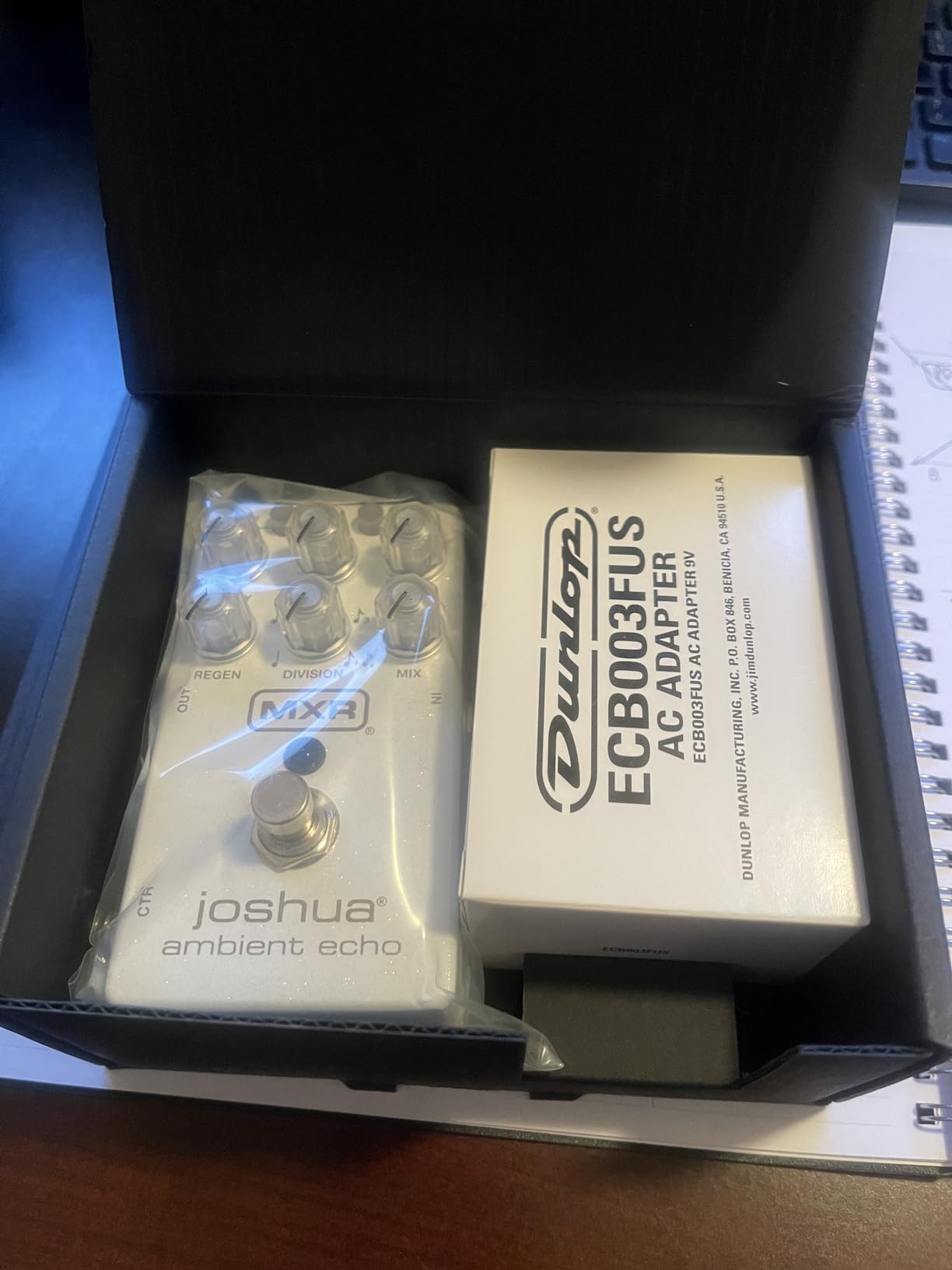
The MXR Joshua Ambient Echo is designed from the ground up to chase the iconic delay tones that defined an era of atmospheric rock. MXR built this pedal around the modulation and rhythm settings that made The Edge’s sound instantly recognizable, then expanded those foundations into full ambient territory. After two weeks of daily use, I can confirm it delivers on that promise.
The delay engine is the core of the Joshua, but the modulation section is what sets it apart. Engaging the lush modulation produces organ-like atmospherics that transform dry guitar into a choir of shifting textures. The 3D quality of the sound is something I have not heard from other delay-reverb combos.
Onboard tap tempo keeps your echoes synchronized to the music, while the off-board switching option lets you control delay time remotely. These features make the Joshua practical for live performance despite its complexity.
The celestial atmospherics become truly immersive when you push the modulation depth and feedback. I ran the Joshua into a clean amp with heavy reverb and got layered soundscapes that sounded like multiple guitars playing in counterpoint. It is a pedal that rewards experimentation.
However, the depth of control also means there is a learning curve. The Joshua took me several sessions to dial in sounds I was happy with, compared to the immediate gratification of the Slo or Fundamental.
Who Should Buy the Joshua
This pedal suits guitarists who want delay and reverb combined in a single unit optimized for atmospheric rock. If you play in a U2-influenced worship band or a post-rock project, the Joshua delivers those tones authentically.
It is also a strong choice for players who have outgrown basic delay pedals and want modulation options that go beyond simple repeats. The depth of sound shaping justifies the investment for serious ambient explorers.
Limitations to Consider
The lack of stereo input is a real limitation for ambient players who rely on dual-amp setups. There is a TRS-capable input jack with an internal dip switch, but it requires modification to use. The complexity of dialing in sounds may frustrate players who prefer straightforward controls.
7. Electro-Harmonix Oceans 11 – Best Multi-Algorithm Versatility
Electro-Harmonix Oceans 11 Reverb Pedal
Algorithms: Eleven modes
Weight: 0.58 kg
Power: 9V 150mA
Warranty: One-year
Pros
- Eleven reverb algorithms
- Tails switch
- Infinite reverb capability
- Hidden parameters accessible
- Power supply included
Cons
- Not Prime eligible
- Lower rating than competitors
The Electro-Harmonix Oceans 11 packs eleven reverb algorithms into a single pedal, making it the most algorithm-dense option in this roundup. EHX designed this pedal for players who want maximum variety without buying multiple units. After cycling through all eleven modes, I found at least five that produce genuinely useful ambient textures.
The Tails switch is a standout feature that controls how the reverb fades when you bypass the pedal. Tails mode lets the reverb decay naturally after bypass, which is essential for ambient playing where you want sounds to linger. Kill mode cuts the reverb instantly for tight, punchy transitions.
The infinite reverb capability is where the Oceans 11 becomes a true ambient tool. Engaging the infinite function sustains the reverb indefinitely, creating a drone underneath your playing. I used this to build layered soundscapes by playing a chord, freezing it, then playing melodies over the sustained wash.
The Secondary Knob Mode reveals hidden parameters for each algorithm, giving you deeper control than the surface suggests. This adds a layer of tweakability that keeps the pedal interesting long after you think you have explored everything.
Who Should Buy the Oceans 11
This pedal is ideal for players who want maximum algorithm variety at a mid-range price. If you are still discovering which reverb types suit your style, eleven options gives you plenty of room to explore without committing to a single sound.
The infinite reverb function makes it particularly appealing to live ambient performers who need to create drones on the fly. Worship guitarists and post-rock players will find this feature invaluable.
Limitations to Consider
The Oceans 11 has the lowest rating in this roundup at 4.4 stars, with some users reporting complexity issues. The interface can feel cluttered with eleven algorithms and secondary parameters layered on top. EHX build quality is solid but not at the BOSS or Strymon level.
8. TC Electronic Hall of Fame 2 – Best Innovative Features
TC Electronic Hall of Fame 2 Reverb Pedal
Type: Multi reverb
Weight: 0.35 kg
Power: 9V
Warranty: Three-year
Pros
- MASH footswitch technology
- TonePrint custom presets
- Stereo input and output
- True bypass
- Analog-dry-through
Cons
- Limited editing without TonePrint app
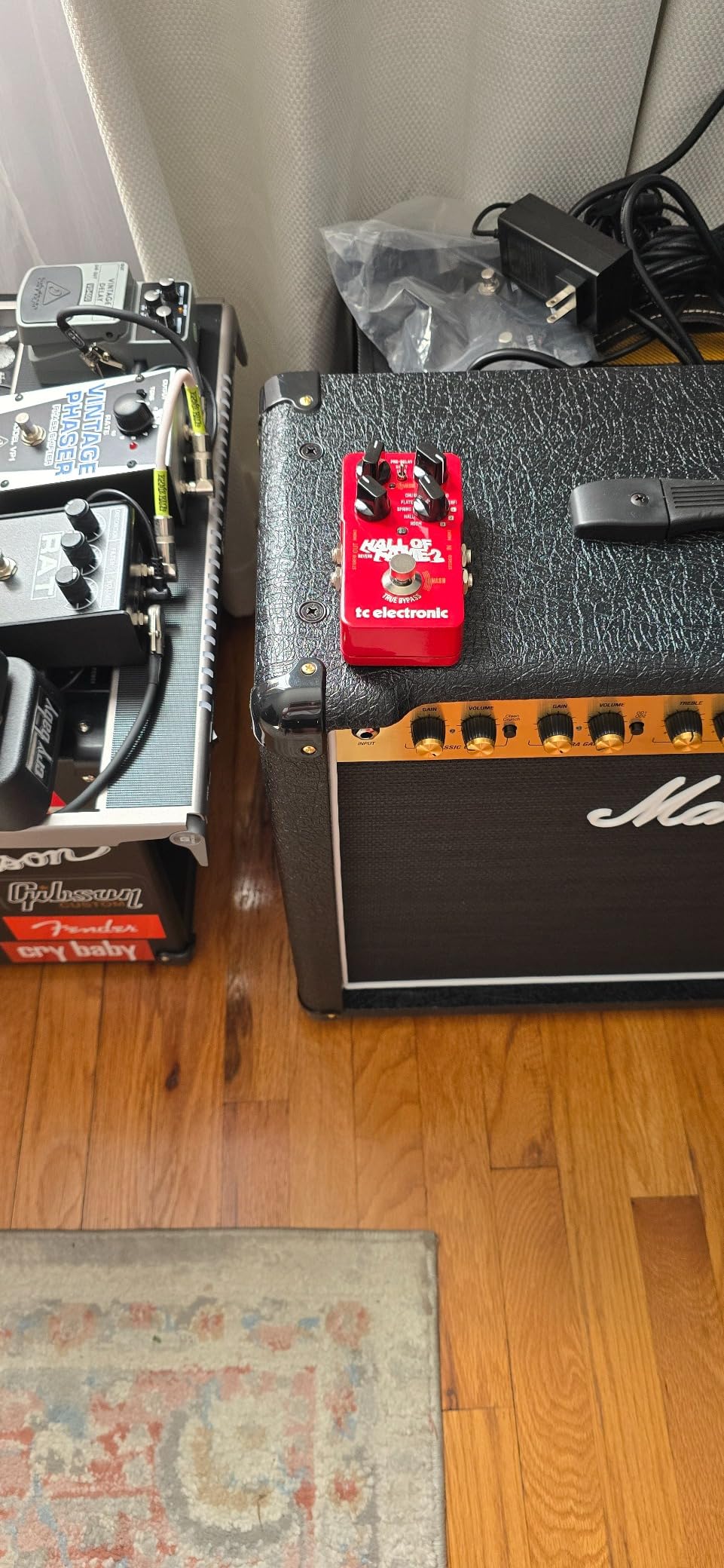
The TC Electronic Hall of Fame 2 stands out for its innovative MASH footswitch, which acts as a pressure-sensitive expression controller built into the pedal itself. Instead of tapping once to engage, you can press harder to modulate parameters in real time. For ambient players, this means you can swell reverb depth or modulation intensity with your foot alone.
The shimmer effect built into the Hall of Fame 2 is one of the better implementations I have heard at this price. The pitch-shifted harmonics sit cleanly above the reverb tail without the harshness that plagues budget shimmer algorithms. Running it in stereo creates an enveloping wash that works beautifully for dream pop and shoegaze.
TonePrint is where this pedal becomes genuinely powerful. Using the free TC Electronic app, you can beam custom-designed presets from professional guitarists directly into the pedal. I downloaded several ambient-specific TonePrints and found sounds I never could have dialed in manually.

The stereo input and output routing gives you flexible setup options. True bypass ensures zero tone coloration when the pedal is disengaged, and analog-dry-through keeps your core signal pristine. These features make the Hall of Fame 2 transparent when you need it and transformative when you engage it.
For players who want deep editing without menu diving, the TonePrint app handles that workflow elegantly. You get preset management and custom parameter control on your phone, then beam the results to the pedal.
Who Should Buy the Hall of Fame 2
This pedal suits guitarists who want modern features like the MASH footswitch and app-based editing at a reasonable price. If you enjoy experimenting with artist-designed presets and custom parameter tweaks, the TonePrint ecosystem is unmatched in this price range.
It is also a strong pick for players who want stereo reverb without paying Strymon prices. The Hall of Fame 2 delivers convincing stereo imaging that elevates any dual-amp or FRFR setup.
Limitations to Consider
The custom editing requires the TonePrint app, which means you need a smartphone to access the full feature set. Players who prefer old-school knob tweaking may find this workflow frustrating. The shimmer effect is good but not as refined as dedicated shimmer engines on premium pedals.
9. JHS Pedals 3 Series Reverb – Best Simple Quality Reverb
JHS Pedals 3 Series Reverb
Controls: Three knobs
Weight: 0.21 kg
Power: 9V 74mA
Warranty: Four-year
Pros
- Versatile room to ambient washes
- EQ for bright or dark tone
- Pre-delay knob
- Made in Kansas City USA
Cons
- Limited shimmer control
- Base reverb swells slowly
The JHS Pedals 3 Series Reverb proves that a great reverb pedal does not need a dozen algorithms or hidden parameters. With just three knobs and a footswitch, JHS built a pedal that covers everything from subtle room ambience to full ambient washes. Over 1,400 reviews and a 4.6-star rating confirm that simplicity wins.
The three controls cover reverb level, tone, and pre-delay. That pre-delay knob is the key to ambient applications, letting you push the reverb tail behind your dry signal for a spacious, detached feel. Set it long enough and your notes feel like they are echoing in a vast hall.
The EQ control shapes the tonal character from dark and moody to bright and shimmery. For ambient work, I found the darker settings more useful since they produce thicker, more atmospheric tails. Brighter settings work well for surf rock and vintage-style spring tones.
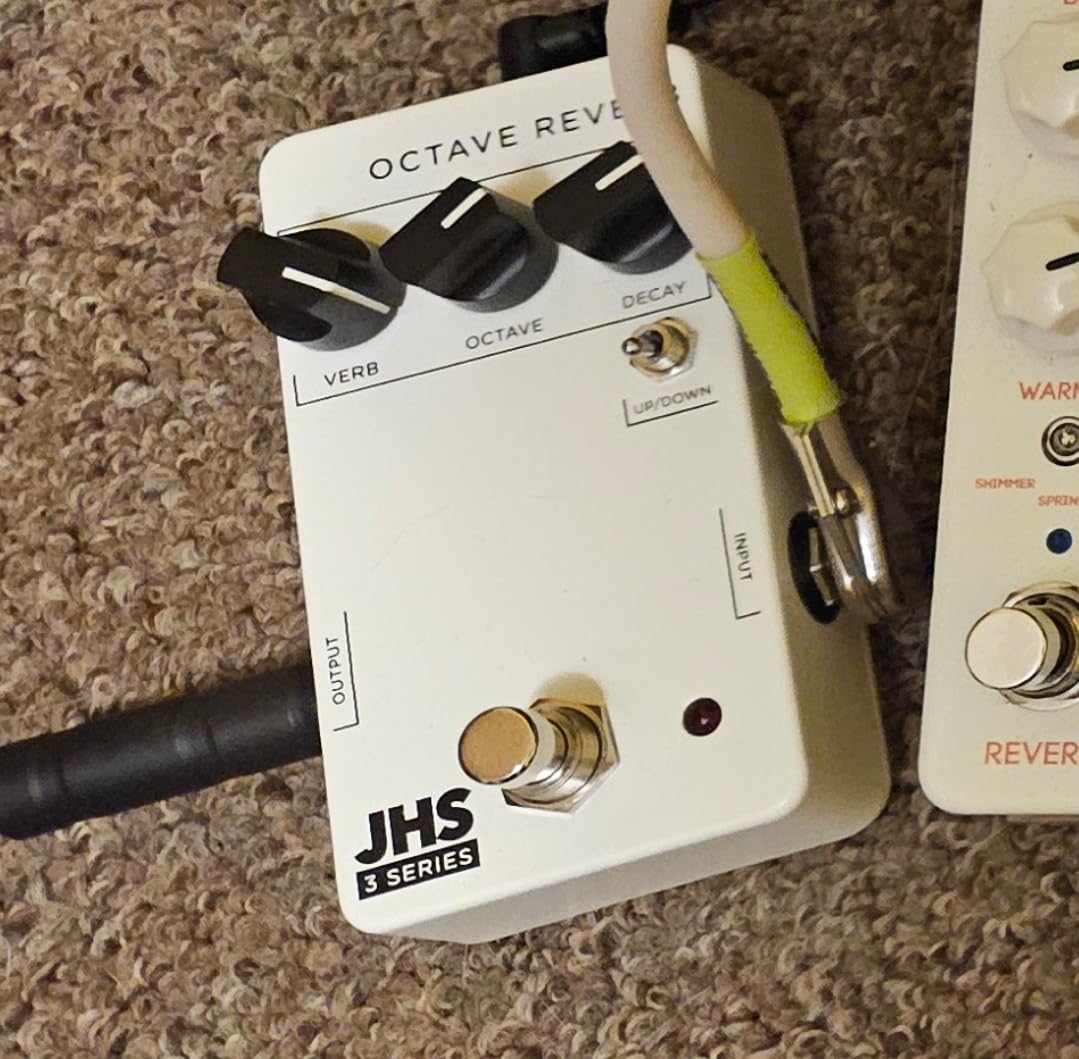
JHS builds these pedals in Kansas City, and the build quality reflects that hands-on attention. The enclosure is rugged, the footswitch is reliable, and the four-year warranty provides genuine peace of mind. This is a pedal designed to last decades on a working board.
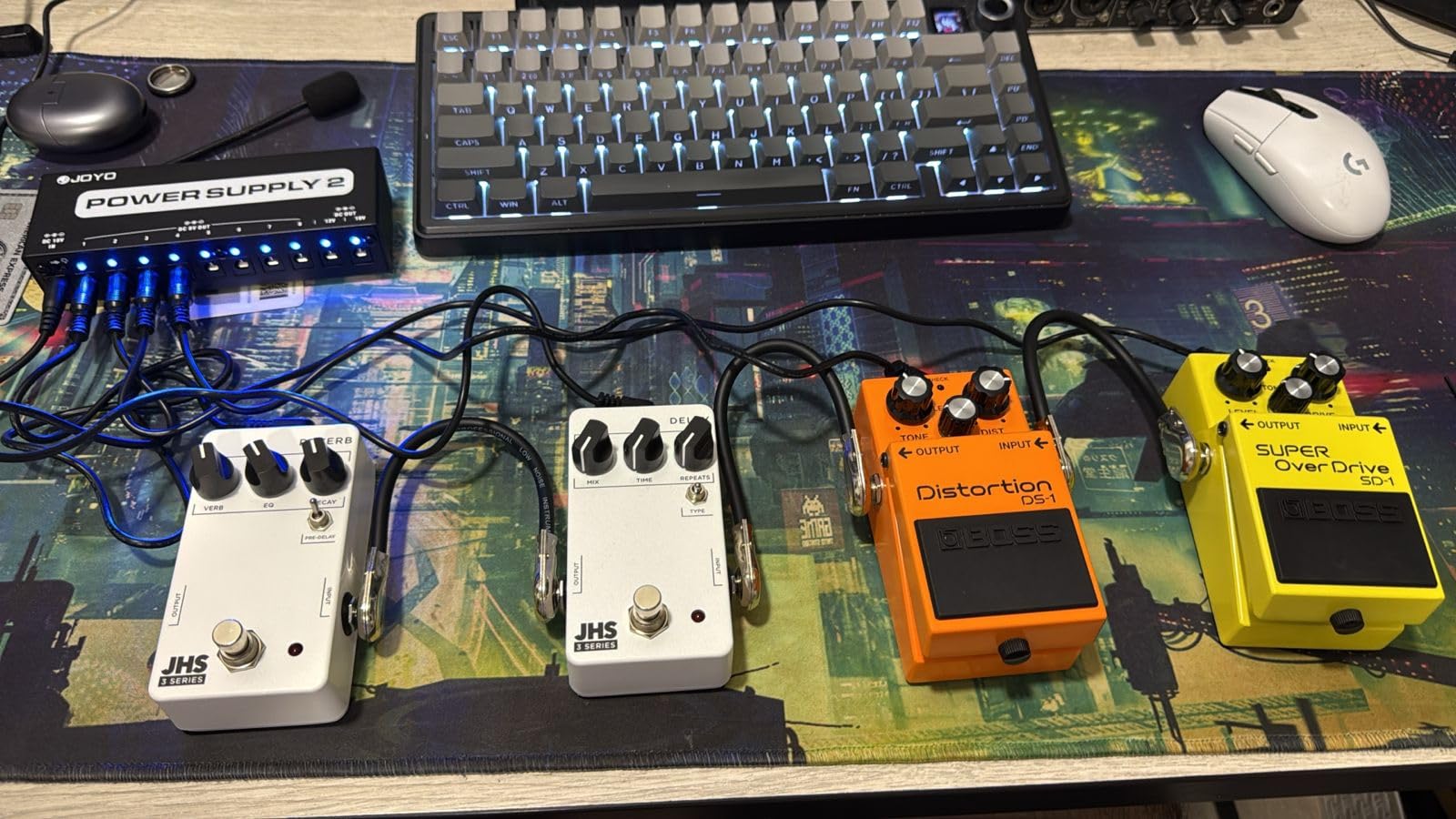
The low power draw of just 74mA makes the 3 Series easy to integrate into any pedalboard power setup. It plays nicely with daisy-chain supplies configurations that cause problems for hungrier DSP pedals.
Who Should Buy the JHS 3 Series
This is the best ambient reverb pedal for players who value simplicity and build quality over feature counts. If you want to set a great sound and leave it alone, the three-knob interface is perfect. It is also an excellent choice for players who want a quality reverb alongside a separate specialized ambient pedal.
The made-in-USA construction and strong warranty make it appealing to buyers who prioritize supporting domestic manufacturing and long-term reliability.
Limitations to Consider
The shimmer control is limited compared to dedicated shimmer pedals, and some users report the base reverb swells in slowly with an unadjustable attack. There are no presets, stereo outputs, or expression pedal inputs. This is a straightforward mono reverb with no frills.
10. JOYO Atmosphere R-14 – Best Budget Feature-Packed Reverb
JOYO Digital Reverb Guitar Pedal, 9 Modes (Spring/Church/Plate/Shimmer & More) with MOD Control & Trail Function, Bypass (Atmosphere R-14)
Modes: Nine algorithms
Weight: 248 g
Power: 9V DC
Warranty: One-year
Pros
- Nine reverb modes including Shimmer
- MOD control for modulation
- Trail function for natural decay
- Ambient LED lighting
Cons
- Requires isolated power supply
- Volume drop at high mix settings
The JOYO Atmosphere R-14 is the most affordable pedal in this roundup, and the fact that it includes nine reverb modes at this price is remarkable. JOYO has built a reputation for delivering surprising value, and the Atmosphere is one of their strongest offerings for ambient players. Nearly 600 reviews confirm that budget-conscious guitarists have embraced this pedal enthusiastically.
The nine modes cover Spring, Church, Plate, Eko-Verb, Shimmer, Comet, Rewind, Forest, and Pulse. For ambient applications, Shimmer and Comet are the standout algorithms. Shimmer produces the classic octave-up wash, while Comet creates a modulated, dreamy tail that works beautifully for shoegaze textures.
The dedicated MOD control adds chorus, phaser, or tremolo modulation to the reverb tail. This is a feature usually found on much more expensive pedals, and it transforms simple chords into moving, breathing soundscapes. I was genuinely impressed by how musical the modulation sounds.
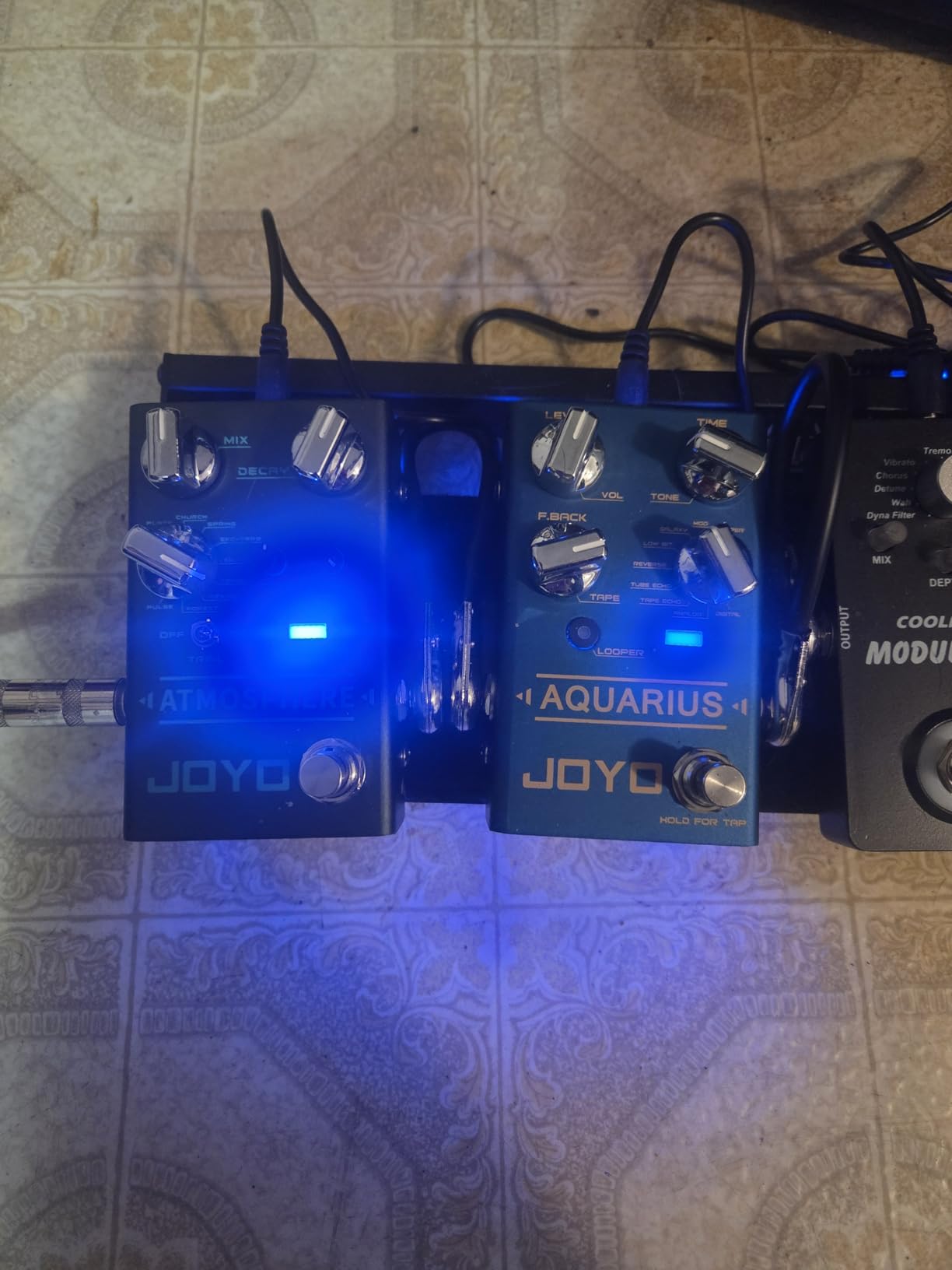
The Trail toggle function lets the reverb decay naturally after bypass, which is essential for ambient playing. The ambient LED lighting that pulses with modulation settings is a fun visual touch that matches the atmospheric vibe on stage.
The four-knob control layout with Mix, Decay, Tone, and Mod gives you enough shaping power to find usable sounds across all nine modes. It is more flexible than the price suggests.
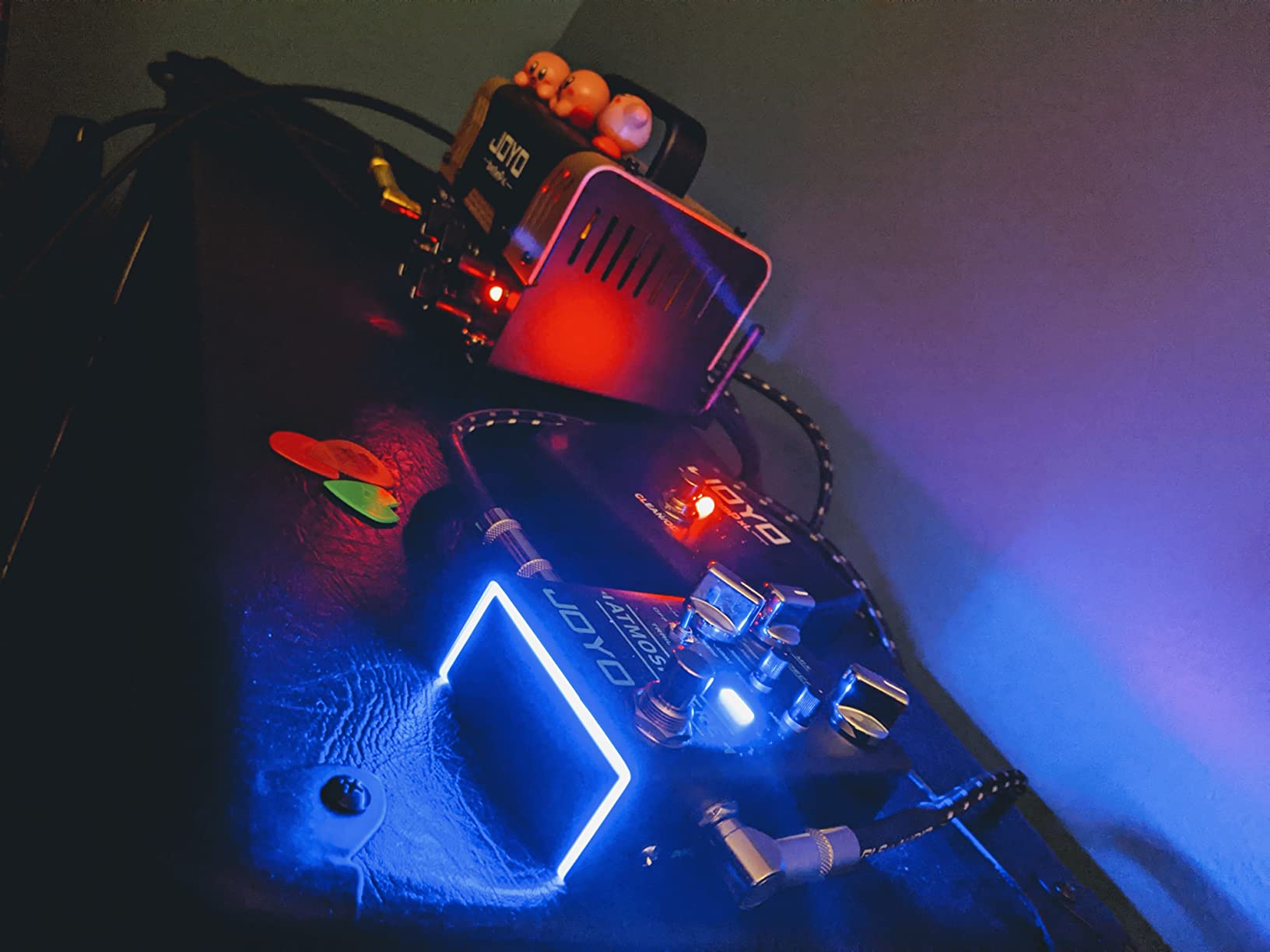
Who Should Buy the JOYO Atmosphere
This is the best ambient reverb pedal for absolute beginners and players on the tightest budgets. If you want to explore ambient tones without committing serious money, the Atmosphere gives you nine algorithms and modulation for less than the cost of a single effects pedal from premium brands.
It is also a practical choice as a backup pedal or a secondary reverb on a travel board. The compact size and low weight make it easy to transport.
Limitations to Consider
Some users report a volume drop at high mix settings, and an isolated power supply is recommended for the cleanest sound. Build quality is acceptable but not at the level of BOSS, JHS, or Strymon. The one-year warranty reflects the budget positioning.
Buying Guide: How to Choose the Best Ambient Reverb Pedal
Choosing the right ambient reverb pedal comes down to understanding what separates ambient reverb from standard reverb, and knowing which features matter most for your playing style. I have broken down the key factors below based on my testing experience and the questions players ask most frequently on forums like r/guitarpedals.
What Makes a Reverb Pedal Ambient?
Ambient reverb pedals differ from standard reverbs in three main ways. First, they offer extended decay times that push well beyond the two-to-three-second range typical of conventional reverb. Some ambient pedals can sustain tails for 30 seconds or more. Second, they incorporate modulation into the reverb tail, creating movement and dimension that prevents the sound from feeling static. Third, many include specialized algorithms like shimmer, freeze, or auto-swell that generate textures impossible with standard reverb.
Standard reverb pedals prioritize realism, recreating the sound of physical spaces like rooms, halls, and plates. Ambient reverb pedals prioritize atmosphere over accuracy. The goal is not to make your guitar sound like it is in a room, but to transform it into something entirely new.
Algorithm Types and What They Mean
Understanding the main reverb algorithm types helps you choose a pedal that produces the textures you want. Hall algorithms create large, lush spaces with smooth decay tails, making them the foundation of most ambient tones. Plate algorithms produce dense, bright reflections that cut through a mix. Spring algorithms simulate the mechanical reverb tanks found in vintage amps and have a distinctive, slightly metallic character.
Shimmer algorithms add pitch-shifted harmonics to the reverb tail, usually an octave above the dry signal. This creates the ethereal, angelic sound associated with U2 and Coldplay. Modulated reverb adds chorus or vibrato-like movement to the tail, making it swim and shift organically. Freeze or hold functions sustain the reverb indefinitely, turning the pedal into a drone generator.
Stereo vs Mono Operation
Stereo operation matters more for ambient reverb than for almost any other effect. Running your reverb in stereo creates a three-dimensional field that surrounds the listener, which is the entire point of ambient music. If you use two amps, an FRFR monitor pair, or record into a DAW with stereo inputs, a stereo reverb pedal dramatically expands your soundstage.
Not all pedals that claim stereo operation are equal. True stereo processing treats left and right inputs independently, creating a wider, more realistic field. Pseudo-stereo simply splits a mono signal into two outputs with slight processing differences. Premium pedals like the Strymon blueSky V2 and Cloudburst offer genuine stereo processing, while budget options often use pseudo-stereo.
Expression Pedal and Control Options
An expression pedal input lets you control reverb parameters in real time with your foot. This is invaluable for ambient performance, where you might want to swell the decay time during a crescendo or sweep the modulation depth for a filter effect. Pedals like the BOSS RV-6 and Strymon blueSky V2 include expression inputs as standard.
The TC Electronic Hall of Fame 2 takes a different approach with its MASH footswitch, which acts as a pressure-sensitive controller. This gives you expression-like control without needing a separate expression pedal. MIDI compatibility, found on the blueSky V2, allows preset changes and parameter control from a master controller.
Power Consumption and Pedalboard Integration
DSP-heavy ambient pedals draw significantly more current than basic analog effects. The Strymon Cloudburst draws 250mA, and the blueSky V2 pulls 300mA. Compare that to the JHS 3 Series at 74mA, and you can see why power supply choice matters. Most pedals in this roundup explicitly recommend isolated power supplies rather than daisy-chain configurations.
If you already run a pedalboard with a quality isolated power brick, you should be fine. If you are starting from scratch, budget for a power supply that can handle at least 500mA total to accommodate hungry DSP pedals. Physical size also matters for pedalboard real estate, with compact options like the Cloudburst and Fundamental saving space compared to workstation-style units.
Pedal Chain Placement for Ambient Reverb
Where you place reverb in your signal chain dramatically affects the final sound. The traditional approach places reverb last in the chain, after distortion and modulation, which produces the most natural-sounding results. For ambient applications, this placement lets all your other effects feed into the wash naturally.
Some experimental players prefer placing reverb before delay or modulation, which produces more processed and unusual textures. Running reverb into a delay pedal creates rhythmic repeats of the entire wet signal, producing dense, evolving soundscapes. Try both placements to hear which suits your style.
True Bypass vs Trails Mode
True bypass means the pedal’s circuitry is completely removed from your signal chain when bypassed, preserving your core tone. Trails mode lets the reverb tail continue decaying naturally after you disengage the pedal, which sounds more natural and is essential for ambient playing. Many pedals offer both options via a switch, including the EHX Oceans 11.
For ambient work, trails mode is almost always preferable. Cutting off a reverb tail abruptly defeats the entire purpose of atmospheric playing. If your pedal only offers true bypass, you can work around it by leaving the pedal engaged and rolling off your guitar volume instead.
FAQs
What is the best ambient reverb pedal for guitar?
The Walrus Audio Slo Multi Texture Reverb is our top pick for the best ambient reverb pedal overall, offering three distinct modes (Dark, Rise, and Dream) that produce cinematic soundscapes. For budget-conscious buyers, the Walrus Audio Fundamental Ambient delivers excellent ambient textures at roughly half the price.
What reverb pedal do professionals use for ambient music?
Professional ambient guitarists frequently use the Strymon blueSky V2 and Strymon Cloudburst for studio-grade reverb quality. The Strymon blueSky V2 offers 300 presets via MIDI and three reverb types plus shimmer, while the Cloudburst features unique ensemble modulation. Both are considered industry standards for professional ambient work.
What is the difference between reverb and ambient reverb pedals?
Standard reverb pedals prioritize realism, recreating physical spaces like rooms, halls, and plates with decay times typically under three seconds. Ambient reverb pedals extend decay times dramatically, add modulation to the reverb tail, and include specialized algorithms like shimmer, freeze, and auto-swell that generate atmospheric textures beyond what standard reverb can produce.
How do I choose the right ambient reverb pedal?
Consider five key factors: algorithm types (hall, plate, shimmer, modulated), stereo versus mono operation, expression pedal compatibility, power consumption for pedalboard integration, and your budget. Beginners should start with affordable multi-mode options like the Walrus Fundamental or JOYO Atmosphere, while professionals may prefer the Strymon blueSky V2 for preset recall and MIDI control.
What are the best ambient reverb pedals for shoegaze?
For shoegaze specifically, the Walrus Audio Slo with its Dark mode (lower octave pad) and Dream mode (latching pad with vibrato) is the top recommendation. The Strymon Cloudburst with ensemble modulation and the BOSS RV-6 with its Shimmer and Dynamic modes are also excellent for achieving the dense, swirling walls of sound that define the shoegaze genre.
Conclusion
Finding the best ambient reverb pedals in 2026 comes down to matching your budget and playing style to the right feature set. The Walrus Audio Slo remains my overall top pick for its three distinct ambient modes and immediate playability. Budget buyers should look at the Walrus Fundamental Ambient for quality sound at an accessible price, while professionals will appreciate the Strymon blueSky V2 for its 300 MIDI presets and studio-grade algorithms.
Whatever you choose, prioritize decay time, modulation options, and stereo operation if your setup supports it. Ambient music lives and dies on the quality of its reverb tail, and the pedals in this guide all deliver the extended, modulated washes that make atmospheric guitar playing so compelling. Plug in, dial in a long decay, and let your chords bloom.