
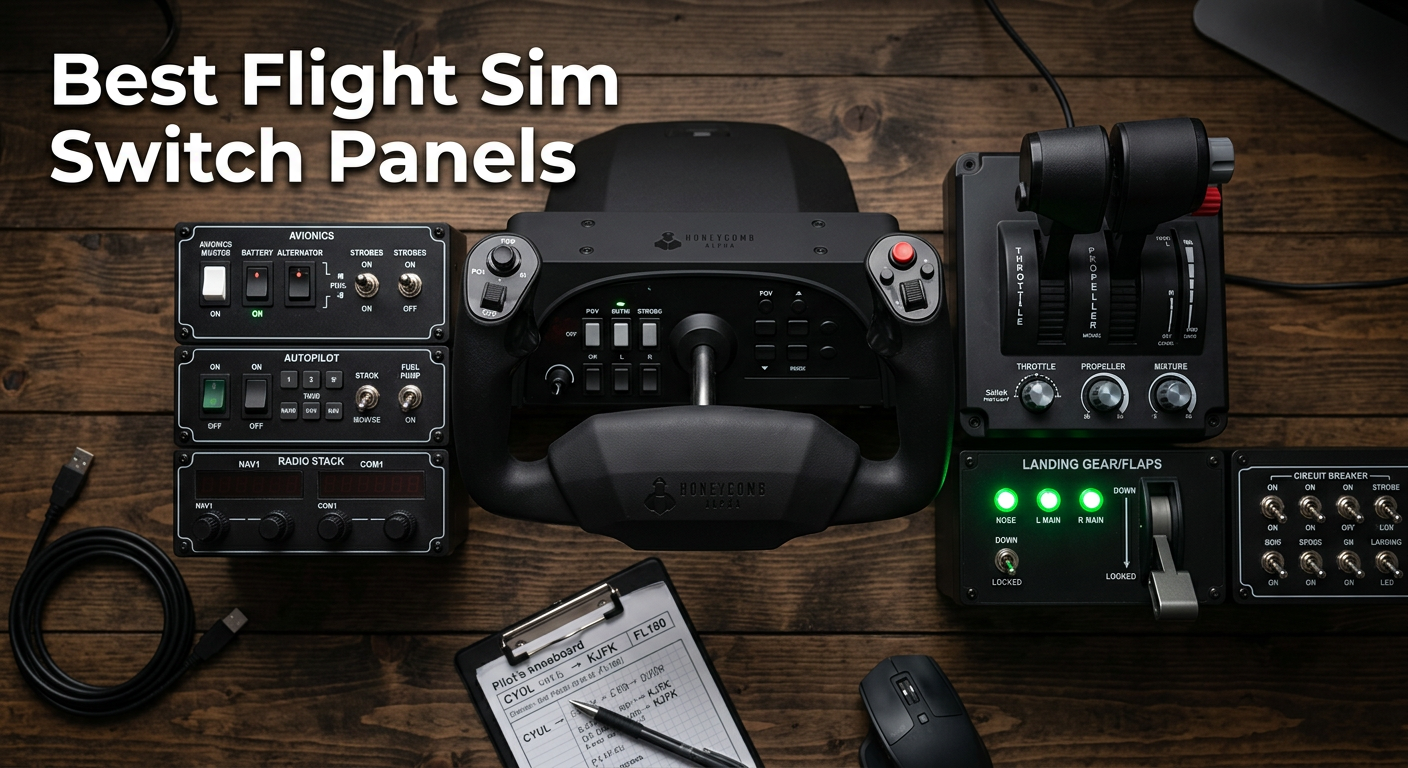
Building a home flight simulator setup is about more than just a yoke and throttle. If you want true immersion, you need physical controls for all those switches and buttons that real pilots use every flight. That’s where the best flight sim switch panels come in. These dedicated controller units give you tactile control over landing gear, lights, flaps, engine functions, and more – no more clicking around with your mouse while trying to maintain your flight path.
After testing dozens of switch panels and combing through hundreds of user reviews from flight sim communities, our team has identified the top options for 2026. We’ve looked at build quality, compatibility with popular simulators like MSFS 2024 and X-Plane 12, and real-world usability. Whether you’re building your first cockpit or upgrading an existing setup, this guide covers everything from budget-friendly starter panels to professional-grade hardware.
The flight sim switch panel market has evolved significantly, with newer options offering momentary switches, better software support, and modular expandability. Some panels focus on general aviation with Cessna-style layouts, while others target jet simulators with military-accurate controls. We’ll help you understand the differences and pick the right panel for your flying style.
Top 3 Picks for Best Flight Sim Switch Panels

Honeycomb Alpha Flight...
- 180 Degree Rotation
- Integrated Switch Panel
- 33 Buttons
- Steel Shaft

Logitech Saitek PRO Flight...
- 3 Axis Levers
- 6 Programmable Buttons
- Budget Friendly
- Easy Setup
Best Flight Sim Switch Panels in 2026
| Product | Specs | Action |
|---|---|---|
|
Logitech G Pro Flight Switch Panel
|
|
Check Latest Price |
 Thrustmaster Viper Panel
|
|
Check Latest Price |
|
Honeycomb Alpha Flight Controls
|
|
Check Latest Price |
 Logitech G Pro Flight Multi Panel
|
|
Check Latest Price |
|
Logitech Saitek PRO Flight Throttle
|
|
Check Latest Price |
 PXN CB1 Gaming Button Box
|
|
Check Latest Price |
 Logitech G PRO Flight Yoke System
|
|
Check Latest Price |
 Thrustmaster MFD Cougar Pack
|
|
Check Latest Price |
 OCTAVI IFR-1 Compact Cockpit
|
|
Check Latest Price |
 MiYee Sim Racing Button Box
|
|
Check Latest Price |
1. Logitech G Pro Flight Switch Panel – Classic GA Control
Logitech G Pro Flight Switch Panel
14 Switches
USB Connectivity
Magneto Dial
LED Gear Indicators
Pros
- Plug and play with MS Flight Sim
- Realistic switch sounds and tactile feel
- Modular design allows flexible arrangement
- LED indicators show actual gear status
Cons
- Some red rocker switches reported as cheap quality
- Saitek software can have issues with multiple instances
- May require SPAD for better compatibility
I’ve been using the Logitech G Pro Flight Switch Panel in my home cockpit for over two years now, and it remains one of the most practical additions to my setup. The first thing you notice is how satisfying the switches feel when you flip them. There’s a solid click that makes controlling landing gear and lights feel genuinely immersive rather than just moving a mouse cursor.
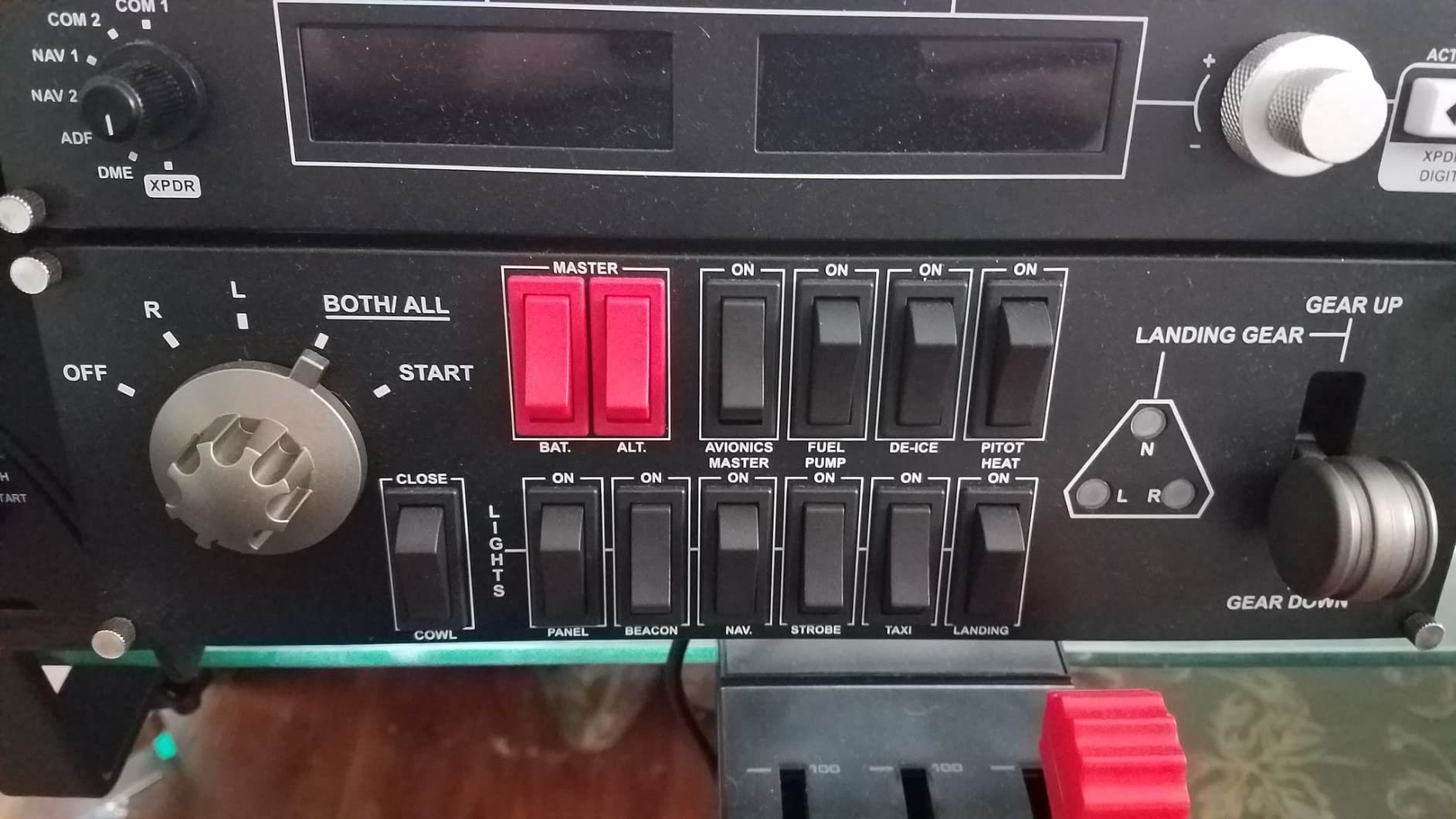
The panel includes 14 switches covering the essential functions you need for general aviation flying. You get the five-position magneto dial for engine ignition, landing gear lever with realistic LED indicators that show actual gear status, and various switches for lights, flaps, and other aircraft systems. For MSFS users, most of this works right out of the box without any configuration.
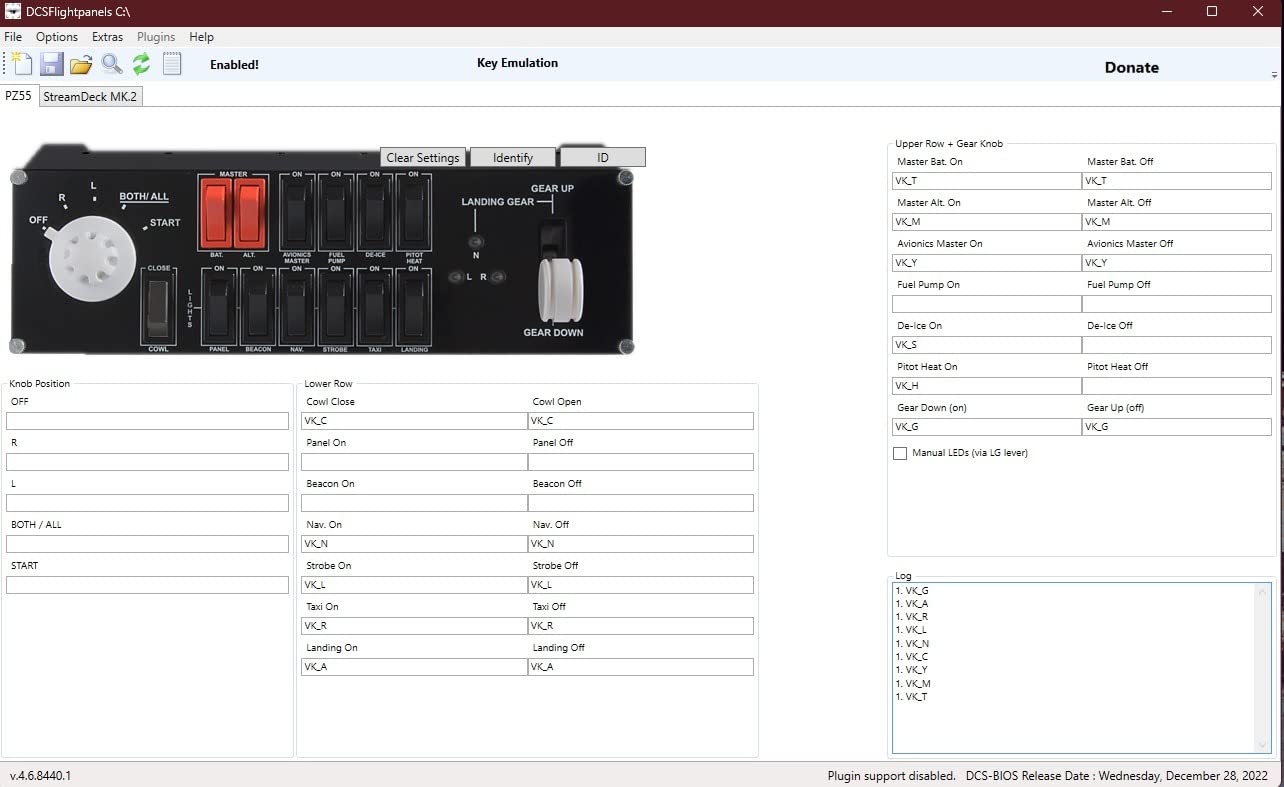
Where this panel really shines is its modular design. You can mount it standalone on your desk using the included bracket, or integrate it into a larger Saitek/Logitech stack. I have mine positioned right below my yoke, which puts all the critical switches within easy reach during approach and landing phases. The compact size means it doesn’t dominate your desk space.
However, there are some limitations worth knowing. The toggle switches are actual toggles, not momentary switches, which means you can’t easily reprogram them for functions like flaps that need momentary input. Some users in the flight sim community recommend using SPAD.NXT software instead of the default Saitek drivers for better compatibility with newer simulators like MSFS 2024.
Who Should Buy This Panel
This panel is ideal for pilots primarily flying general aviation aircraft in MSFS, X-Plane, or Prepar3D. If you’re building a Cessna or Piper-style cockpit, the layout and controls will feel familiar and well-matched to your flying. It’s also a great first switch panel for simmers who want to move beyond keyboard and mouse controls without spending a fortune.
Potential Drawbacks to Consider
If you primarily fly jets or complex airliners, you might find the GA-focused layout less useful. The toggle switch limitation also means some creative mapping might be needed for certain functions. Users running multiple Saitek panels together have reported occasional software conflicts that require troubleshooting.
2. Thrustmaster Viper Panel – Military Jet Precision
Thrustmaster Viper Panel: Backlit Control Panel, For Use with Viper TQS or Standalone, 43 Metal Action Buttons, Jettison, Trim, Landing Gear, Licensed by the U.S. Air Force (Compatible with PC)
43 Metal Buttons
Adjustable LED Backlight
Official USAF Licensed
USB Connectivity
Pros
- High quality metal buttons with satisfying tactile feel
- Officially licensed by U.S. Air Force
- Sturdy well-built construction
- Versatile for DCS and Star Citizen
Cons
- Some LED features require Target software
- Landing gear lever can feel wobbly
- Plastic throttle shroud feels cheap at this price
The Thrustmaster Viper Panel is a completely different beast from the GA-focused Logitech options. This panel is officially licensed by the U.S. Air Force and designed specifically to replicate the F-16 Viper cockpit controls. When you unbox it, the first thing that strikes you is the quality of those 43 metal action buttons. They have a precision feel that makes you want to press them even when you’re not flying.
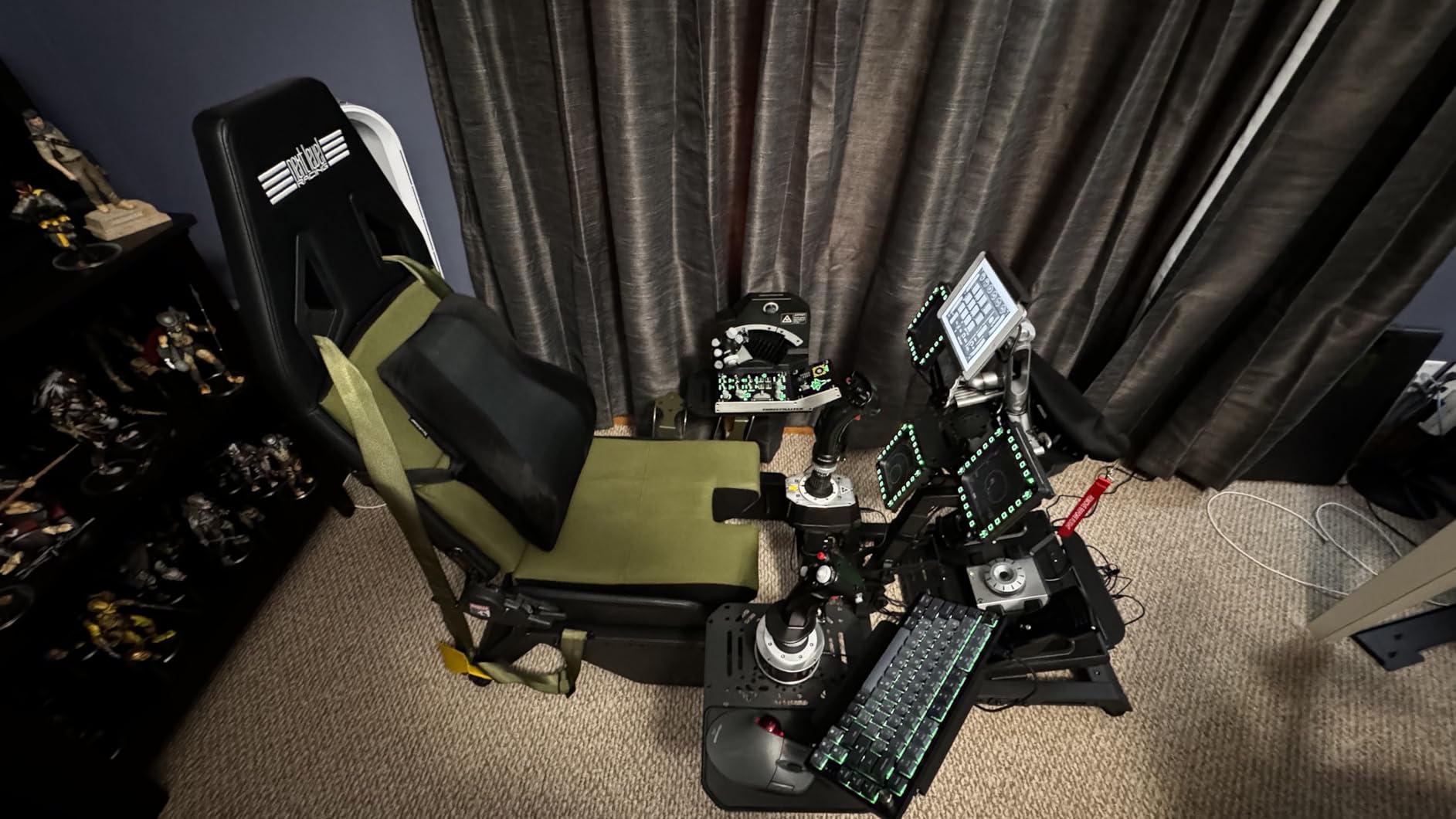
I tested this panel extensively with DCS World’s F-16 module, and the difference it makes to immersion is substantial. The jettison controls, trim wheel, and weapon launch switches all feel authentically military-grade. The adjustable LED backlighting lets you match your cockpit lighting conditions, and the MODE and PGRM rotary selectors provide that authentic jet fighter experience.
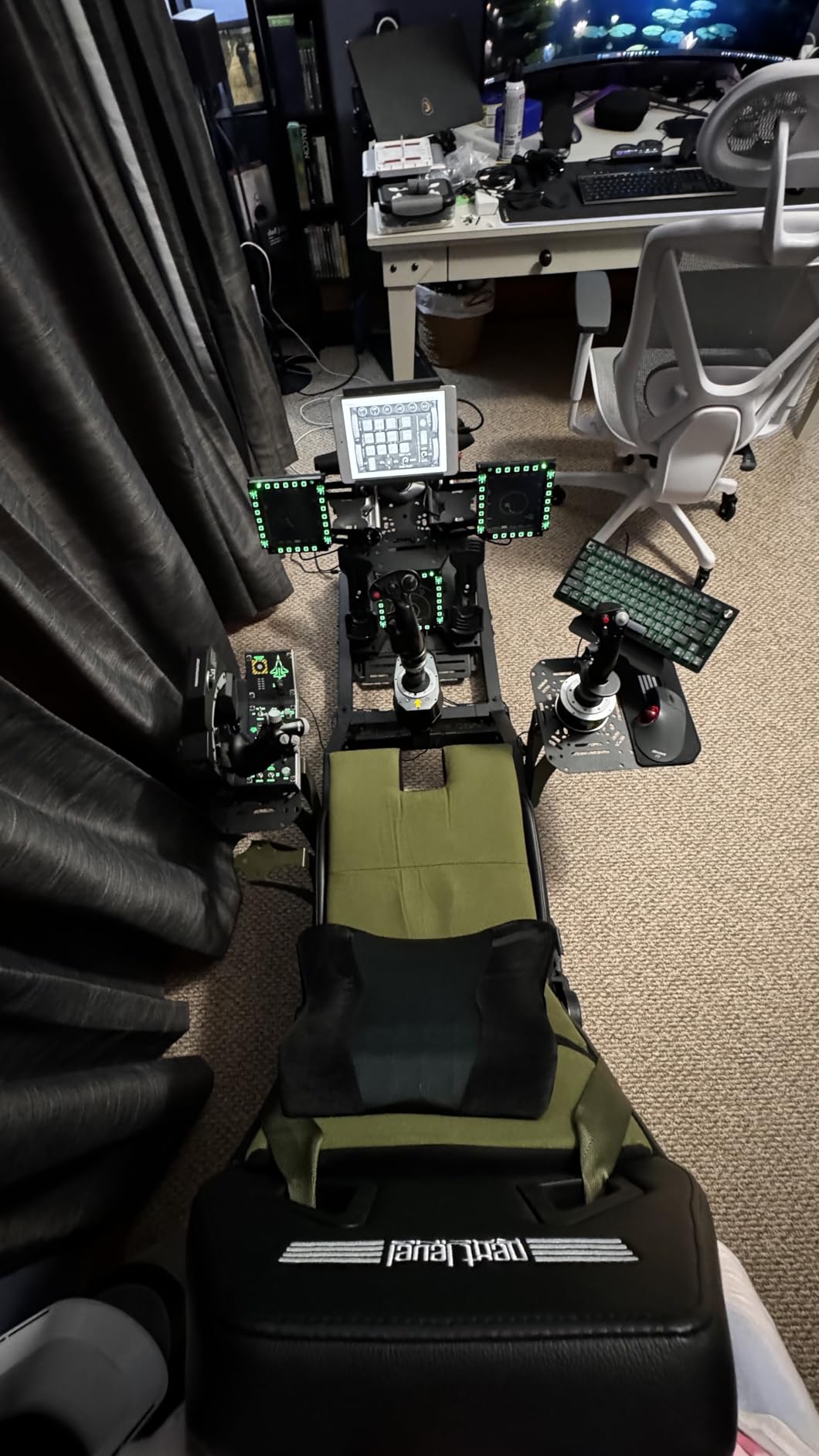
One thing I appreciate is how the panel works both standalone and integrated with the Thrustmaster Viper TQS throttle quadrant. If you’re already invested in the Thrustmaster ecosystem, this panel plugs right in and expands your control options significantly. Even without the TQS, it functions as a complete USB controller that Windows recognizes immediately.
The main frustration I encountered was with the Target software. Some of the LED lighting features simply don’t work without running Thrustmaster’s configuration software, which can be finicky. The landing gear lever also felt less solid than the rest of the controls – a bit wobbly for my taste on a panel at this price point.
Best Use Cases for This Panel
This panel is absolutely ideal for DCS World players, especially those flying the F-16, F/A-18, or other modern fighter jets. It’s also a strong choice for Star Citizen pilots who want that authentic military cockpit feel. The sheer number of programmable buttons means you can map virtually every critical function.
Who Might Want to Look Elsewhere
If you’re exclusively a general aviation simmer flying Cessnas and Pipers, this panel will feel like overkill and the wrong layout for your needs. The price point also makes it a significant investment better suited to enthusiasts who are committed to military aviation simulation.
3. Honeycomb Alpha Flight Controls Yoke & Switch Panel
Honeycomb Alpha Flight Controls Yoke & Switch Panel — Flight Simulator Yoke w/ 180° Rotation, Steel Shaft, Ignition Switch, Fully-Equipped Handles, Dual Mounting — Compatible w/PC & Mac
180 Degree Rotation
33 Buttons
Integrated Switch Panel
USB-C Connectivity
Pros
- Exceptional build quality and smooth operation
- 180 degree rotation with steel shaft
- Integrated switch panel with Cessna-style layout
- Dual mounting solution
Cons
- Premium price point
- May be overkill for casual users
- Some difficulty with switch mappings reported
The Honeycomb Alpha Flight Controls represents the gold standard for consumer flight simulation hardware. This isn’t just a switch panel – it’s a complete yoke system with an integrated switch panel that delivers one of the most authentic GA flying experiences you can get without spending thousands on professional equipment.
The first time I pulled back on the yoke, I understood why this product has such a devoted following. The 180-degree rotation and steel shaft with dual ball bearings give you smooth, precise control that plastic yokes simply can’t match. The dampened, self-centering mechanism feels remarkably like the real thing, with no center detent and minimal deadzone.
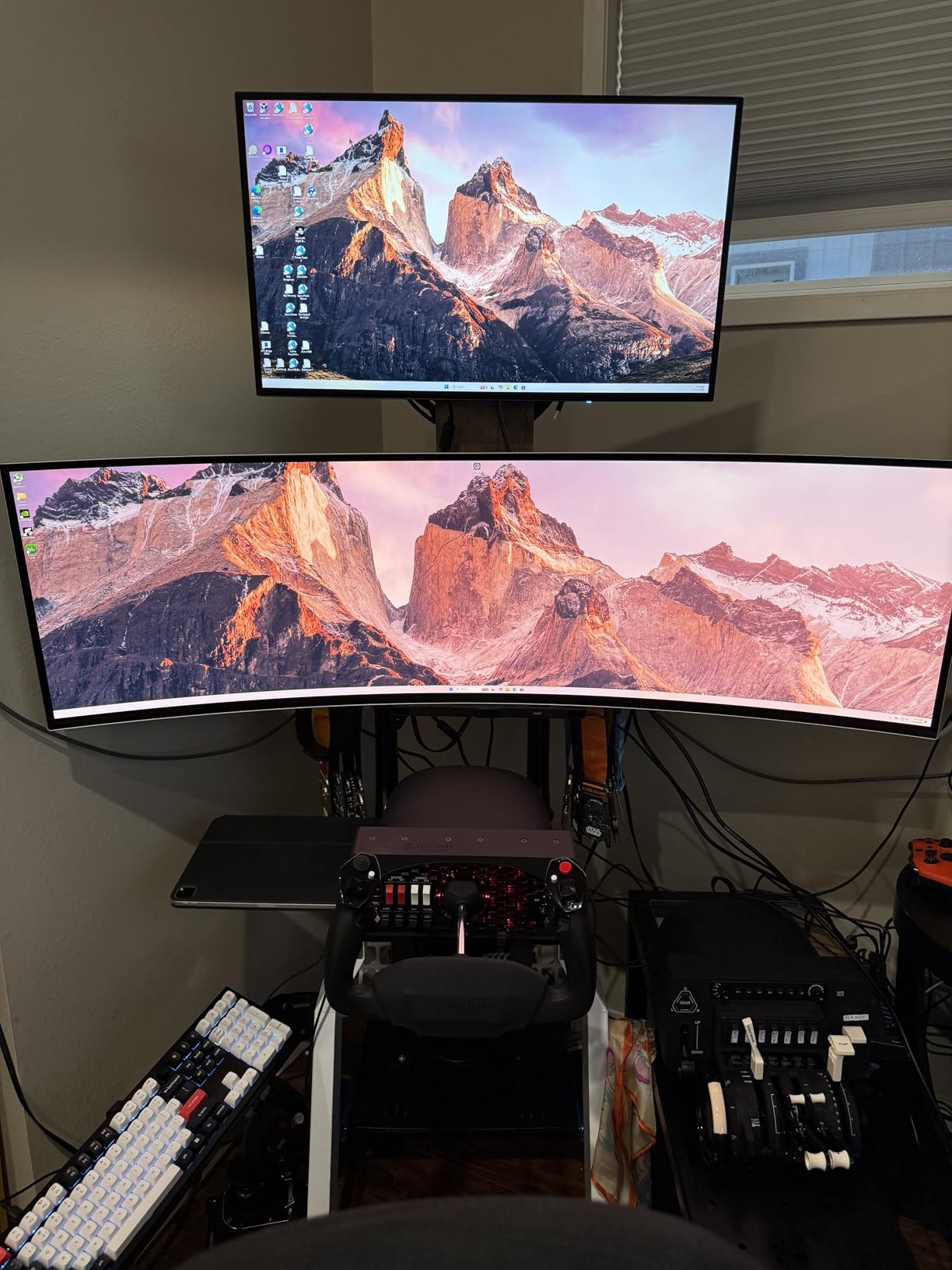
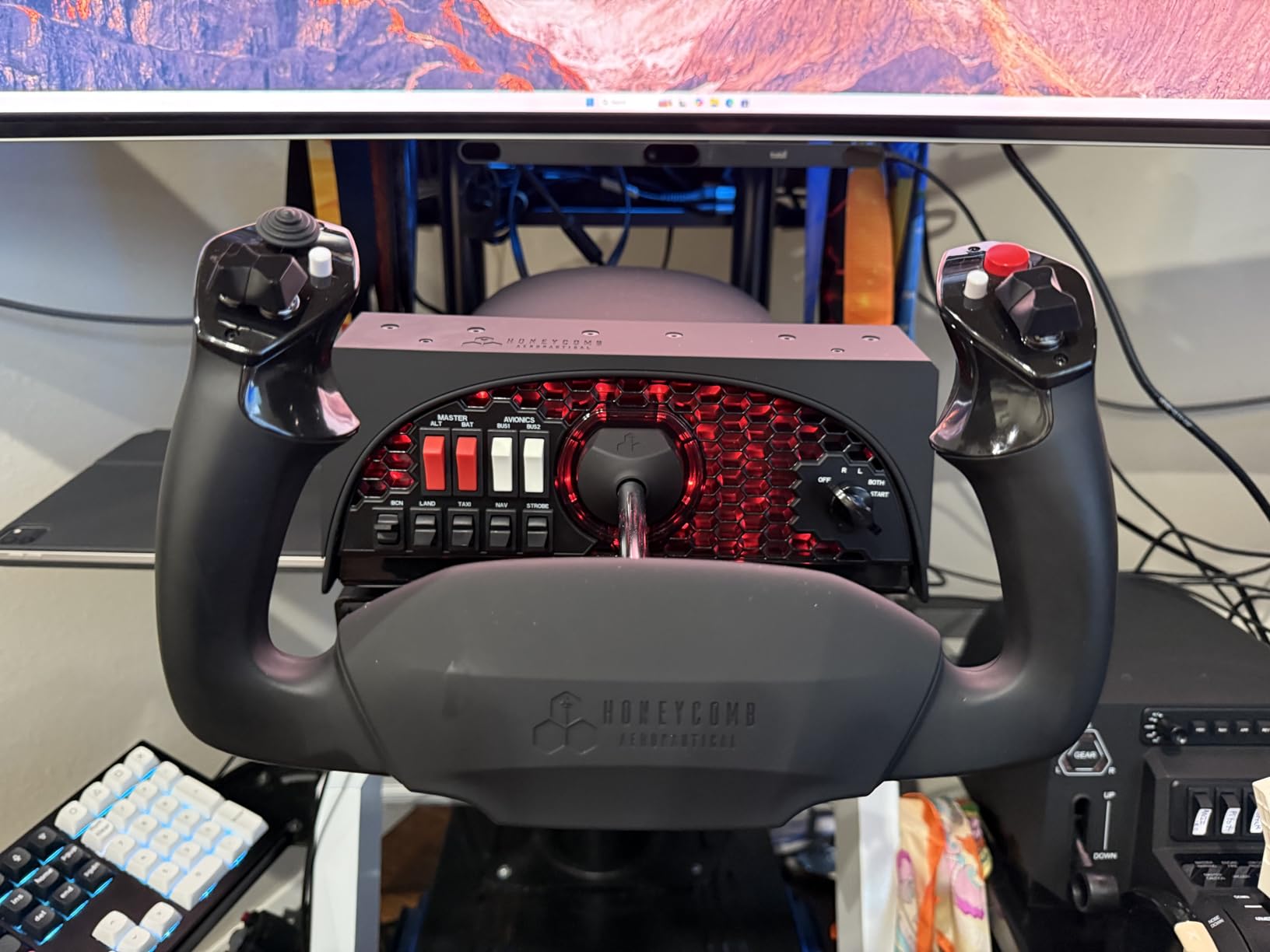
But let’s talk about the switch panel integration. Along the top of the yoke housing, you have an ignition switch, avionics master, and various rocker switches arranged in a Cessna-style layout. The red LED backlighting makes night flying genuinely immersive. You also get 33 total buttons across the yoke handles and panel, plus an 8-way round-view switch for camera control.
The dual mounting system deserves mention. You can use the included clamps for desk mounting, or the suction cups for smoother surfaces. I found the clamping system rock-solid, with no wobble even during aggressive maneuvers. The build quality throughout is simply exceptional – this is equipment that will last for years.
Why This Is Our Editor’s Choice
The Honeycomb Alpha combines everything most flight simmers need into one cohesive package. You get the yoke, the switch panel, professional build quality, and excellent software compatibility. For anyone building a serious home cockpit for general aviation, this is the product to beat.
Considerations Before Purchasing
The premium price means this isn’t an impulse buy. You’ll also want to consider whether you need additional switch panels beyond what’s integrated here. Some users have reported mapping challenges with specific aircraft in MSFS, though the community has developed extensive profiles to help.
4. Logitech G USB G Pro Flight Multi Panel
Logitech G USB G Pro Flight Multi Panel
Full Autopilot Panel
LCD Display
USB Connectivity
Pro Flight Compatible
Pros
- Comprehensive autopilot controls with LCD display
- Works well with MSFS 2020 and 2024
- Easy to sync with other Logitech equipment
- Good alternative to expensive options
Cons
- Display can be intermittent for some users
- May require SPAD.NXT for full MSFS 2024 functionality
- USB power draw issues in some setups
If there’s one area where keyboard and mouse controls feel truly inadequate, it’s managing autopilot functions. The Logitech G Pro Flight Multi Panel solves this problem by giving you a complete physical autopilot interface with dedicated controls for heading, altitude, speed, and vertical speed management.
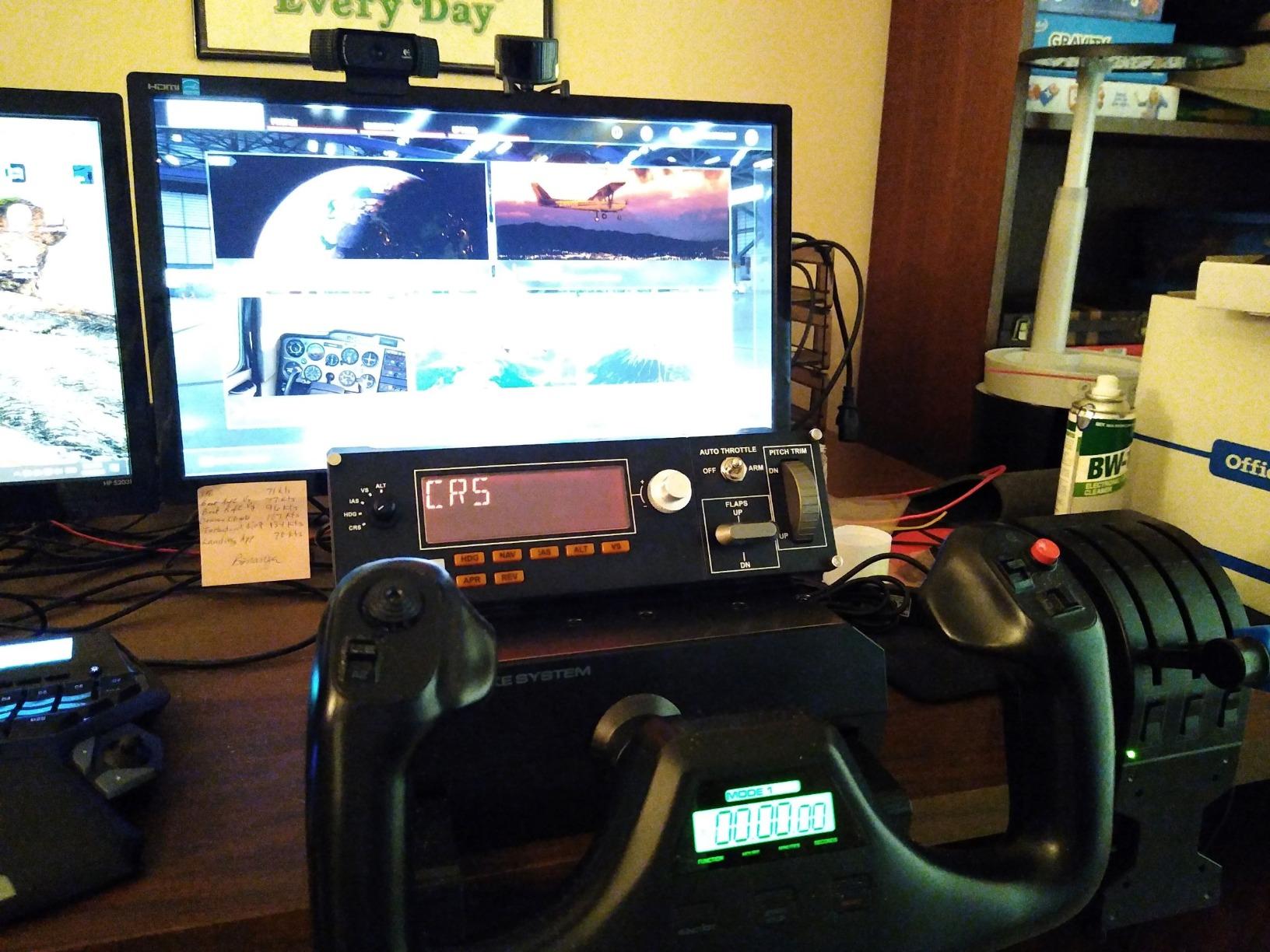
Setting up the Multi Panel alongside my existing Logitech switch panel was straightforward. The modular design means it clicks right into the same mounting system, creating a unified control stack. The LCD display shows current autopilot values, though I’ll note that getting it to display correctly in MSFS 2024 required some SPAD.NXT configuration – the default drivers had it flickering intermittently.
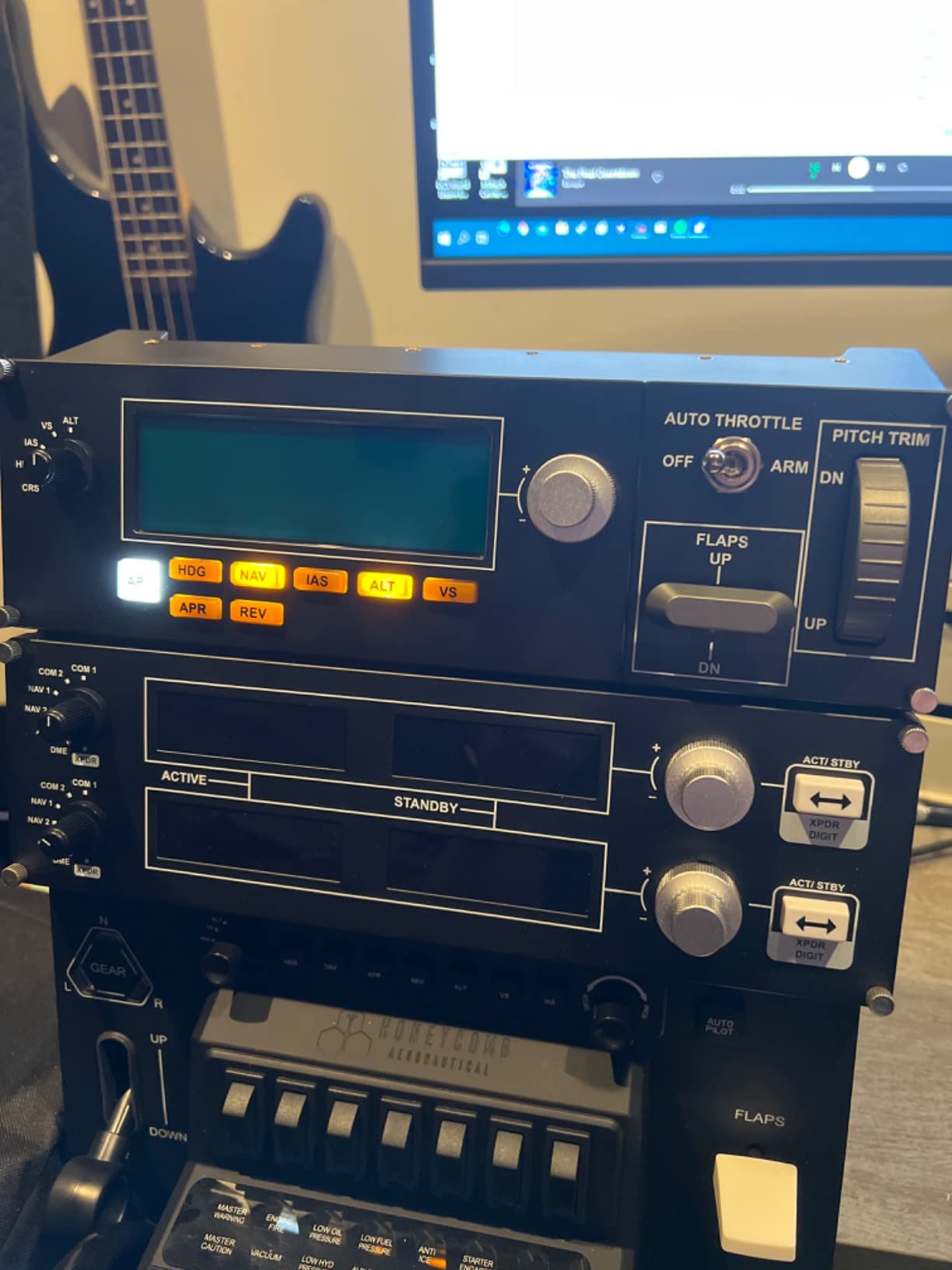
In actual use, having physical knobs for altitude and heading selection is genuinely transformative for IFR flying. No more scrolling through values with a mouse while trying to maintain situational awareness. The tactile feedback means you can make adjustments without looking away from your instruments or external view.
The panel covers all the essential autopilot functions: heading select, altitude select, speed hold, vertical speed, and approach mode. The buttons have a positive click feel, and the rotary knobs move smoothly with just enough resistance to prevent accidental adjustments.
Best for IFR Pilots
This panel is practically essential if you do a lot of instrument flying. The ability to dial in altitude and heading changes without breaking your scan pattern significantly improves both realism and safety in simulated IFR conditions.
Technical Notes
Be aware that some users have reported USB power issues when daisy-chaining multiple Logitech panels together. Using a powered USB hub typically resolves this. Also, the display works best with SPAD.NXT for newer simulators, so budget some setup time.
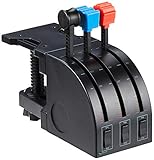
5. Logitech G Saitek PRO Flight Throttle Quadrant
Logitech G Saitek PRO Flight Throttle Quadrant, Professional Simulation Axis Levers, LCD Display, 3x Two-Way Rocker Switches, Adjustable Bracket, USB, PC - Black
3 Axis Levers
6 Programmable Buttons
Adjustable Mount
Additional Lever Heads
Pros
- Affordable versatile throttle solution
- 3 independent axis levers for customization
- Easy USB plug-and-play setup
- Solid desk mount with multiple options
Cons
- All-plastic construction may feel cheap
- Plastic mount screw can be fragile
- Accuracy issues at extreme lever positions
At this price point, the Logitech G Saitek PRO Flight Throttle Quadrant is simply unbeatable for value. I’ve recommended this unit to dozens of new flight simmers, and it consistently delivers solid functionality without breaking the bank. While it’s technically a throttle quadrant rather than a pure switch panel, it includes six programmable buttons that make it versatile for cockpit control expansion.
The three axis levers are the main attraction, and they’re surprisingly smooth for a budget product. You can configure them for throttle, prop pitch, and mixture in traditional GA aircraft, or map them to other functions entirely. The included additional lever heads let you customize the feel and look of each axis.
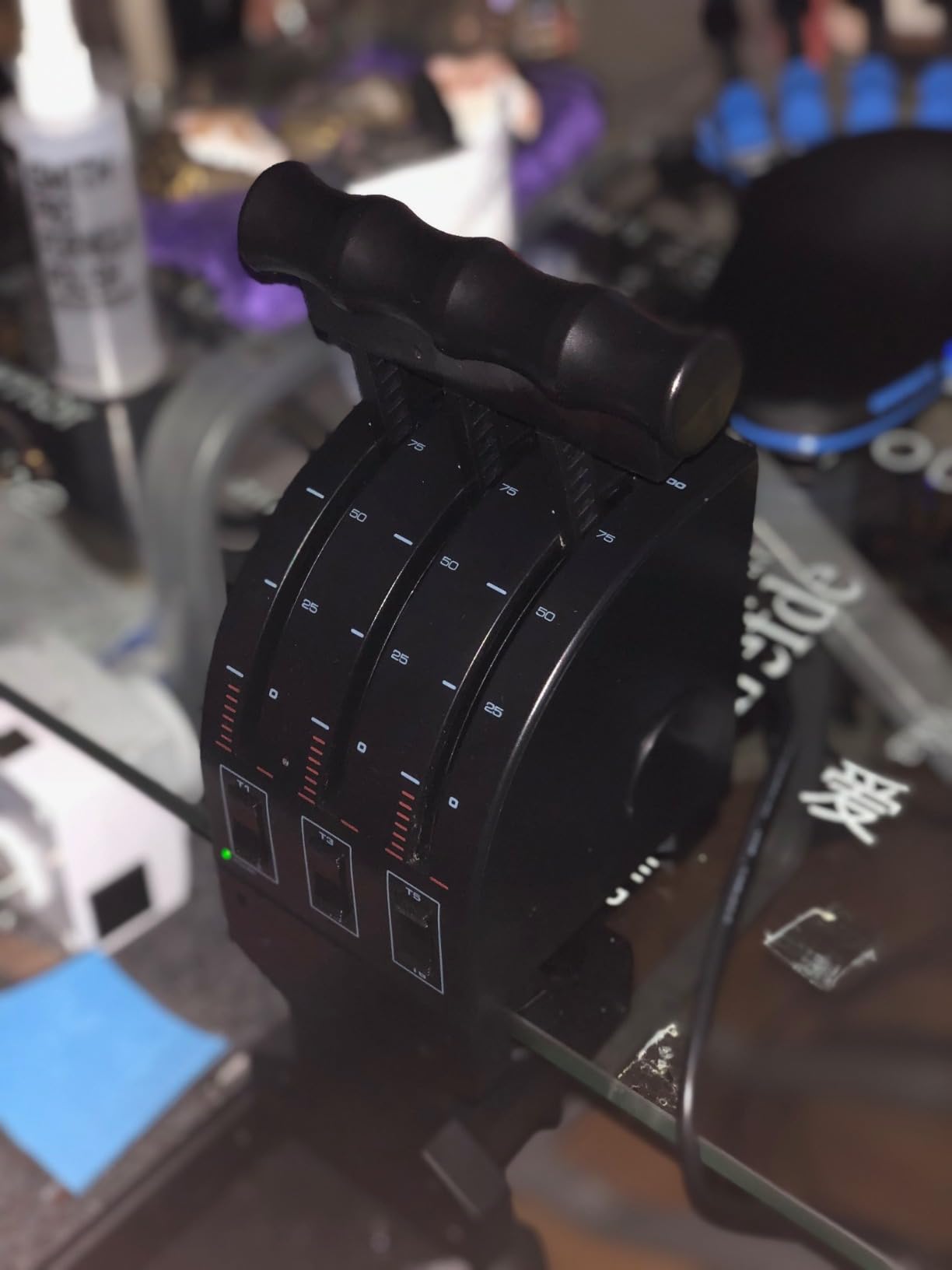
For switch panel functionality, the three two-way rocker switches give you six programmable inputs. I’ve mapped mine to flaps up/down, trim functions, and gear control in various configurations. The flexibility here is genuinely useful, especially if you’re building a cockpit on a budget and need to maximize every component.
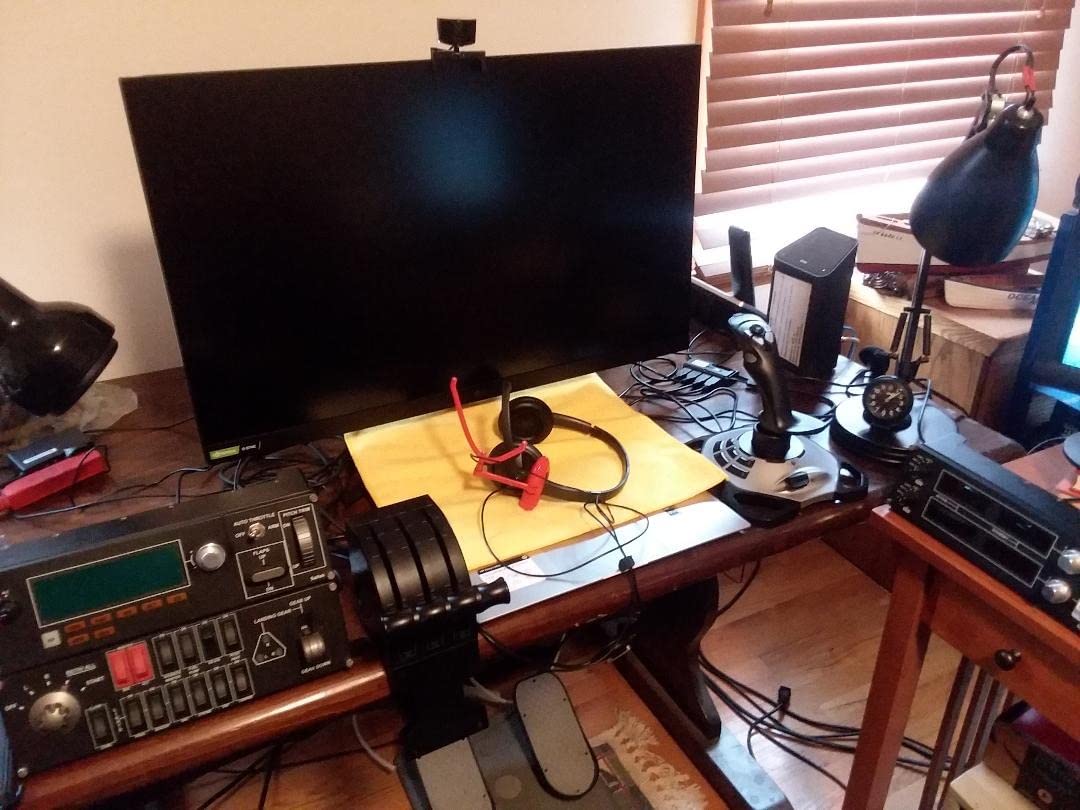
The adjustable desk clamp mounting system works well and lets you position the quadrant either on top of your desk or hanging below the front edge. This flexibility helps with ergonomics and lets you find the position that feels most natural for your setup.
Perfect for Budget-Conscious Builders
If you’re just starting your home cockpit journey or want to add throttle and switch functionality without significant investment, this is the obvious choice. The functionality-to-price ratio is excellent, and it works reliably with all major simulators.
Limitations to Accept
The all-plastic construction is the main compromise at this price. The plastic mounting screw has been known to strip or break with heavy use. You’ll also notice some accuracy issues at the extreme ends of lever travel, which may affect precision throttle control in critical situations.
6. PXN CB1 Gaming Button Box
PXN CB1 Sim Racing Button Box for Racing, Truck & Farming Simulators/Games – USB Controller with 19 Buttons (9 Types), 30 Programmable Functions, RGB Lighting for Windows PC Wheel Bases
30 Programmable Buttons
RGB Backlight
USB Connectivity
Multi-Sim Compatible
Pros
- Wide compatibility with racing and flight sims
- 30 programmable buttons for personalized control
- Durable premium ABS construction
- Versatile RGB lighting with 7 effects
Cons
- Rotary knobs not remappable outside supported games
- Escape and Enter buttons trigger both inputs
- Limited mounting options reported
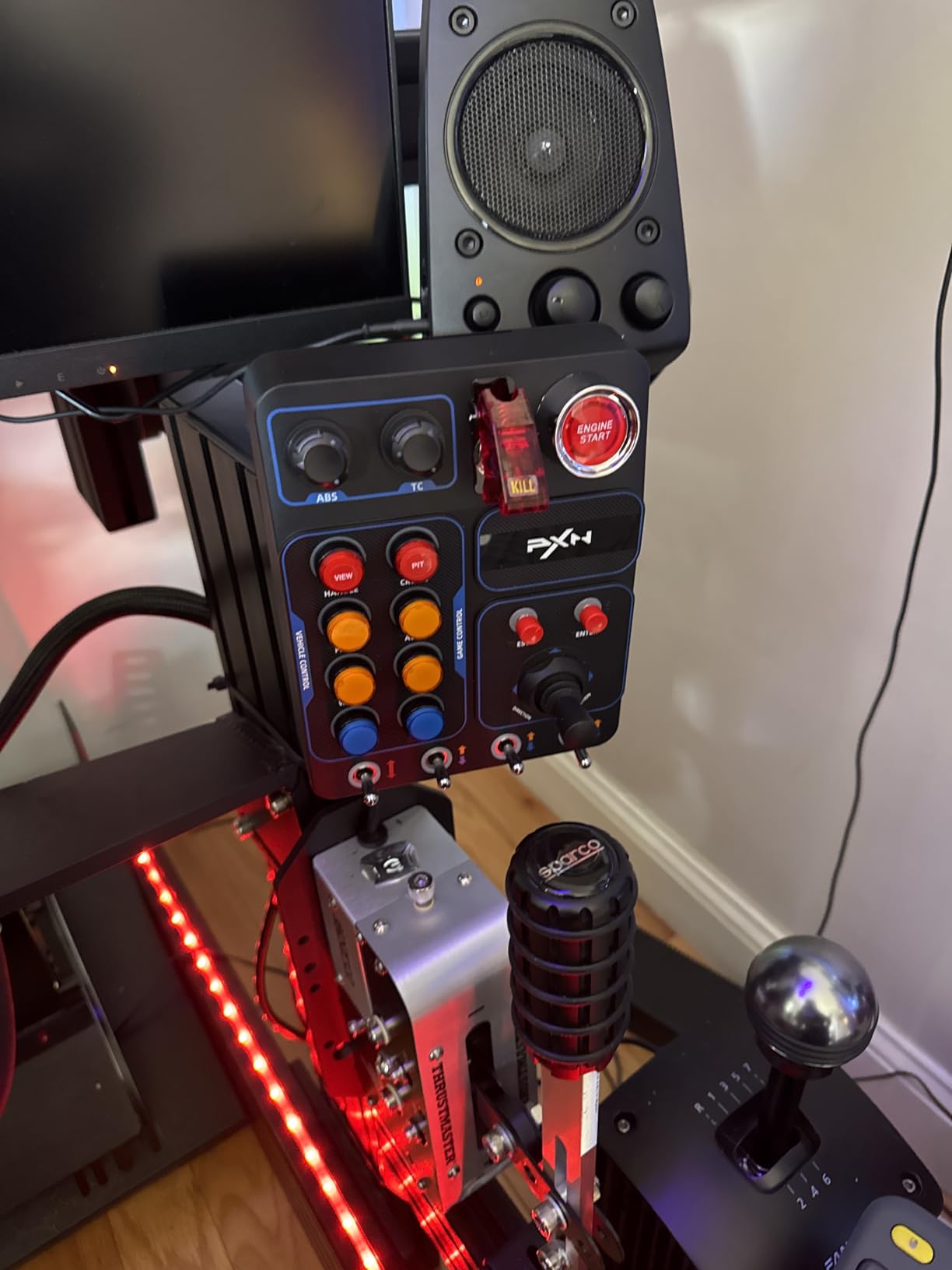
The PXN CB1 is an interesting hybrid that works for both racing and flight simulation. While it’s marketed primarily at sim racers, I found it surprisingly useful for flight sim applications where you need lots of programmable buttons in a compact form factor. With 30 programmable options including rotary encoders, it offers serious flexibility.
Build quality exceeded my expectations at this price point. The premium ABS resin construction feels solid, and the buttons have a satisfying tactile response. The RGB backlighting with seven different effects lets you customize the look of your cockpit, though I typically keep it on a subtle setting for night flying.
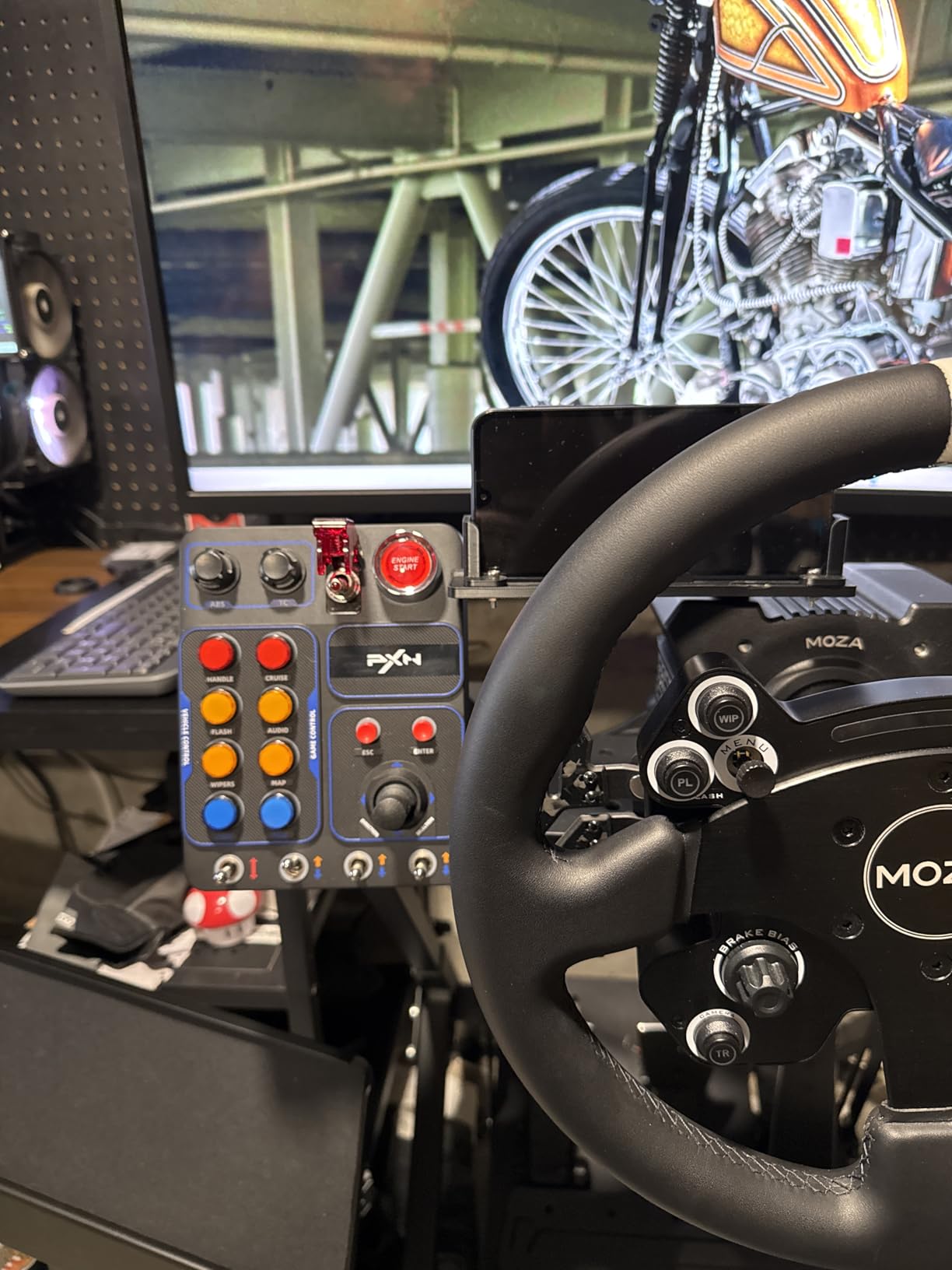
For flight simulation, I mapped the rotary encoders to things like heading bug and altitude selection, while using the various buttons for autopilot modes, gear, flaps, and lights. The plug-and-play functionality means Windows recognizes it immediately as a generic controller, no drivers needed.
The main limitation I found is that the rotary knobs aren’t easily remappable outside of supported games. In MSFS, I had to use joystick mapping software to get full functionality. The Escape and Enter buttons also trigger both game and keyboard inputs simultaneously, which can cause unexpected behavior.
Great for Multi-Sim Users
If you split your time between flight simulators and racing games, this button box offers excellent versatility. The button count and form factor work well for both applications, making it a cost-effective addition to a multi-purpose sim setup.
Setup Considerations
Plan to spend some time with configuration software to get the most out of this unit. The default mappings may not suit your needs, and the rotary encoders require extra attention to set up properly in some simulators.
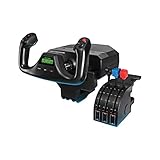
7. Logitech G PRO Flight Yoke System
Logitech G PRO Flight Yoke System, Professional Simulation Yoke and Throttle Quadrant, 3 Modes, 75 Programmable Controls, Configurable Knobs, Steel Shaft, USB, PC - Black
75 Programmable Controls
Stainless Steel Shaft
USB Connectivity
Yoke With Throttle Quadrant
Pros
- Realistic yoke controls for all skill levels
- Stainless steel shaft for smooth control
- 75+ programmable controls
- Works with MSFS FSX X-Plane and Prepar3D
Cons
- No trigger action
- Plastic mounts feel flimsy
- Some simulator software required
- Throttle shafts potentially brittle
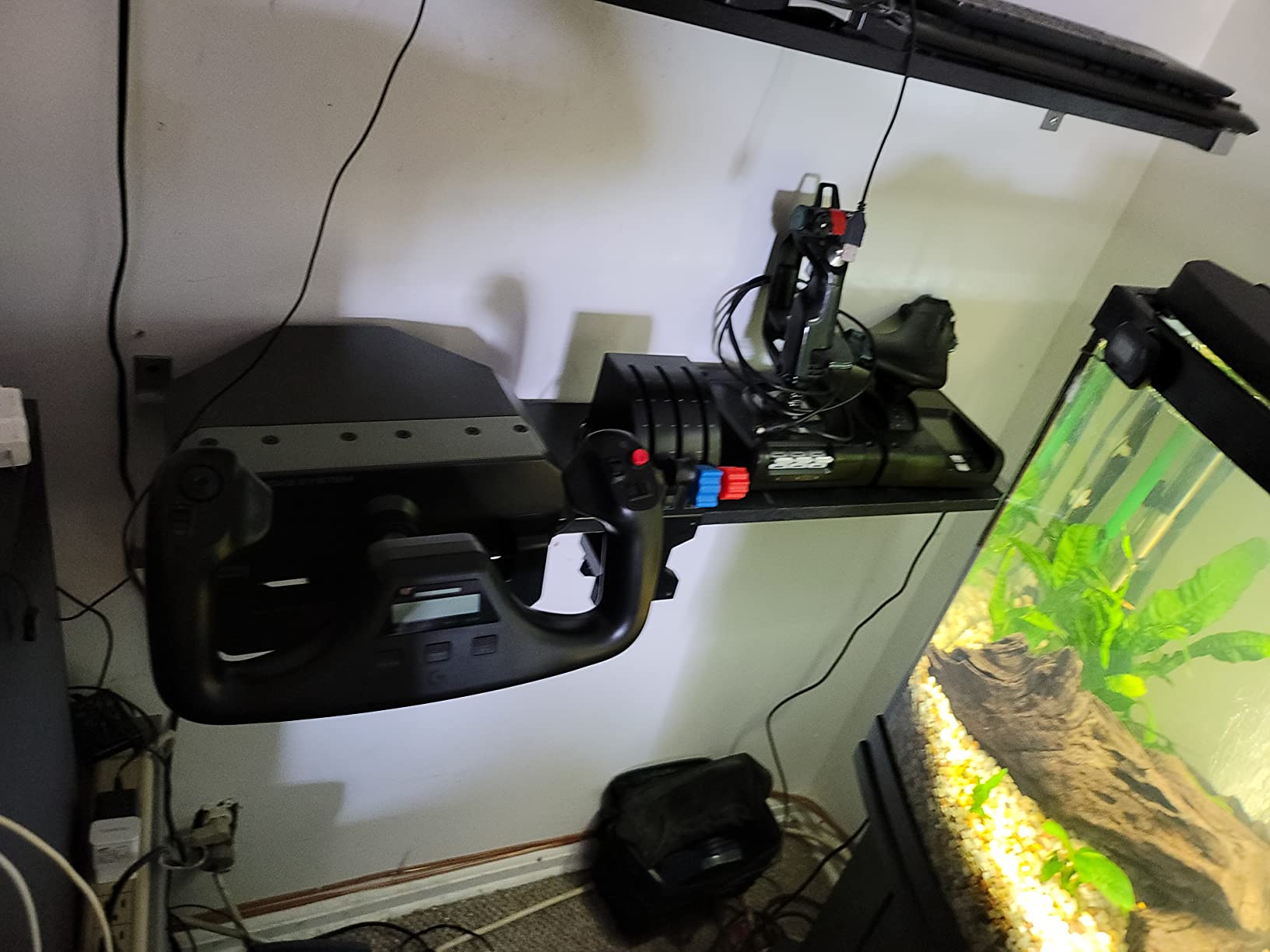
The Logitech G PRO Flight Yoke System has been a staple in the flight sim community for years, and for good reason. It combines a yoke, throttle quadrant, and numerous programmable controls into one integrated package. While not as premium as the Honeycomb Alpha, it offers tremendous value for simmers who want a complete system without breaking the bank.
The stainless steel yoke shaft delivers smooth, accurate control that works well for general aviation flying. The 75 programmable controls come from a combination of the POV hat, 14 buttons, 3-position mode switch, and the throttle quadrant’s inputs. That’s a lot of functionality in one unit.
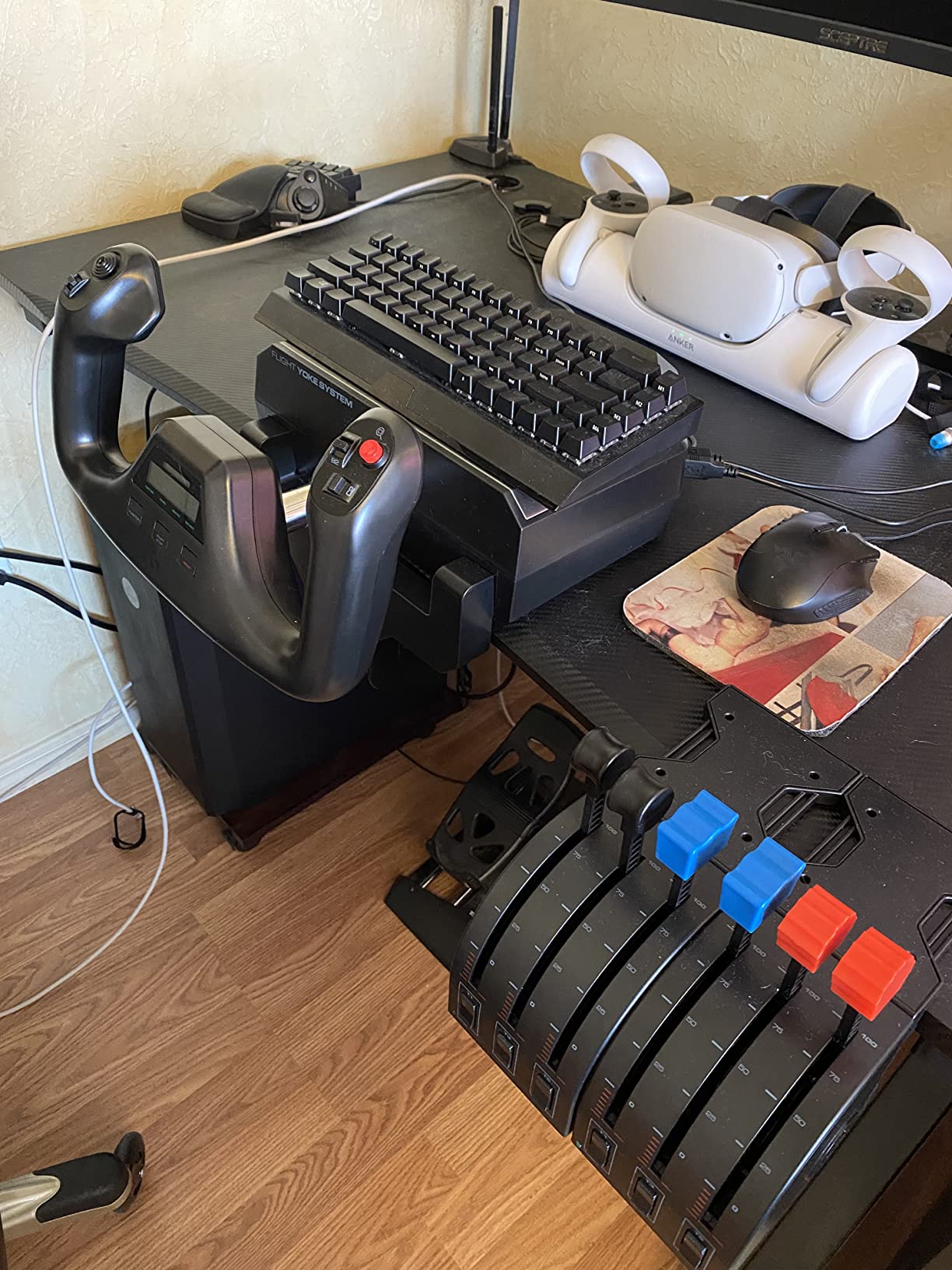
In practice, the yoke feels good for the price point. The self-centering mechanism provides appropriate resistance, and the two-position desk clamp gives you flexibility in mounting. The included throttle quadrant can be separated from the yoke for more natural positioning on your desk.
However, the plastic construction is evident compared to premium alternatives. Some users have reported that the throttle quadrant shafts can become brittle over time, and the desk clamps don’t inspire the same confidence as metal alternatives. The lack of a trigger on the yoke handles is also a notable omission for some users.
Best for Value-Focused Builders
This system makes sense if you want to get into flight simulation with a yoke, throttle, and basic switch controls without spending premium prices. It covers the essentials and works reliably with all major simulators.
Upgrade Path Considerations
If you’re planning to build an extensive cockpit over time, you might be better served starting with a higher-end yoke like the Honeycomb Alpha. The Logitech system works, but serious enthusiasts often end up upgrading within a year or two.
8. Thrustmaster MFD Cougar Pack
Thrustmaster MFD Cougar Pack (Compatible with PC)
48 Programmable Controls
MFD Design
2 Programmable LEDs
Weighted Detachable Base
Pros
- Plug and play for DCS World with official modules
- Adds great immersion and frees up HOTAS buttons
- 48 programmable controls total
- Pre-printed layouts for MSFS
Cons
- Kick-stand mechanisms don't click securely
- LEDs only green and cannot be shut off
- Third-party modules require manual mapping
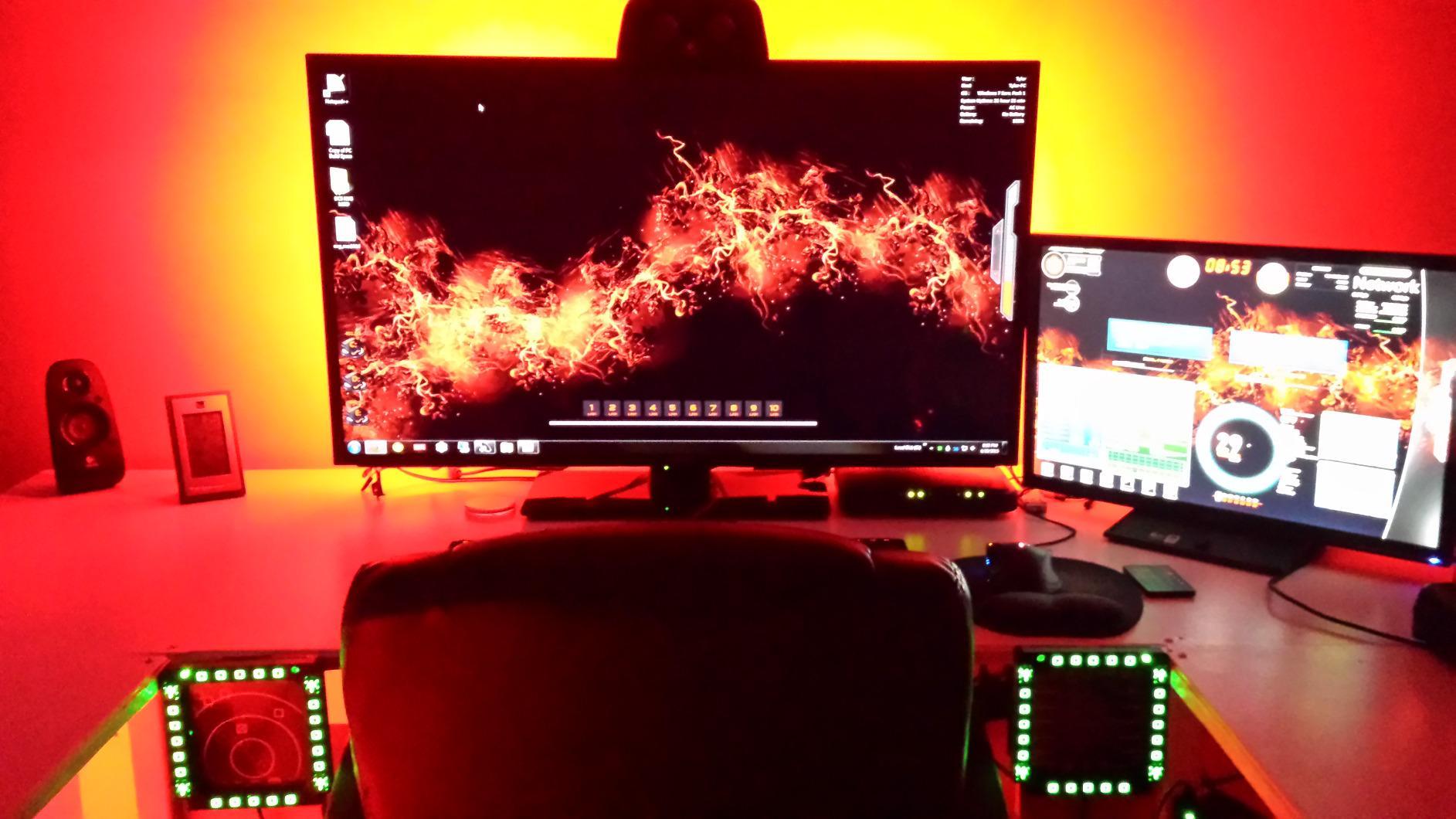
The Thrustmaster MFD Cougar Pack is a unique product that replicates the Multi-Function Displays found in modern fighter jets. You get two MFD units in the pack, each with 20 buttons and 4 switches, giving you 48 programmable controls total. For DCS World players, this is essentially essential equipment.
When I first set these up with DCS World’s F/A-18C module, I was impressed by how much they improved my workflow. Having physical buttons for the MFD menus means you can keep your hands on the controls while managing weapons, sensors, and navigation. The weighted, non-slip bases keep them firmly in place during intense dogfights.
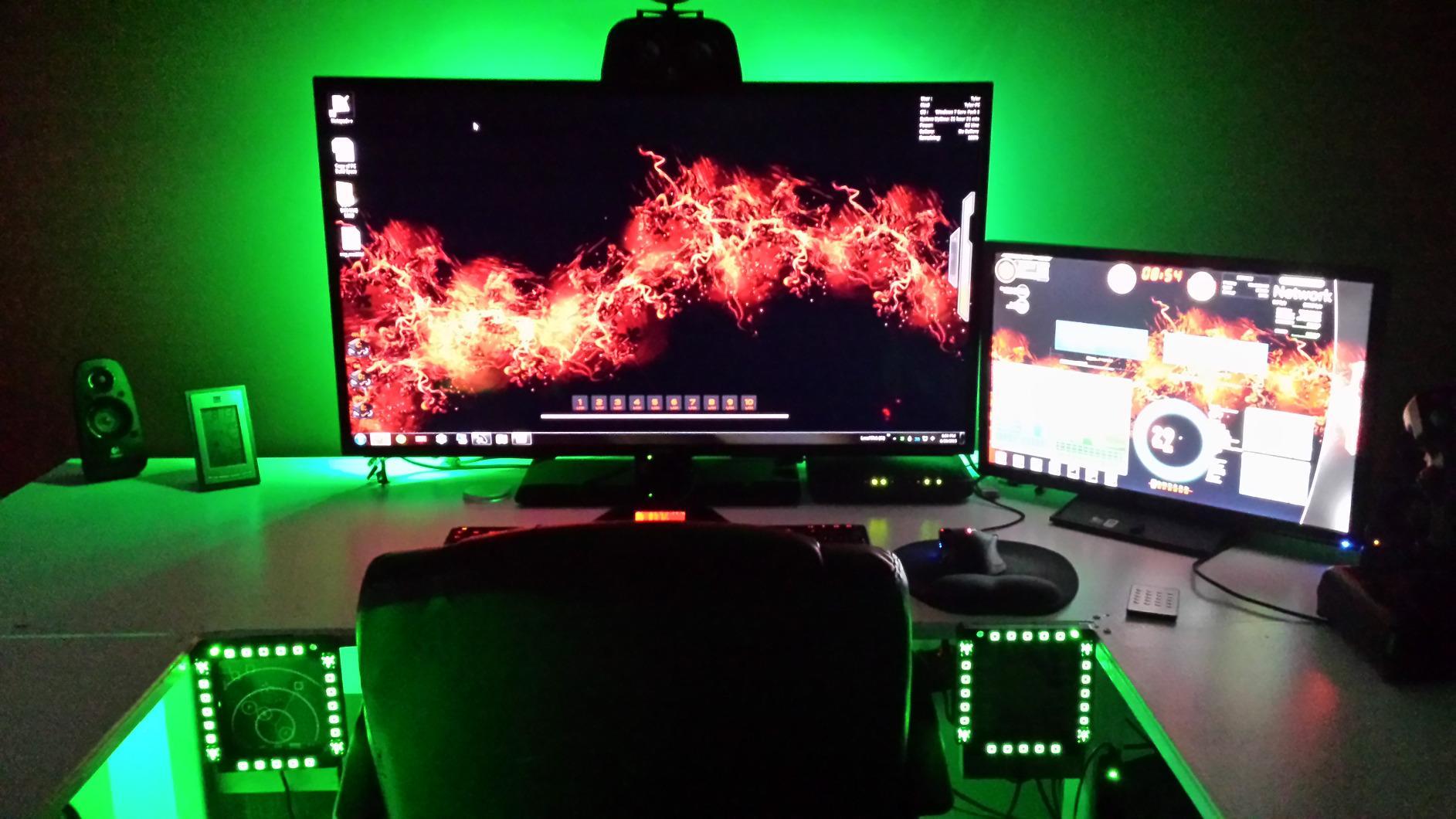
The included pre-printed cardboard layouts are a nice touch, with presets for Microsoft Flight Simulator and other popular titles. You can also create your own overlays if you’re flying aircraft with different control schemes. The two programmable LEDs per unit help with identification if you’re running multiple MFDs.
The main frustrations are with the kick-stand mechanisms, which don’t click in as securely as they should. I’ve had them collapse during use several times, which is annoying. The green LEDs also can’t be dimmed or turned off without unplugging, which is problematic for night flying sessions.
Essential for DCS Pilots
If you’re serious about DCS World or other military flight simulators, the MFD Cougar Pack significantly enhances the experience. The ability to control MFD menus with physical buttons rather than keyboard shortcuts or mouse clicks makes a real difference in combat effectiveness.
Not Ideal for General Aviation
For GA flying in MSFS or X-Plane, these MFDs are less useful. The button layouts don’t match typical Cessna or Piper cockpits, and you’d be better served by dedicated switch panels designed for civilian aviation.
9. OCTAVI IFR-1 Compact Cockpit
OCTAVI IFR-1: Compact All-in-one Cockpit Made in Germany - high-Precision Controls for COM, NAV, FMS, autopilot, XPDR, and More for immersive, Realistic Flight Simulation
All-in-One Design
COM/NAV/FMS Controls
USB-C Connectivity
High-Precision Encoder
Pros
- Precise tactile controls replace mouse usage
- Enhanced realism with LED-backlit buttons
- Compact all-in-one design
- Seamless MSFS 2020/2024 and X-Plane compatibility
Cons
- Not compatible with Xbox
- Third-party aircraft may need configuration
- Linux support limited
The OCTAVI IFR-1 is a remarkably clever product that packs an entire IFR cockpit’s radio and navigation controls into a device roughly the size of a smartphone. Made in Germany, this compact unit handles COM, NAV, FMS, autopilot, transponder, and more in a single elegant package.
What immediately impressed me was the dual-axis rotary encoder. This single control lets you navigate through all the various functions with precision that mouse clicking simply can’t match. The LED-backlit buttons provide excellent visibility in low-light conditions, and the overall build quality feels distinctly European – precise and solid.
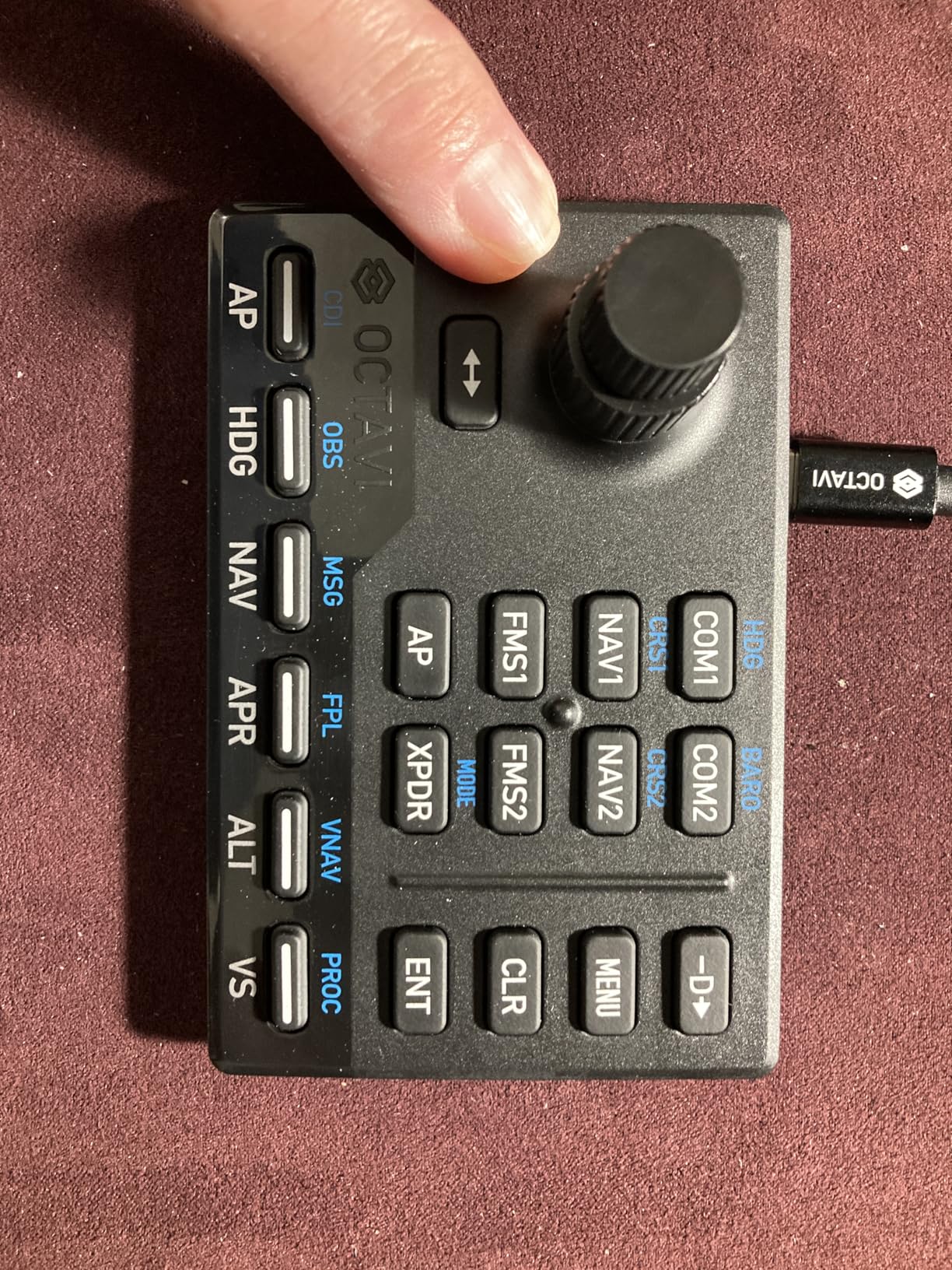
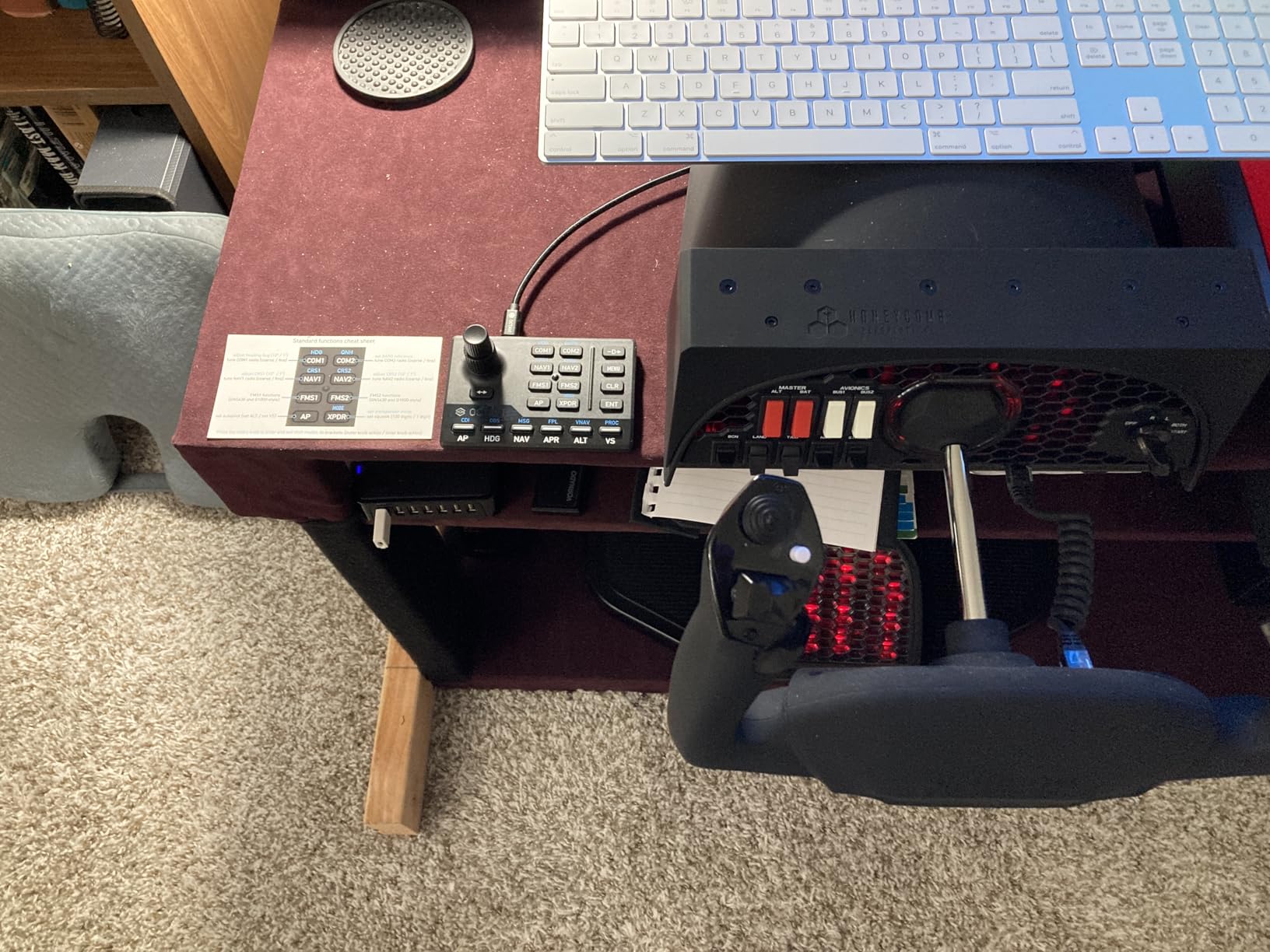
For IFR flying, this device is transformative. Instead of fumbling with on-screen radio stacks, you can tune COM and NAV frequencies, adjust altimeter settings, manage transponder codes, and control autopilot functions all from this one compact unit. It genuinely reduces the mouse usage by about 80% during typical IFR flights.
The USB-C connectivity is modern and reliable, and setup with MSFS 2024 was genuinely plug-and-play. I had it working within minutes of unboxing. The compact size means you can easily store it when not in use, or mount it in a small space where full-sized panels wouldn’t fit.
Perfect for Space-Constrained Setups
If you don’t have room for a full panel stack but want serious IFR control capability, the IFR-1 is the ideal solution. It delivers functionality that would normally require multiple larger panels in a form factor that fits in your hand.
Limitations Worth Noting
Xbox simmers are out of luck – this is PC-only. Some third-party aircraft may require additional configuration beyond the default MSFS support. Linux users will need community scripts, though they do exist.
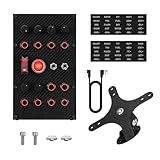
10. MiYee Sim Racing Button Box
MiYee Sim Racing Button Box Programmable Button Simulation Racing Control Box with Rotary Encoders, Momentary Push Buttons, Carbon Fiber Panel, Metal Housing, for Truck Simulator PC, Plug and Play
Carbon Fiber Panel
Metal Housing
16 Buttons
6 Rotary Encoders
Pros
- Carbon fiber face plate with full-metal housing
- 10 full-metal CNC-machined buttons
- 32-key customizable profile
- Excellent value compared to alternatives
Cons
- Ignition switch behavior is finicky
- Rotary encoders are very sensitive
- No manual included
- Small base limits positioning
The MiYee Sim Racing Button Box is primarily designed for racing simulators, but its versatile button layout makes it viable for flight simulation as well. The carbon fiber face plate and full-metal unibody housing give it a premium feel that belies its mid-range pricing.
On the hardware side, you get 10 full-metal CNC-machined buttons with backlighting, three self-locking metal toggles with dust-proof covers, a dedicated start button, and six programmable rotary encoders. That’s a lot of control options for the price, and the 32-key customizable profile means you can create different setups for different aircraft.
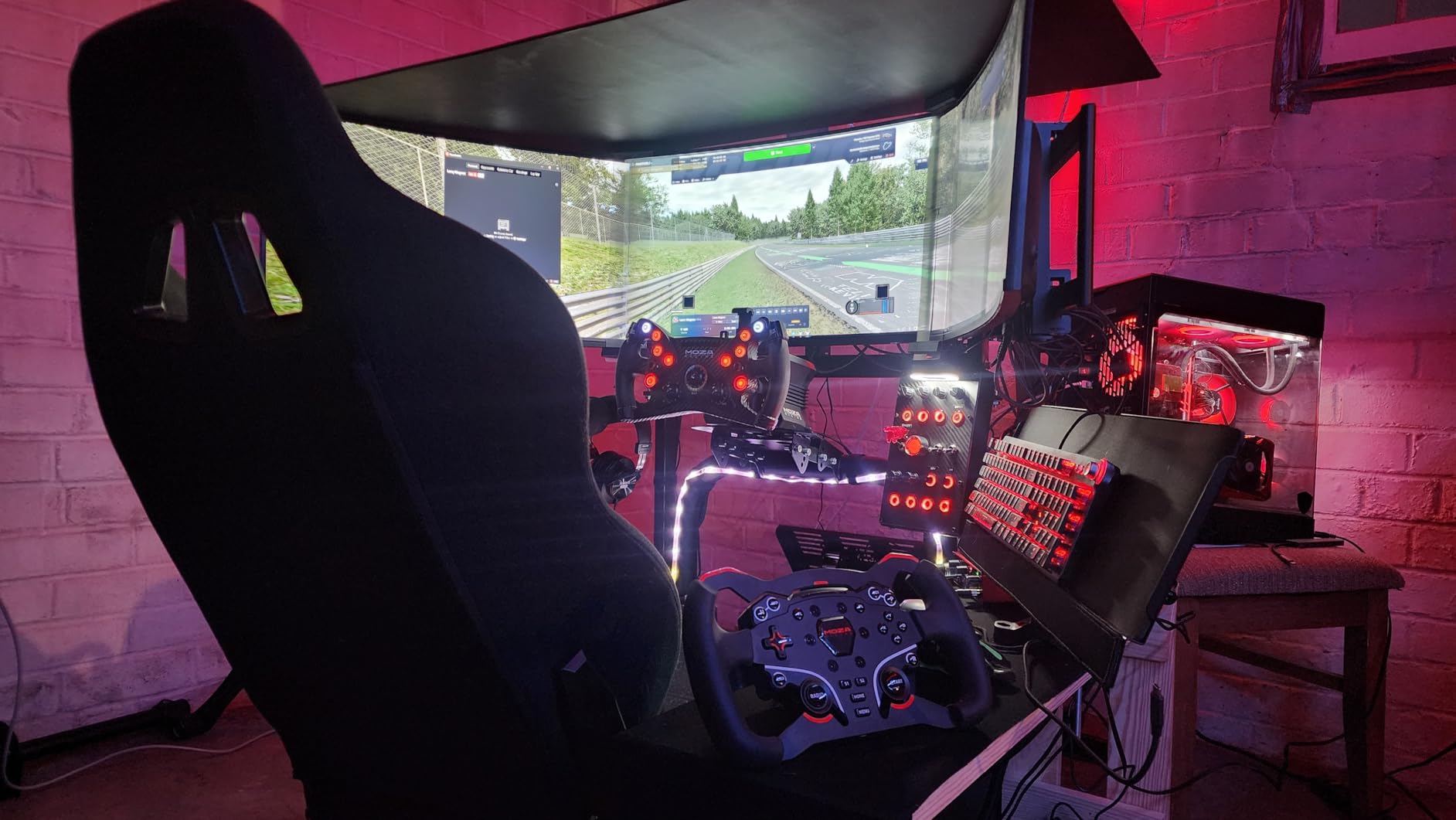
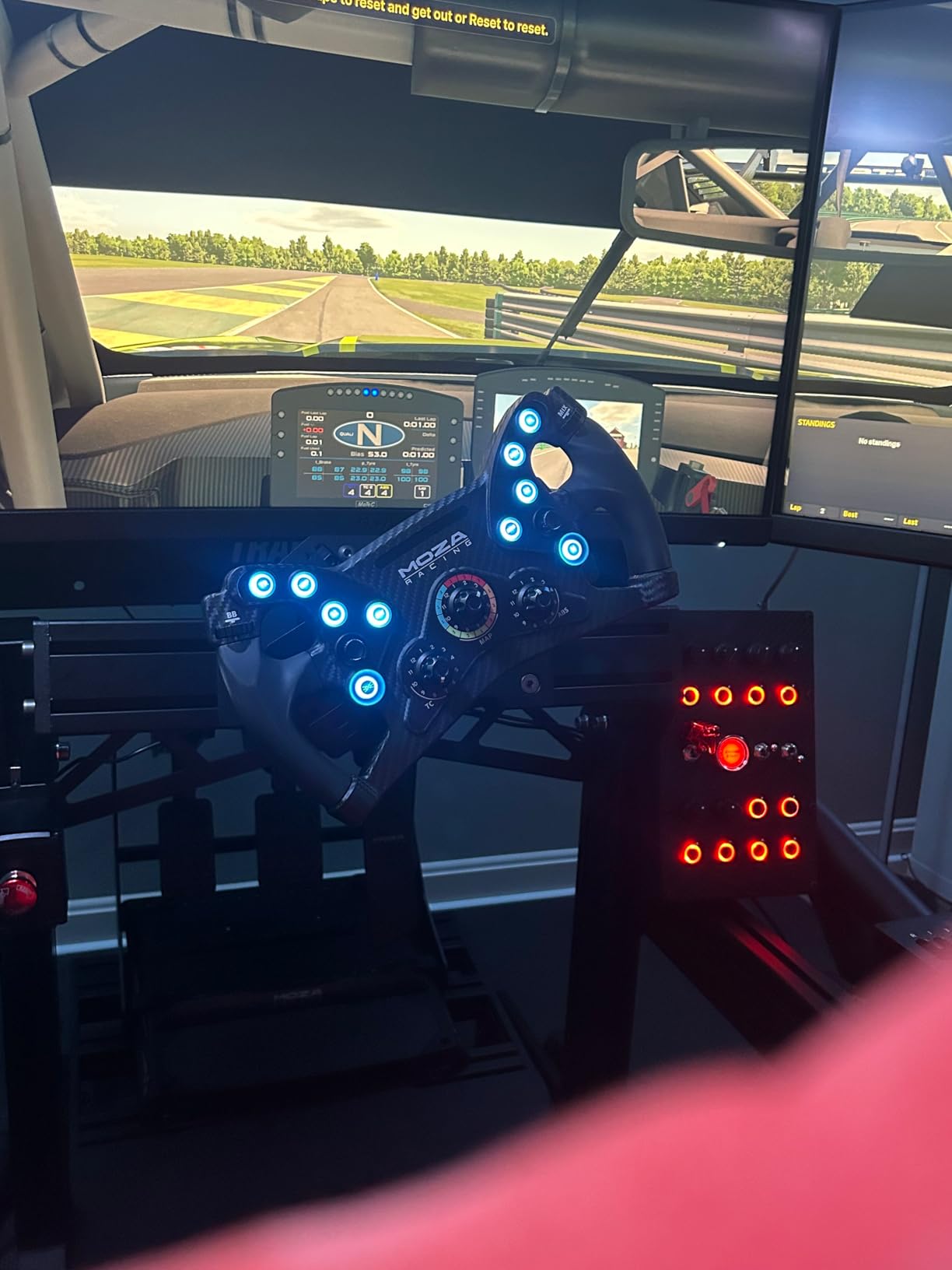
Using it for flight simulation required some creative mapping, but I was able to set up the rotary encoders for heading and altitude control, while the various buttons handled gear, flaps, and lights. The plug-and-play nature meant no driver installation was necessary.
The main issues I encountered were with the sensitive rotary encoders, which sometimes jumped between values unexpectedly. The ignition switch behavior is also unusual – you have to flip it down-up-down to turn it off, which isn’t intuitive. The complete lack of documentation makes troubleshooting these quirks frustrating.
Good for Budget-Conscious Multi-Sim Users
If you’re looking for a versatile button box that works across racing and flight simulators without spending premium prices, the MiYee offers solid value. The build quality punches above its weight class.
Be Prepared for Some Frustration
The lack of documentation means you’ll be figuring things out through trial and error. The sensitive encoders and finicky toggle behavior require patience. If you want a plug-and-play flight sim specific solution, look elsewhere.
How to Choose the Best Flight Sim Switch Panel
Selecting the right flight sim switch panel depends heavily on what aircraft you fly, which simulator you use, and how much desk space you have. Here’s what to consider before making your purchase.
Toggle vs Momentary Switches
This is one of the most important distinctions in flight sim panels, and it’s frequently misunderstood by newcomers. Toggle switches stay in the position you put them – flip it up, it stays up. Momentary switches spring back to a neutral position when you release them. In real aircraft, many functions use momentary switches (flaps, for example), while others use toggles (lights, gear). Some panels, like the Logitech switch panel, use actual toggles that can’t easily simulate momentary behavior. This limits what functions you can realistically map to those switches. If you need momentary functionality, look for panels that offer it or plan to use software workarounds.
Simulator Compatibility
Not all panels work equally well with all simulators. Microsoft Flight Simulator 2020 and 2024 have excellent native support for most popular panels, but some older devices need third-party software like SPAD.NXT for full functionality. X-Plane 11 and 12 generally have good support but may require plugin installation. DCS World works best with military-focused panels like the Thrustmaster MFD Cougar Pack or Viper Panel. Always check community forums for compatibility reports before purchasing, especially if you’re using less common simulators.
Build Quality and Durability
Flight sim hardware takes a lot of abuse over years of use, so build quality matters. Metal components generally last longer than plastic, though they add cost. The Honeycomb Alpha demonstrates what premium construction looks like – steel shafts, substantial weight, quality switches. Budget options like the Logitech Saitek Throttle Quadrant use more plastic but still deliver reliable service for most users. Consider how heavily you’ll use the equipment and whether saving money now might mean replacing it sooner.
Number of Controls and Expandability
Think about what functions you actually need to control physically. Basic GA flying might only need landing gear, lights, and a few other switches – something the Logitech Pro Flight Switch Panel handles well. Complex IFR flying benefits from autopilot panels like the Logitech Multi Panel. Military jet simulators need many more controls, which is why panels like the Thrustmaster Viper Panel with 43 buttons make sense. Also consider whether you want to expand your setup over time. Modular systems like the Logitech Saitek ecosystem let you add panels incrementally.
Setup Difficulty and Software Requirements
Some panels are truly plug-and-play, while others require significant configuration. Logitech’s panels generally work well out of the box with MSFS, but may need SPAD.NXT for advanced features or multiple panel setups. Thrustmaster’s Target software can be finicky but offers powerful customization. The OCTAVI IFR-1 impressed me with its simple USB-C plug-and-play operation. Consider your technical comfort level and willingness to troubleshoot when choosing a panel.
Frequently Asked Questions
Is it worth getting the Logitech Radio, Multi Panel, or Switch Panel?
Yes, for dedicated flight simmers these panels significantly enhance immersion and reduce mouse dependency. The Switch Panel handles basic controls like gear and lights, the Multi Panel excels for autopilot management, and the Radio Panel provides tactile frequency control. Choose based on your primary flying style – IFR pilots benefit most from the Multi Panel, while VFR GA flyers might prefer the Switch Panel.
What is the difference between toggle and momentary switches?
Toggle switches stay in the position you set them – up or down. Momentary switches spring back to center when released. Toggle switches work well for functions that stay on or off (lights, gear), while momentary switches are needed for functions that require brief activation (flaps, trim). Some flight sim panels use only toggles, which limits their flexibility for certain aircraft functions.
Which flight sim switch panel is best for beginners?
The Logitech G Pro Flight Switch Panel is ideal for beginners due to its reasonable price, plug-and-play setup with MSFS, and coverage of essential GA functions. The Logitech Saitek PRO Flight Throttle Quadrant is another excellent entry point, offering throttle control plus programmable buttons at a budget-friendly price. Both integrate well with other Logitech equipment if you expand later.
Do I need third-party software for my switch panel?
For basic functionality with popular simulators like MSFS, most panels work without additional software. However, running multiple Logitech panels together often benefits from SPAD.NXT, which provides better compatibility and more configuration options. Thrustmaster panels may need their Target software for advanced features like LED control. Check community forums for your specific panel and simulator combination.
Can I use these panels with MSFS 2024?
Most panels covered in this guide work with MSFS 2024, though some require updated drivers or third-party software. Logitech panels generally work but may need SPAD.NXT for full functionality with the new simulator. The OCTAVI IFR-1 has native MSFS 2024 support. Always verify compatibility with the latest simulator version before purchasing, as support continues to evolve.
Final Thoughts on Flight Sim Switch Panels
Finding the best flight sim switch panels for your cockpit comes down to matching your equipment to your flying style. For general aviation enthusiasts, the Honeycomb Alpha Flight Controls offers an unbeatable combination of yoke and integrated switch panel with premium build quality. Budget-conscious builders should look at the Logitech Saitek PRO Flight Throttle Quadrant or PXN CB1 for versatile control options without premium pricing.
Military jet simulators have different needs entirely. The Thrustmaster Viper Panel and MFD Cougar Pack deliver authentic F-16 style controls that transform the DCS World experience. For IFR-focused pilots with limited space, the OCTAVI IFR-1 provides comprehensive radio and autopilot control in an incredibly compact package.
Whatever your choice, adding physical switch controls to your flight simulator setup will dramatically improve your immersion and reduce the frustration of mouse-based cockpit management. The panels we’ve covered range from entry-level options to professional-grade hardware, so there’s something here for every budget and ambition level. Fly safe, and enjoy the enhanced realism that tactile controls bring to your virtual cockpit.