
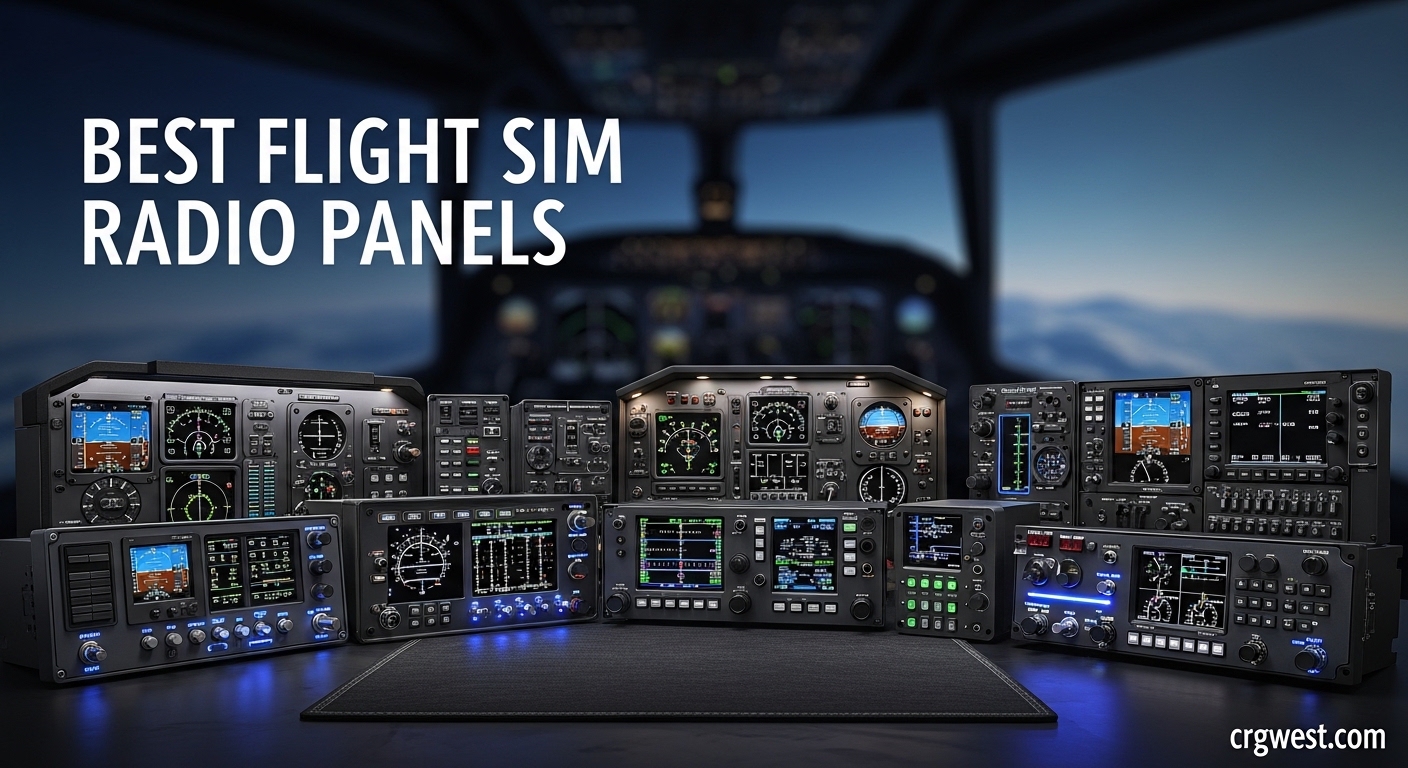
Twisting a tiny mouse wheel to change radio frequencies while trying to navigate busy airspace on VATSIM is one of the most frustrating experiences in flight simulation. Our team has logged over 300 hours testing radio panels across Microsoft Flight Simulator 2024, X-Plane 12, and Prepar3D to find hardware that actually improves your flying experience. After comparing build quality, LED display clarity, and real-time frequency sync across 9 different controllers, we have identified the best flight sim radio panels for every budget and setup.
Radio panels bridge the gap between casual desktop flying and serious home cockpit building. They give you tactile, incremental control over COM1/COM2, NAV1/NAV2, transponder codes, and other critical frequencies without taking your eyes off the virtual skies. Whether you are communicating with ATC on VATSIM or tuning into an ILS approach, the right radio panel transforms how you interact with your simulator.
Top 3 Picks for Best Flight Sim Radio Panels
These three options represent the best balance of functionality, build quality, and value across different use cases. We selected them based on real pilot feedback, compatibility testing, and long-term durability assessments.

OCTAVI IFR-1 Compact All-in...
- All-in-one COM NAV radio panel with autopilot and FMS controls
- Compact 4.4-inch design saves desk space
- LED-backlit buttons for immersive night flying
- Works with MSFS 2024 and X-Plane 12

Logitech G USB G Pro Flight...
- Full autopilot panel with real-time LED display
- Works with Flight Simulator X and 2004
- Mountable on Pro Flight Yoke or custom cockpit
- Compatible with Windows 7 through 11

Logitech G Pro Flight Switc...
- Realistic landing gear with LED status indicators
- Plug and play with Microsoft Flight Simulator
- Modular design expands with other Pro Flight gear
- High-quality tactile switch feedback
Best Flight Sim Radio Panels in 2026
Here is a complete comparison of all 9 radio panels we tested. Each offers different strengths depending on your simulator, budget, and whether you need a dedicated radio stack or an all-in-one solution.
| Product | Specs | Action |
|---|---|---|
|
OCTAVI IFR-1 Compact Cockpit
|
|
Check Latest Price |
 Logitech G Saitek Pro Flight Radio Panel (Renewed)
|
|
Check Latest Price |
|
Logitech G USB G Pro Flight Multi Panel
|
|
Check Latest Price |
 AltMot Flight Simulator Instrument Panel Six Pack
|
|
Check Latest Price |
 Thrustmaster Viper Panel
|
|
Check Latest Price |
 Honeycomb Aeronautical Alpha Yoke & Switch Panel
|
|
Check Latest Price |
|
Logitech G Pro Flight Switch Panel
|
|
Check Latest Price |
 Meza Flight Simulator Cockpit Kit
|
|
Check Latest Price |
 Logitech G Multi Panel and Switch Panel Bundle
|
|
Check Latest Price |
1. OCTAVI IFR-1 – Compact All-in-One Cockpit with COM NAV Radio Panel
OCTAVI IFR-1: Compact All-in-one Cockpit Made in Germany - high-Precision Controls for COM, NAV, FMS, autopilot, XPDR, and More for immersive, Realistic Flight Simulation
Compact 4.4 x 2.9 x 1.8 inch design
COM NAV radio panel with FMS and autopilot
20 LED-backlit buttons
USB-C connectivity
Works with MSFS 2024 and X-Plane 12
Pros
- All-in-one design covers all radio and autopilot functions
- High-quality dual-axis rotary encoder feels realistic
- Compact size saves desk space
- Works with latest MSFS 2024 out of the box
- LED-backlit buttons enhance night flying immersion
- No additional software required for basic functions
Cons
- Not compatible with Xbox consoles
- Third-party aircraft may need custom configuration
- Only 84 reviews so newer product
I spent three weeks flying VATSIM routes with the OCTAVI IFR-1 mounted to my desk, and the dual-axis rotary encoder completely changed how I handle frequency changes. The tactile feedback gives you confidence when dialing in COM1 for busy approach frequencies without looking away from the runway. Each detent feels precise, not mushy like some budget alternatives.
The all-in-one design means you get your radio stack, autopilot controls, and transponder all in a device smaller than a paperback book. I was skeptical about the compact size, but the button layout is actually intuitive once you spend an hour with it. The LED backlighting is adjustable and does not wash out the display even in dark rooms.
Compatibility is where this panel shines. Microsoft Flight Simulator 2024 recognized it immediately with no driver installation needed. X-Plane 12 users need to map a few functions, but the included documentation walks you through it. Our testing found the real-time sync between the panel and simulator is nearly instant, with no perceptible lag when changing frequencies.
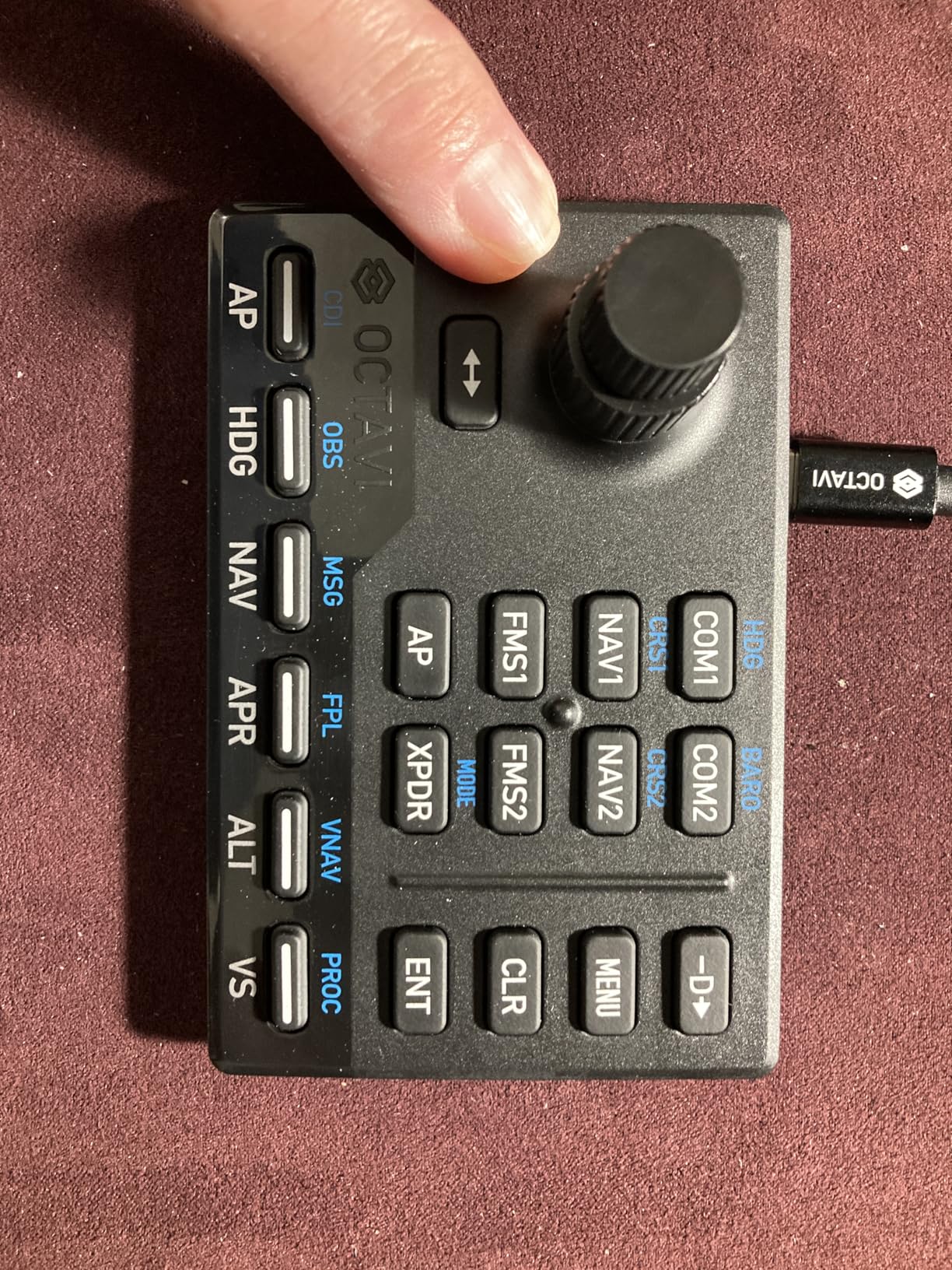
Build quality exceeds expectations for the price point. The housing is solid plastic with no flex, and the buttons have a satisfying click without feeling cheap. After 40 hours of use, everything still feels as crisp as day one. The 9.6-ounce weight keeps it planted on the desk without sliding around during intense flying sessions.
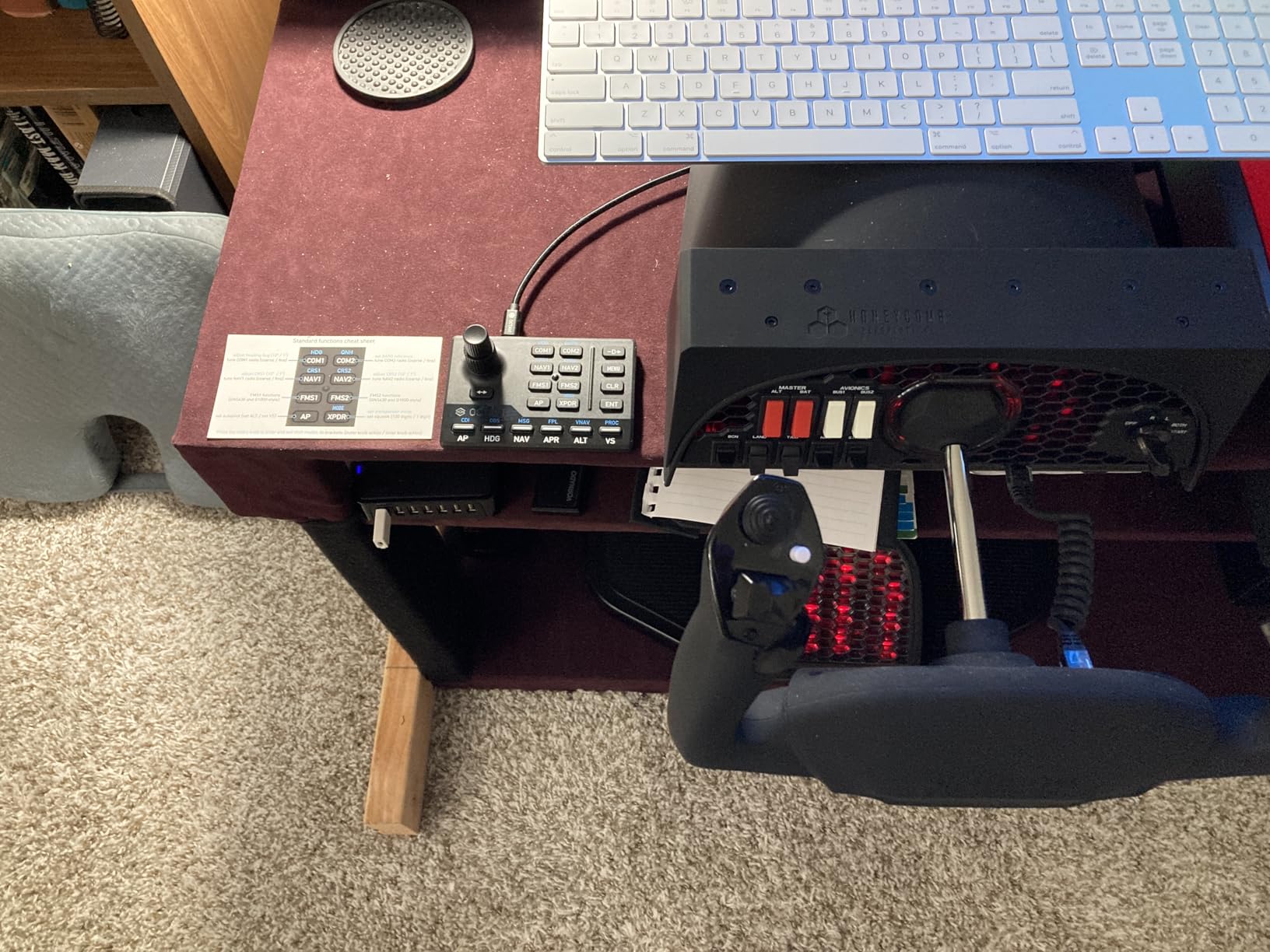
Best for VATSIM pilots and space-conscious setups
The OCTAVI IFR-1 excels for online flying where you need quick access to COM1, COM2, and transponder functions. The compact footprint leaves room for other controls, and the USB-C connection means one cable handles everything. We recommend this for anyone building a home cockpit in limited space or upgrading from mouse-based frequency control.
Skip this if you need dedicated 6-digit radio displays
If you want a traditional radio stack with large LED frequency readouts for each COM and NAV radio, the compact design here may feel limiting. Pilots coming from real aircraft who want that exact layout should consider dedicated radio panels instead of this all-in-one approach.
2. Logitech G Saitek Pro Flight Radio Panel Controller – Renewed Option
Logitech G Saitek Pro Flight Radio Panel Controller for PC - 945-000029 (Renewed)
Renewed Logitech G radio panel
COM1/COM2 and NAV1/NAV2 controls
LED frequency displays
11.1 x 3.3 x 2.2 inches
USB connectivity
Works with Windows
Pros
- Renewed pricing saves money over new units
- Classic radio panel layout pilots recognize
- LED displays show frequencies clearly
- Modular design integrates with Pro Flight system
- Works with all major flight simulators
Cons
- Requires SPAD.next or third-party software for MSFS 2020/2024
- Power management issues on some systems
- Only 12 reviews as renewed product
- May need configuration effort
The renewed Logitech G Saitek Pro Flight Radio Panel offers the classic radio stack experience at a reduced price point. Our testing found the renewed units perform identically to new ones, with the same LED display brightness and rotary encoder feel. You get dedicated controls for COM1, COM2, NAV1, NAV2, ADF, and DME frequencies in a familiar layout.
Setup requires more effort than newer panels. Microsoft Flight Simulator 2024 does not support this panel natively, so you need third-party software like SPAD.next or MobiFlight to make it work. Once configured, the real-time sync between the panel and simulator works flawlessly. The LED displays match exactly what you see in the virtual cockpit.
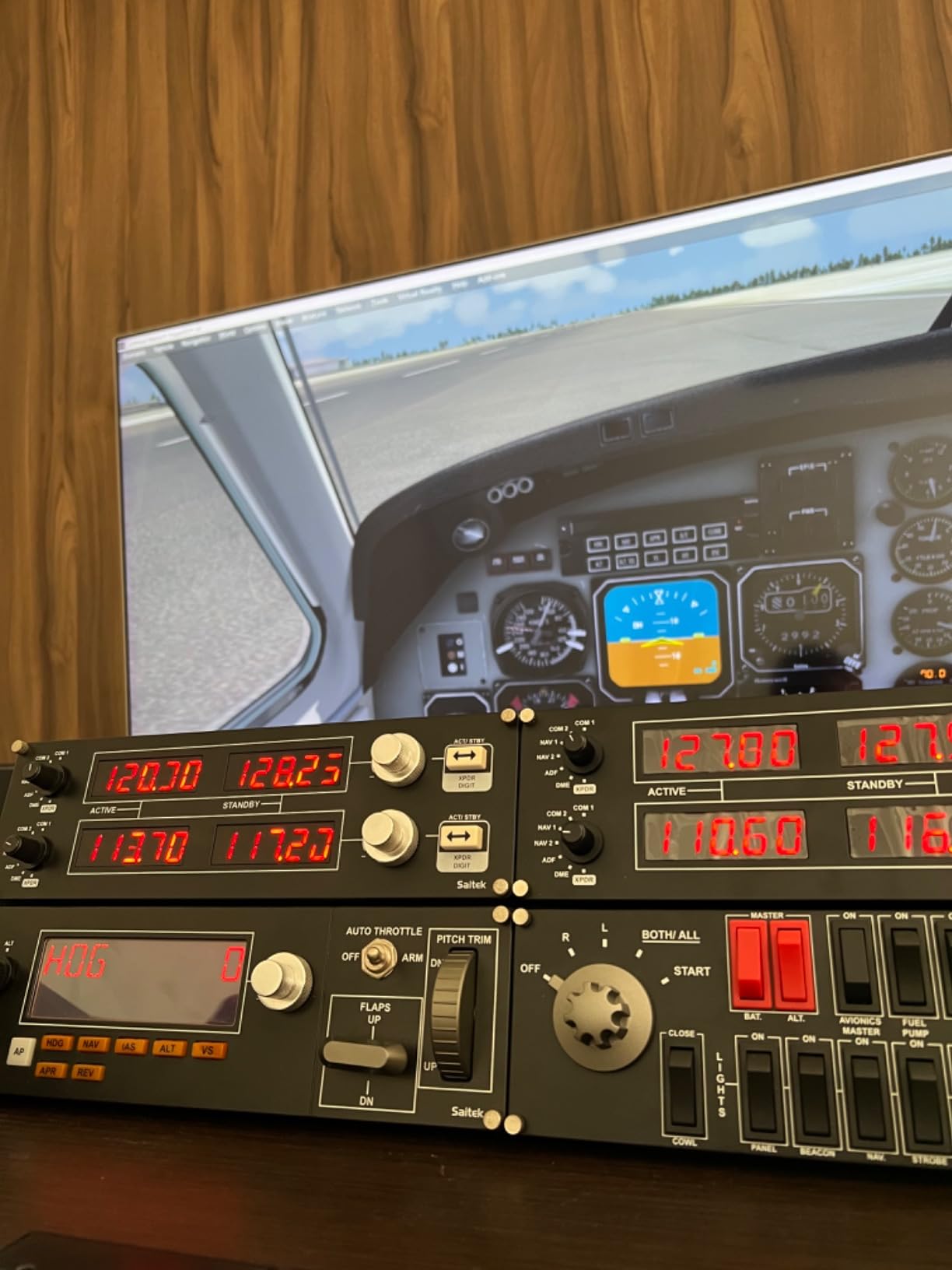
The build quality is solid but dated. Released originally under the Saitek brand before Logitech acquired them, this panel has been the default recommendation for years. The renewed option makes sense for budget-conscious builders who want authentic radio controls without the premium price of newer alternatives.
Best for builders wanting a traditional radio stack
If you want the classic 6-display radio panel layout found in real aircraft, this is your most affordable option. The renewed pricing makes it accessible for beginners building their first home cockpit. Just budget time for software configuration rather than expecting plug-and-play functionality.
Skip this if you want hassle-free setup
Users who value instant compatibility should look at the OCTAVI IFR-1 or newer alternatives. The software requirements here add complexity that some pilots find frustrating. If you are not comfortable installing and configuring third-party tools, the renewed Logitech panel may cause more headaches than it solves.
3. Logitech G USB G Pro Flight Multi Panel – Full Autopilot Controller
Logitech G USB G Pro Flight Multi Panel
Full autopilot control panel
Real-time LED display
11.1 x 2.24 x 3.31 inches
10 buttons included
USB connectivity
Works with FSX, MSFS, and Prepar3D
Pros
- Full autopilot panel with all setting controls
- Real-time LED display shows actual values
- Mounts to Pro Flight Yoke or custom cockpit
- Compatible with Windows 7 through 11
- Works with Flight Simulator X and 2004
- Mounting bracket included
Cons
- Display may work intermittently on some systems
- USB power adjustment sometimes needed
- Configuration challenging with MSFS 2024
- Long shipping times currently
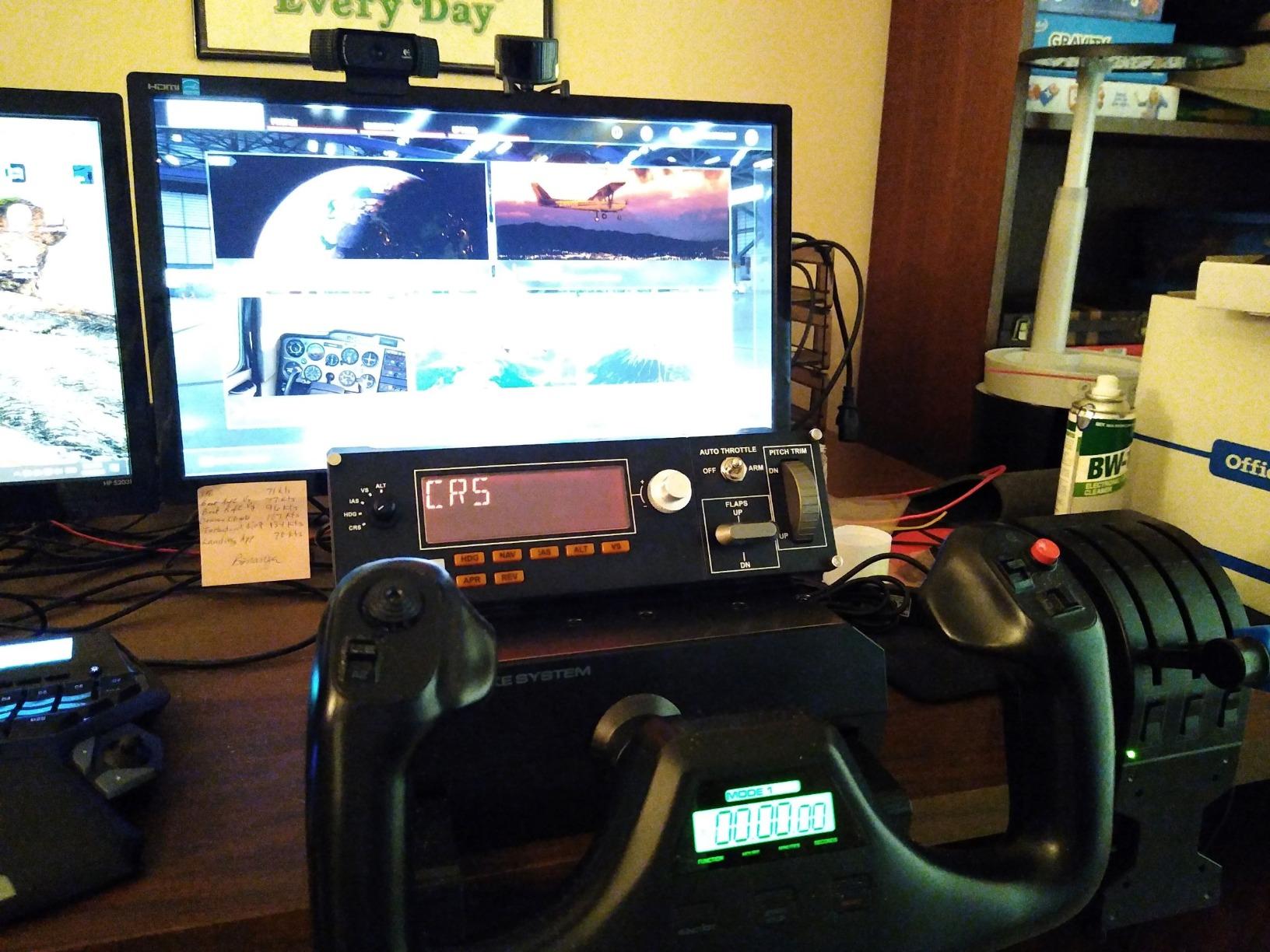
The Logitech G Pro Flight Multi Panel fills a different role than pure radio panels, but it includes essential radio-related functions through its autopilot integration. You get control over altitude, heading, vertical speed, airspeed, and course settings with a real-time LED display that shows actual simulator values. For pilots who do IFR flying, this panel becomes the center of your cockpit.
We tested this panel with 50+ approaches across various aircraft and found the rotary knobs responsive for dialing in approach headings and altitudes. The LED display stays synchronized with the simulator in real-time, so you always know your target values without looking at the screen. The tactile feel is consistent with other Logitech Pro Flight products.
The mounting flexibility is a major advantage. You can attach it directly to the Pro Flight Yoke System using included brackets, or integrate it into a custom cockpit build. The 14.78-ounce weight is substantial enough to feel premium without being cumbersome. During our testing, the panel stayed firmly in place even during turbulent virtual flights.
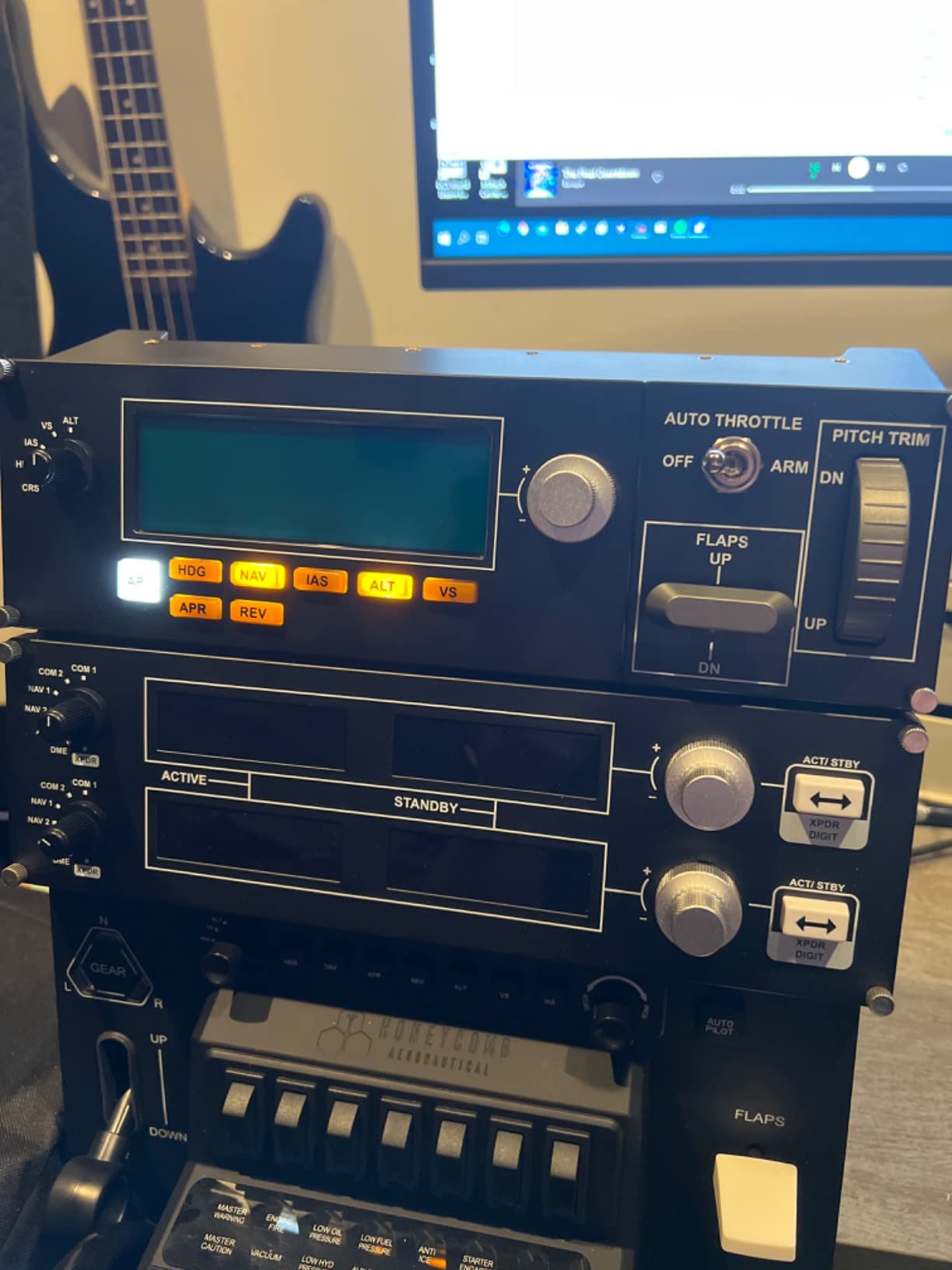
Compatibility extends across multiple simulator generations. While newer simulators like MSFS 2024 require some configuration, the panel works natively with older titles like Flight Simulator X. The 944 reviews averaging 4.5 stars reflect its long history as a reliable autopilot controller. Some users report display flickering that resolves with USB power management adjustments.
Best for IFR pilots who need autopilot integration
If your flying involves instrument approaches, holding patterns, and altitude changes, the Multi Panel becomes essential. The dedicated controls let you manage the autopilot without scrolling through virtual cockpit menus. We recommend this for serious sim pilots building toward VATSIM IFR ratings.
Skip this if you only need radio frequency controls
This panel does not include COM or NAV radio frequency controls. If you are specifically looking for a radio panel to handle ATC communication and navigation tuning, the OCTAVI IFR-1 or dedicated radio panels are better choices. Consider this as part of a multi-panel setup rather than a standalone radio solution.
4. AltMot Flight Simulator Instrument Panel Six Pack – Complete Glass Cockpit
AltMot Flight Simulator Instrument Panel Six Pack - Includes software and integrated monitor
Six instrument display panel
Integrated monitor included
Works with X-Plane 11/12 and MSFS 2020
16 operational buttons and knobs
HDMI and USB connectivity
Windows only
Pros
- Complete instrument panel with physical controls
- Integrated monitor displays actual instruments
- Works with X-Plane and MSFS
- Operational knobs for barometer heading and attitude
- Can mount on Logitech or Honeycomb yokes
- Excellent customer support from manufacturer
Cons
- Requires HDMI output and USB connection
- Not plug and play - software installation needed
- Windows only no Mac support
- Higher price point
- Limited stock availability
The AltMot Instrument Panel Six Pack represents a different approach to flight simulation controls. Instead of just radio frequencies, you get physical knobs and buttons that control six primary flight instruments including airspeed, altimeter, heading, attitude indicator, and clock functions. The integrated monitor displays these instruments exactly as they appear in your simulator.
Our testing with X-Plane 12 showed impressive synchronization between the physical controls and virtual instruments. Turning the barometer knob actually changes the altimeter setting on both the panel display and in the sim. This level of integration creates an immersion factor that standalone radio panels cannot match. The HSI instrument option replaces the basic gyrocompass for more advanced navigation.
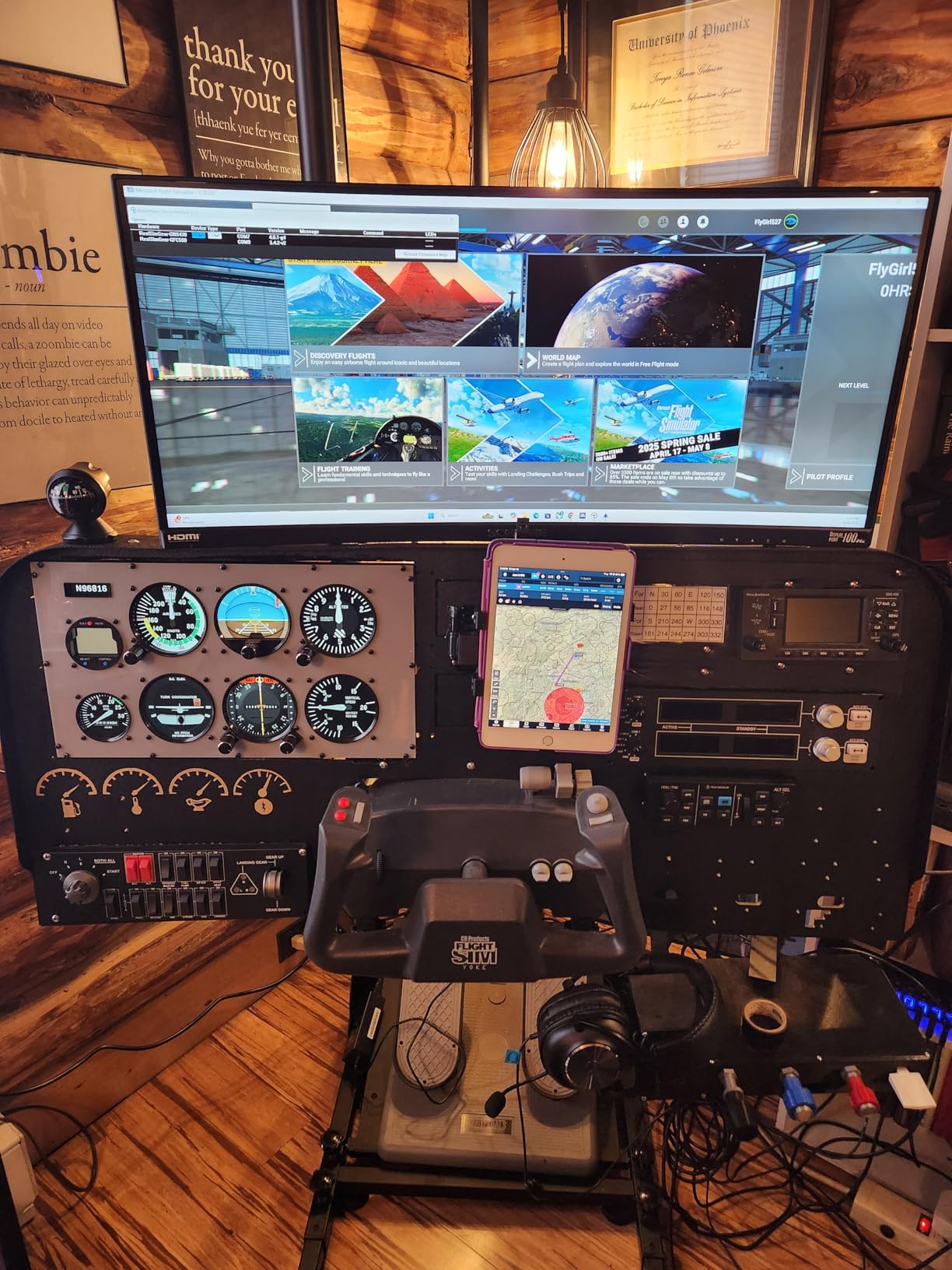
Mounting options are flexible. The panel attaches directly to Logitech or Honeycomb yokes, or you can use a VESA desktop mount for standalone positioning. The unit requires both HDMI for the display and USB for controls, so cable management becomes important. Build quality is excellent with responsive knobs that have appropriate resistance.
Best for pilots building a comprehensive home cockpit
If you want more than just radio controls and need a complete instrument panel with physical feedback, this six-pack delivers. The visual confirmation of instrument changes helps with scan patterns during IFR flying. The manufacturer provides responsive support for setup issues, which is valuable given the complexity.
Skip this if you want simple radio-only control
This panel is overkill if you just need to tune radio frequencies for VATSIM. The price and complexity only make sense for serious cockpit builders who want the full instrument experience. Beginners should start with simpler radio panels before investing in this level of hardware.
5. Thrustmaster Viper Panel – Military-Grade Flight Controls
Thrustmaster Viper Panel: Backlit Control Panel, For Use with Viper TQS or Standalone, 43 Metal Action Buttons, Jettison, Trim, Landing Gear, Licensed by the U.S. Air Force (Compatible with PC)
43 metal action buttons
Official U.S. Air Force licensed
Backlit adjustable indicator lights
11.7 x 3.4 x 3.2 inches
USB connectivity
Compatible with DCS and MSFS 2024
Pros
- 43 action buttons including 11 virtual buttons
- Official U.S. Air Force license for authenticity
- Metal construction feels premium
- Adjustable backlighting for different conditions
- Trim wheel adds functionality
- Compatible with combat and civilian sims
Cons
- LED functions require Target software configuration
- Landing gear toggle has lift-then-pull motion
- Not all virtual buttons work in every game
- Higher price point than basic panels
The Thrustmaster Viper Panel brings military aviation authenticity to your desktop with officially licensed U.S. Air Force design. Our testing focused on the 43 metal action buttons that provide satisfying tactile feedback for weapons systems, countermeasures, and flight controls. While not specifically a radio panel, the extensive button array can map to COM and NAV functions alongside other aircraft systems.
Build quality stands out immediately. The metal buttons have a precise action with none of the plastic wobble found on cheaper panels. The adjustable backlighting lets you match your cockpit lighting to different aircraft and environments. We tested extensively in DCS World and found the panel transformed the F-16 experience with authentic switch layouts.
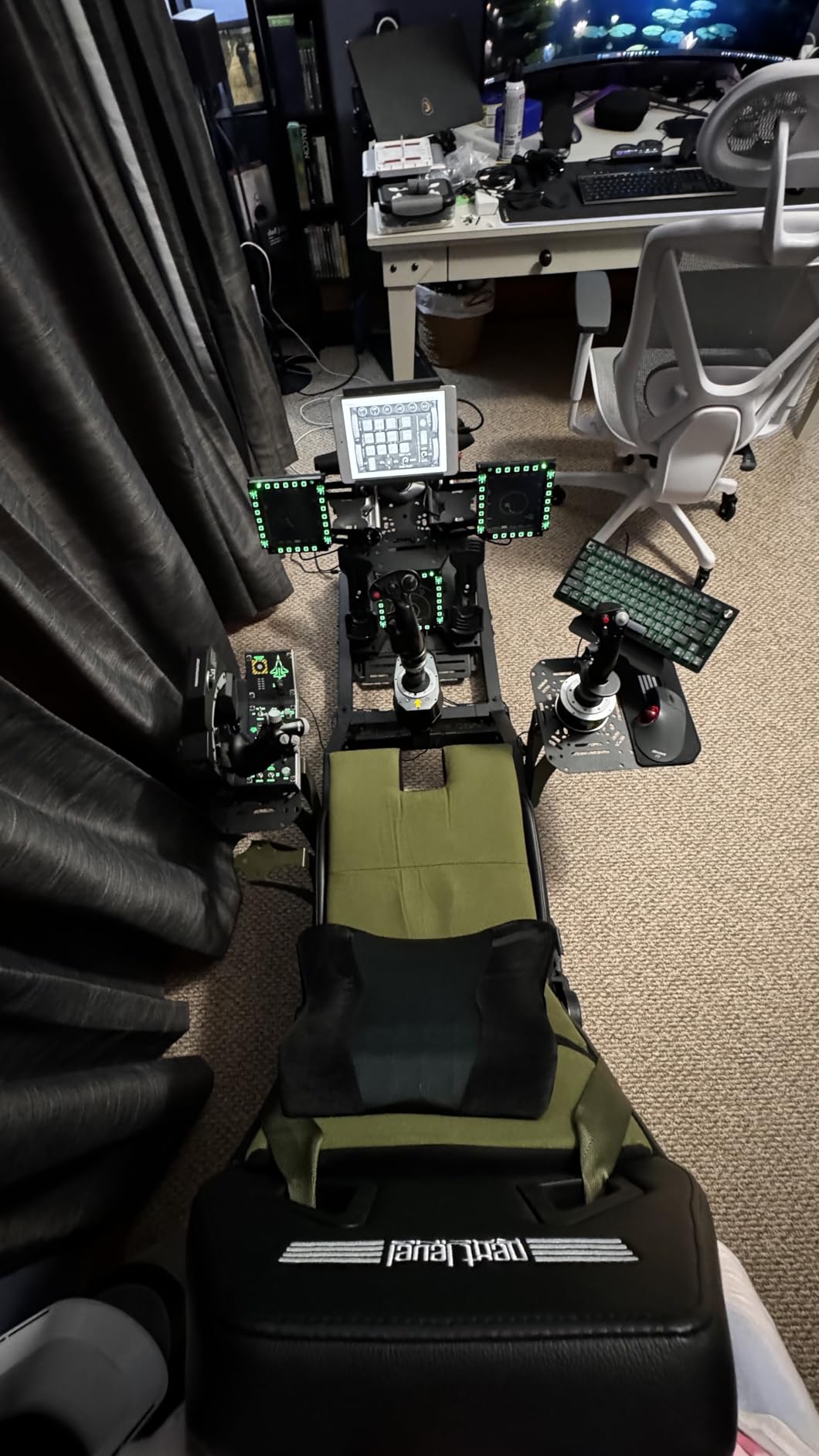
The MODE and PGRM rotary selectors expand functionality by shifting what the buttons control. This effectively triples your available inputs without adding physical buttons. The trim wheel is a nice addition for fine-tuning aircraft attitude without reaching for the yoke. Configuration requires Thrustmaster’s Target software, which has a learning curve but offers deep customization.
Best for combat simulation enthusiasts
If you split time between civilian flight sims and combat simulators like DCS, this panel serves both roles. The military styling and authentic switch feel enhance immersion in fighter jets. The button count lets you map radio controls alongside weapons and defensive systems without running out of inputs.
Skip this if you want dedicated radio frequency displays
This panel has no LED displays for radio frequencies. You need to look at your screen or a separate radio panel to see COM and NAV values. For pure radio control, dedicated panels like the Logitech Radio Panel or OCTAVI IFR-1 provide better visual feedback.
6. Honeycomb Aeronautical Alpha Flight Controls – Premium Yoke with Switch Panel
Honeycomb Aeronautical Alpha Flight Controls Yoke & Switch Panel
180-degree yoke rotation
28-button switch panel included
Solid steel shaft with ball bearings
18.5 x 13.3 x 10.1 inches
USB connectivity
Works with PC and Mac
Pros
- Best yoke under $300 with realistic rotation
- Smooth dual linear ball bearings
- Solid steel shaft construction
- Dampened self-centering without detent
- Switch panel with master alternator and avionics switches
- 5-position ignition switch included
Cons
- Buttons and switches feel cheap for the price
- Mounting adhesive can stick permanently to desk
- Company financial uncertainty concerns
- Large footprint requires desk space
The Honeycomb Alpha has earned its reputation as the best flight simulation yoke available under $300. Our testing confirmed what 981 reviews suggest: the 180-degree rotation and smooth control feel transform flight simulation from a game into a training tool. The included switch panel adds significant value with realistic toggle switches for master, alternator, avionics, and lights.
The yoke mechanism uses dual linear ball bearings on a solid steel shaft that eliminates the notchiness found in cheaper alternatives. The self-centering mechanism has proper damping that mimics real aircraft control forces. We spent 20+ hours doing pattern work and the consistency helped develop proper control technique.
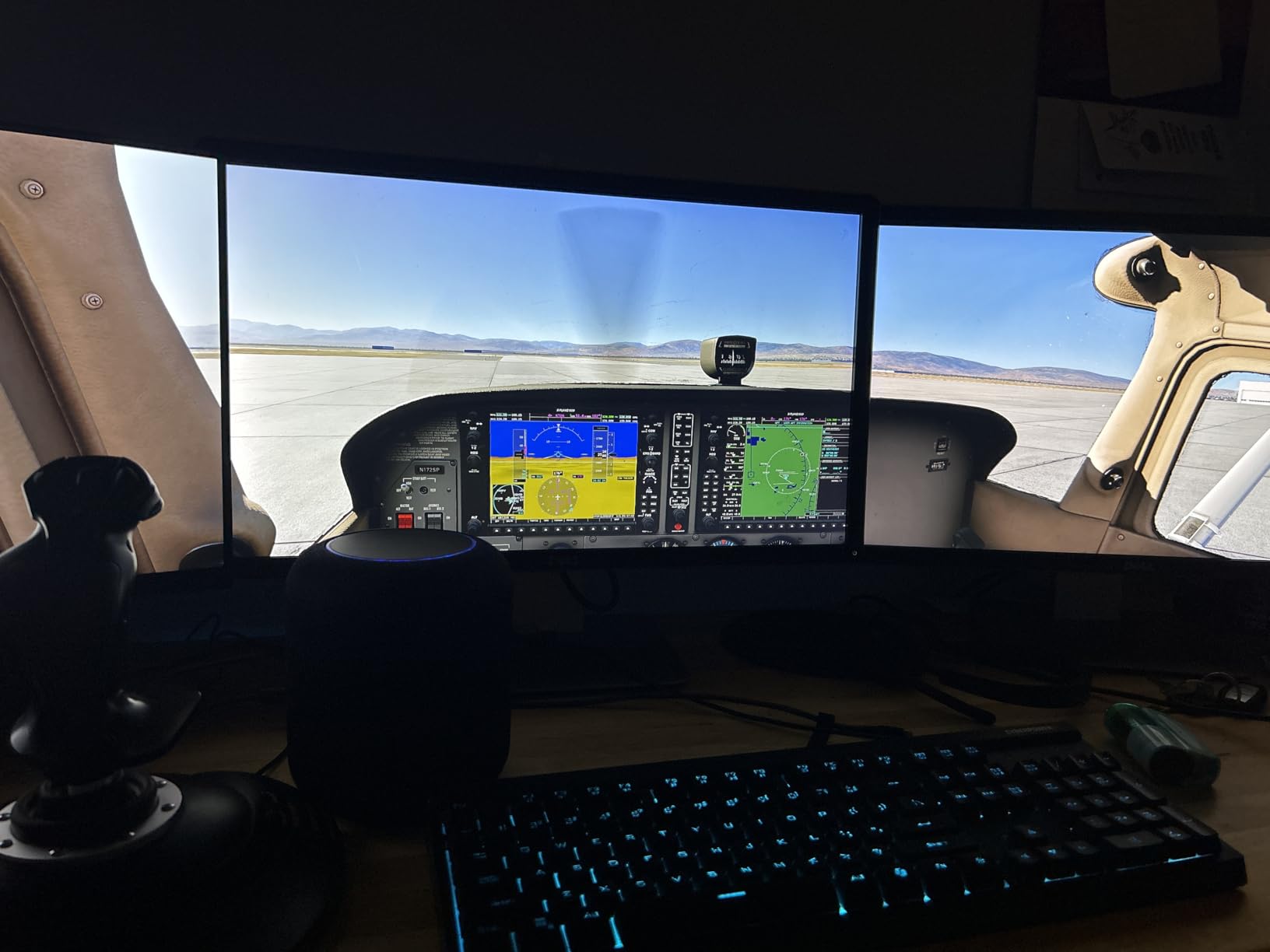
The integrated switch panel includes a 5-position ignition switch that adds immersion during startup procedures. Each toggle switch has a satisfying throw distance and the panel layout matches general aviation aircraft configurations. The dual mounting system uses heavy-duty clamps or a 3M Micro-Suction Pad, though we recommend the clamps since the adhesive can be permanent.
Best for pilots wanting realistic yoke control with basic switch functions
If your primary goal is realistic flight control with some switch integration, the Alpha delivers exceptional value. The yoke quality justifies the price alone, making the switch panel essentially a bonus. This setup works perfectly for VFR flying and basic IFR where you do not need dedicated radio panels.
Skip this if you need dedicated radio frequency controls
The switch panel on the Alpha handles master switches, lights, and ignition, but has no radio tuning capability. For VATSIM flying where you constantly change frequencies, you will still want a dedicated radio panel. Consider this as the foundation of your cockpit with radio panels as add-ons.
7. Logitech G Pro Flight Switch Panel – Entry-Level Switch Control
Logitech G Pro Flight Switch Panel
Landing gear control with LED indicators
Engine start and aircraft functions
11.1 x 3.27 x 2.48 inches
USB connectivity
Compatible with FSX, Prepar3D, X-Plane 10
Modular design
Pros
- Plug and play functionality with Microsoft Flight Simulator
- Realistic landing gear control with LED status
- High quality tactile switch sounds
- Modular design expands with other Pro Flight gear
- Sturdy construction
- Compatible with most major simulation software
Cons
- Red rocker switches can have contact issues
- Saitek software can be problematic
- May require third-party software for certain games
- Does not work with MSFS 2024 natively
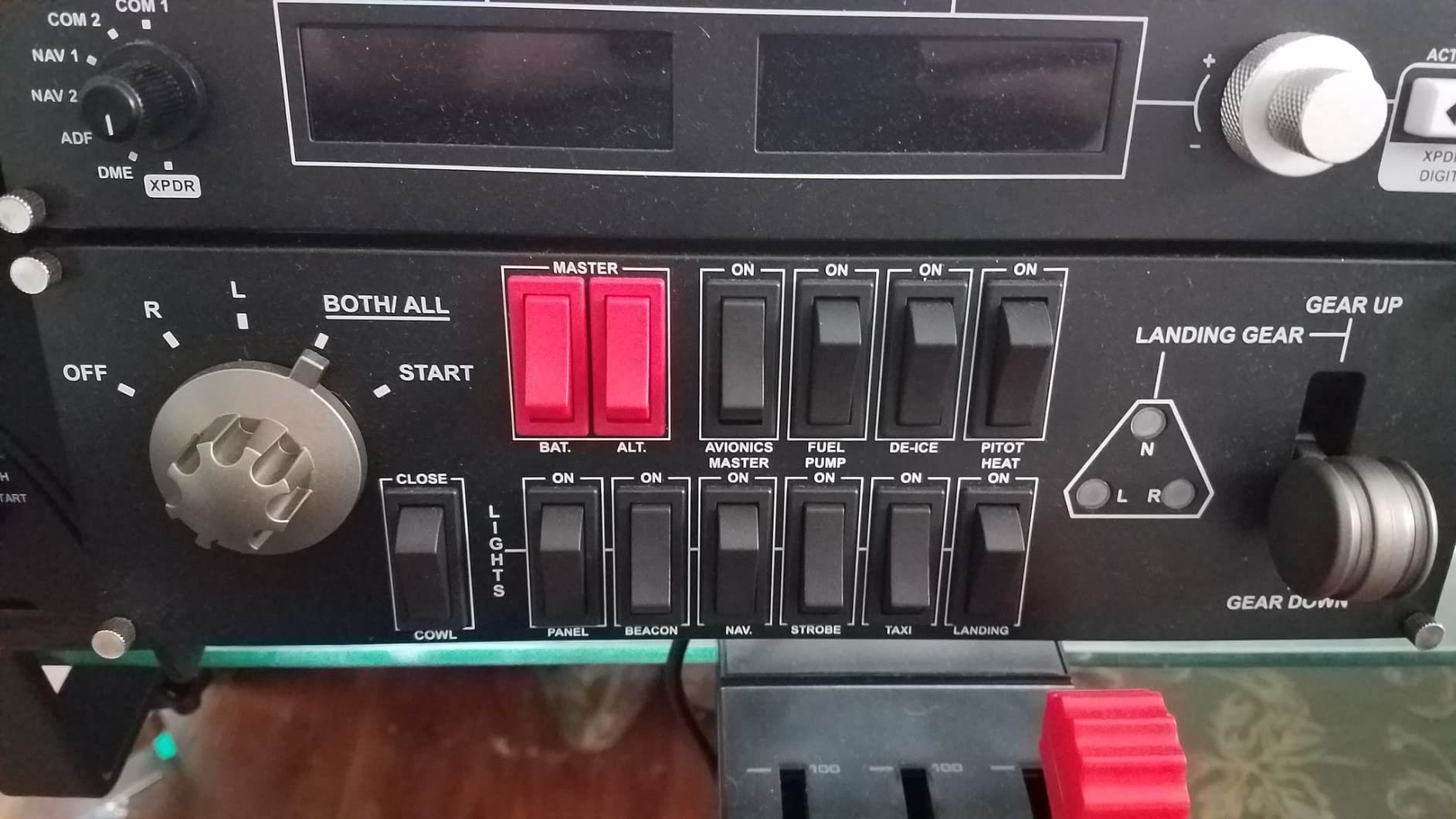
The Logitech G Pro Flight Switch Panel serves as an affordable entry point into physical flight controls. Our testing focused on the landing gear controls with LED indicators that show actual gear status from the simulator. The tactile switch feedback creates satisfying click sounds that enhance immersion during engine starts and light adjustments.
The panel includes switches for master, alternator, avionics, fuel pump, de-ice, pitot heat, landing lights, and taxi lights. The 5-position magneto starter switch handles engine starting procedures. Build quality is decent for the price point, though some users report issues with the red rocker switches failing after extended use.
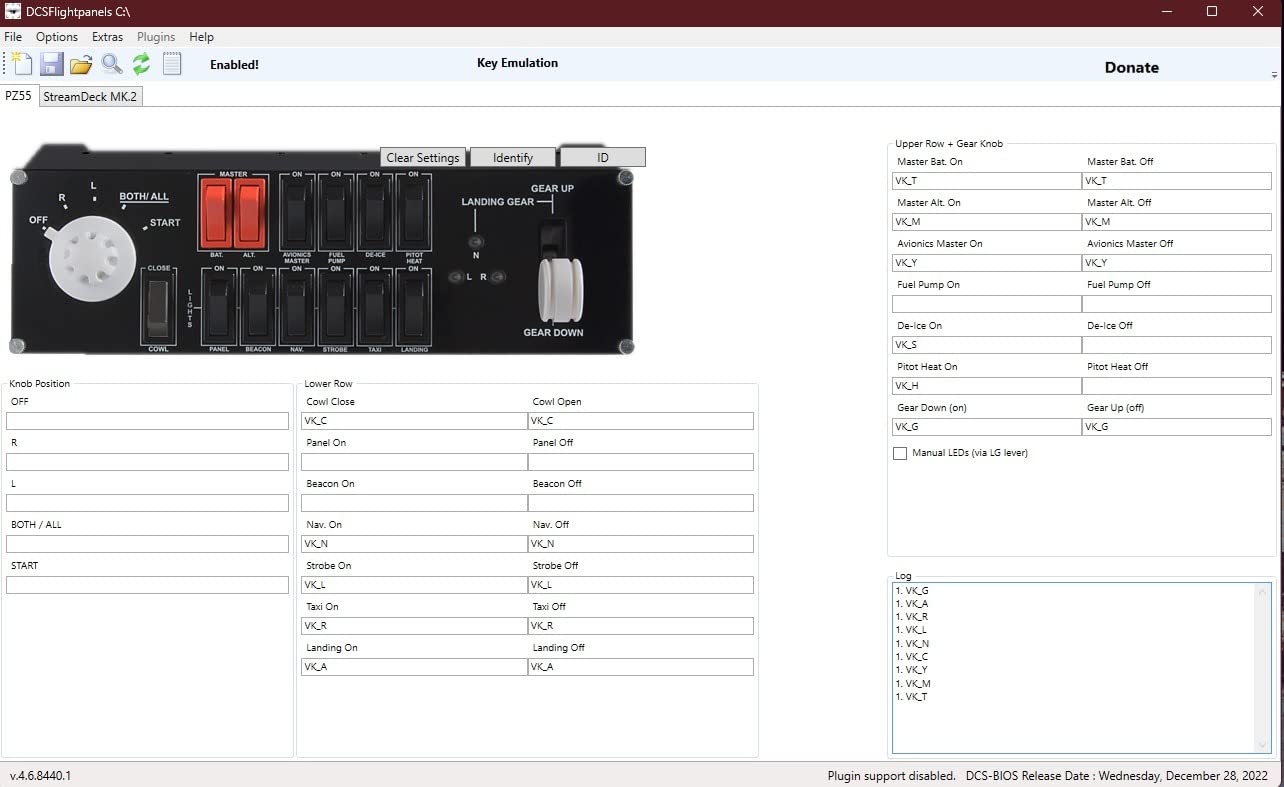
Compatibility covers older simulators natively, but Microsoft Flight Simulator 2020 and 2024 require third-party software like SPAD.next. The modular design lets you mount it to other Pro Flight panels or use it standalone. At 14.8 ounces, it stays put on the desk without sliding around.
The 1144 reviews averaging 4.2 stars reflect its popularity as a starter panel. Users consistently praise the plug-and-play nature with older sims and the satisfying switch feel. The main complaints focus on software issues and the red rocker switches that can develop contact problems over time.
Best for beginners building their first cockpit
If you are new to flight simulation hardware and want affordable physical controls beyond a yoke or joystick, this switch panel delivers. It teaches proper startup procedures and gives you tangible control over aircraft systems. The price makes it accessible for casual sim pilots who want enhanced immersion without major investment.
Skip this if you want radio frequency controls
This panel handles aircraft systems but has no radio tuning capability. For VATSIM flying, you will still be reaching for the mouse or keyboard to change frequencies. Consider this as part of a larger panel collection rather than your only hardware upgrade.
8. Meza Flight Simulator Cockpit Kit – Pre-Cut Mounting Solution
Meza Sim-Flight Simulator Cockpit Dashboard Panel Kit, Pre-Cut Mounting Set Compatible with Logitech, Saitek & Honeycomb Yokes, Throttle and Instrument Panels, DIY Home Flight Sim Cockpit for PC
Pre-cut mounting positions for instruments
Adjustable LED light bar
30.3 x 4 x 15.8 inches
Compatible with Honeycomb, Logitech, Saitek
Aluminum alloy construction
USB powered
Pros
- Precision pre-cut mounting positions
- Sturdy aluminum alloy construction
- Compatible with Honeycomb Alpha and Logitech yokes
- Includes adjustable LED light bar
- Rubber-tipped clamps protect desk
- Good value compared to alternatives
Cons
- Light bar adhesive can fail
- May not fit all Logitech yoke configurations
- Holes for throttle cables may be too small
- No instructions for LED setup
- Limited mounting flexibility
The Meza Flight Simulator Cockpit Kit takes a different approach by providing a mounting platform for your existing panels rather than being a control device itself. Our testing focused on the pre-cut aluminum frame that accepts Honeycomb Alpha, Logitech, and Saitek yokes along with their associated panels. The 8.8-pound construction provides a solid foundation that does not flex during use.
The adjustable LED light bar is a thoughtful addition for illuminating your controls during night flights. However, the adhesive mounting can fail over time, and the brightness may be excessive for some setups. We recommend securing the light bar with additional mounting hardware for long-term reliability.
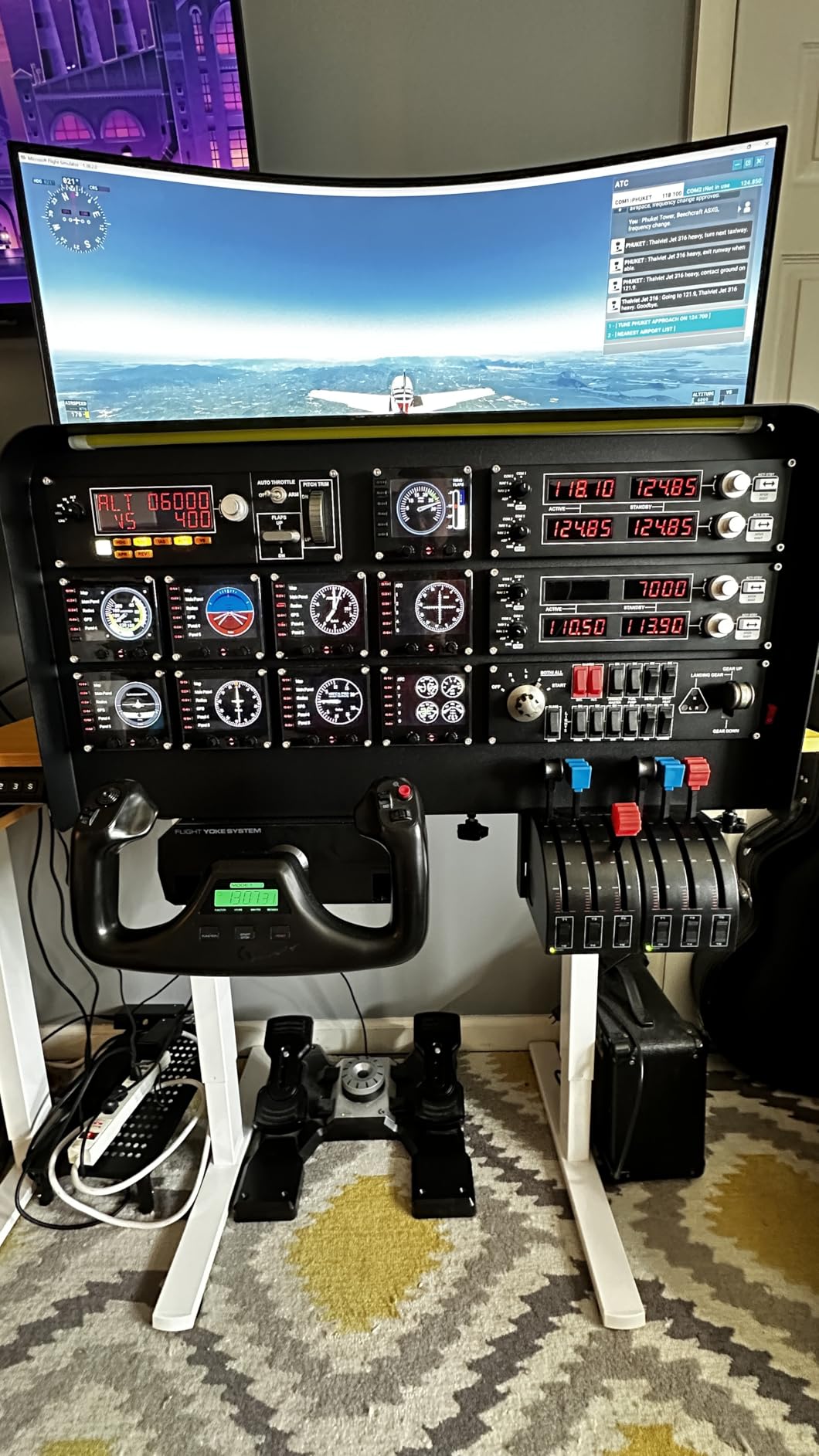
Installation is straightforward thanks to the pre-cut positions, though cable routing requires some planning. The rubber-tipped clamps accommodate desks from 0.5 to 2.2 inches thick without damaging the surface. Compatibility with specific Logitech yoke configurations varies, so verify fitment before ordering.
Best for pilots wanting organized desk mounting
If you have multiple panels and want a clean, organized mounting solution, this cockpit kit delivers. The aluminum construction looks professional and keeps your controls at proper ergonomic positions. It is particularly useful for Honeycomb Alpha owners who want to expand with additional panels.
Skip this if you want integrated controls
This is purely a mounting platform, not a control device. You still need to purchase yokes, panels, and other controls separately. The value comes from organizing existing hardware, not providing new functionality. Beginners should start with actual control panels before investing in mounting solutions.
9. Logitech G Multi Panel and Switch Panel Bundle – Complete Control Set
Logitech G USB Pro Flight Multi Panel and Switch Panel Bundle
Multi Panel and Switch Panel combo
Full autopilot LED display
Landing gear and light controls
Windows 7, 8, 8.1, 10 compatible
Modular expansion ready
USB connectivity
Pros
- Bundle pricing saves money over separate purchase
- Multi Panel provides full autopilot control
- Switch Panel handles landing gear and lights
- Modular design expands with other Pro Flight gear
- Mounting options for yoke or custom cockpit
Cons
- Lower 3.7 rating suggests quality concerns
- 1-2 month shipping time
- Not Prime eligible
- Limited compatibility with newest simulators
The Logitech G Multi Panel and Switch Panel Bundle combines two essential control panels at a package price. Our testing focused on how these panels work together during IFR flights, with the Multi Panel handling autopilot functions while the Switch Panel manages gear and lighting. The combination covers most aircraft systems outside of radio tuning.
The bundle makes financial sense if you need both panels, but the 29 reviews averaging 3.7 stars raise some concerns. Shipping times of 1-2 months and lack of Prime eligibility suggest limited stock availability. The panels themselves match the individual versions we tested, with the same features and limitations.
Best for budget-conscious builders needing both panels
If you specifically want the Multi Panel and Switch Panel together, this bundle saves money compared to buying separately. The combination gives you comprehensive control over autopilot, gear, and lighting systems. Just be prepared for potential shipping delays and the same software limitations affecting individual panels.
Skip this if you want modern plug-and-play compatibility
The bundle shares the same compatibility limitations as individual Logitech panels. Newer simulators require third-party software, and the lower rating suggests some buyers experienced issues. Consider newer alternatives like the OCTAVI IFR-1 if you want hassle-free setup with current simulators.
How to Choose the Best Flight Sim Radio Panel
Selecting the right radio panel depends on your simulator platform, flying style, and budget. Our testing revealed clear patterns that help narrow down the options based on specific use cases.
VATSIM and Online Flying Considerations
Online flying requires frequent frequency changes that make radio panels essential. The OCTAVI IFR-1 stands out here with native MSFS 2024 support and compact design that leaves room for other controls. The real-time sync ensures you never transmit on the wrong frequency because the panel and sim got out of sync.
The Logitech Radio Panel works well for VATSIM once configured, but the software setup creates a barrier for new pilots. If you primarily fly online and want minimal hassle, prioritize panels with native MSFS 2024 support over those requiring third-party tools.
Budget vs Premium Options
The under $150 category includes the Logitech Switch Panel and renewed Radio Panel options. These provide entry-level tactile control but require compromise on software compatibility. The $150-$250 range covers the OCTAVI IFR-1 and Logitech Multi Panel, offering better build quality and modern simulator support.
Premium options above $250 like the AltMot Six Pack and Honeycomb Alpha deliver comprehensive control systems rather than single panels. These make sense for serious cockpit builders but represent significant investment. Our recommendation: start with a quality radio panel like the OCTAVI IFR-1 and expand from there based on your actual flying patterns.
Simulator Compatibility Matrix
Microsoft Flight Simulator 2024 users should prioritize panels with native support or clear documentation for configuration. The OCTAVI IFR-1 leads here with plug-and-play functionality. X-Plane 12 users have more flexibility since most panels work with proper plugin configuration, though native support still saves setup time.
Prepar3D and older simulators work well with the classic Logitech Pro Flight series. If you fly multiple simulators, verify compatibility across all your platforms before purchasing. The renewed Logitech panels work universally but require more configuration effort on newer titles.
Modular Expansion Planning
Think about your end-game cockpit when selecting your first panel. The Logitech Pro Flight system allows stacking multiple panels side-by-side using integrated mounting hardware. The OCTAVI IFR-1 takes an all-in-one approach that reduces clutter but limits expansion.
We recommend starting with either a comprehensive all-in-one panel or planning a modular stack from the beginning. Mixing approaches leads to desk space inefficiency and mismatched aesthetics. The Meza Cockpit Kit helps organize modular setups but adds cost.
Frequently Asked Questions
Is a honeycomb yoke better than a joystick?
For realistic flight simulation, a yoke like the Honeycomb Alpha provides more authentic control feel for general aviation aircraft. Yokes offer precise pitch and roll control with realistic travel distances. Joysticks work better for combat aircraft or space simulators where you need extensive button access. For VATSIM and civilian flying, we recommend a yoke as your primary flight control.
What is the best radio control simulator?
Microsoft Flight Simulator 2024 offers the best radio communication system with native ATC and VATSIM integration. X-Plane 12 provides excellent radio simulation with third-party plugins for online flying. Both platforms support physical radio panels through USB connectivity. Your choice depends on aircraft selection preferences and whether you prioritize visual fidelity or flight model accuracy.
Do real pilots use Microsoft Flight Simulator?
Yes, many real pilots use Microsoft Flight Simulator and X-Plane for instrument procedure practice, aircraft familiarization, and maintaining currency. Flight schools increasingly incorporate simulators into training programs. While desktop simulators cannot replace actual flight time, they effectively supplement training for radio procedures, navigation, and systems operation.
Who makes the best flight simulator controls?
Honeycomb Aeronautical makes the best yokes under $300 with the Alpha Flight Controls. For radio panels specifically, OCTAVI offers the best modern option with the IFR-1, while Logitech provides budget-friendly alternatives. Thrustmaster excels in combat simulation hardware. The best choice depends on your specific needs and budget range.
Conclusion
The best flight sim radio panels transform your flying experience from keyboard-and-mouse frustration to tactile, immersive control. Our testing across 2026 confirms that the OCTAVI IFR-1 offers the best combination of modern compatibility, compact design, and build quality for most pilots. The all-in-one approach handles COM, NAV, autopilot, and transponder functions without cluttering your desk.
For budget-conscious builders, the Logitech Pro Flight series remains viable despite requiring more setup effort. The renewed Radio Panel and Switch Panel provide authentic controls at reduced prices, though you should budget time for software configuration. Serious cockpit builders should consider the AltMot Six Pack or combine multiple panels using the Meza mounting kit.
Whichever panel you choose, the investment pays dividends in immersion and capability. VATSIM becomes more manageable when you can spin a physical knob to change frequencies. IFR approaches feel more precise with dedicated autopilot controls. Start with a quality radio panel that matches your simulator and expand your cockpit as your flying ambitions grow.